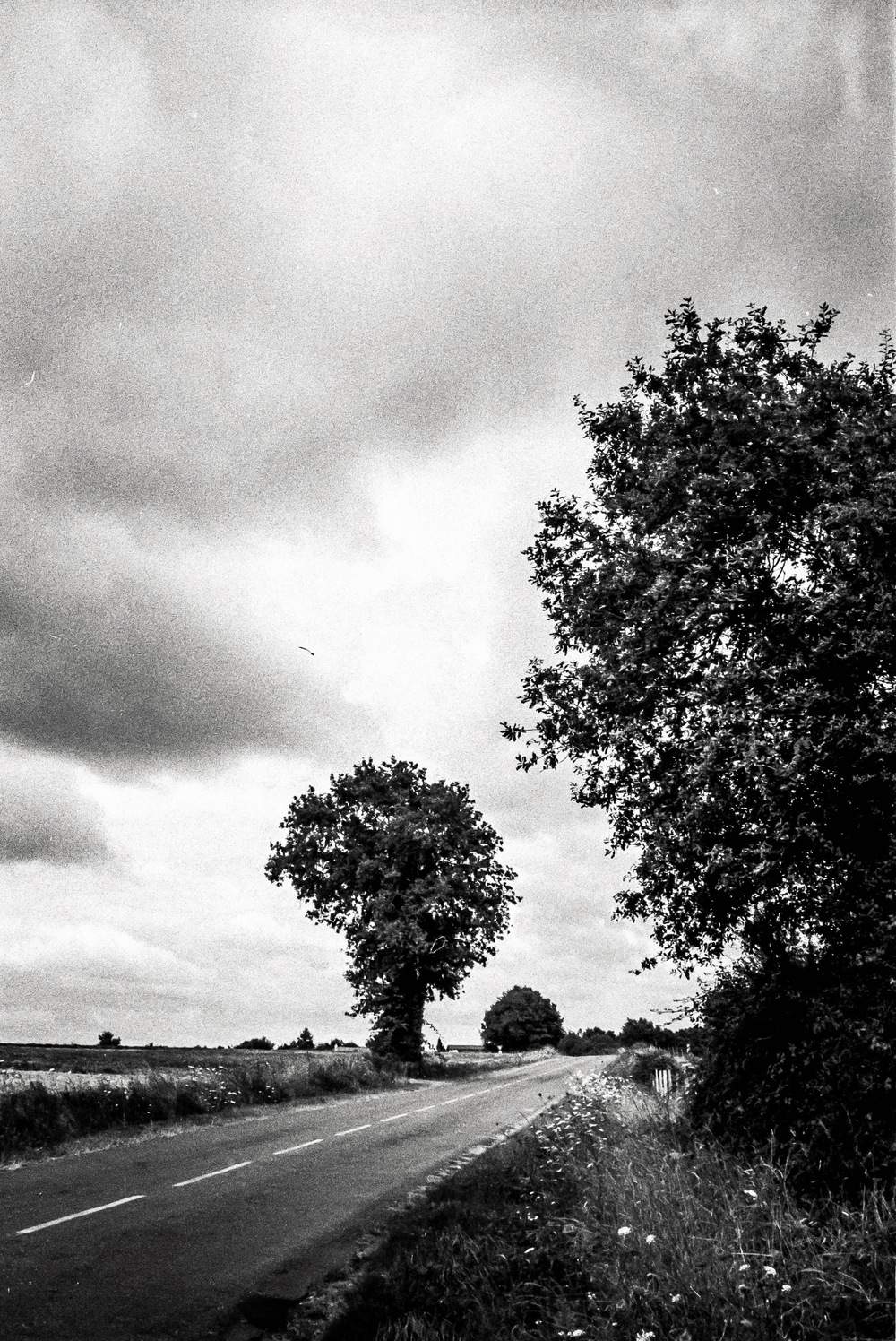
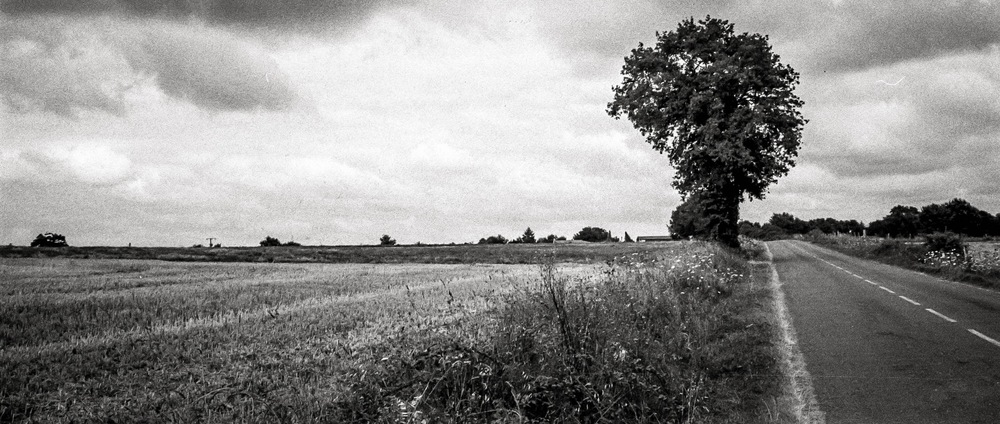
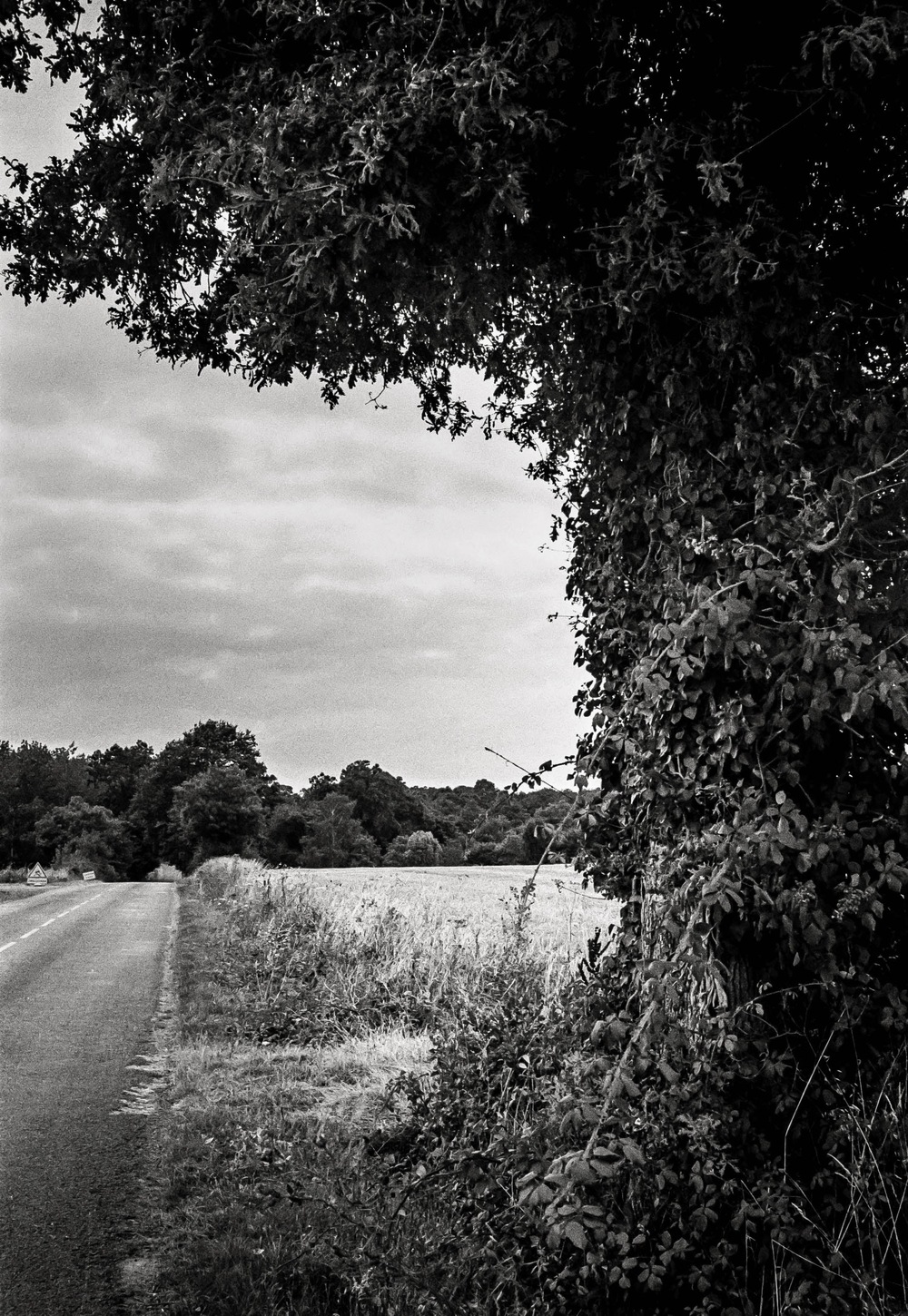
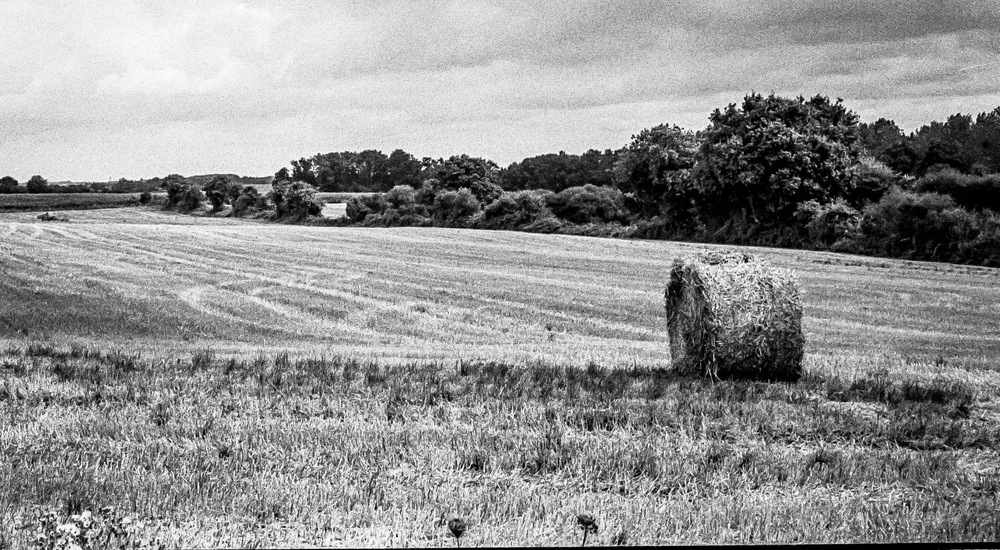
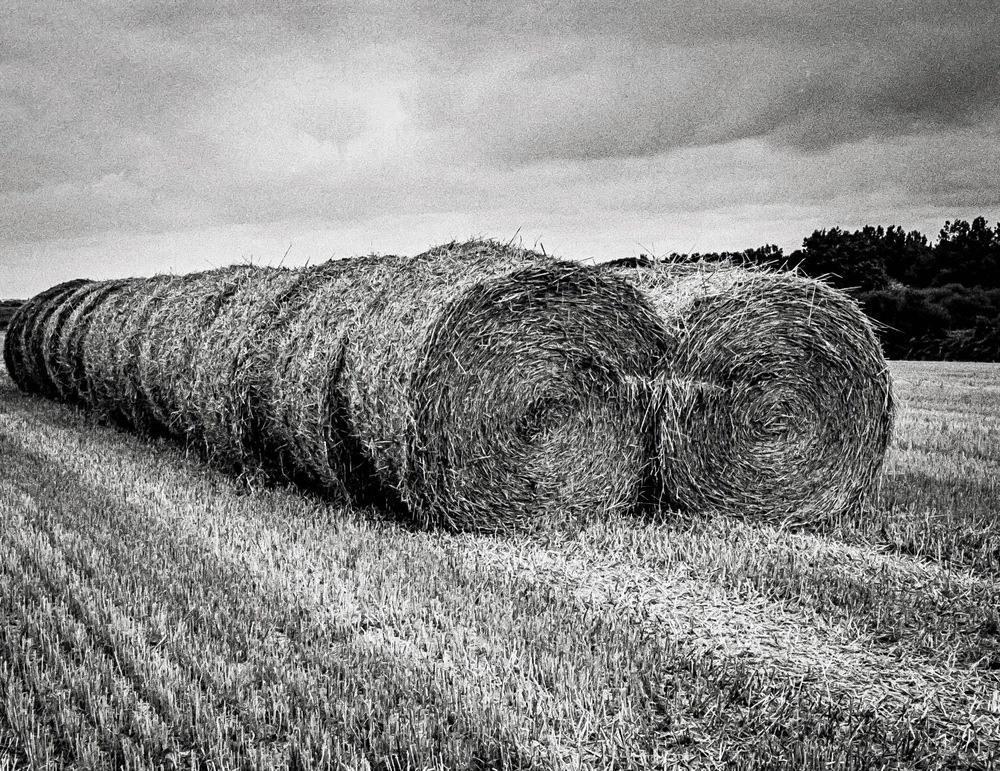
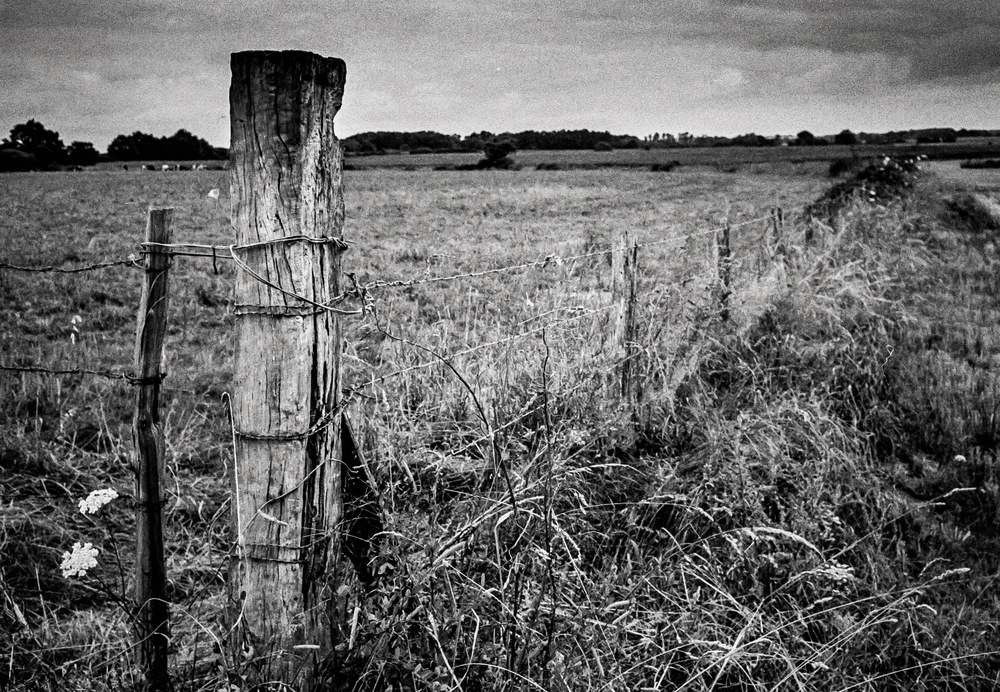
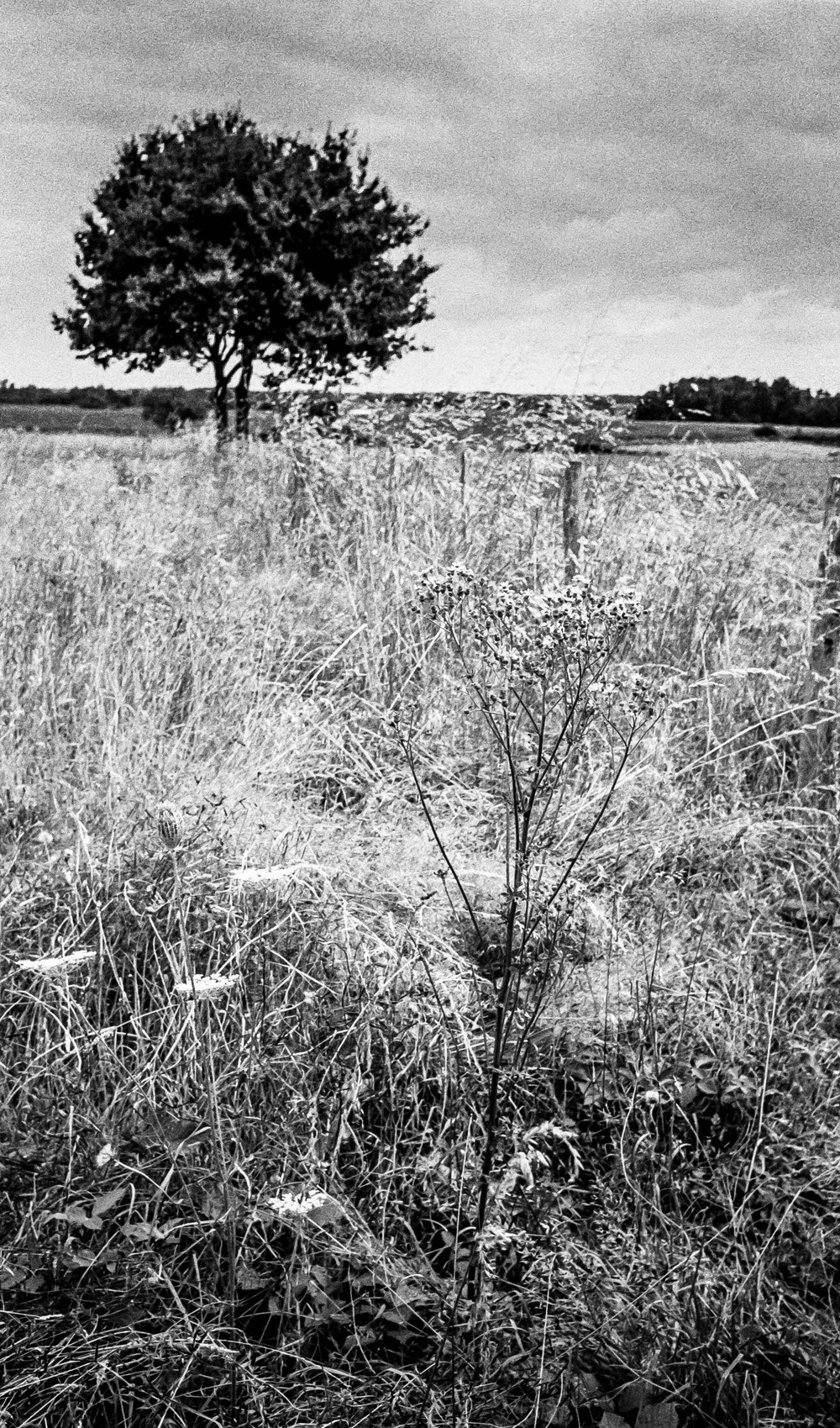
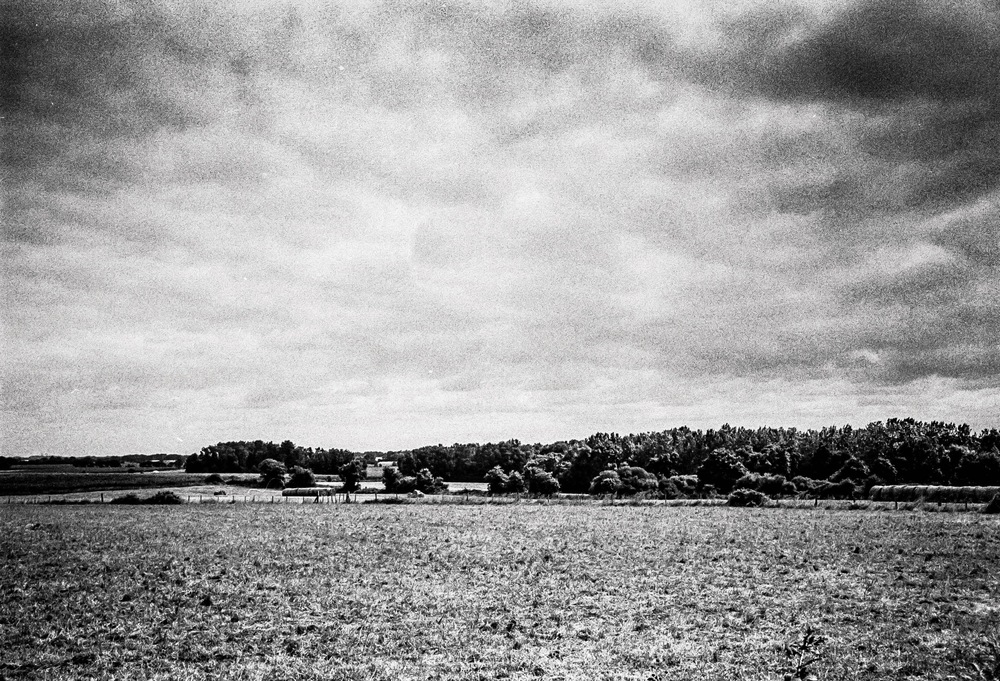
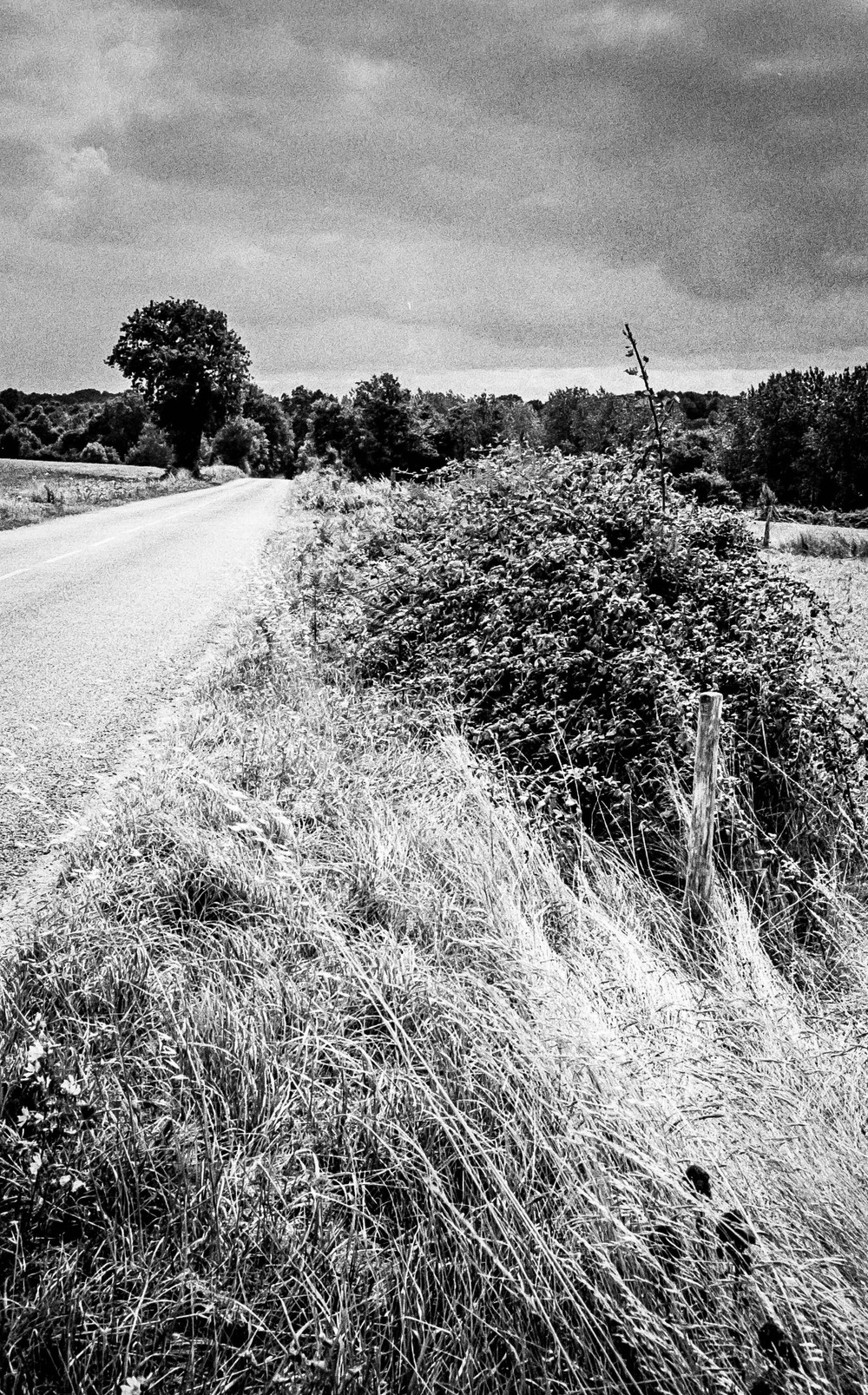
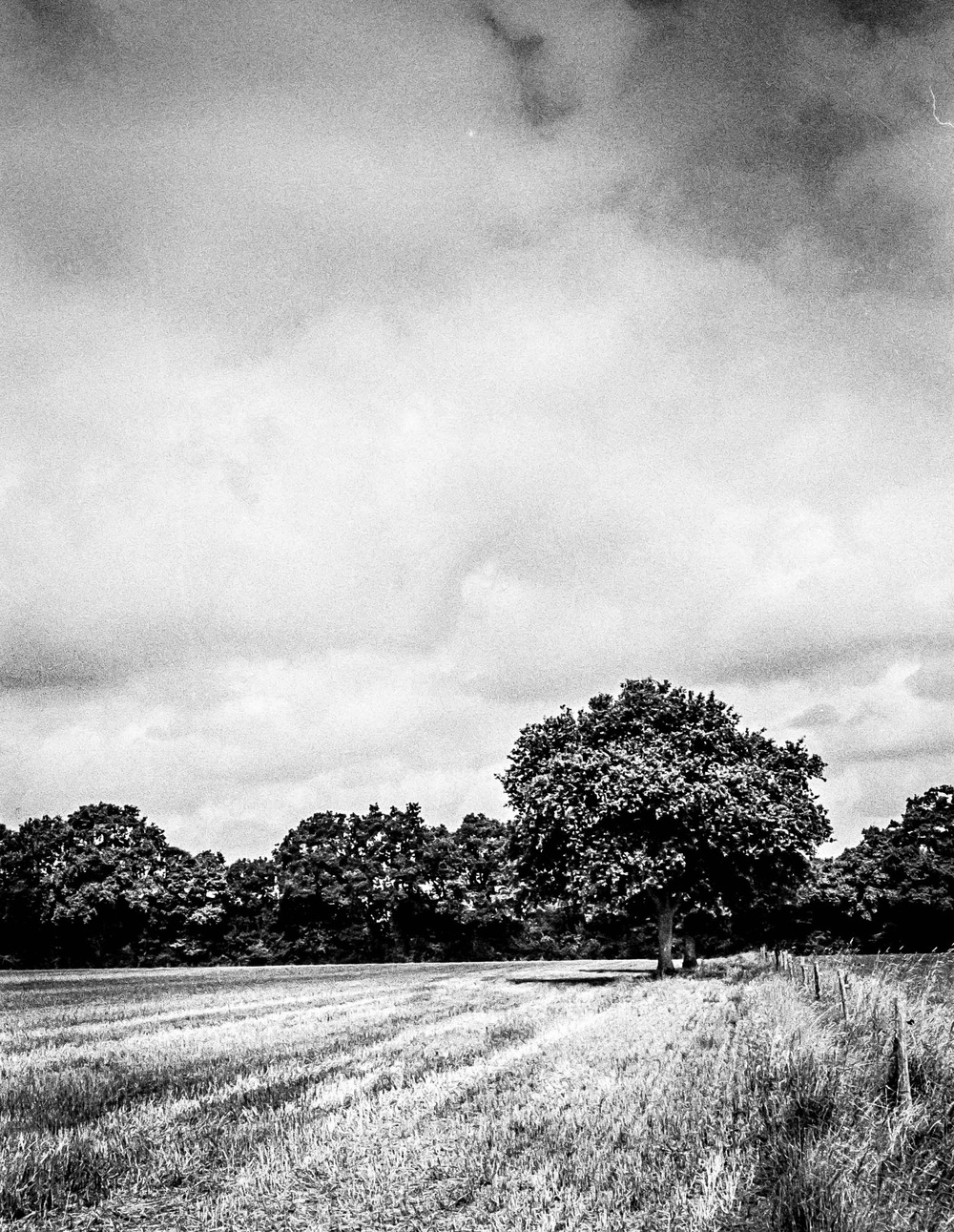
Sometimes we can have a tendency to ignore our habitual surroundings as photographers. In this series of photos from the film archive, I’m going to show you part of the route I use to go to work. What is ordinary to one person might be an pastoral idyl to somebody else. It only goes to show that there is beauty everywhere in this world and one of our roles as photographers is to document it for future generations.
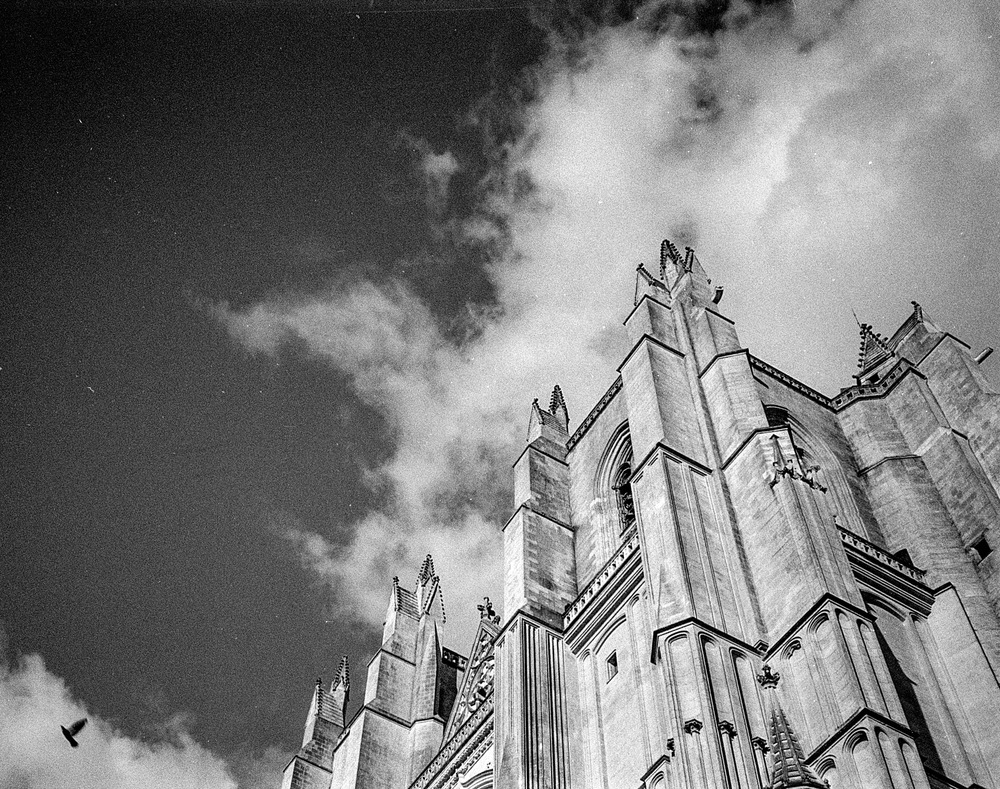
My wife, bless her, has always said that my black and white photos have a timeless feel to them, be they in the city or out here in the country. I think that using film, especially this grainy HP5 Plus, even shot at box speed, adds to that sentiment. The fact that I used Rodinal as my developer might have accentuated the grain too. Also don’t forget that this is the beginning of my return to film development so I might have been a little vigorous in my “agitations” whilst developing the film. I now use mostly Ilfosil 3 and lower grain film, and have brought a little more “calm” to my “agitations.”
The camera that day was the FED 5 rangefinder camera from Ukraine. I’ve talked about it before, and although I mainly use SLRs, I still feel guilty about not using it more. It’s a beautiful camera and I don’t want it to feel neglected. I might just have to correct that soon.
I lived just outside Paris for 7 years before moving out to the country in 2001. The change in ambiance was startling. I went from blocks of flats to village life in the French countryside. I went from riding the metro, and suburban Parisian trains, to learning to drive though this beautiful landscape. Driving through this scenery still gets me every time I get into the car. I wonder what I’ll see. I see the changes in the fields and countryside through the seasons.
I want you to promise me, Dear Reader, that you will take a closer look at your route to work, and maybe I can convince you to record it too for prosperity. Don’t worry about film or camera, even just using your phone will do the trick.
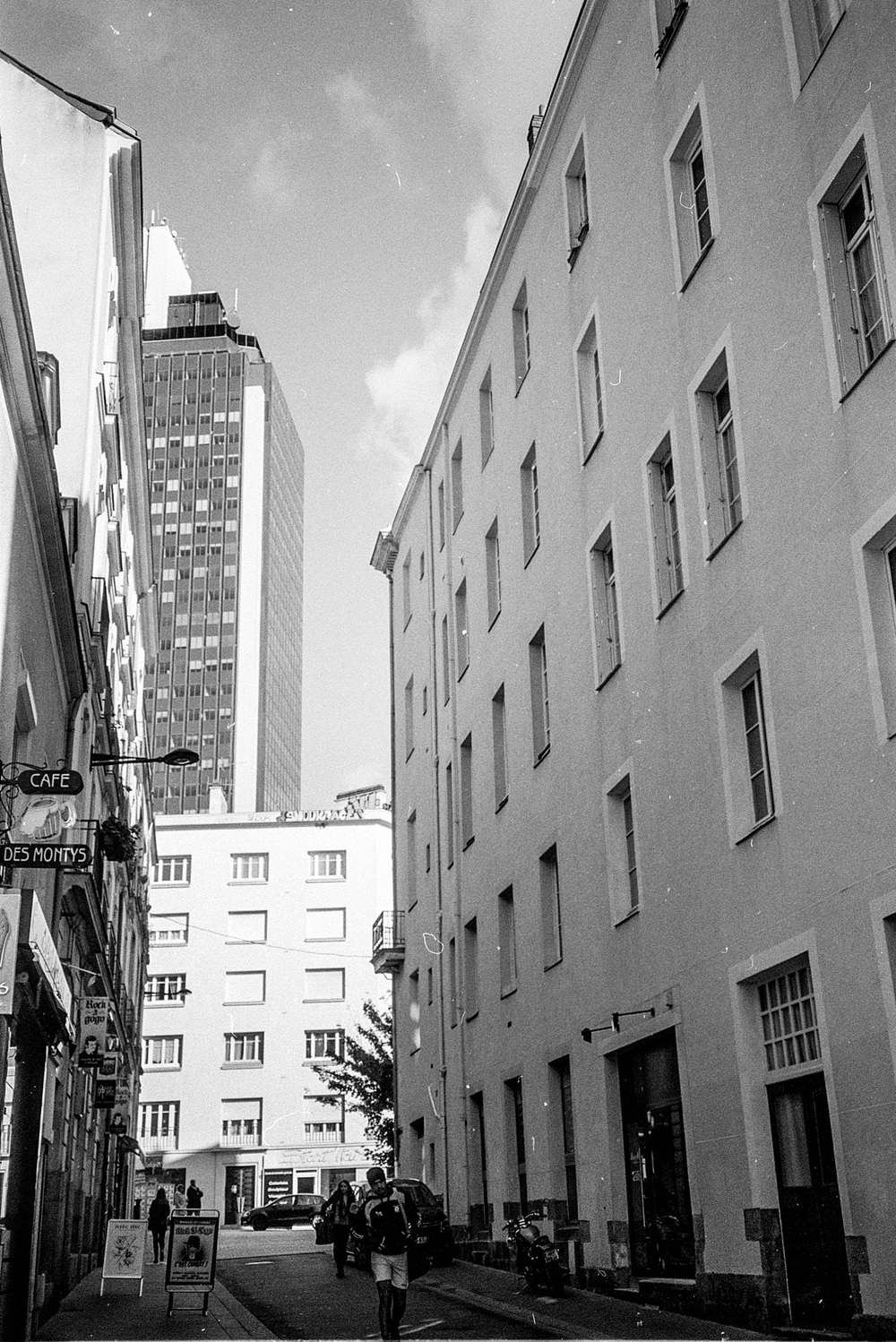
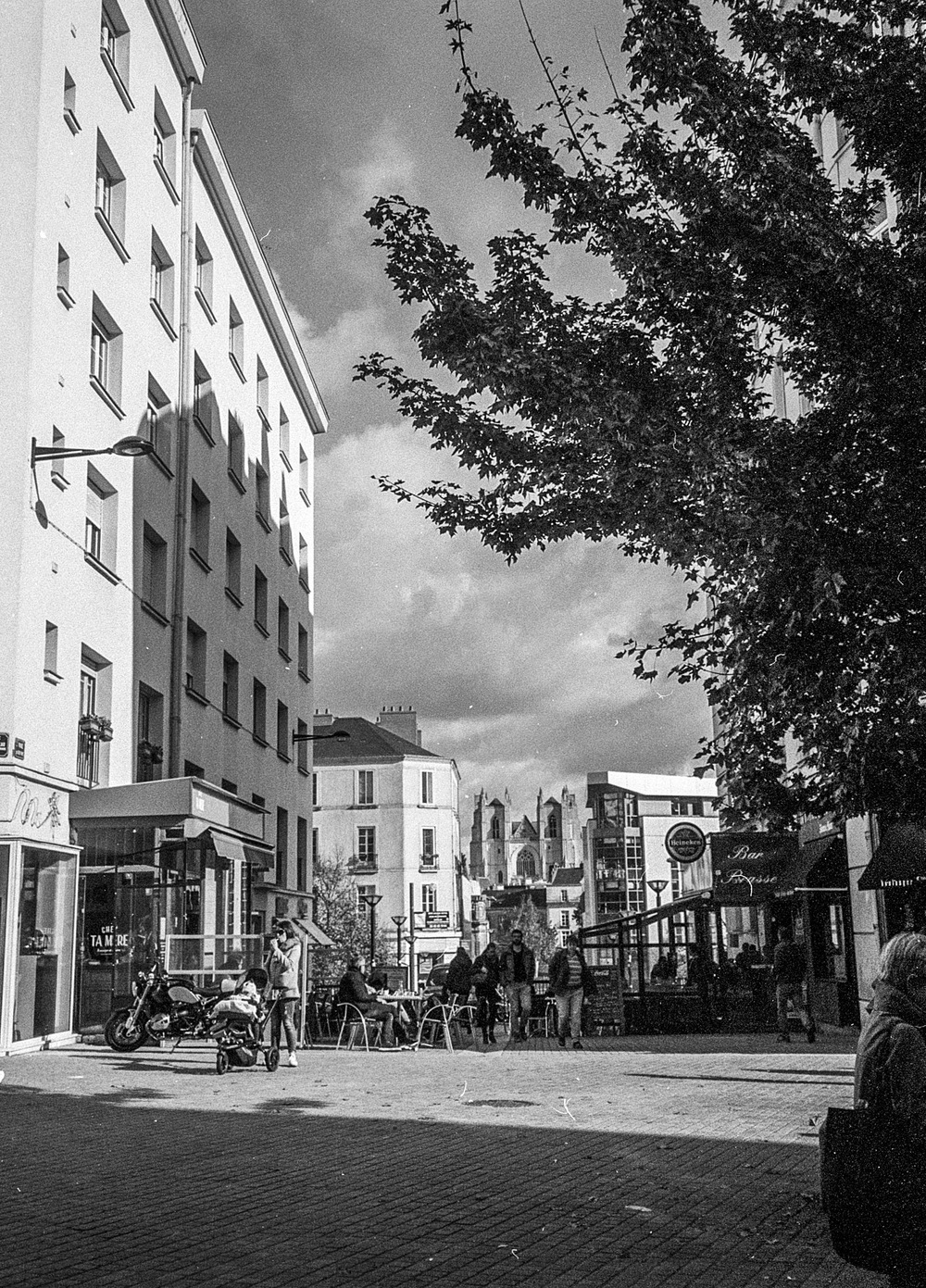
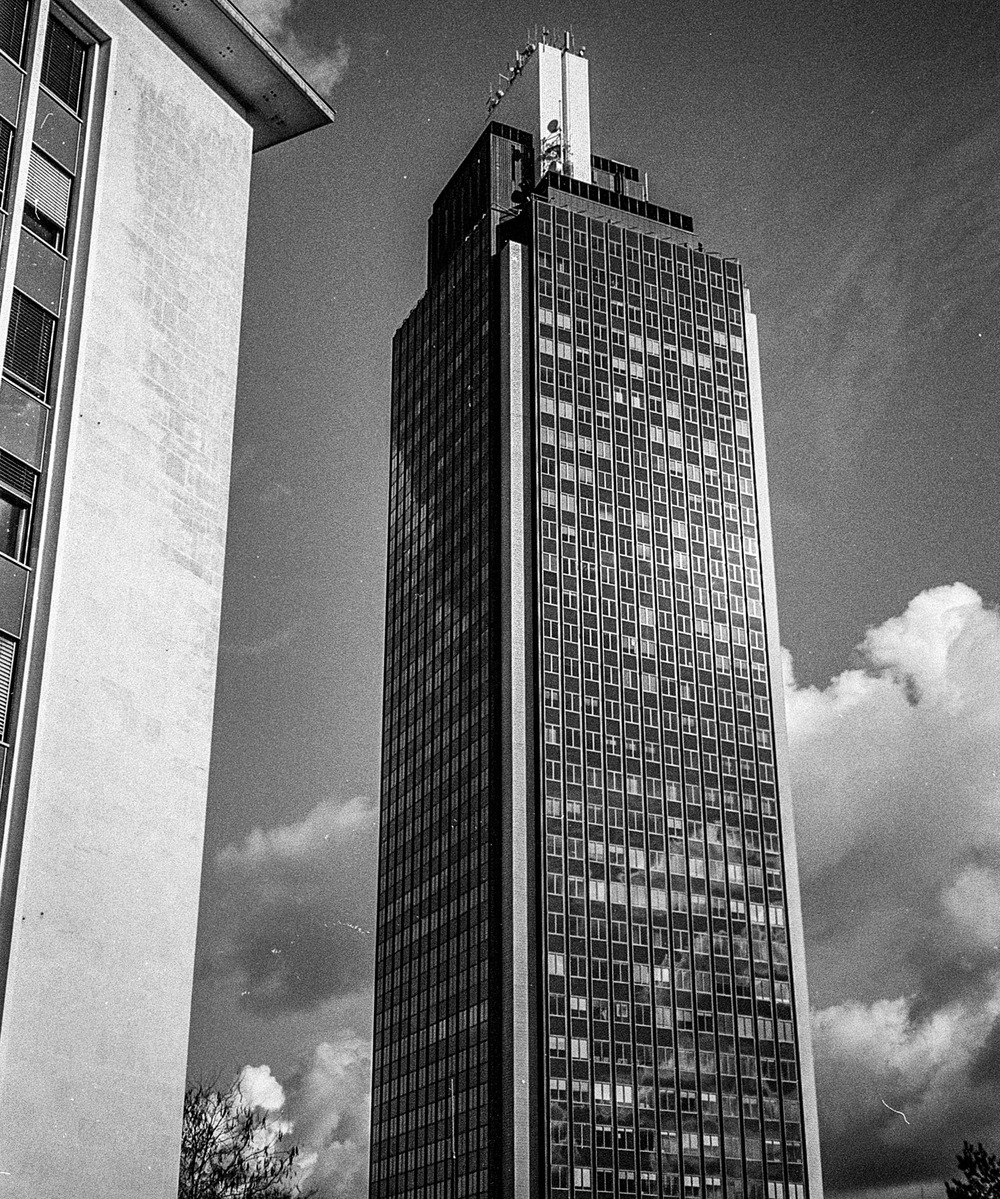
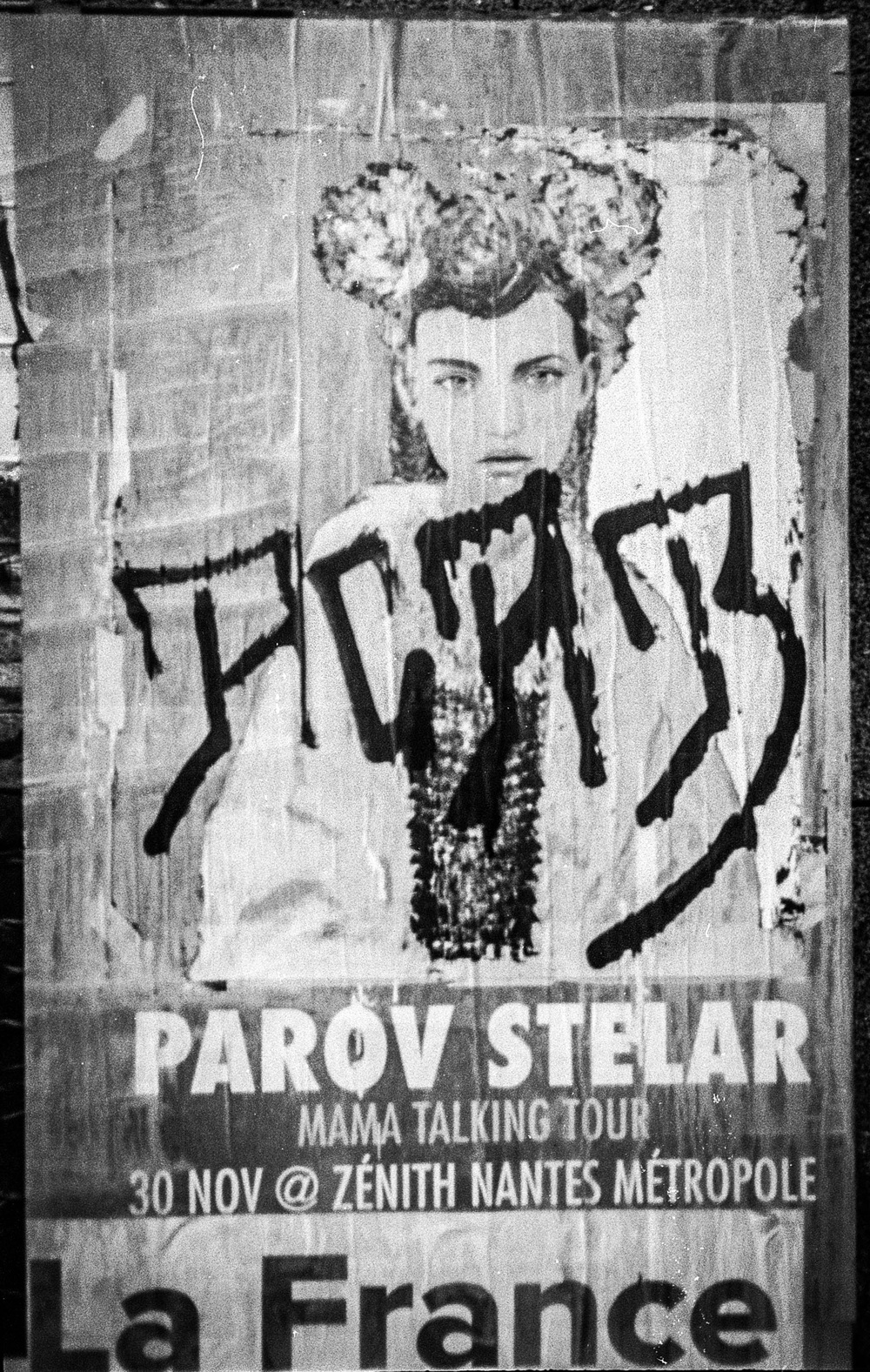
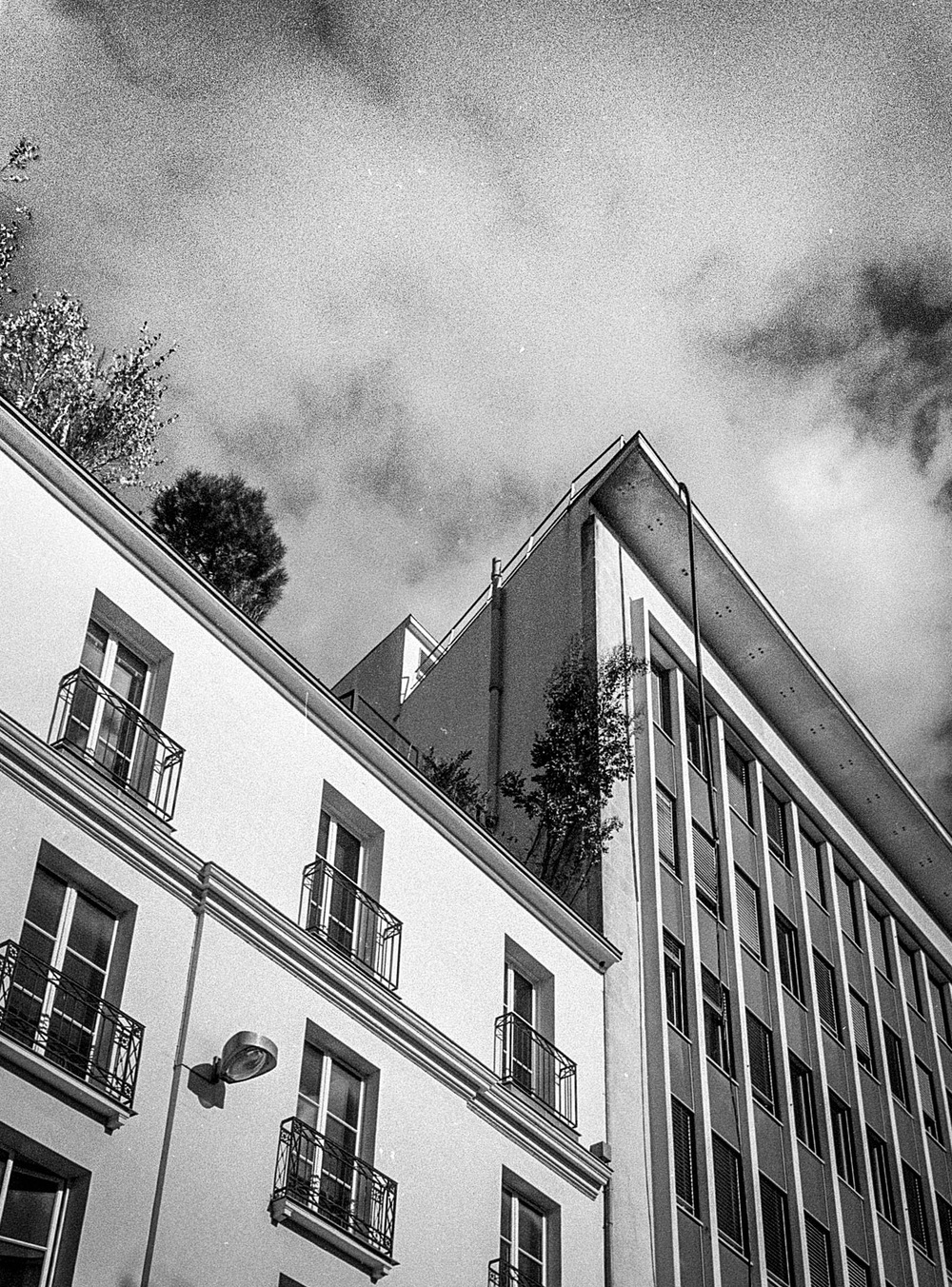
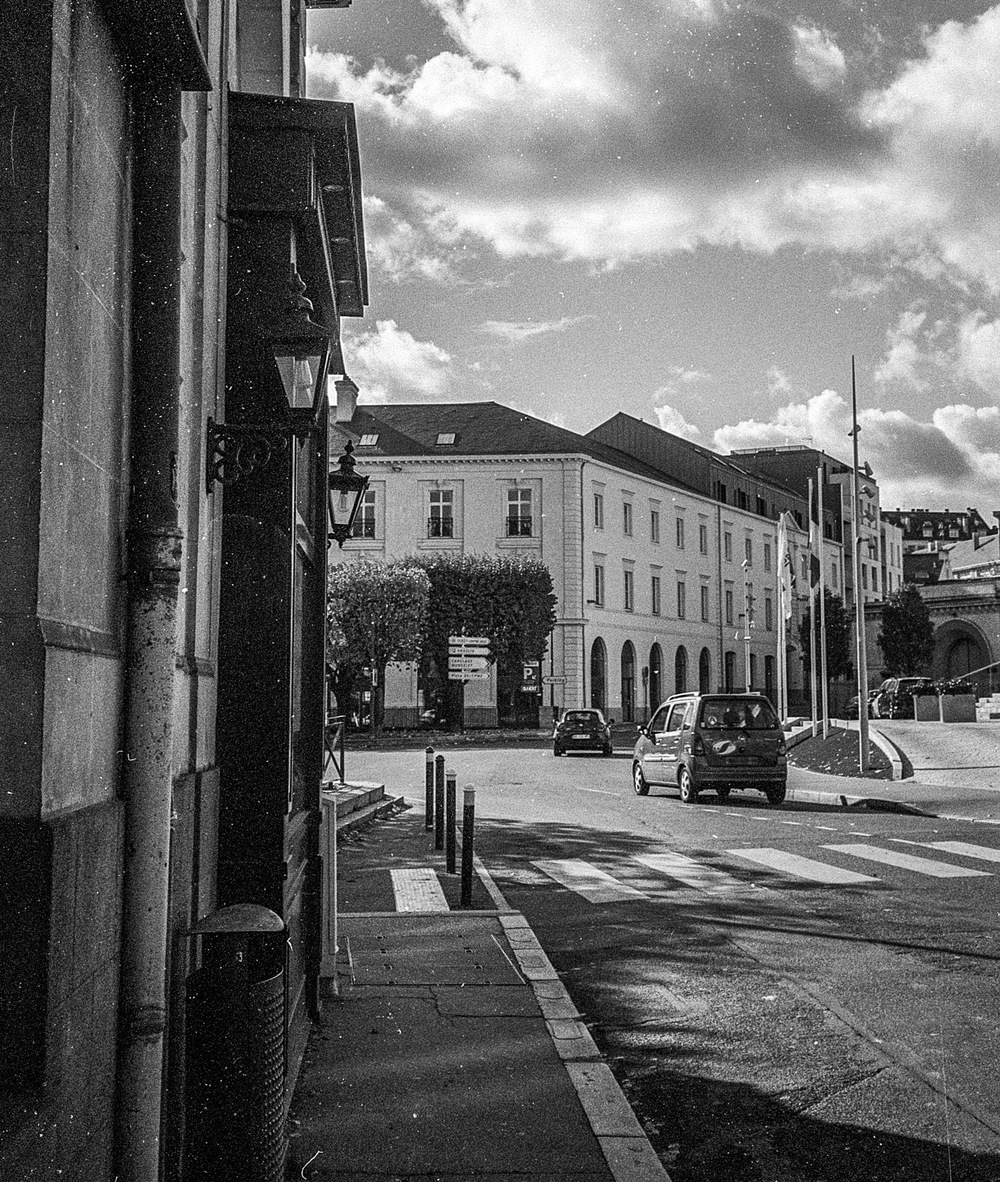
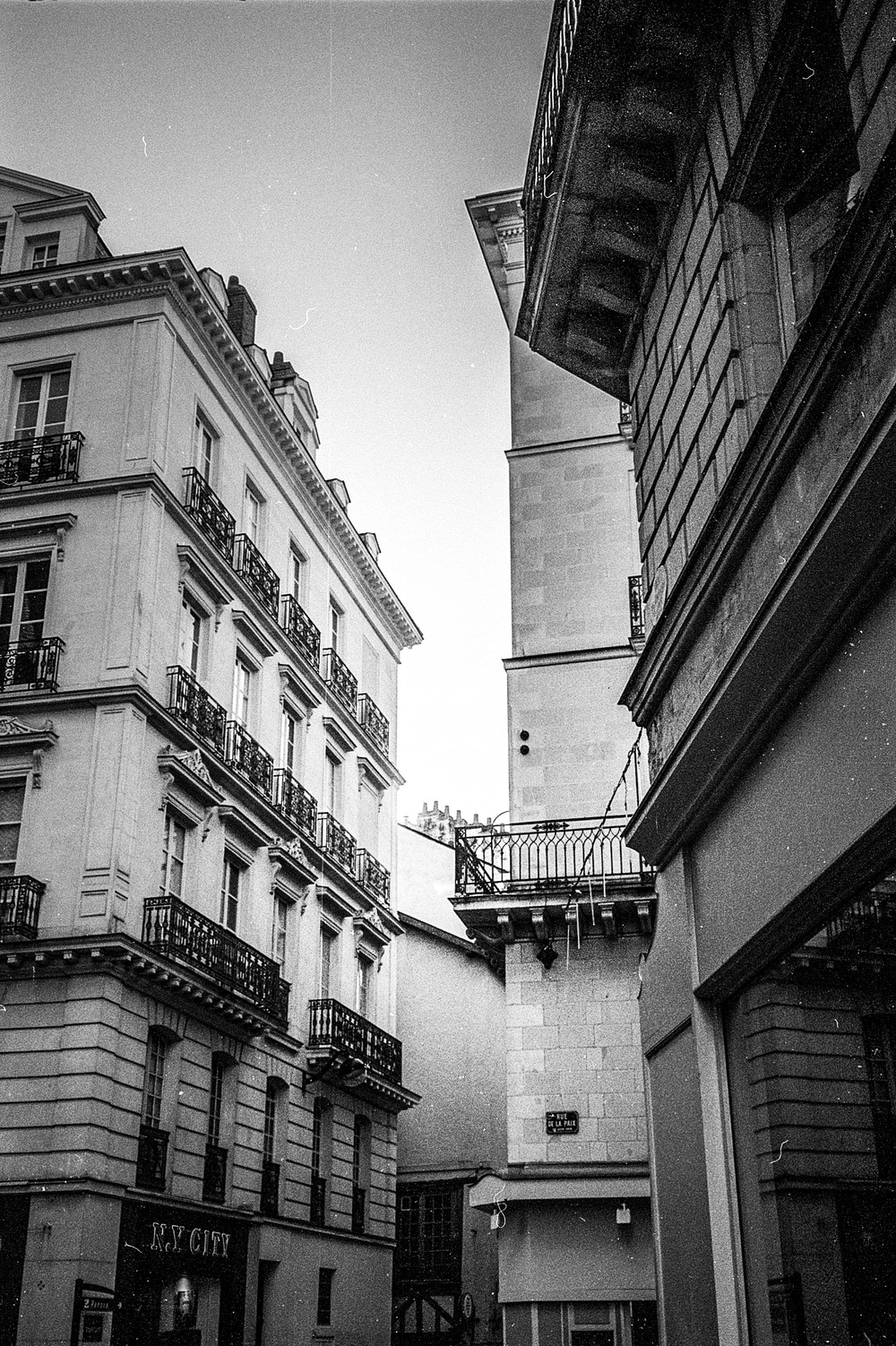
Following our last trip to Carnac, the film archive now has a look at Nantes in the autumn of 2016. These photos offer a glimpse into how I approached photographing a city back then, and if I’m being totally honest with you, still do. I treat the city much like a model on a photoshoot. The goal is to capture not just the physical landscape, but the essence and atmosphere of a place, allowing viewers to get a feel for the city simply by looking at the images. In this series of pictures, Nantes reveals herself and her architecture, resplendent in the autumnal sunshine.
Over time, I have come to know the city and appreciate her architecture. Buildings are not only a reflection of the architect but also of the people who live in them. They add character to the city, allowing her personality to shine through. I enjoy looking at the lines, and the shapes of them. They inspire me. They tell the story of the people who, either work, or live in them. They are not just mere edifices.
You will notice as we go through the archives, I might not respect the timeline slavishly. My aim is to give you an aperçu of my world at the time through film. I know you will be able to take this affront in your stride and not hate me!
We’ll go from the bains douches municipales, through to the Sainte Croix church, to the Stalinian 1950’s architecture of the Social Security building, passing by the odd shop, Hausmanian architecture, and even a shot looking towards the Cathedral.
In October 2010, Kevin Systrom and Mike Krieger unleashed Instagram upon the world. With its intuitive interface and playful filters, the app revolutionised how we share photos, ushering in a new era of mobile photography. However, over time, Instagram’s trajectory has shifted dramatically, raising questions about its impact on photography, the rise of influencers, and its changing priorities. This article delves into Instagram’s complex legacy, exploring its transformative yet increasingly problematic role in modern photography.
The Rise and Fall of Photography on Instagram
In its early days, Instagram democratised photography, empowering everyday users to become amateur photographers. The app’s filters and nostalgic aesthetic resonated with users, transforming personal snapshots into artistic expressions shared with a global audience. This initial period fostered a vibrant community of photographers who connected, shared their work, and even launched careers. However, Instagram’s algorithm, initially chronological, evolved into a complex beast driven by engagement metrics. This shift, combined with the rise of influencers and the platform’s increasing emphasis on video content, has had a detrimental impact on photography.
The Instagram Algorithm: A Photographer’s Nemesis
The algorithm, shrouded in secrecy, prioritises content that generates the most likes, comments, and shares. This has led to a homogenisation of aesthetics, favouring trends and viral content over unique artistic expression. Photographers feel pressured to conform to popular styles and create content that caters to the algorithm’s whims rather than their own creative vision. Moreover, the algorithm’s preference for short-form videos, like Reels, has further marginalised photography. Photos are often buried in favour of videos, making it increasingly difficult for photographers to gain visibility and reach a wider audience. This shift has raised concerns about the devaluation of photography as an art form and the platform’s changing priorities.
The Influencer Paradox: Celebrity Without Substance
Instagram’s influencer culture, where individuals gain fame and fortune through their follower count rather than their talent or skill, has further exacerbated the problem. Many influencers prioritise self-promotion and brand endorsements over genuine artistic expression, perpetuating a cycle of superficiality and instant gratification. This culture has also created unrealistic expectations and fuelled unhealthy comparisons among users, including photographers. The pressure to maintain a perfect online persona and constantly chase likes and followers can lead to anxiety, depression, and a loss of creative autonomy.
The Future of Instagram: A Photographer’s Dilemma
As Instagram continues to prioritise short-form video content and cater to influencer culture, photographers face a difficult choice. They can either adapt to the platform’s changing landscape by creating more videos and conforming to popular trends, or they can seek out alternative platforms that prioritise photography and genuine artistic expression. The latter option, while challenging, may be more fulfilling for photographers who value their craft and refuse to compromise their artistic integrity. By exploring alternative platforms and building communities outside of Instagram, photographers can regain control of their work and connect with audiences who appreciate their unique vision.
An Alternative?
While Instagram’s focus shifts away from photography, several alternative platforms offer havens for photographers to showcase their work, connect with like-minded individuals, and foster a supportive community. VERO, for example, boasts a chronological feed, an ad-free environment, and features tailored to visual artists. 500px provides a dedicated space for professional and amateur photographers to share high-quality images, participate in contests, and even sell their work. Glass is another emerging platform designed specifically for photographers, offering a clean interface, curated collections, and a focus on long-form visual storytelling. Ello, known for its artist-centric approach, provides a space for creative expression without the pressure of algorithms or ads. These are just a few examples of the many platforms available that prioritise photography and offer a refreshing alternative to Instagram’s increasingly commercialised environment.
Conclusion: Reclaiming Photography
Instagram’s legacy in the realm of photography is undeniably complex. While it initially empowered photographers and fostered a vibrant community, its current trajectory raises serious concerns about the future of photography on the platform. Photographers must recognise that Instagram is no longer primarily a platform for photography. It has become a commercialised space dominated by short-form videos and influencer culture. To protect their artistic integrity and find meaningful engagement, photographers need to explore alternative platforms, diversify their content, and most importantly, create work that speaks to their own unique vision rather than chasing the elusive validation of the Instagram algorithm.
I have recently tried to start learning about making videos. Somebody said that if you have an eye for creating a decent image, then your eye should be OK for filmmaking. There are of course different styles of shots because we are talking about moving pictures. Shots that move, and not just static plans as we would use in photography. We have to set a scene with establishing shots. We can combine medium framed shots and close-ups to keep the narrative going and to show the wood moving through the different machines. I therefore had to understand the manufacturing process. The composition principles that I have talked about in the past are still relevant. So my mindset was, “Why not give it a try. You know about images and how to place subjects in images. Get on to YouTube and start learning about filming . This isn’t Instagram or Tiktok, so you have more time and scope to deliver your message. And if “they” can do it then there is no reason why I can’t!” Nothing left to do but get it done! Do, don’t think…
The Kit – Use what you already have
For the moment I’m using the Canon 6D Mark II with the 24-70mm F4.0 zoom lens. For the editing I’m using CapCut and am slowly getting used to it. It just goes to show that yes, yes indeed, you can teach an old dog new tricks… I can already hear you Dear Reader asking, “But why did you use that camera, and that editing software, Ian?”
The camera
I would say, firstly why not.. But I’ll set out my reasoning. I used the Canon 6D Mark II, because I have it. It has the flippy screen that allows me to see what I’m filming, and I’m only beginning, so no exterior monitors yet. I also know how to use it and like using it. Does it have 4K video, which “they” say is a must nowadays? No it doesn’t, but I’m not in the market for a new camera, so I’ll be using what I have already thank you very much. On a tripod I could do static shots, and panning shots. The idea was to have a series of shots showing the wood in motion going through the manufacturing process.
The lens
Why the 24-70mm lens? Well think back to the articles where I talk about lenses. I said that it was a workhorse and has me covered for “quite a few” situations, and it has image stabilisation. I used my tripod, but there were a couple of handheld shots. It is also a pretty fine lens in its own right. More important to invest in the good glass, than a camera body. What matters is what the client, or audience sees. They’re not doing a mental breakdown of your kit!
CapCut
And why CapCut? Again I would argue yet again, why not! Price of the software was a consideration. As was simplicity. I had tried using Adobe Express, as it is part of my subscription for Lightroom and Photoshop, but it didn’t seem to have the capacity to give me the result that I was after. It did however, introduce me to the concept of the timeline and linking up the various sequences that I had filmed. I had also seen a lot of people waxing lyrical about CapCut, and it just seemed more “accessible” to a newbie like me. There are of course more professional tools available but for the moment seem to have more than I need. I of course went back to Youtube for various tutorials to get me started.
The Brief
So here we go with the actual video. I was told to make a video that would be shown to new employees as part of their integration into the company. Showing the total process will give them a better idea of where they feature in the “bigger picture.” Something dynamic they said. Show the wood moving through the machine they said. So I tried… Then I looked back at my brief from my boss, and realised that I was way too long and had to go back to the drawing board. Ah well. The idea is to show the process of transformation from timber to a door frame that can go to the other plant for assembly.
When you’re doing personal work you have the freedom to do what you want, but work requires sticking to the plan. So stick I did! I showed my boss the first draft, and was told that maybe cut this out, change the speed of the footage, only speed things up for the machines, but leave the shots of people at normal speed. Such and such a shot adds nothing to the story so get rid of it. It felt very much like the process I have when I get back from a shoot. You have to do a first triage of everything, and only have the strict necessary to portray your message.
The creative Process
So I had my brief. I knew the kind of film I was after. Or at least I had a couple of ideas. The basic premise was to be able to follow a piece of timber from being unloaded from a truck, following the piece of timber as it is transformed into a door frame. I had in mind those films I saw as a child showing how something is made, and how we see cans of soup moving along a conveyor belt. For each sequence, I wanted a piece of wood going into a machine, going through the machine, and coming out the other end having been transformed. Starting with an establishing shot, and following more or less closely, with close-ups and medium shots to give an idea of movement…
A short extract from the full video…
Conclusion
So you have now seen the video. All this happened in a week. I went from know very little about making a video, to having a viewable result, and one that tell the story that was asked for. Am I happy with it? I’m certainly not unhappy, and it was interesting to see the thing evolve from a series of moving pictures into something that will be used in training for future employees. Would I have done things differently? Possibly. I might have used the 16-35 F4 lens too, for even wider shots. I know have a little more familiarity with my software and will be spending less time searching for the effects and tools I wish to use. It made me aware of what kit I may be lacking, like mics for sound, but here I didn’t need to record any more sound. I would have liked wheels for my tripod to have a different panel of shots. I maybe should have used my phone and the gimbal to get more variety in my shots. I could have done some time-lapse sequences. But the primordial question would be, “What does it add to my story?” and “Do I need to acquire any kit to do it?” Money talks, and if I can get what I need without spending any more then that has to be a good idea!
What did I take away
I was introduced into a new world of storytelling. I learnt about thinking in a more linear way. Not just thinking about the shot as I would in photography , but about using these shots to make a story. Maybe I already did this with my photo series, but here it became so much more relevant. This might be the main change in my outlook. I already knew about acquiring shots for stills, and doing the same for video seemed to be a natural progression.
What next?
Am I going to get further into this film making lark? By definition yes, because work wants more videos for training people on various machines, and the HR dept have noticed my work, and are getting ideas… Do I want to make videos for me? Yes. It is certainly something I want to look further into. And the more I watch on YouTube the more I am learning, and the more I believe that I can actually do this. Am I going to become a YouTuber? I honestly have no idea, but as in photography, I have to start doing something. People will usually give feedback, and comment sections on YouTube seem to be lees harsh than on Instagram or Twitter. I remember my father making home movies with a cine camera and I can now do the same thing, and edit my footage too. Learning something is never wasted, and it does the brain good to learn new things. Who knows where this can take me? I don’t, but isn’t it interesting to find out?
How many times have I seen grown men go to pieces at the suggestion of using manual mode? Or worse, how many times have I seen other grown men saying that to be a real photographer you have to master manual mode otherwise you’re not a real photographer? Let me assure you that it’s not as complicated as it sounds. When I took my first photography lessons in 1984, I learnt it as a child. You’ve got this, and I’m here to accompany you through the process. As the Hitchkiker’s Guide so elegantly says, in comforting letters, “Don’t Panic!”
There are some basic concepts to understand, the first of which is the exposure triangle which we were introduced to in the Photography 101 article. Those three things to consider are, ISO, or film sensitivity, shutter speed, aperture, and balancing them together.
Are you ready? We’ll go step by step telling you how each of these settings influence your shot, and how we will balance them to create the image that “you” want instead of the image that your “camera” wants to take. You are the creative boss after all. And that is the reason that people use Manual Mode.
ISO, or film sensitivity
When I started learning photography in the last century was I was a young boy, yes I was young once, we only had film as a means to capture our images. You would choose your film in function of the light available. And when using my film cameras I still work in this way. 100 ASA (which is the same as ISO on modern camera) for sunny conditions, sometimes even 50 ASA, where the film can be used in bright conditions, going through to 200 ASA when it’s cloudy, but with sun shining through, to 400 ASA when overcast, 800 ASA when inside or even 1600 ASA, to 3200 ASA for night photography.
In the film days we would talk about the presence or absence of grain and this was part of the deal. You would get less grain the lower down the ASA range you went, and more grain the further up you went. And this grain was a result of the crystals on the film emulsion, and the chemical developing process. The choice could be as much about lighting conditions as an artistic decision. Once the film you chose was in the camera however, it didn’t change until you changed your film.
Nowadays with all this modern technology palaver, you can change this ISO (because it’s digital photography) and change it for each photo. Unfortunately the higher up you go in these values, the more “noise” you will get. This digital noise is in a random pattern and totally unlike the grain of film photography.
Shutter speed
Shutter speed, as the words suggest, is about the speed of which the shutter opens and closes to expose either the film or camera’s sensor. You see, I told you that this would be simple to understand. If I can get it, then so can you. So now we’re on to speed. When changing the speed of which the light hits the film or the shutter, I can freeze motion, of get a conscious motion blur, where the photo will seem animated.
Let’s say I want to take a photo of somebody running towards me. I will use a higher shutter speed to freeze the action. Think of sports photography, of catching a pass of a ball in rugby, or a footballer stopping a ball etc. Those factors will make or break your image. Imagine a photo of a football match and you can’t see the ball because it’s going faster than your shutter. It might not work out for you. In this situation, on my film cameras I will let the shutter curtain open for just 1/1000th of a second. Depending on which digital camera I can go as quick as 1/8000 th of a second.
Let’s go to the other extreme. I’m taking photos of a landscape and I want to show the motion of trees in the wind, the movement of the clouds, or the movement of water. I will use a longer shutter speed, say anything from 1/8th of a second to one second… The subject will be moving faster than the shutter curtain, and I will get that artistic blur.
I could be somewhere very dark, so in order to get a clear photo, I will have to let more light through onto my film or sensor.There I might have to use bulb mode in order to leave the shutter curtain for longer than 2 seconds.
For shooting a subject walking I would use 1/125th to 1/250th of a second to freeze the frame. When using a flash in manual mode, I would aim to be around 1/60th of a second (which depends on your camera’s flash sync value). When talking about shutter speeds I’m thinking of my film cameras and bearing in mind that most digital cameras will have wider ranges of shutter speed. Another tip for you would be to not let your shutter speed go below the number of your focal length (the legendary reciprocal rule). Let’s say I’m using a 50mm lens, then I would not use a speed under 1/50th of a second, or even 1/60th of a second. If I have a 200mm lens I would not go under 1/200th of a second. This is to counterbalance the weight of the lens and avoid lens shake.
Conclusion
This article has a lot of information in it and I have decided to separate everything and have a Part II. In this Part I we have talked about sensitivity to light be that film, and the different ratings of films for various lighting situations. In digital photography we have a wider range of ISO settings and with the newer cameras, the noise in an ISO 3200 setting will produce a much less grainy image than with film. However this “grain” can be used as an artistic choice and I will let “you” experiment and see what each film gives you.
We have talked about shutter speed, and the ability to freeze an instant with a higher speed. And the opposite of this to create motion in our image.
Next week we will talk about Aperture and how this effects depth of field and discover the rich creaminess of bokeh. We will also explore various scenarii and give concrete examples of the effects of this triangle and how to turn it into an advantage.
In the sanctuary of my thoughts, where the gentle glow of lamplight dances upon well-worn bookshelves, I find solace from the chaos of the world. With my dog, Molly, by my side, I embark on a journey of introspection.
As someone who values quiet reflection and nuanced understanding, I’ve learned to appreciate the delicate equilibrium that enriches a fulfilling life. Amidst the pursuit of knowledge and creative expression, it’s easy to become ensnared in the whirlwind of activity, neglecting personal well-being in the relentless chase for success.
Yet, amidst the simplicity of my surroundings, among the familiar scents of brewed tea and the soft hum of a jazz record playing in the background, I am reminded of a timeless truth: genuine fulfillment springs not from ceaseless striving, but from nurturing inner peace and harmony.
For photographers and thinkers alike, the quest for excellence can exact a toll on the spirit, leaving behind exhaustion and doubt. Each moment of creation demands both physical exertion and emotional resilience.
But amid life’s ebbs and flows, it’s crucial to honor the sanctity of body and mind, to heed the whispers of intuition and the call of the soul. What value is there in a well-crafted image or a finely wrought idea if born from weariness?
In my own journey as a seeker of beauty and understanding, I’ve come to embrace moments of stillness and contemplation, carving out time for rest and reflection amidst the bustle of daily life. Whether reveling in solitude or feeling the gentle caress of a cool breeze, I’ve discovered that inspiration often arises from quiet depths.
Photography serves as a therapeutic outlet for many, offering respite from the pressures of modern life. Through the lens, we enter a realm of infinite possibilities where time seems to slow and worries fade into the background. Immersed in the act of creation, we create a space where anxiety and overthinking lose their grip, replaced by a sense of calm and clarity.
For those grappling with depression or loneliness, photography can serve as a lifeline, gently coaxing us out of isolation and into the embrace of the world. As we wander with camera in hand, we become mere observers, detached from the chaos that threatens to overwhelm. In framing a shot, we find solace in the simple beauty of the moment, forging a connection with the world that soothes the soul and restores the spirit.
When I’m not at my desk, crafting articles or editing photos to share with you, I’m exploring this balance between creativity and self-care, constantly striving to find harmony in my own life.
In the tranquil sanctuary of creativity and self-discovery, photography emerges not only as a means of capturing fleeting moments but also as a powerful tool for nurturing personal wellness. Through our cameras, we embark on a journey of exploration and introspection, finding solace in the beauty of the world and sanctuary in the act of creation.
As we navigate the complexities of modern life, let us honor the delicate balance between ambition and well-being. Photography offers us a pathway to reconnect with ourselves and the world, inviting us to embrace stillness amidst the chaos and find beauty in the ordinary.
Whether framing the perfect shot or crafting prose to accompany our images, let us remember the profound interconnectedness between creativity and personal wellness. By prioritizing self-care and mindfulness in our photographic practices, we not only enhance our capacity for artistic expression but also cultivate a deeper sense of harmony and fulfillment in our lives. Even if our endeavors don’t always yield the desired result, it’s essential to recognize that the journey itself is as, if not more, important than the destination.
So, dear reader, as you embark on your own photographic journey, may you find solace in the act of creation, clarity in moments of quiet contemplation, and inspiration in the beauty that surrounds you. May your photographs serve not only as snapshots of the world but also as windows into the depths of your soul, guiding you towards a life of greater balance and well-being.


















 IJM Photography