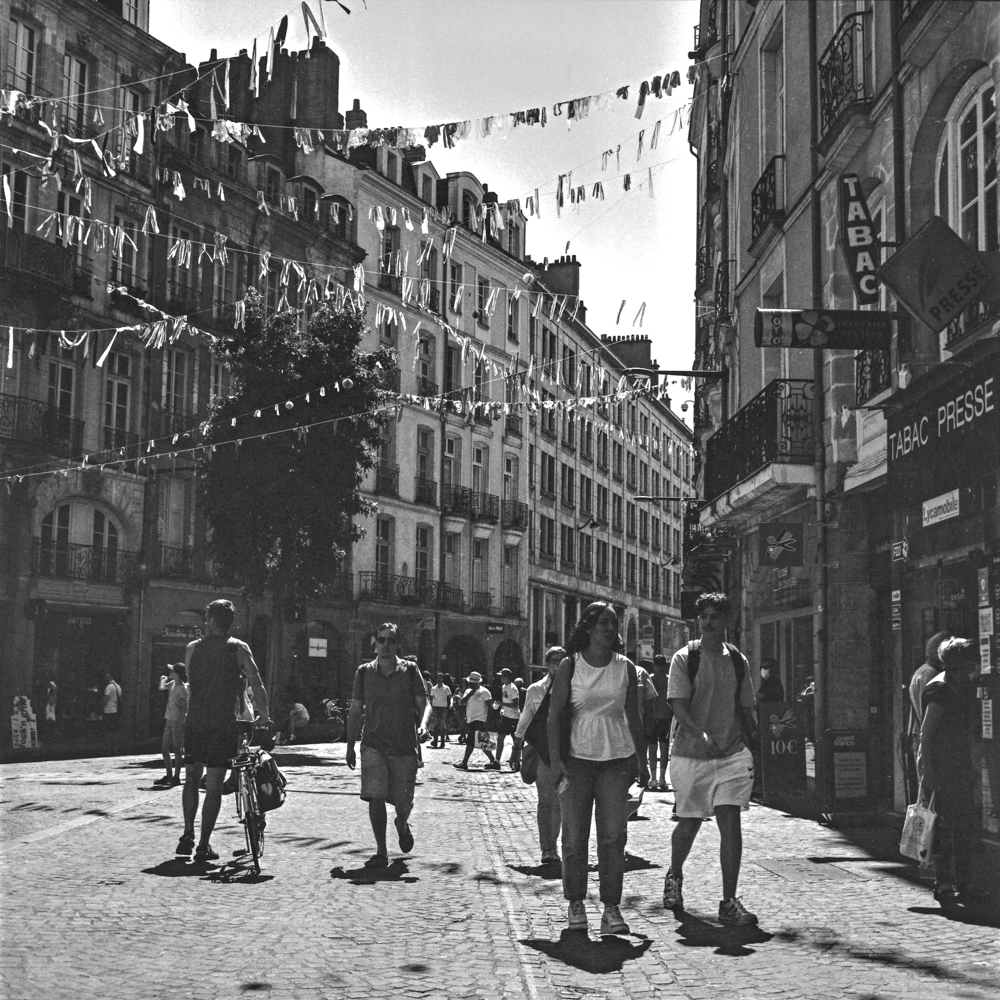
Balancing Film and Digital: A Photographer’s Journey


Introduction

Have you ever had to make a difficult decision that you really had to think long and hard about, one that would have real-world consequences for you and your creative process? I have, and I’m going to share this first-world problem with you. Now, I know first-world problems are a joke, but this problem became very real to me during the run-up to the China Orchestra Tour: film or digital?

You all know about my fondness for the analogue process and the results I’ve been able to acquire. Judging by my recent stats and pages visited, this might just interest you.

The Allure of Film Photography

I’m not saying this was causing me the traditional anxiety that I have been known to suffer from in the past. But… I had to decide how I was going to record my trip and, therefore, what to take with me. I’ll give you a list of my ideal kit, and it might help you to understand my dilemma.

  • Camera 1
    A recently acquired Nikon FE (my first ever Nikon) and black-and-white film, ranging from Fomapan 100 ASA right through to Ilford HP5 Plus, whose box speed is 400 ASA but can be pushed up to 1600 ASA and still provide great images.
  • Camera 2
    A Mamiya C220, which is a beautiful piece of kit with various 120 format black-and-white films, HP5 Plus, Portra 400, with the addition of Kodak Tri-X.
  • Camera 3 (maybe 4)
    My Olympus Trip or even the Olympus Pen EE S half-frame camera, for those informal colour shots with some Kodak Ultra and even a roll of Portra 160 for that gorgeous vintage style.

So, you have my film cameras with the film that goes with them. They provide a photographic experience unlike any other. The slowing down of the process, the reflection on each shot taken, the satisfying sound they make when you press the shutter release button. And so much more. They also look pretty damned sexy just hanging there around your neck, and people will think you are a “real” photographer, and that old-school vibe just adds tonnes to your sartorial elegance. Yes, you become a real poser, but do I care? Absolutely not!

The Practicality of Digital
  • Camera 5
    My much-loved Canon 6D Mark II, with a couple of zoom lenses – 24-70mm F4.0, and my 16-35mm F4.0 lens, and maybe even my nifty 50.
  • Camera 6
    Fujifilm X100F, the travel photographer’s ideal camera with the 35mm equivalent F2.0 lens for that sexy bokeh. It’s the Internet that said it, not me.

Now moving into the digital world. Convenience, convenience, and in case you hadn’t realised, convenience. I love them both for the variety of shots they allow me to take, and as I learnt photography “back in the day,” I have still conserved the same approach that I had in analogue photography, i.e., not spraying and praying like I have seen some colleagues do.

It is easier to use a flash, and you have an image that can be transferred to your phone, edited in Lightroom CC, and rapidly shared in the China Orchestra Tour WhatsApp group. And people can see what a great photographer you are. Couple the Canon colours and the Fuji film simulations, and you can have all the creativity fixes you might need at your fingertips.

The film cameras were there to satisfy my love of the analogue process and the nostalgic film look that only film can give. The digital cameras for their practicality, lens effects of going really wide, and having the possibility of going right up to 70mm. Choices, choices, choices.

Reality Check

Now let’s get back to reality and look at the ever-growing list of constraints. First of all, I am going on tour as a musician and not as a photographer. One really has to make this important distinction, as it gives a sense of purpose to the trip as well as the implication of priorities.

I would be flying across half the world, and therefore have to follow the demands of the air travel industry and airline rules. That meant no more than two lithium batteries, and one in the camera, and not in your suitcase but in your hand luggage, or on your person. They don’t like the idea of these batteries exploding or causing fires mid-flight. And because we are respecting the zero BS rule here, I don’t fancy that either. I would be limited by weight for my suitcase: 23kg and 20kg for flights inside China. My priority was to be a musician first and not a photographer, if ever I needed reminding…

If I were going to the UK, I would just have to annoy my family in the car with it being loaded up with camera gear, but this is China we’re talking about. Not a jaunt across the Channel.

In my suitcase, I will need my clothes for two weeks, my suit for concerts, shoes for concerts, wash bag with all my toiletries, as well as my CPAP machine for my sleep apnoea (I have to think about my quality of sleep as well as not snoring for my unsuspecting roommate Corentin). My hand luggage would be my instrument, and as we didn’t need mutes, I might be able to get away with stuffing things up the end of my horn’s bell. Please note that I didn’t try to get a cheap laugh by using the word bell-end…

So here I am back at the beginning of this article, and yet now you might better understand my dilemma.

Tell us what you decided then!

Alright then, I will.  Welcome inside my mind and my thought processes. The sheer weight of all the kit would have made tking everything completely impractical.  I knew this and had come to terms with it.  I really wanted to analogical, but then had to come to terms with the fact that airport scanners can damage undeveloped film.  Also the Mamiya weighs a tonne and would have been impractical to lug around China, despite the wonderful images it provides.  Carmer 2 out!  Now for security check I had bought a metal film box for my films so that those charming people at airport security could check my films, making sure that I would not blow up the plane.  Not really my style…

That would leave me with Camera1, 3, and 4.  Cameras 3 and 4 are particularly sexy and Carmera 4 being a half frame camera, gives you double the amount of shots for your film.  However it uses zone focussing, and the ISO setting only go up to 200ASA so you need lots of light.  Camera 3 is similar in the fact that it goes only up to 400ASA so not good for lowlight shooting.  Cameras 3 and 4 out.

That leaves me with Camera 2.  Which is of course uber sexy and Aperture priotity, which I like, and has a larger ISO range, and one that I can focus accurately with.  I had black and white film for it which I enjoy using and know how it reacts and what kind of shots I can get out of it.  Very satisfying shots.  It also doesn’t need lithium batteries to work, so that helps rule that danger out.  But I would still have to contend with the possibility of annoying security staff, and annoying Chinese security staff, and as I speak no Chinese, that would be challenging. And yet it still had a chance of staying in the race.

Now lets explore the digital realm. Camera 5: The Canon 6D Mark II is a beast of a camera and one I enjoy using.  It’s lenses are beyond compare, and it would offer me lots of choice in choosing my subjects.  However it would be heavy, especially with those lenses, and despite being able to have my images straight away, would it really be worth that added weight.  Camera 5 out.

Camera 6.  The Fujifilm X100F.  Probably my favourite digital camera, and the one I took to the UK this summer as a test for this Chinese trip.  It’s small.  Compact and silent.  And yet despite being a digital camera, it has an analogue feel to it, and is also very sexy, so I can still pose with it and it will give that serious photographer look, and make make people wonder is he using digital of analogue…  Hmmm.  Sounds like a good choice.  It’s downfall lies in its power consumption. I would need three batteries in total.  Which would mean that I would have to entrust a battery to a friend..

The two cameras left in the race are the Nikon FE analogue camera with it’s 50mm F1.8 lens which doesn’t need batteries.  50mm was the lens I learnt photography on and would allow me to get some decent portrait shots.  However with the Fujifilm, I could change ISO setting without the hassle of changing my film, create scenic shots, as well as environmental portraits, and I could transfer the photos directly to my phone and share them straight after editing.  

The X100F: Why It Was the Right Choice

The X100F became the clear winner for several reasons. It’s compact and lightweight, which was essential for travel, yet it produces sharp, detailed images. The 35mm equivalent F2.0 lens allowed me to shoot wide-open for beautiful bokeh in portraiture and environmental shots. The range of film simulations, from classic Chrome to Acros, allowed me to quickly achieve the look I desired without extra post-processing.

Its hybrid viewfinder provided both optical and electronic options, letting me choose the right method depending on the shooting conditions. The controls are direct, giving me full control over exposure and depth of field, without the need to dig through menus. And though it’s a digital camera, it retains that analogue charm that makes shooting feel personal and intentional.

The only downside was battery life, but I managed to bring a few extra batteries, which wasn’t too much of an issue for the flexibility the X100F offered.

Conclusion

In the end, the Fujifilm X100F was the perfect balance between practicality and creativity. Its digital conveniences, combined with its classic photographic feel, made it the ideal camera for the China Orchestra Tour. The images you’ve seen in my latest China Series article were all taken with the X100F, and I’m happy with the decision I made and I hope you might be too…

Photography Philosophy – Part VI – Connection Through Photography


Building Relationships

I once read that if two Germans meet, they will form a club. I am not German, but they perfectly illustrate this universal need to belong. They are generally not the most extroverted of people, but even introverts have this need to form a relationship with somebody. As photographers, we have this same urge, but perhaps in a more subtle way. When I’m out on the street, I will always notice someone with a camera, even when I’m without one myself. I find myself looking to check the brand, possibly the make of the camera, and the type of lens the person is using. Even when we simply nod at each other, it’s a recognition of our shared enthusiasm for the art form. Am I judging them? Sometimes, yes, but to err is human.

When I see a film camera around someone’s neck, I am immediately drawn to it. When I venture out with the behemoth Mamiya C220, the camera is almost as much a statement as the actual image I’ll eventually take with it. People will come and inquisitively ask, “What kind of camera is that? Can you still get film for it?” or say, “Yes, my grandfather had one like that.” The obvious charm of a medium format TLR in this modern world.

Photography is sometimes seen as quite a niche activity, and film photography even more so. A film camera gives out a more exclusive vibe, telling the world that, yes, we actually are serious about this, and know what we are doing, as the camera isn’t doing anything for us. We are artists and therefore superior to you, at least that’s what we tell ourselves for validation… One could argue that there is a need for even more knowledge with film photography, and that the need to develop our films just goes to show our dedication to the craft.
Well, not always. But it does give a starting point to a chat, which invariably leads to a discussion about this shared interest, and gives us a common starting point to our relationship, however brief that relationship might be.

I also want to explore the relationship between the subject and the person photographing that subject. For a long time, I was petrified of using a model. I’m an introvert by nature, so the idea of having to make small talk with and direct a model was awful. I wanted to learn more about photographing a model and to break out of this comfort zone. Strangely, buildings won’t talk back at you or tell you what they think of your shot. People, on the other hand, are completely different.

I had learnt basic lighting technique and then had to find models. Luckily, I could rely on my daughter and wife as my first subjects, then branch out to include my son and his then-girlfriend. I then moved onto unsuspecting friends, fellow musicians, and eventually felt my confidence slowly building enough for me to photograph complete strangers by establishing that rapport between us. I discovered that sometimes they were as terrified as I was. Again, something we had in common…

I followed some advice from Sean Tucker, who specialises in portraiture. I simply had a conversation with my model, which seemed to put us both at ease. This allowed the model to detach from the shoot and just chat away.

Community and Collaboration

But connection isn’t limited to brief exchanges with strangers on the street; it can also be found in deeper collaborations with other photographers. As I said earlier, I am more of an introvert, and the idea of making an effort to be sociable is something I find exhausting. At parties, I have been known to chill out on the outer realm of guests and chat to the dog. Hey, we have great conversations together!

However, I have been known to make that special effort and even meet up with other photographers. If you’ve ever talked to me about photography and the merits of various pieces of kit, and actual cameras, you’ll know that I can talk about it until the cows come home—to the point that most people switch off after 30 seconds. But when you have a captive audience who actually cares and knows what you’re talking about, it just brings me out of my shell.

Sometimes one might think it’s a very blokey thing to meet up with other men and talk about, and participate in, some rather niche activity. That might sound a little suspect, but I assure you it isn’t.

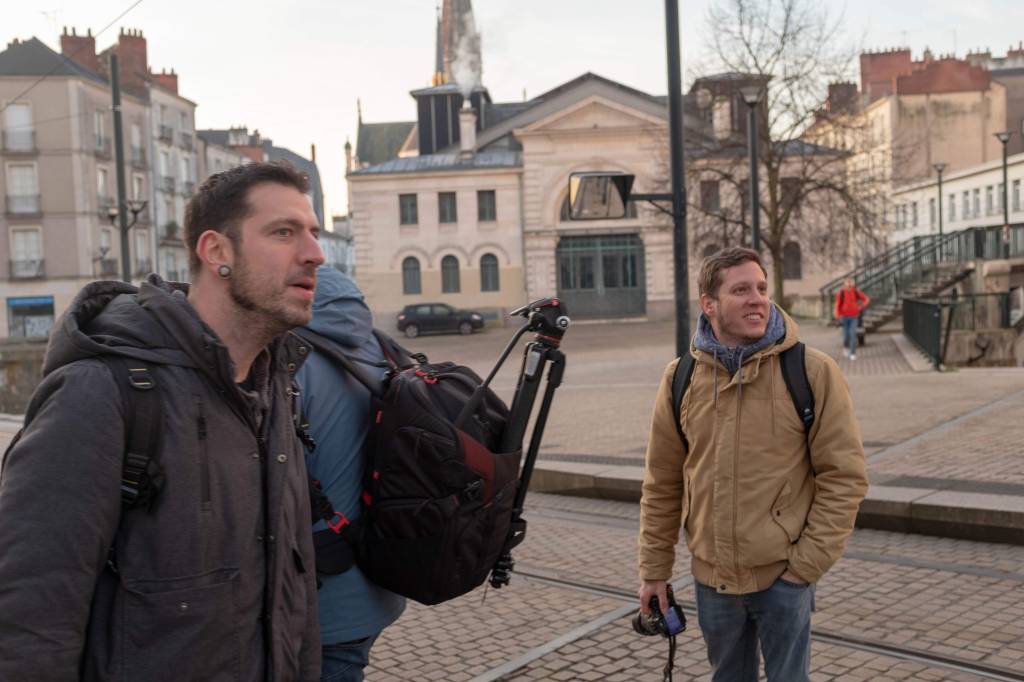
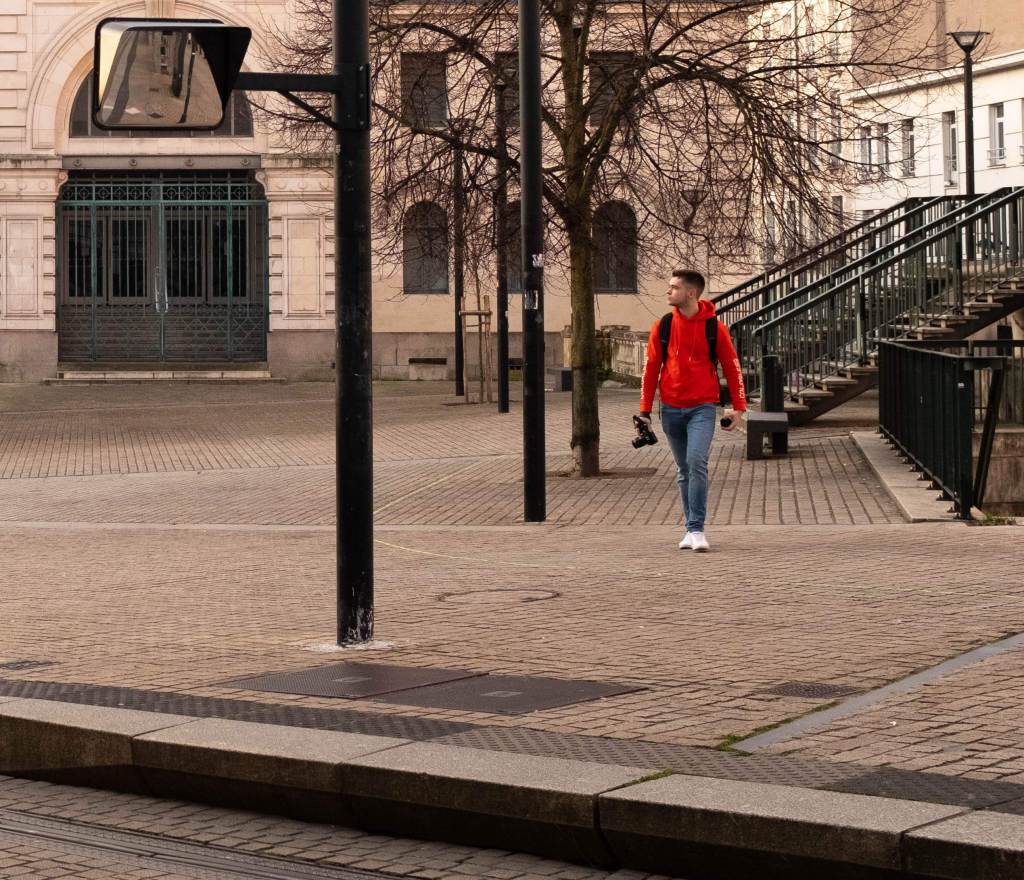
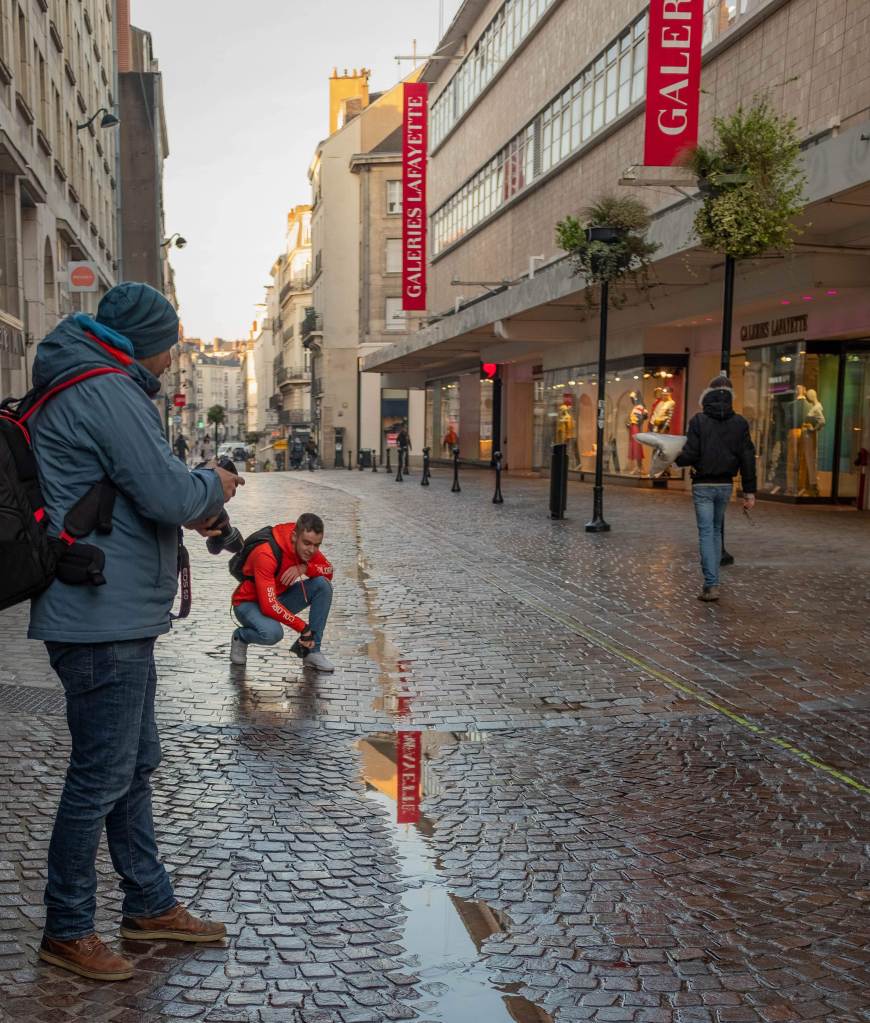
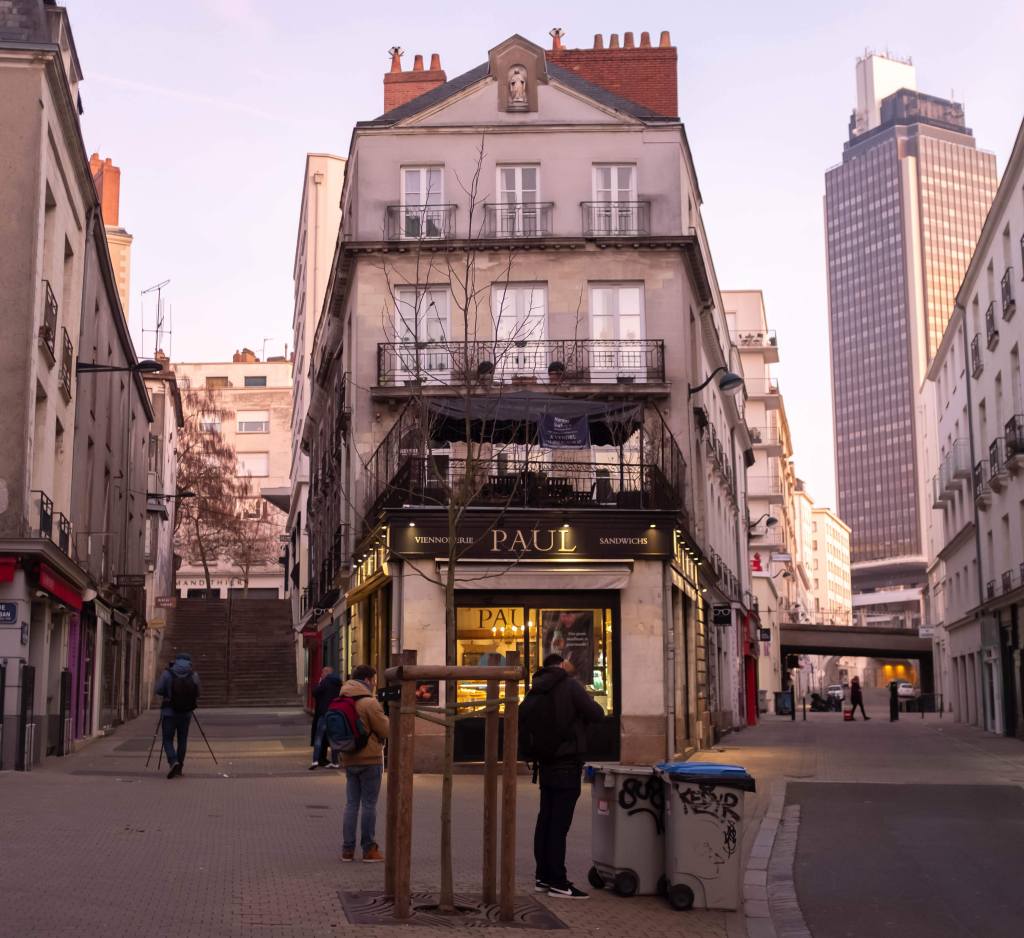
I once had a meet-up in Nantes (the very first article on this blog), and it was so rewarding. It was a typical male bonding activity, and everyone, except for me, brought along their biggest cameras and most expensive lenses. It almost felt like a competition to see who had the most impressive camera. I just brought my relatively tiny X100F, the thinking man’s camera. Much like my car, it’s not the most inspiring thing to look at, but I enjoy using it, and it certainly gets the job done in a very satisfactory way!

I have also collaborated with Nantes Grand Angle, a collective of photographers that have outings in and around Nantes. In exchange for a free tour or free visit, we take pictures during the outings and write about them in our blogs or publish the photos on Instagram. I have done a couple of outings with them, and it’s always interesting to see other photographers in action. They are there seeing the same things as me, but not in the same way. That sense of belonging has a huge feel-good factor too.

A Shared Lens

Photography may often feel like a solitary pursuit, but beneath it lies a powerful thread of connection, weaving us together through moments captured and stories told. Whether it’s the subtle camaraderie exchanged between strangers with a simple nod on the street, the thrill of collaborating with others who share our passion, or the quiet understanding forged with a subject in front of the lens, these encounters remind us that we are never truly alone in this journey.

Through photography, we find not just a way to see the world but a way to be part of it—a community of like-minded souls bound by a shared appreciation for light, shadow, and time itself. In the end, our photographs are a bridge, linking us to others and creating a lasting connection beyond the mere act of pressing the shutter. For as long as we hold a camera, we’re part of something bigger, capturing fragments of life that, no matter how fleeting, will always connect us back to one another.

September


Hello Dear Reader.  I’m not talking about the song by Earth Wind and Fire, but the month.  At least it’s being an ear worm and I can hear you hear you singing it in your heads.  I’m talking about September, the month, the return.  We have accomplished our re-entry into our everyday lives, and the routine that was missing in August is back.  The days are slightly cooler and have become more agreeable.  Instead of 33°C, we are back down to 23°C.  The nights are slightly cooler too and we no longer need our fans on all night like we did in August. When it’s hot, some people are in their element.  I, however, am not one of those people.  When you’re cold, you can always put a jumper on, and have a cup of tea and go inside.  But as contradictory as I am, as one friend recently pointed out to me, I do enjoy sitting outside on a Summer’s eve having a beer or three…

I love the holidays that August is famous for, but the obligation to enjoy yourself every day during these days of relative freedom is a pain in the arse. I don’t want to be melancholic, but this forced enjoyment of a good time is too much for me.  Club Med would be a nightmare!  I like my routine back.  Back at work and happy to be there.  We still have our weekends and can still enjoy them.  The jumpers are still in storage, but you hear the word “mi-saison” as the announcer of a more bearable climate.  The French news has gone the rentrée clips to showing how our Dear President has not been as good at selling submarines as other countries that can offer different and possibly more desirable options…  The Voyages à Nantes is over, and we will look for those works of art that have become permanent.  You can see grapes in the supermarkets, and other more autumnal products.  Soon we’ll be talking about the wine harvest…  In the UK it will be words like “chilly” making their return to everyday usage.  The merits of a “nice cup of tea” which will warm you up will become an object of conversation once more.  Biscuits or cake?

My daughter was born in September and this week is her birthday.  She will be twelve going on thirty.  I think she should run for President, as she seems to know everything already.  Let her fix the country.  If people go on strike, she could always sulk in her room and go on her phone…  That’ll show them!  At least she takes the dog out for walks around the village.  As any doting gather, I think she’s brilliant and can be hilarious and despite hating and eye rolling at my dad jokes, she still seems to enjoy them.  She can also turn into a she-devil at any instant and I’m trying to work out whether this is traumatic for me or just making life a little more interesting than it once was.

Molly, I think I’ve introduced her to you, is now a deb at the grand old age of 10, and has made her grand entrance in the pub, where I can be found from time to time, enjoying a pint of overpriced Guinness.  Me, that is, not the dog.  That dog of ours is one clean living dog, or a total abstainer!  She attended a Saturday night at the pub, and was noticed and loved by everyone.  She received strokes galore, was made a fuss of, and even had a couple of chips as a treat from the chip shop down the road.  My major concern was that I would lose her, but my hand stayed firmly on the lead, and the only trouble was her getting tangled in chairs.  I was amazed by the reaction to her, and she might be allowed to come out with me more often.  She’ll keep her canine eye on me, making sure I don’t get into any trouble. It’s amazing how that mutt has worked her way into my heart and is a real doggie dog, and always seems happy to see me.  To be honest, she’s happy to see everyone, but she knows how to make you feel special, in a way that only a dog can.  Unfortunately she can, with time, and dirt on her, become a little stinky-poohs, and on Tuesday I came home and gave her her cuddle, discovered a dog that had been to doggie hairdressers and was now as soft as you wish, trimmed up, and smelling lovely.  Maybe not as pleasant as finding a banknote hidden away in your wallet, but not half bad anyway!

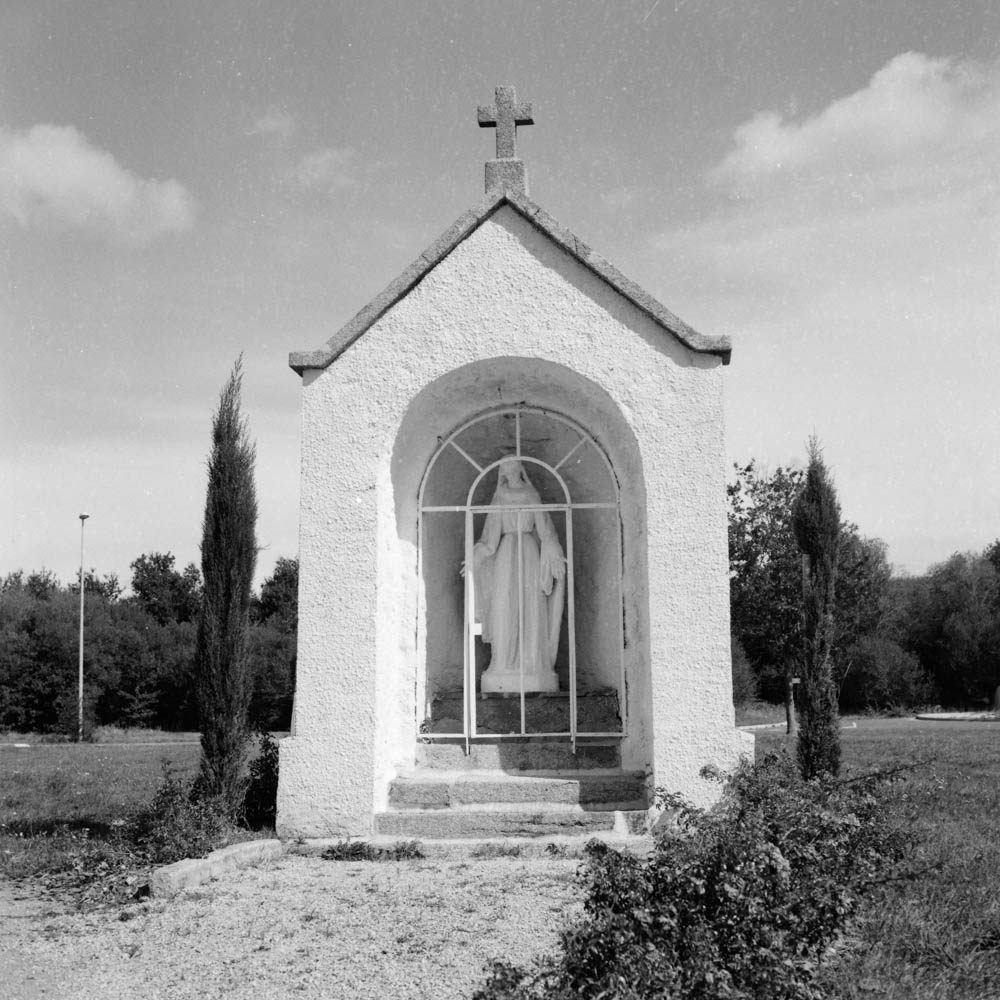
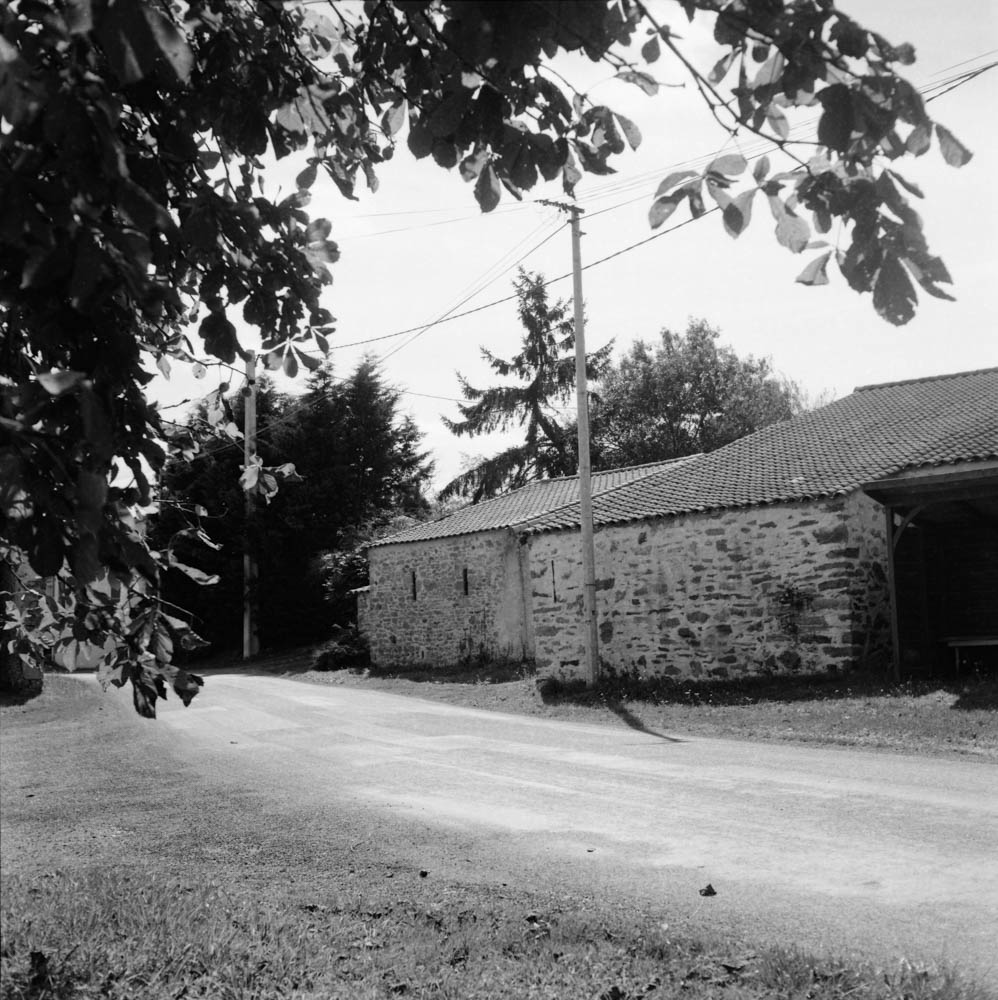
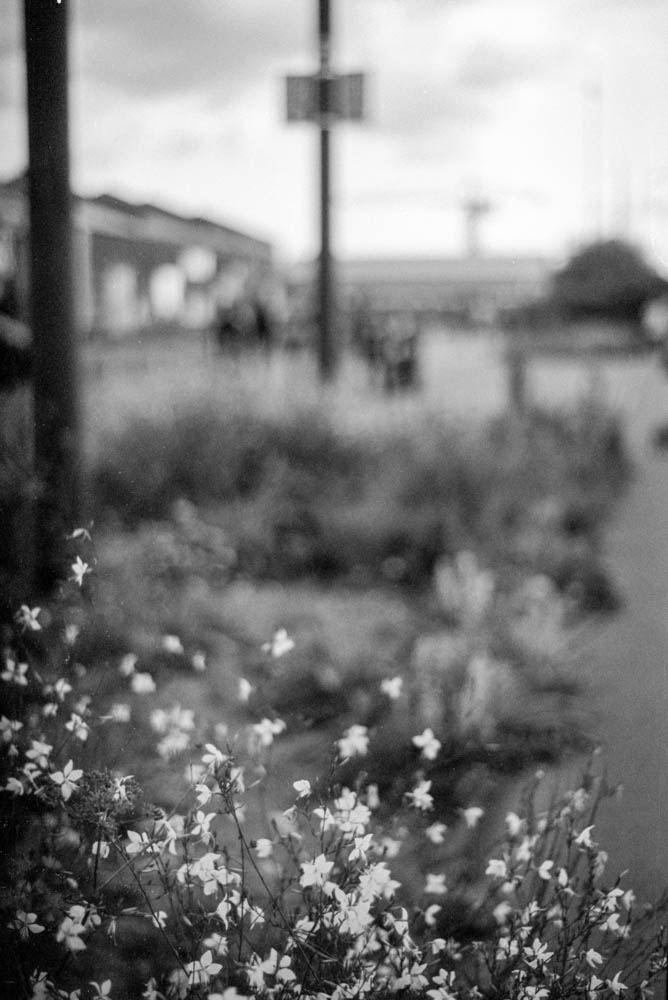
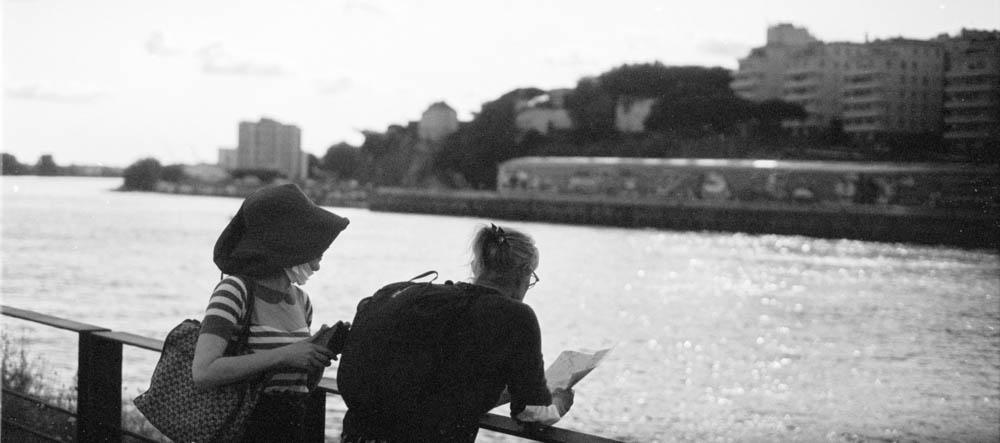
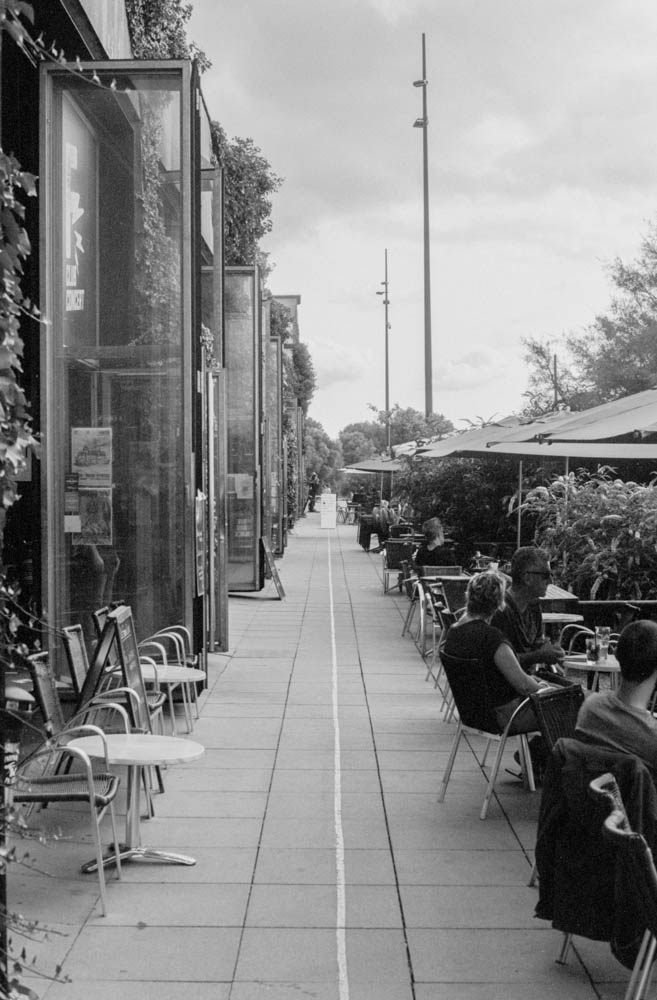
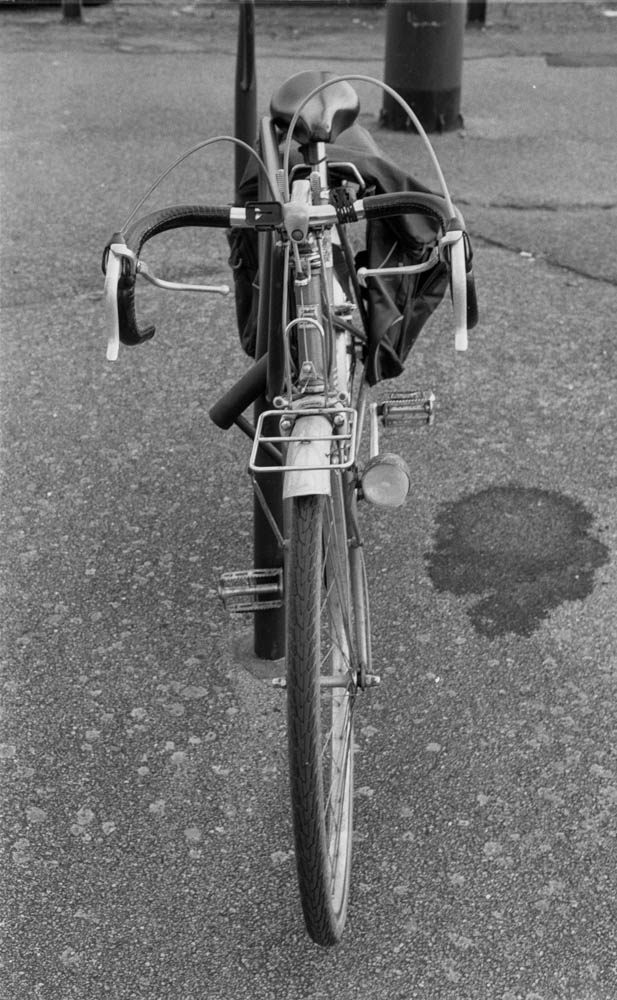
This is supposed to be a photography blog, or at least from time to time, so let me tell about where I am on the photographic plain.  I’m still there.  Last weekend was the Journées du Patrimoine.  I could have gone into Nantes with my camera, and visit all those places not usually open to the public and get some more “exclusive” photos, but went to Clisson instead.  I never got there.  I had the Mamiya and a couple of rolls of film with me.  Exploring some of the local villages near where I live, I even managed to go to the Château de la Preuille, a local castle that has been a favourite of mine since arriving in St Hilaire in 2001.  With Medium format film, you get 12 images with each film when shooting with the Mamiya C220, and the amount of detail that is captured on the negative is amazing.  The project was to take pictures locally and see what I could get, and the restriction of 24 shots was interesting too.  It obliges you to make that little extra effort when composing your images, as you don’t want to waste that special film.  If this article has photos, then it means that I have developed my film before Friday at 17h.  Otherwise, they’ll have to be added later on. UPDATE: It appears that you will have to wait for the photos of Château de la Preuille but they will be put on here. For the moment, you get a bit of Saint Hilaire.

I shall continue to revel in this comparatively cooler weather, with the sunshine, and not much rain forecast for the next ten days.  I look forward to seeing you in my next article.  Until then, be good, and if you can’t be good, then be careful!

La Rentrée 2021


My Dear Reader, welcome to yet another article where I will try to find something interesting or witty to tell you.  I have neglected you over August, but as most French people do, I closed shop and was on holiday.  Since Covid and the world going base over apex, my company has decided that we only need three weeks’ holiday in August compared to the more traditional four weeks.  I am about to sing the praises of my wife, so for those of you who hate the luvvy-duvvy side of things, turn away now.  I take it you have all turned away.  

For the first ten days of my holidays, I was camping in my living room. My wife and I literally carried our bed downstairs and set up camp.  That was the less agreeable part of those first ten days.  However, my wife had decided to decorate our bedroom and change all the furniture and replace it with nice new furniture from the infamous Swedish flat-pack place that we all know.  I have a love-hate relationship with flat packs.  Firstly, they’re heavy and hardly fit into the car without all the seats down and your wife in the back of the car telling you how to drive, you bloody moron!  Secondly, they take up an awful amount of space in the garage whilst your wife gets to grips with decorating the room.  Painting the ceiling, putting up wallpaper you agreed to ages ago because it’s easier and you love avoiding conflict.  You don’t sleep well because everything feels strange in the living room and it’s hot too.  Thirdly, they have to be taken upstairs to be put together and there’s always something missing, and you know it’s going to be your fault, you useless fool!  

Anyway, with the help of friends, my son, and a mad screaming bitch, sorry, wife, we now have a haven of peace.  We not only have a haven of peace, but fitted wardrobes that took three days to put together, but look great, and I have a cabinet for all my photography gear and, most importantly, a desk.  

She is a champion, and let me assure you all, she has become human again!  It has been a life-changer.  

During the pre-let’s get this done otherwise I’ll go mad, clear out, we found some films that needed to be developed.  You do not know what might lurk on those reels of film, but you tell yourself that you must have taken them, so it shouldn’t be too bad.  I took in 9 rolls of film in.  I was told by the amiable lady that if any of them hadn’t been exposed that there would be no charge for the development.   Seems fair.

I returned to get the films and the contact sheets.  That still sweet lady told me I would be in for a surprise!  She was right.  I looked through the sheets of paper and saw images of my son, who was still a toddler, and having baths, and being dried by his mother and his godmother.  It took me right back to the end of the last century!  My beard was in colour in those days!

Encouraged by all this photographic success, I went out and took even more photos.  For those of you who follow me on Twitter, or Instagram you will have seen the stories and saw the cameras for the day: the Mamiya C220, and the Pentax ME Super, which were both gifts from a former teacher, and now a friend of mine!  Merci Mr McM!  

I do like taking photos and using cameras.  There’s something I don’t think you knew!!  It was good to be back out.  I am now double jabbed. Thank you to that lovely lady at the chemists who reassured me and said that I wasn’t the only guy in the world that has a phobia of injections.  Not only am I double jabbed, but I also have my Covid Passport, so I can go to the pub again without having part of my brain scraped out by a nurse with a long plastic thingy!  I have rejoined the general population.  

If you’re wondering what the French title of this article is doing there, let me explain.  Quickly though, I’m already at 750 words here.  The Rentrée is the re-entry into normal daily life after the summer holidays where people just weren’t there.  The children go back to school.  Those of use in employment, go back to that employment.  Our extracurricular activities start again.  Last night was my first wind band rehearsal in over a year (thank you, COVID), and it feels as if some relative normality has come back into my life.  

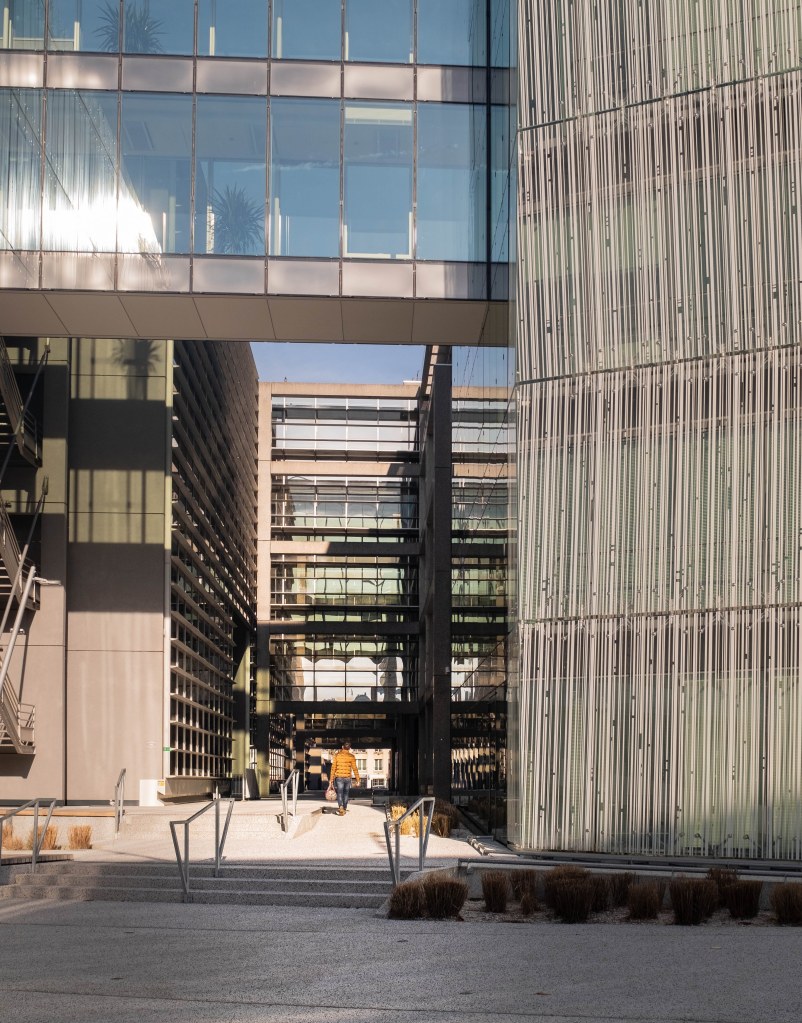
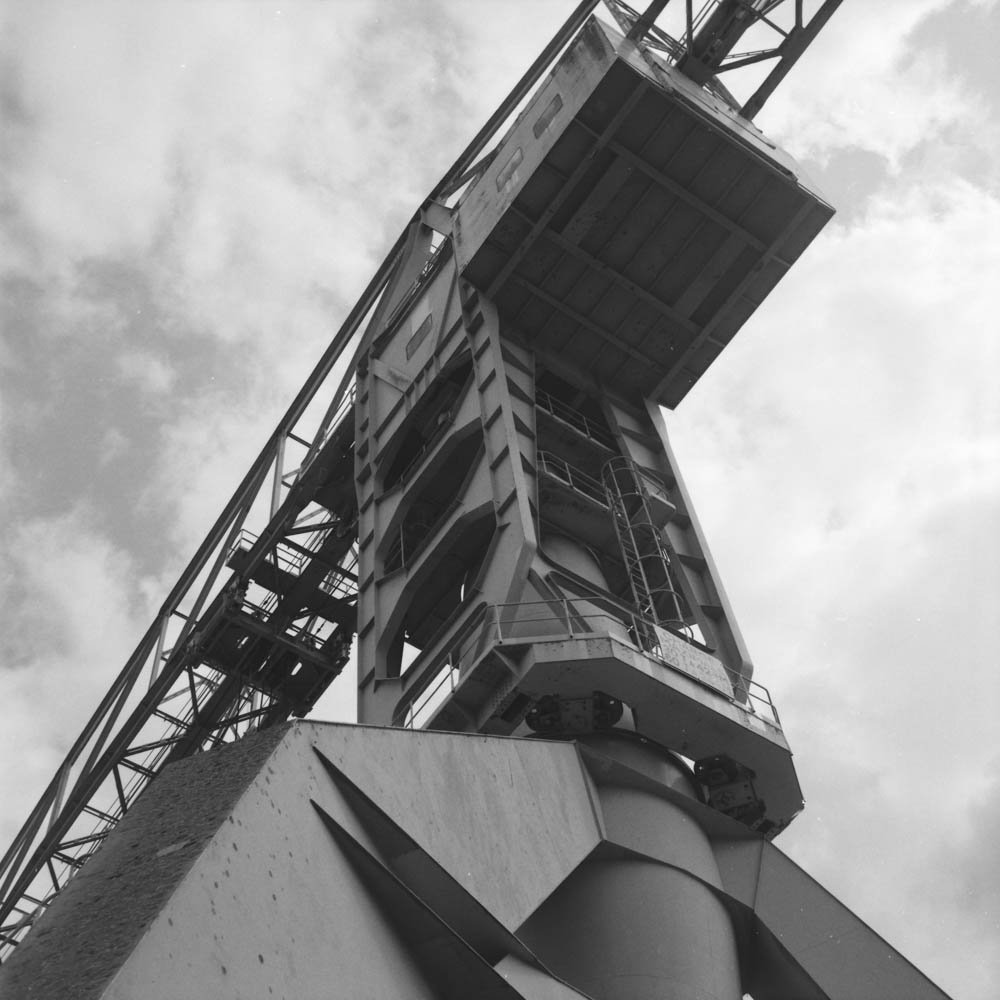
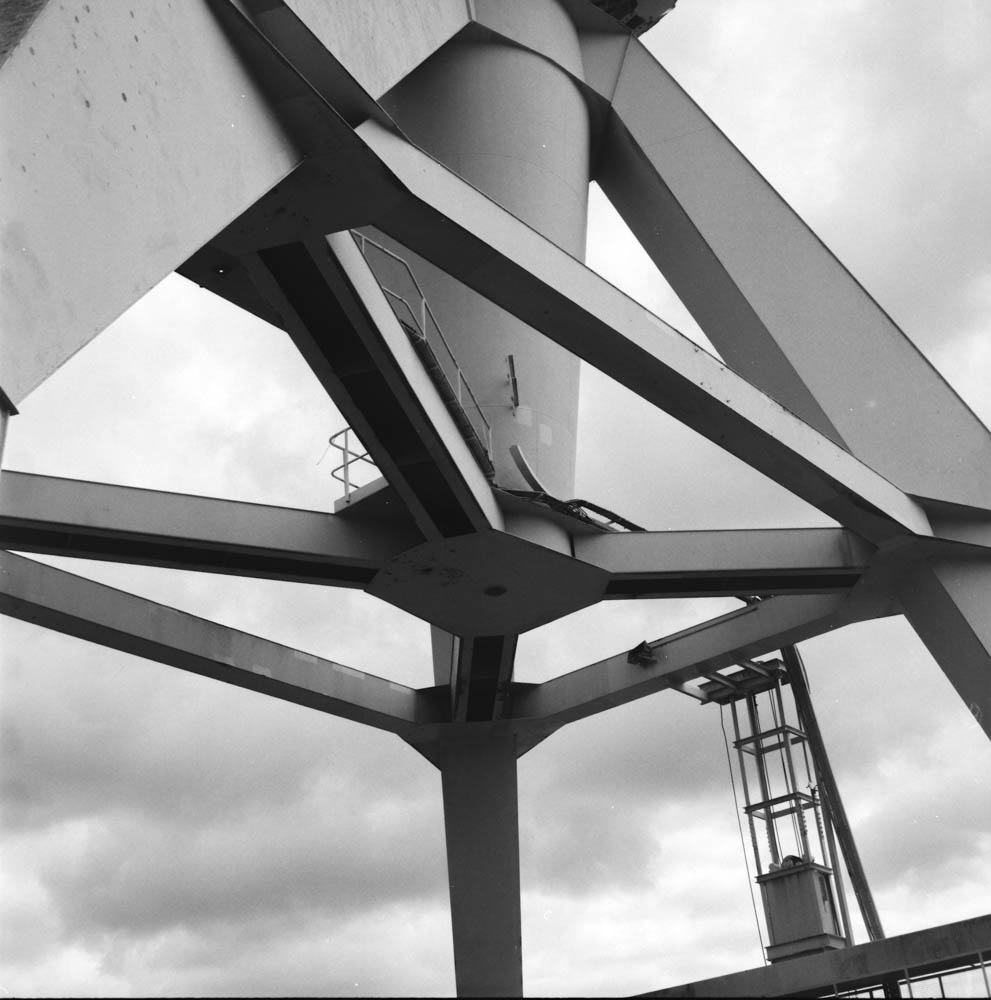
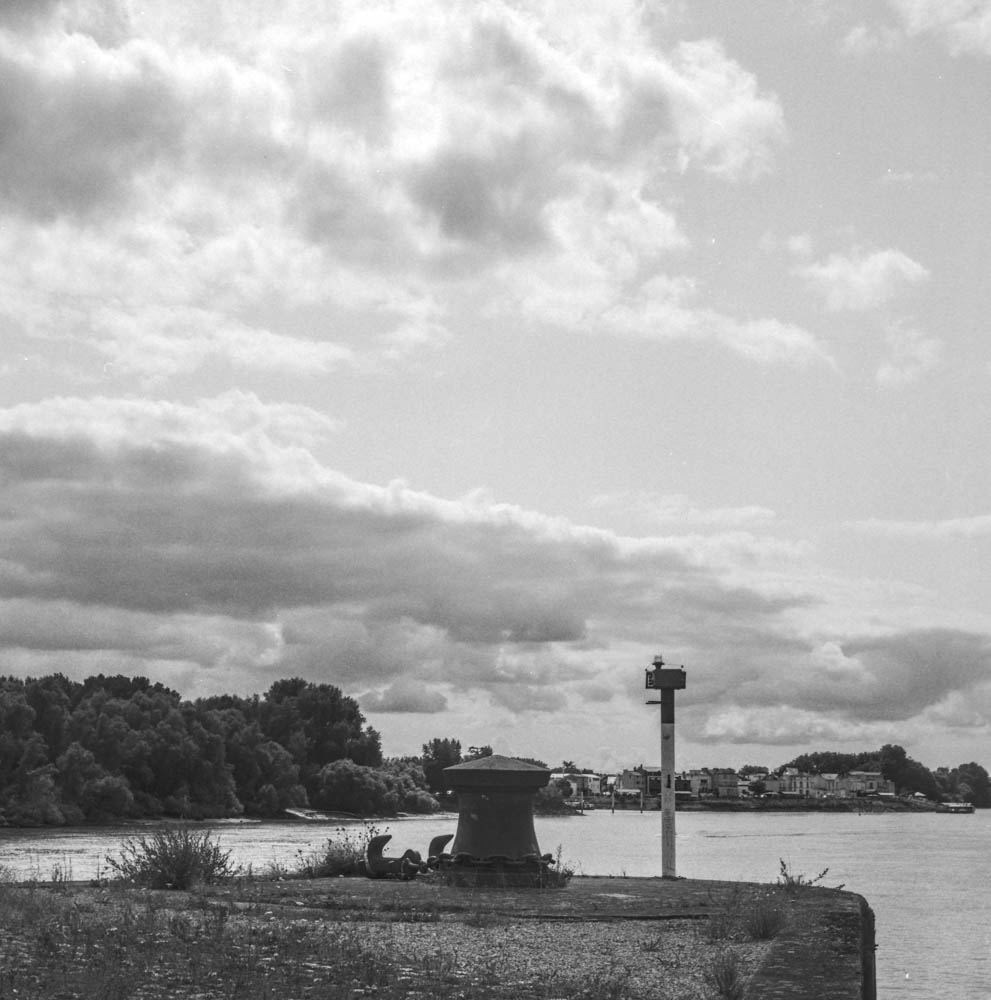
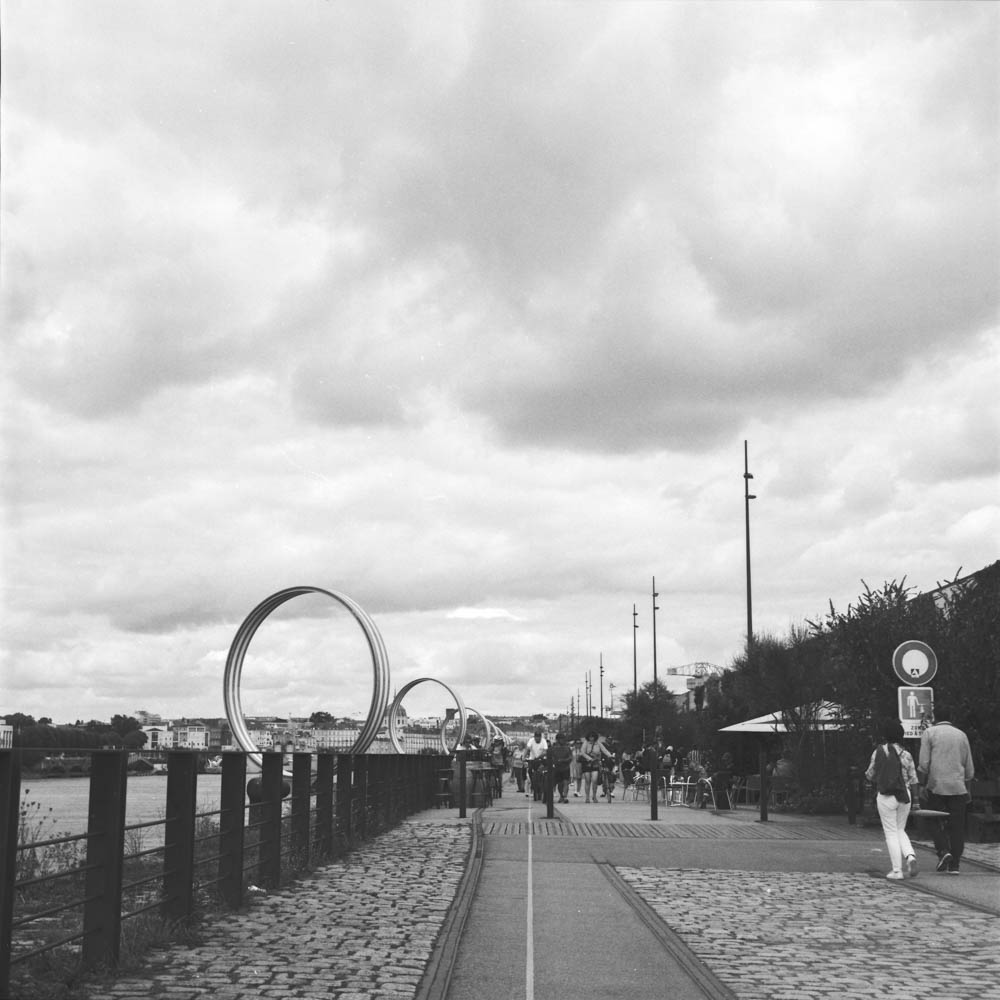
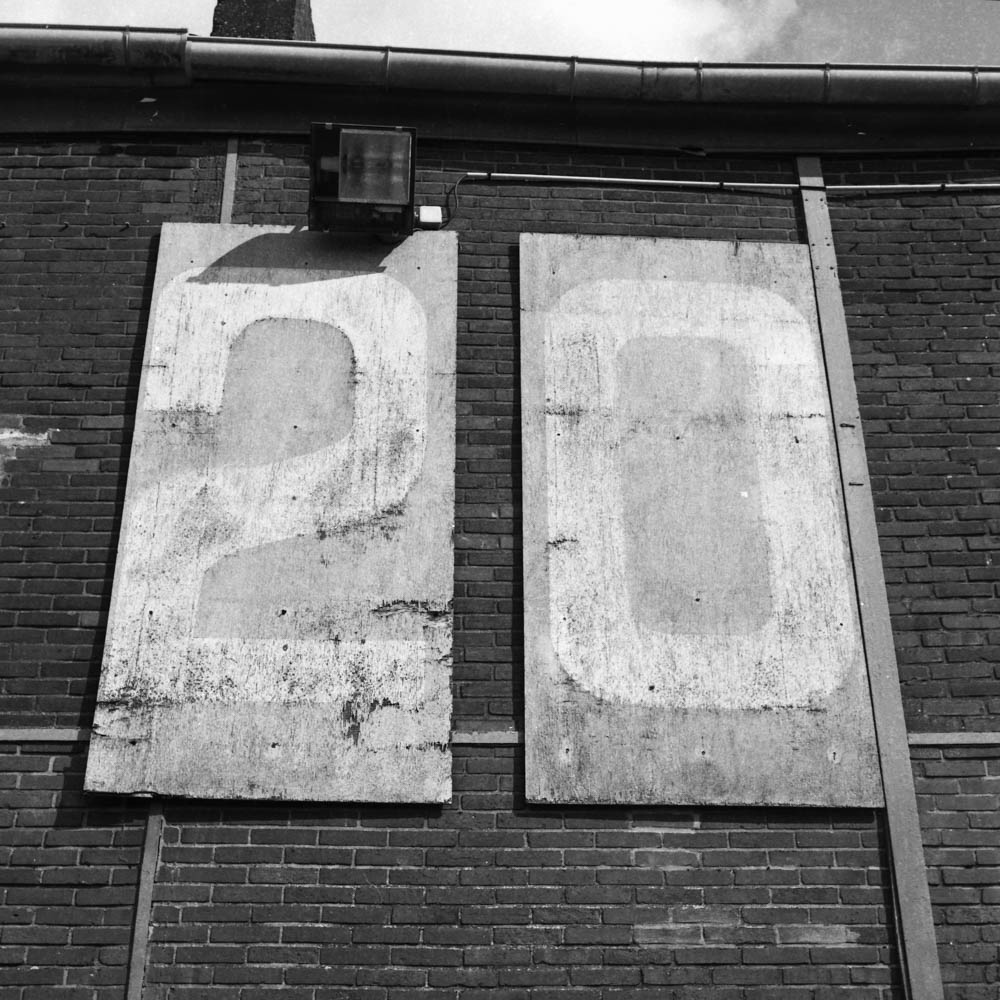
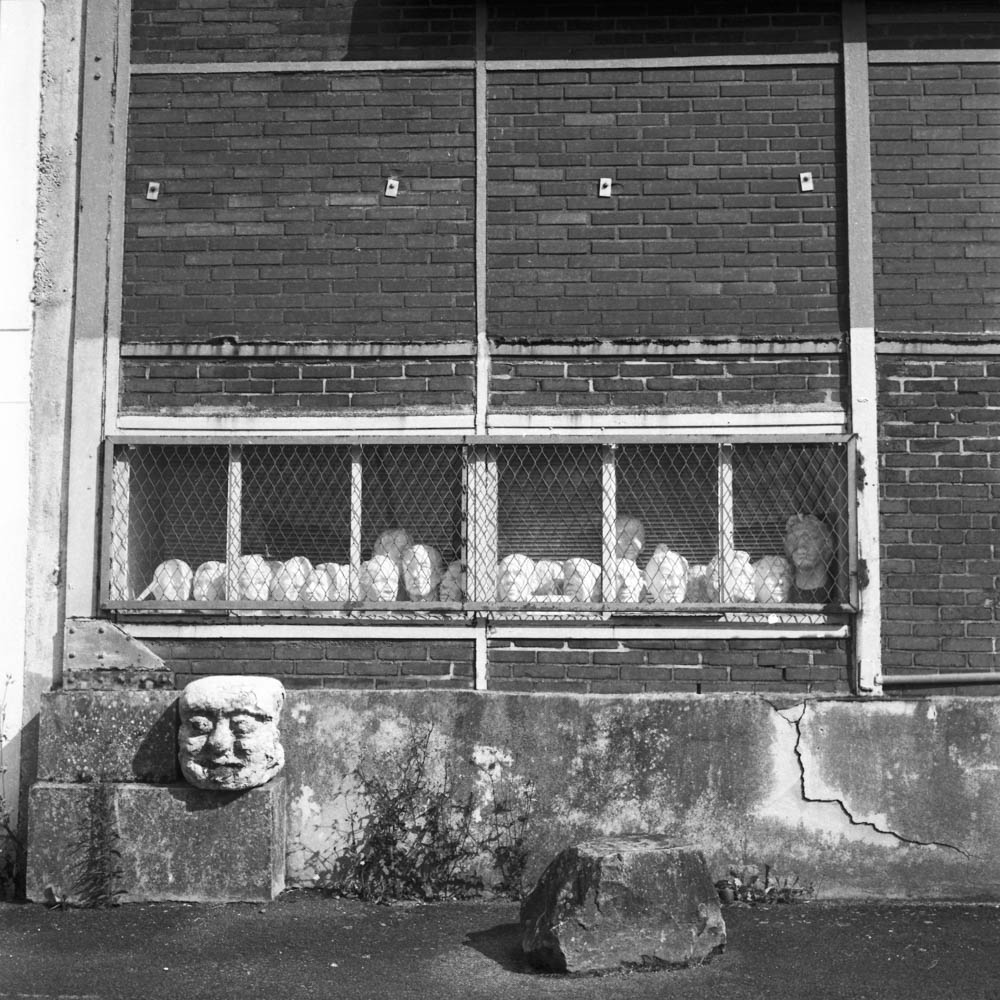
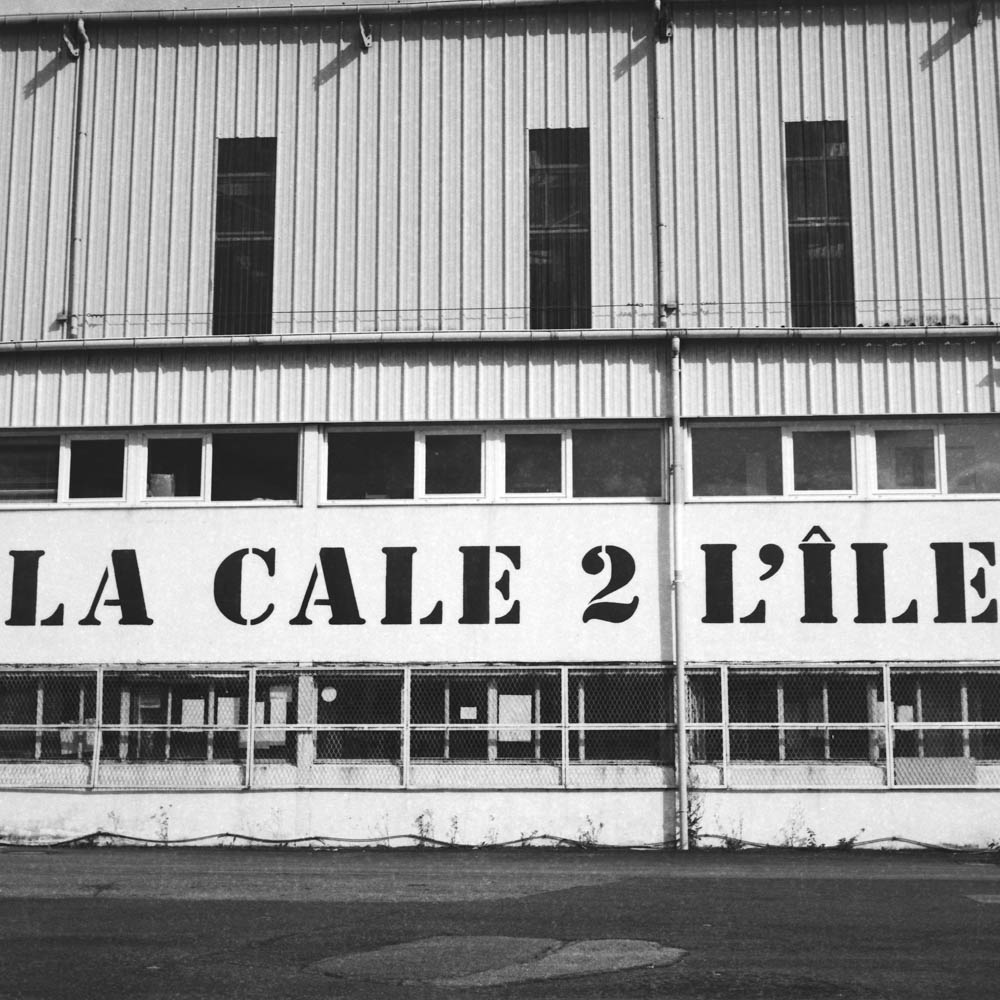
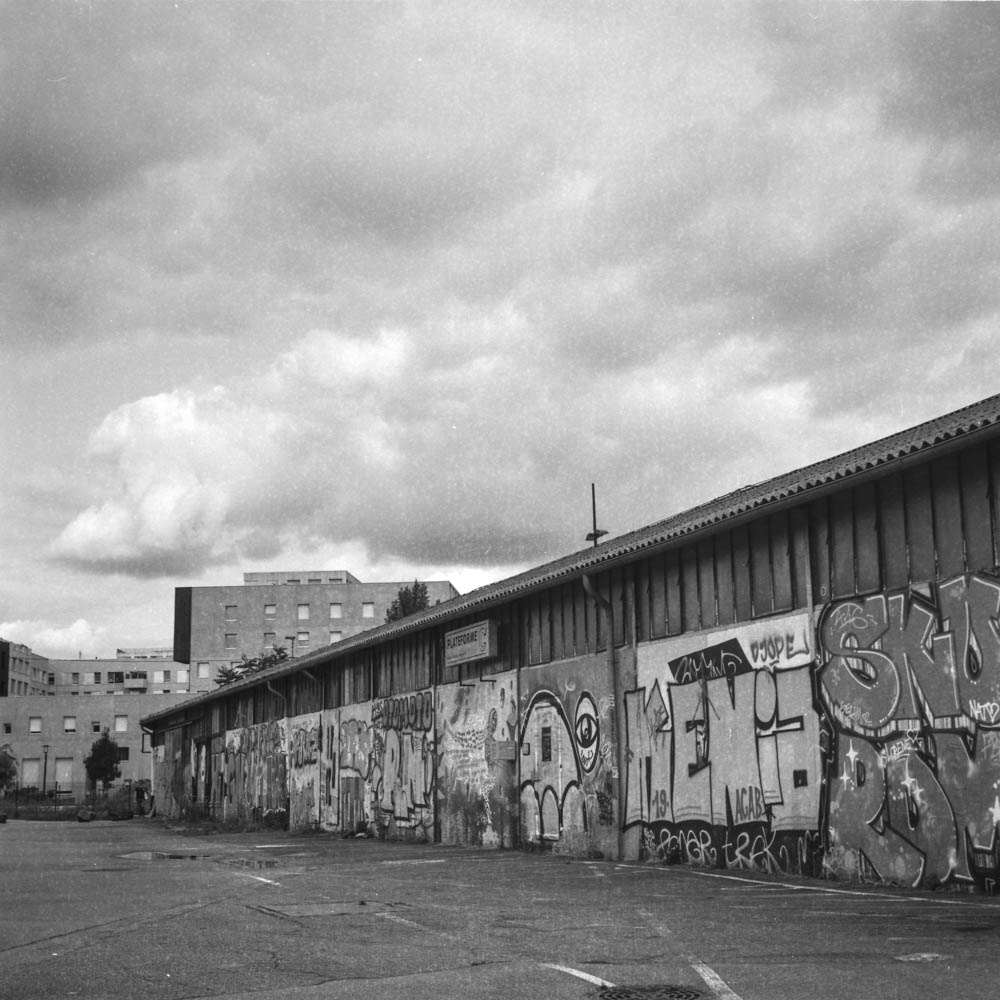
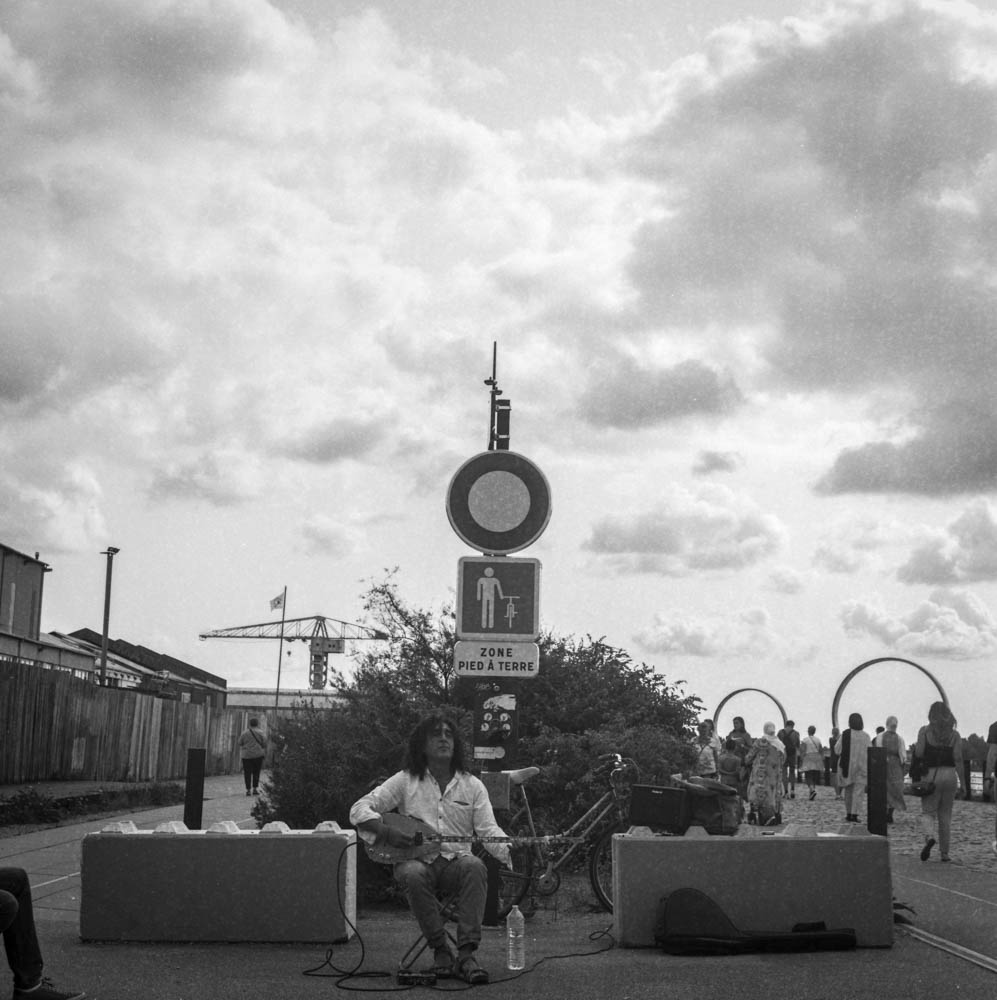
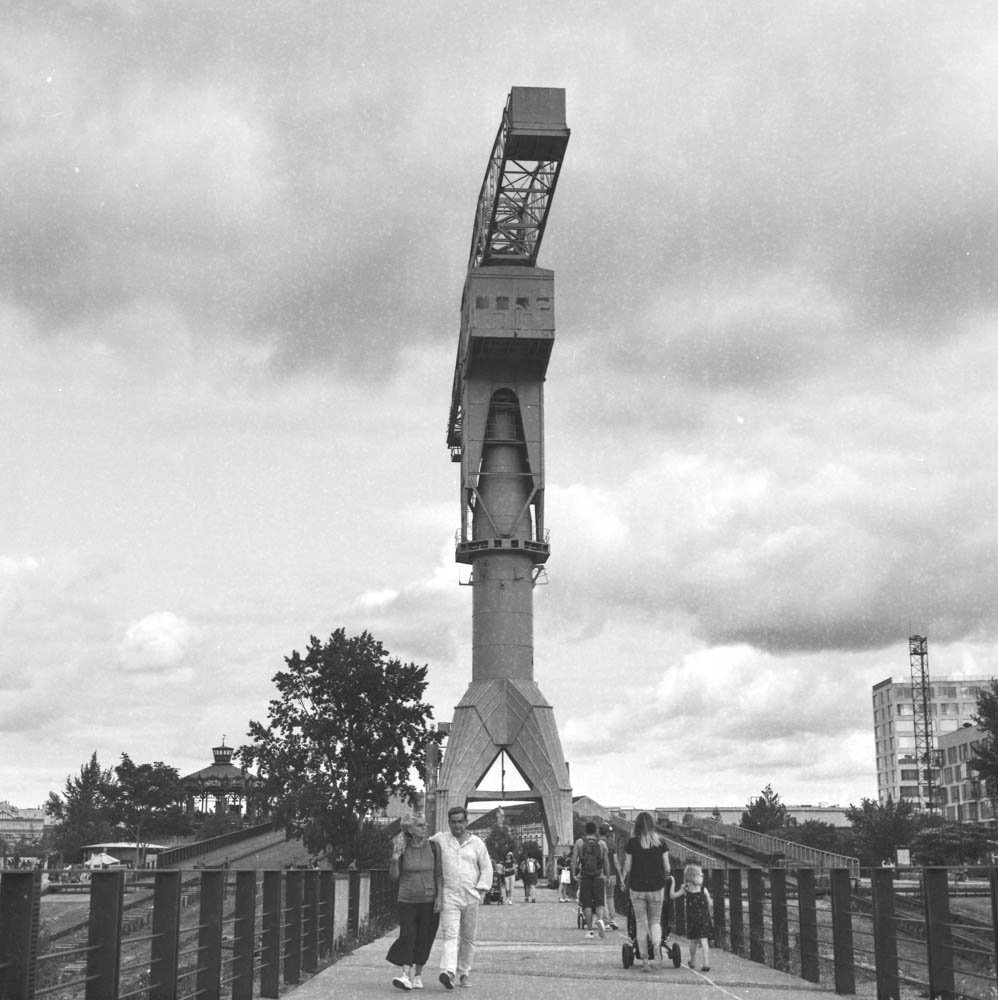
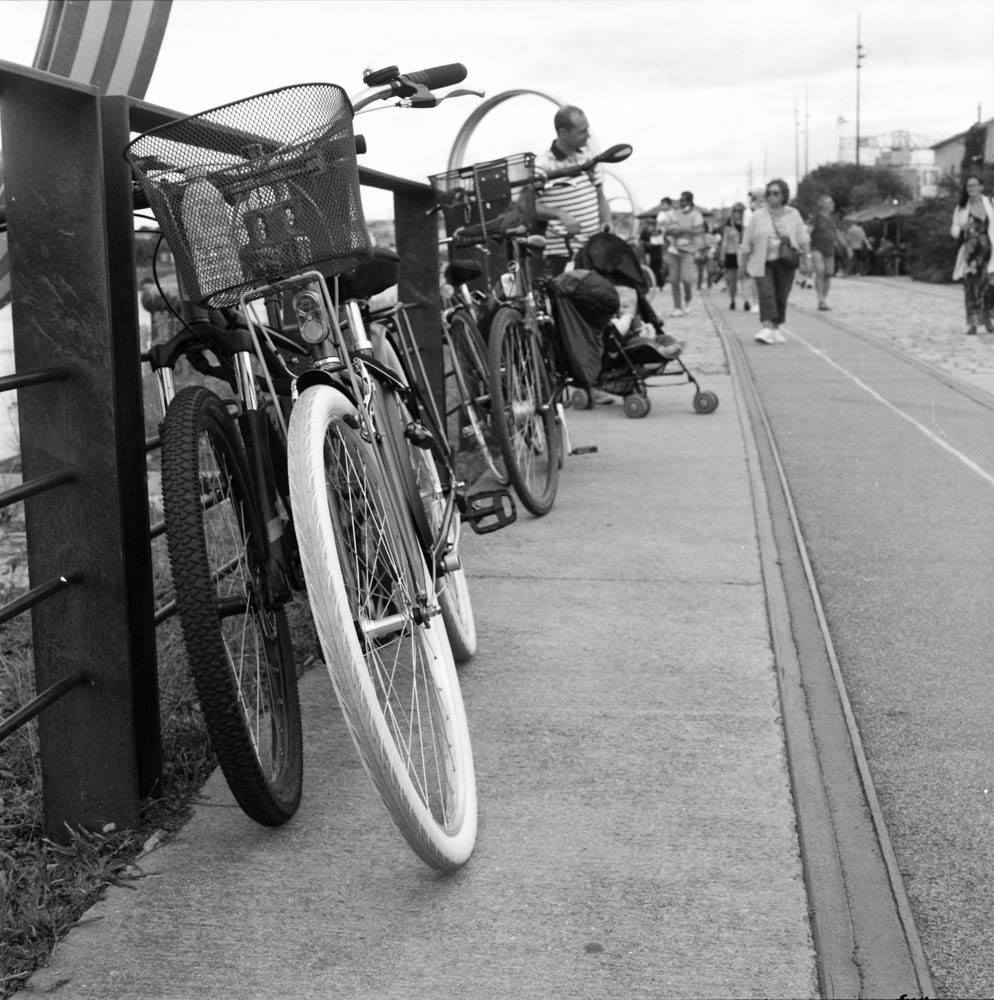
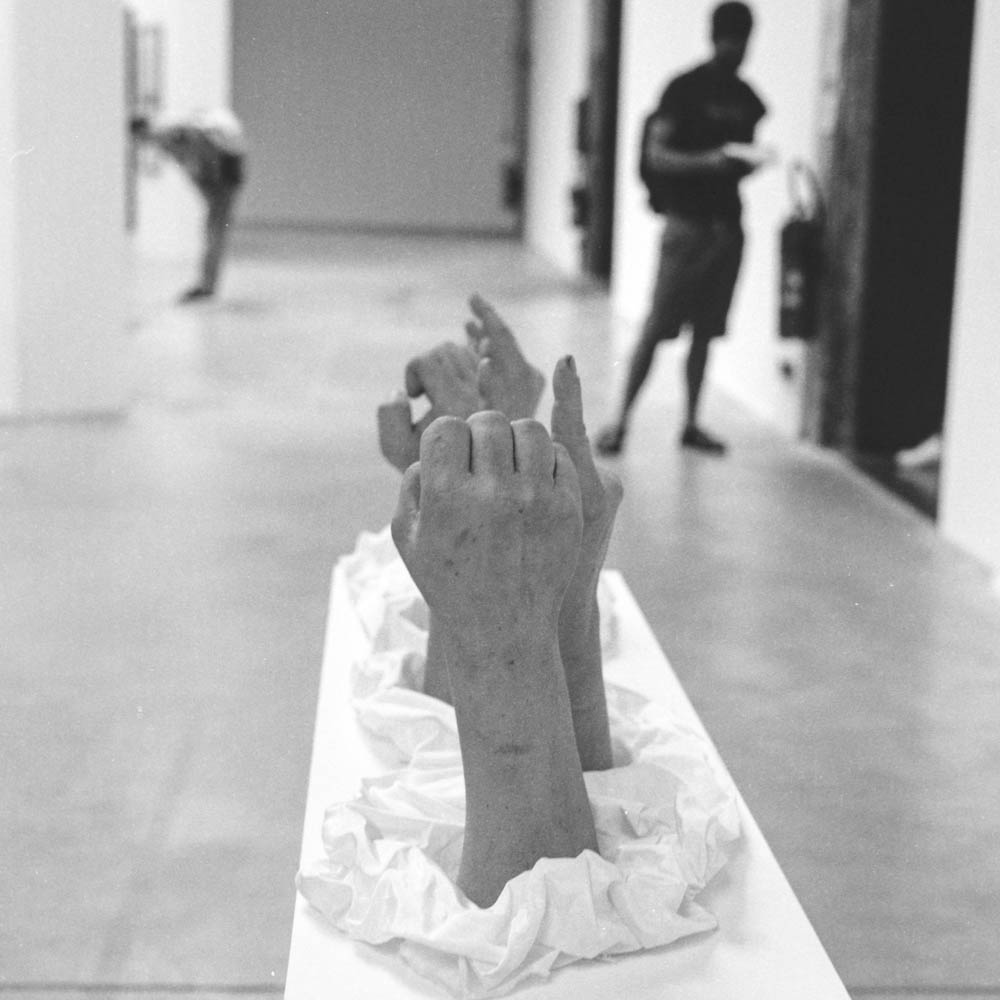
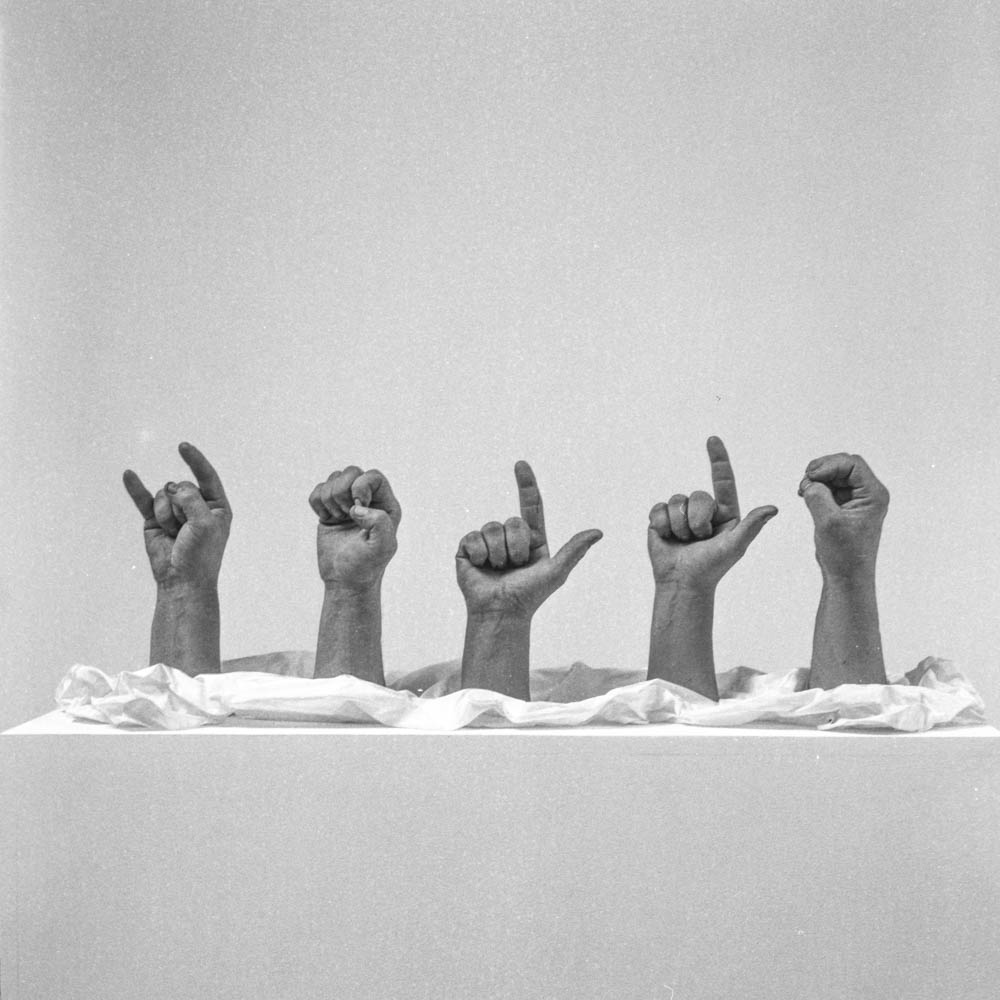
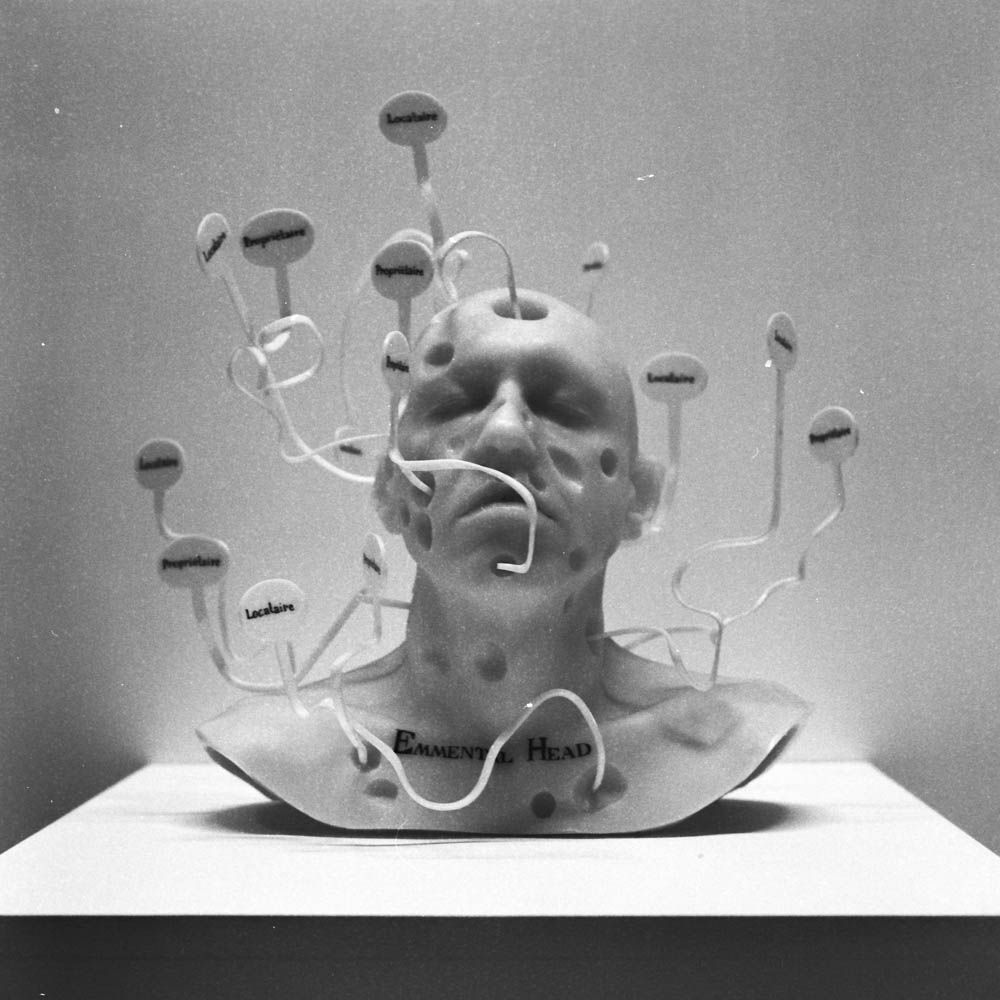
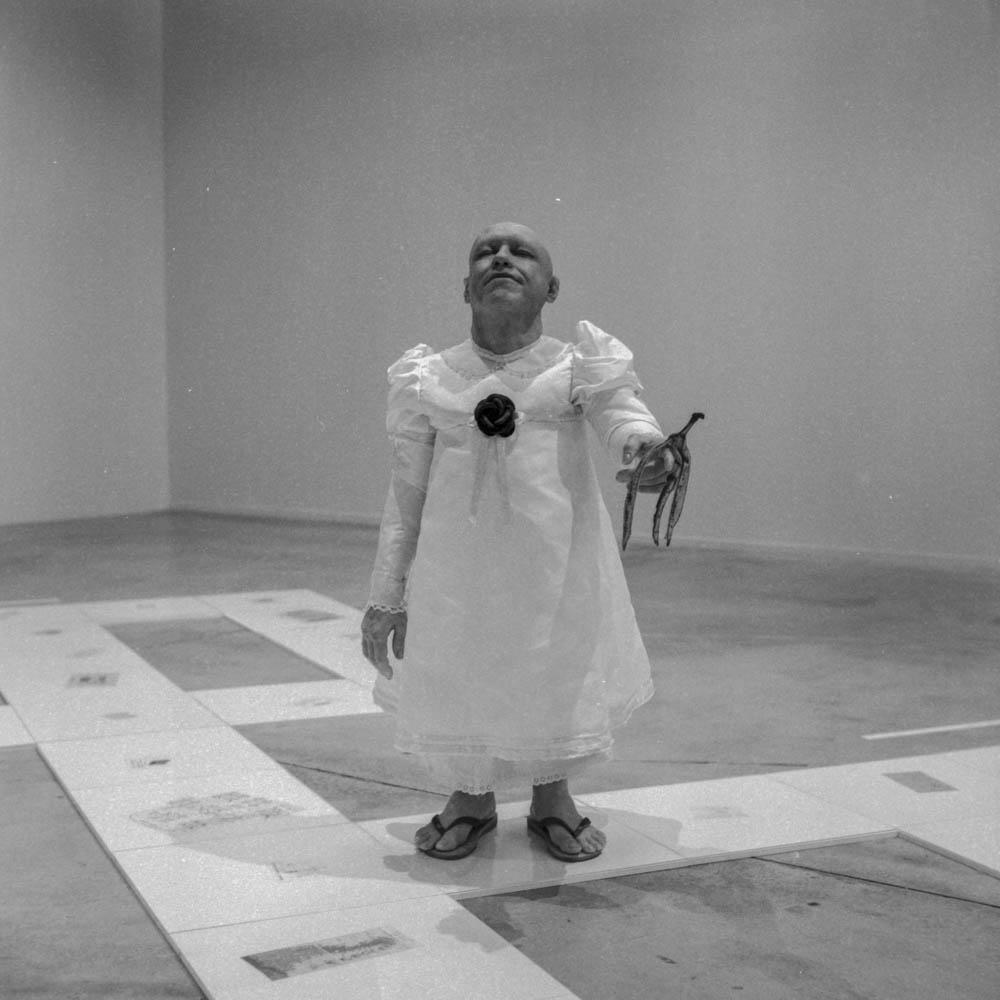
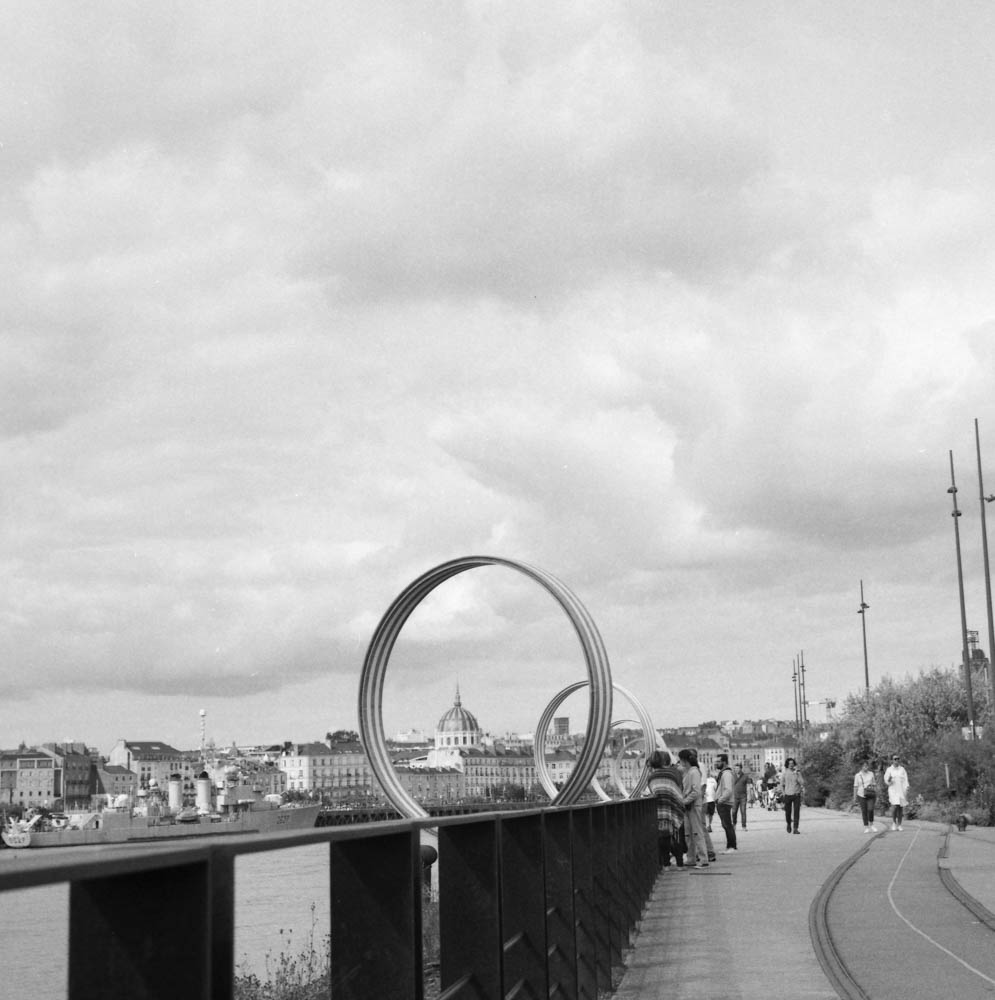
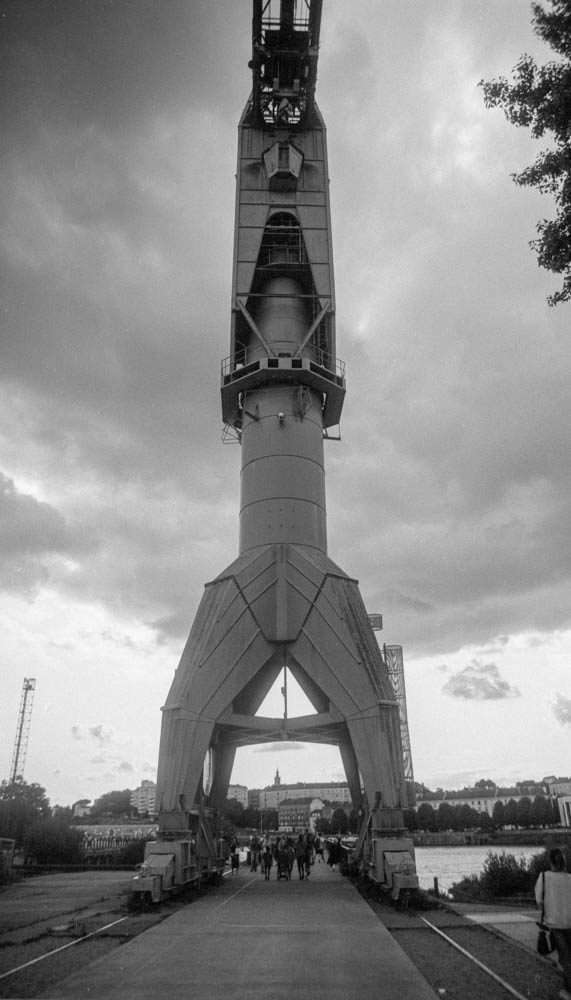
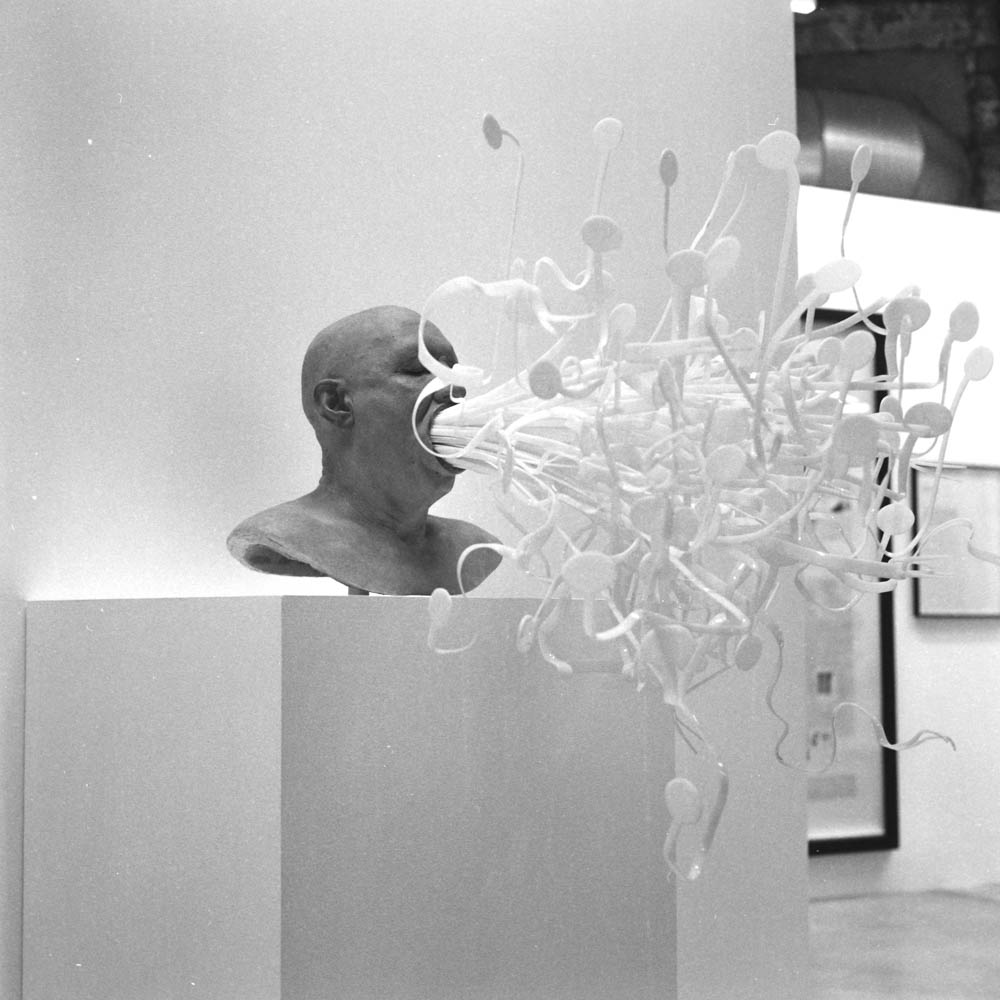
Back to the photos.  I shot the square photos on the Mamiya C220, using Ilford HP5+ film shot at box speed, developed in Ilfosol 3, and I took the other photos on the Pentax ME Super, using Fomapan 100 film developed in the same chemistry.  Fine grain with the Fomapan and not something I’m used to, but a change is good, right? Oh, and I took them at the Hangar à Bananes, and HAB Gallerie in Nantes.

My Mamiya C220


My Mamiya C220, aka my little baby, aka possibly my favourite camera, has just been repaired. It is a Twin Lens Reflex, or TLR for those in the know. Why is it my favourite camera? For a few reasons.

Reason 1. I can actually see what I’m doing. I look into the viewfinder and can see everything really clearly without my glasses. The perception of depth of field is amazing and it’s almost like looking at a 3D tv screen.

Reason 2. It looks so cool! When I’m out on the streets the camera becomes a conversation piece. If I’m taking photos with my Canon 6D and zoom lens, people can get slightly tetchy and think I’m up to no good. Going for the understatement of the year award. However with the Mamiya they seem to think a guy with that big a camera around his neck deserve special respect, even though size doesn’t really matter and it’s all about the moment you’re capturing on film. It starts a conversation and therfore an exchange. You tell them that it’s Medium Format and what that entails. which leads me up to Reason 3.

Reason 3. It’s a Medium Format camera. Now, all the hipsters started discovering film a short while back, and talked about how awesome it was Dude! They were there with their Canon Ae1’s feeling so “with it” because “film is just so authentic man,” and because “film photography is real photography”, and that “digital just isn’t the same man!” Well guess what, you bearded little hipster you, film is how we OG’s rolled back in the day, because that was all there was. That was with 35mm film photography with 135 film. Medium Format just blows their minds because it’ 6 x 6, which translated means each negative mesures 6 centimetres by centimetres. Yes, size does seem to count again. You’re basically getting a huge amount of information on your negative.

Reason 4. Because of the depth of field you get with that 80mm lens. Alright you can get the same depth of field with a smaller lens, but it’s not the same. I’m worried that size is becoming a theme in this article and may show lack of confidence and hidden insecurities…

Reason 5. Did I say it looked really cool? I’ve just looked further up and it appears that I have already said that. Remeber what I said in a previous article about the importance of the “film process” which takes you from buying the film, putting it in the camera, taking the photos, right through to developing, and then scanning your negs, etc. When I use digital, it’s great. I love it. It is so dependable. I press a button and the camera can do so much. It’s like driving my Renault Scénic to work every day. It does the job and does it really well, and I still enjoy it. Taking the Mamiya out for a spin is like getting that beautiful vintage MG out of the garage and driving out to the coast, and just enjoying the wind in my hair, or my memory of what that felt like. It’s a camera that gets me excited to go out and take photos.

Was it good for you too? Right. Let’s get down to the nitty and the gritty and show you some photos. I used two rolls that day. One was Fomapan 120 format ASA 100, and the other was Ilford HP5 shot at box speed. The C220 doesn’t have a light metre so I calculated exposition using “Sunny 16.”