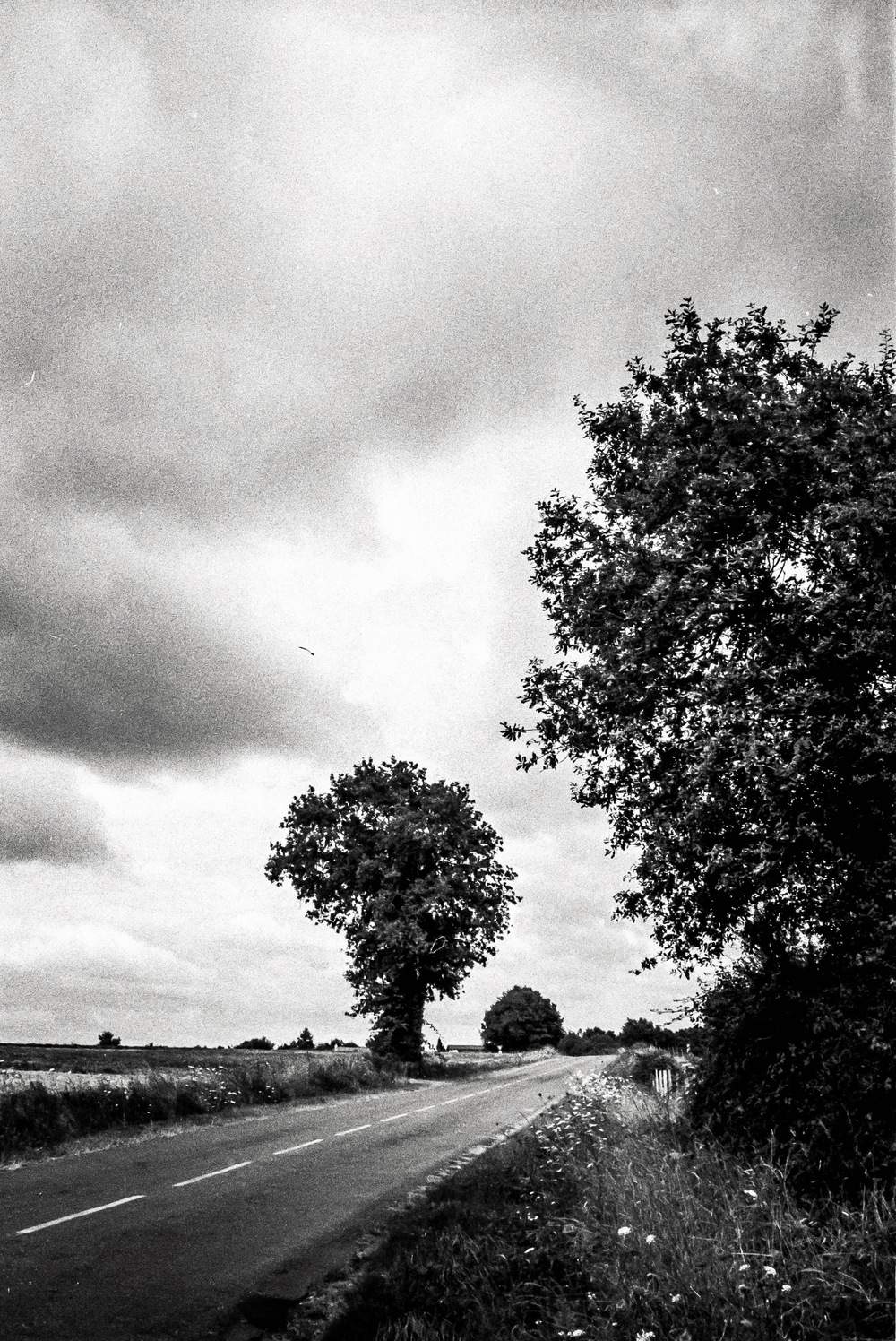
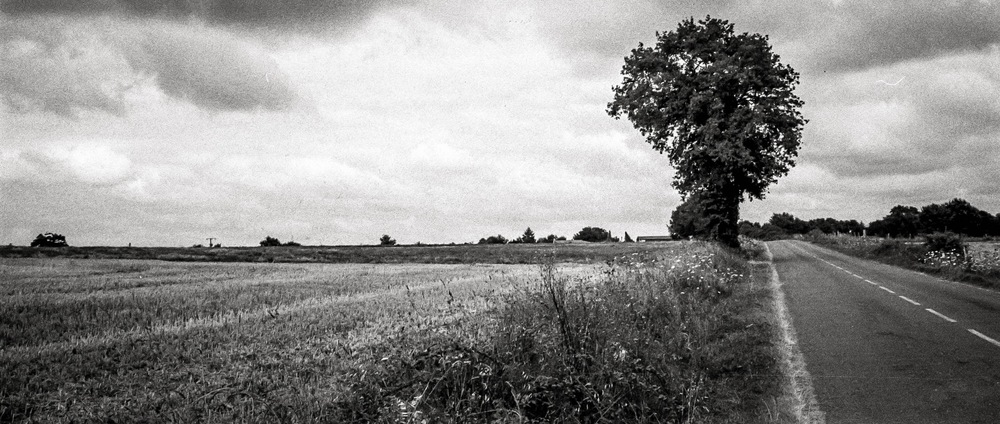
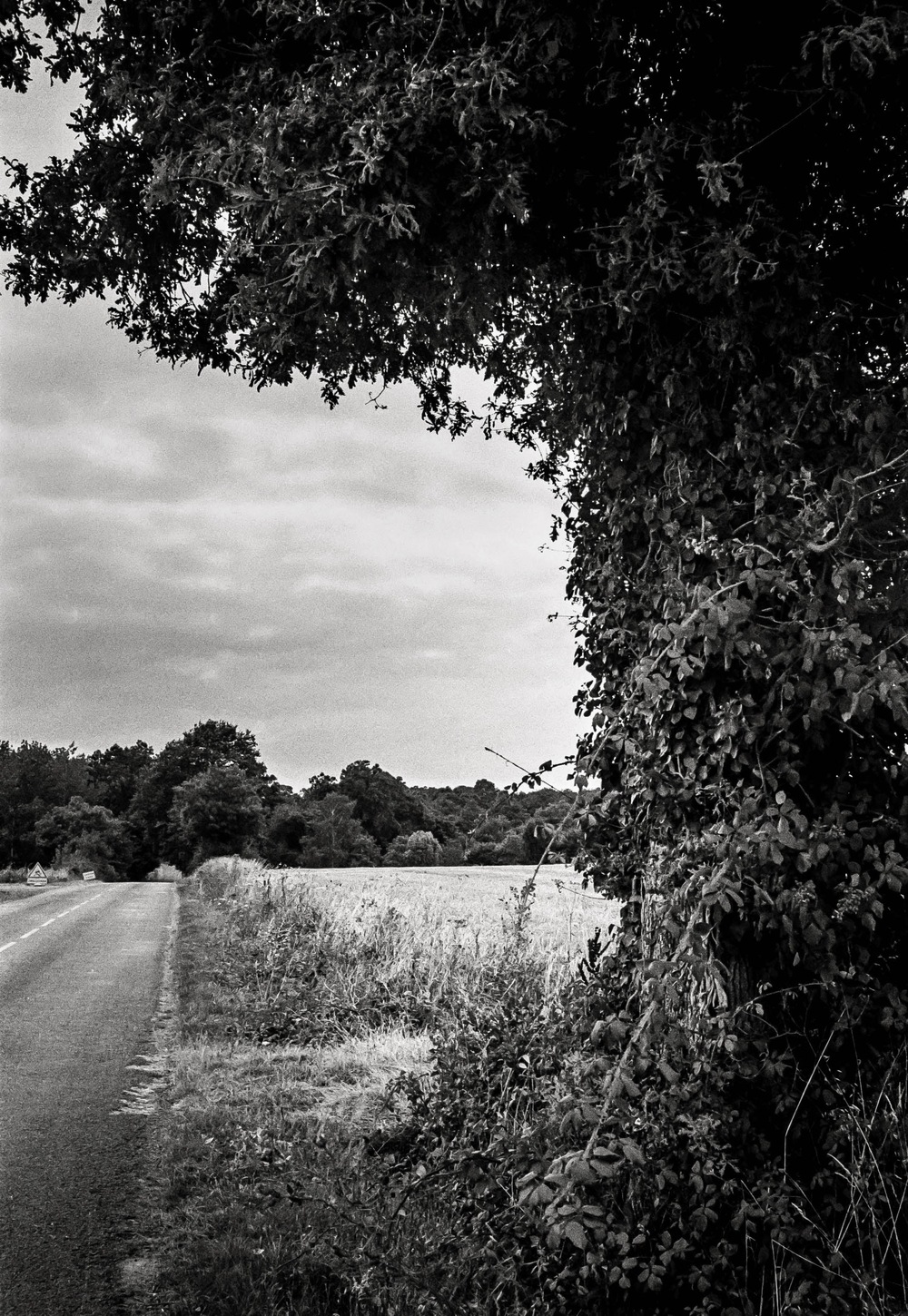
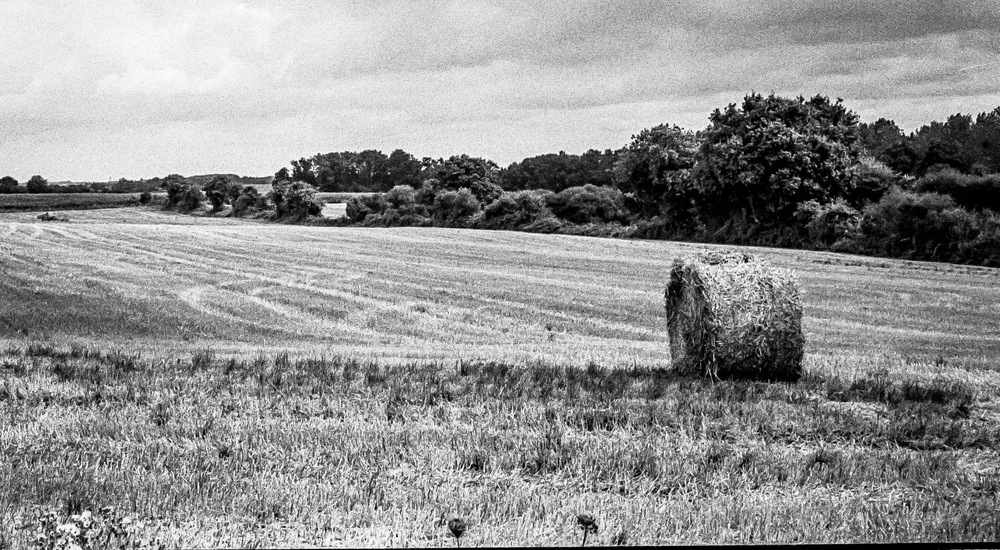
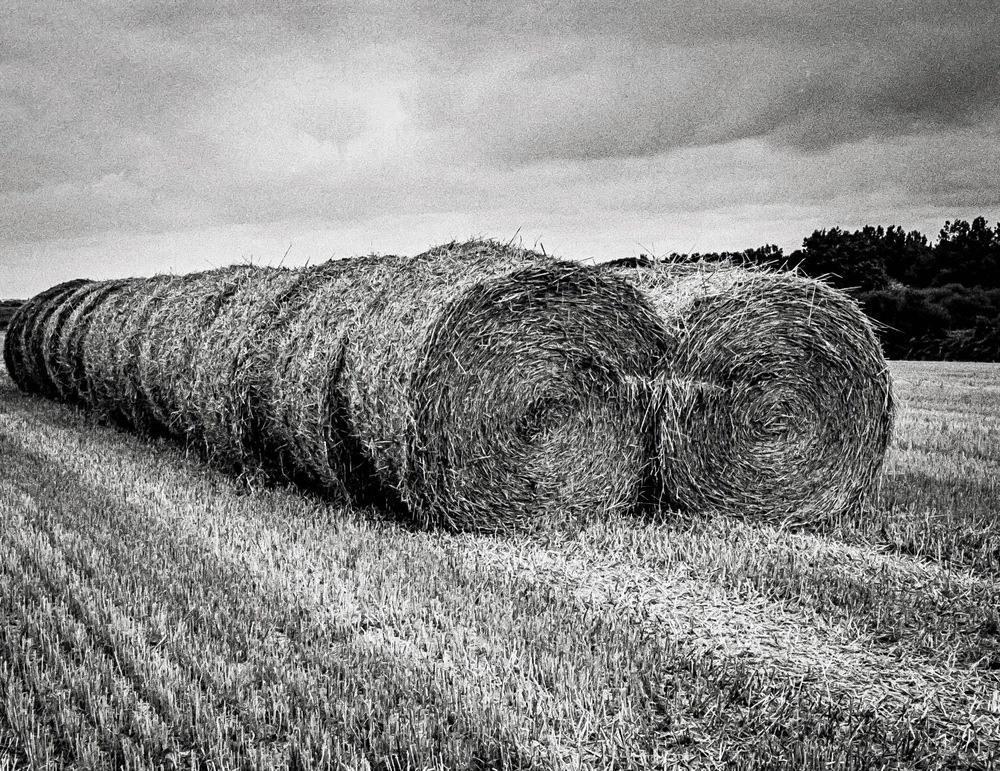
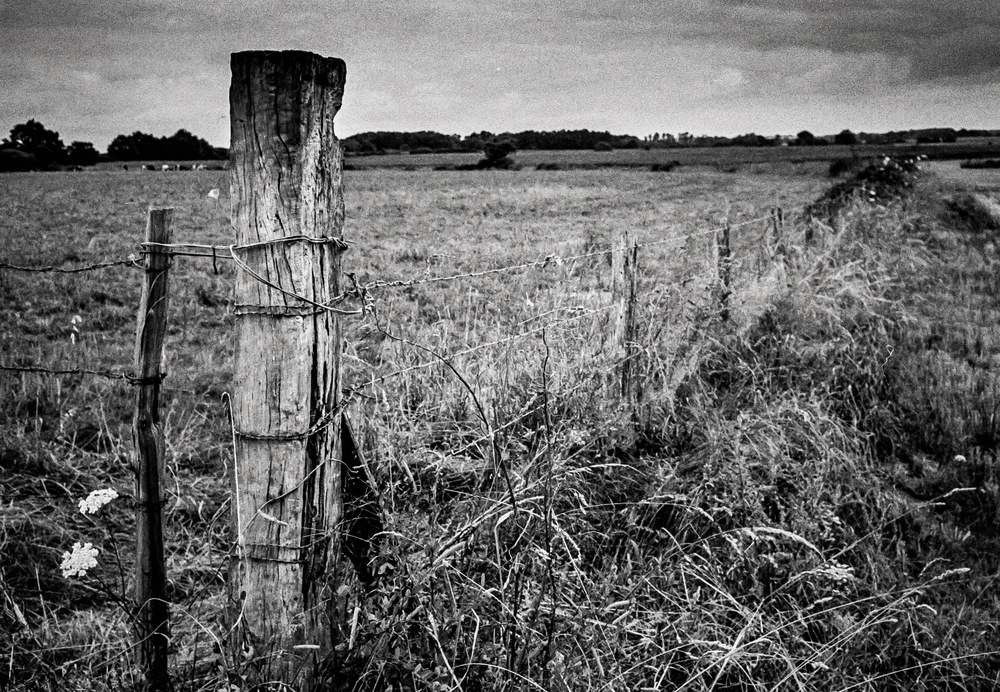
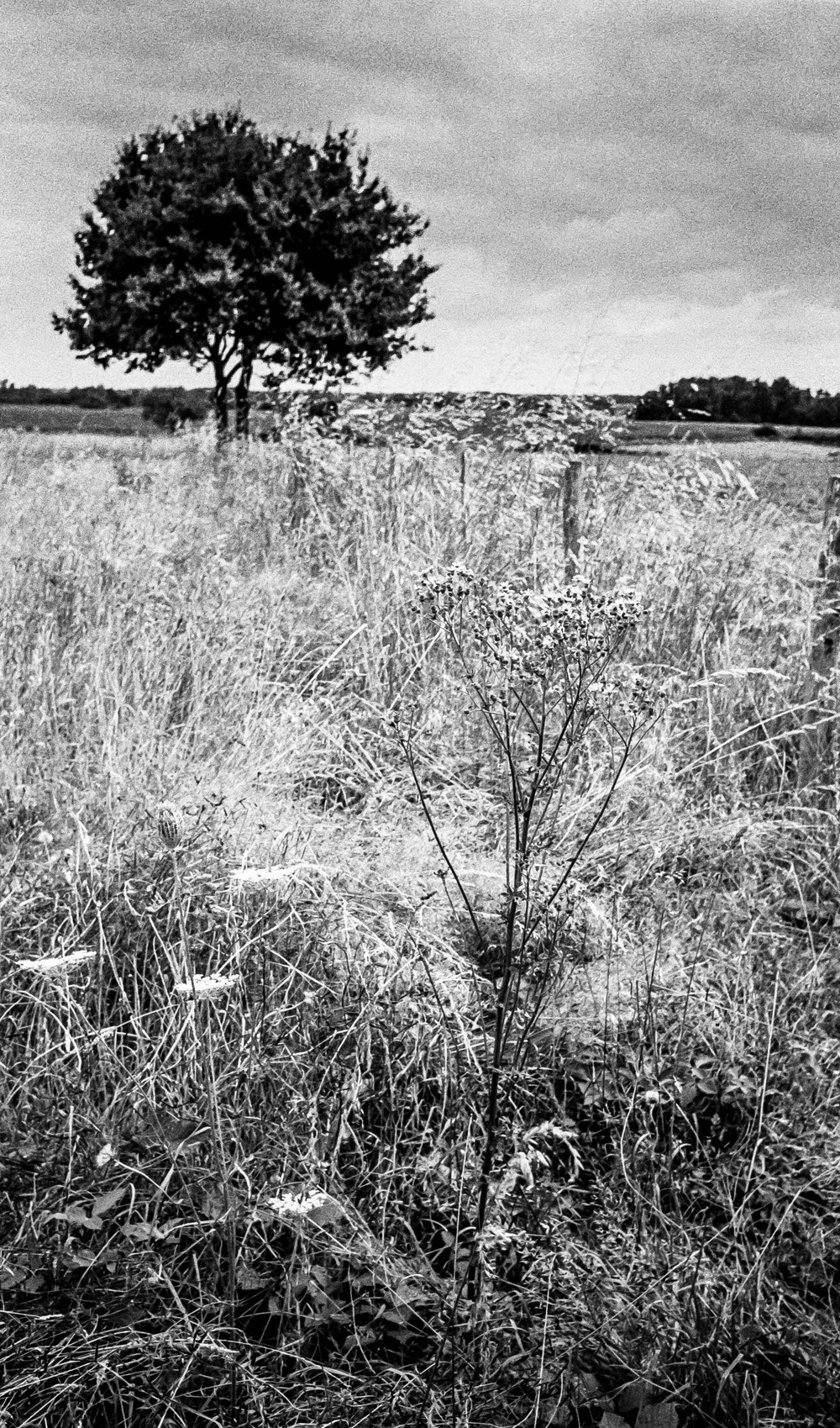
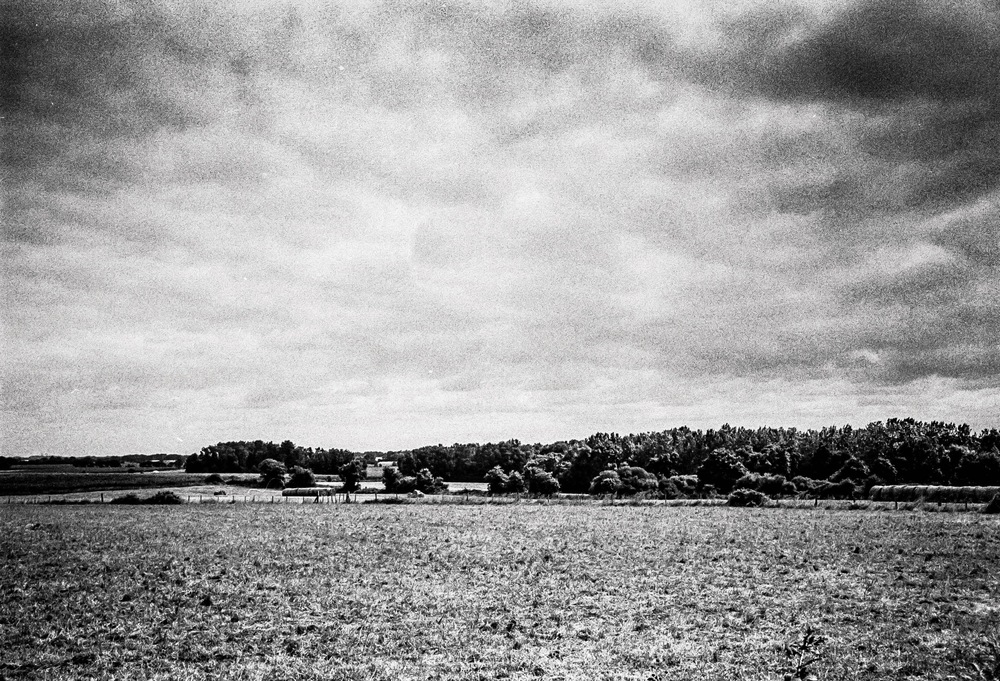
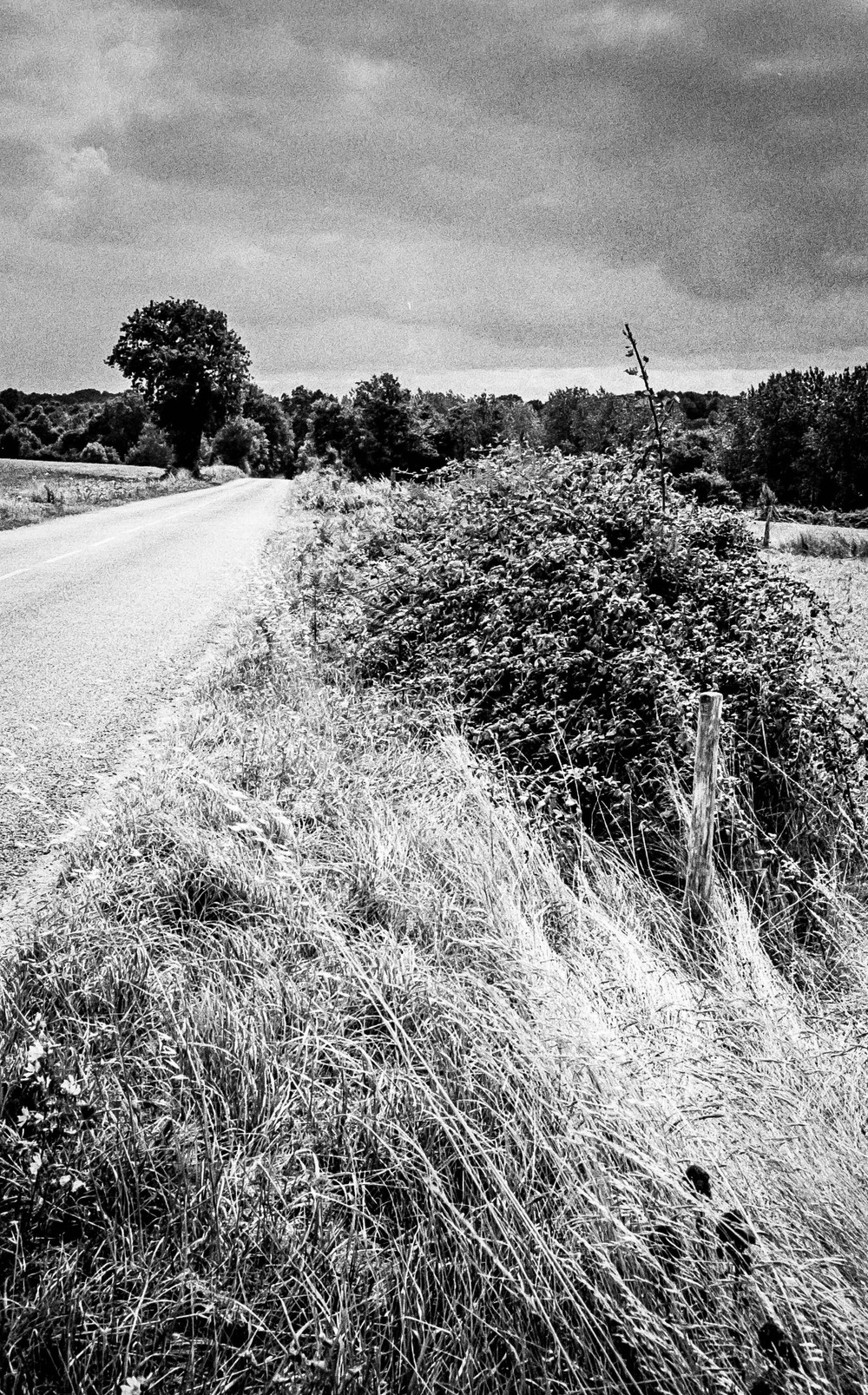
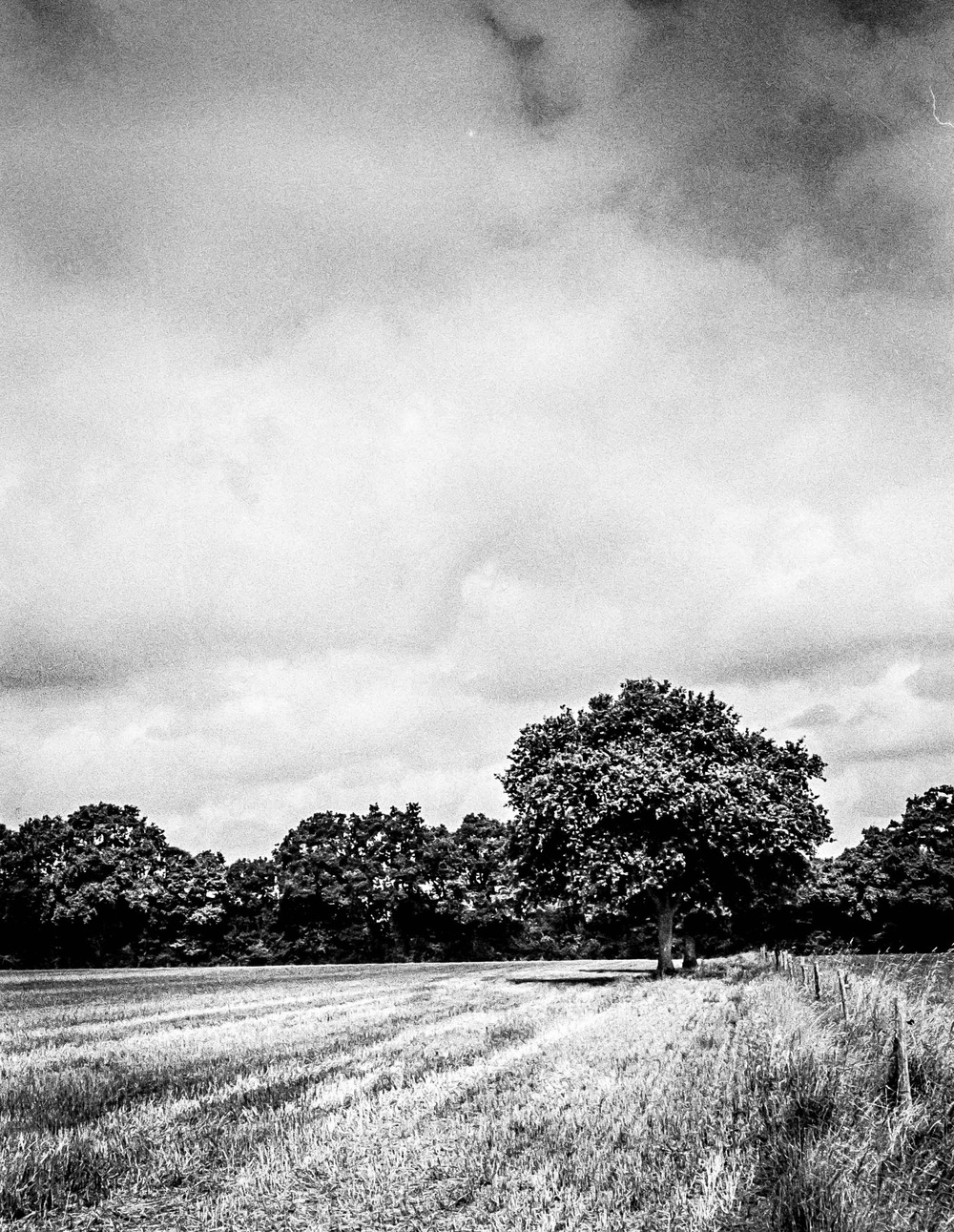
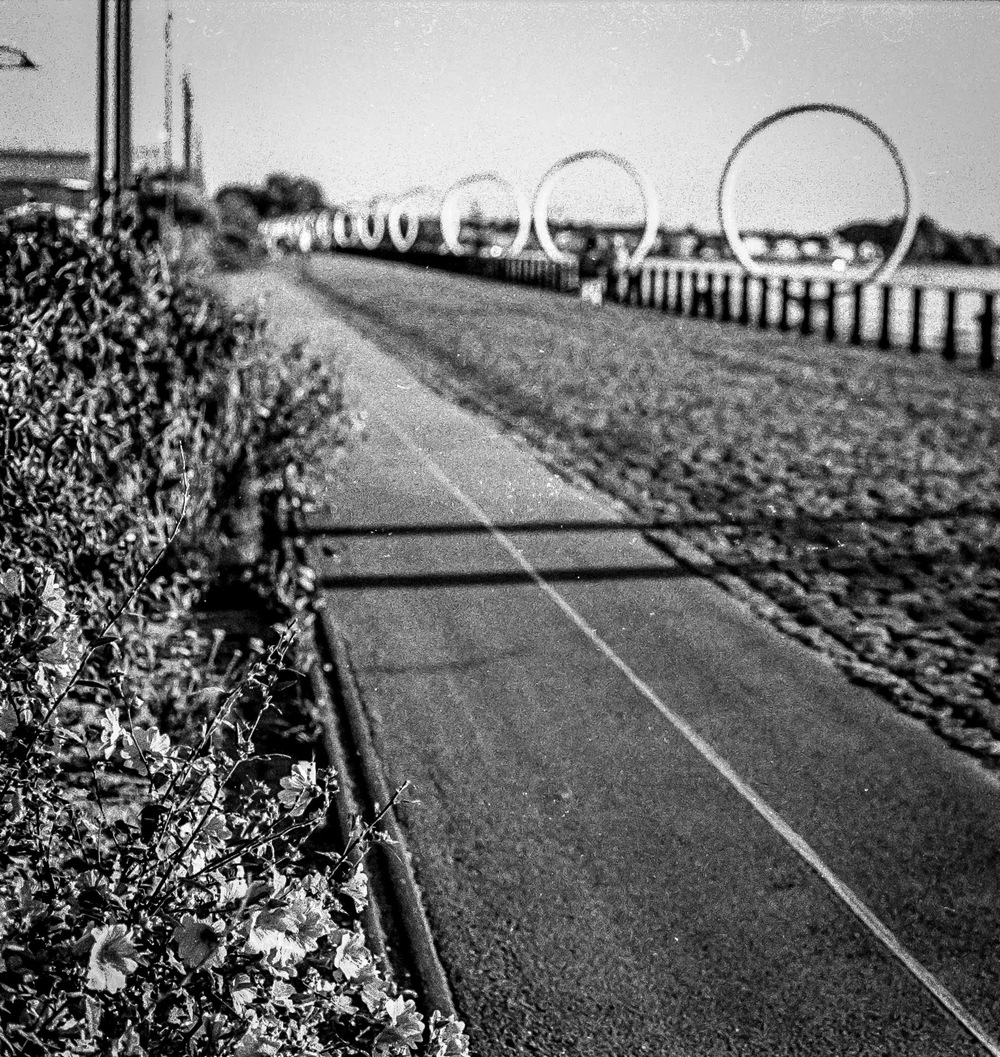
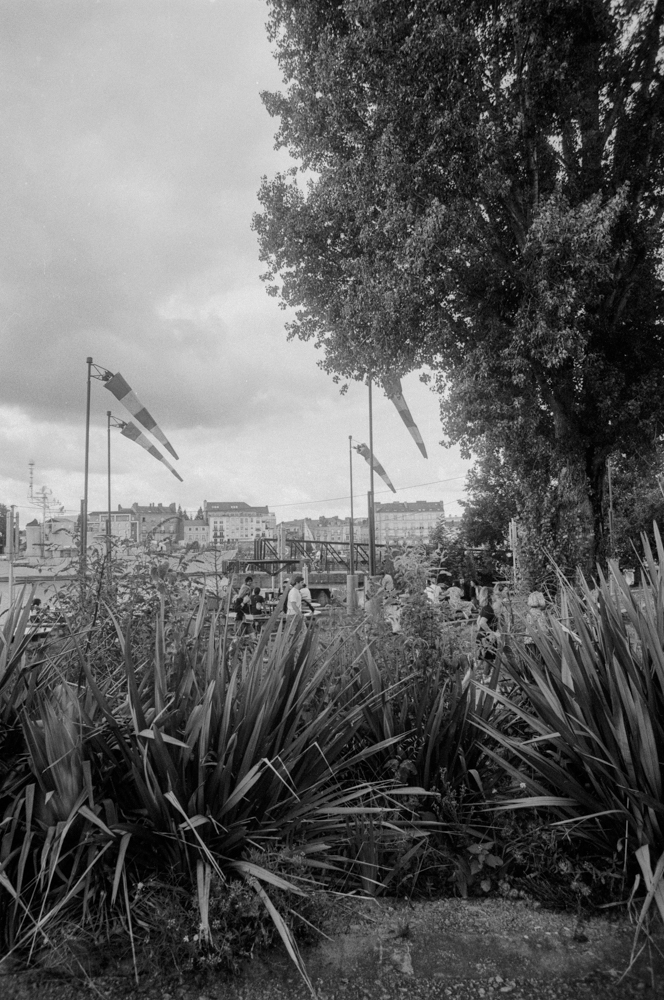
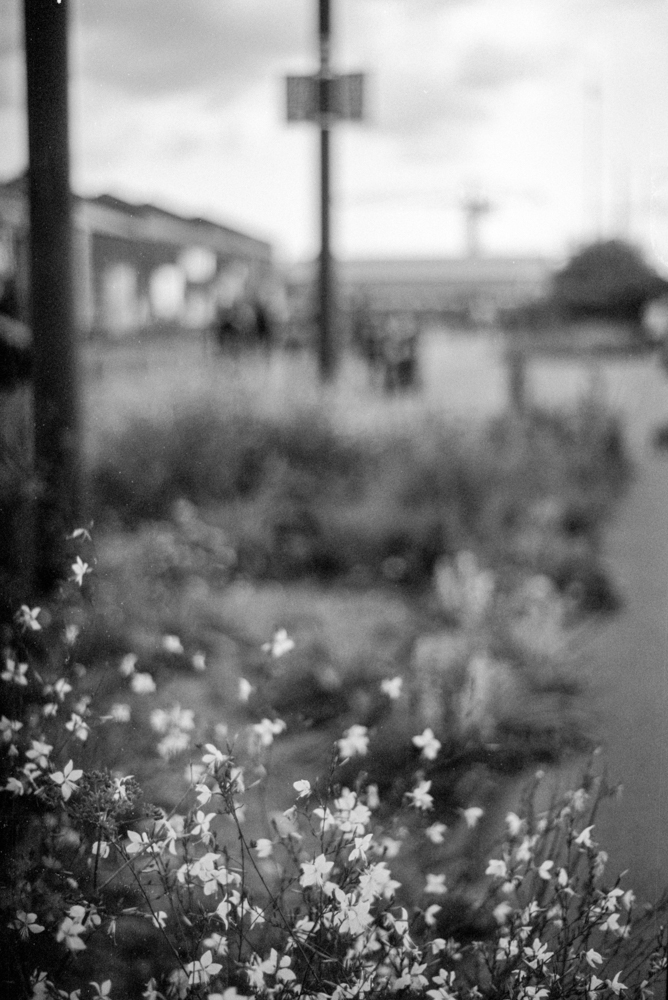
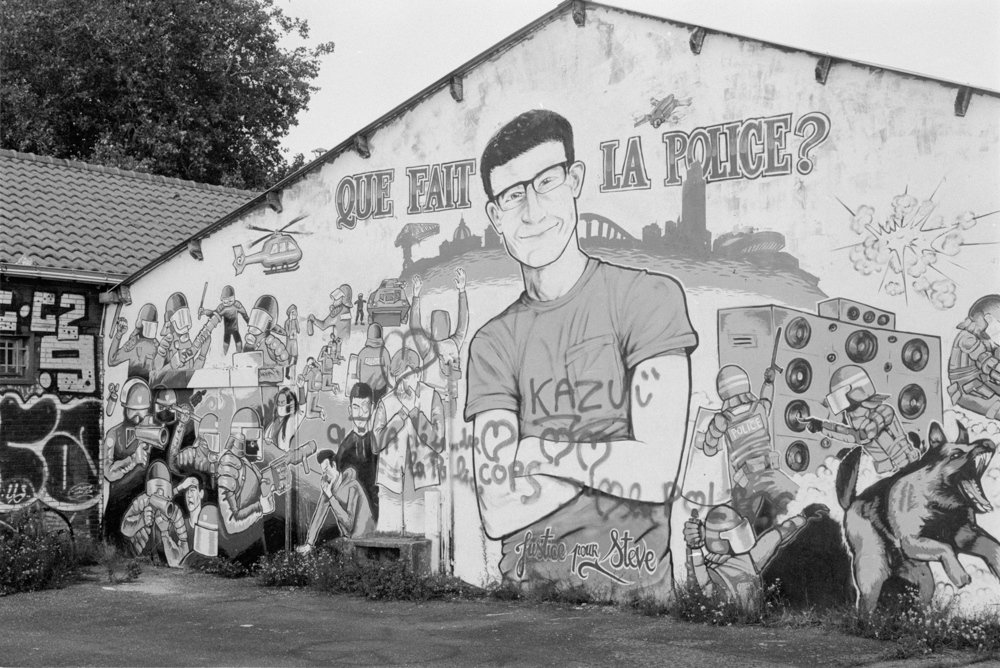
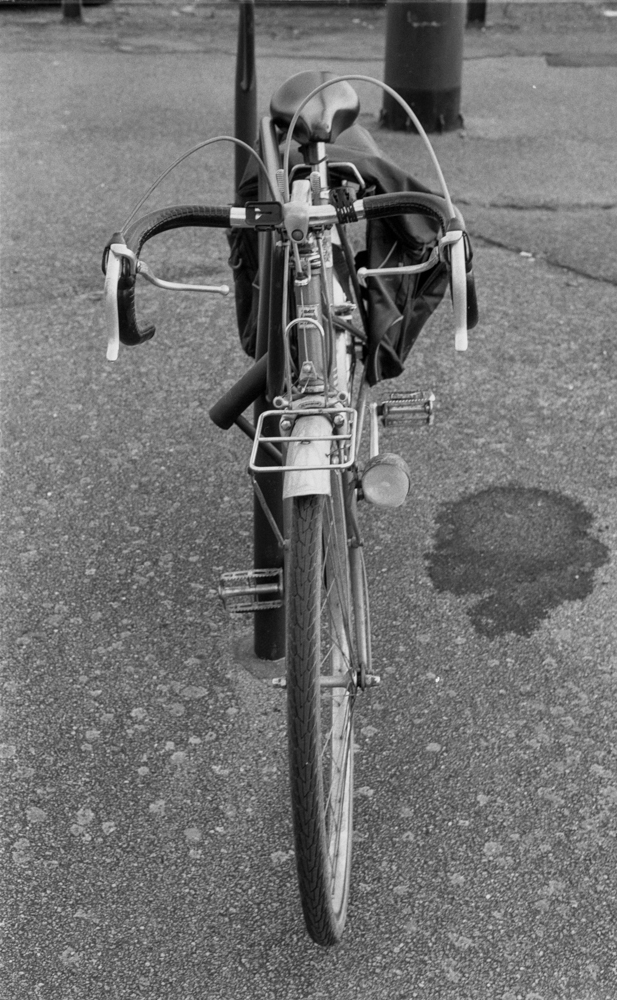
Sometimes we can have a tendency to ignore our habitual surroundings as photographers. In this series of photos from the film archive, I’m going to show you part of the route I use to go to work. What is ordinary to one person might be an pastoral idyl to somebody else. It only goes to show that there is beauty everywhere in this world and one of our roles as photographers is to document it for future generations.
My wife, bless her, has always said that my black and white photos have a timeless feel to them, be they in the city or out here in the country. I think that using film, especially this grainy HP5 Plus, even shot at box speed, adds to that sentiment. The fact that I used Rodinal as my developer might have accentuated the grain too. Also don’t forget that this is the beginning of my return to film development so I might have been a little vigorous in my “agitations” whilst developing the film. I now use mostly Ilfosil 3 and lower grain film, and have brought a little more “calm” to my “agitations.”
The camera that day was the FED 5 rangefinder camera from Ukraine. I’ve talked about it before, and although I mainly use SLRs, I still feel guilty about not using it more. It’s a beautiful camera and I don’t want it to feel neglected. I might just have to correct that soon.
I lived just outside Paris for 7 years before moving out to the country in 2001. The change in ambiance was startling. I went from blocks of flats to village life in the French countryside. I went from riding the metro, and suburban Parisian trains, to learning to drive though this beautiful landscape. Driving through this scenery still gets me every time I get into the car. I wonder what I’ll see. I see the changes in the fields and countryside through the seasons.
I want you to promise me, Dear Reader, that you will take a closer look at your route to work, and maybe I can convince you to record it too for prosperity. Don’t worry about film or camera, even just using your phone will do the trick.
Continuing our journey through the film archives, we find ourselves on the Île de Nantes, home to the iconic Hangar à Bananes. Let’s rewind to July 2016, when I captured this vibrant scene with my then favourite Canon AE1. Once a shipbuilding powerhouse, Nantes had cleverly repurposed its abandoned infrastructure into a bustling hub. The area is now home to the fantastical Machines de l’Île, the historic Chantiers Navals, the towering Grue Jaune, and of course, the Hangar à Bananes itself. Back then, the Hangar was a hive of activity, buzzing with picnics, impromptu barbecues, and lazy afternoons under the summer sun.
My goal was to capture that unmistakable “Summer Vibe.” As always, I started with the architecture, drawn to its striking modern lines, a refreshing departure from the stark brutalism of the 1970s. The clever use of texture and the innovative design of the apartment buildings particularly caught my eye.
That summer, the Voyage à Nantes festival had a brilliant idea: communal barbecues for everyone. Genius, right? You simply brought your food, and they provided the grills, charcoal, tables, and chairs. It might not be Texas, but the French know their way around a barbecue, and being the food lovers they are, they go beyond the usual sausages and burgers. It was a true testament to what a public space should be – a place for everyone to gather, share, and simply enjoy themselves.
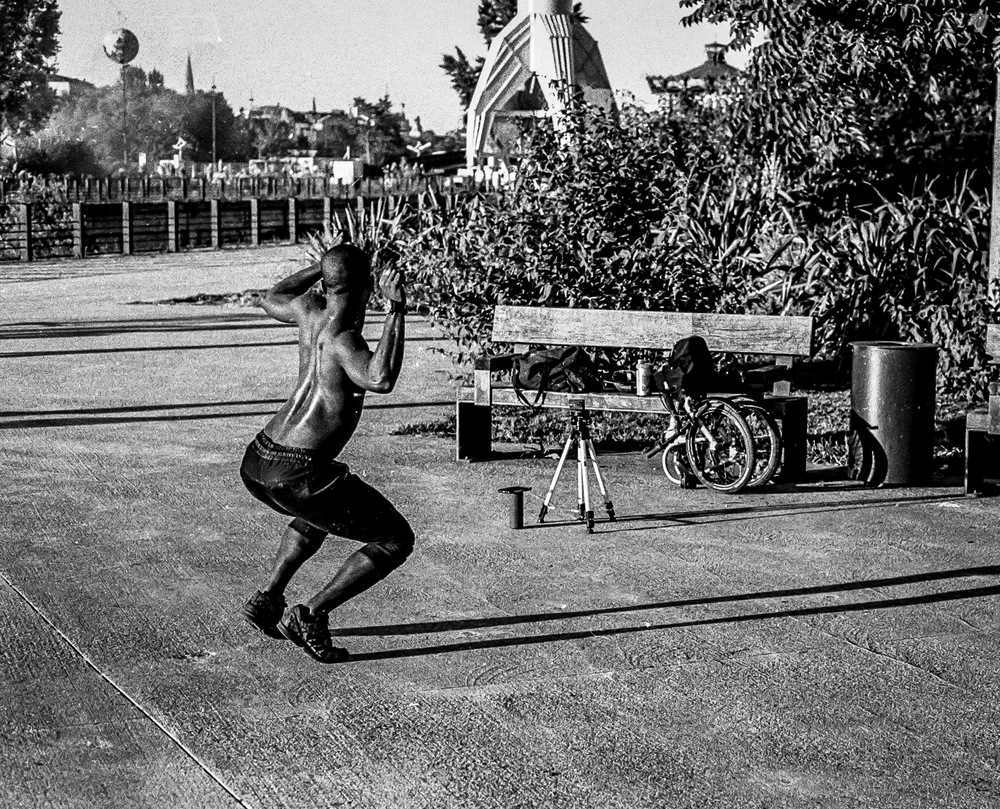
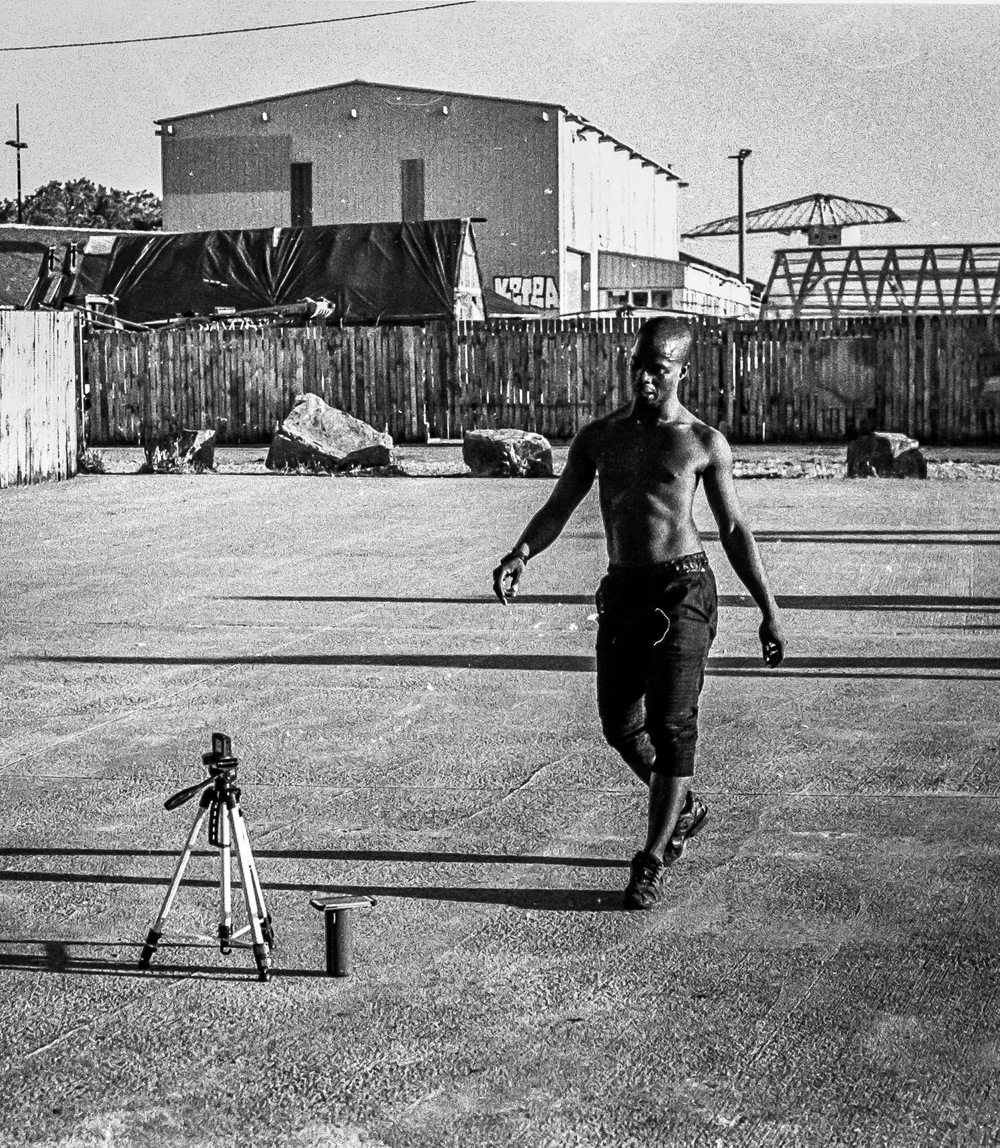
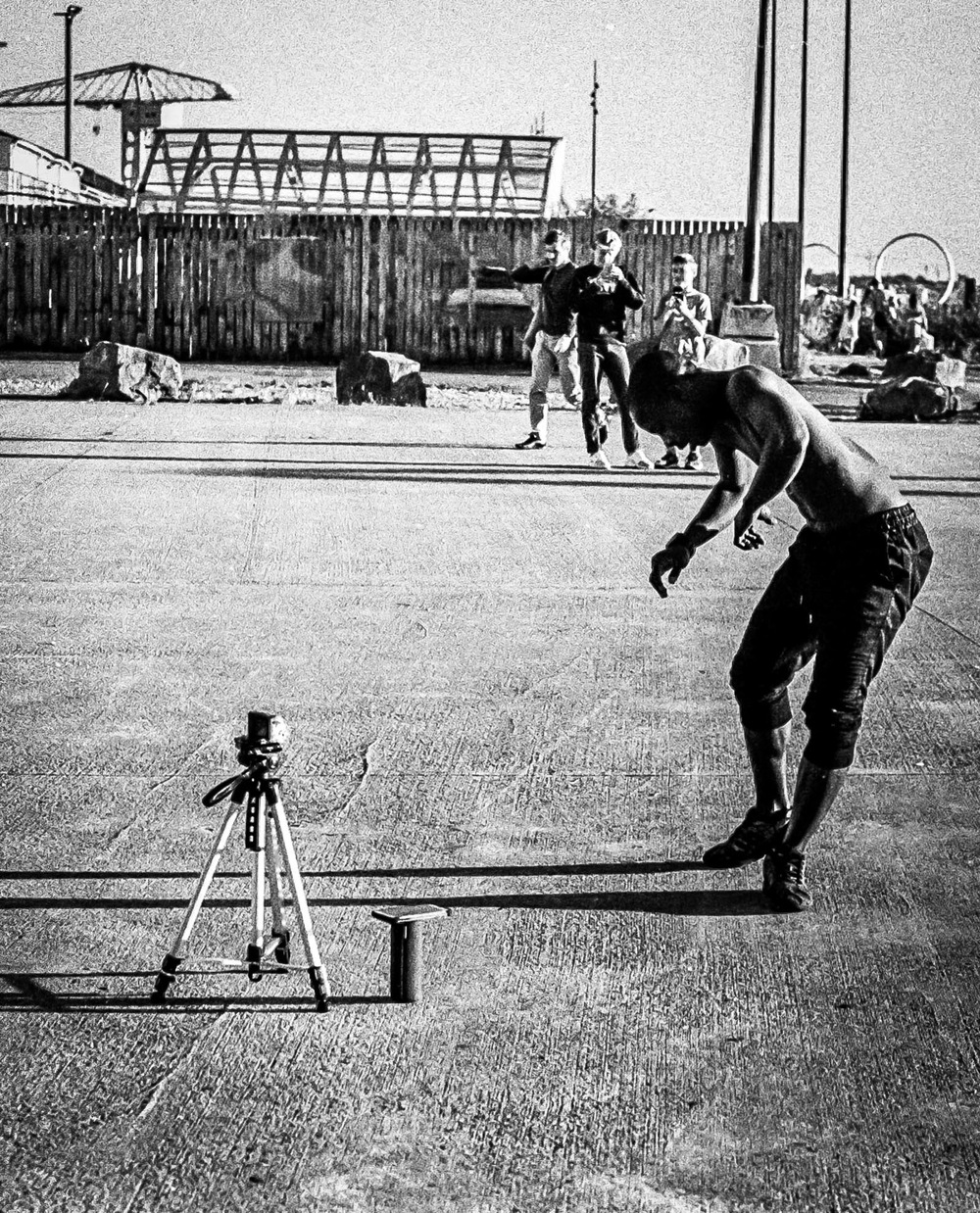
Then there was the dancer. He was just filming himself with a GoPro, but the way the sunlight caught his movements and the glistening sweat on his skin was mesmerising. It was a fleeting moment, the first and only time I’ve ever photographed a dancer, but it left a lasting impression. There’s something undeniably captivating about the human body in motion.
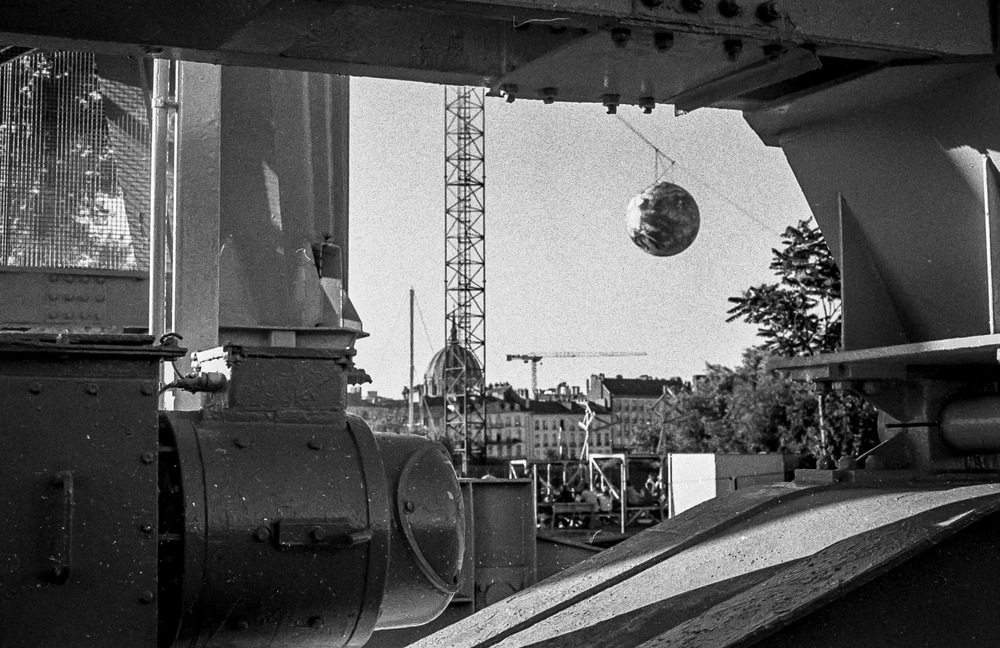
My wanderings continued to the edge of the island, where the mighty Grue Jaune – now a “monument historique” and a symbol of Nantes – stands tall. Walking past and through this enormous yellow crane was an awe-inspiring experience.
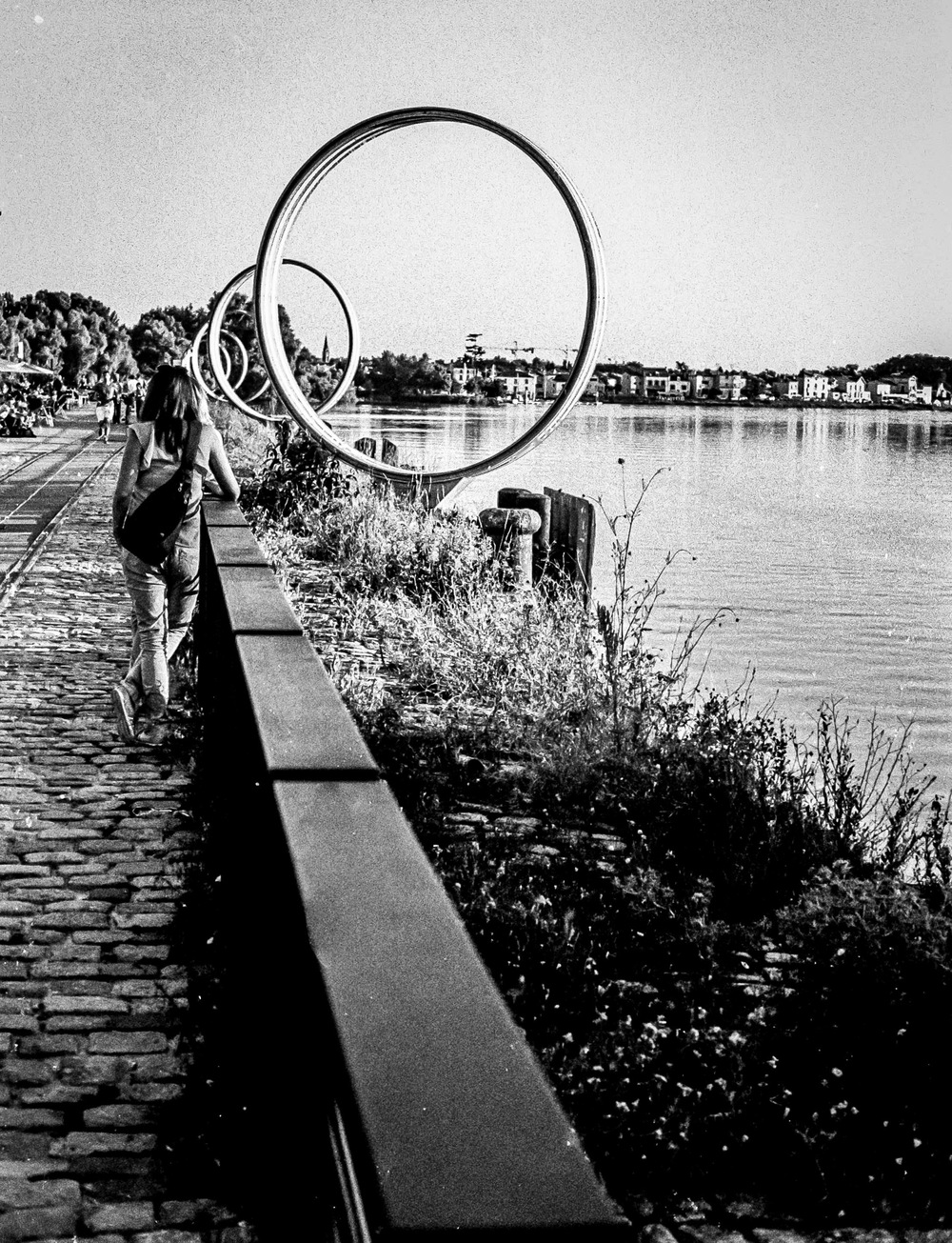
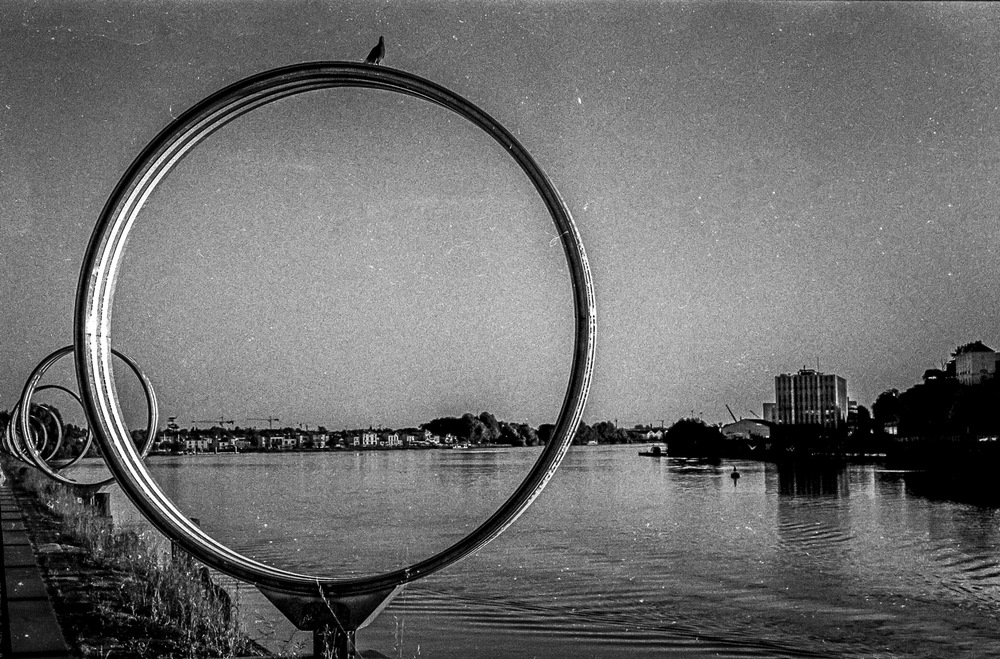
Along the riverfront, the Anneaux de Buren, a series of massive rings, stretched out in a mesmerizing pattern. At night, they transform into a dazzling display of vibrant reds, blues, and greens – a photographer’s dream, offering endless possibilities for capturing leading lines, geometric shapes, and unique framings of the cityscape.
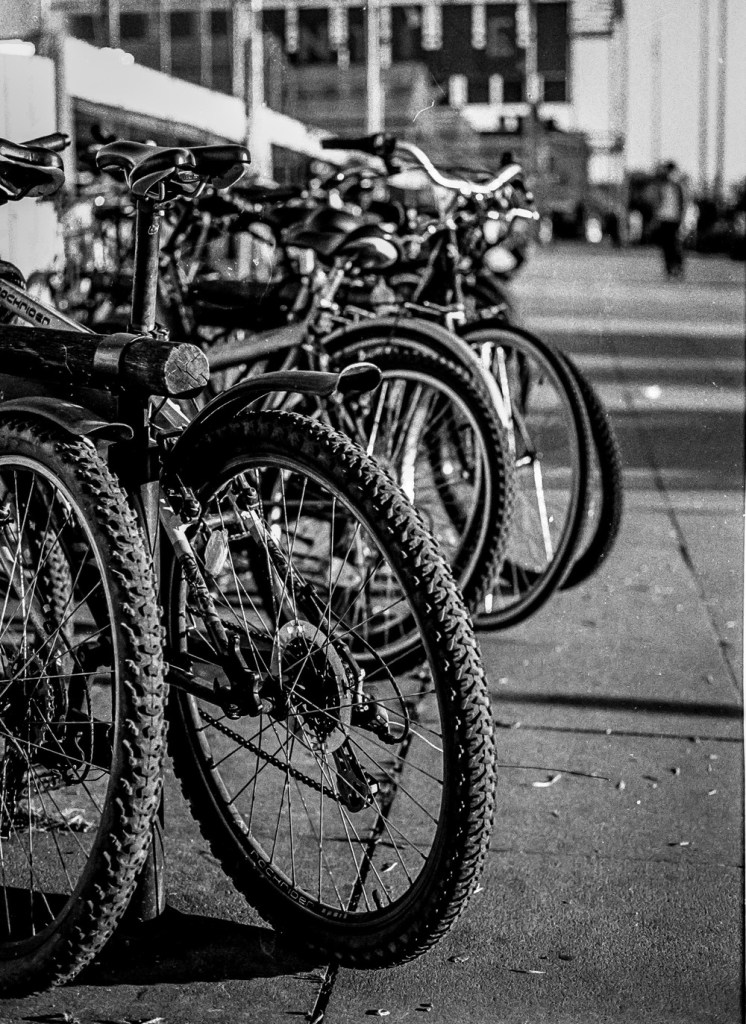
And of course, no photo series of mine would be complete without the obligatory bike shot. It’s a bit of a tradition for me.
Even now, in 2024, the Hangar à Bananes still exudes that same “Summer Vibe.” It remains a popular spot for after-work drinks with friends and colleagues, boasting a variety of restaurants, bars, the HAB Gallery, and the infamous “Warehouse.” While the area can get a bit dicey later at night, it’s perfectly safe and enjoyable for a daytime visit or an early evening soirée.
Welcome back to the film archives. Today I’m going to share some photos of the first reel from my “new” Canon AE1. Well, not new, but certainly new to me. The Canon AE1s were produced between 1976 and 1984. It is one of those iconic cameras and at the time I must have paid about 50€. When I say iconic, I really mean iconic. It is a shutter speed priority camera using Canon’s FD lenses. I used it an awful lot that summer. I liked it so much that I even bought a second one that I ended up giving to a photographer friend.
Colour
To some people of my generation they represent their first cameras, and were so popular. Talking of popular, the photographs from this part of the archive are from the very popular and photogenic town, Clisson. Also you will have noticed that the photos are in colour. Which only goes to show that not all film photography is black and white photography.
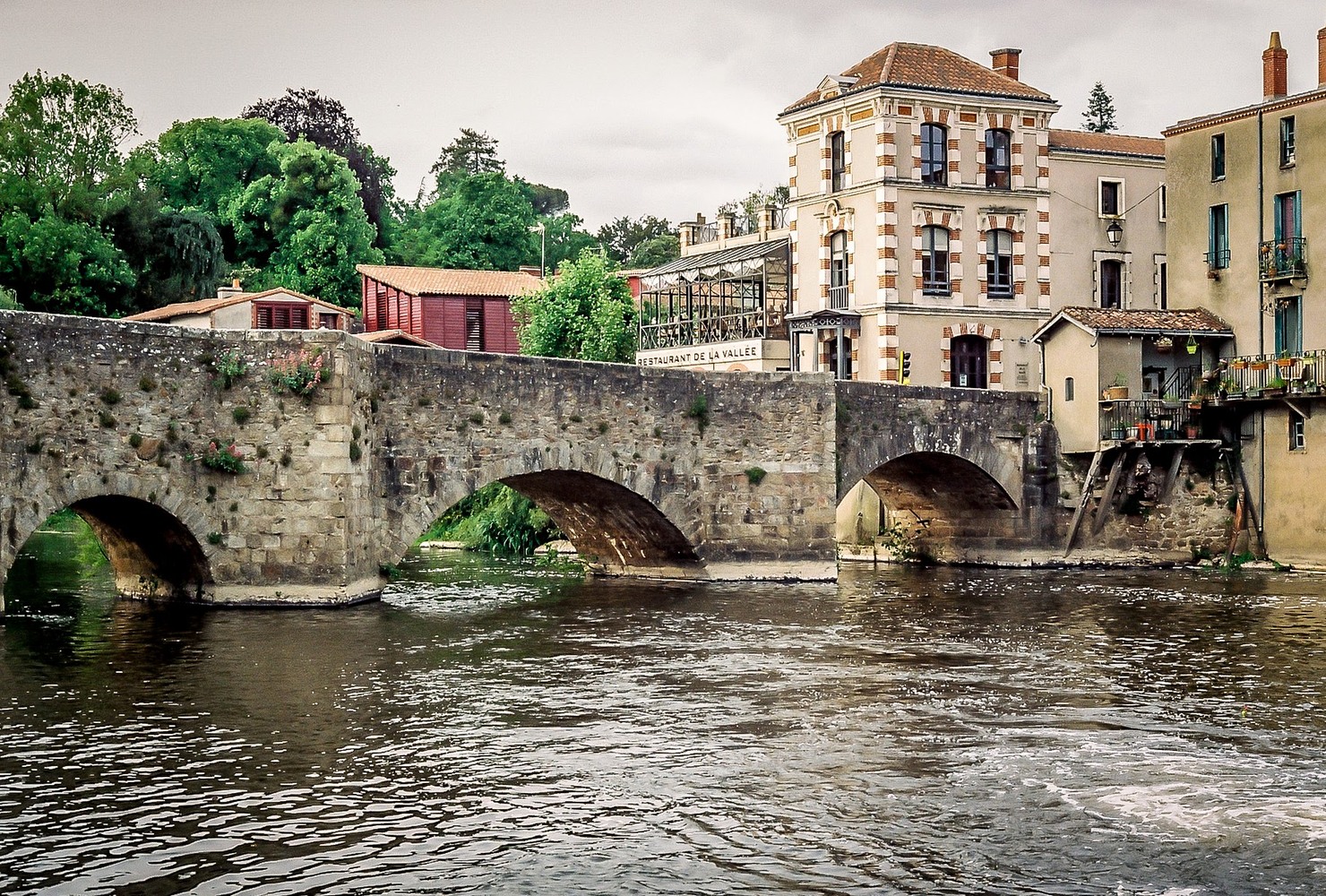
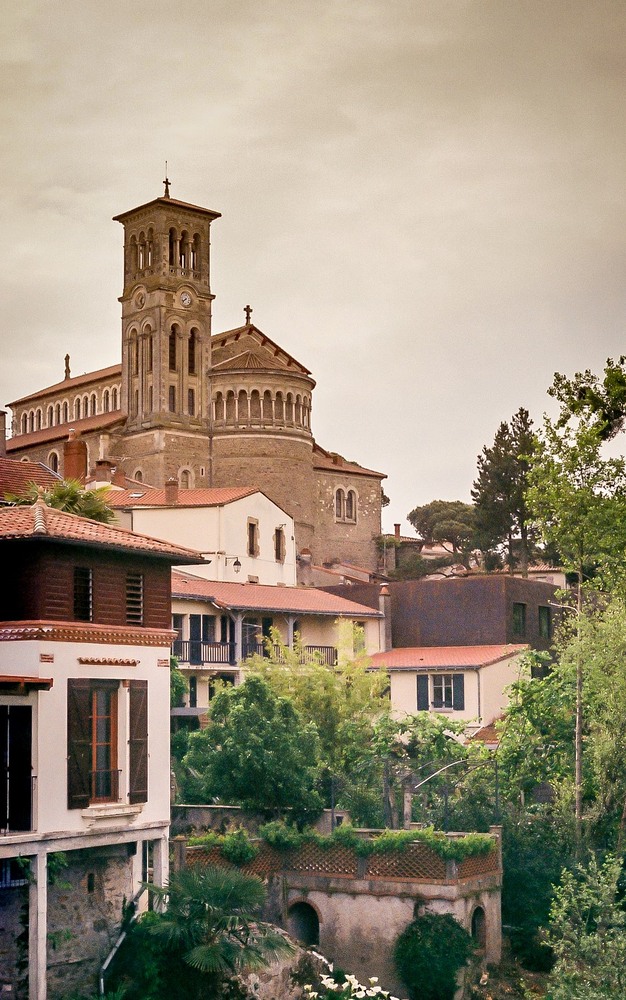
Clisson, as you can see in the photos, is one of those beautiful French villages that oozes Gallic charm. It also exudes a certain Italian charm, and is known for its Italian style architecture.
Canon AE1
I have both a Canon AE1 and AEI Program. The AE1 is the big brother of the AE1 Program, and doesn’t have a program mode, but as you can see from the photos it still works a treat.
Feature
Canon AE-1
Canon AE-1 Program
Differences
Release Year
1976
1981
AE-1 Program released 5 years after AE-1
Exposure Modes
Shutter Priority AE
Shutter Priority AE, Program AE
Program AE added to AE-1 Program
Metering
Center-weighted Average
Center-weighted Average
No difference
Shutter Speeds
2s – 1/1000s
2s – 1/1000s
No difference
Viewfinder Display
LEDs
LEDs
No difference
Film Speed Setting
Manual
Manual
No difference
Self-timer
Yes
Yes
No difference
Depth of Field Preview
Yes
Yes
No difference
Motor Drive Compatibility
Yes
Yes
No difference
Other Notes
First Canon SLR with microprocessor; revolutionary for its time
Simplified controls for easier use; appealed to wider audience
AE-1 Program aimed at beginners and enthusiasts
As you can see there’s not a huge differece between the two. The major difference being the Program option, and the other allowing for easier changing of the ASA film sensitivity setting.
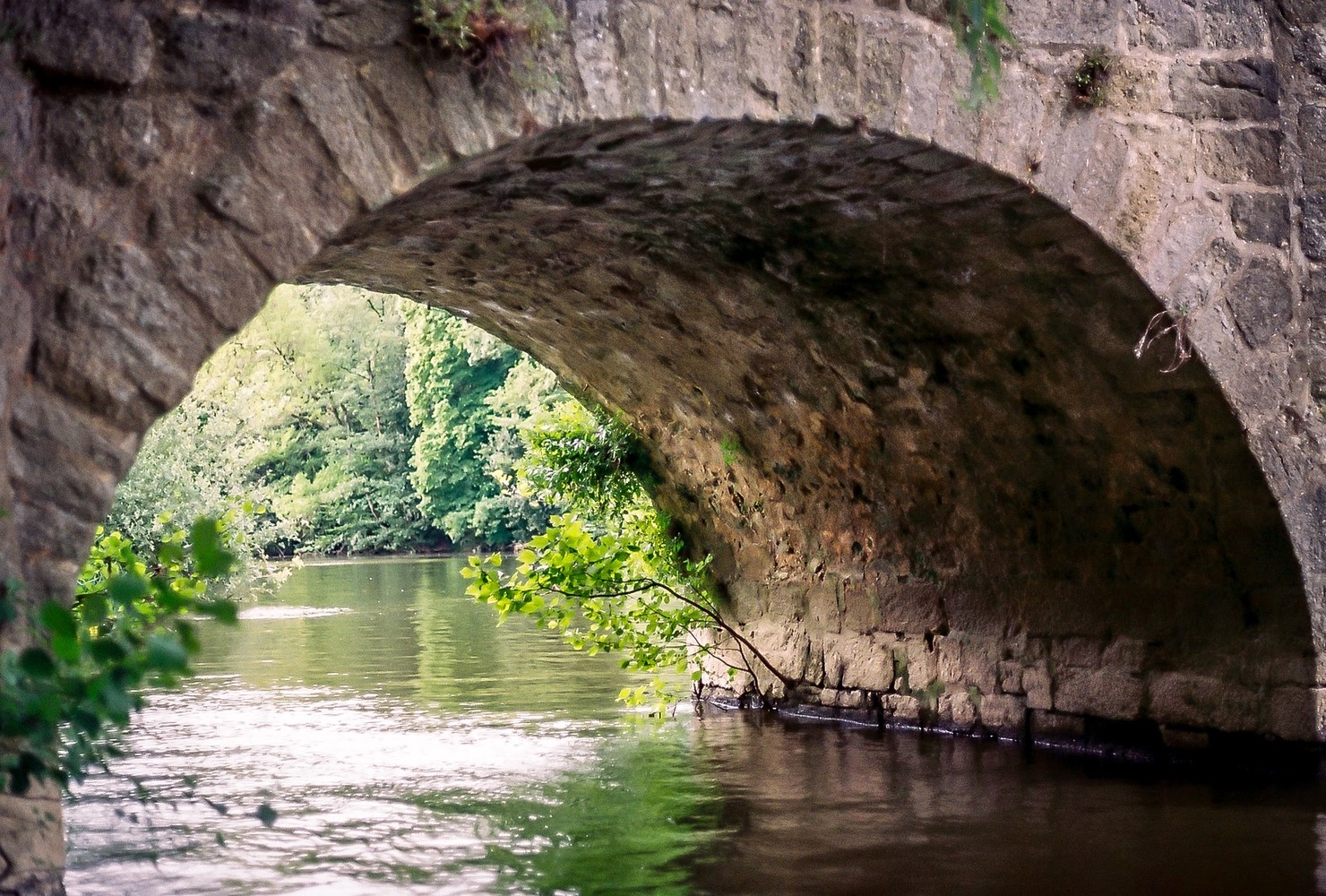
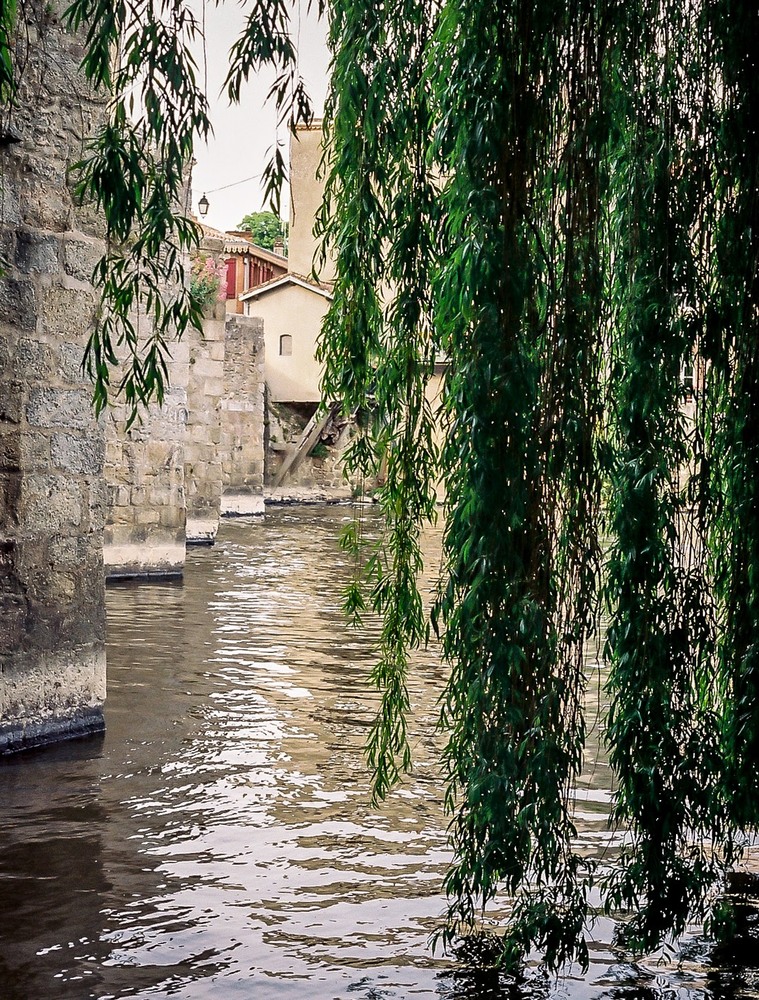
On the day in question I must have parked just next to the river and concentrated on this picturesque area. You can see the castle, the bridge, and the river, all making for a peaceful spring moment.
I think the film was Fuji Superia, and I just wanted to use colour. Thetones are slightly muted and warm, and the flowers, trees and plants were just screaming out to be photographed. I remember the excitement of loading the film into this “new” camera, and the novelty of simply using an iconic camera.
Here is what fuji tells us about the film:
FUJICOLOR SUPERIA X-TRA400
An all-round general purpose, high-performance, high speed color negative film delivering truly fine-grain. Superb for snapshots or action, in low light with flash, outdoors or indoors. Ideal for general use with compact zoom lens cameras.
Excellent skin tones For beautiful, clear people-shots.
Fine grain Great results even when enlarged.
High-speed Superb results, whatever the shooting conditions.
Sensitivity and Film Sizes ISO : 400 Film Sizes : 135 : 36 exp.
When using digital, it’s so difficult to get that particular film look, and using film and an older camera just changes your whole outlook. The fact of not having your image straight away leaves you with that anticipation that we all used to feel when we sent off our films to the lab.
Give film a try. There are still cheap film cameras out there, and your photography experience will be totally different. I certainly appreciate it.
Introduction In the world of film photography, the choice of film format can significantly impact the results you achieve. Whether you’re an aspiring street photographer or simply an enthusiast looking to explore the world of analog photography, the decision between 35mm and medium format can be crucial. This article explores the major differences between these two formats, helping you along on your photographic journey. As we dive into this discussion, it’s essential to understand how the choice of format can influence your work.
1. Understanding the Basics Let’s start by establishing a foundation. 35mm photography is the more common format, known for its accessibility, ease of use, and widespread availability. It is the standard format of film. However, medium format photography offers distinct advantages worth exploring.
2. The Key Differences
Image Quality and Resolution: The most noticeable difference between medium format and 35mm photography lies in image quality and resolution. Medium format film, with its significantly larger negative size, captures an significant level of detail and clarity. The larger negatives provide ample room for precise rendering of textures, fine lines, and intricate patterns. This translates to stunningly sharp and highly detailed images, ideal for both professional work and fine art photography. If you’re aiming for prints that capture every nuance, medium format is the way to go.
Aspect Ratio: Another significant difference is the aspect ratio. 35mm film typically yields images with a 3:2 aspect ratio, while medium format cameras typically offer a square 1:1 aspect ratio. The square format can be a creative boon, pushing photographers to rethink composition. It forces a balance between the vertical and horizontal aspects of your subject, a characteristic reminiscent of the iconic street photographer Vivian Maier, who frequently used a TLR camera. The square format encourages unique framing and adds an artistic challenge to your photography.
Depth of Field: Medium format allows for a shallower depth of field compared to 35mm. This means that it’s easier to achieve that sought-after background blur or bokeh, perfect for portrait and street photography. With a well-executed composition, your subject can pop against a beautifully blurred backdrop, making them the focal point of the image.
Size and Weight of Equipment: In terms of portability, 35mm cameras have the upper hand. They are compact, lightweight, and ideal for street photography where you need to be quick on your feet. Medium format cameras, on the other hand, tend to be bulkier and heavier due to the larger film format and the associated optics. This makes them better suited for planned shoots where image quality takes precedence over convenience.
Cost of Film and Development: While 35mm film and development are more budget-friendly, medium format film comes at a higher cost. When using the 6×6 format you will only have 12 images per roll of film. This of course makes every shot count. If you are stressed out about messing up a shot on 35mm film then your anxiety will shoot up to lunar levels with only 12 shots. But remember what I have said earlier, no shot is wasted and every shot is a learning experience. The enhanced image quality, detail, and artistic potential make medium format film worth the investment for those who prioritize the final result over the upfront cost. If you’re planning to produce gallery-worthy prints or pursue a professional career, the expense can be justified.
Flexibility and Convenience: 35mm cameras are known for their flexibility and convenience, making them well-suited for capturing quick shots or candid moments. They’re also readily available, and film processing is more accessible. In contrast, medium format cameras require a more methodical approach, ideal for planned and deliberate photography. The process is slower, encouraging you to carefully consider each shot and compose it meticulously. This added effort can lead to more thoughtful and deliberate photographs.
3. Street Photography with the Pentax ME Super and TLR Influence Vivian Maier, a renowned street photographer, serves as an inspiring example of how camera choice can shape your photographic style. Maier favored the TLR camera, a medium format model known for its distinctive qualities. Her use of the square format and unique perspective have left an indelible mark on street photography.
I want you to think about the fact that a TLR is hanging around your neck at tummy level or even waist level, so the way of looking at your subject will automatically affected too.
If you’re looking to explore street photography with a Pentax ME Super, remember that the compact 35mm format offers its advantages for candid, on-the-go shots. However, Maier’s work reminds us that the choice of equipment is a personal one, and there’s no one-size-fits-all answer.
4. The Mamiya C220 Review: A Medium Format Marvel As we venture further into the world of medium format, the Mamiya C220 beckons. Just as Vivian Maier chose a TLR for her street photography, other photographers have found success with medium format cameras like the Mamiya C220. In my upcoming review, I’ll explore the features, benefits, and considerations of this remarkable medium format camera, guiding you towards your next photography adventure.
The Induction to a Higher Level of Photography When you make the transition from 35mm to medium format, you’re stepping into a higher echelon of photography. If you think that 35mm film is great, you’ll be enthralled when you see your images taken by a medium format camera. The level of detail and depth of field that medium format offers is simply unmatched. It’s like upgrading from a standard screen to 4K resolution for your photography. Every detail comes to life, and the depth of field adds a whole new dimension to your work. It’s a revelation that will leave you wondering why you didn’t make the leap sooner.
The 35mm format photo captured on the Pentax MS Super. The “standard” format of film photography. The one we all know.
The square format common to much medium format photography with a 6×6 format. I’ll let you look at the differences for yourself.
The lenses for each shot was a 50mm lens for the 35mm format film photo, and the 80mm mm lens for the medium format photo. However, both lenses are equivalents.
Conclusion In closing, remember that there’s no definitive answer to the question of 35mm vs. medium format. It’s a matter of personal preference and artistic vision. Both formats have their merits, and your choice should align with your goals and the style of photography you wish to pursue.
Stay tuned for the Mamiya C220 review, where I’ll delve deeper into the world of medium format photography, and consider the impact of the TLR on your creative journey.
The journey of film photography is full of exciting choices, from your film format to your camera model. Vivian Maier’s legacy reminds us that every camera has its unique personality and that your creative vision should be the driving force behind your choices. Whether you decide on 35mm or medium format, your camera is your artistic tool, and the world of film photography is yours to explore.
Dear Reader, if you’ve read my last post, you will understand my current state of photographic helplessness after my X100F was taken out of service. Before we proceed, I want to take a moment to reassure my dear mother that I’m doing fine, being a big brave boy during this challenging time, and not losing my mind. I’m still getting my photographic fix, and I thank you, Dear Reader, for your understanding.
Now, let’s dive into today’s topic. The Pentax ME Super, a camera gifted to me by a fellow musician and dear friend, Robert McMillan, holds a special place in my heart. Using it brings back fond memories, and I’m forever grateful for the thoughtful present.
Introduced in 1979, the Pentax ME Super is a 35mm SLR camera that offers reliability and ease of use, making it perfect for those seeking excellent image quality. However, it requires proper focus and composition to make the most of its capabilities. When I use it, I approach photography in a similar manner to how I would with my beloved X100F, albeit with a slight adjustment due to the 50mm lens, which changes from the 35mm lens on the Fuji.
Technical Specs:
Shutter speed range: 4 seconds to 1/2000 second, plus Bulb – allowing wide apertures and excellent depth of field.
ISO speed range: 12 to 1600
Exposure control: Aperture priority
Viewfinder: 0.9x magnification, 95% coverage
Other features: include a self-timer, a cable release socket, and exposure compensation.
Handling and Ergonomics:
The ME Super is a well-made and compact camera, making it easy to carry around; it is almost the same size and weight as the X100F. The controls are user-friendly and well-positioned. The large, bright viewfinder helps, especially for those of us with less-than-perfect vision.
While it may not surpass the joy I find in using the X100F, the ME Super is steadily gaining ground, and its satisfying shutter noise is a small comfort during this time of longing. Loading and unloading film is a breeze, and the shutter release is smooth and responsive. Additionally, the camera’s reliability is reassuring, offering solace in the absence of the X100F.
Image Quality:
The Pentax ME Super consistently delivers excellent image quality. Composing shots is a breeze with the sharp and bright viewfinder, and the aperture priority exposure control ensures proper exposure. For someone like me who cherishes depth of field, the 1/2000 of a second shutter speed is a delightful feature.
Moreover, the ME Super is compatible with a wide range of Pentax K-mount lenses, providing versatile options for image-making. With my collection of 24mm wide-angle, 50mm F1.7, and 24-80mm zoom lenses, I’m well-equipped for various shooting scenarios, and there is even a 15mm wide angle lens, but I nearly peed myself when I saw the price!
The Verdict:
In conclusion, the Pentax ME Super is an exceptional 35mm SLR camera. Its well-made design, ease of use, and ability to produce outstanding image quality make it an appealing choice. If you’re searching for a reliable and versatile camera that brings years of photographic enjoyment, the Pentax ME Super won’t disappoint.
Pros:
Excellent build quality
Sharp and bright viewfinder
Simple and straightforward operation
Wide range of compatible lenses
Capable of producing excellent image quality
Built-in exposure compensation
Self-timer
Cable release socket
Cons:
Flash sync limitations at faster shutter speeds (i.e., more than 1/125)
Not an X100F
Overall:
The Pentax ME Super is an excellent 35mm SLR camera, offering great build quality, ease of use, and superb image quality. It’s a dependable choice for any photography enthusiast seeking a delightful film shooting experience.
Additional Information:
The ME Super remains popular among collectors for its exceptional build and image quality. If you’re interested in acquiring one, you can explore used cameras online or at camera shops. Additionally, you’ll find manuals and other valuable information about the camera on the internet.
I hope this review proves helpful. If you have any questions, please feel free to ask in the comment section.
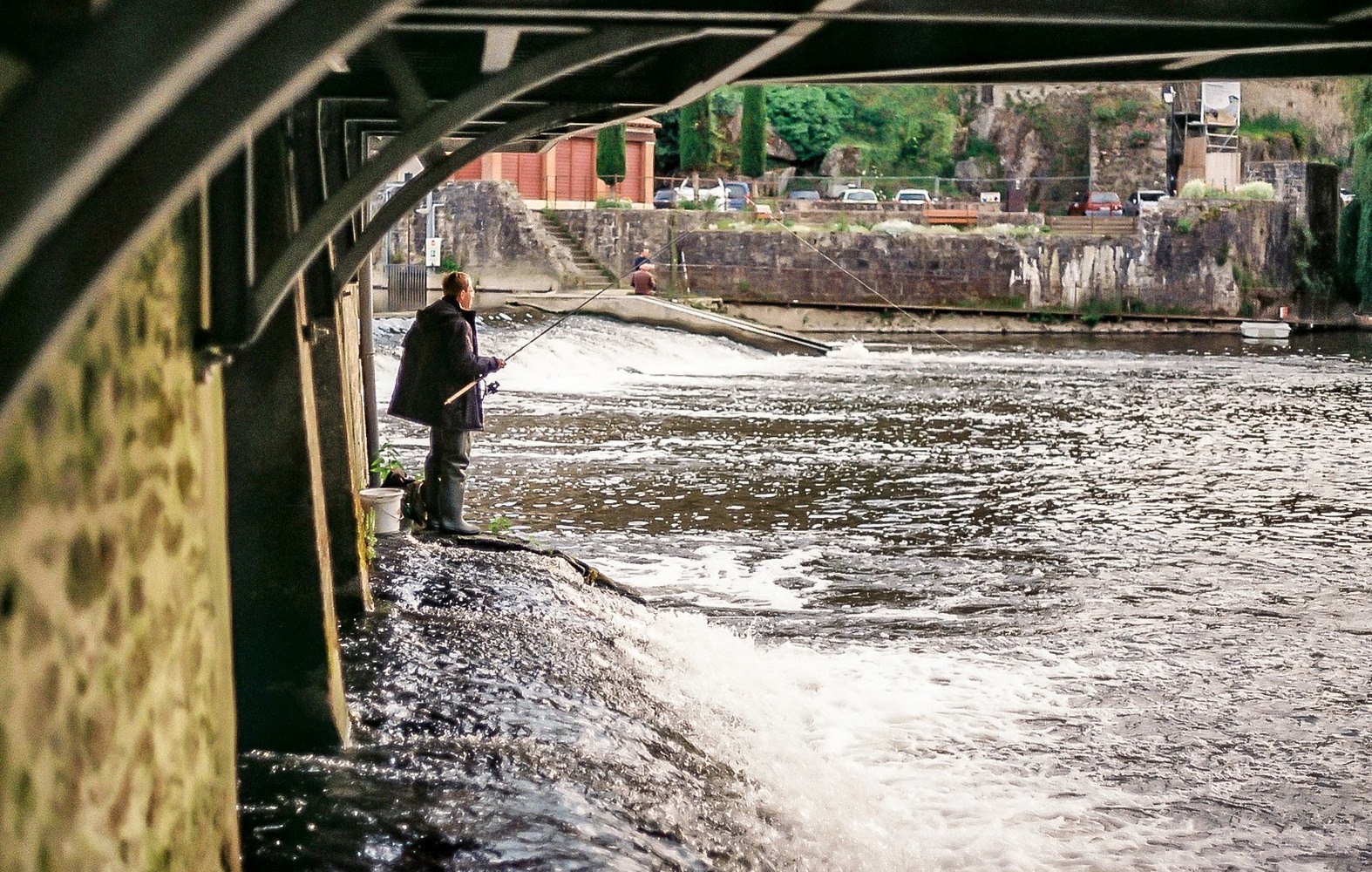
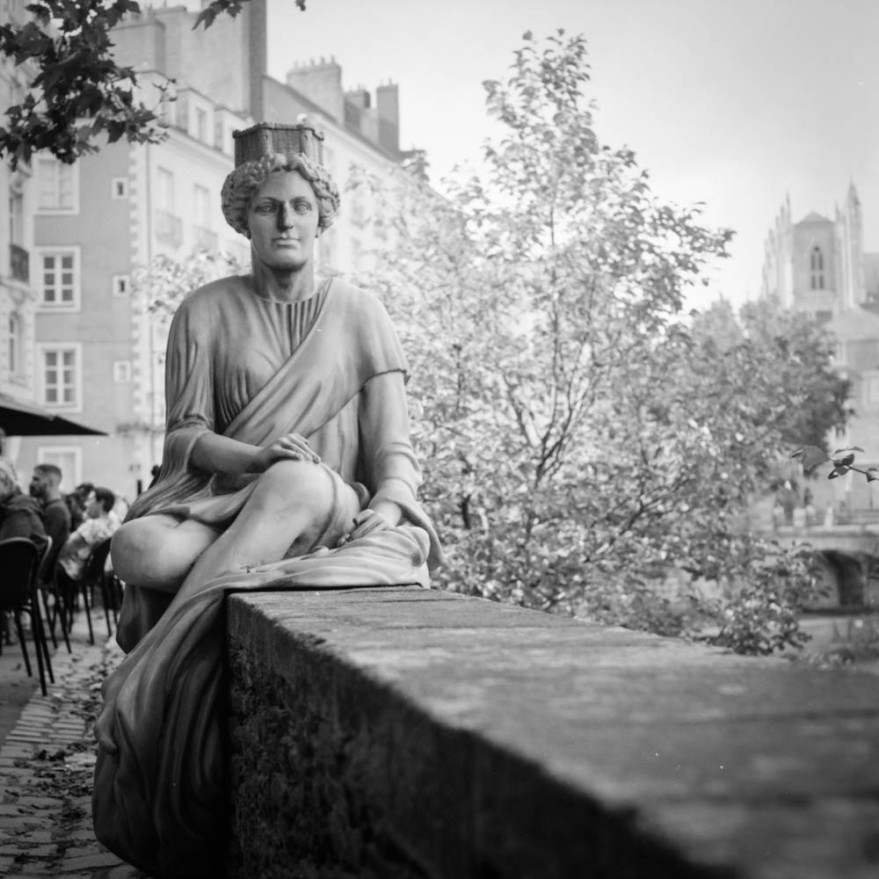
But, most importantly, let me stop talking and allow you to enjoy some photos taken with the Pentax ME Super, capturing moments in Clisson and Nantes.
After the success of my review of the Fuji Film X100F, I am excited to introduce you to another fantastic camera. If you’re not a tech-savvy person, don’t worry, this camera is a breeze to use. In fact, even my seven-year-old daughter had no trouble operating it! Let’s delve into the world of film photography with the Olympus Trip 35.
The Olympus Trip, as the name suggests, was designed for travel photography and gained popularity in the 1960s and 1970s (production ceased in 1988). This point-and-shoot camera comes without any gimmicks, and while this may not be a style or fashion blog, the Olympus Trip 35 is a beautiful object that exudes undeniable sex appeal. Trust me; you’ll have people complimenting you on how gorgeous your camera looks. To add to its allure, I replaced the original wrist strap with a more comfortable and chunky version from Amazon.
One of the camera’s limitations is that you can’t change lenses. However, the 40mm Zuiko F 2.8 lens covers most situations you’ll encounter during your photographic journey and delivers stunning results, especially with modern emulsions! Just take a look at the X100F photos, and it becomes evident. While the Olympus Trip lacks the modern conveniences of a DSLR or mirrorless camera, it compensates with the absence of battery worries as it relies on a selenium cell for metering. You will need to get film for it, and it takes ISO (or ASA) 25 to 400, which works well for your travel needs.
Loading film is incredibly simple, even a seven-year-old can do it, just like my daughter did with ease. Once the film is loaded, you’re all set to explore the world through your lens. Let me explain how to focus the camera. The Olympus Trip uses zone focusing. As you turn the lens, you’ll see markings for different distances, such as a face, a couple, a group of people, and a mountain for infinity and beyond. It’s photography, not a film about Ants or Seven Samurai, so rest assured it’s easy to grasp.
Regarding shutter speeds, the camera offers two options: 1/200th of a second and 1/40th. The camera will automatically choose the appropriate shutter speed. With a 40mm lens, camera shake shouldn’t be a concern at 1/40th of a second. This versatility allows you to capture images at F22 with 1/200th of a second to F2.8 at 1/40th of a second. Keep an eye on the F-stop dial in the viewfinder for a seamless shooting experience. Set the camera to A (automatic) when not using a flash. If there’s insufficient light, a little red flag will pop up in the viewfinder, indicating that the camera shutter won’t fire. Rest assured; it’s idiot-proof!
To make it easier to understand how to load film, her is a helpful video from YouTube.
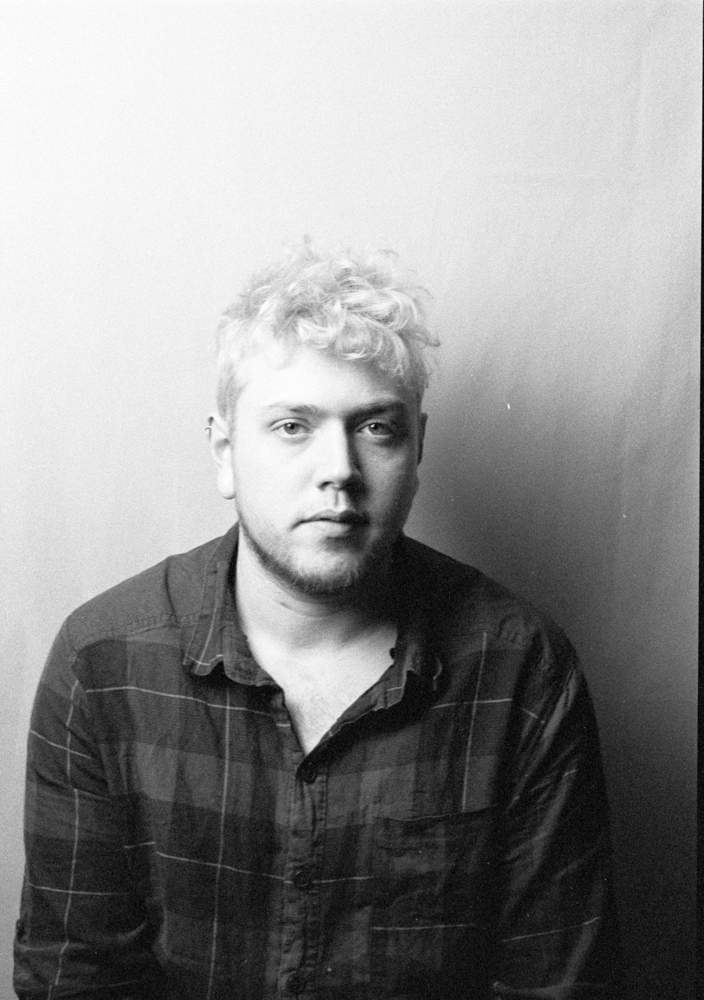
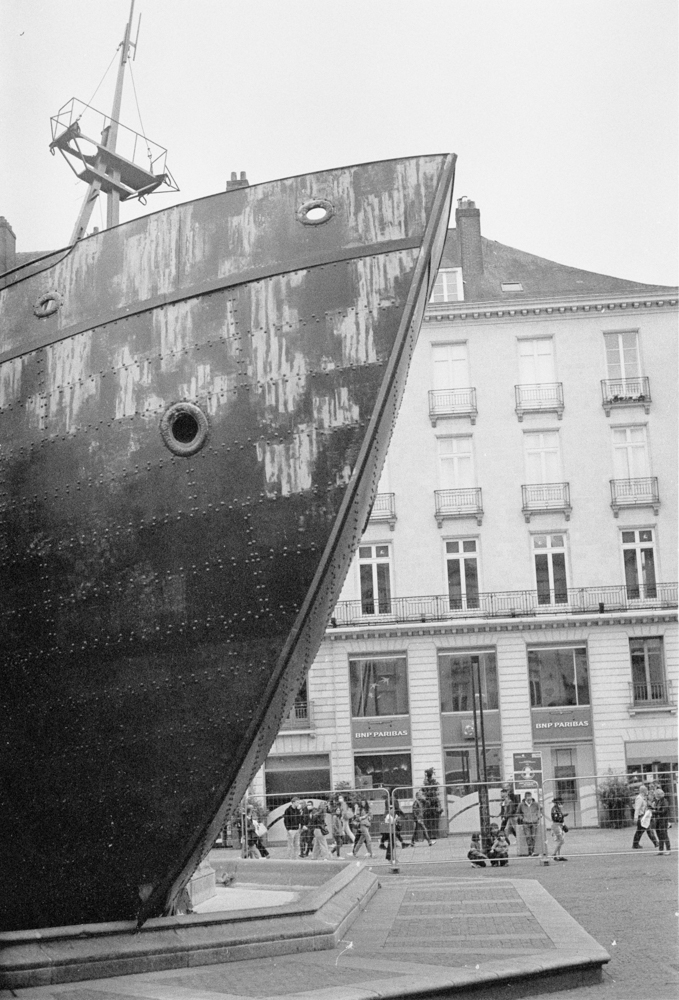
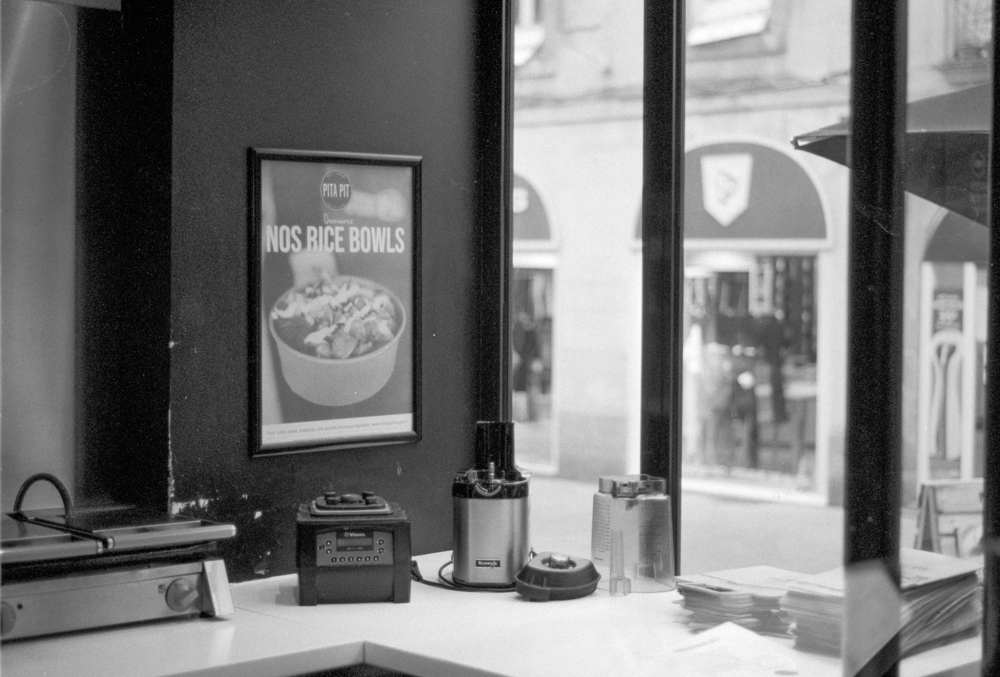
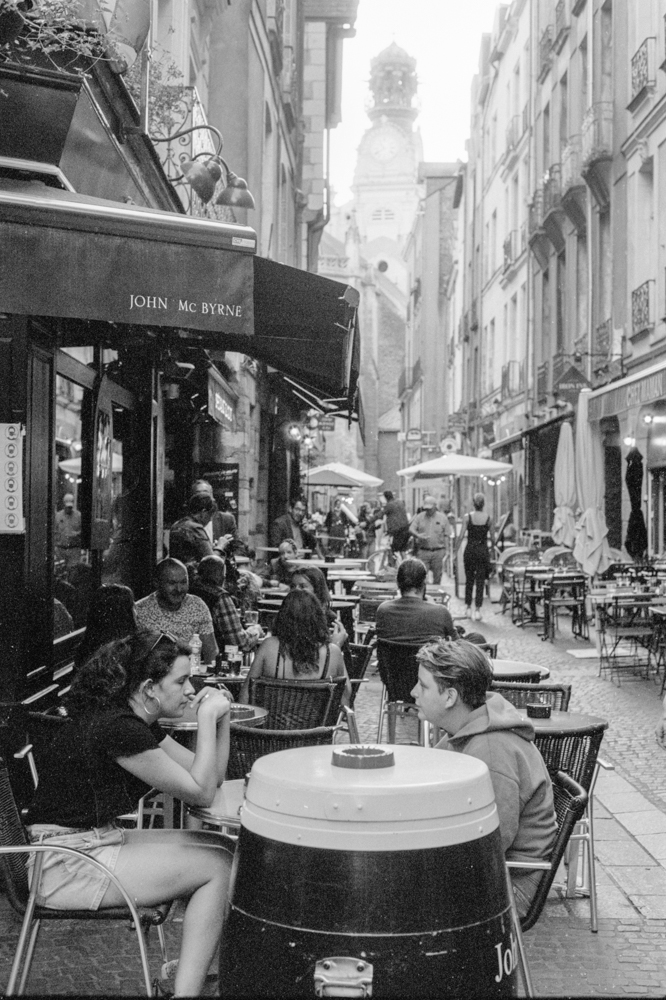
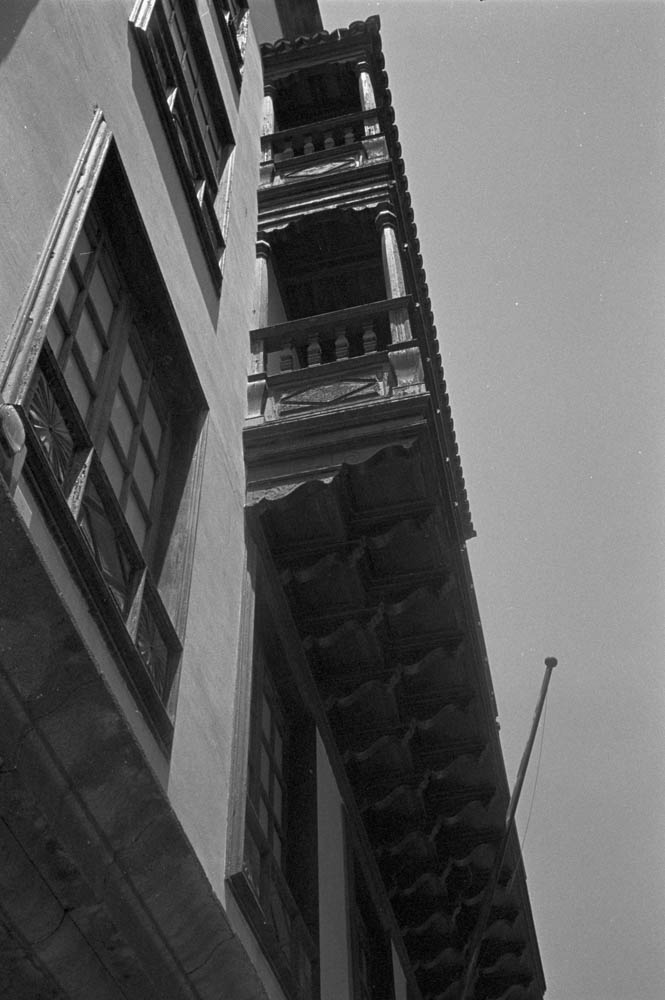
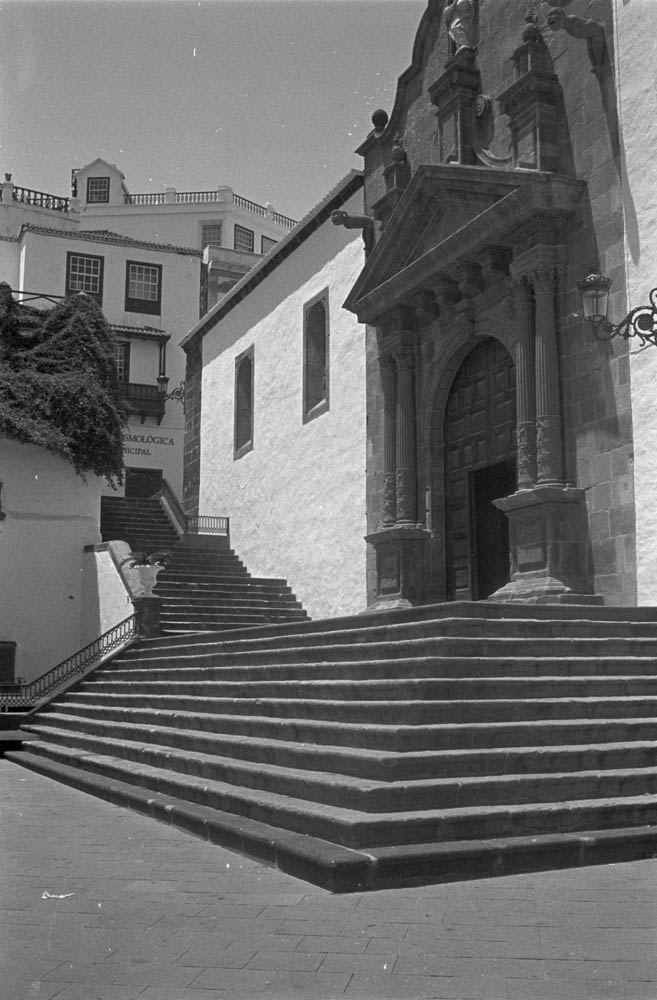
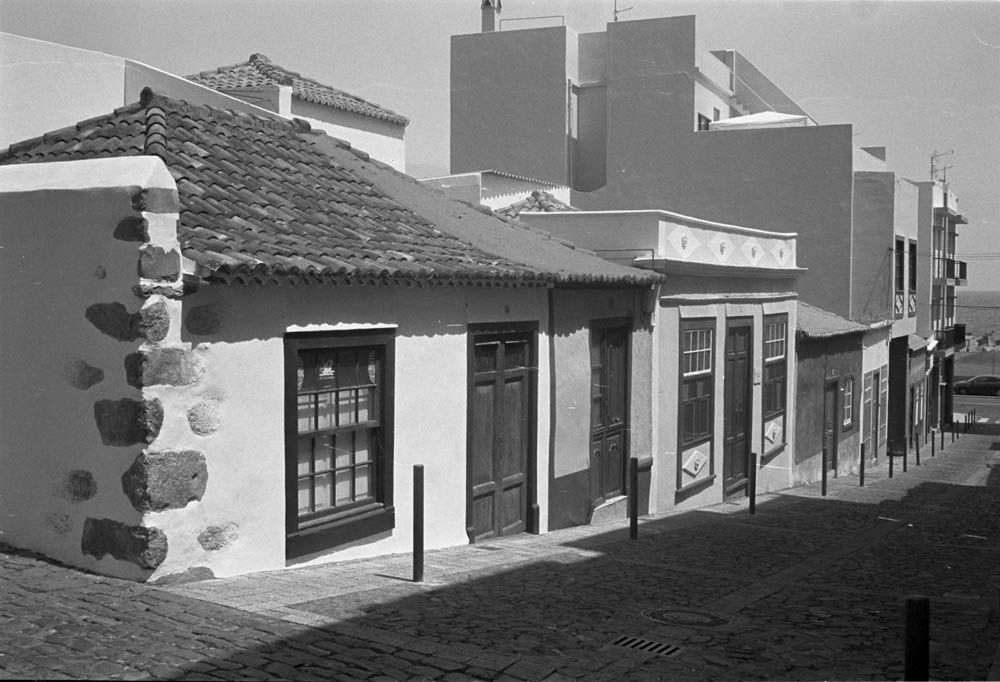
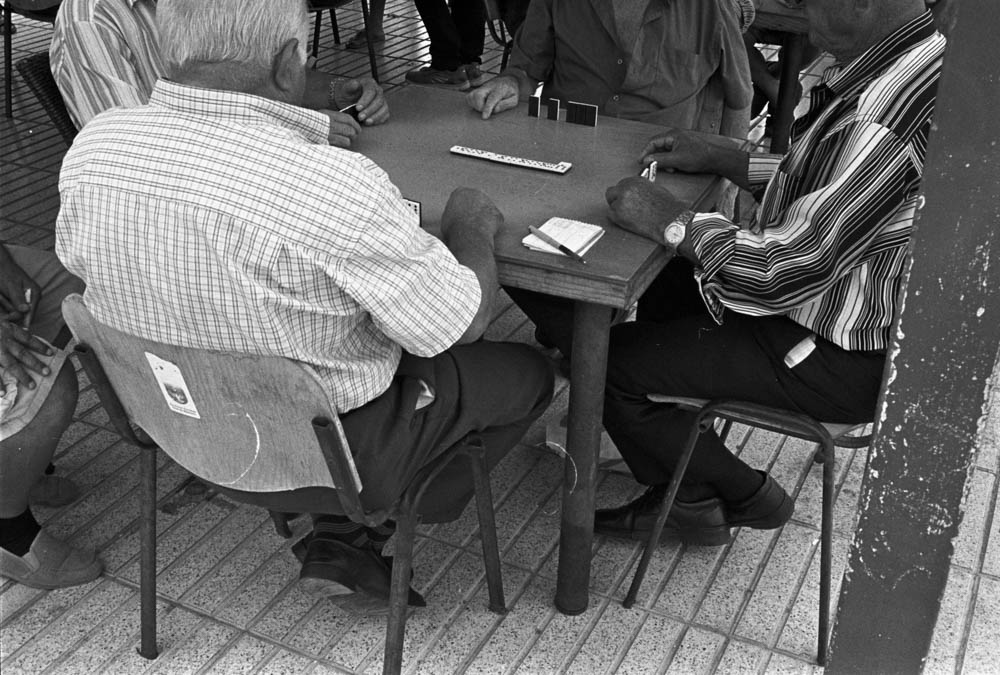
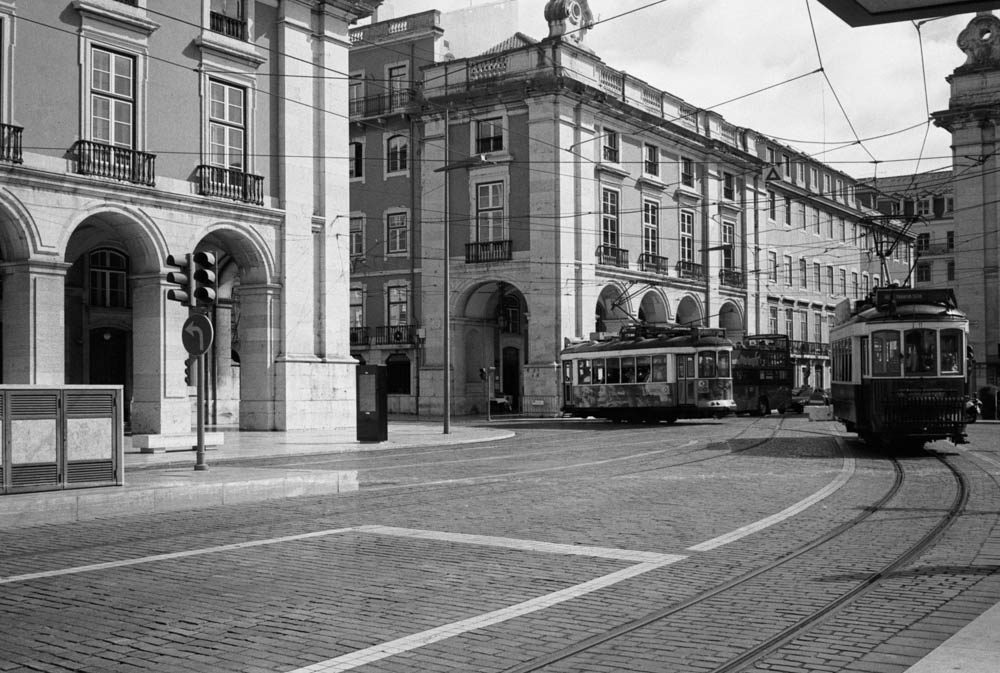
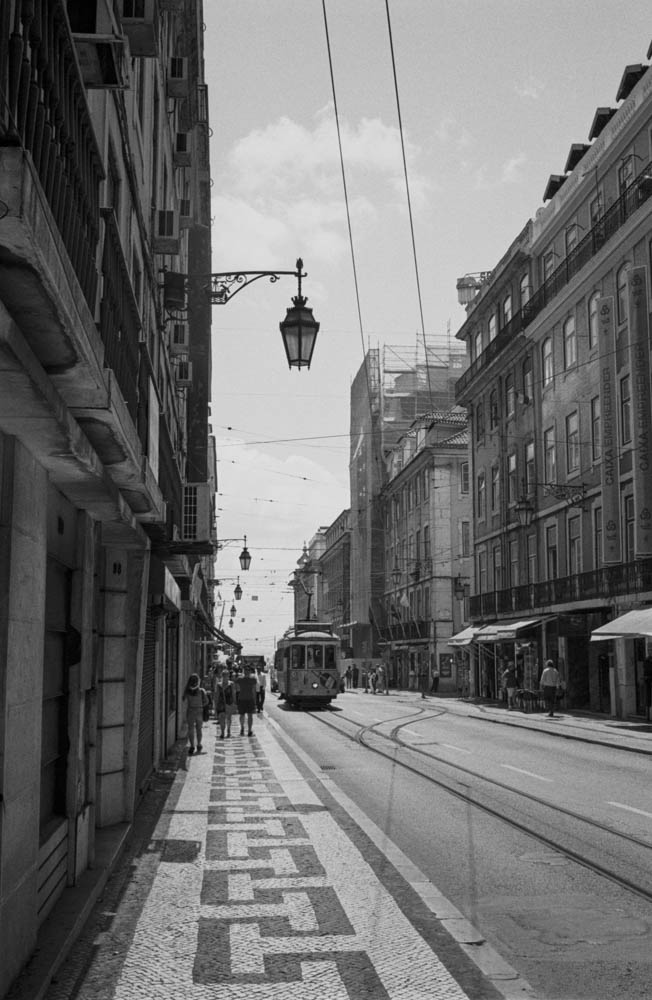
So, get out there and start taking some amazing photos! Embark on street photography adventures and capture the essence of your trips. The Olympus Trip 35 is here to be your trusty companion. Have fun and feel free to share your photos with the world! Mine are from a memorable trip to Portugal and the Canary Islands in 2016, shot on Ilford HP5 Plus film. Make of them what you will, and let the camera take you on a delightful photographic journey!







































 IJM Photography