The Opening of the Film Archives – Le Hangar à Bananes July 2016


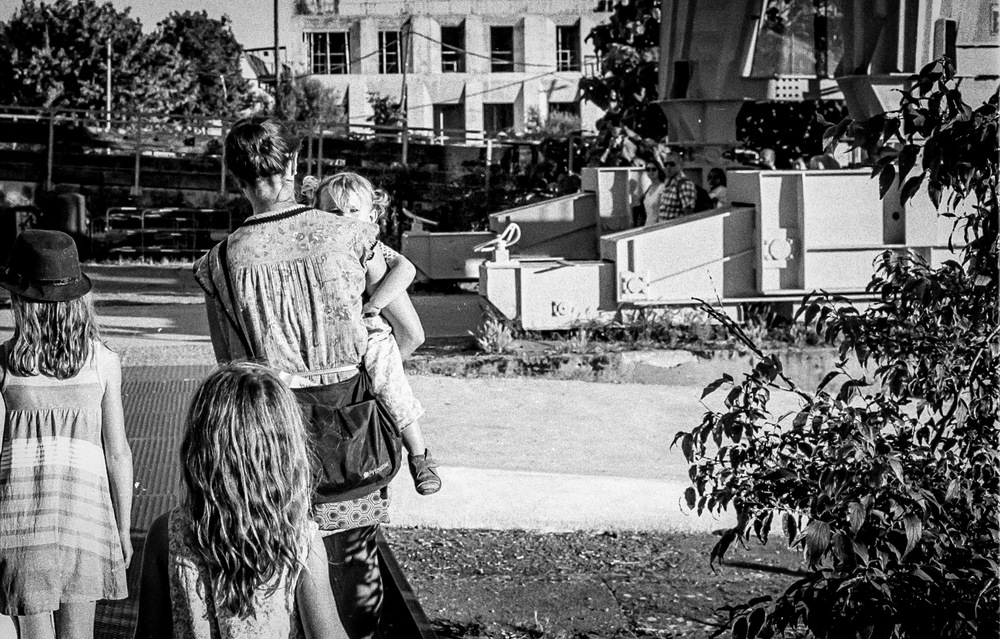
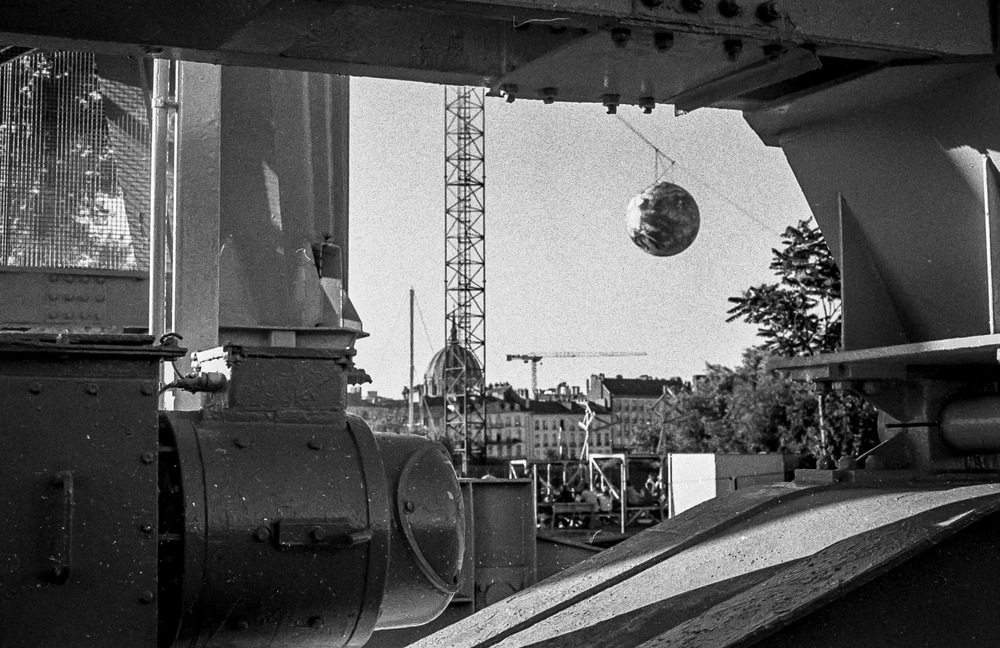
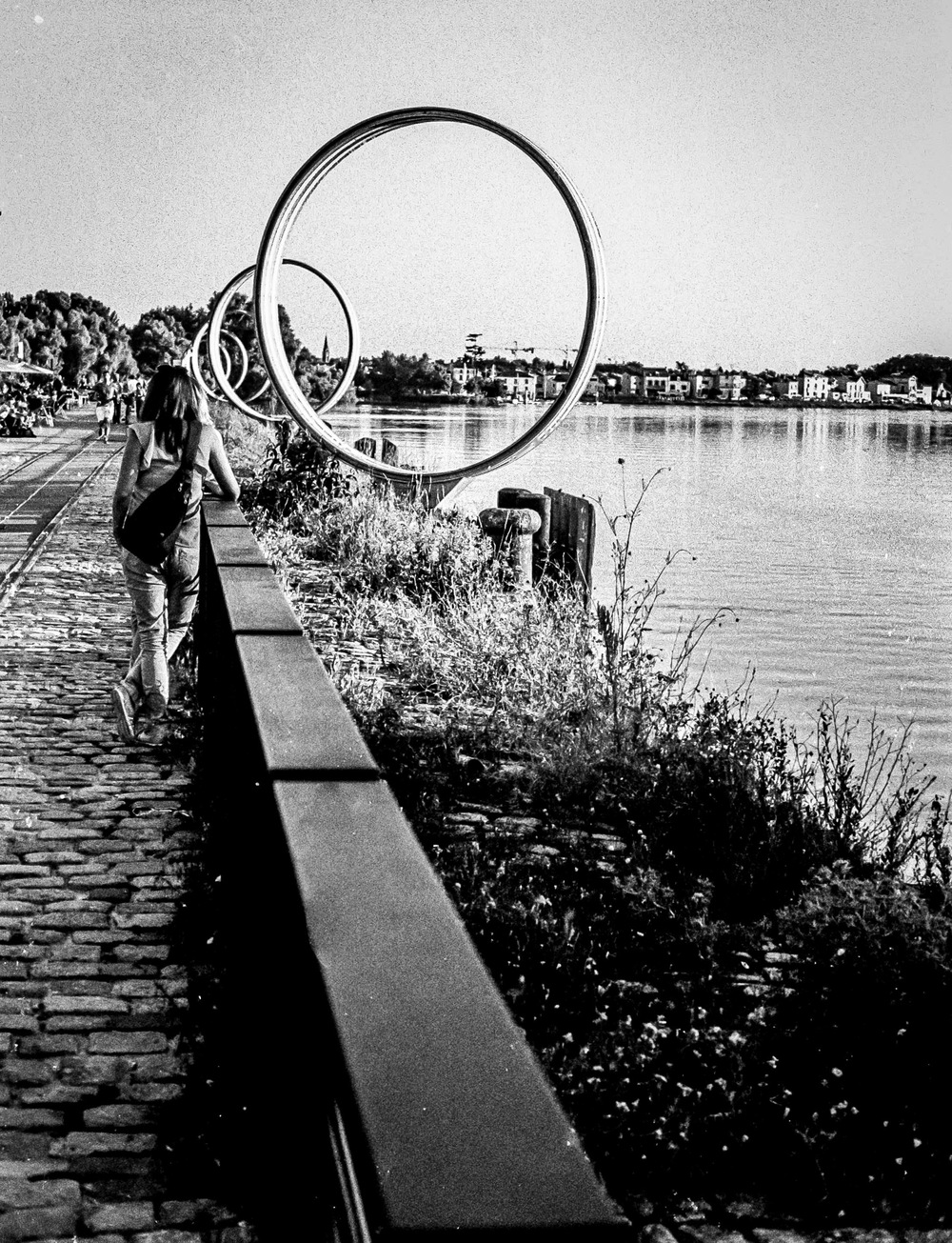
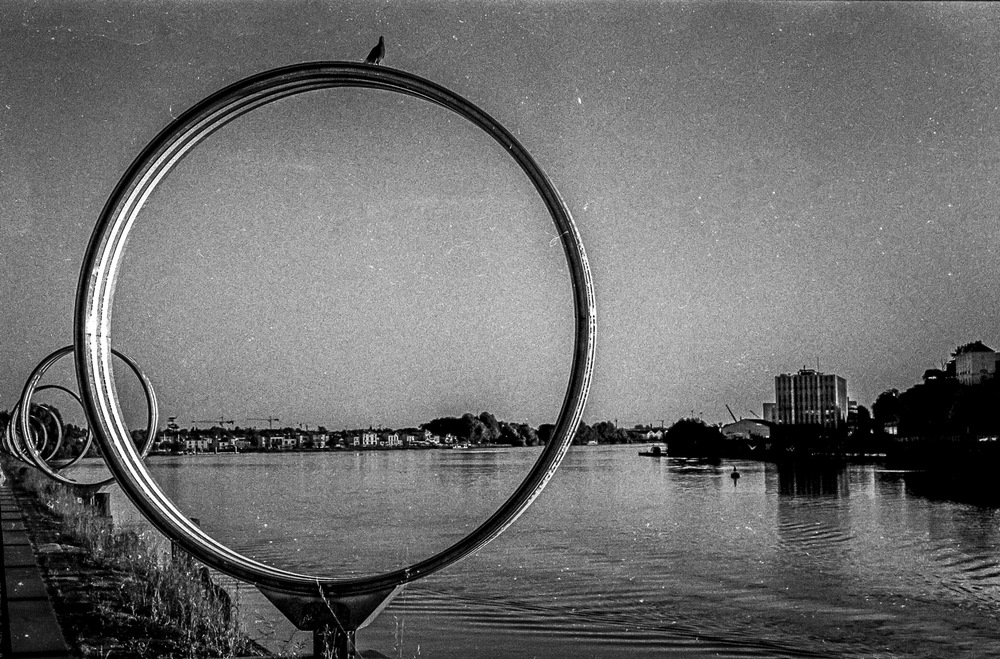
Continuing our journey through the film archives, we find ourselves on the Île de Nantes, home to the iconic Hangar à Bananes. Let’s rewind to July 2016, when I captured this vibrant scene with my then favourite Canon AE1. Once a shipbuilding powerhouse, Nantes had cleverly repurposed its abandoned infrastructure into a bustling hub. The area is now home to the fantastical Machines de l’Île, the historic Chantiers Navals, the towering Grue Jaune, and of course, the Hangar à Bananes itself. Back then, the Hangar was a hive of activity, buzzing with picnics, impromptu barbecues, and lazy afternoons under the summer sun.

My goal was to capture that unmistakable “Summer Vibe.” As always, I started with the architecture, drawn to its striking modern lines, a refreshing departure from the stark brutalism of the 1970s. The clever use of texture and the innovative design of the apartment buildings particularly caught my eye.

That summer, the Voyage à Nantes festival had a brilliant idea: communal barbecues for everyone. Genius, right? You simply brought your food, and they provided the grills, charcoal, tables, and chairs. It might not be Texas, but the French know their way around a barbecue, and being the food lovers they are, they go beyond the usual sausages and burgers. It was a true testament to what a public space should be – a place for everyone to gather, share, and simply enjoy themselves.

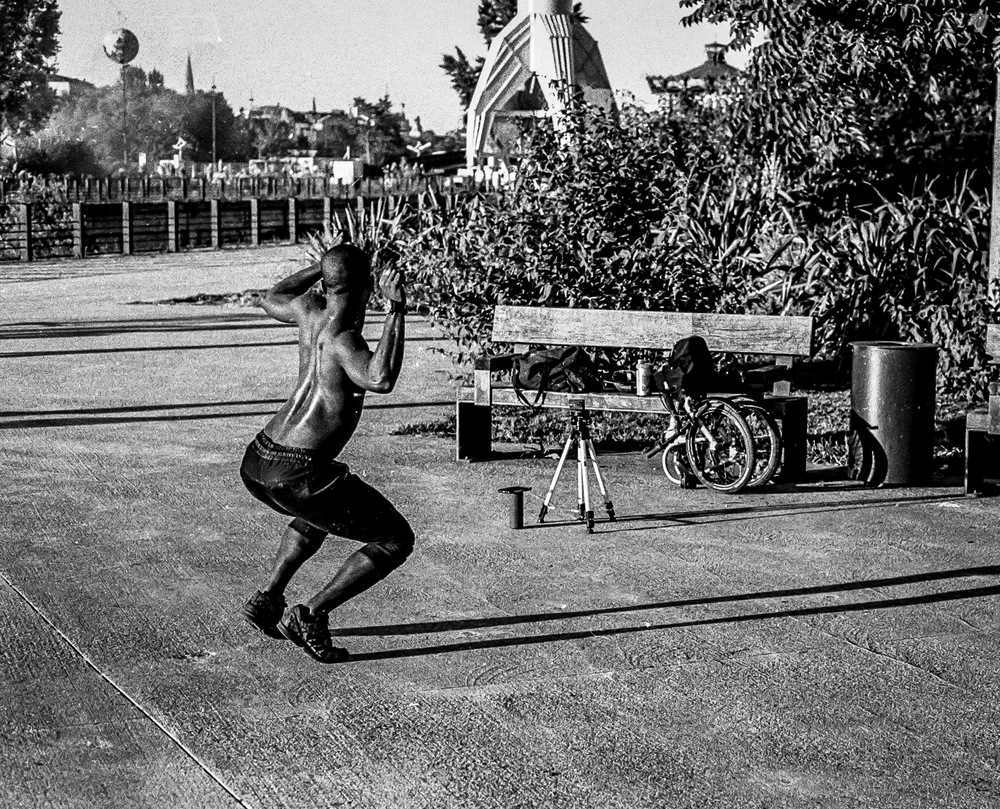
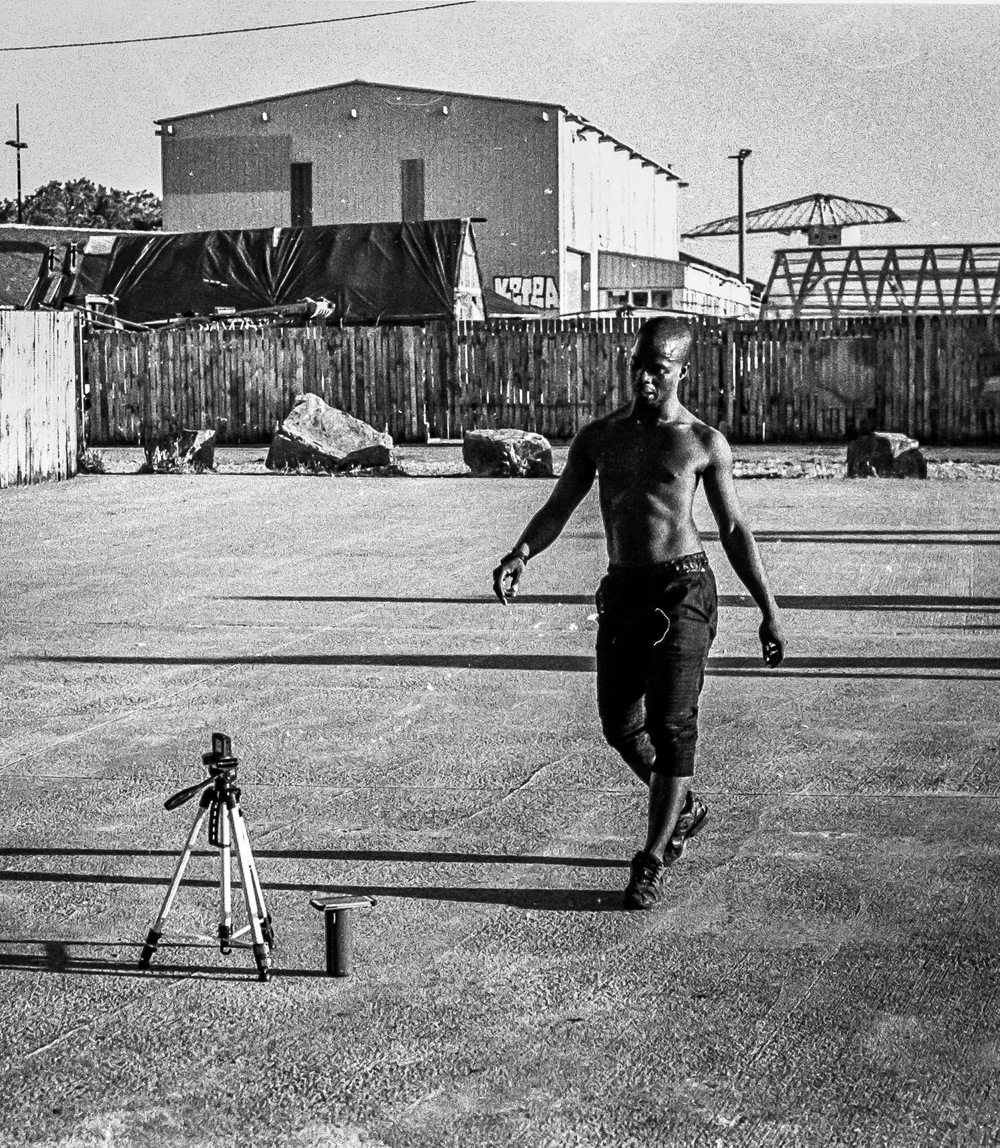
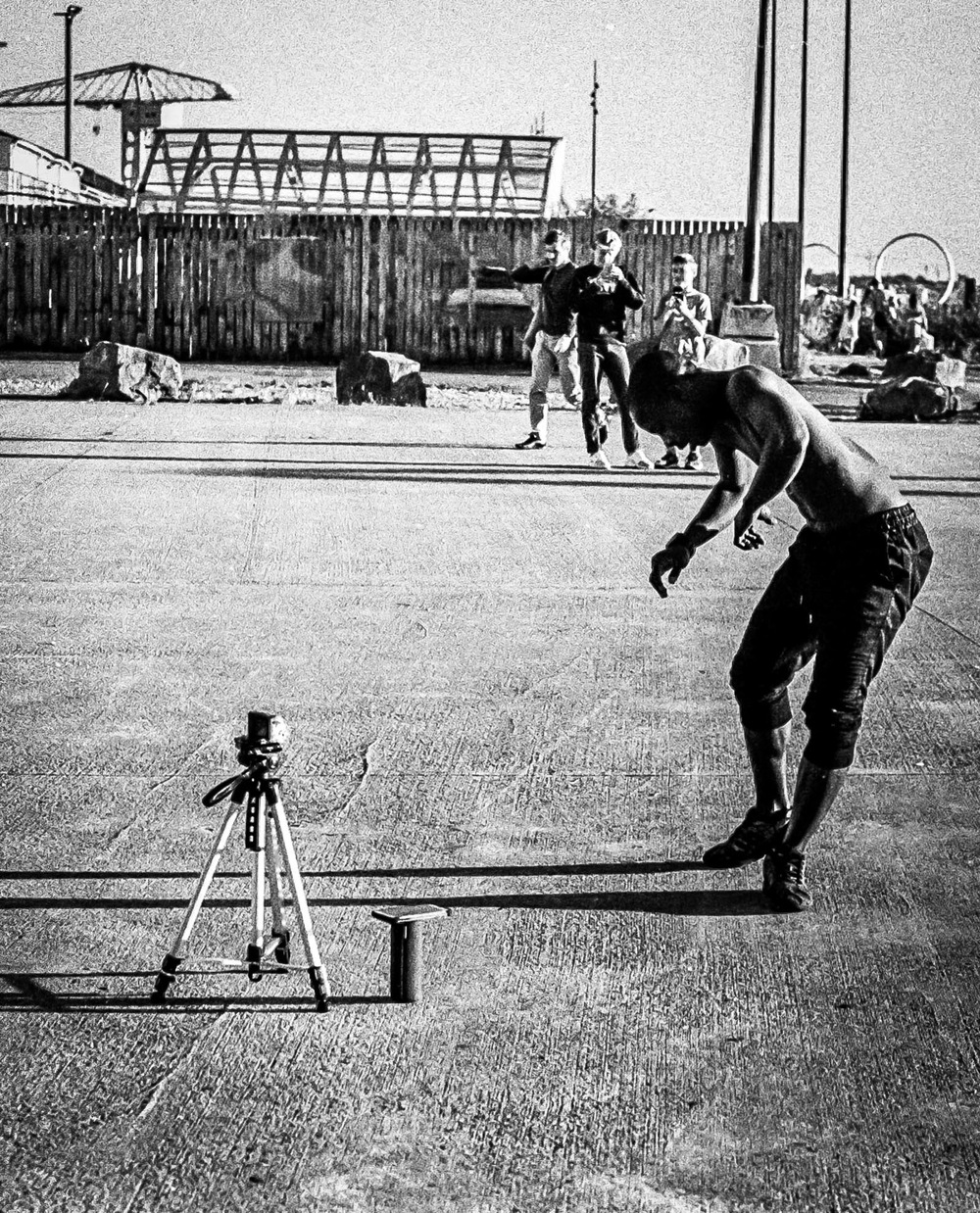
Then there was the dancer. He was just filming himself with a GoPro, but the way the sunlight caught his movements and the glistening sweat on his skin was mesmerising. It was a fleeting moment, the first and only time I’ve ever photographed a dancer, but it left a lasting impression. There’s something undeniably captivating about the human body in motion.

My wanderings continued to the edge of the island, where the mighty Grue Jaune – now a “monument historique” and a symbol of Nantes – stands tall. Walking past and through this enormous yellow crane was an awe-inspiring experience.

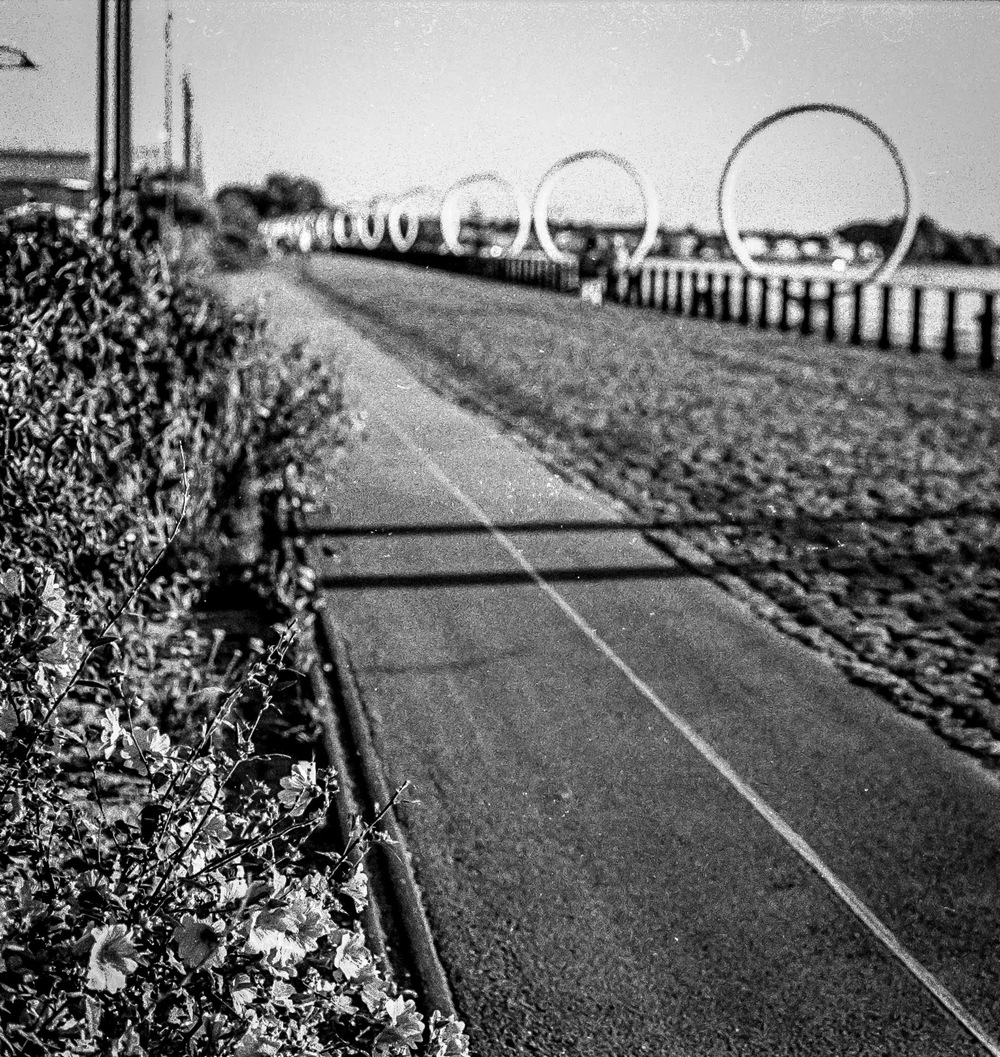
Along the riverfront, the Anneaux de Buren, a series of massive rings, stretched out in a mesmerizing pattern. At night, they transform into a dazzling display of vibrant reds, blues, and greens – a photographer’s dream, offering endless possibilities for capturing leading lines, geometric shapes, and unique framings of the cityscape.

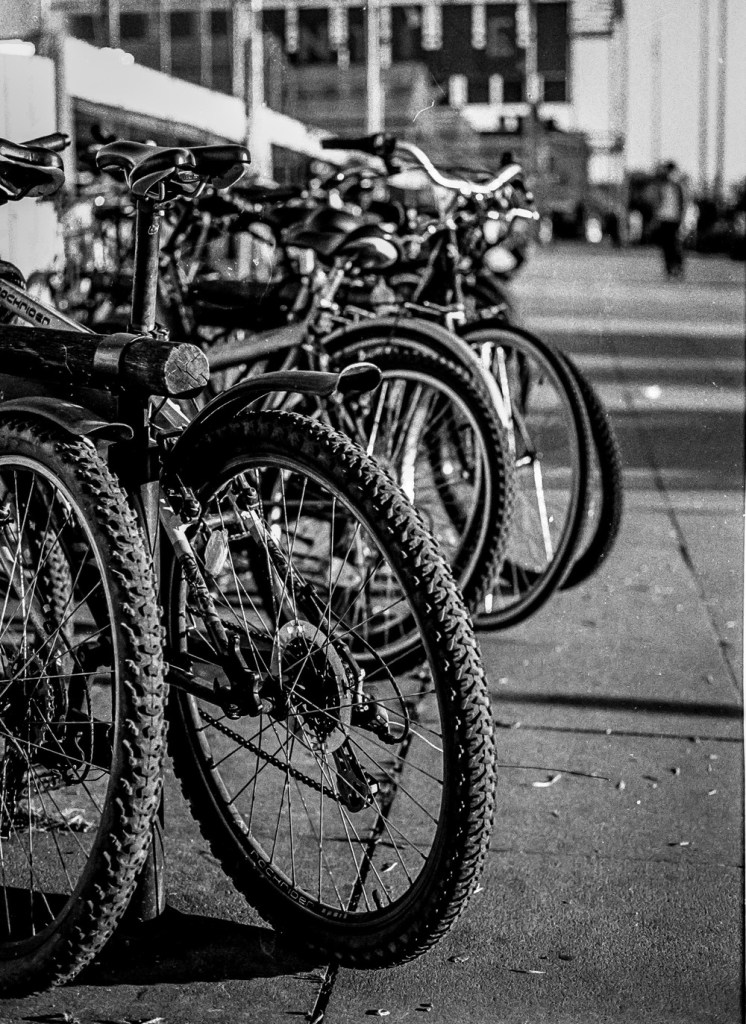
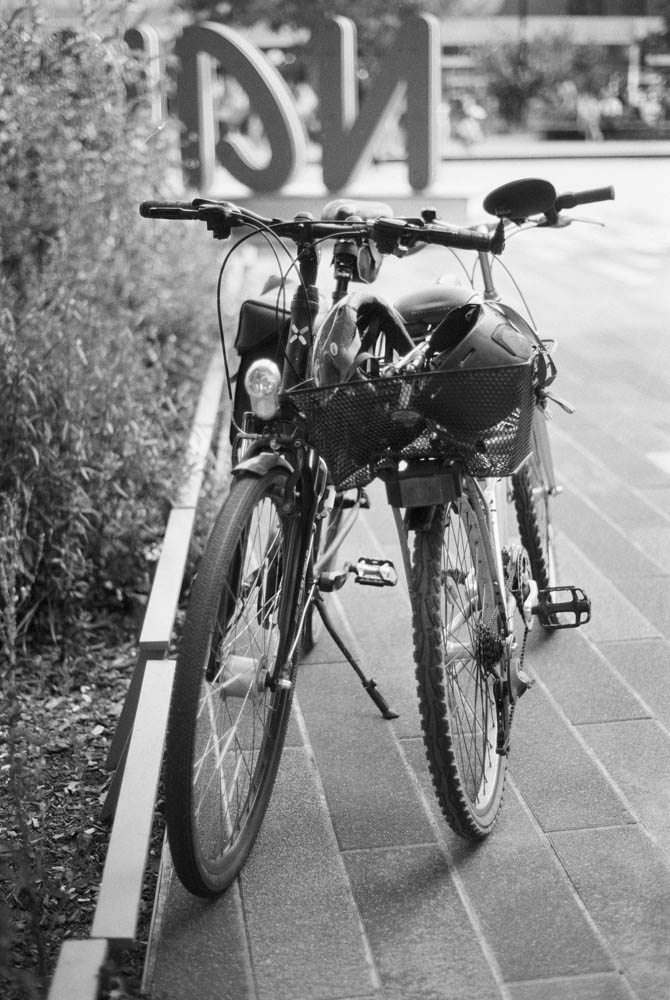
And of course, no photo series of mine would be complete without the obligatory bike shot. It’s a bit of a tradition for me.

Even now, in 2024, the Hangar à Bananes still exudes that same “Summer Vibe.” It remains a popular spot for after-work drinks with friends and colleagues, boasting a variety of restaurants, bars, the HAB Gallery, and the infamous “Warehouse.” While the area can get a bit dicey later at night, it’s perfectly safe and enjoyable for a daytime visit or an early evening soirée.

A Peaceful Stroll Through Jardin de Plantes


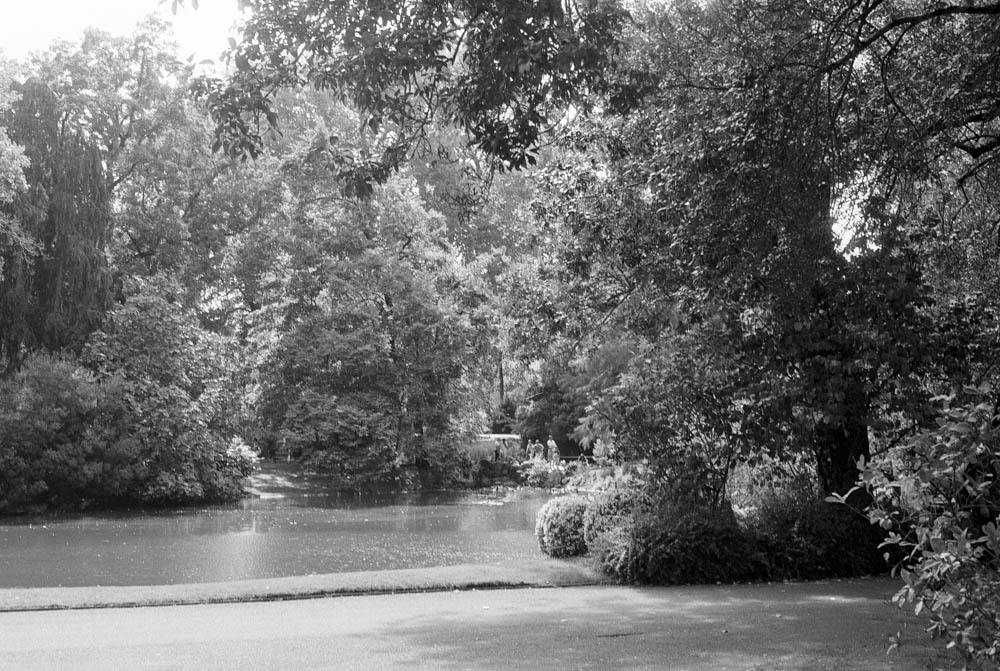
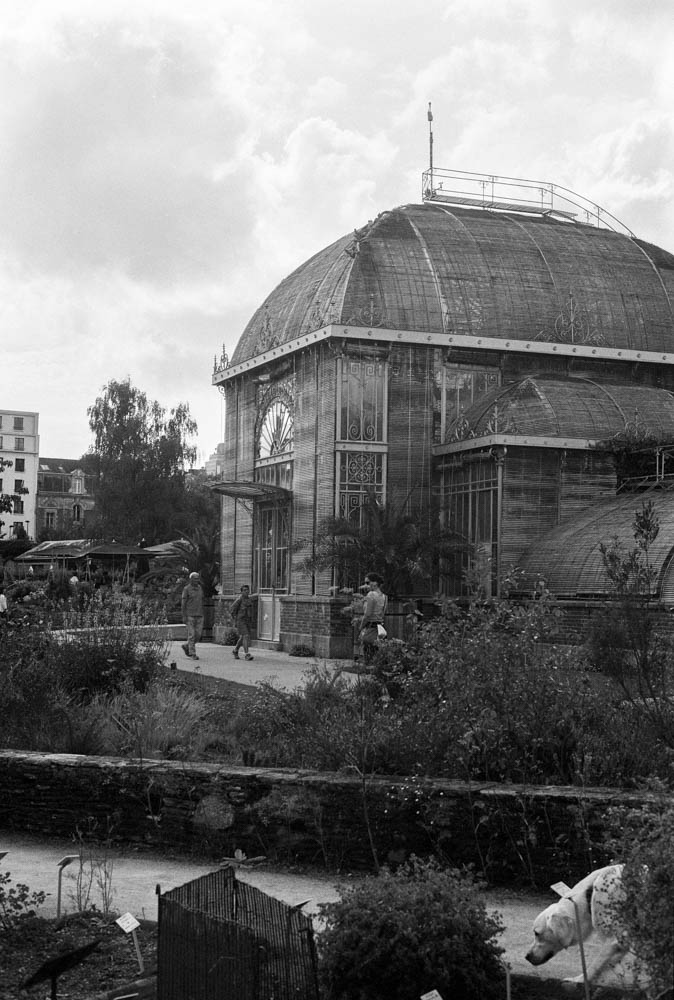
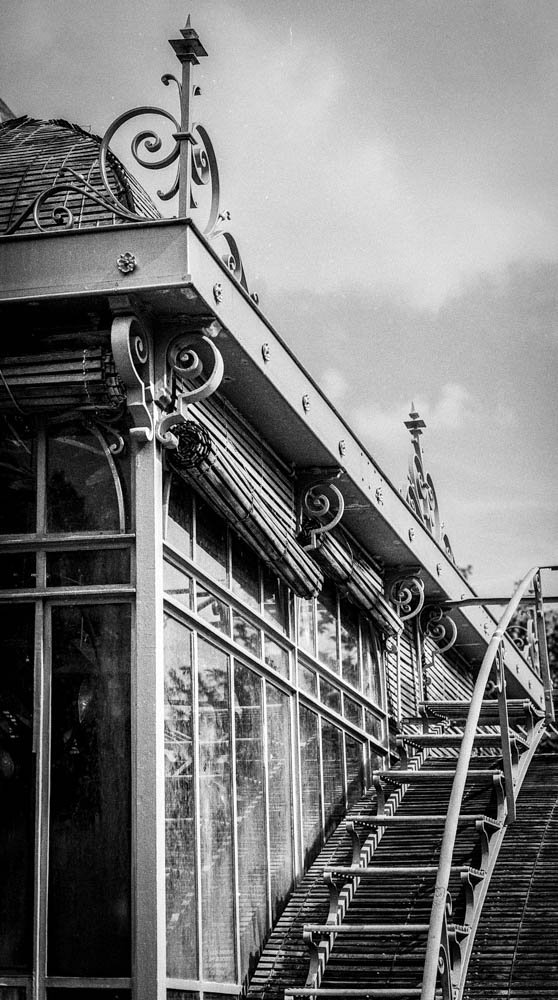
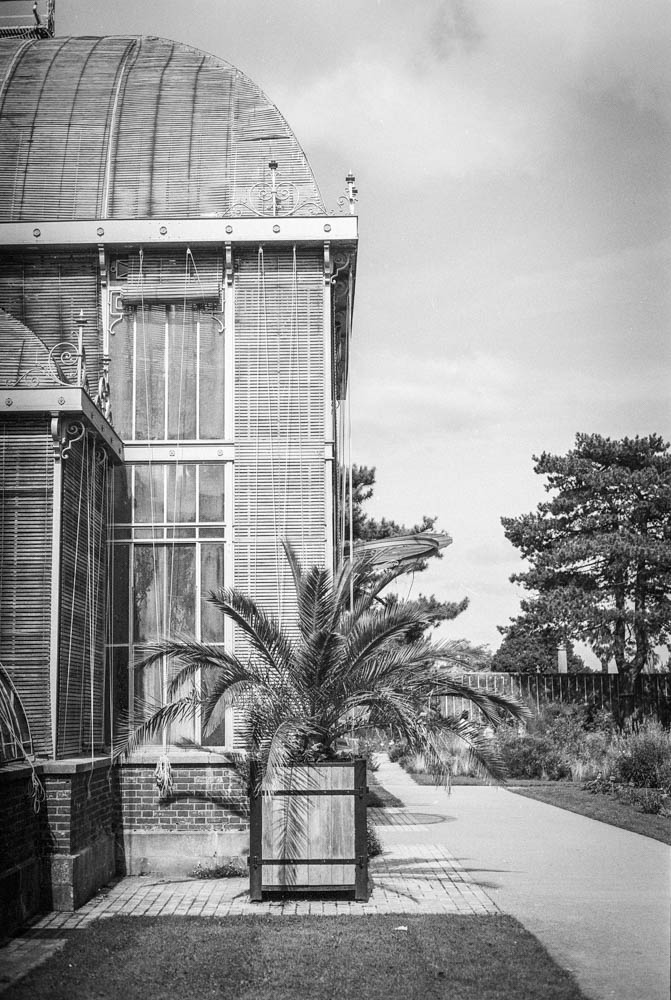
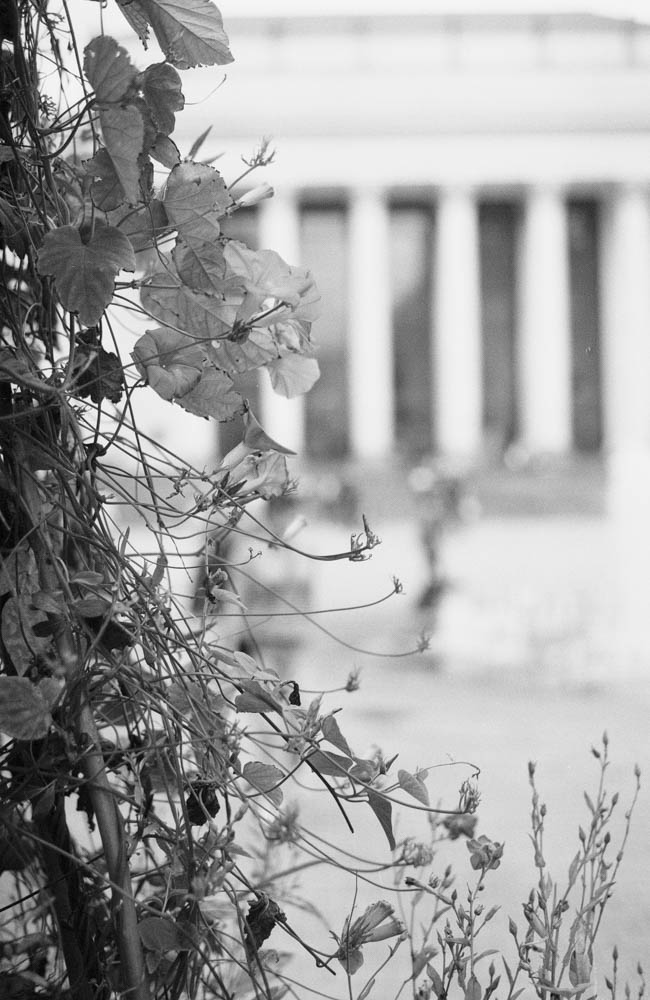
In the heart of Nantes, a city bustling with life and movement, lies a haven of tranquilly—the Jardin de Plantes. With my trusty Pentax ME Super in hand and a roll of Kentmere 100 film, I embarked on a photo walk with my niece, weaving together the threads of modernity and nostalgia.

As the sun cast its gentle rays on the vibrant petals and verdant foliage, my niece and I strolled through the garden, our spirits lifted by the scent of blooming flowers and the melody of chirping birds. The Pentax ME Super, a relic of a bygone era, clicked and whirred, capturing the essence of the ambiance around us.

In the heart of this botanical wonderland, a delightful surprise awaited us – artworks from the Voyage à Nantes, seamlessly integrated into the landscape. Sculptures and installations whispered tales of creativity, adding an artistic flair to the already enchanting scenery. With each click of the shutter, the Kentmere 100 film immortalised these moments, creating a bridge between the past and the present.

Amidst the garden’s serenity, the city’s rhythm seemed to fade into the background. The laughter of children echoed, the fragrance of earth danced in the air, and a sense of peace enveloped us. The bustling streets felt miles away, replaced by the gentle rustle of leaves and the soothing trickle of fountains. It was a moment to pause, to breathe, and to find solace in the embrace of nature.

As my niece marvelled at the artistic wonders and explored every nook and cranny, I couldn’t help but recall a time when the world seemed simpler, captured through the lens of vintage cameras. The Pentax ME Super, a faithful companion, clicked away, a reminder that while times change, the emotions and memories we capture remain timeless.

In the heart of the garden, as my niece’s wonder met my own nostalgia, I realised that these fleeting moments, captured on film, became whispers of timelessness. The Kentmere 100 film transformed scenes into memories, the Pentax ME Super gave them life, and the Jardin de Plantes offered its serene backdrop.

Our visit came to an end, and the laughter and footsteps of visitors began to fade, leaving behind a quietude that felt like a hidden treasure. With a final click, I knew that I had captured not just images, but fragments of serenity and beauty, framed by the lens of a camera that has witnessed decades.

The Jardin de Plantes, a breath of fresh air in the heart of a bustling city, became a canvas on which moments of joy, peace, and art intertwined. The Kentmere 100 film told their story, the Pentax ME Super etched them onto film, and I, a mere observer, was fortunate to be a part of this beautiful narrative.

In the end, it’s the ability to capture the ephemeral that gives photography its magic. It’s not just about freezing time but about encapsulating emotions that stand the test of time. As I looked at the photographs that adorned my album, I knew that every click was a brushstroke on the canvas of memory— a reminder of the day my niece and I discovered the beauty of the Jardin de Plantes and the timeless charm of classic photography.

Capturing Nantes: A Photowalk Through Urban Charms


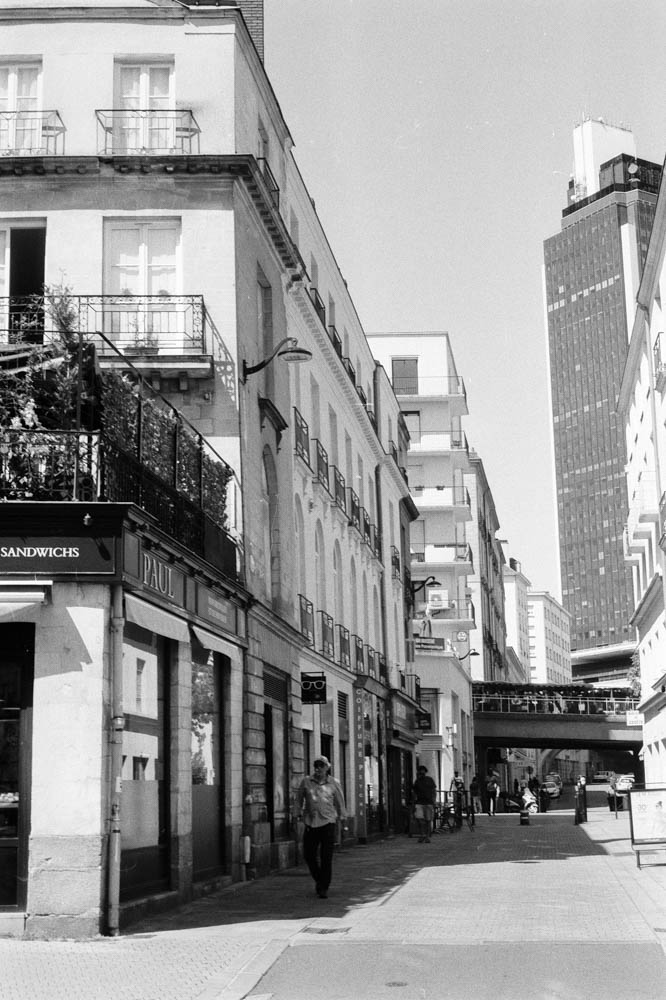
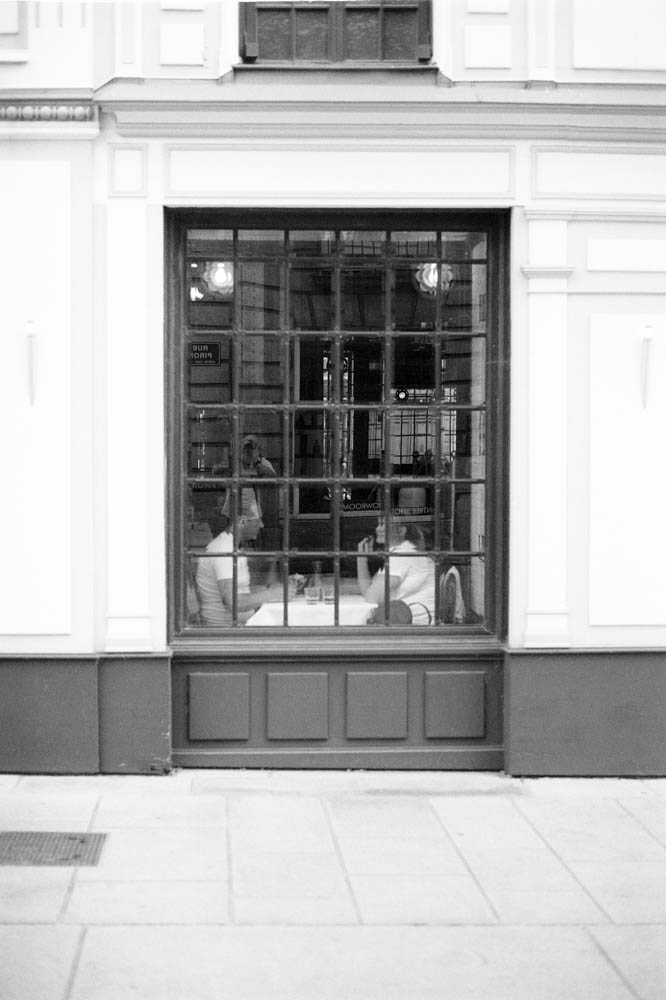
In the heart of bustling Nantes, a city teeming with life and stories waiting to be captured, I embarked on a captivating photowalk adventure. Armed with my trusted Pentax ME Super camera and loaded with Rollei RPX 100 and then Fomapan 100 film, I set out to explore the artistic treasures and serene corners of this vibrant urban landscape, and the latest offerings of the Voyage à Nantes. Join me as I take you on a visual journey through the enchanting Place Royale, the charming Place Graslin, and the captivating sculptures that make Nantes truly unique.

Place Royale: A Fountain of Marine Delights

My journey commenced at Place Royale, where the graceful fountain stood adorned with marine sculptures straight out of a storybook. These sculptures, by the Blegian artist Maen Florin, glistened in the sunlight and droplets of falling water. The Pentax ME Super clicked away as I framed each marine figure, capturing the interplay of water and art with the delicate precision of film photography. The Rollei RPX 100 film lent an air of timeless elegance to each shot, turning the bustling square into a tranquil haven through its lens.

Place Graslin: A Meeting of History and Charm

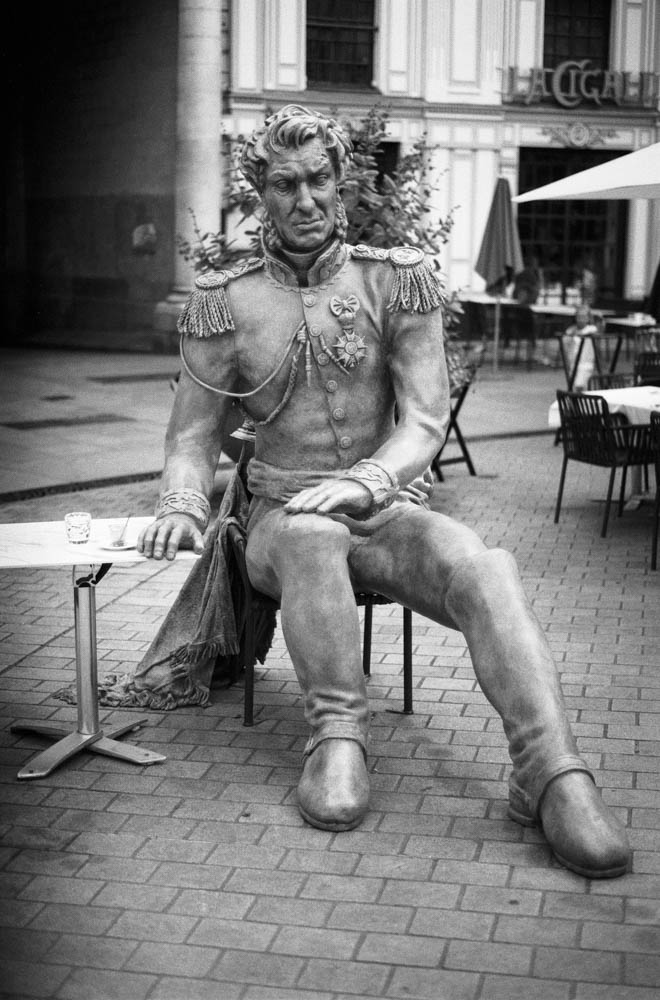
Next on my path was the inviting Place Graslin, a captivating square that exuded elegance and history. Here, the statue of Combronne with his coffee and glass of water, the newer version by Maya Eneva and the Cellule B collectif, welcomed me outside the iconic Cigale café, where I imagined stories of bygone conversations and shared moments. As the Pentax ME Super’s shutter clicked, the Fomapan 100 film brought forth the statue’s enduring presence, immortalising the blend of past and present that this city so effortlessly portrays.

Artistic Wonders of Cours Cambronne

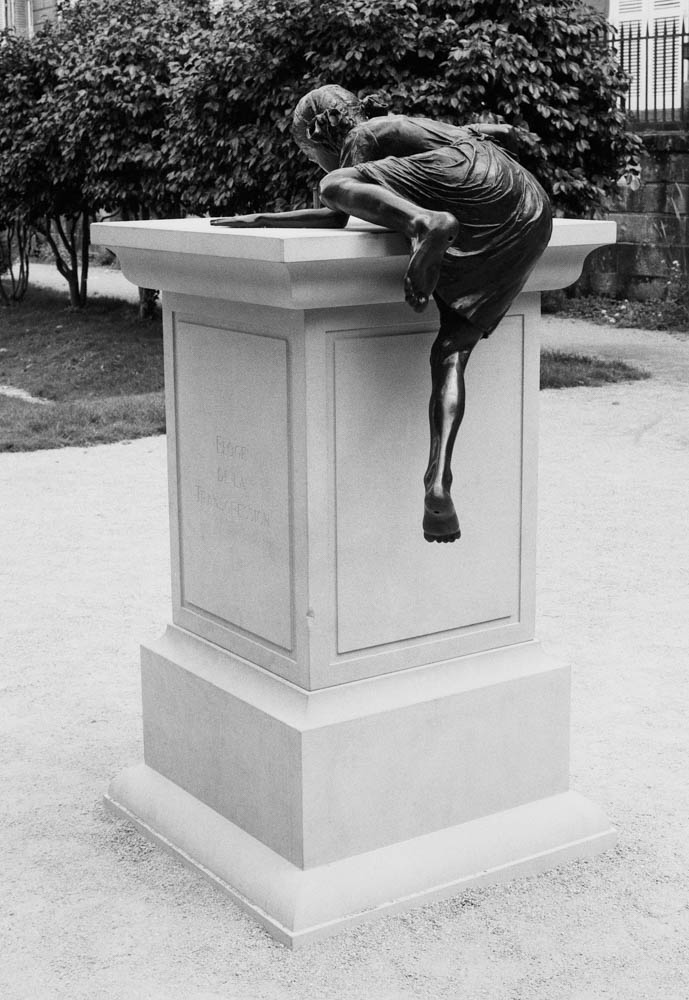
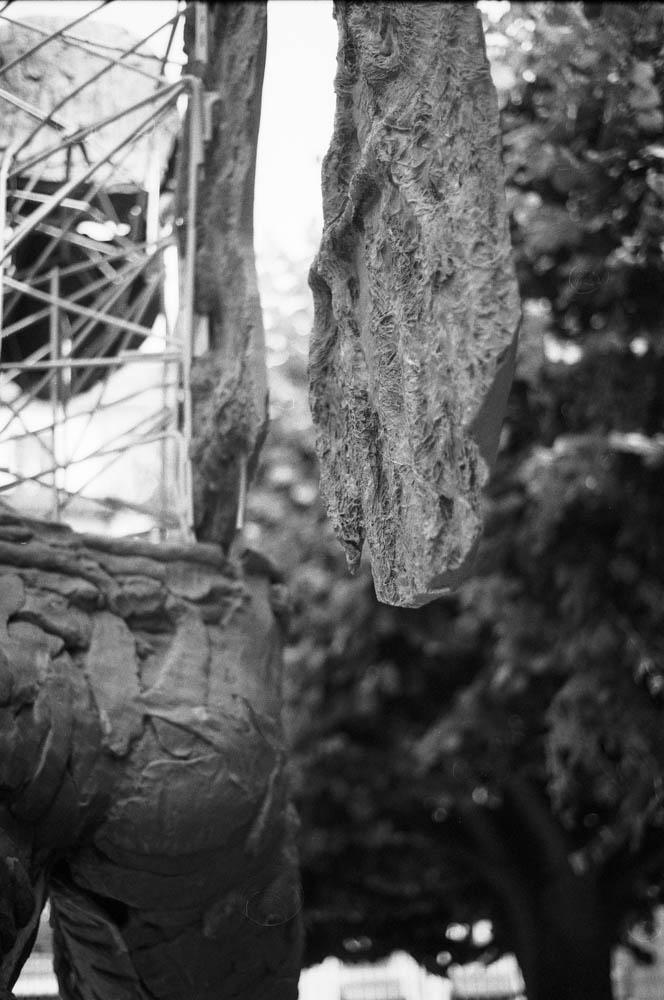
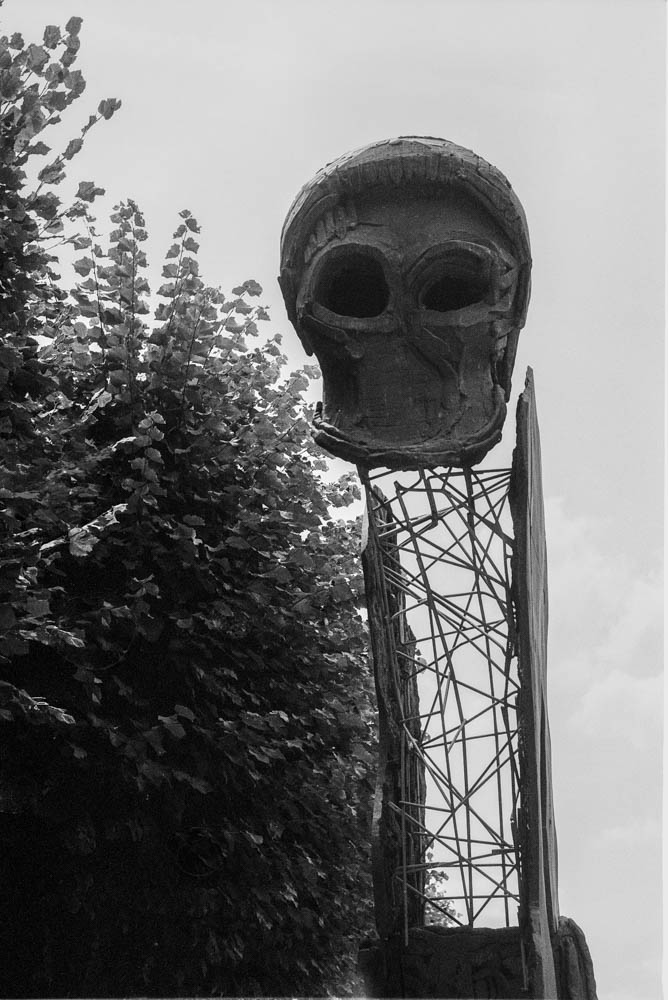
A stroll along Cours Cambronne revealed hidden gems in the form of statues – “homme pressé” by the English sculptor Thomas Houseago and “éloge à la transgression,” by the famous Philippe Ramette both stunning creations from the Voyage à Nantes. These sculptures spoke of bold expressions and the city’s penchant for creative exploration. The Pentax ME Super captured their intricate details, with the Fomapan 100 film adding a touch of mystery to their narrative. In the heart of the city, a feeling of tranquilly pervaded, as I marvelled at the artistic tableau that surrounded me.

Bike Shots: Capturing Urban Rhythm

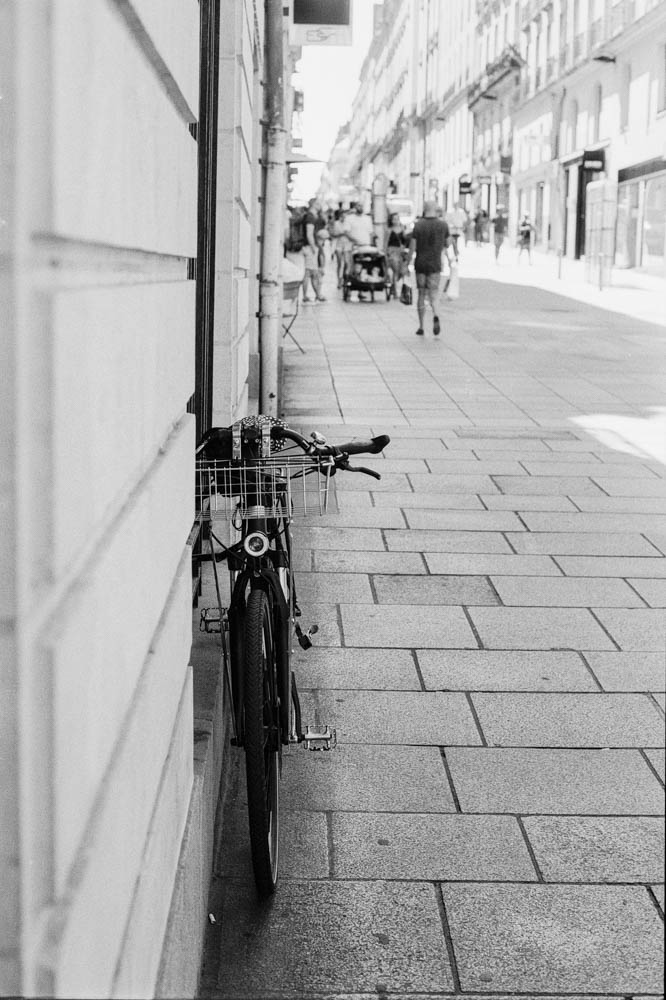
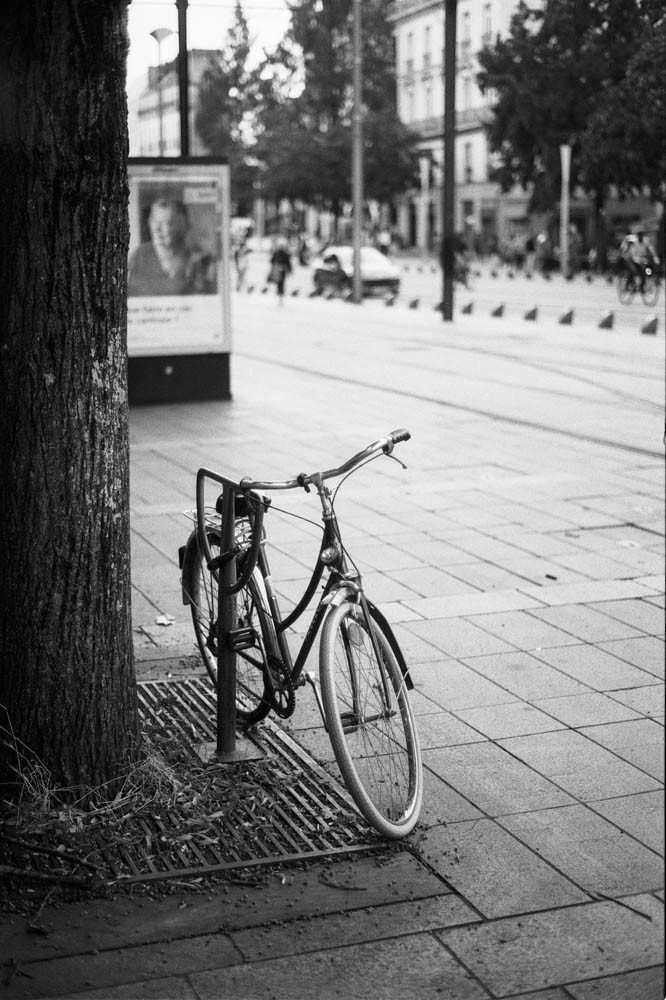
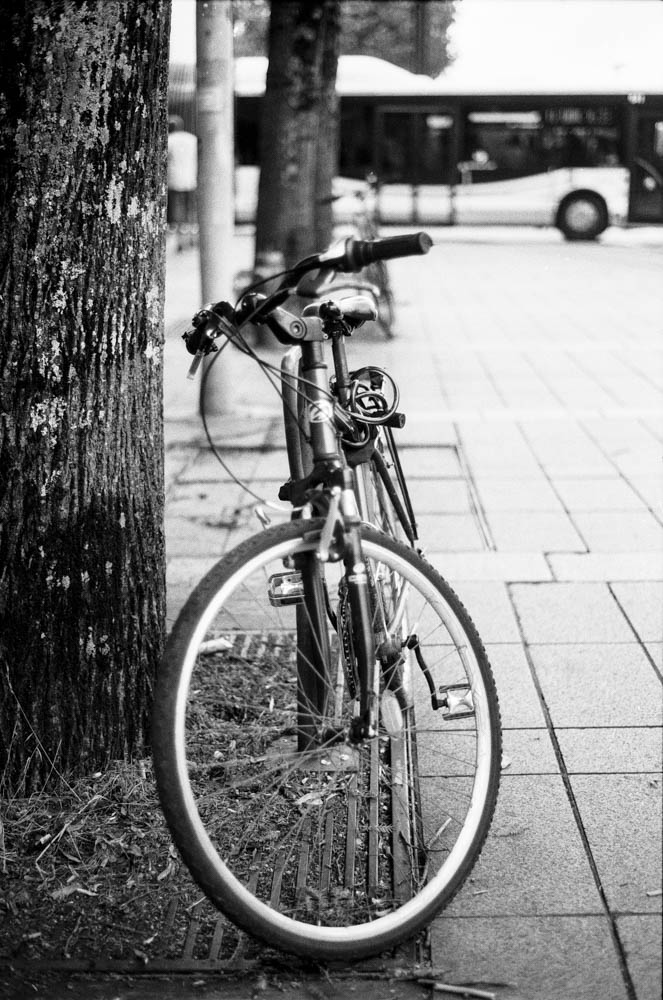
No Nantes photowalk would be complete without capturing the city’s quintessential “bike shots.” Bicycles, intertwined with daily life, spoke of a rhythm unique to urban living. With each click of the Pentax ME Super, the Rollei RPX 100 film transformed these moments into frames that held a slice of the city’s pulse. It also allows people to keep fit and be very smug about not polluting…

A Spectator of Urban Theatre

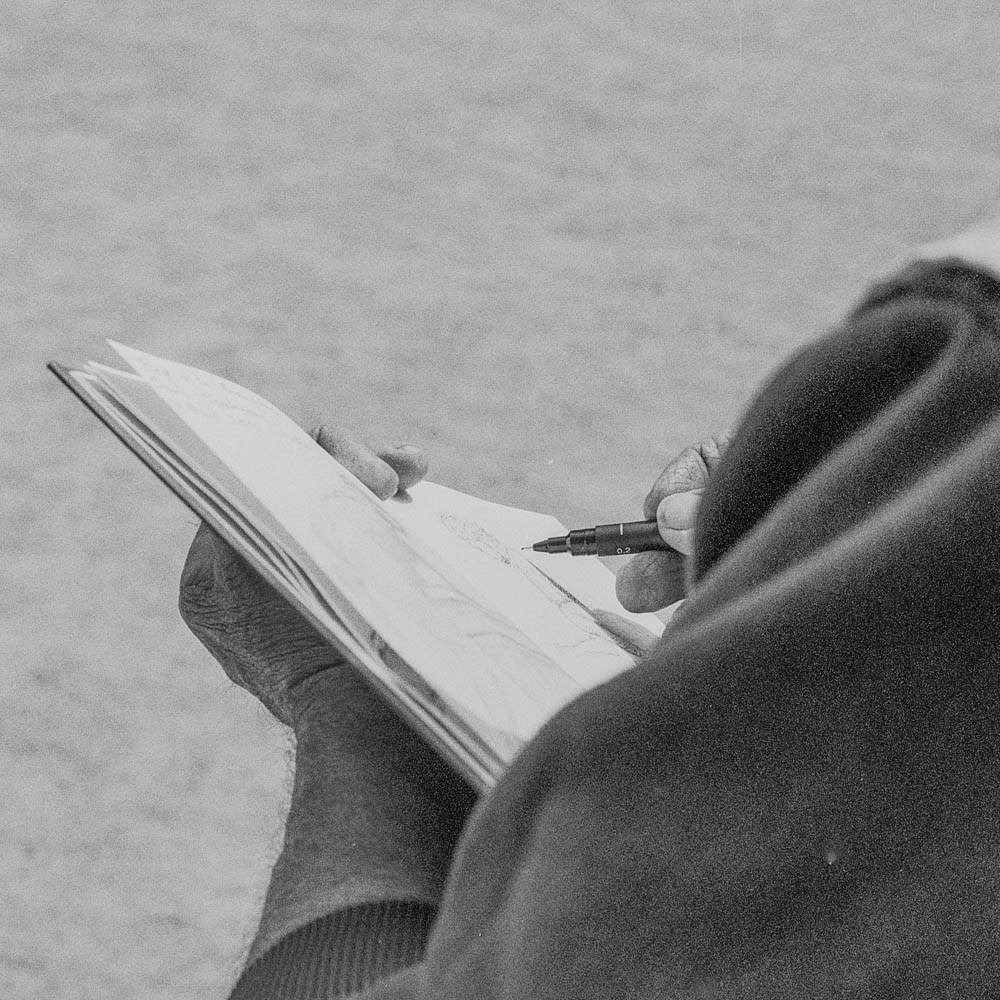
As I ambled through the city’s streets, I couldn’t help but feel like a mere spectator in the grand play that Nantes puts on every day. The camera in my hand was not just an instrument but a witness to the stories woven into every corner. With the Pentax ME Super, I was able to capture these narratives, bridging time and space through the magic of film.

Conclusion: Nantes Through a Different Lens

The Pentax ME Super, armed with its classic charm, and the duo of Rollei RPX 100 and Fomapan 100 films, transformed my photowalk through Nantes into a visual tale. From the marine wonders of Place Royale to the historical elegance of Place Graslin and the artistic marvels of Cours Cambronne, each click of the camera immortalised the city’s essence. Through the lens of film photography, Nantes unveiled its soul—a blend of history, art, and an urban rhythm that beats to its own tune.

As I reflect upon the captivating frames that now grace my album, I’m reminded of the vibrant energy and artistic tapestry that Nantes weaves. Just as the city’s sculptures and streets tell their stories, the Pentax ME Super and film quietly tell mine – a narrative of a city that thrives in its own unique rhythm, an urban theatre where I played the role of an enchanted spectator.

September


Hello Dear Reader.  I’m not talking about the song by Earth Wind and Fire, but the month.  At least it’s being an ear worm and I can hear you hear you singing it in your heads.  I’m talking about September, the month, the return.  We have accomplished our re-entry into our everyday lives, and the routine that was missing in August is back.  The days are slightly cooler and have become more agreeable.  Instead of 33°C, we are back down to 23°C.  The nights are slightly cooler too and we no longer need our fans on all night like we did in August. When it’s hot, some people are in their element.  I, however, am not one of those people.  When you’re cold, you can always put a jumper on, and have a cup of tea and go inside.  But as contradictory as I am, as one friend recently pointed out to me, I do enjoy sitting outside on a Summer’s eve having a beer or three…

I love the holidays that August is famous for, but the obligation to enjoy yourself every day during these days of relative freedom is a pain in the arse. I don’t want to be melancholic, but this forced enjoyment of a good time is too much for me.  Club Med would be a nightmare!  I like my routine back.  Back at work and happy to be there.  We still have our weekends and can still enjoy them.  The jumpers are still in storage, but you hear the word “mi-saison” as the announcer of a more bearable climate.  The French news has gone the rentrée clips to showing how our Dear President has not been as good at selling submarines as other countries that can offer different and possibly more desirable options…  The Voyages à Nantes is over, and we will look for those works of art that have become permanent.  You can see grapes in the supermarkets, and other more autumnal products.  Soon we’ll be talking about the wine harvest…  In the UK it will be words like “chilly” making their return to everyday usage.  The merits of a “nice cup of tea” which will warm you up will become an object of conversation once more.  Biscuits or cake?
My daughter was born in September and this week is her birthday.  She will be twelve going on thirty.  I think she should run for President, as she seems to know everything already.  Let her fix the country.  If people go on strike, she could always sulk in her room and go on her phone…  That’ll show them!  At least she takes the dog out for walks around the village.  As any doting gather, I think she’s brilliant and can be hilarious and despite hating and eye rolling at my dad jokes, she still seems to enjoy them.  She can also turn into a she-devil at any instant and I’m trying to work out whether this is traumatic for me or just making life a little more interesting than it once was.

Molly, I think I’ve introduced her to you, is now a deb at the grand old age of 10, and has made her grand entrance in the pub, where I can be found from time to time, enjoying a pint of overpriced Guinness.  Me, that is, not the dog.  That dog of ours is one clean living dog, or a total abstainer!  She attended a Saturday night at the pub, and was noticed and loved by everyone.  She received strokes galore, was made a fuss of, and even had a couple of chips as a treat from the chip shop down the road.  My major concern was that I would lose her, but my hand stayed firmly on the lead, and the only trouble was her getting tangled in chairs.  I was amazed by the reaction to her, and she might be allowed to come out with me more often.  She’ll keep her canine eye on me, making sure I don’t get into any trouble. It’s amazing how that mutt has worked her way into my heart and is a real doggie dog, and always seems happy to see me.  To be honest, she’s happy to see everyone, but she knows how to make you feel special, in a way that only a dog can.  Unfortunately she can, with time, and dirt on her, become a little stinky-poohs, and on Tuesday I came home and gave her her cuddle, discovered a dog that had been to doggie hairdressers and was now as soft as you wish, trimmed up, and smelling lovely.  Maybe not as pleasant as finding a banknote hidden away in your wallet, but not half bad anyway!

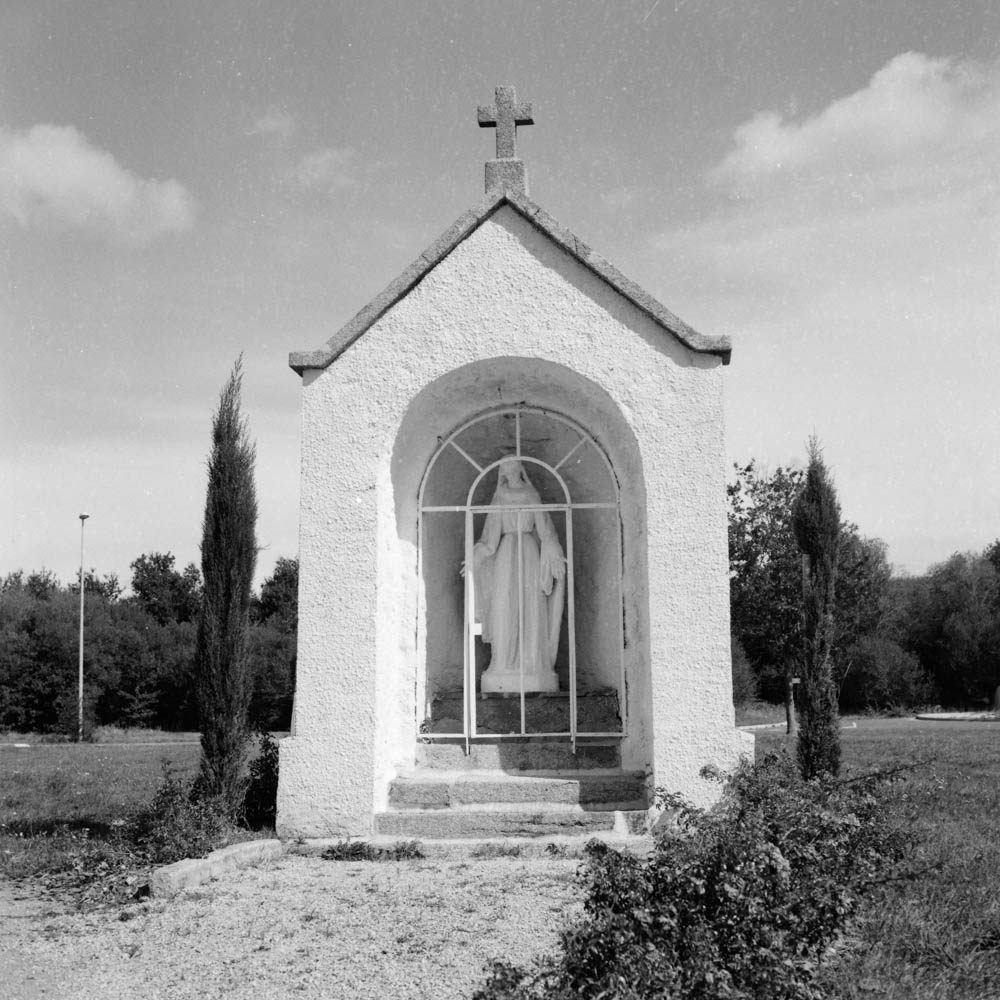
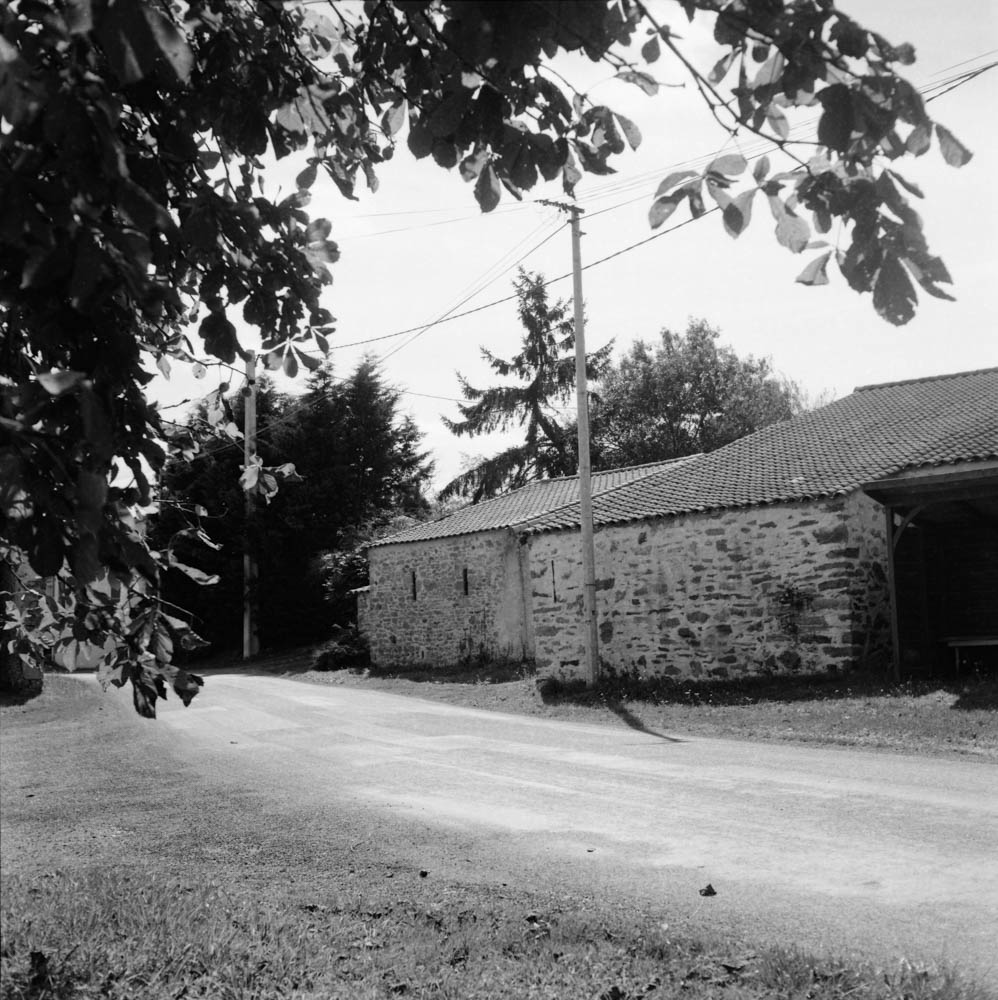
This is supposed to be a photography blog, or at least from time to time, so let me tell about where I am on the photographic plain.  I’m still there.  Last weekend was the Journées du Patrimoine.  I could have gone into Nantes with my camera, and visit all those places not usually open to the public and get some more “exclusive” photos, but went to Clisson instead.  I never got there.  I had the Mamiya and a couple of rolls of film with me.  Exploring some of the local villages near where I live, I even managed to go to the Château de la Preuille, a local castle that has been a favourite of mine since arriving in St Hilaire in 2001.  With Medium format film, you get 12 images with each film when shooting with the Mamiya C220, and the amount of detail that is captured on the negative is amazing.  The project was to take pictures locally and see what I could get, and the restriction of 24 shots was interesting too.  It obliges you to make that little extra effort when composing your images, as you don’t want to waste that special film.  If this article has photos, then it means that I have developed my film before Friday at 17h.  Otherwise, they’ll have to be added later on. UPDATE: It appears that you will have to wait for the photos of Château de la Preuille but they will be put on here. For the moment, you get a bit of Saint Hilaire.

I shall continue to revel in this comparatively cooler weather, with the sunshine, and not much rain forecast for the next ten days.  I look forward to seeing you in my next article.  Until then, be good, and if you can’t be good, then be careful!

Art in Nantes


This time last week I was looking forward to getting  out with my camera (I’ll let you guess which one) and getting me some art!  The sun was guaranteed, and temperatures were on the up.  I would get my art and go to the pub for a pint or two with friends.  

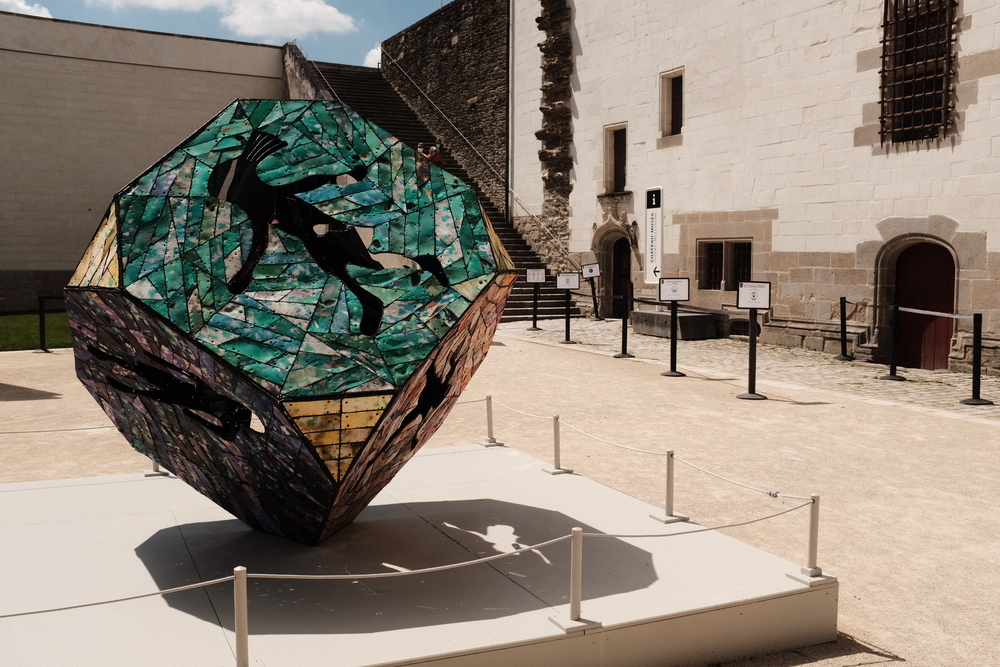
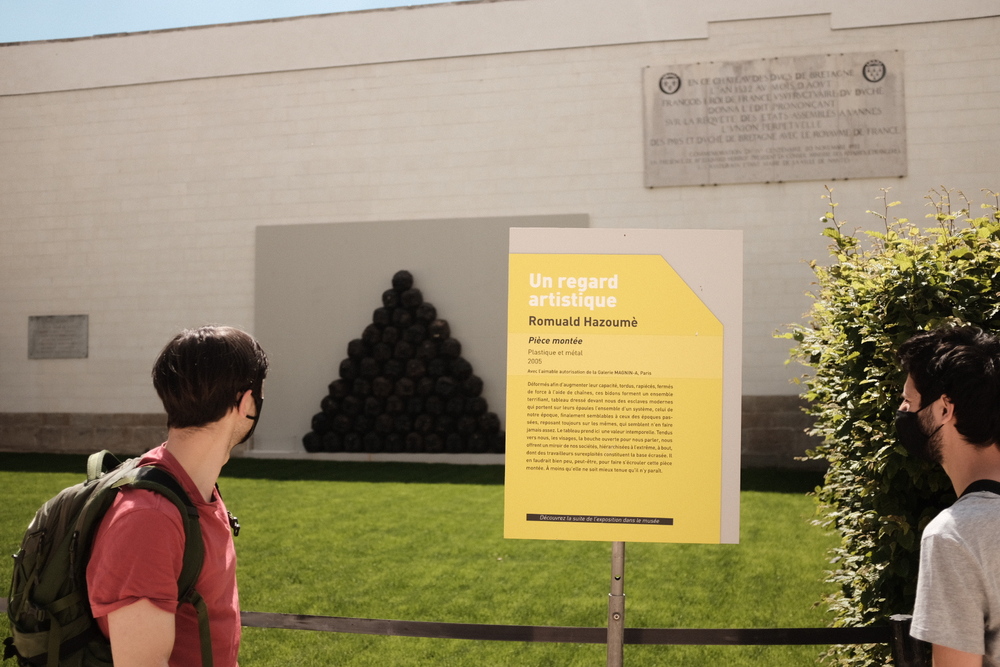
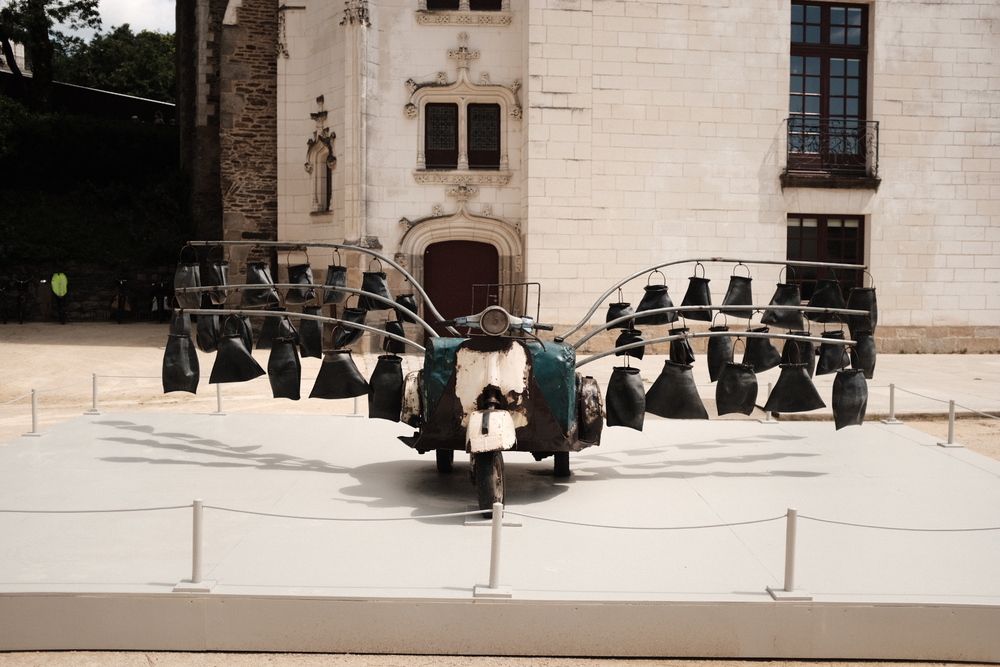
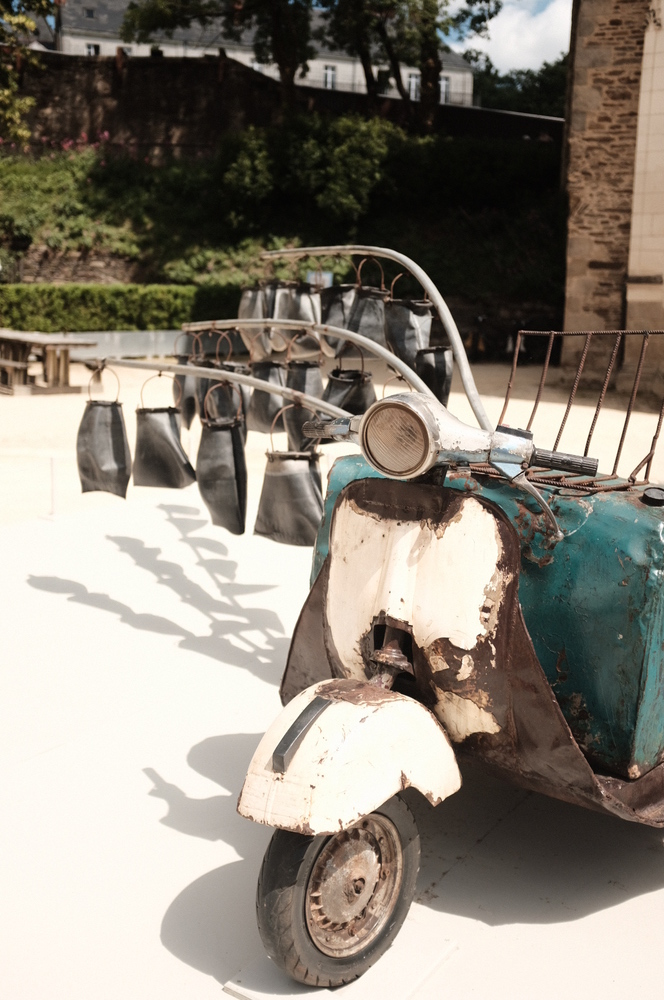
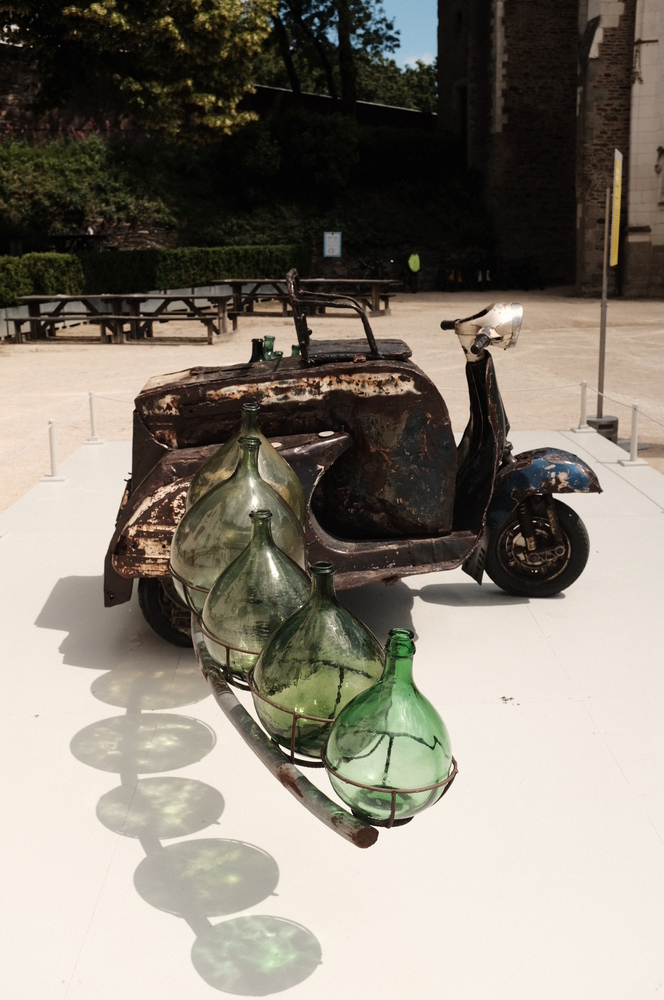
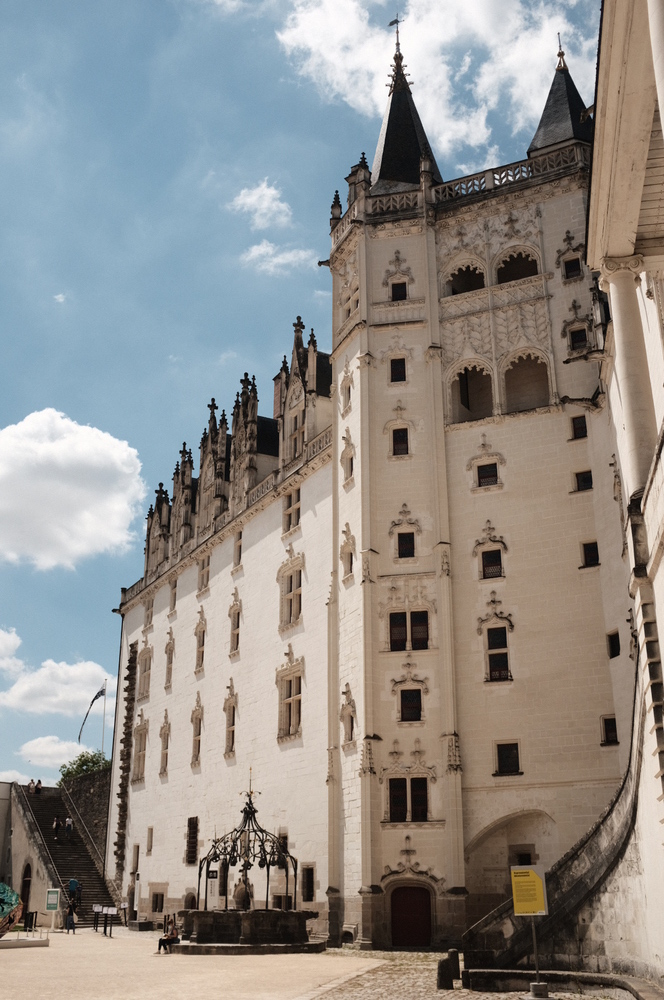
On the Gram I had seen quite a few photos taken in the Castle Courtyard showing art inspired by French decolonialisation, and the Atlantic Slave Trade, by the Benin artiste Romuald Hazoumé. The Expo is open to the public until the 14th November 2021 in the Castle.  Romual Hazoumé, born in 1962 in Benin, creates sculptures using plastic jerry cans, giving a subtle critique of political figures and political systems in modern Africa.

Hazoumé recycles matter, junk, and objects that have served their purpose, which he uses in the original state, or deformed to represent his vision of society, events, or planet-wide concerns.  The artist revisits History, conserving a present link to the news.  His research is shown in monumental and hard-hitting works of art, showing his militantism against all forms of slavery, corruption, traffic, that are translated into witness of what is happening right now in the world.

The question of migrationary fluxes and their consequences, questions the western world, and the African continent, and asks further questions about egalitarian exchange, has become central to his more recent works.

I therefore think about slavery and our role in it:  the original African slave trade, followed by the Arab slave tribe, followed by the European slave trade, and eventual abolition, in Europe and our Colonies, and taken up again in Africa with migrations due to war and economics.  We hear all kinds of tales about Africans being sold to Libyans so the migrants “can repay their debt,” and then hope for a better life if they survive the crossing of the Mediterranean.  Some don’t make it and are washed up tragically on our shores.  The image of the three-year-old boy who washed up dead, Alan Kurdi, near Bodrum broke all our hearts and brought the war in Syria to the headlines, and especially the human cost of this war.   I’m not saying that the migrant crisis is the same as the slave trade, but there are parallels. 

I was always aware of the salve trade, having been brought up in Hull, where our local MP, William Wilberforce, was responsible for the abolition of slavery in the British Empire with the Slave trade Act in 1807.  This always gave me a real sense of pride of being from Hull!  France was to wait until 1815, with the decree coming into force in 1826.  We would have to wait until 1848 for emancipation in the French colonies. 

The Act created fines for ship captains who continued with the trade. These fines could be up to £100 per enslaved person found on a ship. Captains would sometimes dump captives overboard when they saw Navy ships coming in order to avoid these fines. The Royal Navy, which then controlled the world’s seas, established the West Africa Squadron in 1808 to patrol the coast of West Africa, and between 1808 and 1860 they seized approximately 1,600 slave ships and freed 150,000 Africans who were aboard. The Royal Navy declared that ships transporting slaves would be treated the same as pirates. Action was also taken against African kingdoms which refused to sign treaties to outlaw the trade, such as “the usurping King of Lagos”, who was deposed in 1851. Anti-slavery treaties were signed with over 50 African rulers.

In the 1860s, David Livingstone’s reports of atrocities within the Arab slave trade in East Africa stirred up the interest of the British public, reviving the flagging abolitionist movement. The Royal Navy throughout the 1870s attempted to suppress “this abominable Eastern trade”, at Zanzibar in particular. In 1890 Britain handed control of the strategically important island of Heligoland in the North Sea to Germany in return for control of Zanzibar, in part to help enforce the ban on slave trading.

How sad they would be to see the world today!  The Artists shown in the Expo, created works to show modern slavery, one of the works being based on the story of Alan Kurdi, which is a dice, where people put their faith in their God, and try and make it to a better life in Europe, seen as this Eldorado where they will be free.  Sometimes I think the only difference between them and my own story is that I was born in a different country.  We may worship God in different ways, but when it comes down to it, we all have the same aspirations, a better life for our children, to be able to feed, clothe, and give them a roof over their heads. 

That was a pretty intense introduction and not as comical as some of my other articles, but this is a serious matter, I’ll get less serious in the next paragraph.  We cannot but feel something deep inside us whilst contemplating these works of art.  Put yourself in the position of a Syrian parent and it just comes home to you… 

I will try and get a little less heavy, and continue the story of my day.  I left the castle  and walked up towards the Cathedral, thinking that the Psalter’s Garden would be a lovely place to have a modest picnic, and reflect on what I had just seen.  I didn’t have anything to eat, but knew where I could change that.  There is a lovely bakery that makes really amazing sandwiches.  Trigger warning.  I am about to tell a Dad joke.  Why do you never go hungry in the desert?  Because of all the sand which is there…  You know what?  I’m not even sorry.  So I went back to the Garden, with food this time, which helps a picnic be a picnic.  I found a bench, parked my backside on it.  So relieved that it didn’t make any noise as I sat down.  This garden is one of the favourite places of a friend of mine who has consented to be a guest writer on my blog.  As I ate I transferred the photos from my camera onto my phone so I could create a story of the day for the Gram, which would go on to be a series of reels (short videos for Instagram). 

I had eaten, thrown my trash into the bin, and headed off to get on a bus.  Yes, me, on a bus.  For the last 20 years, and country living, public transport has become a rare occurrence.  You know how satisfying a pint of beer that somebody bought for you is?  Or how sweet the pint offered by the pub landlord?  I think you do.  It is always sweeter and finer and so satisfying.  Well, somebody  in the city council here in Nantes had the brilliant idea of making public transport free on a weekend. What a wonderful idea!  Now public transport isn’t beer, which I’m sure you, Dear reader, are well aware of, but there was a certain satisfaction of being able to get on a bus and not have to use a ticket, and knowing that a ticket inspector would not inspect the ticket that you didn’t use.  In my life I have learnt to savour these small mercies offered to us.

I was enjoying the ride so much that I actually missed my stop where I had to change busses.  Normally this would send my anxiety into overdrive, but not today.  I just got on the bus going the other way, and went back two stops.  Changed busses, and arrived at the terminus, which was the Hangar a Bananes, where the big massive crane is, that you might have seen in some of my photos.  As part of the Voyage à Nantes in 2011, the whole place has been given a new lease of life, and in the afternoon and early evening, it’s a great spot.  You might want to avoid it at around 2am to 3am, as it can get a little worrisome.  I, however, was there from about 2pm to 3pm, so unless a rather rotund gentleman wearing a Panama hat, and with a camera around his neck, scares you, then you’re fine!

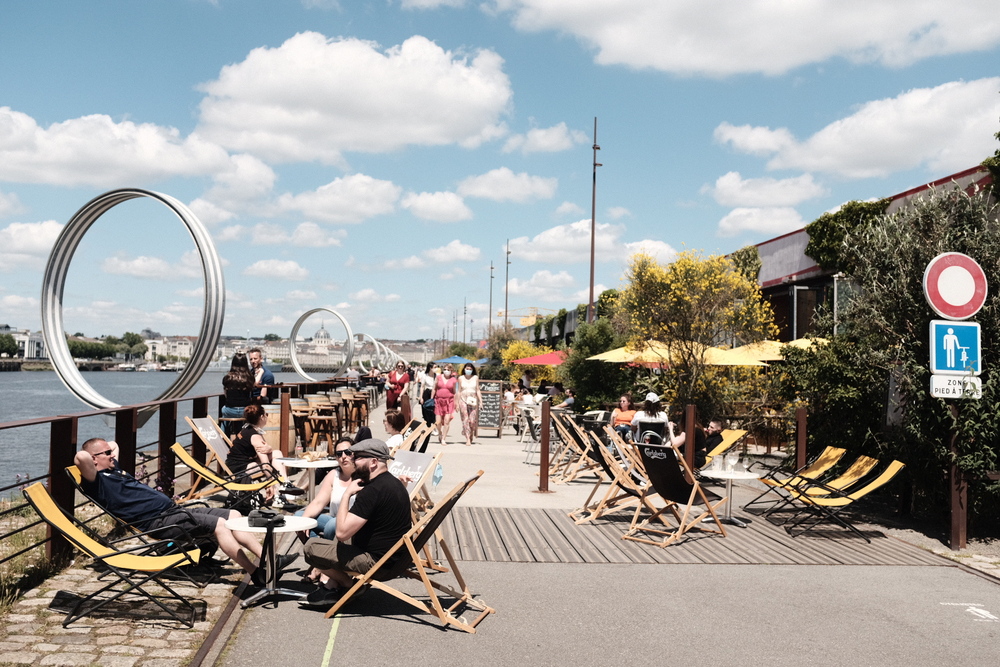
You will however see the Anneaux de Buren, or the Buren Rings standing to attention in a long line that follows the river.  Do not worry either, about, one ring ruling them all, stray Wizards telling you that you will not pass, or small people with very hairy feet trying to find a place to eat breakfasts…  There will be people enjoying a drink and a bit to eat, or going to the Canteen for lunch or dinner, and if you further enough down you might be able to walk on the moon, visit the very depths of the ocean, and if you’re lucky, you might just be able to spot an elephant!

I was aiming for the HAB Gallerie, which is the Hangar à Bananes Gallerie.  The clue is in the name.  I wanted to go to see the exhibition with works by Gilles Barbier.  Again, I had seen photos on the Gram, and wanted to see what all the fuss was about.  It, too, was free, so why not.  I’m not saying I had spent the day consuming art, but possibly, kind of.  I’m not quite sure.

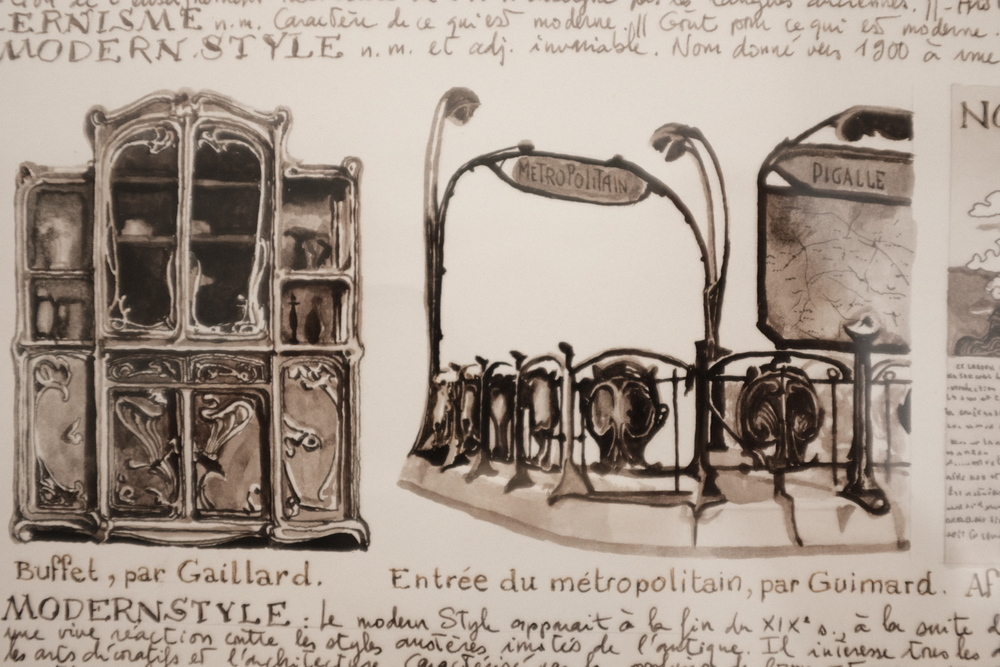
For the first time, the artist was showing his paintings of the “Pages du Dictionnaire” lifted from the Petit Larousse.  Which is not the same as the Petitblond, but can be equally satisfying.  Did you see that little play on words about beer there?  You might have to speak French to get, so to all non Frenchie people, I apologise.  I thought it was funny, and on a slightly higher level than the desert joke.  Apparently, to get the most out of this blog you have to be a photo geek, into photography, and ever so slightly Francophile.  If that is not you, then I hope you can find something that pleases you.  I’m working with what I’ve got people!

So where was I?  Yes, looking at a slightly surrealist exhibition, including huge paintings of the insides of a dictionary, cum encyclopedia, which for those born this century, is what old people used before Google!  Shit I feel old all of a sudden!  So these massive paintings of the 1966 edition, which are very detailed and as interesting to read as to contemplate.  It’s an ongoing project and he’s got to P.  As any one would after drinking all those Rousse beers!  Hey, I found that funny!

Dear Reader, I am obviously a complete idiot, and because of my idiocy, you are about to get a different ending to this article as I didn’t press save, even though I was convinced that I had. I had even scheduled this article to come out at a certain time and end everything. Jesus saves, and so should I!

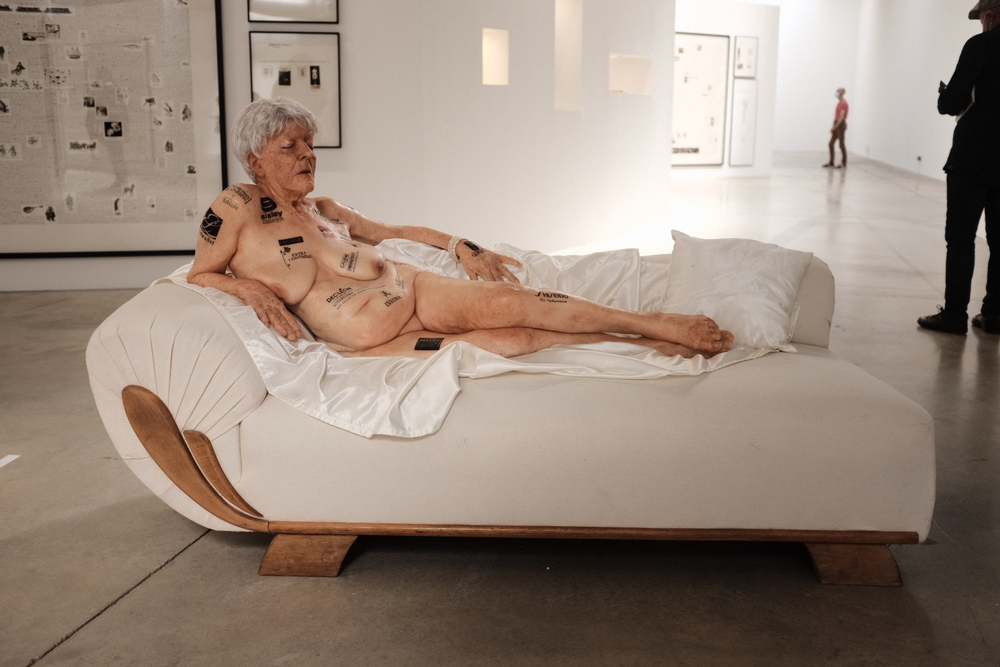
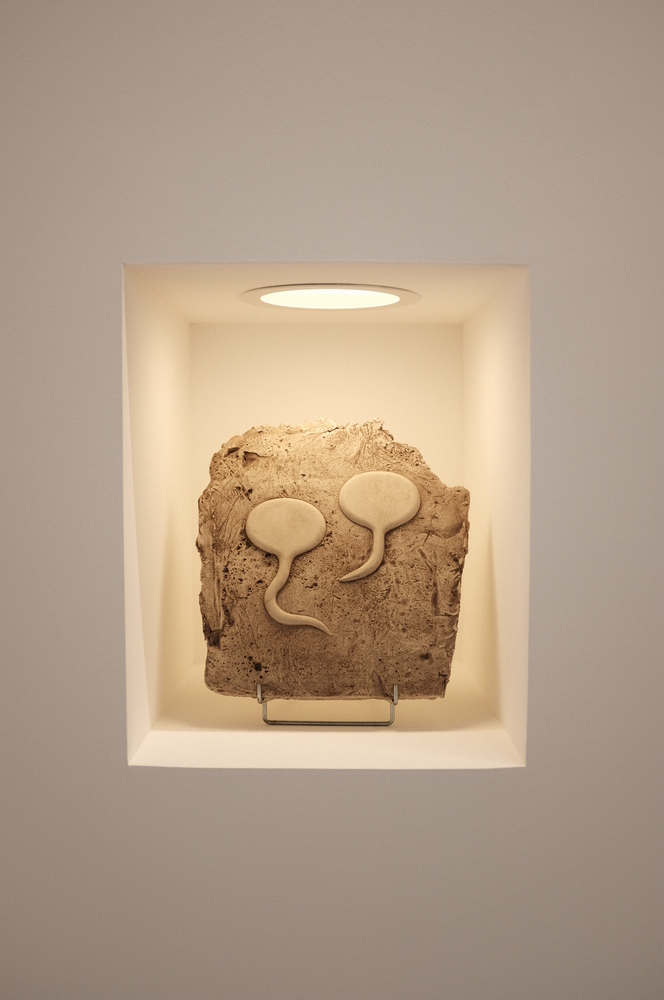
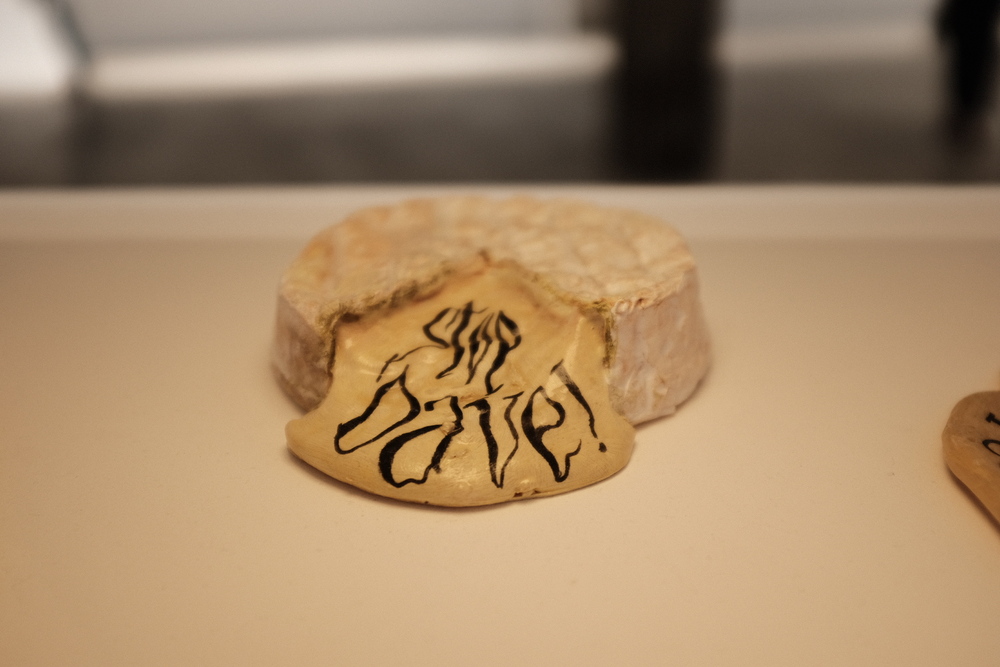
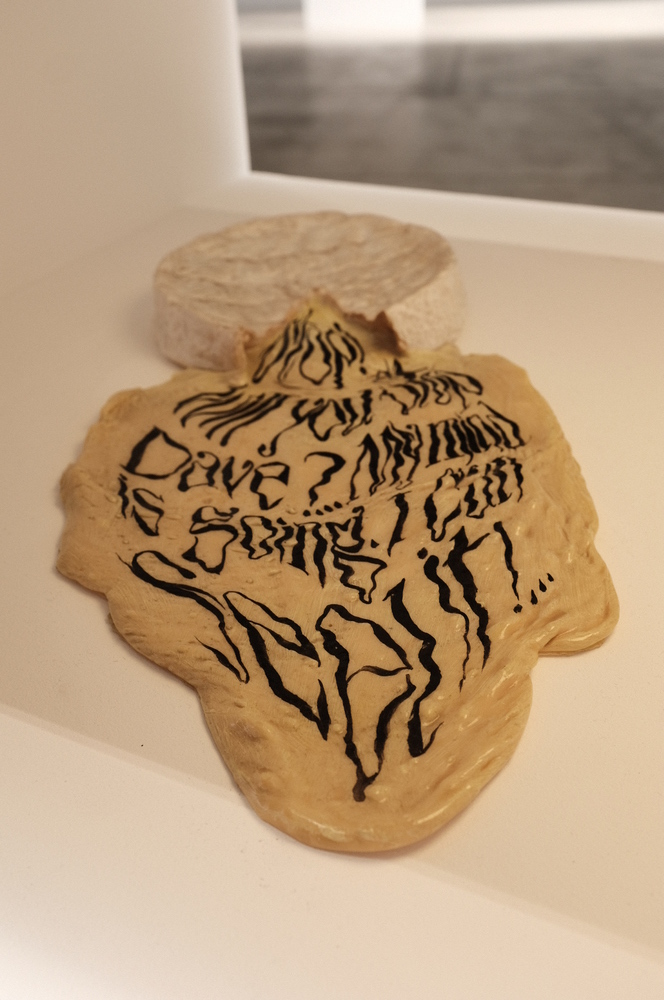
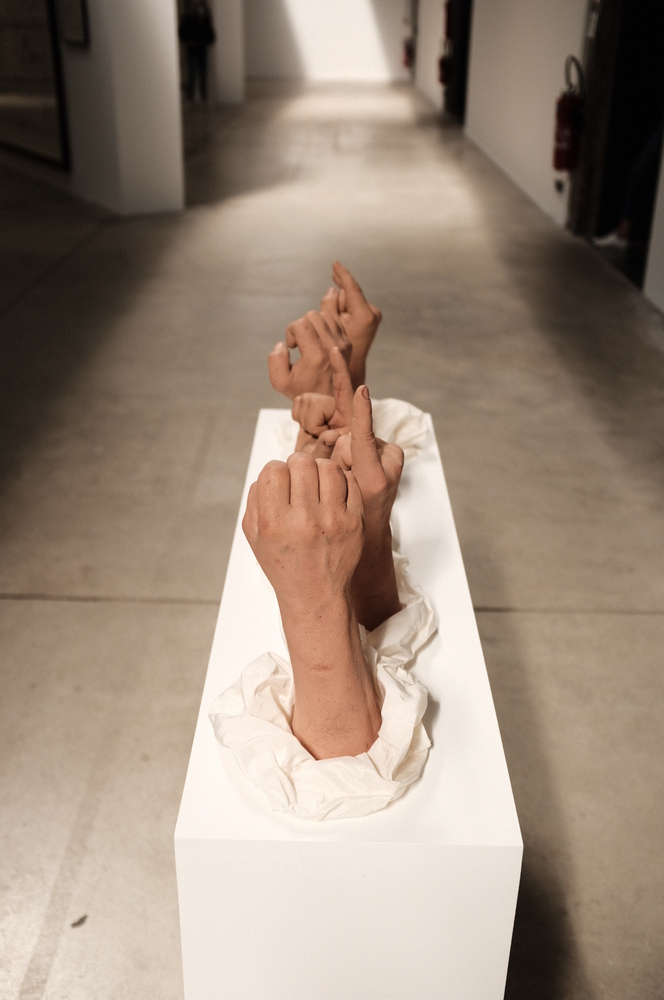
I think it was something along the lines of talking about the enigma that is the art of Gilles Barbier. It’s slowly coming back to me so you’ll get the main points. In the early 2000’s a company put out an advert saying that they would pay an obscene amount of money to the person that would get their logo tattooed on their forehead. The deed was done, and I was reminded of that when seeing one of Gille’s very realistic sculptures. It was as if the person had gone full hog and got tattoos of so many logos. The sculpture is of an old lady lying naked on a chaise long, covered in various logos. It was one of the most disturbing things I seen all day, and at the same time so fascinating. It really makes you think about the permanence of a tattoo, and makes you wonder what on earth people were thinking! It was like the ultimate corporate sell out. There were more sculptures of heads spewing forth diatribes, others of melted cheeses with philosophical quotes, and to finish, a sculpture made out of femurs and human hip bones. Talk about stripping ideas down to their very core.

If the purpose of Art is to make us question ourselves, or at least mark us in some small way, or even just not to allow us to pass by with indifference, then the Art in Nantes had fulfilled its role admirably. I’m really looking forward to the Voyage à Nantes 2021 and seeing what they have prepared for us! Nantes isn’t a perfect place, but they are good with culture, and free public transport on a weekend! Not sure about free beer though. They might not be ready for that even though quite a few Nantais might…

Right just to finish, as you might have guessed, the camera for the outing was the X100F. Last week I talked about the website FUJI X Weekly, and it’s author Ritchie Roesch, and I decided to try one of the recipes. Kodachrome, just the mere mention of it will make older photographers just get really nostalgic. Well the young Mr Roesch decided to take on a trip to Nostalgieville, and I thought I would give it a go. Most of you know that I am more into black and white photography than colour, but the blues of the sky, and the colours all around me, and the strong sunlight made me want to give it a try. Soooo, I did. I found the recipe to be more akin to Portra 160 and very slightly overexposed, just the way I would do if I were using the film. But I loved the results and will be using it more often during this summer period.

Thank you for humouring me and my quickly rewritten end to this article. See you next week, and we’ll see what I come up with!