Classic Chrome Meets Portra 160: Evaluating the Pentax ME Super and Fujifilm X100F


Let’s talk about two of my favorite cameras—the Fujifilm X100F and the Pentax ME Super. While these cameras belong to entirely different eras of photography, they share a surprising similarity in size and portability. I’ve used both extensively, and today, I want to compare their unique qualities without turning it into a clichéd “film vs. digital” debate.

Photography enthusiasts often find themselves in one of two camps: those who champion the convenience and immediacy of digital, and the purists who swear by the timelessness of film. But if you’ve followed this blog for a while, you’ll know I don’t see things that way. Instead, I value what each format brings to the table, and more importantly, how both contribute to the experience of photography.

A Tale of Two Cameras

For me, photography is more than just the final image—it’s about the journey of capturing it. Any Lomography fan will agree: the process is as important as the outcome. When I shoot with the Fujifilm X100F, I appreciate the immediate feedback of seeing the image on the screen and knowing right away what I’ve captured. But with the Pentax ME Super, it’s a different experience. I have a rough idea of what the film will deliver, but the magic isn’t fully revealed until the film is developed. That anticipation is part of the charm.

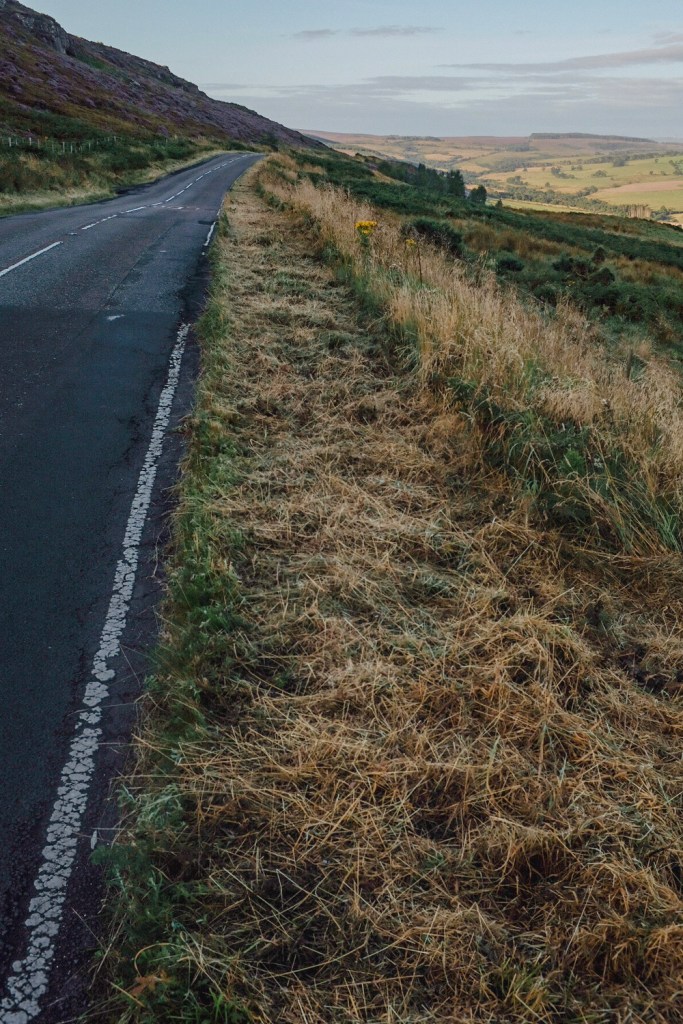
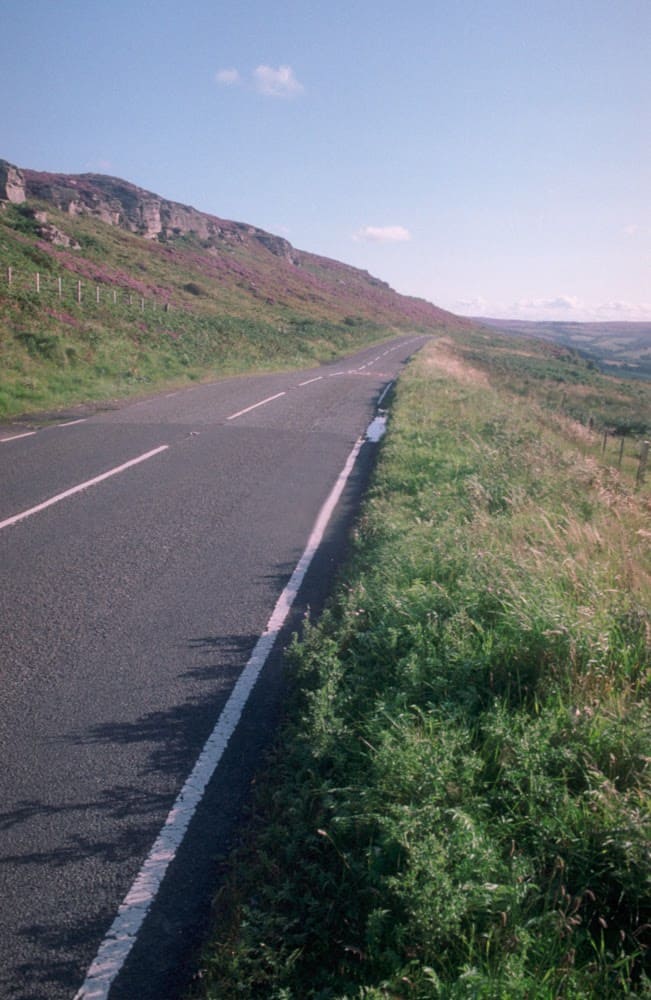
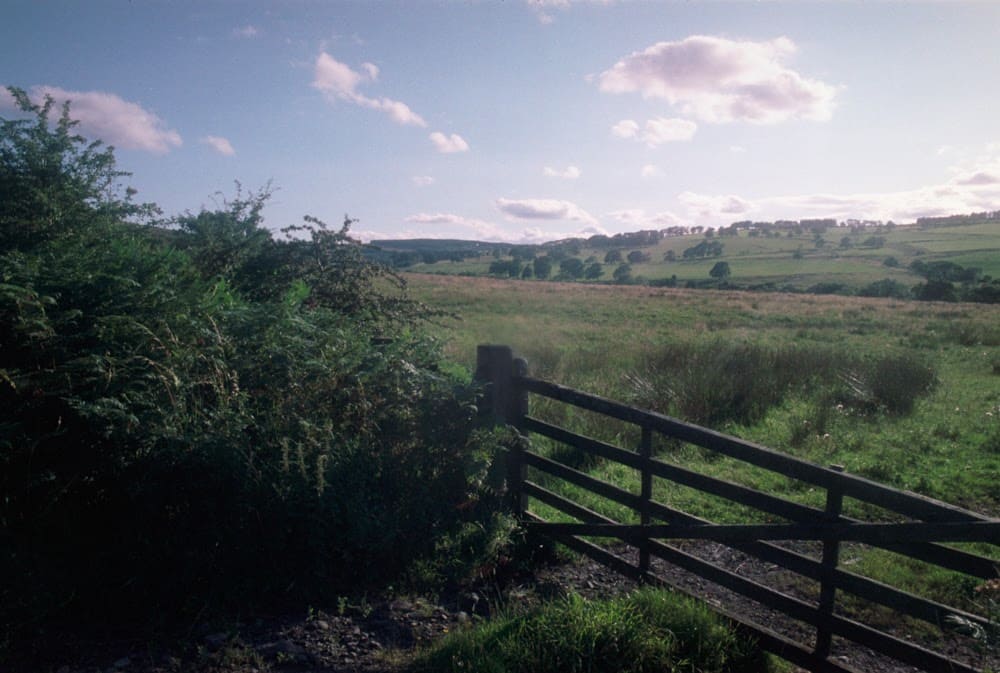
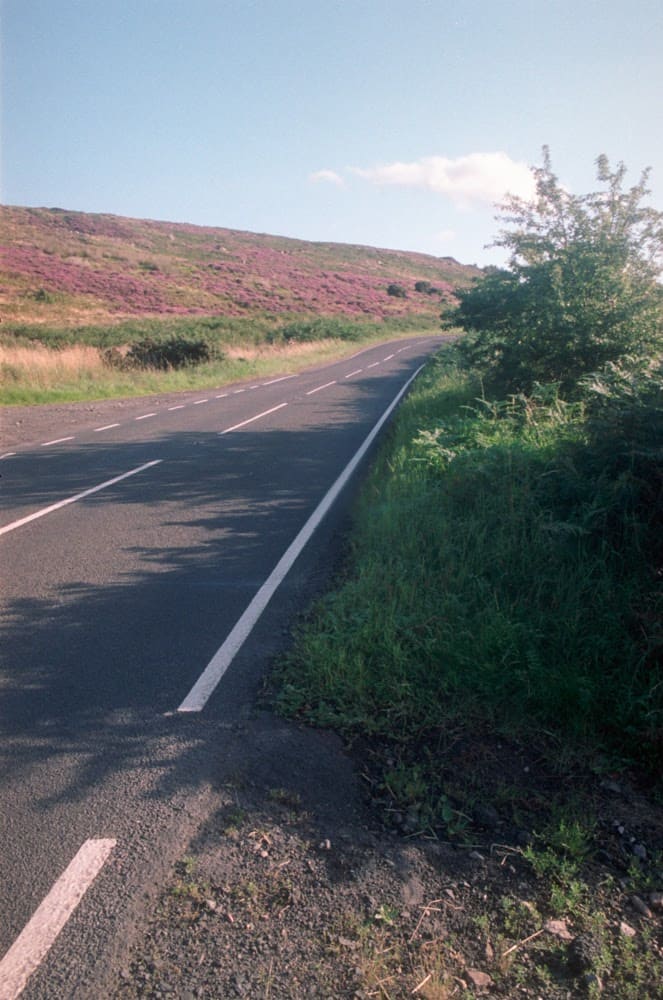
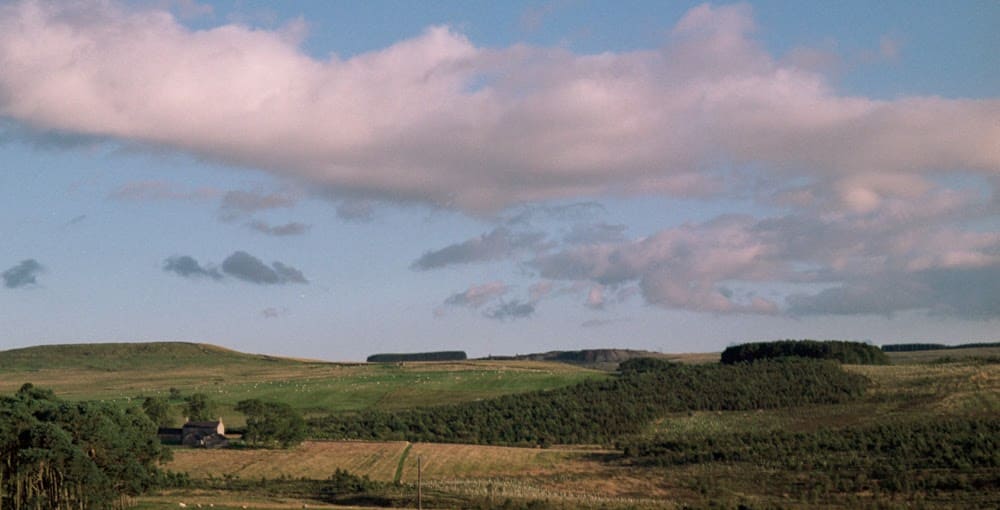
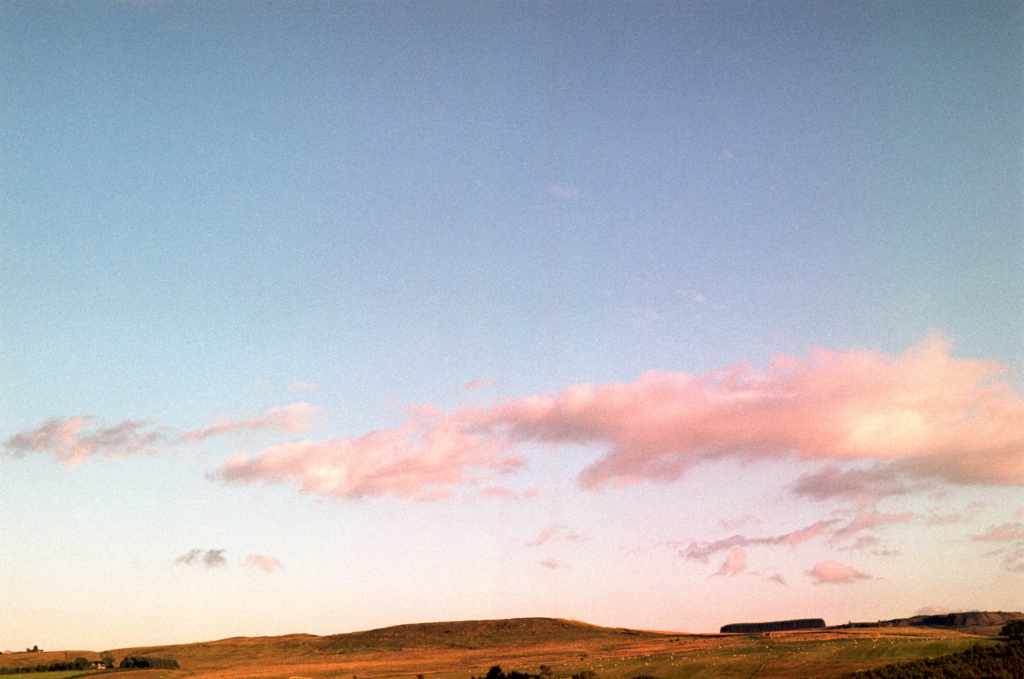
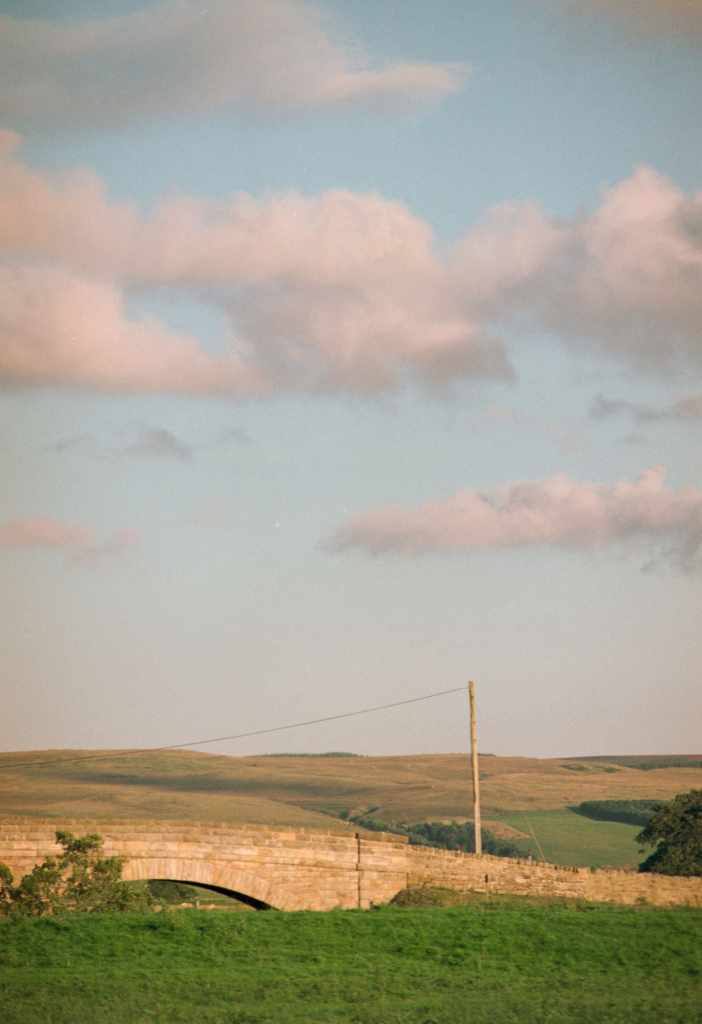
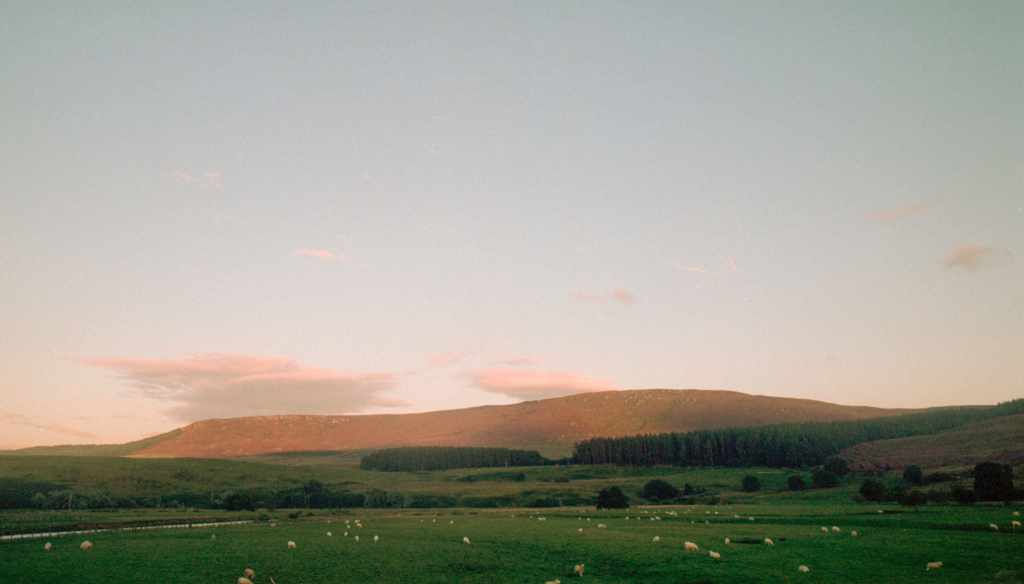
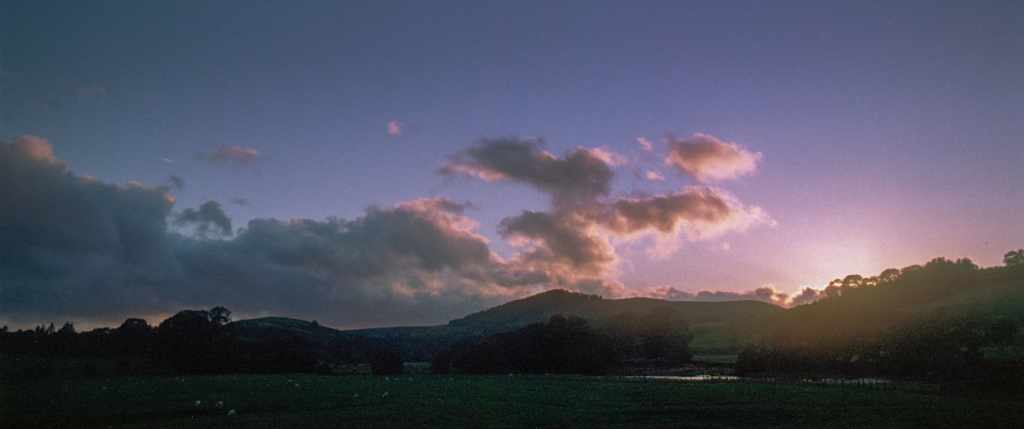
For this comparison, I’ve chosen photographs from Northumberland. Its moody, windswept landscapes—places like Alnmouth and the Northumbrian moors—present the perfect canvas for both film and digital. The X100F’s Classic Chrome simulation delivers a retro, muted look, while Kodak Portra 160 film, shot through the Pentax, brings warmth and richness to the tones.

The Fujifilm X100F

he X100F has often been called a bridge between the analogue and digital worlds, and I tend to agree. It’s packed with modern features like autofocus and an electronic viewfinder (EVF), but the controls are refreshingly tactile, with dedicated dials for aperture, shutter speed, and ISO. For anyone with a background in film photography, this setup feels familiar and intuitive.

What sets the X100F apart for me, though, is its Classic Chrome film simulation. It offers a subdued color palette that echoes old film stock, perfect when I want a slightly desaturated, vintage aesthetic. Unlike some over-the-top digital filters, Classic Chrome feels organic and subtle—bringing out details in the shadows without overwhelming the shot with contrast.

The X100F Photos

The Pentax ME Super

On the other hand, the Pentax ME Super is all about slowing down. There’s no EVF, no digital screen, and definitely no autofocus. Instead, you rely on a split-prism focusing system and aperture-priority mode. It forces you to be deliberate with each shot, a process that I find incredibly satisfying.

You’ll often hear film photographers talk about being more “in the moment” when shooting on film, and that’s exactly how I feel with the ME Super. The process of carefully composing each shot, setting exposure manually, and waiting for the film to be developed encourages patience and thoughtfulness.

For this outing, I paired the ME Super with Kodak Portra 160, a film that’s become known for its natural skin tones and soft, warm colors. Paired with the 50mm f/1.7 lens, this combination creates images with that unmistakable film character—shallow depth of field, soft highlights, and rich colors.

Lenses and Sensor Size

One of the most noticeable technical differences between these two cameras is their lenses and sensor sizes. The X100F features a 35mm equivalent f/2.0 fixed lens, while I usually use the 50mm f/1.7 on the Pentax. On the sensor front, the X100F has an APS-C crop sensor, giving it a narrower field of view compared to the full-frame 35mm film in the Pentax.

This technical difference goes beyond field of view. The Pentax ME Super has fixed ISO based on the film I choose, so I need to plan ahead for the lighting conditions I’ll be working in. In contrast, the X100F allows me to adjust ISO on the fly, providing flexibility in rapidly changing environments. This is something digital photographers have come to rely on, and it’s undeniably convenient when shooting in variable light.

The Pentax ME Super photos

Comparing the Images

Now, the big question: which is better, the Pentax ME Super or the Fujifilm X100F? Honestly, neither. They’re different tools for different purposes. Whether you’re drawn to the organic feel of film or the convenience of digital, both formats offer something unique. And that’s the beauty of photography—there’s no one-size-fits-all approach.

The sideshow feature shots from both cameras. As you look at them, you might favour one look over the other. The film shots have a warmth and texture that digital sometimes struggles to replicate, while the digital photos are sharp, detailed, and offer instant gratification. But ultimately, this comes down to personal preference, not a matter of one being objectively better.

Final Thoughts

At the end of the day, a camera is just a tool for capturing a scene in a particular way. As long as the final image is pleasing to the eye, I’d say the job is done. So don’t limit yourself to just one format—if you haven’t tried shooting film, give it a go. If you’re a film photographer who’s hesitant to try digital, maybe the X100F will ease that transition with its analogue-like feel.

More than anything, I encourage you to enjoy the process, whether it’s with film, digital, or both. Get out there, take your time, and remember that photography isn’t just about the images you capture—it’s about the experience.


Post Scriptum:
For those of you new to my blog, welcome! I cover everything from camera reviews to photography tips and techniques. Whether you’re a seasoned photographer or just starting out, there’s something here for you. Feel free to leave your thoughts or questions in the comments below—I’d love to hear from you!

Film photography, the opening of the archives


Good evening Dear Reader. You may have noticed, and then again, you may not have noticed, that I have created a couple of new pages. Instead of adding article categories to my site in the menus, I have created pages with a carousel showing collections of articles in one specific category. This started with Photography Tutorials, which is a collection of, surprise surprise, photography tutorials. Another one for Travel Photography, one for Camera information, and a final one for articles featuring Film Photography. The idea behind this rather brash move on my part, was to help you find what you wanted to read or discover more easily.

This Meisterwerk of a blog is a work in constant evolution, as I think you may have gathered, especially for those of you that have been with me since the beginning. But what does this have to do with Film photography I hear you ask. Well, when creating the film photography page I realised that there are fewer articles than I first thought. This struck me as a little odd, because at one stage I had a little bit of a reputation as a film photographer, and at one stage was purely a film photographer. This was, of course, before the start of this blog lark in 2019. Between 2009 and 2019 I did a huge amount of film photography that I realised I have not shared with you. Even more so since 2016, when I started developing and scanning my negatives at home.

The beginning of the blog also tied in with the X100F and the Canon 6D Mark II coming into my photography, and since lockdown, I have done only small amounts of film photography. Time to reveal more of myself to you. At least if that’s alright… But this isn’t just about me dusting off old memories. By sharing these photos, I hope to spark a conversation, ignite a passion for film, and maybe even inspire you to dig out your old camera and give it a whirl. Who knows what treasures you might find in your own archives?

Moped with a Jameson whiskey box  as a baggage holder.  Looks very cool
Taken on the Praktica MTL3 probably with the 50mm Pentacon F1.8 lens on HP5 Plus at box speed in the Quartier Bouffay in Nantes.

So bearing all this in mind, I have a proposal for you. Let’s open the vaults and let’s have a look at the “film archive”. This could be in the form of a series of articles complementing the weekly outpouring of anecdotes or advice, as an addition, or it could be the content for the upcoming weeks. I haven’t decided yet. Let me know in the comments which option you prefer, or if you have any other ideas for how you’d like to see the film archive content. There’ll be shots of Nantes, the UK, England, and Scotland and maybe even Spain, and Portugal. There will be colour and black and white photography too. I don’t know yet. I might not have yet taken into account the magnitude of the task ahead. Everything is open.

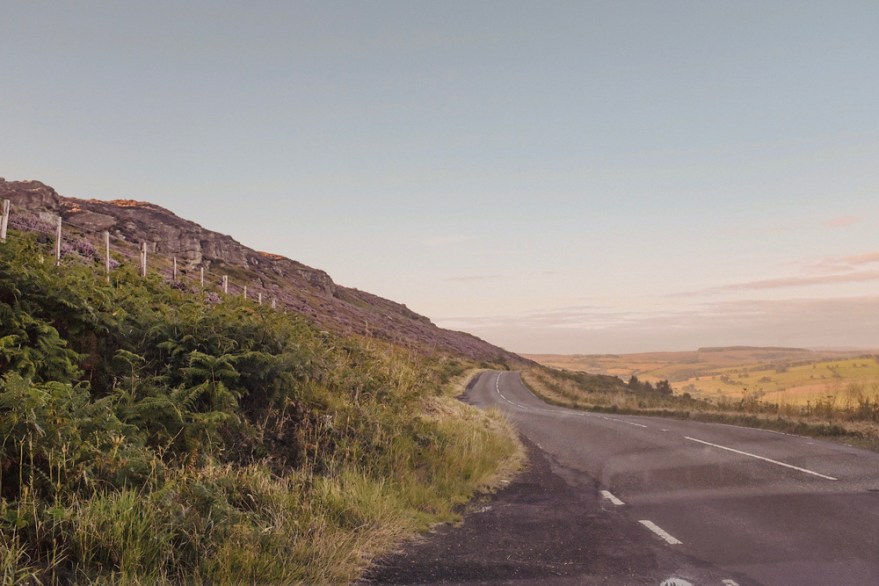
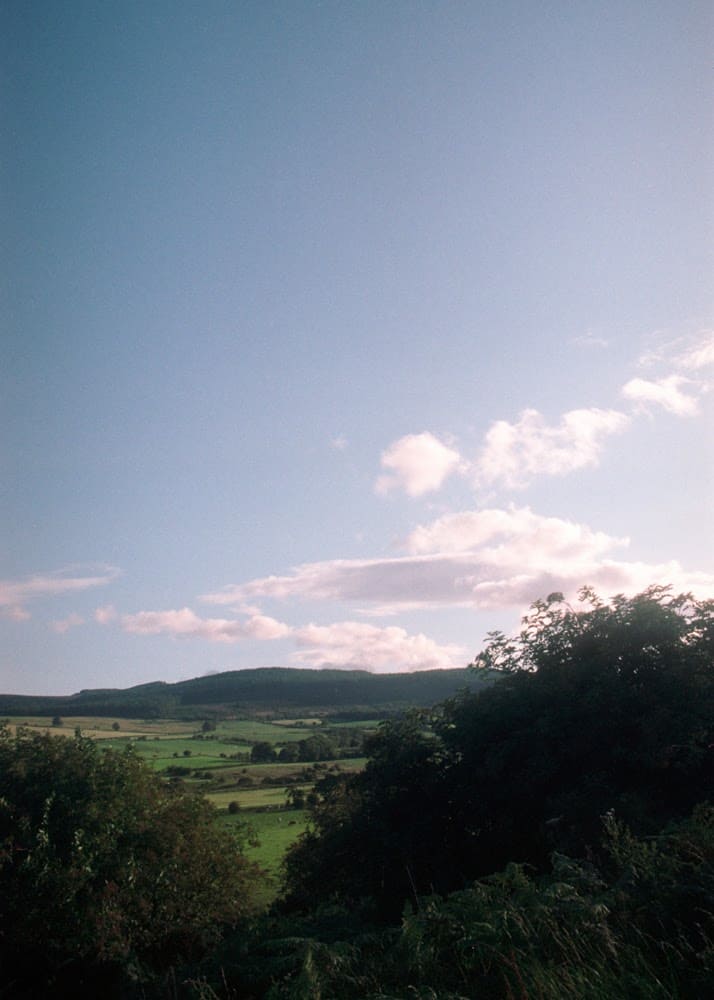
On the way to Otterburn in Northumberland with the Pentax ME Super using Portra 160. It was another good day out.

But whatever you decide, I hope you come along for the ride. It’ll be worth it!

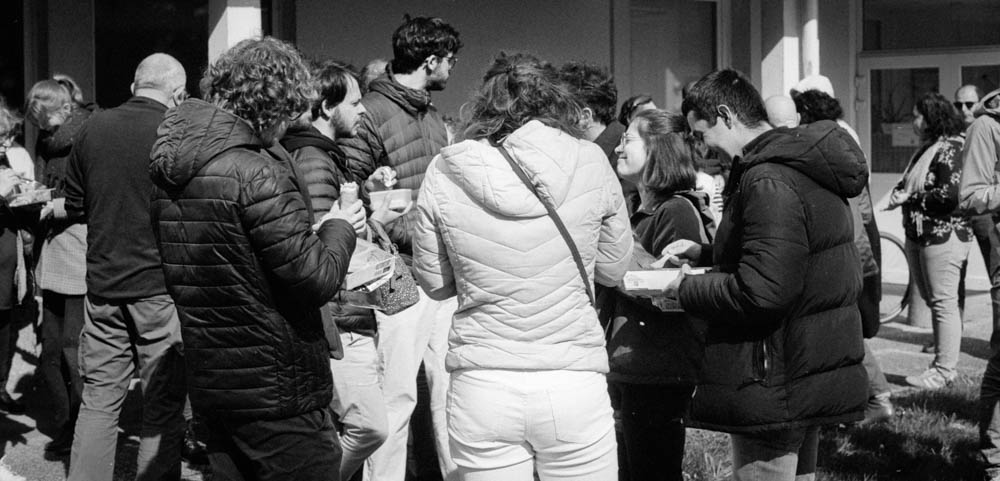
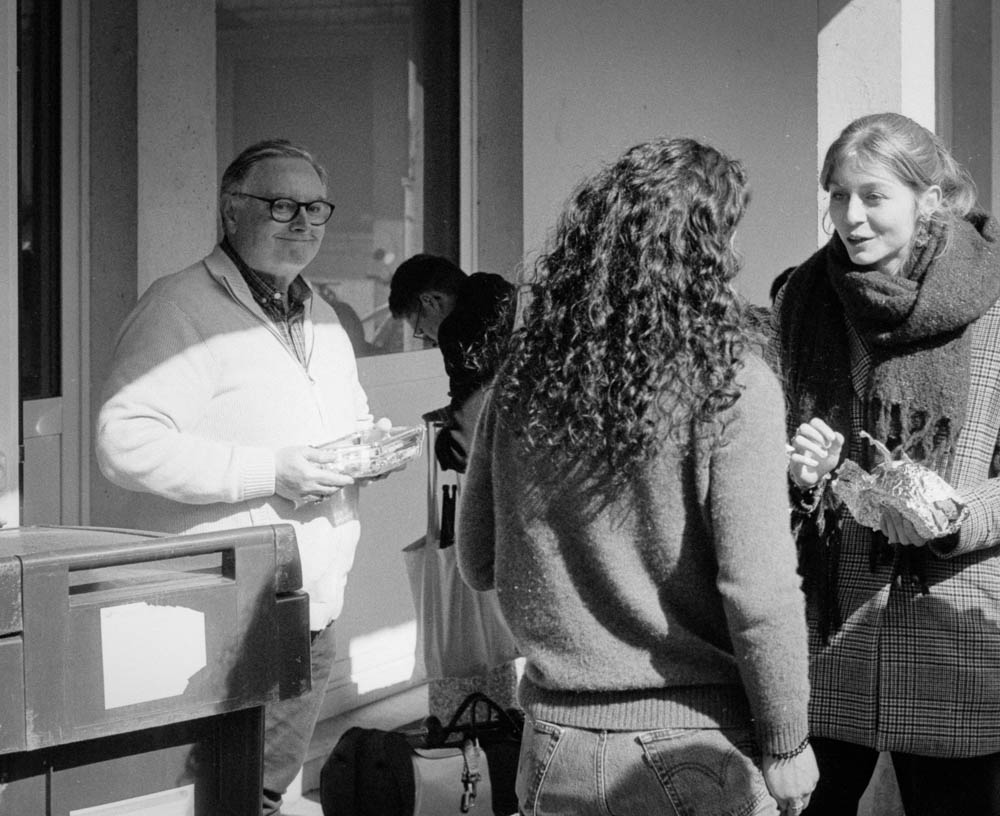
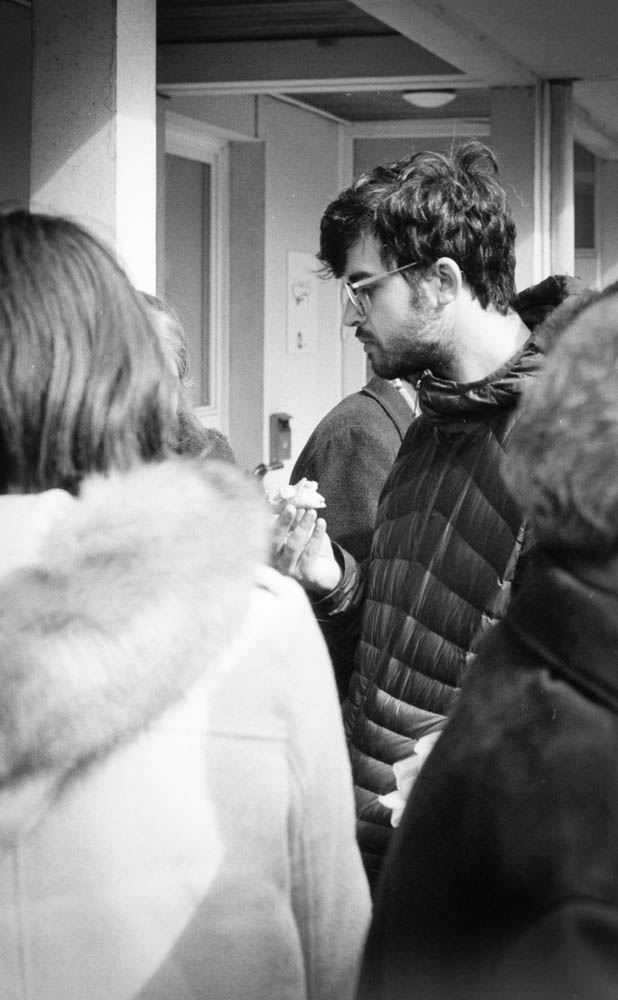
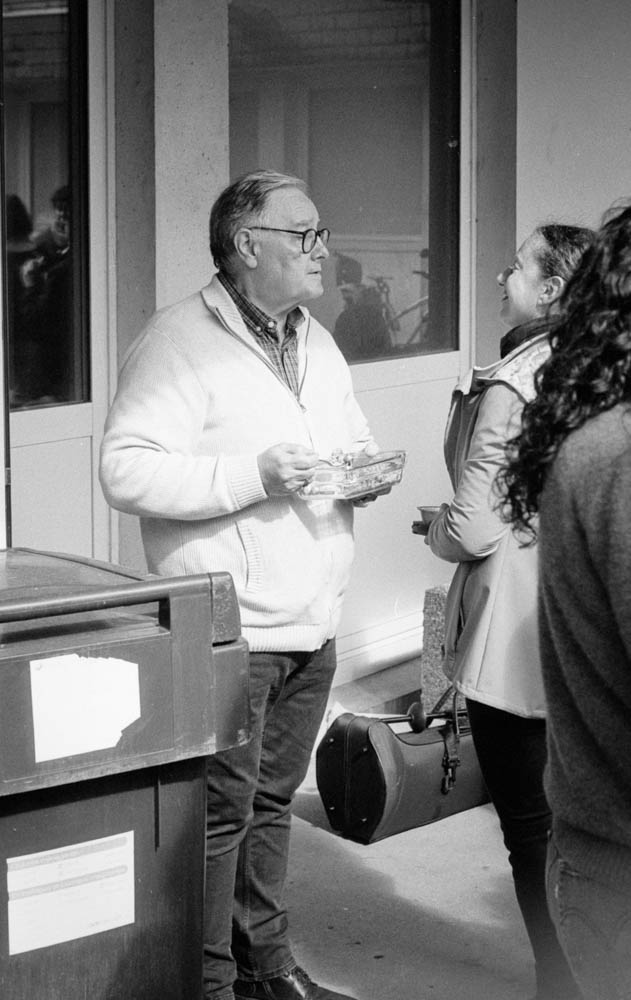
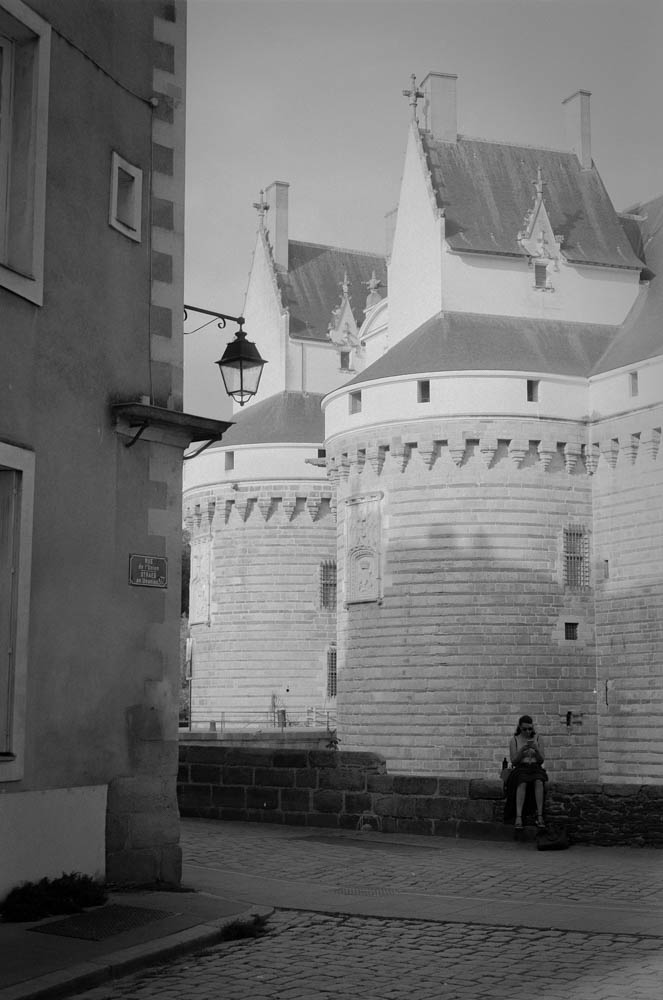
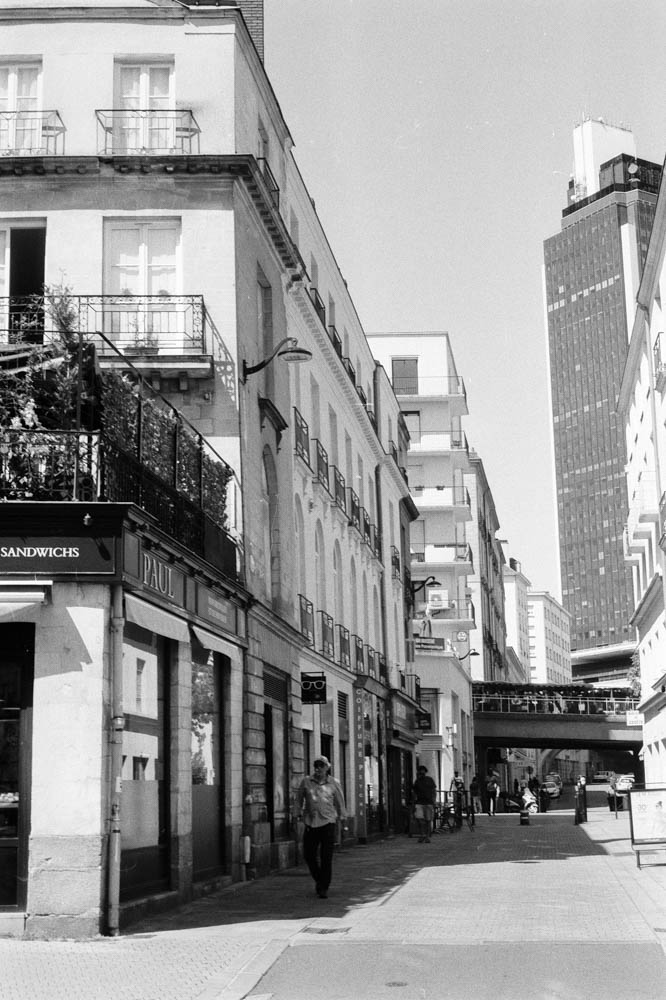
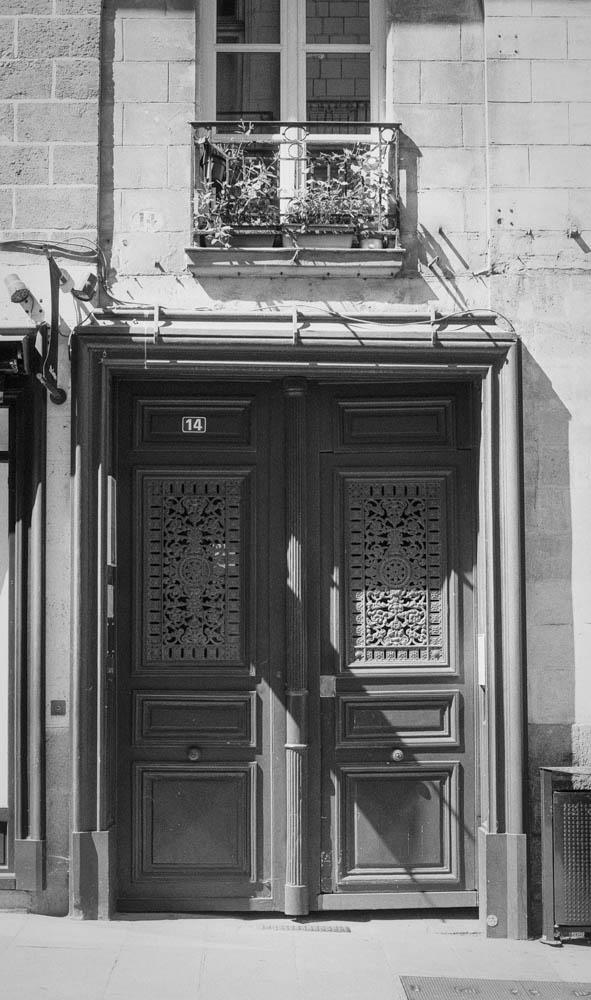
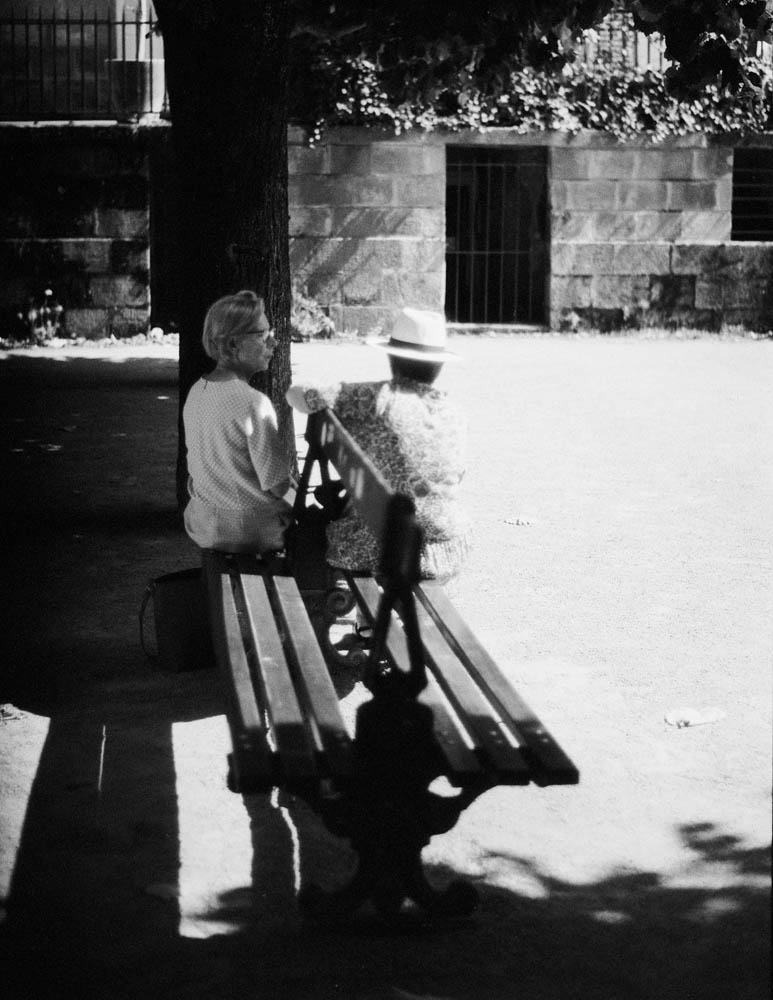
Capturing the Essence of Nantes: A Street Photography Journey with the Pentax ME Super and Kentmere 100 Film


Dear Reader,

This is less of a tutorial than the last four articles but more a “how I approach the subject” kind of article. You can read about something I seem to do a lot of and have experience of. I’ll be talking about my film photography phase from this summer when my X100F was still dead

Have you ever felt that familiar tug of nostalgia while strolling through a city that reminds you of your hometown? For me, Nantes, with its maritime heritage and busy streets, brings back memories of Hull in East Yorkshire. Those of you from Hull will see the irony in this, wondering how the heck a town can be like Hull, but it has similarities… If you know, you know. It’s a city that feels like home, and it’s just a short 35-minute drive from where I live. Come with me through the streets of Nantes, with the Pentax ME Super and Kentmere 100 film.

Exploring Nantes Through My Lens

Nantes, like Hull, boasts a rich maritime history, or is it the other way round? As I set foot in the city, I can’t help but feel the past staring me in the face. The first thing I do is head to my favourite spot, Parking Feydeau. It’s become somewhat of a ritual for me. I park on the same floor, in the same space — predictability eases one worry when you’re out capturing moments, or as my son says, are you autistic Dad? The cheeky little bugger. No, I’m just me! An old Fuddy-Duddy.

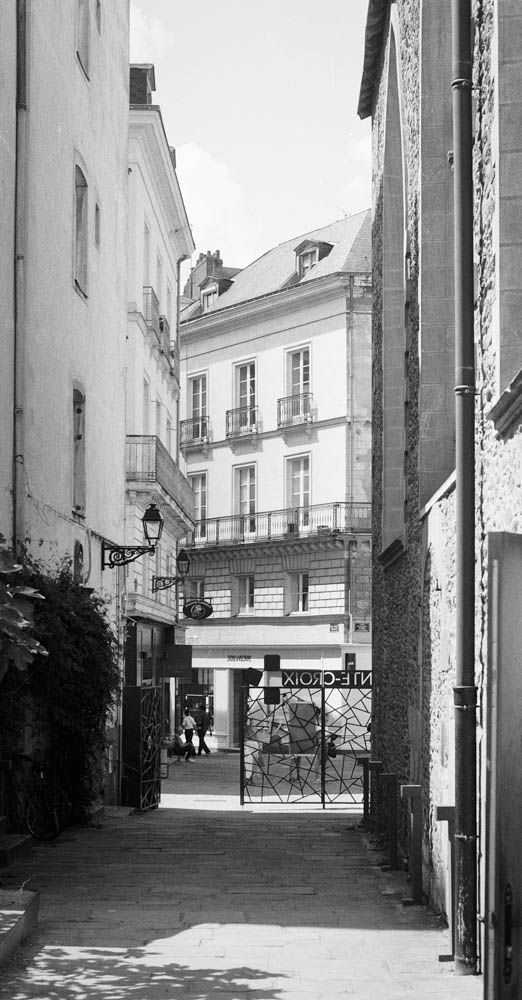
As I step out onto the street, I take my first light reading with my camera. It’s a bit like taking the city’s pulse, getting the vibe for the day. My starting point is usually Quartier Bouffay, near the castle , and the fact that the pub is close by has nothing to do with anything! From there, I seem to find myself in front of the Sainte Croix Church. Sometimes, it’s for confession; other times, it’s just to warm up, both physically, spiritually, and visually.

Just as walking the streets of Nantes is a physical workout, and with a camera it is akin to a visual workout. You’re constantly observing, framing, and capturing scenes as they unfold. Rue des Carmes or the path leading to the Castle are some of my more frequent routes, but I’ve been known to start my journey at Place Royale, especially if a visit to my barber is in order. My beard and length has often been a debate between my mother and I. She prefers the shorter, therefore neat and tidy beard. I seem to like a little more length, going for the Father Christmas look. From there, I can explore the Rue de Calvaire or aim for the Tour de Bretagne. Should I choose Rue Crébillon, it will take me to Place Graslin, and I end up in the very French and very stylish Cours Cambronne. They do do a nice courtyard do the French. Sometimes I will head to Quai Président Wilson, to the Hangar à Bananes, where I go to the HAB Gallérie. The added bonus is that parking is free in this area, and after all as Tesco’s would have us believe, every little helps. Again, the fact that I have an address for a beer and a piece of cake has nothing to do with anything, and I will, of course deny everything!

Moments and Encounters: The Heart of Street Photography

As an older gentleman with a slight limp, courtesy of arthritis, I’ve come to understand the importance of comfortable shoes. Fortunately, I do happen to posess some comfortable shoes, allowing me the extra bit of ease whilst wandering around the streets. I’ve also done the odd reckie of spots where I can sit down— be it for a meal, people-watching, sipping a cup of French expresso that packs one heck of a caffeine punch, or, on rare occasions, enjoying a decent cup of tea, but as we are in France this a much more challenging endevour. The French can just be so French now and again. Ah, tea — that drink that is a hug in a mug.

Navigating the streets of Nantes with a camera in hand and a discerning palate for food has become somewhat of a habit for me. Some of the things I hold dearest to my heart, tea, and cake. In France, we encounter the “droit à l’image,” a set of laws governing the right to one’s image. Some people may feel uncomfortable having their photo taken, and I’ve seen it manifest in numerous shots of people’s backs. However, these unwitting contributors add a recognisable element to the urban landscape, showing human interactions in the city.

I recall an incident when a passerby accused me of taking his picture without permission. I had a 28mm lens, and he was merely an infinitesimal part of the scene I was capturing. Reassuring him, I explained that he was not the focus of the photo, and that I had only noticed him when he started yelling at me. So much of a muchness. It was a lesson in navigating the sometimes touchy waters of street photography in a culture sensitive to “the right to one’s image.” As it turns out, compassion is the universal language, but so is muttering under my breath when out of earshot.

Another way I combine photography and life in Nantes is through my visits to the local barber. Whenever I’m in the chair, I discreetly document the atmosphere of the shop. The photos I take are subsequently given to my barber, forming a visual record of his small business — it’s good to be good, and it’s my small way of supporting local businesses. As is drinking tea and eating cake. Nothing to do with my tummy, and nothing like Whinnie the Pooh…

The Pentax ME Super and Kentmere 100 Film: A Street Photographer’s Dream Team

Why do I choose the Pentax ME Super for my street photography outings? Well, it’s a matter of practicality and style. First and foremost, it’s compact — a small camera, and in my pocket another lens and a couple of rolls of film. In the world of street photography, less is often more. It’s a “Keep It Simple, Stupid” approach, and I am a great fan of simple.

But it’s not just about size as in many domains; it’s also about subtlety. A massive DSLR with a conspicuous zoom lens can be intimidating, both for the photographer and the subjects. With the ME Super and prime lens, I “zoom with my feet.” This set-up forces me to engage more intimately with my surroundings especially with the 50mm lens, and the result is a more authentic perspective of the city. Plus, let’s face it — the ME Super is just a really cool looking camera and its vintage appearance just oozes kudos and style. It makes me feel like a true photographer, even though I’m merely an observer of the city.

Now, let’s talk about the Kentmere 100 film. It’s practical and easy to find. This film stock is budget-friendly, a nicer way of saying cheap (Fomapan is another cheaper film stock too), which, if you have seen the prices of Kodak film, is a very convincing argument, yet it reminds me of more renowned Ilford films. One year, I decided to exclusively use HP5+, a faster film. Switching to Kentmere 100 or any other 100 ASA film gives me a finer grain, and I can still expose at F2 and 1/2000th of a second for that silky depth of field that just makes everyone go weak at the knees in “good” light. Bokeh whores I’m talking to you!

Street photographers often aspire to capture the kind of timeless black and white aesthetic seen in the works of Doisneau, Cartier-Bresson, or Vivian Maier. While we may never fully replicate their images, using black and white film, allows us a head start on our digital brothers. I’ve always been drawn to this style of documentary photography. Street photography, for me, isn’t just about street portraiture; it’s about observing the street and documenting it in a classic way — classic, much like myself, or should I say, old-fashioned? Whatever it may be, it’s certainly not modern and up-to-date, just like Yours Truly, but that’s fine too! We all have our place.

Tips for Aspiring Street Photographers

Now, for those of you who aspire to explore street photography, let me share some tips. Remember the phrase from the cover of “The Hitchhiker’s Guide to the Galaxy”: DON’T PANIC! When you’re working with a film camera, such as the Pentax ME Super with its 36 exposures, don’t expect to get 36 keepers. However, consider each photo that doesn’t quite hit the mark as a valuable visual note.

These notes help you study your subjects and how the scene changes with shifting light. Practise, after all, makes perfect. Don’t think that any photographer publishes all their shots; in fact, I curate and edit my photos carefully before sharing them on my Instagram feed. It’s all part of the learning process, using each “less than perfect” shot to refine your craft. And each photograph is a journey towards the ultimate photograph.

Dont forget those comfortable shoes, which, as I mentioned earlier, are essential. You’ll be walking and standing a lot, so prioritise comfort. Again, reduce your kit to the minimum. The less weight you have to carry, the fewer excuses you’ll have to sit down and maybe have a cup of tea and a piece of cake. But keep that option open, you never know…

I photograph to find out what something will look like photographed.

Garry Winogrand

Conclusion: Capturing the Essence

In conclusion, street photography is about capturing the essence of the city, and with the Pentax ME Super and Kentmere 100 film, I document the life, culture, and people of Nantes. It’s a city with a rich past and a vibrant present, and through my lens, I’ve sought to capture moments that reflect its unique character.

Each click of the shutter is a testament to the enduring appeal of film photography and its ability to capture moments that transcend time. It’s a classic approach in a modern world, much like my beloved Nantes itself. I mean, it’s not Hull, but not many places can rival Hull. If you know, you know.

So, Dear Reader, whether you’re a seasoned street photographer or just beginning your photographic journey, I encourage you to explore the streets of your own city or a new one. Embrace the art of observation, document its nuances, and don’t be afraid to capture this essence of the world around you. It’s a journey that rewards both the observer and the observed.

Thank you for joining me on this photographic adventure. I invite you to share your own street photography experiences and engage in a conversation about this beautiful art form. Until next time, keep clicking and exploring.
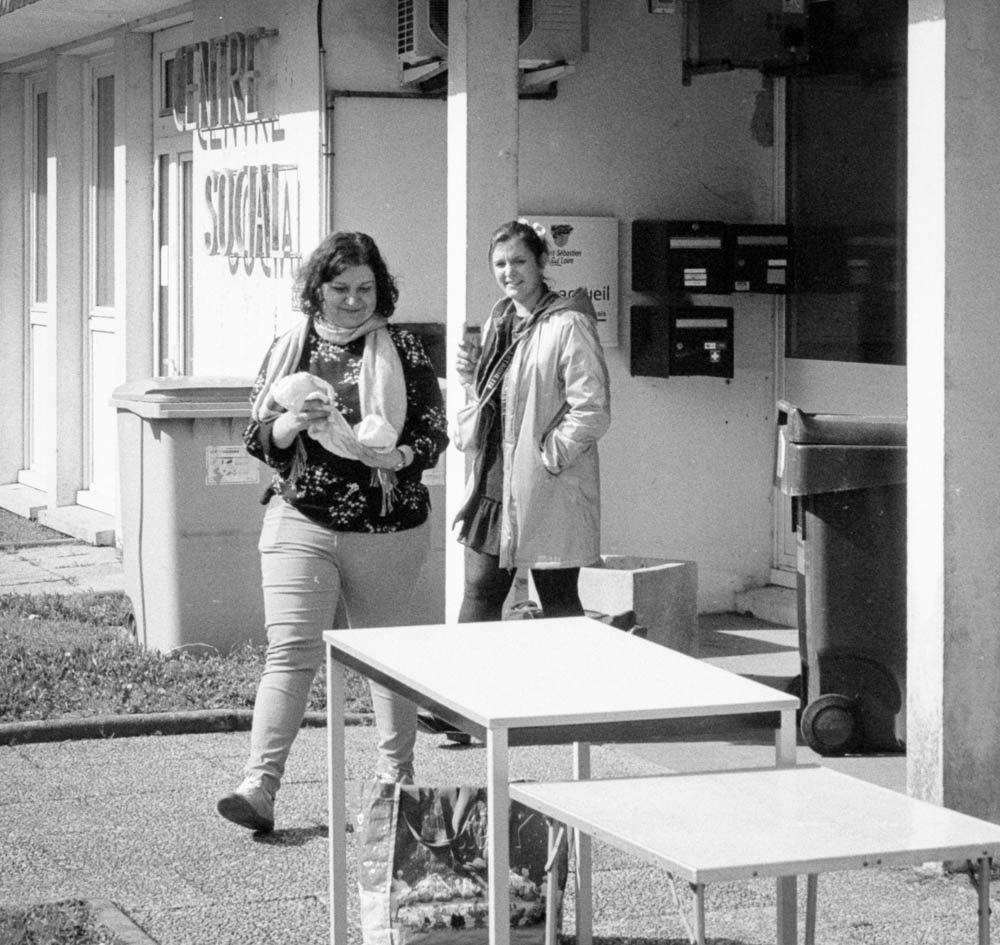
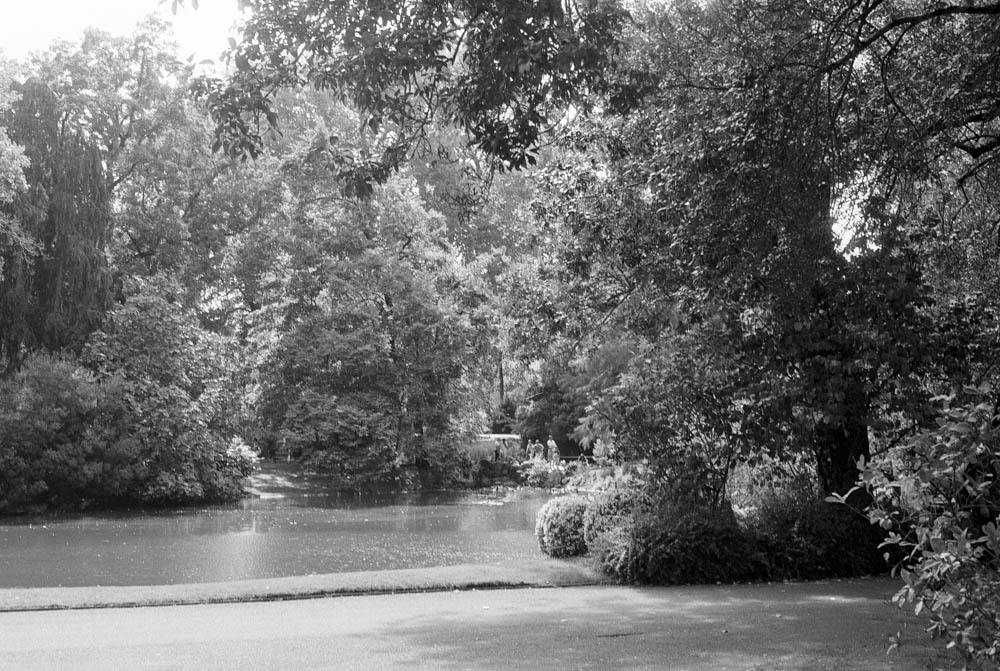
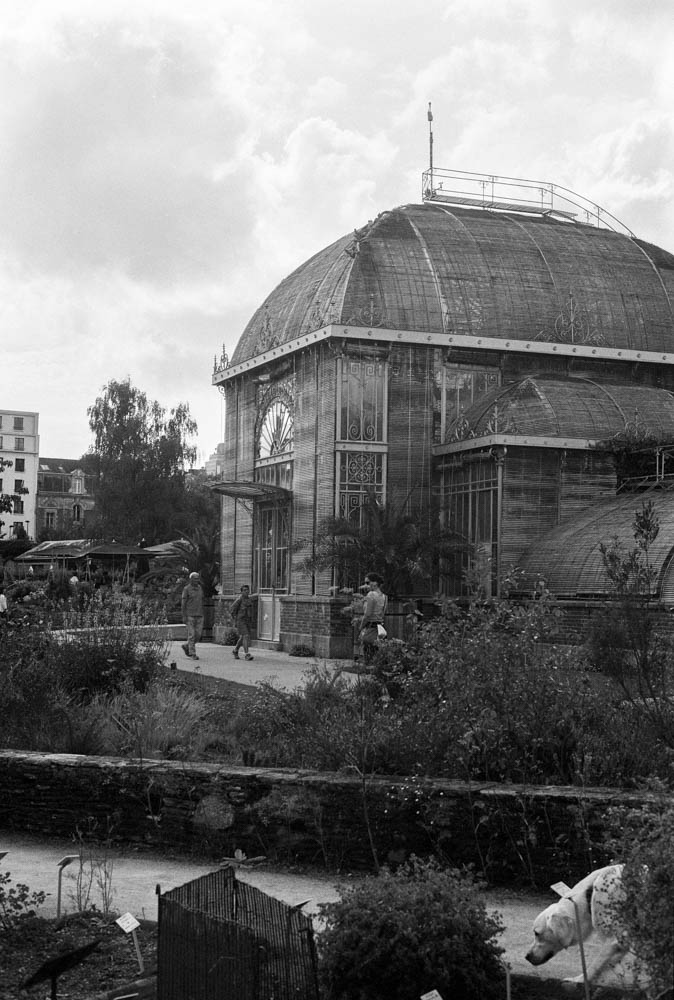
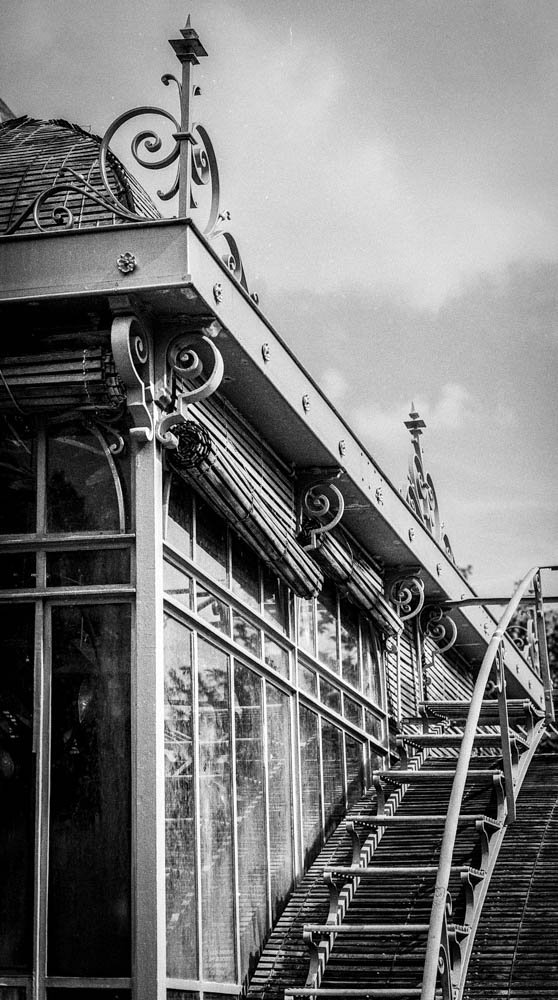
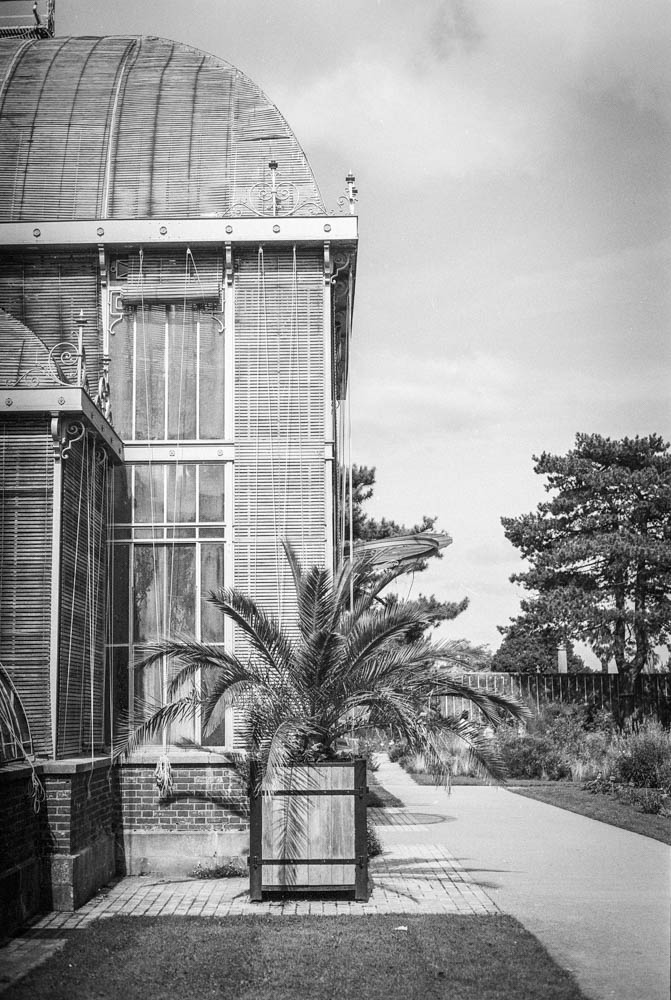
A Peaceful Stroll Through Jardin de Plantes


In the heart of Nantes, a city bustling with life and movement, lies a haven of tranquilly—the Jardin de Plantes. With my trusty Pentax ME Super in hand and a roll of Kentmere 100 film, I embarked on a photo walk with my niece, weaving together the threads of modernity and nostalgia.

As the sun cast its gentle rays on the vibrant petals and verdant foliage, my niece and I strolled through the garden, our spirits lifted by the scent of blooming flowers and the melody of chirping birds. The Pentax ME Super, a relic of a bygone era, clicked and whirred, capturing the essence of the ambiance around us.

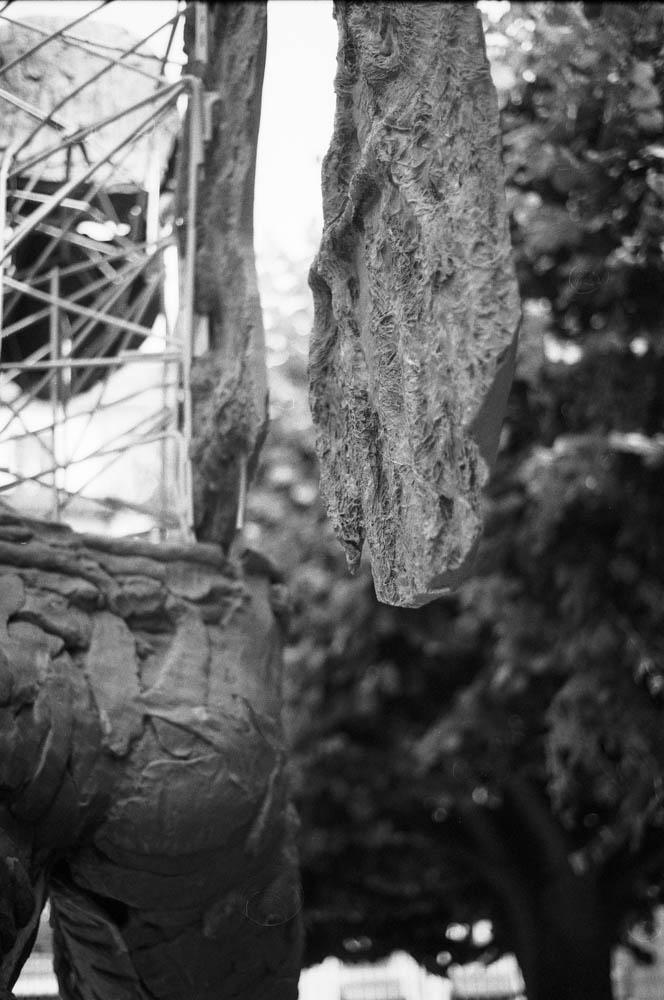
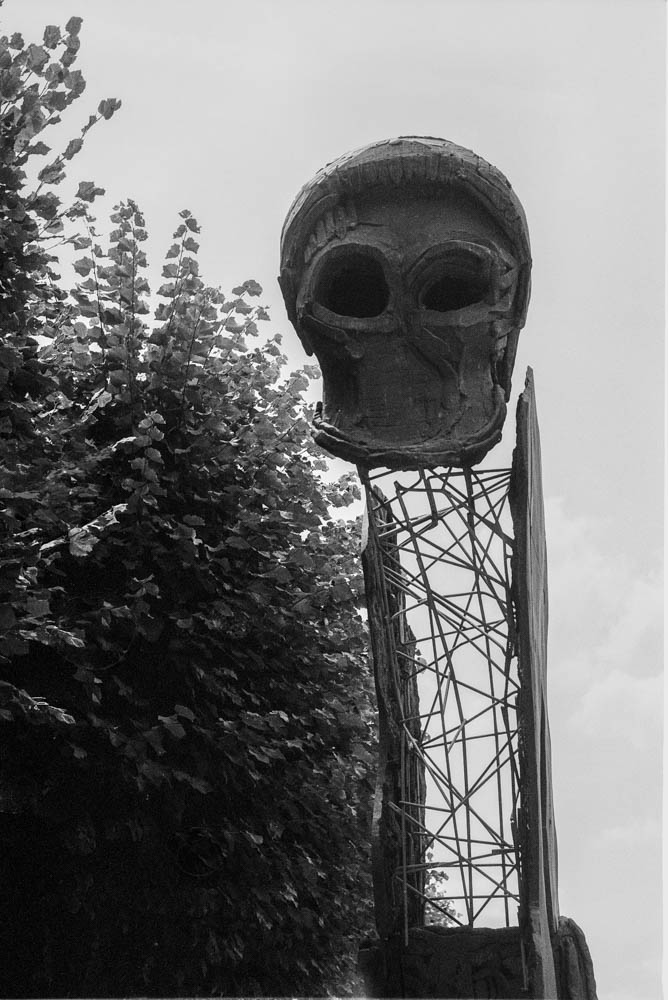
In the heart of this botanical wonderland, a delightful surprise awaited us – artworks from the Voyage à Nantes, seamlessly integrated into the landscape. Sculptures and installations whispered tales of creativity, adding an artistic flair to the already enchanting scenery. With each click of the shutter, the Kentmere 100 film immortalised these moments, creating a bridge between the past and the present.

Amidst the garden’s serenity, the city’s rhythm seemed to fade into the background. The laughter of children echoed, the fragrance of earth danced in the air, and a sense of peace enveloped us. The bustling streets felt miles away, replaced by the gentle rustle of leaves and the soothing trickle of fountains. It was a moment to pause, to breathe, and to find solace in the embrace of nature.

As my niece marvelled at the artistic wonders and explored every nook and cranny, I couldn’t help but recall a time when the world seemed simpler, captured through the lens of vintage cameras. The Pentax ME Super, a faithful companion, clicked away, a reminder that while times change, the emotions and memories we capture remain timeless.

In the heart of the garden, as my niece’s wonder met my own nostalgia, I realised that these fleeting moments, captured on film, became whispers of timelessness. The Kentmere 100 film transformed scenes into memories, the Pentax ME Super gave them life, and the Jardin de Plantes offered its serene backdrop.

Our visit came to an end, and the laughter and footsteps of visitors began to fade, leaving behind a quietude that felt like a hidden treasure. With a final click, I knew that I had captured not just images, but fragments of serenity and beauty, framed by the lens of a camera that has witnessed decades.

The Jardin de Plantes, a breath of fresh air in the heart of a bustling city, became a canvas on which moments of joy, peace, and art intertwined. The Kentmere 100 film told their story, the Pentax ME Super etched them onto film, and I, a mere observer, was fortunate to be a part of this beautiful narrative.

In the end, it’s the ability to capture the ephemeral that gives photography its magic. It’s not just about freezing time but about encapsulating emotions that stand the test of time. As I looked at the photographs that adorned my album, I knew that every click was a brushstroke on the canvas of memory— a reminder of the day my niece and I discovered the beauty of the Jardin de Plantes and the timeless charm of classic photography.

Capturing Nantes: A Photowalk Through Urban Charms


In the heart of bustling Nantes, a city teeming with life and stories waiting to be captured, I embarked on a captivating photowalk adventure. Armed with my trusted Pentax ME Super camera and loaded with Rollei RPX 100 and then Fomapan 100 film, I set out to explore the artistic treasures and serene corners of this vibrant urban landscape, and the latest offerings of the Voyage à Nantes. Join me as I take you on a visual journey through the enchanting Place Royale, the charming Place Graslin, and the captivating sculptures that make Nantes truly unique.

Place Royale: A Fountain of Marine Delights

My journey commenced at Place Royale, where the graceful fountain stood adorned with marine sculptures straight out of a storybook. These sculptures, by the Blegian artist Maen Florin, glistened in the sunlight and droplets of falling water. The Pentax ME Super clicked away as I framed each marine figure, capturing the interplay of water and art with the delicate precision of film photography. The Rollei RPX 100 film lent an air of timeless elegance to each shot, turning the bustling square into a tranquil haven through its lens.

Place Graslin: A Meeting of History and Charm

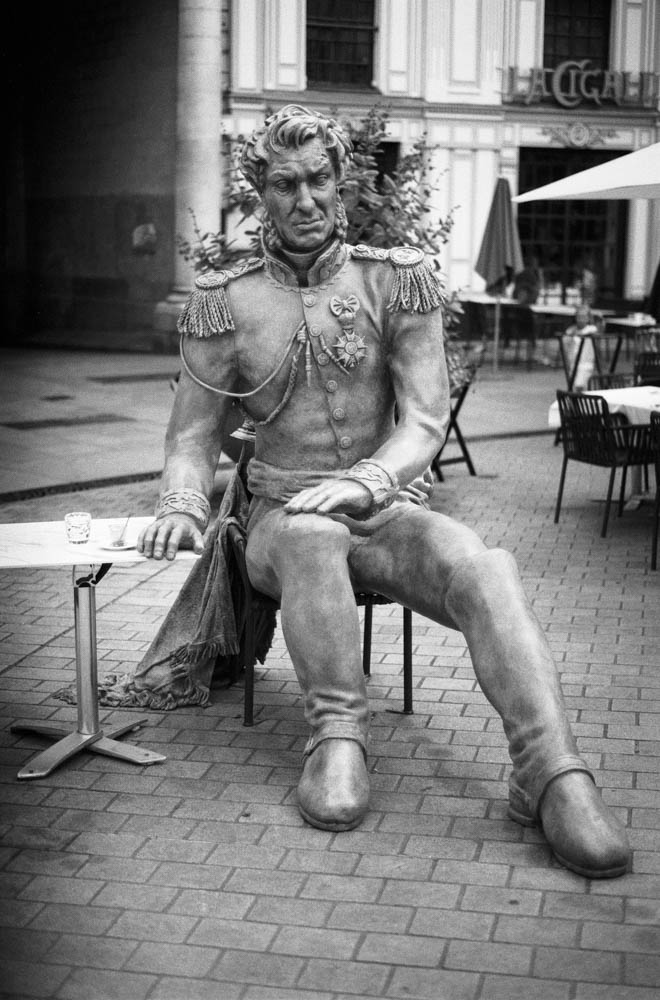
Next on my path was the inviting Place Graslin, a captivating square that exuded elegance and history. Here, the statue of Combronne with his coffee and glass of water, the newer version by Maya Eneva and the Cellule B collectif, welcomed me outside the iconic Cigale café, where I imagined stories of bygone conversations and shared moments. As the Pentax ME Super’s shutter clicked, the Fomapan 100 film brought forth the statue’s enduring presence, immortalising the blend of past and present that this city so effortlessly portrays.

Artistic Wonders of Cours Cambronne

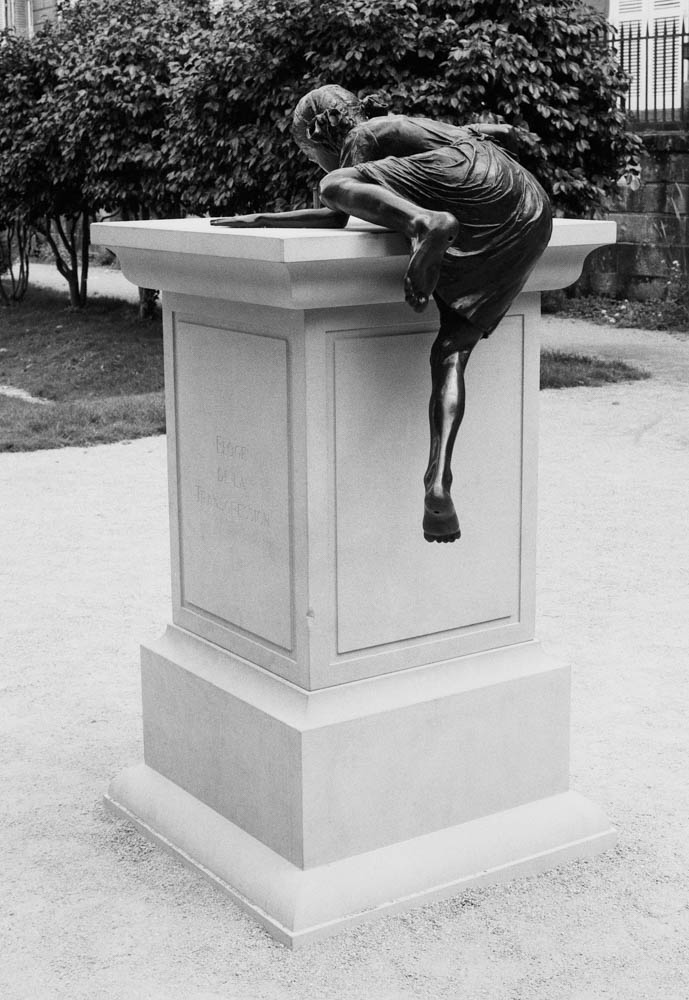
A stroll along Cours Cambronne revealed hidden gems in the form of statues – “homme pressé” by the English sculptor Thomas Houseago and “éloge à la transgression,” by the famous Philippe Ramette both stunning creations from the Voyage à Nantes. These sculptures spoke of bold expressions and the city’s penchant for creative exploration. The Pentax ME Super captured their intricate details, with the Fomapan 100 film adding a touch of mystery to their narrative. In the heart of the city, a feeling of tranquilly pervaded, as I marvelled at the artistic tableau that surrounded me.

Bike Shots: Capturing Urban Rhythm

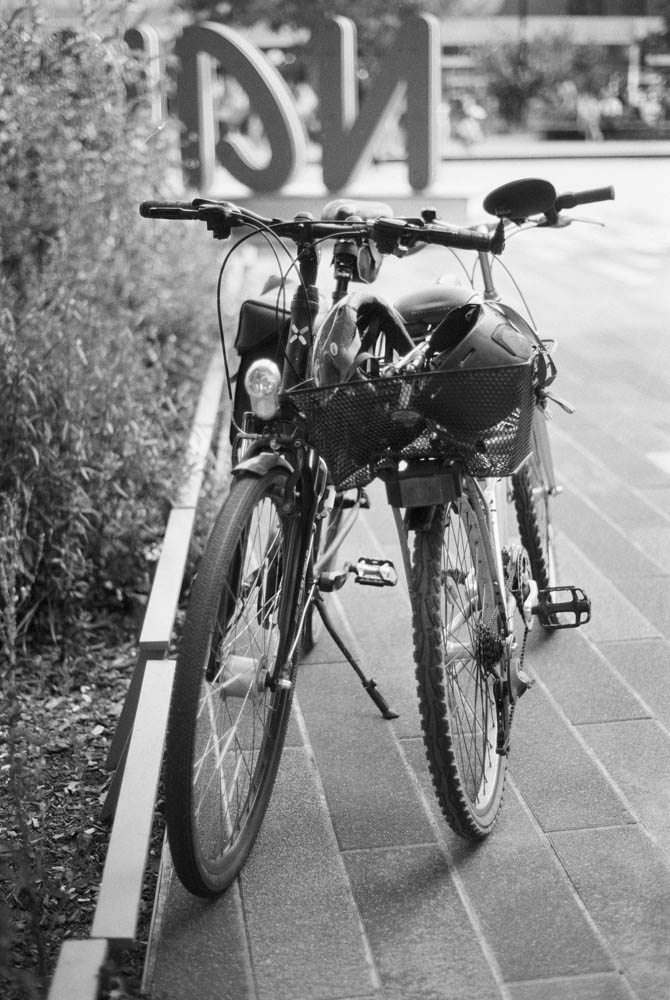
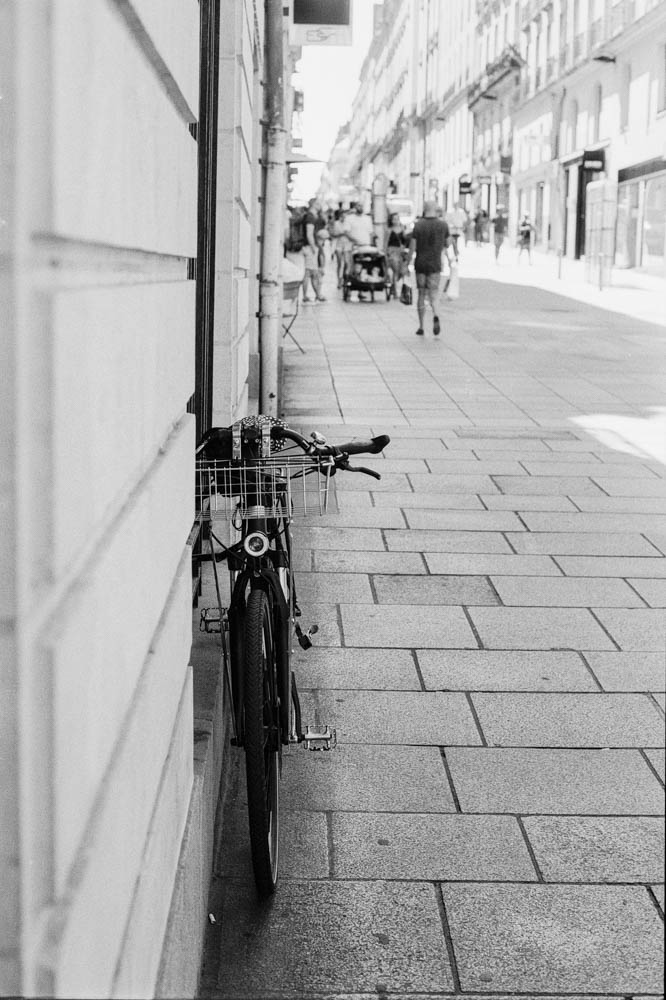
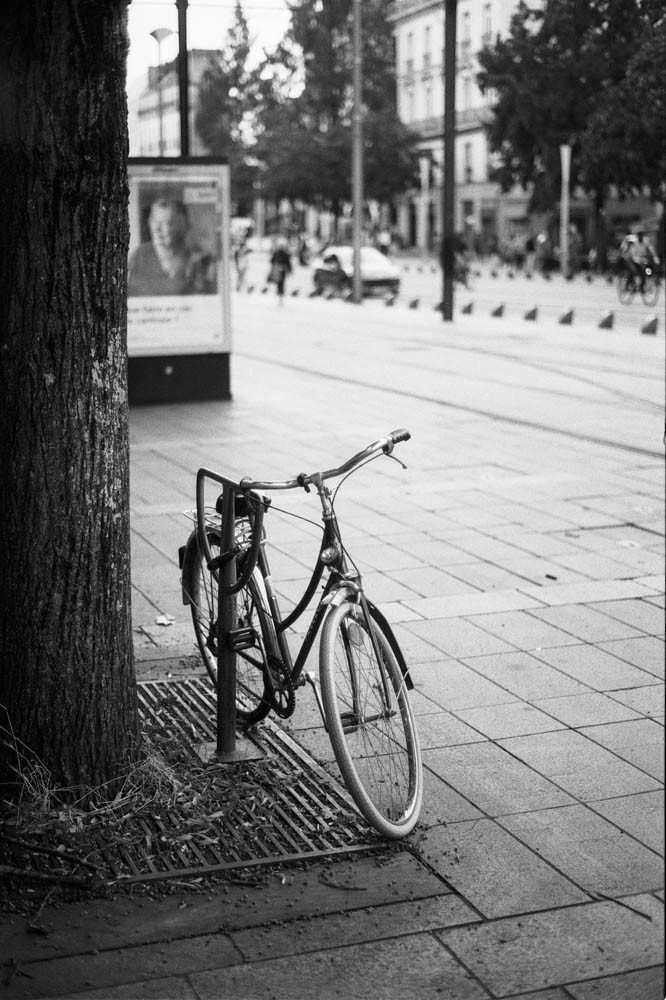
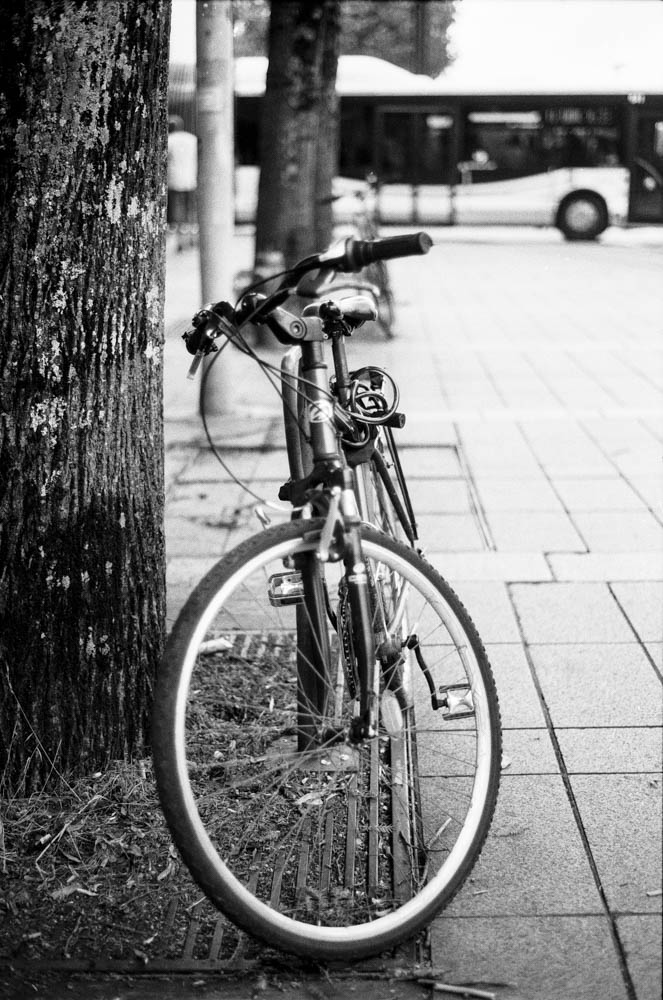
No Nantes photowalk would be complete without capturing the city’s quintessential “bike shots.” Bicycles, intertwined with daily life, spoke of a rhythm unique to urban living. With each click of the Pentax ME Super, the Rollei RPX 100 film transformed these moments into frames that held a slice of the city’s pulse. It also allows people to keep fit and be very smug about not polluting…

A Spectator of Urban Theatre

As I ambled through the city’s streets, I couldn’t help but feel like a mere spectator in the grand play that Nantes puts on every day. The camera in my hand was not just an instrument but a witness to the stories woven into every corner. With the Pentax ME Super, I was able to capture these narratives, bridging time and space through the magic of film.

Conclusion: Nantes Through a Different Lens

The Pentax ME Super, armed with its classic charm, and the duo of Rollei RPX 100 and Fomapan 100 films, transformed my photowalk through Nantes into a visual tale. From the marine wonders of Place Royale to the historical elegance of Place Graslin and the artistic marvels of Cours Cambronne, each click of the camera immortalised the city’s essence. Through the lens of film photography, Nantes unveiled its soul—a blend of history, art, and an urban rhythm that beats to its own tune.

As I reflect upon the captivating frames that now grace my album, I’m reminded of the vibrant energy and artistic tapestry that Nantes weaves. Just as the city’s sculptures and streets tell their stories, the Pentax ME Super and film quietly tell mine – a narrative of a city that thrives in its own unique rhythm, an urban theatre where I played the role of an enchanted spectator.

That August Holiday Vibe


My son seems to use the word “vibe” in a lot of situations. And for once, that word encapsulates exactly how I feel at this very moment. I’m in front of my computer at my desk, typing this article. Why is this an August vibe, though? Because I’m not at work and have the freedom that comes with August to do what I want, within reason, of course. I have my Marshall headphones that have a Princess Leia “vibe”. I’m listening to Ella Fitzgerald sing her beautiful heart out on Amazon Music, and the fan on top of my desk is blowing a fresh breeze through my golden locks. Those of you who know me will understand the ridicule of that last phrase. Locks, golden or otherwise, are something I haven’t had to deal with for many years, but that cool breeze is still very refreshing on my bald scalp.

I have been out, and this will blow your minds as much as the fan is blowing my hair, with my camera taking photographs. I can hardly believe it too. The photographs at the end will not likely seem like holiday photos to you, but to me they are precious! You don’t have to be sitting roasting on a beach to feel on holiday. What I’m getting at is that freedom comes only once a year. Work is important, but rest is important too. Ironically, “Summertime” is playing. The version with Louis Armstrong and Ella together! It really does take you to another place.

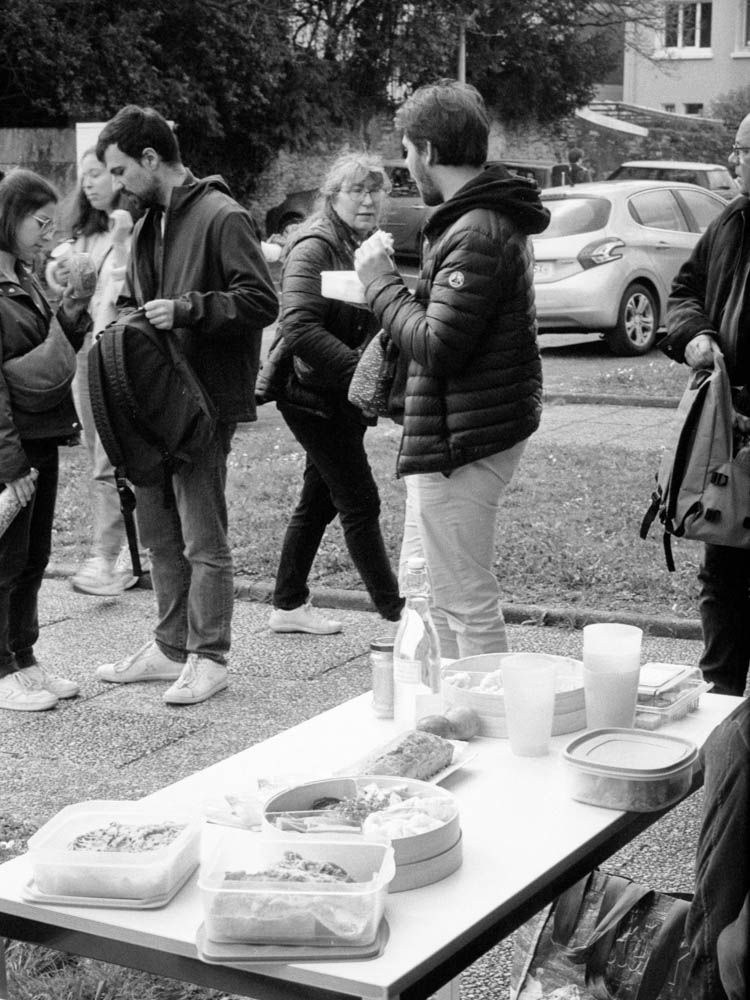
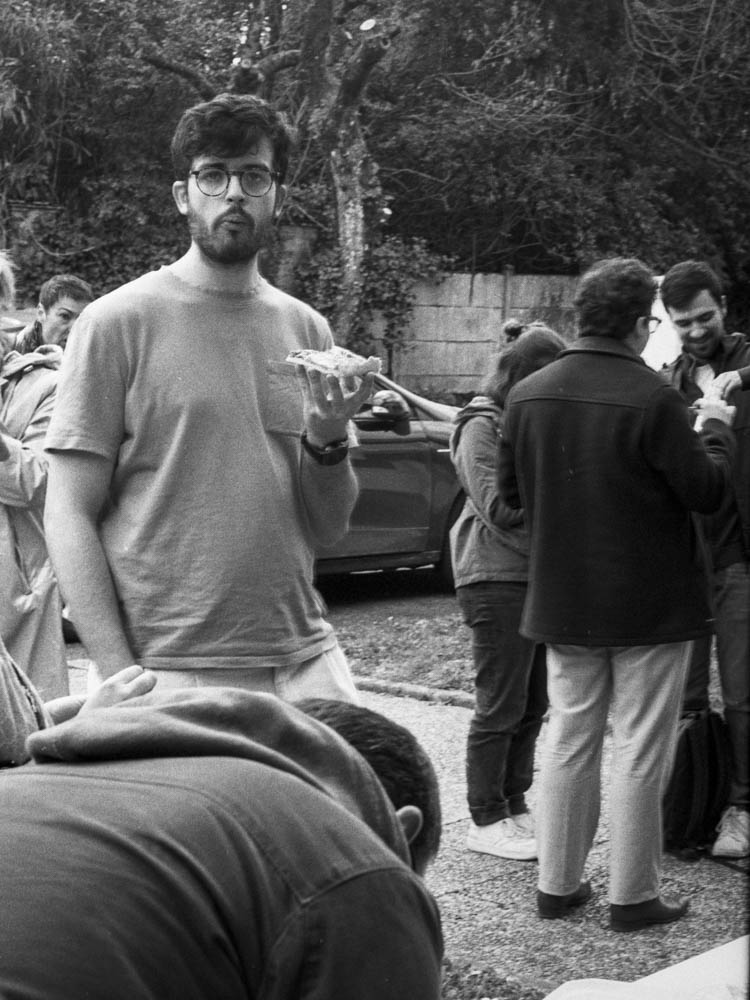
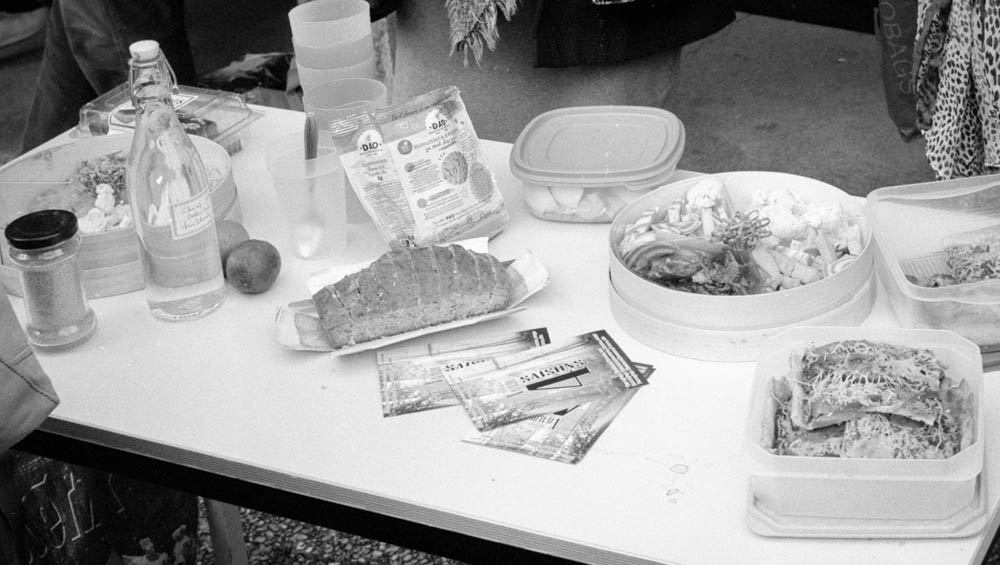
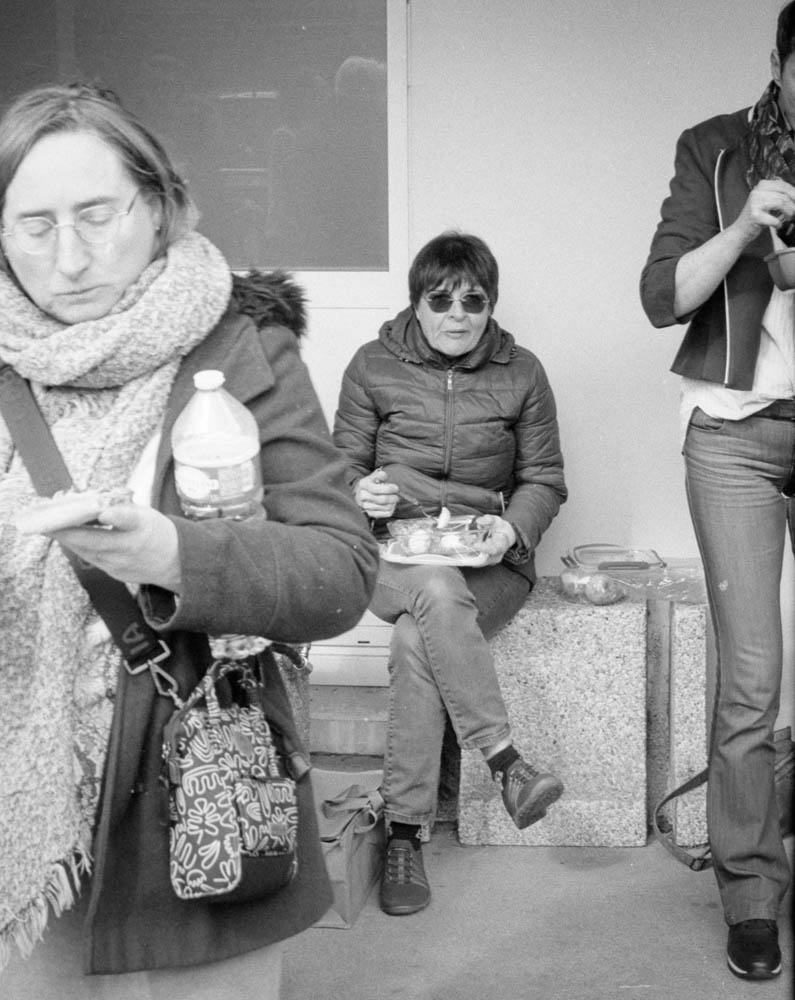
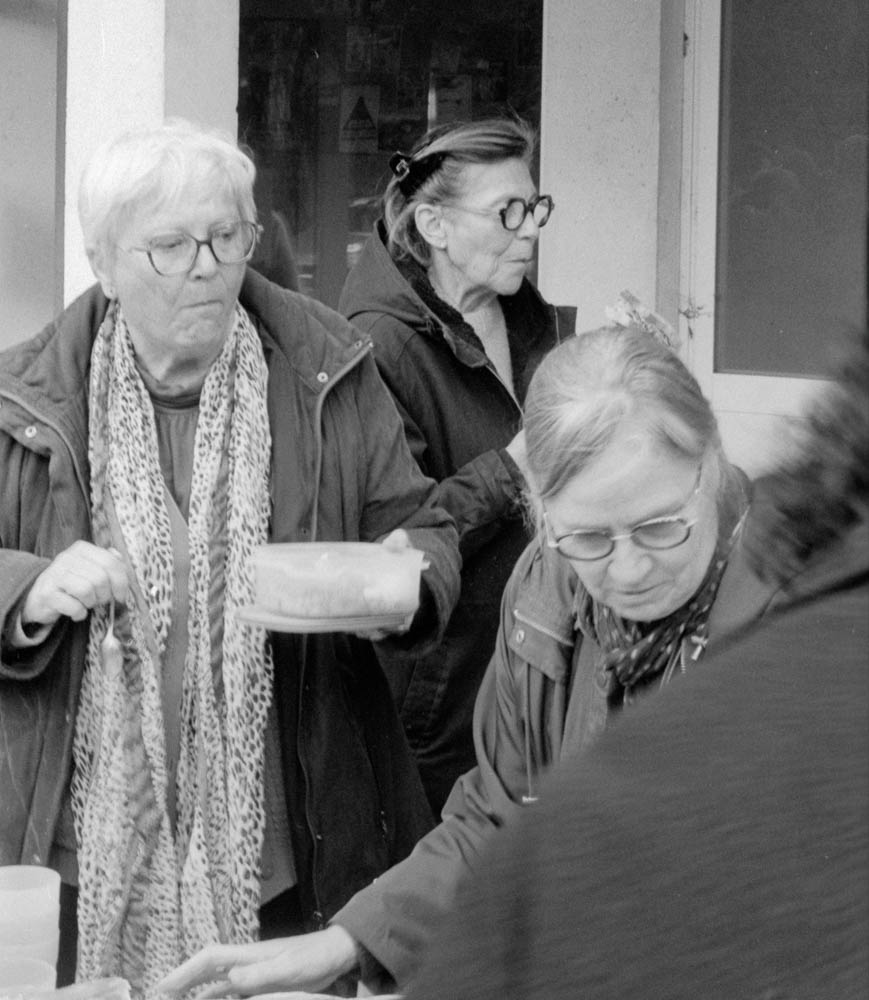
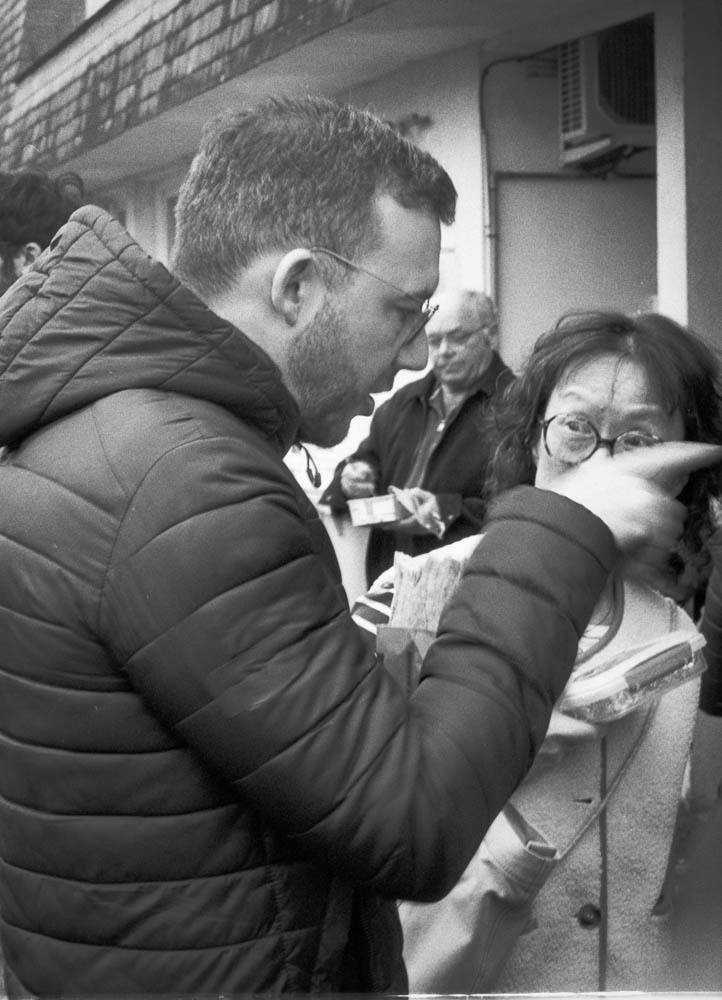
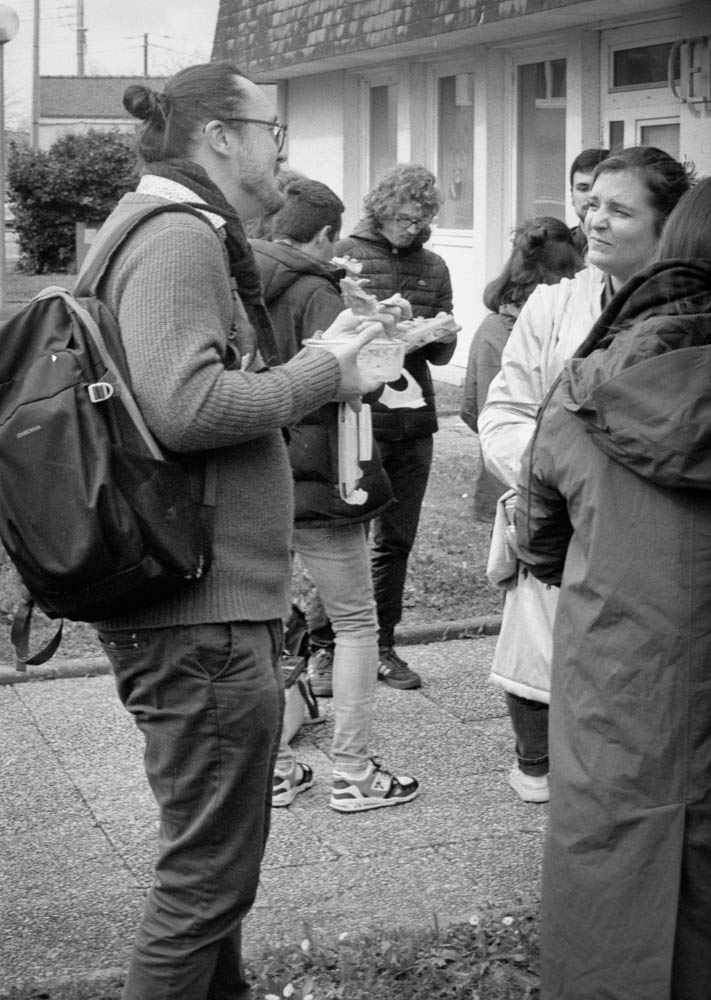
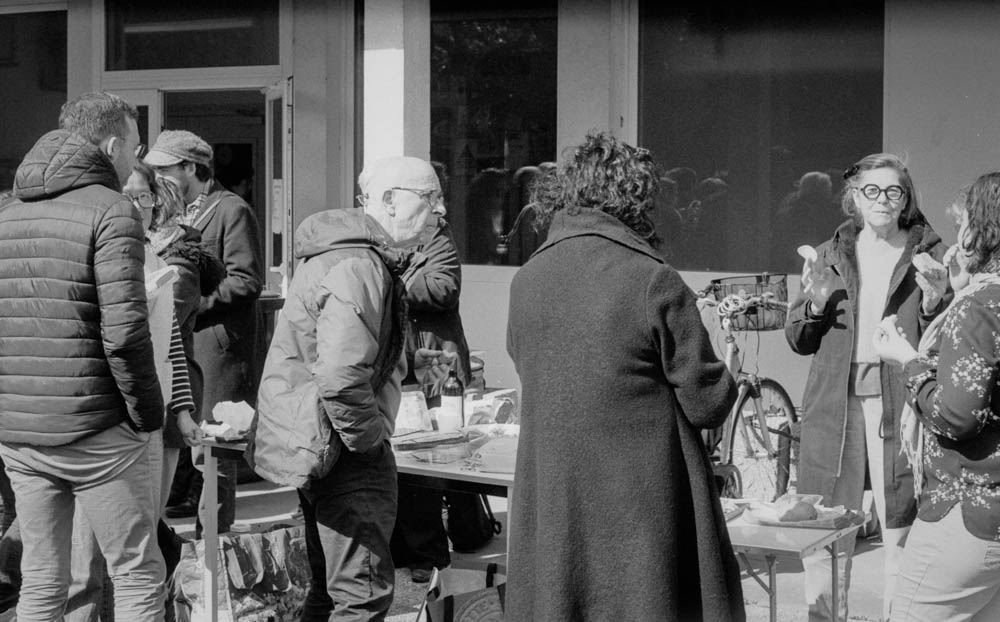
And then, there’s my photography escapade. I went old-school with film this time—none of that instant digital gratification. You take the shot, develop the film, scan the negatives, and only then do you wade into the world of editing. Now, you’re probably wondering, “Why the hassle when you’ve got smartphones and digital cameras?” But let me tell you, it’s a deliberate pace that wraps you in its own magic. You deliberate on each shot, finding meaning in every click. Out of the 36 shots I took, I’ve kept 16 for this piece. Fingers crossed, they’re worth the effort.
Film photos emanate a distinct “vibe” compared to their pristine digital counterparts. There’s a soft grain, an endearing imperfection that render them timeless. Some would say they embody an eternal tranquilly, a perpetual “vibe.” In future articles, you will see more of that timeless “vibe,” and pictures from an exhibition at the HAB Gallerie, which I’ve talked about in past articles. There will be shots of various art works all over Nantes that are all part of the annual Voyage à Nantes art season. This year, it’s all about statues taking over the city. But that’s for future articles. I have to keep you coming back for more, don’t I!