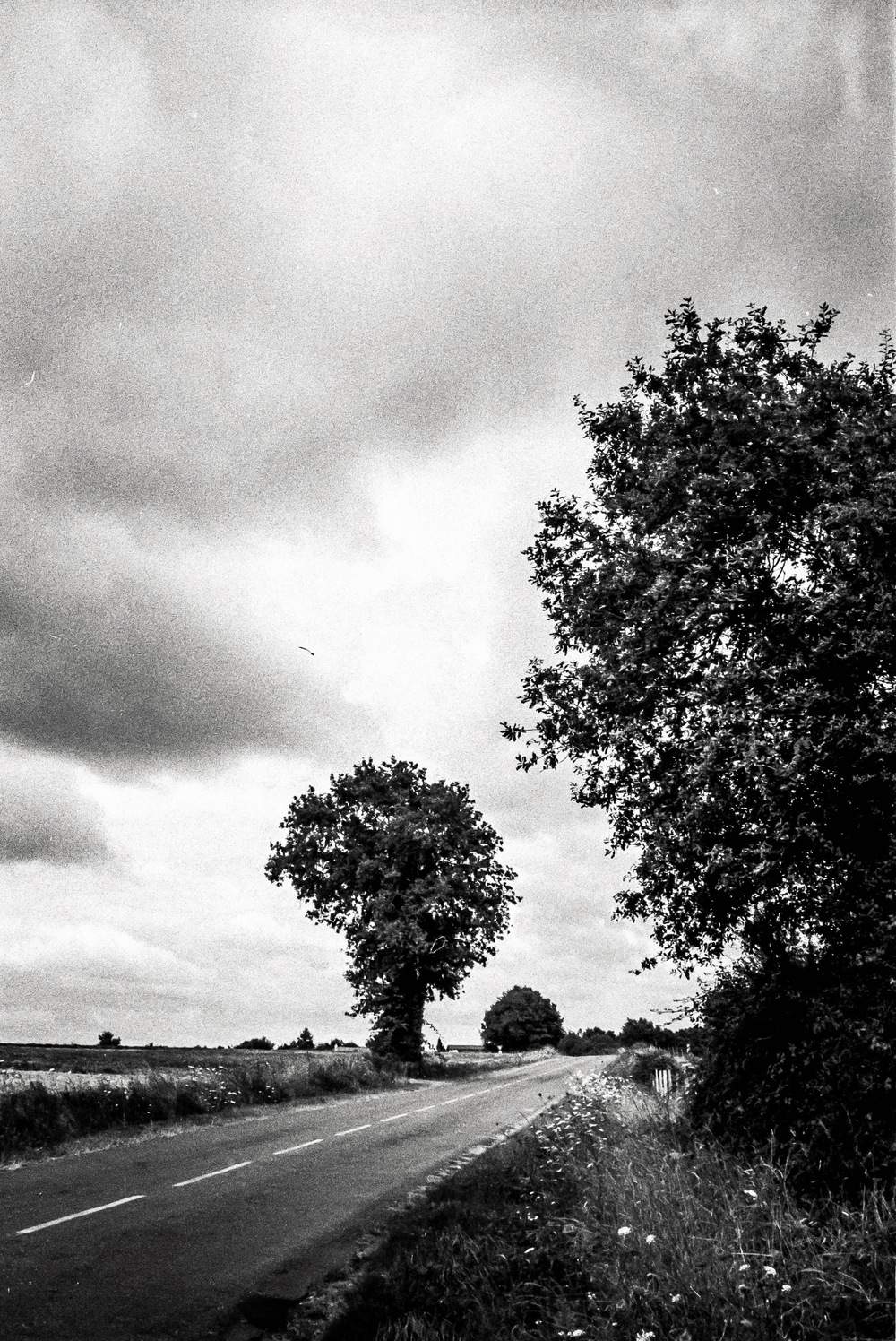
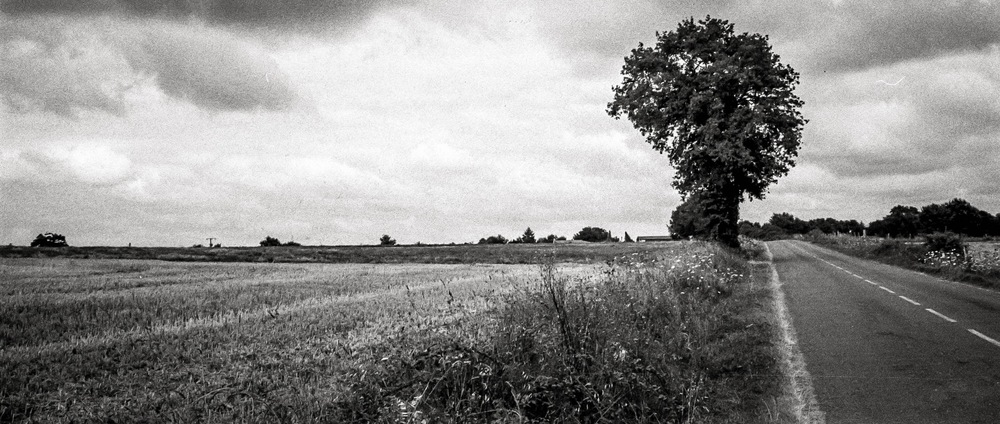
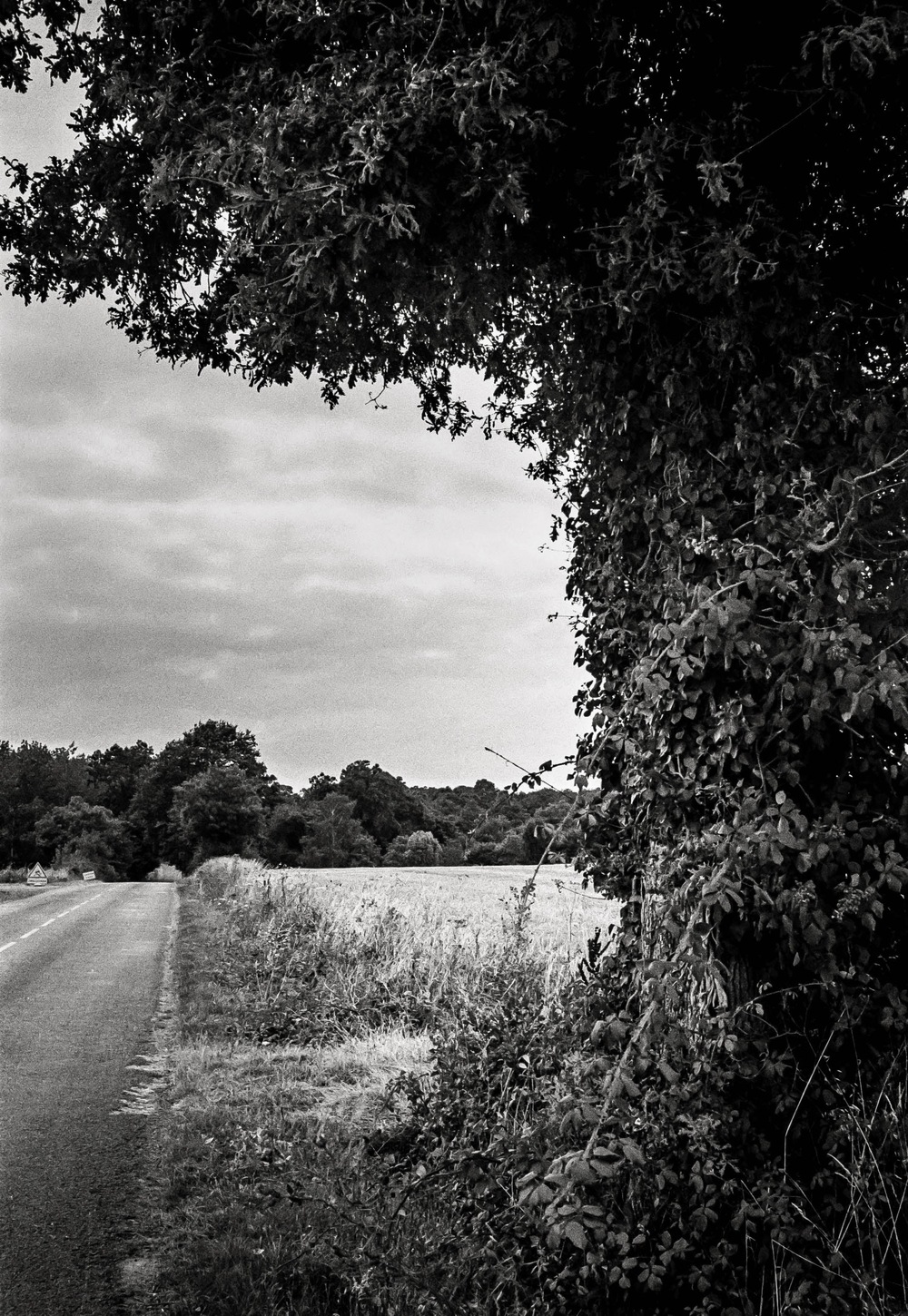
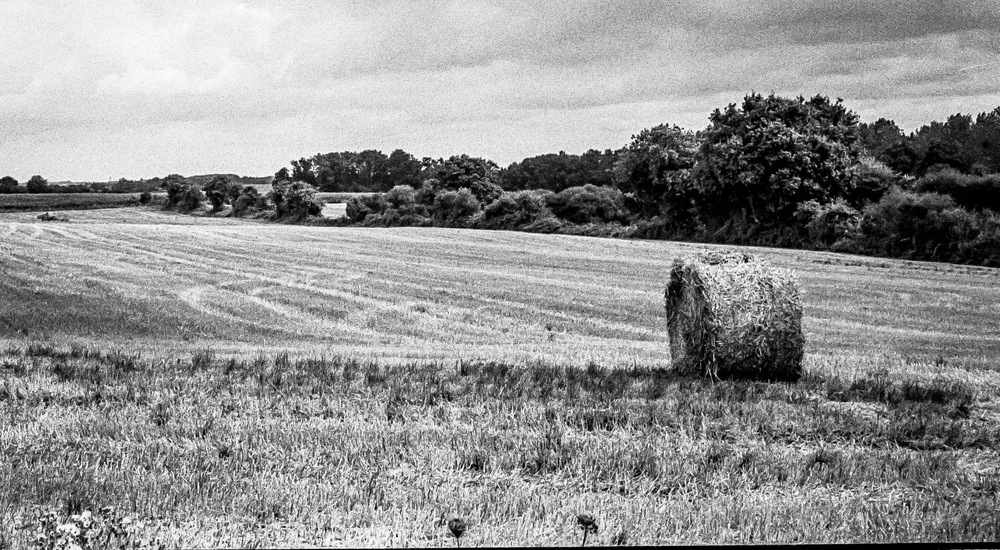
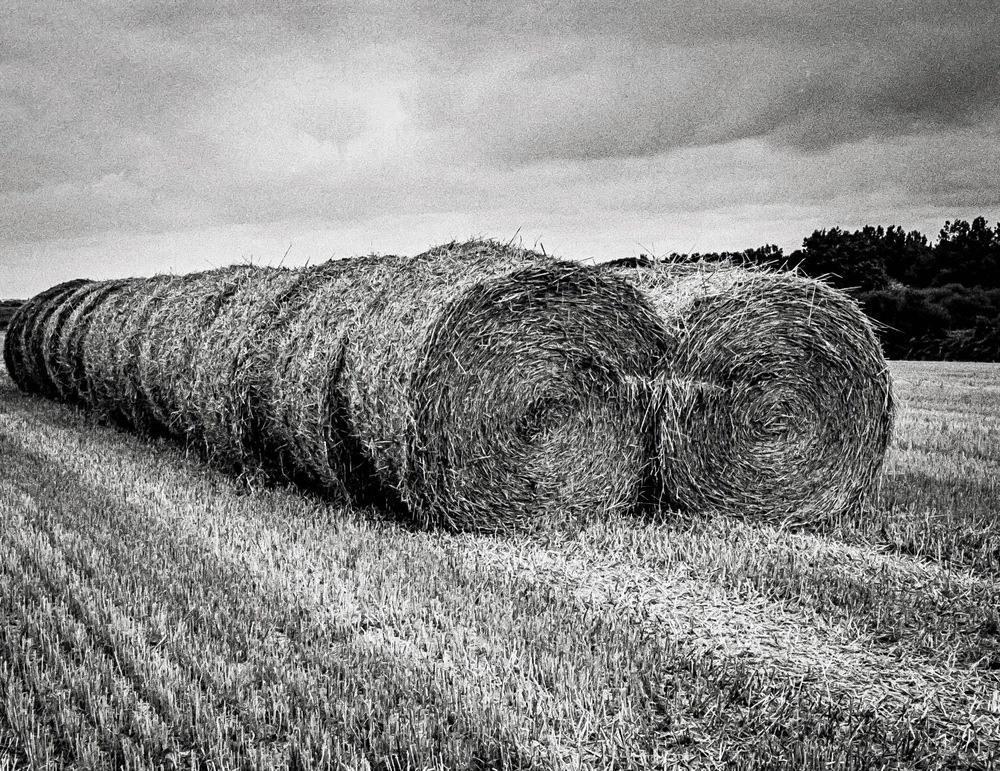
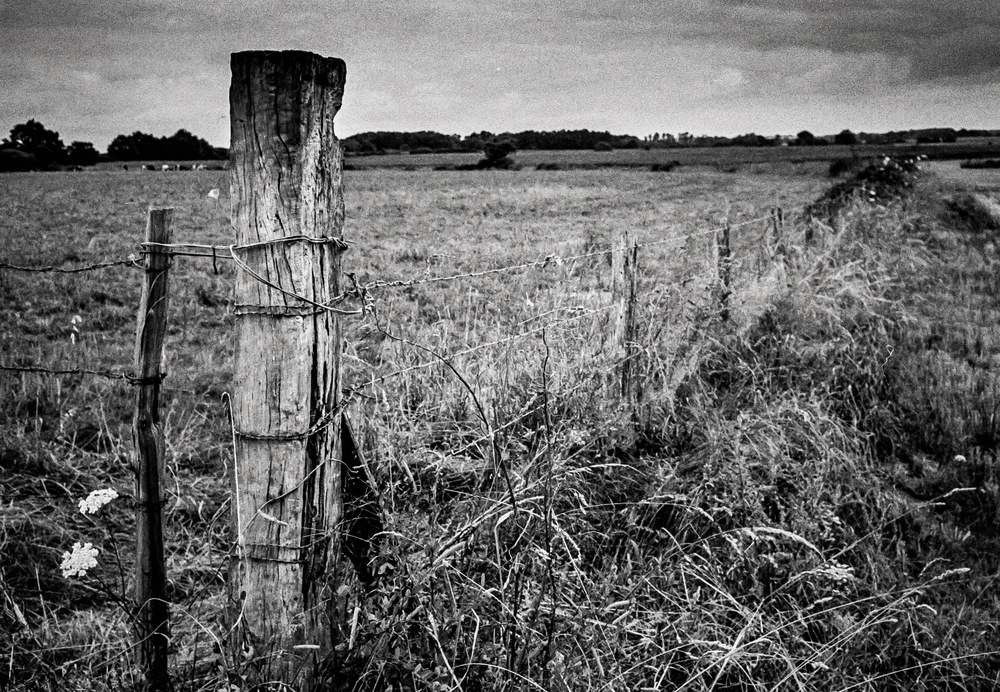
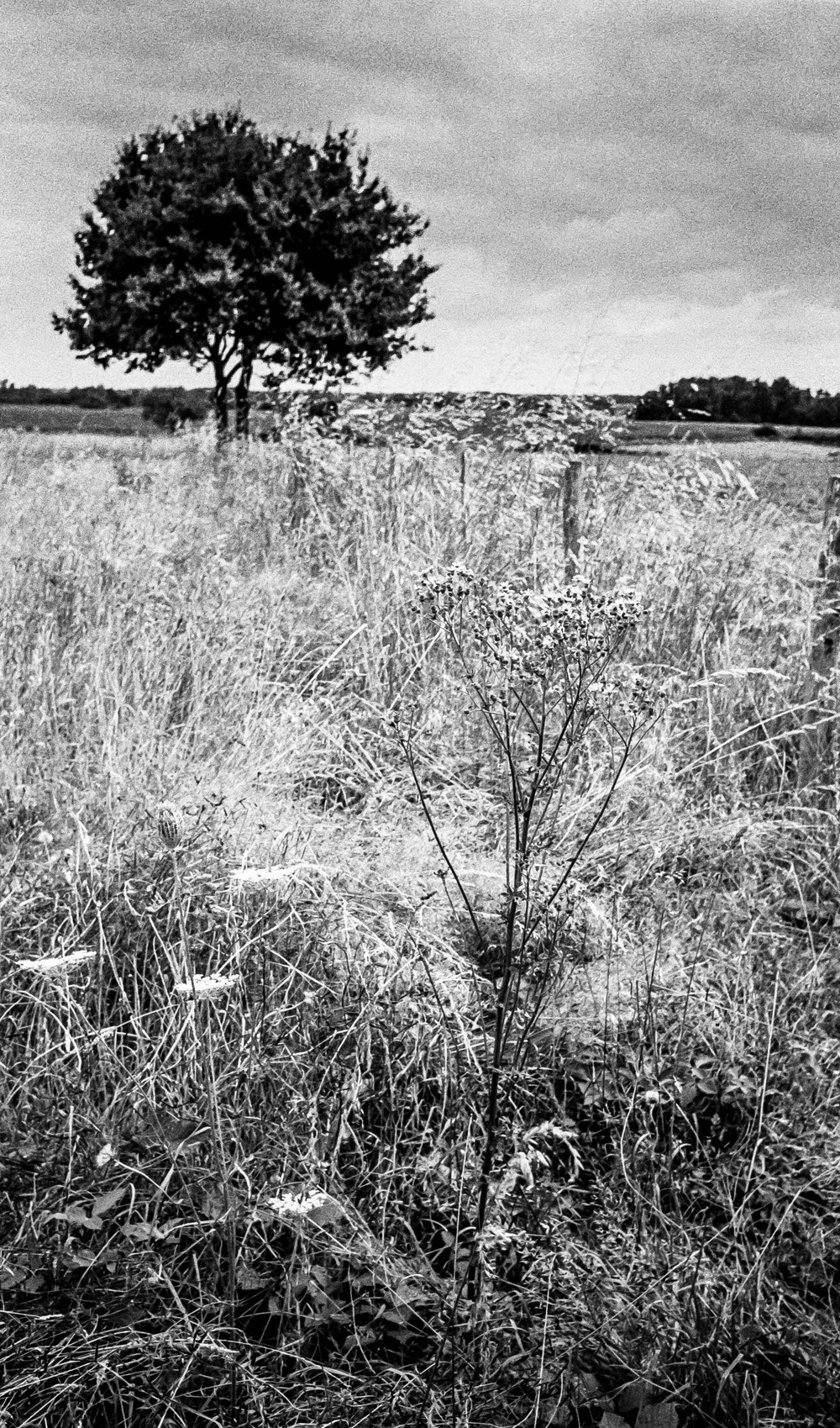
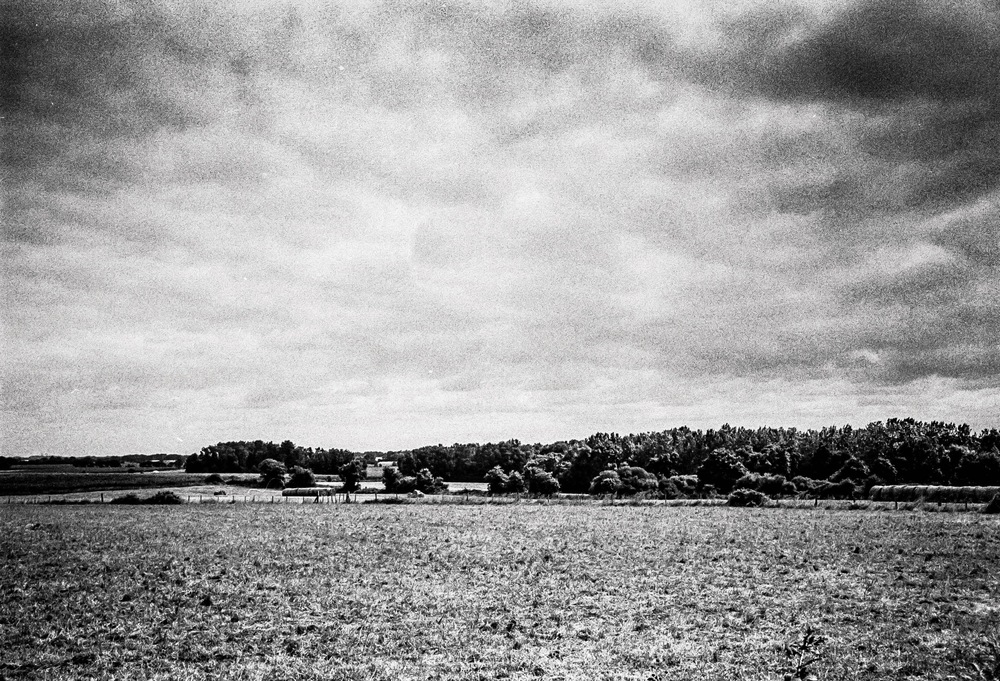
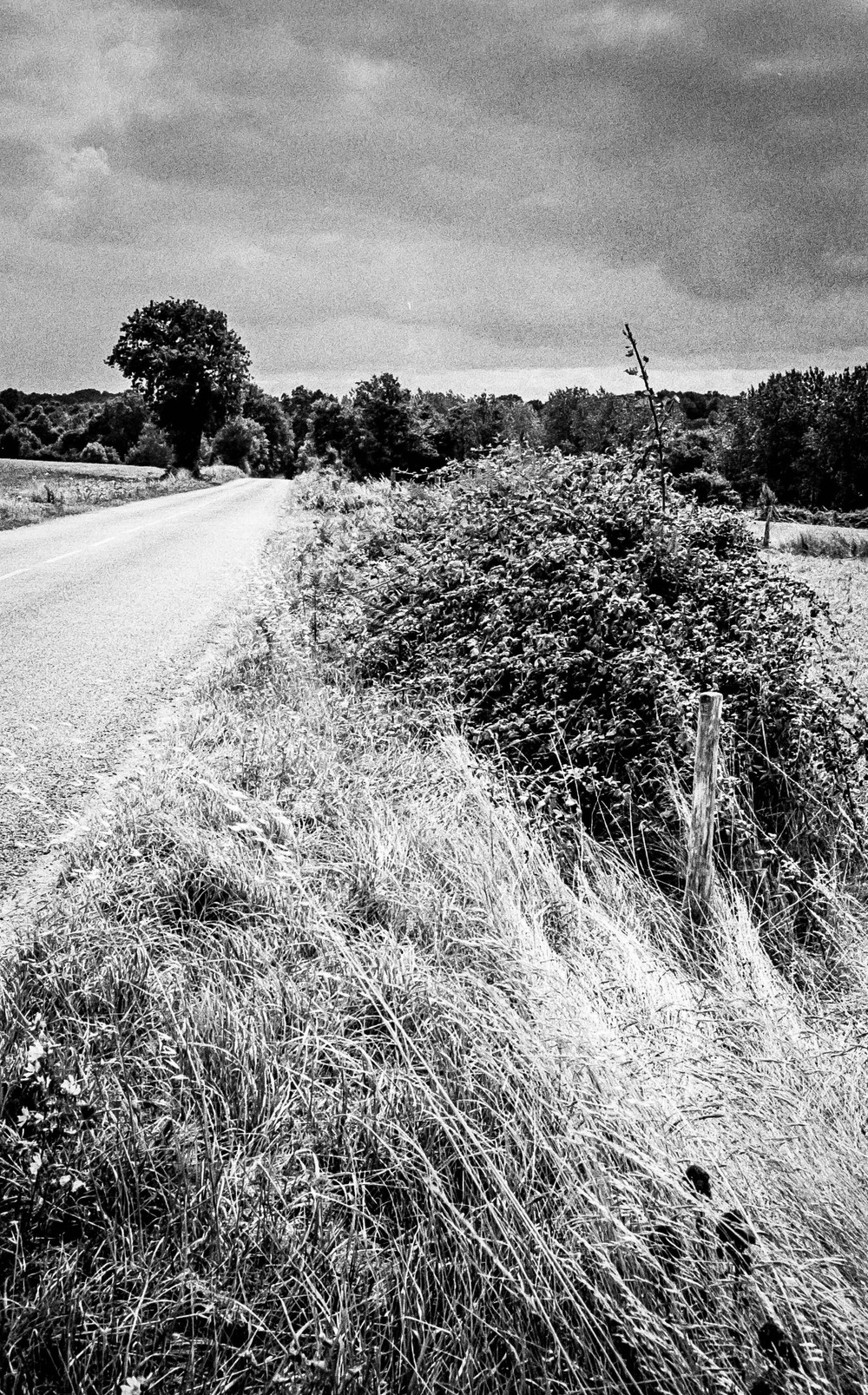
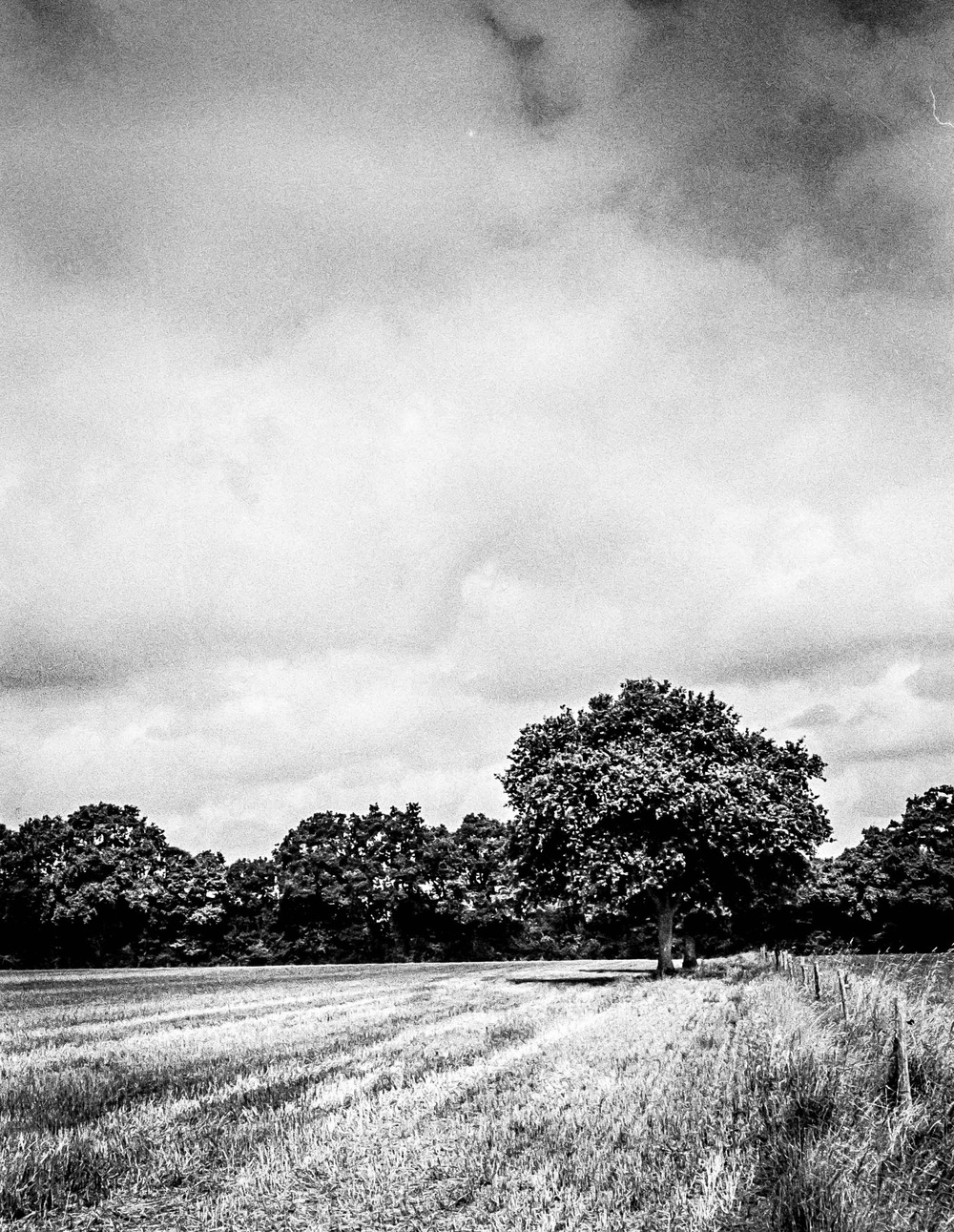
Sometimes we can have a tendency to ignore our habitual surroundings as photographers. In this series of photos from the film archive, I’m going to show you part of the route I use to go to work. What is ordinary to one person might be an pastoral idyl to somebody else. It only goes to show that there is beauty everywhere in this world and one of our roles as photographers is to document it for future generations.
My wife, bless her, has always said that my black and white photos have a timeless feel to them, be they in the city or out here in the country. I think that using film, especially this grainy HP5 Plus, even shot at box speed, adds to that sentiment. The fact that I used Rodinal as my developer might have accentuated the grain too. Also don’t forget that this is the beginning of my return to film development so I might have been a little vigorous in my “agitations” whilst developing the film. I now use mostly Ilfosil 3 and lower grain film, and have brought a little more “calm” to my “agitations.”
The camera that day was the FED 5 rangefinder camera from Ukraine. I’ve talked about it before, and although I mainly use SLRs, I still feel guilty about not using it more. It’s a beautiful camera and I don’t want it to feel neglected. I might just have to correct that soon.
I lived just outside Paris for 7 years before moving out to the country in 2001. The change in ambiance was startling. I went from blocks of flats to village life in the French countryside. I went from riding the metro, and suburban Parisian trains, to learning to drive though this beautiful landscape. Driving through this scenery still gets me every time I get into the car. I wonder what I’ll see. I see the changes in the fields and countryside through the seasons.
I want you to promise me, Dear Reader, that you will take a closer look at your route to work, and maybe I can convince you to record it too for prosperity. Don’t worry about film or camera, even just using your phone will do the trick.
The Canon AE-1 Program is a timeless gem that continues to captivate photographers and film enthusiasts alike. As a classic film camera first introduced in 1981, it effortlessly combines automatic and manual features, making it an excellent choice for both beginners and experienced photographers.
Automatic and Manual Controls
One of the standout features of the Canon AE-1 Program is its versatility in handling exposure. For those new to film photography, the program mode automatically sets both the shutter speed and aperture, allowing them to focus solely on composition and creativity. It takes the technical complexities out of the equation, delivering stunning results with ease.
However, for those who crave creative control, the AE-1 Program offers manual settings as well. With the freedom to adjust shutter speed and aperture manually, photographers can explore their artistic vision and experiment with different effects. The inclusion of shutter priority mode and bulb mode for long exposure photography adds even more possibilities for artistic expression.
Build and Design
The camera’s solid metal body exudes durability and reliability, ensuring that it can withstand the test of time. Its sturdiness makes it a trustworthy companion on any photographic journey. Handling the AE-1 Program instills a sense of nostalgia and craftsmanship that modern digital cameras often struggle to replicate.
The bright and clear viewfinder with a split-image prism aids accurate focusing, enhancing the overall shooting experience. Moreover, the hot shoe for attaching external flashes and the self-timer feature further contribute to the camera’s versatility.
Technical Details
35mm SLR film camera
Program mode, shutter priority mode, manual mode
Metal body for durability
Bright and clear viewfinder with split-image prism
Hot shoe for flash attachment
Self-timer for group shots and self-portraits
ISO range: 12-1600
Shutter speeds: 1/1000 to 30 seconds
Aperture range: f/1.2 to f/16 (depending on lens)
Pros
User-Friendly Interface: Ideal for beginners and those new to film photography, the AE-1 Program’s program mode takes care of exposure details, allowing photographers to focus on creativity.
Creative Freedom: With manual controls and additional shooting modes, experienced photographers can fully unleash their creativity and experiment with different photographic techniques.
Timeless Design: The camera’s robust metal body exudes a sense of craftsmanship and nostalgia, making it a pleasure to handle and use.
Bright Viewfinder: The clear and bright viewfinder with a split-image prism aids accurate focusing, ensuring sharp and well-composed shots.
Cons
Iconic Status: As one of the most sought-after film cameras, the Canon AE-1 Program may come with a higher price tag due to its iconic status.
The Verdict
The Canon AE-1 Program stands as a testament to timeless design and reliable performance. Whether you’re new to film photography or a seasoned enthusiast, this classic camera offers a perfect balance between automatic convenience and manual creativity. Its sturdy build and user-friendly interface make it a delightful companion for any photography journey.
So, if you’re yearning to experience the charm of film photography or simply want to relive the golden era of analog cameras, the Canon AE-1 Program will undoubtedly leave you inspired and amazed by the magic of capturing moments on film.
Happy shooting!
My Personal Thoughts
Without any hesitation, I wholeheartedly recommend the AE-1 Program to all photography enthusiasts out there. Whether you’re new to the charm of film photography or an experienced shutterbug seeking a trustworthy and adaptable companion, this camera will surely delight you. “Just do it” as a certain shoemaker once said.
I’ve had the pleasure of using the AE-1 Program for quite some time now, and I must say it’s been an absolute joy. Not only does it beautifully capture those precious everyday moments, but it also allows for endless creative possibilities. One feature that I particularly appreciate is its seamless transition between automatic and manual controls, empowering me to effortlessly tailor my shooting experience.
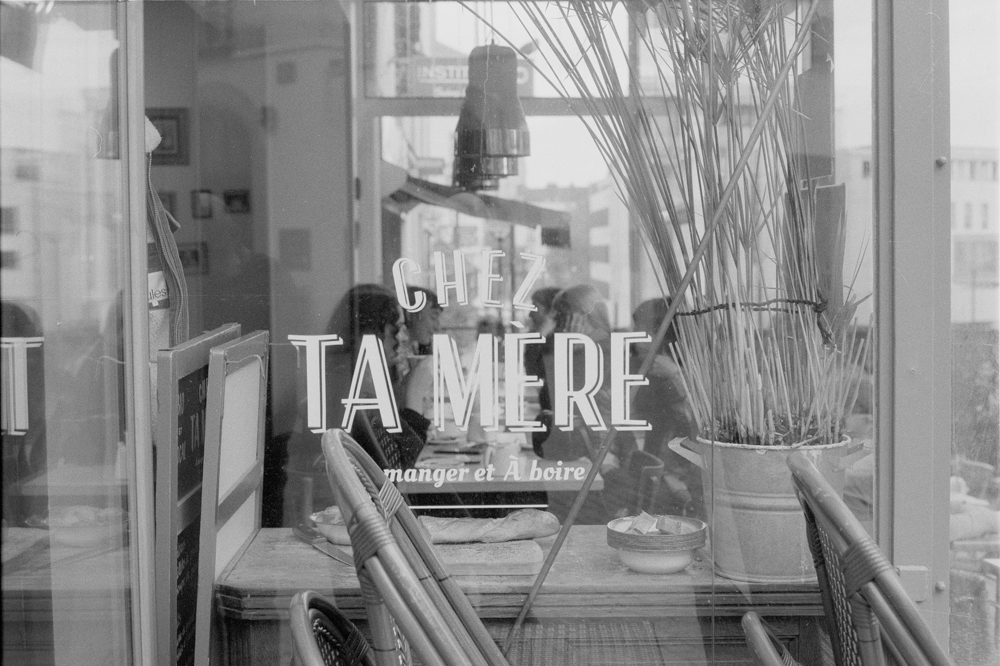
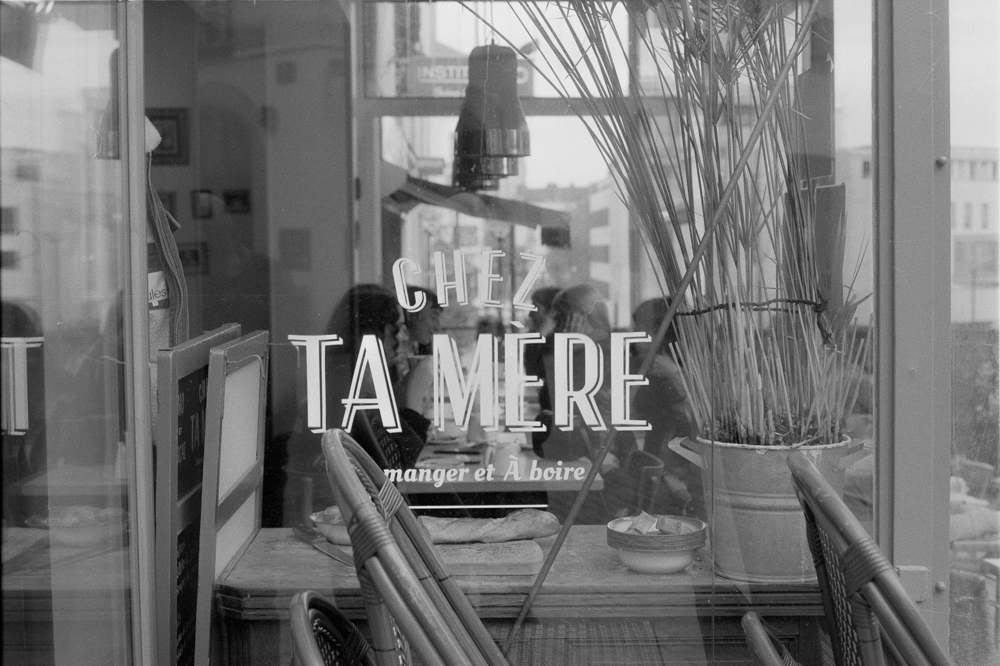
The idea here is to give you a raw image from the film scans and show you what you can get with a minimum of fuss in Lightroom with some very basic edits. What do you think?
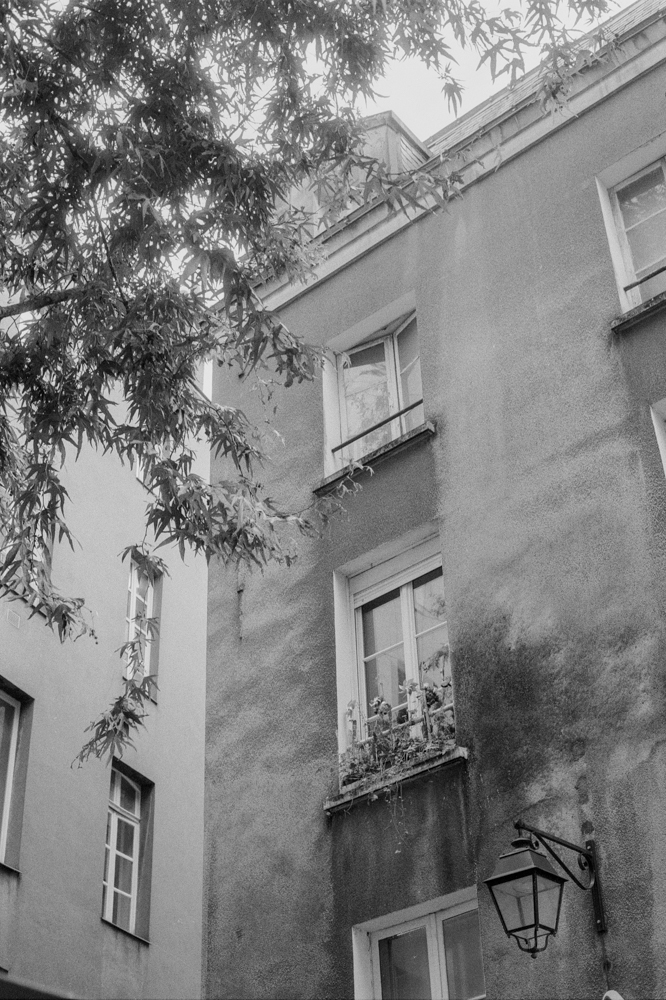
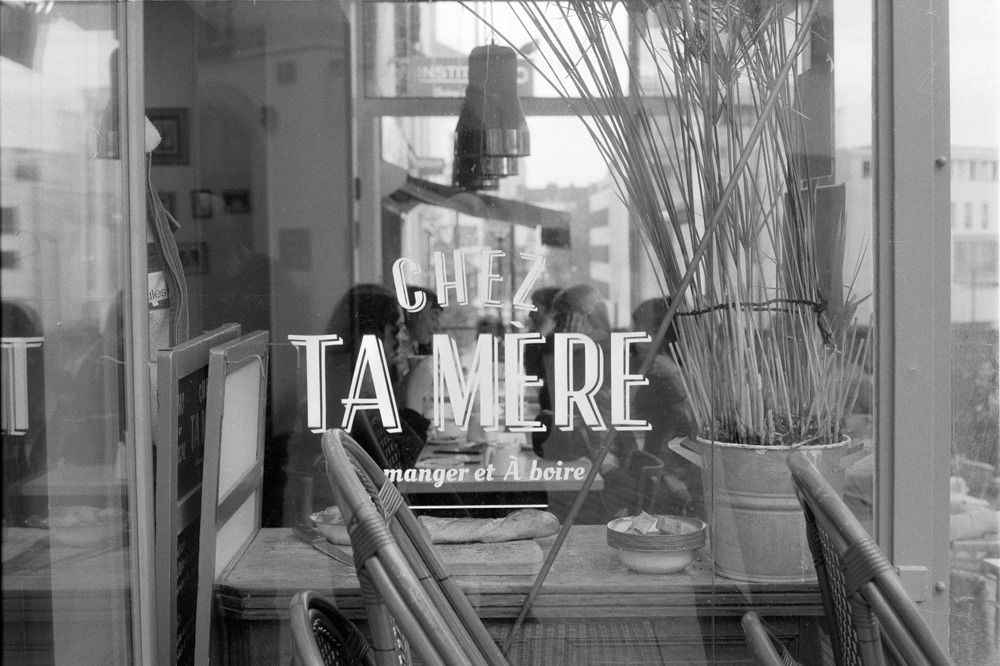
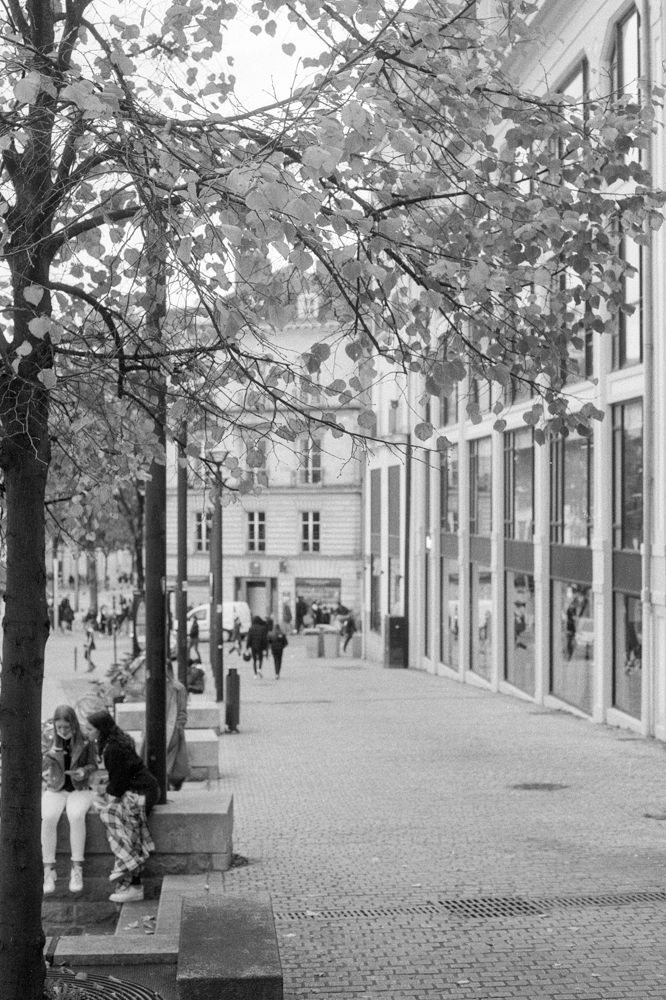
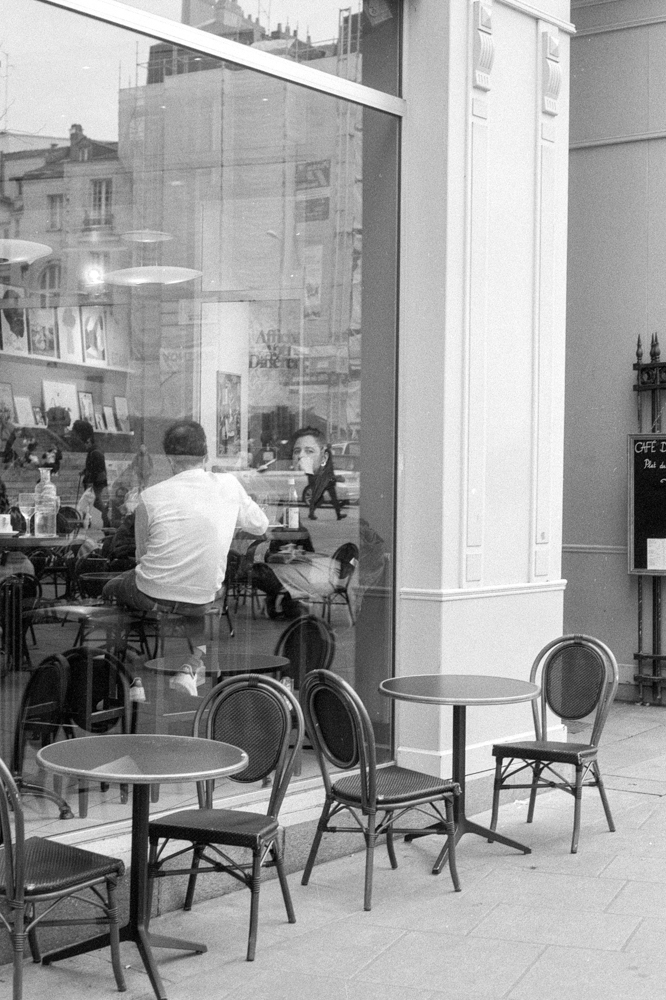
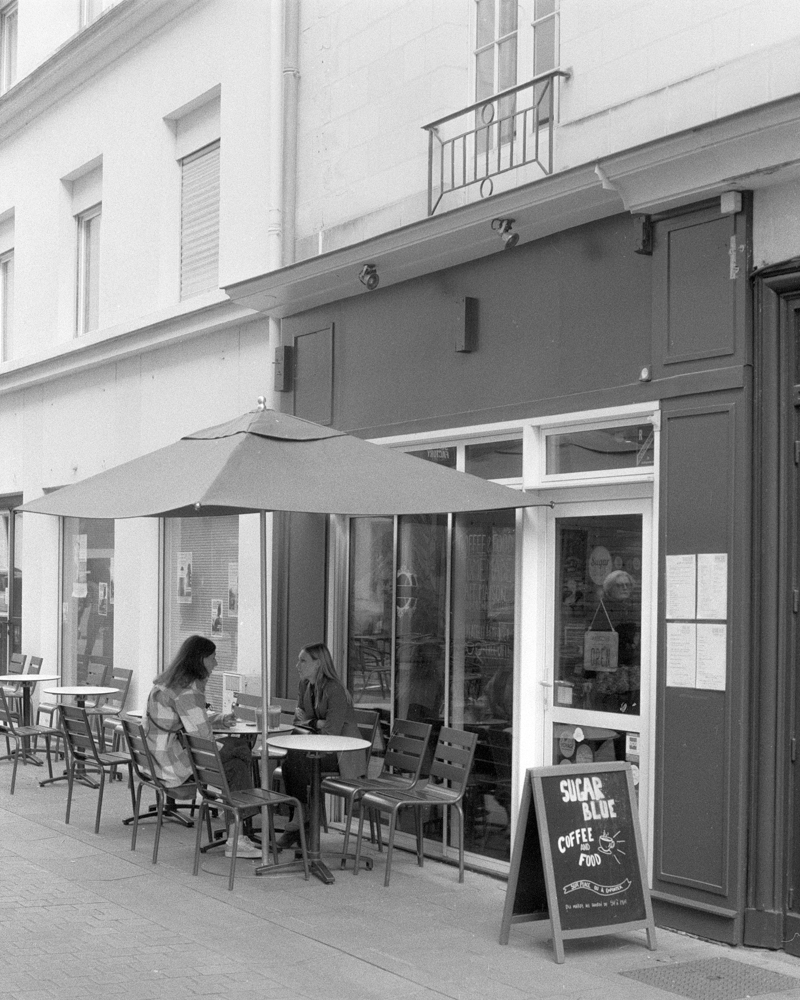
And here we go with a small selection of pictures from the last roll I developed, which are from 2022 and taken in the streets of Nantes. There will be more to come as I head back into the magical world of film photography!

















 IJM Photography