A Photography Philosophy – Part II – Why Do We Photograph?


Cameras. Why? What is it that makes us pick one up? For me, a camera is not merely a beautiful object; it’s a tool—a simple box, with a lens through which light passes, creating an image on film or a sensor. Whether the box is a hundred years old or fresh off the production line, the same principles hold true. Even our phones are, in essence, an evolution of that same box. But beyond mechanics, what truly drives us to take a photograph?

The Kodak company told us it was all about “capturing that Kodak moment.” But what exactly is this moment, whether created by Kodak or any other company? Firstly, it was a stroke of marketing genius, associating a photograph with a personal, meaningful memory. Secondly, it gave us a compelling reason to pick up a camera and capture memories to share with others, possibly even sparking the first instances of FOMO (fear of missing out), which is now so prevalent in social media. Kodak cleverly linked photographs with significant memories, encouraging us to reach for our cameras. How kind of them.

Yet, let me assure you, it’s not a cure for FOMO, despite what Kodak or social media might suggest. Or at least, not entirely. I use my photography to document the world around me at a given moment in time. Photography is the only art form that allows you, the viewer, to see something through my eyes as I saw it. But while photojournalists capture our world, photography is not solely about documentation.

It’s about storytelling through images. A single photograph can hold an entire narrative within its frame, suggesting more than what’s immediately visible. But often, I find I need multiple images to fully convey a story. When I write my blog pieces, I aim to tell the story in both words and images. I guide you through a carefully curated selection, hoping that you might connect with them in the same way I did. This connection—between the photographer and the viewer—is, for me, one of the most powerful aspects of photography. Through our lenses, we offer others a brief glimpse into our world, our experiences, and our feelings. It’s a reminder that storytelling is more than just documentation; it’s about creating a shared space for interpretation and emotion.

Of course, beauty is also an integral part of why I pick up a camera. There’s something undeniably fulfilling about capturing a scene that feels, to me, perfectly composed. I like to believe I can craft a visually pleasing image and employ various techniques to do so. The idea is to present a scene so that the photograph conveys how I saw it, inspiring you to feel something. Photography is the only medium or art form that allows you, the viewer, to see something that only I saw, and because of the passage of time no longer exists.

It’s about creating art for art’s sake. In a world that constantly demands productivity and output, creating something purely for the joy of creating feels almost radical.

Then there’s the meditative side of photography. For me, the camera isn’t just a tool to create images; it’s a form of therapy. When I’m suffering from melancholia, or I’m lost in thought, stepping into the world as an observer through my camera often gives me a sense of calm. Looking through the lens allows me to disassociate from daily worries and approach the world with curiosity rather than anxiety. This small shift—seeing myself as a photographer rather than a participant—transforms the environment around me from something overwhelming into something inviting. The camera’s frame becomes a safe space in which I can explore without judgement or expectations. In this way, photography becomes a practice of mindfulness.

The process itself is deeply important. I often think of Vivian Maier, who left behind so many undeveloped rolls of film, underscoring the significance of the process itself. Born in 1926, Maier spent her life photographing the world without promoting her work. Of the 140,000 shots she took, only 5% were ever developed—a body of work unknown even to its creator. This fact alone astounds me. Perhaps she, too, was capturing moments for herself, deeply invested in the act of photography without any need for external recognition. Her legacy reminds us that the process can be as meaningful as the result and that photography has value even when the images are unseen.

In today’s image-saturated world, where everyone is encouraged to share, edit, and curate their lives, it’s worth asking if we’d still take photos knowing that nobody else would ever see them. For me, the answer is a resounding yes. Photography is more than a tool to impress, to document, or to share; it’s a means of expressing myself and, often, of making sense of my own experiences. Every image is a small act of discovery, helping me see the world more clearly or find beauty where I might not have noticed it before.

Ultimately, photography is a language, a form of communication that transcends barriers of culture, language, and time. A single photograph can capture something timeless—an unfiltered moment of life that can be understood and felt by someone across the globe. In this way, photography becomes a shared visual language, offering us a way to connect beyond words.

So, why do we photograph? Perhaps the answer is as varied as the photographers themselves, shaped by individual motives, experiences, and emotions. But whether we’re documenting, creating, or simply exploring, the act of photography invites us to see the world—and ourselves—with fresh eyes. And in the end, that might be the most compelling reason of all.
The Opening of the Film Archives – On the way to work


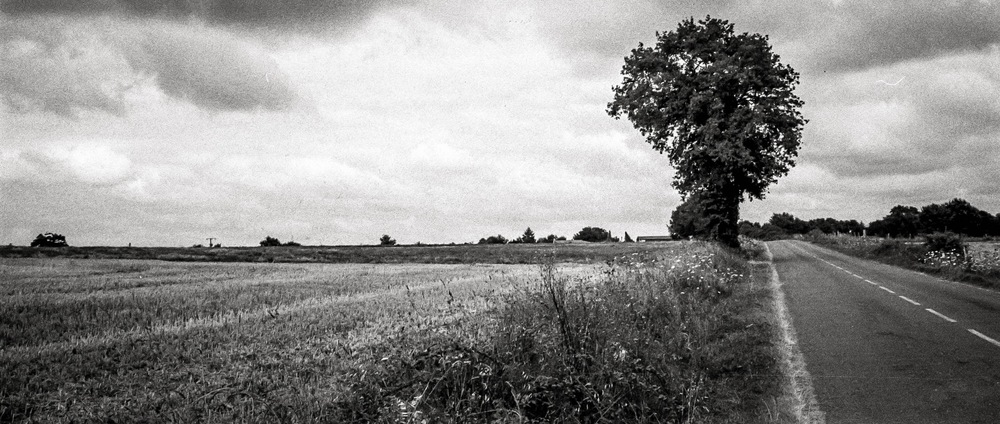
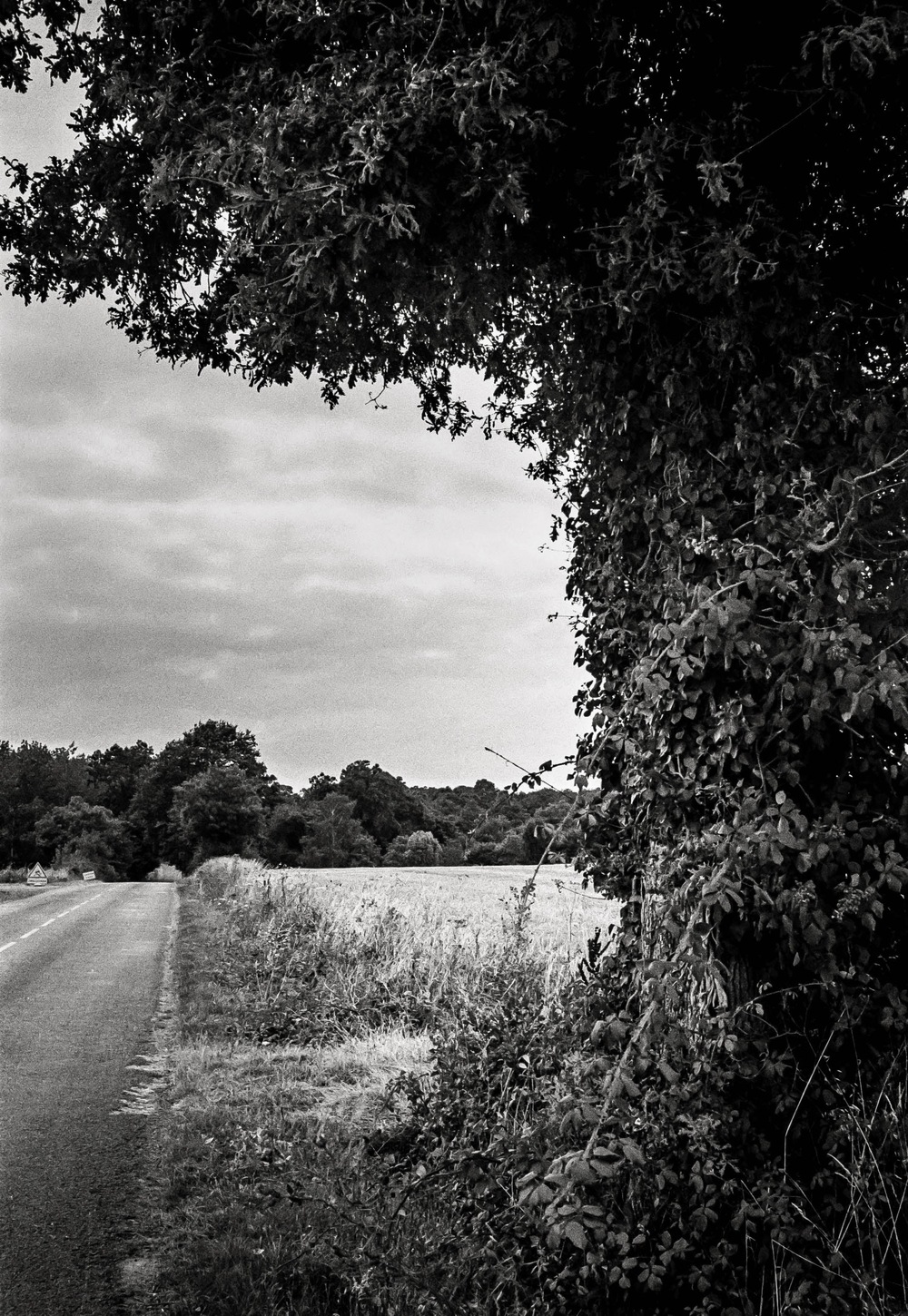
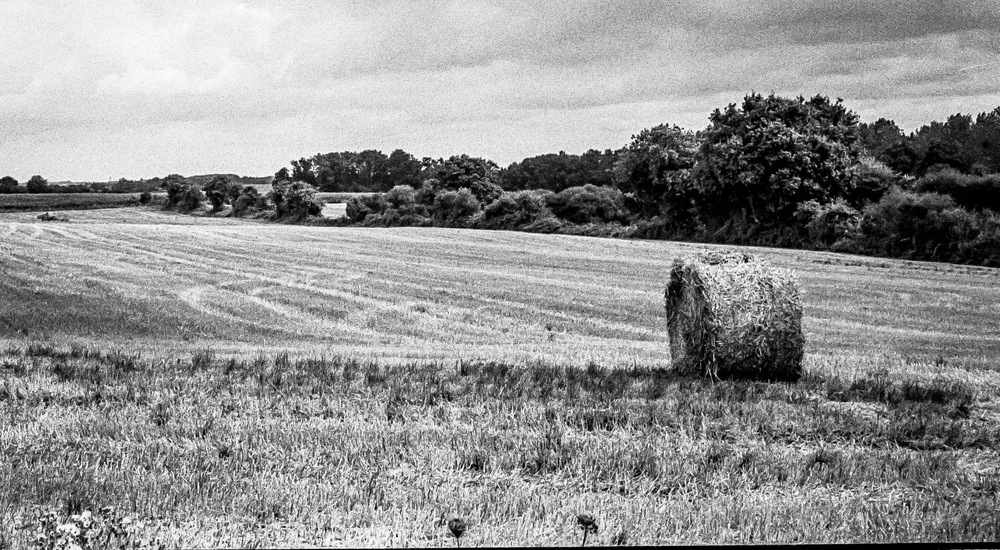
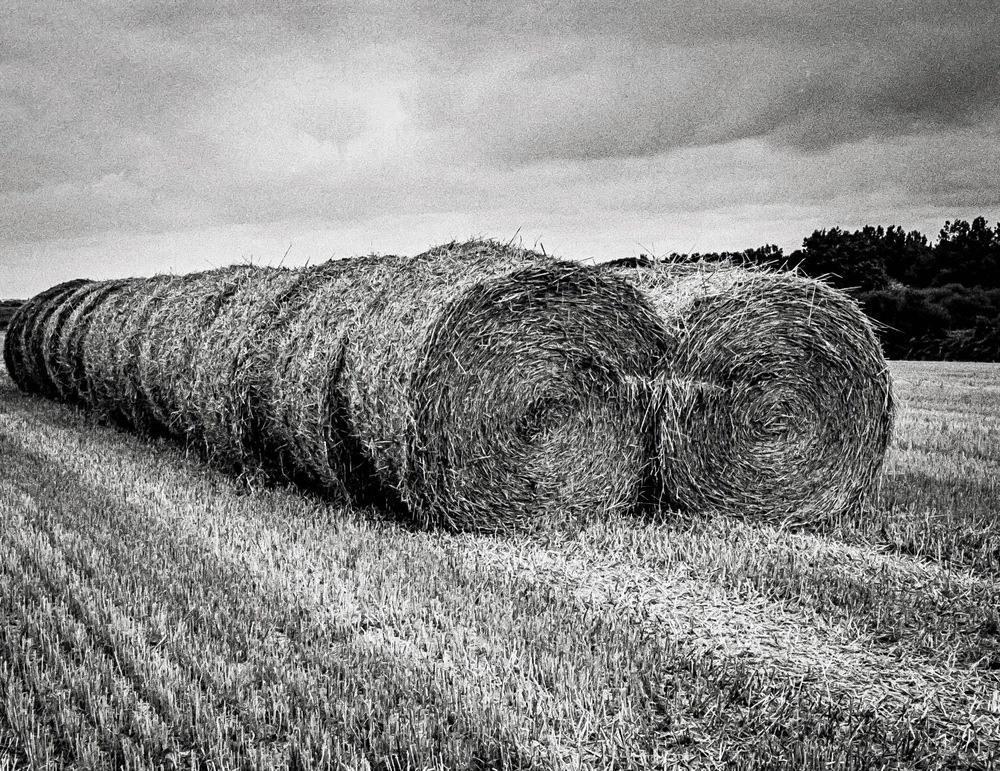
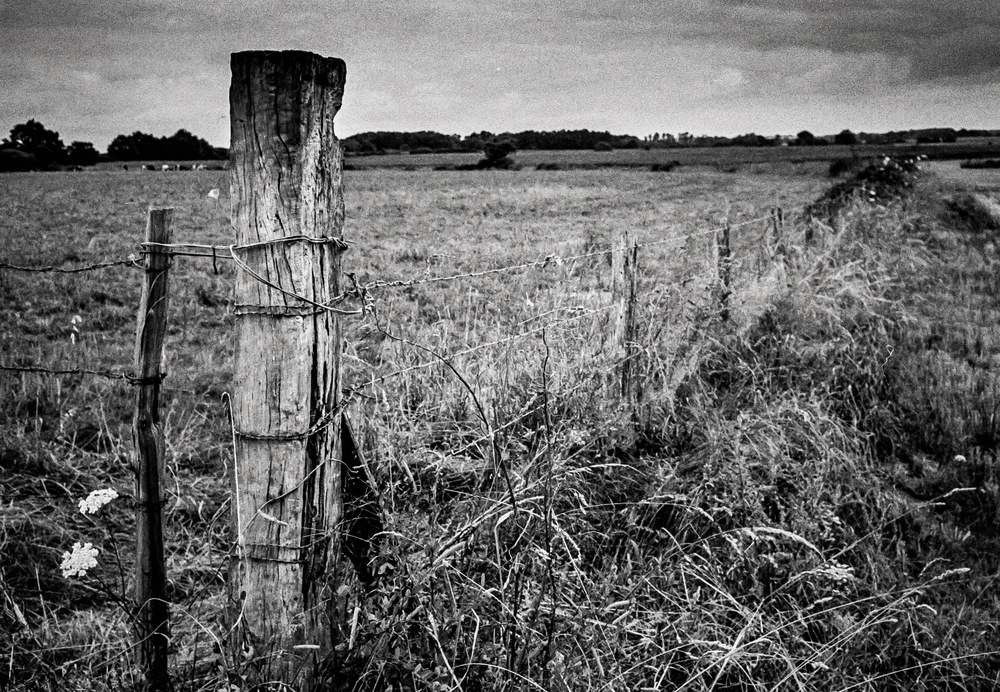
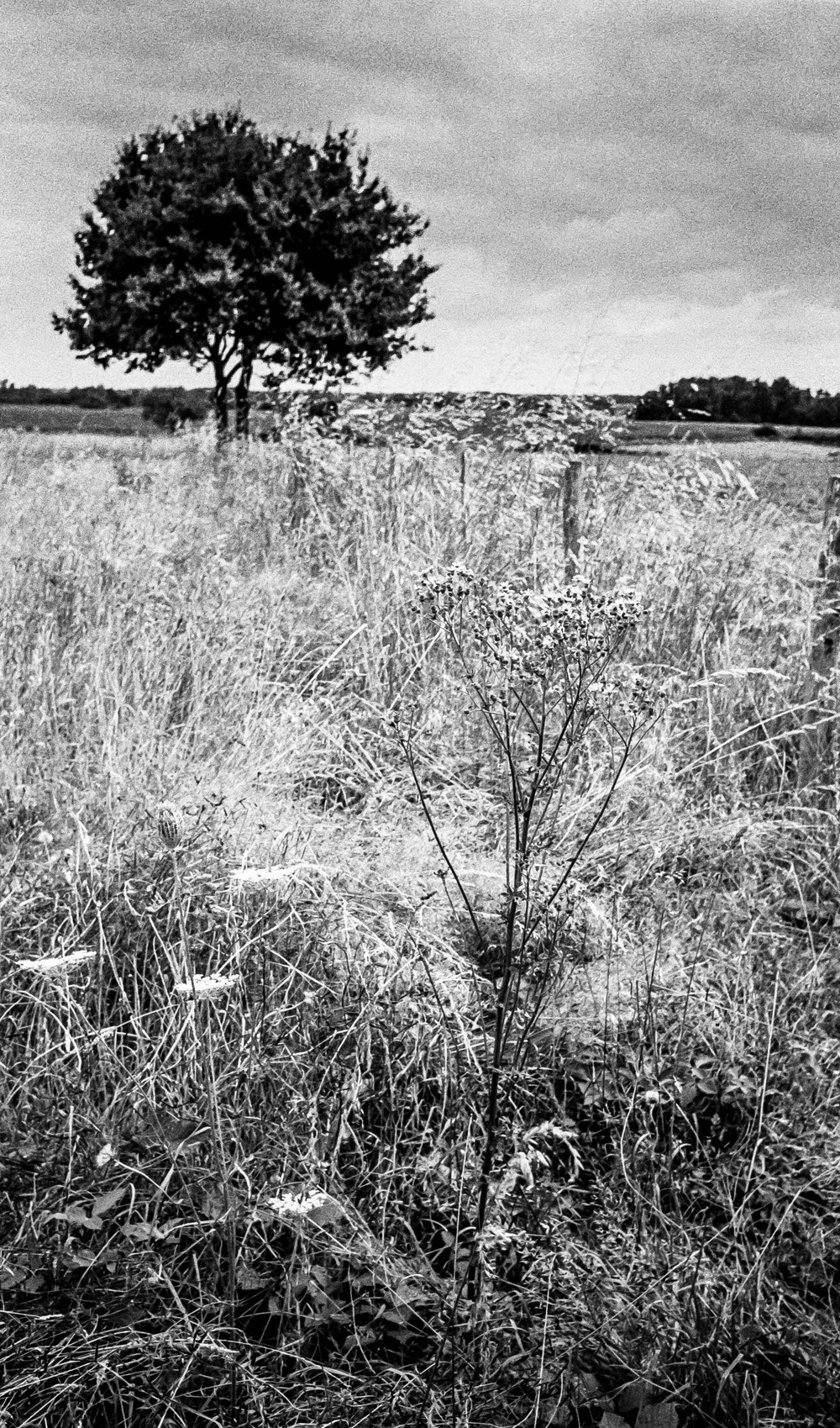
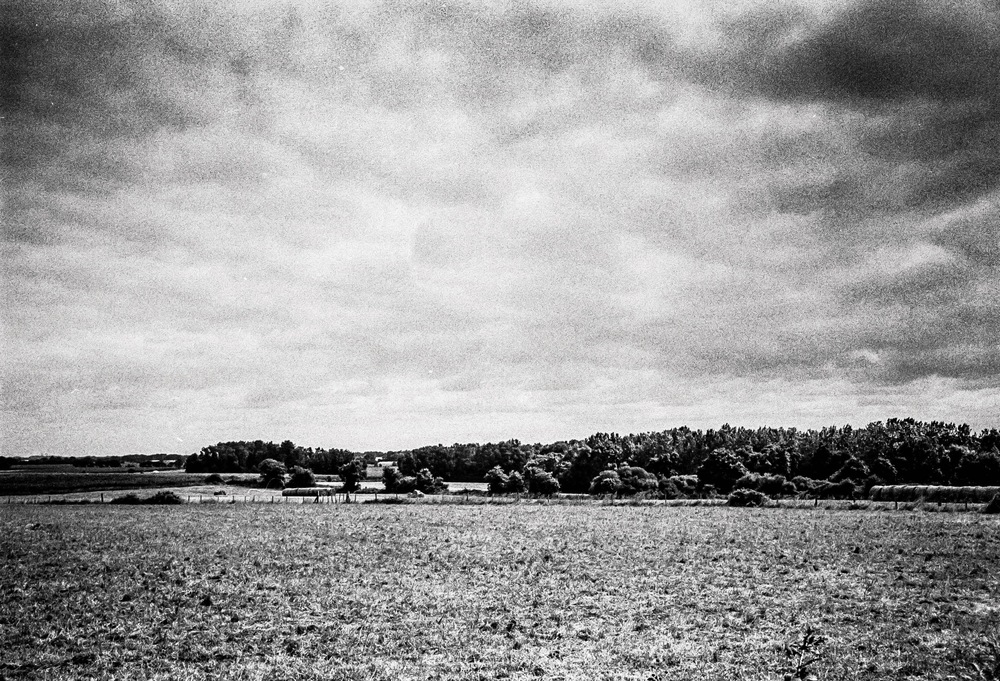
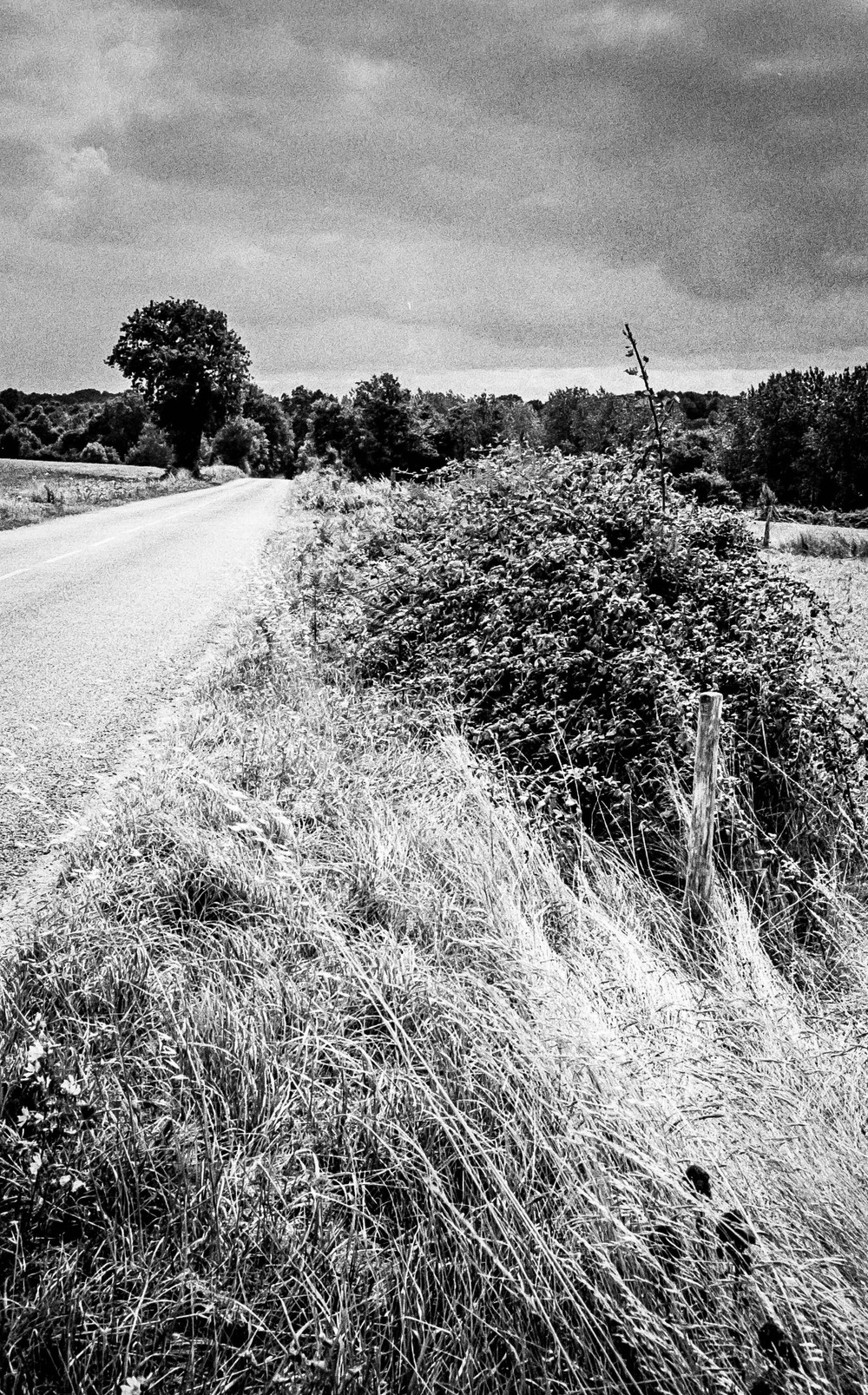
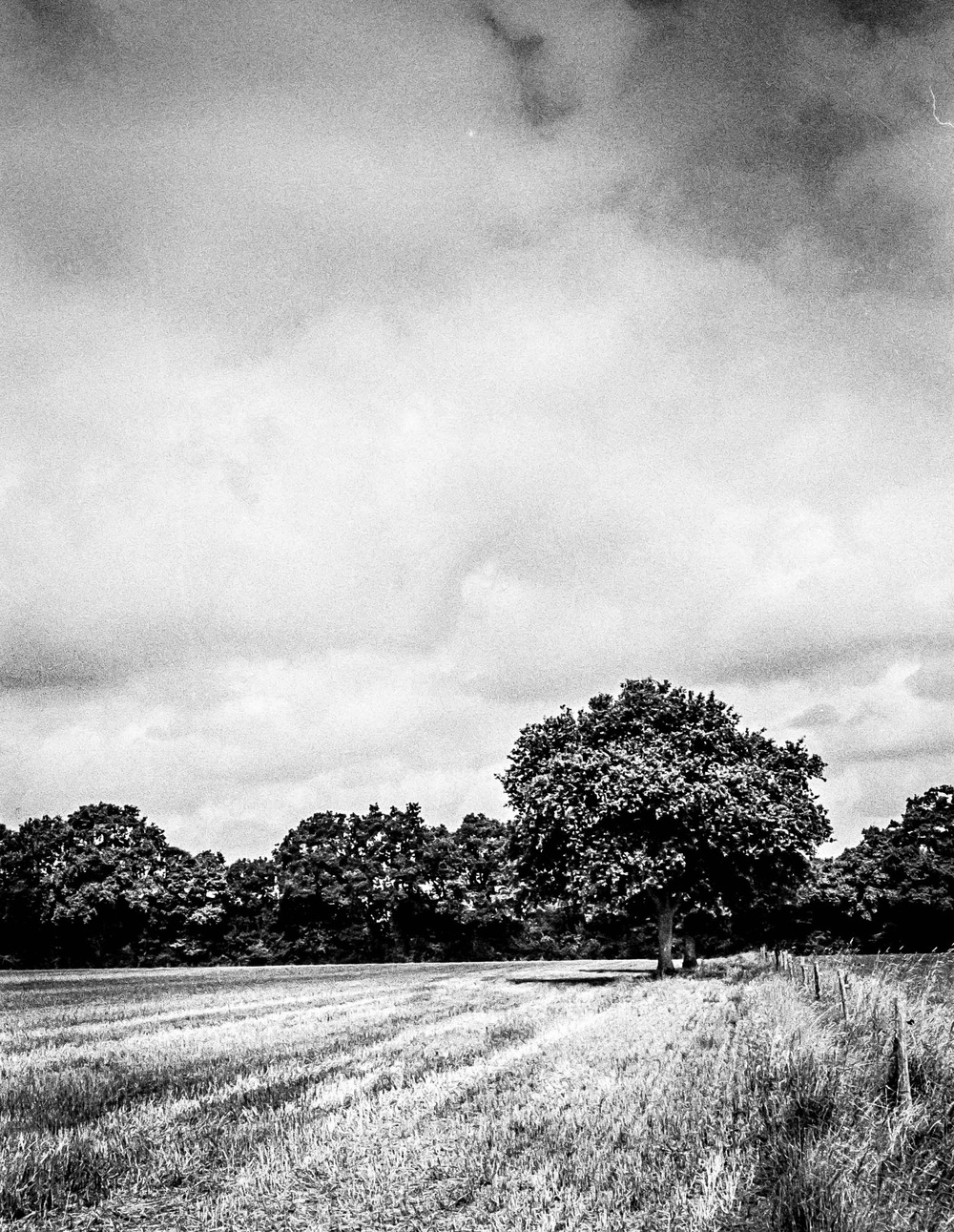
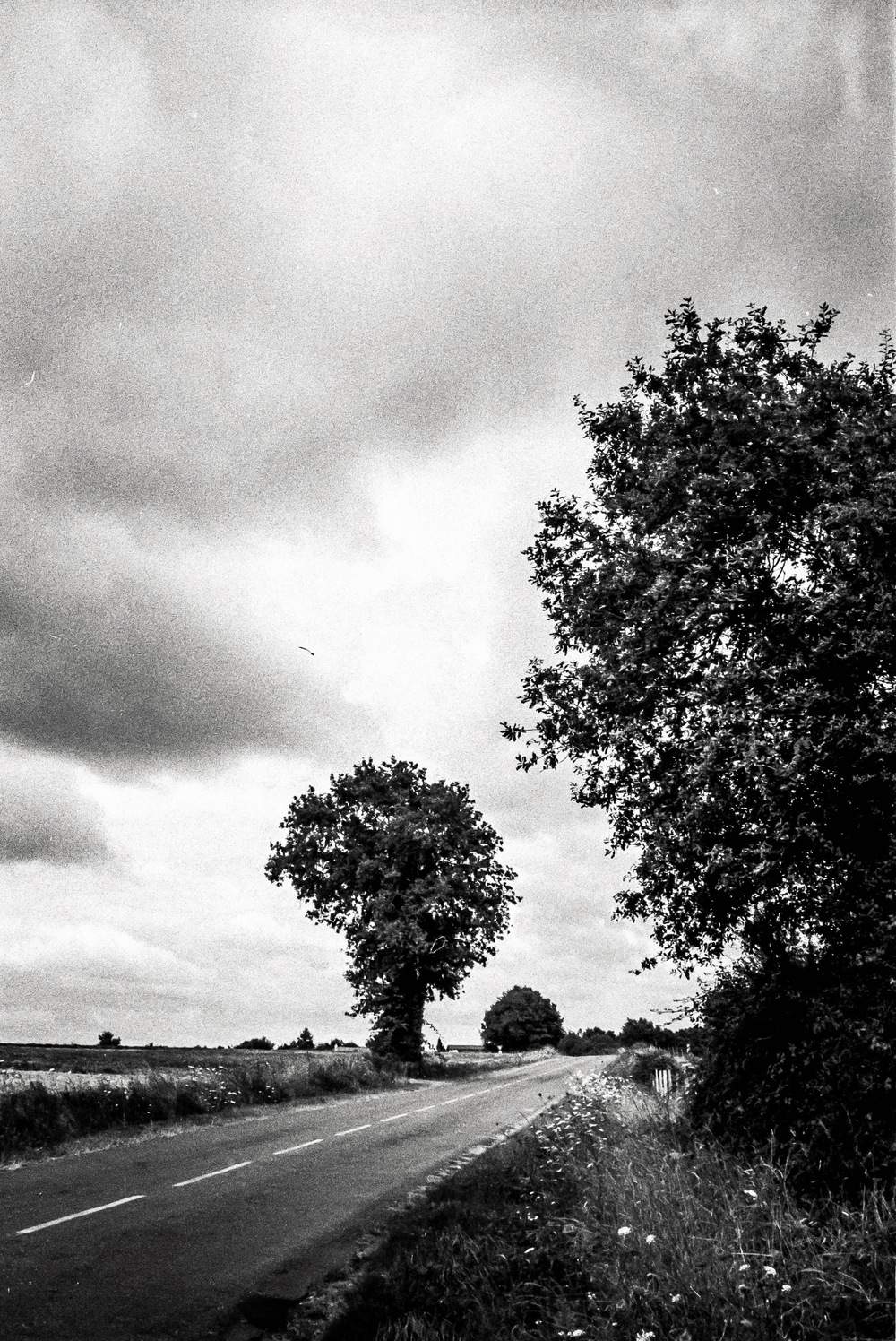
Sometimes we can have a tendency to ignore our habitual surroundings as photographers.  In this series of photos from the film archive, I’m going to show you part of the route I use to go to work.  What is ordinary to one person might be an pastoral idyl to somebody else.  It only goes to show that there is beauty everywhere in this world and one of our roles as photographers is to document it for future generations.

My wife, bless her, has always said that my black and white photos have a timeless feel to them, be they in the city or out here in the country.  I think that using film, especially this grainy HP5 Plus, even shot at box speed, adds to that sentiment.  The fact that I used Rodinal as my developer might have accentuated the grain too.  Also don’t forget that this is the beginning of my return to film development so I might have been a little vigorous in my “agitations” whilst developing the film.  I now use mostly Ilfosil 3 and lower grain film, and have brought a little more “calm” to my “agitations.”

The camera that day was the FED 5 rangefinder camera from Ukraine.  I’ve talked about it before, and although I mainly use SLRs, I still feel guilty about not using it more.  It’s a beautiful camera and I don’t want it to feel neglected.  I might just have to correct that soon.

I lived just outside Paris for 7 years before moving out to the country in 2001.  The change in ambiance was startling.  I went from blocks of flats to village life in the French countryside.  I went from riding the metro, and suburban Parisian trains, to learning to drive though this beautiful landscape.  Driving through this scenery still gets me every time I get into the car.  I wonder what I’ll see.  I see the changes in the fields and countryside through the seasons.

I want you to promise me, Dear Reader, that you will take a closer look at your route to work, and maybe I can convince you to record it too for prosperity.  Don’t worry about film or camera, even just using your phone will do the trick.

Sir Foxy Foxalot


I have been writing for this blog since 2019, and it seems I am still here, sharing my thoughts on photography and its role in my life. Photography, alongside music, appears to be one of the few things I do quite well. Another talent, it seems, is writing, as evidenced by the fact that just over 13,200 of you have viewed this site over 51,000 times since I started this project. I’m not saying this to show off, since for a British subject of His Majesty King Charles III, it is formally forbidden to blow one’s own trumpet—a social faux pas—and, were I to be completely honest, the behaviour of a cad!

However, when somebody else does it, those social cues are no longer applicable. Sir Foxy Foxalot — aka Fox Reviews Rock for those in the know — does the same kind of thing as I do. His expertise lies in Rock Music and Heavy Metal, genres I might not be very knowledgeable about. However, learning something new is always a voyage of discovery. We have been following each other for some months now, gradually learning about our different worlds and coming to appreciate each other’s forays into the blogosphere.

Recently, he sent out a message asking for volunteers to be interviewed by him and answer some questions on Rock and Heavy Metal. Being the decent chap and all-around good egg that I try to be, I said that despite my ignorance, I would be delighted to participate.

Despite my limited knowledge of the genre, I did spend three years working with the famous and infamous Christophe “Bobonne” Bonnin, who taught me all I know. He introduced me to a certain Tennessee Bourbon, a favourite of the late Lemmy, bass player and singer of Motorhead, and an all-round legend. Lemmy has a memorial at Hellfest in the quaint village of Clisson, which becomes the centre of all things Metal once a year. I even learned that he had a custom-made case for his bass, with compartments for said Bourbon, his bass, and a packet of cigarettes. Despite the much-vaunted medicinal properties of the aforementioned Bourbon, don’t overdo it, chaps!Let me tell you more about the man behind Fox Reviews Rock. Like me, he has dedicated himself to writing about his passion, and despite having been at it for a relatively short time, he has acquired quite the following. His output is impressive, and he maintains a very high standard. He has also had the great intelligence to surround himself with an excellent writing team. His articles, though about a subject I know little about, are always a good read. I also enjoy the structure of his blog. Check out his weekly schedule here. What more can I say, except get your pretty self to his site and check him out. It’s quite the blossoming project, run by those who are passionate about their subject. Tell him I said hi!

PS.  Here is the link to the article they wrote about me.  Go and visit it right now.  Off you go.   No messing around.  You’ll  like it!

Finding Balance: Photography and Personal Wellness


In the sanctuary of my thoughts, where the gentle glow of lamplight dances upon well-worn bookshelves, I find solace from the chaos of the world. With my dog, Molly, by my side, I embark on a journey of introspection.

As someone who values quiet reflection and nuanced understanding, I’ve learned to appreciate the delicate equilibrium that enriches a fulfilling life. Amidst the pursuit of knowledge and creative expression, it’s easy to become ensnared in the whirlwind of activity, neglecting personal well-being in the relentless chase for success.

Yet, amidst the simplicity of my surroundings, among the familiar scents of brewed tea and the soft hum of a jazz record playing in the background, I am reminded of a timeless truth: genuine fulfillment springs not from ceaseless striving, but from nurturing inner peace and harmony.

For photographers and thinkers alike, the quest for excellence can exact a toll on the spirit, leaving behind exhaustion and doubt. Each moment of creation demands both physical exertion and emotional resilience.

But amid life’s ebbs and flows, it’s crucial to honor the sanctity of body and mind, to heed the whispers of intuition and the call of the soul. What value is there in a well-crafted image or a finely wrought idea if born from weariness?

In my own journey as a seeker of beauty and understanding, I’ve come to embrace moments of stillness and contemplation, carving out time for rest and reflection amidst the bustle of daily life. Whether reveling in solitude or feeling the gentle caress of a cool breeze, I’ve discovered that inspiration often arises from quiet depths.

Photography serves as a therapeutic outlet for many, offering respite from the pressures of modern life. Through the lens, we enter a realm of infinite possibilities where time seems to slow and worries fade into the background. Immersed in the act of creation, we create a space where anxiety and overthinking lose their grip, replaced by a sense of calm and clarity.

For those grappling with depression or loneliness, photography can serve as a lifeline, gently coaxing us out of isolation and into the embrace of the world. As we wander with camera in hand, we become mere observers, detached from the chaos that threatens to overwhelm. In framing a shot, we find solace in the simple beauty of the moment, forging a connection with the world that soothes the soul and restores the spirit.

When I’m not at my desk, crafting articles or editing photos to share with you, I’m exploring this balance between creativity and self-care, constantly striving to find harmony in my own life.

In the tranquil sanctuary of creativity and self-discovery, photography emerges not only as a means of capturing fleeting moments but also as a powerful tool for nurturing personal wellness. Through our cameras, we embark on a journey of exploration and introspection, finding solace in the beauty of the world and sanctuary in the act of creation.

As we navigate the complexities of modern life, let us honor the delicate balance between ambition and well-being. Photography offers us a pathway to reconnect with ourselves and the world, inviting us to embrace stillness amidst the chaos and find beauty in the ordinary.

Whether framing the perfect shot or crafting prose to accompany our images, let us remember the profound interconnectedness between creativity and personal wellness. By prioritizing self-care and mindfulness in our photographic practices, we not only enhance our capacity for artistic expression but also cultivate a deeper sense of harmony and fulfillment in our lives. Even if our endeavors don’t always yield the desired result, it’s essential to recognize that the journey itself is as, if not more, important than the destination.

So, dear reader, as you embark on your own photographic journey, may you find solace in the act of creation, clarity in moments of quiet contemplation, and inspiration in the beauty that surrounds you. May your photographs serve not only as snapshots of the world but also as windows into the depths of your soul, guiding you towards a life of greater balance and well-being.

Has Spring sprung, or is it just springing?


In my little corner of France, the weather has been a little on the rainy side.  We had a good week at the end of January, but since February, somebody, somewhere, without knowing the ramifications of his words, must have said, “et bah, on a besoin d’eau hein….”  God obviously granted this person their prayers and we have been rained on for the last few weeks!

It all began with a brief respite at the end of January, a fleeting interlude of sunshine before February just started urinating on us from above. It’s as if someone, somewhere, uttered the magic words, invoking the heavens to shower us with their blessings. And shower us they did, with rain pouring down like a pissing cow (as the French so poetically put it) that had been on the lash all night , couldn’t find the loo, and could no longer keep it in.

Yesterday, we were visited by none other than Louis, the storm, and not the child of the Prince of Wales. His presence was felt with each gust of wind and every raindrop that tapped against the window.  This was proper rain.  The kind of rain that makes your Yorkshire more elderly aunts would tell you that you might want to put a coat on, but told off by your Northumbrian grandmother if you dared use an umbrella.  It was a different time…  I would dash out to do my quality control for the timber deliveries at work whilst trying to dodge the heavy showers and not get blown over by the 50 mph gusts of wind.

But amidst the downpour, signs of Spring’s imminent arrival emerge like treasures hidden in plain sight. No longer do I awaken to the frosty chore of scraping ice off my windscreen; instead, there’s a gentle warmth in the air, a whisper of hope that dances through the rain-soaked streets.

As I make my way through the soggy pathways, I can’t help but notice the subtle changes taking place. The blackthorn bushes in the hedgerows begin to bloom, their delicate blossoms a testament to nature’s resilience. Daffodils peek out from gardens and roadside nooks, adding splashes of colour to the grey canvas of the day.

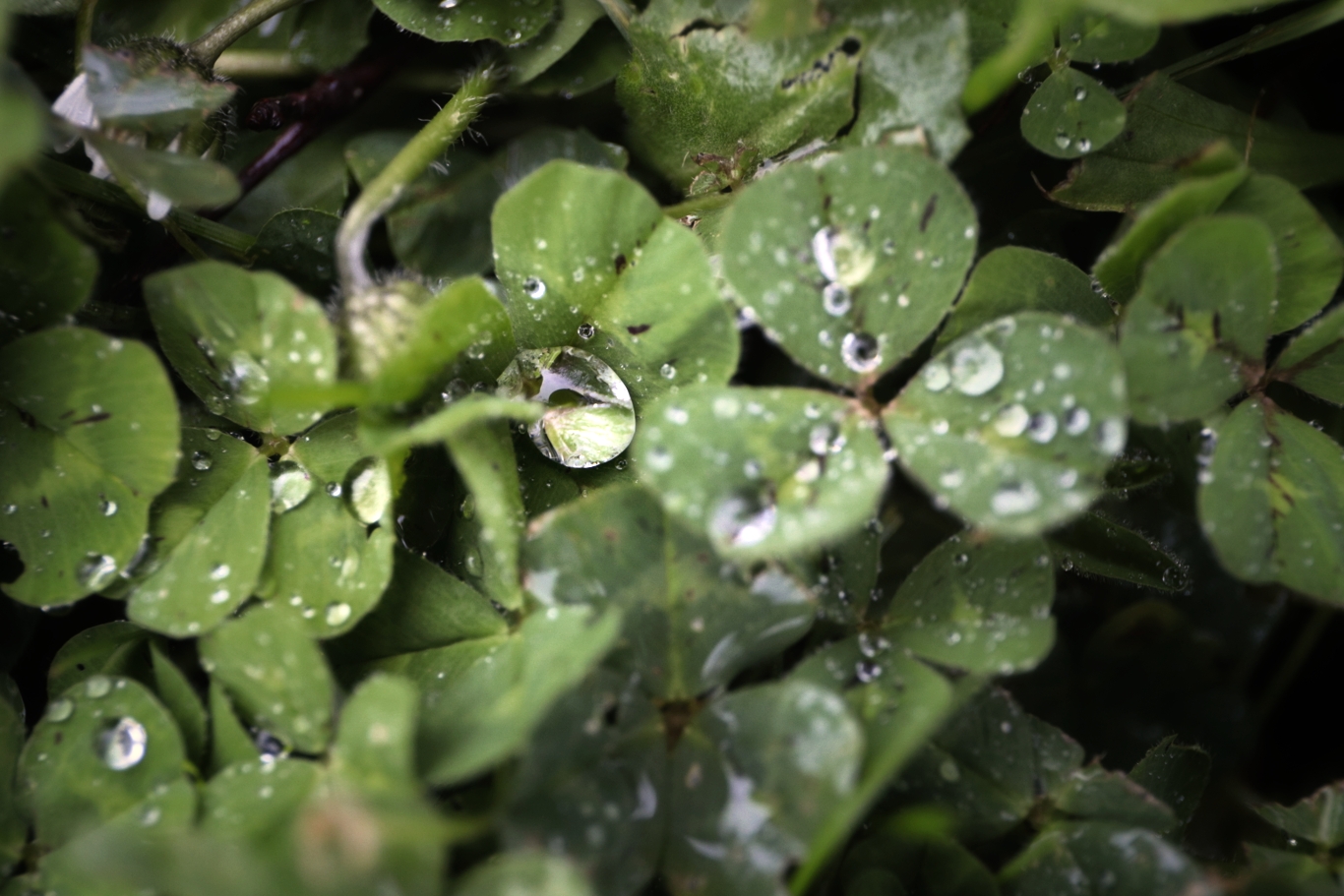
And despite the forecast calling for more rain, there’s a sense of optimism in the air, a feeling that Winter’s grip is loosening and Spring’s embrace is just around the corner. It’s a feeling that stirs something deep within, a sense of anticipation for what lies ahead. As you can see in the photo, it doesn’t rain “all the time.”

We still aren’t in 100 ASA film weather, except if you only want to shoot at F1.8, and when in 400 ASA we can start to go over F8, at least during the day.  You thought I wouldn’t talk about photography?  Really? At least I can go out and catch the rain on film.  Sunnier days are brighter, but the melancholy of rain is just as special and poetic.

So, dear readers, as we navigate the unpredictable dance of Spring’s arrival, let us do so with all the warmth and humour of old friends reunited. For whether it be the son of the Prince of Wales or the ghost of various Kings of France, when Louis comes knocking, it’s bound to be a royal affair.

Frame It Right: The Art of Composition in Photography Part IV


In my previous articles, we’ve embarked on a journey to understand the basics in photography. I have talked about exposure, set out some of the “rules” of composition, and even delved into the world of colour theory. Today, I’d like to introduce you to the rule of odds and the rules of space, two fundamental elements that will take your photography to the next level.

Before we talk about these new concepts, let me reiterate the importance of building a solid foundation. Just as we did with framing, negative space, and colour theory, it’s crucial to master each concept before moving on to the next. Take your time to learn and apply these principles in your photography journey. The other four articles will stay up, and you can read them at your leisure.

The Rule of Odds in Photography

The rule of odds is a composition guideline that suggests using an odd number of subjects or elements in your frame, typically three or five, rather than even numbers. Why? Because odd numbers tend to create a more balanced and visually pleasing composition.

When you use the rule of odds, you create a natural focal point within your photograph. Our eyes are drawn to the centre subject, and the uneven arrangement adds a sense of harmony and intrigue to the image. The result? A more captivating and dynamic photo that engages your viewers. It’s all about balance.


Rules of Space: Balance and Direction

Now, let’s look at the rules of space. This concept involves how you position elements and subjects within your frame to achieve balance and direct the viewer’s gaze. It leaves space for the subject and can be used in multiple ways as a storytelling tool. It can also be used in conjunction with the other composition techniques that I have talked about in my previous articles.

Tips

Think outside the frame. What is going on outside the frame becomes as important as what is oing on inside the frame. Let’ take the picture of the guitarist. Who is he looking at? What’s going on outside the frame? Is there an audience? Where is the audience? Using rules of space the viewer will more curious and be more engaged in the photo.

Conclusion

One can talk about composition and the effect it has on photography till the cow come home. People will always bring up “composition” and will always tell you how “they” would have done it differently. In these four articles you will now know what they are talking about and be able to decide for yourself. In absolute terms, “your” photographs are about what “you” saw, and only “you” can see that. But keep the rules that we have discussed in the back of your mind, and take your photograph with purpose and being conscious about what you are doing. Mindfulness is the key.

My next article will talk about the differences between 35mm film photography and medium format photography. For film enthusiasts or anyone else who is curious you will be entering into a new world. There are, of course, trade offs between each format, and we will discover them. Maybe you’ll be bitten by the Medium Format bug too… As always Dear Reader, I appreciate your enthusiasm, and I look forward to our next exploration together. Until then, happy shooting!