Work. That familiar feeling of being a hamster on a never-ending wheel. Emails, passive agressive colleagues, and meetings blurring into one another like the monotonous hum of voices in the office. Sound familiar? Yeah, that was me a few weeks ago. So, what’s a weary soul to do? Employ some sartorial elegance with navy blue chinos, a white button down shirt, my new sungalsses, and my favourite Panama hat, and embark on a spontaneous coastal escape to Vendée!
Now, full disclosure, Vendée isn’t exactly the Caribbean. But for a quick mental recharge, it certainly does the trick. Plus, it was the perfect opportunity to put my Canon 6D Mark II through its paces, specifically the oft-maligned 24-70mm f/4L lens. This trusty workhorse gets a bad rap sometimes, but let me tell you, by the end of this trip, I was a convert.
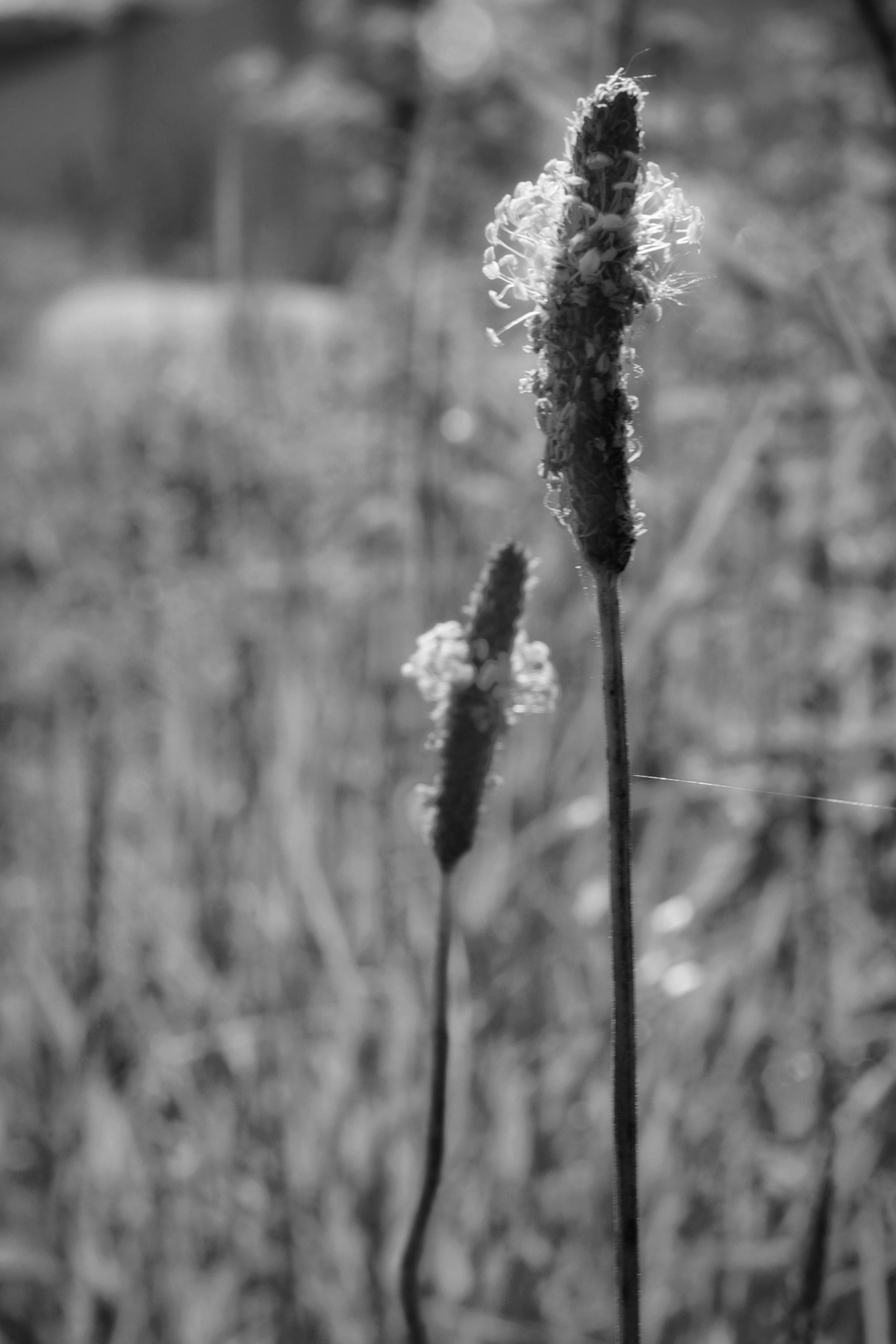
The Vendée coast is a tapestry of stunning landscapes, each begging to be captured. My first stop was Viellevigne (not strictly the Vendée and just on the other side of the Loire Atlantique border), a charming little town I usually just whiz through on my daily commute. But this time, with a camera in hand and a head full of vacation vibes, I saw it with fresh eyes. I framed the quaint church nestled between two ancient trees, a scene I’d driven past a thousand times without a second glance. The hedgerows, usually just a blur of green, revealed a hidden world of wildflowers and buzzing insects when I switched to the lens’s macro function. Suddenly, the familiar became fascinating.
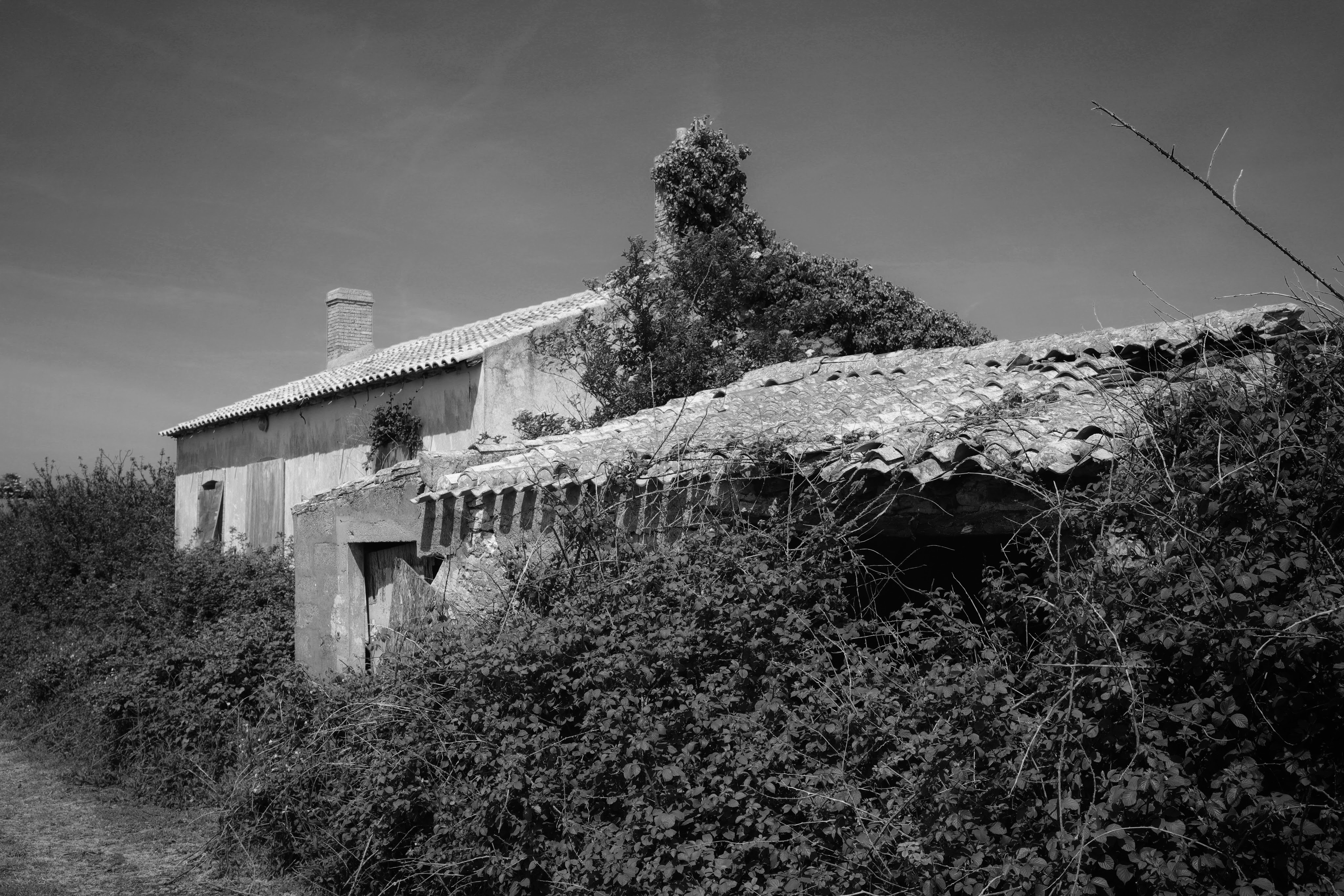
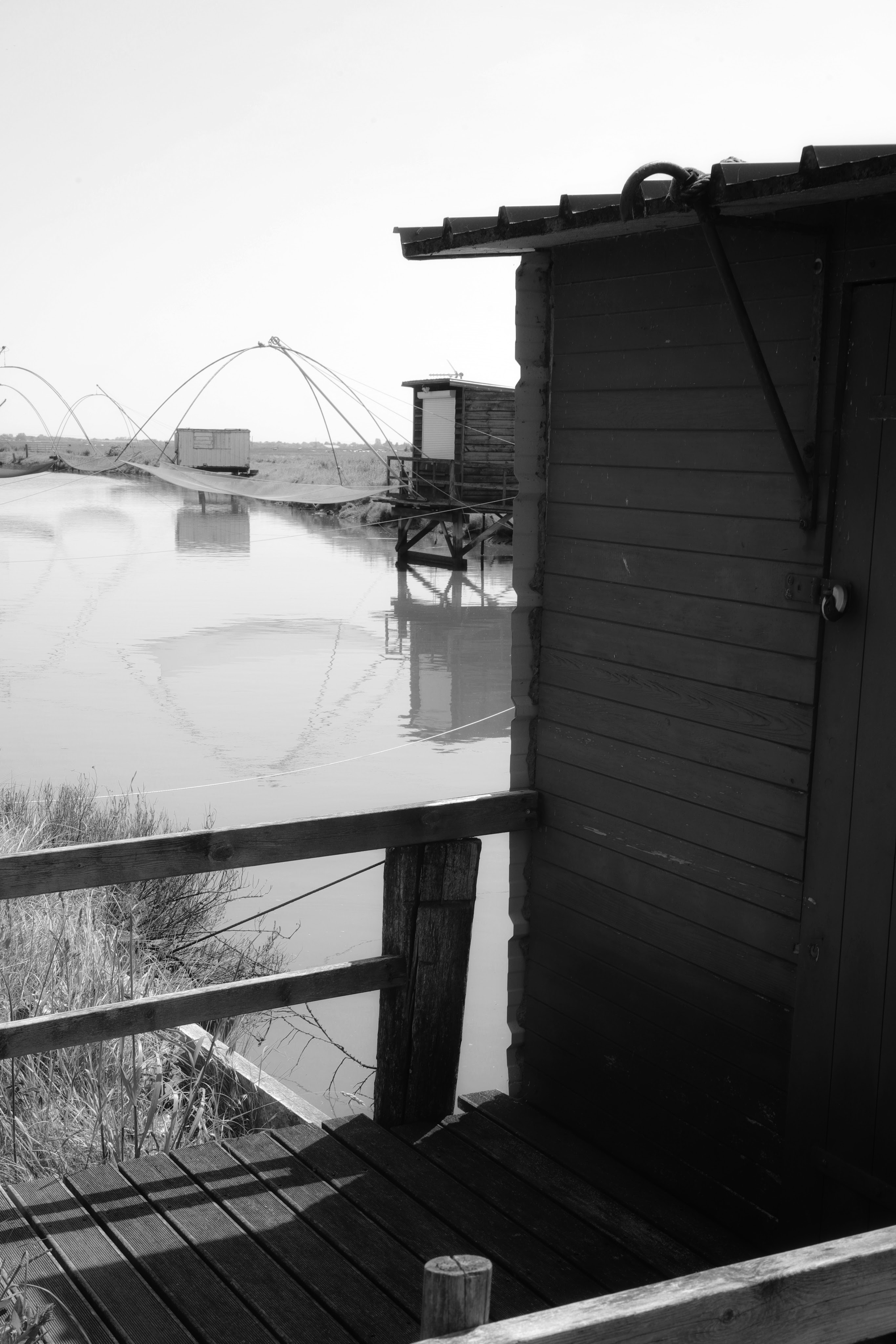
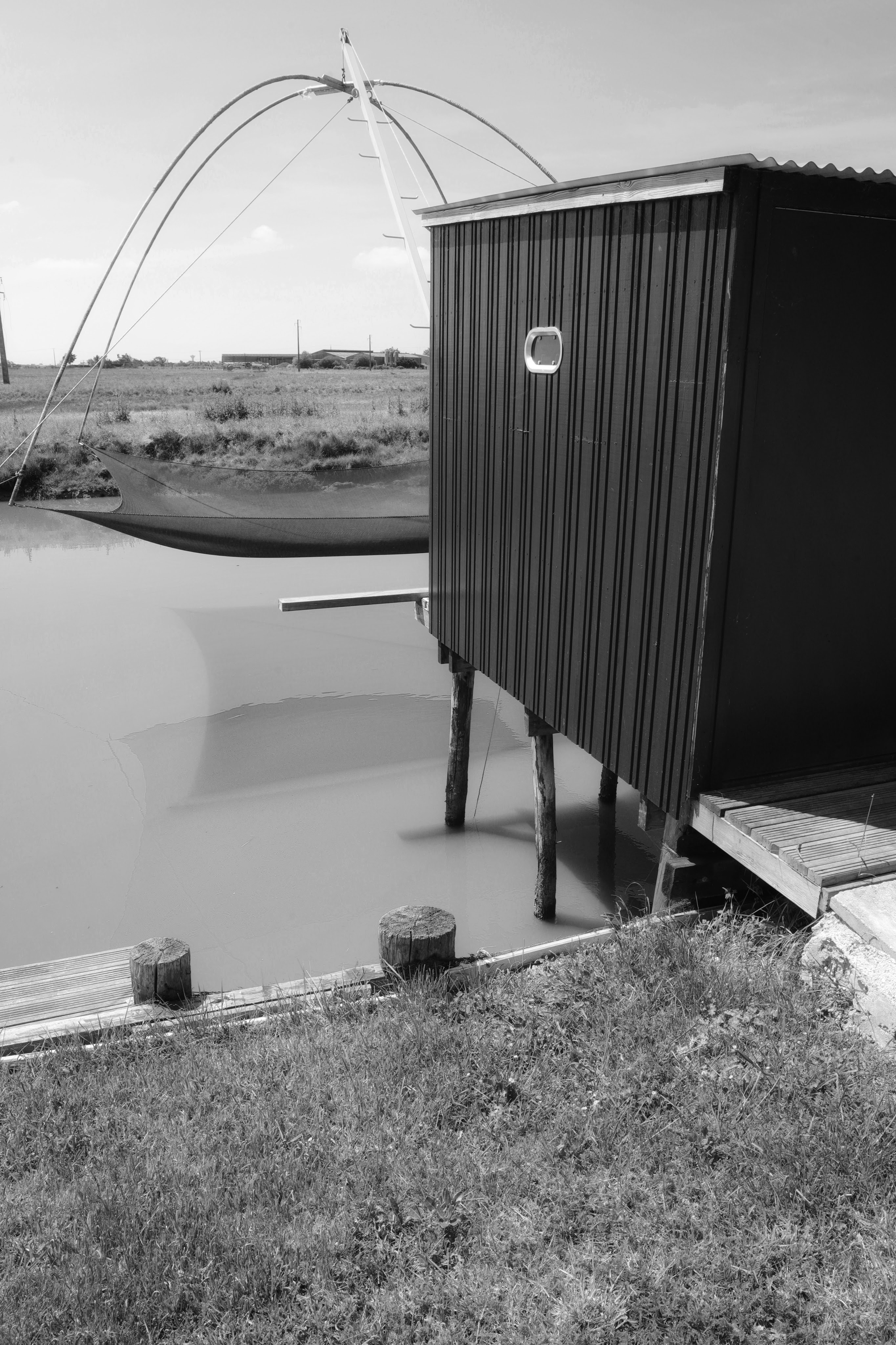
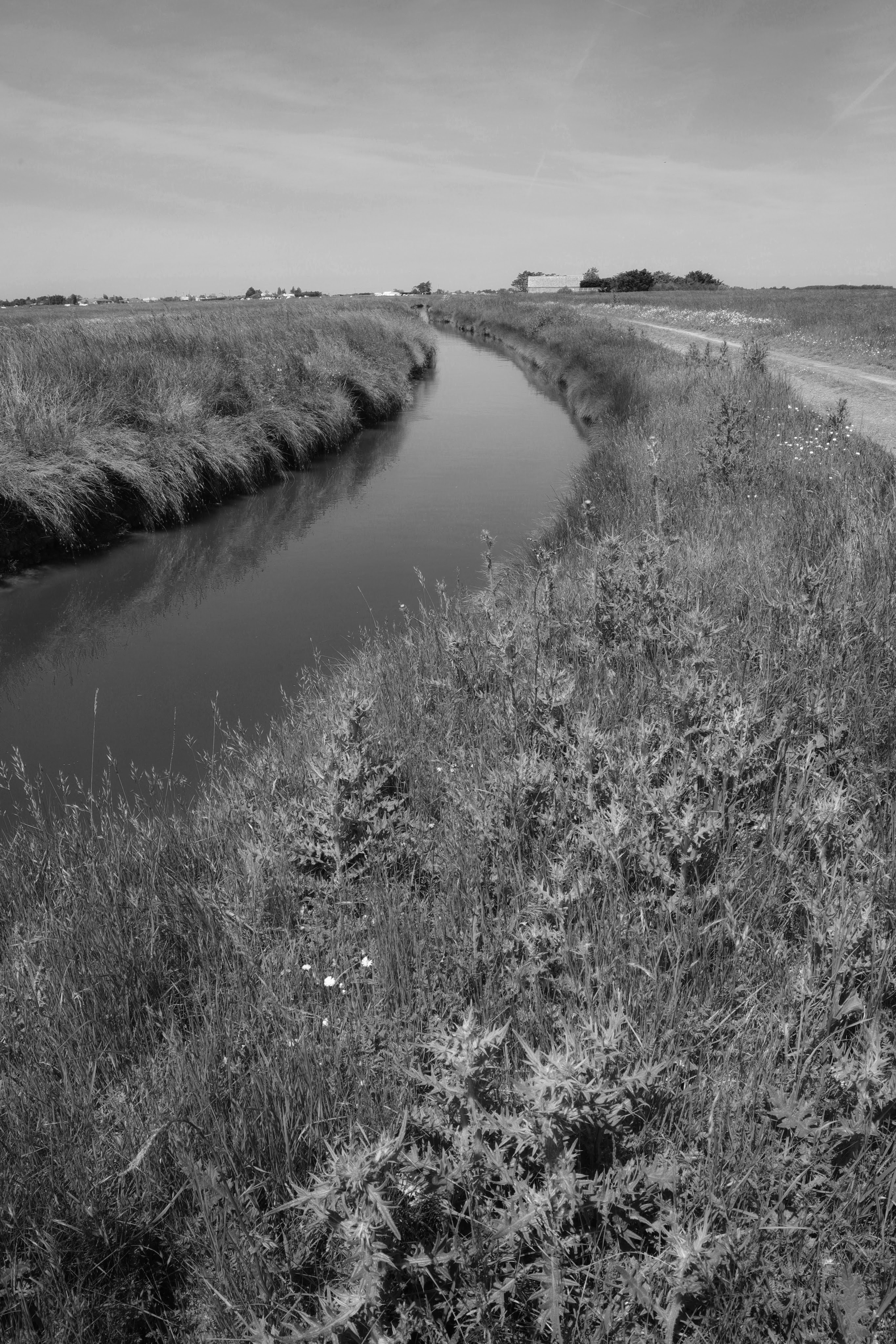
Next, I cruised down to the grand canal near Fromentine. Now I don’t know if grand means big or grand in this instance. I mean it’s not huge, and the grand canal in Venice is somewhat ore deserving of the title. The sun, a generous giver of both light and good mood, cast a warm glow on the weathered ruins of old houses lining the water. Across the road bridge stood a line of fishing huts, its battered paint a testament to years of battling the elements. The 24-70mm here proved its versatility, letting me capture both the vastness of the canal and the intricate details of the local flora.
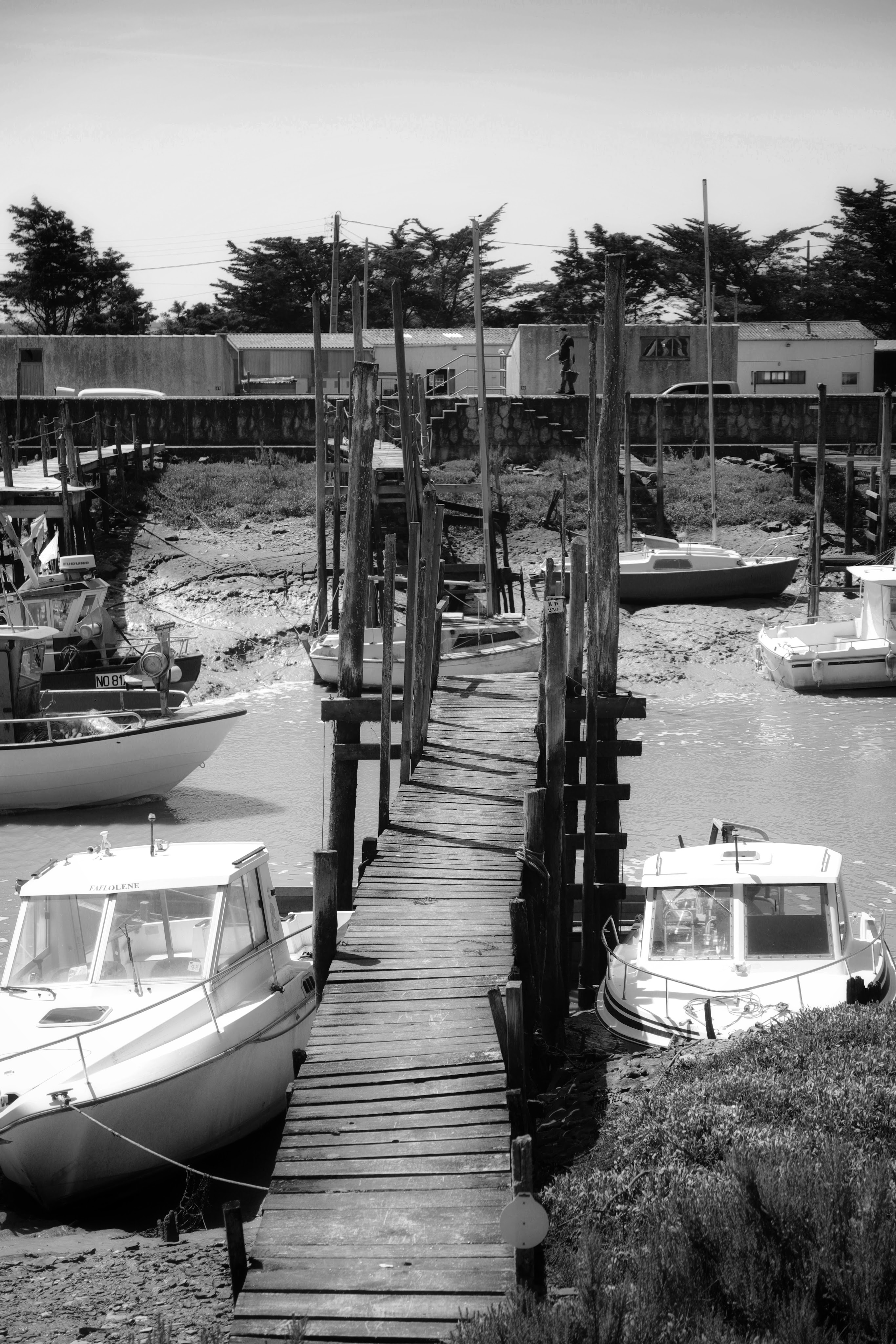
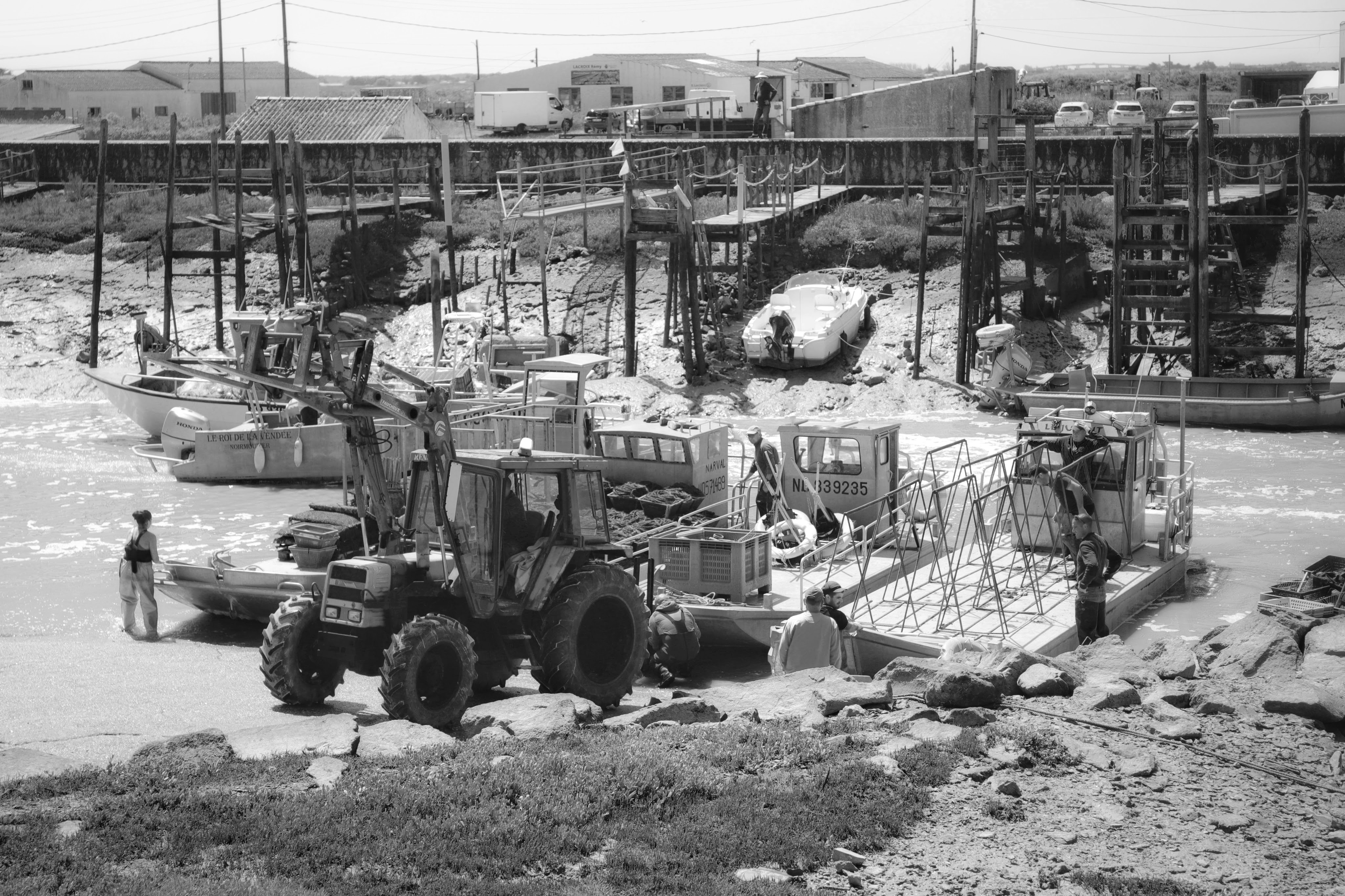
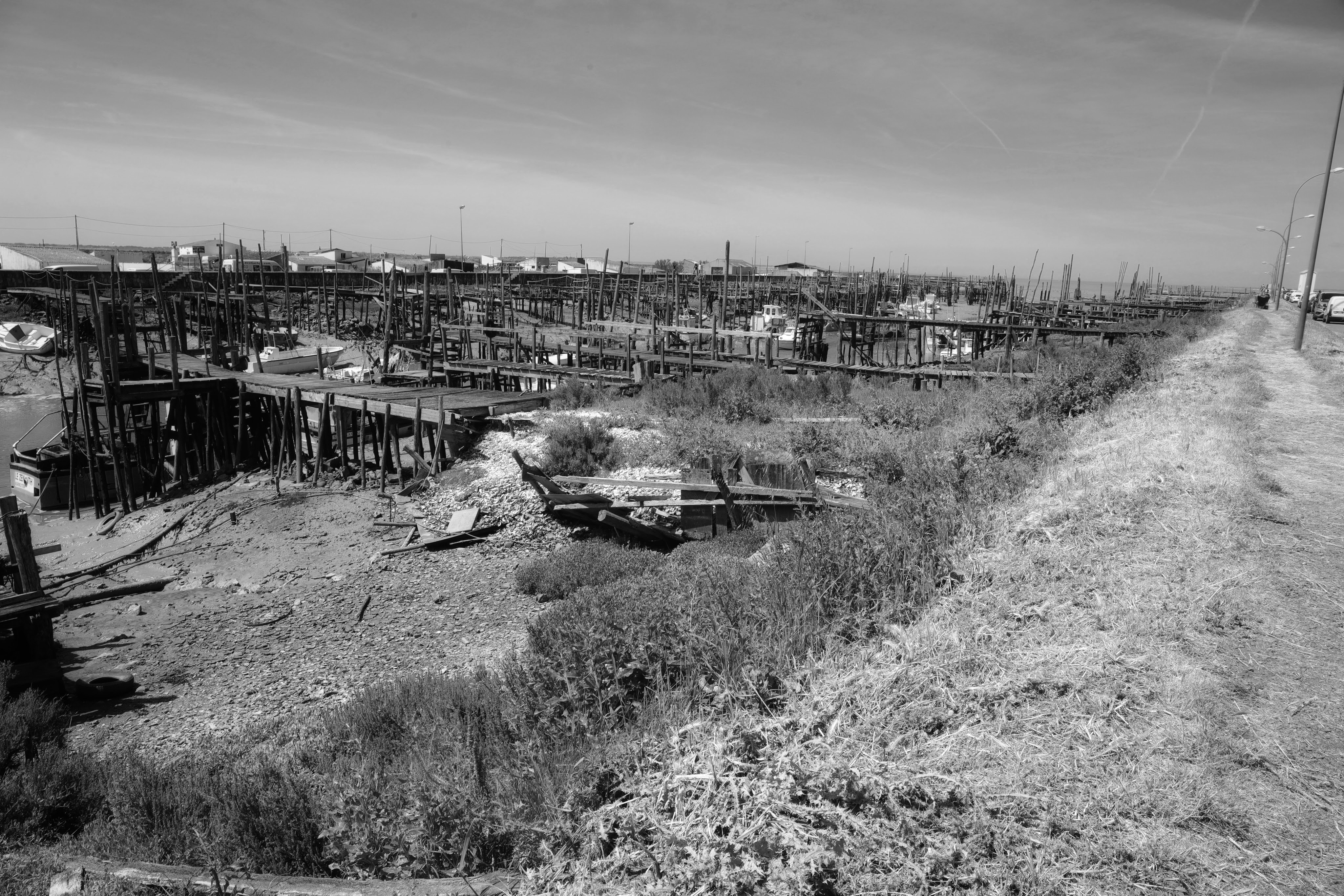
As the day wore on, I found myself at Port de Bec, a haven for oyster farmers. Here, the scene was abuzz with activity. Tractors lumbered out of the water, hauling heavy loads of oyster boats ashore. The rickety moorings, weathered and worn, added even more charm. The lens’s sharp autofocus kept pace with the bustling scene, ensuring I didn’t miss a single detail.
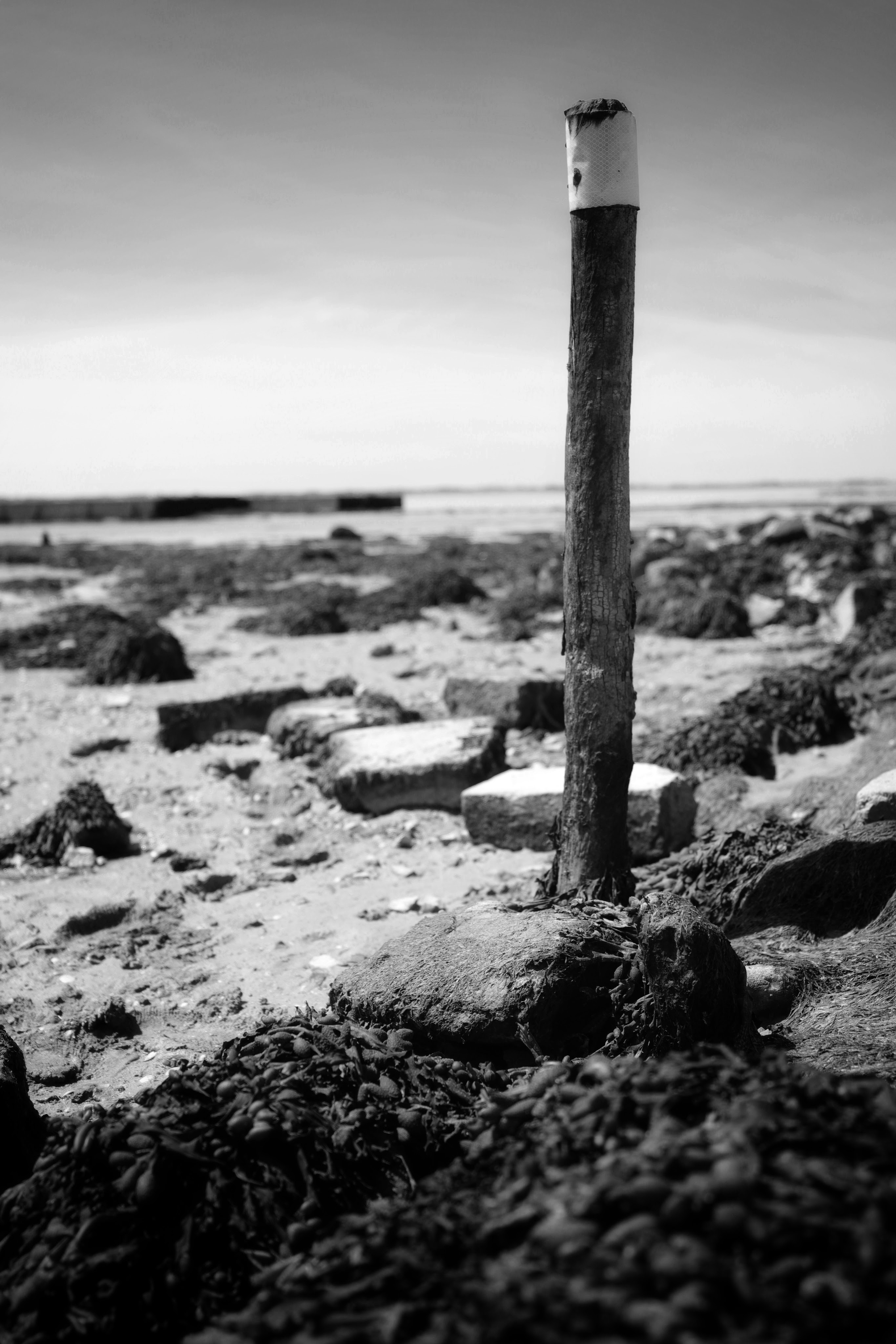
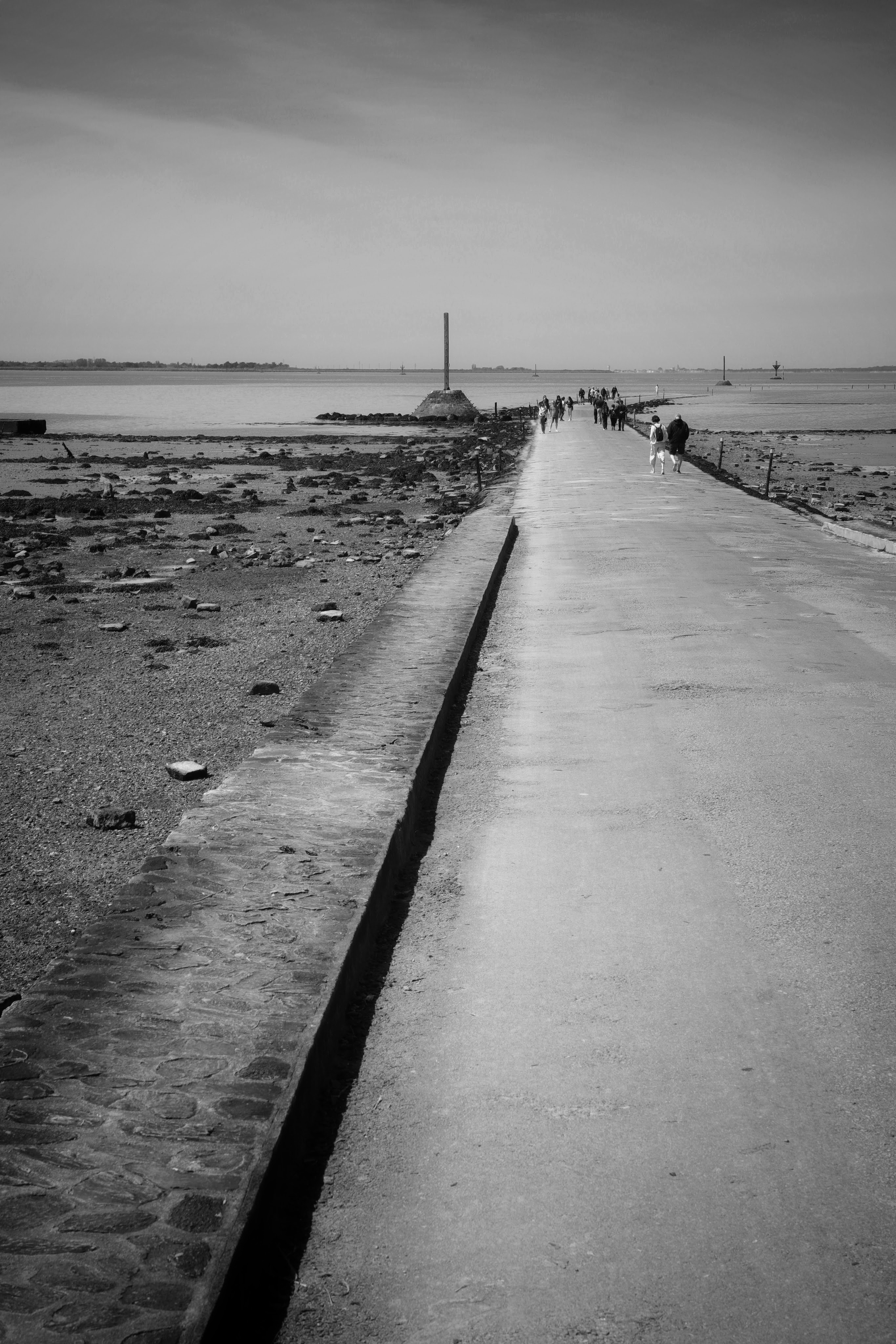
Finally, the crown jewel of the trip: the Passage de Gois. This legendary causeway, submerged twice a day by the tide, is a photographer’s playground (just make sure you keep an eye on the water, unlike yours truly who nearly got his sandals swept away!). The tide was rolling in fast, creating a dramatic contrast between the exposed road and the encroaching water. The 24-70mm handled the dynamic light and vastness of the scene beautifully.
But this trip wasn’t just about capturing stunning photos (although, let’s be honest, those were pretty damned cool!). It was a much-needed reminder of the power of stepping off the hamster wheel, even if it’s just for a short while. The fresh air, the sun on my face, the beauty of the Vendée coast – it all conspired to wash away the workaday stress. I came back feeling refreshed, inspired, and with a newfound appreciation for the magic that can be found right on your doorstep, if you just know where to look.
And the 24-70mm? Yeah, it more than held its own. It proved to be a versatile and capable travel companion, capturing everything from sweeping landscapes to macro details. So, next time someone throws shade at this trusty lens, I’ll just point them to my Vendée photo album and let the pictures do the talking.
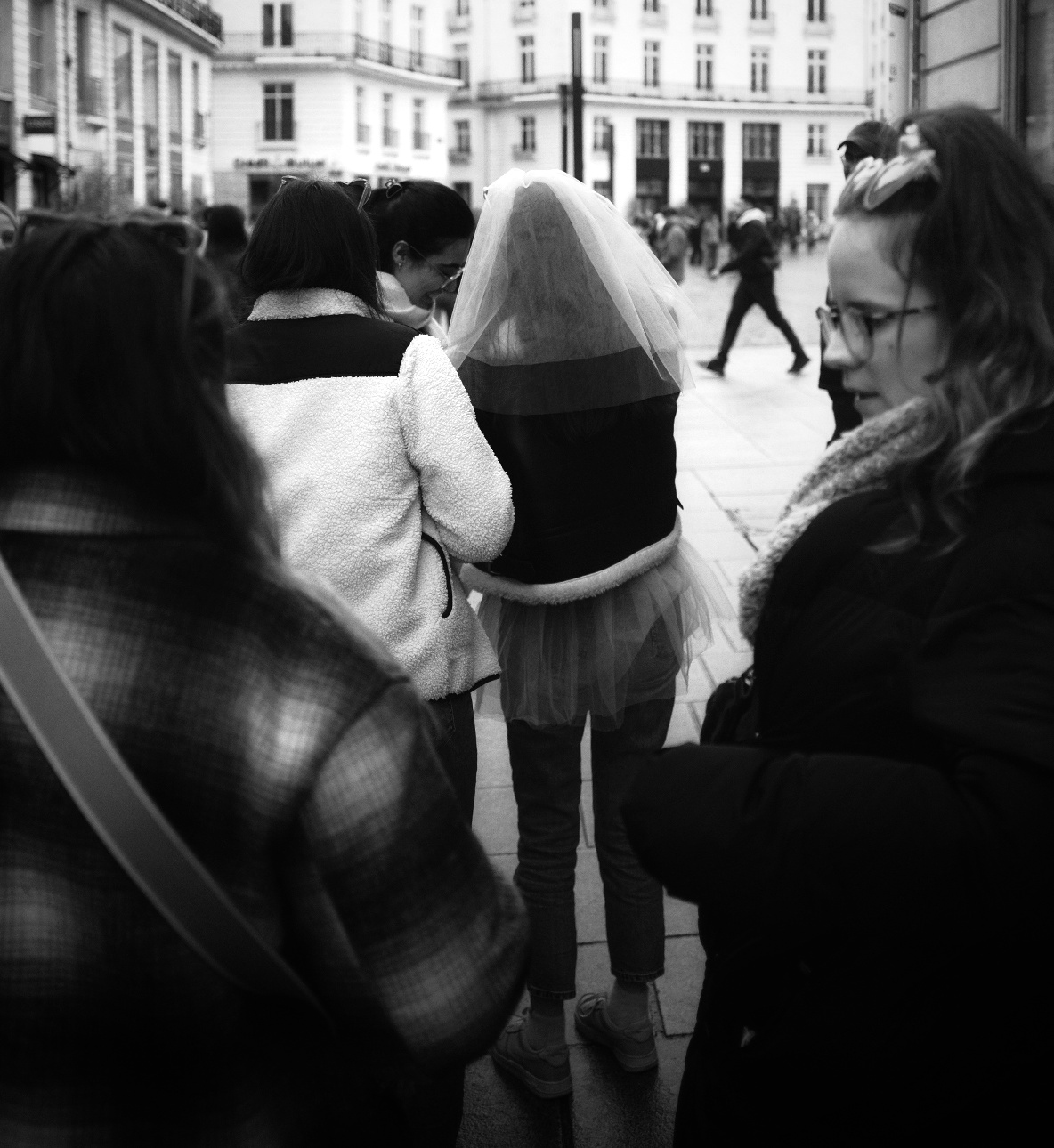
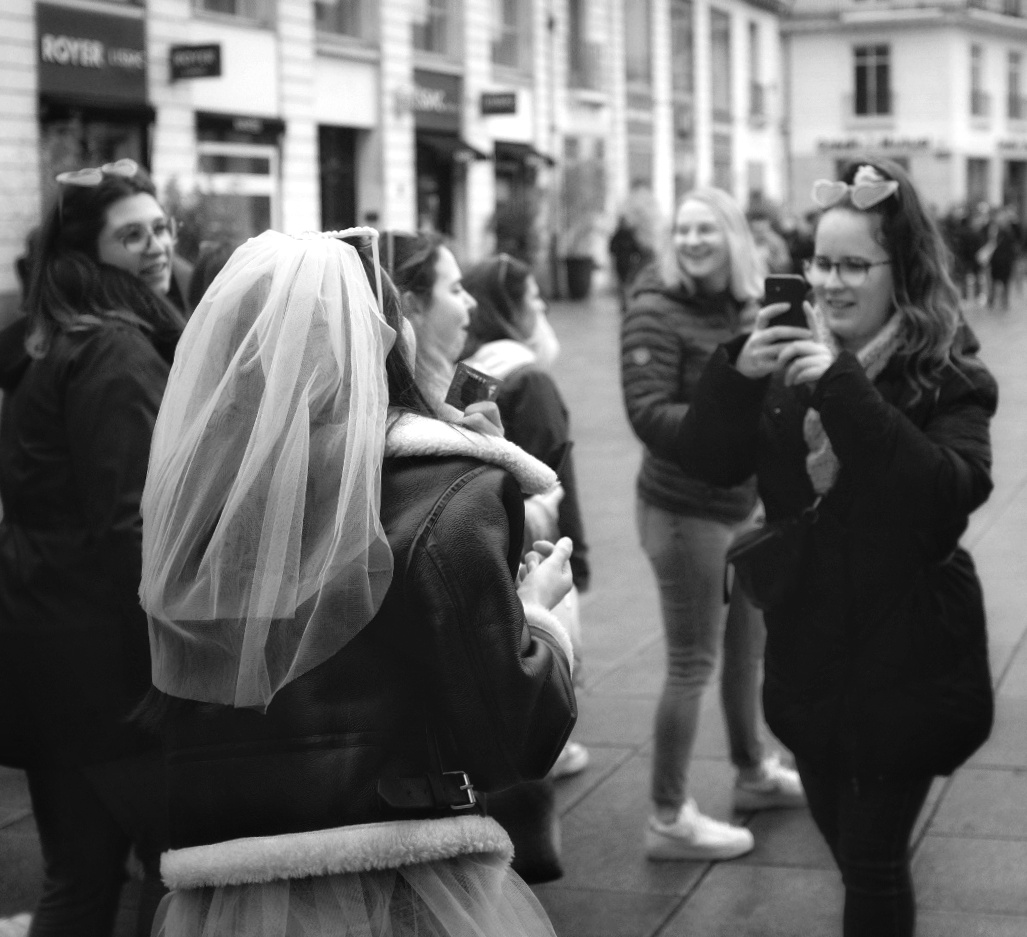
This month, amidst publishing various tutorials for your delectation, I ventured into uncharted territory with my camera. A musician friend asked if I could photograph her sister’s hen-do. How about that for a challenge. Slightly scary… Slightly? No, terrifying for the introvert that I am. Flattery and food convinced me.
Having previously photographed a wedding, I was somewhat prepared. For that event, I bought a second-hand 24-70mm f/4.0 lens and a Canon flash. I was advised to use the Canon 6D Mark II in program mode with the flash set for TTL (through the lens metering). Today’s first activity called for the same setup.
Tahitian Dancing
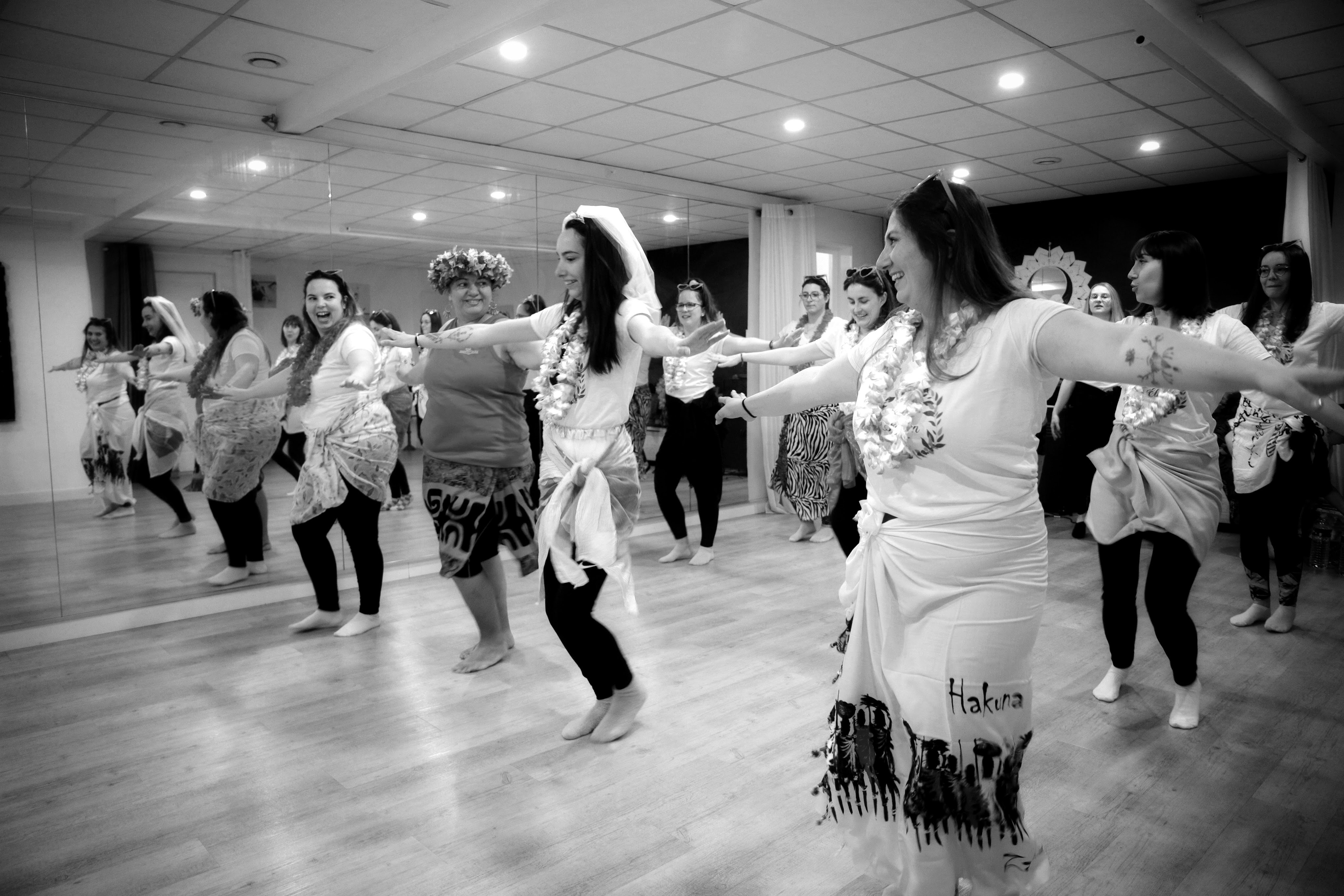
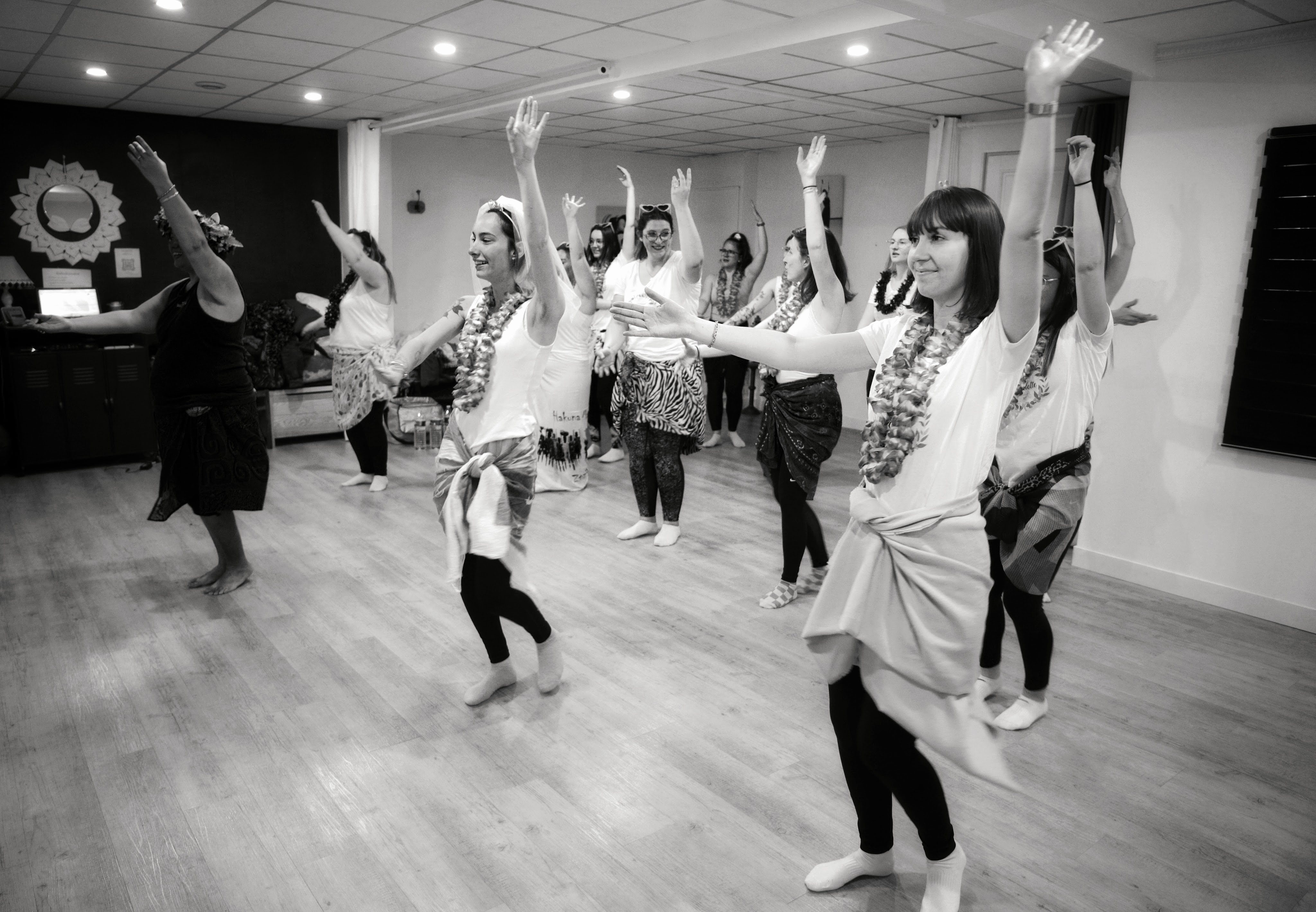
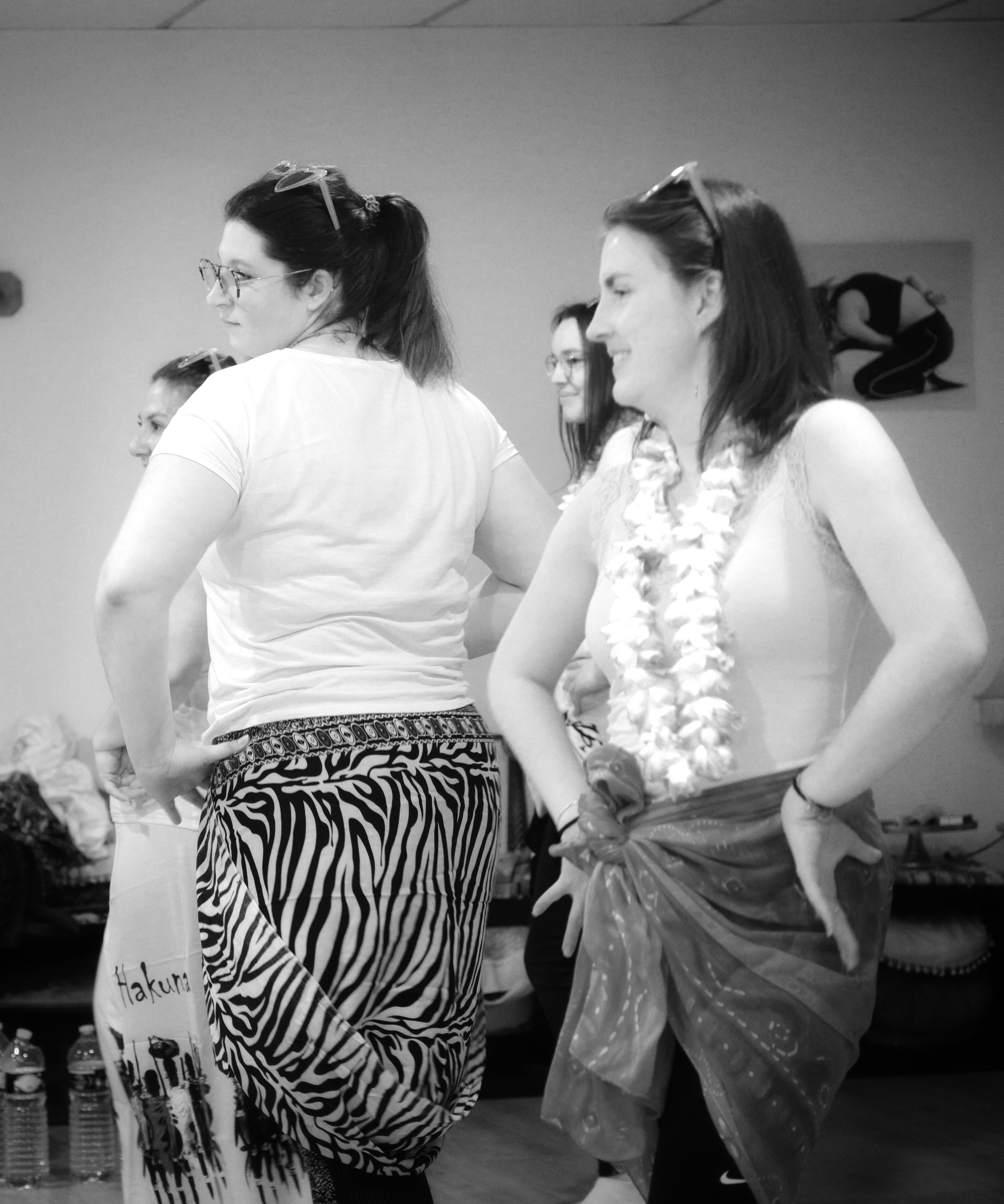
I arrived at the venue for the first activity: Tahitian dancing. The bride-to-be was proposed to in the Pacific Ocean, hence the theme. The girls were already there, and I tried to stay out of the way as best I could. I may be creating memories for everyone, but those memories aren’t mine. The lens worked perfectly, and I didn’t even need my flash batteries. They’re ready for next time and one less item to tick off.
The dance session seemed to go on forever, and I resisted the urge to sit down. I felt completely out of place, more a prize pillock, but kept telling myself to fake it till I made it. It worked—my wife approved of the photos, and more importantly, so did the bride-to-be. Creating rapport was nigh on impossible so I just watched the spectacle and pressed the shutter. Do what you can and leave the rest for later… So I did just that!
My favourite bit of the day
I switched from my clunky DSLR to my sexier Fuji X100F. It’s always better to be inconspicuous and yet still be able to take decent photos. I’m big enough already as it is, but having a smaller camera helps people forget that I’m there…
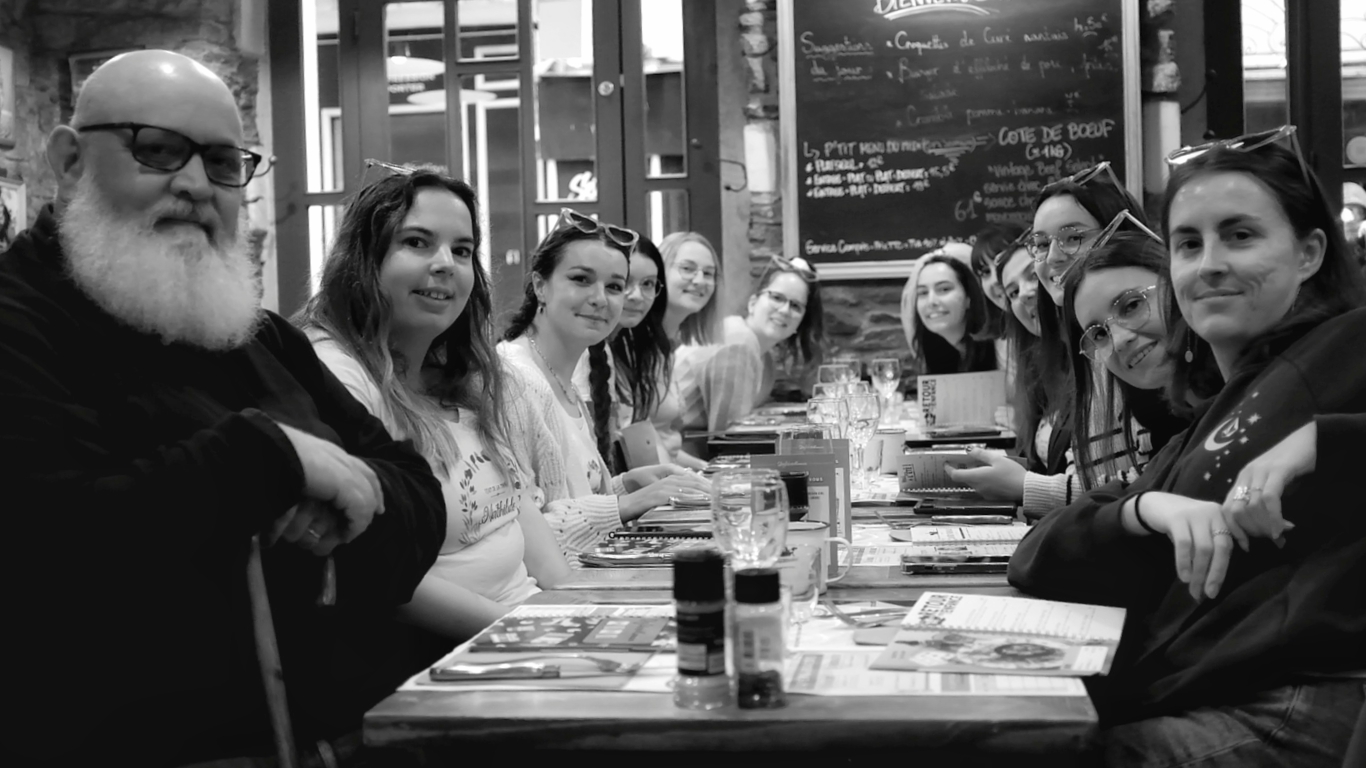
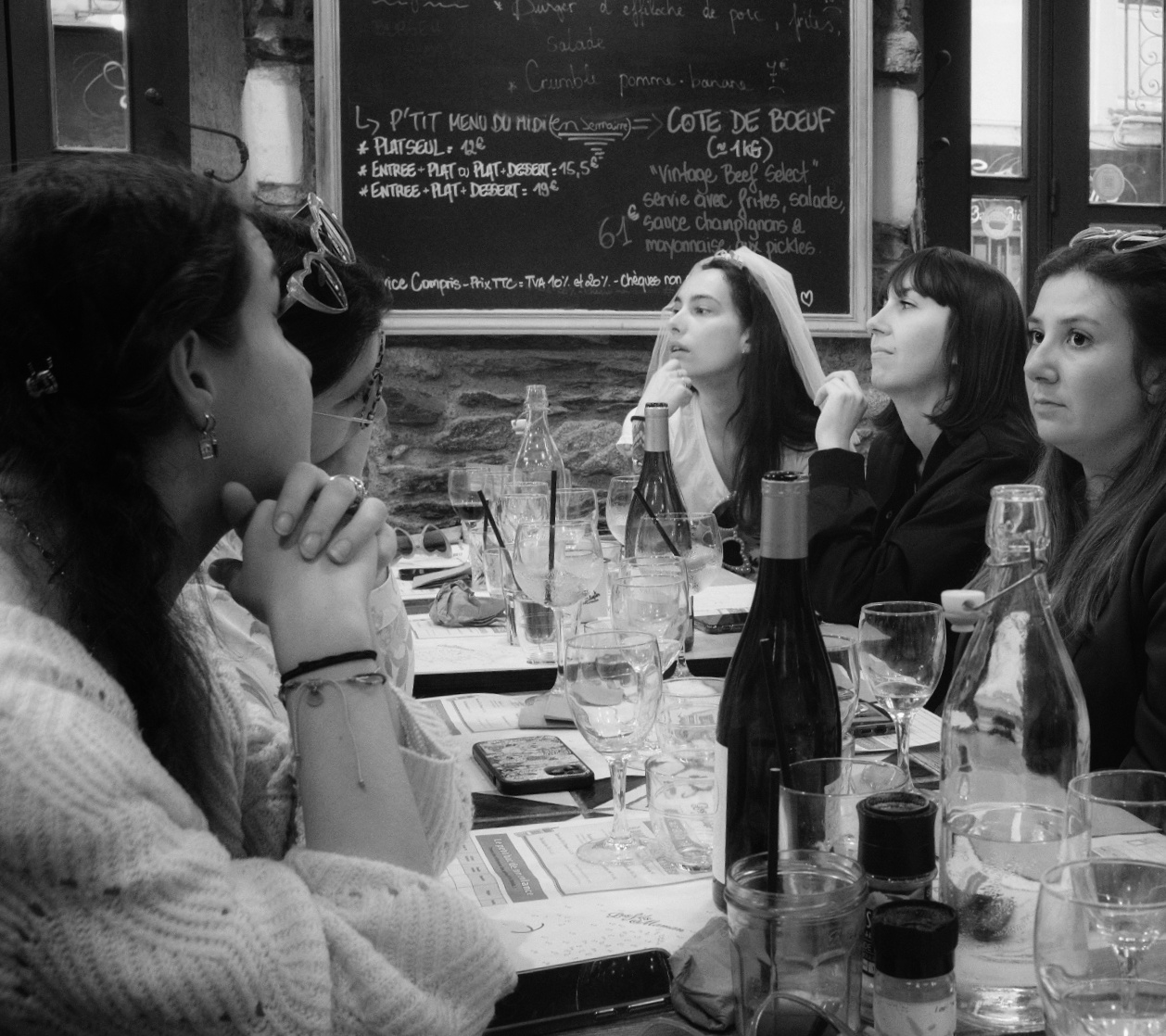
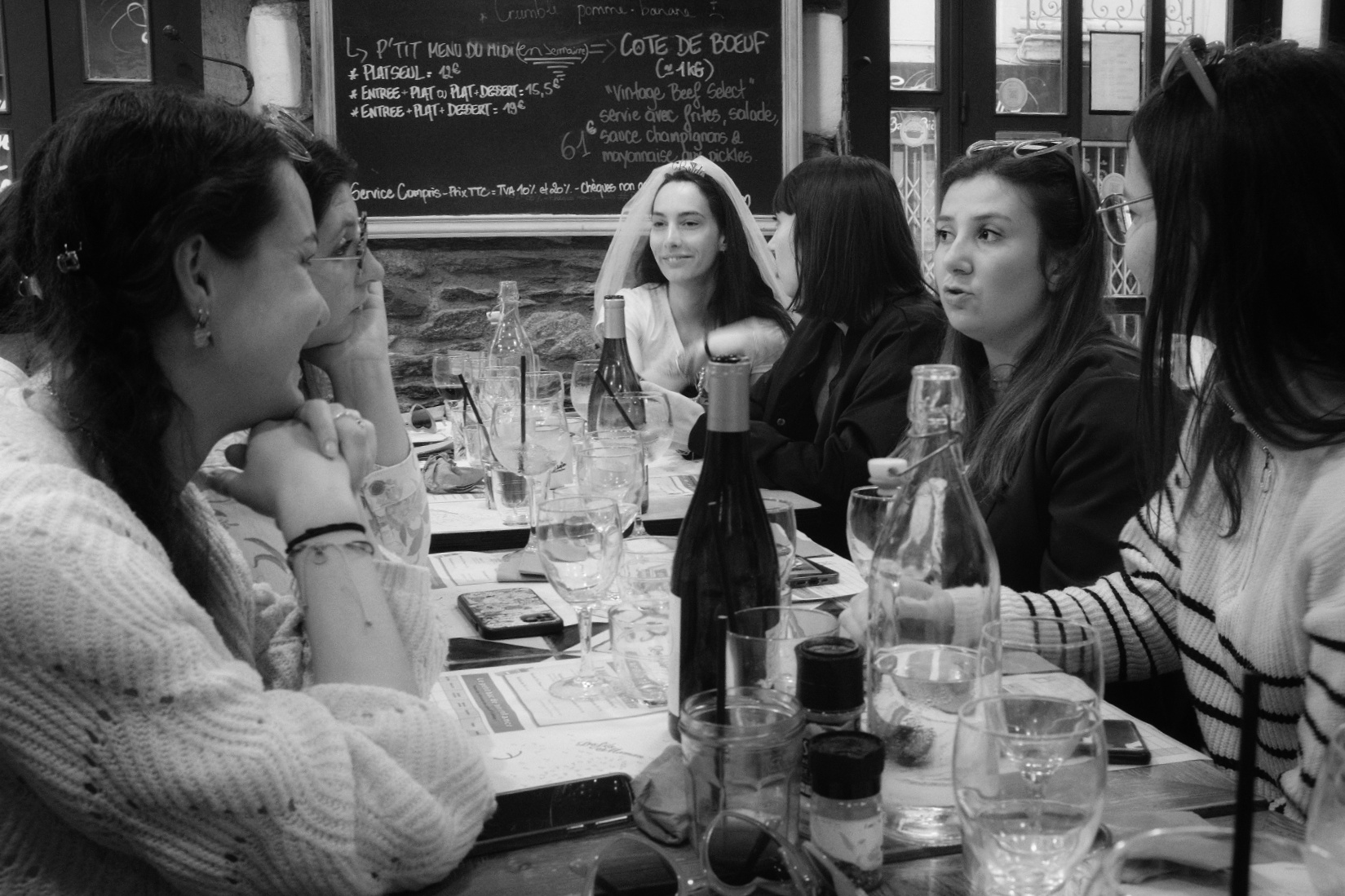
This next activity was probably my favourite. The restaurant was one that I had walked past on many occasions, but had never gone in. It was one of those themed places for Millennials in need of some nostalgia. The owners and chef had created a menu with grown up “children’s food” from the 90s and 80’s. There were activities and crayons for the place mats. The decor was 80’s and everything was vintage. At least for them, which is the main thing. Ok, it was a bit for me too, reminding me of my arrival in France all those years ago. I was offered a seat near the bride, but was whisked off by my friend to sit next to her. She’s so protective of me… We all ordered and chatted, and I started to relax. The girls were interested in my photography, and they showed me photos of their very young children. I did the same, and showed them then and now photos to show how those small children grow up so quickly. I felt like the Patriarch at the end of the table.
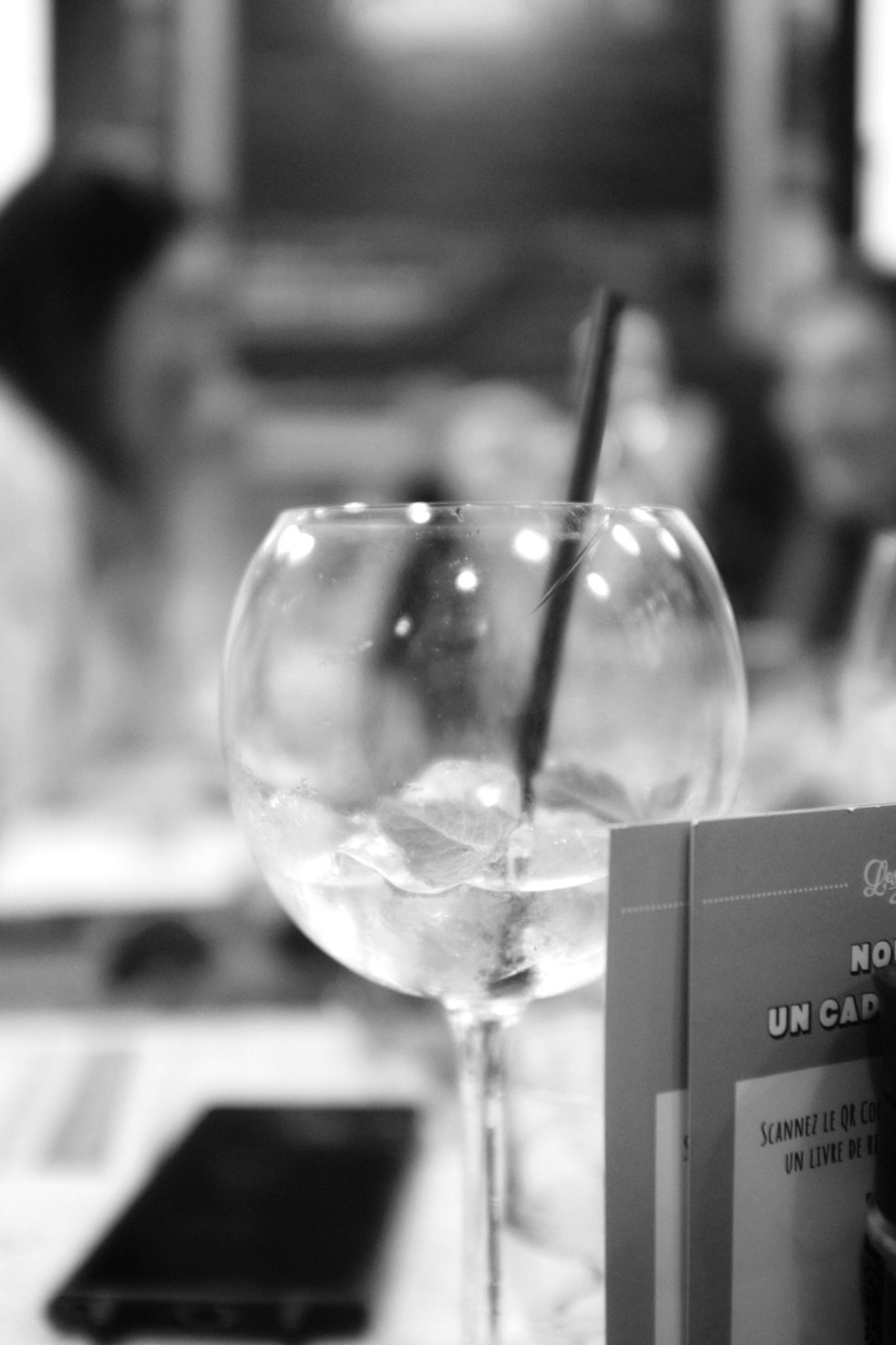
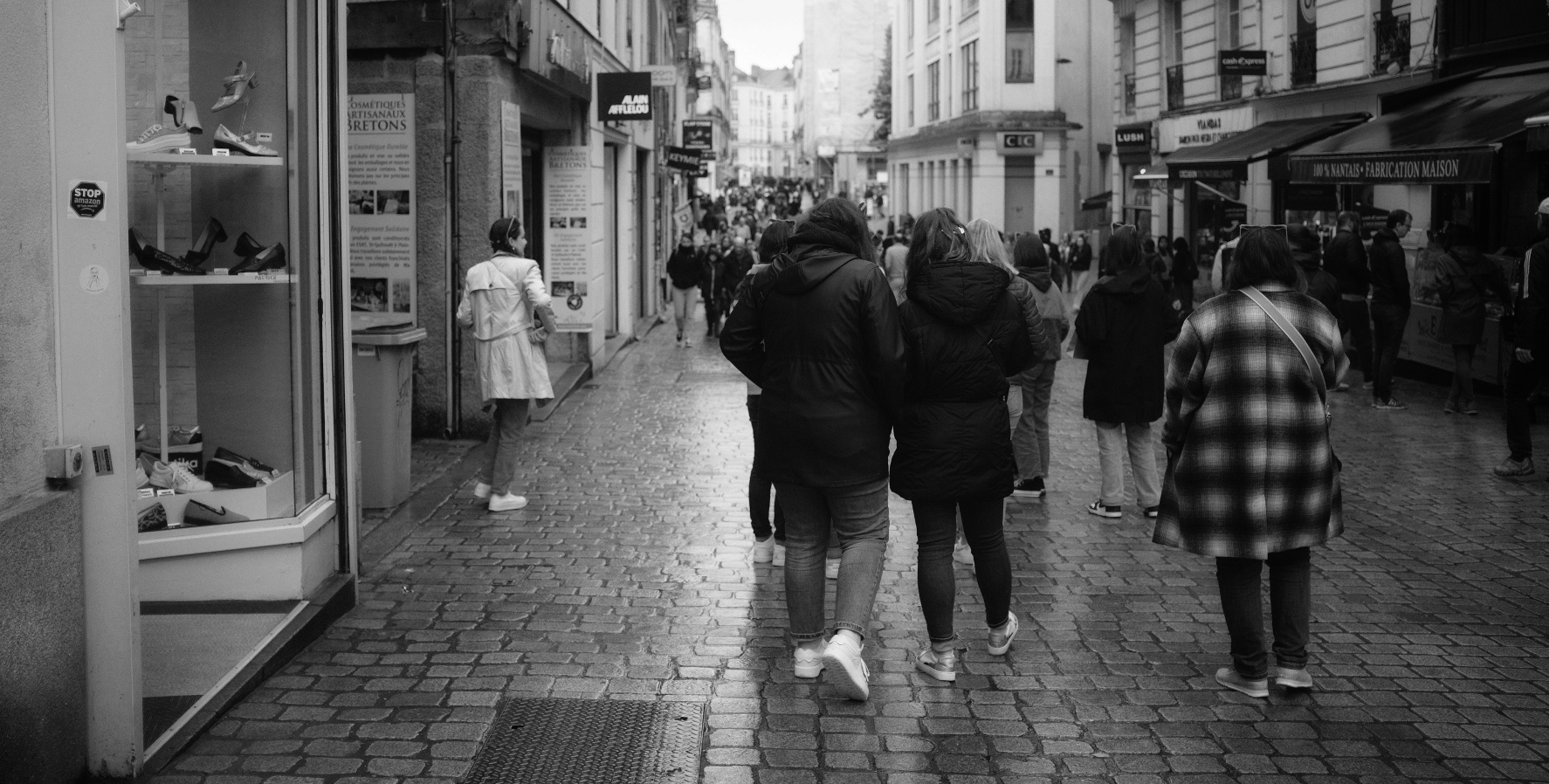
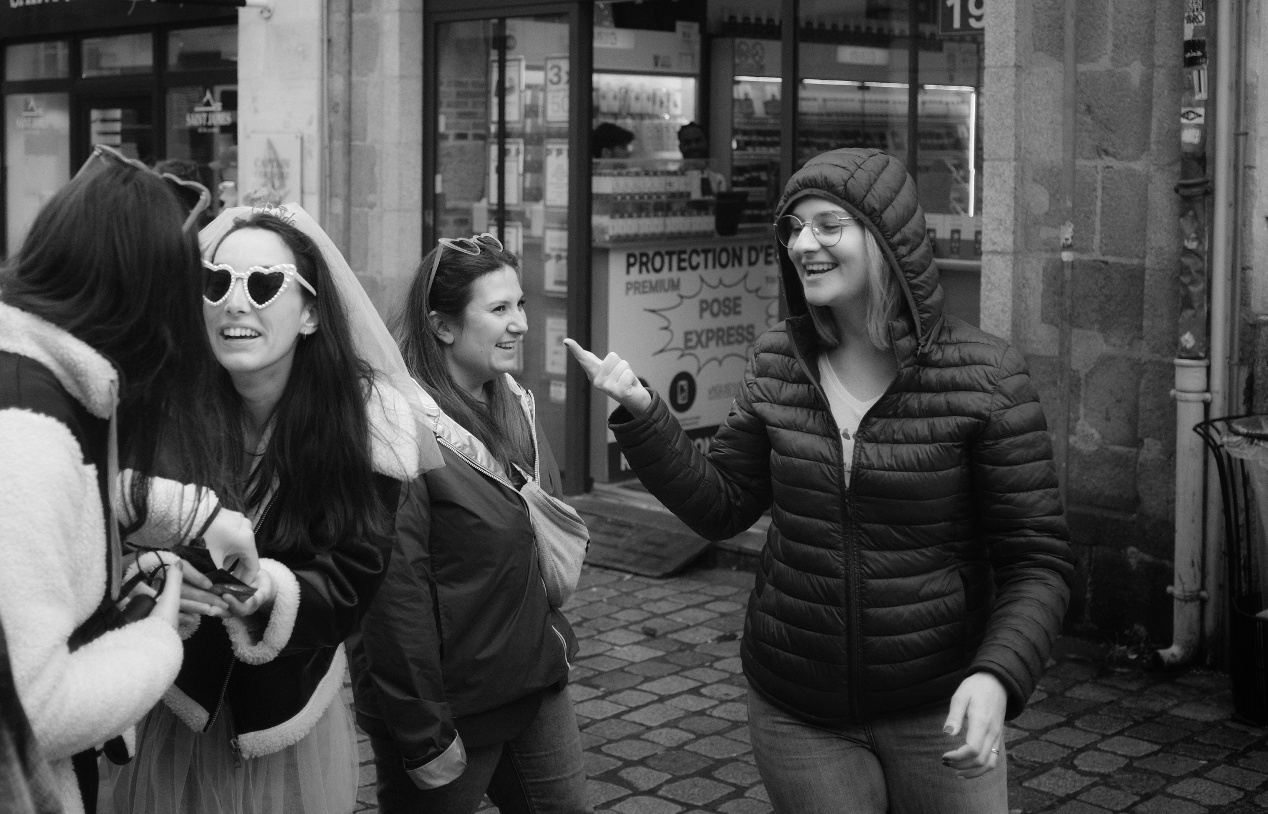
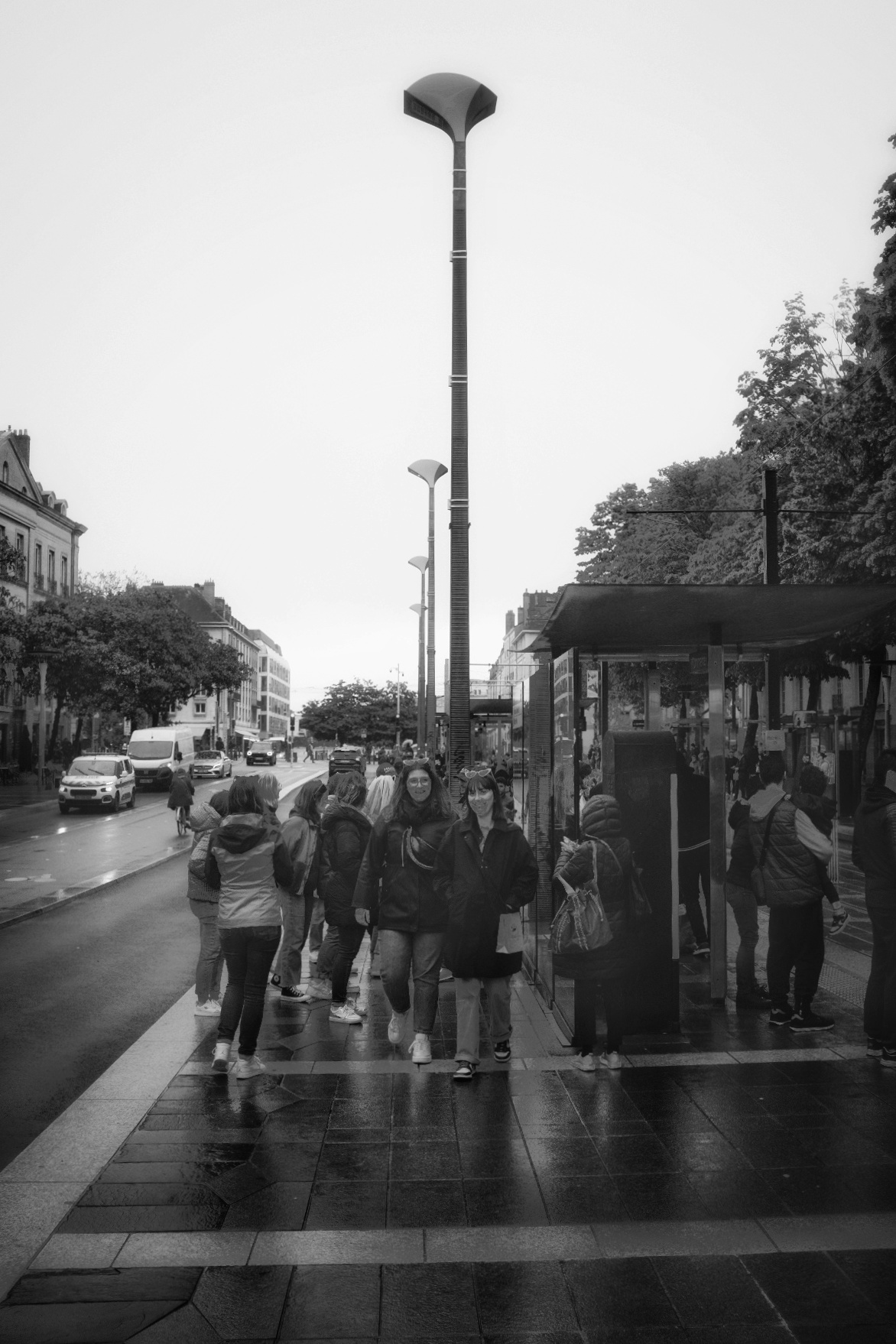
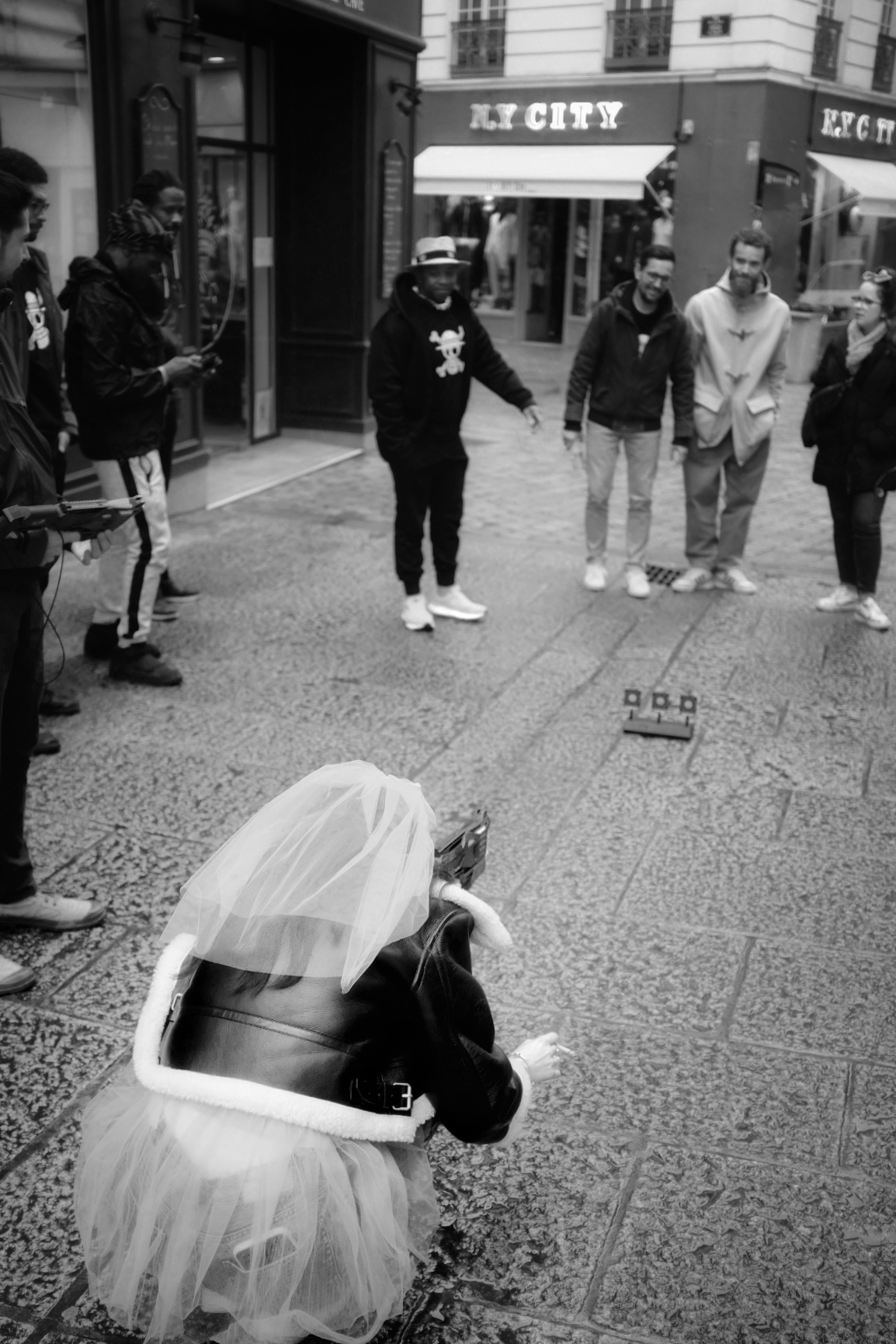
The food was good, and I could see they were all having a good time, and then came out the shots… I was being very teetotal in order to have my mind clear to get my photos for the bride to be. I had switched from the DSLR to the Fuji X100F to follow them around Nantes, and do street photography to which I am more accustomed. The poor “hen” was given a mission by her friends who had purchased a whole load of condoms and she was tasked to sell them to passers by. She fulfilled her mission with gusto, and we ended up in the Rue de la Paix, shooting nerf guns at targets provided by a stag do outing.
Conclusion
I wasn’t needed for the next activity and drove back to the pub to chill, and get my head together. The photos from the X100F were edited on the go, and shared immediately. The DSLR photos went through the computer and were shared by the end of the weekend.
All in all a good day, and interesting experience, and I’ll let the photos do the talking for me…
I have recently tried to start learning about making videos. Somebody said that if you have an eye for creating a decent image, then your eye should be OK for filmmaking. There are of course different styles of shots because we are talking about moving pictures. Shots that move, and not just static plans as we would use in photography. We have to set a scene with establishing shots. We can combine medium framed shots and close-ups to keep the narrative going and to show the wood moving through the different machines. I therefore had to understand the manufacturing process. The composition principles that I have talked about in the past are still relevant. So my mindset was, “Why not give it a try. You know about images and how to place subjects in images. Get on to YouTube and start learning about filming . This isn’t Instagram or Tiktok, so you have more time and scope to deliver your message. And if “they” can do it then there is no reason why I can’t!” Nothing left to do but get it done! Do, don’t think…
The Kit – Use what you already have
For the moment I’m using the Canon 6D Mark II with the 24-70mm F4.0 zoom lens. For the editing I’m using CapCut and am slowly getting used to it. It just goes to show that yes, yes indeed, you can teach an old dog new tricks… I can already hear you Dear Reader asking, “But why did you use that camera, and that editing software, Ian?”
The camera
I would say, firstly why not.. But I’ll set out my reasoning. I used the Canon 6D Mark II, because I have it. It has the flippy screen that allows me to see what I’m filming, and I’m only beginning, so no exterior monitors yet. I also know how to use it and like using it. Does it have 4K video, which “they” say is a must nowadays? No it doesn’t, but I’m not in the market for a new camera, so I’ll be using what I have already thank you very much. On a tripod I could do static shots, and panning shots. The idea was to have a series of shots showing the wood in motion going through the manufacturing process.
The lens
Why the 24-70mm lens? Well think back to the articles where I talk about lenses. I said that it was a workhorse and has me covered for “quite a few” situations, and it has image stabilisation. I used my tripod, but there were a couple of handheld shots. It is also a pretty fine lens in its own right. More important to invest in the good glass, than a camera body. What matters is what the client, or audience sees. They’re not doing a mental breakdown of your kit!
CapCut
And why CapCut? Again I would argue yet again, why not! Price of the software was a consideration. As was simplicity. I had tried using Adobe Express, as it is part of my subscription for Lightroom and Photoshop, but it didn’t seem to have the capacity to give me the result that I was after. It did however, introduce me to the concept of the timeline and linking up the various sequences that I had filmed. I had also seen a lot of people waxing lyrical about CapCut, and it just seemed more “accessible” to a newbie like me. There are of course more professional tools available but for the moment seem to have more than I need. I of course went back to Youtube for various tutorials to get me started.
The Brief
So here we go with the actual video. I was told to make a video that would be shown to new employees as part of their integration into the company. Showing the total process will give them a better idea of where they feature in the “bigger picture.” Something dynamic they said. Show the wood moving through the machine they said. So I tried… Then I looked back at my brief from my boss, and realised that I was way too long and had to go back to the drawing board. Ah well. The idea is to show the process of transformation from timber to a door frame that can go to the other plant for assembly.
When you’re doing personal work you have the freedom to do what you want, but work requires sticking to the plan. So stick I did! I showed my boss the first draft, and was told that maybe cut this out, change the speed of the footage, only speed things up for the machines, but leave the shots of people at normal speed. Such and such a shot adds nothing to the story so get rid of it. It felt very much like the process I have when I get back from a shoot. You have to do a first triage of everything, and only have the strict necessary to portray your message.
The creative Process
So I had my brief. I knew the kind of film I was after. Or at least I had a couple of ideas. The basic premise was to be able to follow a piece of timber from being unloaded from a truck, following the piece of timber as it is transformed into a door frame. I had in mind those films I saw as a child showing how something is made, and how we see cans of soup moving along a conveyor belt. For each sequence, I wanted a piece of wood going into a machine, going through the machine, and coming out the other end having been transformed. Starting with an establishing shot, and following more or less closely, with close-ups and medium shots to give an idea of movement…
A short extract from the full video…
Conclusion
So you have now seen the video. All this happened in a week. I went from know very little about making a video, to having a viewable result, and one that tell the story that was asked for. Am I happy with it? I’m certainly not unhappy, and it was interesting to see the thing evolve from a series of moving pictures into something that will be used in training for future employees. Would I have done things differently? Possibly. I might have used the 16-35 F4 lens too, for even wider shots. I know have a little more familiarity with my software and will be spending less time searching for the effects and tools I wish to use. It made me aware of what kit I may be lacking, like mics for sound, but here I didn’t need to record any more sound. I would have liked wheels for my tripod to have a different panel of shots. I maybe should have used my phone and the gimbal to get more variety in my shots. I could have done some time-lapse sequences. But the primordial question would be, “What does it add to my story?” and “Do I need to acquire any kit to do it?” Money talks, and if I can get what I need without spending any more then that has to be a good idea!
What did I take away
I was introduced into a new world of storytelling. I learnt about thinking in a more linear way. Not just thinking about the shot as I would in photography , but about using these shots to make a story. Maybe I already did this with my photo series, but here it became so much more relevant. This might be the main change in my outlook. I already knew about acquiring shots for stills, and doing the same for video seemed to be a natural progression.
What next?
Am I going to get further into this film making lark? By definition yes, because work wants more videos for training people on various machines, and the HR dept have noticed my work, and are getting ideas… Do I want to make videos for me? Yes. It is certainly something I want to look further into. And the more I watch on YouTube the more I am learning, and the more I believe that I can actually do this. Am I going to become a YouTuber? I honestly have no idea, but as in photography, I have to start doing something. People will usually give feedback, and comment sections on YouTube seem to be lees harsh than on Instagram or Twitter. I remember my father making home movies with a cine camera and I can now do the same thing, and edit my footage too. Learning something is never wasted, and it does the brain good to learn new things. Who knows where this can take me? I don’t, but isn’t it interesting to find out?
Please welcome our newest guest contributor – Ian Myers This is a photograph of the Château de la Preuille taken in 2022 on the Canon 6D Mark II, using an ND filter for the long exposure of the sky. The château was once a supplier of Muscadet white wine to Président Mieterrand. But now the […]
My first contribution to Monochromia. They very nicely asked me if I might want to start contributing to the collective of monochromatic photographers, and it would appear that I know something about it, so I answered Joe and said I would be over the moon If you to, are into black and white photography, then go and check them out and subscribe.
I’ll be publishing over there once a month so keep am eye open for me!
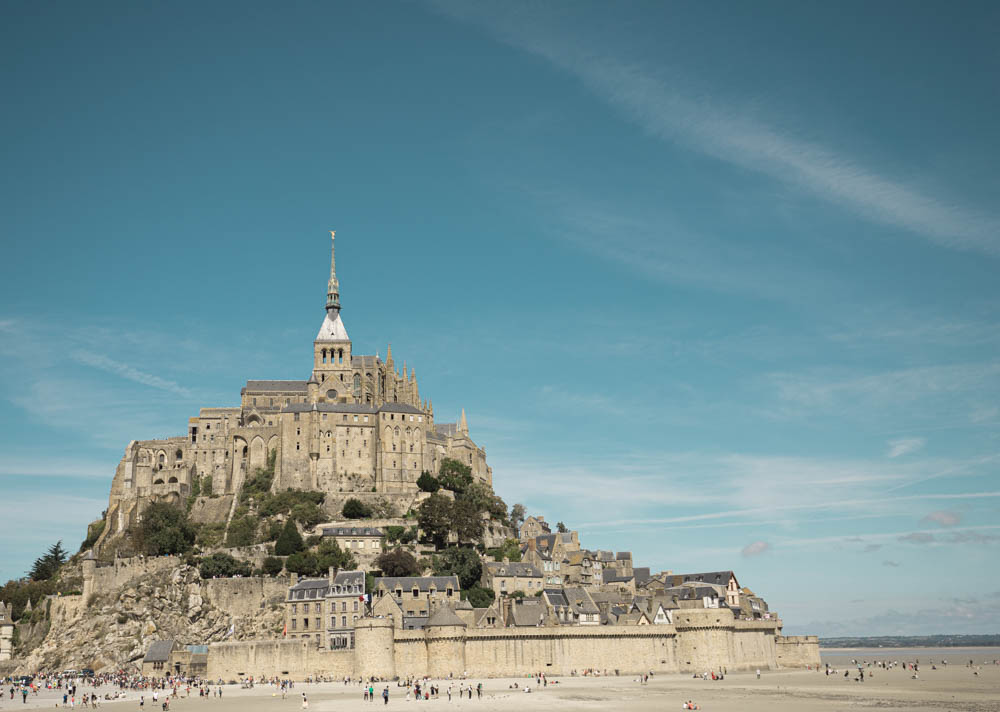
The hot summer sun beat down as I embarked on a journey that had been brewing in my mind. Mont St. Michel was not only a quest to escape the sweltering Vendée heat but also a spiritual endeavour to connect with the divine in a magnificent setting.
A Return to Childhood Memories
The journey began at my home in the picturesque Vendée region, where I set out on a 220-kilometer trip to Mont Saint Michel. It was a return to a place I had visited as a wide-eyed boy, eager to explore its mysteries. However, this time, my mission was twofold: to capture the awe-inspiring beauty of this monument through my camera lens and, most importantly, to offer my prayers to the Almighty.
The Road Less Travelled
The road to Mont St. Michel took me through Nantes and Rennes, where I made stops at local bakeries to purchase food for the journey. As I stocked up on provisions, I couldn’t help but reminisce about my first visit to this iconic place some forty years ago. Speaking with my parents, who recalled our family visit, added a nostalgic layer to this pilgrimage.
Physical Challenges and the Power of Will
One of the significant challenges I faced during this pilgrimage was my battle with arthritis, a persistent companion that had become an unwelcome part of my life. Walking with the aid of a cane, I knew that this journey would not be without its pains. However, I had learned a valuable lesson during my time in the Army: the mind can command the body to persevere beyond its perceived limits. Armed with this knowledge, I pressed on, determined to conquer the physical difficulties that lay ahead.
Prayers in Motion
My journey was more than a physical voyage; it was a spiritual quest. Along the way, I offered up my sufferings to God, a testament to my unwavering faith. The act of praying while traversing the miles was a reminder of the power of faith, even in the face of adversity.
A Divine Encounter at Mont St. Michel
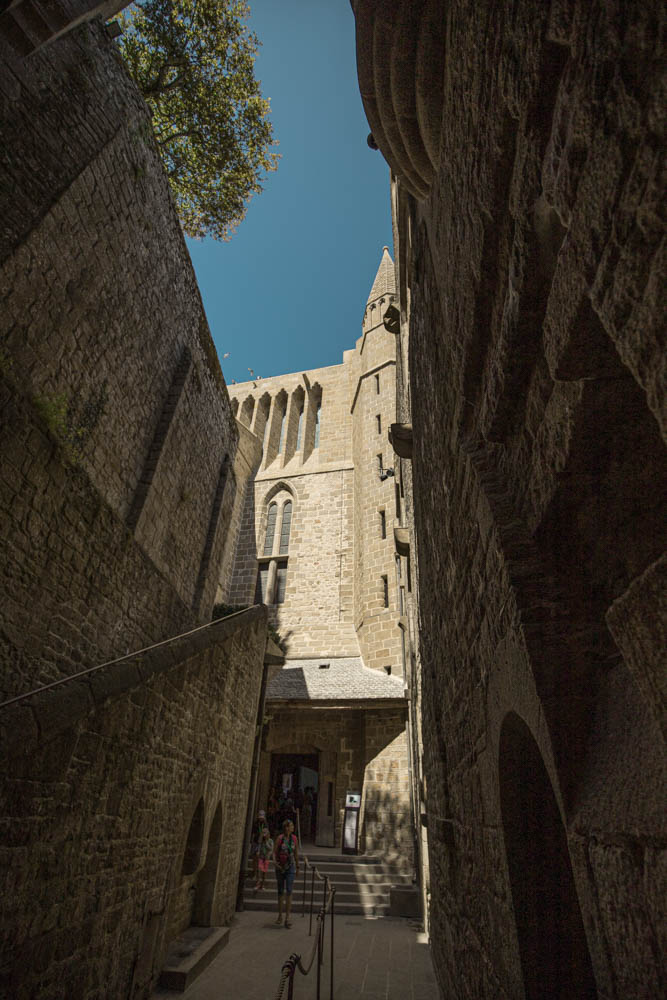
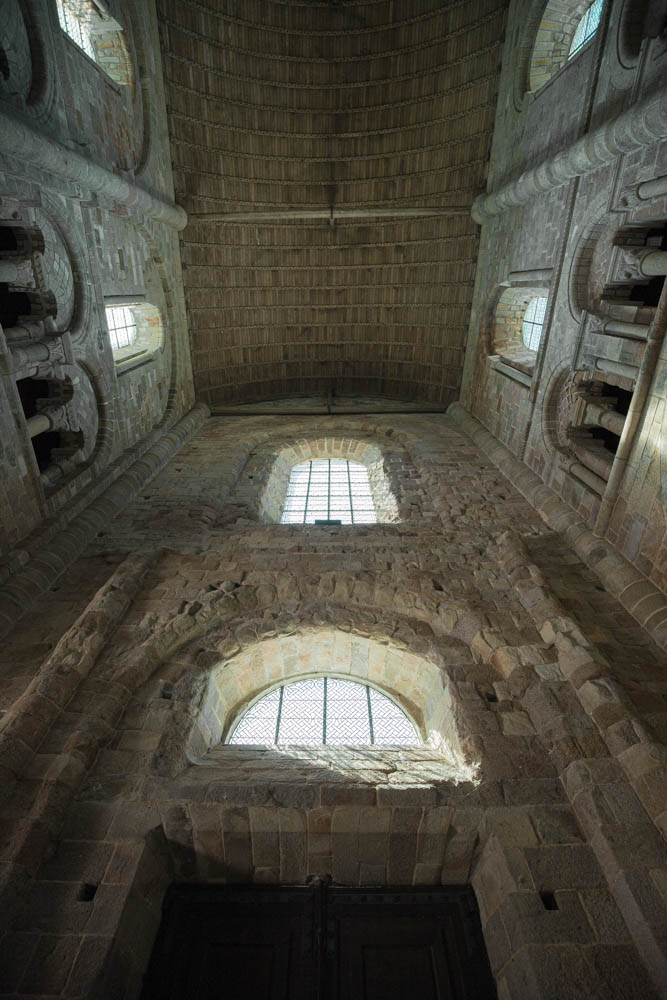
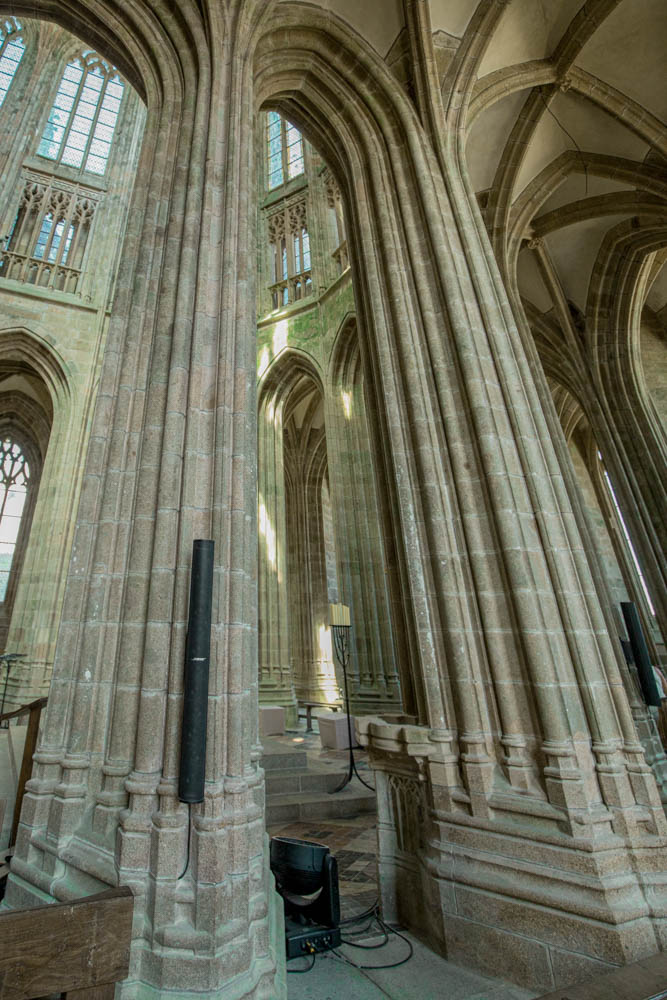
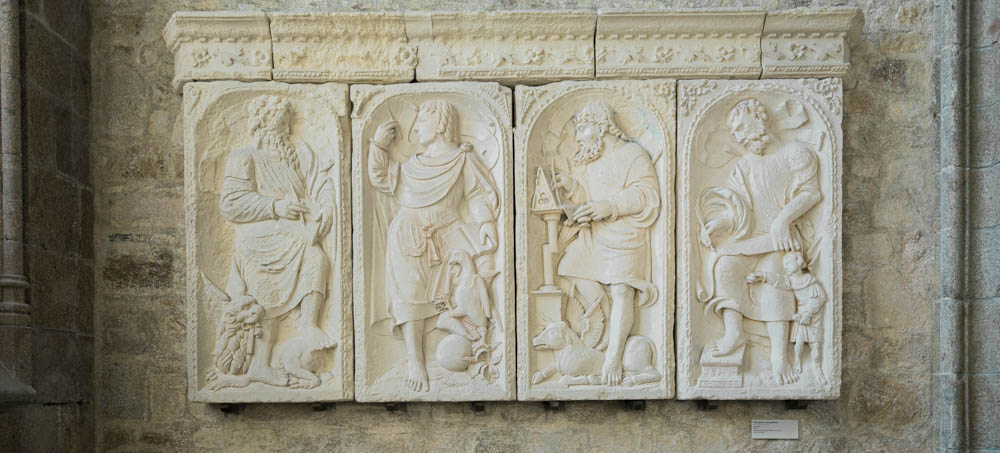
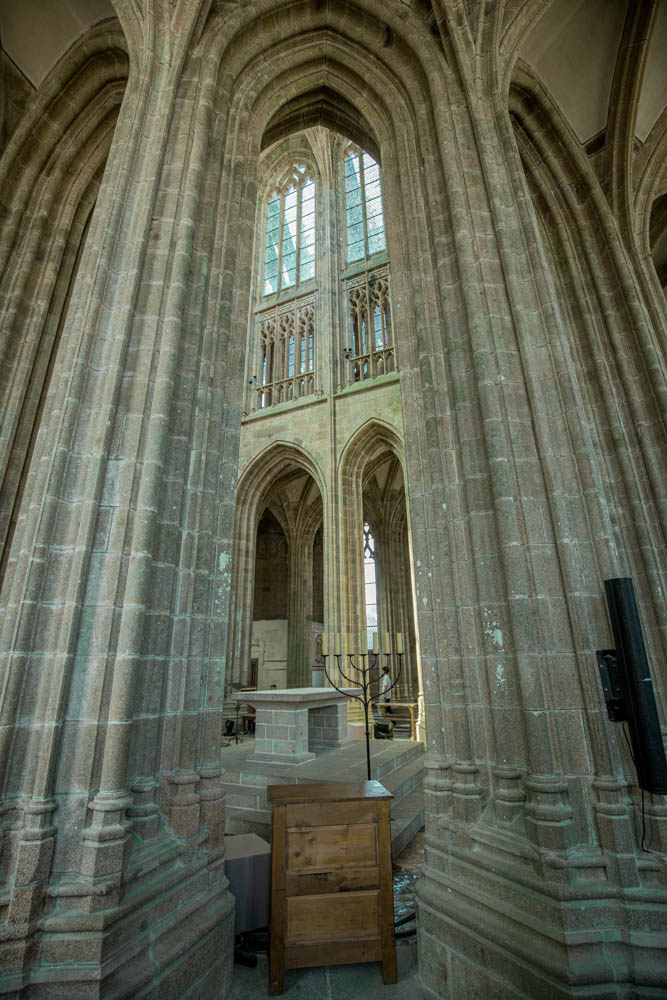
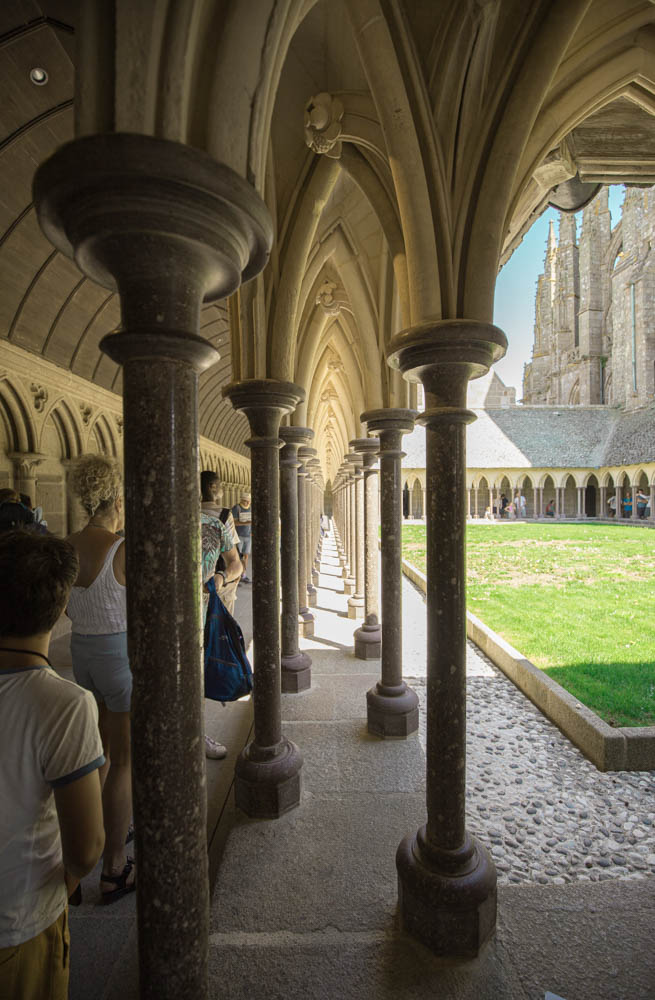
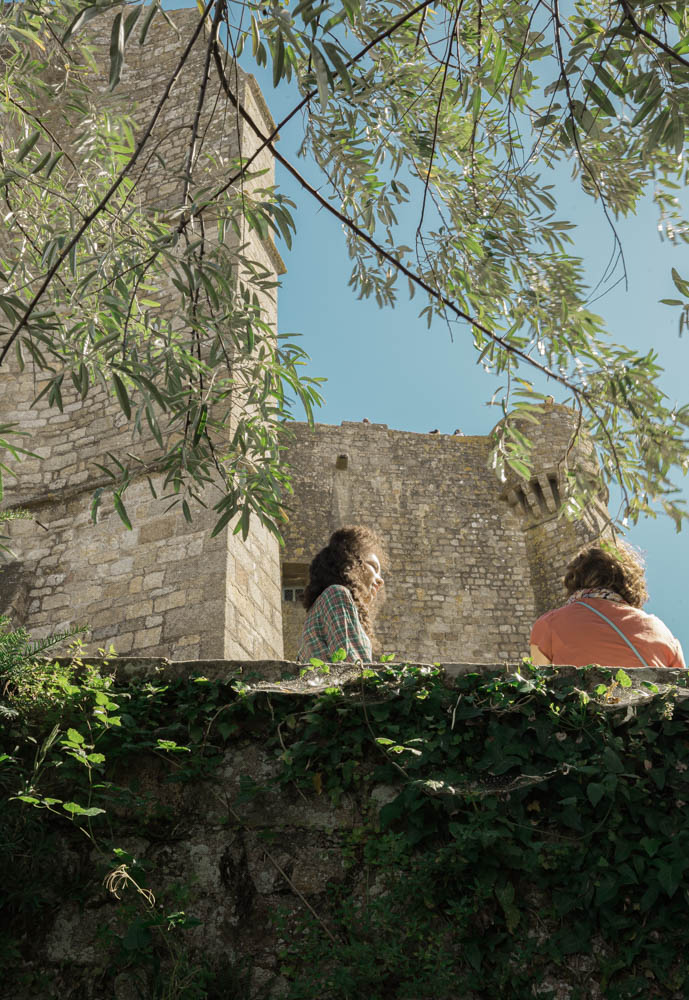
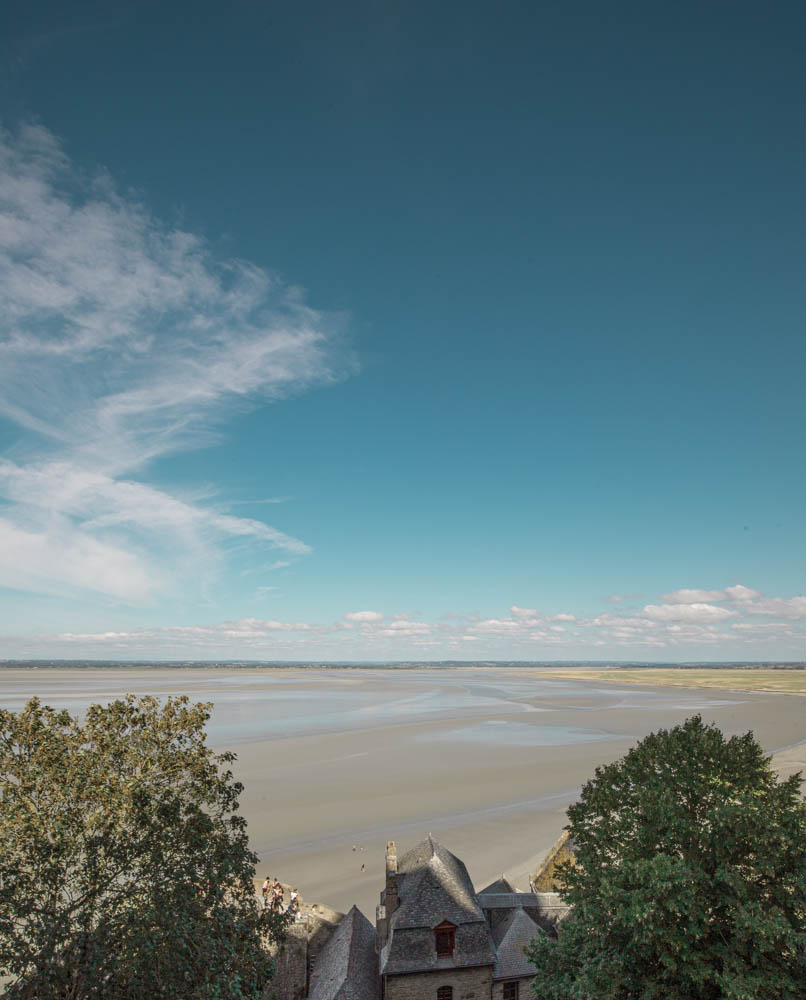
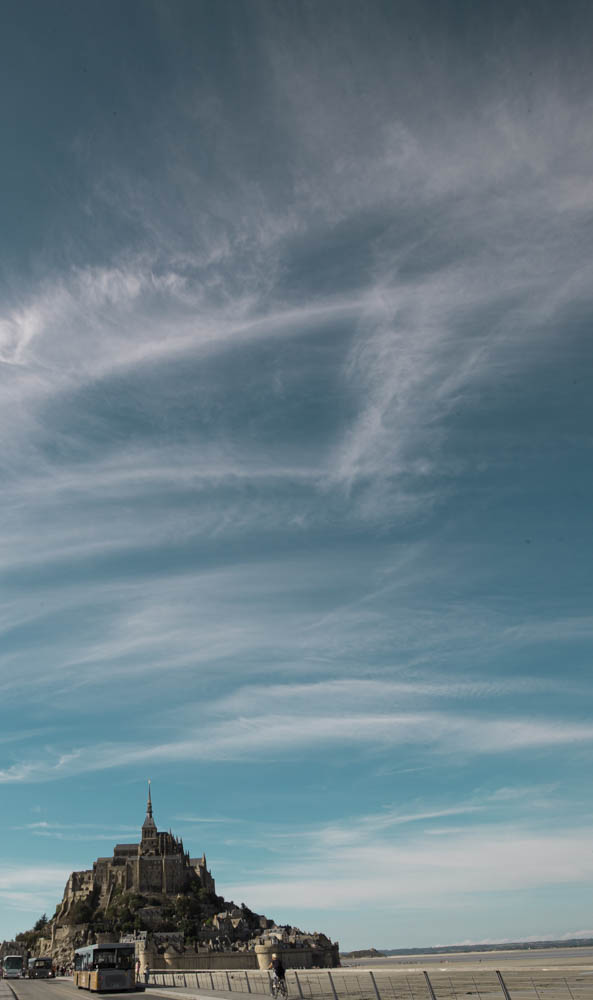
Finally, I reached the awe-inspiring Mont St. Michel. Its grandeur and the spiritual aura surrounding it took my breath away. I knew I was in the presence of something sacred. It was here that my pilgrimage took on its most profound meaning.
A Moment of Grace
Before the Blessed Sacrament, I knelt in prayer. As I poured out my heart to the Lord, I couldn’t help but notice the passers-by who seemed oblivious to the divine presence. In that moment, I offered a prayer that God might reveal Himself to them in some way. And then, as if in answer to my prayer, two individuals genuflected before the Blessed Sacrament. It was a poignant reminder that God’s presence is not always apparent, but it is real and powerful. The simple act of acknowledgment by those two individuals filled me with hope and gratitude.
A Pilgrimage Worth Every Step
As the day wore on and I made my way back home, I couldn’t help but feel tired. The physical exertions of navigating the ups and downs of Mont Saint Michel had taken their toll. However, it was a good tired, a sense of accomplishment and fulfilment that can only be gained through a meaningful journey.
Looking Ahead
Reflecting on my pilgrimage, I realize that while the physical challenges were significant, they were far outweighed by the spiritual rewards. My journey was a testament to the power of faith and the determination of the human spirit. If I were to undertake this pilgrimage again, I would not go alone. Having someone to share the driving and the walks would undoubtedly make the journey more manageable. In the end, my pilgrimage to Mont Saint Michel left a lasting mark on me. It was a journey of faith, endurance, and prayer, a testament to the power of the human spirit and the divine presence that guides our paths.
It is with great sadness that I must announce the unfortunate fate of my beloved X100F – its ISO dial has broken and will require repair. To those who don’t understand the attachment to a camera, it may seem trivial, but it’s like losing your favorite cup from which you drink your morning tea. The feeling of loss and instability is truly disarming. The X100F has been my faithful companion, capturing countless cherished moments.
I visited the camera shop to check if it was a simple setting issue, but alas, it wasn’t. In September, I will send it to Fuji for repair, no matter the cost. I am determined to bring it back to life.
While I grieve the temporary loss of my X100F, I find solace in other photographic tools at my disposal. My trusty XT2 and Canon 6D Mark II, along with various lenses, are there to fill the void. But it won’t be the same; the X100F had a unique charm that cannot be easily replaced.
I believe there might be a lesson in all this. Perhaps it’s a subtle nudge from the universe to slow down and appreciate the art of photography in its purest form, to revisit the world of film and embrace its magic.
During this challenging time, I gratefully welcome any moral support. Meanwhile, I’ve been diving into the world of film photography, scanning old negatives, and maybe even writing reviews on vintage cameras. It’s my way of coping with the “X100F PTSD.”
While I await the return of my dear companion, I want to share some of my favorite shots taken with the X100F. It has been a source of inspiration and creativity, and its memory will live on through the photographs captured with its lens.
Farewell for now, my dear X100F. Until we meet again.








































 IJM Photography