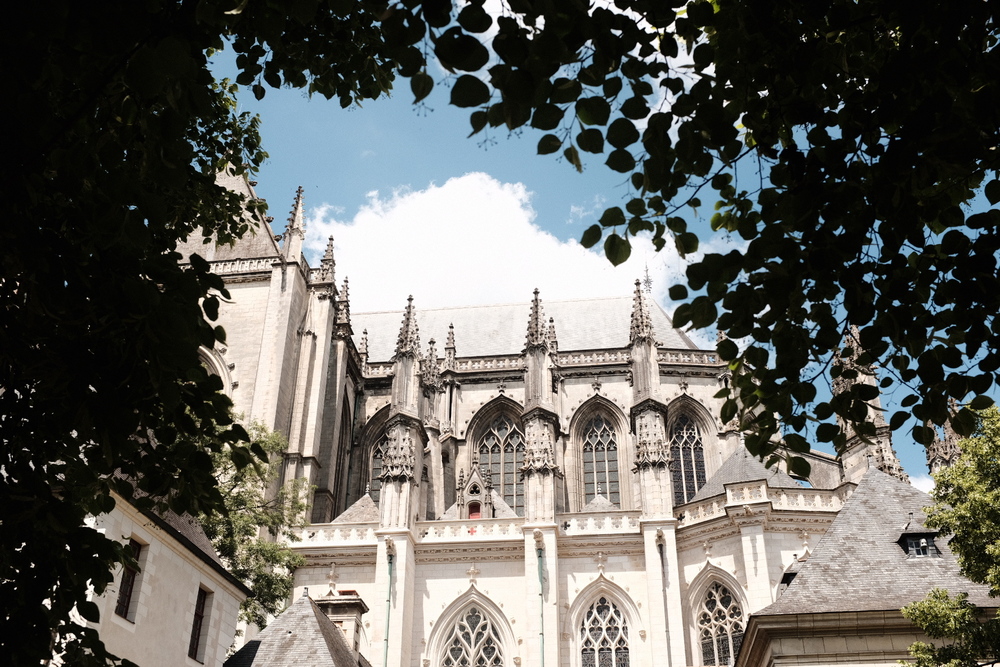
The Photographer Behind the Lens


Embarking on a photography outing is filled with anticipation, decision-making, and a blend of personal passion and professional discipline. Anything can go wrong, but maybe that’s not the right way to put it. Perhaps I should rather say, expect the unexpected and be ready to adapt. As I prepare for each little jaunt, I face a range of choices that shape the outcome of my photographic endeavours.

Selecting the Right Gear:

The first step in my preparation involves choosing the right camera for the occasion. Factors such as, “Does it still work?” for my film cameras, or “have I charged enough batteries?” for my digital cameras, enter into consideration. My energy levels and the allure of film versus digital play a crucial role in this decision-making process. For example, “Do I have the energy to develop and scan my negatives, or can I face hours of photo editing?” For me at least, it’s not just about the gear, but about the experience it brings. Those of you who have used film will know exactly what I mean. It is a totally different experience to using digital cameras. The words “faffing” and “about” spring to mind. What is my goal in going out today? Is it just to see what happens, or do I “have” to get results?

Navigating Weather and Mental Health:

Weather forecasts and mental well-being become significant considerations as I plan my outing. I, like most people, have an aversion to being rained upon. Even though I might not melt, I don’t want rain getting into the electronics in modern cameras. The allure of capturing the perfect shot often outweighs the discomfort. Yet, there are moments when self-care takes precedence, telling me to just stay in. Sometimes, staying in and getting my ironing done provides as much satisfaction as going out, allowing me to look so dapper on my next outing. The joy of unlimited cups of tea might just make staying in on a rainy day all the more appealing.

Packing the Essentials:

A well-equipped photography bag is essential for any outing. From spare batteries to a flask of tea for comfort, each item serves a purpose in ensuring a successful day of shooting. The contents of my bag reflect not only my photographic needs but also my personal preferences and creature comforts. However, the weight of the equipment is a crucial consideration, especially for street photography where mobility is key. As a more rotund gentleman of 52 years, this has become more and more important. Basically, you can take it with you, but you have to carry it. The X100F and a couple of spare batteries weigh next to nothing, but a Mamiya, or DSLR with a couple of nice zoom lenses suddenly makes you feel less young and daring. Don’t get me started on tripods. Yes, you might need one (in fact, you do) if you want to be doing long exposure photography, but imagine lugging one up a mountain. Okay, don’t. It’s not worth it. So ask yourself what do you really need, and will one of your children carry it for you? And how much will it cost you to make it worth their while?

The Lens Palette:

Crafting Perspectives: Different lenses allow me to achieve different results. If I use my 16-35 lens, I will get wide vistas in town and have a certain level of “artistic distortion.” If I use the 24-70, I have quite a good range of focal lengths, and also a macro feature on the lens. If I use my fisheye lens, I can get all “arty farty.” With a 35mm lens, I am perfect for street photography, and it’s the lens I use the most. The nifty fifty allows me to have a more human-eye view of the world.

The Digital Dilemma:

When it comes to the choice between film and digital photography, authenticity often clashes with practicality. While the allure of film photography appeals to my desire for authenticity, and it does look exceptionally cool, and you can enter “smug mode” knowing that you are arguably better than those who only know about digital photography (yes, snob value does exist!), the energy and time required for development and scanning can be daunting. On the other hand, digital photography offers convenience, allowing for instant image transfer and easy post-processing in software like Lightroom. The decision ultimately hinges on the balance between artistic vision and practical considerations, and can I really be bothered? I know, you have just lost respect for me as an artist, but the struggle is real.

Professionalism Meets Passion:

For professional assignments, meticulous preparation is paramount. From checking equipment to selecting the perfect lenses for the job, every detail contributes to achieving the desired outcome. I noticed this during my musical studies when the goal is to get a paying gig and deserving the pay. You have to get results and your reputation depends on those results. But, even in the midst of professional obligations, the passion for photography remains at the heart of every endeavor. Top tip of the the day. Always have a back-up plan. No planning survives initial contact with the enemy. You’re on your own and have to improvise. What can go wrong, will go wrong, so prepare for this.

Mapping Out the Journey:

Finally, planning the route to my destination adds an element of anticipation to the journey. Do I have to drive for miles, and will there be a loo somewhere on the way? How will I be able to acquire snacks? Are there any small producers that might need a client? I mean I don’t always think about food, but when you live in a country known for the quality of its produce, and where it is almost a duty to consume on the good stuff, it kind of is… Anyway, make sure you look at where you’re going on a map. And if you’re visiting a historic site or attraction then check the opening times. It has happened before. You turn up to a place and it’s closed, so I went a saw my plan B… The path ahead is filled with possibilities and opportunities for creative exploration.

In conclusion

The art of preparation is an integral part of the photographer’s journey. Balancing personal passion with professional commitment, each outing offers a chance to immerse yourself in the beauty of the world through the lens of a camera, whether it’s under the open sky or amidst the comforting hum of domesticity.

Finding Balance: Photography and Personal Wellness


In the sanctuary of my thoughts, where the gentle glow of lamplight dances upon well-worn bookshelves, I find solace from the chaos of the world. With my dog, Molly, by my side, I embark on a journey of introspection.

As someone who values quiet reflection and nuanced understanding, I’ve learned to appreciate the delicate equilibrium that enriches a fulfilling life. Amidst the pursuit of knowledge and creative expression, it’s easy to become ensnared in the whirlwind of activity, neglecting personal well-being in the relentless chase for success.

Yet, amidst the simplicity of my surroundings, among the familiar scents of brewed tea and the soft hum of a jazz record playing in the background, I am reminded of a timeless truth: genuine fulfillment springs not from ceaseless striving, but from nurturing inner peace and harmony.

For photographers and thinkers alike, the quest for excellence can exact a toll on the spirit, leaving behind exhaustion and doubt. Each moment of creation demands both physical exertion and emotional resilience.

But amid life’s ebbs and flows, it’s crucial to honor the sanctity of body and mind, to heed the whispers of intuition and the call of the soul. What value is there in a well-crafted image or a finely wrought idea if born from weariness?

In my own journey as a seeker of beauty and understanding, I’ve come to embrace moments of stillness and contemplation, carving out time for rest and reflection amidst the bustle of daily life. Whether reveling in solitude or feeling the gentle caress of a cool breeze, I’ve discovered that inspiration often arises from quiet depths.

Photography serves as a therapeutic outlet for many, offering respite from the pressures of modern life. Through the lens, we enter a realm of infinite possibilities where time seems to slow and worries fade into the background. Immersed in the act of creation, we create a space where anxiety and overthinking lose their grip, replaced by a sense of calm and clarity.

For those grappling with depression or loneliness, photography can serve as a lifeline, gently coaxing us out of isolation and into the embrace of the world. As we wander with camera in hand, we become mere observers, detached from the chaos that threatens to overwhelm. In framing a shot, we find solace in the simple beauty of the moment, forging a connection with the world that soothes the soul and restores the spirit.

When I’m not at my desk, crafting articles or editing photos to share with you, I’m exploring this balance between creativity and self-care, constantly striving to find harmony in my own life.

In the tranquil sanctuary of creativity and self-discovery, photography emerges not only as a means of capturing fleeting moments but also as a powerful tool for nurturing personal wellness. Through our cameras, we embark on a journey of exploration and introspection, finding solace in the beauty of the world and sanctuary in the act of creation.

As we navigate the complexities of modern life, let us honor the delicate balance between ambition and well-being. Photography offers us a pathway to reconnect with ourselves and the world, inviting us to embrace stillness amidst the chaos and find beauty in the ordinary.

Whether framing the perfect shot or crafting prose to accompany our images, let us remember the profound interconnectedness between creativity and personal wellness. By prioritizing self-care and mindfulness in our photographic practices, we not only enhance our capacity for artistic expression but also cultivate a deeper sense of harmony and fulfillment in our lives. Even if our endeavors don’t always yield the desired result, it’s essential to recognize that the journey itself is as, if not more, important than the destination.

So, dear reader, as you embark on your own photographic journey, may you find solace in the act of creation, clarity in moments of quiet contemplation, and inspiration in the beauty that surrounds you. May your photographs serve not only as snapshots of the world but also as windows into the depths of your soul, guiding you towards a life of greater balance and well-being.

Happy New Year


It would appear to be that time of year when everyone greets each other with the quasi obligatory Bonne Année. Usually followed by some generic wish such as Santé, Bonheur, and even Prospérité. Some have even dared to reduce it too Bonne et Heureuse… But let’s not talk about them.

A Message of Hope and Peace

I wish you a very Happy New Year. I wish you what you need to get through 2024, and what you need to affront the difficulties that you may face. But most of all, I wish you Peace. I wish you the peace that is said when Jesus said Peace be with you, or Shalom, or As-salamu alaykum. That inner Peace that we receive from our creator. This peace will bring you much more joy than mere health, happiness, and success. I think it goes much further than this “worldly” greeting.

Finding Peace in Solitude and Family

Over the Christmas period I have been on holiday, and have managed to find some of this more deeper notion of peace. I greatly appreciate my colleagues, but it was lovely just being with my family. And like with the Covid lockdowns, it gave me space, and rest, but most importantly, it gave me time. Time to be with my wife and children. Time to just be in their presence and feel the joy that they give out.

The Joy of Ironing and Shoe Shining

It also gave me time to complete my ironing and get that pile “done”. There were things that had been waiting so patiently. Even my cotton handkerchiefs which are a joy to iron. Humanity seems to fall into two groups, no, not male and female, but those who iron and those who don’t. I am in the former and my wife is in the latter.
I met my wife back in 1992 and I used to wear green for a living. That poor girl once tried ironing my uniform, and I was stupid, foolish, a bit rash, a complete eejit, and declared don’t touch things that you know nothing about.
I had been taught to iron firstly by my mother and became adept at ironing cotton hankies. We all have to start somewhere. My training continued with those gentlemen who wear green for a living and therefore have to be immaculately dressed at every hour of the day or night. They would explain how to iron everything from A to Z and then we would do the same. We were then expected to execute the same task to the same high standard. I still have nightmares about tramlines. If you know, you know. And if you don’t know, then that’s one less traumatic event to have to share with your therapist.
Needless to say, my Dear wife has not ironed since 1992, and that task has fallen to me. I learnt my lesson and now keep my mouth shut.
I also learnt how to shine shoes, taught by those same men in green. So I took the time to go through every single pair in the house, shining them and making them like new and being complimented by my wife who had the impression of having new shoes. Some could be repaired but the repair costs would have been more than the shoes were worth. Those loved shoes are now in a better place.

A Rejuvenating Holiday with Loved Ones

Time, time, and more time. You wondrous thing. The kitchen needed attention, and is now looking loved as well as lived in. My children cooked the Christmas Eve meal for us and they did themselves proud. I said that I was available if needed and they only asked me to do a tartare sauce. So I did.

Grateful for Family and Faith

Time, time again. On Christmas Day I always put my foot down and insist they come to church with me. So, they were spared Midnight mass, Dawn Mass, and even morning mass, but they were with me for the evening mass. I’ve talked about this before, but again, this is so important to me and it always feels wonderful.
Happy New Year Dear Reader, I wish you Peace for 2024, and may your God bless you.

Frame It Right: The Art of Composition in Photography Part II


In my last article, we talked about three of the rules of composition, rule of thirds, leading lines, and symmetry.  We talked about the origins in classical art, as well of how to use them in our photography.  We also explored the implementation of these rules “or guides” and how we should practice each one, master it, and then move on to the next one.  You will still have your photos for the “Gram,” but more importantly, you will be growing as a photographer, gaining experience, and building a body of work.  You will, by definition start becoming more deliberate in capturing your shots, and will be more mindful than somebody just shooting blindly and praying that they get at least on shot!

In this article we will continue to explore certain concepts that be used to make our photographs even more engaging and interesting.  We will explore framing, i.e. using frames with in frames, and the use of negative space, used to isolate of emphasize our subject, and go minimalist.

Framing

When I say the word framing, I’m not talking about the gilded golden frame that you will use to frame your photography to give as gifts to your mother-in-law, but using visual frames inside your image to “frame” your subject…

These examples illustrate how framing can be a powerful tool in photography, guiding the viewer into the image and providing depth and context to the subject or scene being captured. A technique that can make your photos more engaging and immersive.  You can use trees, windows, element on the ground, buildings.  Go out and explore the world around you and try and “frame” your shots.

Negative space

Negative space is the space that surrounds our subject, this empty space or unoccupied space is almost as important as the subject itself.  It’s role is to create balance in the image and adds to the importance of the subject.

Key points

This negative “space” around the subject gives the subject room to breath, and takes away the clutter so we can concentrate on our subject.  It emphasizes the subject and leaves no doubt where the subject is to be found.  For those of you who want a “minimalist” approach to photography, it is one of the best ways to do this.  Less is more after all.  Think of simplicity, tranquillity, and elegance.  It can be used to create mood and atmosphere, and in landscape photography can portray ideas of solitude or freedom.  Think of a vast empty sky and rolling hills.  Negative space doesn’t have to be completely devoid of detail. It can be an area of uniform colour or texture that complements the subject and adds visual interest, or we can use depth of field to emphasize our subject

When using negative space, it’s essential to pay attention to the balance between the subject and the surrounding empty areas. The goal is to create a harmonious composition where the negative space complements and enhances the subject, rather than overpowering it. This technique can lead to powerful and emotionally resonant photographs, adding depth and impact to your work.

When you look at my photos of the girl against the colourful walls in Trentemoult in Nantes, think about how placing the model on the left or right of the frame makes you feel.  Looking forwards or looking backwords… 

Colour Theory

Colour theory is not just for those trendy designers in those advertising agencies.  If you go onto my Instagram feed, you will see that most of my work is predominantly black and white.  “So no colour,” I hear you say.  Well, yes and no.  Black and white photography concentrates on tones, but we can look at colour in the same way and seek balance in our colours.  So what’s this colour wheel then?  Well, it’s a way of looking at colours that go together, like green and red (think of Christmas cards), blue and orange, yellow and purple, all these colour are opposite on the colour wheel. Also, think about complimentary colours that are next to each other on the wheel, such as yellow, light green and dark green.  You will find yourself becoming aware of colours in nature and how they complement each other.  There will be some photographs that depend on this colour for their artistic value, and that won’t work in black and white photography.

Think about the portraits in the previous section and the natural colour in the photos in the country side.

Conclusion

We’ve continued our journey into composition by exploring how to use elements in our photos to frame our subjects. We’ve delved into the concept of negative space, emphasizing our subjects in our images. To conclude, we’ve begun to consider how colour can add harmony to our compositions. My advice is to incorporate these elements into your photography one step at a time. Don’t rush; there’s no need to feel overwhelmed. It’s a lot of information to take in, but as you explore each aspect mindfully, you’ll witness an evolution in your approach. Keep up the excellent work, and I look forward to our next session where we will talk about pattern and repetition, scale and proportion, and depth and layering.