The UK Chronicles Part I – Lesbury


Introduction: A Journey to the UK

Good evening, Dear Reader.  Welcome to the UK.  I couldn’t not go to the UK without writing about it and taking the odd photo.  I wrote about the anticipation leading up to this trip in the Off to the UK article and talked about the cameras I might take with me in the Olympus Pen EE S review article.

The Road to Lesbury: A Cross-Country Adventure

The drive up from the Vendée up to Calais went surprisingly well.  As we passed through Rouen, we started seeing UK registered cars driving in the same direction.  As we drove up through the north of France, we saw more and more UK cars.  So getting used to UK driving, the closer we got.

We arrived at Calais and respected the bi-national family with our two UK passports and our two French passports, except the guys got their passports stamped and the girls were stampless.  Thank you, Brexit.

First Stop: Dover and the Journey to Lesbury

We spent the night in Dover and started the trip to Lesbury after a breakfast of champions.  I do like a full English breakfast.  We were already looking forward to stopping off for our sandwiches at Peterborough service station.  On a long trip like this, we all have our landmarks.  

The breakfast of champions, and only ever so slightly filling…

The Camera Dilemma: Choosing the Right Gear

The choice of camera was important, as I talked about in the previous articles.  I ended up just taking the X100F, praying that I would be able to get the shots I needed to record everything.

As any Internet user, I read articles and watch YouTube, and let this guide me.  I had read one article about a travel photographer, with the author talking about how he was the Dad travelling with his family and getting up before everyone else to go out to take photos.  I could always have a snooze in the afternoon.  YouTube tried to  convince me to keep things minimal, talking about how the 35mm lens was the best for travel photography on the road.  With the X100F, I have exactly what I was after.

Arriving in Lesbury: Settling In

We arrived at my parents’ house to say hello, go to the loo, and show them that we were still alive and kicking and that despite the odd moment of stress and intensity on the road, we hadn’t killed each other.  We followed my Dad in the car to the rental in the Old Vicarage in the next village of Lesbury.

The house was amazing and felt very luxurious.  My parents had prepared a starter pack with the essentials so we could survive until we did our shopping.  Yorkshire tea was in that pack, so I knew I was home.  We had our first night’s meal with my parents at their house, so I didn’t have to worry about anything.  What a great way to start our holiday.

Early Mornings and First Impressions

I’ll be honest with you.  I didn’t sleep very well and was always awake early.  When I say early, I mean early.  We’re talking about 5am wakeups.  But this was also part of the plan.  Get out early and get the good light.  

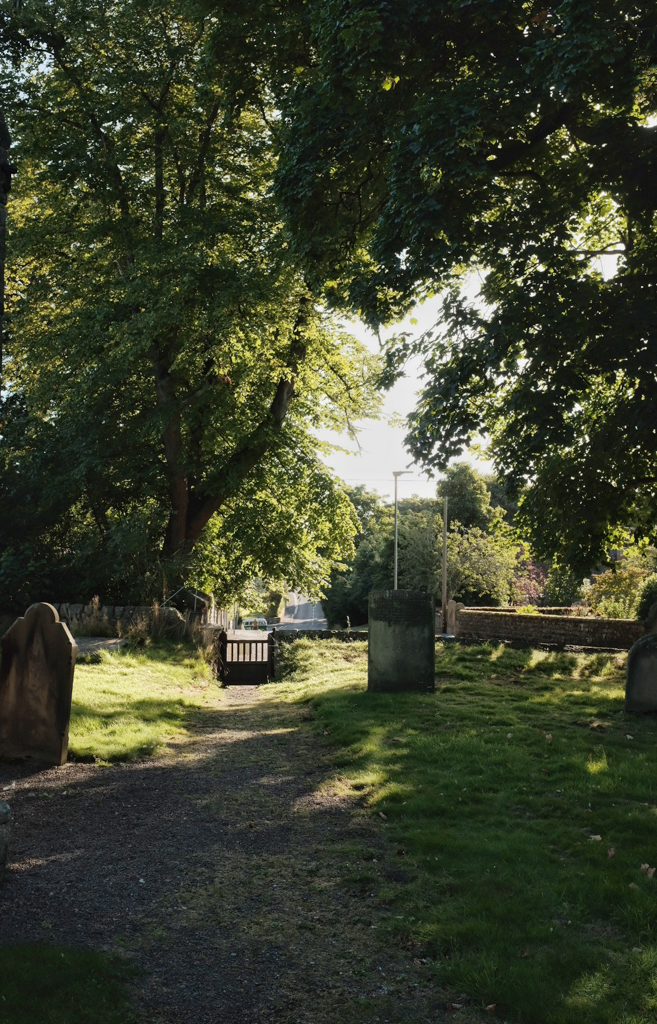
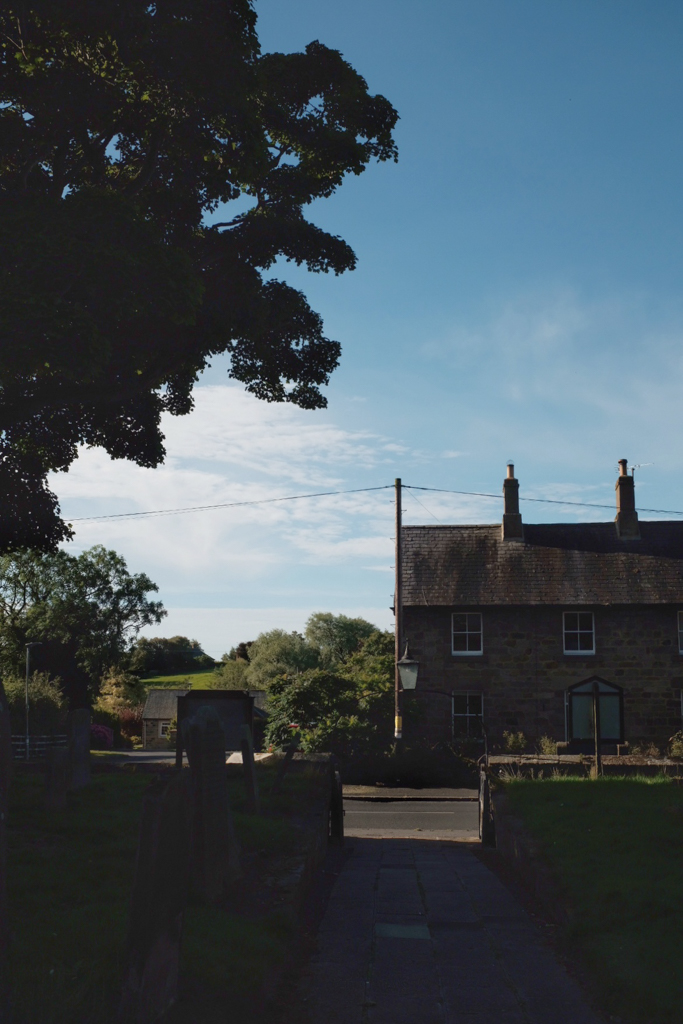
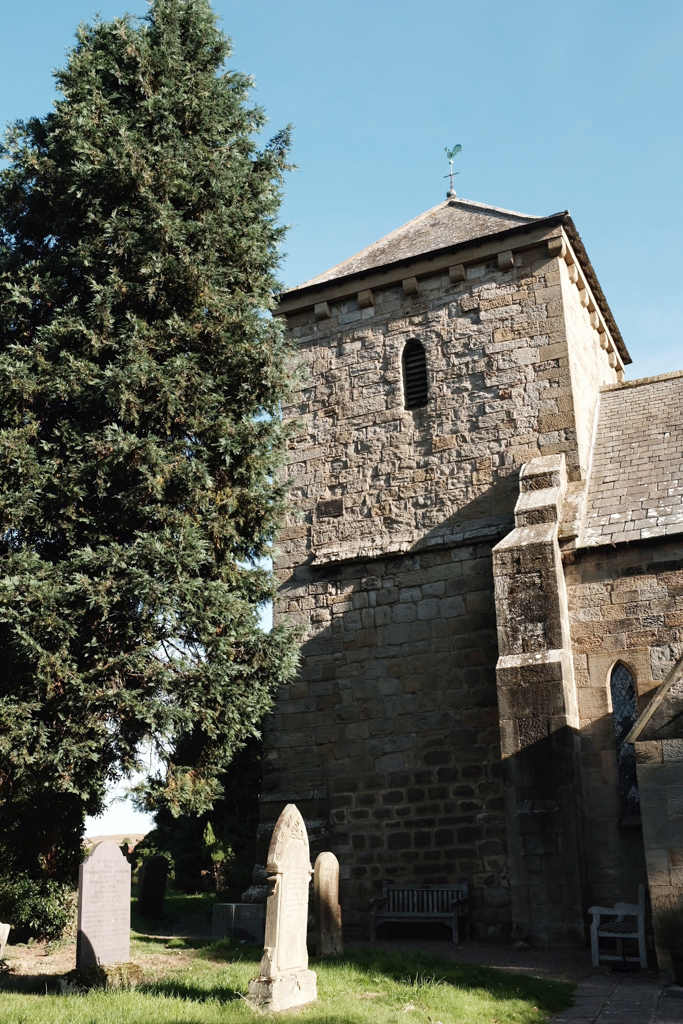
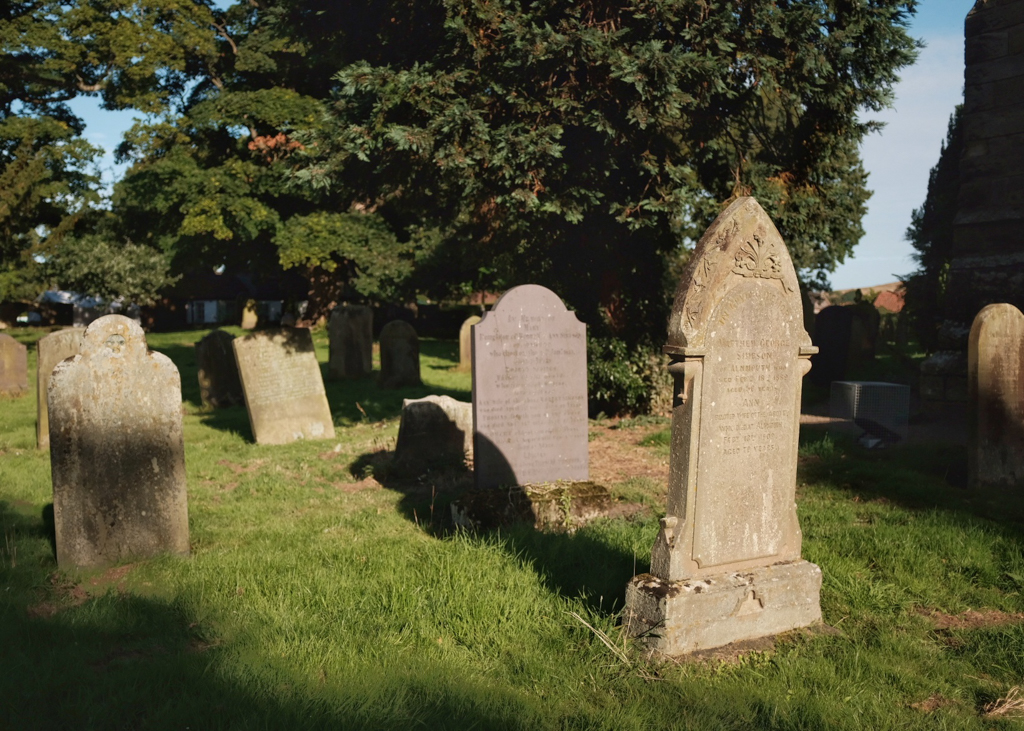
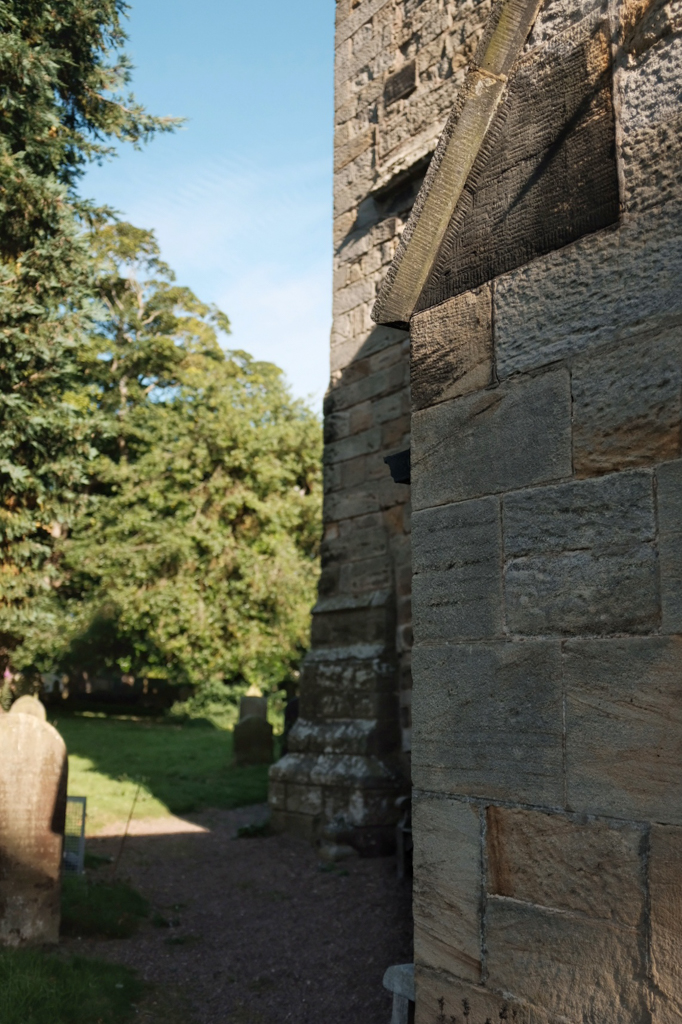
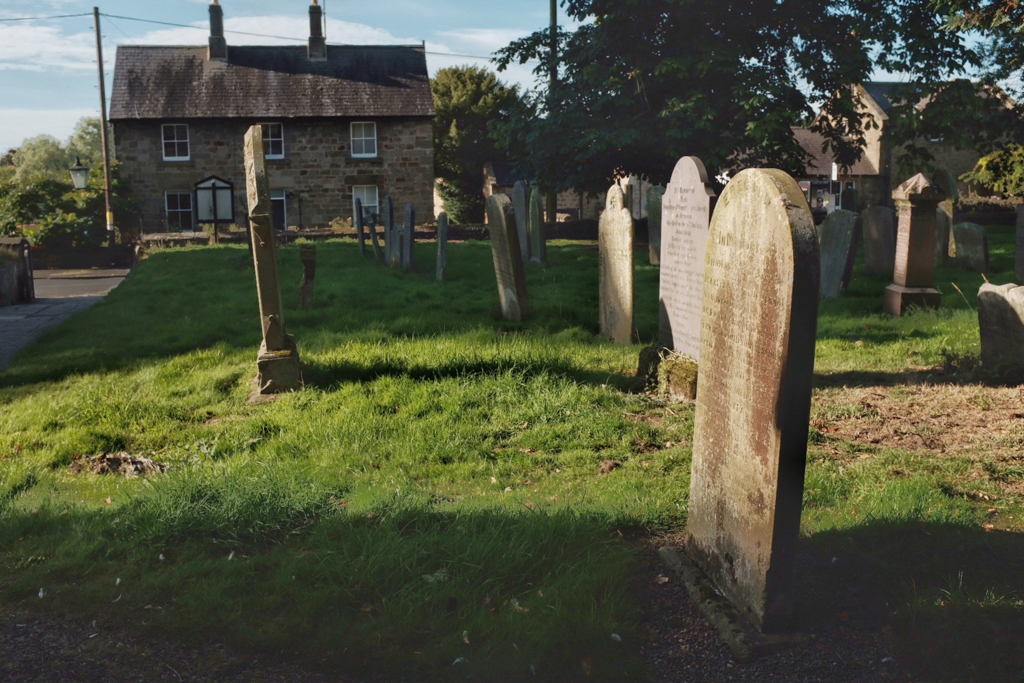
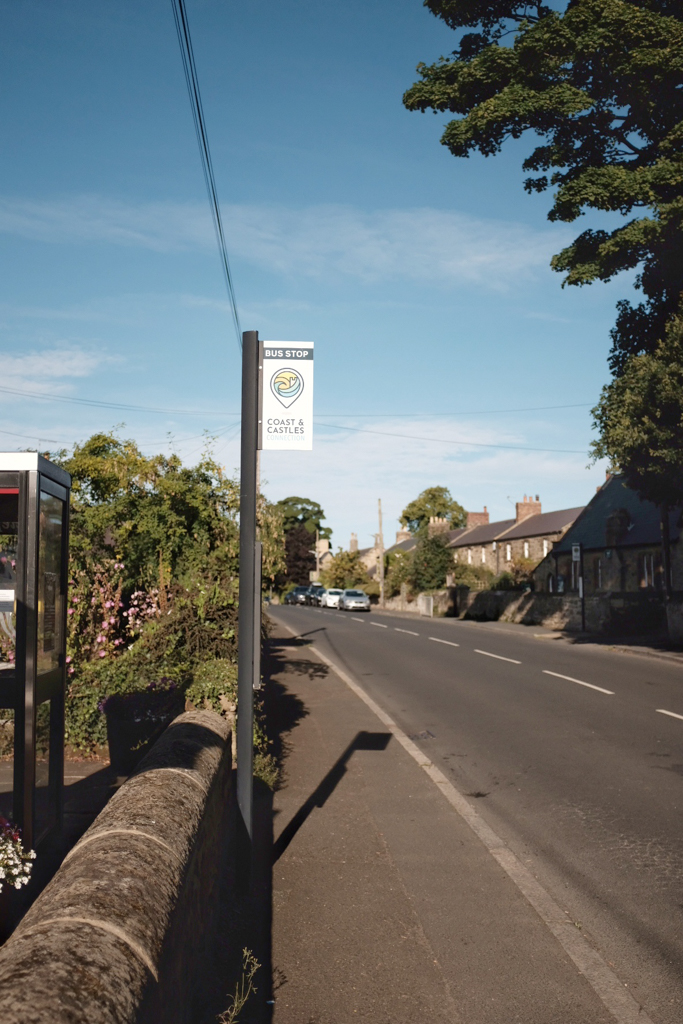
My first breakfast in the house was Yorkshire tea, muesli, and fruit.  Start eating healthily and starting the way you mean to go on.  As I looked out of the conservatory, I could see rabbits grazing on the lawn and the robot mowing the lawn.   It was going to be a good day, and I was going to wander around the village taking the first photos of the trip. 

The Opening of the Film Archives—the Hangar à Bananes August 2016


In my last venture into the film archives, I talked about how there was a time that my daughter hadn’t yet seen me the way I see myself and how she actually still liked me, before turning into a teenager.  This is the second part of that special day.

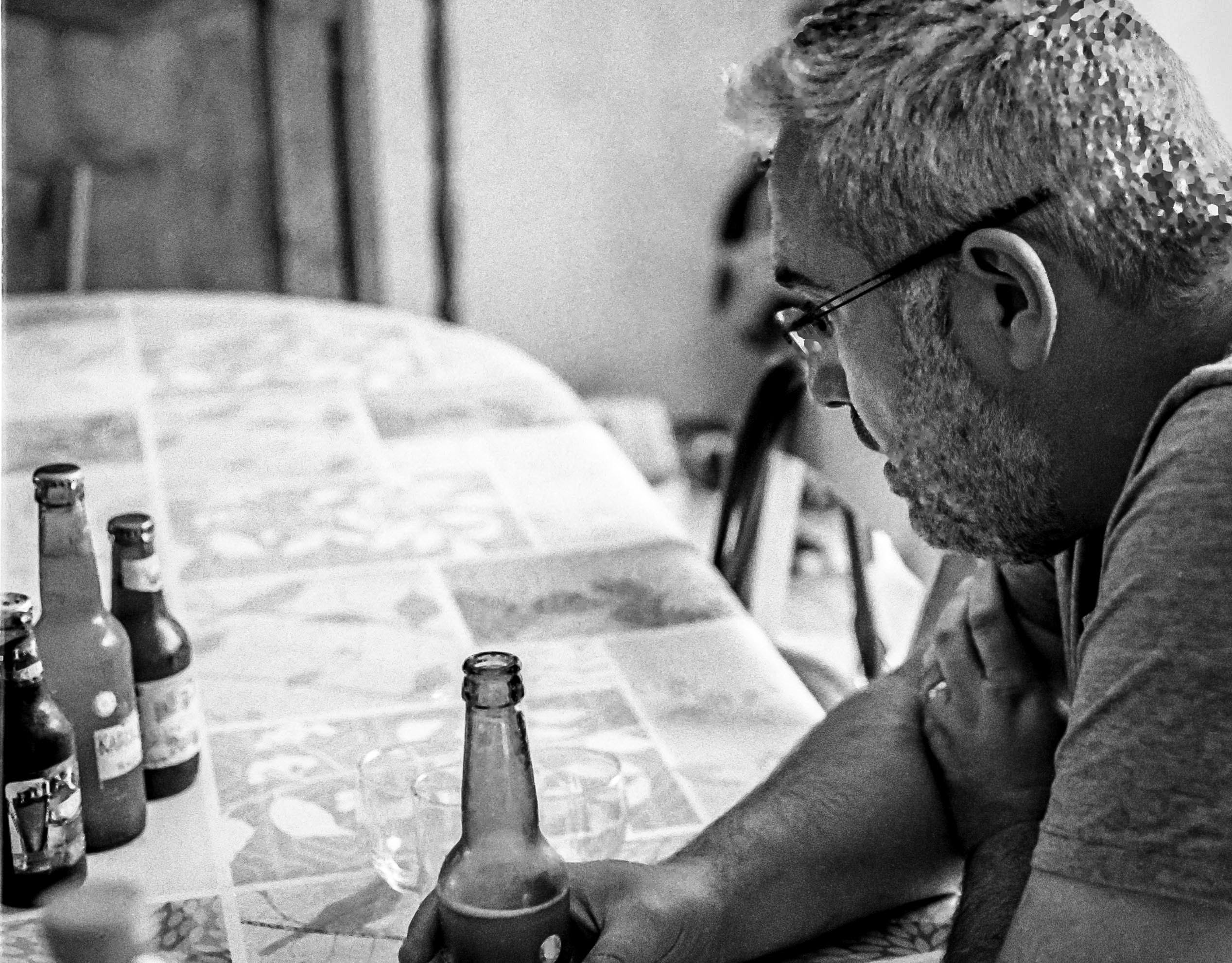
We had explored the Jardin des Plantes and discovered what they had to offer.  This of course builds up an appetite in a young lady, and convinces her that she really needs to drink something Daddy.  And why couldn’t we go to the Altercafé (now the D3) at the Hangar à Bananes.

So what else was I to do but drive us to the Hangar à Bananes.  You will have seen the Hangar in this article, and you will now be completely up to date and know nearly everything there is to know.

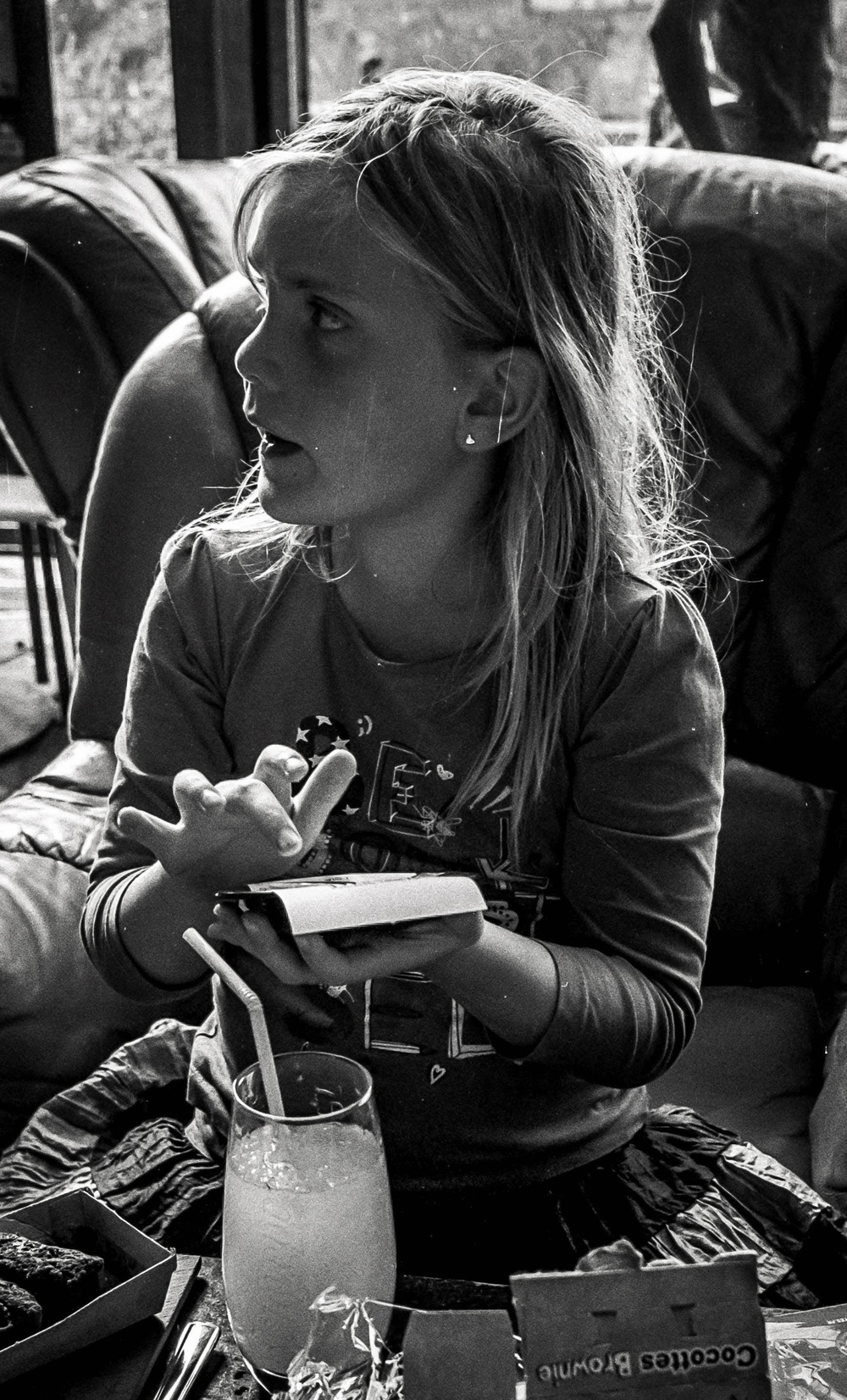
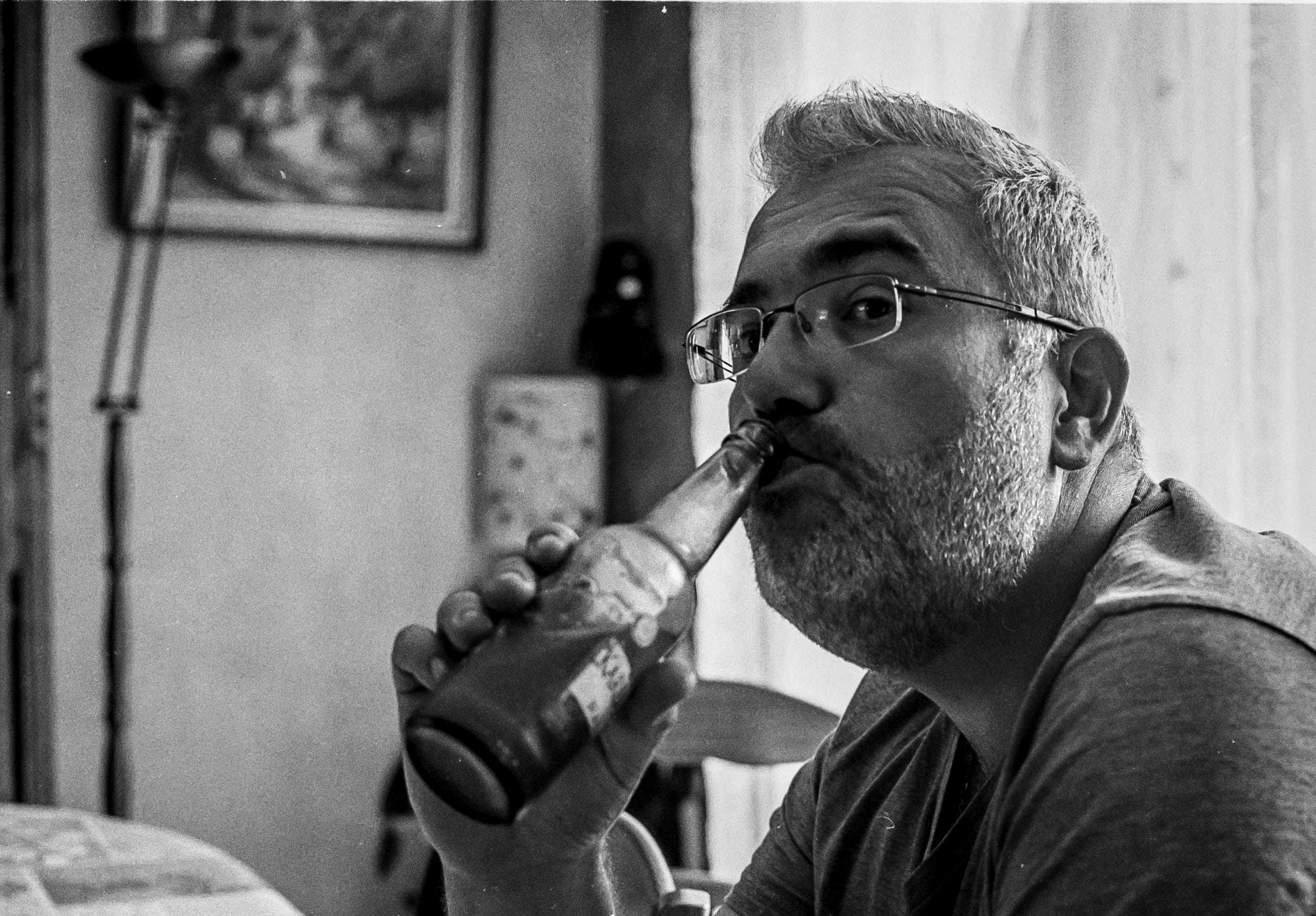
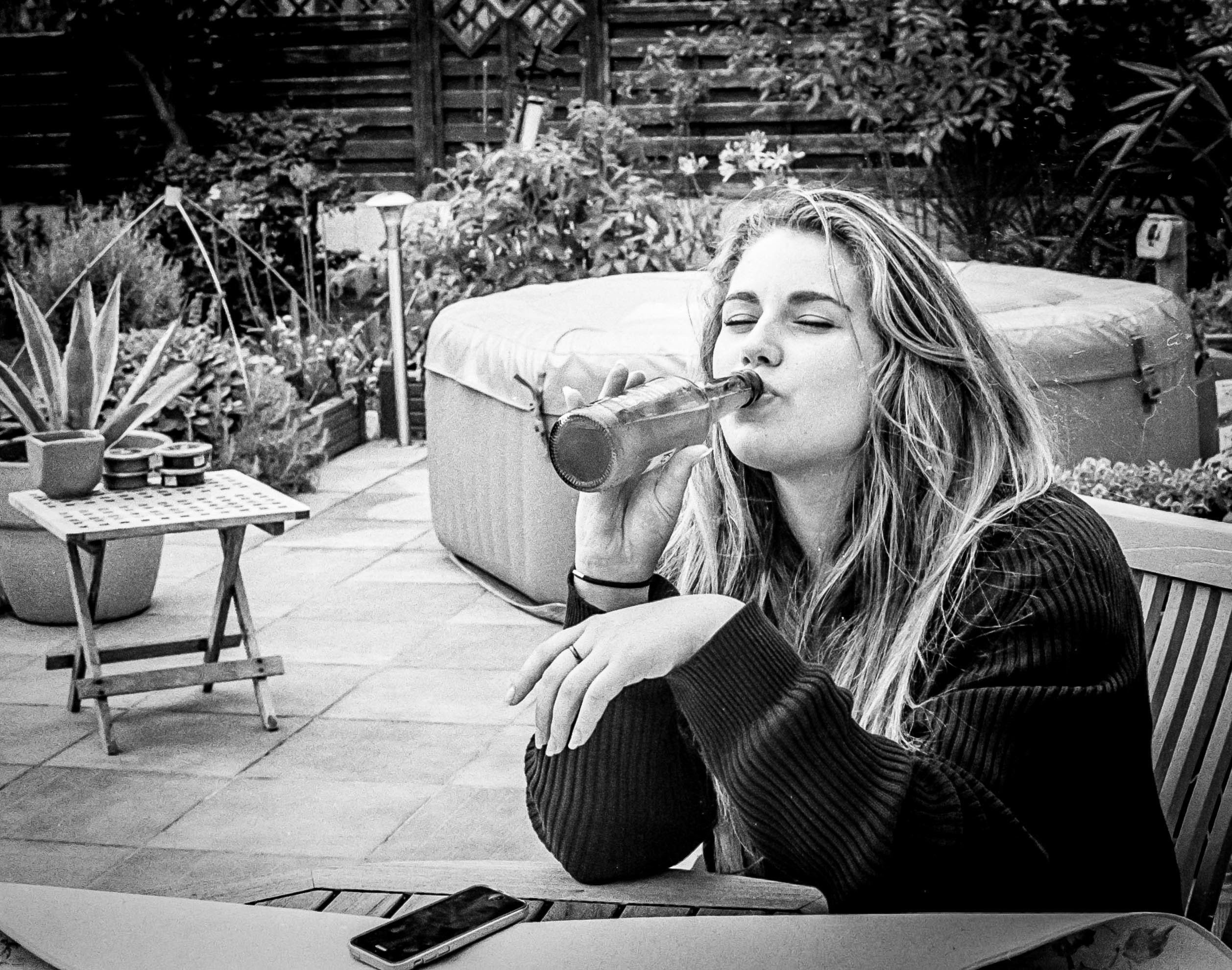
Don’t forget that this is a girl who gets an idea into her head and then just goes through with it.  That idea is so rooted that it is nigh on impossible to change that idea.  I knew what was coming.  I would order a chocolate brownie, and Kate would have an Orangina.  I could have a beer.  How gracious of her.

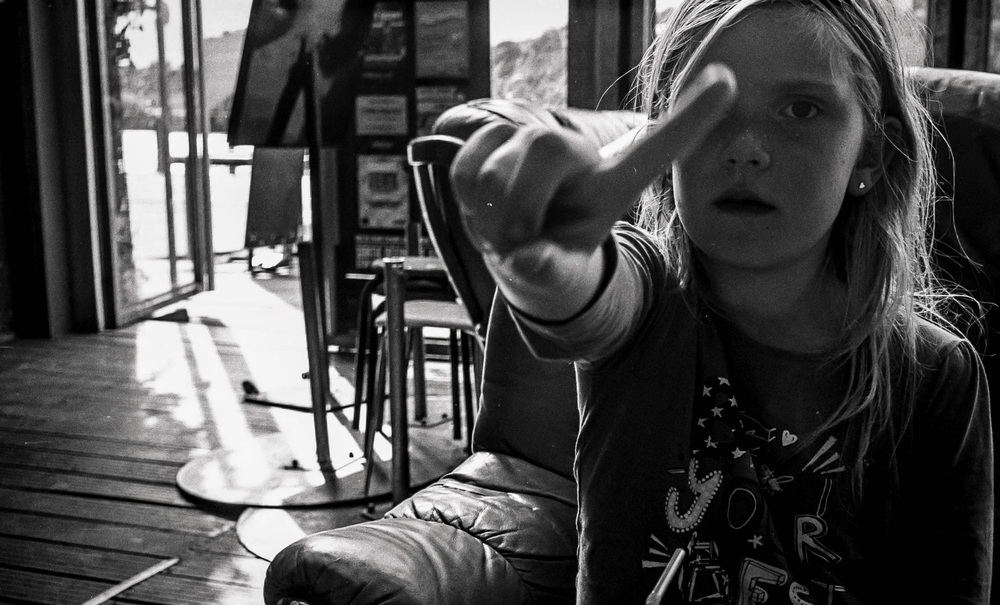
She had been my model for most of the day and even a top model needs a rest, and just has nothing left to give a photographer.  You just know when enough is enough…

The Opening of the Film Archives – Saint Cado, Belz, Morbihan


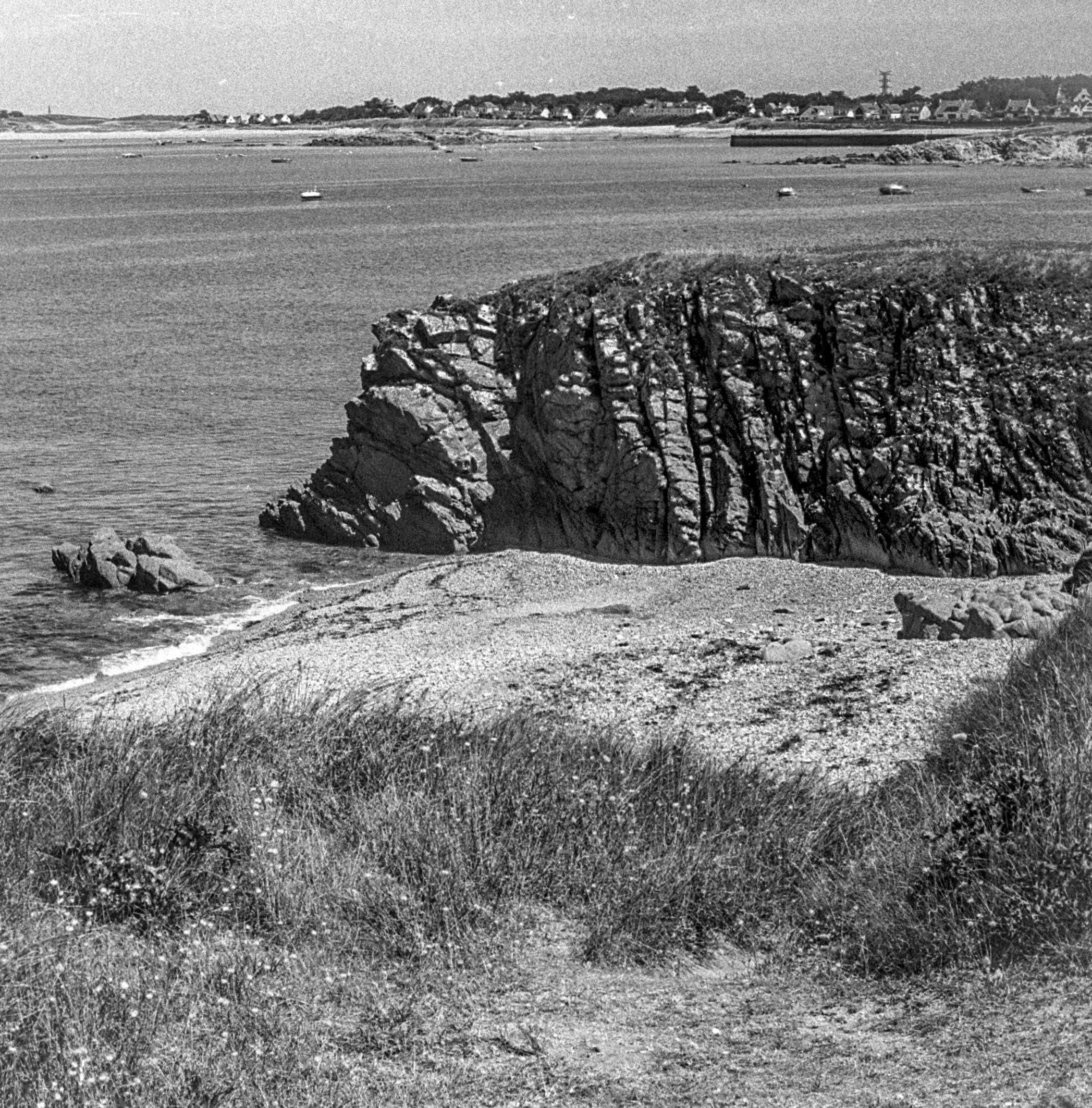
Welcome back to the film archives, and welcome back to Brittany, that gorgeous corner of France where my in-laws live. I think I might have let it be known that my French family love camping. Yes, they’re so in tents… I’ll just let that joke sink in for a couple of seconds. In 2016 I had begun “collecting” cameras. The photos from this Breton outing in Saint Cado were taken with the Kodak Retinette 1B, a little gem of a camera from the 1960s, and HP5 Plus film.

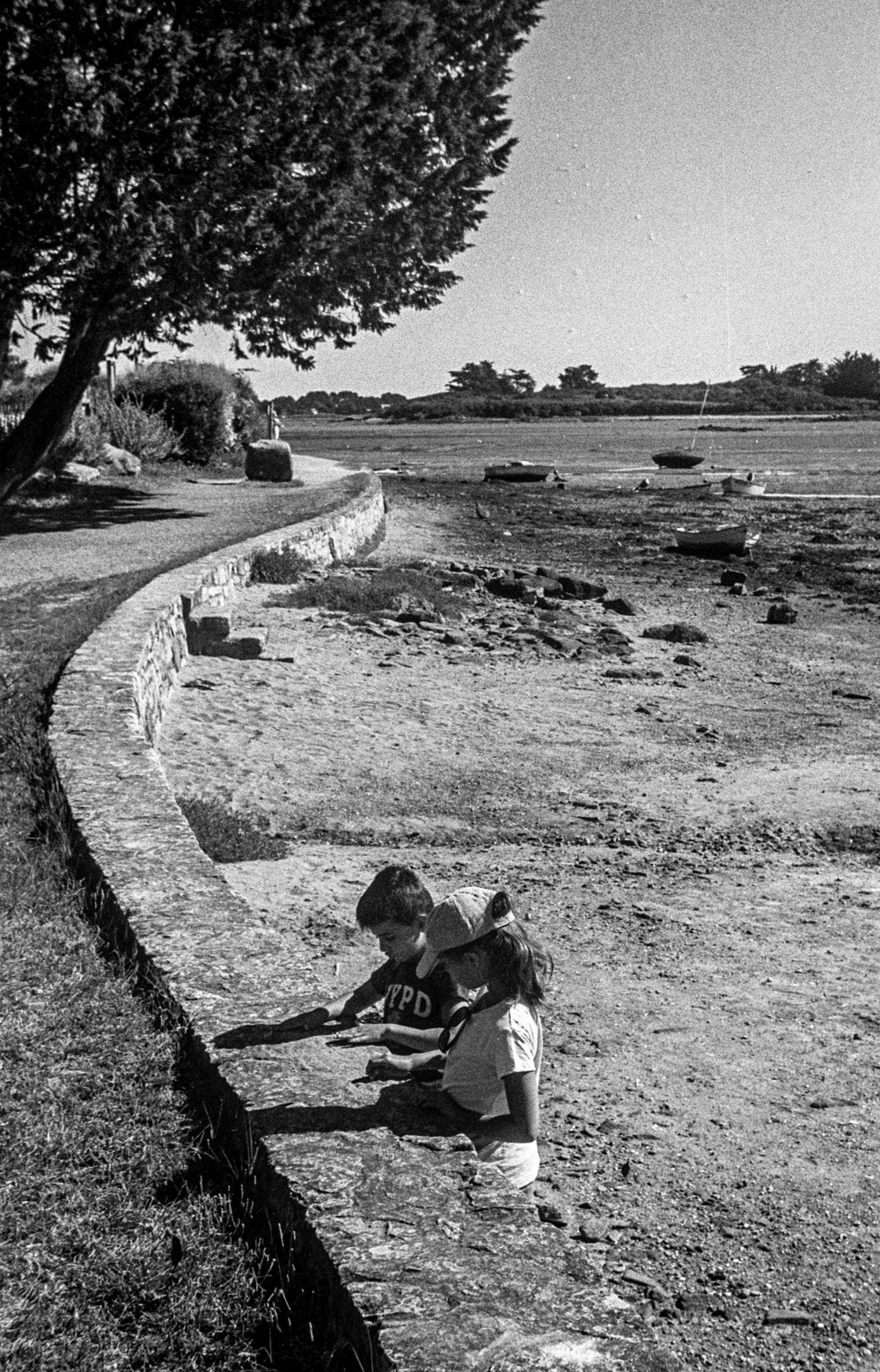
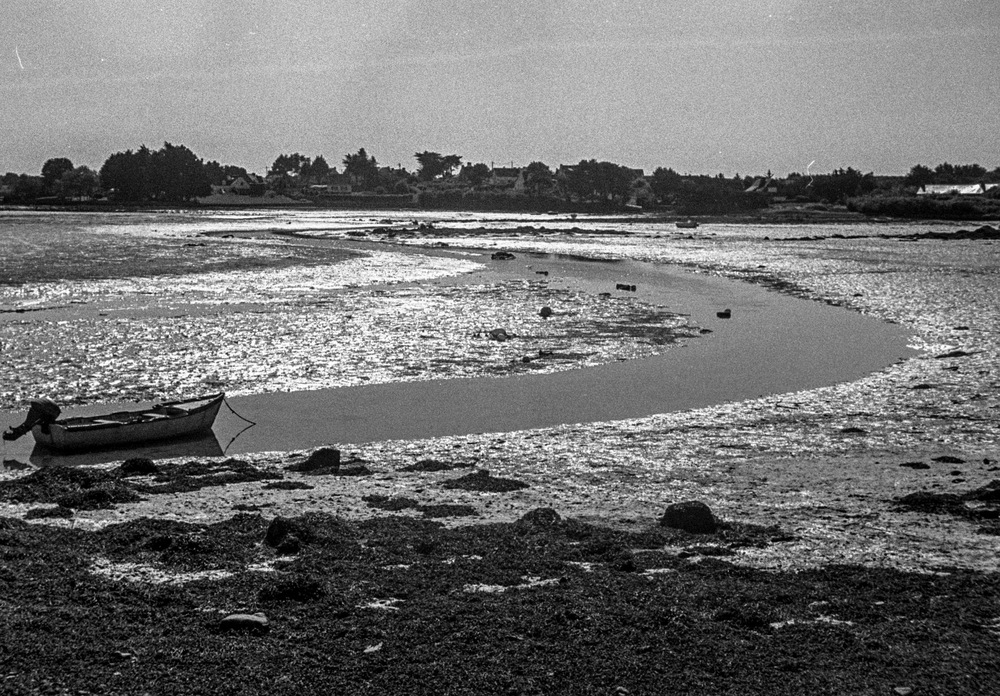
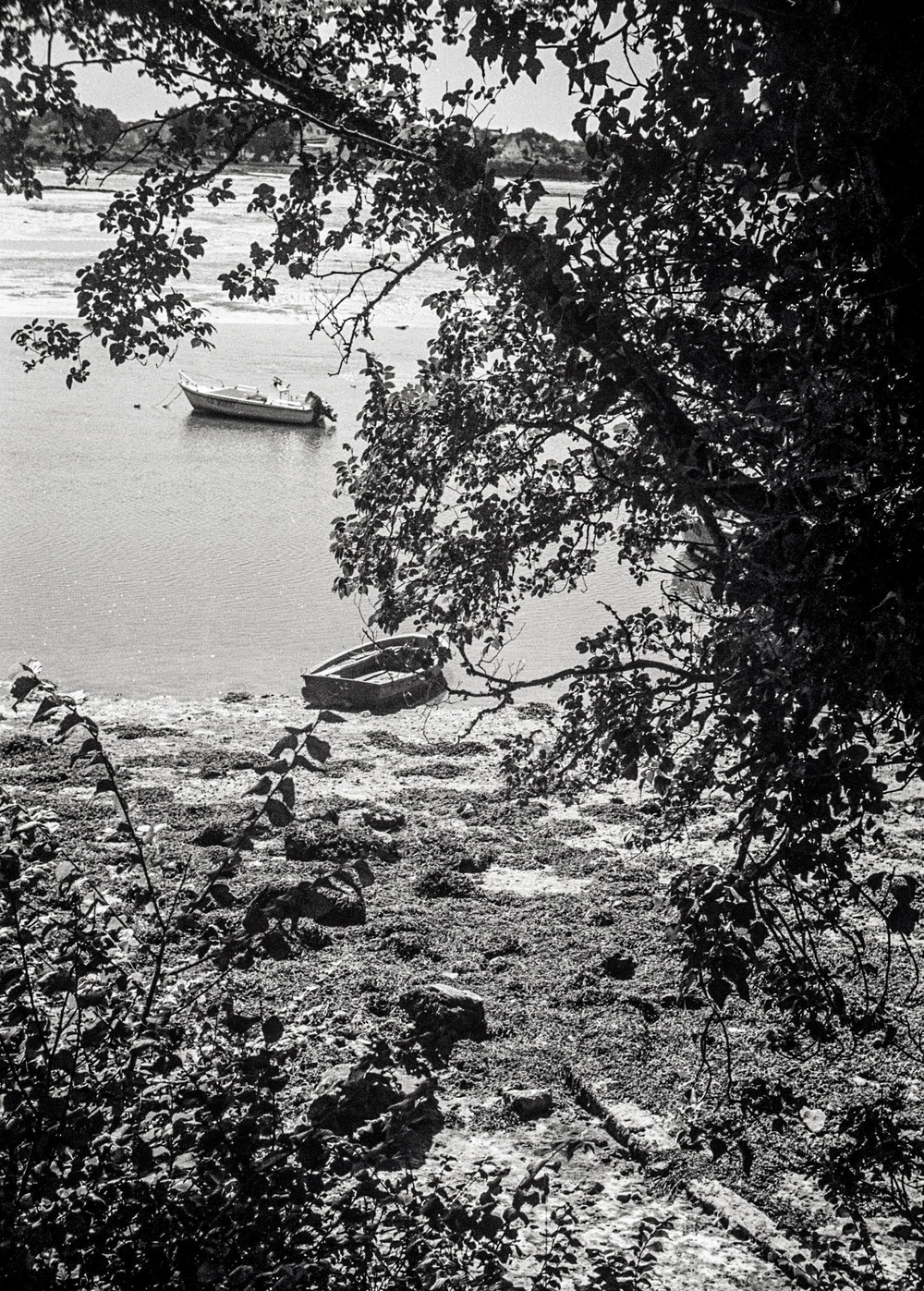
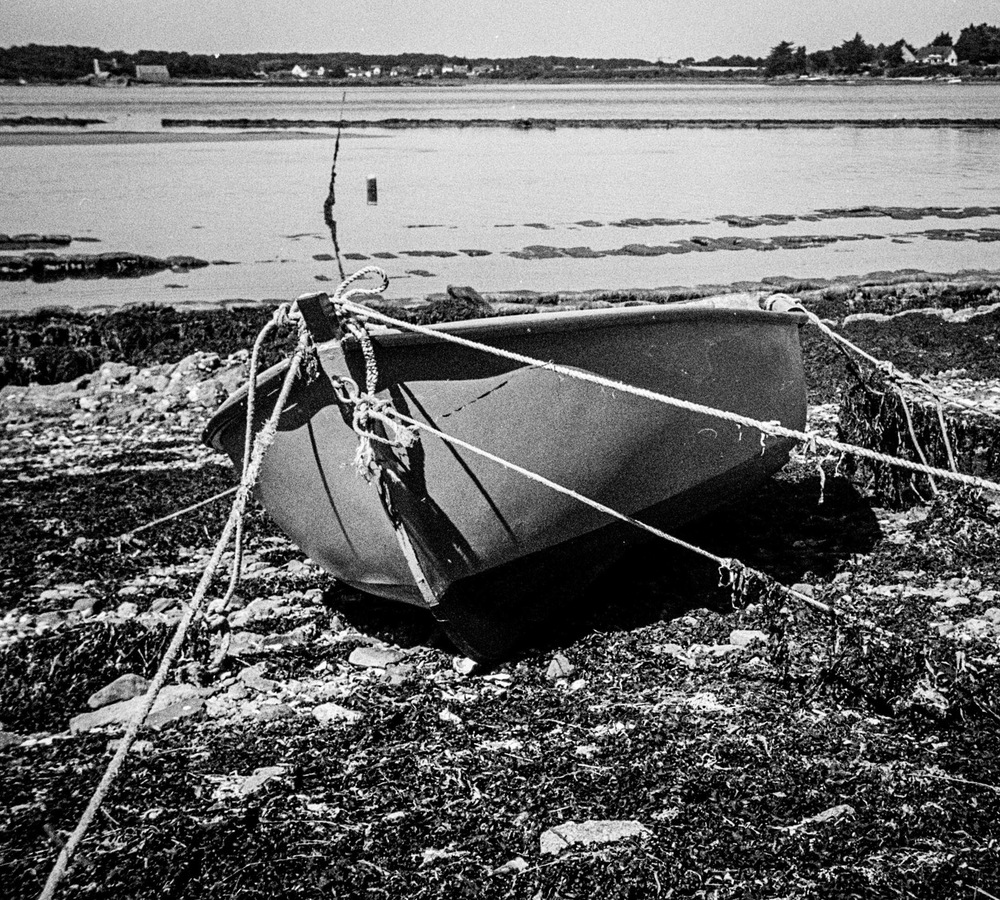
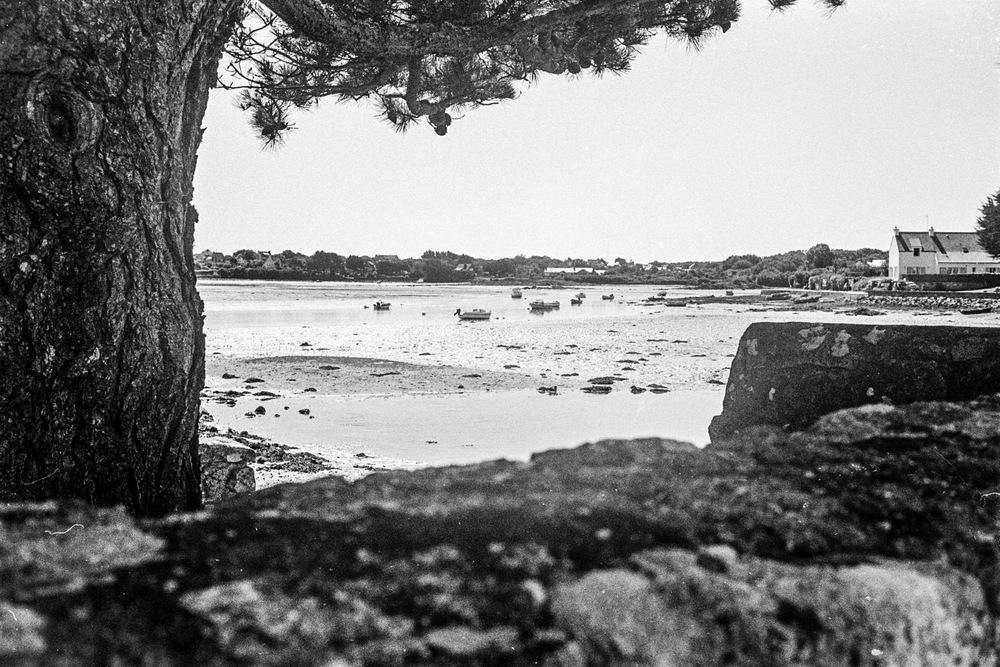
We’ll start with Saint Cado. It’s one of those picture-perfect postcard places. It’s not easy to take a bad photo of the place. It’s photogenic. It’s quaint. It has all the clichés of a small Brittany island in the Ria d’Etel, which is an inland sea connected to the Atlantic at the Barre d’Etel… I’m thinking lobster pots, oyster beds, black and white houses with slate roofs, a local Saint, a chapel to this local saint, who was actually from Wales of all places, and a miraculous fountain that fills up with every incoming tide. Yes, it’s one of those places… Did I mention that the bridge that links the island to the mainland is a Devil’s bridge? It is said that the devil demanded the soul of the first creature to cross it. The story relates that Saint-Cado, who was a shrewd fellow, put a cat on it! It is just gorgeous!

Let’s talk about the Kodak Retinette 1B. As I said in the introduction, it is a camera from the 1960s that uses zone focusing, and the 1B as opposed to the 1A has a selenium light meter that works a treat. Zone focusing is where you focus by zones. Mind-blowing, right? If I look at my lens, I will see a distance measurement that I will use as a guesstimate. I will move my aperture dial and let’s say I’m at F8, well everything from one F8 to the other F8 will be in focus. A lot of cameras from this period used this system, and it works. If you want to open right up to F2.8, then there are little rangefinders that you can put on the hot shoe mount and there you will be able to get an exact reading for the distance from your subject. Up to you…

Why use a camera that is over 60 years old?  First of all, why not?  It works.  It’s simple to use.  It doesn’t need a battery.  You load your film and Bob’s your Uncle!  Off you go to shoot your 36 exposures.  It also looks pretty damned sexy hanging around your neck too…  It actually looks so sexy that my son nicked mine, and I had to go and get another one.  At the time of purchase I must have paid no more than £15, and even now it will cost you less than £50.  

So there you have it – a charming little island, a vintage camera, and a roll of trusty HP5 Plus. This trip to Saint Cado was a reminder that sometimes, the best photos come from the simplest tools and the most unexpected places. And who knows, maybe those old film cameras aren’t just gathering dust in the attic – they might just be waiting to capture your next adventure. (But if you happen to see my son with a Kodak Retinette slung around his neck, please tell him to bring it back!)

The Opening of the Film Archives – Penthièvres July 2016


I don’t know about you, but I’m really getting into this Film Archive business. It’s great sharing these archives with you all, and it’s certainly bringing back lots of memories to me. Maybe less for you because I haven’t published them here yet. But I know you’ll like them as much as I do.

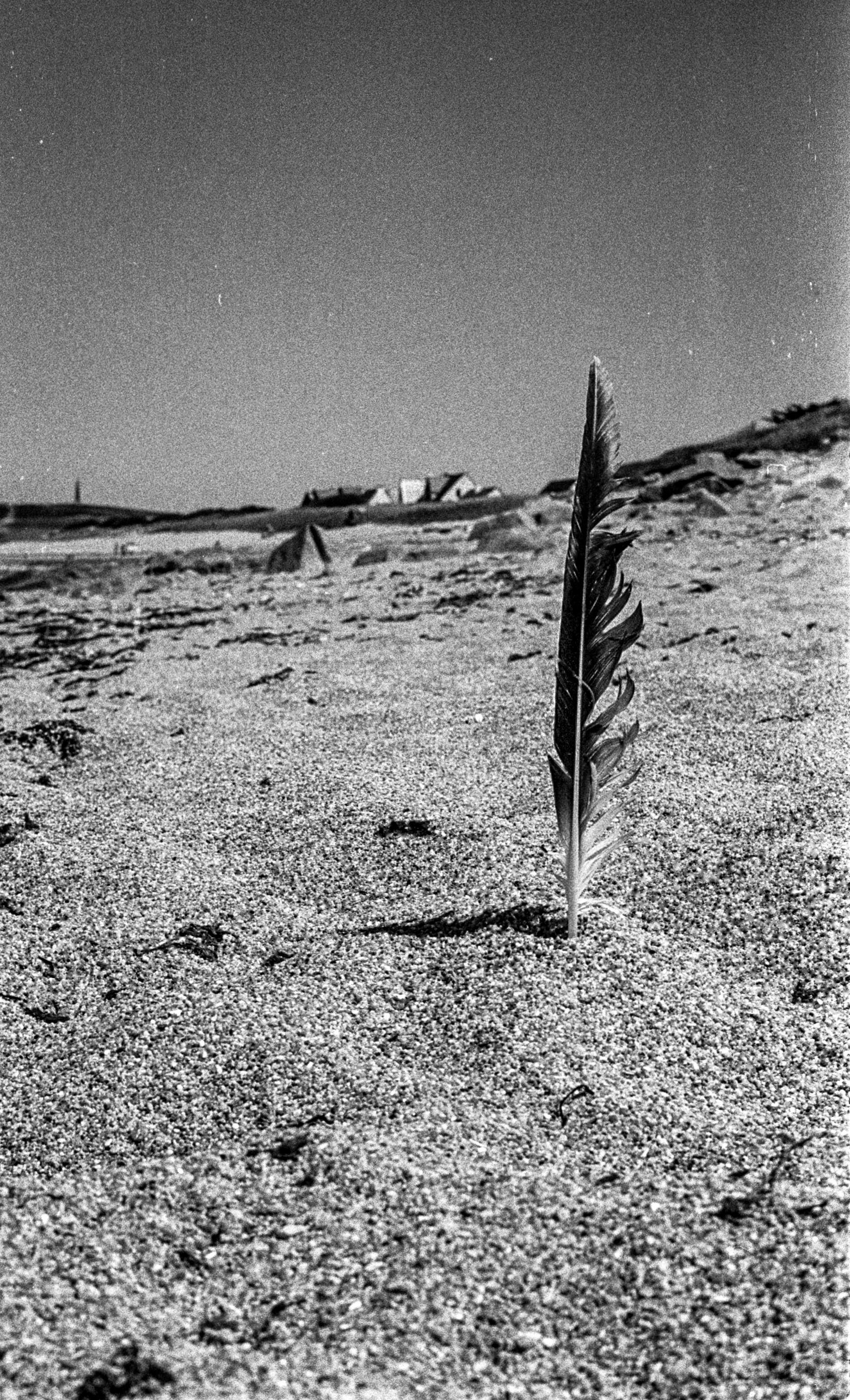
This particular set of photos was taken on Penthièvres beach, located on the Quiberon Peninsula in the Morbihan. It has a special place in my heart. Not just because I like the sea, but the smell of the sea, and the feel of the sea air on my face. It’s a place I often escape to for a bit of tranquillity especially with the chaotic nature of family visits.

In some respects it’s strange going to the beach to “relax” as it’s something I usually hate.  The idea of the outing to beach with the family and putting towels down, with rocks on each corner of the towel, and having to watch over children going to swim and bathe, making sure they don’t drown because you’ll get shouted at.  The shouting of the children, and worse other people’s children.   Getting sand in between your toes and then getting back to the car and having the impression you’ve brought back the whole beach…

But here it was different.  Boots stayed on.  No screaming children.  Just the wind, the heat of the sun, just being an observer and not having to chat with anyone.  Being able to capture the beach on film.  Pure, solitary bliss.

So, now that you know where we are, let’s look at the camera and film du jour. The film stock that day was the usual Ilford HP5 that I always used at the time, a classic choice for its versatility and ability to capture the subtle nuances of light and shadow. The camera was the Ukrainian made rangefinder, FED 5 manufactured during the Soviet era. Loading the film with this camera is done by unscrewing the base plate, similar to the way one does with a Leica. The focusing with the “ghost” image is spot on and it’s a joy to use. I still love the smell of the leather case too. As in much of my film photography it’s as much about the experience of shooting as the final images.

In the end, Penthièvres became more than just a backdrop for my photographs. It became a sanctuary, a place where I could reconnect with my love for photography and find solace in the beauty of the natural world. These images are a testament to that experience, a reminder of the power of film to capture not just the physical landscape, but the emotions and memories that are woven into every frame.

The Opening of the Film Archives – Carnac, 26/06/2016


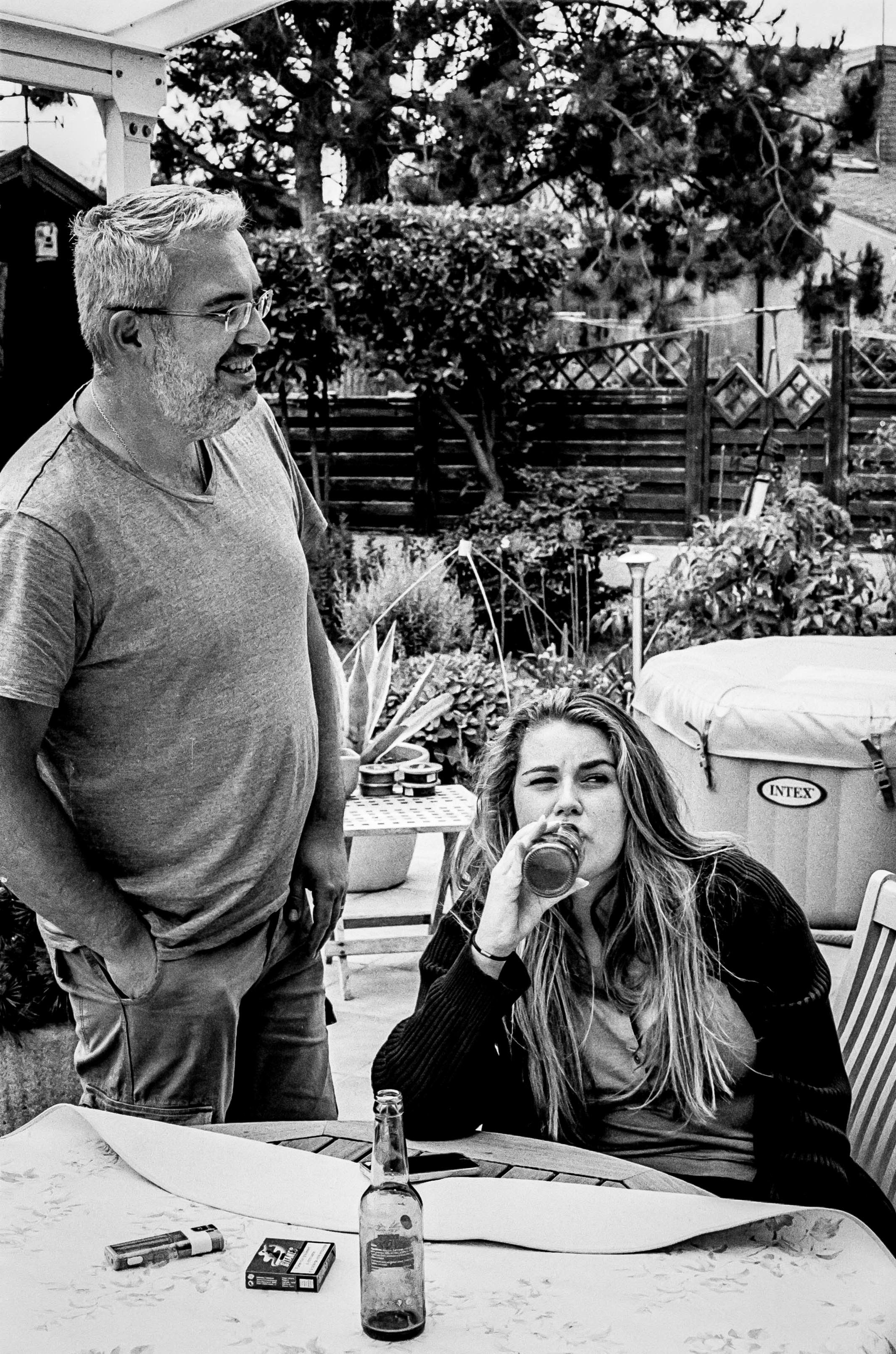
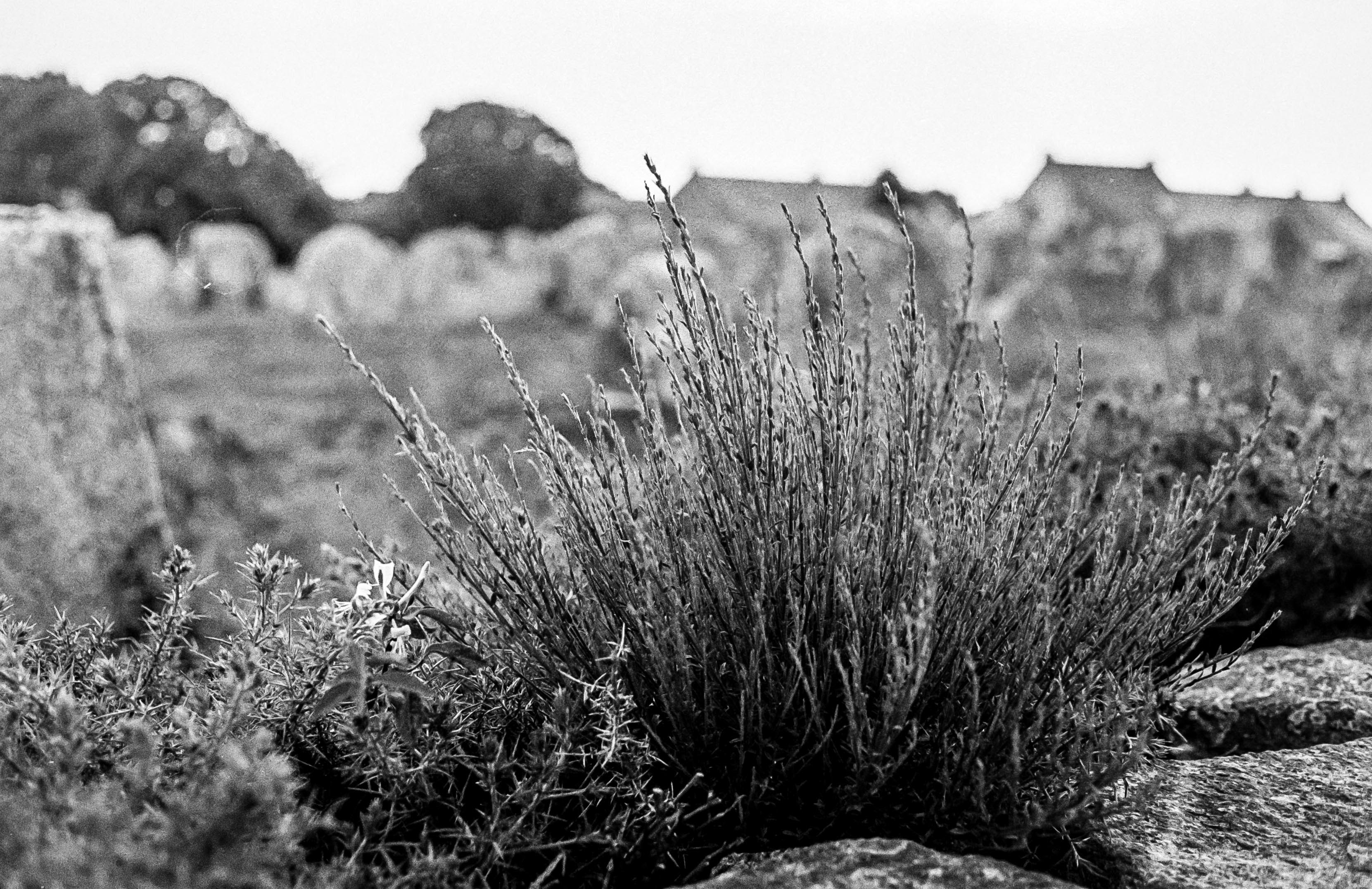
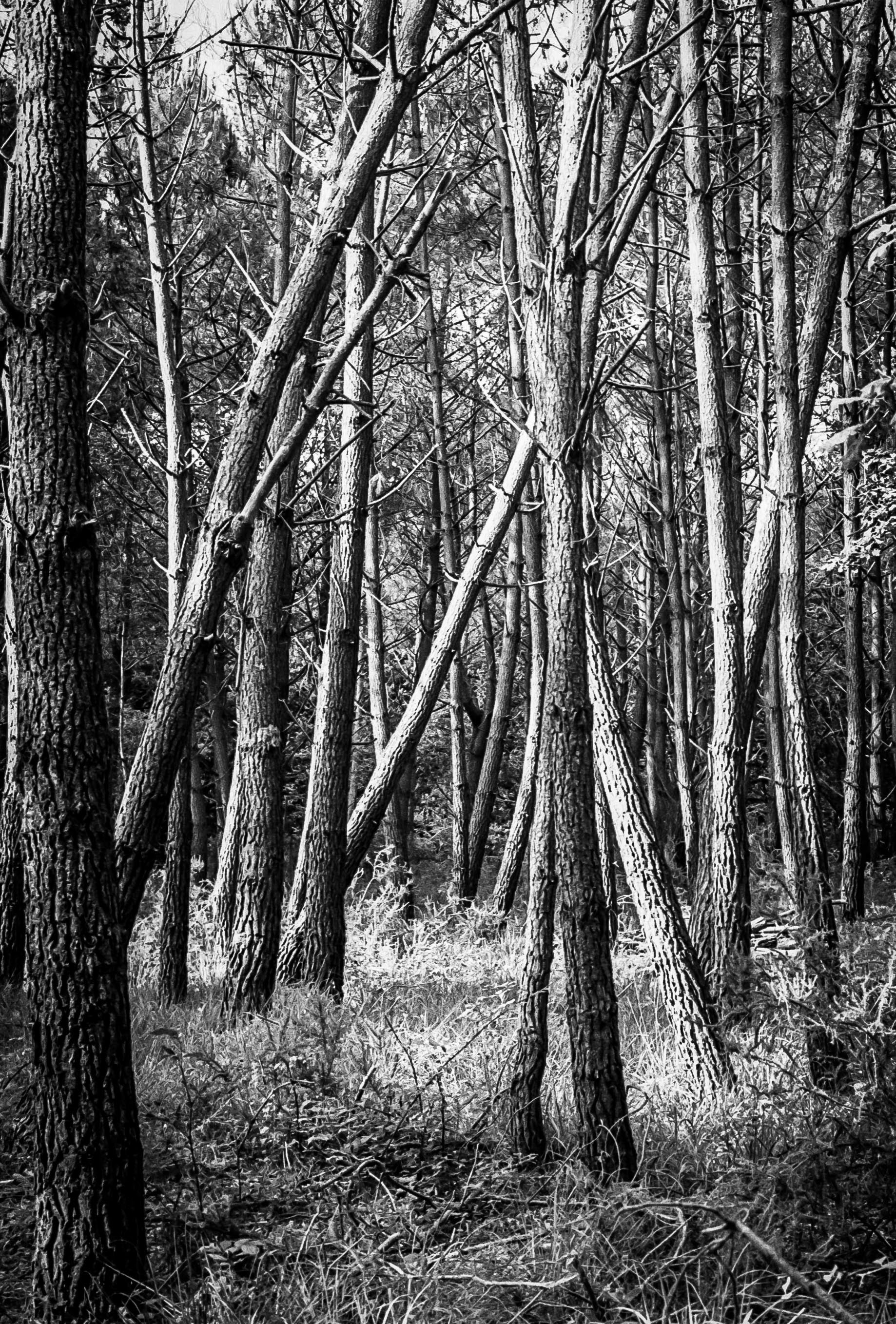
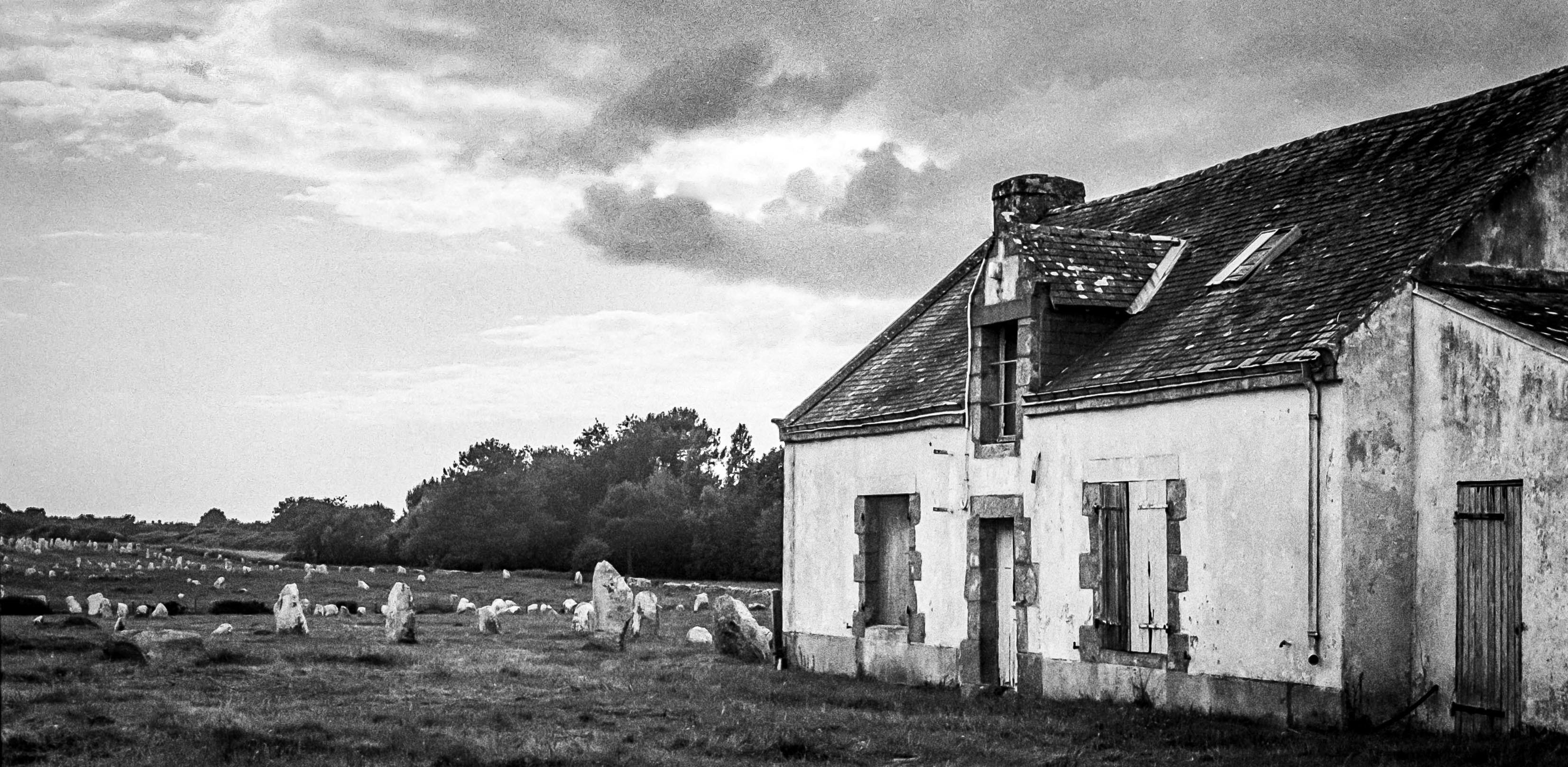
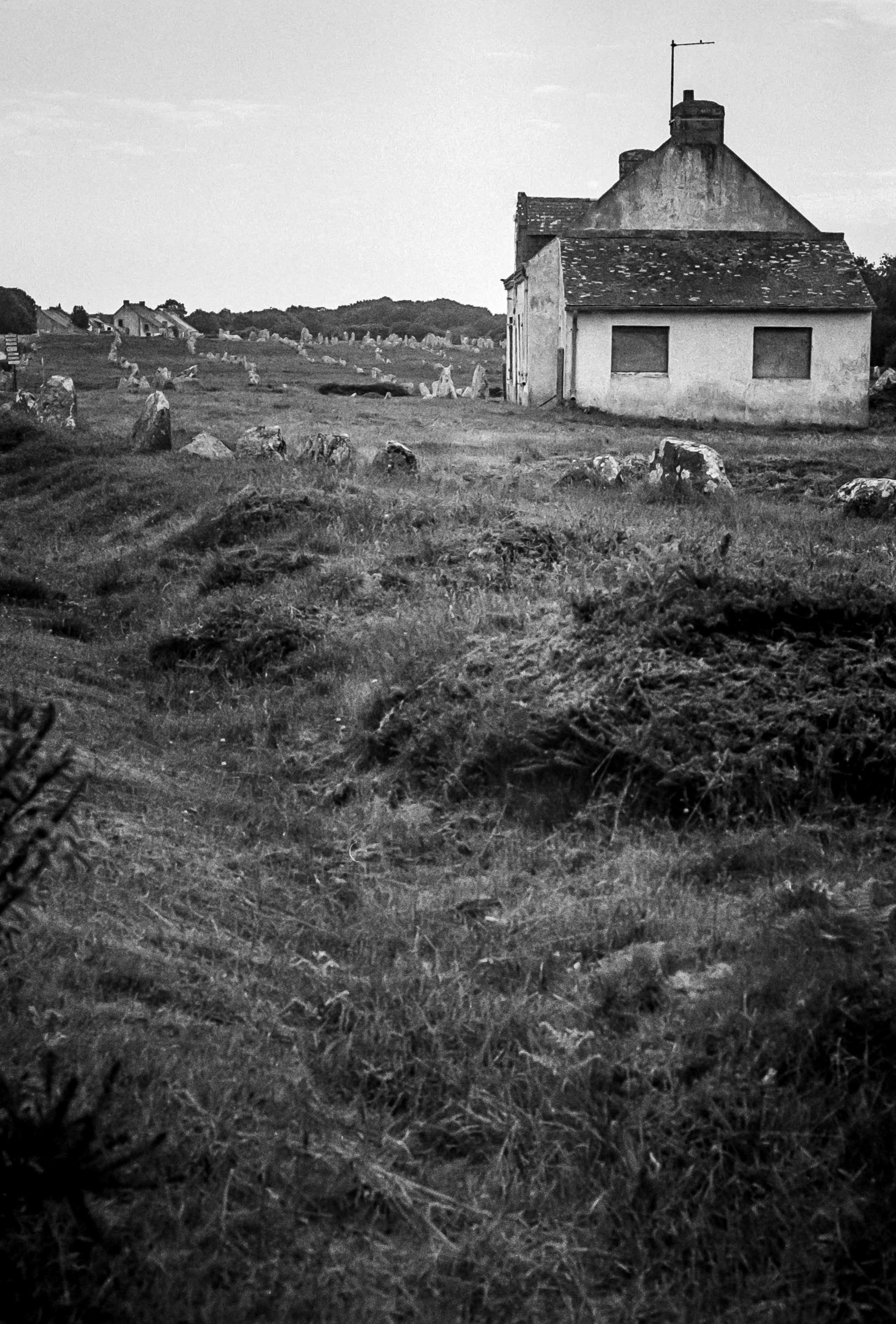
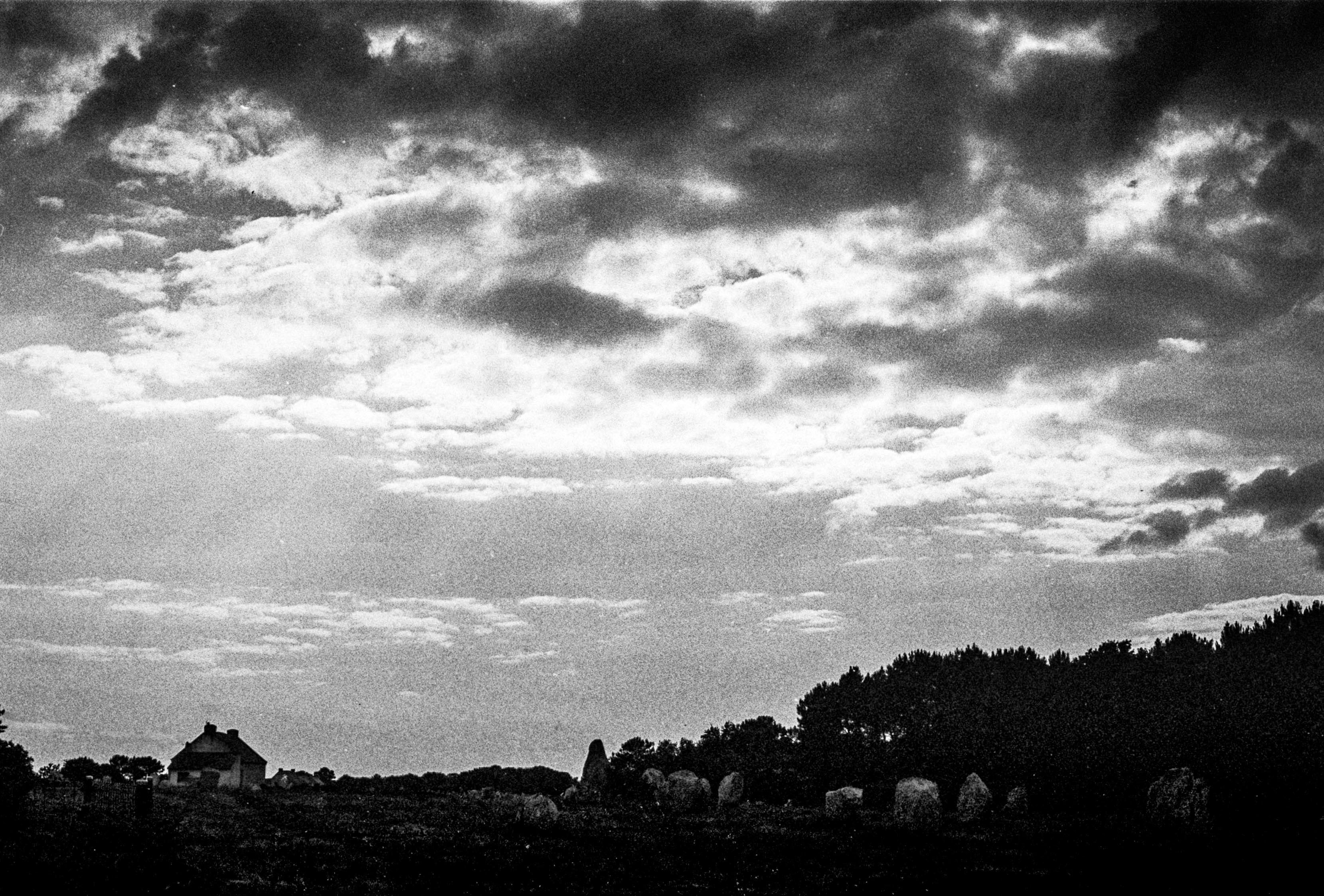
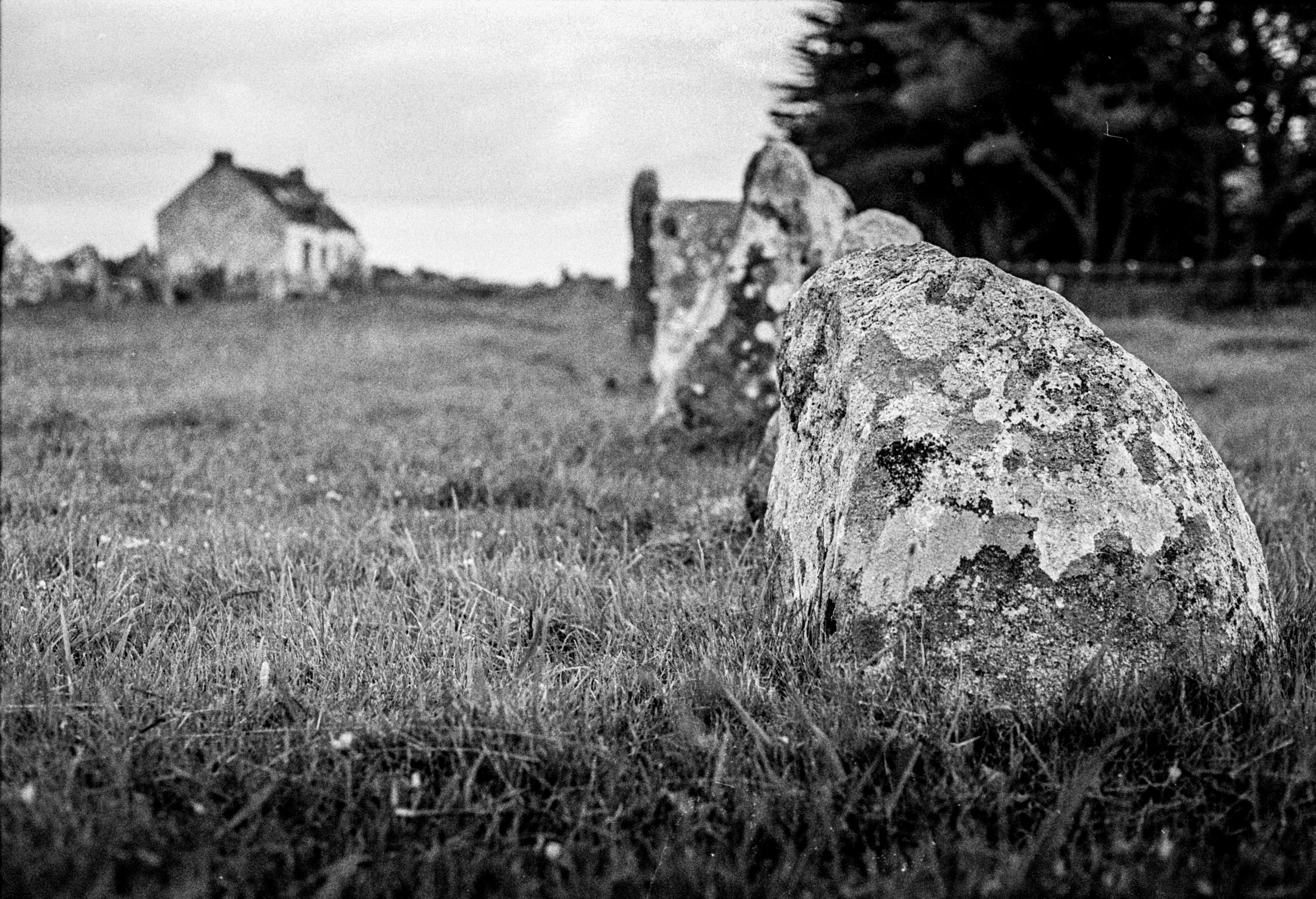
The photos in this article, from the famous film archive, were taken eight years ago almost to the day, during a weekend visiting my mother-in-law near Carnac, and near where my father-in-law lives. They’re divorced, and as usual, I stayed with her, not him. The photos feature my brother-in-law, who bears a striking resemblance to a beefy Dominic Farrugia, and my niece – not my favourite, but likeable enough (and those who claim not to have favourites are just liars!).

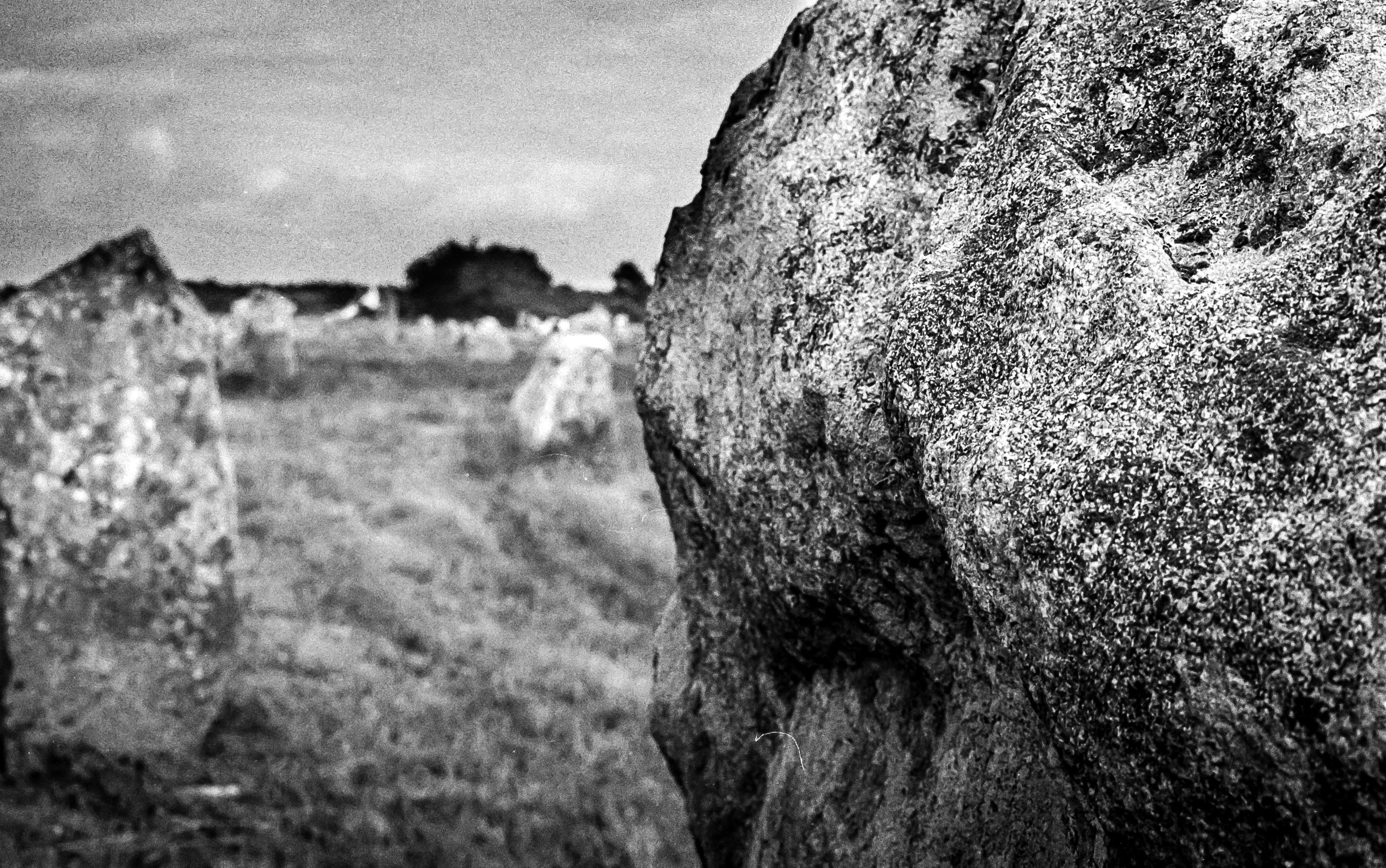
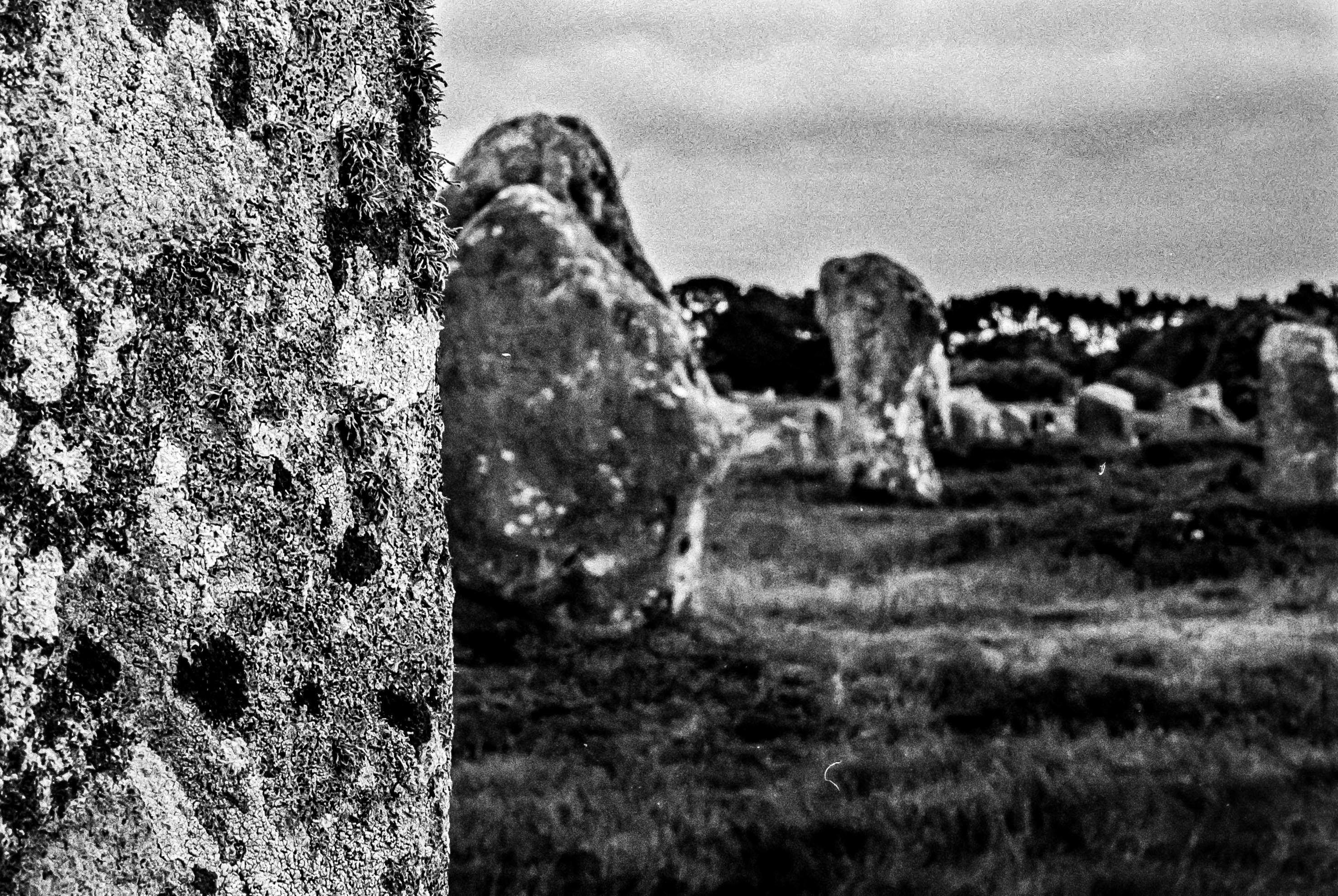
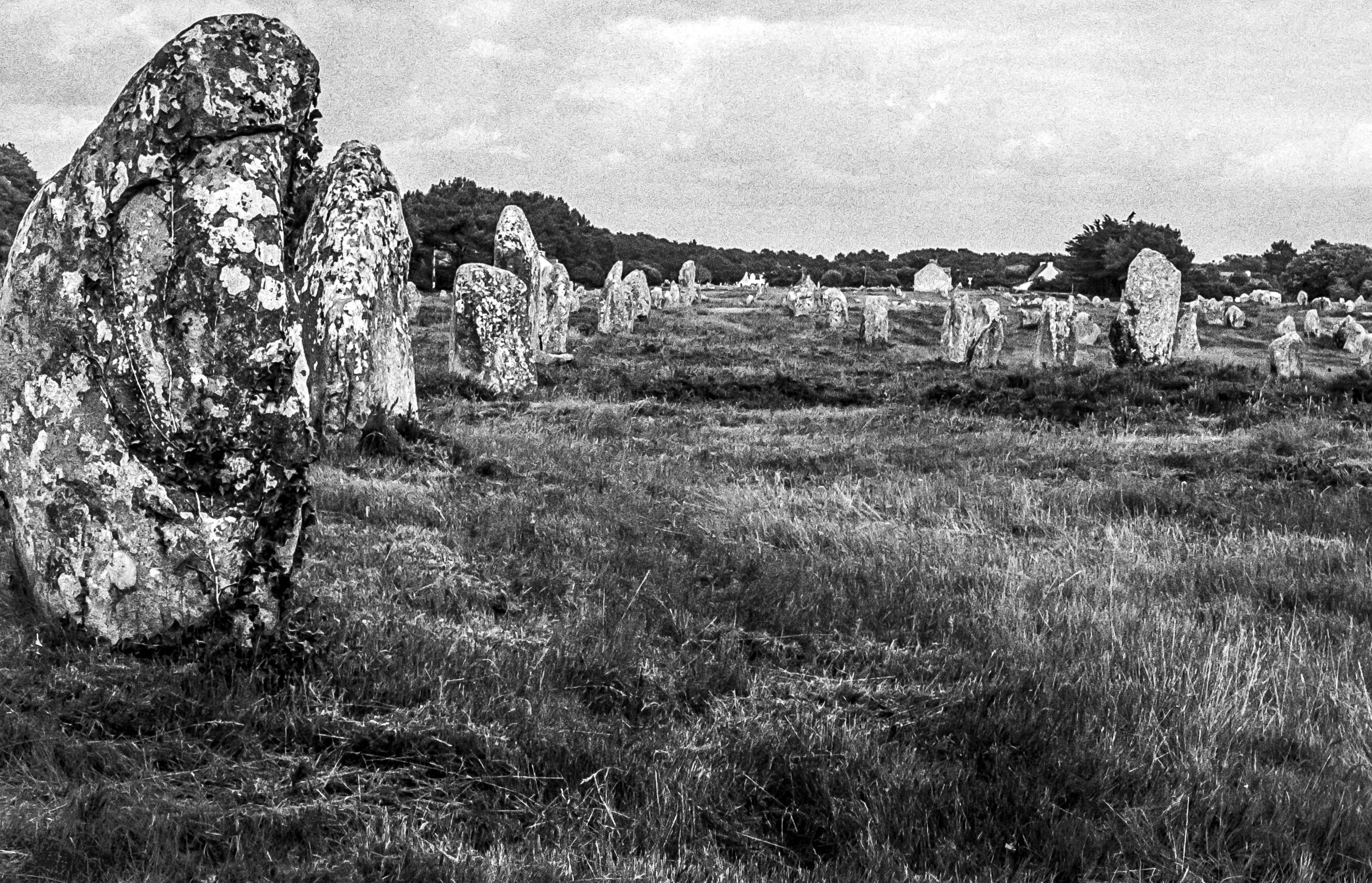
I shot these with my Canon AE1, a camera that saw a lot of action back then. Loaded with Ilford HP5 Plus and developed in Rodinal, they turned out a bit grainier than I expected, even for HP5 at box speed. I blame my overly enthusiastic agitation during development – I’ve always been a bit of a stirrer! Even back then, I had this habit of sneaking off to “do some photography,” a habit that hasn’t changed much, it seems.

Funny thing is, this wasn’t my first time in Carnac. As a kid, plagued by ear infections, flying was out of the question, so we had many a family holiday in France. One such trip was to Carnac, in the Morbihan region. Who would have thought that over 30 years later, I’d be back here so often?

Now, 30 years ago, you could wander freely around those mysterious Carnac stones. My mother, bless her imaginative soul, convinced me they were people caught dancing on the Sabbath and turned to stone as punishment. Ever since, I’ve had a healthy aversion to Sunday line dancing! Sadly, you can’t get close to the stones anymore – they’re cordoned off, perhaps a warning to those Breton folk dancers not to get too carried away.

Back then, HP5 was my go-to film. I wanted to know it inside out. Visiting the stones was a welcome escape from the lively, shall we say, family gatherings. Don’t get me wrong, I love my in-laws, but their intensity can be a bit much for this introvert. The stones, silently standing there, offered a tranquil contrast.

Years later, I watched a film, “The Fablemans,” about Steven Spielberg. The advice at the end, to keep horizons high or low in your images for more interest, struck a chord. Unbeknownst to me, I was already doing this! When I first started out, I meticulously documented every shot in a notebook – aperture, speed, film, camera, the lot. I kept this up for over a year before finally giving it up. These days, all that info is tucked away in your image file’s metadata, but not with film. There’s a certain freedom in that, wouldn’t you agree?

Reflecting on these old photos from Carnac, I am reminded of the enduring allure of photography and the quiet majesty of ancient stones. Each visit to Carnac, captured through the lens of my Canon AE1 and HP5 film, evokes memories of childhood holidays and solitary moments amidst family gatherings. The evolution from meticulous note-taking to embracing the simplicity of film photography has taught me to approach each shot with intention and mindfulness.

In the digital age, where metadata stores the technical details of our images, there remains a certain freedom in the analog process. It encourages a deeper connection with the art form, requiring us to engage fully in the moment of capture. The stones of Carnac stand as timeless witnesses to history, echoing the evolution of photography itself – ever-present, ever-evolving.

As I continue to explore new landscapes and subjects through my lens, I carry with me the lessons learned amidst the stones of Carnac: to capture not just images, but stories; not just moments, but emotions frozen in time. Photography, in its simplest form, remains a profound journey of discovery and expression, rooted in a rich tradition that continues to inspire.

24-70mm Lens: Unveiling the Beauty of Vendée Coastal Landscapes


Work. That familiar feeling of being a hamster on a never-ending wheel. Emails, passive agressive colleagues, and meetings blurring into one another like the monotonous hum of voices in the office. Sound familiar? Yeah, that was me a few weeks ago. So, what’s a weary soul to do? Employ some sartorial elegance with navy blue chinos, a white button down shirt, my new sungalsses, and my favourite Panama hat, and embark on a spontaneous coastal escape to Vendée!

Now, full disclosure, Vendée isn’t exactly the Caribbean. But for a quick mental recharge, it certainly does the trick. Plus, it was the perfect opportunity to put my Canon 6D Mark II through its paces, specifically the oft-maligned 24-70mm f/4L lens. This trusty workhorse gets a bad rap sometimes, but let me tell you, by the end of this trip, I was a convert.

The Vendée coast is a tapestry of stunning landscapes, each begging to be captured. My first stop was Viellevigne (not strictly the Vendée and just on the other side of the Loire Atlantique border), a charming little town I usually just whiz through on my daily commute. But this time, with a camera in hand and a head full of vacation vibes, I saw it with fresh eyes. I framed the quaint church nestled between two ancient trees, a scene I’d driven past a thousand times without a second glance. The hedgerows, usually just a blur of green, revealed a hidden world of wildflowers and buzzing insects when I switched to the lens’s macro function. Suddenly, the familiar became fascinating.

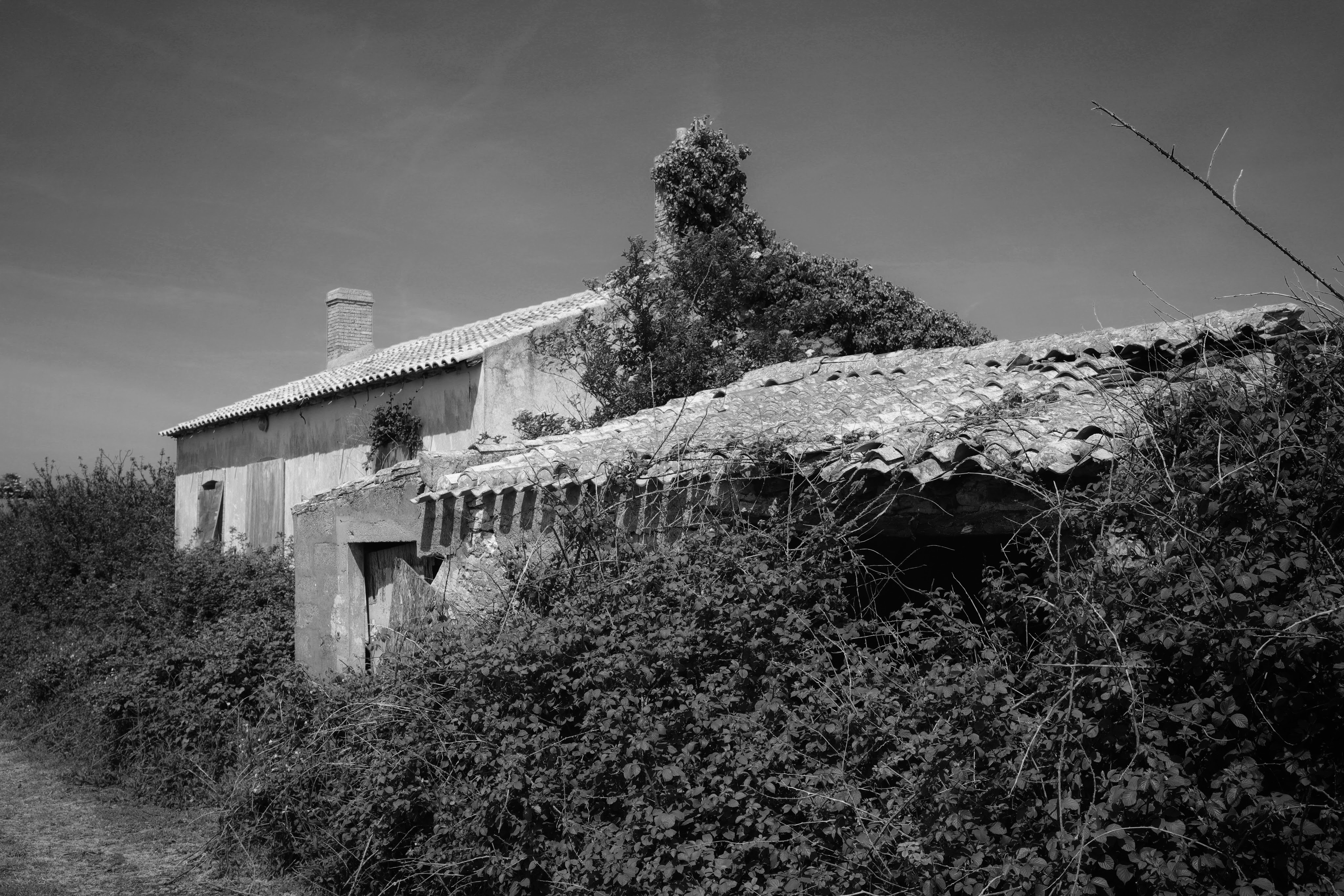
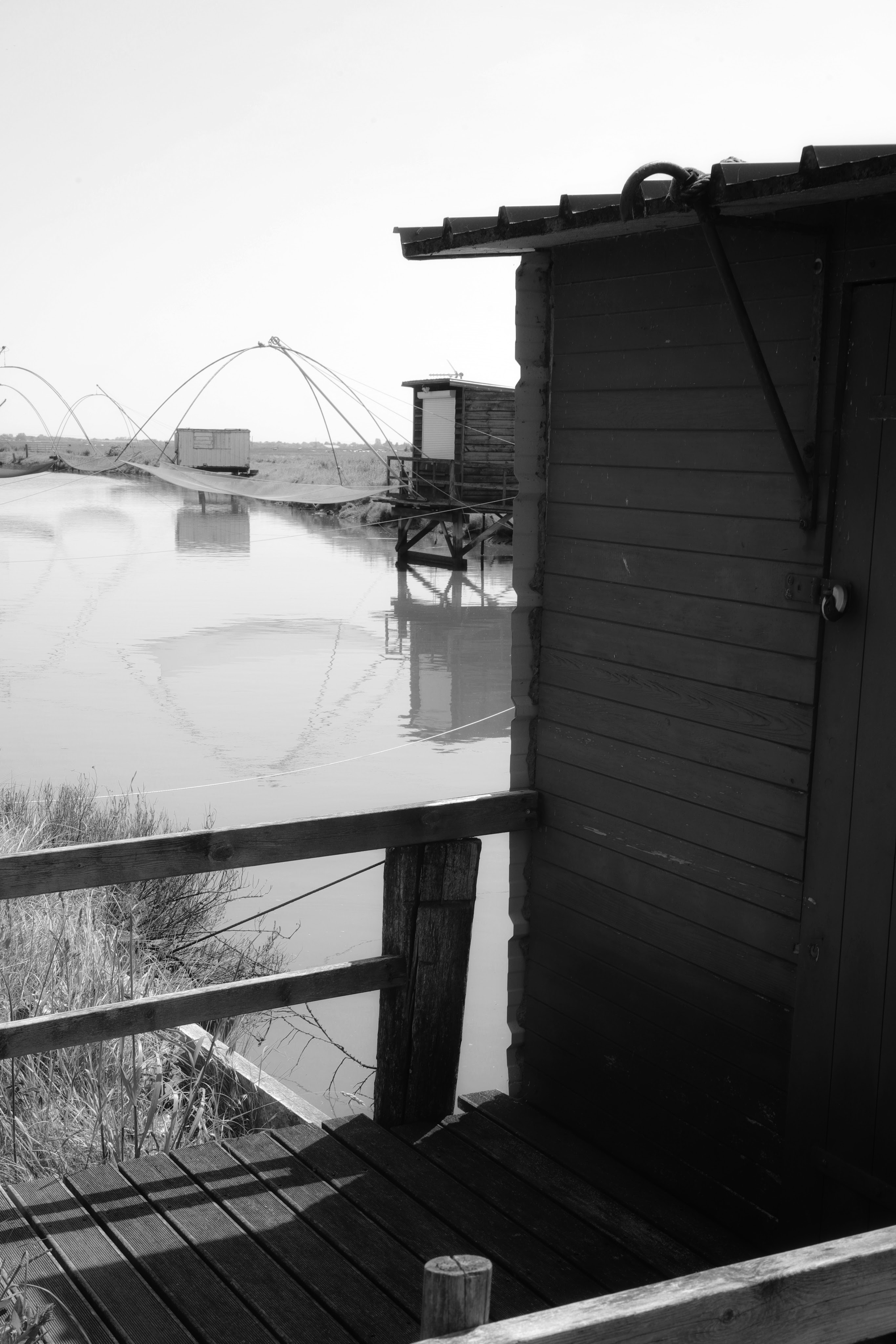
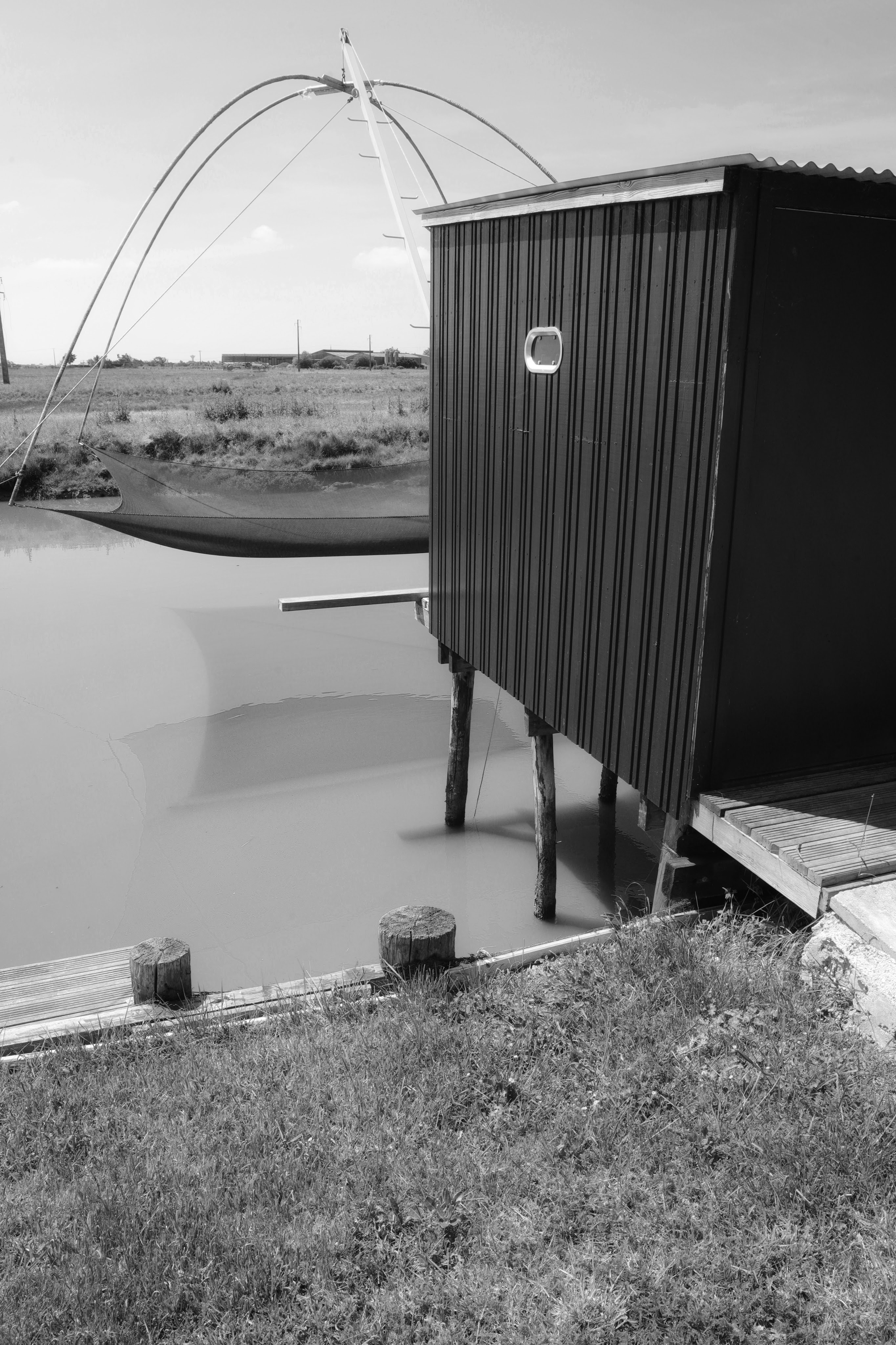
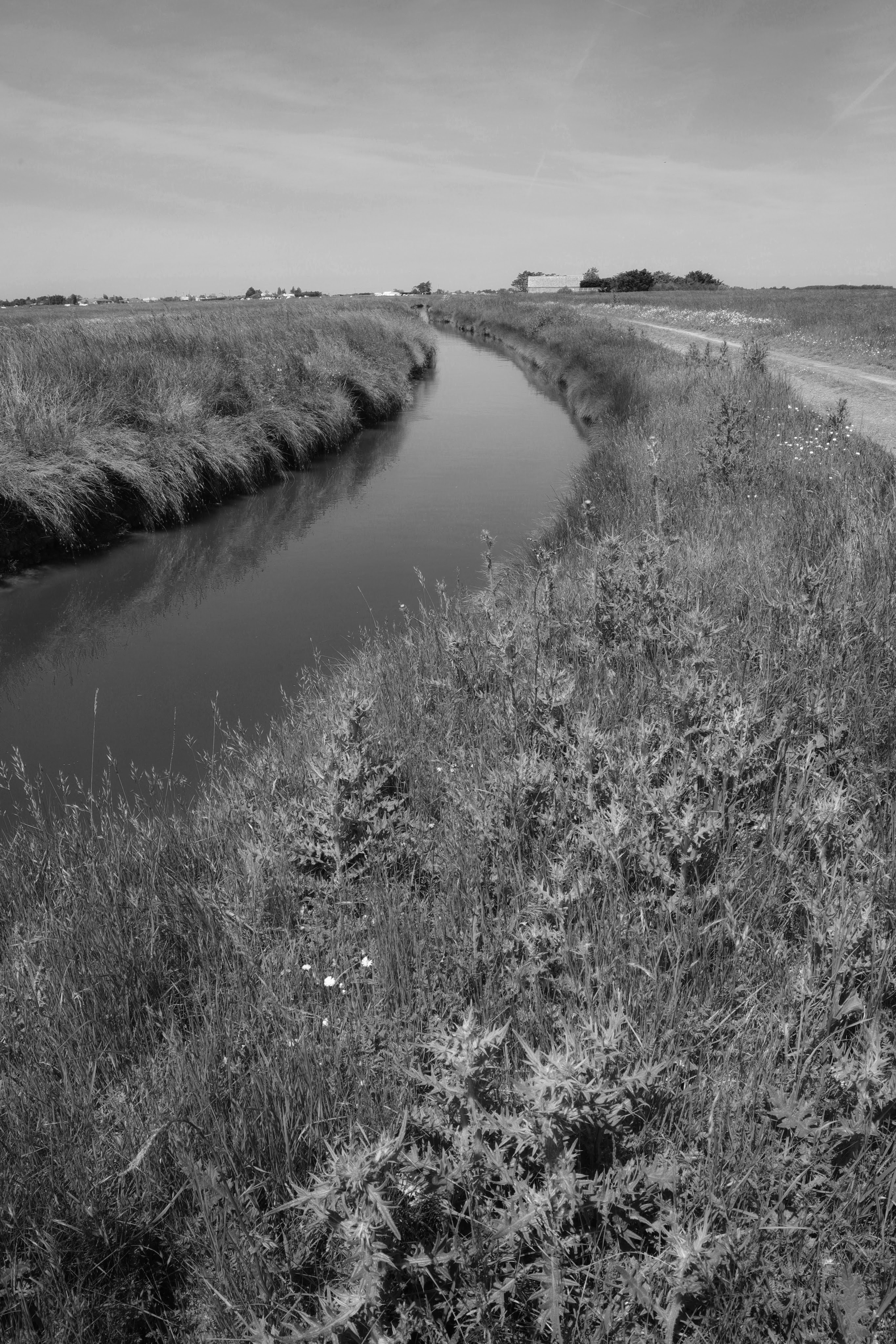
Next, I cruised down to the grand canal near Fromentine. Now I don’t know if grand means big or grand in this instance. I mean it’s not huge, and the grand canal in Venice is somewhat ore deserving of the title. The sun, a generous giver of both light and good mood, cast a warm glow on the weathered ruins of old houses lining the water. Across the road bridge stood a line of fishing huts, its battered paint a testament to years of battling the elements. The 24-70mm here proved its versatility, letting me capture both the vastness of the canal and the intricate details of the local flora.

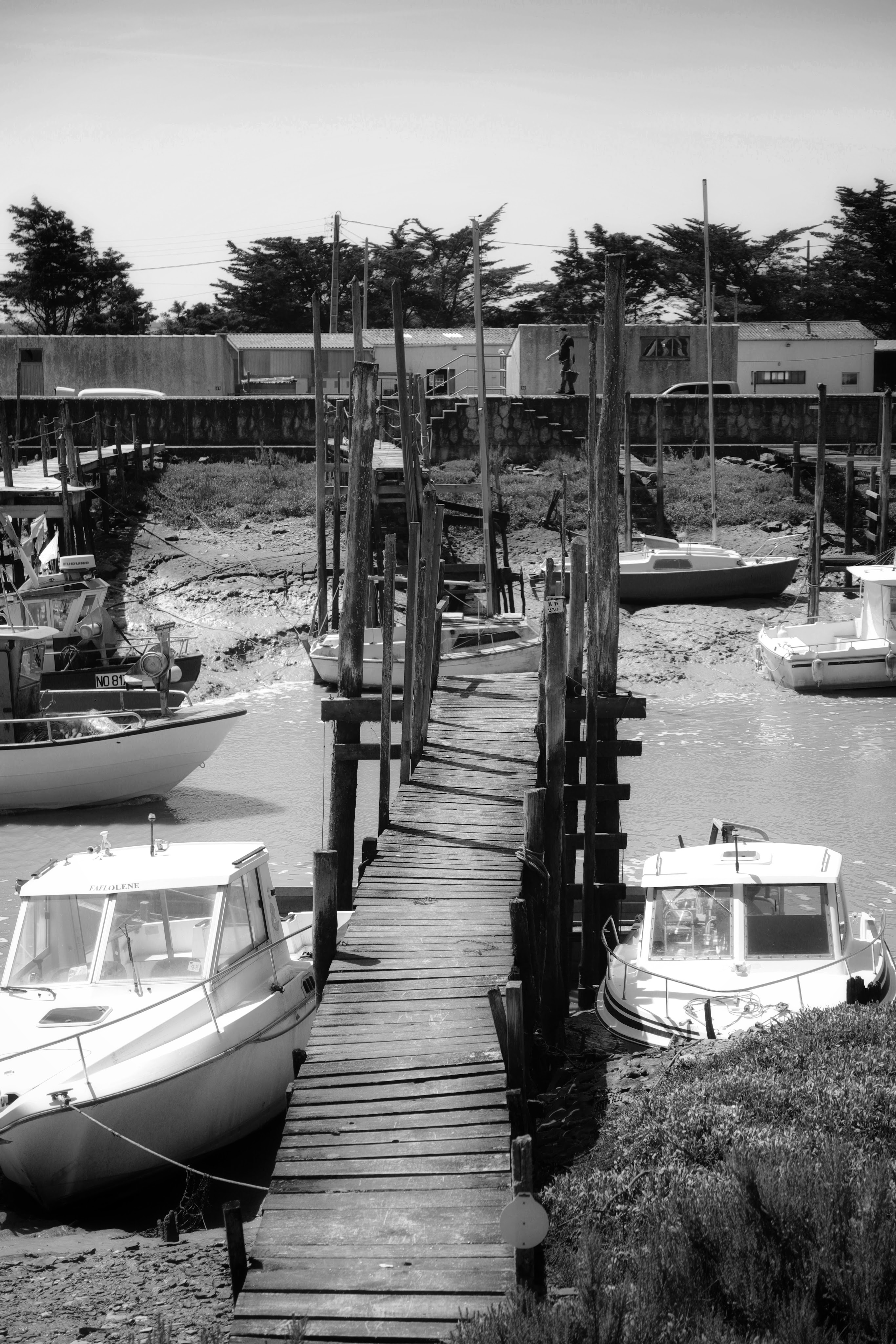
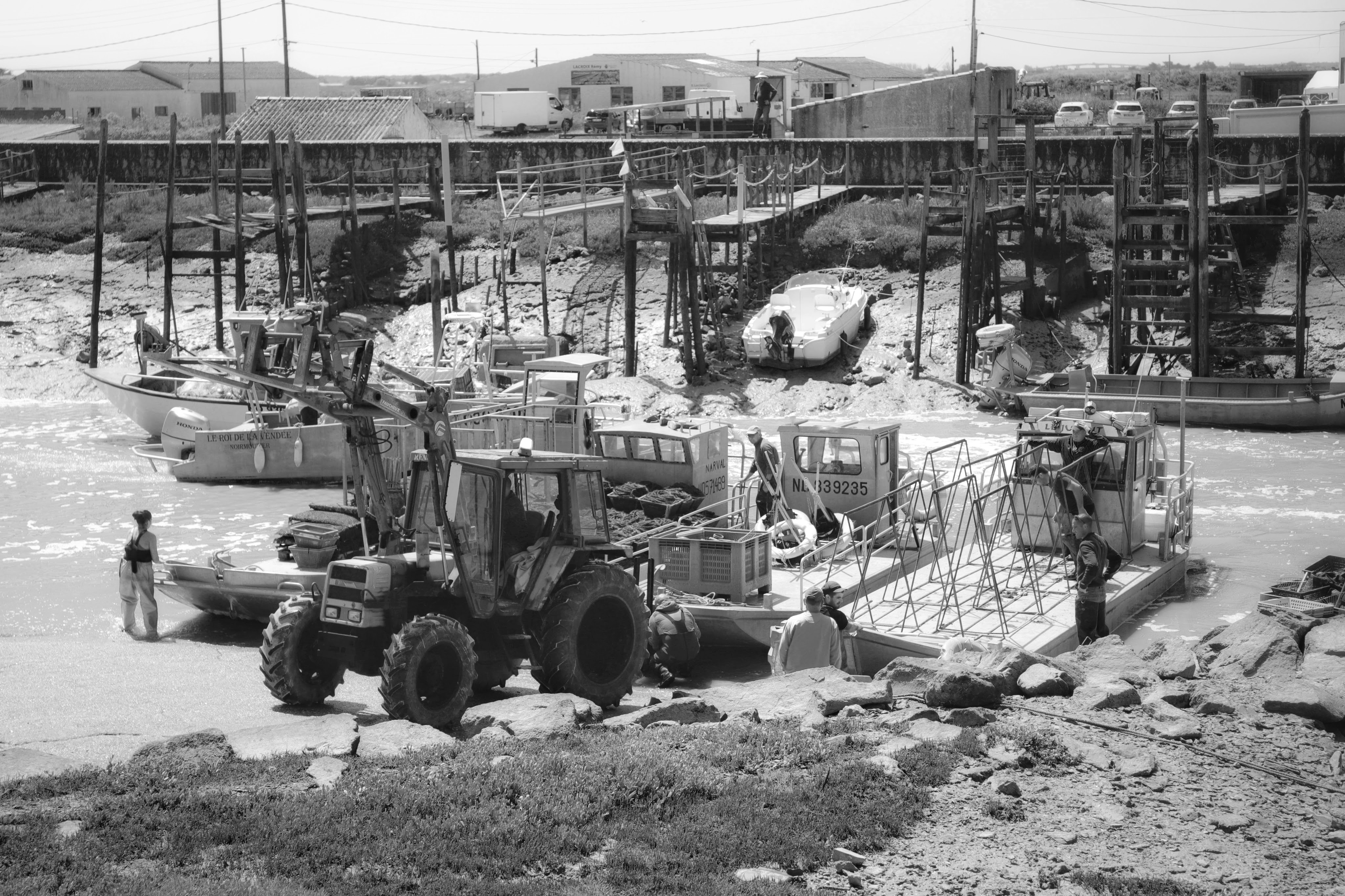
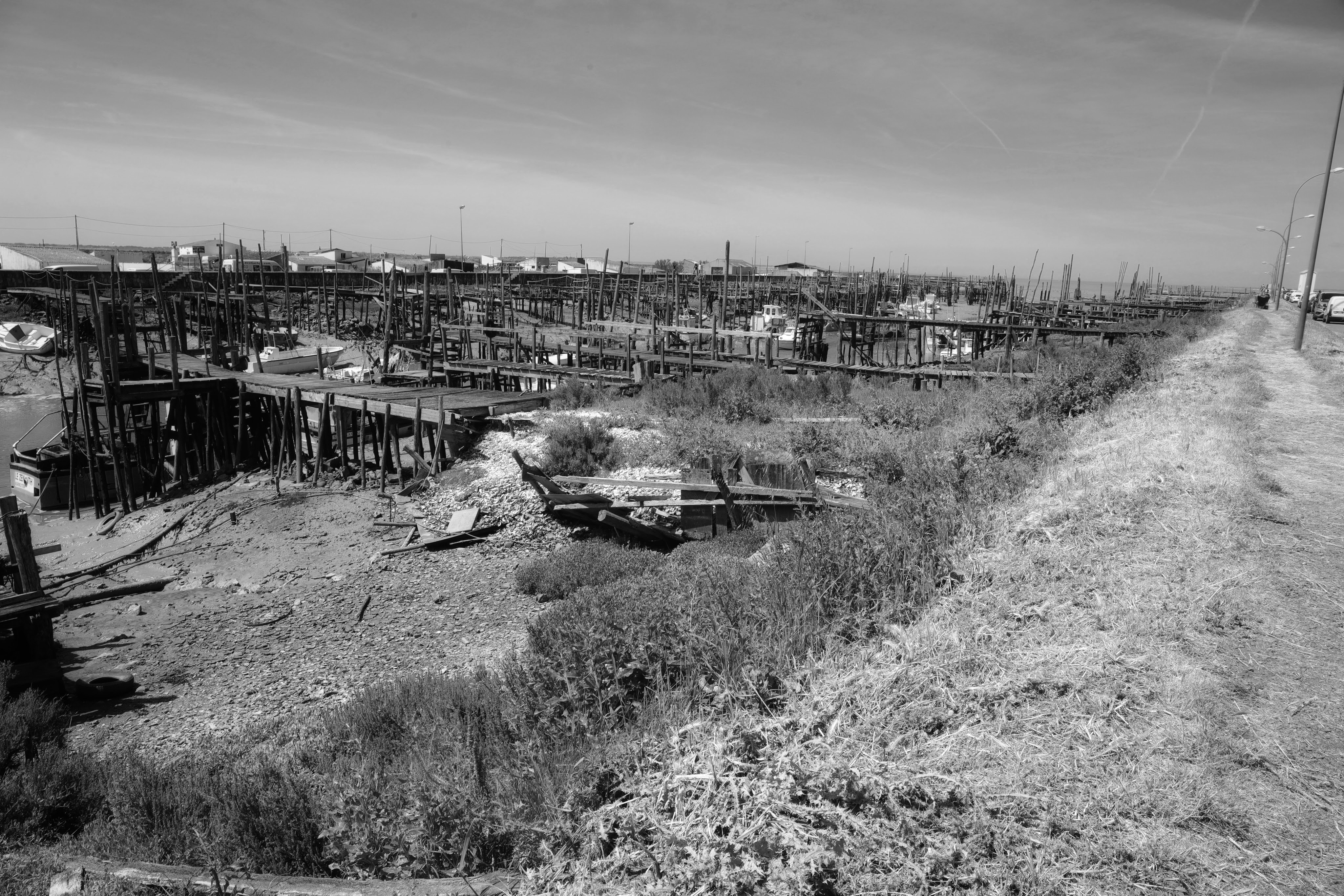
As the day wore on, I found myself at Port de Bec, a haven for oyster farmers. Here, the scene was abuzz with activity. Tractors lumbered out of the water, hauling heavy loads of oyster boats ashore. The rickety moorings, weathered and worn, added even more charm. The lens’s sharp autofocus kept pace with the bustling scene, ensuring I didn’t miss a single detail.

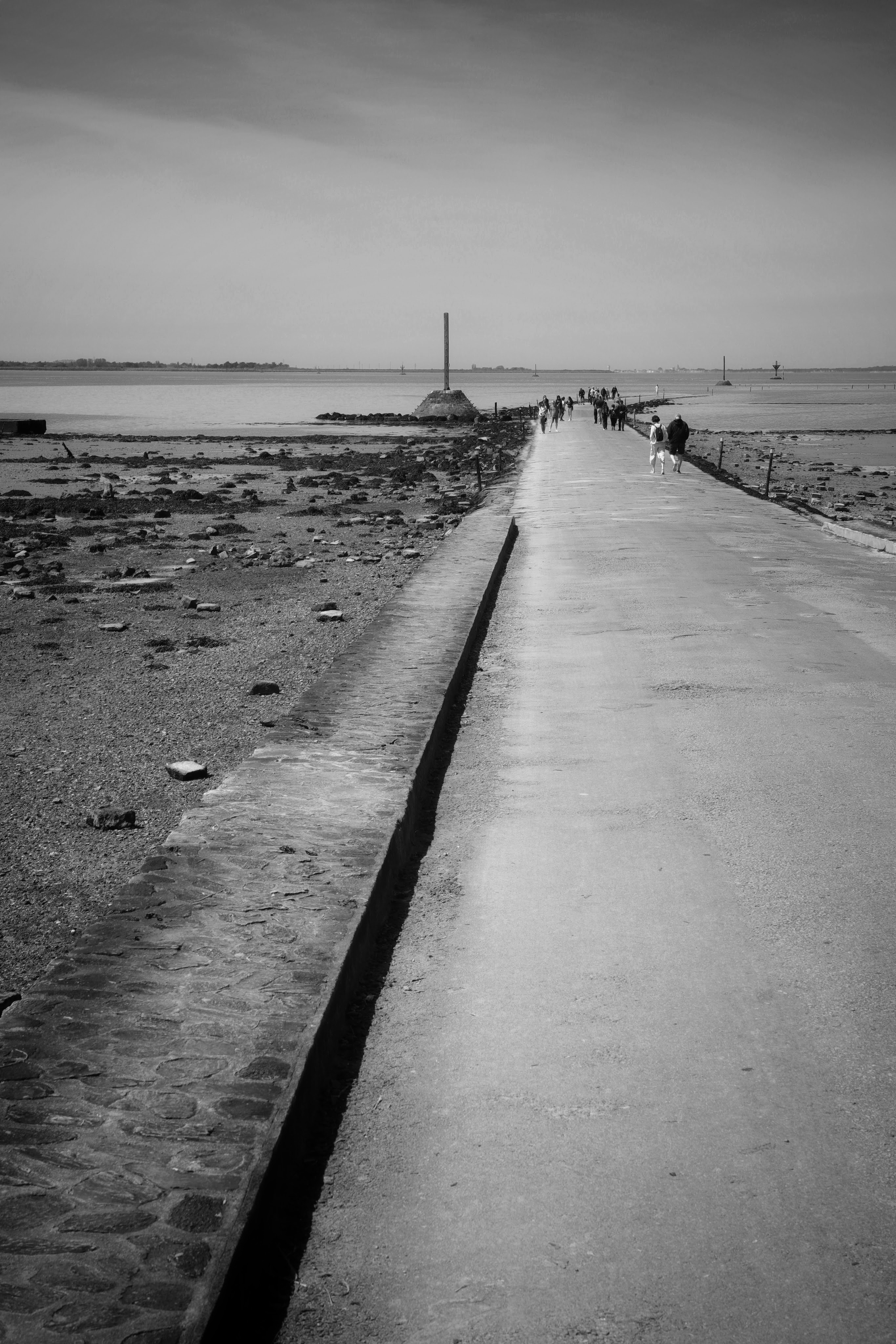
Finally, the crown jewel of the trip: the Passage de Gois. This legendary causeway, submerged twice a day by the tide, is a photographer’s playground (just make sure you keep an eye on the water, unlike yours truly who nearly got his sandals swept away!). The tide was rolling in fast, creating a dramatic contrast between the exposed road and the encroaching water. The 24-70mm handled the dynamic light and vastness of the scene beautifully.

But this trip wasn’t just about capturing stunning photos (although, let’s be honest, those were pretty damned cool!). It was a much-needed reminder of the power of stepping off the hamster wheel, even if it’s just for a short while. The fresh air, the sun on my face, the beauty of the Vendée coast – it all conspired to wash away the workaday stress. I came back feeling refreshed, inspired, and with a newfound appreciation for the magic that can be found right on your doorstep, if you just know where to look.

And the 24-70mm? Yeah, it more than held its own. It proved to be a versatile and capable travel companion, capturing everything from sweeping landscapes to macro details. So, next time someone throws shade at this trusty lens, I’ll just point them to my Vendée photo album and let the pictures do the talking.

Until our next adventure my Dear Reader!