Conclusion: Reflecting on the Philosophy of Photography


As we reach the end of A Photography Philosophy Series, I hope this journey has been as rewarding for you as it has been for me. Through these articles, we’ve explored the philosophy behind why we photograph—going beyond equipment and technique to dig into the heart of what makes photography so meaningful. Each theme in the series has shed light on a unique layer of photography, from capturing emotions to telling stories, reflecting identity, building connections, and even embracing impermanence.

We began with Why Do We Photograph?—a question that sits at the root of every image we capture. For some, photography is about preserving memories; for others, it’s about self-expression, documenting moments, or sharing perspectives. Over time, our reasons for photographing often shift and evolve, bringing more layers to our work as we grow. This first article set the tone for the series by reminding us that photography is a deeply personal journey, and our motivations shape each image we create.

Then we delved into The Emotions of Photography, exploring how images can carry feelings, from joy and nostalgia to solitude and contemplation. Photography allows us to express emotions that words often fail to capture, communicating through light, composition, and mood. Each photograph holds the potential to resonate with viewers in a way that feels both personal and universal, offering a window into the photographer’s emotional landscape.

The Art of Storytelling in Photography came next, where we looked at how images can create narratives—small windows into people, places, or moments that form part of a larger story. Photography has a remarkable way of capturing both detail and the bigger picture, allowing us to document stories that speak to shared experiences or unique perspectives. In a world full of words, photographs can often tell a story with a quiet eloquence.

In Identity and Self-Expression, we explored how photography offers a chance to express who we are and what we see. Our images inevitably reflect parts of ourselves—our backgrounds, our worldview, and our personal journey. For many, photography is as much a journey of self-discovery as it is a creative practice, helping us find our own voice and share it with others. Photography encourages us to see ourselves more clearly and to reveal something of that to the world.

Then came Connection Through Photography, a theme close to my heart. Photography, as we’ve seen, can forge connections—between photographer and subject, among fellow photographers, or with viewers who see something of themselves in the image. These connections remind us that we’re not alone in this world; they foster a sense of community, shared understanding, and empathy that goes beyond language. Photography has a unique power to unite us, even if only for a moment.

Lastly, we explored The Philosophy of Impermanence, where we reflected on the fleeting nature of each photograph. Every image captures a moment that can never be repeated, lending photography its unique poignancy. Impermanence reminds us to treasure the moment and see beauty in the transient. Photography, like life itself, is filled with unexpected moments, and it’s often the imperfections or mistakes that give images their authenticity and depth.

As we close, I invite you to reflect on your own photographic journey. What drives you to take photographs? Which themes resonate most with you—capturing emotions, telling stories, connecting with others, or perhaps embracing impermanence? These reflections aren’t just theoretical ideas; they form the personal philosophy that shapes how each of us approaches photography.

Ultimately, photography is about connecting with the world and each other through shared moments and meanings. If this series has encouraged you to think more deeply about your motivations, experiences, and the meaning behind your work, then I hope you’ll carry those reflections forward. Photography gives us a way to see, to understand, and to share in ways that words alone can’t.

Thank you for joining me on this exploration. I’d love to hear about your own experiences—what drives you, what connects you, and how photography shapes your view of the world. Let’s keep the conversation going and continue building a community of thoughtful photographers, one image at a time.

Photography Philosophy – Part VI – Connection Through Photography


Building Relationships

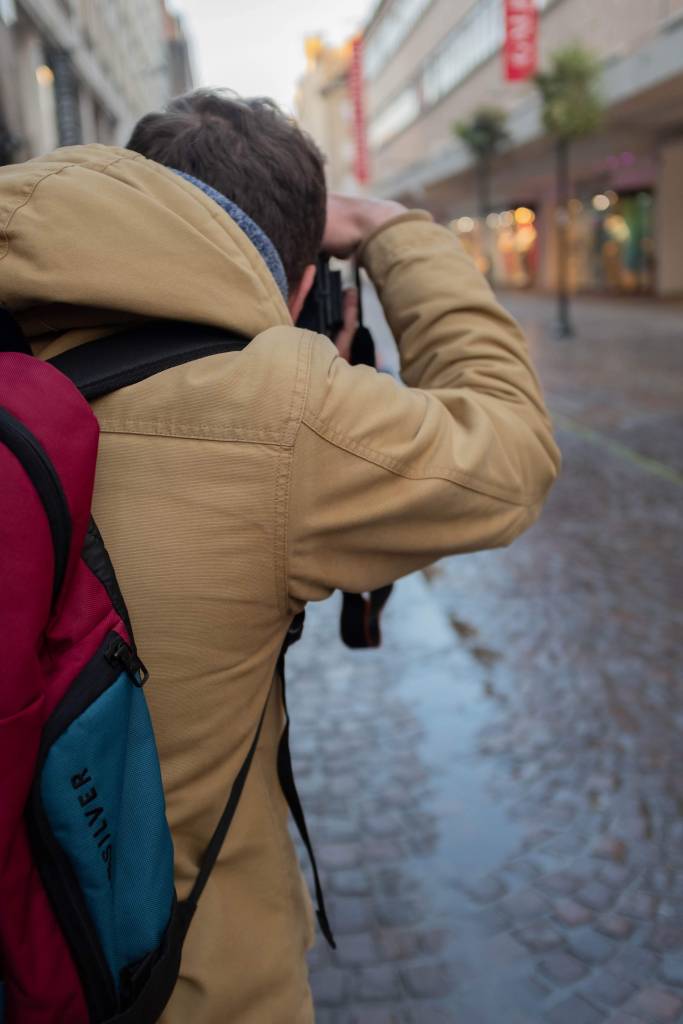
I once read that if two Germans meet, they will form a club. I am not German, but they perfectly illustrate this universal need to belong. They are generally not the most extroverted of people, but even introverts have this need to form a relationship with somebody. As photographers, we have this same urge, but perhaps in a more subtle way. When I’m out on the street, I will always notice someone with a camera, even when I’m without one myself. I find myself looking to check the brand, possibly the make of the camera, and the type of lens the person is using. Even when we simply nod at each other, it’s a recognition of our shared enthusiasm for the art form. Am I judging them? Sometimes, yes, but to err is human.

When I see a film camera around someone’s neck, I am immediately drawn to it. When I venture out with the behemoth Mamiya C220, the camera is almost as much a statement as the actual image I’ll eventually take with it. People will come and inquisitively ask, “What kind of camera is that? Can you still get film for it?” or say, “Yes, my grandfather had one like that.” The obvious charm of a medium format TLR in this modern world.

Photography is sometimes seen as quite a niche activity, and film photography even more so. A film camera gives out a more exclusive vibe, telling the world that, yes, we actually are serious about this, and know what we are doing, as the camera isn’t doing anything for us. We are artists and therefore superior to you, at least that’s what we tell ourselves for validation… One could argue that there is a need for even more knowledge with film photography, and that the need to develop our films just goes to show our dedication to the craft.

Well, not always. But it does give a starting point to a chat, which invariably leads to a discussion about this shared interest, and gives us a common starting point to our relationship, however brief that relationship might be.

I also want to explore the relationship between the subject and the person photographing that subject. For a long time, I was petrified of using a model. I’m an introvert by nature, so the idea of having to make small talk with and direct a model was awful. I wanted to learn more about photographing a model and to break out of this comfort zone. Strangely, buildings won’t talk back at you or tell you what they think of your shot. People, on the other hand, are completely different.

I had learnt basic lighting technique and then had to find models. Luckily, I could rely on my daughter and wife as my first subjects, then branch out to include my son and his then-girlfriend. I then moved onto unsuspecting friends, fellow musicians, and eventually felt my confidence slowly building enough for me to photograph complete strangers by establishing that rapport between us. I discovered that sometimes they were as terrified as I was. Again, something we had in common…

I followed some advice from Sean Tucker, who specialises in portraiture. I simply had a conversation with my model, which seemed to put us both at ease. This allowed the model to detach from the shoot and just chat away.

Community and Collaboration

But connection isn’t limited to brief exchanges with strangers on the street; it can also be found in deeper collaborations with other photographers. As I said earlier, I am more of an introvert, and the idea of making an effort to be sociable is something I find exhausting. At parties, I have been known to chill out on the outer realm of guests and chat to the dog. Hey, we have great conversations together!

However, I have been known to make that special effort and even meet up with other photographers. If you’ve ever talked to me about photography and the merits of various pieces of kit, and actual cameras, you’ll know that I can talk about it until the cows come home—to the point that most people switch off after 30 seconds. But when you have a captive audience who actually cares and knows what you’re talking about, it just brings me out of my shell.

Sometimes one might think it’s a very blokey thing to meet up with other men and talk about, and participate in, some rather niche activity. That might sound a little suspect, but I assure you it isn’t.

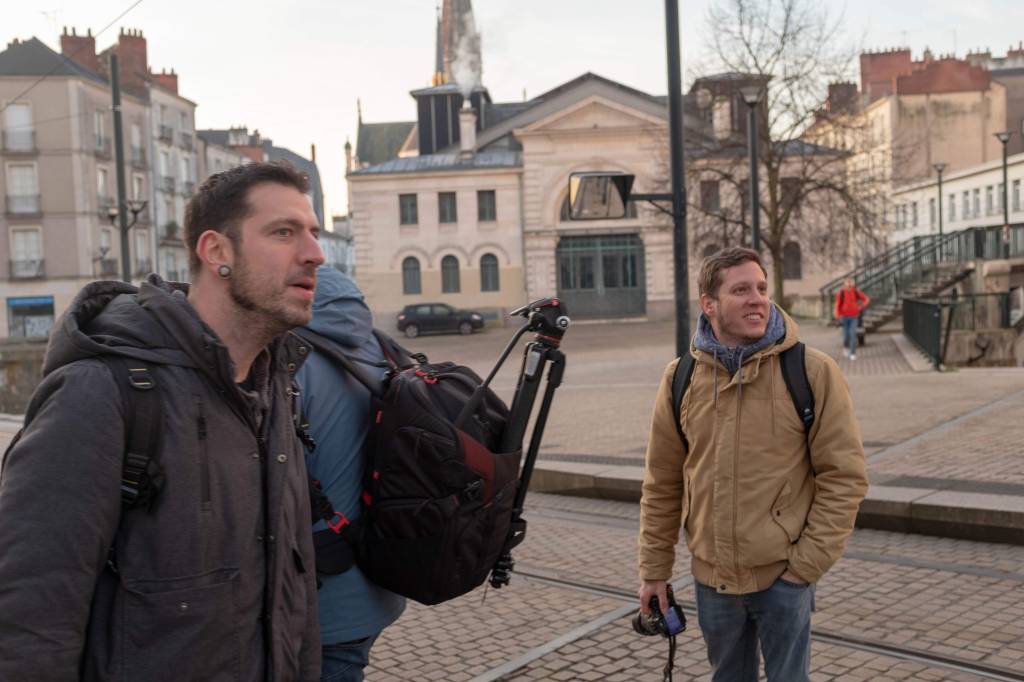
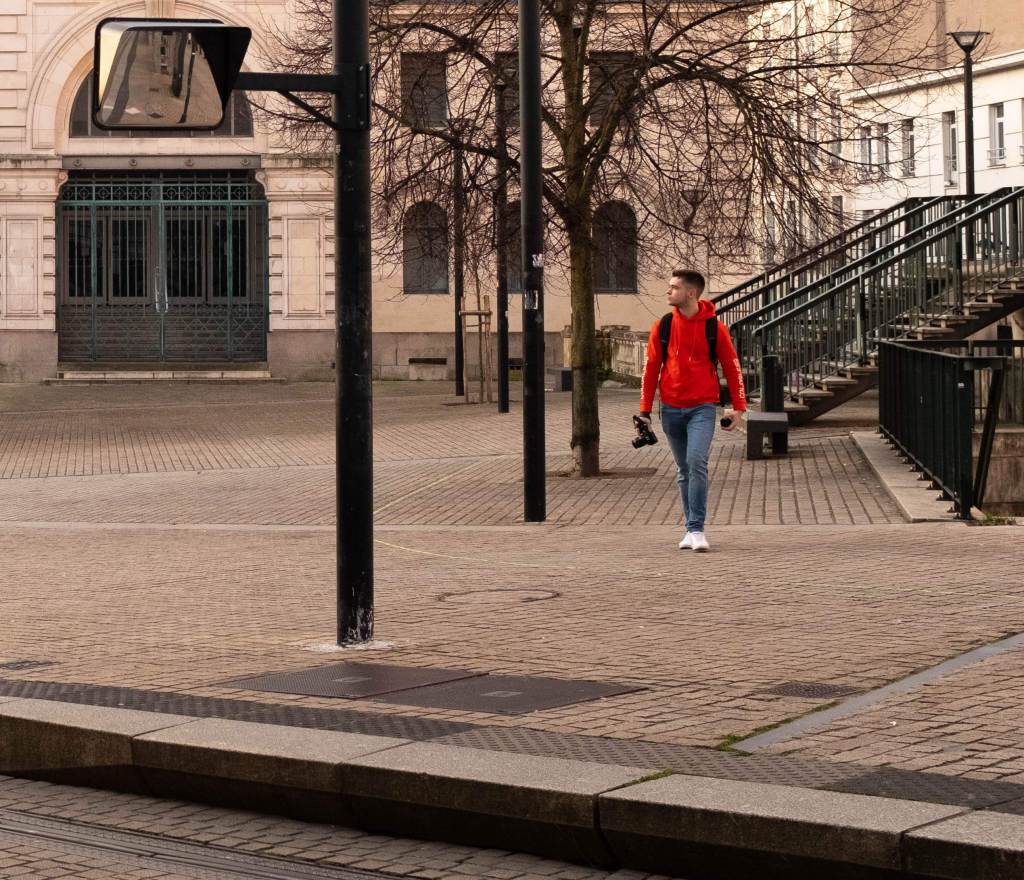
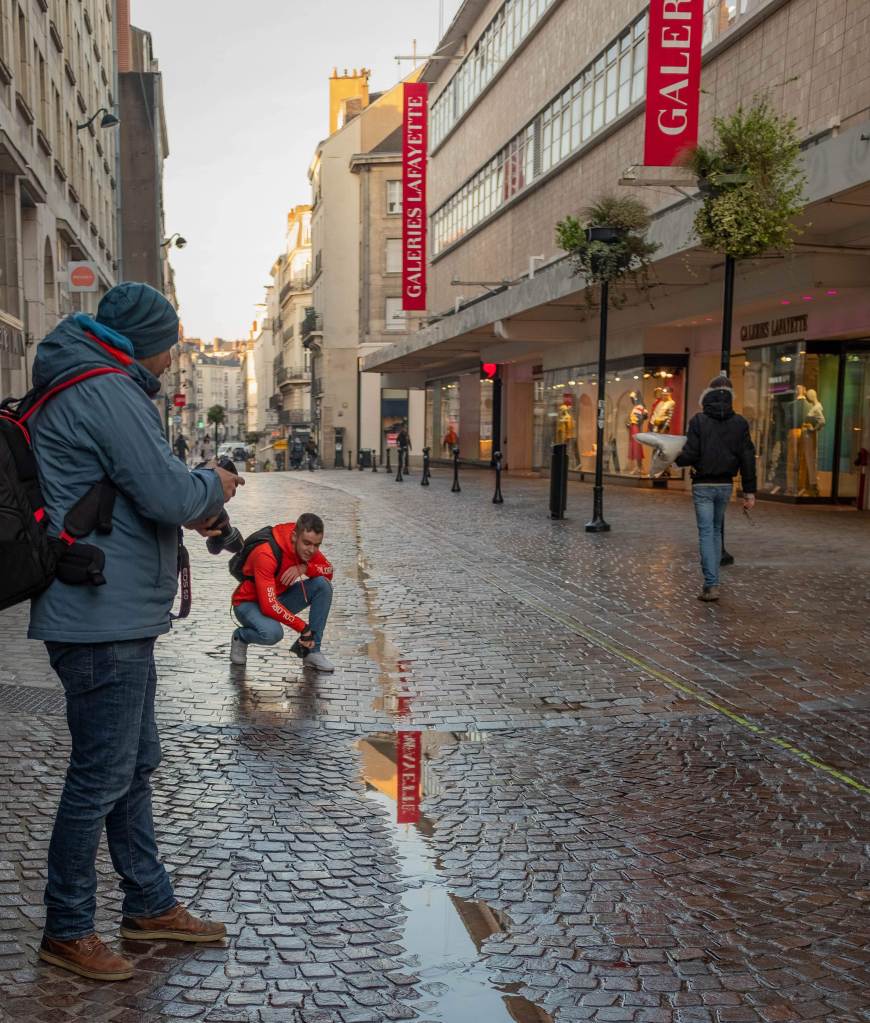
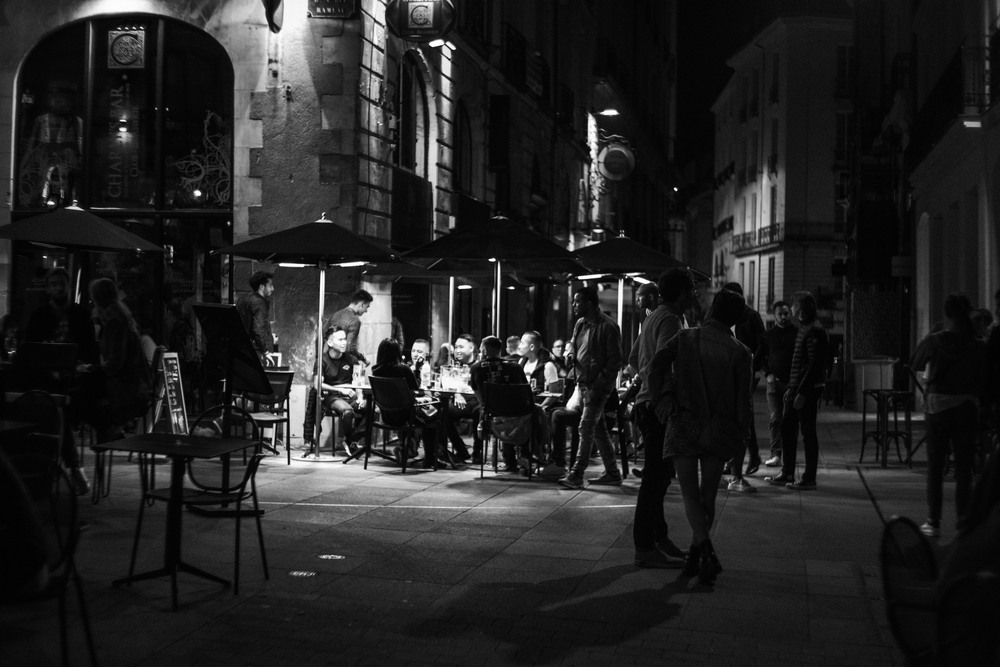
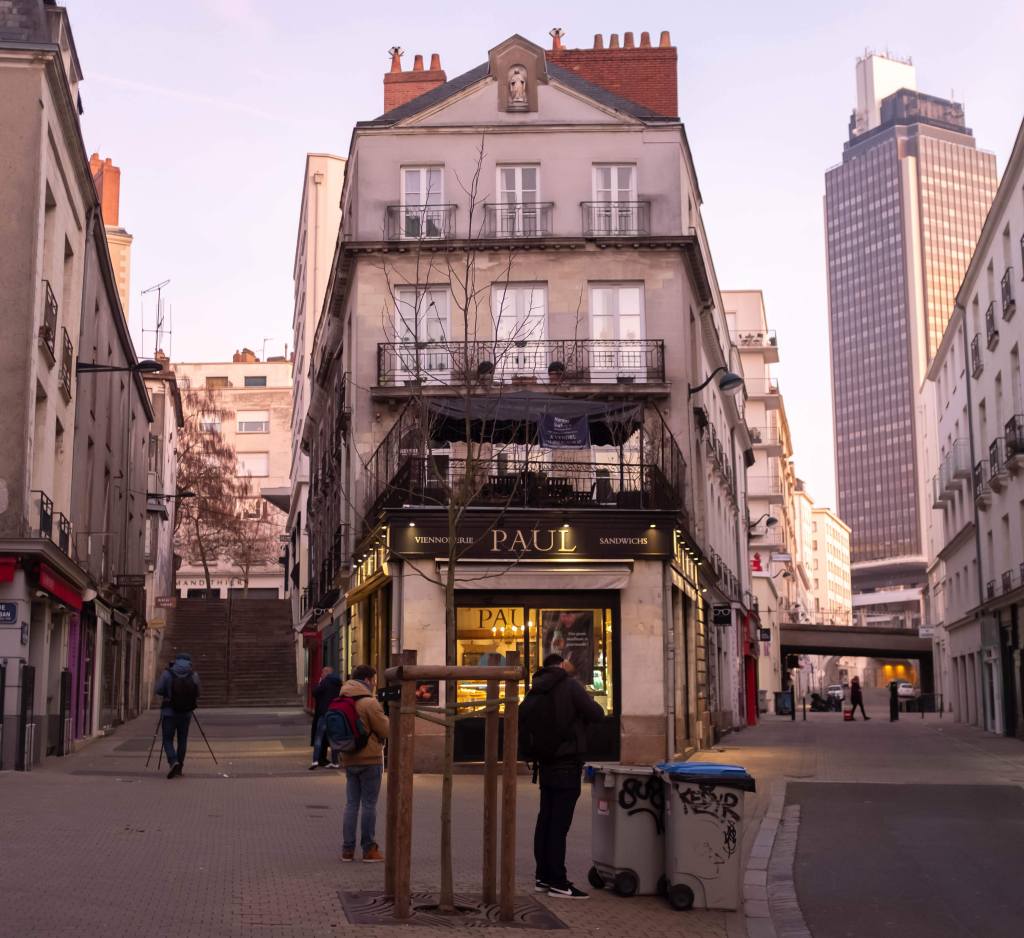
I once had a meet-up in Nantes (the very first article on this blog), and it was so rewarding. It was a typical male bonding activity, and everyone, except for me, brought along their biggest cameras and most expensive lenses. It almost felt like a competition to see who had the most impressive camera. I just brought my relatively tiny X100F, the thinking man’s camera. Much like my car, it’s not the most inspiring thing to look at, but I enjoy using it, and it certainly gets the job done in a very satisfactory way!

I have also collaborated with Nantes Grand Angle, a collective of photographers that have outings in and around Nantes. In exchange for a free tour or free visit, we take pictures during the outings and write about them in our blogs or publish the photos on Instagram. I have done a couple of outings with them, and it’s always interesting to see other photographers in action. They are there seeing the same things as me, but not in the same way. That sense of belonging has a huge feel-good factor too.

A Shared Lens

Photography may often feel like a solitary pursuit, but beneath it lies a powerful thread of connection, weaving us together through moments captured and stories told. Whether it’s the subtle camaraderie exchanged between strangers with a simple nod on the street, the thrill of collaborating with others who share our passion, or the quiet understanding forged with a subject in front of the lens, these encounters remind us that we are never truly alone in this journey.

Through photography, we find not just a way to see the world but a way to be part of it—a community of like-minded souls bound by a shared appreciation for light, shadow, and time itself. In the end, our photographs are a bridge, linking us to others and creating a lasting connection beyond the mere act of pressing the shutter. For as long as we hold a camera, we’re part of something bigger, capturing fragments of life that, no matter how fleeting, will always connect us back to one another.

A photography Philosophy – Part III – The Emotions of Photography


The Connection between Emotion and Image

I’m going to tell you a story about an essay that was given to us by the music master at the beginning of my Music A level course.  There were four of us studying music, and the lessons took place in his study, much like a tutorial at university.  The title of the essay was something like describe the perfect piece of music.  

Back then I described the Glenn Miller song, Moonlight Serenade.  One of my fellow pupils described the Planets from Holst.  In the following tutorial after our essays had been marked, I was criticised since the Master thought my piece was repetitive, had no particular musical merit, and was corny.  I, on the other hand, argued that it was the way the piece made me feel.

With hindsight I should have just handed in a clean sheet of paper saying that there is no such thing as a perfect piece of music, as taste is purely subjective and that he should take his essay question and possibly reconsider his stance!  I didn’t of course.  But it certainly got me thinking, even to this day!  

Subjectivity in Art

As in any art the appreciation of the viewer is purely subjective and we have to be so careful about reading an interpretation into a given work.  There are effectively themes that are explored in literature that could be described as obvious.  But in Photography, I maintain that any connection to a particular photograph is an emotional one first, before going any deeper.  

The Essence of Emotional Connection

But what makes this emotional connection possible? And how do I go about achieving this in photography.  I’m going to harken back to my musical training.  My horn teacher in France would say, your concerto is your text.  Your job is to recite that text to the audience.    That is all you have to concentrate on.  You’ve worked through your concerto, the techniques necessary to play it, and once the sound leaves the bell of the instrument, it is no longer yours.  It belongs to the audience.  They are the ones listening and they are the ones that will form the emotional connection.

Creating Meaningful Portraits

So how do I make this connection with my audience when it comes to photography?  Well, in portraiture they say to focus on the eyes of your model.  Eyes being the entrance to the soul. If I can capture that and have my model looking directly at my camera and therefore my audience then I’m well on the way to creating a meaningful portrait.

Kate, my daughter
The Art of Street Photography

In my street photography, it can be about catching a detail that everybody sees but that nobody notices until they look at your image.  You can go to my photography tutorials and look at the composition articles to learn about how we direct the audience to a particular point in our photograph by using leading lines, the rule of thirds, and emphasising our subject with our lighting, or by isolating our subject.

The Role of Colour in Evoking Emotion

We also solicit emotion through the colors we choose. Warmer tones can infuse images with energy and happiness, while cooler tones can make them feel peaceful or introspective. For example, adding reds and oranges to a portrait can evoke warmth and approachability, while blues and greens can give a landscape a calm, reflective quality. Considering these colours “in camera” can make the entire process more intuitive, helping you set the mood before you even begin editing.

The Power of Black and White

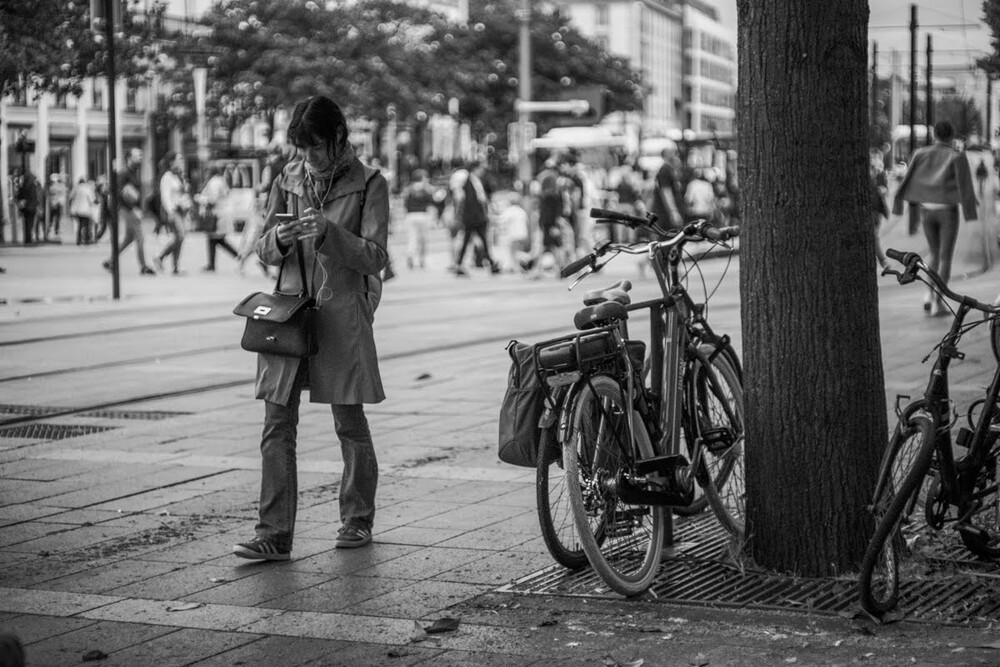
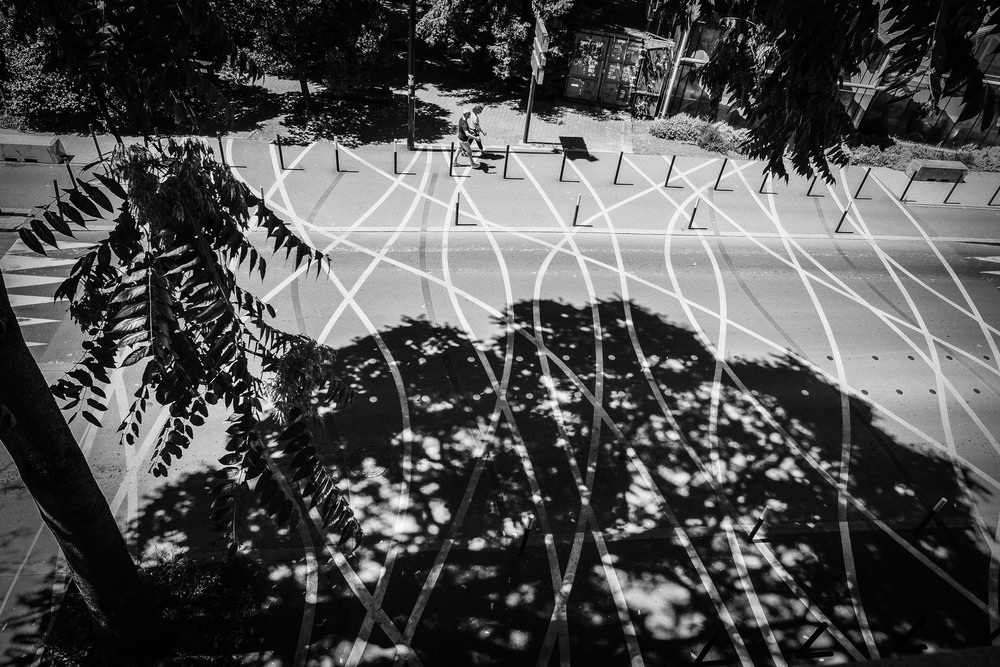
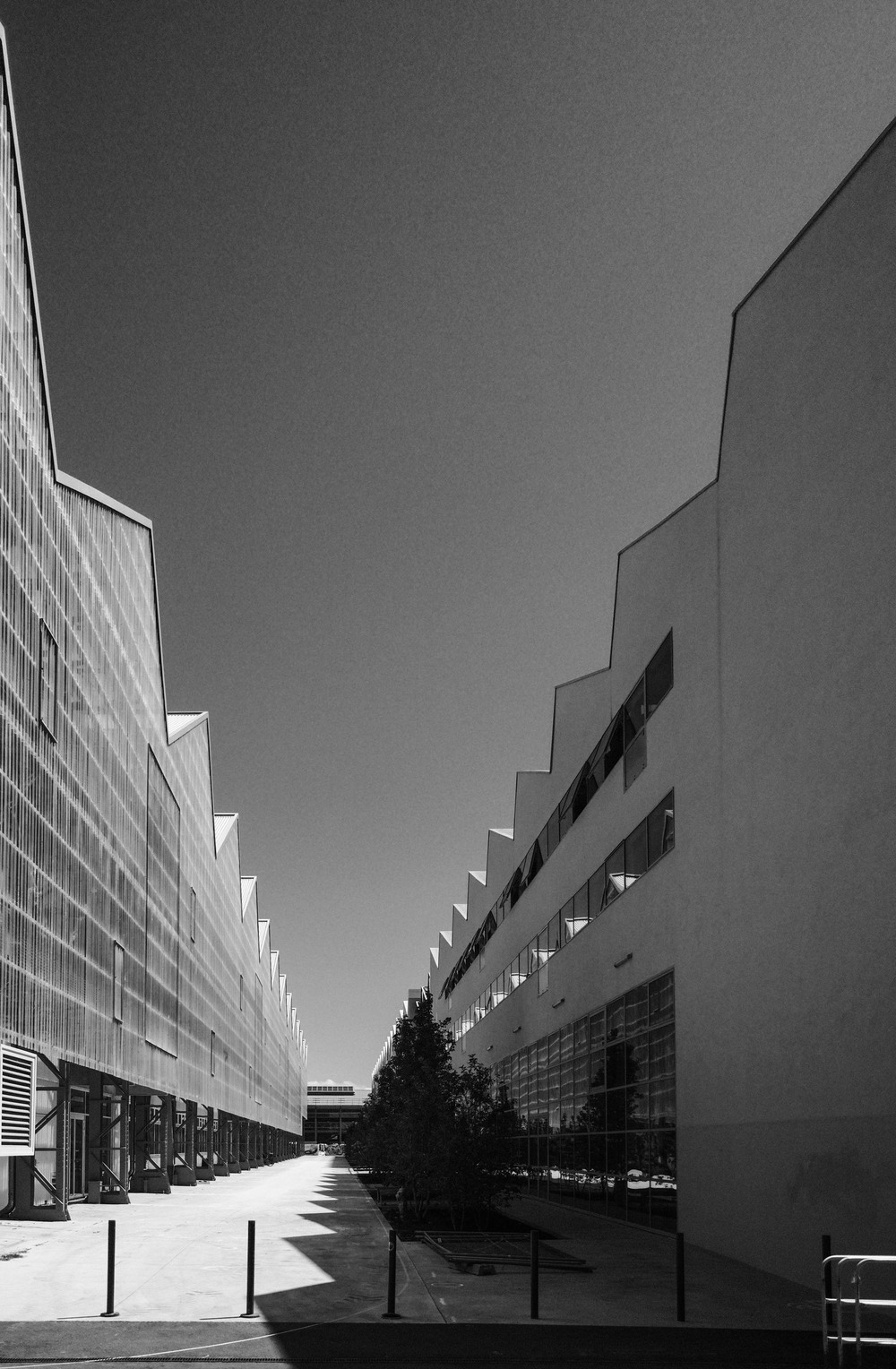
Shooting in black and white, using only tones of light strips away the influence of colour and presents us with the “essence” of a scene, and it’s one of the reasons I love shooting in black and white, be that on film or digitally.  I aim for a timeless quality to my black and white images, and the emotion can be just as intense.  Without color, we focus on texture, shadow, and contrast—elements that can evoke nostalgia, solitude, or contemplation.

Mindfulness in the Photographic Process

What I think I’m getting at is that to evoke an emotion we need to be so mindful of our photographic process.  Sometimes taking that step backwards allows us to reflect before pressing the shutter button.

Conclusion

I don’t have all the answers of course, but in the end, capturing emotion in photography is as much about the heart as it is about the eyes behind the lens. Each photograph we create is a bridge between ourselves and our viewers—a connection forged in the moment but lasting beyond it. Just as a musician lets their notes drift into the silence, we photographers must let our images speak, leaving space for others to interpret, feel, and connect.

So, as you move forward in your own photography, remember to pause, to feel, and to let emotion guide your hand. Don’t be afraid to take a step back before pressing the shutter, and ask yourself: What do I want my viewer to feel?

I hope this reflection gives you a new perspective on how you approach your next shot. After all, photography, like any art, is a journey without fixed answers—one of constant discovery. Take time to explore, experiment, and, most importantly, to feel.

A Photography Philosophy Series – Part I – An Introduction


With the aim of delving deeper into the meaning behind photography, I’ve decided to launch a new series of articles. Here, I want to explore questions like why rather than just how or with what. In my Photography 101 series, we looked at the basics—technique, lenses, and so on. I’ve written extensively about gear in my camera reviews. But now, I’m searching for something beyond that.

The wheels in my mind are already beginning to turn. Not frenetically yet, but there’s a steady intellectual process underway. Answering “why” feels more challenging than “how” or “with what.” It demands more from me than simply focusing on technique or gear.

Here goes anyway!

To set the stage for this exploration, I’ll begin by sharing my own journey in photography. Understanding where I come from may help illuminate my perspective on the medium.

I was born in an age before the all-powerful image took over. Yes, we had photos, and I enjoyed looking through them in our albums. Each image was a physical object, and the idea of viewing images on a screen was foreign to us all. When we spoke of phones, we meant the ones hanging on the wall at home or in the phone boxes on the street. They certainly weren’t for taking photographs.

Back then, cameras fell into two categories: point-and-shoot cameras for the masses and “proper” cameras for photographers. Point-and-shoots were basic, easy to use, and, for me as a small child, they were an introduction to photography. Proper cameras, on the other hand, were for those who had learned the craft of photography, and using one made you feel part of a certain fraternity.

My first Form Master at prep school, Father Gerald, had a proper camera and recorded school life with it. Occasionally, a board with a selection of 6-by-4-inch photos would appear, always in black and white. Father Gerald must have had his own darkroom for developing and printing. I have no idea what kind of camera he used, but it was undoubtedly a proper one.

In 1984, a German orchestra visited Hull, and Stefan Haller from Neustadt an der Aisch stayed with us. Stefan had a proper camera, and I was fascinated by it. When I asked my father if I could have one too, he agreed—but I would have to learn how to use it first. The local YPI organized a summer school offering various activities, including proper photography. And that, Dear Reader, is how I first encountered this “proper photography” lark!

So now you know the why and how behind my beginnings in photography. Let’s look at how this journey evolved. My first proper camera was a Praktica MTL 3. It was fully manual and had a built-in light meter, which helped me get my exposure right each time—or nearly each time. With that camera, I trained my eye and explored the world around me.
Photography at the time was film photography. Although Kodak invented the digital camera in 1979, digital photography didn’t become accessible until the early 21st century. Growing up, color photography was for capturing moments with friends and having a laugh; black and white was considered more “arty” and suited for serious photography. I was deeply affected by the black-and-white images in newspapers, while color images seemed relegated to magazines.

I remember having breakfast with my father every morning as he read The Independent, a paper known for its high standard of photographic journalism. This was my daily visual inspiration. I had a subscription to National Geographic, where I encountered even more incredible photography in its pages. This was top-class photojournalism, and these images now serve as a historical reference for us all.

This is the time and place I come from. For young Gen Z readers, it might sound like ancient history, but to me, it’s deeply real and continues to influence my approach to photography in the digital age.
Now that you’ve had a glimpse into my why, let’s dive deeper. In the next article, we’ll look at why others feel compelled to pick up a camera. Throughout the series, we’ll explore the connections between images and emotions, how we tell stories through our photos, and how photography can be a form of self-expression leading to personal growth. We’ll examine how photography connects us to others, reflect on the philosophy of impermanence, and, at the end of the series, I’ll invite you, Dear Reader, to reflect on your own photographic journey…
Classic Chrome Meets Portra 160: Evaluating the Pentax ME Super and Fujifilm X100F


Let’s talk about two of my favorite cameras—the Fujifilm X100F and the Pentax ME Super. While these cameras belong to entirely different eras of photography, they share a surprising similarity in size and portability. I’ve used both extensively, and today, I want to compare their unique qualities without turning it into a clichéd “film vs. digital” debate.

Photography enthusiasts often find themselves in one of two camps: those who champion the convenience and immediacy of digital, and the purists who swear by the timelessness of film. But if you’ve followed this blog for a while, you’ll know I don’t see things that way. Instead, I value what each format brings to the table, and more importantly, how both contribute to the experience of photography.

A Tale of Two Cameras

For me, photography is more than just the final image—it’s about the journey of capturing it. Any Lomography fan will agree: the process is as important as the outcome. When I shoot with the Fujifilm X100F, I appreciate the immediate feedback of seeing the image on the screen and knowing right away what I’ve captured. But with the Pentax ME Super, it’s a different experience. I have a rough idea of what the film will deliver, but the magic isn’t fully revealed until the film is developed. That anticipation is part of the charm.

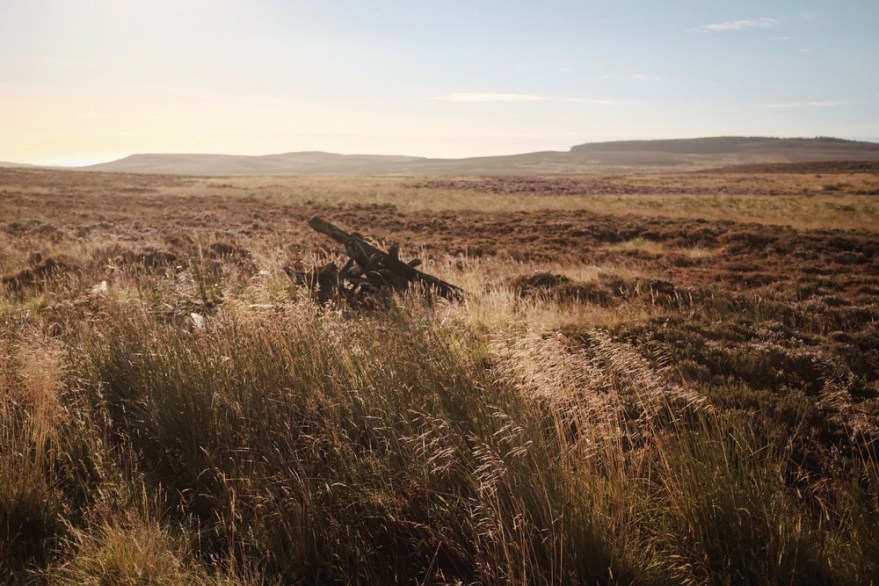
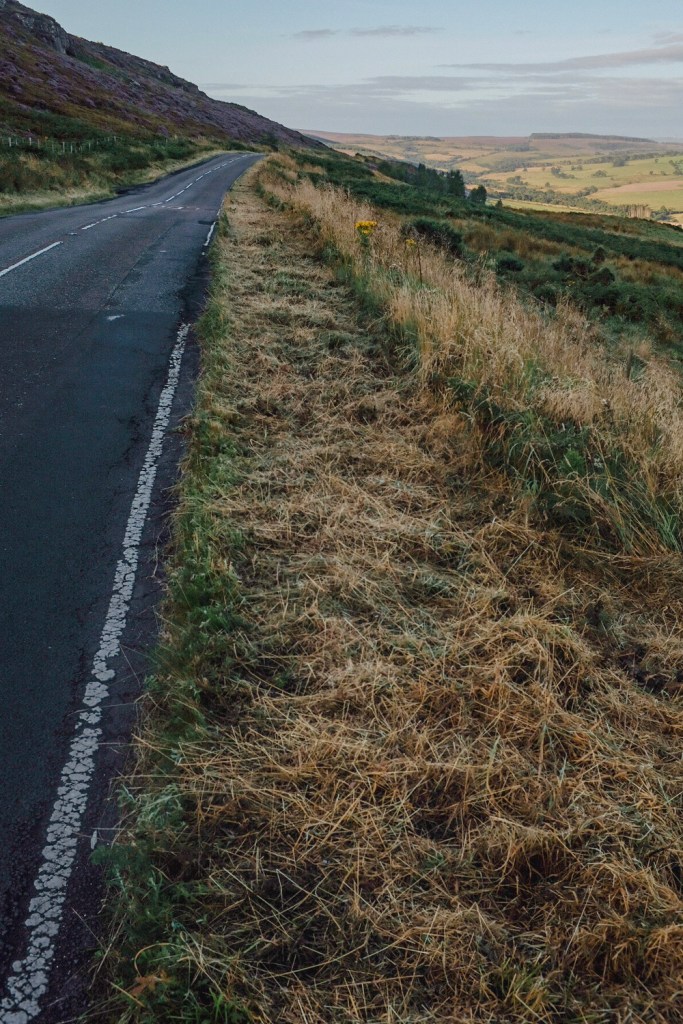
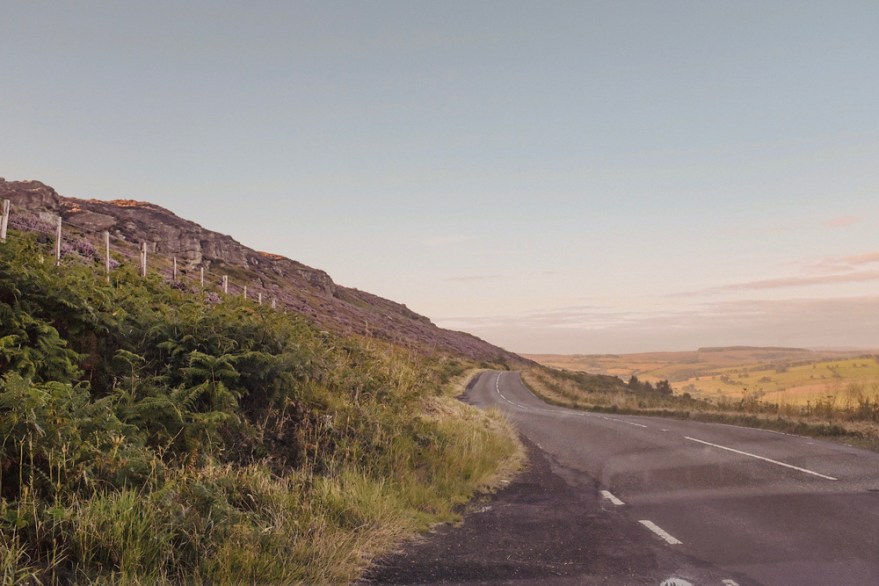
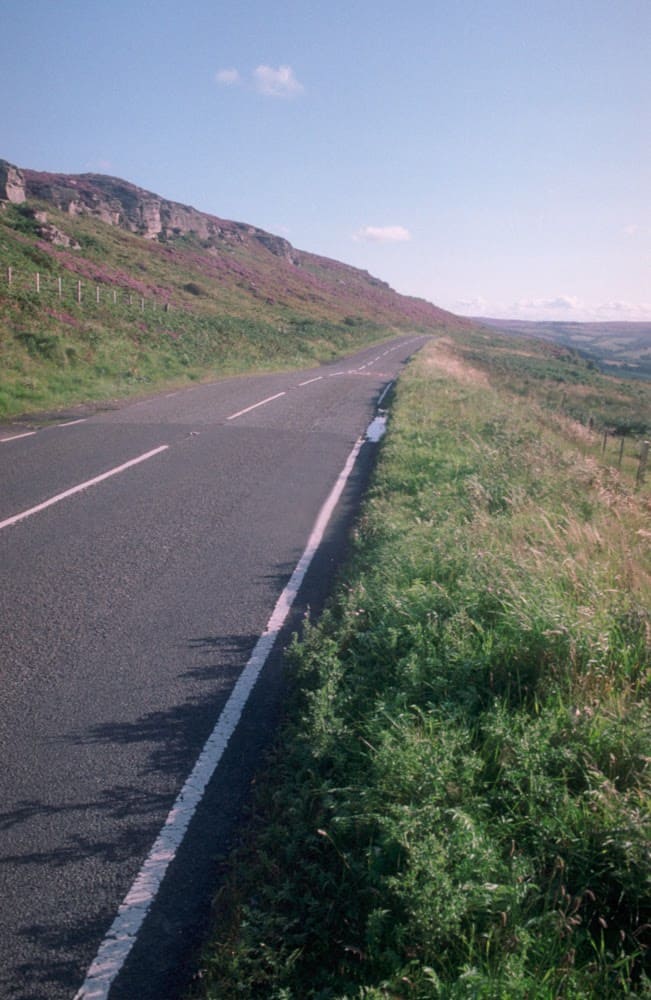
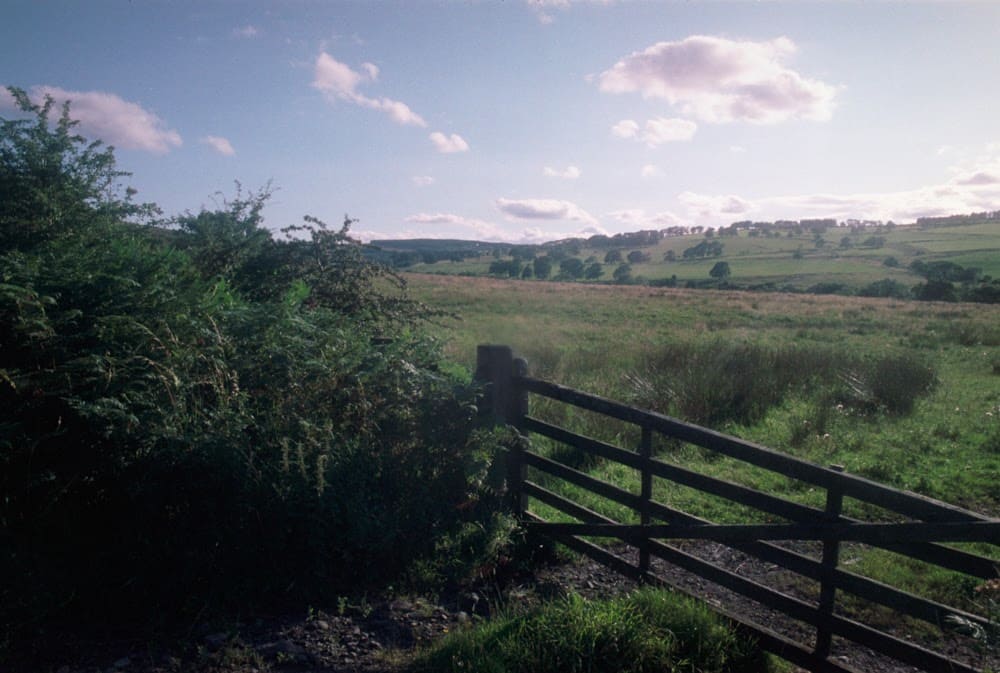
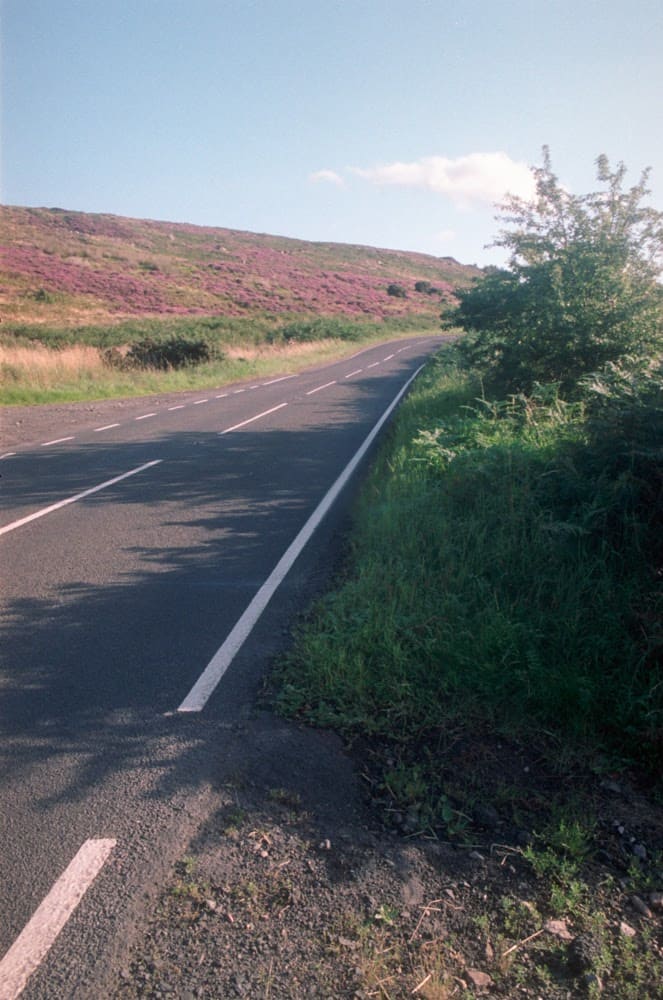
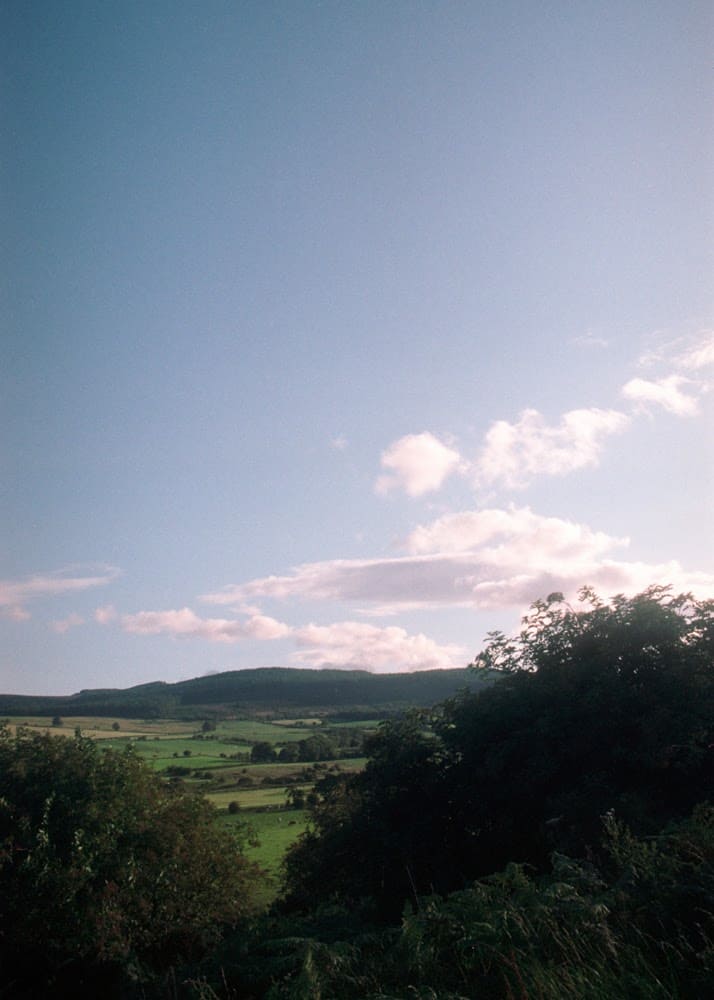
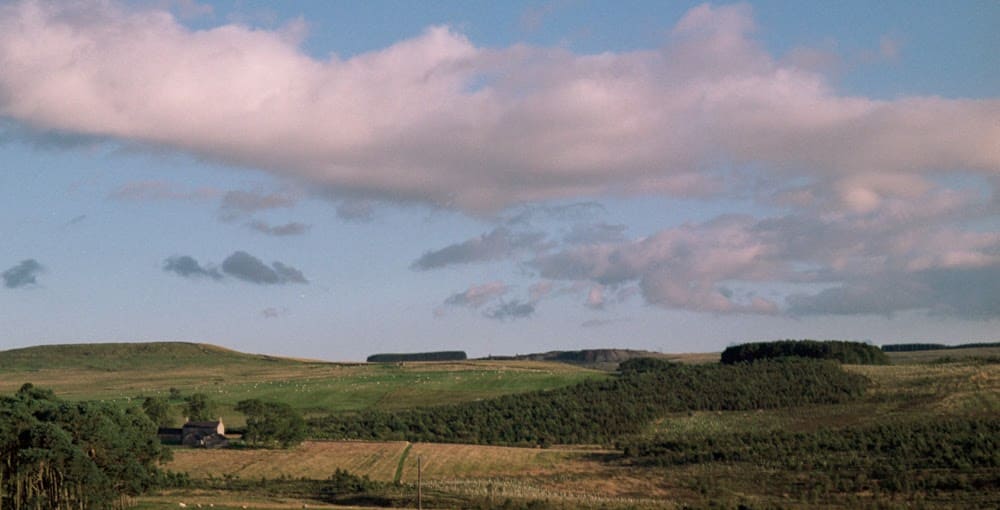
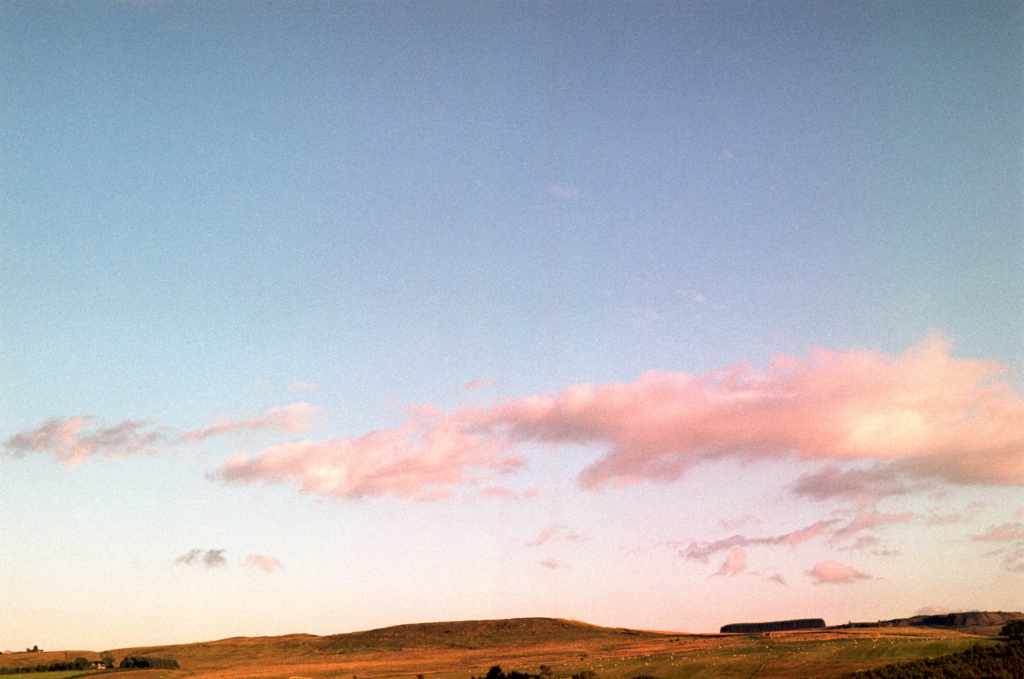
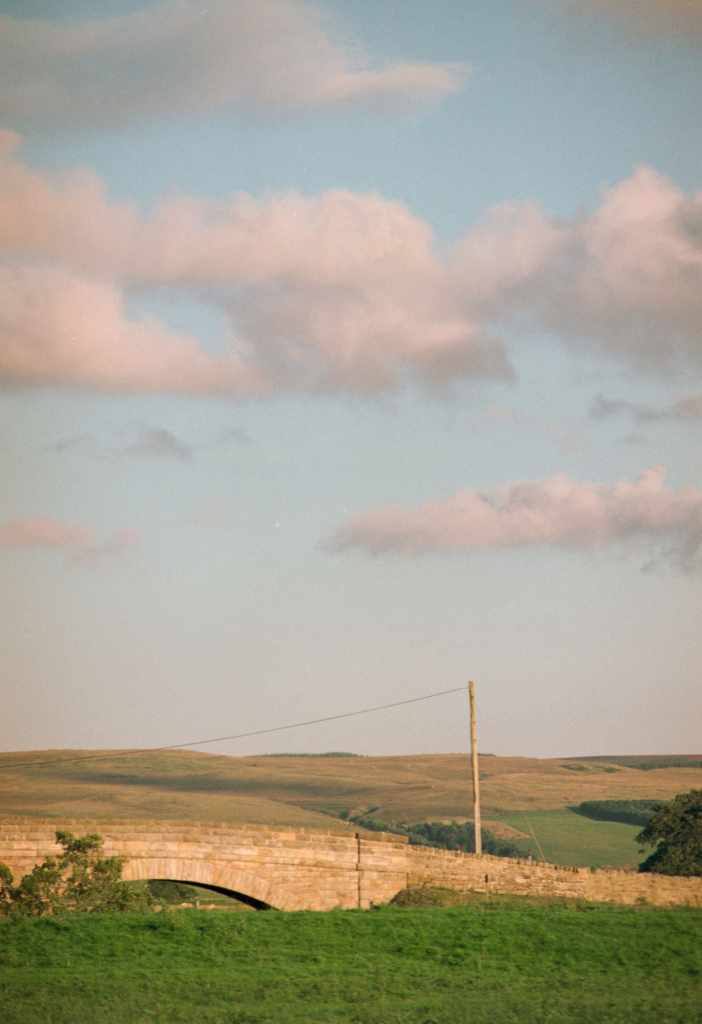
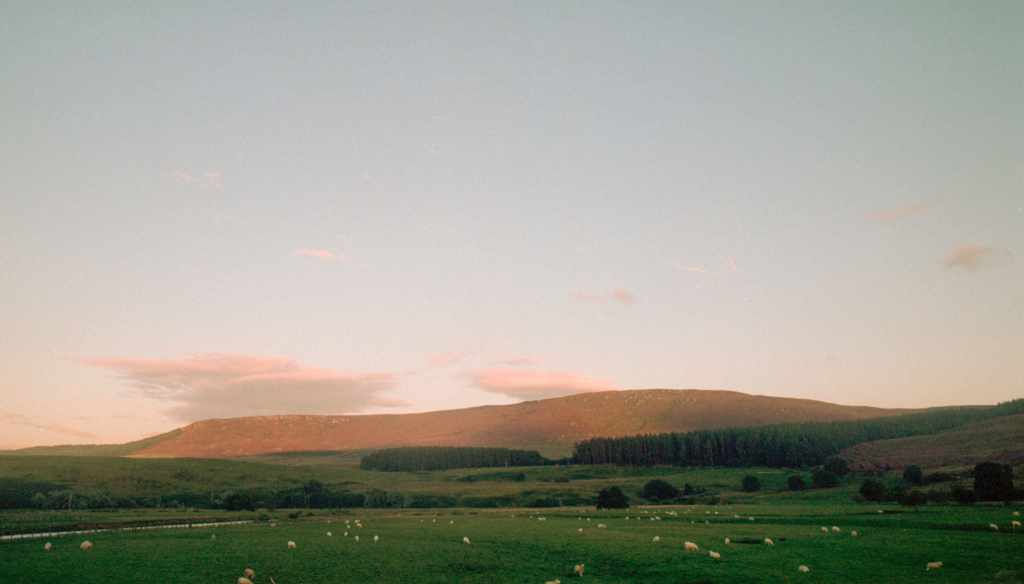
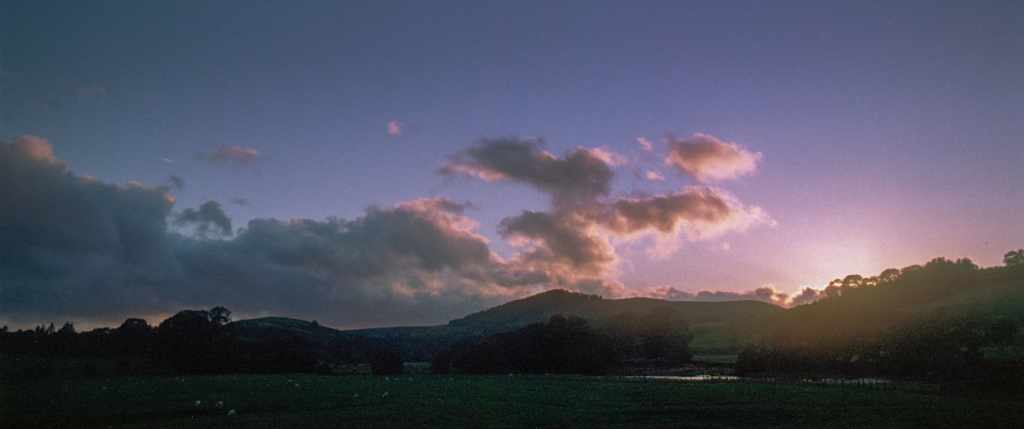
For this comparison, I’ve chosen photographs from Northumberland. Its moody, windswept landscapes—places like Alnmouth and the Northumbrian moors—present the perfect canvas for both film and digital. The X100F’s Classic Chrome simulation delivers a retro, muted look, while Kodak Portra 160 film, shot through the Pentax, brings warmth and richness to the tones.

The Fujifilm X100F

he X100F has often been called a bridge between the analogue and digital worlds, and I tend to agree. It’s packed with modern features like autofocus and an electronic viewfinder (EVF), but the controls are refreshingly tactile, with dedicated dials for aperture, shutter speed, and ISO. For anyone with a background in film photography, this setup feels familiar and intuitive.

What sets the X100F apart for me, though, is its Classic Chrome film simulation. It offers a subdued color palette that echoes old film stock, perfect when I want a slightly desaturated, vintage aesthetic. Unlike some over-the-top digital filters, Classic Chrome feels organic and subtle—bringing out details in the shadows without overwhelming the shot with contrast.

The X100F Photos

The Pentax ME Super

On the other hand, the Pentax ME Super is all about slowing down. There’s no EVF, no digital screen, and definitely no autofocus. Instead, you rely on a split-prism focusing system and aperture-priority mode. It forces you to be deliberate with each shot, a process that I find incredibly satisfying.

You’ll often hear film photographers talk about being more “in the moment” when shooting on film, and that’s exactly how I feel with the ME Super. The process of carefully composing each shot, setting exposure manually, and waiting for the film to be developed encourages patience and thoughtfulness.

For this outing, I paired the ME Super with Kodak Portra 160, a film that’s become known for its natural skin tones and soft, warm colors. Paired with the 50mm f/1.7 lens, this combination creates images with that unmistakable film character—shallow depth of field, soft highlights, and rich colors.

Lenses and Sensor Size

One of the most noticeable technical differences between these two cameras is their lenses and sensor sizes. The X100F features a 35mm equivalent f/2.0 fixed lens, while I usually use the 50mm f/1.7 on the Pentax. On the sensor front, the X100F has an APS-C crop sensor, giving it a narrower field of view compared to the full-frame 35mm film in the Pentax.

This technical difference goes beyond field of view. The Pentax ME Super has fixed ISO based on the film I choose, so I need to plan ahead for the lighting conditions I’ll be working in. In contrast, the X100F allows me to adjust ISO on the fly, providing flexibility in rapidly changing environments. This is something digital photographers have come to rely on, and it’s undeniably convenient when shooting in variable light.

The Pentax ME Super photos

Comparing the Images

Now, the big question: which is better, the Pentax ME Super or the Fujifilm X100F? Honestly, neither. They’re different tools for different purposes. Whether you’re drawn to the organic feel of film or the convenience of digital, both formats offer something unique. And that’s the beauty of photography—there’s no one-size-fits-all approach.

The sideshow feature shots from both cameras. As you look at them, you might favour one look over the other. The film shots have a warmth and texture that digital sometimes struggles to replicate, while the digital photos are sharp, detailed, and offer instant gratification. But ultimately, this comes down to personal preference, not a matter of one being objectively better.

Final Thoughts

At the end of the day, a camera is just a tool for capturing a scene in a particular way. As long as the final image is pleasing to the eye, I’d say the job is done. So don’t limit yourself to just one format—if you haven’t tried shooting film, give it a go. If you’re a film photographer who’s hesitant to try digital, maybe the X100F will ease that transition with its analogue-like feel.

More than anything, I encourage you to enjoy the process, whether it’s with film, digital, or both. Get out there, take your time, and remember that photography isn’t just about the images you capture—it’s about the experience.


Post Scriptum:
For those of you new to my blog, welcome! I cover everything from camera reviews to photography tips and techniques. Whether you’re a seasoned photographer or just starting out, there’s something here for you. Feel free to leave your thoughts or questions in the comments below—I’d love to hear from you!

The Fujifilm X-T2: A 2024 Perspective – Is It Still Worth It?


My Love Affair with the X100F (and a Cuppa Tea)

It’s no secret to the regular readers of IJM Photography that I have a great fondness, deep affection, nearing on obsession with my Fujifilm X100F. It’s a great little camera that gets me excited whenever I take it out of my camera bag. But, Dear Reader, what does this have to do with the Fujifilm X-T2? Well, they’re both manufactured by Fuji, they both have an “X” in their name, and I have a deep affection for a nice cup of tea. Not the same T? Ah well…

Similarities and Differences: A Tale of Two X’s

I’ll talk about the differences and similarities between the two cameras and why I thought the X-T2 was a useful and complementary acquisition. We’ll look at not just the specs but also the rather similar way both cameras handle.

  • Sensor and Image Quality: Both use the same 24-megapixel sensor with an anti-aliasing filter, and offer an ISO range from 200 to 128000.
  • Screen and Viewfinder: The X100F has a fixed screen, while the X-T2 boasts a tilting one. Both share the same excellent viewfinder.
  • Performance: The X100F shoots at 8 fps while the X-T2 goes up to 14 fps. For video, the X100F is limited to Full HD, while the X-T2 offers 4K and can shoot at 120 fps.
  • Connectivity: Both cameras have built-in wireless capabilities.
  • Weight: The X100F is lighter at 469g, while the X-T2 is slightly heavier at 507g.
The Lens Factor (and Weather Sealing, Too!)

The main difference? The lens. The X100F has a fixed 23mm (35mm equivalent) f/2.0 lens, while the X-T2 can take the entire range of X-mount lenses. Quite a big difference, indeed. The X-T2 also has the added bonus of weather sealing!

Why Buy a 4-Year-Old Camera in 2020?

Because at the time, I could. It was the logical acquisition and complement to my X100F. Did I mention it also uses the same batteries? I still have the same, beloved-by-many film simulations, and while not as numerous as later models, they are more than enough for me!

My first lens purchase was the 16mm (24mm equivalent) f/2.8 Fuji lens, the perfect complement to the 35mm equivalent on the X100F. I later discovered TTArtisan and 7 Artisans, Chinese firms that make affordable manual focus lenses for the X-mount. I now have the 35mm (50mm equivalent) f/1.2 and 58mm (85mm equivalent) f/1.4, and the fish eye 7mm F2.8 lenses from both companies, both costing a fraction of the autofocus Fuji lenses. The only concession I made to Fuji was later purchasing the 18-55mm (24-70mm equivalent) f/2.8 autofocus kit lens.

Value for Money: The X-T2’s Sweet Spot in 2024

The fact that I bought it second-hand was also a contributing factor. Does it have as many megapixels as the more modern X-T5? No. But does it have enough? Yes! Does it have the same specs as the X-T5? No. But does it have enough? Yes. Can you see a pattern developing here?

For the amount of money spent, I think I have enough cameras for my buck. And that is the crux of the argument for acquiring a now 8-year-old camera in 2024. Is it the very best money can buy? No. But if you’re an amateur like myself, you generally don’t need the specs that manufacturers and those nice men in camera shops will try to tell you you need. 24 megapixels is more than enough for printing even 20″ by 30″ (500mm x 760mm) sized images.

I have just looked at mpb.com for you and have found XT2 bodies from 487€ to 729€ depending on the condition. An X-mount lens will cost you anything from 104€ for a 35mm (50mm equivalent) F1.2 from 7 artisans to 279€ to 340€ for the 16mm (24mm equivalent) F2.8 fuji lens. So as you can see, it’s certainly cheaper than buying the latest models…

Conclusion: A Timeless Tool for the Passionate Photographer

In 2024, the Fujifilm X-T2 remains a compelling option for photographers seeking excellent image quality, classic handling, and a wealth of creative possibilities. Its compact size, weather sealing, and extensive lens selection make it a versatile companion for various genres, from street photography to landscapes.

While newer models may boast more advanced features, the X-T2’s enduring appeal lies in its combination of performance, affordability, and the unique charm of Fujifilm’s X-Trans sensor and film simulations. For photographers who prioritise the essentials of image-making and value for money, the X-T2 continues to be a worthy contender in the ever-evolving world of digital cameras.

If you’re looking for a camera that delivers exceptional results without breaking the bank, the used market might just hold the perfect X-T2 for you. And who knows, you might even discover a newfound appreciation for a slightly older camera that still has plenty to offer in 2024 and beyond.

Post Scriptum

This camera is also capable of 4K video. And I’m using it at work for making videos for training new staff. It is certainly lighter than my Canon 6D Mark II, and I seem to be able to obtain a picture style that I like. It doesn’t have in-built image stabilisation. However, I use it on a tripod so that’s not an issue. And if ever I do decide to use the 18-55mm kit lens, I have image stabilisation in the lens.

I’ll see if I can’t find you an excerpt of the latest video…

And here it is…