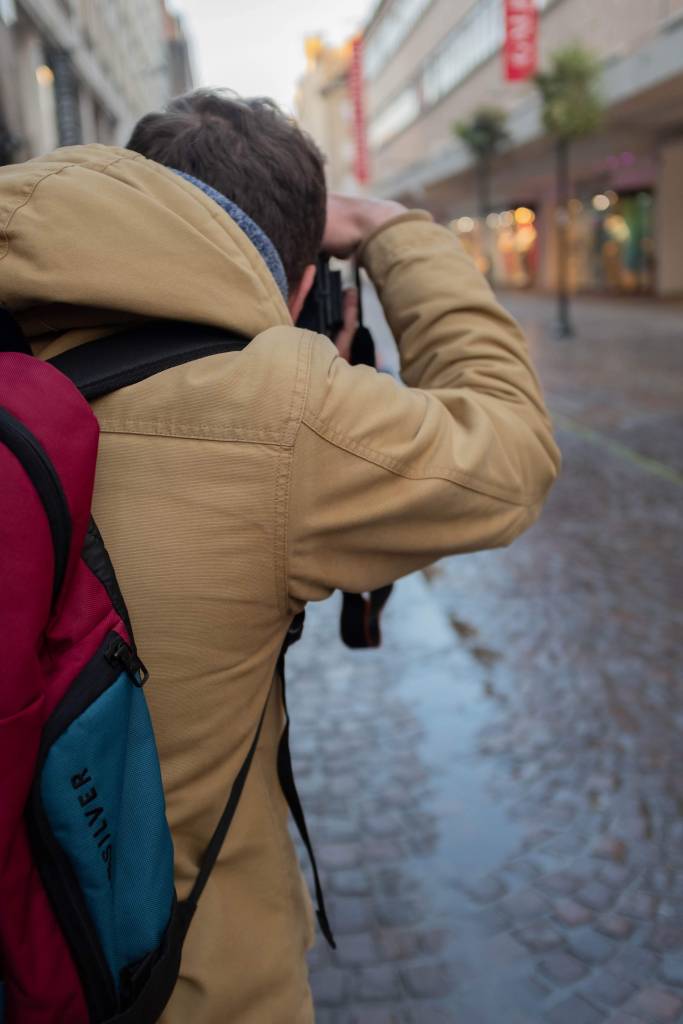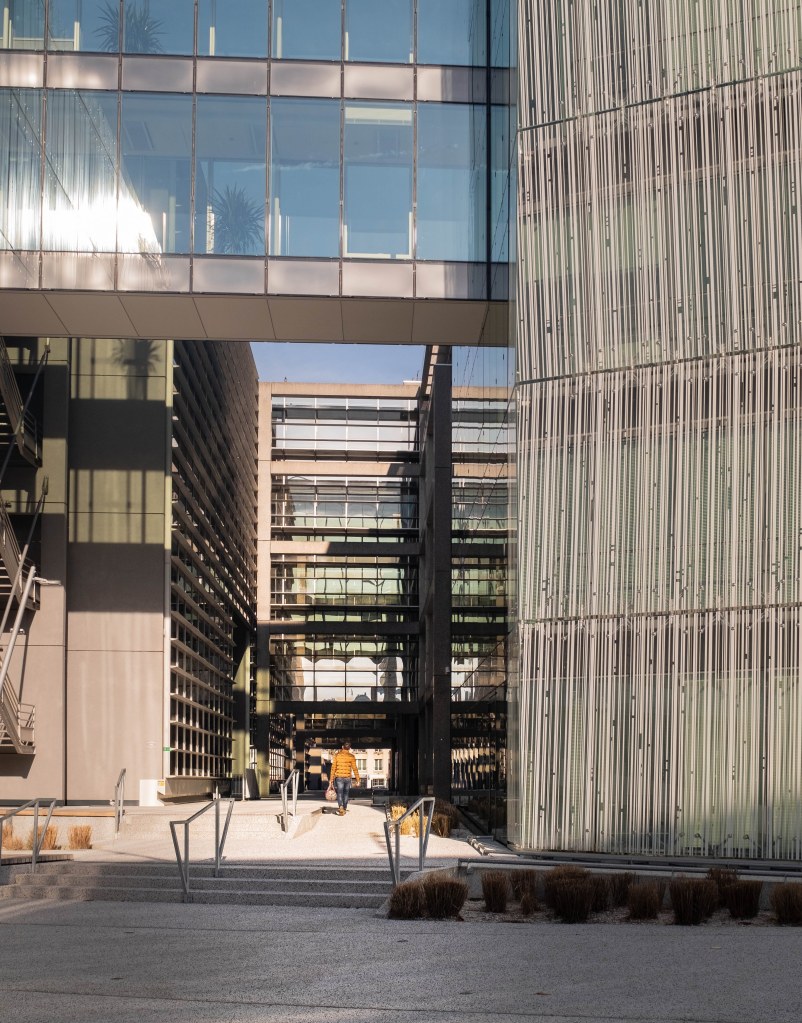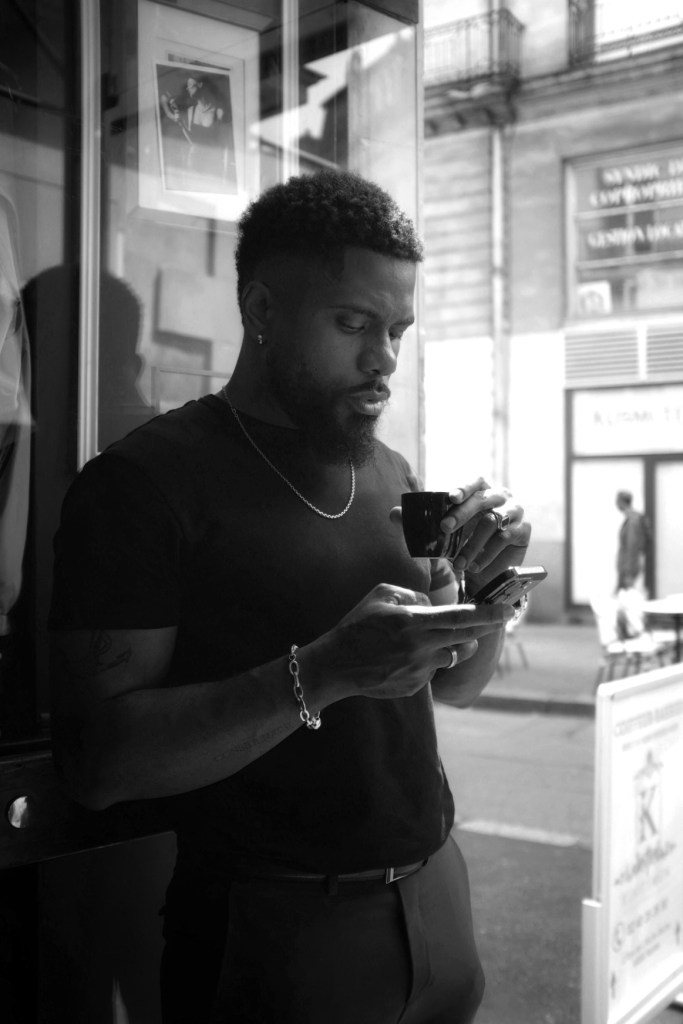
Photography Philosophy Part IV – The Art of Storytelling in Photography


When I first started out in photography, I would go and get my film developed by the photographer on Newland Avenue near where I lived, and the photographer would do what people called a contact sheet.  Basically, the film was cut into strips, placed into a special frame to keep the negatives as flat as possible, and exposed directly onto a sheet of photographic paper.  These “thumbnails” allowed us to see the photos of the outing in one place and we could decide which ones might be worthy of developing.  

We have this digital contact sheet in Lightroom where we import our photos and decide which ones are worthy of being developed. It’s the same idea, just with different tools.

But what does this have to do with storytelling? Think of the contact sheet as the beginning of the story-crafting process. Just like a narrative needs a beginning, middle, and end, so too does our selection of images. With a contact sheet, we gain a bird’s-eye view of an outing—seeing not only the individual shots but how they relate to each other. Choosing which moments to develop isn’t just about technical quality; it’s about deciding which parts of the experience best tell the story.

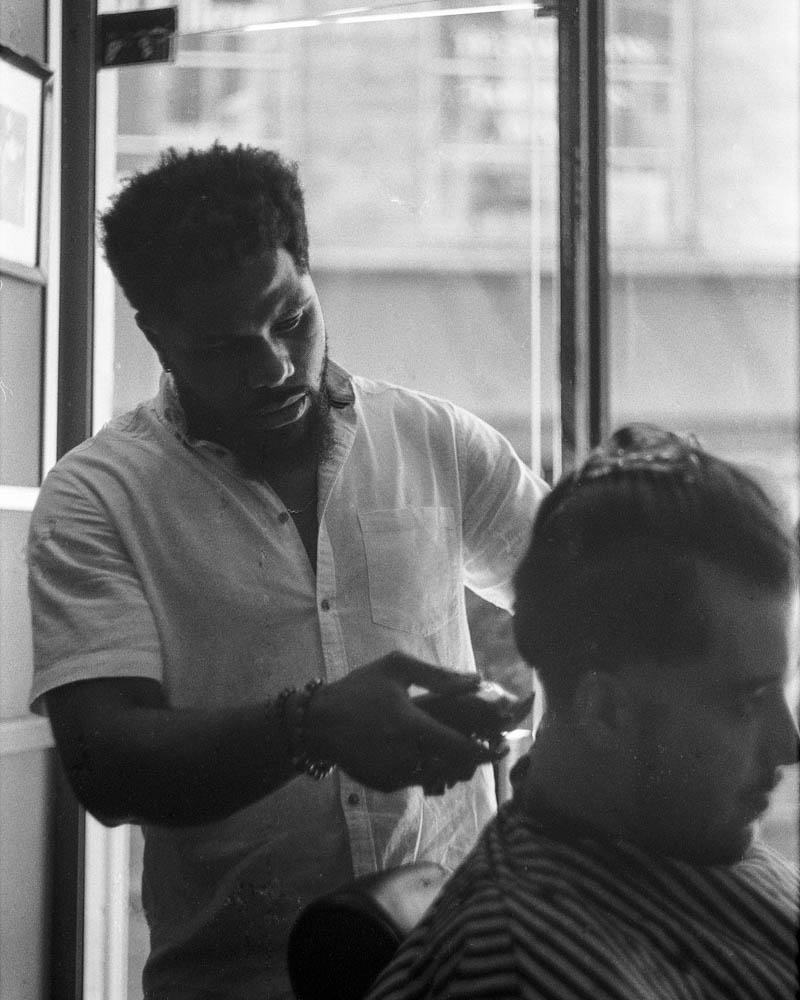
This principle guides me when choosing photos to share here on the blog. Whether it’s capturing moments with my friend JD, the barber, or snapping a shot of my lunch before I dive in, each image plays a role in the day’s story, hoping that I don’t forget to take the photo of my dessert before eating it.  Otherwise you just get a photo of the plate with some traces of cake or just some crumbs.

But lets’s get back to the idea of story telling with an arc that covers the outing.  When I set out for the day, I begin with a few warm-up shots to set the scene. If I have a plan, great—but often I don’t. Instead, I focus on capturing the ambiance of my surroundings, whether it’s a café, church, or pub. Each photo builds on the last, creating a narrative of my day’s journey.

For events, especially when I’m hired to photograph, I’ll start by discussing the plan with my client. I want to know what’s important to capture, any specific conditions at the venue—lighting, mobility restrictions, etc.—and what moments they consider essential. Having this list of must-capture moments, like the classic Kodak moments that we talked about in the last article, helps me stay focused and give me structure.

For the sake of arguments, I have a wedding to photograph, and I know that I will be taking shots of the bride before the ceremony.  I know that I have to be at the venue before the happy couple arrives.  I’d better get a shot of the rings before they appear on the couples’ fingers, etc.  I’ll want environmental portraits of the guests, etc.  This planning ahead allows me to be more serene during the day itself.

newlyweds and their wedding bands
Just married

Not every story requires a series of images; sometimes, a single photograph can capture an entire narrative. Think of it as a self-contained story, a moment that holds not only what’s visible but also what’s implied—emotion, context, and sometimes, a sense of mystery.

For example, take a photograph of a lone, empty café table in the soft morning light, a half-full cup of coffee, and an open notebook on the table. This image can suggest solitude, introspection, or perhaps the moment right after someone has left. The viewer might wonder: Who was sitting here? Why did they leave? What were they writing? This photograph tells a story, inviting the viewer to step in and imagine the rest.

A single image can evoke different responses based on the viewer’s own experiences and emotions. In many ways, it’s a conversation between the photographer and the viewer. We as photographers might set the scene, choose the light, and capture the moment, but it’s the viewer who fills in the blanks, completing the story in their mind.

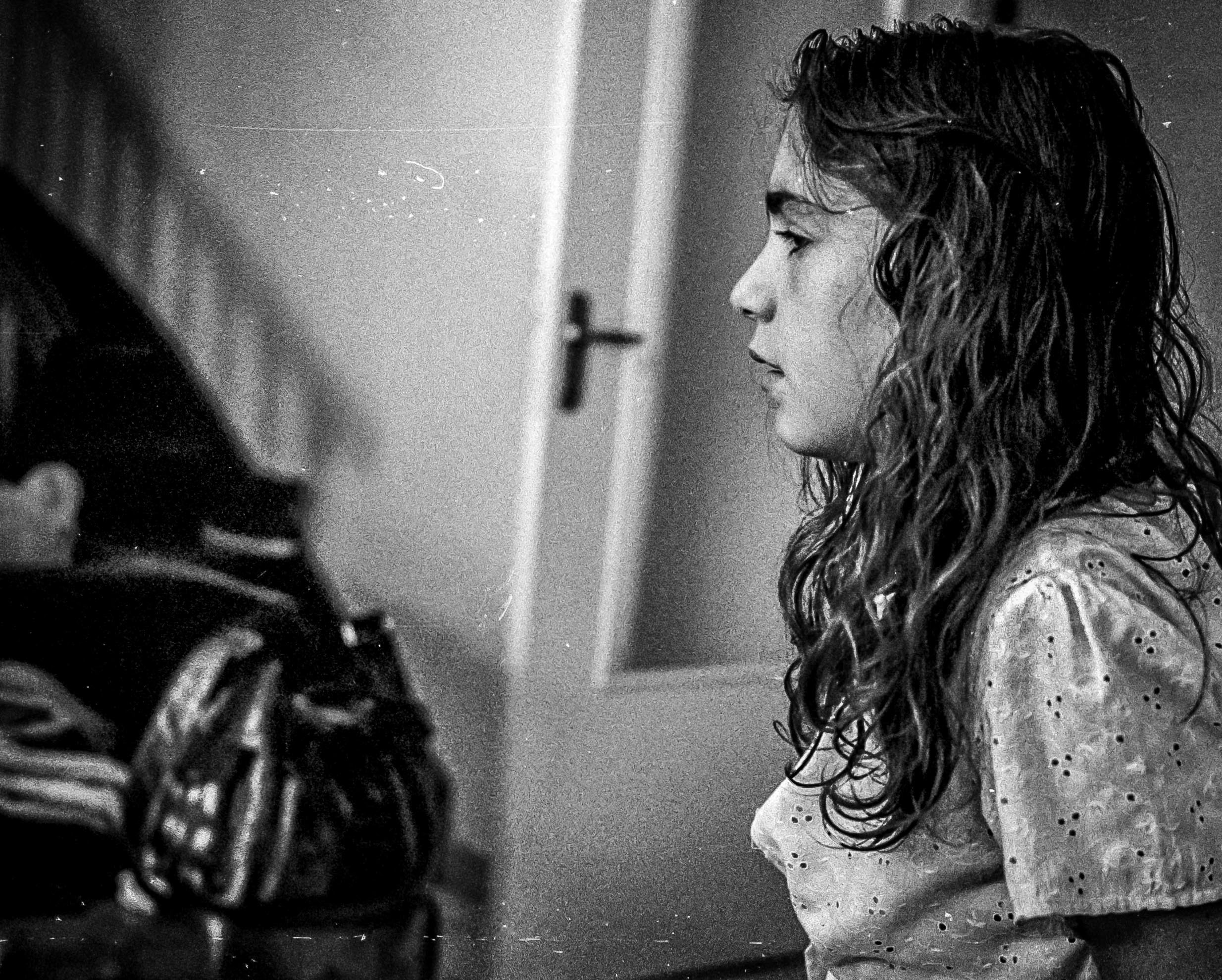
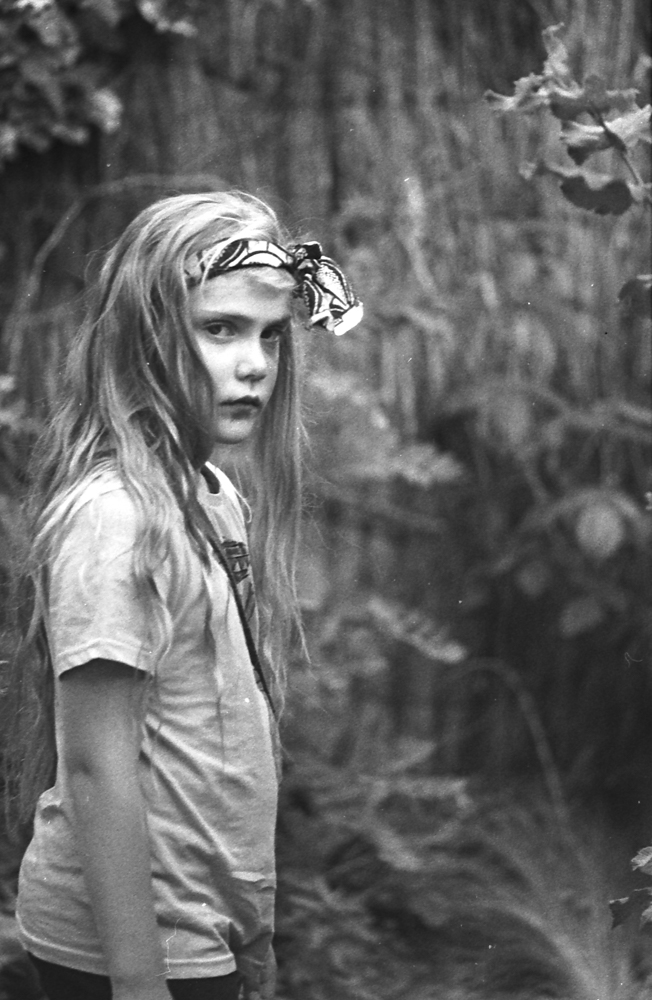
This approach also applies when photographing people. A portrait of a person lost in thought, gazing out of a window, can evoke curiosity about what’s on their mind, where they might be going, or what they’re experiencing at that moment. In these cases, the single image captures more than just a face or place; it holds an emotional narrative that transcends words.

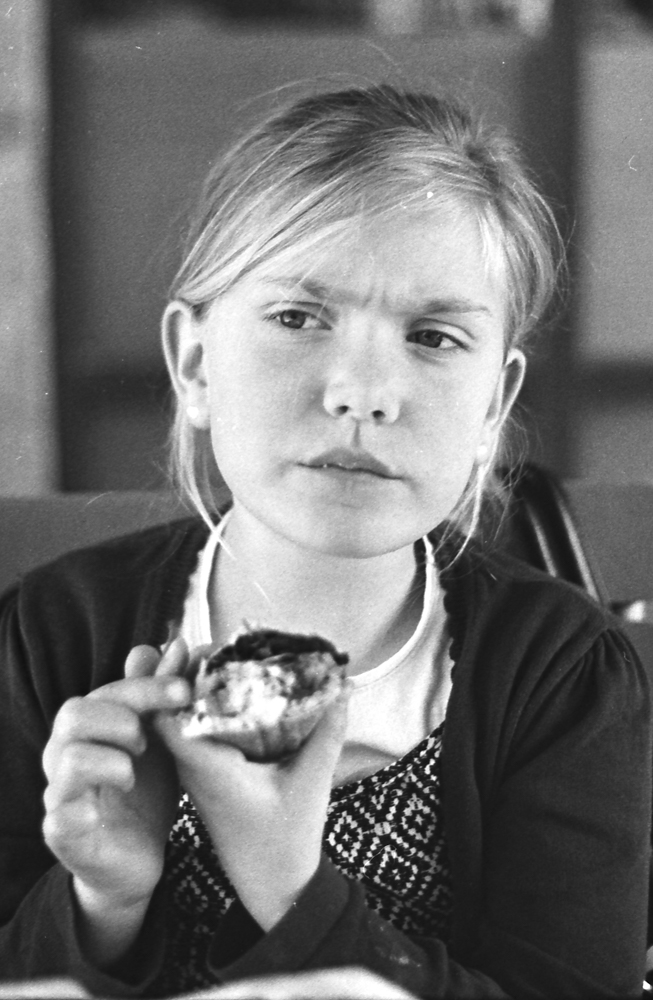
my daughter contemplating cake
Am I sure about this cake?

Storytelling in photography isn’t just about taking pictures; it’s about deciding which moments matter and capturing them in a way that communicates more than what’s on the surface. Whether we’re crafting a narrative through a series of images or capturing an entire story in a single frame, each photo we take says something about how we see the world and what we want to share with others.

Next time you’re out with your camera, think about the story you’re building, whether it’s a quiet day at a café or a bustling event. What do you want your viewers to see, to feel, to wonder about? In some ways, we’re all storytellers—stringing together moments, big or small, to create something meaningful.

So, go on—look through your images as if they were frames in a film, each one a piece of a larger story. You might find that your perspective shifts, and that’s when photography becomes more than just a hobby; it becomes a way of understanding and connecting with the world.

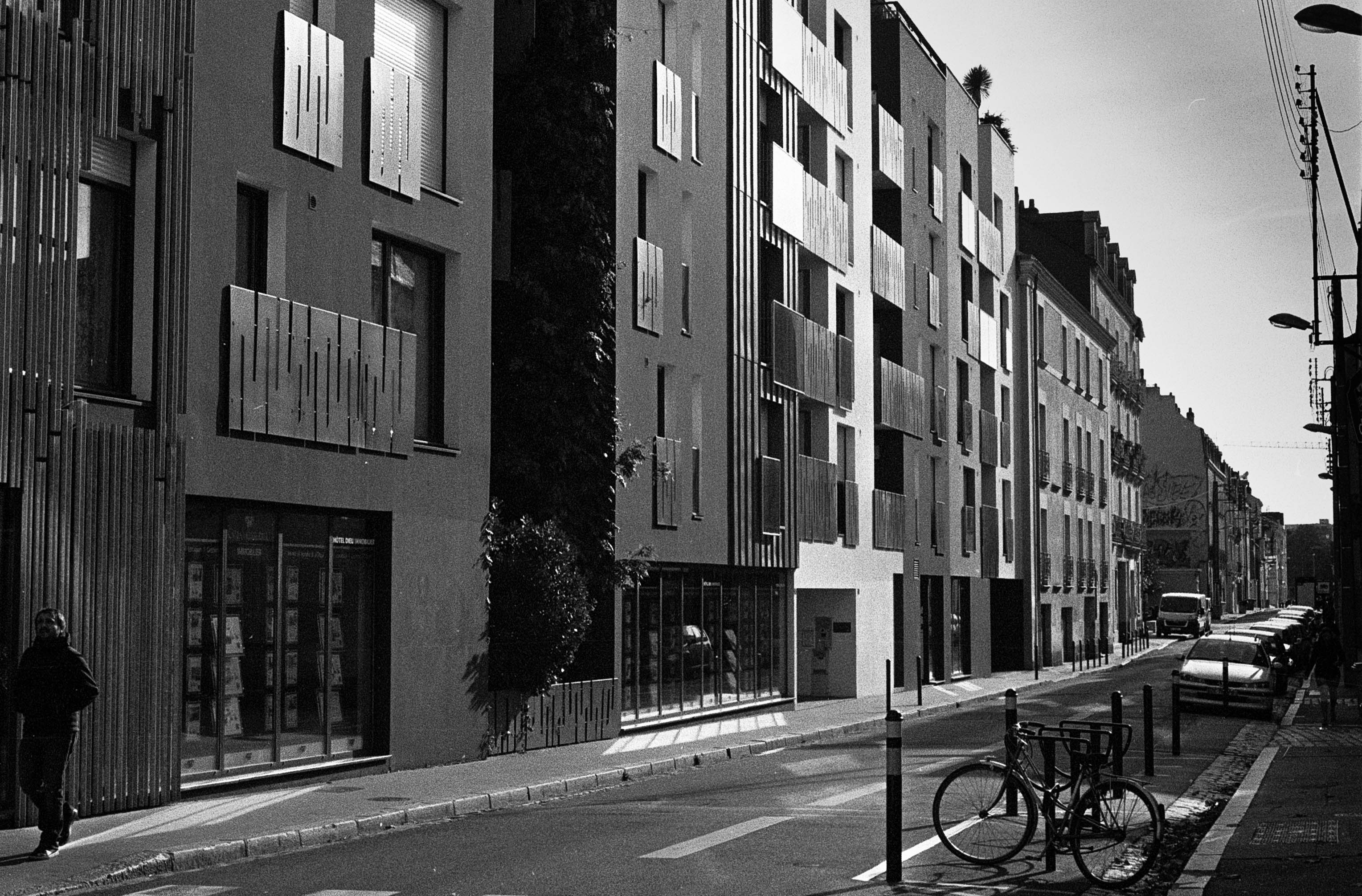
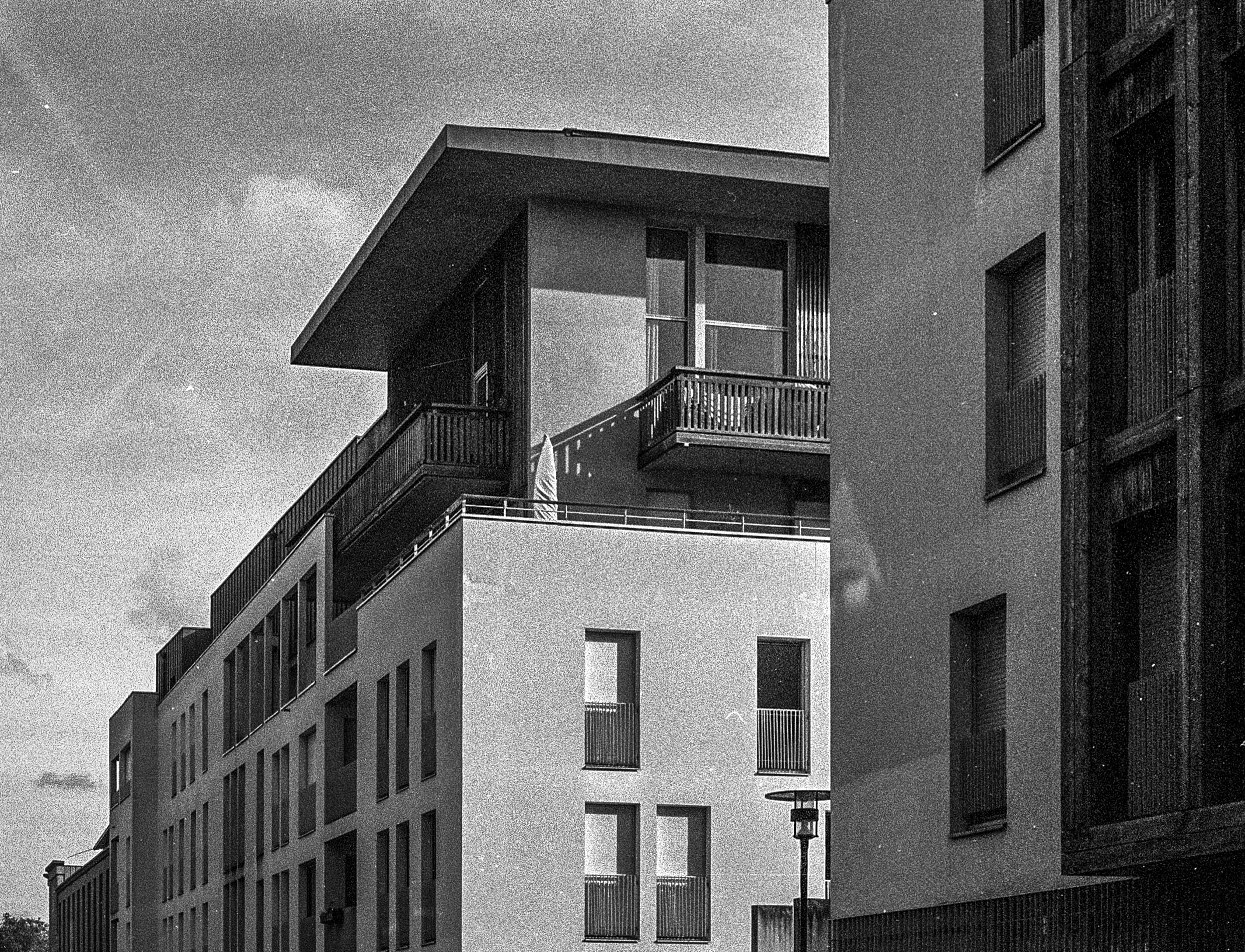
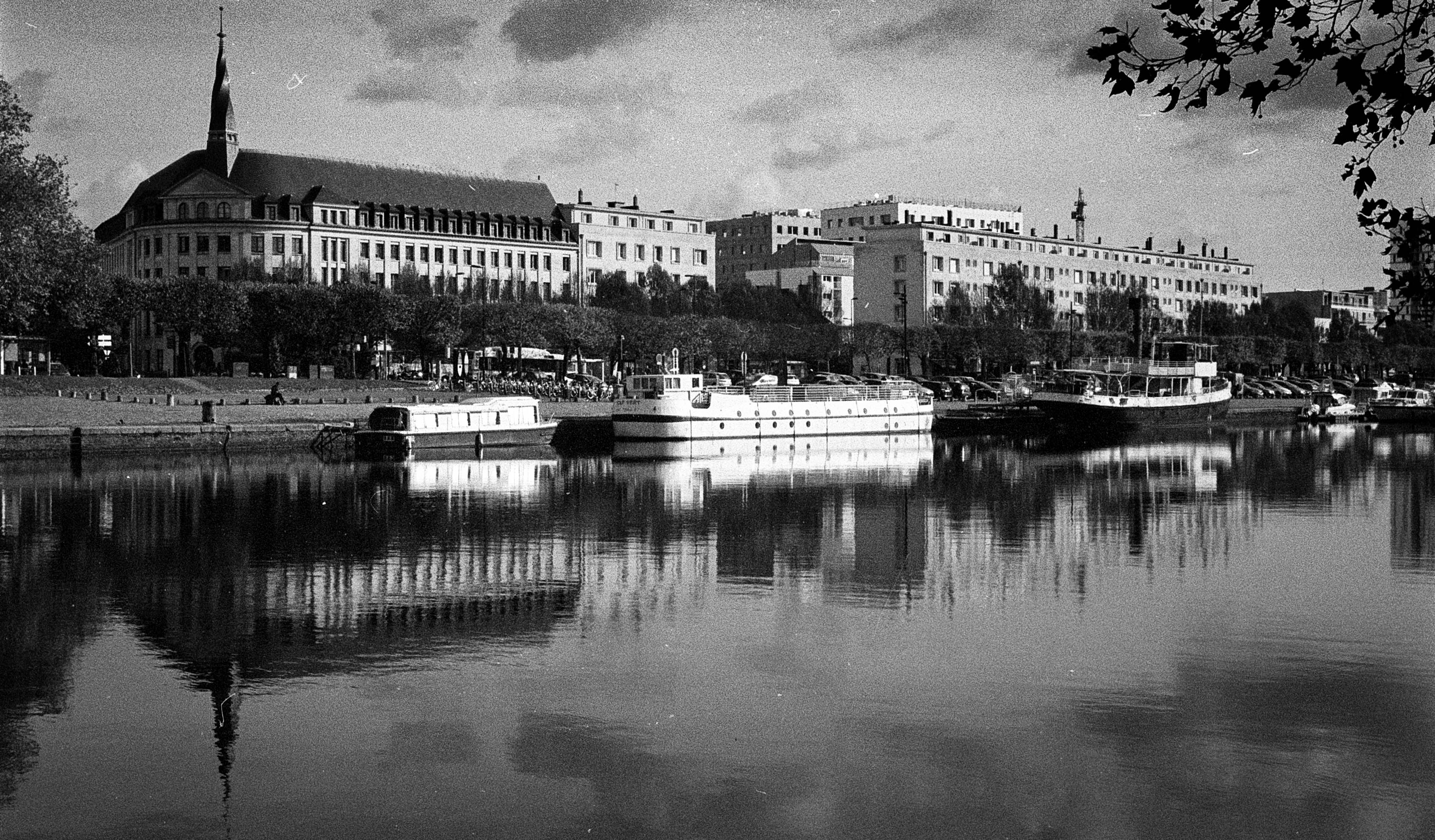
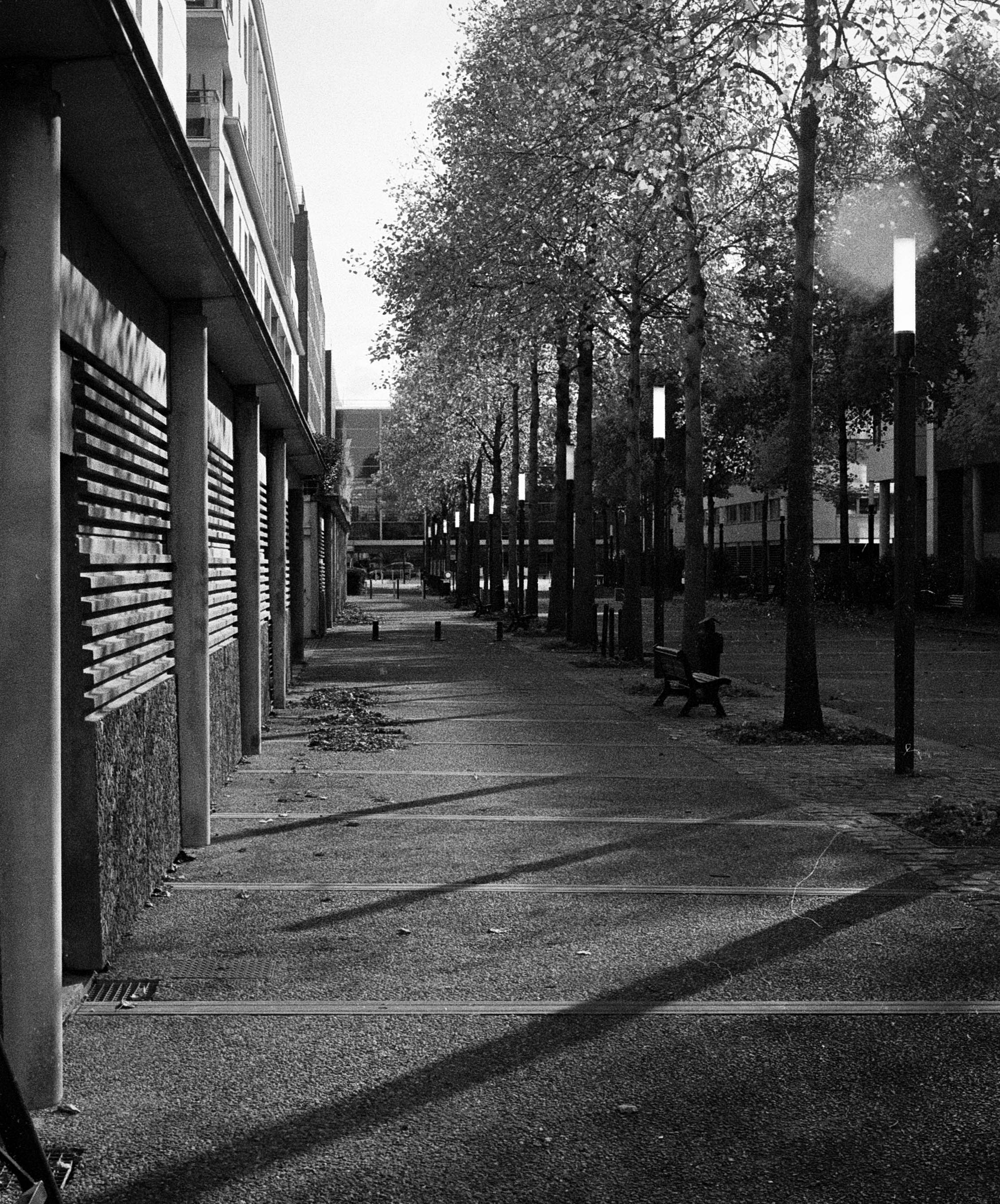
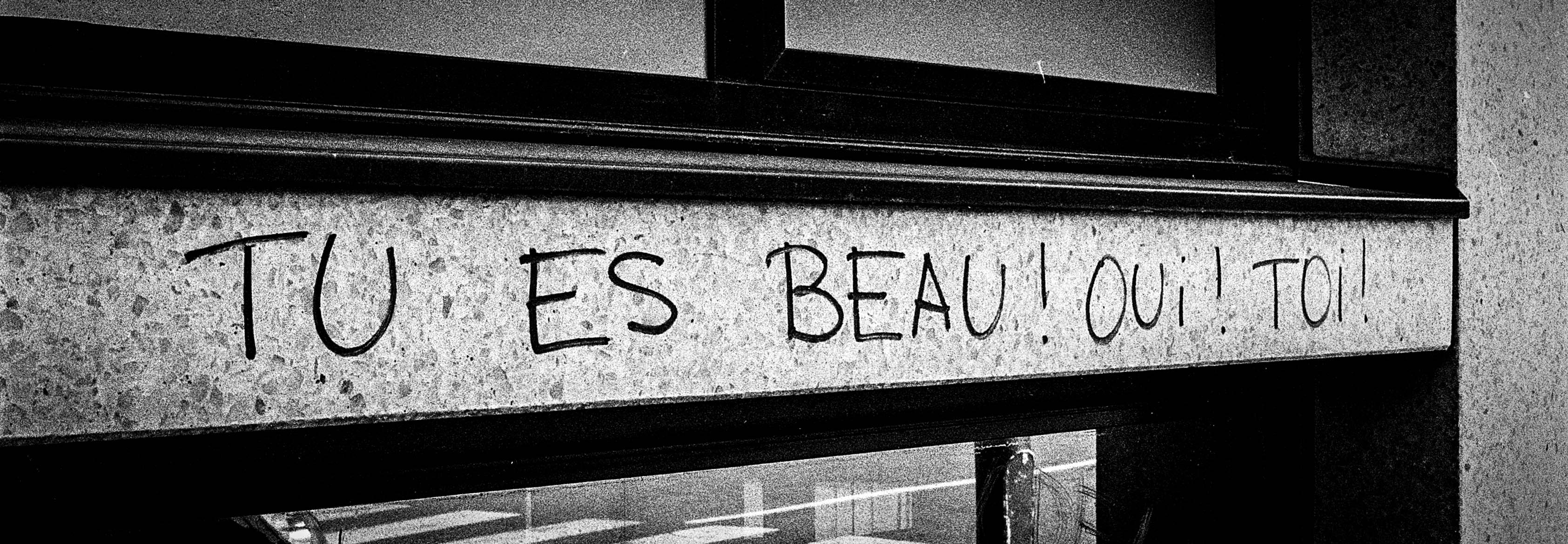
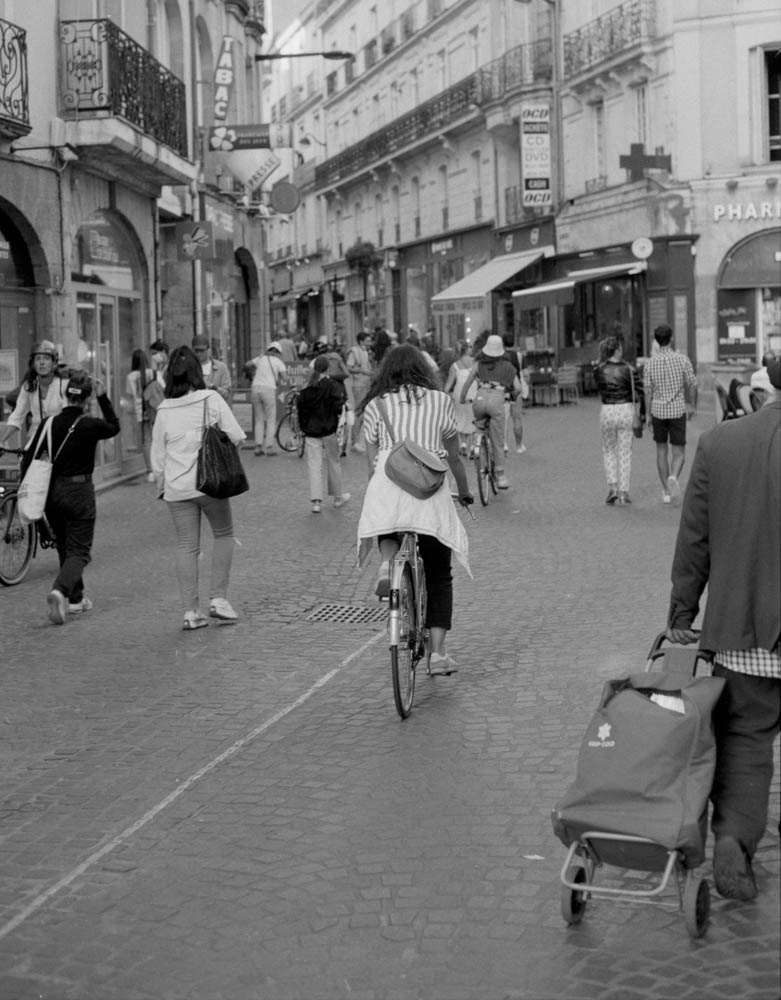
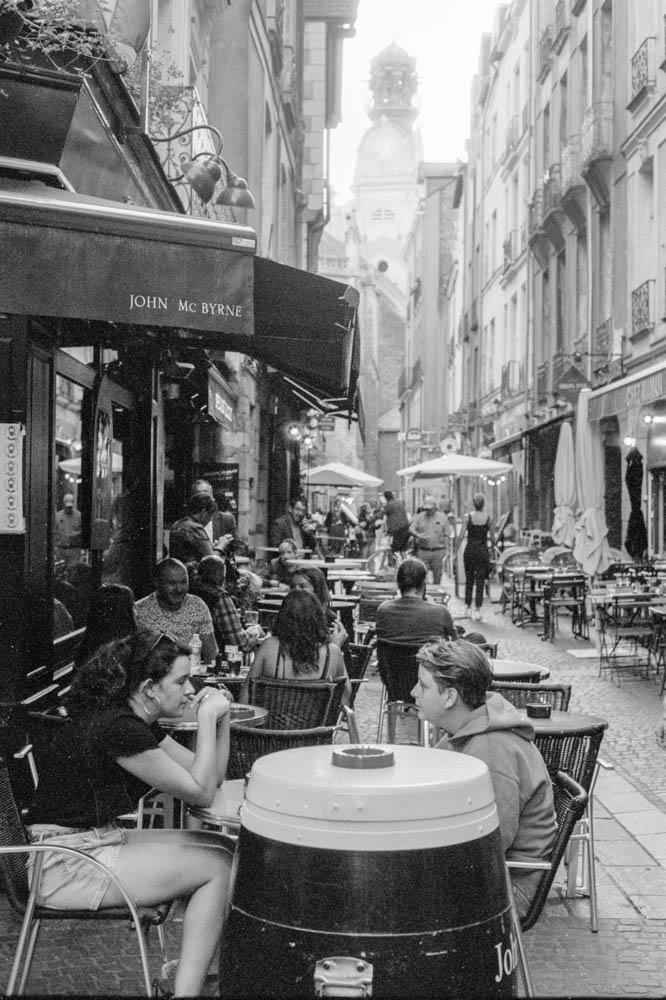
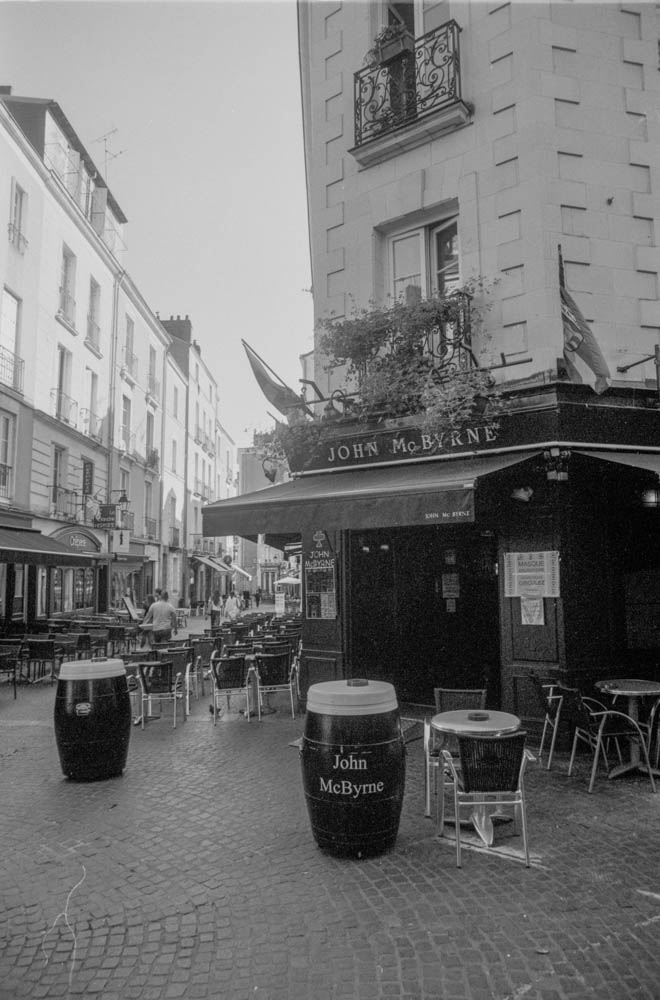
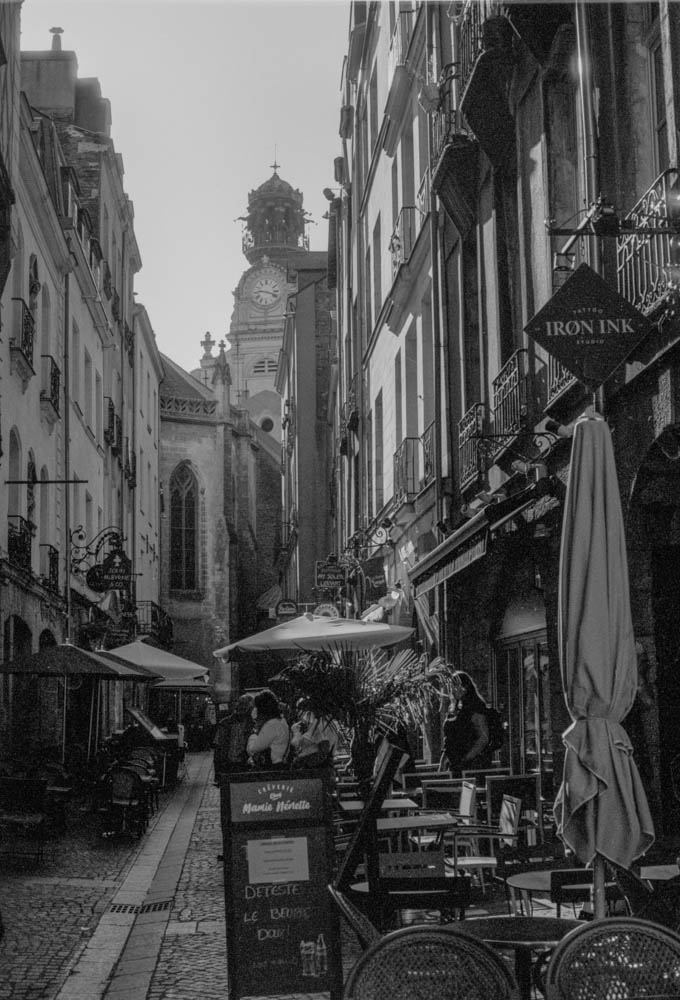
Opening of the Film Archives – Canon AE1 Street Photography in Nantes


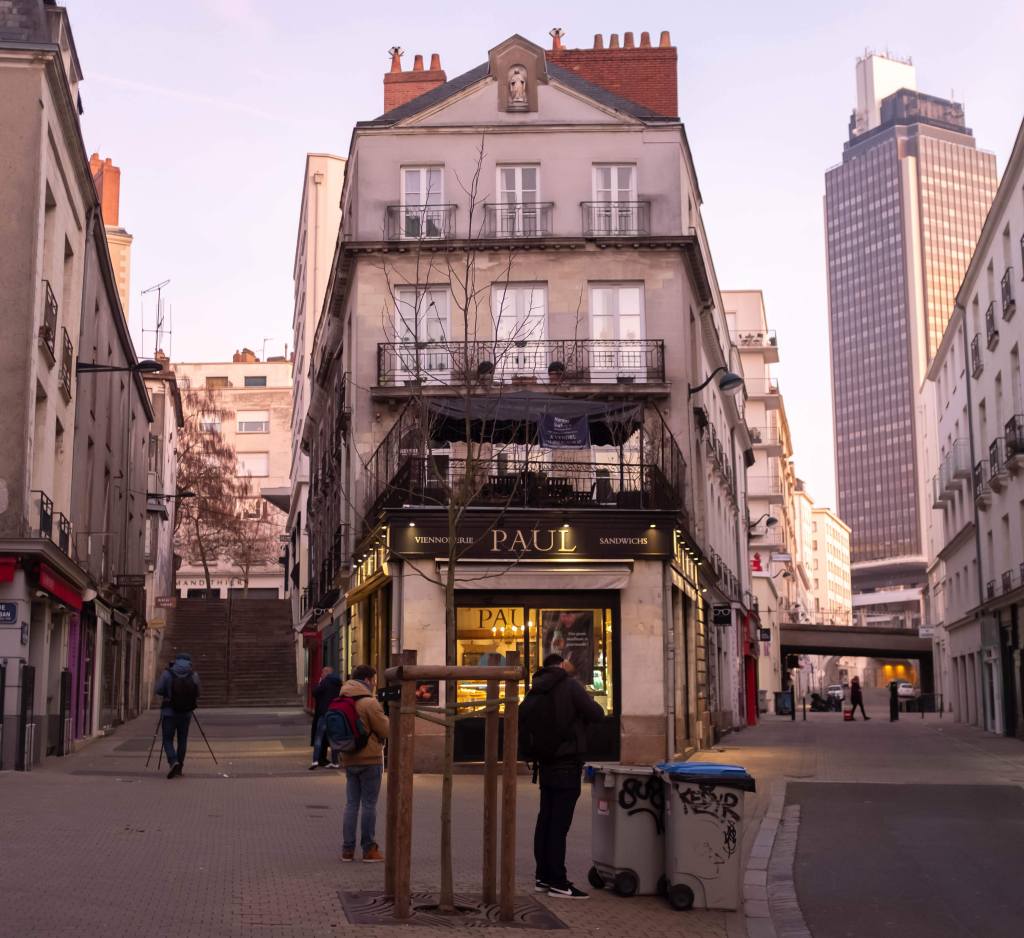
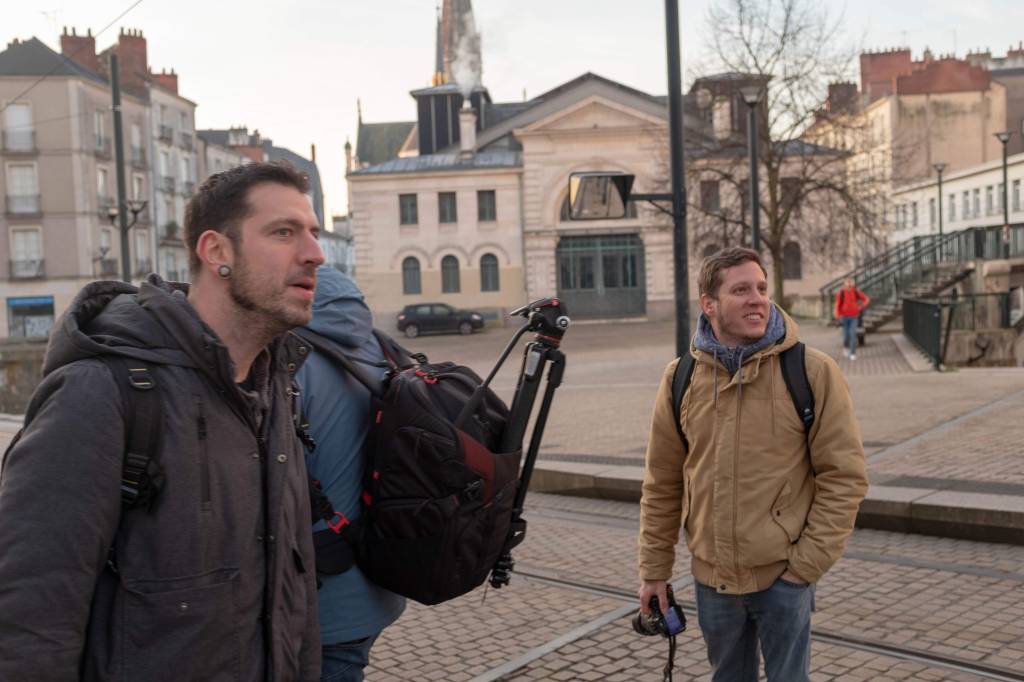
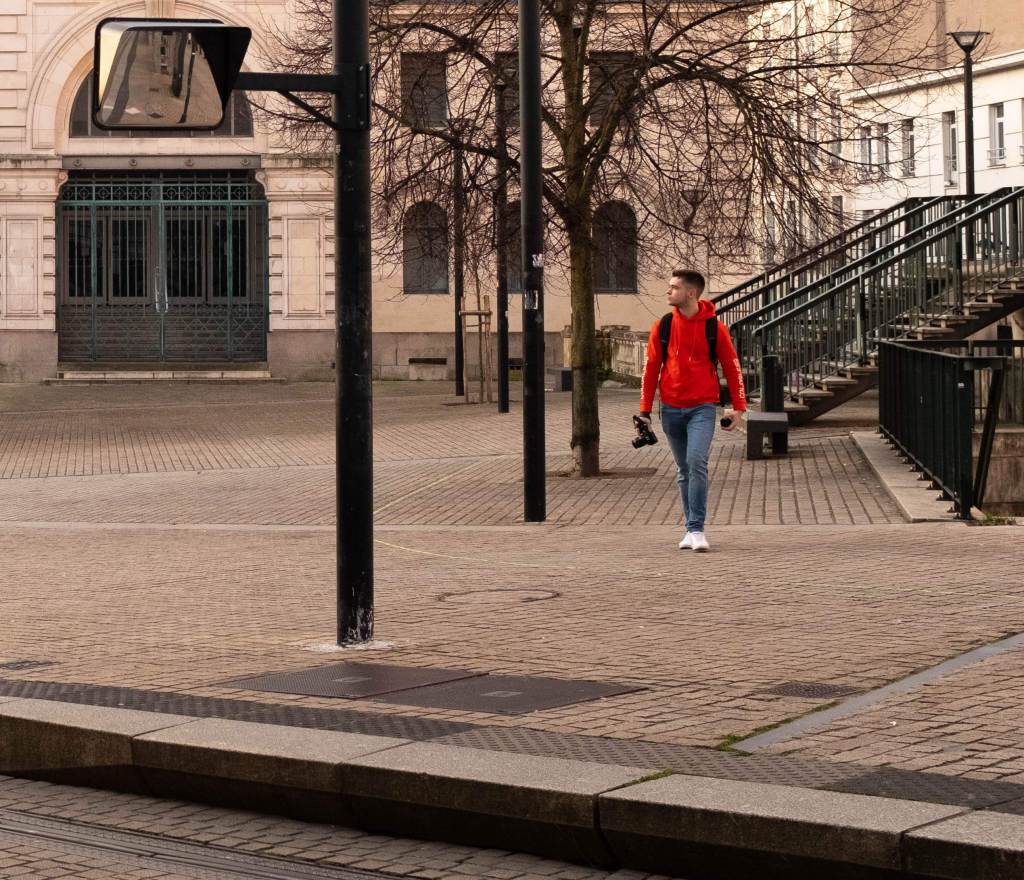
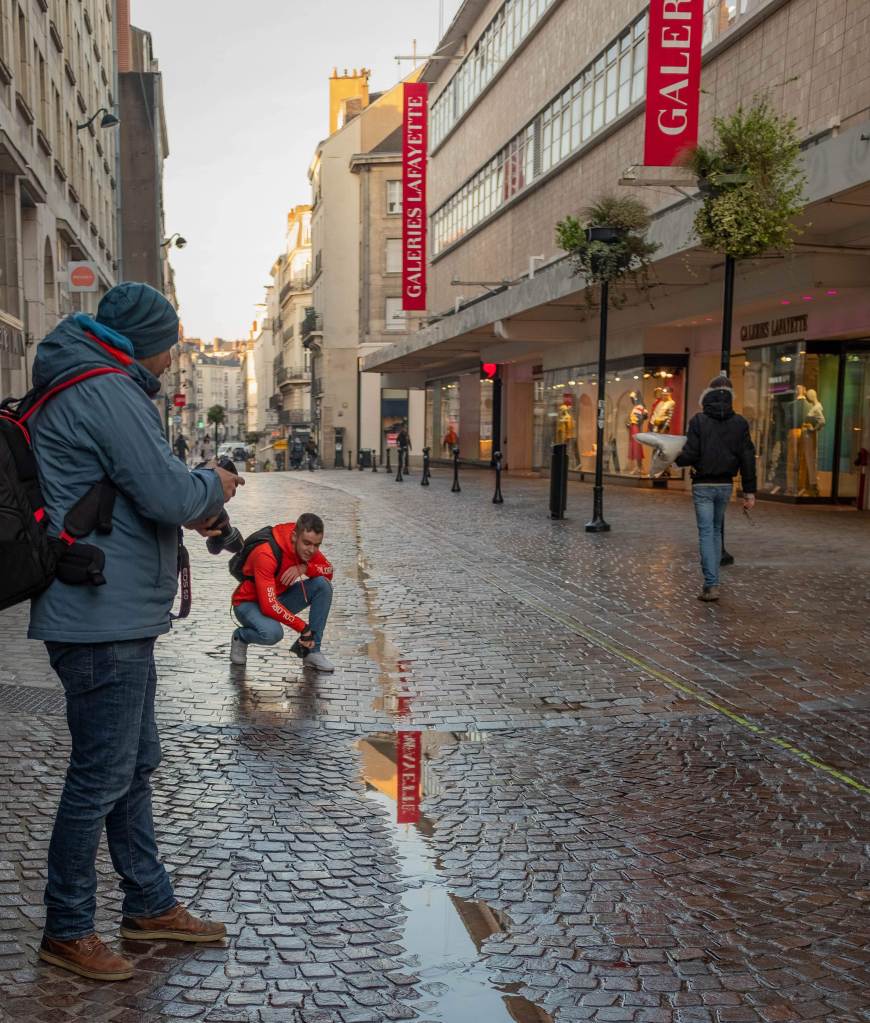
Good afternoon, Dear Reader. I’m writing this article thinking of you and wondering what to show you next in this ongoing series. The clue is in the title: Canon AE1 Street Photography in the streets of Nantes.

I know you have the eyes of a hawk who never miss a trick because your vision is so sharp. You might even have scrolled down to the photos already, and your eagle eyes will have noticed that this isn’t the usual area I visit on these outings. And, of course, you’d be right!

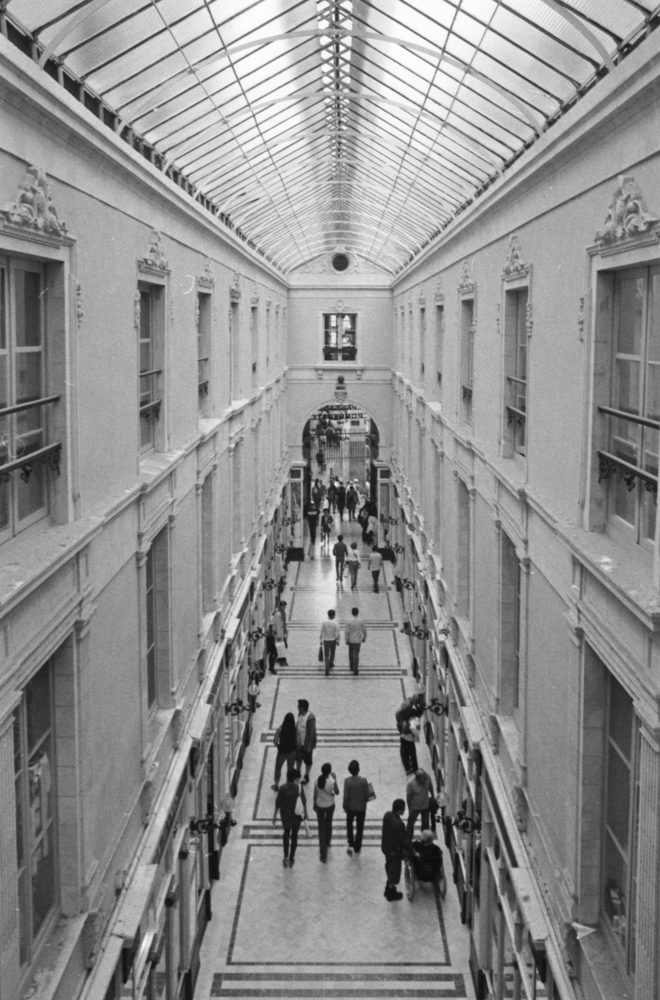
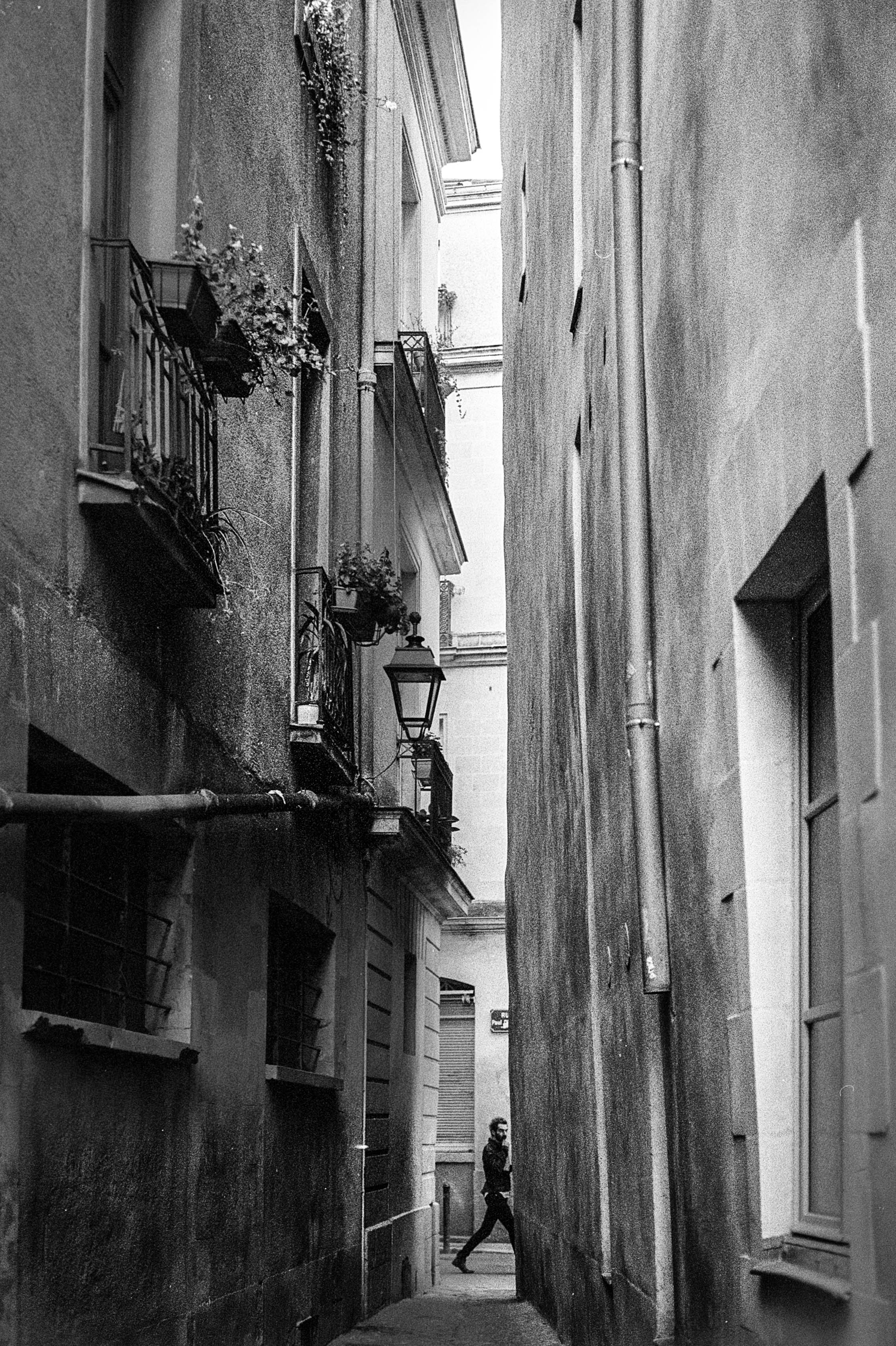
Yes, I still parked in the Feydeau car park but crossed the road to the south, heading along Baco-Lu, past the Tour Lu (sans “t”), towards the St Felix Canal, and then back into town… Some of the places no longer exist or have changed hands, but you would still recognise them even today.

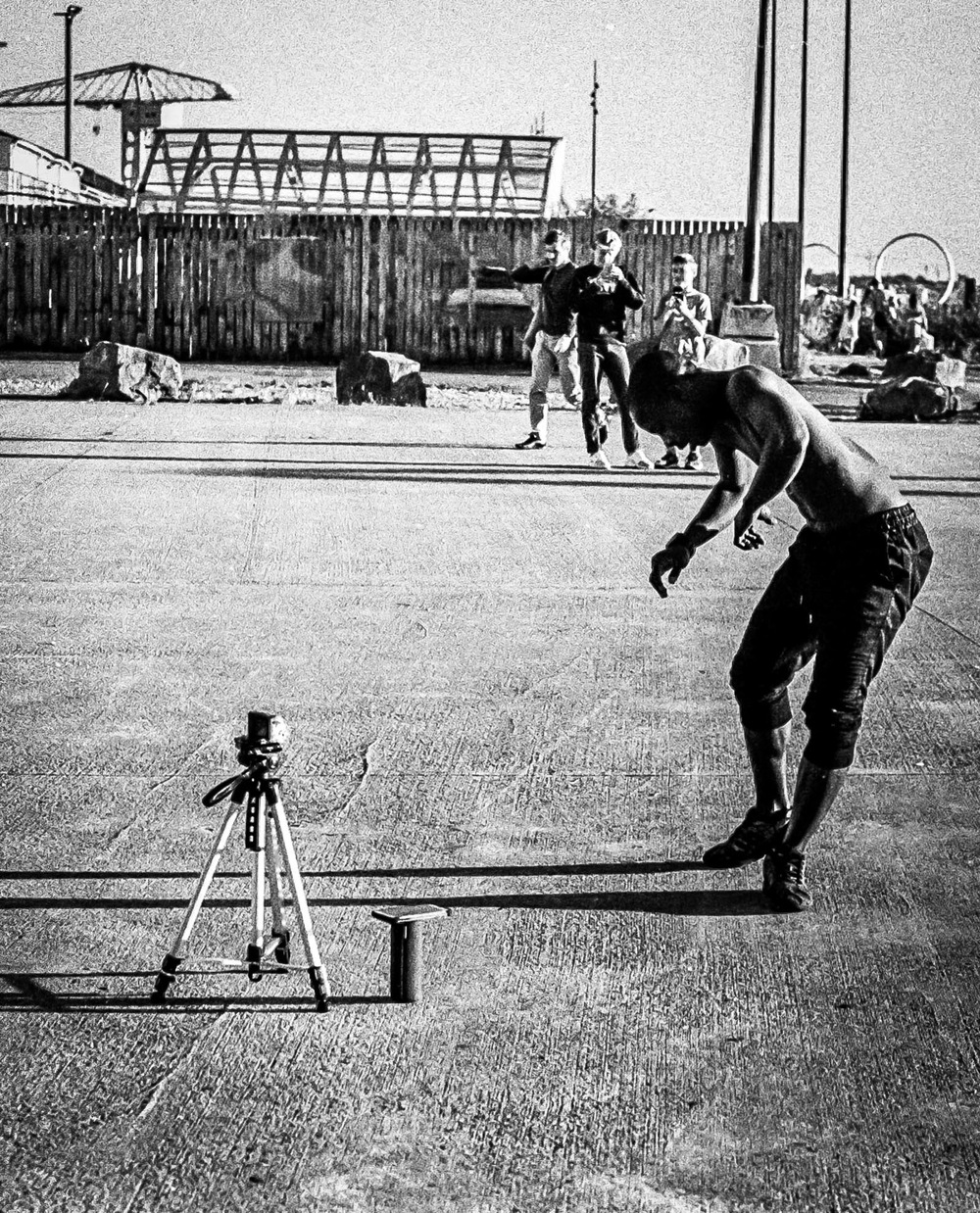
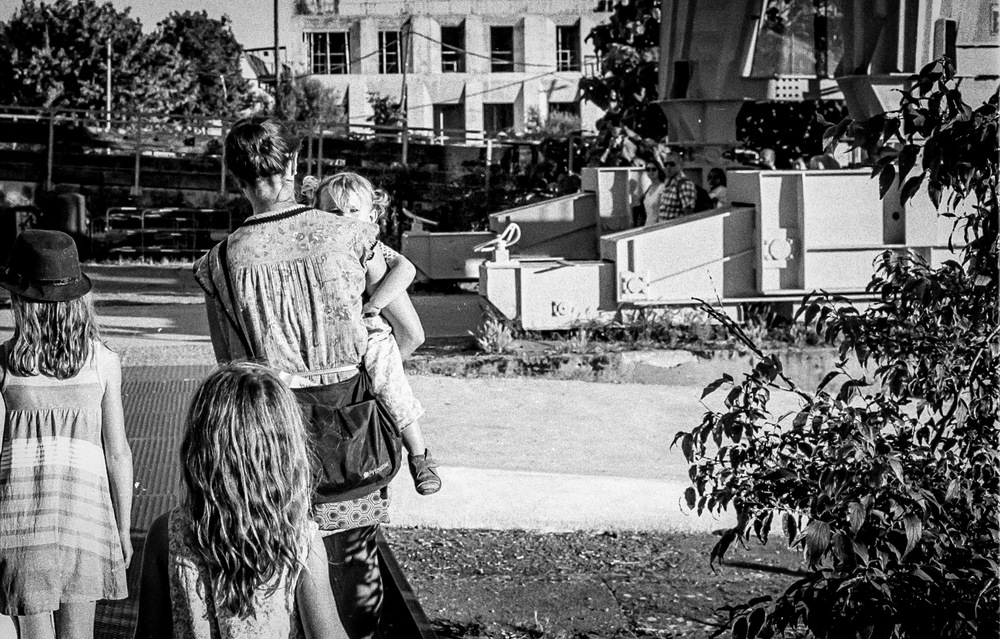
I think that with these photographs, I’m getting closer to what some might call “proper” or “traditional” street photography. The images have a certain gritty quality to them, including the people in the shots. This was something I was actively aiming for. Maybe it’s the grain—something I don’t get with the X100F—that helped bring this about. Or could it be the people, whose presence seems to reveal the stories behind them? Whatever it is, I felt that this was a very good day.

I think I may have shared with you that I’m going to China this Christmas on tour with the orchestra I play for. I’m still undecided about which camera to take and wondering if I should bring a film camera along. With the X100F, I’ve become so accustomed to the 35mm lens, while my film cameras only have 50mm lenses to work with. Reviewing these older images may help me make up my mind. It’s going to be an epic trip, and I want to be sure of the kinds of images I’ll be able to capture.

As much as I’d love the flexibility to hop in the car and retake a shot if needed, this trip to China will be different. I’ll need to trust my choices and embrace the moment as it unfolds—something that feels both exciting and a little daunting. But that’s the beauty of photography, isn’t it? The challenge of capturing fleeting moments, knowing they might never come around again. So, whatever I decide, I know the experience will be unforgettable.

While the anticipation of the China photos may be killing you, I know you’ll be patient, whatever I decide to use. Rest assured, those photos will capture the spirit of the trip. Only two and a half weeks before I start my travels…

A Photography Philosophy – Part II – Why Do We Photograph?


Cameras. Why? What is it that makes us pick one up? For me, a camera is not merely a beautiful object; it’s a tool—a simple box, with a lens through which light passes, creating an image on film or a sensor. Whether the box is a hundred years old or fresh off the production line, the same principles hold true. Even our phones are, in essence, an evolution of that same box. But beyond mechanics, what truly drives us to take a photograph?

The Kodak company told us it was all about “capturing that Kodak moment.” But what exactly is this moment, whether created by Kodak or any other company? Firstly, it was a stroke of marketing genius, associating a photograph with a personal, meaningful memory. Secondly, it gave us a compelling reason to pick up a camera and capture memories to share with others, possibly even sparking the first instances of FOMO (fear of missing out), which is now so prevalent in social media. Kodak cleverly linked photographs with significant memories, encouraging us to reach for our cameras. How kind of them.

Yet, let me assure you, it’s not a cure for FOMO, despite what Kodak or social media might suggest. Or at least, not entirely. I use my photography to document the world around me at a given moment in time. Photography is the only art form that allows you, the viewer, to see something through my eyes as I saw it. But while photojournalists capture our world, photography is not solely about documentation.

It’s about storytelling through images. A single photograph can hold an entire narrative within its frame, suggesting more than what’s immediately visible. But often, I find I need multiple images to fully convey a story. When I write my blog pieces, I aim to tell the story in both words and images. I guide you through a carefully curated selection, hoping that you might connect with them in the same way I did. This connection—between the photographer and the viewer—is, for me, one of the most powerful aspects of photography. Through our lenses, we offer others a brief glimpse into our world, our experiences, and our feelings. It’s a reminder that storytelling is more than just documentation; it’s about creating a shared space for interpretation and emotion.

Of course, beauty is also an integral part of why I pick up a camera. There’s something undeniably fulfilling about capturing a scene that feels, to me, perfectly composed. I like to believe I can craft a visually pleasing image and employ various techniques to do so. The idea is to present a scene so that the photograph conveys how I saw it, inspiring you to feel something. Photography is the only medium or art form that allows you, the viewer, to see something that only I saw, and because of the passage of time no longer exists.

It’s about creating art for art’s sake. In a world that constantly demands productivity and output, creating something purely for the joy of creating feels almost radical.

Then there’s the meditative side of photography. For me, the camera isn’t just a tool to create images; it’s a form of therapy. When I’m suffering from melancholia, or I’m lost in thought, stepping into the world as an observer through my camera often gives me a sense of calm. Looking through the lens allows me to disassociate from daily worries and approach the world with curiosity rather than anxiety. This small shift—seeing myself as a photographer rather than a participant—transforms the environment around me from something overwhelming into something inviting. The camera’s frame becomes a safe space in which I can explore without judgement or expectations. In this way, photography becomes a practice of mindfulness.

The process itself is deeply important. I often think of Vivian Maier, who left behind so many undeveloped rolls of film, underscoring the significance of the process itself. Born in 1926, Maier spent her life photographing the world without promoting her work. Of the 140,000 shots she took, only 5% were ever developed—a body of work unknown even to its creator. This fact alone astounds me. Perhaps she, too, was capturing moments for herself, deeply invested in the act of photography without any need for external recognition. Her legacy reminds us that the process can be as meaningful as the result and that photography has value even when the images are unseen.

In today’s image-saturated world, where everyone is encouraged to share, edit, and curate their lives, it’s worth asking if we’d still take photos knowing that nobody else would ever see them. For me, the answer is a resounding yes. Photography is more than a tool to impress, to document, or to share; it’s a means of expressing myself and, often, of making sense of my own experiences. Every image is a small act of discovery, helping me see the world more clearly or find beauty where I might not have noticed it before.

Ultimately, photography is a language, a form of communication that transcends barriers of culture, language, and time. A single photograph can capture something timeless—an unfiltered moment of life that can be understood and felt by someone across the globe. In this way, photography becomes a shared visual language, offering us a way to connect beyond words.
So, why do we photograph? Perhaps the answer is as varied as the photographers themselves, shaped by individual motives, experiences, and emotions. But whether we’re documenting, creating, or simply exploring, the act of photography invites us to see the world—and ourselves—with fresh eyes. And in the end, that might be the most compelling reason of all.

The Enduring Elegance of Vintage Cameras: A Personal Journey


I often find myself discussing the concept of “vintage” with my father during our phone calls. I live in France, while my parents are in Northumberland. The term “vintage” means different things to different generations. For my 25-year-old son, vintage clothing is anything from the 90s—he even sports a few of my sweaters from that era. At 52, I’m beginning to see myself as slightly vintage, with a style that has evolved into something more classic and refined compared to my younger years. And to my 15-year-old daughter, my father, who grew up during the war, must seem positively ancient.

So, what does this have to do with photography? For me, a camera from the 1990s feels relatively modern, while those from the 80s and 70s seem older but not quite ancient—much like myself. Using these older cameras in my photography practice forces me to slow down and be more deliberate. Just as my style has become more refined with age, these cameras have an enduring elegance and charm. They may be from a slightly bygone era, but they still capture images with timeless grace.

Incorporating this vintage technology into my work isn’t just about using old equipment, however enjoyable working with what could be considered museum pieces may be; it’s about embracing a process that demands patience and mindfulness—concepts that are somewhat foreign to this younger generation. Each shot taken with these cameras becomes a deliberate act, mirroring how I approach life and photography. The result? A deeper connection to the process and a greater appreciation for the unique quality of film. This slower pace allows me to savour each moment, akin to how my evolving style reflects a deeper appreciation for life’s subtleties.

In a world increasingly dominated by digital immediacy, there’s something profoundly satisfying about the slower, more thoughtful pace of using vintage cameras. They may not be the latest technology, but their classic design and the deliberate process they require make them a joy to use—much like the evolving sense of style and perspective that comes with age. The emotional impact of working with these cameras is profound; they carry the weight of history and personal connection, enriching my creative process and deepening my engagement with photography.

My own “vintage collection” began with an SLR from the 1980s: an East German Praktica MTL3 that served me faithfully until 2009. After it finally gave up, I quickly replaced it with another. From there, I delved into exploring more iconic cameras from the 1970s and 1980s. At that time, they were still relatively affordable before the hipsters discovered film photography and the prices inevitably started rising.

My exploration didn’t stop there. I began to seek out cameras from the 1960s and even the 1950s. The oldest camera in my collection dates back to 1949! It’s quite vintage, even for me, though perhaps not so much for my father. Each piece of my collection is a link to a past era, offering a tactile connection to history that digital tools can’t replicate.

There was a time during the digital age when people sought to recapture the film aesthetic, and right on cue, apps like Hipstamatic, Instagram, and VSCO began to emerge. These digital tools embraced the nostalgic look of film, offering a nod to the past while thriving in the digital present. Yet, this digital simulation can’t quite match the authentic experience and emotional resonance of using actual vintage cameras.

This led me to a thought: if I truly wanted to capture that film aesthetic, why not use actual film and cameras from the eras I admire? I have always been drawn to “old” things, having loved exploring a special drawer at my grandmother’s house filled with genuine relics—not just my grandparents’ old possessions. My fascination with older technology, particularly when it’s still functional, remains strong. There’s an undeniable charm and satisfaction in using equipment that carries a legacy, offering a perspective that both honours the past and enriches the present.

So just because something might be old, it might still work and open a whole new world to you that you didn’t even suspect existed! It might, however, have something of a quirky nature, but once you get over that, the world is your oyster.

Classic Chrome Meets Portra 160: Evaluating the Pentax ME Super and Fujifilm X100F


Let’s talk about two of my favorite cameras—the Fujifilm X100F and the Pentax ME Super. While these cameras belong to entirely different eras of photography, they share a surprising similarity in size and portability. I’ve used both extensively, and today, I want to compare their unique qualities without turning it into a clichéd “film vs. digital” debate.

Photography enthusiasts often find themselves in one of two camps: those who champion the convenience and immediacy of digital, and the purists who swear by the timelessness of film. But if you’ve followed this blog for a while, you’ll know I don’t see things that way. Instead, I value what each format brings to the table, and more importantly, how both contribute to the experience of photography.

A Tale of Two Cameras

For me, photography is more than just the final image—it’s about the journey of capturing it. Any Lomography fan will agree: the process is as important as the outcome. When I shoot with the Fujifilm X100F, I appreciate the immediate feedback of seeing the image on the screen and knowing right away what I’ve captured. But with the Pentax ME Super, it’s a different experience. I have a rough idea of what the film will deliver, but the magic isn’t fully revealed until the film is developed. That anticipation is part of the charm.

For this comparison, I’ve chosen photographs from Northumberland. Its moody, windswept landscapes—places like Alnmouth and the Northumbrian moors—present the perfect canvas for both film and digital. The X100F’s Classic Chrome simulation delivers a retro, muted look, while Kodak Portra 160 film, shot through the Pentax, brings warmth and richness to the tones.

The Fujifilm X100F

he X100F has often been called a bridge between the analogue and digital worlds, and I tend to agree. It’s packed with modern features like autofocus and an electronic viewfinder (EVF), but the controls are refreshingly tactile, with dedicated dials for aperture, shutter speed, and ISO. For anyone with a background in film photography, this setup feels familiar and intuitive.

What sets the X100F apart for me, though, is its Classic Chrome film simulation. It offers a subdued color palette that echoes old film stock, perfect when I want a slightly desaturated, vintage aesthetic. Unlike some over-the-top digital filters, Classic Chrome feels organic and subtle—bringing out details in the shadows without overwhelming the shot with contrast.

The X100F Photos

The Pentax ME Super

On the other hand, the Pentax ME Super is all about slowing down. There’s no EVF, no digital screen, and definitely no autofocus. Instead, you rely on a split-prism focusing system and aperture-priority mode. It forces you to be deliberate with each shot, a process that I find incredibly satisfying.

You’ll often hear film photographers talk about being more “in the moment” when shooting on film, and that’s exactly how I feel with the ME Super. The process of carefully composing each shot, setting exposure manually, and waiting for the film to be developed encourages patience and thoughtfulness.

For this outing, I paired the ME Super with Kodak Portra 160, a film that’s become known for its natural skin tones and soft, warm colors. Paired with the 50mm f/1.7 lens, this combination creates images with that unmistakable film character—shallow depth of field, soft highlights, and rich colors.

Lenses and Sensor Size

One of the most noticeable technical differences between these two cameras is their lenses and sensor sizes. The X100F features a 35mm equivalent f/2.0 fixed lens, while I usually use the 50mm f/1.7 on the Pentax. On the sensor front, the X100F has an APS-C crop sensor, giving it a narrower field of view compared to the full-frame 35mm film in the Pentax.

This technical difference goes beyond field of view. The Pentax ME Super has fixed ISO based on the film I choose, so I need to plan ahead for the lighting conditions I’ll be working in. In contrast, the X100F allows me to adjust ISO on the fly, providing flexibility in rapidly changing environments. This is something digital photographers have come to rely on, and it’s undeniably convenient when shooting in variable light.

The Pentax ME Super photos

Comparing the Images

Now, the big question: which is better, the Pentax ME Super or the Fujifilm X100F? Honestly, neither. They’re different tools for different purposes. Whether you’re drawn to the organic feel of film or the convenience of digital, both formats offer something unique. And that’s the beauty of photography—there’s no one-size-fits-all approach.

The sideshow feature shots from both cameras. As you look at them, you might favour one look over the other. The film shots have a warmth and texture that digital sometimes struggles to replicate, while the digital photos are sharp, detailed, and offer instant gratification. But ultimately, this comes down to personal preference, not a matter of one being objectively better.

Final Thoughts

At the end of the day, a camera is just a tool for capturing a scene in a particular way. As long as the final image is pleasing to the eye, I’d say the job is done. So don’t limit yourself to just one format—if you haven’t tried shooting film, give it a go. If you’re a film photographer who’s hesitant to try digital, maybe the X100F will ease that transition with its analogue-like feel.

More than anything, I encourage you to enjoy the process, whether it’s with film, digital, or both. Get out there, take your time, and remember that photography isn’t just about the images you capture—it’s about the experience.


Post Scriptum:
For those of you new to my blog, welcome! I cover everything from camera reviews to photography tips and techniques. Whether you’re a seasoned photographer or just starting out, there’s something here for you. Feel free to leave your thoughts or questions in the comments below—I’d love to hear from you!

The Fujifilm X-T2: A 2024 Perspective – Is It Still Worth It?


My Love Affair with the X100F (and a Cuppa Tea)

It’s no secret to the regular readers of IJM Photography that I have a great fondness, deep affection, nearing on obsession with my Fujifilm X100F. It’s a great little camera that gets me excited whenever I take it out of my camera bag. But, Dear Reader, what does this have to do with the Fujifilm X-T2? Well, they’re both manufactured by Fuji, they both have an “X” in their name, and I have a deep affection for a nice cup of tea. Not the same T? Ah well…

Similarities and Differences: A Tale of Two X’s

I’ll talk about the differences and similarities between the two cameras and why I thought the X-T2 was a useful and complementary acquisition. We’ll look at not just the specs but also the rather similar way both cameras handle.

  • Sensor and Image Quality: Both use the same 24-megapixel sensor with an anti-aliasing filter, and offer an ISO range from 200 to 128000.
  • Screen and Viewfinder: The X100F has a fixed screen, while the X-T2 boasts a tilting one. Both share the same excellent viewfinder.
  • Performance: The X100F shoots at 8 fps while the X-T2 goes up to 14 fps. For video, the X100F is limited to Full HD, while the X-T2 offers 4K and can shoot at 120 fps.
  • Connectivity: Both cameras have built-in wireless capabilities.
  • Weight: The X100F is lighter at 469g, while the X-T2 is slightly heavier at 507g.
The Lens Factor (and Weather Sealing, Too!)

The main difference? The lens. The X100F has a fixed 23mm (35mm equivalent) f/2.0 lens, while the X-T2 can take the entire range of X-mount lenses. Quite a big difference, indeed. The X-T2 also has the added bonus of weather sealing!

Why Buy a 4-Year-Old Camera in 2020?

Because at the time, I could. It was the logical acquisition and complement to my X100F. Did I mention it also uses the same batteries? I still have the same, beloved-by-many film simulations, and while not as numerous as later models, they are more than enough for me!

My first lens purchase was the 16mm (24mm equivalent) f/2.8 Fuji lens, the perfect complement to the 35mm equivalent on the X100F. I later discovered TTArtisan and 7 Artisans, Chinese firms that make affordable manual focus lenses for the X-mount. I now have the 35mm (50mm equivalent) f/1.2 and 58mm (85mm equivalent) f/1.4, and the fish eye 7mm F2.8 lenses from both companies, both costing a fraction of the autofocus Fuji lenses. The only concession I made to Fuji was later purchasing the 18-55mm (24-70mm equivalent) f/2.8 autofocus kit lens.

Value for Money: The X-T2’s Sweet Spot in 2024

The fact that I bought it second-hand was also a contributing factor. Does it have as many megapixels as the more modern X-T5? No. But does it have enough? Yes! Does it have the same specs as the X-T5? No. But does it have enough? Yes. Can you see a pattern developing here?

For the amount of money spent, I think I have enough cameras for my buck. And that is the crux of the argument for acquiring a now 8-year-old camera in 2024. Is it the very best money can buy? No. But if you’re an amateur like myself, you generally don’t need the specs that manufacturers and those nice men in camera shops will try to tell you you need. 24 megapixels is more than enough for printing even 20″ by 30″ (500mm x 760mm) sized images.

I have just looked at mpb.com for you and have found XT2 bodies from 487€ to 729€ depending on the condition. An X-mount lens will cost you anything from 104€ for a 35mm (50mm equivalent) F1.2 from 7 artisans to 279€ to 340€ for the 16mm (24mm equivalent) F2.8 fuji lens. So as you can see, it’s certainly cheaper than buying the latest models…

Conclusion: A Timeless Tool for the Passionate Photographer

In 2024, the Fujifilm X-T2 remains a compelling option for photographers seeking excellent image quality, classic handling, and a wealth of creative possibilities. Its compact size, weather sealing, and extensive lens selection make it a versatile companion for various genres, from street photography to landscapes.

While newer models may boast more advanced features, the X-T2’s enduring appeal lies in its combination of performance, affordability, and the unique charm of Fujifilm’s X-Trans sensor and film simulations. For photographers who prioritise the essentials of image-making and value for money, the X-T2 continues to be a worthy contender in the ever-evolving world of digital cameras.

If you’re looking for a camera that delivers exceptional results without breaking the bank, the used market might just hold the perfect X-T2 for you. And who knows, you might even discover a newfound appreciation for a slightly older camera that still has plenty to offer in 2024 and beyond.

Post Scriptum

This camera is also capable of 4K video. And I’m using it at work for making videos for training new staff. It is certainly lighter than my Canon 6D Mark II, and I seem to be able to obtain a picture style that I like. It doesn’t have in-built image stabilisation. However, I use it on a tripod so that’s not an issue. And if ever I do decide to use the 18-55mm kit lens, I have image stabilisation in the lens.

I’ll see if I can’t find you an excerpt of the latest video…

And here it is…