Photography Philosophy – Part VI – Connection Through Photography


Building Relationships

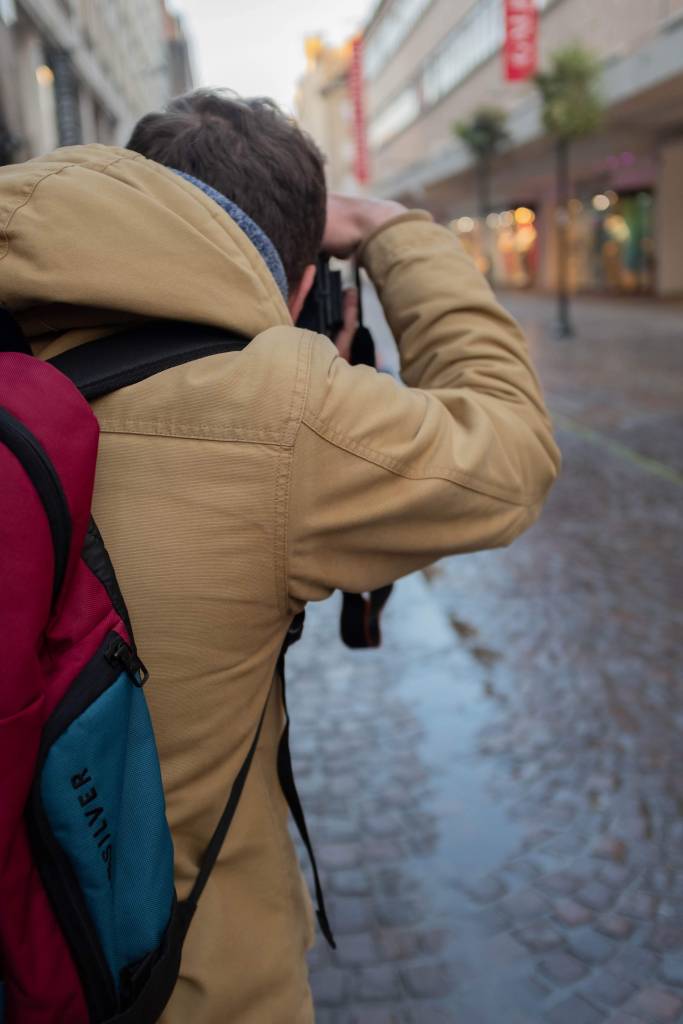
I once read that if two Germans meet, they will form a club. I am not German, but they perfectly illustrate this universal need to belong. They are generally not the most extroverted of people, but even introverts have this need to form a relationship with somebody. As photographers, we have this same urge, but perhaps in a more subtle way. When I’m out on the street, I will always notice someone with a camera, even when I’m without one myself. I find myself looking to check the brand, possibly the make of the camera, and the type of lens the person is using. Even when we simply nod at each other, it’s a recognition of our shared enthusiasm for the art form. Am I judging them? Sometimes, yes, but to err is human.

When I see a film camera around someone’s neck, I am immediately drawn to it. When I venture out with the behemoth Mamiya C220, the camera is almost as much a statement as the actual image I’ll eventually take with it. People will come and inquisitively ask, “What kind of camera is that? Can you still get film for it?” or say, “Yes, my grandfather had one like that.” The obvious charm of a medium format TLR in this modern world.

Photography is sometimes seen as quite a niche activity, and film photography even more so. A film camera gives out a more exclusive vibe, telling the world that, yes, we actually are serious about this, and know what we are doing, as the camera isn’t doing anything for us. We are artists and therefore superior to you, at least that’s what we tell ourselves for validation… One could argue that there is a need for even more knowledge with film photography, and that the need to develop our films just goes to show our dedication to the craft.

Well, not always. But it does give a starting point to a chat, which invariably leads to a discussion about this shared interest, and gives us a common starting point to our relationship, however brief that relationship might be.

I also want to explore the relationship between the subject and the person photographing that subject. For a long time, I was petrified of using a model. I’m an introvert by nature, so the idea of having to make small talk with and direct a model was awful. I wanted to learn more about photographing a model and to break out of this comfort zone. Strangely, buildings won’t talk back at you or tell you what they think of your shot. People, on the other hand, are completely different.

I had learnt basic lighting technique and then had to find models. Luckily, I could rely on my daughter and wife as my first subjects, then branch out to include my son and his then-girlfriend. I then moved onto unsuspecting friends, fellow musicians, and eventually felt my confidence slowly building enough for me to photograph complete strangers by establishing that rapport between us. I discovered that sometimes they were as terrified as I was. Again, something we had in common…

I followed some advice from Sean Tucker, who specialises in portraiture. I simply had a conversation with my model, which seemed to put us both at ease. This allowed the model to detach from the shoot and just chat away.

Community and Collaboration

But connection isn’t limited to brief exchanges with strangers on the street; it can also be found in deeper collaborations with other photographers. As I said earlier, I am more of an introvert, and the idea of making an effort to be sociable is something I find exhausting. At parties, I have been known to chill out on the outer realm of guests and chat to the dog. Hey, we have great conversations together!

However, I have been known to make that special effort and even meet up with other photographers. If you’ve ever talked to me about photography and the merits of various pieces of kit, and actual cameras, you’ll know that I can talk about it until the cows come home—to the point that most people switch off after 30 seconds. But when you have a captive audience who actually cares and knows what you’re talking about, it just brings me out of my shell.

Sometimes one might think it’s a very blokey thing to meet up with other men and talk about, and participate in, some rather niche activity. That might sound a little suspect, but I assure you it isn’t.

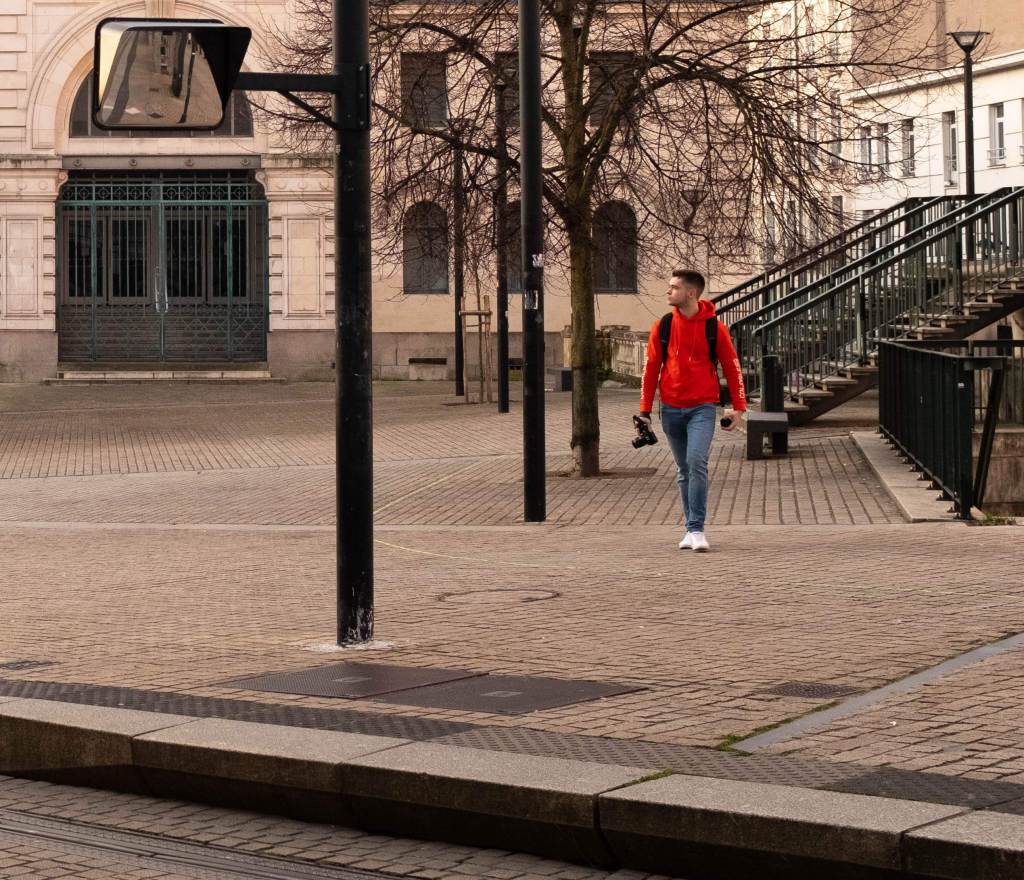
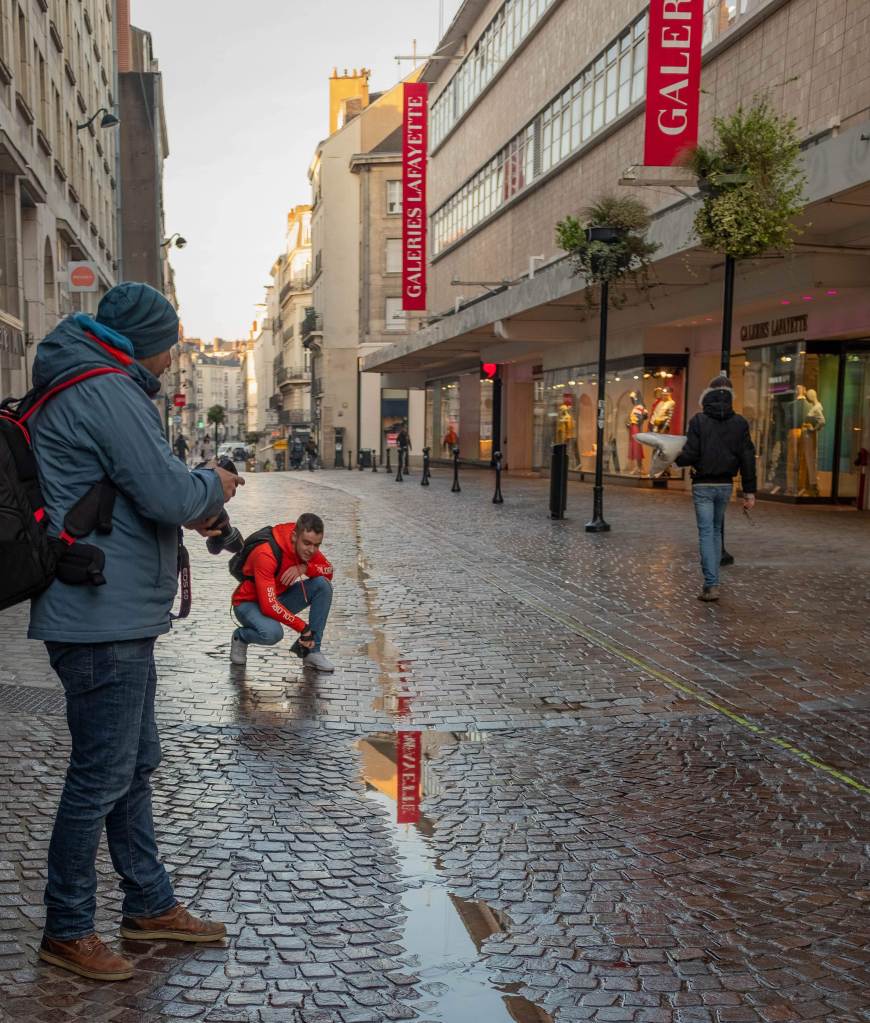
I once had a meet-up in Nantes (the very first article on this blog), and it was so rewarding. It was a typical male bonding activity, and everyone, except for me, brought along their biggest cameras and most expensive lenses. It almost felt like a competition to see who had the most impressive camera. I just brought my relatively tiny X100F, the thinking man’s camera. Much like my car, it’s not the most inspiring thing to look at, but I enjoy using it, and it certainly gets the job done in a very satisfactory way!
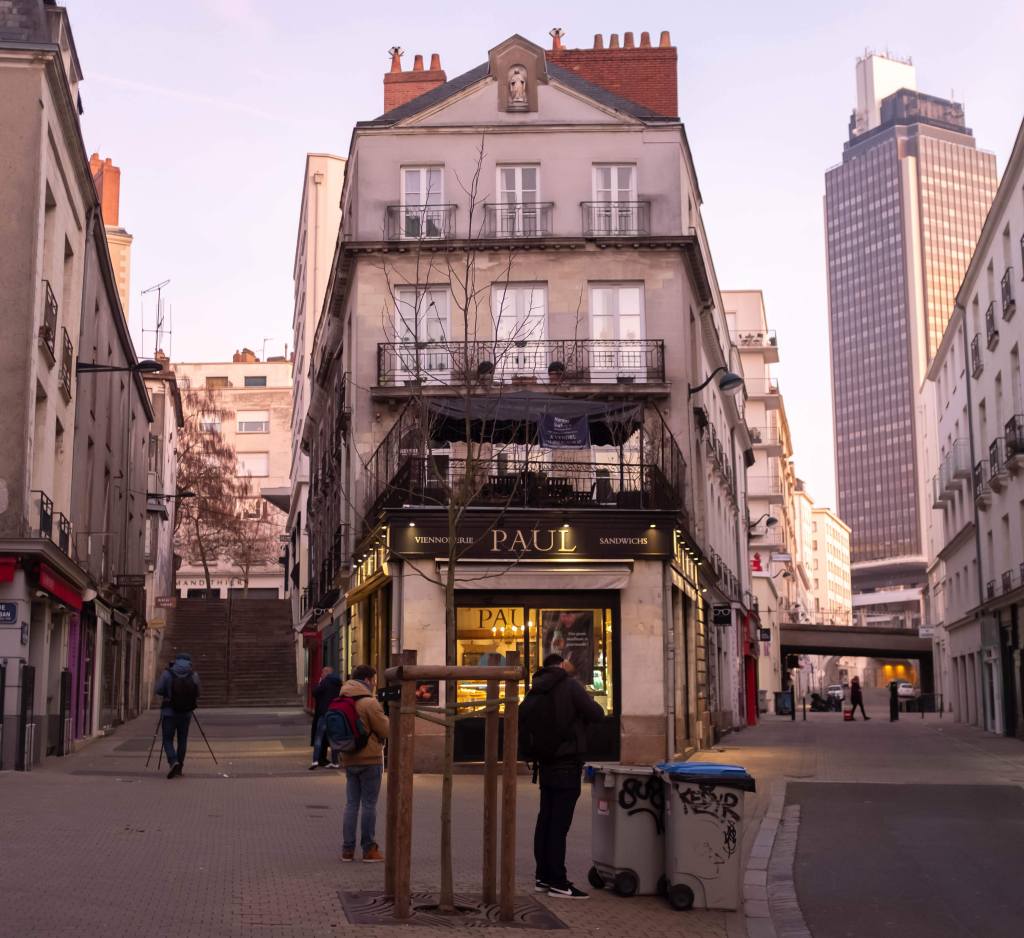
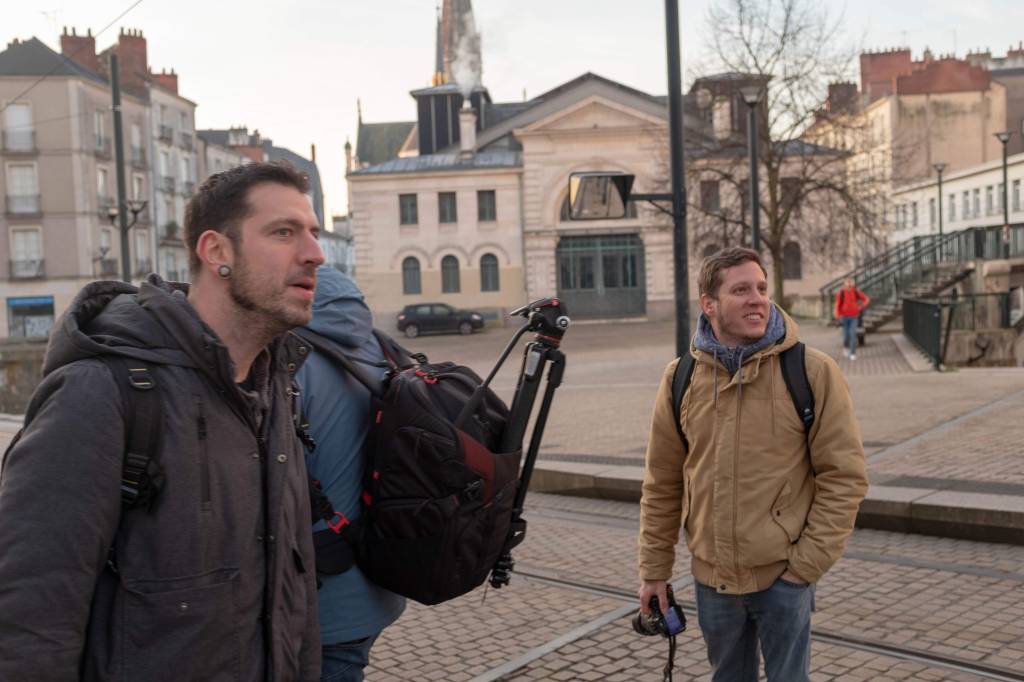
I have also collaborated with Nantes Grand Angle, a collective of photographers that have outings in and around Nantes. In exchange for a free tour or free visit, we take pictures during the outings and write about them in our blogs or publish the photos on Instagram. I have done a couple of outings with them, and it’s always interesting to see other photographers in action. They are there seeing the same things as me, but not in the same way. That sense of belonging has a huge feel-good factor too.

A Shared Lens

Photography may often feel like a solitary pursuit, but beneath it lies a powerful thread of connection, weaving us together through moments captured and stories told. Whether it’s the subtle camaraderie exchanged between strangers with a simple nod on the street, the thrill of collaborating with others who share our passion, or the quiet understanding forged with a subject in front of the lens, these encounters remind us that we are never truly alone in this journey.

Through photography, we find not just a way to see the world but a way to be part of it—a community of like-minded souls bound by a shared appreciation for light, shadow, and time itself. In the end, our photographs are a bridge, linking us to others and creating a lasting connection beyond the mere act of pressing the shutter. For as long as we hold a camera, we’re part of something bigger, capturing fragments of life that, no matter how fleeting, will always connect us back to one another.

A photography Philosophy – Part III – The Emotions of Photography


The Connection between Emotion and Image

I’m going to tell you a story about an essay that was given to us by the music master at the beginning of my Music A level course.  There were four of us studying music, and the lessons took place in his study, much like a tutorial at university.  The title of the essay was something like describe the perfect piece of music.  

Back then I described the Glenn Miller song, Moonlight Serenade.  One of my fellow pupils described the Planets from Holst.  In the following tutorial after our essays had been marked, I was criticised since the Master thought my piece was repetitive, had no particular musical merit, and was corny.  I, on the other hand, argued that it was the way the piece made me feel.

With hindsight I should have just handed in a clean sheet of paper saying that there is no such thing as a perfect piece of music, as taste is purely subjective and that he should take his essay question and possibly reconsider his stance!  I didn’t of course.  But it certainly got me thinking, even to this day!  

Subjectivity in Art

As in any art the appreciation of the viewer is purely subjective and we have to be so careful about reading an interpretation into a given work.  There are effectively themes that are explored in literature that could be described as obvious.  But in Photography, I maintain that any connection to a particular photograph is an emotional one first, before going any deeper.  

The Essence of Emotional Connection

But what makes this emotional connection possible? And how do I go about achieving this in photography.  I’m going to harken back to my musical training.  My horn teacher in France would say, your concerto is your text.  Your job is to recite that text to the audience.    That is all you have to concentrate on.  You’ve worked through your concerto, the techniques necessary to play it, and once the sound leaves the bell of the instrument, it is no longer yours.  It belongs to the audience.  They are the ones listening and they are the ones that will form the emotional connection.

Creating Meaningful Portraits

So how do I make this connection with my audience when it comes to photography?  Well, in portraiture they say to focus on the eyes of your model.  Eyes being the entrance to the soul. If I can capture that and have my model looking directly at my camera and therefore my audience then I’m well on the way to creating a meaningful portrait.

Kate, my daughter
The Art of Street Photography

In my street photography, it can be about catching a detail that everybody sees but that nobody notices until they look at your image.  You can go to my photography tutorials and look at the composition articles to learn about how we direct the audience to a particular point in our photograph by using leading lines, the rule of thirds, and emphasising our subject with our lighting, or by isolating our subject.

The Role of Colour in Evoking Emotion

We also solicit emotion through the colors we choose. Warmer tones can infuse images with energy and happiness, while cooler tones can make them feel peaceful or introspective. For example, adding reds and oranges to a portrait can evoke warmth and approachability, while blues and greens can give a landscape a calm, reflective quality. Considering these colours “in camera” can make the entire process more intuitive, helping you set the mood before you even begin editing.

The Power of Black and White

Shooting in black and white, using only tones of light strips away the influence of colour and presents us with the “essence” of a scene, and it’s one of the reasons I love shooting in black and white, be that on film or digitally.  I aim for a timeless quality to my black and white images, and the emotion can be just as intense.  Without color, we focus on texture, shadow, and contrast—elements that can evoke nostalgia, solitude, or contemplation.

Mindfulness in the Photographic Process

What I think I’m getting at is that to evoke an emotion we need to be so mindful of our photographic process.  Sometimes taking that step backwards allows us to reflect before pressing the shutter button.

Conclusion

I don’t have all the answers of course, but in the end, capturing emotion in photography is as much about the heart as it is about the eyes behind the lens. Each photograph we create is a bridge between ourselves and our viewers—a connection forged in the moment but lasting beyond it. Just as a musician lets their notes drift into the silence, we photographers must let our images speak, leaving space for others to interpret, feel, and connect.

So, as you move forward in your own photography, remember to pause, to feel, and to let emotion guide your hand. Don’t be afraid to take a step back before pressing the shutter, and ask yourself: What do I want my viewer to feel?

I hope this reflection gives you a new perspective on how you approach your next shot. After all, photography, like any art, is a journey without fixed answers—one of constant discovery. Take time to explore, experiment, and, most importantly, to feel.

The Photographer Behind the Lens


Embarking on a photography outing is filled with anticipation, decision-making, and a blend of personal passion and professional discipline. Anything can go wrong, but maybe that’s not the right way to put it. Perhaps I should rather say, expect the unexpected and be ready to adapt. As I prepare for each little jaunt, I face a range of choices that shape the outcome of my photographic endeavours.

Selecting the Right Gear:

The first step in my preparation involves choosing the right camera for the occasion. Factors such as, “Does it still work?” for my film cameras, or “have I charged enough batteries?” for my digital cameras, enter into consideration. My energy levels and the allure of film versus digital play a crucial role in this decision-making process. For example, “Do I have the energy to develop and scan my negatives, or can I face hours of photo editing?” For me at least, it’s not just about the gear, but about the experience it brings. Those of you who have used film will know exactly what I mean. It is a totally different experience to using digital cameras. The words “faffing” and “about” spring to mind. What is my goal in going out today? Is it just to see what happens, or do I “have” to get results?

Navigating Weather and Mental Health:

Weather forecasts and mental well-being become significant considerations as I plan my outing. I, like most people, have an aversion to being rained upon. Even though I might not melt, I don’t want rain getting into the electronics in modern cameras. The allure of capturing the perfect shot often outweighs the discomfort. Yet, there are moments when self-care takes precedence, telling me to just stay in. Sometimes, staying in and getting my ironing done provides as much satisfaction as going out, allowing me to look so dapper on my next outing. The joy of unlimited cups of tea might just make staying in on a rainy day all the more appealing.

Packing the Essentials:

A well-equipped photography bag is essential for any outing. From spare batteries to a flask of tea for comfort, each item serves a purpose in ensuring a successful day of shooting. The contents of my bag reflect not only my photographic needs but also my personal preferences and creature comforts. However, the weight of the equipment is a crucial consideration, especially for street photography where mobility is key. As a more rotund gentleman of 52 years, this has become more and more important. Basically, you can take it with you, but you have to carry it. The X100F and a couple of spare batteries weigh next to nothing, but a Mamiya, or DSLR with a couple of nice zoom lenses suddenly makes you feel less young and daring. Don’t get me started on tripods. Yes, you might need one (in fact, you do) if you want to be doing long exposure photography, but imagine lugging one up a mountain. Okay, don’t. It’s not worth it. So ask yourself what do you really need, and will one of your children carry it for you? And how much will it cost you to make it worth their while?

The Lens Palette:

Crafting Perspectives: Different lenses allow me to achieve different results. If I use my 16-35 lens, I will get wide vistas in town and have a certain level of “artistic distortion.” If I use the 24-70, I have quite a good range of focal lengths, and also a macro feature on the lens. If I use my fisheye lens, I can get all “arty farty.” With a 35mm lens, I am perfect for street photography, and it’s the lens I use the most. The nifty fifty allows me to have a more human-eye view of the world.

The Digital Dilemma:

When it comes to the choice between film and digital photography, authenticity often clashes with practicality. While the allure of film photography appeals to my desire for authenticity, and it does look exceptionally cool, and you can enter “smug mode” knowing that you are arguably better than those who only know about digital photography (yes, snob value does exist!), the energy and time required for development and scanning can be daunting. On the other hand, digital photography offers convenience, allowing for instant image transfer and easy post-processing in software like Lightroom. The decision ultimately hinges on the balance between artistic vision and practical considerations, and can I really be bothered? I know, you have just lost respect for me as an artist, but the struggle is real.

Professionalism Meets Passion:

For professional assignments, meticulous preparation is paramount. From checking equipment to selecting the perfect lenses for the job, every detail contributes to achieving the desired outcome. I noticed this during my musical studies when the goal is to get a paying gig and deserving the pay. You have to get results and your reputation depends on those results. But, even in the midst of professional obligations, the passion for photography remains at the heart of every endeavor. Top tip of the the day. Always have a back-up plan. No planning survives initial contact with the enemy. You’re on your own and have to improvise. What can go wrong, will go wrong, so prepare for this.

Mapping Out the Journey:

Finally, planning the route to my destination adds an element of anticipation to the journey. Do I have to drive for miles, and will there be a loo somewhere on the way? How will I be able to acquire snacks? Are there any small producers that might need a client? I mean I don’t always think about food, but when you live in a country known for the quality of its produce, and where it is almost a duty to consume on the good stuff, it kind of is… Anyway, make sure you look at where you’re going on a map. And if you’re visiting a historic site or attraction then check the opening times. It has happened before. You turn up to a place and it’s closed, so I went a saw my plan B… The path ahead is filled with possibilities and opportunities for creative exploration.

In conclusion

The art of preparation is an integral part of the photographer’s journey. Balancing personal passion with professional commitment, each outing offers a chance to immerse yourself in the beauty of the world through the lens of a camera, whether it’s under the open sky or amidst the comforting hum of domesticity.