Conclusion: Reflecting on the Philosophy of Photography


As we reach the end of A Photography Philosophy Series, I hope this journey has been as rewarding for you as it has been for me. Through these articles, we’ve explored the philosophy behind why we photograph—going beyond equipment and technique to dig into the heart of what makes photography so meaningful. Each theme in the series has shed light on a unique layer of photography, from capturing emotions to telling stories, reflecting identity, building connections, and even embracing impermanence.

We began with Why Do We Photograph?—a question that sits at the root of every image we capture. For some, photography is about preserving memories; for others, it’s about self-expression, documenting moments, or sharing perspectives. Over time, our reasons for photographing often shift and evolve, bringing more layers to our work as we grow. This first article set the tone for the series by reminding us that photography is a deeply personal journey, and our motivations shape each image we create.

Then we delved into The Emotions of Photography, exploring how images can carry feelings, from joy and nostalgia to solitude and contemplation. Photography allows us to express emotions that words often fail to capture, communicating through light, composition, and mood. Each photograph holds the potential to resonate with viewers in a way that feels both personal and universal, offering a window into the photographer’s emotional landscape.

The Art of Storytelling in Photography came next, where we looked at how images can create narratives—small windows into people, places, or moments that form part of a larger story. Photography has a remarkable way of capturing both detail and the bigger picture, allowing us to document stories that speak to shared experiences or unique perspectives. In a world full of words, photographs can often tell a story with a quiet eloquence.

In Identity and Self-Expression, we explored how photography offers a chance to express who we are and what we see. Our images inevitably reflect parts of ourselves—our backgrounds, our worldview, and our personal journey. For many, photography is as much a journey of self-discovery as it is a creative practice, helping us find our own voice and share it with others. Photography encourages us to see ourselves more clearly and to reveal something of that to the world.

Then came Connection Through Photography, a theme close to my heart. Photography, as we’ve seen, can forge connections—between photographer and subject, among fellow photographers, or with viewers who see something of themselves in the image. These connections remind us that we’re not alone in this world; they foster a sense of community, shared understanding, and empathy that goes beyond language. Photography has a unique power to unite us, even if only for a moment.

Lastly, we explored The Philosophy of Impermanence, where we reflected on the fleeting nature of each photograph. Every image captures a moment that can never be repeated, lending photography its unique poignancy. Impermanence reminds us to treasure the moment and see beauty in the transient. Photography, like life itself, is filled with unexpected moments, and it’s often the imperfections or mistakes that give images their authenticity and depth.

As we close, I invite you to reflect on your own photographic journey. What drives you to take photographs? Which themes resonate most with you—capturing emotions, telling stories, connecting with others, or perhaps embracing impermanence? These reflections aren’t just theoretical ideas; they form the personal philosophy that shapes how each of us approaches photography.

Ultimately, photography is about connecting with the world and each other through shared moments and meanings. If this series has encouraged you to think more deeply about your motivations, experiences, and the meaning behind your work, then I hope you’ll carry those reflections forward. Photography gives us a way to see, to understand, and to share in ways that words alone can’t.

Thank you for joining me on this exploration. I’d love to hear about your own experiences—what drives you, what connects you, and how photography shapes your view of the world. Let’s keep the conversation going and continue building a community of thoughtful photographers, one image at a time.

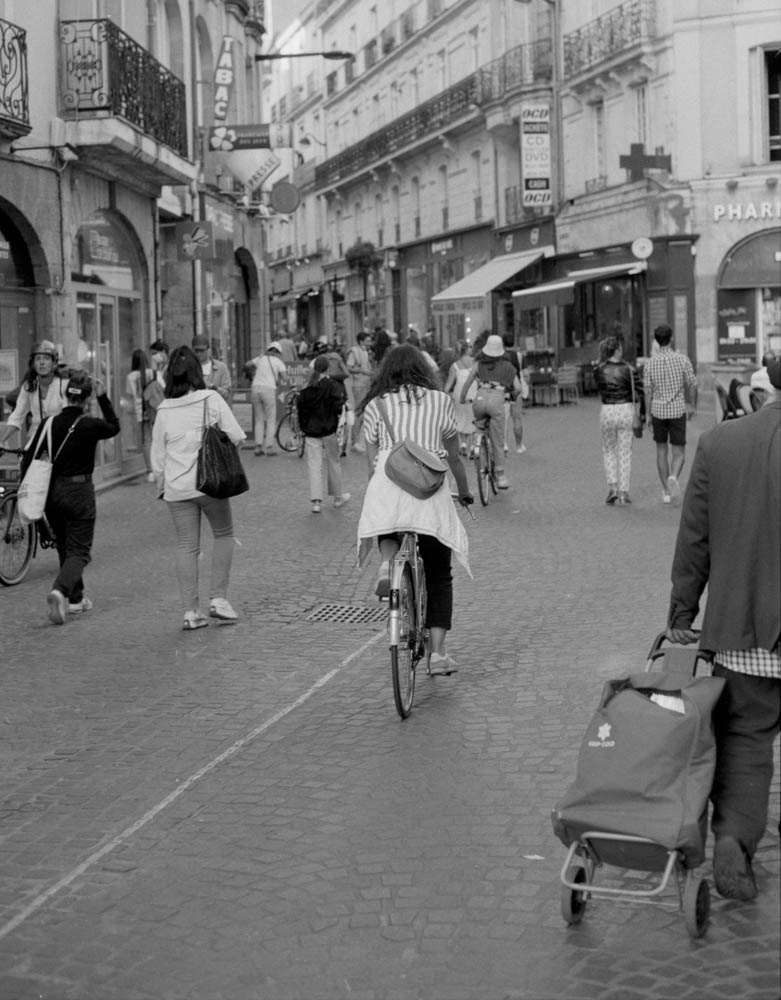
The Enduring Elegance of Vintage Cameras: A Personal Journey


I often find myself discussing the concept of “vintage” with my father during our phone calls. I live in France, while my parents are in Northumberland. The term “vintage” means different things to different generations. For my 25-year-old son, vintage clothing is anything from the 90s—he even sports a few of my sweaters from that era. At 52, I’m beginning to see myself as slightly vintage, with a style that has evolved into something more classic and refined compared to my younger years. And to my 15-year-old daughter, my father, who grew up during the war, must seem positively ancient.

So, what does this have to do with photography? For me, a camera from the 1990s feels relatively modern, while those from the 80s and 70s seem older but not quite ancient—much like myself. Using these older cameras in my photography practice forces me to slow down and be more deliberate. Just as my style has become more refined with age, these cameras have an enduring elegance and charm. They may be from a slightly bygone era, but they still capture images with timeless grace.

Incorporating this vintage technology into my work isn’t just about using old equipment, however enjoyable working with what could be considered museum pieces may be; it’s about embracing a process that demands patience and mindfulness—concepts that are somewhat foreign to this younger generation. Each shot taken with these cameras becomes a deliberate act, mirroring how I approach life and photography. The result? A deeper connection to the process and a greater appreciation for the unique quality of film. This slower pace allows me to savour each moment, akin to how my evolving style reflects a deeper appreciation for life’s subtleties.

In a world increasingly dominated by digital immediacy, there’s something profoundly satisfying about the slower, more thoughtful pace of using vintage cameras. They may not be the latest technology, but their classic design and the deliberate process they require make them a joy to use—much like the evolving sense of style and perspective that comes with age. The emotional impact of working with these cameras is profound; they carry the weight of history and personal connection, enriching my creative process and deepening my engagement with photography.

My own “vintage collection” began with an SLR from the 1980s: an East German Praktica MTL3 that served me faithfully until 2009. After it finally gave up, I quickly replaced it with another. From there, I delved into exploring more iconic cameras from the 1970s and 1980s. At that time, they were still relatively affordable before the hipsters discovered film photography and the prices inevitably started rising.

My exploration didn’t stop there. I began to seek out cameras from the 1960s and even the 1950s. The oldest camera in my collection dates back to 1949! It’s quite vintage, even for me, though perhaps not so much for my father. Each piece of my collection is a link to a past era, offering a tactile connection to history that digital tools can’t replicate.

There was a time during the digital age when people sought to recapture the film aesthetic, and right on cue, apps like Hipstamatic, Instagram, and VSCO began to emerge. These digital tools embraced the nostalgic look of film, offering a nod to the past while thriving in the digital present. Yet, this digital simulation can’t quite match the authentic experience and emotional resonance of using actual vintage cameras.

This led me to a thought: if I truly wanted to capture that film aesthetic, why not use actual film and cameras from the eras I admire? I have always been drawn to “old” things, having loved exploring a special drawer at my grandmother’s house filled with genuine relics—not just my grandparents’ old possessions. My fascination with older technology, particularly when it’s still functional, remains strong. There’s an undeniable charm and satisfaction in using equipment that carries a legacy, offering a perspective that both honours the past and enriches the present.

So just because something might be old, it might still work and open a whole new world to you that you didn’t even suspect existed! It might, however, have something of a quirky nature, but once you get over that, the world is your oyster.

In Defense of Film


Is film photography too expensive? Think again! Many assume that shooting film is a hobby reserved for the wealthy, but it doesn’t have to be. With the right approach, you can enjoy the unique aesthetic and creative process of film photography without breaking the bank. In this article, I’ll share my personal experiences and tips for saving money on film, developing, and gear, proving that the joy of film is accessible to everyone.

Often, even the tiniest things can spark a desire to write. In the infamous world of internet comment sections, people can have different opinions—a good thing, as it makes us reflect on our own positions. It challenges our perceived wisdom and questions us in ways that can be disarming. What’s obvious to me might not be to someone else.

I was talking to an Australian lady, likely of my generation since our photography journeys started the same way—with film. Except this lady has gone fully digital, keeping her film cameras as a reminder of her film days being over. Less hassle, less expense, less stress, and less “faffing about,” she said.

At first, I was taken aback. I love the film aesthetic in my photography. I like the predictability of film grain, as opposed to digital noise. But most of all, I’m in love with the process. I love the slower pace of film photography—none of this “spray and pray” nonsense. I appreciate how I become more mindful when shooting film, as each shot counts. I like the way an old film camera looks around my neck. And as the internet meme says, “I know about photography. I’ve been initiated into the exclusive circle of purists.”

The lady talked about the prohibitive prices of film and labs, which, let’s be honest, is a valid point.

Costs of Digital vs. Film Photography

I’ll talk about my kit and initial outlays compared to my film expenses. I bought my latest two digital cameras in late 2017 and 2018. My X100F cost around €1400, and my Canon 6D Mark II around €1200. I spent about €300 on a teleconverter for the X100F, and I probably have about €2500 worth of kit for the Canon, including speedlites, lenses, and filters. Then there’s the Fujifilm XT2, bought second hand for €400, with a couple of lenses totaling around €500.

This kit, though older, works well and is largely sufficient for my needs. As mentioned in my article “I Want It, But Do I Need It?”, I’d like a Leica, but do I need one? Would I refuse one if someone gave me one? Heck no! You can see the results throughout this site, and the images are great.

Let’s move on to film. Yes, if you love that Kodak Portra look, you’ll be spending a pretty penny. I have a certain nostalgia for the days when the prices hadn’t doubled. But—and this is important—not all film photography has to be done using Kodak Portra. There are more accessible films, especially black and white, that cost less. A roll of Fomapan 100 costs me around €5.50. So for less than the price of a pint of Guinness, I can get 36 shots. For a little more, I can go with Kentmere or even Ilford black and white film. I still have one roll of Portra left and a pack of five Tri-X medium format rolls.

Developing at Home

Ah, but then you have to send them to a lab to be developed. Again, a valid point. The cost for developing colour film where I go is less than €7 per film. I’ll share a little secret: I invested in a kit to develop my films at home. It cost about €140 initially, but now all I worry about is buying the chemistry. Yes, €30 for a developer seems steep, but I can develop 16 to 24 films with a bottle, depending on the dilution. I also invested €250 in a film scanner to produce digital files for editing.

Collecting Film Cameras

You might have noticed that I’ve talked about film but not film cameras. I started collecting a while back before hipsters raised the prices in the secondhand market. The most I paid for a film camera was just over €100, and the cheapest was €15. These film cameras are generally solid, and the lenses are great. The technology, though a little less modern (understatement of the year!), still works, and older cameras don’t even need batteries. And even those that do, the batteries last for ages. None of this “Do I have spare batteries for the X100F?” nonsense.

Each shot is taken on a brand new “sensor,” compared to shots on a digital sensor. And less dirt gets onto this sensor.

The Joy of Film

Don’t get me wrong, I love digital photography for its convenience and spontaneity. I can see my images right away and get instant feedback and gratification. With film, that gratification isn’t instant. You have to be patient and wait, but for people of my generation, that might be infuriating, it’s something we grew up with and accepted. I continue to accept it.

I enjoy using a machine sometimes older than me, knowing the image quality will be there. I know that with a certain film, I’ll get a certain result. I like the slower pace. If you visit the Film Photography page or the Film Archive page, you can decide for yourself if it’s worth the hassle, the expense, the stress, and the “faffing about.” I think it is, and I maintain that film has as much a place in photography as it ever did.

The Future of Film

Does film have a future? I think it does. Leica has relaunched the M6, Pentax has the new Pentax 17, and Kodak has the Kodak Ektar H35. The disposable cameras of yesteryear are still being produced and it has become the fashion to us them at weddings for that affordable yet classic look of film. Film photography continues to be popular with Gen Z and millennials. Case in point: my 25-year-old son nicked one of my Kodak Retinette 1B’s and a roll of film. I suspect my daughter might have her eye on one of my film cameras, too.

One thought came to mind whilst answering one of comments with the person saying that they “will never go back.”  I am old enough to remember when microwaves fist came out.   They were sold to us as being thoroughly modern and machines that could do everything so quickly and conveniently.  Except they couldn’t.  For certain tasks on the kitchen they are wonderful and far exceed the way we “used” to cook.  But they can’t do everything.  They have their place in the kitchen.  And will always will do.  But a slowly simmered boeuf bourguignon that infuses its odours through the kitchen will always have a special place in my heart.  Much like using film to capture my images…

I want it, but do I really need it?


The camera gear industry is a powerful beast and it tries to convince us that this piece of kit, that is conveniently in stock, will help you become that photographer that you are destined to be.  Be that in magazines, be that in youtube influencer videos that “try out the camera” that the manufacturer has just lent us to show you what it’s like.  I’ve watched loads of these videos especially when thinking about the kit I wanted to buy.  Come on in and I’ll make sure you have the best camera possible, and the best possible lens.  What’s your budget?  OK, I’m sure we can work something out.  What kind of photography do you want to do?  Well, you’ll need this, and this, and this, etc.

That nice man in the shop will be more than happy to take your money and sell a high end camera that will be a thing of beauty.  But look at the title again.  “I want it, but do I really need it?”  You have fallen into their trap.  I’m not trying to put down these sales people, and their wealth of knowledge, but know that there are other options out there.

I’m going to dare say it.  You don’t need the latest and greatest equipment to take great photos.  Instead prioritise value, and mindful shooting, over gear acquisition.  Think about boys and toys.  I get exactly the same feeling as you when I enter a camera store.  I want it all.  Of course I do.  Who doesn’t?  But,what would my wife say?  What would my bank manager say?  What would reason tell me instead of letting my emotions get the better of me?  Can I really justify this acquisition?  Do I really need it, or is there a less onerous solution?  I know.  I’ve just pissed on your bonfire, but it’s time for a reality check here…

So what can I do about that?  You can realise that there is a huge market of second hand gear out there.  I have taken this route in the past and have no regrets.  Yes, I did it my way…

Where do you go to discover all these hidden gems?  There is of course E-Bay, that huge online auction site which I used to acquire the majority of my film cameras.  When I was a customer of the site the film cameras were fairly cheap, since those pesky hipsters hadn’t cottoned on to the fact that film photography is cool.  So yes, each purchase was a gamble, but I had less money to lose, and the return would be greater.  The old cameras were simpler, the lenses were great, and there are still lots of examples of reasonable cameras out there.  Would I use it for digital?  Probably not.  I’m not really a gambling man, and don’t have a huge wad of cash that I am willing to possibly waste.

But E-Bay is not the only option.  There are various online sites such as mpb.com that have a very good reputation, and have tested each piece of equipment that they sell.  They give you an honest appraisal of the piece of kit and are honest about the state of said piece of kit.  They guarantee each purchase, and have a generous returns policy.  I might consider using it if I were interested in buying some new kit.  But at the moment I’m not.  There are also second hand areas of our beloved camera shops that will have used gear.  

When buying second hand, you will generally be spending less money, or at worst, getting more kit for your hard earned cash.  Older models of camera might not be as super duper as the latest models that look so sexy in that shop window, but for what most us mere mortals need, they are more than adequate.   You really have to look at which features are most important to you.  Thanks to you, there will be one less camera going to landfill.

Talking of features, let’s talk about the 80/20 rule.  For 80% of your photographs, you will use about 20% of your gear, and features on your camera. I urge you to identify the essential features for your type of photography (e.g., autofocus, image stabilisation, dynamic range), and maybe avoid spending money on features or lenses that you won’t use frequently.  Shutter speed when doing sports photography, or high dynamic range for landscape photography.  Is an F1.2 lens really what you need, or will F2.0 pr F2.8 still get the effect you want?

I’m going to talk about the X100F (again!) and compare it to the latest version from Fujifilm, the X100V and the X100VI

FeatureFujifilm X100FFujifilm X100VFujifilm X100VI
Sensor24.3MP APS-C X-Trans CMOS III26.1MP APS-C X-Trans CMOS 440.2MP APS-C X-Trans CMOS 5 HR Sensor
Lens23mm f/2 (35mm equivalent)23mm f/2 (35mm equivalent) with improved optics23mm f/2 (35mm equivalent) with further improved optics
Autofocus91-point hybrid autofocus425-point hybrid autofocus with improved face/eye detection425-point hybrid autofocus with further improved face/eye detection and subject tracking
ViewfinderHybrid viewfinder (optical/electronic)Hybrid viewfinder (optical/electronic) with improved EVFHybrid viewfinder (optical/electronic) with a larger and higher resolution EVF
Screen3-inch fixed LCD3-inch tilting touchscreen3-inch tilting touchscreen
Image StabilisationN/AN/A6-Stop In-Body Image Stabilization
Video1080p up to 60fps4K up to 30fps6.2K (cropped) and 4K up to 30fps
Weather SealingNoYesYes
Price (approx.)€800-€1000 (used)€1300-€1500 (used)€1700-€1800 (new)

Key Takeaways:

  • Sensor: The X100VI offers a significant resolution upgrade with its 40.2MP sensor, providing greater detail and flexibility for cropping compared to the X100V and X100F.
  • Lens: All three models share the same focal length, but the X100V and X100VI feature improved lens designs for better sharpness and close-focus performance.
  • Autofocus: The X100V and X100VI offer a substantial upgrade in autofocus points and performance compared to the X100F, making them better suited for fast-moving subjects and low-light situations.
  • Viewfinder: The X100VI has the most advanced viewfinder with a larger, higher resolution electronic viewfinder (EVF) and improved refresh rate.
  • Screen: The X100V and X100VI have tilting touchscreens, which can be helpful for composing shots from awkward angles, while the X100F has a fixed screen.
  • Video: The X100VI boasts the most advanced video capabilities, offering 6.2K recording with a crop, while the X100V is limited to 4K, and the X100F to 1080p.
  • Weather Sealing: Both the X100V and X100VI offer weather sealing, making them more durable in adverse conditions compared to the X100F.
  • Price: The X100F remains the most affordable option, especially on the secondhand market. The X100V offers a good balance of features and price, while the X100VI is the most expensive but comes with the latest technology.

Ultimately, the choice depends on your budget, needs, and priorities. If you need the highest resolution and advanced video features, the X100VI is the way to go. If you prioritize value and portability, the X100F is still a great option. The X100V sits in the middle, offering a good balance of features and price.

If you are a professional, then I think the same logic will apply.  Even though a nice kit is an investment you need to consider the returns on your investment?  Is the purchase justified and will it bring more work for you?  Will it expand my offer enough?  If you are an amateur, then you can spend any amount of money you want, but if you could do more, with less, wouldn’t that be an appealing option? Have I not managed to convince you yet? Look at the film archives… And look at the pictures from the X100F

Finding Balance: Photography and Personal Wellness


In the sanctuary of my thoughts, where the gentle glow of lamplight dances upon well-worn bookshelves, I find solace from the chaos of the world. With my dog, Molly, by my side, I embark on a journey of introspection.

As someone who values quiet reflection and nuanced understanding, I’ve learned to appreciate the delicate equilibrium that enriches a fulfilling life. Amidst the pursuit of knowledge and creative expression, it’s easy to become ensnared in the whirlwind of activity, neglecting personal well-being in the relentless chase for success.

Yet, amidst the simplicity of my surroundings, among the familiar scents of brewed tea and the soft hum of a jazz record playing in the background, I am reminded of a timeless truth: genuine fulfillment springs not from ceaseless striving, but from nurturing inner peace and harmony.

For photographers and thinkers alike, the quest for excellence can exact a toll on the spirit, leaving behind exhaustion and doubt. Each moment of creation demands both physical exertion and emotional resilience.

But amid life’s ebbs and flows, it’s crucial to honor the sanctity of body and mind, to heed the whispers of intuition and the call of the soul. What value is there in a well-crafted image or a finely wrought idea if born from weariness?

In my own journey as a seeker of beauty and understanding, I’ve come to embrace moments of stillness and contemplation, carving out time for rest and reflection amidst the bustle of daily life. Whether reveling in solitude or feeling the gentle caress of a cool breeze, I’ve discovered that inspiration often arises from quiet depths.

Photography serves as a therapeutic outlet for many, offering respite from the pressures of modern life. Through the lens, we enter a realm of infinite possibilities where time seems to slow and worries fade into the background. Immersed in the act of creation, we create a space where anxiety and overthinking lose their grip, replaced by a sense of calm and clarity.

For those grappling with depression or loneliness, photography can serve as a lifeline, gently coaxing us out of isolation and into the embrace of the world. As we wander with camera in hand, we become mere observers, detached from the chaos that threatens to overwhelm. In framing a shot, we find solace in the simple beauty of the moment, forging a connection with the world that soothes the soul and restores the spirit.

When I’m not at my desk, crafting articles or editing photos to share with you, I’m exploring this balance between creativity and self-care, constantly striving to find harmony in my own life.

In the tranquil sanctuary of creativity and self-discovery, photography emerges not only as a means of capturing fleeting moments but also as a powerful tool for nurturing personal wellness. Through our cameras, we embark on a journey of exploration and introspection, finding solace in the beauty of the world and sanctuary in the act of creation.

As we navigate the complexities of modern life, let us honor the delicate balance between ambition and well-being. Photography offers us a pathway to reconnect with ourselves and the world, inviting us to embrace stillness amidst the chaos and find beauty in the ordinary.

Whether framing the perfect shot or crafting prose to accompany our images, let us remember the profound interconnectedness between creativity and personal wellness. By prioritizing self-care and mindfulness in our photographic practices, we not only enhance our capacity for artistic expression but also cultivate a deeper sense of harmony and fulfillment in our lives. Even if our endeavors don’t always yield the desired result, it’s essential to recognize that the journey itself is as, if not more, important than the destination.

So, dear reader, as you embark on your own photographic journey, may you find solace in the act of creation, clarity in moments of quiet contemplation, and inspiration in the beauty that surrounds you. May your photographs serve not only as snapshots of the world but also as windows into the depths of your soul, guiding you towards a life of greater balance and well-being.