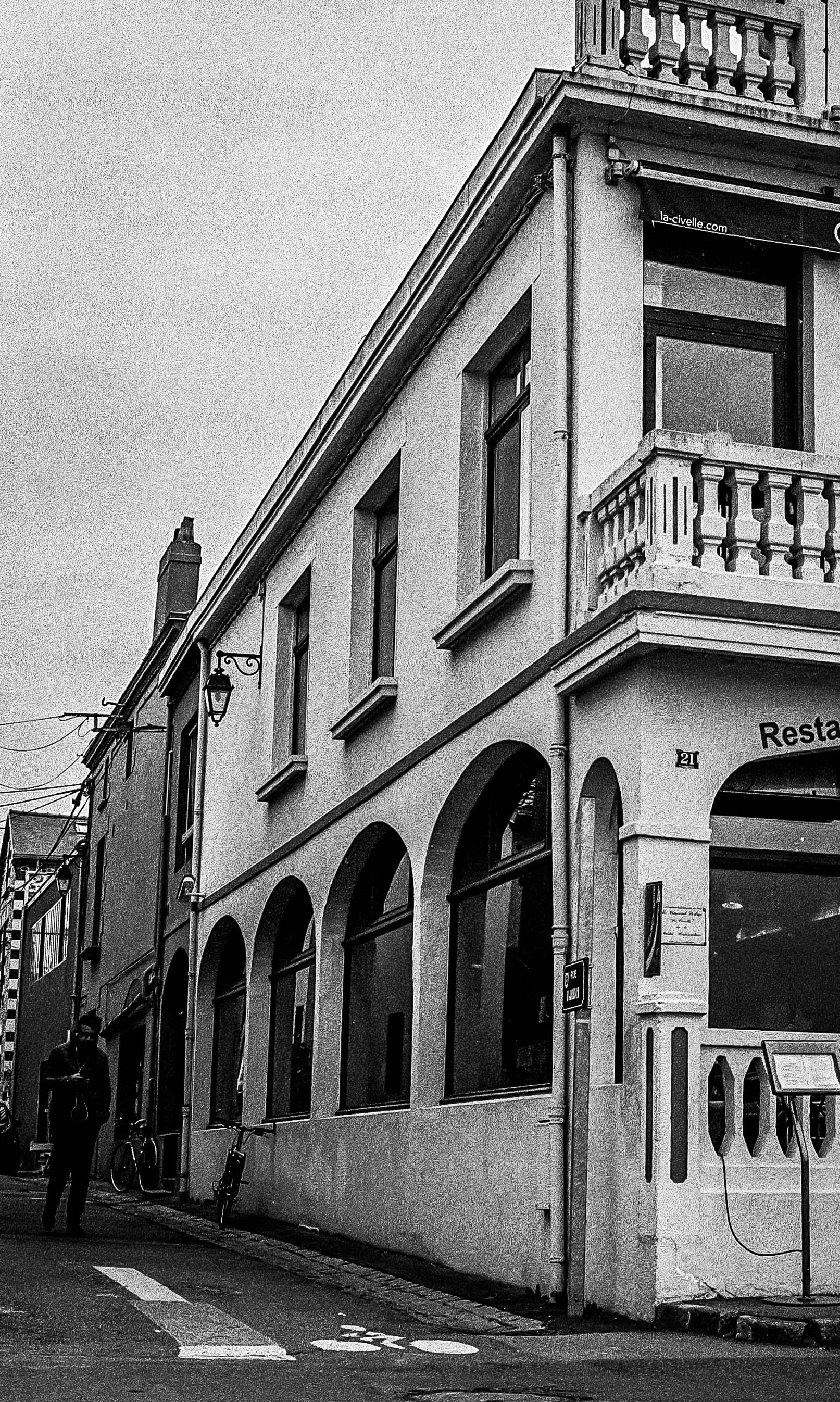
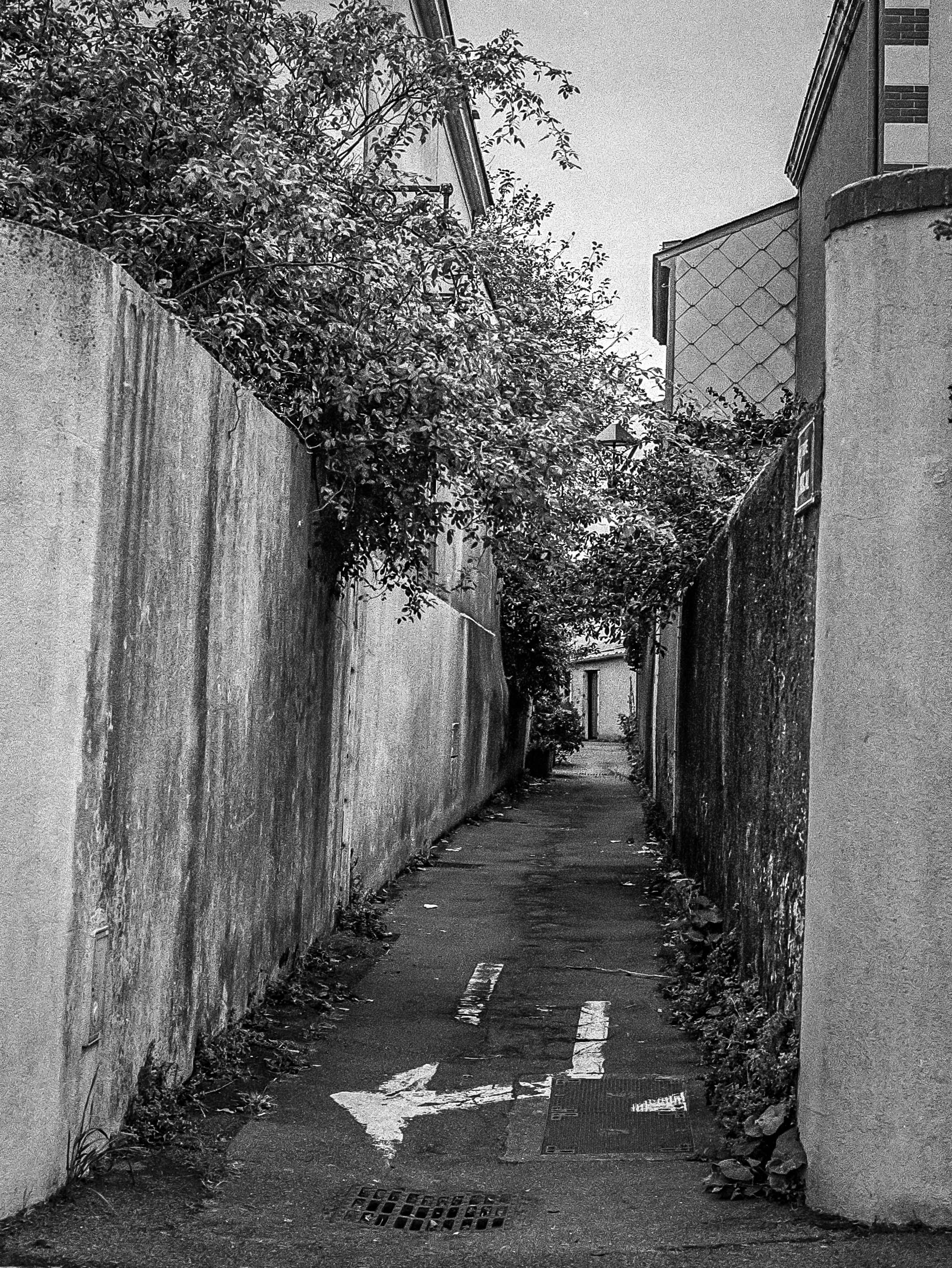
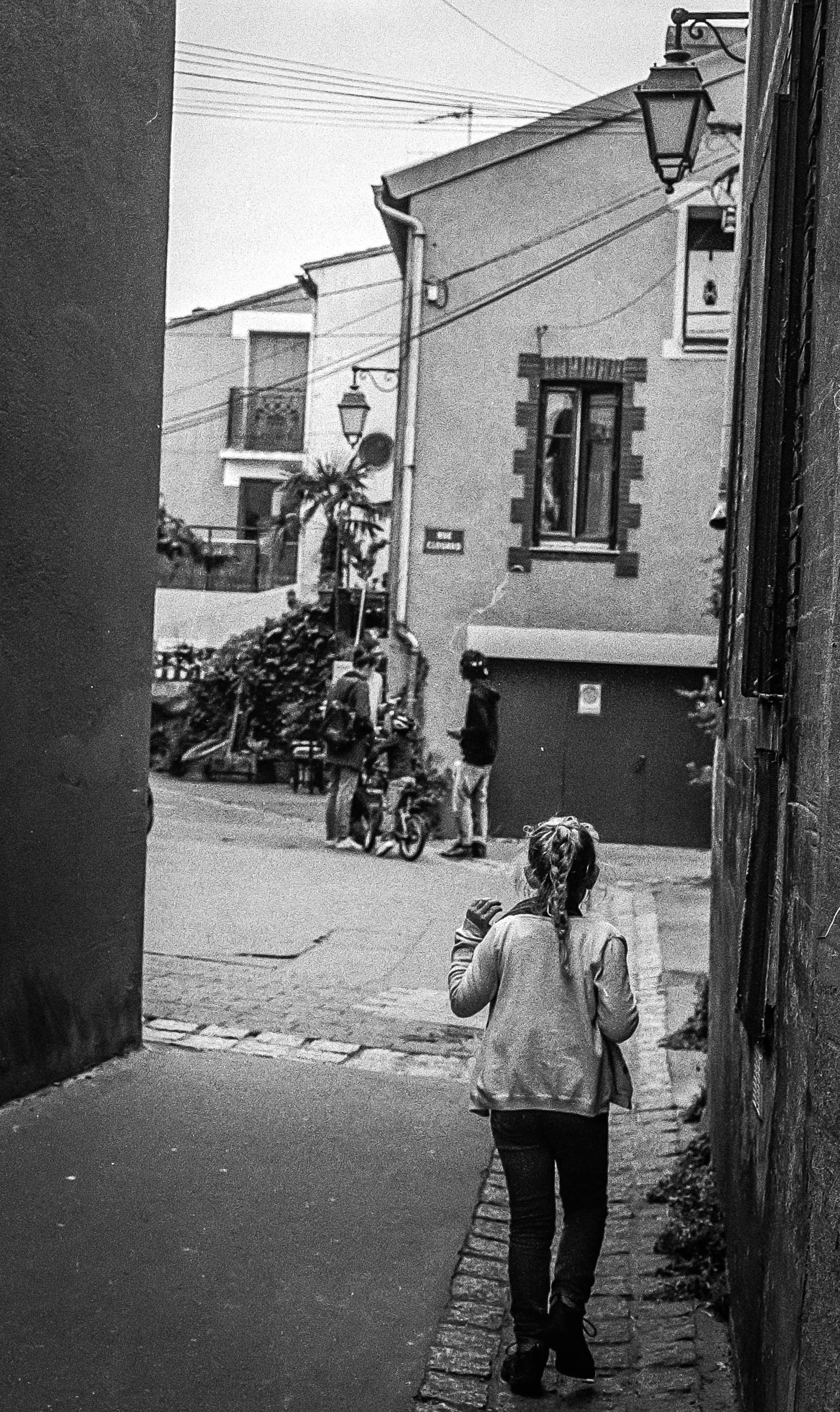
This was another Ian and Kate day. Similar in concept to the Ian and Killian day, but a day where I can dedicate myself solely to Kate. She’s fifteen now of course, but I should spend more time with her. If she’ll let me of course. At the time she was only seven—simpler times where I could make her happy with just a nice tea, a boat trip across the river, and just wandering around exploring the intricate streets of an old fishing village on the “bords de Loire.” There are no cars in the narrow streets, and the children can run wild.
This day was one spent in Trentemoult, that rather colourful village that you can see here. The colours are intense and provide a great backdrop for portrait photography. So of course I went in with a film camera and black and white film. Which only goes to show that when you photograph a location, however colourful, and take away the distraction of that colour, you have to really concentrate on composition, texture, and forms. I couldn’t rely on colour for my photos today. But I was sure that I could reveal some good photos despite that.
So what do you do? You just try and capture some moments of your daughter messing around and being a perfectly normal seven year old. I tried to capture her exploring the streets and being absorbed by the whole ambiance of the place. She became part of the scenery, and blended in perfectly.
I was just there purely to observe and record the day on film, with one eye in my camera and the other on Kate. It was a good day.
Looking back at those moments reminds me of how quickly time seems to slip by without me realising that I am getting older. She of course is slightly older, and possibly slightly less “insouciante” or carefree, but my love for that girl is still as strong as ever.
It’s no secret to the regular readers of IJM Photography that I have a great fondness, deep affection, nearing on obsession with my Fujifilm X100F. It’s a great little camera that gets me excited whenever I take it out of my camera bag. But, Dear Reader, what does this have to do with the Fujifilm X-T2? Well, they’re both manufactured by Fuji, they both have an “X” in their name, and I have a deep affection for a nice cup of tea. Not the same T? Ah well…
Similarities and Differences: A Tale of Two X’s
I’ll talk about the differences and similarities between the two cameras and why I thought the X-T2 was a useful and complementary acquisition. We’ll look at not just the specs but also the rather similar way both cameras handle.
Sensor and Image Quality: Both use the same 24-megapixel sensor with an anti-aliasing filter, and offer an ISO range from 200 to 128000.
Screen and Viewfinder: The X100F has a fixed screen, while the X-T2 boasts a tilting one. Both share the same excellent viewfinder.
Performance: The X100F shoots at 8 fps while the X-T2 goes up to 14 fps. For video, the X100F is limited to Full HD, while the X-T2 offers 4K and can shoot at 120 fps.
Connectivity: Both cameras have built-in wireless capabilities.
Weight: The X100F is lighter at 469g, while the X-T2 is slightly heavier at 507g.
The Lens Factor (and Weather Sealing, Too!)
The main difference? The lens. The X100F has a fixed 23mm (35mm equivalent) f/2.0 lens, while the X-T2 can take the entire range of X-mount lenses. Quite a big difference, indeed. The X-T2 also has the added bonus of weather sealing!
Why Buy a 4-Year-Old Camera in 2020?
Because at the time, I could. It was the logical acquisition and complement to my X100F. Did I mention it also uses the same batteries? I still have the same, beloved-by-many film simulations, and while not as numerous as later models, they are more than enough for me!
My first lens purchase was the 16mm (24mm equivalent) f/2.8 Fuji lens, the perfect complement to the 35mm equivalent on the X100F. I later discovered TTArtisan and 7 Artisans, Chinese firms that make affordable manual focus lenses for the X-mount. I now have the 35mm (50mm equivalent) f/1.2 and 58mm (85mm equivalent) f/1.4, and the fish eye 7mm F2.8 lenses from both companies, both costing a fraction of the autofocus Fuji lenses. The only concession I made to Fuji was later purchasing the 18-55mm (24-70mm equivalent) f/2.8 autofocus kit lens.
Value for Money: The X-T2’s Sweet Spot in 2024
The fact that I bought it second-hand was also a contributing factor. Does it have as many megapixels as the more modern X-T5? No. But does it have enough? Yes! Does it have the same specs as the X-T5? No. But does it have enough? Yes. Can you see a pattern developing here?
For the amount of money spent, I think I have enough cameras for my buck. And that is the crux of the argument for acquiring a now 8-year-old camera in 2024. Is it the very best money can buy? No. But if you’re an amateur like myself, you generally don’t need the specs that manufacturers and those nice men in camera shops will try to tell you you need. 24 megapixels is more than enough for printing even 20″ by 30″ (500mm x 760mm) sized images.
I have just looked at mpb.com for you and have found XT2 bodies from 487€ to 729€ depending on the condition. An X-mount lens will cost you anything from 104€ for a 35mm (50mm equivalent) F1.2 from 7 artisans to 279€ to 340€ for the 16mm (24mm equivalent) F2.8 fuji lens. So as you can see, it’s certainly cheaper than buying the latest models…
Conclusion: A Timeless Tool for the Passionate Photographer
In 2024, the Fujifilm X-T2 remains a compelling option for photographers seeking excellent image quality, classic handling, and a wealth of creative possibilities. Its compact size, weather sealing, and extensive lens selection make it a versatile companion for various genres, from street photography to landscapes.
While newer models may boast more advanced features, the X-T2’s enduring appeal lies in its combination of performance, affordability, and the unique charm of Fujifilm’s X-Trans sensor and film simulations. For photographers who prioritise the essentials of image-making and value for money, the X-T2 continues to be a worthy contender in the ever-evolving world of digital cameras.
If you’re looking for a camera that delivers exceptional results without breaking the bank, the used market might just hold the perfect X-T2 for you. And who knows, you might even discover a newfound appreciation for a slightly older camera that still has plenty to offer in 2024 and beyond.
Post Scriptum
This camera is also capable of 4K video. And I’m using it at work for making videos for training new staff. It is certainly lighter than my Canon 6D Mark II, and I seem to be able to obtain a picture style that I like. It doesn’t have in-built image stabilisation. However, I use it on a tripod so that’s not an issue. And if ever I do decide to use the 18-55mm kit lens, I have image stabilisation in the lens.
I’ll see if I can’t find you an excerpt of the latest video…
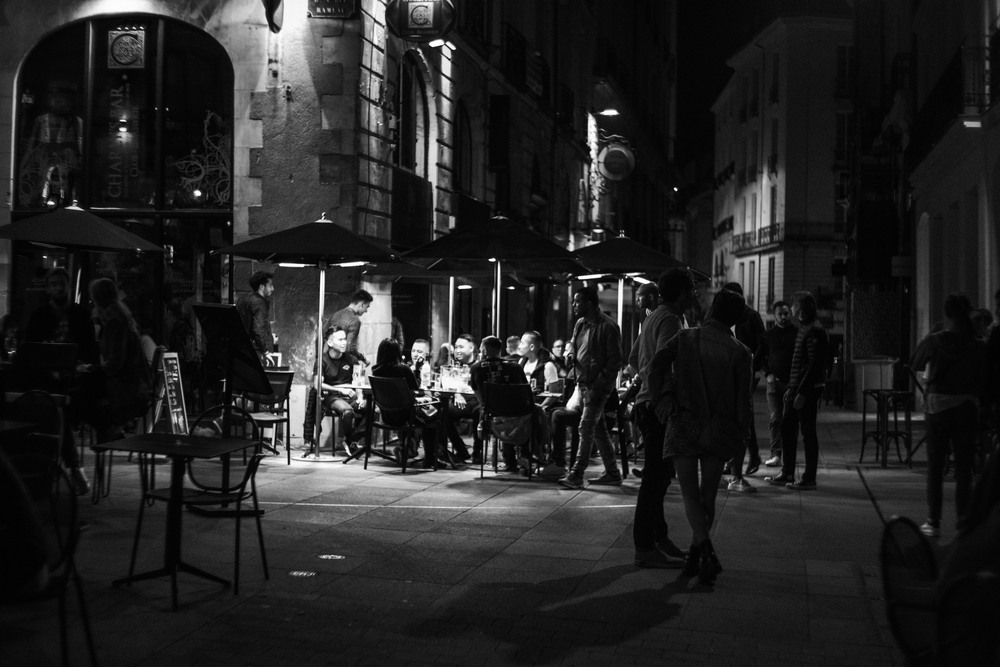
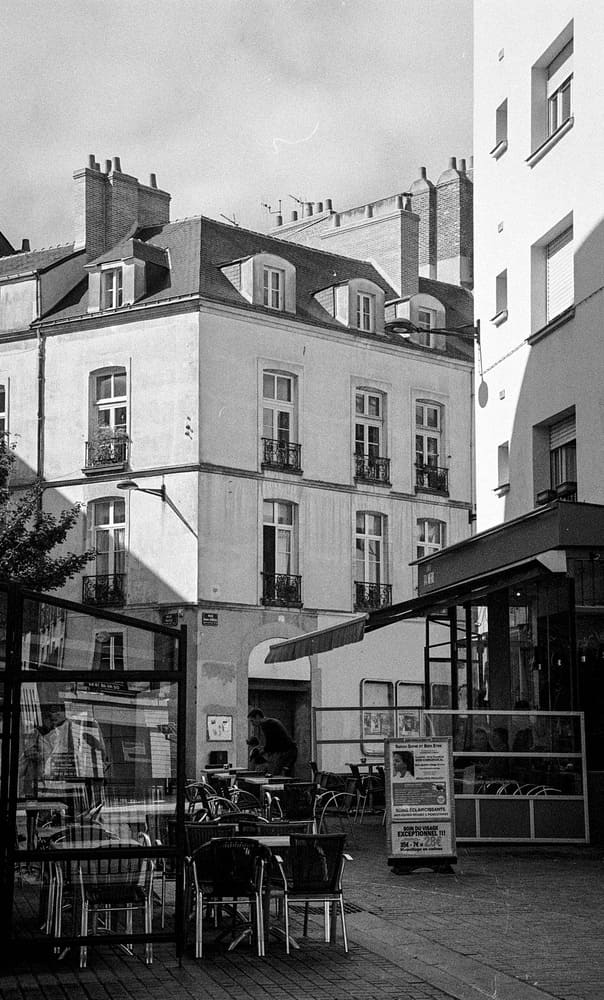
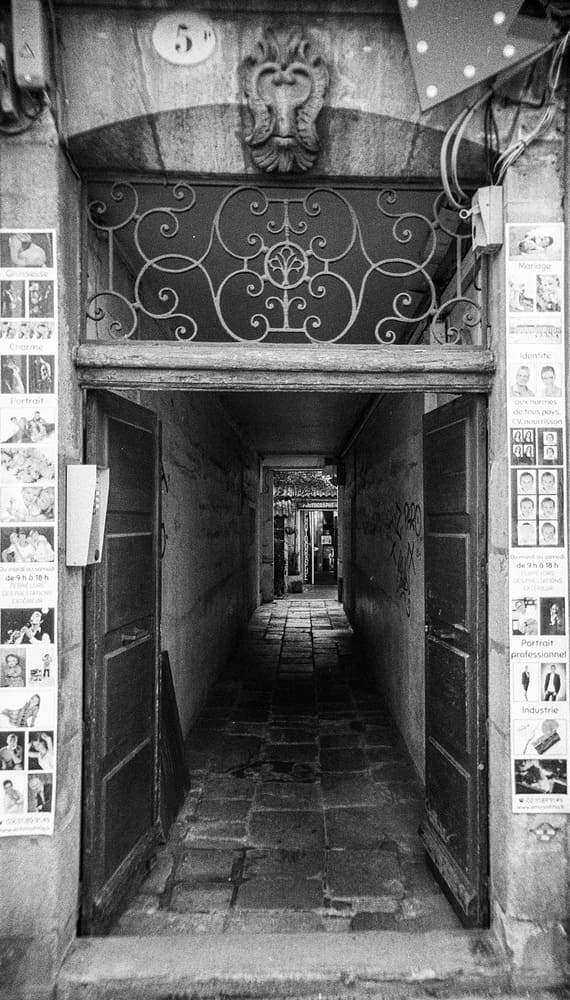
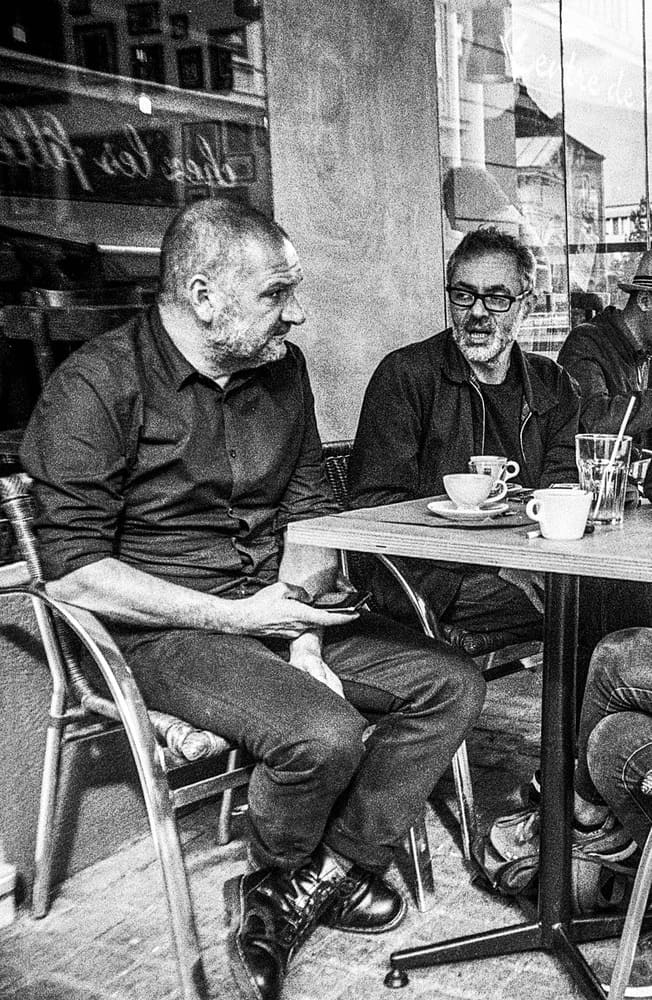
Welcome back to another look at the film archives. This time, I’m sharing a few black-and-white street shots from an October Saturday in Nantes, likely taken with the Praktica MTL3 and HP5 Plus film. These outings with my son Killian, which we called ‘Ian and Killian days,’ became a cherished routine, a time for us to reconnect amidst the busyness of life.
He was 17 then, a weekly boarder at his lycée in La Roche sur Yon. On the weekends, we’d often head into Nantes, following the same familiar programme: a visit to the barbershop, a meal at the Sugar Blue café, and finally, a drink at the John Mc Byrne Irish Pub. In the photo, that handsome chap in the barber’s seat is Killian—a little reminder that it wasn’t always Kate joining me on these trips. These outings were a way to stay connected, despite his growing independence. Even with him being only 17, I still felt that sense of responsibility. Once a Dad, always a Dad.
As we went through our usual routine, I found myself facing the familiar challenge of capturing these moments on film. The low light inside the barbershop always made me second-guess whether I could get a decent shot without using a flash. But over time, I learned to trust the Praktica and the HP5 Plus film. There’s a rawness to film photography, especially with Ilford’s HP5. It adds a certain grit and texture to the image, something that digital just can’t replicate.
That’s what I love about film—the imperfections. The grain gives it character, a certain honesty that smooth, polished digital photos lack. It’s not about creating something flawless but about preserving the authenticity of the moment. This shot of Killian in the barbershop, for example, may not be technically perfect, but it’s real. It’s us, it’s Nantes, it’s one of those ‘Ian and Killian days.’
Looking back at these photos, I’m reminded that sometimes, it’s the imperfections that make an image truly memorable. Quite the day, right?
Last week’s journey through the film archives took us to Nantes, specifically the Île de Nantes. While you’ve seen my photos from that day, I’m excited to share my daughter Kate’s photos with you.
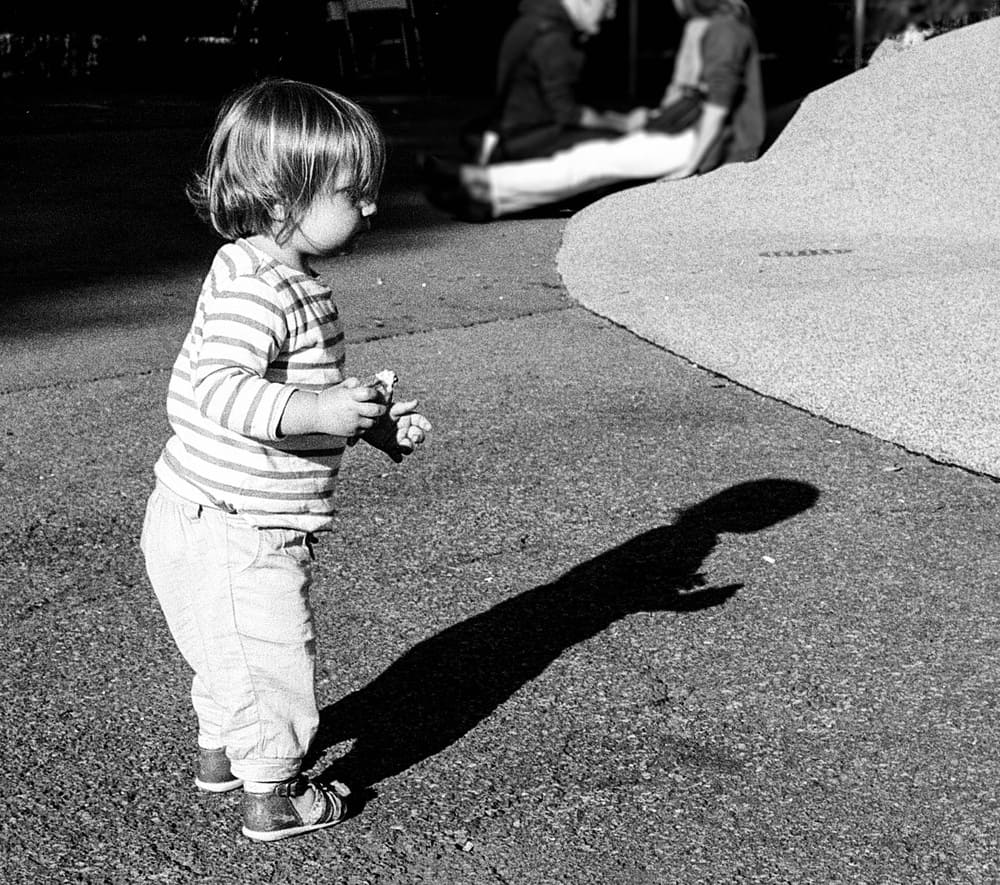
Are these images works of art deserving of a gallery? Perhaps not, but they represent a delightful exercise in spontaneity. Captured by a seven-year-old “playing” with a camera, they offer a unique glimpse into how my young daughter sees the world. There are no rigid rules of photography or composition here—just an extension of her eyes. These photos are raw yet delicate, showcasing the world as she perceived it at that moment.
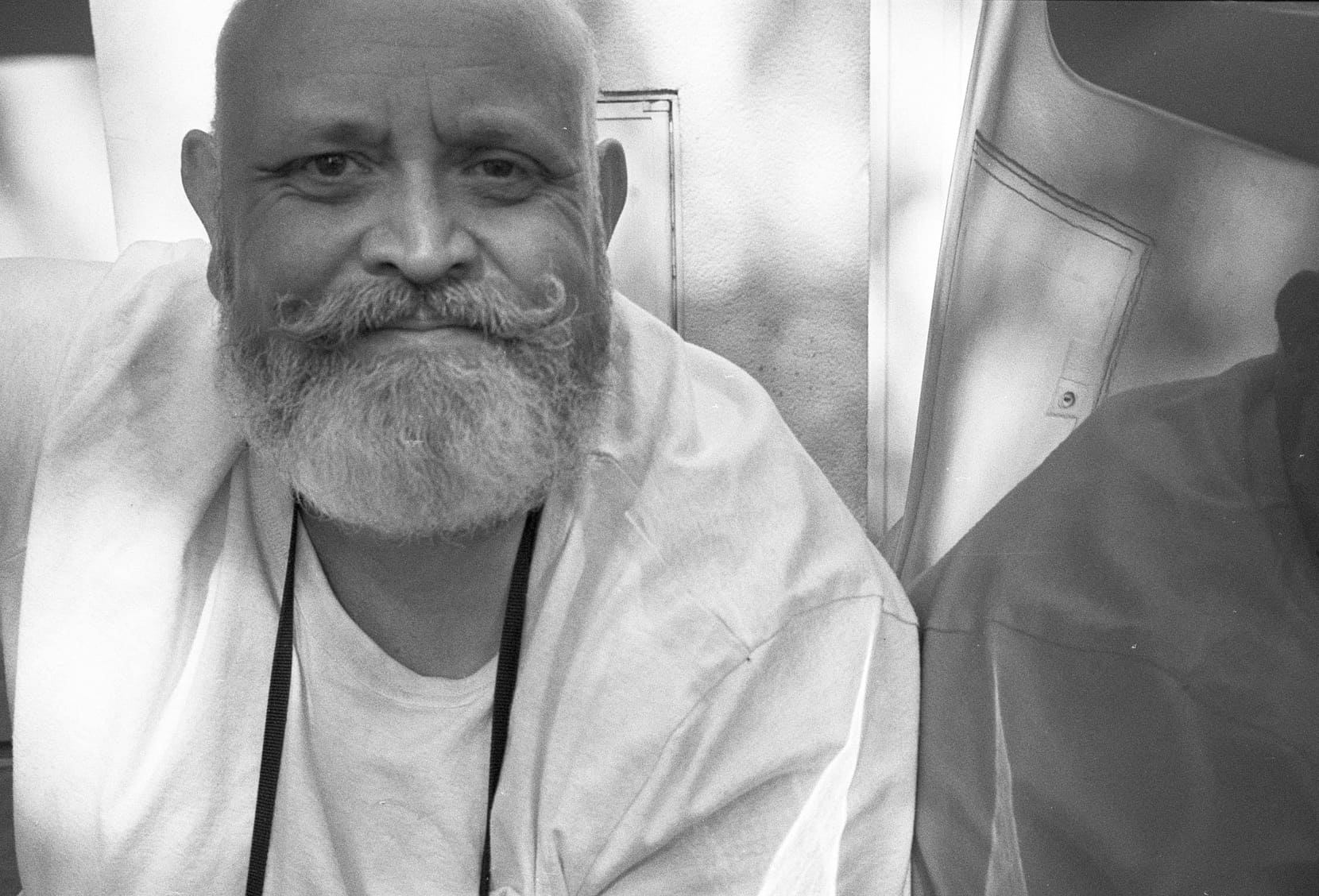
These photos mean a great deal to me, particularly the one she took of me with that glorious moustache! I’ve often discussed how the journey and process of photography can sometimes be even more meaningful than the final destination. That day was a significant part of that journey, and reflecting on my own first photos from that age fills me with nostalgia.
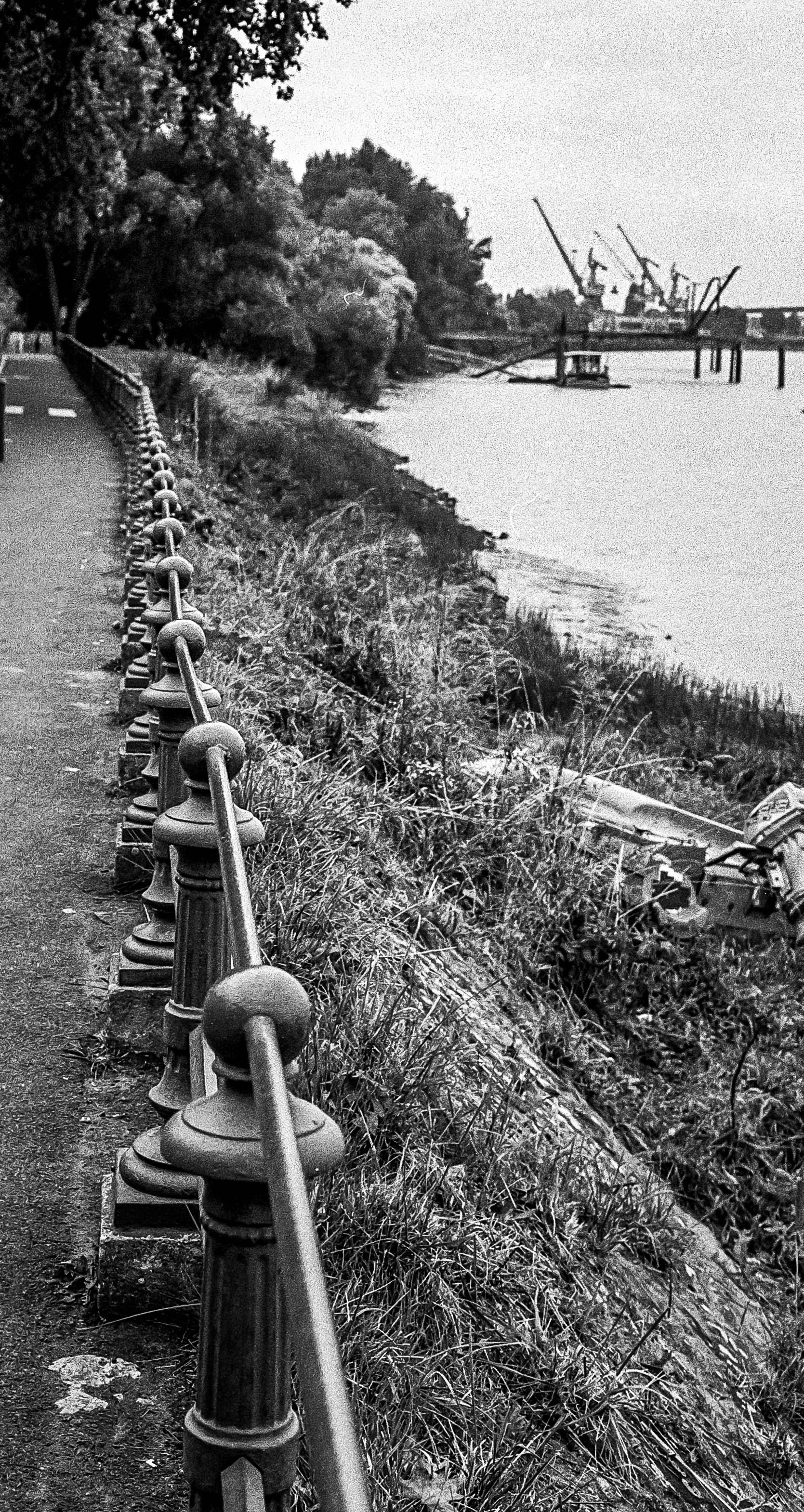
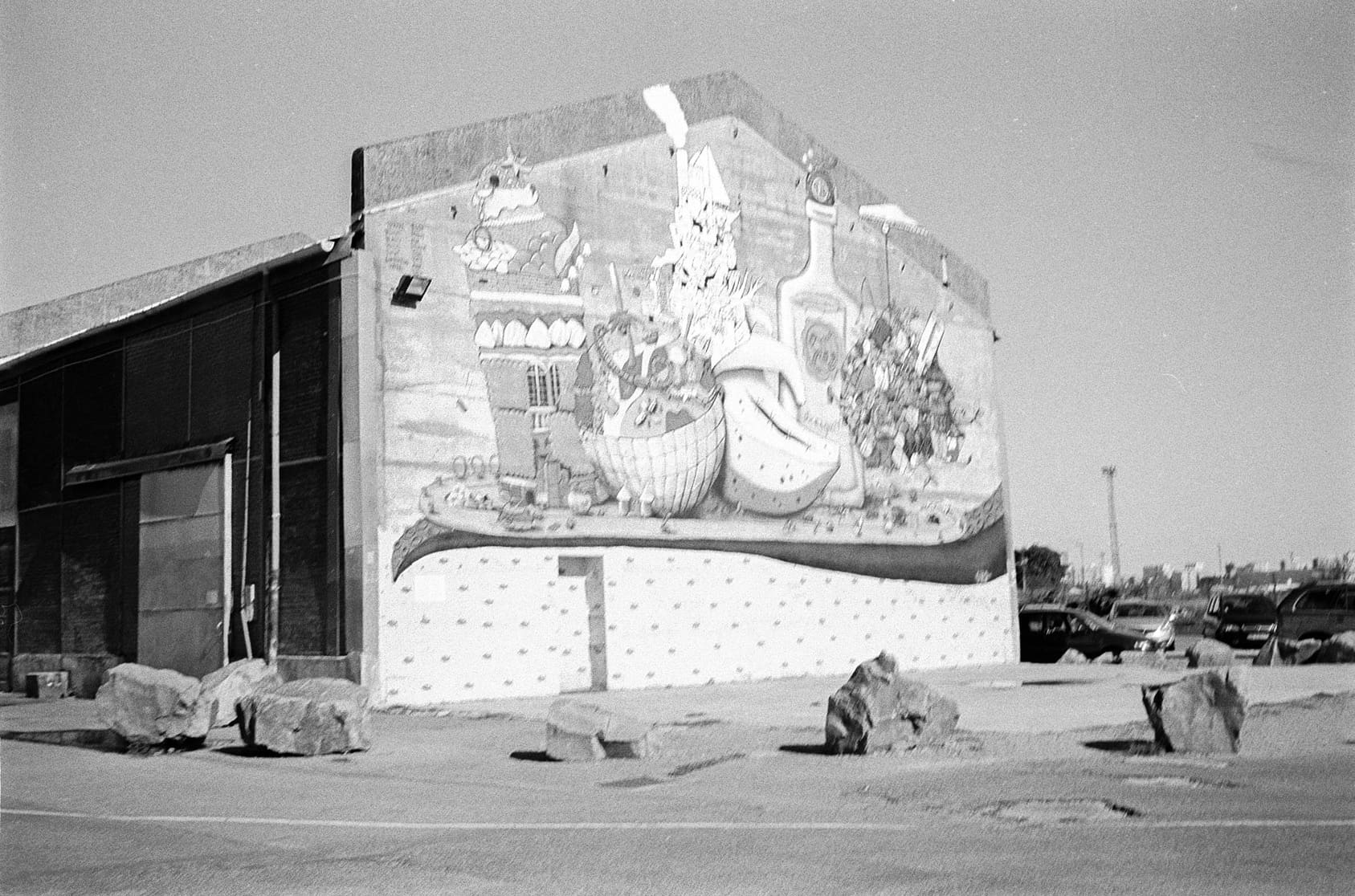
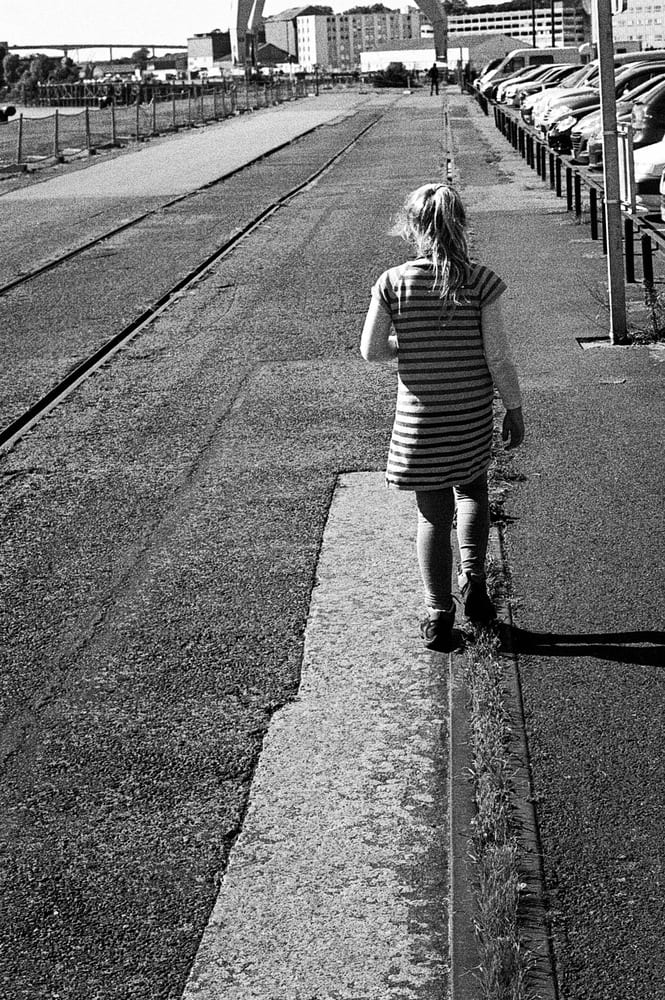
New from the film archives – On va Marcher sur la Lune, captured on a warm October day in 2016. Could this be a nod to Jules Verne, one of Nantes’ famous sons? Possibly. As I look through these photos now, I’m transported back 8 years—to a time when my daughter still saw me as her hero, and we spent afternoons exploring with our cameras.
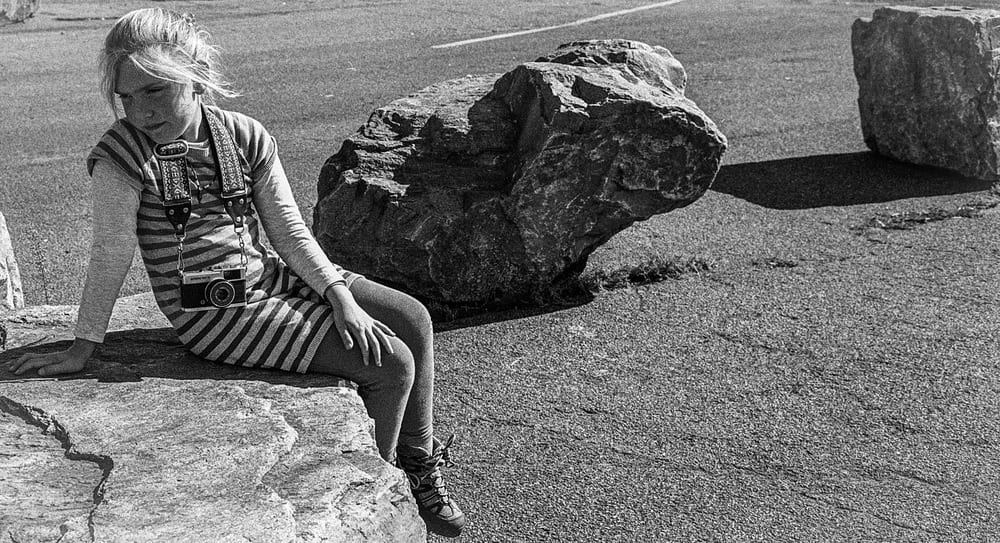
That day, she had her Olympus Trip 35, and I was carrying the equally iconic Canon AE-1 with some 400ASA Kentmere black and white film. Both cameras, steeped in history, were very much a part of our lives at the time. And when I say the Olympus is so simple a seven-year-old could use it, I’m not exaggerating—she handled it with ease, maybe even with a bit more flair than I did.
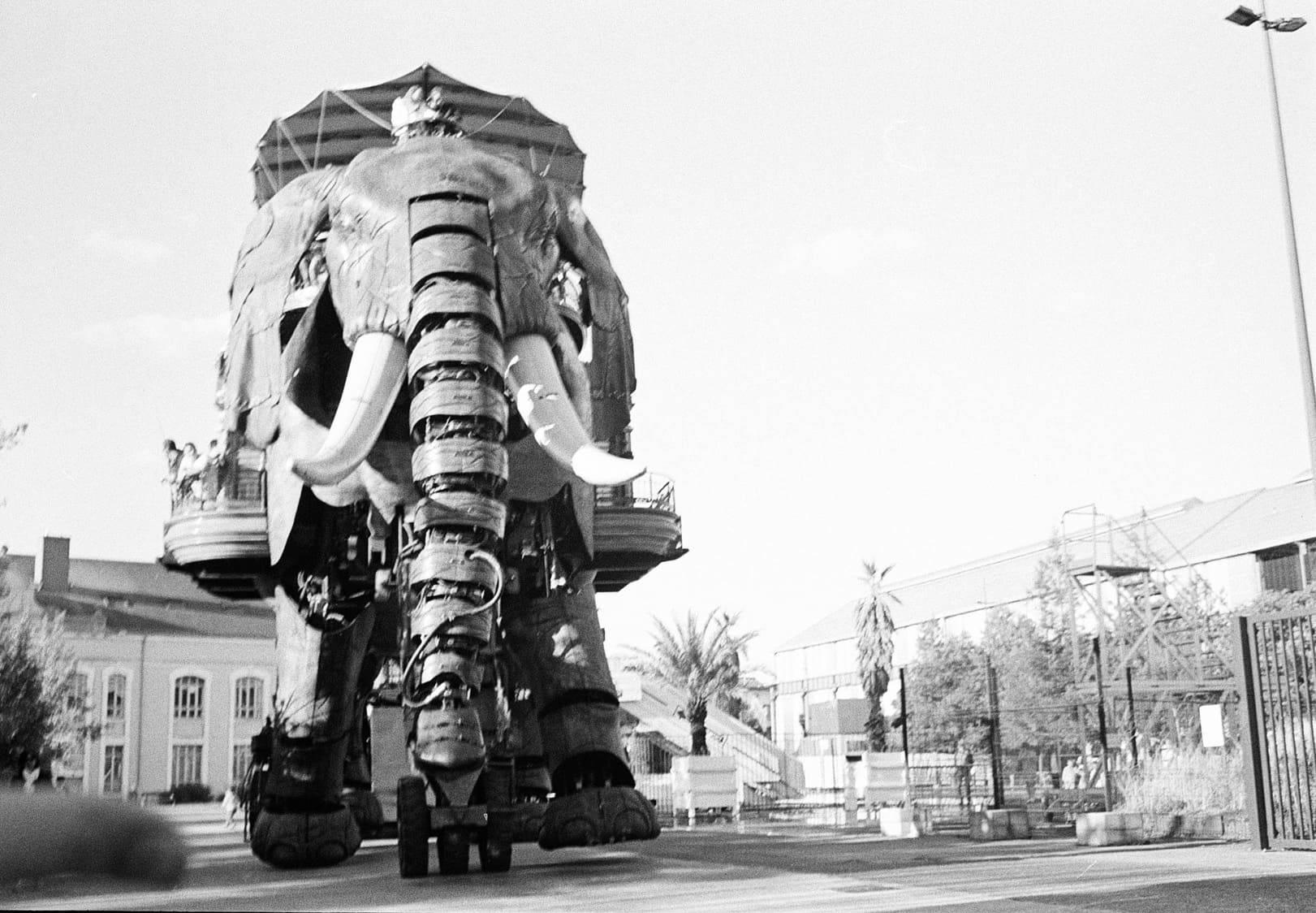
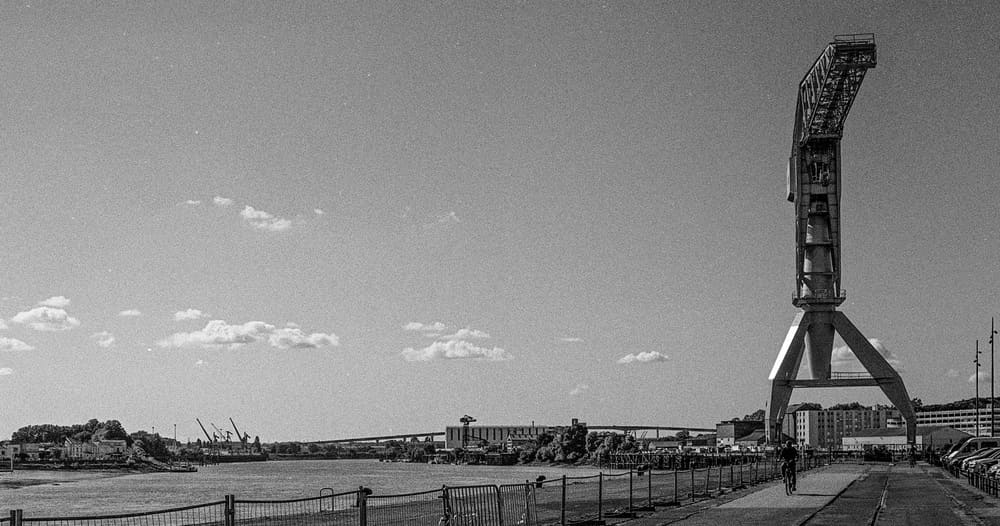
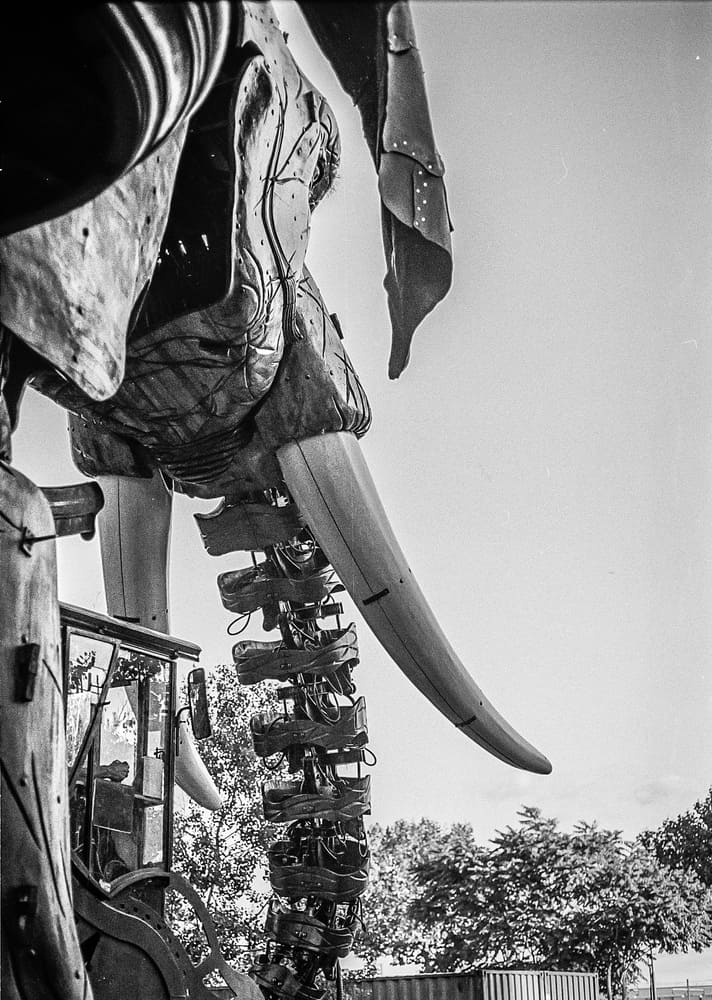
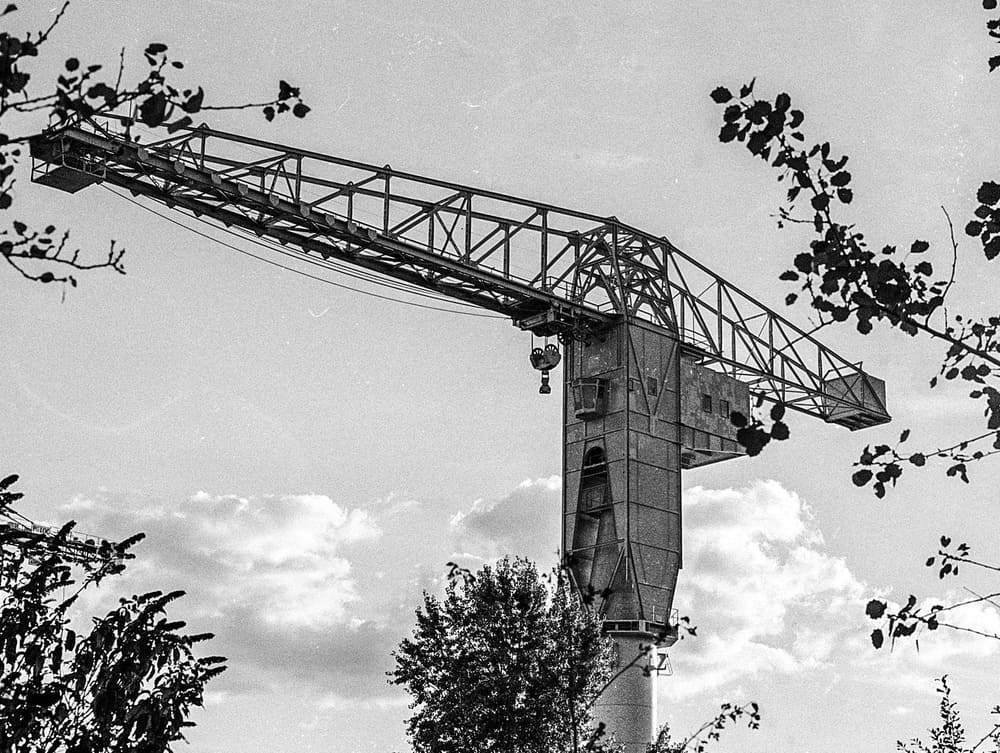
We parked near the Grue Titan and wandered towards the Elephant, a landmark almost as famous as Jules Verne himself. It was one of those days that would just lead its own way along the Loire, and I was completely fine with that. My only concern was Kate remembering to change the dial on the Olympus to the right focus zone. In hindsight, I should’ve let her take the lead and placed more confidence in her. Hindsight—that luxury of later life. Her photos? They turned out better than just fine.
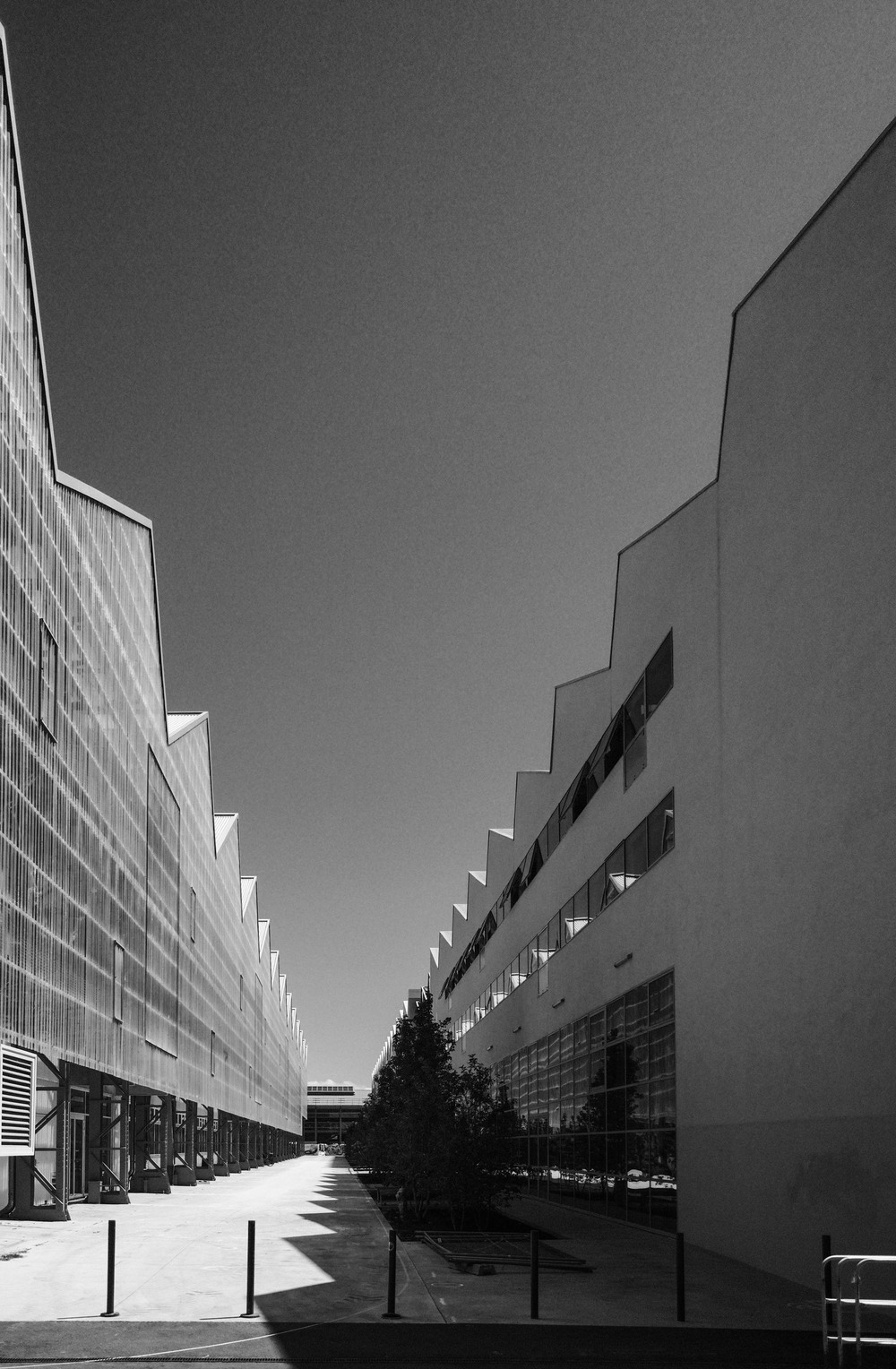
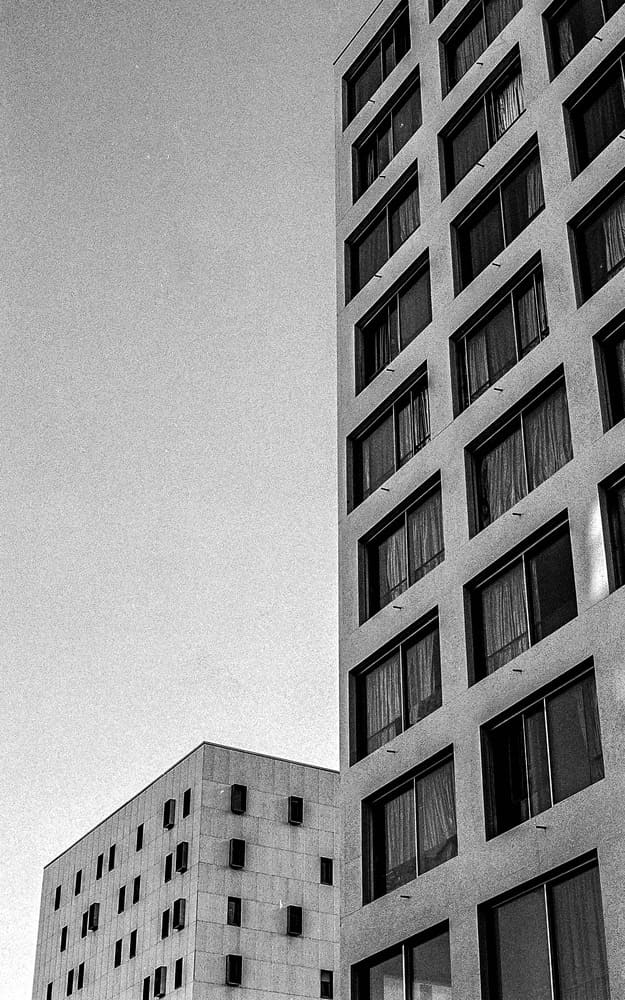
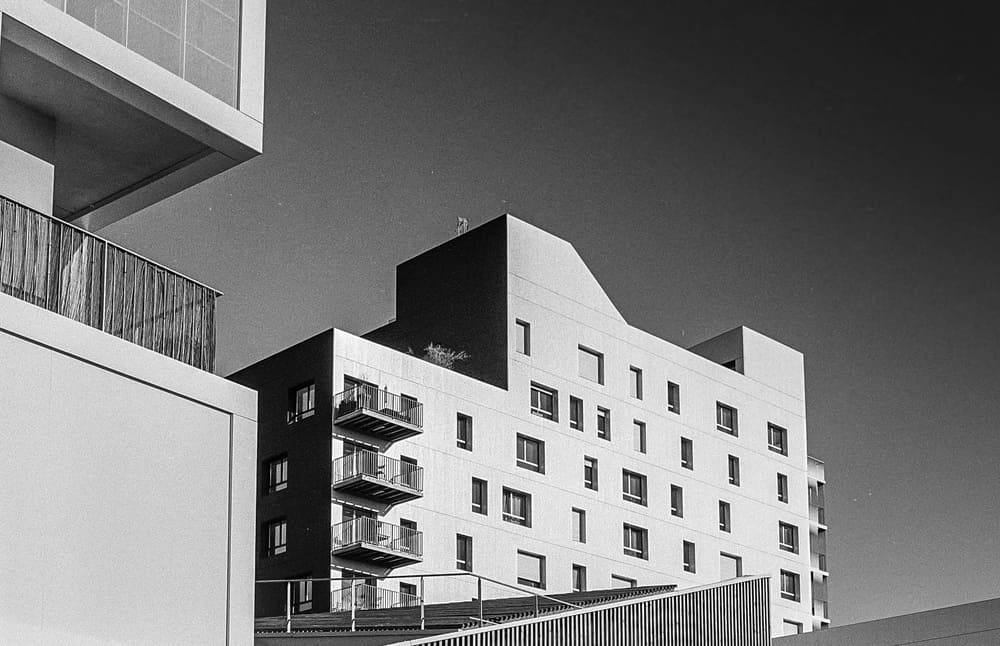
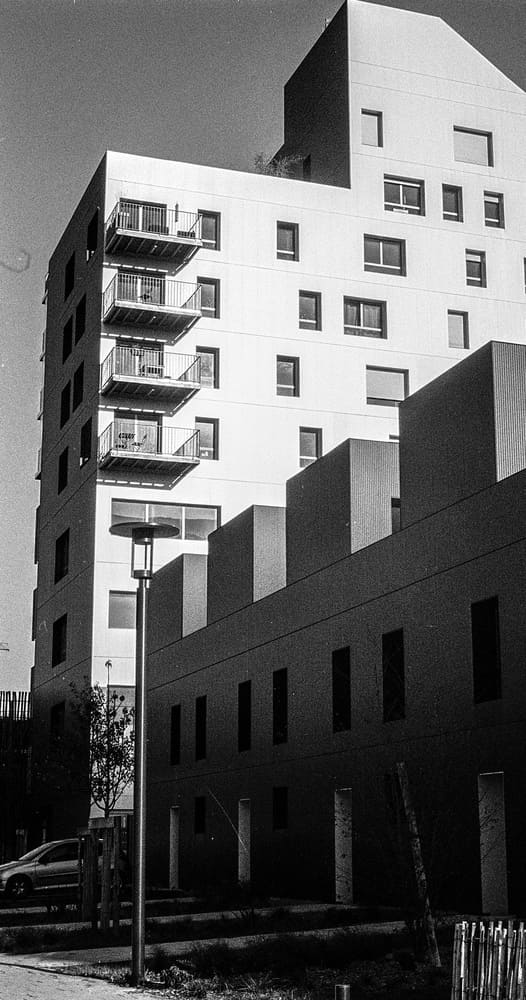
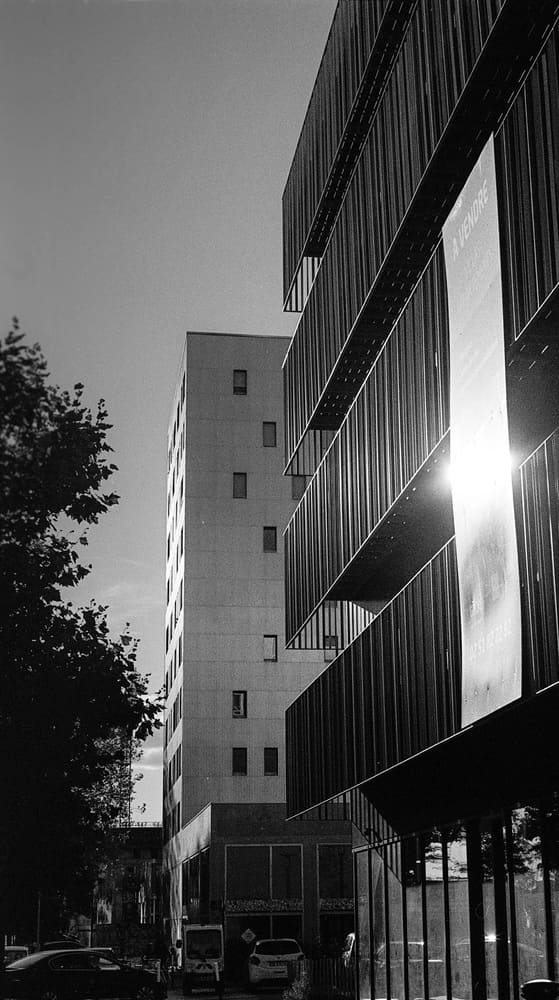
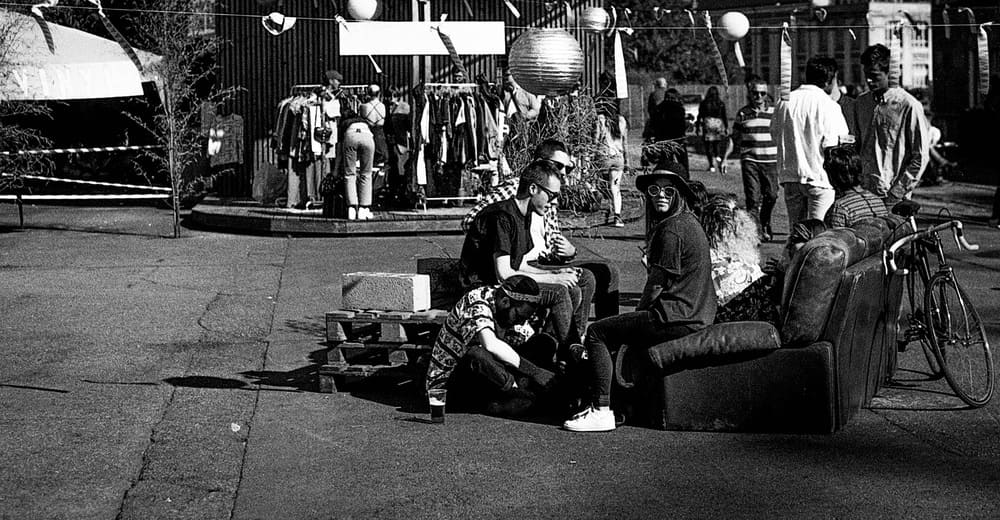
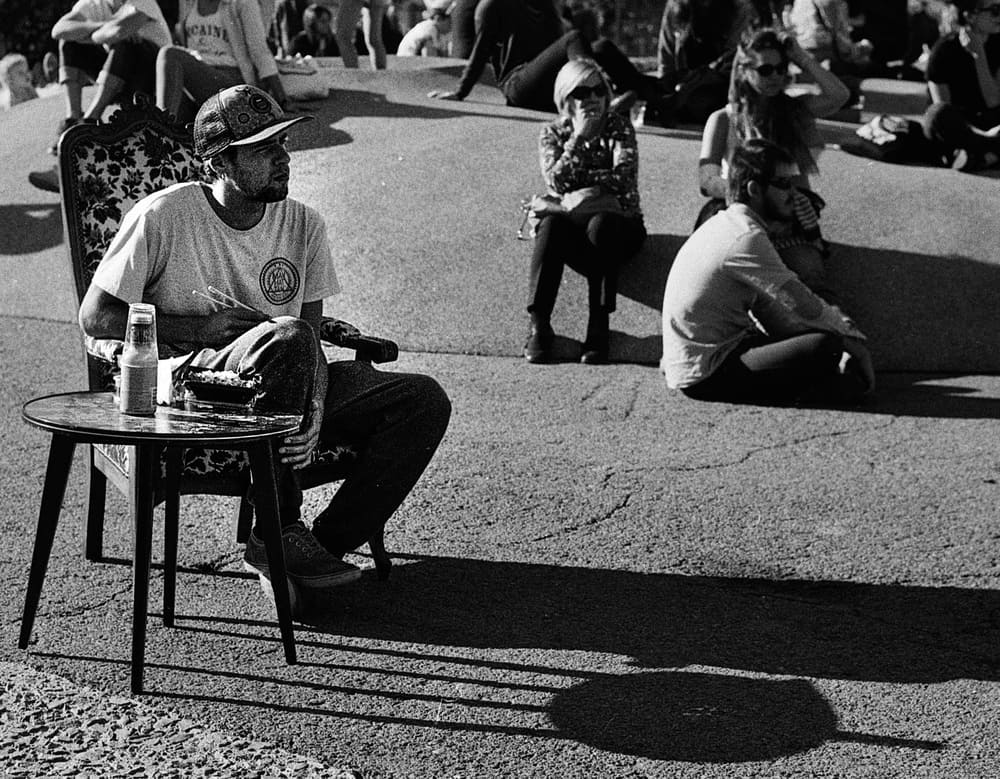
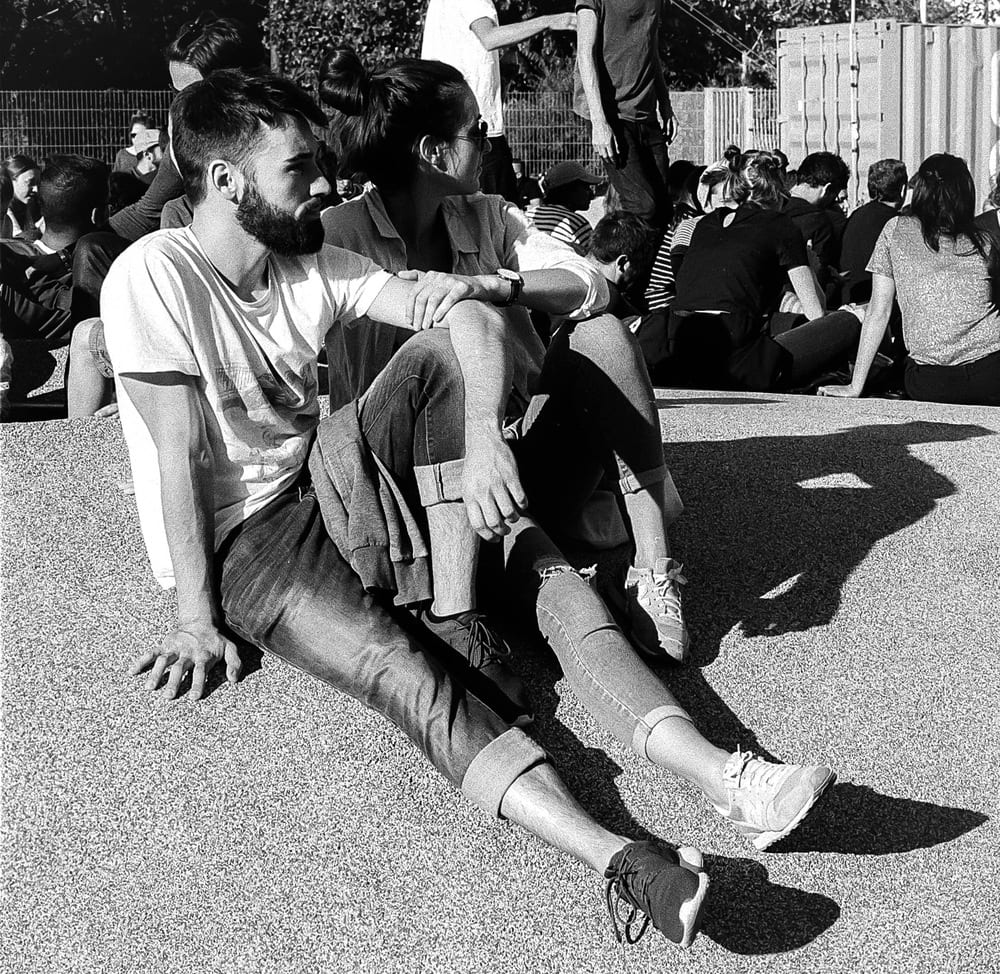
Later, we explored the “On va Marcher sur la Lune” exhibit, which featured a lunar landscape with trampolines in each crater—a hit with children of all ages. The area was bustling with people enjoying the Indian Summer, including a mix of families and those embracing the trendy atmosphere. As we walked towards the Elephant, we noticed how it had revitalized this once rundown shipbuilding area. The remnants of the old shipyards still linger, but the new architecture is resolutely modern.
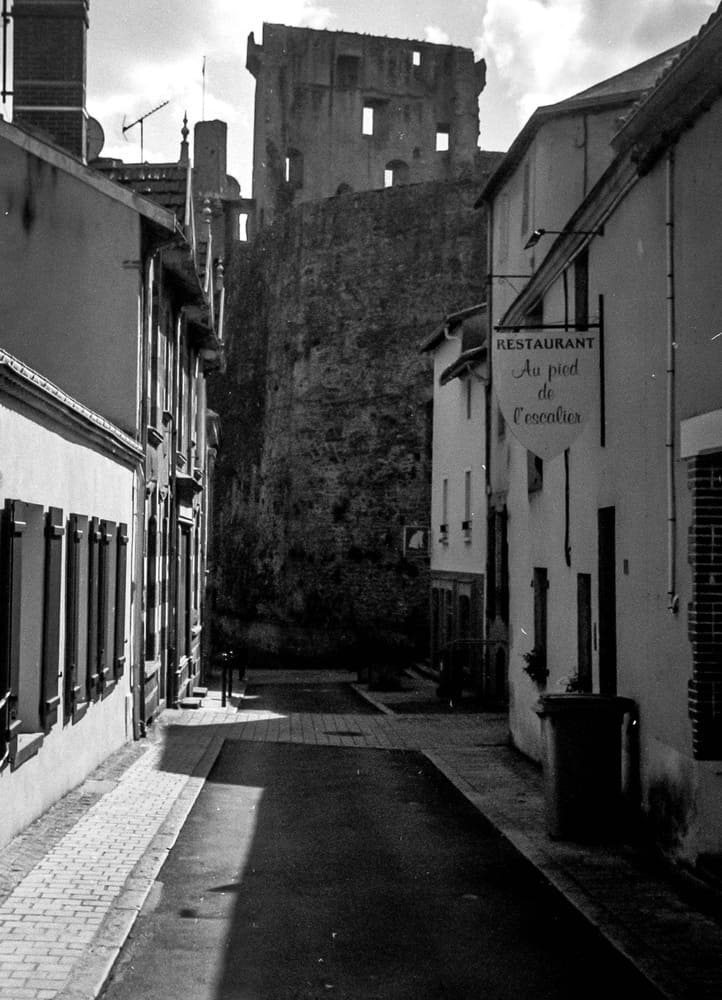
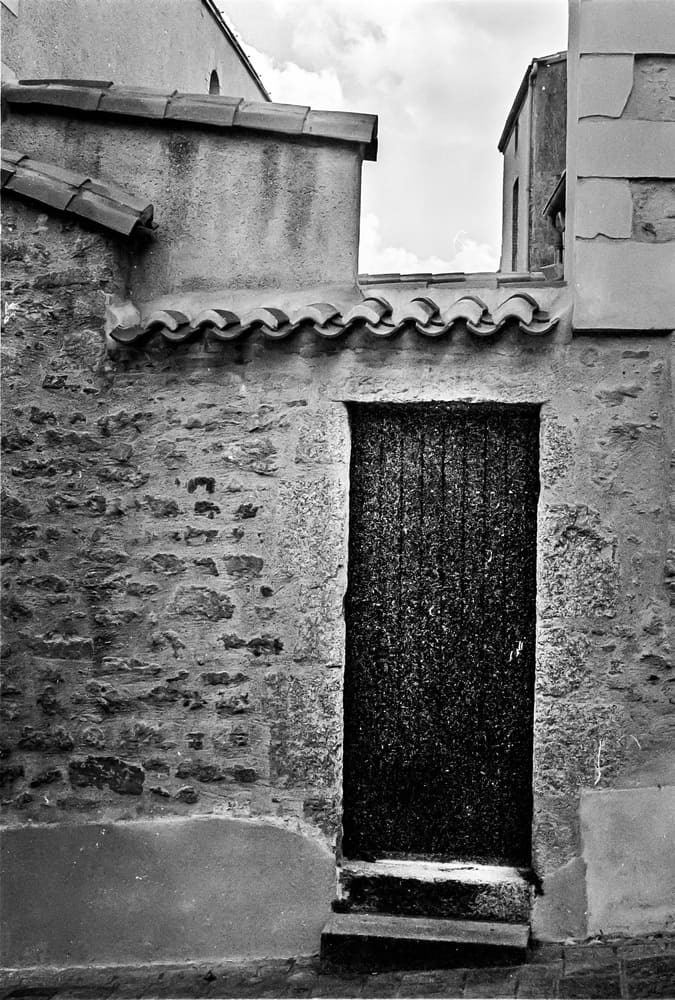
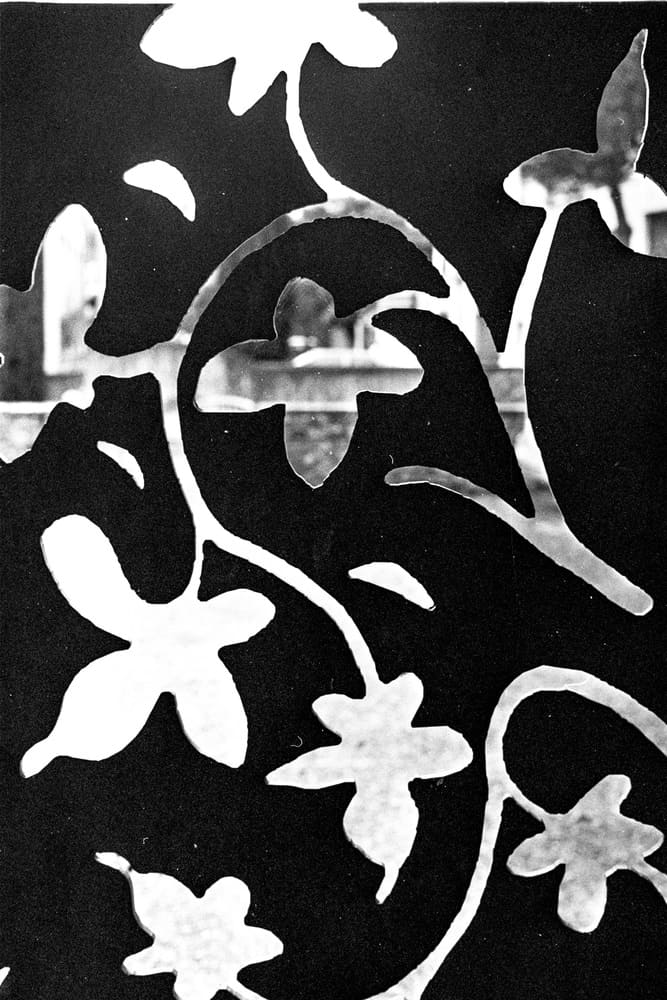
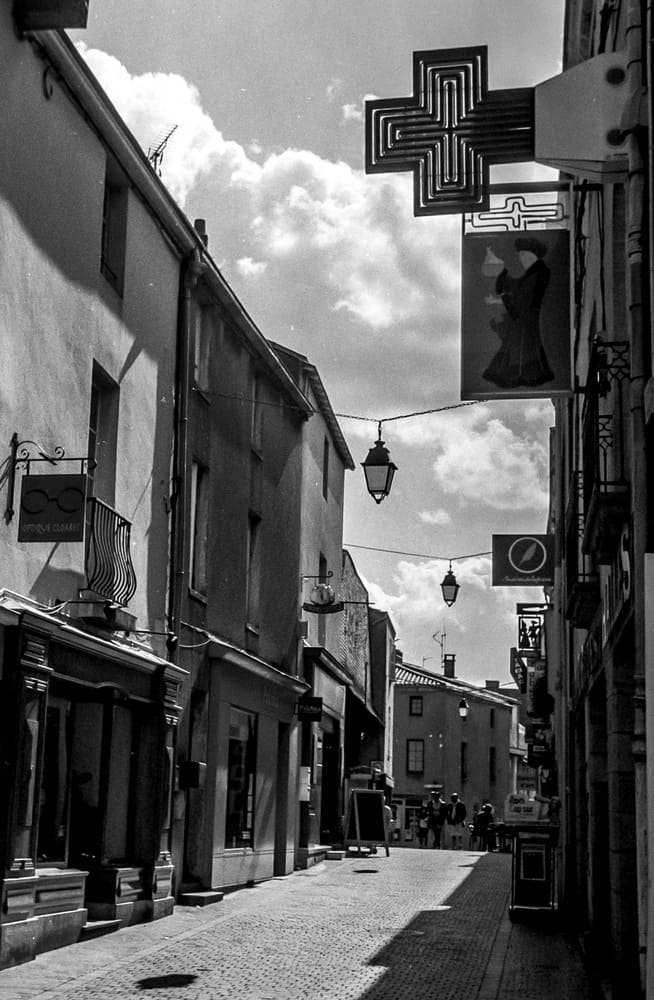
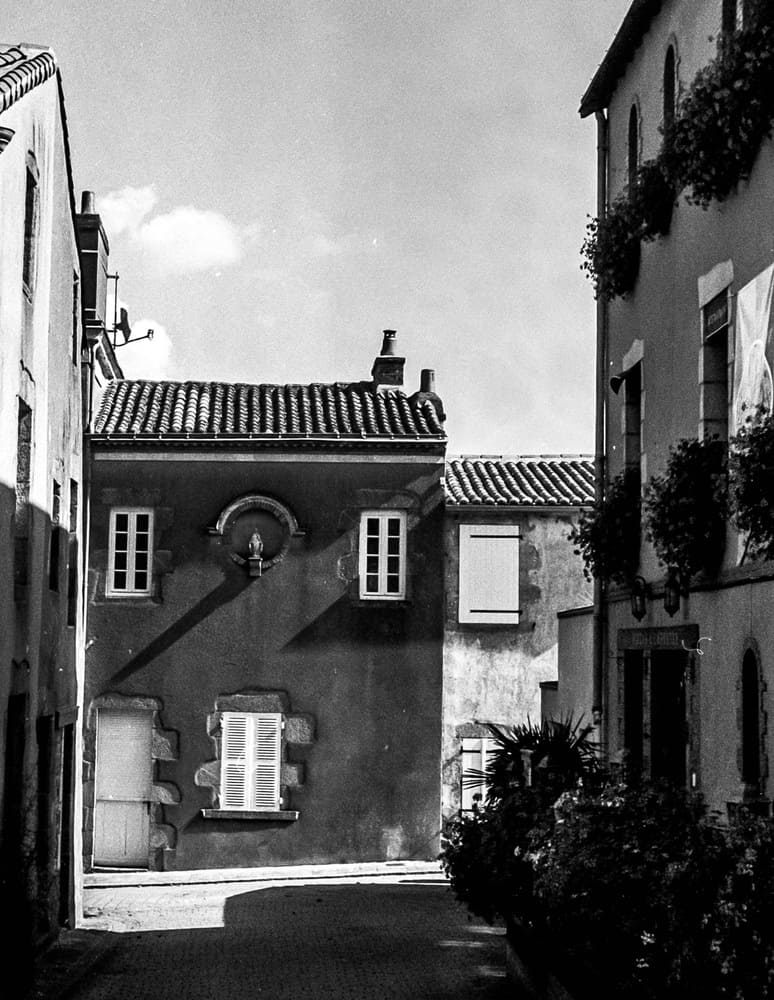
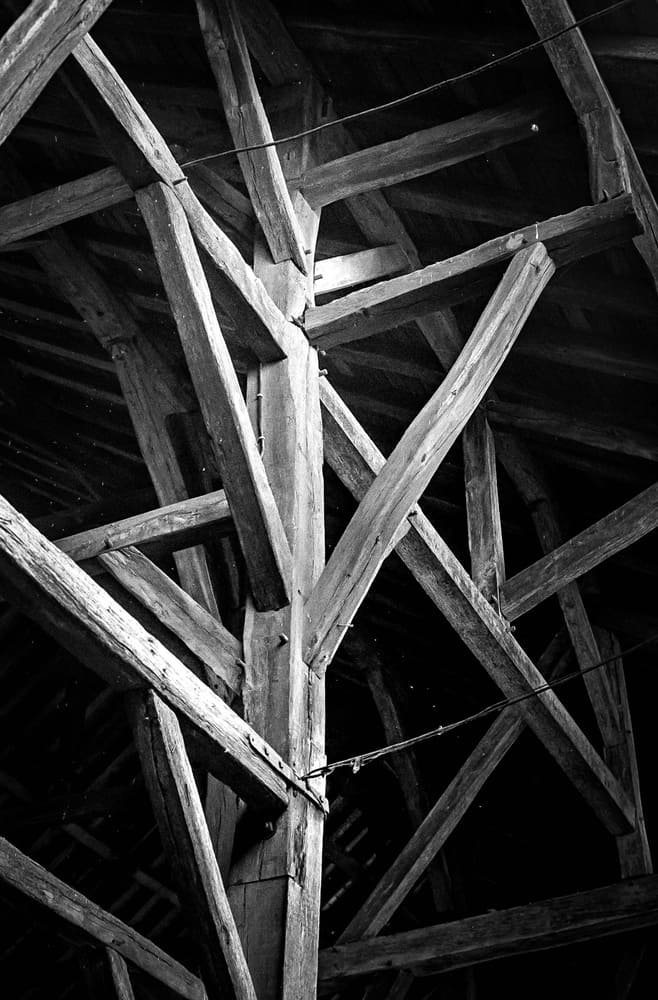
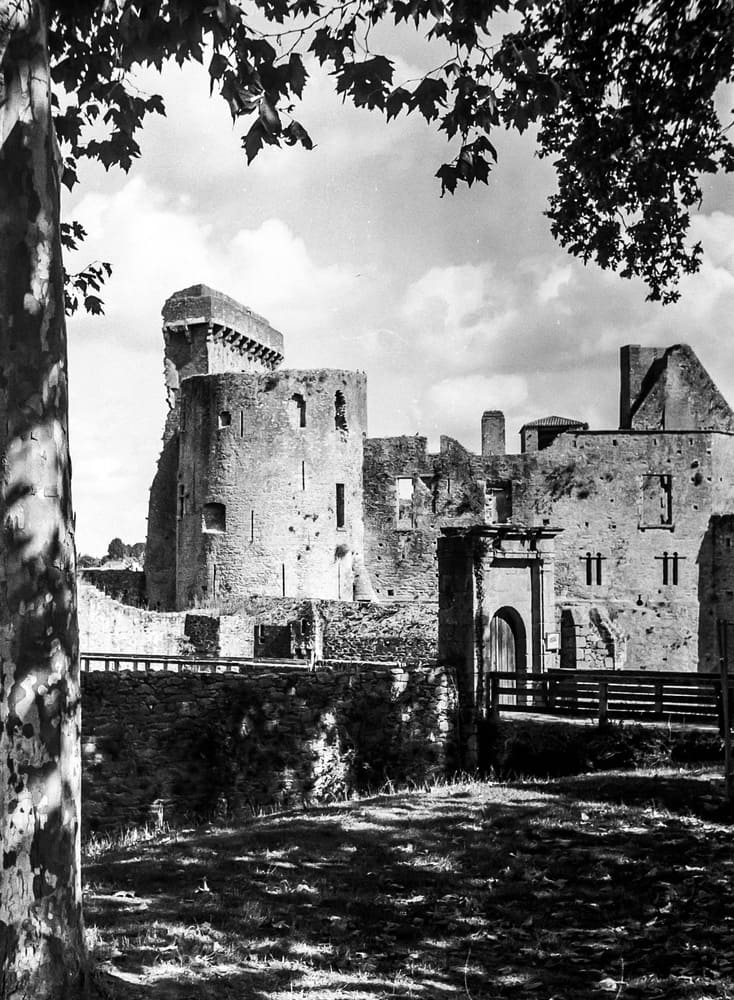
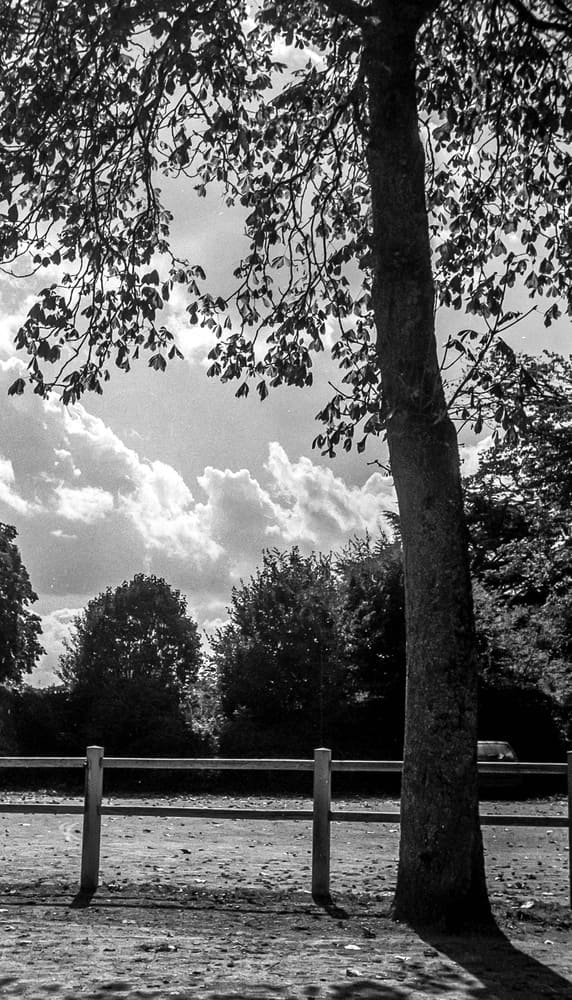
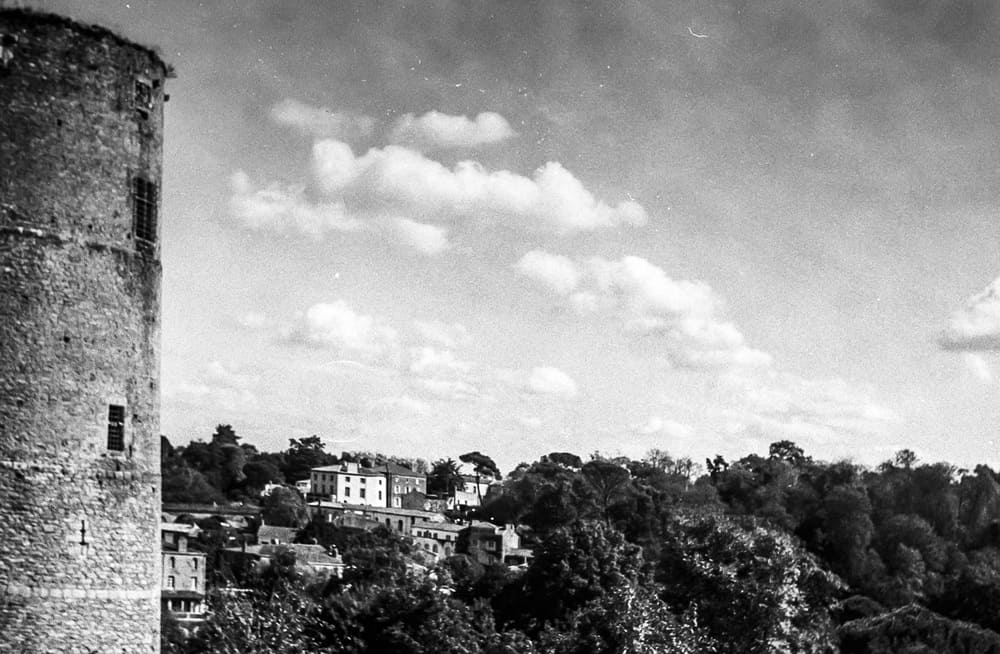
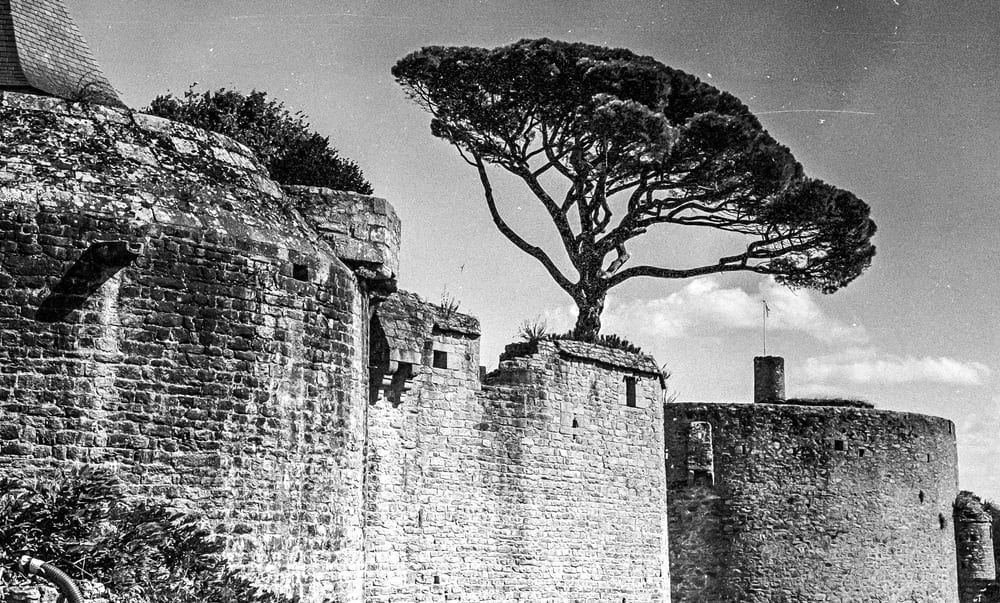
Welcome back, Dear Reader, to the film archives, still with the Canon AE1 and HP5 Plus from Ilford, but in Clisson this time. You will remember Clisson from previous articles and will have seen the pictures, so it shouldn’t be a stranger to you. Who knows, it could even feel like revisiting an old friend. It certainly is for me.
But why Clisson I hear you say. Well, it’s not very far away from where I live. It’s also one of those market towns that is renowned for the beauty of its architecture with an Italian slant. It has the massive castle that towers above the river. It has me taking photographs of it.
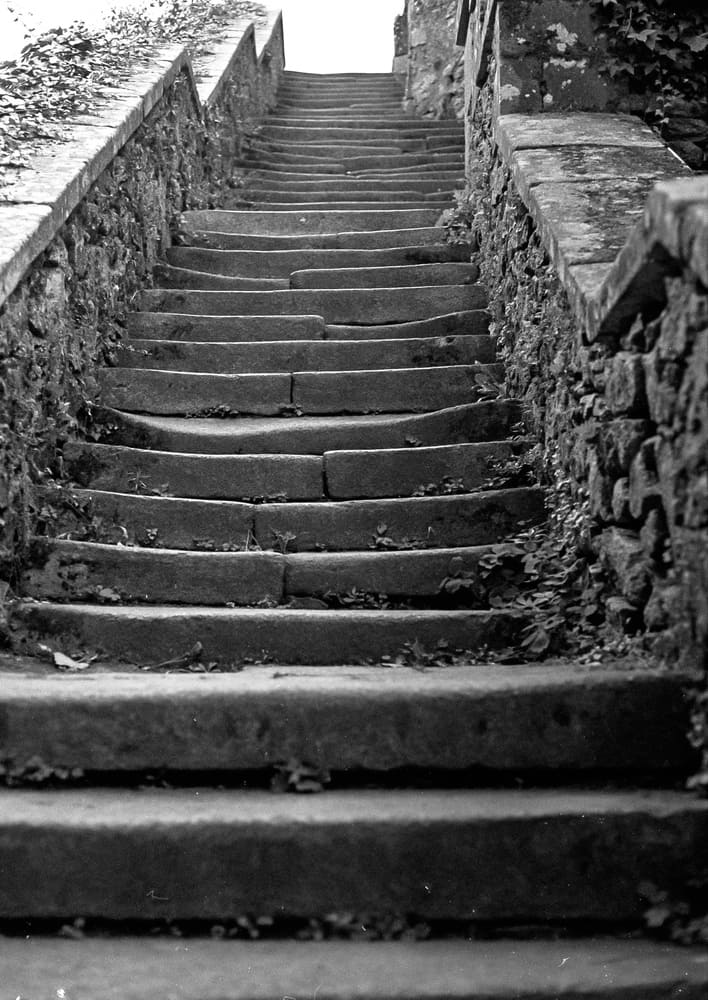
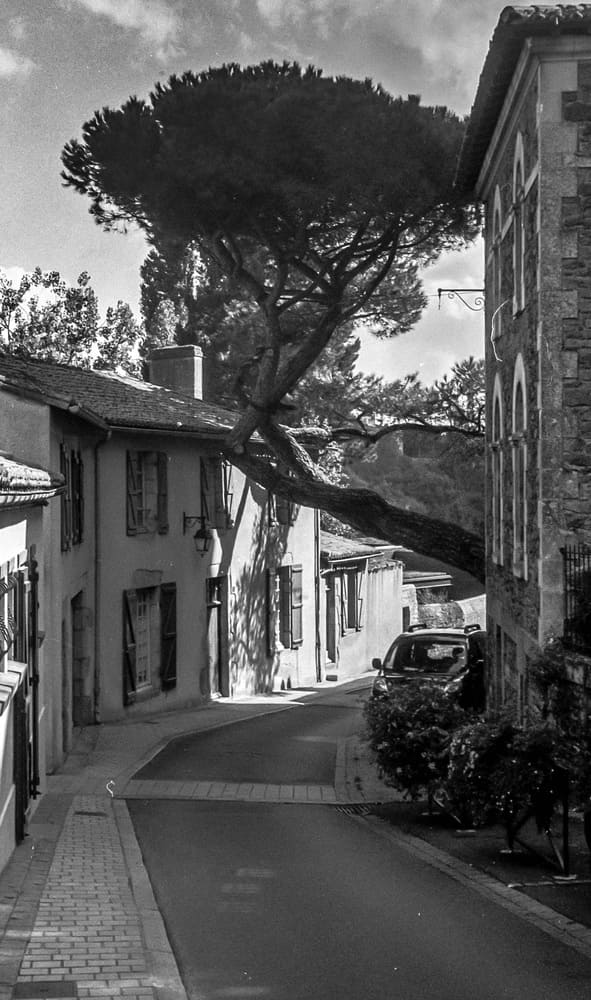
Clisson, like most things, has options. On a Friday the main option is the huge market, and wandering around the 14th-century Halles, which can keep you out of the sun, the rain, the heat or the cold, depending on the time of year. I either go down to the river and wander along the river banks in the Garenne and Lemot park, or park at the top of town and stroll around the Halles and surrounding streets. In the series of photos at the end, you will see some stone steps that join the two options, but I have dodgy knees, and those steps are like leg day at the gym. You can avoid those steps by just following the road that wraps itself around the church, and going under the tree that just got tired and decided to rest on the house opposite.
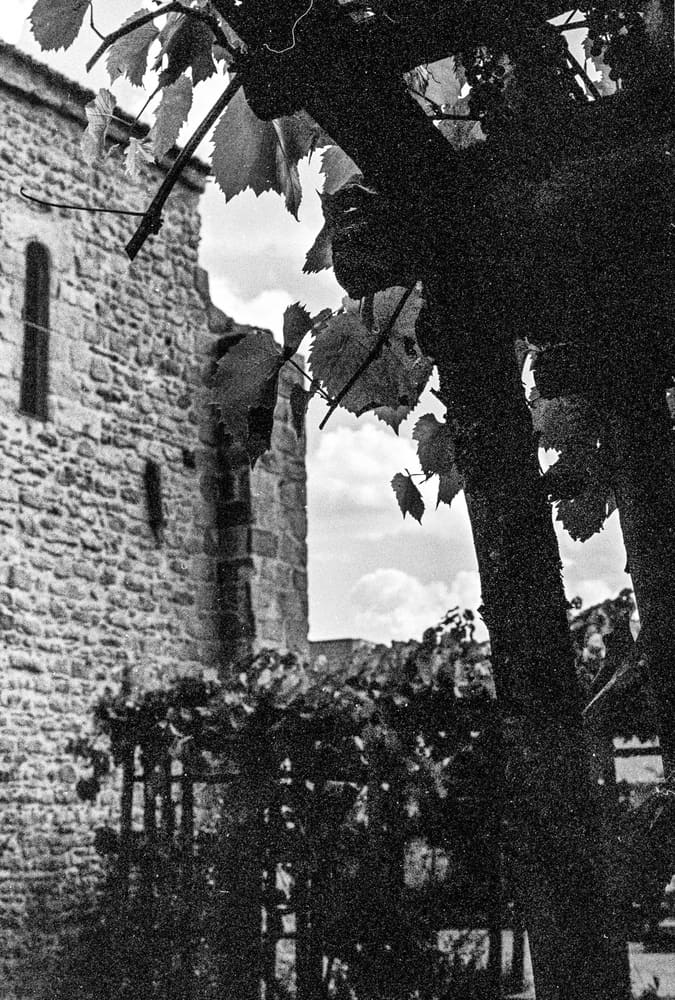
But this time I decided to break out of my habits and visit the Quartier St Jacques with its decommissioned chapel, and garden. It’s yet another pretty place in a pretty town, and when I was sitting there in the sun, I felt that I didn’t have a care in the world. Serenity flooded my mind and all was well with the world…





























































 IJM Photography