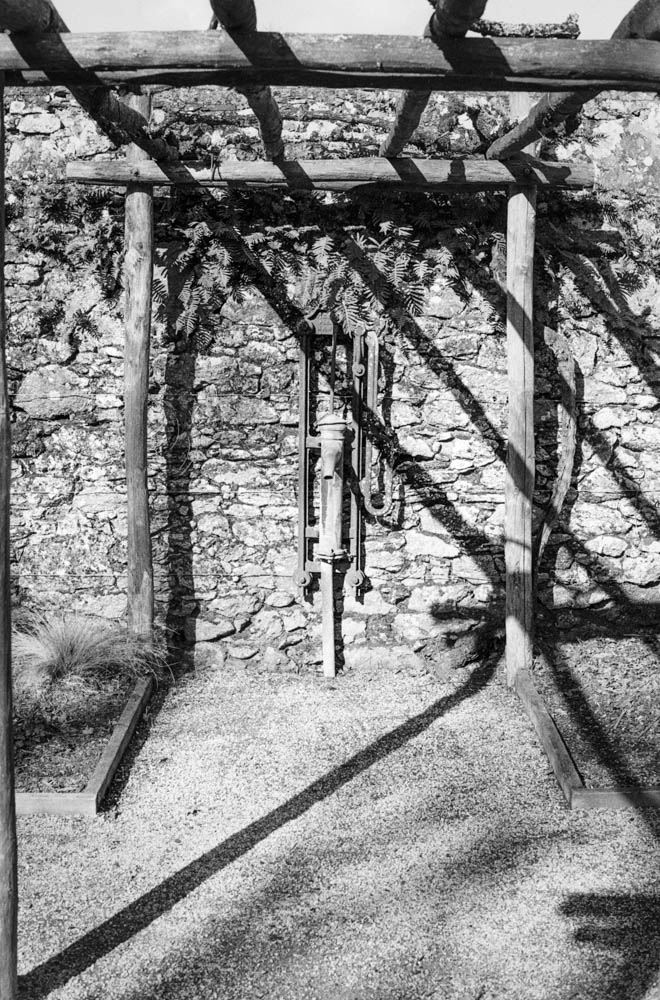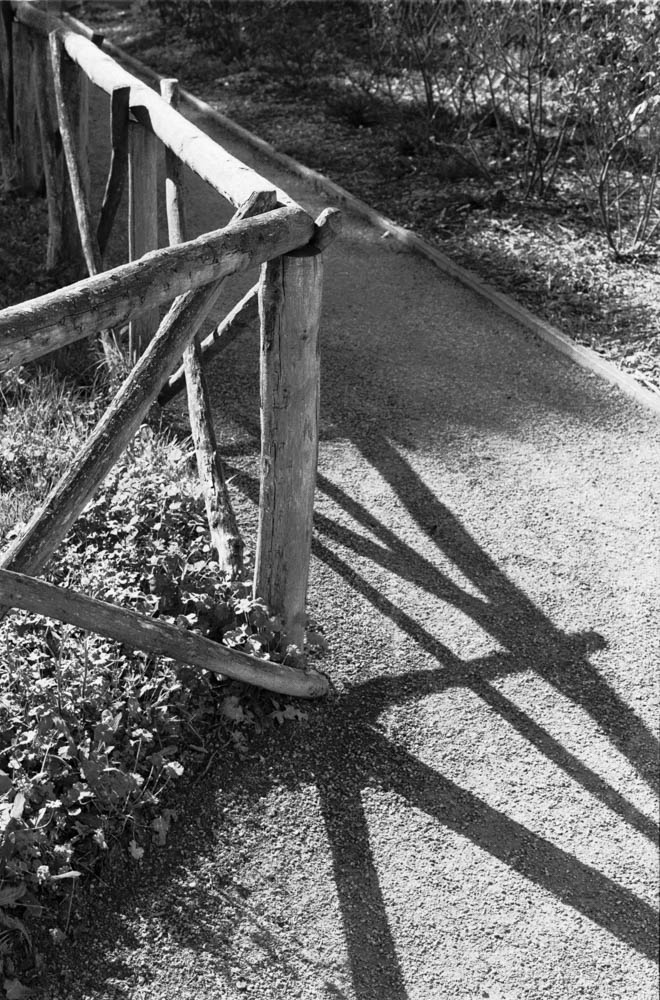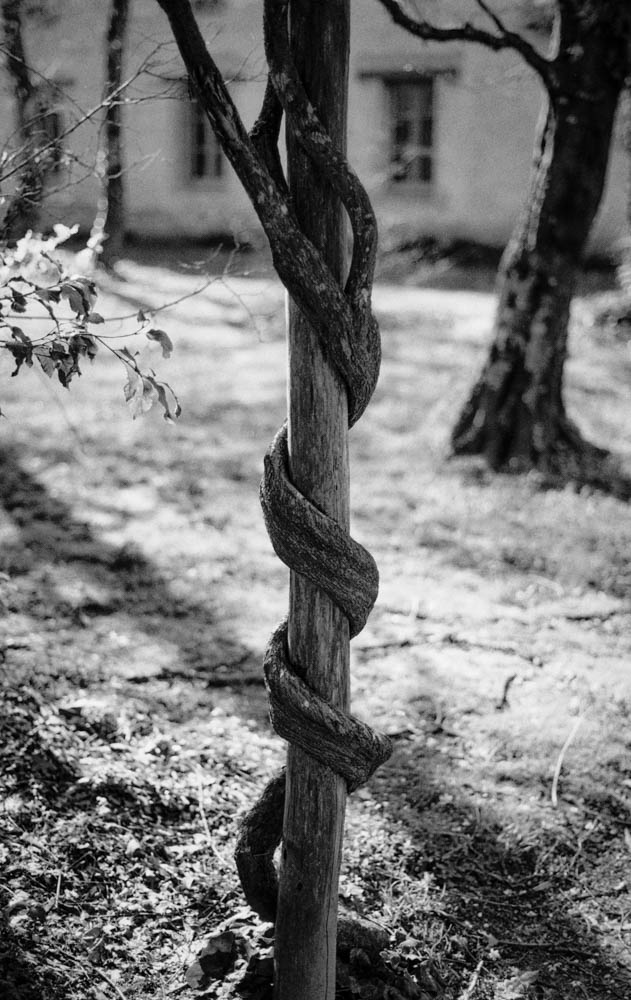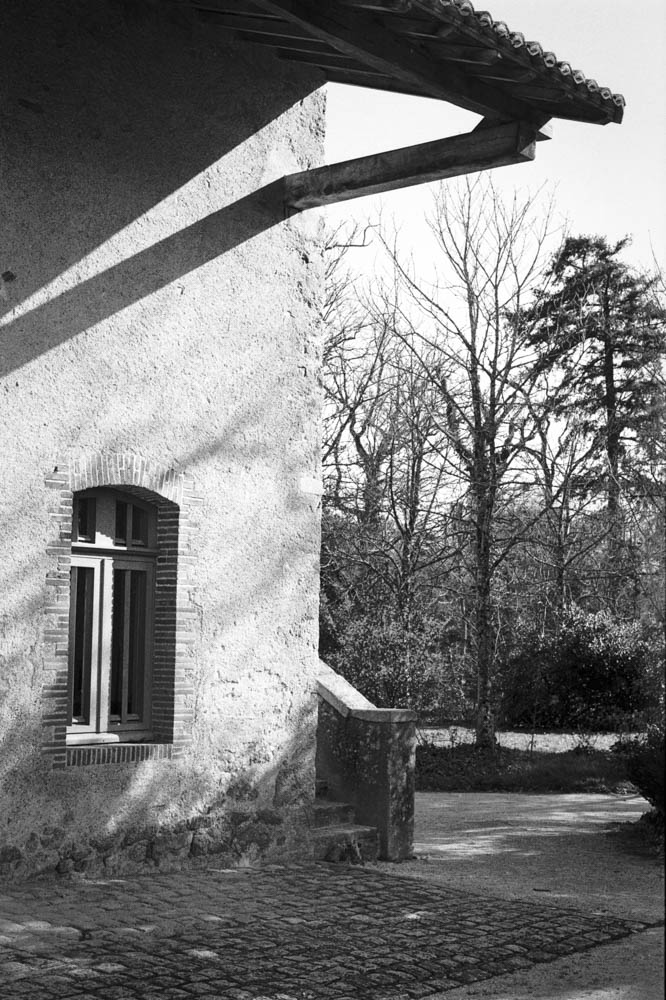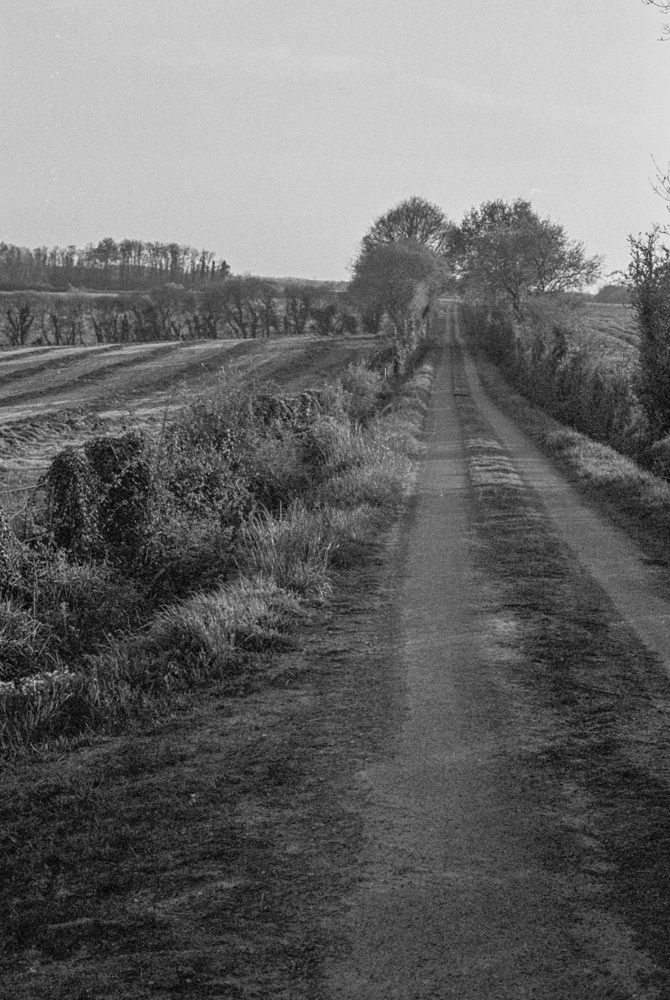
Nikon FE Review: Features and User Experience


Hello Dear Reader. I know you are an astute fellow, and that you never miss a trick. You will have noticed me talking about the Nikon FE. I will share something with you. I actually bought one at the end of last year from my HR director, but wanted to have the right time and places to start using it. One can’t rush this kind of thing.

Some of you might even say, “I thought you were a Fuji guy, or a Canon guy, or even a Pentax guy.” I hate to disappoint all those of you attached to a particular brand, but I am above all “a guy.” Mind you, this was my first venture into Nikon-world. Not a Nikon D something…. I went slightly more old school as I have been known to go before.

Why the FE and not the FE2, or even F3? The guy was selling an FE, that is why. Now that is out of the way, let’s have a look at this camera. First and foremost, it’s a really sexy camera reminiscent of those used in the 60’s by National Geographic photographers. It’s not, but that’s by the by. It actually came out in 1978. Secondly, this particular one was in full working order, always a plus; the price was fair for the camera’s excellent condition. I may be a collectionneur, but a camera is there to be used. Did I say it was a very sexy camera? I did. Oh good.

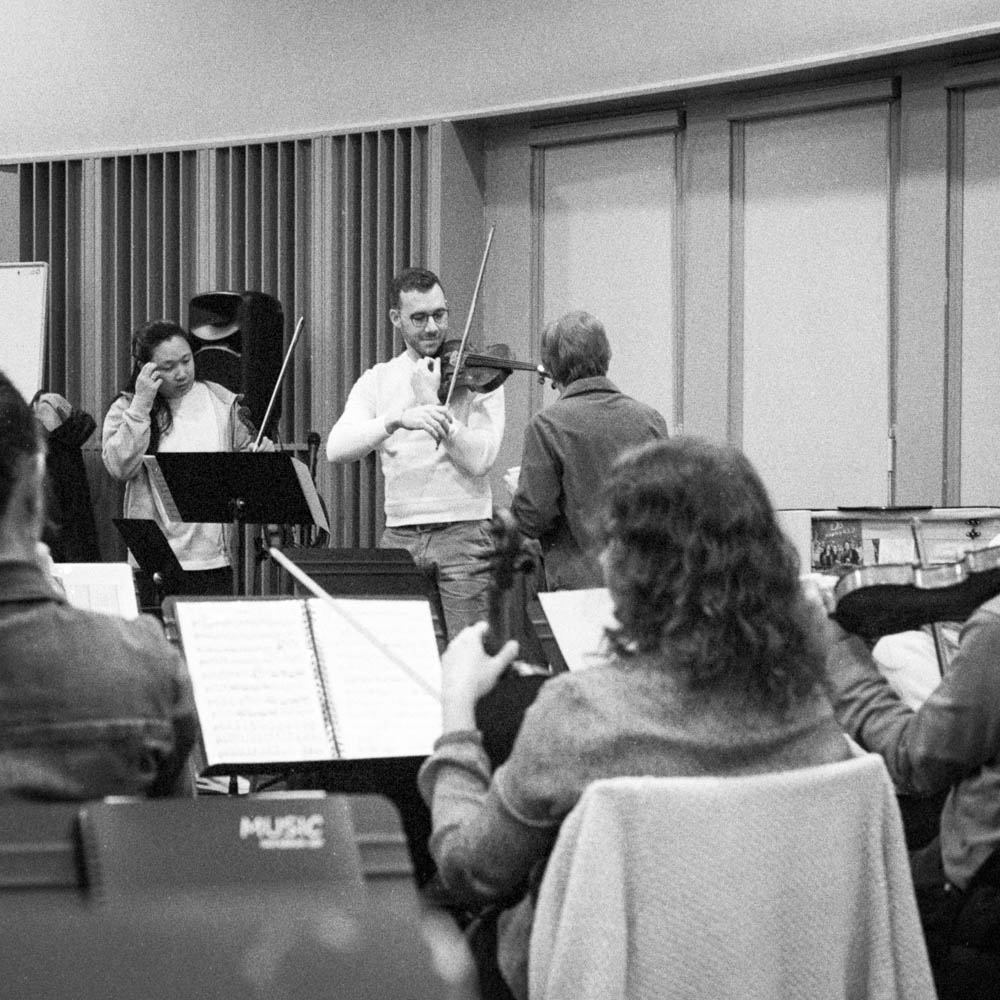
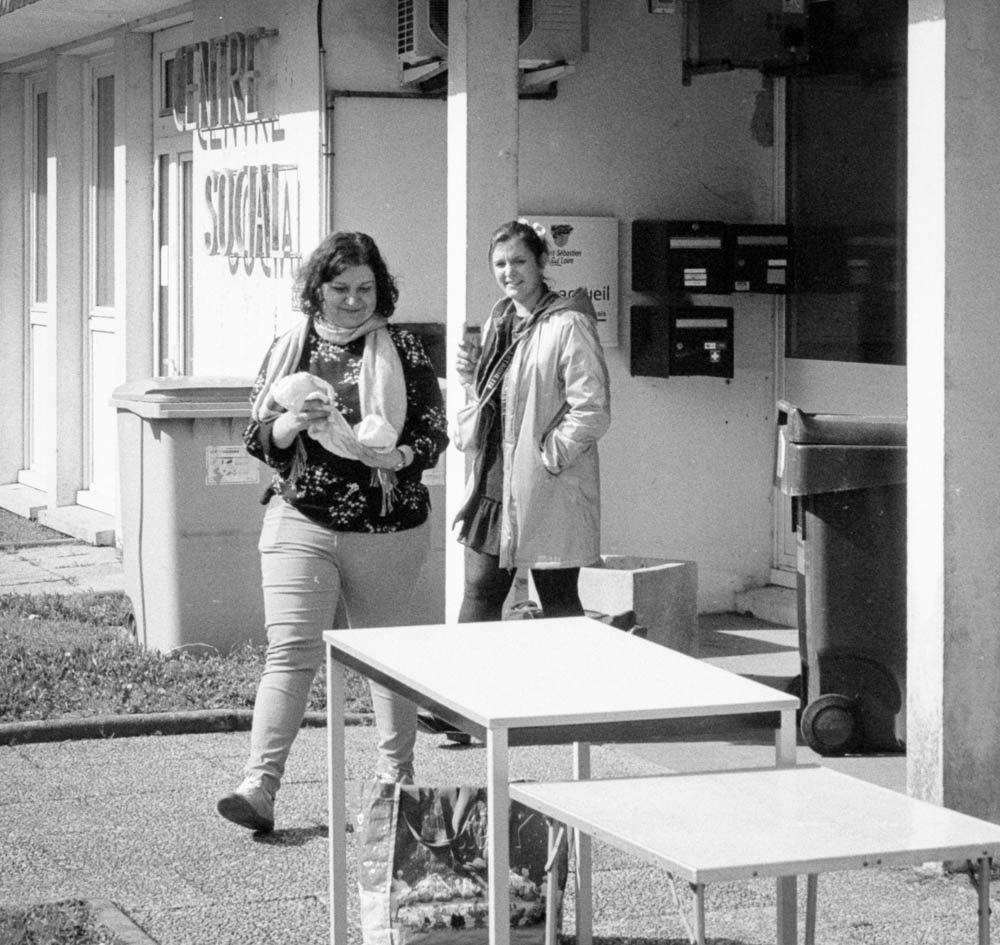
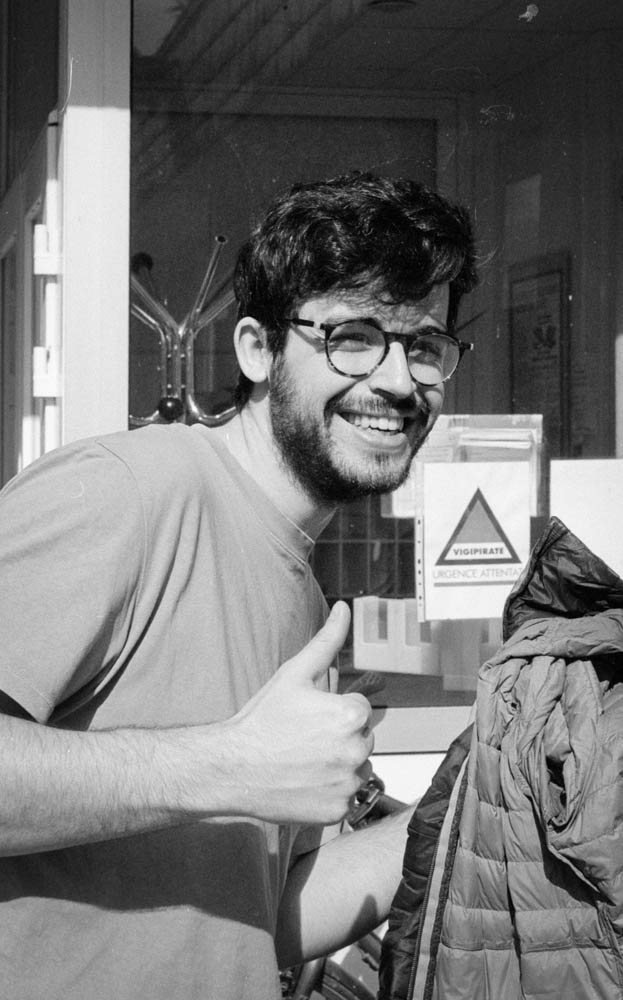
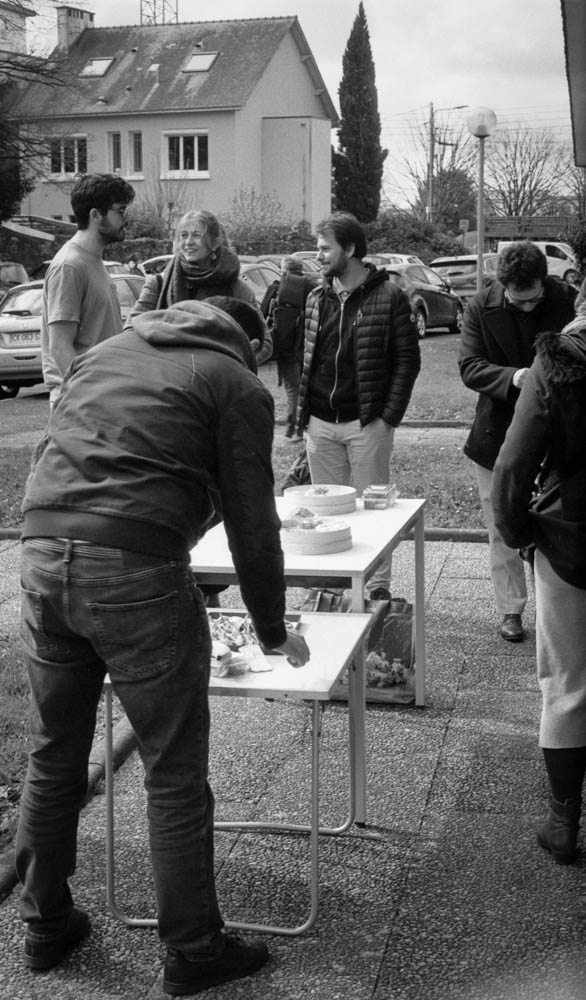
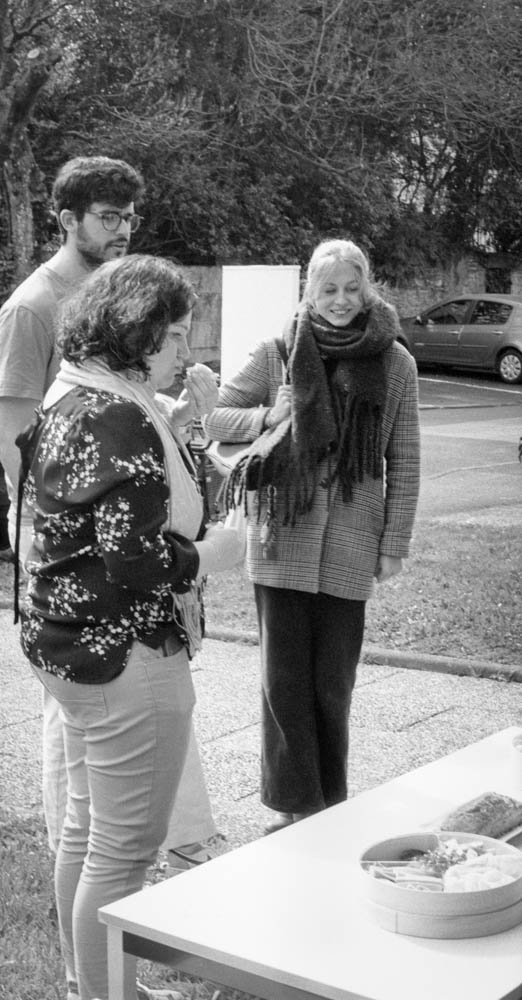
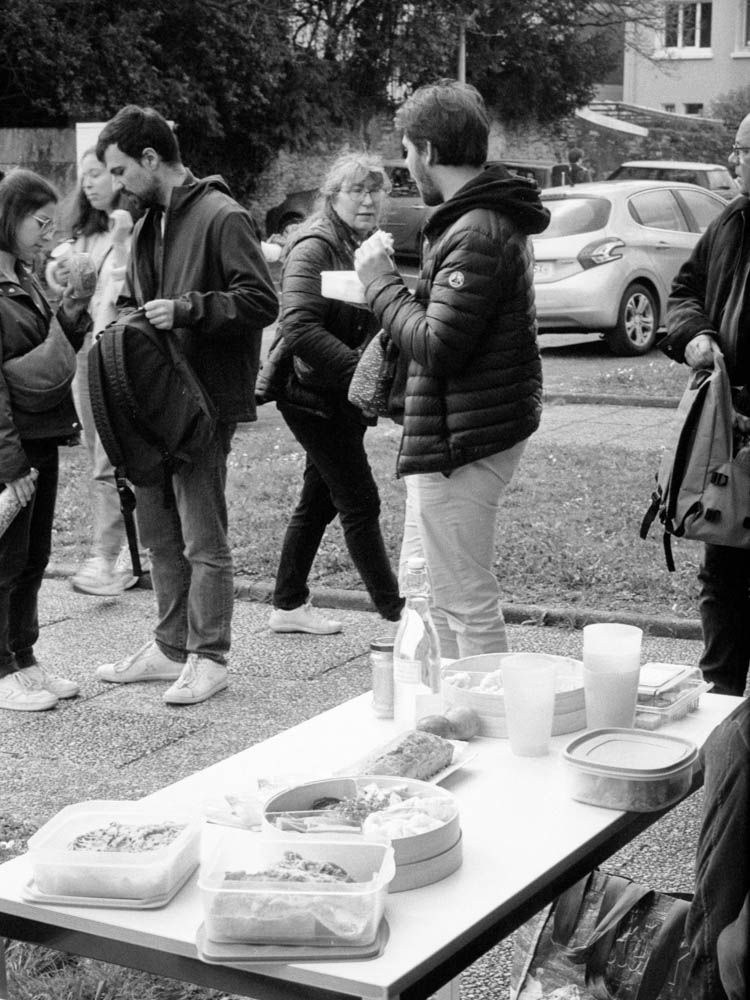
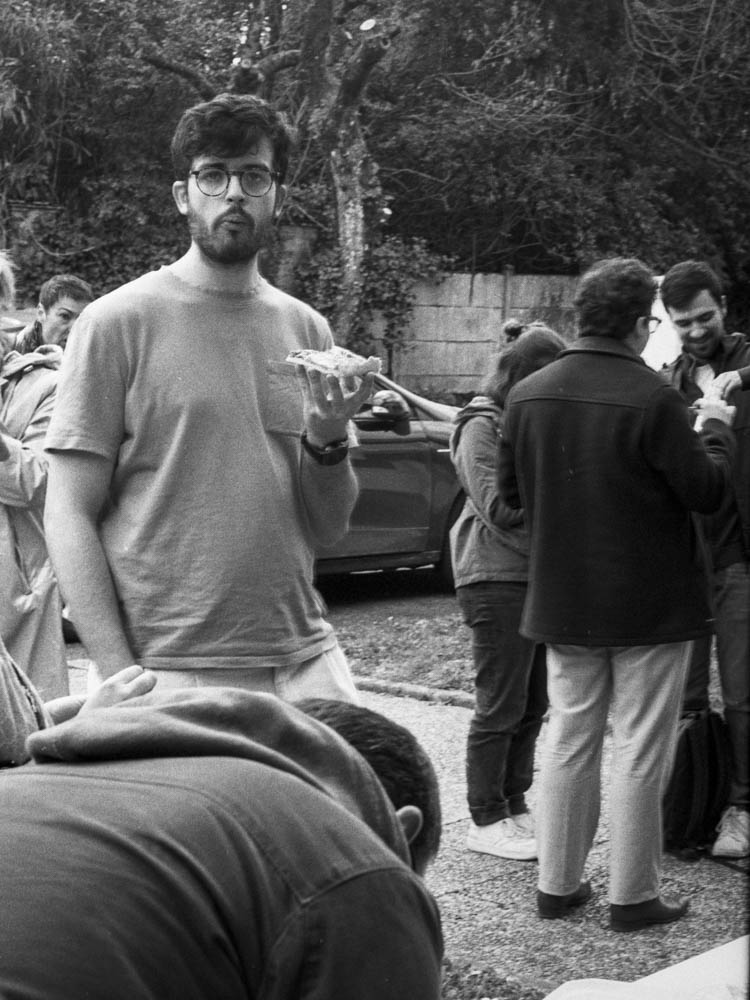
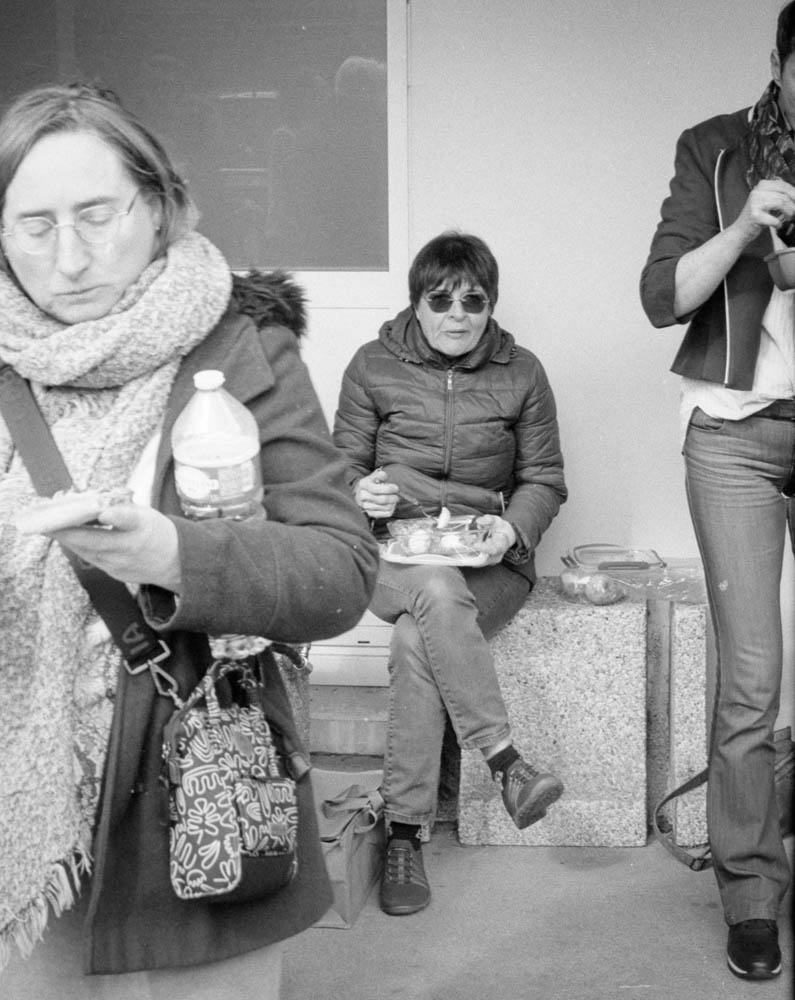
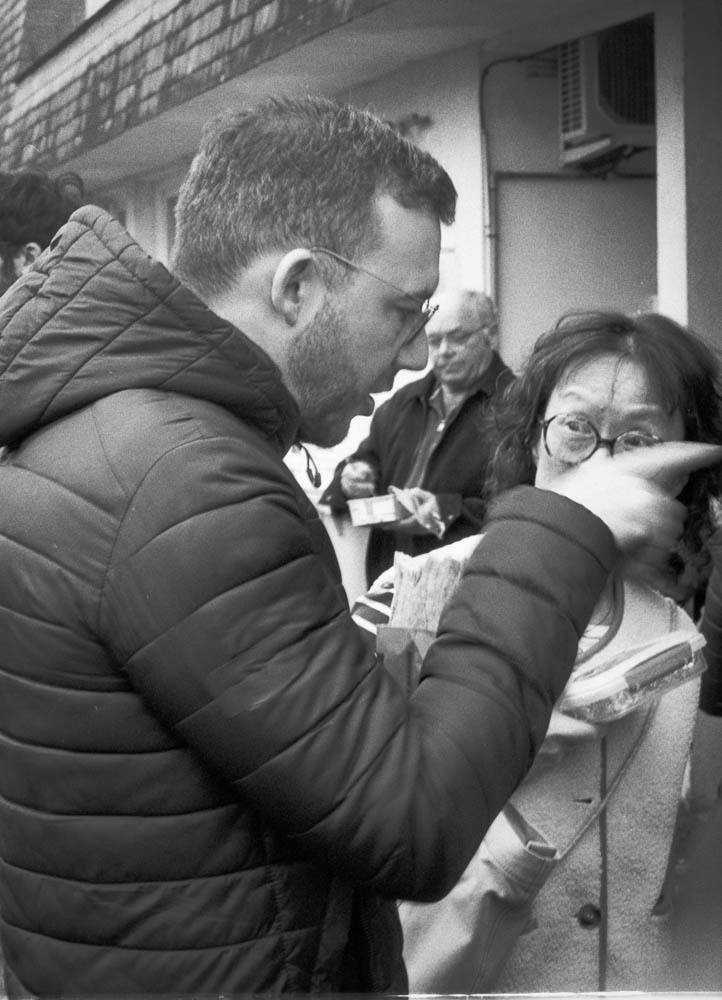
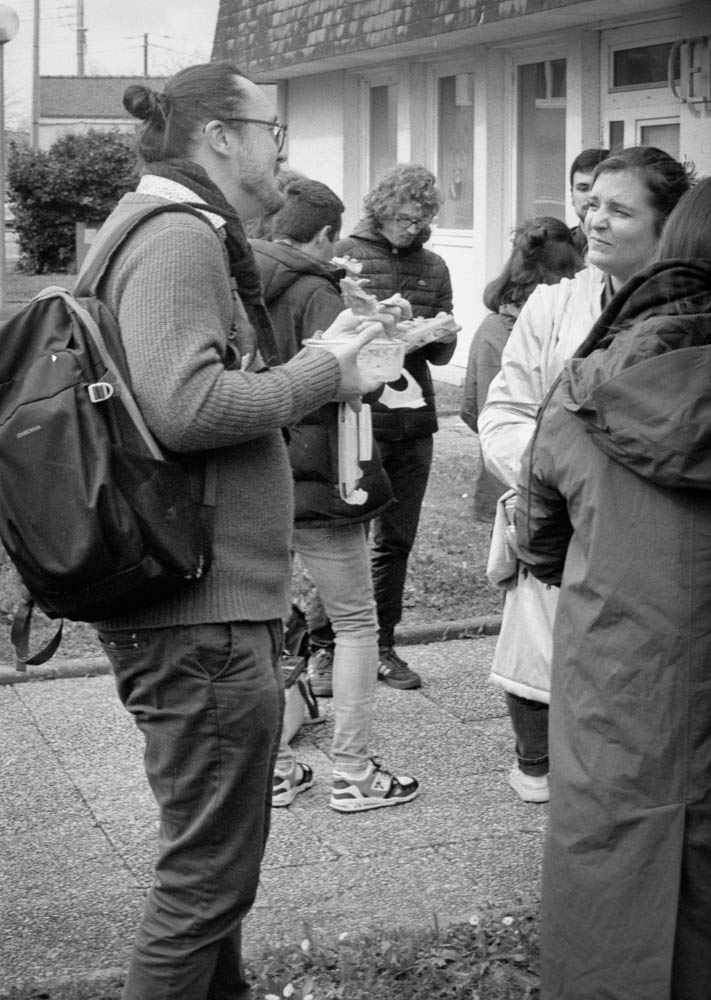
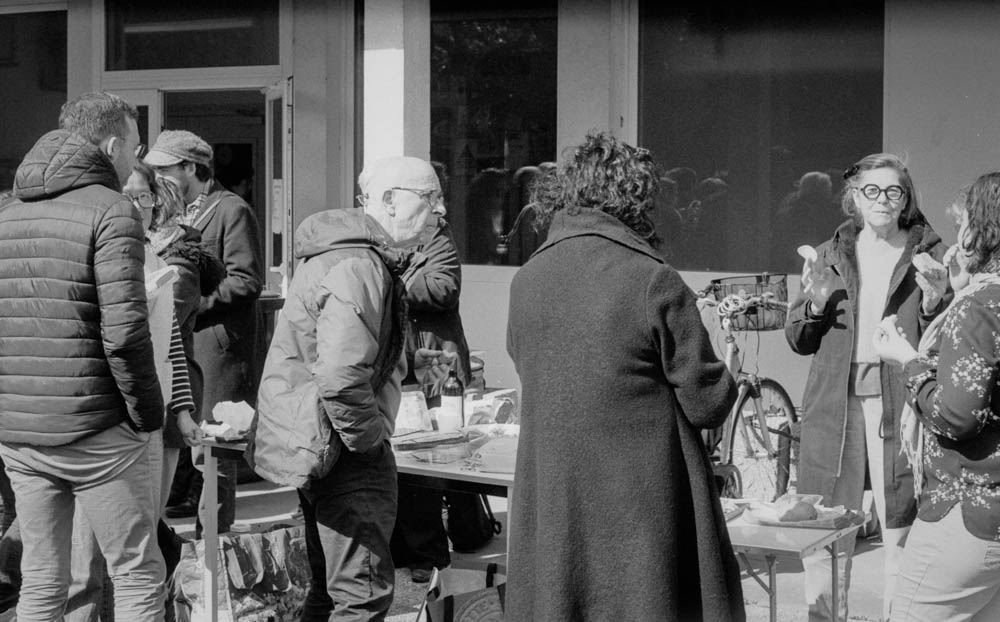
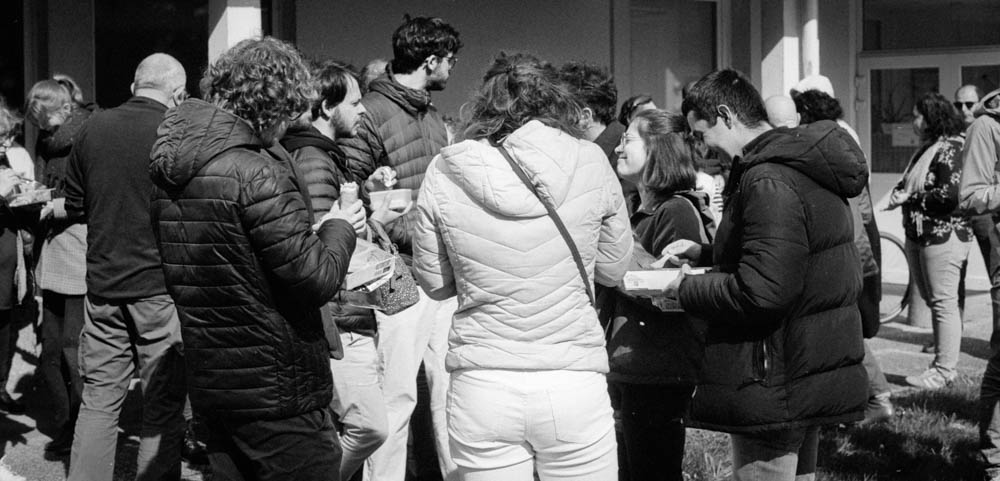
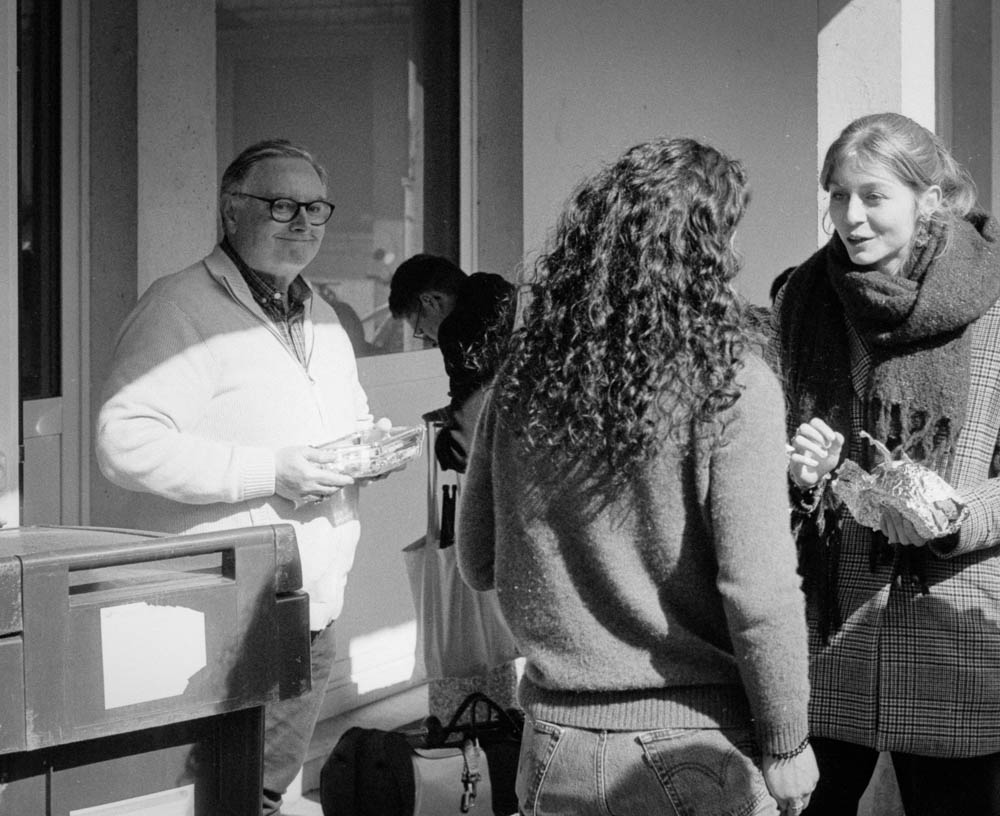
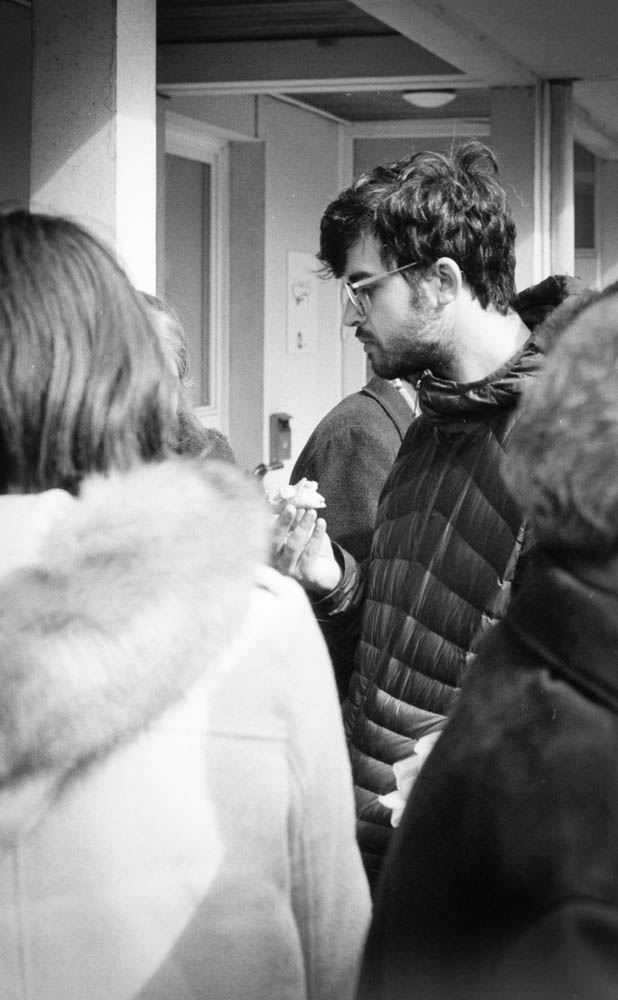
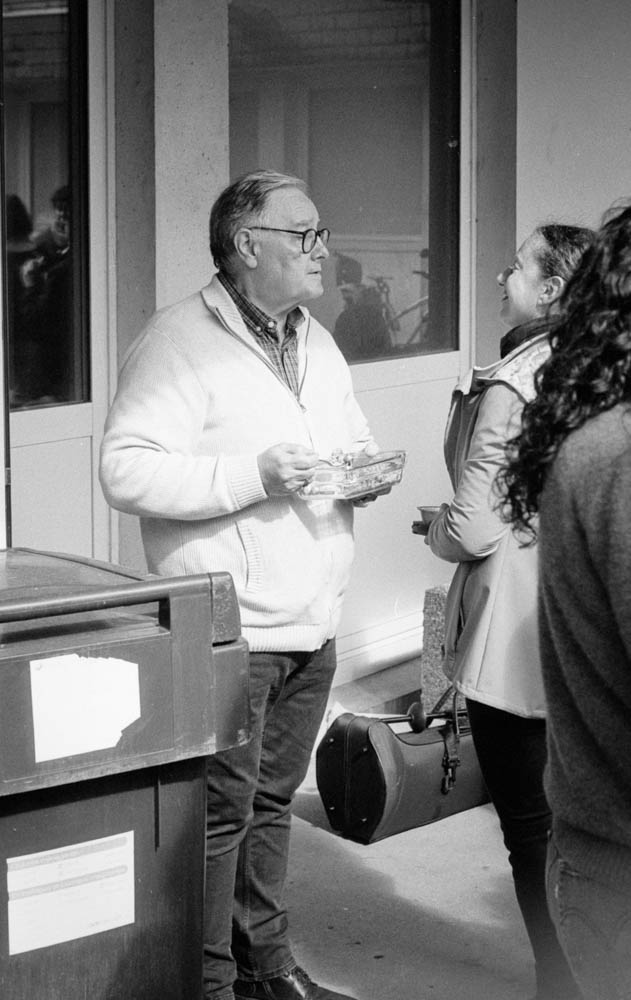
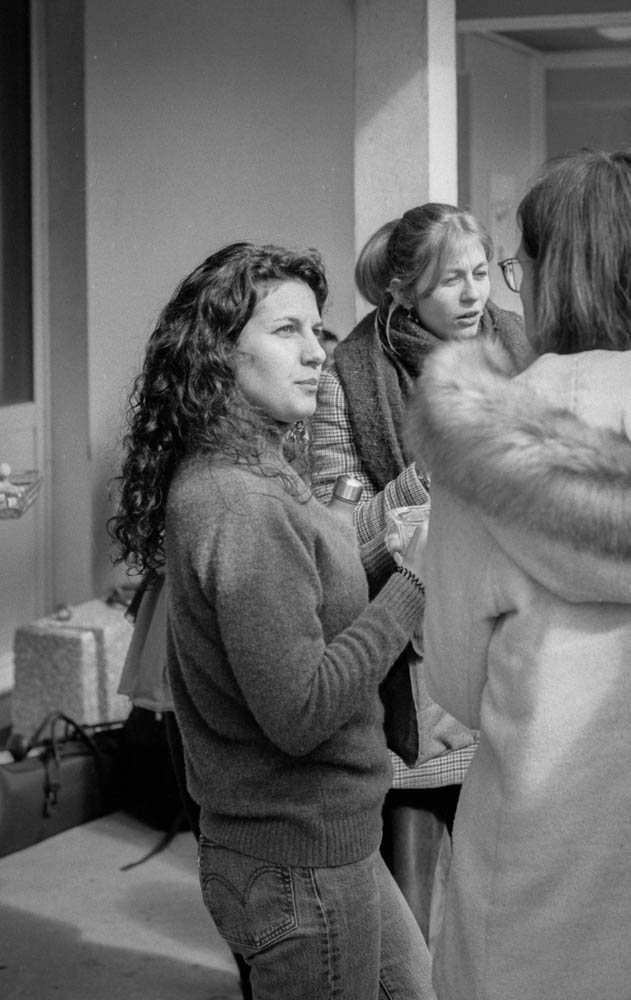
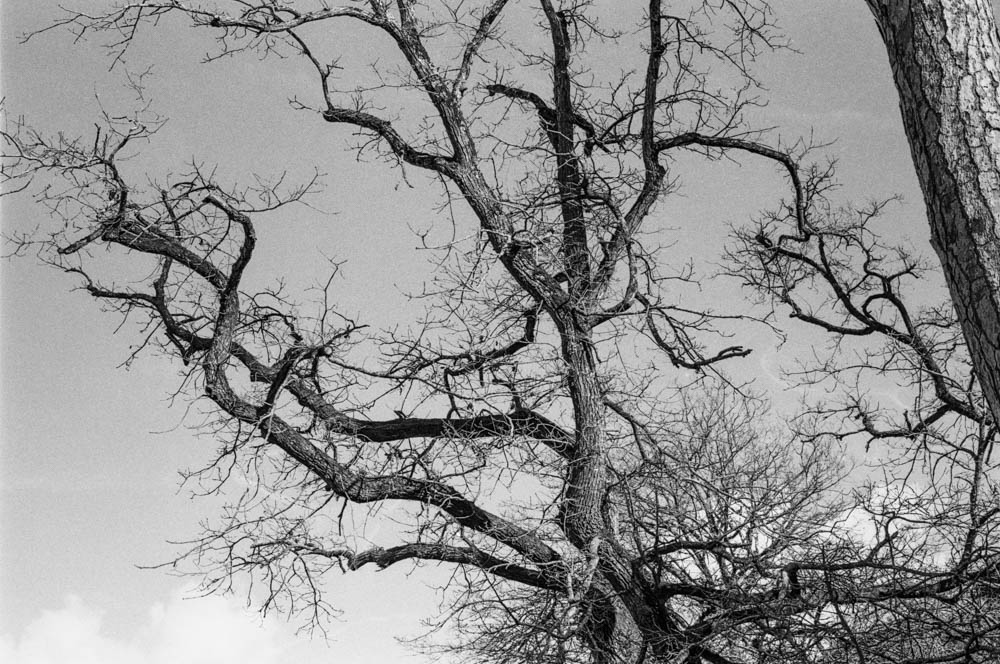
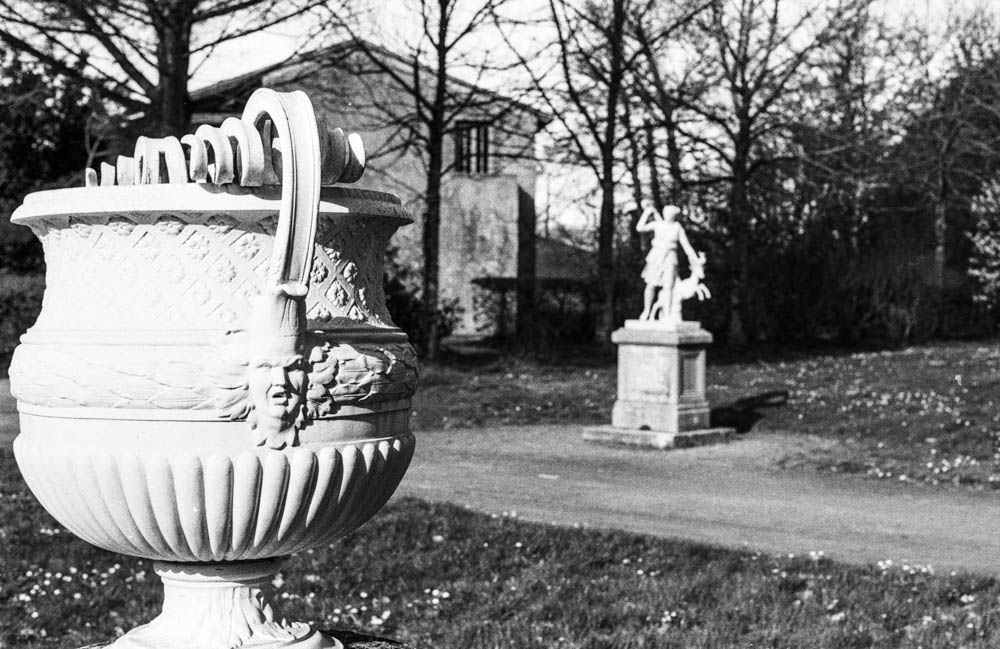
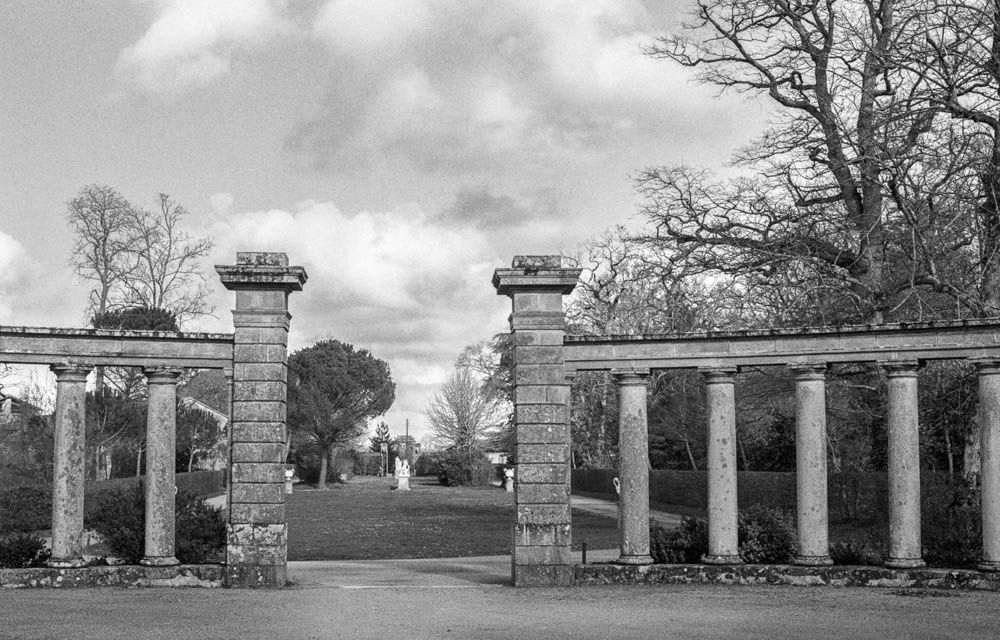
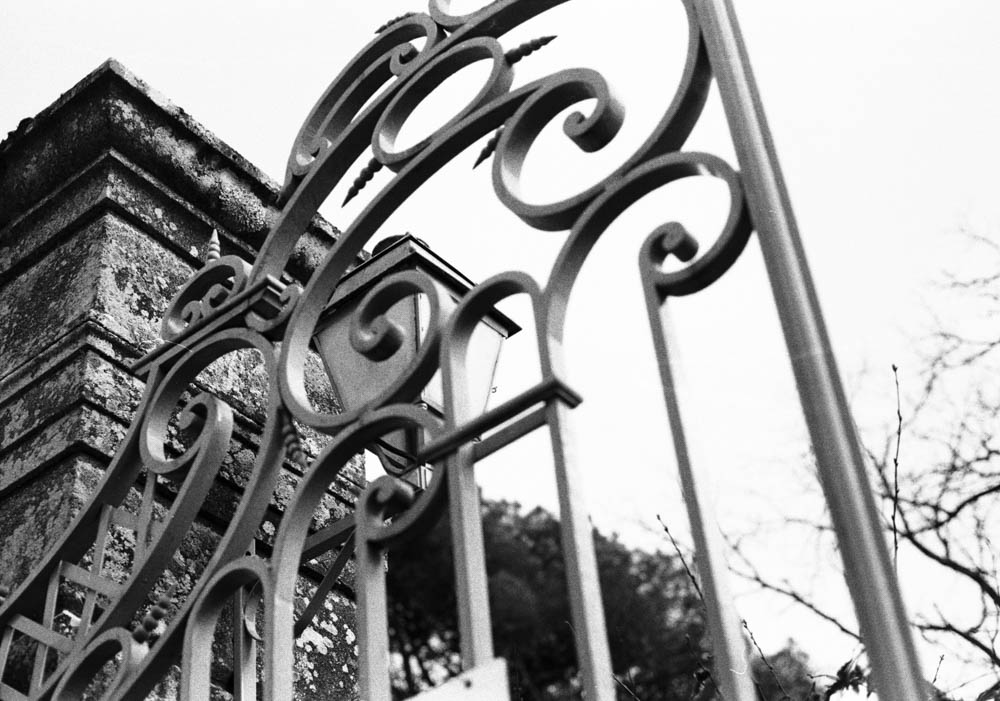
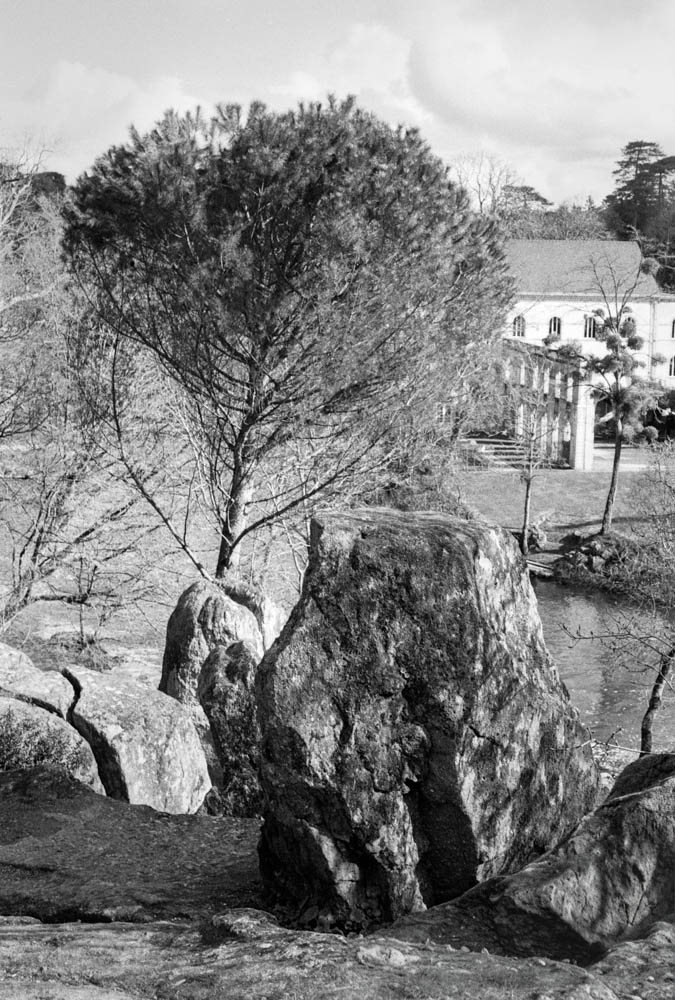
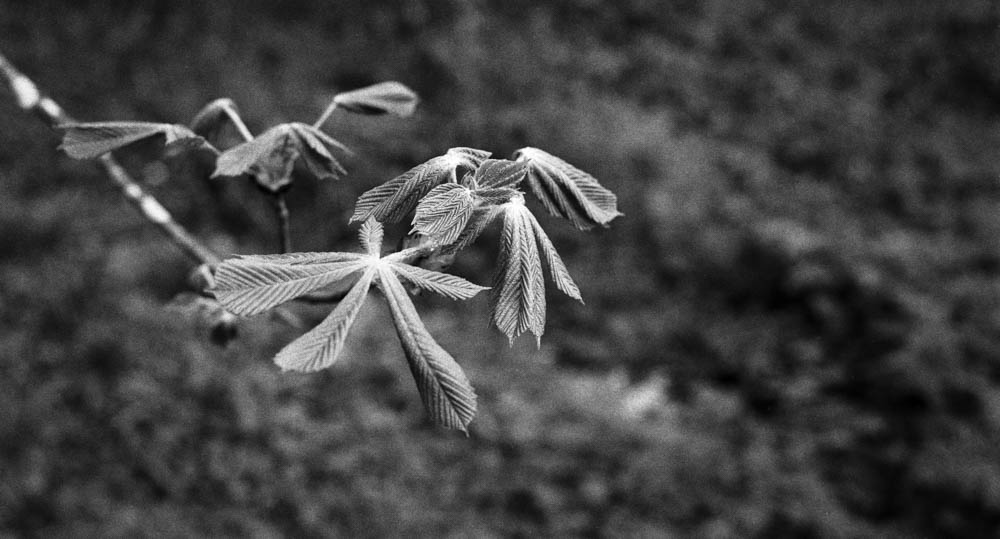
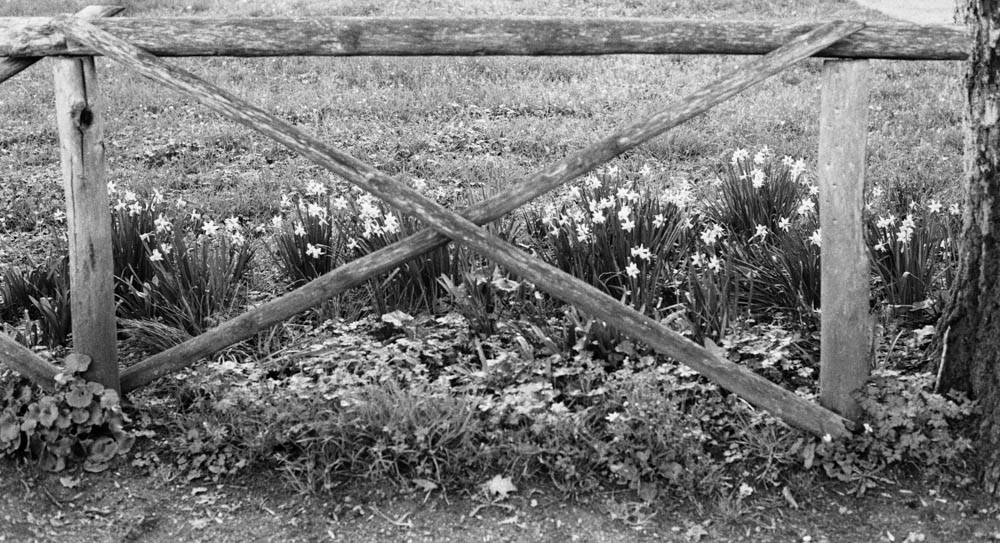
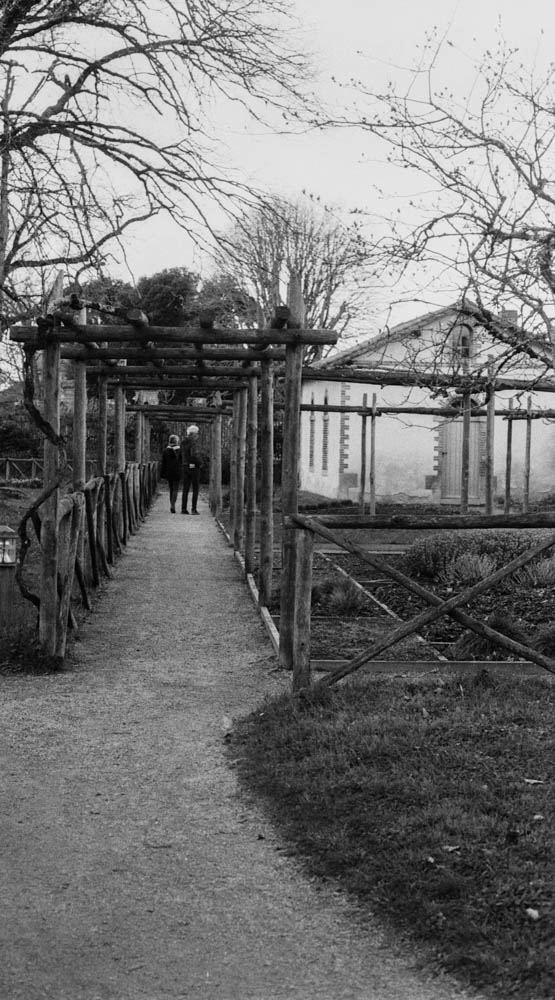
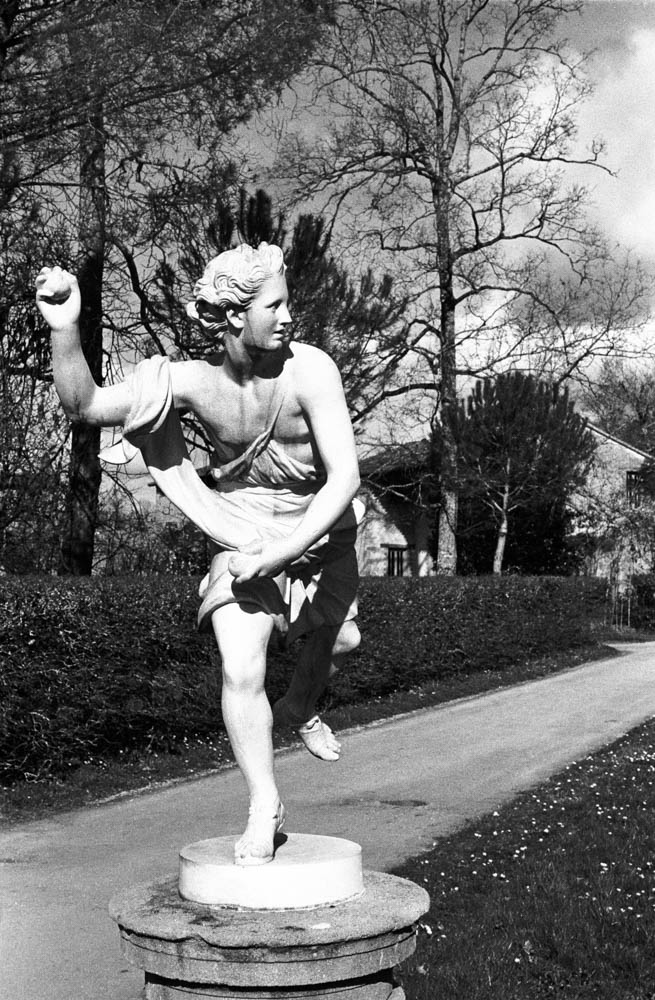
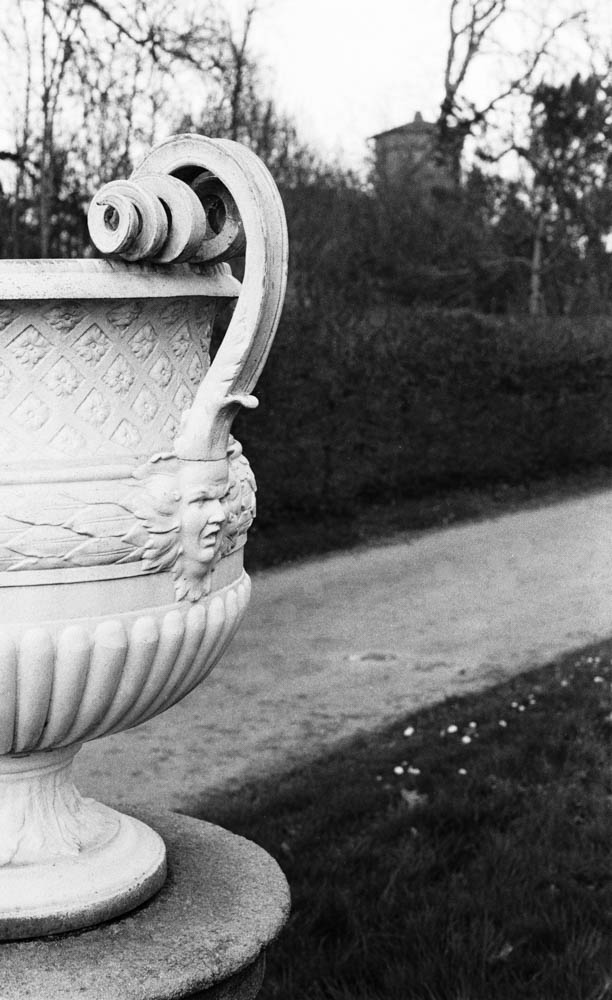
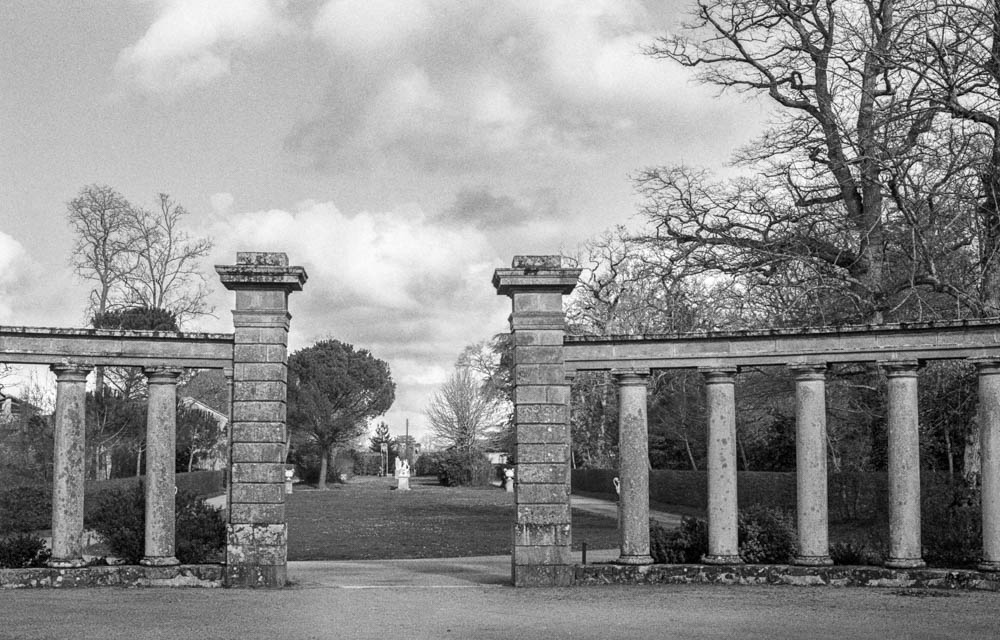
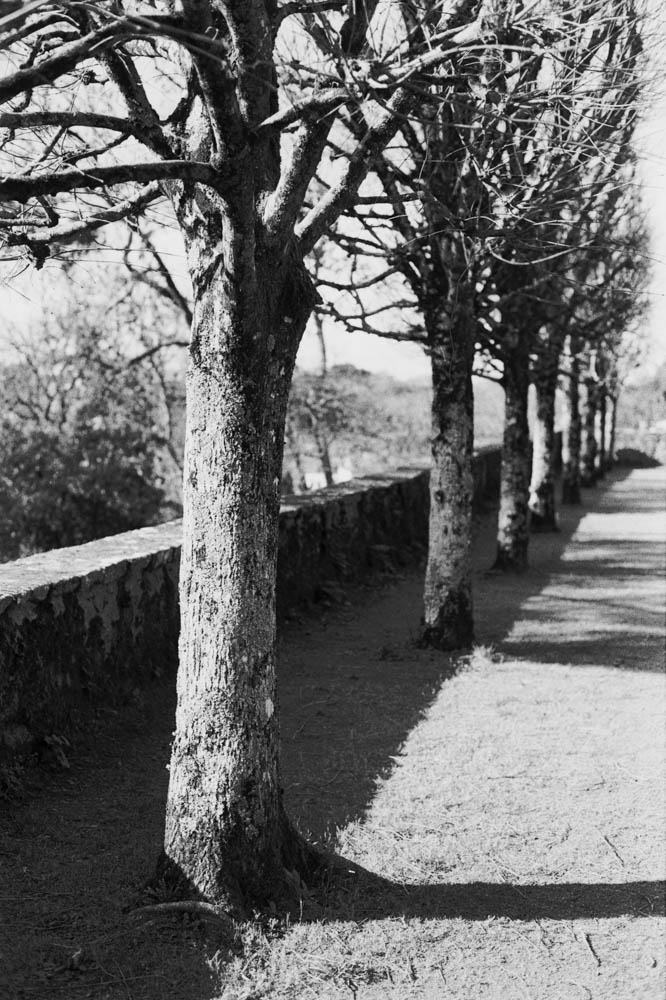
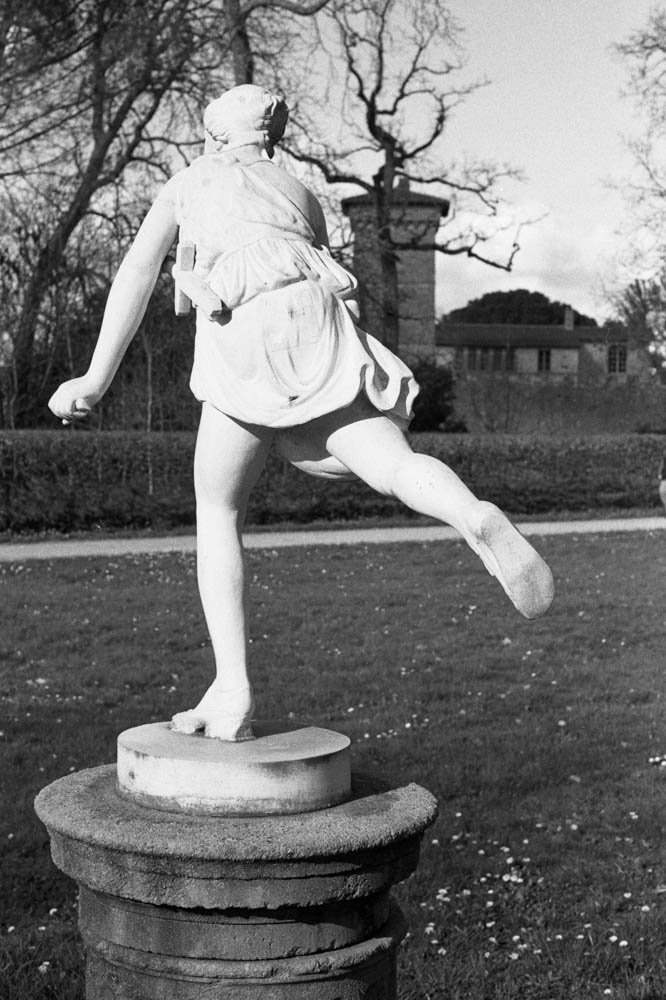
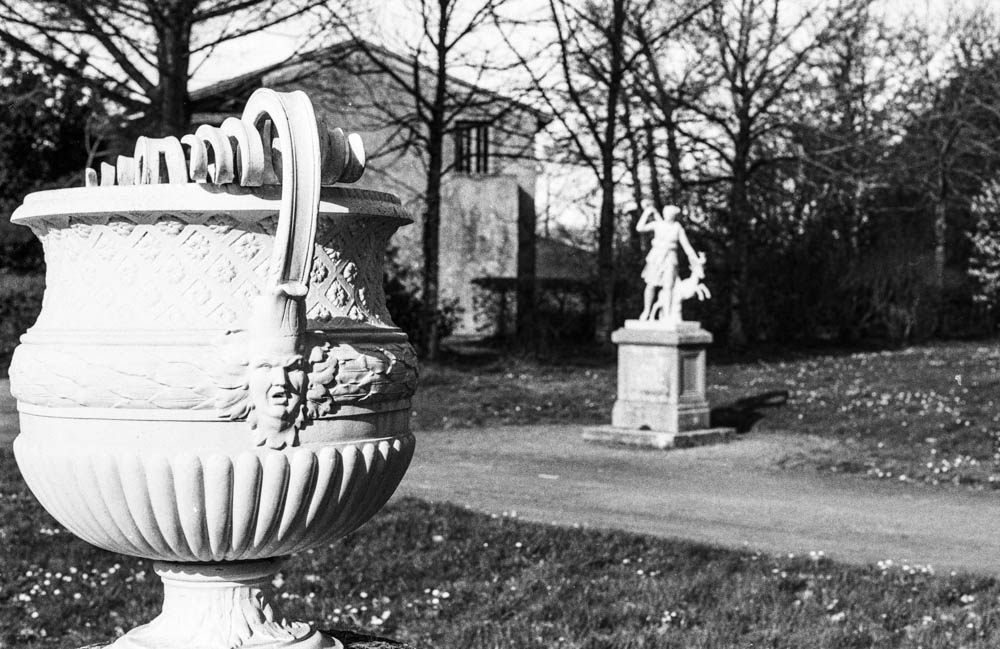
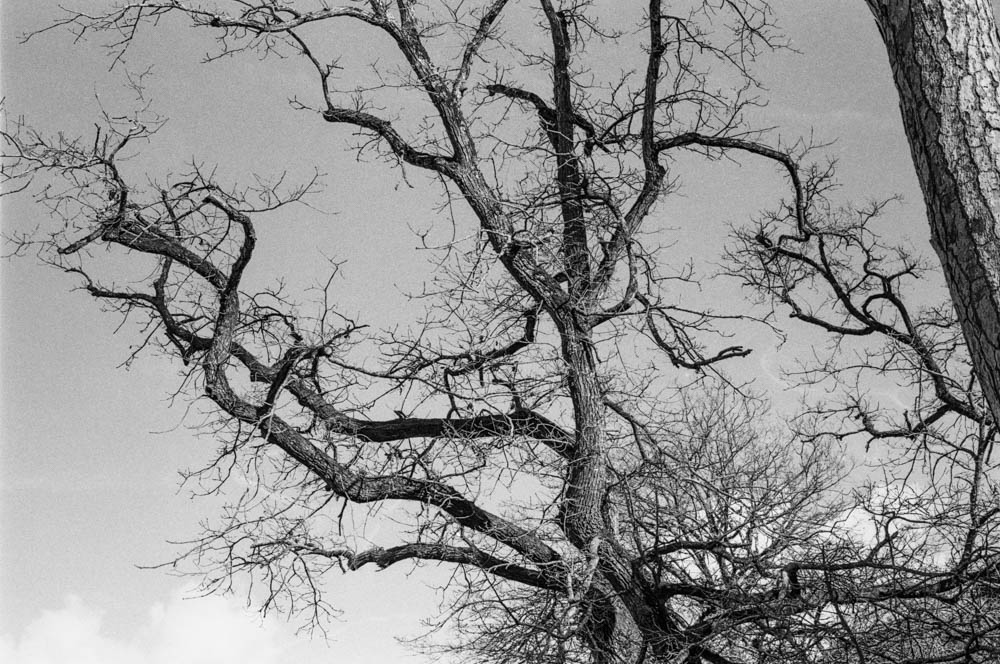
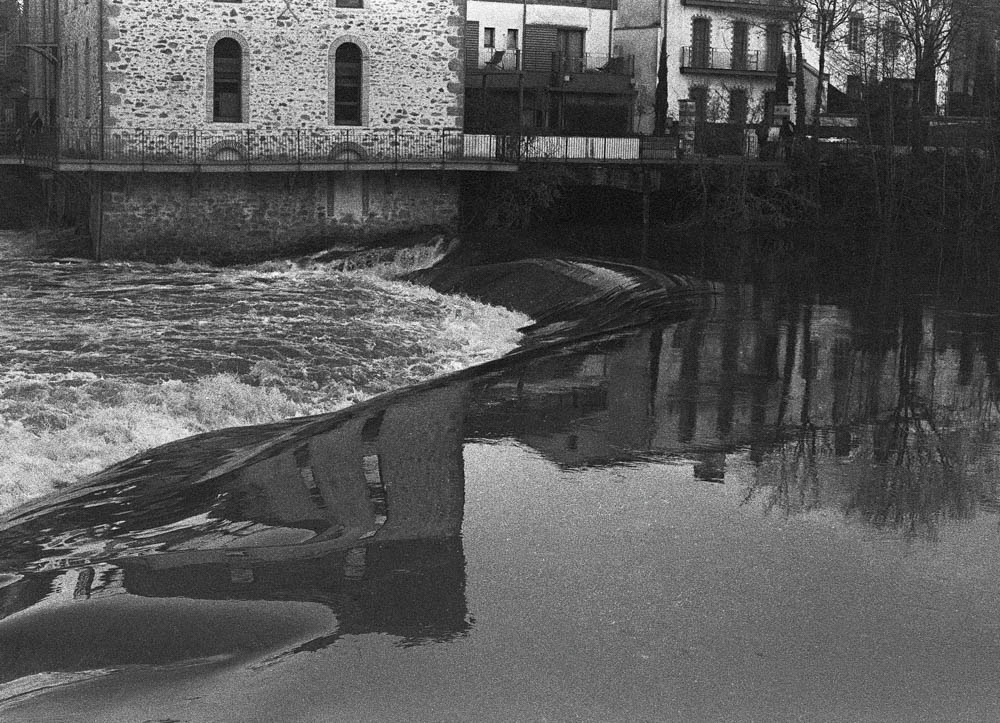
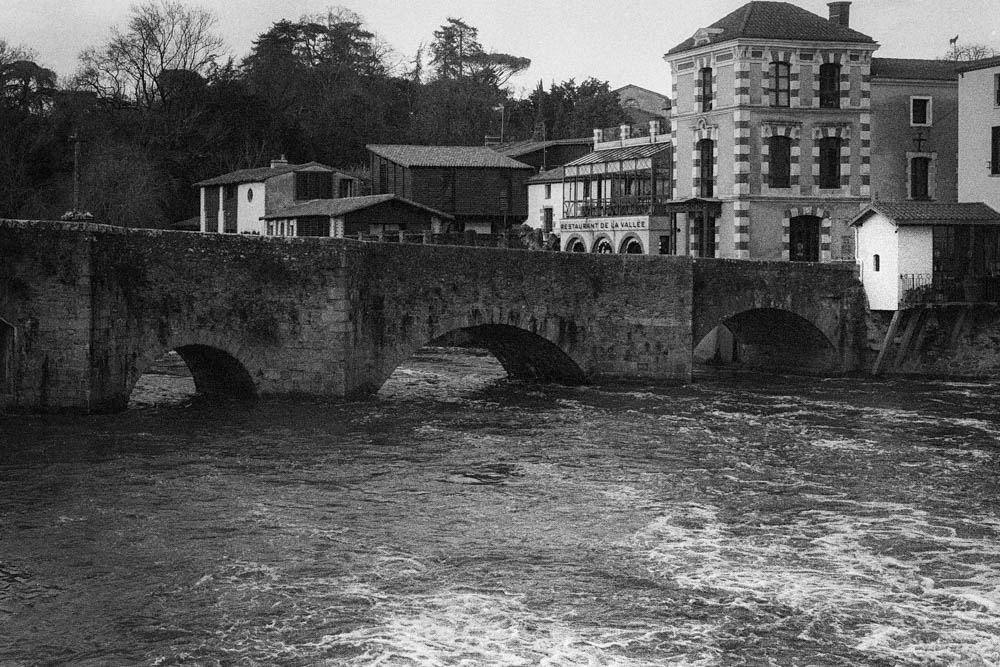
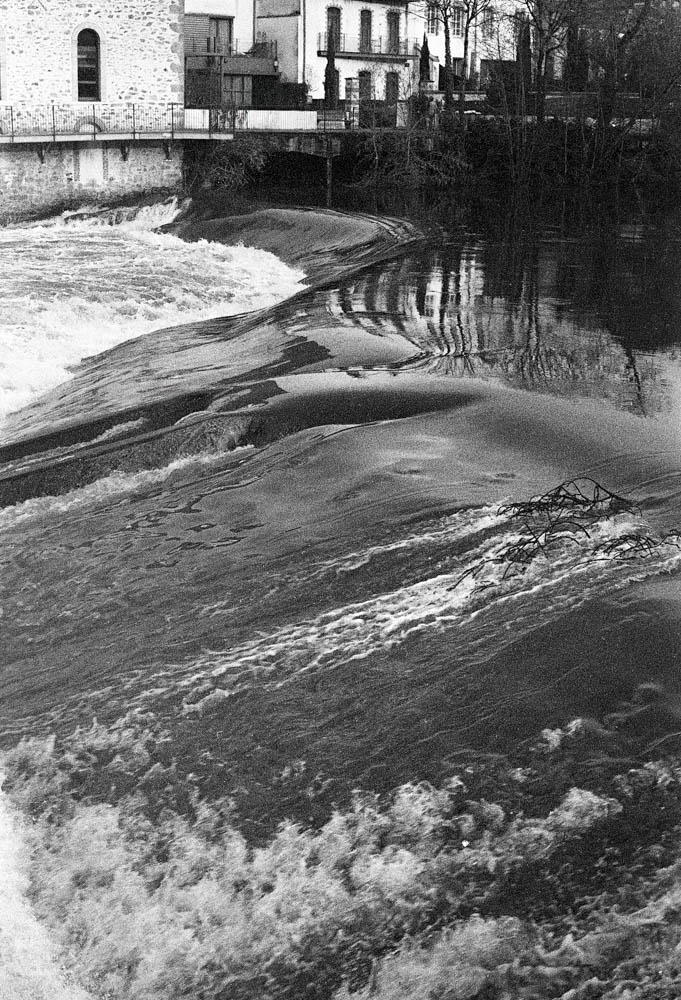
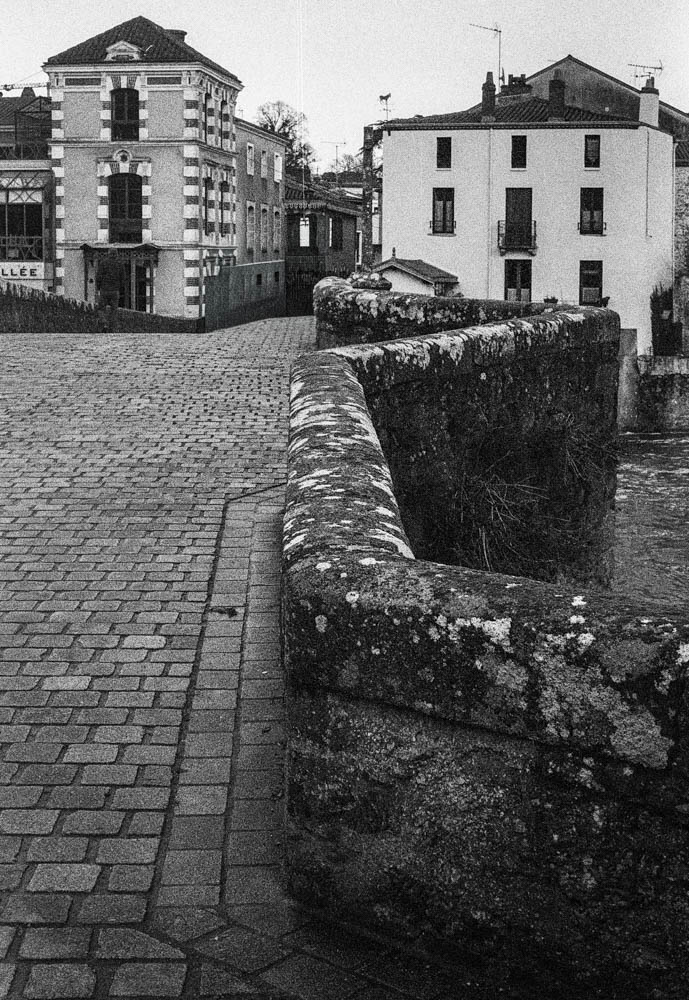
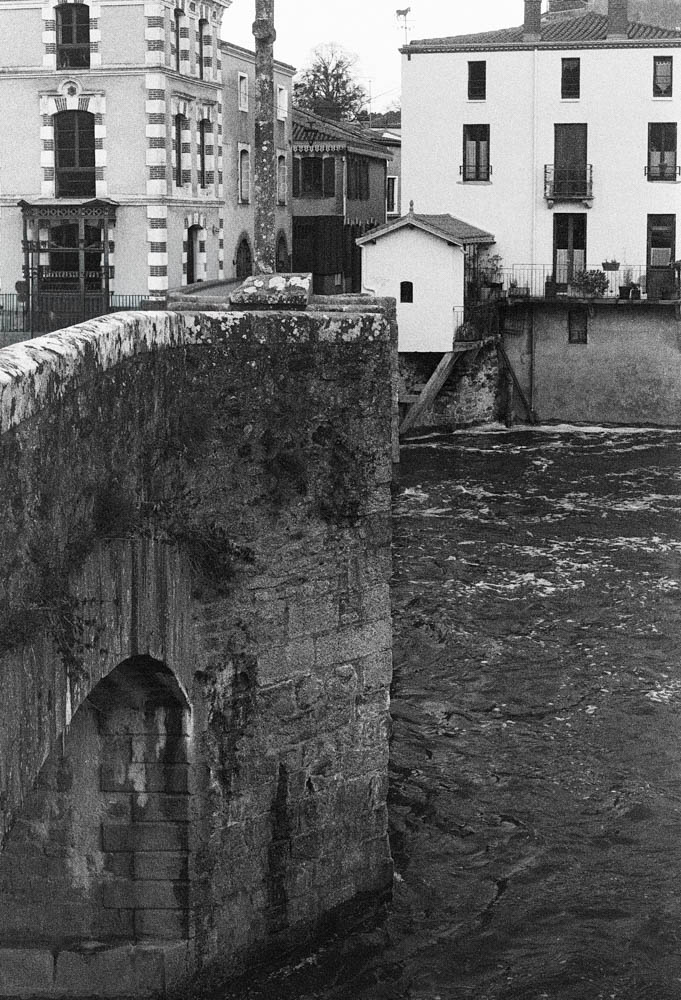
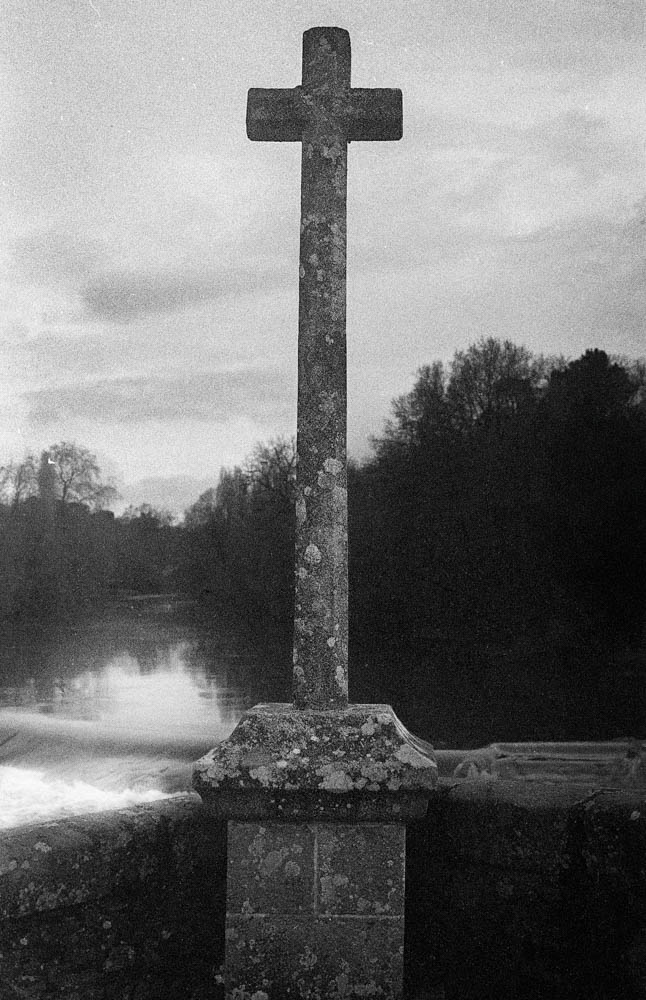
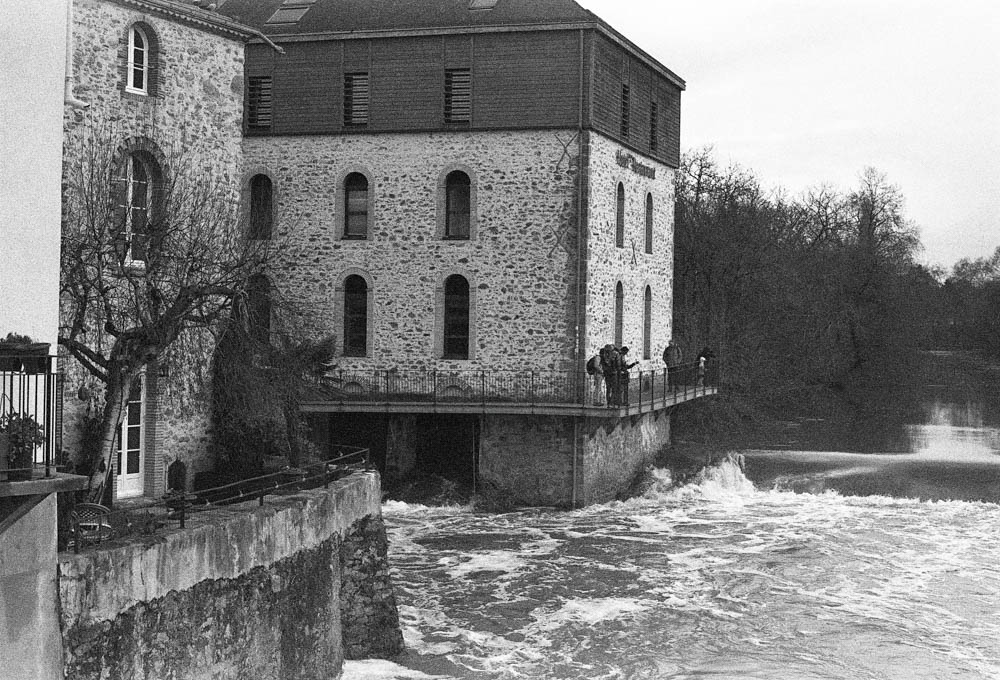
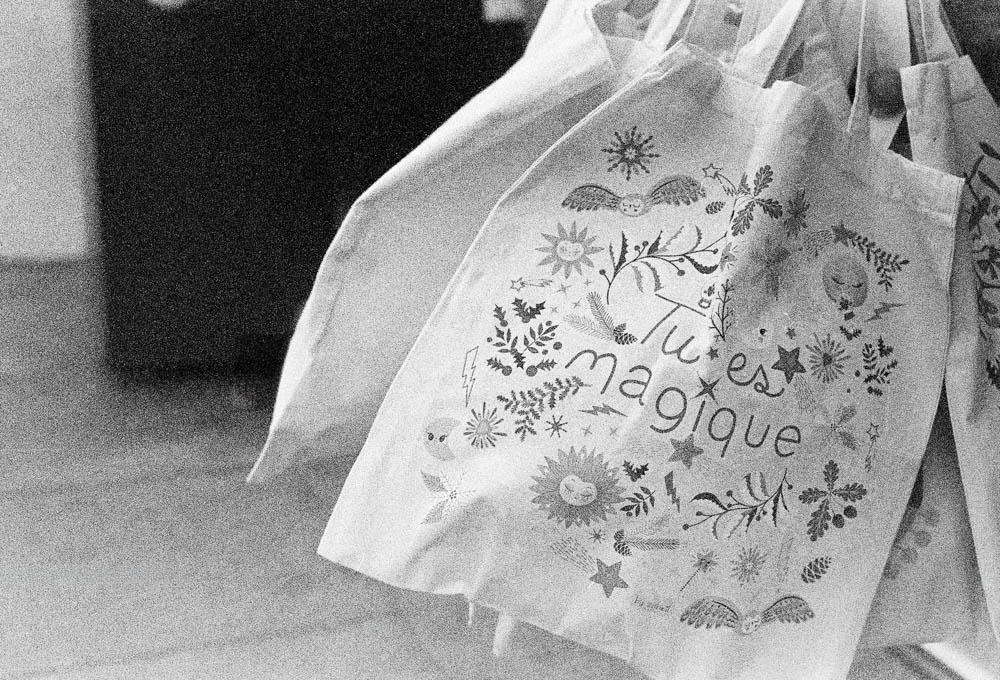
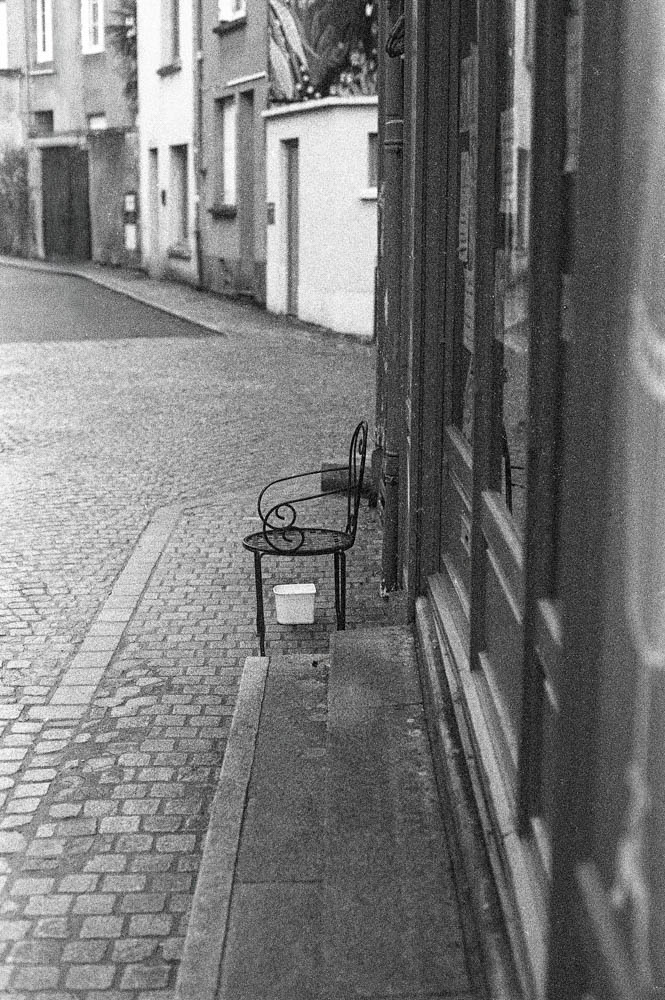
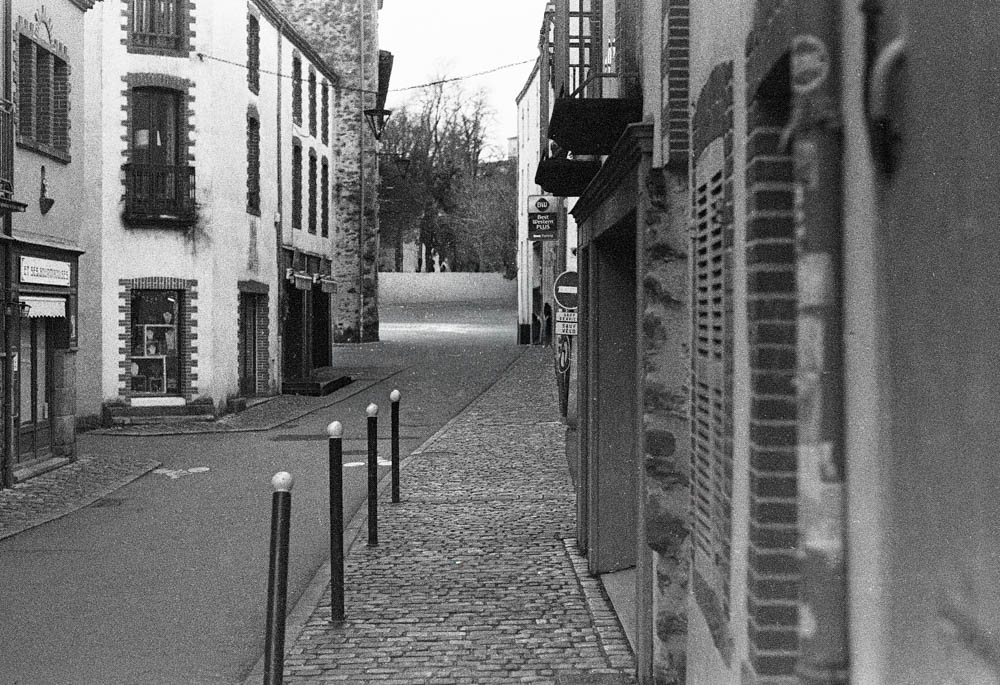
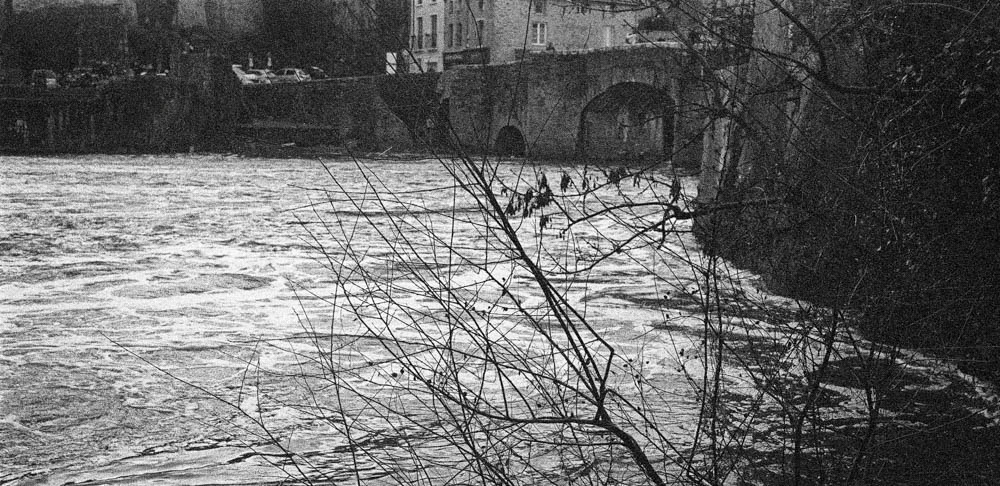
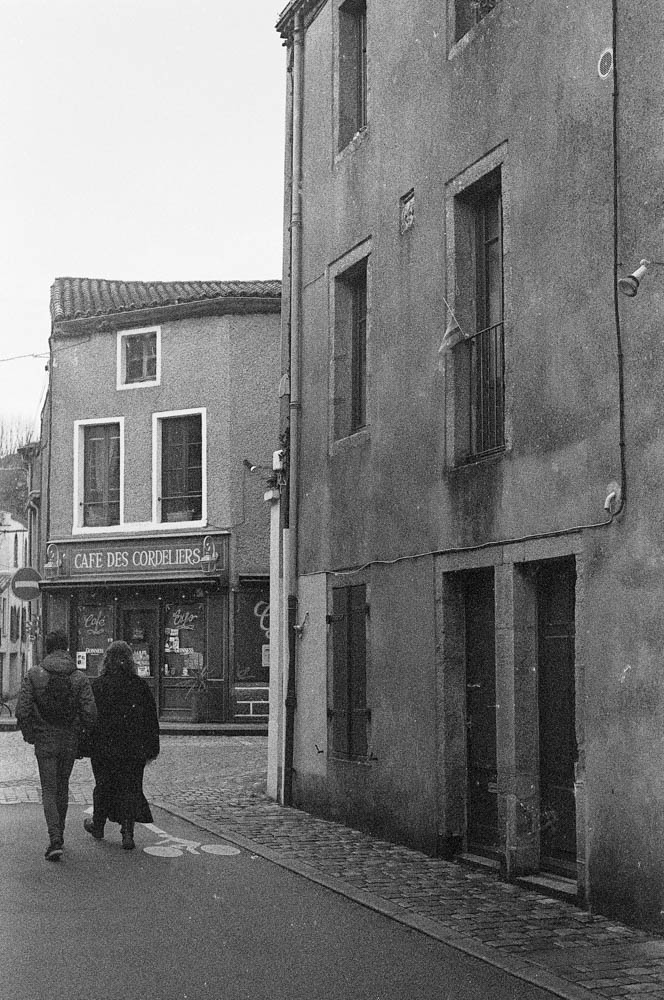
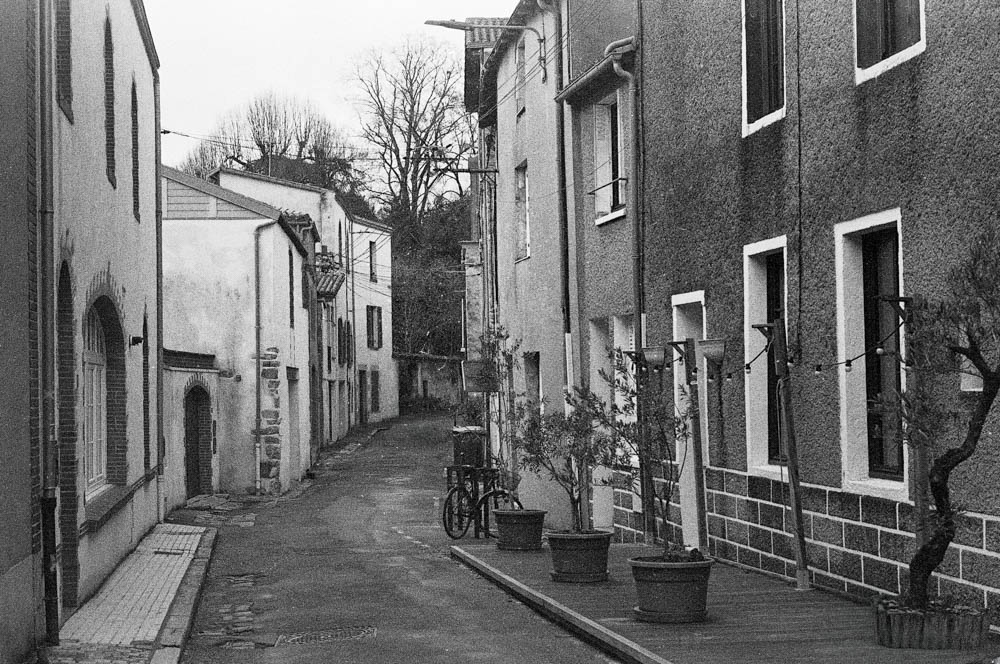
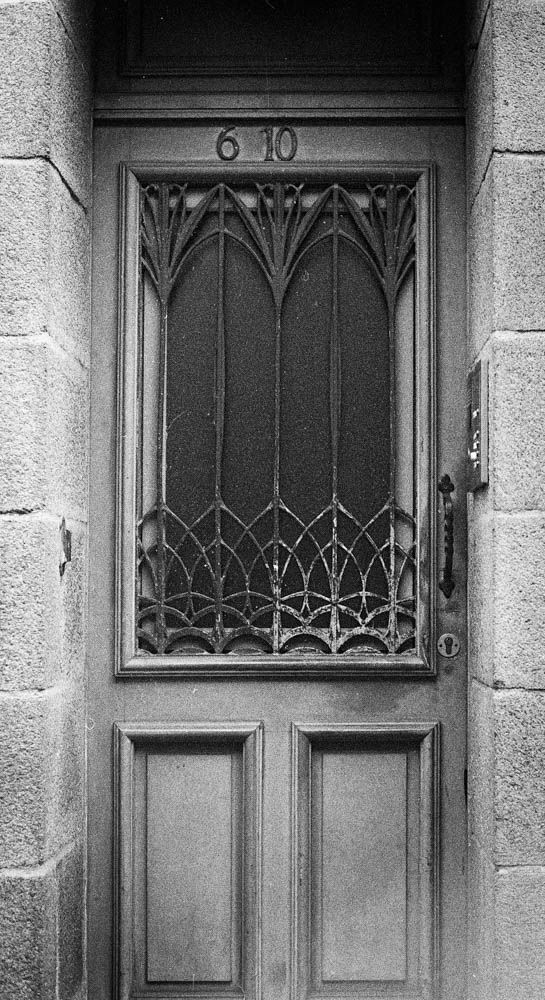
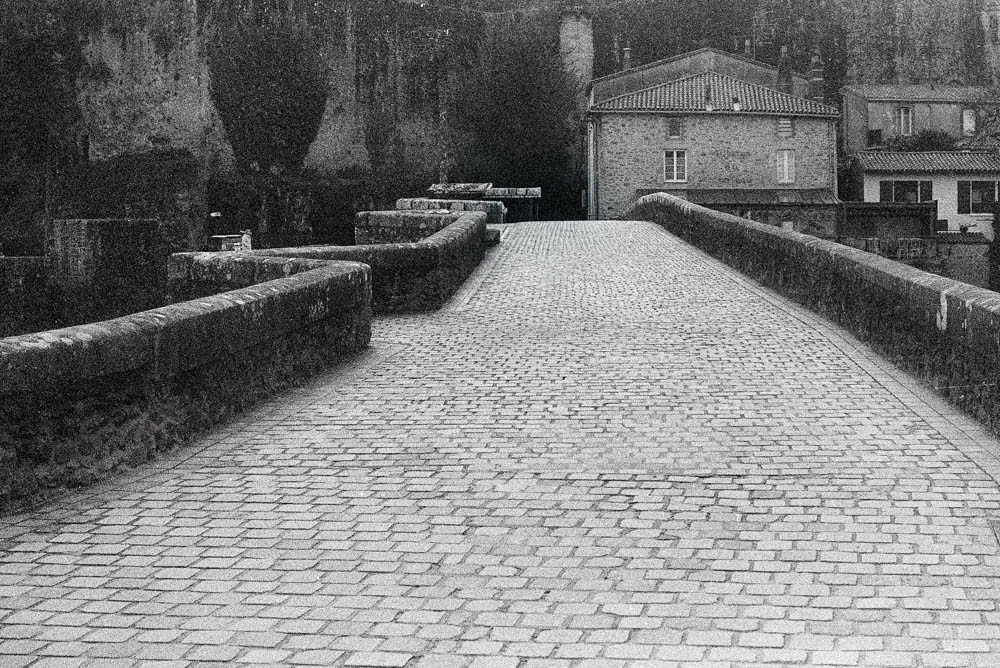
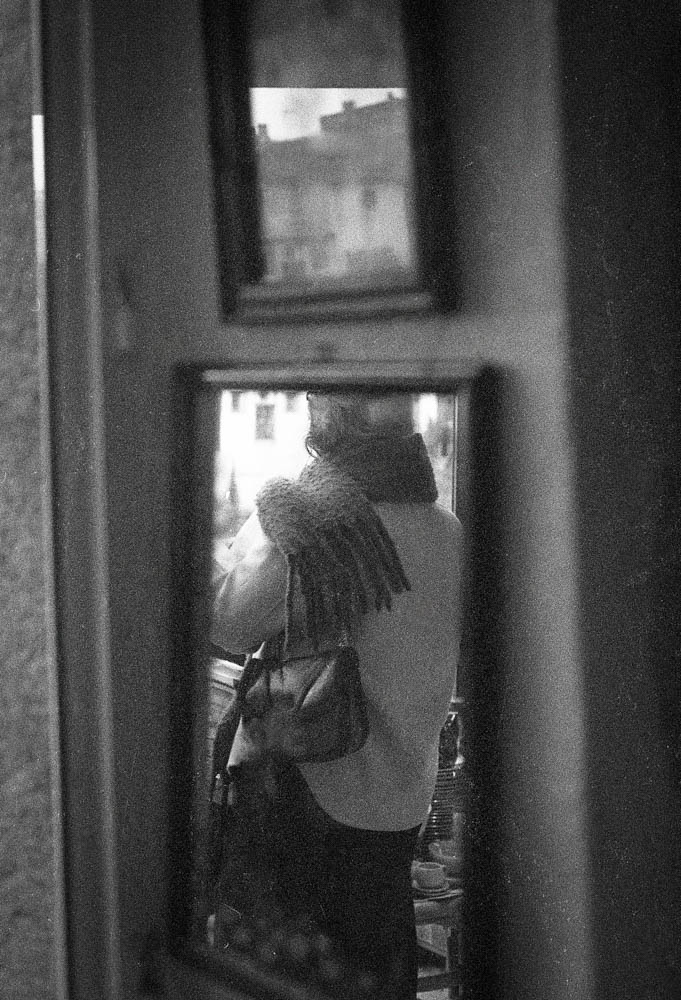
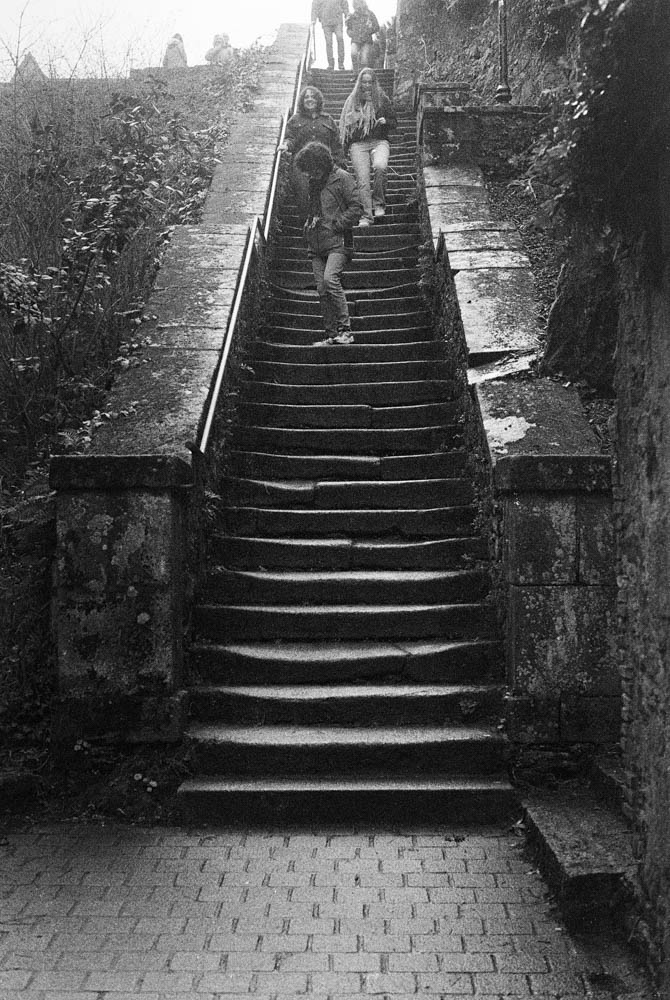
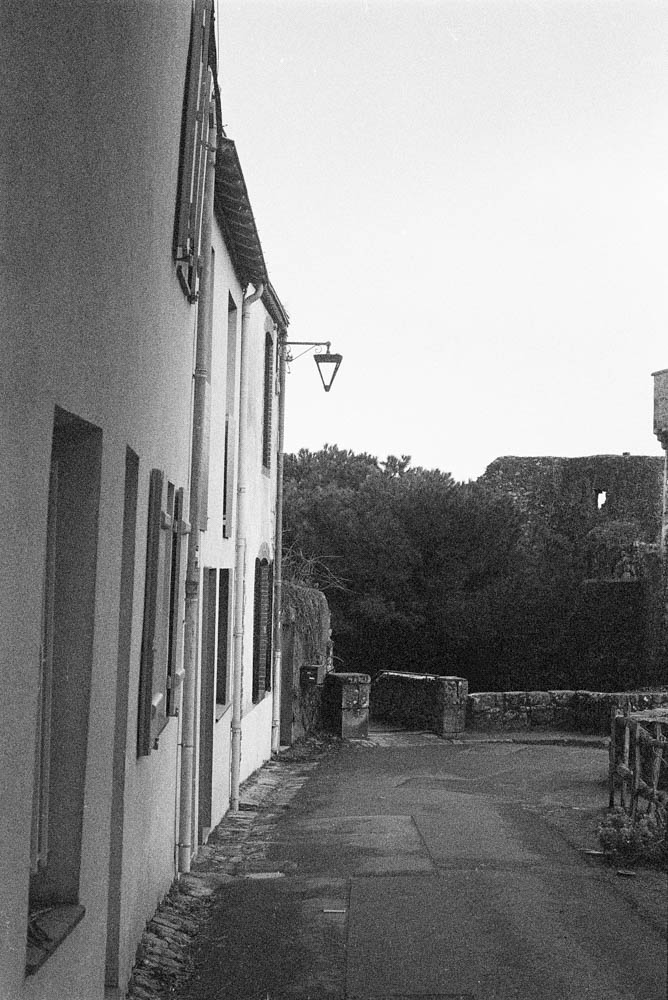
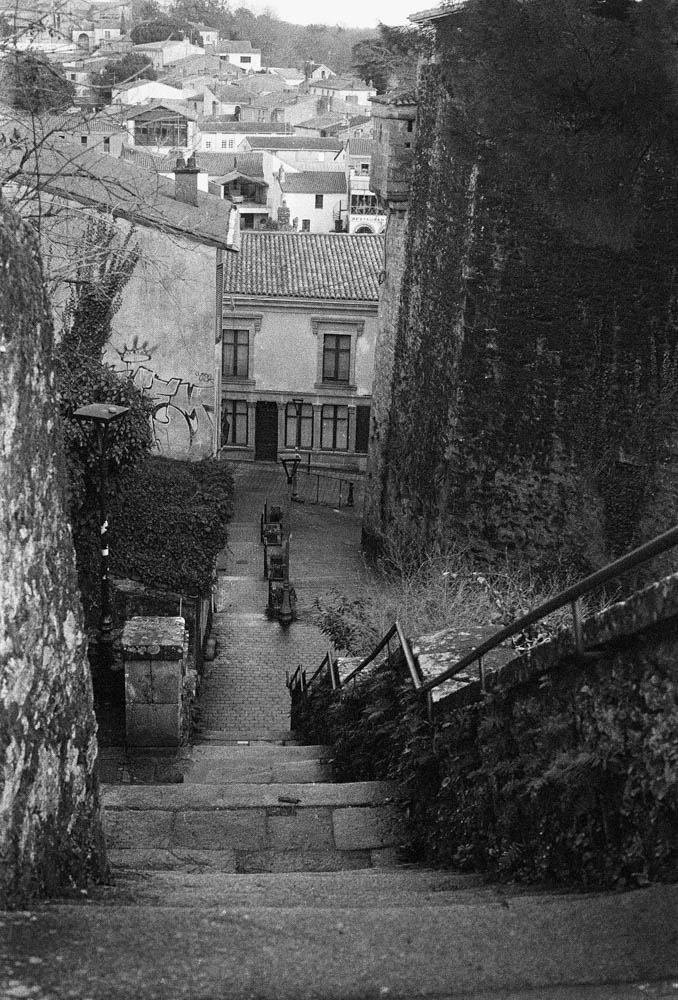
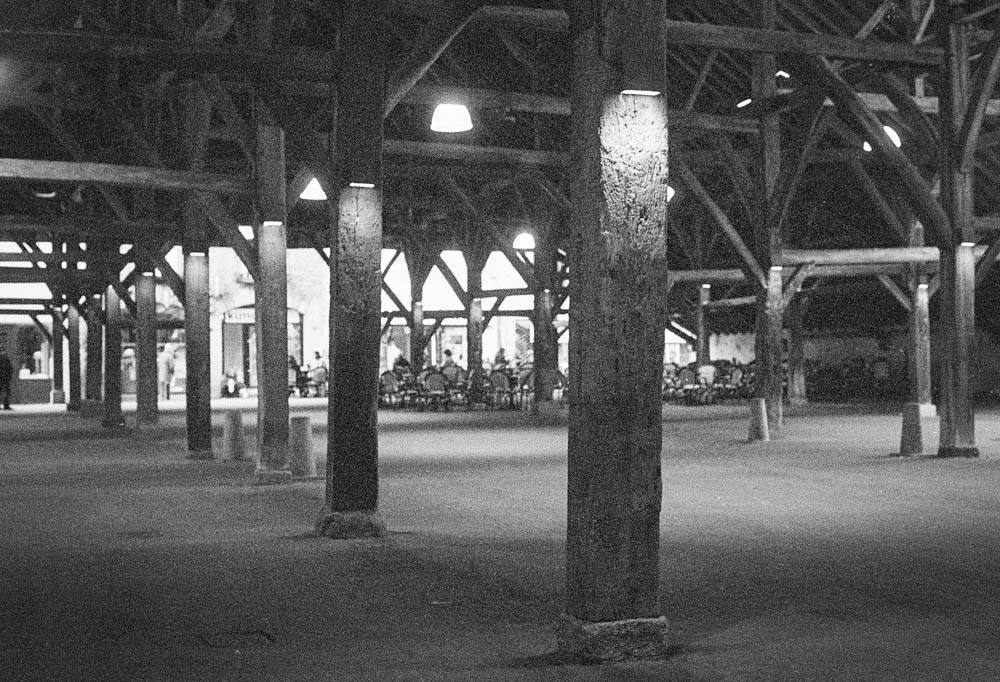
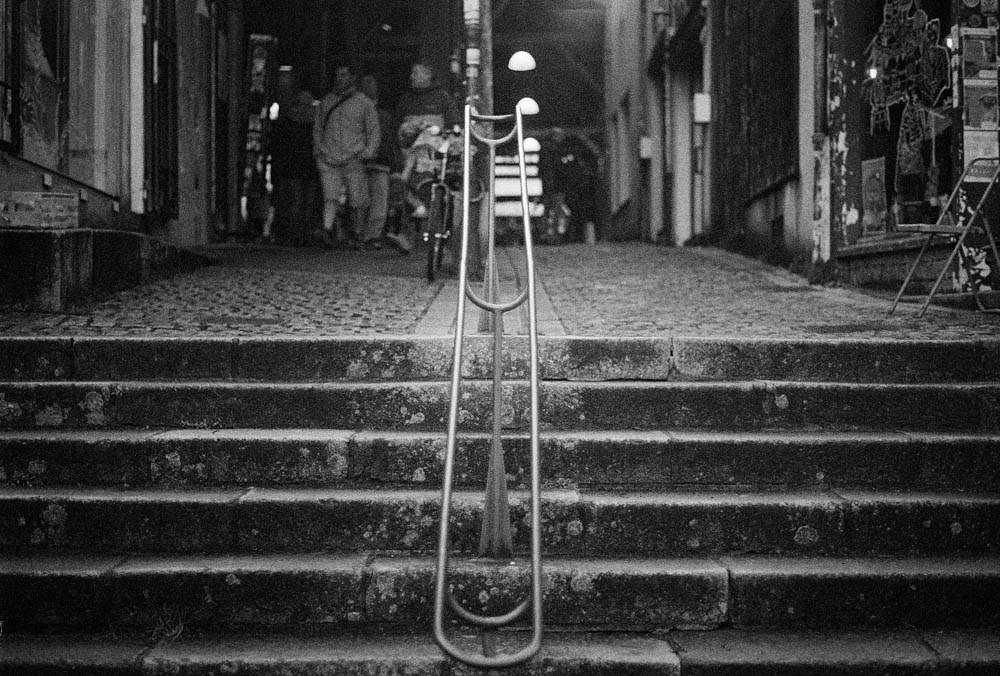
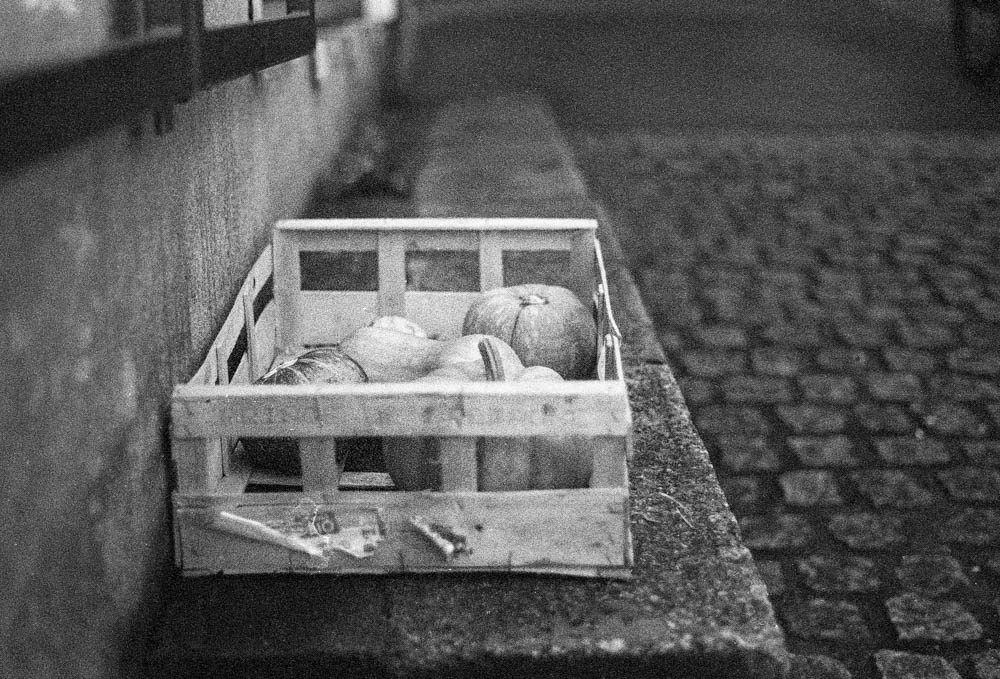
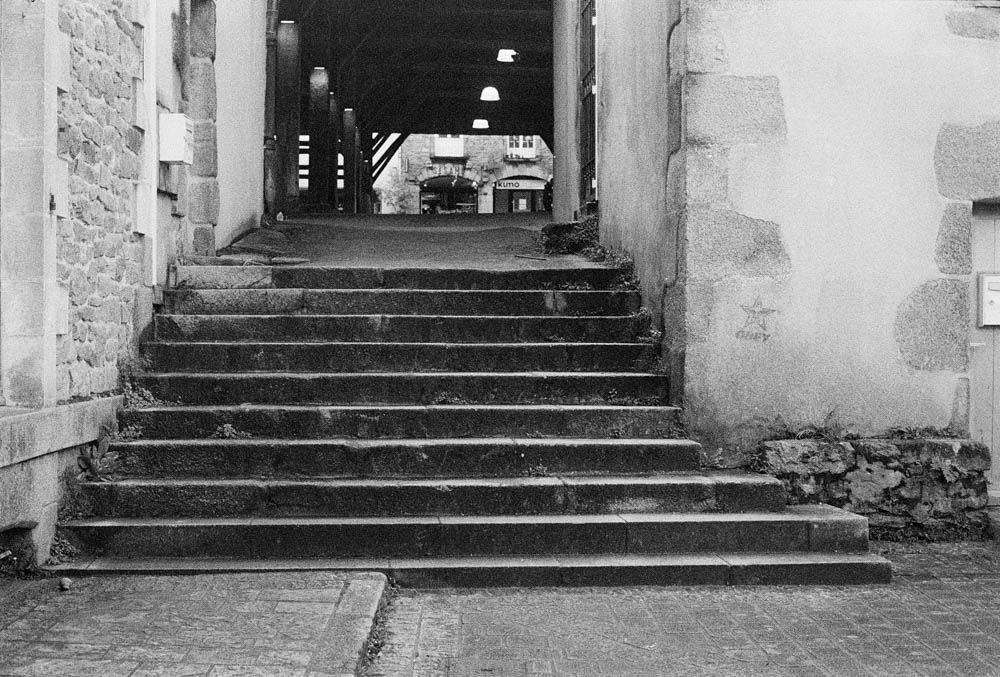
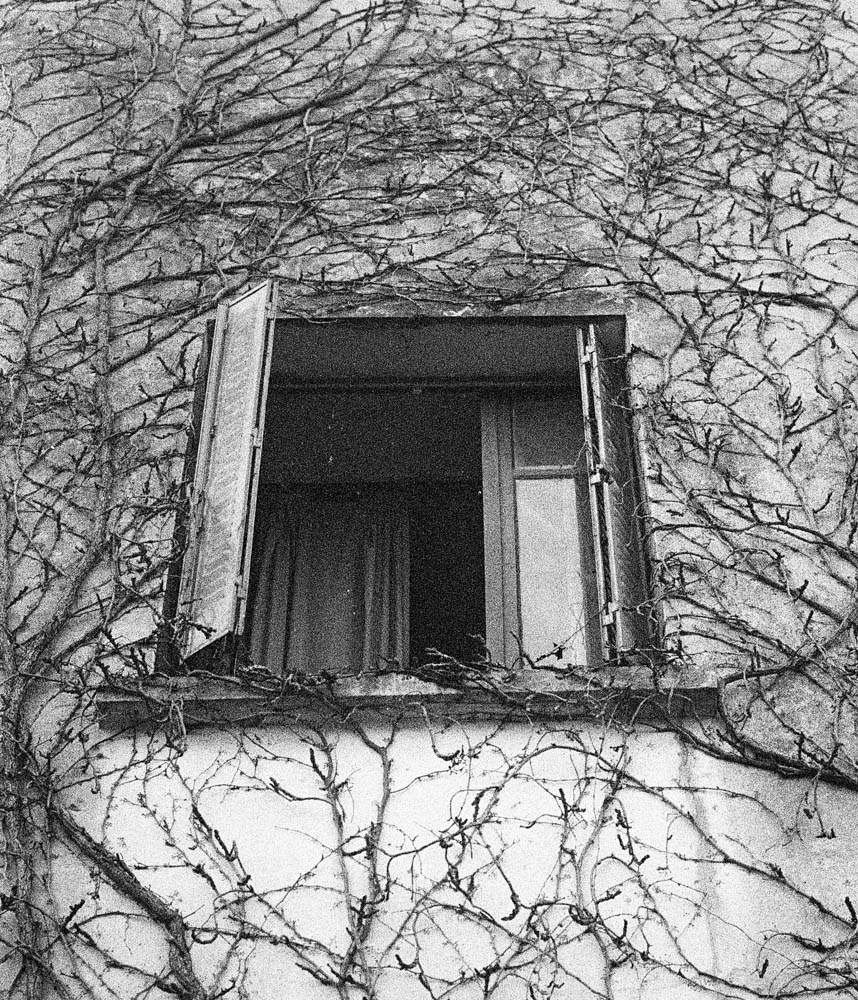
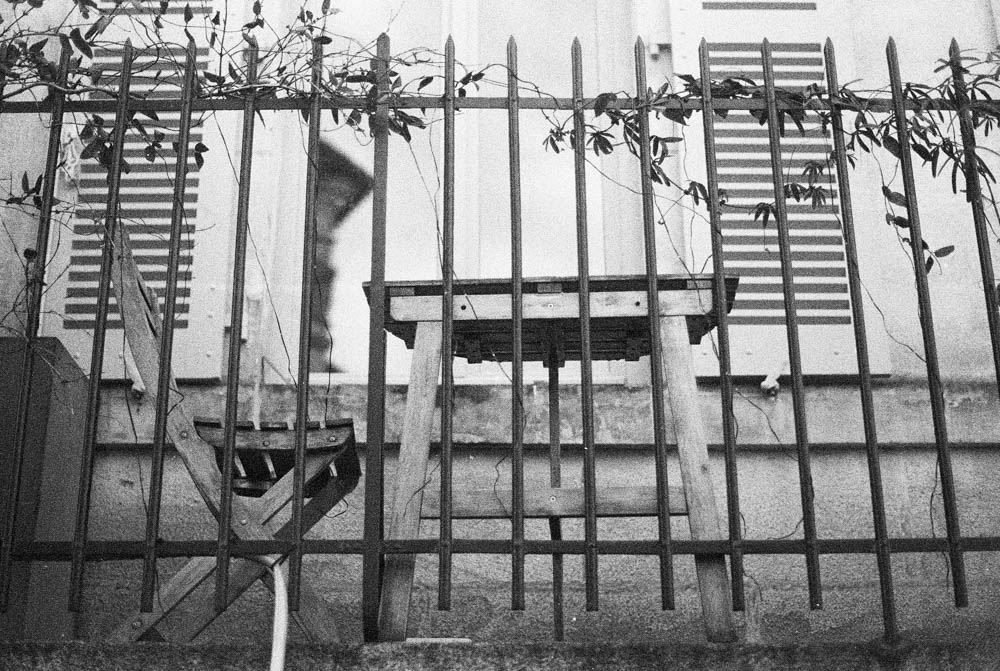
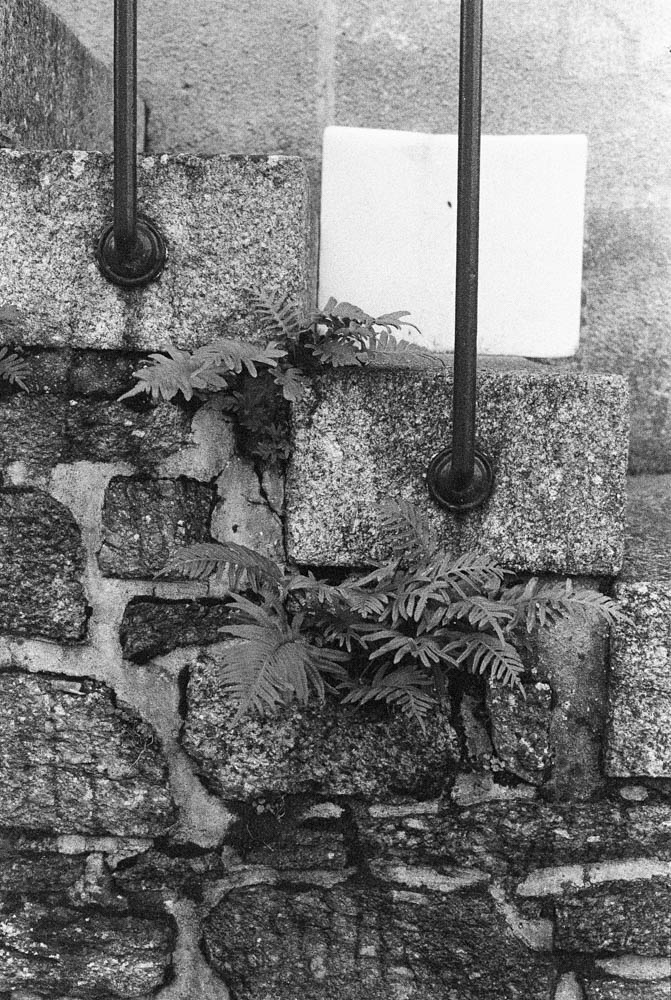
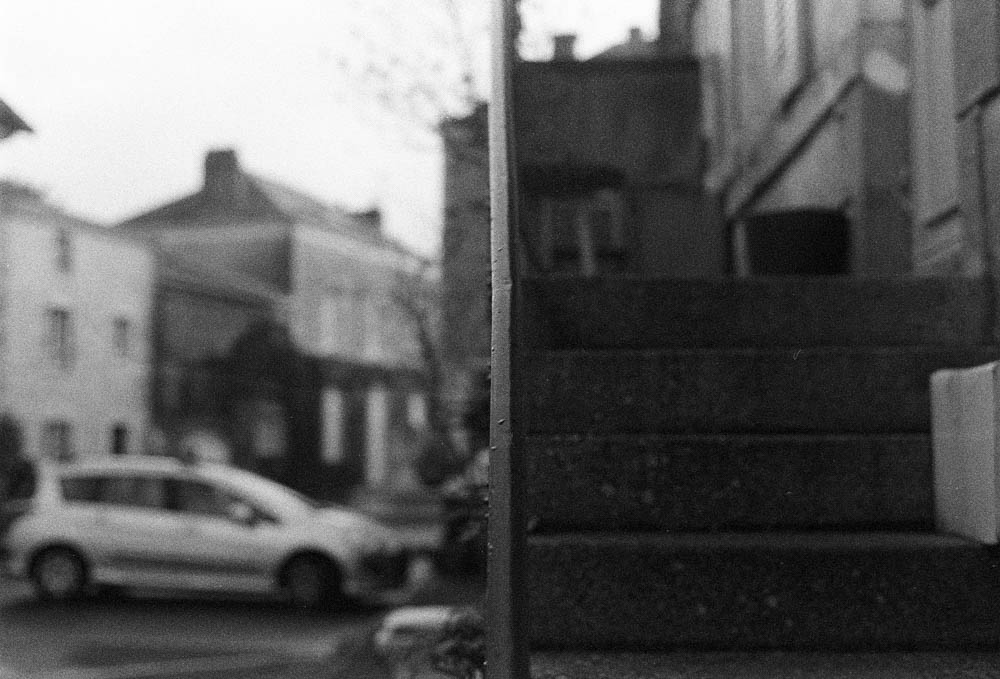
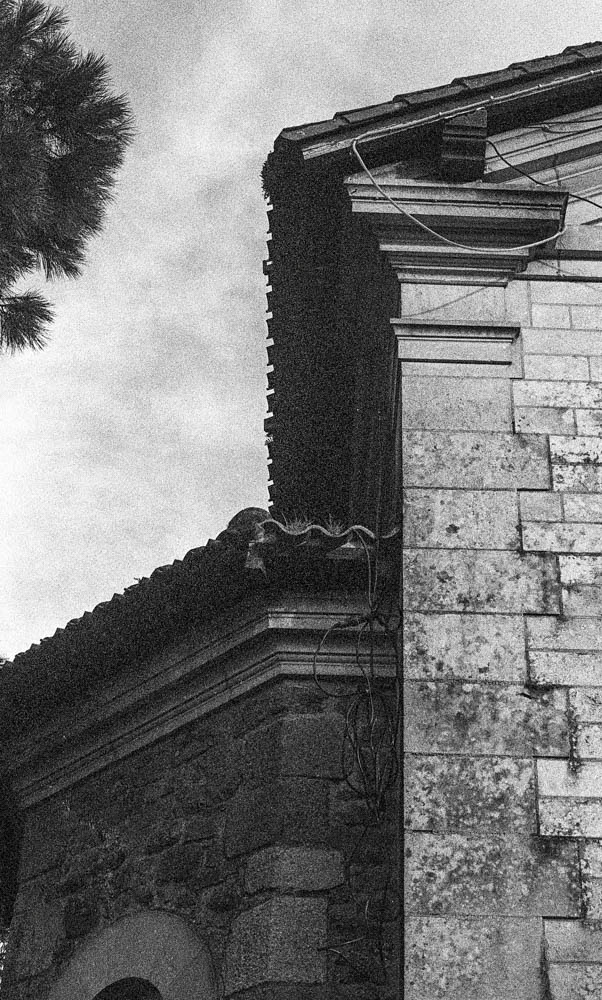
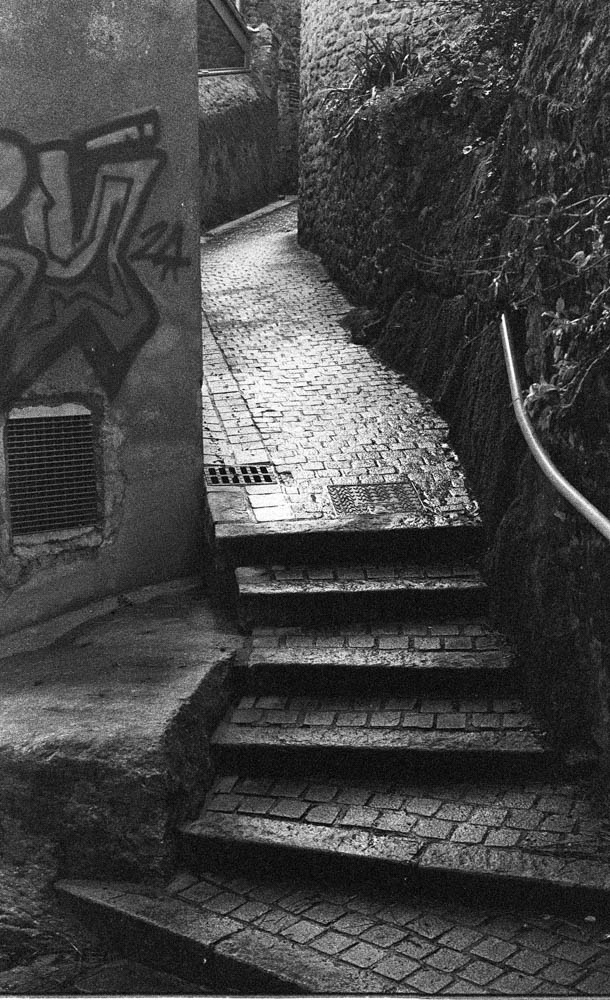
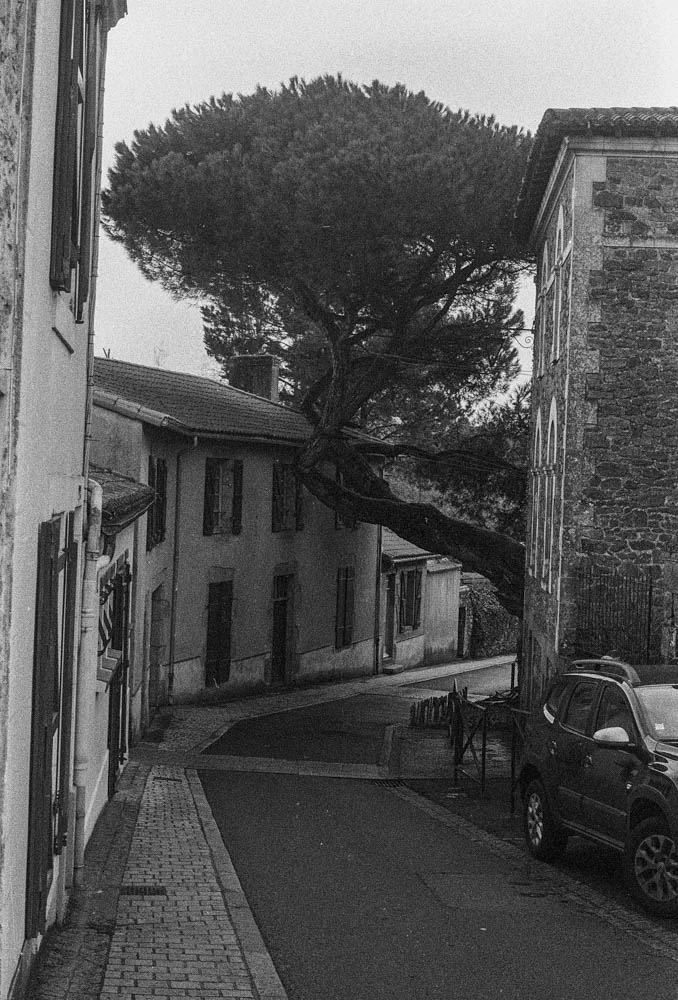
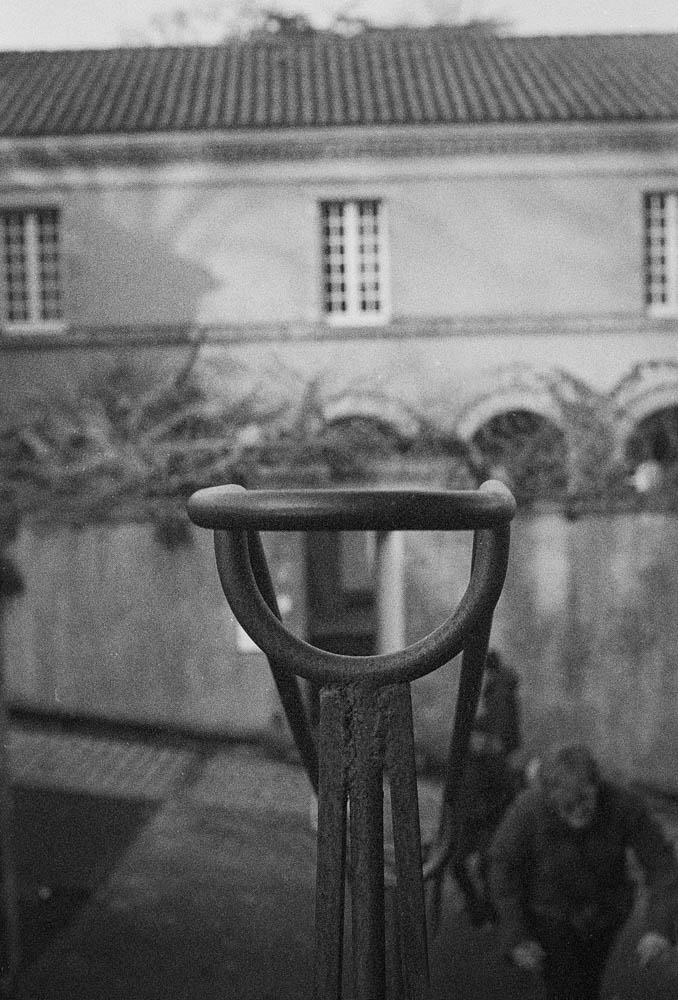
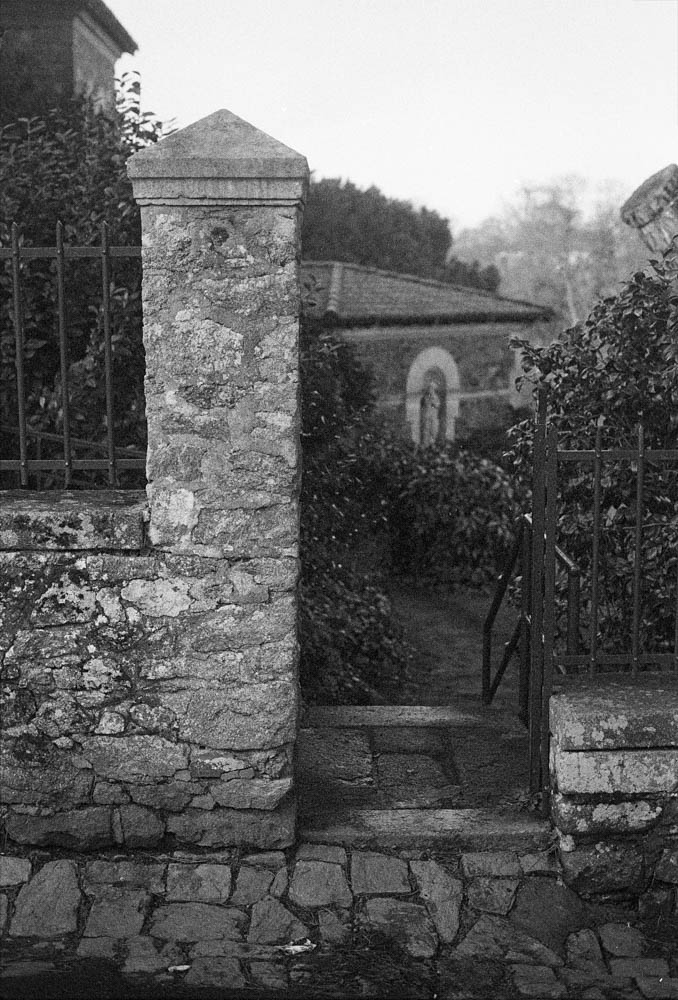
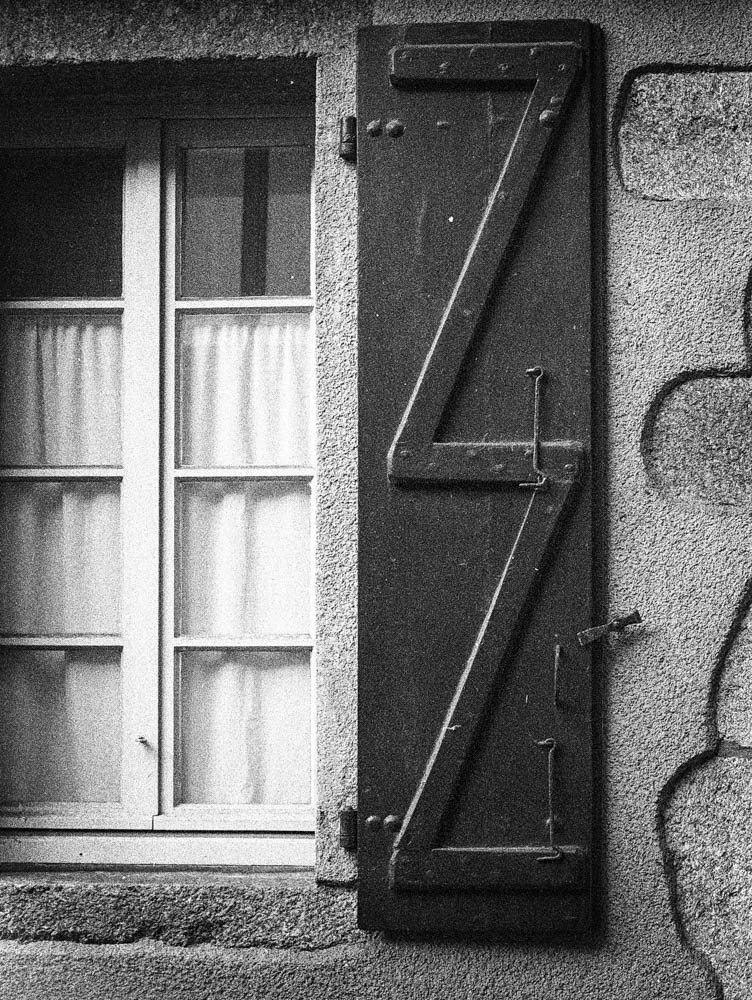
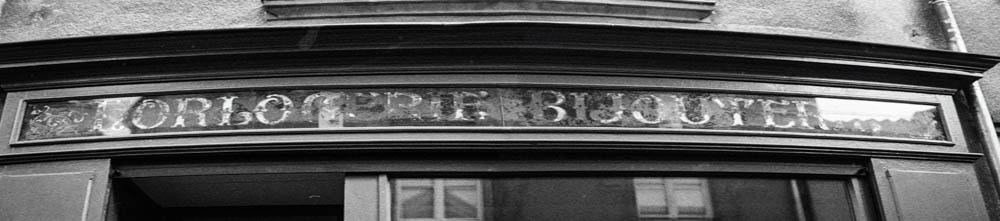
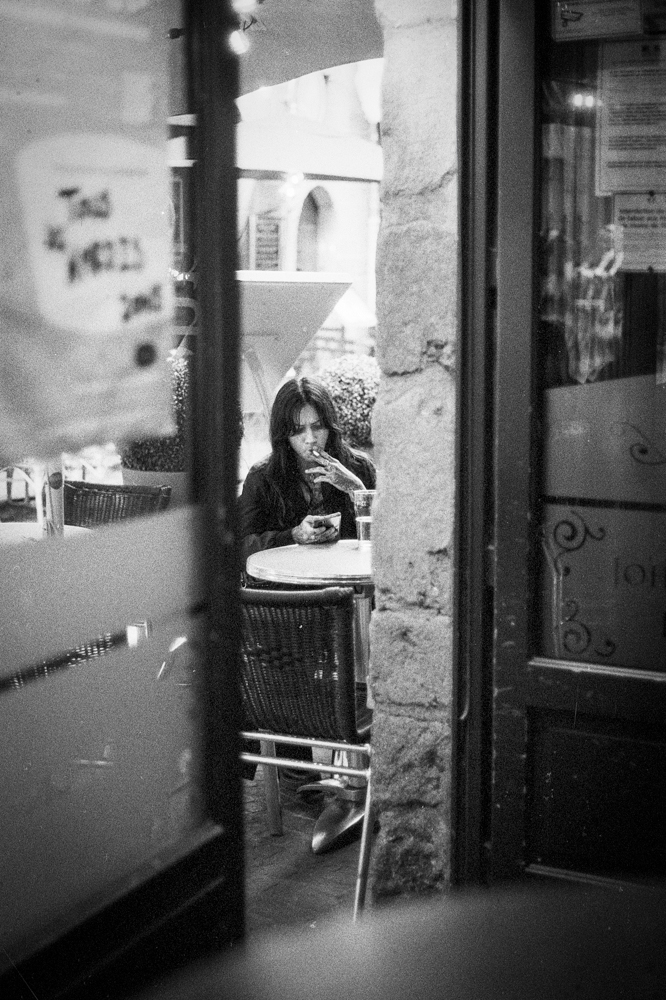
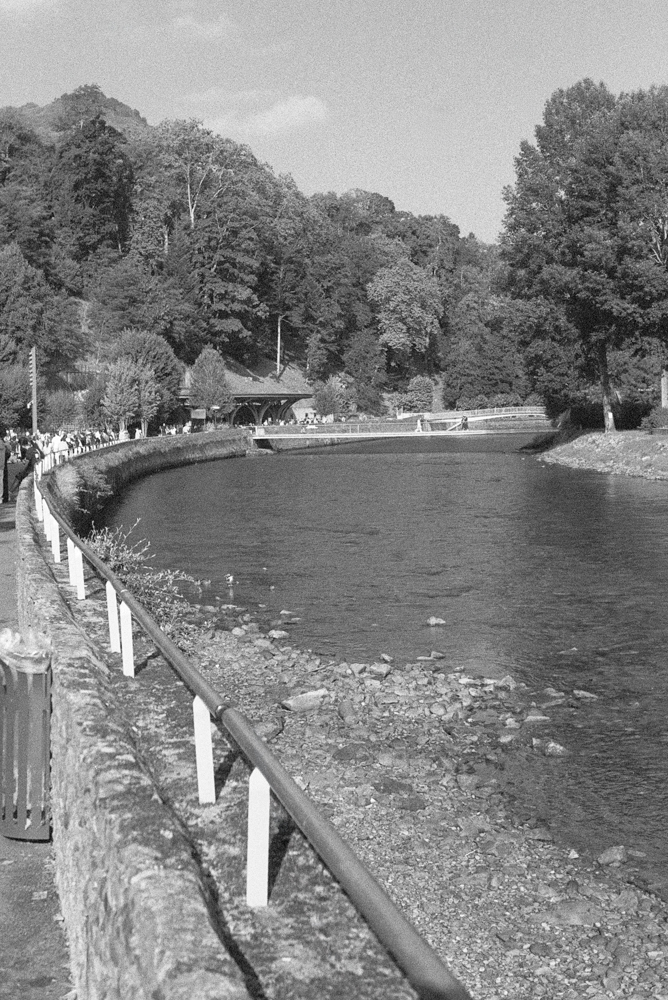
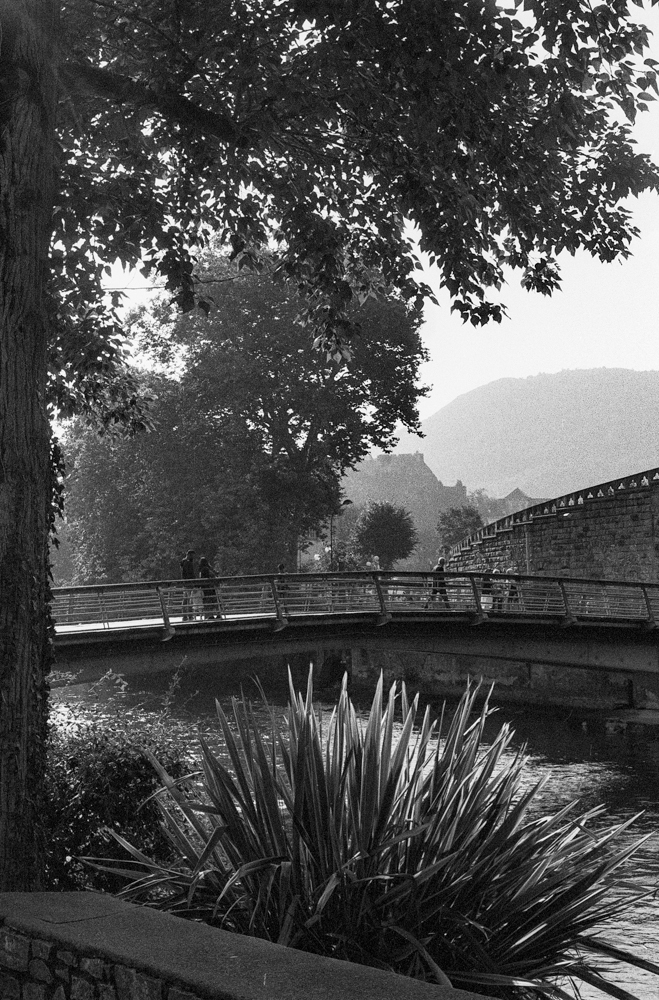
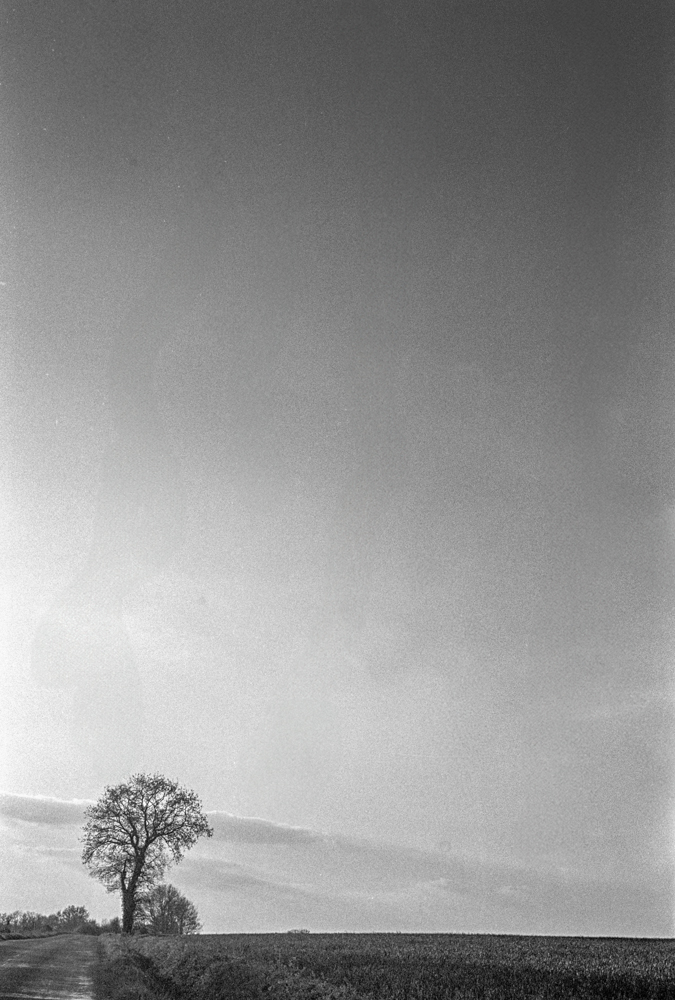
As I am wont to do, I took it out for a test drive to Nantes, and took it round Bouffay. And the pub… just enough to get a feel for the wee beastie. A roll of Ilford HP5 at box speed and I was ready to go. Verdict? So far so good. I must have done just 10 shots that day, and came back to it later, much later, to finish the roll. The feel in the hand was fine, and what I’m used to. The lens I have is a 50mm f/1.8, aka the nifty fifty. Usability? Aperture priority, which I enjoy. And the one thing that tickled me pink was being able to see the aperture ring through the viewfinder. Very useful…  It’s since journeyed to Lourdes, the mountains, even Northumberland—never once feeling like a limitation.

Does it have auto focus? No. It doesn’t. It has manual focus, which I find easier to use. I prefer to choose myself rather than have modern technology do everything for me. Yes, I use it on my DSLR, but I don’t use that the way I do when doing film photography. Here’s a surprise for you: I am not built for speed. I am built for comfort and won’t be hurried. This kind of SLR suits me to a T.

I know some of you little techies out there need specs about a camera, so for you lovely people, here you are:

Nikon FE – Quick Specs

  • Production: 1978–1983
  • Type: 35mm manual-focus SLR
  • Exposure: Aperture-priority AE + full manual
  • Metering: Centre-weighted TTL (match-needle in viewfinder)
  • Shutter: 1–1/1000s + B, electronically controlled (requires battery)
  • Viewfinder: Fixed eye-level pentaprism (~93% coverage) with aperture & shutter speed display
  • Lens mount: Nikon F (AI/AI-S compatible)
  • Battery: 2× SR44 (or 1× CR1/3N) – note: the camera can operate at 1/90s (M90 mode) without a battery
  • Weight: ~590 g (body only)
  • Fun fact: One of the smallest and lightest Nikon SLRs with full AE.

Is it ‘better’ than the Pentax ME Super? Not objectively—but it fits me. I prefer Nikon’s take-up spool, and that viewfinder aperture display? That’s the clincher. Pentax glass is glorious, no doubt. But this? This is my beastie.

I’m over the moon to have this addition to the working collection, and I have to go and finish the film that’s still inside it. So yes, I enjoyed using it; yes, it wasn’t foreign enough to scare me. Do I have any regrets? Absolutely not! It works just the way I need it to, and when it comes to cameras, isn’t that all we need?

The Opening of the Film Archives – April 2017 On the Border


Good evening Dear Reader.  Some of you may know that I live in France, despite being originally from the UK, and despite probably having gone native after living here for 30 years.  I have even been accused of being a little “Continental” whatever that may mean..  I live in the west of France.  You could think that I live in Nantes just judging by the quantity of photos taken in that city.

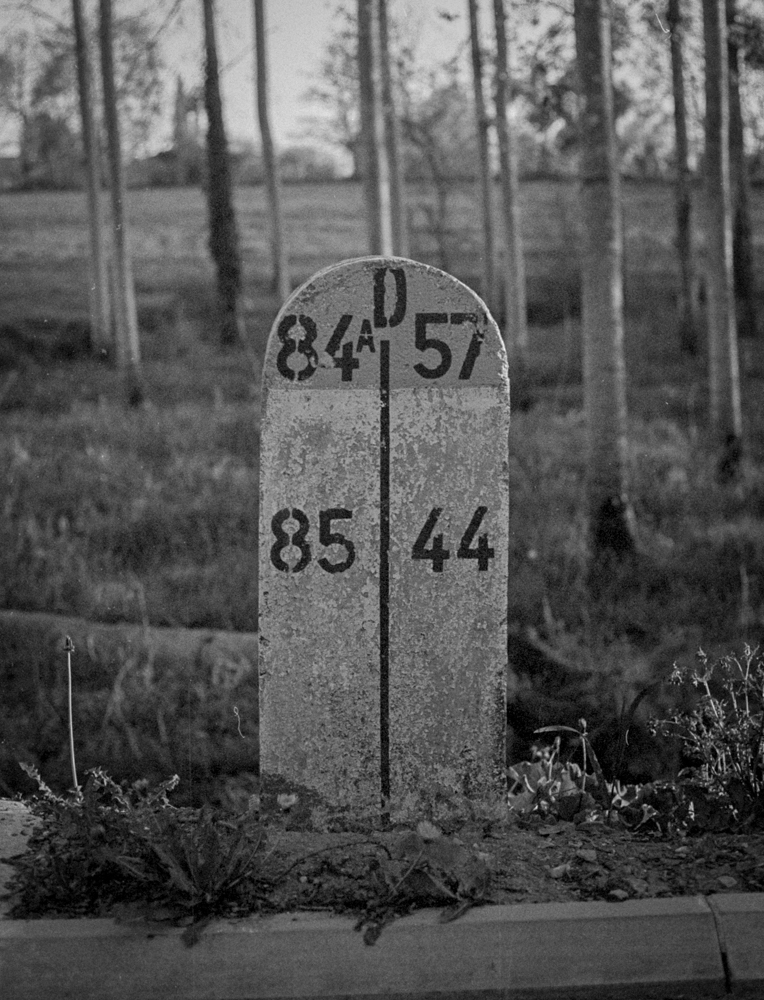
I actually live in a smallish village at the very northern edge of the Vendée and my village borders the “la Loire Inférieure” or to use the more modern term “la Loire Atlantique.”  Our department number is 85 and theirs is 44.  I’m not saying there is any animosity between the two, in the same way that there isn’t any animosity between the inhabitant of Lancashire, and God’s own county of Yorkshire.  Absolutely none at all.

You now know where I am.  Let’s have a closer look at that area through the lens of my Canon AE1.  This series of photos was taken along my route to work.  You can see the milestone on the road where the border between the two departments finds itself.  

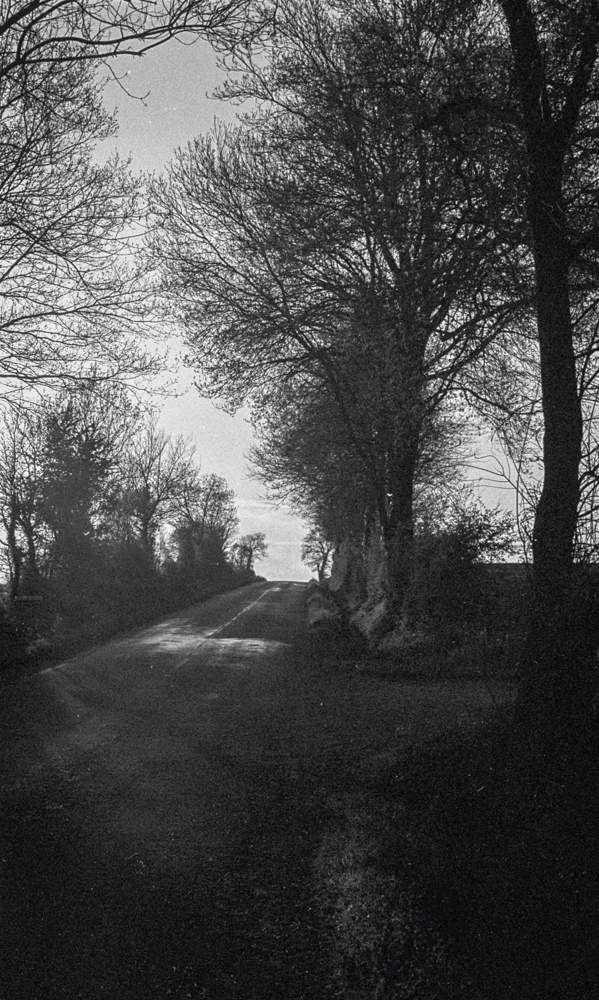
The trees along this stretch form a natural tunnel, creating an otherworldly atmosphere as sunlight filters through the canopy. Capturing that interplay of light and shadow was my goal with the Canon AE1. Despite some doubts about its metering capabilities, the camera performed admirably, and I’m thrilled with the results.

Since I took these photos, some of the trees have been cut back, making these images even more precious. They preserve a fleeting beauty—a reminder of how photography can immortalise moments before they change forever.

At the base of the hill runs a quiet stream, tame in spring but often overflowing in winter. Its stillness offers another perspective, reflecting the surrounding trees and clusters of mistletoe hanging high in their branches. These reflections, captured on film, reveal a different kind of magic—a mirror-like calm that contrasts with the lively interplay of light above.

This installment of the Film Archives is a tribute to the quiet beauty of my daily commute. Through these photographs, I hope to share not just a sense of place but a moment in time that speaks to the power of film photography to hold onto the ephemeral.

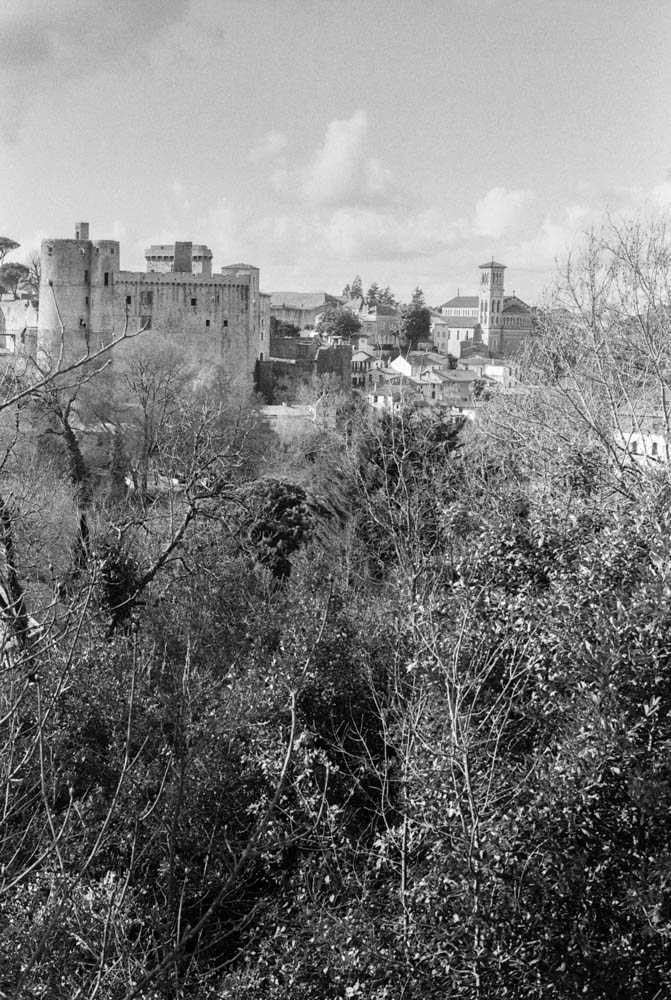
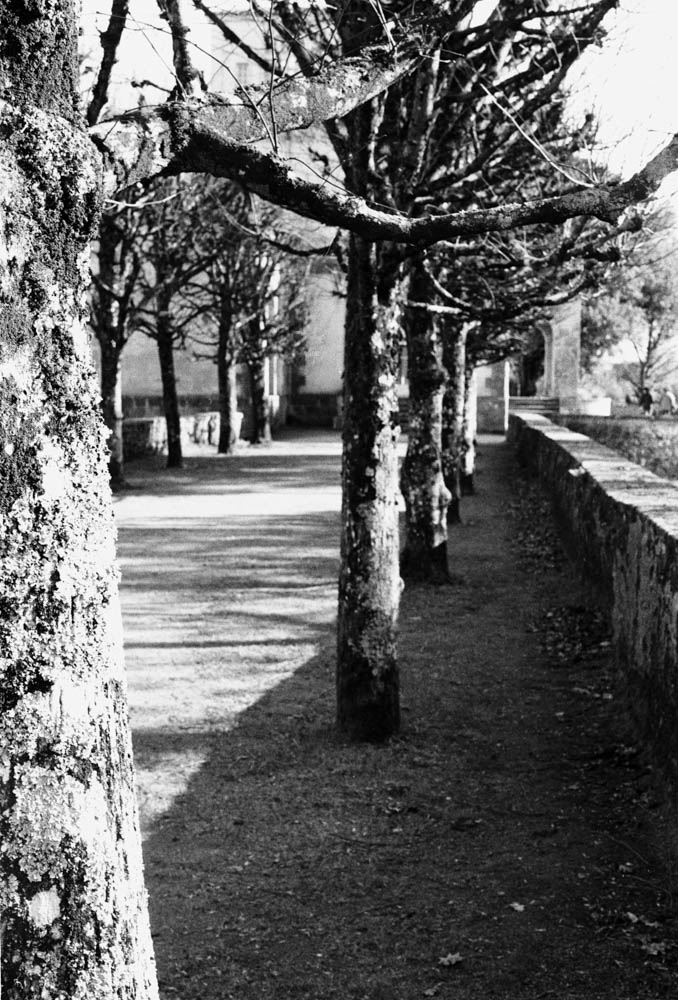
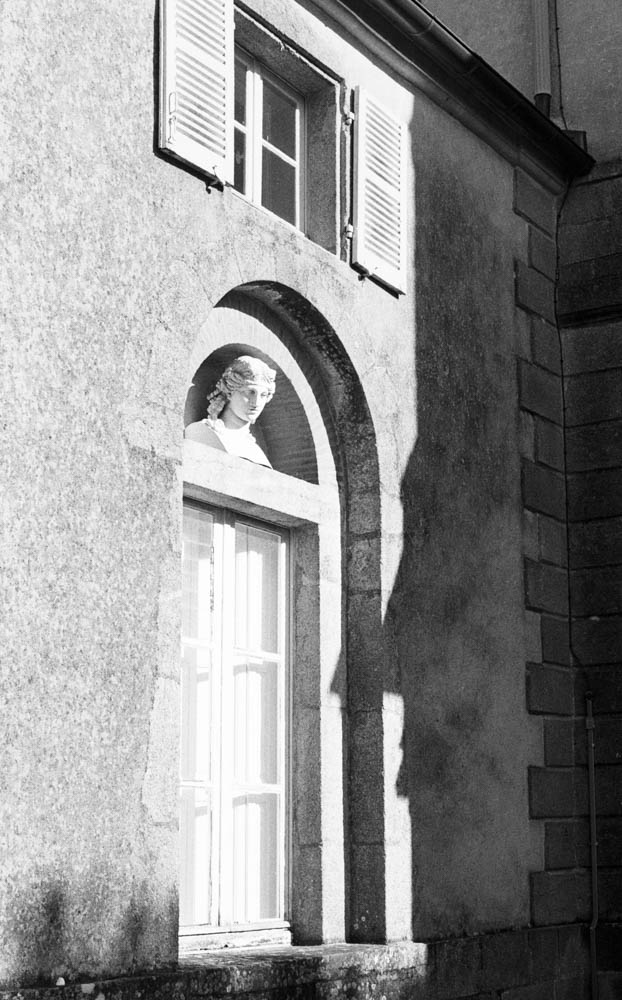
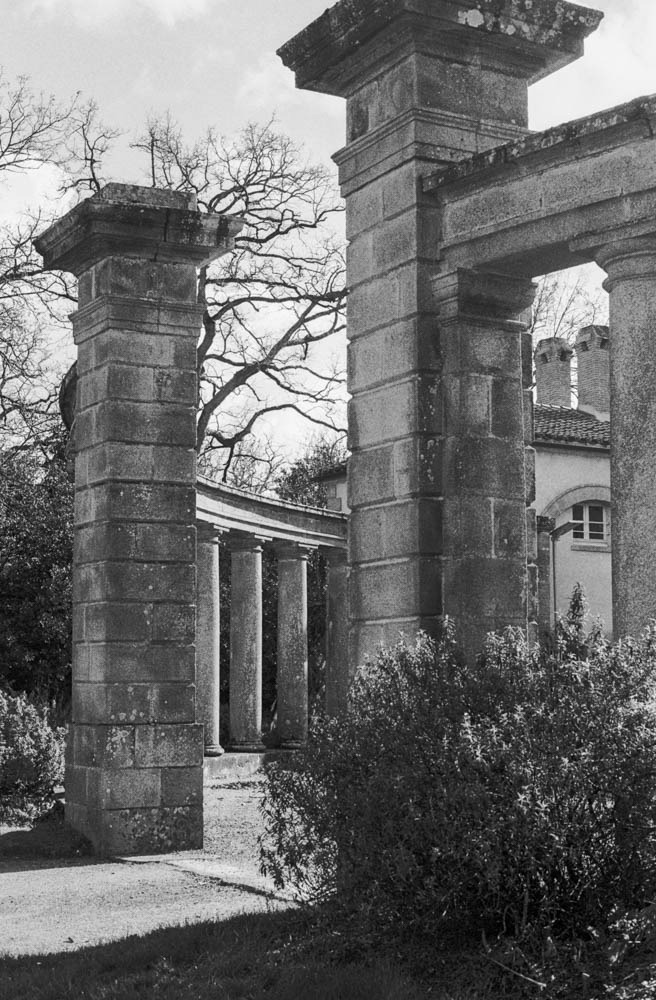
Opening of the Film Archives, Château de Clisson, February 2017


I had obviously taken a break with the Canon AE1 and spent the whole of December and January in hibernation, as most grumpy bears of my age do. Get Christmas over with, then go back to bed… I like my bed. No, I love my bed!!

Spring was just around the corner, and Kate had managed to awaken the beast and proceeded to tell me what she had planned for the day. It included me, a camera, and the Chateau de Clisson. I had just been “told” by my daughter, and off we headed to Clisson.

Now, the Chateau de Clisson is no small affair by any means. It dominates the centre of the town, sitting atop a hill as an imposing structure. I remember Kate having begged me on numerous occasions to actually go inside, and this time I acquiesced.

It was the perfect opportunity to not only document the inside of this historic site but also to let my playful daughter do what children do best: be cute, or as they say in French, espiègle. At that age, she was still content to pose for the camera, unlike the moody teenager she has become. Yet, sometimes, that same playful nature still manages to shine through.

If you’re curious to learn more about the history of the Chateau de Clisson, I’ve included a link for further reading.

After our outing in Clisson, I retreated to the quiet of my darkroom, where the real magic happens—transforming the captured moments into tangible memories. The familiar routine of developing the film, loading it into the tank, and watching the images slowly emerge never fails to captivate me. Once the negatives are ready and the scans are complete, I file them away in both my digital and analogue archives.

Then, a few years later, I get to share these memories with you. It’s a special kind of nostalgia—the kind that comes with taking time to slow down, reflect, and preserve what matters most. Thank you for joining me on this journey and for allowing me to share these pieces of the past with you.

Opening of the Film Archives – Canon AE1 Street Photography in Nantes


Good afternoon, Dear Reader. I’m writing this article thinking of you and wondering what to show you next in this ongoing series. The clue is in the title: Canon AE1 Street Photography in the streets of Nantes.

I know you have the eyes of a hawk who never miss a trick because your vision is so sharp. You might even have scrolled down to the photos already, and your eagle eyes will have noticed that this isn’t the usual area I visit on these outings. And, of course, you’d be right!

Yes, I still parked in the Feydeau car park but crossed the road to the south, heading along Baco-Lu, past the Tour Lu (sans “t”), towards the St Felix Canal, and then back into town… Some of the places no longer exist or have changed hands, but you would still recognise them even today.

I think that with these photographs, I’m getting closer to what some might call “proper” or “traditional” street photography. The images have a certain gritty quality to them, including the people in the shots. This was something I was actively aiming for. Maybe it’s the grain—something I don’t get with the X100F—that helped bring this about. Or could it be the people, whose presence seems to reveal the stories behind them? Whatever it is, I felt that this was a very good day.

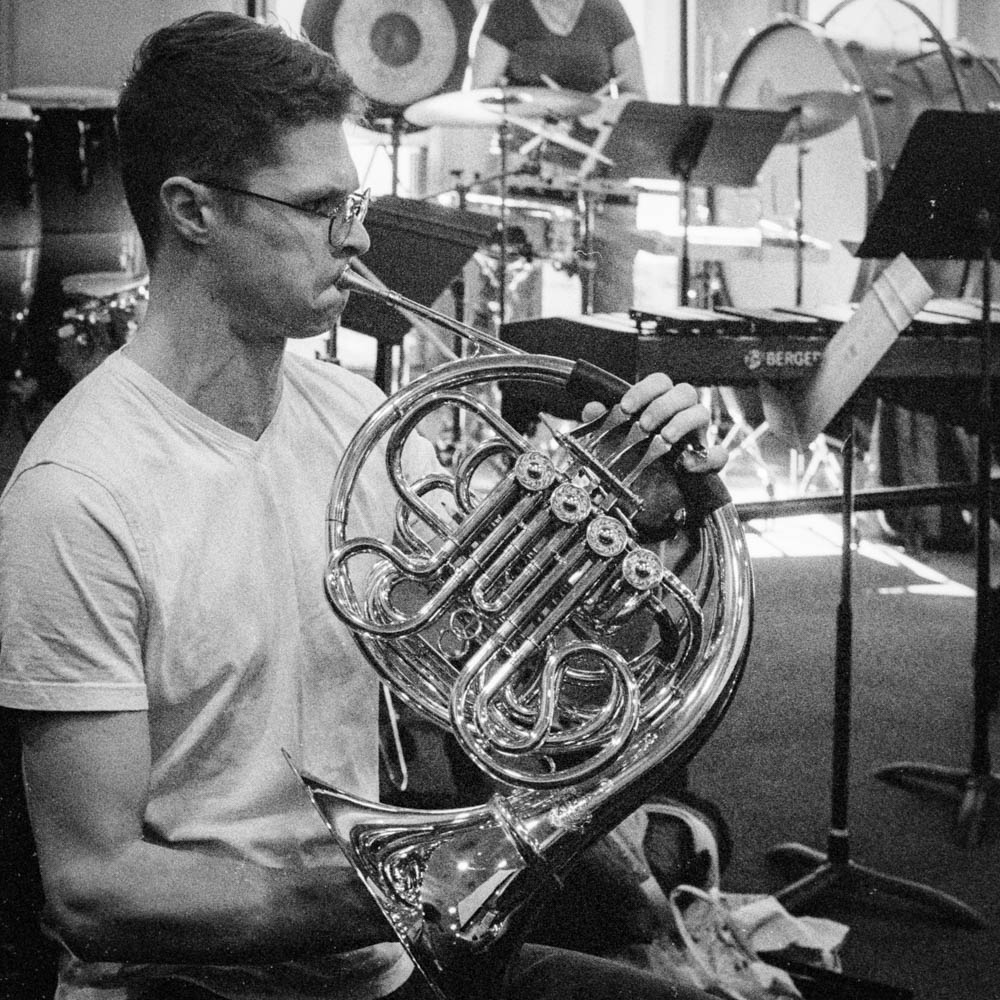
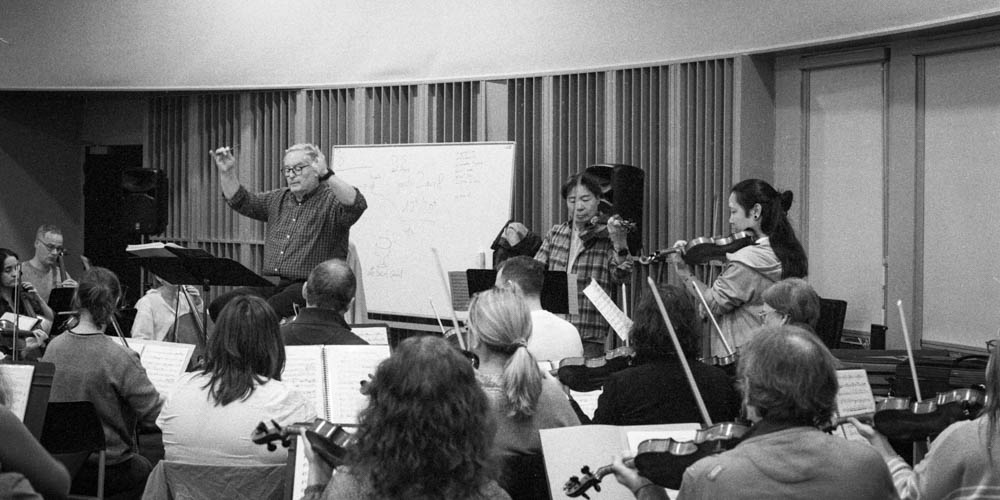
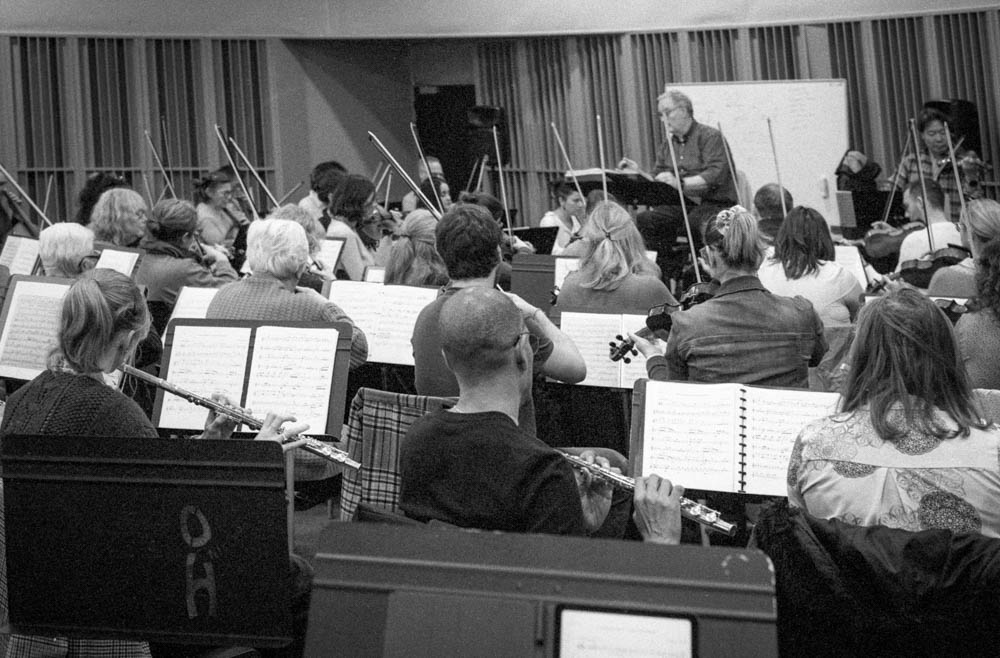
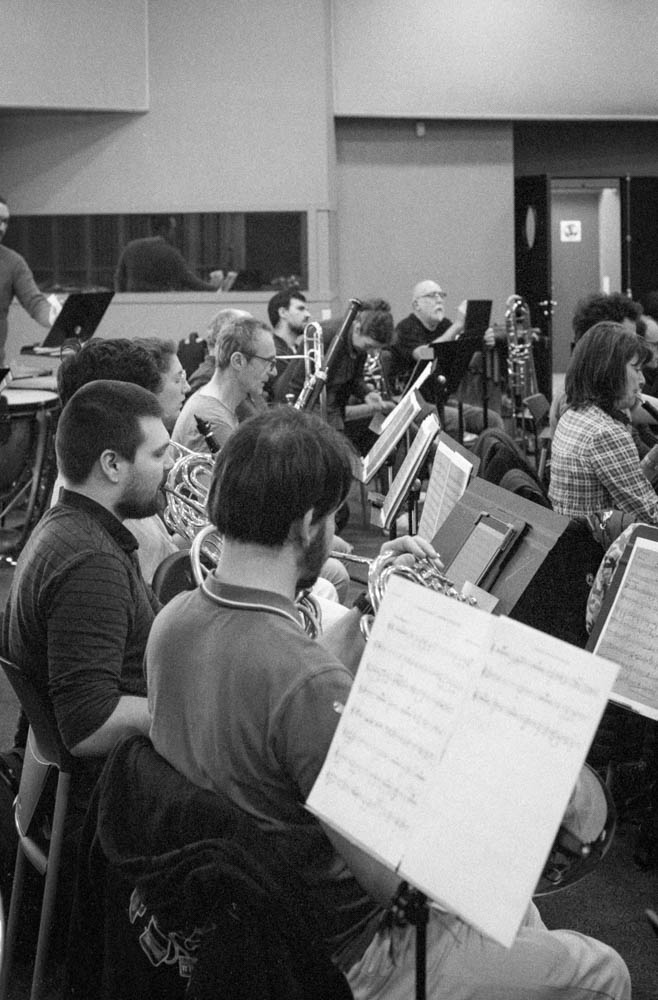
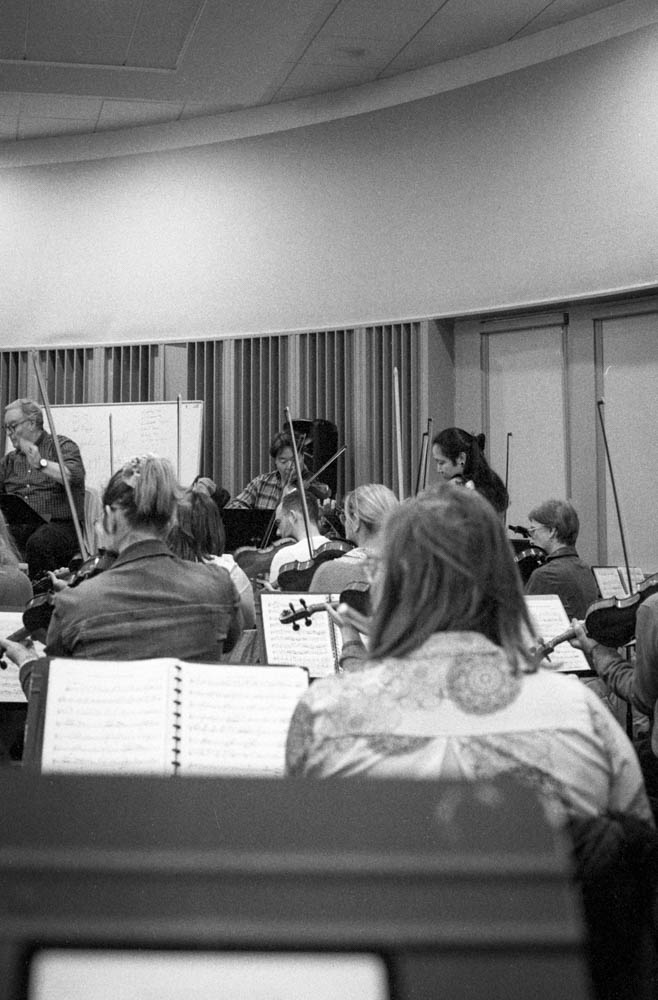
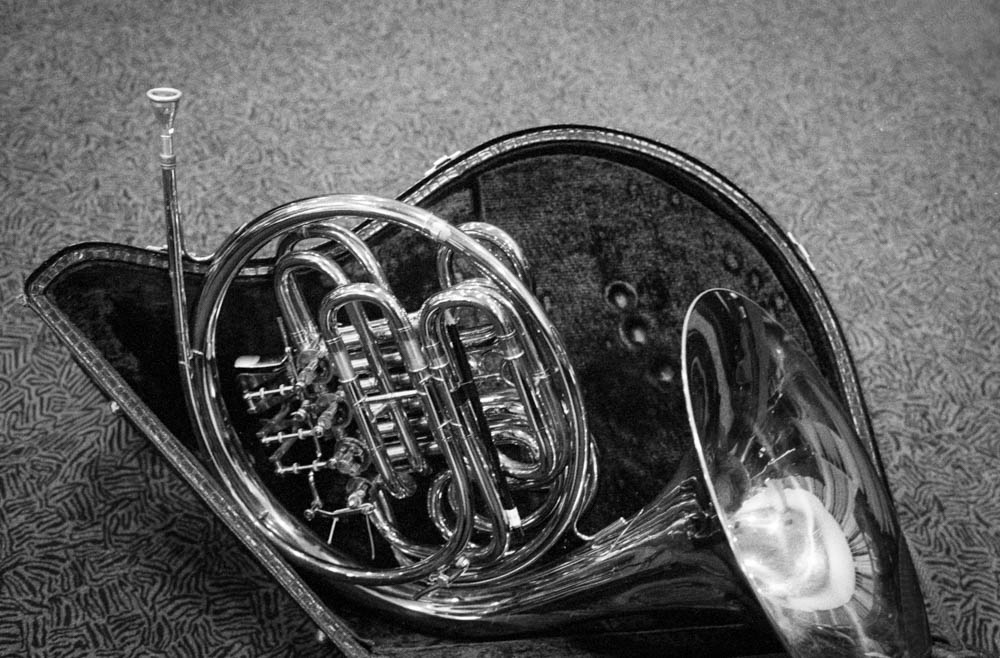
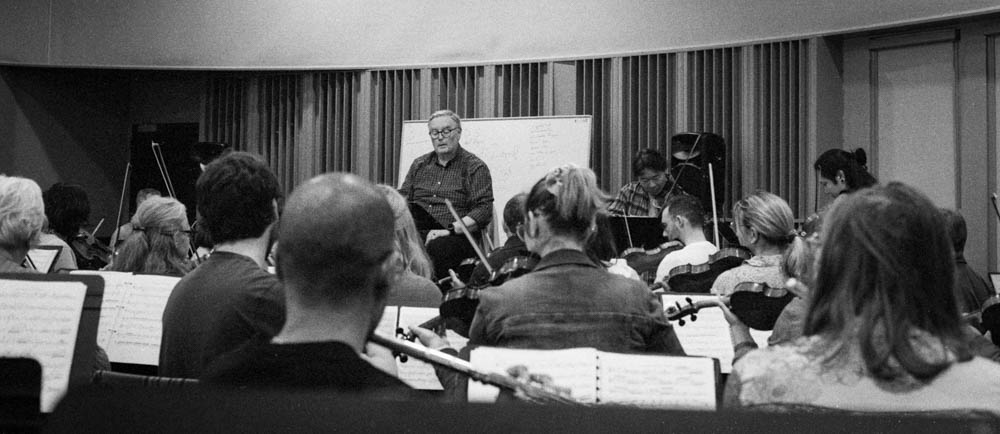
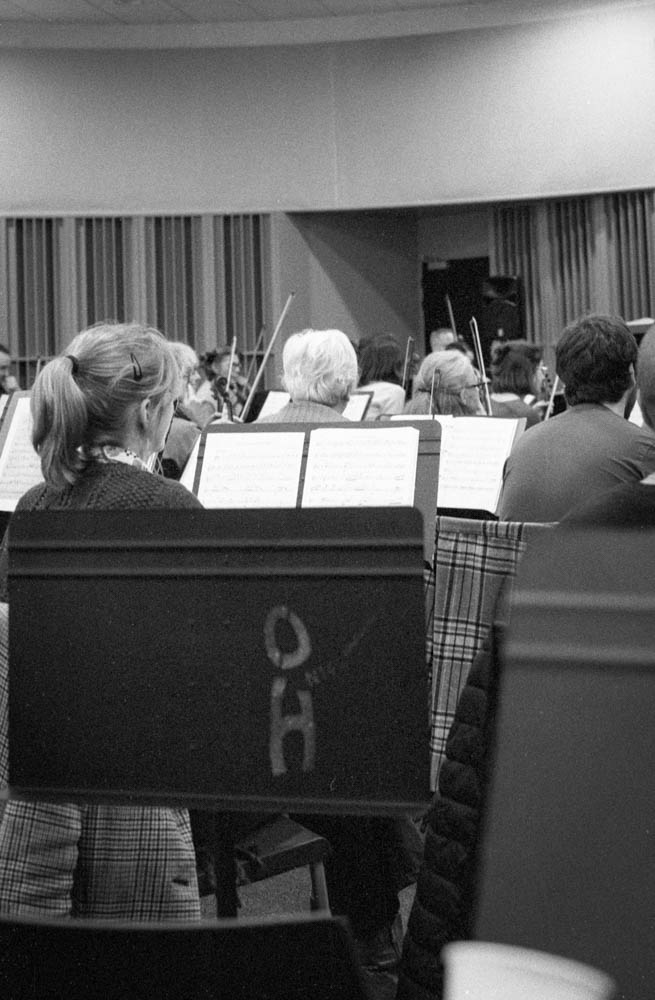
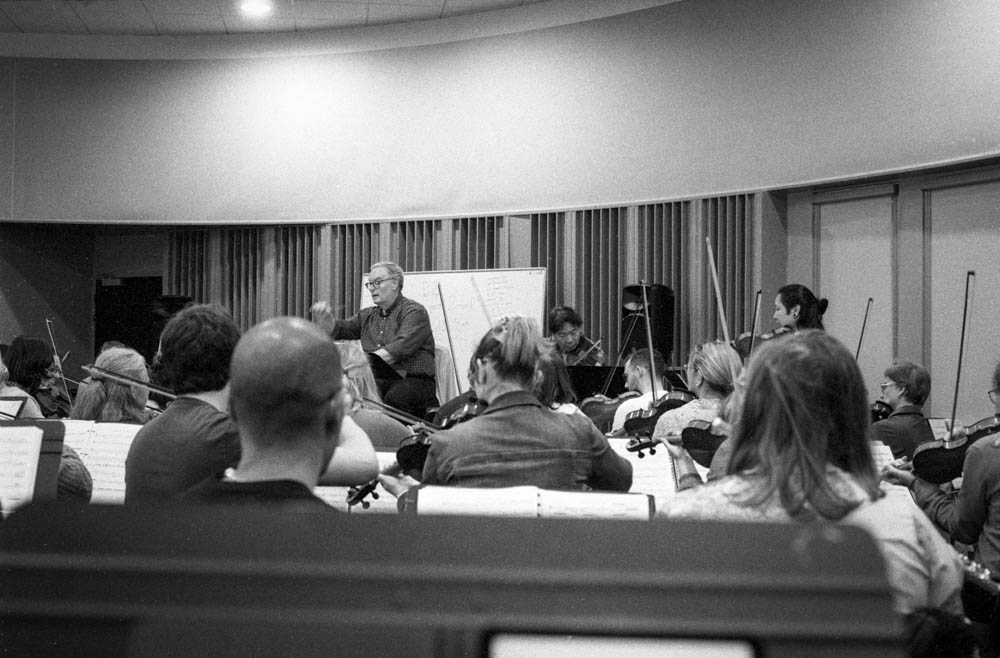
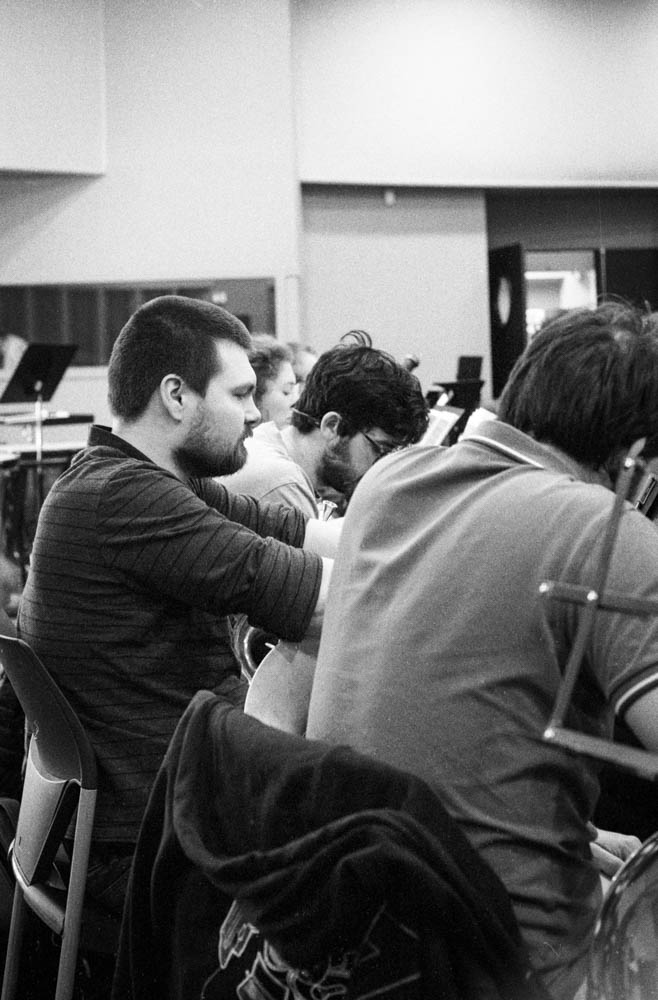
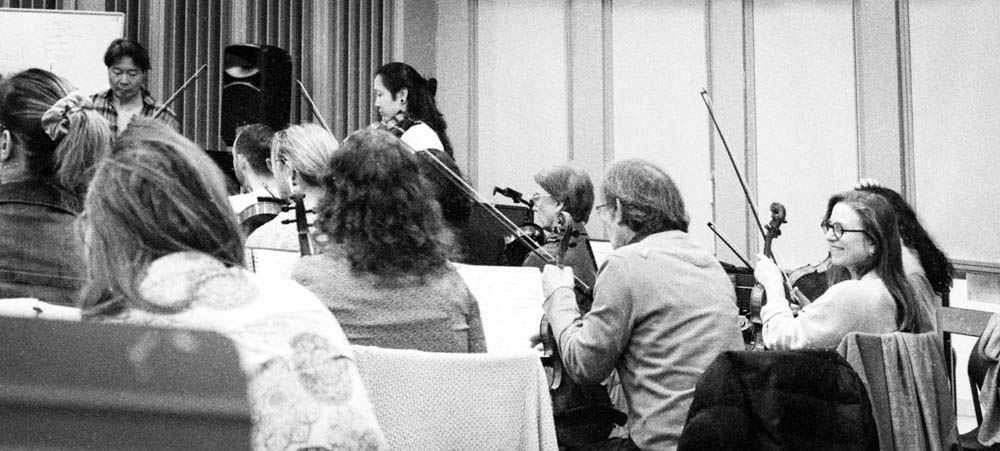
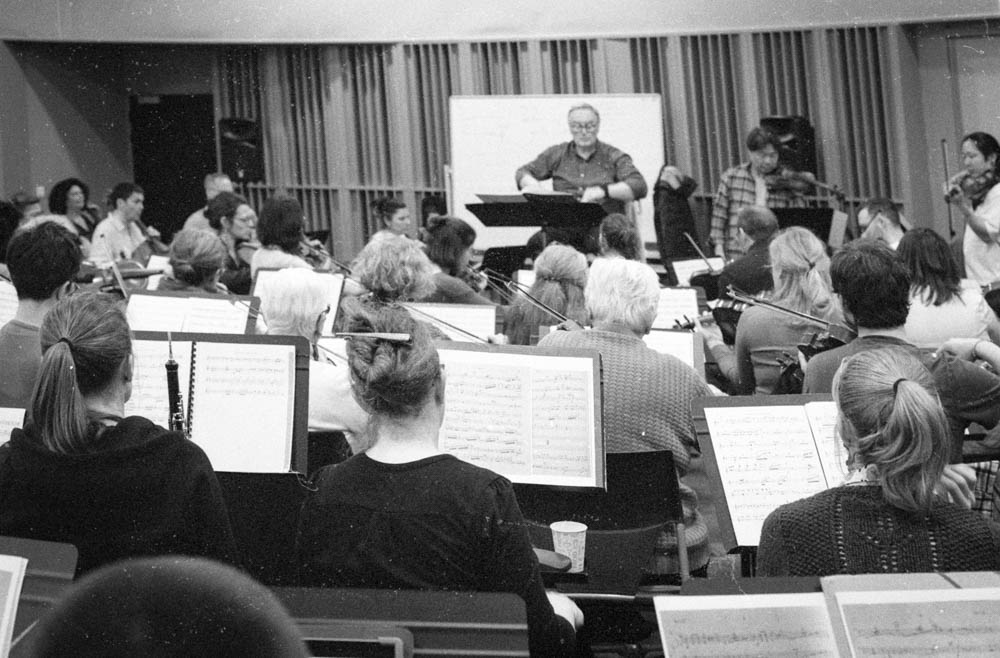
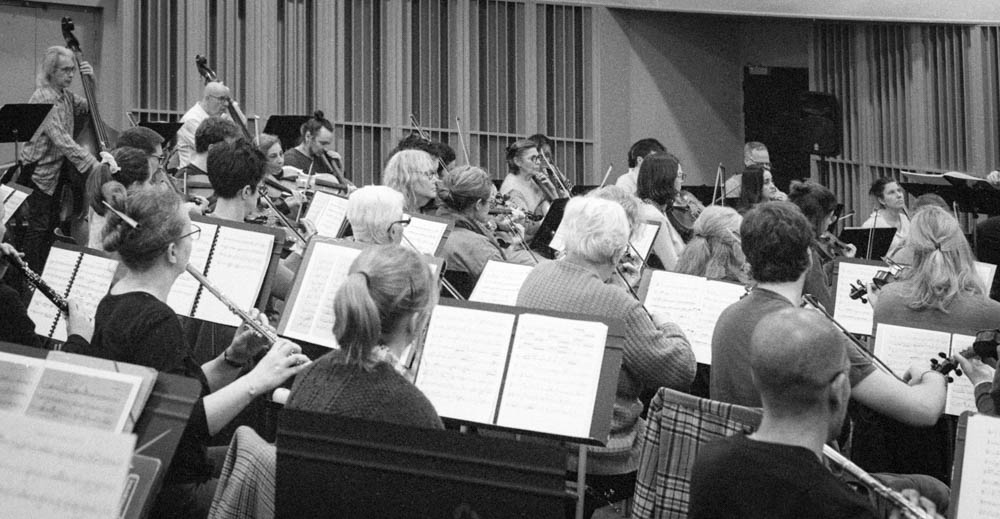
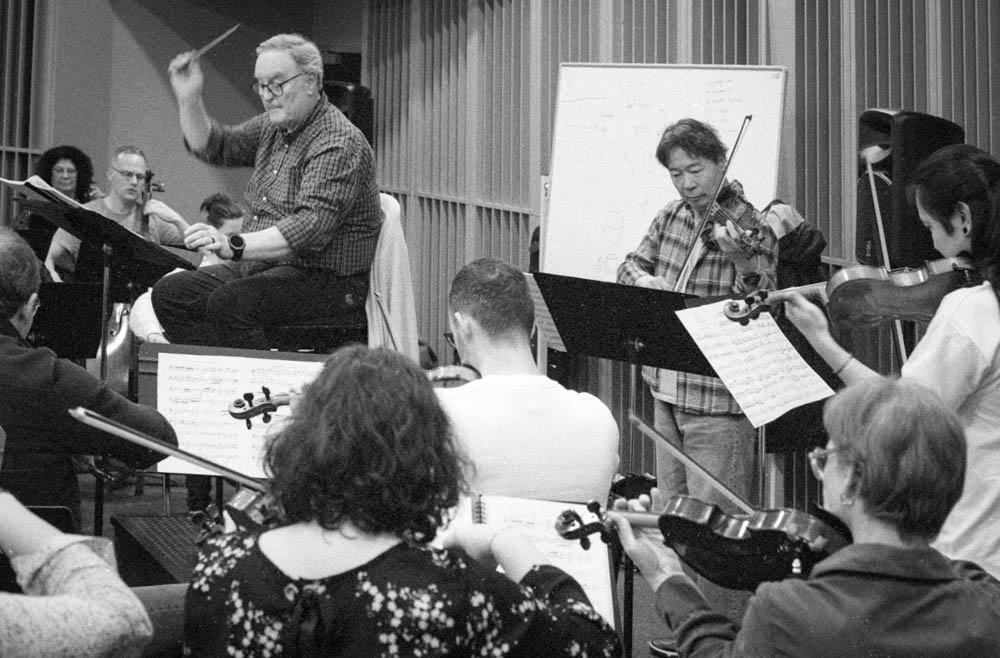
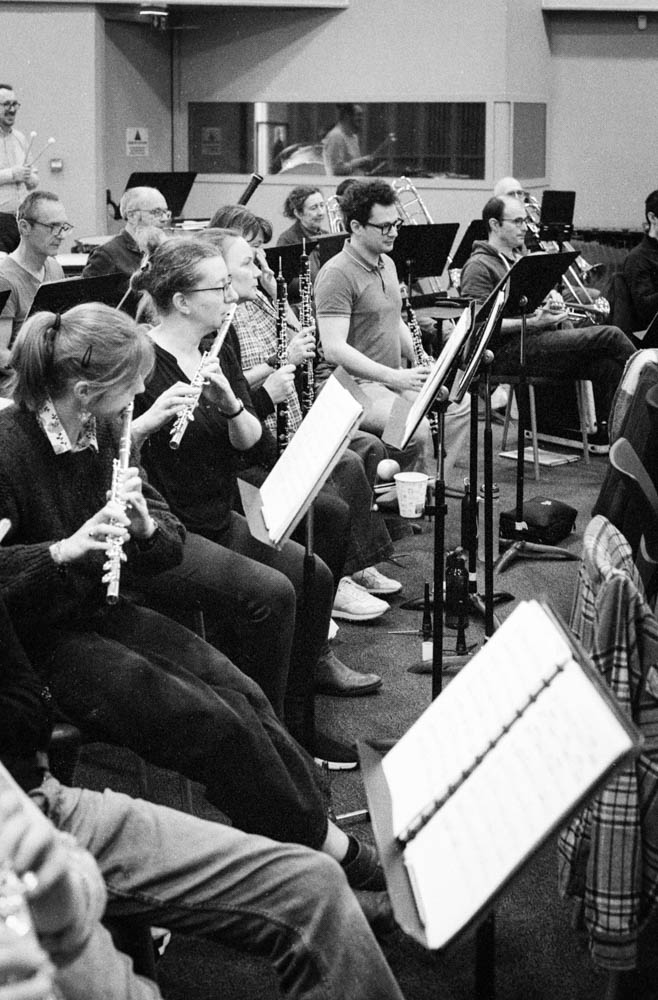
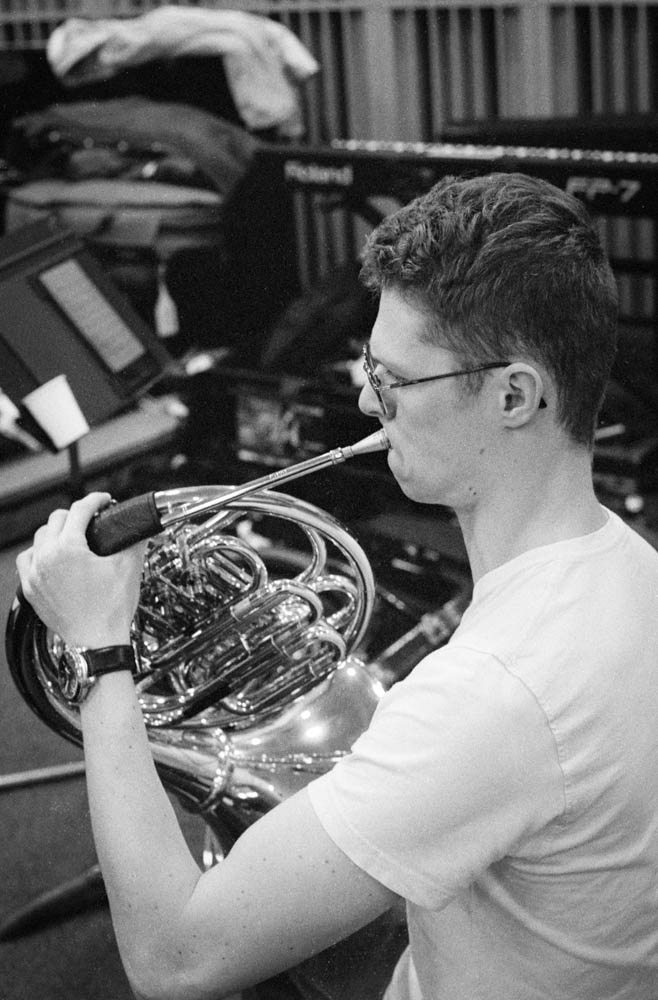
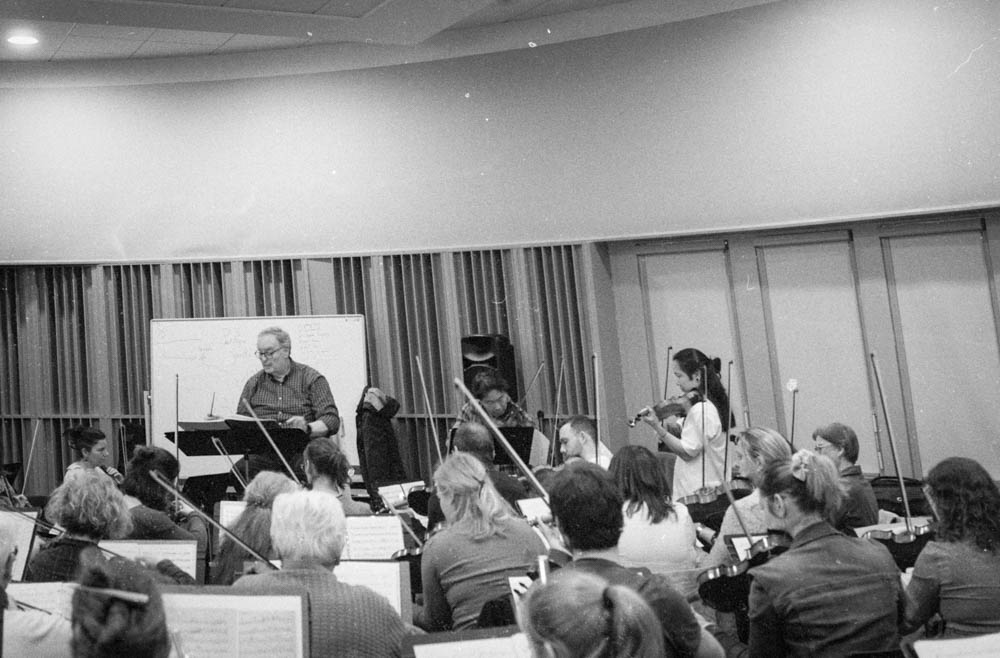
I think I may have shared with you that I’m going to China this Christmas on tour with the orchestra I play for. I’m still undecided about which camera to take and wondering if I should bring a film camera along. With the X100F, I’ve become so accustomed to the 35mm lens, while my film cameras only have 50mm lenses to work with. Reviewing these older images may help me make up my mind. It’s going to be an epic trip, and I want to be sure of the kinds of images I’ll be able to capture.

As much as I’d love the flexibility to hop in the car and retake a shot if needed, this trip to China will be different. I’ll need to trust my choices and embrace the moment as it unfolds—something that feels both exciting and a little daunting. But that’s the beauty of photography, isn’t it? The challenge of capturing fleeting moments, knowing they might never come around again. So, whatever I decide, I know the experience will be unforgettable.

While the anticipation of the China photos may be killing you, I know you’ll be patient, whatever I decide to use. Rest assured, those photos will capture the spirit of the trip. Only two and a half weeks before I start my travels…

The Opening of the Film Archives: An October Saturday in Town with Killian, 2016


Welcome back to another look at the film archives. This time, I’m sharing a few black-and-white street shots from an October Saturday in Nantes, likely taken with the Praktica MTL3 and HP5 Plus film. These outings with my son Killian, which we called ‘Ian and Killian days,’ became a cherished routine, a time for us to reconnect amidst the busyness of life.

He was 17 then, a weekly boarder at his lycée in La Roche sur Yon. On the weekends, we’d often head into Nantes, following the same familiar programme: a visit to the barbershop, a meal at the Sugar Blue café, and finally, a drink at the John Mc Byrne Irish Pub. In the photo, that handsome chap in the barber’s seat is Killian—a little reminder that it wasn’t always Kate joining me on these trips. These outings were a way to stay connected, despite his growing independence. Even with him being only 17, I still felt that sense of responsibility. Once a Dad, always a Dad.

As we went through our usual routine, I found myself facing the familiar challenge of capturing these moments on film. The low light inside the barbershop always made me second-guess whether I could get a decent shot without using a flash. But over time, I learned to trust the Praktica and the HP5 Plus film. There’s a rawness to film photography, especially with Ilford’s HP5. It adds a certain grit and texture to the image, something that digital just can’t replicate.

That’s what I love about film—the imperfections. The grain gives it character, a certain honesty that smooth, polished digital photos lack. It’s not about creating something flawless but about preserving the authenticity of the moment. This shot of Killian in the barbershop, for example, may not be technically perfect, but it’s real. It’s us, it’s Nantes, it’s one of those ‘Ian and Killian days.’
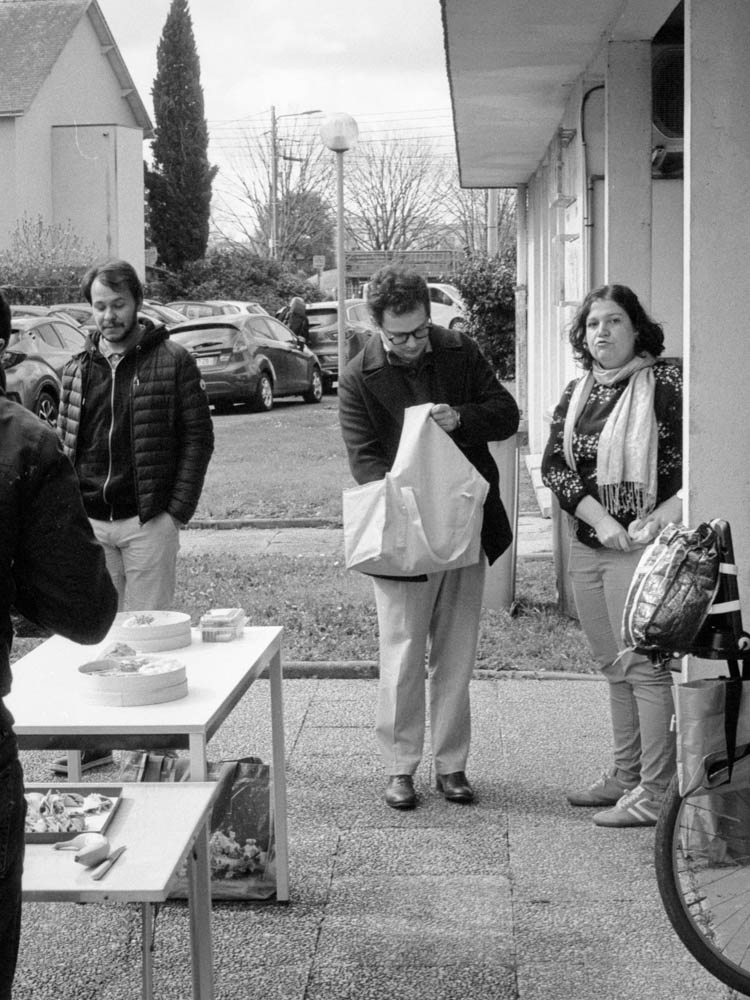
Looking back at these photos, I’m reminded that sometimes, it’s the imperfections that make an image truly memorable. Quite the day, right?

The Opening of the Film Archives—Le Château des Ducs de Bretagne, August 2016


Welcome back to the Film Archive of IJM Photography! This time, we find ourselves in the beautiful city of Nantes, in the heart of the Cité des Ducs. Our adventure takes us through the majestic Château des Ducs de Bretagne, a site rich in history and culture.

As we explore the castle, I’m armed with another one of my favorite cameras from the golden days of film photography—the Canon AE1. This was before the surge of interest from the YouTube hipster crowd, who quickly snatched up every classic camera they could find, driving up prices and making these gems harder to come by.

The Canon AE1 is justifiably sought after, and for good reason. It’s a camera that offers both simplicity and elegance, paired with the beautiful FD 50mm F1.8 lens. This lens, in particular, has a way of capturing light that enhances every shot, allowing me, the photographer, to create images that feel alive. You can see the results in the photos here—every frame is a testament to the quality and craftsmanship of this camera.

It feels solid in the hand, and focusing with the split prism is a breeze. The camera is “shutter priority,” and it adapts the f-stop to the speed at which you’re shooting. As a street photographer, I don’t need to shoot at 1/1000th of a second for all my shots, so I have a wider range of options than someone taking pictures of sports. It still provides me with the necessary depth of field.

On this particular day, I was motivated and thought I could walk up the steps to the battlements to get some more interesting shots from a raised standpoint. I captured the urban landscape that spans from the 13th to the 21st century, and in one of the shots, you can see the ever-present figure of the Tour de Bretagne. It once represented the modernity of the 20th century and is now closed for asbestos removal. My feet, however, were firmly rooted much earlier in the castle.
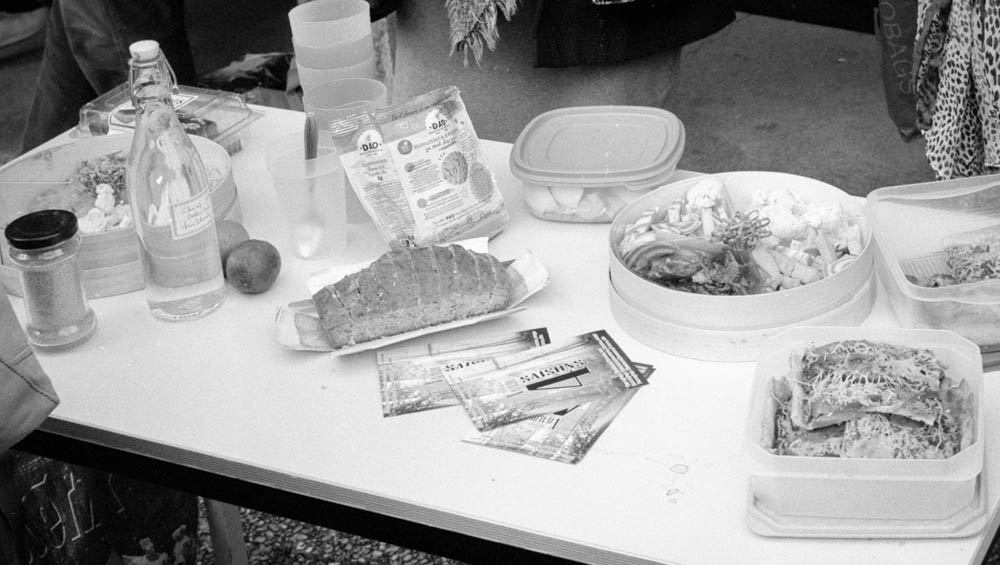
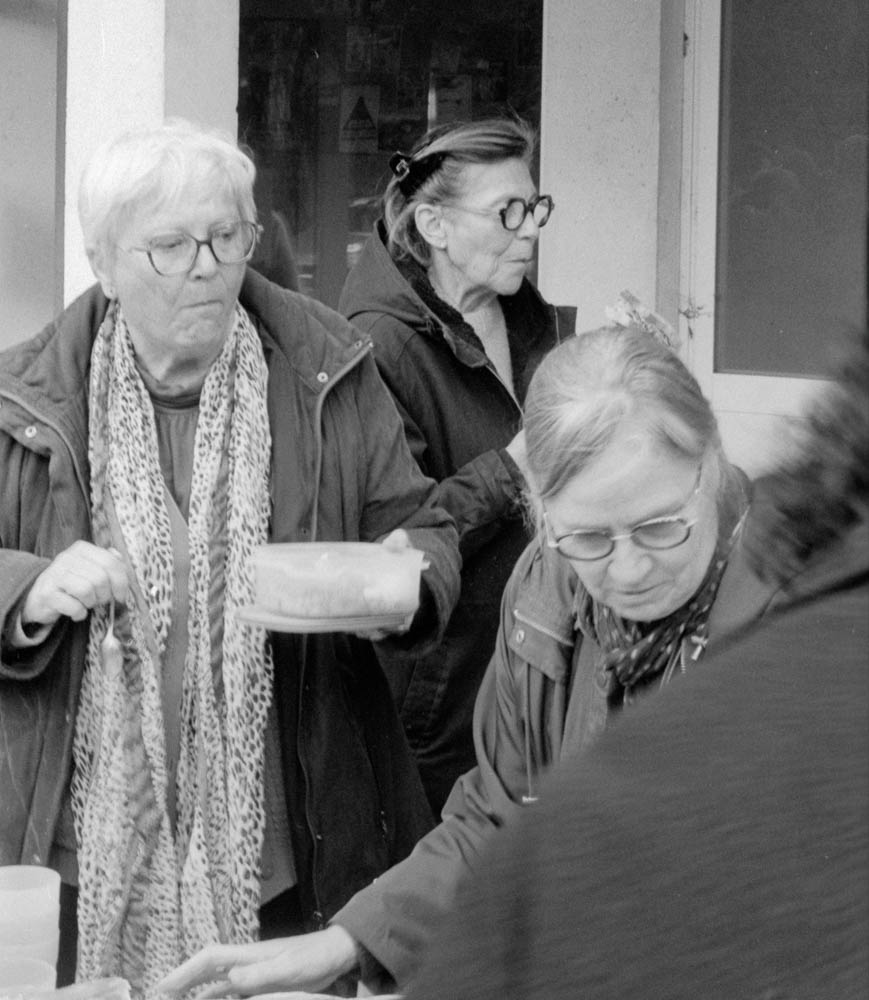
Exploring the Château des Ducs de Bretagne with the Canon AE1 was a journey through both time and photography. The castle’s ancient walls and rich history provided a stunning backdrop for capturing moments that feel timeless. With every click of the shutter, I was reminded of the magic of film photography—the anticipation, the artistry, and the satisfaction of seeing the world through a vintage lens. As I descended from the battlements, I couldn’t help but feel grateful for the simple joy of capturing life on film, in a place where history and modernity blend seamlessly. Until next time, keep exploring and shooting. There’s always more to discover.