NORTHUMBRIAN SUMMER PART IV


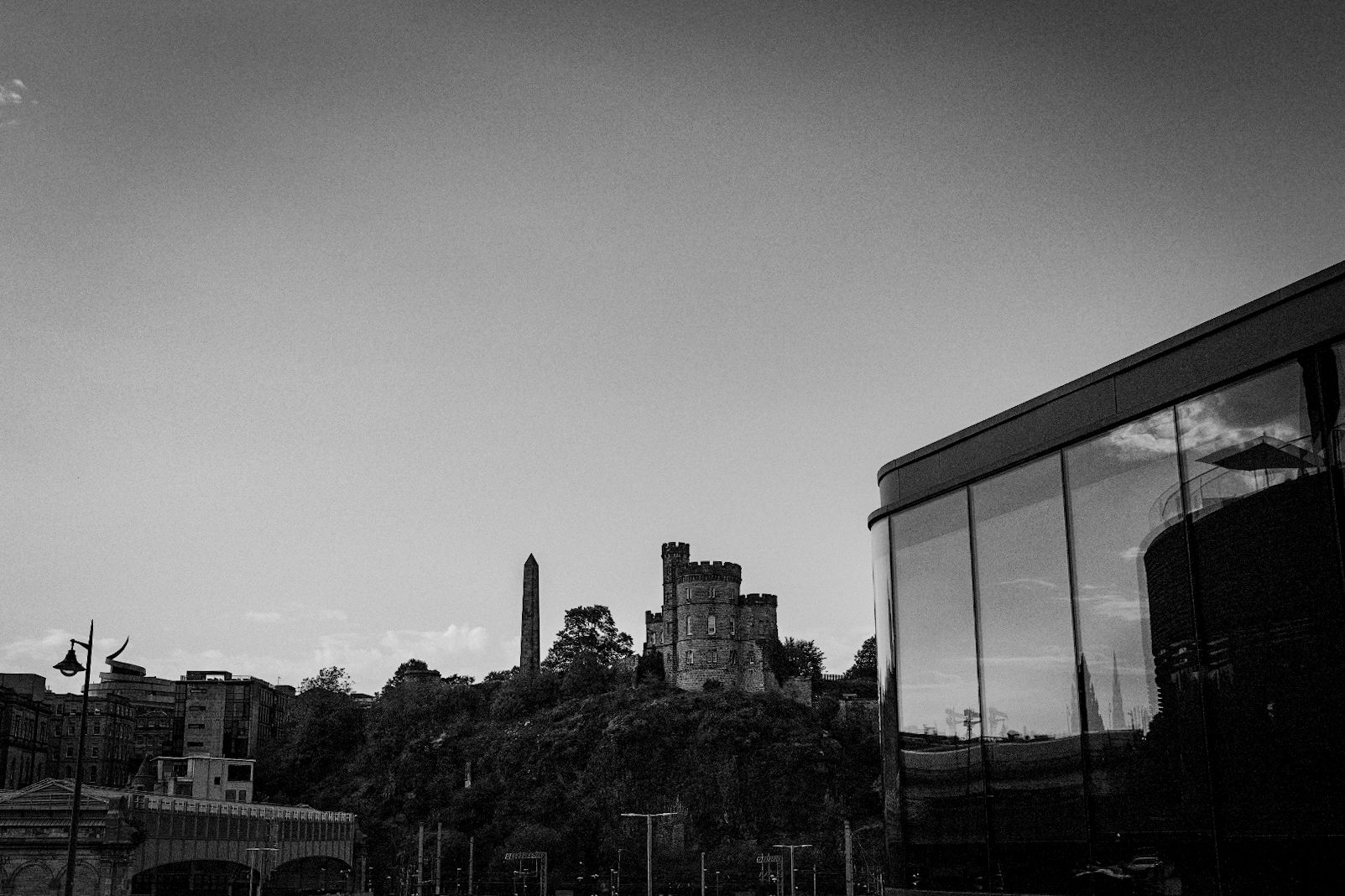
Edinburgh, Scotland 2025

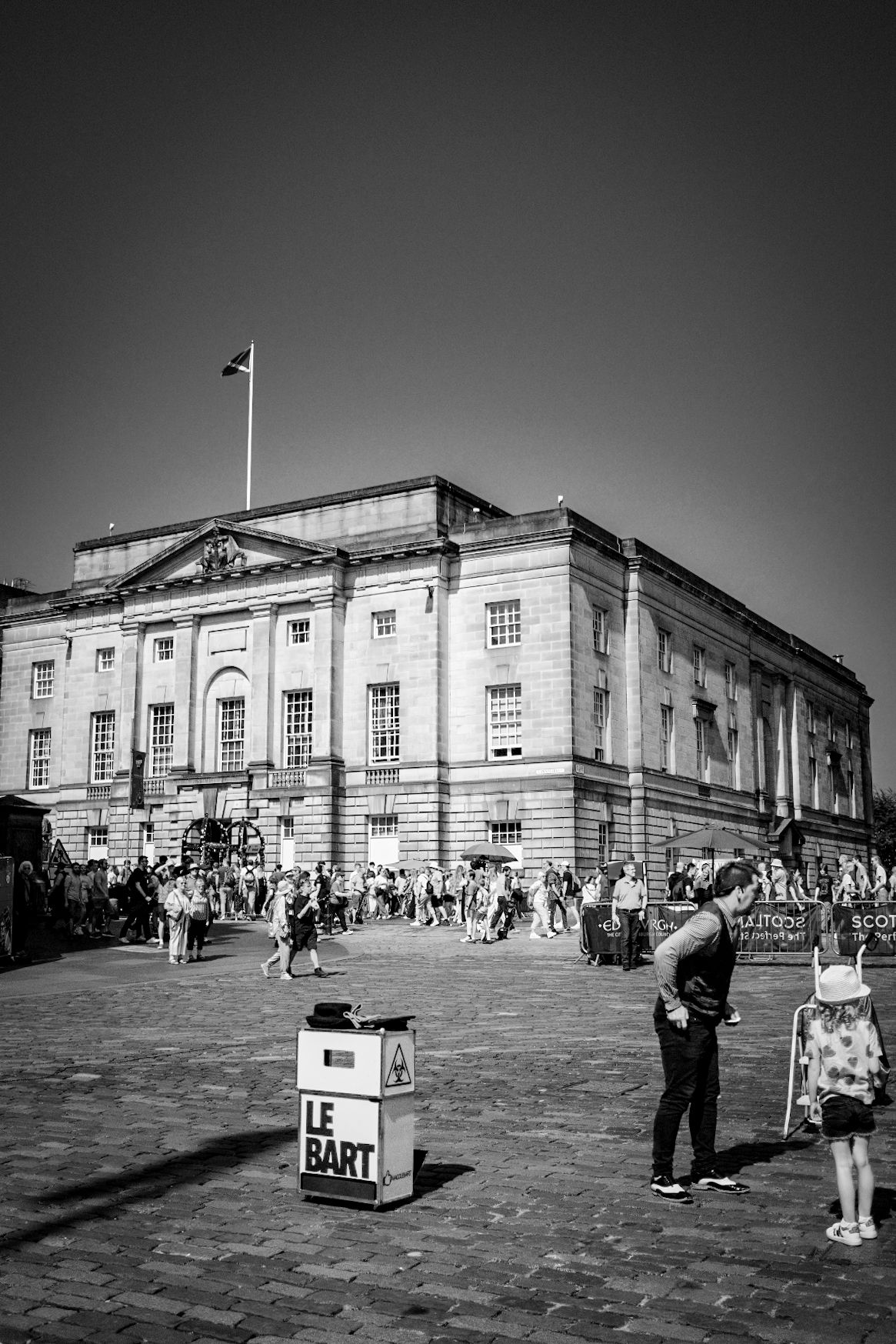
We’re still in Edinburgh. We’re walking down the Royal Mile. It’s festival season. There are plenty of shows to watch, and the one we saw first was by Max Von Trapp. Not to be confused with the Sound of Music Von Trapps, but a comic magician. One of my favourite kinds. The jokes and tricks rolled fast, as did my laughter.. Kate laughs at all the jokes, even the more adult-focused ones, just like Killian did when we visited the festival when he was that age.

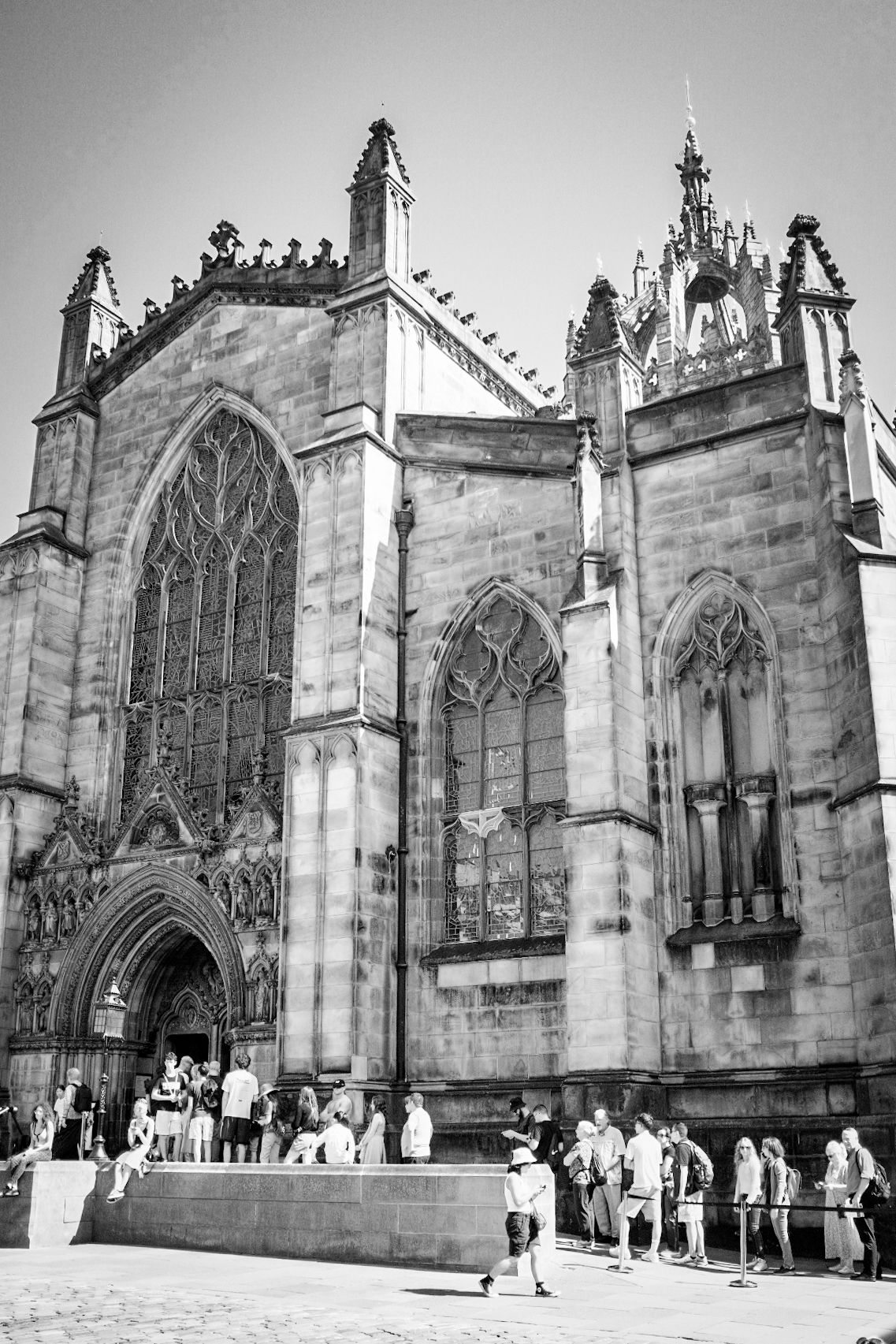
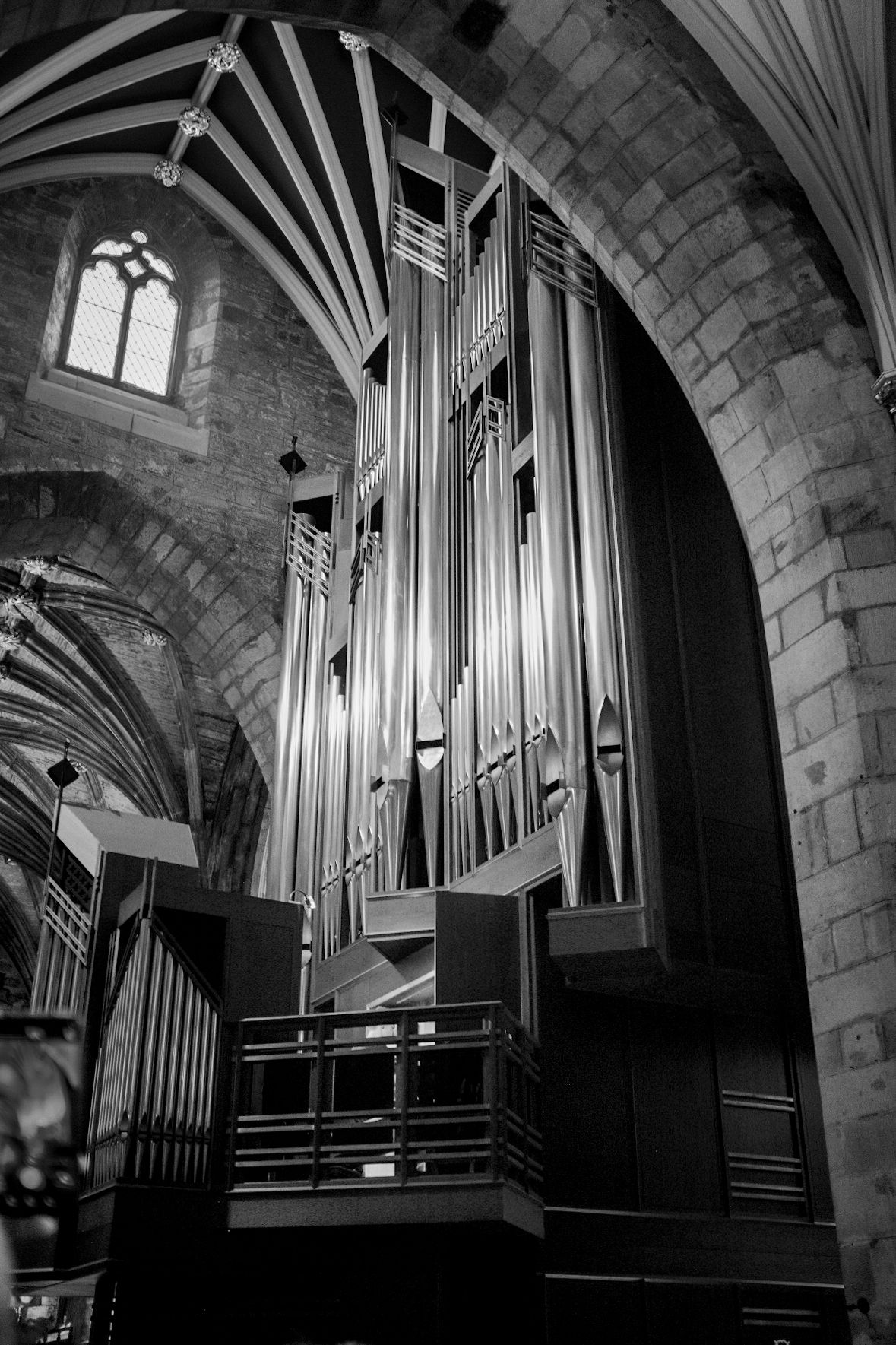
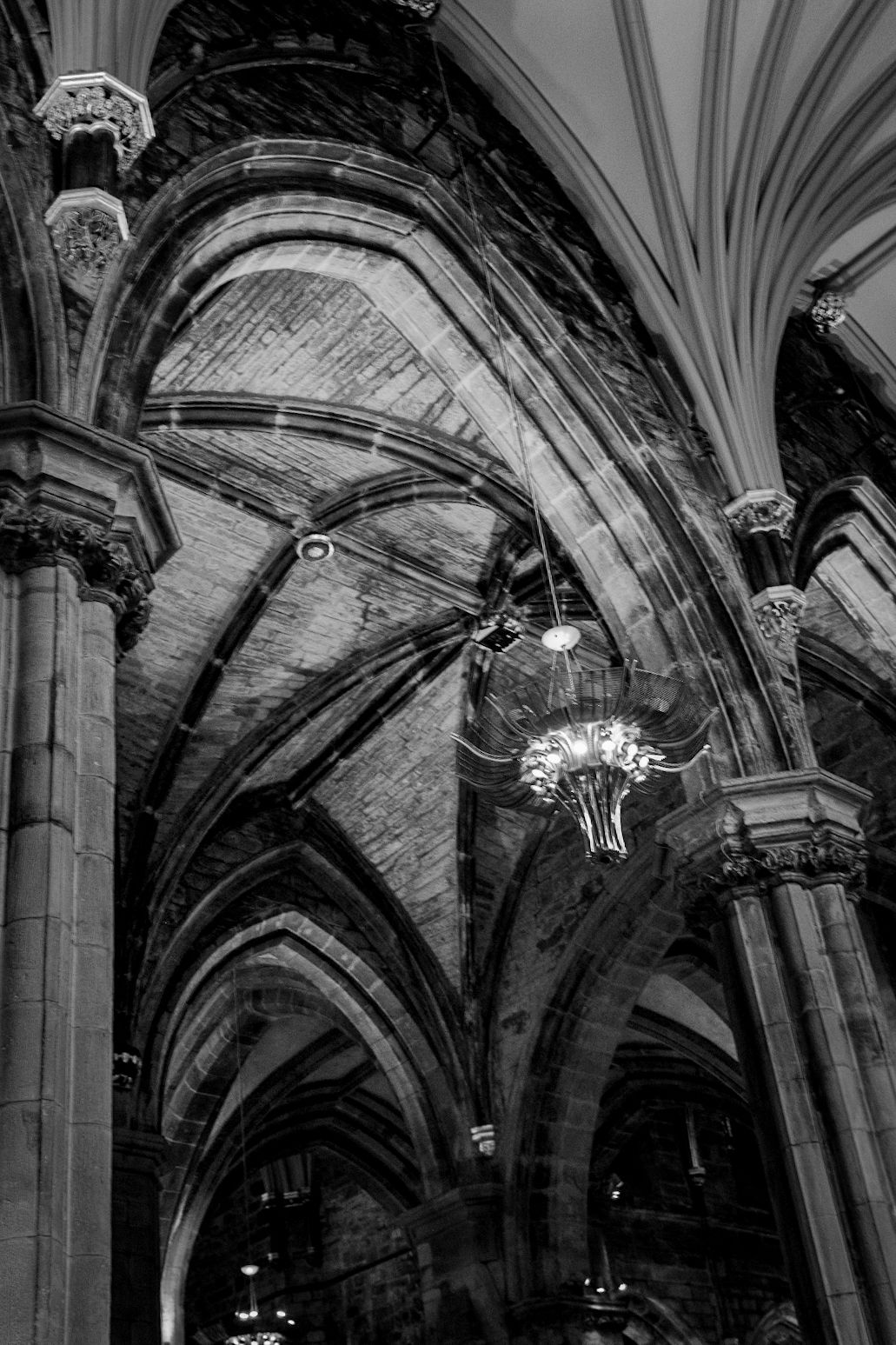
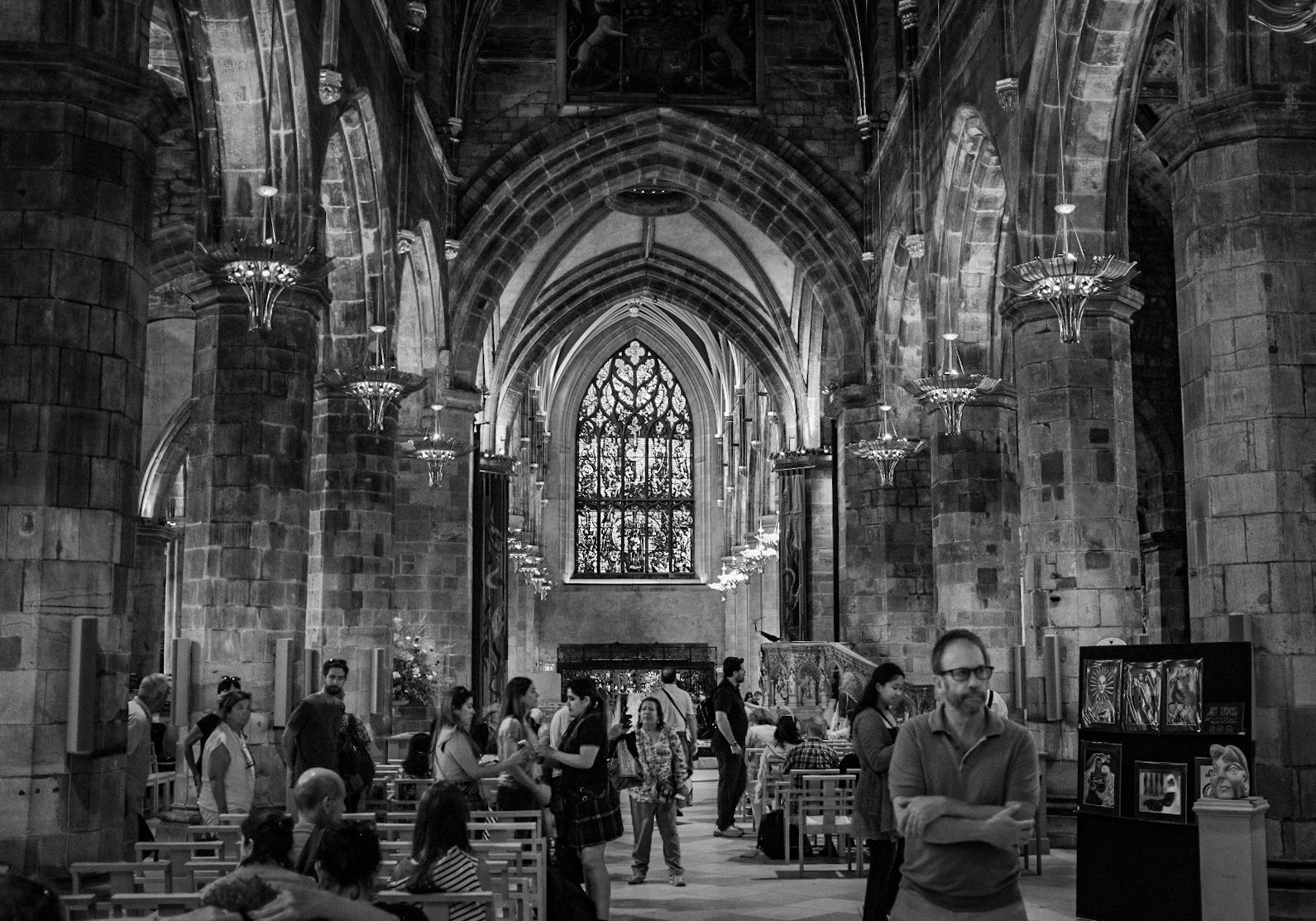
Saint Giles was our next stop. As you know, I’m Catholic, not Protestant. As we wandered through the national Cathedral of Scotland, I was struck not only by the beautiful organ music, but by the lack of the familiar Stations of the Cross, the statues. The centre of attention was not the Lord and the sacrifice of the Mass, but the preacher’s pulpit. I felt this lack and prayed my daily Rosary, head bowed in prayer.

I joined Kate outside, slightly perturbed by the experience.

Lunch was a kebab. Simple and delicious. Kate loved it.

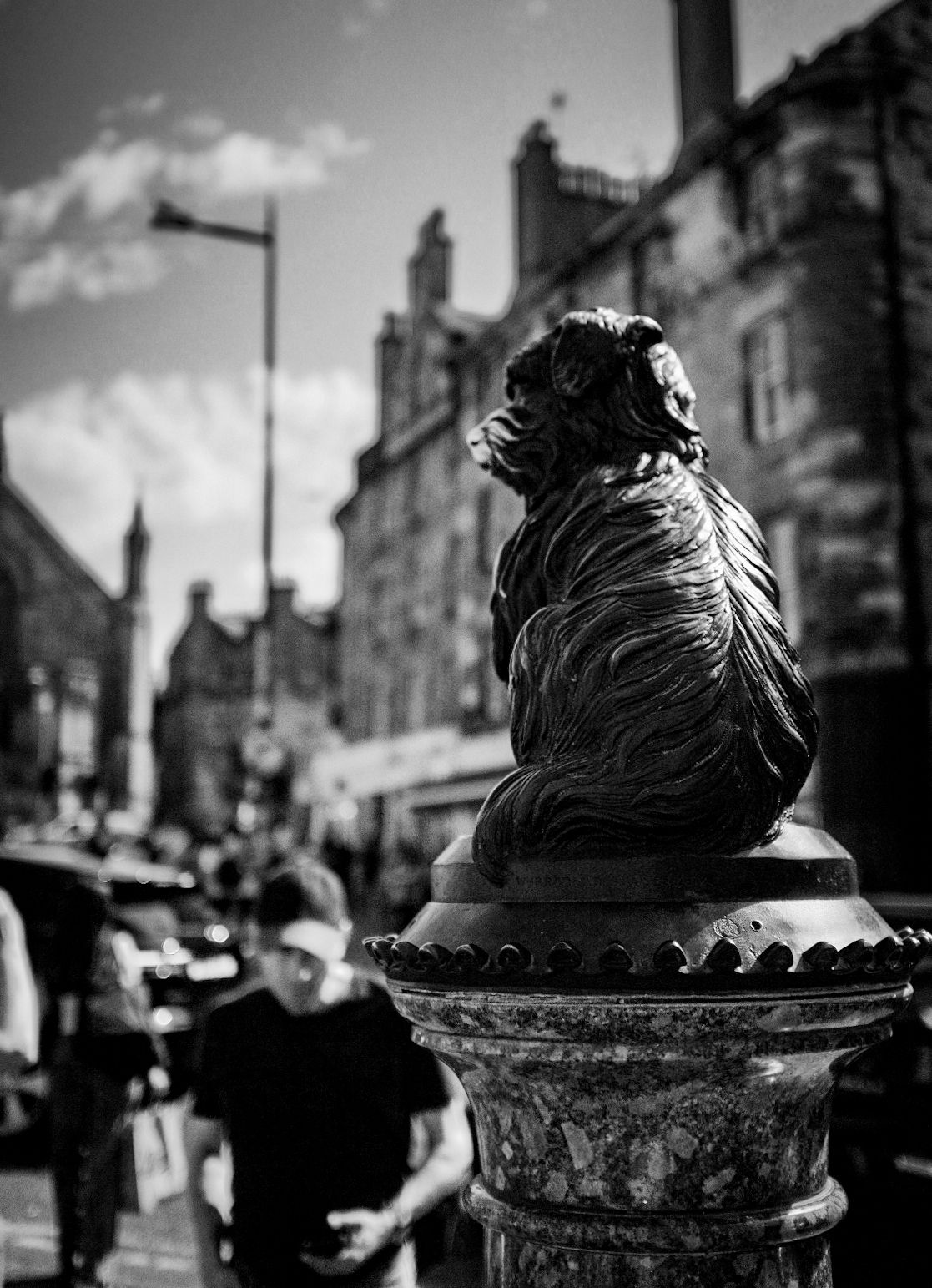
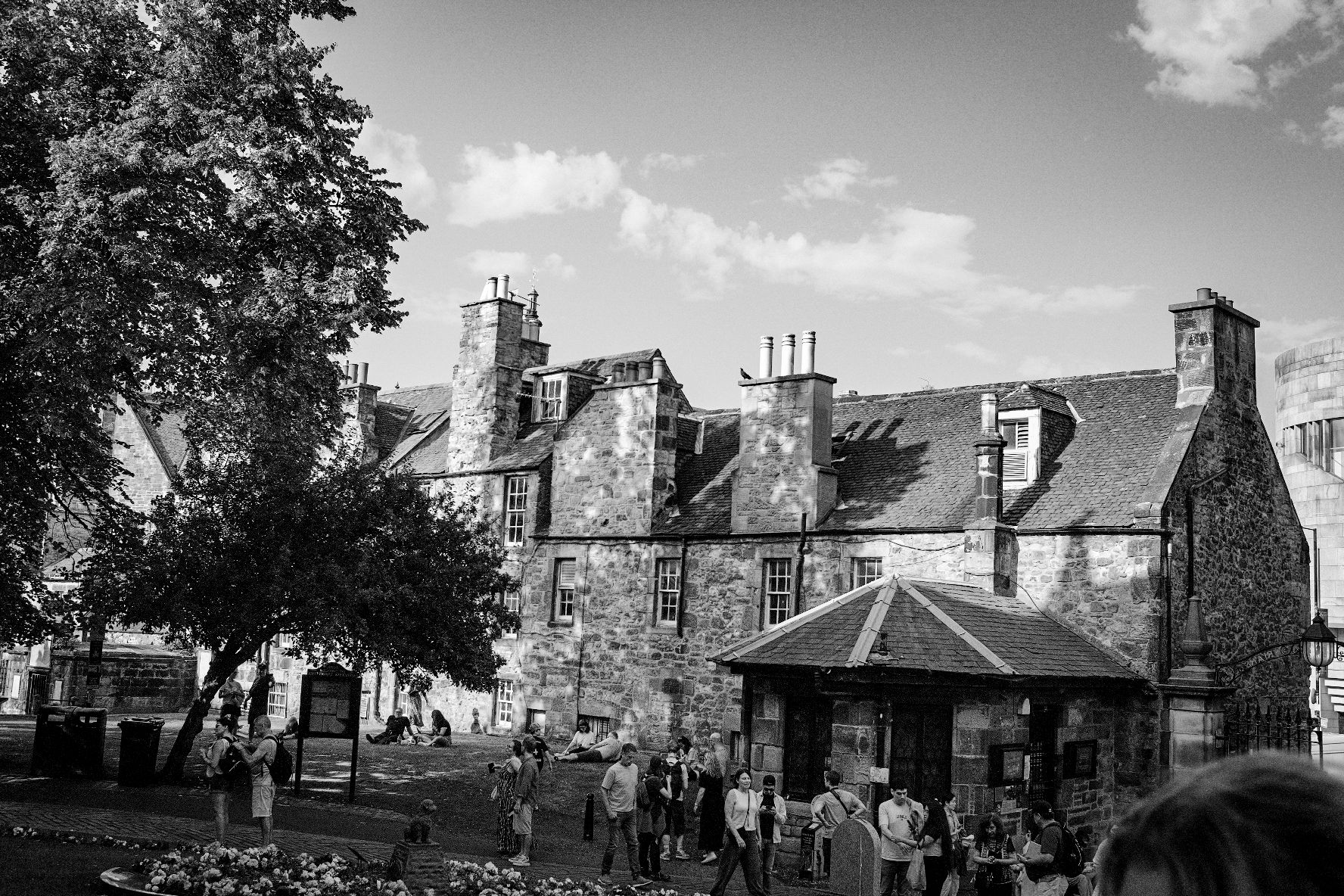
It was time to move on to see Greyfriars Bobby, a wee brown dog, famous for his loyalty. The legend is such that the people of Edinburgh raised a statue to honour him, and people rub his nose either for luck or as a sign of affection. I went into the Greyfriars Pub for some Guinness, reflecting on my own dog Molly, now 16, who greets me every morning as if I’m her favourite person and gets all excited when I get home from work. I can see why wee Bobby was a legendary dog, and why he inspired so many people.

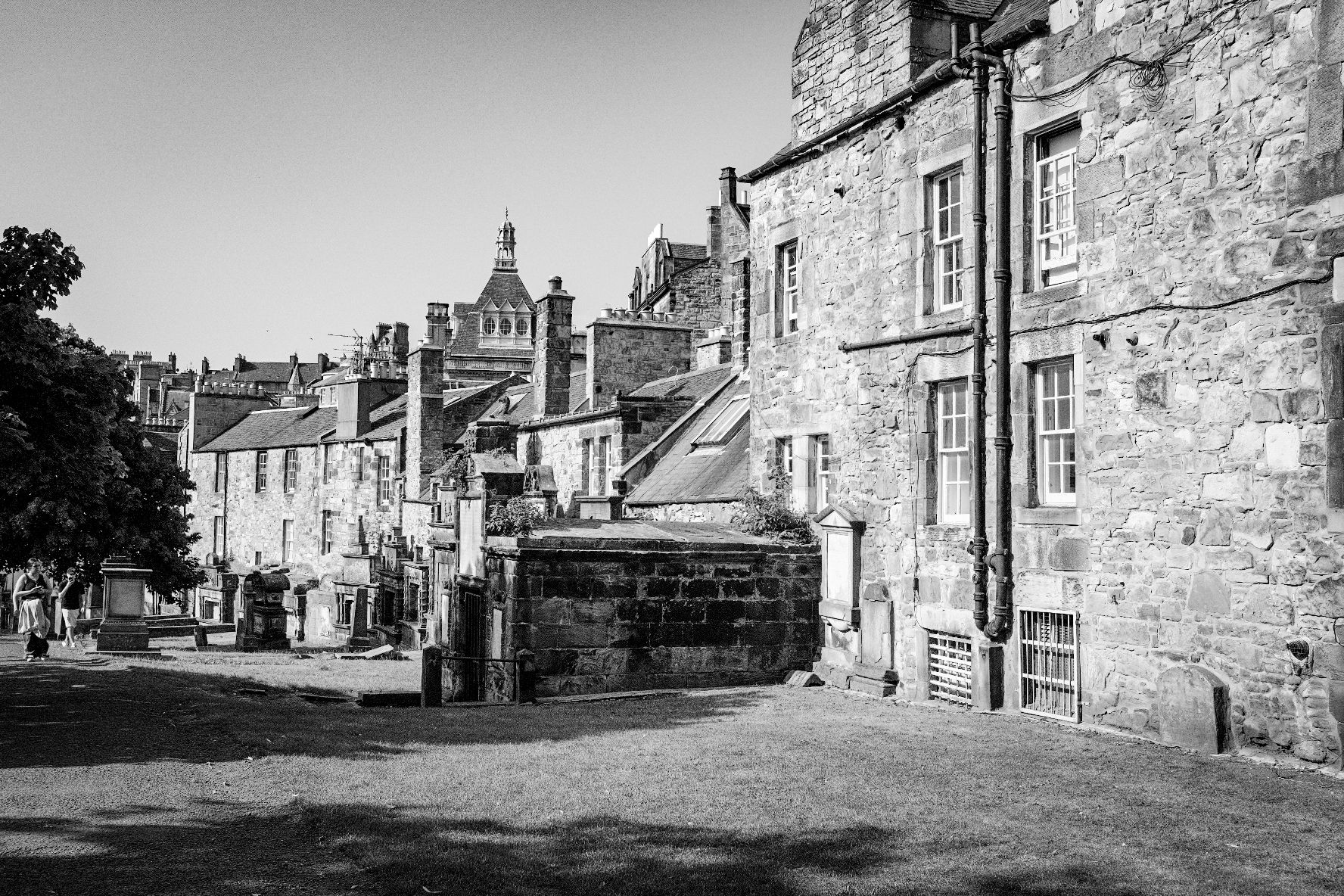
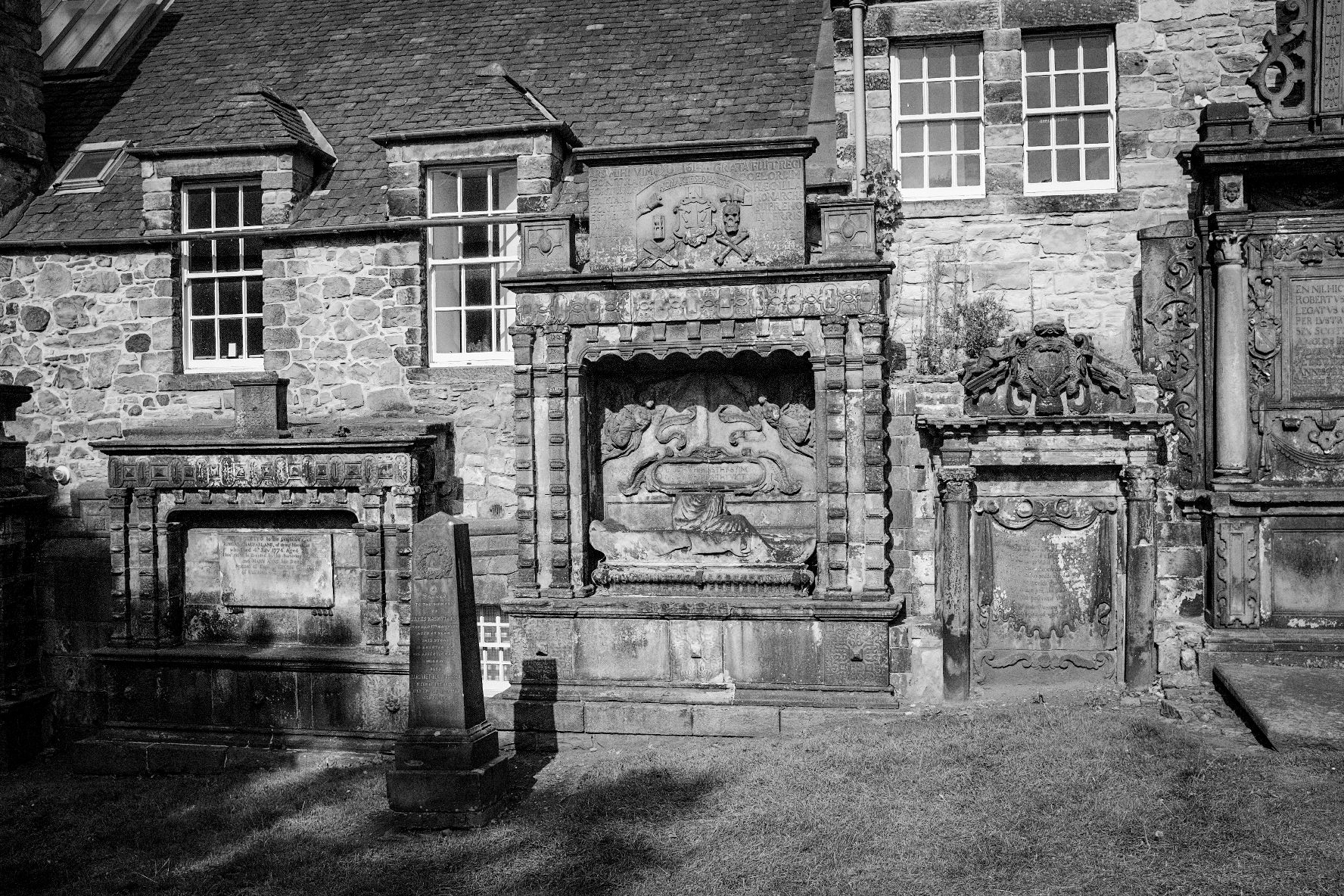
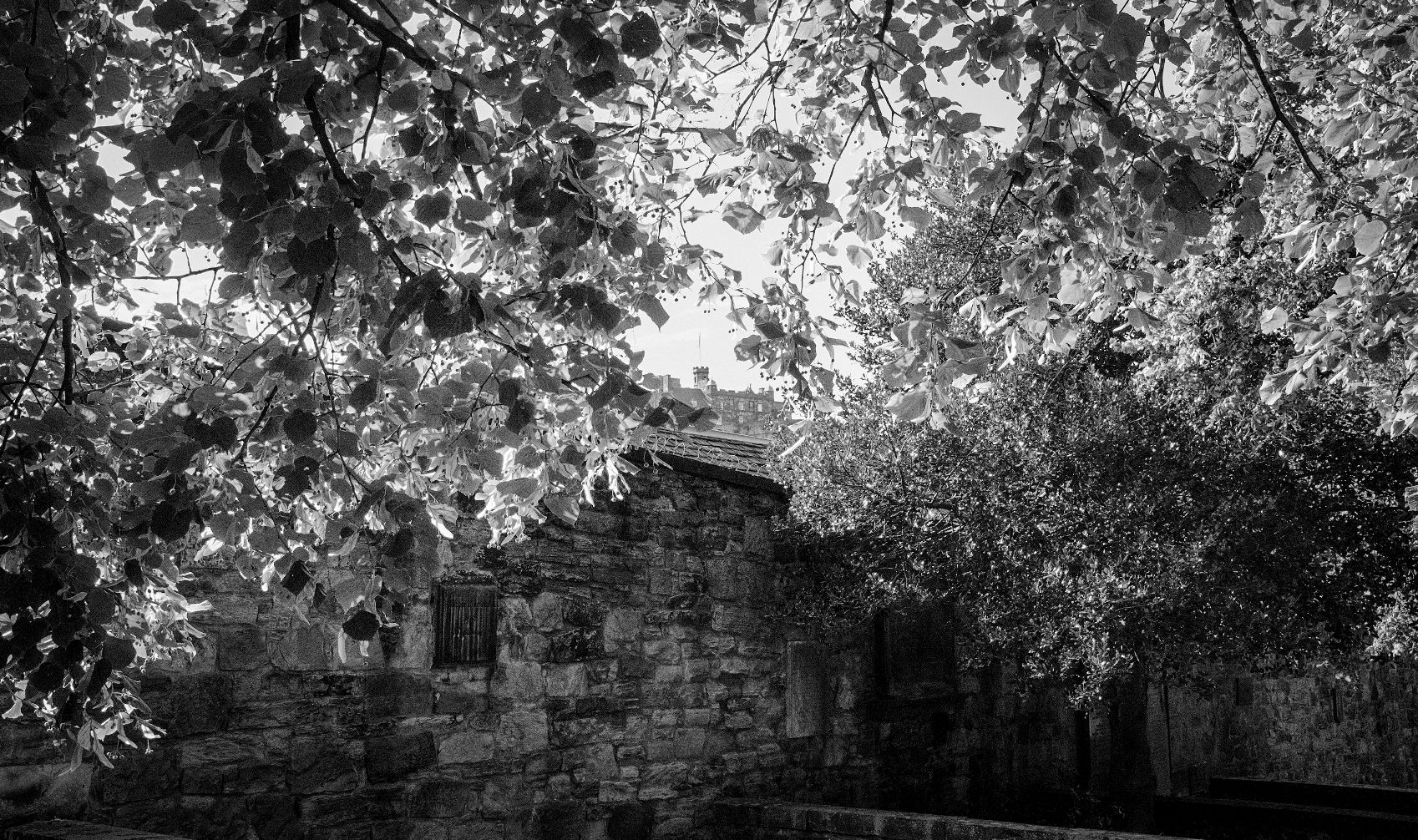
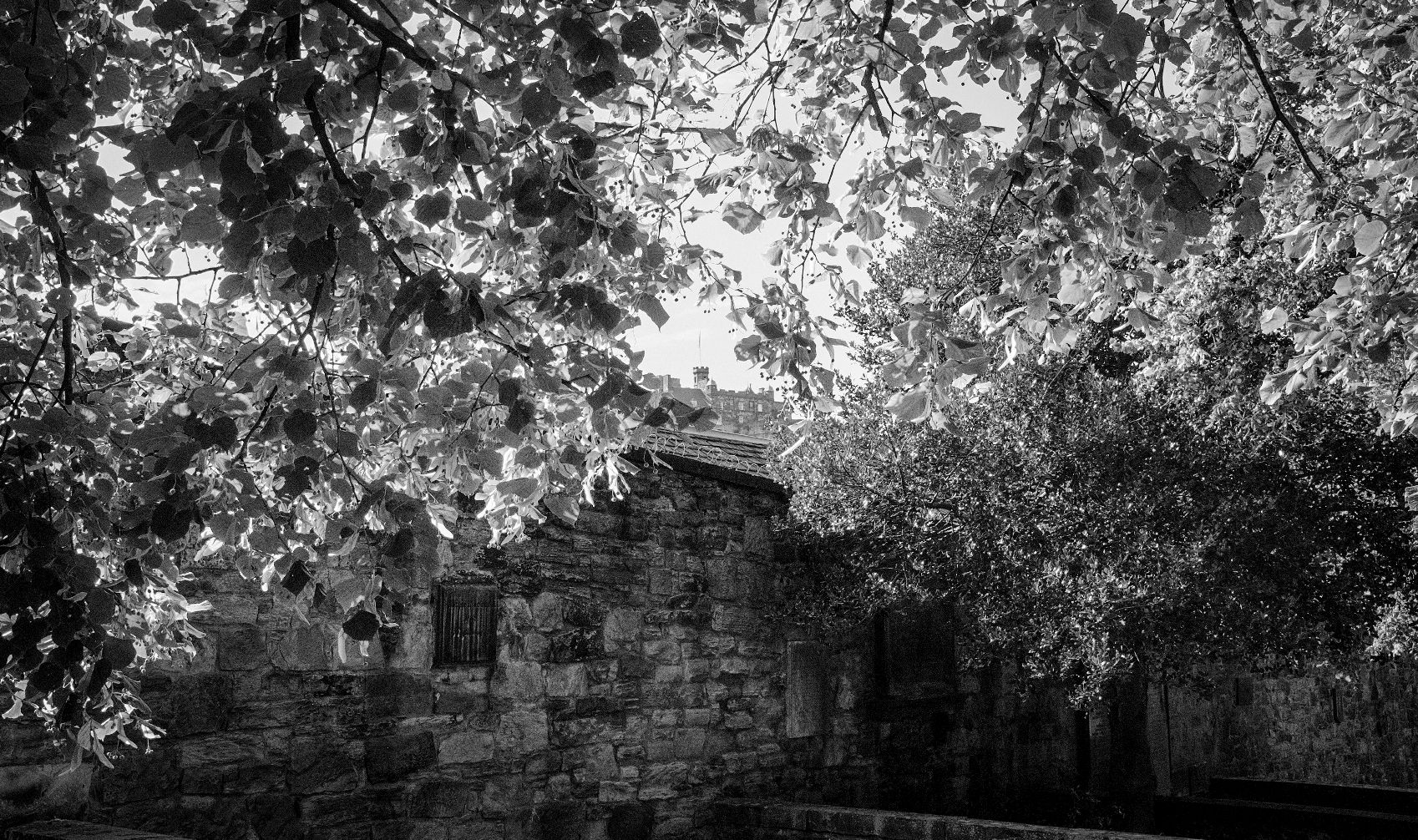
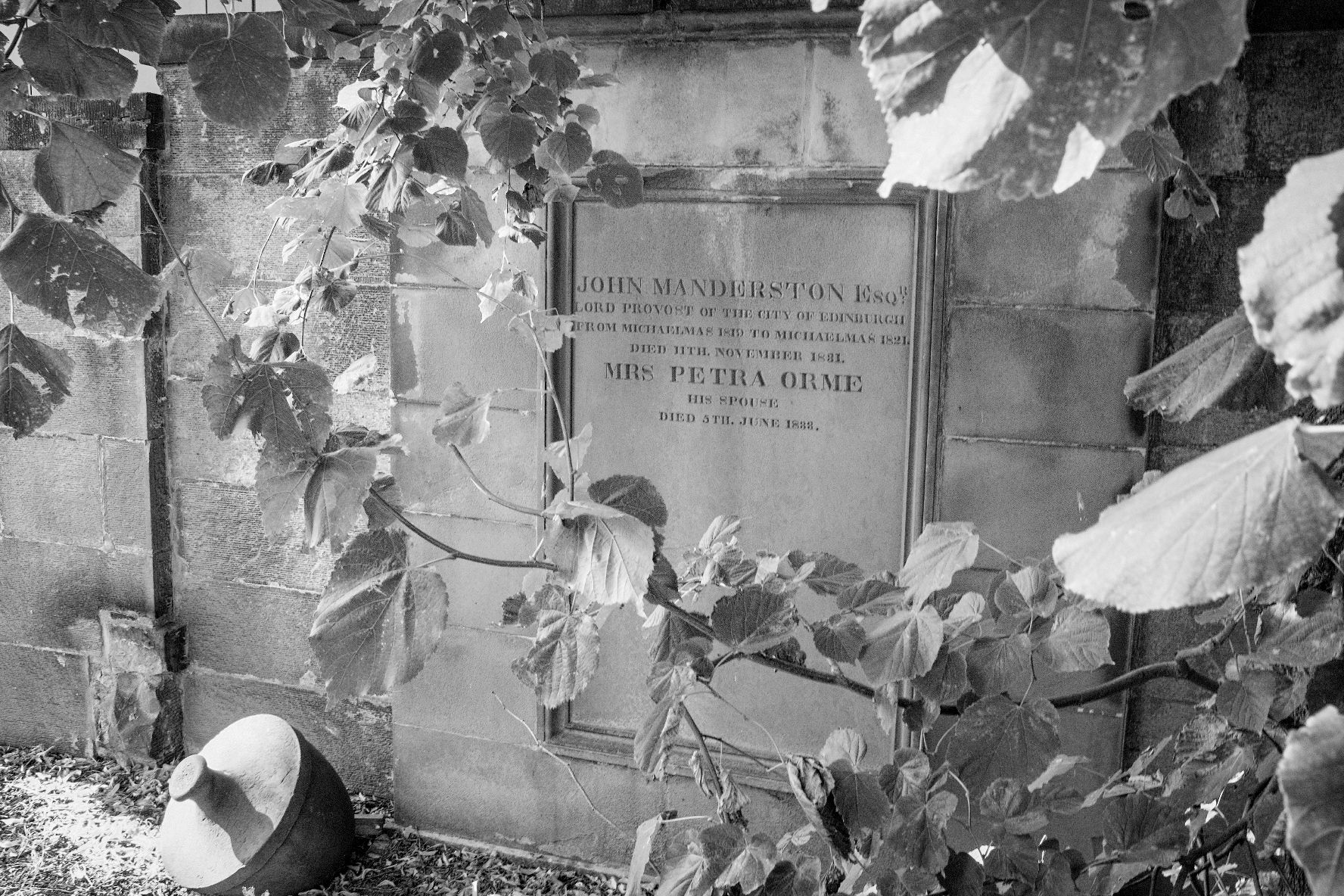
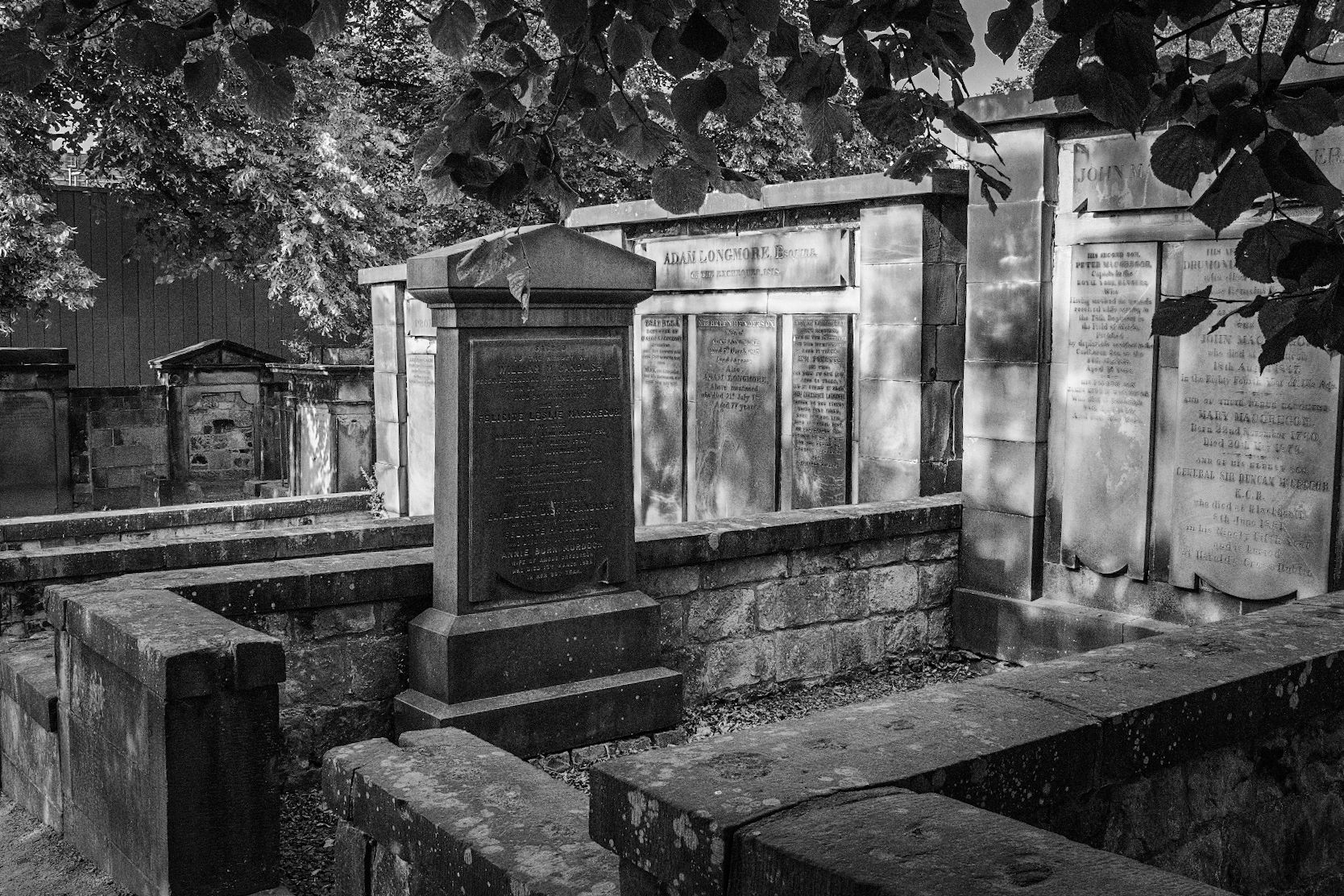
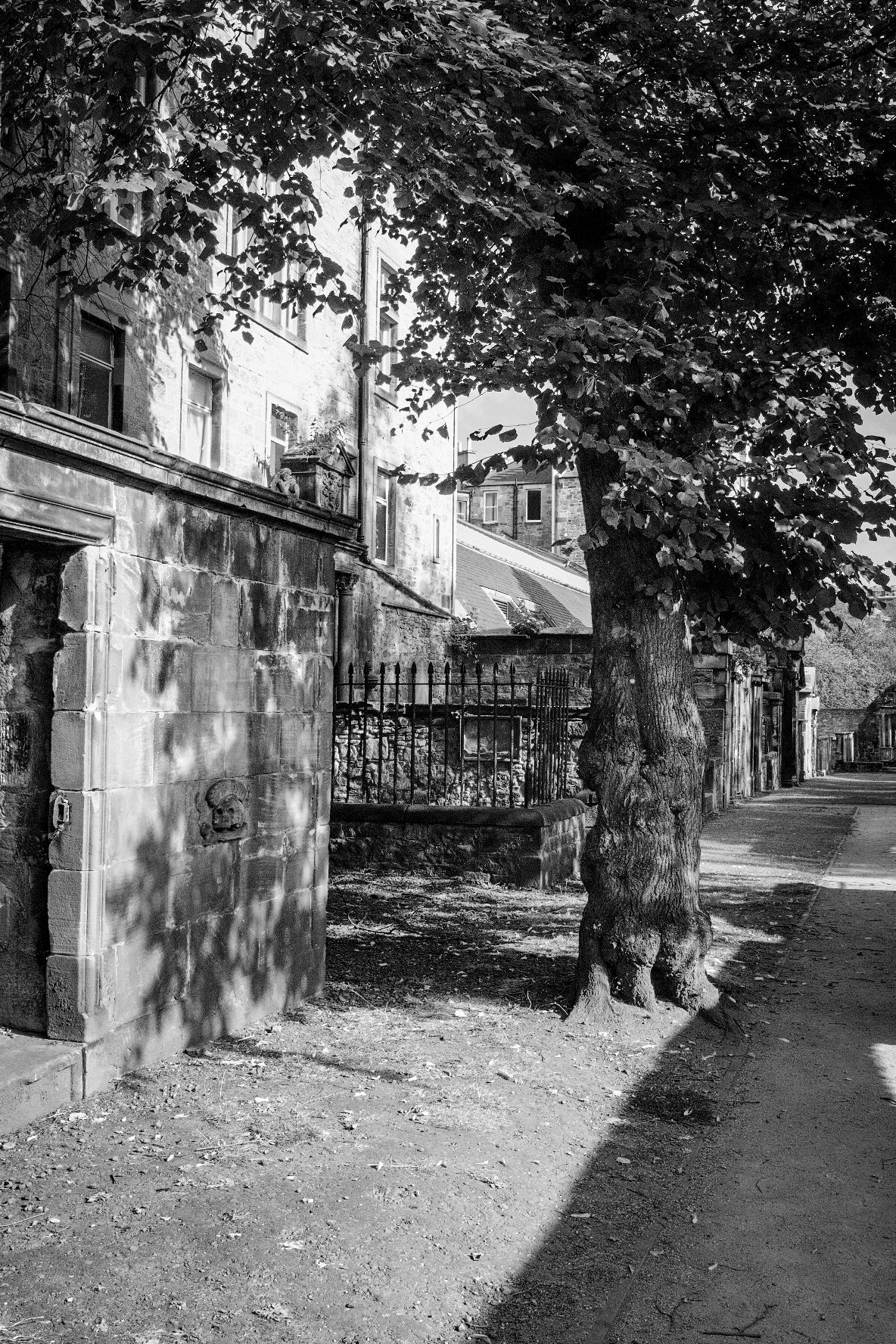
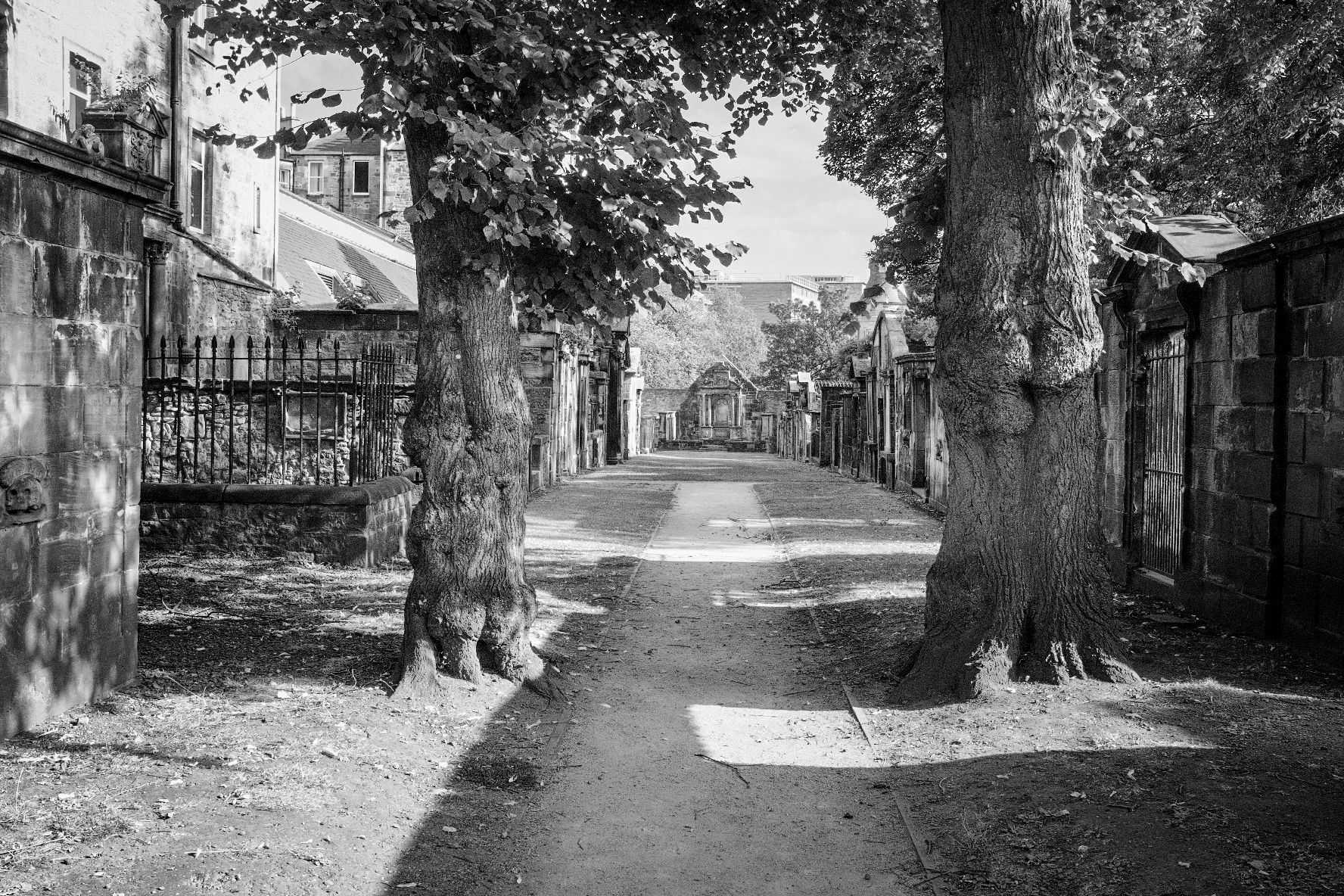
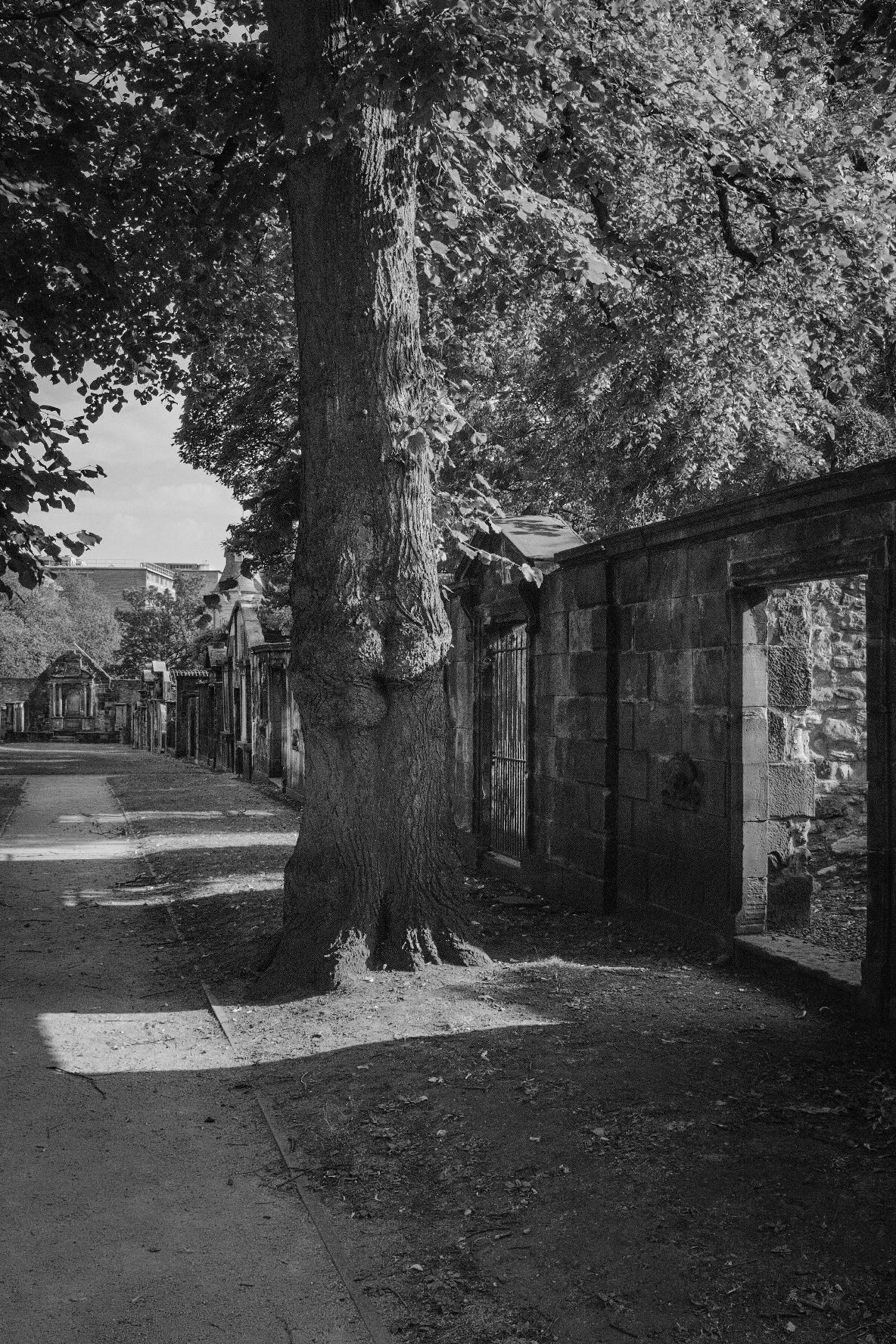
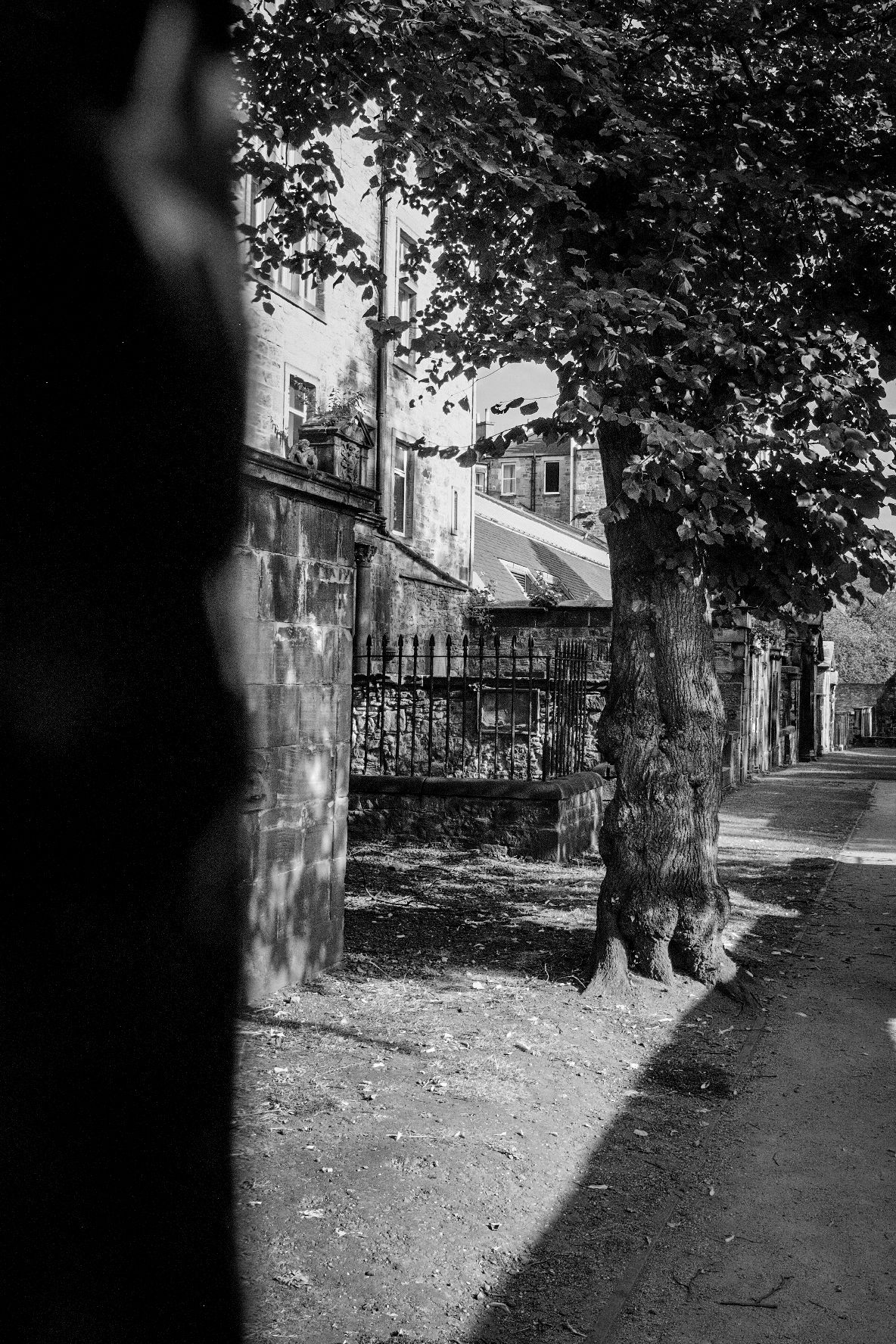
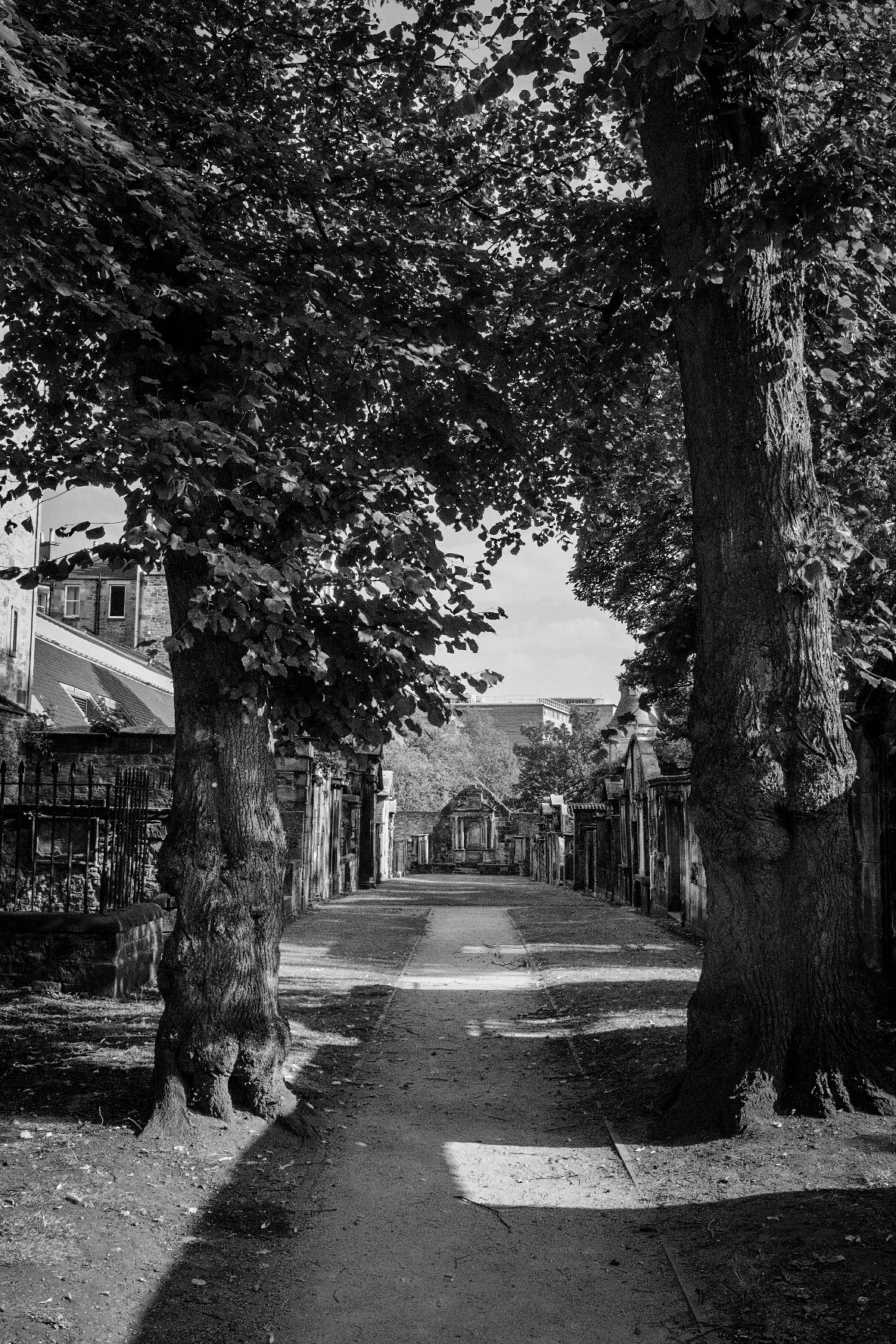
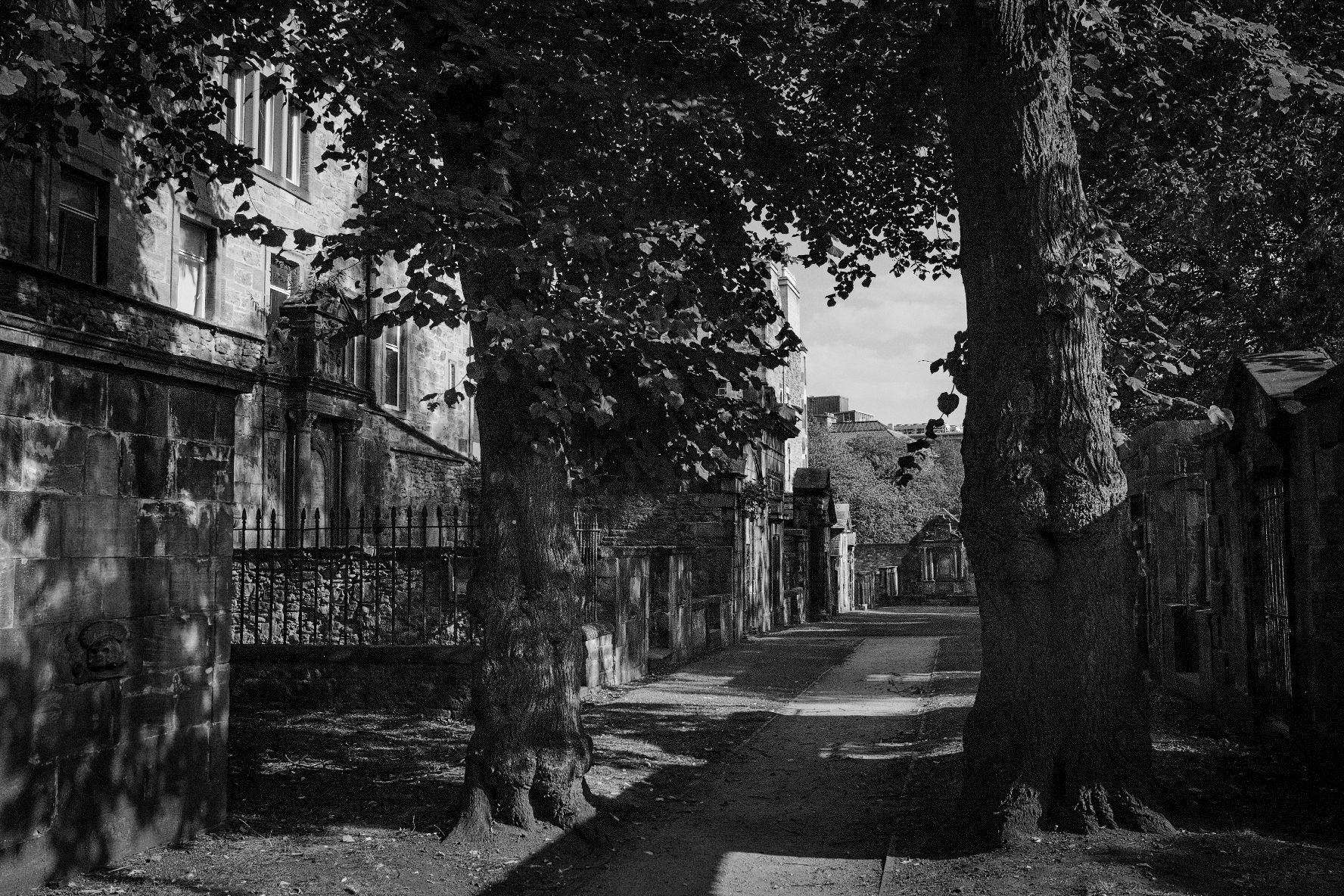
We wandered through the graveyard looking at the tombs of the citizens of Edinburgh from the past. And we found a certain Thomas Riddell who JK Rowling used in her books. Kate acquiesced and allowed me to take her photo in front of it.

We ventured towards the Covenanters’ section of the graveyard, supposedly the most haunted section. I felt nothing and saw nothing, but Kate started to have a headache. We paid our respects and decided to find Bobby’s grave at the entrance. Kate noticed the sticks put on his grave, as you might leave a favourite dog toy. She just had to go and find him a suitable stick. Bless that dog. Teaching us a valuable lesson in pure love years after his death.

We ventured back out onto the streets of Edinburgh, leaving the relative tranquility of the graveyard behind us. This was about to be the reason she wanted to come to Edinburgh in the first place: a cocktail bar. But not any ordinary cocktail bar. The Geek Bar, decorated every four months into a new theme. The theme she wanted was from a video game that she plays with Killian. Oh no—they’d changed everything… It was now all about Stranger Things on Netflix—something I had heard by name but knew nothing else about.

Liquor? Maybe quicker, but it’s not something I’m a great fan of. The lady took our order and explained the concept. I felt as if I was in Starbucks for the first time. She asked which flavours I liked, and with her expert help, I made up my mind. The drink was obviously dangerous—too smooth, too sweet—and I couldn’t feel the alcohol. Neither could Kate, who was only allowed a mocktail. I have to be a responsible parent after all. The second round was just as deadly, and I was beginning to feel very happy. I wonder why…

So maybe, at the end of all this, the real magic isn’t in the tricks or the drinks or even the famous city. It’s just—being there. Following your children into their weird, wonderful universes, and watching them set the place on fire with laughter.
And really, what’s better than that?

Through the Lens of Love: Reframing Shakespeare’s Sonnet 18


I can hear you already, Dear Reader:
“Hang on—I thought this blog was about travel photography and orchestra tours in China?”

As John Cleese once said:

“And now for something completely different…”

Cue the Monty Python music—though this isn’t a cue for absurdity. No fish-slapping dances today.
This is about something more dangerous.
Love.
And Shakespeare.

Because—let’s face it—love, actually, is all around us (thank you, Hugh Grant).
We’ve sung it:

All you need is love.
Love lifts us up where we belong.
L is for the way you look at me…

We’ve worshipped it, doubted it, messed it up, and come crawling back to it. Love is a million things at once: cringeworthy, glorious, selfish, sacred.
But the question still nags:
Can love ever truly last?
Or does it begin to fade the moment it’s held too tightly—like a flower picked for its beauty, already wilting in your hand?

Framing Love Through a Different Lens

Lately, I’ve been experimenting with video—combining image, voice, rhythm, and mood. So I made a simple film of me reading Sonnet 18. Just that. No music. No flair. Just words and breath.

“Shall I compare thee to a summer’s day?”

It’s one of Shakespeare’s most enduring sonnets—often quoted, rarely thought about beyond the first two lines. But I kept coming back to it. The idea that beauty, once seen, must fade. That time steals everything. And yet, art—poetry, photography—dares to say, maybe not.

A Thousand Words (and Then Some)

Somebody once said a picture is worth a thousand words. Even—dare I say it—words from the Bard himself.
And I think photography, at its best, tries to do what Shakespeare was doing: hold something fragile in the light. Give it form, give it space to breathe. Defy time.

“So long as men can breathe or eyes can see,
So long lives this, and this gives life to thee.”

Photography, like poetry, tries to preserve what’s already slipping through our fingers. The moment. The light. The love.

The Beauty of Fleeting Things

Now, I’m no literary scholar, but I’ve read enough sonnets to know that Sonnet 18 isn’t just flattery. It’s an argument against impermanence.
Yes, the beloved is “more lovely and more temperate.” Yes, “summer’s lease hath all too short a date.” But what makes the poem sing is Shakespeare’s refusal to let beauty fade quietly.

He doesn’t just admire. He memorialises.
And in doing so, he teaches us something profound:
It’s not the flower that lasts—it’s the memory of the flower.

In the North of England where I’m from, summer is short and unpredictable. Think Whitley Bay in May, where shirtless Geordies drink lager for temperature control, and the ice cream vans do brisk trade under grey skies.
We know the value of warmth because we only get so much of it.

Now, here in France, the summers are longer—but just as fleeting in their own way. The light is different. Softer. Still just as hard to hold on to.

Love Over Time

This brings me to the other lens I’m always looking through: my marriage. My wife and I met over three decades ago. We’re not the same people we were in our twenties—and thank God for that. Love has changed. Grown. Softened. Been tested. And held.

What I felt for her then wasn’t what I feel now—and yet it was the seed of it.
Love doesn’t stay still. That’s its curse—and its beauty.
The woman I love today isn’t the girl I fell for. She’s a mother, a partner, a woman of strength and kindness. My love for her has lines and weight now. It’s been through storms.

The Voyage and the Wind

There’s a line in the sonnet:

“By chance or nature’s changing course untrimm’d…”

Untrimmed sails. It’s a nautical image. Love as a voyage. And not always one with calm waters.

As a Catholic, I believe in the indissolubility of marriage. That it’s not just about romance, but about helping each other get to heaven. My in-laws divorced; my own parents didn’t. I’ve seen love crack. I’ve seen it heal.

Marriage isn’t a fairy tale—it’s work. But it’s also a grace. When it’s hard, I try to fix things rather than walk away. Not always perfectly, but with intention. And, frankly, with faith.

Love Through Generations

My son has just left home—for the second time—after his first real heartbreak. It was messy, as first loves often are. But he’s learning, like we all do. Hopefully he’ll come through it wiser, maybe even gentler.

My daughter’s still a child—full of confidence and conviction. She thinks she knows what love is. I just hope I can guide her without crushing her wonder.

Love, like light, bends. It shifts over time. And sometimes, we only recognise its shape in hindsight.

Art, Memory, and the Illusion of Permanence

A photograph feels eternal. But look again a few years later, and the people in it start to look like ghosts. Hair a bit darker, clothes out of style, expressions younger than we remember.

Art doesn’t stop time—it echoes it.
We take photos because we want to remember. Because we want someone—someday—to know we were here.

That’s the power of Shakespeare’s sonnet.
He didn’t name the beloved. We don’t know who it was written for. But we feel the love.
That’s the part that endures.

Conclusion: Remember Me

I think, deep down, we all want more than to be loved.
We want to be remembered.

That’s what a sonnet does. That’s what a photograph can do. They capture light—just for a moment—and give it a place to live.

Sure, the image will fade. The print will yellow. But the feeling? That can echo for generations.
It might not be eternal in years—but it can be eternal in resonance.

So long as men can breathe, or eyes can see…

A Photography Philosophy – Part II – Why Do We Photograph?


Cameras. Why? What is it that makes us pick one up? For me, a camera is not merely a beautiful object; it’s a tool—a simple box, with a lens through which light passes, creating an image on film or a sensor. Whether the box is a hundred years old or fresh off the production line, the same principles hold true. Even our phones are, in essence, an evolution of that same box. But beyond mechanics, what truly drives us to take a photograph?

The Kodak company told us it was all about “capturing that Kodak moment.” But what exactly is this moment, whether created by Kodak or any other company? Firstly, it was a stroke of marketing genius, associating a photograph with a personal, meaningful memory. Secondly, it gave us a compelling reason to pick up a camera and capture memories to share with others, possibly even sparking the first instances of FOMO (fear of missing out), which is now so prevalent in social media. Kodak cleverly linked photographs with significant memories, encouraging us to reach for our cameras. How kind of them.

Yet, let me assure you, it’s not a cure for FOMO, despite what Kodak or social media might suggest. Or at least, not entirely. I use my photography to document the world around me at a given moment in time. Photography is the only art form that allows you, the viewer, to see something through my eyes as I saw it. But while photojournalists capture our world, photography is not solely about documentation.

It’s about storytelling through images. A single photograph can hold an entire narrative within its frame, suggesting more than what’s immediately visible. But often, I find I need multiple images to fully convey a story. When I write my blog pieces, I aim to tell the story in both words and images. I guide you through a carefully curated selection, hoping that you might connect with them in the same way I did. This connection—between the photographer and the viewer—is, for me, one of the most powerful aspects of photography. Through our lenses, we offer others a brief glimpse into our world, our experiences, and our feelings. It’s a reminder that storytelling is more than just documentation; it’s about creating a shared space for interpretation and emotion.

Of course, beauty is also an integral part of why I pick up a camera. There’s something undeniably fulfilling about capturing a scene that feels, to me, perfectly composed. I like to believe I can craft a visually pleasing image and employ various techniques to do so. The idea is to present a scene so that the photograph conveys how I saw it, inspiring you to feel something. Photography is the only medium or art form that allows you, the viewer, to see something that only I saw, and because of the passage of time no longer exists.

It’s about creating art for art’s sake. In a world that constantly demands productivity and output, creating something purely for the joy of creating feels almost radical.

Then there’s the meditative side of photography. For me, the camera isn’t just a tool to create images; it’s a form of therapy. When I’m suffering from melancholia, or I’m lost in thought, stepping into the world as an observer through my camera often gives me a sense of calm. Looking through the lens allows me to disassociate from daily worries and approach the world with curiosity rather than anxiety. This small shift—seeing myself as a photographer rather than a participant—transforms the environment around me from something overwhelming into something inviting. The camera’s frame becomes a safe space in which I can explore without judgement or expectations. In this way, photography becomes a practice of mindfulness.

The process itself is deeply important. I often think of Vivian Maier, who left behind so many undeveloped rolls of film, underscoring the significance of the process itself. Born in 1926, Maier spent her life photographing the world without promoting her work. Of the 140,000 shots she took, only 5% were ever developed—a body of work unknown even to its creator. This fact alone astounds me. Perhaps she, too, was capturing moments for herself, deeply invested in the act of photography without any need for external recognition. Her legacy reminds us that the process can be as meaningful as the result and that photography has value even when the images are unseen.

In today’s image-saturated world, where everyone is encouraged to share, edit, and curate their lives, it’s worth asking if we’d still take photos knowing that nobody else would ever see them. For me, the answer is a resounding yes. Photography is more than a tool to impress, to document, or to share; it’s a means of expressing myself and, often, of making sense of my own experiences. Every image is a small act of discovery, helping me see the world more clearly or find beauty where I might not have noticed it before.

Ultimately, photography is a language, a form of communication that transcends barriers of culture, language, and time. A single photograph can capture something timeless—an unfiltered moment of life that can be understood and felt by someone across the globe. In this way, photography becomes a shared visual language, offering us a way to connect beyond words.

So, why do we photograph? Perhaps the answer is as varied as the photographers themselves, shaped by individual motives, experiences, and emotions. But whether we’re documenting, creating, or simply exploring, the act of photography invites us to see the world—and ourselves—with fresh eyes. And in the end, that might be the most compelling reason of all.

The Opening of the Film Archives: On va Marcher sur la Lune, Kate


Last week’s journey through the film archives took us to Nantes, specifically the Île de Nantes. While you’ve seen my photos from that day, I’m excited to share my daughter Kate’s photos with you.

Are these images works of art deserving of a gallery? Perhaps not, but they represent a delightful exercise in spontaneity. Captured by a seven-year-old “playing” with a camera, they offer a unique glimpse into how my young daughter sees the world. There are no rigid rules of photography or composition here—just an extension of her eyes. These photos are raw yet delicate, showcasing the world as she perceived it at that moment.

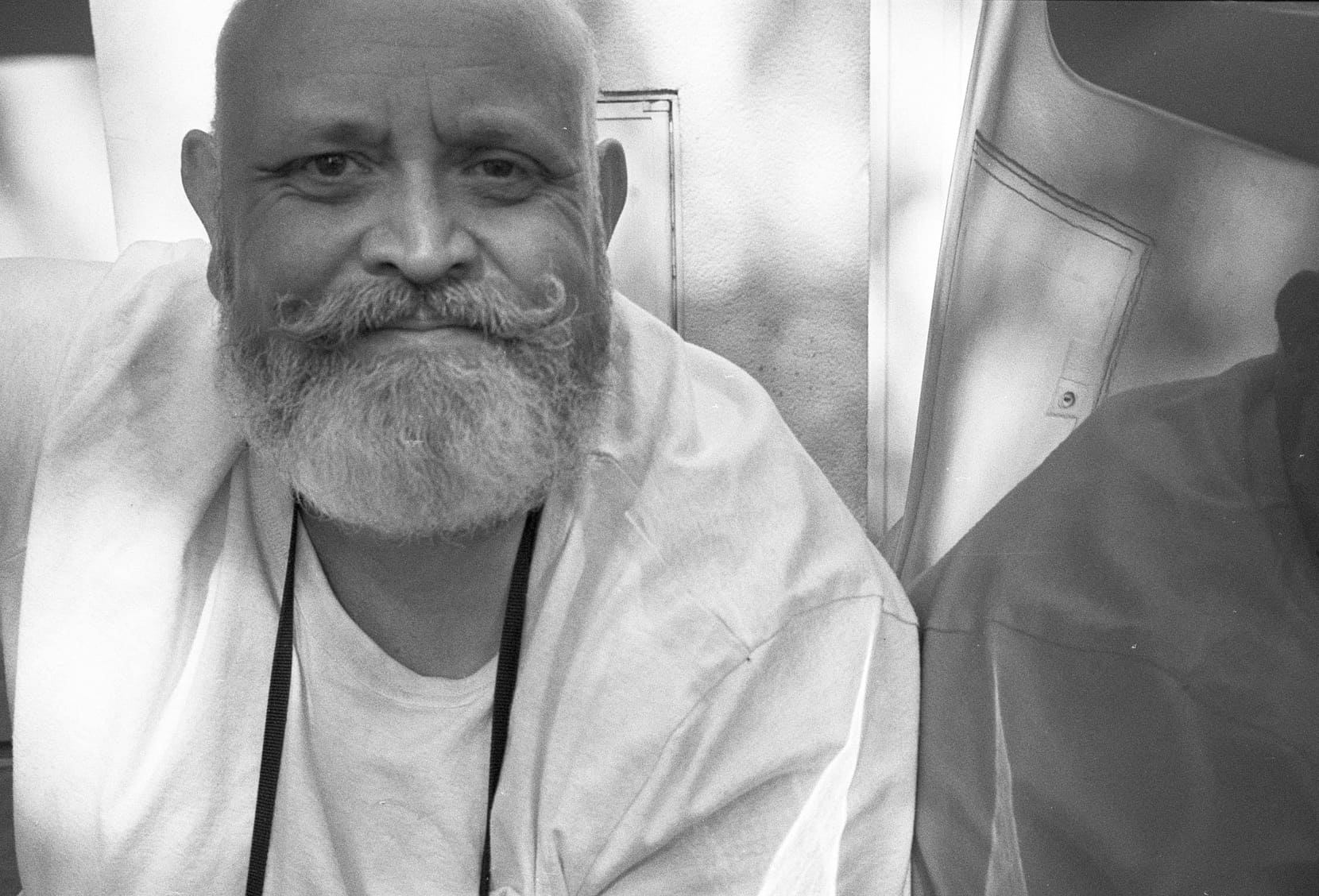
These photos mean a great deal to me, particularly the one she took of me with that glorious moustache! I’ve often discussed how the journey and process of photography can sometimes be even more meaningful than the final destination. That day was a significant part of that journey, and reflecting on my own first photos from that age fills me with nostalgia.

Why the Olympus Pen EE-S Is the Best Budget Film Camera for Beginners


Why the Olympus Pen EE-S Is the Best Budget Film Camera for Beginners (Even in 2025)

Pentax 17 fever is sweeping the film photography world, and I’ll admit, I was tempted. Half-frame cameras, with their promise of double the shots per roll, sound pretty amazing. But with a price tag of 500€, the Pentax 17 isn’t exactly within my budget. That’s when I rediscovered a little gem tucked away in my camera collection: the Olympus Pen EE S.

This Japanese-made half-frame beauty hails from the 1960s, the same era as the beloved Olympus Trip 35. Like its sibling, the Pen EE S features zone focusing and a selenium cell meter for fuss-free shooting. The lens is an F2.8 22.5mm Zuiko lens. The ISO settings go up to 200 ASA, unlike the Olympus Trip which goes up to 400 ASA. So, despite everything else, it needs light. The half-frame format means you get a whopping 48 exposures on a standard 24-exposure roll. That’s double the shots for your buck, folks!

Now, the idea of twice as many photos for the same developing cost is pretty appealing. But does the Olympus Pen EE S deliver the goods in practice? Stay tuned as I put this vintage camera through its paces and share my findings. Could this be the perfect half-frame hero for those of us who can’t quite swing a Pentax 17? Let’s find out!

Well, for starters, it felt very much like using the Olympus Trip 35. It’s very slightly smaller and weighs next to nothing. The shutter button is almost identical as well. Instead of having four zones for focusing, you have three, but it’s fine, and when you turn the dial, you feel a click as you enter a new zone. You point, and then press. Simple!

Let’s talk about this half-frame shooting experience. When talking about the Pentax 17, “they” talk about how the images are great for sharing on social media. A little like using your phone… This is the mindset that I had when putting in my Kodak Gold 200 to capture those famous Kodak moments in Nantes.

I found it a challenge to get used to the half-frame. “They” say that you have to take your photos as diptychs and remember that the two photos in your full frames are related, not just simple images. The idea is that when the two half frames are put together, you create a story and a suite of ideas, instead of two separate photos. I tried, and the results will show you if I succeeded. I felt that “they” were pulling my leg!

I’ll be honest with you. The idea behind the outing was to test the camera, see how I felt using it, and have a look at the results. It took me out of my comfort zone, which is something rare in photography for me. I was thinking about taking it to the UK with me to record the trip. It takes up next to no space in a camera bag and would allow me to shoot some film while back home. The idea of getting twice as many shots by using just half the frame is attractive. I’m just getting used to the reduced coverage that you get with just using half the frame.

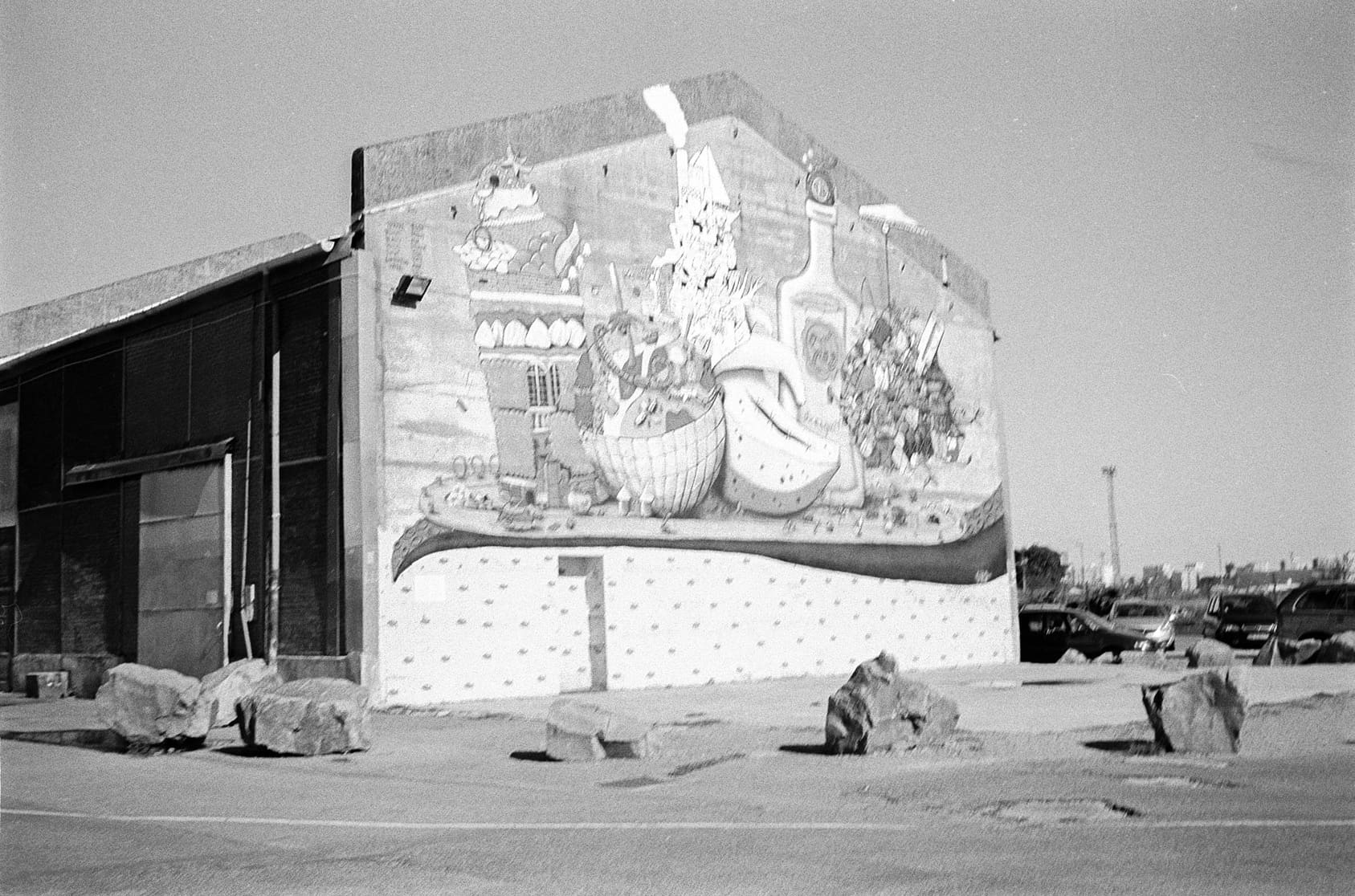
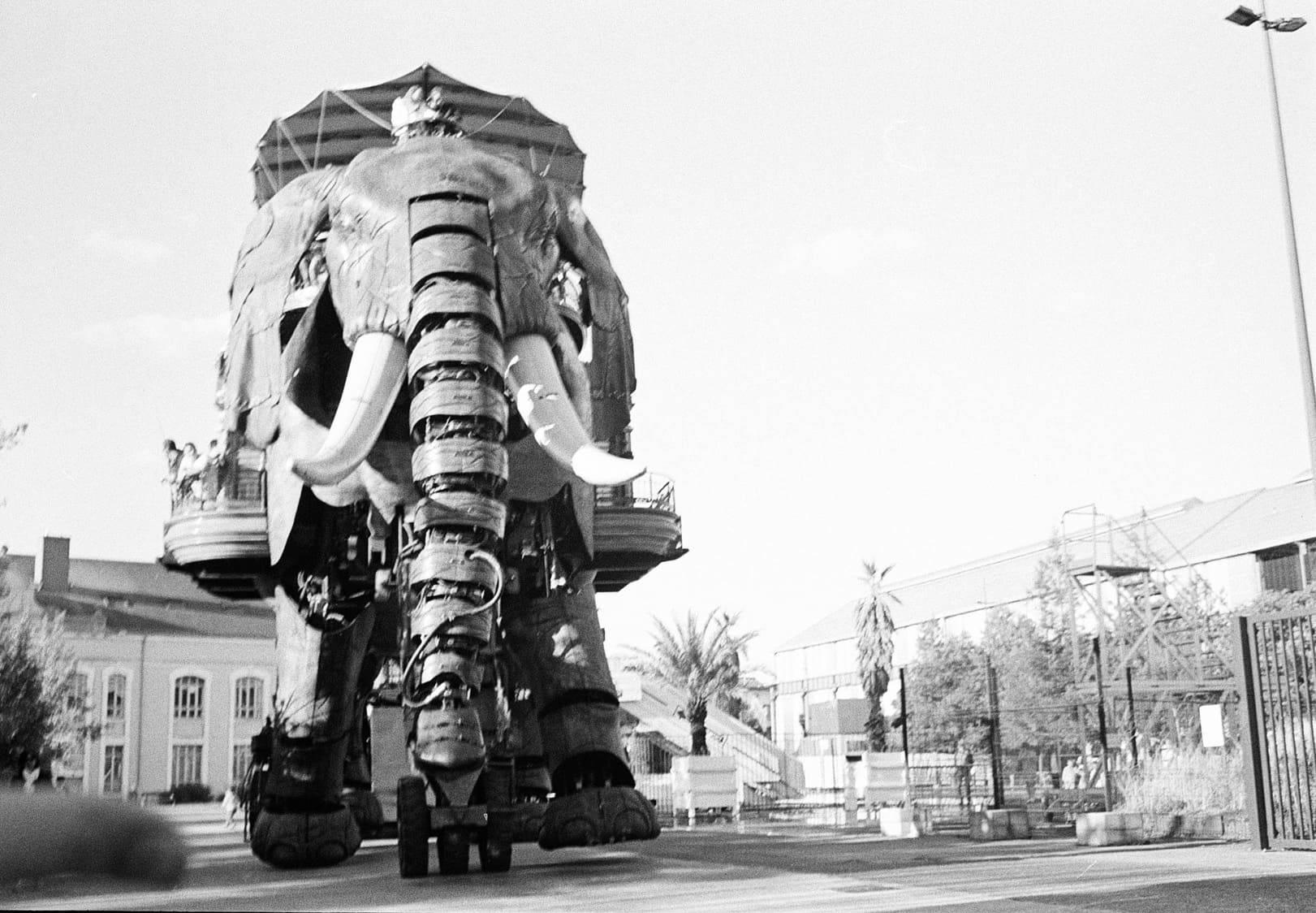
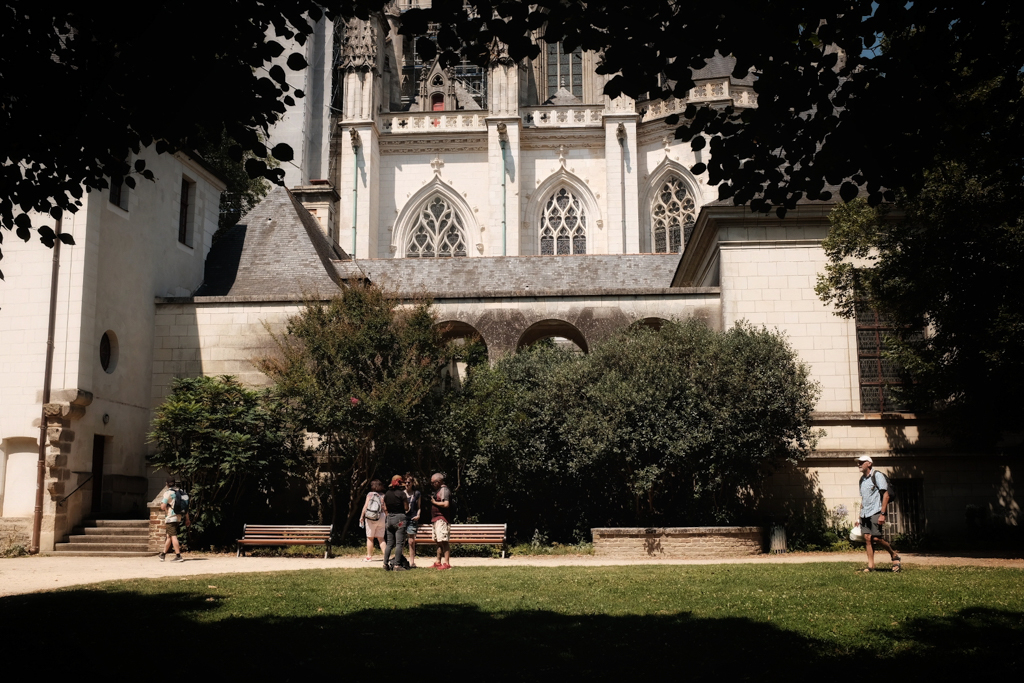
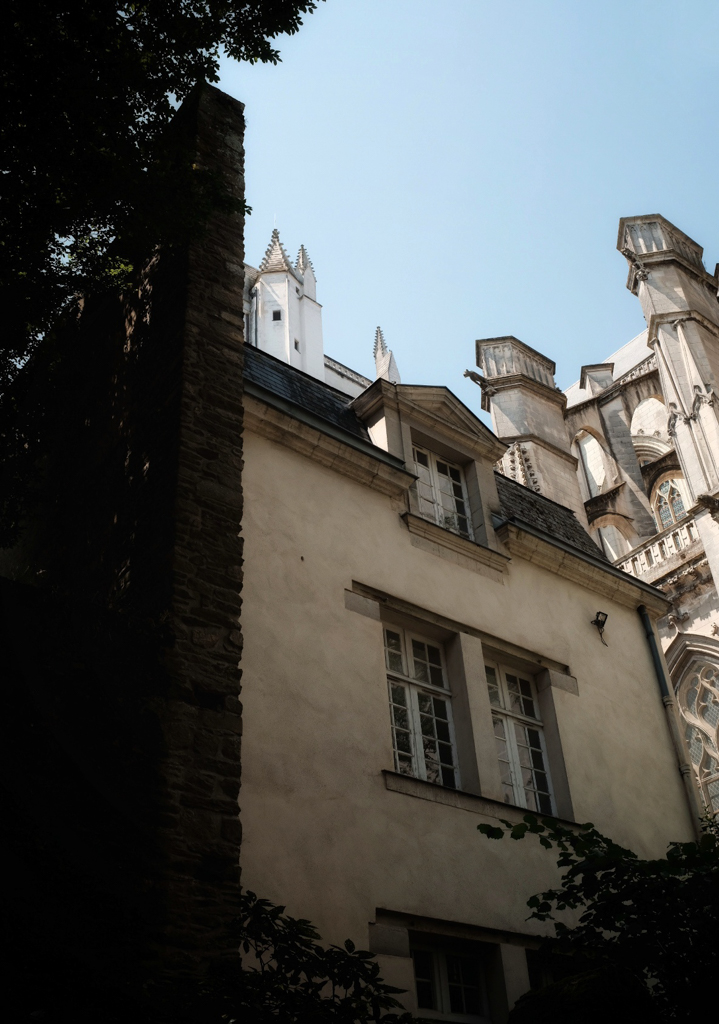
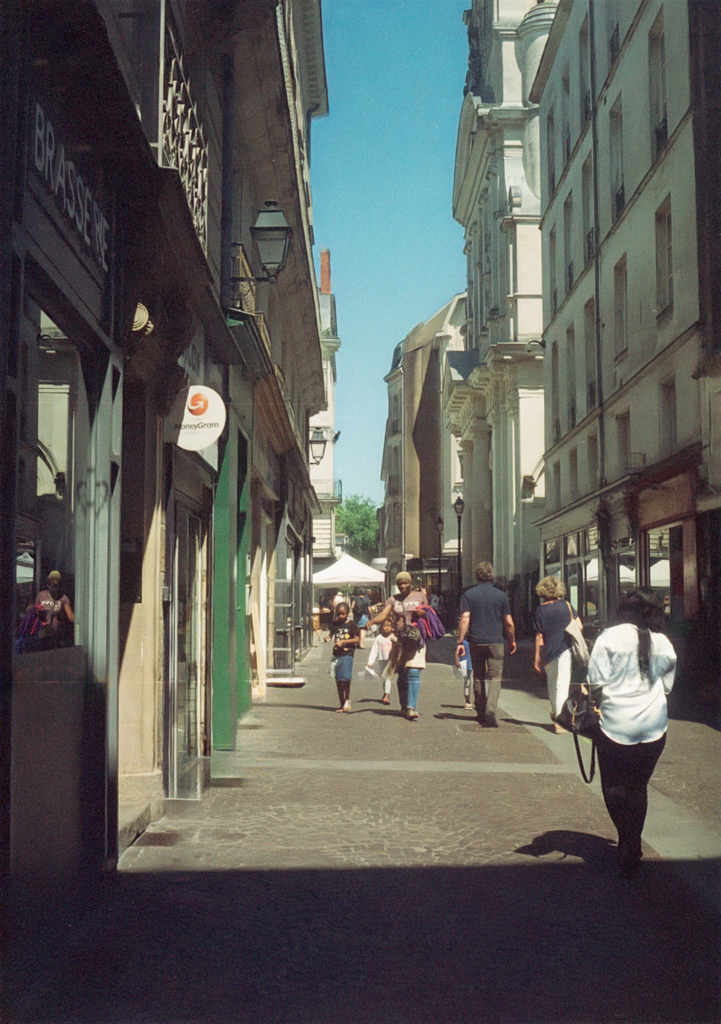
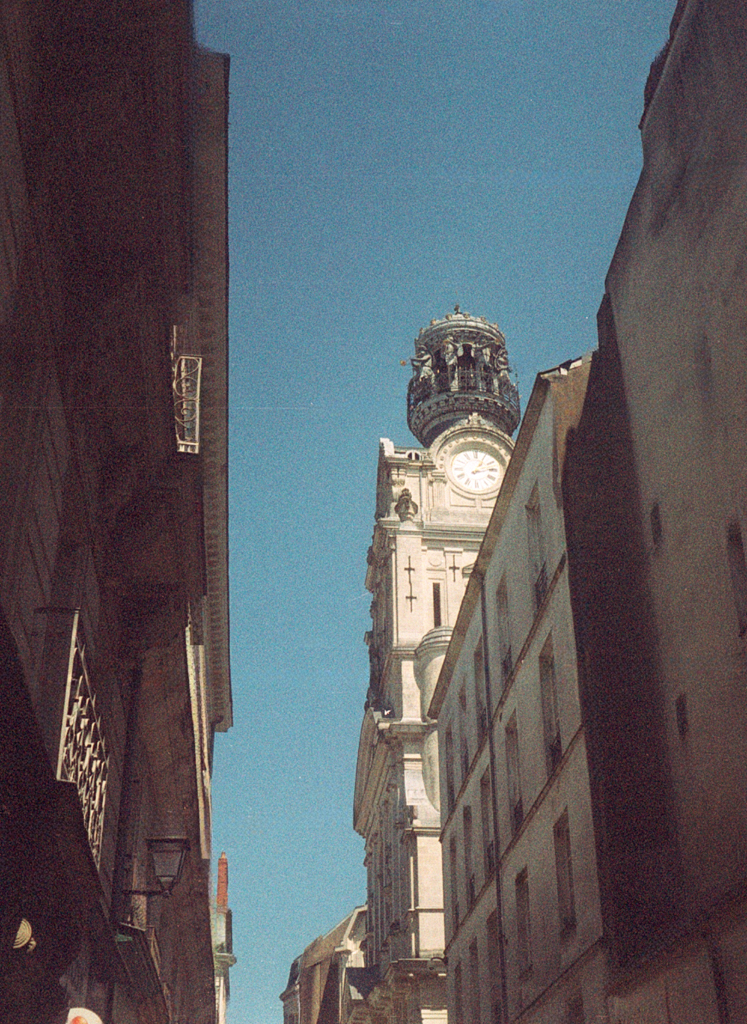
For this outing, I decided to head out towards the Cathedral, and takes some shots of the Voyage à Nantes.

I found myself thinking differently about framing my shots and using my phone as a mental template. As for the resolution of my images, they will be half as much as using my full frame, but were I to print my photos, then I would definitely see a difference. But if they’re just for sharing on social media, then the resolution will be perfectly satisfactory.

The million-dollar question is, will I take it on my trip, and will I use it? Yes, I will. Will it be my main camera? Possibly not. Will it be more like using a new toy? Possibly, even if the toy in question is a vintage 1966 toy…
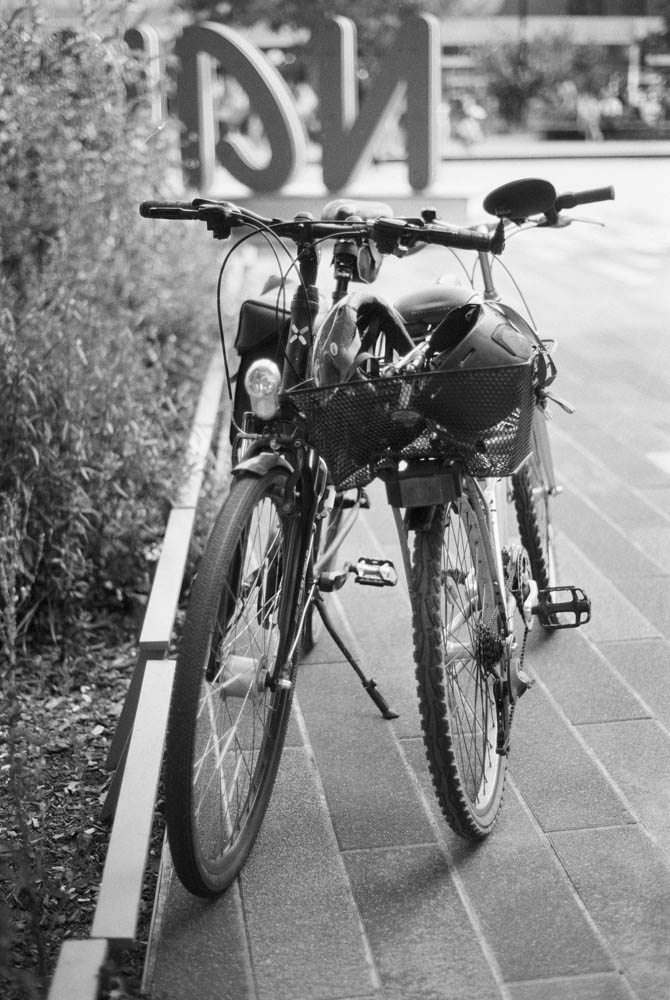
Here’s what I’ll do. I’ll put some images taken on the X100F, my more modern toy, and let you see how they compare. You’ll see the diptychs and see how the different shooting styles change the outlook and how they change the framing.

These are the X100F photos with editing in Snapseed…

And these are the half frame images from the Pen EE S… with the editing done in Photoshop using the neural filters to get rid of the scratches on the film.

So what do you think? Worth taking?

A Peaceful Stroll Through Jardin de Plantes


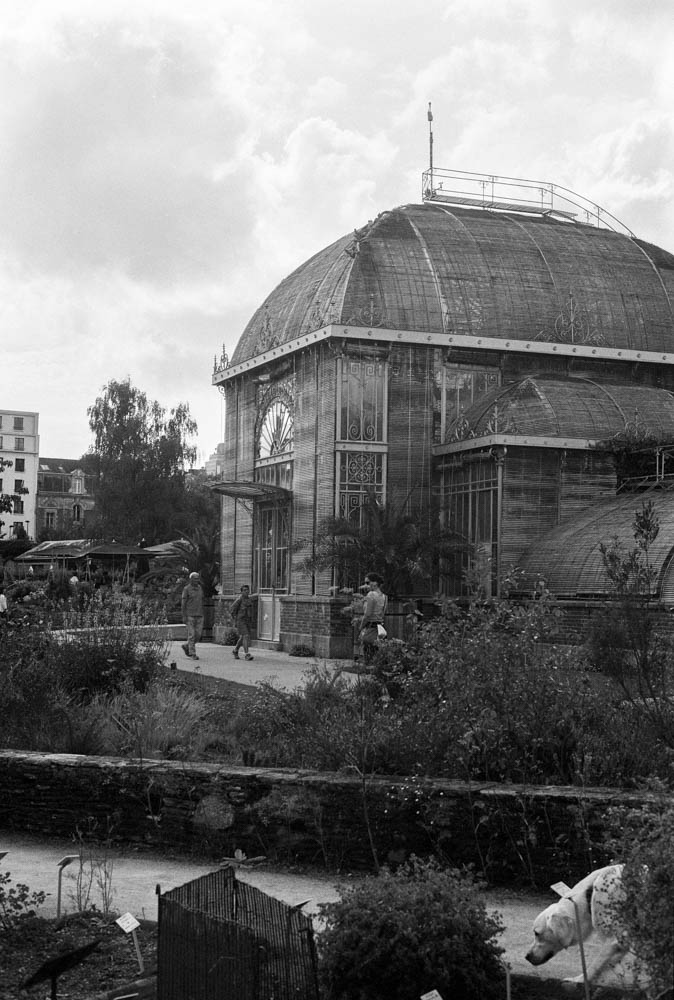
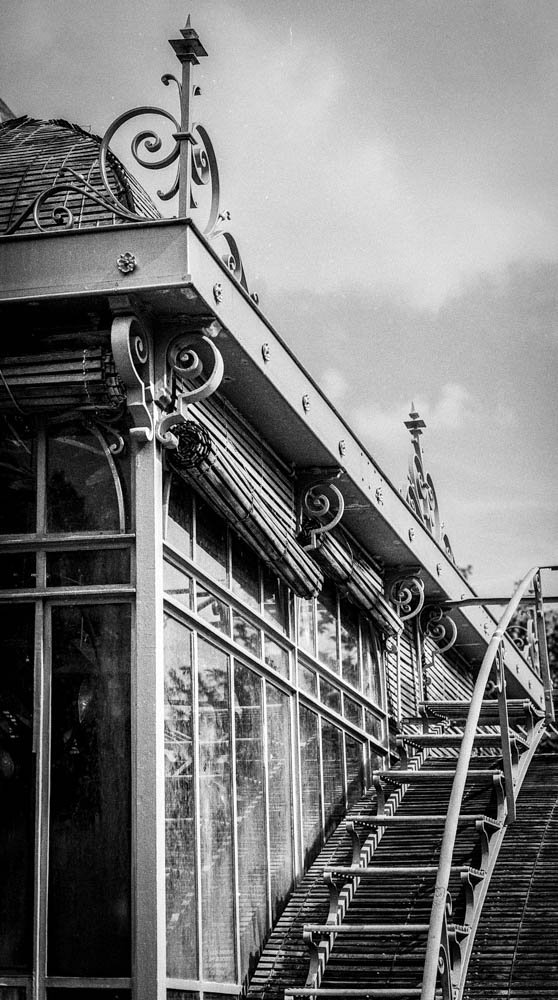
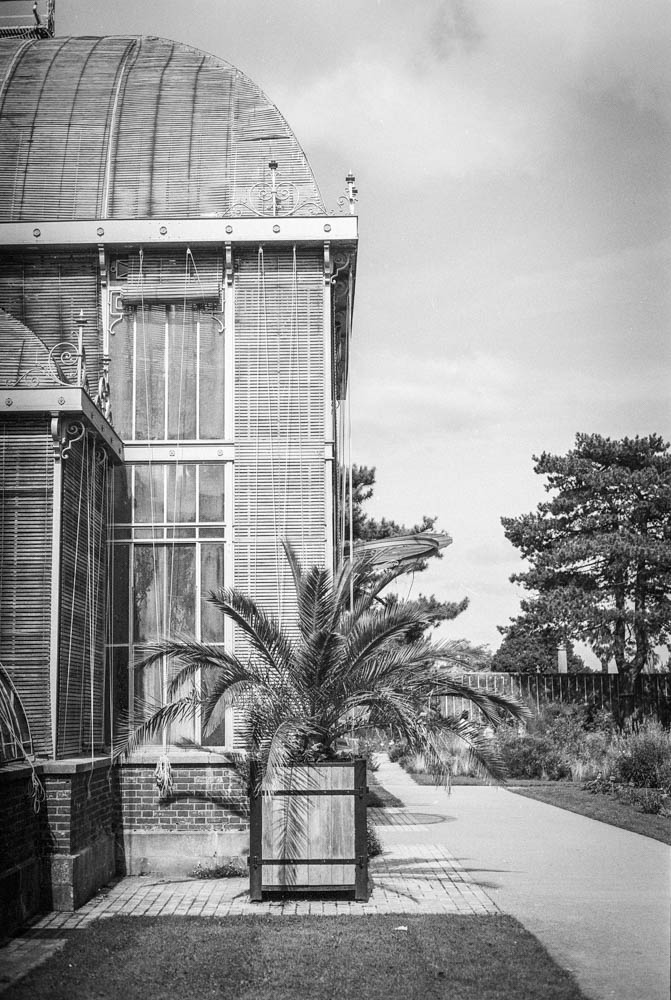
In the heart of Nantes, a city bustling with life and movement, lies a haven of tranquilly—the Jardin de Plantes. With my trusty Pentax ME Super in hand and a roll of Kentmere 100 film, I embarked on a photo walk with my niece, weaving together the threads of modernity and nostalgia.

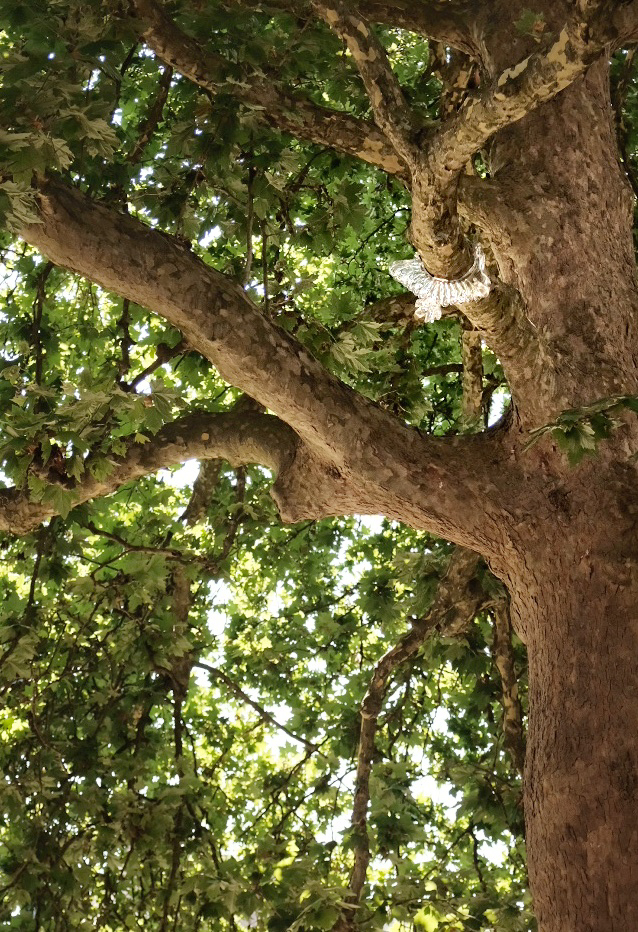
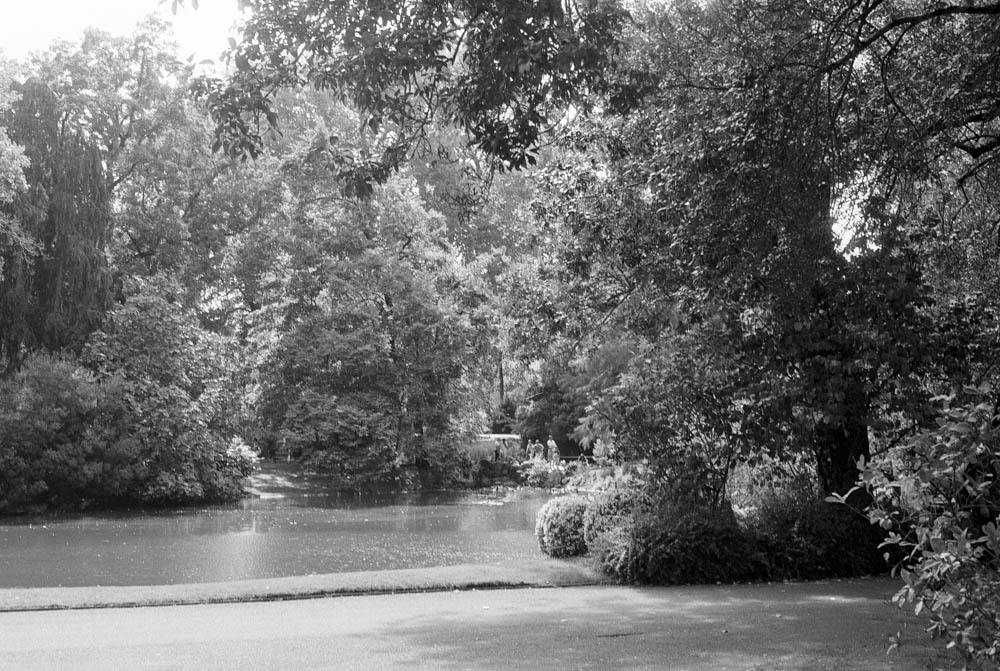
As the sun cast its gentle rays on the vibrant petals and verdant foliage, my niece and I strolled through the garden, our spirits lifted by the scent of blooming flowers and the melody of chirping birds. The Pentax ME Super, a relic of a bygone era, clicked and whirred, capturing the essence of the ambiance around us.

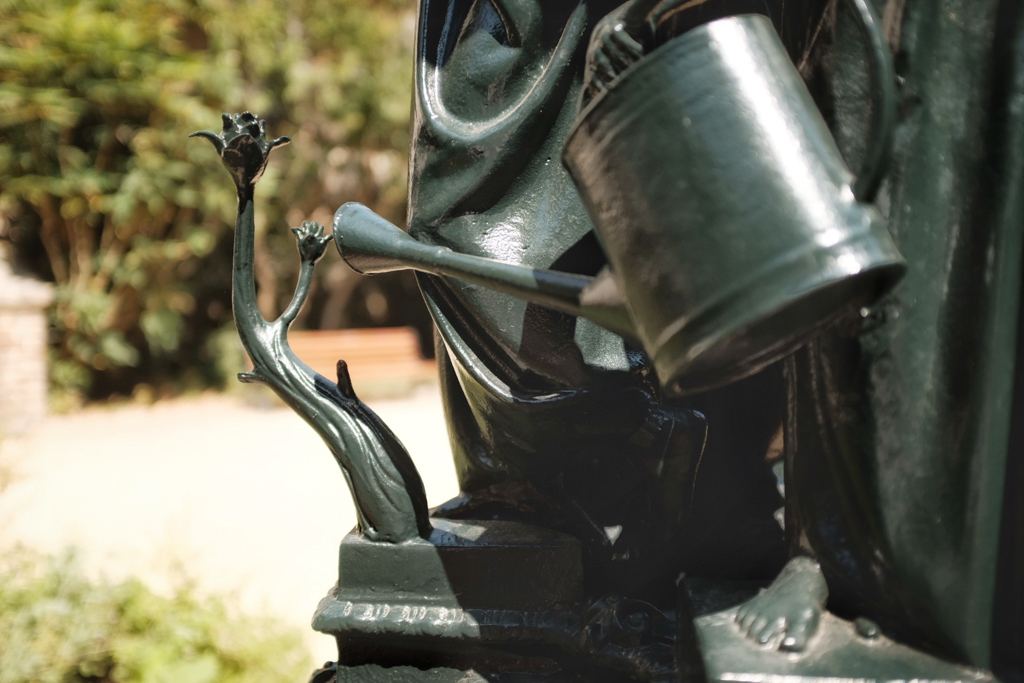
In the heart of this botanical wonderland, a delightful surprise awaited us – artworks from the Voyage à Nantes, seamlessly integrated into the landscape. Sculptures and installations whispered tales of creativity, adding an artistic flair to the already enchanting scenery. With each click of the shutter, the Kentmere 100 film immortalised these moments, creating a bridge between the past and the present.

Amidst the garden’s serenity, the city’s rhythm seemed to fade into the background. The laughter of children echoed, the fragrance of earth danced in the air, and a sense of peace enveloped us. The bustling streets felt miles away, replaced by the gentle rustle of leaves and the soothing trickle of fountains. It was a moment to pause, to breathe, and to find solace in the embrace of nature.

As my niece marvelled at the artistic wonders and explored every nook and cranny, I couldn’t help but recall a time when the world seemed simpler, captured through the lens of vintage cameras. The Pentax ME Super, a faithful companion, clicked away, a reminder that while times change, the emotions and memories we capture remain timeless.

In the heart of the garden, as my niece’s wonder met my own nostalgia, I realised that these fleeting moments, captured on film, became whispers of timelessness. The Kentmere 100 film transformed scenes into memories, the Pentax ME Super gave them life, and the Jardin de Plantes offered its serene backdrop.

Our visit came to an end, and the laughter and footsteps of visitors began to fade, leaving behind a quietude that felt like a hidden treasure. With a final click, I knew that I had captured not just images, but fragments of serenity and beauty, framed by the lens of a camera that has witnessed decades.

The Jardin de Plantes, a breath of fresh air in the heart of a bustling city, became a canvas on which moments of joy, peace, and art intertwined. The Kentmere 100 film told their story, the Pentax ME Super etched them onto film, and I, a mere observer, was fortunate to be a part of this beautiful narrative.

In the end, it’s the ability to capture the ephemeral that gives photography its magic. It’s not just about freezing time but about encapsulating emotions that stand the test of time. As I looked at the photographs that adorned my album, I knew that every click was a brushstroke on the canvas of memory— a reminder of the day my niece and I discovered the beauty of the Jardin de Plantes and the timeless charm of classic photography.