NORTHUMBRIAN SUMMER PART IV


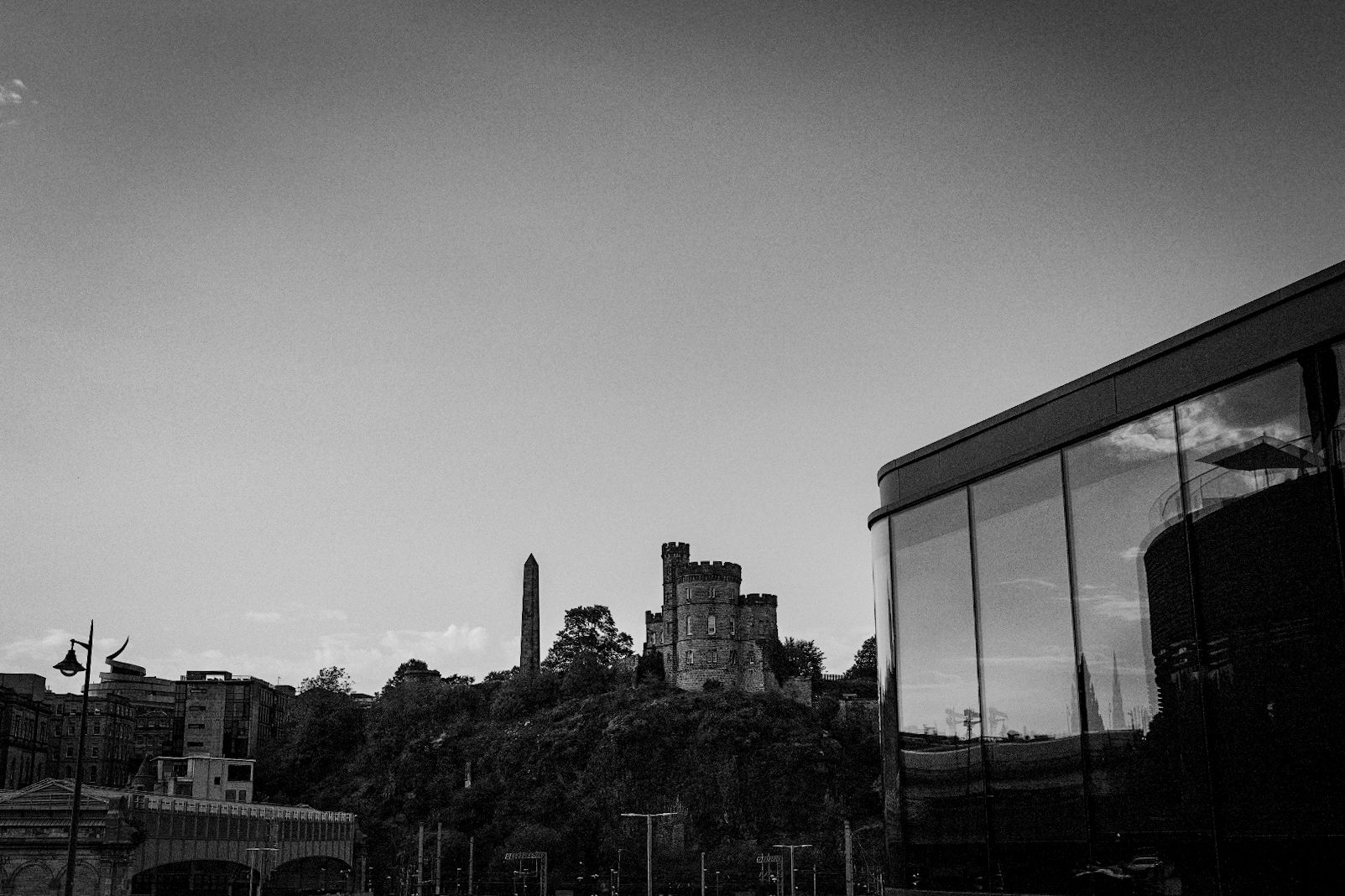
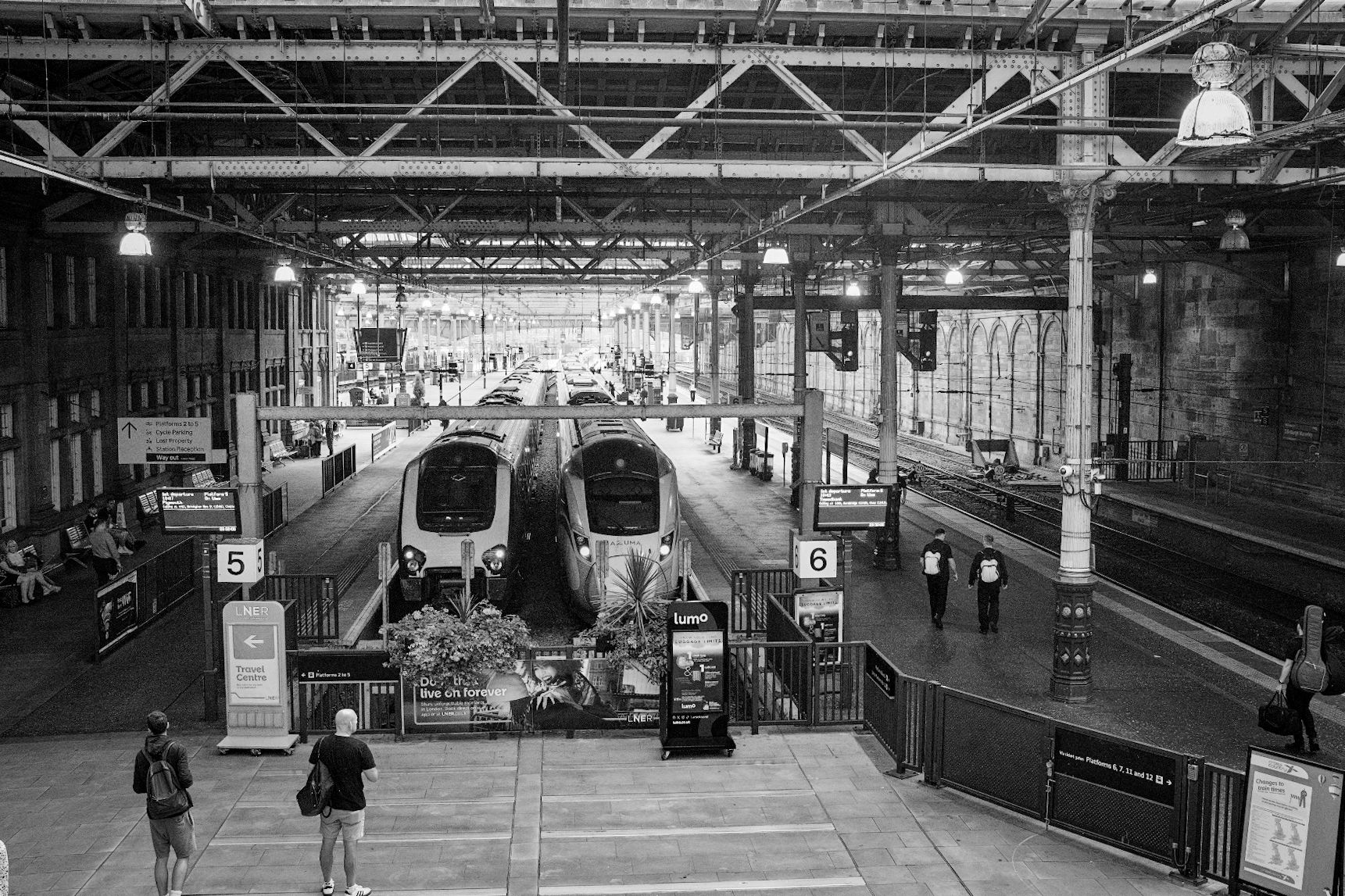
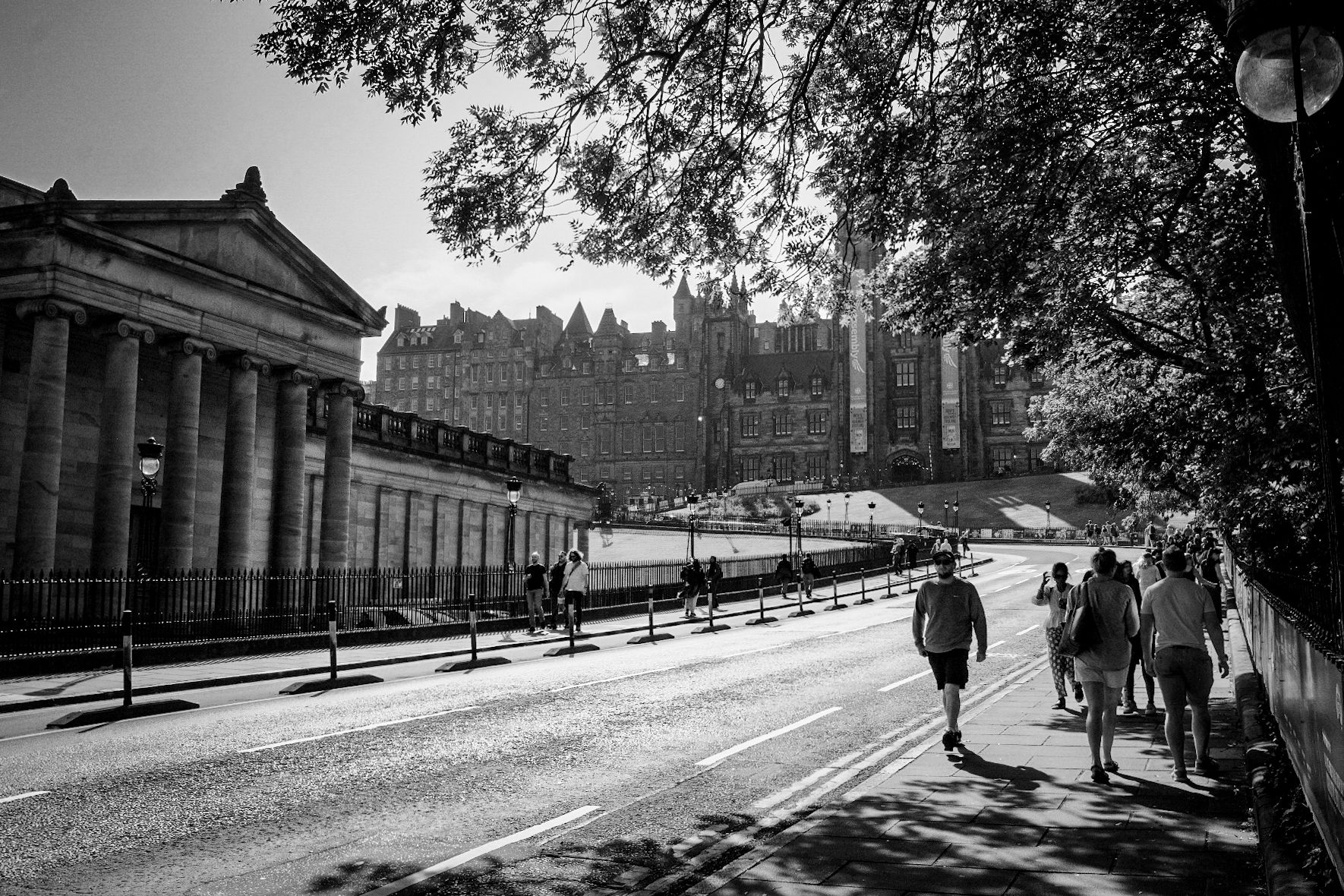
Edinburgh, Scotland 2025

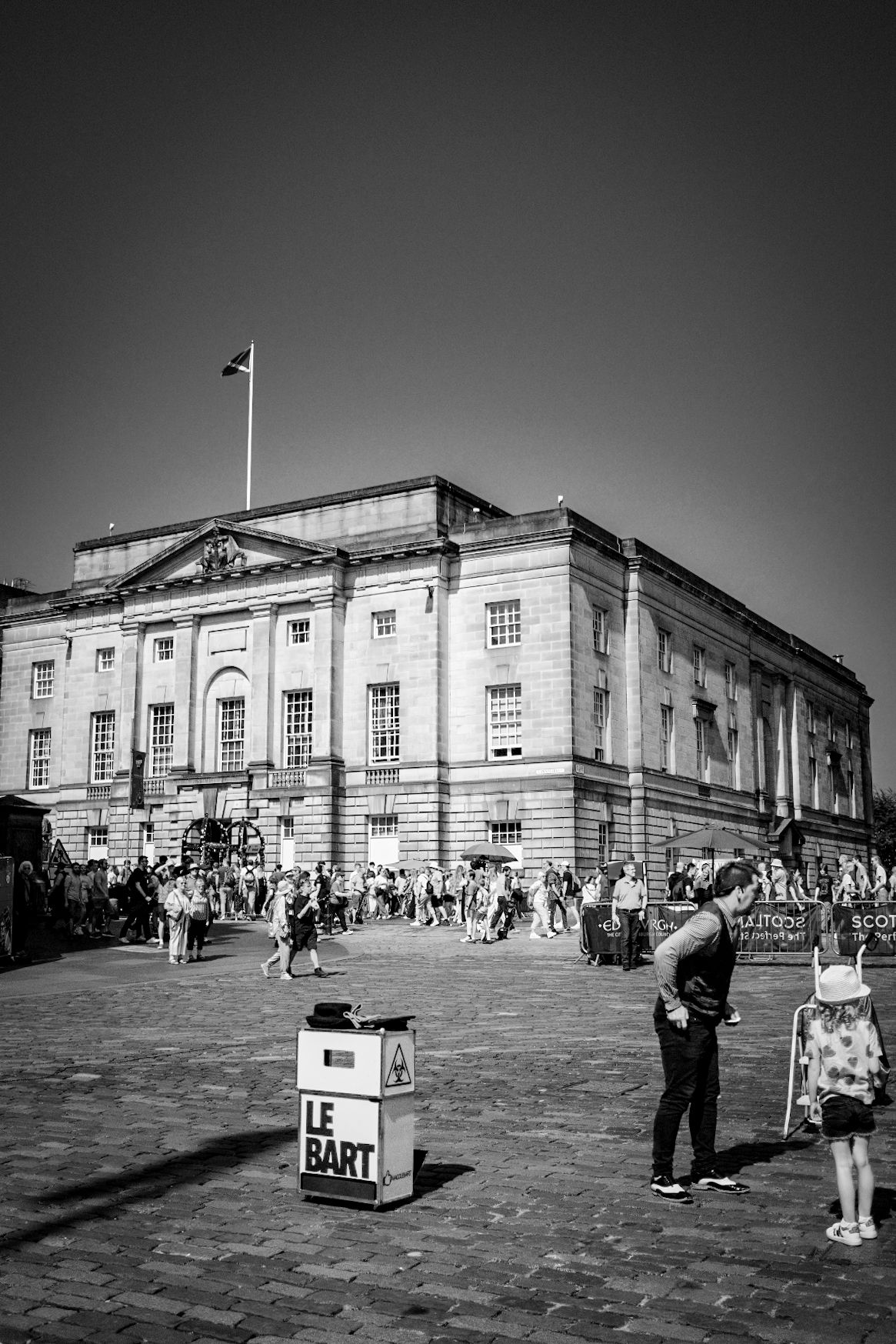
We’re still in Edinburgh. We’re walking down the Royal Mile. It’s festival season. There are plenty of shows to watch, and the one we saw first was by Max Von Trapp. Not to be confused with the Sound of Music Von Trapps, but a comic magician. One of my favourite kinds. The jokes and tricks rolled fast, as did my laughter.. Kate laughs at all the jokes, even the more adult-focused ones, just like Killian did when we visited the festival when he was that age.

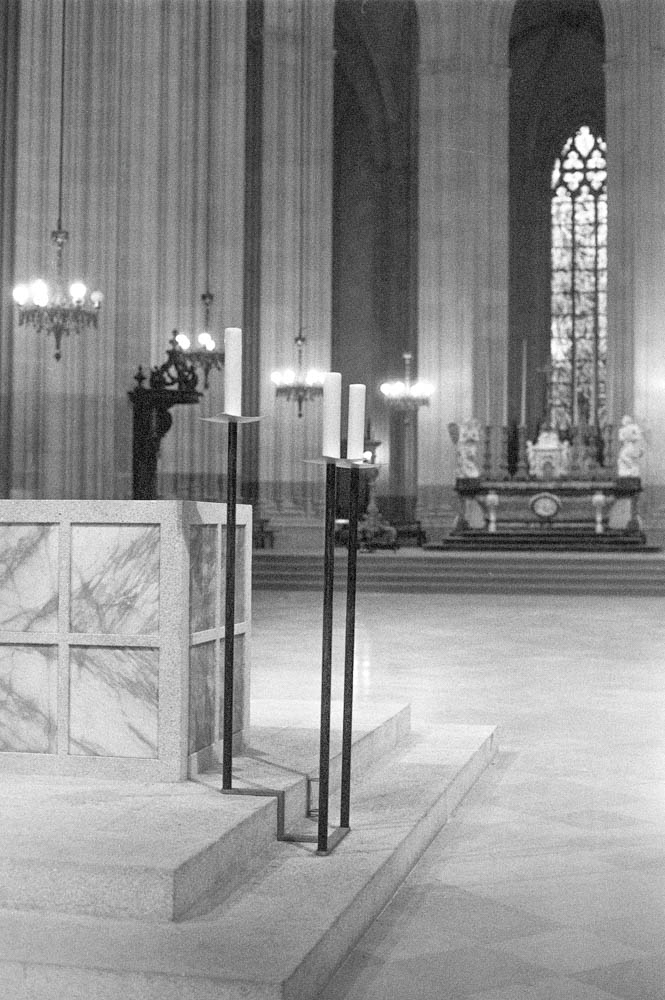
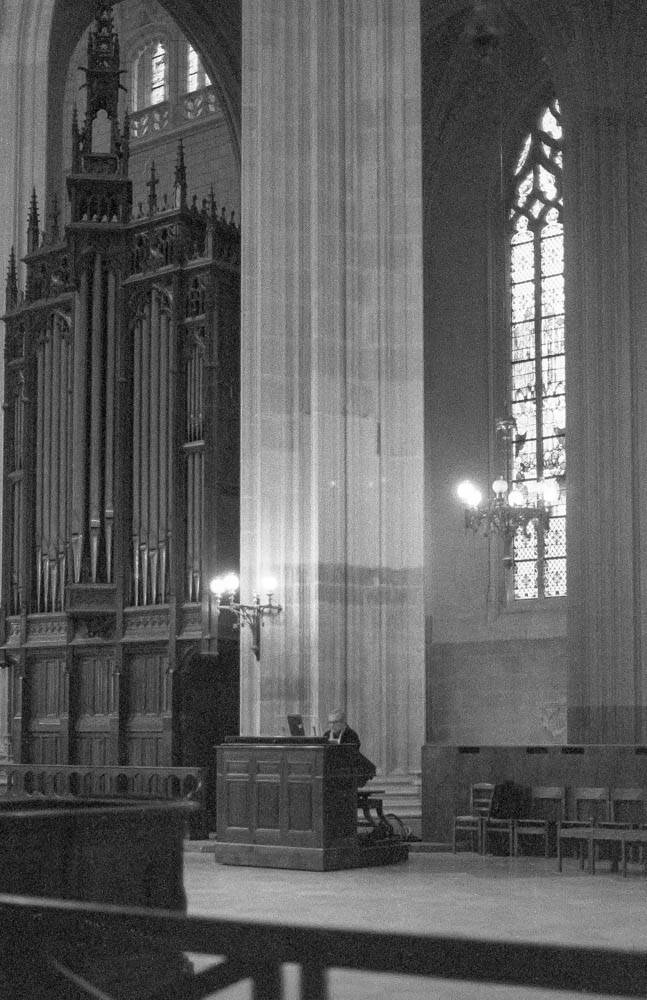
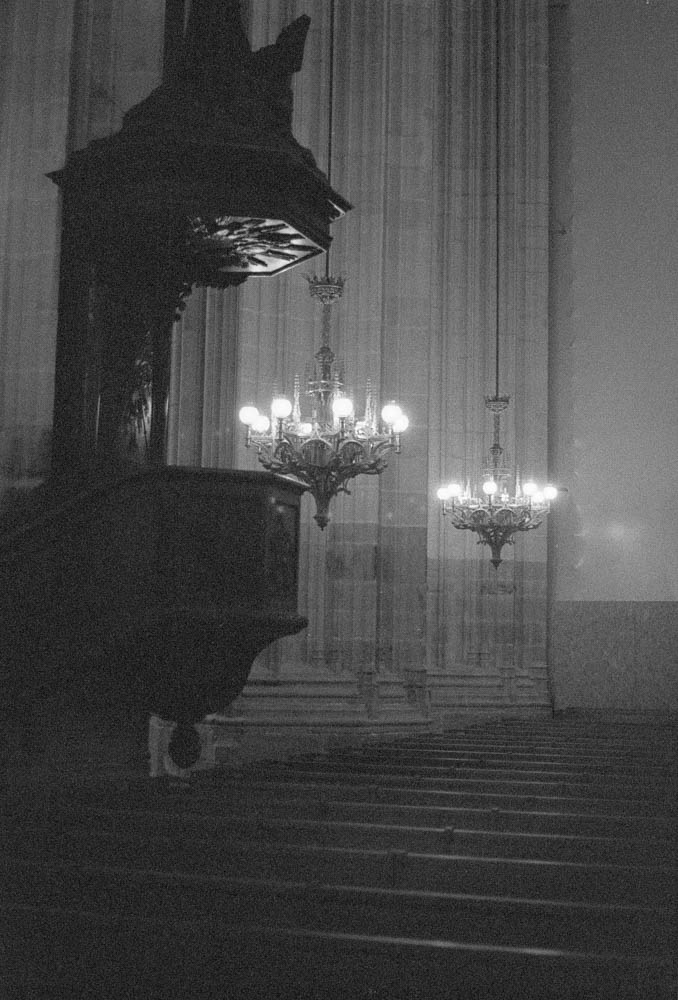
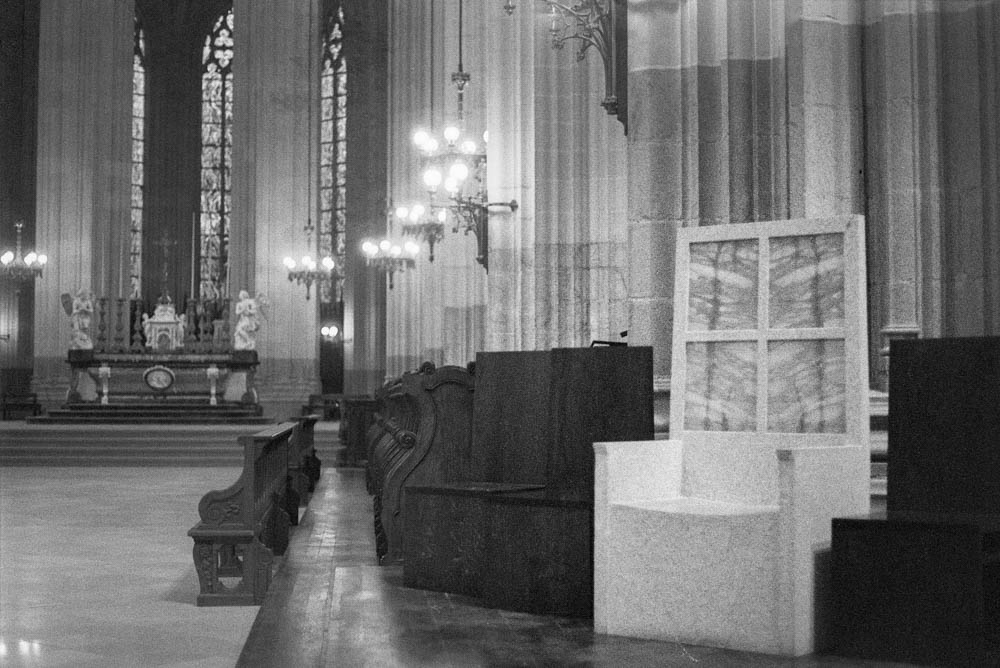
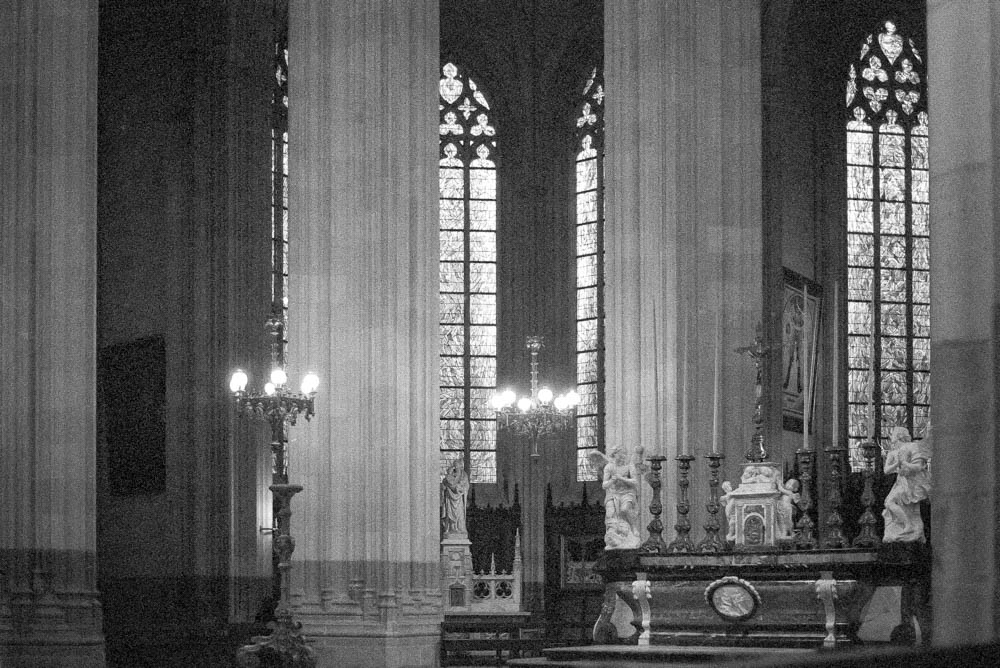
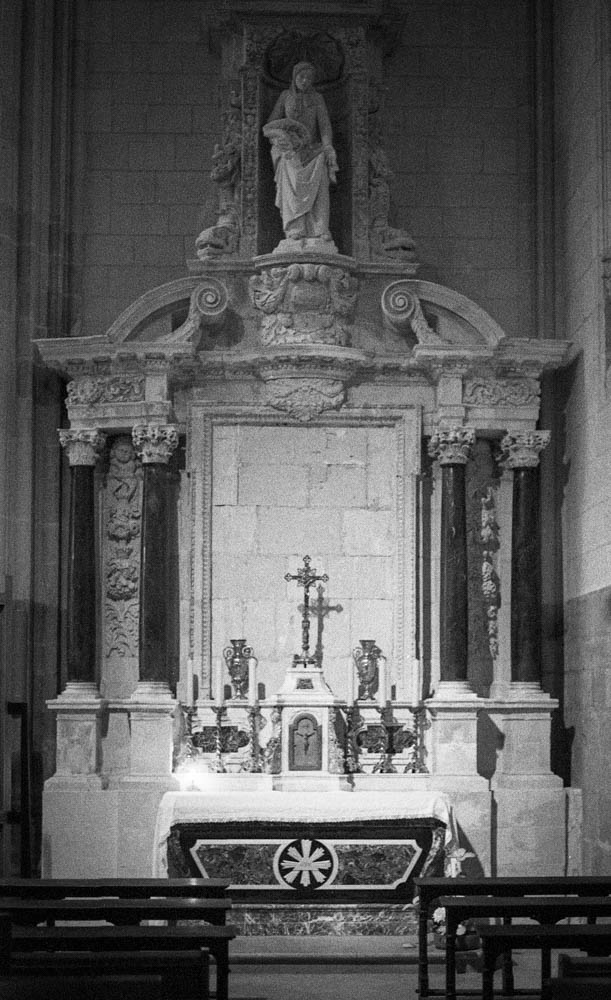
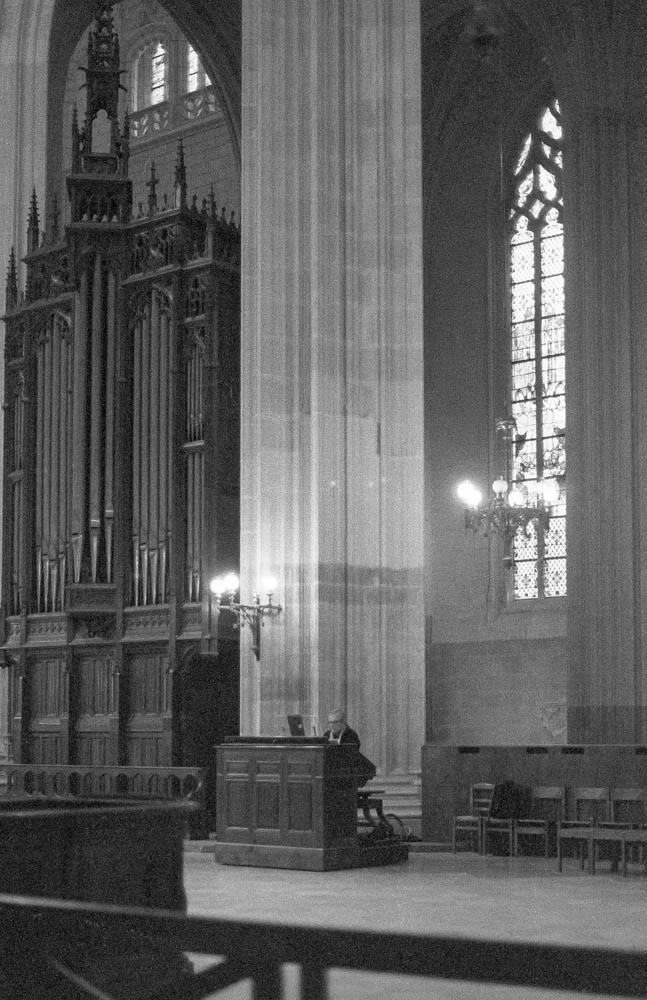
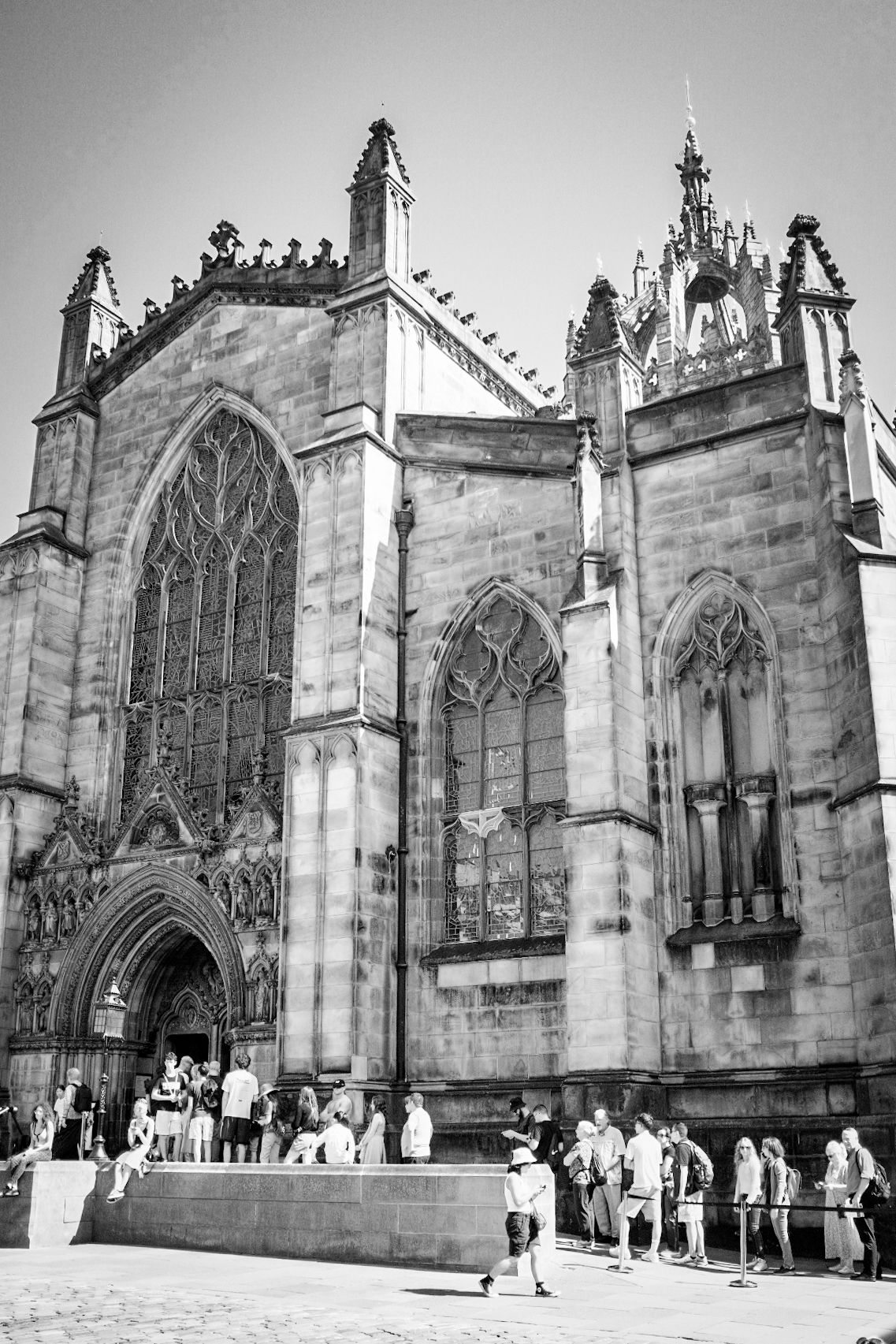
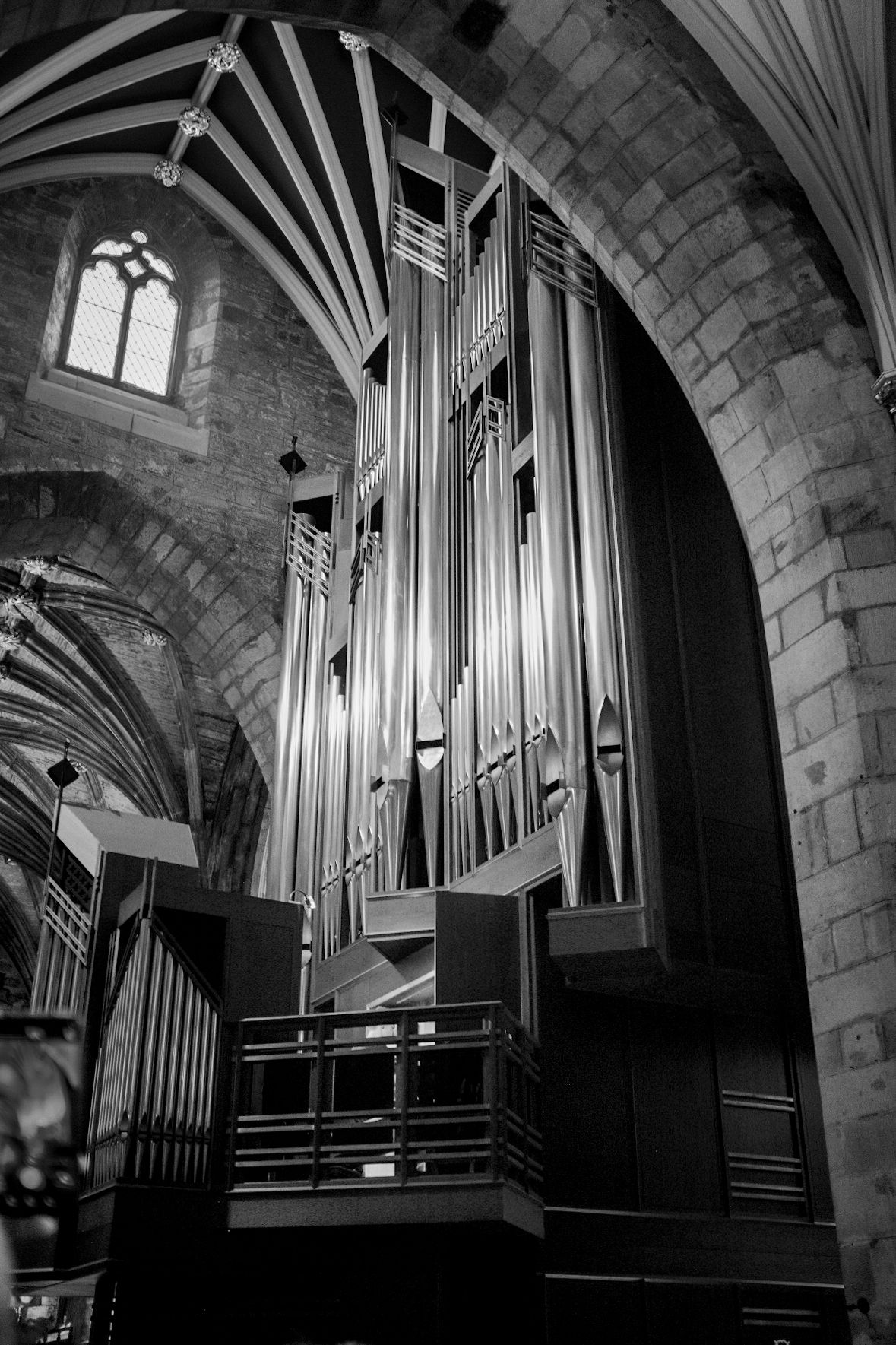
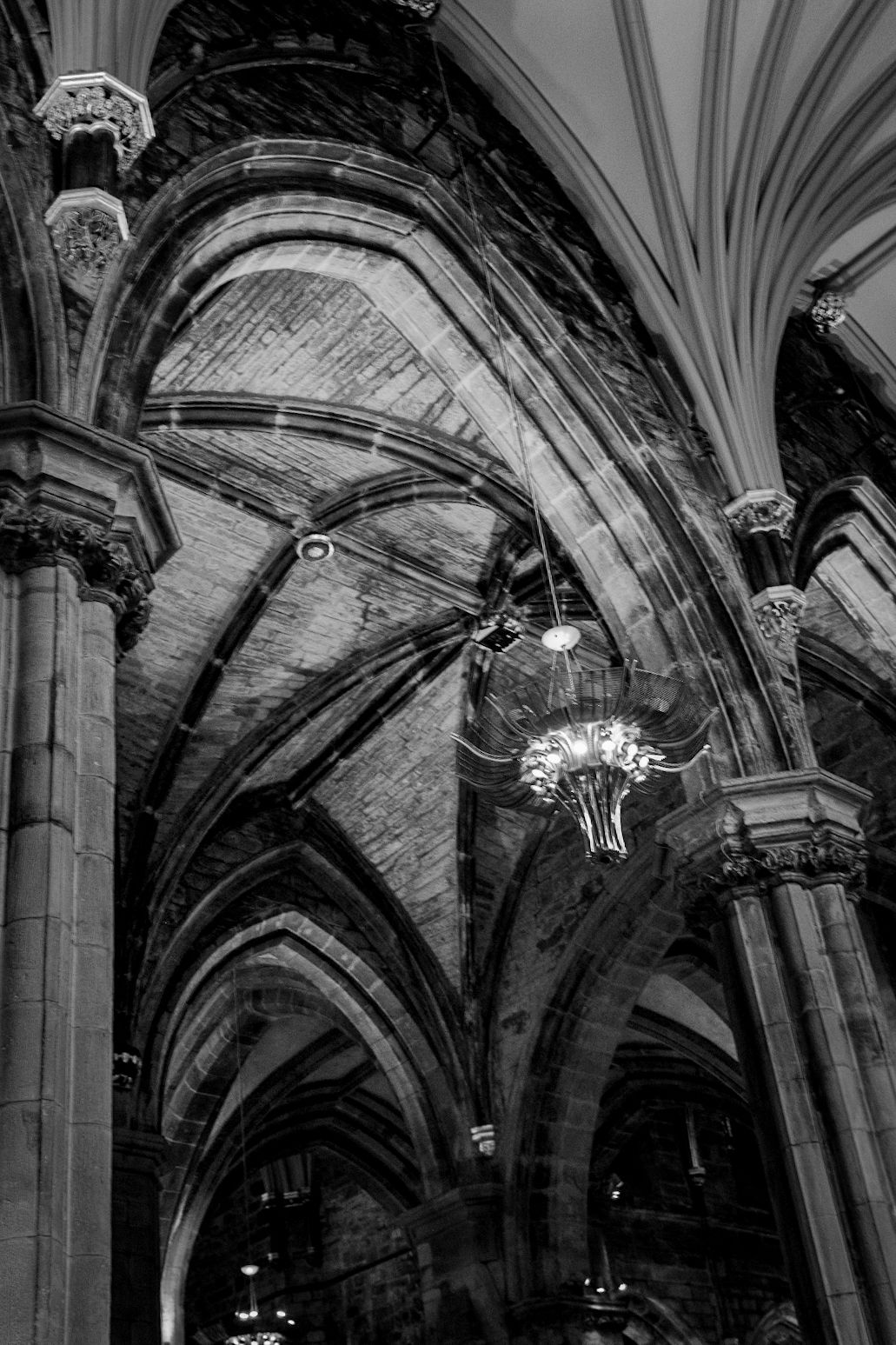
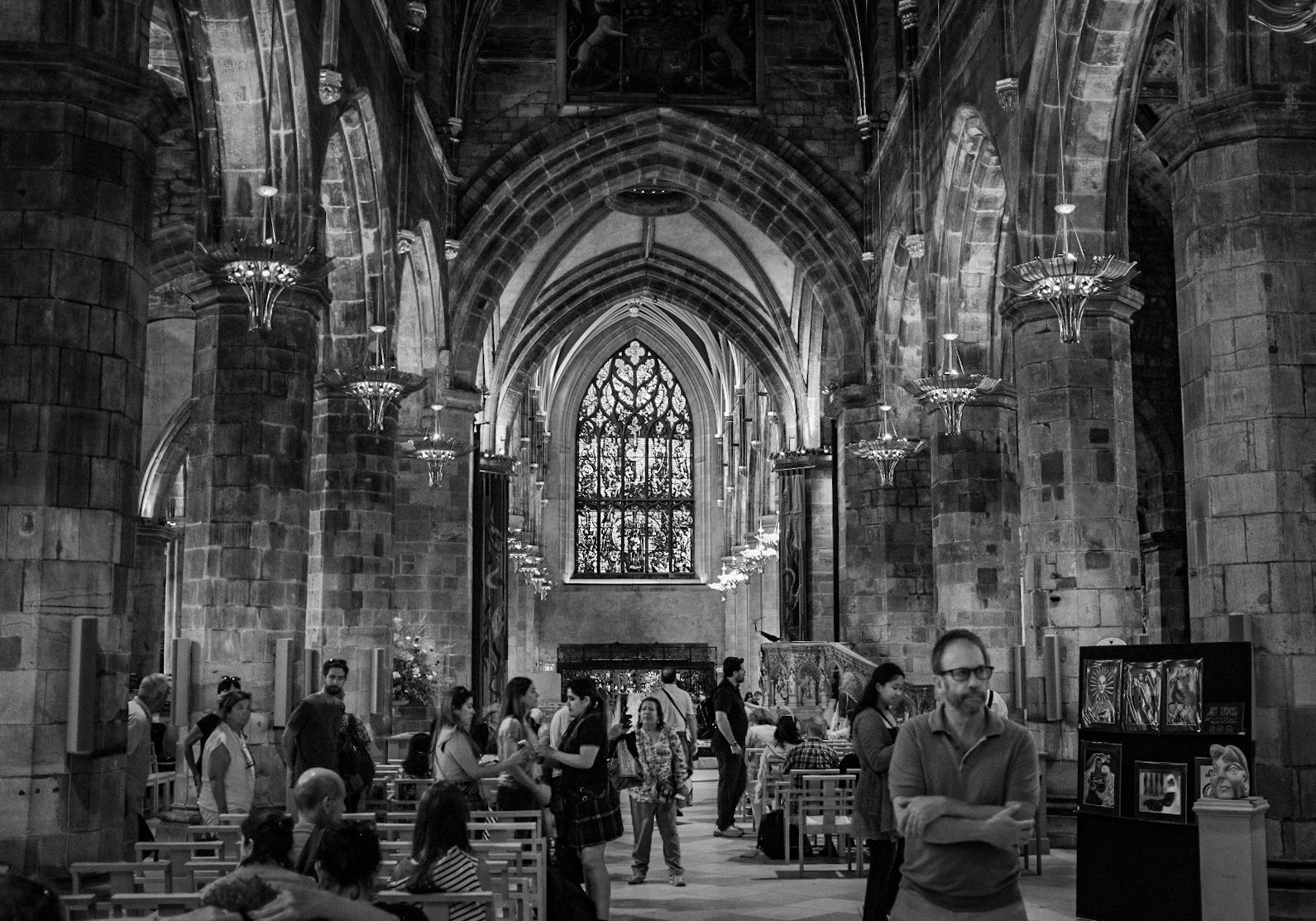
Saint Giles was our next stop. As you know, I’m Catholic, not Protestant. As we wandered through the national Cathedral of Scotland, I was struck not only by the beautiful organ music, but by the lack of the familiar Stations of the Cross, the statues. The centre of attention was not the Lord and the sacrifice of the Mass, but the preacher’s pulpit. I felt this lack and prayed my daily Rosary, head bowed in prayer.

I joined Kate outside, slightly perturbed by the experience.

Lunch was a kebab. Simple and delicious. Kate loved it.
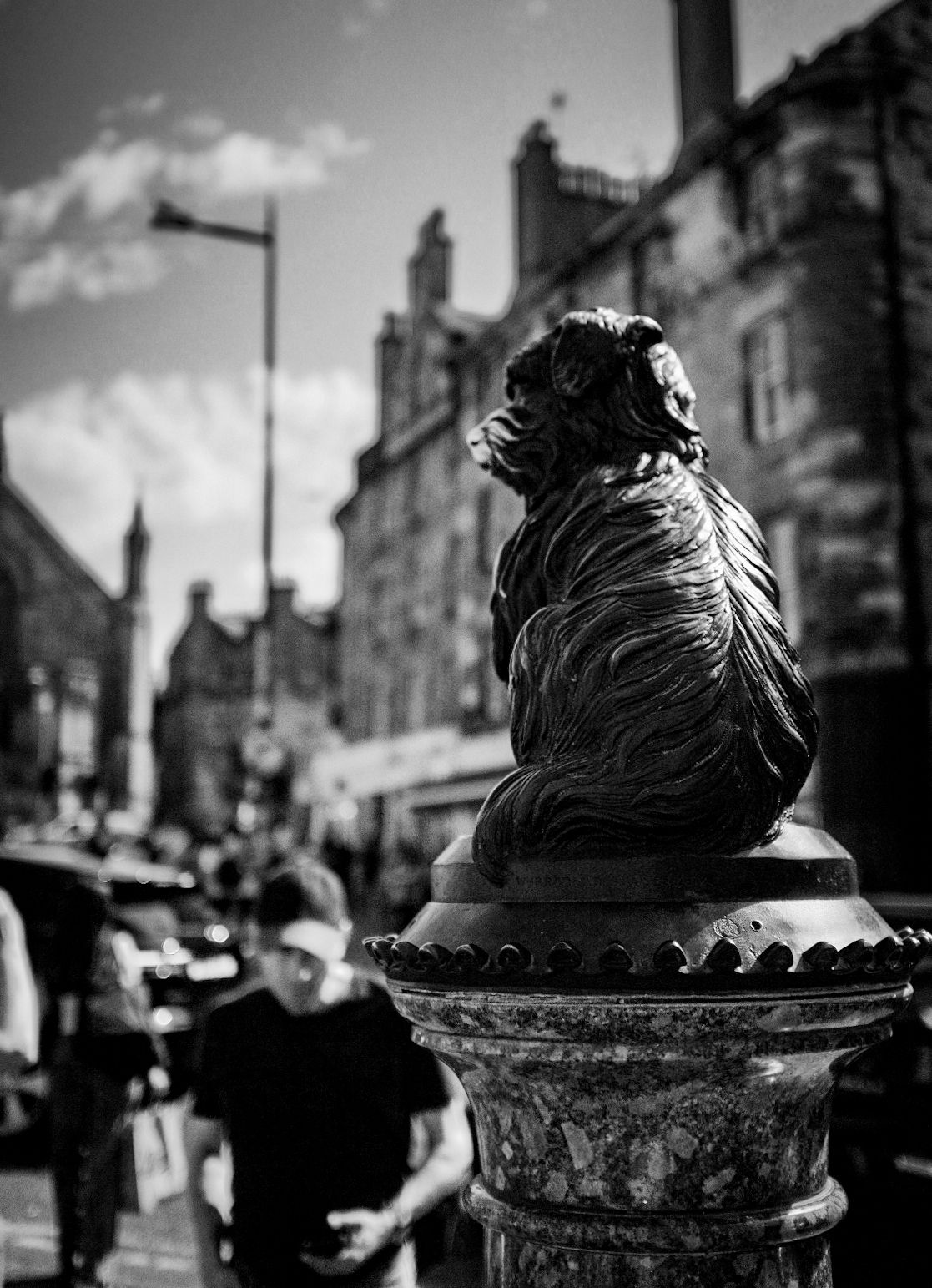
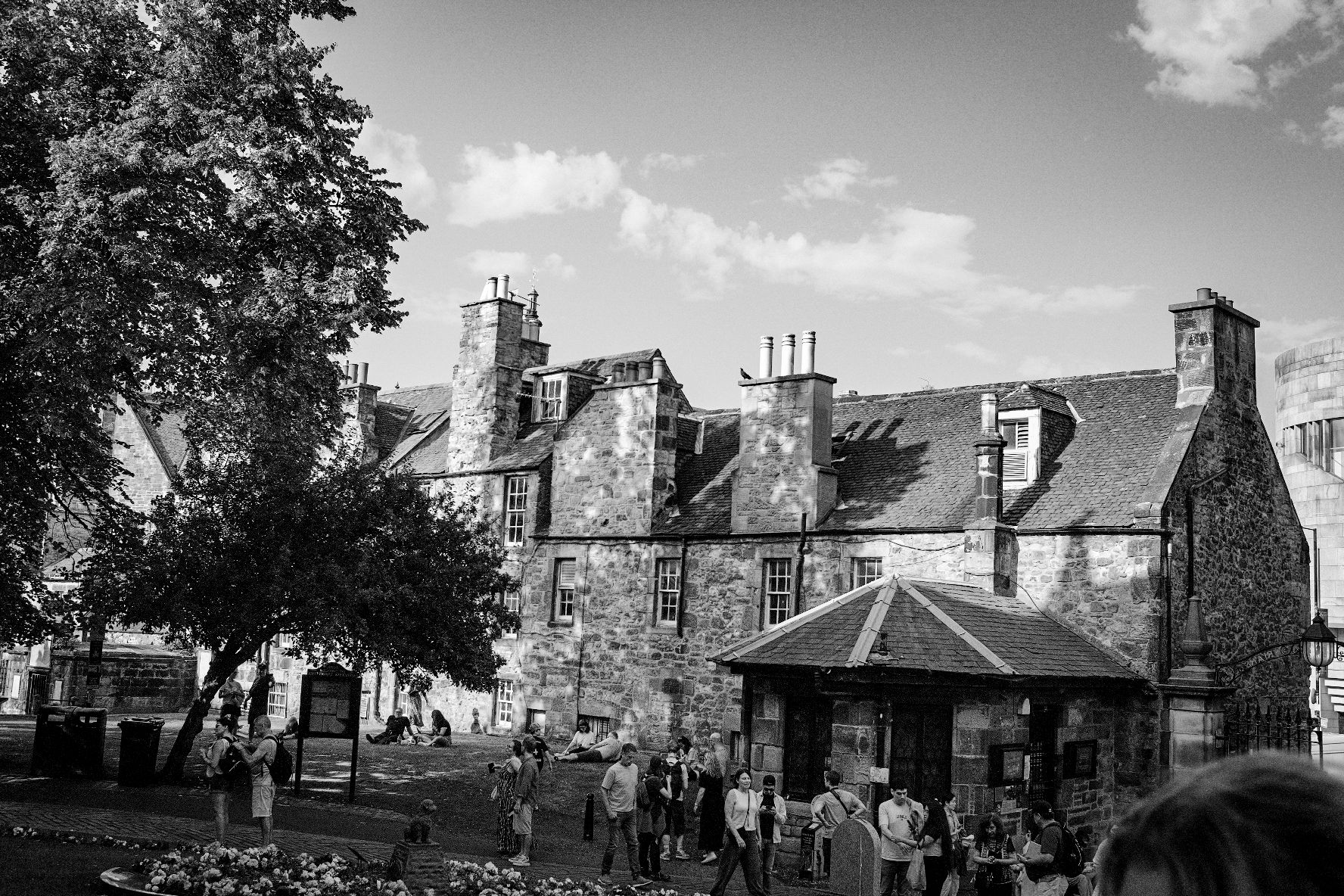
It was time to move on to see Greyfriars Bobby, a wee brown dog, famous for his loyalty. The legend is such that the people of Edinburgh raised a statue to honour him, and people rub his nose either for luck or as a sign of affection. I went into the Greyfriars Pub for some Guinness, reflecting on my own dog Molly, now 16, who greets me every morning as if I’m her favourite person and gets all excited when I get home from work. I can see why wee Bobby was a legendary dog, and why he inspired so many people.

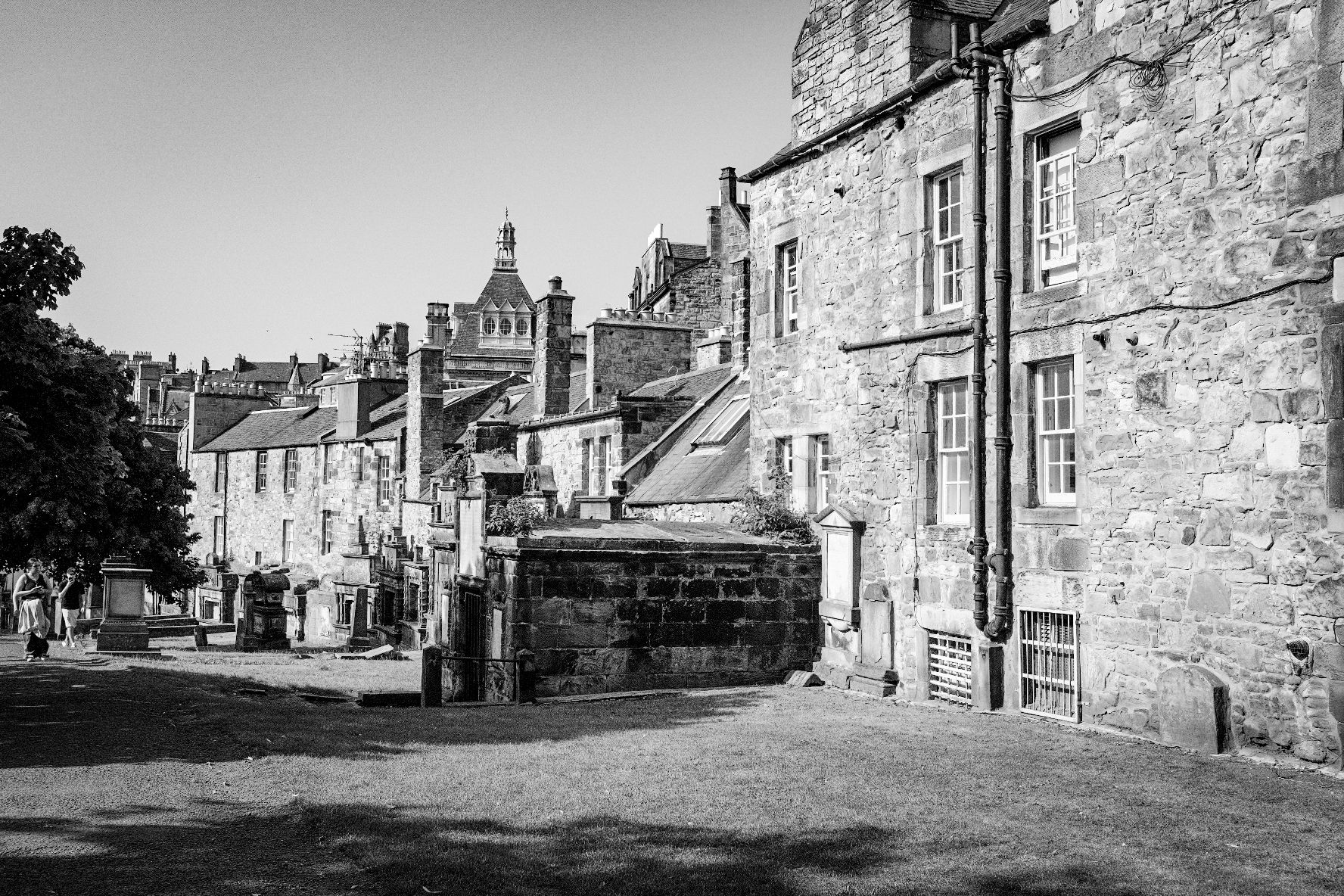
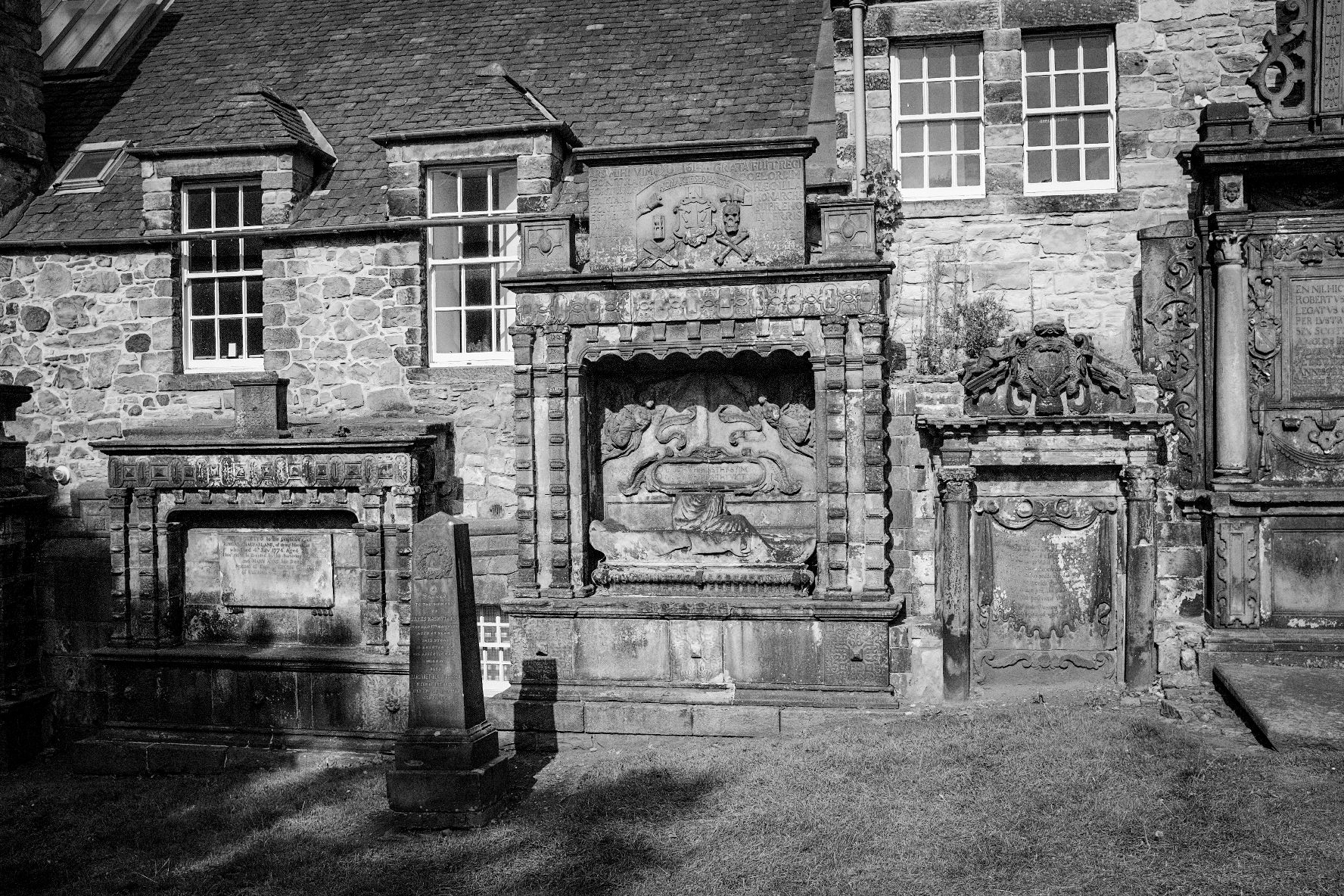
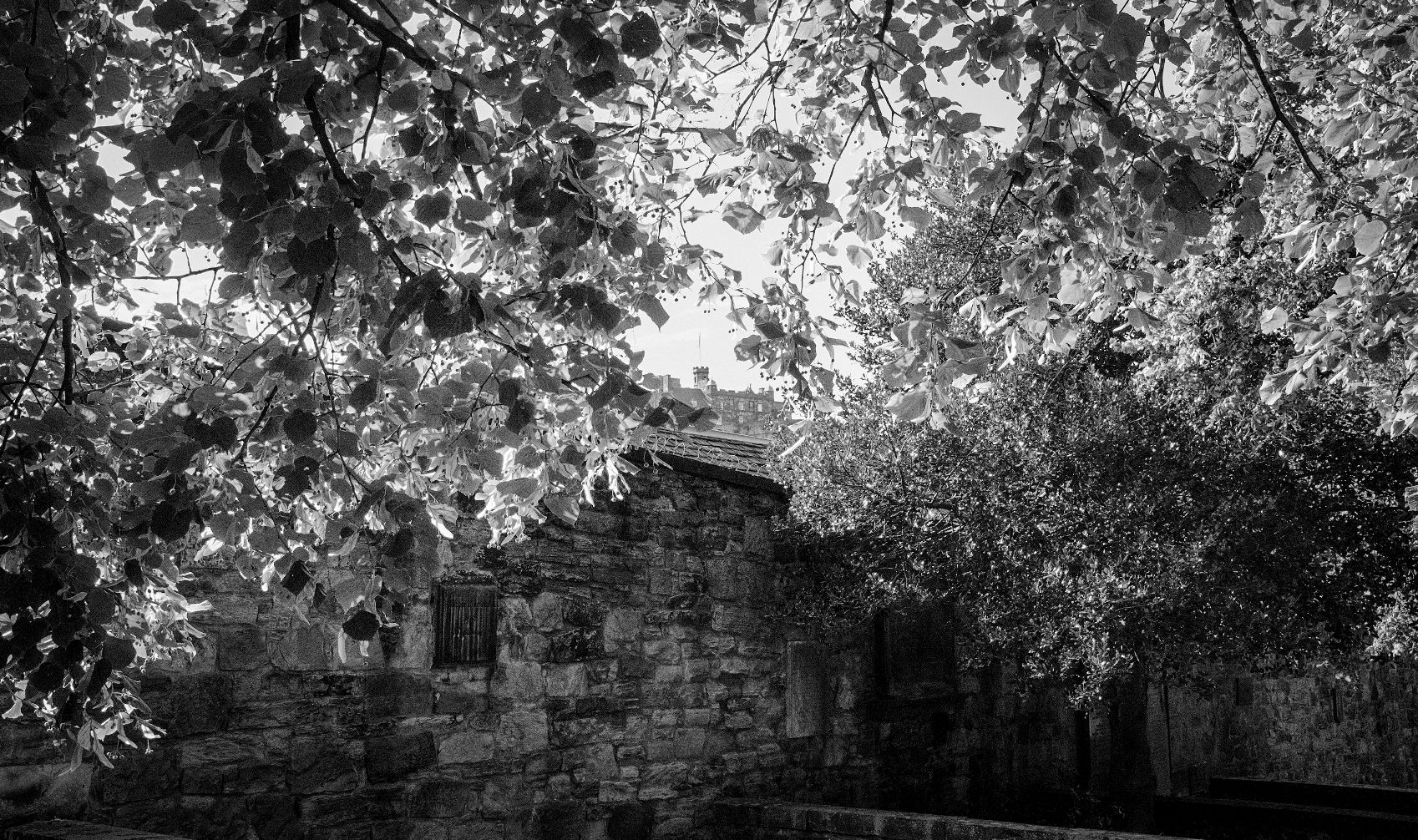
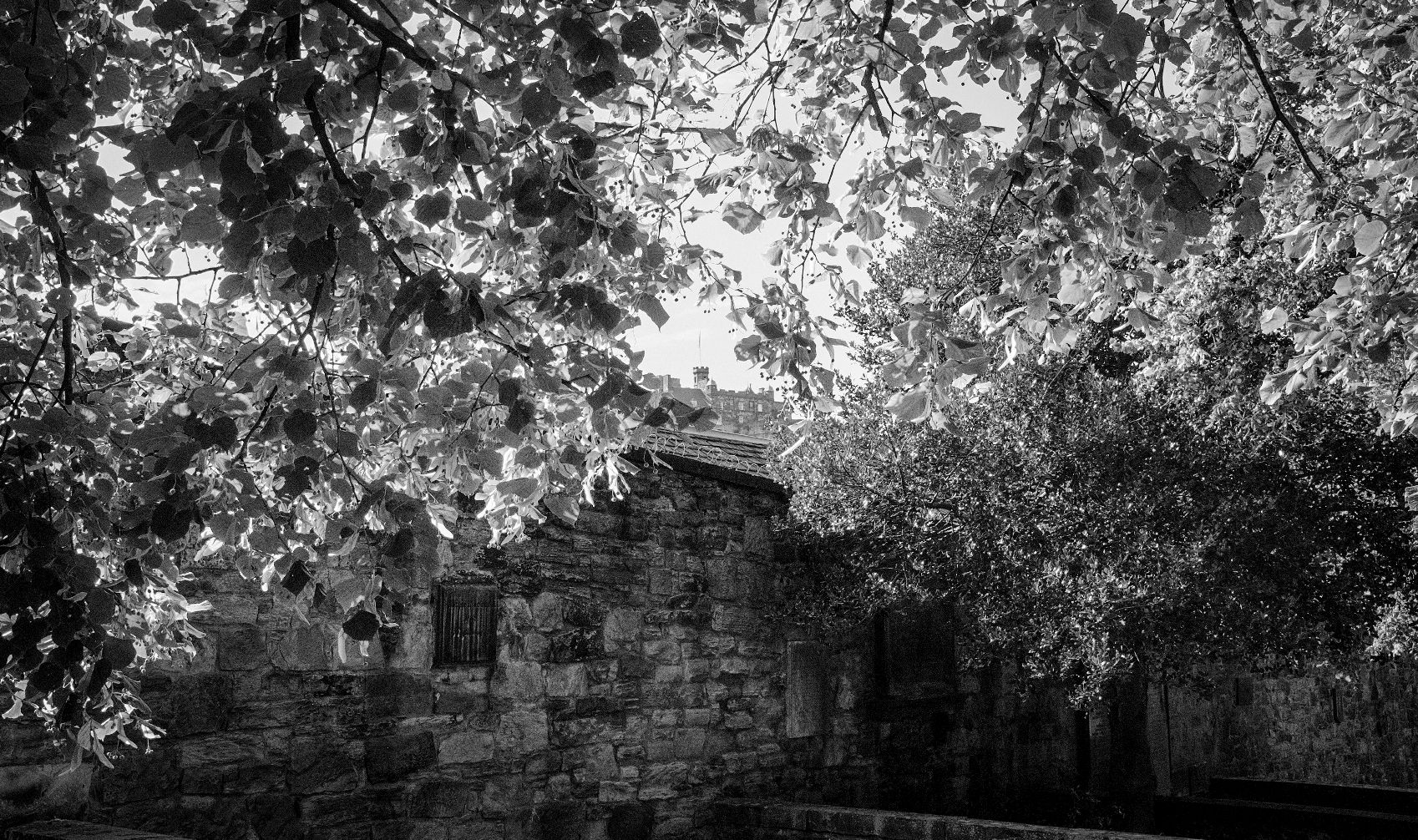
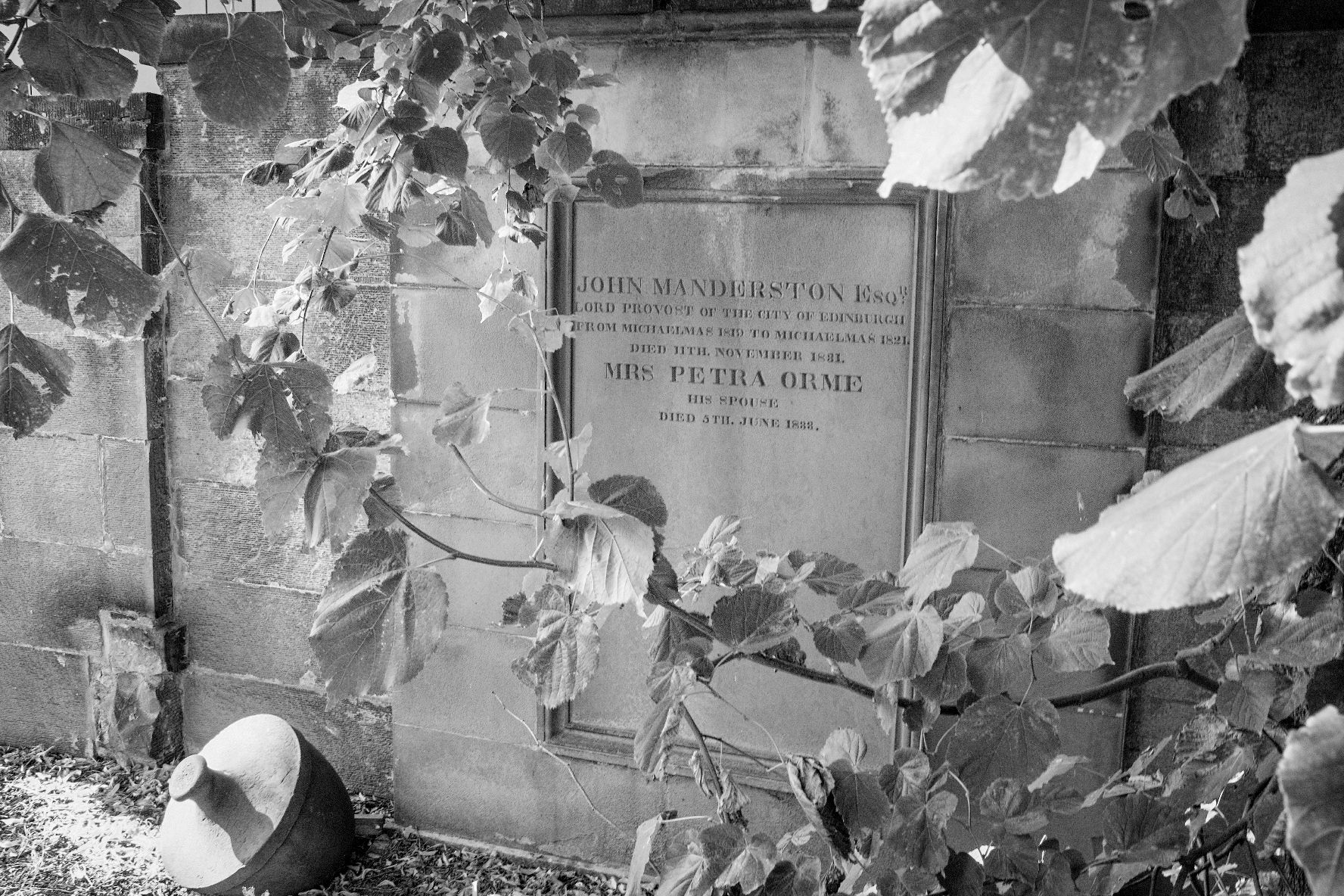
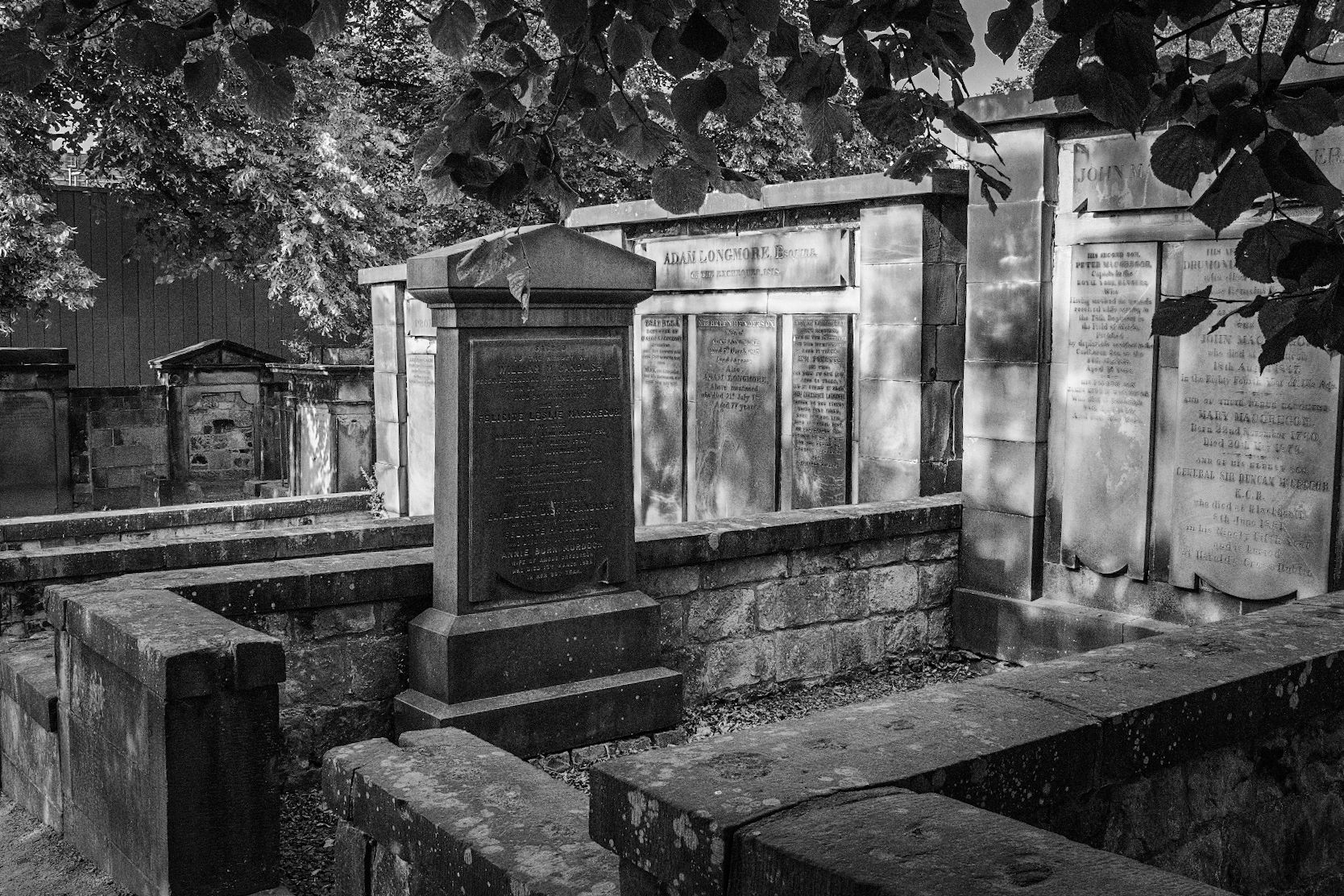
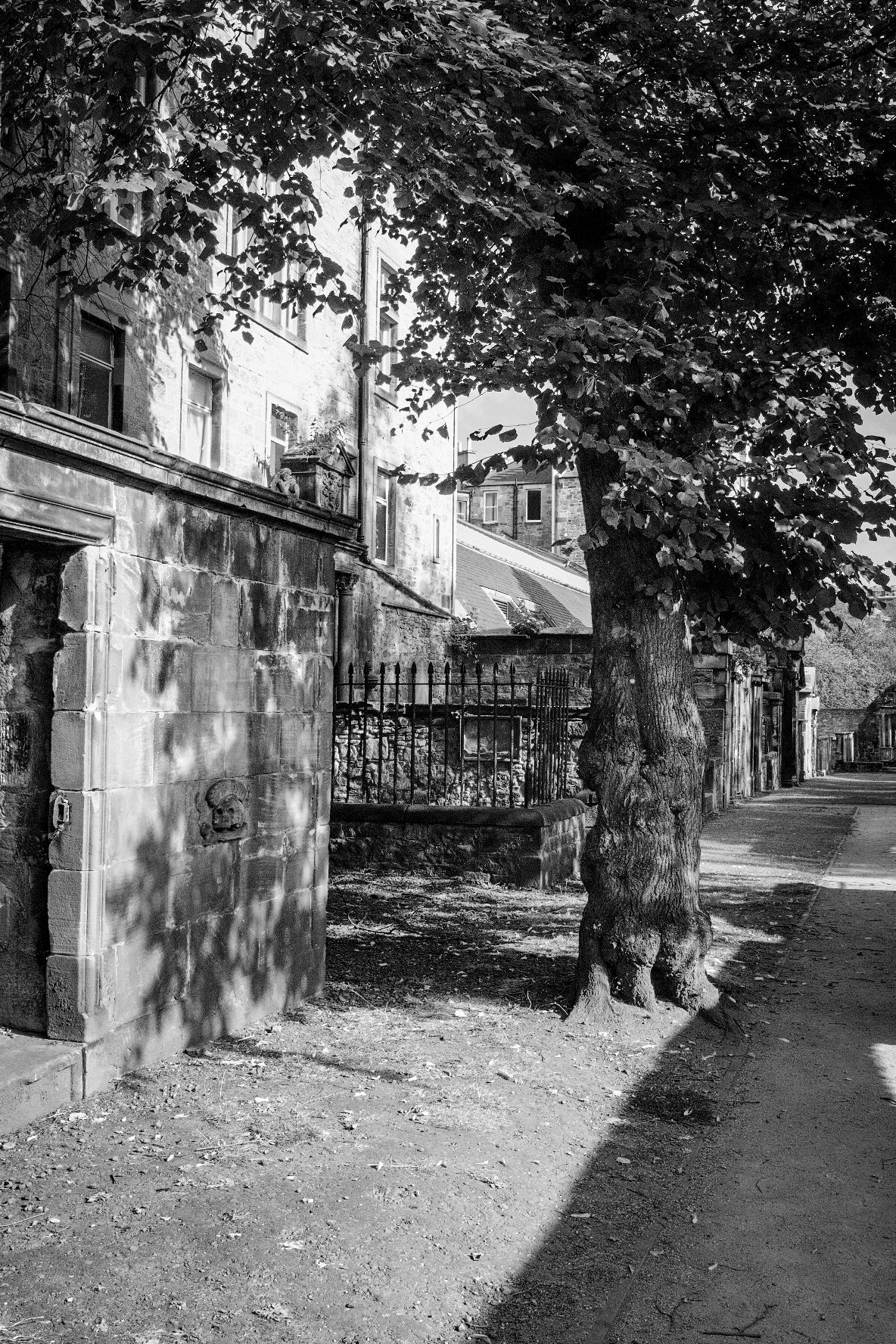
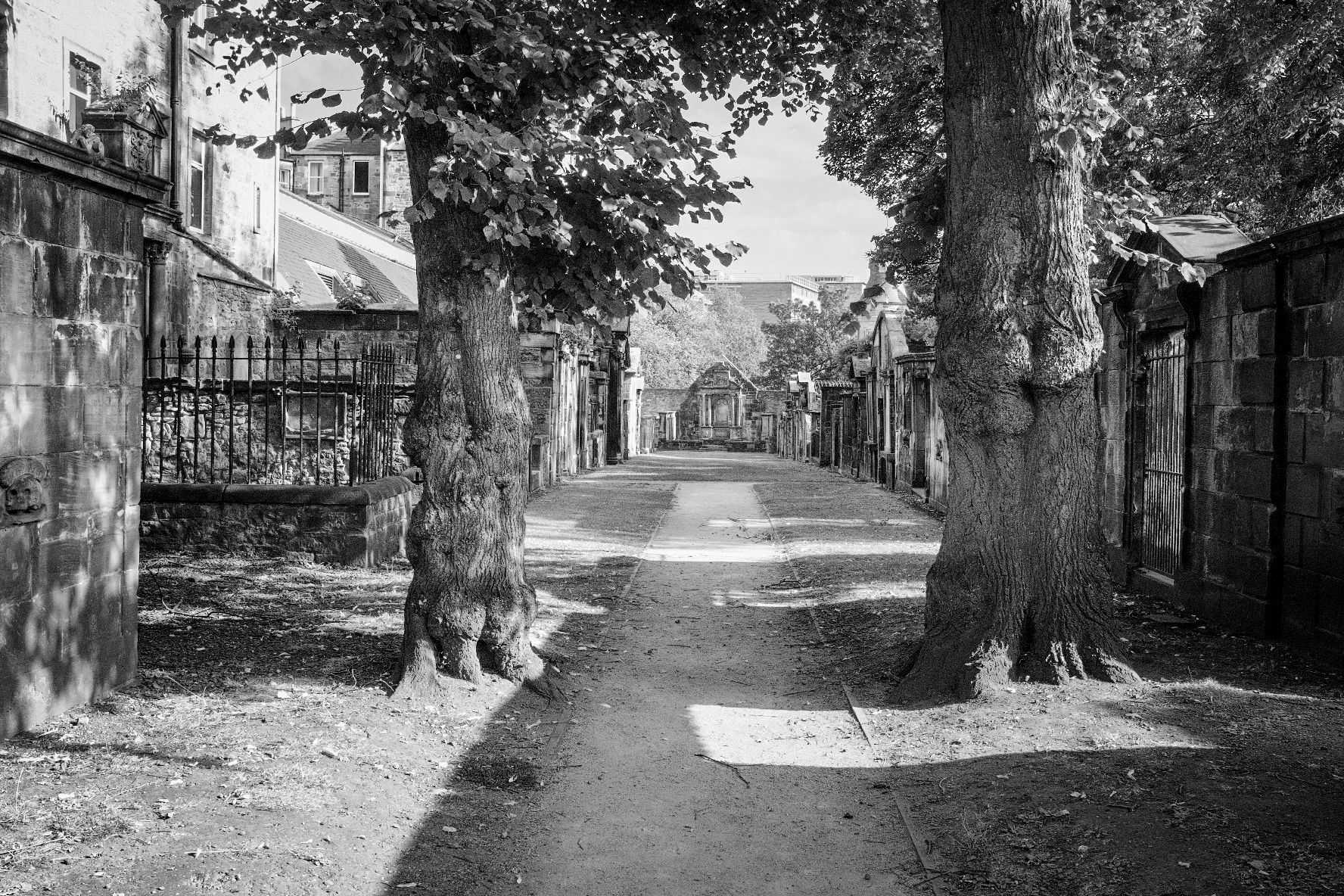
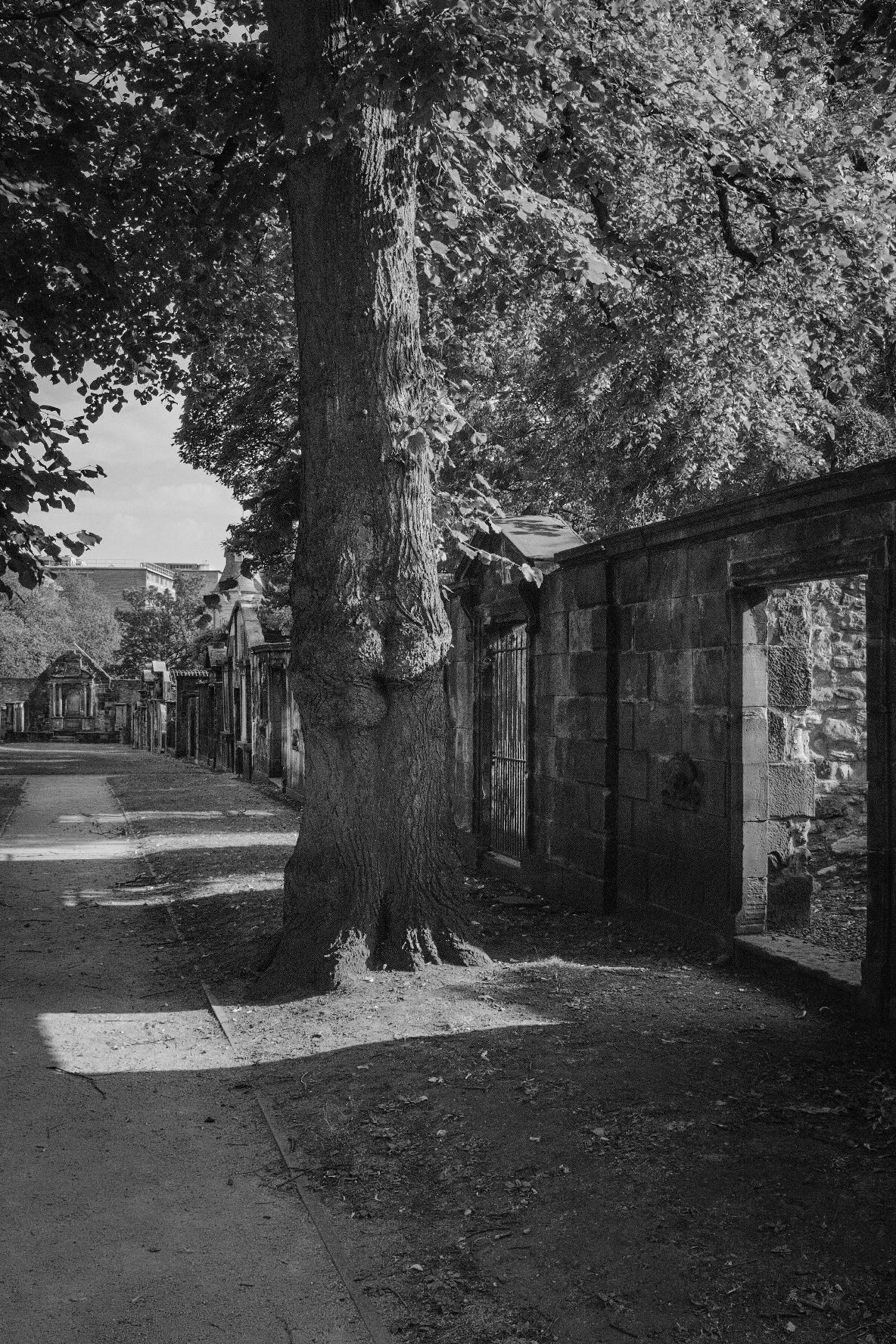
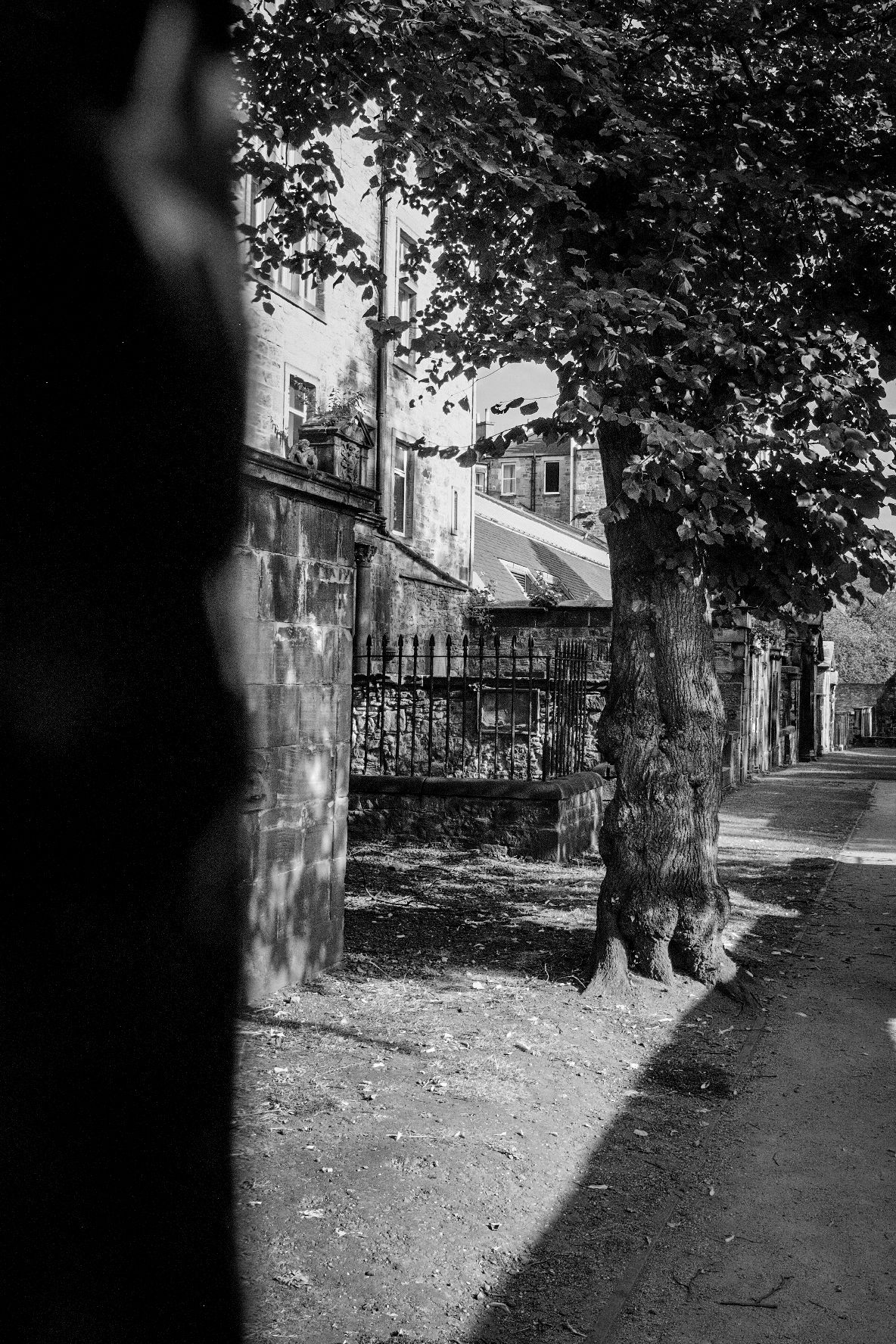
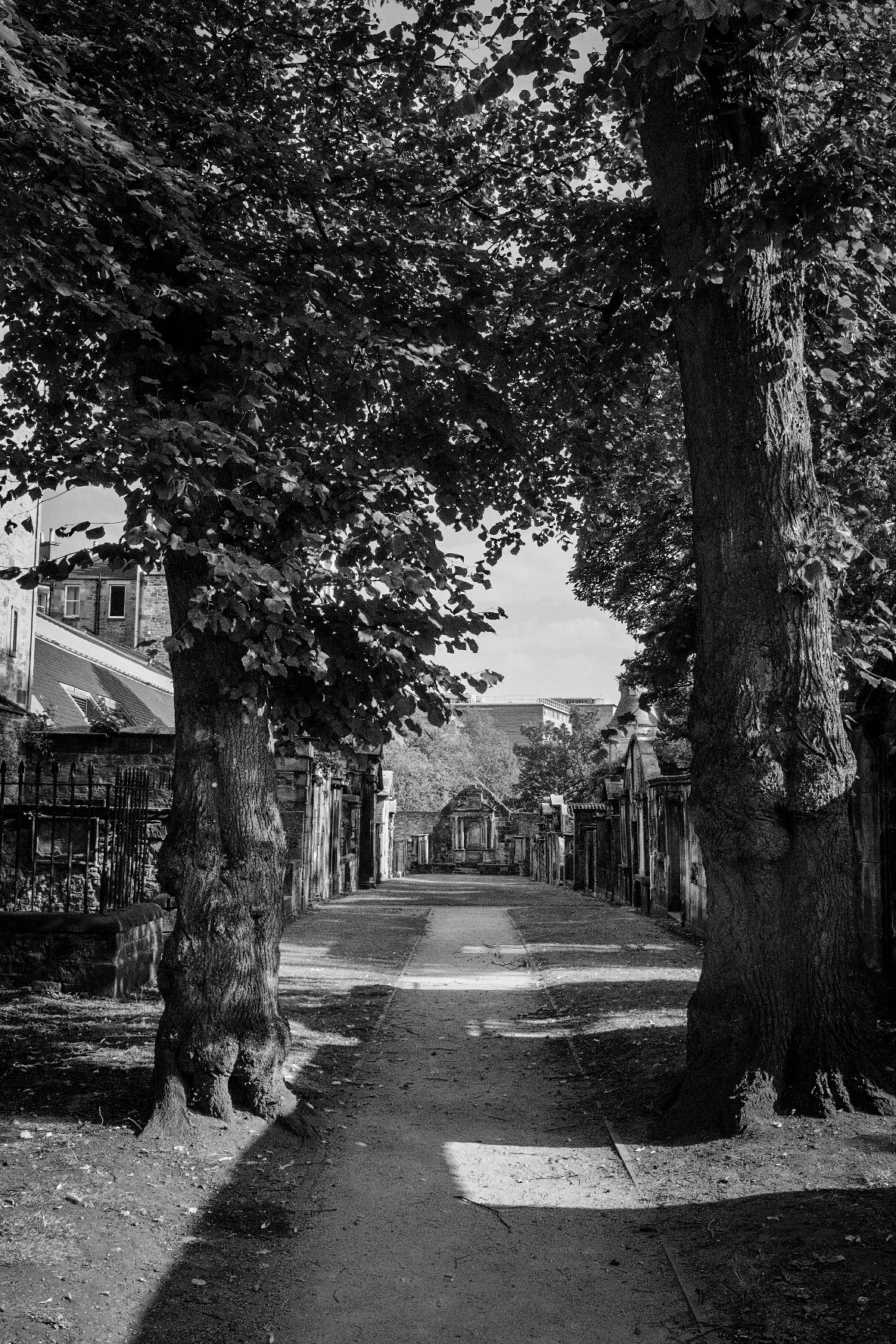
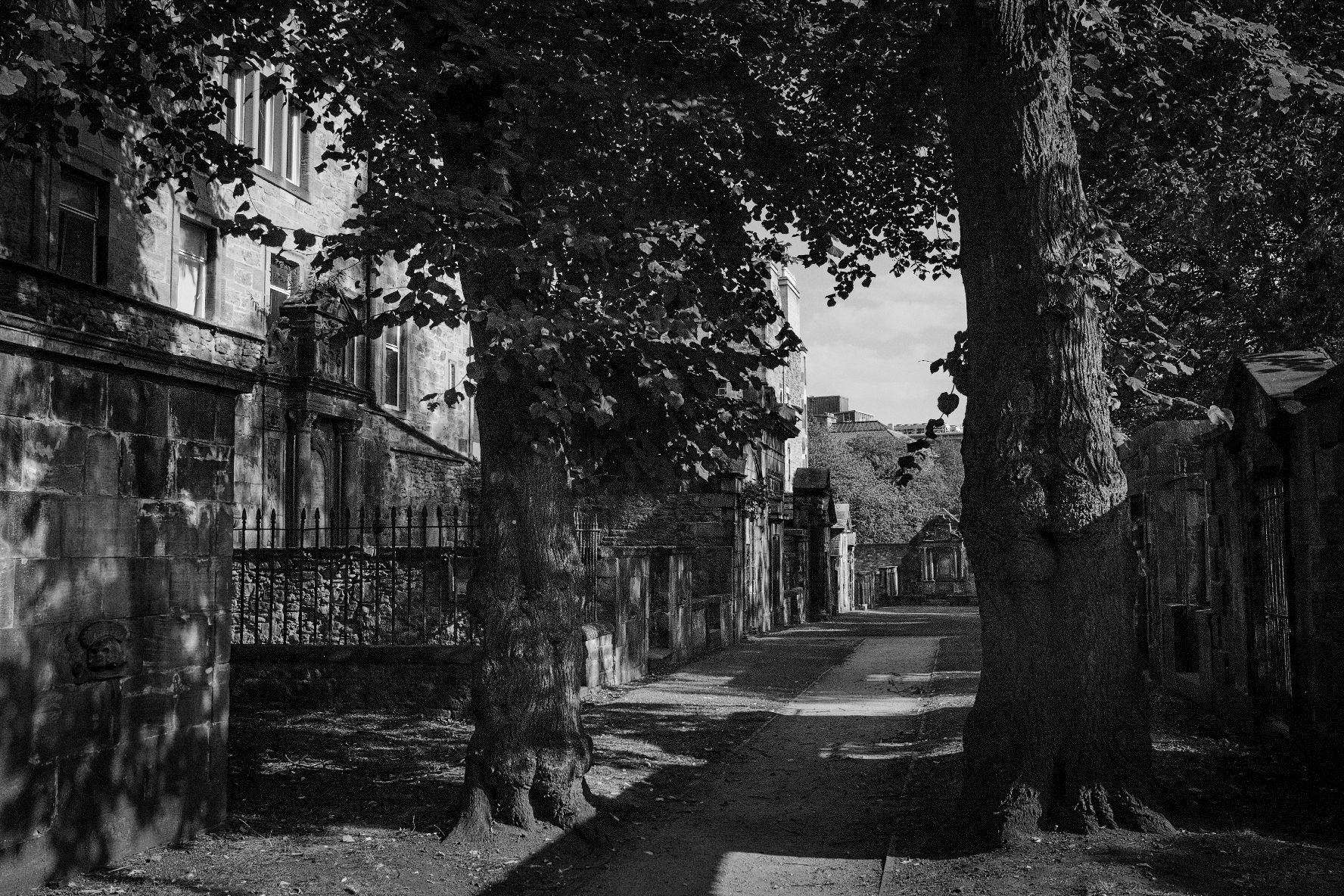
We wandered through the graveyard looking at the tombs of the citizens of Edinburgh from the past. And we found a certain Thomas Riddell who JK Rowling used in her books. Kate acquiesced and allowed me to take her photo in front of it.
We ventured towards the Covenanters’ section of the graveyard, supposedly the most haunted section. I felt nothing and saw nothing, but Kate started to have a headache. We paid our respects and decided to find Bobby’s grave at the entrance. Kate noticed the sticks put on his grave, as you might leave a favourite dog toy. She just had to go and find him a suitable stick. Bless that dog. Teaching us a valuable lesson in pure love years after his death.

We ventured back out onto the streets of Edinburgh, leaving the relative tranquility of the graveyard behind us. This was about to be the reason she wanted to come to Edinburgh in the first place: a cocktail bar. But not any ordinary cocktail bar. The Geek Bar, decorated every four months into a new theme. The theme she wanted was from a video game that she plays with Killian. Oh no—they’d changed everything… It was now all about Stranger Things on Netflix—something I had heard by name but knew nothing else about.

Liquor? Maybe quicker, but it’s not something I’m a great fan of. The lady took our order and explained the concept. I felt as if I was in Starbucks for the first time. She asked which flavours I liked, and with her expert help, I made up my mind. The drink was obviously dangerous—too smooth, too sweet—and I couldn’t feel the alcohol. Neither could Kate, who was only allowed a mocktail. I have to be a responsible parent after all. The second round was just as deadly, and I was beginning to feel very happy. I wonder why…

So maybe, at the end of all this, the real magic isn’t in the tricks or the drinks or even the famous city. It’s just—being there. Following your children into their weird, wonderful universes, and watching them set the place on fire with laughter.
And really, what’s better than that?

NORTHUMBRIAN SUMMER PART III


Edinburgh, Scotland 2025

It was my daughter’s turn to have some Dad time. Before we left France, I asked both children to think about what they wanted to do the most in the UK. Both of them said they wanted to go to Scotland—Edinburgh in particular. The Lourdes trip when I took them both had drained the coffers…

Killian had been.
Virginie had been.
Kate had never been.

It was my daughter’s turn to have me all for herself.

When I told them,
Killian nodded. “That’s fair.”
Virginie smiled. “We’ll do something together.”
And just like that, it was settled.
This day would be hers.
Just her. Just me.
Edinburgh, at last.

It would be a long day. I wanted to give her a full day—to let the city work its magic… We couldn’t visit everything, but for the first time I thought of Princes Street, and the Royal Mile, and Greyfriars Kirkyard. She’s fifteen—shopping first, history later—yet I’d offer her the quiet places anyway.

I just wanted her to feel the city, not just the shops.

We could always come back.

And next time, she’d walk these streets not because I brought her,
but because she chose to.

We walked along Princes Street looking at the chainstores, even daring to go into H&M but soon left once we realised that you have to be skinny to dress there. We moved on to M&S and had our second breakfast. The bacon roll she had on the train was “interesting” but hardly filling. I saw outfits that I thought she might like but was told, non!

I was on the lookout for a tweed spectacle case but despite looking in numerous tweed shops, I only saw the same things over and over again. I was disappointed, but Kate wasn’t! She saw a beautiful tartan étole that called out to her…

How could I refuse her? It would be perfect for winter and the wool was so soft.

We crossed the bridge next to the National Gallery,
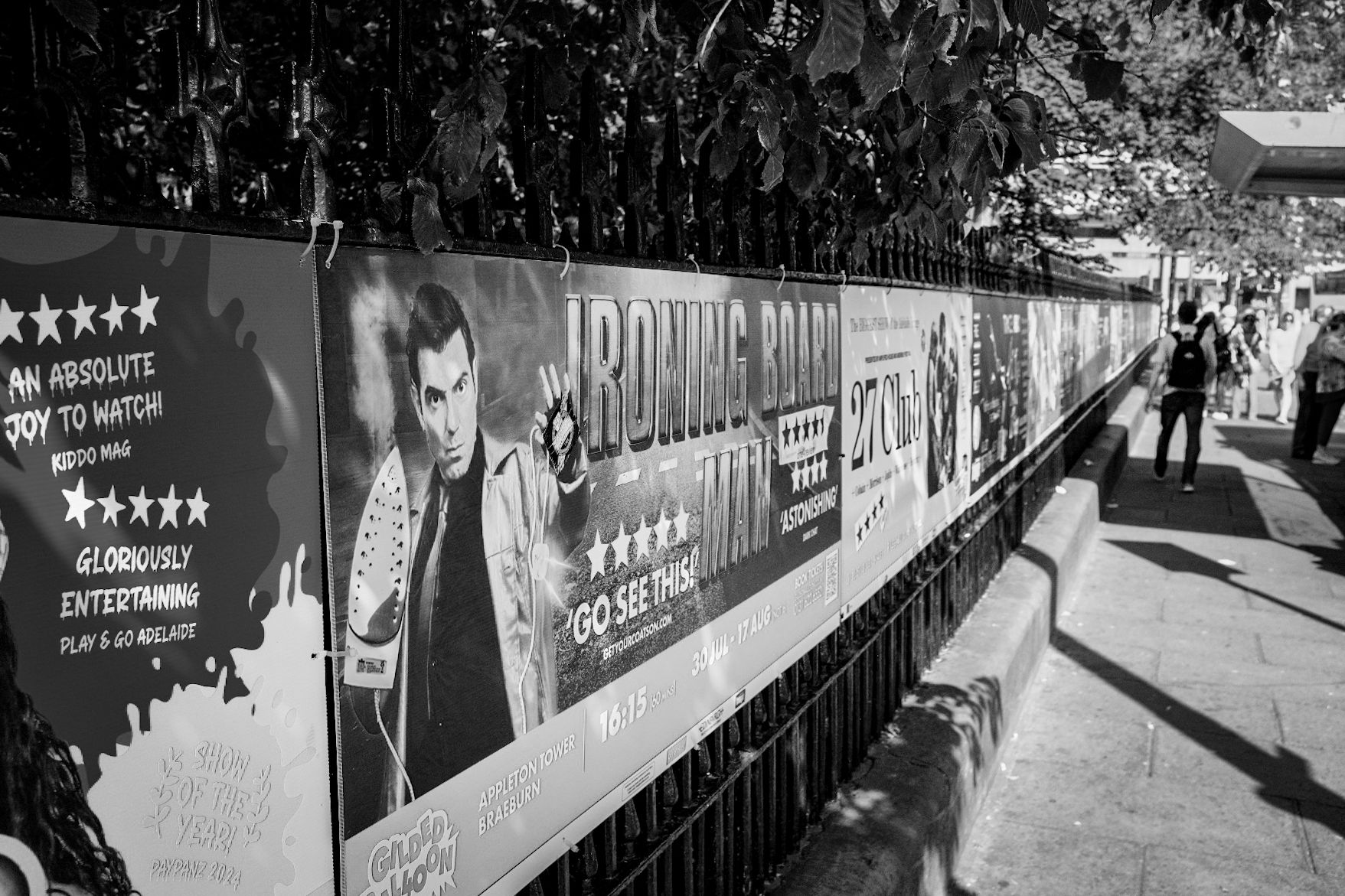
Festival posters peeling in the wind.

Then she stopped—a shadowed shop glowing with silver.
The same one where Killian chose his claddagh six years ago.
“Like Killian’s,” she said, tapping the glass.
Not a question. A claim.

Inside, the air smelled of wool and old metal.
She ran her finger over the trays—
Past the ornate knots, straight to the simplest ring.
“This one,” she told the jeweler. “Like my brother’s.”

I watched her try it on, heart facing outward.
Right hand. My heart is free. (I didn’t need to say it.)
“For remembering,” she whispered.
Not “growing up.”
Just: This is mine now too.

Edinburgh breathed around us—
alive, urgent, temporary.

China – Shao Xing


New Year’s Day

Welcome back to China, Dear Reader. When I last left you, we were on the bus somewhere between Hangzhou and Shao Xing. I’m pleased to report that we made it safe and sound, and that Corentin and I now had two keys to our room. It was still sunny—a joy to be alive. Thank you, happy pills. Our room had all the mod cons, though there was a quirk: if one of us was on the loo, we’d slide the door across for privacy. Unfortunately, that meant the person taking a shower lost their privacy. Still, I couldn’t see anything from the loo, so my roomie’s modesty was safe.

Speaking of toilets, we encountered quite a range during our travels. In the service stations, they were the French “chiottes à la Turque,” which are nothing like the Mozart Rondo, but certainly more pungent. Then there were the “ordinary” toilets, followed by the ones whose lids lifted automatically as you passed, and finally the pièce de résistance: the Japanese-style toilet, which remained resolutely Chinese.

This marvel had a heated seat—luxury in itself. You had to lift the lid manually (slumming it in the Stone Age again), but once seated, nature took its course in unparalleled comfort. The real magic began when you pressed a button: a mechanism extended to spray water precisely where needed. There was even a function for ladies. And after the water came the air, drying everything off! I double-checked with toilet paper, of course, but it had done an impeccable job. Truly, a game-changer. As Forrest Gump said, “That’s all I have to say about that!”

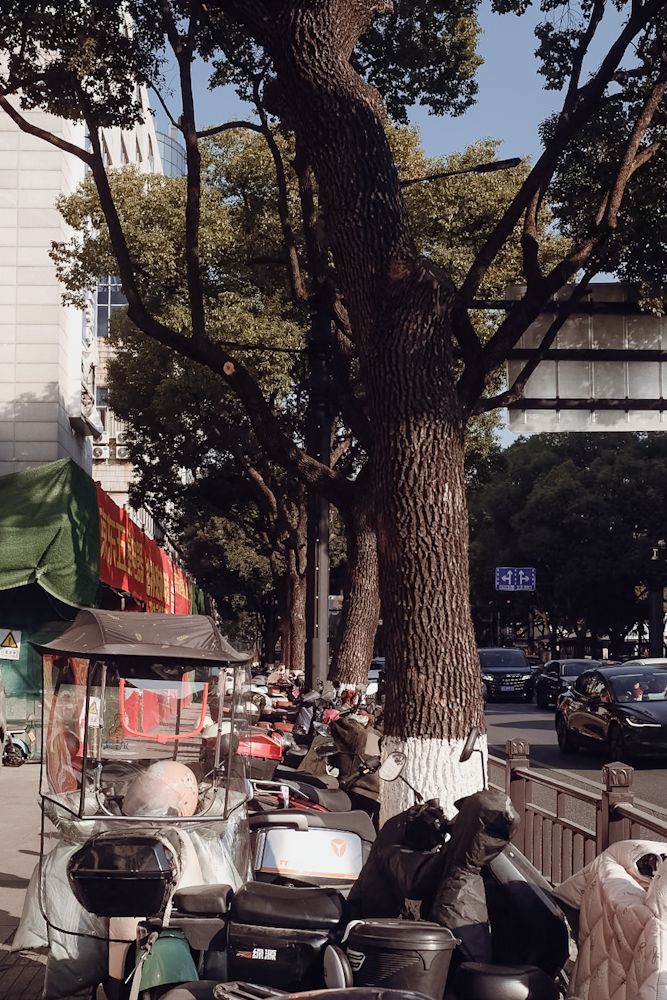
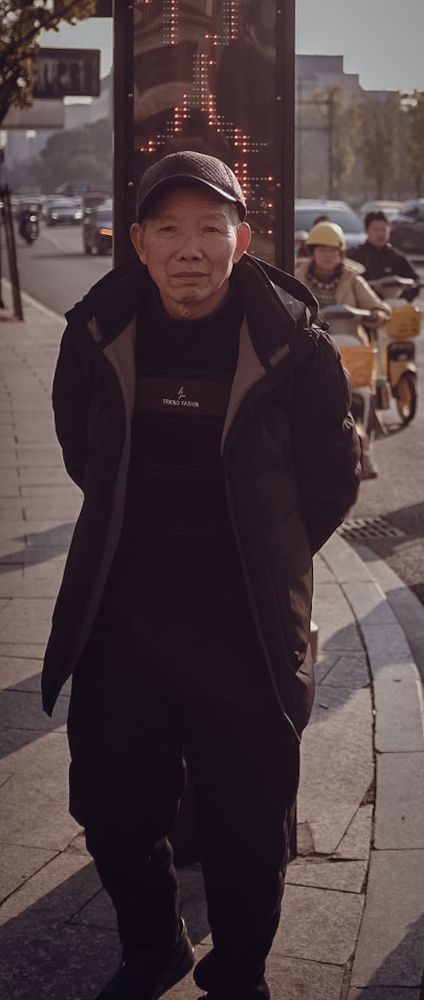
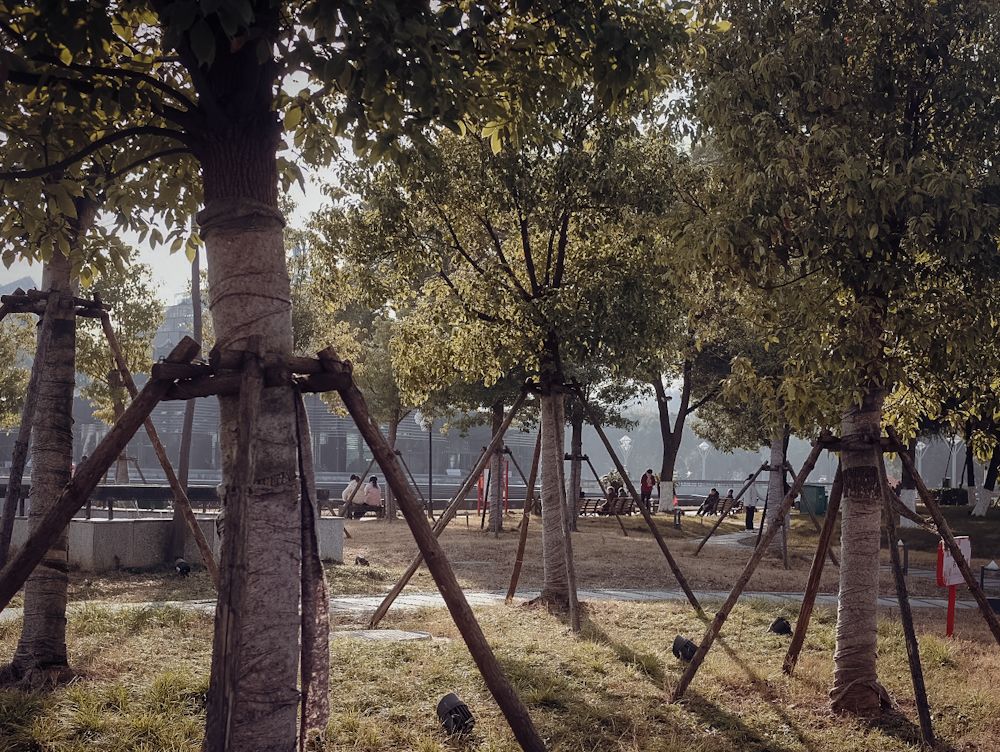
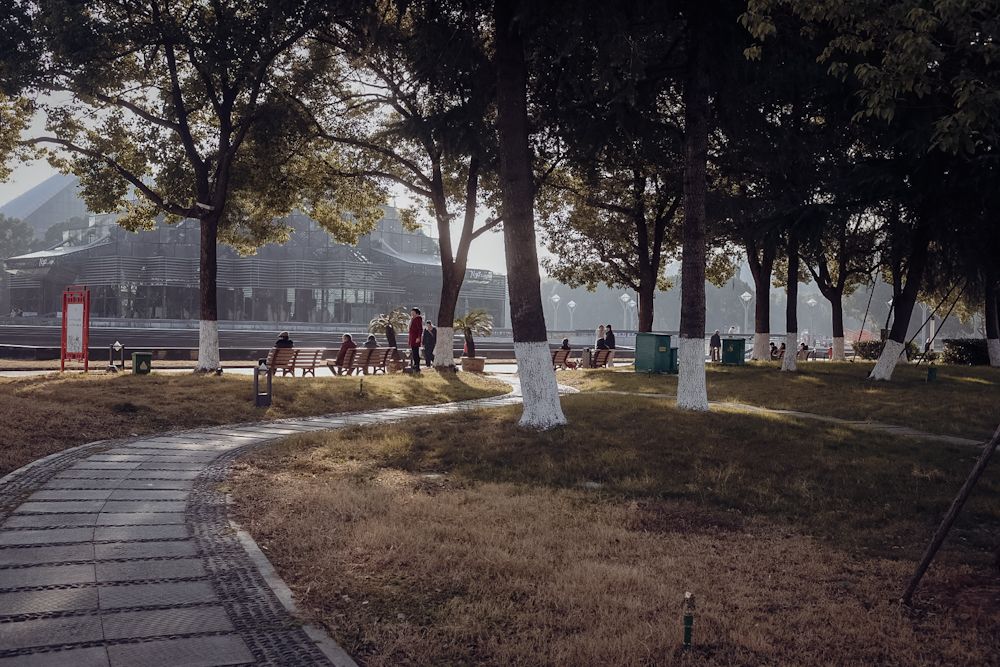
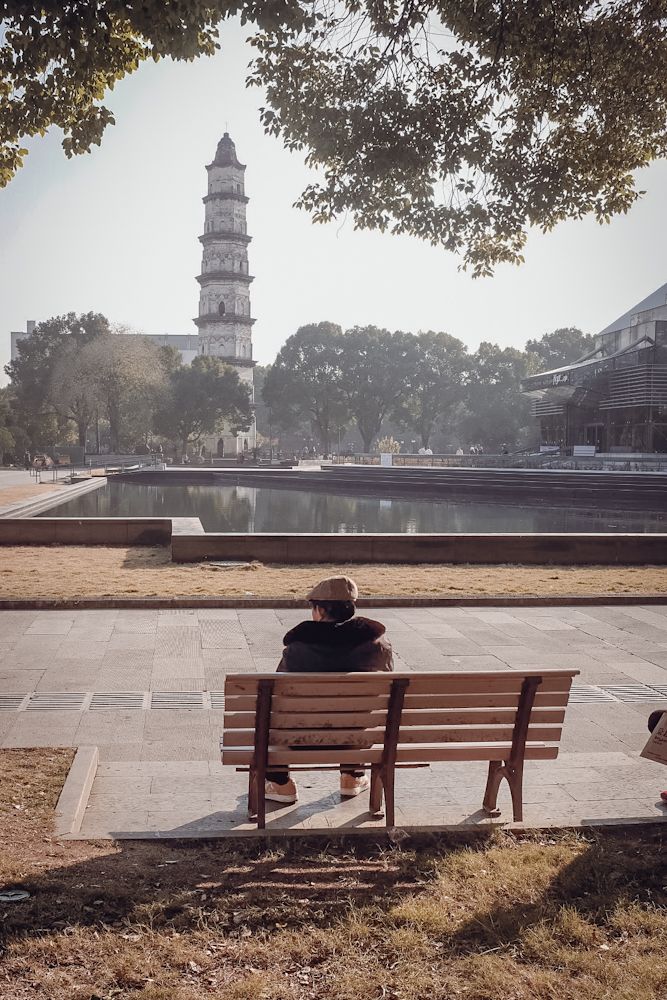
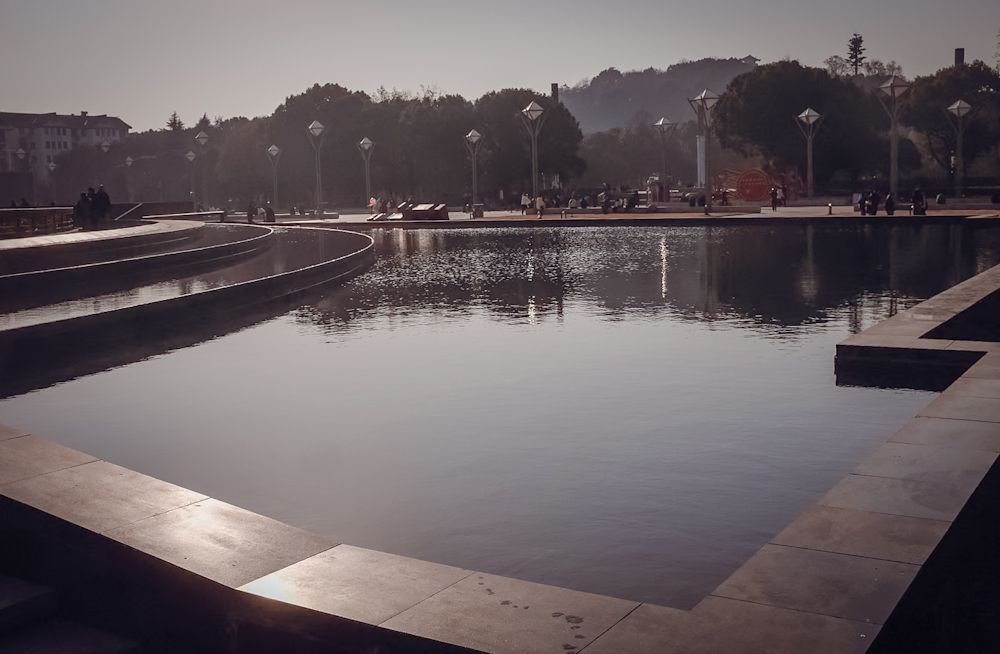
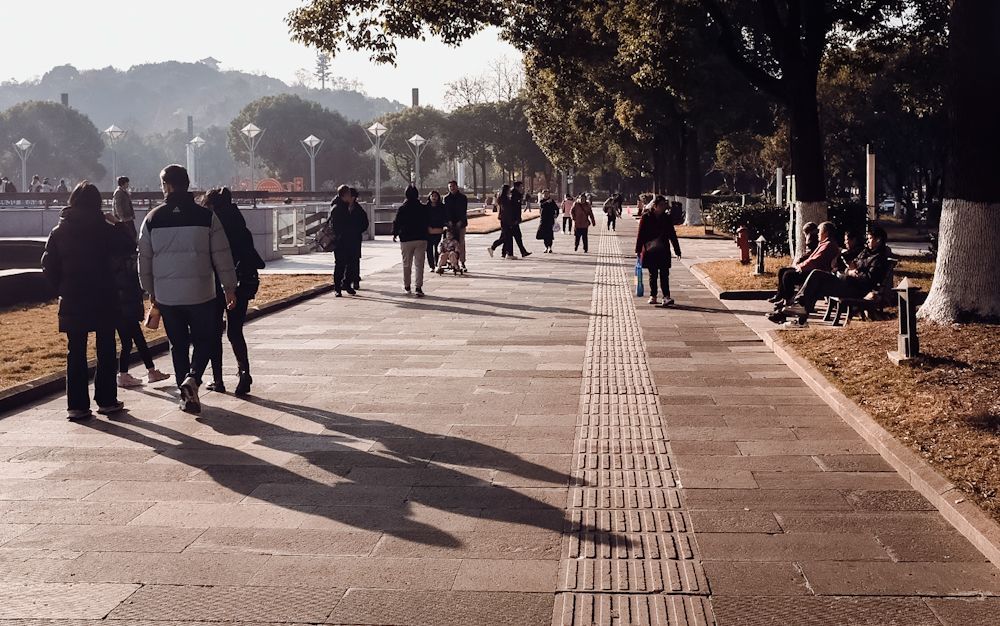
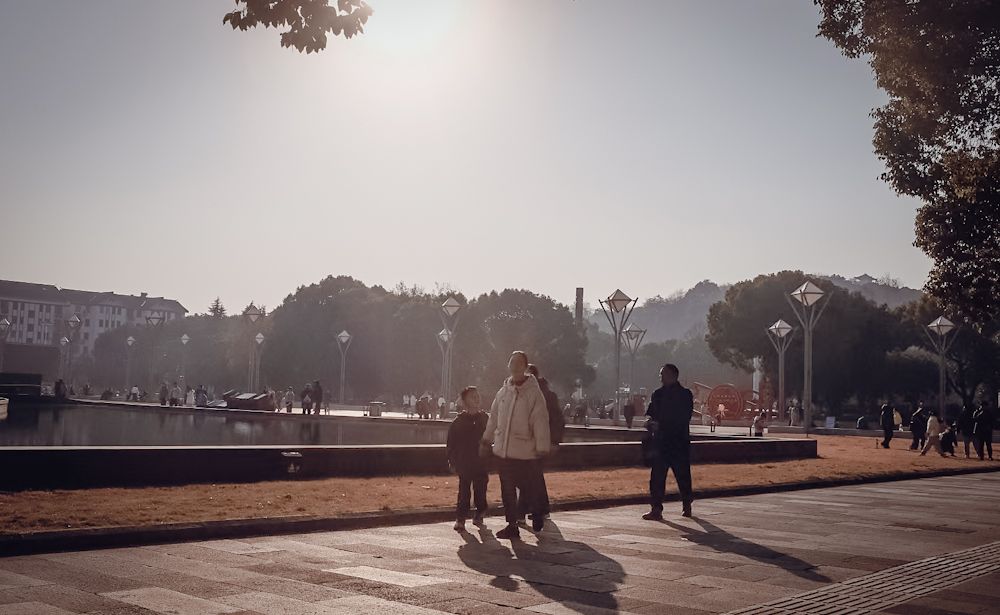
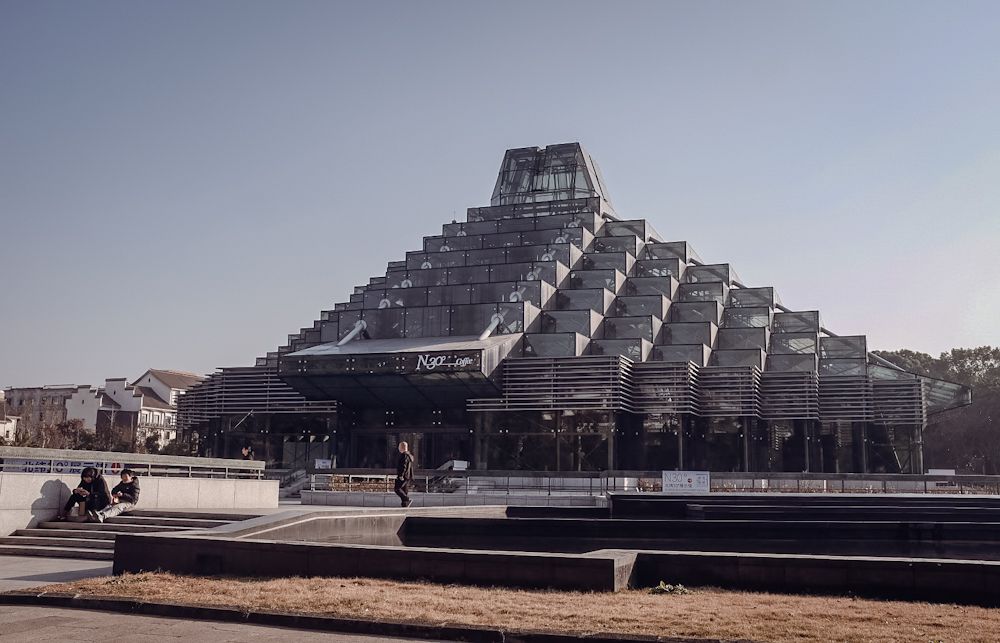
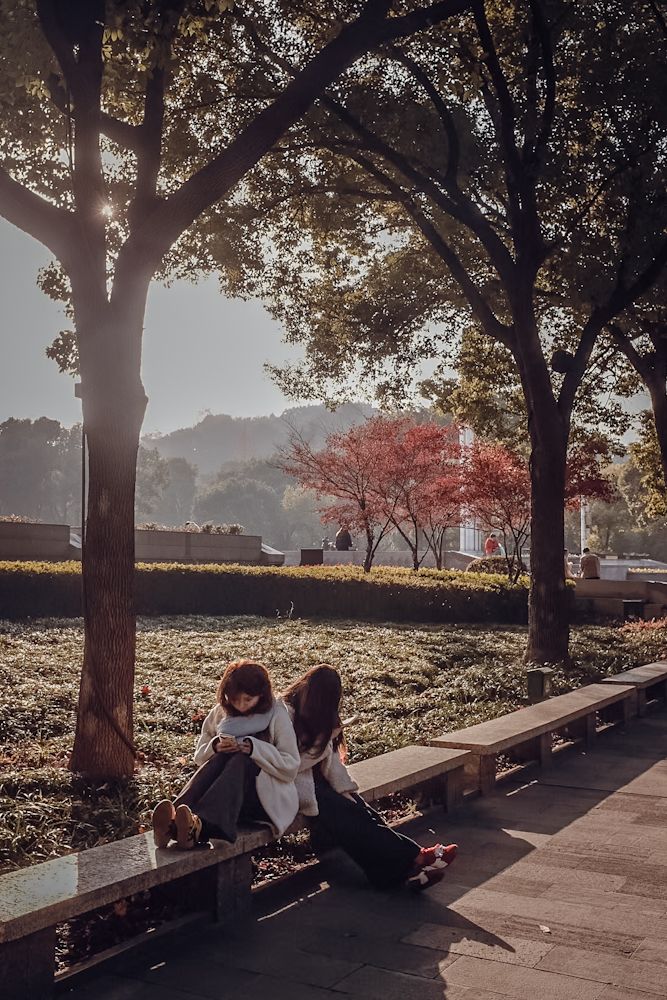
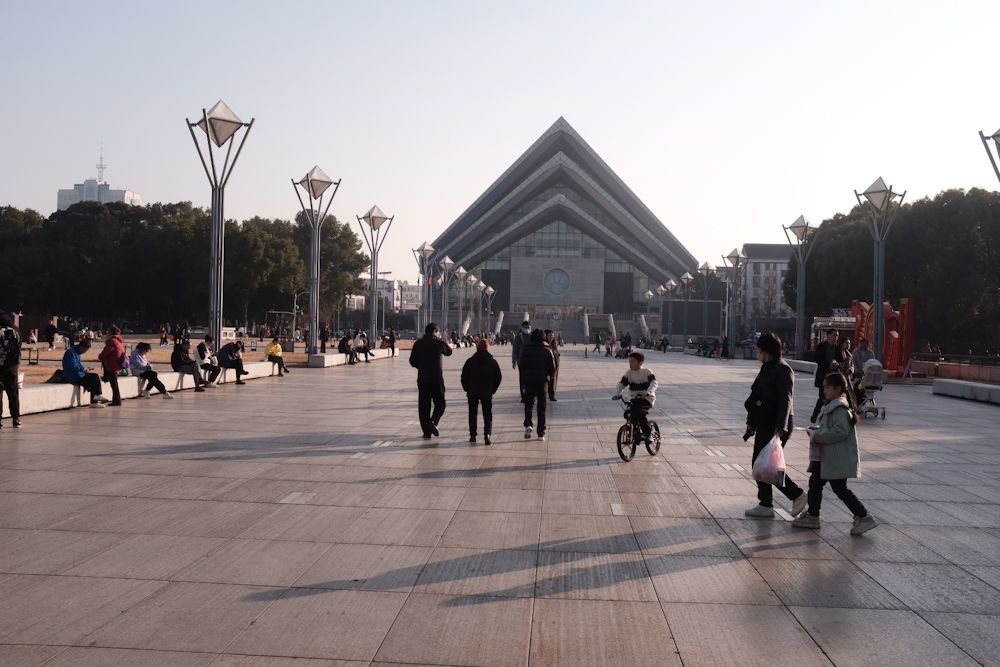
Now, let’s move quickly on from toilet humour (as universal as it may be) to the park next to our hotel. We were on the 22nd floor and had a marvellous view of the city centre. I could even see that night’s venue from our room and decided to explore the area, camera in hand. The winter sunlight was soft—bright but not blinding—perfect for photography. I wanted to capture the impression of Shao Xing, not just through candid portraits of people but through its landscapes and atmosphere. My aim was to convey the city’s essence, much like an impressionist painting, but with a camera instead of a brush.

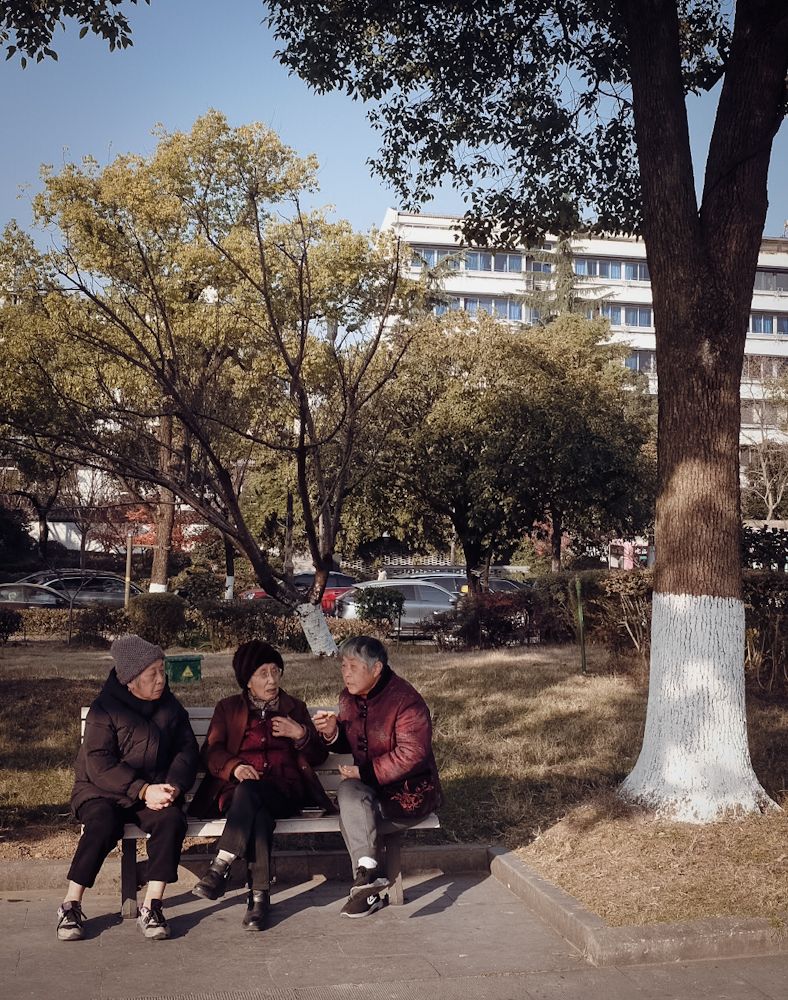
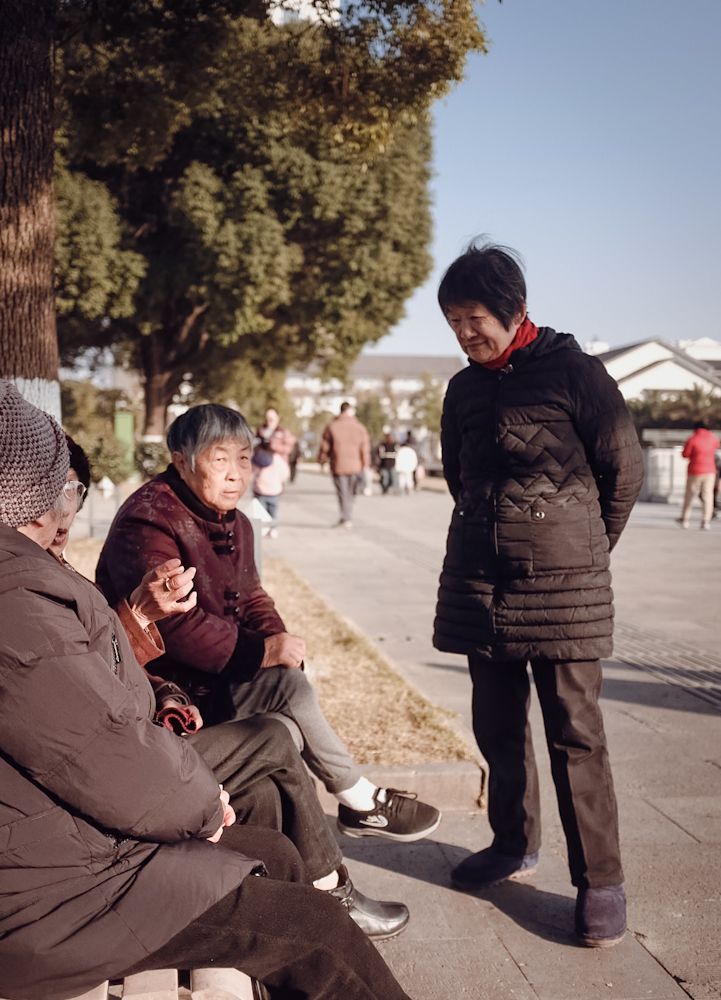
The park was alive with activity. Aunties and uncles sat on benches, chatting animatedly and observing the world go by. One Aunty beckoned me to join her, and I obliged. She greeted me with a thumbs-up—a universally positive gesture, except when hitchhiking in Greece, where it’s a faux pas. Using the translator in Alipay, I explained that I was a horn player with the visiting orchestra and would be performing that night in the concert hall across the park. This app is a godsend in China, though I briefly considered going back to study the language. My wife might not be thrilled with me disappearing for six months, though.

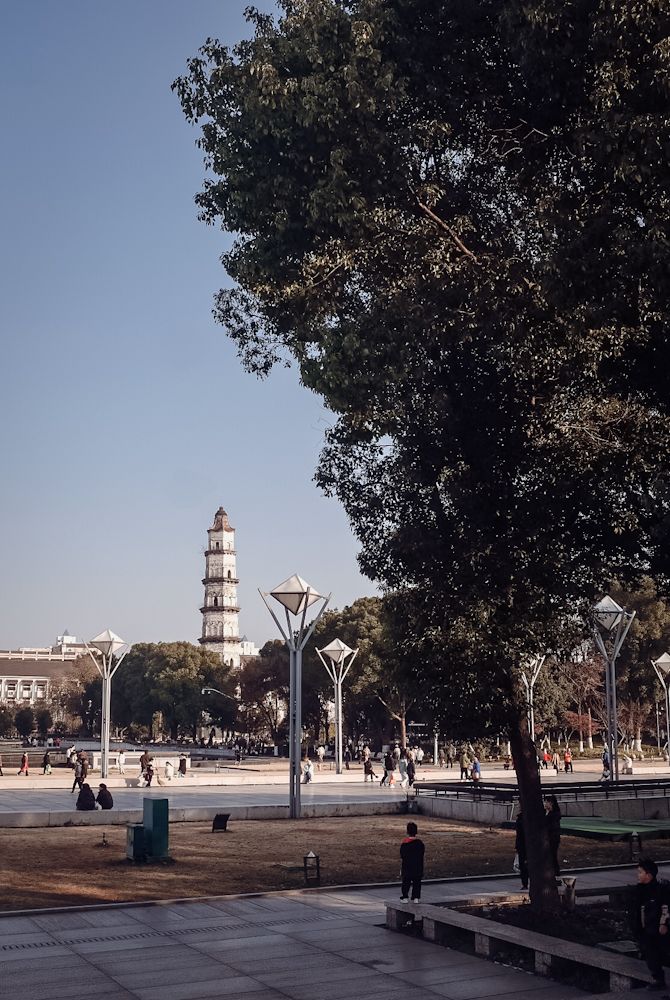
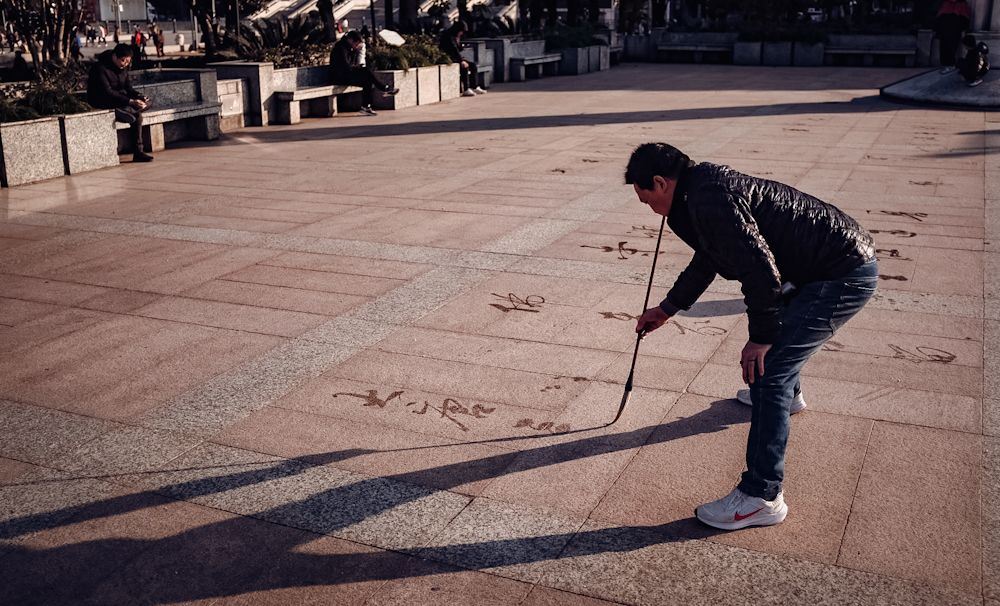
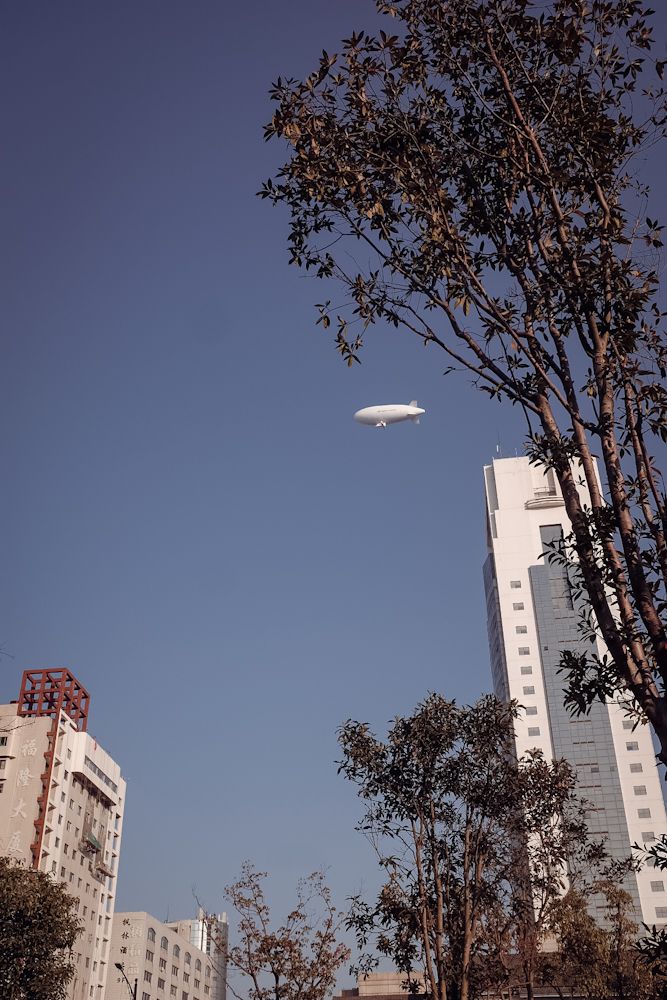
As we sat, the Aunty hummed a Chinese song. I was transported elsewhere, nearly dozing off in the sunlight—a habit I seemed to be developing. Thanking her for her company, I wandered further into the park. The sunlight filtered through the trees, highlighting the park’s serene beauty. I came across a single artist practicing calligraphy on the ground, using water instead of ink. His strokes were delicate and ephemeral—a fleeting masterpiece destined to evaporate. Children played with marbles nearby, using the sculpted floor as their playground. The juxtaposition of timeless tradition and youthful play captured the spirit of China for me. Above it all, a pagoda stood proudly, with an airship hovering in the background—a striking blend of the classic and the modern.

Reluctantly, I left the park to prepare for our penultimate concert. The thought of returning to the mundanity of home life began to weigh on me. This tour had been a gift, filled with unforgettable experiences and people. I wasn’t ready for it to end.

The concert hall was just across the park, and I strolled over leisurely—no need to rush; a gentleman never runs. The theatre director and his team greeted us warmly, their hospitality as magical as ever. Some brass players had prepared a fanfare to welcome the audience, and the atmosphere buzzed with excitement. Selfies were taken in abundance, and someone was even live-streaming for TikTok.

The concert itself went beautifully, with the usual audience participation adding to the magic. Afterward, the theatre manager addressed us, reminding us of the event’s purpose: celebrating Franco-Sino relations and their 60th anniversary. His French was excellent, and his enthusiasm infectious. They had prepared a spread for us—a delightful picnic with beer aplenty. As the night progressed, the manager led by example, dancing and motivating his team to let loose. Seeing their boss in this light seemed to surprise them.

I left the party early, taking a quiet stroll back to the hotel. The park, now illuminated, looked entirely different. The pagoda glowed softly and had changed character, and became the central element to the park.  Meanwhile, Corentin extended the festivities at a local bar, where the owner was treated to an impromptu rendition of Michel Sardou’s “Les Lacs du Connemara.” A night to remember, indeed.

Opening of the Film Archives, Château de Clisson, February 2017


I had obviously taken a break with the Canon AE1 and spent the whole of December and January in hibernation, as most grumpy bears of my age do. Get Christmas over with, then go back to bed… I like my bed. No, I love my bed!!

Spring was just around the corner, and Kate had managed to awaken the beast and proceeded to tell me what she had planned for the day. It included me, a camera, and the Chateau de Clisson. I had just been “told” by my daughter, and off we headed to Clisson.

Now, the Chateau de Clisson is no small affair by any means. It dominates the centre of the town, sitting atop a hill as an imposing structure. I remember Kate having begged me on numerous occasions to actually go inside, and this time I acquiesced.

It was the perfect opportunity to not only document the inside of this historic site but also to let my playful daughter do what children do best: be cute, or as they say in French, espiègle. At that age, she was still content to pose for the camera, unlike the moody teenager she has become. Yet, sometimes, that same playful nature still manages to shine through.

If you’re curious to learn more about the history of the Chateau de Clisson, I’ve included a link for further reading.

After our outing in Clisson, I retreated to the quiet of my darkroom, where the real magic happens—transforming the captured moments into tangible memories. The familiar routine of developing the film, loading it into the tank, and watching the images slowly emerge never fails to captivate me. Once the negatives are ready and the scans are complete, I file them away in both my digital and analogue archives.

Then, a few years later, I get to share these memories with you. It’s a special kind of nostalgia—the kind that comes with taking time to slow down, reflect, and preserve what matters most. Thank you for joining me on this journey and for allowing me to share these pieces of the past with you.

The Opening of the Film Archives—Abbaye de la Grainetière, October 2016


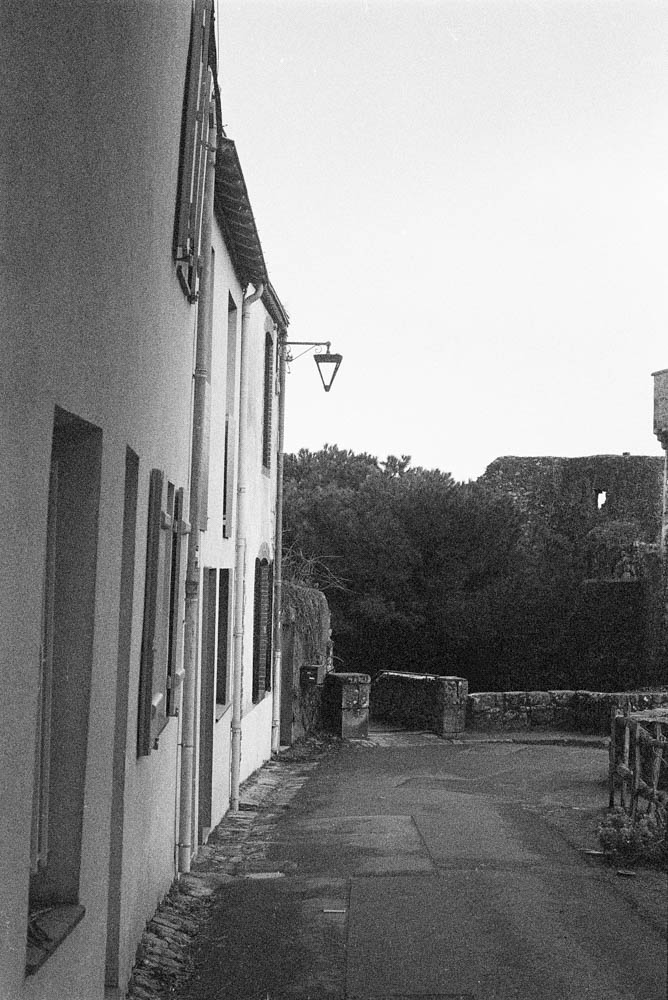
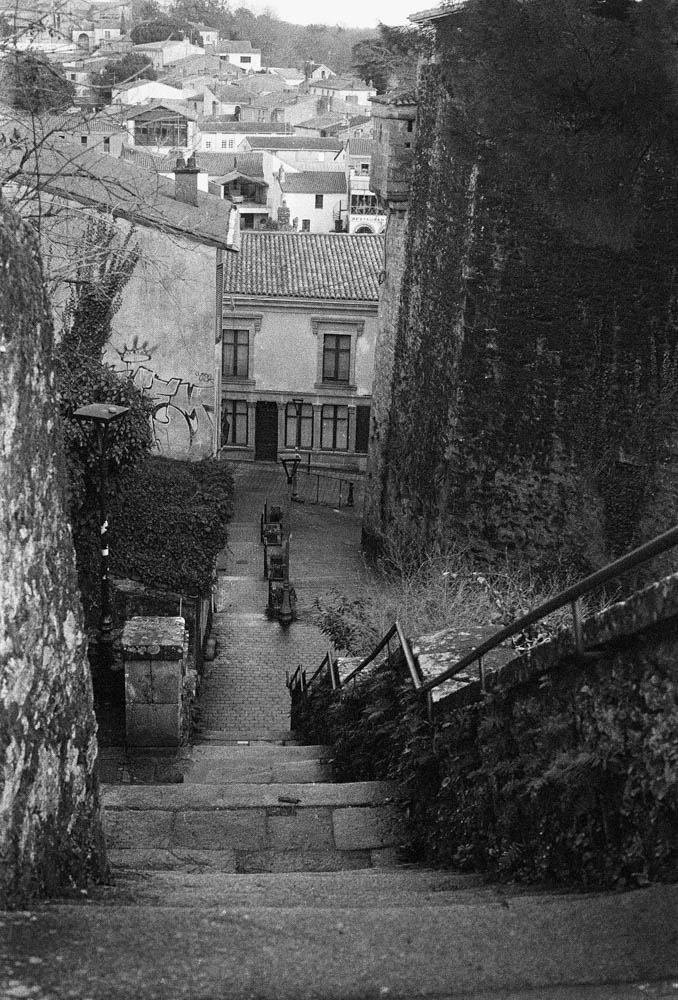
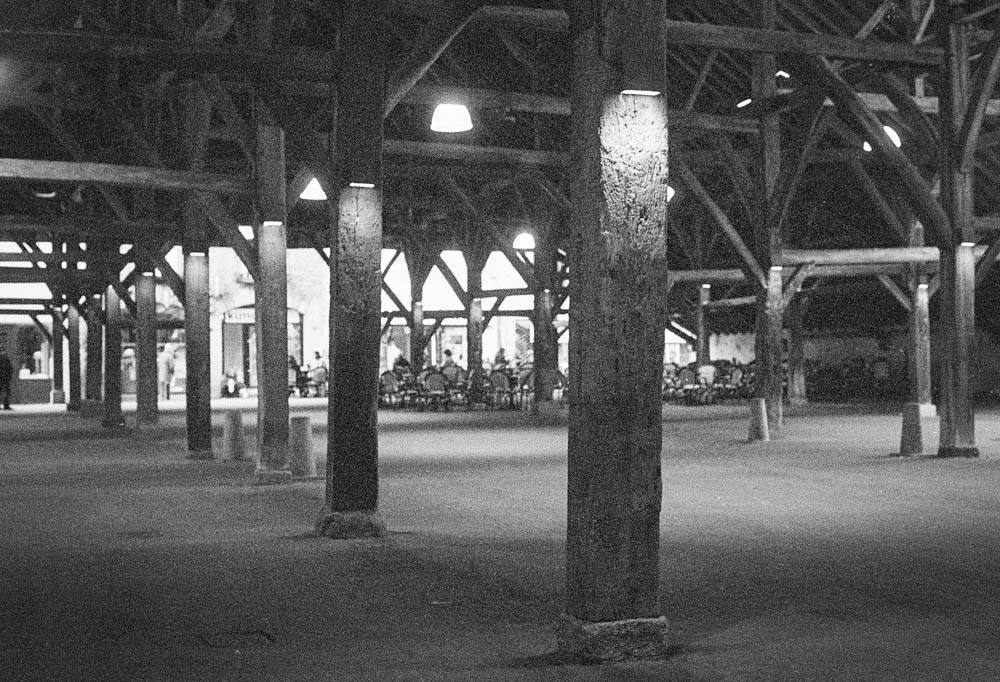
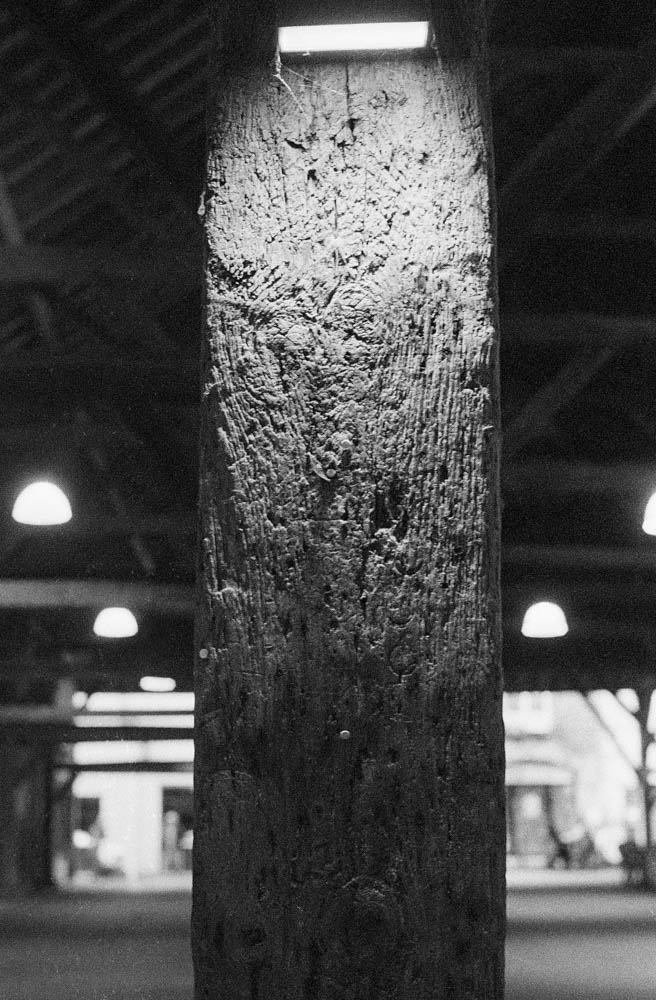
“They” say that if you leave your child to the Jesuits for seven years, then that child will belong to the Jesuits for life. I am not a Jesuit, but I was heavily influenced by the Benedictines when I went away to prep school in 1980. Mummy, Daddy, let me reassure you, this isn’t about Gilling—some things are better left in the past. This article will instead focus on a different Benedictine site, one that I visited much later in life: l’Abbaye de la Grainetière, a peaceful monastery here in the Vendée.

The Abbey of Notre-Dame de La Grainetière, on the outskirts of the town of Les Herbiers in Vendée (France), encompasses nearly nine centuries of tumultuous history. For over 50 years, numerous restoration works have been undertaken. These efforts allowed for the re-establishment of a community of monks at the end of 1978, nearly 200 years after the abbey was abandoned by the monks, shortly after the Revolution of 1789. Classified as a historical monument since 1946, many volunteers are working to continue the legacy of La Grainetière.

To those of you unfamiliar with the ins and outs of the Catholic Church, the role of monks is to live in community, and their main duty is to pray for us in the wider community. The monks elect a Father Abbot, who is responsible for running the monastery. In centuries gone by, the Abbot would wield a huge amount of influence, but this power has been reined in over time and is less evident outside the monastic community.

When I visited l’Abbaye de la Grainetière, I couldn’t help but reflect on how different this Benedictine monastery felt from my school days. The quiet prayer, the stillness—it offered a kind of peace that I hadn’t experienced for a long time, and a life that was once very appealing to me.

The monks follow the Rule of Saint Benedict, a foundational guide for monastic life that addresses not only prayer, but also how to live both within and beyond the monastery walls. Though written for monks, many of its teachings have been adopted by the laity seeking a structured, spiritually focused life.

I could almost say I envy them the simplicity of monastic life compared to the complexities of modern society and family life—juggling careers, responsibilities, and the endless distractions of today’s world. While I don’t regret the joys and vibrancy that come with having a family—something perhaps lacking in monastic life—it’s hard not to admire the stillness and purpose that a simpler existence can offer. We all have different vocations in life. Mine was to be a father.

As I packed away my camera and left the grounds of l’Abbaye de la Grainetière, I found myself still pondering the contrast between the quiet, ordered life of the monks and the complexity of my own. In some ways, visiting the abbey felt like opening a door to a simpler time, a place where life seemed more focused and more deliberate. Yet, as much as I admire the peace found within those ancient walls, my own path has led me elsewhere—to the joys, challenges, and unpredictability of family life.

In the end, it’s not a question of envy or regret, but rather a reminder that we all find our peace in different ways. For the monks of l’Abbaye de la Grainetière, it lies in prayer and solitude. For me, it’s found in the laughter of my children, the shared moments with loved ones, and yes, even in the rush and noise of everyday life. Each vocation, after all, carries its own kind of grace.

Perhaps that’s what lingers with me most from my visit to the abbey—not just the tranquillity of the place, but the realisation that we each have our own rhythm, our own way of navigating the world, and there is beauty in all of it.
Post Scriptum:

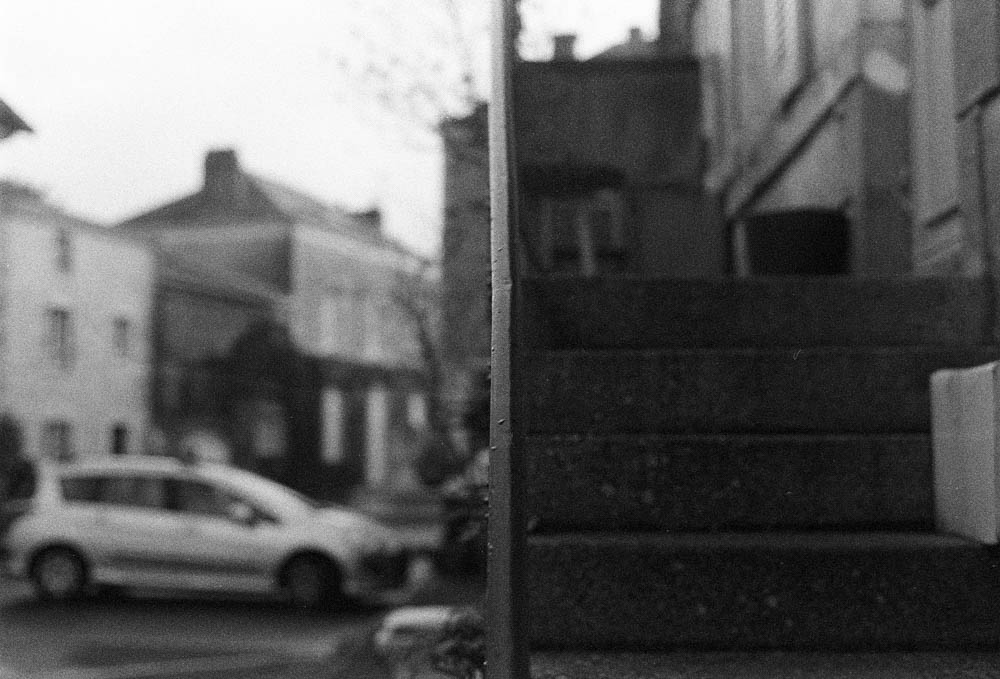
The photos were taken with a Canon AE1, and its FD mount 50mm F1.8 lens, using Ilford HP5 + black and white film.
The UK Chronicles Part VII: Chesters Roman Fort


Welcome, Dear Reader, to the very edge of the Roman Empire, and by implication, civilisation. You might be wondering why there’s a carving of a phallus as the cover photo for this article. Well, don’t forget that soldiers will be soldiers, even when they’re part of a Spanish Cavalry regiment stationed here. Some things never change—except these soldiers were caught by archaeologists centuries later!

Chesters Roman Fort was constructed along Hadrian’s Wall to keep out the “uncivilised” Picts and Scots. This impressive wall stretches across the country from East to West, ending at Wallsend in Tyneside. It was a massive undertaking, and I’m still amazed by this feat of engineering.

Killian, my dear son and heir, whom you might recall from the previous article about his misadventures at Otterburn, was slightly less impressed. “Ce n’est pas le Mur d’Hadrian, mais le muret d’Hadiran,” he quipped—translating to, “Not Hadrian’s wall, but Hadrian’s little tiny miniature wall.” Some people are just impossible to please!

Despite his initial skepticism, Killian was genuinely impressed by the quality of the stonemasonry, even after nearly 2,000 years. With his background in plumbing, he quickly noticed the Roman plumbing and underfloor heating, which makes you realise how little we’ve actually invented since then.

When we visited the cavalry lines and saw where the horses were kept, he was astonished to learn that three men and three horses lived in the same building, with the horses at one end and the soldiers at the other.

Even though he was flippant at the start of the visit, he took a keen interest in everything and enjoyed explaining each building to me. Maybe he’s a closet intellectual after all…

As we continued our tour, my knee was giving me trouble, and Killian showed his concern, asking if I really wanted to go down to the river to see where the bridge once stood. I insisted we go, so we made our way slowly towards the river and the soldiers’ baths. And by baths, I mean a fully-fledged hammam complete with sauna and dry heat—the very latest technology to provide the frontier soldiers with some home comforts. If those baths were still operational, they might have been perfect for soothing my arthritic knee!

We walked slowly towards the west gate and could only imagine the civilian buildings buried beneath the fields in front of us. This site wasn’t just a series of building outlines but a thriving Roman community on the very edge of civilisation.

Speaking of civilisation, I felt it might just be time for a cup of tea. As we strolled through the site towards the car, we spotted a tea shop. A cup of tea and a slice of cake were just what I needed—I was in heaven! Good old National Trust! No wonder they’re an institution. Our conversation shifted to the gift shop, where I was trying to convince Killian that, despite how cool owning a replica Roman helmet and armour might be, it could be a tad impractical and he might not have many occasions to wear such Roman regalia. Mind you he would be very dashing!

If you want to, you can even play a game of “Where’s Waldo” or “Where’s Wally,” for the British readers. Note I didn’t say “Where’s the Wally…” Keep an eye out for the photos of Killian…