Never Complain, Never Explain


Content Note: This post discusses depression and emotional exhaustion. Please read with care.

That was the old Royal Family rule—stoic, impenetrable, forever above it all.

I, alas, am not royalty. I’m an overthinker with a camera and a blog, and I owe you nothing… but I’d like to offer a little explanation anyway. Call it common courtesy. Or perhaps just the need to name what’s been happening.

So here’s the situation report from IJM Photography.

I haven’t written in a month for two reasons.
First: the season. If you’ve followed this space for a while, you know I’ve long wrestled with melancholy—especially as the days shorten. This year, it hit harder than usual. I made it through November, but only just. By December, I was physically and mentally exhausted.

Second: my health. After a conversation with my manager and HR, I was referred to the médecin du travail. She diagnosed me with dépression aiguë—acute depression (not the cute, Hello Kitty kind)—and noted a heart murmur. Frankly, I was relieved to have a name for what I’d been carrying.

She ordered me to go straight home—not back to work—and to see my GP the next day. She mentioned my brain chemistry was “in a bit of a mess.” Which, in its odd way, reminded me of three things:

  • — I have a brain
  • — I have a heart
  • — and I am profoundly tired

Not broken. Just worn thin.

I was referred to the local Centre Médico-Psychologique. There, I broke another unspoken rule: when the nurse asked how I was, I didn’t say, “Fine, thanks.” I told the truth—calmly, factually, without blame—about the weight I’d been under since returning to work after my accident, and how even the resilience I’d inherited from past generations suddenly felt out of reach.

To my surprise, a session with a psychiatrist opened up right away. He was kind, thoughtful. We talked about identity, belonging, and the quiet strain of straddling cultures. He said I carry “the mindset of an immigrant”—and that perhaps I’ve become more French than I realize. He suggested working on communication with my spouse, and that a trip back to the UK might help me reconnect with myself.

He might be right. If funds were no object, I’d book the ticket tomorrow.

For now, I’m taking things one day at a time. Resting. Recharging. And slowly returning—to my camera, to my words, to myself.

Thank you for waiting.

— IJM

Nikon FE Review: Features and User Experience


Hello Dear Reader. I know you are an astute fellow, and that you never miss a trick. You will have noticed me talking about the Nikon FE. I will share something with you. I actually bought one at the end of last year from my HR director, but wanted to have the right time and places to start using it. One can’t rush this kind of thing.

Some of you might even say, “I thought you were a Fuji guy, or a Canon guy, or even a Pentax guy.” I hate to disappoint all those of you attached to a particular brand, but I am above all “a guy.” Mind you, this was my first venture into Nikon-world. Not a Nikon D something…. I went slightly more old school as I have been known to go before.

Why the FE and not the FE2, or even F3? The guy was selling an FE, that is why. Now that is out of the way, let’s have a look at this camera. First and foremost, it’s a really sexy camera reminiscent of those used in the 60’s by National Geographic photographers. It’s not, but that’s by the by. It actually came out in 1978. Secondly, this particular one was in full working order, always a plus; the price was fair for the camera’s excellent condition. I may be a collectionneur, but a camera is there to be used. Did I say it was a very sexy camera? I did. Oh good.

As I am wont to do, I took it out for a test drive to Nantes, and took it round Bouffay. And the pub… just enough to get a feel for the wee beastie. A roll of Ilford HP5 at box speed and I was ready to go. Verdict? So far so good. I must have done just 10 shots that day, and came back to it later, much later, to finish the roll. The feel in the hand was fine, and what I’m used to. The lens I have is a 50mm f/1.8, aka the nifty fifty. Usability? Aperture priority, which I enjoy. And the one thing that tickled me pink was being able to see the aperture ring through the viewfinder. Very useful…  It’s since journeyed to Lourdes, the mountains, even Northumberland—never once feeling like a limitation.

Does it have auto focus? No. It doesn’t. It has manual focus, which I find easier to use. I prefer to choose myself rather than have modern technology do everything for me. Yes, I use it on my DSLR, but I don’t use that the way I do when doing film photography. Here’s a surprise for you: I am not built for speed. I am built for comfort and won’t be hurried. This kind of SLR suits me to a T.

I know some of you little techies out there need specs about a camera, so for you lovely people, here you are:

Nikon FE – Quick Specs

  • Production: 1978–1983
  • Type: 35mm manual-focus SLR
  • Exposure: Aperture-priority AE + full manual
  • Metering: Centre-weighted TTL (match-needle in viewfinder)
  • Shutter: 1–1/1000s + B, electronically controlled (requires battery)
  • Viewfinder: Fixed eye-level pentaprism (~93% coverage) with aperture & shutter speed display
  • Lens mount: Nikon F (AI/AI-S compatible)
  • Battery: 2× SR44 (or 1× CR1/3N) – note: the camera can operate at 1/90s (M90 mode) without a battery
  • Weight: ~590 g (body only)
  • Fun fact: One of the smallest and lightest Nikon SLRs with full AE.

Is it ‘better’ than the Pentax ME Super? Not objectively—but it fits me. I prefer Nikon’s take-up spool, and that viewfinder aperture display? That’s the clincher. Pentax glass is glorious, no doubt. But this? This is my beastie.

I’m over the moon to have this addition to the working collection, and I have to go and finish the film that’s still inside it. So yes, I enjoyed using it; yes, it wasn’t foreign enough to scare me. Do I have any regrets? Absolutely not! It works just the way I need it to, and when it comes to cameras, isn’t that all we need?

致我在中国的读者们:一封感谢信A Letter of Gratitude to My Readers in China


亲爱的中国朋友们

写下这封信,不仅是为了感谢你们访问 ijmphotography.net,更是为了向你们表达我内心深深的感激——感谢你们在2024年末至2025年初我访问中国时,给予我的那份无言却真挚的善意。

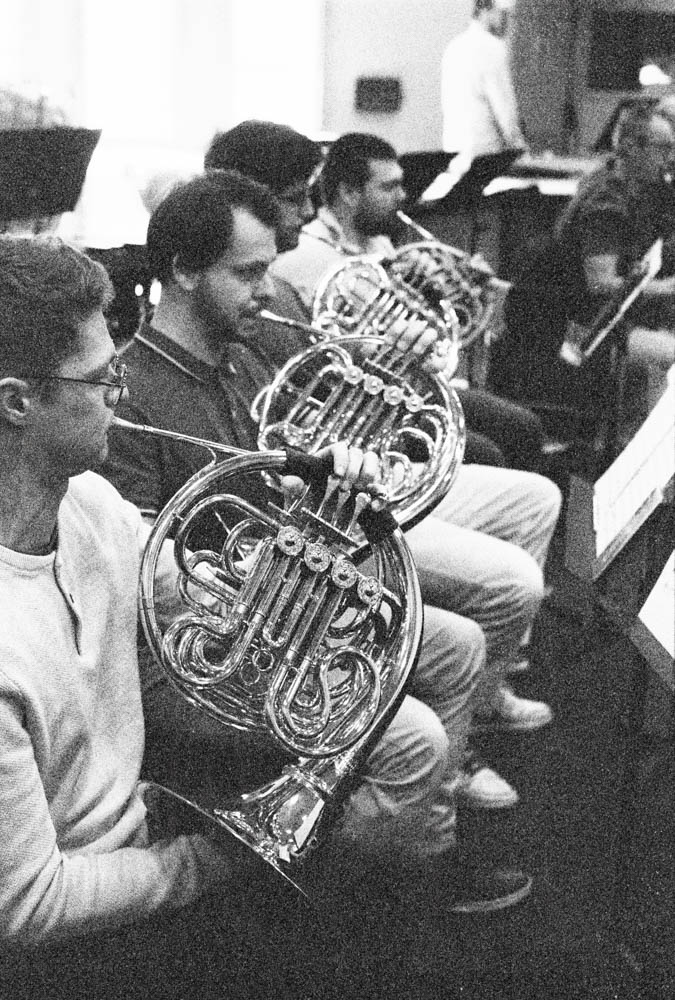
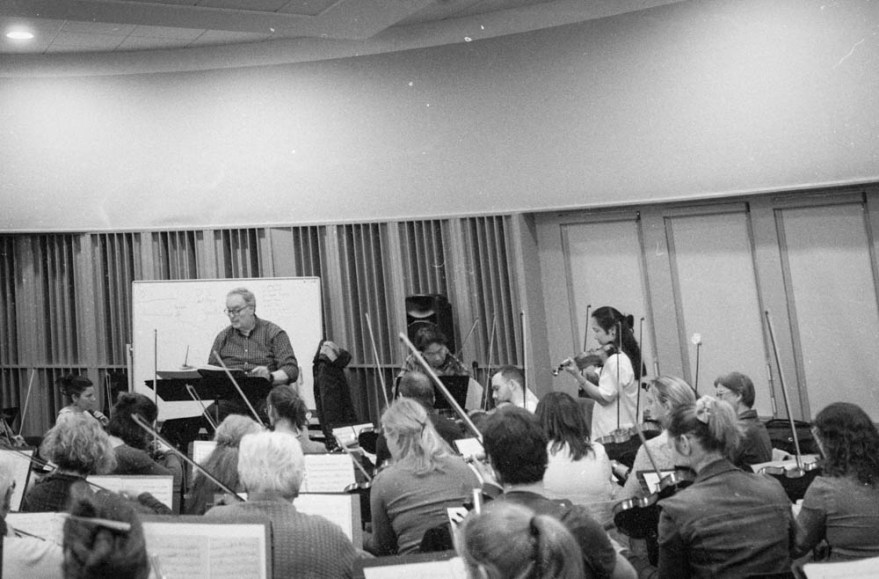
当时,我作为一名圆号演奏员,随法国“卢瓦尔河畔交响乐团”(Symphonique des Bords de Loire)来到中国巡演。我们有幸在几座令人赞叹的音乐厅中演出,但真正打动我的,远不止是建筑的华美或音响的精妙,而是你们细致入微的款待。

我至今难忘后台为乐团精心准备的蜜橘——有的已细心剥好,有的整齐切开,果肉晶莹,清甜沁心。那是我一生中吃过最美味的蜜橘,回国后我再未尝到过如此滋味。还有中场休息或演出结束后,工作人员悄然奉上的茉莉花茶,香气清雅,温润入心。那不仅是一杯茶,更是一份无需言语的尊重与欢迎。这些看似微小的举动,却饱含深情,成为我此生珍藏的记忆。

虽然我还不会说中文(但我已认真考虑开始学习!),但在那段旅程中,我从未感到自己是个“外人”。因为许多情感,本就超越语言:无论在广州还是格洛斯特,父亲对孩子的爱都是一样的;无论在长沙还是巴黎,摄影师追逐的都是同一束光;无论在哪个舞台,音乐家聆听的,都是音符之间那片珍贵的寂静。

我已回到家中,并开始为家人烹制更多中式风味的菜肴。这已成为我们家的一个小仪式——借由日常三餐,将那段温暖的回忆重新带回我们的生活中。。

能以客人的身份,而非游客的身份,走进你们的国家,是我的荣幸。而如今,能与远在万里之外的你们,通过影像与文字彼此相遇,同样令我心怀感激。

如果您愿意了解更多关于那次旅程的故事,我写下了一系列随笔:
《中国系列:管弦乐之旅》
以及后续文章。

谢谢你们——
昔日的盛情款待,今日的耐心阅读。

谨致谢忱,
Ian James Myers

AI Isn’t Magic — It’s a Tool.


Here’s How I Use It Without Losing Myself.

A creative’s guide to using AI wisely — with the A.C.T.D. framework. 

I will seem a little controversial in this article, but AI (artificial intelligence) is becoming a constant in this creative world.  Do I use it?  Yes.  How?  When I don’t know how to do things, like speak Chinese.  When I need to have a copy editor to check my grammar and spelling.  When it comes to photography do I use it?  Not in the creation of a photograph, but sometimes yes to edit for me.  There are tools in Photoshop that are useful to the photographer like generative fill, for example..

But what is AI?  The large language models, the generative image tools?  Does it write code for developers?  Yes it can, but as most things it is a machine and never forget that.  It is learning, and think of it as being an eager student ready to learn.  It doesn’t get it right all the time, and it can, like any human, make mistakes.  It is a computer.  It does exactly what you tell it to do.  Does it understand British understatement,  sarcasm or banter?  No, because it still needs training.

But like most things, does it live up to the hype?  No, especially if you don’t know how to talk to it.   When I talk to people about how I use AI, I always share my A.C.T.D. framework. 

A is for Actor. I tell AI: “Act as my editor,” or “Act as my literary agent.” AI thrives on context — so give it one. For example: “Act as a specialist in vegan cooking.” (Yes, very controversial — I did warn you.) 

C is for Context. AI thrives on it. Give it background — what you’re trying to achieve, who your audience is, or why this matters. 

T is for Task. Be specific. Tell it exactly what you want — not “help me write,” but “write a 300-word intro about AI for photographers.” 

D is for “Think Deeply.” Ask AI to reflect before answering — in ChatGPT, click “Think”; in Qwen, you may need to select a reasoning-focused model.

And here’s the truth no one talks about enough: AI doesn’t create — it remixes. It feeds on human-made content — blogs, photos, code, songs, even tweets. And as anyone who’s scrolled the internet knows… a lot of that data is complete bollocks.

It’s trained on our best ideas — and our worst. Our genius — and our garbage. So if you feed it junk, it gives you junk back. If you give it context, clarity, and care — it can help you refine your own voice. Not replace it.

But tell me Ian what can’t it do?  It seems to be replacing everyone in translation and creative industries?  I get it, we all sorry about that, but you can learn how to spot AI content on the internet.  People once said a photograph never lies, but we soon found out that it could lie to us.  It can’t replace that personal interaction and accompagnement, such as sitting with a client before a shoot.  It can’t replace the feeling you get when you receive your prints from the photographer, and you realise that all that prep was worth it.  

I have met people who have told me that I have a beautiful camera, and that it must take beautiful pictures.  Well?  It can’t.  Like the person who says yeah but I can do that on my mobile…  Generally they can’t.  We still have our craft.  A computer can’t do that for us.  I can’t replace our artistic vision, despite trying to tell us that it can.  At best it can only provide an emulation.

I first wanted to learn about the internet when it first came out.  I wanted to know how to use it before my children would tell me.  That was over 25 years ago.  I approach AI in the same way.  It doesn’t have all the answers, but when well used, it’s a bloody good tool to have in your kit.

This isn’t about rejecting AI—it’s about reclaiming agency. When I give it clear context and a specific task, it becomes a mirror for my own creativity. But the song? The photo? The feeling in your hands when you hold a print? Those aren’t AI’s work. They’re yours. The tool sharpens the craft—but only the human holds the vision. So use AI like a darkroom chemical: a helper, not the artist. And never forget: the most revolutionary thing in your kit isn’t silicon. It’s you.

A illustration to a song written by AI about my Moly and my wife. That bitch who stole my man…

P.S. The song above? Written entirely by AI. It’s witty, structured, and even tugs at the heart—proof that AI can imitate craft. But it didn’t feel heartbreak. It didn’t choose to love a rescue dog more than its human partner. That irony, that ache? That’s still ours. AI remixes our stories. We give them meaning.

Accident de travail


(Or: How I Became a Human Pancake on a Tuesday Night) 

For about a month now I have been off work after “un accident de travail.”  I was leaving work on the 24th of September and tripped over some uneven flooring.  I’m not a small man or a light man and I landed flat on my face like a guardsman fainting.  I think my arms must have been tucked along my rib cage, and my nose hit the ground.  The resulting nosebleed left a bit of my DNA on the floor and I looked miserable, furious with myself — and in pain in my ribs.

We went to casualty that night at about 20h as I was in pain, which is not something I’m overly fond of.  None of this pain is weakness leaving the body codswallop for me matey.  Casualty was shut for the evening and we dialed 15 for the SAMU who declared that since my breathing was fine I must only have fractured ribs, go home, see your doctor, take a paracetamol and try not to move.  

No shit Sherlock!  However, that’s exactly what I did.  Surprisingly enough I didn’t move very much that first night, and the next day my doctor confirmed what we thought and I was given the good stuff.  Tramadol!  Tramadol didn’t make me high. It made me numb. And for the first time since falling, that felt like mercy.

Over the last month  my car has died, I have rested, still have pain when I turn over in my sleep, yet feel rested, and I have been eating a lot healthier with more veg and protein.  My wife took over driving me from my appointments and shouting when I yelled out in pain.  Do I feel better for the time off?  I suppose so.  But like a 68, you feel there’s just one thing missing, much the same as 70 but with the one extra thing.

Would I recommend it to a friend, not at all…  1 star out of 5 because of the rest and time off work…

NORTHUMBRIAN SUMMER PART IV


Edinburgh, Scotland 2025

We’re still in Edinburgh. We’re walking down the Royal Mile. It’s festival season. There are plenty of shows to watch, and the one we saw first was by Max Von Trapp. Not to be confused with the Sound of Music Von Trapps, but a comic magician. One of my favourite kinds. The jokes and tricks rolled fast, as did my laughter.. Kate laughs at all the jokes, even the more adult-focused ones, just like Killian did when we visited the festival when he was that age.

Saint Giles was our next stop. As you know, I’m Catholic, not Protestant. As we wandered through the national Cathedral of Scotland, I was struck not only by the beautiful organ music, but by the lack of the familiar Stations of the Cross, the statues. The centre of attention was not the Lord and the sacrifice of the Mass, but the preacher’s pulpit. I felt this lack and prayed my daily Rosary, head bowed in prayer.

I joined Kate outside, slightly perturbed by the experience.

Lunch was a kebab. Simple and delicious. Kate loved it.

It was time to move on to see Greyfriars Bobby, a wee brown dog, famous for his loyalty. The legend is such that the people of Edinburgh raised a statue to honour him, and people rub his nose either for luck or as a sign of affection. I went into the Greyfriars Pub for some Guinness, reflecting on my own dog Molly, now 16, who greets me every morning as if I’m her favourite person and gets all excited when I get home from work. I can see why wee Bobby was a legendary dog, and why he inspired so many people.

We wandered through the graveyard looking at the tombs of the citizens of Edinburgh from the past. And we found a certain Thomas Riddell who JK Rowling used in her books. Kate acquiesced and allowed me to take her photo in front of it.

We ventured towards the Covenanters’ section of the graveyard, supposedly the most haunted section. I felt nothing and saw nothing, but Kate started to have a headache. We paid our respects and decided to find Bobby’s grave at the entrance. Kate noticed the sticks put on his grave, as you might leave a favourite dog toy. She just had to go and find him a suitable stick. Bless that dog. Teaching us a valuable lesson in pure love years after his death.

We ventured back out onto the streets of Edinburgh, leaving the relative tranquility of the graveyard behind us. This was about to be the reason she wanted to come to Edinburgh in the first place: a cocktail bar. But not any ordinary cocktail bar. The Geek Bar, decorated every four months into a new theme. The theme she wanted was from a video game that she plays with Killian. Oh no—they’d changed everything… It was now all about Stranger Things on Netflix—something I had heard by name but knew nothing else about.

Liquor? Maybe quicker, but it’s not something I’m a great fan of. The lady took our order and explained the concept. I felt as if I was in Starbucks for the first time. She asked which flavours I liked, and with her expert help, I made up my mind. The drink was obviously dangerous—too smooth, too sweet—and I couldn’t feel the alcohol. Neither could Kate, who was only allowed a mocktail. I have to be a responsible parent after all. The second round was just as deadly, and I was beginning to feel very happy. I wonder why…

So maybe, at the end of all this, the real magic isn’t in the tricks or the drinks or even the famous city. It’s just—being there. Following your children into their weird, wonderful universes, and watching them set the place on fire with laughter.
And really, what’s better than that?