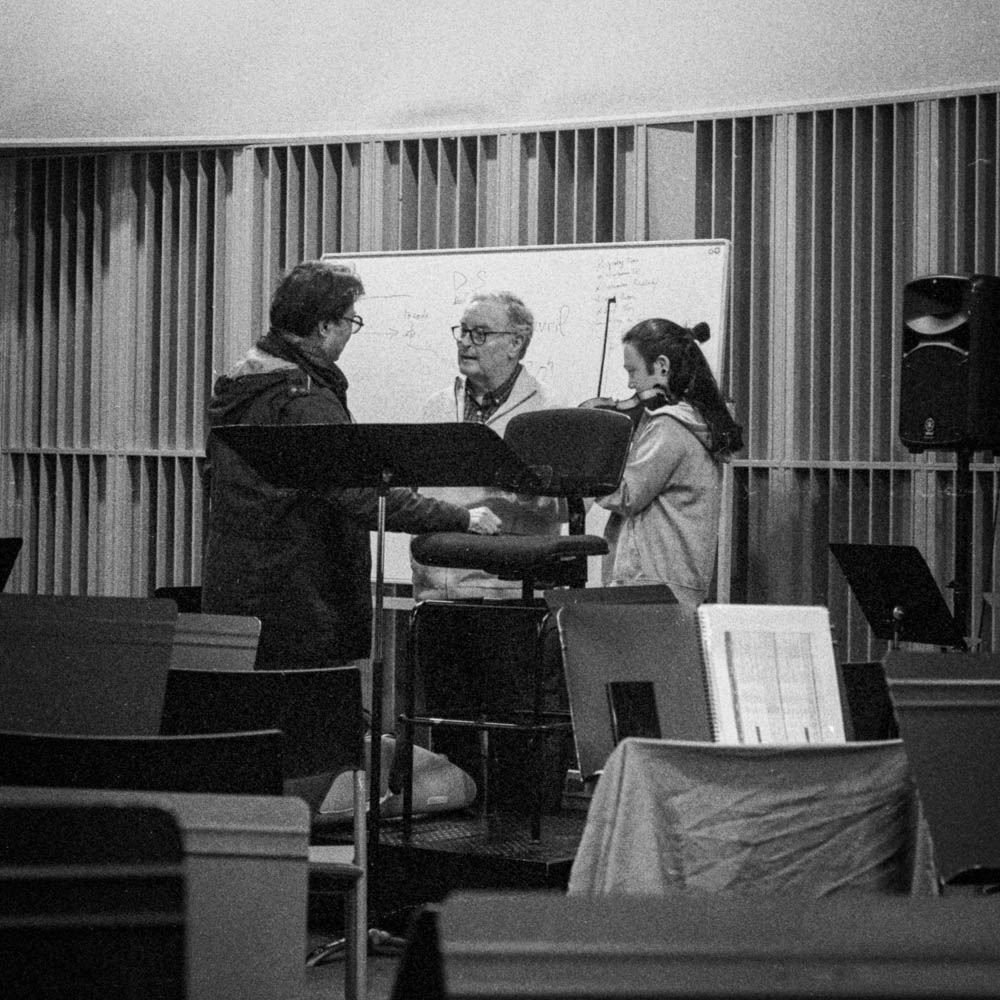
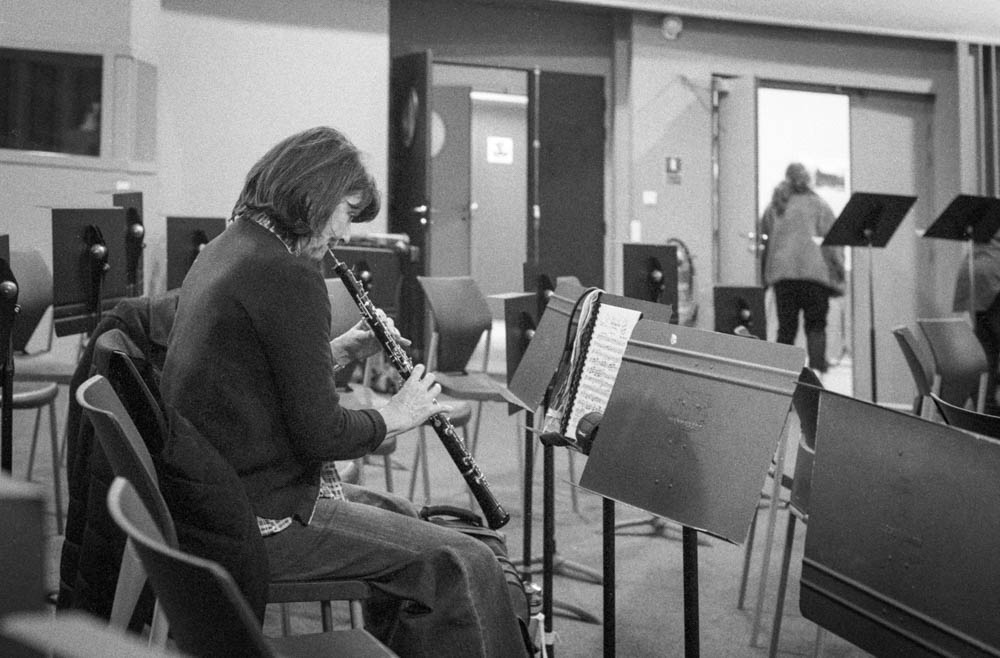
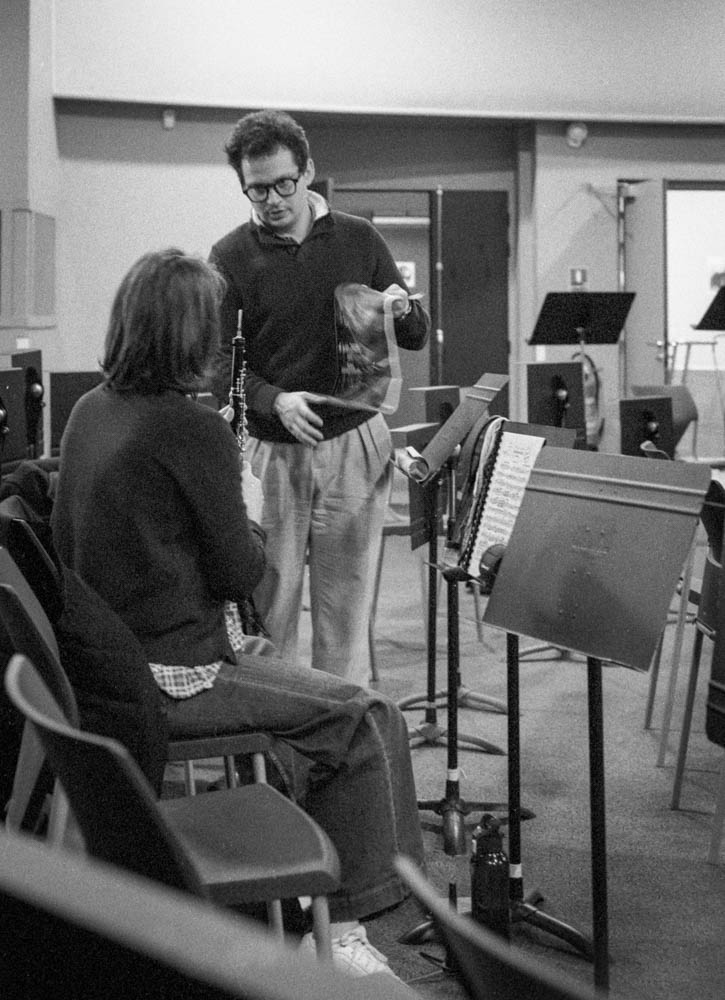
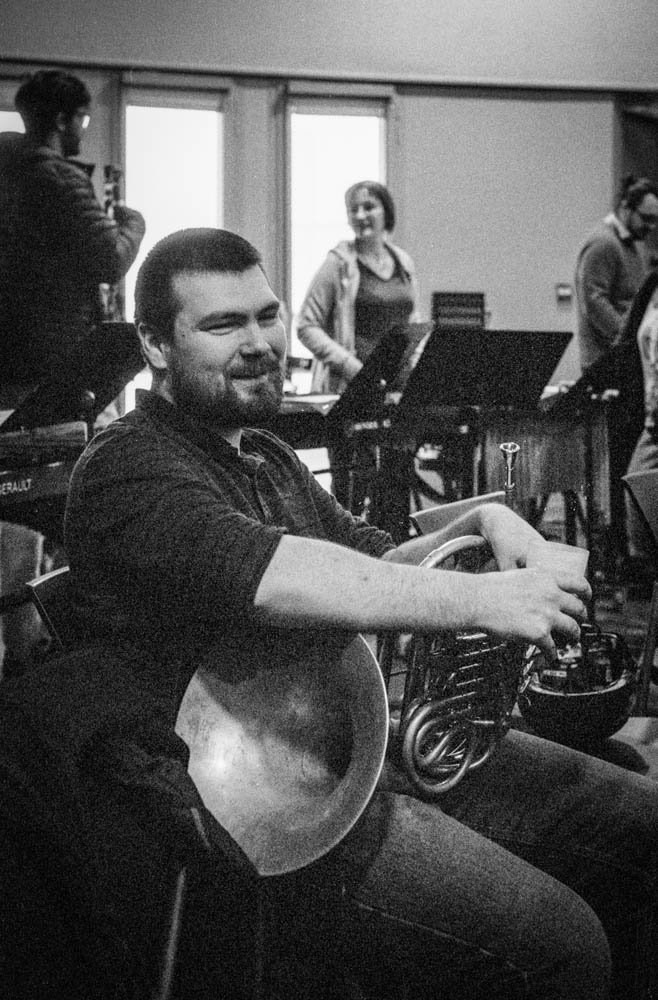
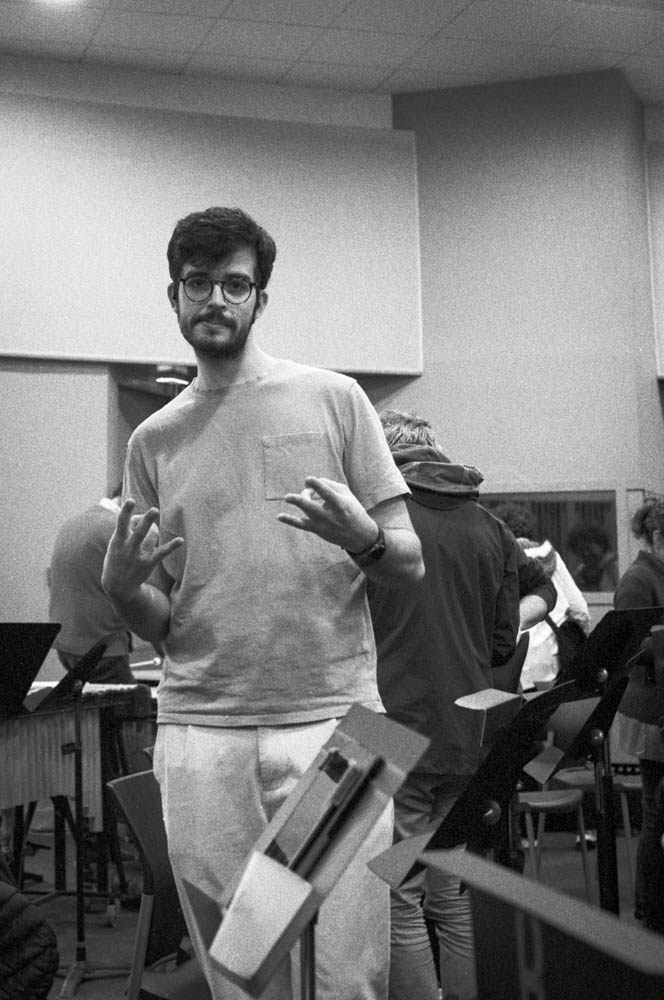
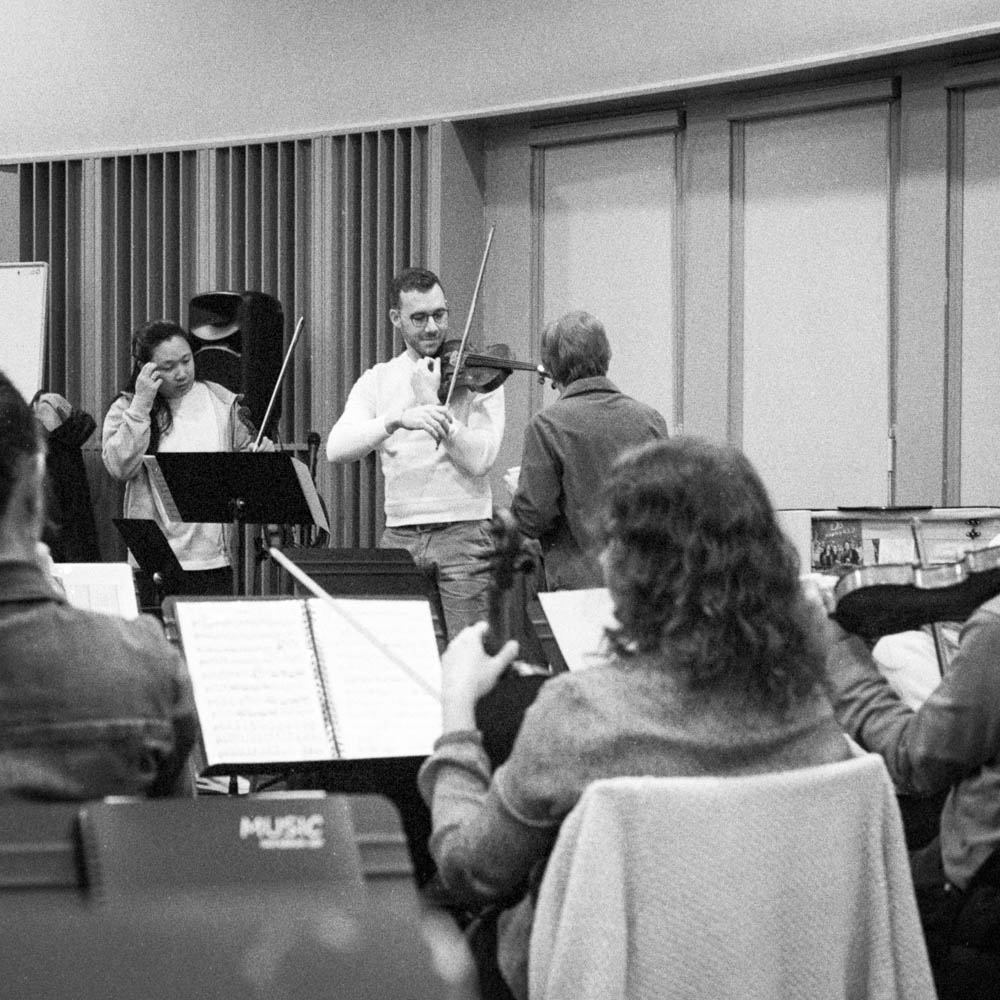
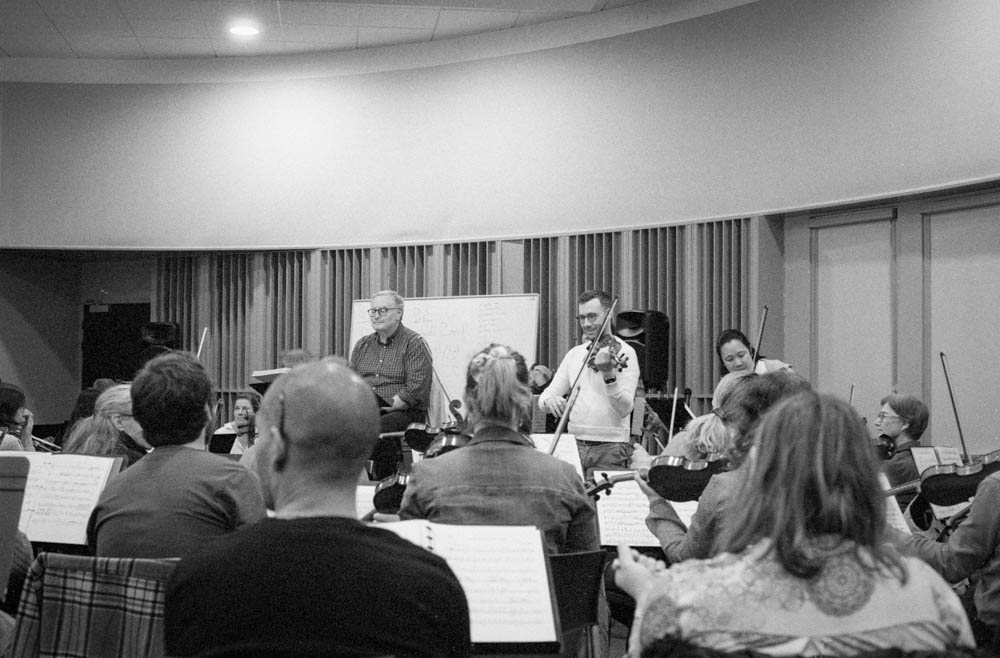
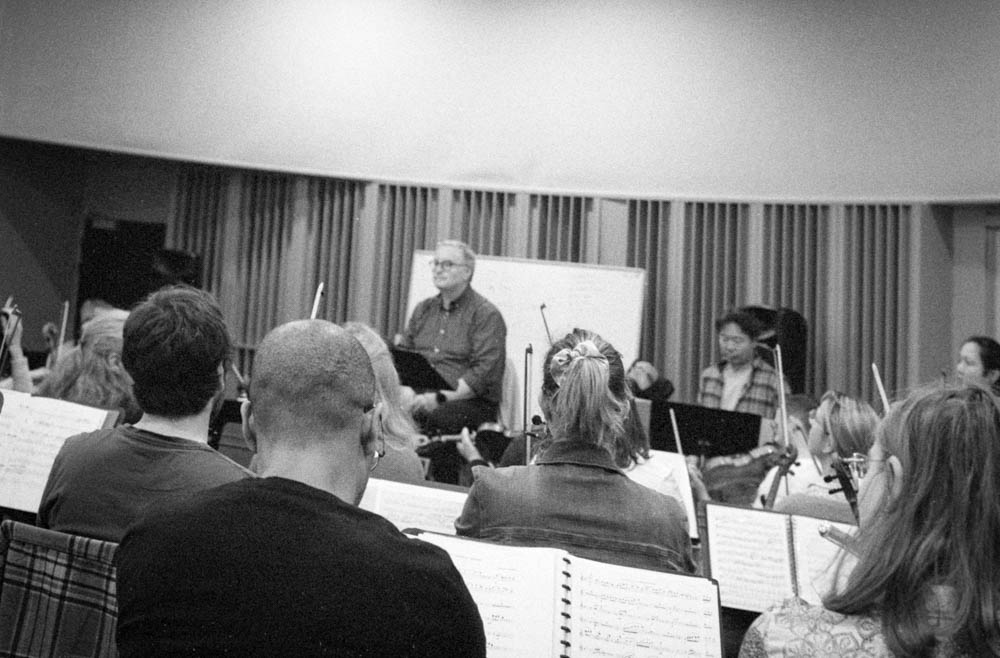
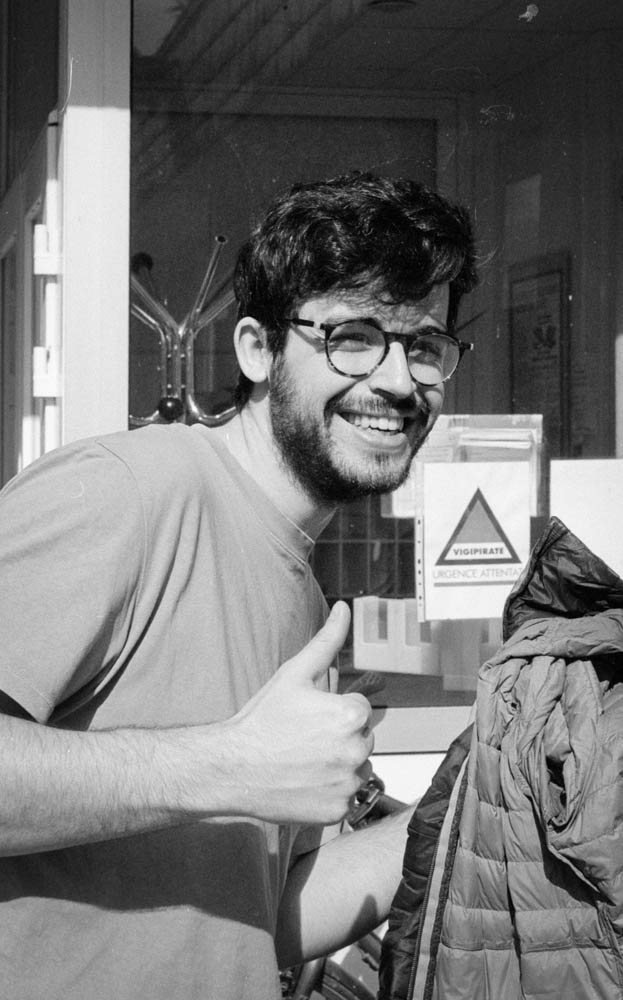
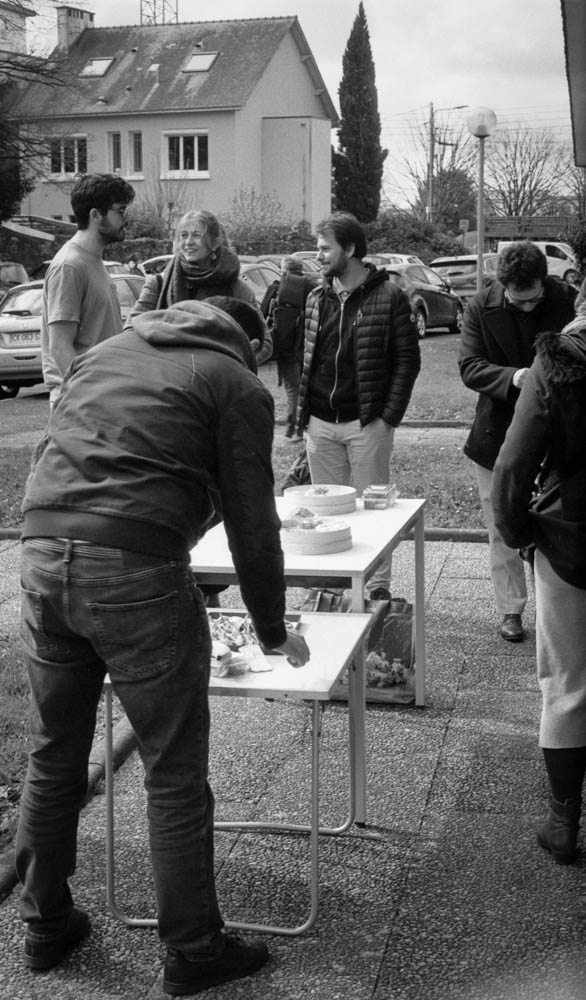
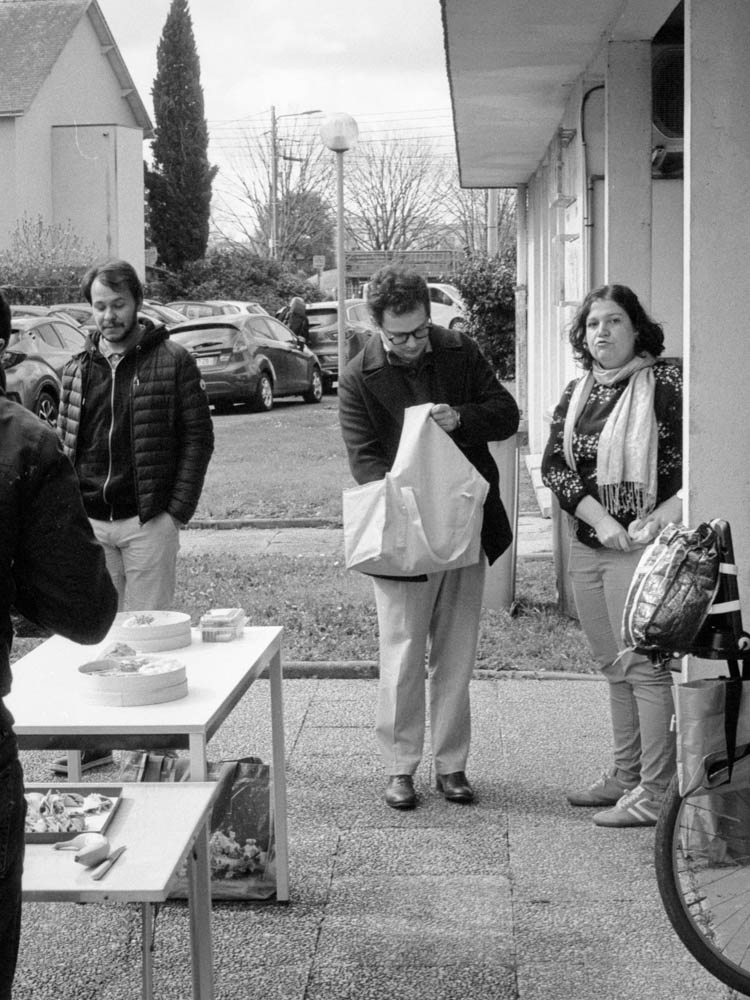
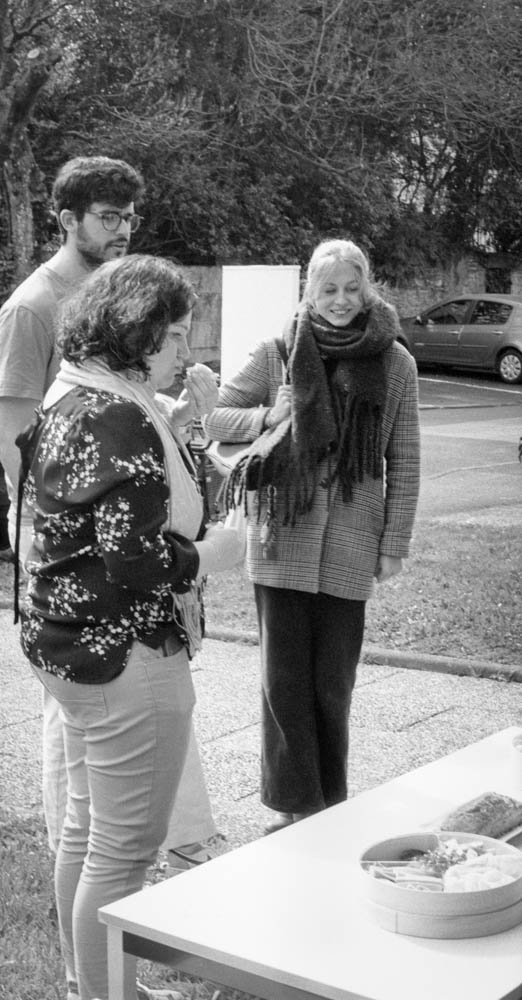
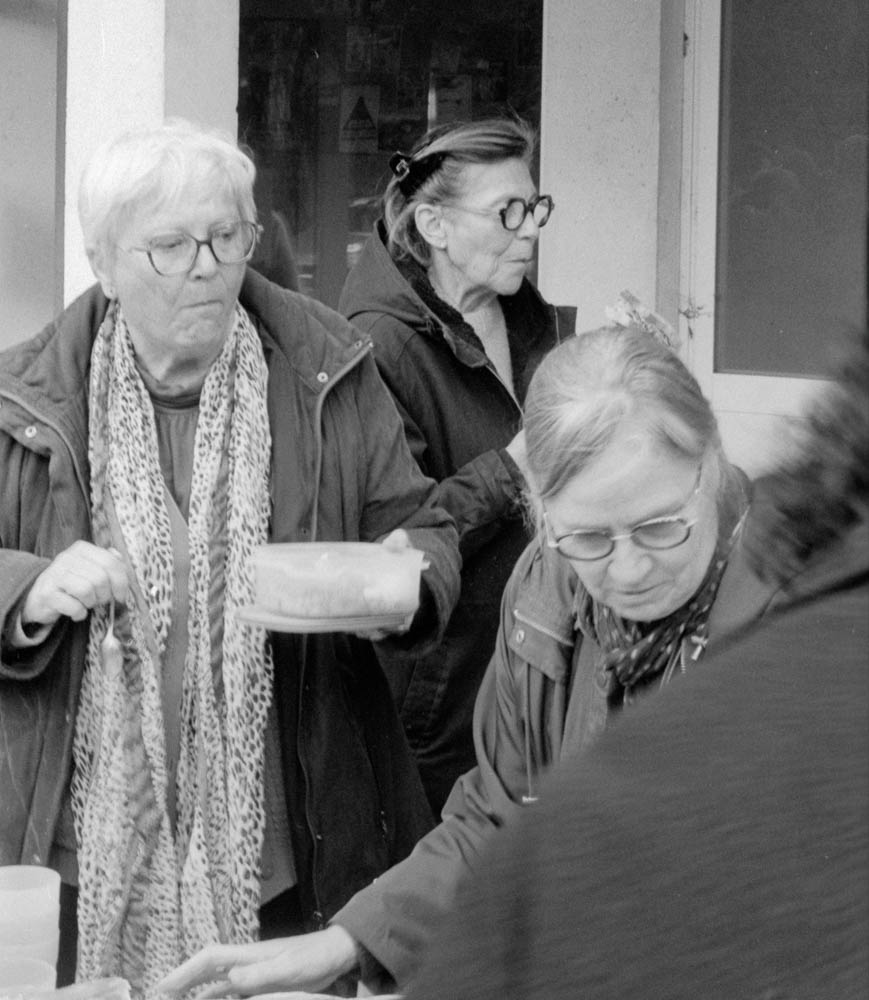
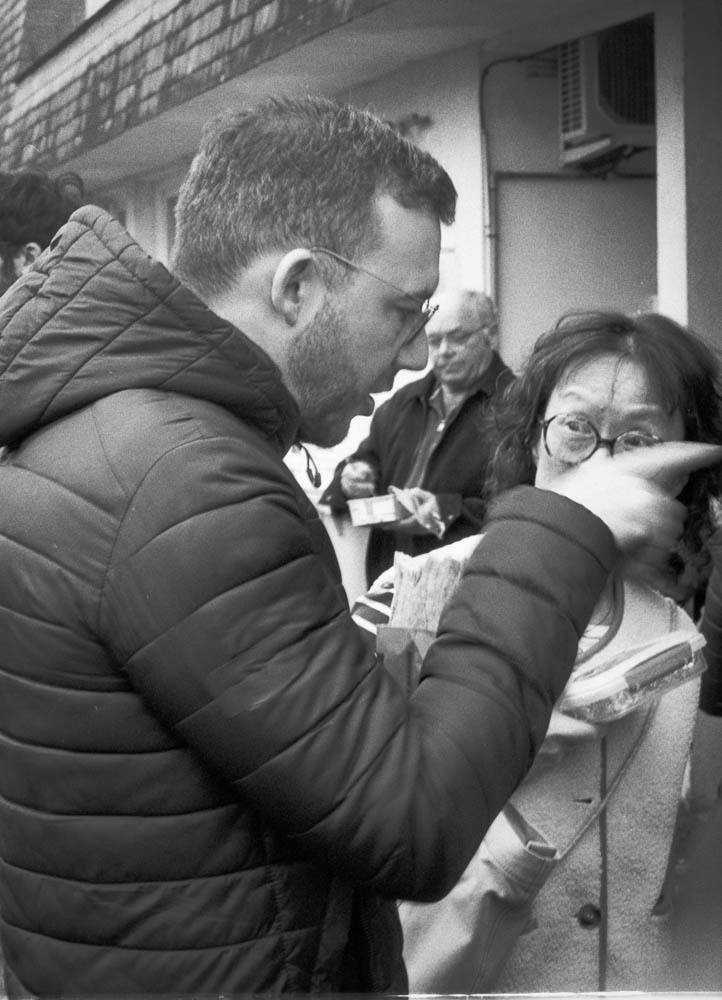
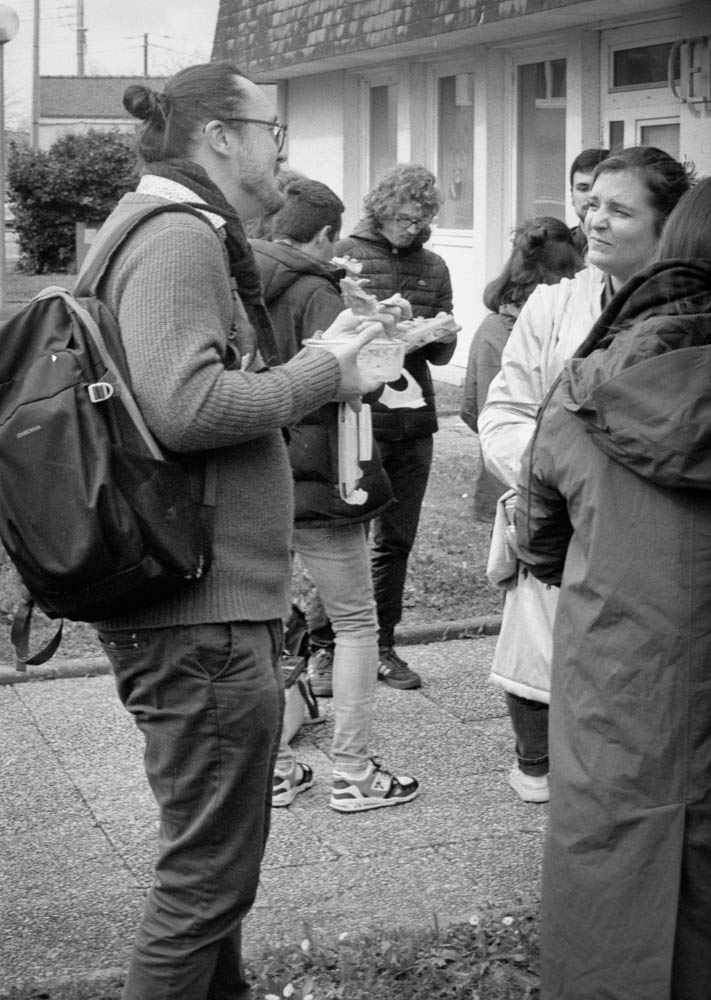
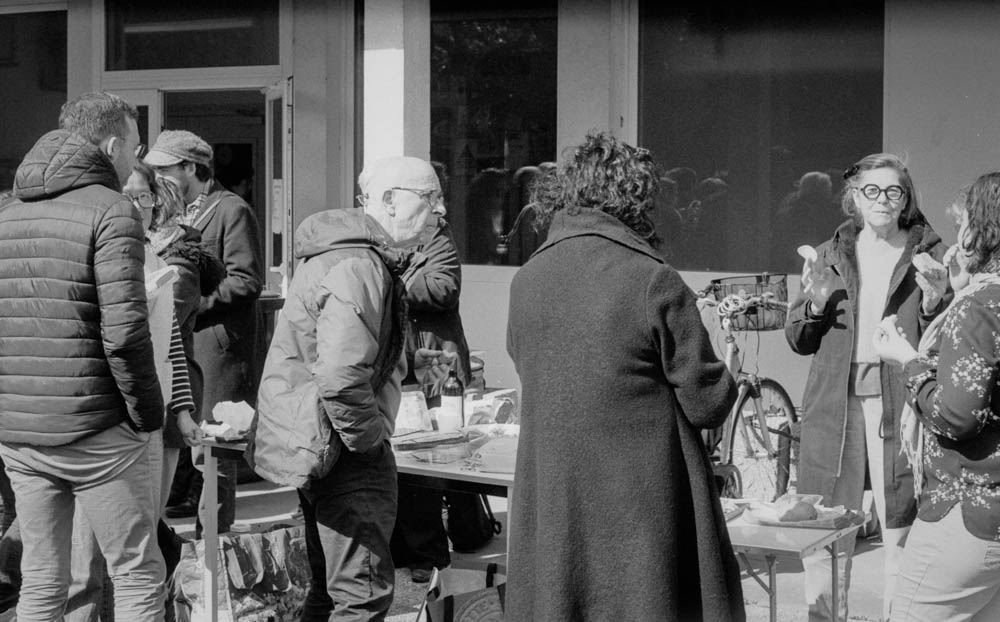
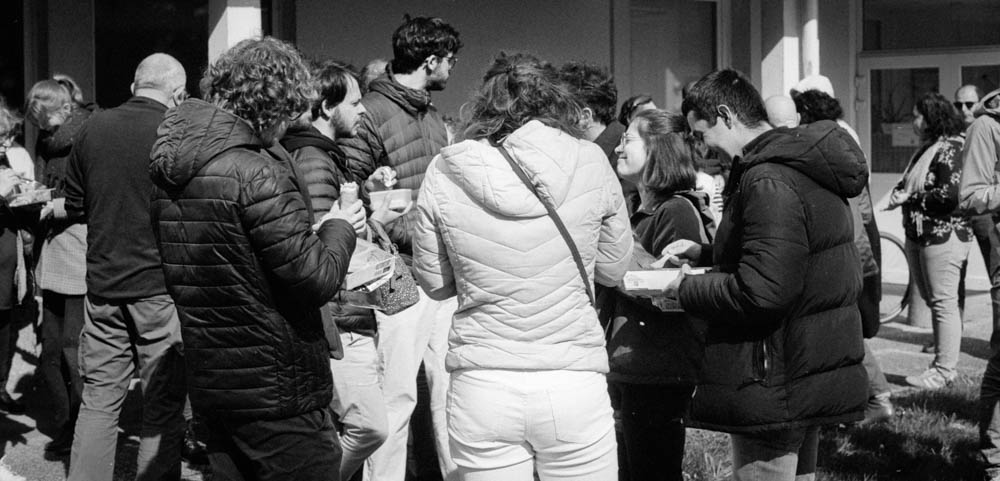
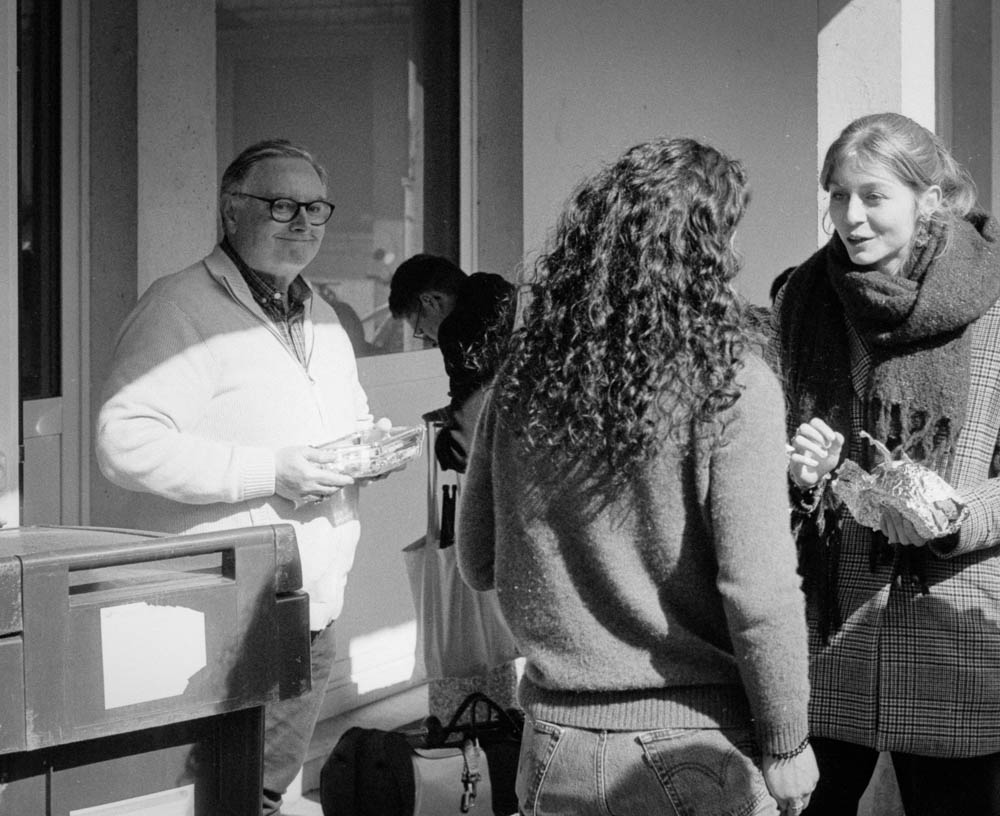
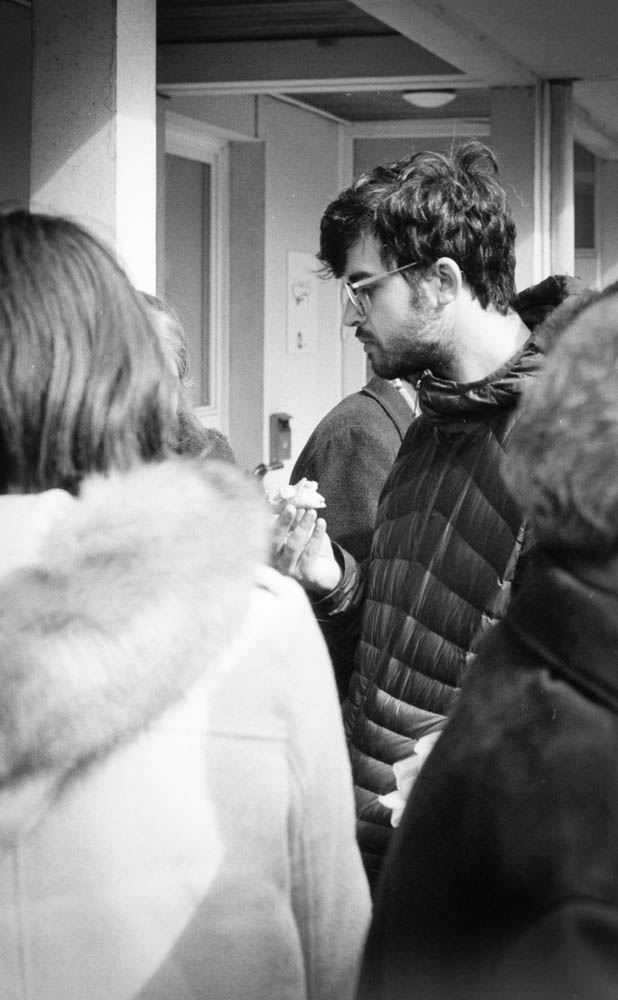
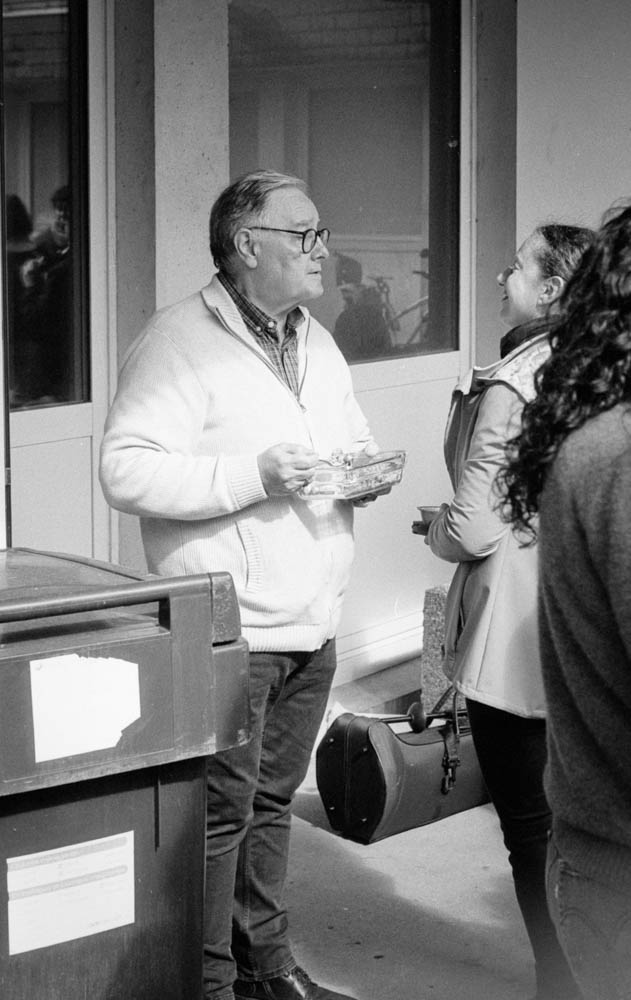
Part 3: The Grind — General Rehearsal on HP5+ 3200


The soloists had gone home.

Saturday’s concerto rehearsal was done — the collaboration, the translation, the careful work of integrating guest artists into an established ensemble. But the concert wasn’t just one piece. It was a full programme. And the rest of that programme needed rehearsal too.

Sunday. No soloists. No concerto. Just the orchestra, the conductor, and the grind.

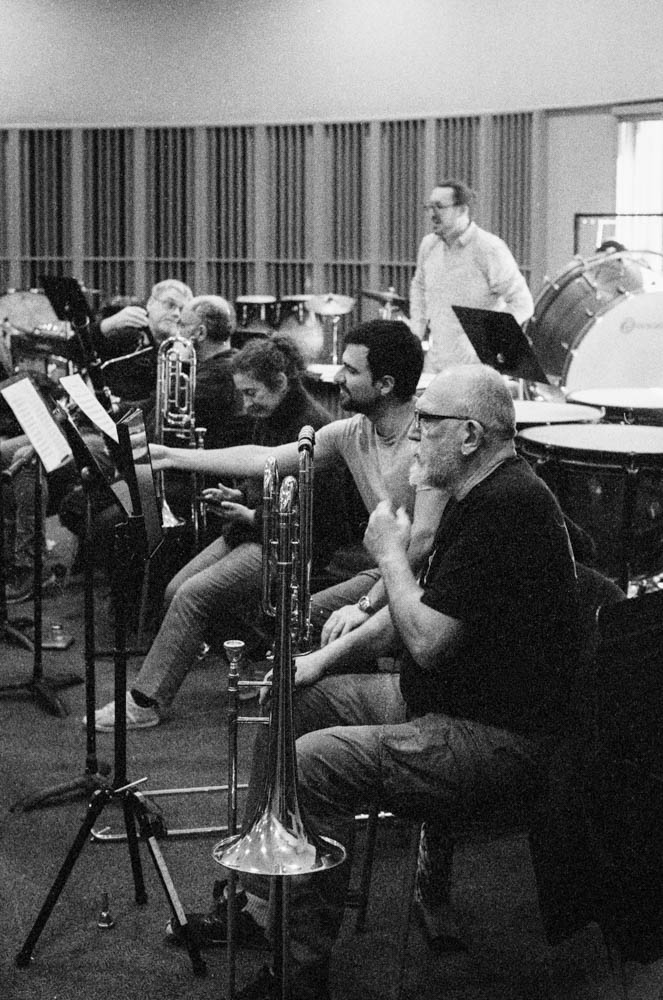
I loaded HP5+ pushed to 3200. Same Nikon FE, same 50mm f/1.8. But three stops of push this time — more grain, more contrast, more raw. If Saturday’s 1600 was work, Sunday’s 3200 was iteration.

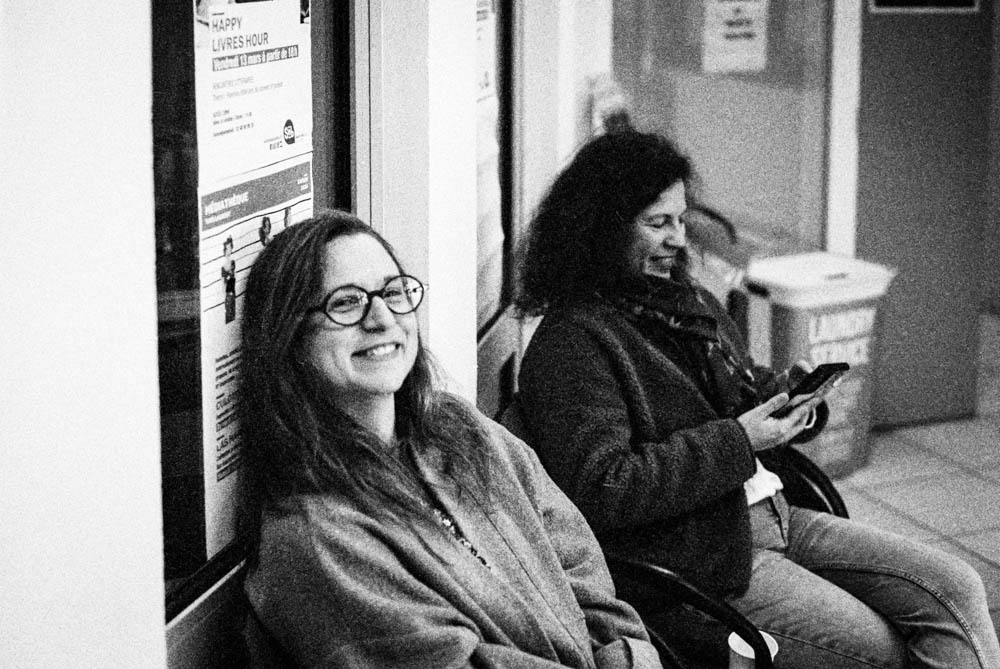
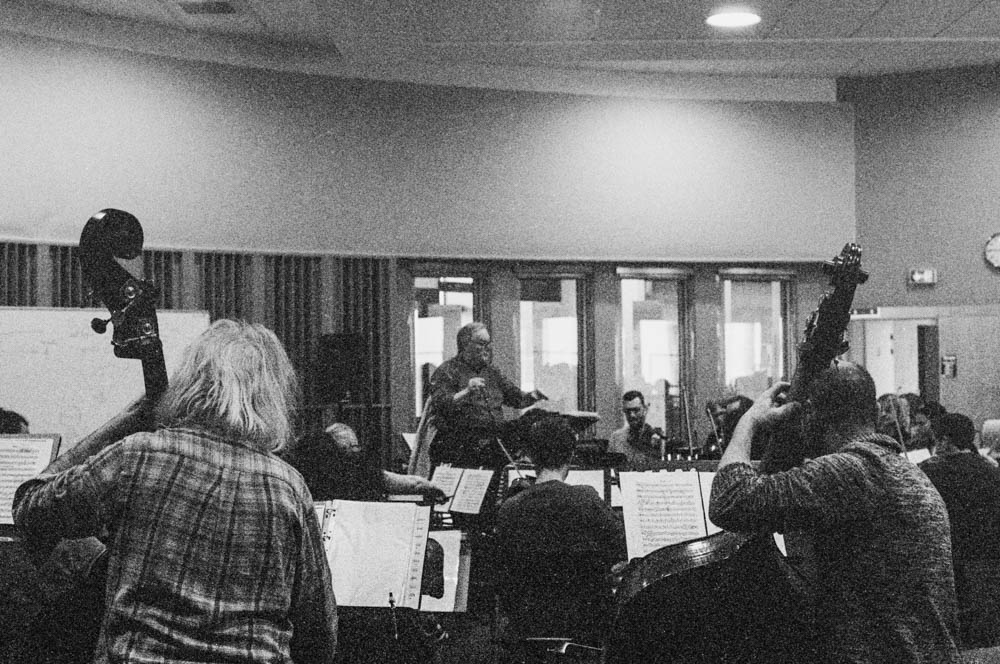
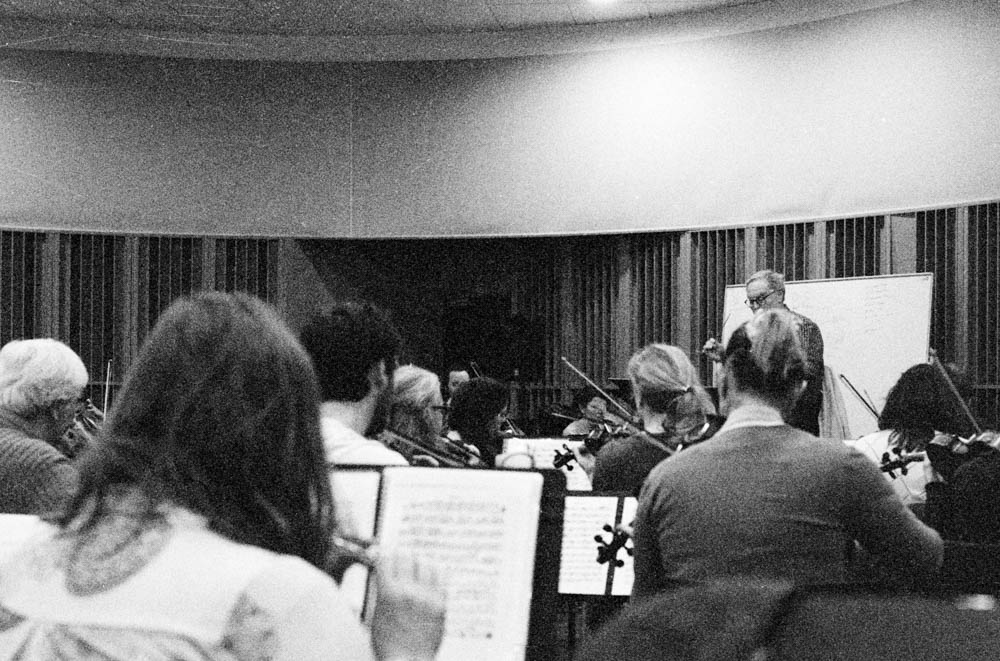
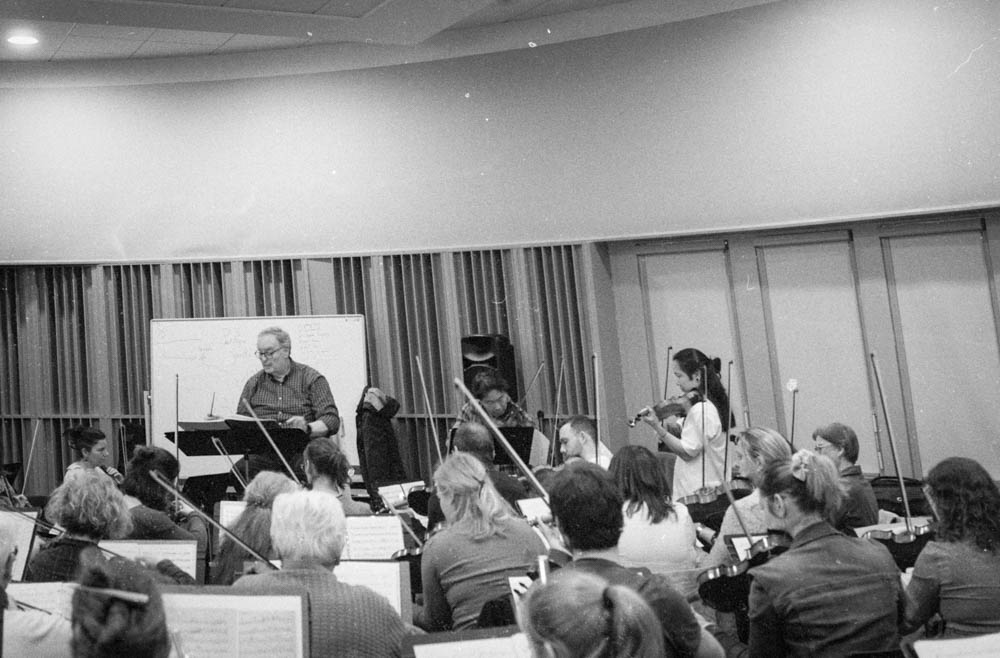
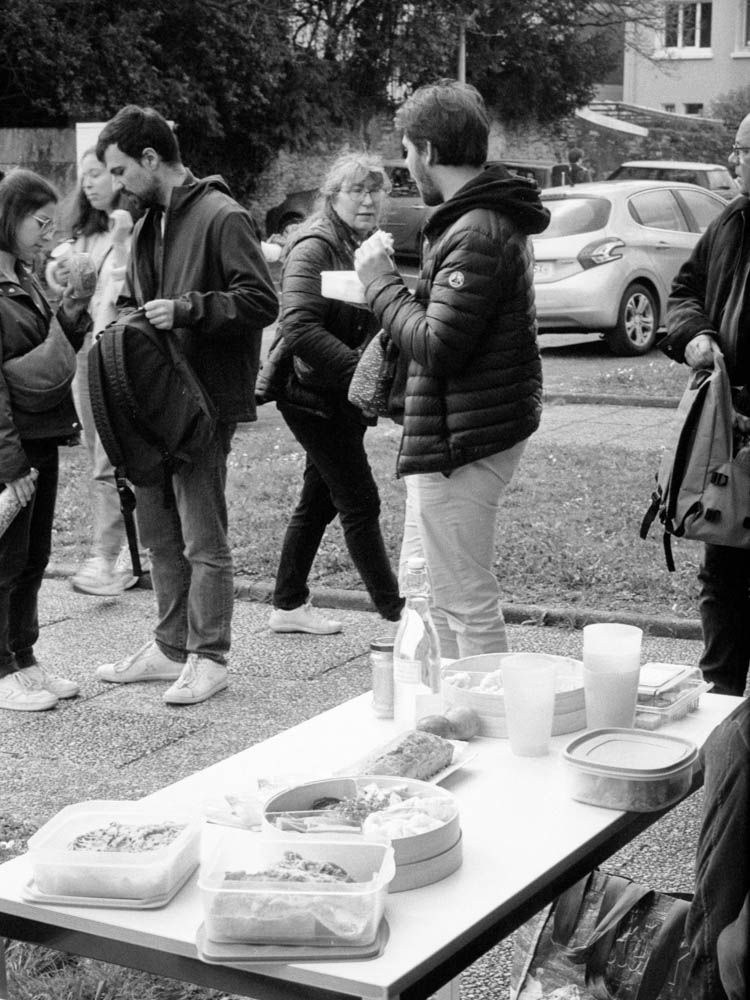
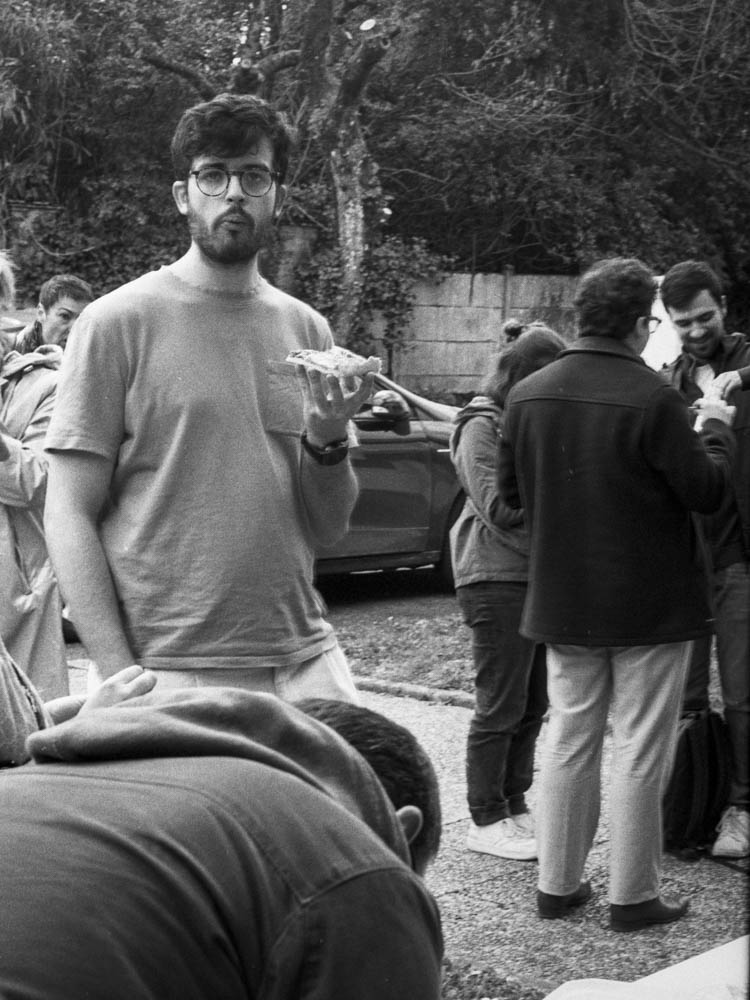
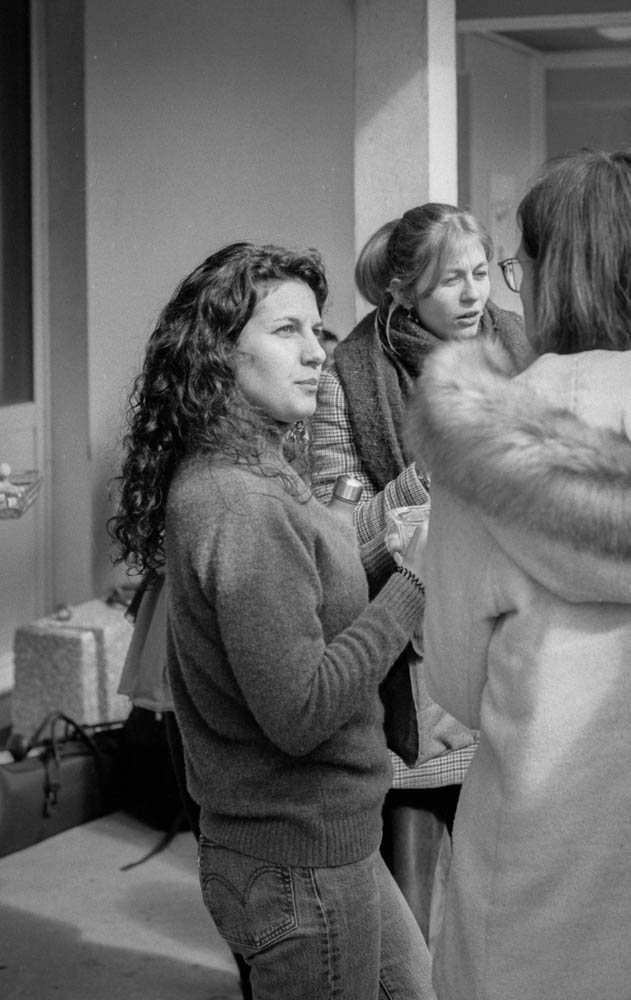
You can feel the difference when the guest artists aren’t there. Saturday had a particular energy — the stakes of building a shared language with people from outside the ensemble. Sunday was just us. The regulars. The people who were eating lunch in the car park the day before. Corentin back in his seat next to me. Viktor on oboe. Nicolas patient behind the timpani. The conductor at the whiteboard, same as always, but now talking only to people he knows.

No translation needed. Just the work.

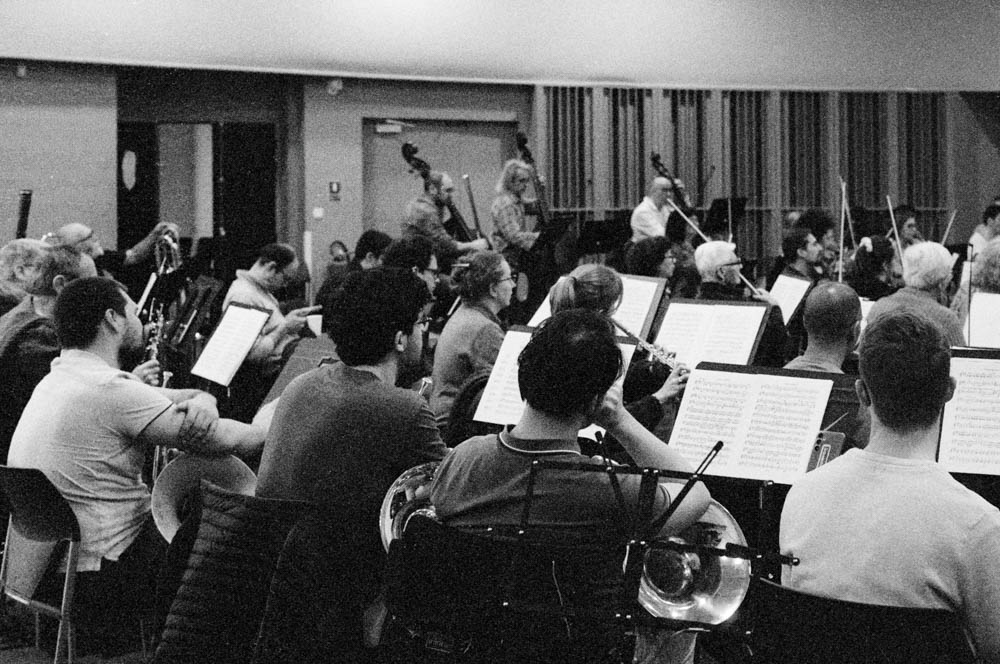
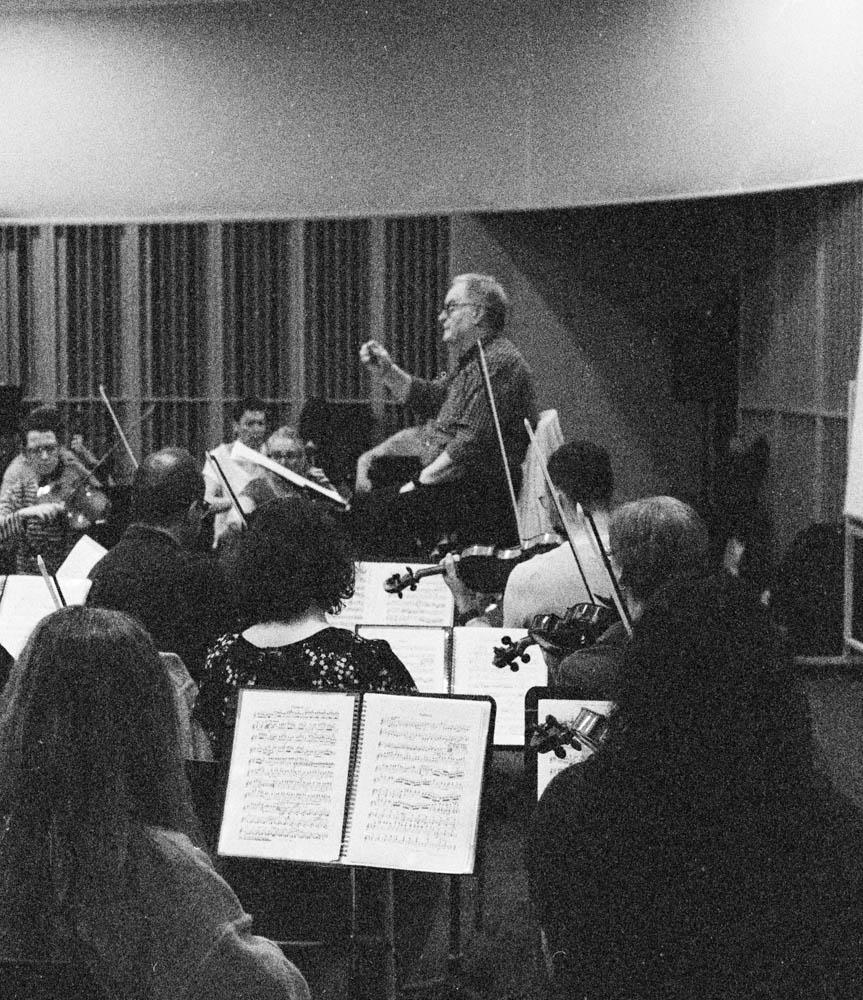
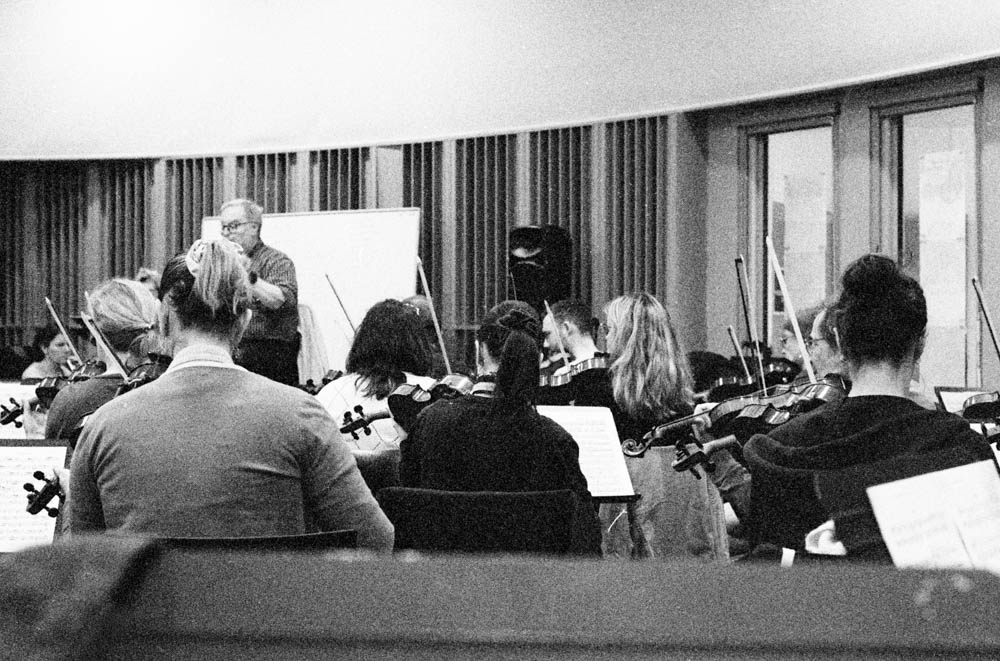
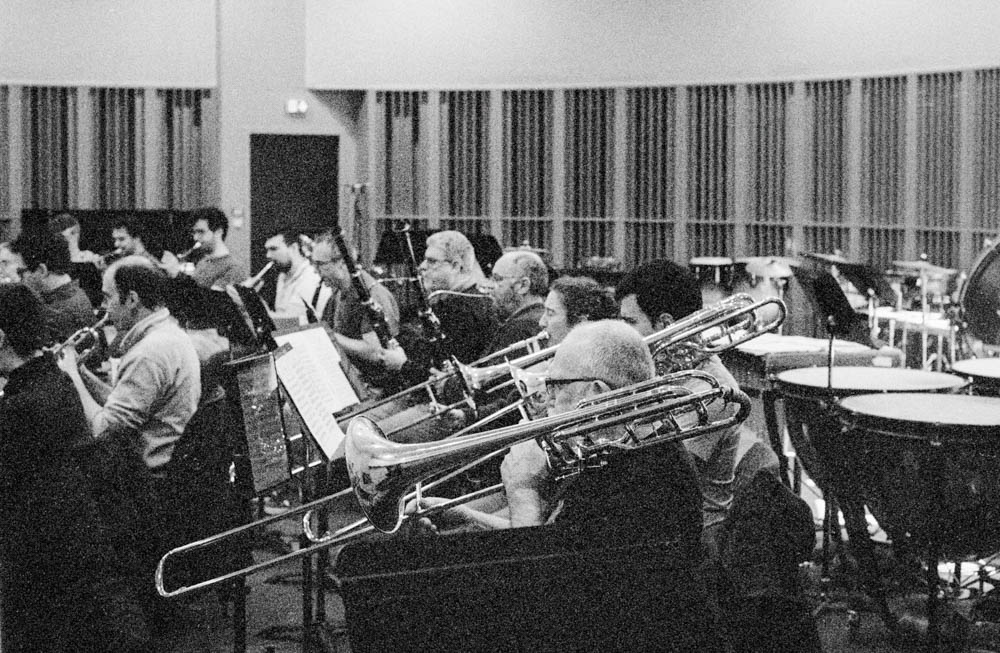
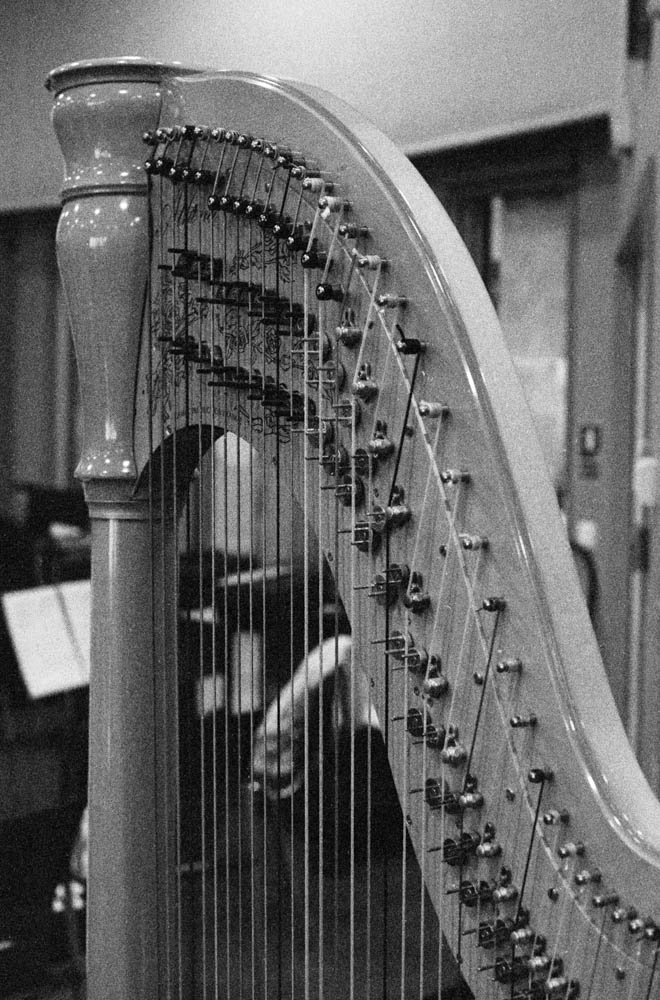
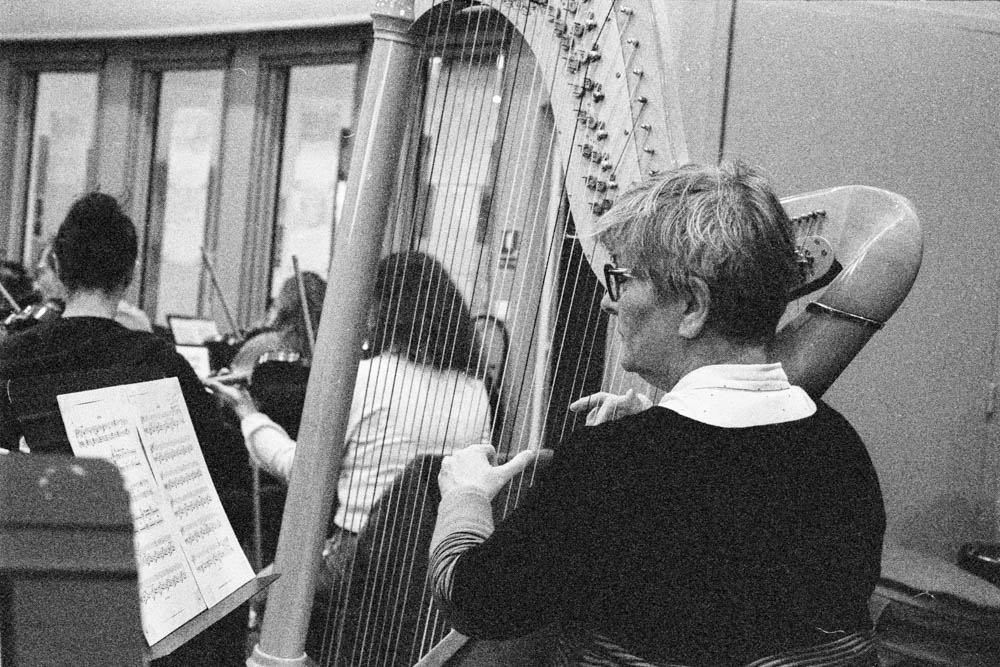
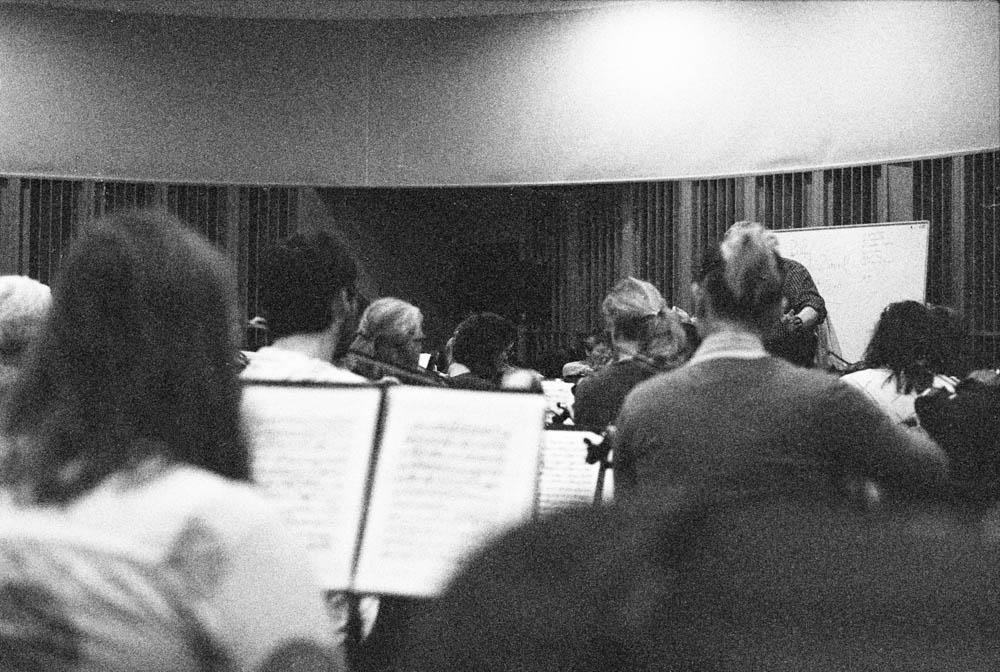
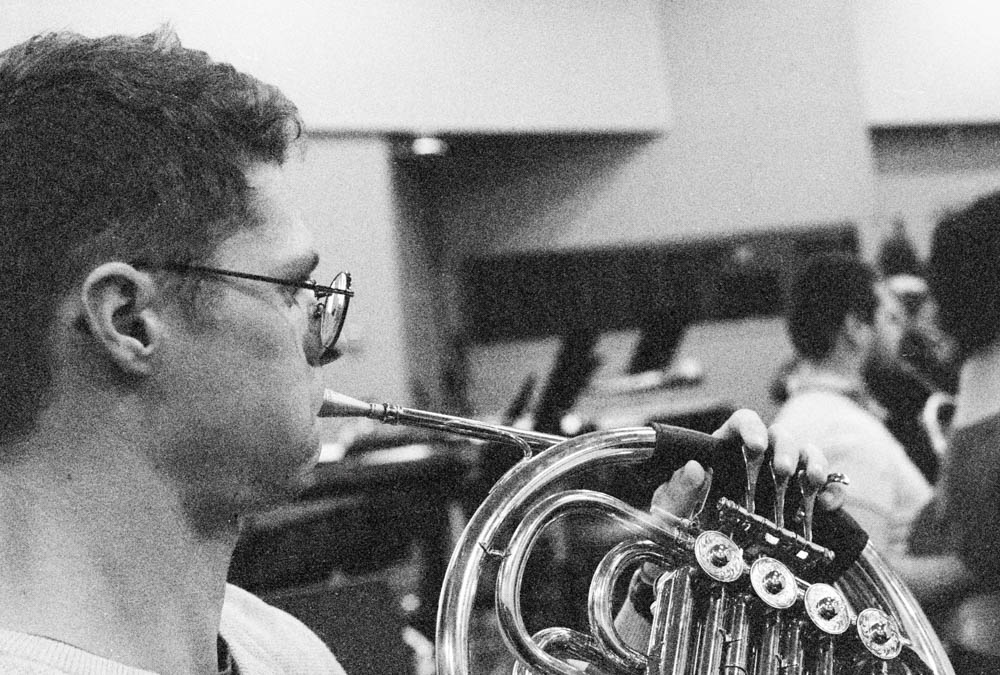
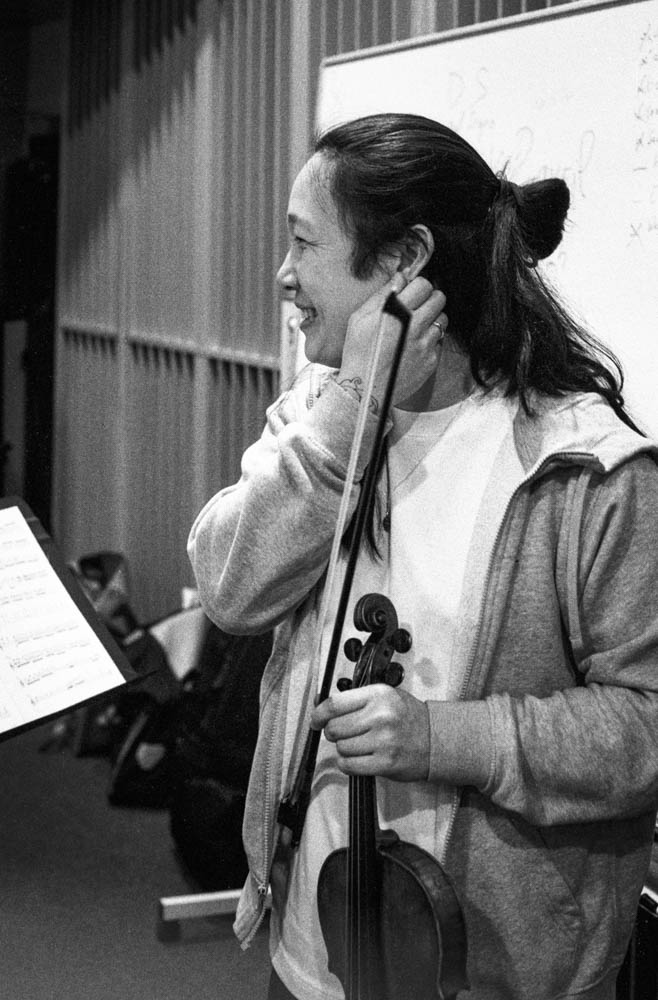
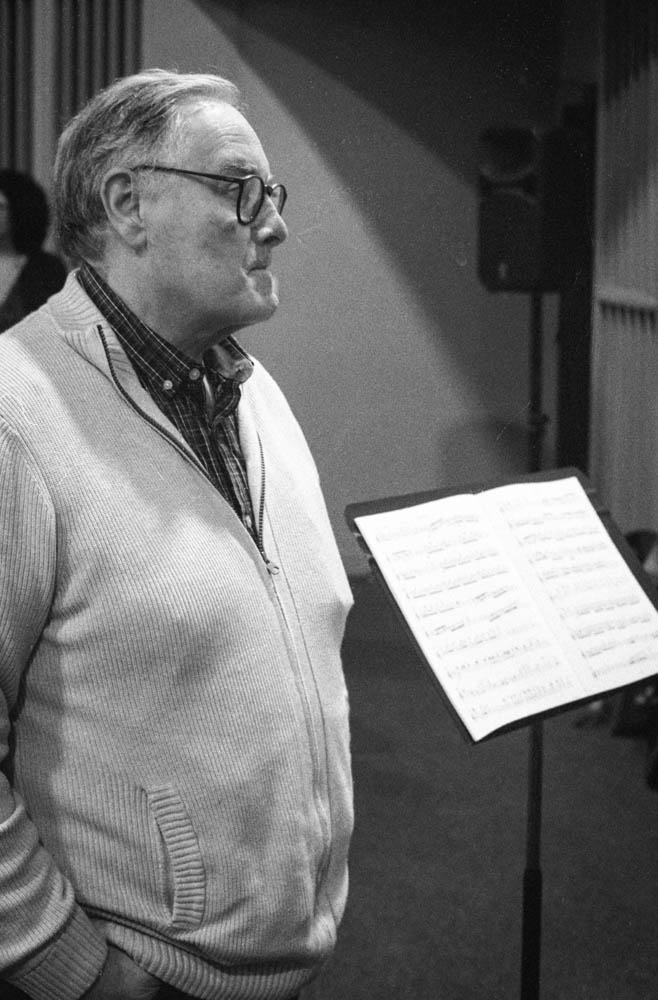
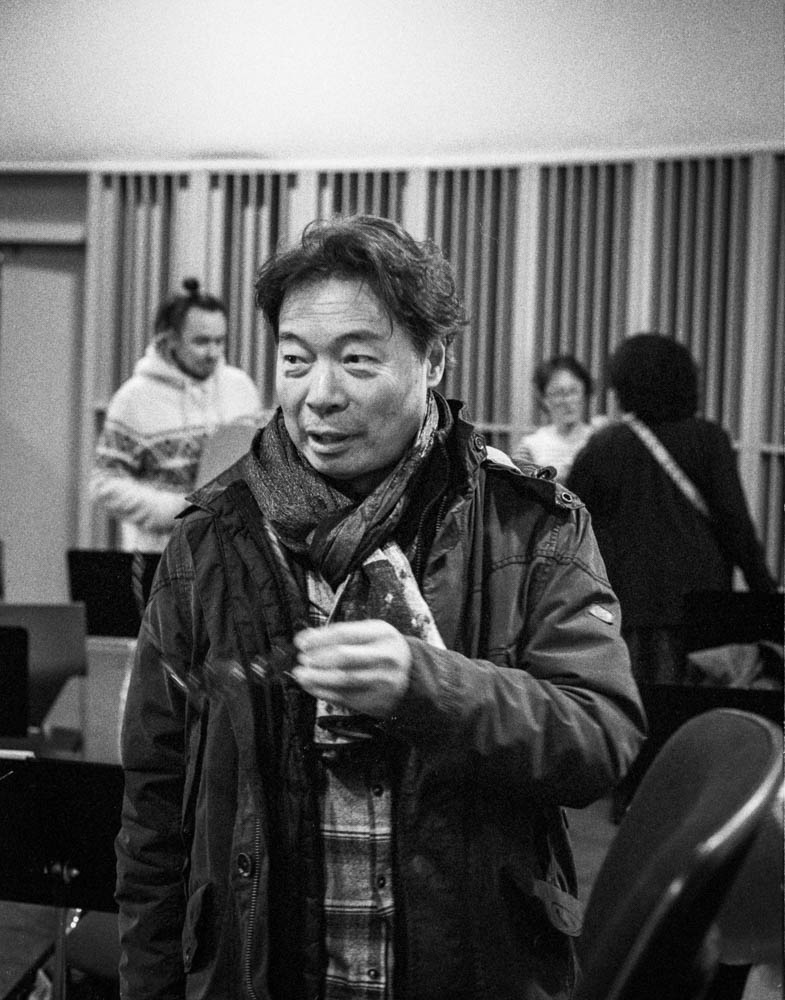
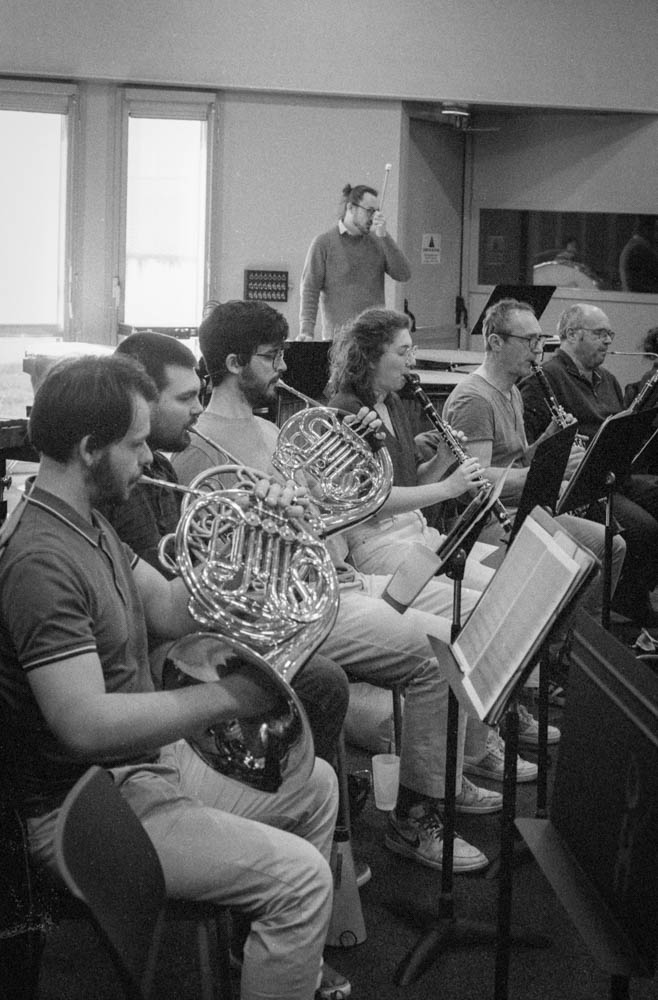
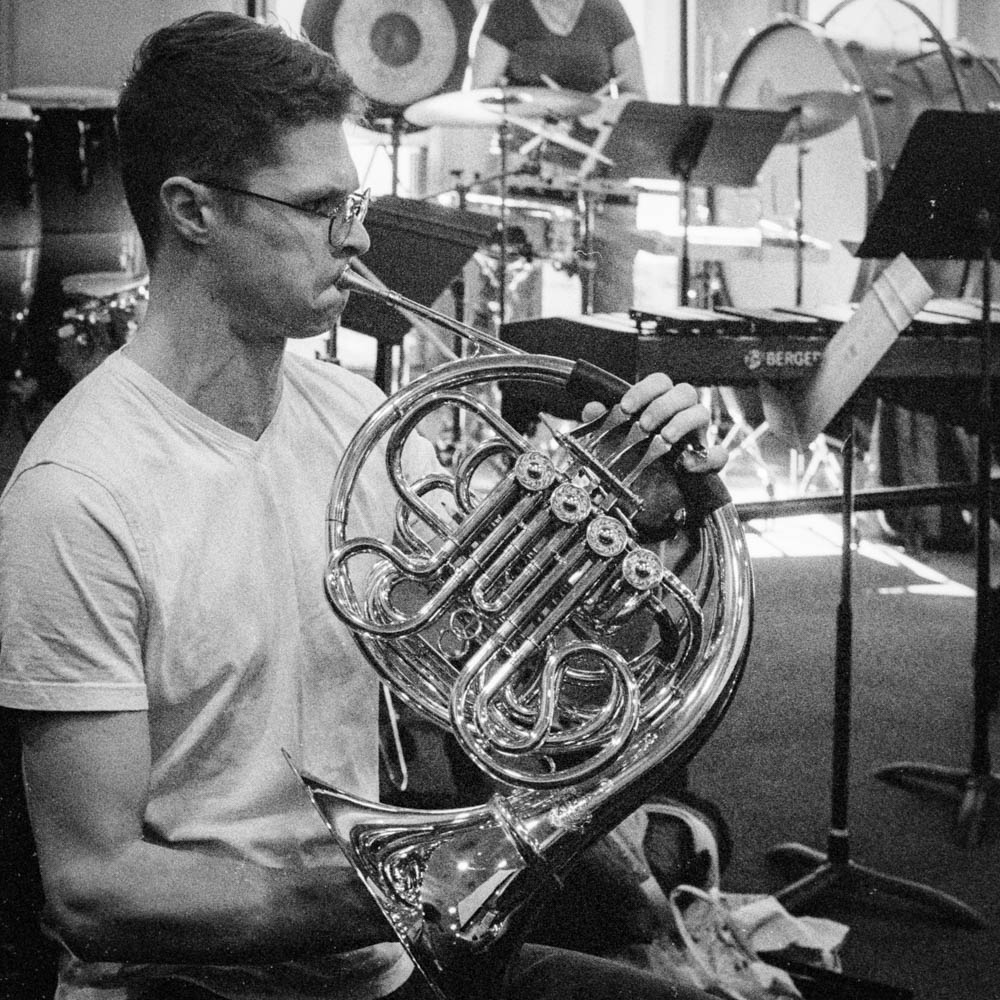
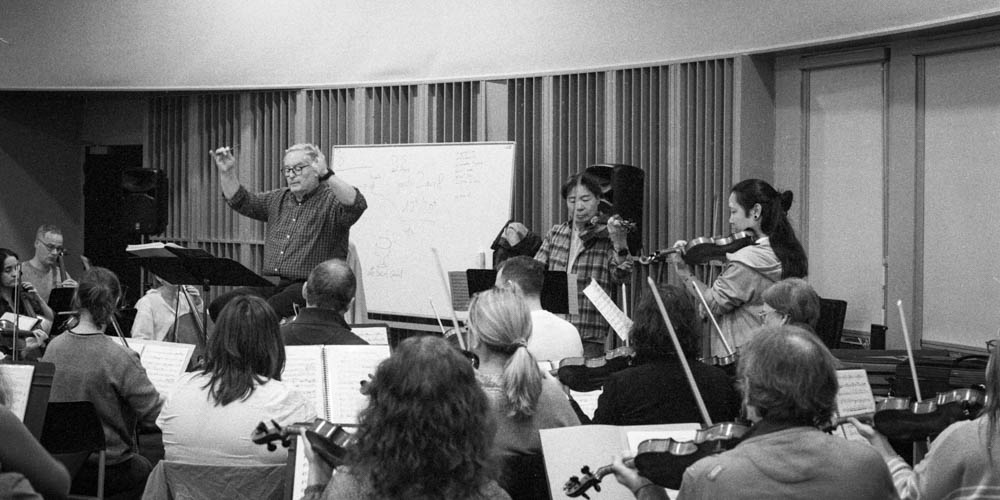
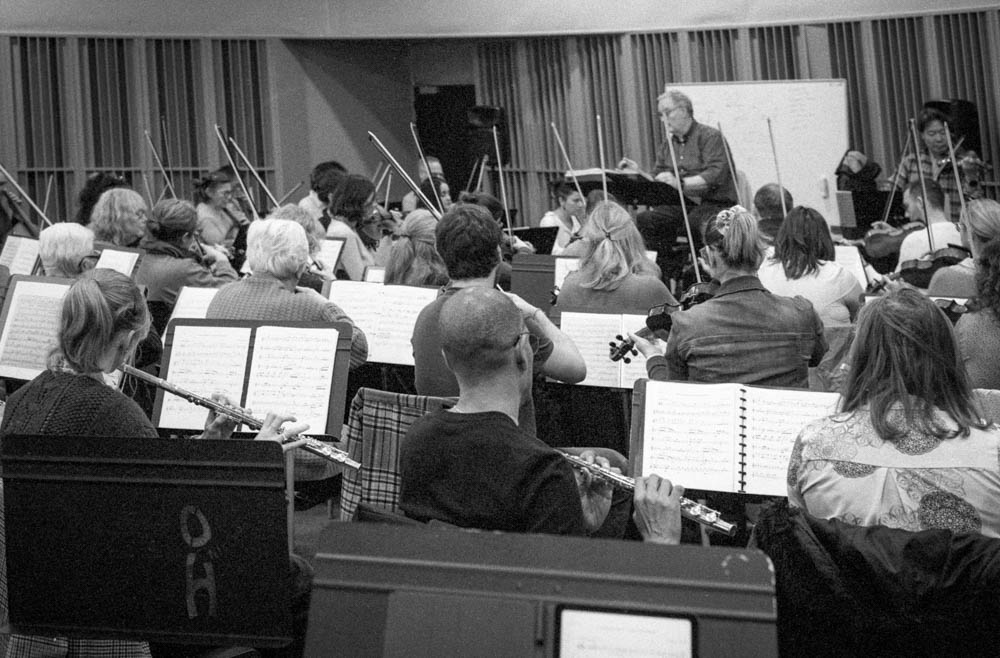
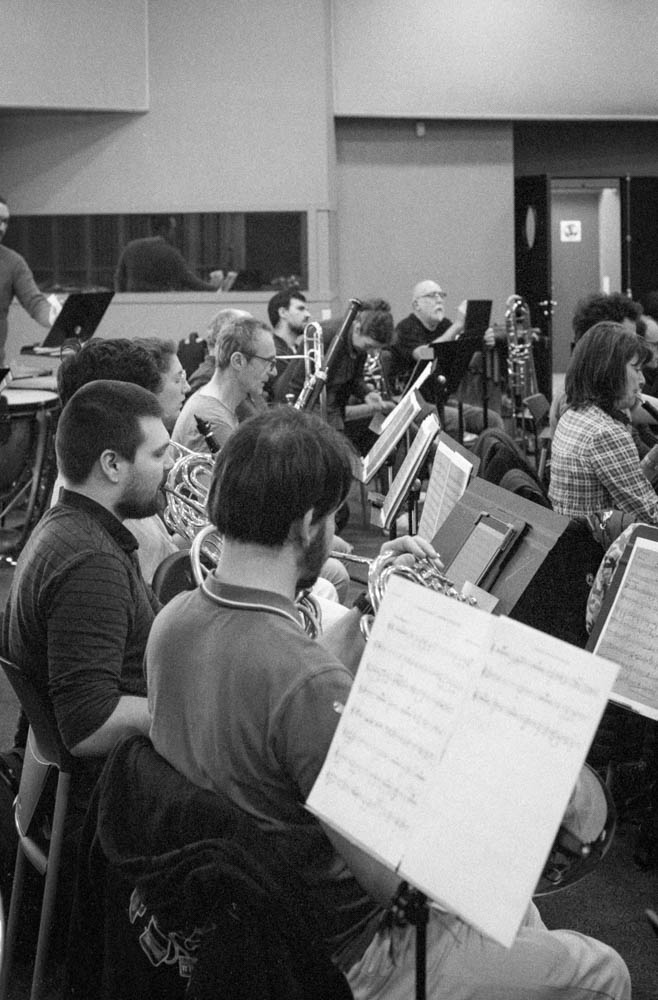
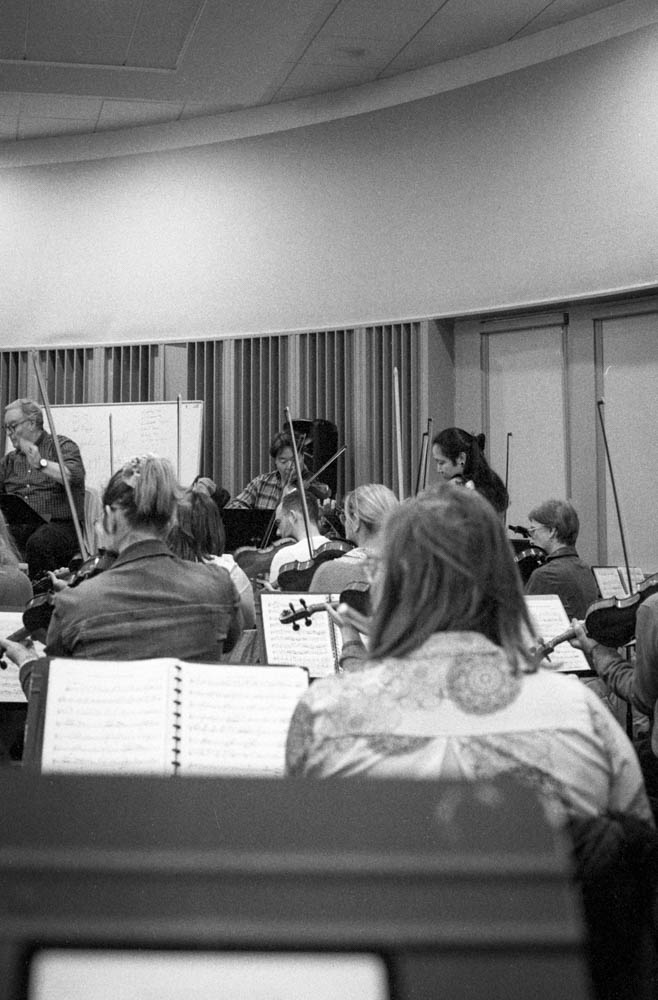
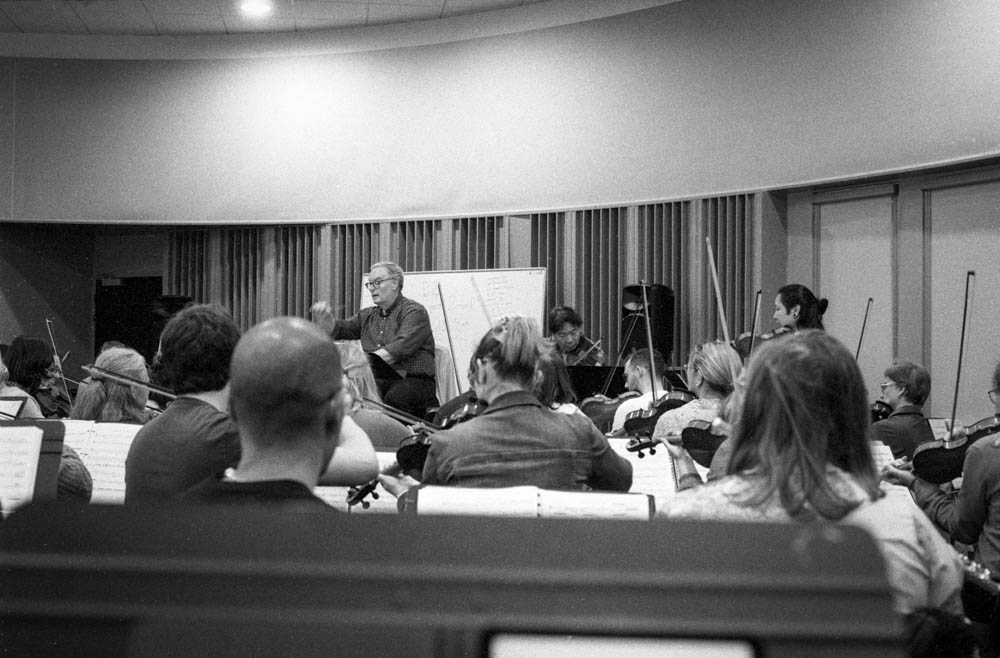
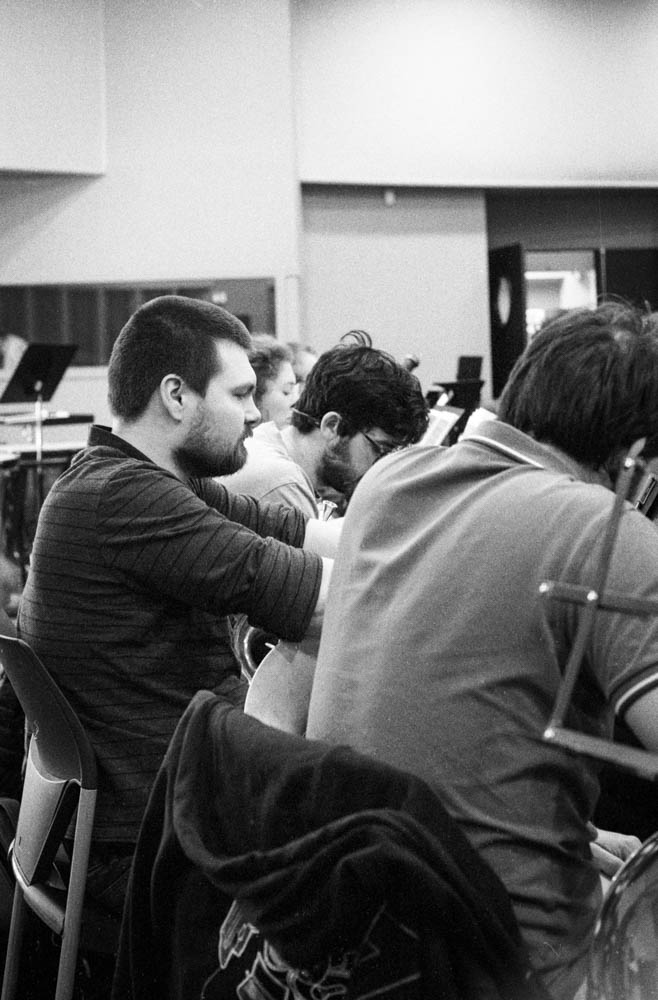
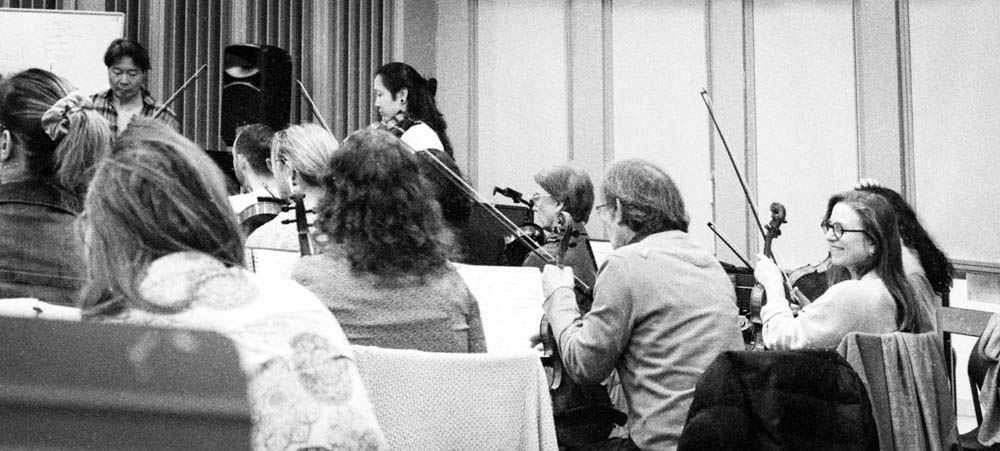
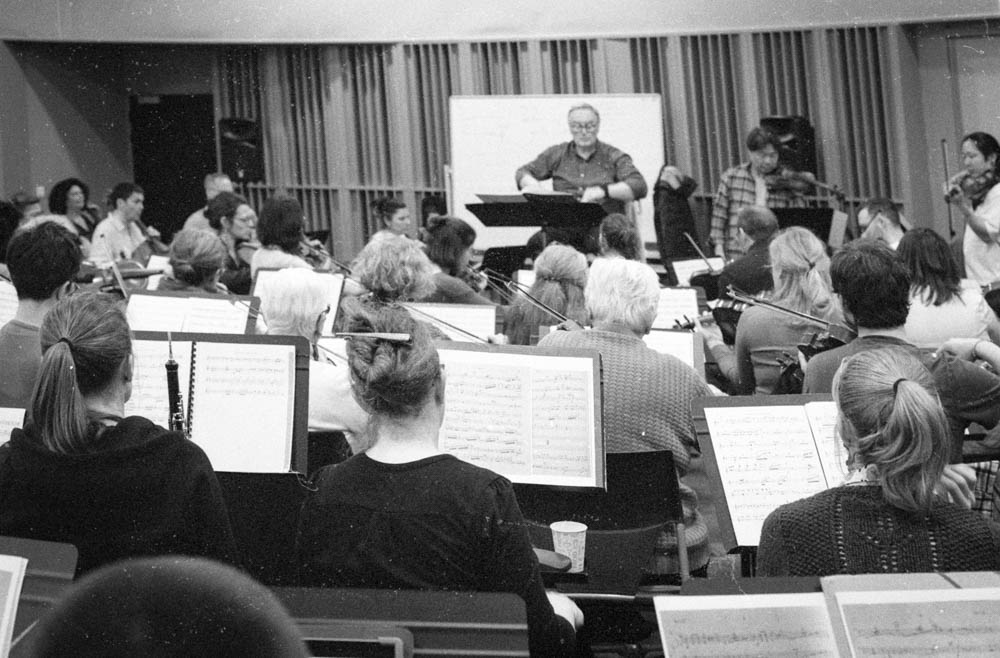
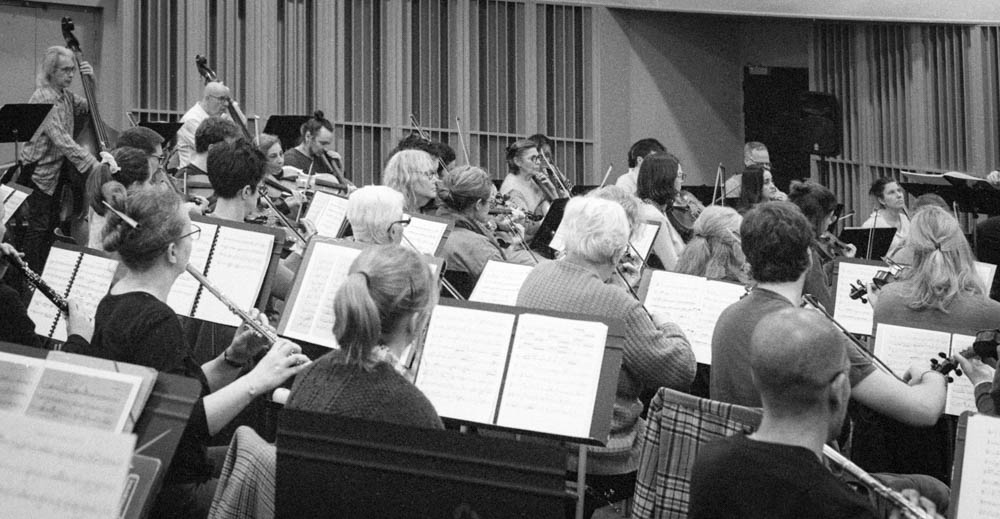
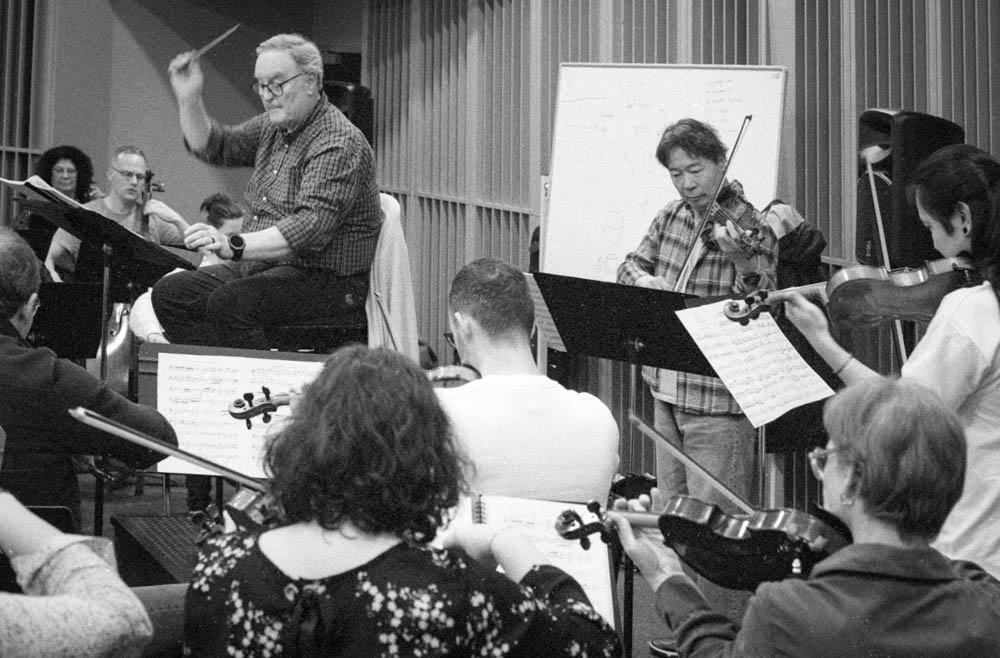
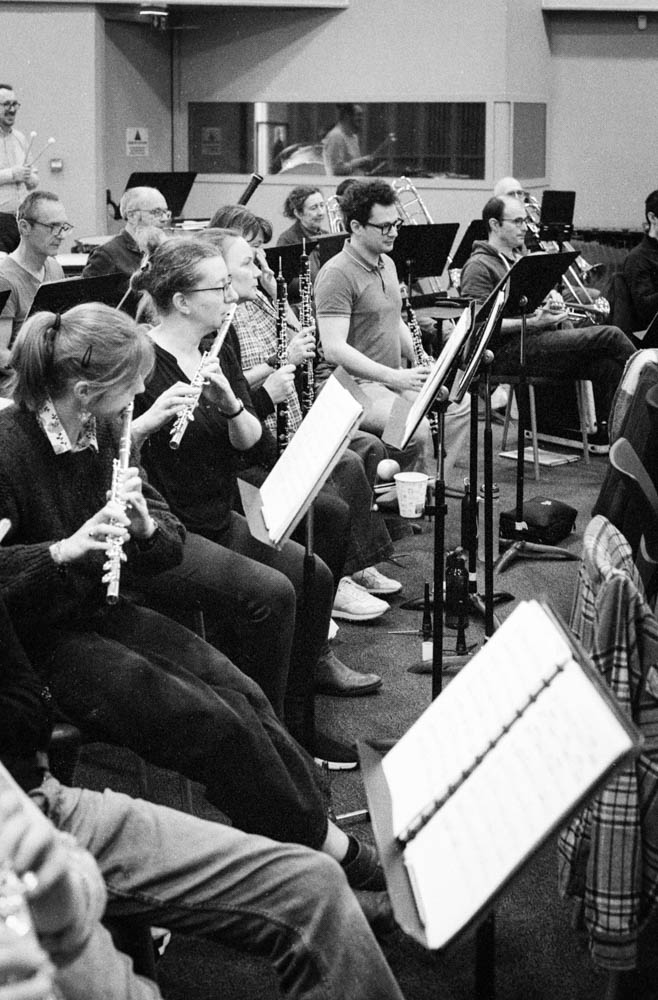
Here’s what general rehearsal looks like: we play. The conductor stops us. Again. We play. He stops us. From 47. We play. No, from 45. We play. Better. Now from the top of the phrase. Over and over, getting it right, then getting it better. It’s not glamorous. It’s not even particularly musical most of the time. It’s iteration — and the HP5+ at 3200 suits it. The grain is heavy but not ugly. Textural. Urgent. Honest about what it’s depicting.

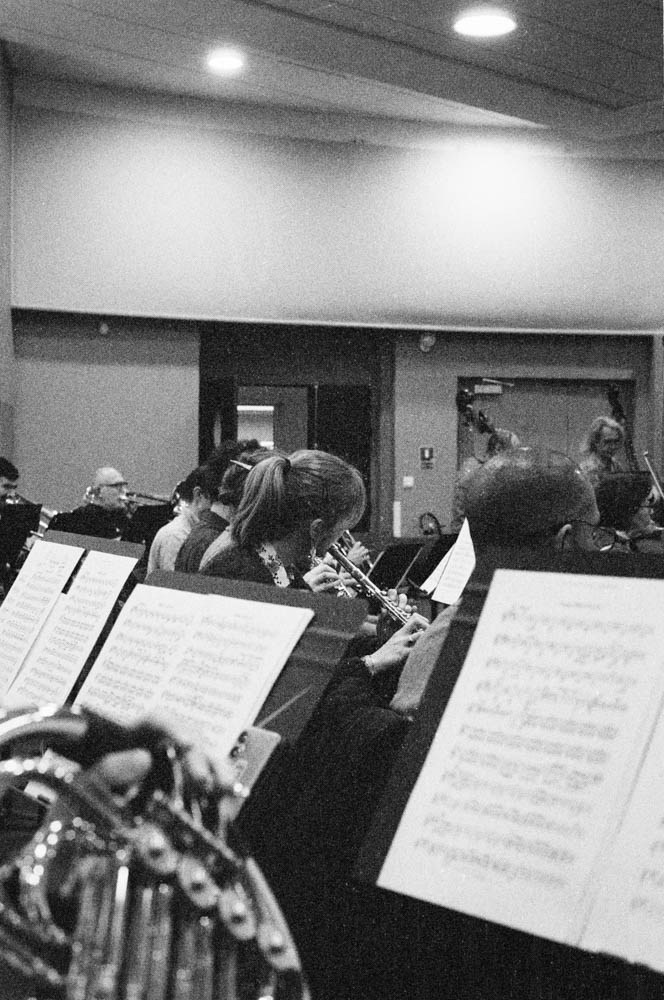
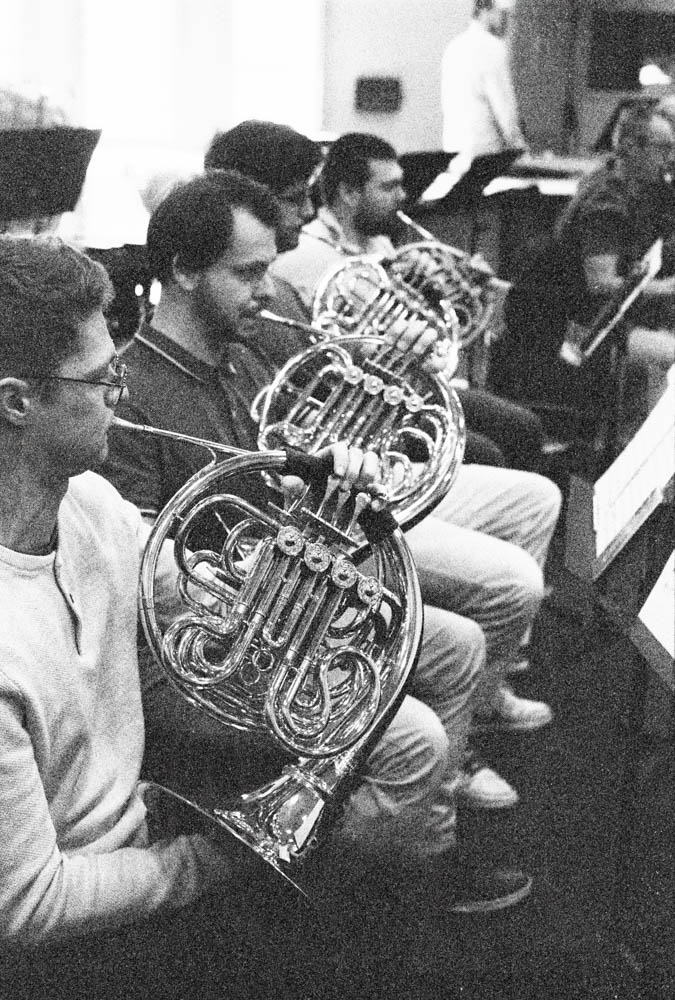
What strikes me looking at the images now is the concentration. The hunched shoulders, the heads bent over sheet music, the conductor’s hands cutting through the air. Nobody is thinking about dinner or what they forgot to do at work. For these few hours everyone is just here, trying to make something work. The grain matches that energy — it says this is real, this is process, this is nowhere near the victory lap.

The full arc of the weekend, in one table:

Fomapan 100 — LunchHP5+ 1600 — ConcertoHP5+ 3200 — General
CameraPentax ME SuperCanon AE-1 ProgramNikon FE
LightNatural daylightMixed indoorMixed indoor
GrainFine, subtleTextural, controlledPronounced, raw
MoodRelaxedFocusedUrgent
StoryCommunity at restCollaboration at workThe machine in flow

Three cameras. Three films. One story.

The choices weren’t accidental. I chose Fomapan 100 for the lunch because I wanted calm. HP5+ at 1600 for the concerto because I wanted texture with control. HP5+ at 3200 for Sunday because I wanted the grain to do some of the work — to say without saying it that this is unglamorous, repetitive, necessary. The photojournalists who shot jazz clubs in the 1950s understood this. You don’t hide the process. You lean into it.

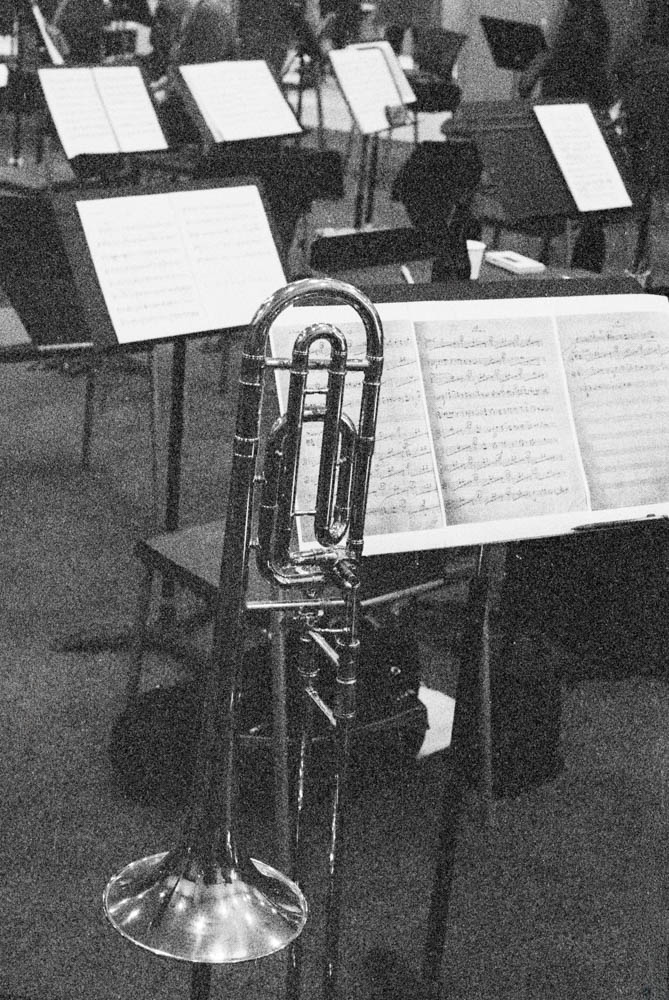
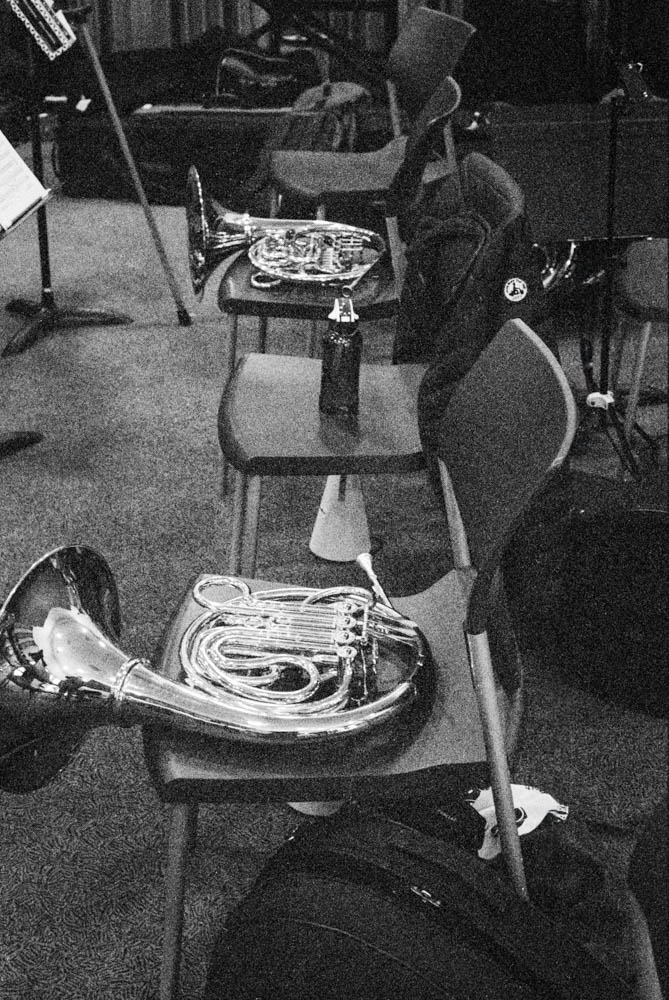
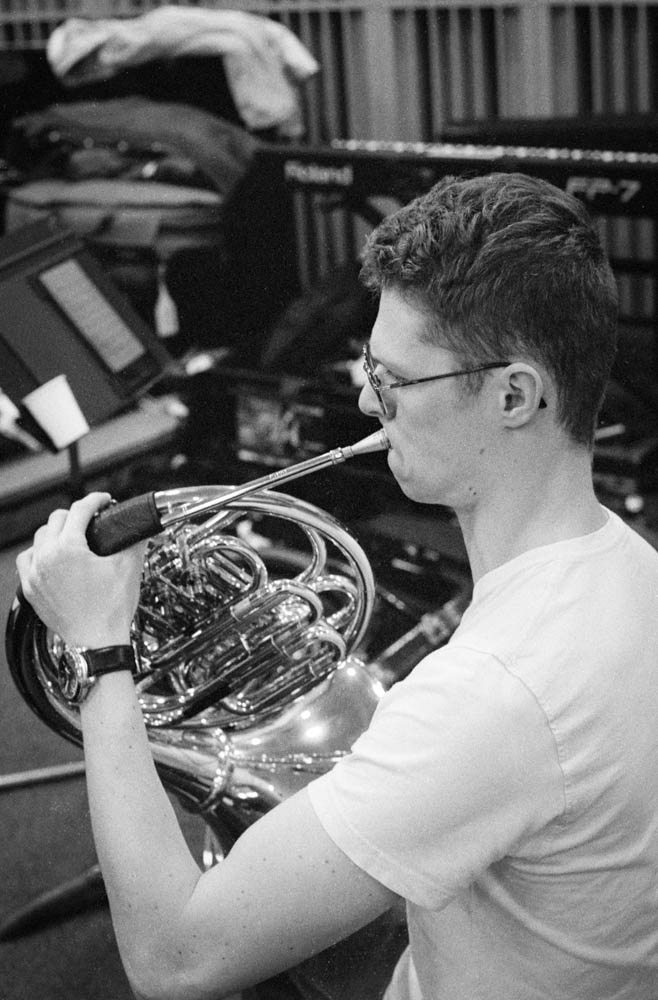
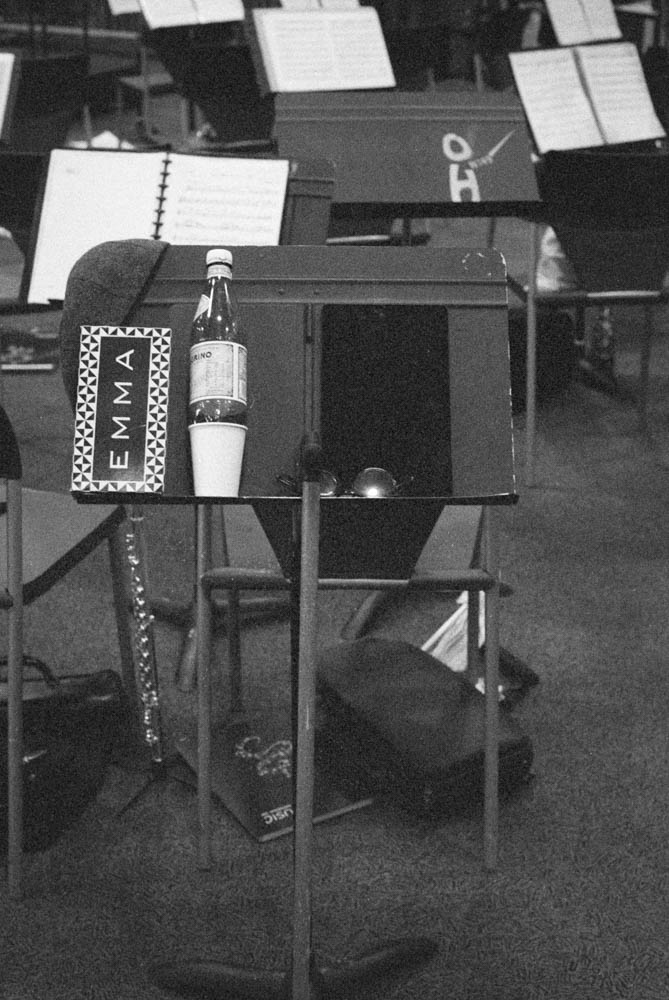
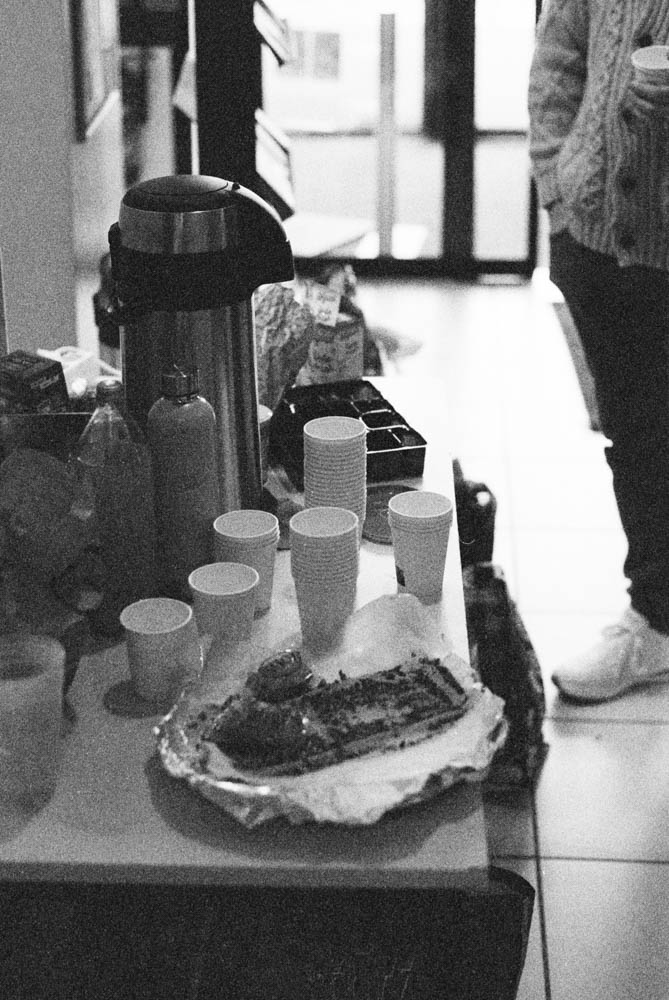
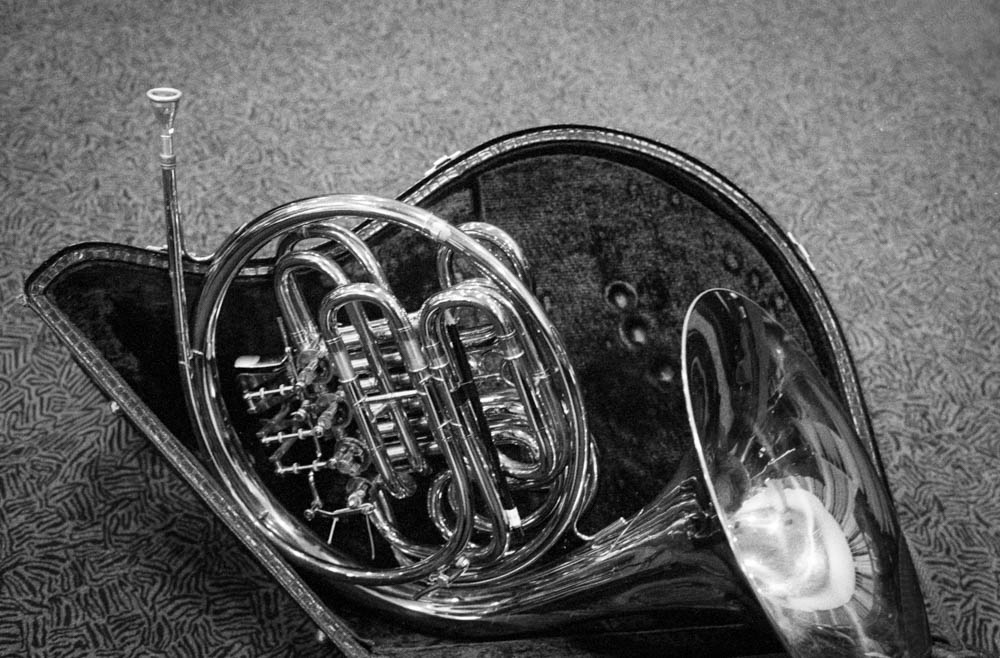
From my seat in the horns I photographed the machine I’m part of — the horn resting in its case between takes, valves gleaming; coffee cups on the floor by the woodwinds; sheet music thick with pencil marks. These are the million small adjustments that add up to a rehearsal. And eventually, if everything goes right, to music.

Seeing the Symphonique des bords de Loire through a viewfinder across a whole weekend changed something. I saw not just the work but the commitment behind it — all these people who could be doing anything else on a Saturday and Sunday afternoon, here instead, playing the same bars until they’re right.

Rehearsal is where the music is actually made. The concert is just the victory lap.

The trilogy is complete.


Shot on Nikon FE, 50mm f/1.8, HP5+ pushed to 3200. Edited in Lightroom — contrast via tone curve, subtle vignettes, grain left exactly where it was.

P.S. All three parts are now published: Part 1 (Fomapan 100, Lunch), Part 2 (HP5+ 1600, Concerto), Part 3 (HP5+ 3200, General). Thank you for following along.
Something I’ve Been Working On


Hello,

Thank you for being here. If you’re reading this, you’ve been following my work for a while — and that means more to me than I can easily say.

I wanted to share something with you before anyone else.

Over the past months I’ve been quietly building a small print shop — seven photographs that have stayed with me long after the shutter closed. A path in Huizhou. A canal in Shaoxing. A Vespa in the Quartier Bouffay. A tiny wooden shed in Northumberland that stopped me in my tracks.
Each print comes with the story behind it — because a photograph without its story is only half the picture.

If one of them speaks to you — I’d be genuinely honoured to have it on your wall.

Thank you for six years of reading, liking, commenting, and quietly being there.

— Ian ijmphotography.net

You can read the full story behind each print here: https://shop.ijmphotography.net/collections/the-collection

Part 2: The Work — Rehearsing a Double Violin Concerto on HP5+ 1600


Same diagnosis as Part 1, same prescription. The opening four paragraphs are genuinely good — terse, cinematic, the rhythm earns its keep. “The sunlight was gone. The fluorescents were on. The break was over.” — that’s a real sentence. Then the Roman numerals arrive and flatten everything into a report again. “What I’d Do Differently” is still there. The sign-off prompts are still there.

The three-column table is worth keeping — it’s doing more work here because there are now three films to compare across the whole weekend. That earns its place.

Here’s the rewrite:


Part 2: The Work — Rehearsing a Double Violin Concerto on HP5+ 1600

The lunch break ended. Tables were folded. Containers packed. The last crumbs brushed away.

And then they arrived.

Two Chinese violin soloists — guest artists who’d travelled some distance to play a double violin concerto with our little orchestra in a French community centre. They weren’t at lunch. They weren’t part of that casual, sunlit gathering outside. They were here for work.

So were we.

I put down the Fomapan and loaded HP5+ pushed to 1600. Swapped the Pentax for the Canon AE-1 Program. Same 50mm philosophy, different camera, different film, different mood. The sunlight was gone. The fluorescents were on. The break was over.

You can feel it when rehearsal starts — the shift from community to concentration. From chatting about weekends to counting measures. The conductor, same man who was smiling over a food container an hour ago, is now at the whiteboard, baton in hand, writing notes about tempo and bowing. The soloists take their places at the front. Tuning. Focused. Not quite part of our tribe yet — guests, professionals, here to do a job.
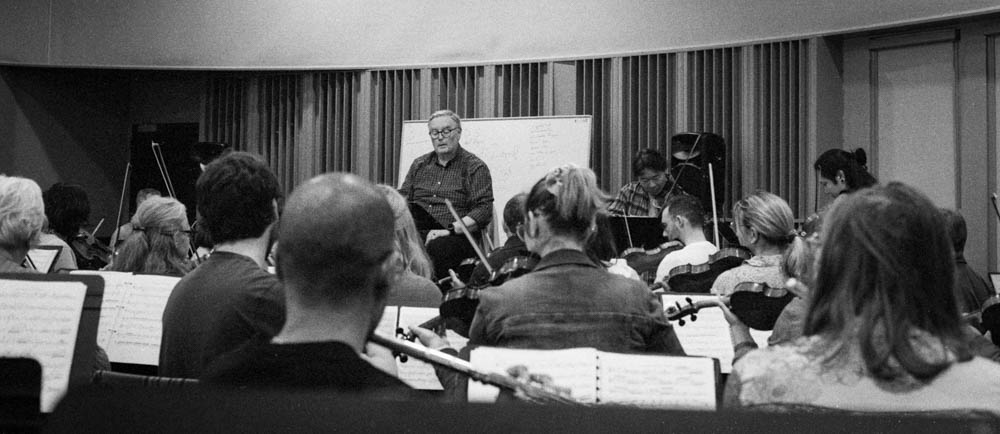
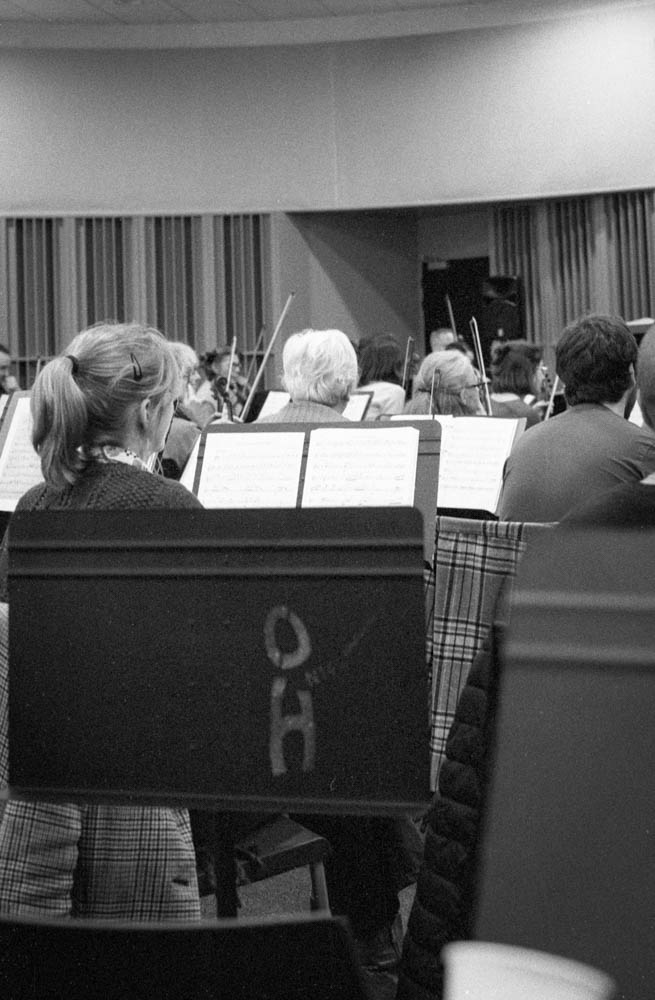
I photographed from my seat in the horn section and from the aisles during breaks. The AE-1 Program in Program mode — no thinking about shutter or aperture, just framing and timing. The camera handled exposure. I handled seeing.
What you witness, photographing a concerto rehearsal, is translation. Not just musical ideas passing between conductor and players, but something more specific: two soloists from one tradition finding a shared language with an orchestra from another. The conductor stops us. Softer in the strings. The soloists adjust. He stops again. A touch more projection. They adjust. We play. He listens. He stops. This goes on. Not because anyone is wrong, but because everyone is finding the same musical space.

HP5+ at 1600 sits in the right place for this. Not the fine, almost invisible grain of the Fomapan lunch shots. Not the raw, declared grain of 3200. Textural, controlled, appropriate — honest about the work without dramatising it.

The three-roll arc of the weekend, laid out:

Fomapan 100 — LunchHP5+ 1600 — ConcertoHP5+ 3200 — General
LightNatural daylightMixed indoor fluorescentsMixed indoor fluorescents
GrainFine, subtle, cleanTextural, present, controlledPronounced, bold, raw
ContrastGentle, evenModerate, balancedPunchy, dramatic
MoodRelaxed, communalFocused, collaborativeUrgent, iterative
StoryCommunity at restCollaboration at workThe machine in flow

Same orchestra. Same weekend. Three worlds — and the technical choices were the point from the start.

From my seat in the horns I see the whole machine differently than an outsider would. I know which passages are coming. I know which sections are struggling. I know the rhythm of this room. But through the viewfinder I see something else — the strings moving in that eerie synchronised way, the brass gleaming under the fluorescents, Viktor on oboe, Nicolas patient behind the timpani, Corentin next to me absorbed in something difficult, glasses slipping, completely gone.

The small details tell it too. A French horn resting in its case between takes. Coffee cups on the floor near the woodwinds. Sheet music thick with pencil marks. These are the million small adjustments that add up to a rehearsal — and eventually, if everything goes right, to music.

Saturday was the concerto. The focused, collaborative work. Sunday would be the rest of the programme — no soloists, just the orchestra and the conductor and whatever needed fixing. The grind. The iteration.

Part 3 is coming.


Shot on Canon AE-1 Program, 50mm f/1.8, HP5+ pushed to 1600. Edited in Lightroom — contrast via tone curve, subtle vignettes, nothing added that wasn’t already there.+ 3200—is coming next. The grain gets heavier, the light gets harsher, and the work gets real.

The Break: An Orchestra at Lunch on Fomapan 100


Let’s be honest: orchestras run on two things. Music and food.

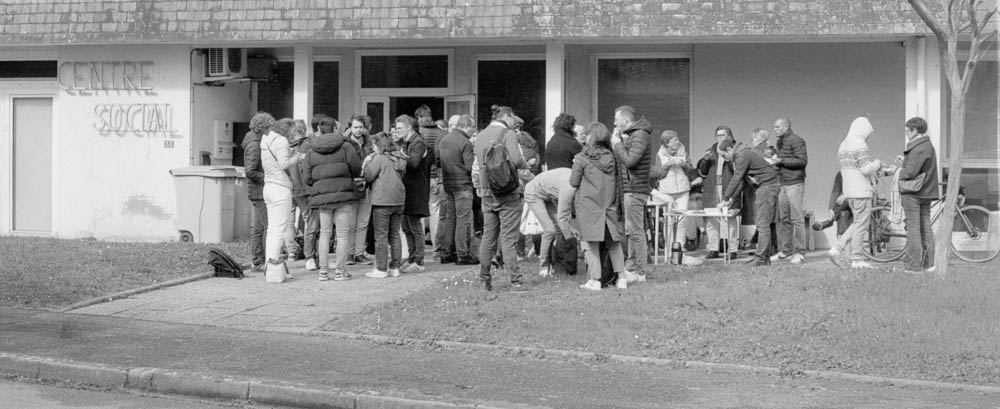
Most documentation skips the food. Concert halls, polished instruments, formal attire — that’s what ends up in the frame. But before any of that, there’s a lunch break in a car park outside a community centre, and that’s where I wanted to start.

I’m the fourth horn in the Symphonique des bords de Loire. Which means I’m also inside the story, not observing it from a safe distance. I know these people. I count rests next to Corentin, our first horn. I watch Victor — oboe, cor anglais, and the man who quietly keeps the whole enterprise running — arrive with a tote bag full of provisions. I see the conductor holding a food container and chatting, no baton, no authority, just a man at lunch with his colleagues.

That’s what I wanted to photograph.

I loaded the Pentax ME Super with Fomapan 100 and spent the break outside. Aperture priority, natural light, film at box speed. No pushing, no games. The choice was deliberate — I knew I’d be shooting the rehearsal indoors on HP5+ pushed to 1600 and 3200. Those would be grainy, urgent, intense. This needed to feel different. Calmer. The breath before the dive.

The difference, when you put the two rolls side by side, is striking:

Fomapan 100 — LunchHP5+ 1600 — Rehearsal
LightNatural daylightMixed indoor fluorescents
GrainFine, subtle, cleanTextural, present, moody
ContrastGentle, evenPunchy, dramatic
MoodRelaxed, communalFocused, intense
StoryCommunity at restCollaboration at work

Same orchestra. Same day. Different worlds — and that contrast was the point from the start.

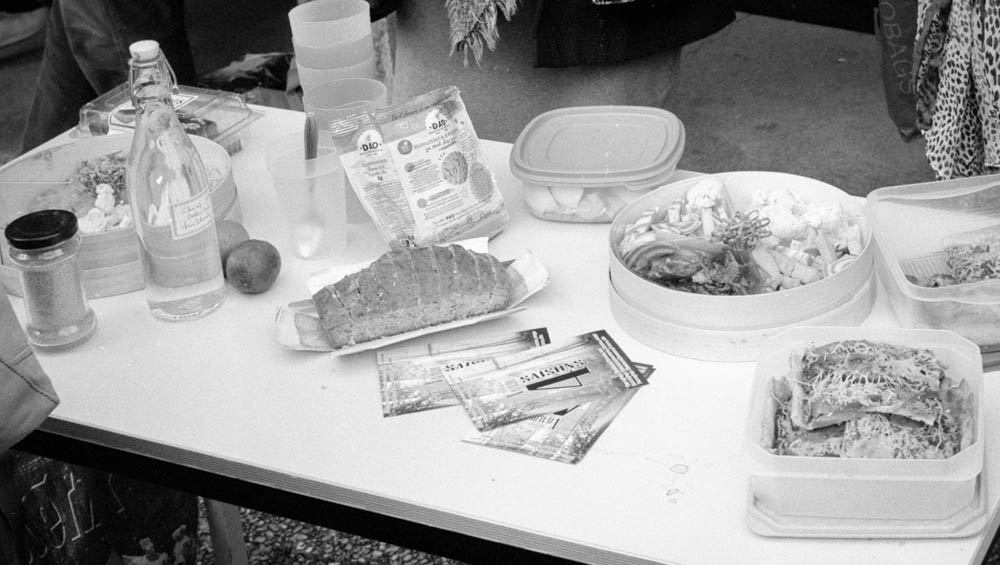
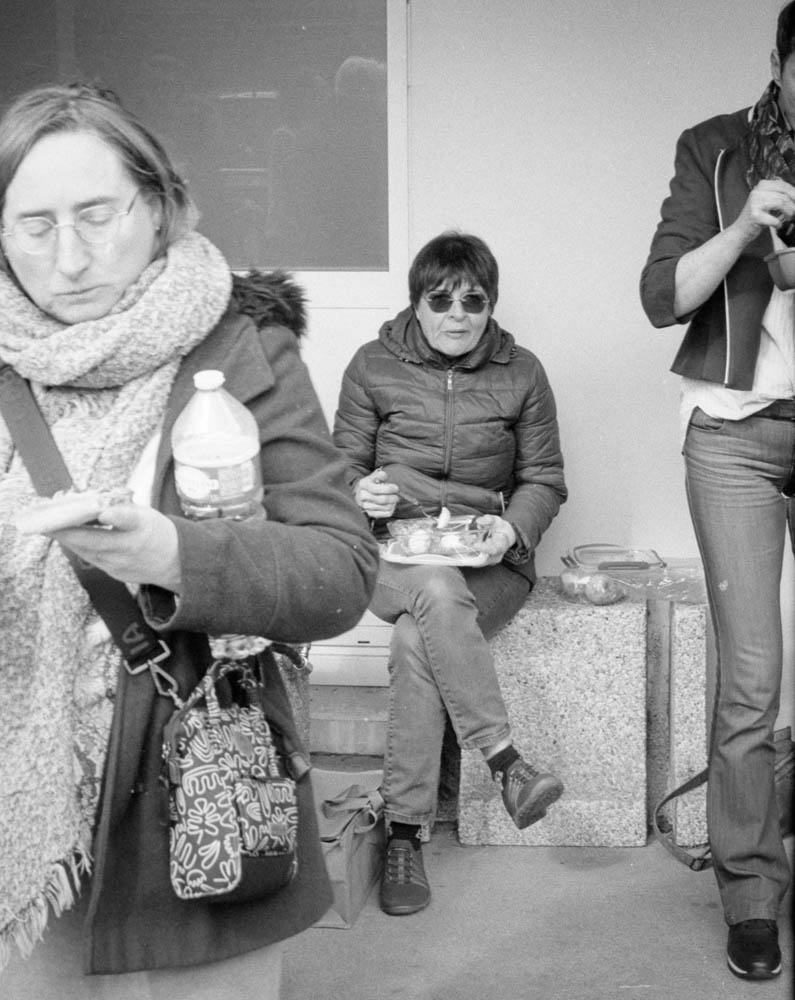
Fomapan 100 in good daylight gives you an honesty about the light that suits candid work. The faces, the bread, the containers of salad, the glass bottle catching the sun — none of it is staged, and the film doesn’t try to make it anything other than what it is.

The two Chinese violin soloists — the guest artists who’d be the focus of the afternoon — weren’t there for lunch. They’d arrive later, after the tables were packed away. For now it was just us: teachers, retirees, students, professionals, amateurs. All ages. The usual mix. Gathered outside a community centre with a faded sign, sharing food before three hours of work.

This isn’t a fancy conservatory. It never was. That’s rather the point.

After lunch, the tables come down. The last conversations finish. Someone rinses a container. And then, quietly, the same people who were just eating become musicians again. The conductor picks up his baton. Viktor picks up his oboe. Corentin finds his pitch. I put down my camera, pick up my horn, and count rests.

The soloists arrive. The work begins.

That’s Part 2.


Shot on Pentax ME Super, 50mm f/1.7, Fomapan 100 at box speed. Developed in Ilfosol 3. Edited in Lightroom


Let’s Connect: Mentorship, Prints & Collaborations


Let’s Connect: Mentorship, Prints & Collaborations

A brief and practical note.

After six years of writing here, I’m formalising something that has been happening informally for a while — people getting in touch to ask about prints, about learning, about working together. Which is lovely, and I’d like to make it easier.

So here’s where things stand:

Mentorship — I’m happy to work with photographers who want to develop their practice, whether that’s film, digital, or somewhere in between. One-to-one, remote or in person if you’re near the Vendée. We work on what you actually need, not a fixed curriculum.

Prints — A selection of black-and-white work from the Nantes series and elsewhere is available as archival prints. If something on the blog has caught your eye, get in touch and we’ll talk.

Collaborations — Photo walks, workshops, joint projects — I’m open to conversations. No guarantees, but I’m listening.

Article suggestions — If there’s something you’d like me to write about, say so. Reader questions have produced some of my better pieces.

The best way to reach me is ian@ijmphotography.net. I aim to reply within a couple of days. French is fine too — n’hésitez pas.

That’s it really. No agenda beyond making good work and occasionally sharing it with people who care about the same things.

— Ian

The HP5 Plus 100 ASA Experiment: A Happy Accident?


Hello lovely people.

I’m a bloody fool. I made the stupidest of mistakes when shooting HP5 Plus 400 speed film at ISO 100.

I’d been intending to use 100 ASA film in my Nikon FE, so in preparation, I had set my camera’s ISO dial to 100. I loaded the HP5 and forgot to change this blasted setting. By the time I realised, I had already taken “some” photos. I didn’t want to wind the film on to change the setting because the sun was shining and I didn’t want to waste the light.

In for a penny, in for a pound. I thought, “What the heck?” They say you have all this “latitude” with film, so I went online to find out if I could salvage the roll. Here we go for a walk in the Parc Garenne Lemot in Clisson.

I developed the film in Ilfosil 3 (1:9) and used the development times for Kentmere 100, praying that I would have something usable…

ParameterDetails
FilmIlford HP5 Plus 400
ExposureRated at ISO 100 (2 stops overexposed)
DeveloperIlfosol 3 at 1:9
Development Time5 minutes 30 seconds (using Kentmere 100 time)
ResultLower contrast, smooth tonal transitions, fine-looking grain, excellent shadow detail
CameraNikon FE
LocationParc de la Garenne Lemot, Clisson

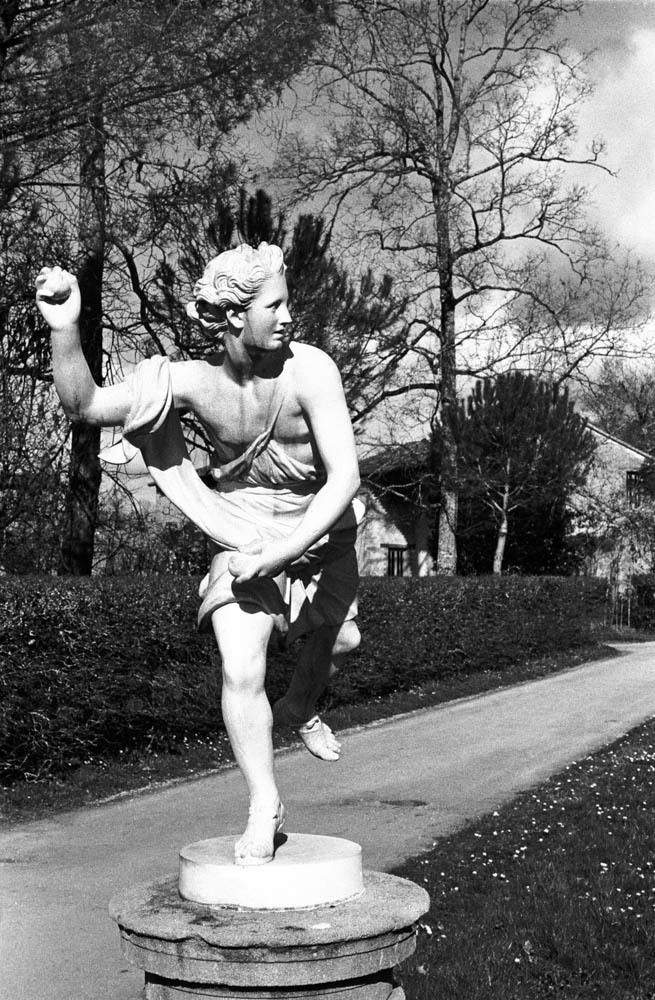
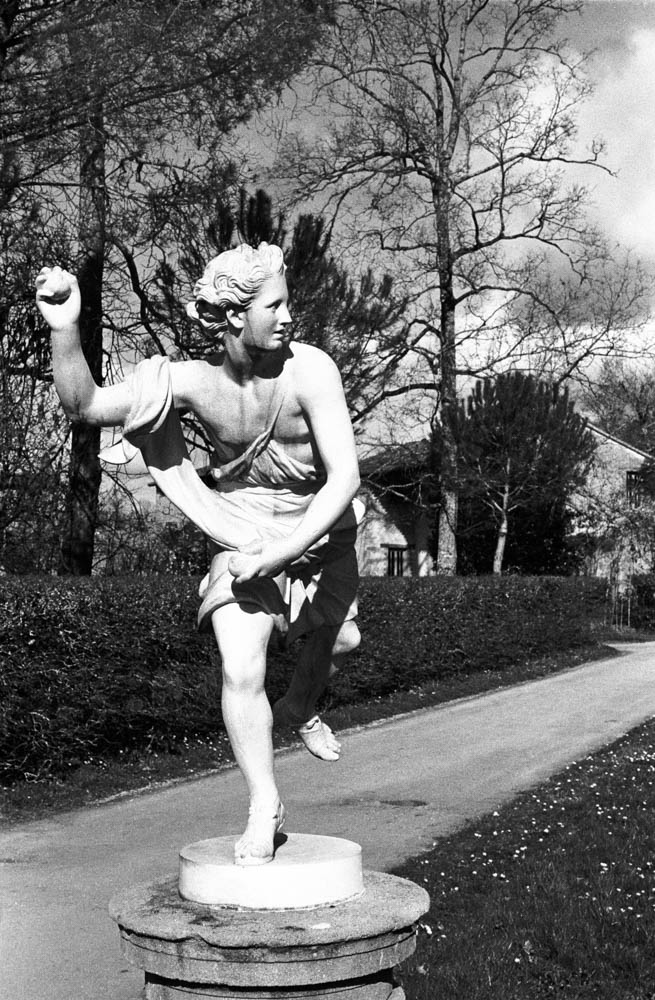
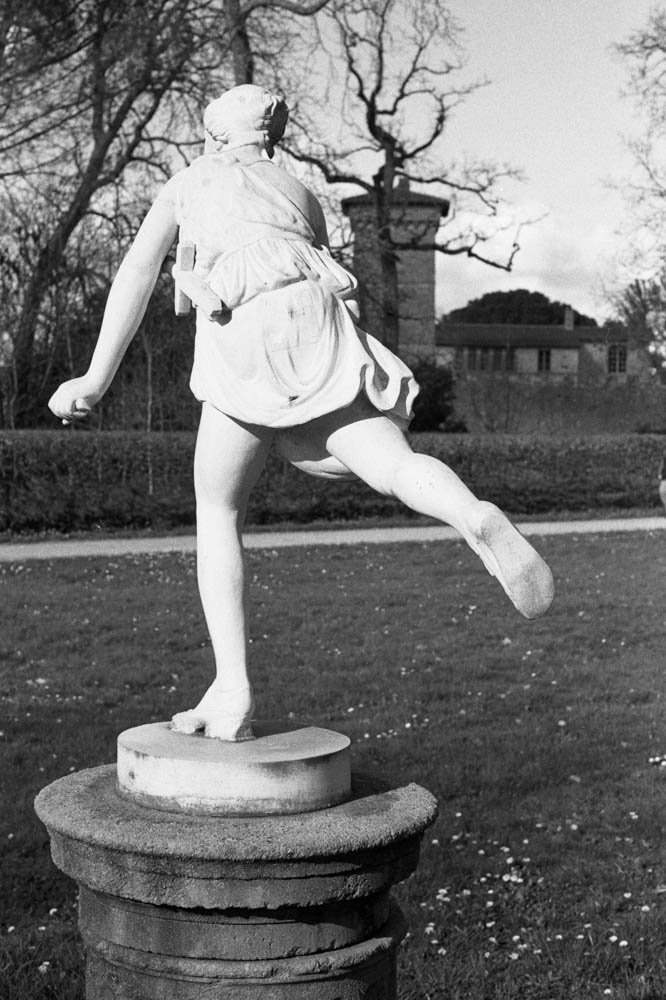
THE STATUE – Front view of classical statue on pedestalThis shot demonstrates the beautiful tonal range achieved through pull processing

The Theory: Pulling Two Stops

For those who aren’t deep in the film weeds, here is what I actually did. By setting my camera to 100 ISO while using 400 speed film, I was overexposing by two stops.

Now, common wisdom says that pulling HP5 to 200 ASA (one stop) is perfectly fine. But I thought I was pushing my luck pulling it two stops to 100 ASA. I thought I was taking the mickey with the film gods.

By giving it extra light and less development (pull processing), I was essentially asking the film to reduce contrast and grain significantly. I was testing just how much abuse it could take before the negatives turned into flat, grey mush.

I didn’t develop it for standard HP5 400 times. I treated the whole roll as if it were 100 ISO film from start to finish.

The Results

When I scanned the negatives, I was genuinely surprised. The negatives were dense, but not unmanageable. The scanner handled them well. Here is what the process actually looked like in practice.

1. Rich Shadow Detail

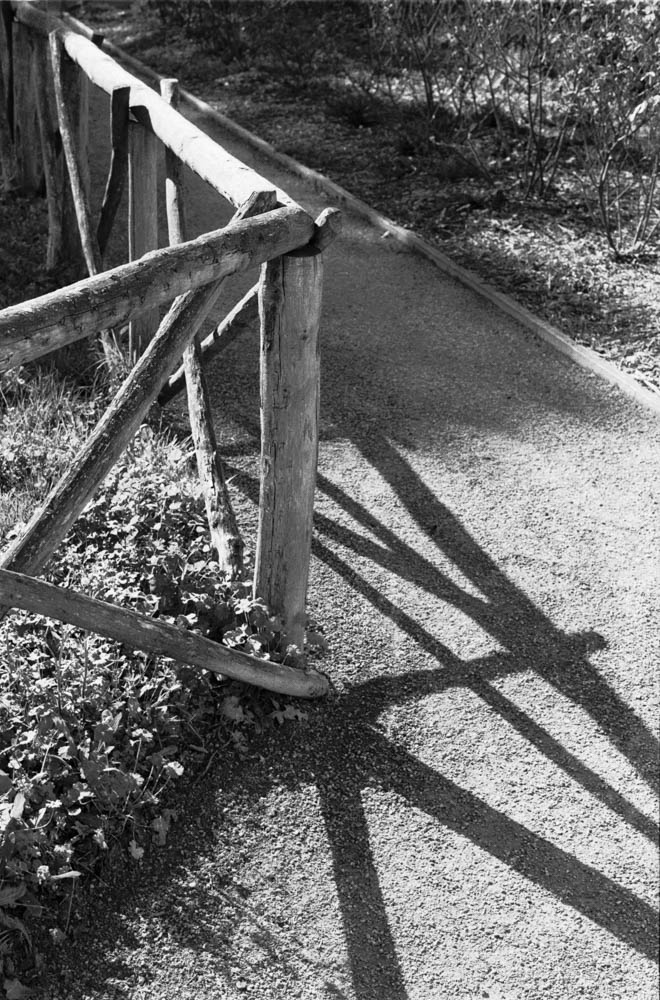
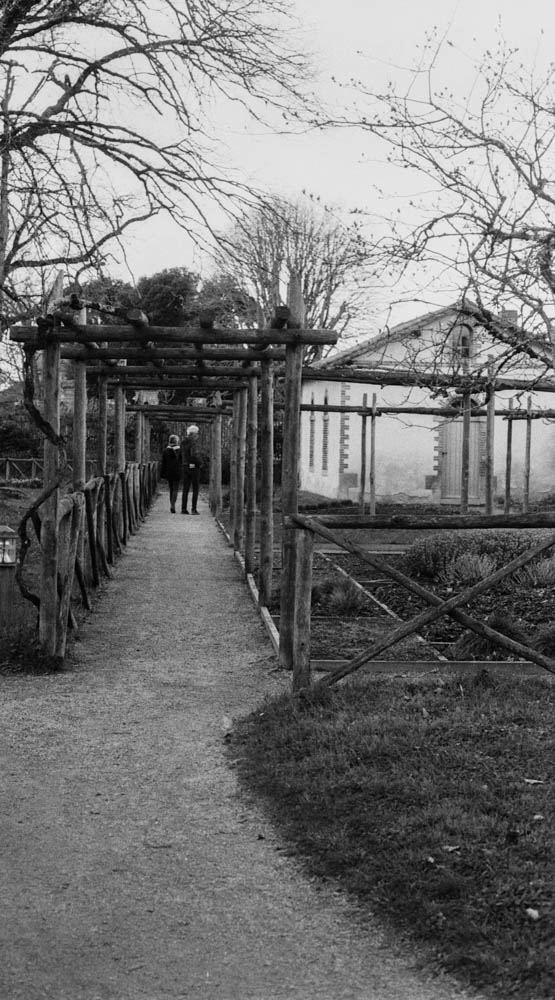
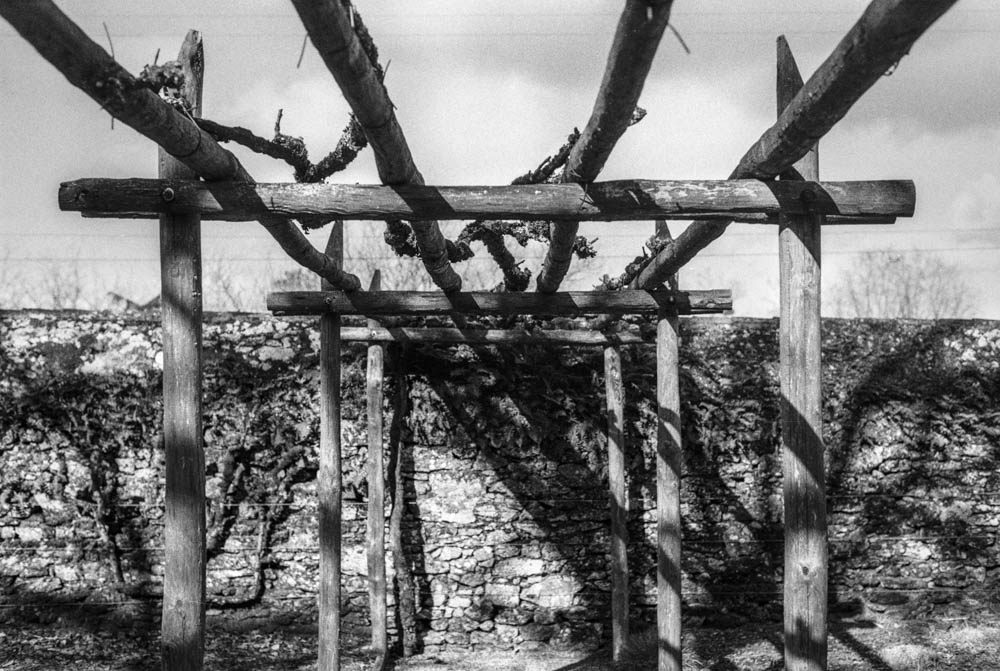
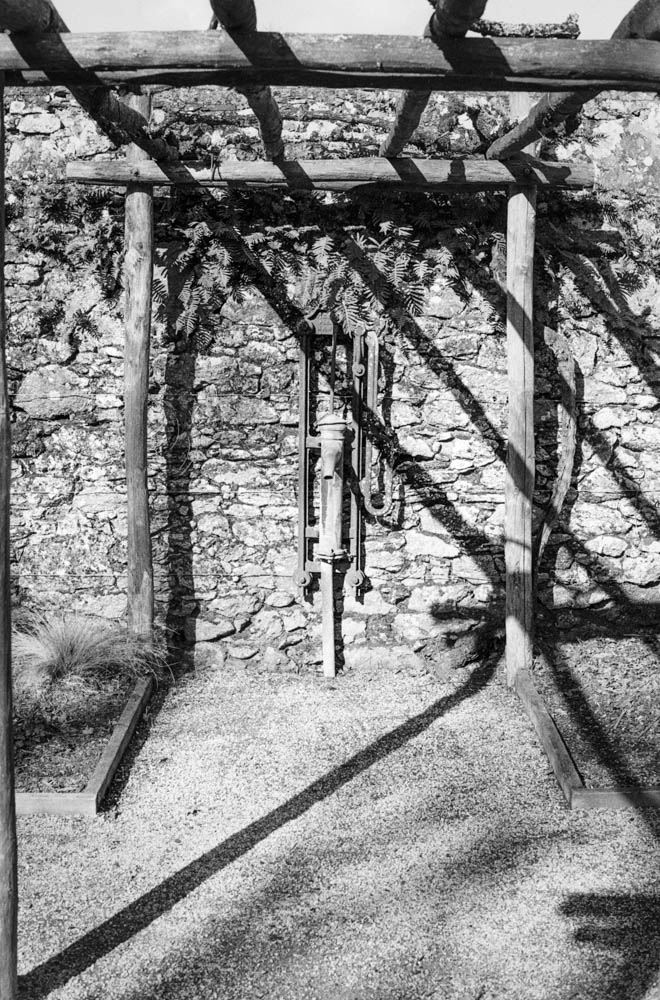
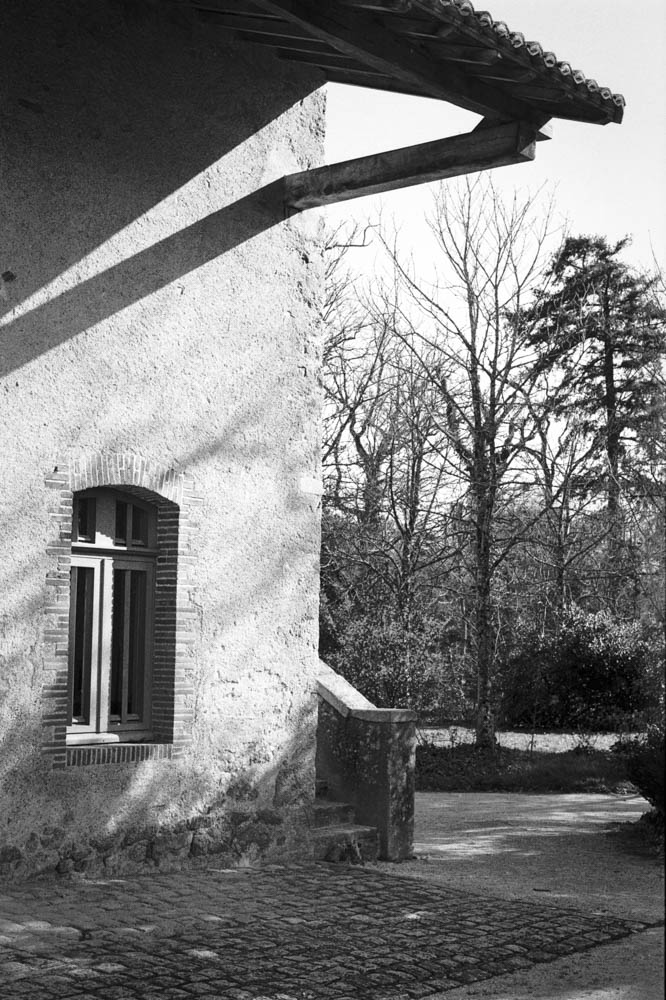
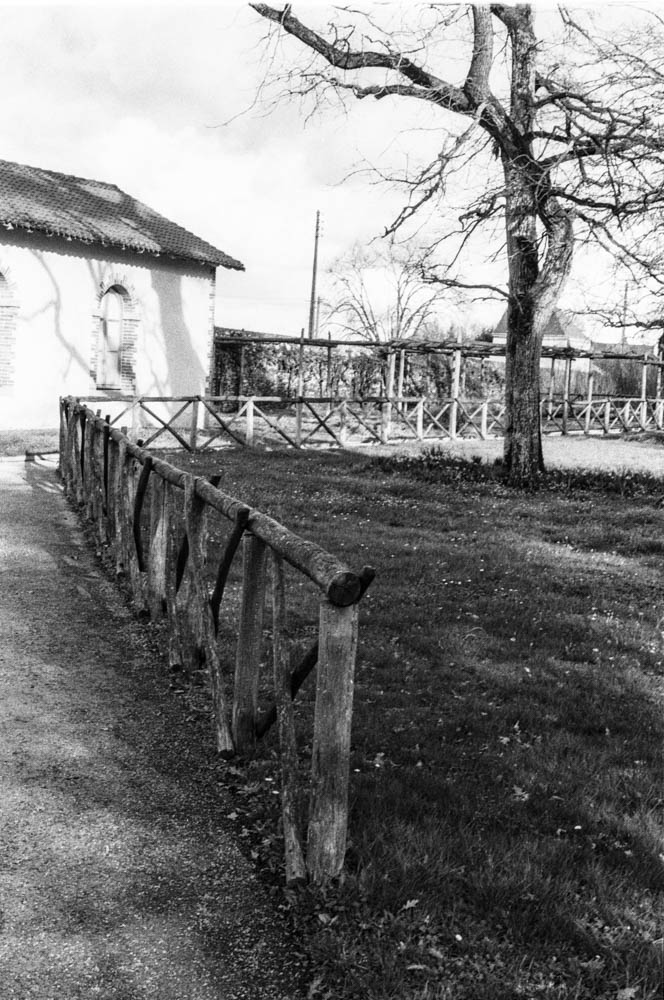
The first thing you notice is the lack of “muddy” shadows. Usually, HP5 can get a bit grainy in the dark areas. Here, the shadows under the pergola and the fence are deep, but they still hold detail.

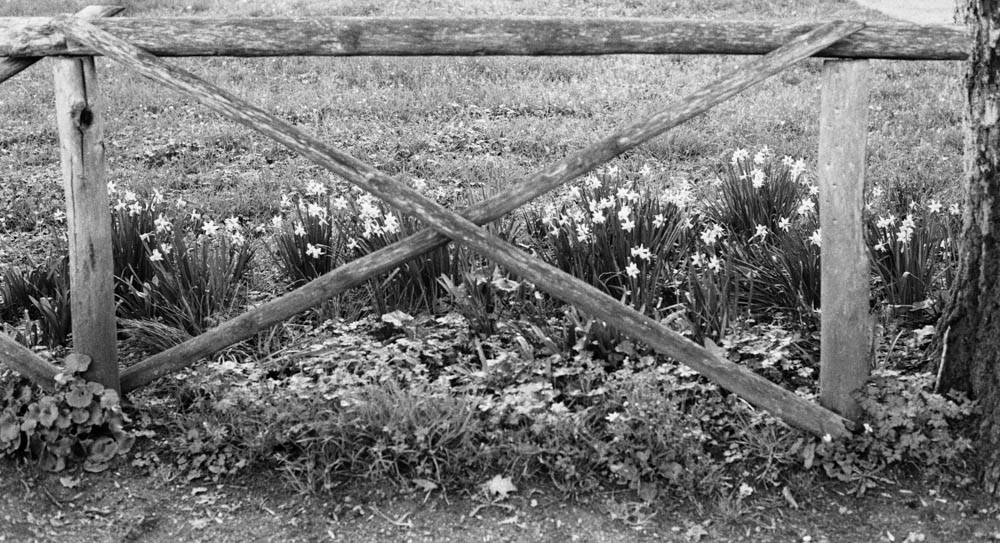
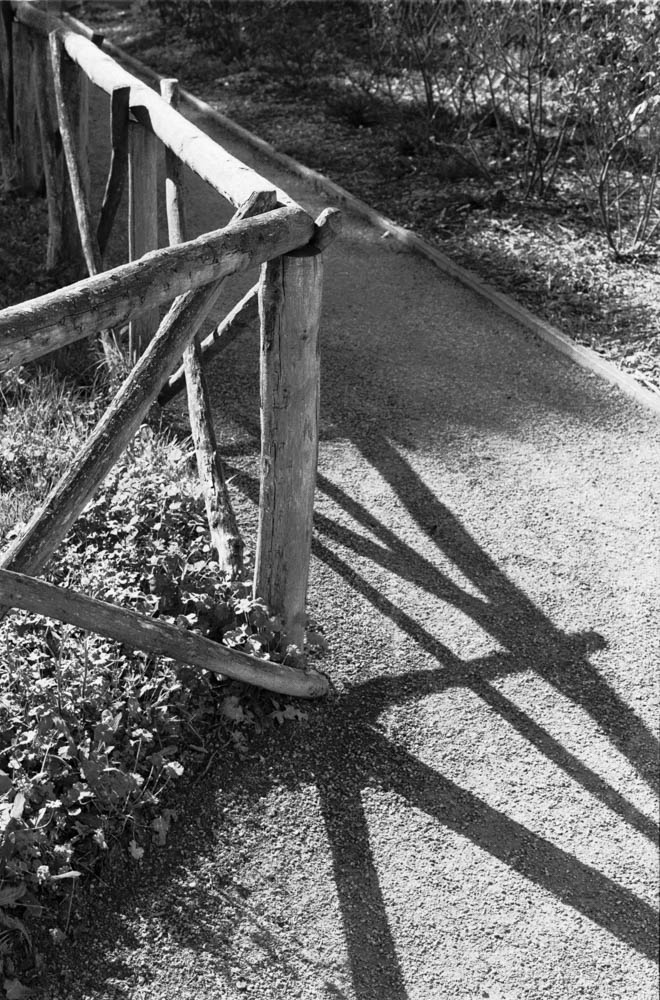
FENCE WITH LONG SHADOWS – Diagonal shadows cast across gravel pathNotice how the deep shadows still retain texture and detail in the gravel

2. Texture and Grain

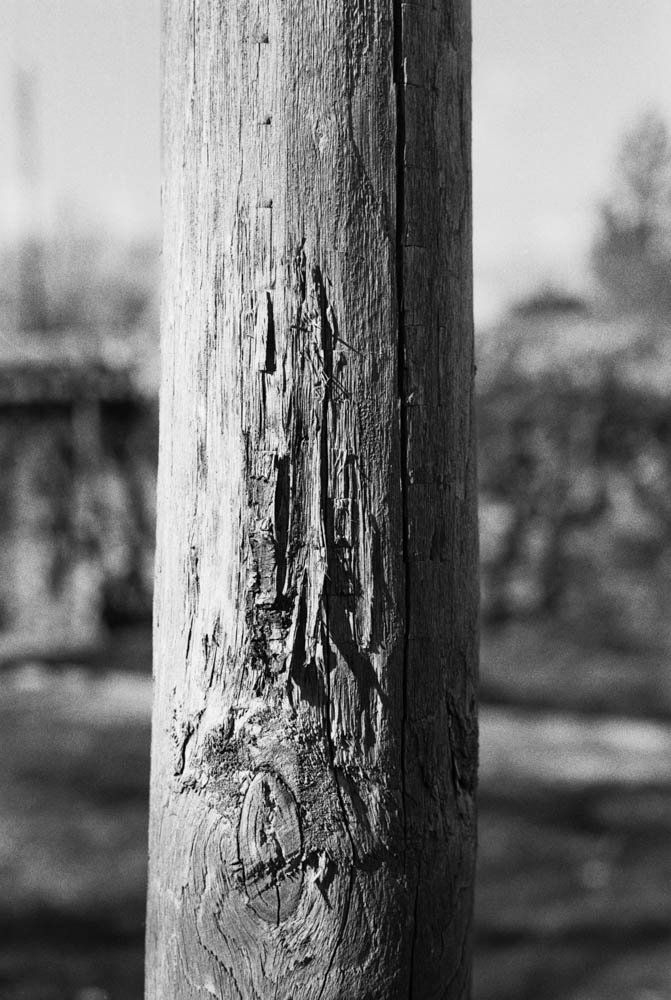
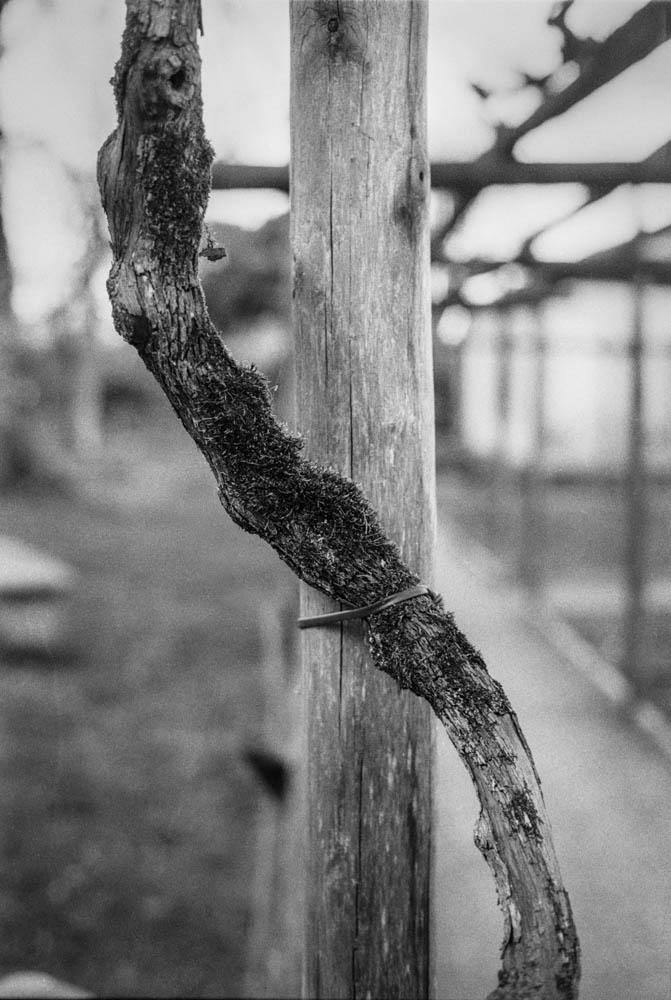
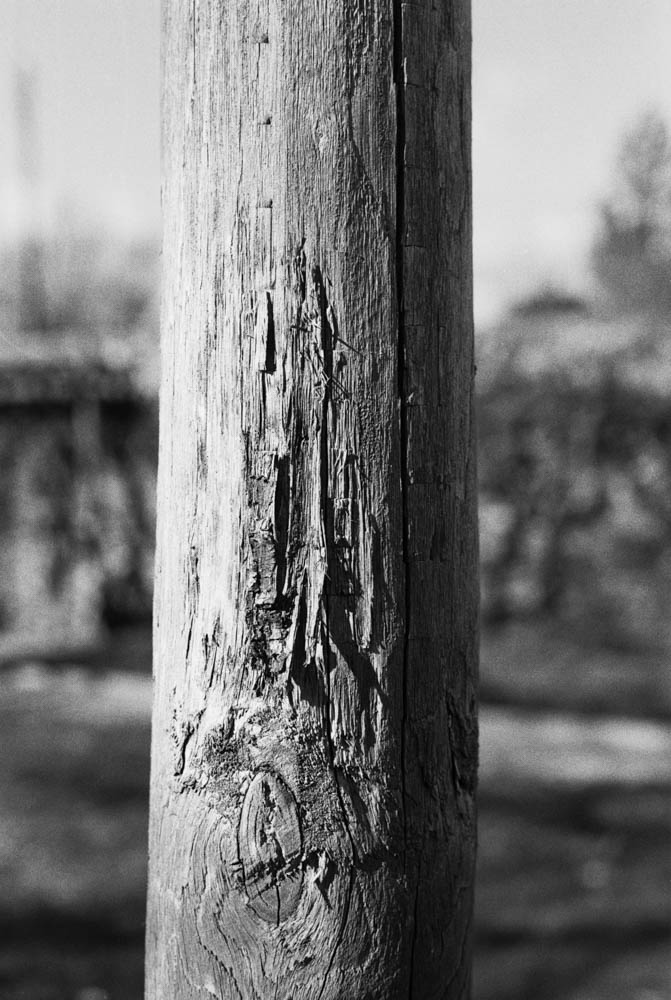
This is the real winner for me. Look at the texture on the wood in these shots. Because I gave the film extra light and reduced the development, the grain structure is much finer than usual. It looks almost like a slower film (like Delta 100) in the mid-tones.

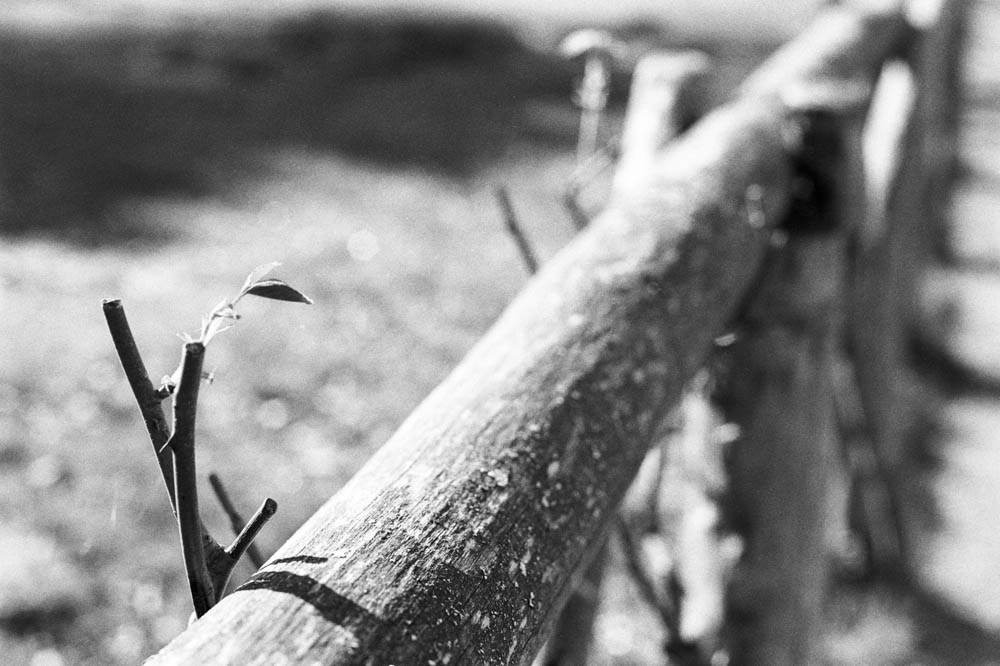
WEATHERED WOODEN POST – Close-up showing wood grain and textureThe fine grain structure is clearly visible in the wood texture

3. Highlight Control

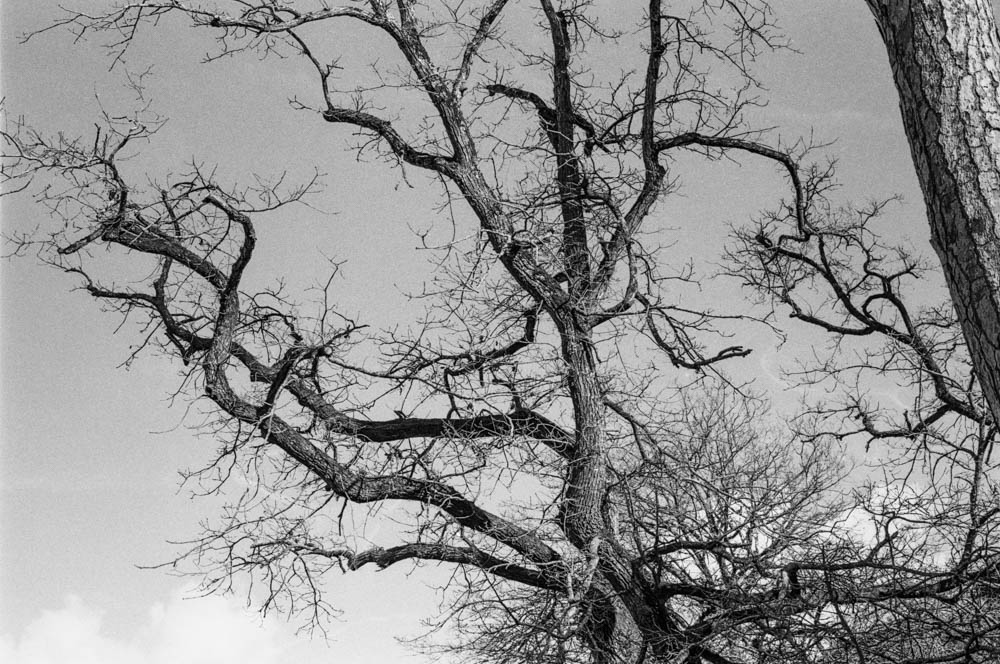
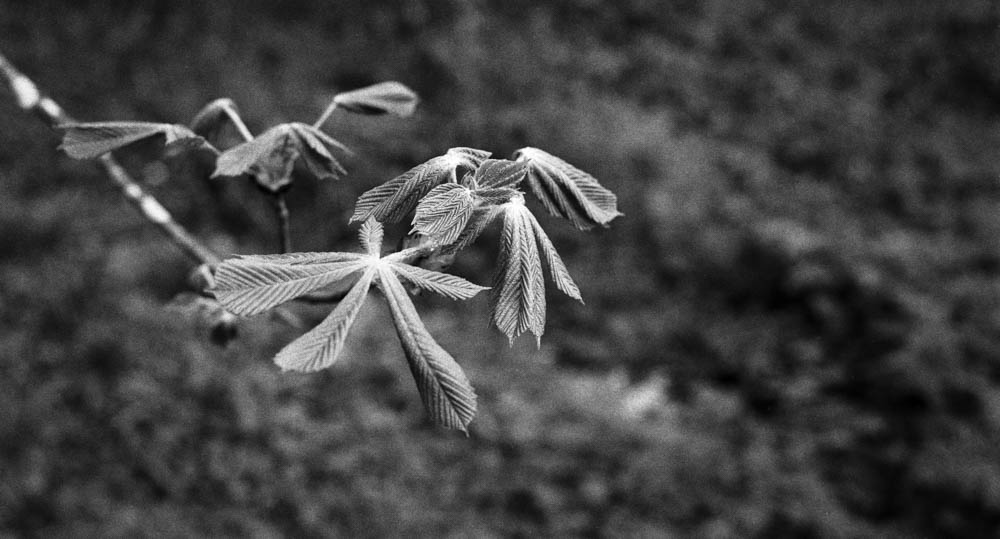
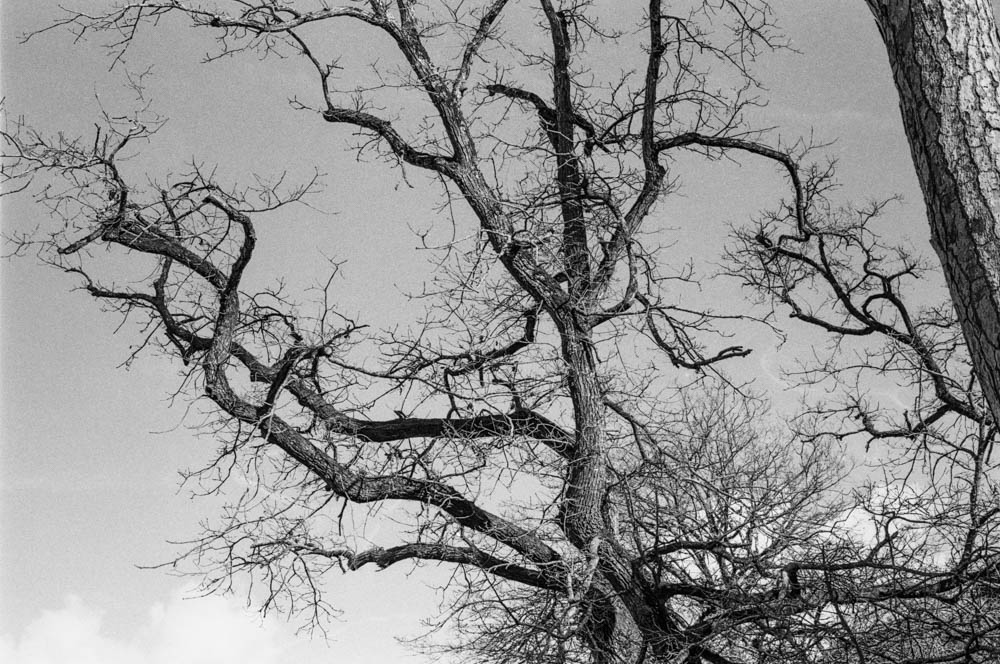
I was worried the bright spring sun would blow out the sky. Looking at these branches against the sky, you can see a beautiful grey gradient rather than a blown-out white. The reduced development time really helped keep those highlights in check, even with the two-stop overexposure.

BARE TREE BRANCHES AGAINST SKY – Intricate branch pattern with grey skyThis is the proof – the sky retains beautiful tonal gradation despite overexposure

4. Tonal Range

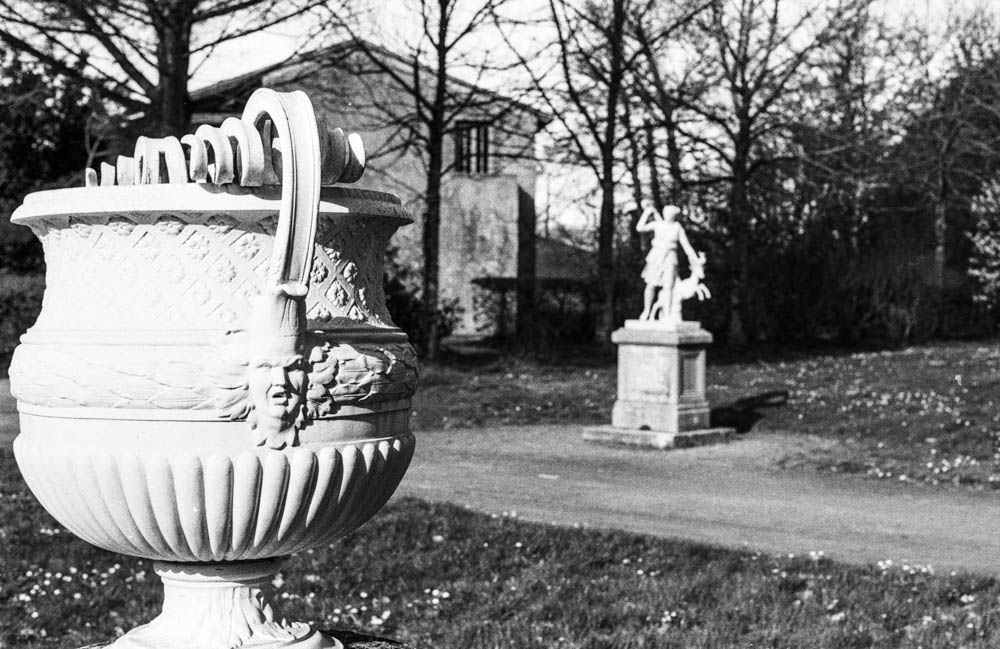
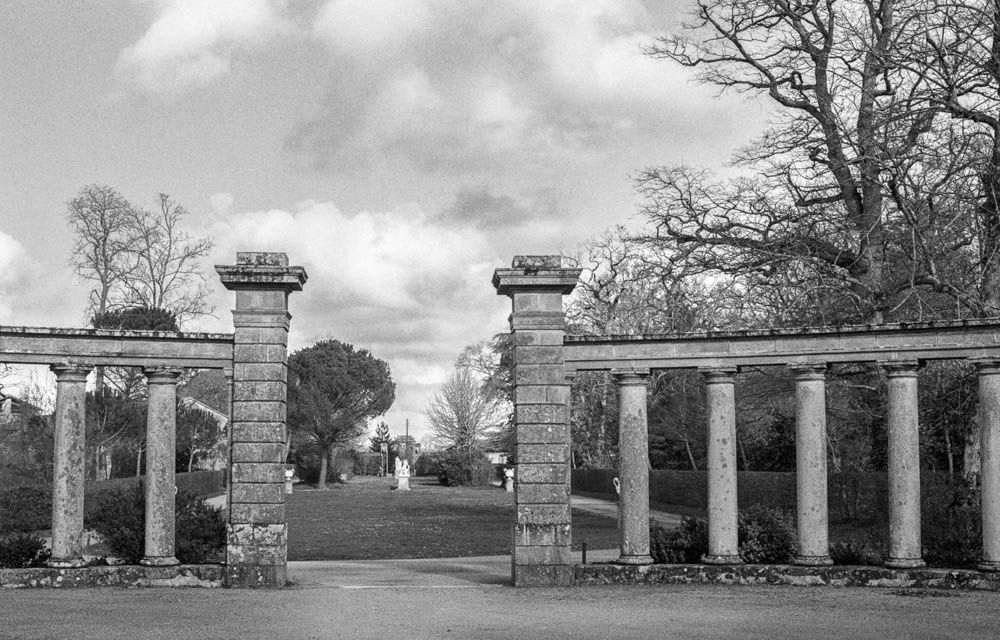
From the white marble of the statues to the dark foliage, the tonal separation is superb. The process gave me a creamy, classical look that I might not have achieved at box speed.

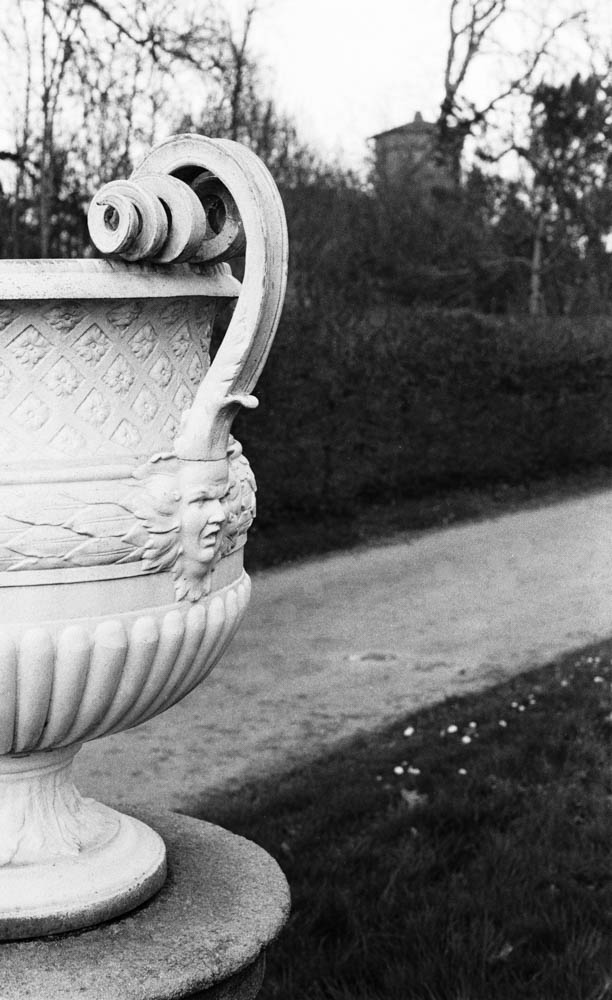
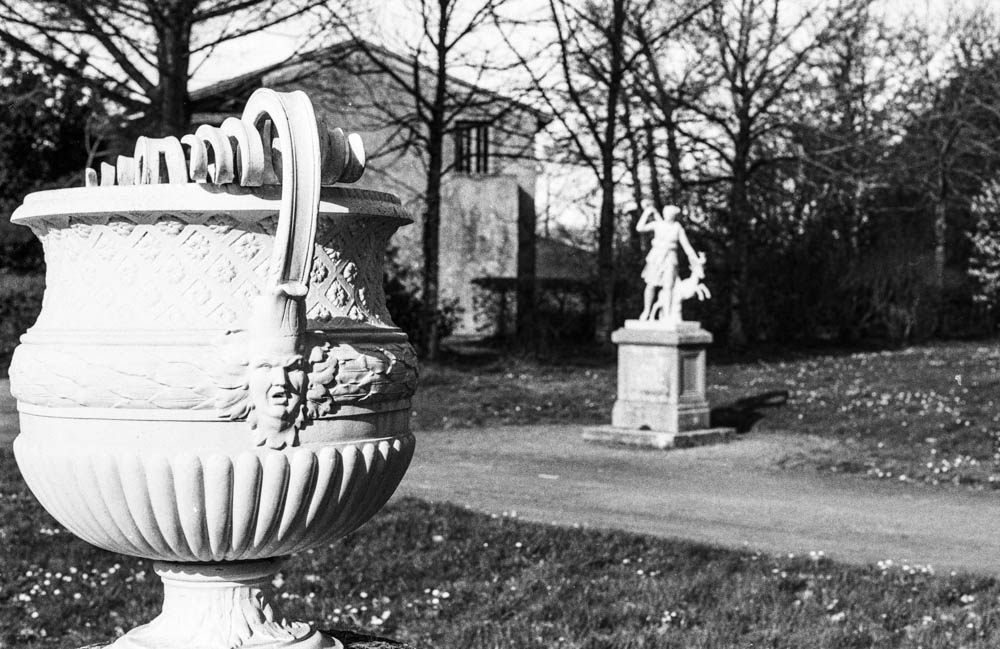
ORNATE URN WITH STATUE IN BACKGROUND – Layered compositionForeground and background detail with smooth tonal transitions
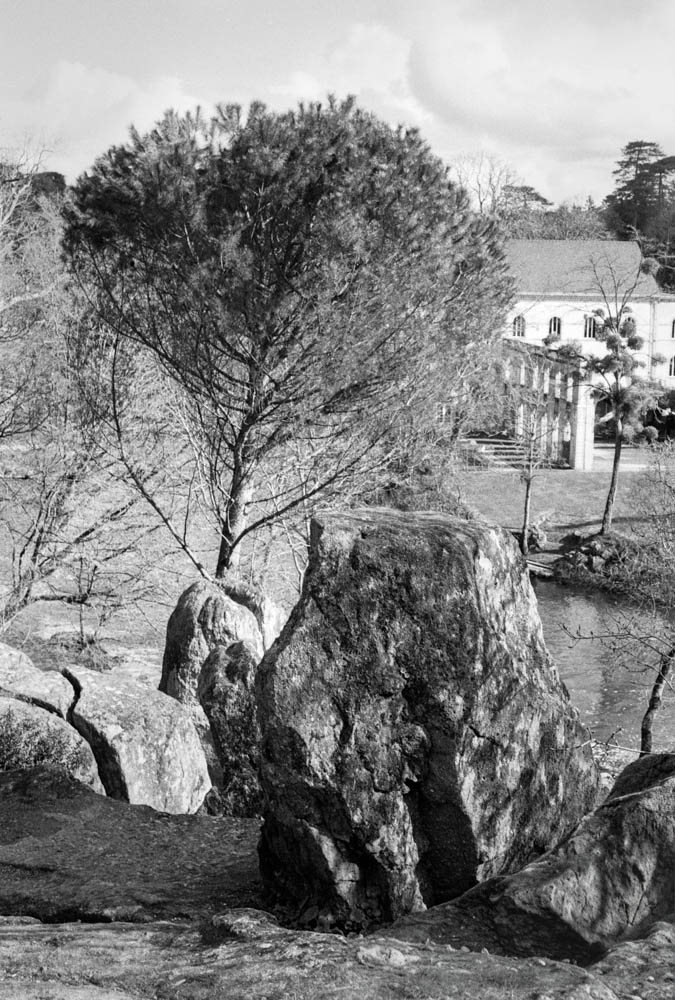
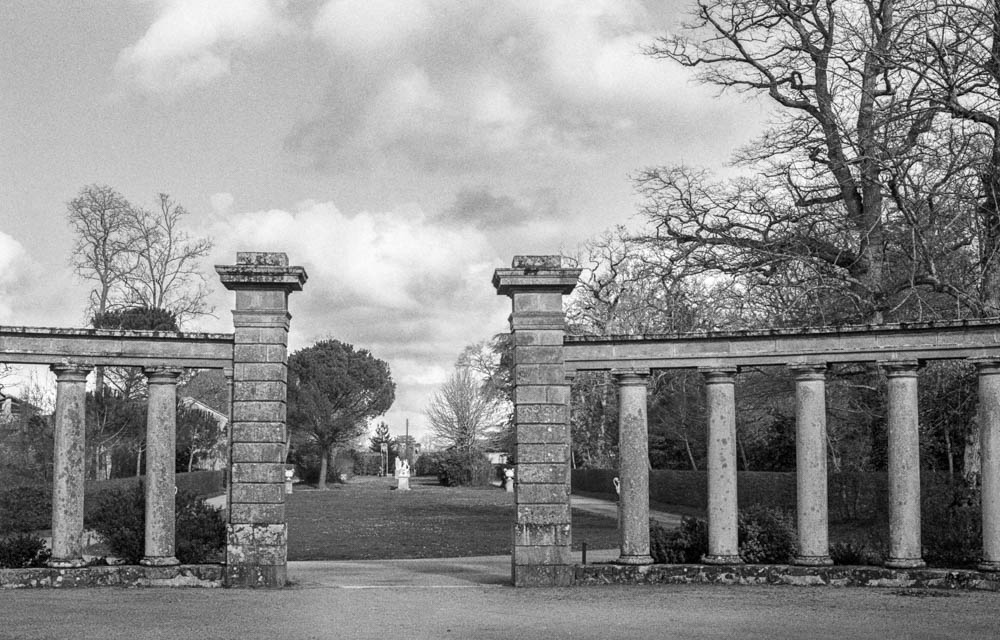
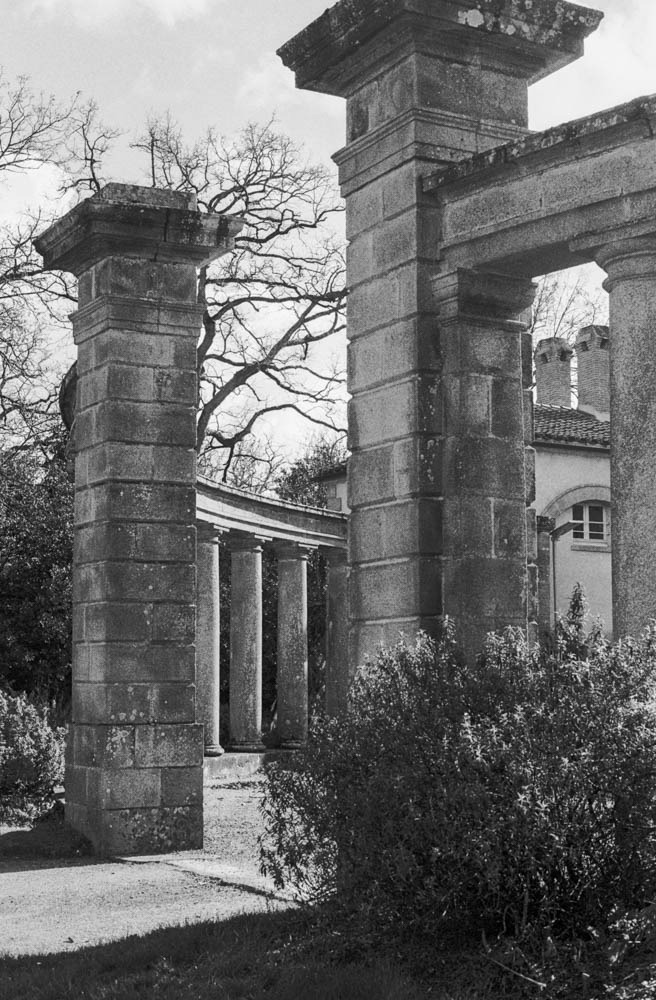
CLASSICAL COLONNADE – Stone pillars with cloudy skyWeathered stone texture and cloud detail demonstrate the technique’s versatility

The Verdict

So, was this a disaster? Absolutely not.

In fact, I was pleasantly surprised. Because I gave the film so much light and reduced the development, the shadow detail is incredibly rich and the highlights are held back. There is virtually no grain in the dark areas. The contrast is lower than standard HP5, which gives it a very smooth, almost medium-format look.

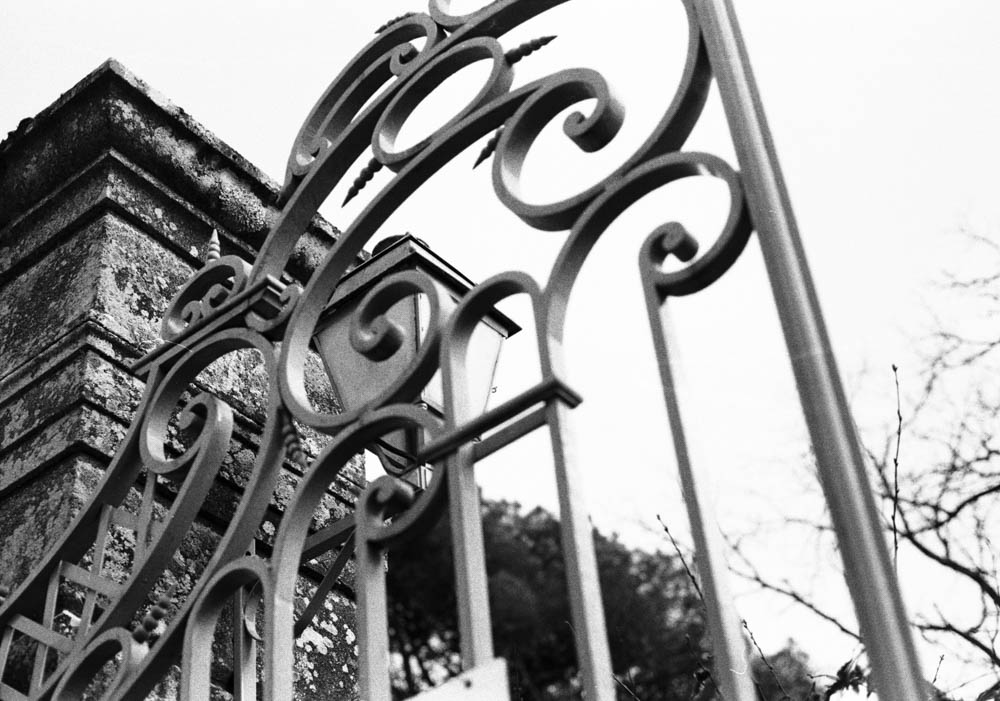
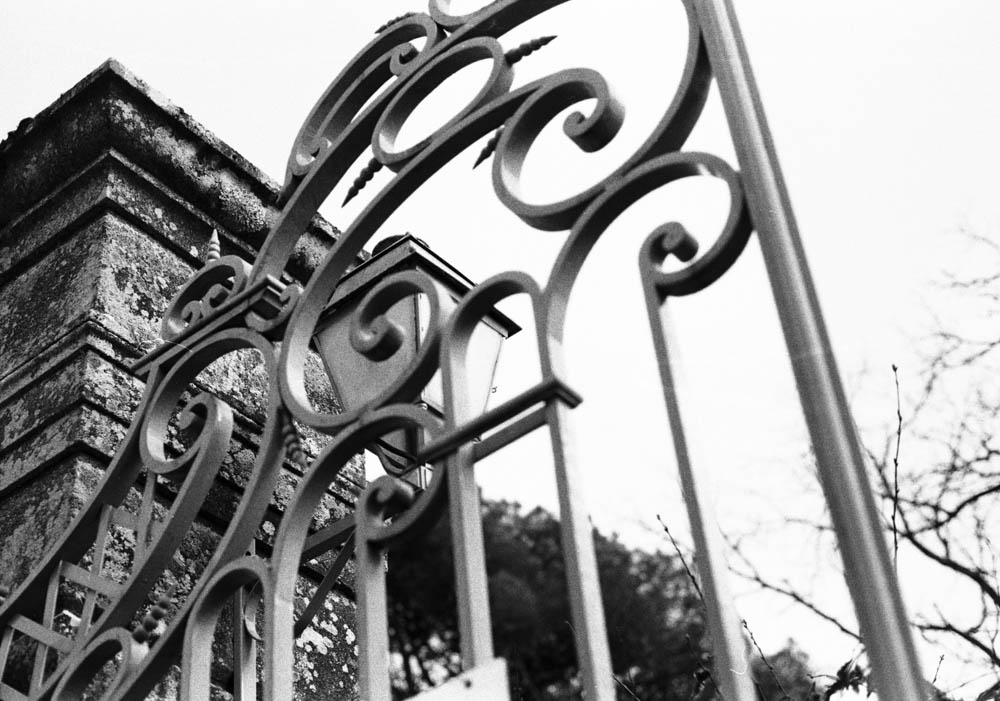
Ornate scrollwork detailRazor-sharp detail and micro-contrast prove no sharpness was lost

It turns out, what I thought was a stupid mistake is actually a technique some photographers use on purpose! Pull processing HP5 (rating it at 100 or 200 ISO and developing accordingly) is known to produce finer grain and lower contrast. I thought I was pushing my luck going two stops, but the film handled it like a champion.

Would I Do It Again?

Would I deliberately shoot HP5 400 at 100 ASA again? No, probably not. If I want 100 ASA film, I’ll just use 100 ASA film. It’s cheaper and more straightforward.

But it’s damned good to know that at a push (sorry, pull), it could work. If you’re ever in a situation where you’ve loaded the wrong film, or you’re caught out by changing light conditions, HP5 Plus can take the abuse.

Have you ever accidentally shot film at the wrong ISO? Did you save the roll or bin it? Let me know in the comments below.

Happy shooting

Ian from IJM Photography

Post Scriptum: