China – YongZhou to Foshan


Boxing Day 2024

Now, you might think of accusing Uncle Ian of feeling a little delicate this morning after the previous evening’s “fun,” but I’m going to disappoint you. My head did not feel as if it had gone through 10 rounds with a certain Mr Tyson, though I will admit to feeling a little tired. Slightly less bright-eyed and bushy-tailed than I’ve known myself to be. Will that satisfy you? Good, then we shall move on. Today’s destination was Foshan, much further south, and our first stop in Guangdong Province.

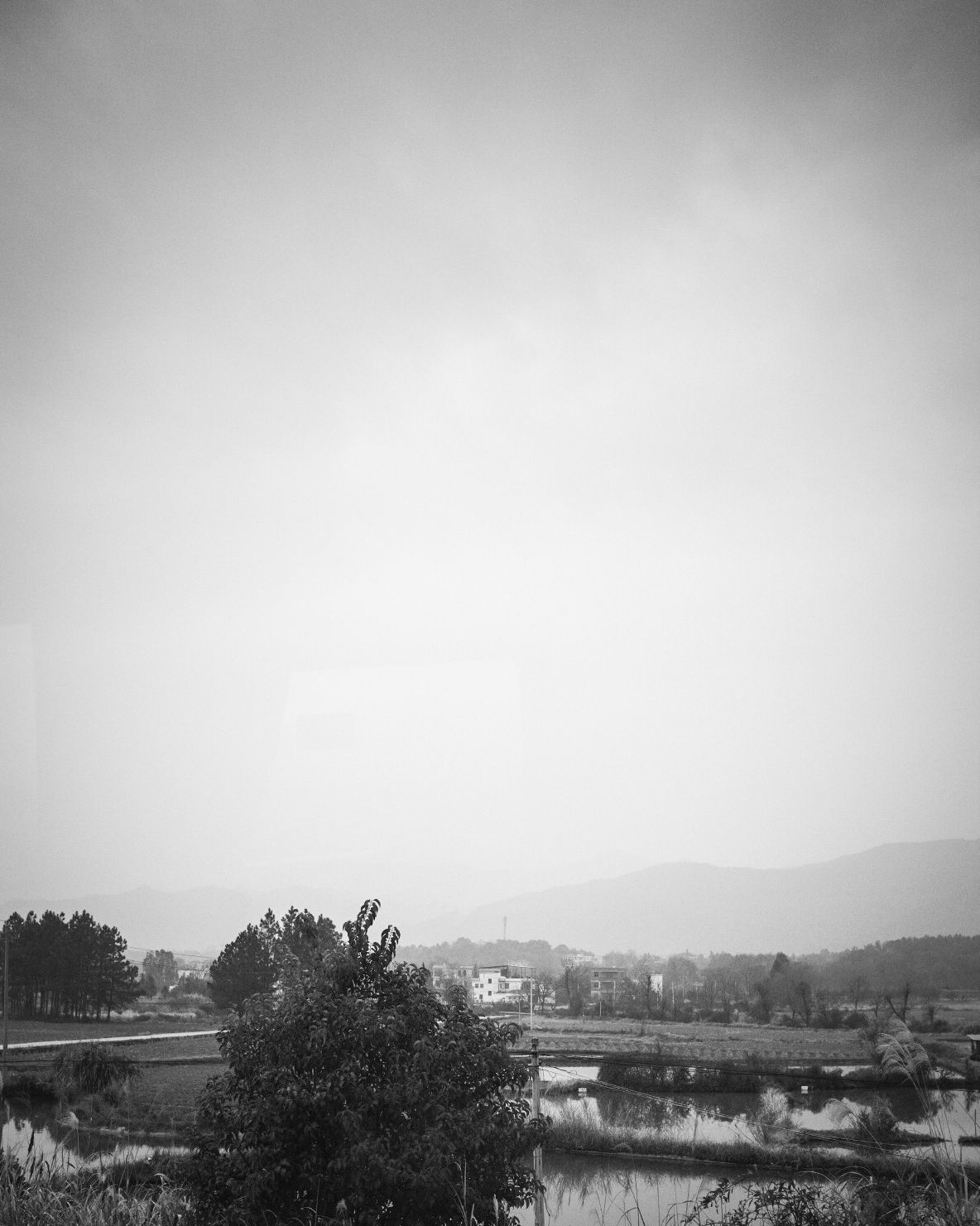
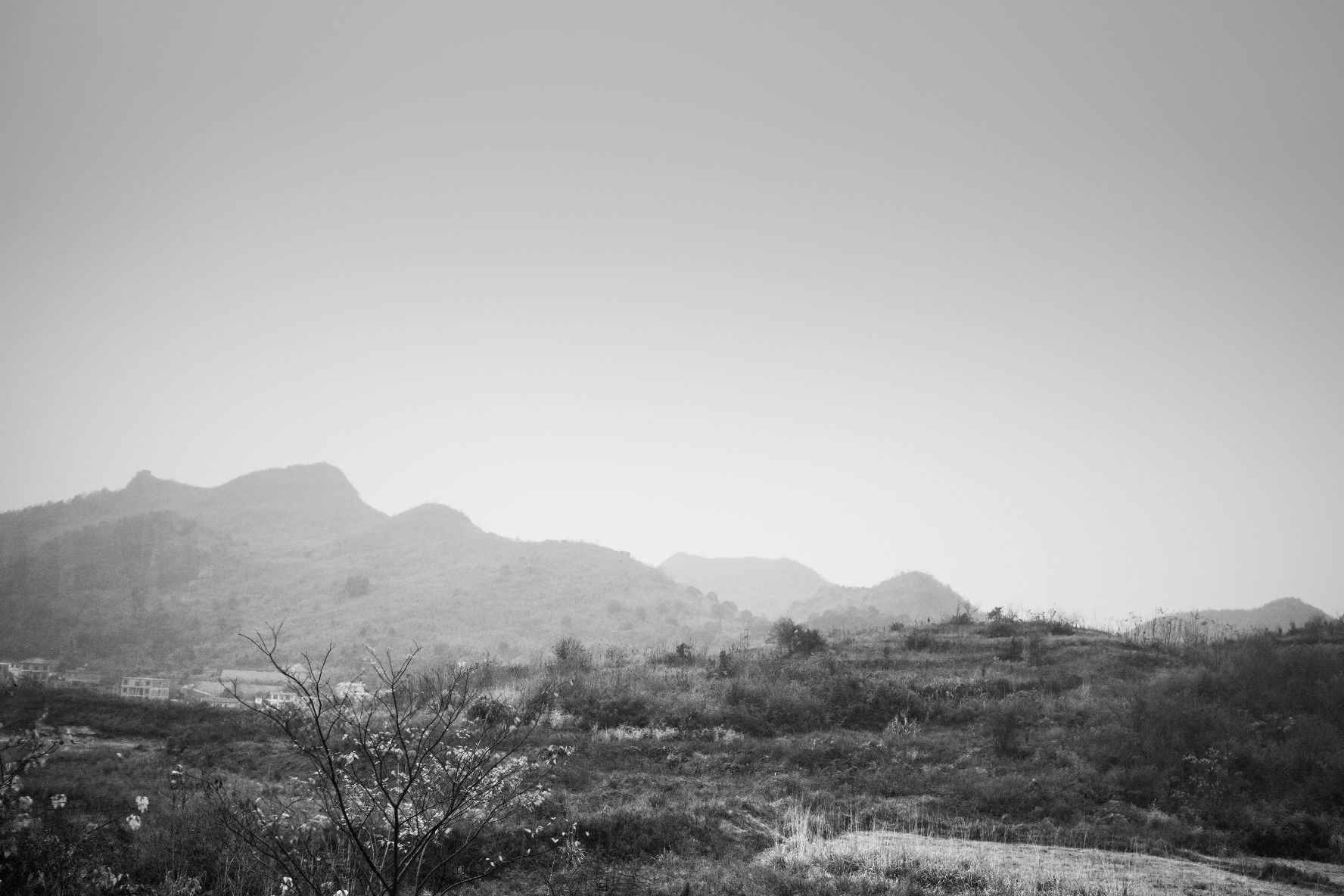
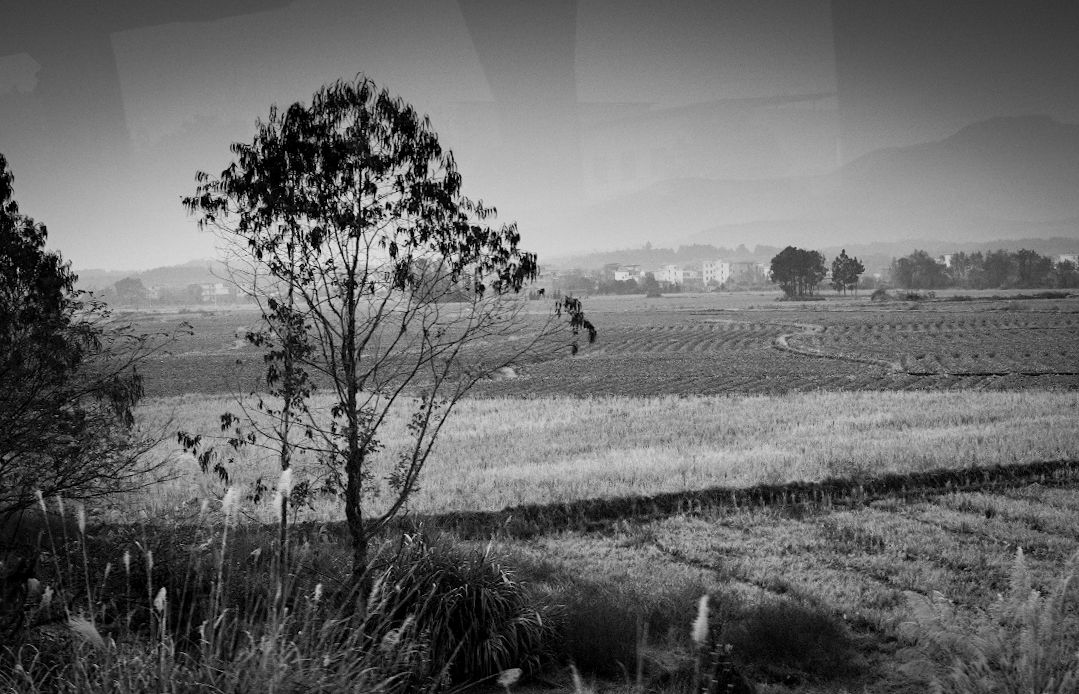
We were to have a mere 500km bus ride to Foshan. I decided to be anti-social and put my headphones on, just staring out of the window. A more relaxed way of passing the time and something that allowed me to simply take in the countryside. And what countryside it was. Now, the Vendée, where I live, isn’t exactly known for its mountainous terrain. Think more Jane Birkin than Marilyn Monroe—flat, laid-back, and subtle. At first, I didn’t realise what the trees were; some appeared bent over and broken. I just thought they were very young trees, before eventually cottoning on to the fact that I was looking at bamboo forests on the hillsides. They reached high up, gently moving with the wind. It was something I had never witnessed before.

We passed houses and farms along the way too. Again, a stark contrast to the cityscapes we had previously contemplated.

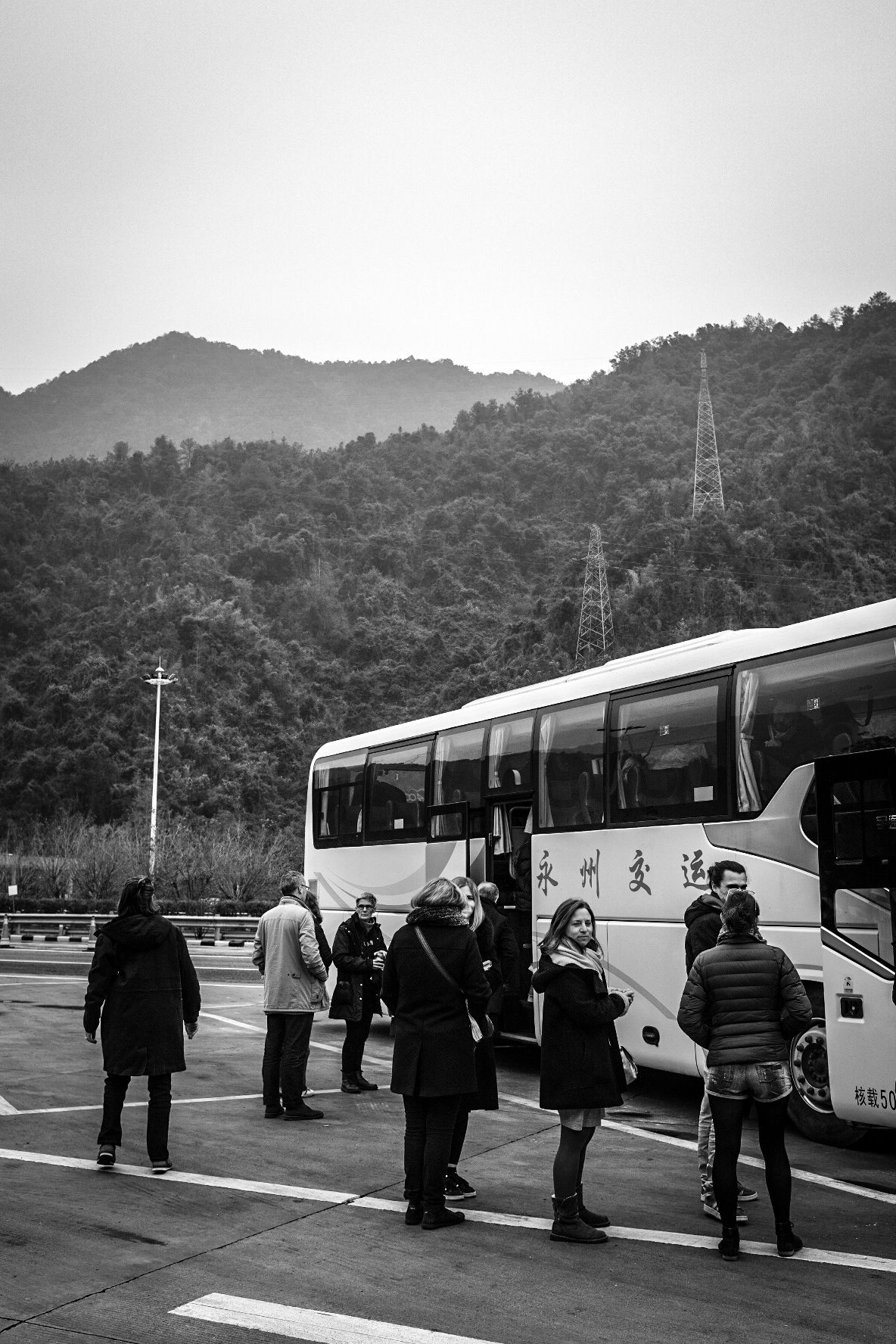
There was, of course, the inevitable “stop pipi,” and we all shuffled into the service station, which still wasn’t selling overpriced sandwiches. But the snacks available were certainly something to behold.


Now, you may be wondering if I partook in the tasting of these delicious-looking snacks. I did not. I was afraid they might be a little on the spicy side. Otherwise, absolutely no problem with eating poultry feet. Really, none whatsoever! I ended up getting something that vaguely resembled a chicken burger. Cheap, filling enough, and actually quite nice!

We arrived at the hotel. Before lunch—well, you know the drill: passports, room keys, and then we could finally eat. By now, I was really getting into Chinese food, and my chopstick funk was over. I was back in form! I managed to grab a couple of photos of the table we were eating at to show you, Dear Reader. The central turning platter took up most of the space and, by the end of the meal, was piled high with dishes that were certainly on the interesting side. In French, we say “tout est bon dans le cochon,” as a means of justifying eating the whole animal. In China, there is no mistaking what you’re eating. The whole beast goes into or onto the serving plate. Even the chicken’s head and feet. It was on this day that I ate tortoise for the first time. It was delicious! I think I had to get over any Western superiority complex I may have had and just eat what was in front of me. It would save trauma later on, and my belly would be full. Oh, sweet ignorant bliss!

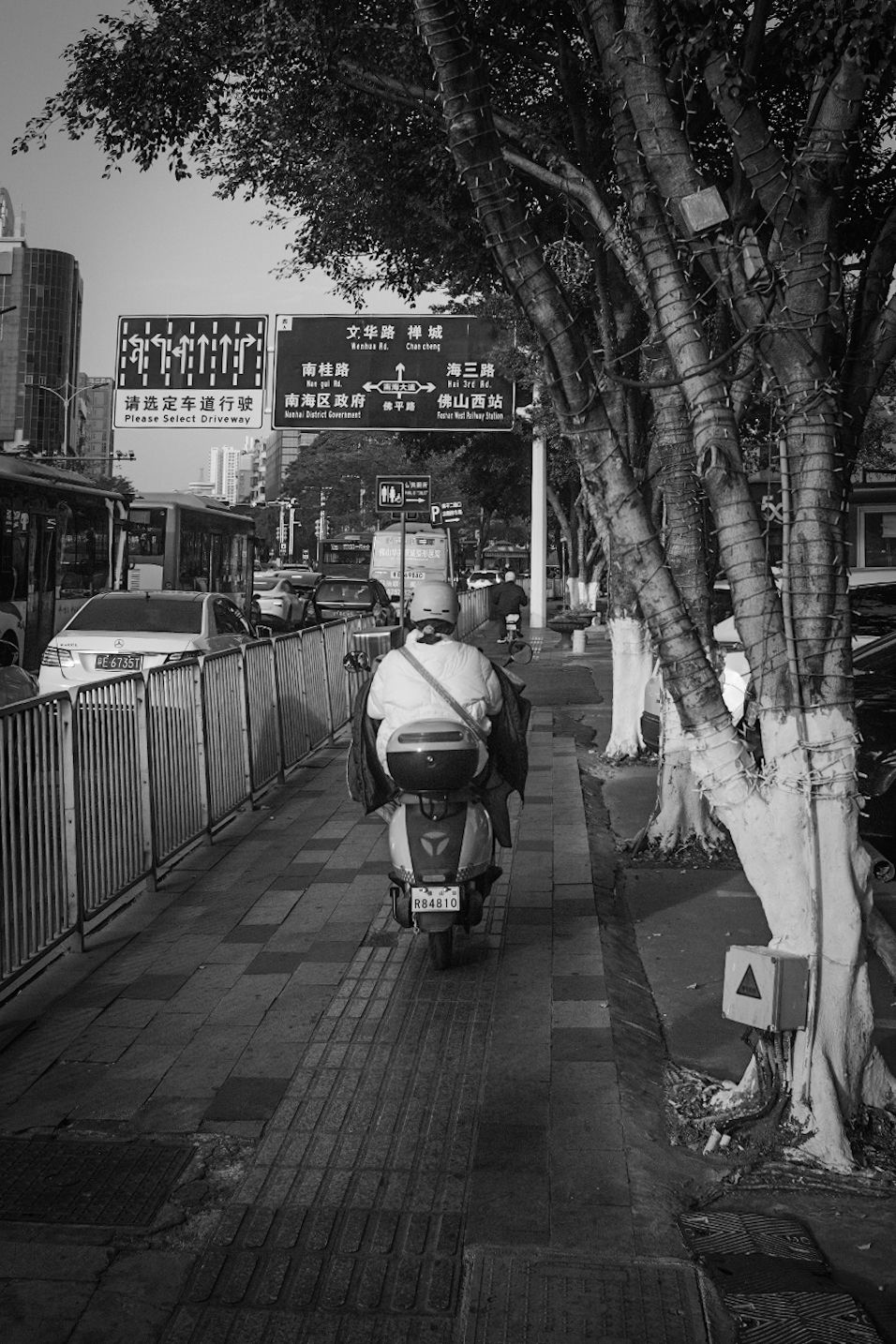
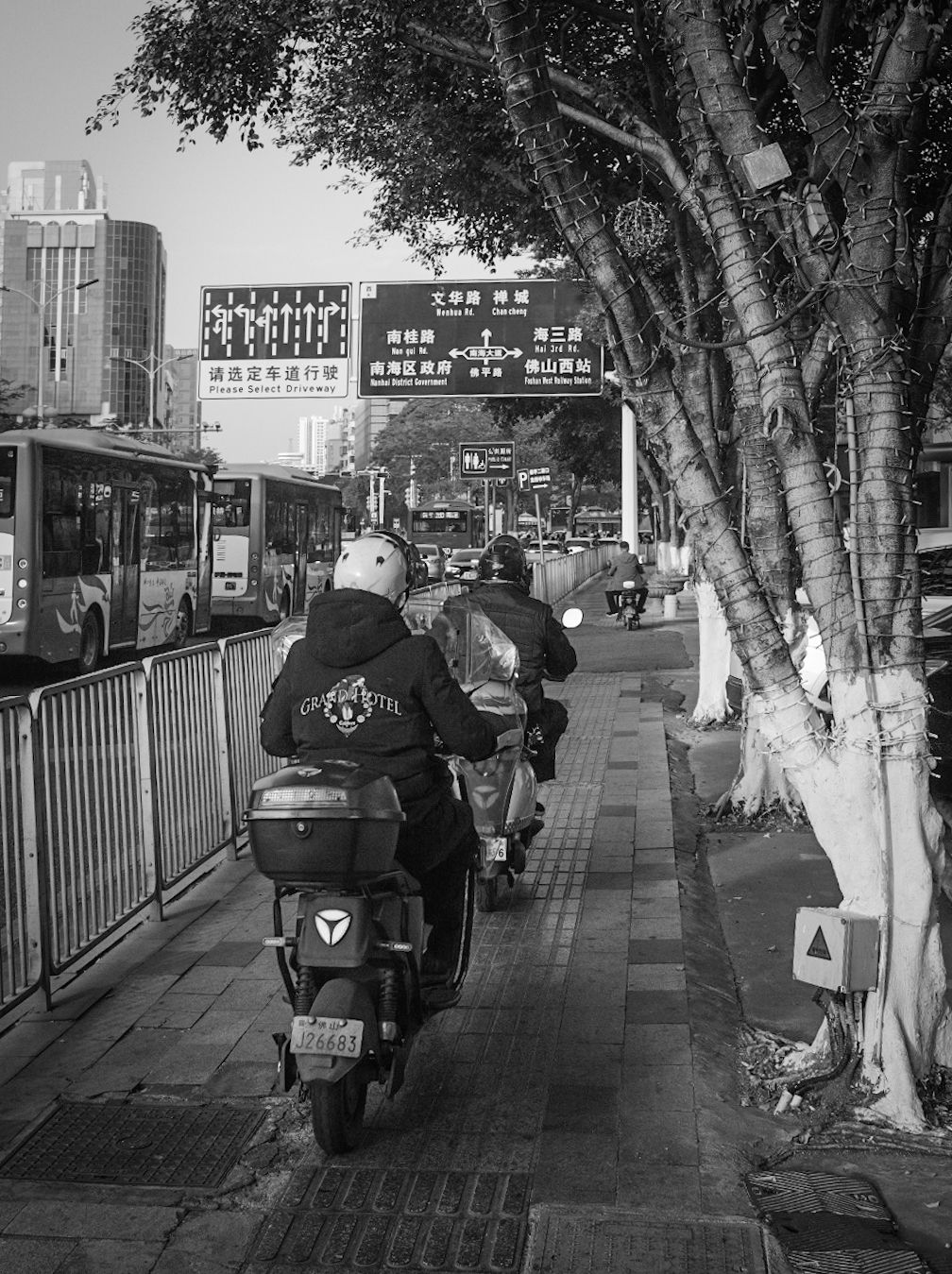
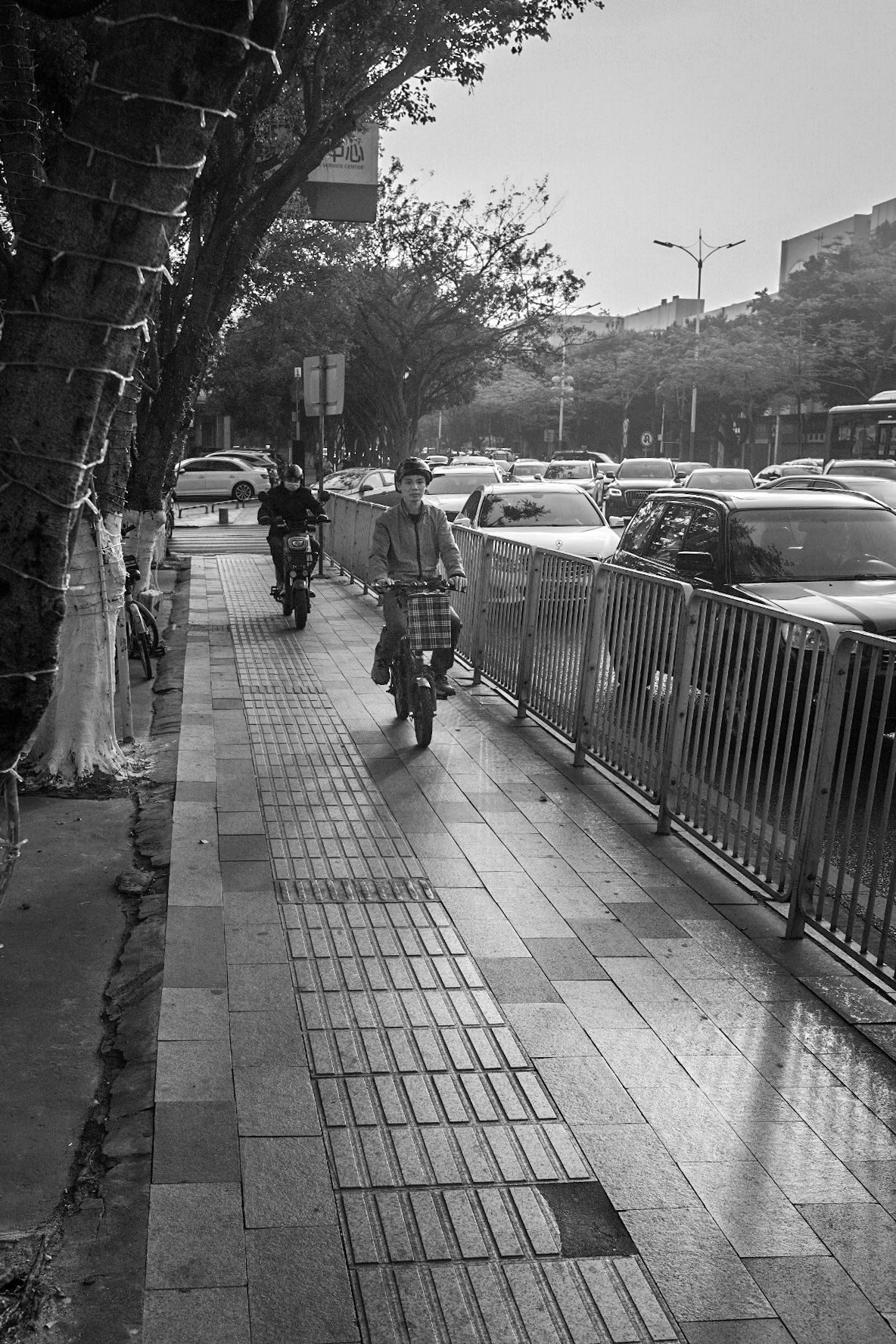
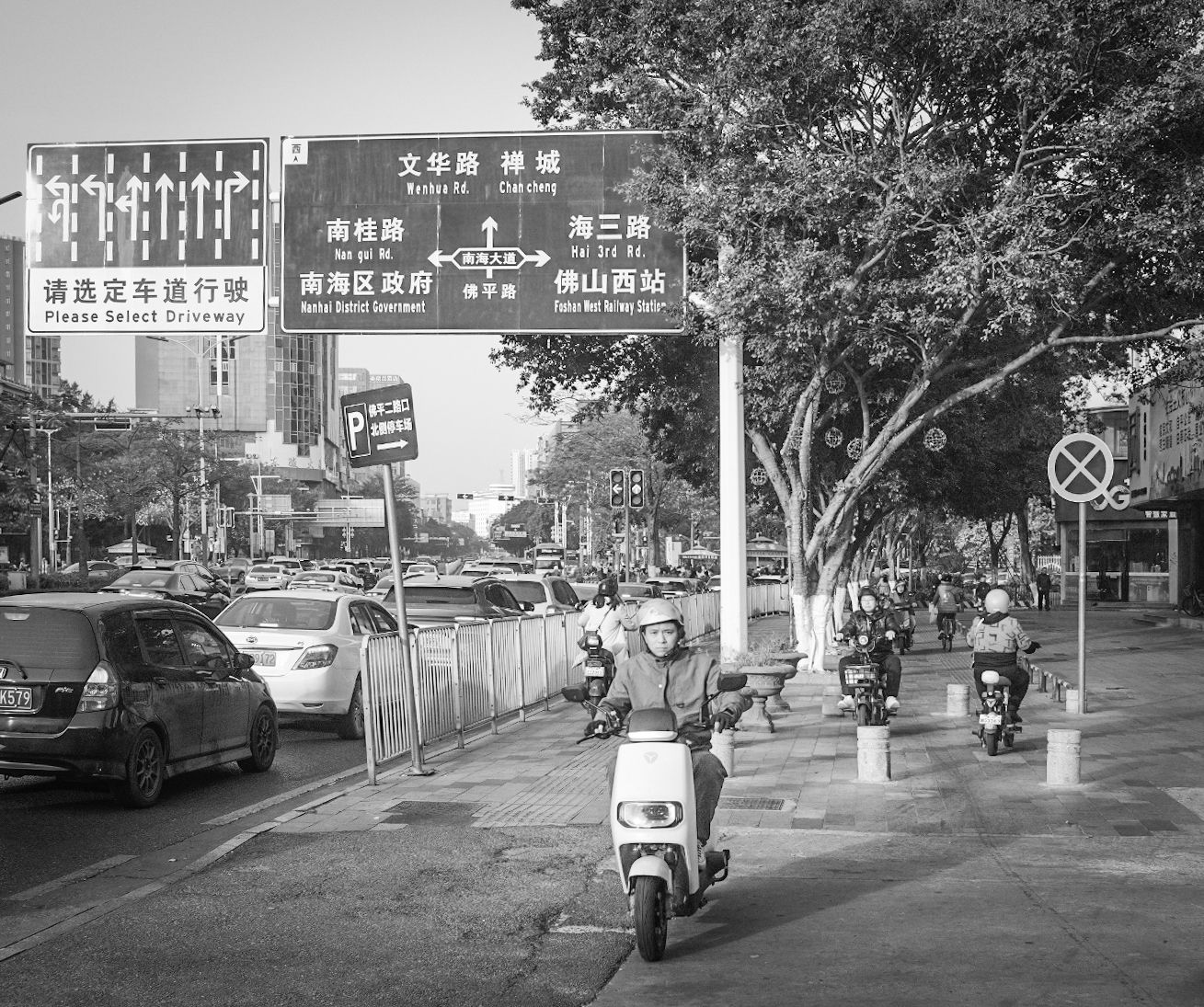
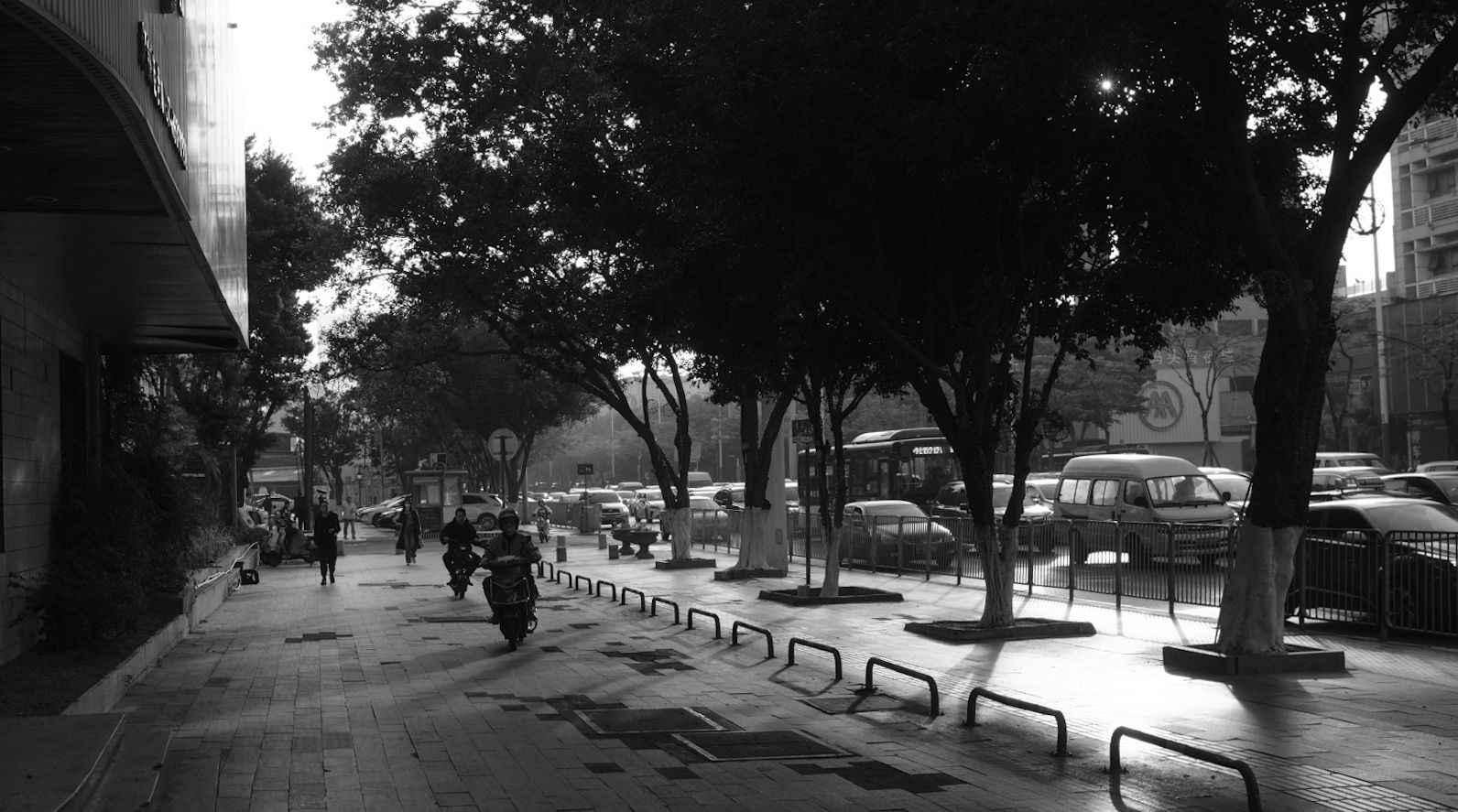
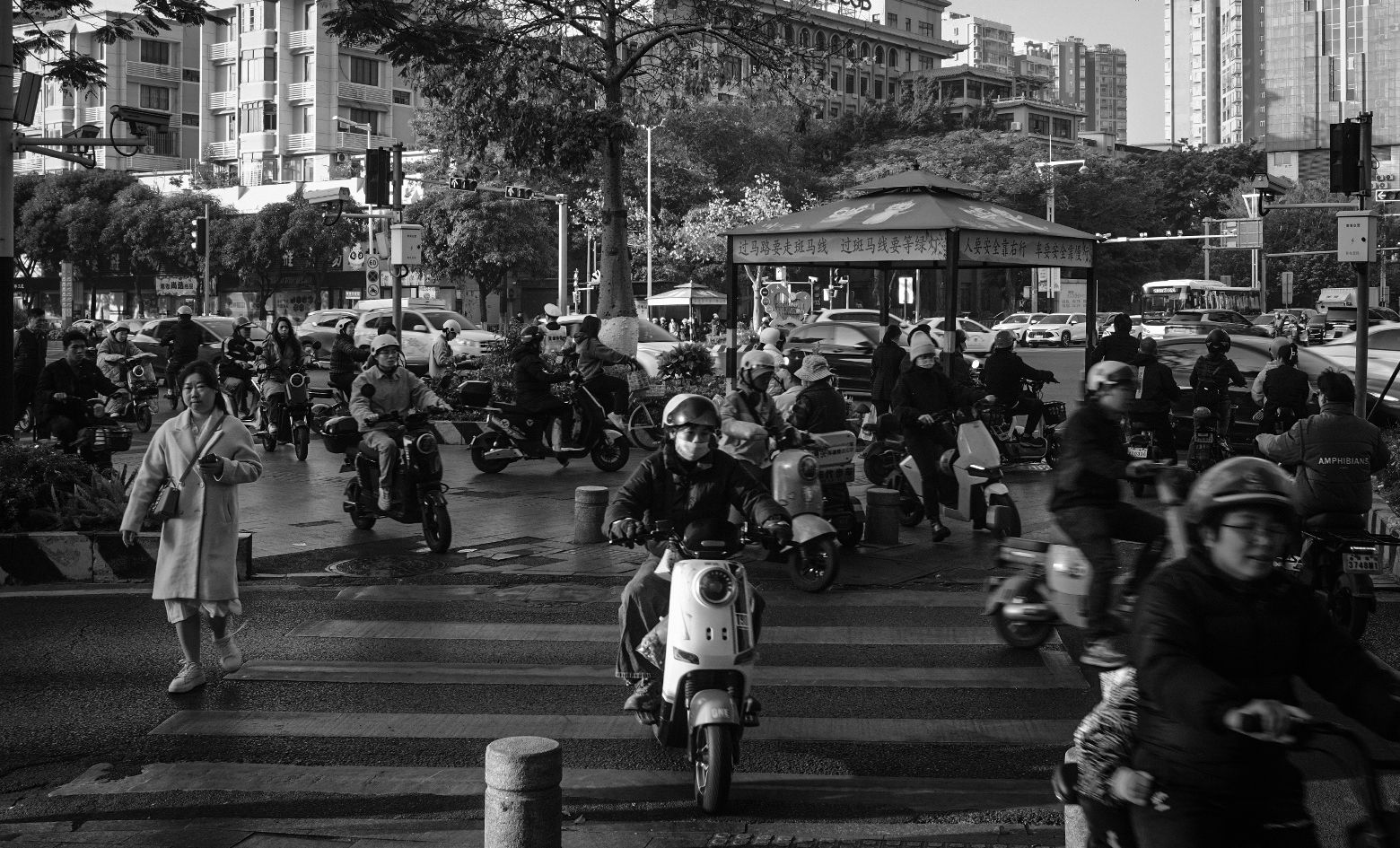
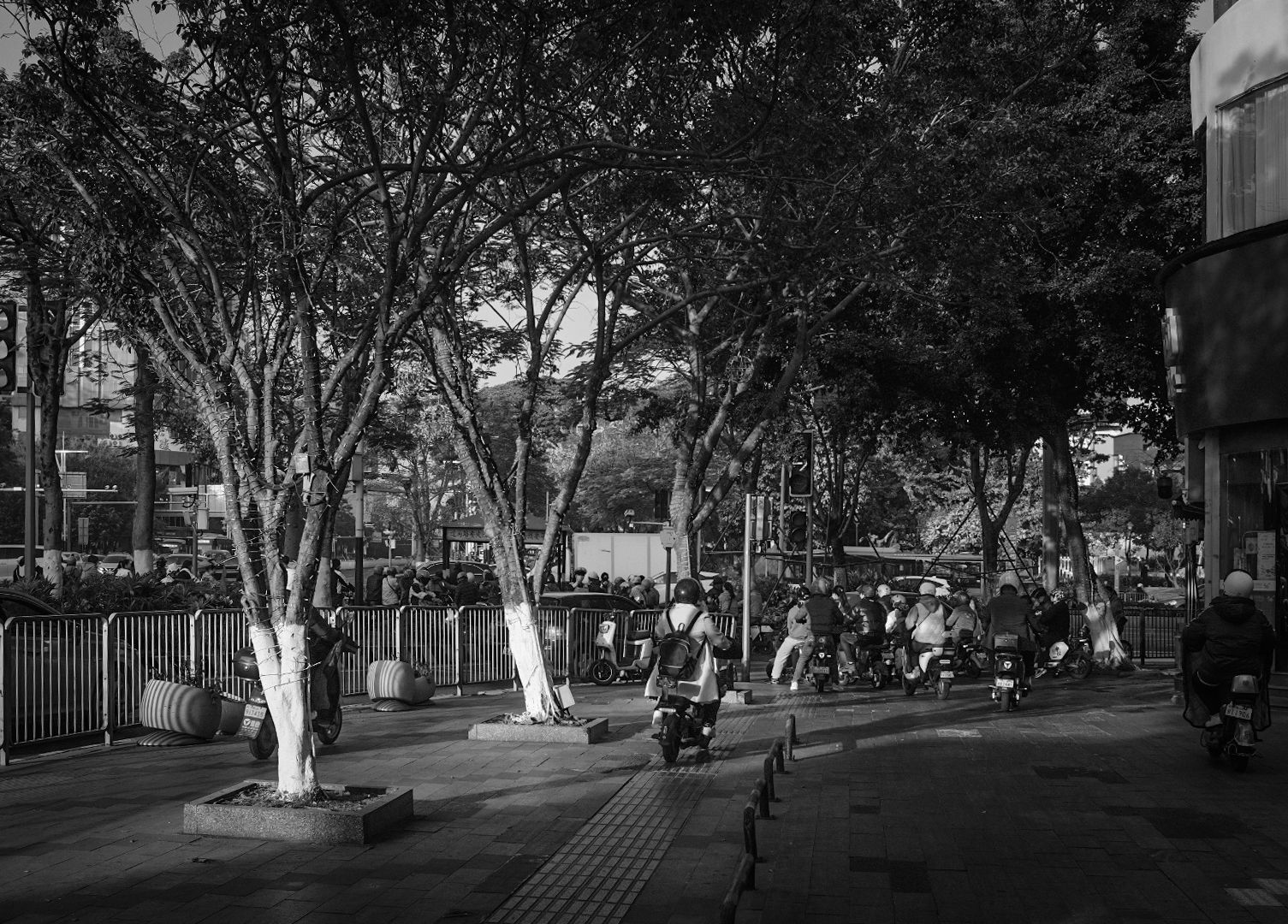
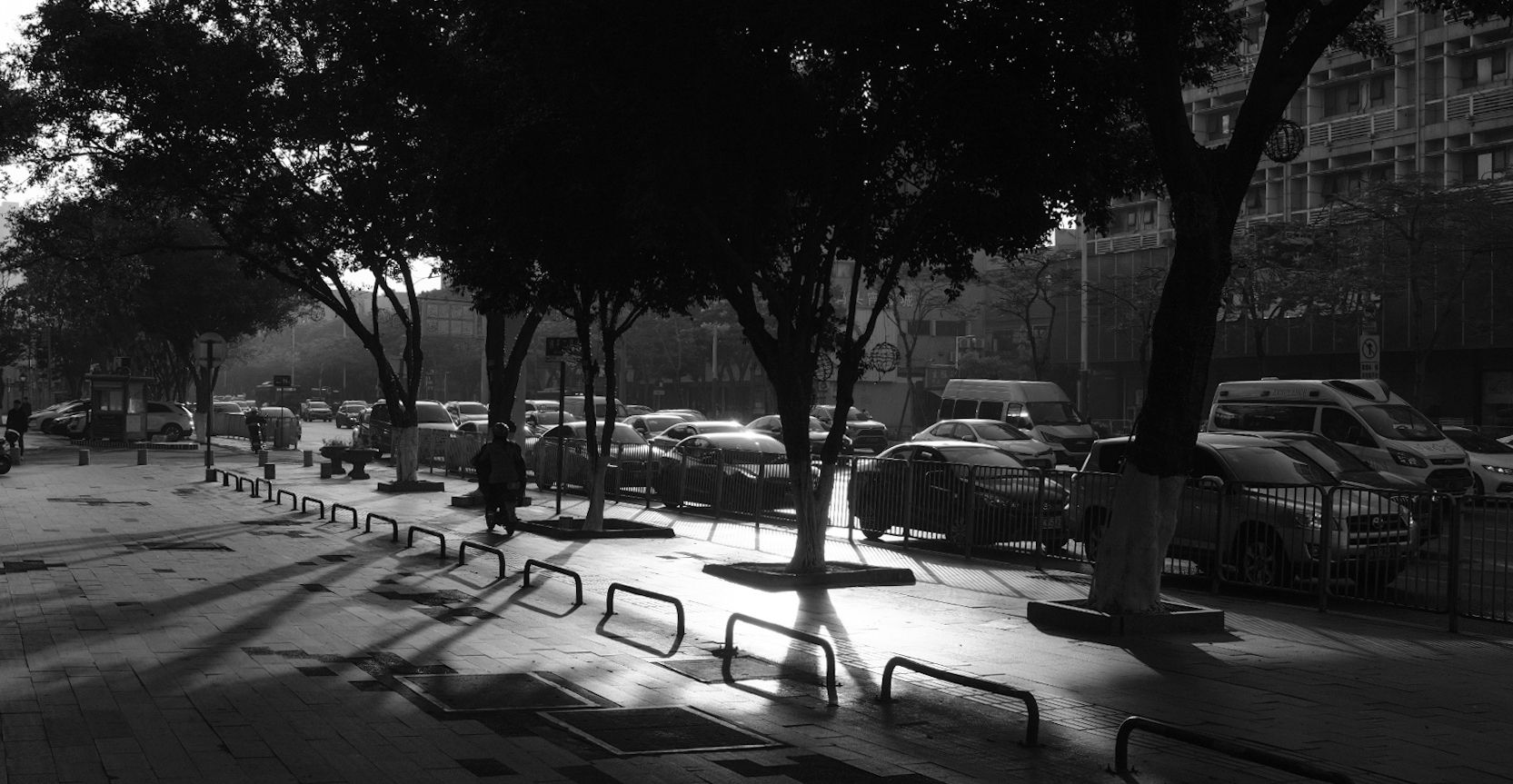
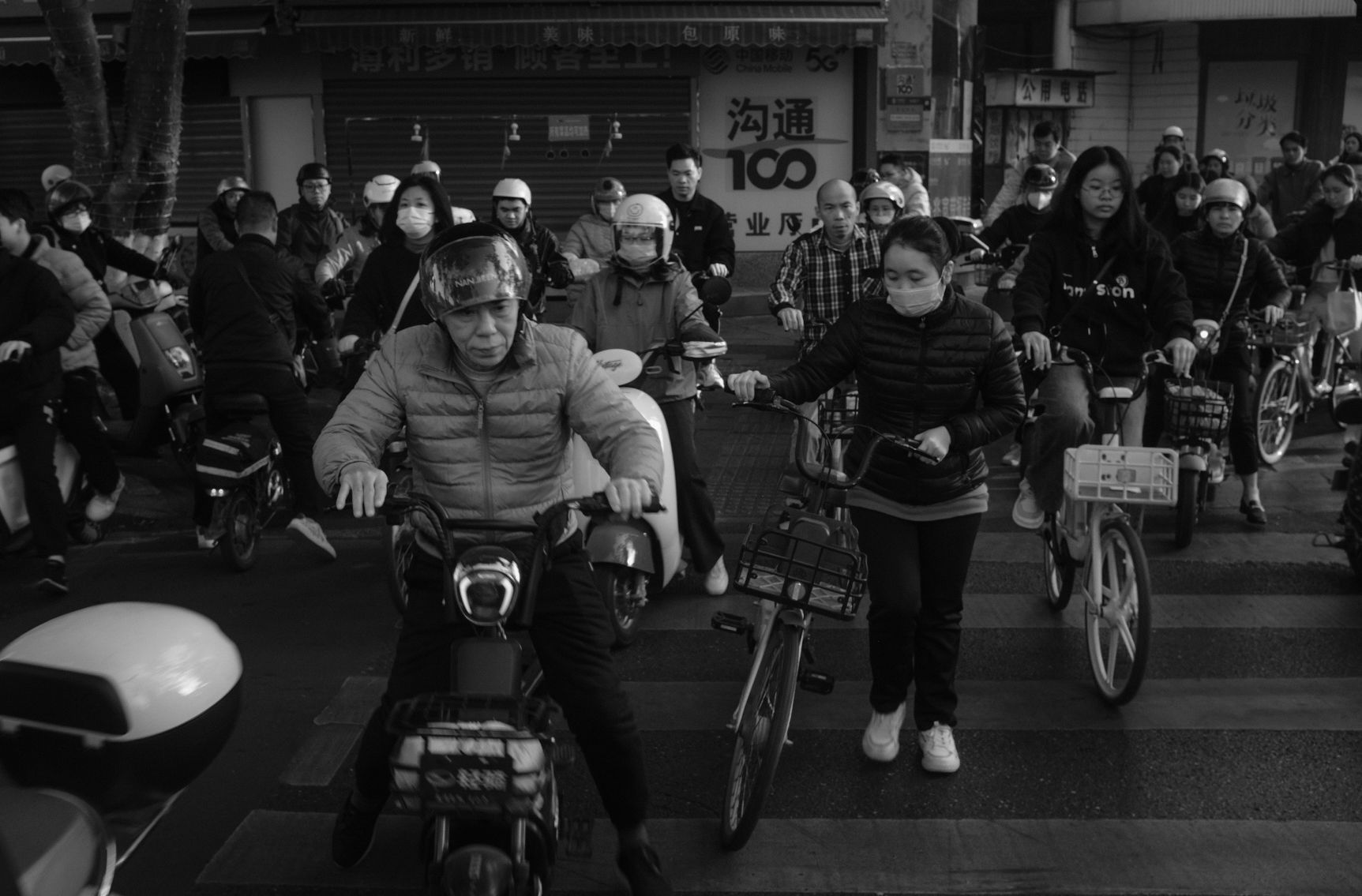
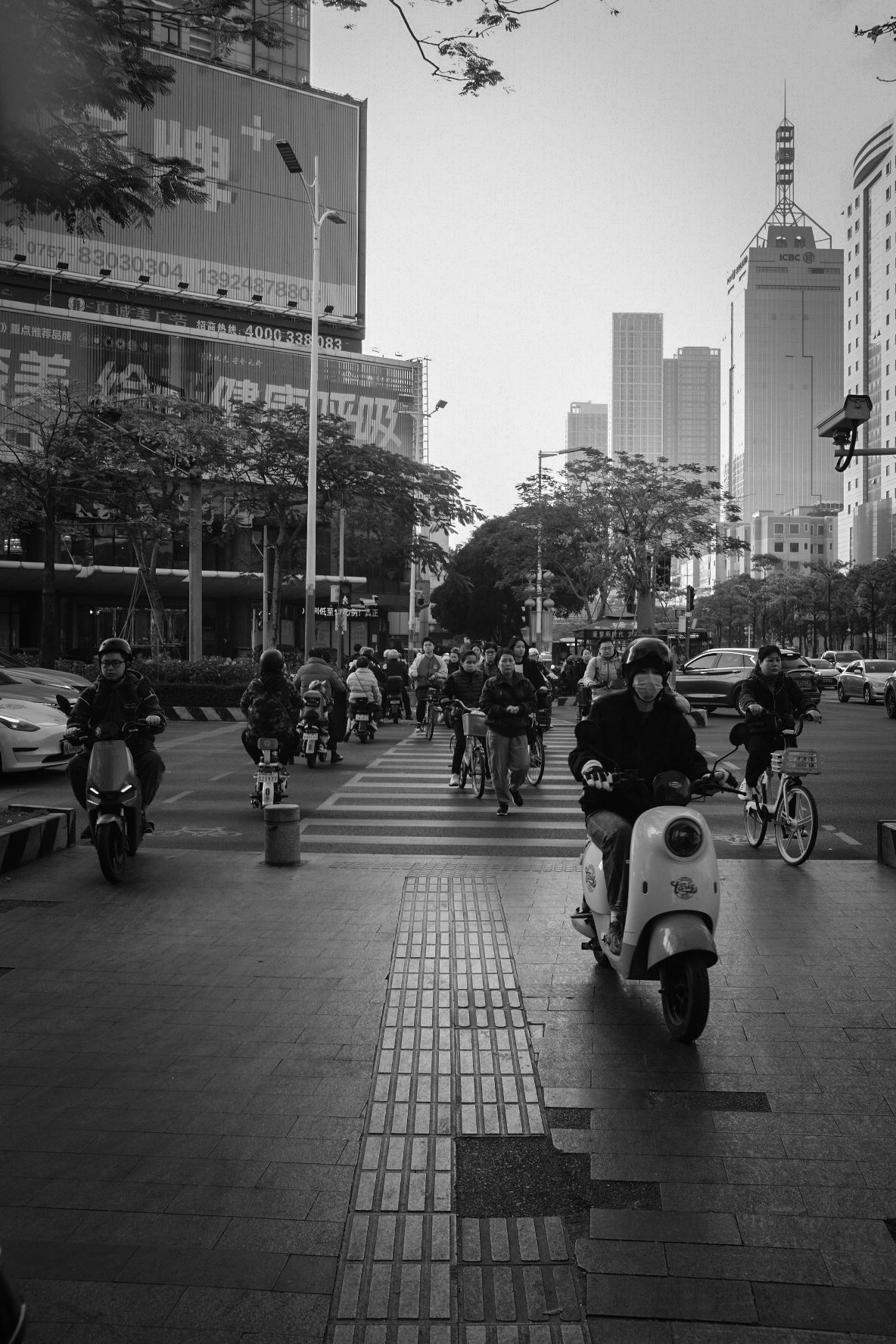
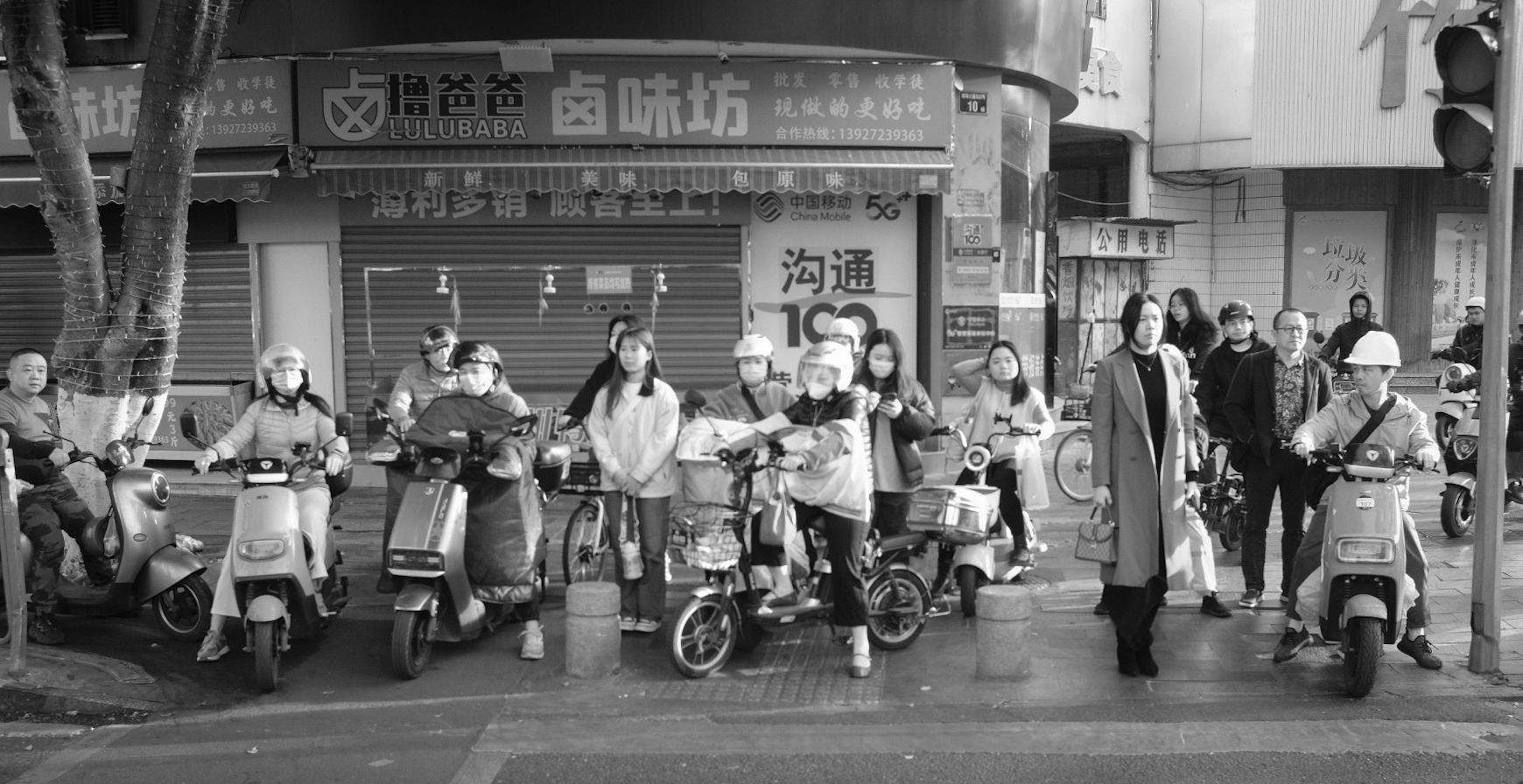
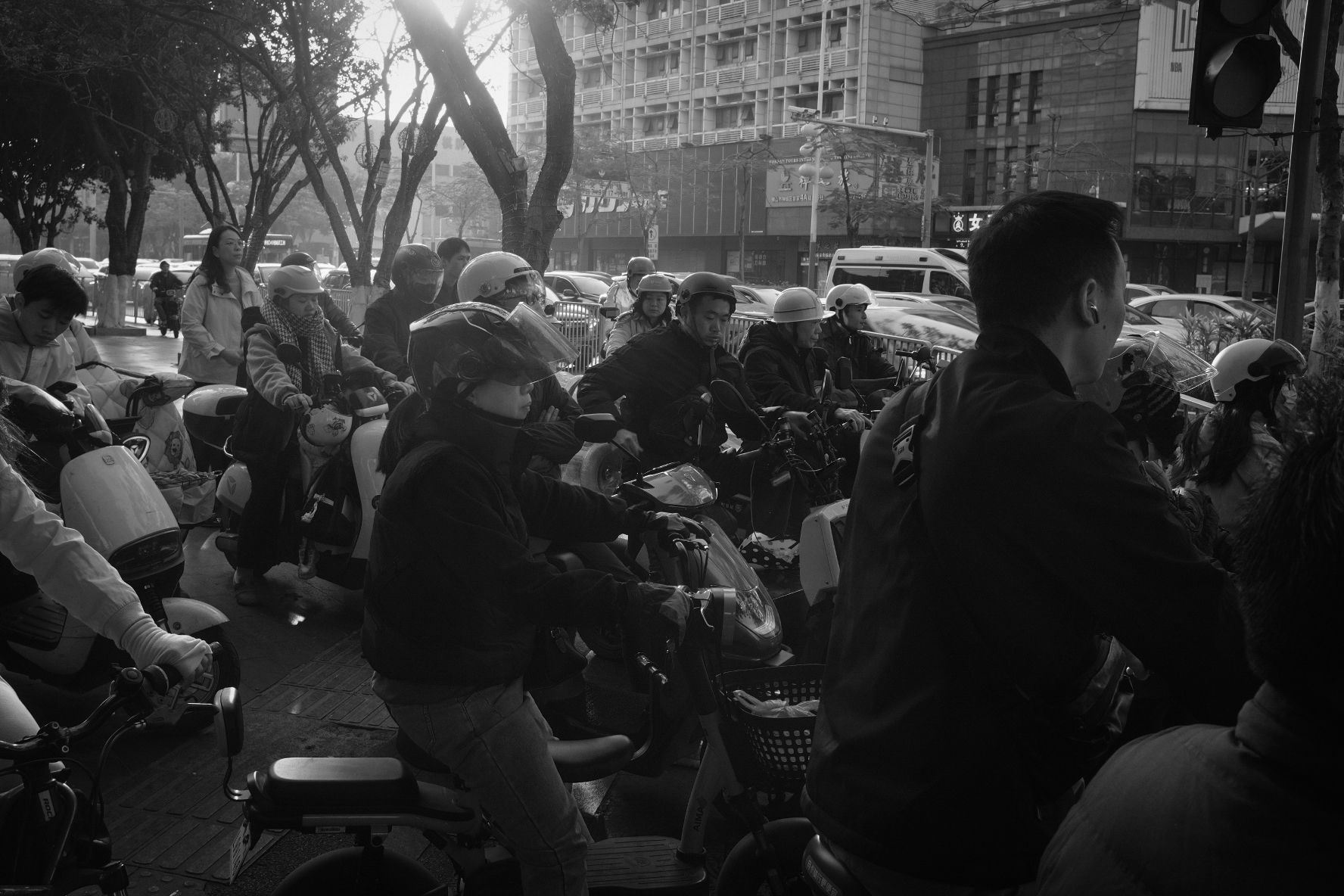
Inbetween lunch and getting ready to go to the theatre, I decided to relax by having a go at some street photography to get the “vibe” of the city.  The main “vibe” was the amount of electric scooters everywhere, and the fact that they drive on pavements.  The French might have called it “un joyeux bordel” but somehow, don’t ask me how, it all seemed to work flawlessly.  You had couples on scooters, mother and small children on scooters, gentlemen on scooters.  Everybody in that place was on an electric scooter, or so it seemed.  The only downfall of such a system especially with me being hard of hearing, was that I could only hear them when they honked their horns at me.  Usually I hate this, but they were all honking!  The sun was out.  I was out, and the whole process gave me a mental clense that was greatly appreciated!

If you know China at all you will know that they have a reputation for pollution.  Oooooh.  Pollution bad!  Pollution very nasty.  Not good.  However, it does give a wonderful diffused light for photography, and one of the way theys fight pollution is not only by a huge amount of electric scooters and electric cars, but also by spraying water vapour in the streets hoping to capture some of those not very nice particles.  You can see this in a couple of my street photos above  It is said that all their electricity comes from coal powered power stations, but I saw plenty of solar panels as well as wind turbines.  I think they’re really trying, and should be encouraged.

Back to the hotel, getting washed, and changed, and dressed to go to the theatre for the rehearsal and concert.  But that will be for another day…

Exploring Nantes: A Photographer’s Perspective


In the hushed confines of my study, where the scent of bookst mingles with the comforting aroma of steeping tea, I find myself transported to distant realms of discovery. With my faithful canine companion at my feet and a mischievous feline observer perched high atop a pile of unironed laundry (I must get that sorted out), I embark on a journey not only through the winding lanes of Nantes but through the corridors of time itself.

Nantes, with its labyrinthine streets steeped in centuries of history, beckons with the allure of bygone eras and whispers tales of yore to those who listen with open hearts and discerning eyes. As a photographer of a somewhat vintage disposition, I am drawn not only to the grandeur of its architectural marvels but to the quiet corners and hidden alcoves where the soul of the city reveals itself in subtle nuances and fleeting moments.

My approach to photography, much like my approach to life, is one steeped in reverence for the past and a keen appreciation for the present. Armed with my camera and a discerning eye for detail, I set out to capture the essence of Nantes not merely as a series of picturesque scenes but as a living, breathing tapestry of human experience.

In my wanderings through the cobbled streets of the old town, I am enraptured by the timeless beauty of the Château des Ducs de Bretagne, its imposing walls bearing witness to centuries of tumultuous history. Yet it is in the quiet courtyards and shadowed alcoves of this ancient fortress that the true spirit of Nantes reveals itself, echoing with the whispers of generations long past.

  • Chateau de Ducs de Bretagne, or Nantes Castle

As I meander through the bustling markets and labyrinthine alleyways, I am captivated by the vibrant tapestry of colors and textures that adorn the cityscape, each tableau a testament to the creativity and resilience of its inhabitants. From the fragrant stalls of the Marché de Talensac to the bohemian charm of the Île de Nantes, every corner of the city offers a glimpse into the rich tapestry of Nantais life.

But it is perhaps in the quiet moments of reflection, amidst the tranquil banks of the Loire River or beneath the leafy boughs of the Jardin des Plantes, that the true magic of Nantes reveals itself. Here, far from the hustle and bustle of the city streets, I find solace in the simple beauty of nature and the timeless rhythm of the river, a reminder that amidst the chaos of modern life, there are still moments of peace and serenity to be found.

In my pursuit of the perfect photograph, I am guided not only by technical skill and artistic vision but by a profound sense of reverence for the world around me. Each click of the shutter is not merely an attempt to capture a fleeting moment in time but a homage to the beauty and wonder of the world we inhabit.

As the sun sets over the horizon and the last rays of light dance upon the waters of the Loire, I find myself filled with a sense of gratitude for the privilege of bearing witness to the timeless beauty of Nantes. In its winding streets and hidden corners, I have discovered not only the essence of a city but the essence of life itself—a tapestry of moments, both fleeting and eternal, woven together in the fabric of time.

As the golden hues of sunset paint the Loire River, my camera lens captures one last fleeting moment of this captivating city. Nantes has unveiled its charm, whispering stories through its cobblestones and revealing its soul in hidden corners. While my journey ends here, yours can begin. Pick up your camera, wander the winding streets, and discover the magic of Nantes waiting to be captured, frame by frame. You might just find yourself transported, too.

Frame It Right: The Art of Composition in Photography Part IV


In my previous articles, we’ve embarked on a journey to understand the basics in photography. I have talked about exposure, set out some of the “rules” of composition, and even delved into the world of colour theory. Today, I’d like to introduce you to the rule of odds and the rules of space, two fundamental elements that will take your photography to the next level.

Before we talk about these new concepts, let me reiterate the importance of building a solid foundation. Just as we did with framing, negative space, and colour theory, it’s crucial to master each concept before moving on to the next. Take your time to learn and apply these principles in your photography journey. The other four articles will stay up, and you can read them at your leisure.

The Rule of Odds in Photography

The rule of odds is a composition guideline that suggests using an odd number of subjects or elements in your frame, typically three or five, rather than even numbers. Why? Because odd numbers tend to create a more balanced and visually pleasing composition.

When you use the rule of odds, you create a natural focal point within your photograph. Our eyes are drawn to the centre subject, and the uneven arrangement adds a sense of harmony and intrigue to the image. The result? A more captivating and dynamic photo that engages your viewers. It’s all about balance.


Rules of Space: Balance and Direction

Now, let’s look at the rules of space. This concept involves how you position elements and subjects within your frame to achieve balance and direct the viewer’s gaze. It leaves space for the subject and can be used in multiple ways as a storytelling tool. It can also be used in conjunction with the other composition techniques that I have talked about in my previous articles.

Tips

Think outside the frame. What is going on outside the frame becomes as important as what is oing on inside the frame. Let’ take the picture of the guitarist. Who is he looking at? What’s going on outside the frame? Is there an audience? Where is the audience? Using rules of space the viewer will more curious and be more engaged in the photo.

Conclusion

One can talk about composition and the effect it has on photography till the cow come home. People will always bring up “composition” and will always tell you how “they” would have done it differently. In these four articles you will now know what they are talking about and be able to decide for yourself. In absolute terms, “your” photographs are about what “you” saw, and only “you” can see that. But keep the rules that we have discussed in the back of your mind, and take your photograph with purpose and being conscious about what you are doing. Mindfulness is the key.

My next article will talk about the differences between 35mm film photography and medium format photography. For film enthusiasts or anyone else who is curious you will be entering into a new world. There are, of course, trade offs between each format, and we will discover them. Maybe you’ll be bitten by the Medium Format bug too… As always Dear Reader, I appreciate your enthusiasm, and I look forward to our next exploration together. Until then, happy shooting!