China – Shenzhen day 4 – Shenzhen to Huizhou to Shenzhen.


Today, we were giving a concert in Huizhou (clue in the title, as always) and needed to be ready for the buses at 10 a.m.—a thoroughly civilised hour for a gentleman like myself. The journey would take us about 90 kilometres, another day of life on tour spent bussing around. Victor, the oboe player, kindly put my suit in his suiter, leaving me to carry only my instrument and camera. What a pleasant young man. As people drifted down from their respective floors, we gathered in the hotel lobby, a mix of sleepy faces and quiet anticipation. 

Off we went. Was I with the young, trendy crowd today? Not at all. Always leave them wanting more. Instead, I decided to spend the day with my “girlies” from my Cholet days—Eléonore, Titaua, and Mathilde—along with Catherine, another first violin. It was a calmer group, slightly olde9r than the twenty-somethings at the back, which suited me just fine.

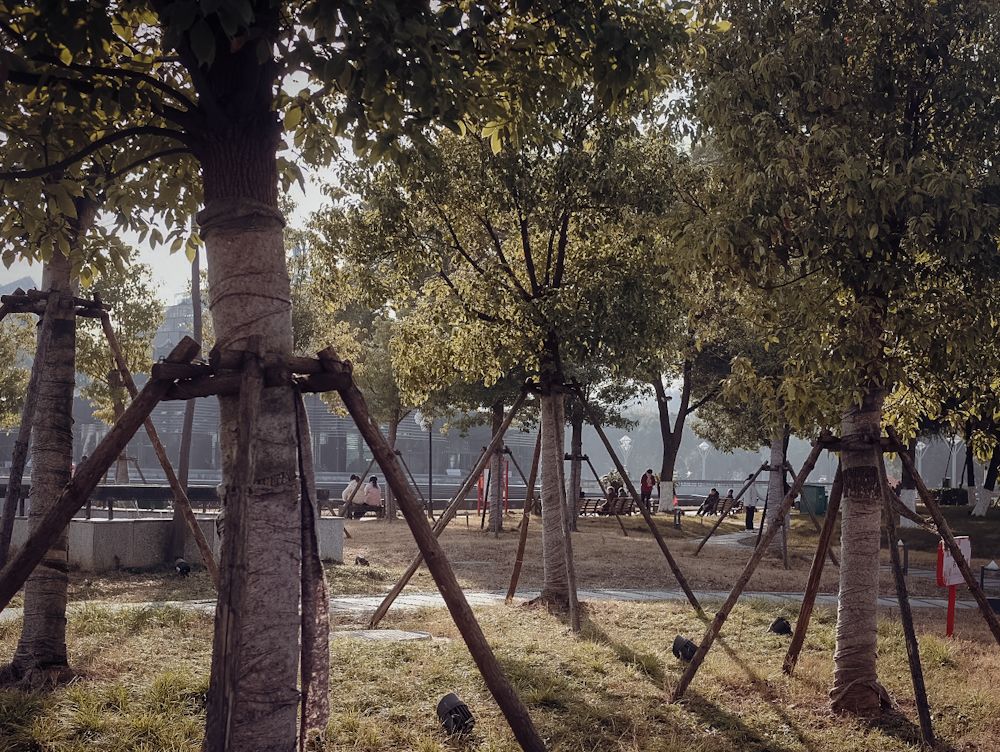
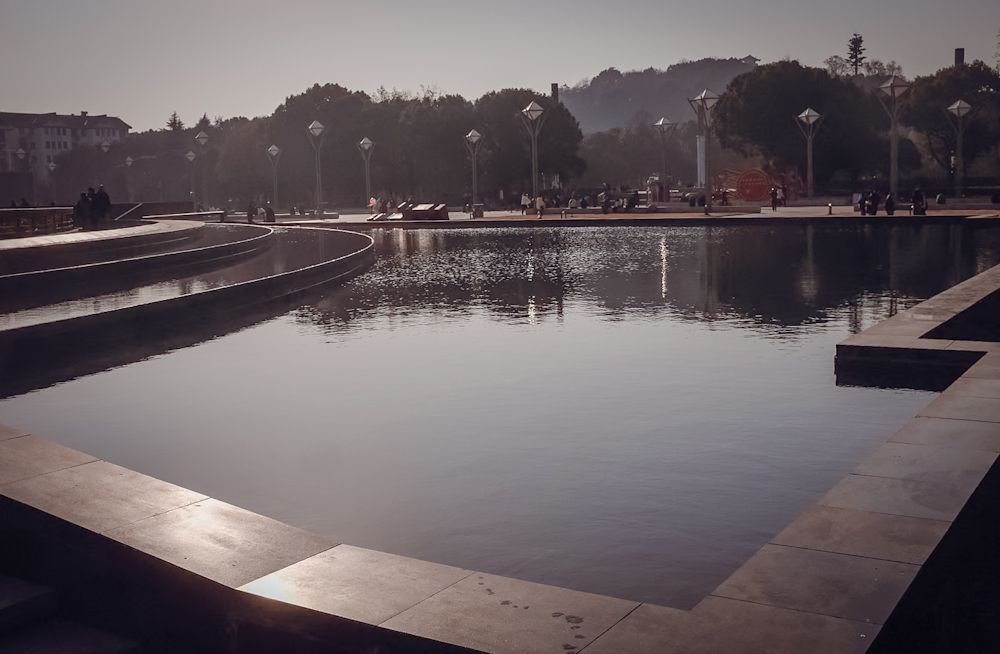
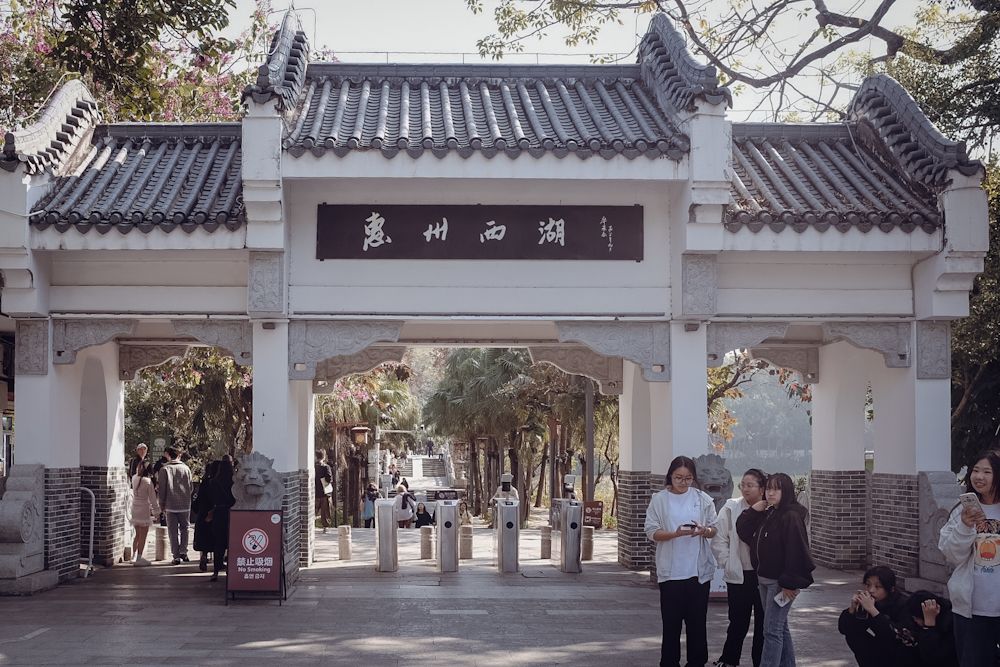
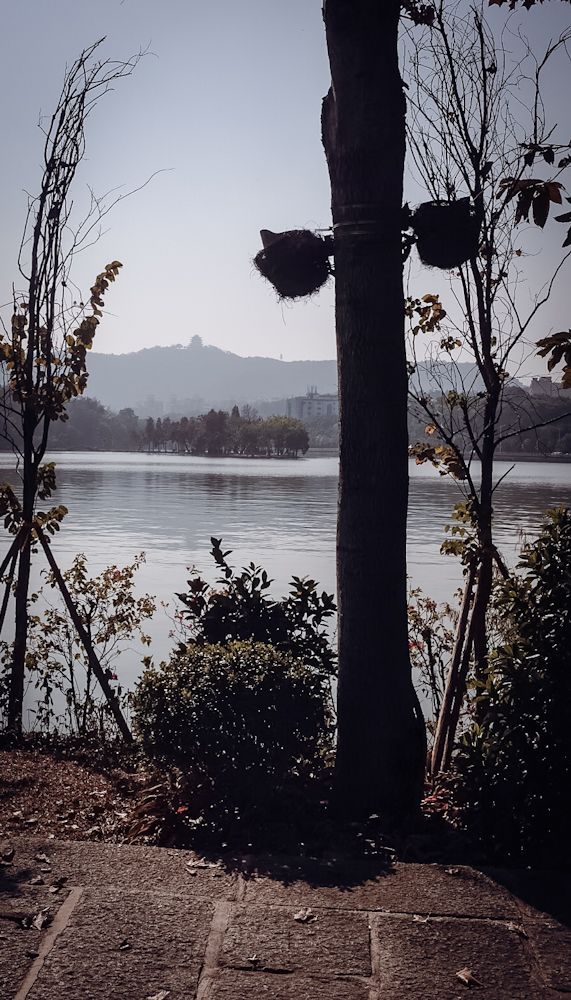
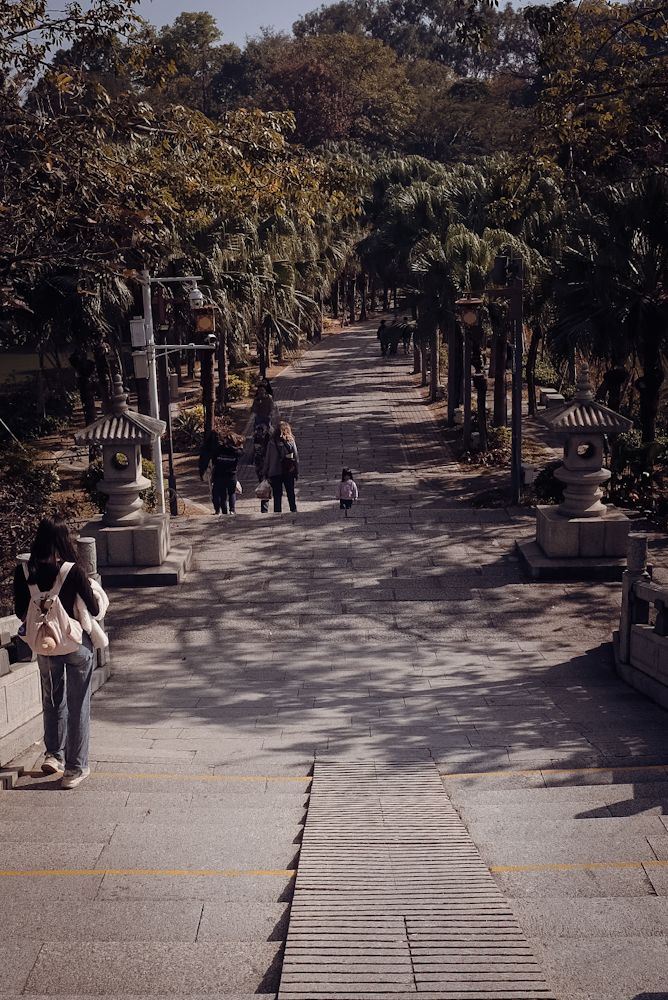
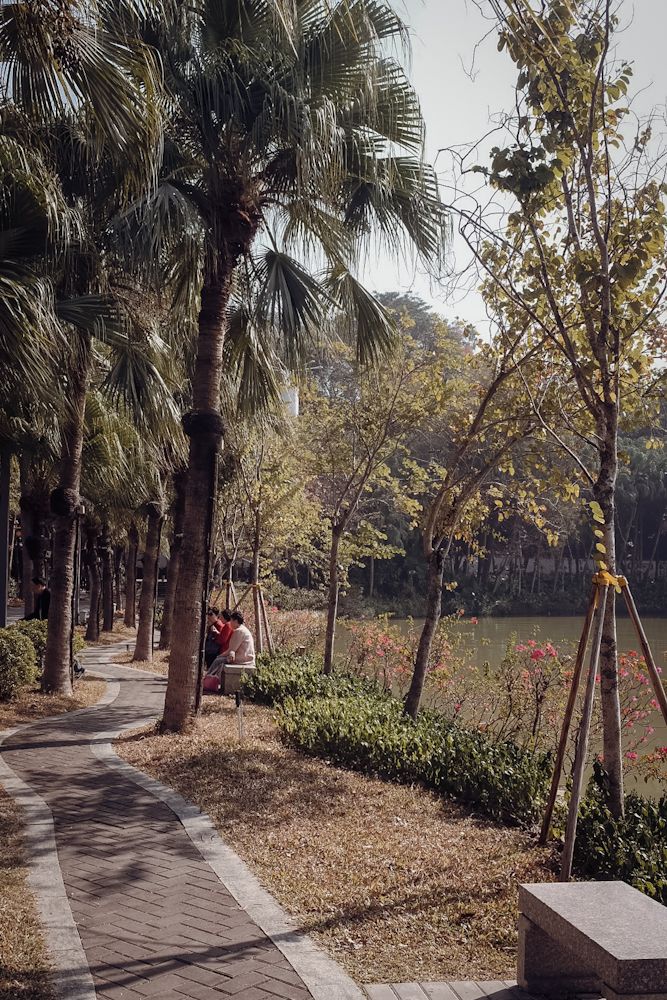
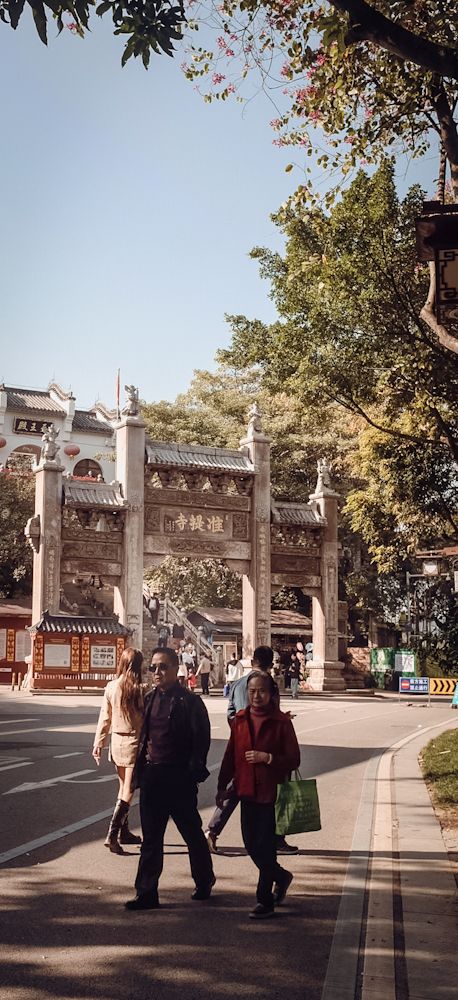
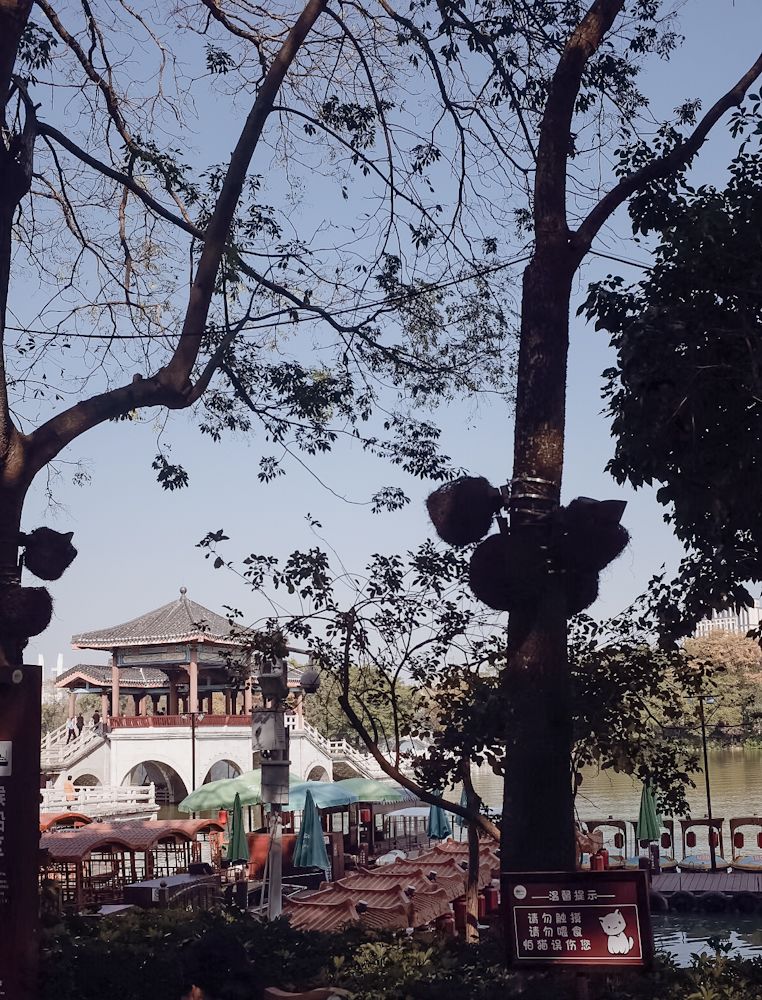
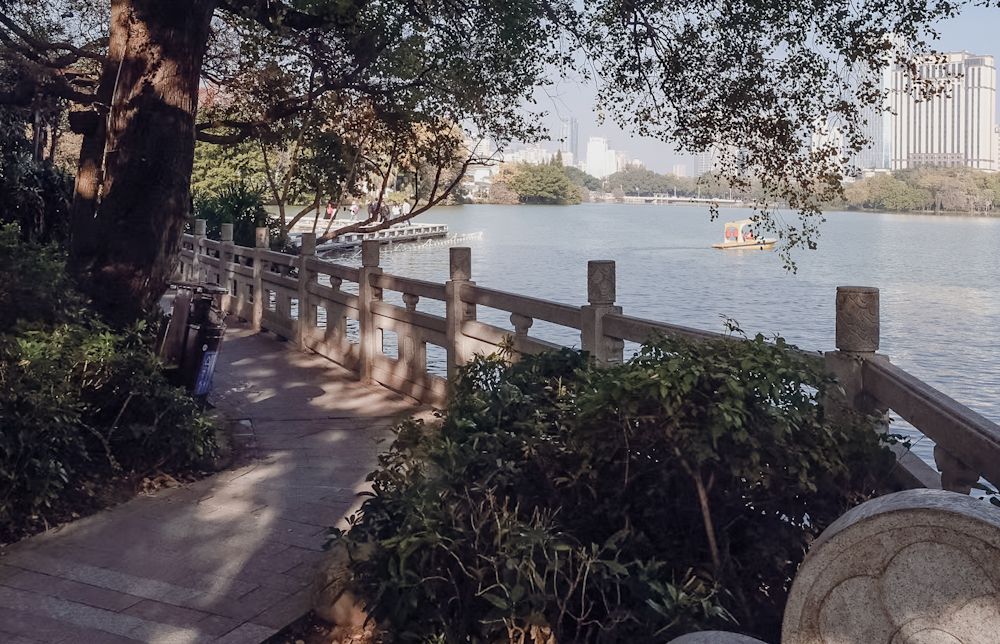
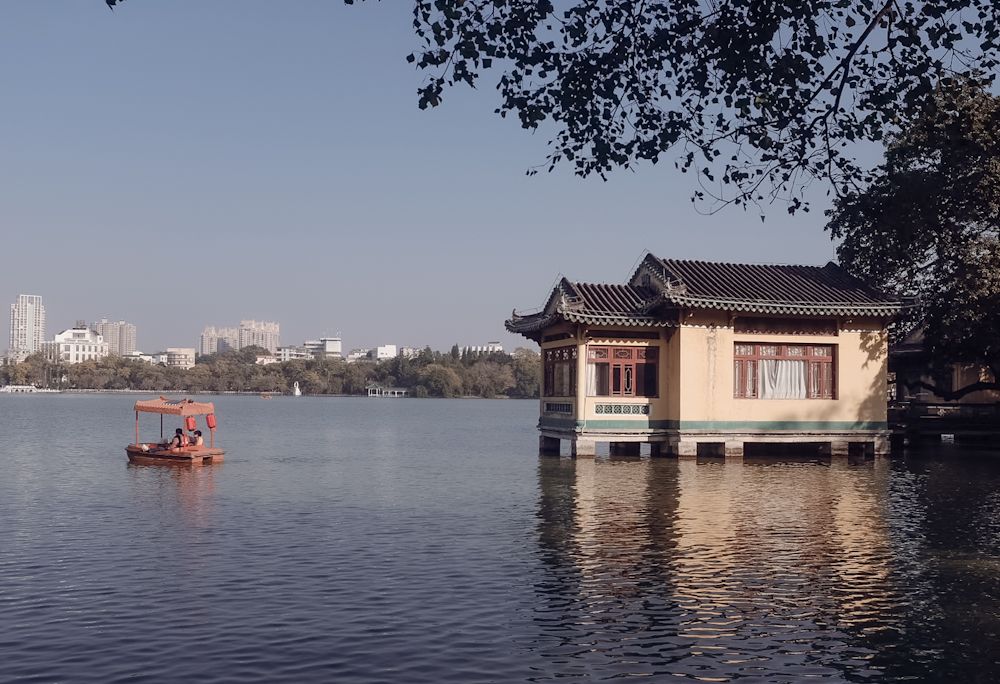
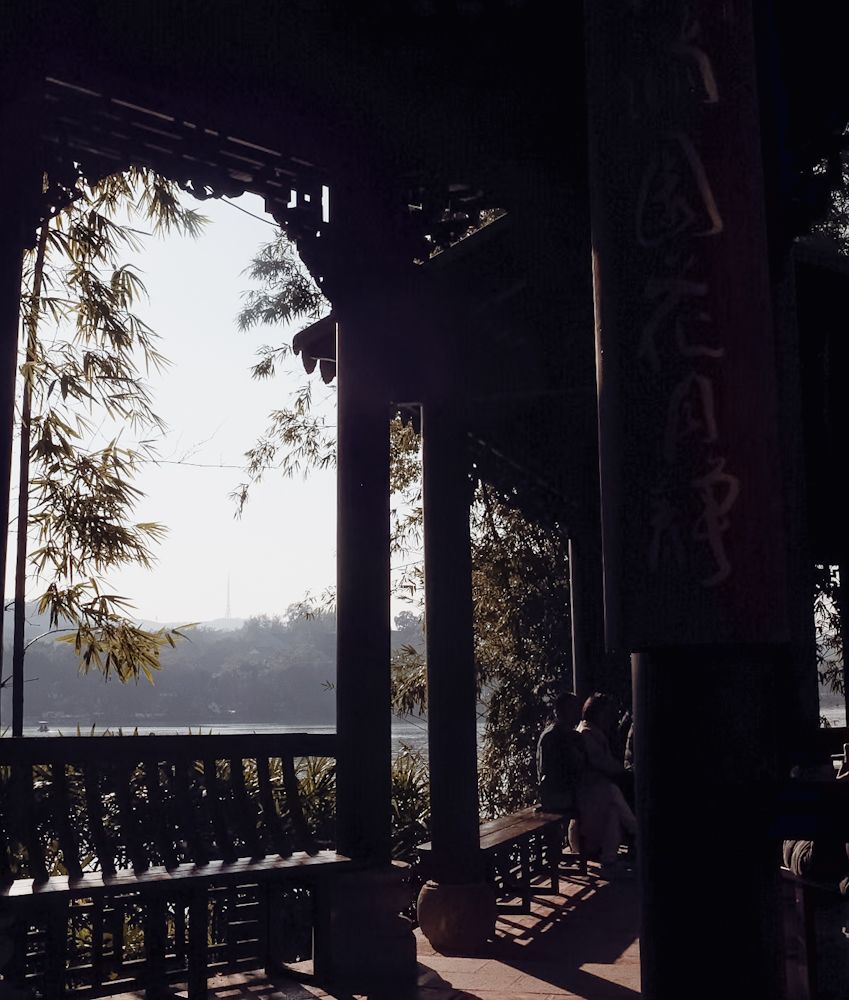
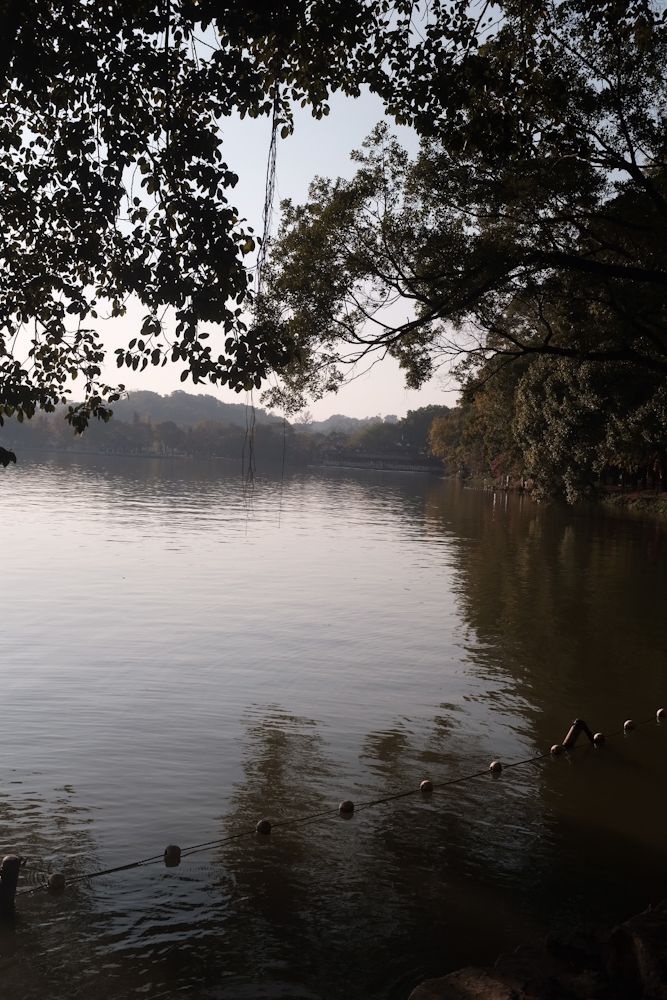
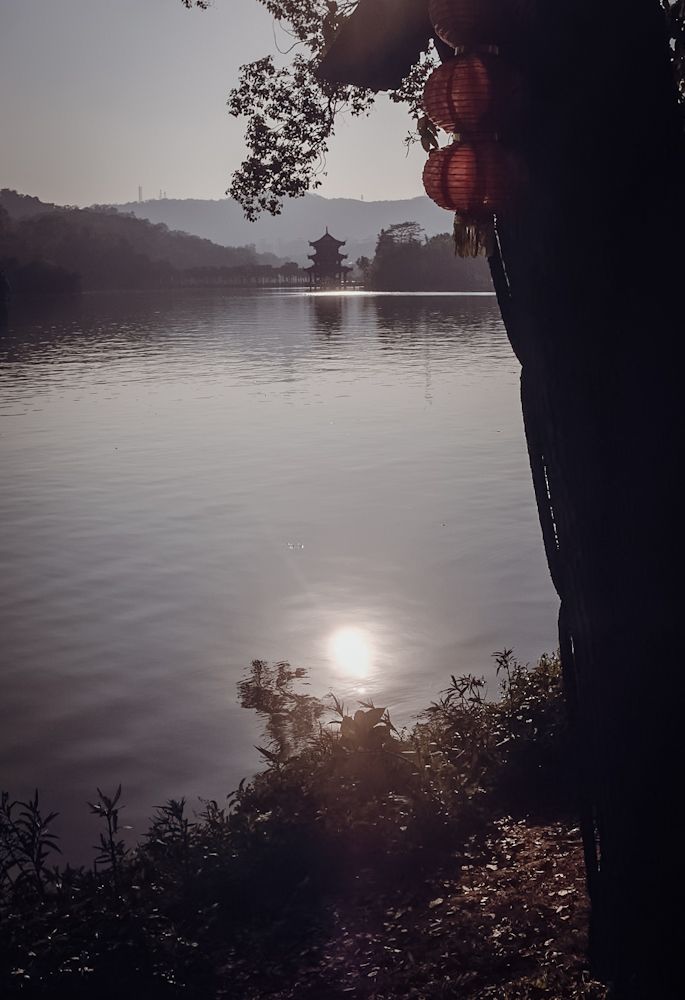
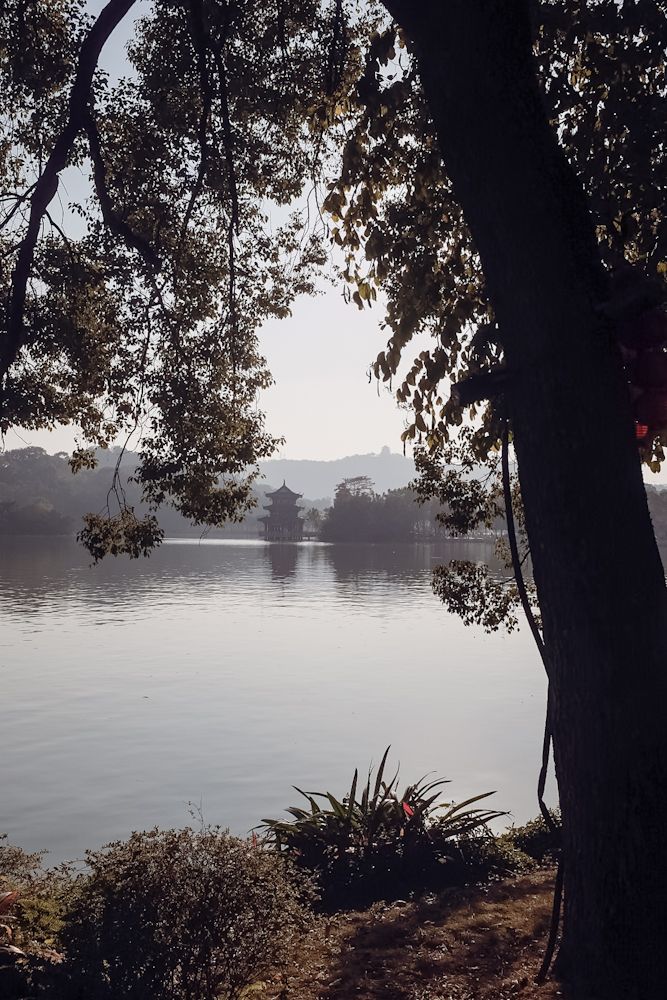
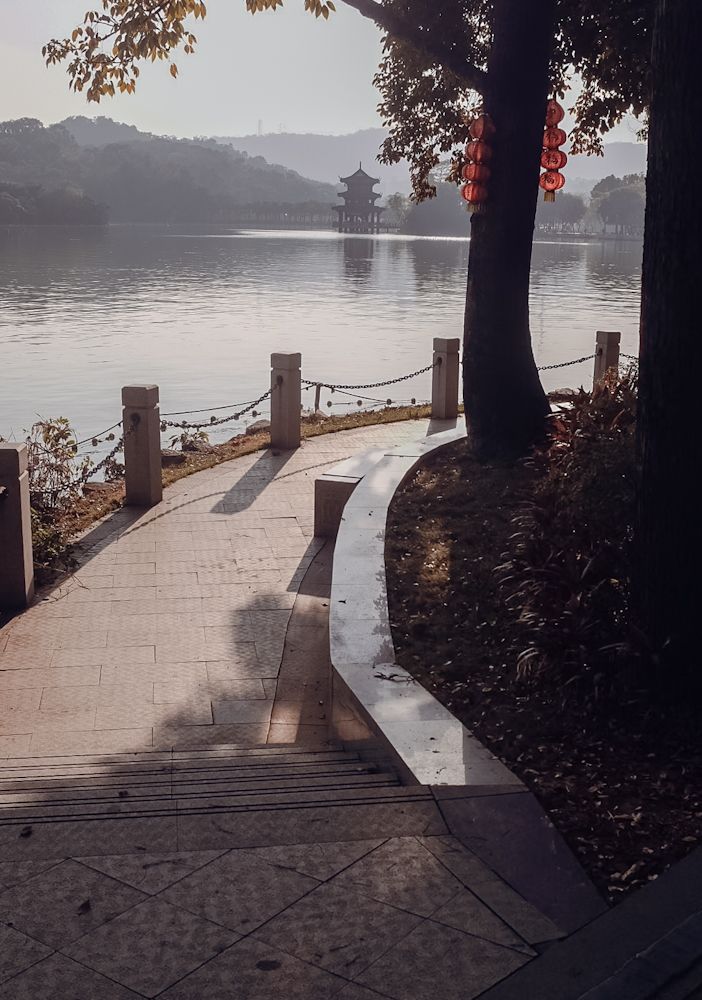
Once underway, we learned our first stop would be a lake before heading to the evening’s venue. A leisurely stroll around a lake? I wasn’t thrilled at the idea. Am I coming across as a misanthrope? Moi? Really? But when we arrived, I was pleasantly surprised. The lake, surrounded by hazy sunshine, was breathtaking—quintessentially Chinese with pagodas, temples, and bamboo groves. The entrance gate itself was a work of art: a grey, ornate roof atop white columns, with traditional calligraphy adorning the sign above. It was beautiful, and I felt unexpectedly happy to be there. 

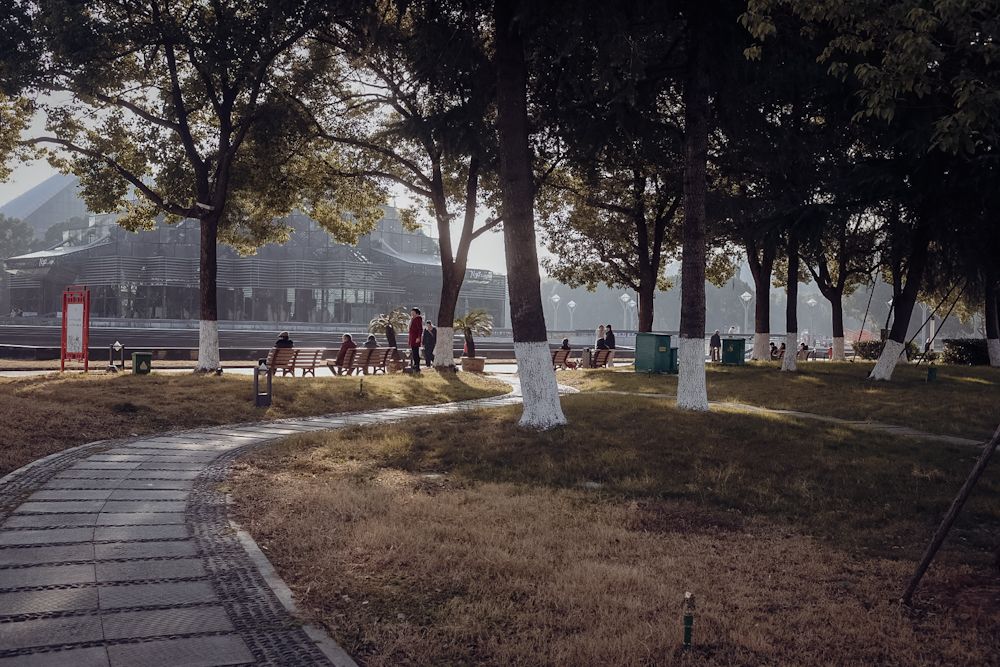
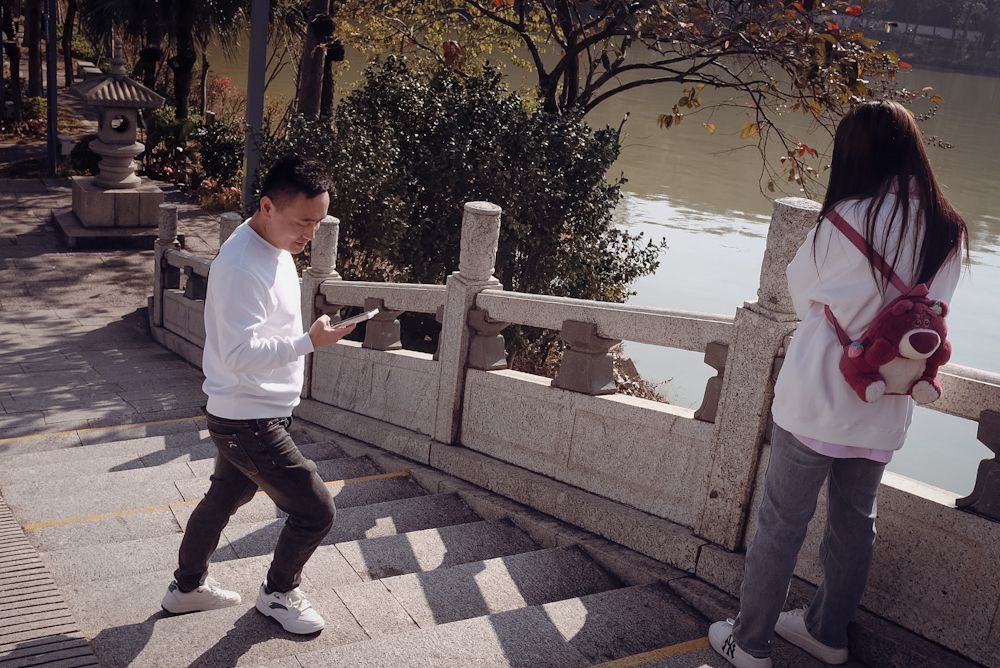
The walk would be leisurely, which was ideal for me. The trees and bamboo offered some welcome shade and acted as a diffuser for my photographs, and I knew this was definitely going to be a good day. I saw our friends’ Chinese boyfriend and Chinese girlfriend going through the same rigmarole as they had in Shenzhen’s Window on the World, which I still find amusing! 

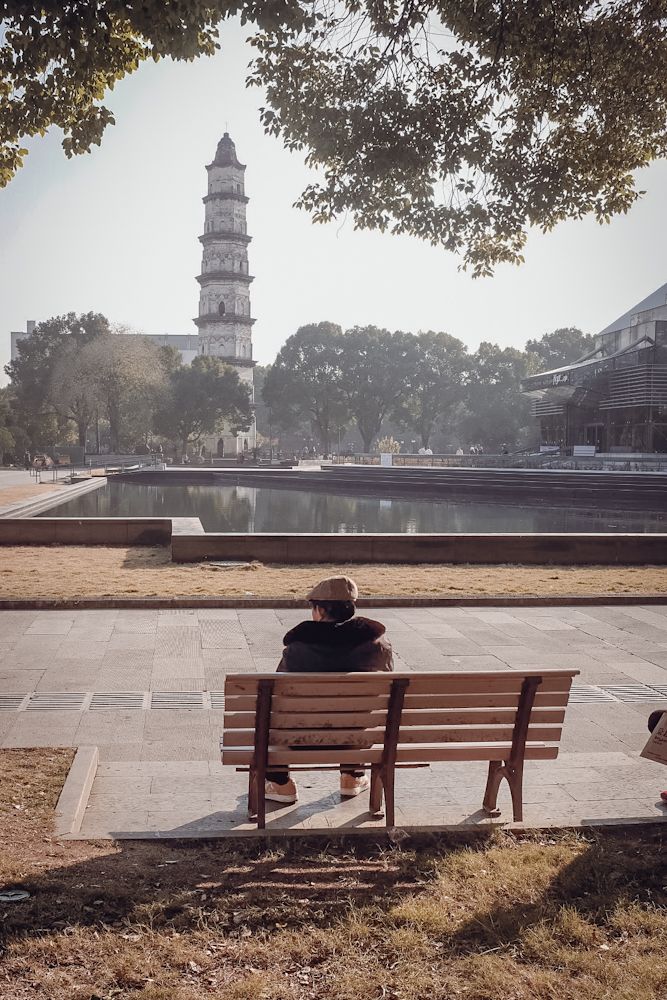
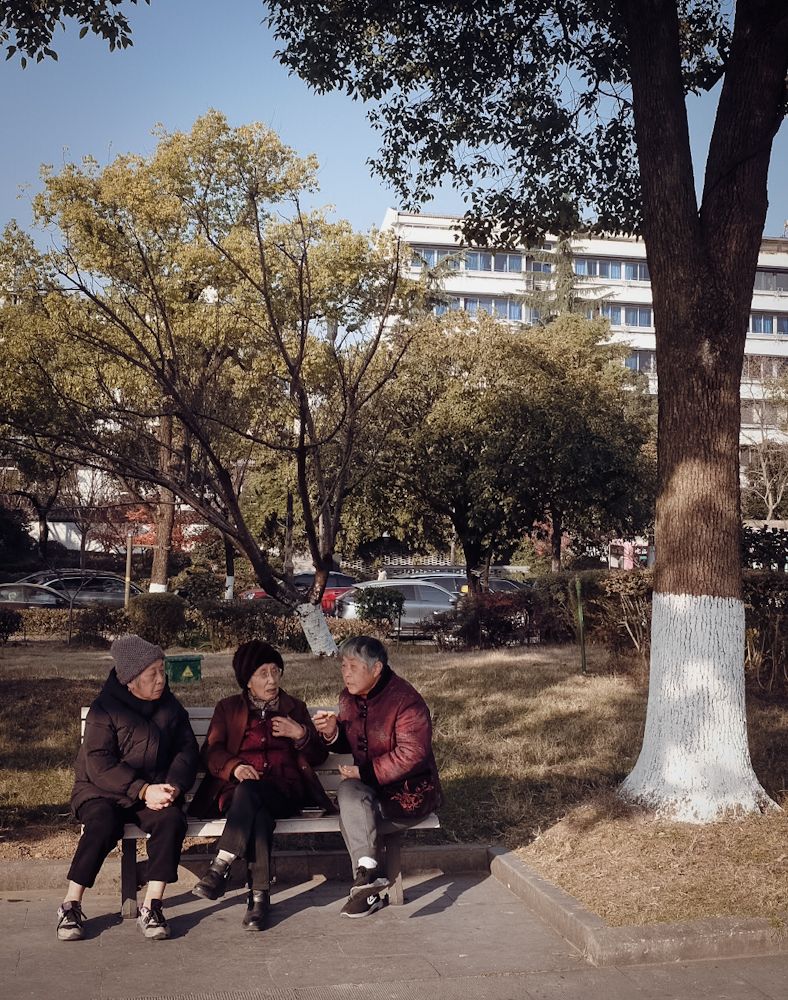
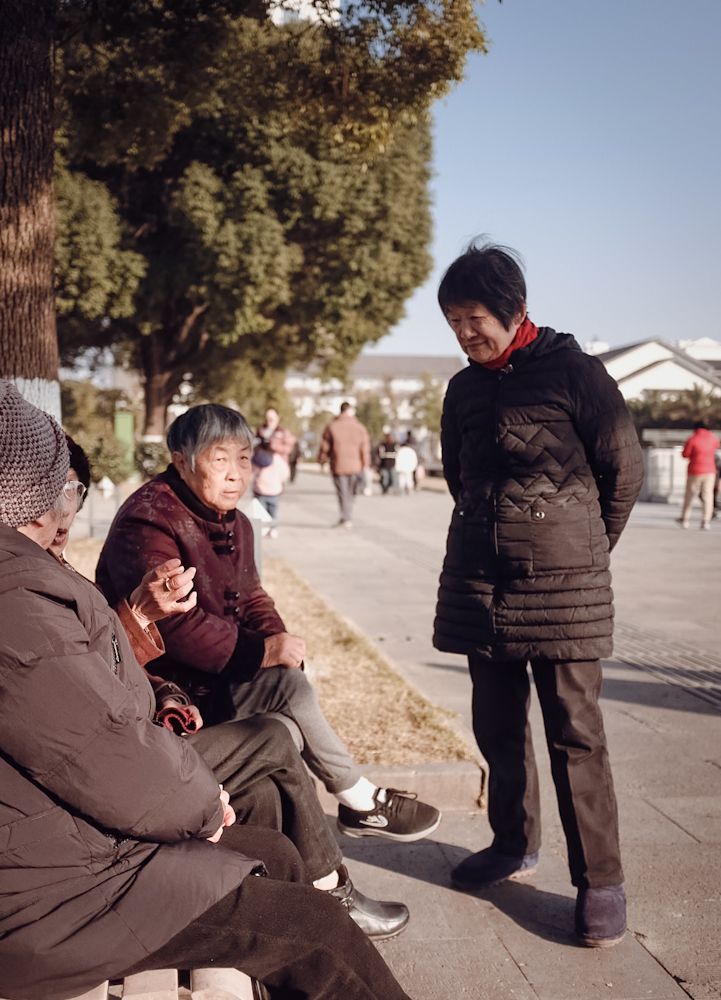
There were groups of Aunties and Uncles, as the Chinese call older people, sitting on benches looking out across the lake at various pagodas and temples. It was one of those places that breathes calm. I like calm. 

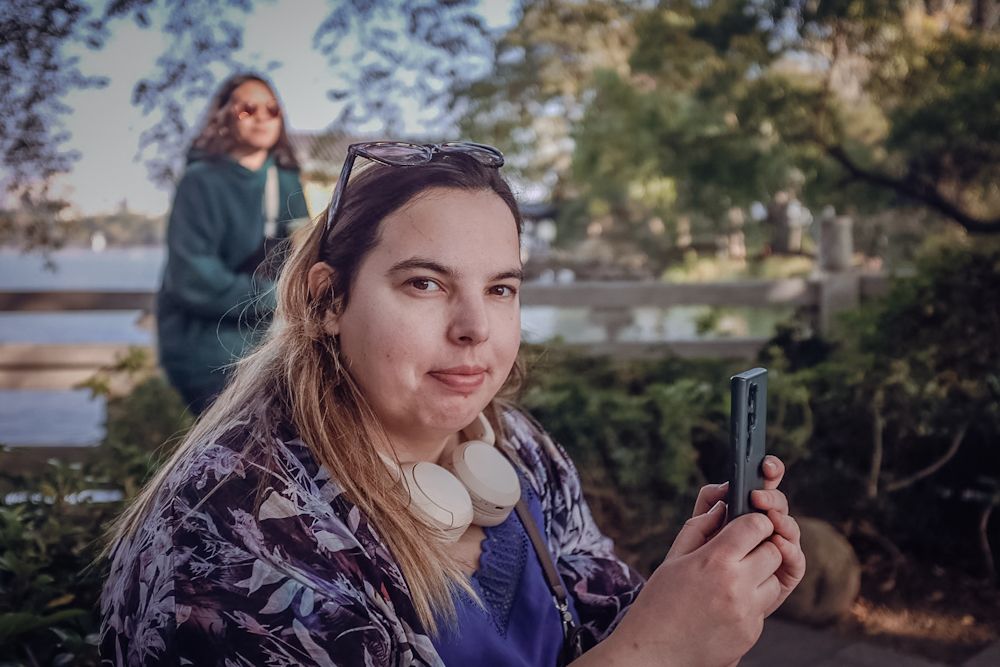
I sat down to join the girls for lunch, but I had already eaten, yet they insisted I partake of their picnic, which I did with pleasure. They really are good to Uncle Ian. They joked about hiring a pedalo and going around the lake. Mathilde’s foot was hurting her, so we decided to take the shorter walk back to our rendezvous point, letting Eléonore and Catherine explore the long way round. We even joked about hiring one of the electric golf cart-type buggies to get around. You may have noticed that I haven’t talked about selfies yet.

 Well, at the table behind was an Uncle and Auntie who wanted to take a selfie with us—first it was the two uncles together, then everyone! I was getting a taste for all this. The attention is definitely validating and made us feel amazing. Yes, made me feel very special, especially when you see their smiles. It’s not like being adulated by adoring fans, but more like appreciating and celebrating your presence in China. It is something that will stay with me for the rest of my life. 

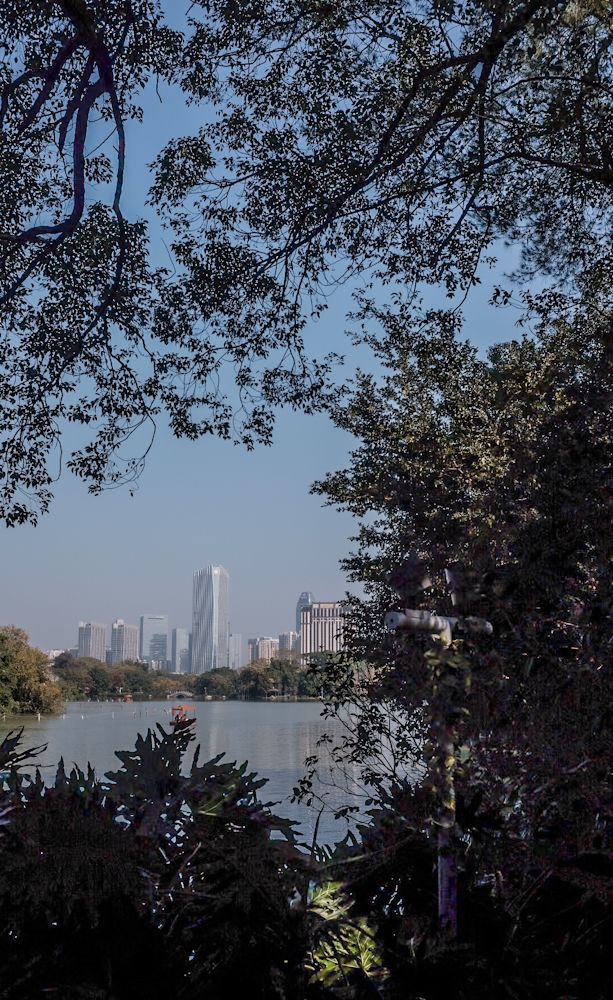
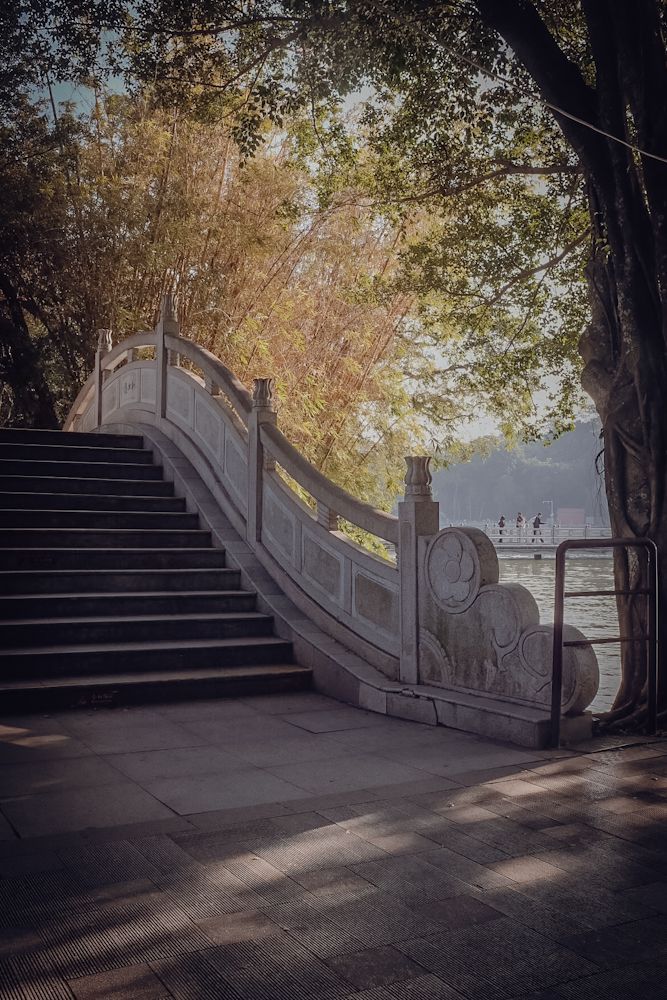
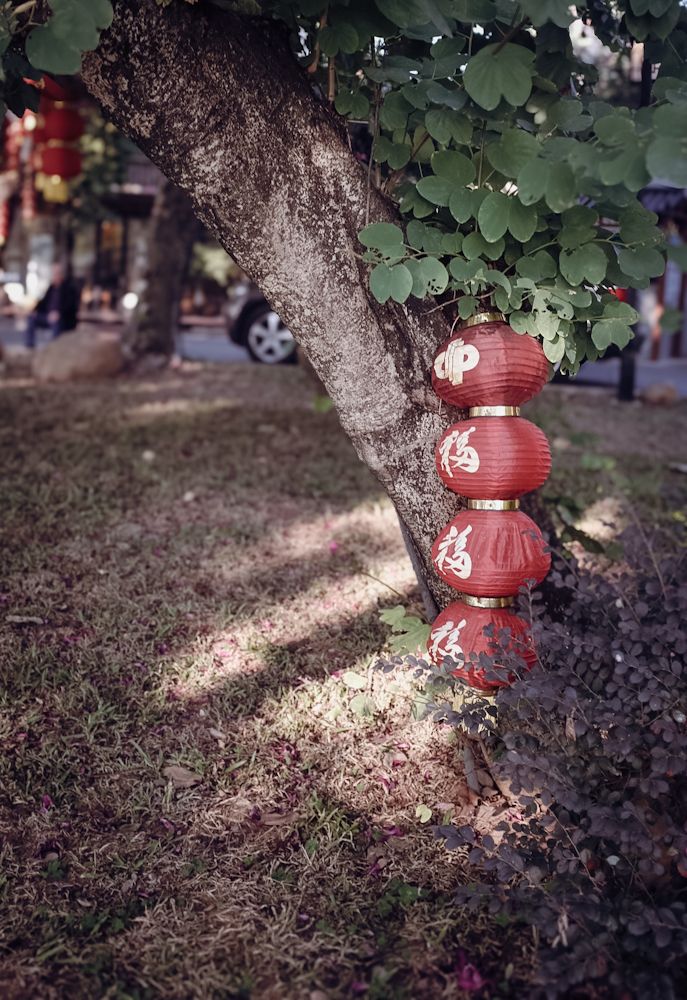
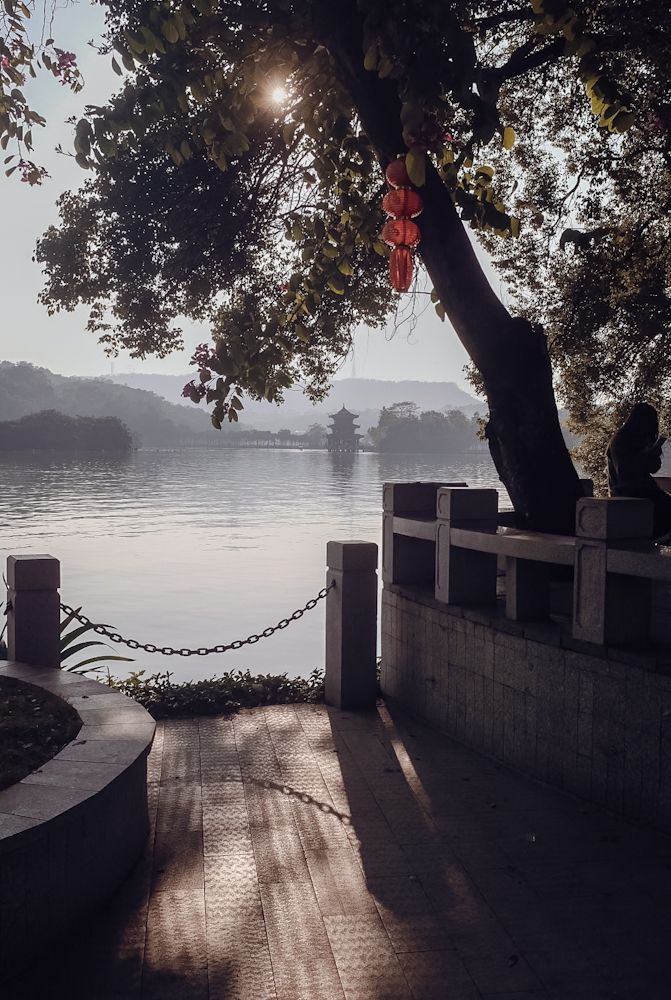
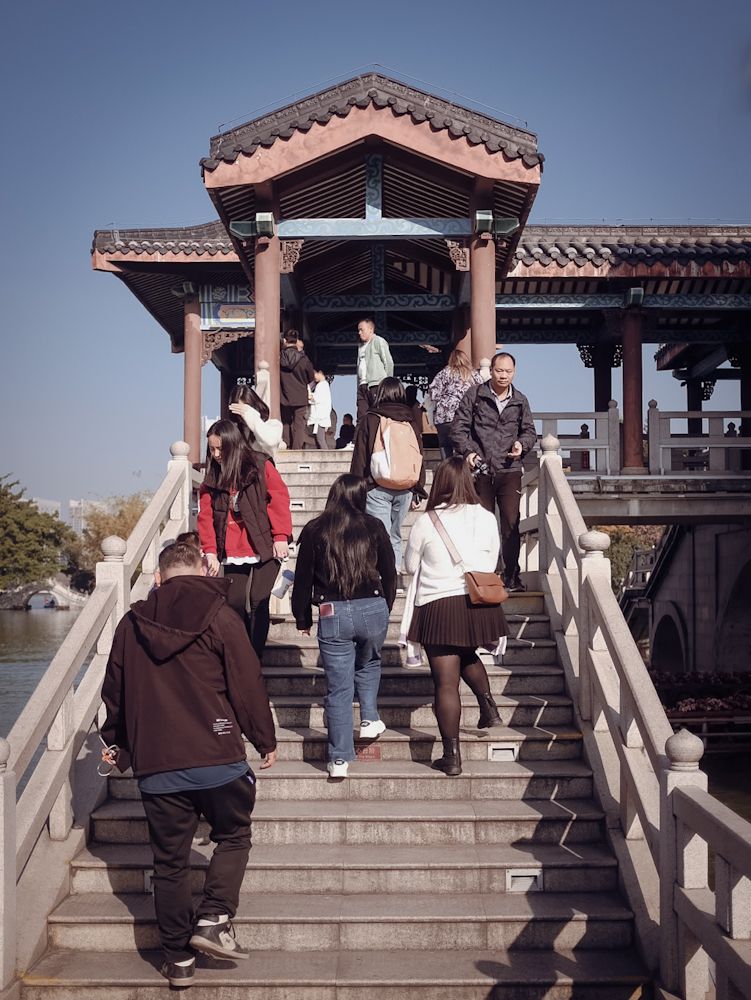
We crossed the lake using the walkway and going through the decorated walkway with its traditional Chinese style. Everything felt Chinese, but in a more classical way. The architecture, the building styles, the plants—even with the bamboo being a feature—as well as the white hump-backed bridges. I was having a special moment with Mathilde and Titaua as we gently made our way back to the bus, and even though it wasn’t the scenic route, you could be mistaken for believing it was. The views were amazing… 
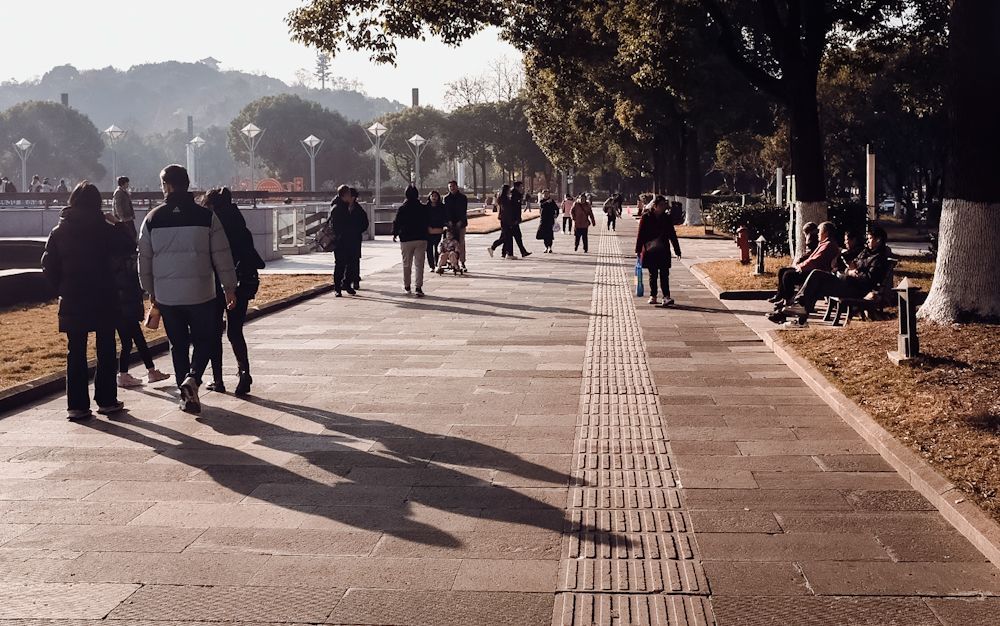
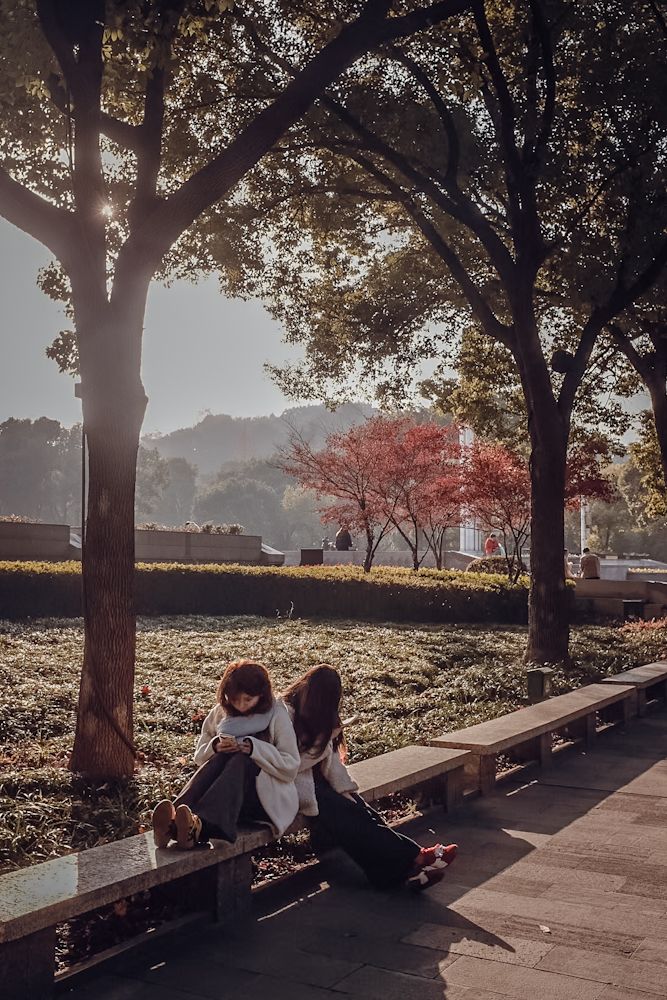
Taking in the light coming through the trees, and sparkling on the water. It was beautiful, and I was so happy to be there amongst longtime friends. Titaua moved on ahead, and I stayed to accompany Mathilde and her bad foot. 

She had put on a brave face the day before, chasing around Shenzhen with the girls. It had gotten so bad that Titaua had to accompany her back to the hotel in a taxi. She didn’t want to put anyone out, and I found myself seeing her in a new light. Maybe that’s what this tour was really about—seeing people in a new light and discovering facets of them you’d never noticed before. When you’re on tour, the masks we all wear tend to slip, and the inner person shines through. It’s human nature to put on a front—I’m certainly guilty of it, especially with my own ongoing struggles with mental health. But during the tour, I felt I could let that mask drop. It was liberating in a way I didn’t quite expect. 

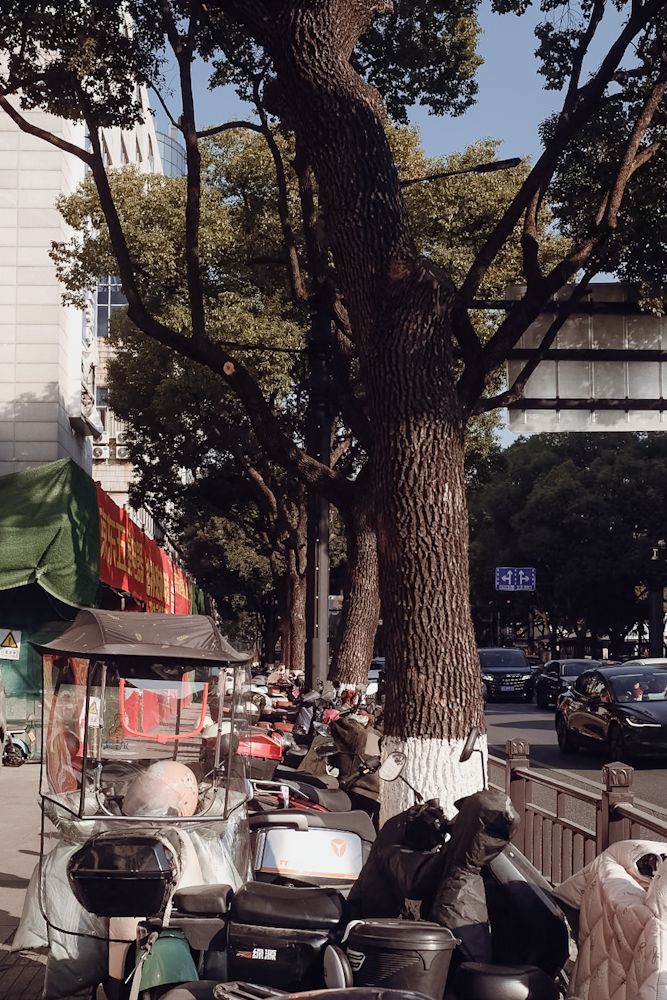
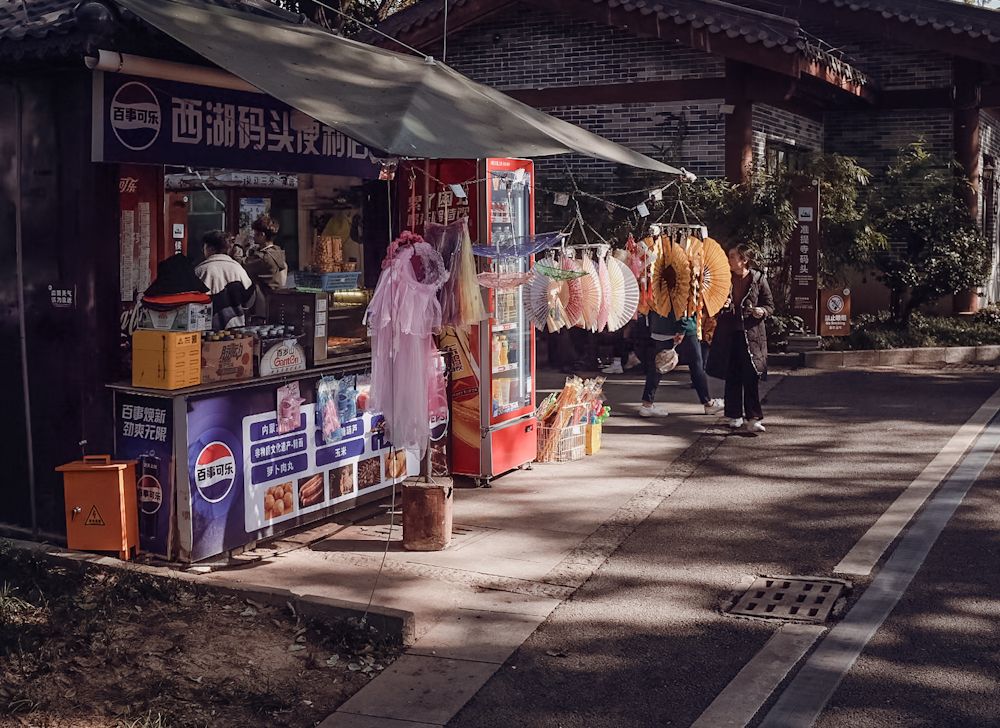
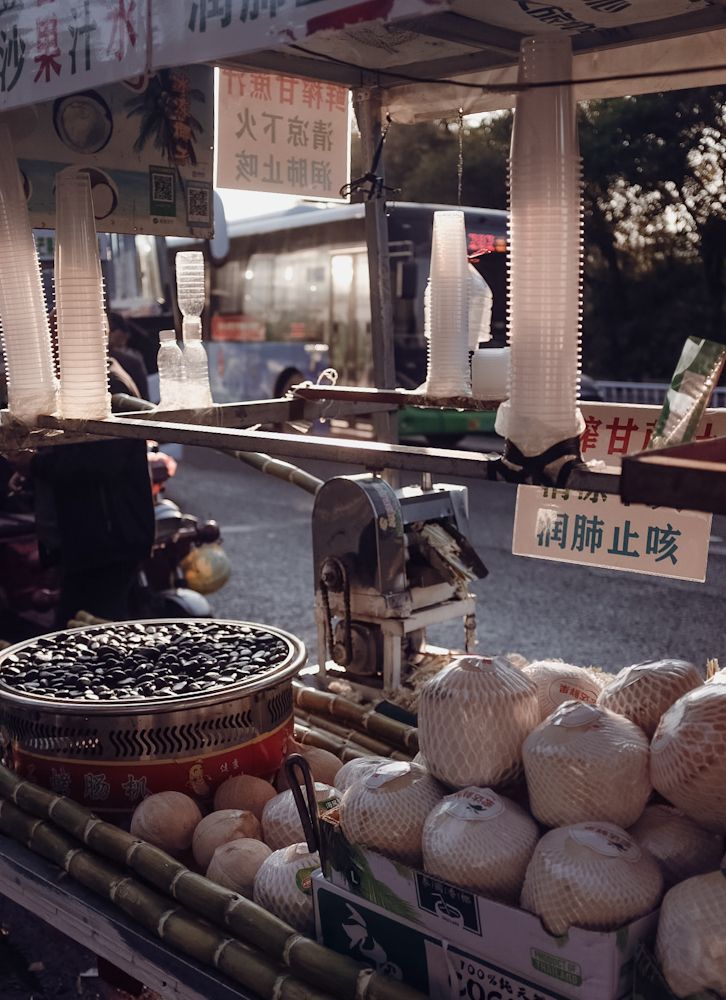
Back at the rendezvous, I was captivated by a coconut and sugarcane juice stall—a moped with a shop grafted onto its back. I didn’t partake but saw how the backlit scene looked very poetic and couldn’t resist taking a picture. I’m glad I did. 

The younger crowd soon returned, with Corentin (aka Sir Fanny Magnet) and Paul (“Duck Tongue” Trouillet) basking in their fan club’s adoration. 

Another selfie session ensued with the younger crowd having selfies with the young Chinese crowd. Corentin, aka Sir Fanny Magnet, and Paul “the Duck Tongue” Trouillet had obviously told their fan club of their imminent arrival. But unexpectedly, that same younger Chinese crowd came up to me asking very shyly if they could have photos with me. I don’t know if it was the Uncle Ian legendary charm or the Father Christmas effect; it certainly left me feeling even more wonderful!

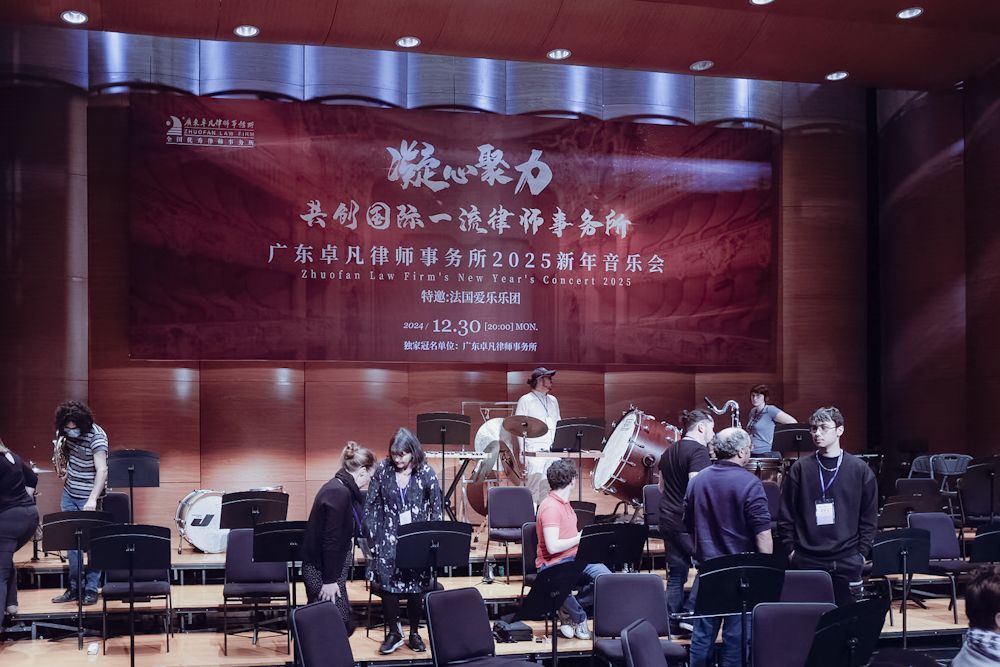
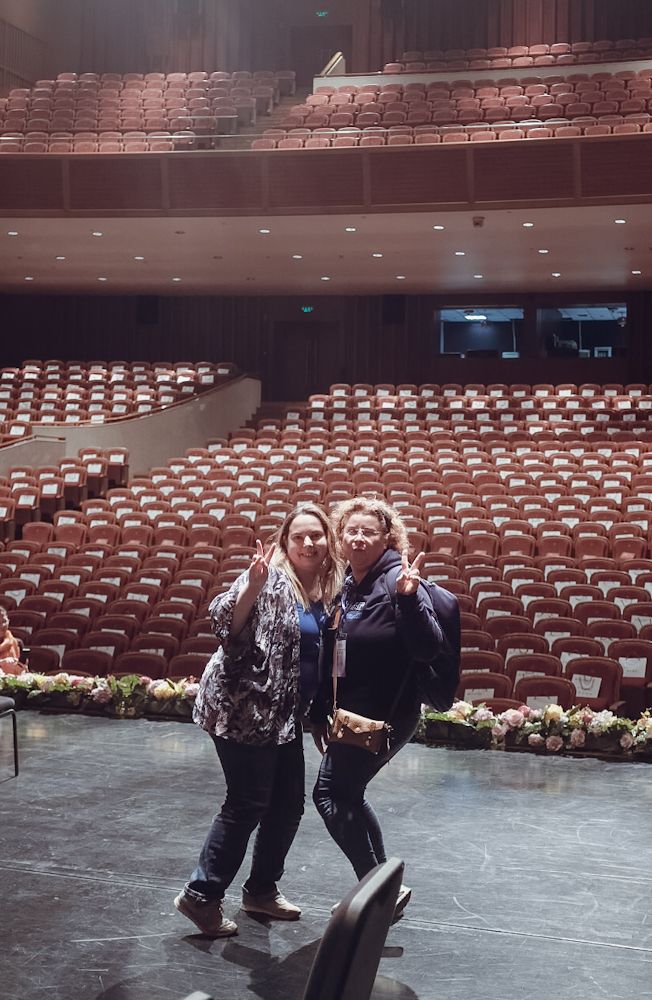
Yes, I think you might have guessed by now, but it was back onto the buses, and off to the venue. I had certainly been inspired for this concert by the kindness and bienveillance of the local population. I would have to make this a performance to remember. And indeed, it was!

The Opening of the Film Archives – April 2017 On the Border


Good evening Dear Reader.  Some of you may know that I live in France, despite being originally from the UK, and despite probably having gone native after living here for 30 years.  I have even been accused of being a little “Continental” whatever that may mean..  I live in the west of France.  You could think that I live in Nantes just judging by the quantity of photos taken in that city.

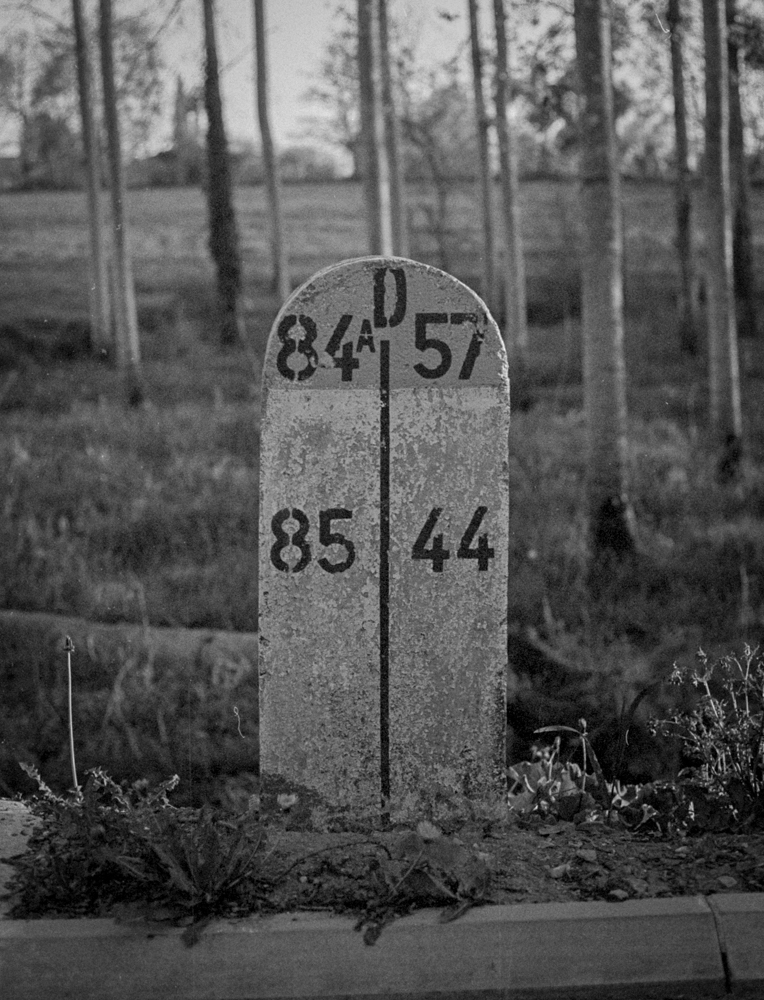
I actually live in a smallish village at the very northern edge of the Vendée and my village borders the “la Loire Inférieure” or to use the more modern term “la Loire Atlantique.”  Our department number is 85 and theirs is 44.  I’m not saying there is any animosity between the two, in the same way that there isn’t any animosity between the inhabitant of Lancashire, and God’s own county of Yorkshire.  Absolutely none at all.

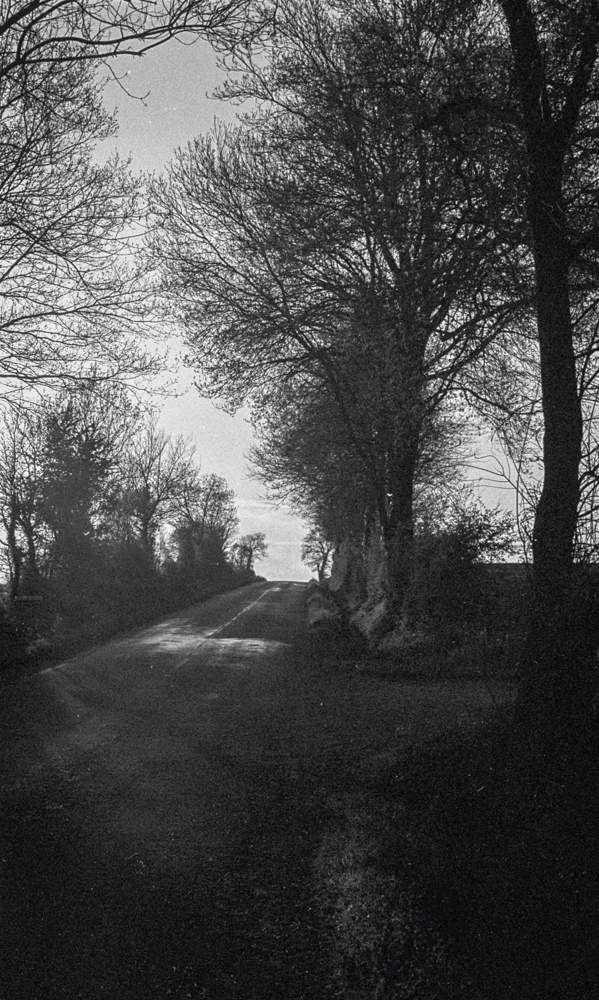
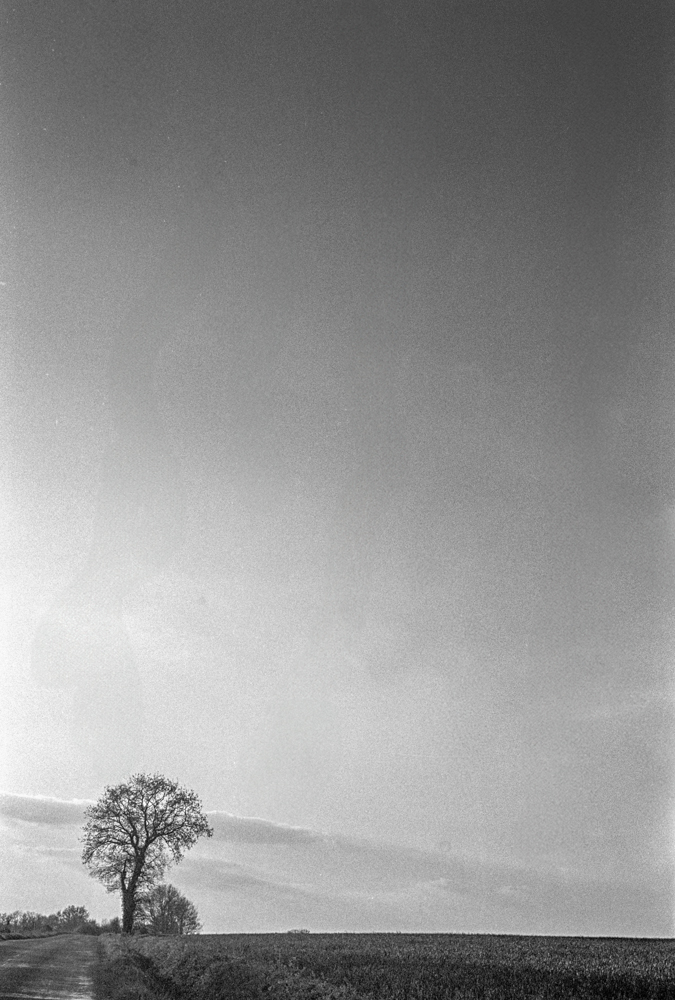
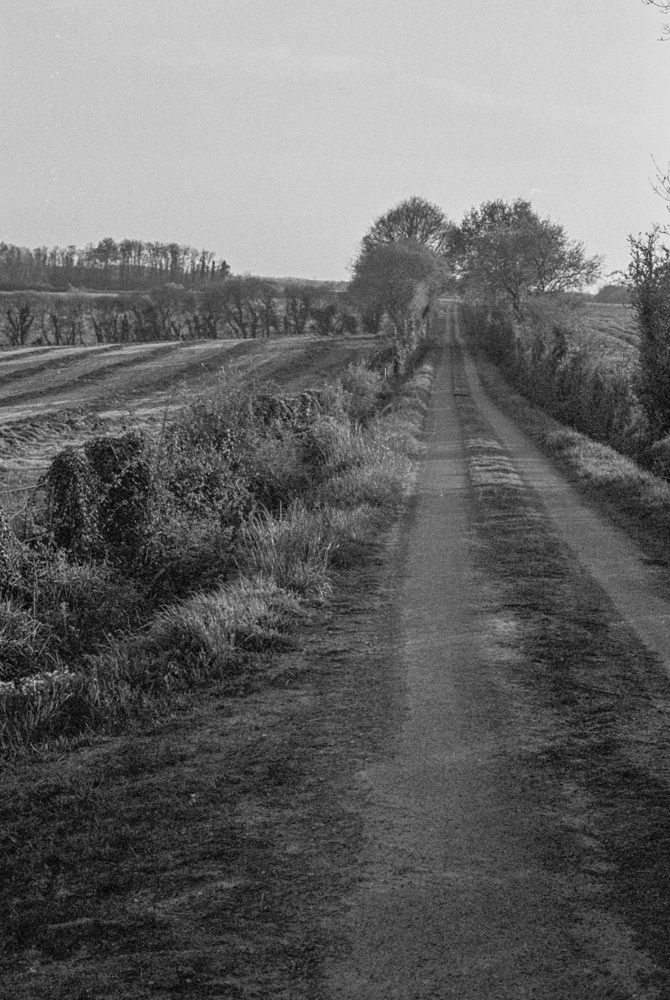
You now know where I am.  Let’s have a closer look at that area through the lens of my Canon AE1.  This series of photos was taken along my route to work.  You can see the milestone on the road where the border between the two departments finds itself.  

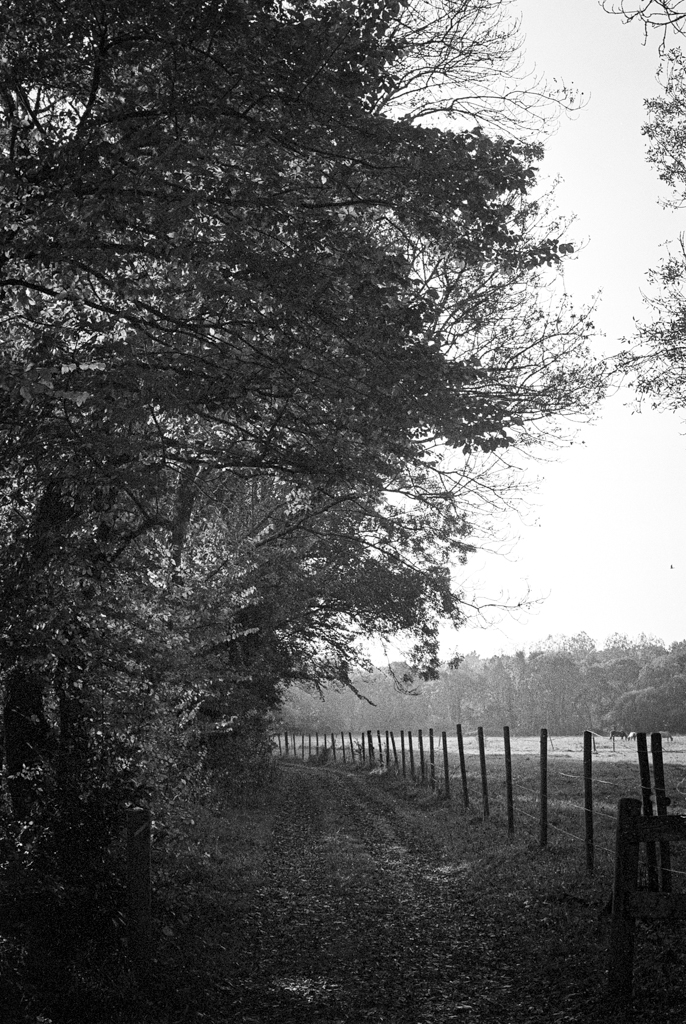
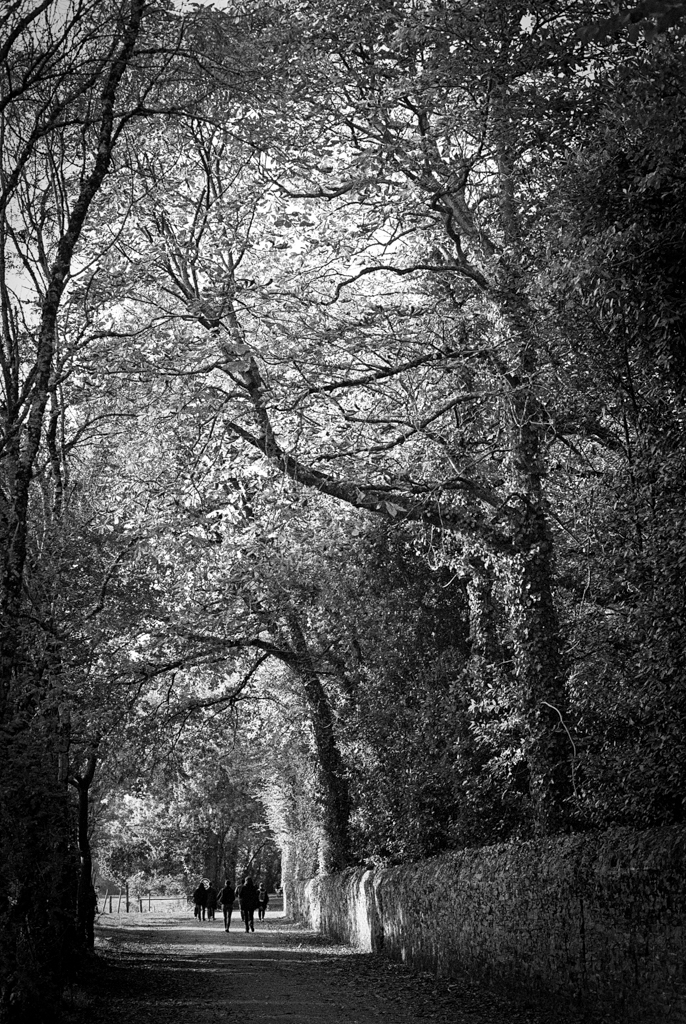
The trees along this stretch form a natural tunnel, creating an otherworldly atmosphere as sunlight filters through the canopy. Capturing that interplay of light and shadow was my goal with the Canon AE1. Despite some doubts about its metering capabilities, the camera performed admirably, and I’m thrilled with the results.

Since I took these photos, some of the trees have been cut back, making these images even more precious. They preserve a fleeting beauty—a reminder of how photography can immortalise moments before they change forever.

At the base of the hill runs a quiet stream, tame in spring but often overflowing in winter. Its stillness offers another perspective, reflecting the surrounding trees and clusters of mistletoe hanging high in their branches. These reflections, captured on film, reveal a different kind of magic—a mirror-like calm that contrasts with the lively interplay of light above.

This installment of the Film Archives is a tribute to the quiet beauty of my daily commute. Through these photographs, I hope to share not just a sense of place but a moment in time that speaks to the power of film photography to hold onto the ephemeral.

The Opening of the Film Archives – Chaussée des Moines, Autumn 2016


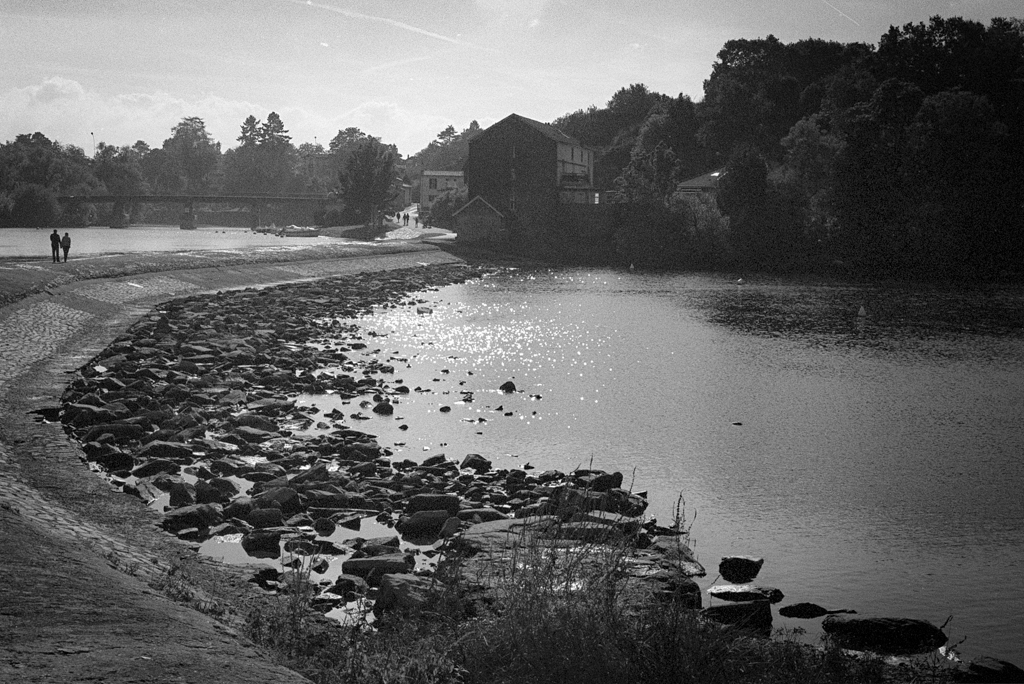
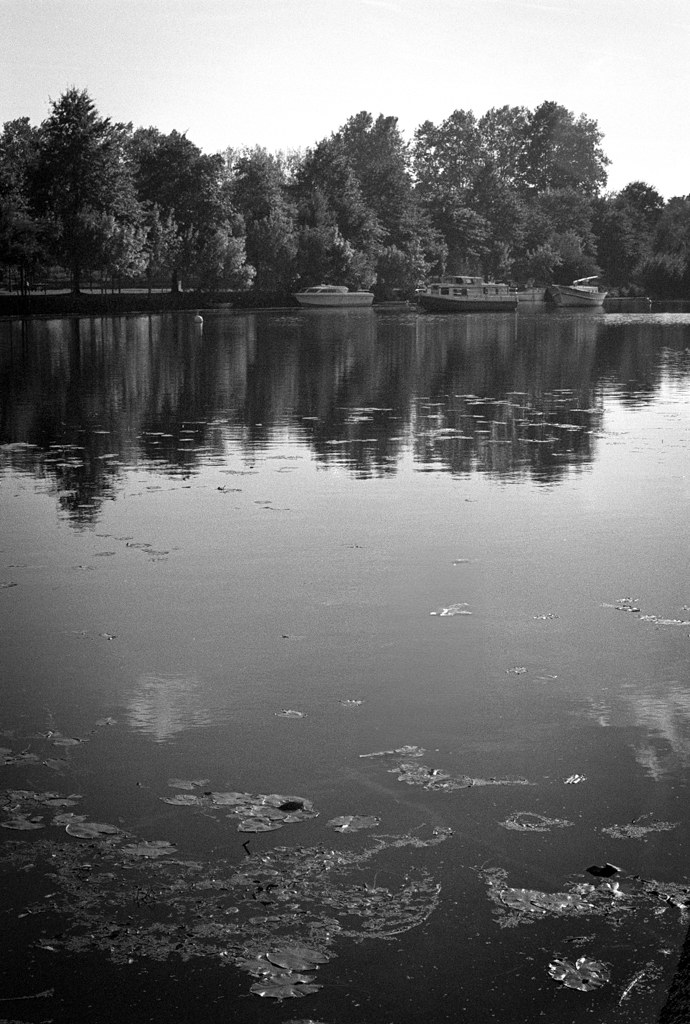
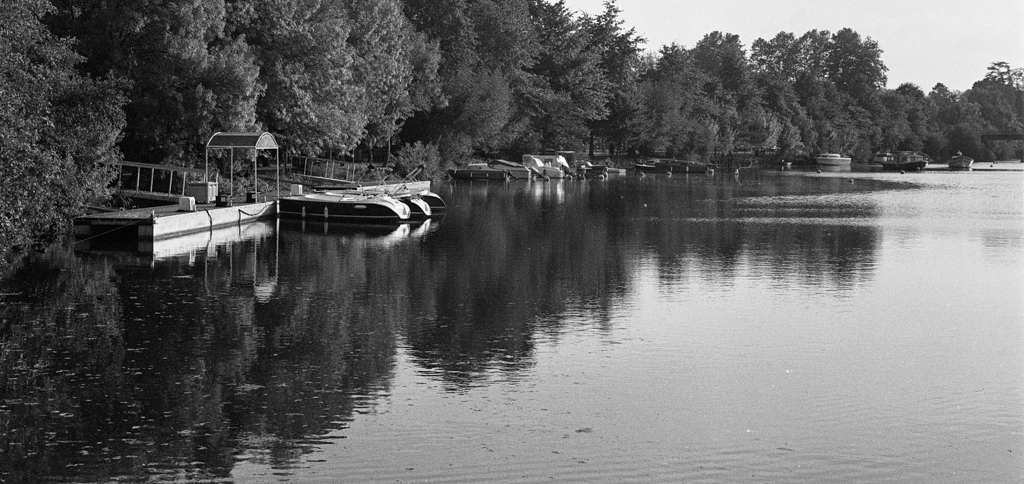
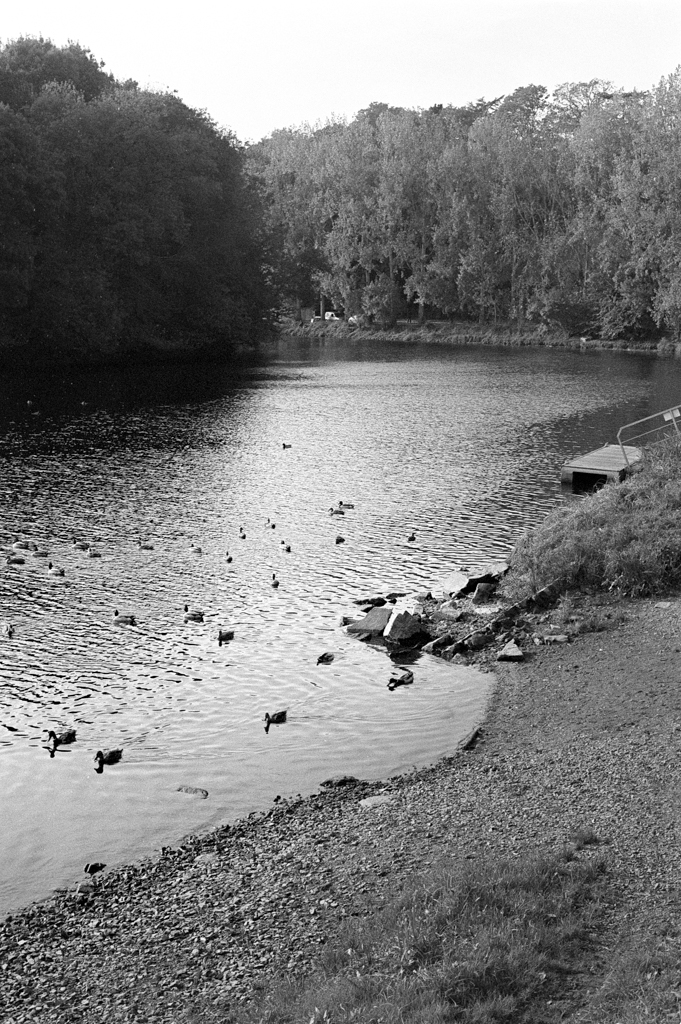
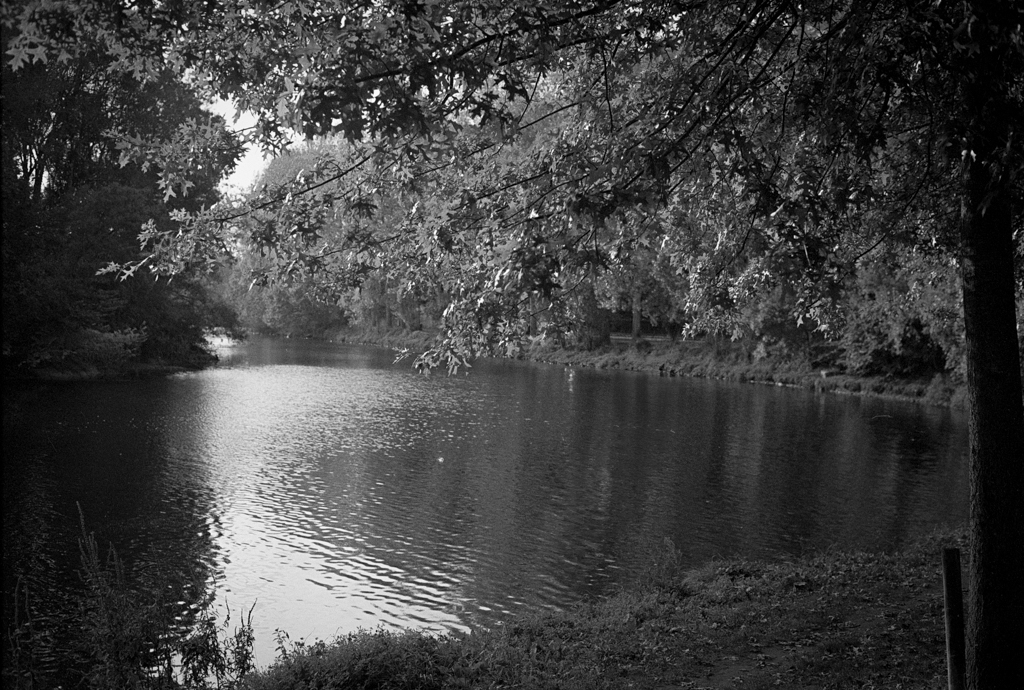
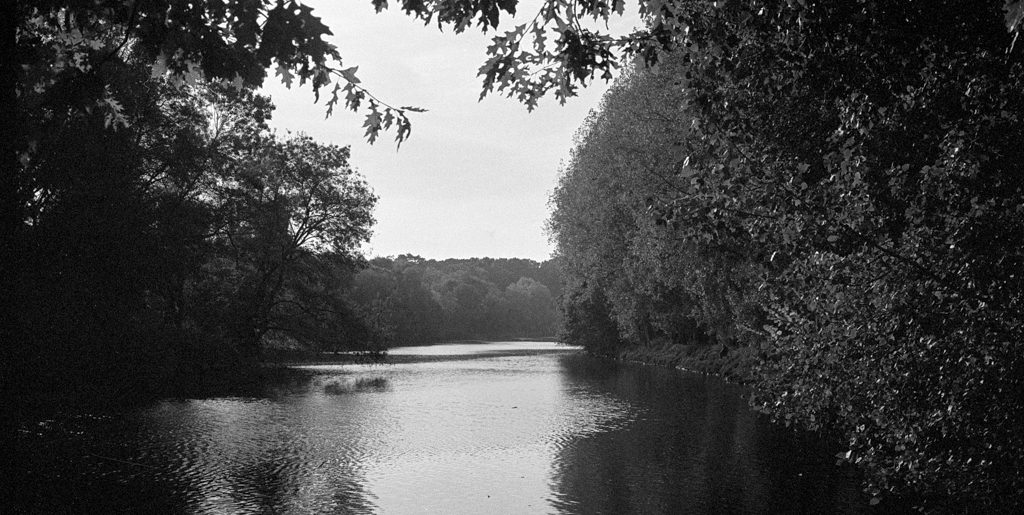
It was one of those sunny late autumn days we sometimes get here—warm, golden, and untouched by the inevitable rain, wind, and cold that would soon claim the season. This time, I wasn’t in Nantes, or exploring the Forest of Grasla like last week’s outing. Instead, I decided to take my Canon AE-1 for a walk down by the river—more precisely, along the Sèvre Nantaise—to explore the Chaussée des Moines.

Chaussée des Moines translates to “the monk’s pathway,” and no, it’s not a detour through Iowa. I always get the name wrong, thanks to the cheese Chaussée aux Moines. Freud would probably call it a slip—though even he might have struggled to find better footing on this trail.

The pathway, bathed in the low autumn sun, was serene. Its golden light skimmed the water, creating shimmering reflections on the surface, while the riverbanks glowed with the last stubborn hues of the season. For those of you looking at the photos in black and white, you’ll just have to imagine the colours. The Canon AE-1 was a faithful companion that day, helping me focus on the interplay of light and shadow, the quiet stillness of the river, and the textured beauty of autumn’s final stand.

The Sèvre Nantaise is a river that flows into Nantes at the Bras de Pirmil. The Chaussée itself is a weir—a place where, weather permitting, you can walk across the river, loop over a nearby bridge, and return along the opposite bank. It’s a lovely little circuit, especially on a crisp autumn day.

The photographs from this outing were taken with the Canon AE-1 using Ilford HP5+ film, shot at 400ASA. I later edited the images in Lightroom to bridge that gap between film and digital. Some might call me a charlatan, but even in the darkroom, we worked our magic with tools akin to what Lightroom offers today—just a bit more hands-on and aromatic.

When I was learning how to draw, I was often reminded of the importance of contrast: darker, more defined elements in the foreground and softer, lighter tones in the background. Looking back at these photos, especially the ones of trees and fields, I’m struck by how naturally this principle seems to have played out.

All in all, it was lovely being out in the autumn sun, soaking up the scenery, and enjoying every minute of it. The boat moored along the bank, the cascading weir, the solitary man fishing—it all added to the charm of a wonderful afternoon. And if you’re wondering, the slice of cake and cup of something nice at the café overlooking the river had absolutely nothing to do with how fondly I remember the day… or so I tell myself.

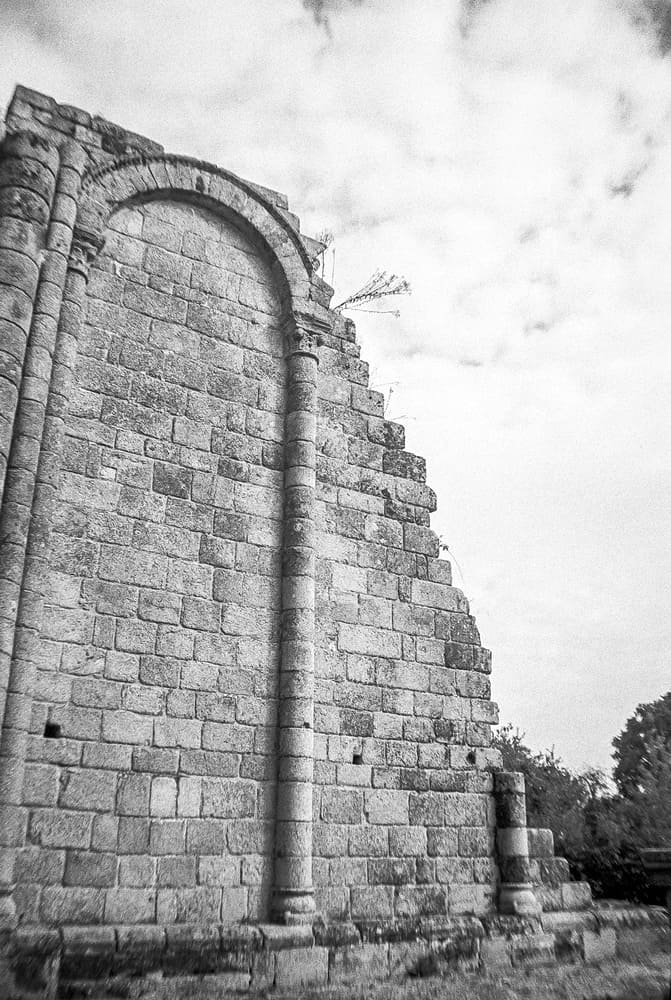
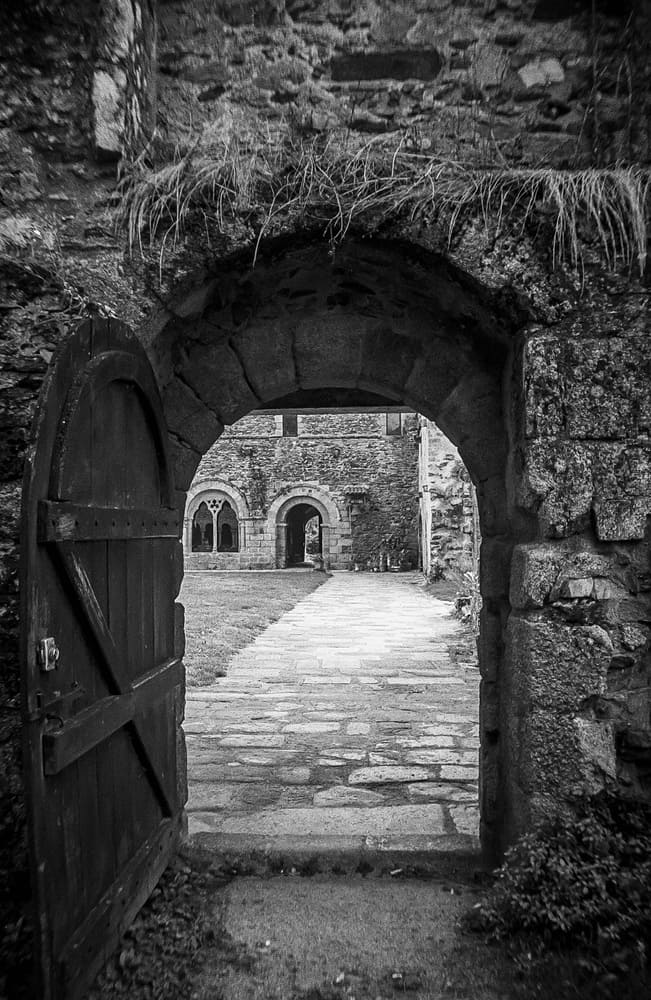
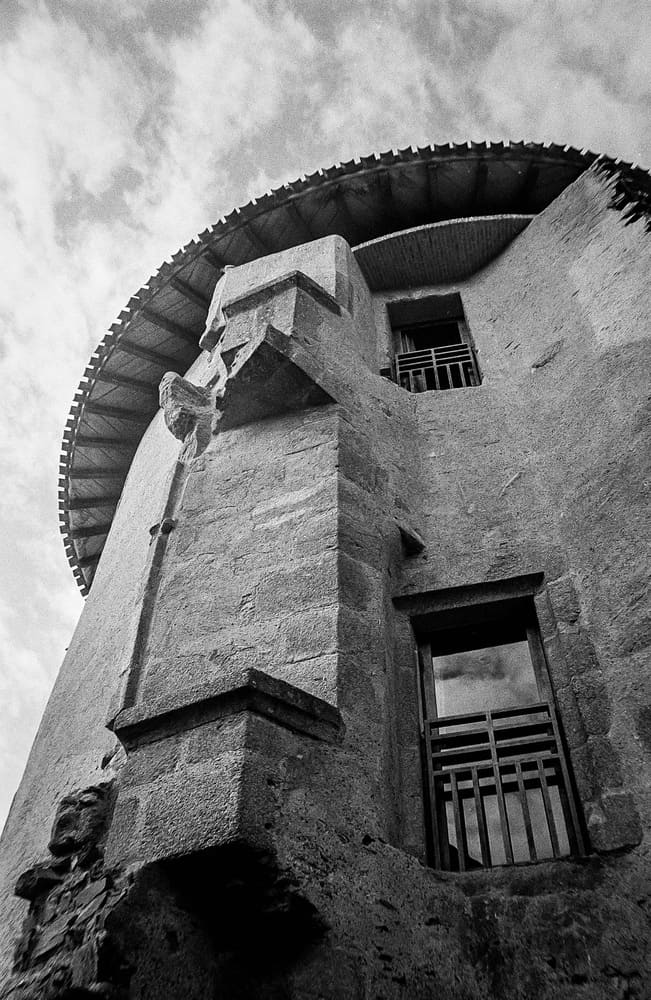
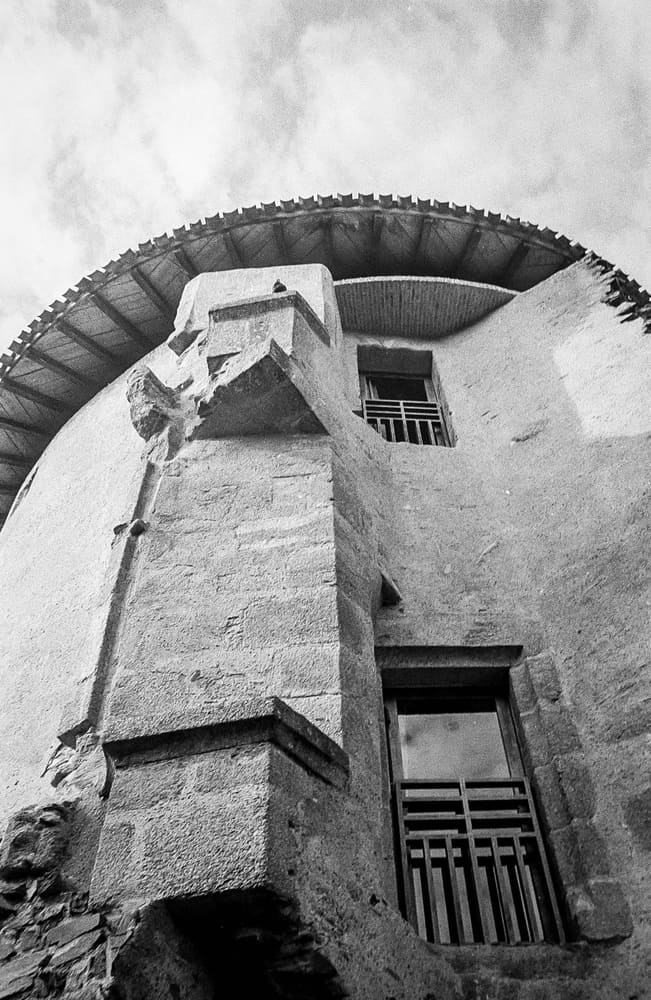
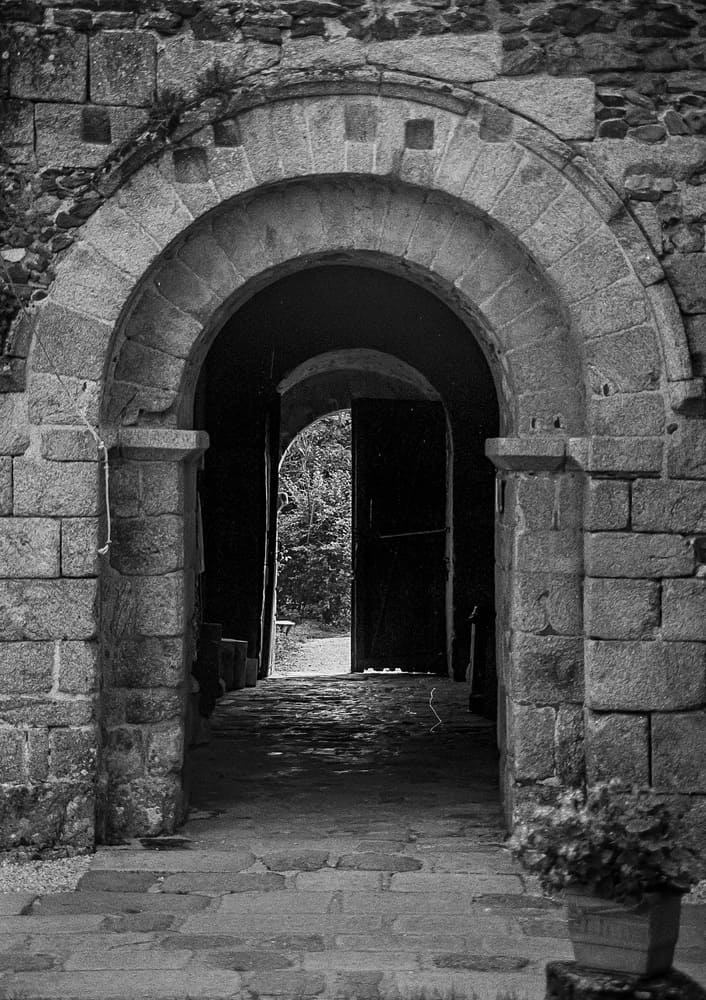
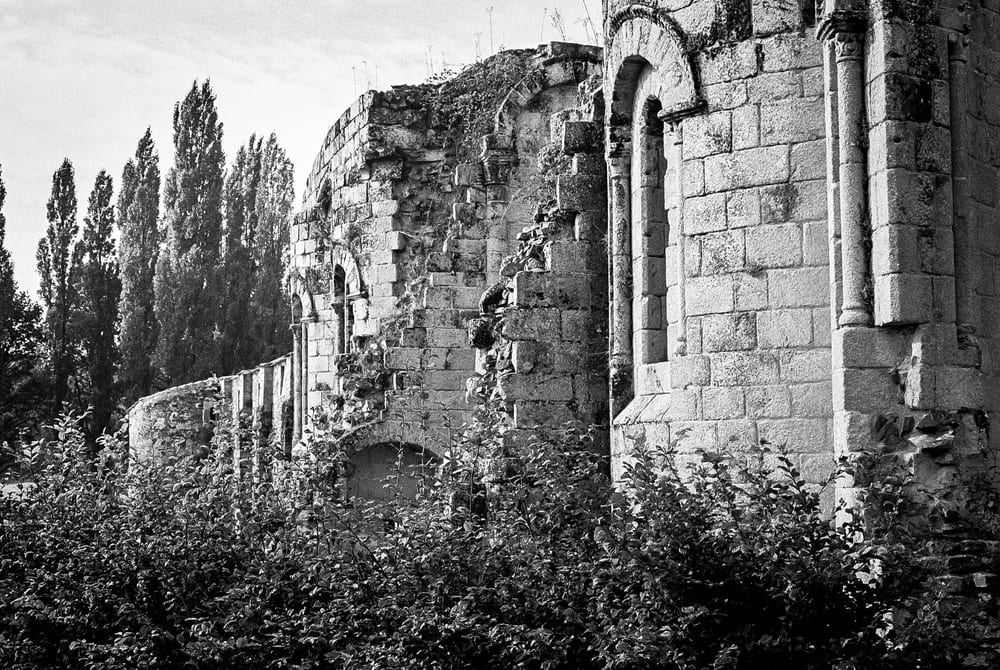
The Opening of the Film Archives—Abbaye de la Grainetière, October 2016


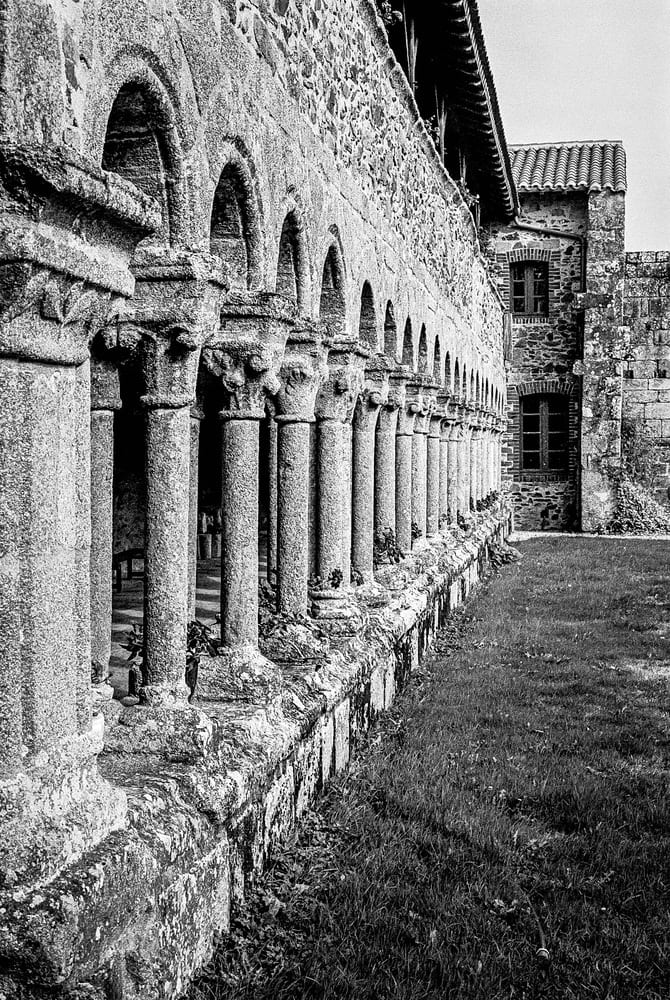
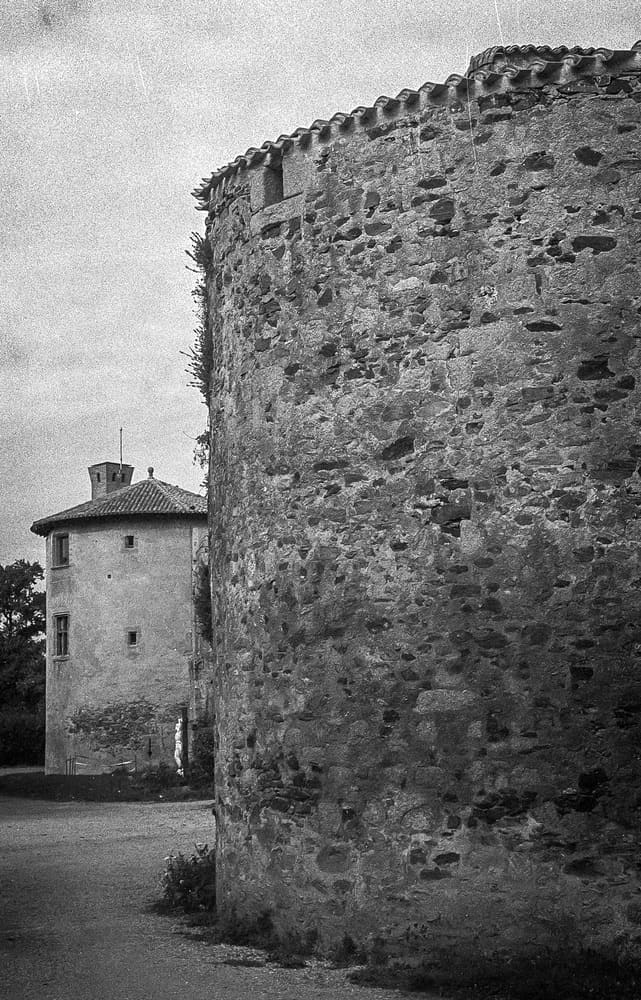
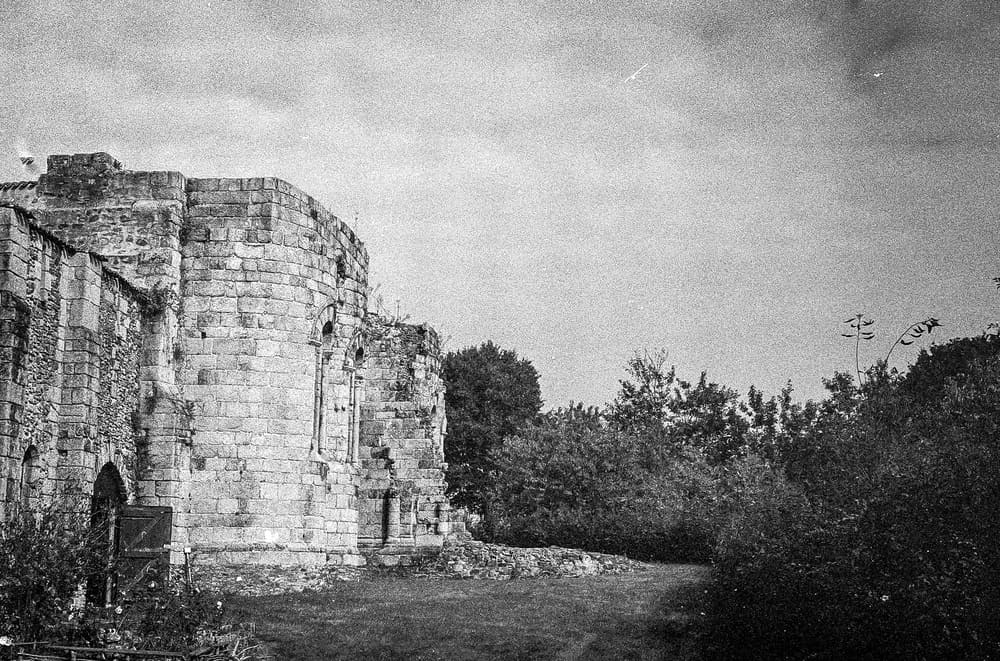
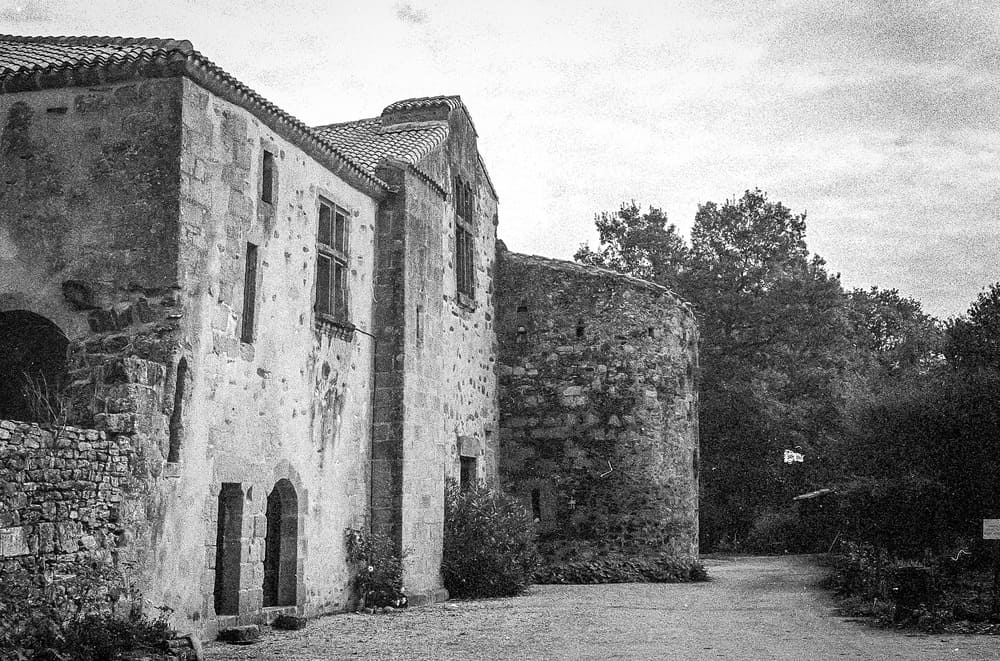
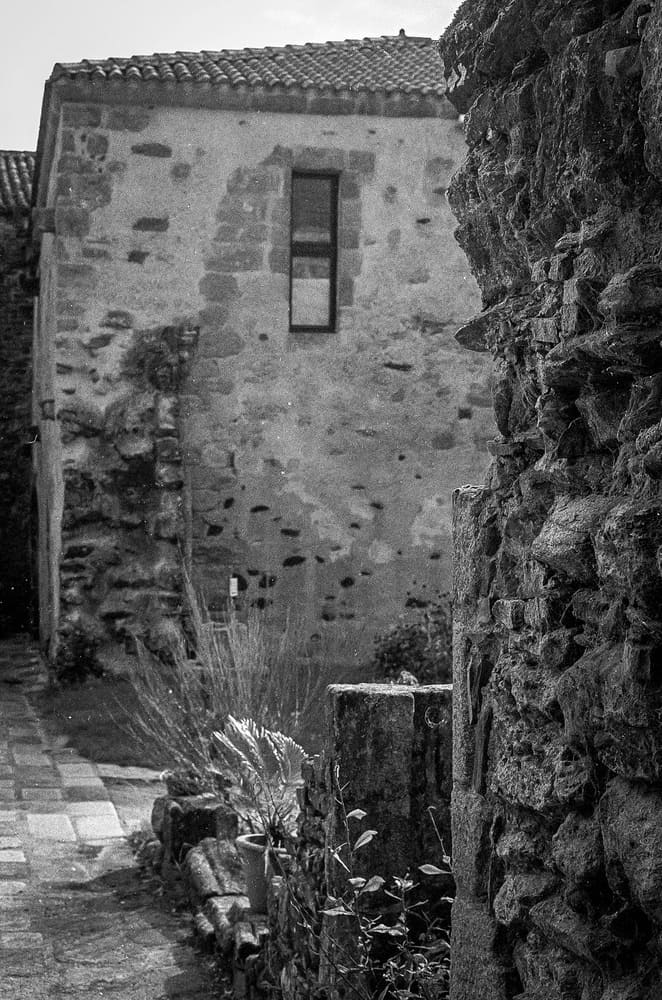
“They” say that if you leave your child to the Jesuits for seven years, then that child will belong to the Jesuits for life. I am not a Jesuit, but I was heavily influenced by the Benedictines when I went away to prep school in 1980. Mummy, Daddy, let me reassure you, this isn’t about Gilling—some things are better left in the past. This article will instead focus on a different Benedictine site, one that I visited much later in life: l’Abbaye de la Grainetière, a peaceful monastery here in the Vendée.

The Abbey of Notre-Dame de La Grainetière, on the outskirts of the town of Les Herbiers in Vendée (France), encompasses nearly nine centuries of tumultuous history. For over 50 years, numerous restoration works have been undertaken. These efforts allowed for the re-establishment of a community of monks at the end of 1978, nearly 200 years after the abbey was abandoned by the monks, shortly after the Revolution of 1789. Classified as a historical monument since 1946, many volunteers are working to continue the legacy of La Grainetière.

To those of you unfamiliar with the ins and outs of the Catholic Church, the role of monks is to live in community, and their main duty is to pray for us in the wider community. The monks elect a Father Abbot, who is responsible for running the monastery. In centuries gone by, the Abbot would wield a huge amount of influence, but this power has been reined in over time and is less evident outside the monastic community.

When I visited l’Abbaye de la Grainetière, I couldn’t help but reflect on how different this Benedictine monastery felt from my school days. The quiet prayer, the stillness—it offered a kind of peace that I hadn’t experienced for a long time, and a life that was once very appealing to me.

The monks follow the Rule of Saint Benedict, a foundational guide for monastic life that addresses not only prayer, but also how to live both within and beyond the monastery walls. Though written for monks, many of its teachings have been adopted by the laity seeking a structured, spiritually focused life.

I could almost say I envy them the simplicity of monastic life compared to the complexities of modern society and family life—juggling careers, responsibilities, and the endless distractions of today’s world. While I don’t regret the joys and vibrancy that come with having a family—something perhaps lacking in monastic life—it’s hard not to admire the stillness and purpose that a simpler existence can offer. We all have different vocations in life. Mine was to be a father.

As I packed away my camera and left the grounds of l’Abbaye de la Grainetière, I found myself still pondering the contrast between the quiet, ordered life of the monks and the complexity of my own. In some ways, visiting the abbey felt like opening a door to a simpler time, a place where life seemed more focused and more deliberate. Yet, as much as I admire the peace found within those ancient walls, my own path has led me elsewhere—to the joys, challenges, and unpredictability of family life.

In the end, it’s not a question of envy or regret, but rather a reminder that we all find our peace in different ways. For the monks of l’Abbaye de la Grainetière, it lies in prayer and solitude. For me, it’s found in the laughter of my children, the shared moments with loved ones, and yes, even in the rush and noise of everyday life. Each vocation, after all, carries its own kind of grace.

Perhaps that’s what lingers with me most from my visit to the abbey—not just the tranquillity of the place, but the realisation that we each have our own rhythm, our own way of navigating the world, and there is beauty in all of it.

Post Scriptum:

The photos were taken with a Canon AE1, and its FD mount 50mm F1.8 lens, using Ilford HP5 + black and white film.

Classic Chrome Meets Portra 160: Evaluating the Pentax ME Super and Fujifilm X100F


Let’s talk about two of my favorite cameras—the Fujifilm X100F and the Pentax ME Super. While these cameras belong to entirely different eras of photography, they share a surprising similarity in size and portability. I’ve used both extensively, and today, I want to compare their unique qualities without turning it into a clichéd “film vs. digital” debate.

Photography enthusiasts often find themselves in one of two camps: those who champion the convenience and immediacy of digital, and the purists who swear by the timelessness of film. But if you’ve followed this blog for a while, you’ll know I don’t see things that way. Instead, I value what each format brings to the table, and more importantly, how both contribute to the experience of photography.
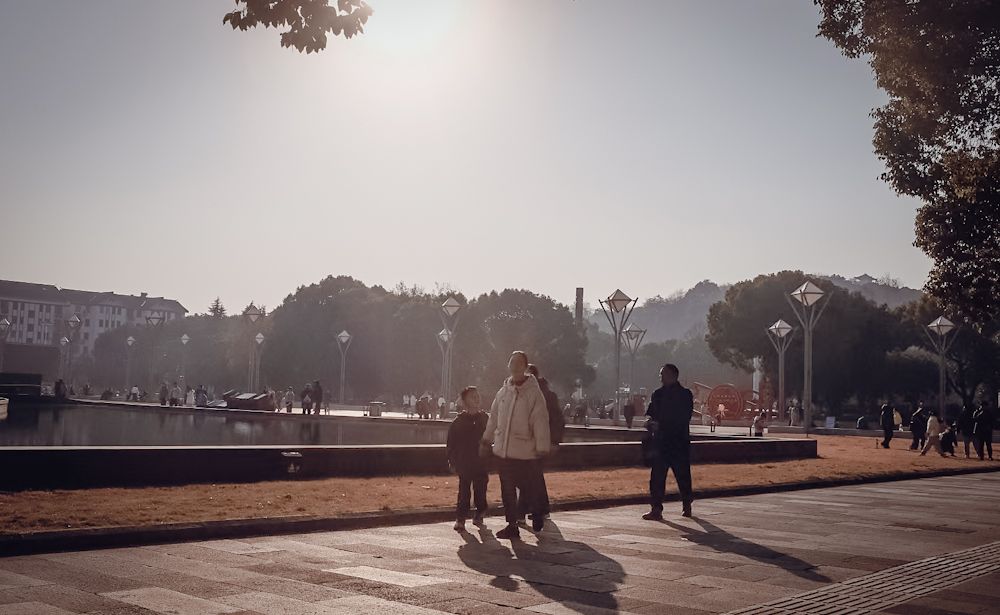
A Tale of Two Cameras

For me, photography is more than just the final image—it’s about the journey of capturing it. Any Lomography fan will agree: the process is as important as the outcome. When I shoot with the Fujifilm X100F, I appreciate the immediate feedback of seeing the image on the screen and knowing right away what I’ve captured. But with the Pentax ME Super, it’s a different experience. I have a rough idea of what the film will deliver, but the magic isn’t fully revealed until the film is developed. That anticipation is part of the charm.

For this comparison, I’ve chosen photographs from Northumberland. Its moody, windswept landscapes—places like Alnmouth and the Northumbrian moors—present the perfect canvas for both film and digital. The X100F’s Classic Chrome simulation delivers a retro, muted look, while Kodak Portra 160 film, shot through the Pentax, brings warmth and richness to the tones.

The Fujifilm X100F

he X100F has often been called a bridge between the analogue and digital worlds, and I tend to agree. It’s packed with modern features like autofocus and an electronic viewfinder (EVF), but the controls are refreshingly tactile, with dedicated dials for aperture, shutter speed, and ISO. For anyone with a background in film photography, this setup feels familiar and intuitive.

What sets the X100F apart for me, though, is its Classic Chrome film simulation. It offers a subdued color palette that echoes old film stock, perfect when I want a slightly desaturated, vintage aesthetic. Unlike some over-the-top digital filters, Classic Chrome feels organic and subtle—bringing out details in the shadows without overwhelming the shot with contrast.

The X100F Photos

The Pentax ME Super

On the other hand, the Pentax ME Super is all about slowing down. There’s no EVF, no digital screen, and definitely no autofocus. Instead, you rely on a split-prism focusing system and aperture-priority mode. It forces you to be deliberate with each shot, a process that I find incredibly satisfying.

You’ll often hear film photographers talk about being more “in the moment” when shooting on film, and that’s exactly how I feel with the ME Super. The process of carefully composing each shot, setting exposure manually, and waiting for the film to be developed encourages patience and thoughtfulness.

For this outing, I paired the ME Super with Kodak Portra 160, a film that’s become known for its natural skin tones and soft, warm colors. Paired with the 50mm f/1.7 lens, this combination creates images with that unmistakable film character—shallow depth of field, soft highlights, and rich colors.

Lenses and Sensor Size

One of the most noticeable technical differences between these two cameras is their lenses and sensor sizes. The X100F features a 35mm equivalent f/2.0 fixed lens, while I usually use the 50mm f/1.7 on the Pentax. On the sensor front, the X100F has an APS-C crop sensor, giving it a narrower field of view compared to the full-frame 35mm film in the Pentax.

This technical difference goes beyond field of view. The Pentax ME Super has fixed ISO based on the film I choose, so I need to plan ahead for the lighting conditions I’ll be working in. In contrast, the X100F allows me to adjust ISO on the fly, providing flexibility in rapidly changing environments. This is something digital photographers have come to rely on, and it’s undeniably convenient when shooting in variable light.

The Pentax ME Super photos

Comparing the Images

Now, the big question: which is better, the Pentax ME Super or the Fujifilm X100F? Honestly, neither. They’re different tools for different purposes. Whether you’re drawn to the organic feel of film or the convenience of digital, both formats offer something unique. And that’s the beauty of photography—there’s no one-size-fits-all approach.

The sideshow feature shots from both cameras. As you look at them, you might favour one look over the other. The film shots have a warmth and texture that digital sometimes struggles to replicate, while the digital photos are sharp, detailed, and offer instant gratification. But ultimately, this comes down to personal preference, not a matter of one being objectively better.

Final Thoughts

At the end of the day, a camera is just a tool for capturing a scene in a particular way. As long as the final image is pleasing to the eye, I’d say the job is done. So don’t limit yourself to just one format—if you haven’t tried shooting film, give it a go. If you’re a film photographer who’s hesitant to try digital, maybe the X100F will ease that transition with its analogue-like feel.
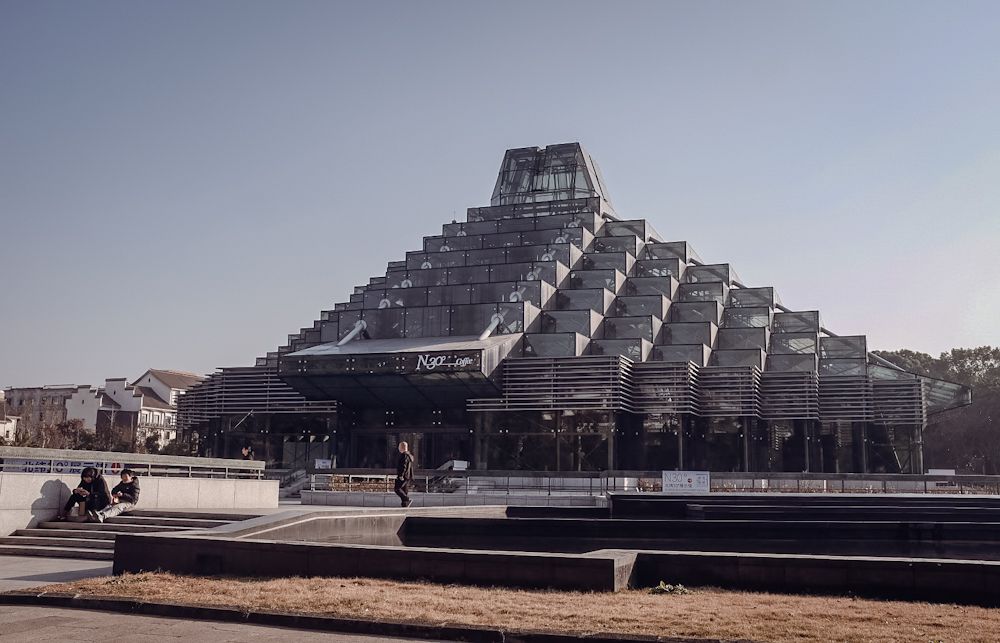
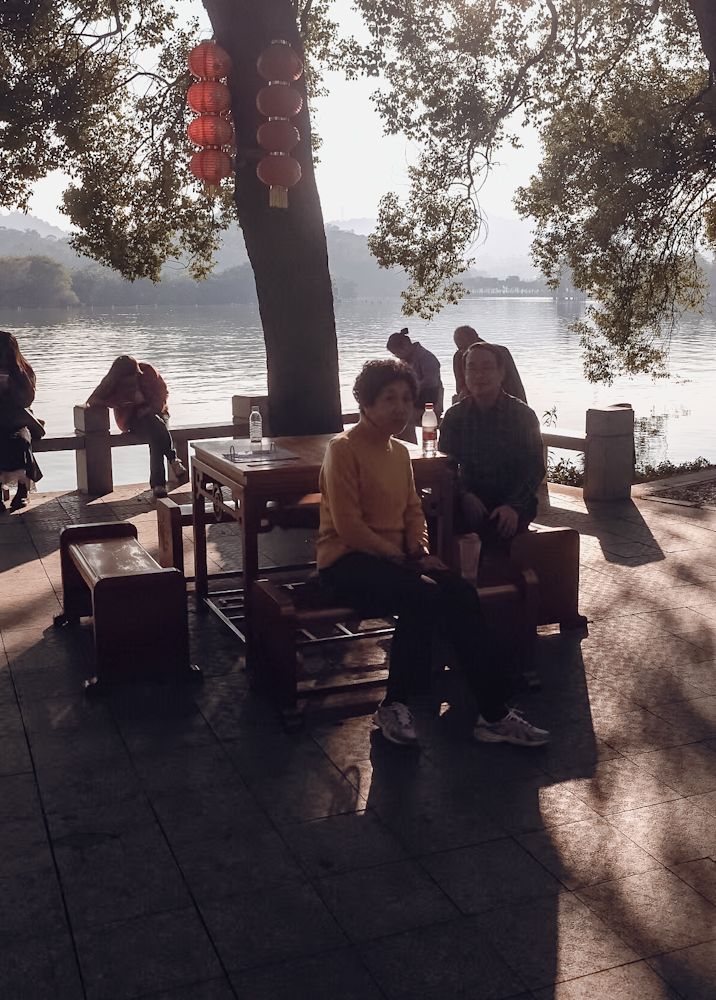
More than anything, I encourage you to enjoy the process, whether it’s with film, digital, or both. Get out there, take your time, and remember that photography isn’t just about the images you capture—it’s about the experience.


Post Scriptum:
For those of you new to my blog, welcome! I cover everything from camera reviews to photography tips and techniques. Whether you’re a seasoned photographer or just starting out, there’s something here for you. Feel free to leave your thoughts or questions in the comments below—I’d love to hear from you!

The Fujifilm X-T2: A 2024 Perspective – Is It Still Worth It?


My Love Affair with the X100F (and a Cuppa Tea)

It’s no secret to the regular readers of IJM Photography that I have a great fondness, deep affection, nearing on obsession with my Fujifilm X100F. It’s a great little camera that gets me excited whenever I take it out of my camera bag. But, Dear Reader, what does this have to do with the Fujifilm X-T2? Well, they’re both manufactured by Fuji, they both have an “X” in their name, and I have a deep affection for a nice cup of tea. Not the same T? Ah well…

Similarities and Differences: A Tale of Two X’s

I’ll talk about the differences and similarities between the two cameras and why I thought the X-T2 was a useful and complementary acquisition. We’ll look at not just the specs but also the rather similar way both cameras handle.

  • Sensor and Image Quality: Both use the same 24-megapixel sensor with an anti-aliasing filter, and offer an ISO range from 200 to 128000.
  • Screen and Viewfinder: The X100F has a fixed screen, while the X-T2 boasts a tilting one. Both share the same excellent viewfinder.
  • Performance: The X100F shoots at 8 fps while the X-T2 goes up to 14 fps. For video, the X100F is limited to Full HD, while the X-T2 offers 4K and can shoot at 120 fps.
  • Connectivity: Both cameras have built-in wireless capabilities.
  • Weight: The X100F is lighter at 469g, while the X-T2 is slightly heavier at 507g.
The Lens Factor (and Weather Sealing, Too!)

The main difference? The lens. The X100F has a fixed 23mm (35mm equivalent) f/2.0 lens, while the X-T2 can take the entire range of X-mount lenses. Quite a big difference, indeed. The X-T2 also has the added bonus of weather sealing!

Why Buy a 4-Year-Old Camera in 2020?

Because at the time, I could. It was the logical acquisition and complement to my X100F. Did I mention it also uses the same batteries? I still have the same, beloved-by-many film simulations, and while not as numerous as later models, they are more than enough for me!

My first lens purchase was the 16mm (24mm equivalent) f/2.8 Fuji lens, the perfect complement to the 35mm equivalent on the X100F. I later discovered TTArtisan and 7 Artisans, Chinese firms that make affordable manual focus lenses for the X-mount. I now have the 35mm (50mm equivalent) f/1.2 and 58mm (85mm equivalent) f/1.4, and the fish eye 7mm F2.8 lenses from both companies, both costing a fraction of the autofocus Fuji lenses. The only concession I made to Fuji was later purchasing the 18-55mm (24-70mm equivalent) f/2.8 autofocus kit lens.

Value for Money: The X-T2’s Sweet Spot in 2024

The fact that I bought it second-hand was also a contributing factor. Does it have as many megapixels as the more modern X-T5? No. But does it have enough? Yes! Does it have the same specs as the X-T5? No. But does it have enough? Yes. Can you see a pattern developing here?

For the amount of money spent, I think I have enough cameras for my buck. And that is the crux of the argument for acquiring a now 8-year-old camera in 2024. Is it the very best money can buy? No. But if you’re an amateur like myself, you generally don’t need the specs that manufacturers and those nice men in camera shops will try to tell you you need. 24 megapixels is more than enough for printing even 20″ by 30″ (500mm x 760mm) sized images.

I have just looked at mpb.com for you and have found XT2 bodies from 487€ to 729€ depending on the condition. An X-mount lens will cost you anything from 104€ for a 35mm (50mm equivalent) F1.2 from 7 artisans to 279€ to 340€ for the 16mm (24mm equivalent) F2.8 fuji lens. So as you can see, it’s certainly cheaper than buying the latest models…

Conclusion: A Timeless Tool for the Passionate Photographer

In 2024, the Fujifilm X-T2 remains a compelling option for photographers seeking excellent image quality, classic handling, and a wealth of creative possibilities. Its compact size, weather sealing, and extensive lens selection make it a versatile companion for various genres, from street photography to landscapes.

While newer models may boast more advanced features, the X-T2’s enduring appeal lies in its combination of performance, affordability, and the unique charm of Fujifilm’s X-Trans sensor and film simulations. For photographers who prioritise the essentials of image-making and value for money, the X-T2 continues to be a worthy contender in the ever-evolving world of digital cameras.

If you’re looking for a camera that delivers exceptional results without breaking the bank, the used market might just hold the perfect X-T2 for you. And who knows, you might even discover a newfound appreciation for a slightly older camera that still has plenty to offer in 2024 and beyond.

Post Scriptum

This camera is also capable of 4K video. And I’m using it at work for making videos for training new staff. It is certainly lighter than my Canon 6D Mark II, and I seem to be able to obtain a picture style that I like. It doesn’t have in-built image stabilisation. However, I use it on a tripod so that’s not an issue. And if ever I do decide to use the 18-55mm kit lens, I have image stabilisation in the lens.

I’ll see if I can’t find you an excerpt of the latest video…

And here it is…