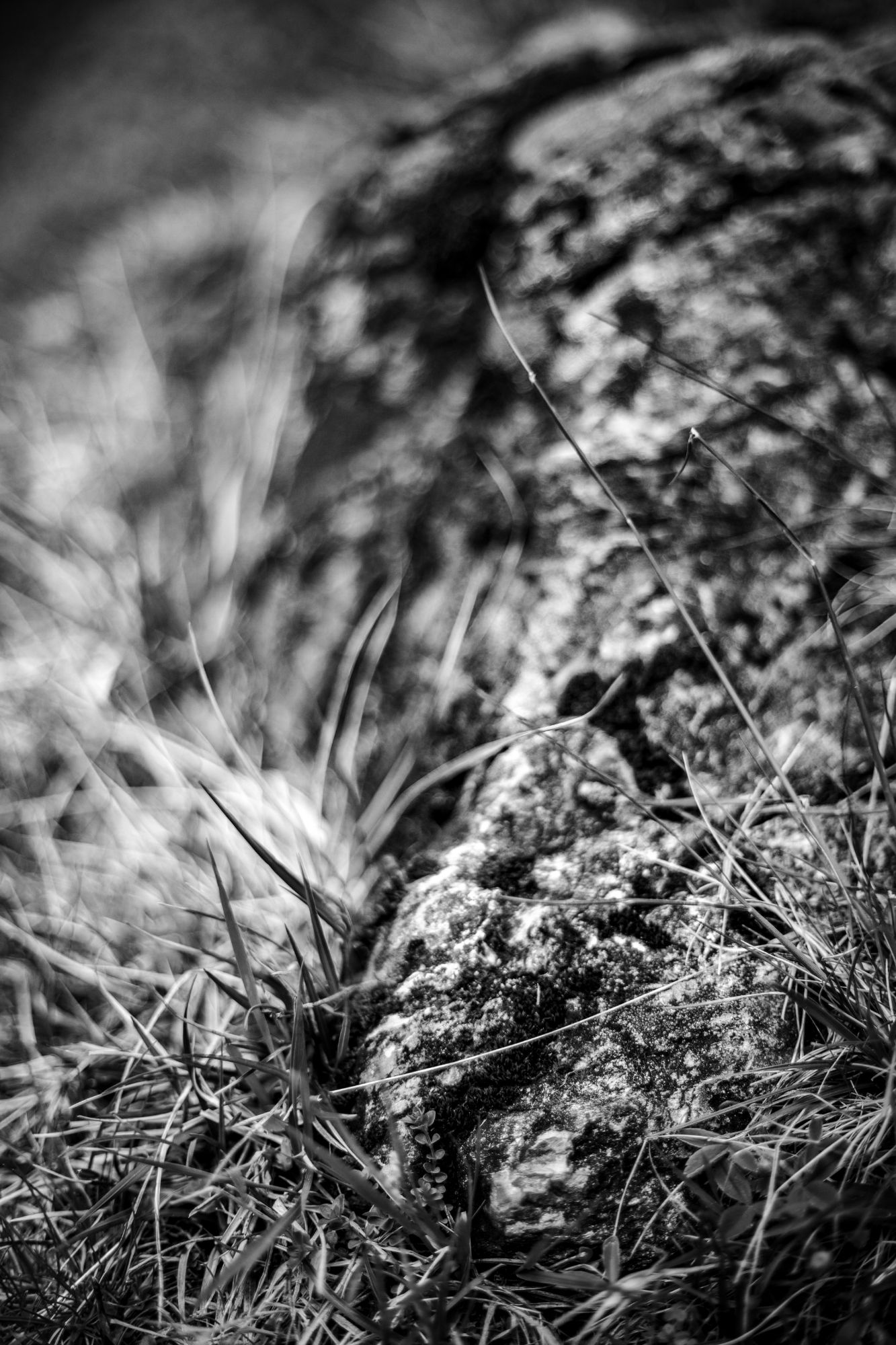
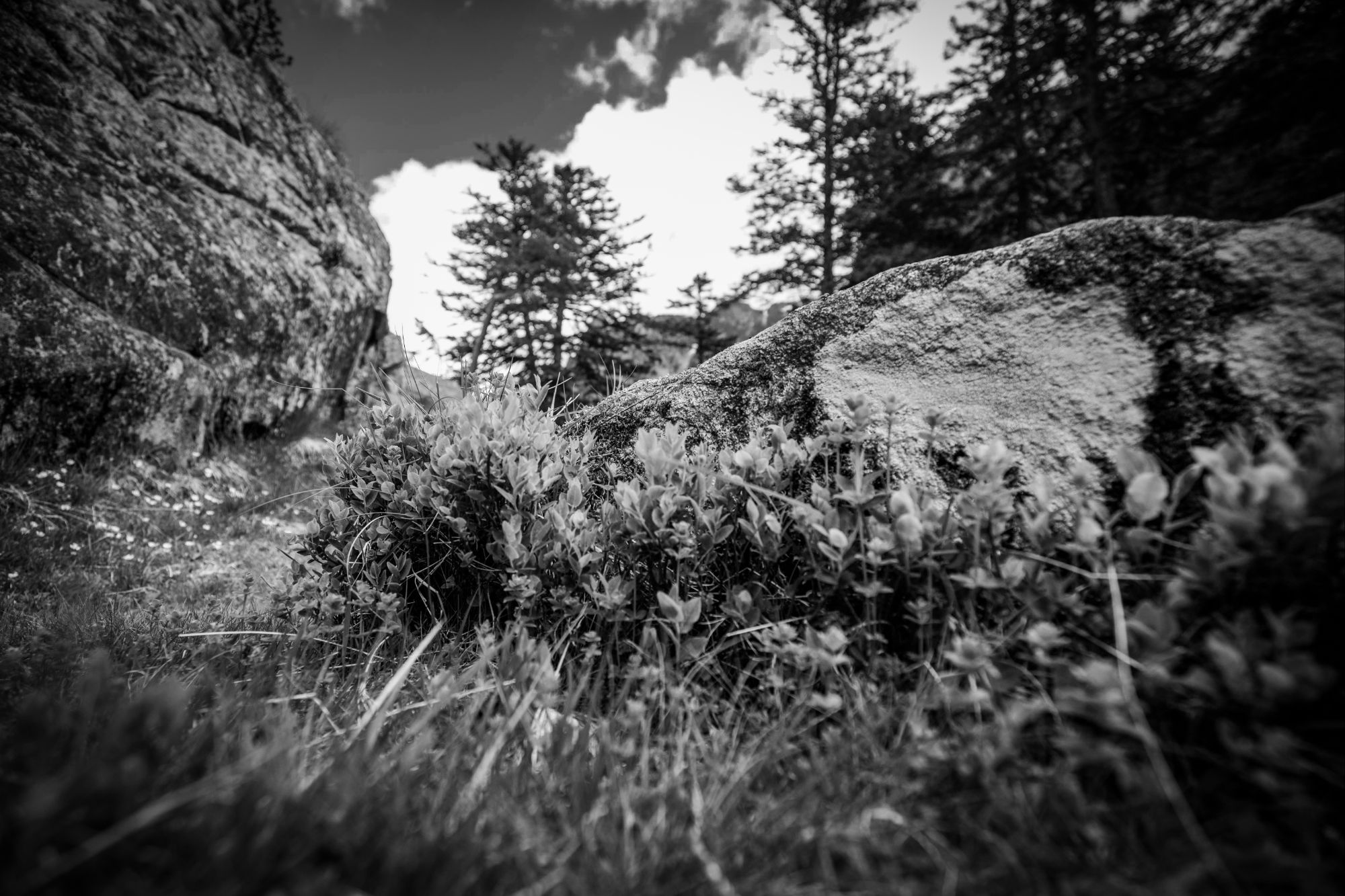
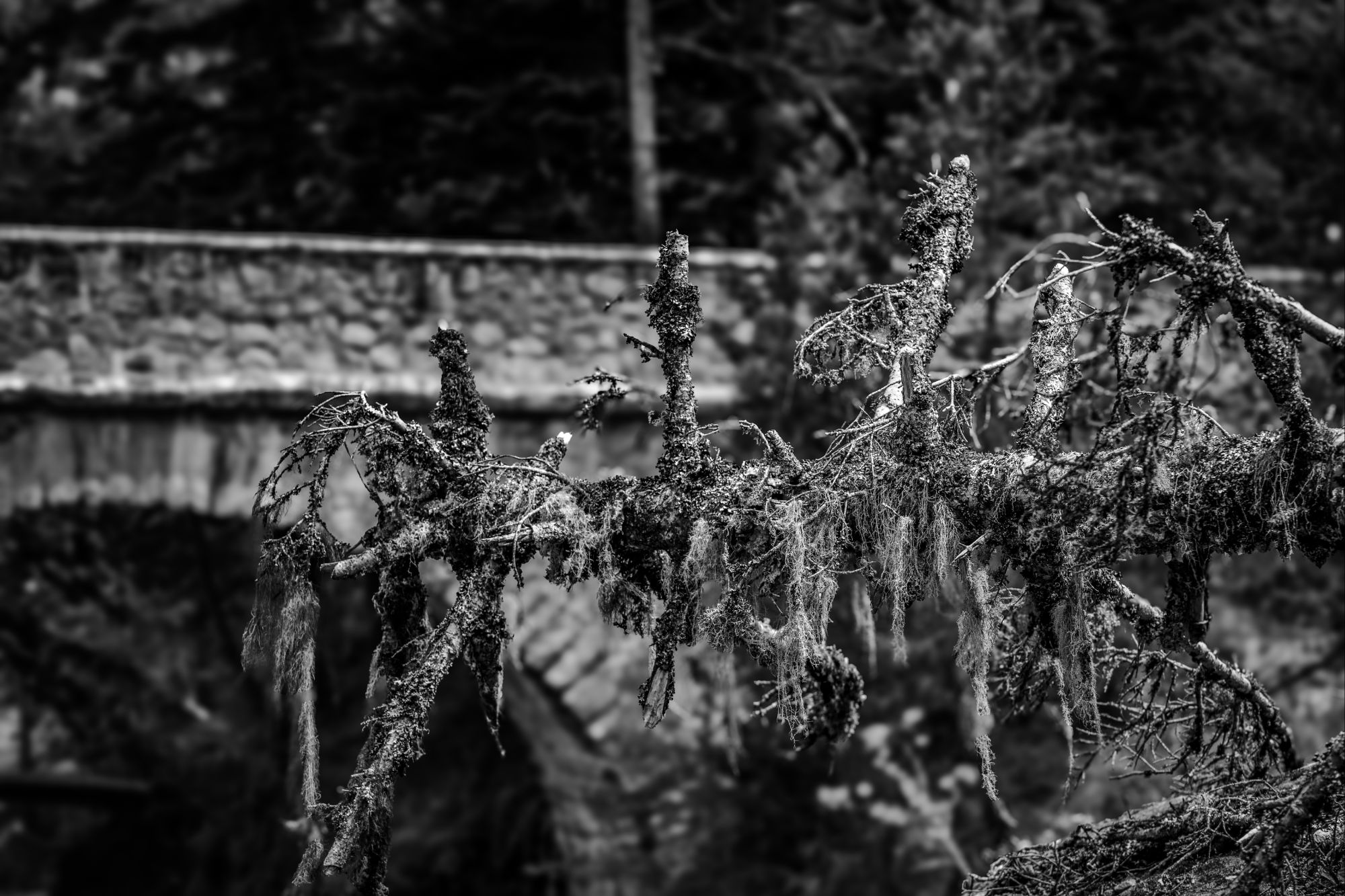
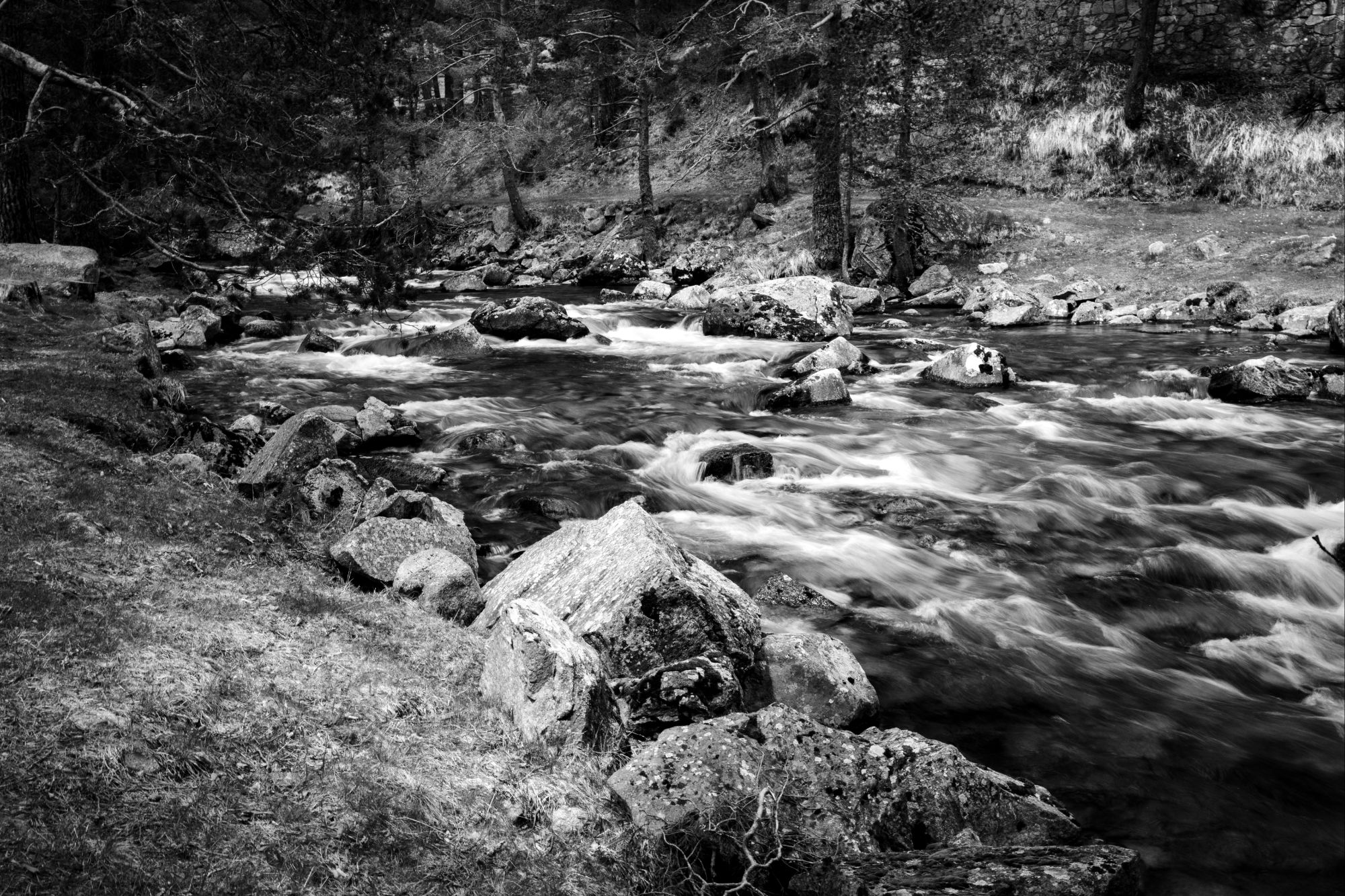
Making the Ordinary Less Ordinary: Rollei RPX 400 at Pont Caffino


Continuing on from my last article about shooting in sub-par lighting, I’ll introduce my next roll of film—RPX 400 from Rollei. I usually like this film. This roll also marked the first time I really tried to use the Tone Curve tool in Lightroom. I’m still getting used to it. But I thought that with RPX 400, I might be able to make some ordinary prints somewhat less ordinary.

After forty years of doing this, you’d think I’d have it all figured out. You’d think I’d have a fixed workflow, a set of rules, a way of knowing exactly what the result will be. But this roll reminded me otherwise. There’s always something new to learn, or something old to look at differently. And I’ve started to wonder if there’s something honest in admitting that, rather than pretending the process is ever truly finished.

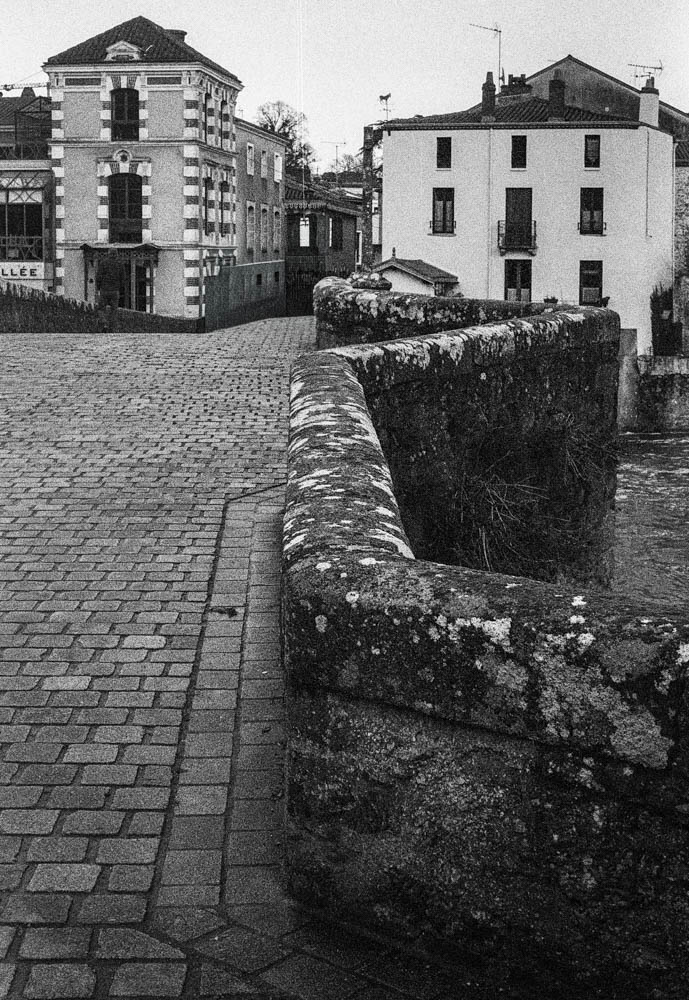
Pont Caffino on a February afternoon is exactly that kind of place. I’d never visited before, though I’d heard about it from other photographers. The sky was uniform. The light was flat. Nothing was going to jump out and grab me. So I loaded the Rollei, walked down to the river, and started looking.


The River

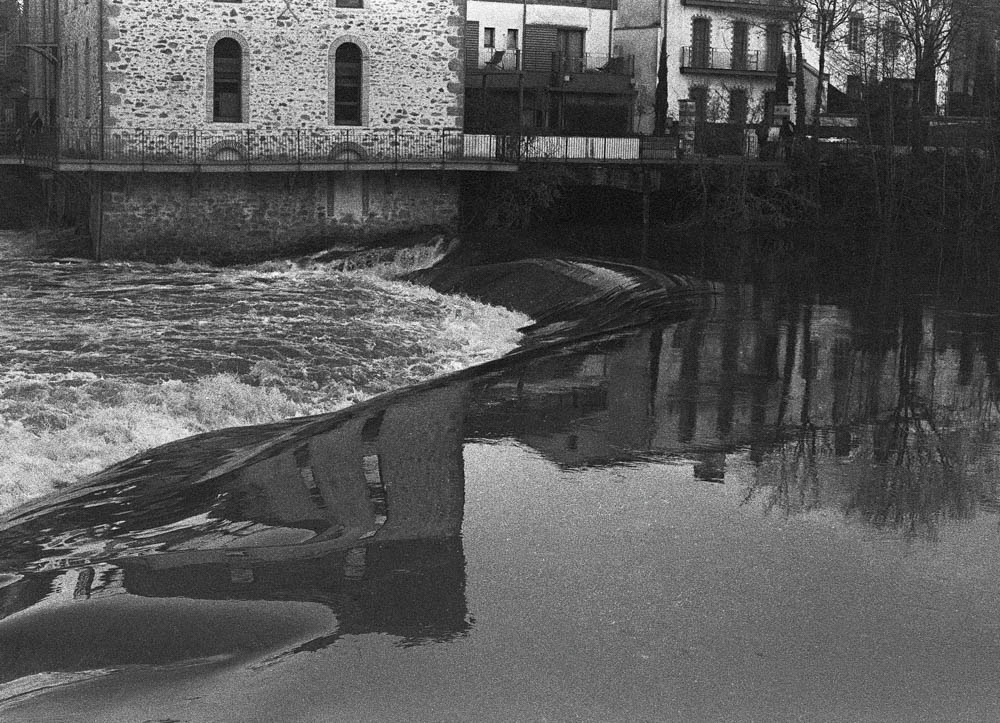
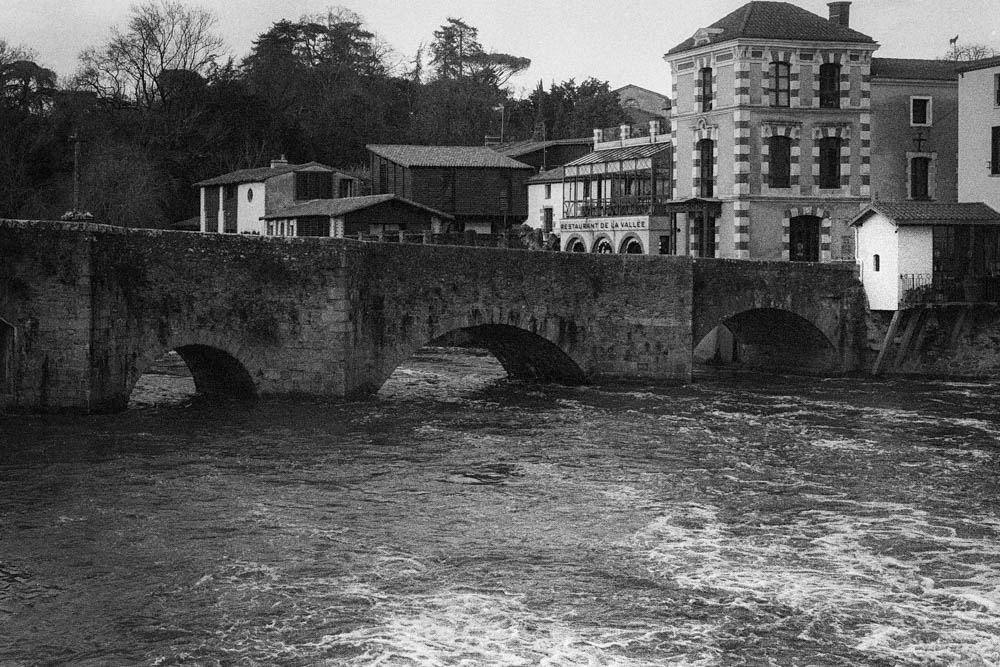
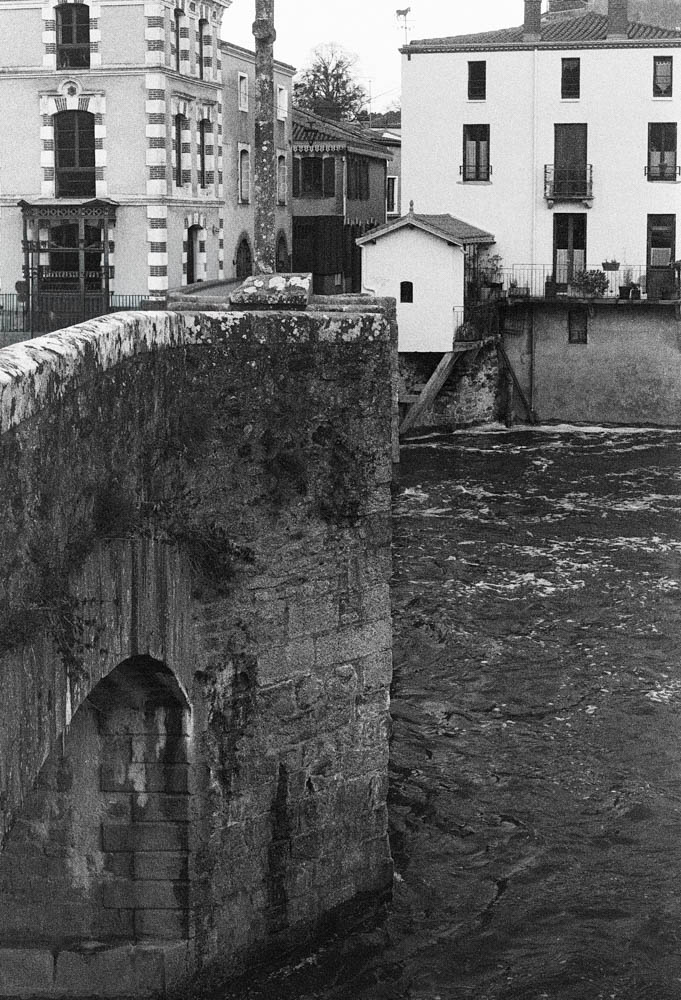
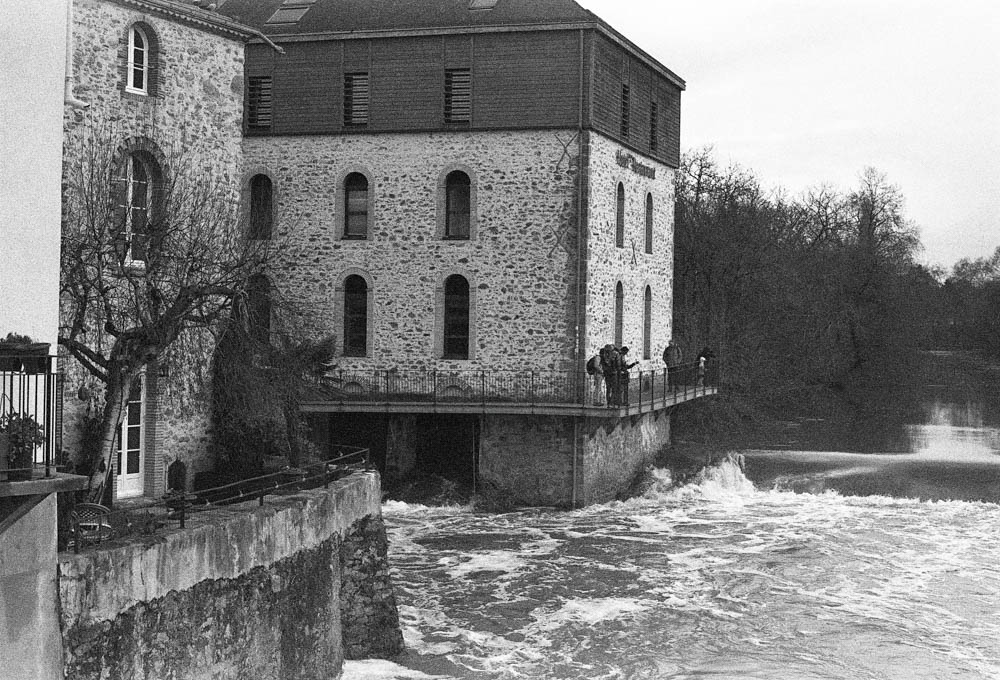
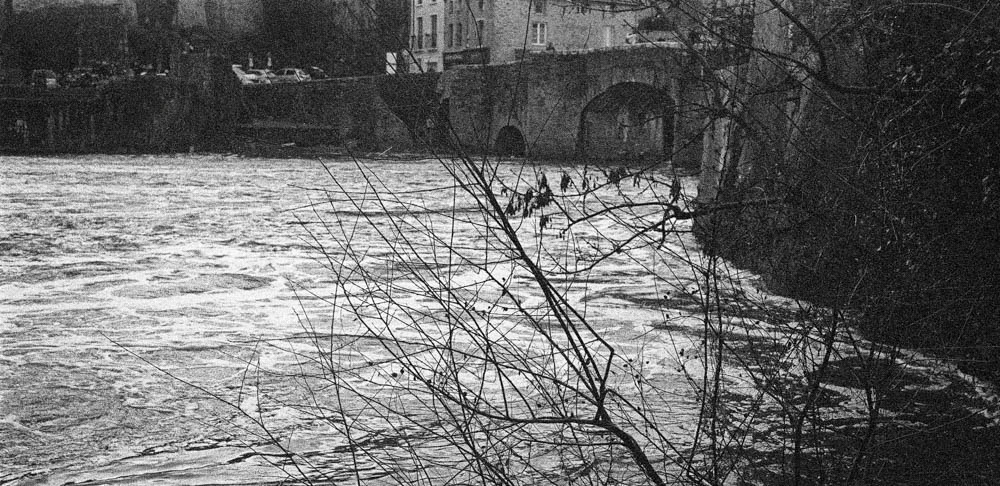
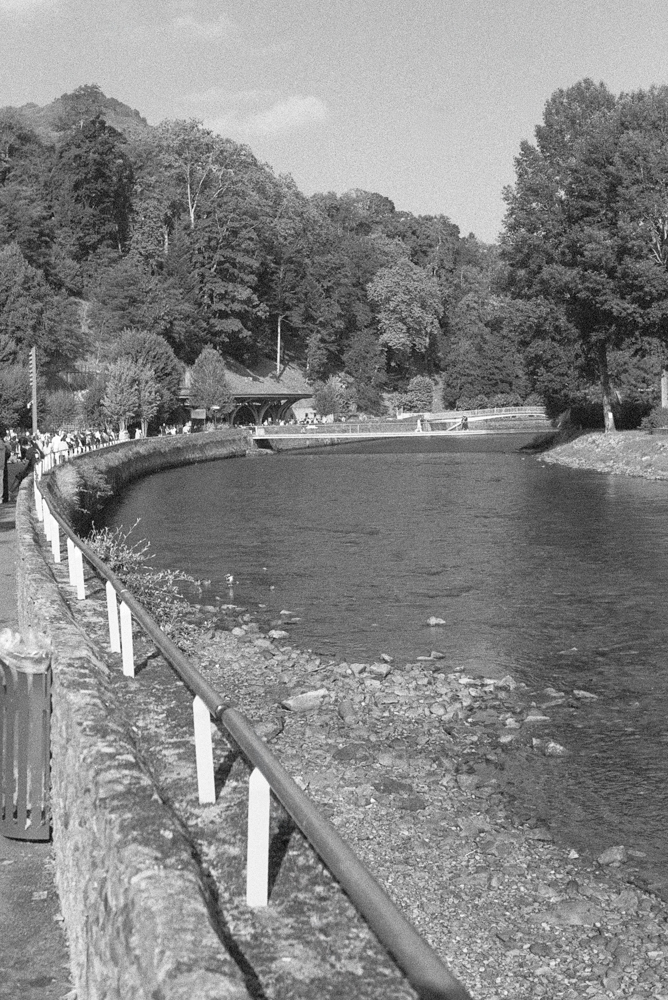
The water level was low—noticeably so. I knew this because not long before, I’d been at the Maine in St Hilaire de Loulay where the river had broken its banks completely. You couldn’t even see the weir there, just water spreading across the landscape. Here at Pont Caffino, the opposite was true. More of the granite banks showed through. More of the weir structure was exposed. The river looked different, and I found myself photographing it differently.
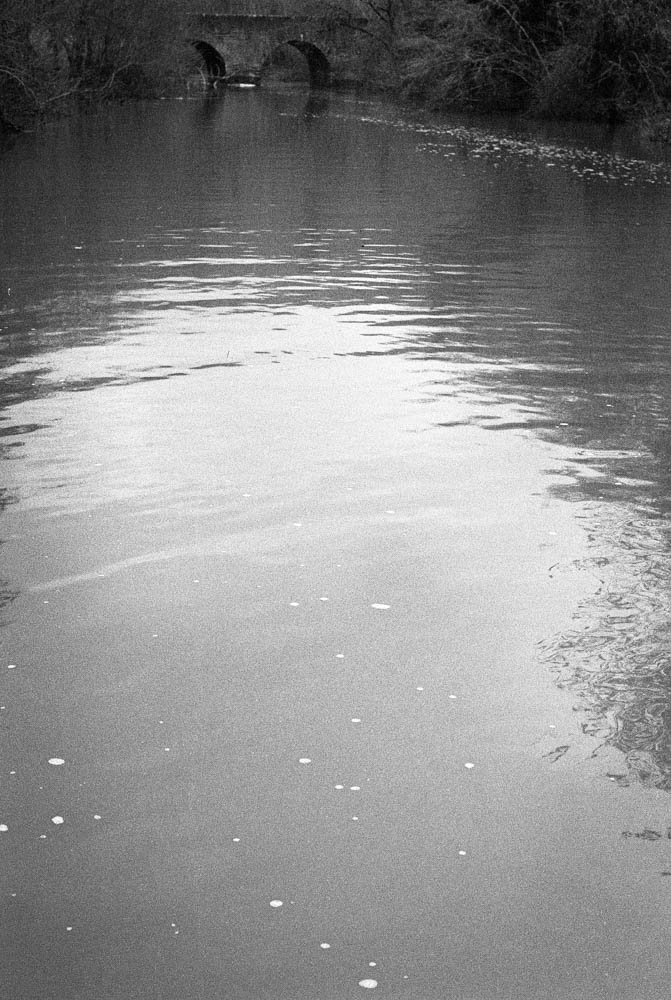
River surface with bridge in distance

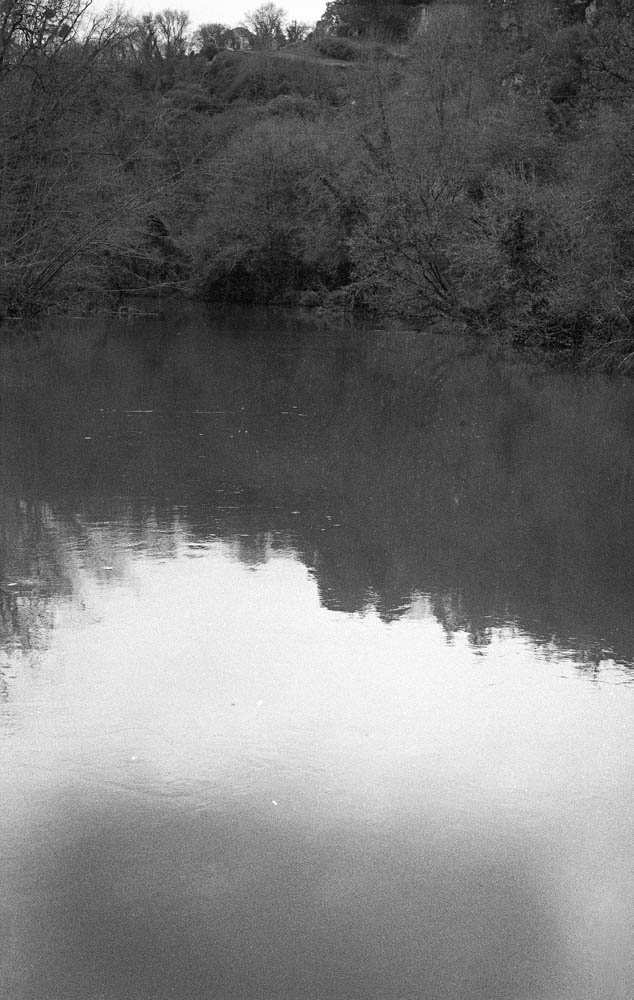
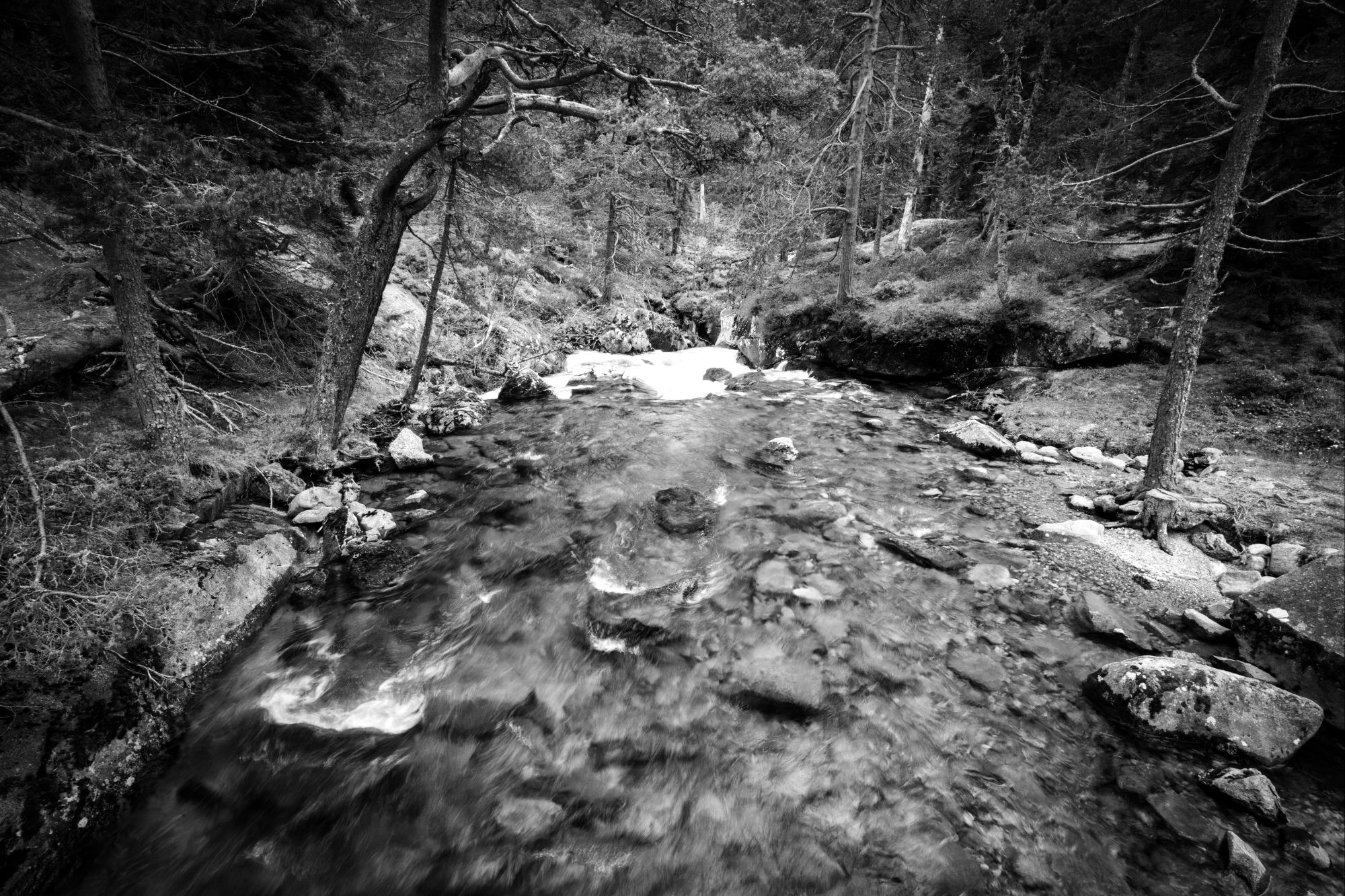
When the light is flat, water becomes less about reflection and more about texture. You notice the foam patterns, the subtle ripples, the way debris catches on submerged rocks. RPX 400 handled this beautifully—there’s a softness to the water that feels accurate to how it looked that day, not how I wished it looked.
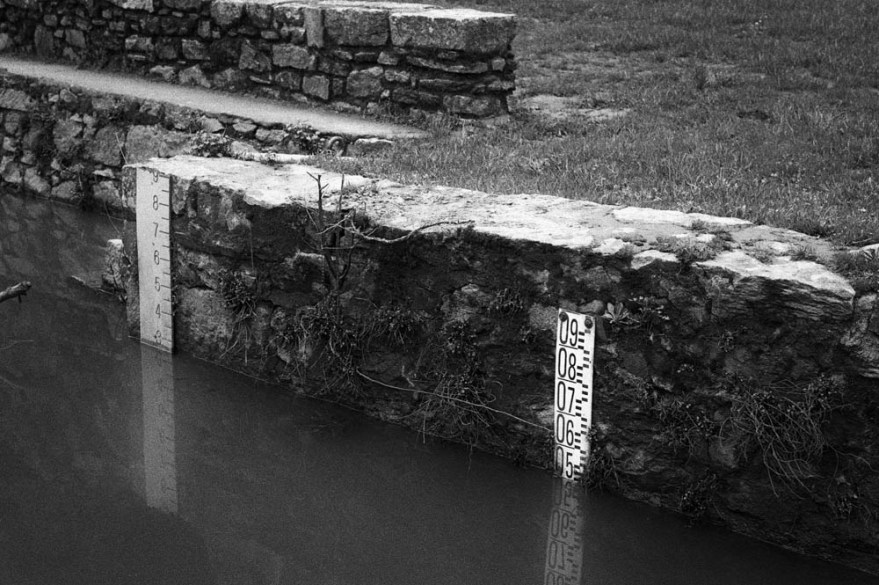
Water Level Gauges

The gauges became an unexpected focal point. They’re functional objects, not particularly beautiful on their own, but they tell the story of this place better than any dramatic landscape could. The reflection of the numbers in the still water added a compositional echo I didn’t plan but gladly kept.
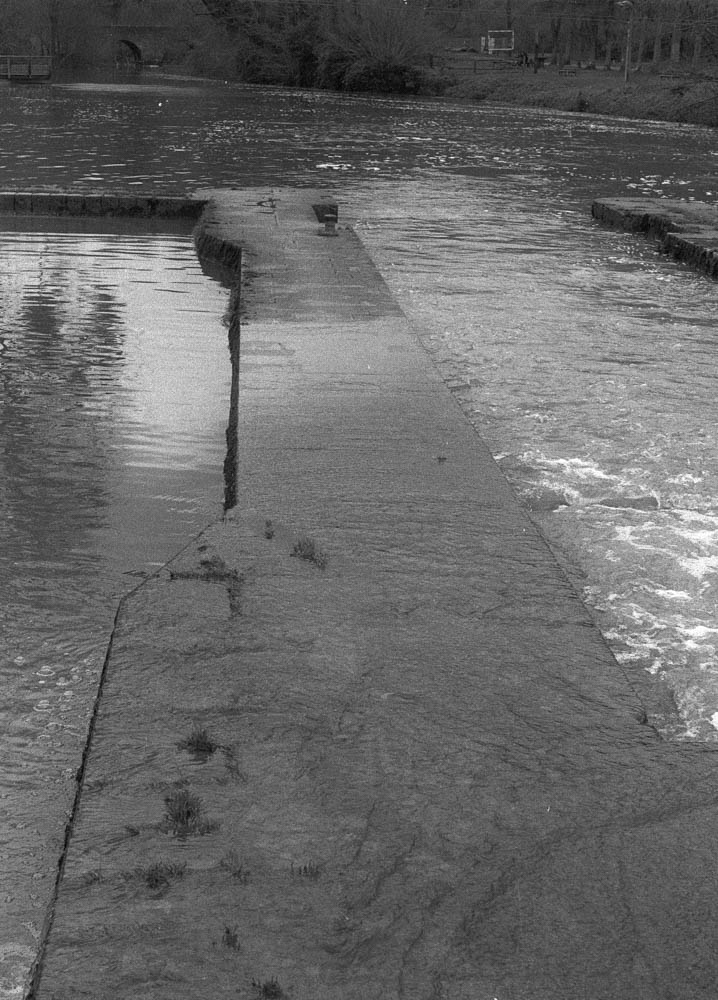
Weir Structure

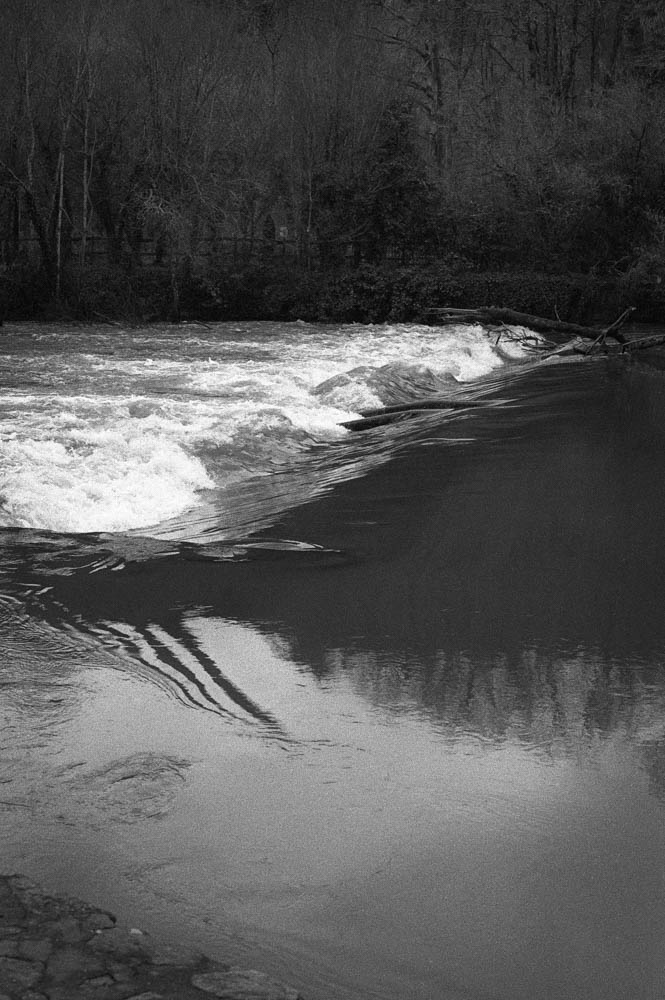
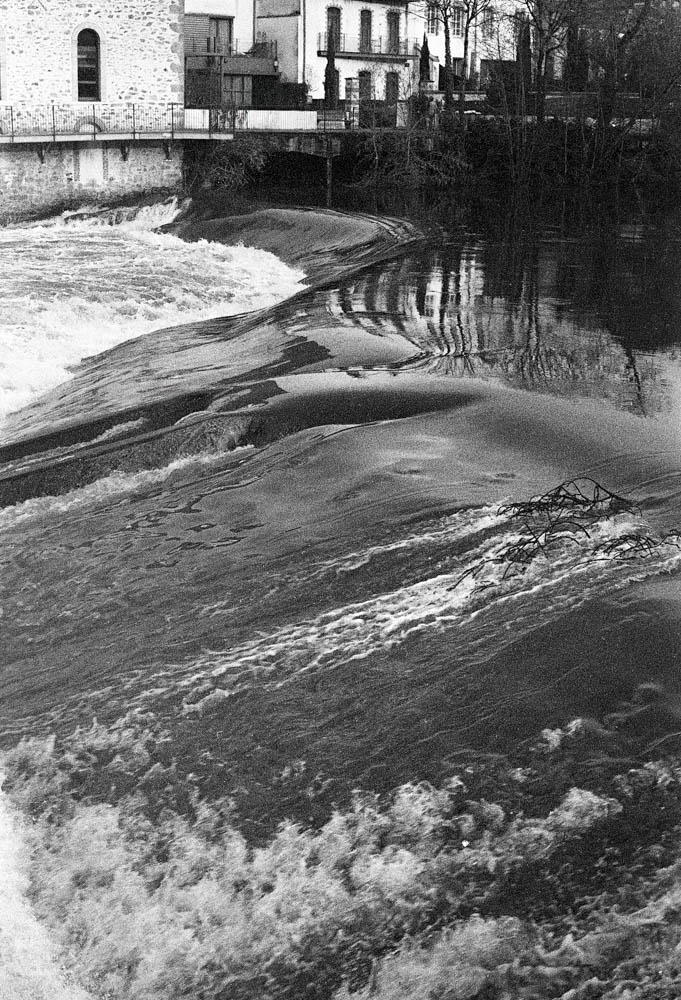
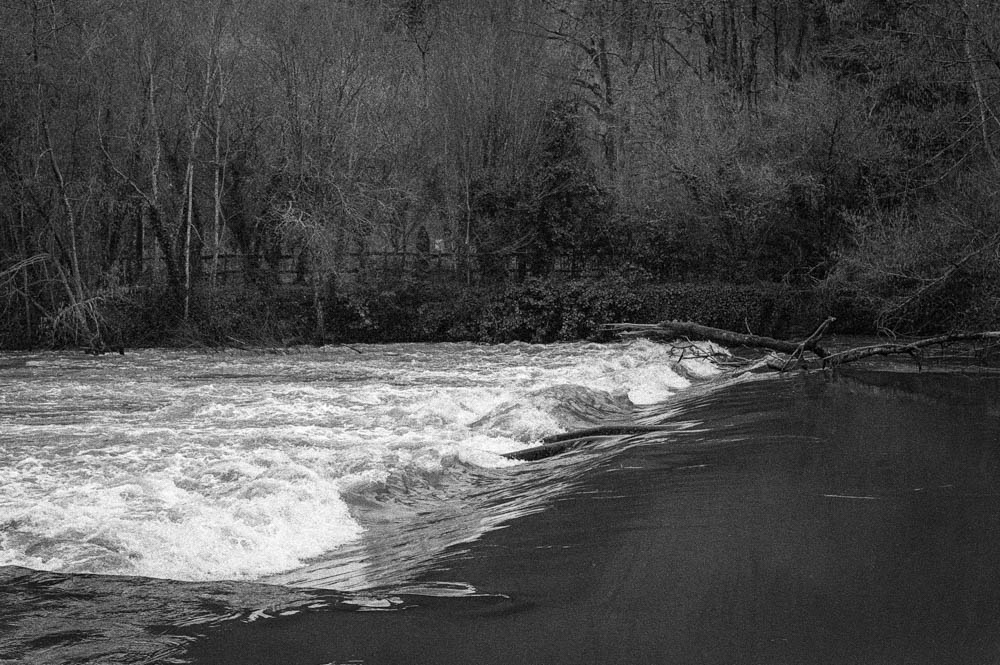
Where the water quickened over the weir, I had to be careful with exposure. Film handles highlights more forgivingly than digital, but I still metered conservatively. The fallen branch caught my eye—it’s the kind of detail you miss when you’re looking for the big shot, but it adds a diagonal line that pulls the frame together.

On editing the water: The challenge here was separation. When both sky and water are grey, they tend to merge into one another. I used subtle dodging to lift the highlights on the water’s surface, just enough to ensure the reflections didn’t disappear. Nothing dramatic. Just enough to guide the eye.


The Cliff Face

The granite cliffs that frame the Maine valley are dramatic even in bad light. They’re also popular with climbers, which adds a human element I hadn’t planned to capture but couldn’t ignore.
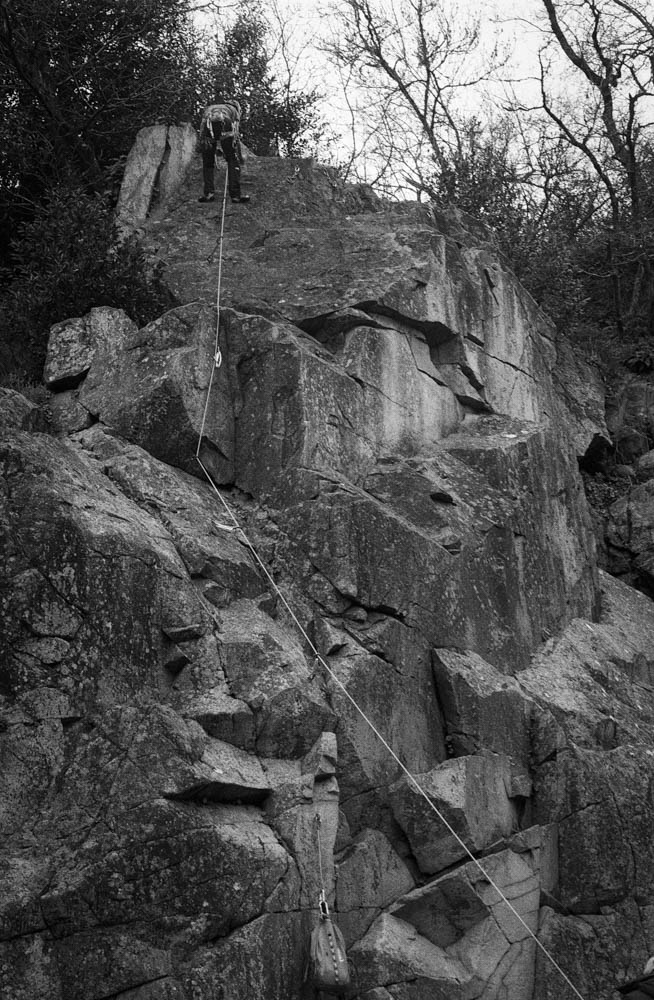
Climber on Granite Close-up

I haven’t shot rock faces like these on HP5+ before. The nearest I got to that was shooting in the Pyrenees mountains—different stone, different light, different everything. So I didn’t have a direct comparison to fall back on. What I noticed with RPX 400 is how it renders texture without aggression. Every crack and lichen patch comes through, but without the bite that HP5+ might have given. For this particular day, that suited the mood better.
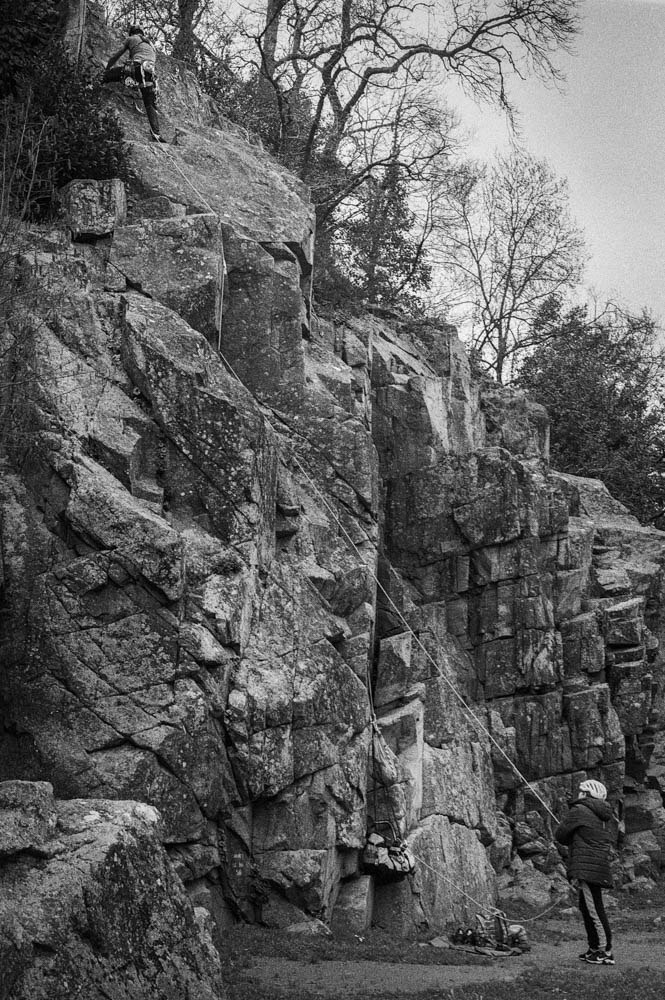
Climbing Scene Wider

Seeing the climber and belayer together reminded me that landscapes aren’t empty. They’re used. They’re lived in. The rope creates a diagonal line through the frame, and suddenly there’s narrative—someone is trusting someone else, and both are trusting the rock.

On editing the cliffs: This is where dodging and burning did the most work. Flat light makes rock faces look two-dimensional, like cardboard cutouts. I spent time burning in the crevices and dodging the raised surfaces, essentially repainting the light that wasn’t there when I pressed the shutter. It’s not about creating drama that didn’t exist. It’s about revealing the dimension that the light flattened.


Details

I’ve learned to slow down on days like this. When the big vistas aren’t cooperating, the small things start to speak.
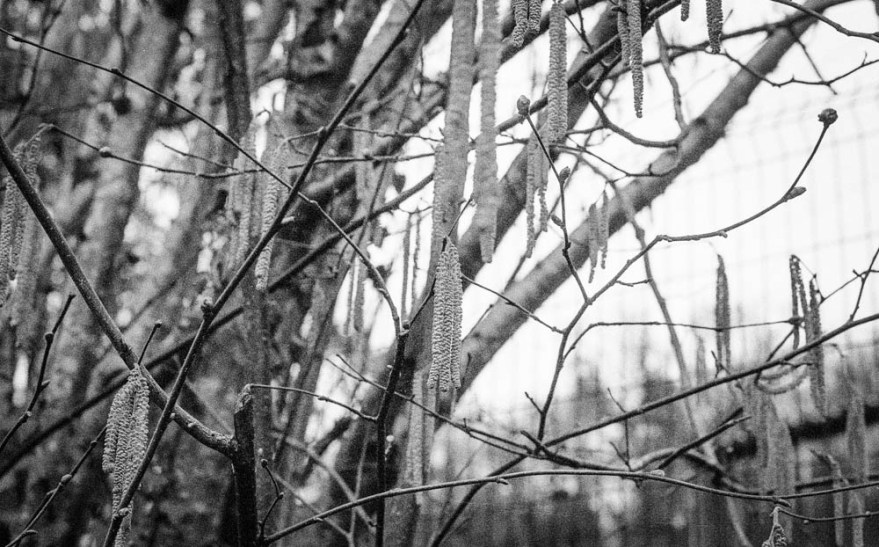
Catkins/Branches

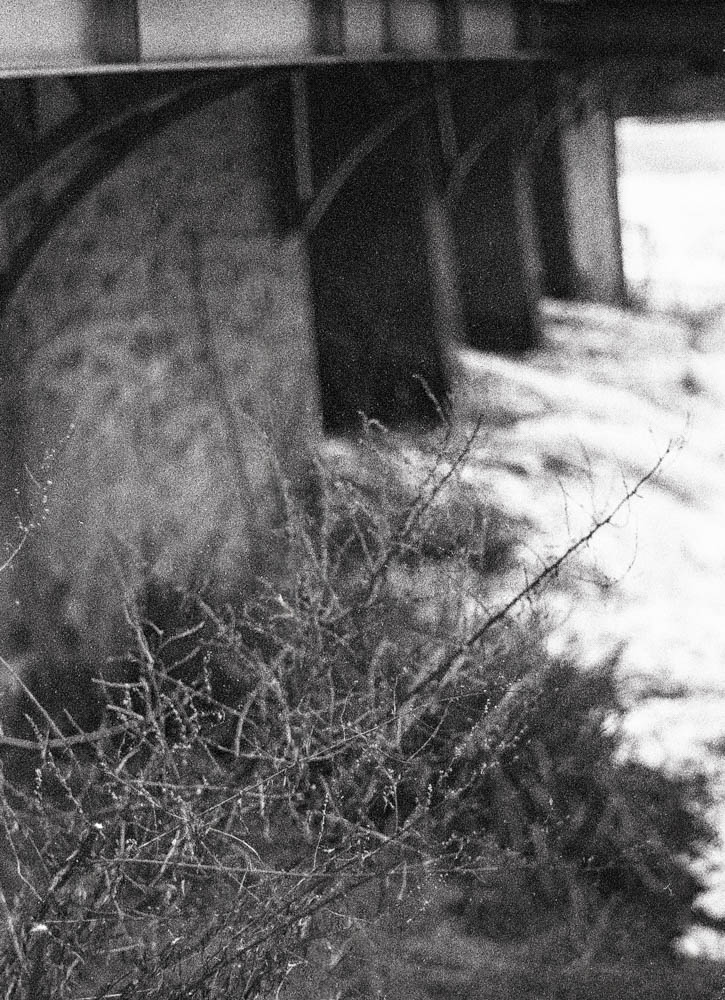
The catkins hanging from bare branches aren’t dramatic. They’re not even particularly interesting as a subject. But they caught the light in a way that felt worth capturing. The shallow depth of field creates a dreamy quality, and the grain—more noticeable here than in the landscapes—adds character rather than detracting from it.
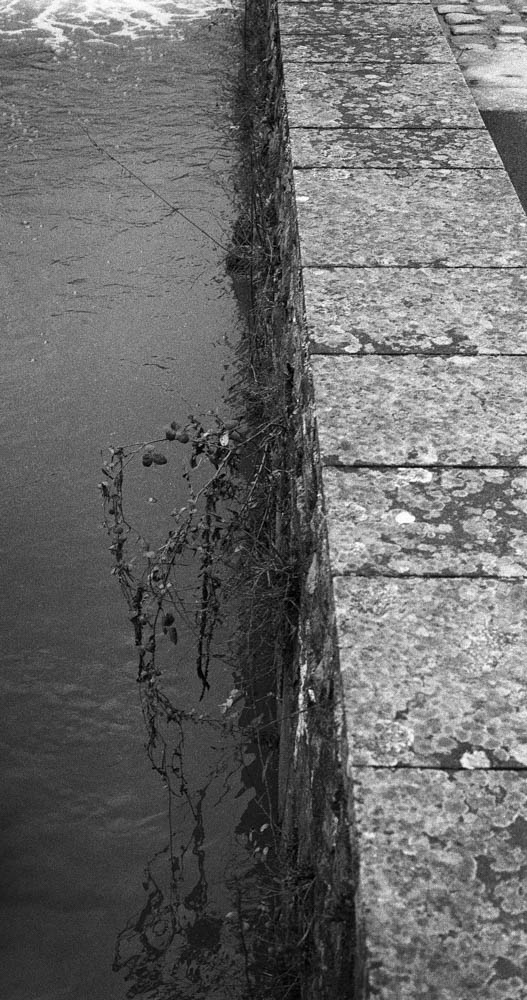
Water Edge Vegetation
Mechanical Detail

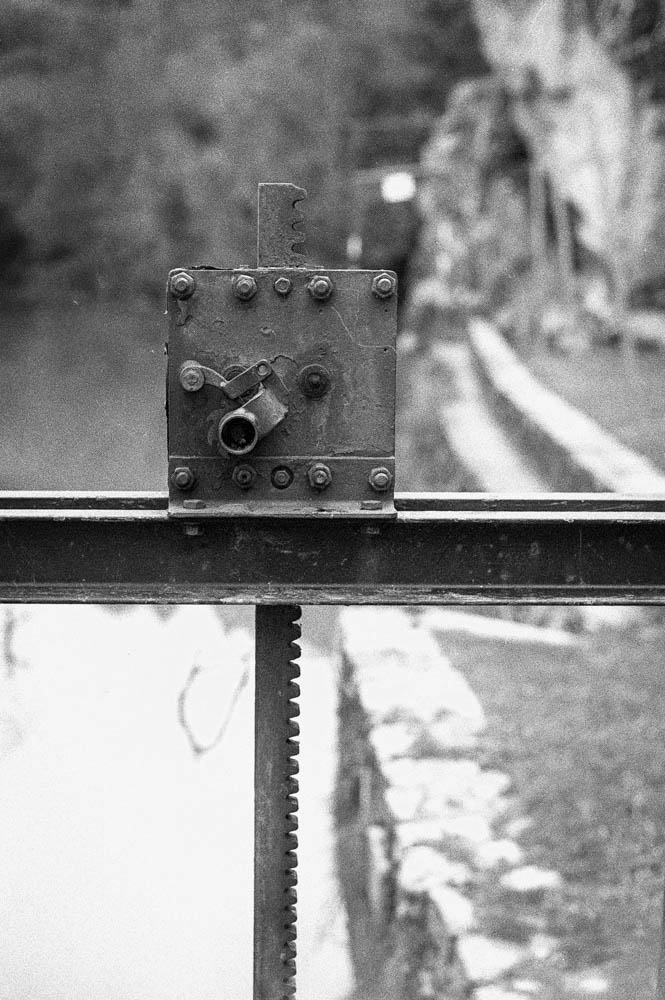
The mechanical detail—the lock gate mechanism, I think—was almost accidental. I was walking back from the viewpoint and noticed the bolts, the geared rack, the weathered metal. It’s the industrial counterpoint to all the natural elements. Sometimes you just stop and shoot because something looks like it has a story.

On editing the details: I was careful not to over-sharpen these. The natural grain of RPX 400 provided enough texture without needing digital enhancement. If anything, I pulled back on clarity rather than adding it. These images work because they’re soft, not in spite of it.


The Town & Viewing Platform

For the full perspective, I drove up to Château-Thébaud’s belvedere, “Le Porte-Vue.” It’s a striking piece of architecture—Corten steel extending 23 meters out at 45 meters above the river, designed by Emmanuel Ritz and inaugurated in 2020.
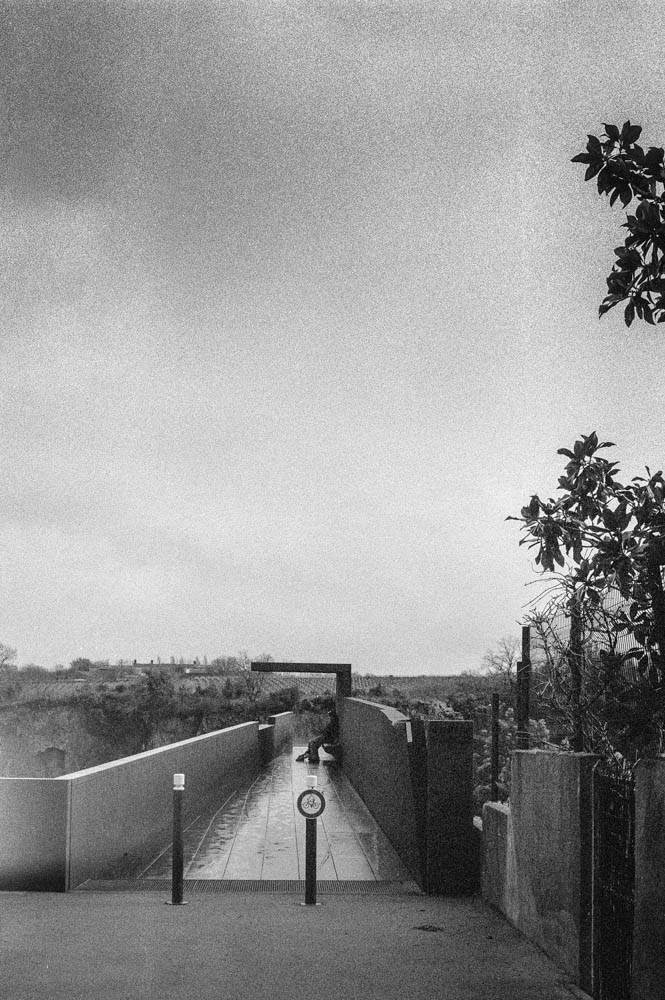
Walkway to Viewpoint

Walking out onto the platform, you feel the height. The steel underfoot, the railing at your side, the valley opening up below. There’s a figure in this shot—could be another photographer, could be anyone taking in the view. It adds scale and reminds you that you’re not alone in these places.
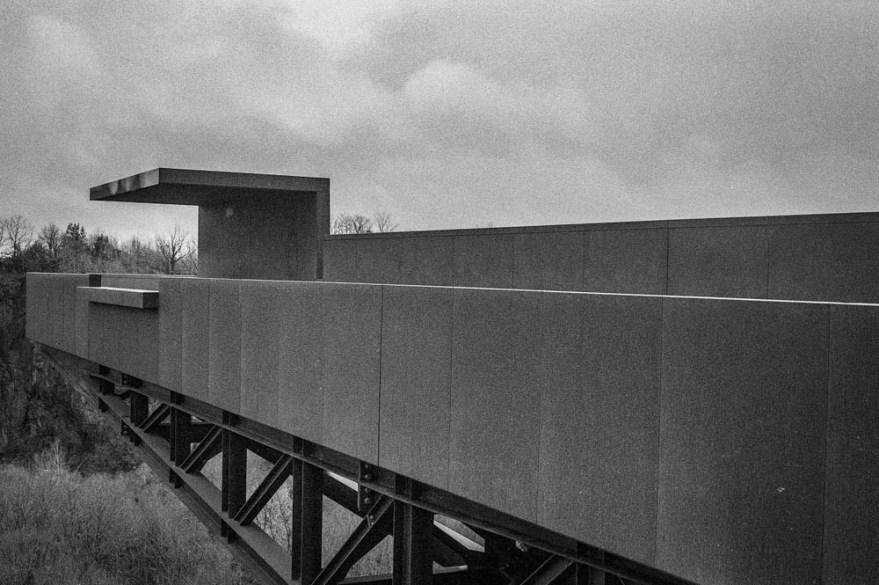
Le Porte-Vue Architecture
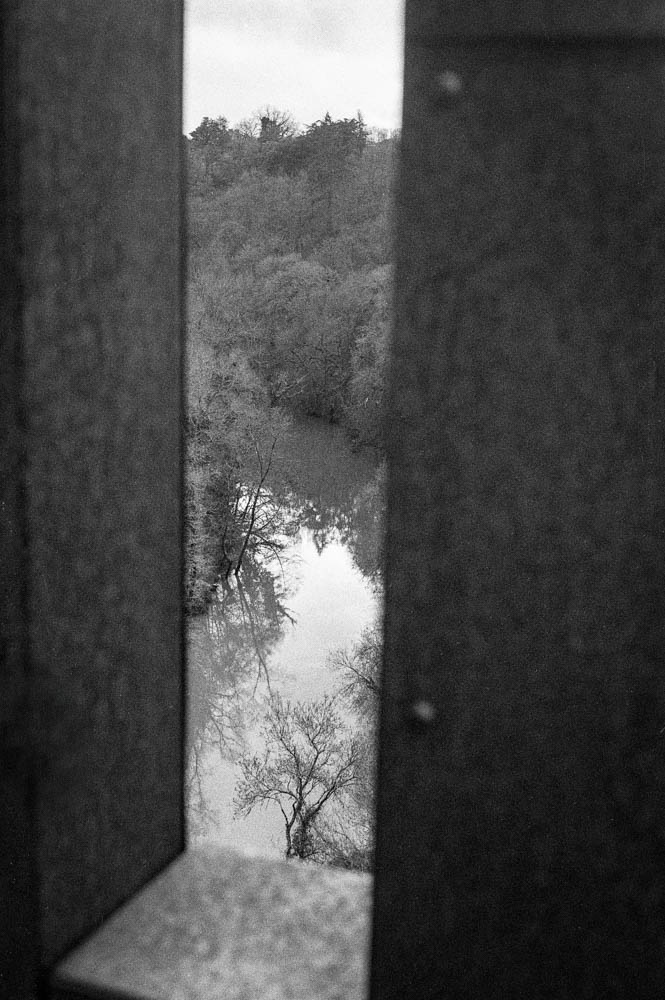
Framed View Through Steel

The Corten steel handled the flat light better than I expected. The weathered texture gave the film something to hold onto, and the geometric lines contrast nicely with the organic landscape beyond. The framed view through the steel structure became one of my favourite shots—it acknowledges that you’re looking from somewhere, not just capturing a scene.
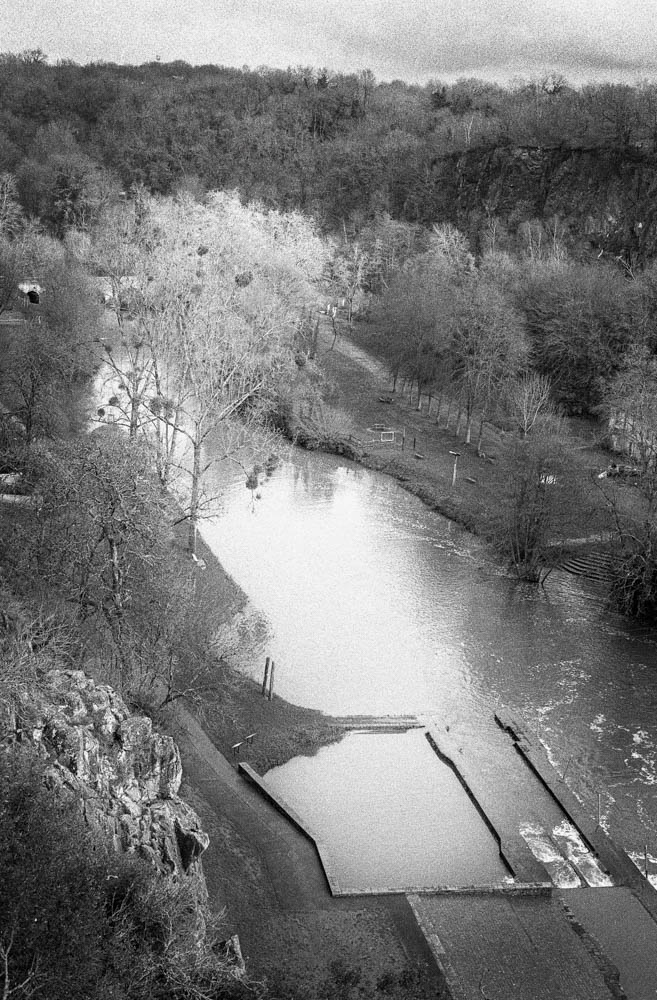
River Valley Overview

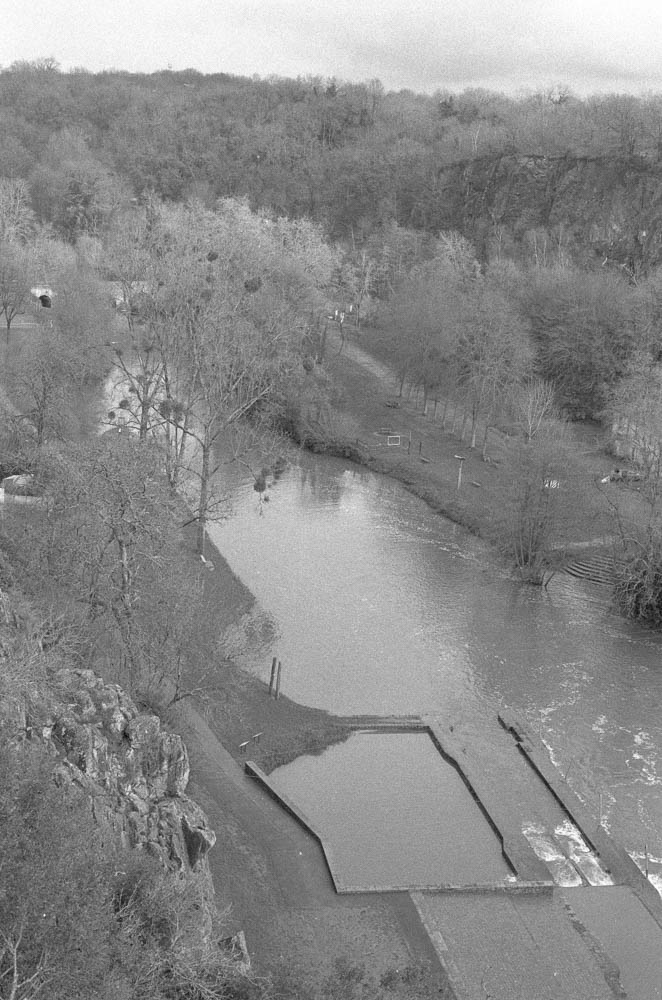
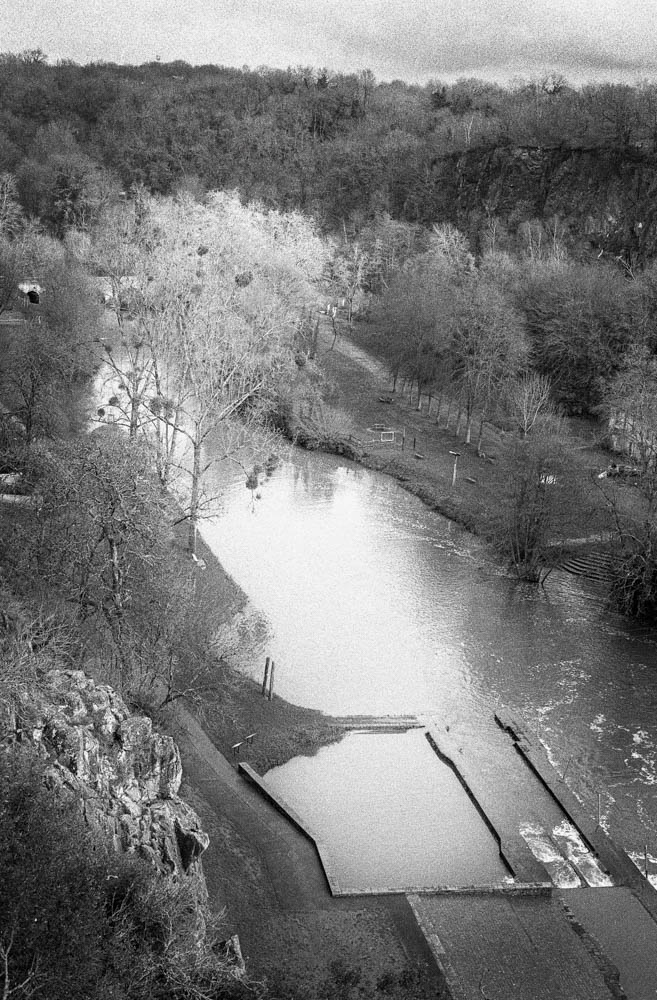
This is the establishing shot. The full Maine valley from above, all the elements visible at once. You can see the weir, the cliffs, the tree line. After seeing the Maine at St Hilaire de Loulay with water everywhere, this view felt almost spare. The lower levels exposed more of the structure than I’d imagined possible. It’s the image that ties everything together.
Church Steeple
Village Street

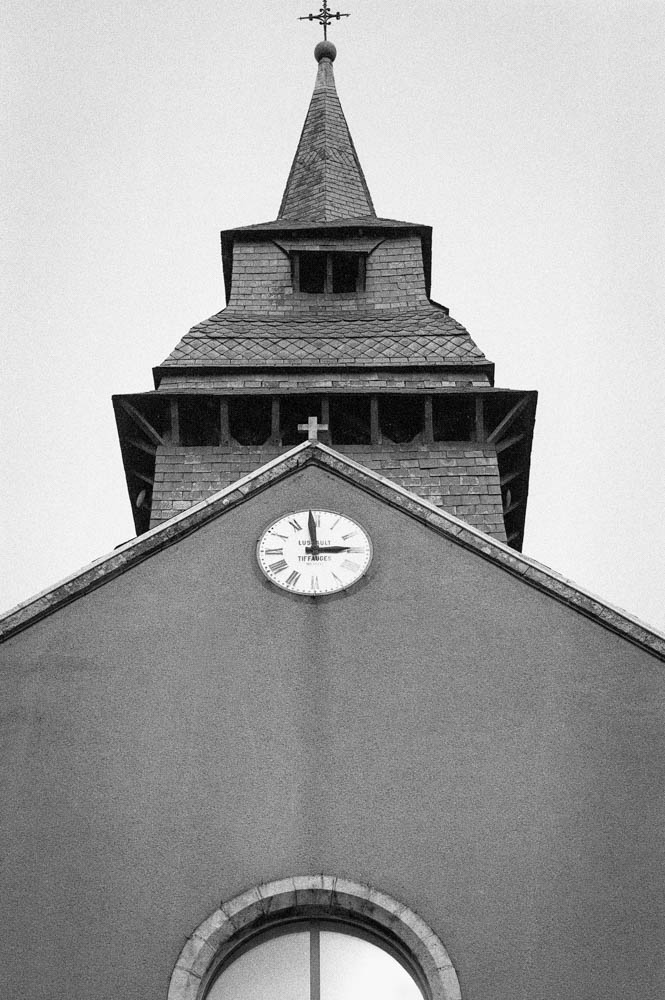
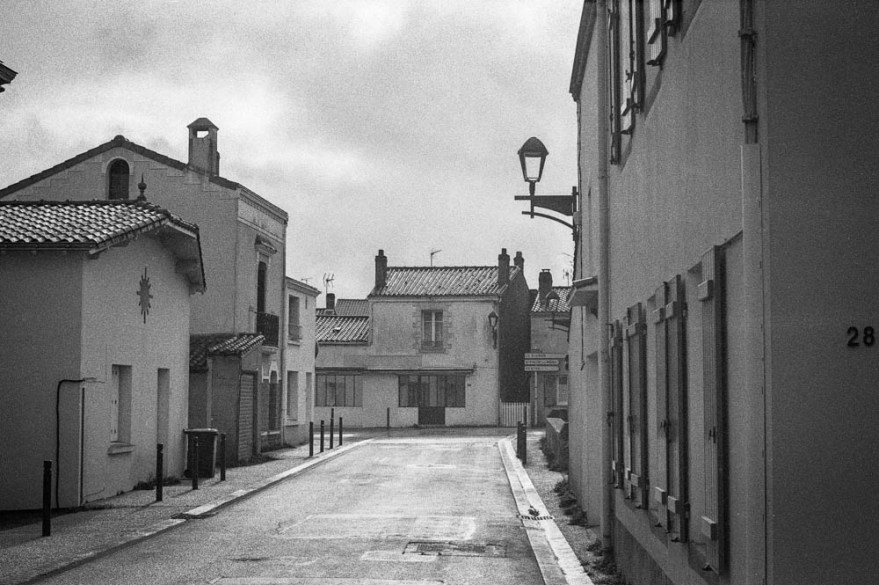
The village itself grounds the landscape. The church steeple adds a human landmark to the valley. The quiet street with its leading lines and the number “28” on the wall—these are accidental details that add authenticity. This isn’t a pristine wilderness. It’s a place where people live.

On editing the architecture: I focused on straightening lines and ensuring the steel texture didn’t look too smooth. The flat sky was retained intentionally. I could have blown it out or added artificial clouds, but that would have been dishonest. This is the light I had. This is the day I experienced.


On Making It Less Ordinary

Looking down at the river from Le Porte-Vue, I thought about what I was actually trying to do.

This was my first time at Pont Caffino, and I wasn’t sure what to expect. RPX 400 felt right for this quieter, more exposed version of the valley. But the film alone wasn’t enough. The scans came back flat—accurate, but lacking the dimension I remembered from being there. That’s where the work began.

In Lightroom, I used the Tone Curve to add a gentle S-shape, nothing aggressive. Just enough to add punch without crushing the blacks. I lifted the deepest shadows slightly to preserve the atmosphere. And then I spent time dodging and burning—manually painting light into the highlights of wet granite, holding back exposure in the shadows of riverbanks, guiding the viewer’s eye through texture and tone.

I’ve only started using the Tone Curve with this roll of film. I’m still getting used to it. But I’ve found it offers basic yet subtle controls, as does the dodging and burning. It’s easy to feel like this is cheating. Like you’re admitting the photograph wasn’t good enough straight from the scan. But I’ve started to think of it differently. Dodging and burning isn’t about fixing mistakes. It’s about translation. It’s about taking what you saw and felt and finding a way to communicate that to someone who wasn’t there.

There’s a danger in thinking you know everything. Usually, that’s when you stop seeing. When you assume the light will behave, or the film will respond the way it did last time, you miss what’s actually in front of you. I’d rather be the one still figuring out the Tone Curve after forty years than the one who thinks there’s nothing left to learn.

The result isn’t dramatic. It’s not the kind of image that stops you scrolling. But it felt honest—a quiet enhancement rather than a transformation. And on a grey February day at Pont Caffino, that’s exactly what I was after.


Technical Note

FilmRollei RPX 400
ISOShot at 400
CameraNikon FE
Lens50mm f/1.8 Nikkor
DevelopmentIlfosil 3 (1:9)
ScanningPlustek OpticFilm 8100

Lightroom Adjustments:

  • Tone Curve: Gentle S-curve, highlights lifted slightly, shadows preserved (First serious use of this tool for me)
  • Local Adjustments: Radial filters for dodging/burning on rock textures and water surfaces
  • Grain: No reduction applied
  • Sharpening: Minimal, applied selectively on details

Thanks for reading. If you’ve shot RPX 400 in similar conditions, I’d love to hear how you approached it.
A before and after shot

February 2026 — Clisson with the Nikon FE


Maybe I’m a little stubborn, just maybe, but I’m insisting on using my Nikon FE and for my health I have to get out. I had some Tri-X that needed using, and some HP5+ left over, so time to use it. And it does my mental health good too—getting out of the house despite the horrible light and rain.
“They” always say to go out in good light and use golden hour. We haven’t been blessed with good weather lately (understatement of the year contender 2026), and I always say just go out anyway and do it.
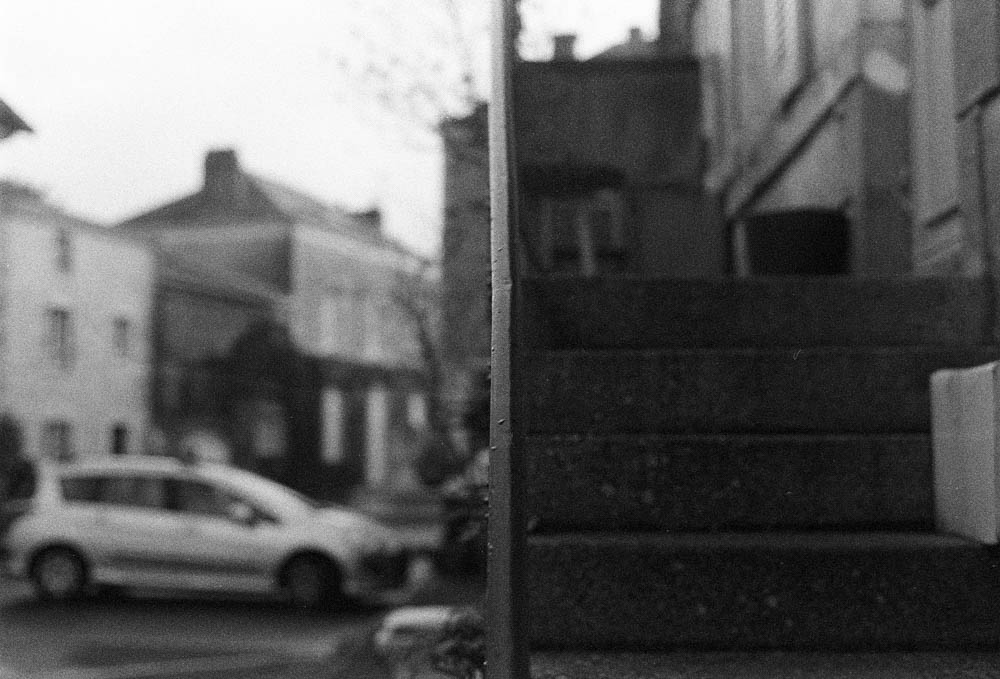
I shot two rolls that afternoon—72 frames total. Tri-X and HP5+, both at box speed. No pushing. I developed them in Fomadon LQN because it handles flat light cleanly: shadows stay defined, grain doesn’t get muddy even when the sky gives you nothing. When I scanned them, about half were ok enough to keep—36 frames that worked. Of those, maybe half a dozen were real keepers. That’s how it goes. Not every frame needs to be a masterpiece. Some just need to exist.
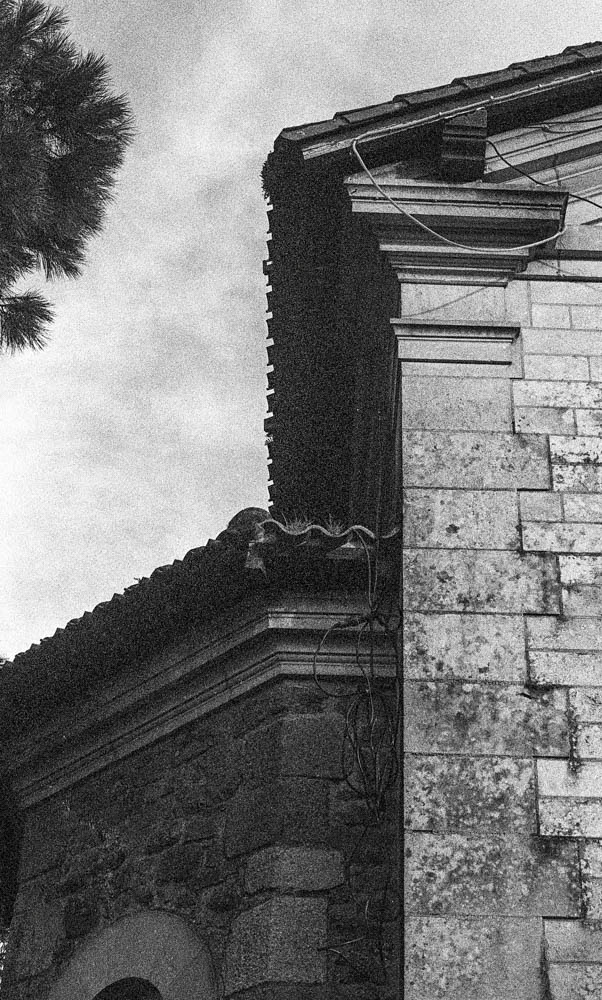
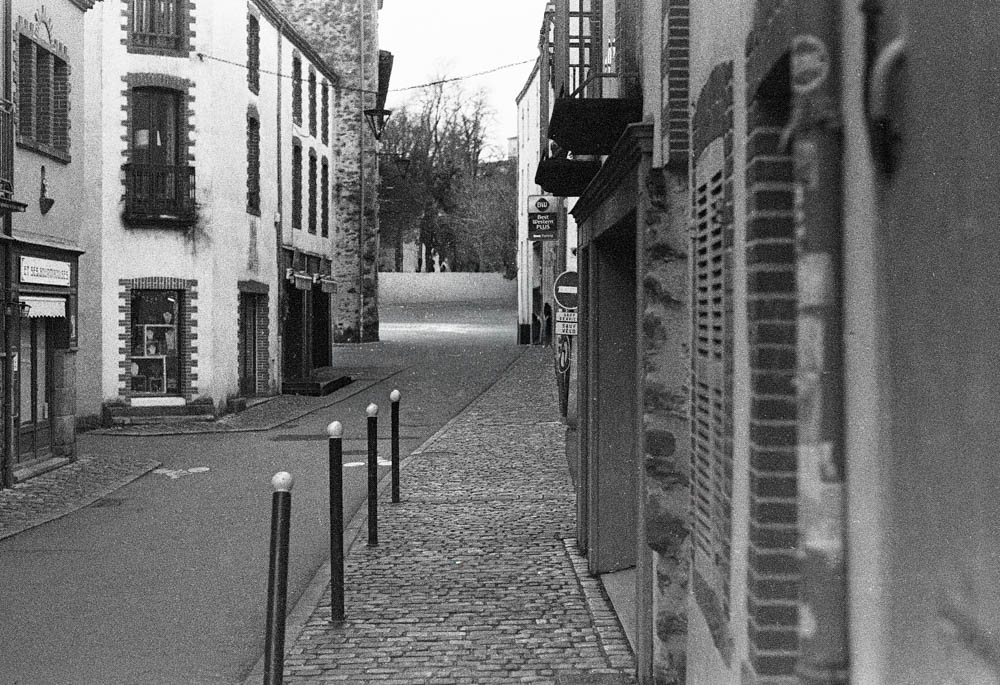
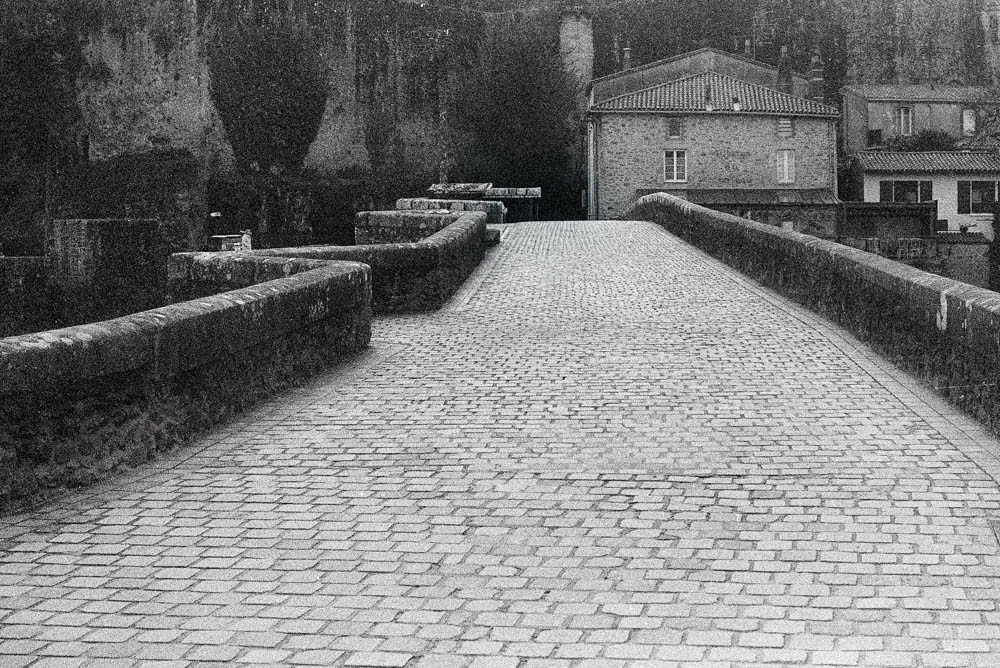
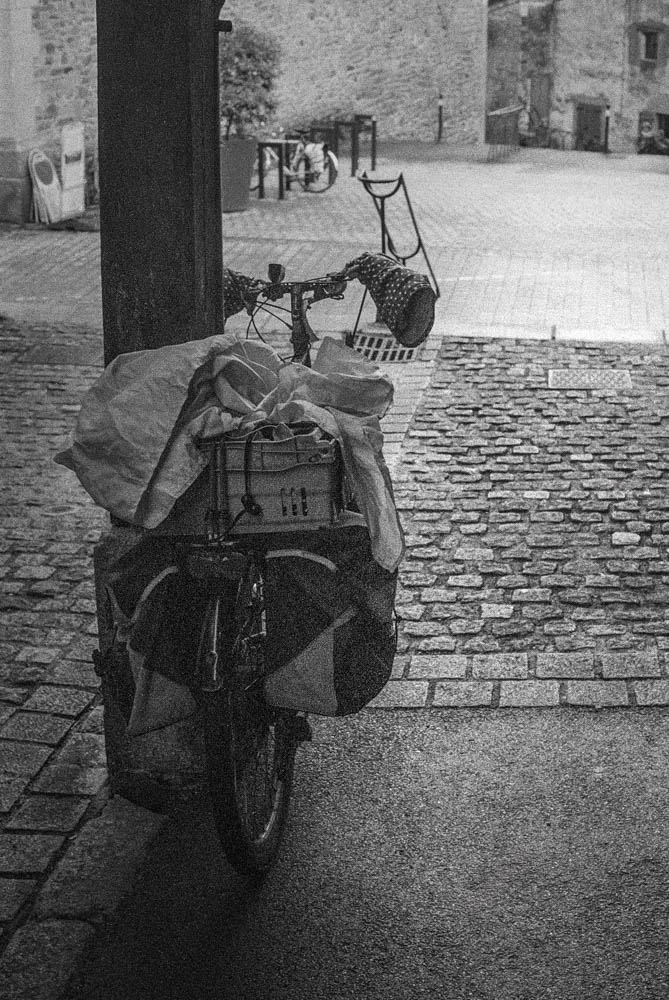
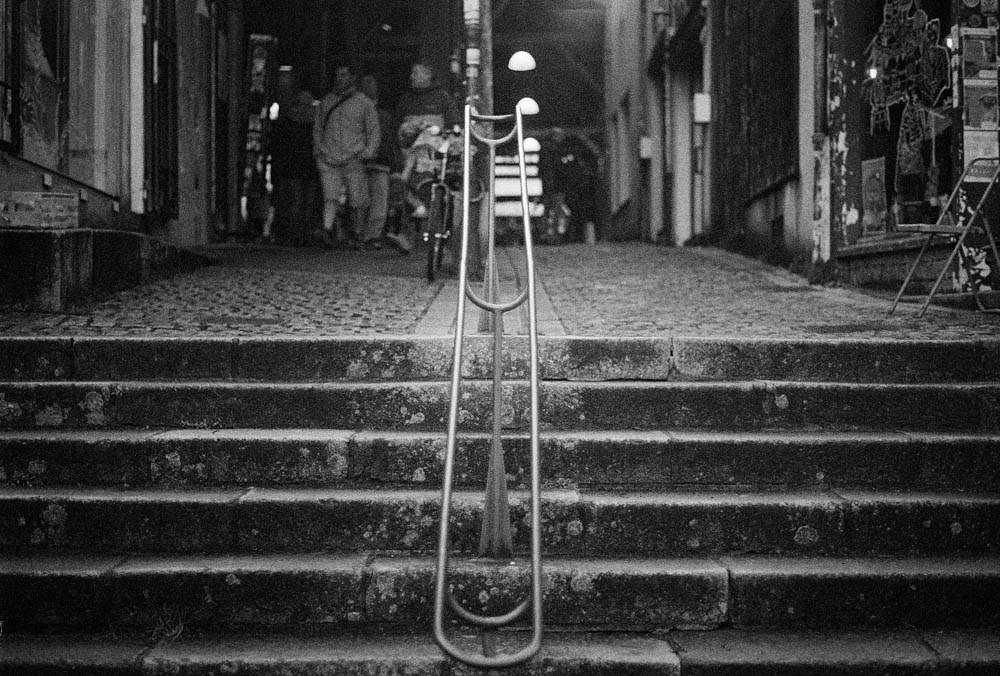
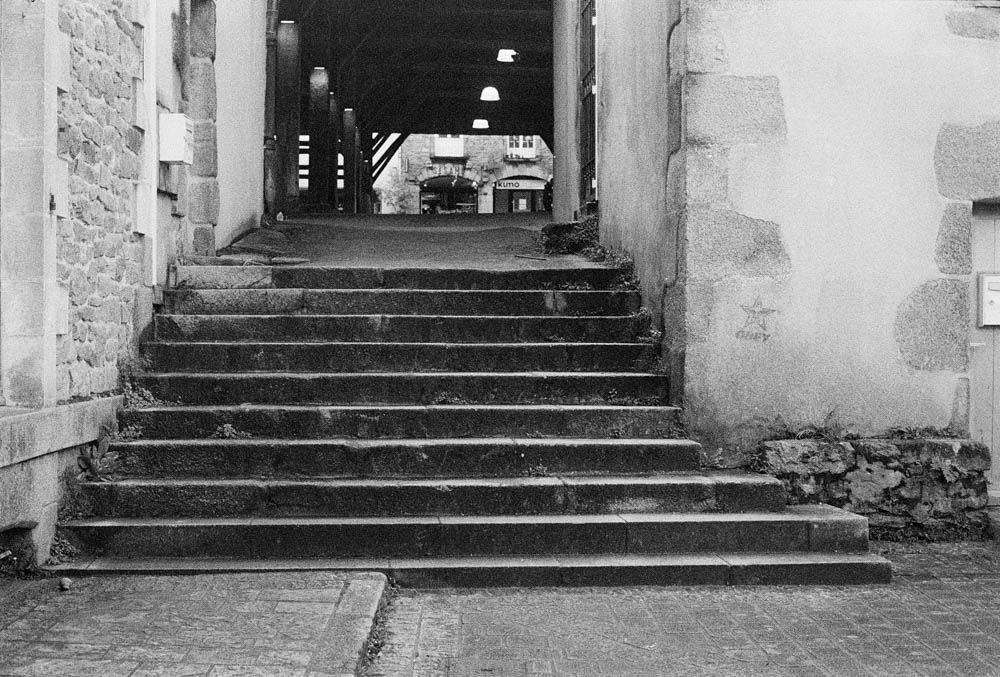
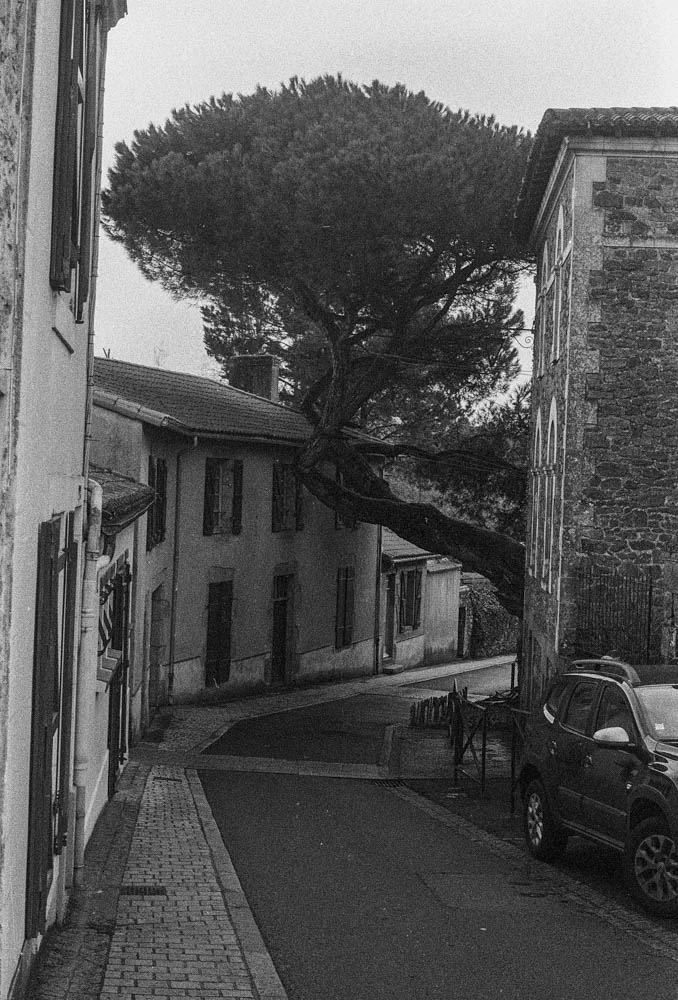
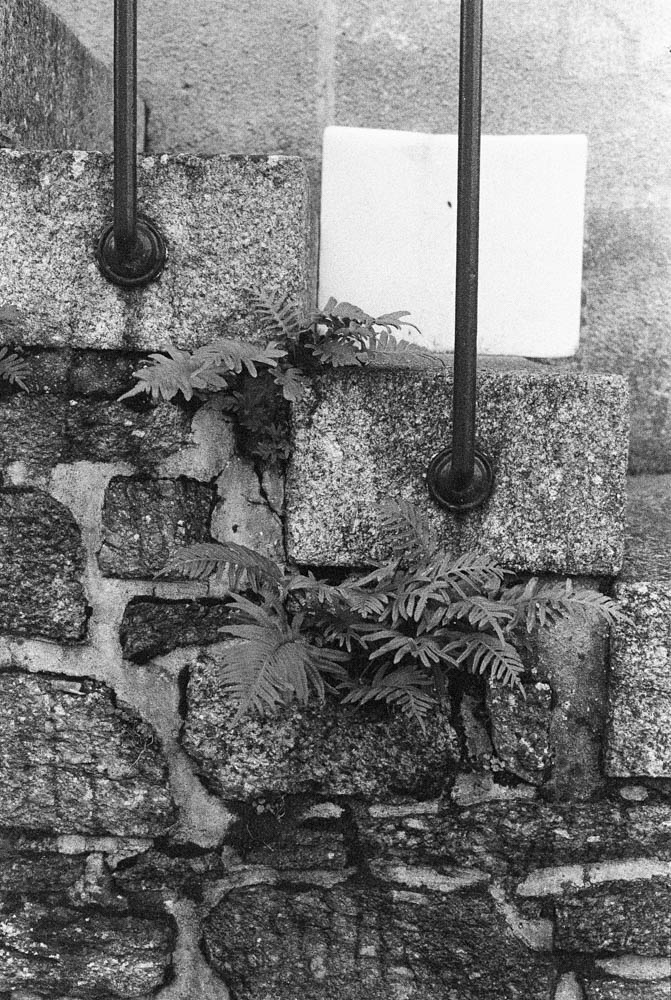
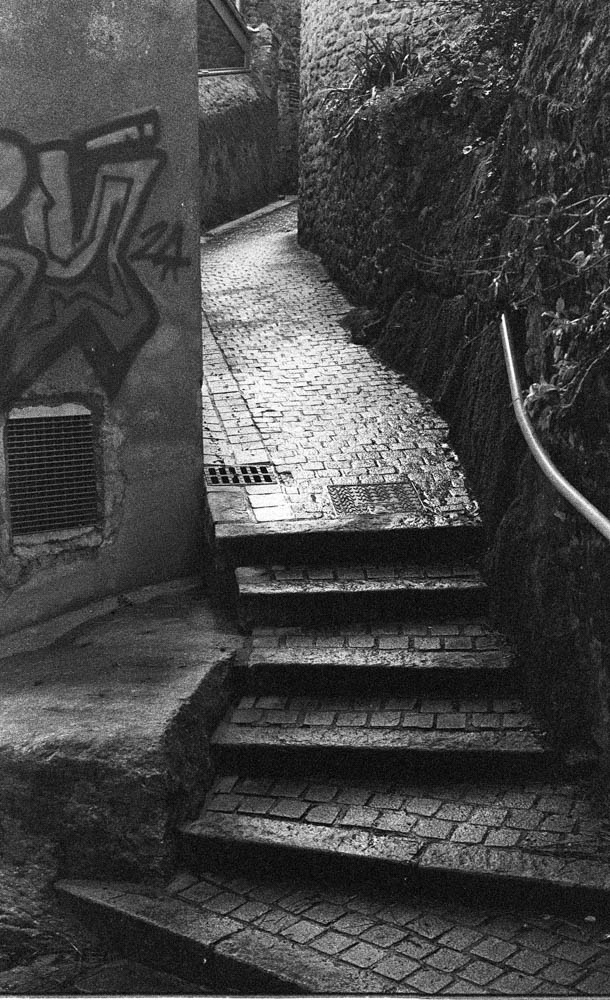
In Lightroom I only used the curves tool to pull a bit of separation between the wet stone and the grey sky. I wasn’t trying to manufacture contrast that wasn’t there. The rain had already done part of the work: cobblestones held texture because the light was even, puddles on the stairs created accidental reflections, and the streets were empty enough that I didn’t have to wait for tourists to clear the frame.
I won’t pretend I enjoyed standing in the damp. My shoes got wet. My hands were cold. But I needed to leave the house, and the camera gave me a reason to do it. The film was a deadline. The weather was irrelevant.
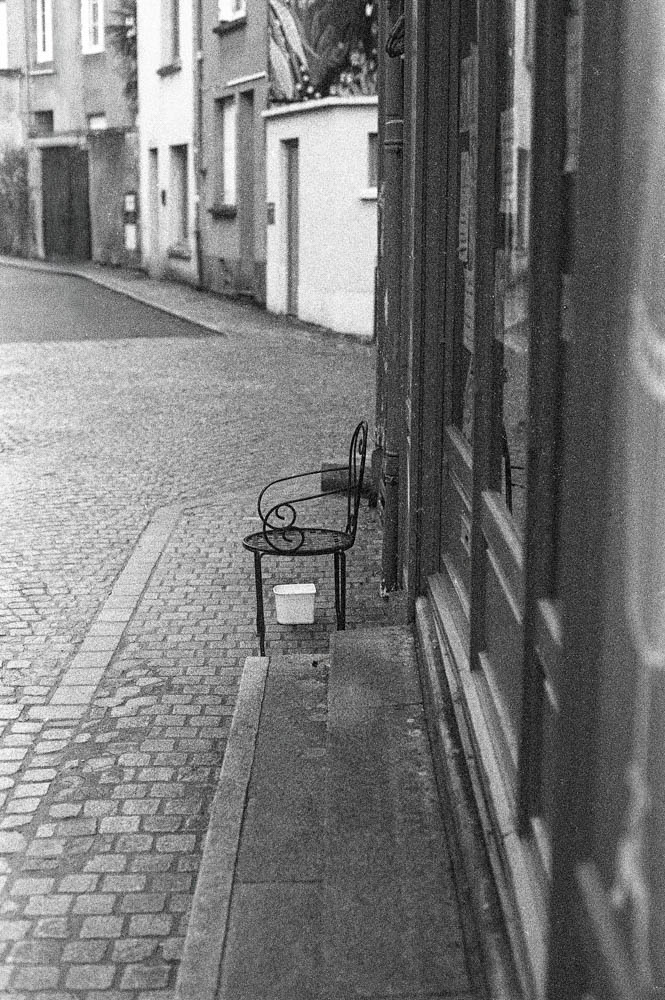
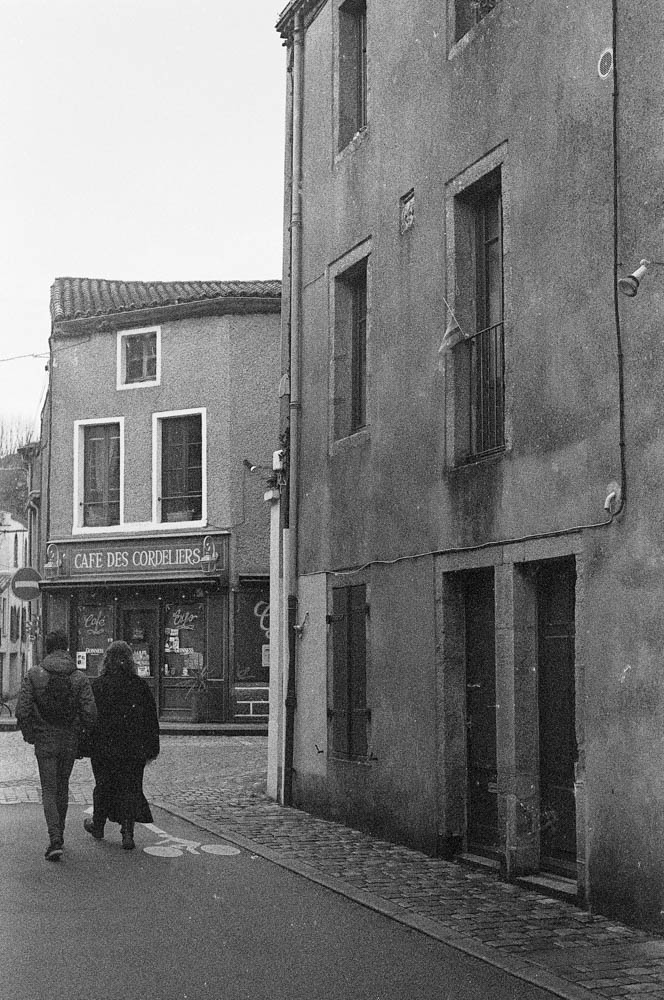
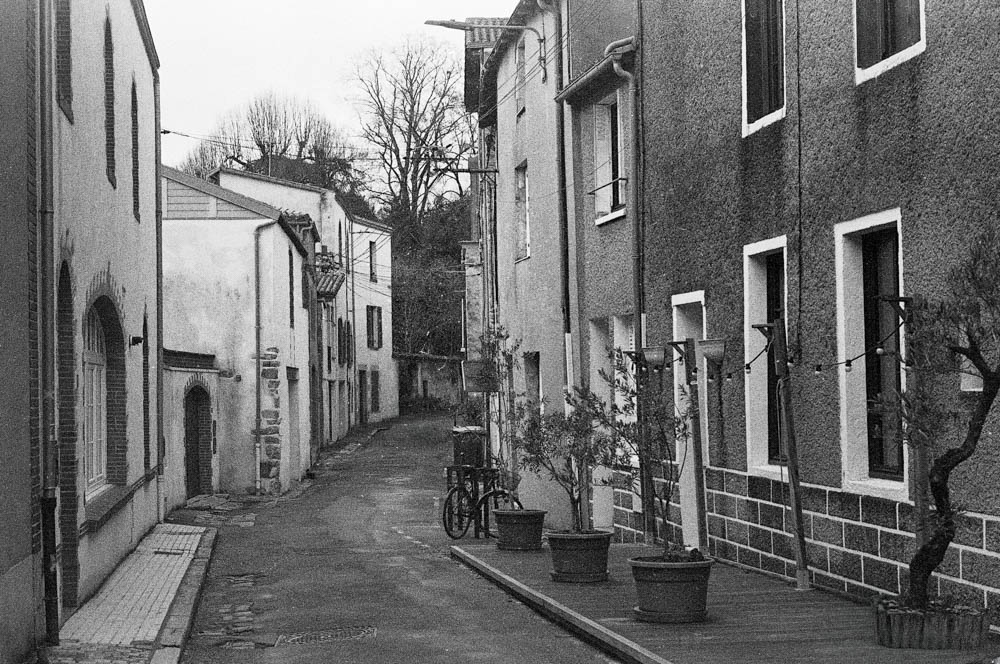
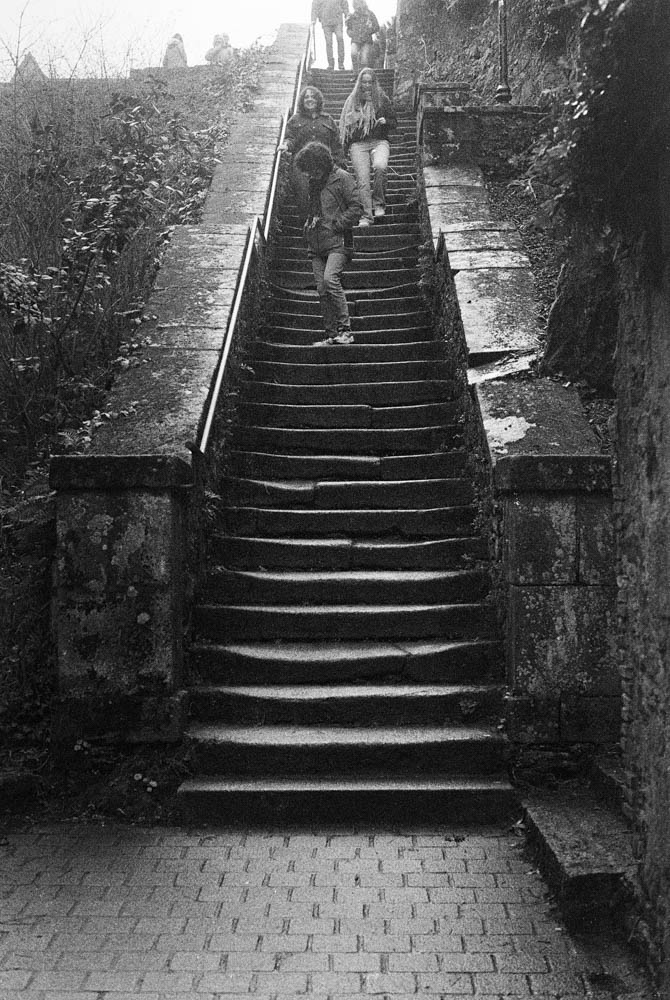
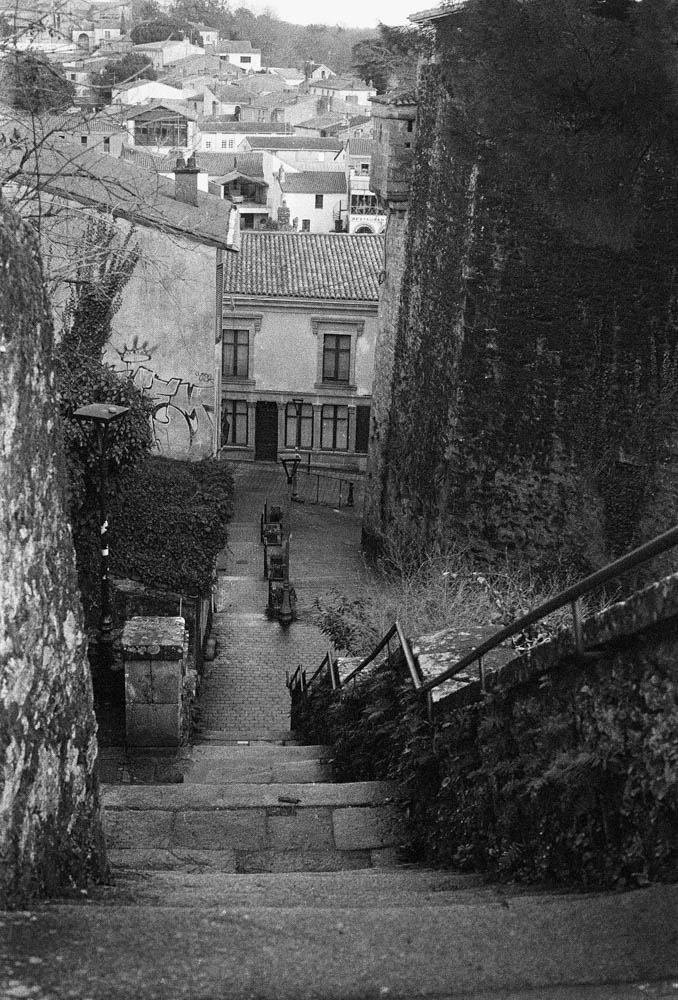
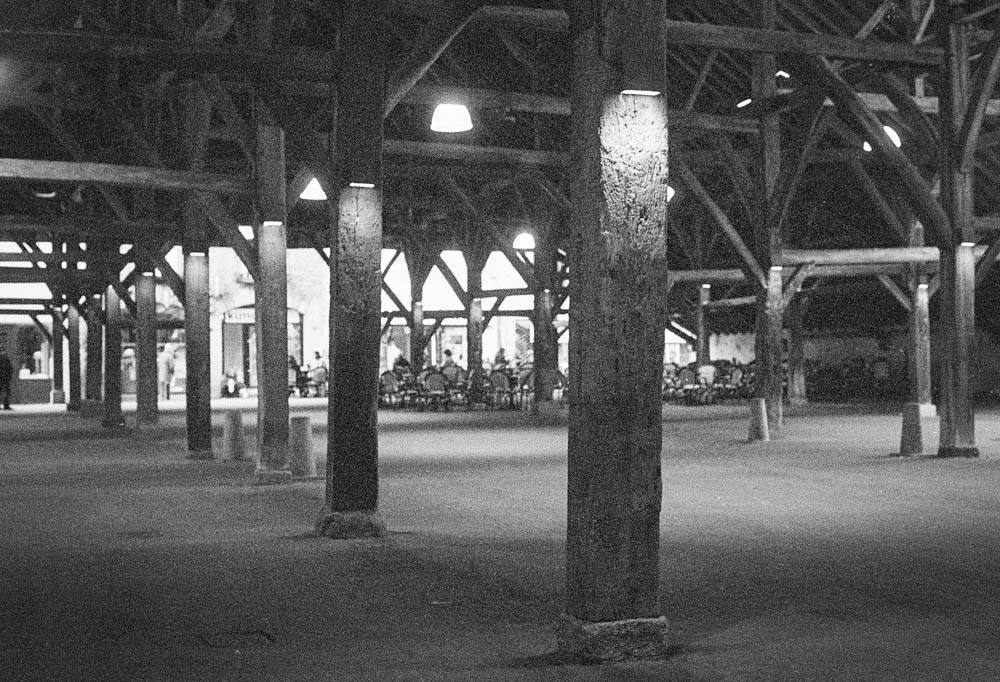
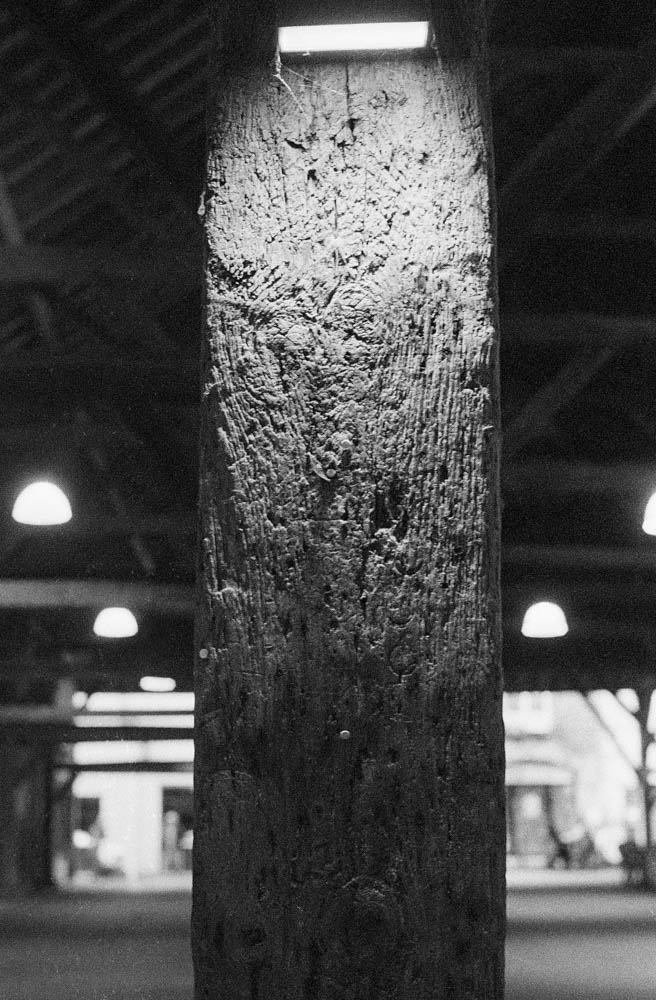
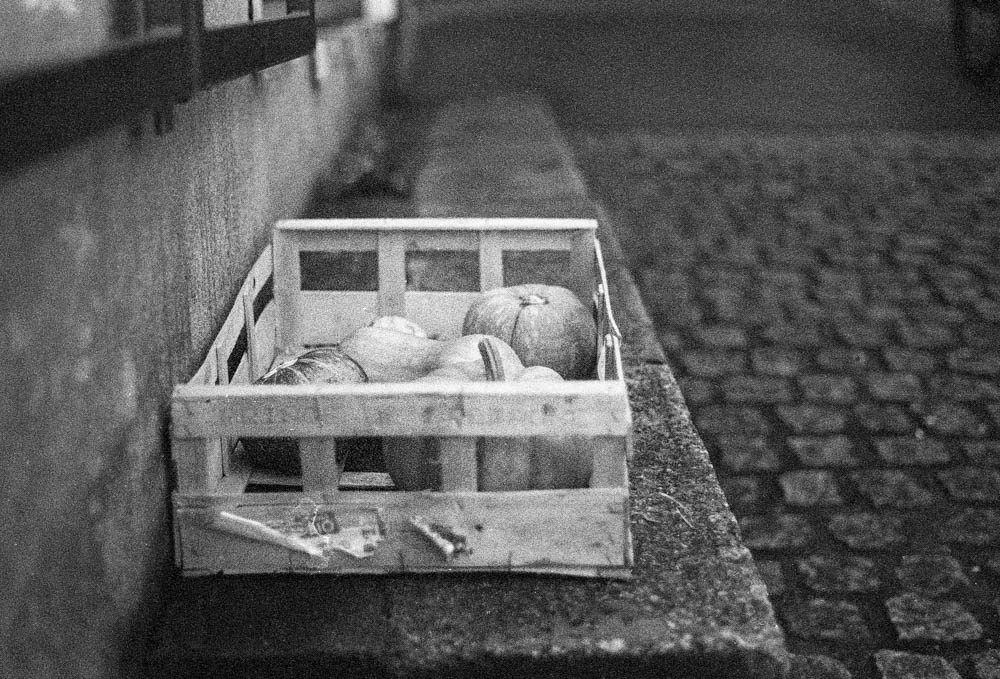
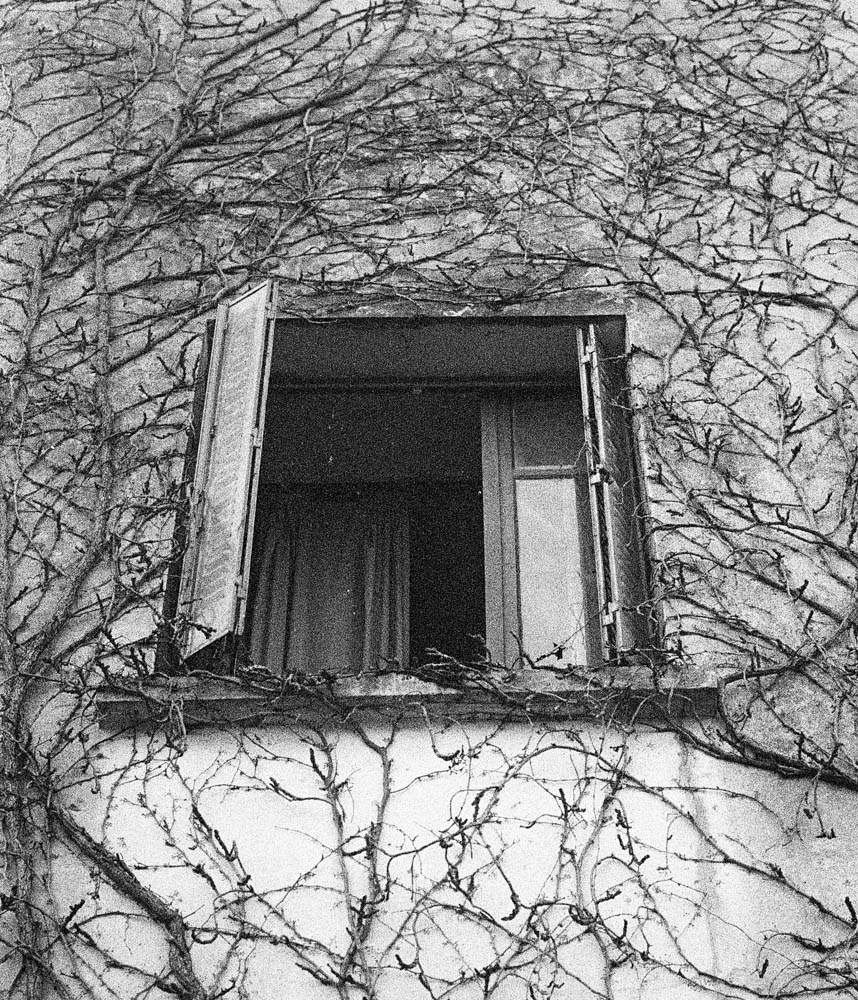
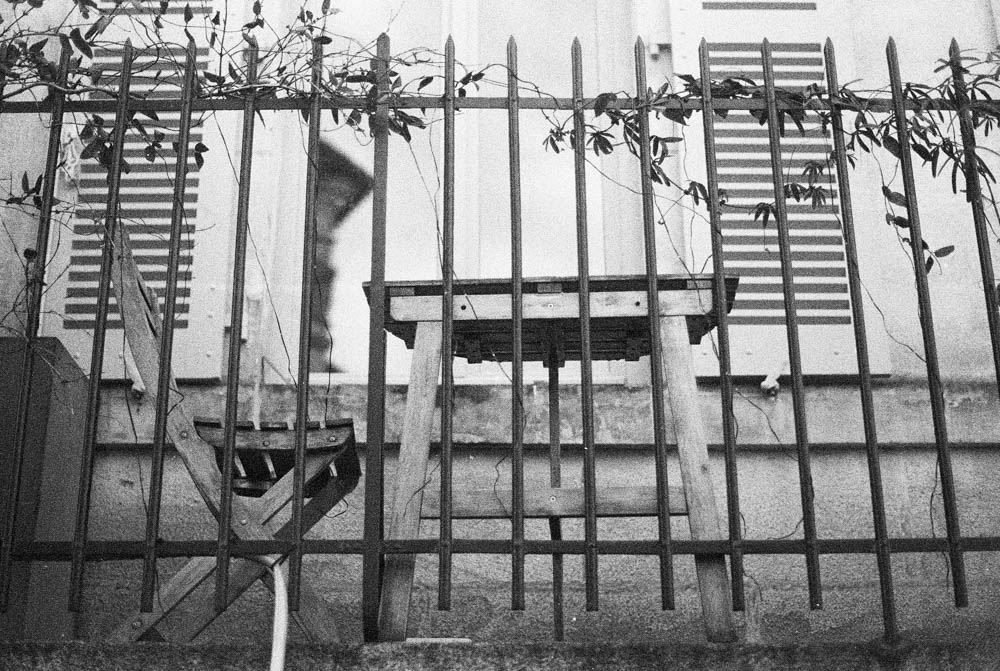
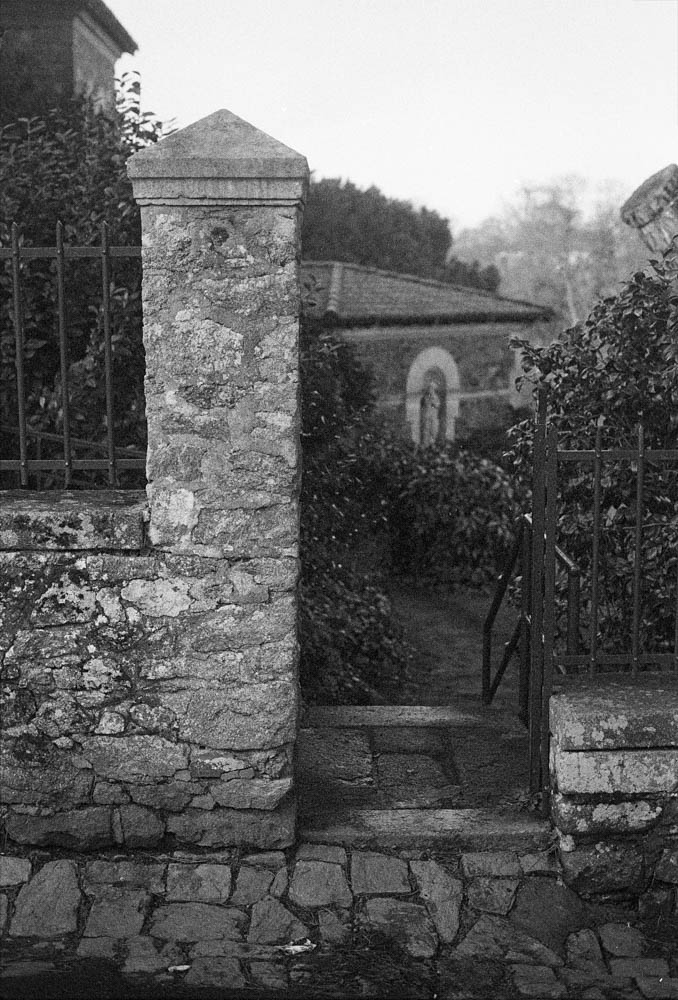
As you can see in the following photos, the light wasn’t fabulous, so we adapt. There are still interesting things to be seen.

Shot on Nikon FE with 50mm f/1.8. Kodak Tri-X 400 and Ilford HP5+ rated at box speed, developed in Fomadon LQN. Edited in Lightroom: curves adjusted for shadow separation only.

NORTHUMBRIAN SUMMER PART II


Craster 2025

It was getting close to lunchtime.  I was enjoying this father-son day and dared to ask if we could go out to Craster.  I really wanted a picture of Dunstanbrough Castle,something I had seen in a YouTube video by Thomas Heaton but it wasn’t to be.  Just take the images you can and enjoy the process.

We would visit Craster.  But first food.  Despite the blueberry muffin we had shared earlier, I was going to indulge us in one of my other UK rituals – The Marks and Spencer sandwich.  I have a great fondness for the feeling of being home and returning to my youth.  The French are a wonderful people and make so much top notch food, but you can’t get a decent Cheese sandwich anywhere.  Wonderful cheese, and marvelous bread, but the idea of putting both together, has totally escaped them.  

The French make glorious food. But they’ve never quite grasped the sacred simplicity of a cheese sandwich. Or the sublime elegance of a prawn sandwich—peeled pink shrimp, mayonnaise, in a relatively grainy brown bread full of goodness. A British delicacy, perfected.

So I bought three: the Ploughman’s, the Wensleydale with carrot chutney, the Ultimate Prawn—nothing but the best for my father. And a bottle of sparkling water.

Food fit for a king. Or at least, for a man who’s earned his rest.

Guided first to the car park, and then to the village by my father going against the wisdom of the GPS Sat Nav we had arrived.   We passed the smoke house—thick plumes curling into the breeze, the air thick with oak and salt. The kind of smell that clings to your sensorial memory. I didn’t take a photo. But I inhaled it, sweet as any incense at mass.  Smoking local fish for local people. 

At the end of the street was the Jolly fisherman, who is not a happy angler, but the local pub.  Well, it would be rude not to… We both fought to pay for the pints of Guinness, but I won and we sat down at a table to drink them.  I think we have a duty to support local pubs as they’re closing at a rapid rate of knots in the UK. This “core” of British and Irish society must be kept alive! 

My  mother had tried to phone us but in vain.  Messages and calls couldn’t pierce the pub walls.  I suggested my Dad go outside to try and call my mother just to reassure her.  It still didn’t work.  I tried on my phone, but didn’t have any luck.  We both decided that my mother suspected that I might lead my father astray and take him to a watering hole.  Ooops!

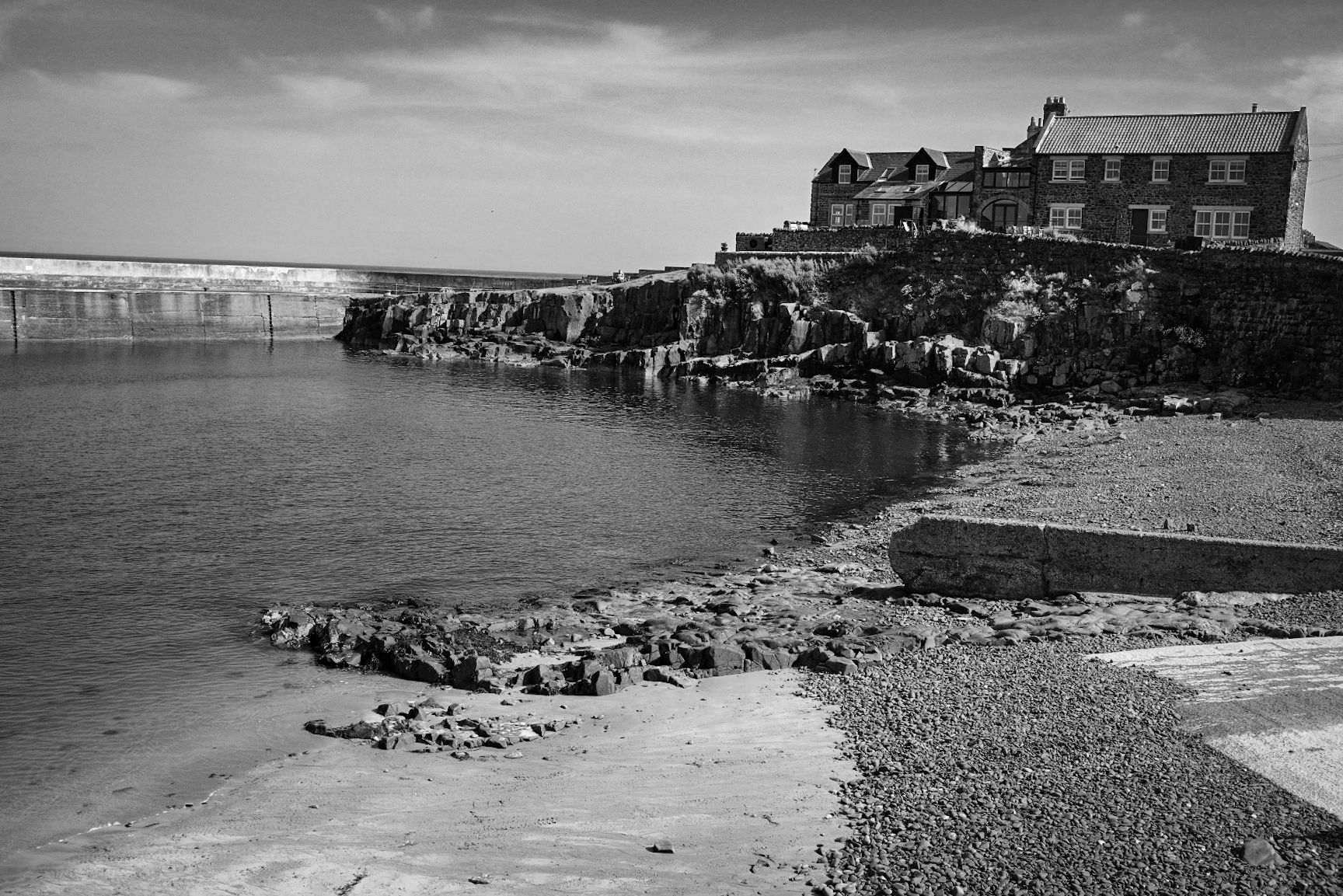
In for a penny, in for a pund! The harbour, the lobster pots, the salt on the breeze—Northumbrian summer in its purest form. You’ll see it in the images below.

Summer 2025. Part III.


From Lourdes to the mountain. 

Lunch Before the Climb

The children walked ahead through the Sanctuary, as usual. Why is everyone in such a rush? Is it really that important to be first?

We’d done God. Now, God’s creation. But first: lunch. We stopped at Leclerc — secular, efficient, French.  Cheese and chutney for me, sardines for Killian, pâté for Kate — and a baguette each, because of course. Beer for him, ginger beer for us. And diesel for the car.

Driving Hairpins and Dodging Ravines

We would eat on the mountain side, and it would be amazing.  Back to the Pont d’Espagne — still in France, we checked. In Cauterets, we stopped for ice cream. Sat on a bench. Looked at the mountain. Said nothing. Then I herded them back to the car. “Souvenirs on the way down,” I promised.

It was much the same as last time, lots of first and second gear.  Praying all the way not to go off the road and die at the bottom of a ravine.  I wasn’t dying in a ravine today…  Around the hairpin bends we went, but since I had driven there last month I was slightly less panicky, and even started to enjoy the drive.  At last, we arrived at the car park, still in one piece and happy to be alive.  We were guided to a parking spot by staff.   

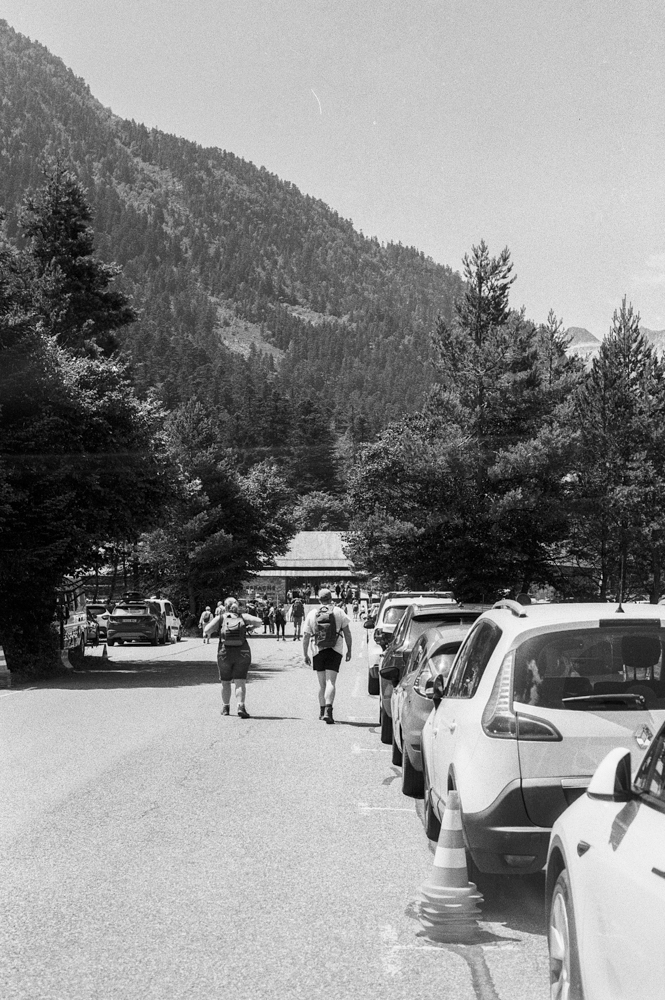
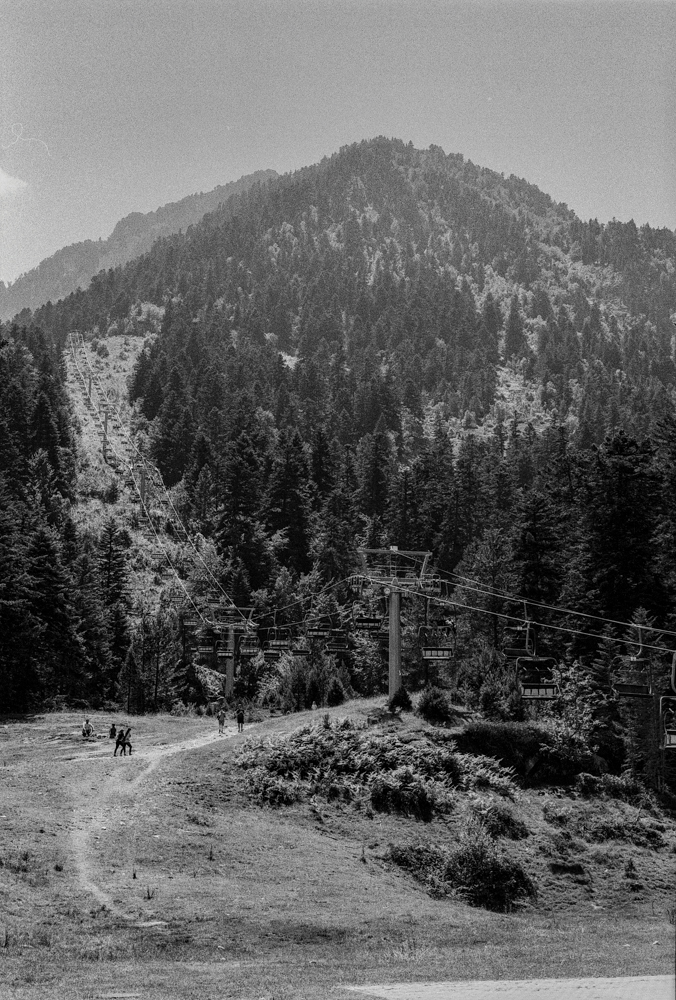
Killian got his day sack out of the car and as foolish as I am, I decided to rough it and not wear my hat.  I didn’t want to lose it.  When we got to the official entrance we found out that the télésièges and cable car were working. I took my stick anyway — just in case. And if I needed to beat any small children on the way up? Well, it might come in handy.  We bought our tickets to go right up to the Lac de Gaube, Killian would see it at last….  And, I wouldn’t have to walk 500 metres further up in altitude.  This was turning out to be quite the civilised way to go up a mountain.  I could get into this.  
The Cable Car: A Snug Fit

The cable car, well, to do it justice, could best be described as a snug fit, but the three of us piled in.  Up till that point, I was fine — just panicking when phones were poking through windows to film.

Some children were very nearly beaten!

Nearly…

A very close thing…

Mostly because I’d be the poor bugger having to replace thephones if anything happened. 

Nothing did happen.  Thank you Lord!

Surviving the Télésiège

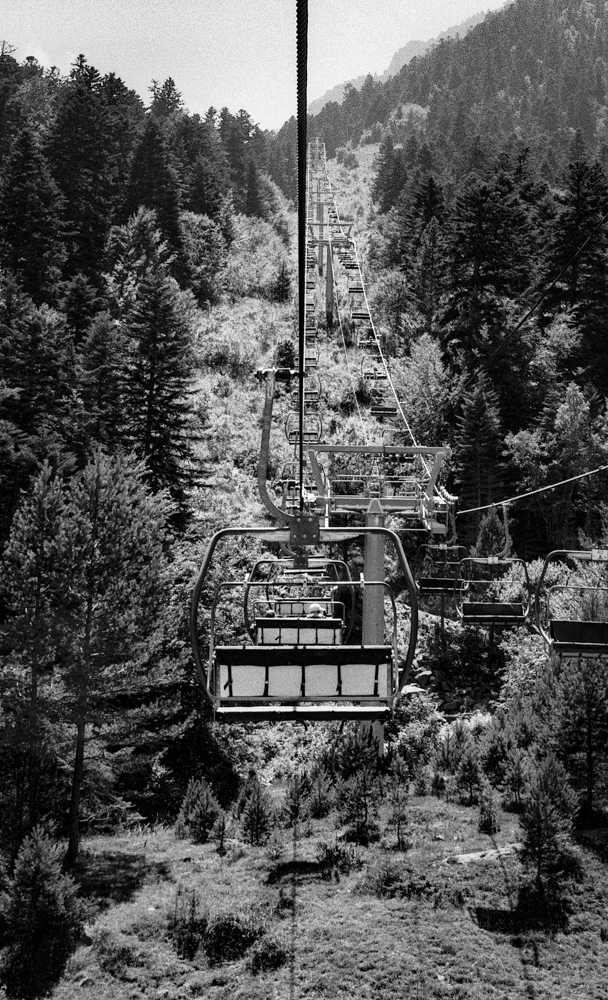
At the top, we faced the télésiège — a bench on a wire, a bar that barely keeps you in. I took my stick. Just in case. And if I needed to beat any small children filming while rocking the thing? Well, it might come in handy.

My legs shook. Not from height — I’m fine above a certain level. It’s the low heights I hate. The ones where you fall and get impaled by trees. Or worse — have to explain it to their mother.

I survived. Stepped onto solid ground. The more-a the firma, the less-a the terror!

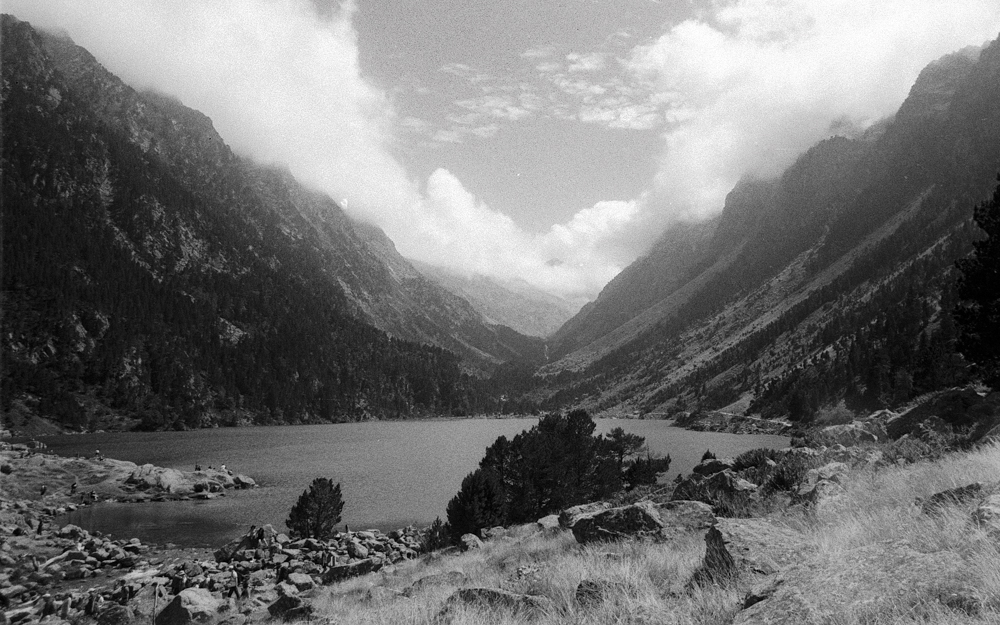
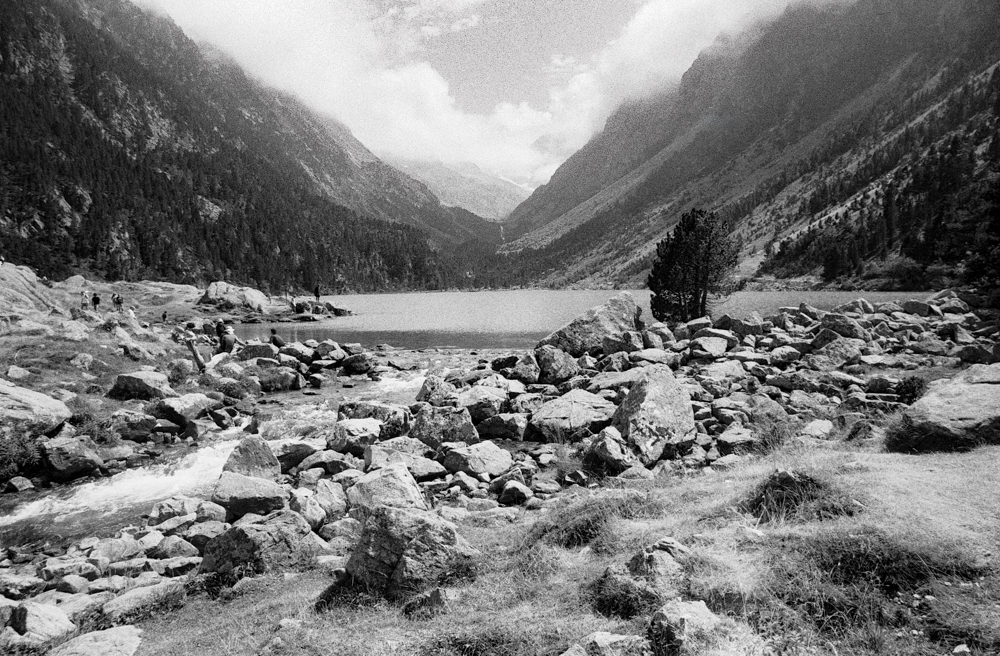
Lunch with a View at the Lac de Gaube

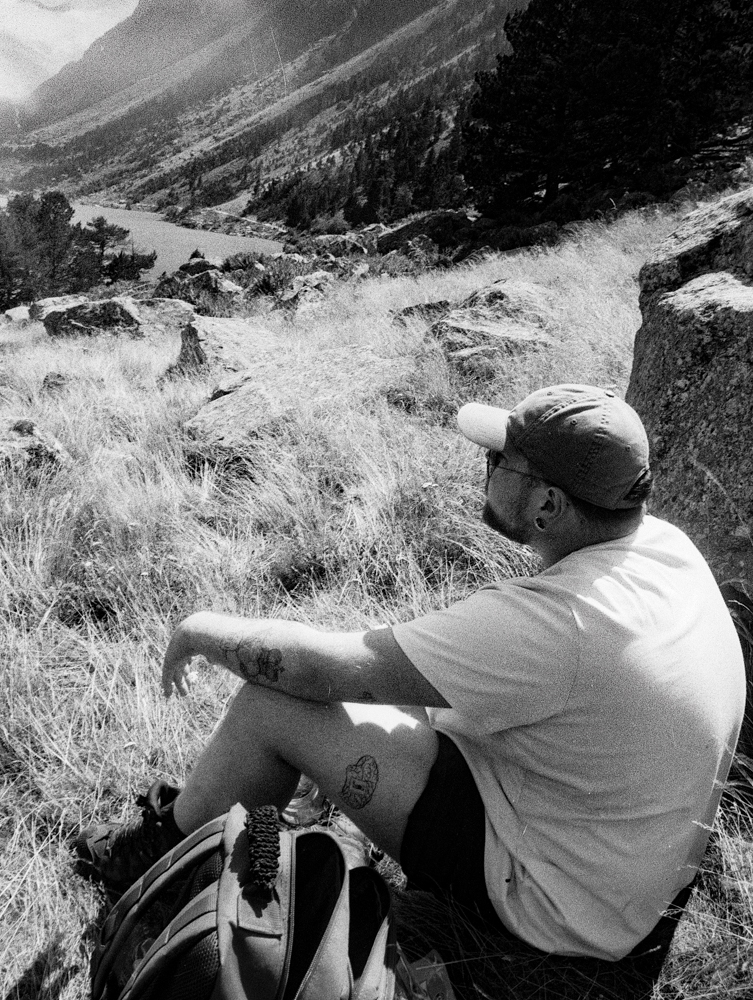
The “short” fifteen-minute walk up to the lake was fine and we passed those coming down, and were overtaken by those going up.  I didn’t care.  I would get there eventually.  Killian spotted a couple of boulders that would do very nicely for table and chairs and we sat down for lunch. I joked that my dark brown chutney, squeezed from the container, looked — and sounded — alarmingly like something it really shouldn’t.  The children did NOT find it as funny as I did.  No sense of humour these youngsters!  But with a baguette and a view? Near perfect. He’d regret the beer later. 
Kate in the Water, Me in Awe

Kate paddled in the lake. It was amazing. I’d heard of someone bivouacking up here. Now I understood. Mountains inspire awe. A glimpse into the glory of God’s creation.  

The Descent: More Civilised This Time

The descent was a more civilised affair.  Kate and I shared the télésiège, Killian took the one just behind us.  We got off and I told Killian to stop hanging around…  The “children” — Killian (26), Kate (nearly 16) — filmed the river, even under the water. I was impressed. Back at the car, Killian dumped the rubbish, then sneaked up and went “boo.” The little shit scared me half to death. Much to his merriment.

A Perfect Drive Home

The drive home was perfect.

God is, indeed, good. 

Summer 2025, Part II: Faith, Family, and the Road to Lourdes


The Lourdes trip.

The Plan: Stress-Free or Bust

I wanted the trip down south to Lourdes to be a quiet one—especially for Kate. Stress-free, as much as possible. I can do this. No stress. Who needs stress anyway? My wife? Definitely not! No shouty-shouty, nothing.

There was an era in French driving when people thought nothing of a five-hour dash. I am not of that persuasion. Not my thing. If I want to stop, I will stop. We had one goal: get to Lourdes—and not die on the way. If that happened… my wife would kill me!

On the Road: Wine, Pines, and a Good Co-Pilot

The only thing I insisted on was that Killian, my son, be my co-pilot on the Bordeaux ring road. His support on our last trip had been invaluable. He has a knack for staying calm and guiding me gently. As we went past Cognac, Jonzac, Saint-Émilion, and Blaye, I could almost taste the wine on my lips—but no, just keep driving, as Dory might say.

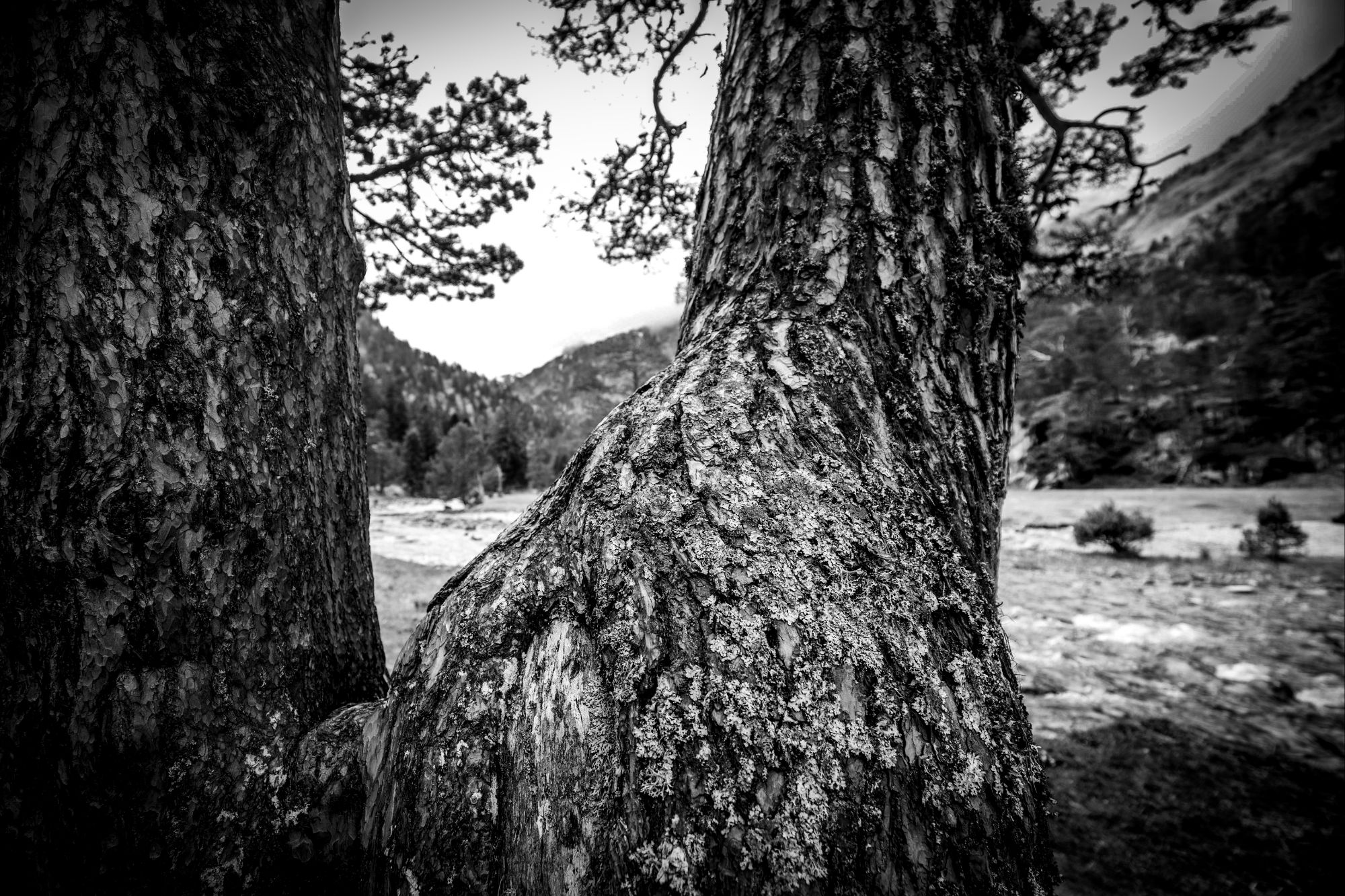
South of Bordeaux, other names began to appear: Graves, Cadillac (the wine, not the car), Sauternes, and eventually the Landes, with their towering Pins Maritimes. Then came signs for Madiran—a nice little tipple!

First Sight of the Mountains

Kate was in the back seat, seeing the mountains for the first time. As soon as the Pyrénées appeared on the horizon, we told her, “Those aren’t clouds—they’re mountains.” She seemed to share our awe. She was also amazed that I didn’t say no to snacks, especially the chocolate chip cookies. Killian got me a coffee to keep me going until we arrived. Good man.

Saturday Morning in Lourdes

Saturday morning would be for God, and Saturday afternoon for the mountains.

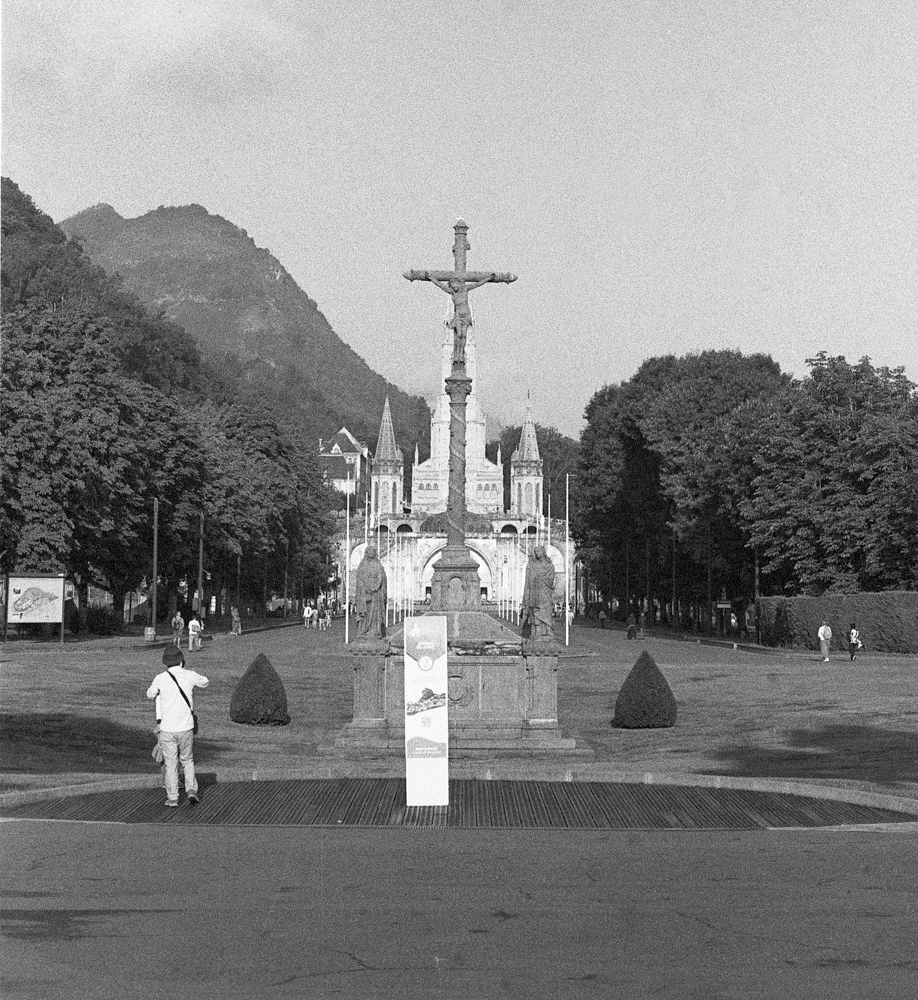
We set off relatively early—or, in my fifteen-year-old daughter’s eyes, the crack of dawn. We parked where we had during our last visit and walked gently down toward the Sanctuary. I didn’t even have to stop the children from entering each shop, intent on burning a hole in my bank card. The majority were still shut. And there might be some of you thinking I did that on purpose!

We popped into the café: Killian and I had espresso with croissants, while Kate enjoyed hot chocolate and a tartine of bread with unsalted butter. I felt so bad for her—we live in a region where salted butter is almost sacred! We thanked our waiter, amused by the children speaking French to me while I replied in a different language.

Faith, Water, and Candles

The morning was for God. I went to confession, half-hoping the nun from last time—the one who had made such an impression on Killian—would still be there. She wasn’t, but that was fine. We drifted toward the grotto and said a quiet prayer to Our Lady. Kate seemed less impressed than we were, and I secretly hoped she might feel something. We asked about the baths, but they had reached the daily limit. I still managed to have them sprinkle the healing waters of Lourdes on their faces.

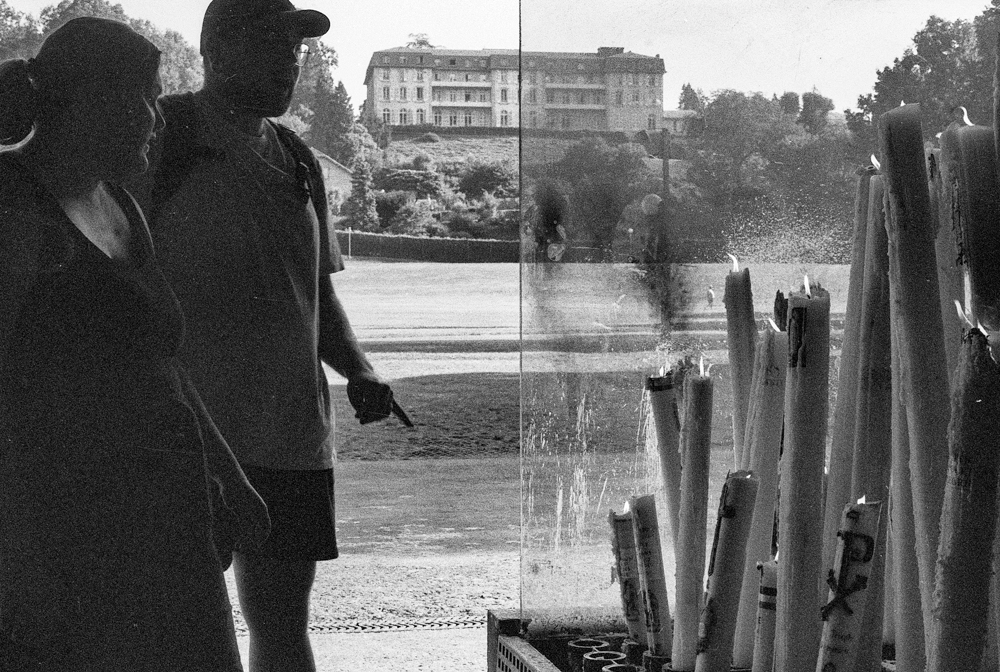
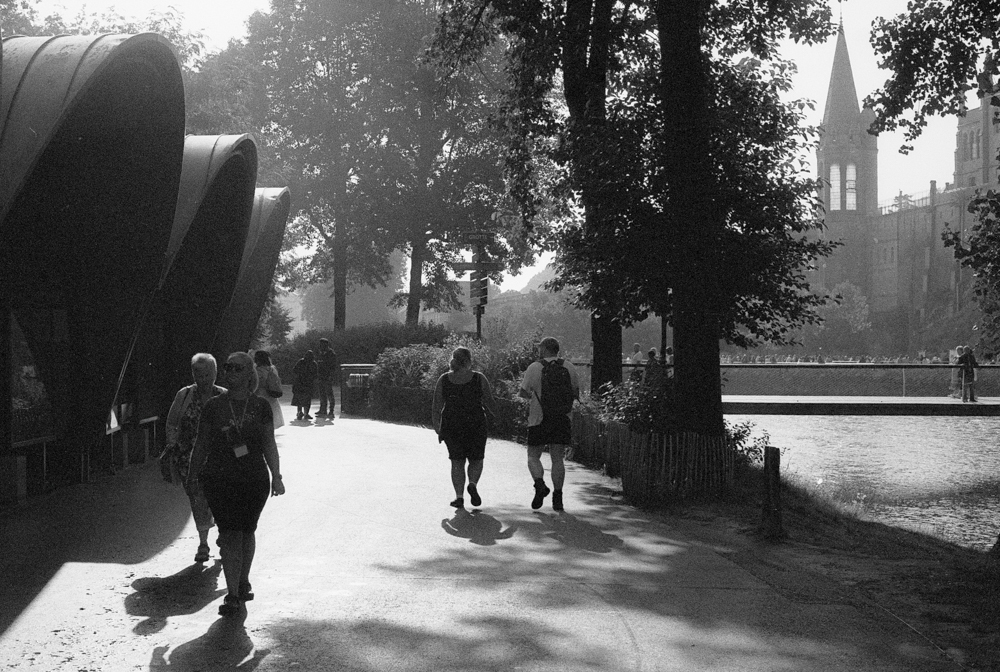
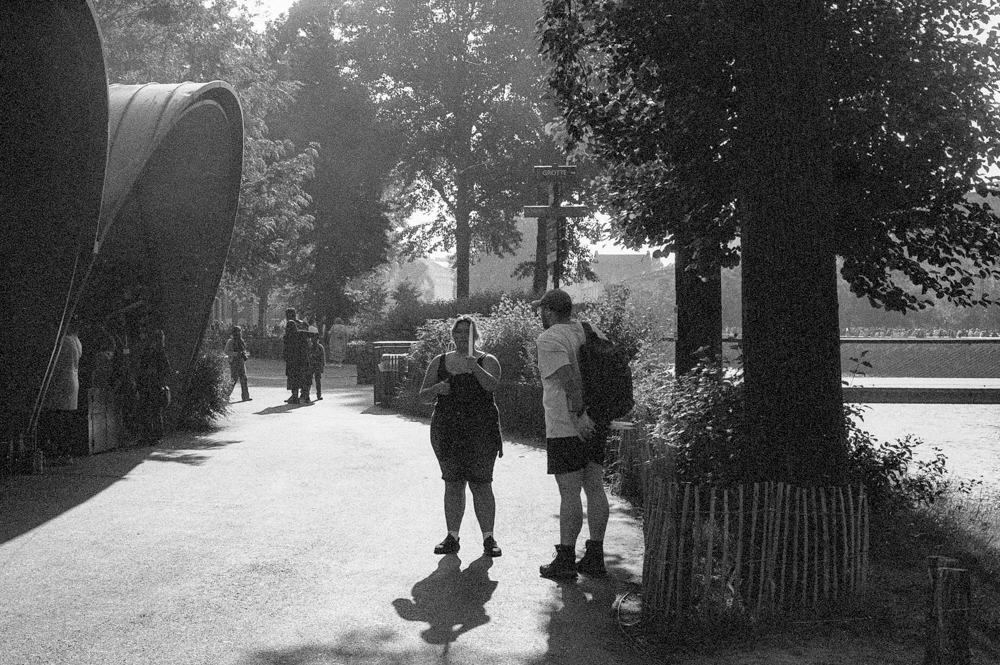
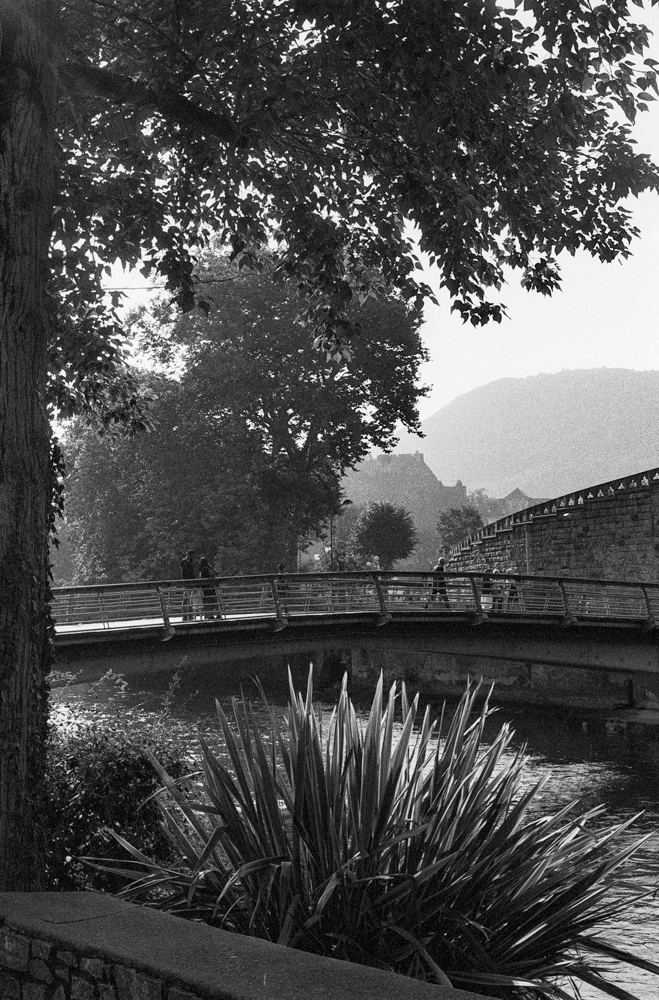
As we crossed the bridge, we spotted a fish—Kate was delighted. She lingered, fascinated by the enormous candles left by pilgrims, each wrapped with prayers. We lit our own candles and said “our” prayers. I checked the mass times for the next day—and found them! No idea where the mass would be, but Kate got us there. Today was Saturday… not Sunday yet.

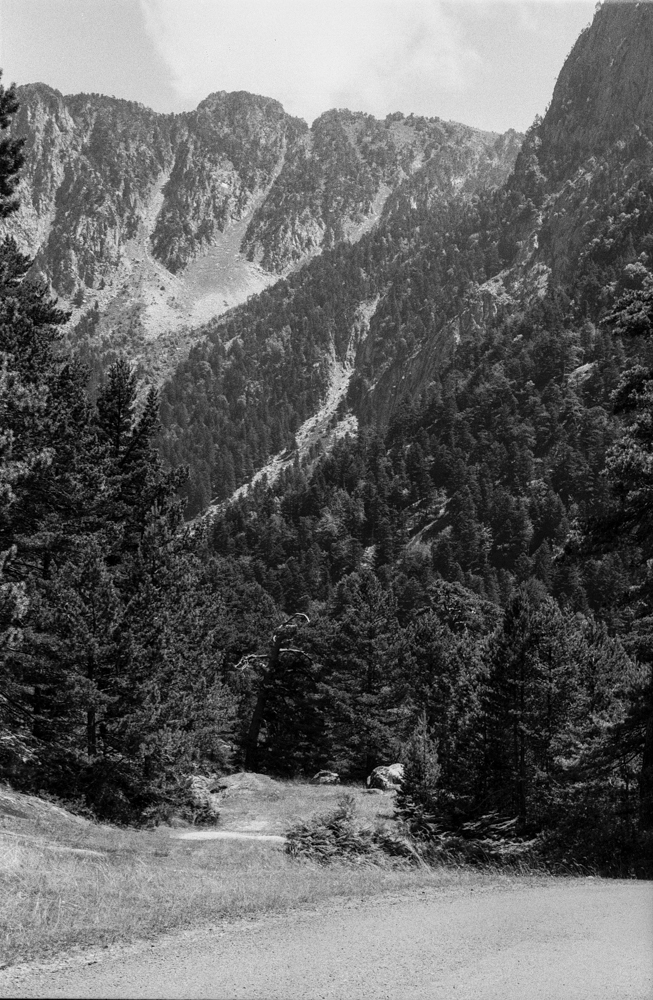
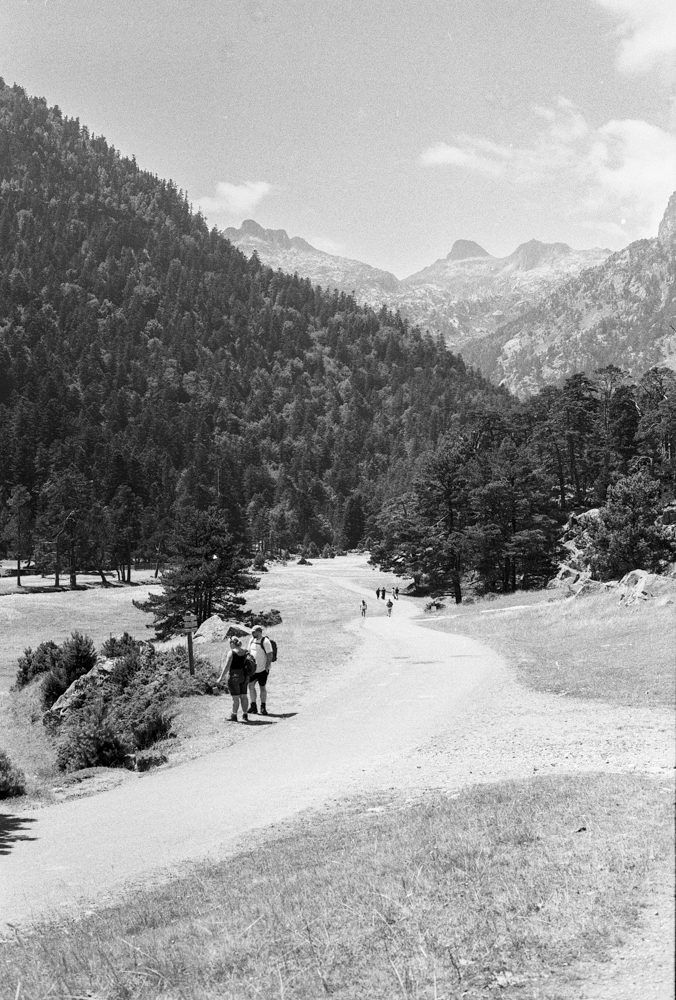
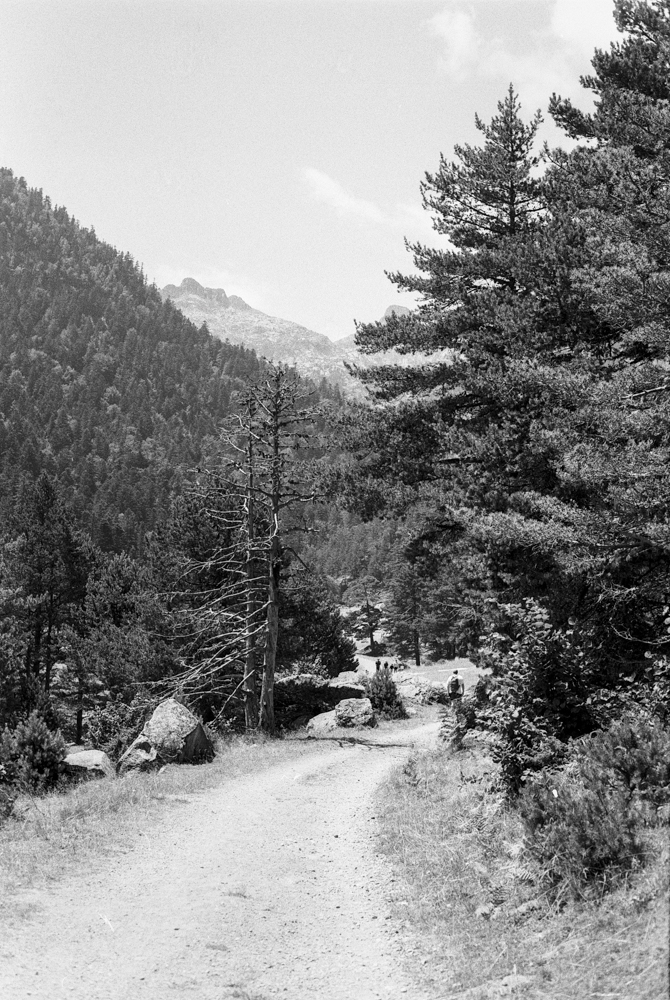
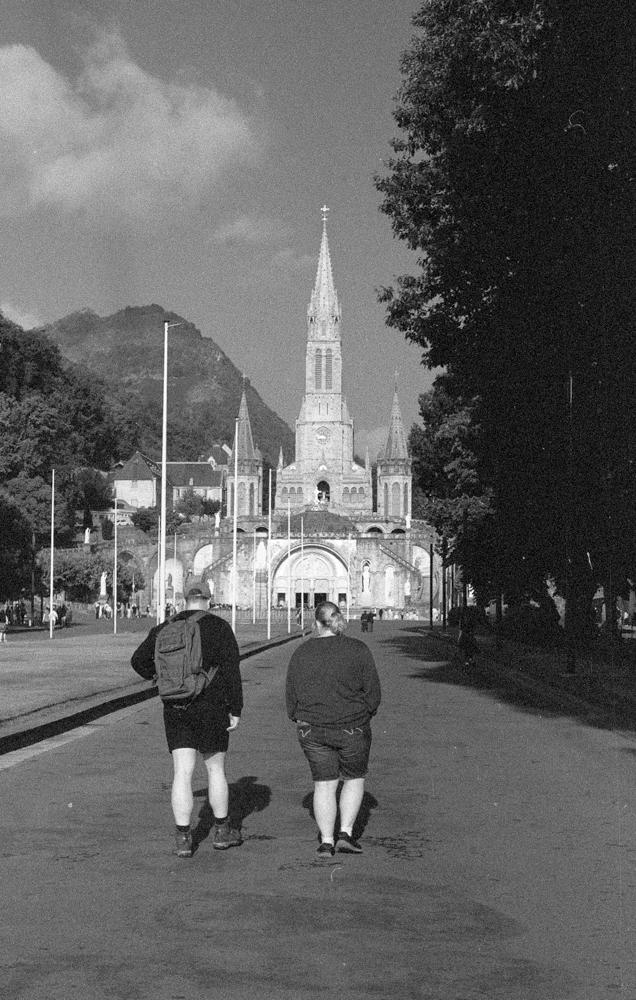
These photos were taken on the Nikon FE using HP5+ film shot at box speed.

The Pyrenees Mountains – and the Pont d’Espagne which isn’t in Spain


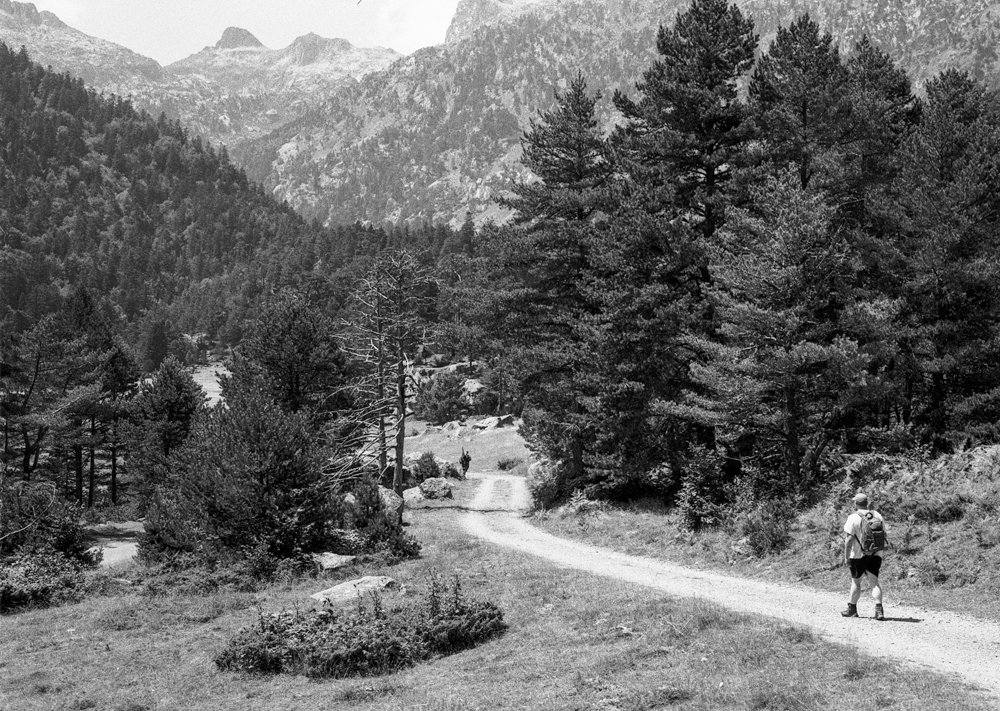
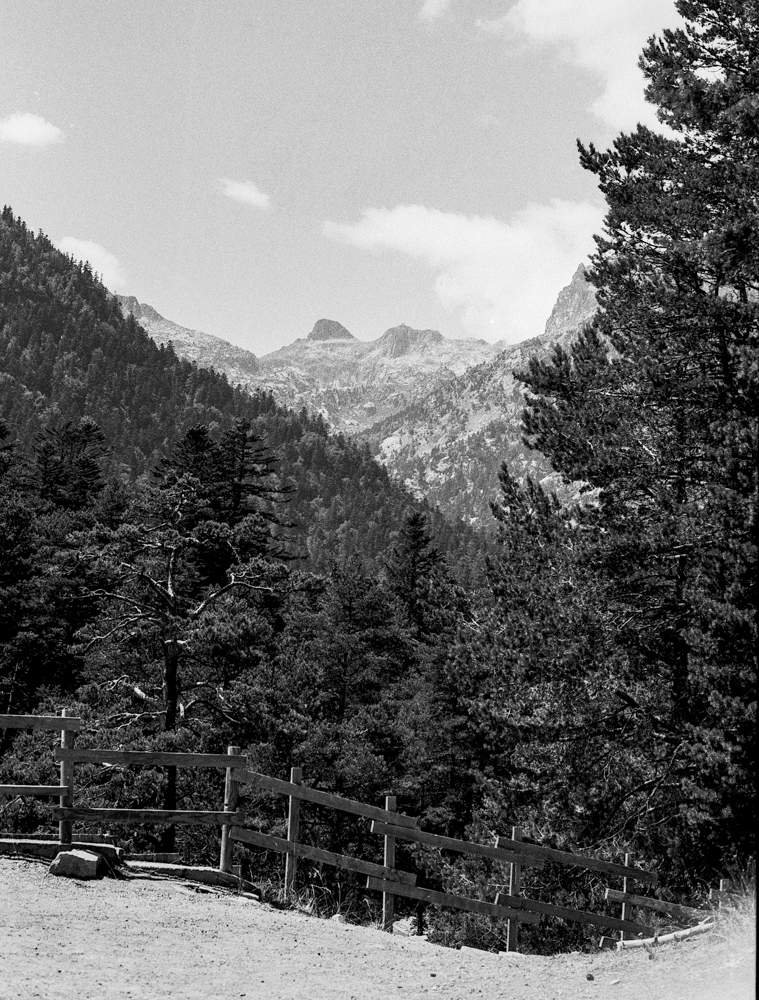
If the Vendée is Jane Birkin — elegant, understated — then the Pyrenees are full-on Marilyn. Proper mountains. Vast. Unapologetic. Even in May, some peaks were still capped in snow.

I was in Lourdes hoping to strengthen my faith. I think Killian needed that too — but more than anything, he needed his mountains. Now, finally, I get it. Up there, I saw him more clearly: less the boy I once knew, more the man he’s becoming.

Like most of us, he has his issues — but he’s working through them. And sometimes, he even lets me help. Those are the moments I think I might just be getting somewhere as a father.

He’d decided we were heading to see his beloved mountains. The place? The Pont d’Espagne — yes, in France, despite the name. I may have mentioned that. Maybe.

We left the impressive foothills of Lourdes behind and climbed into the real mountains. Snowy peaks against blue sky and drifting clouds. Windows down, music low, we drove toward the famous pont. It had better be worth it.

Killian and I travel at a relaxed pace. If the view’s good, we’ll pull over. Get the camera out. Take a few shots. See what happens.

Sometimes it works. Sometimes it’s a fiasco. But more often than not, we come away with something.

Oh no! Catastrophe! A village where you can park, and go and get an ice cream. Ah well. We took one for the team, and the lady behind the counter told us that the previous week they had snow and were shut, yet this week everything looked just like a day in May should look like. Ice cream seems to have this way of just hitting “that” spot. It’s not the tidiest of foods to eat, but it’s one I’ve developed a great fondness for it over the years.

I was already learning how to approach the infamous concept of the hairpin bend. As you know, a full head of hair hasn’t been my issue for years — let alone hairpins. But the name fits. The main thing is to drive slowly, carefully, and not die… Given I’m writing this now, reports of my untimely demise were, as they say, greatly exaggerated.

We arrived at the Parc National des Pyrénées. You go through a barrier that didn’t seem to be working — one that had given up on life and was just standing to attention, waiting for whatever ‘it’ might be. So, being the thoroughly decent chaps and all-round good eggs that we are, we tried to find a ticket. We couldn’t, but since we had tried, we said something that rhymes with bucket, and started walking to see, at long last, the bloody bridge. It had better be worth it.

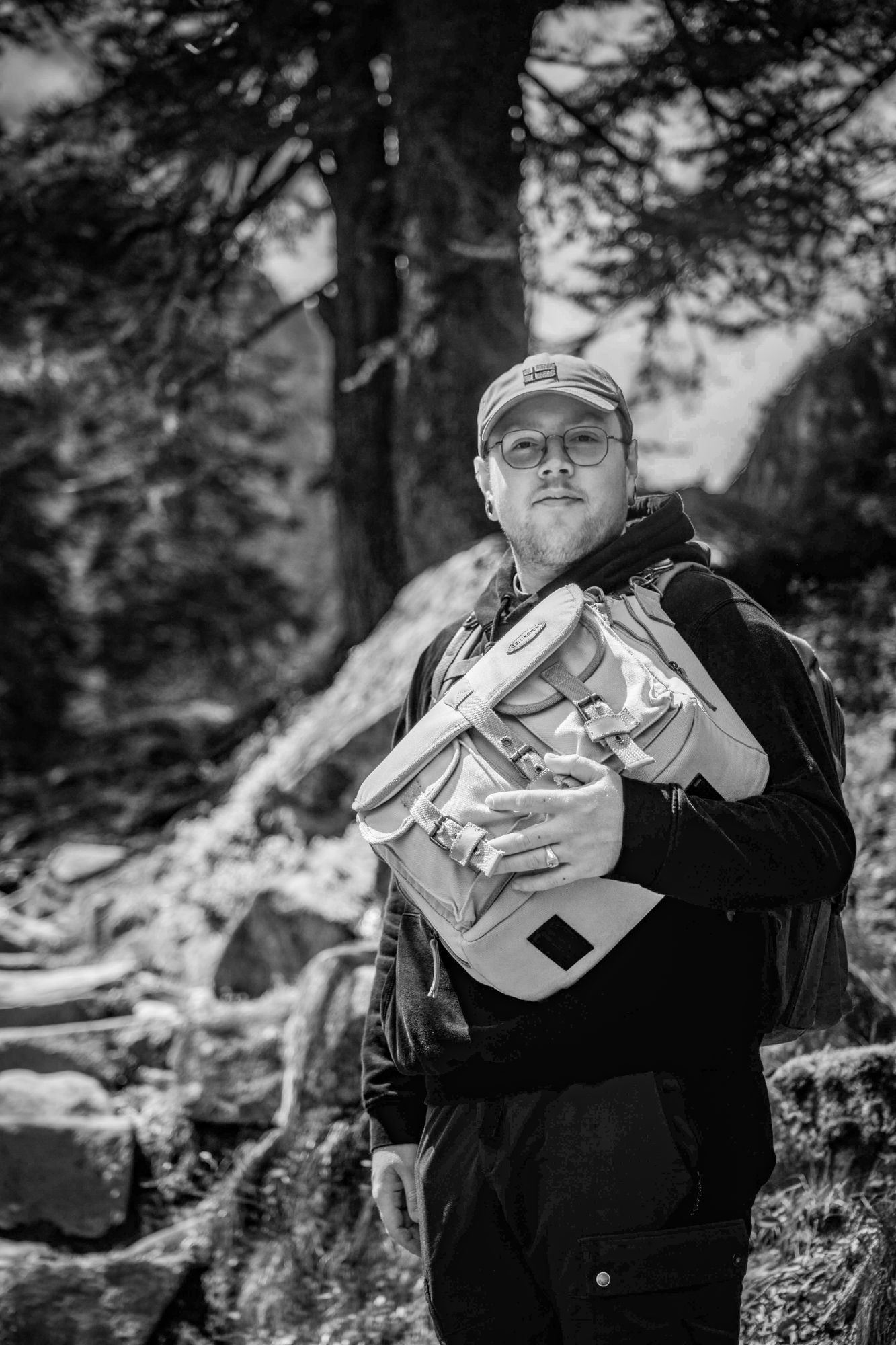
I had the X100F with me and Killian was carrying my DSLR and kit. What a good lad he is. He later said that if I wasn’t lugging it around, we might’ve gone just that little bit further. So back to the pont…

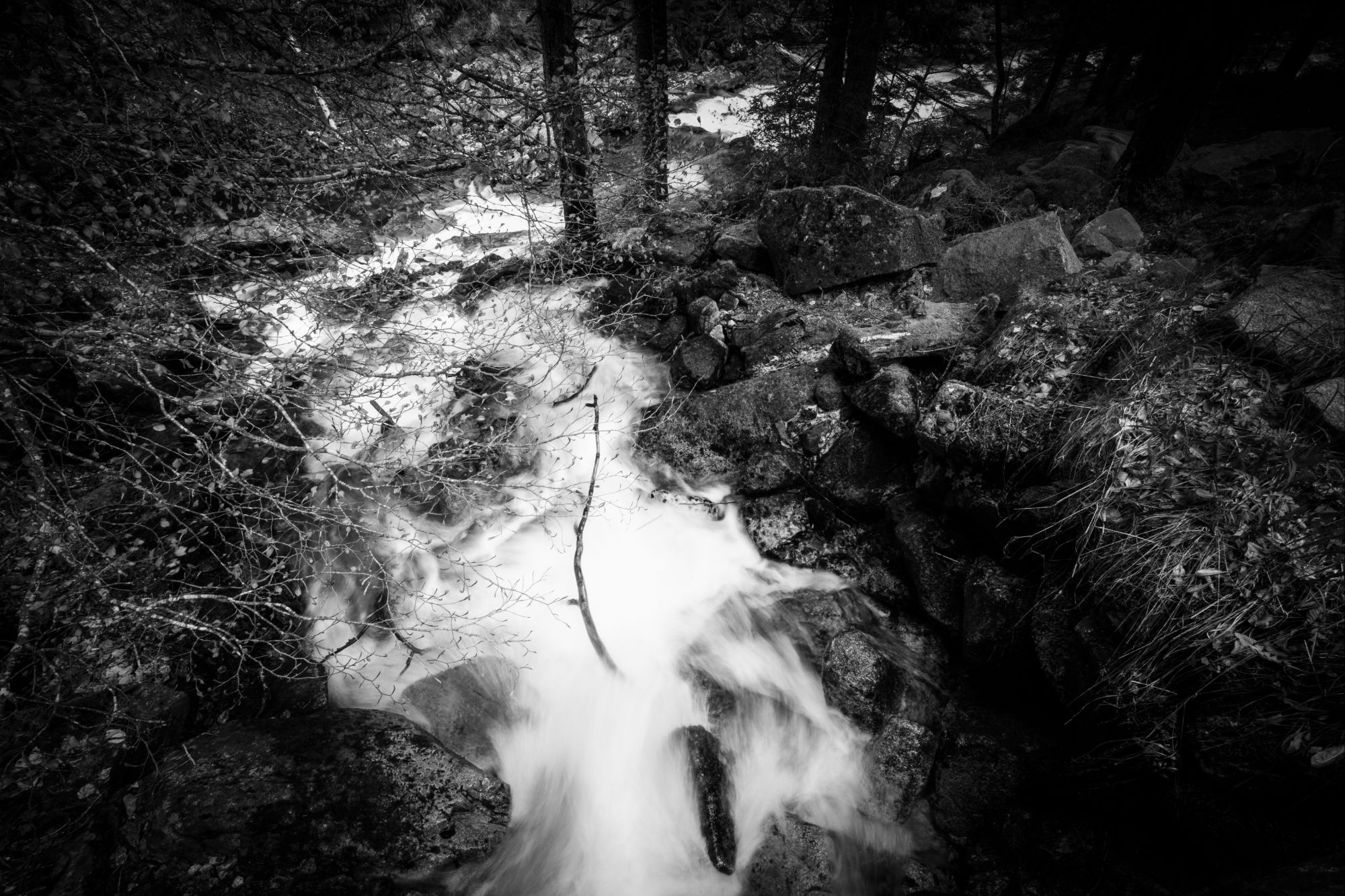
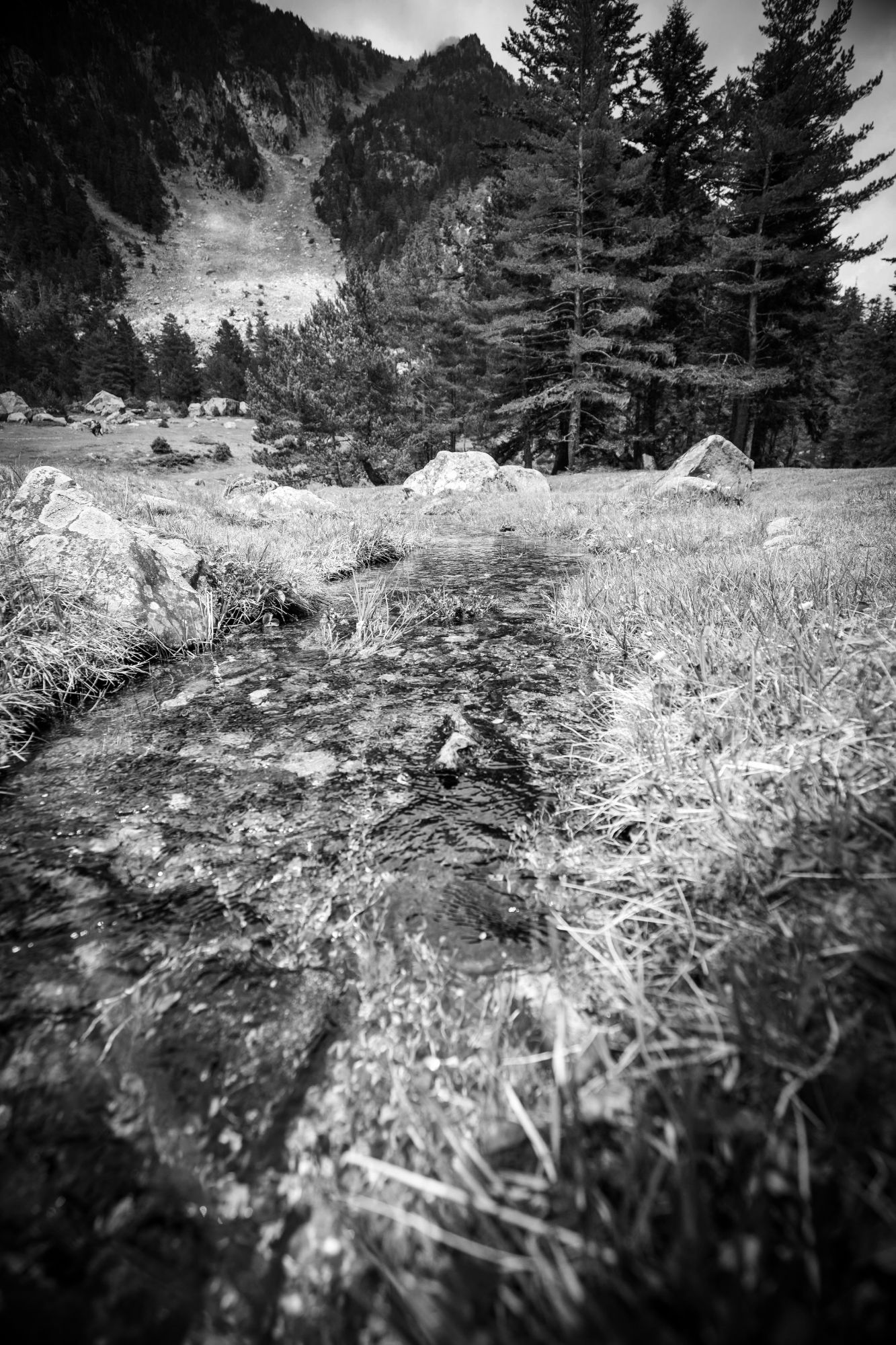
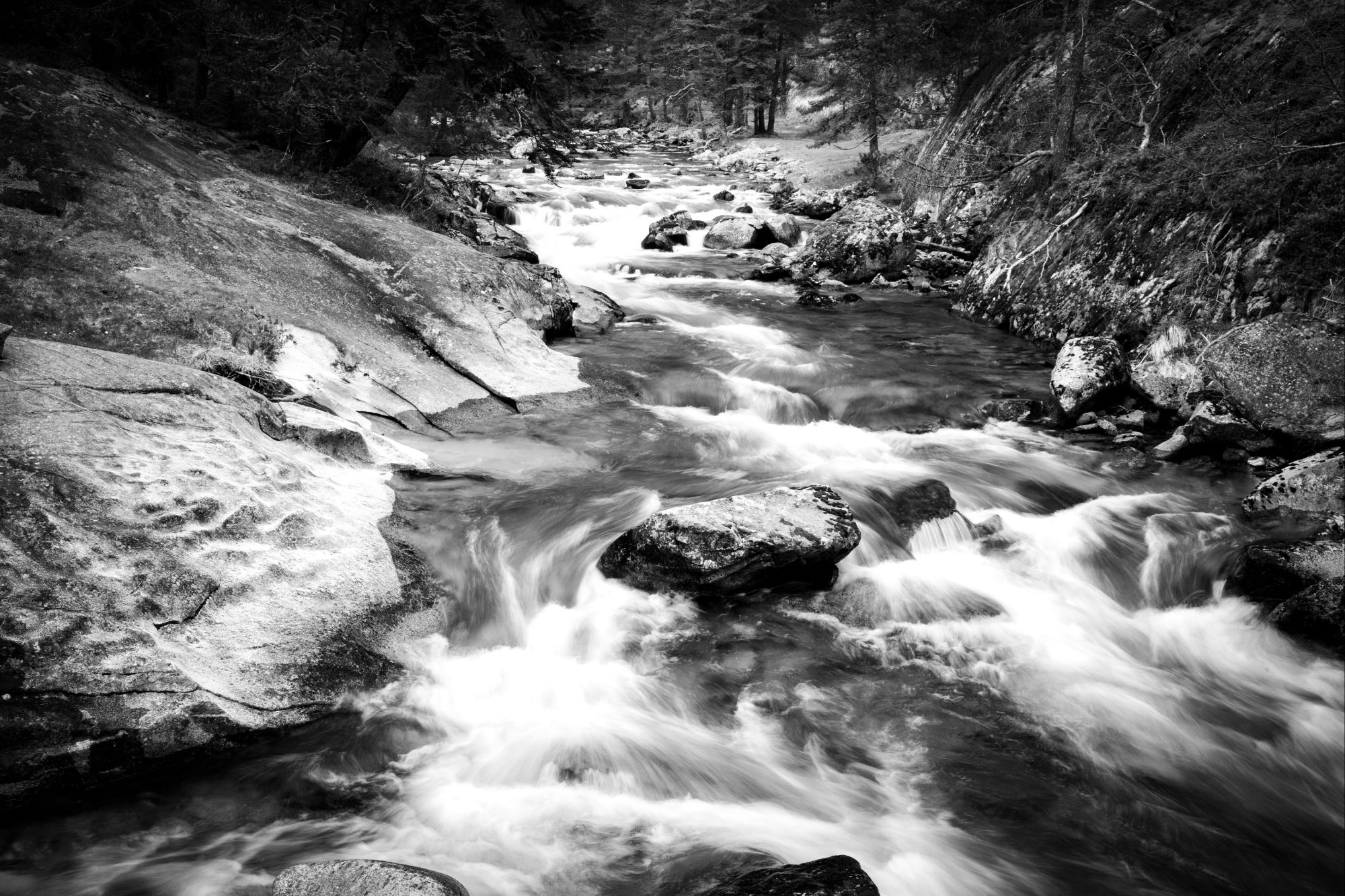
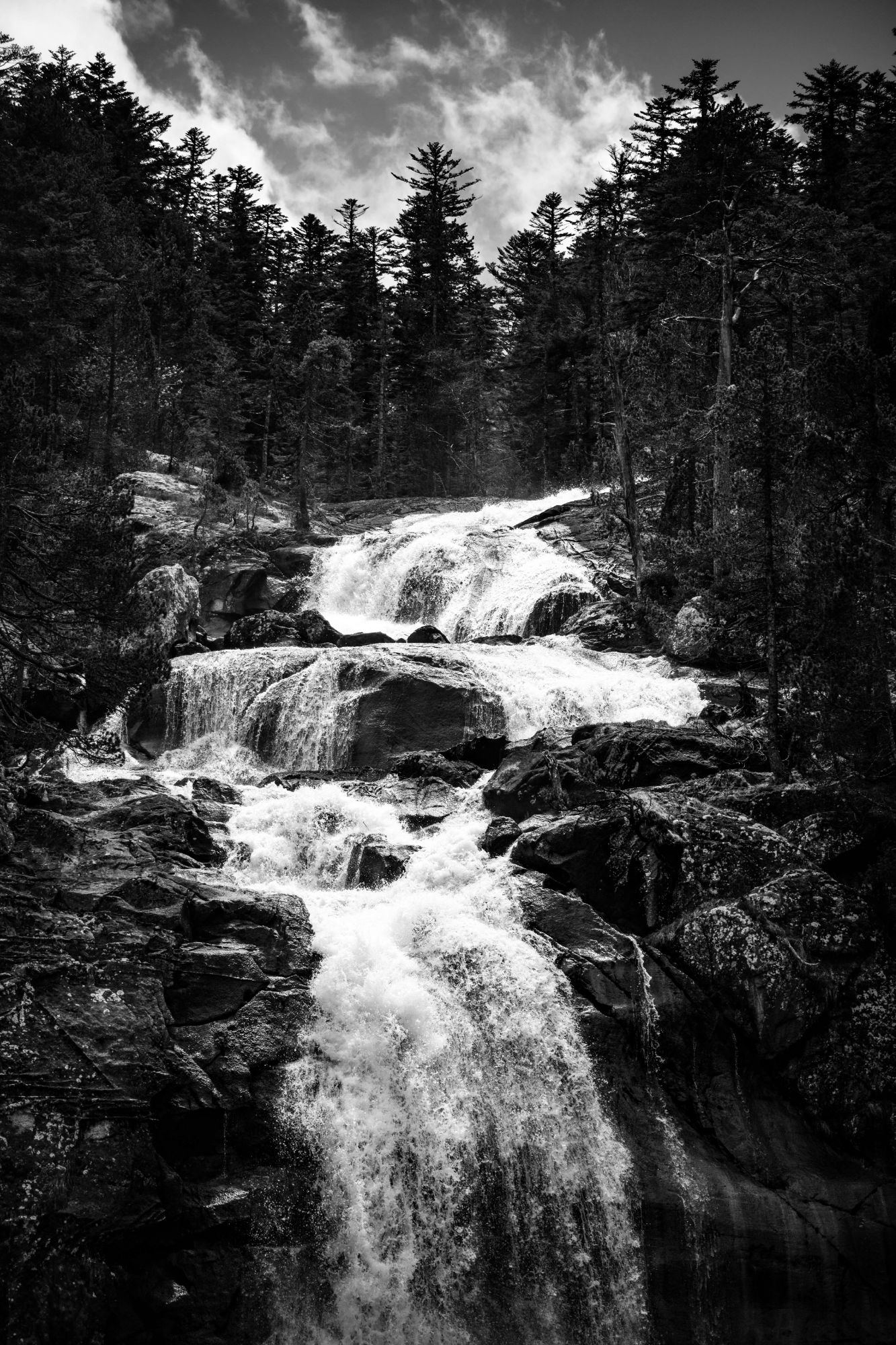
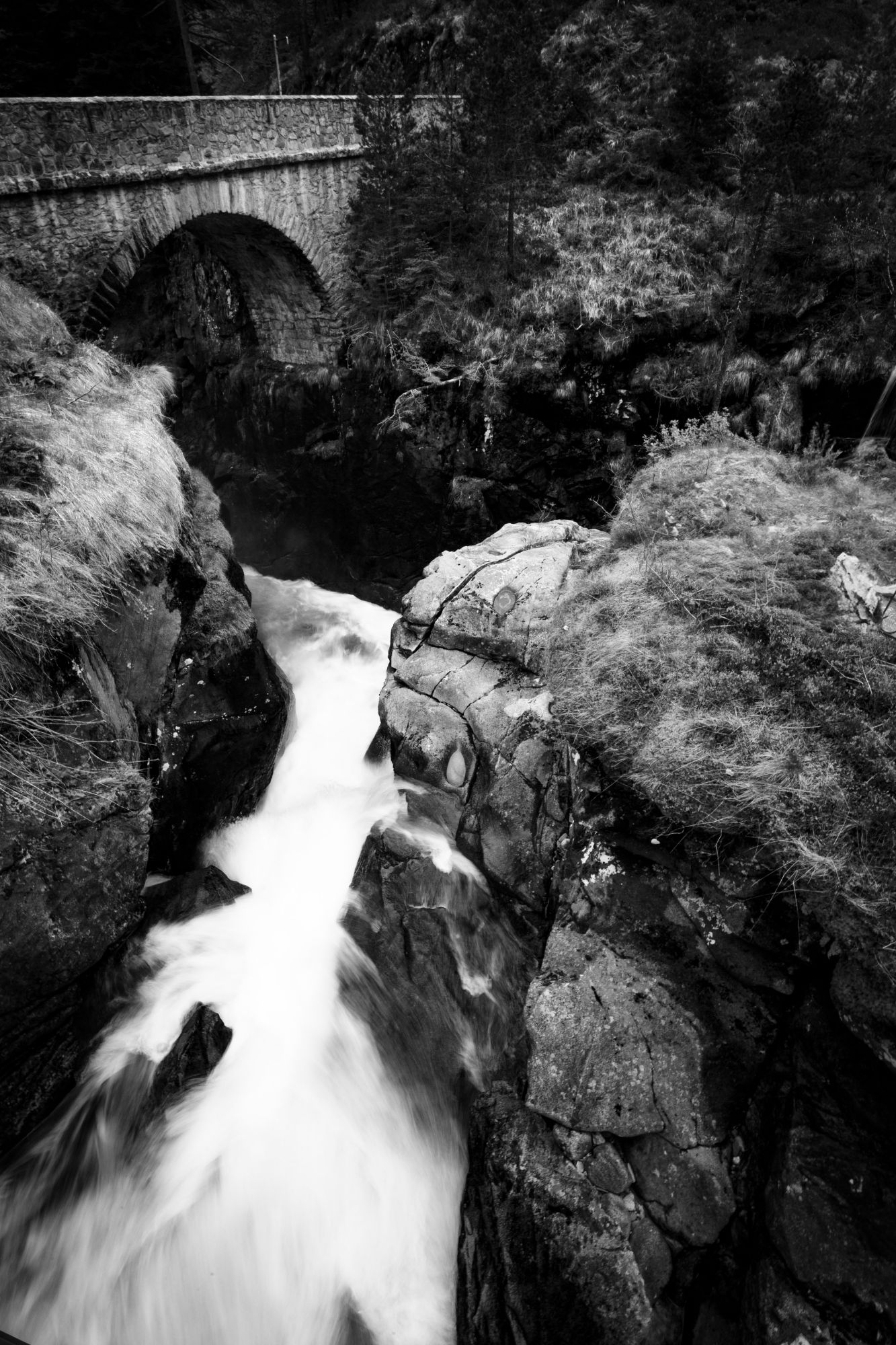
Before we even saw the bridge, we heard it: the sound of the water was tremendous. Water is a primeval force, and this was huge. I wanted the “money” shot, and decided to try with the X100F, giving it a sporting chance. The Canon 6D Mark II, with its stabilised lens, would come out on top. Handheld at 1/6th of a second? Not ideal — but fun to try. You get the feeling of movement in your shot, and with the magic of ND filters, you’re not overexposed.

The site itself is just astounding — not just because of the view or the sound, but because of the raw power of the place. Killian led me grumbling up the hill and we sat down to have our picnic. We fed the ants a bit of our pâté en croûte and watched them discover it, then devour it completely. And devour it they did.

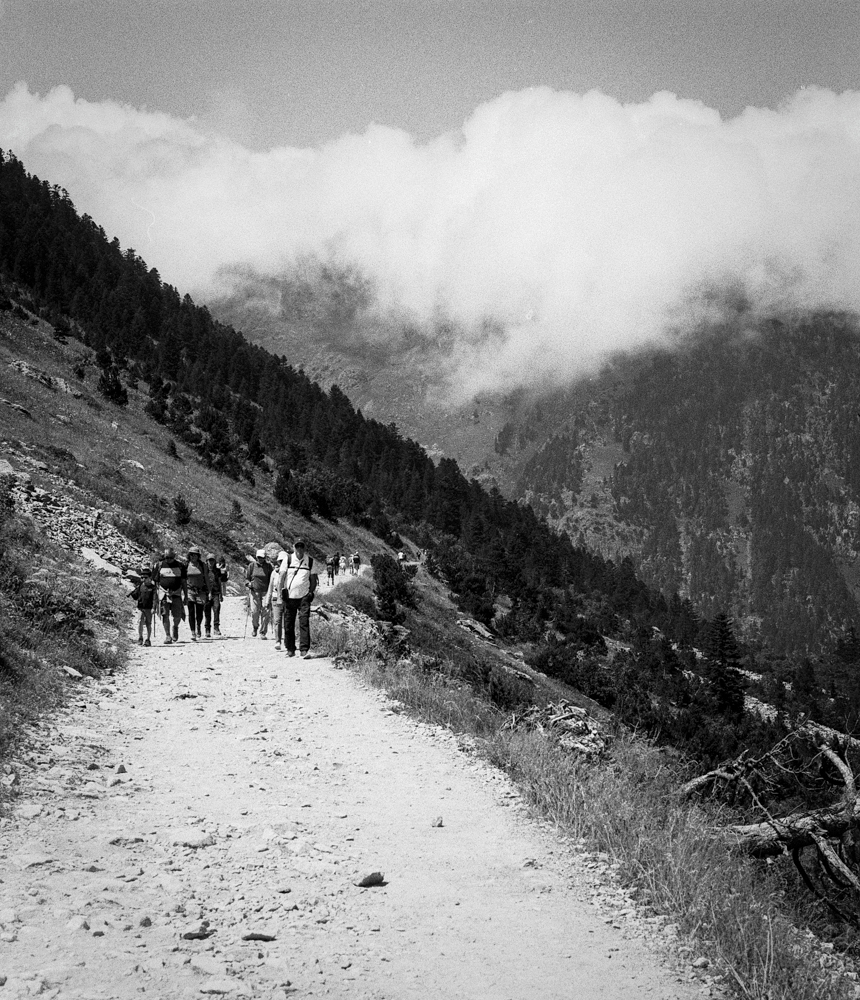
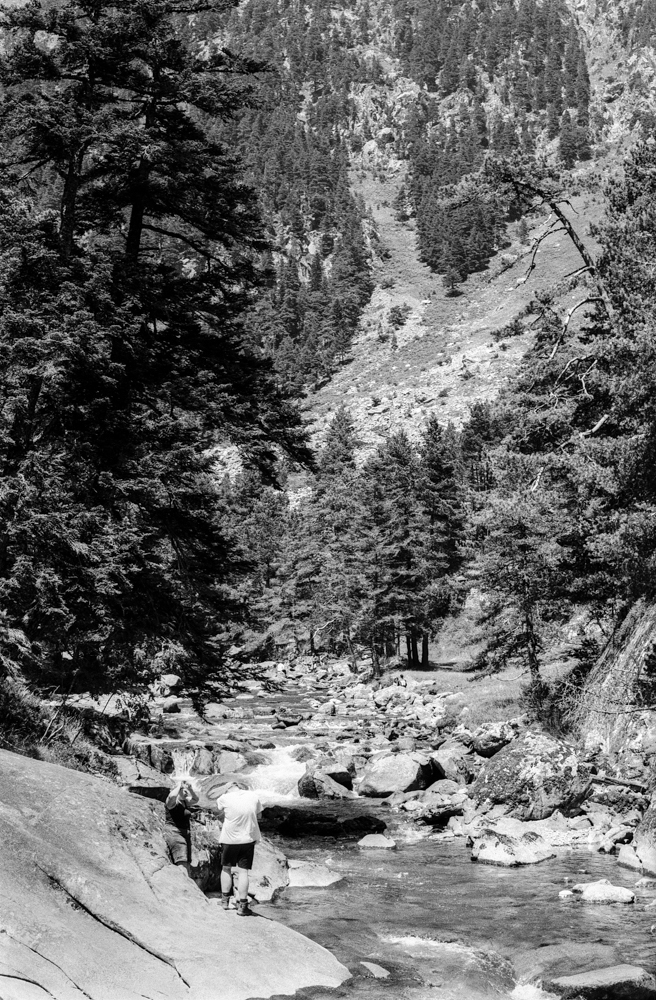
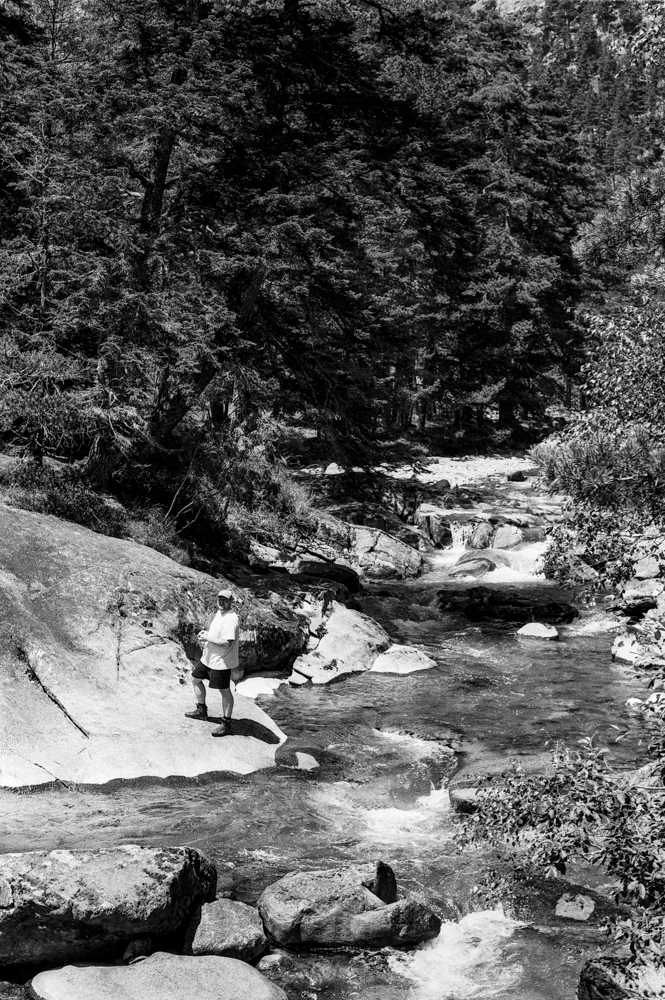
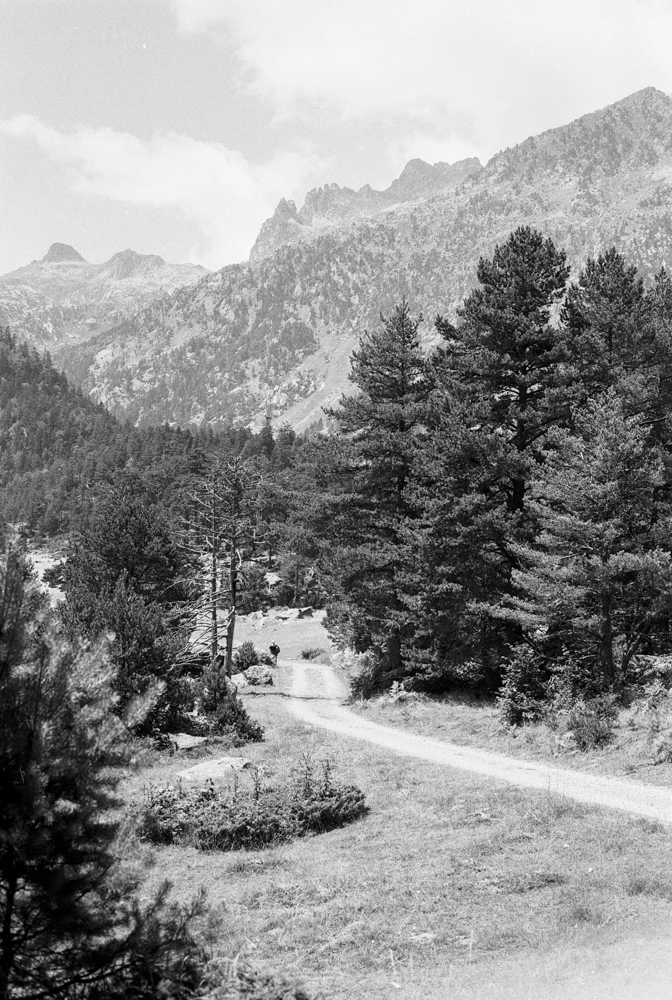
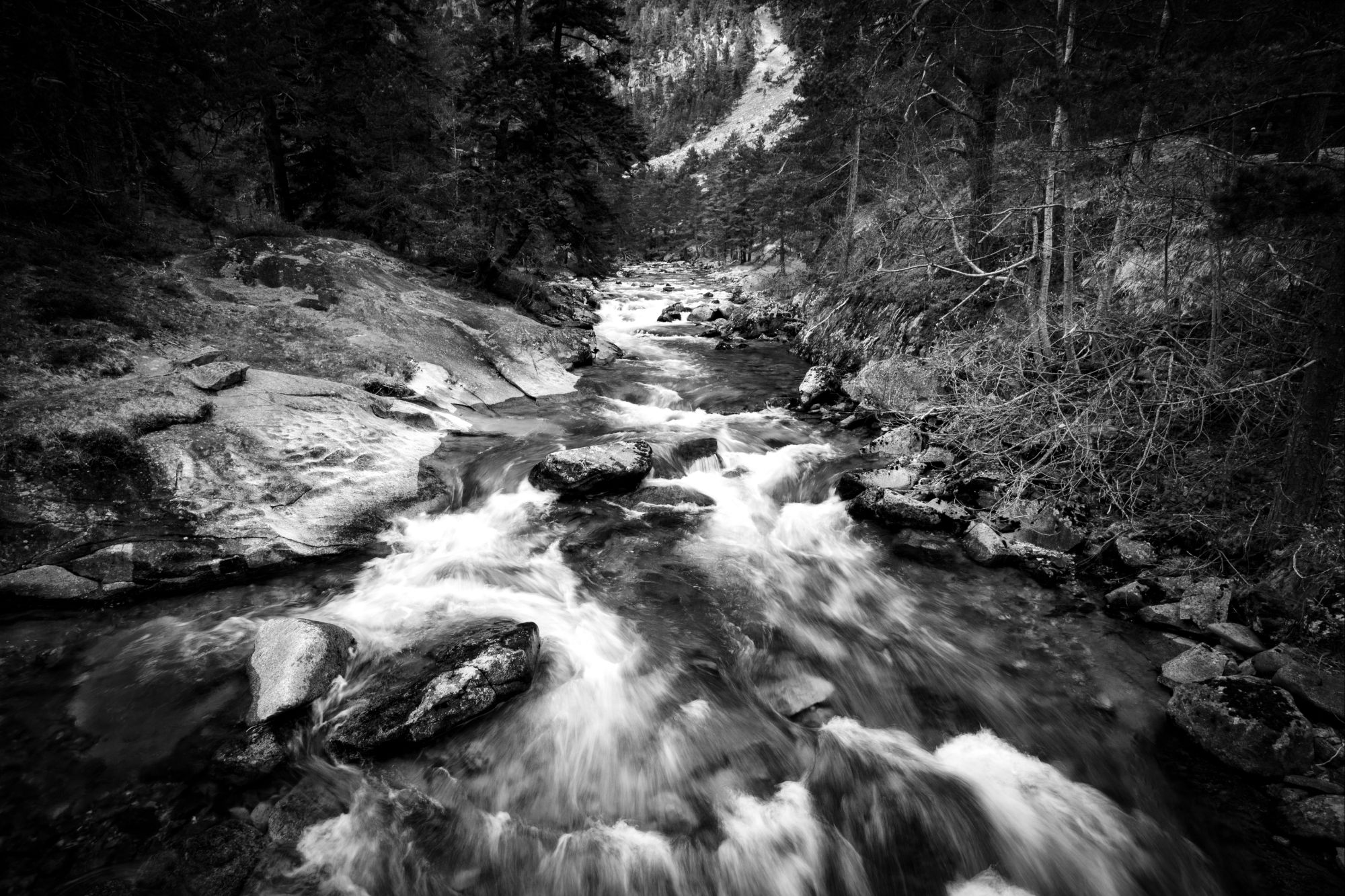
He led me past the téléphérique — closed, of course — and followed the river until we reached a wide, flat-bottomed valley with water snaking through it. We saw traces of horses and wild boars, which are a lot less boring than you might think. I noticed the clouds coming round the mountains as they go, but not singing. I don’t know a huge amount about mountains, but that’s usually a cue to get back to the car…

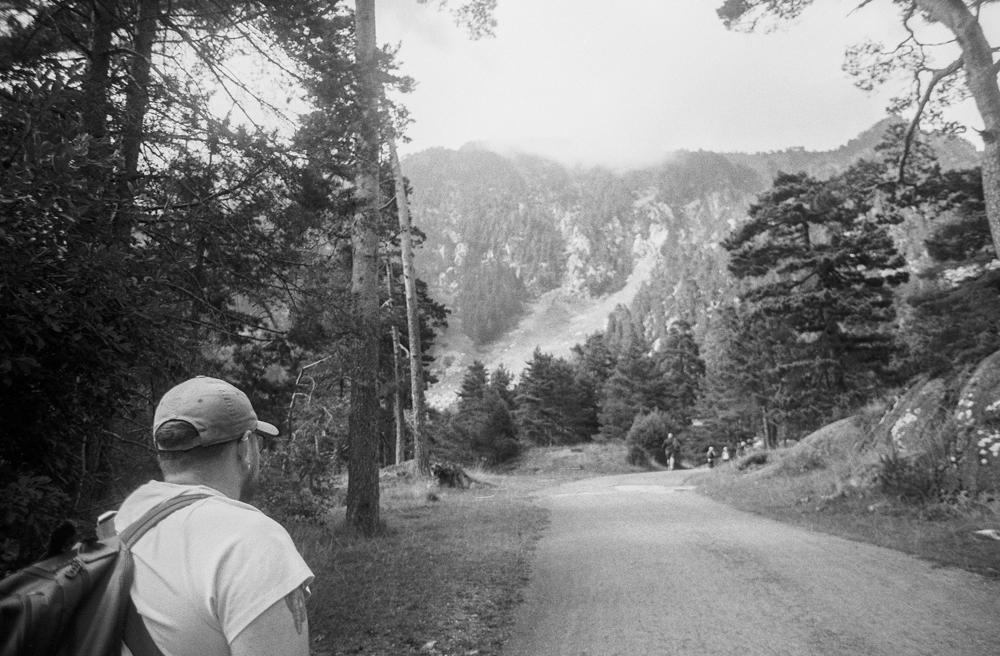
The walk back to the car was just about being father and son — taking the mickey out of each other as we went. It seemed to be the way we operated, and I wouldn’t change it for the world.