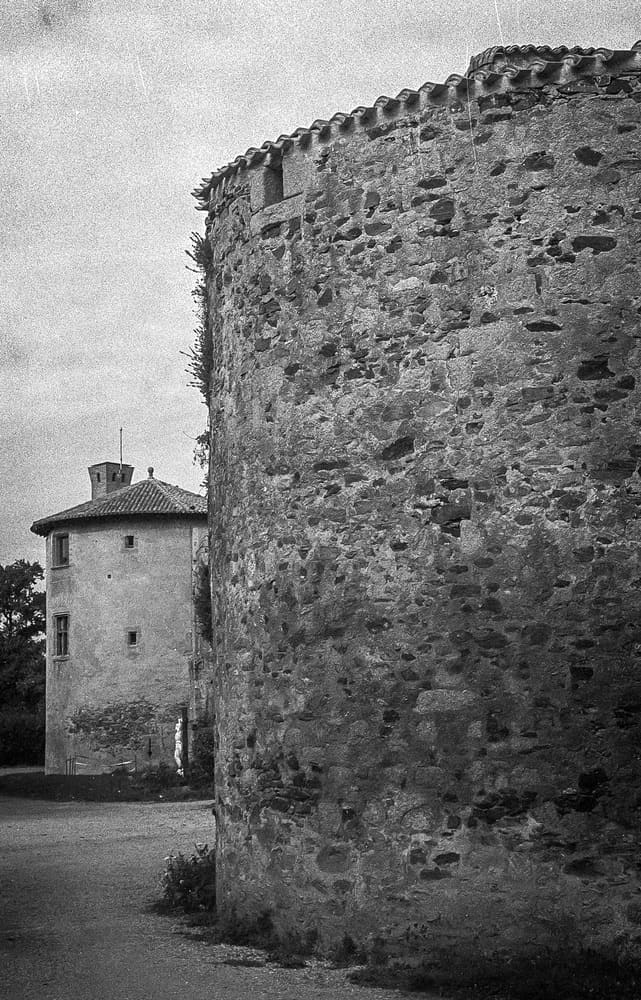
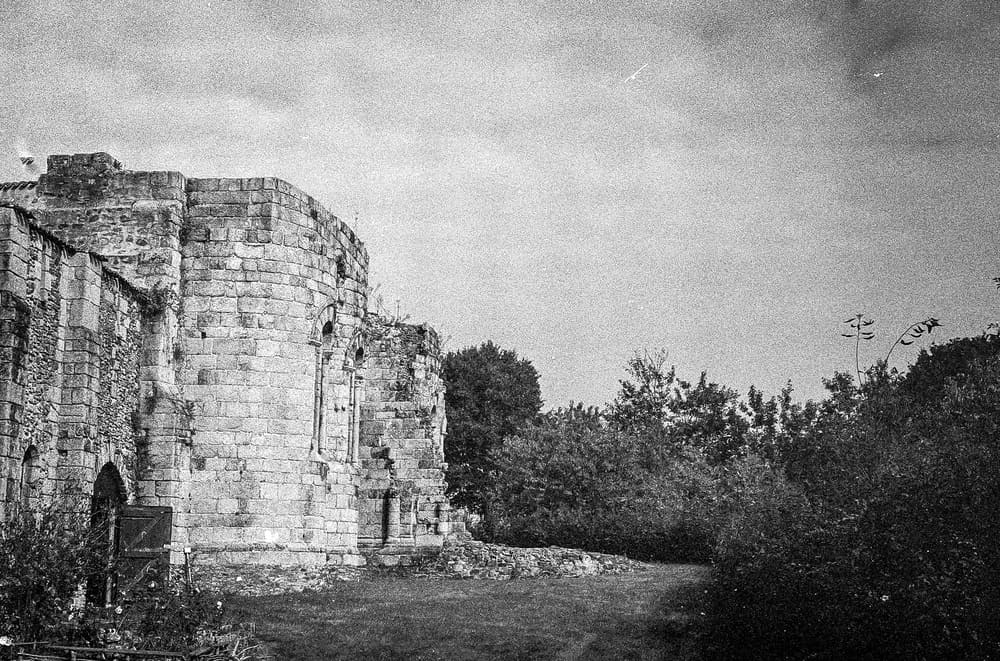
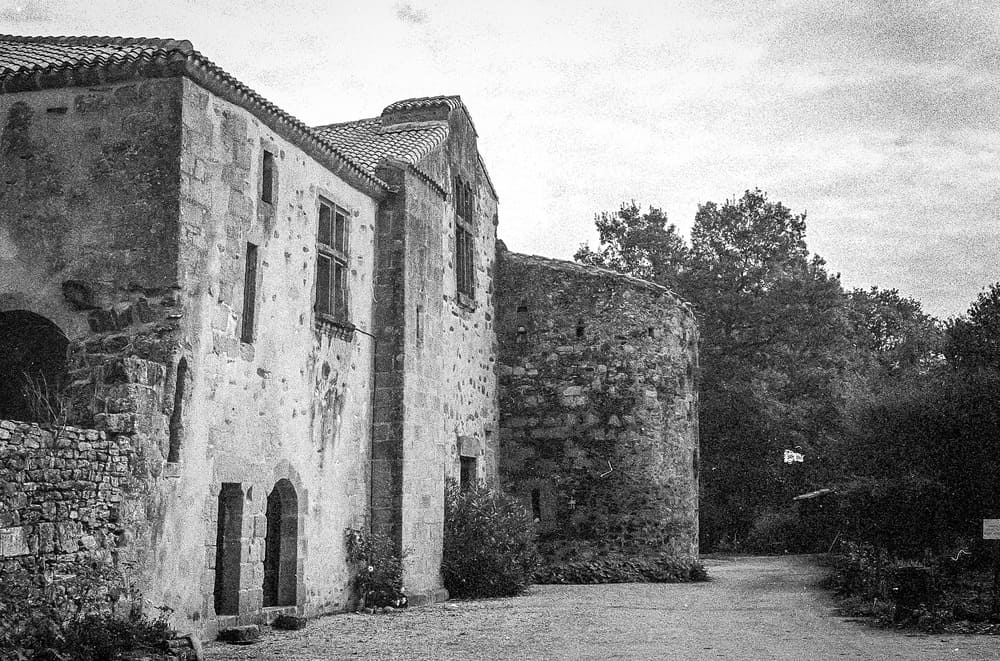
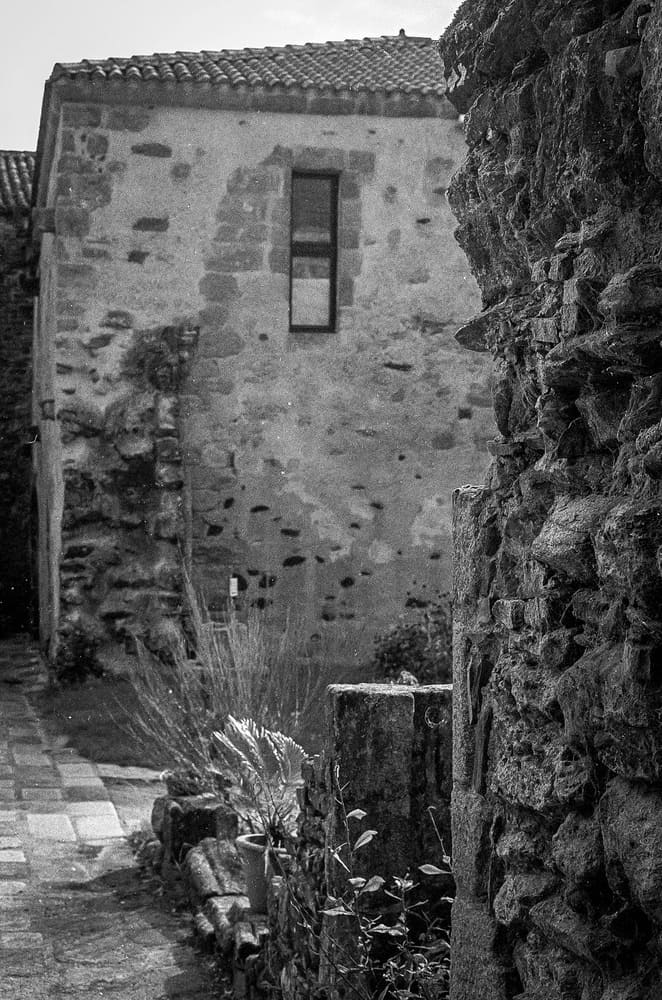
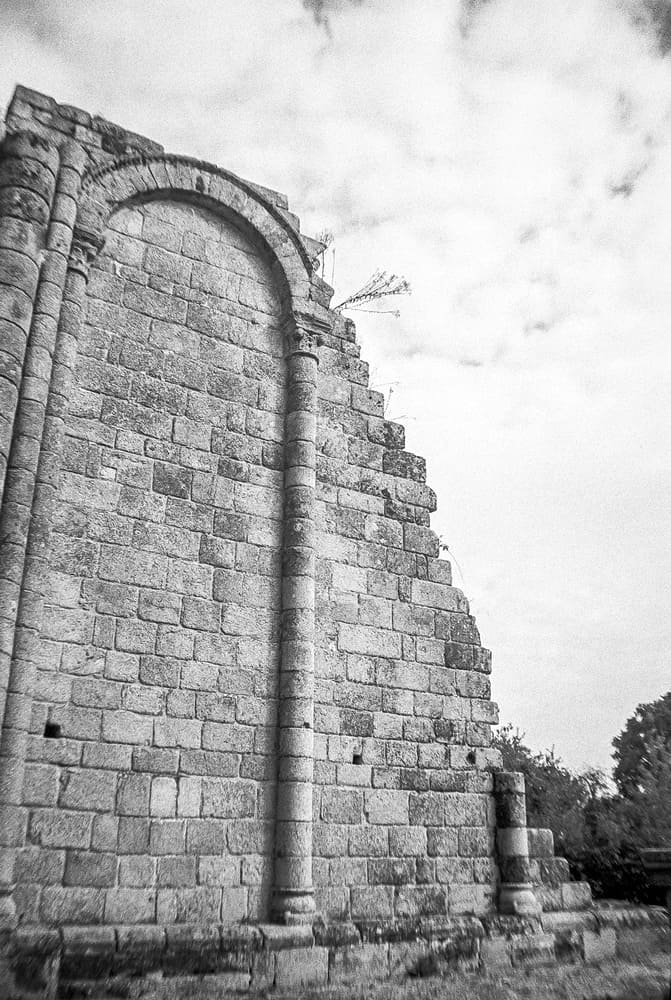
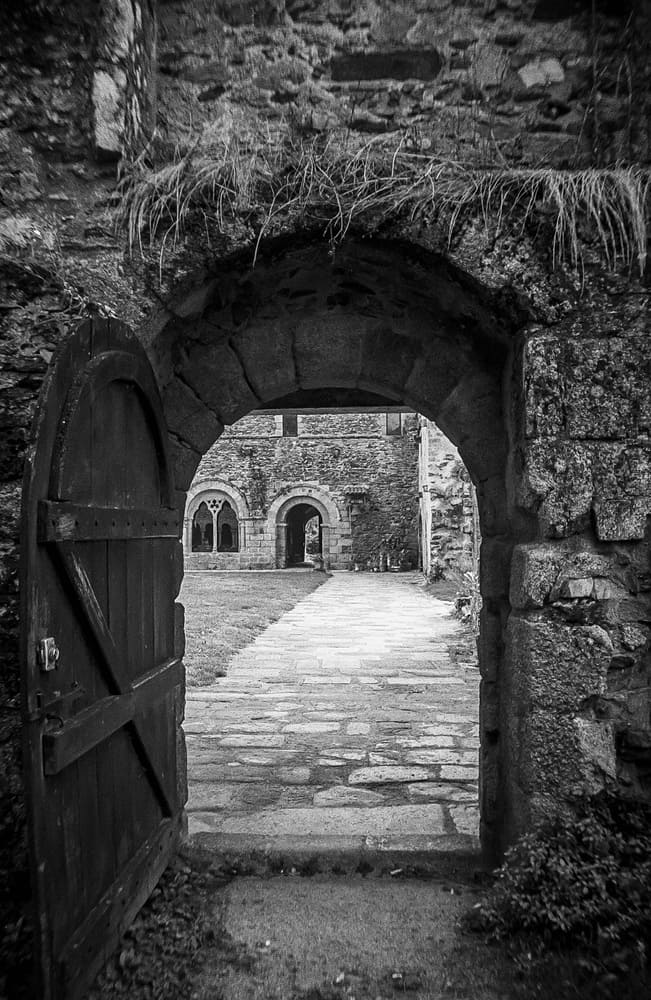
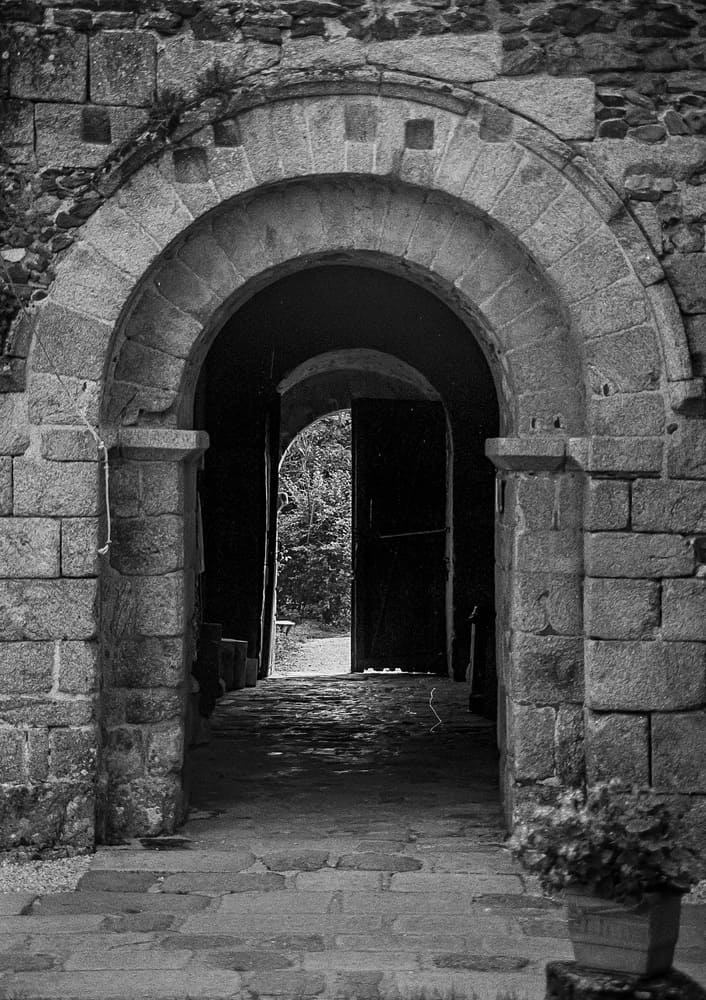
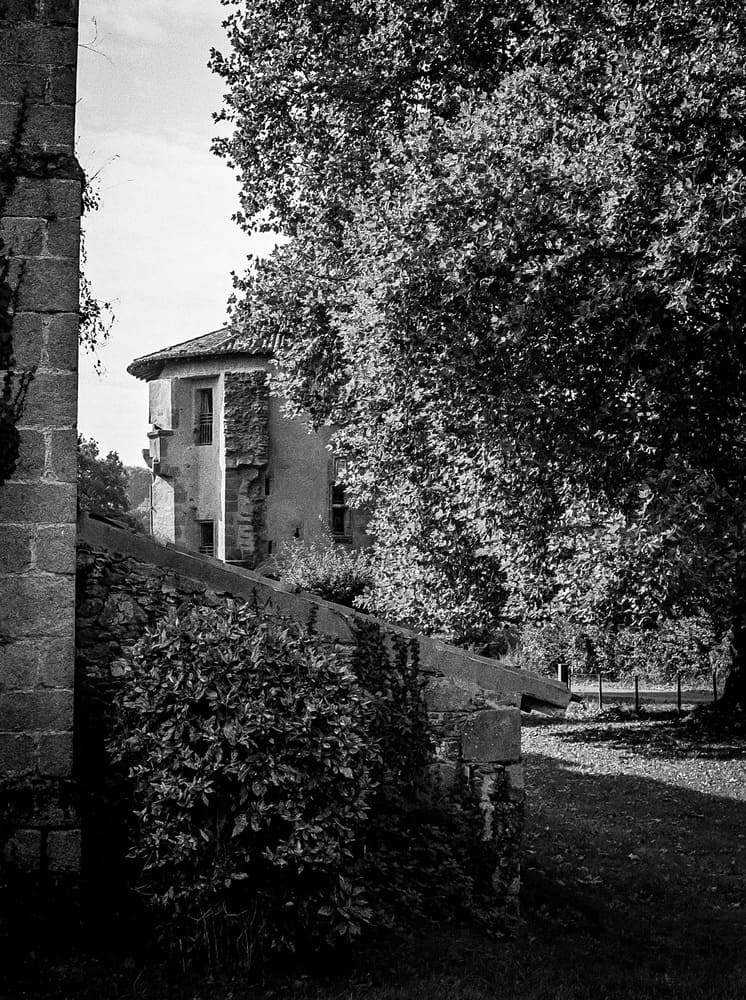
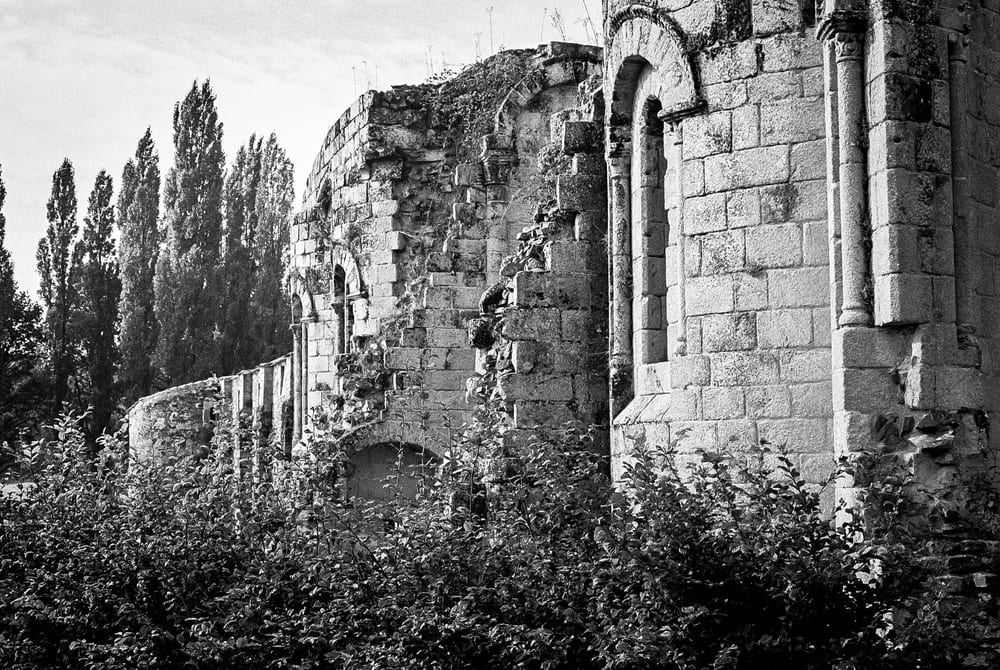
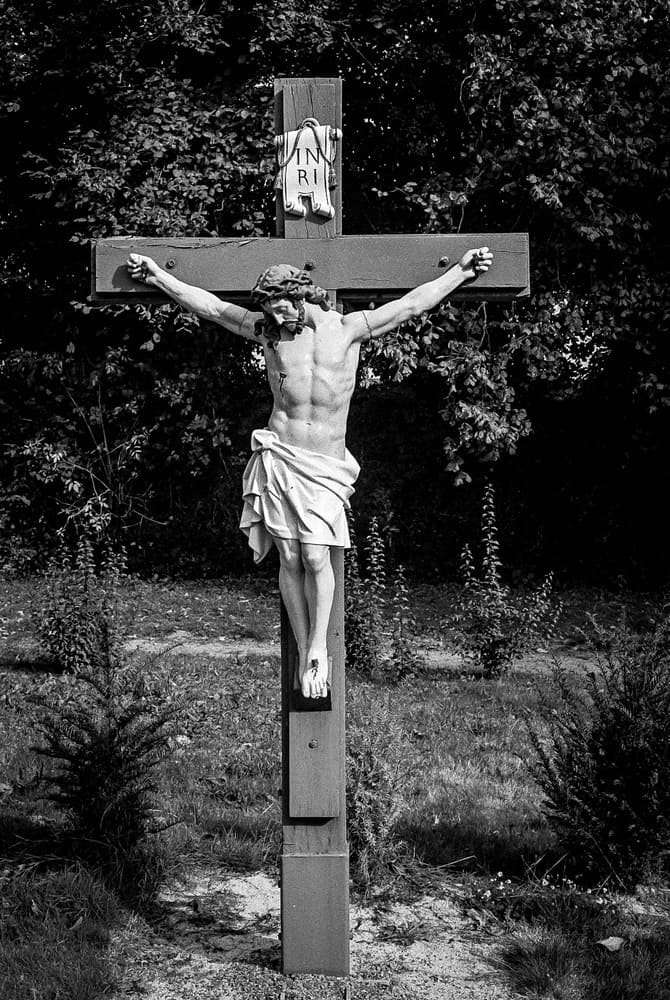
The Opening of the Film Archives—Abbaye de la Grainetière, October 2016


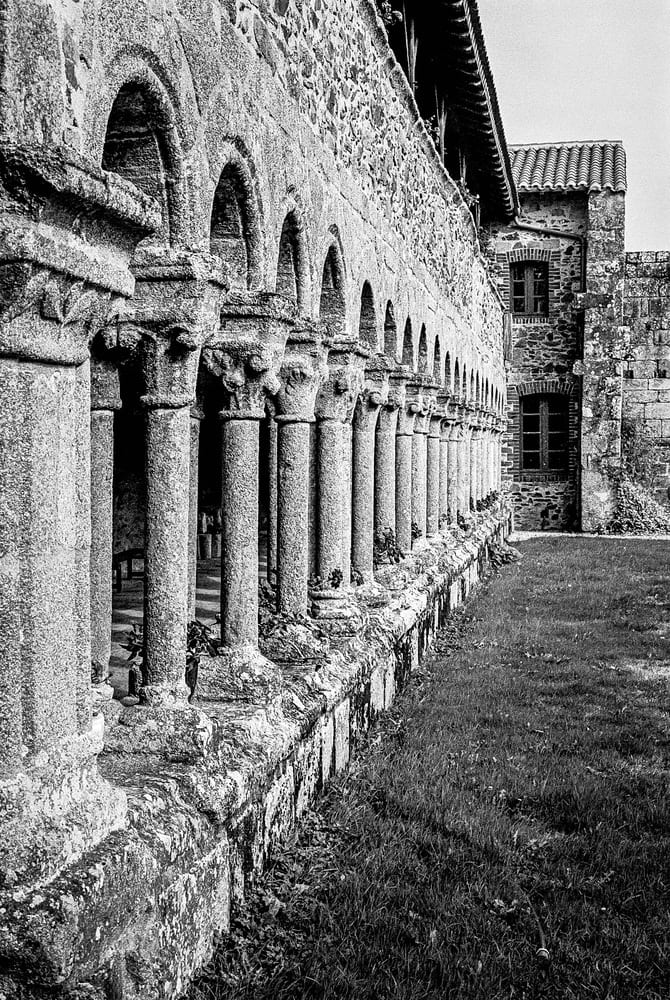
“They” say that if you leave your child to the Jesuits for seven years, then that child will belong to the Jesuits for life. I am not a Jesuit, but I was heavily influenced by the Benedictines when I went away to prep school in 1980. Mummy, Daddy, let me reassure you, this isn’t about Gilling—some things are better left in the past. This article will instead focus on a different Benedictine site, one that I visited much later in life: l’Abbaye de la Grainetière, a peaceful monastery here in the Vendée.

The Abbey of Notre-Dame de La Grainetière, on the outskirts of the town of Les Herbiers in Vendée (France), encompasses nearly nine centuries of tumultuous history. For over 50 years, numerous restoration works have been undertaken. These efforts allowed for the re-establishment of a community of monks at the end of 1978, nearly 200 years after the abbey was abandoned by the monks, shortly after the Revolution of 1789. Classified as a historical monument since 1946, many volunteers are working to continue the legacy of La Grainetière.

To those of you unfamiliar with the ins and outs of the Catholic Church, the role of monks is to live in community, and their main duty is to pray for us in the wider community. The monks elect a Father Abbot, who is responsible for running the monastery. In centuries gone by, the Abbot would wield a huge amount of influence, but this power has been reined in over time and is less evident outside the monastic community.

When I visited l’Abbaye de la Grainetière, I couldn’t help but reflect on how different this Benedictine monastery felt from my school days. The quiet prayer, the stillness—it offered a kind of peace that I hadn’t experienced for a long time, and a life that was once very appealing to me.

The monks follow the Rule of Saint Benedict, a foundational guide for monastic life that addresses not only prayer, but also how to live both within and beyond the monastery walls. Though written for monks, many of its teachings have been adopted by the laity seeking a structured, spiritually focused life.

I could almost say I envy them the simplicity of monastic life compared to the complexities of modern society and family life—juggling careers, responsibilities, and the endless distractions of today’s world. While I don’t regret the joys and vibrancy that come with having a family—something perhaps lacking in monastic life—it’s hard not to admire the stillness and purpose that a simpler existence can offer. We all have different vocations in life. Mine was to be a father.

As I packed away my camera and left the grounds of l’Abbaye de la Grainetière, I found myself still pondering the contrast between the quiet, ordered life of the monks and the complexity of my own. In some ways, visiting the abbey felt like opening a door to a simpler time, a place where life seemed more focused and more deliberate. Yet, as much as I admire the peace found within those ancient walls, my own path has led me elsewhere—to the joys, challenges, and unpredictability of family life.

In the end, it’s not a question of envy or regret, but rather a reminder that we all find our peace in different ways. For the monks of l’Abbaye de la Grainetière, it lies in prayer and solitude. For me, it’s found in the laughter of my children, the shared moments with loved ones, and yes, even in the rush and noise of everyday life. Each vocation, after all, carries its own kind of grace.

Perhaps that’s what lingers with me most from my visit to the abbey—not just the tranquillity of the place, but the realisation that we each have our own rhythm, our own way of navigating the world, and there is beauty in all of it.
Post Scriptum:

The photos were taken with a Canon AE1, and its FD mount 50mm F1.8 lens, using Ilford HP5 + black and white film.

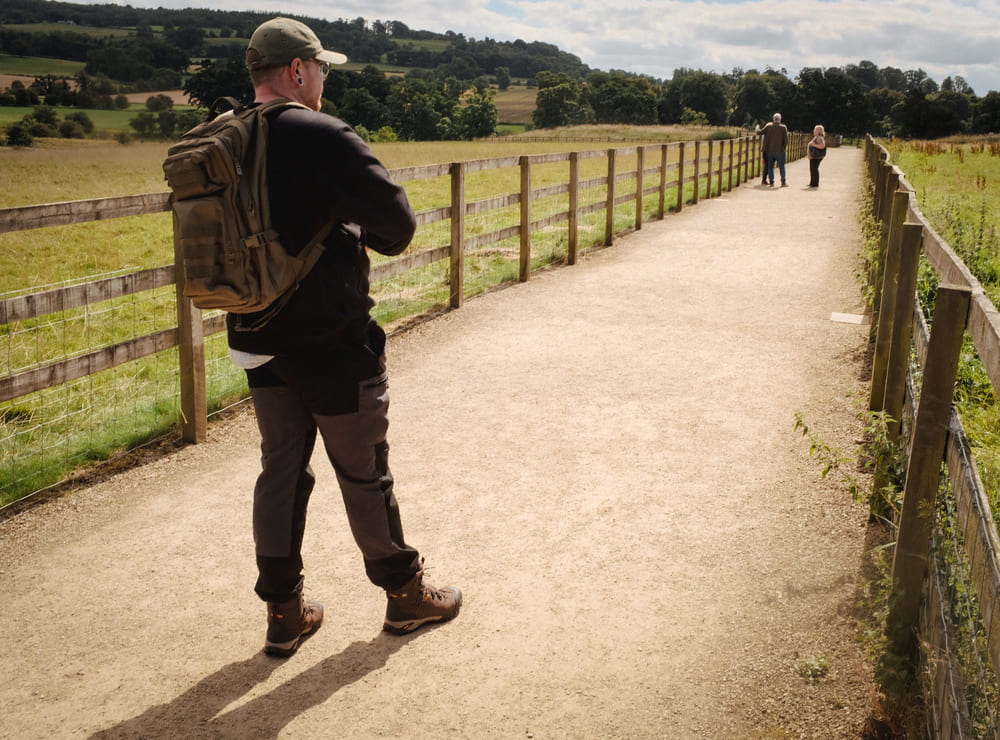
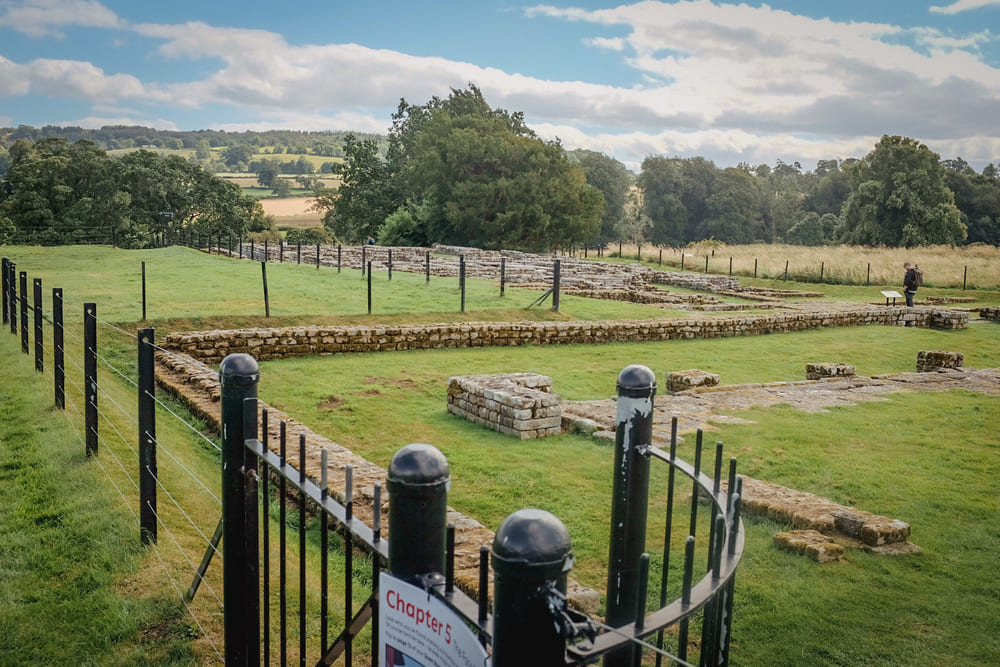
The UK Chronicles Part VII: Chesters Roman Fort


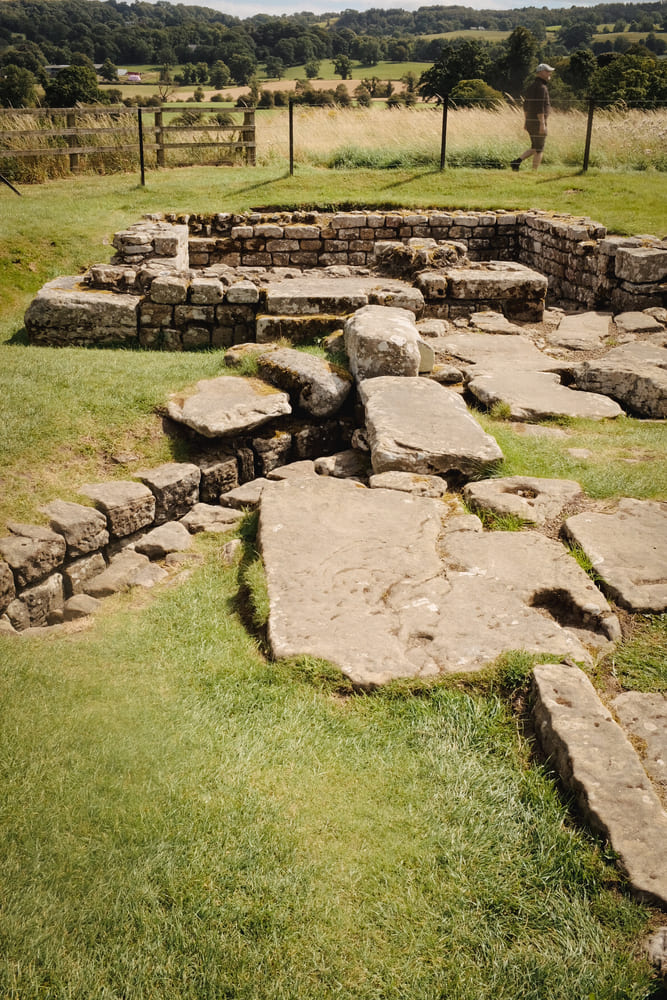
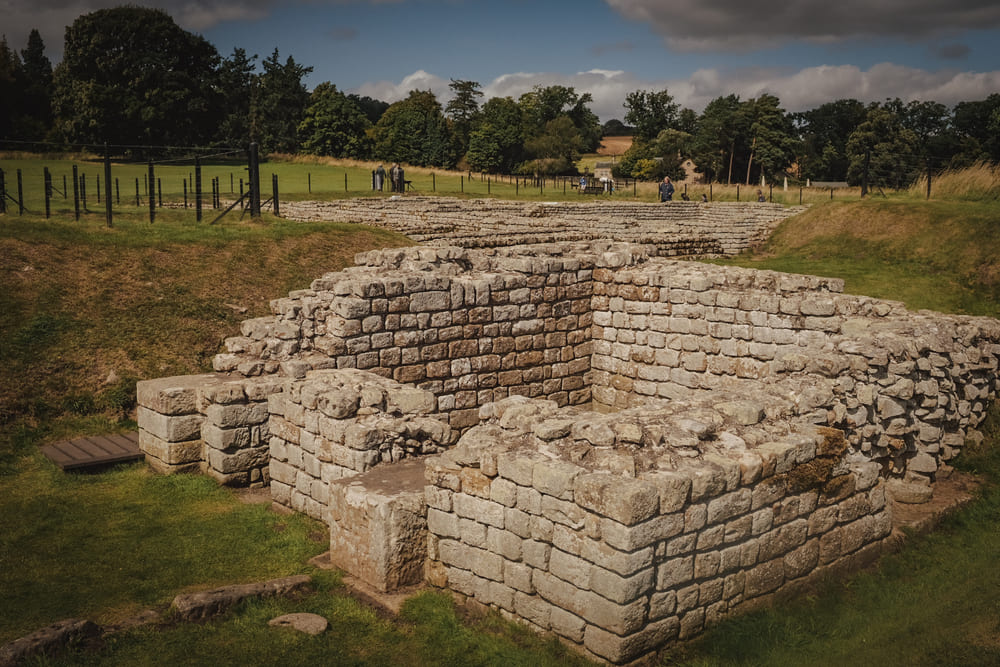
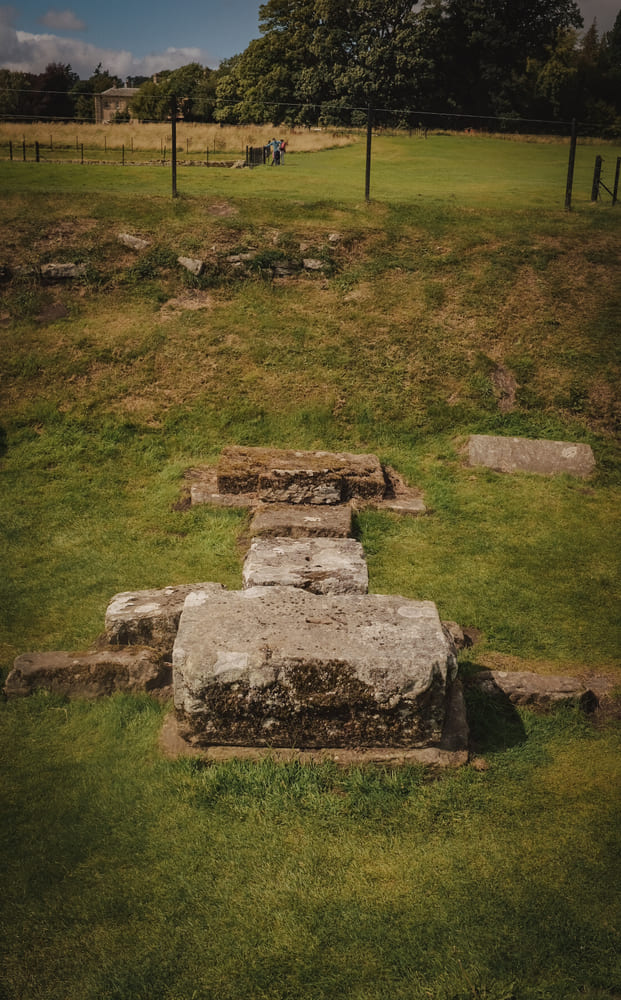
Welcome, Dear Reader, to the very edge of the Roman Empire, and by implication, civilisation. You might be wondering why there’s a carving of a phallus as the cover photo for this article. Well, don’t forget that soldiers will be soldiers, even when they’re part of a Spanish Cavalry regiment stationed here. Some things never change—except these soldiers were caught by archaeologists centuries later!

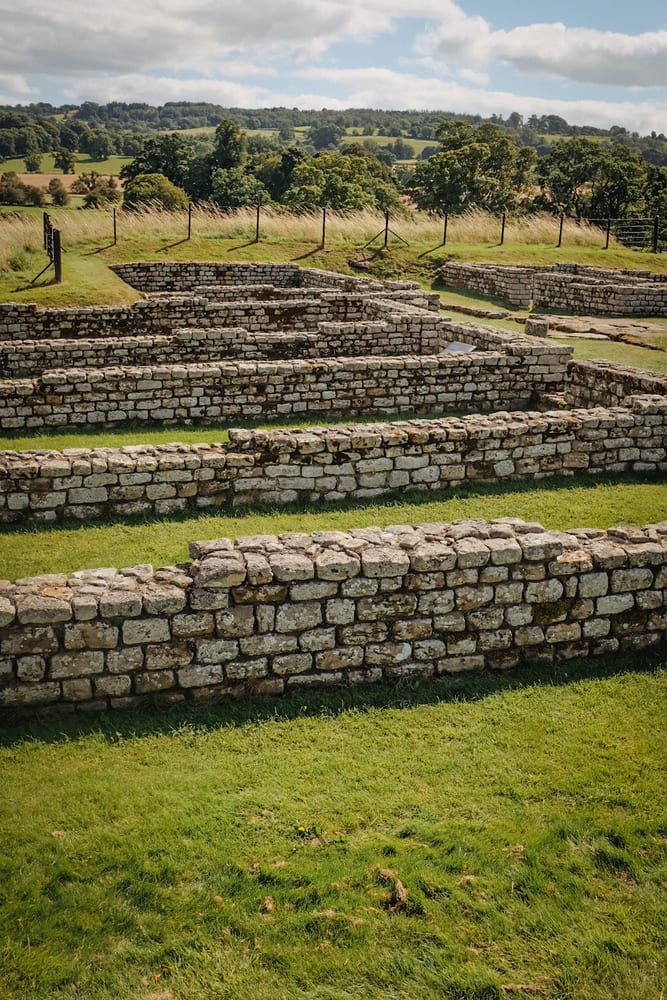
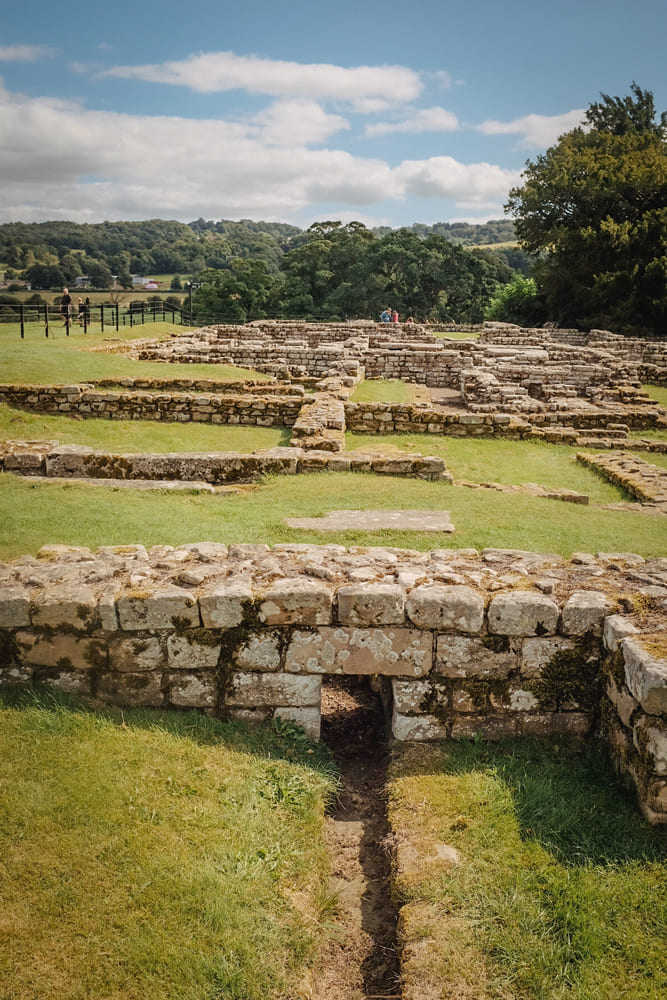
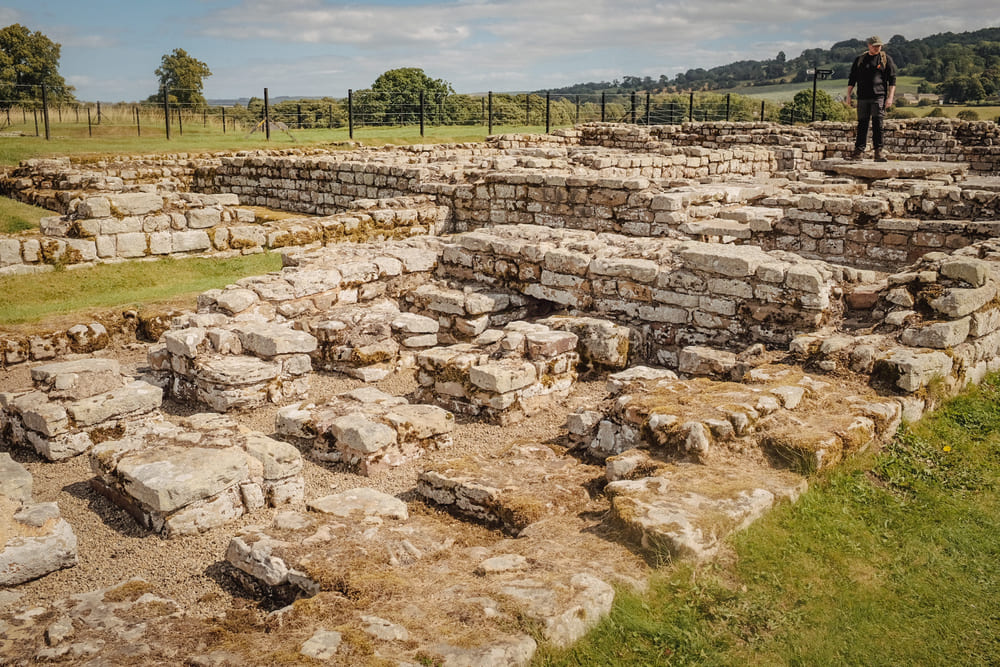
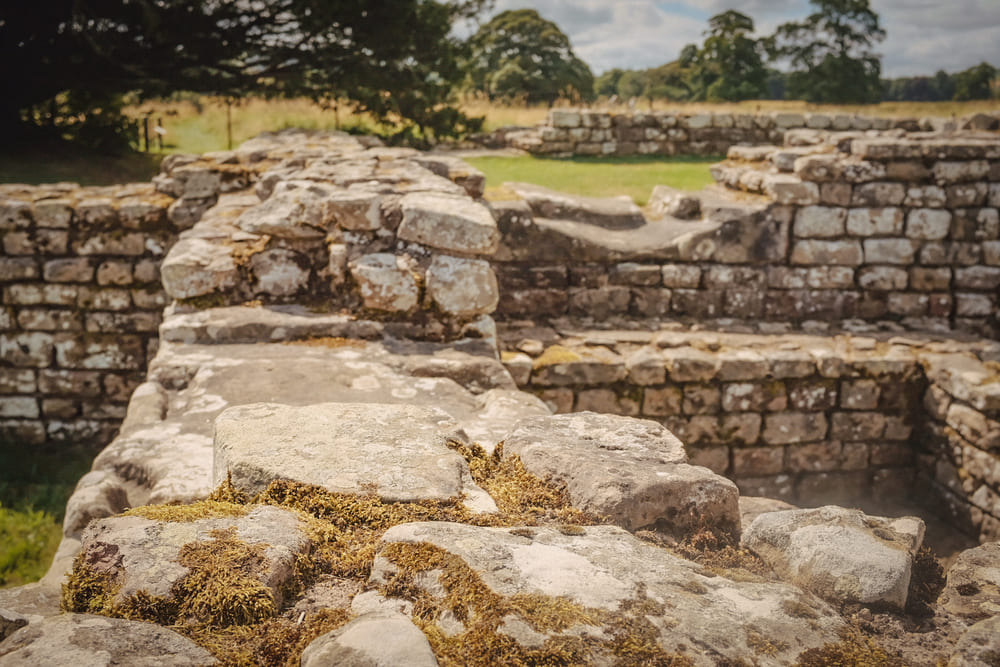
Chesters Roman Fort was constructed along Hadrian’s Wall to keep out the “uncivilised” Picts and Scots. This impressive wall stretches across the country from East to West, ending at Wallsend in Tyneside. It was a massive undertaking, and I’m still amazed by this feat of engineering.

Killian, my dear son and heir, whom you might recall from the previous article about his misadventures at Otterburn, was slightly less impressed. “Ce n’est pas le Mur d’Hadrian, mais le muret d’Hadiran,” he quipped—translating to, “Not Hadrian’s wall, but Hadrian’s little tiny miniature wall.” Some people are just impossible to please!

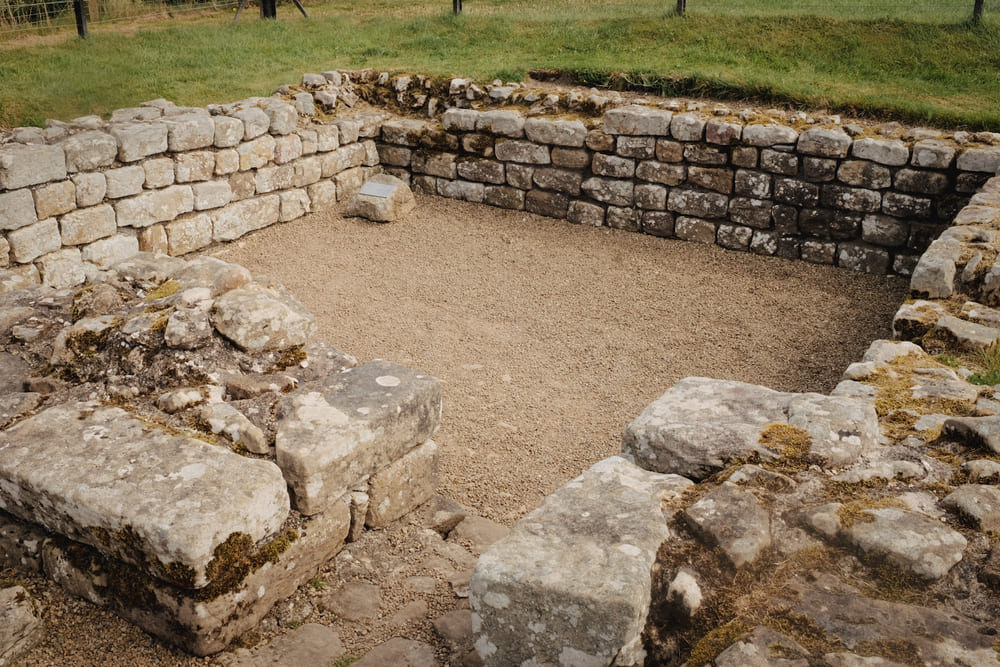
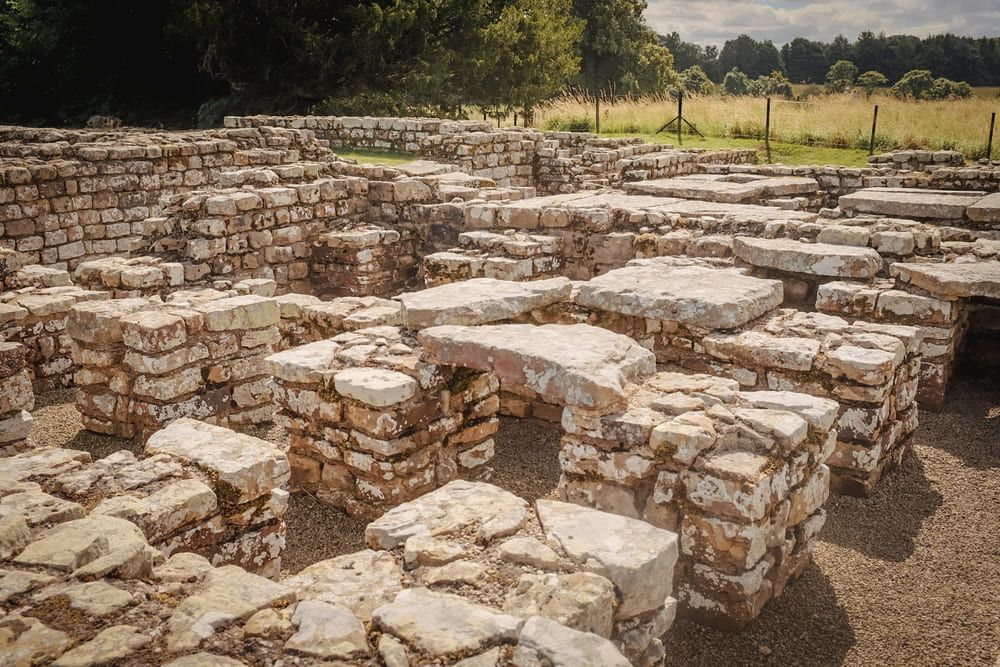
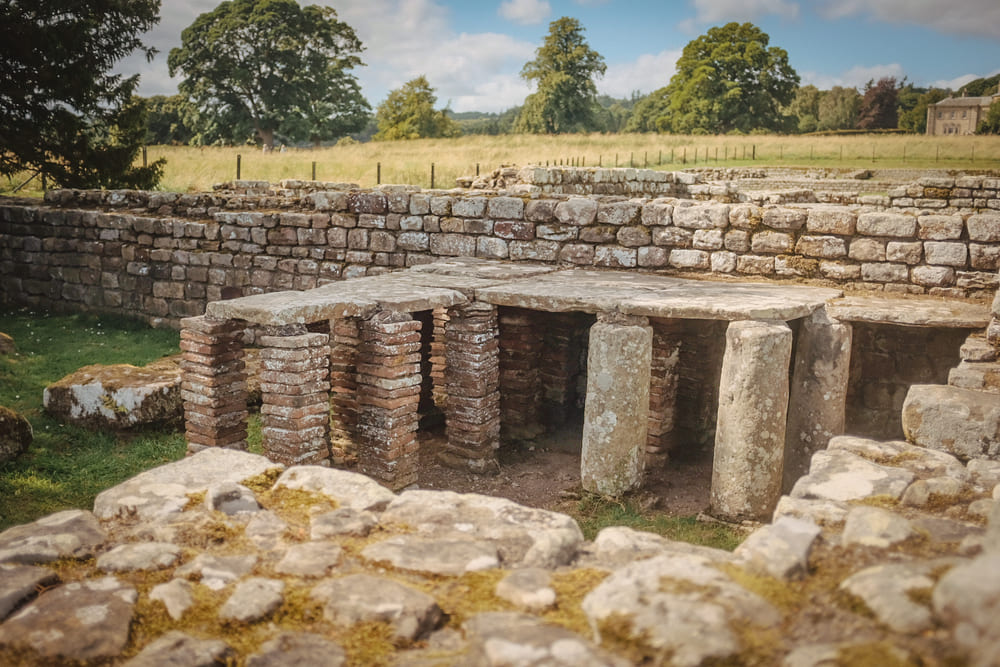
Despite his initial skepticism, Killian was genuinely impressed by the quality of the stonemasonry, even after nearly 2,000 years. With his background in plumbing, he quickly noticed the Roman plumbing and underfloor heating, which makes you realise how little we’ve actually invented since then.

When we visited the cavalry lines and saw where the horses were kept, he was astonished to learn that three men and three horses lived in the same building, with the horses at one end and the soldiers at the other.

Even though he was flippant at the start of the visit, he took a keen interest in everything and enjoyed explaining each building to me. Maybe he’s a closet intellectual after all…

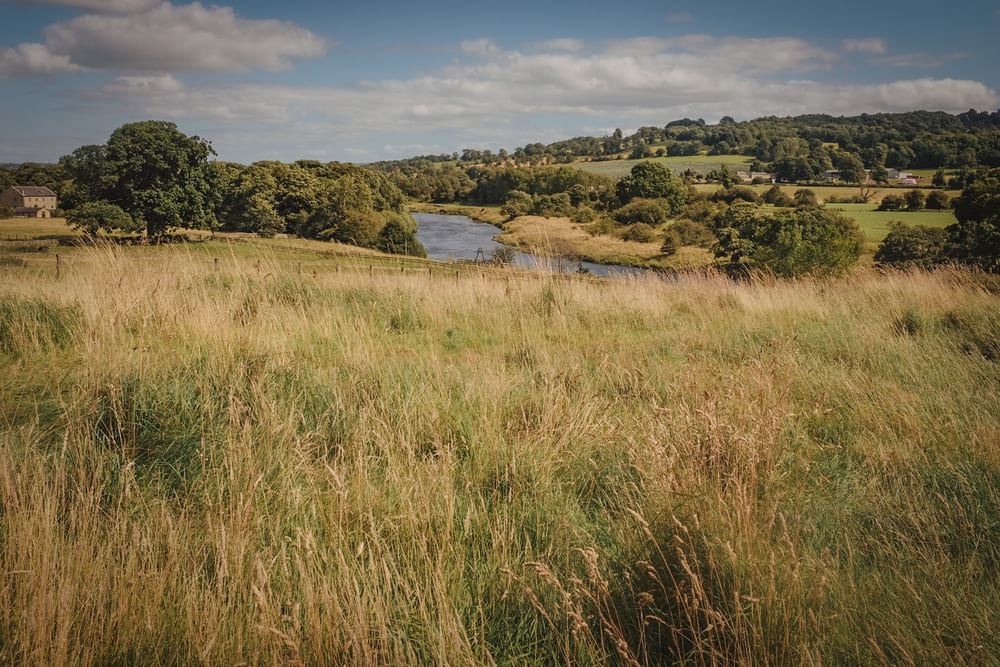
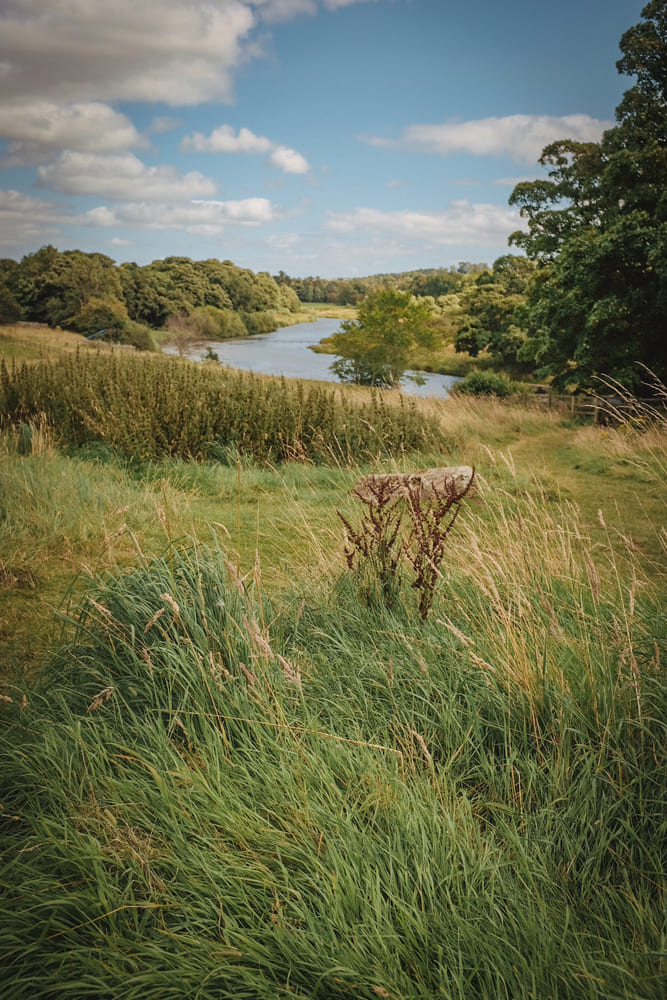
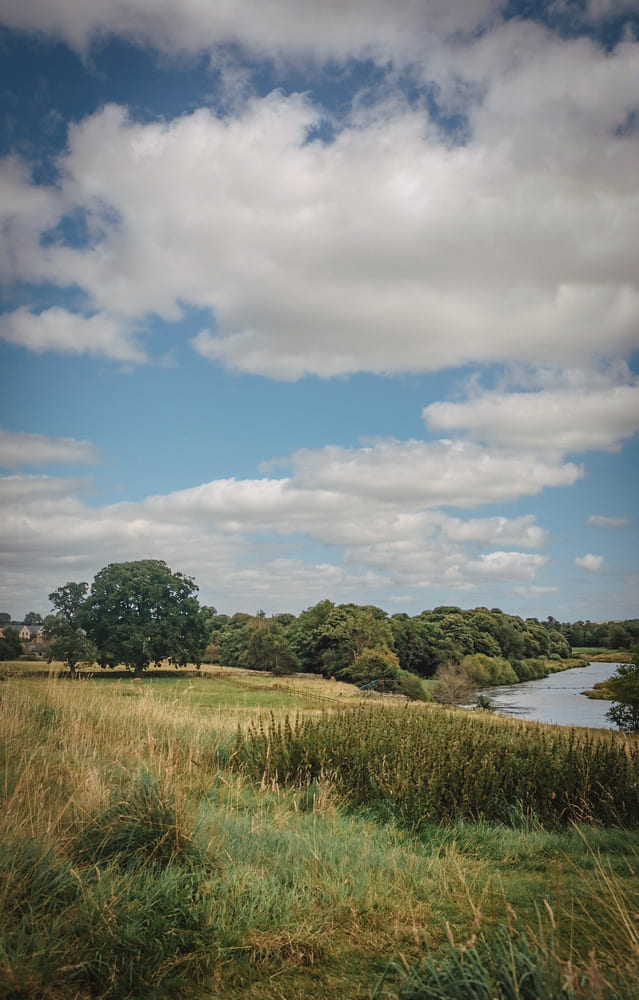
As we continued our tour, my knee was giving me trouble, and Killian showed his concern, asking if I really wanted to go down to the river to see where the bridge once stood. I insisted we go, so we made our way slowly towards the river and the soldiers’ baths. And by baths, I mean a fully-fledged hammam complete with sauna and dry heat—the very latest technology to provide the frontier soldiers with some home comforts. If those baths were still operational, they might have been perfect for soothing my arthritic knee!

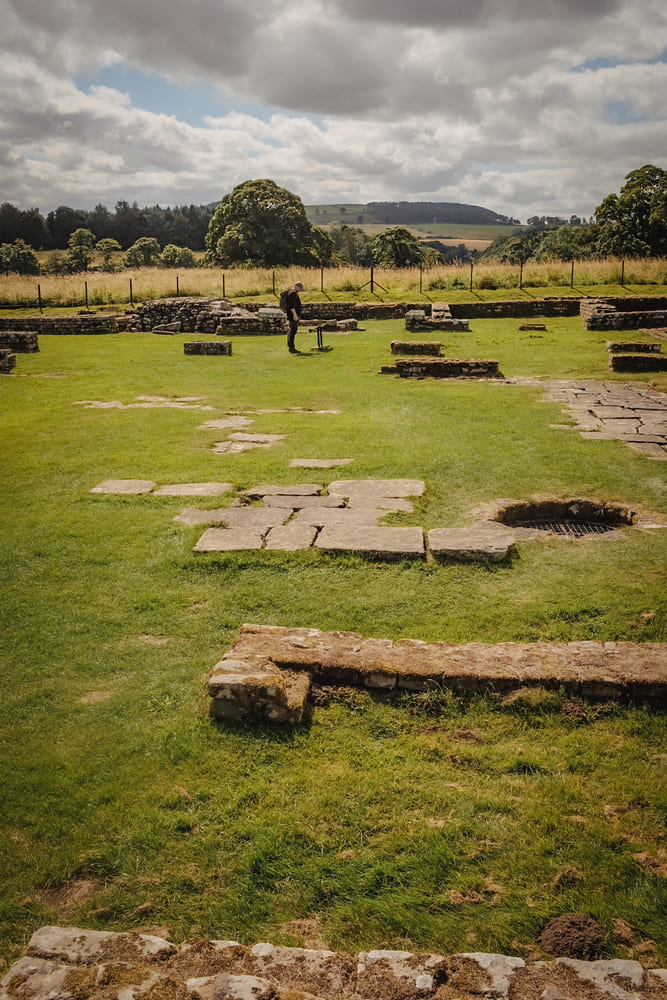
We walked slowly towards the west gate and could only imagine the civilian buildings buried beneath the fields in front of us. This site wasn’t just a series of building outlines but a thriving Roman community on the very edge of civilisation.

Speaking of civilisation, I felt it might just be time for a cup of tea. As we strolled through the site towards the car, we spotted a tea shop. A cup of tea and a slice of cake were just what I needed—I was in heaven! Good old National Trust! No wonder they’re an institution. Our conversation shifted to the gift shop, where I was trying to convince Killian that, despite how cool owning a replica Roman helmet and armour might be, it could be a tad impractical and he might not have many occasions to wear such Roman regalia. Mind you he would be very dashing!

If you want to, you can even play a game of “Where’s Waldo” or “Where’s Wally,” for the British readers. Note I didn’t say “Where’s the Wally…” Keep an eye out for the photos of Killian…

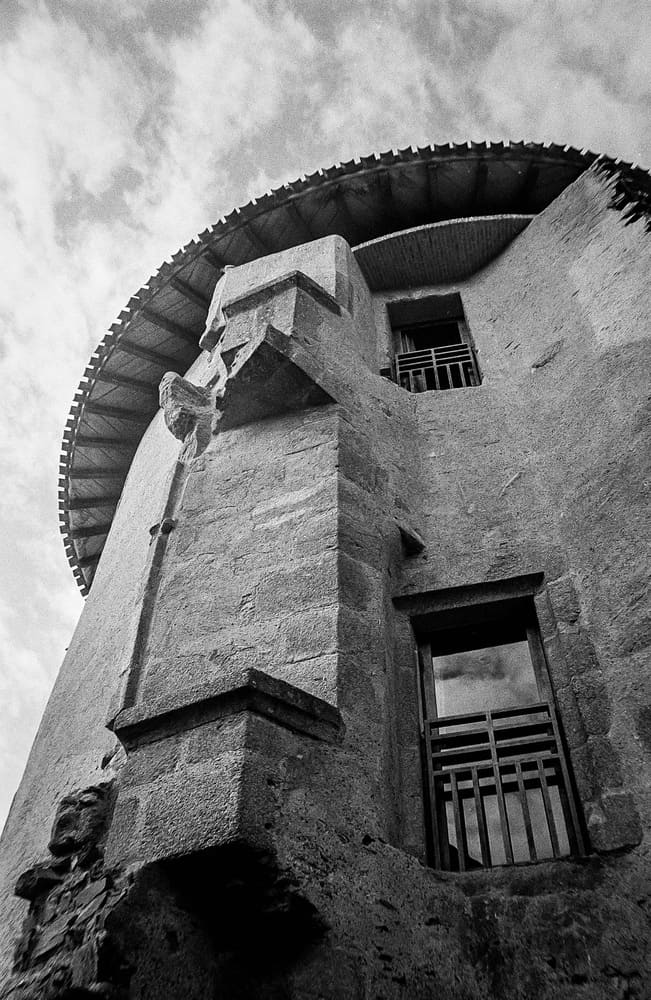
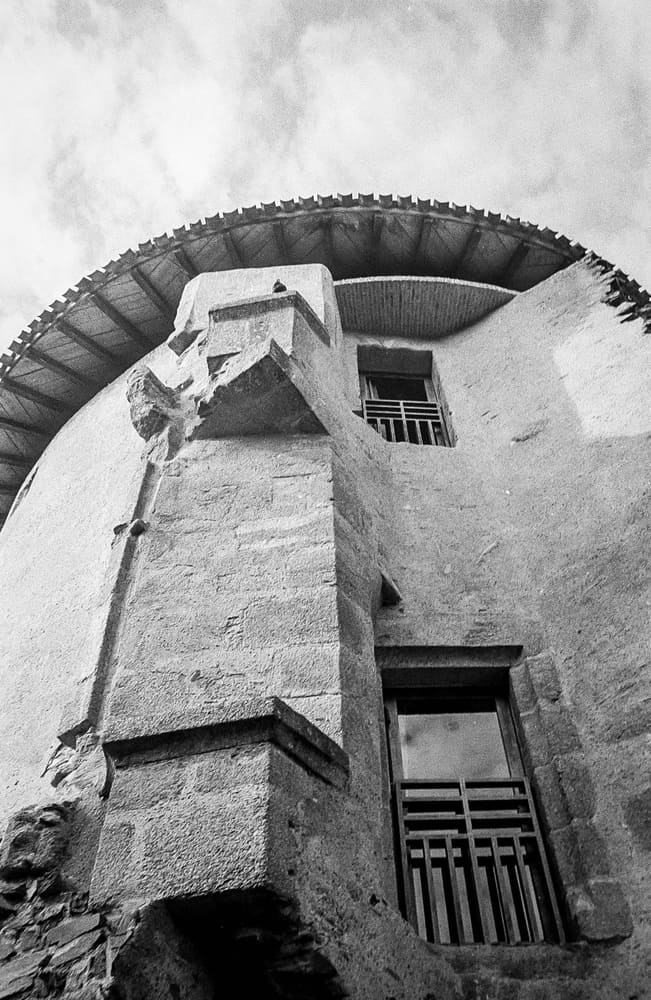
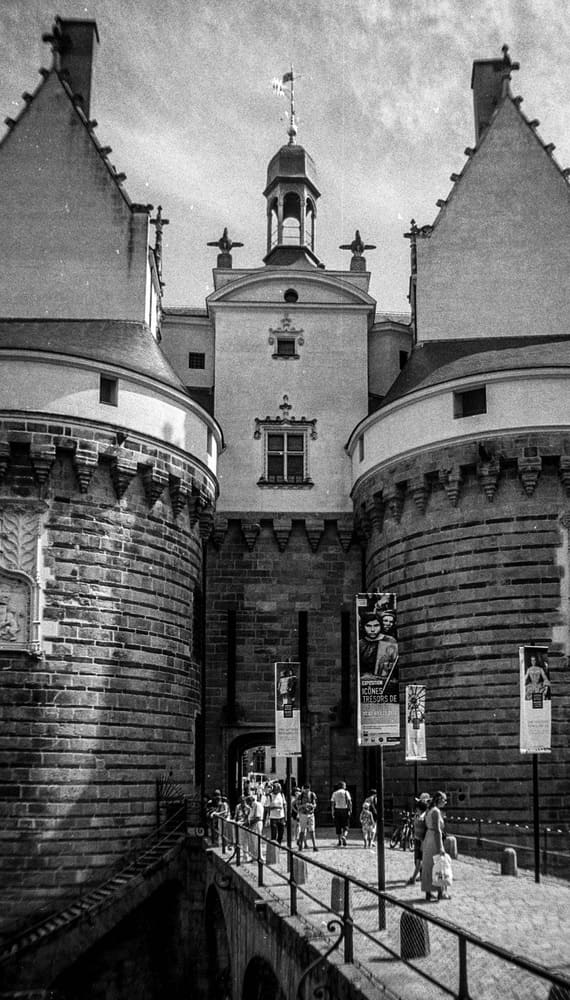
The Opening of the Film Archives—Le Château des Ducs de Bretagne, August 2016


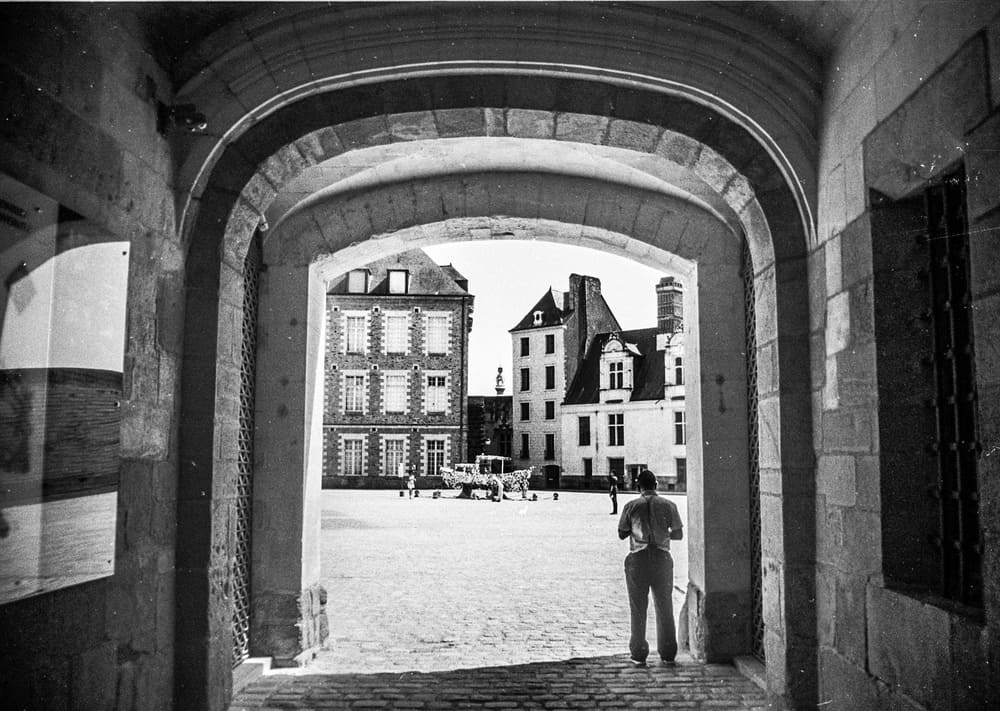
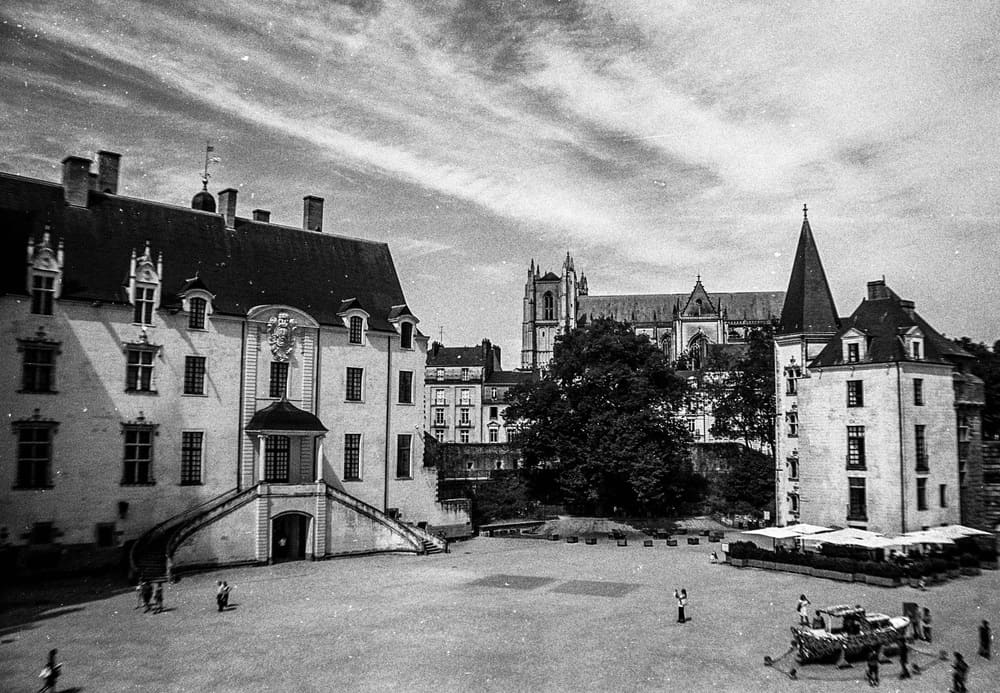
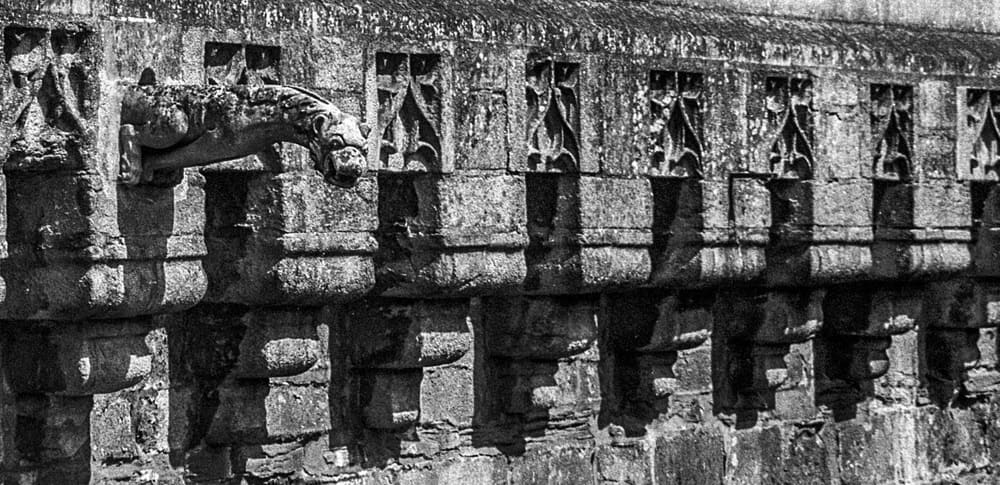
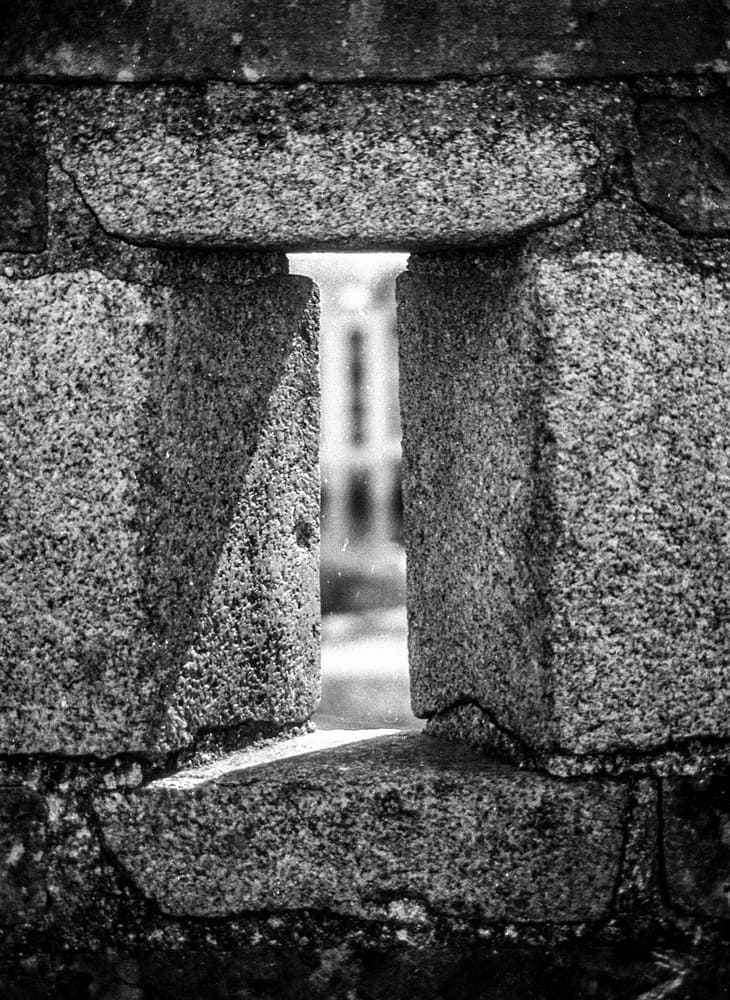
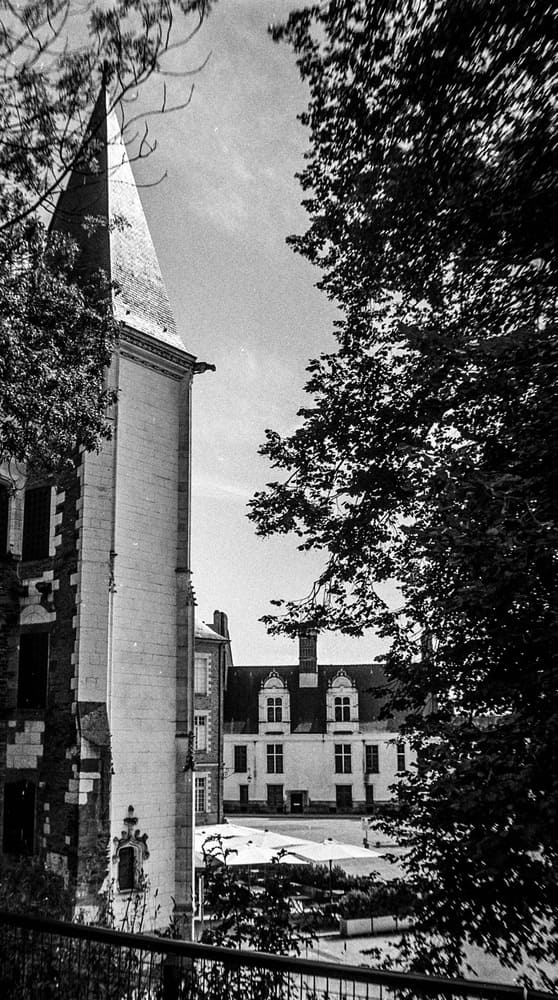
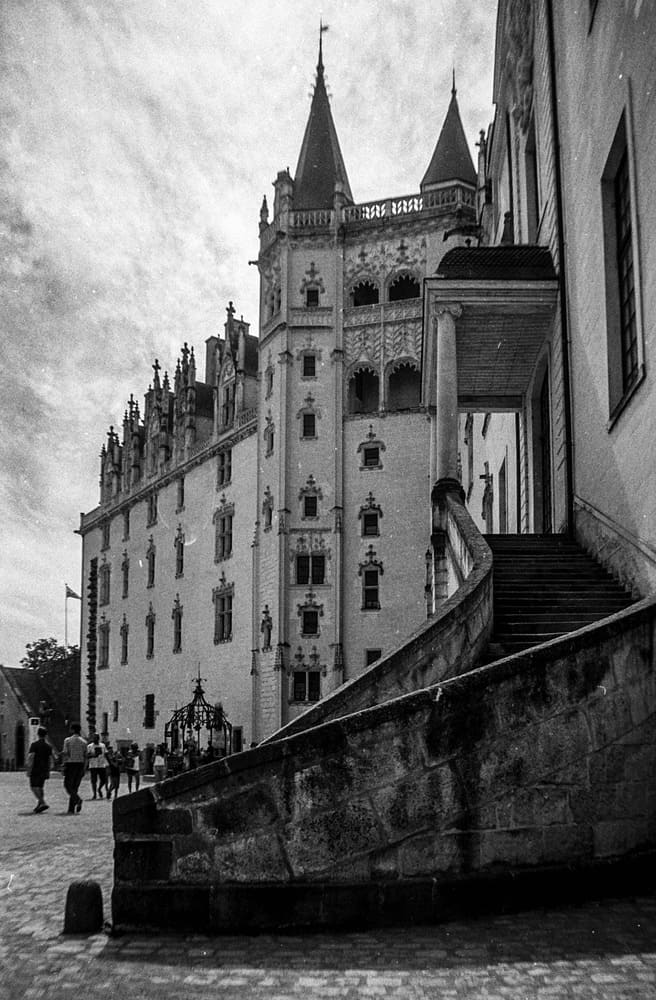
Welcome back to the Film Archive of IJM Photography! This time, we find ourselves in the beautiful city of Nantes, in the heart of the Cité des Ducs. Our adventure takes us through the majestic Château des Ducs de Bretagne, a site rich in history and culture.

As we explore the castle, I’m armed with another one of my favorite cameras from the golden days of film photography—the Canon AE1. This was before the surge of interest from the YouTube hipster crowd, who quickly snatched up every classic camera they could find, driving up prices and making these gems harder to come by.

The Canon AE1 is justifiably sought after, and for good reason. It’s a camera that offers both simplicity and elegance, paired with the beautiful FD 50mm F1.8 lens. This lens, in particular, has a way of capturing light that enhances every shot, allowing me, the photographer, to create images that feel alive. You can see the results in the photos here—every frame is a testament to the quality and craftsmanship of this camera.

It feels solid in the hand, and focusing with the split prism is a breeze. The camera is “shutter priority,” and it adapts the f-stop to the speed at which you’re shooting. As a street photographer, I don’t need to shoot at 1/1000th of a second for all my shots, so I have a wider range of options than someone taking pictures of sports. It still provides me with the necessary depth of field.

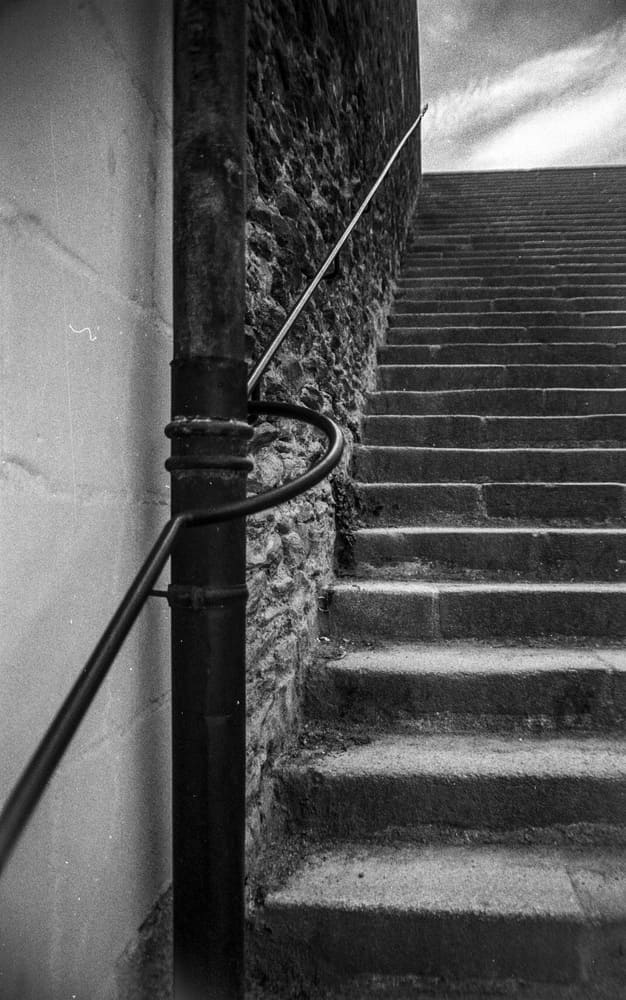
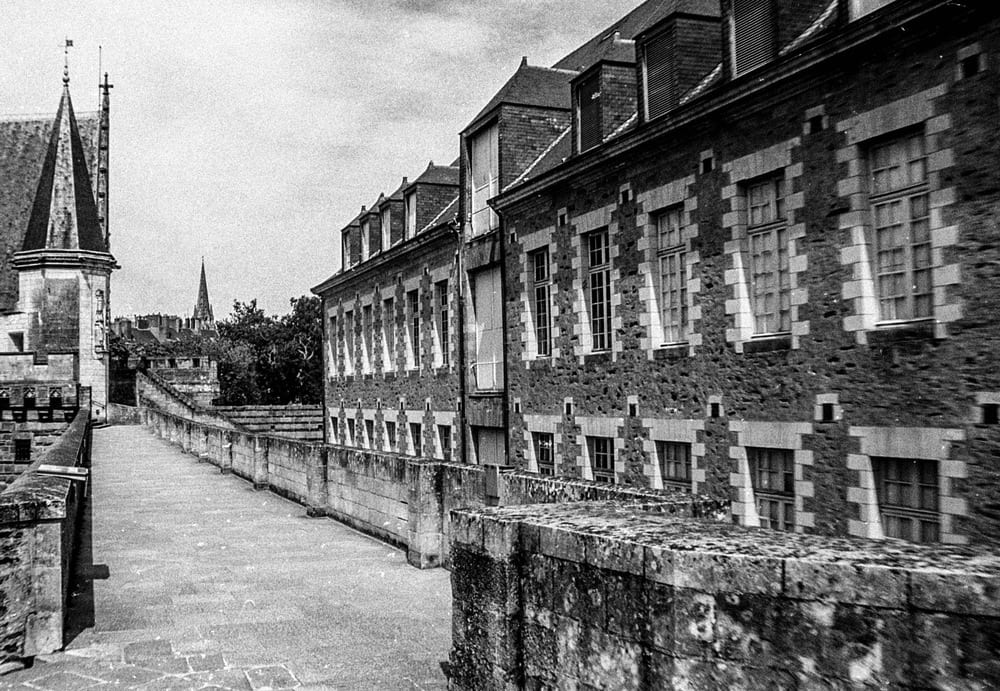
On this particular day, I was motivated and thought I could walk up the steps to the battlements to get some more interesting shots from a raised standpoint. I captured the urban landscape that spans from the 13th to the 21st century, and in one of the shots, you can see the ever-present figure of the Tour de Bretagne. It once represented the modernity of the 20th century and is now closed for asbestos removal. My feet, however, were firmly rooted much earlier in the castle.

Exploring the Château des Ducs de Bretagne with the Canon AE1 was a journey through both time and photography. The castle’s ancient walls and rich history provided a stunning backdrop for capturing moments that feel timeless. With every click of the shutter, I was reminded of the magic of film photography—the anticipation, the artistry, and the satisfaction of seeing the world through a vintage lens. As I descended from the battlements, I couldn’t help but feel grateful for the simple joy of capturing life on film, in a place where history and modernity blend seamlessly. Until next time, keep exploring and shooting. There’s always more to discover.

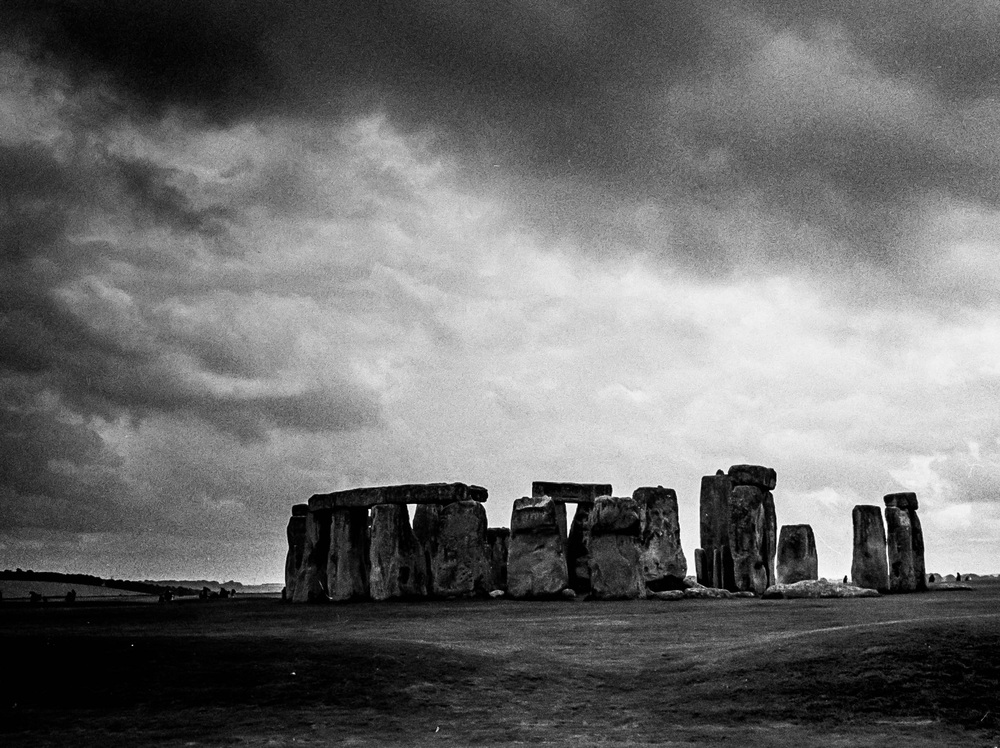
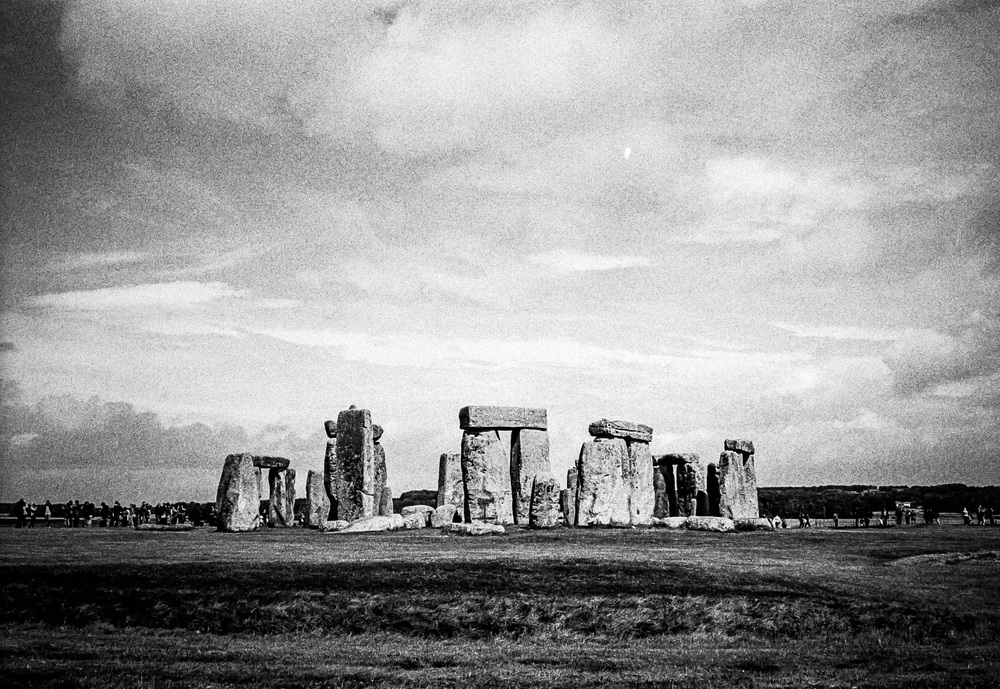
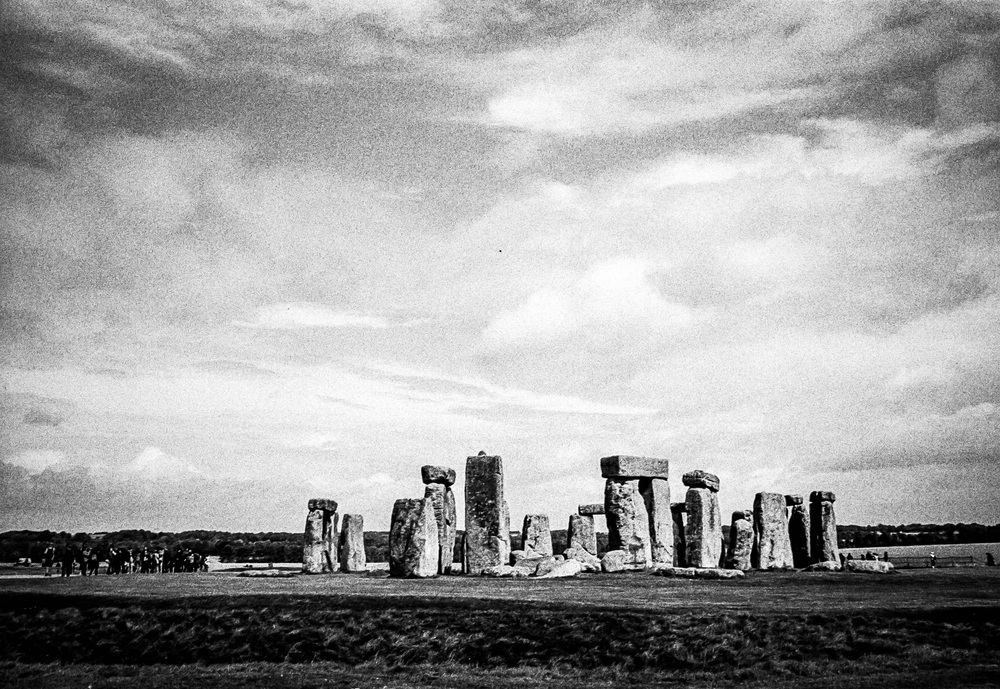
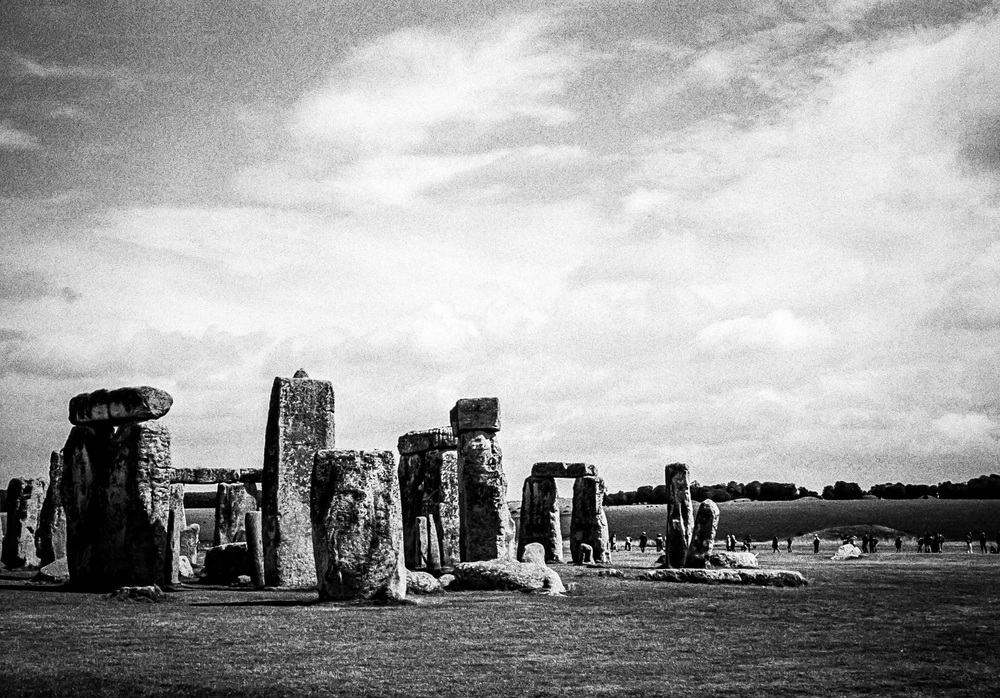
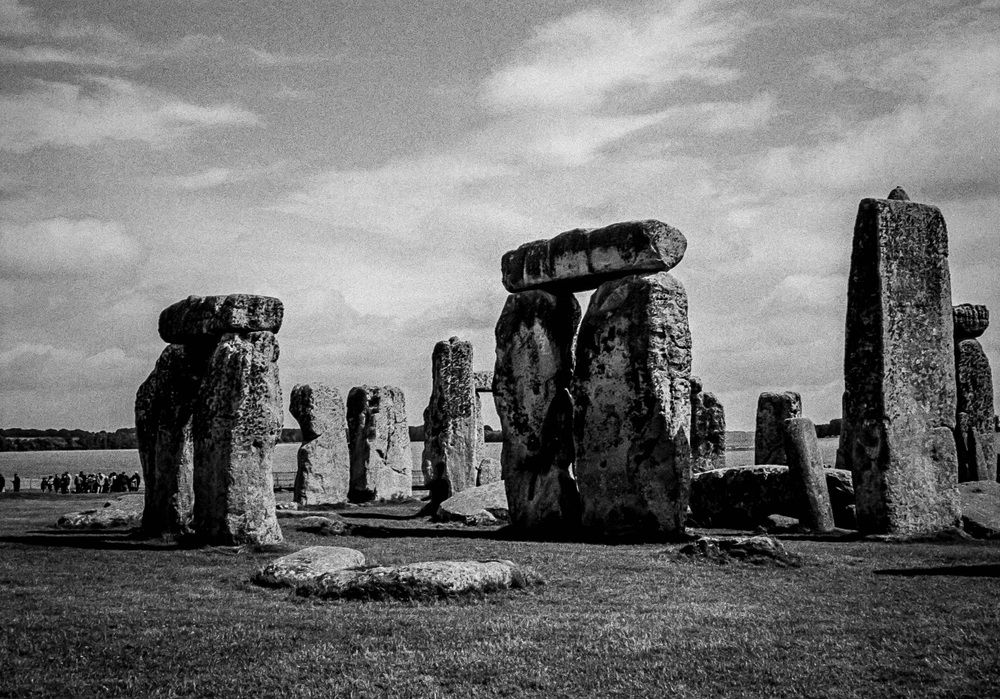
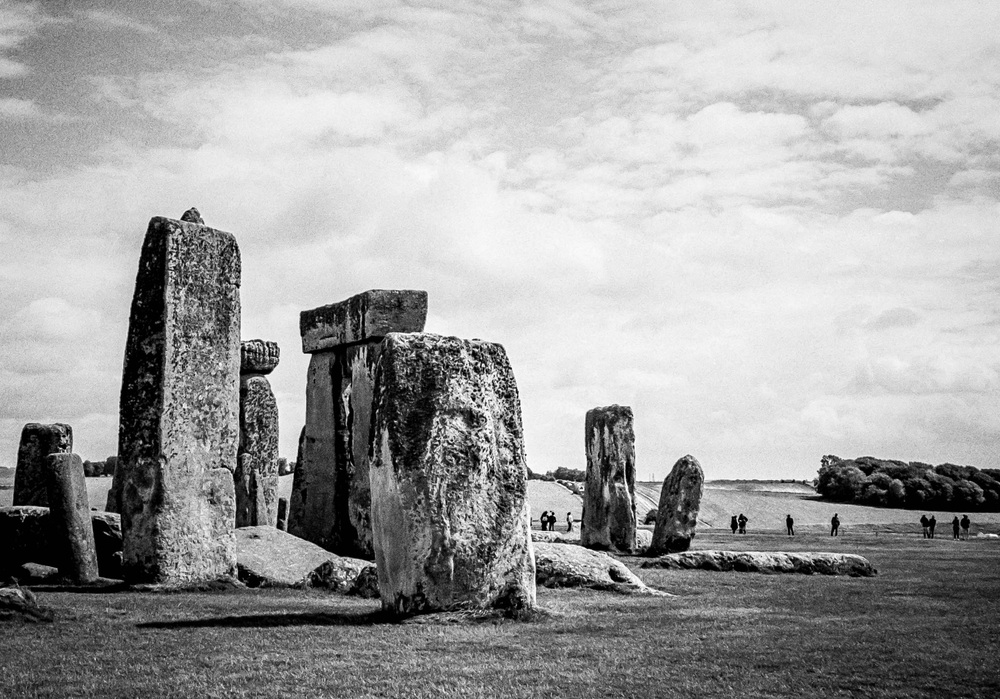
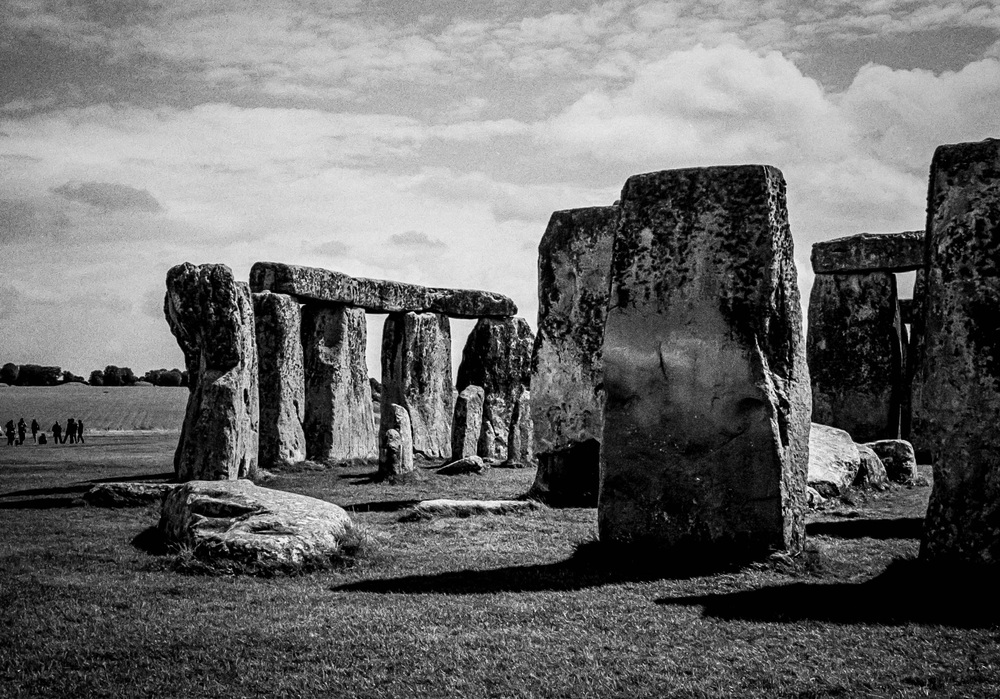
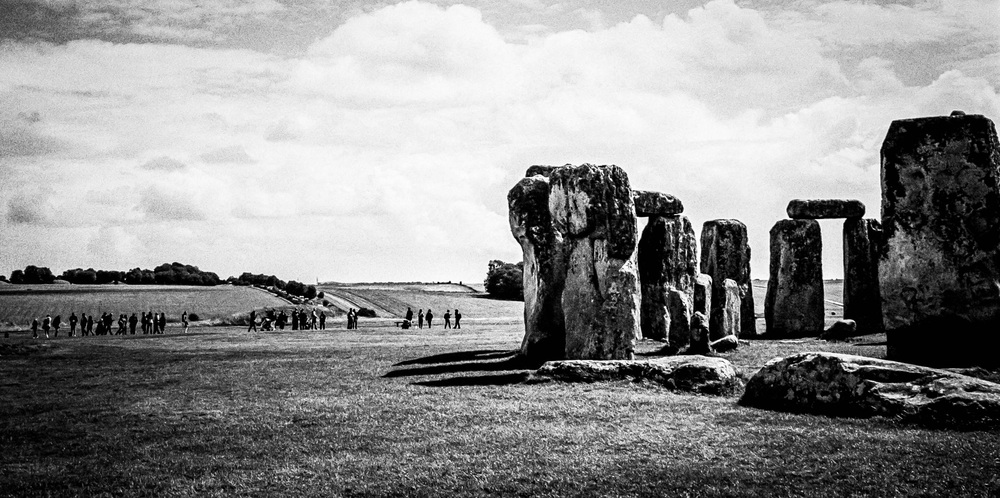
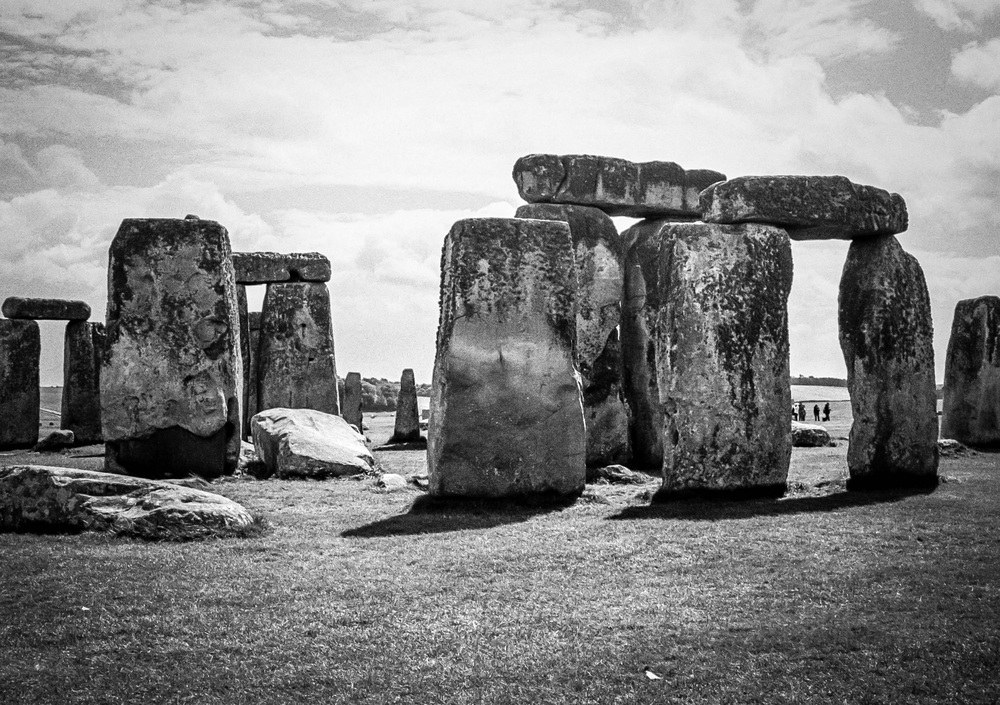
The Opening of the Film Archives – Stonehenge August 2016


Stonehenge is something different for most people.  For some it is a historical site in Wiltshire, and despite not being part of the 7 wonders of the ancient world, still remains pretty special.  For some more “alternative” folks, it’s an ancient spiritual centre, and just happens to be on converging energy lines.  For some it’s a day out with the children.

We had come back from a cruise that had taken us around the Canary islands, Lisbon, and Galicia in Spain.  Thank you Mummy, and thank you Daddy!  I think they felt guilty about us always coming up to see them in Northumberland, and wanted us to get a different holiday experience.  Well, different it was!  But that is a totally different story, and the photos can be found in the Olympus Trip 35 article.

So our ship docked at Southampton and we still were in the holiday mood.  I remember as a small boy visiting Stonehenge, and thought it was “the” opportunity to introduce my family to the site.  

It seemed slightly smaller than I remember it.  As do most things if I’m going to be honest with you, but the majesty of the stones remained.  As did the wonder at the fact that these stones had been dragged overland from Wales, and put into place, with the joints still being “rock solid” and down to the nearest millimetre.  I work in a factory that does industrial woodworking and I know what we can do with modern tools and technology and yet here, this massive construction was put together using basic tools.

The children were just taking in the whole experience, and rather bemused at the sight of Japanese tourists being shoved around the site and taking the obligatory selfie.  They also seem quite bemused by the amount of school groups being led around.  

I preferred, as often as I do, to just take my time and take it all in and get some photos of the place.  With the 40 mm zuiko lens I was getting some lovely environmental shots that you can see below.  

My wife, however, was in tears.  Crying her heart out.  She later confided in me telling me how she just felt overcome with emotion.  Maybe those lines of energy for those alternative folks might have something in them…

Discovering the Musée de Préhistoire of Carnac with Paris 1972 – Versailles 2003


As a compliment to the film archive article featuring the standing stones in Carnac, I’m just going to drop this article here. Paris 19972 – Versailles 2003 is a site run by a friend who has some very interesting articles and a prolific output of articles covering a wide selection of subjects, including Bretagne, Paris, Versailles, Spain.

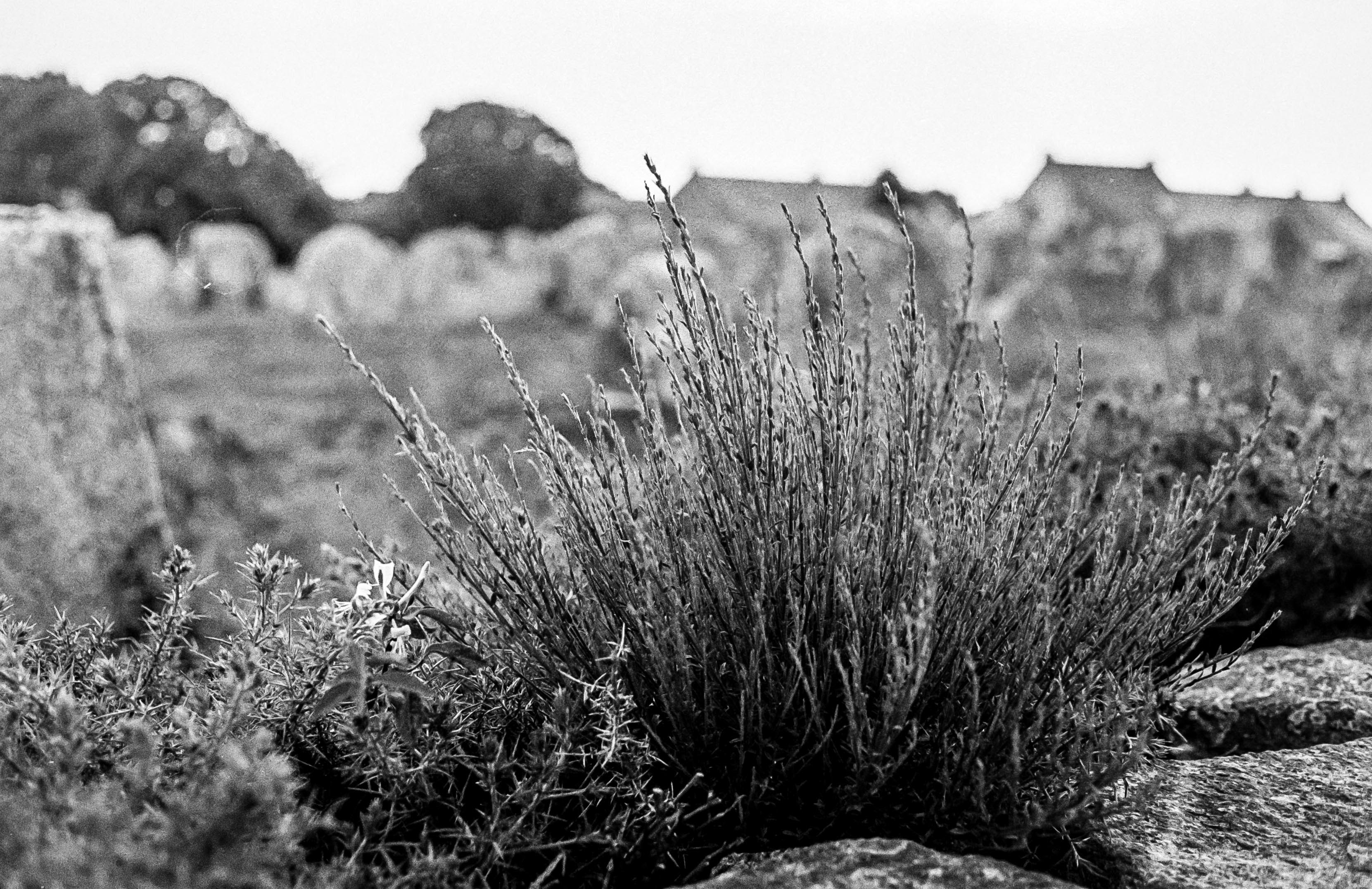
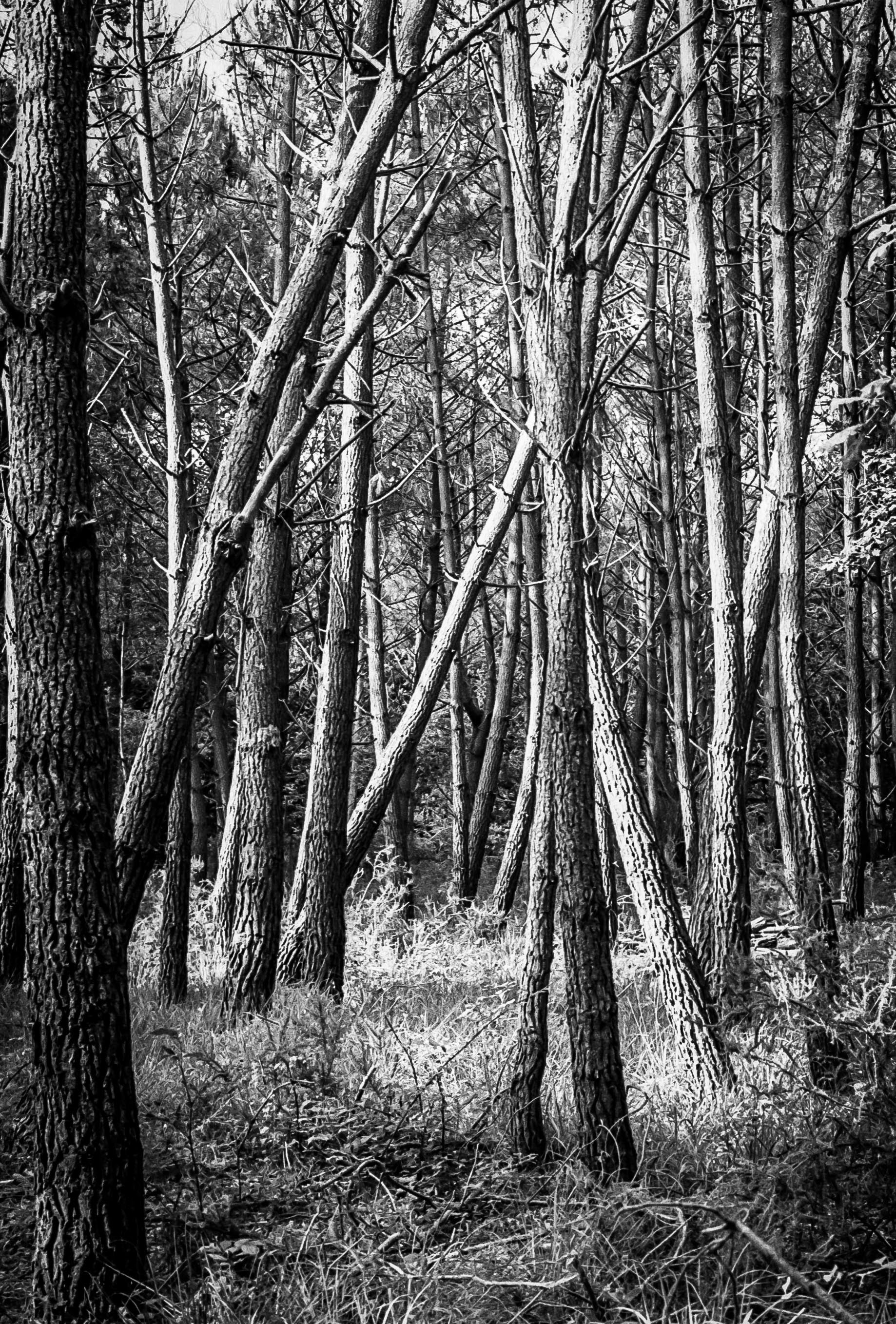
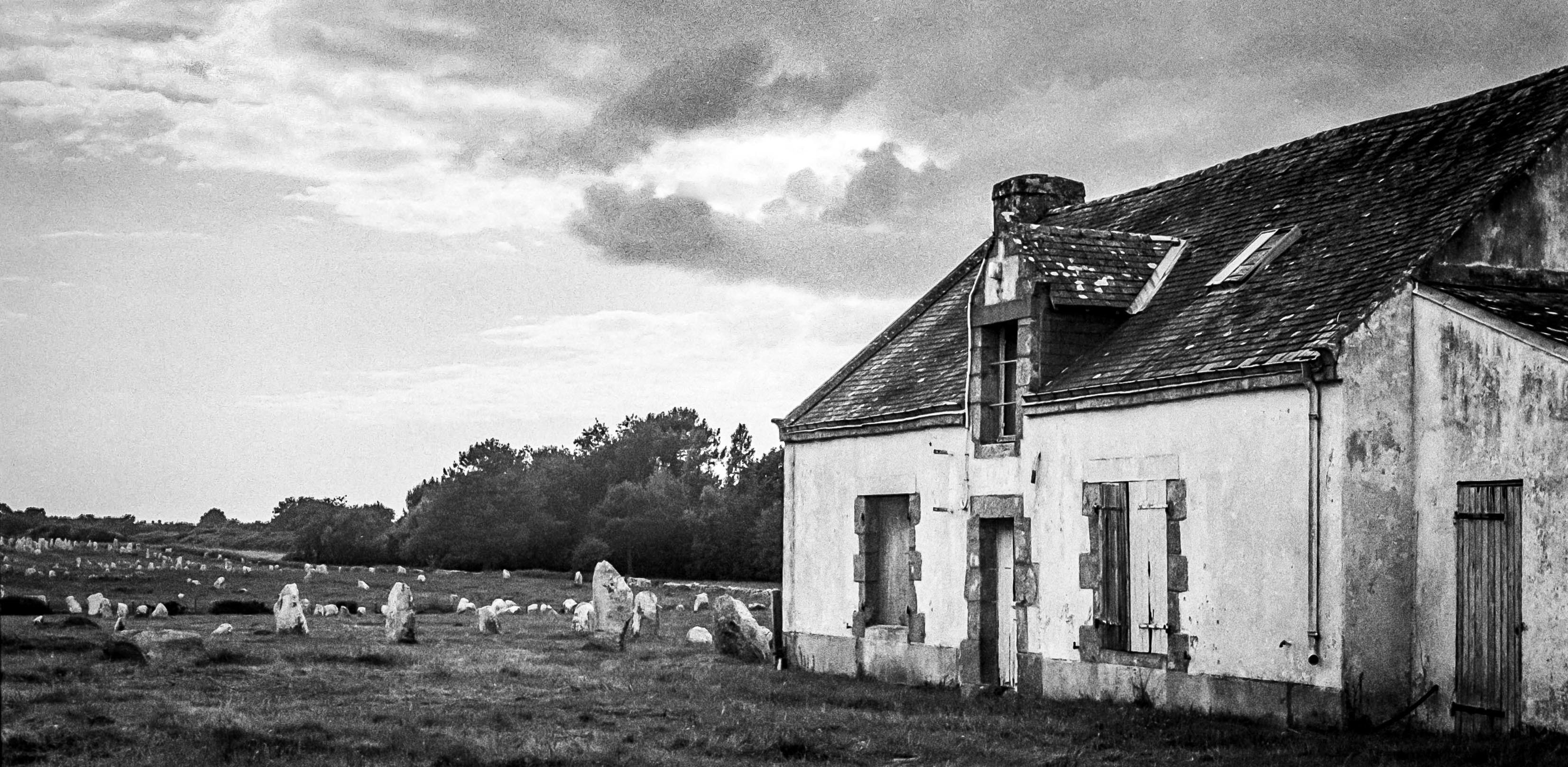
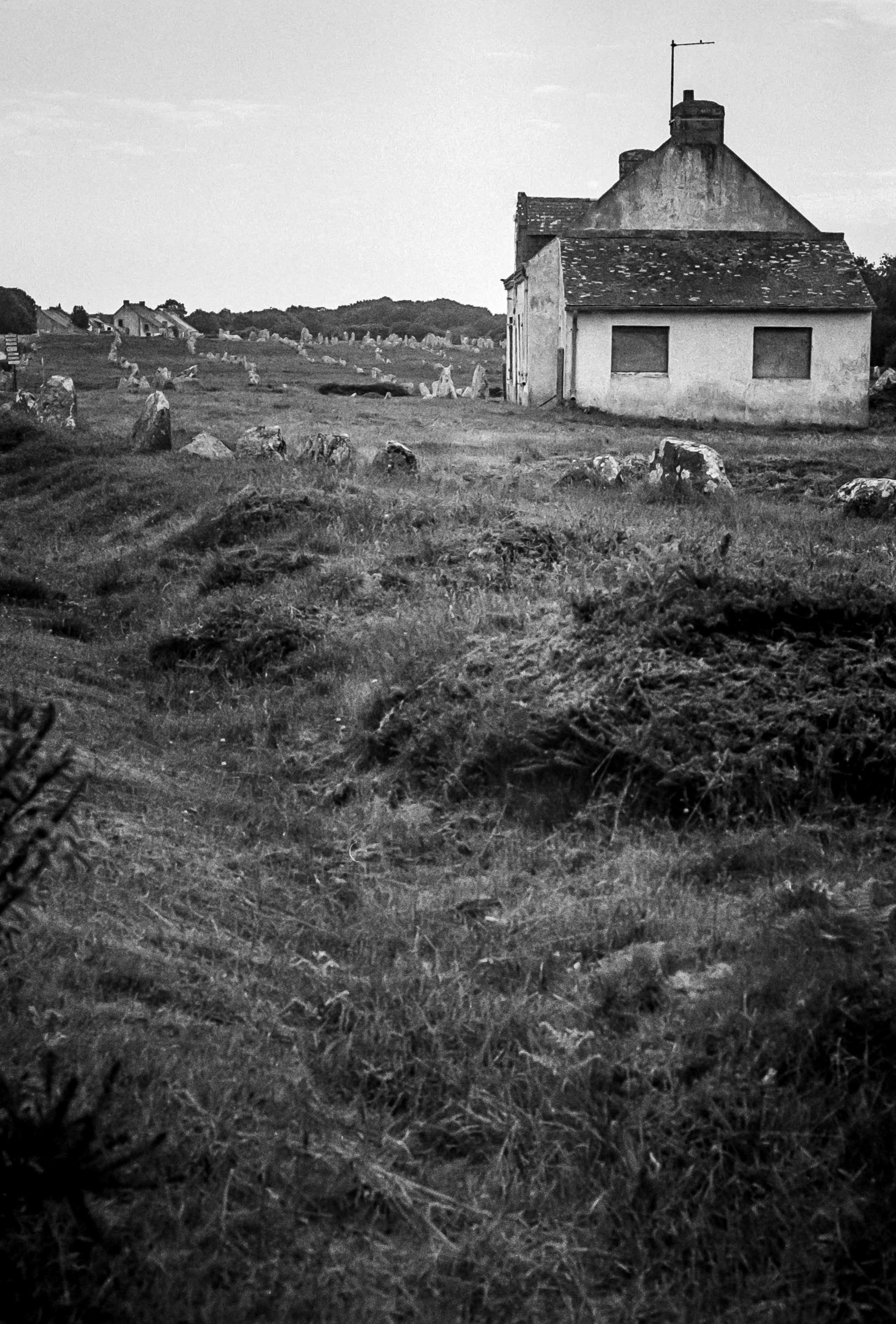
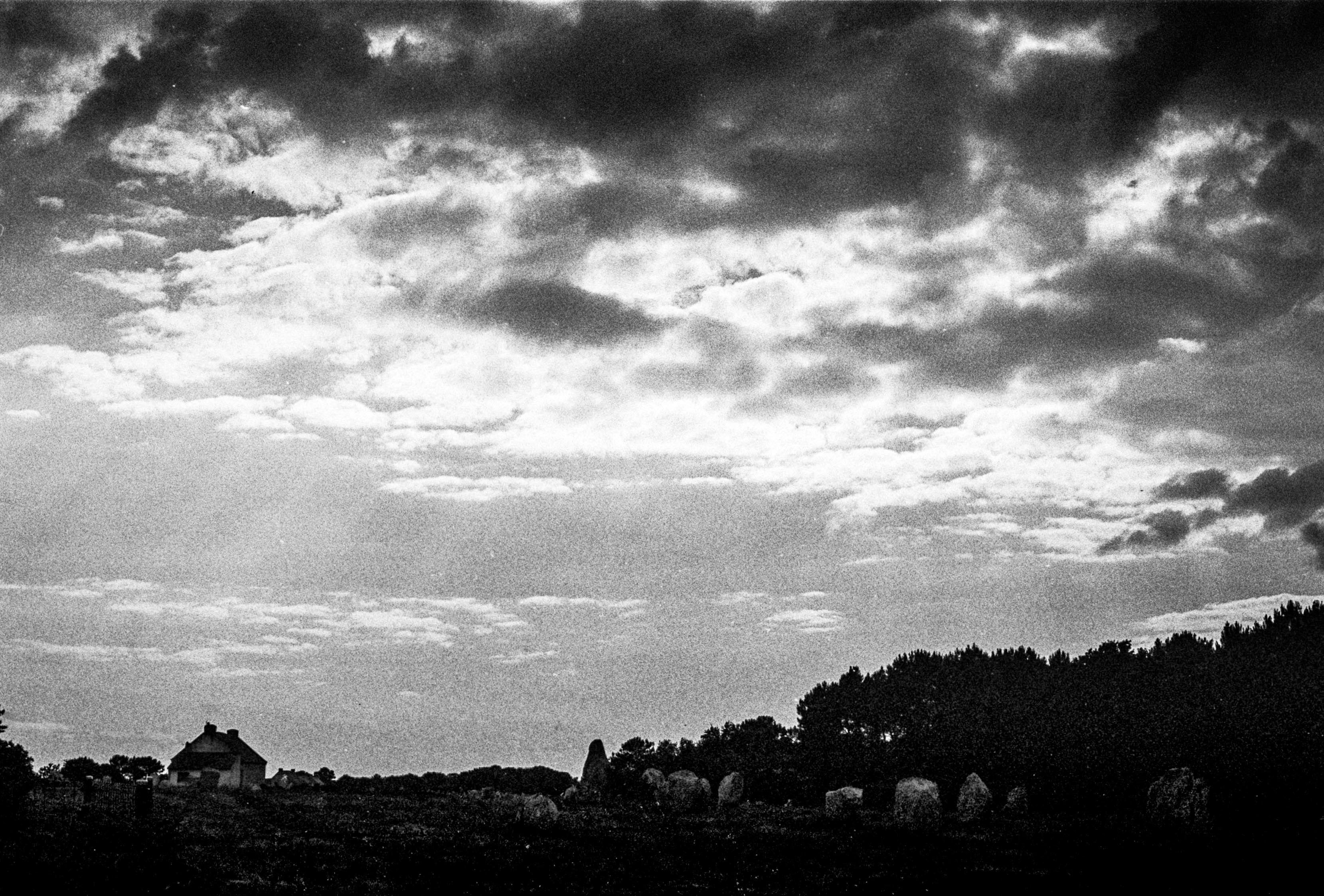
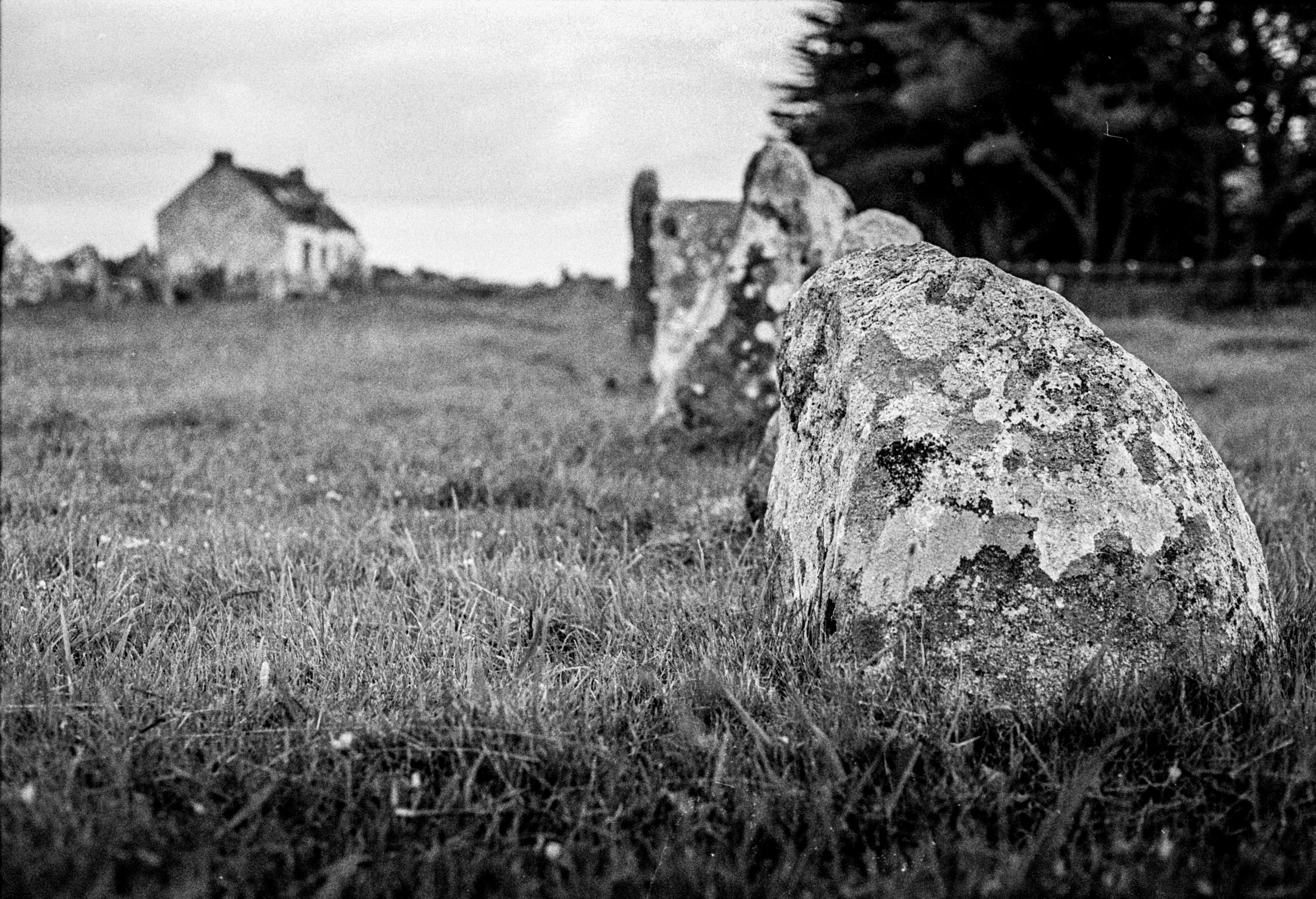
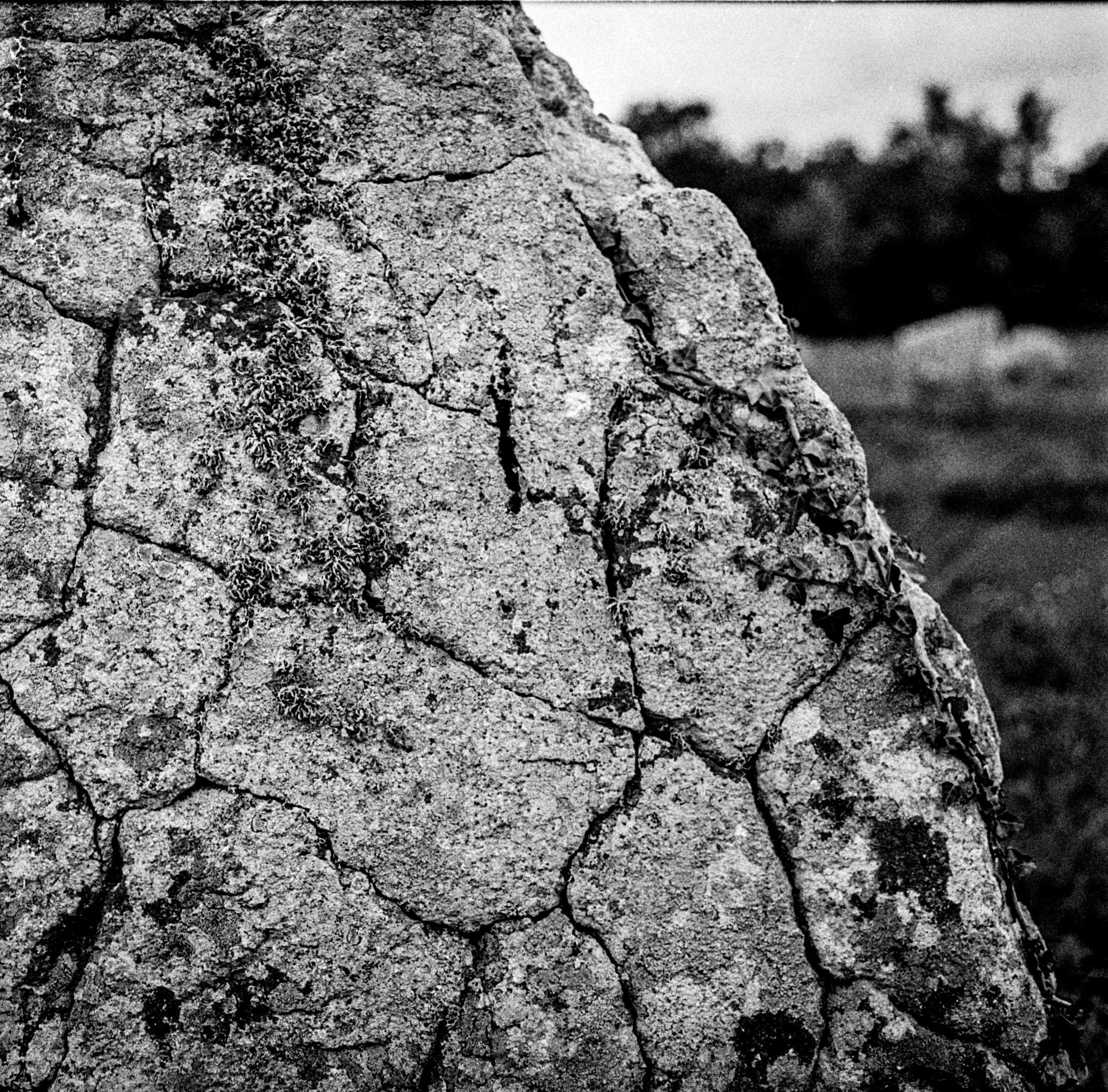
The Opening of the Film Archives – Carnac, 26/06/2016


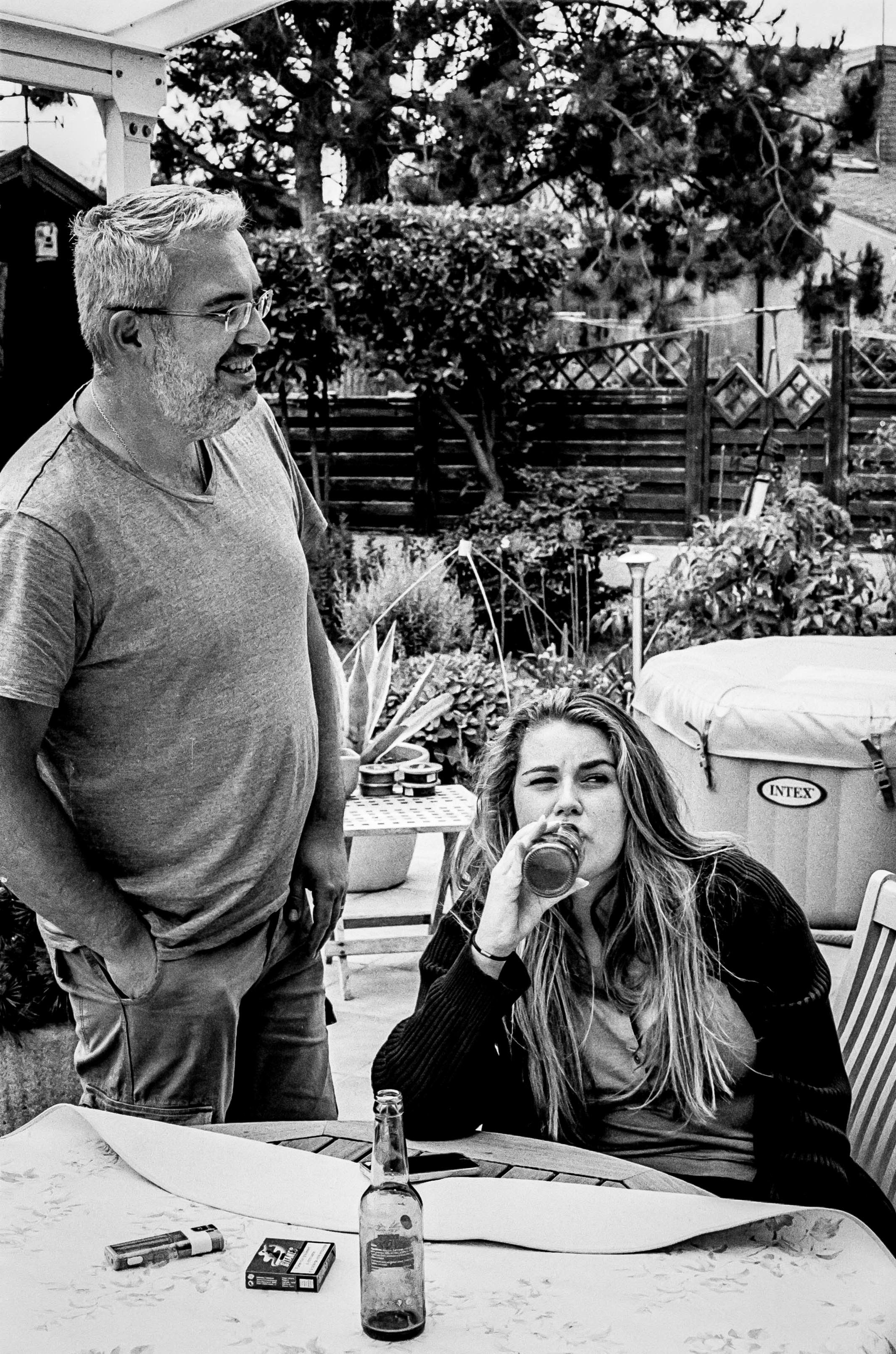
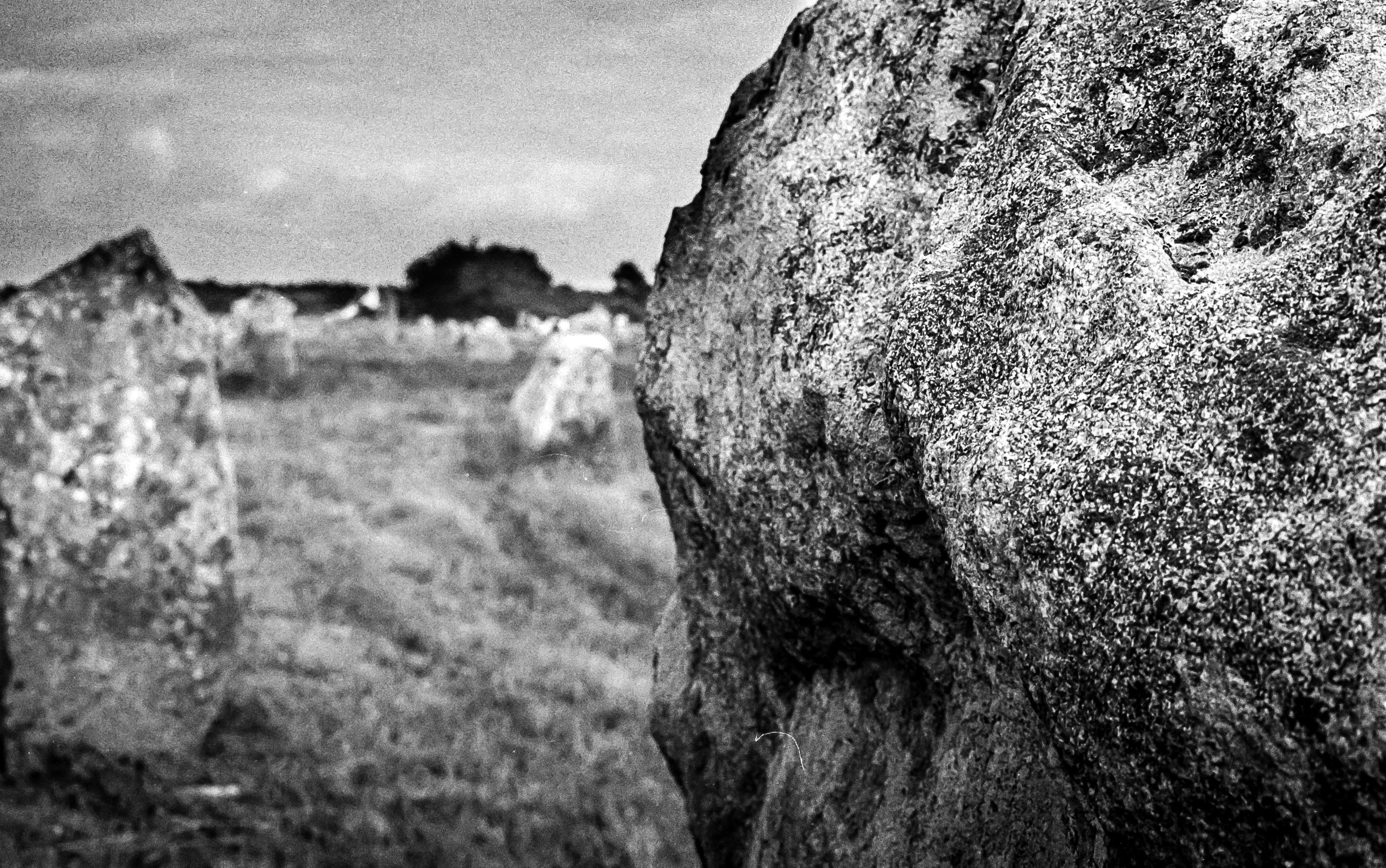
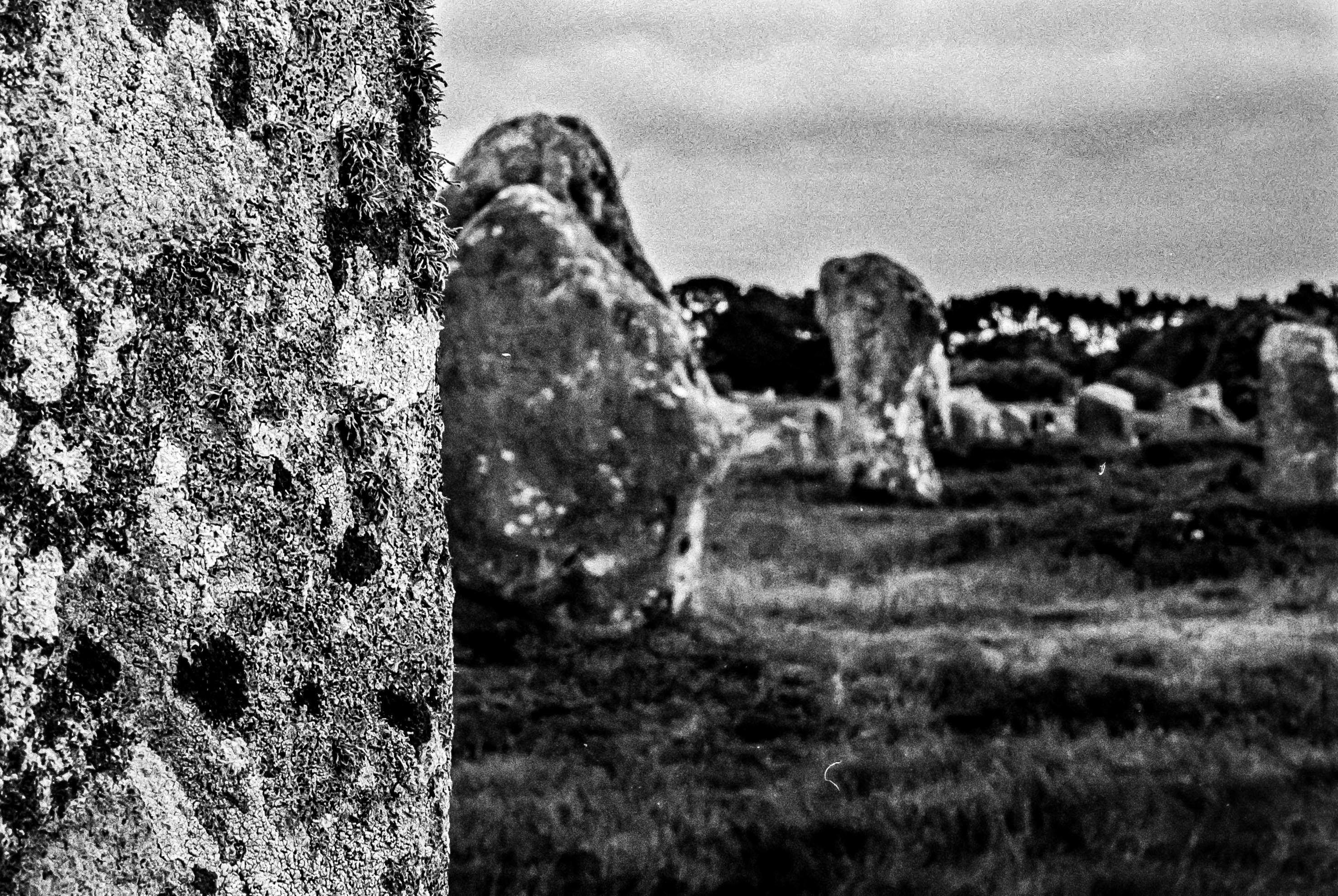
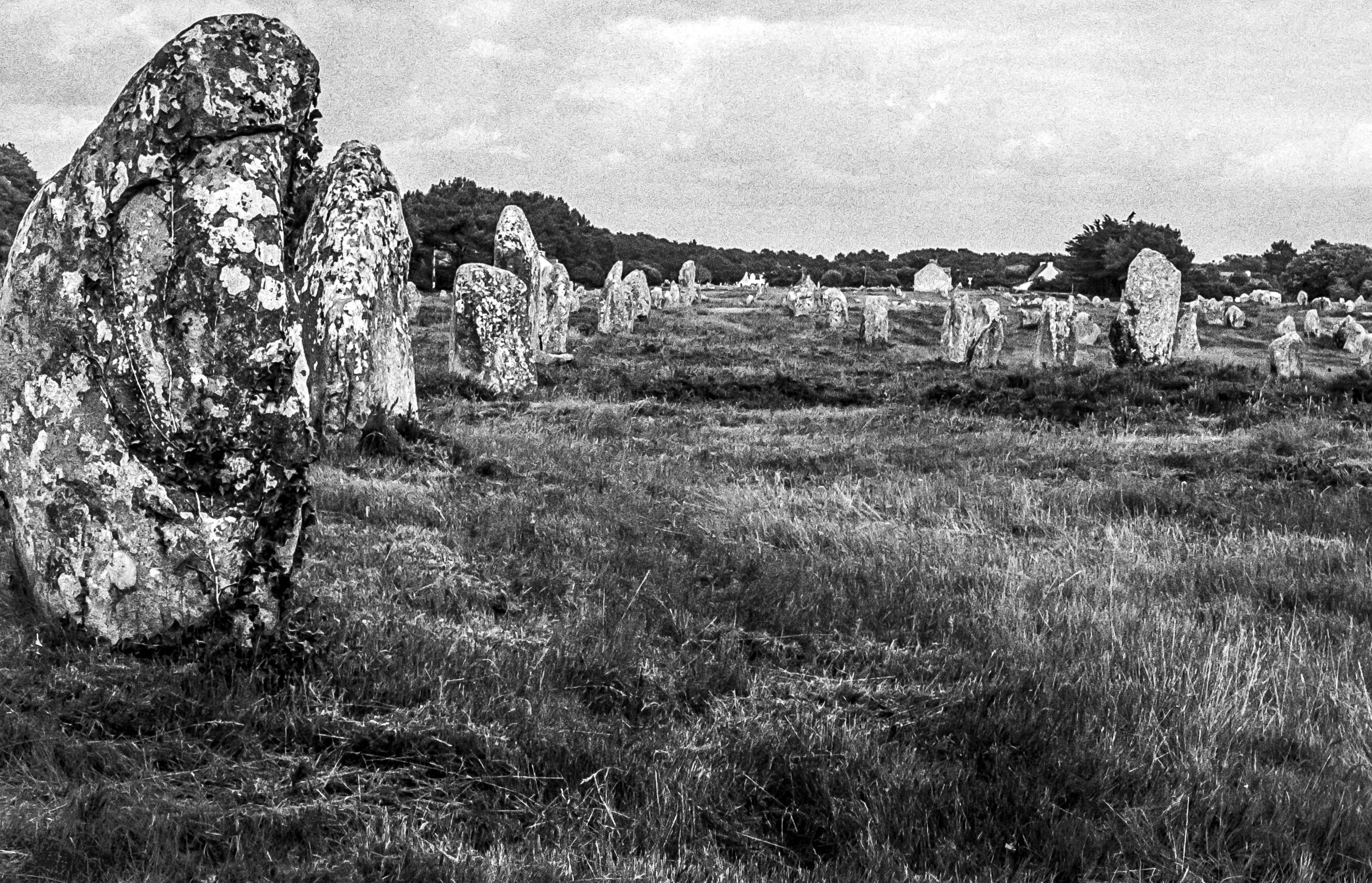
The photos in this article, from the famous film archive, were taken eight years ago almost to the day, during a weekend visiting my mother-in-law near Carnac, and near where my father-in-law lives. They’re divorced, and as usual, I stayed with her, not him. The photos feature my brother-in-law, who bears a striking resemblance to a beefy Dominic Farrugia, and my niece – not my favourite, but likeable enough (and those who claim not to have favourites are just liars!).

I shot these with my Canon AE1, a camera that saw a lot of action back then. Loaded with Ilford HP5 Plus and developed in Rodinal, they turned out a bit grainier than I expected, even for HP5 at box speed. I blame my overly enthusiastic agitation during development – I’ve always been a bit of a stirrer! Even back then, I had this habit of sneaking off to “do some photography,” a habit that hasn’t changed much, it seems.

Funny thing is, this wasn’t my first time in Carnac. As a kid, plagued by ear infections, flying was out of the question, so we had many a family holiday in France. One such trip was to Carnac, in the Morbihan region. Who would have thought that over 30 years later, I’d be back here so often?

Now, 30 years ago, you could wander freely around those mysterious Carnac stones. My mother, bless her imaginative soul, convinced me they were people caught dancing on the Sabbath and turned to stone as punishment. Ever since, I’ve had a healthy aversion to Sunday line dancing! Sadly, you can’t get close to the stones anymore – they’re cordoned off, perhaps a warning to those Breton folk dancers not to get too carried away.

Back then, HP5 was my go-to film. I wanted to know it inside out. Visiting the stones was a welcome escape from the lively, shall we say, family gatherings. Don’t get me wrong, I love my in-laws, but their intensity can be a bit much for this introvert. The stones, silently standing there, offered a tranquil contrast.

Years later, I watched a film, “The Fablemans,” about Steven Spielberg. The advice at the end, to keep horizons high or low in your images for more interest, struck a chord. Unbeknownst to me, I was already doing this! When I first started out, I meticulously documented every shot in a notebook – aperture, speed, film, camera, the lot. I kept this up for over a year before finally giving it up. These days, all that info is tucked away in your image file’s metadata, but not with film. There’s a certain freedom in that, wouldn’t you agree?

Reflecting on these old photos from Carnac, I am reminded of the enduring allure of photography and the quiet majesty of ancient stones. Each visit to Carnac, captured through the lens of my Canon AE1 and HP5 film, evokes memories of childhood holidays and solitary moments amidst family gatherings. The evolution from meticulous note-taking to embracing the simplicity of film photography has taught me to approach each shot with intention and mindfulness.

In the digital age, where metadata stores the technical details of our images, there remains a certain freedom in the analog process. It encourages a deeper connection with the art form, requiring us to engage fully in the moment of capture. The stones of Carnac stand as timeless witnesses to history, echoing the evolution of photography itself – ever-present, ever-evolving.

As I continue to explore new landscapes and subjects through my lens, I carry with me the lessons learned amidst the stones of Carnac: to capture not just images, but stories; not just moments, but emotions frozen in time. Photography, in its simplest form, remains a profound journey of discovery and expression, rooted in a rich tradition that continues to inspire.