Thank you for being here. If you’re reading this, you’ve been following my work for a while — and that means more to me than I can easily say.
I wanted to share something with you before anyone else.
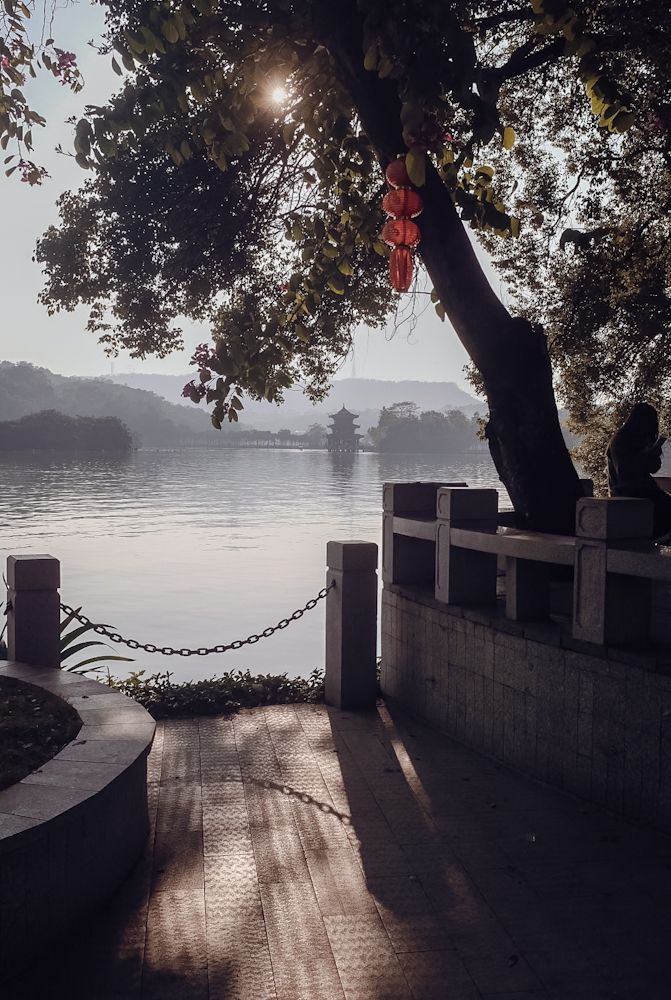
Over the past months I’ve been quietly building a small print shop — seven photographs that have stayed with me long after the shutter closed. A path in Huizhou. A canal in Shaoxing. A Vespa in the Quartier Bouffay. A tiny wooden shed in Northumberland that stopped me in my tracks.
Each print comes with the story behind it — because a photograph without its story is only half the picture.
If one of them speaks to you — I’d be genuinely honoured to have it on your wall.
Thank you for six years of reading, liking, commenting, and quietly being there.
The tour is over. The bags are unpacked, and things are settling back into their usual rhythm at home. But even though I’m back, part of me is still in China—still thinking about the streets of Shao Xing, the energy of Shenzhen, or the moments shared with the orchestra. The journey may have ended, but it hasn’t really left me.
Reflecting on the Journey
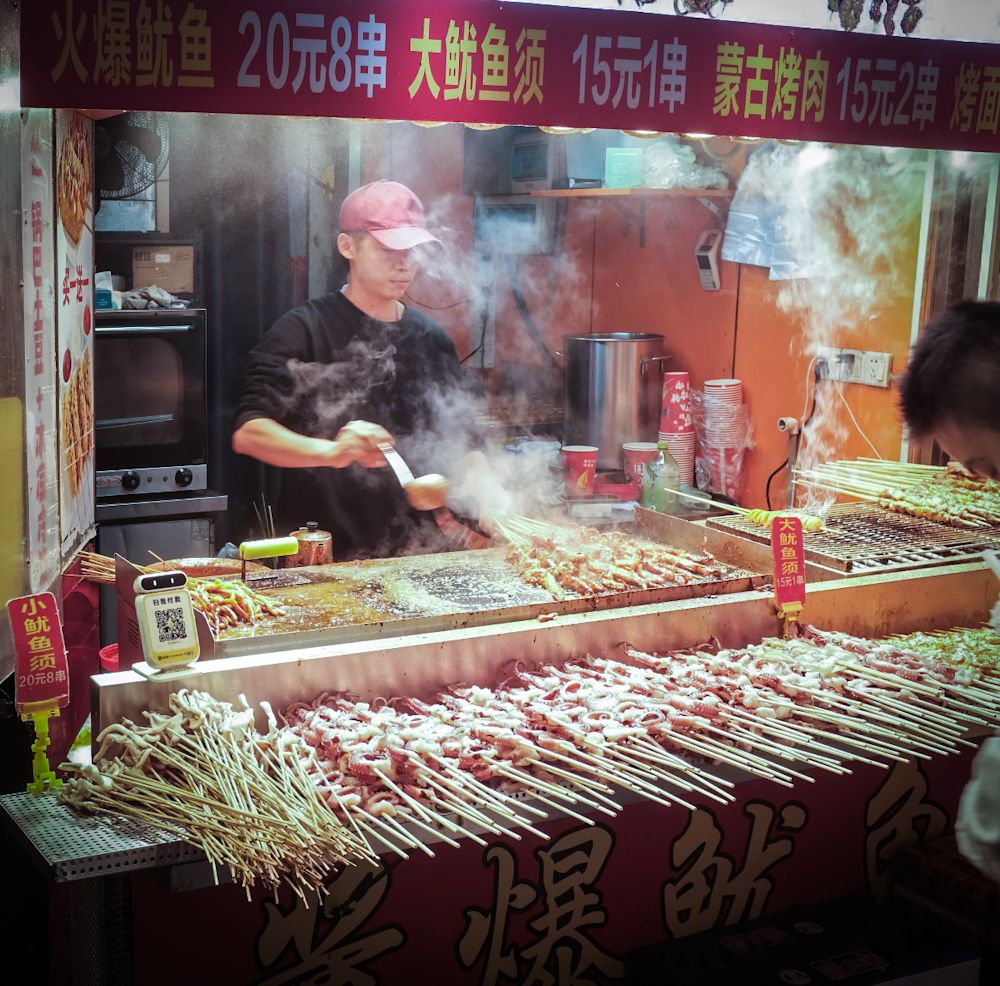
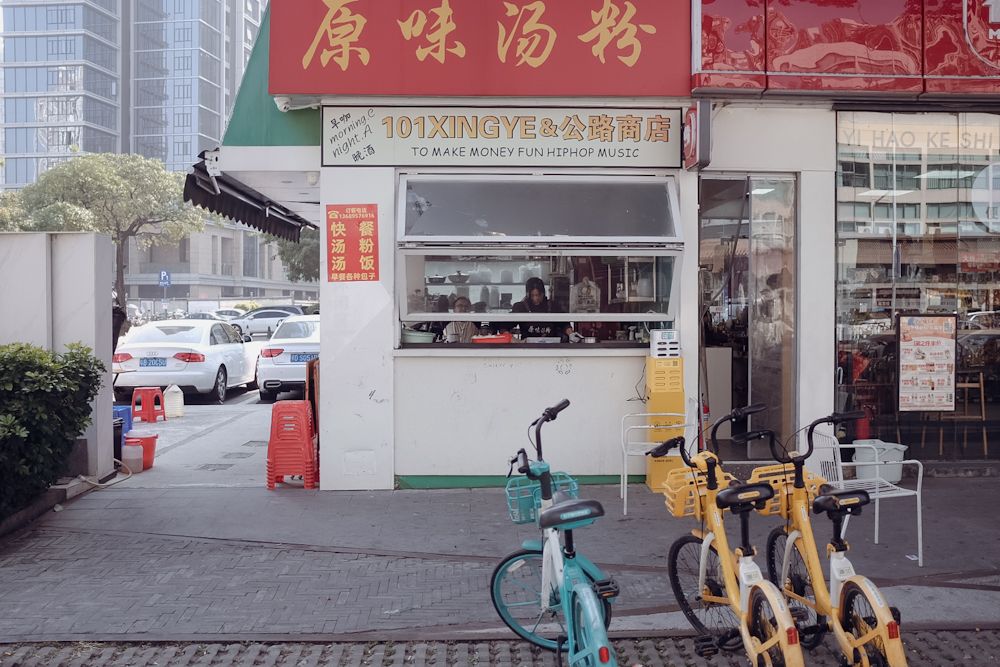
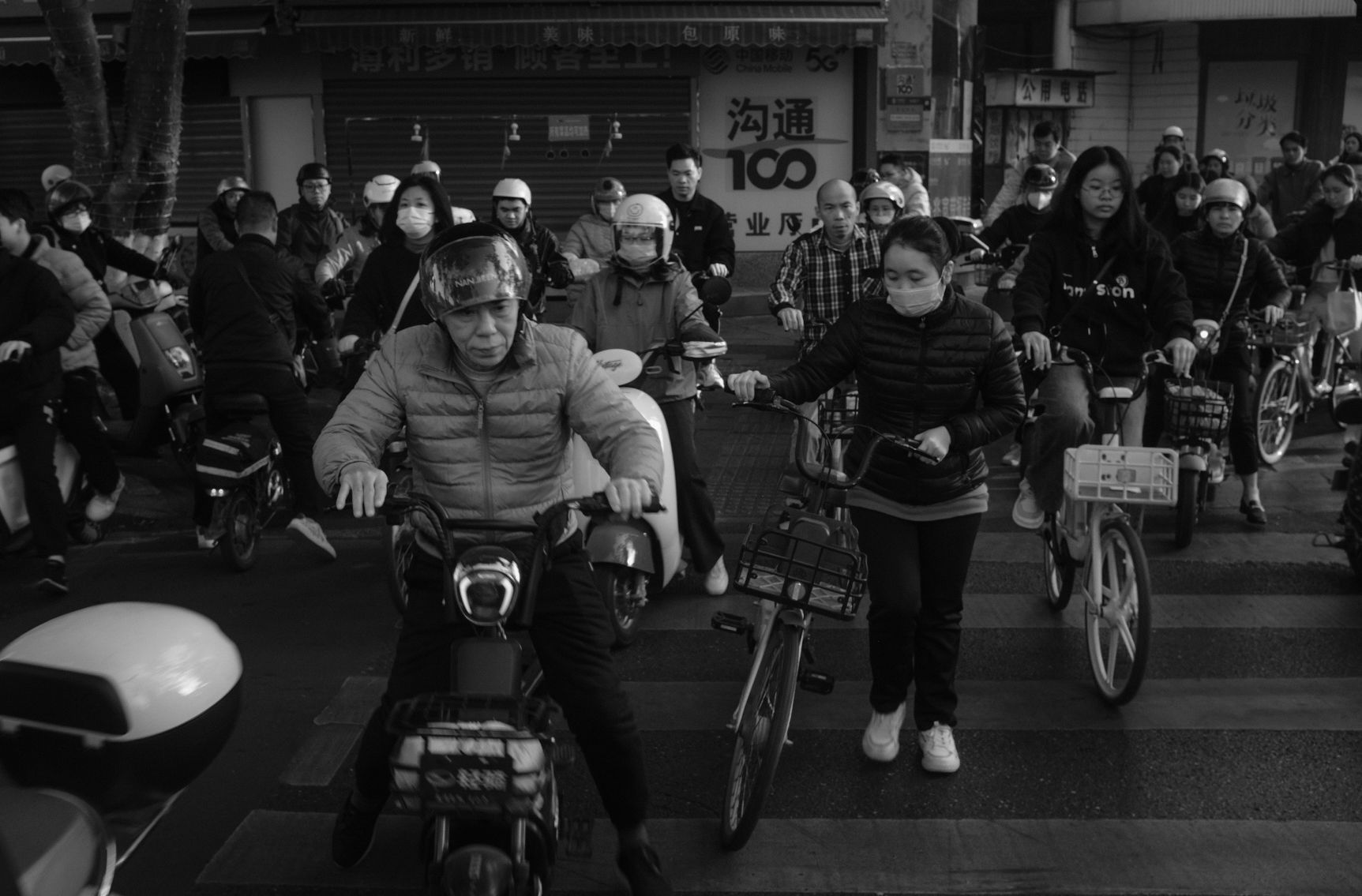
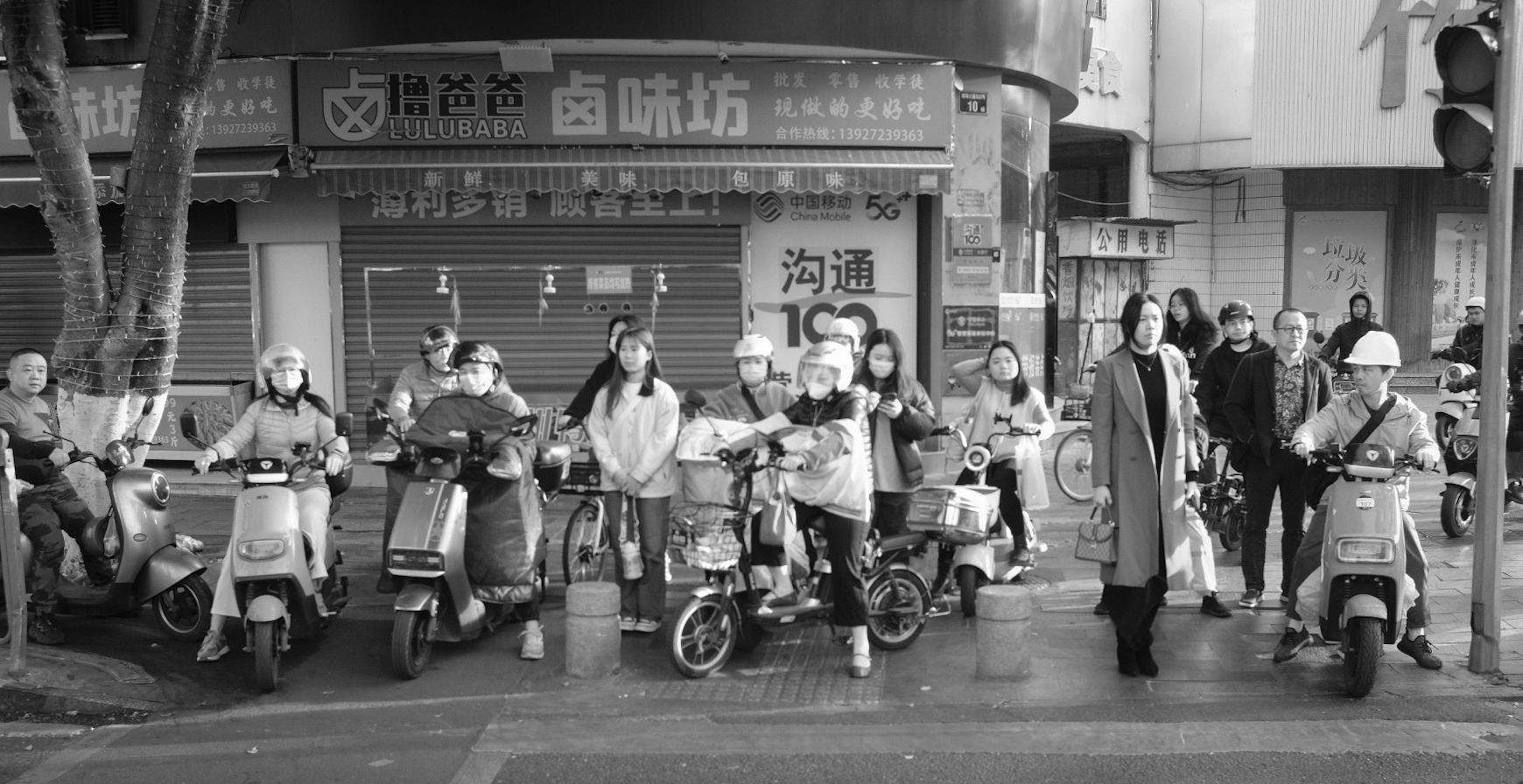
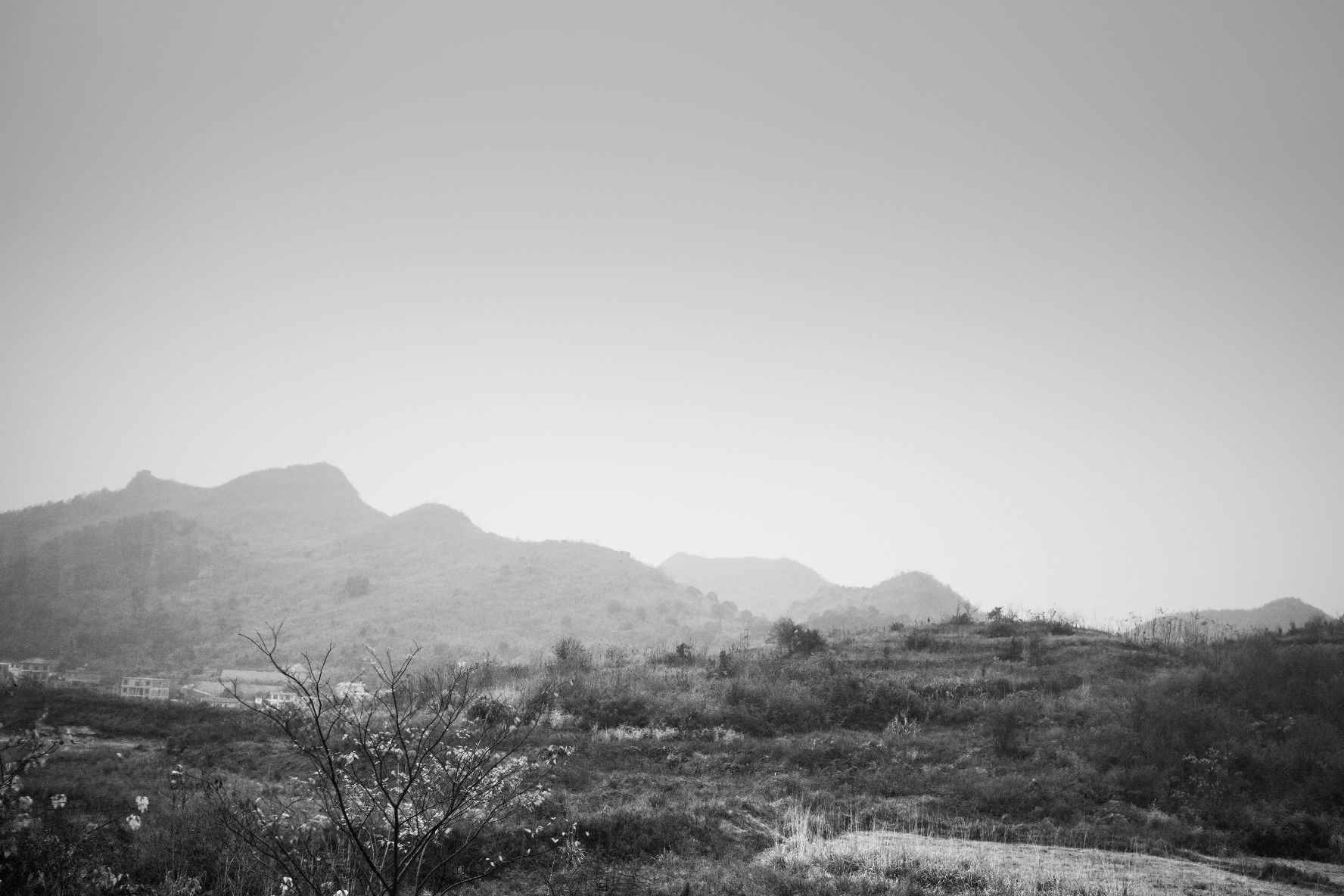
From the moment I landed in Changsha to the final farewell in Shanghai, this trip was a series of moments—some I expected, and some I didn’t. The hustle and bustle in Shenzhen, the streets of Shao Xing, the quiet hills of Xian Ju, and the meals shared with colleagues between concerts. It wasn’t just about the places. It was about the little things—a gesture of hospitality, that mutual respect between musicians, or just watching the world go by.
This trip wasn’t just about playing concerts, it was about learning and adjusting. It was about connecting with people, understanding their way of life, and how we relate to one another in those brief encounters.
The Photographer Without Film
For the first time in a long while, I didn’t travel with my usual film cameras. The Fujifilm X100F was the only camera I had with me, and while I had mixed feelings about it at first, it became a good fit. There was no hesitating over which shot was worth the price of a roll of film. It was just me, the camera, and the present moment.
Not every moment needed to be captured. I found myself slowing down and soaking things in—sometimes shooting quickly, sometimes just letting the moment pass. It wasn’t about having everything on film; it was about experiencing it fully, even without the lens in front of me.
Respect and Connection
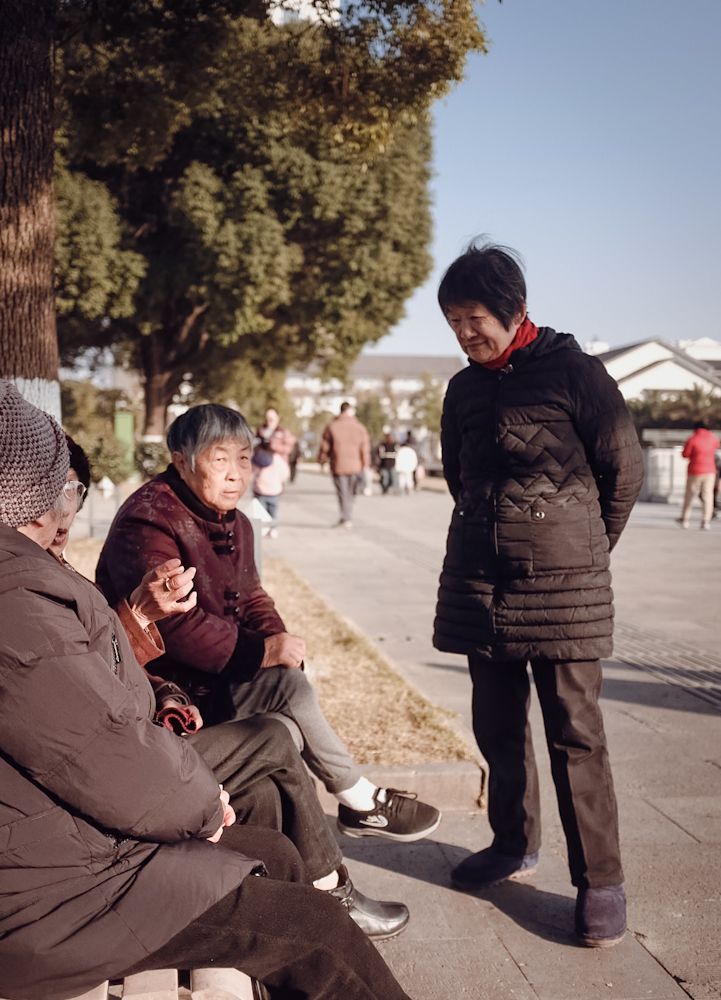
One of the most memorable things about this trip wasn’t the landscapes or the buildings—it was the people. Everywhere I went, I felt a deep respect and sense of community. It wasn’t about being given titles like “Uncle” or anything else. It was just how people engaged, how they saw me as part of something.
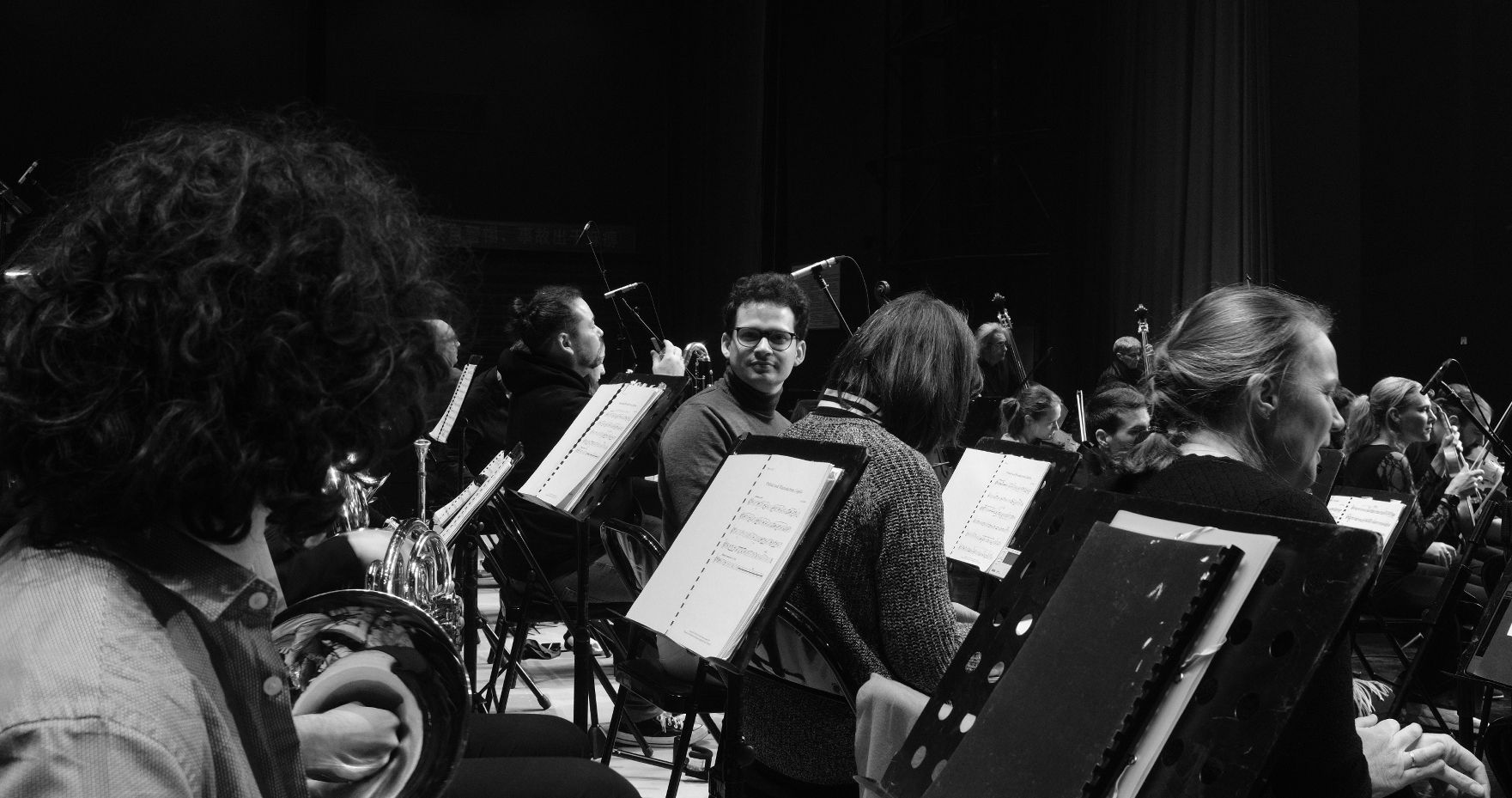
The concerts themselves were a reminder of this—the public wasn’t there for rehearsals, but they were there for the concerts, offering energy and appreciation. Music, like photography, is about presence. It’s about sharing a moment with others, and that’s something I’ll never forget.
Coming Home
Returning home after a trip like this always feels a little strange. The familiar feels slightly unfamiliar at first—the quieter streets, the slower pace. But there’s comfort in returning, and yet, it’s hard not to feel that shift in perspective. Things seem different now.
The Final Frame
So, what remains from all of this? The photographs, of course. They’ll hold the moments, the details, the things I might forget over time. But beyond that, it’s not just about the photos. It’s the way travel shifts your perspective and makes you notice the small moments—the ones that don’t always get captured in a frame.
This series was meant to document a tour, but it ended up being more than that. It’s a reflection on the journey itself, on photography, on what it means to truly be somewhere, to connect with others. The tour might be over, but this story isn’t done yet. And whenever the next journey comes, I’ll be ready to pack my bags again.
I have been posting these articles in the WhatsApp group made for the people on the tour, and people’s feedback has been amazing. What came out the most was the feeling of revisiting the tour through the photographs and how that made people feel. And if you make somebody feel something with an image, then you’re off to a good start. The other comment was, “Oh, I didn’t see that!” And that is part of our role as photographers, to record what people don’t see… My reputation as a photographer seems to have surpassed my reputation as a beer drinker, which is good, because I hardly drink a drop anymore. My reputation as a writer seems to be well established too.
So not only am I seen as a hornplayer but also as a photographer, a writer, and a sensitive soul instead of the gruff bear that sits at the back of the orchestra and makes farting sounds with his instrument. Quite the step up really!
I think the first thing to do is to define what an Uncle actually is. In the West, an uncle is a member of the family, the brother of the child’s mother or father. You can be the cool Uncle, the one that lets the children get away with everything and spoils them. You can be the Uncle who buys them toys that make lots of noise or require a long time to set up, just to get back at your siblings. You can be the responsible Uncle, the one who supports the parents in their parenting role. Then, in English and Irish society, you might also be the Uncle who is a close family friend. And you can be a mixture of all four. Like asking your nephews and nieces to get you a beer from the fridge on a warm summer evening while enjoying a long French-style meal that seems to go on forever.
As you might know, Chinese society is somewhat different from Western, English, or even Irish society. In China, an uncle is someone who has reached a certain age and is expected to be shown deep respect—not just for their age, but also for the wisdom and position they hold in the family hierarchy. The sense of individuality in China is less important than the sense of a collective identity, one shaped not only by Chinese Communism but also by traditional values that predate the Revolution. This collective identity, emphasizing the role of the individual within the larger whole, is especially prominent in China but can be seen, to varying degrees, across much of Asia.
In Chinese culture, the importance of hierarchy and respect for age are fundamental. An uncle is not just a family member; they are a figure who is honored because of their age and wisdom, and their role is tied to the broader family structure. It’s about understanding that personal desires often take a backseat to the responsibilities and duties that come with being part of this collective identity. This is in contrast to the individualism often celebrated in the West, where the role of an uncle may focus more on personal relationships and the joy of spoiling nieces and nephews.
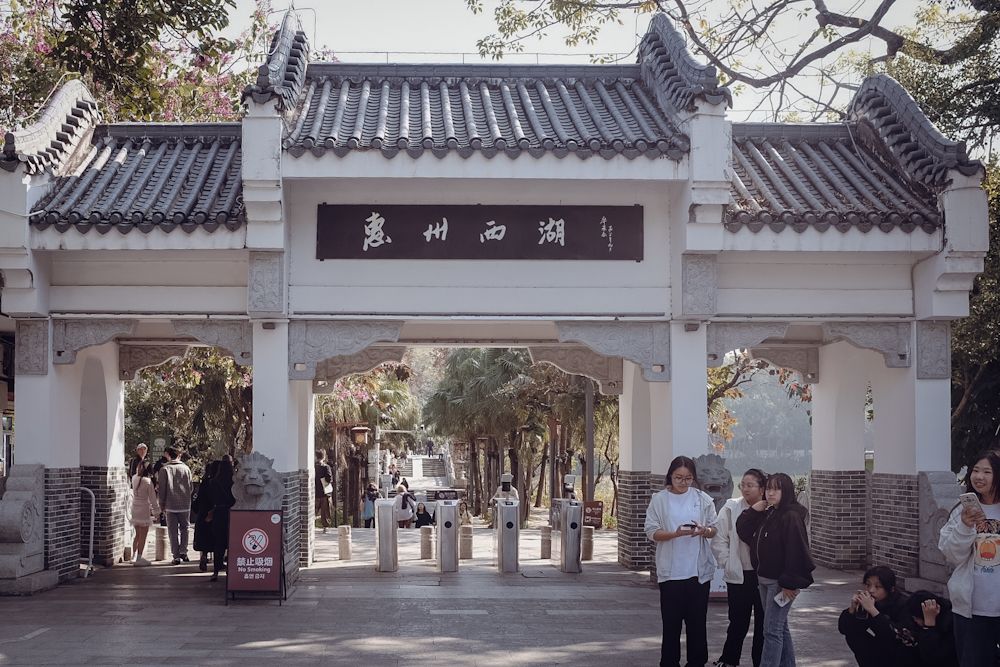
So now we know what an Uncle is in China. It would appear that I am of that particular age, and obvious wisdom, to be considered an Uncle. But how did this manifest itself? I have talked about the love of the Chinese for selfies to mark an occasion or a passing moment. During Operation Shenzhen Nights, I was made aware of people recording my posterior for posterity. Obviously the Father Christmas effect. But people didn’t dare to approach me. I would of course have given in to their demands, as I did after the first Shenzhen concert. Definitely the Father Christmas effect. The concert in Huizhou definitely confirmed this. There was the example of a fellow Uncle who wanted a selfie with him to show the two Uncles together. Even when thinking back to that particular moment, I feel a certain emotion. It was lovely to give a part of myself and solidify that moment together. Two men from the same generation looking marvellous together. And let’s not forget the courage shown by the youngsters whilst waiting for our buses to arrive who came up to me and asked for a selfie (to record the moment) with such respect, even bowing gently to me. I felt very humbled by the whole experience, and it felt like a real privilege to acquiesce.
Becoming an uncle in China wasn’t something I saw coming, but it’s an experience that has stayed with me. The respect shown towards age and wisdom, the gentle bows, and the formality behind something as simple as a selfie request all highlighted just how different things are from back home. In England or France, my beard might earn me a knowing nod from a fellow facial hair enthusiast, but in China, it put me in a role of quiet authority—someone to be acknowledged with deference.
What struck me most was how natural it all felt, as if this respect was simply part of everyday life. It wasn’t about status, just an understanding of where people fit within the bigger picture. The warmth of those interactions made me reflect on how we see age and experience in the West, where individualism tends to take priority over hierarchy and tradition.
This unexpected unclehood turned out to be a reminder of the importance of connection, respect, and the roles we play in each other’s lives. In China, I became an uncle in the broadest sense of the word—a sign of age, wisdom, and community. I might not carry that same role in the West, but the experience has given me a new perspective on what it means to be acknowledged, respected, and, in some small way, part of something bigger than myself.
There’s a stock phrase about the journey being more important than the destination. Another one suggests that a journey can transform a man into something new—something he didn’t even suspect. As I look back at the man who left home, went to China on tour, and the one who came home, I can’t help but wonder if there’s truth in both. I’ve previously described China as a “foreign concept,” and now, having returned, it feels far less so. I’ve peeled back a layer of the country and gained a deeper understanding of its culture—musical, culinary, and otherwise.
This tour, too, has been a “parenthesis,” a break from real life, and a chance to be me—not just “Papa” or “husband.” No longer defined by my role in the family or at work, I could just exist as I am, whoever that is. Though I still feel some anxiety about how others perceive me, age has brought a certain self-awareness, self-knowledge, and—perhaps—a bit too much overthinking. For those two weeks, I was simply a guy on a bus, surrounded by French people, walking through new experiences, and discovering everything along the way.
China as a Totally Foreign Concept
Before I left, my idea of China was that of a far-off place, so completely different from anywhere I had lived before. Those ideas were formed in childhood, shaped by the media’s portrayal of this foreign land. I won’t deny it—I was terrified of the whole trip. Researching things online only added to my worries about not being able to read or speak the language. Growing up, I saw China as a Communist regime, almost oppressive like the Soviet Union, and as the enemy we had to defend against. I remember watching the handover of Hong Kong in 1997, feeling my stomach churn as I watched truckloads of PLA soldiers occupy our old colony.
I remember, too, older members of the band, where I wore green for a living, talking about Hong Kong as the dream posting—warm, sunny, and everything a soldier could need. But what was I really afraid of? The unknown. We all knew about China’s state security apparatus, without truly understanding it. The events of Covid only deepened that sense of fear and mystery.
I even worried about something as simple as eating with chopsticks, imagining I’d have to rely on forks or my fingers. Looking back, all of these fears now seem so silly. But they were real before I experienced the country for myself—and especially before I met its people.
The People Who Changed My View
Somehow, I managed to take each day as it came, simply bathing in the new experiences. And, strangely enough, China worked its magic on me. It didn’t just change my view of the place—it changed how I saw the people. They were charming, incredibly friendly, and in a way that made them seem so much more human.
I began to see myself in them, and I realized that, despite our differences, we are more alike than we might think. We all fall in love, become parents with grace, and share the same aspirations for our children—to be happy, to find love, and to repeat the cycle.
I think back to Christmas Day, when I made new friends. The simple “Merry Christmas” was enough to endear me to them. I also reflect on how beer, it seems, transcends barriers of language, creating a connection that only men seem to understand. I’m not trying to exclude women, of course—heaven forbid—but there’s something inherently masculine about it.
My Place in the Orchestra
Another transformation came in terms of my place in the orchestra—or rather, my perception of it. As the 4th horn, a position typically reserved for the least experienced player, I have always resented the remark. But now, I know my role to be the solid foundation of the section, guiding it through the music. At 53, I no longer feel the need to prove anything. I’m here for the music, content to plod along at the bottom. It’s not humility—it’s comfort, and a willingness to let the young bucks enjoy the spotlight.
Being on tour, though, inevitably brings people closer together. Take poor Corentin, who shared a room with me for two weeks. It’s one thing to get along during rehearsals or after a concert, but living in such close quarters really gives you a new perspective on someone. I knew Corentin was a good lad, but during those two weeks, I saw him in a different light. We talked, laughed, and endured the trials of close proximity.
I remember one drive home from a concert when my birth mother FaceTimed me with the news of her cancer diagnosis. Corentin, despite his limited English, understood more than he let on. He listened as I processed the information, and in that moment, we connected in a way that most people don’t. Maybe that’s what brought us even closer.
Sharing a room with him was like being back in the army. We worked hard, played hard, and celebrated with the kind of noises only a group of men could share. If you can fart in front of someone, you’re already on the next level of friendship.
One moment that stood out for me was when I helped Clement, the other horn player. I had offered him some coaching to help him out of his funk. During the concerts, he had some delicate parts, and although I could easily play his passages for him, I didn’t want to embarrass him. So, I didn’t change seats to play his part during the performance. Instead, I stayed where I was, and when it came to his turn, I played my part to the best of my ability. It was subtle but important—I didn’t want to take his place; I just wanted to give him the support he needed without making him feel like he couldn’t do it on his own.
Afterward, Clement spoke very kindly about me to the younger players in the group. He praised me in a way that felt both generous and sincere, and it left me feeling deeply grateful. His words were not just kind—they spoke to a level of respect and camaraderie I hadn’t anticipated. I hadn’t sought recognition; I just wanted to help. But his thoughtful comments—about my support without overshadowing him—meant more than I could have expected. It’s rare to find such generosity of spirit, and I appreciate him for that.
I nearly forgot to talk about my girls from my days in Cholet. It was Eléonore that suggested that I join the orchestra, and I’m so glad she did. I was about to leave my horn in its box and let it gather dust somewhere in my house where people wouldn’t trip over it. She has been a very good friend to me over the last 13 years, and I think she’s wonderful. Then of course I mustn’t forget Titaua and Mathilde. And they certainly didn’t forget to tall every one about my “kilt” days, where as fed up of being English, I would let people know that one can be from the UK without necessarily being English. My first adoptive father was Scottish, and his brother, Uncle Joe, was Professor Regis at Edinburgh University. People came up to them saying that Ian wasn’t like how they had imagined him, and was actually a decent chap and all-round good egg! Then Eléonore just reminded them that “they” didn’t know me the way she did…
During the tour, as you’ve seen, I took some photos—some of them very odd. But I wasn’t the only one sharing them in the infamous WhatsApp group. For the first time, people saw a different side of me—the artist, not just the beer-loving horn player. I even started sharing my blog posts in the group, and maybe I’ve earned a reputation as the writer. Who would’ve thought? A beer-drinking horn player who takes decent photos and has a way with words—still knows how to play, though.
Anything Else?
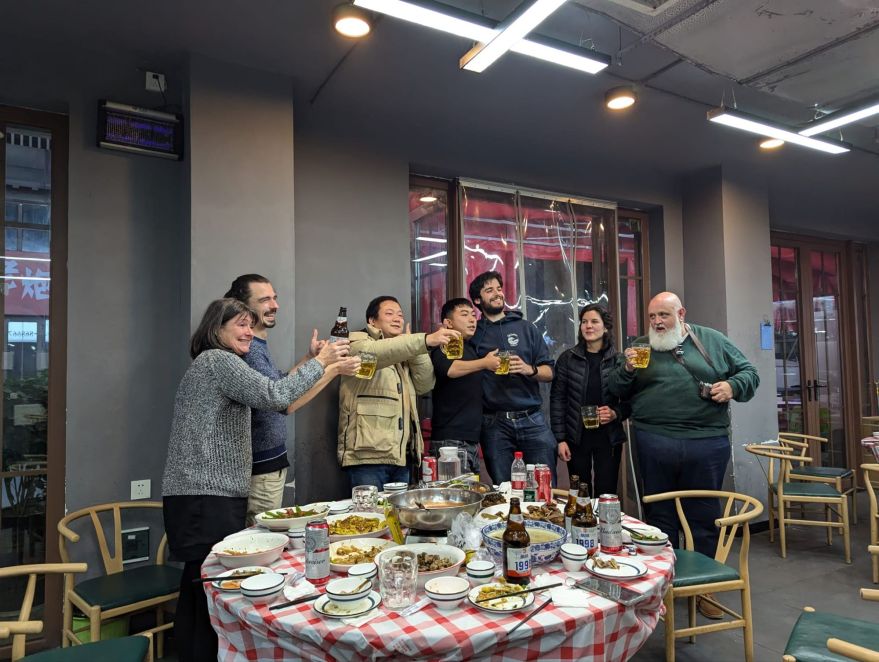
I think my approach to food has also shifted. I’ve always liked the idea of sitting around a big table with friends, and during the tour, I was reminded of that. The variety of dishes was astounding, and I saw some players more comfortable with what they knew, while others bravely ate silk worm chrysalids. Me? I just enjoyed whatever was put in front of me, from chicken and duck feet to tortoise.
I found myself stepping away from desserts, my sweet tooth growing calmer. Eating the Chinese way—deliberately, mindfully—was a revelation. Much like film photography, it slowed me down and made me more aware. I ate less, but I appreciated the variety. I even tried to emulate that at home—though, I didn’t put chillies in my dishes.
I’ve also become more accepting of my body. Despite still feeling like I have a long way to go, I’ve made peace with the body I’ve got. Corentin’s lack of judgment helped, and I’ve learned to be more at ease with the frame that carries me around.
How to Conclude?
What’s clear is that this journey, this “parenthesis,” hasn’t just been a break from the familiar—it’s been a period of quiet transformation. The familiar parts of myself have had space to evolve. And perhaps that’s the true beauty of any journey—not the destination, but the unfolding of a self you might not have fully known. In a way, I’ve returned not quite the same man who left. But then again, perhaps that’s the essence of travel: it allows us to become more fully who we truly are, even as we discover the world around us.
As the journey ended, I found myself thinking less about the places I’ve seen and more about the moments shared—those small, unexpected connections that shape an experience just as much as the landscapes we pass through. Travel isn’t only about what we take away from it; it’s also about what we bring to those we meet along the way.
Perhaps that’s what lingers most—the idea that stepping beyond our usual paths isn’t just an act of discovery but a quiet exchange. We put ourselves out there, not just as observers but as participants, leaving behind something of ourselves in the process. And in return, we find that the world, in all its vastness, feels just a little more connected.
Have you ever had to make a difficult decision that you really had to think long and hard about, one that would have real-world consequences for you and your creative process? I have, and I’m going to share this first-world problem with you. Now, I know first-world problems are a joke, but this problem became very real to me during the run-up to the China Orchestra Tour: film or digital?
You all know about my fondness for the analogue process and the results I’ve been able to acquire. Judging by my recent stats and pages visited, this might just interest you.
The Allure of Film Photography
I’m not saying this was causing me the traditional anxiety that I have been known to suffer from in the past. But… I had to decide how I was going to record my trip and, therefore, what to take with me. I’ll give you a list of my ideal kit, and it might help you to understand my dilemma.
Camera 1 A recently acquired Nikon FE (my first ever Nikon) and black-and-white film, ranging from Fomapan 100 ASA right through to Ilford HP5 Plus, whose box speed is 400 ASA but can be pushed up to 1600 ASA and still provide great images.
Camera 2 A Mamiya C220, which is a beautiful piece of kit with various 120 format black-and-white films, HP5 Plus, Portra 400, with the addition of Kodak Tri-X.
Camera 3 (maybe 4) My Olympus Trip or even the Olympus Pen EE S half-frame camera, for those informal colour shots with some Kodak Ultra and even a roll of Portra 160 for that gorgeous vintage style.
So, you have my film cameras with the film that goes with them. They provide a photographic experience unlike any other. The slowing down of the process, the reflection on each shot taken, the satisfying sound they make when you press the shutter release button. And so much more. They also look pretty damned sexy just hanging there around your neck, and people will think you are a “real” photographer, and that old-school vibe just adds tonnes to your sartorial elegance. Yes, you become a real poser, but do I care? Absolutely not!
The Practicality of Digital
Camera 5 My much-loved Canon 6D Mark II, with a couple of zoom lenses – 24-70mm F4.0, and my 16-35mm F4.0 lens, and maybe even my nifty 50.
Camera 6 Fujifilm X100F, the travel photographer’s ideal camera with the 35mm equivalent F2.0 lens for that sexy bokeh. It’s the Internet that said it, not me.
Now moving into the digital world. Convenience, convenience, and in case you hadn’t realised, convenience. I love them both for the variety of shots they allow me to take, and as I learnt photography “back in the day,” I have still conserved the same approach that I had in analogue photography, i.e., not spraying and praying like I have seen some colleagues do.
It is easier to use a flash, and you have an image that can be transferred to your phone, edited in Lightroom CC, and rapidly shared in the China Orchestra Tour WhatsApp group. And people can see what a great photographer you are. Couple the Canon colours and the Fuji film simulations, and you can have all the creativity fixes you might need at your fingertips.
The film cameras were there to satisfy my love of the analogue process and the nostalgic film look that only film can give. The digital cameras for their practicality, lens effects of going really wide, and having the possibility of going right up to 70mm. Choices, choices, choices.
Reality Check
Now let’s get back to reality and look at the ever-growing list of constraints. First of all, I am going on tour as a musician and not as a photographer. One really has to make this important distinction, as it gives a sense of purpose to the trip as well as the implication of priorities.
I would be flying across half the world, and therefore have to follow the demands of the air travel industry and airline rules. That meant no more than two lithium batteries, and one in the camera, and not in your suitcase but in your hand luggage, or on your person. They don’t like the idea of these batteries exploding or causing fires mid-flight. And because we are respecting the zero BS rule here, I don’t fancy that either. I would be limited by weight for my suitcase: 23kg and 20kg for flights inside China. My priority was to be a musician first and not a photographer, if ever I needed reminding…
If I were going to the UK, I would just have to annoy my family in the car with it being loaded up with camera gear, but this is China we’re talking about. Not a jaunt across the Channel.
In my suitcase, I will need my clothes for two weeks, my suit for concerts, shoes for concerts, wash bag with all my toiletries, as well as my CPAP machine for my sleep apnoea (I have to think about my quality of sleep as well as not snoring for my unsuspecting roommate Corentin). My hand luggage would be my instrument, and as we didn’t need mutes, I might be able to get away with stuffing things up the end of my horn’s bell. Please note that I didn’t try to get a cheap laugh by using the word bell-end…
So here I am back at the beginning of this article, and yet now you might better understand my dilemma.
Tell us what you decided then!
Alright then, I will. Welcome inside my mind and my thought processes. The sheer weight of all the kit would have made tking everything completely impractical. I knew this and had come to terms with it. I really wanted to analogical, but then had to come to terms with the fact that airport scanners can damage undeveloped film. Also the Mamiya weighs a tonne and would have been impractical to lug around China, despite the wonderful images it provides. Carmer 2 out! Now for security check I had bought a metal film box for my films so that those charming people at airport security could check my films, making sure that I would not blow up the plane. Not really my style…
That would leave me with Camera1, 3, and 4. Cameras 3 and 4 are particularly sexy and Carmera 4 being a half frame camera, gives you double the amount of shots for your film. However it uses zone focussing, and the ISO setting only go up to 200ASA so you need lots of light. Camera 3 is similar in the fact that it goes only up to 400ASA so not good for lowlight shooting. Cameras 3 and 4 out.
That leaves me with Camera 2. Which is of course uber sexy and Aperture priotity, which I like, and has a larger ISO range, and one that I can focus accurately with. I had black and white film for it which I enjoy using and know how it reacts and what kind of shots I can get out of it. Very satisfying shots. It also doesn’t need lithium batteries to work, so that helps rule that danger out. But I would still have to contend with the possibility of annoying security staff, and annoying Chinese security staff, and as I speak no Chinese, that would be challenging. And yet it still had a chance of staying in the race.
Now lets explore the digital realm. Camera 5: The Canon 6D Mark II is a beast of a camera and one I enjoy using. It’s lenses are beyond compare, and it would offer me lots of choice in choosing my subjects. However it would be heavy, especially with those lenses, and despite being able to have my images straight away, would it really be worth that added weight. Camera 5 out.
Camera 6. The Fujifilm X100F. Probably my favourite digital camera, and the one I took to the UK this summer as a test for this Chinese trip. It’s small. Compact and silent. And yet despite being a digital camera, it has an analogue feel to it, and is also very sexy, so I can still pose with it and it will give that serious photographer look, and make make people wonder is he using digital of analogue… Hmmm. Sounds like a good choice. It’s downfall lies in its power consumption. I would need three batteries in total. Which would mean that I would have to entrust a battery to a friend..
The two cameras left in the race are the Nikon FE analogue camera with it’s 50mm F1.8 lens which doesn’t need batteries. 50mm was the lens I learnt photography on and would allow me to get some decent portrait shots. However with the Fujifilm, I could change ISO setting without the hassle of changing my film, create scenic shots, as well as environmental portraits, and I could transfer the photos directly to my phone and share them straight after editing.
The X100F: Why It Was the Right Choice
The X100F became the clear winner for several reasons. It’s compact and lightweight, which was essential for travel, yet it produces sharp, detailed images. The 35mm equivalent F2.0 lens allowed me to shoot wide-open for beautiful bokeh in portraiture and environmental shots. The range of film simulations, from classic Chrome to Acros, allowed me to quickly achieve the look I desired without extra post-processing.
Its hybrid viewfinder provided both optical and electronic options, letting me choose the right method depending on the shooting conditions. The controls are direct, giving me full control over exposure and depth of field, without the need to dig through menus. And though it’s a digital camera, it retains that analogue charm that makes shooting feel personal and intentional.
The only downside was battery life, but I managed to bring a few extra batteries, which wasn’t too much of an issue for the flexibility the X100F offered.
Conclusion
In the end, the Fujifilm X100F was the perfect balance between practicality and creativity. Its digital conveniences, combined with its classic photographic feel, made it the ideal camera for the China Orchestra Tour. The images you’ve seen in my latest China Series article were all taken with the X100F, and I’m happy with the decision I made and I hope you might be too…
It’s a “long” title, and it was also a “long” journey. We left our hotel at 7 am on the 3rd of January, and I arrived home with feet under the table at 5 pm on the 4th of January. My mind is still on strike and the memories a little vague, but I’ll try and keep going for as long as possible.
Group 1, i.e. the other group, would be leaving at Terminal 1 in Shanghai, and Group 2, i.e. my group, would be leaving from Terminal 2 in Shanghai. There was a small and very select group that were going to do the “extension,” including my friend Eléonore. We managed to get our suitcases into the “system” at the airport check-in. And then through security, which, due to my sports jacket hack, went very smoothly. All we had to do then was to find somewhere for lunch. I had been in a group for the whole tour and headed off on my own to try and find something to eat.
I did find something to eat—tofu and crab, with a bowl of greens because it’s healthy! And a cup of tea was served with my meal. I spotted a hamburger place just next door to where I was eating and alerted the group via WhatsApp. I took my time eating because I could. I don’t like being rushed. Apart from getting onto the plane on time, my only task was to find a gift for my wife that would please her and, at the same time, be very Chinese. I bought tea. Because why not? And the shop looked very luxurious, and I was sure I couldn’t mess it up.
We flew from Shanghai to Beijing, and part I of our trip home was over.
The wait in Beijing seemed to go on forever, and our flight was at 2:40 am local time, which would mean a night flight back to Roissy. Beijing airport is a rather large place where most everything seems to shut at 5 pm. This was going to be a long wait. I resisted the temptation to go and have a “couple” of pints at a bar that was still open but still felt the need to have a drink of something. That something would be a bottle of water. We had our gate and waited for our flight to leave.
As you know, I can generally fall asleep anywhere and at any time. But even for me, this was going to be a tad tricky. I managed to charge my phone thanks to my colleagues and lay down on a bench to try and get some shut-eye. The sports jacket and jumper make a rather good pillow, and I felt slightly more invigorated when boarding the plane.
Maybe that wasn’t a good thing. Anyway, I made my way to my seat, which was at the very back of the aircraft, and tried talking to my neighbour, who asked me if I spoke French. I did, and I could tell she had a plan, that girl. She wanted to be able to have two seats so she could lie down. I asked the hostess if those two empty seats were going to be available, and she took pity on me, saying that they were technically for crew and that if one of the crew asked, I would have to move back and sit with Miss Two Seats.
That sounded very fair, and Miss Two Seats seemed to be happy. I used the pillow for my back, and the blanket was just large enough to snuggle into. Did I sleep like a baby? No, he said, going for the understatement of the year award. No, he did not, but I think he at least managed to snooze, which was good enough. We had breakfast on the plane, which would be my last “Chinese” meal. Part II of our voyage was over.
We landed in Roissy and played everyone’s favourite game—go to the loo, and then on to baggage reclaim. The trombones had been put in with the suitcases and, of course, were the very last things to be put onto the conveyor belt. I have to admit to a rather tense moment when I was wondering if my suitcase would ever turn up. Eventually, it did, and we were reunited. The trombonists were soon reunited with their trombones, but it was all very stressful and a grand moment of solitude for them. We eventually found what we thought was the exit, turned around because it wasn’t the exit, and headed off to another exit to meet our colleagues in Group 1, who had arrived a wee while before us. We were herded along, with Mathilde and Titaua helping us cross the road. You’ve guessed it—we got on the bus, except this bus would be taking us back to Nantes. Part III of our voyage had begun.
My memory was still hazy, and I think we stopped off in the Perche—the place, not the fish, but maybe they had them in the local rivers. I’m not here to judge. We all traipsed into the service station and were greeted by the overpriced sandwiches. Not a chicken foot in sight. It all felt such an anticlimax after the food in China.
We arrived eventually where we had set off from in Nantes. Part III of our voyage was nearly over. Kate and Virginie were there to pick me up, and that hug was particularly tight and lasted quite a while—or so it seemed. Had I missed my family? I will say yes, of course. It will save us many arguments at home!
Part IV of the trip had begun. My wife drove us home through the rain. I entered the house that I had left two weeks earlier. I had been on tour, I had seen things that I had never seen before, I had eaten things that I had never eaten before, and I even managed to save my special Christmas chocolates from the inquisitive looks from the two women in my life. Killian wasn’t there, so Kate had first dibs on which mug she would like. The chopsticks were put away. Tea was made, and the day ended up at home. I was a little tired…
















 IJM Photography