
This marks the beginning of a journey I’m eager to share—a series about my recent orchestral tour to China with the Symphonique des Bords de Loire (or SBL for those special people who know). Before leaving, China was a distant, almost abstract concept to me: a country whose language I couldn’t speak, whose script I couldn’t read, and whose cuisine I knew little about—aside from my clumsy attempts at wielding chopsticks.
Fast forward to today, and although I’ve only just returned—less than 48 hours ago—China feels much less foreign. I’ve wandered its streets, performed in its theatres, and shared meals with people who reminded me just how much we all have in common, no matter where we’re from.
Through this series, I’ll invite you into the world of an orchestra on tour, from long-haul flights and pre-concert rehearsals to quiet, reflective moments exploring unfamiliar cities. Expect stories of camaraderie, cultural discovery, and the universal language of music. And, of course, I’ll share the photographs—nearly 500—capturing the essence of the places we visited and the people we met.
Our first stop is the journey itself, from Nantes to Changsha, where it all began. Along the way, I’ll recount how we celebrated Christmas and New Year far from home, the magic of our performances, and the unexpected connections made along the way.
Are you sitting comfortably? Then we shall begin…
Like most people, I had a certain reticence about the unknown. I was basically terrified! But, as one must, I thought the best place to begin was the beginning. I knew it would be a long trip, but this was possibly the longest for me. We had our itinerary and knew where we were going. We had all installed the app Alipay on our phones to pay for things. There’s also a translator on the app, so we should be fine.
My wife and daughter dropped me, my suitcase, and my instrument off at the rendezvous point in Nantes at 1:30 am, giving us enough time for the 2:00 am departure by coach to get us all to CDG Roissy airport. We stopped off in Angers to pick up the last of the orchestra members and headed off to the airport.
We were split into two groups: us and them. We would be flying with Air China later that day, and the other group would fly almost immediately with Xiamen Airlines. There weren’t enough seats on the plane for us to travel together. As a result, we had the pleasure of spending all day in our terminal at CDG. This felt like the longest part of the whole trip.
We split up again—one group to Starbucks, the other to the bakery Paul. We felt a little more exclusive in our little group, made up of a horn player (yours truly), two violinists, Eléonore and Marie, and Nicolas, a percussionist.
What does one do for eight hours while waiting for a flight? Well, you go to the loo, eat, chat, become bosom buddies with your fellow travellers. You talk about your jobs, share photos, realise the adapter you bought won’t work in China, so you buy another one, have lunch, share jokes, and then realise too late that the small children around you can actually understand those jokes, so you dial it down a bit. You wander around, one person looking after the luggage, making sure it doesn’t get blown up by security. Excitement, excitement, excitement!!
Tired of remaining exclusive, we joined the hoi polloi of the Starbucks group and headed to security together. Passport control, however, was a different matter altogether. You may have guessed that I am not French, so I had the privilege of going through a different line to be let out of the country. I was scanned, as was my passport, and then made my way through to the other side. We had to go through security again.
My hand luggage was my instrument, and I felt very pleased with myself and my choice of clothing. It’s amazing how much “stuff” you can stuff into the pockets of a sports jacket and still look relatively good. You take off the jacket and pop it into the bins along with the horn, camera, phone, wallet, etc. It all felt like being in a queue at Disneyland…
I had nothing else planned, so I took it all in my stride. Going through Duty-Free was an interesting experience. Gone are the days of cheap booze and perfume. Now it’s all about luxury brands, and definitely not cheap. I’d have to wait until I got home to restock my perfume.
The departure lounge had a public piano, and of course, the colleagues had to let rip. And let rip they did. A productive way to get through the tediousness of waiting. I was reminded of the British Army philosophy of “hurry up and wait.” Take it in your stride, lad, take it in your stride.


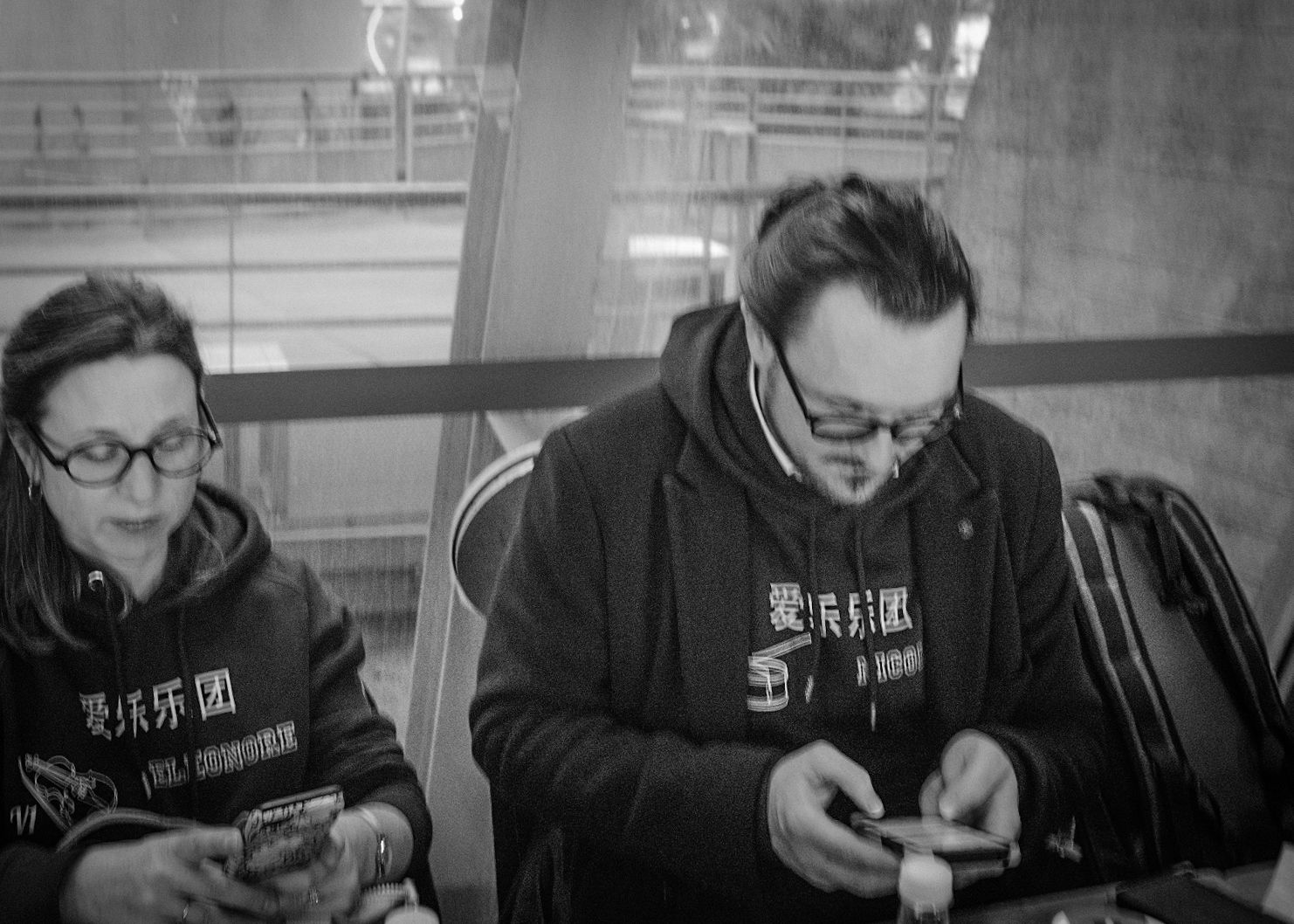
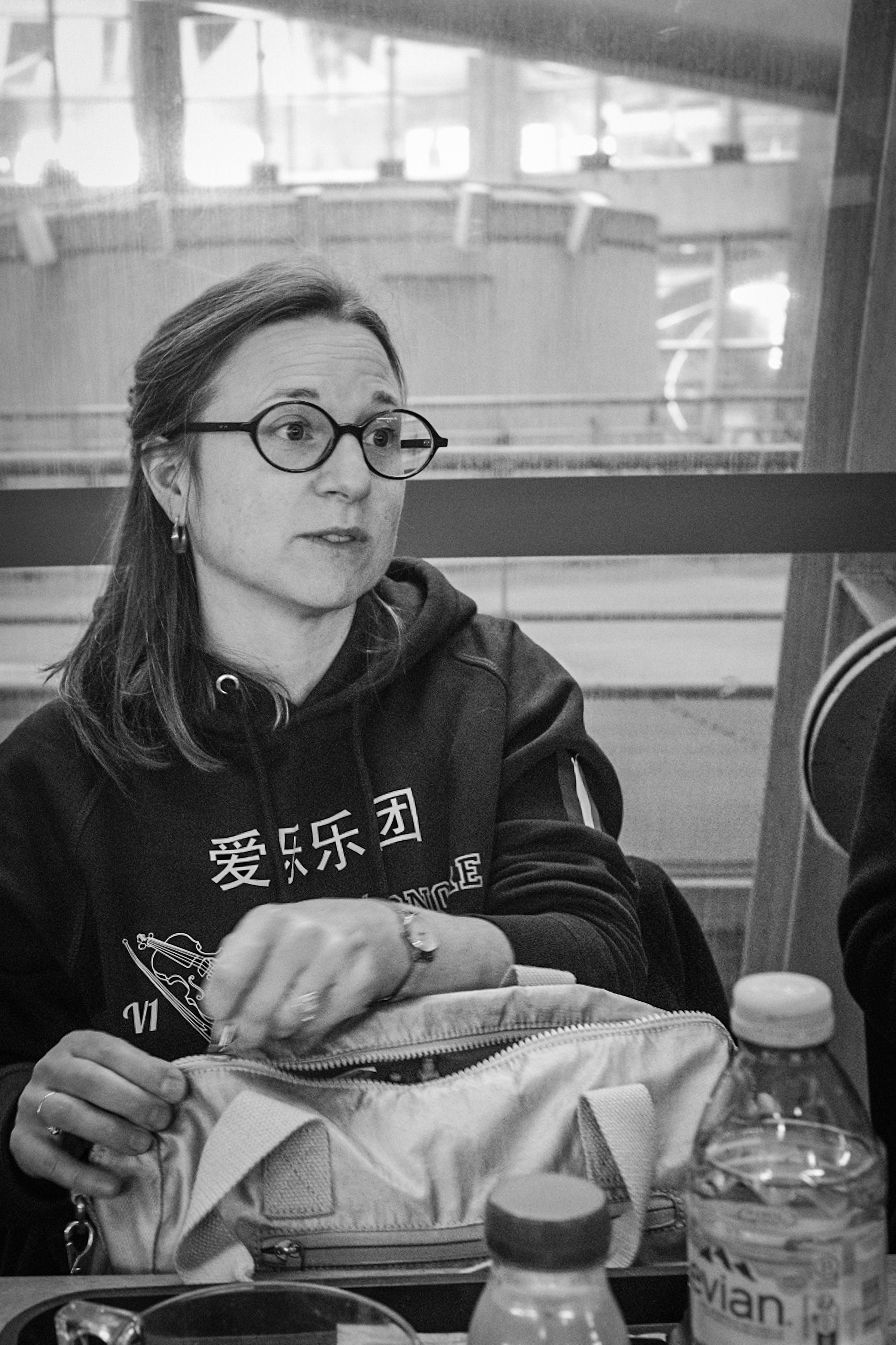


The first flight was Air China from CDG to Beijing. When they talk about long haul, they forget to tell you how long long haul really is. We weren’t in business or first class but in economy, where long haul takes on a completely different dimension. The flight, though long, was very pleasant, and between meals (served with forks), it went smoothly. As part of my research for this trip, TripAdvisor had become a reference, and my experience was obviously much better than that of certain reviewers. The food was great, although it was the first time I had rice and fish for breakfast in a long while. I sat next to Fran, one of the English members of the orchestra, and we chatted about everything and nothing. It helped pass the time and allowed us to get to know each other in ways you can’t when just playing concerts and rehearsing in France.
We arrived in Beijing, descended, and started looking for the loo—the first of many visits to the loo during this trip. I had heard about Chinese loos being a little different from those back home, but in the airport at least, everything was fine.
We went through the airport to the domestic transfers, filled in the form with the information we had provided on our Visa application form, and went through immigration. Now, we were all on a level playing field, much to my satisfaction! We made it to the other side and headed to our gate, where we would board flight number two to our final destination for the day: Changsha. Changsha is one of those places that will amaze you with the colour of its lights around the buildings—one of the many cities that do this. It was resolutely modern and vibrant. To be honest, I didn’t know what to expect before arriving, so I just decided to take it all in.
At the hotel, we were greeted by colleagues who had arrived earlier. My roommate was still out in town, but thanks to WhatsApp, he was told we had arrived and it would be nice of him to come back to the hotel and let me into our room with our shared key. He returned with a huge smile on his face—not only happy to see me but excited to tell me about the girl who had stopped him in the street to take a selfie with him. This would be the first of many such occasions for my friend Correntin to satisfy his ever-growing fan club. Poor lad! Not easy being girl-bait every day! He would get used to it.

The room was posh, and I thought, “I could get used to living like this.” And indeed, I did. Those pillows were huge, soft, and when your head landed on them, you just seemed to float off into another world. Eventually, I had to leave my pillow and get ready for the evening Christmas meal and Secret Santa exchange.
Now, I had presents for Eléonore, Mathilde, and Titaua—whom I met while dabbling a little more in music in Cholet, and who convinced me to join this orchestra. I’m very glad they did because here I was, offering them their Christmas presents in China! Secret Santa is where you’re assigned someone in the orchestra to buy a small gift for. My person had messaged me to ask for an orange, but I couldn’t just give them an orange. I made the effort to find a Terry’s Chocolate Orange for him. My Secret Santa, Barbara, presented me with a mini-tote bag from the Paris Olympics. It’s just the right size for the car! The meal was somewhat less French than the Olympics, but it was the first of many discoveries in this new country. Well, one must show willing…






















 IJM Photography