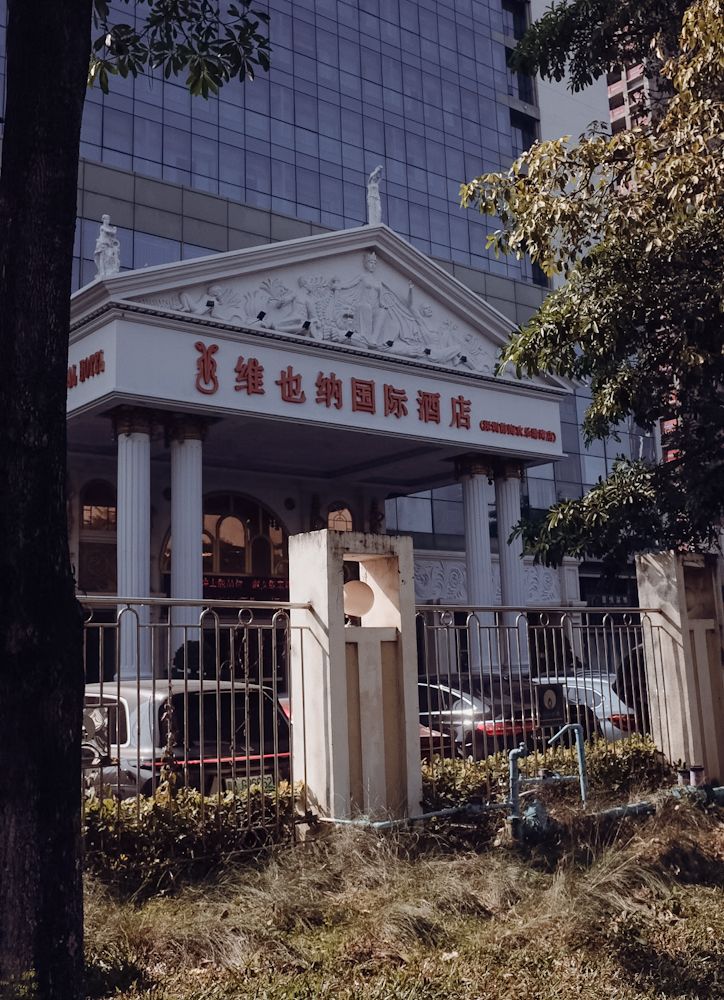
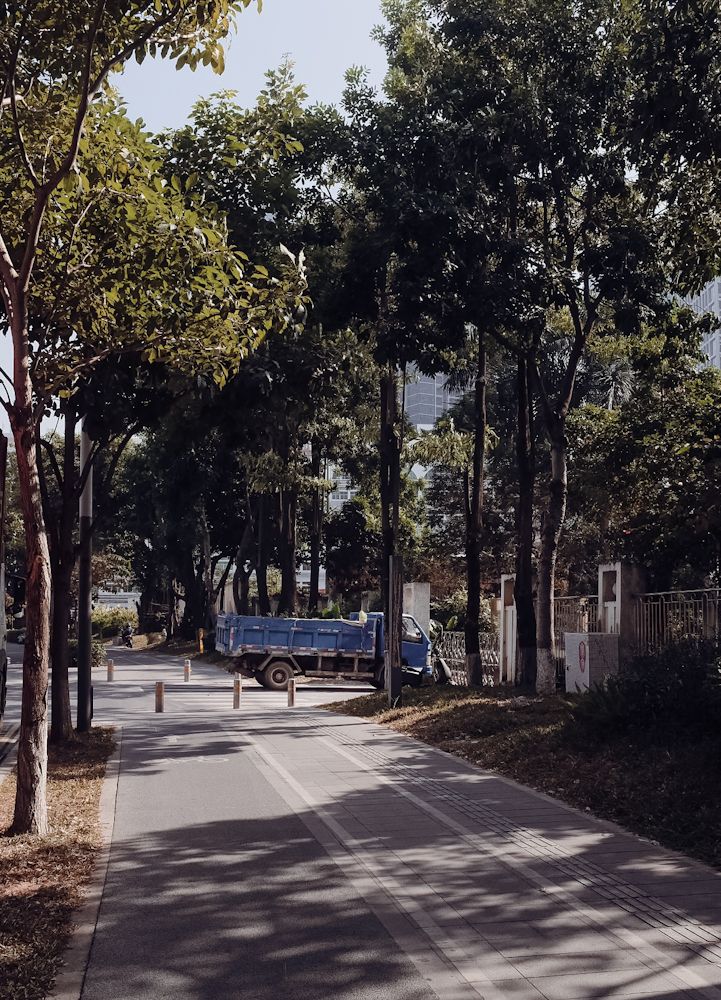
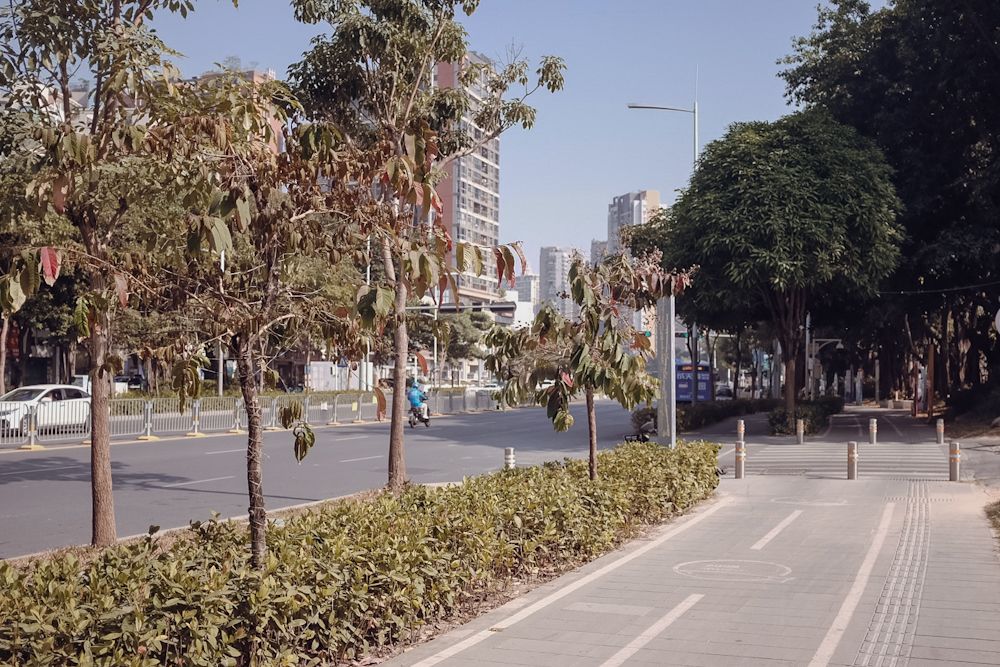
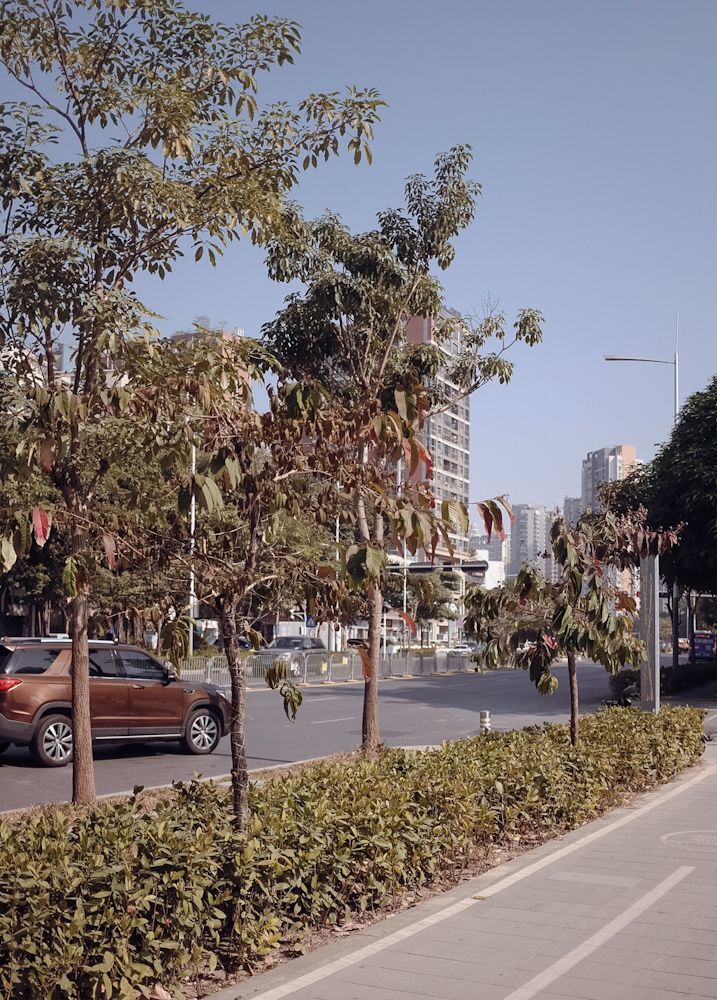
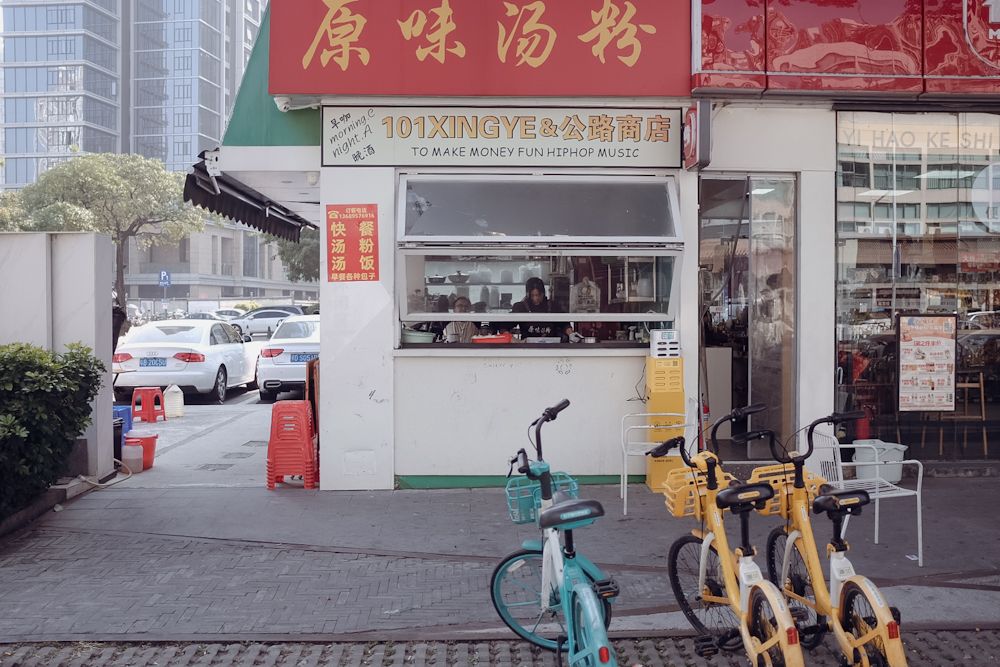
It had been a relaxing day. I’d emptied my mind by wandering around Shenzhen, taking colour photos for my wife, editing them on the go with Lightroom CC on my phone—all the power of Lightroom, neatly packaged for mobile. The afternoon had been just as easy-going. I could get used to this.
Corentin, Monsieur Lover Lover, and Paul “the Duck Tongue” Trouillet had decided that, since we weren’t performing that night, we’d head out for a bit of fun. Thus, Operation Shenzhen Nights was born. They’d planned everything down to the last detail. The walk to the tube station was about a kilometre, and even with my gammy knee, it was doable.
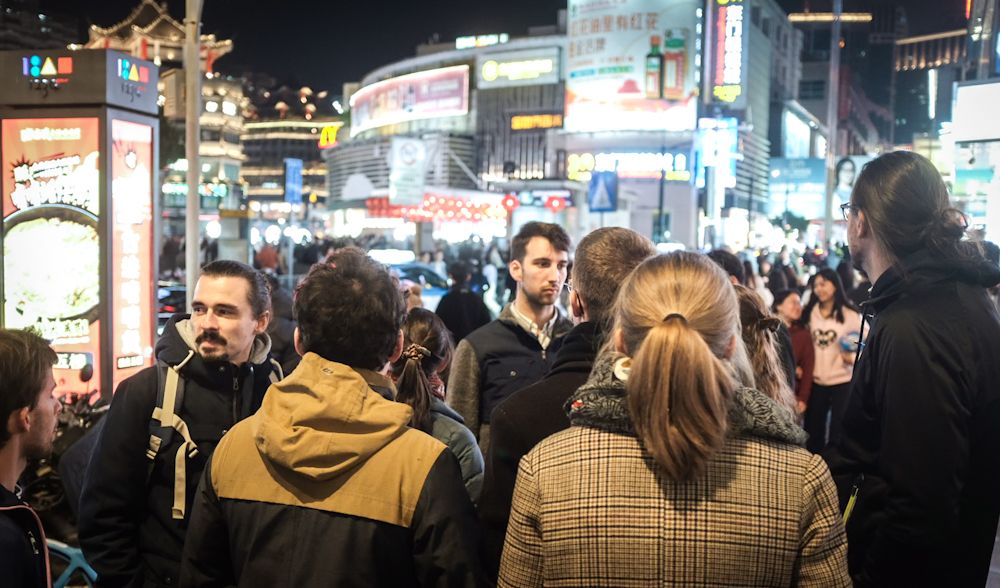
So, off we went—a whole group of us—to the Shenzhen tube. Along the way, we passed bustling restaurants where people were already seated for dinner. We walked by a pet shop where people were cuddling kittens. At least, I hoped it was just a pet shop and not a restaurant! The kittens were adorable.
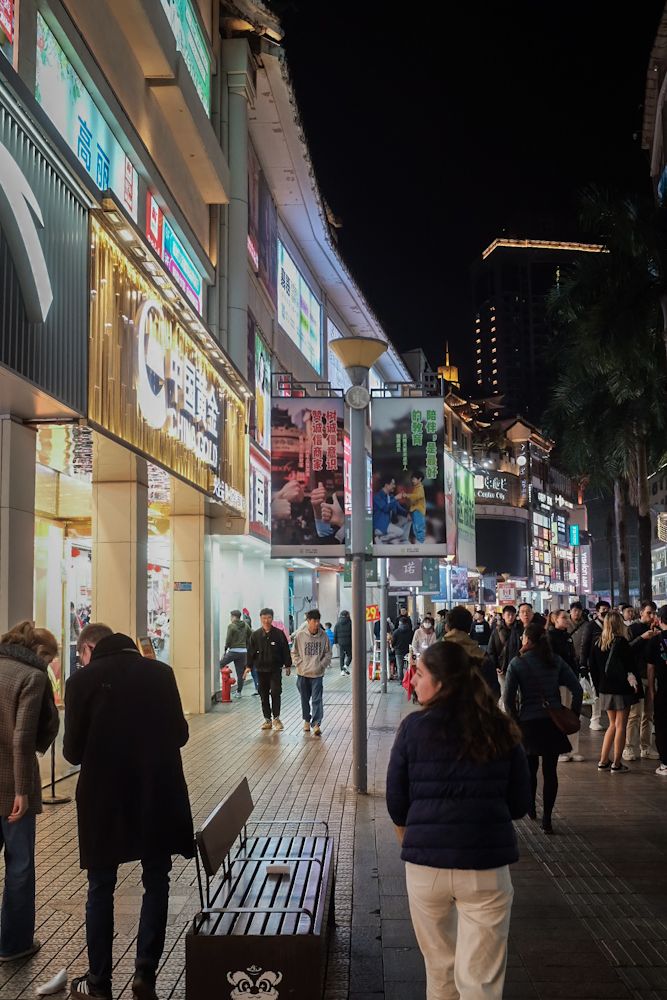
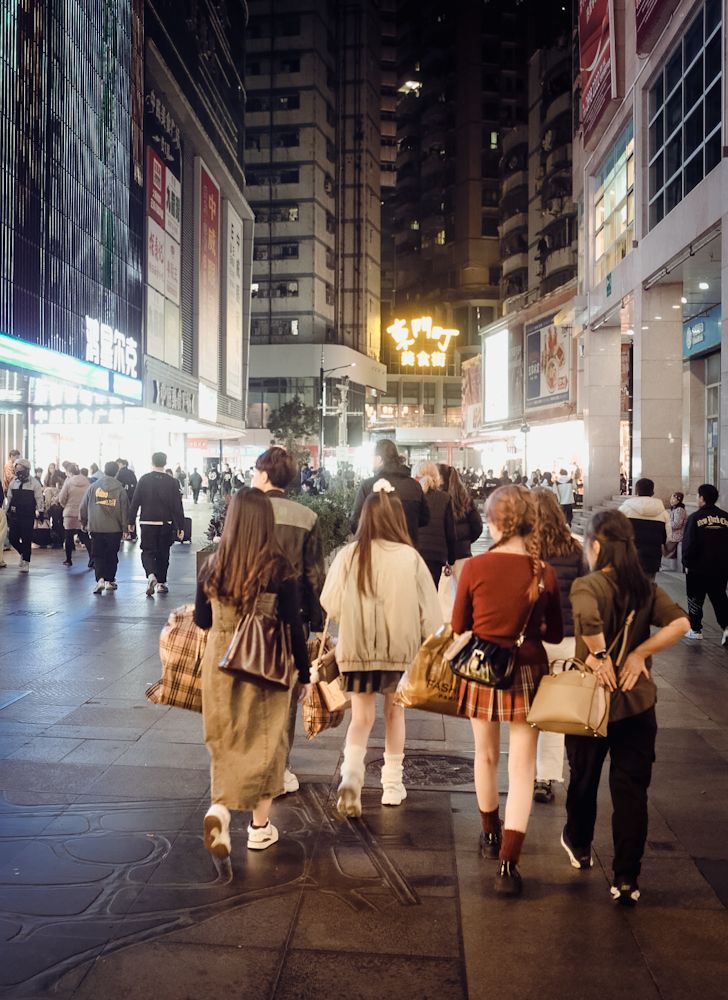
The Saturday night energy was in full swing, with people out for meals or simply strolling. We were about to do much the same.
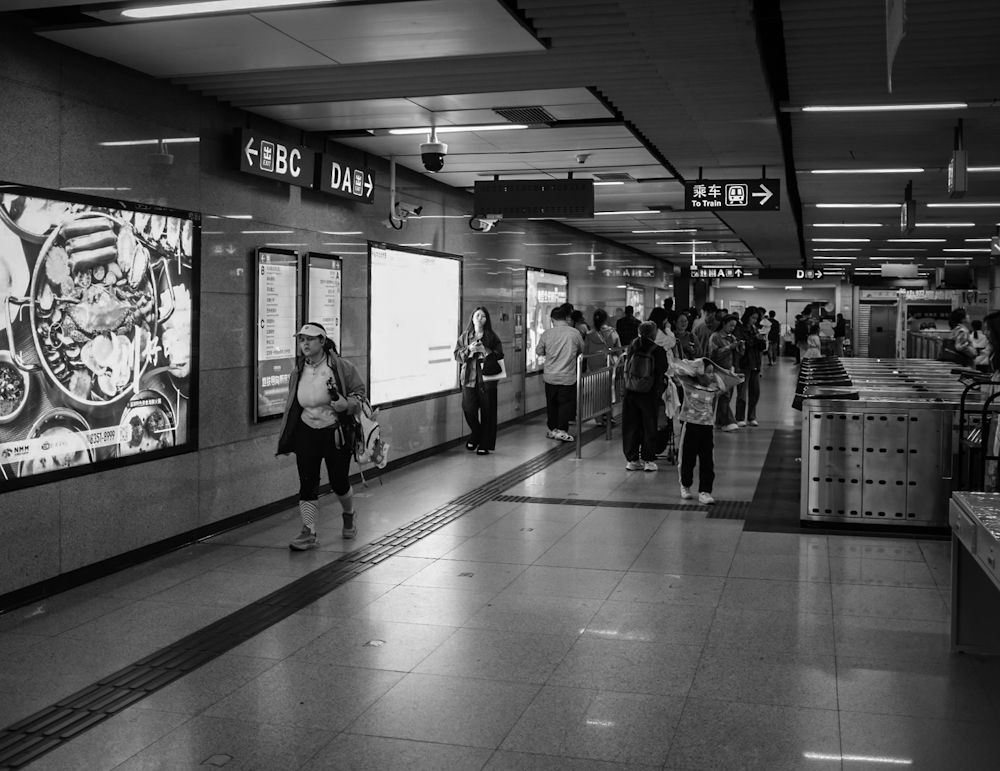
First, the journey into town. Entering the tube station, I was relieved to see all the signs in both Chinese and English—a lifesaver, as my Chinese still needs work. Passing through a baggage and body scanner was certainly out of the ordinary, but I quickly got over it. People often talk about personal freedoms in China, but it didn’t faze me in the least.
We bought our tickets—or more accurately, small green plastic disks that you scan to access the platform. Then came the stairs, and that’s when my gammy knee started to let itself be heared. Fortunately, there was a lift, which would have been a shame not to use. When the train arrived, I managed to grab a seat, camera ready to snap photos of the metro ride.
About an hour later, we reached our destination, where Operation Shenzhen Nights would truly begin.
Corentin, always as eager as a five-year-old at the zoo, practically bounced with excitement. His enthusiasm was infectious, and I tried to keep up, though one day I’ll have to explain the “pace of the slowest man” rule to him.
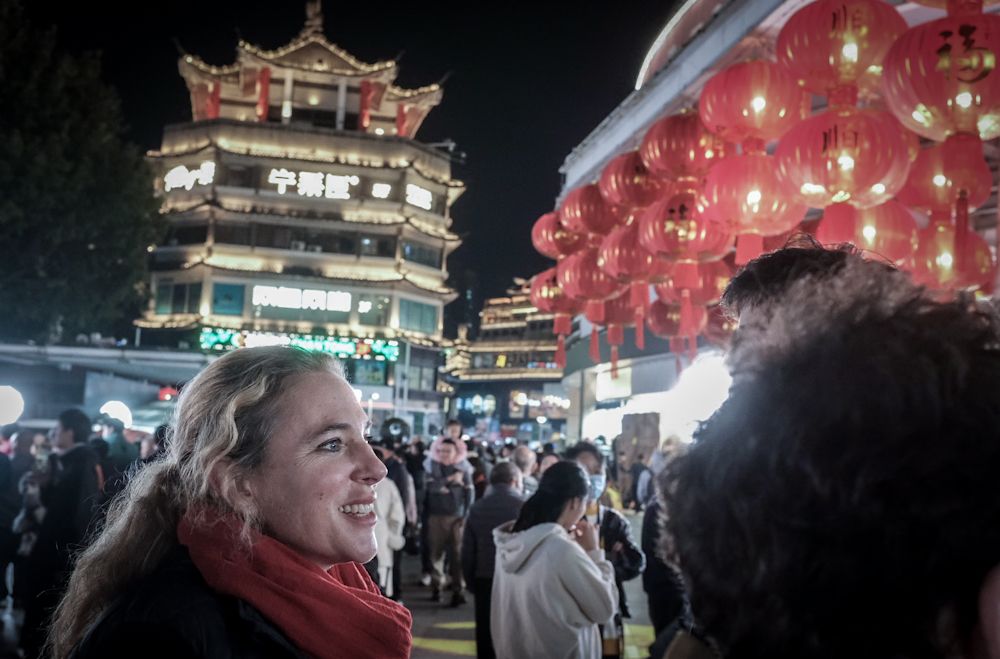
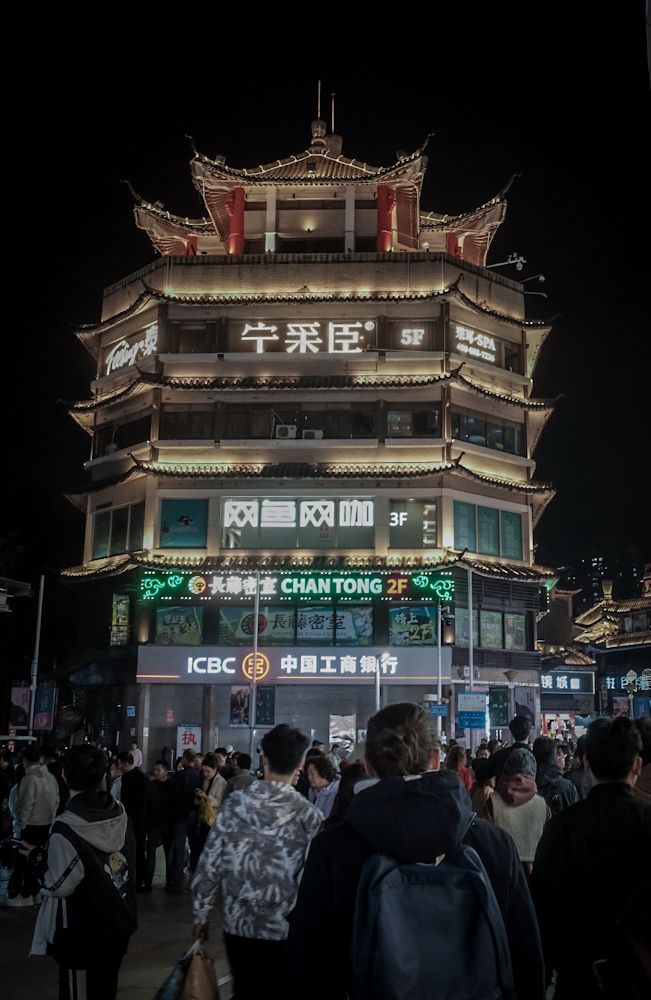
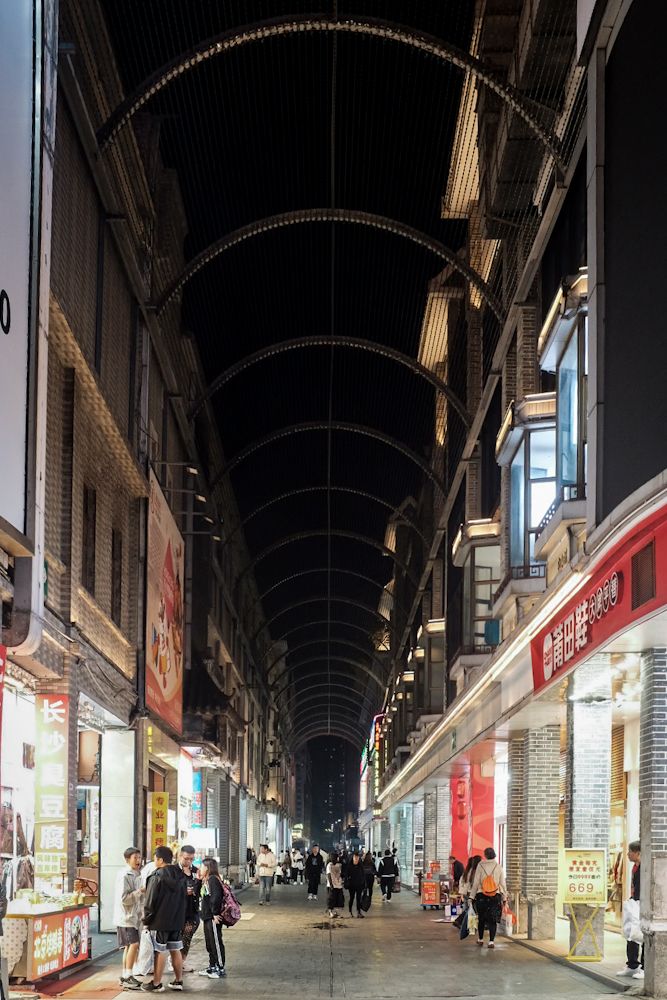
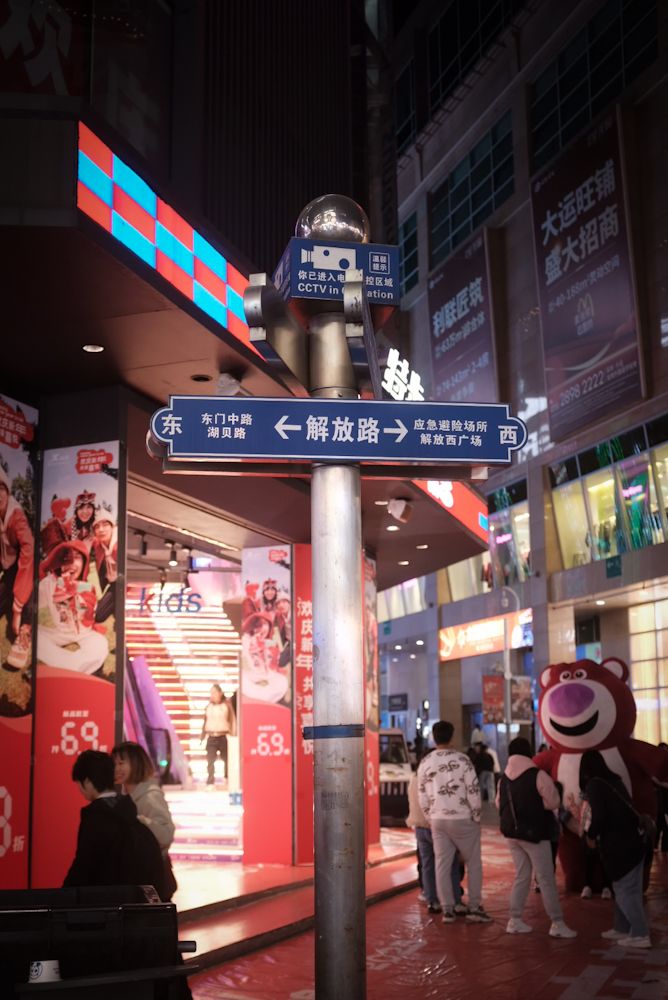
As we exited the tube, we were greeted by a sea of lights, red lanterns swaying overhead in celebration of Chinese New Year, and professional TikTok setups. These weren’t just quick phone clips—this was full-scale production, complete with lighting and sound. I still don’t quite get TikTok, but they sure seem to.
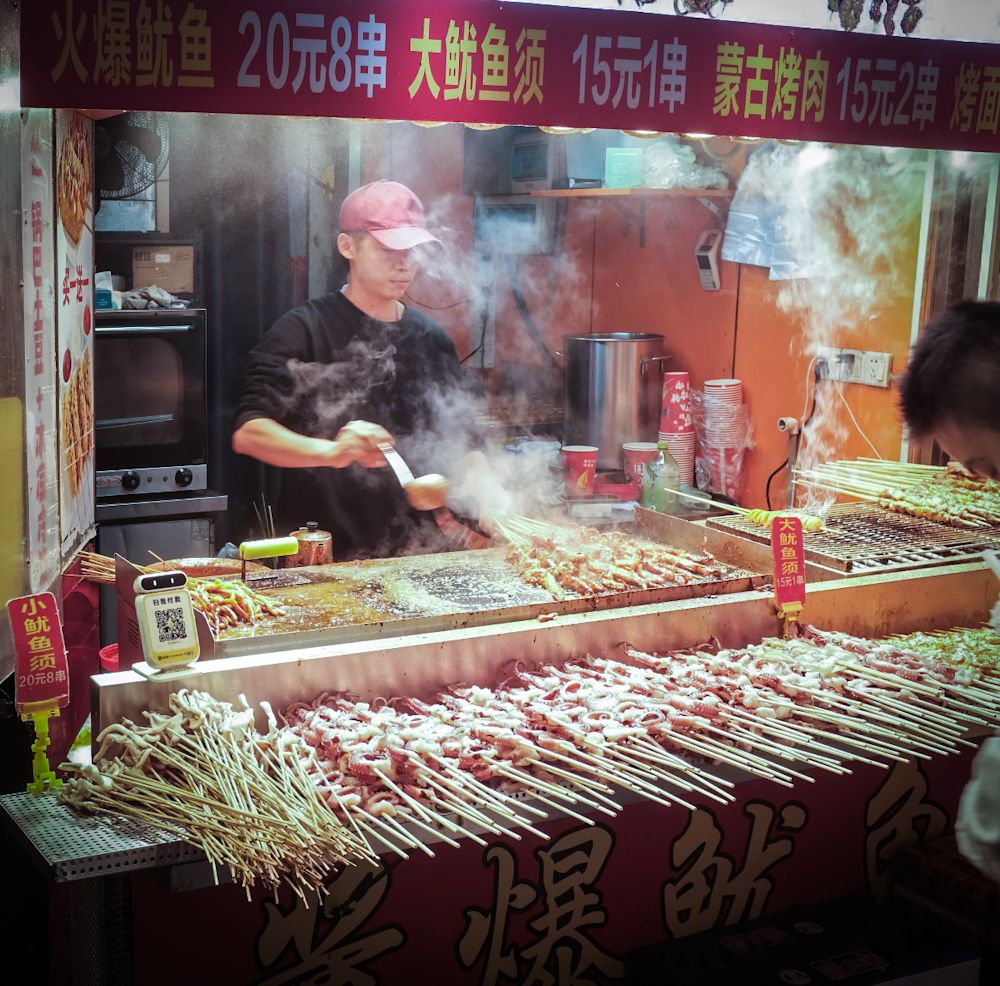
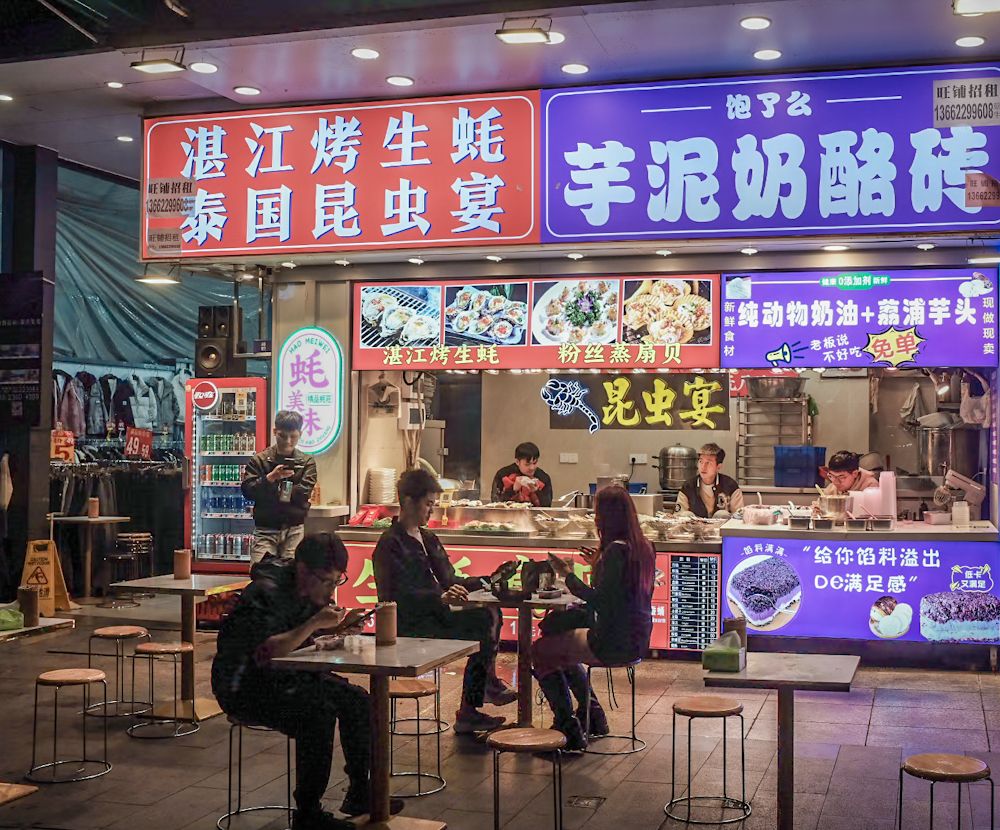
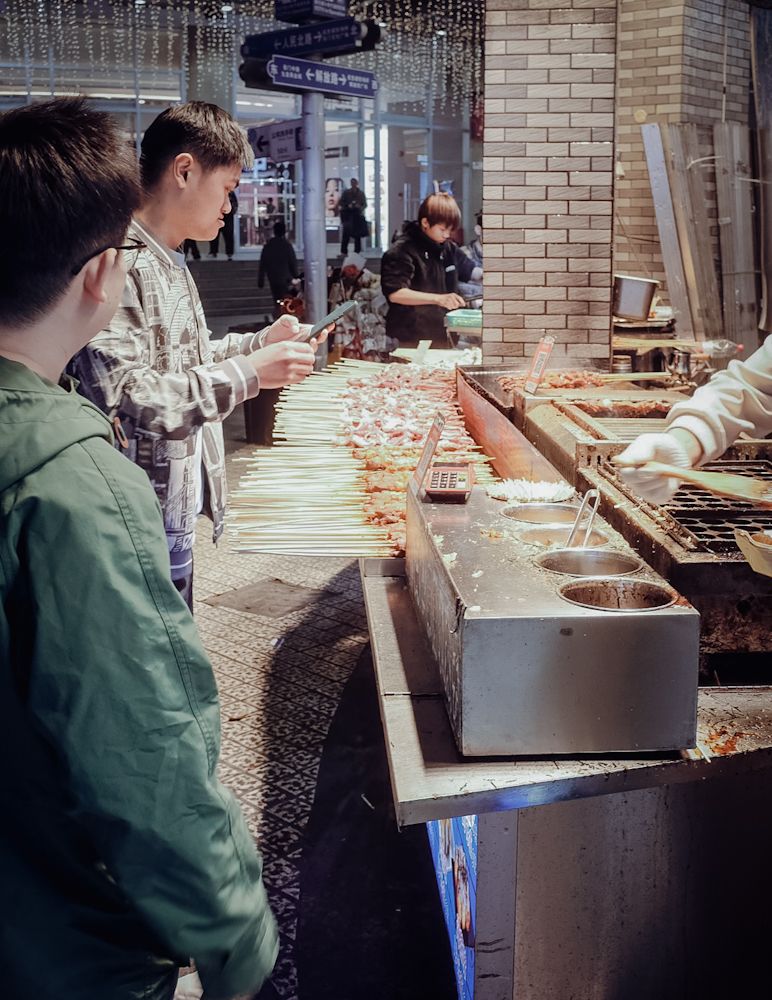
Paul and Corentin were already eager to dive into the street food, and it wouldn’t be the first stop of the evening. Skewers with all kinds of “supposedly” edible things lined the stalls. I was fine with chicken and octopus but drew the line at scorpions and crickets. Maybe next time I’ll embrace my more adventurous side.
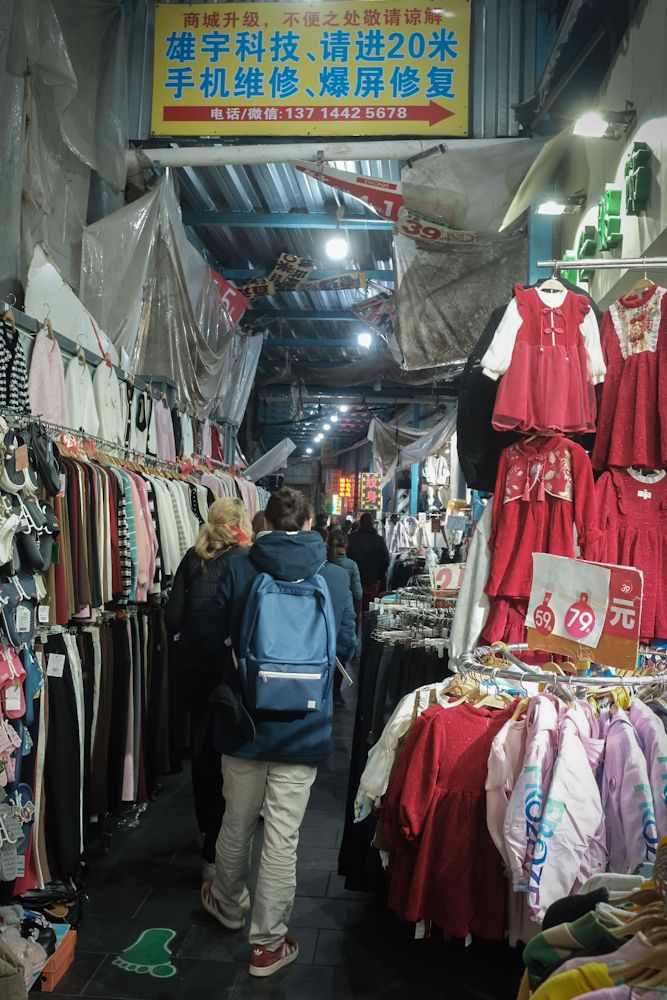
The place was packed, with street restaurants everywhere. Out of the corner of my eye, I spotted a shop selling mineral water and bought a litre. I felt much better after hydrating. I knew it would mean a bathroom hunt later, but I threw caution to the wind. “Bugger it,” I thought. Some risks are worth taking.
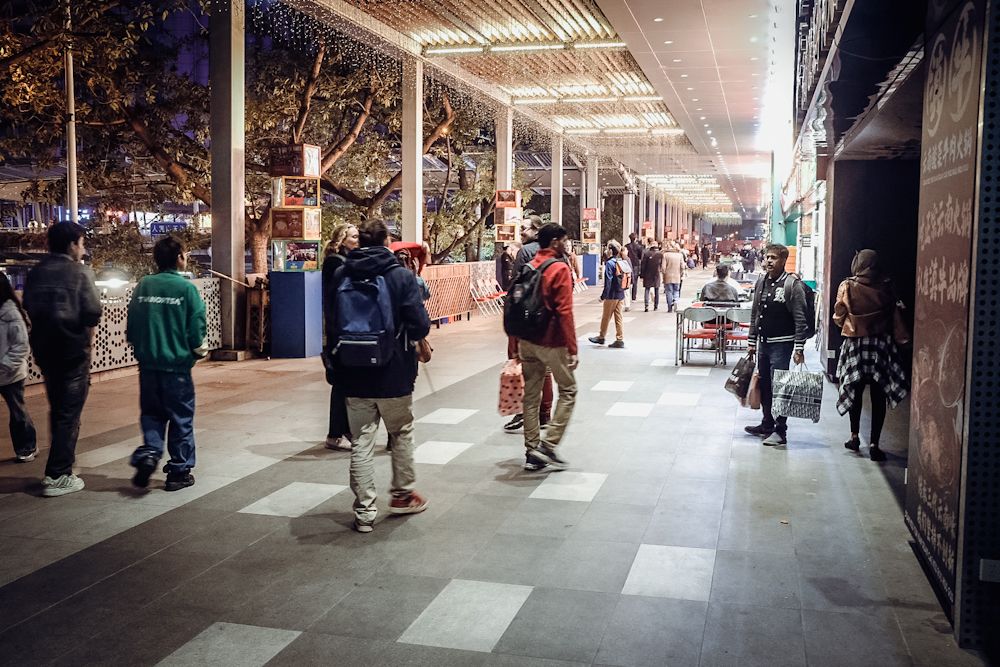
The night was buzzing with energy—smells, sounds, and lights everywhere. Red lanterns swayed overhead, casting a warm glow as the city geared up for Chinese New Year.
Paul and Corentin thrived in the chaos, eagerly planning their next round of snacks while some of the group veered off to McDonald’s for a quick bite. As we waited, we soaked in the atmosphere. When the others rejoined us, I was already with my camera taking shots of a city that seemed to be in perpetual motion. Operation Shenzhen Nights was rich with everything that mattered—good company, questionable snacks, and memories destined to linger long after the evening faded.
We continued walking, and the boys ended up finding tofu in sauce, which they let me taste. I must learn how to cook tofu like that at home. But again, I drew the line at eating durian. “It can have a rather pungent smell,” he said, going for the understatement of the year.
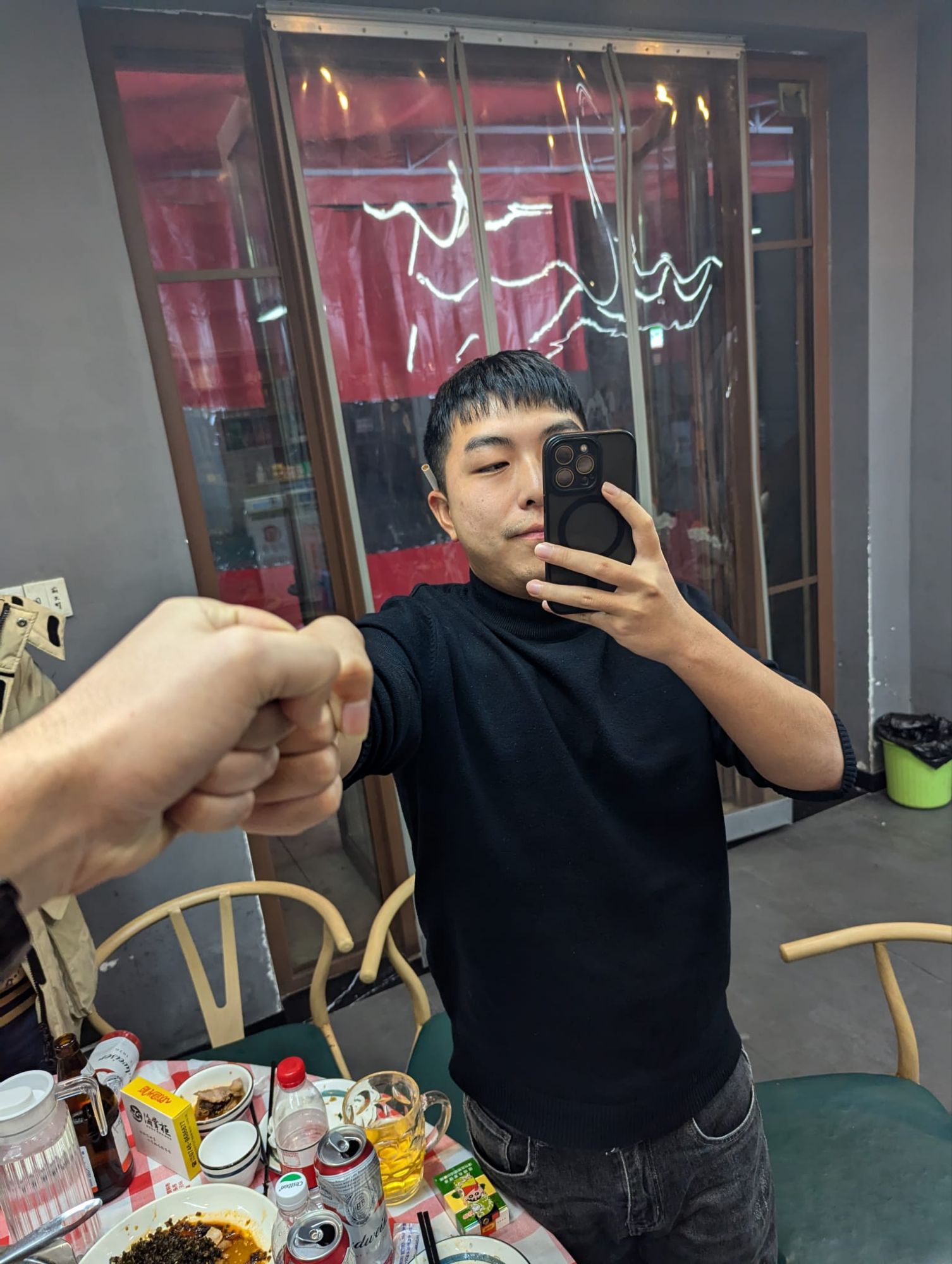
As we left the main drag, the goal was to find a watering hole. And we did! More beer, and a last chance to have a bit to eat. I kept it simple with my food choices, but one of the group tried roasted silk worm chrysalids. Definitely interesting, but it turned out to be one of the less than tasty things of the evening.
The youngsters wanted to go to a nightclub, an idea which wasn’t really for me at nearly 53 years old. I’m not a fan of nightclubs and haven’t set foot in one since the early ‘90s. Still not a fan 30 years later. The elders of the group headed out for a beer, and the more adventurous of them had rice wine—or rather, rice alcohol. I ended up chatting to one of them until half past six in the morning. He had things to get off his chest, and I entered Uncle Ian mode.
Welcome back to China, Dear Reader. First, let me tell you a little about Shenzhen to set the scene. It’s massive—really massive. Just across the bay is Hong Kong, which we handed back in 1997. Yes, we actually gave back a colony! It can happen. Shenzhen used to be Hong Kong’s poorer sibling, standing in its shadow. But China had bigger plans, determined to create a statement city to rival Hong Kong. Now, Shenzhen is home to 17 million people, boasting every modern convenience imaginable, even a higher GDP than Hong Kong.
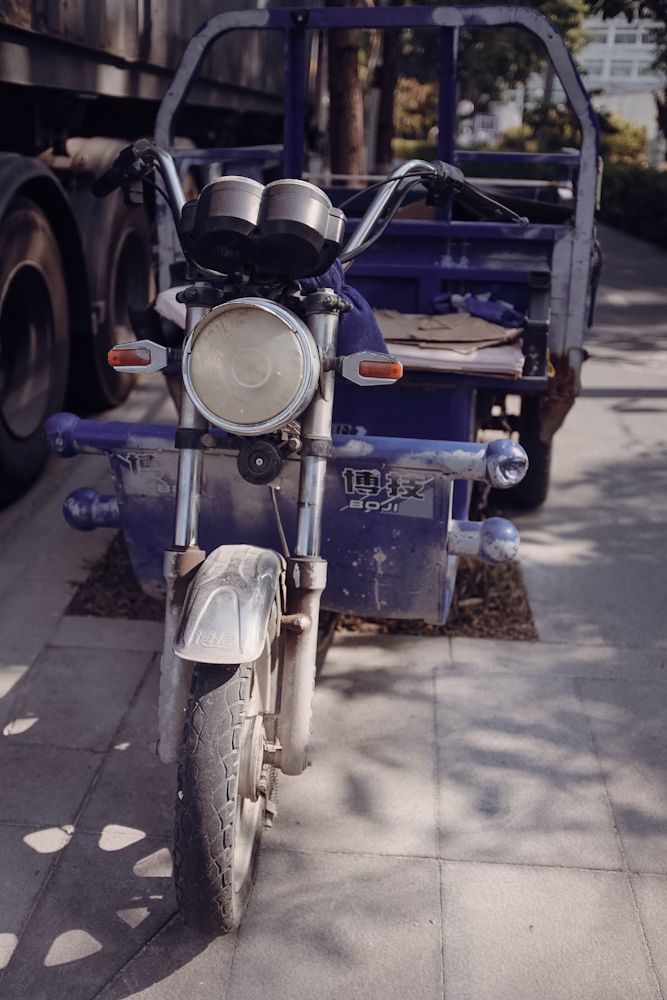
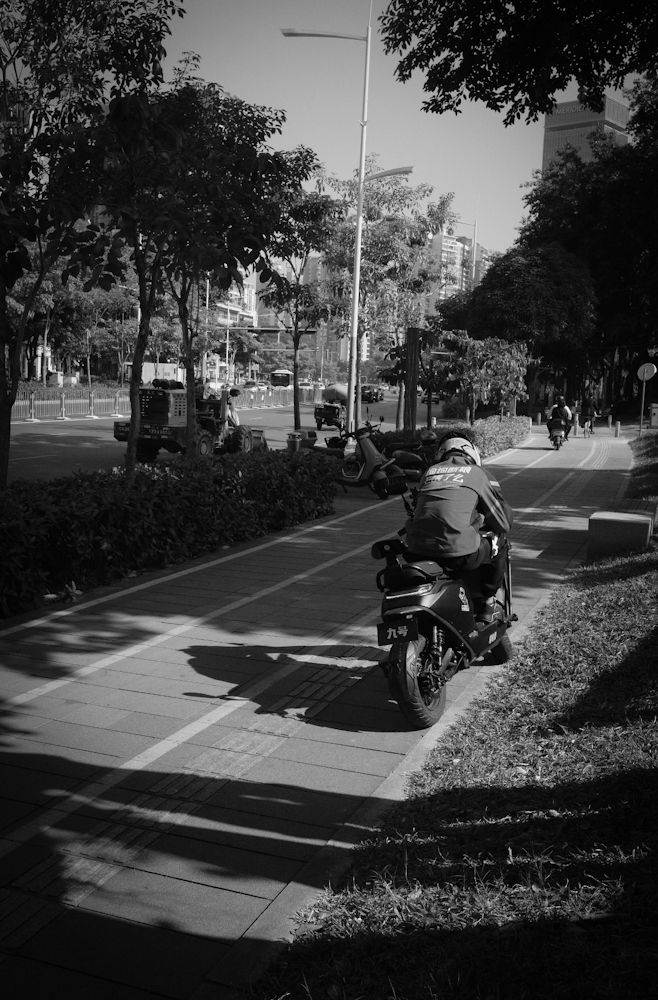
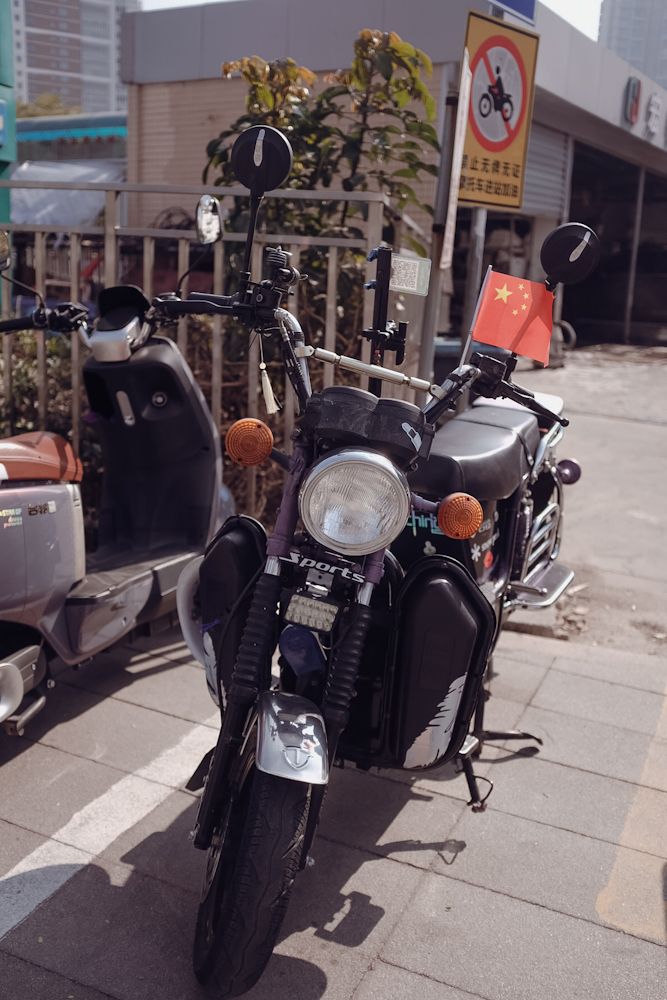
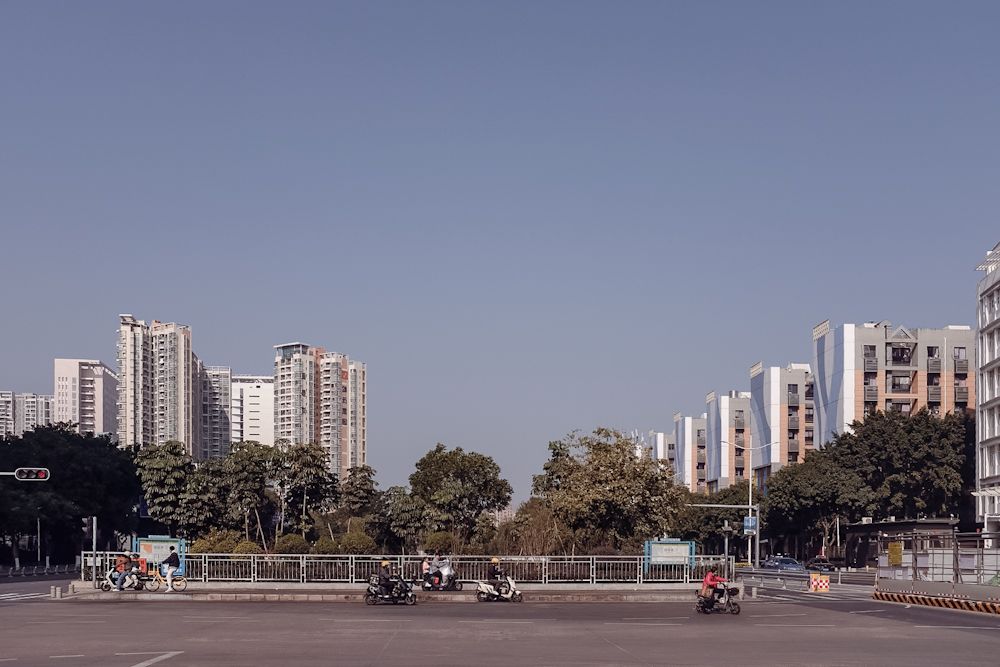
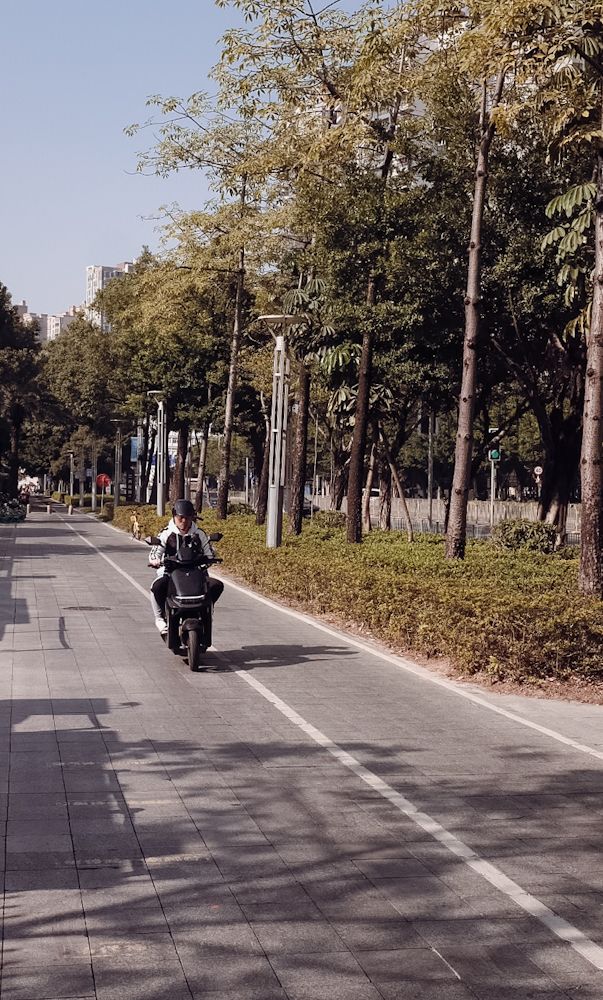
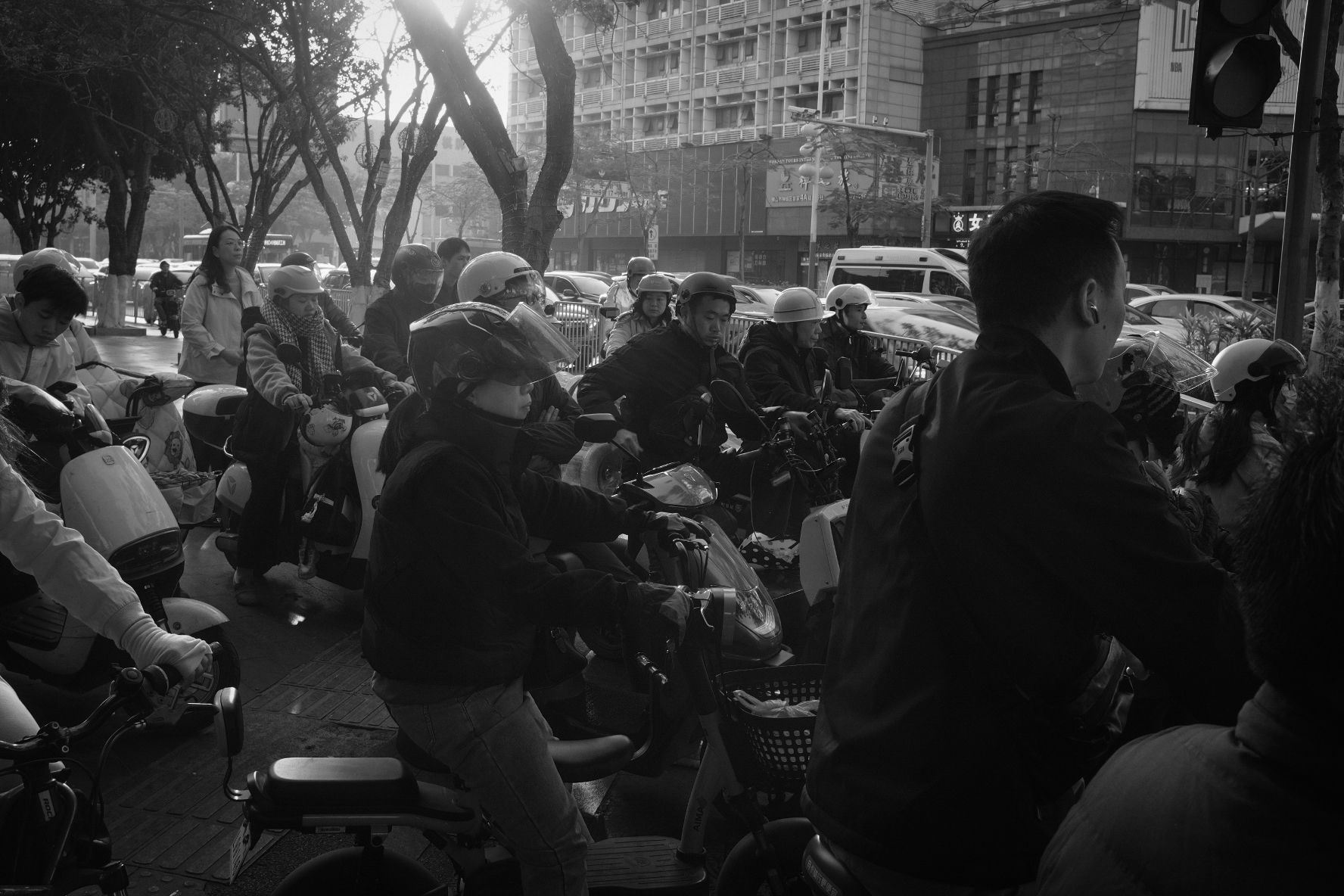
The first thing I noticed here was the relative tidiness of the electric mopeds compared to Foshan. They were everywhere but parked neatly in rows, a small yet striking difference. We were staying near the UK China International College, which felt a little like home and looked rather grand. Across the road was a McDonald’s—a far nicer one than the ones in Nantes. I couldn’t help but wonder if visiting a McDonald’s in Shenzhen feels as novel to locals as Chinese restaurants do to us back home. Watching children celebrate their birthdays there was a joy. I promised myself I’d stop by later to experience it properly—but that, Dear Reader, will be for another time.
On the road from Foshan to Shenzhen, our organiser, Yuan Yuan, asked if we wanted to join an excursion on our first full day here. It included visiting a village—a sort of condensed version of China—and a park with miniature monuments from across the country. All for 25 euros. As a slightly introverted person, the idea of being stuck on a bus with a group filled me with dread. Oh heavens, no! I decided to opt out and spend the day enjoying some alone time, exploring the city, and indulging in street photography—a much-needed mental reset.
I’m not much for breakfasts, so I sipped my tea quietly, savouring every drop, alone, in my room. Tea—a hug in a mug. Much like chicken soup for the Jews: it might not cure anything, but it never hurts. I quietly prepared for the day, ticking off my morning routine. Triple S, of course, minus the smoke—it’s been 26 years since I quit. Feeling reasonably presentable, I headed down to the lobby to absorb the city’s atmosphere.
The first thing that struck me was the mild, sunny climate. It felt like a Northumberland summer, but in the middle of winter. Invigorating! As I stepped outside, I spotted one of the double bass players in the hotel shop. Should I avoid him and enjoy some me time? I hesitated but ended up joining him on a bench. He offered me a cookie, which was gladly accepted with the good grace with which it was offered. We chatted about nothing in particular, enjoying the weather—two blokes, passing the time of day.
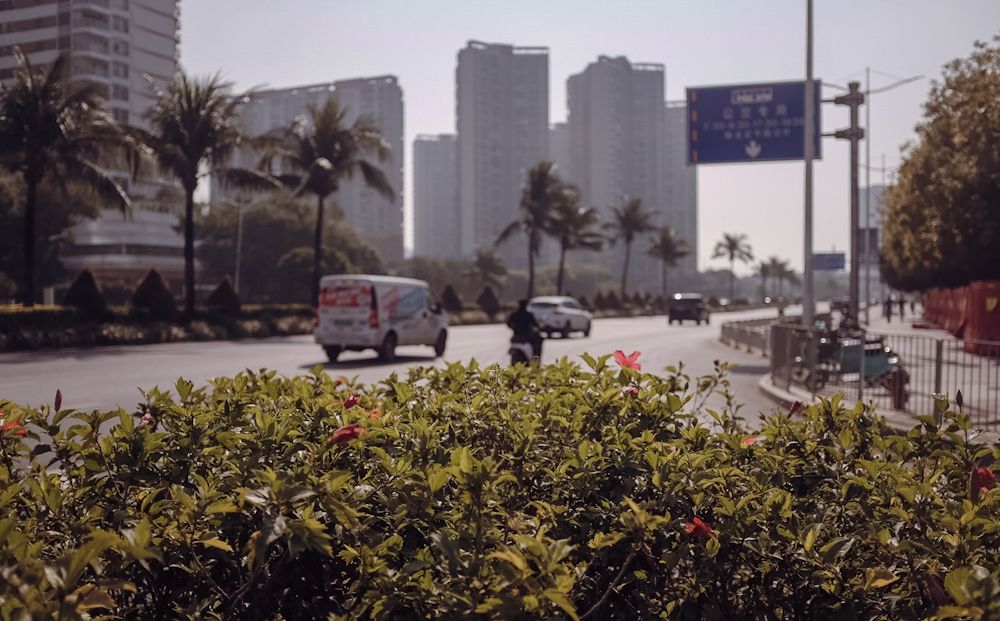
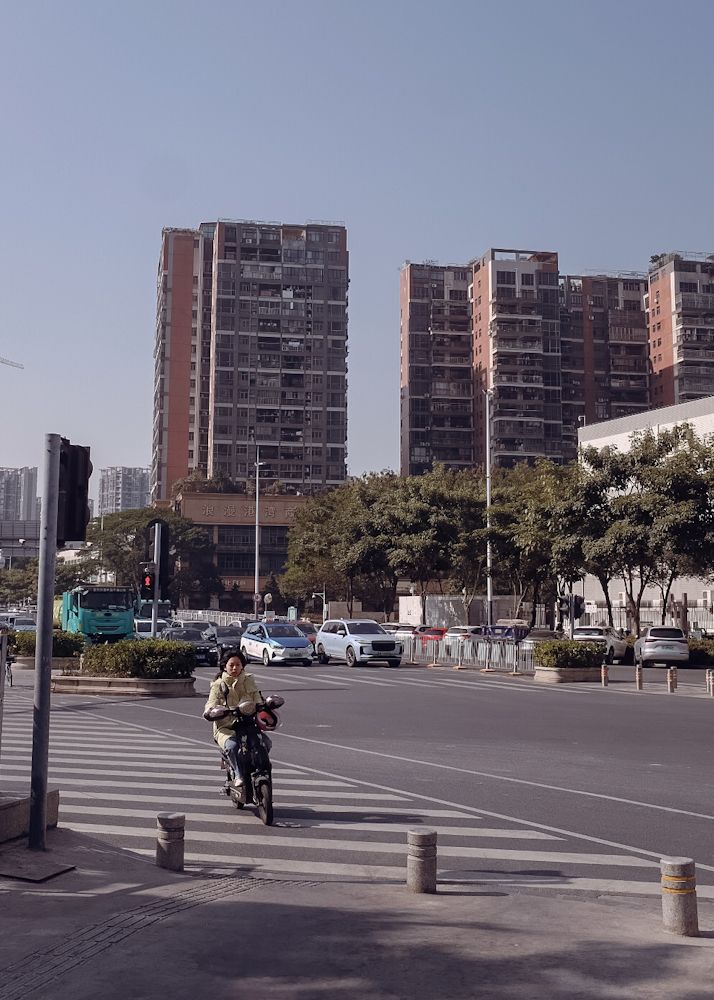
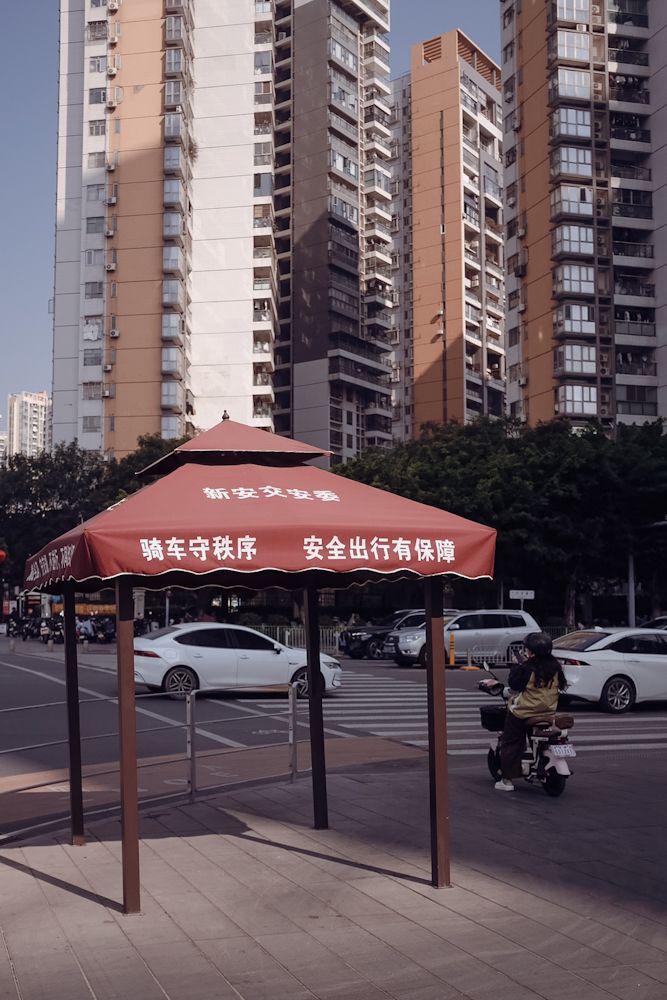
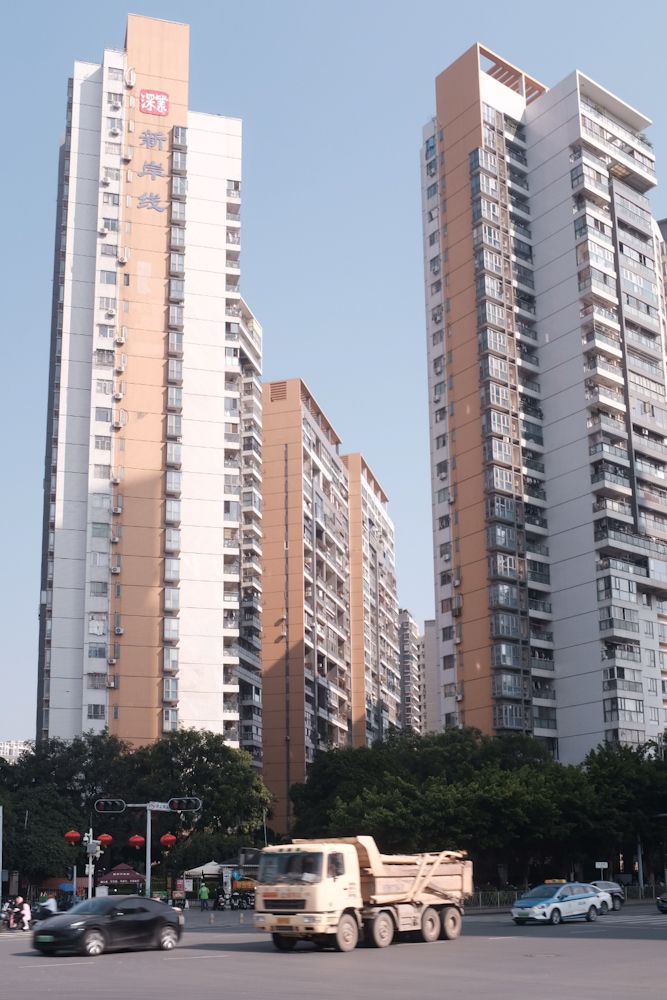
Later, Michel, my walking companion for the morning, decided it was time to move out. I warned him I’d stop often to take photos, and he was happy to wait. The night before, my wife had remarked that while my photos were great, she’d like to see some in colour. Oh really? Challenge accepted.
We strolled at a leisurely pace—perfect for soaking in the city’s atmosphere and capturing its essence through my lens. Michel patiently waited as I darted around, snapping shots like a dog owner indulging their pup’s curious sniffs. I was content to get my daily paces in while immersing myself in Shenzhen’s charm, the perfect start to a day of exploration.
We arrived back at the hotel, and I was starting to feel slightly peckish. What more could I need than a visit to McDonald’s to help me out? Two of the lads had been there the night before and shared their thoughts about everything—the similarities and differences. I just had to go and see for myself. I ordered a double Filet-O-Fish, a bamboo and chicken wrap, a large coke, crinkle-cut chips, and an Oreo McFlurry. It cost me a grand total of 75 yuan, which seemed very reasonable. The lads hadn’t enjoyed the wrap much, but I found it to be delicious, and it really hit the spot. At least a four out of five for me!
Stuffed full of McDonald’s and pleased with my morning’s wandering, I made my way back to the hotel, ready for a short rest before heading out again. Shenzhen by day had been a pleasant surprise—neatly parked mopeds, familiar-yet-different fast food, and a city that felt both vast and oddly welcoming.
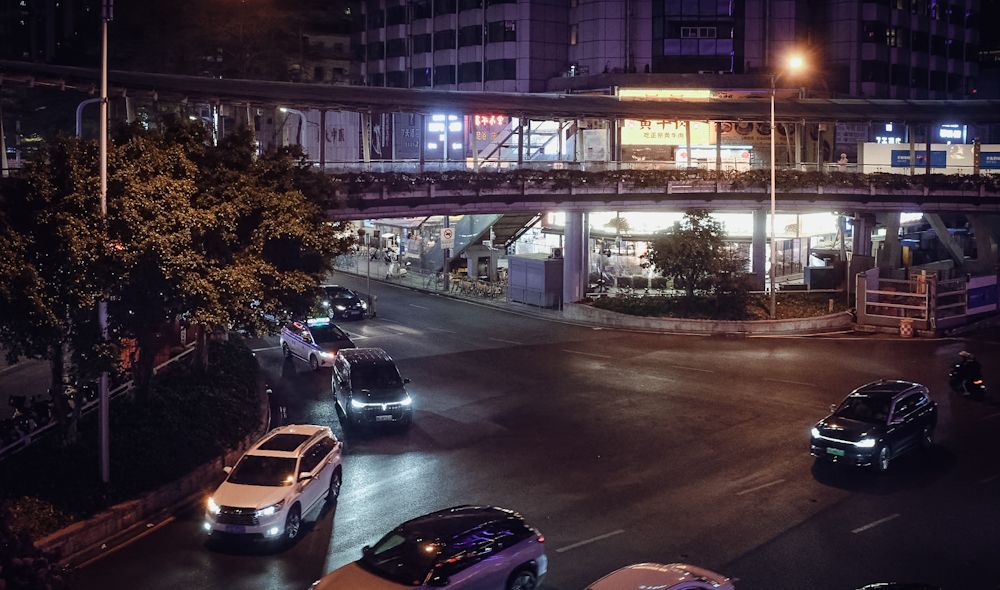
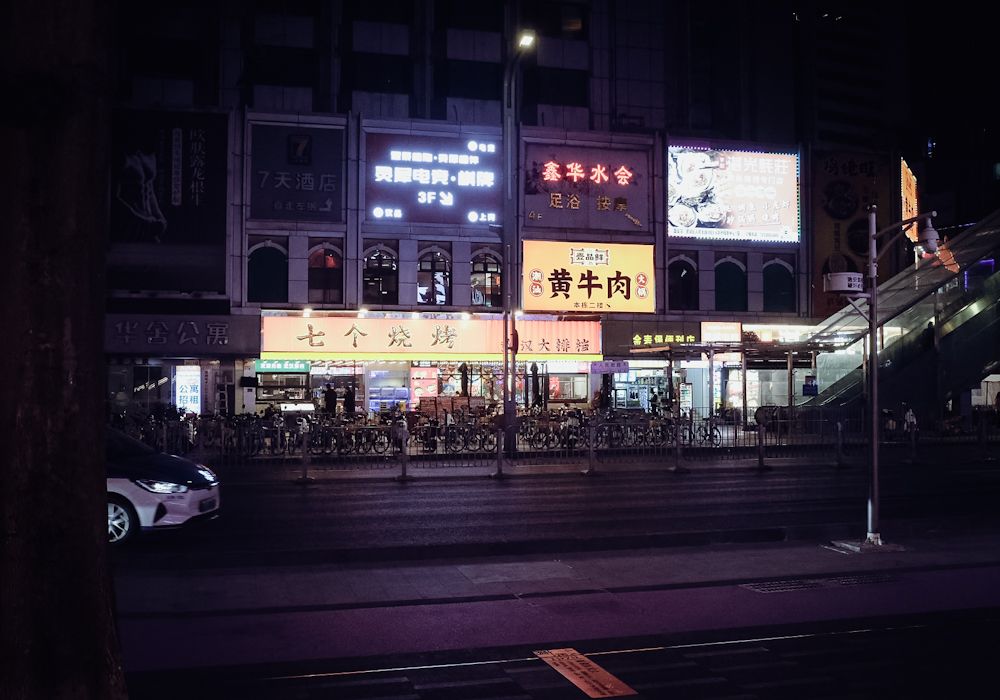
But Shenzhen by night? That was something else entirely. The streets lit up with neon, the air thick with the scent of street food sizzling away on open grills. Couples strolling, friends gathered around hotpot tables, and electric mopeds whizzing past, their riders silent but swift. The city didn’t slow down—it just changed gear.
With my camera in hand and my curiosity still buzzing, a whole group of us stepped back outside. Time to see what Shenzhen had to offer after dark.
Operation Shenzhen Nights was about to be launched…
Welcome, dear reader, to another round of “what happens on tour, stays on tour.” So, where were we? It was the morning in Foshan. I had time to go out and explore before the drive to Shenzhen.
I would wander the streets and just take the odd photo. At the moment I’m doing an intermittent fast to try and help me lose some of the extra baggage I’m carrying around my tummy and part of that is having a window of when I can eat and when I can’t. That morning I decided to not be so hard on myself.
I was thinking about Killian and my tummy and just “popped in” to a local supermarket which was definitely on the super side. As I passed each aisle I was thinking about how Killian would have felt seeing all the produce. It was going to be impossible to fit a 25kg bag of rice in my suitcase so that will have to wait. I left, with regret, but still kept going on.
Out of the corner of my eye, I spotted a shop specialising in blueberries—or Myrtilles, as we call them in France. There are one of my major food weaknesses, and when at home they have become the new Smarties. Yes, I eat them by that handful. The gentleman at the till spoke wonderful english, and I ordered a glass of mixed up berries with ice. I was going to get those anti-oxidants and that yummy juice. I was happy. On the way back to the hotel, some of the youngsters passed me by. They had been to Starbucks. Well good for them. I had had my juice and felt far more superior, and healthier!
It would be a mere 135km by bus to Shenzhen. I was going to remain antisocial (is this a character trait?) and just chill. Shenzhen is one of those places that is huge. We seemed to be driving in its suburbs forever. Out of the window we could see Hong Kong, where a lot of us would have fancied going but it was not to be. It was like seeing a Christmas present and it being taken away before you can unwrap it.
We arrived at the hotel and I thought, “well this will do for the next four days…” and indeed it would! We traisped up to our room and it was fine! Maybe not as modern as some of the others that had obviously been refurbished. We were on the more “classic” floor. But it was for sleeping in, and those pillows again. Wow!
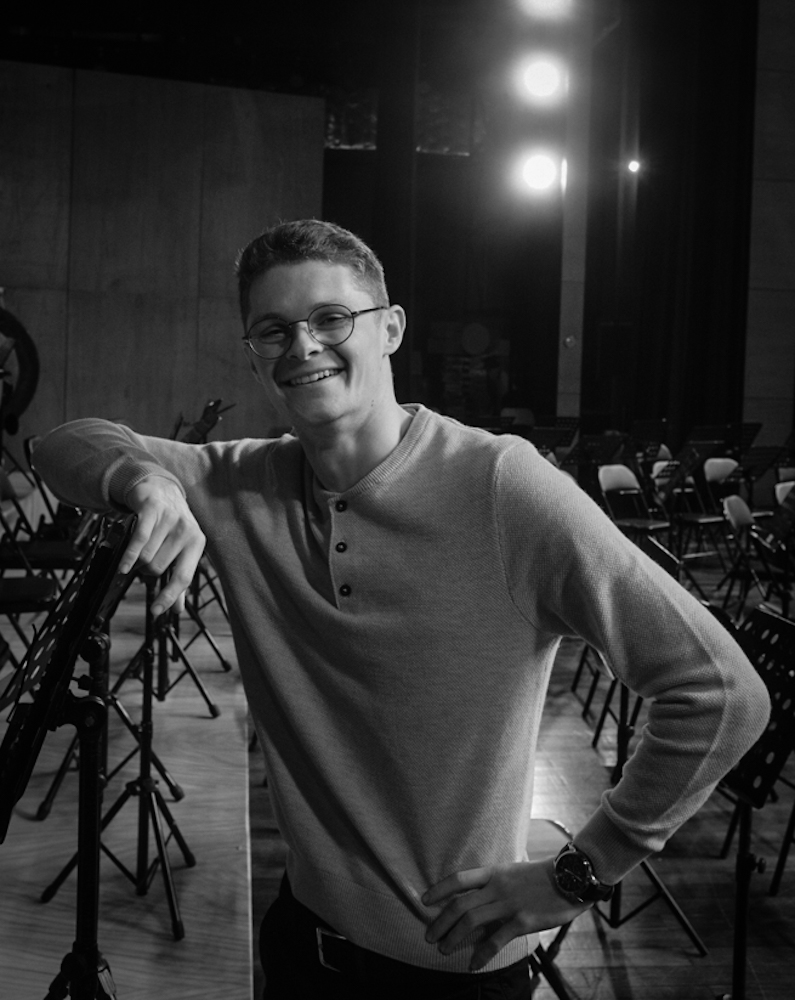
Now, let’s get this out of the way: I’m still a “big” man. Like many of us, I carry around a hefty complex about my body. Even though I’ve lost some weight, I’m still too self-conscious to deal with the horror of getting changed in a room full of less rotund gentlemen. Silly, I know, but those of you who’ve been there will understand. Anyway, there I was, looking halfway decent—or at least as much as my concert attire would allow. But I am not just Big Uncle Ian. I’m also a horn player with a few years of practice under my belt. I help keep my section together, and I know they can depend on me when needed.
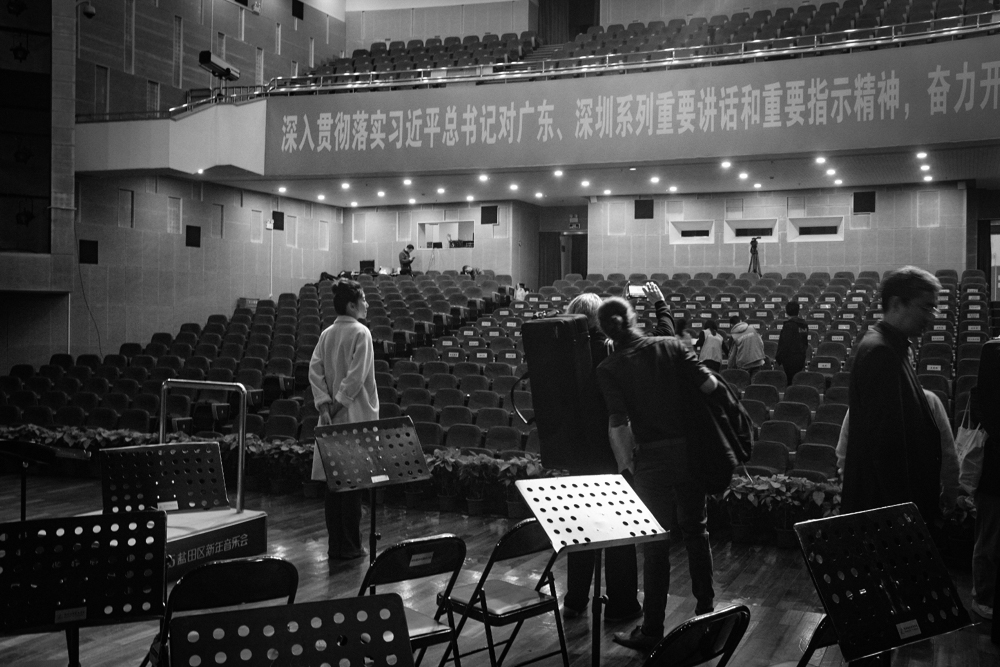
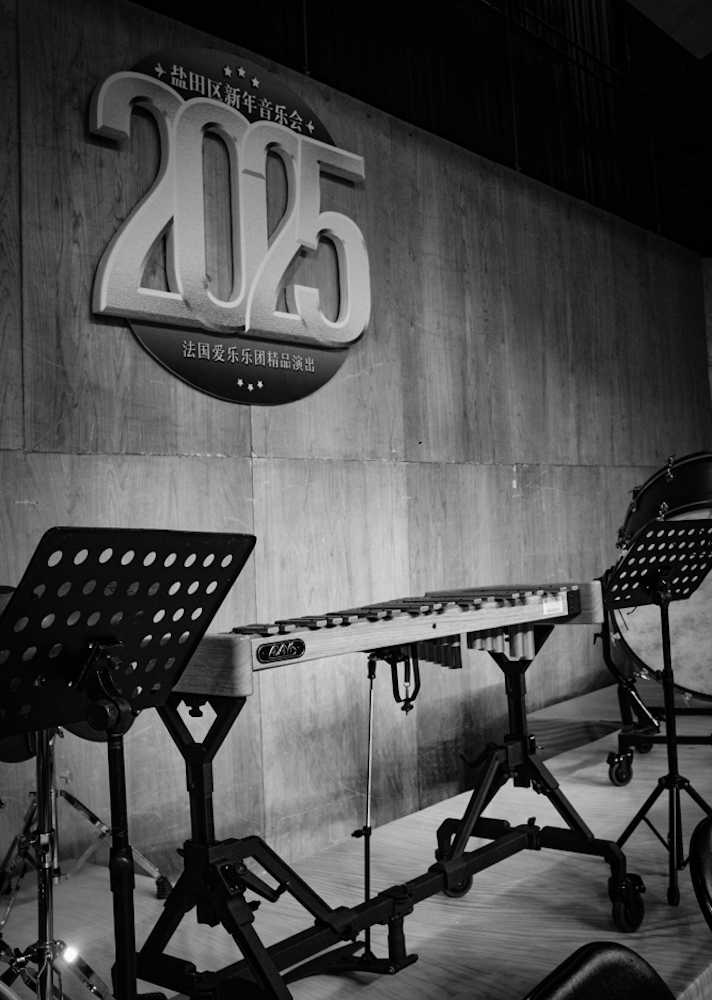
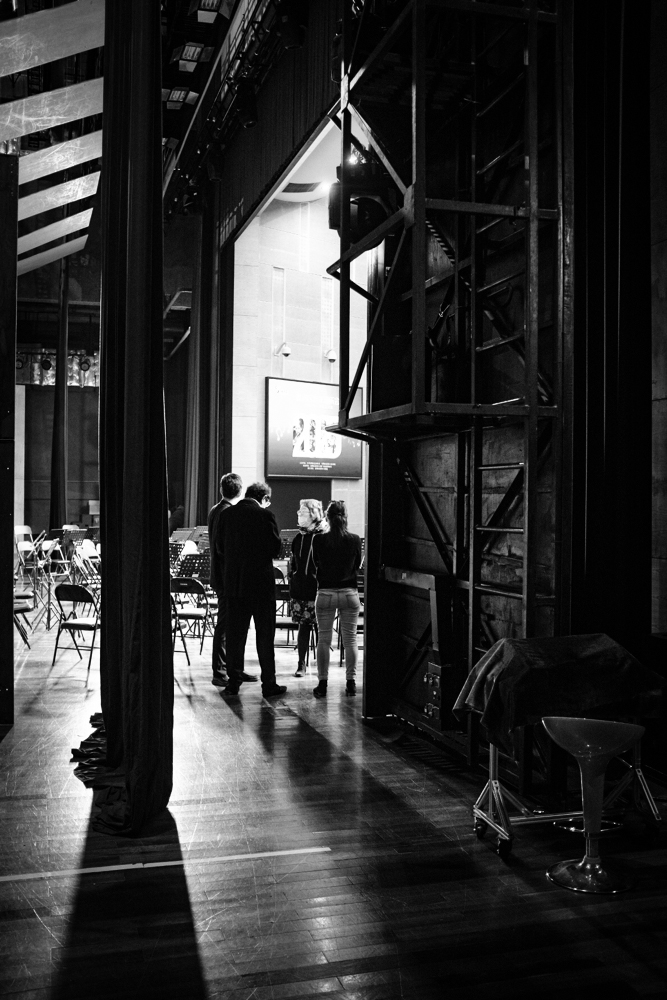
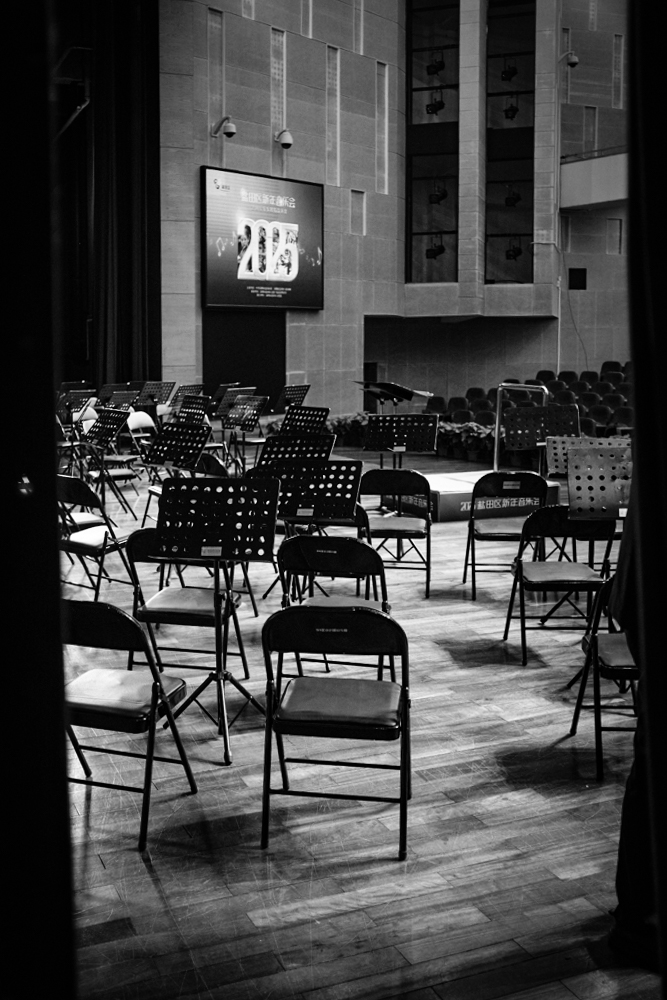
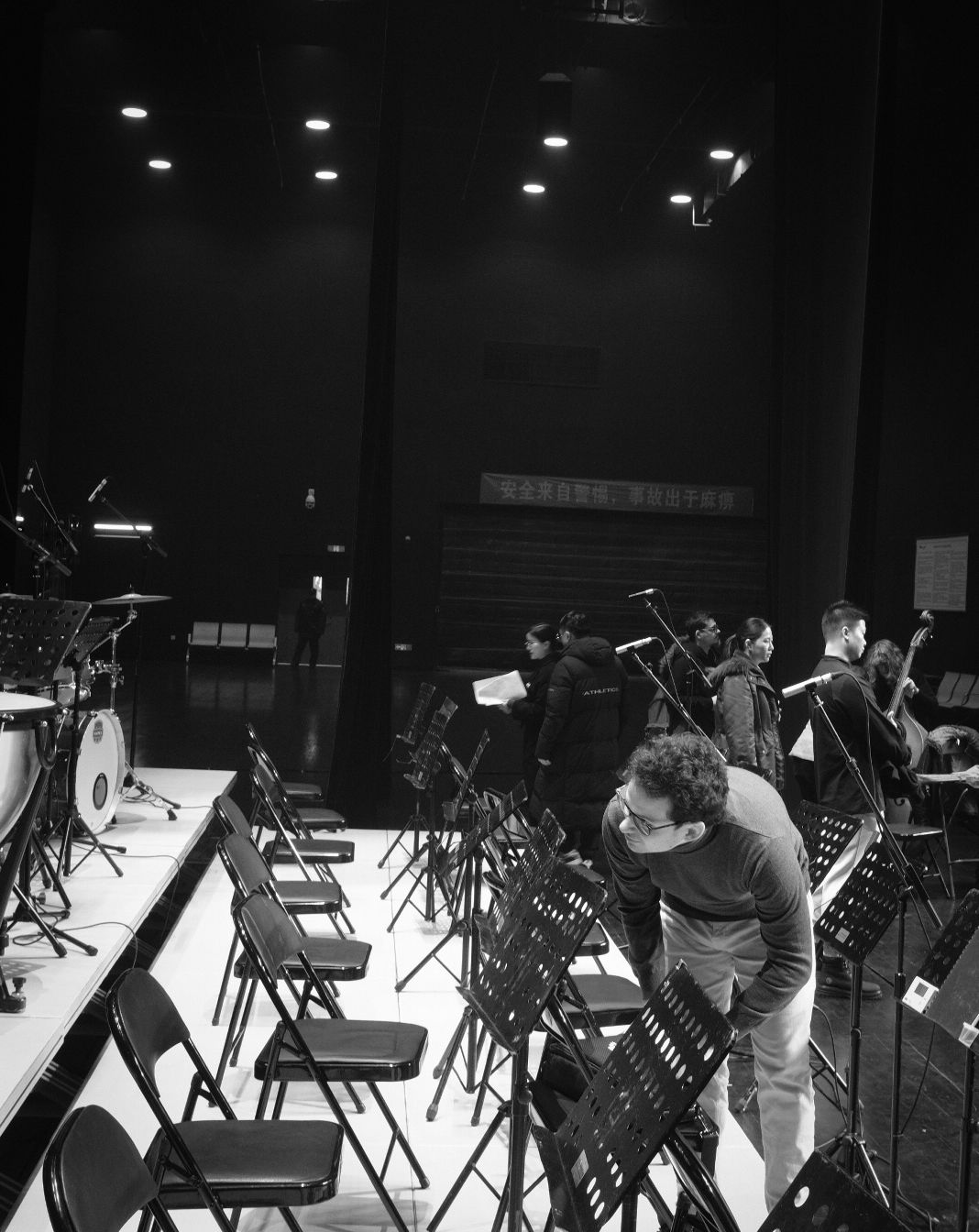
When we pulled up to the venue, the sheer size of the theatre was a bit overwhelming—in the best possible way. I can’t speak for the others, but when I arrive at a venue, I like to take a moment to soak it all in. First, I park my instrument in the wings, safe from the risk of being knocked over by an overzealous stagehand, then I step onto the stage to breathe in the atmosphere. You know, just to get a sense of the place.
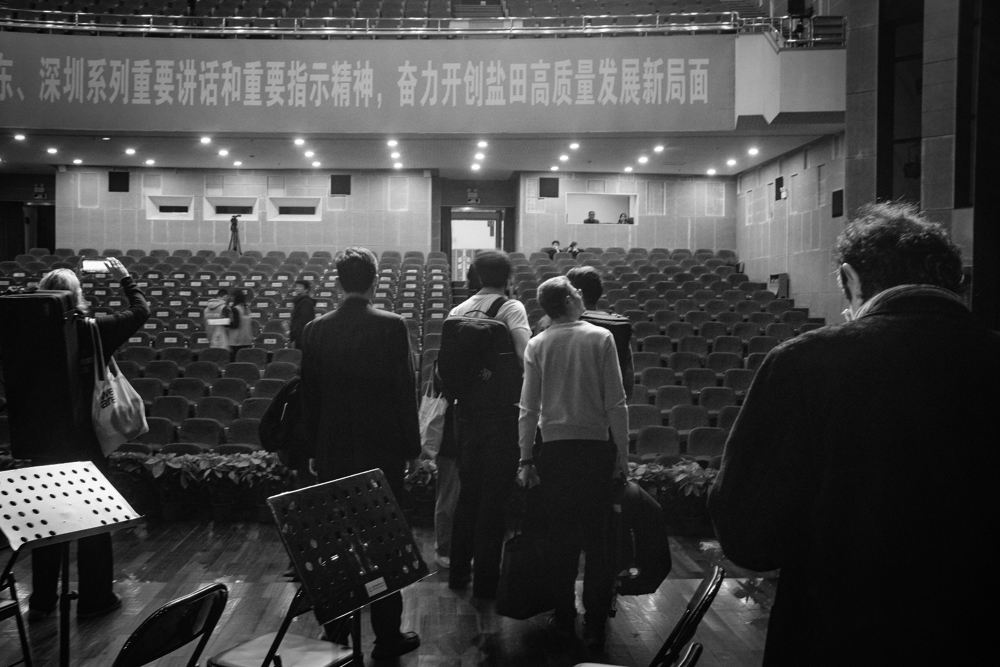
A long banner in Chinese draped across the front balcony greeted us. It looked very official, like the kind of thing you’d expect at an international summit. Nearby, neatly stacked boxes of red flags caught my eye. It reminded me of a joke I once cracked about my son’s ex-girlfriend: “That girl had more red flags than the Chinese Communist Party Convention.” But these flags, though? They were no joke—definitely more on the serious side of things.
Looking up, I couldn’t help but marvel at the rigging. Lights and decorations were everywhere, hanging in their designated spots, all set to work their magic later. The whole setup was impressive—so much so, I hadn’t even properly stepped onto the stage yet.
When I did, I looked out at the sea of seats waiting to be filled. The thought of all those Chinese bums soon occupying them was enough to make anyone feel a touch nervous. But this is what we’re here for, isn’t it? You’ve got your program, you’ve done your prep. All that’s left is to get out there and play. Do, don’t think. Just blow…
We were to perform the same concert as the previous one. That doesn’t change. What does change is the audience and the way in which they interact with your music. When Jennifer sang her “I Love You China” song, it was as if the audience needed permission to sing along. Once given, they sang perfectly, and just like that, they were on our side.
Corentin—sorry, Sir Fanny Magnet—leapt up for the waltzes and had as much success as ever with his growing fan club. That poor boy just gives and gives, and when there’s nothing left, still keeps giving, much to the delight of the many Chinese lady fans. Fortunately, he was accompanied by Paul (the duck tongue) Trouillet and two lucky ladies from the orchestra. Sharing is most certainly caring, and these two just give, give, give, and share, share, share.
As always, during the interval and before and after the concert, the staff put out fruit, tea, and bottles of water for us. As you know, I’m not a big drinker, but I make sure to drink at least two litres of water and eat plenty of fruit and vegetables daily. It keeps me regular. I had been missing both my water and fruit rations, so I stuffed myself with fiber for my gut. They might not do water, but they certainly do do wonderful tea—and that was a lifesaver.
Corentin, the poor boy, was going through coffee withdrawal symptoms. You see, we all have our troubles to deal with!
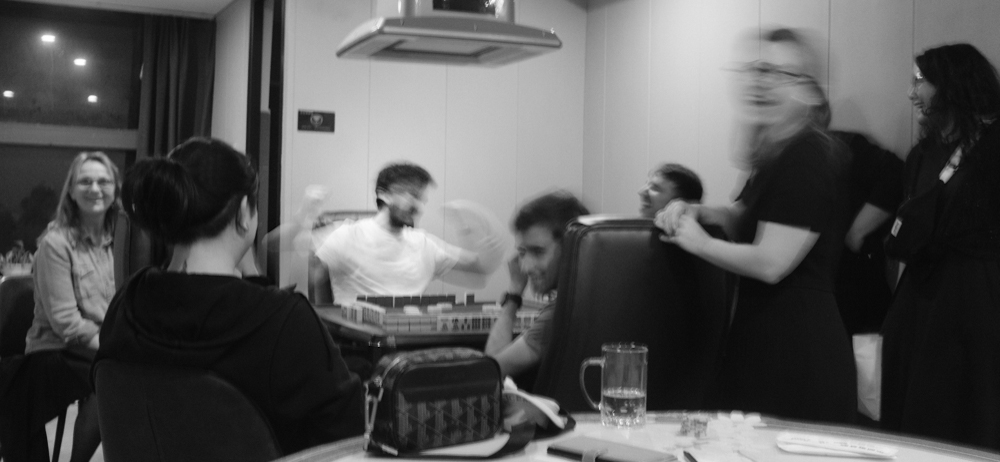
After the concert, our familiar routine awaited us: the bus, the restaurant, and eventually bed. Or so I thought—Corentin had other plans. I had eaten with my Cholet friends and learned that the boy wanted to try his hand at Mahjong. It’s a game where four players sit at a table, and to win, you need to form pairs of tiles and a sequence of tiles. I had joined my Cholet friends for an after-meal beer to discuss our plans for the upcoming visit to Shenzhen. Once we had made our plans, we headed down to the Mahjong table to see how our favourite Walzer was faring.
By the time we all went to bed, that boy had won three out of four games! Luckily, no money was changing hands, but we did learn that huge debts can be racked up playing this game. The Chinese do like their betting.
Talking of giving, and sharing, here is recording of that night’s concert. Featuring Sir Fanny Magnet et Paul “Duck Tongue” Trouillet dancing and lapping up the attention…
Now, you might think of accusing Uncle Ian of feeling a little delicate this morning after the previous evening’s “fun,” but I’m going to disappoint you. My head did not feel as if it had gone through 10 rounds with a certain Mr Tyson, though I will admit to feeling a little tired. Slightly less bright-eyed and bushy-tailed than I’ve known myself to be. Will that satisfy you? Good, then we shall move on. Today’s destination was Foshan, much further south, and our first stop in Guangdong Province.
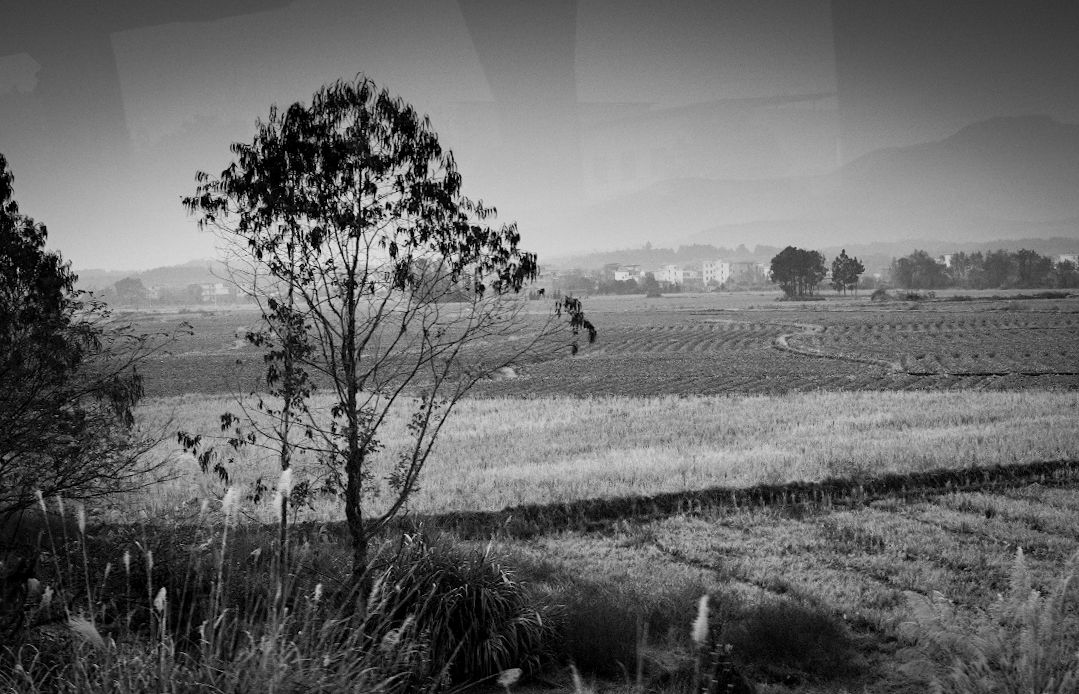
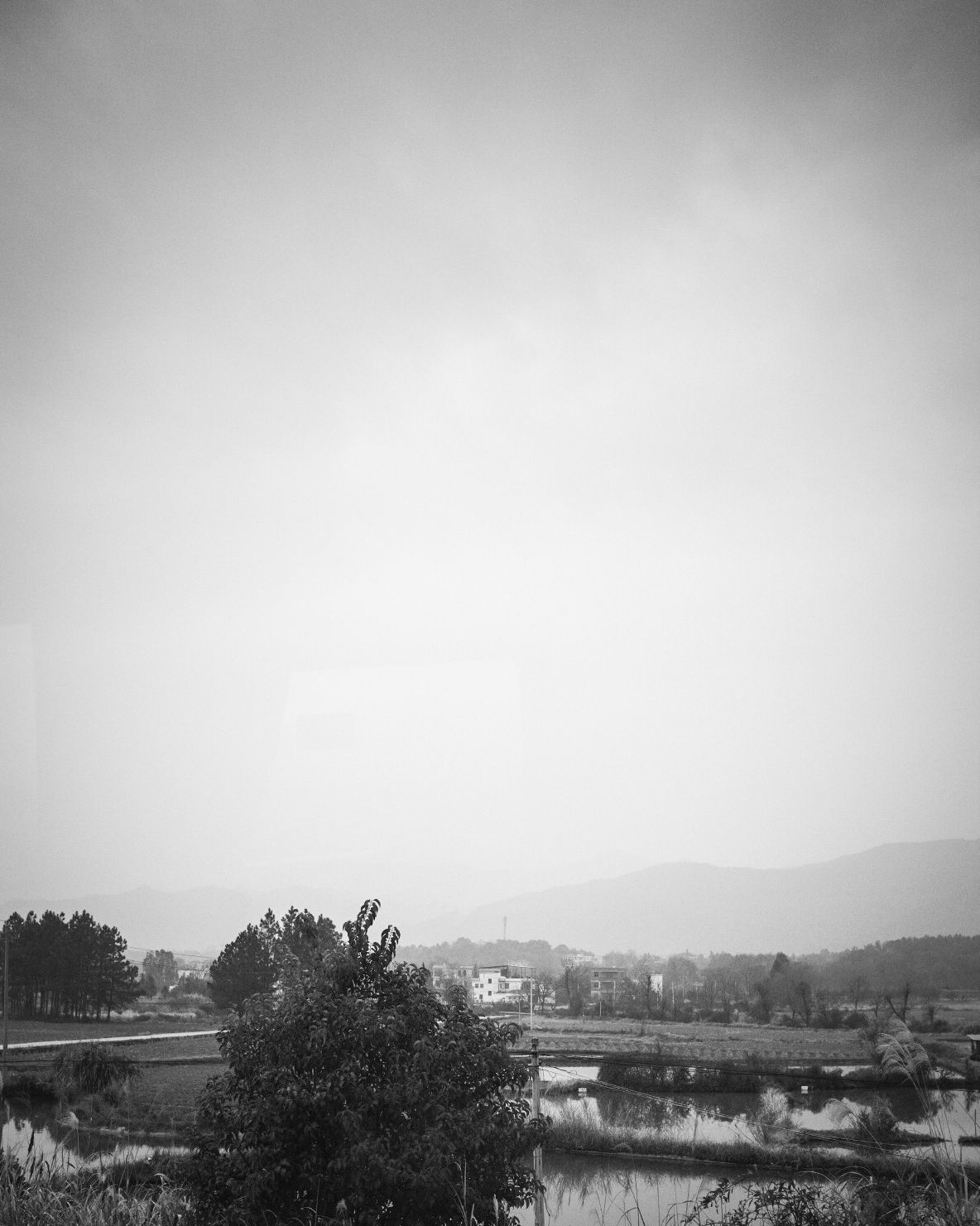
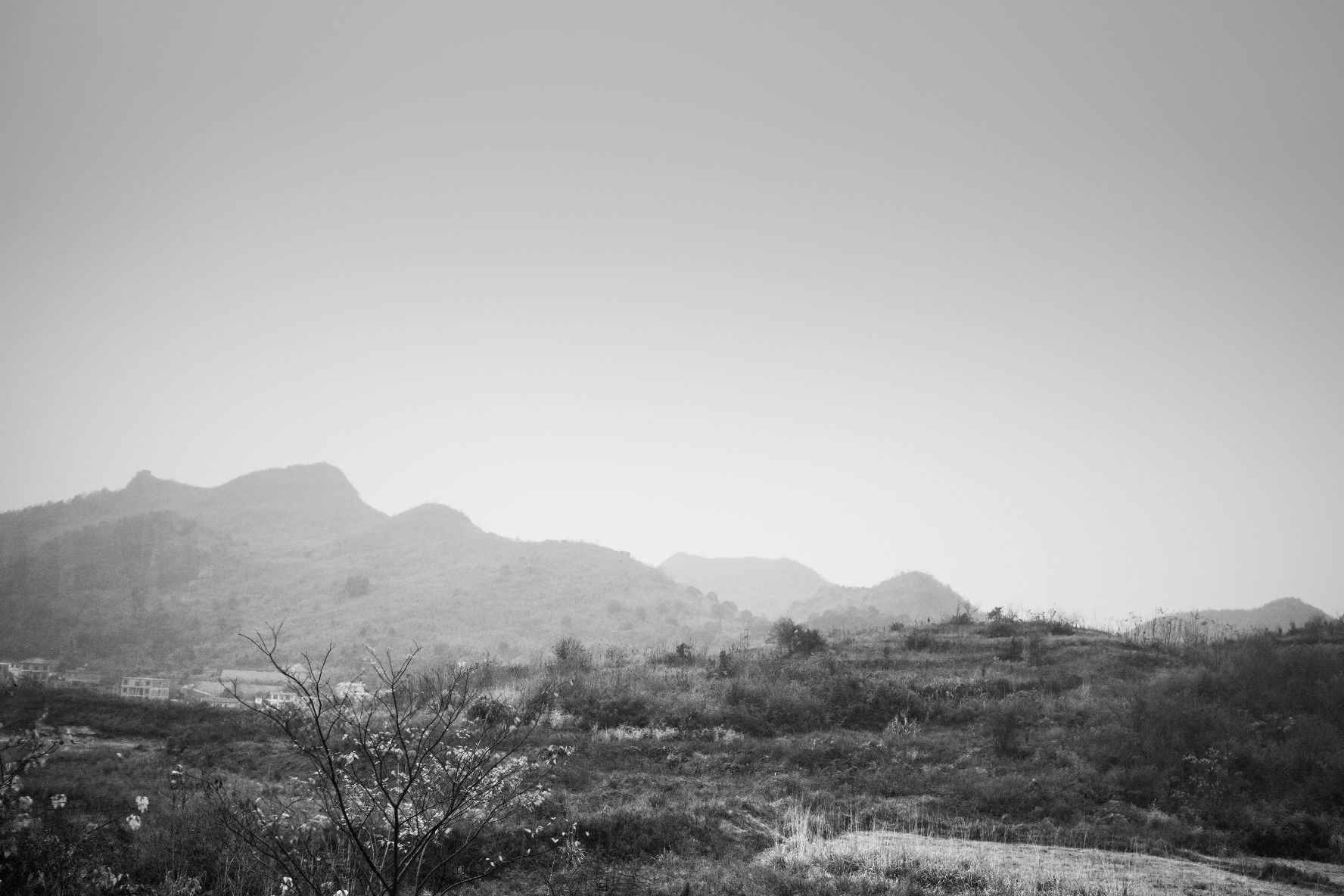
We were to have a mere 500km bus ride to Foshan. I decided to be anti-social and put my headphones on, just staring out of the window. A more relaxed way of passing the time and something that allowed me to simply take in the countryside. And what countryside it was. Now, the Vendée, where I live, isn’t exactly known for its mountainous terrain. Think more Jane Birkin than Marilyn Monroe—flat, laid-back, and subtle. At first, I didn’t realise what the trees were; some appeared bent over and broken. I just thought they were very young trees, before eventually cottoning on to the fact that I was looking at bamboo forests on the hillsides. They reached high up, gently moving with the wind. It was something I had never witnessed before.
We passed houses and farms along the way too. Again, a stark contrast to the cityscapes we had previously contemplated.
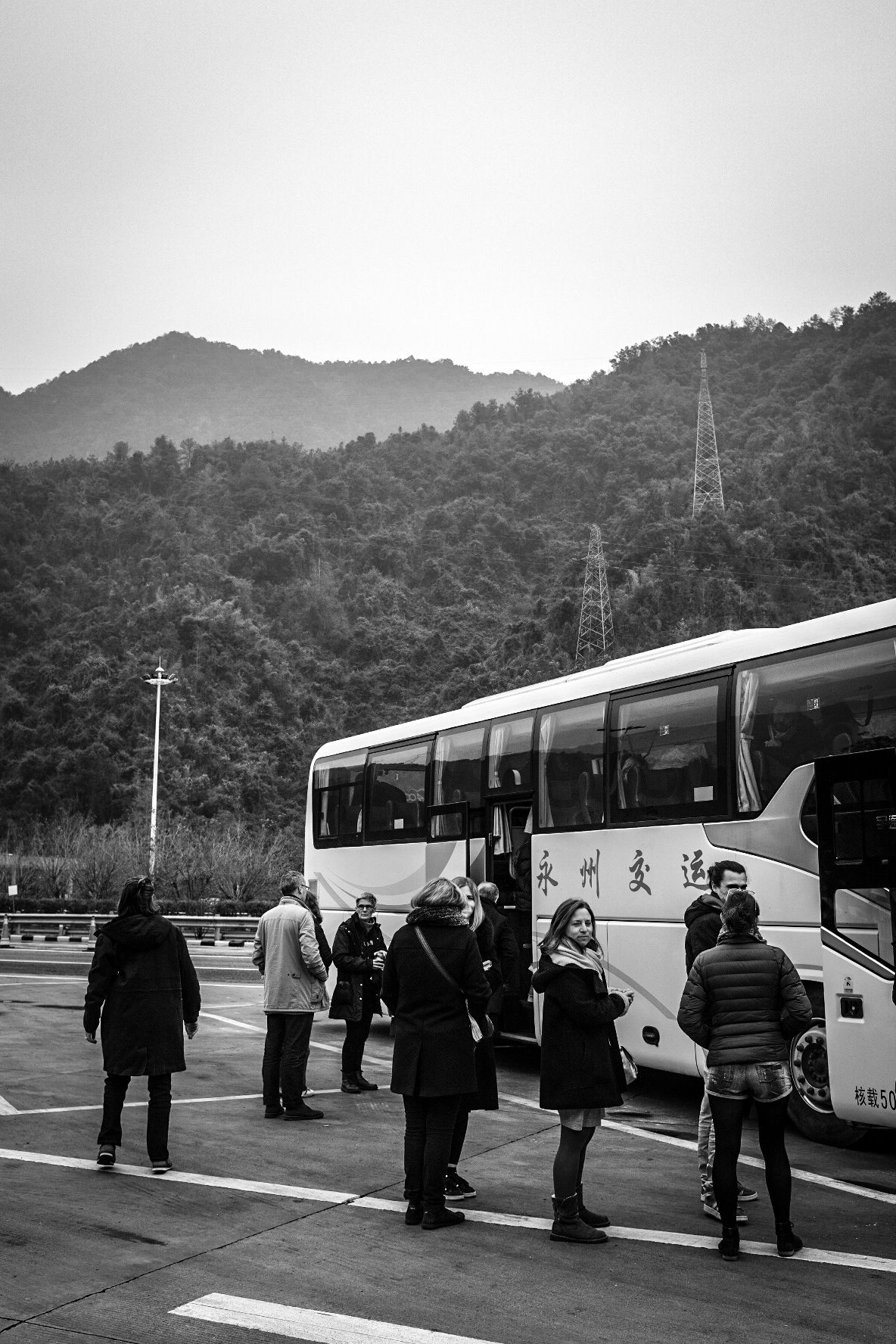
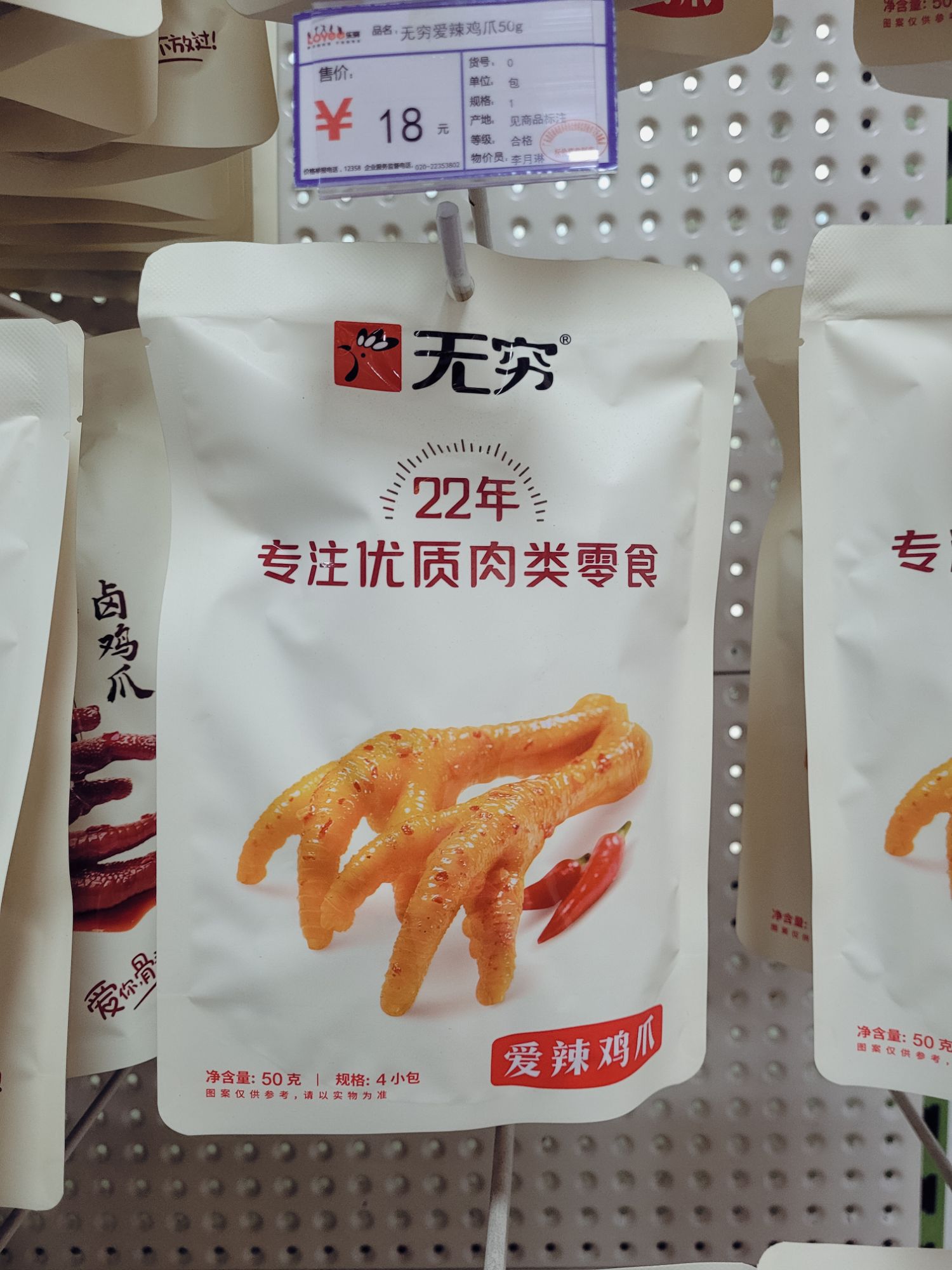
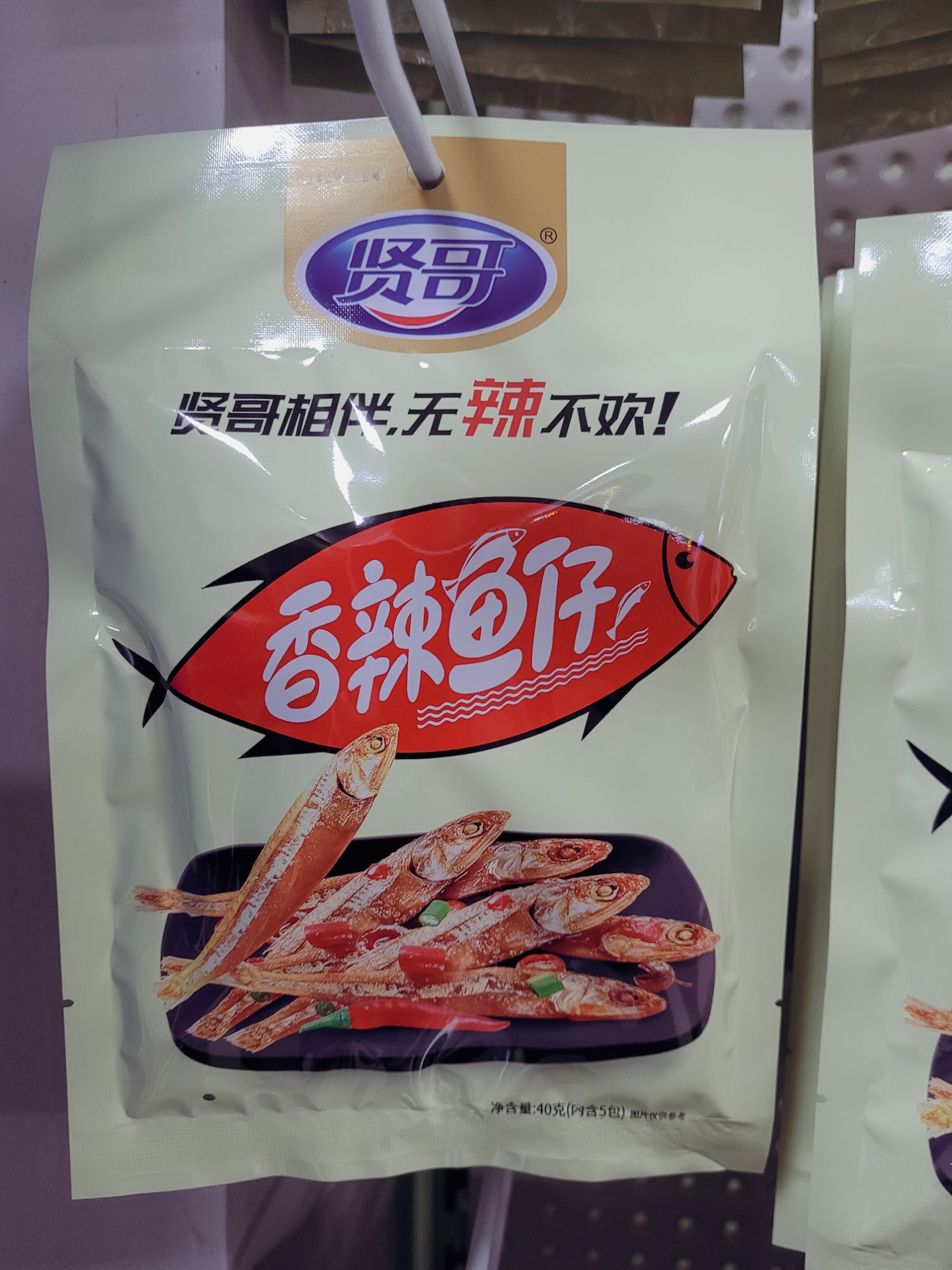
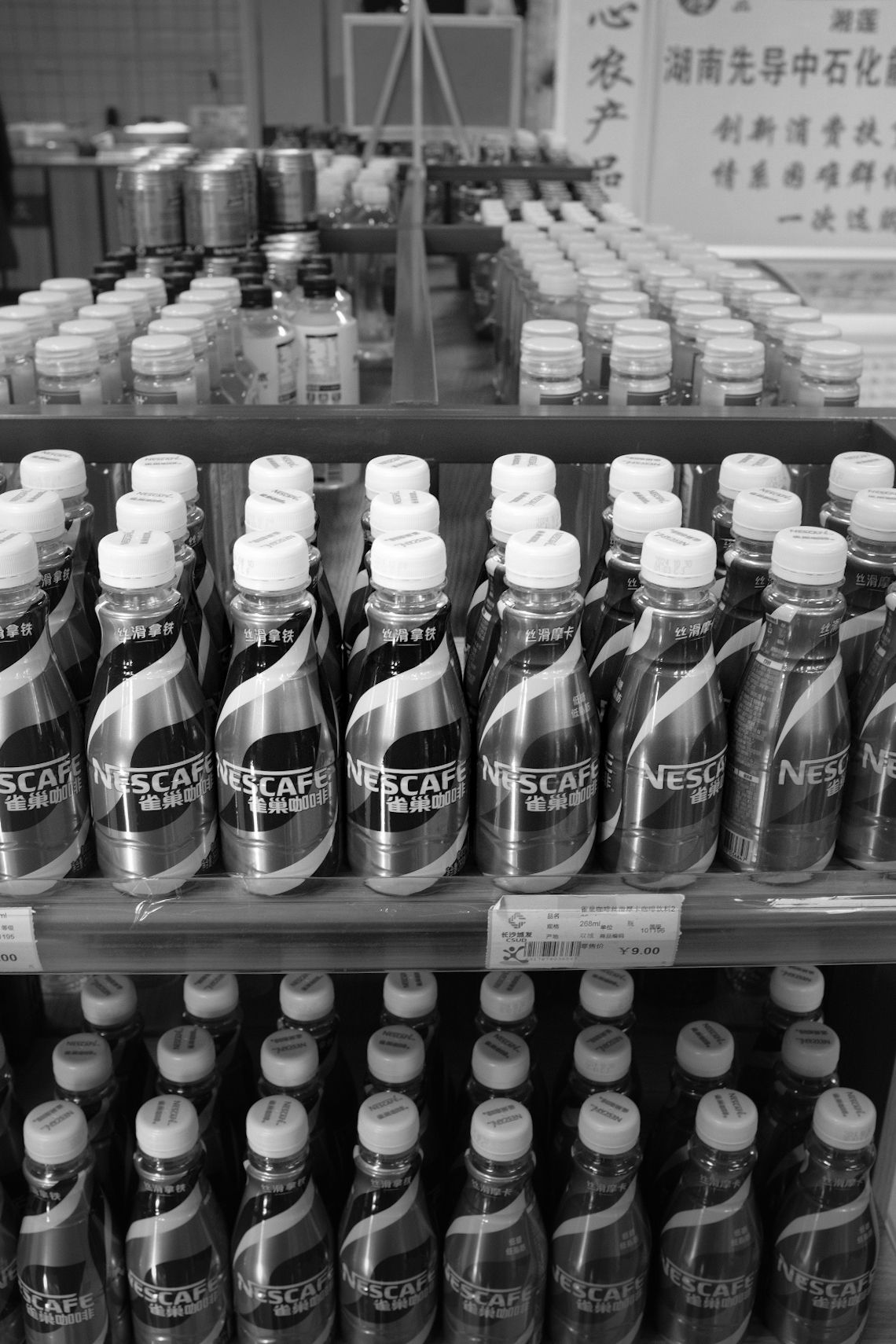
There was, of course, the inevitable “stop pipi,” and we all shuffled into the service station, which still wasn’t selling overpriced sandwiches. But the snacks available were certainly something to behold.
Now, you may be wondering if I partook in the tasting of these delicious-looking snacks. I did not. I was afraid they might be a little on the spicy side. Otherwise, absolutely no problem with eating poultry feet. Really, none whatsoever! I ended up getting something that vaguely resembled a chicken burger. Cheap, filling enough, and actually quite nice!
We arrived at the hotel. Before lunch—well, you know the drill: passports, room keys, and then we could finally eat. By now, I was really getting into Chinese food, and my chopstick funk was over. I was back in form! I managed to grab a couple of photos of the table we were eating at to show you, Dear Reader. The central turning platter took up most of the space and, by the end of the meal, was piled high with dishes that were certainly on the interesting side. In French, we say “tout est bon dans le cochon,” as a means of justifying eating the whole animal. In China, there is no mistaking what you’re eating. The whole beast goes into or onto the serving plate. Even the chicken’s head and feet. It was on this day that I ate tortoise for the first time. It was delicious! I think I had to get over any Western superiority complex I may have had and just eat what was in front of me. It would save trauma later on, and my belly would be full. Oh, sweet ignorant bliss!
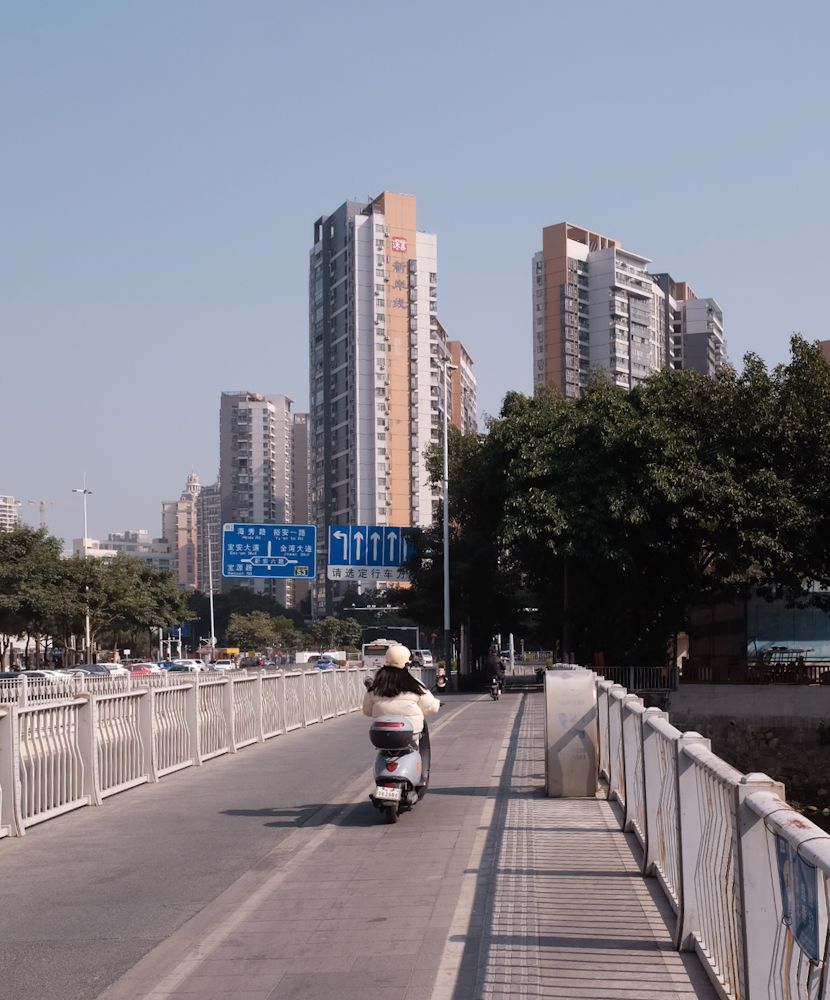
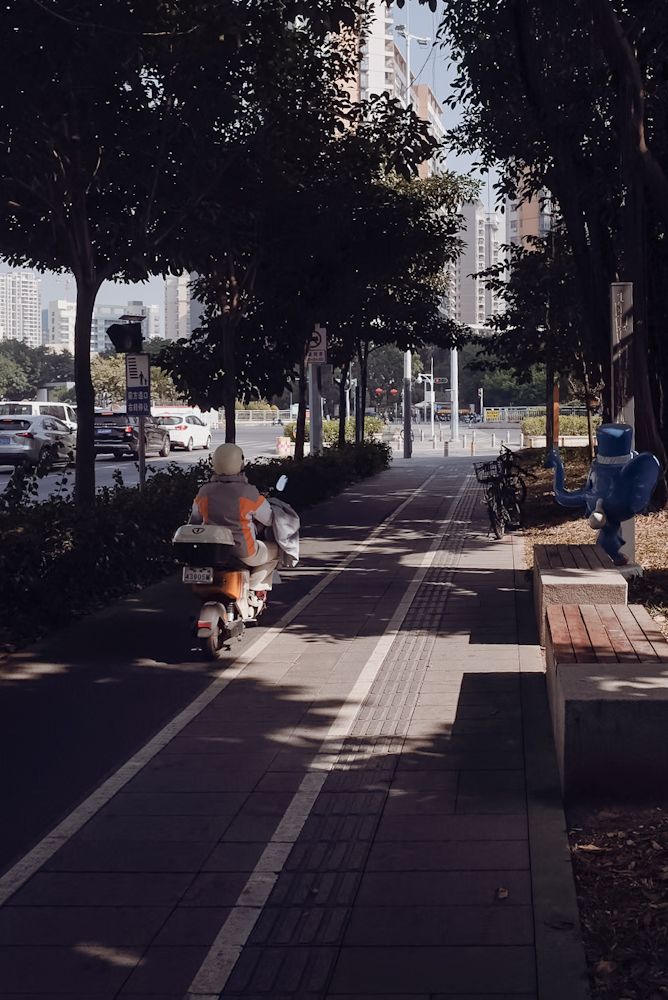
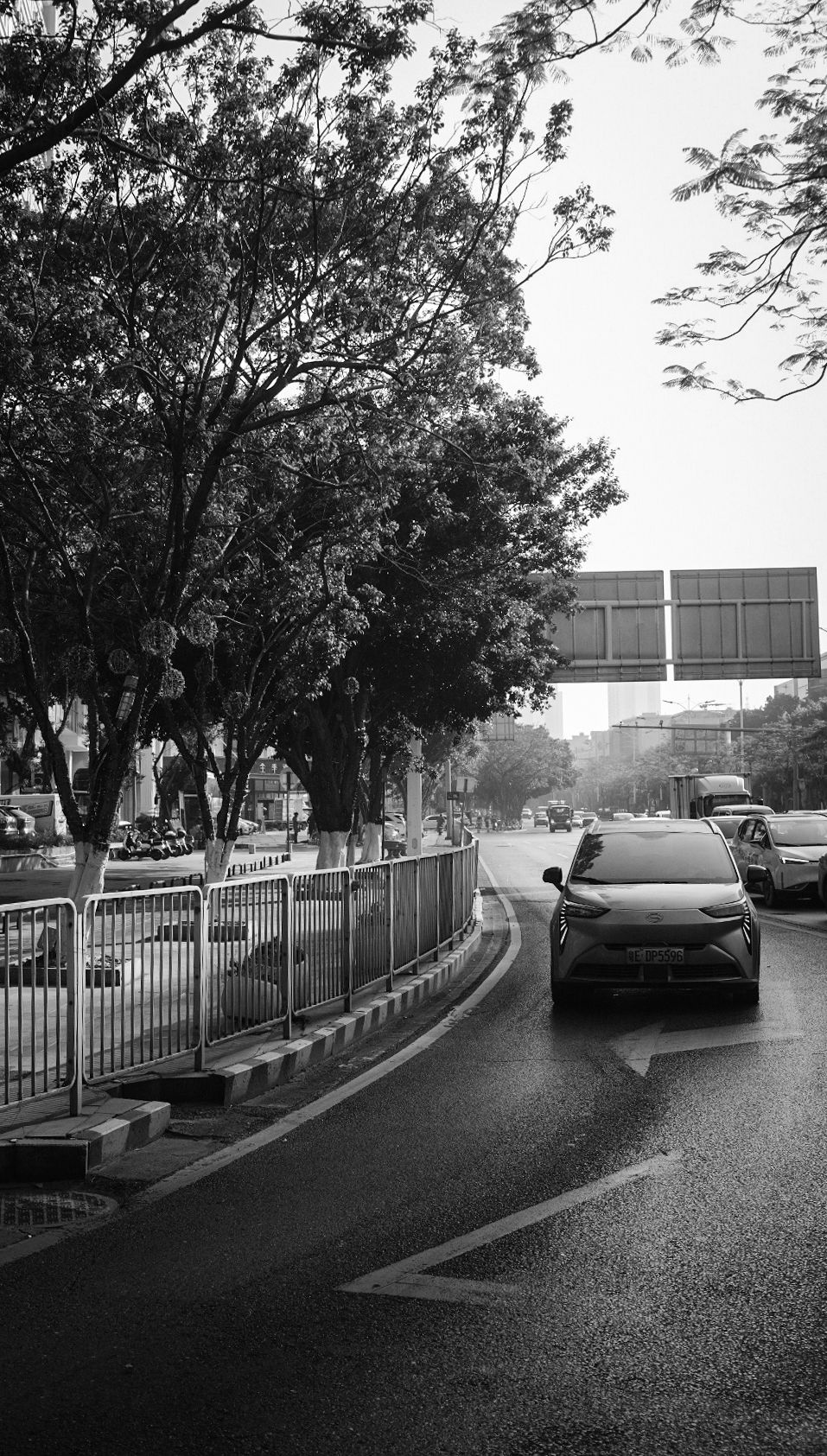
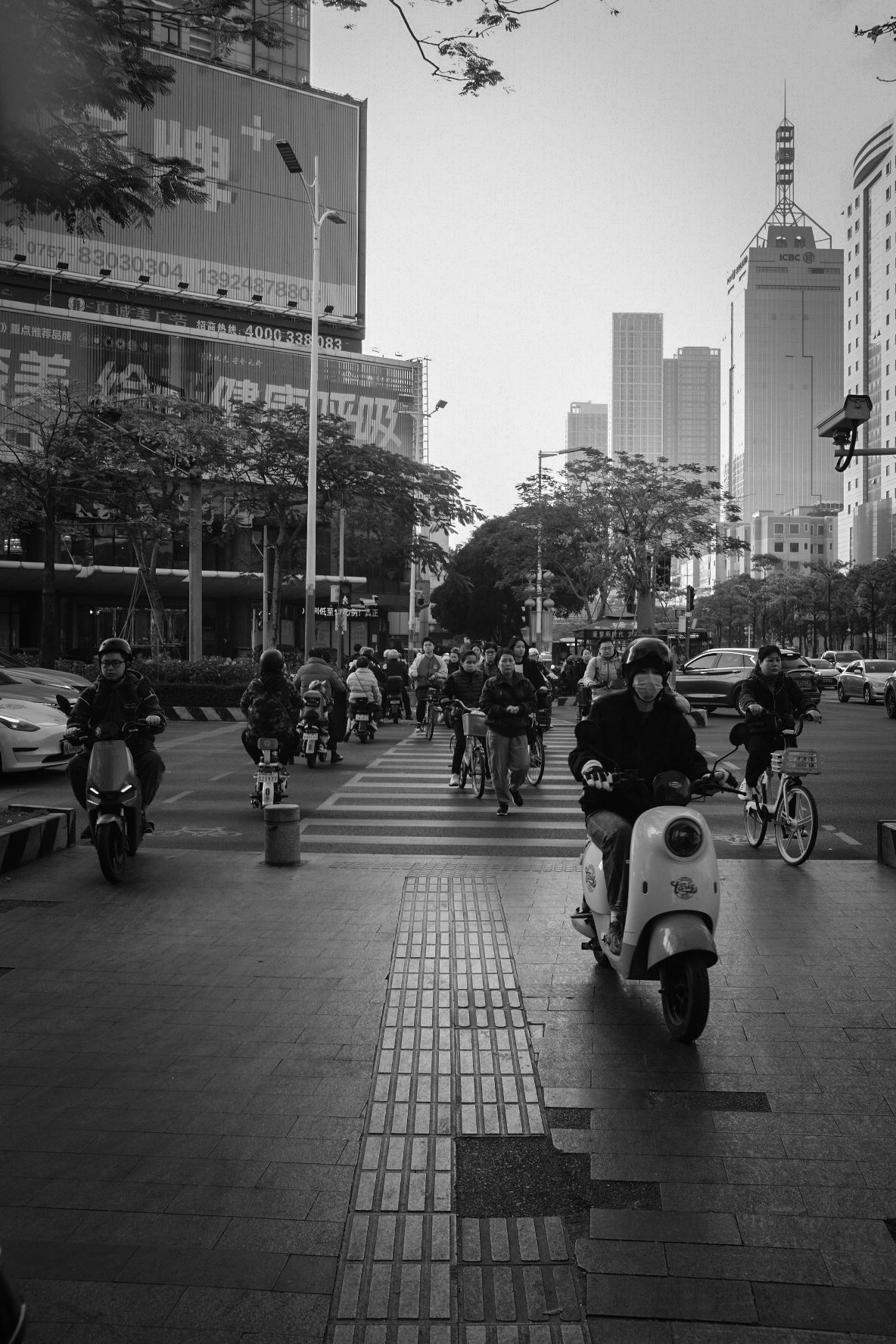
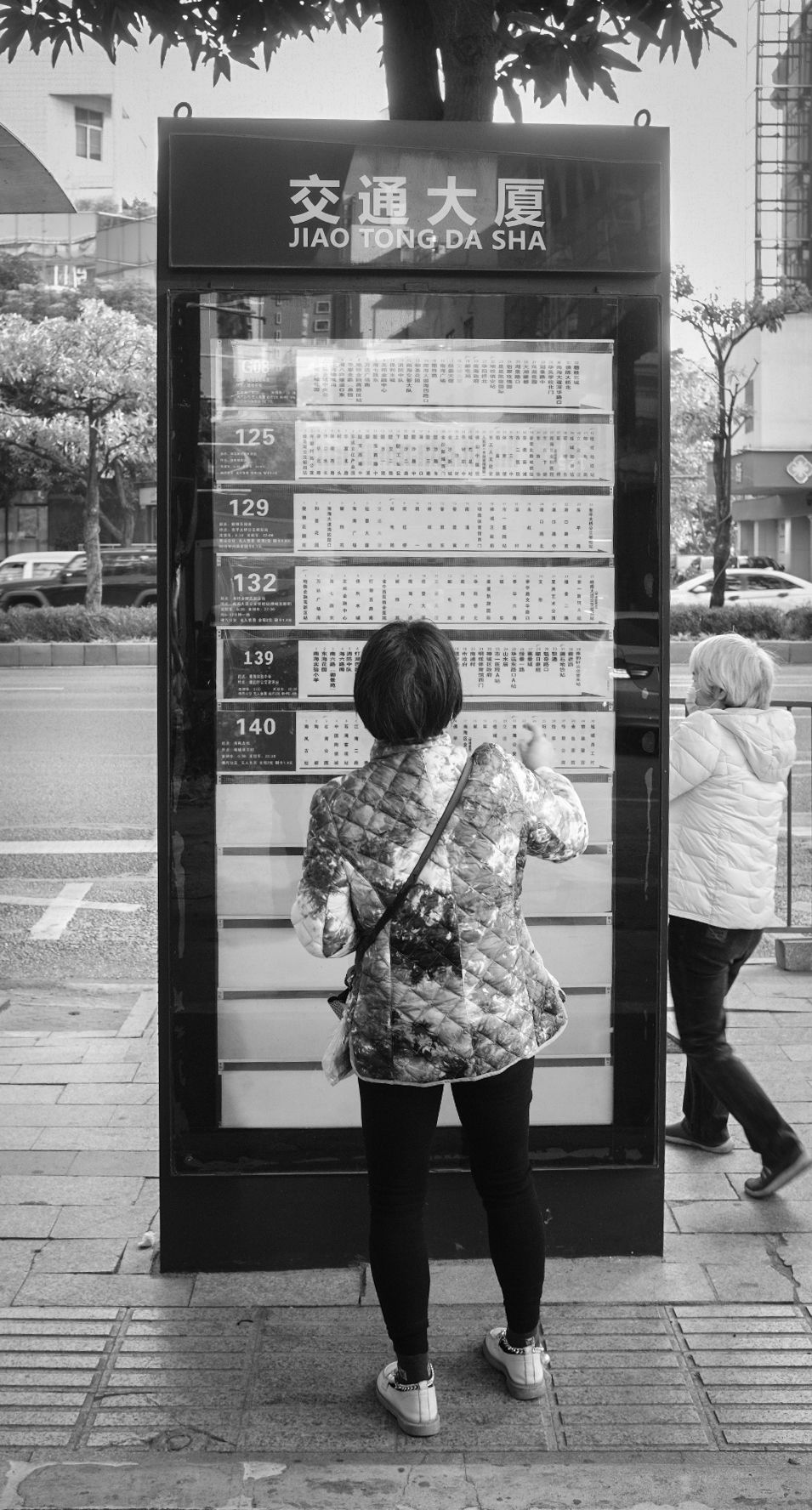
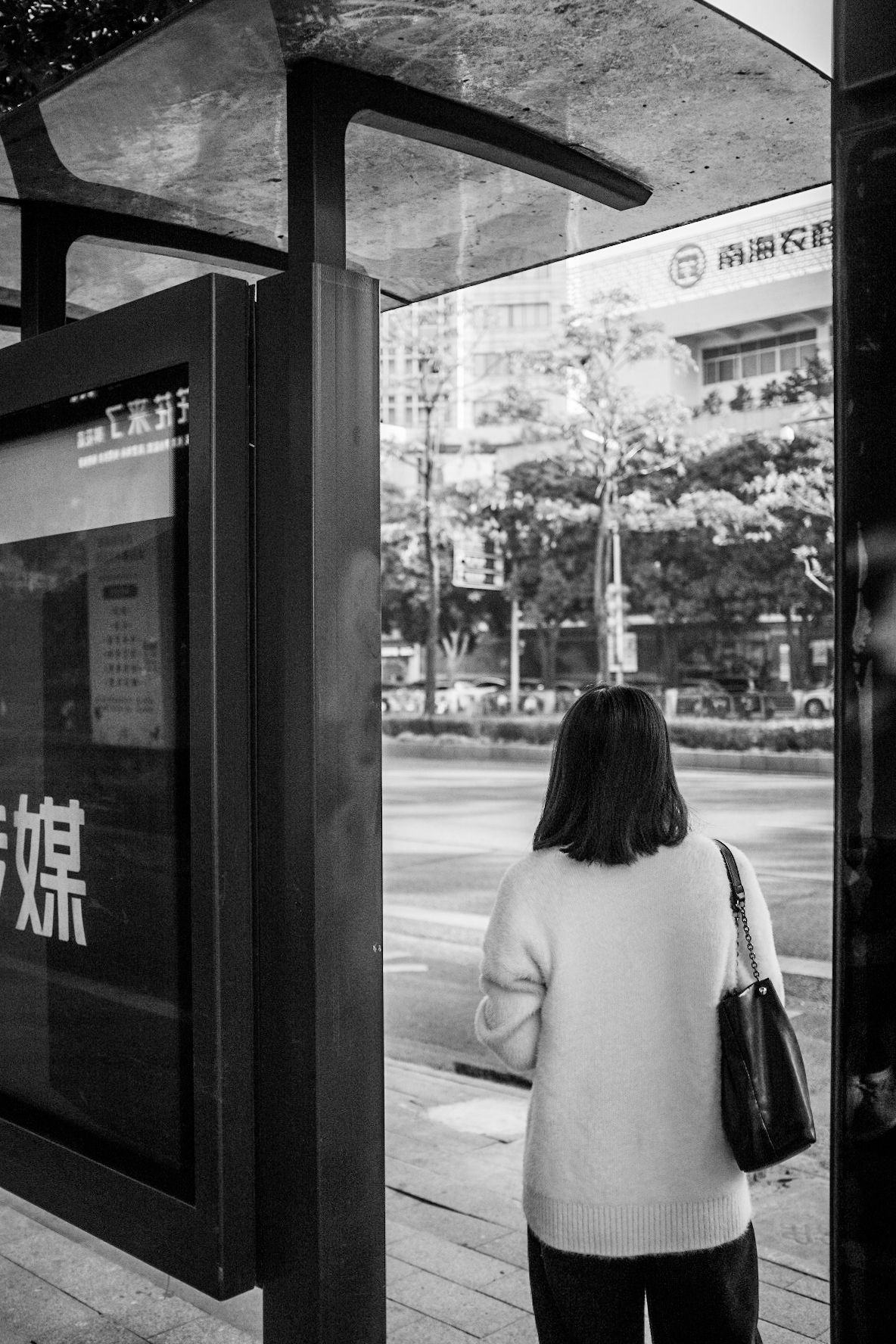
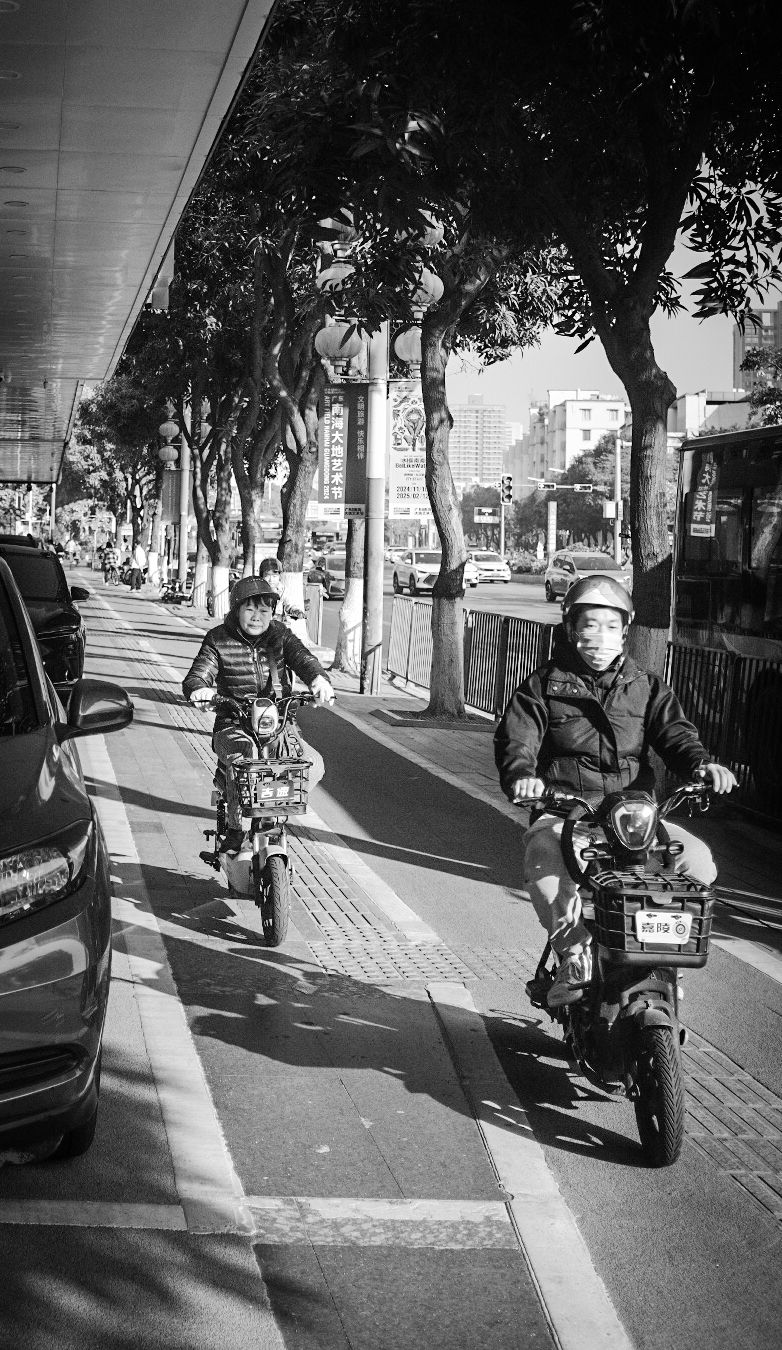
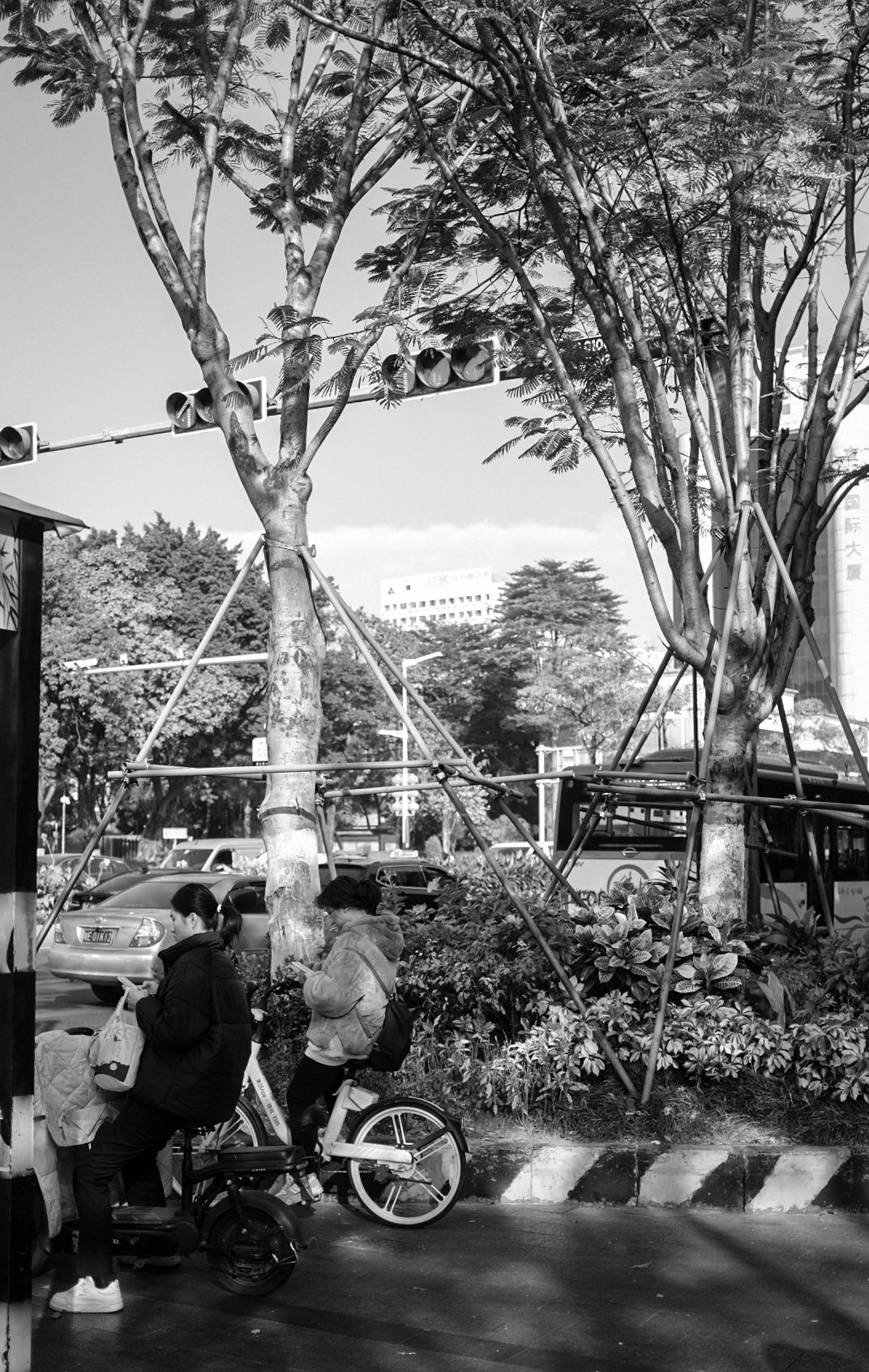
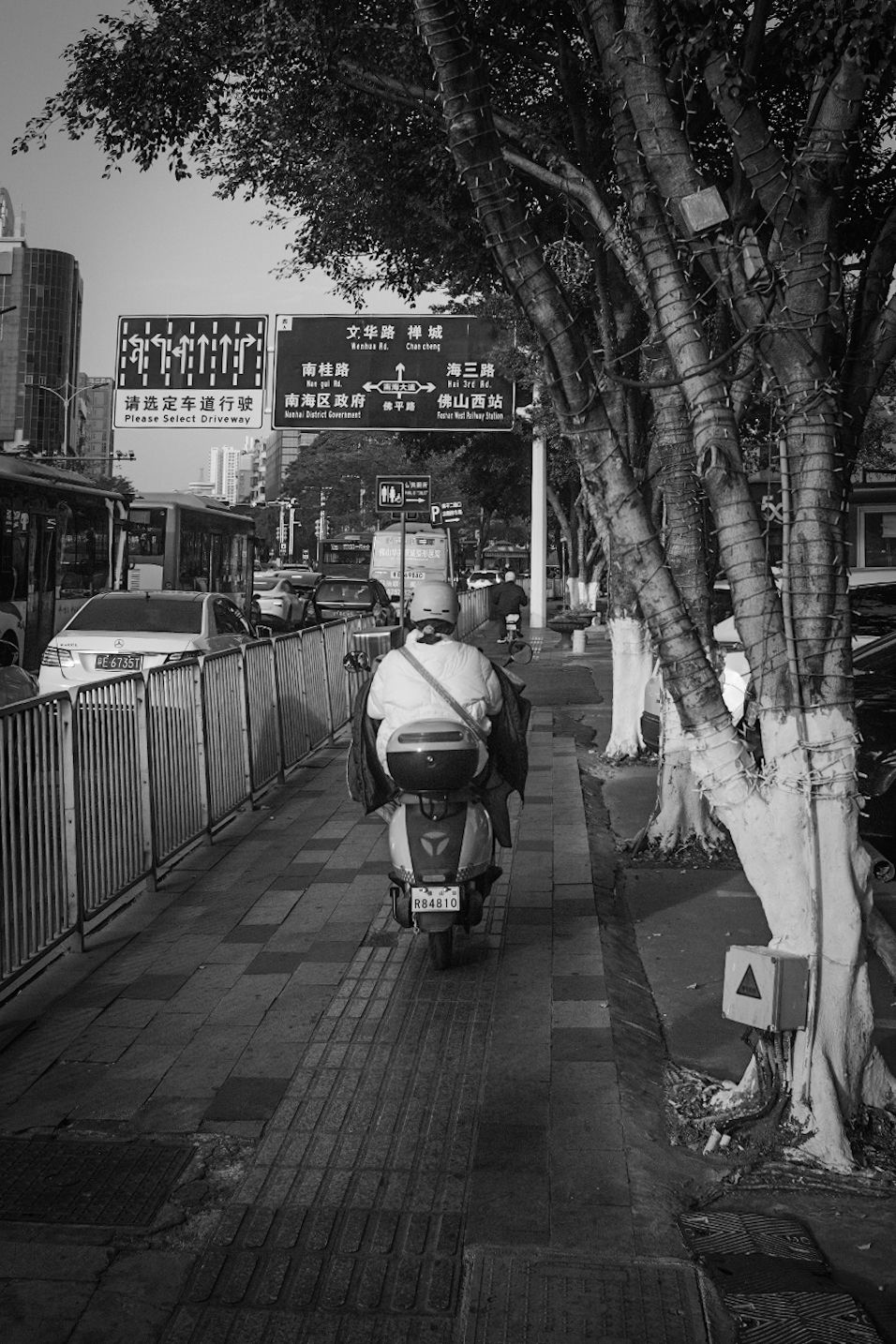
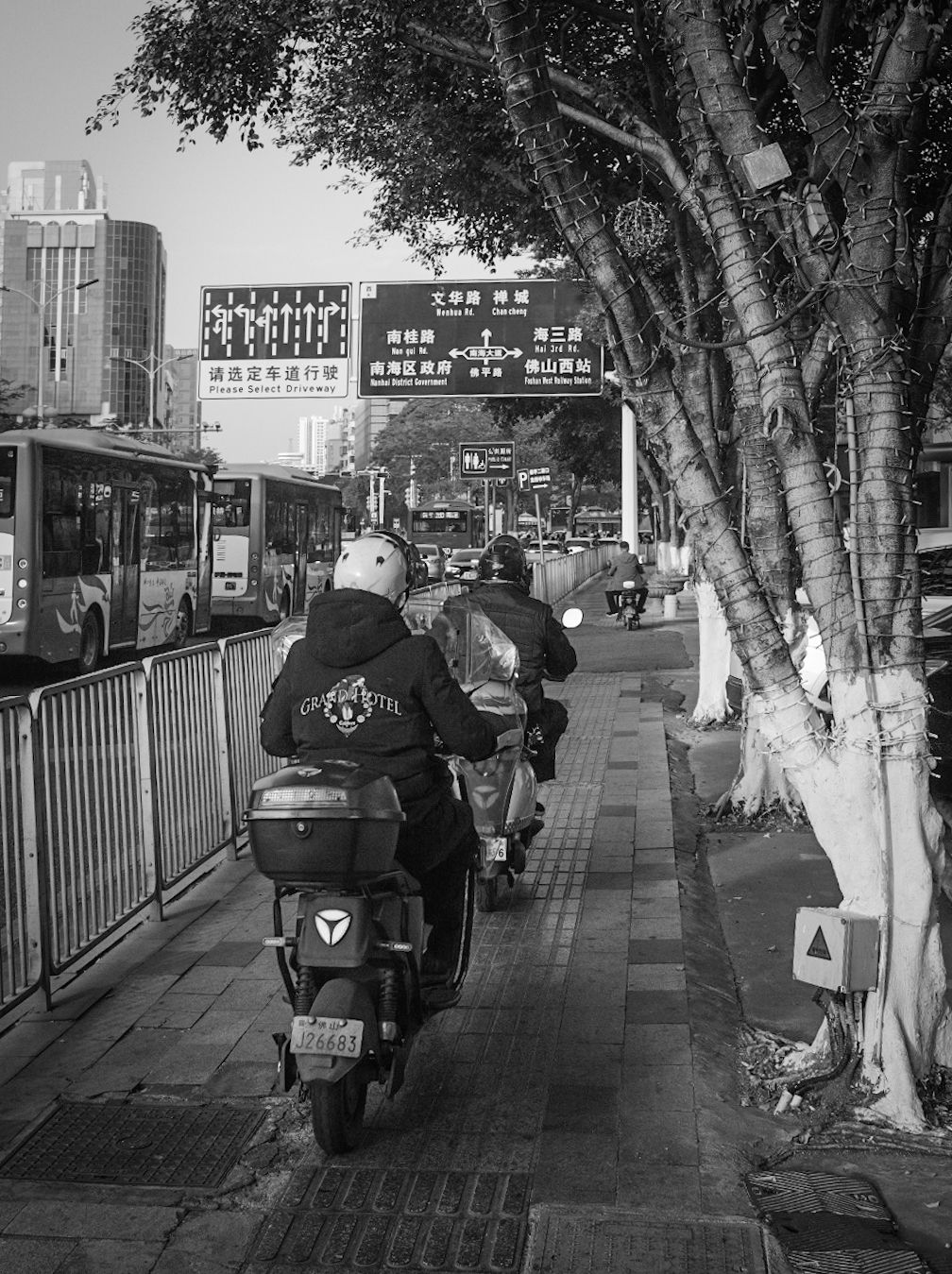
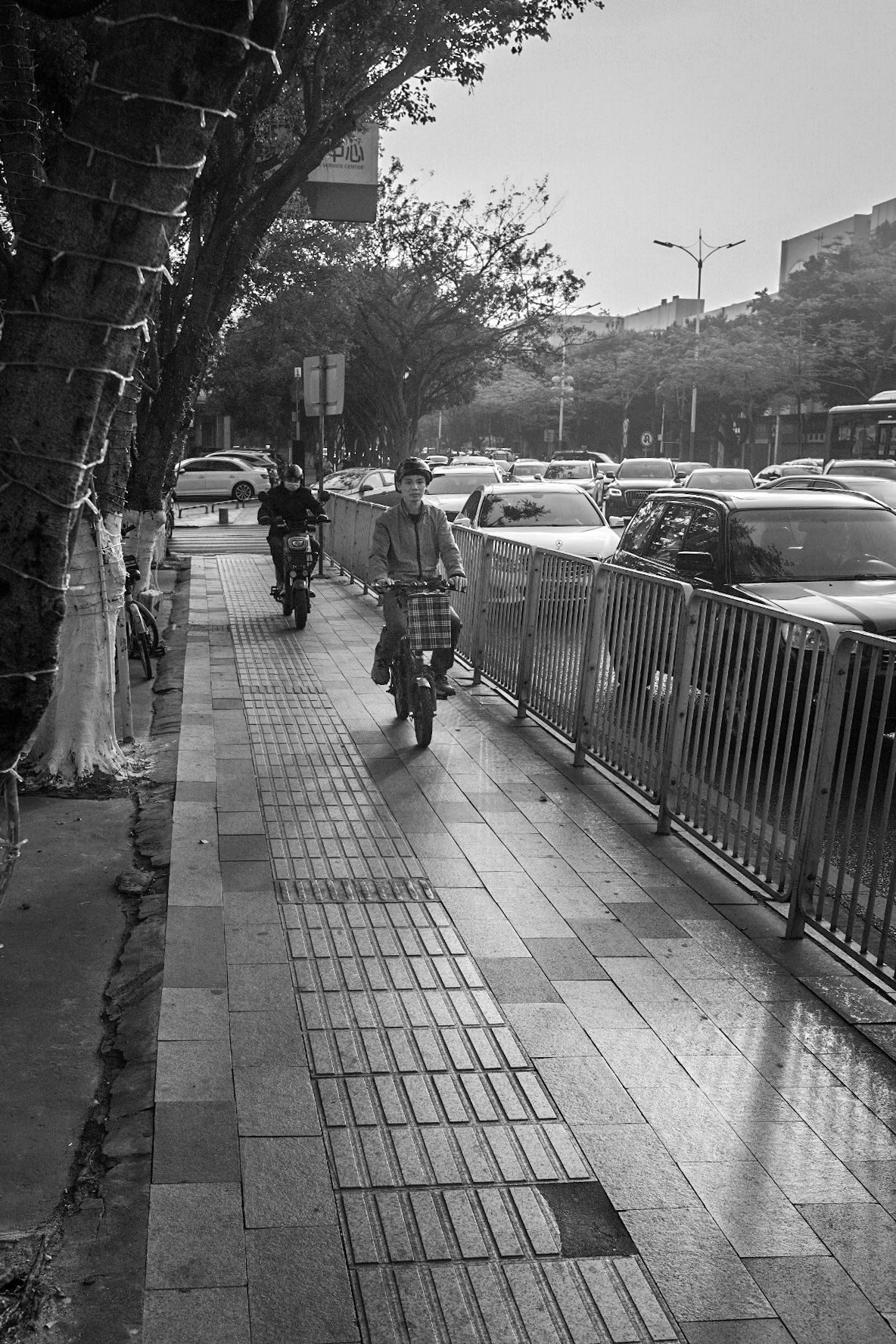
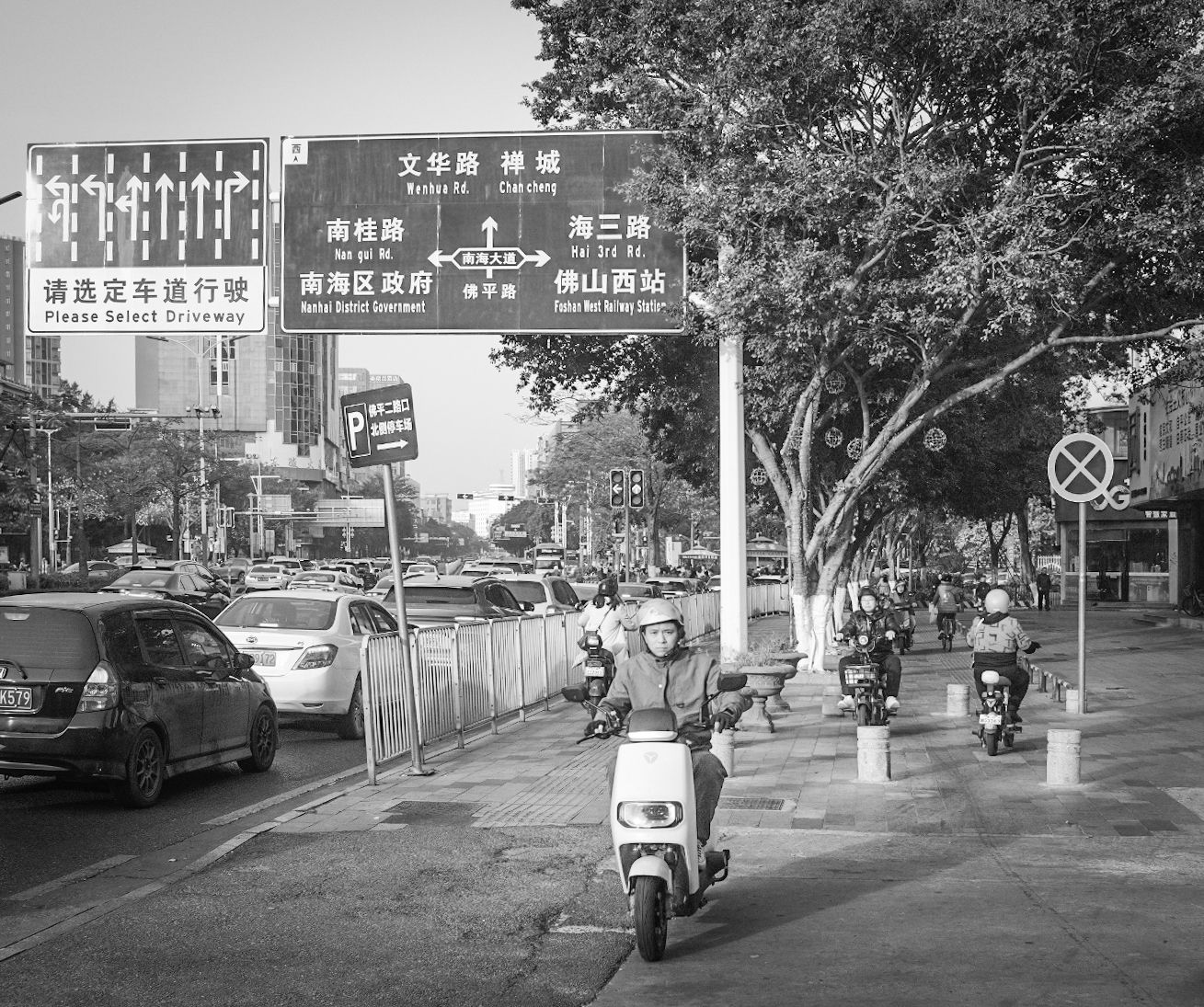
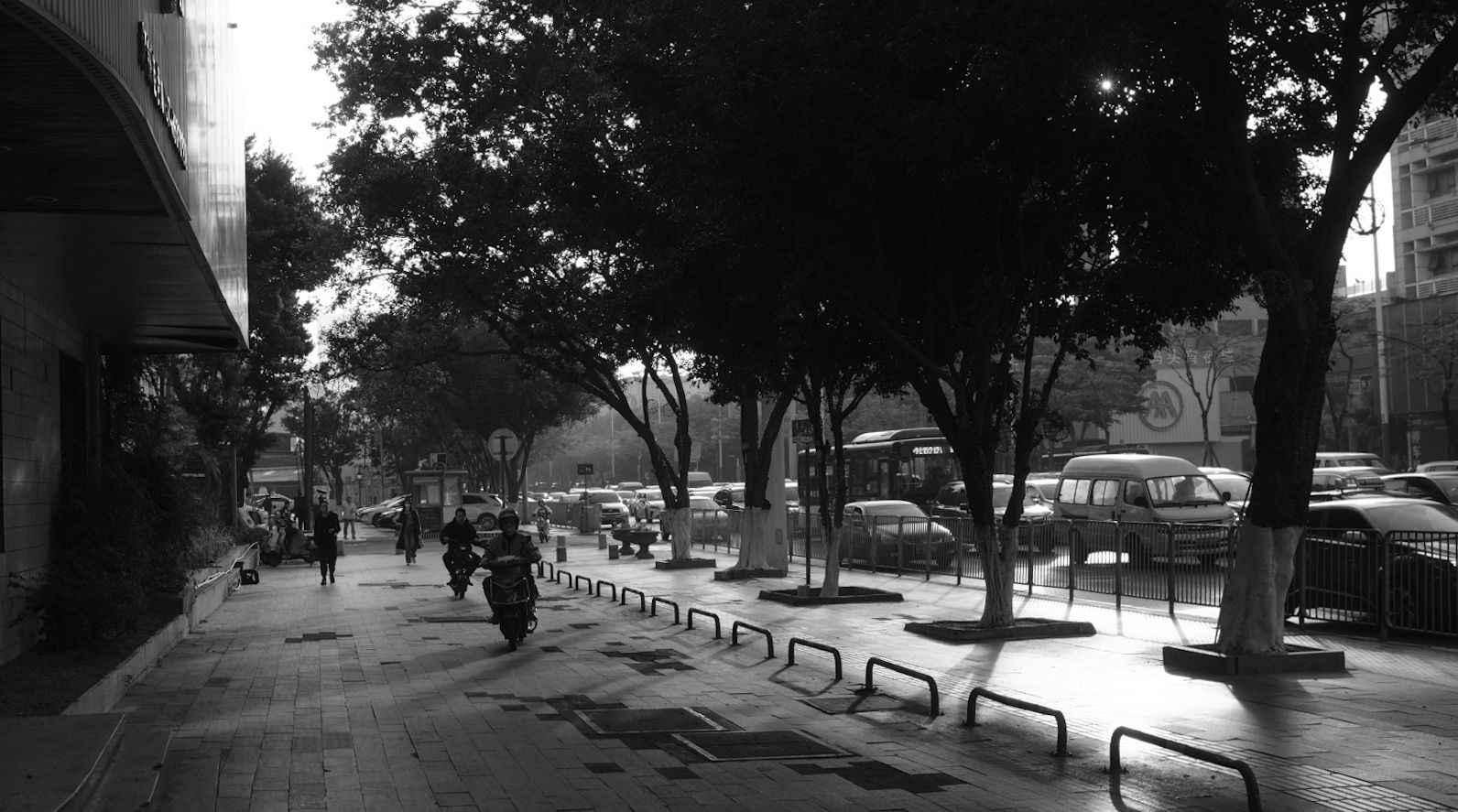
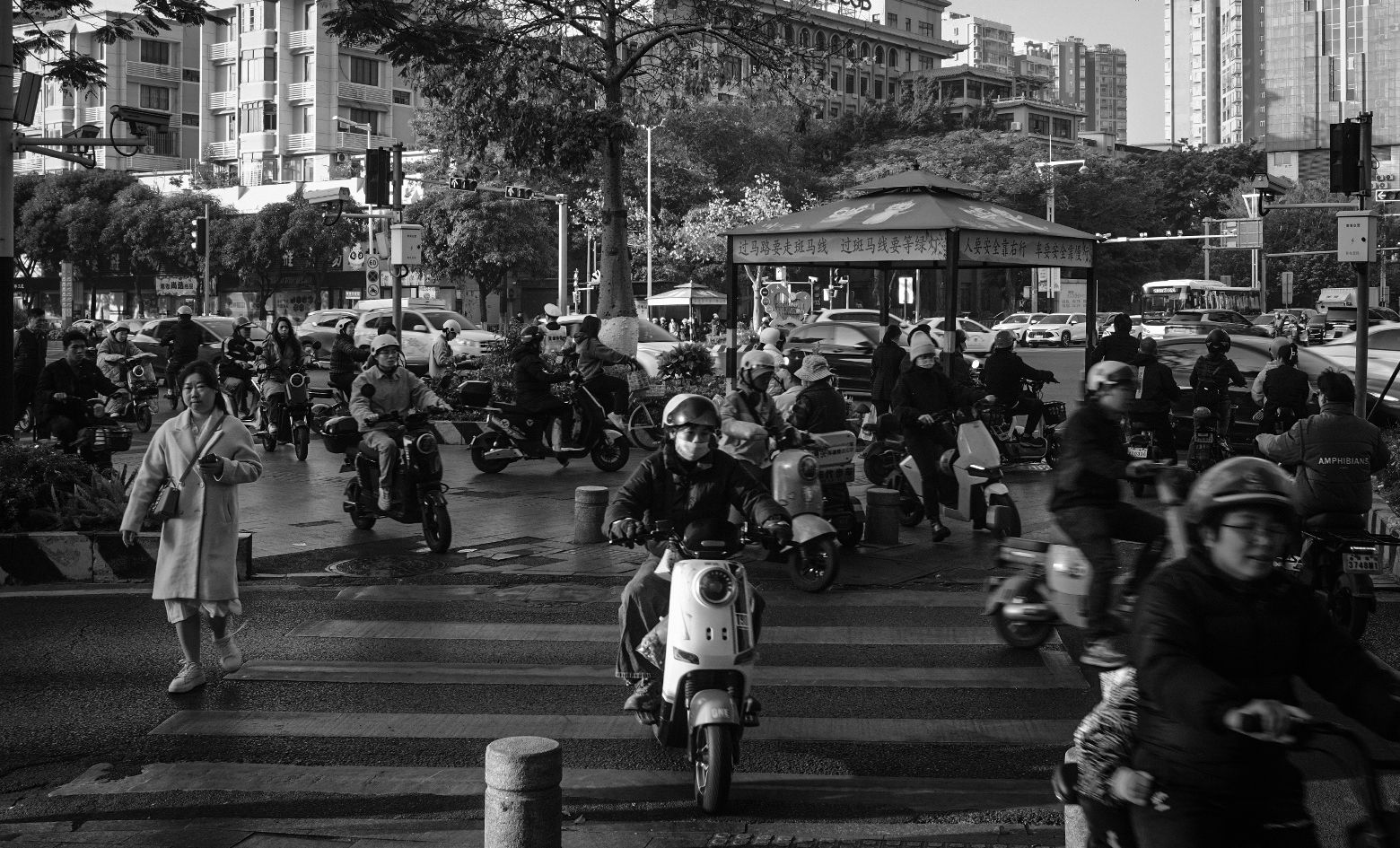
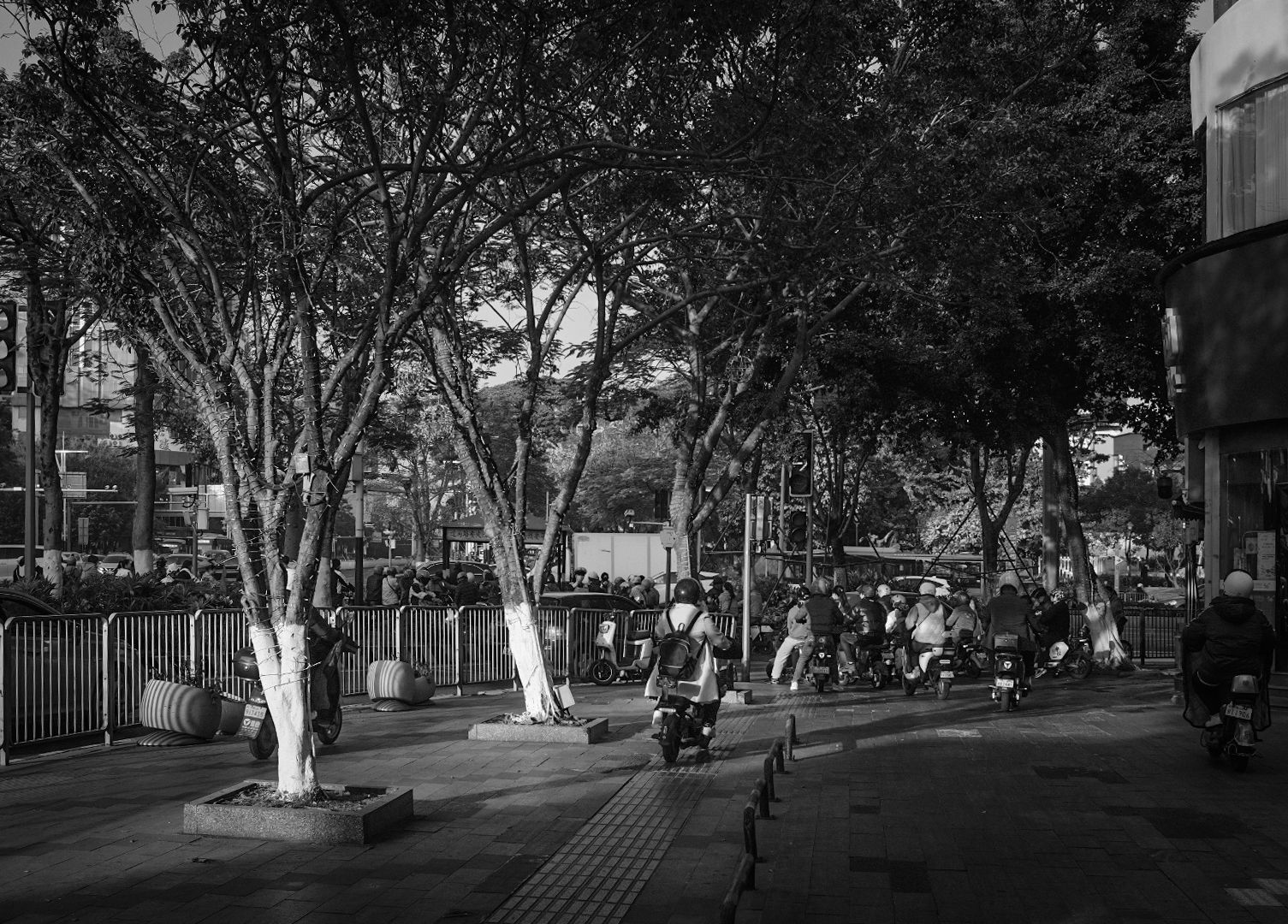
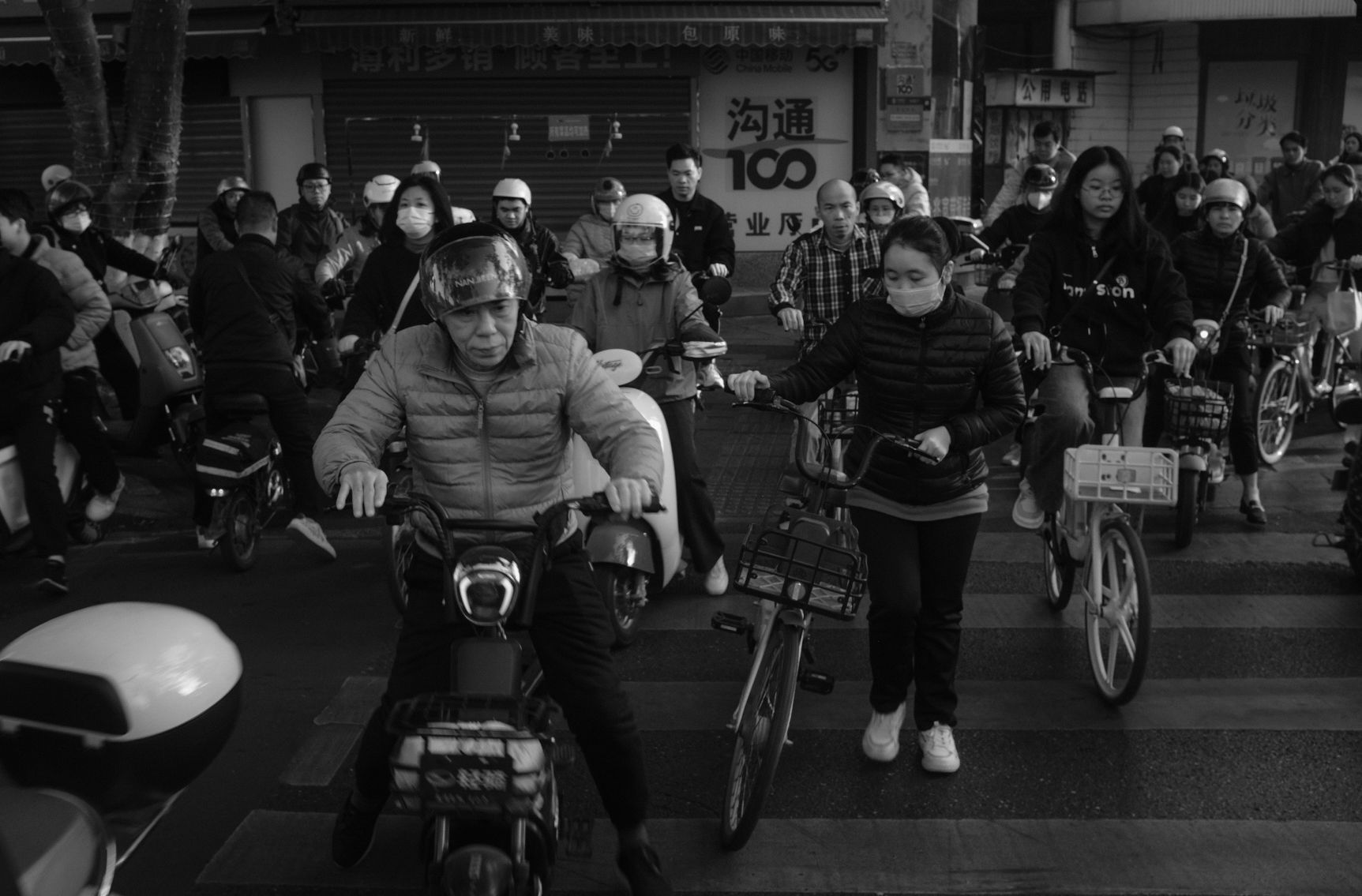
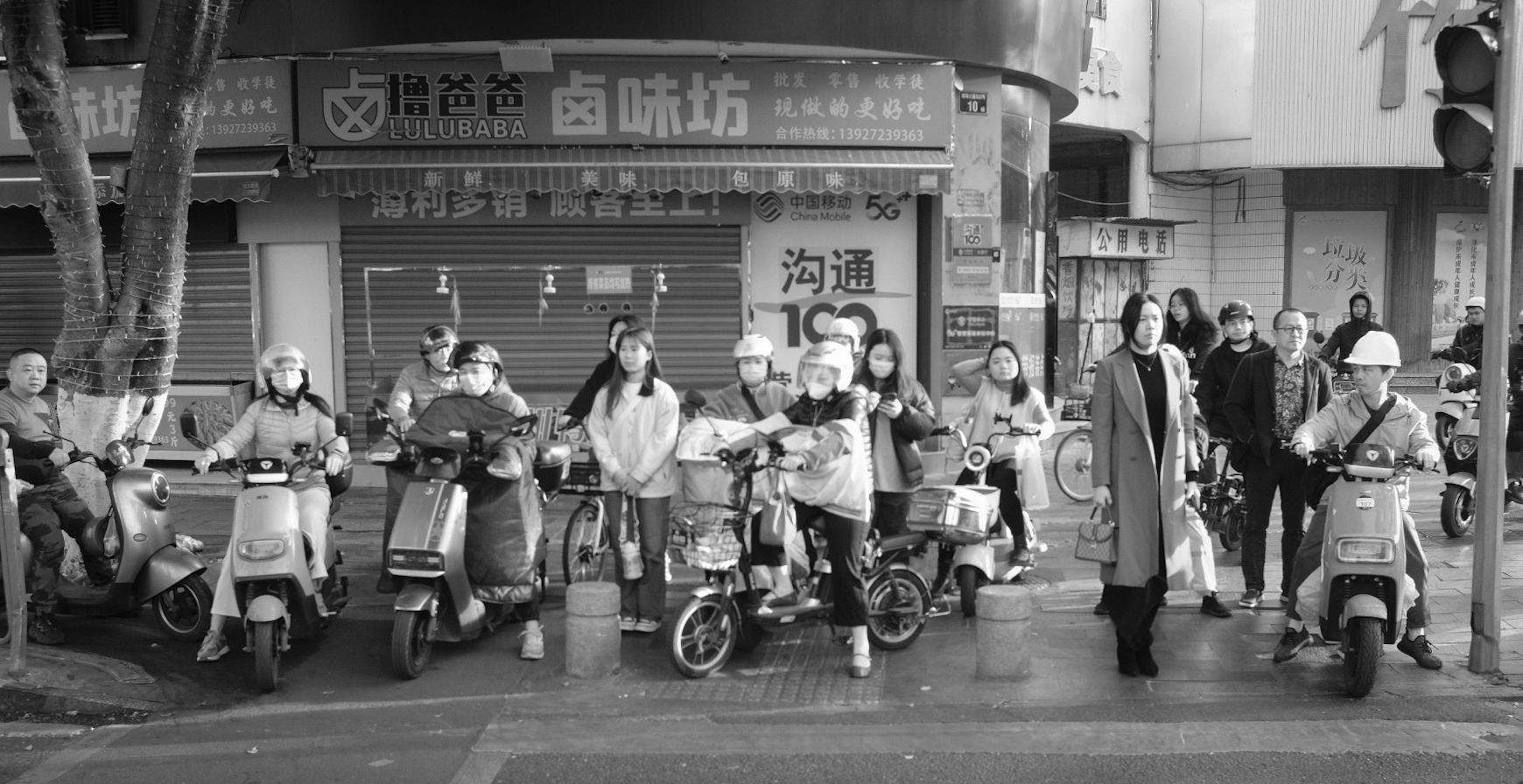
Inbetween lunch and getting ready to go to the theatre, I decided to relax by having a go at some street photography to get the “vibe” of the city. The main “vibe” was the amount of electric scooters everywhere, and the fact that they drive on pavements. The French might have called it “un joyeux bordel” but somehow, don’t ask me how, it all seemed to work flawlessly. You had couples on scooters, mother and small children on scooters, gentlemen on scooters. Everybody in that place was on an electric scooter, or so it seemed. The only downfall of such a system especially with me being hard of hearing, was that I could only hear them when they honked their horns at me. Usually I hate this, but they were all honking! The sun was out. I was out, and the whole process gave me a mental clense that was greatly appreciated!
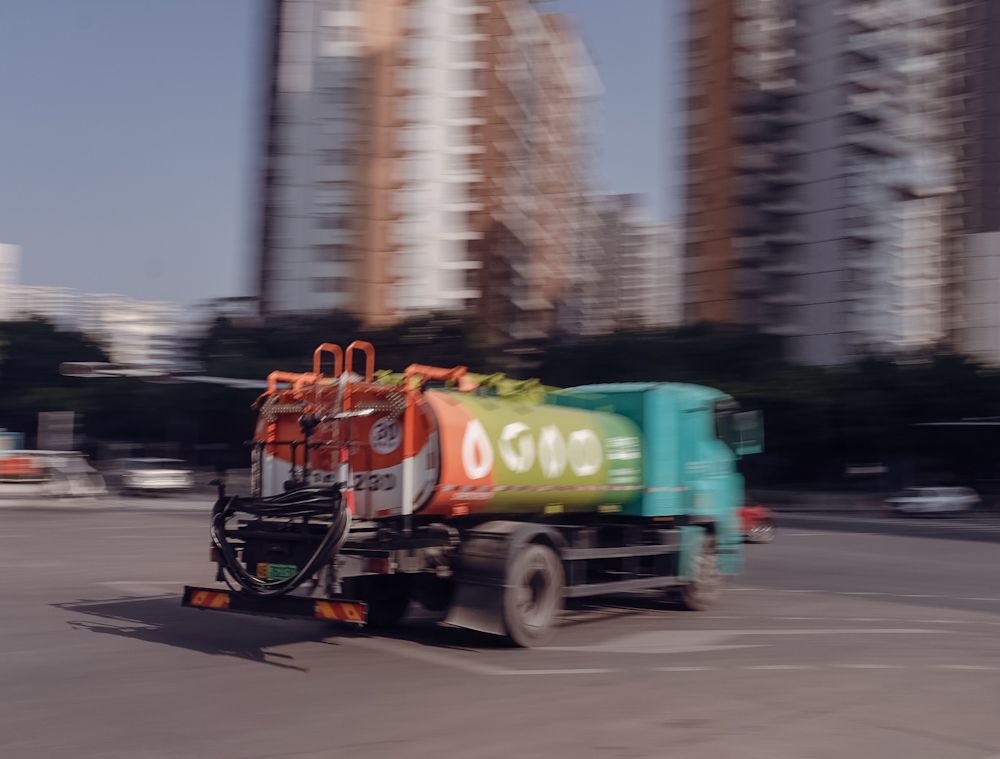
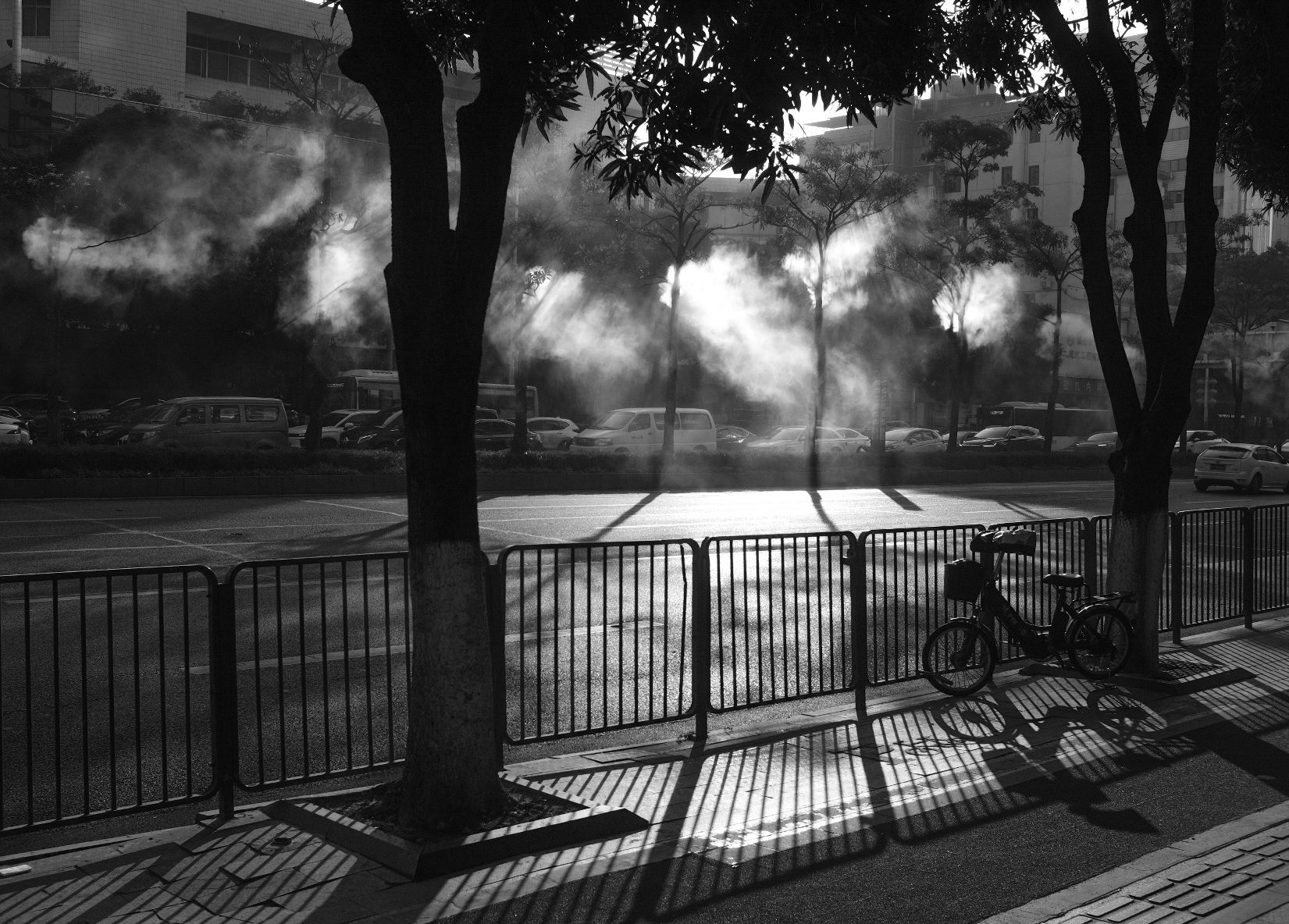
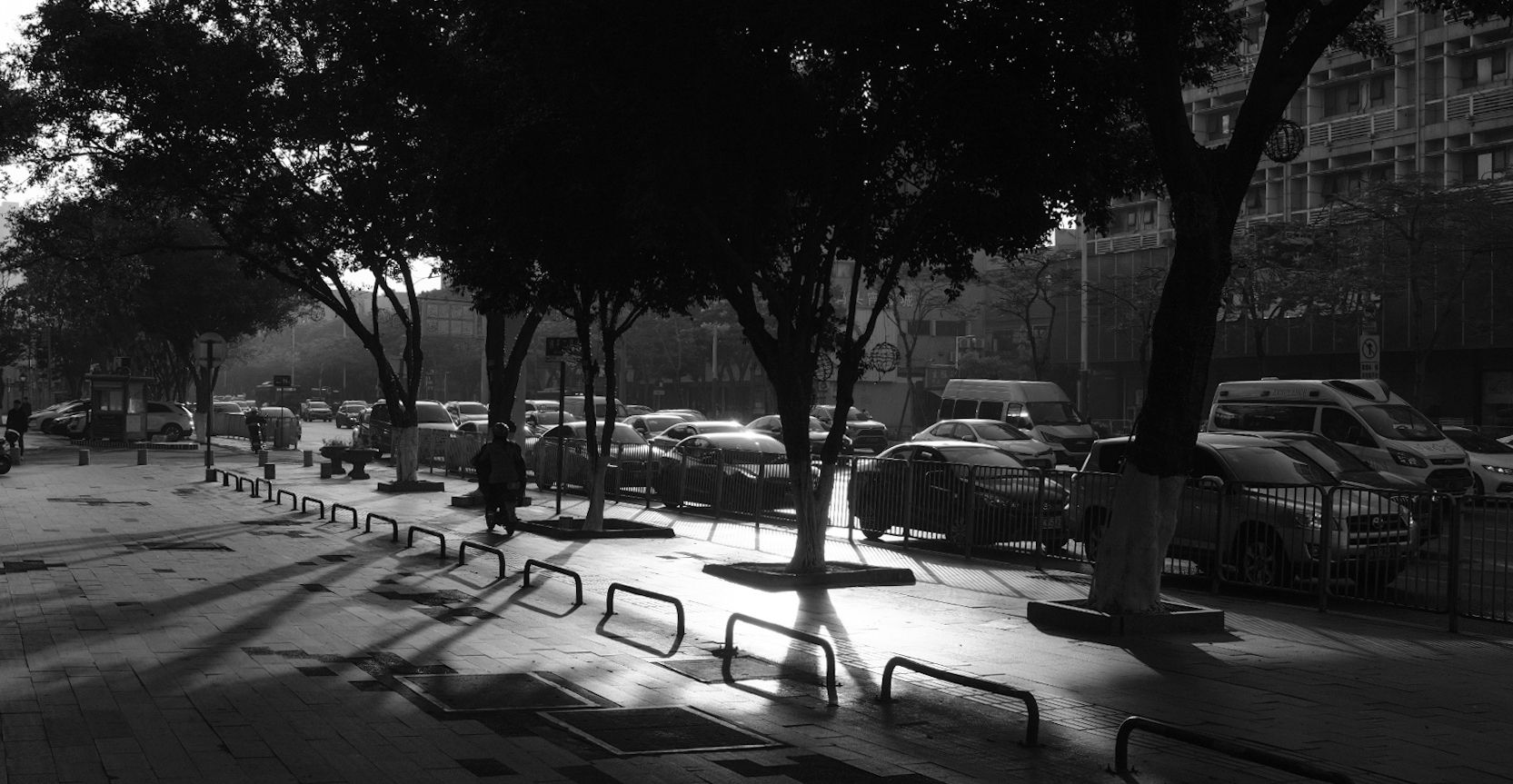
If you know China at all you will know that they have a reputation for pollution. Oooooh. Pollution bad! Pollution very nasty. Not good. However, it does give a wonderful diffused light for photography, and one of the way theys fight pollution is not only by a huge amount of electric scooters and electric cars, but also by spraying water vapour in the streets hoping to capture some of those not very nice particles. You can see this in a couple of my street photos above It is said that all their electricity comes from coal powered power stations, but I saw plenty of solar panels as well as wind turbines. I think they’re really trying, and should be encouraged.
Back to the hotel, getting washed, and changed, and dressed to go to the theatre for the rehearsal and concert. But that will be for another day…
Good morning, Dear Reader. Now, I know from the photos below you will find it hard to believe that it was actually Christmas Day! I didn’t believe it either. But it was! We were about to get to know the routine of our tour. Let’s get down to the nitty-gritty: Get up, skip breakfast, get on the bus, stop off at a service station along the way, buy snacks and water, get to the next city, get to the hotel, drop off luggage, go to a restaurant for lunch, hand over our passports, get the keys to our room, inspect our rooms, get a quick shower, get into concert attire, get to the venue, rehearse, and get used to the acoustics of the venue. Then, get back to the hotel, eat, go to bed, and repeat. This was to be my life for the next two weeks. Oh, and get some photographs to show you, my Dear Reader.
We had been warned that the seats on the bus had been decided and there would definitely be no changes. Final. End of story. Out of the question! Don’t even think about it! So, of course, my roommate Corentin decided to raise a massive hoo-ha about the whole situation and at our December concerts, started dropping slightly unsubtle hints, which were to continue in the SBL China WhatsApp group.
Christmas Day came around, and on our bus was Corentin. The little bugger had succeeded and worn down Madame le Président. So not only was he to be my roommate for the tour, but also my bus mate. He was happy! As was I. He’s an amiable boy and also good company. He looked after Uncle Ian very well during the tour. His enthusiasm, albeit sometimes tiring, was infectious.
As the Boy Scout I once was many, many moons ago, I had learned the importance of “being prepared.” For our first service station stop, I knew they don’t use cards as we do. Apple Pay etc., are not used either. But it wasn’t a problem as I had Alipay. I knew there was something about scanning a code or being scanned, and that payments could be done this way. I was ready. I had done everything correctly. But, as in most military campaigns, no plan survives first contact. The bloody thing wasn’t working. I had had my daily happy pills, so I didn’t feel the need to panic, even though my heart was racing. I created another account, and it worked from there on in. I was still furious, though. Those snacks looked amazing. Although the chicken feet might have been a bit of a challenge—not your first idea of a tasty snack… Ah well. The youngsters at the back took pity on Uncle Ian and let him taste some of their snacks. Certainly different, slightly more spicy, and not like what you might find in a French service station, with their legendary overpriced sandwiches…
We eventually arrived at Yongzhou, and we were shepherded into our hotel. We dropped off our bags and crossed the road to the restaurant. On the way over, one of our bassoon players had a funny turn and ended up visiting a Chinese hospital ER. Not what we were hoping for, but we saw him later that day, and everything was a lot better, though he was still being watched over. We were all very worried about him, but all we could do was pray, hope, and not worry. He was in good hands.
The restaurant was in a shopping centre. Lunch? When I say lunch, I mean banquet. We were seated at enormous round tables, though I thought that taking on the role of Arthur might be overdoing it a tad. In the middle of this huge round table was a circular glass tray, where, as if by magic, dishes laden with Chinese food would appear. The drink served with the meal was jasmine tea, which was very nice too and felt so very refined. Then somebody said the magic word: Beer! Surprisingly, smiles appeared on our faces too! I’ll tell you a little more about that later on…
The food, of course, was amazing, and I started feeling that I could get used to this—and of course, I did… At the end of the meal, the Corentin love machine went into action, and he was covered with Chinese ladies of all ages vying to get a selfie with him. It was then that I dubbed him Sir Fanny Magnet! He was very happy with his new name and fame. So that’s what it’s like taking one for the team! Bless his cotton socks.
Then it was my turn. Walking to the restaurant, I had noticed a shop selling goat’s milk products, and the ladies inside seemed overjoyed to see us passing by. They were even more buoyed up when we passed by them again! They asked me if they could take a photo of me with a small bottle in hand. I, of course, acquiesced as one must, and I have the feeling that my Chinese modelling career was just about to take off. It was also most amusing, and certainly flattering. I felt amazing. The Corentin for the more mature and discerning Chinese lady… The others laughed as they passed by, taking photos and giggling. But why on earth not? You have to get into the swing of things!
The lady responsible for my bourgoning China top modelling career…
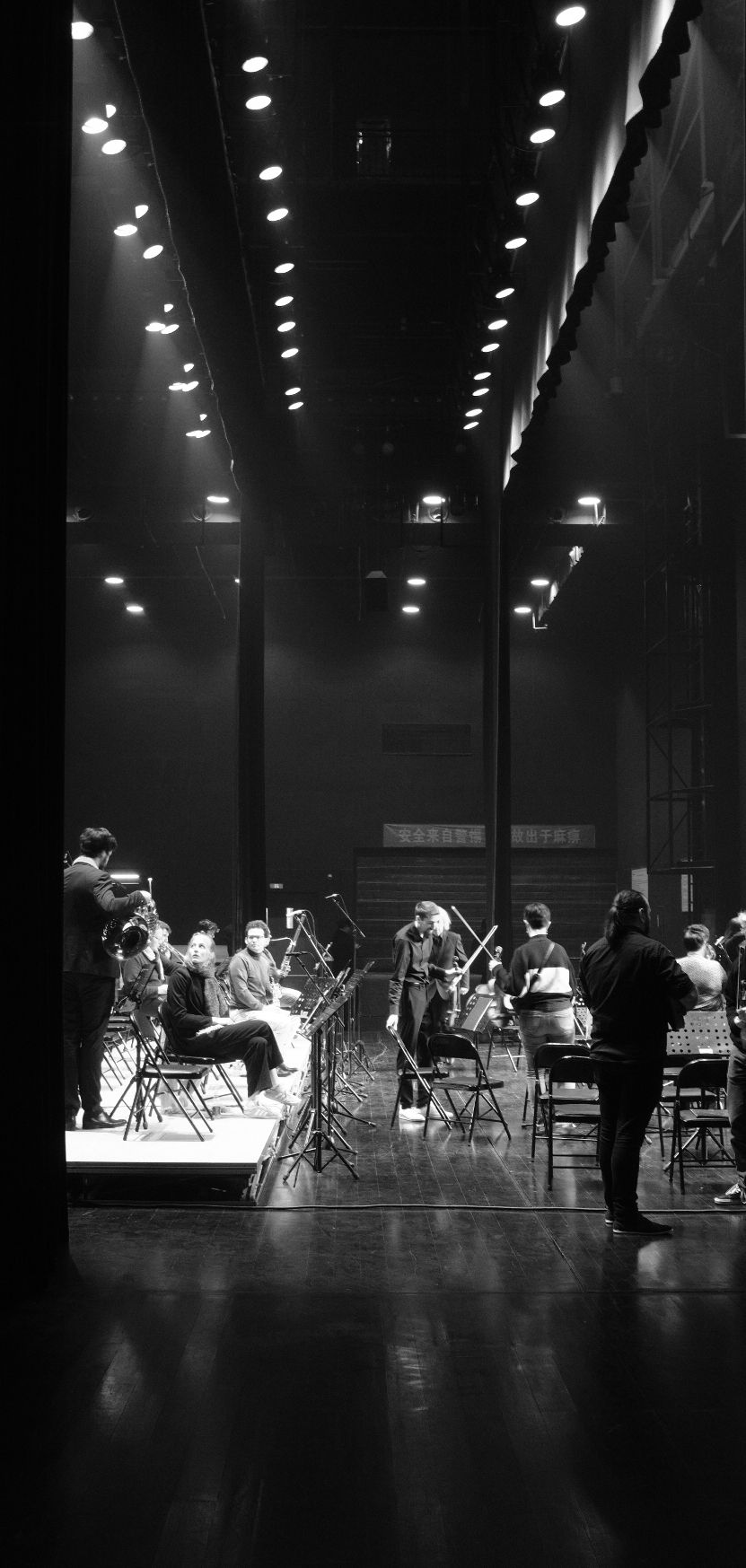
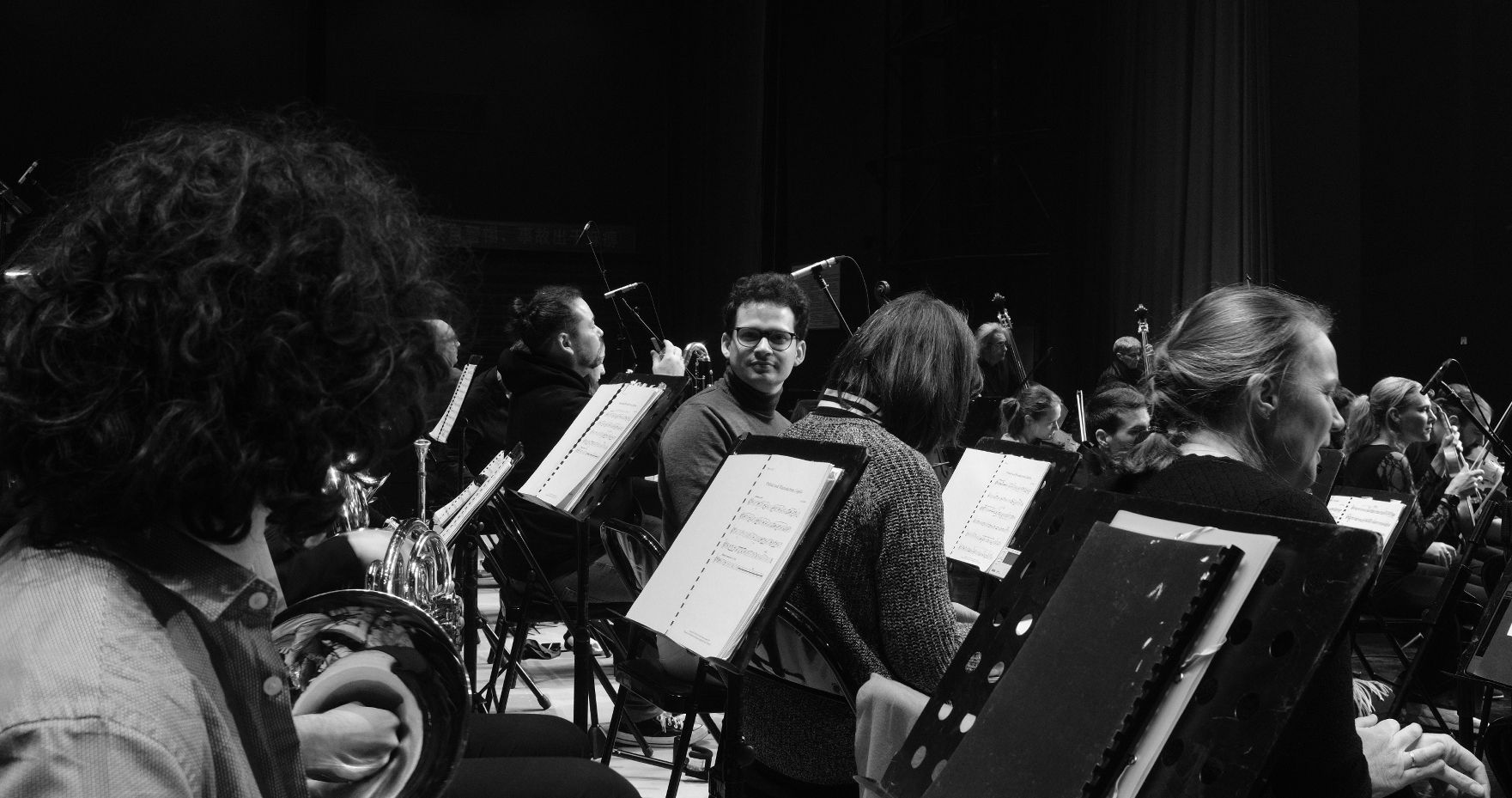
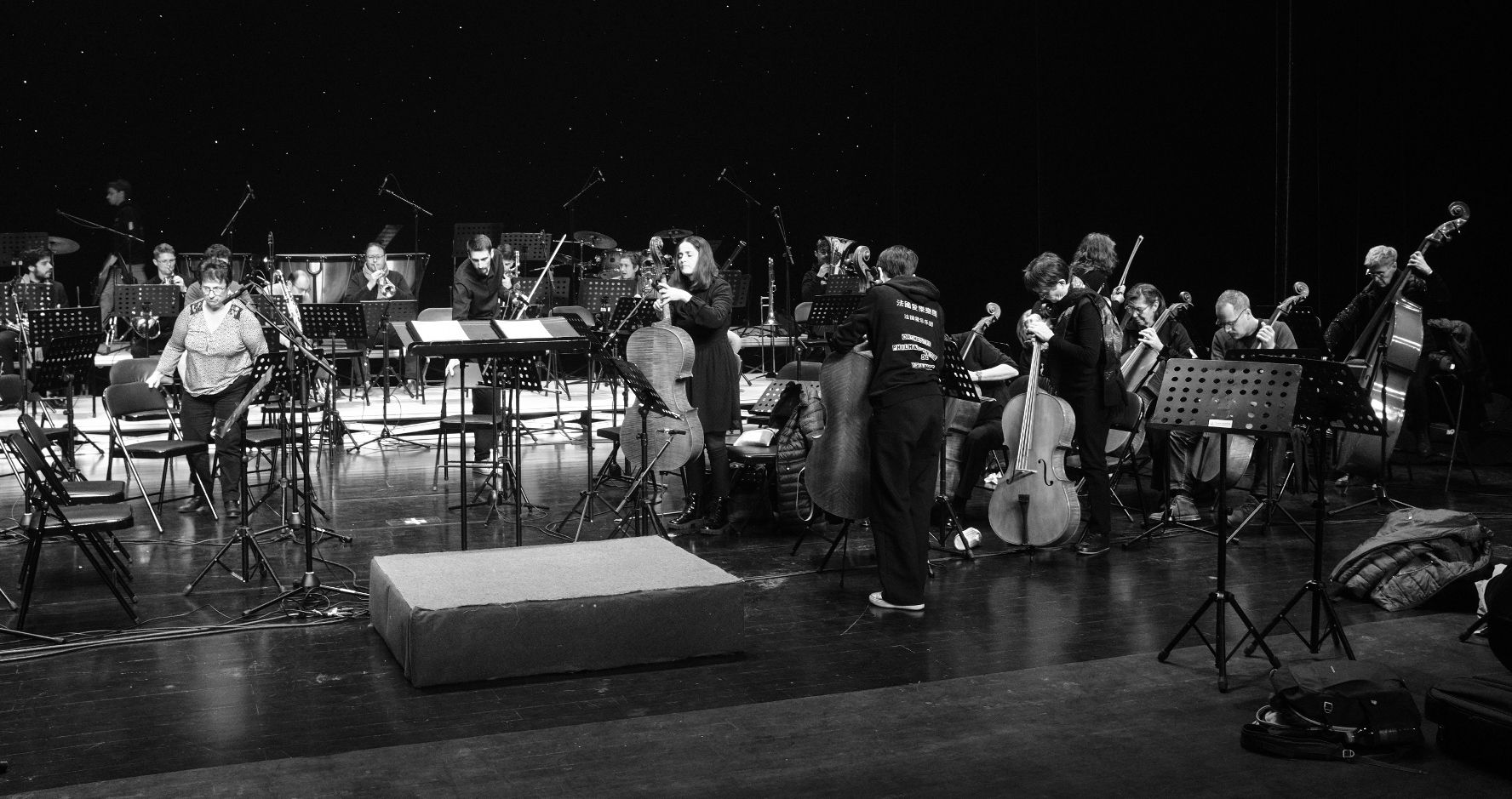
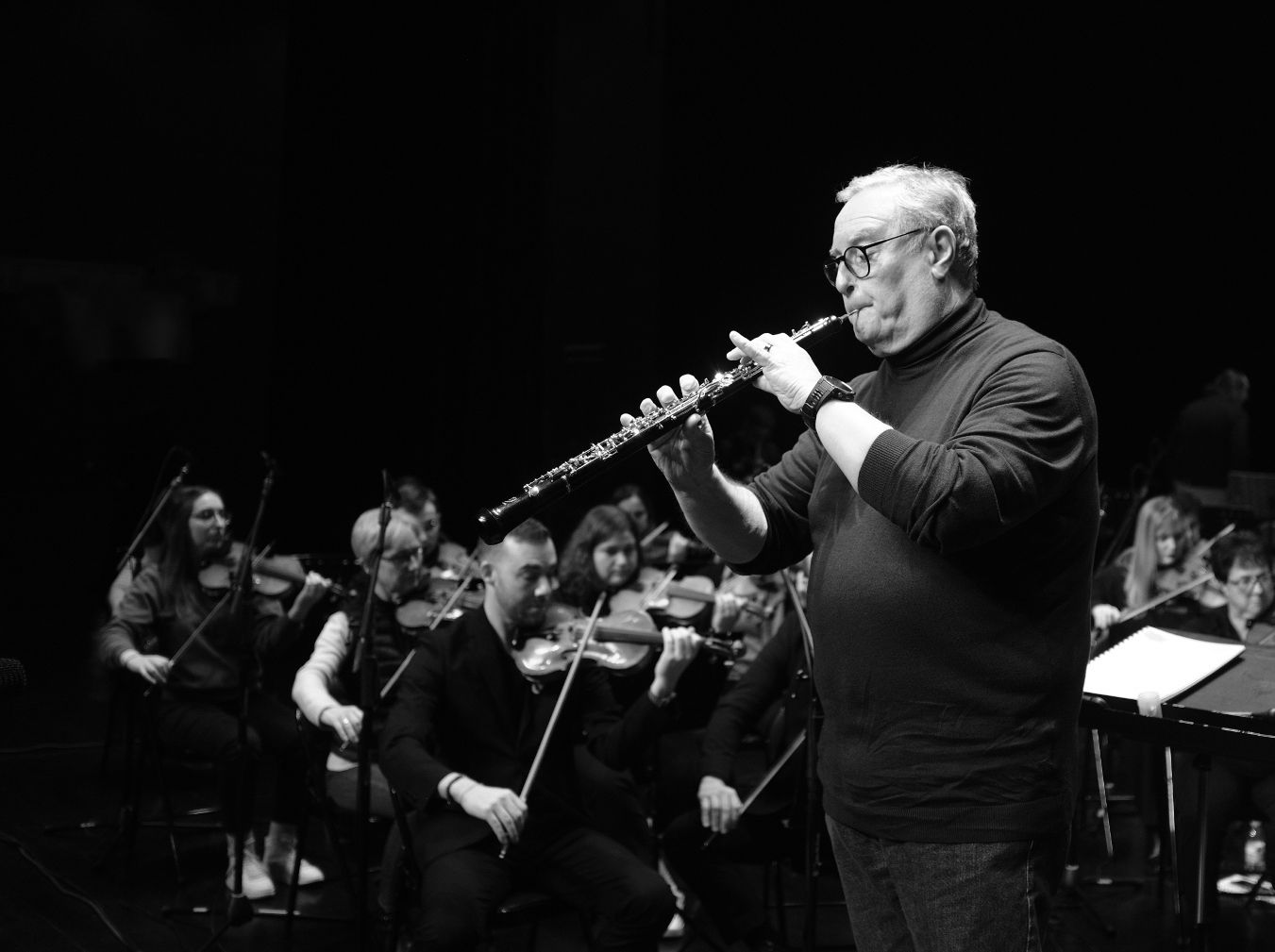
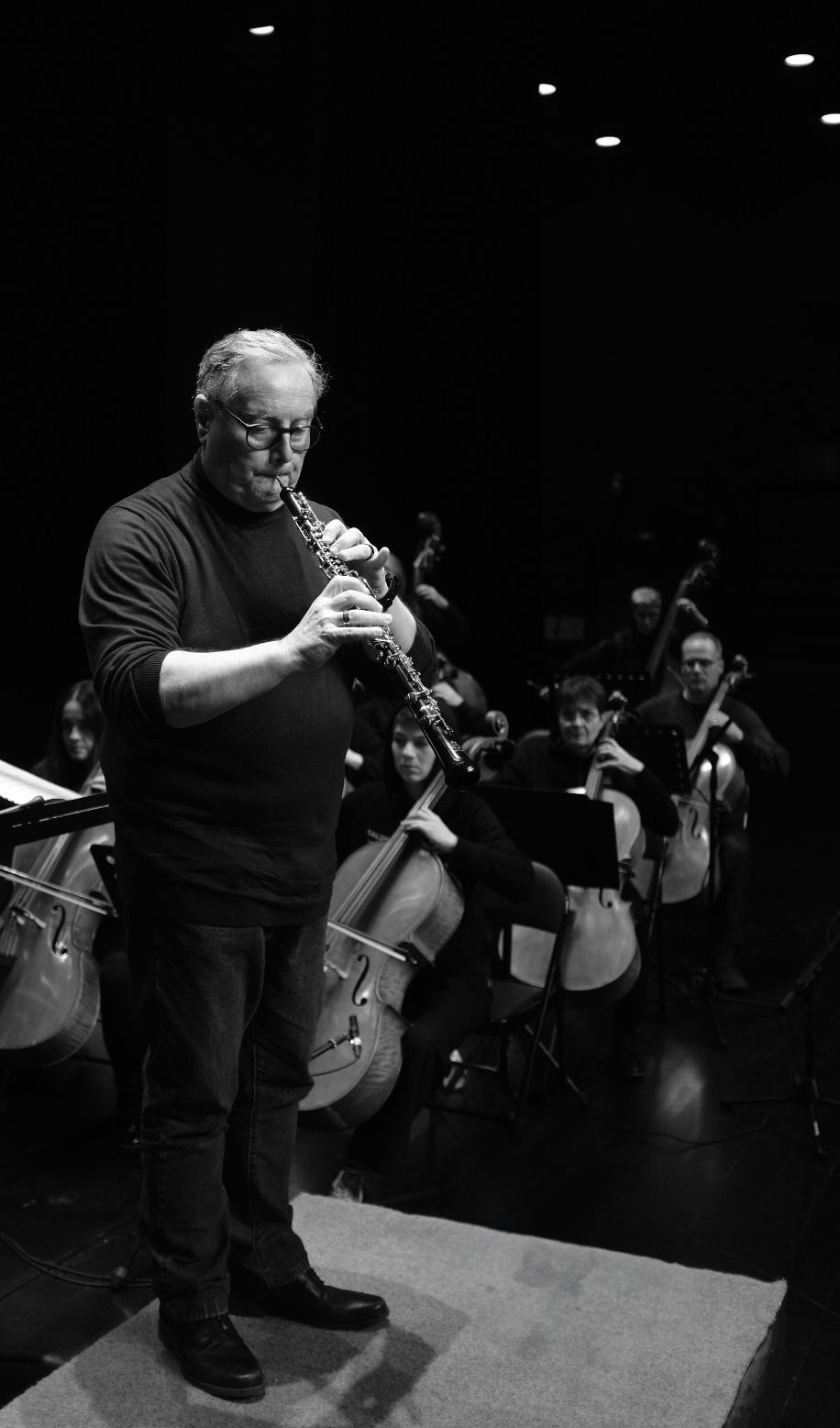
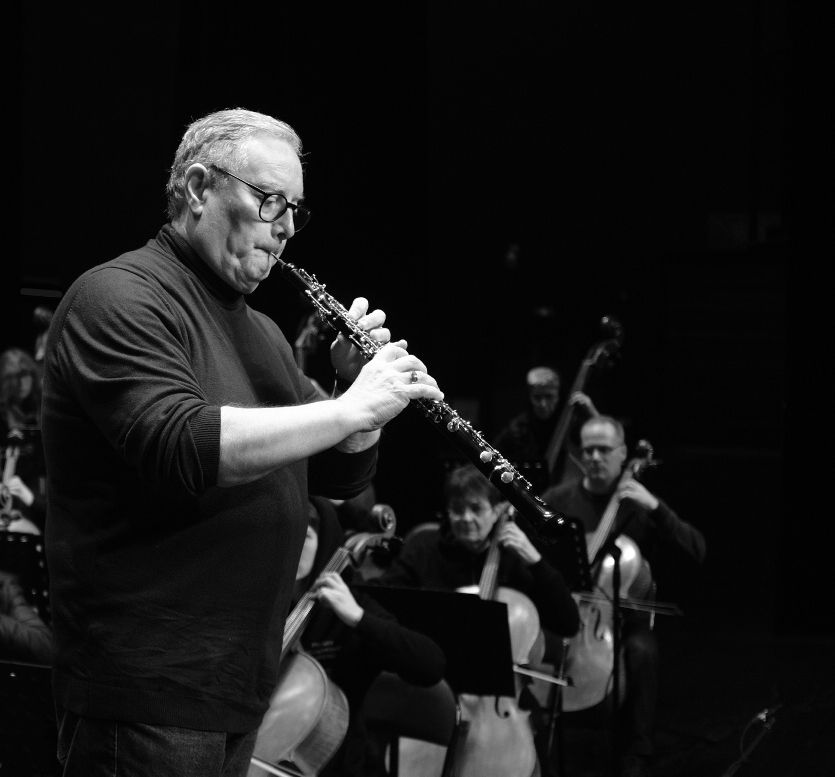
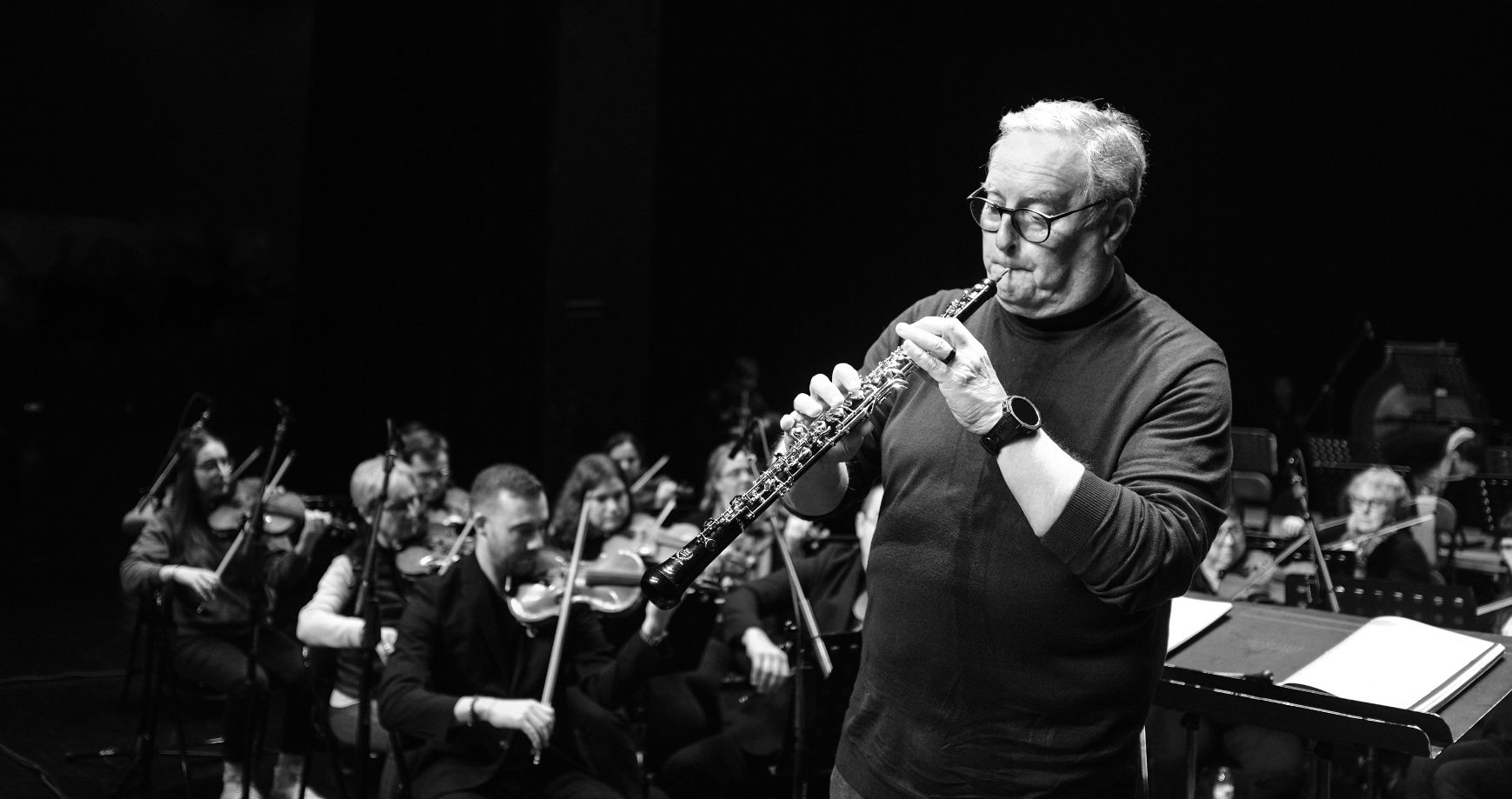
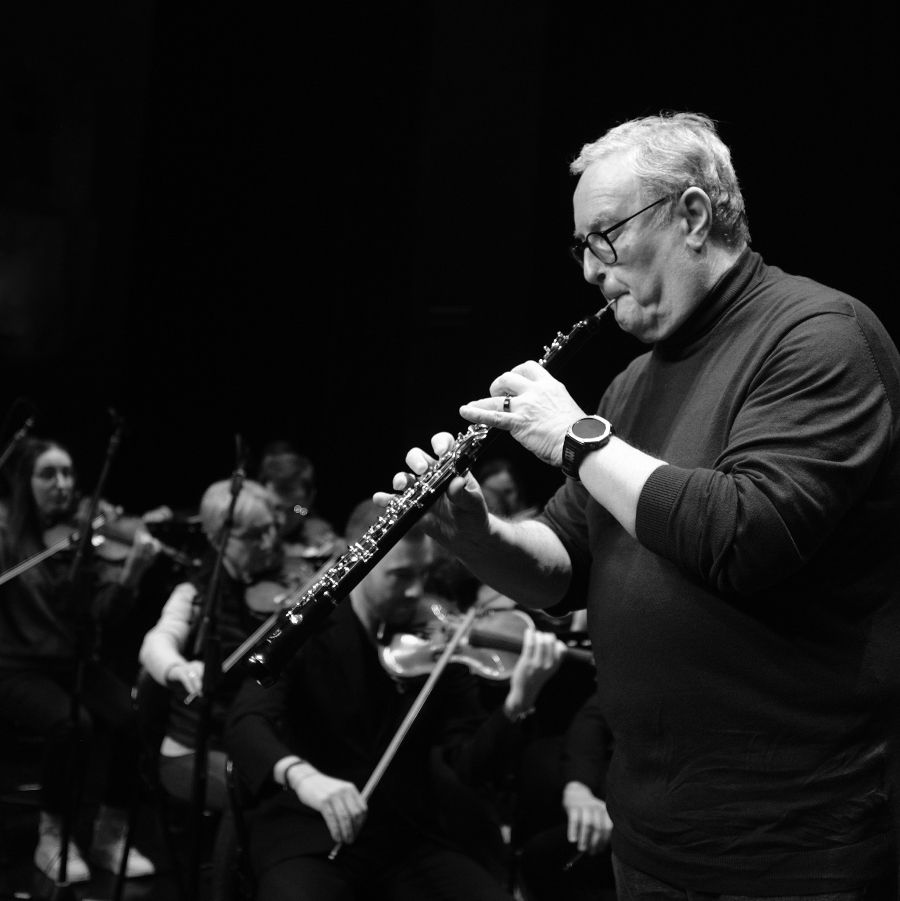
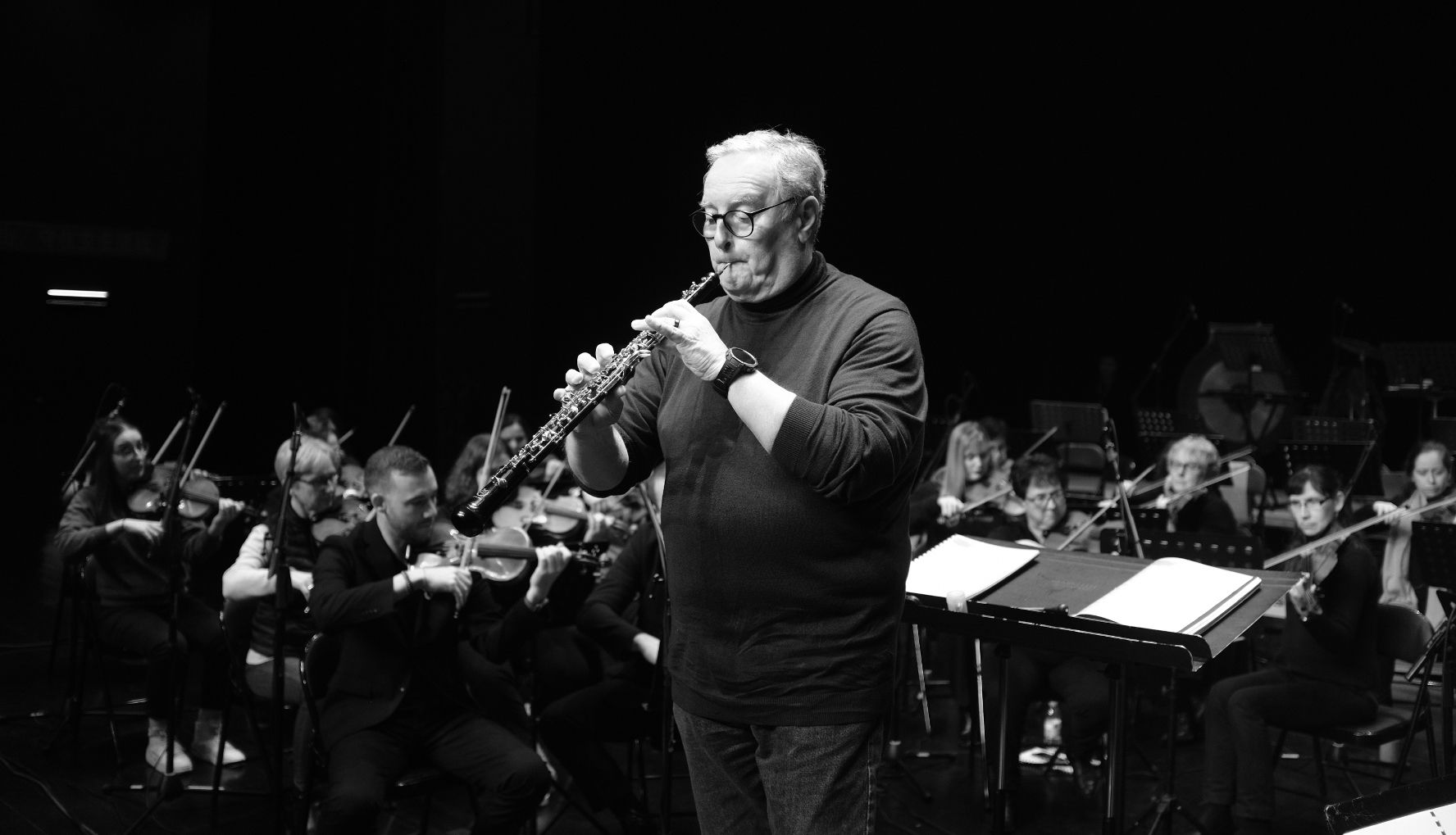
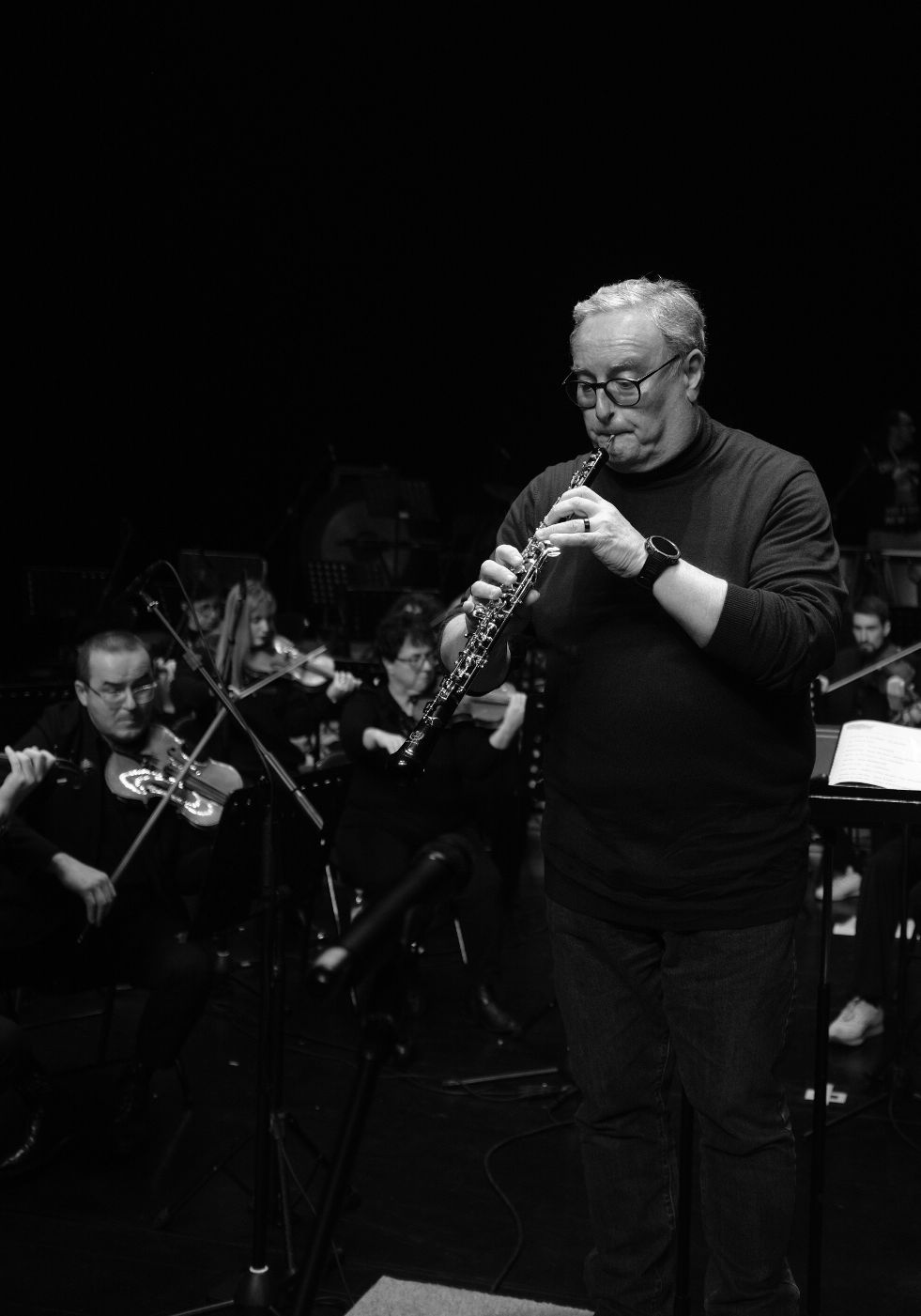
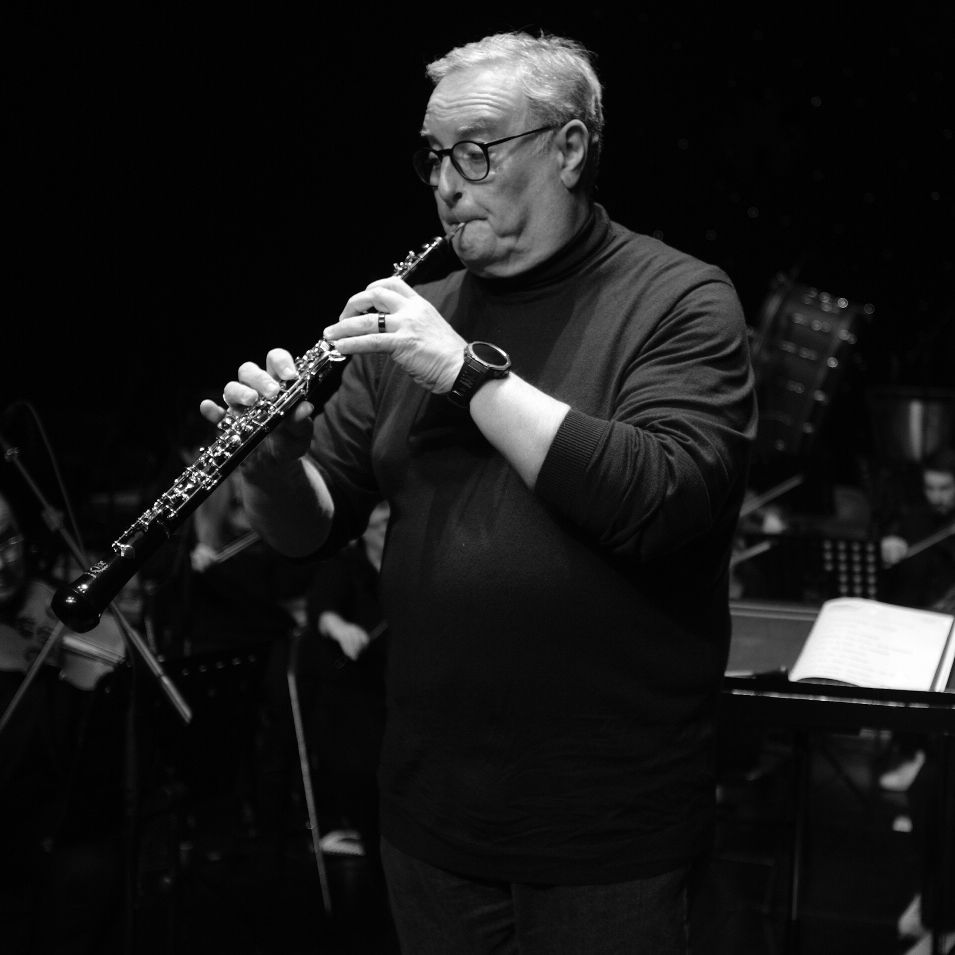
Back at the hotel, I got showered and changed into my concert suit and looked rather dashing, if I don’t say so myself. After the success of my photoshoot post-lunch, I was still on a high! Off we went to the concert venue for the evening’s performance. It was all very impressive, as was the welcome by the theatre staff. The actual stage was huge, and for the afternoon rehearsal, everything was ready for us. We just had to walk on stage and play. I could definitely get used to this. I even managed to get a few photos, including a short series of the boss playing Gabriel’s Oboe from the soundtrack of the film “Mission.” Not the impossible one, I hasten to add.
It was during this rehearsal that I got to know our soloist, Jennifer Councier, a little more. That girl’s voice is amazing and fills up the whole amphitheatre. She’s an absolutely wonderful singer.
The concert went very well, and the audience was on grand form. When Jennifer sang the Chinese song, we had only played the first two bars when the audience joined in. Can you get any better than spontaneous audience participation? Probably not. Apparently, the Chinese love a Viennese waltz by Strauss. They were also tickled pink when Corentin and Catherine, one of the first violins, and another couple of dancers went into the audience to waltz around. That poor boy got far too much attention. But he seemed to love every minute of it, judging by the grin on his face when he came back to join us on stage. The audience lapped up each piece of music, and their reception of our music was something I’m not going to forget for a long while. After our “Christmas” concert, we got back on the bus to go back to the hotel and eat. I know, more delicious food.
We were to eat at a different restaurant that evening. The food was amazing, and the place had a feeling of being a place for the locals too. Not just that, but they had beer too. Alipay had decided to work. Uncle Ian was about to have a “sesh.” Our colleagues drifted back to the hotel for a well-earned sleep. Uncle Ian was having a grand time of it. Uncle Ian was very happy about Alipay working, and the bonhomie was infectious, so much so that a table of Chinese lads offered me a beer and wished me a Happy Christmas. It certainly was turning out to be a very Happy Christmas. Now, these lads had a box of beer by their table and quite a few bottles on their table. They were having a great night. After our French colleagues left us, we invited them over to share some merriment. I wouldn’t describe myself as a drinker, but I will say that I have a knack for downing a beer at a rapid rate of knots. By the end of the night, our new friends for life, and of course, bosom buddies, were starting to feel a little wobbly on their legs. Corentin made me promise that I would just have one last beer. So one last beer it would be. He seemed a little terrified of the way the soirée was heading. He’s such a lovely boy for worrying about Uncle Ian… He managed to drag me away from our new friends and got me back to the hotel. Was he saving me from our new friends for life, or was he saving them from me. Only time will tell. I think the key phrase to the evening was “as happy as a pig in shit.”
Our new friends for life. Thank you Corentin for allowing me to use these images! The poor buggers didn’t know what hit them…
Beer, you see, has a special kind of magic to it. There’s something about it, something fundamental, that bridges gaps and makes two men from opposite corners of the world feel like old friends. Wine might carry elegance, and liquor can be quicker, but beer? Beer is no-nonsense. It’s a drink that demands little more than appreciation for its simplicity.
There’s a quiet dignity in a cold bottle, clinking against a glass, that says, “We’re here, we’re sharing this moment.” In a way, it carries a sense of noblesse, a kind of unwritten rule of hospitality: come, sit, have a drink, and let’s talk without pretense. There’s no rush, no grandiosity—just two people connecting. In the unlikeliest of places, beer brings people together, like a bridge that spans cultures and backgrounds.
I don’t mean to sound too lofty about it, but there’s something wonderfully egalitarian about beer. No matter where you’re from—be it France, or far-flung places like China—a beer is always the same. And, like some sort of unspoken contract, it helps dissolve differences.
Of course, there are jokes about beer that always float to the surface in these moments. Take, for instance, the old Irish joke about the “Irish queer”—and by this, I mean someone who prefers women to beer! It’s a bit cheeky, a bit irreverent, but in those rare moments when the last sip of beer is shared, it feels just right. Nothing can quite compare to the camaraderie that forms over a few cold ones, whether you’re bonding with a colleague or making a new friend halfway around the world. It’s this pure, unspoken connection that beer uniquely brings, and in that, it’s a drink that transcends.
And on these very wise words, I will leave you until the next installment…
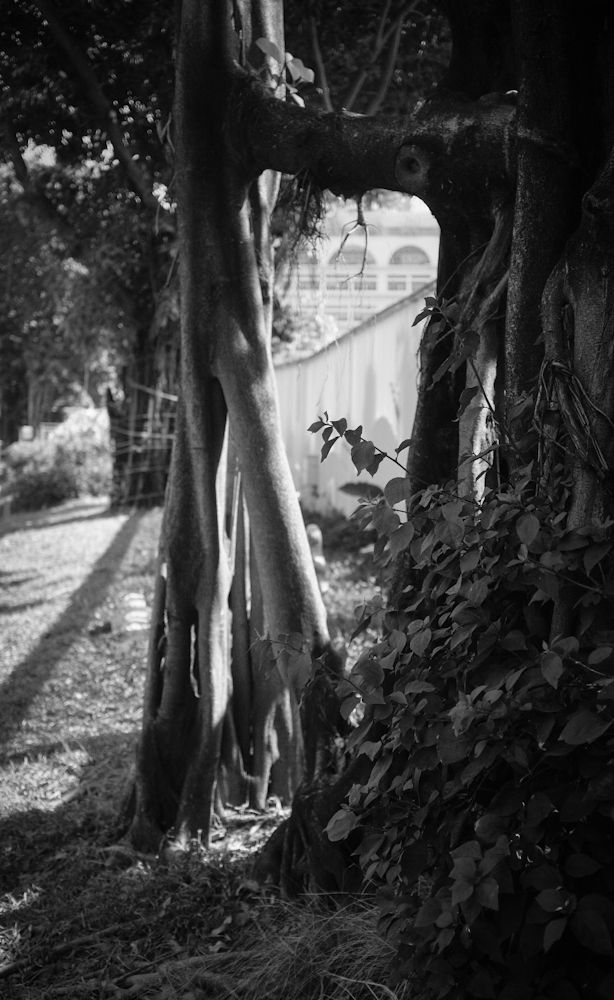
As we reach the end of A Photography Philosophy Series, I hope this journey has been as rewarding for you as it has been for me. Through these articles, we’ve explored the philosophy behind why we photograph—going beyond equipment and technique to dig into the heart of what makes photography so meaningful. Each theme in the series has shed light on a unique layer of photography, from capturing emotions to telling stories, reflecting identity, building connections, and even embracing impermanence.
We began with Why Do We Photograph?—a question that sits at the root of every image we capture. For some, photography is about preserving memories; for others, it’s about self-expression, documenting moments, or sharing perspectives. Over time, our reasons for photographing often shift and evolve, bringing more layers to our work as we grow. This first article set the tone for the series by reminding us that photography is a deeply personal journey, and our motivations shape each image we create.
Then we delved into The Emotions of Photography, exploring how images can carry feelings, from joy and nostalgia to solitude and contemplation. Photography allows us to express emotions that words often fail to capture, communicating through light, composition, and mood. Each photograph holds the potential to resonate with viewers in a way that feels both personal and universal, offering a window into the photographer’s emotional landscape.
The Art of Storytelling in Photography came next, where we looked at how images can create narratives—small windows into people, places, or moments that form part of a larger story. Photography has a remarkable way of capturing both detail and the bigger picture, allowing us to document stories that speak to shared experiences or unique perspectives. In a world full of words, photographs can often tell a story with a quiet eloquence.
In Identity and Self-Expression, we explored how photography offers a chance to express who we are and what we see. Our images inevitably reflect parts of ourselves—our backgrounds, our worldview, and our personal journey. For many, photography is as much a journey of self-discovery as it is a creative practice, helping us find our own voice and share it with others. Photography encourages us to see ourselves more clearly and to reveal something of that to the world.
Then came Connection Through Photography, a theme close to my heart. Photography, as we’ve seen, can forge connections—between photographer and subject, among fellow photographers, or with viewers who see something of themselves in the image. These connections remind us that we’re not alone in this world; they foster a sense of community, shared understanding, and empathy that goes beyond language. Photography has a unique power to unite us, even if only for a moment.
Lastly, we explored The Philosophy of Impermanence, where we reflected on the fleeting nature of each photograph. Every image captures a moment that can never be repeated, lending photography its unique poignancy. Impermanence reminds us to treasure the moment and see beauty in the transient. Photography, like life itself, is filled with unexpected moments, and it’s often the imperfections or mistakes that give images their authenticity and depth.
As we close, I invite you to reflect on your own photographic journey. What drives you to take photographs? Which themes resonate most with you—capturing emotions, telling stories, connecting with others, or perhaps embracing impermanence? These reflections aren’t just theoretical ideas; they form the personal philosophy that shapes how each of us approaches photography.
Ultimately, photography is about connecting with the world and each other through shared moments and meanings. If this series has encouraged you to think more deeply about your motivations, experiences, and the meaning behind your work, then I hope you’ll carry those reflections forward. Photography gives us a way to see, to understand, and to share in ways that words alone can’t.
Thank you for joining me on this exploration. I’d love to hear about your own experiences—what drives you, what connects you, and how photography shapes your view of the world. Let’s keep the conversation going and continue building a community of thoughtful photographers, one image at a time.





































































 IJM Photography