Maybe I’m a little stubborn, just maybe, but I’m insisting on using my Nikon FE and for my health I have to get out. I had some Tri-X that needed using, and some HP5+ left over, so time to use it. And it does my mental health good too—getting out of the house despite the horrible light and rain.
“They” always say to go out in good light and use golden hour. We haven’t been blessed with good weather lately (understatement of the year contender 2026), and I always say just go out anyway and do it.
I shot two rolls that afternoon—72 frames total. Tri-X and HP5+, both at box speed. No pushing. I developed them in Fomadon LQN because it handles flat light cleanly: shadows stay defined, grain doesn’t get muddy even when the sky gives you nothing. When I scanned them, about half were ok enough to keep—36 frames that worked. Of those, maybe half a dozen were real keepers. That’s how it goes. Not every frame needs to be a masterpiece. Some just need to exist.
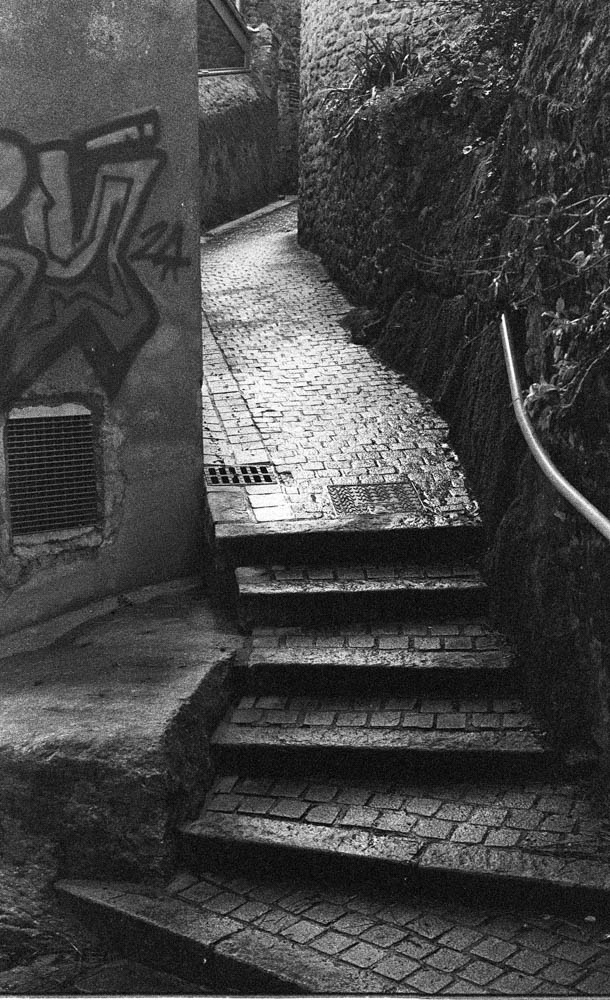
In Lightroom I only used the curves tool to pull a bit of separation between the wet stone and the grey sky. I wasn’t trying to manufacture contrast that wasn’t there. The rain had already done part of the work: cobblestones held texture because the light was even, puddles on the stairs created accidental reflections, and the streets were empty enough that I didn’t have to wait for tourists to clear the frame.
I won’t pretend I enjoyed standing in the damp. My shoes got wet. My hands were cold. But I needed to leave the house, and the camera gave me a reason to do it. The film was a deadline. The weather was irrelevant.
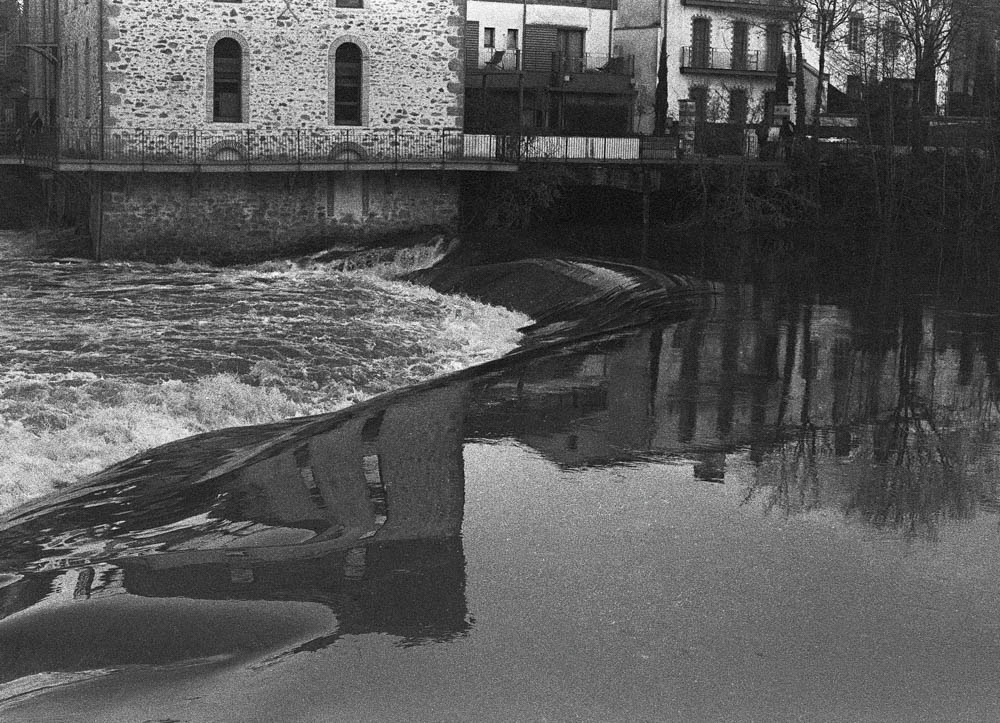
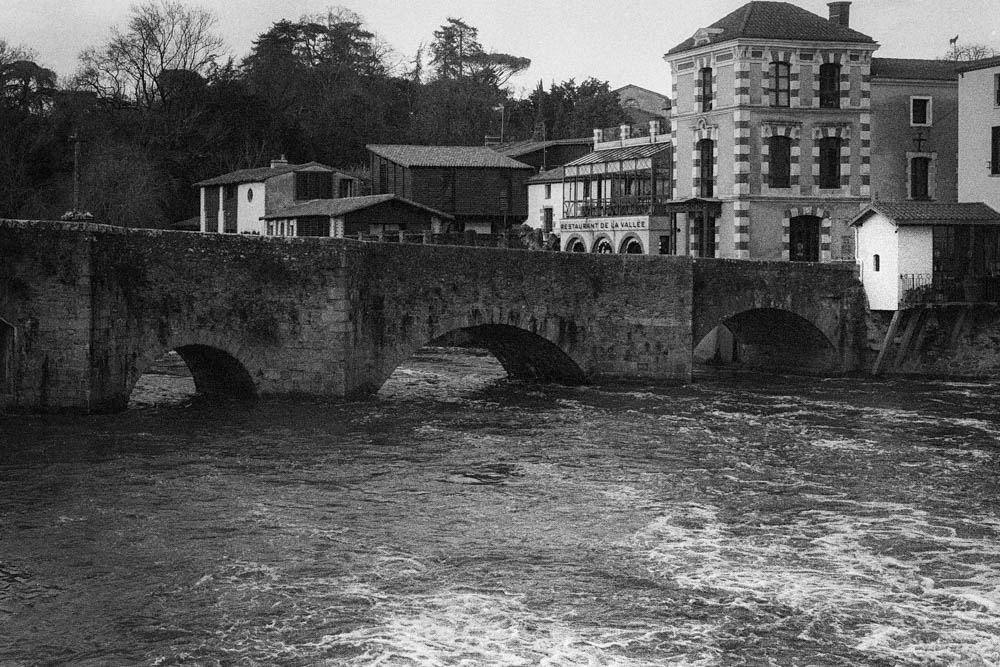
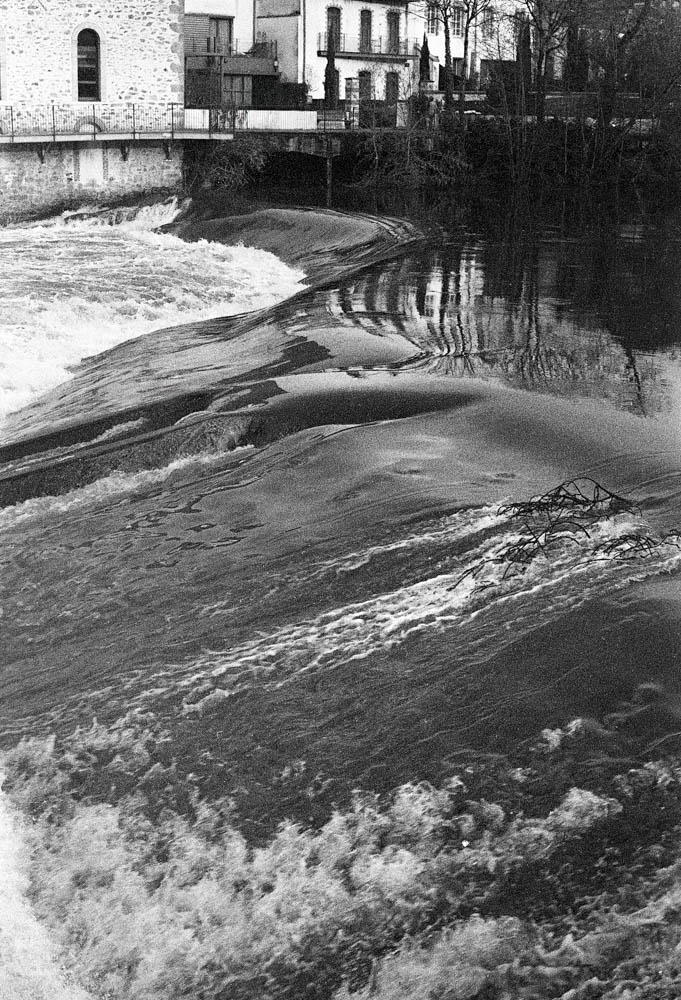
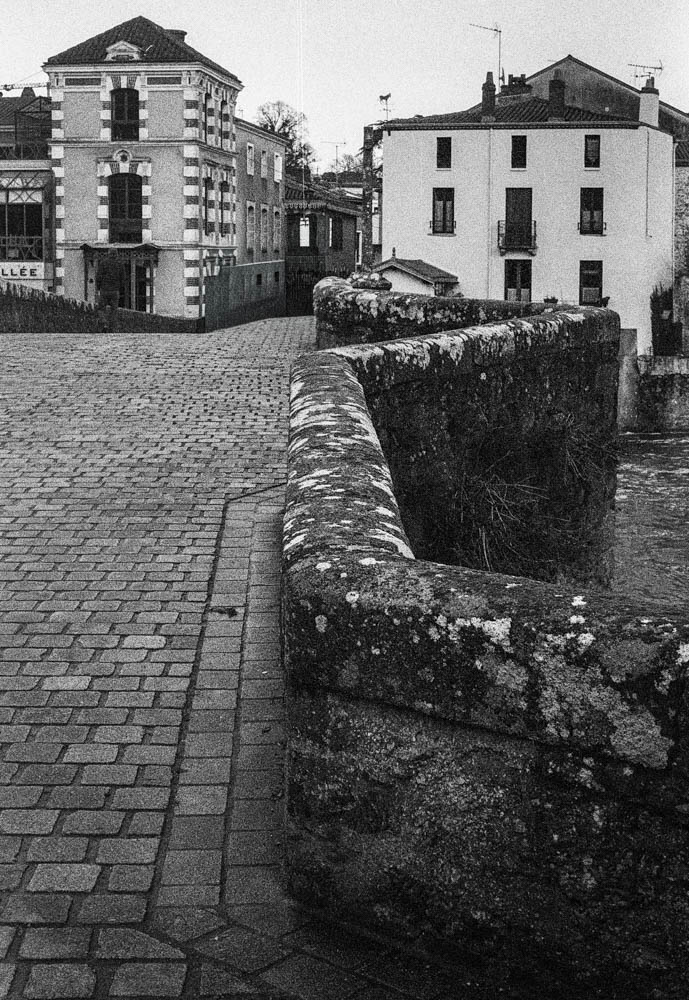
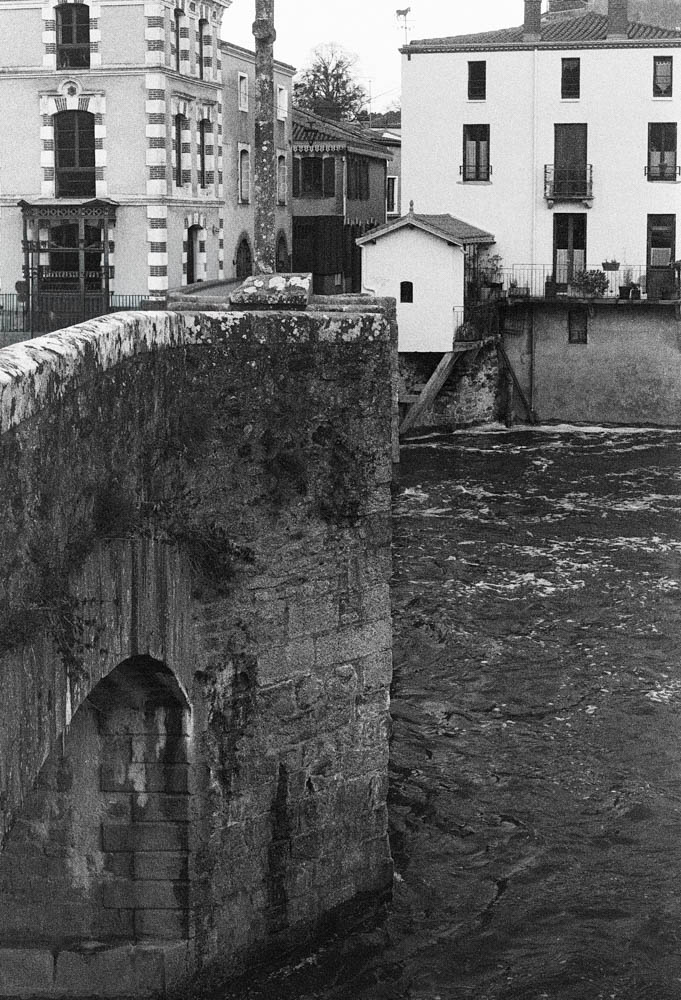
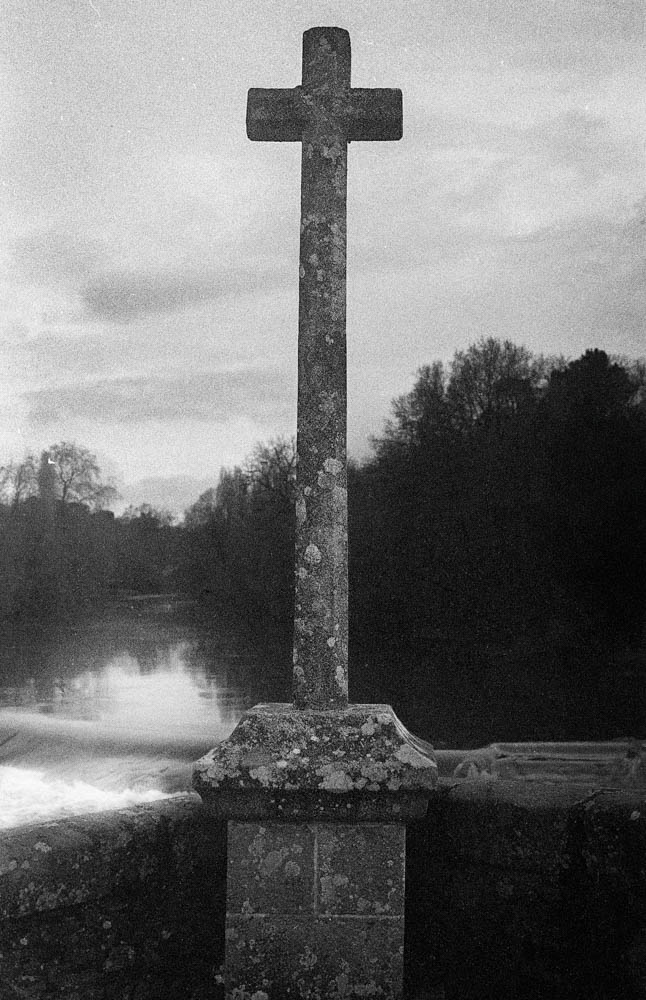
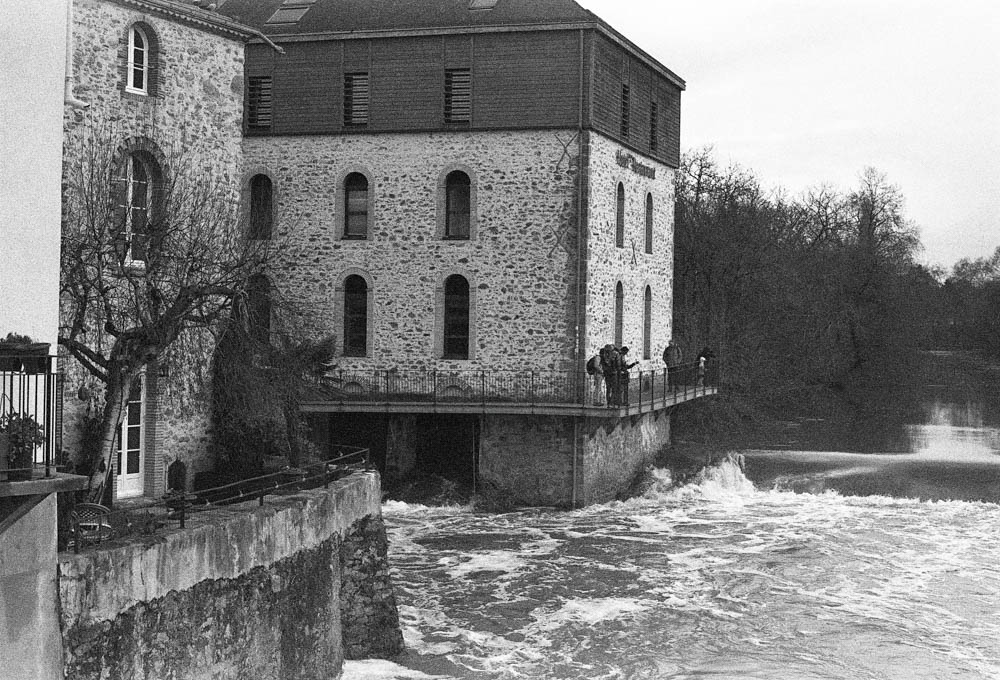
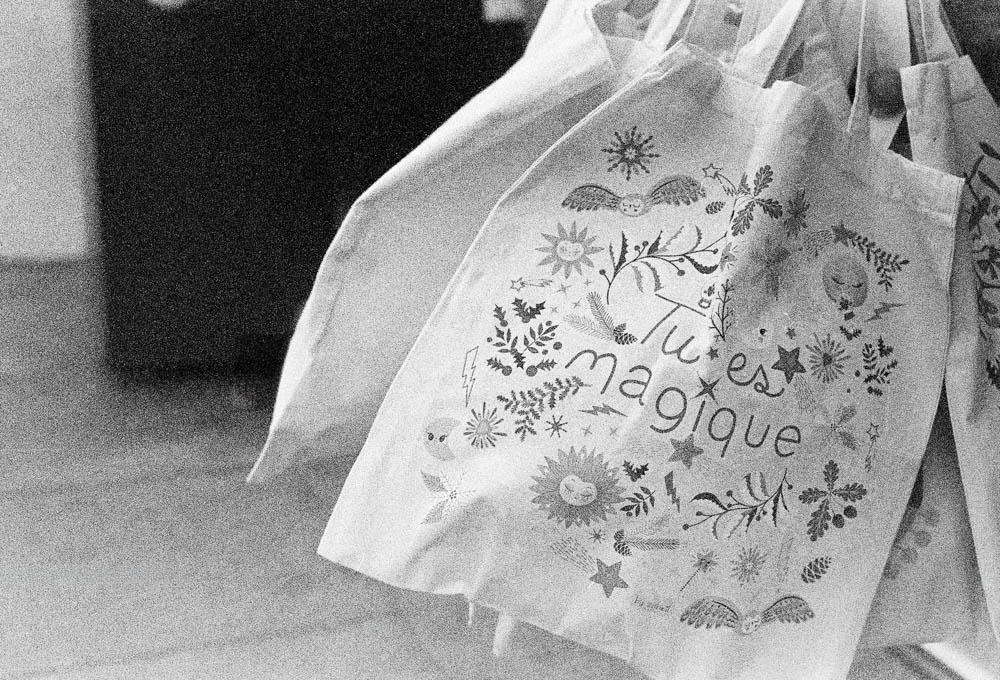
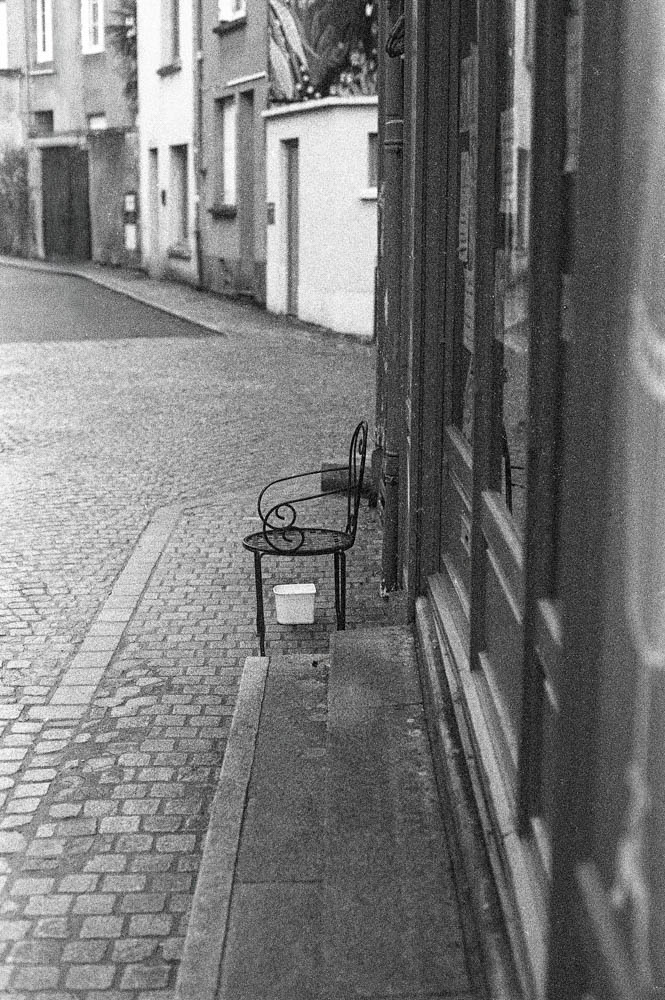
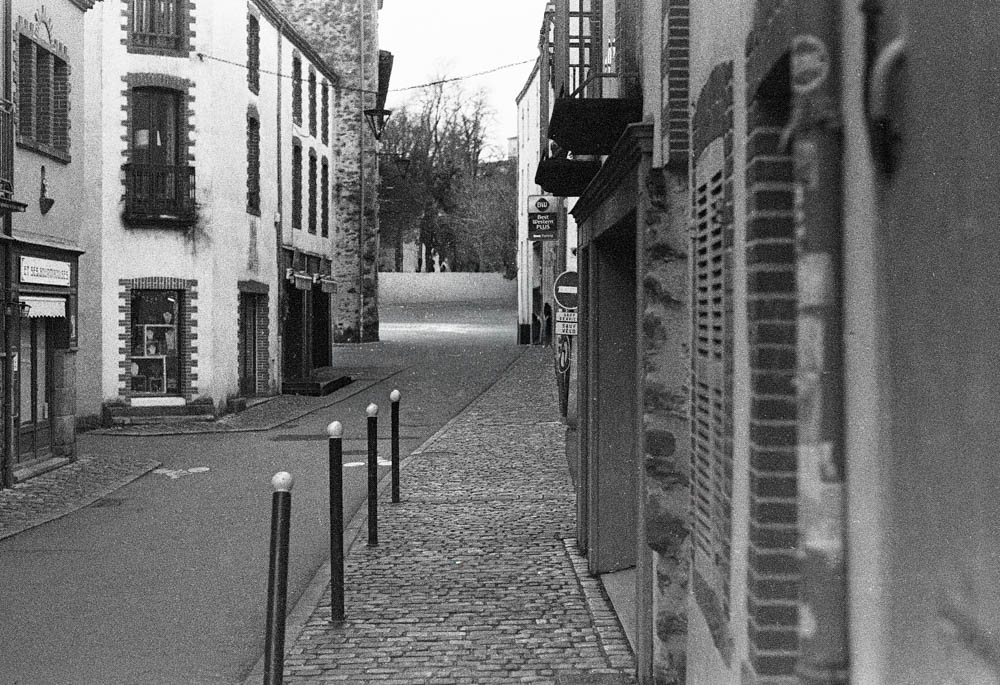
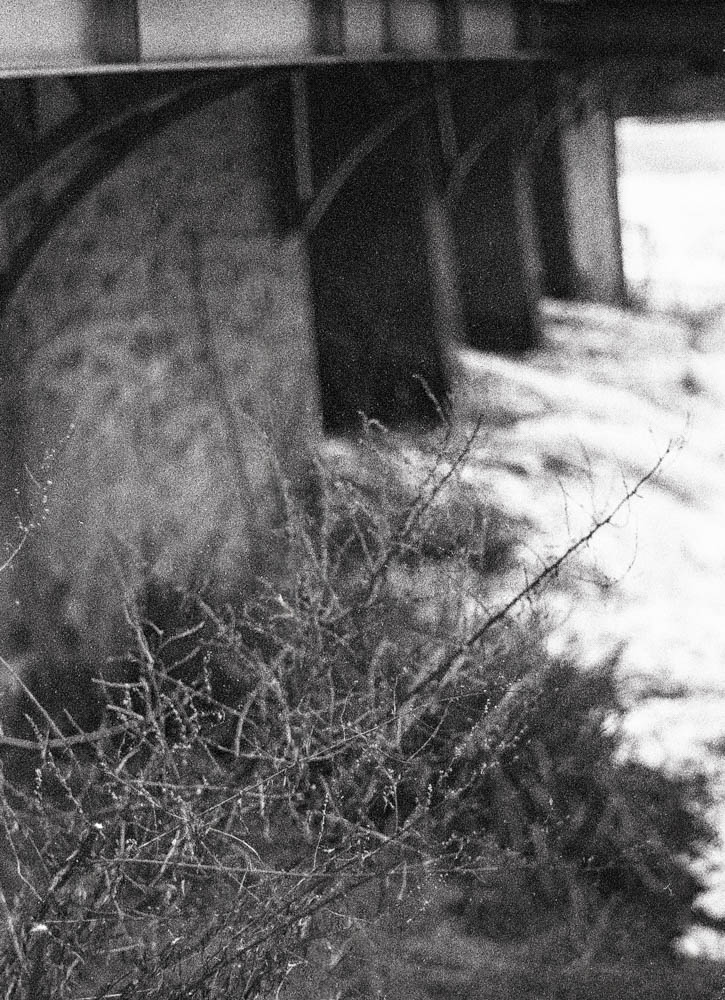
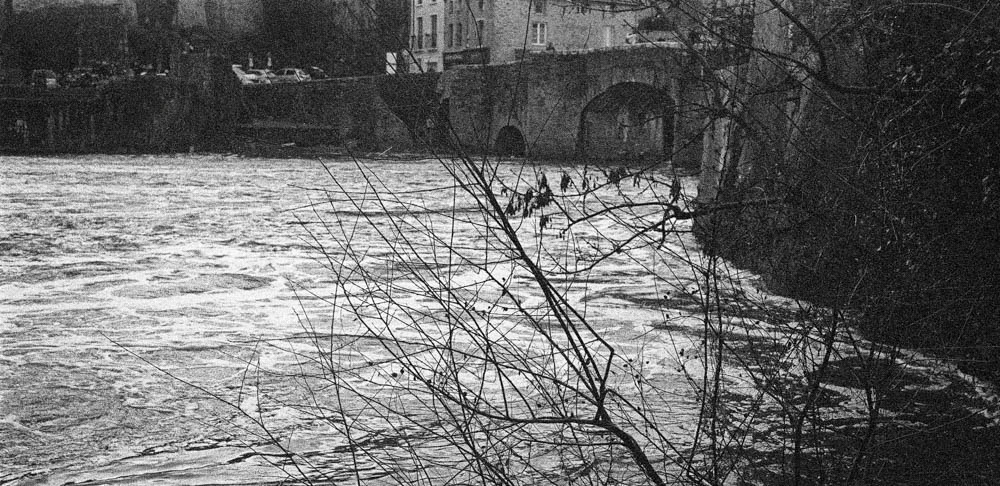
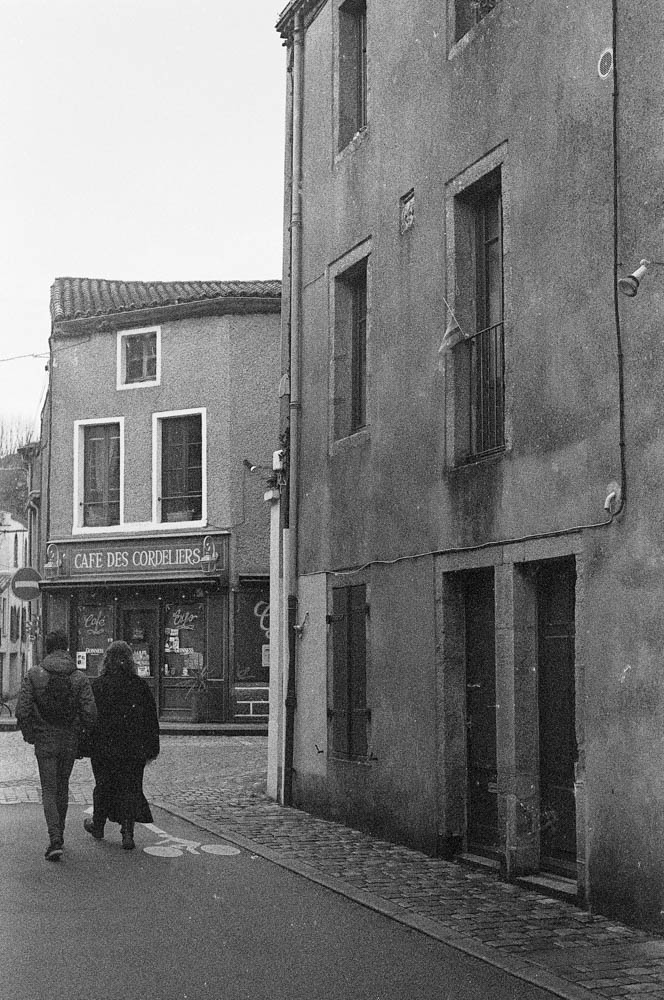
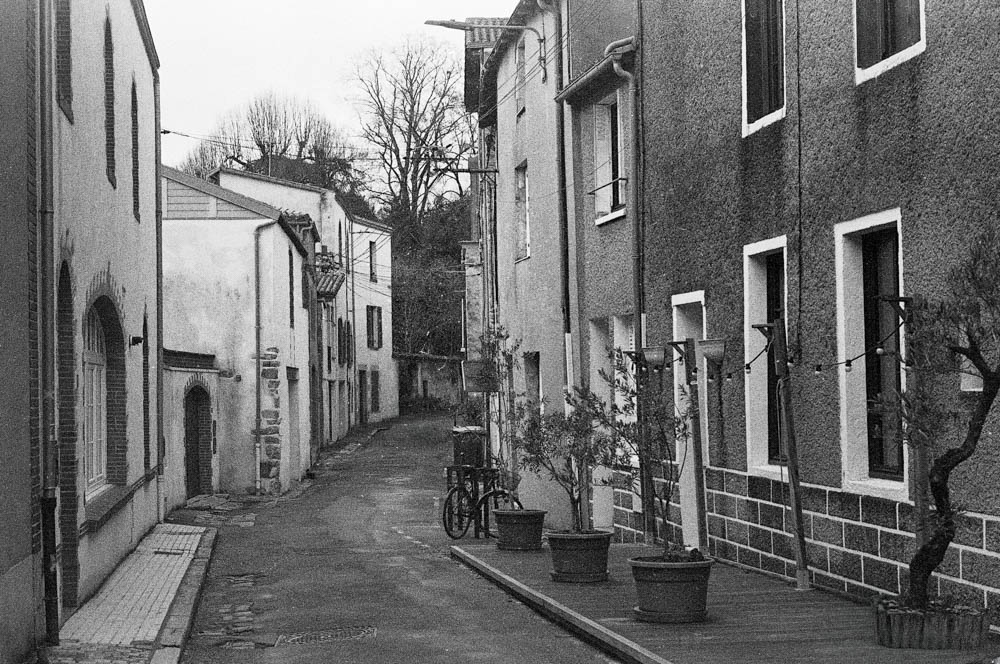
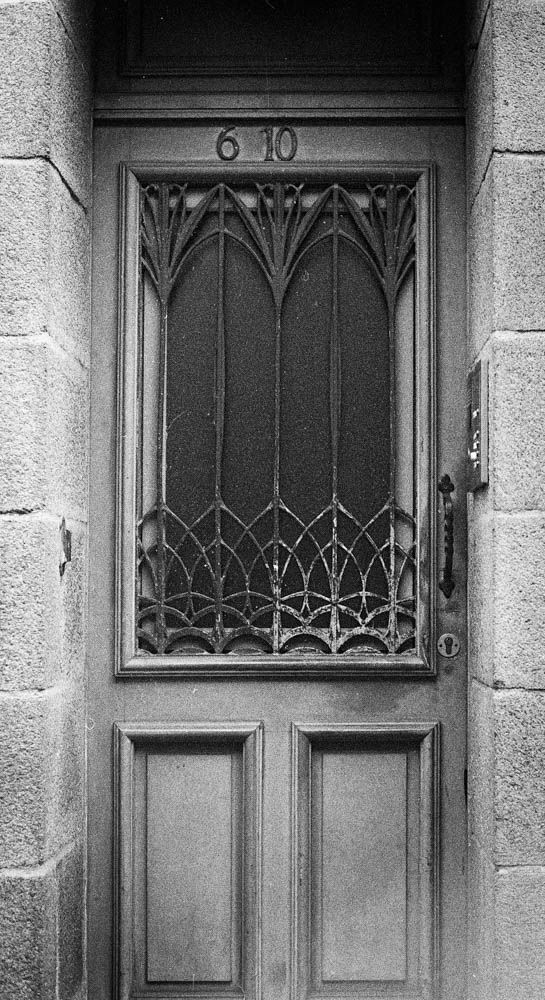
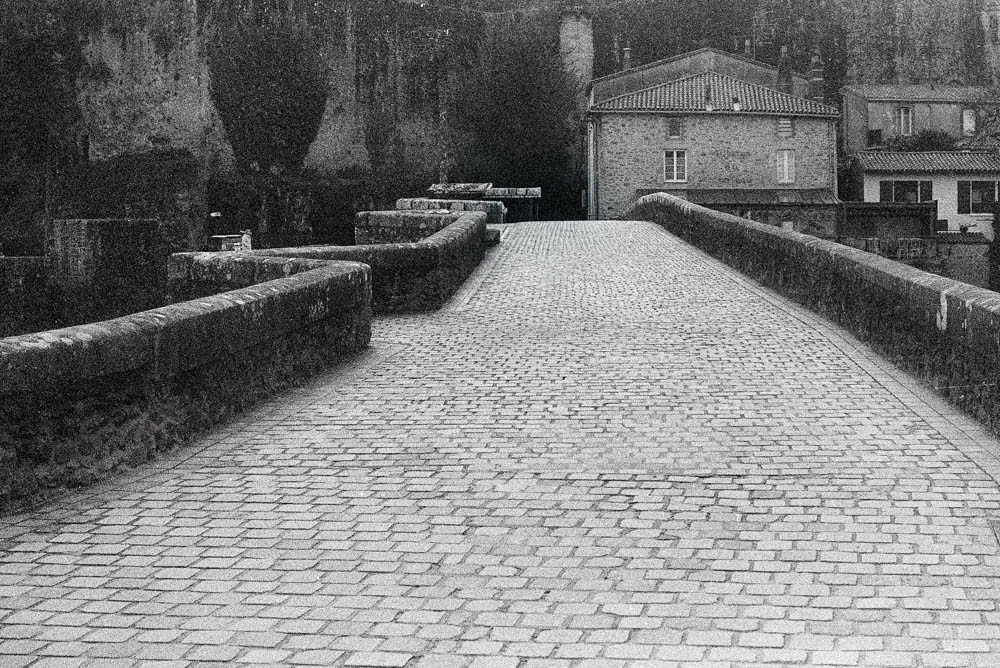
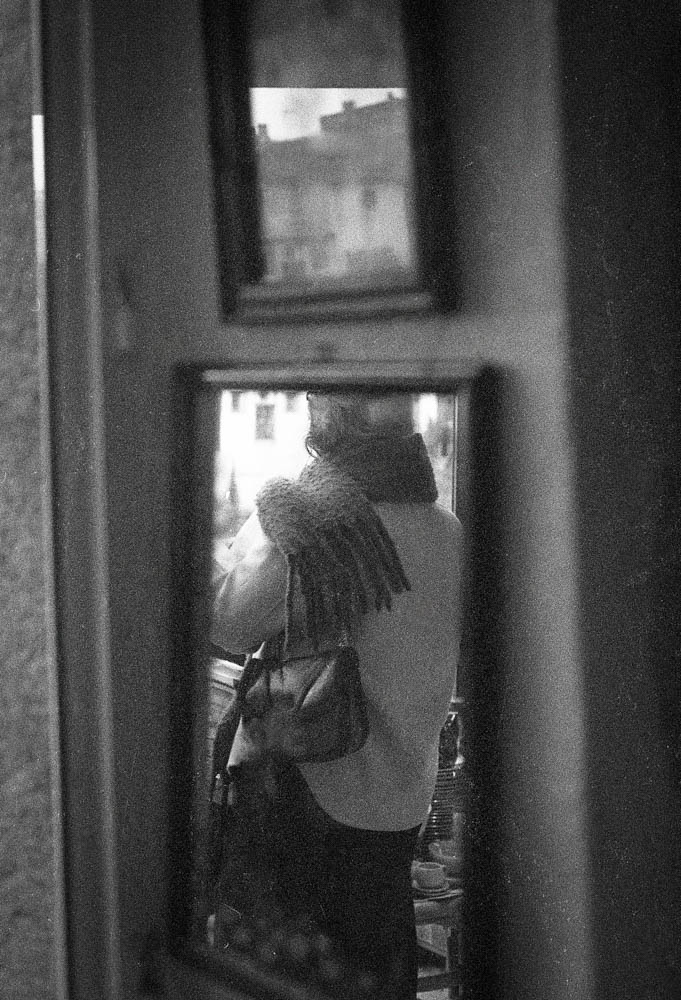
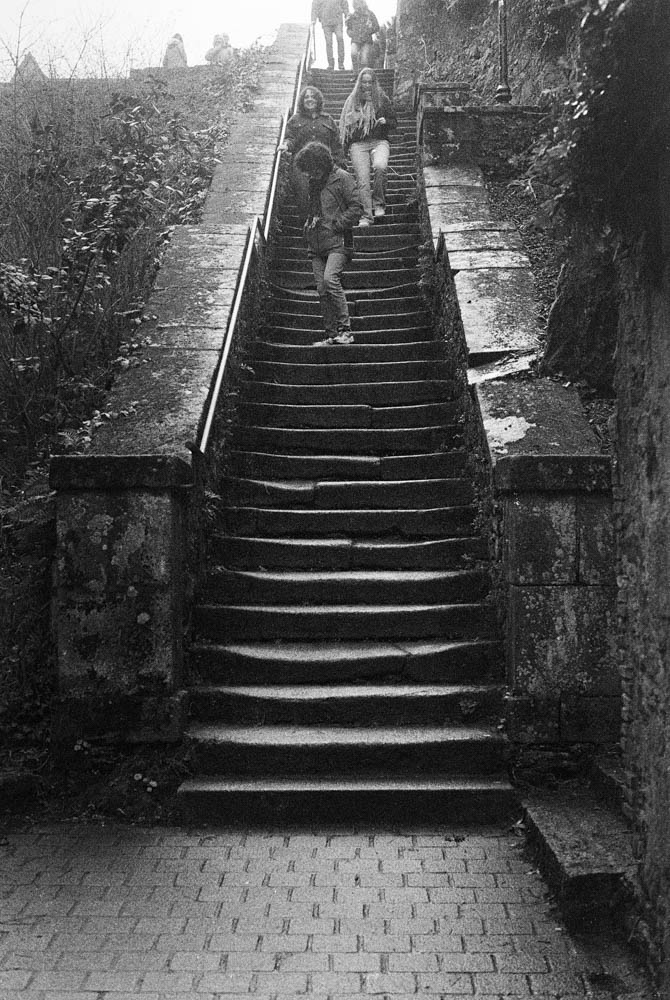
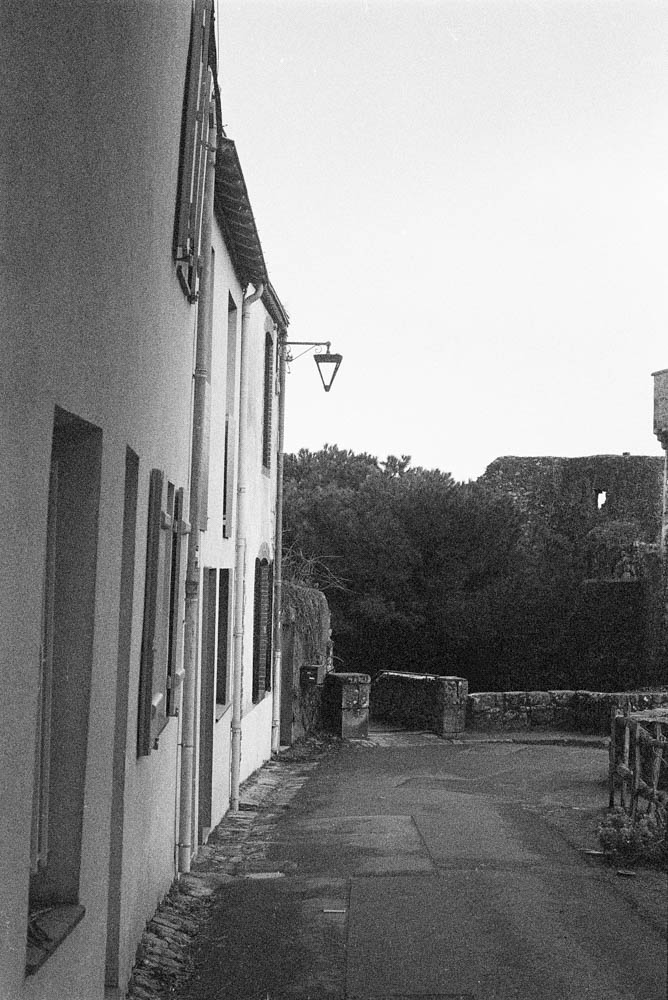
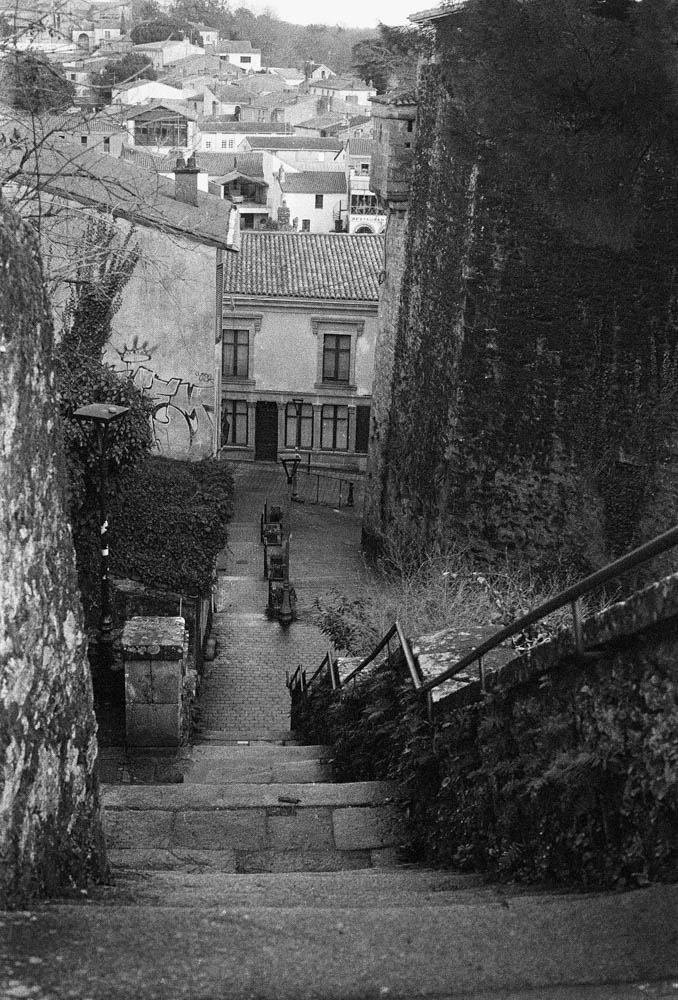
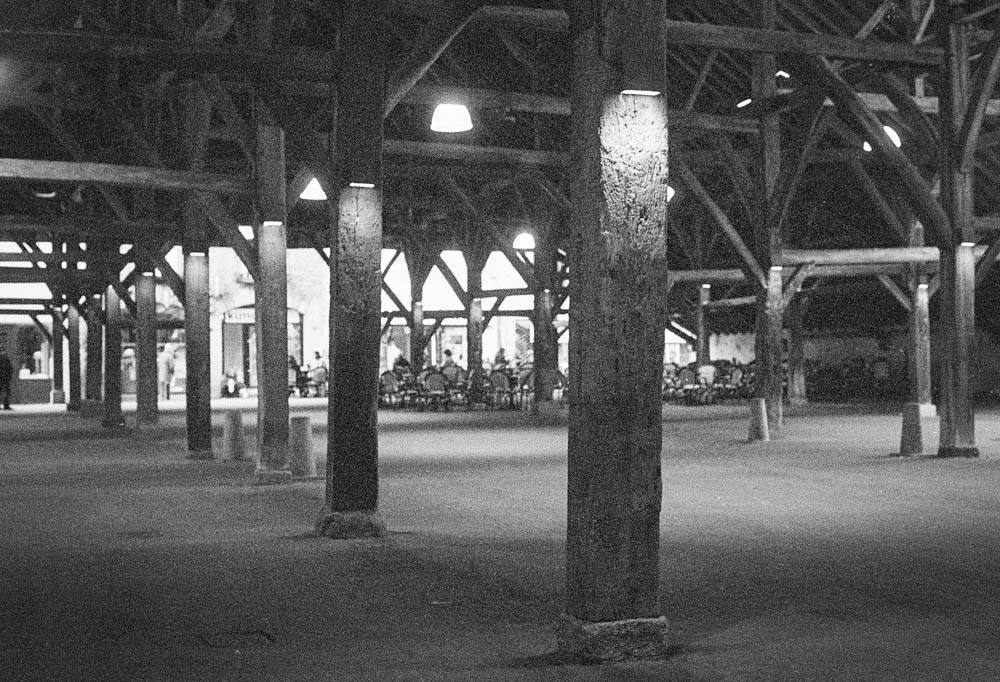
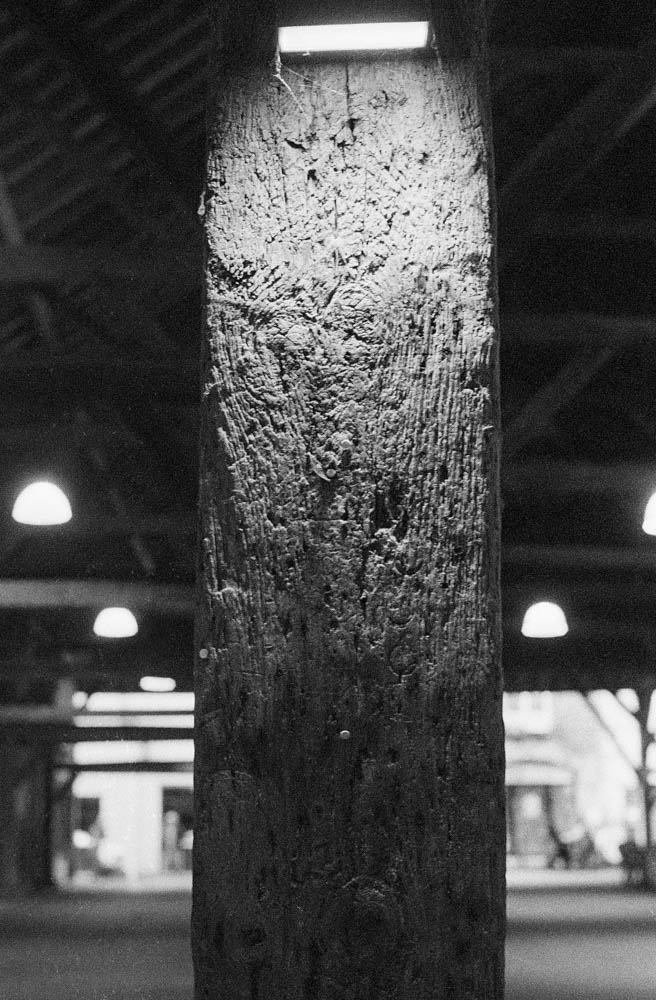
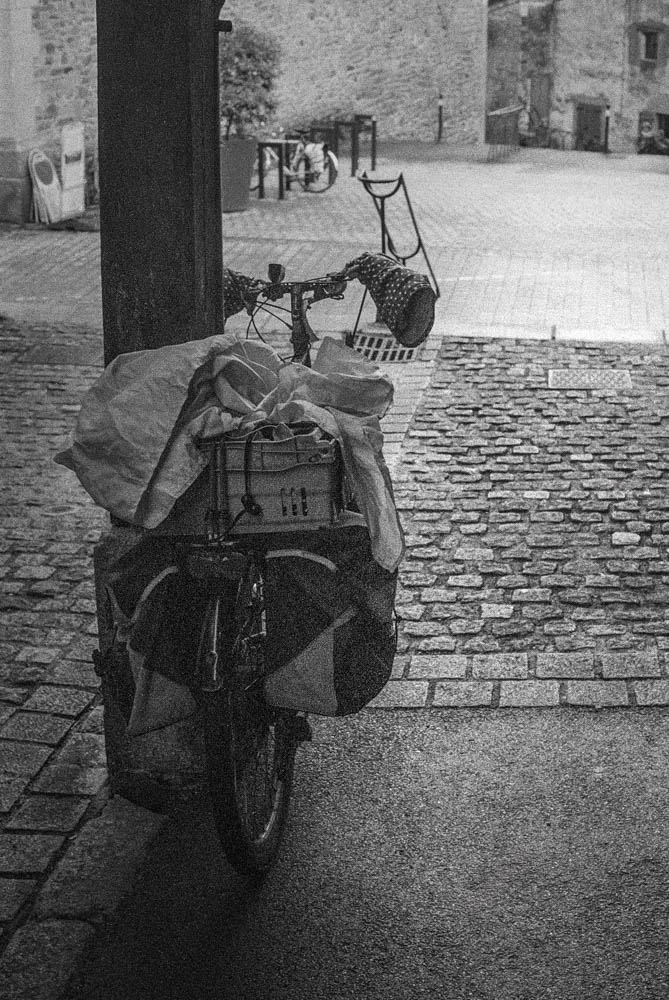
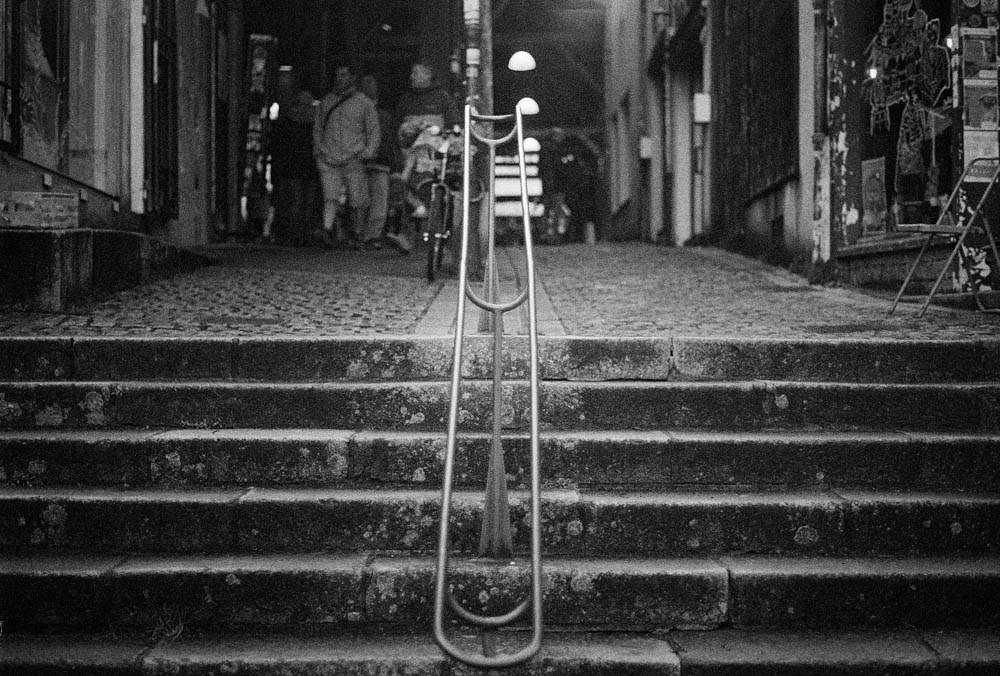
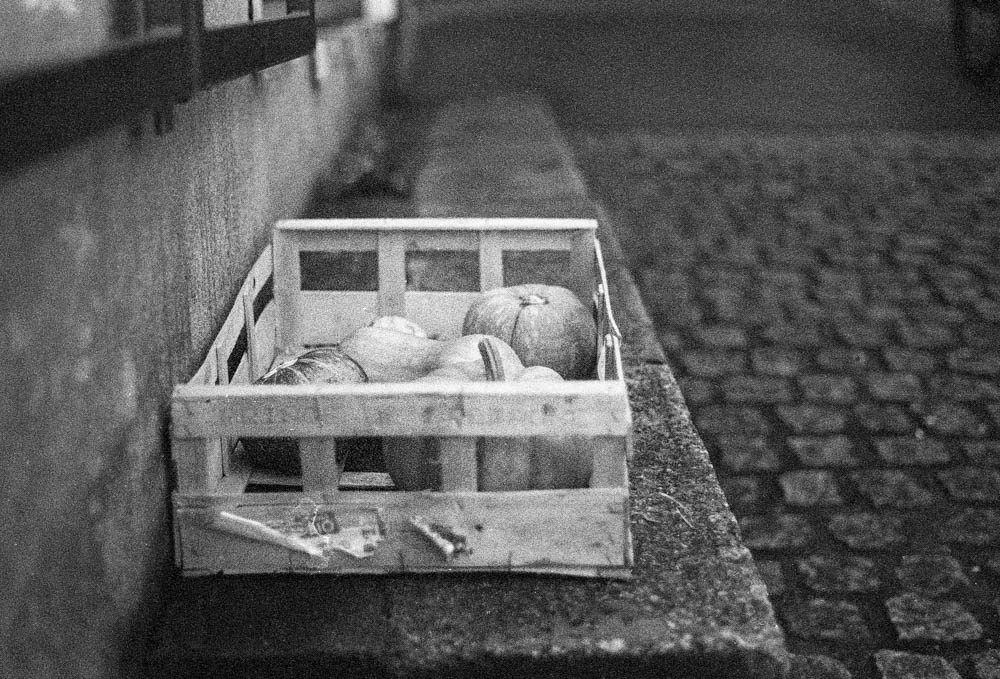
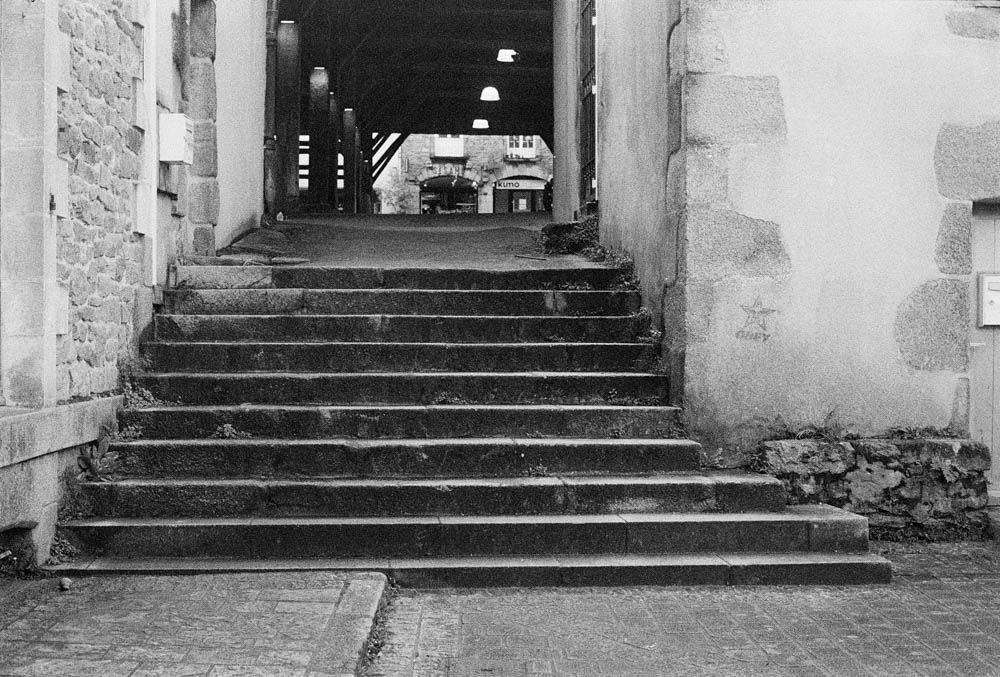
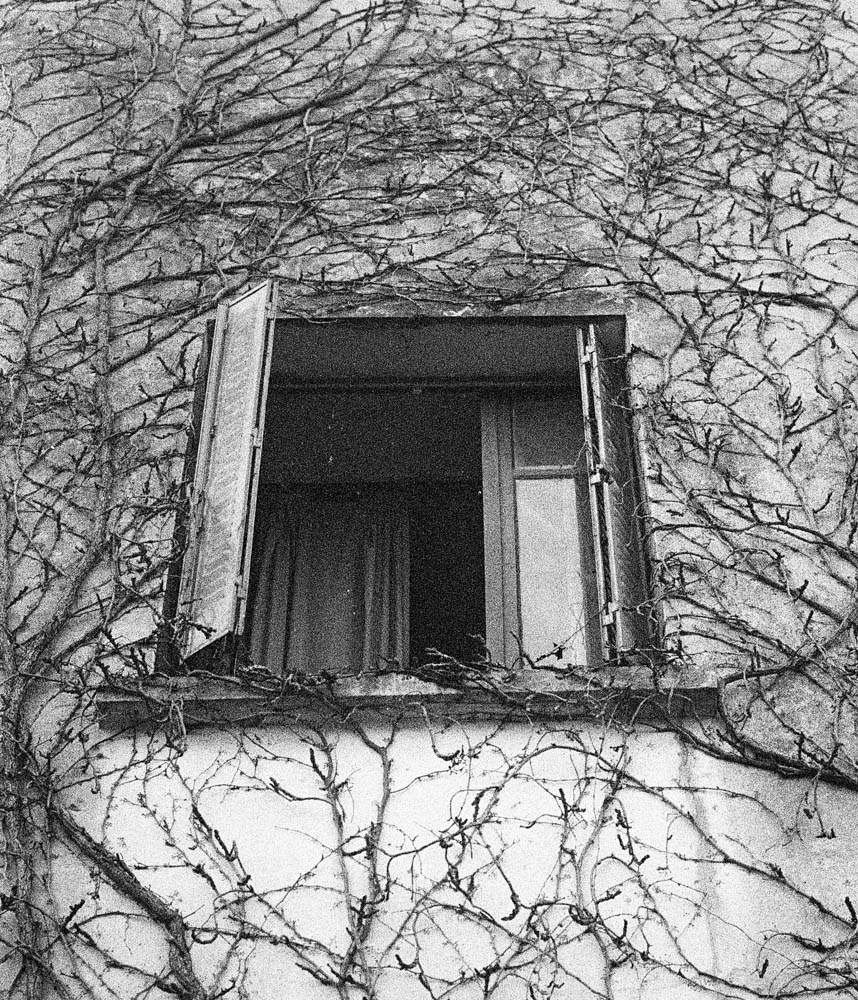
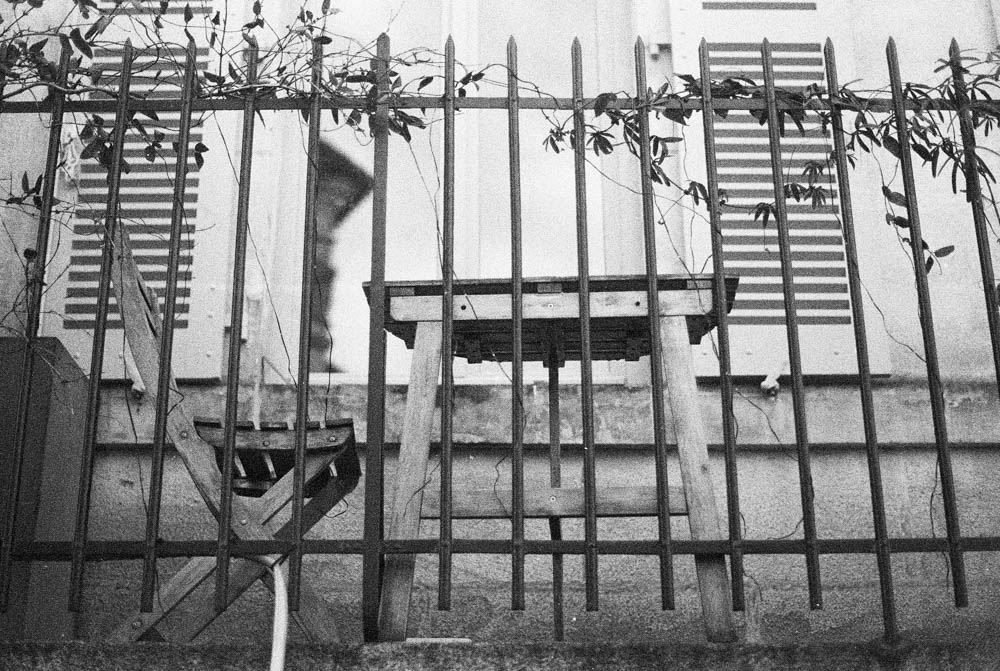
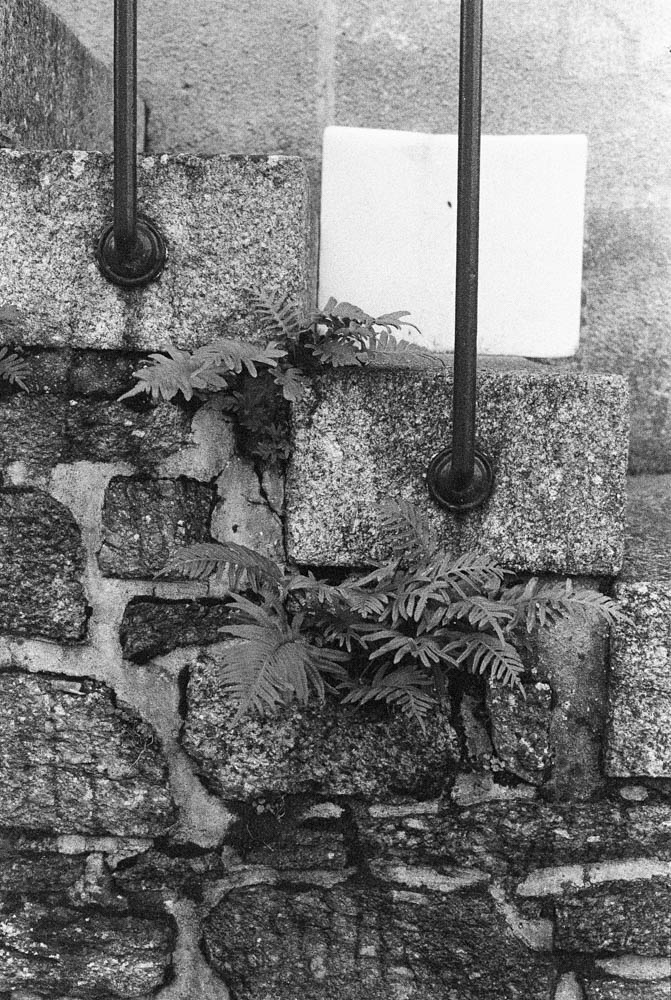
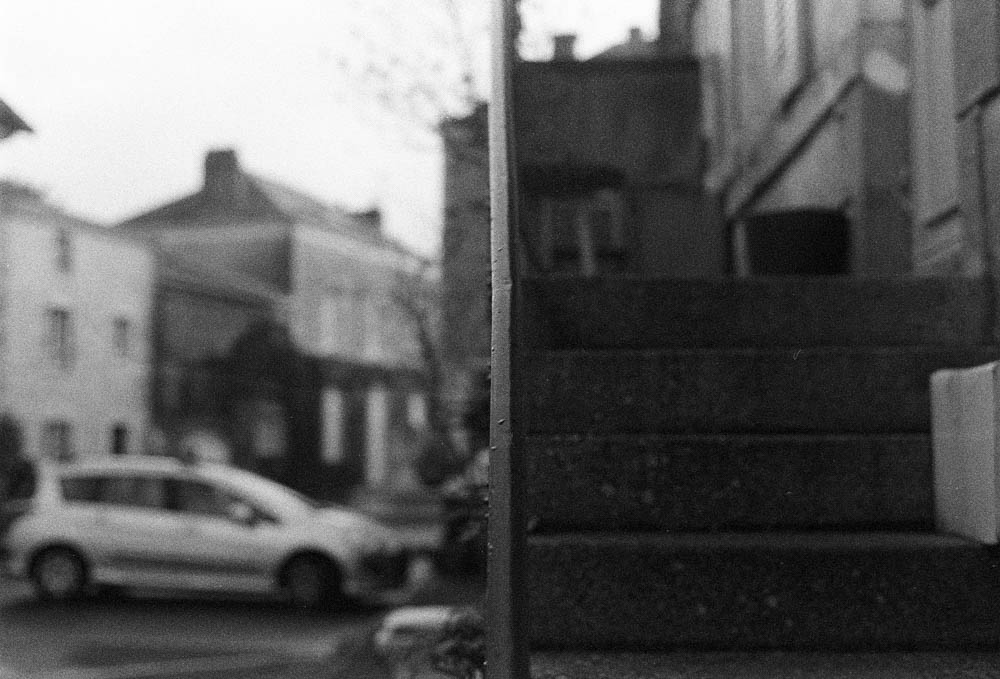
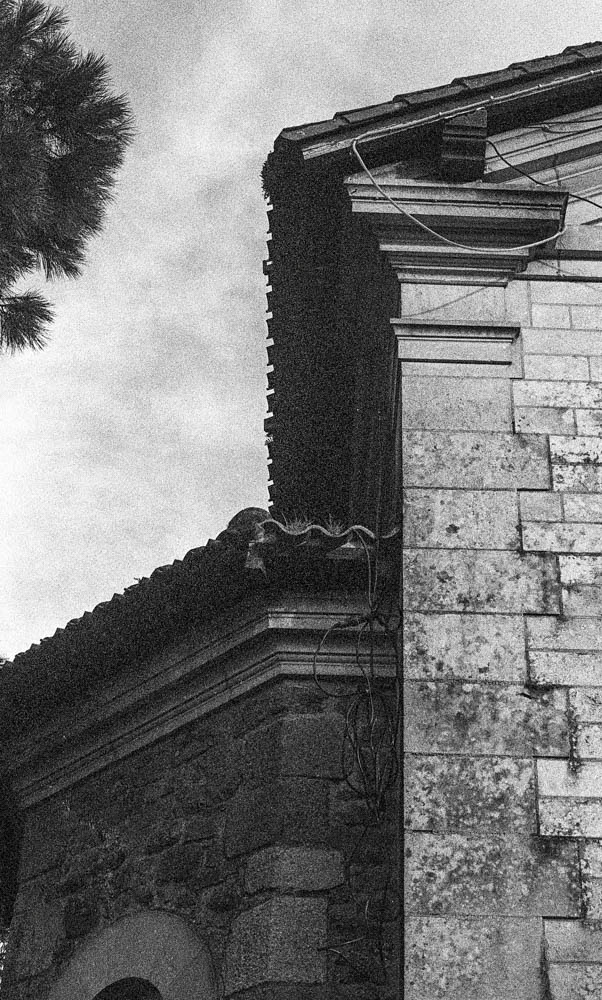
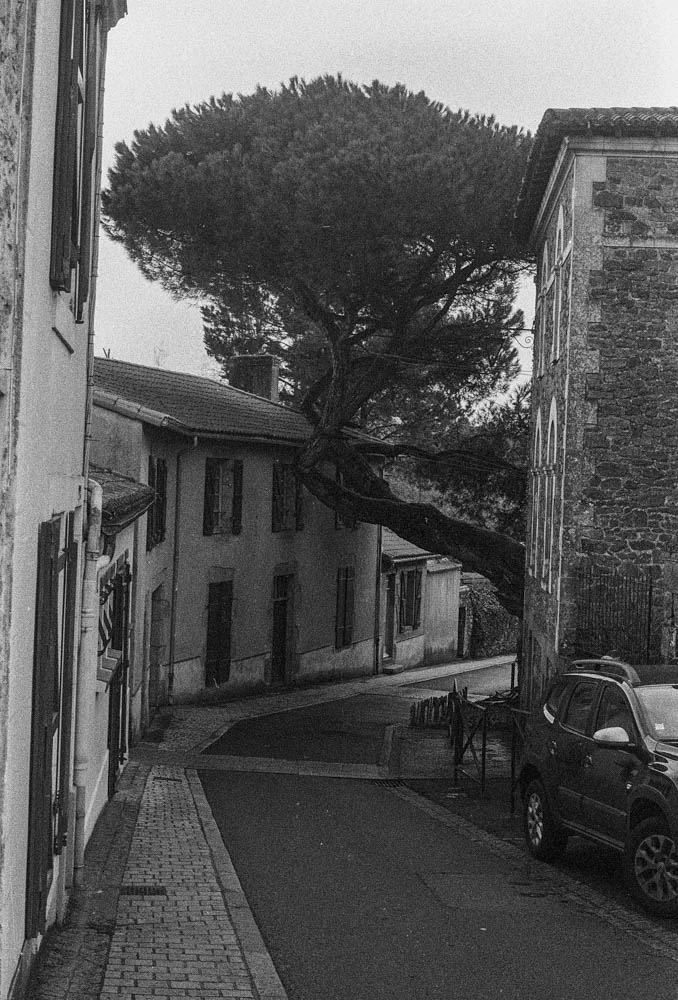
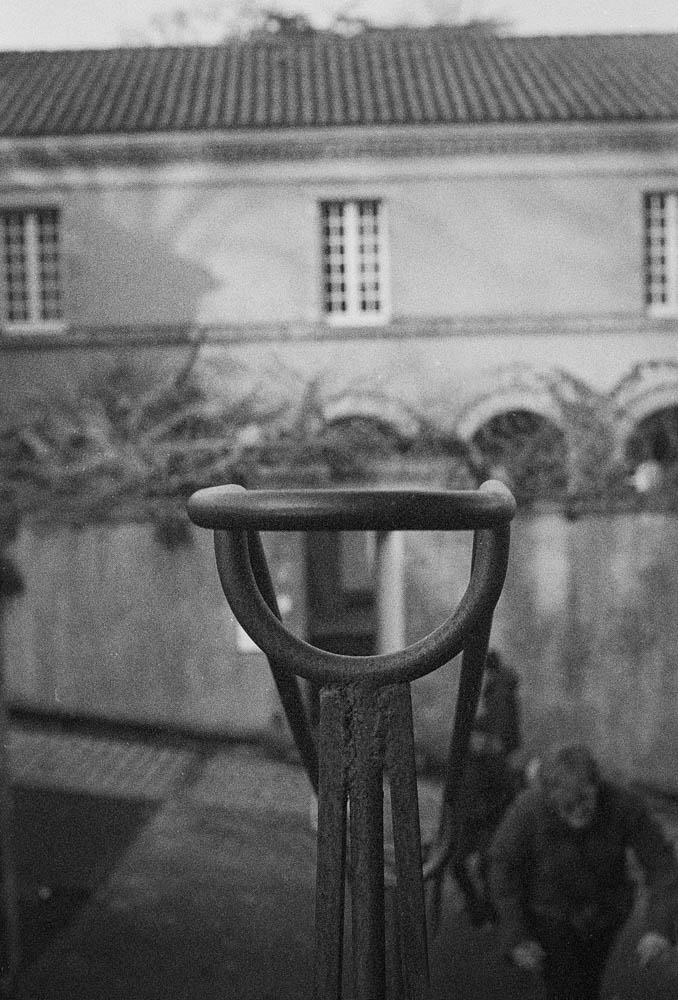
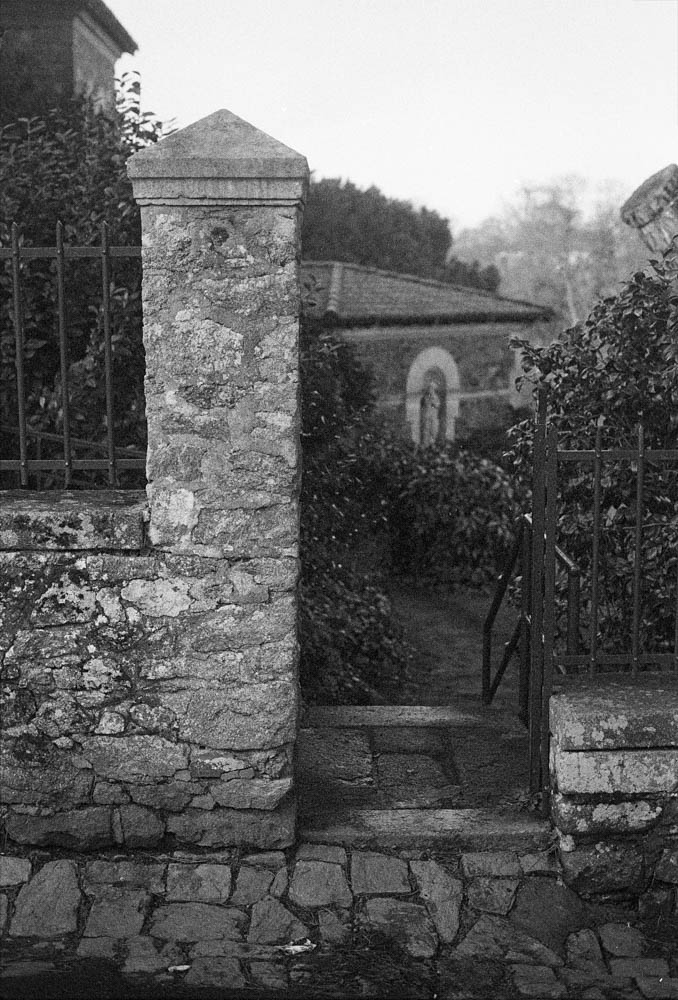
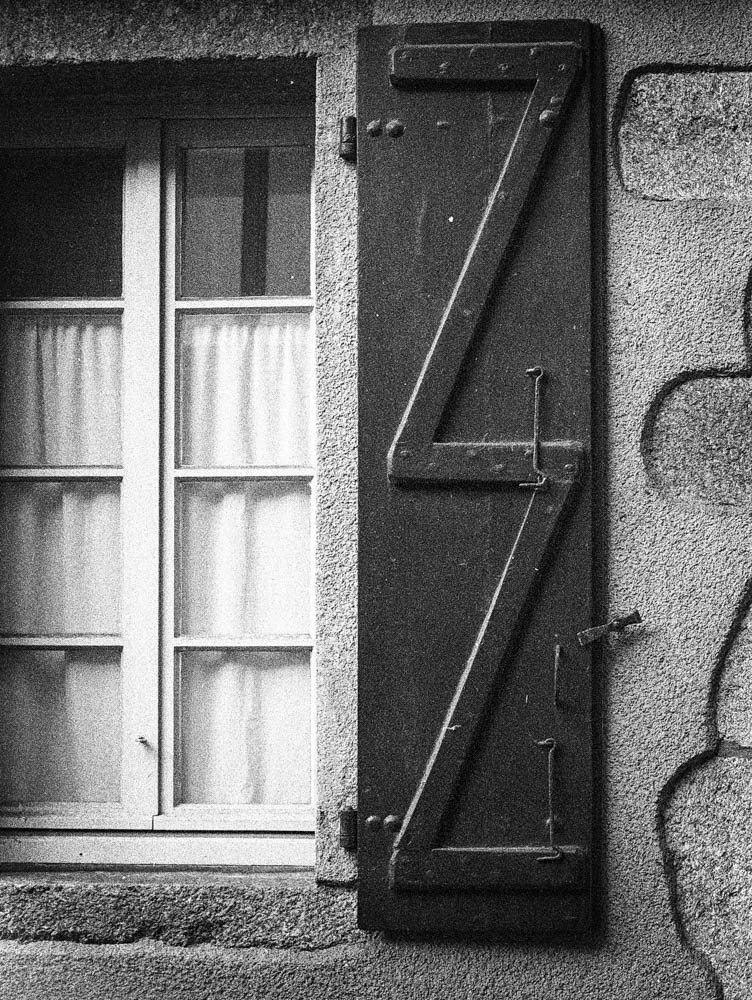
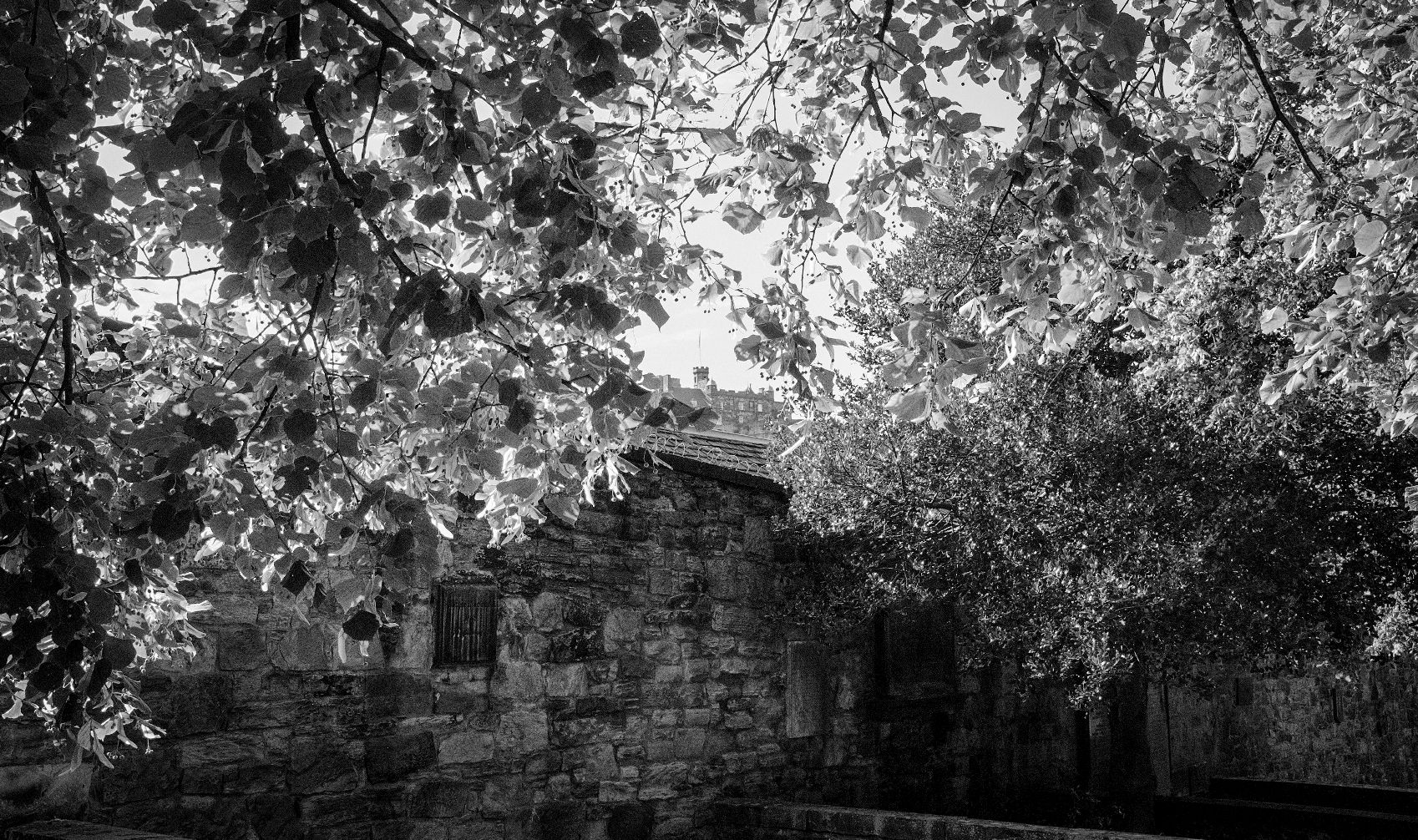
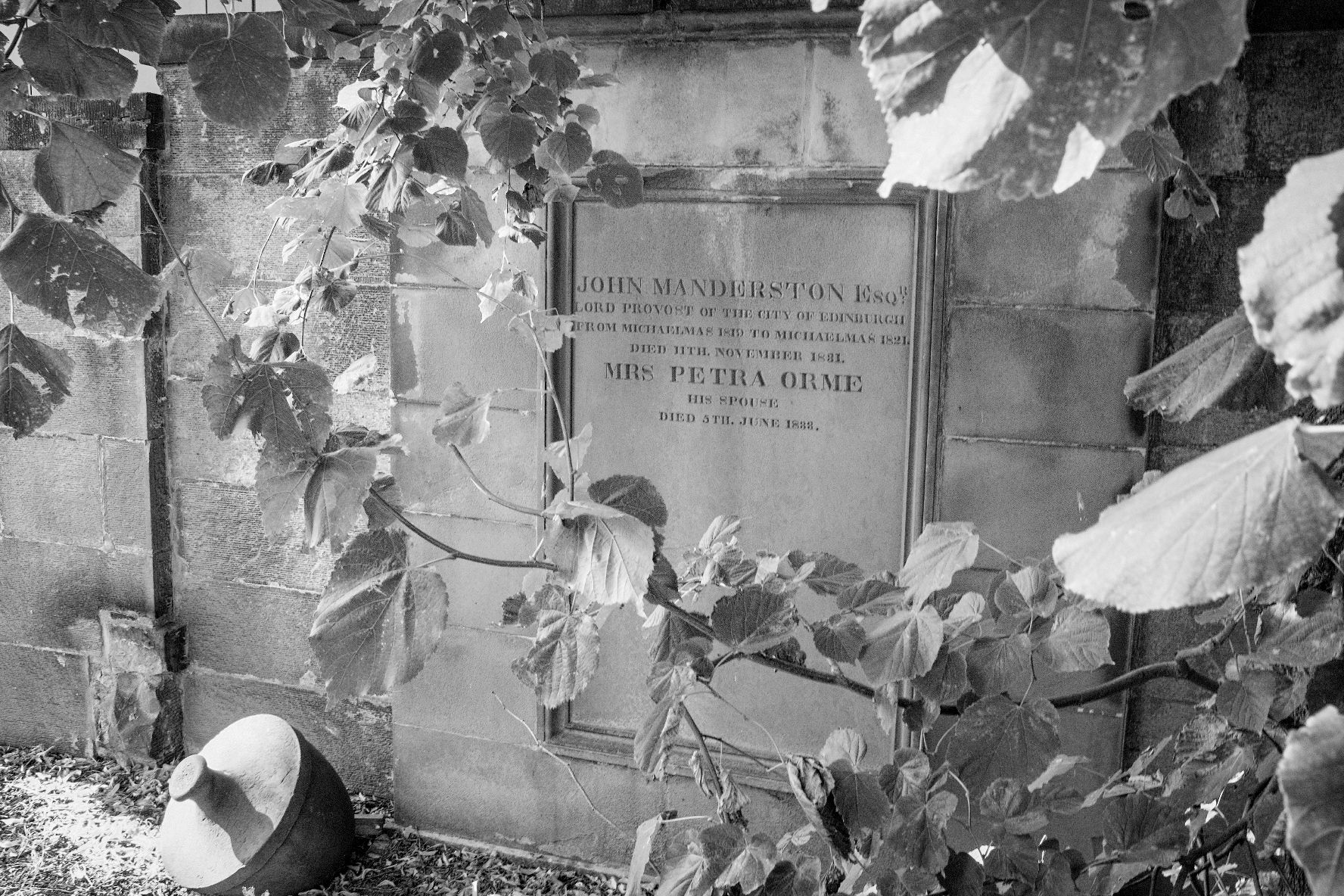
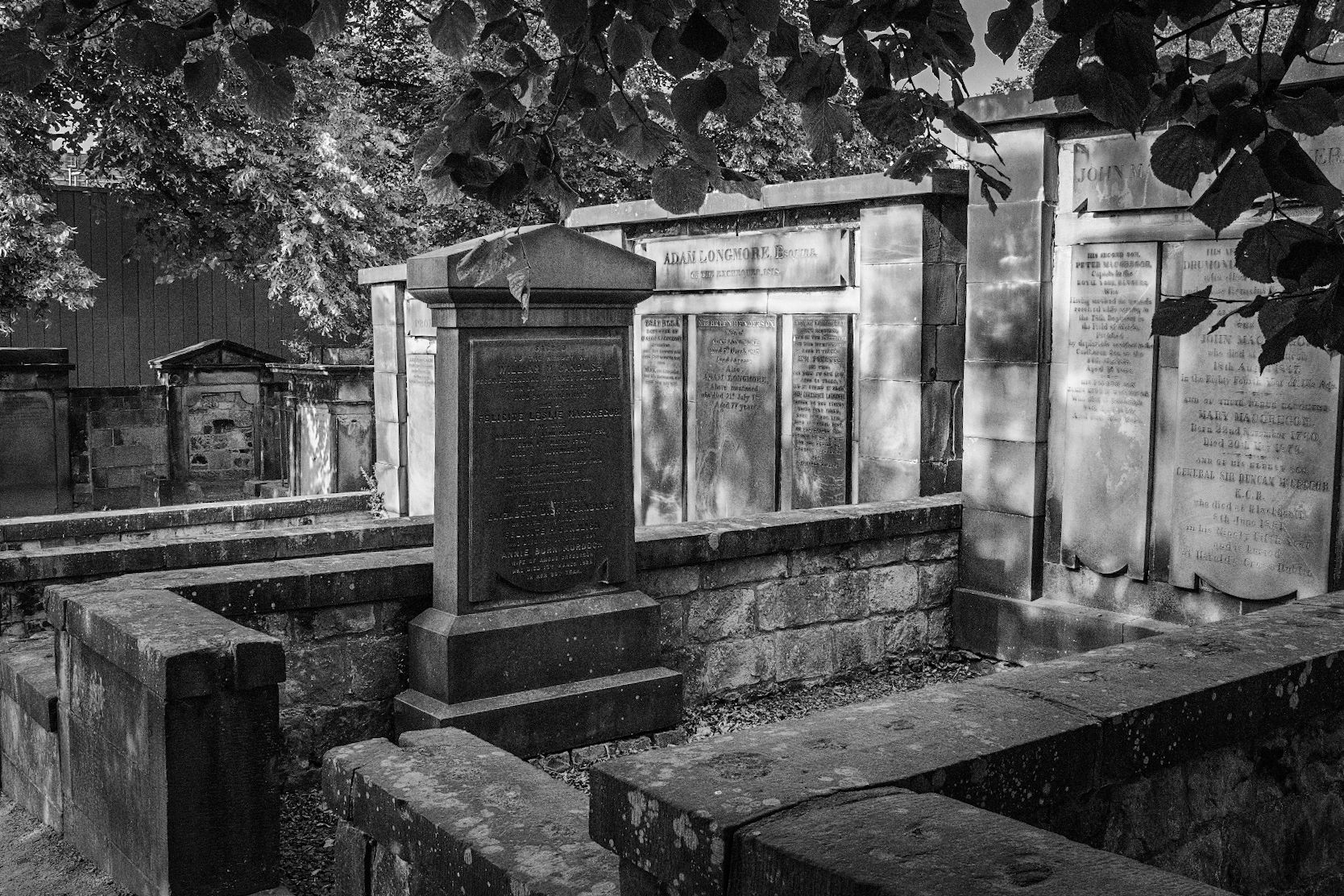
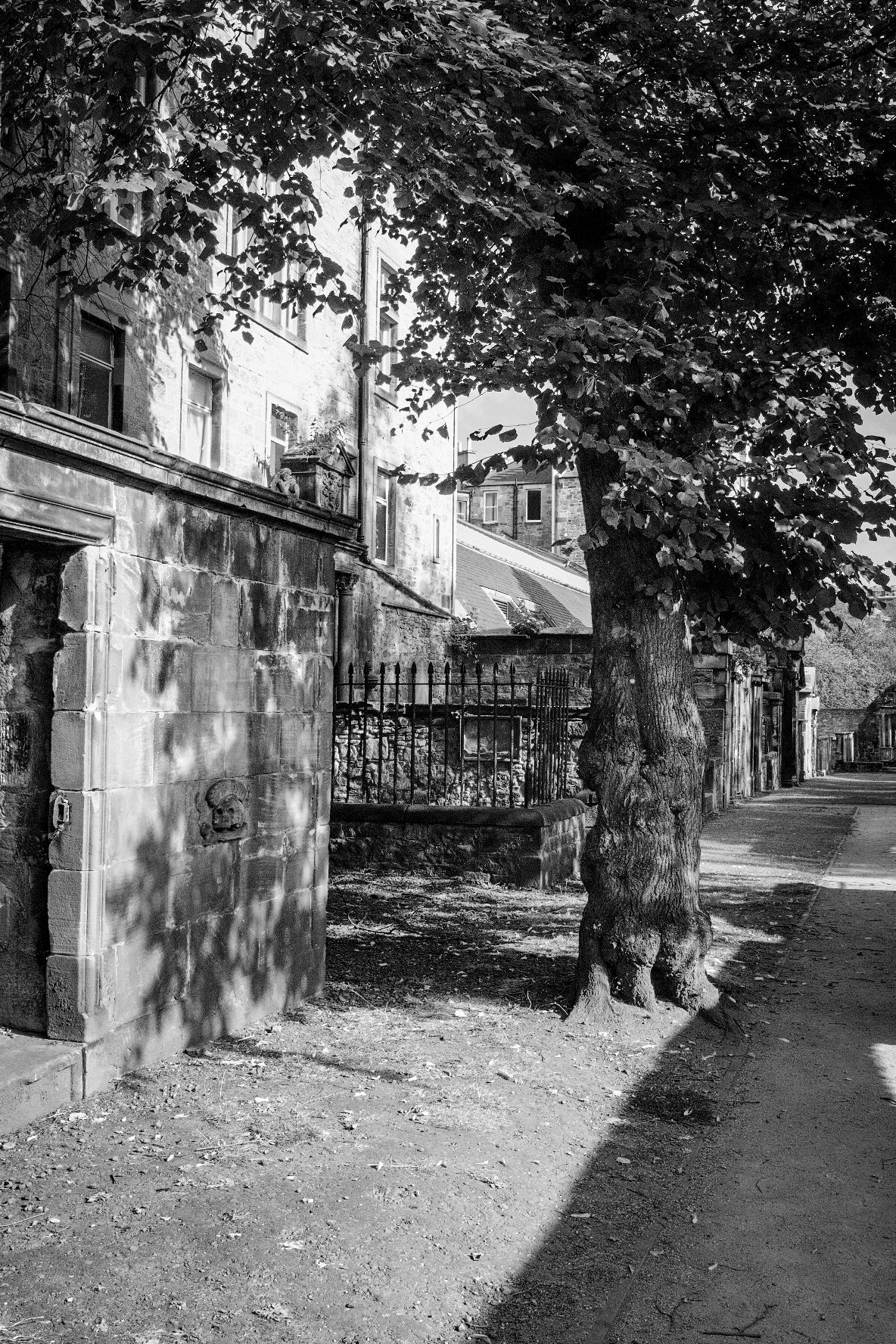
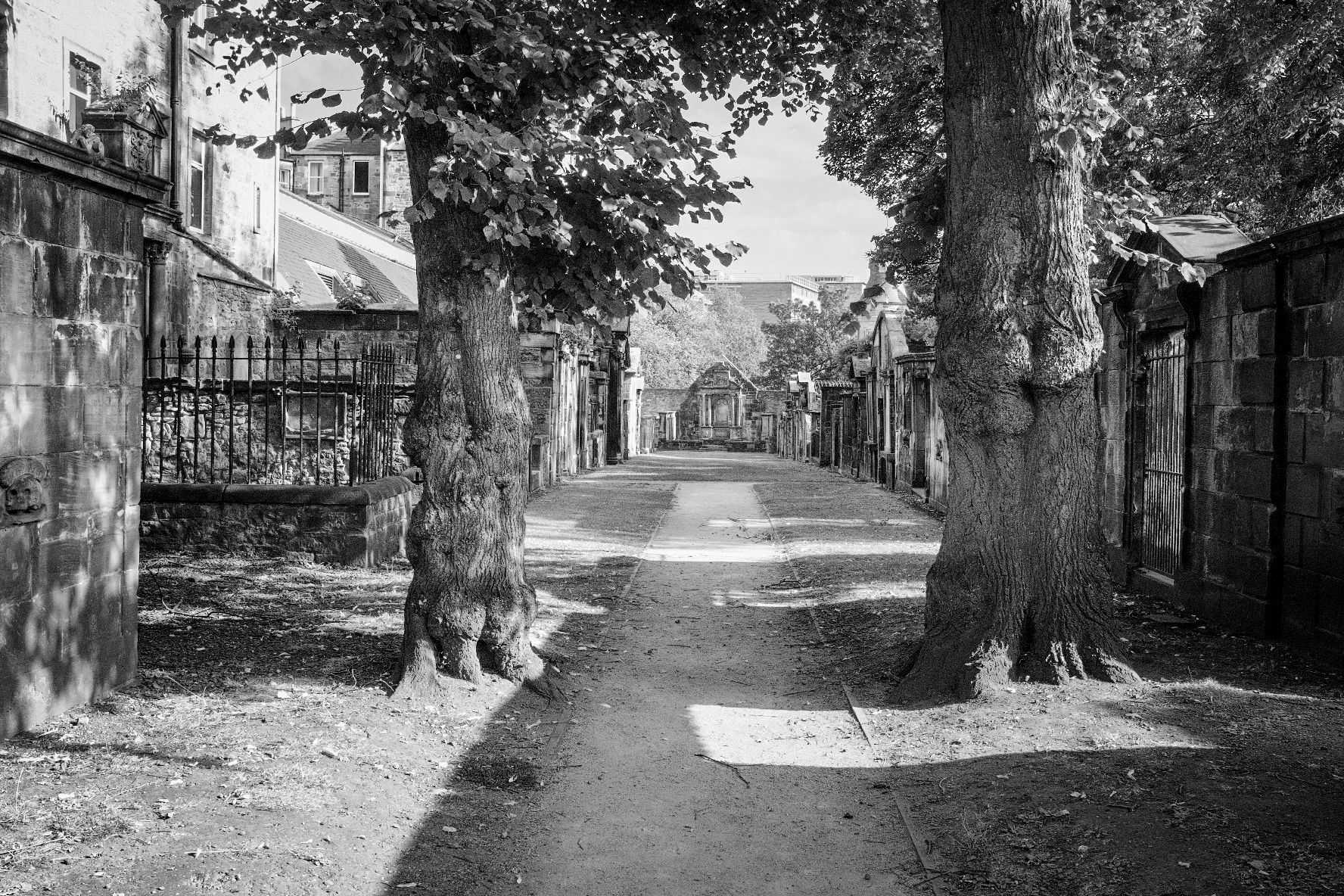
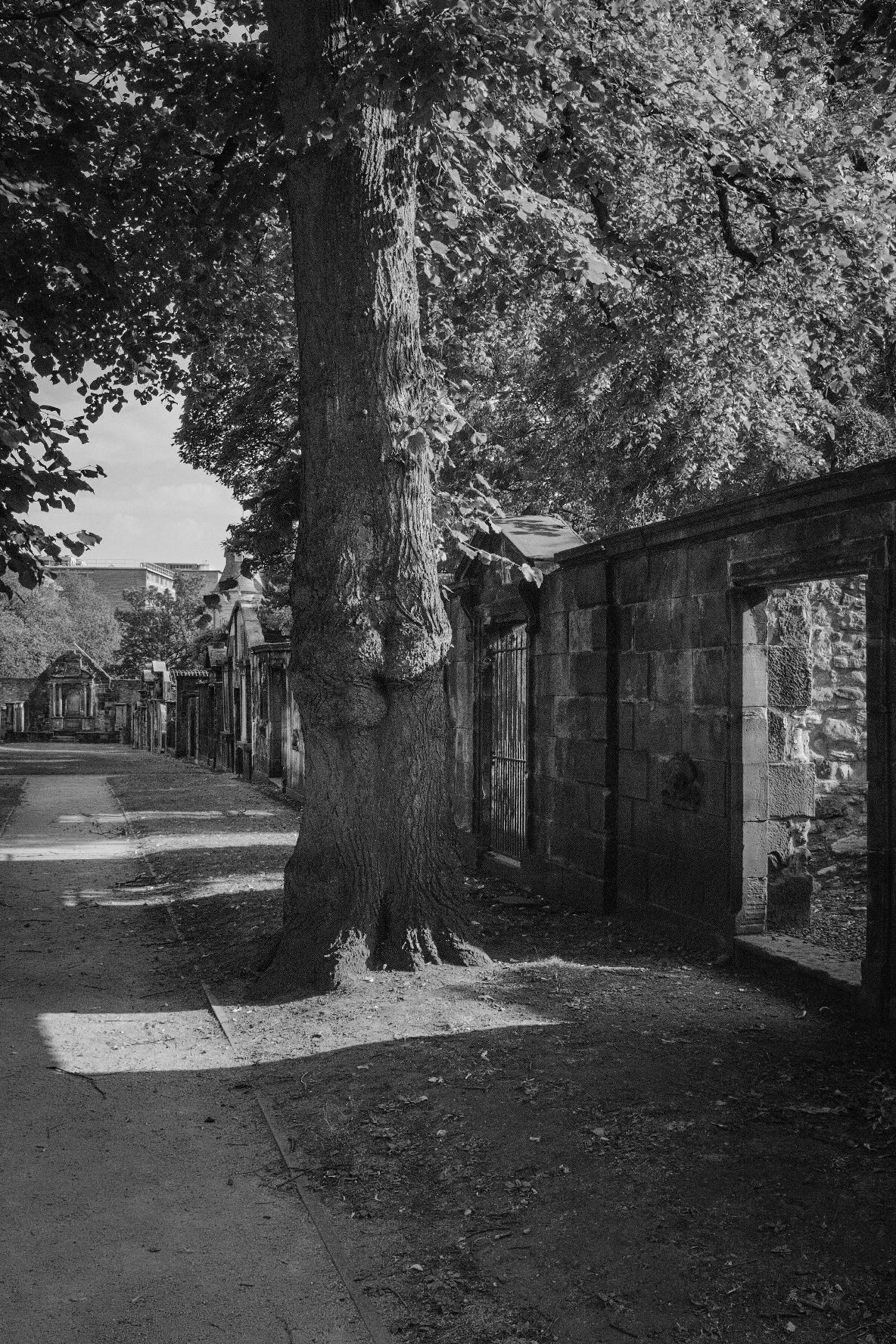
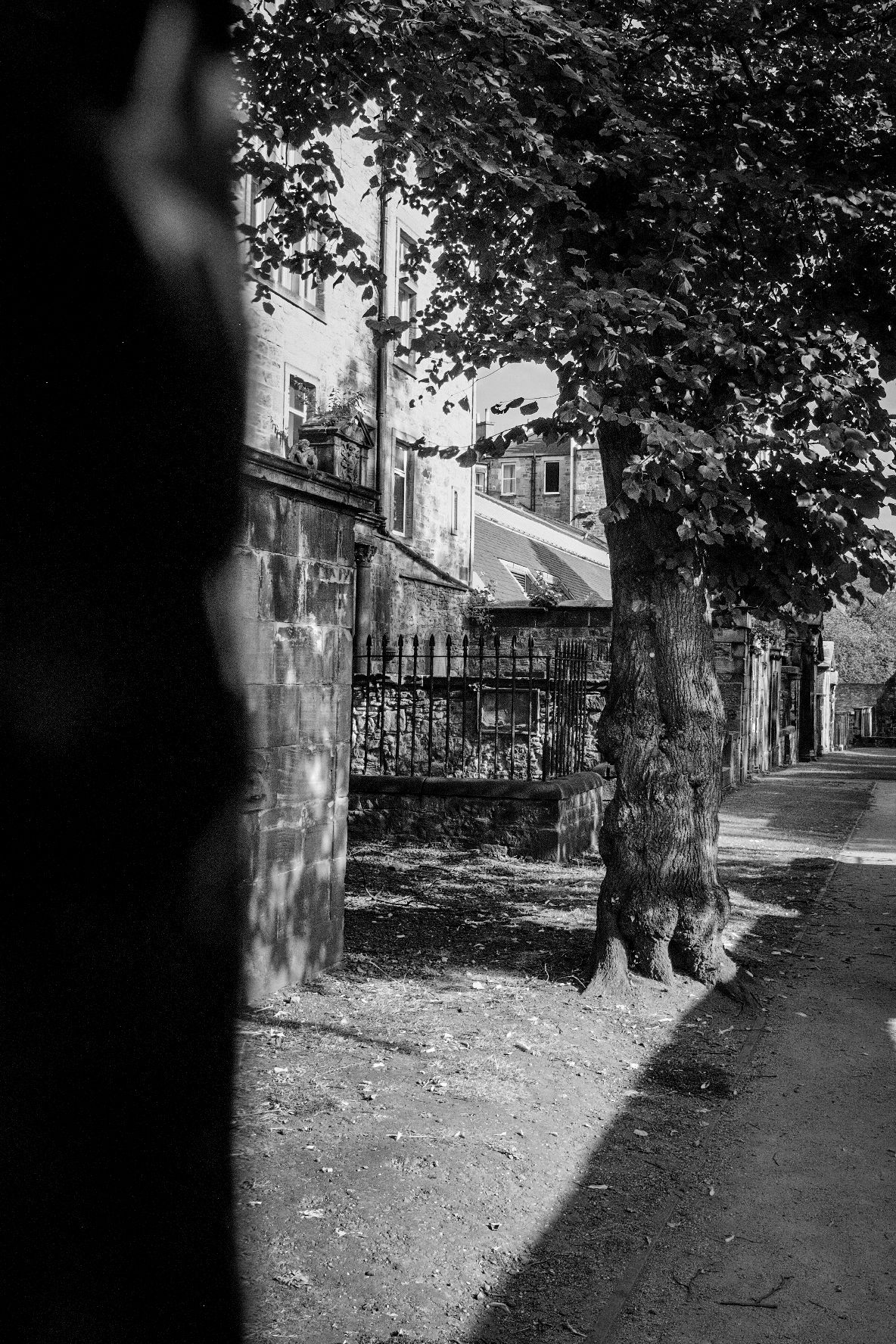
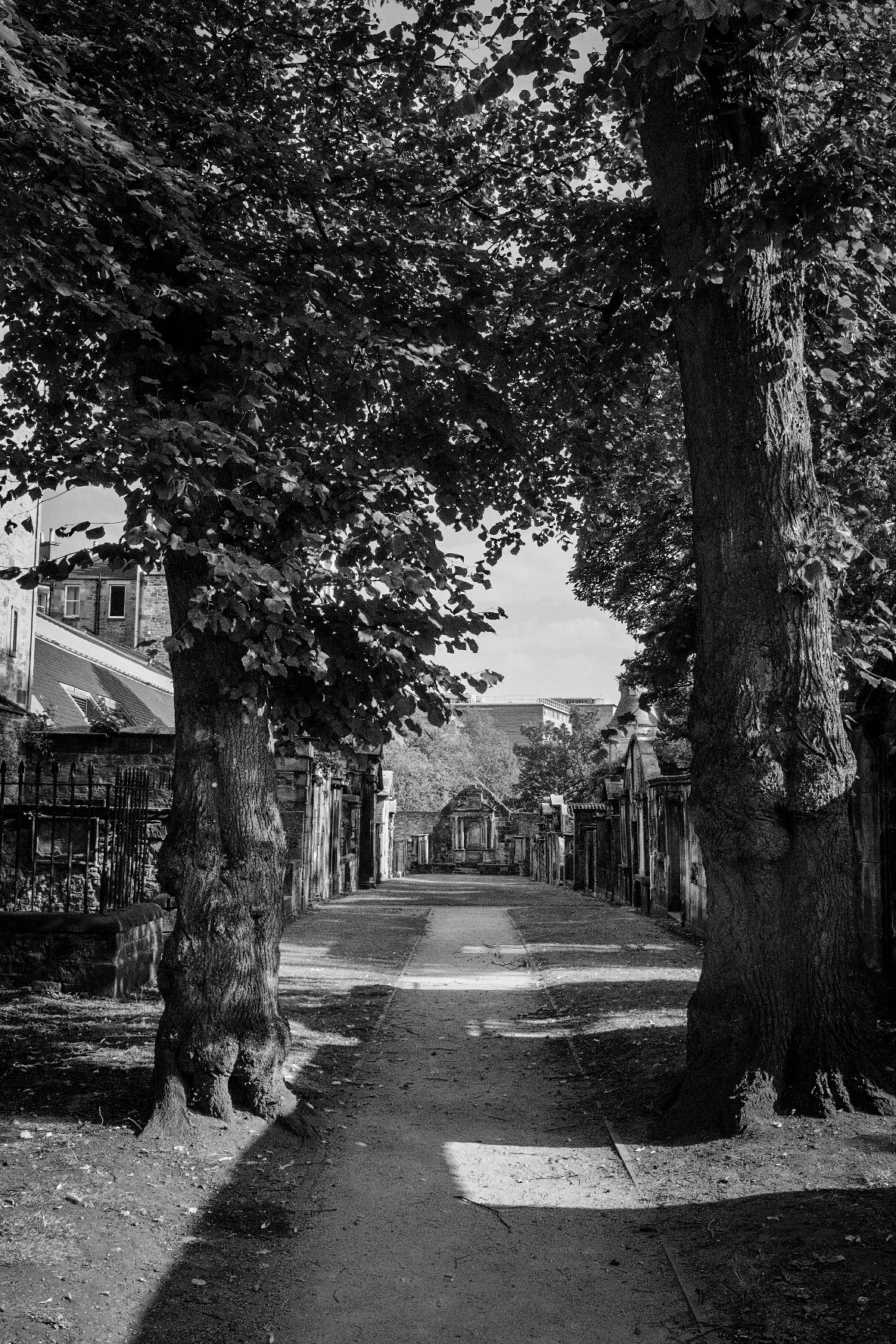
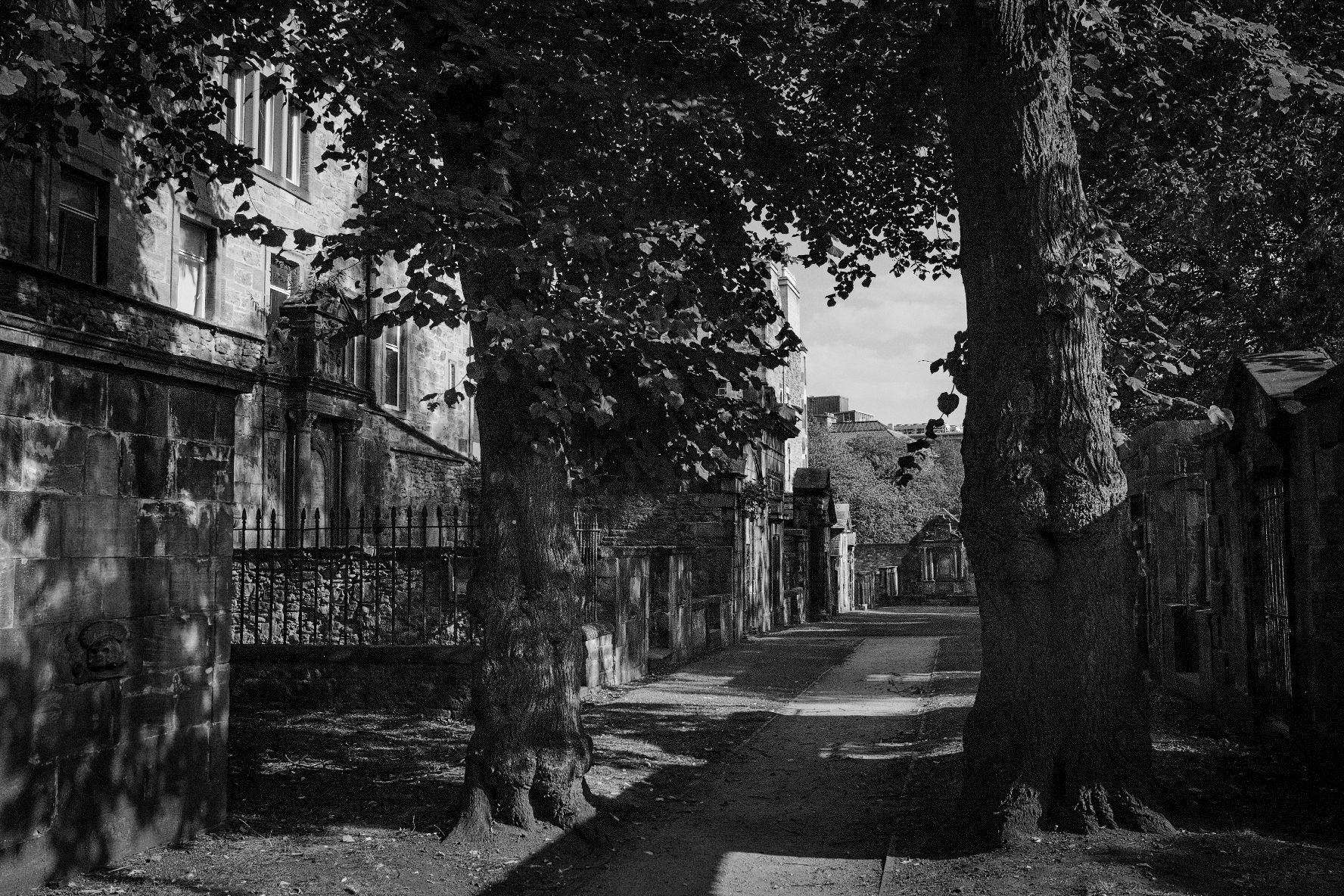
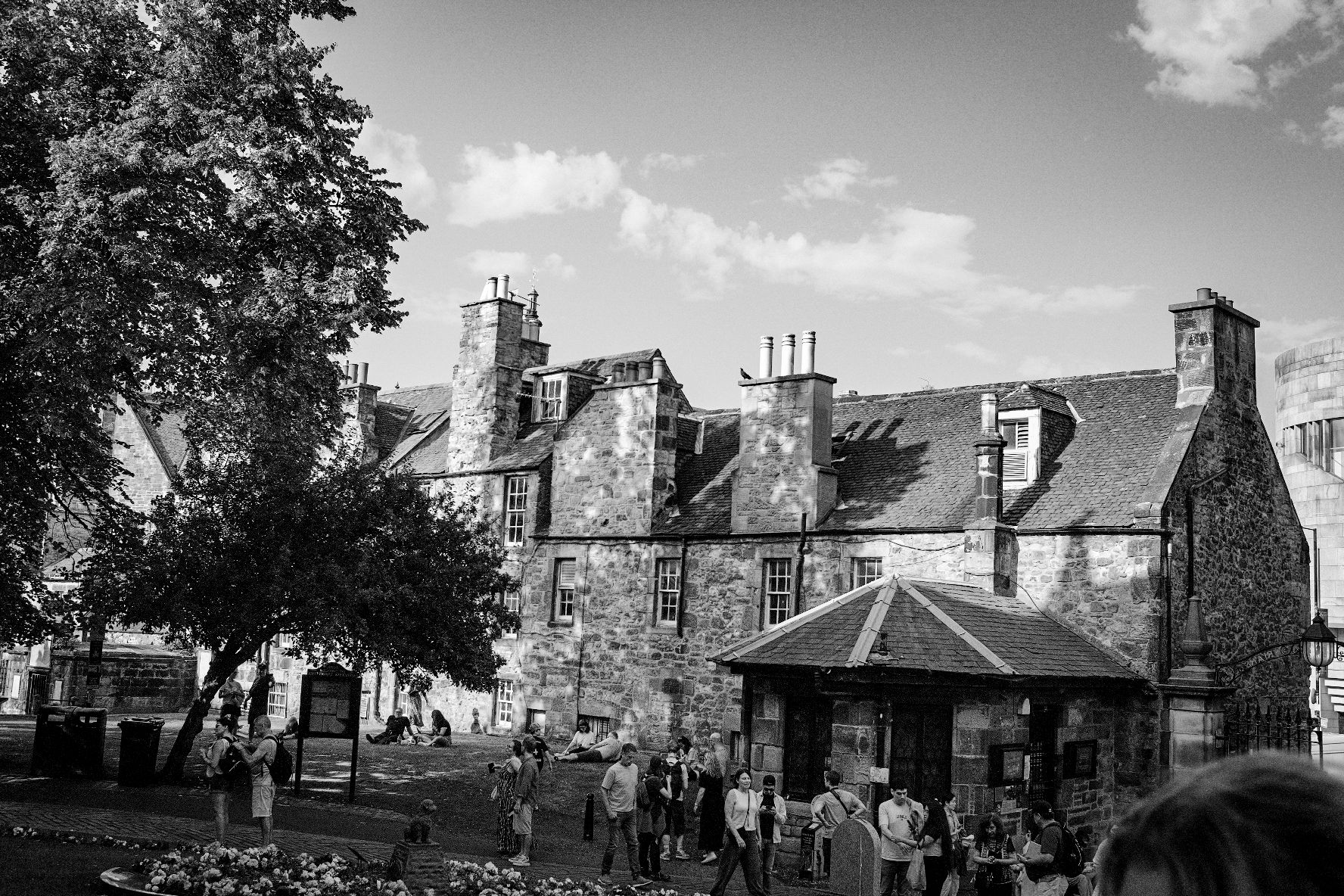
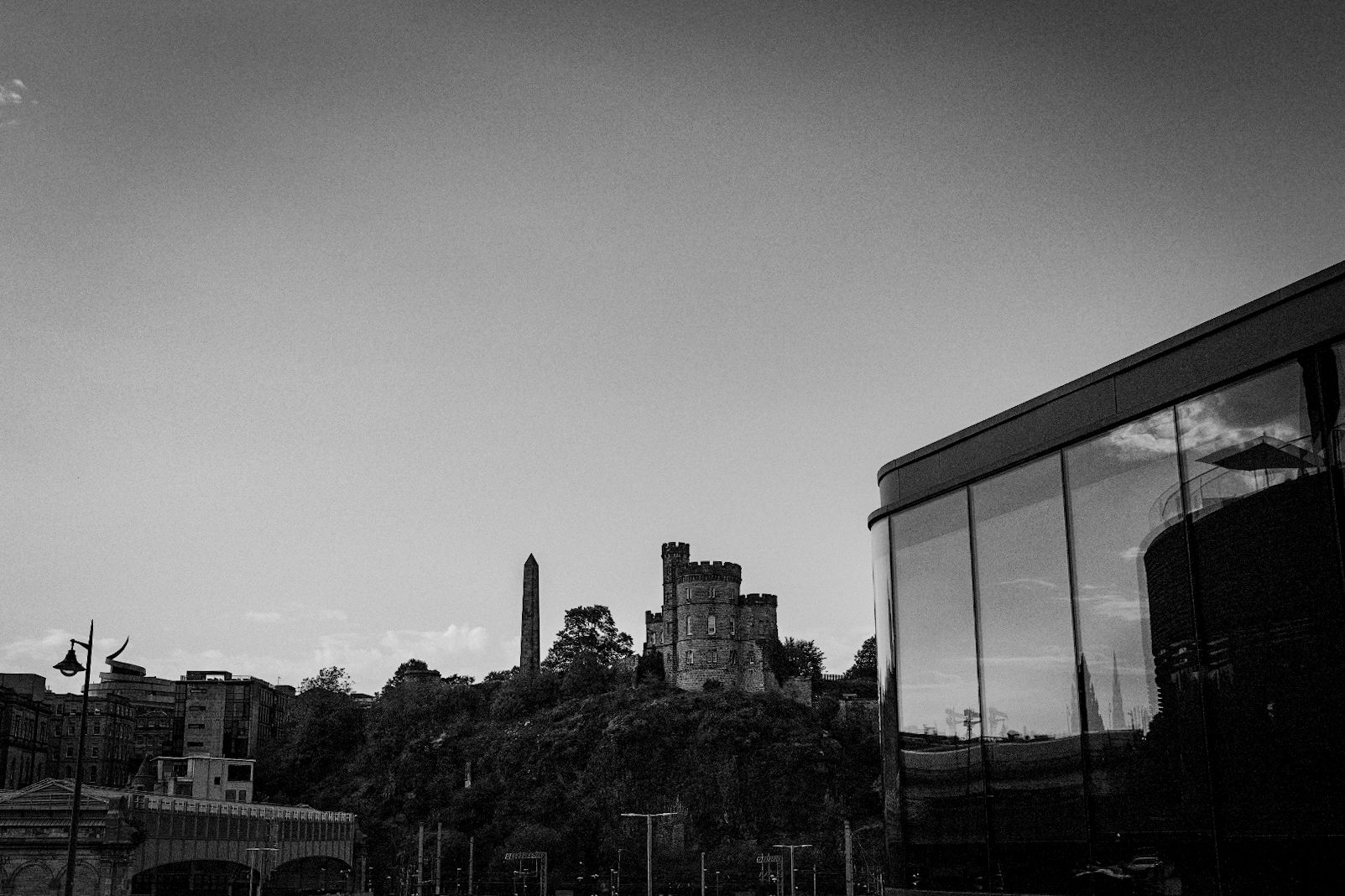
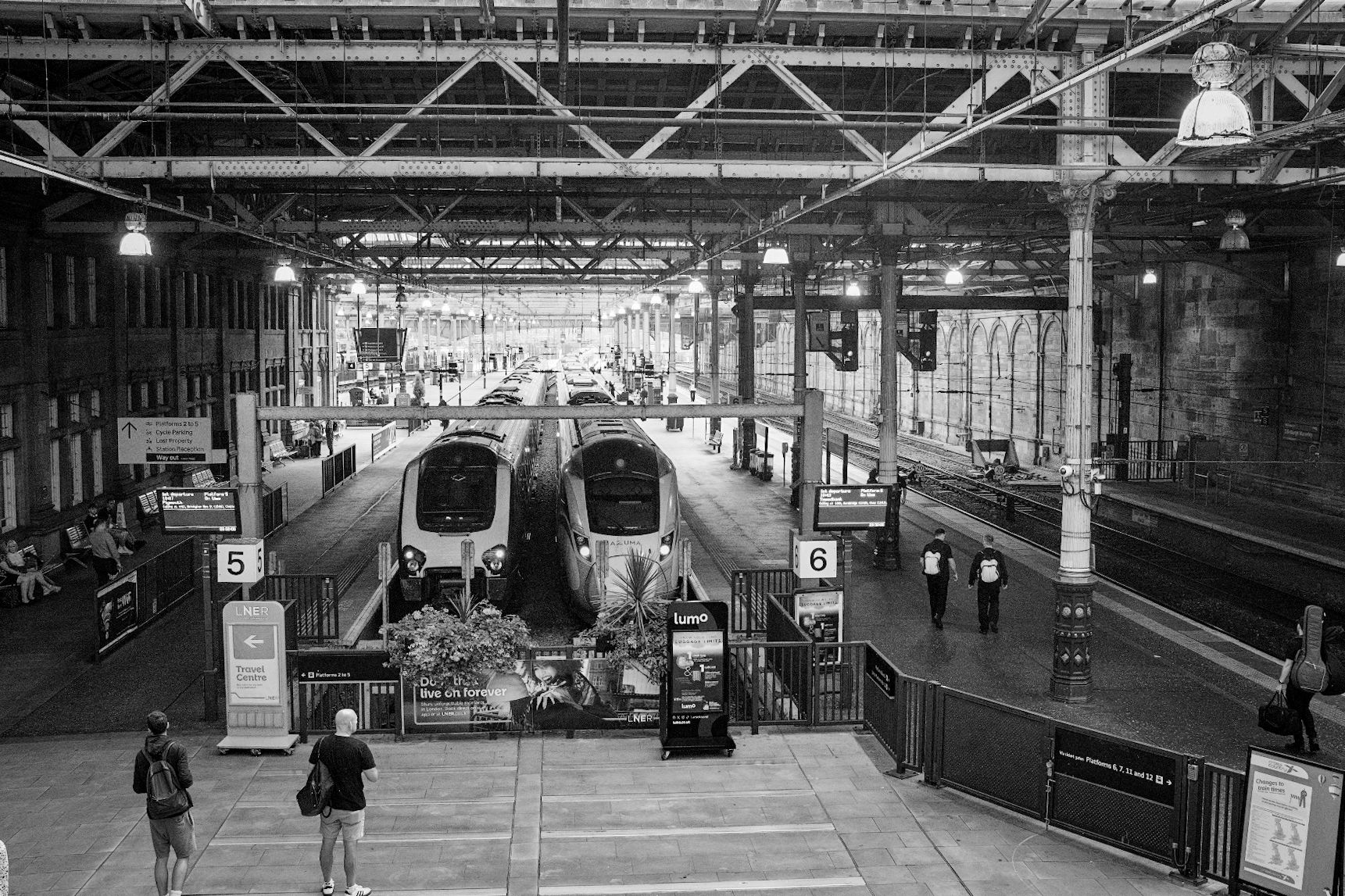
As you can see in the following photos, the light wasn’t fabulous, so we adapt. There are still interesting things to be seen.
Shot on Nikon FE with 50mm f/1.8. Kodak Tri-X 400 and Ilford HP5+ rated at box speed, developed in Fomadon LQN. Edited in Lightroom: curves adjusted for shadow separation only.
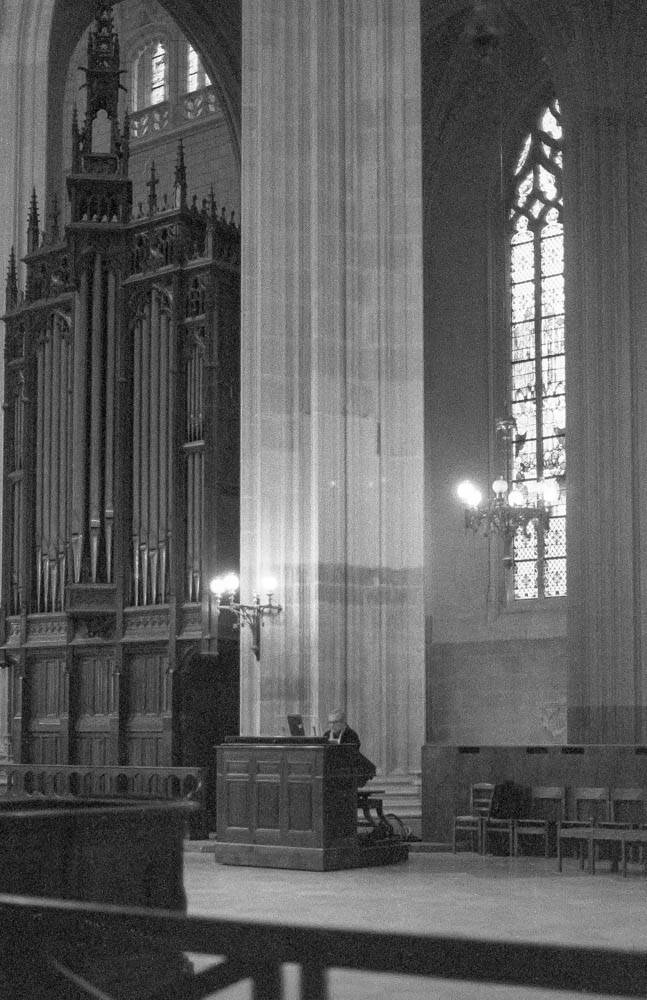
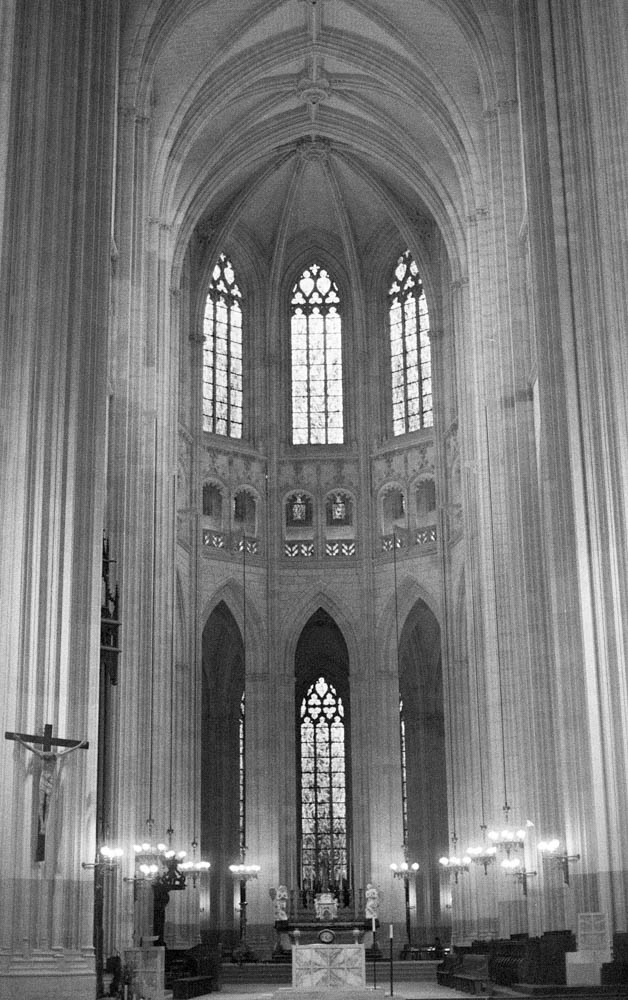
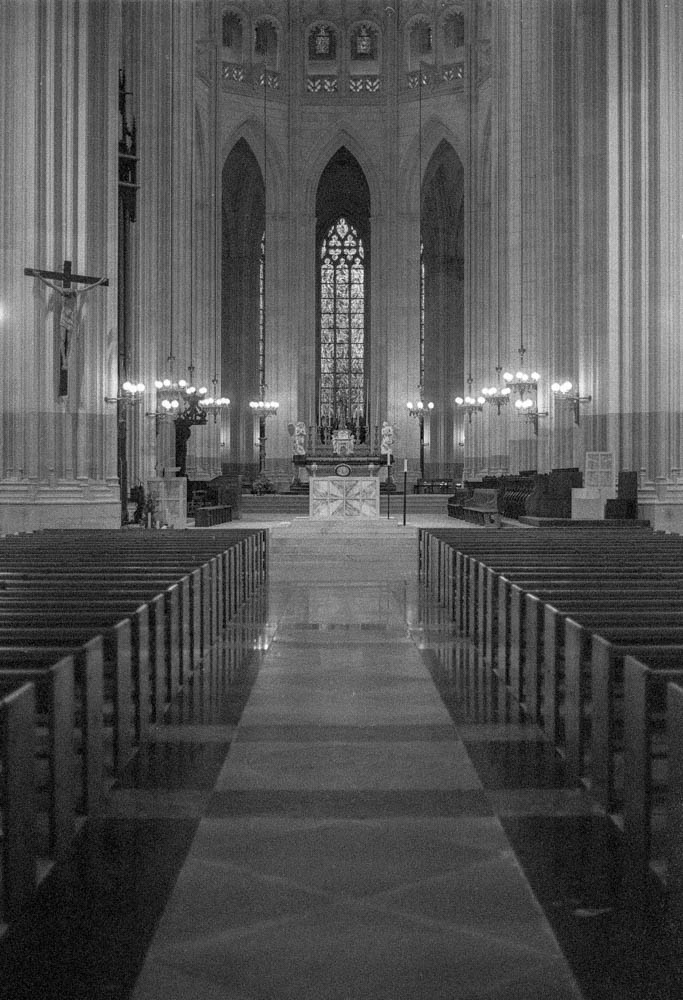
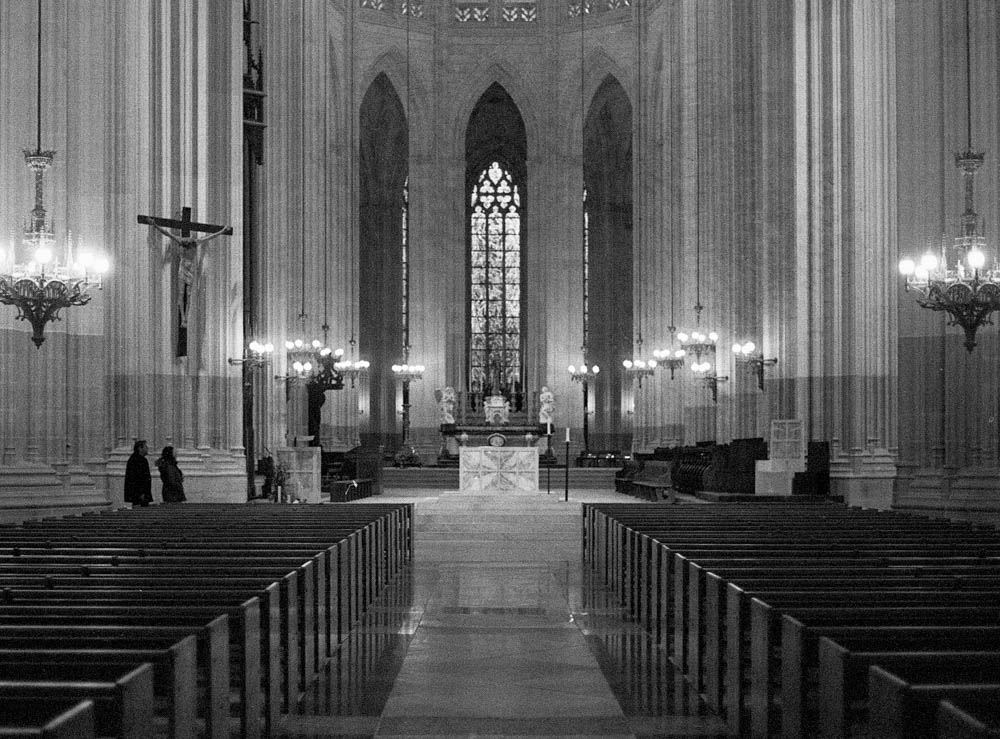
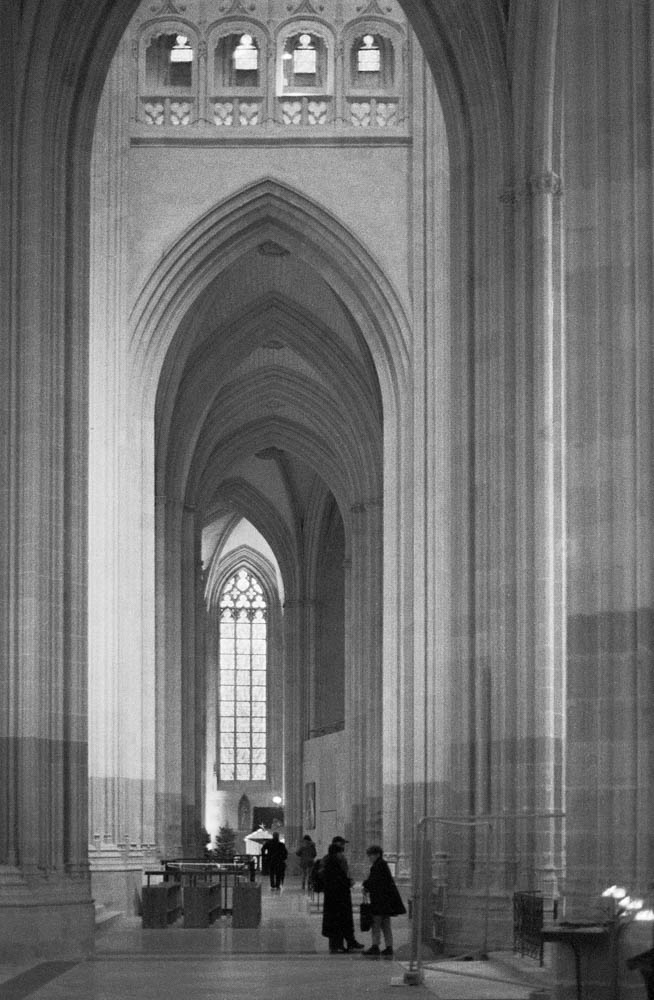
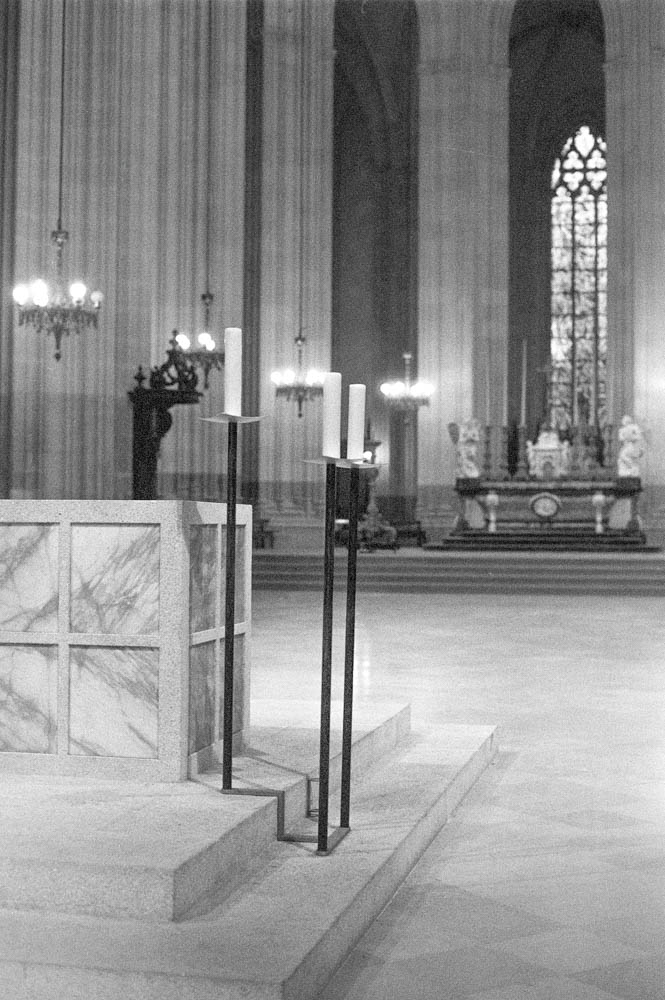
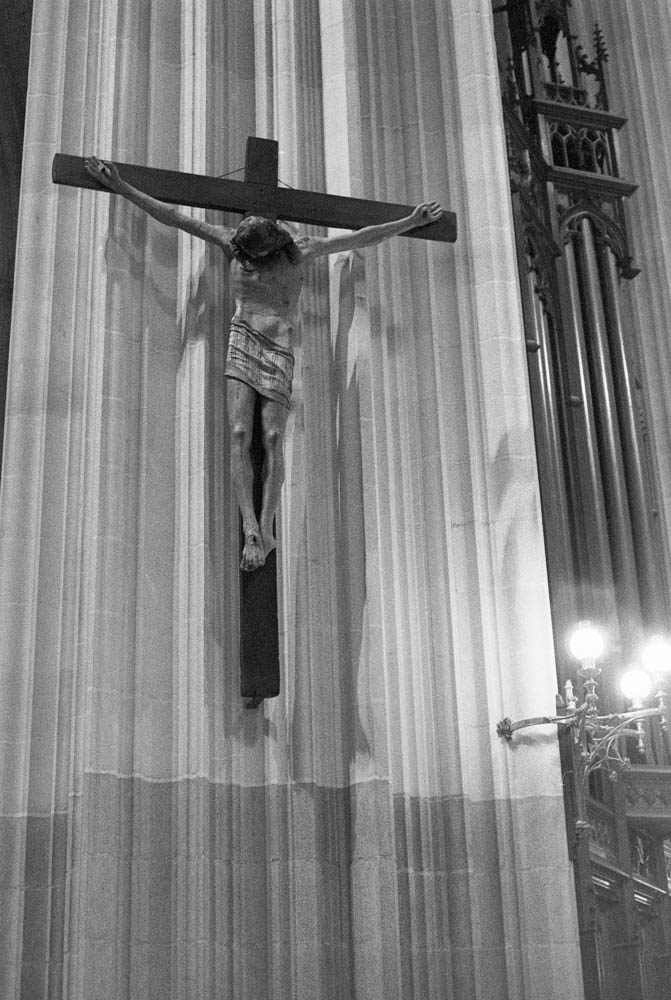
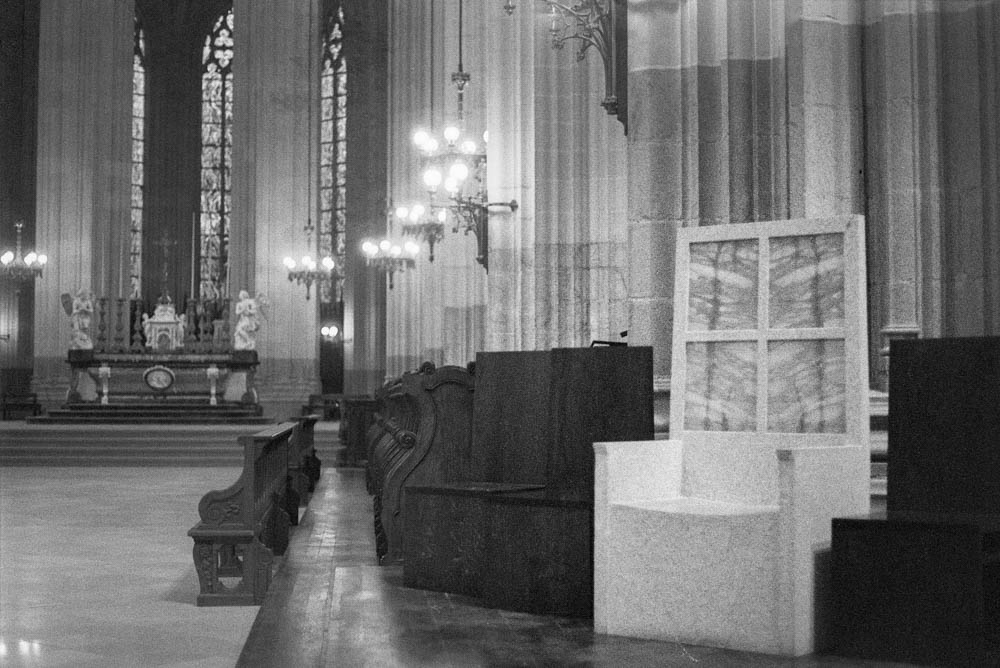
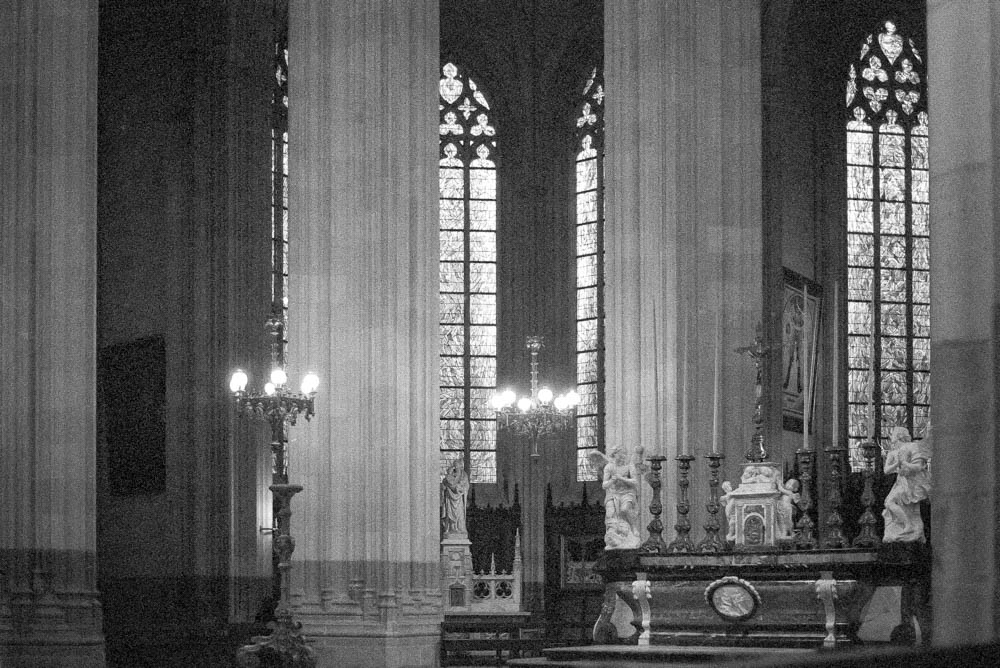
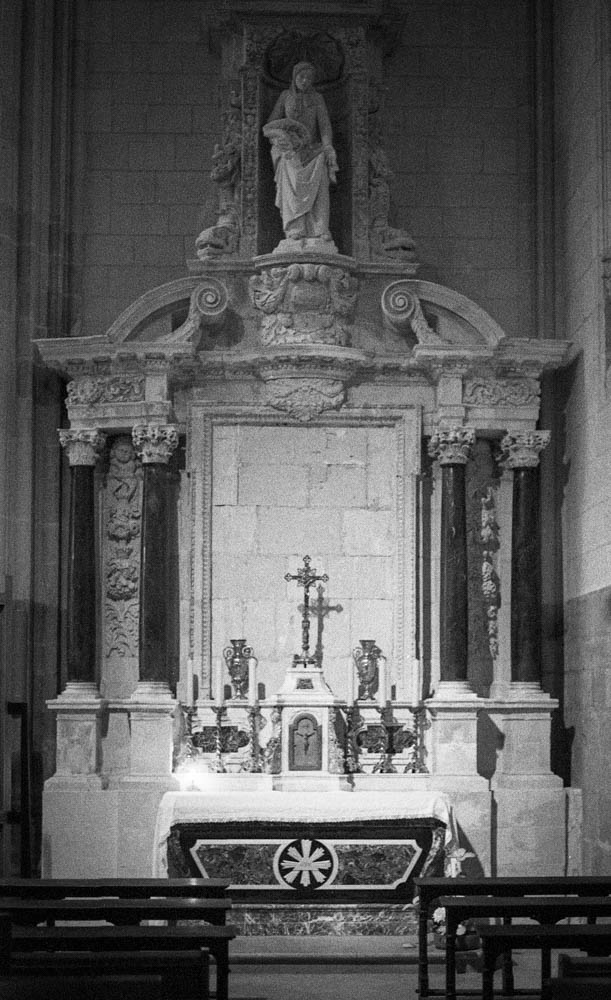
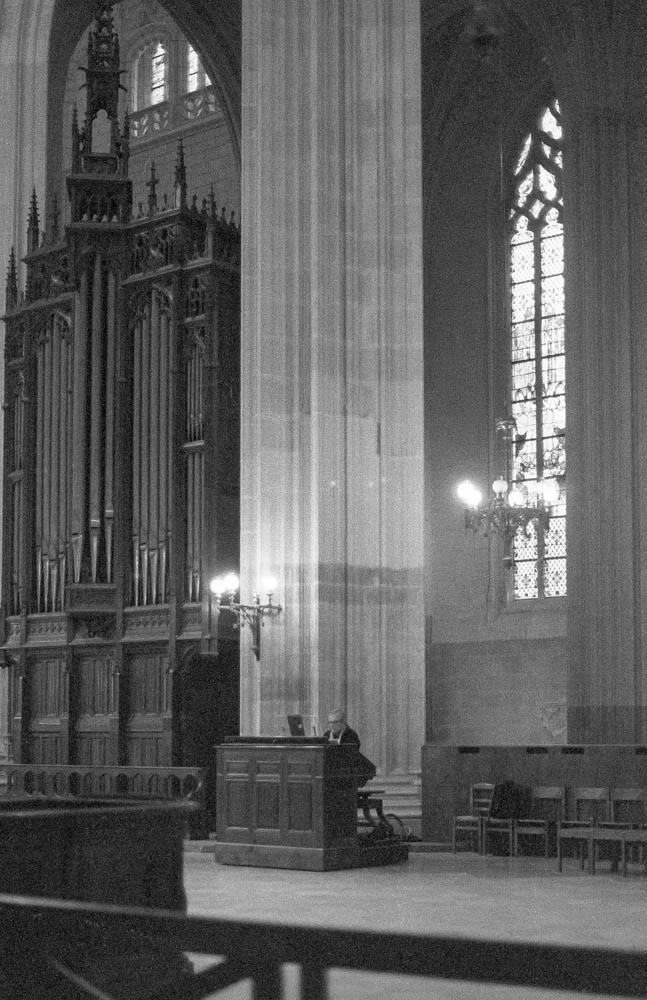
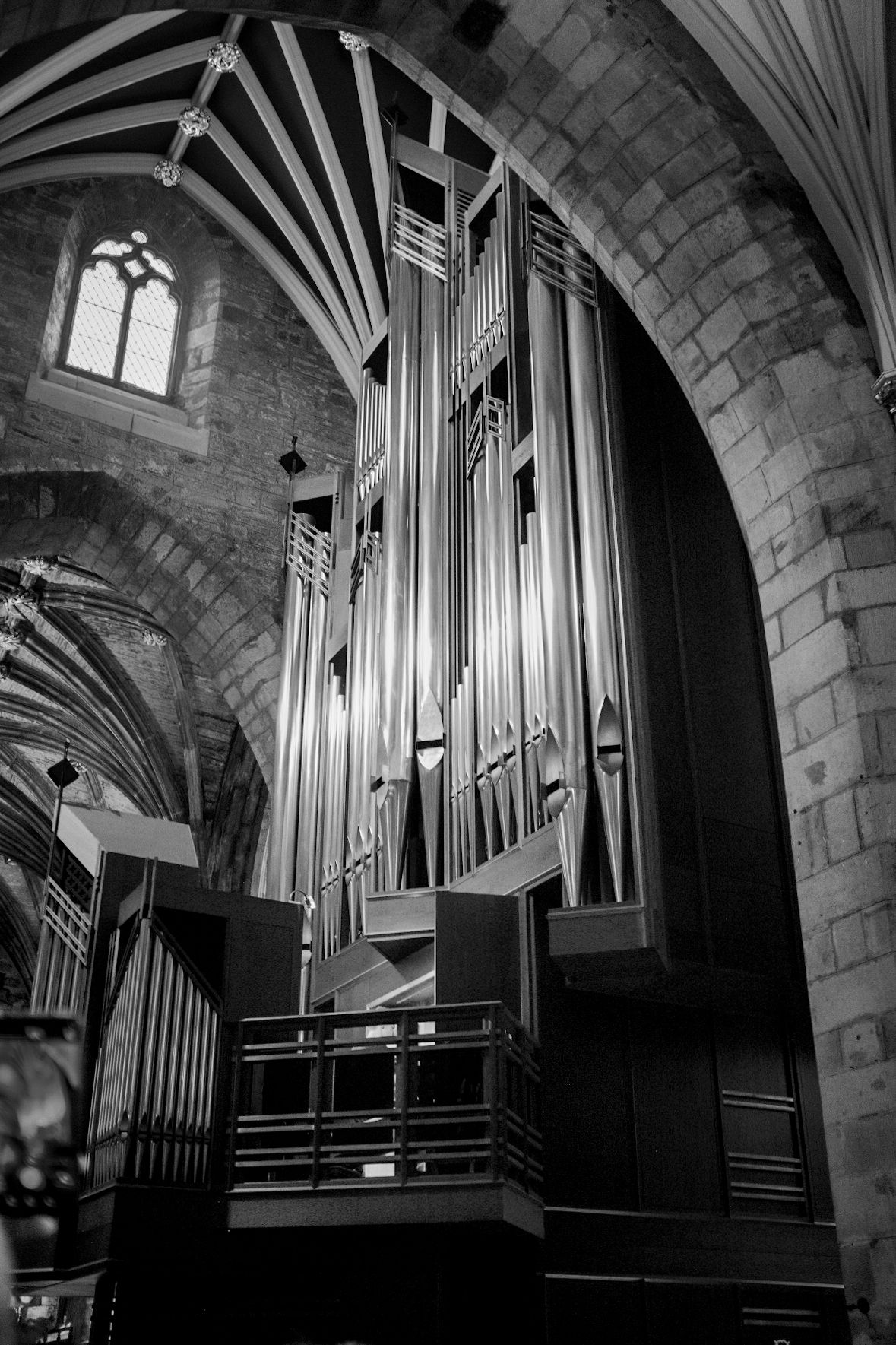
I didn’t set foot in the cathedral while Voyage en hiver draped its silence in municipal spectacle. Not out of protest—I simply couldn’t bear to see sacred space turned into a backdrop. So I waited. And when the banners finally came down in December, I loaded a roll of Ilford HP5 into my Nikon FE and walked back in—not as a tourist, not as a patient, but as someone hoping to find the light exactly where I’d left it.
I’ve always abhorred political recuperation. The Voyage en Hiver had no place in the cathedral’s reopening. This was about worship. About returning to God in a space that had been quiet for too long—not about municipal branding or winter tourism. “Give unto Caesar what belongs to Caesar, and unto God what belongs to God.” (Matthew 22:21)
That day, I chose God’s silence over their spectacle.
My hands were cold when I raised the camera. December light in a stone cathedral is a quiet thing—more absence than presence. I wondered, honestly, if 400 ASA would be enough. But I wanted authenticity: more grain than digital noise, more truth than polish. So I trusted the FE’s metering, opened up my aperture, and let the film do what it does best. No second-guessing. No LCD screen. Just the click of the shutter and the hope that the light would hold.
And it did.
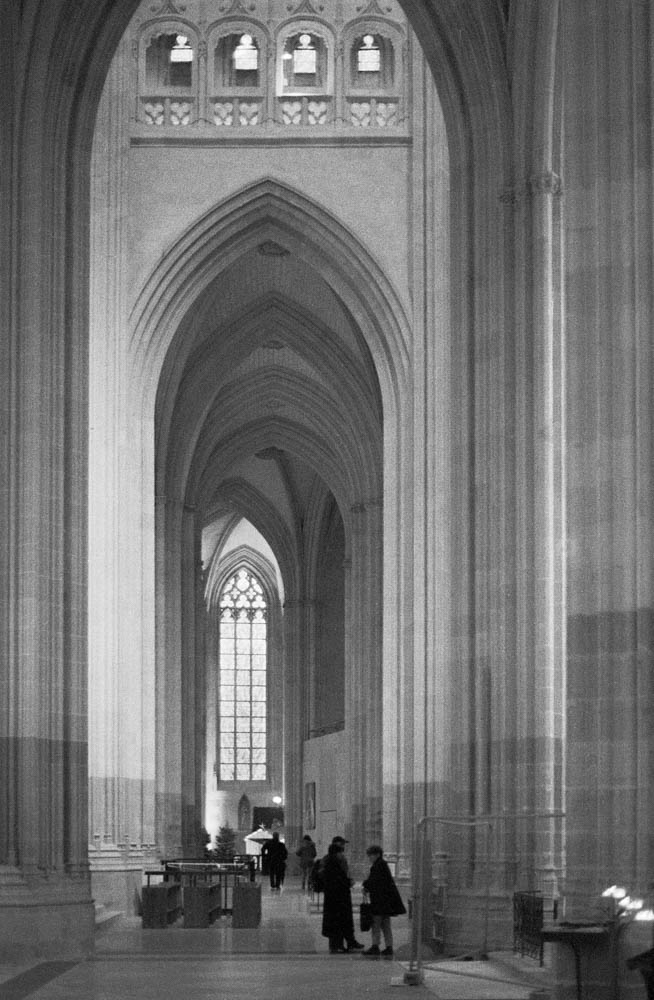
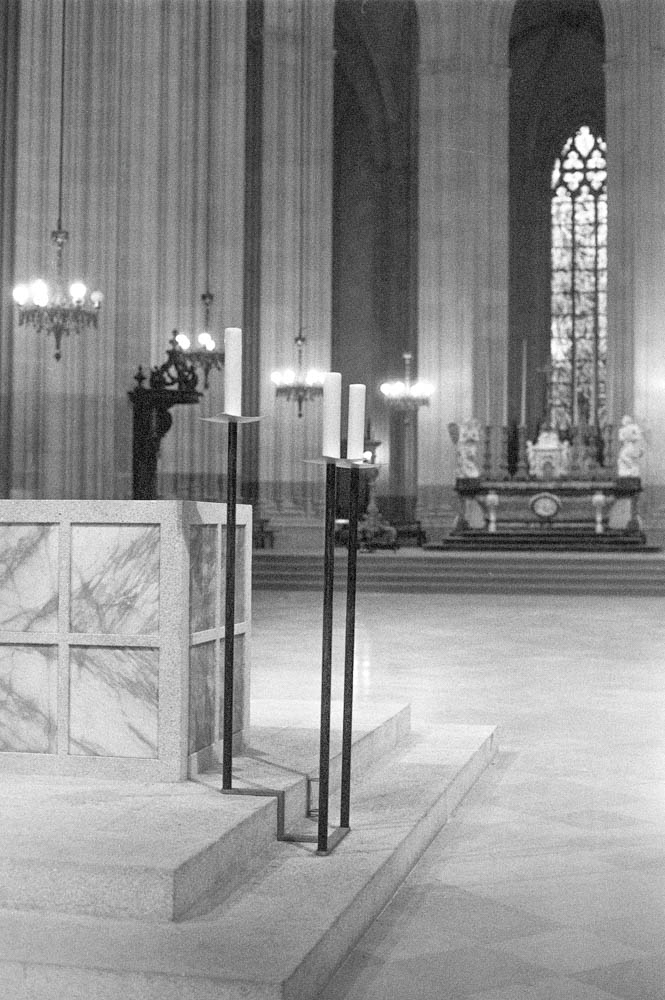
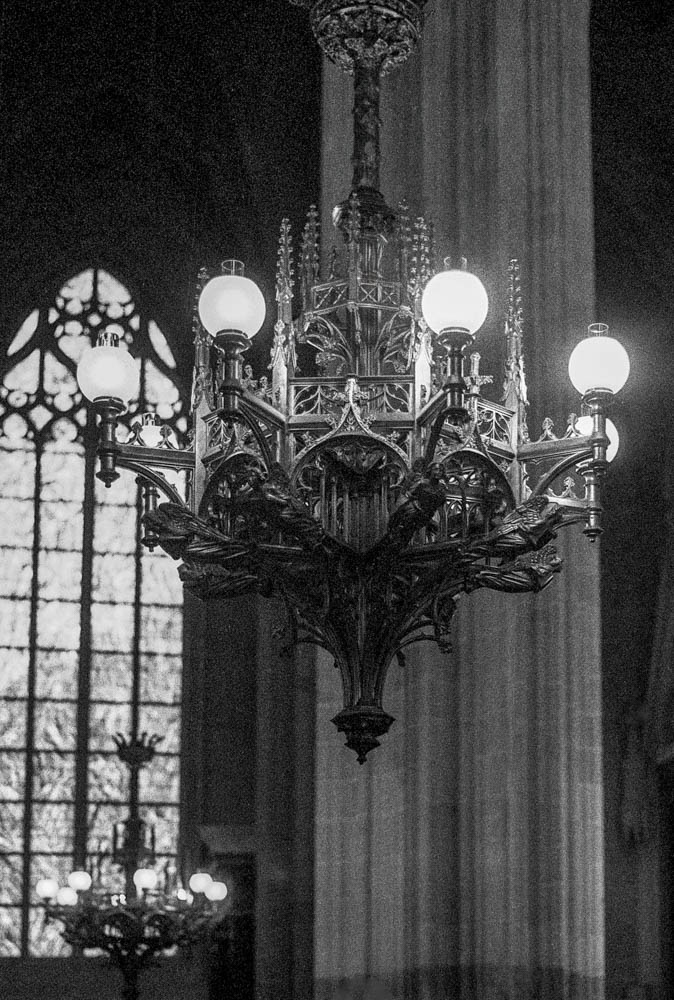
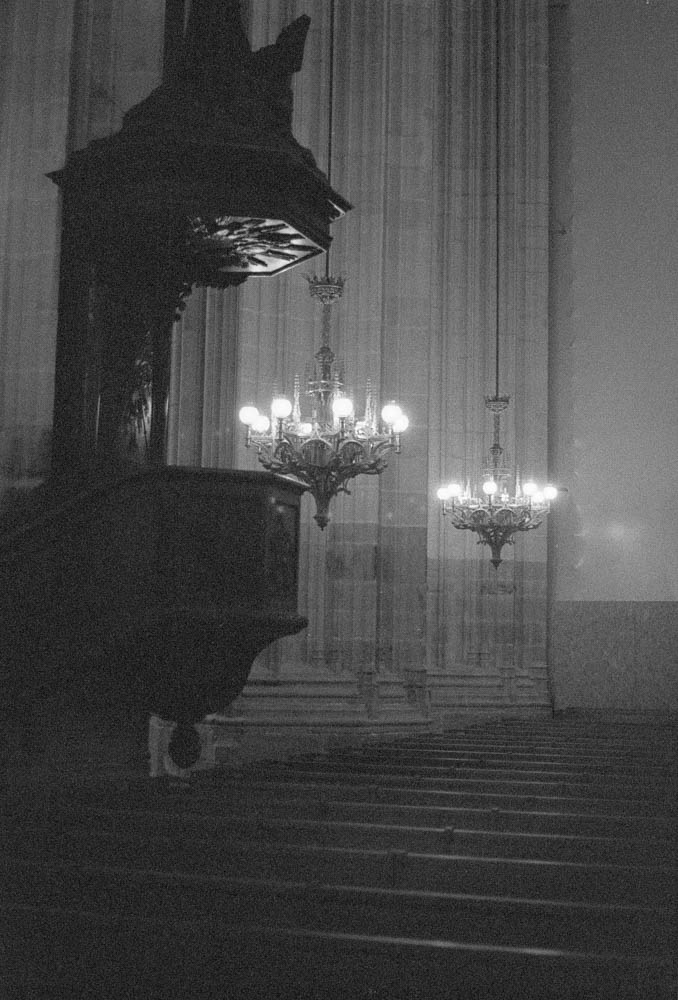
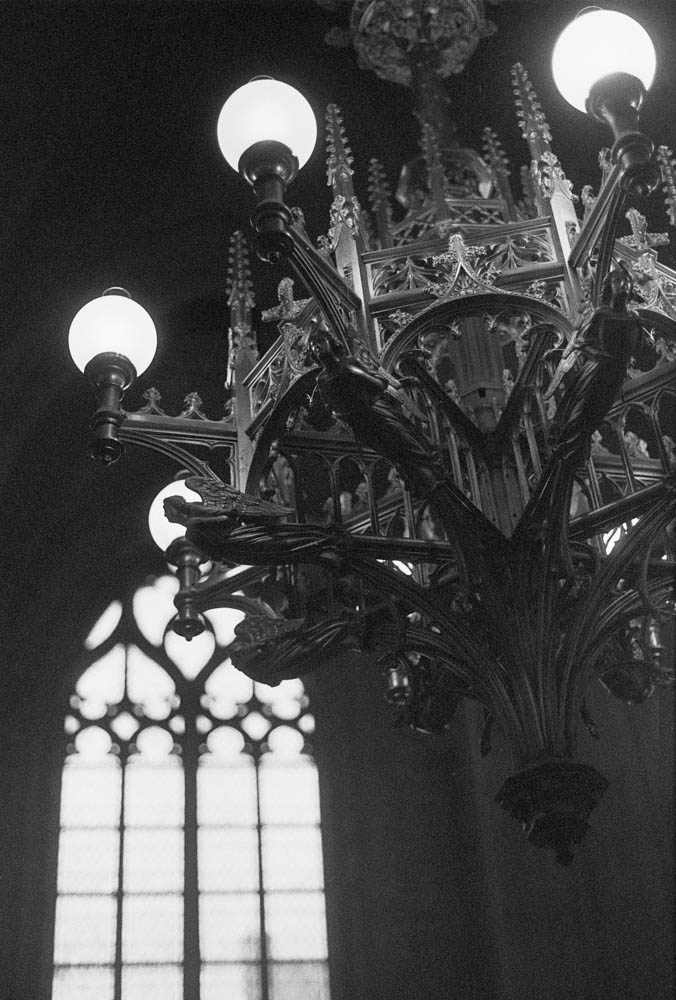
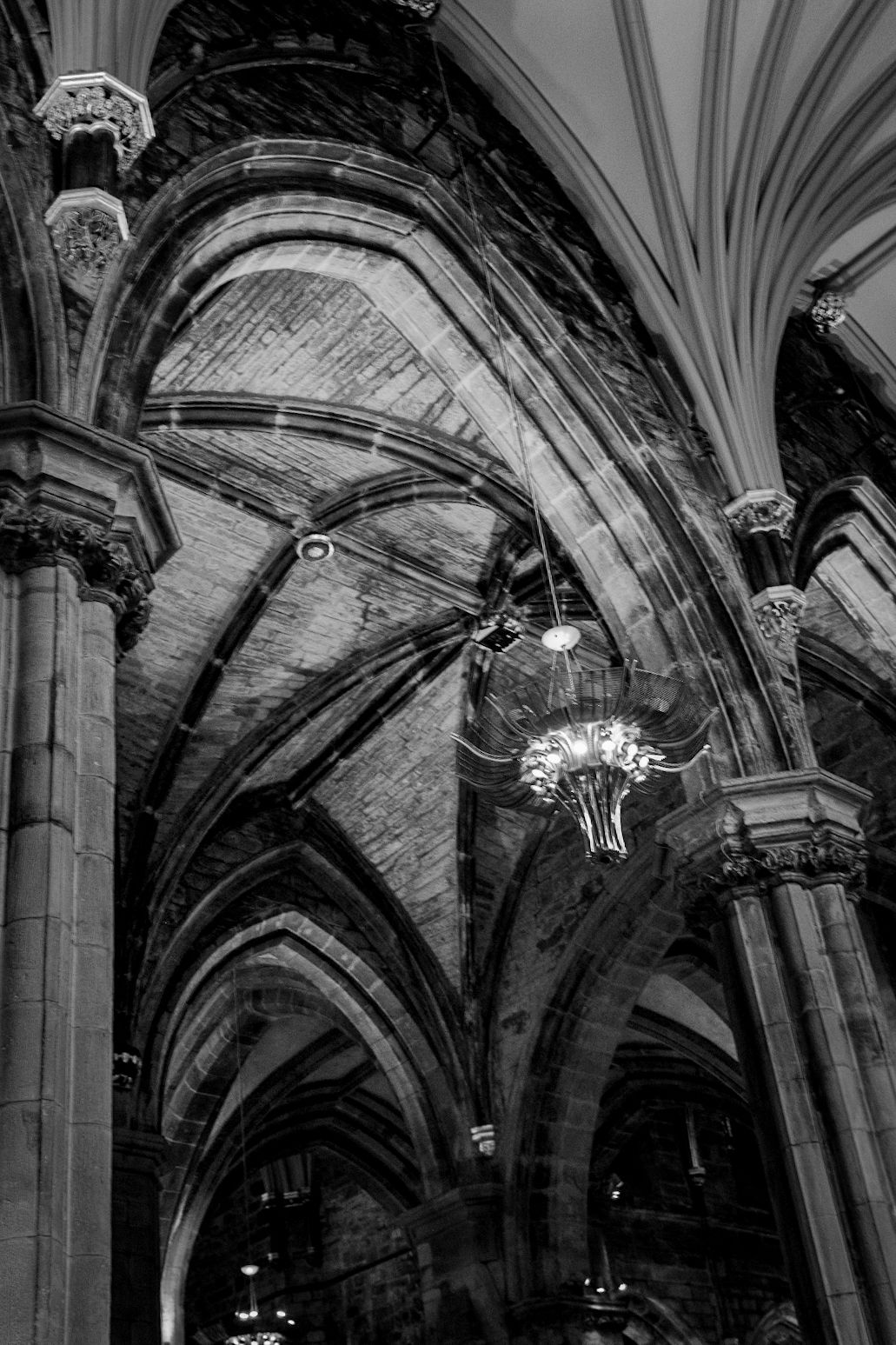
The frames that emerged are darker than summer would allow—but this was December, after all. And in that darkness, something gentle remains: the grain cradling the texture of worn wooden pews, shadows tracing the ribs of vaulted stone, candlelight bleeding softly into halos where no banner now hangs. Black and white stripped away every distraction—the logos, the seasonal clutter, the noise—until only what mattered remained: light on stone, silence between pillars, the architecture of reverence.
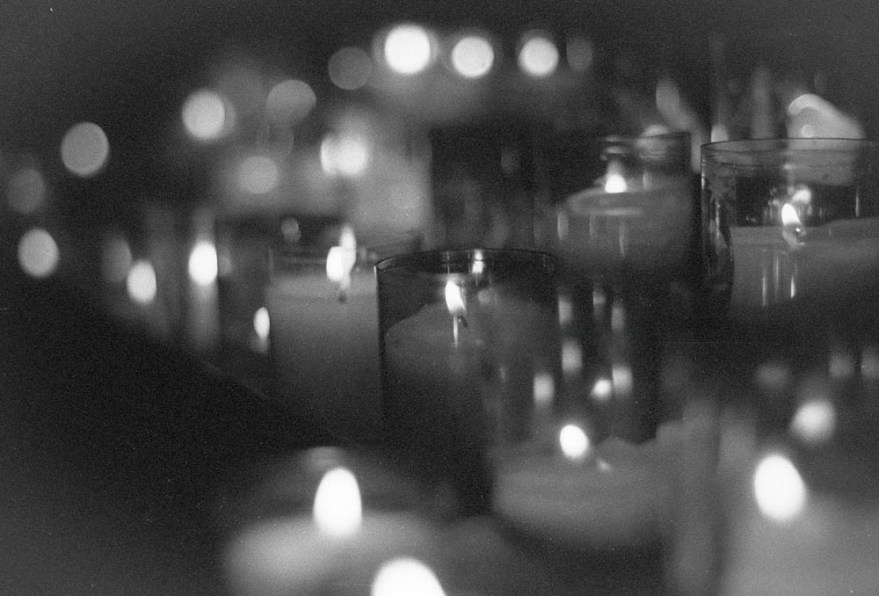
One frame in particular stays with me: the candles. Shot at 1/30s, my hands unsteady not from illness but from the simple weight of the moment. The focus slipped slightly. The flames blurred into one another. And instead of frustration, I felt a quiet relief—the film hadn’t captured perfection. It had captured presence. Grain became breath. Blur became prayer.
I didn’t go to “get out of the house.” I went because the space was clean again—just stone, silence, and the stubborn glow of candlelight. And for a few minutes, with the FE cold against my palm and the smell of incense in the air, I remembered why I love film photography: it doesn’t lie. It holds what’s there—shadows and all—and asks only that you trust the process.
They sold a spectacle. I took back the light. And the grain—warm, imperfect, alive—proved which one will last. My small act of reparation…
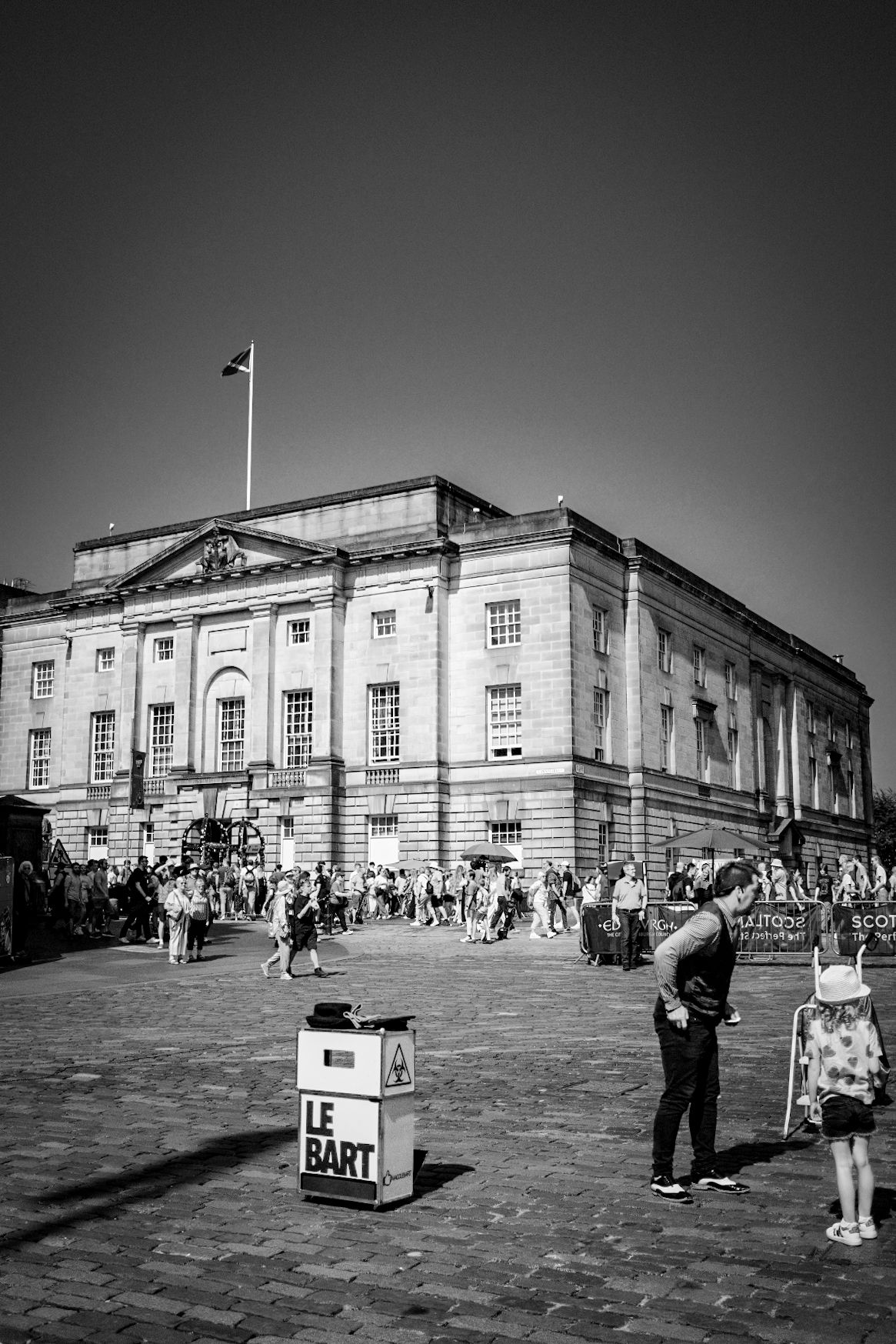
We’re still in Edinburgh. We’re walking down the Royal Mile. It’s festival season. There are plenty of shows to watch, and the one we saw first was by Max Von Trapp. Not to be confused with the Sound of Music Von Trapps, but a comic magician. One of my favourite kinds. The jokes and tricks rolled fast, as did my laughter.. Kate laughs at all the jokes, even the more adult-focused ones, just like Killian did when we visited the festival when he was that age.
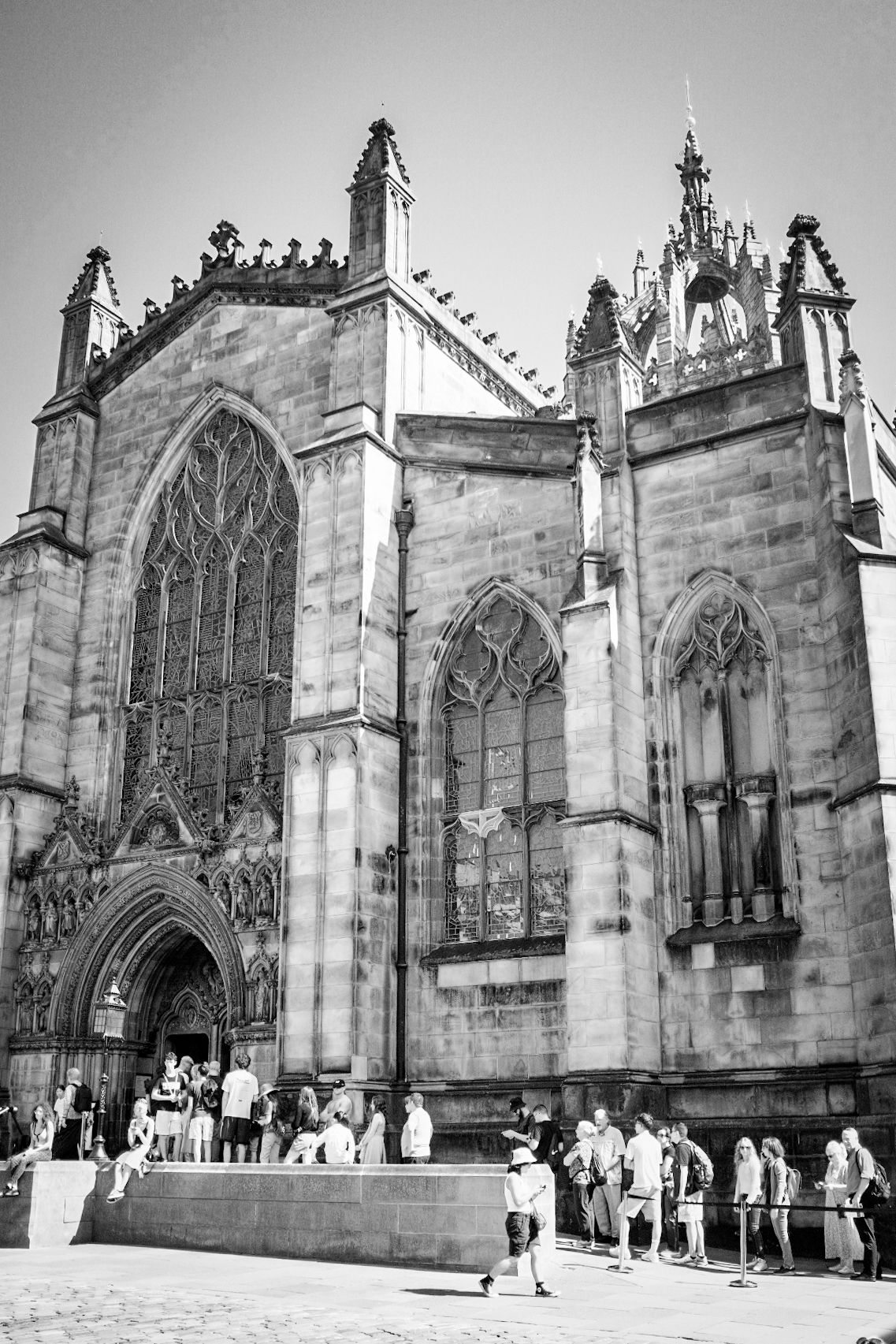
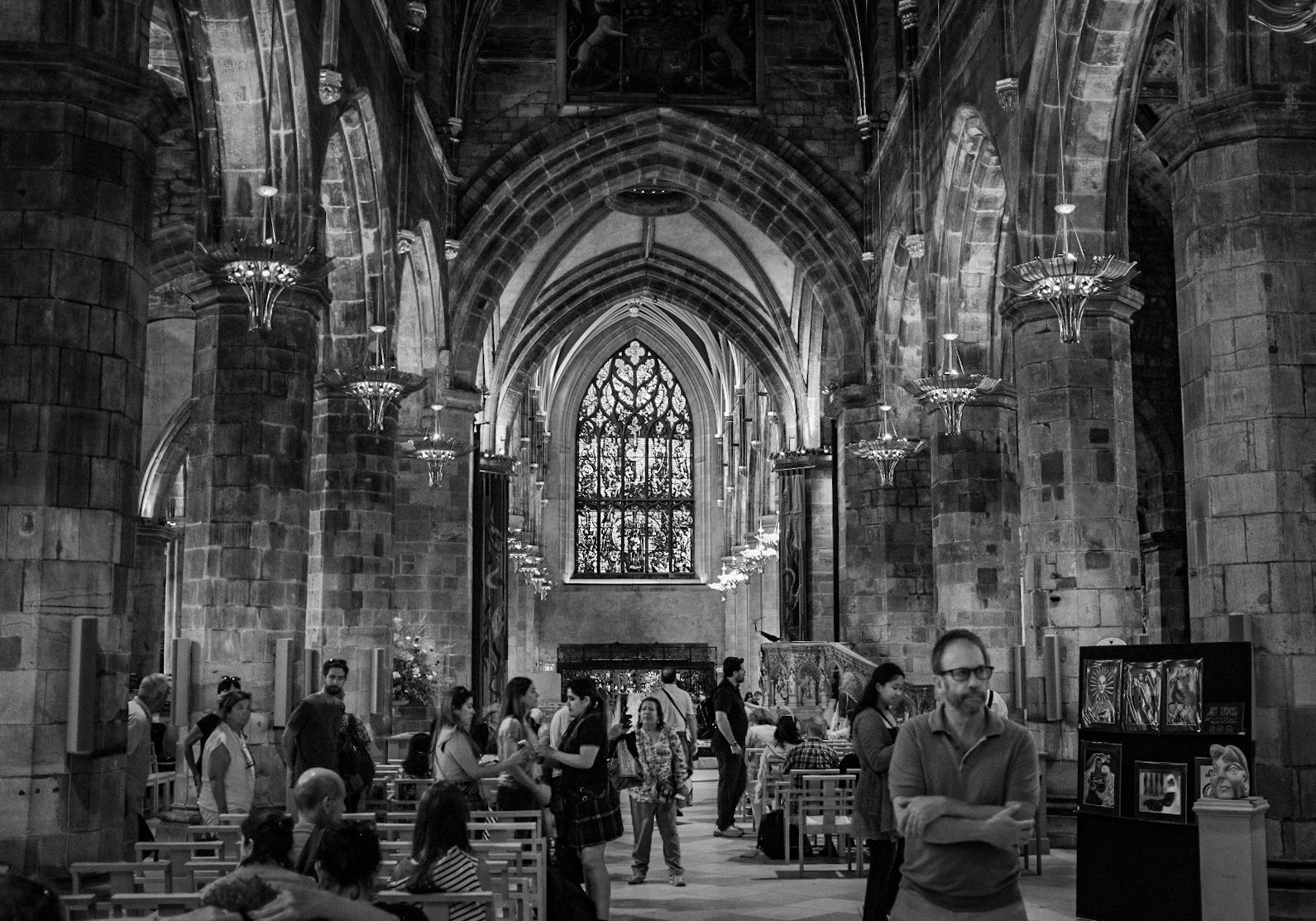
Saint Giles was our next stop. As you know, I’m Catholic, not Protestant. As we wandered through the national Cathedral of Scotland, I was struck not only by the beautiful organ music, but by the lack of the familiar Stations of the Cross, the statues. The centre of attention was not the Lord and the sacrifice of the Mass, but the preacher’s pulpit. I felt this lack and prayed my daily Rosary, head bowed in prayer.
I joined Kate outside, slightly perturbed by the experience.
Lunch was a kebab. Simple and delicious. Kate loved it.
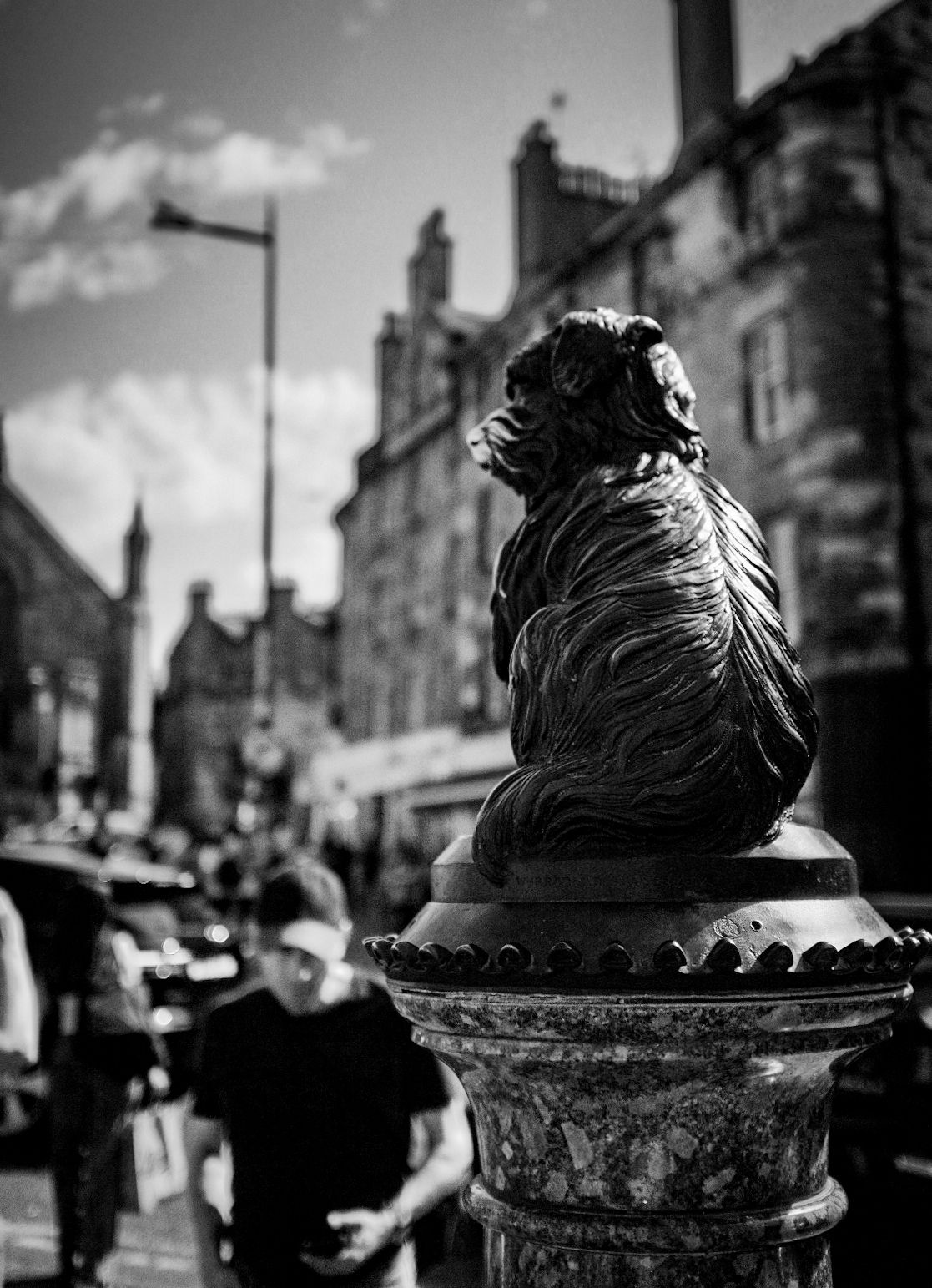
It was time to move on to see Greyfriars Bobby, a wee brown dog, famous for his loyalty. The legend is such that the people of Edinburgh raised a statue to honour him, and people rub his nose either for luck or as a sign of affection. I went into the Greyfriars Pub for some Guinness, reflecting on my own dog Molly, now 16, who greets me every morning as if I’m her favourite person and gets all excited when I get home from work. I can see why wee Bobby was a legendary dog, and why he inspired so many people.
We wandered through the graveyard looking at the tombs of the citizens of Edinburgh from the past. And we found a certain Thomas Riddell who JK Rowling used in her books. Kate acquiesced and allowed me to take her photo in front of it.
We ventured towards the Covenanters’ section of the graveyard, supposedly the most haunted section. I felt nothing and saw nothing, but Kate started to have a headache. We paid our respects and decided to find Bobby’s grave at the entrance. Kate noticed the sticks put on his grave, as you might leave a favourite dog toy. She just had to go and find him a suitable stick. Bless that dog. Teaching us a valuable lesson in pure love years after his death.
We ventured back out onto the streets of Edinburgh, leaving the relative tranquility of the graveyard behind us. This was about to be the reason she wanted to come to Edinburgh in the first place: a cocktail bar. But not any ordinary cocktail bar. The Geek Bar, decorated every four months into a new theme. The theme she wanted was from a video game that she plays with Killian. Oh no—they’d changed everything… It was now all about Stranger Things on Netflix—something I had heard by name but knew nothing else about.
Liquor? Maybe quicker, but it’s not something I’m a great fan of. The lady took our order and explained the concept. I felt as if I was in Starbucks for the first time. She asked which flavours I liked, and with her expert help, I made up my mind. The drink was obviously dangerous—too smooth, too sweet—and I couldn’t feel the alcohol. Neither could Kate, who was only allowed a mocktail. I have to be a responsible parent after all. The second round was just as deadly, and I was beginning to feel very happy. I wonder why…
So maybe, at the end of all this, the real magic isn’t in the tricks or the drinks or even the famous city. It’s just—being there. Following your children into their weird, wonderful universes, and watching them set the place on fire with laughter. And really, what’s better than that?
It was my daughter’s turn to have some Dad time. Before we left France, I asked both children to think about what they wanted to do the most in the UK. Both of them said they wanted to go to Scotland—Edinburgh in particular. The Lourdes trip when I took them both had drained the coffers…
Killian had been. Virginie had been. Kate had never been.
It was my daughter’s turn to have me all for herself.
When I told them, Killian nodded. “That’s fair.” Virginie smiled. “We’ll do something together.” And just like that, it was settled. This day would be hers. Just her. Just me. Edinburgh, at last.
It would be a long day. I wanted to give her a full day—to let the city work its magic… We couldn’t visit everything, but for the first time I thought of Princes Street, and the Royal Mile, and Greyfriars Kirkyard. She’s fifteen—shopping first, history later—yet I’d offer her the quiet places anyway.
I just wanted her to feel the city, not just the shops.
We could always come back.
And next time, she’d walk these streets not because I brought her, but because she chose to.
We walked along Princes Street looking at the chainstores, even daring to go into H&M but soon left once we realised that you have to be skinny to dress there. We moved on to M&S and had our second breakfast. The bacon roll she had on the train was “interesting” but hardly filling. I saw outfits that I thought she might like but was told, non!
I was on the lookout for a tweed spectacle case but despite looking in numerous tweed shops, I only saw the same things over and over again. I was disappointed, but Kate wasn’t! She saw a beautiful tartan étole that called out to her…
How could I refuse her? It would be perfect for winter and the wool was so soft.
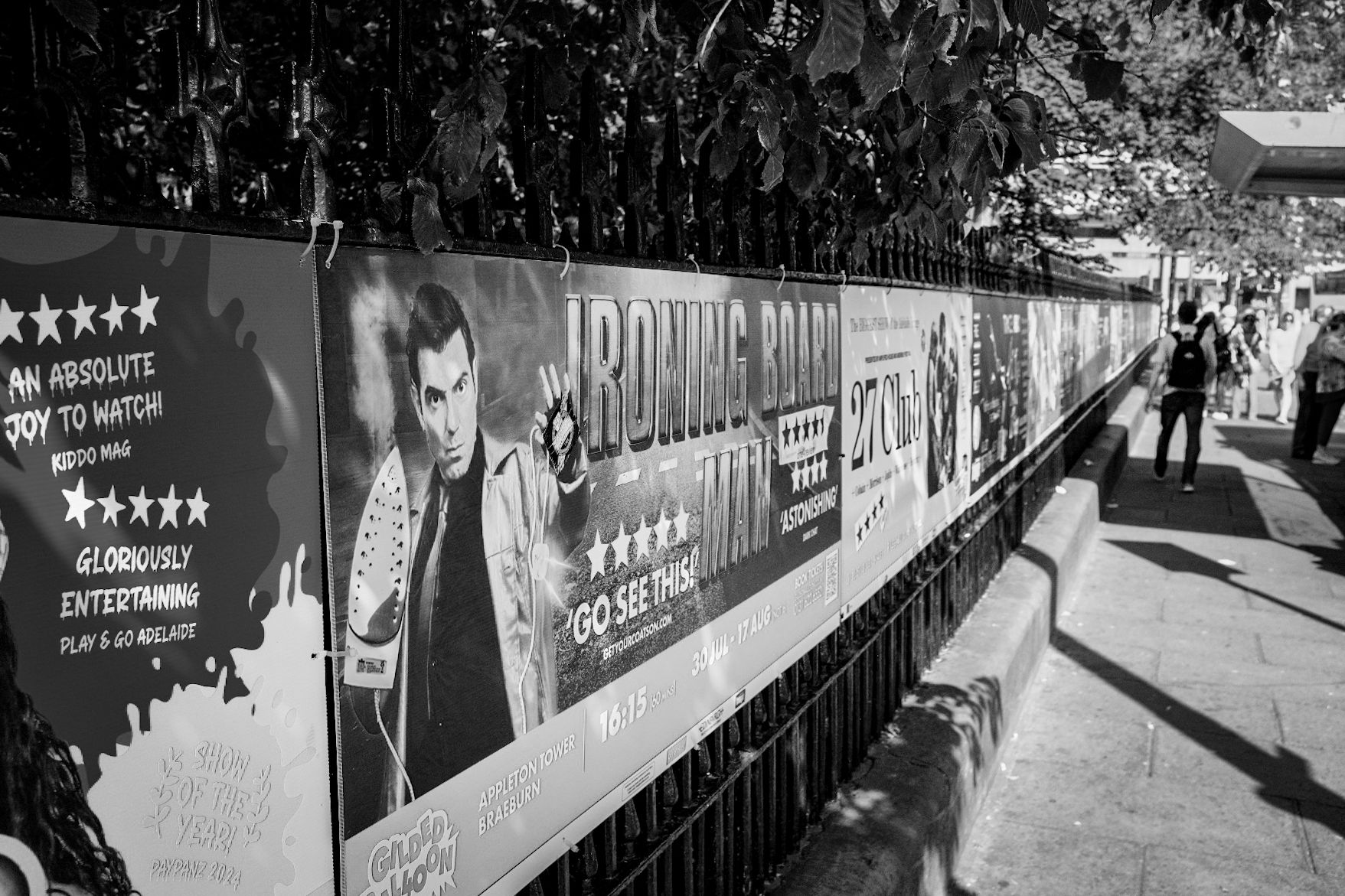
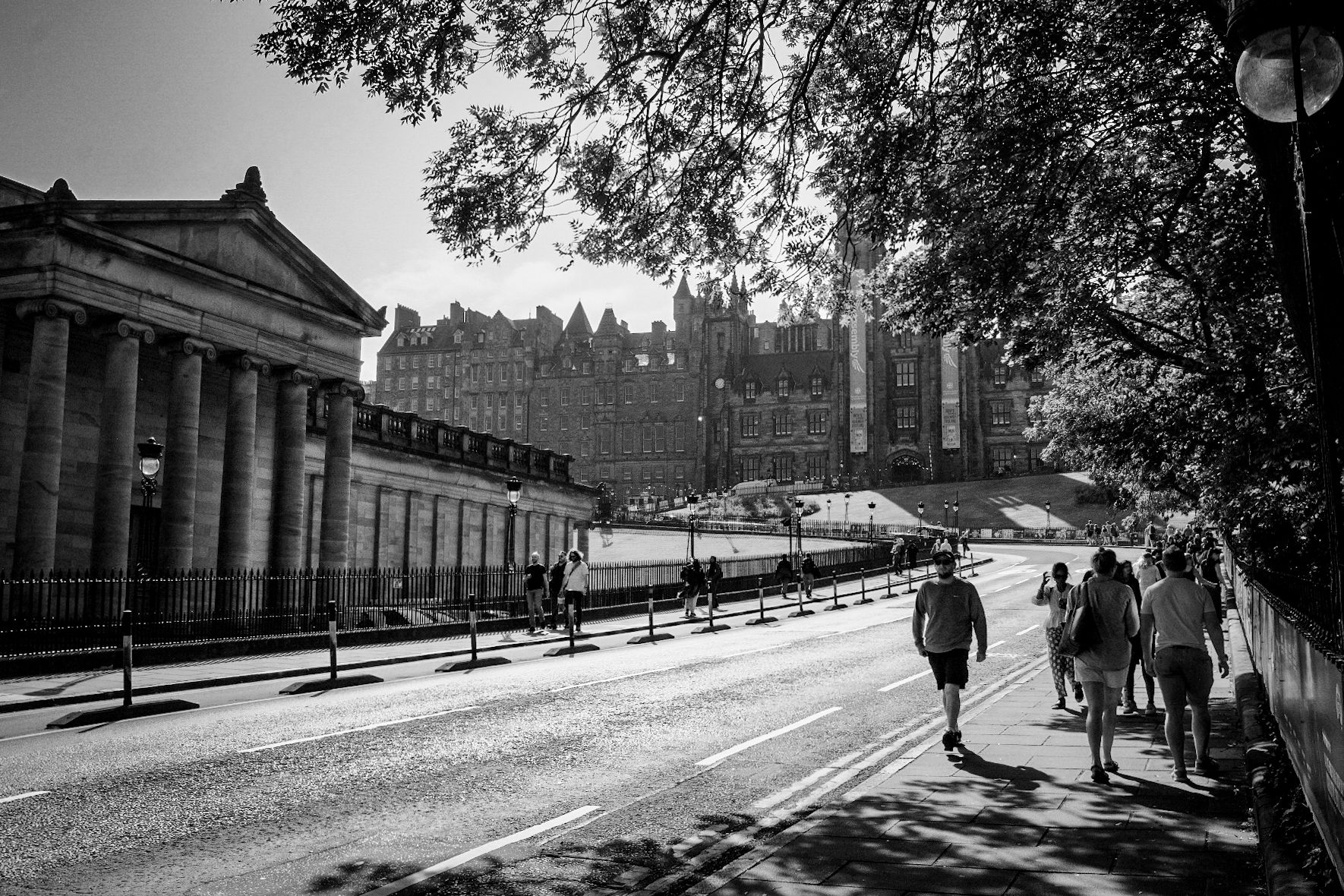
We crossed the bridge next to the National Gallery, Festival posters peeling in the wind.
Then she stopped—a shadowed shop glowing with silver. The same one where Killian chose his claddagh six years ago. “Like Killian’s,” she said, tapping the glass. Not a question. A claim.
Inside, the air smelled of wool and old metal. She ran her finger over the trays— Past the ornate knots, straight to the simplest ring. “This one,” she told the jeweler. “Like my brother’s.”
I watched her try it on, heart facing outward. Right hand. My heart is free. (I didn’t need to say it.) “For remembering,” she whispered. Not “growing up.” Just: This is mine now too.
Edinburgh breathed around us— alive, urgent, temporary.
Bastille Day, or should I say la fête nationale, is linked to the French Revolution but technically has nothing to do with the Bastille, which was a fortress prison in Paris that was stormed on the 14th of July 1789. It only housed seven prisoners, and yet it became a symbol of anti-royalism. It still cost the guv’nor his head! Oops-a-daisy.
No, no, no. La fête nationale, technically speaking, started as the Fête de la Fédération in 1790, and was only officially established in 1880. After the fall of Napoleon III and the creation of the Third Republic in 1870, there was a need to unify the country and create a shared national identity. They always need so much time, these Frenchies, to get some things done and agreed upon…
To the modern Frenchman, it is synonymous with a weekend off, the military parade, the chance to hear the President’s speech, to make a biting critique of said President, and to declare him a despicable little man. It’s always their fault anyway. It is also synonymous with firework displays and dances organised by the fire brigade—bal des pompiers—which, contrary to popular belief, does not literally translate to “firemen’s balls.”
It also marks the official start of the Grandes Vacances, when the country begins to shut down for summer until the rentrée in September.
But for me, it meant getting the children to a restaurant for lunch on the Saturday to eat with my brother-in-law, his wife, his daughter, and his grandson. Killian was a “little tired” after a long week at work and some drinkie-poos with friends at the bottom of the castle walls in Montaigu. No, of course he wasn’t hungover, heaven forbid. Of course he hadn’t lost his phone, and of course he hadn’t hurt his wrist wrestling—or cuddling with—his mates. He had tried to get out of it, but was told, “Not bloody likely,” by his mother, and I said I’d take Kate to go and get the boy. A friend had found his phone, so we passed by her flat to get it back. The Anglais arrived fashionably late at 12h15. Sat down and had a couple of beers. We almost looked presentable!
We ate and caught up, had a very pleasant lunch, and I finally met my new nephew Raphaël—a lovely two-and-a-half-year-old. Motherhood suits my niece to a tee, and it felt wonderful not to have to be on full alert because it was no longer my job. After eating, we men went to pay for the meal, and Killian was more than happy to contribute, bless him.
We dropped off Killian, who declared his intention to have a “little snooze,” and dropped Kate off at home so she could welcome Emeline, who would be spending the weekend with her. Virginie had cleaned the kitchen, and Kate had been briefed to keep said kitchen just as spotless for our return from Brittany to visit my in-laws… The last visit had gone surprisingly well, and it was with actual pleasure that we set off. It was still a tad warm, and since there was a risk of fires, all fireworks had been cancelled by the préfet. In Montaigu there would be no fireworks, no bal des pompiers, but in Brittany it would be fine! Yippee!!
The trip up was very much the usual trip to Brittany on a busy weekend on the roads. We were not driving at a rapid rate of knots, and Virginie’s infamous and rather colourful language punctuated the drive. The Frenchman, whilst driving in 36°C heat, can get a little irate. His ultimate goal is to get there—wherever there might be—before the car in front of him.
The hierarchy of traffic, as far as he’s concerned, goes like this: – Anyone from the same department is a mate. – Anyone from our region is a mate—unless they’re from Maine-et-Loire, who apparently don’t know how to drive, or Loire-Atlantique, who think they know how to drive but clearly don’t. – We’re from the Vendée—and we do know how to drive… we’re just usually too drunk to do it properly. – Anybody else from France is fine, I suppose. – UK drivers are also mates—especially if, like us, your car proudly displays both an F and a UK sticker. – Drivers from 75 (Paris)? Absolutely clueless. – Those from 91, 92, 93, 94, 95, 77, and 78—the rest of Île-de-France—are also deeply suspect.
Ah, Bastille Day. The revolution may be over, but the road rage? That’s just getting started.
Drop in next week for another adventure where we actually get to Hell’s Belz, in one piece. That first evening is already full of adventures as I rise to save the day, Jessica and Xavier, and not get told off by Gisèle. I do get told off by my wife for being a complete idiot and forgetting my CPAP machine for my sleep apnea…
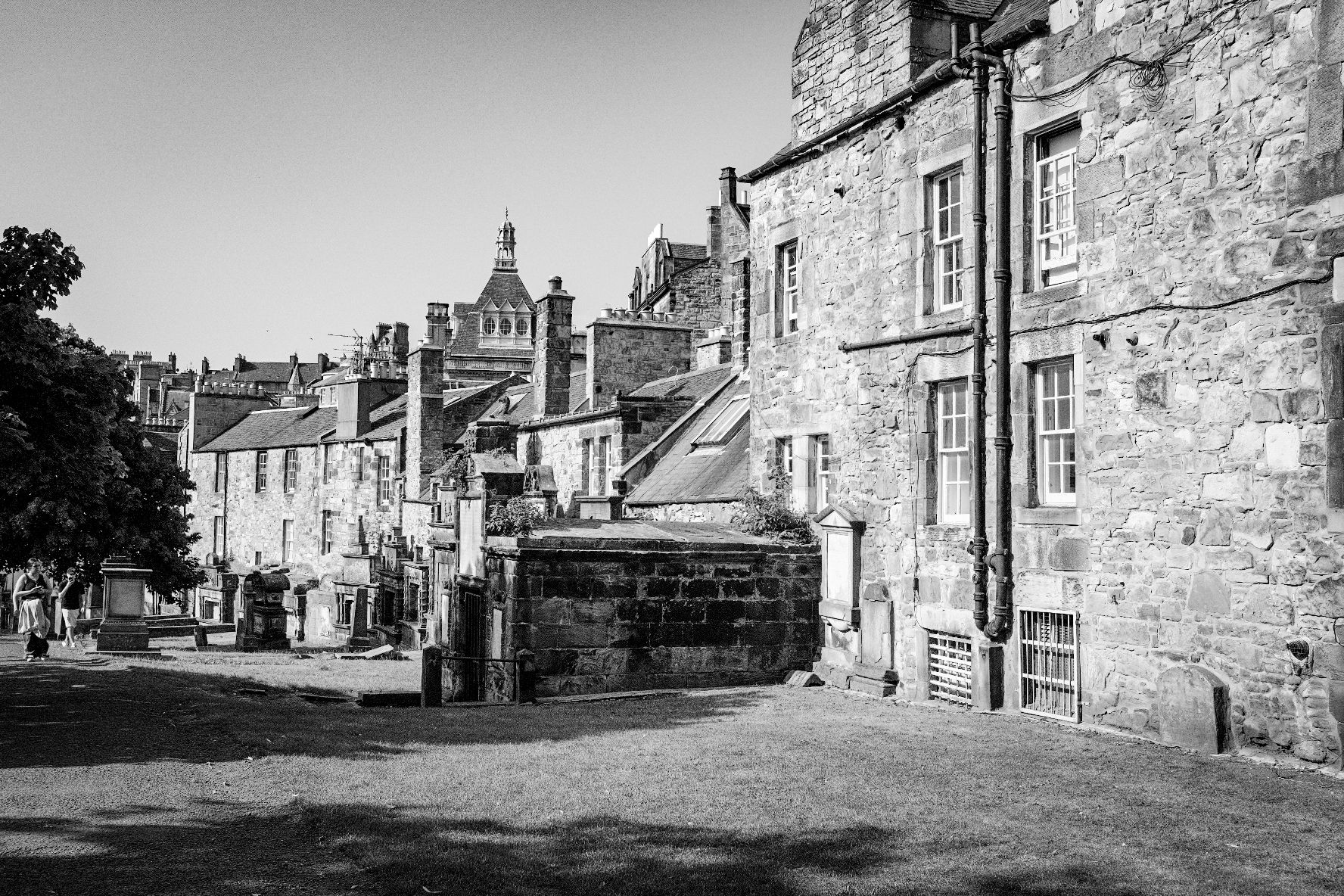
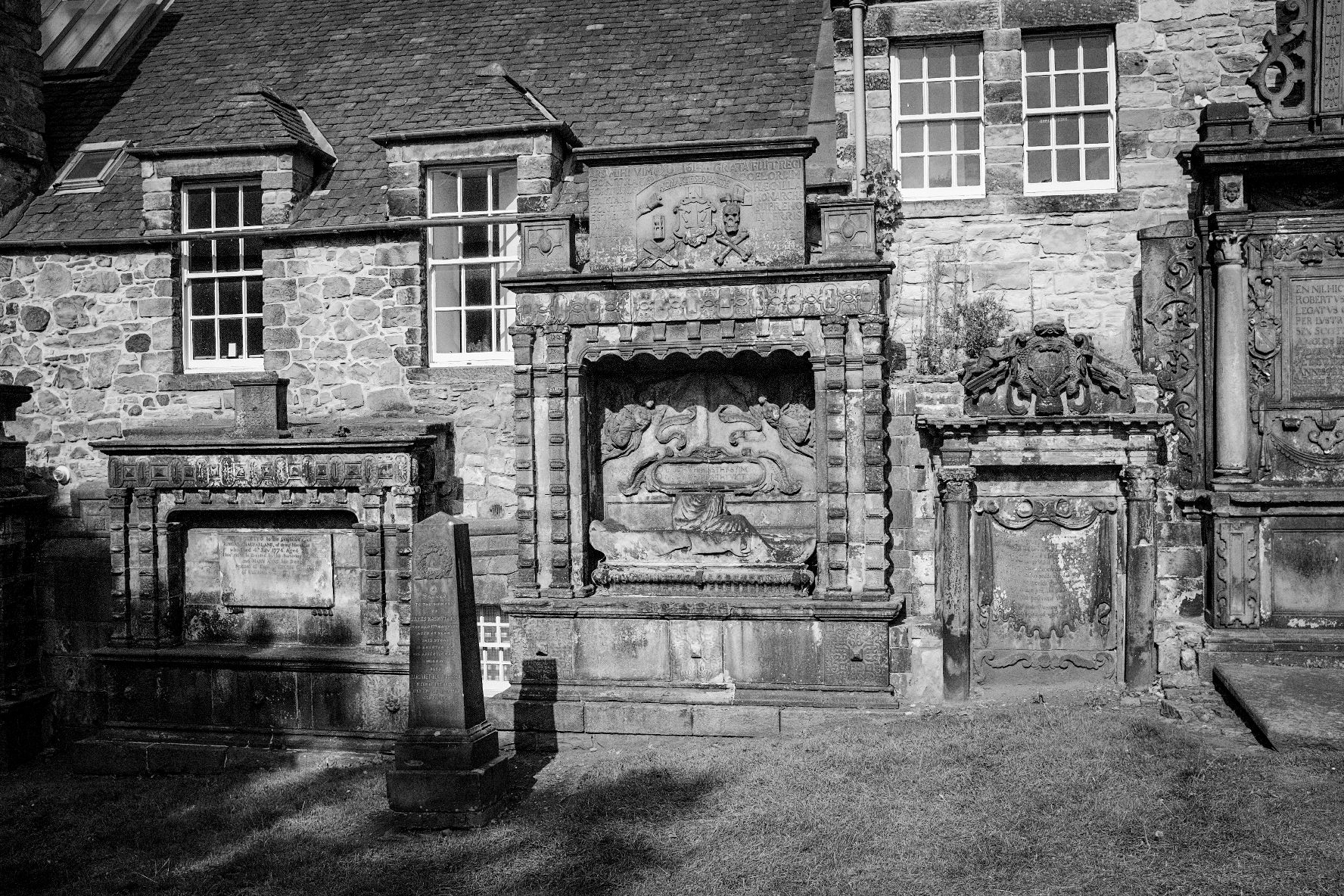
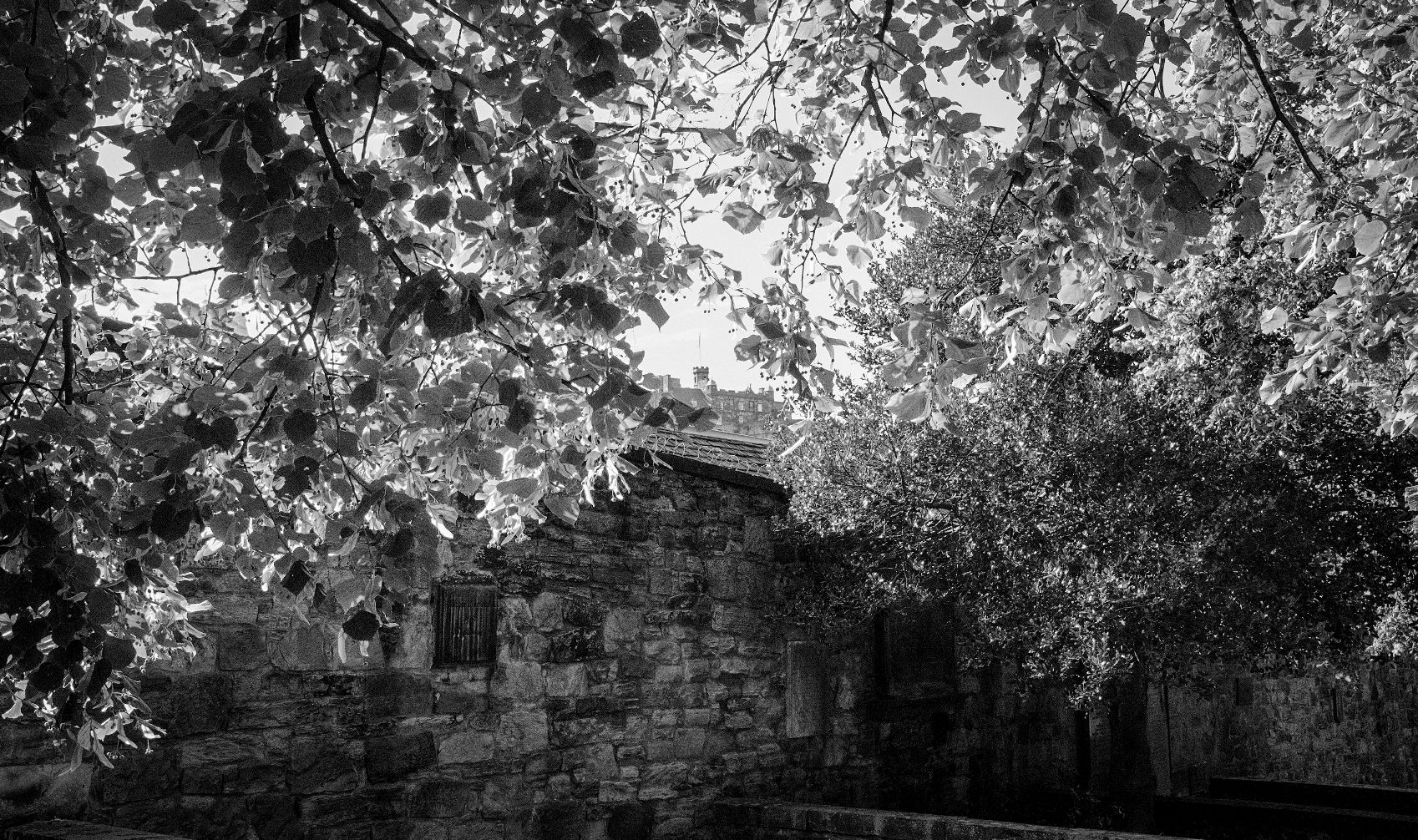
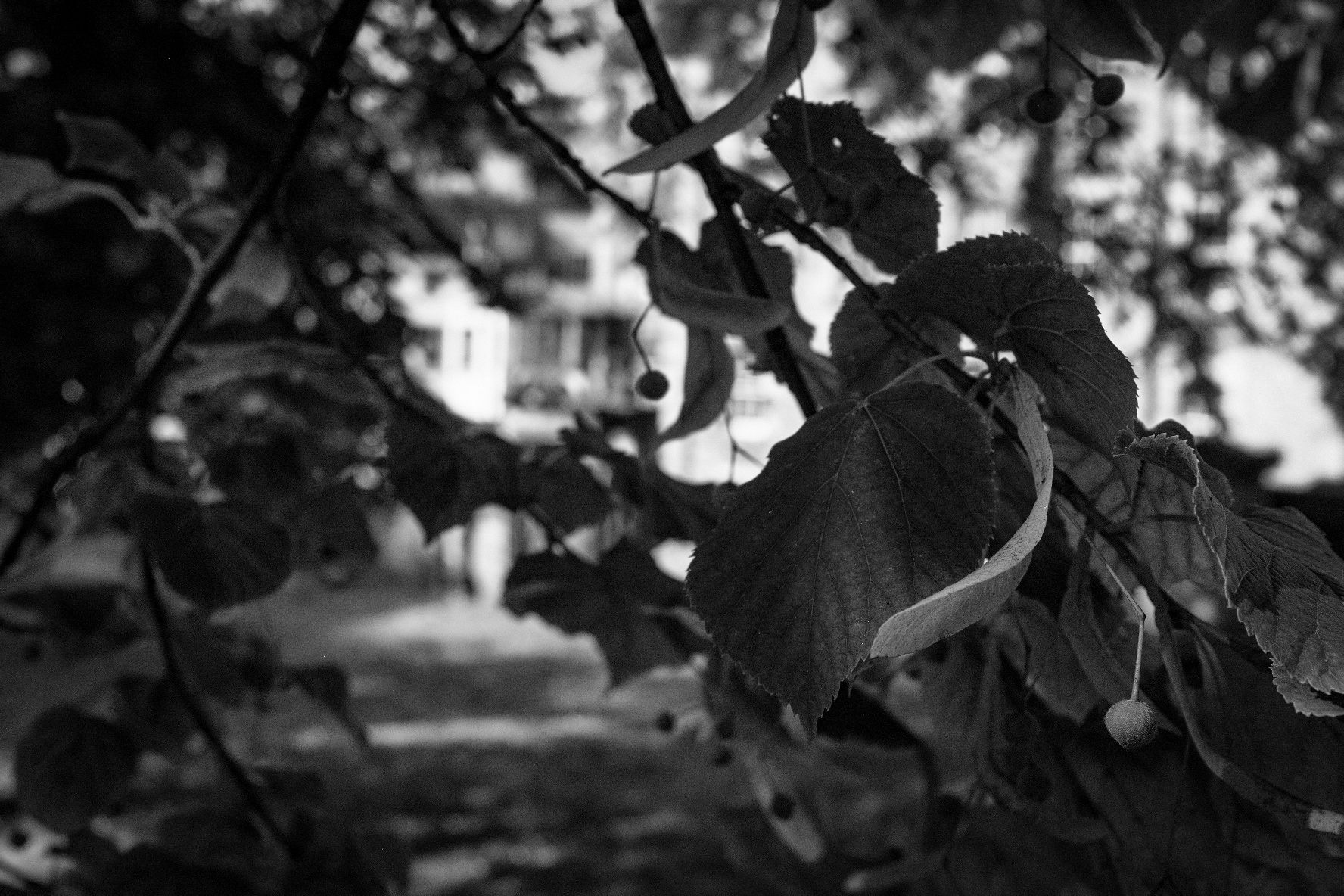
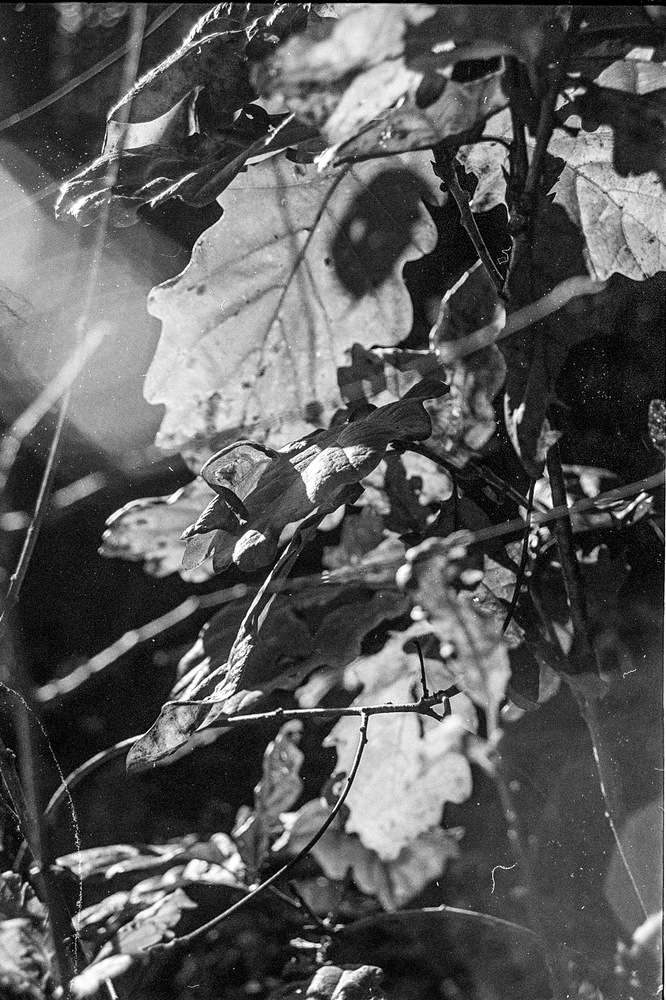
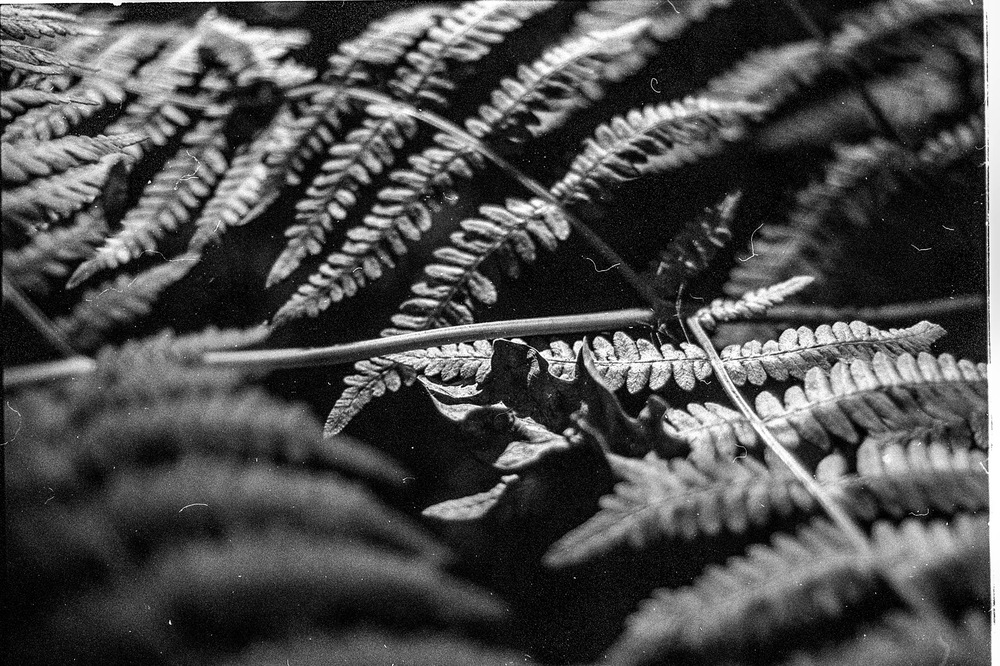
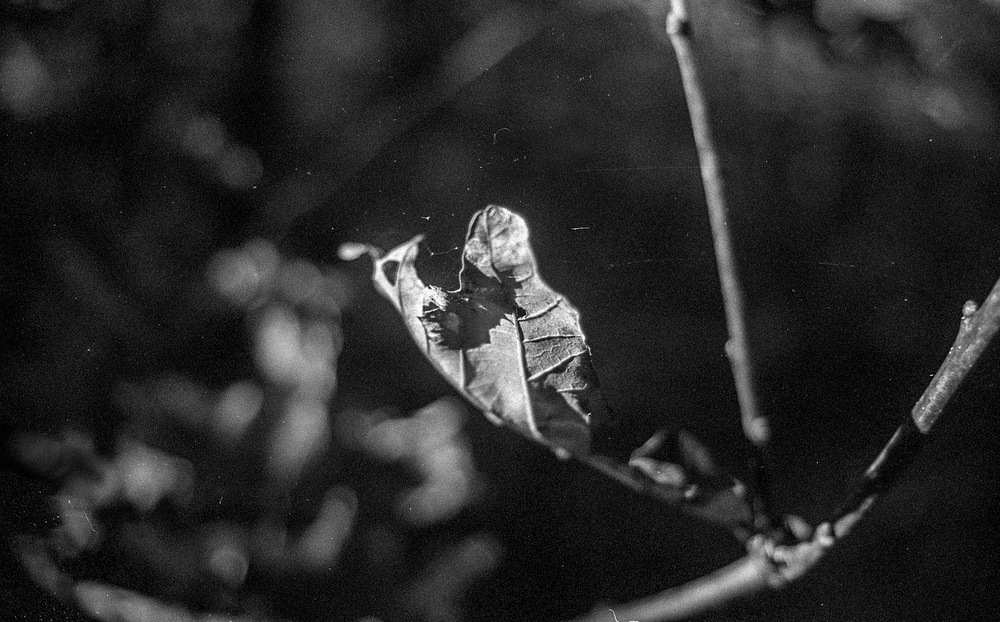
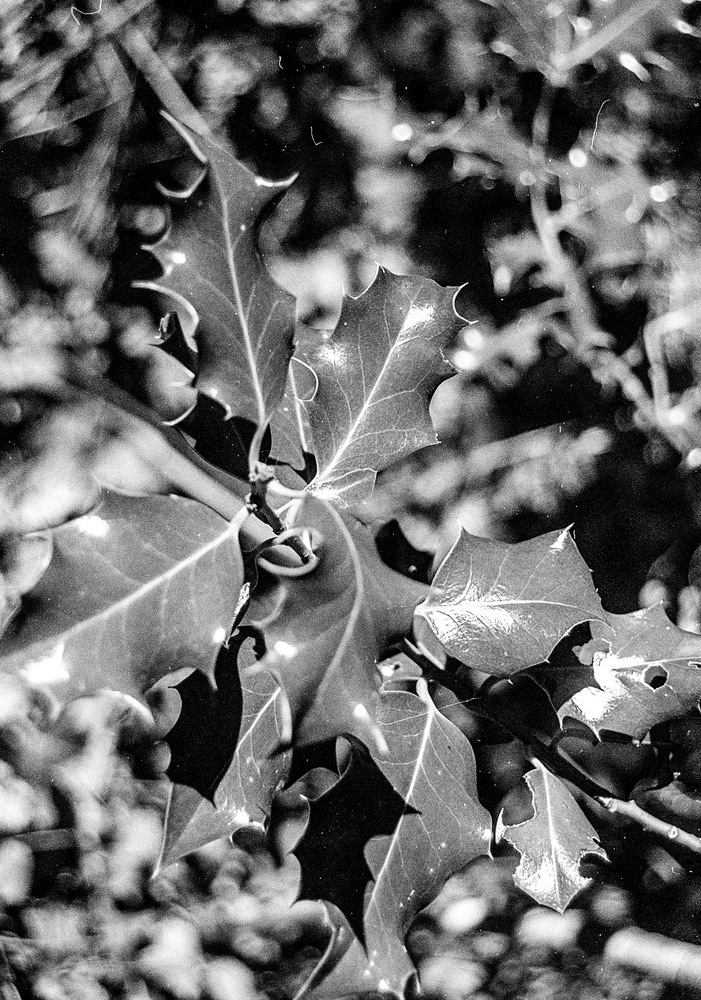
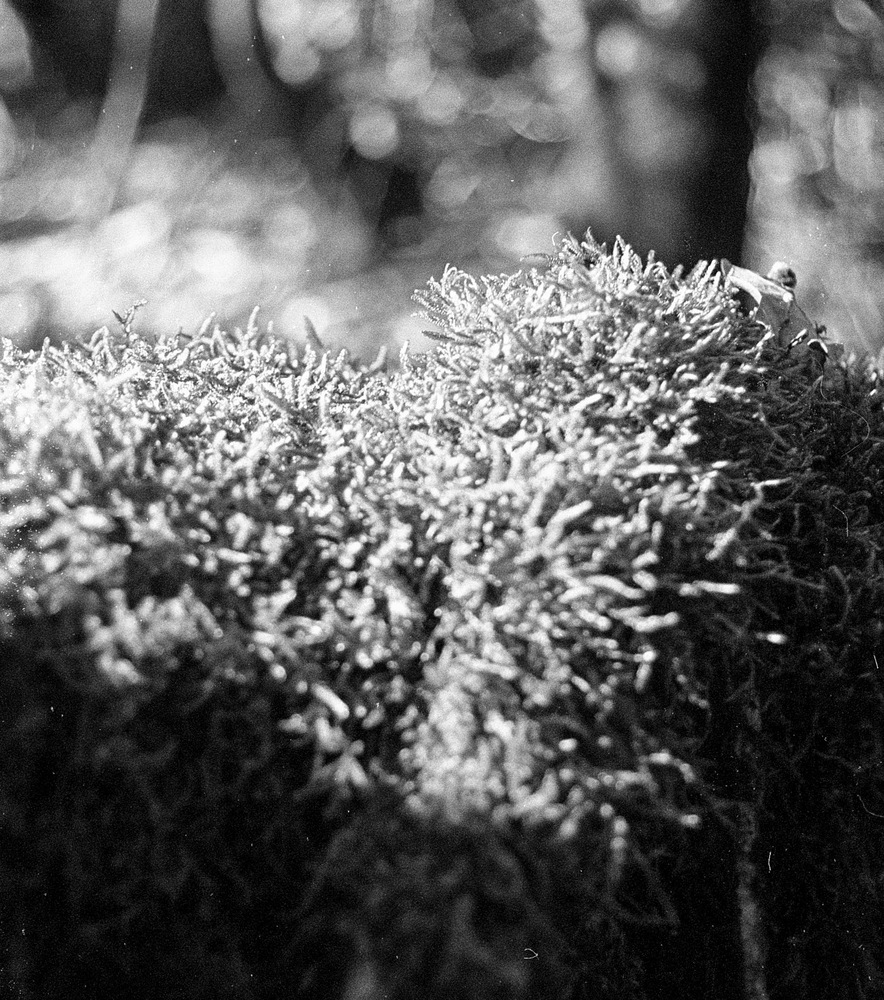
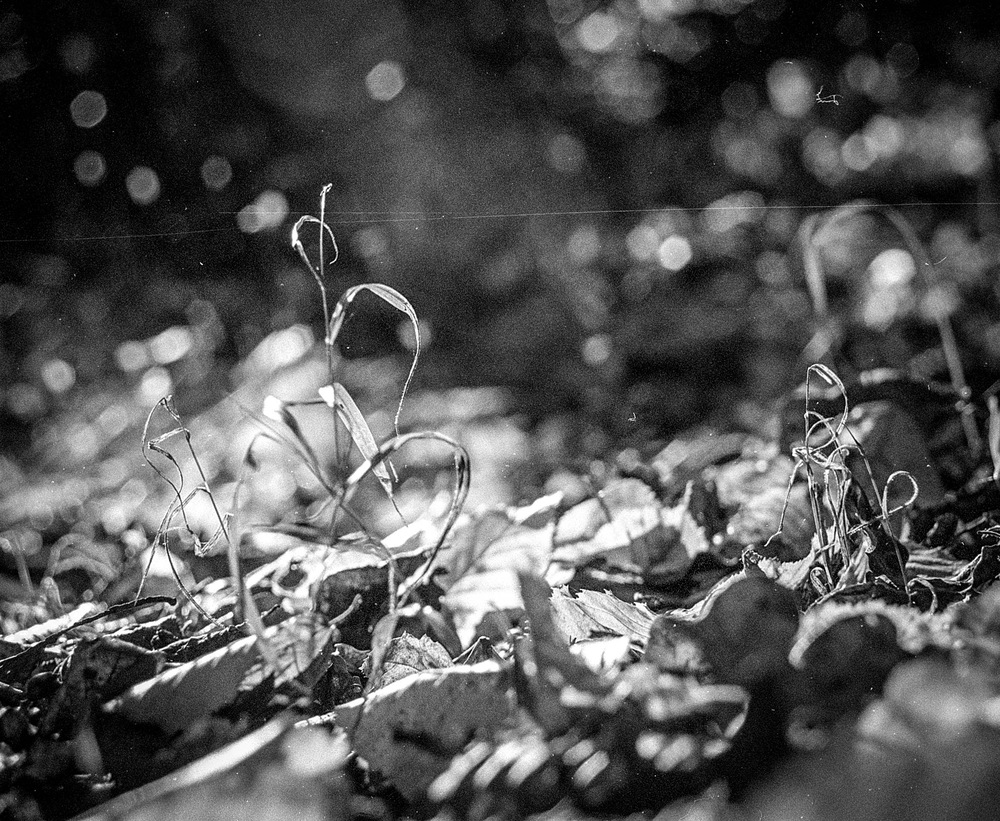
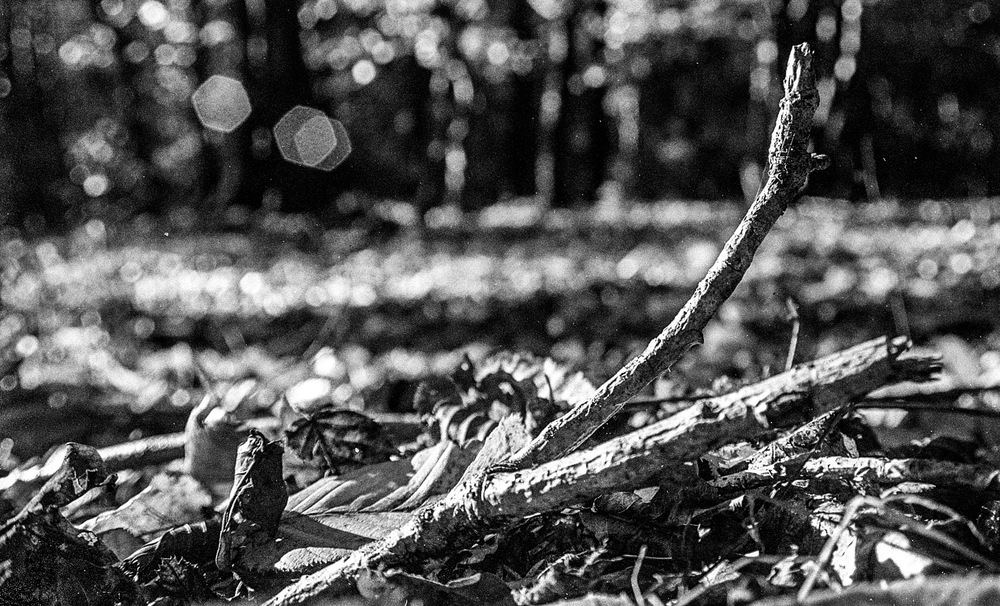
It would appear that I was quite the busy bee, snapping anything and everything with the Canon AE1 back in 2016. It seems to have become my “everyday carry” and the camera I always had with me.In 2016, I was all about exploring the world using just Ilford’s HP5 Plus black-and-white negative film. On this particular day, I had gone back to the Forêt de Grasla. I remember it being a fairly warm day for October, and it was wonderful to be in the outdoors.
The forest was one of my favourite hunting grounds for wild mushrooms, and Killian would be there with me, helping to find some “fungis to be with.” An old joke, but I am a dad, after all…
As you walk through the various parcelles of the forest, you can smell the mushrooms in the air, the decaying wood, and hear the rustle of wind rushing through the trees. The ground is slightly damp underfoot—hence the walking boots.
Now for a bit of history. I suppose you have heard of the French Revolution and its wide-reaching effects on my adoptive country. Well, not everyone at the time was very happy about the whole shebang. The “Chouans” from Brittany and the Vendée decided that they quite liked the idea of having a king, and perhaps this Republic idea might not be for them.
This led, of course, to the Guerres de Vendée, with Republican troops sent to massacre the counter-revolutionary Vendéens. Most places in France are wary of Parisians, but there’s an extra edge to this in the Vendée, and with good reason. Even now, the Vendée has a very independent mentality and has never forgotten what the Republic did.
The Forêt de Grasla was a lot larger than it is now, and the rebels would hide there, hoping to escape the Republican troops. There is now a museum, the Refuge de Grasla, showing how they lived hidden in the forest.
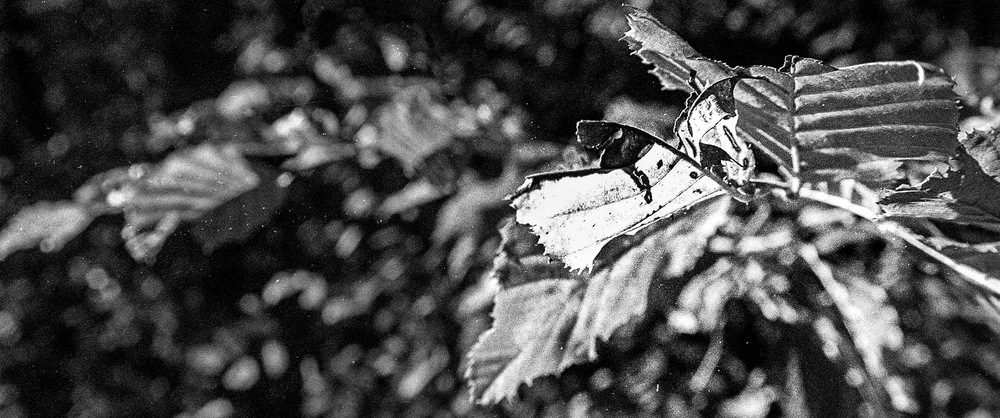
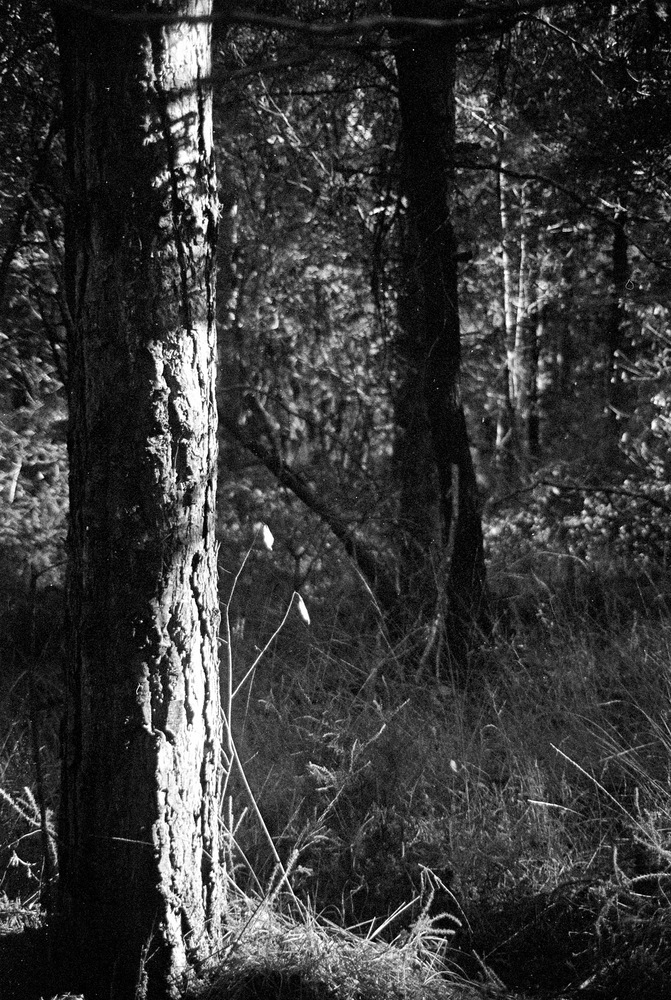
The idea of the outing, however, wasn’t history or mycology, but woodland photography on film. I think I managed to get some half-decent shots!



































 IJM Photography