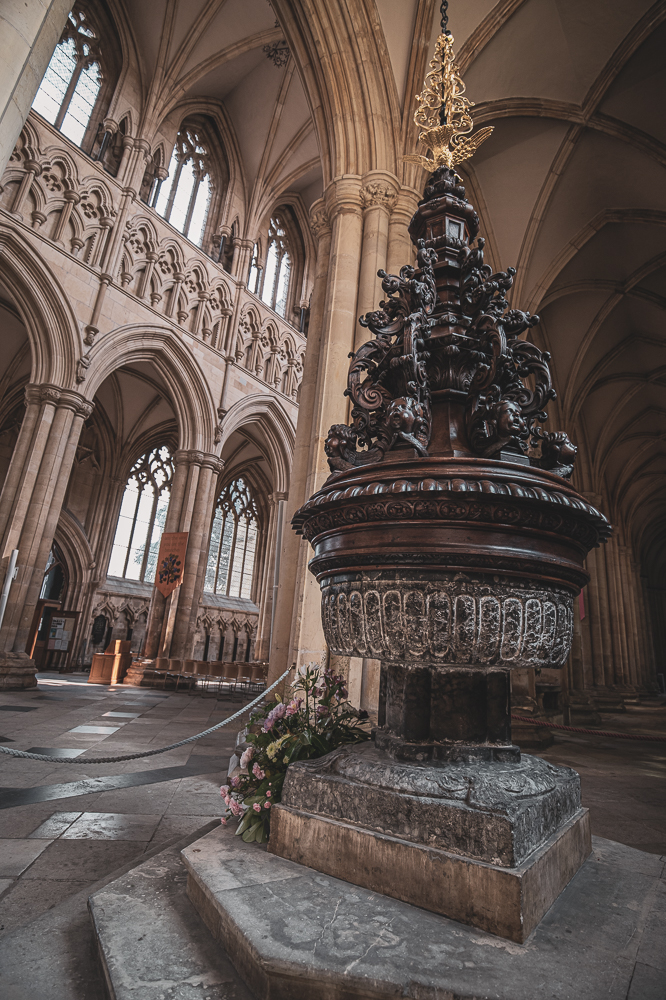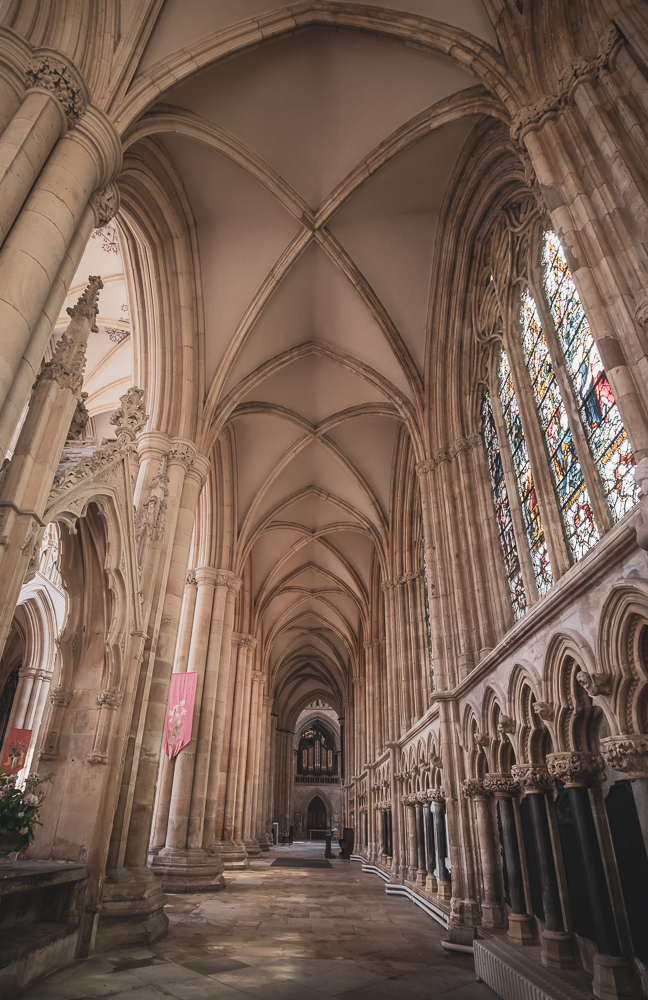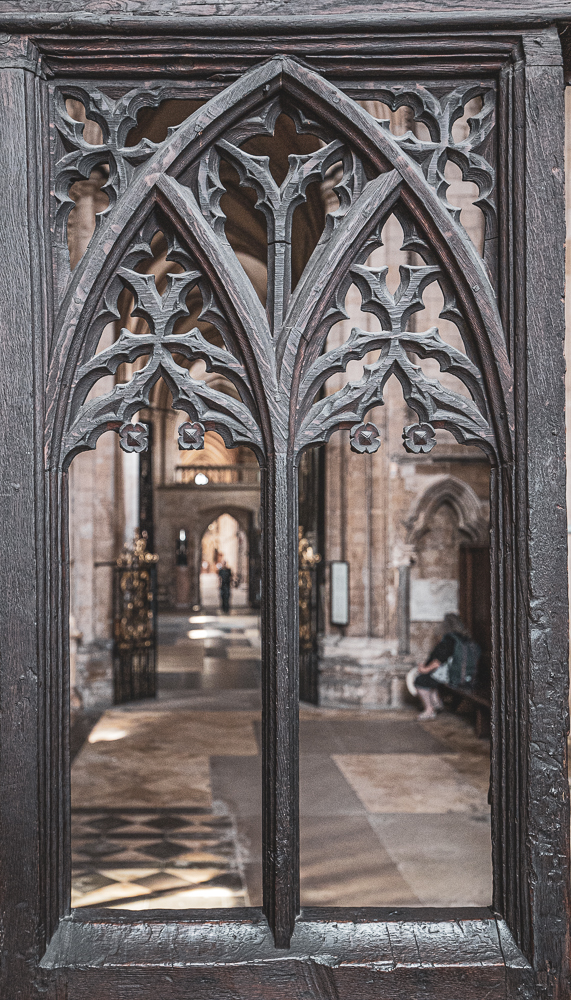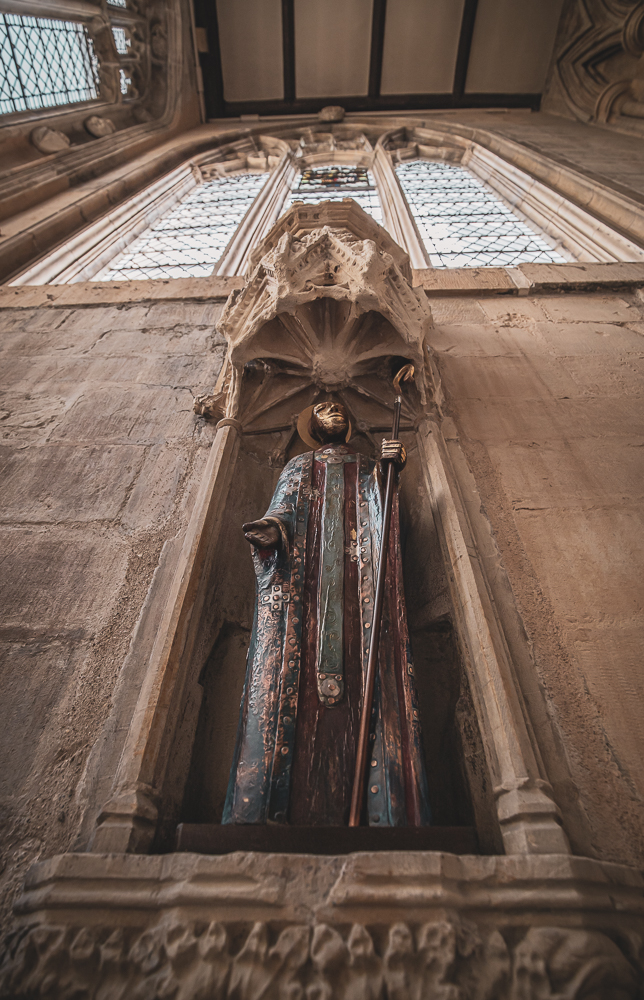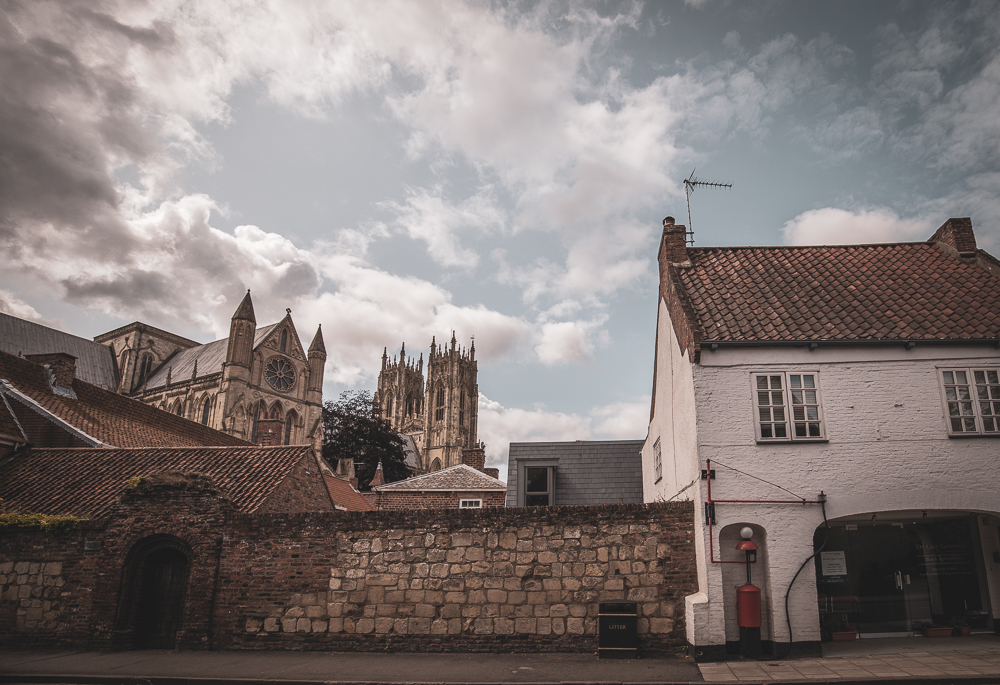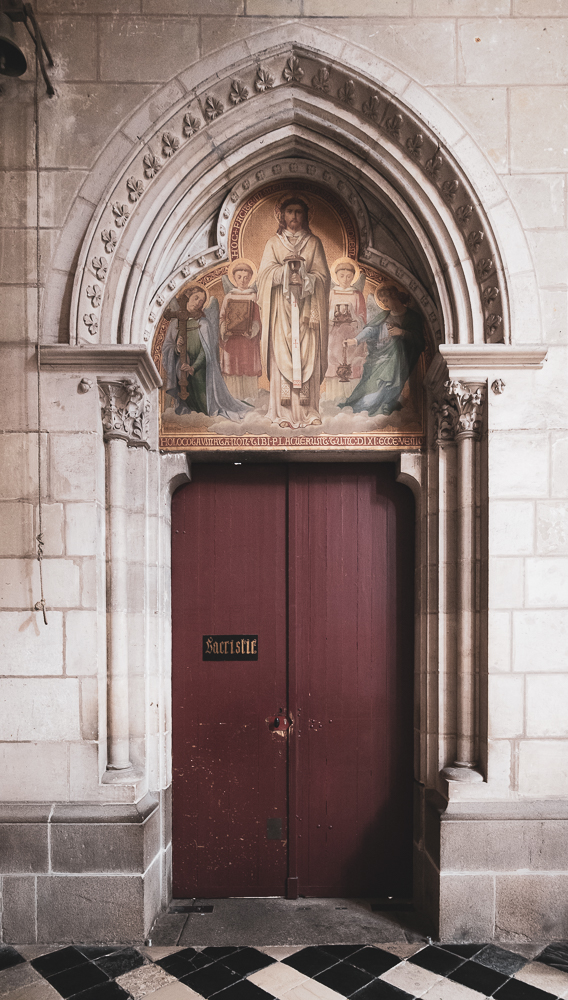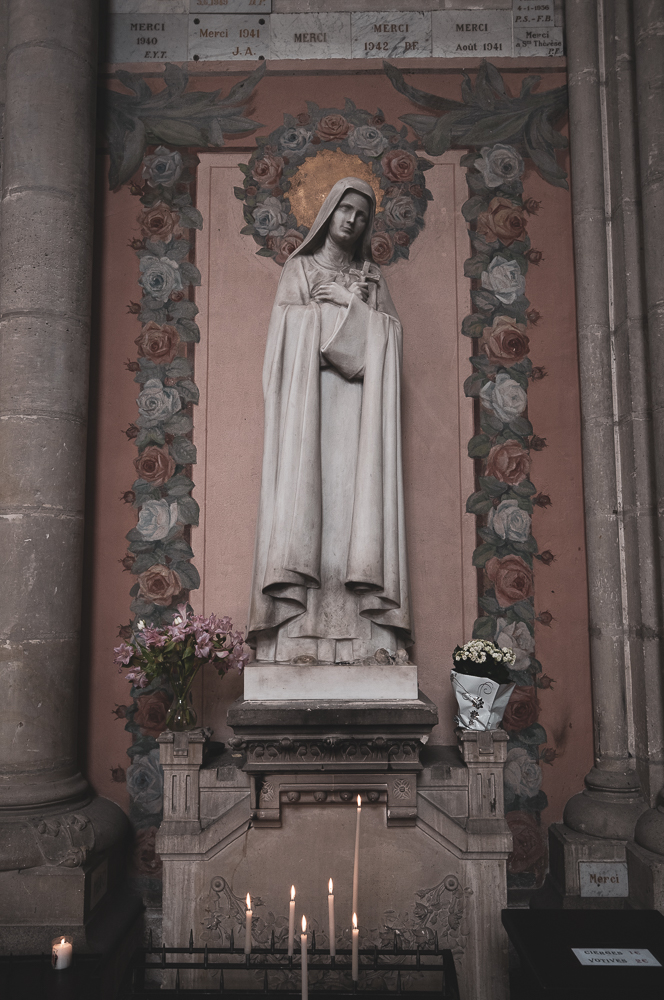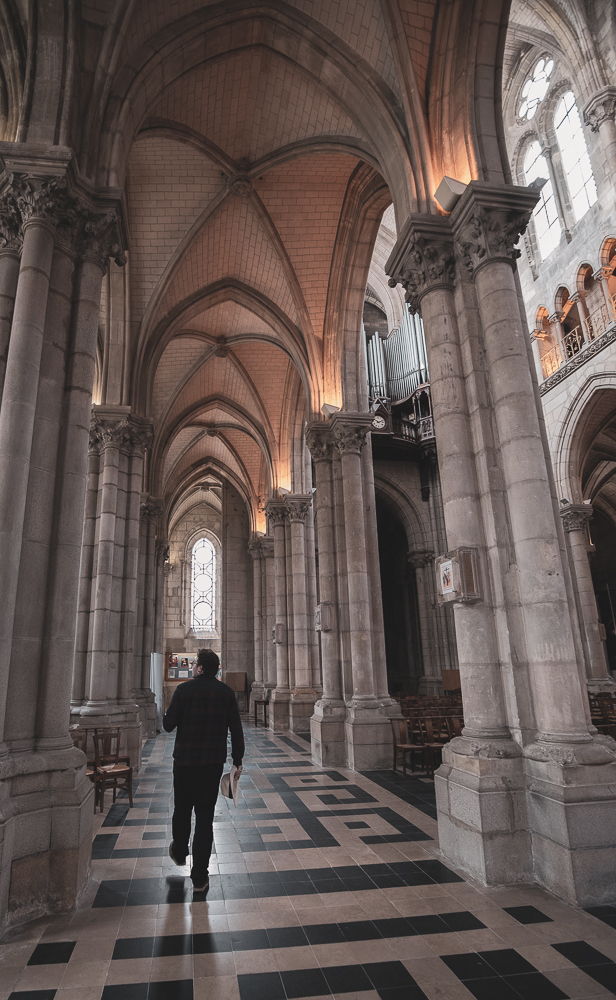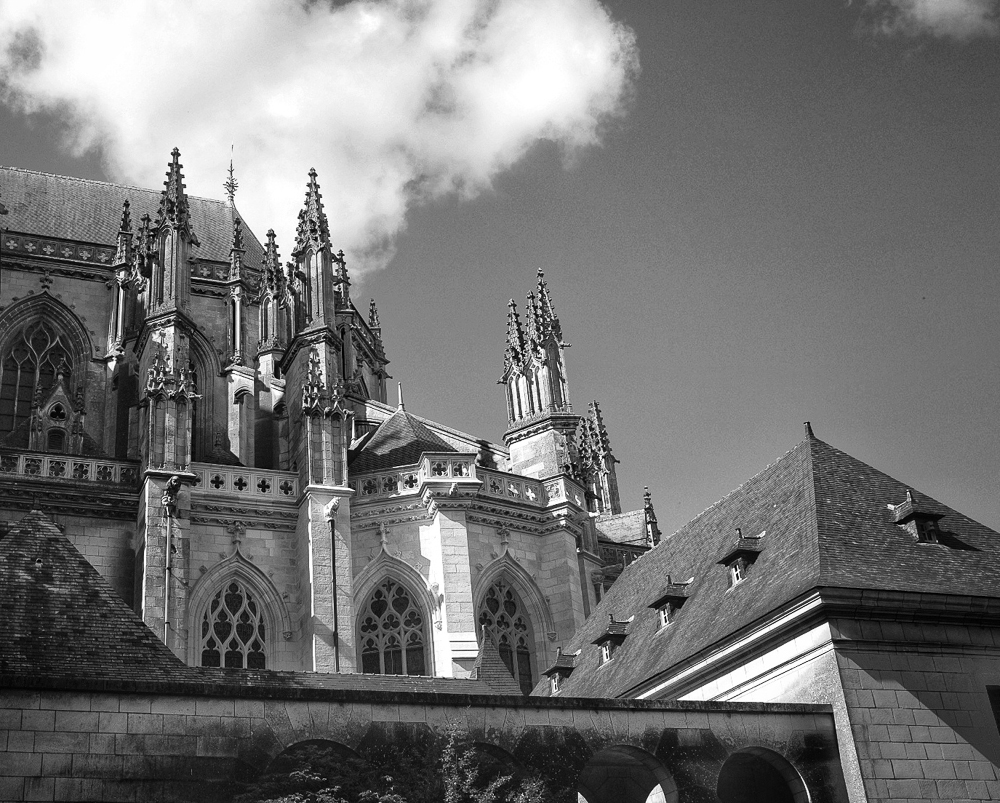
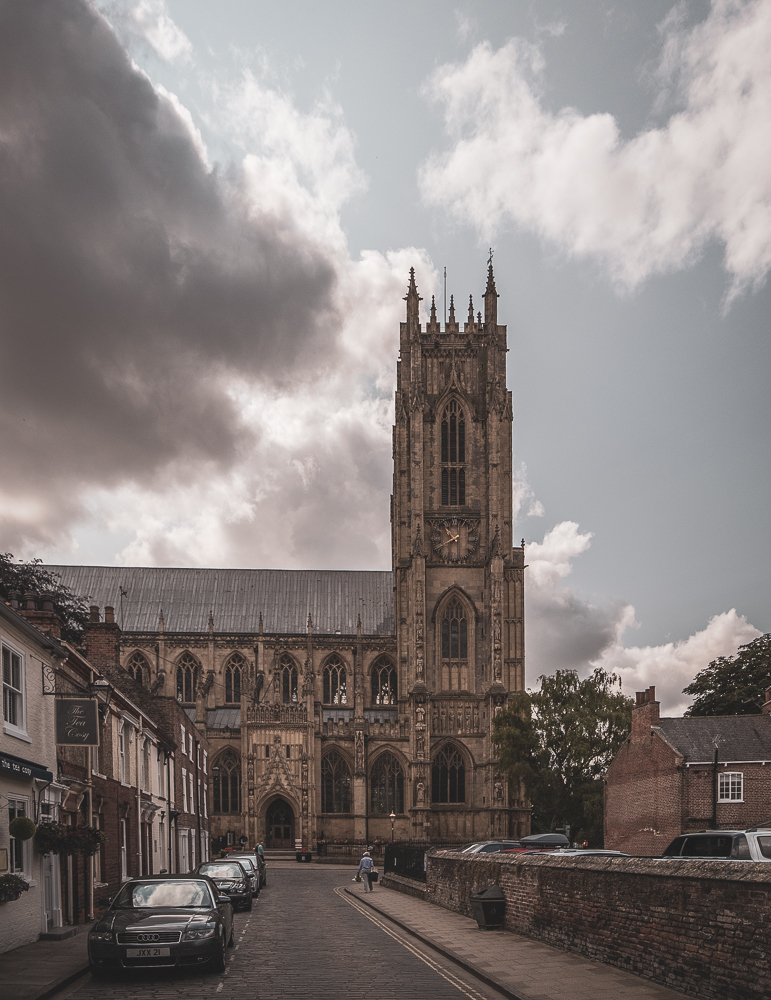
Beverley Minster, East Yorkshire


You might just have noticed that I didn’t publish anything last Wednesday. And even if you didn’t not notice, I still didn’t publish anything last Wednesday. I had just had some time off work and had just got back from an amazing visit to Hull to meet up with some old friends that I was at school with, and hadn’t seen since school. The next couple of articles will feature photos from that visit.

Soooooo… We travelled up from the Vendée, to catch the ferry at Zeebrugge, in Belgium. We usually set off quite early but this time it was a bit silly kind of early. No it wasn’t, it was the downright obscene kind of early! That kind of early that you only do when it’s summer and really hot during the day, and you want to drive at least a couple of hundred kilometres without passing out from the heat.

Needless to say, we were “on time.” Not the first in the queue, but not far off. Anyway, the sail over was really good. The food and drink were great and we actually got a good night’s sleep. So fresh eyed and bushy tailed as only fresh eyed and bushy tailed little bunnies can be, we arrived in Hull. Yes Hull is what I consider as home… You can take the boy out of Hull, but not the Hull out of the boy. I still get emotional when I listen to the Housemartins. Which is why, as soon as we got off the boat and had to wait for the hotel room, we went off to Beverley.

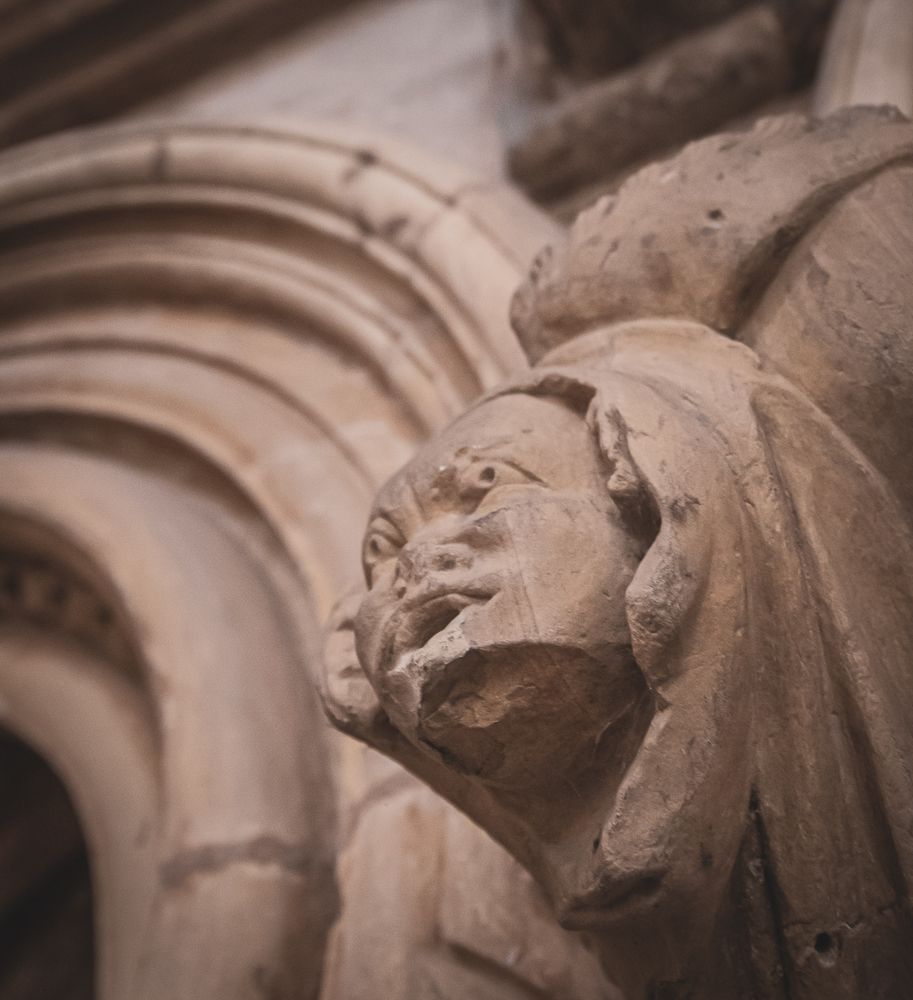
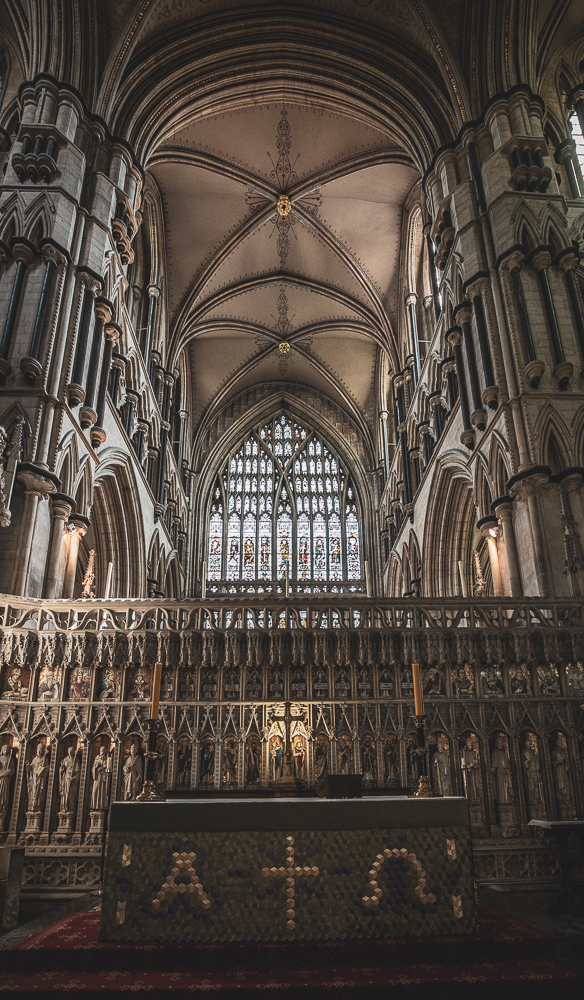
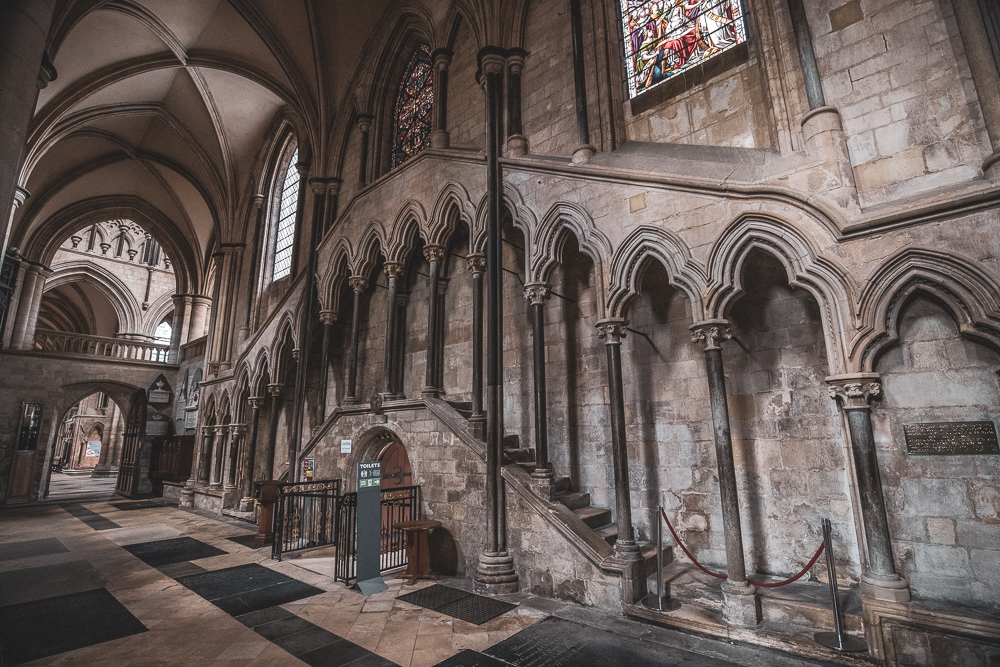
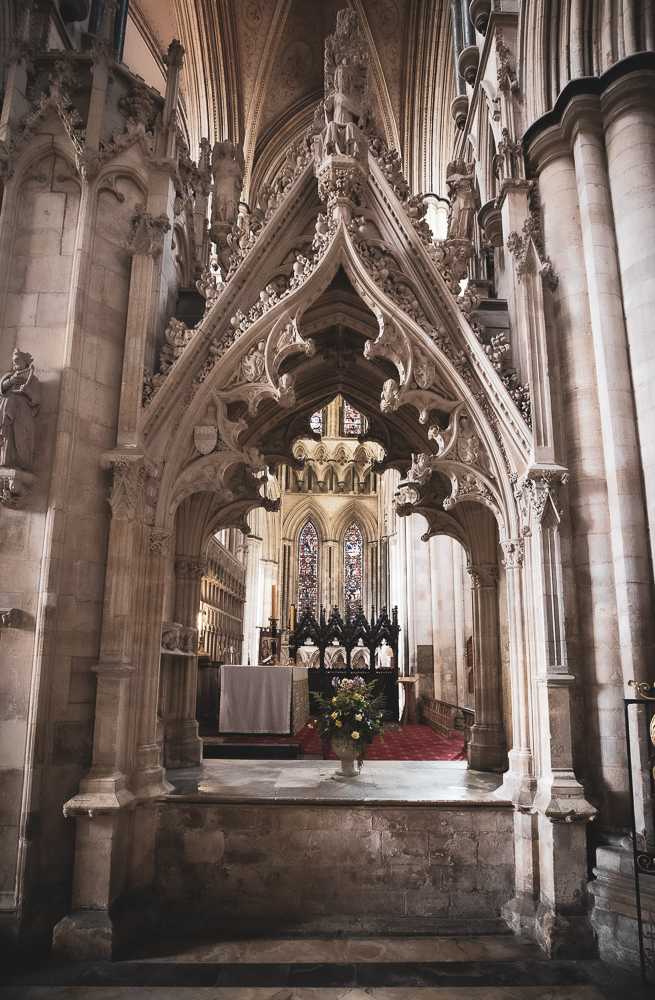
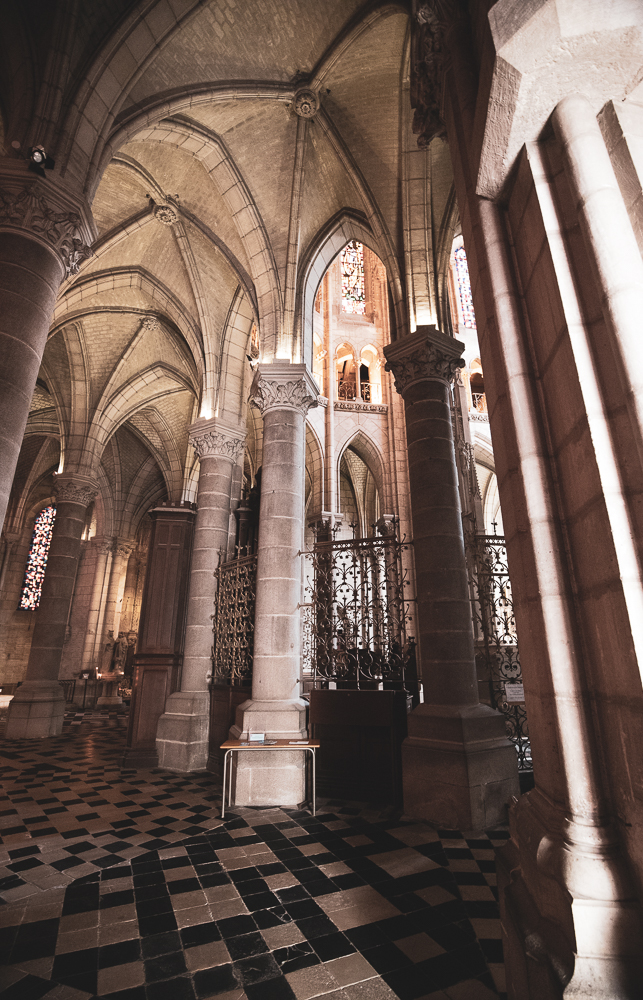
There were two places I wanted to visit. The Minster and St Mary’s Church. I’m not forcing religion down your throats, but as I said in the article about the St Nicolas Basilica in Nantes, these buildings were designed by men in which to connect with God, and everything in them leads man to God. Even if you’re not a believer, you can tell that this is no ordinary building. I’m always amazed by the architecture and how the builders managed to construct such edifices and what technology the must have used.

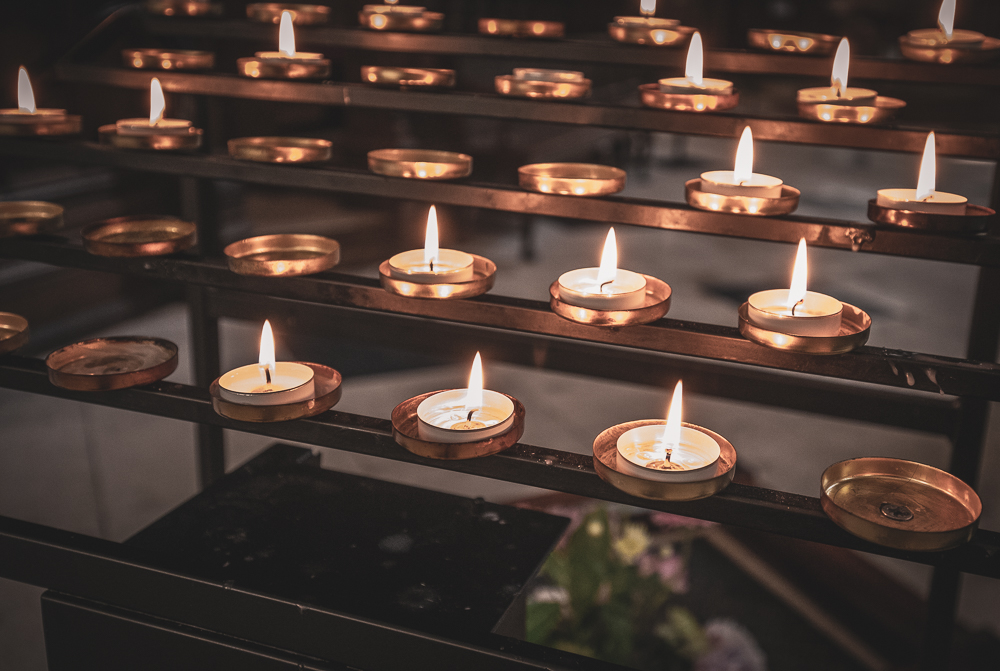
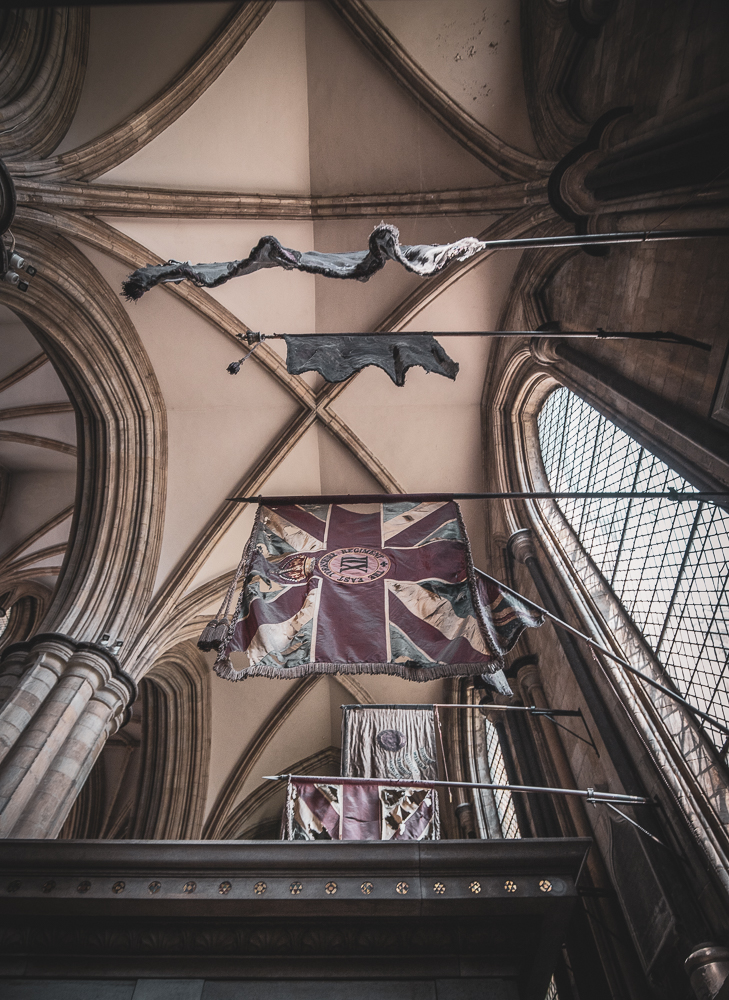
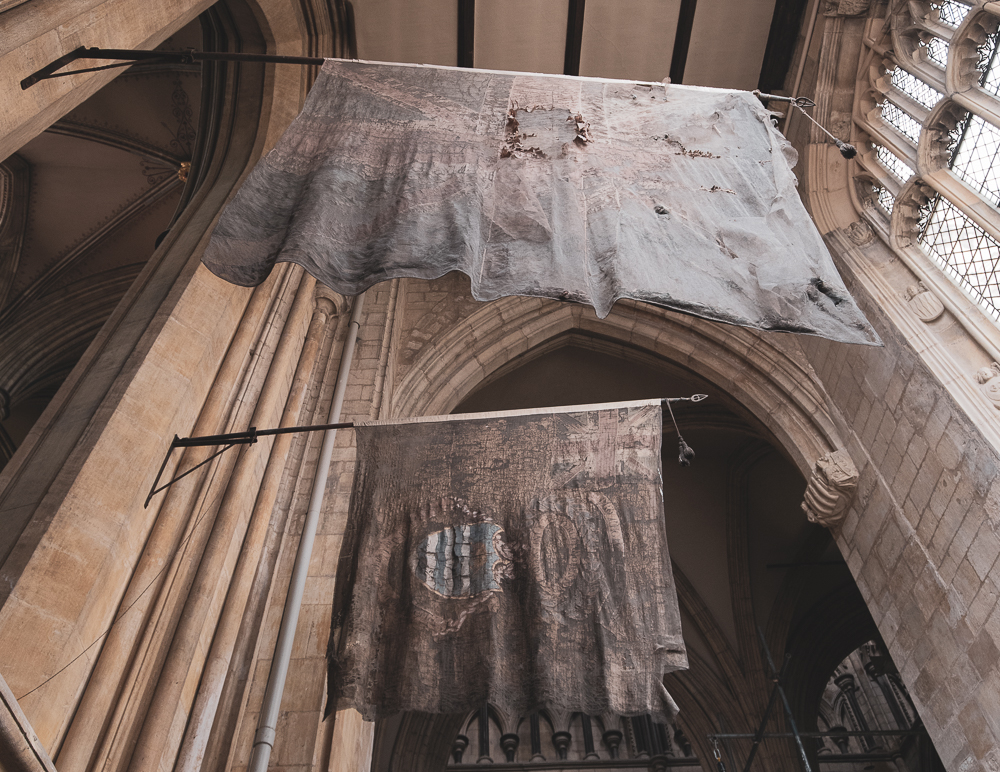
I love the intricacy in the stone work, or in the wood carvings, or the paint on the organ pipes, but what really moves me are the memorials to the dead of the World Wars, and the Colours (battle honours) of the regiments that no longer exist but had men that fought and died together as brothers. In some of these photos you can what remains of these “flags” and how it is so important not to forget those that went before us.
Nantes, the Green Line!


Le Voyage à Nantes is an art festival that happens every year in Nantes. They give out maps with the green line that travels all the way through the city and if you don’t have a map, you can just follow the green line on the ground. Yes. I shit you not. They have painted a green line that you can follow all around the city. Did the creator have a cocaine problem but wanted to be eco-friendly? That’s not what really bothers me. What really bothers me is that the whole line is 12km long! If that’s not intense then I don’t know what is!!!
Not wanting to be selfish, and sharing is caring and all that, I decided to bring along Killian. He needs to get out more and get some vitamin D. I also needed a minder. He’s always good for that kind of thing.

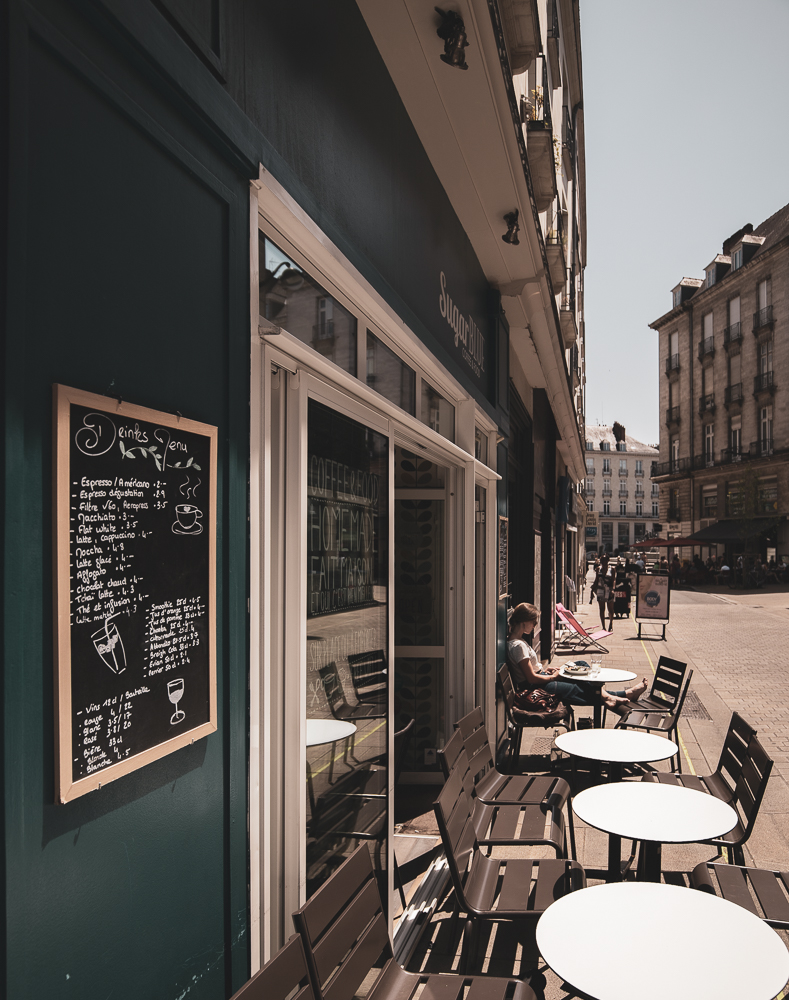
We started by the most important thing of the day. Food. Luckily it was lunchtime so I felt slightly less guilty about eating in public. Right, the first stop is usually the Sugar Blue Café. I really like the food. It’s actually healthy, but not only healthy, it looks good, but not only looks good, but tastes good, but not only tastes good, but they have cheesecake. Yes. Cheesecake. I’m so weak. But it goes so well with the cup of tea…

Of course we had to walk a bit just to feel even less guilty about the Cheesecake. Did somebody say Cheesecake? I ended up at Place Graslin. Needed coffee. Kiki had a beer. It was a bit warm after all. About 36°C… I told him about the day I was there with Kate and that it was just as warm and how she ended up getting soaked to the skin in the fountain, and how I was getting all panicky because I didn’t have a towel for her or a change of clothes.

We had to decide how to follow the line. We were sitting on the terrace of Le Molière and thought we’d be intelligent. Bad idea, but we managed to get the map up on our phones. The line passes right by the café, and you can either go left, or right. We tried, rock, paper, scissors, which is generally foolproof especially when it comes down to who is going to pay for the beers. But in the end we went for the more conventional, “oh f**k it!”

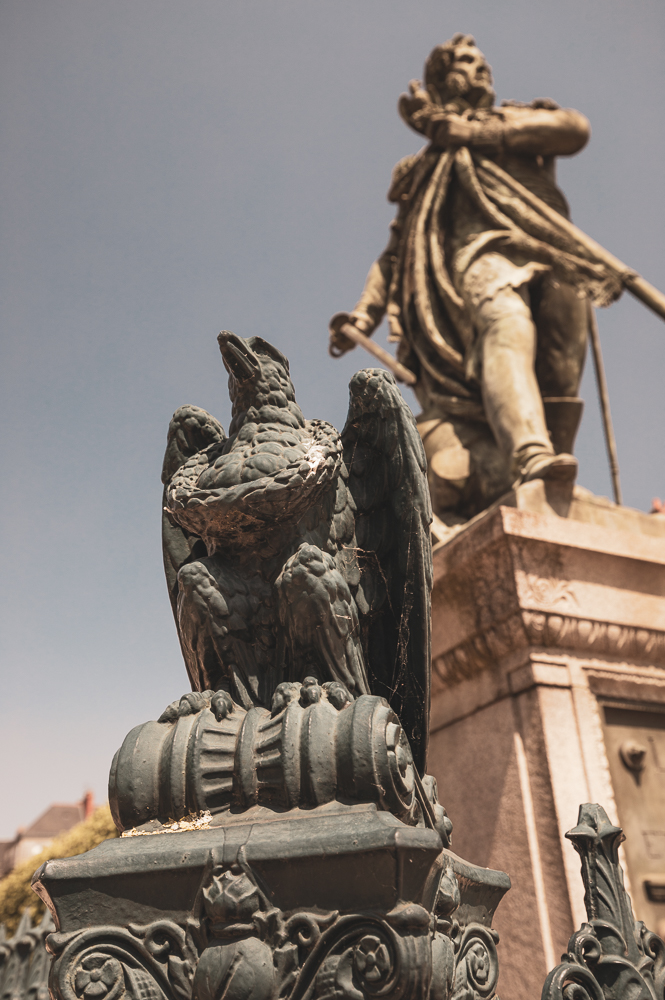
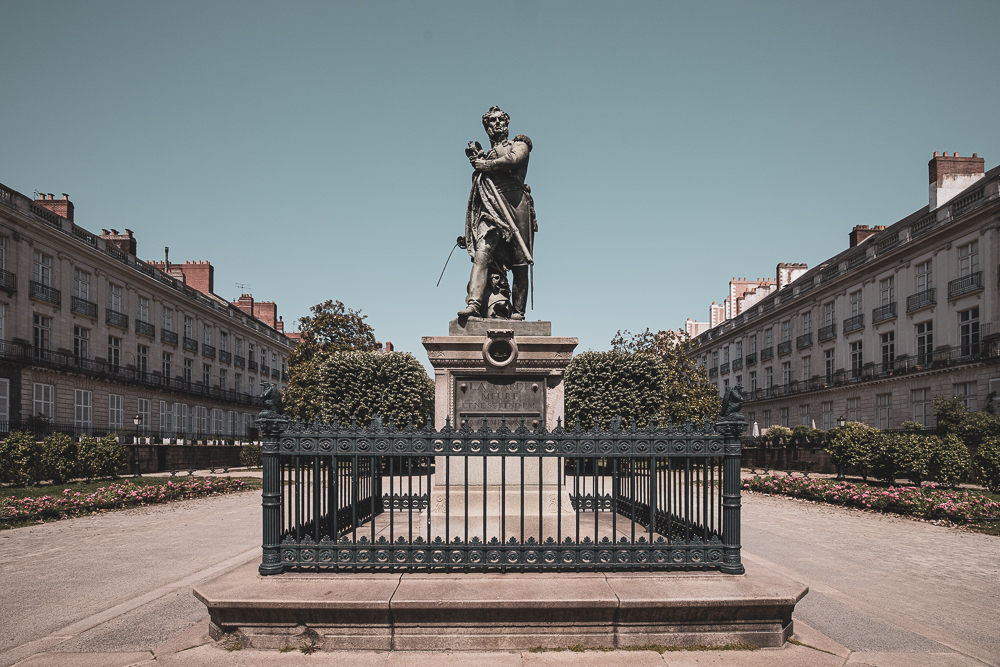
So having “f**ked it,” we eplored the Cours Cambronne, named after a famous Napoleonic General, who decided that he didn’t want to surrender to the British at Waterloo… Ah well! Silly billy!!

He became major of the Imperial Guard in 1814, and accompanied Napoléon into exile to the island of Elba, where he was a military commander. He then returned with Napoléon to France on 1 March 1815 for the Hundred Days, capturing the fortress of Sisteron (5 March), and was made a Count by Napoléon when they arrived at Paris. Cambronne was seriously wounded at the Battle of Waterloo and was taken prisoner by the British.

The exact circumstances of his surrender to the British are disputed. At the battle’s conclusion, Cambronne was commanding the last of the Old Guard when General Colville called on him to surrender. According to a journalist named Rougement, Cambronne replied: “La garde meurt et ne se rend pas !” (“The Guard dies and does not surrender!”). These words were often repeated and put on the base of a statue of Cambronne in Nantes after his death.

Other sources reported that Colville insisted and ultimately Cambronne replied with one word: “Merde!” (literally, “Shit!”, figuratively, “Go to hell!”) This version of the reply became famous in its own right, becoming known as le mot de Cambronne (“the word of Cambronne”) and repeated in Victor Hugo’s account of Waterloo in his novel Les Misérables and in Edmond Rostand’s play L’Aiglon. The name Cambronne was later used as a polite euphemism (“What a load of old Cambronne!”) and sometimes even as a verb, “cambronniser“.

https://en.wikipedia.org/wiki/Pierre_Cambronne

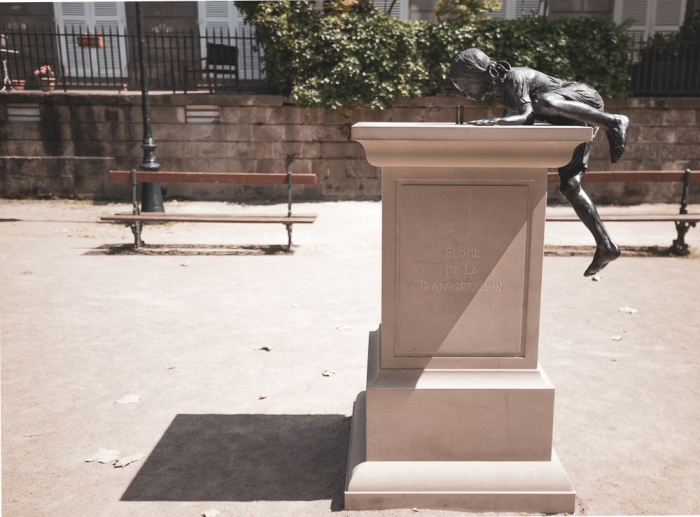
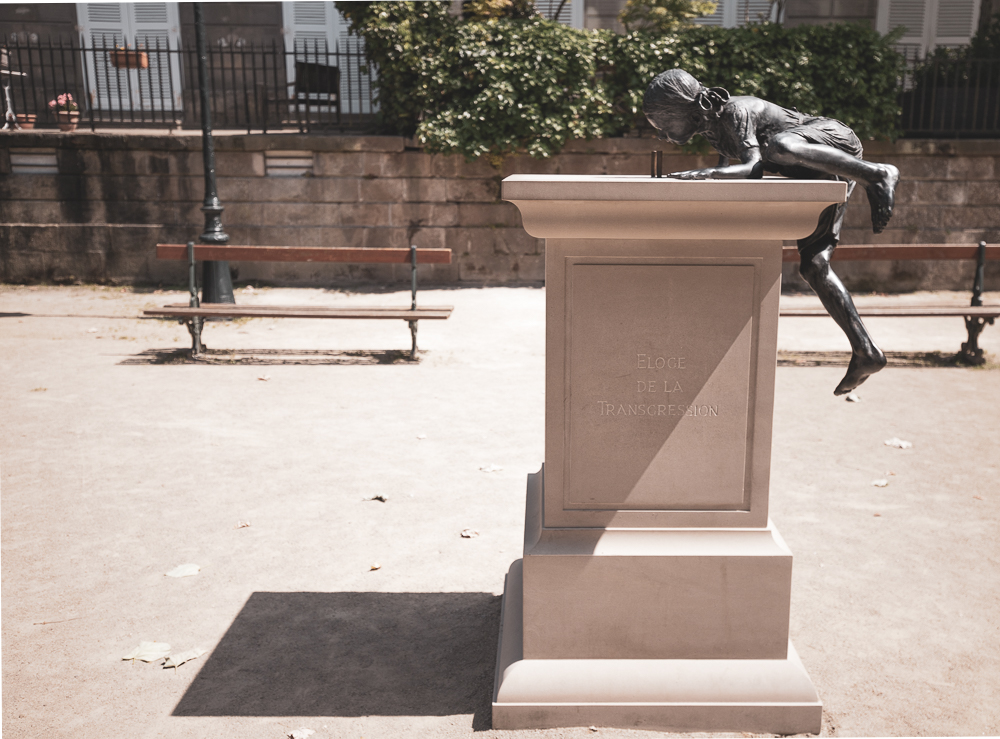
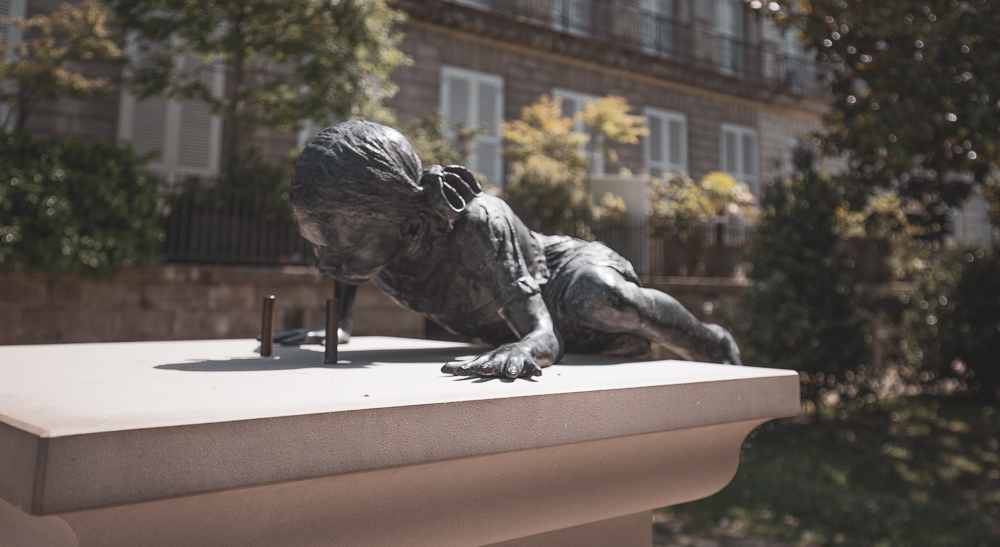
We said goodbye to the little girl and allowed here to get back on her pedestal. Or was she trying to get down?

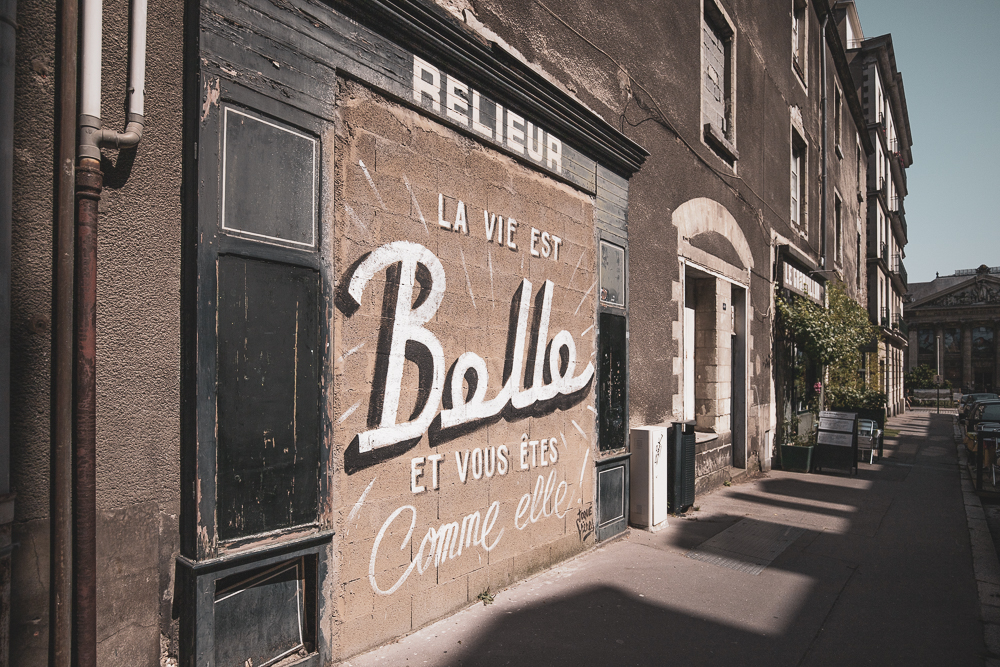
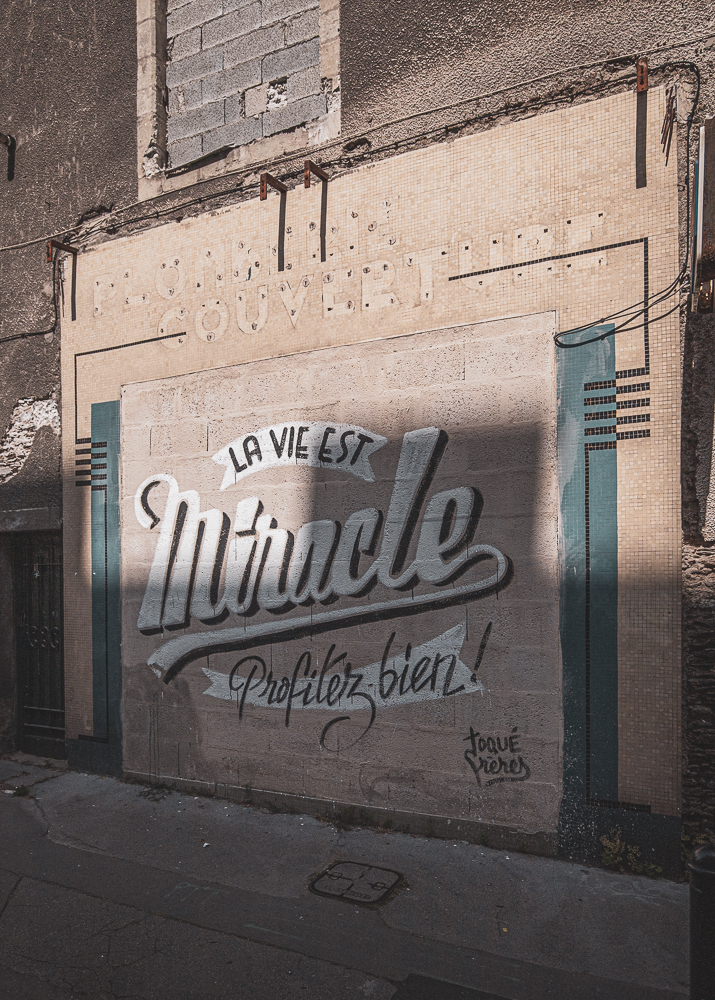
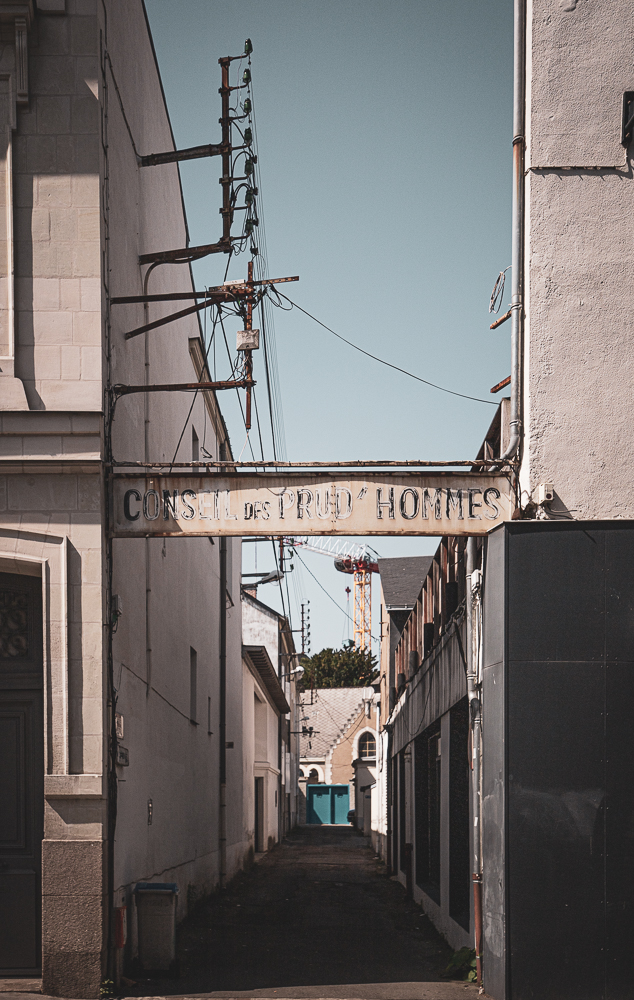
We found the line again, and then saw a dotted line… Interesting… An alternative? Well, what the heck. We followed it and discovered traces of Nantes more artisanal past, traces of joiners, cobblers, plumbers, bookbinders, and industrial tribunals. I love seeing these little bits of history still fighting to leave their mark on the town. A town or city has to be in tune with its past and it’s own story. People leave their mark on a place. The question is how will leave our mark, and what will that mark be?

For the photo geeks out there. The tools today were the Canon 6D Mark II and the 16-35mm lens.

Credit must also go to Magalie and her article about the Voyage à Nantes who inspired me to write this article, and get off my fat arse and try and get myself some culture!

Pommeraye et Crébillon


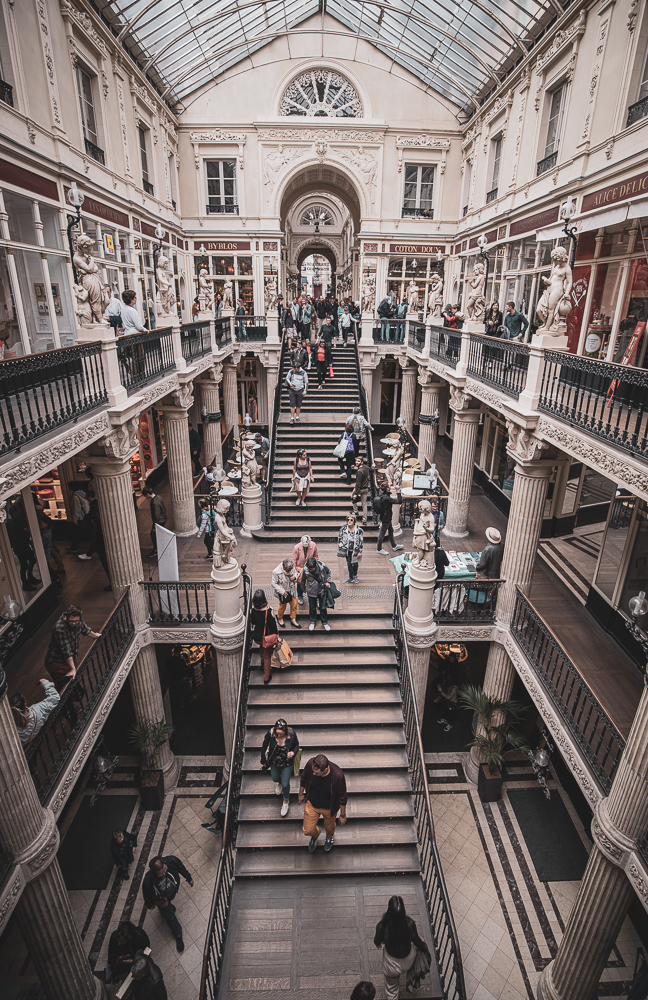
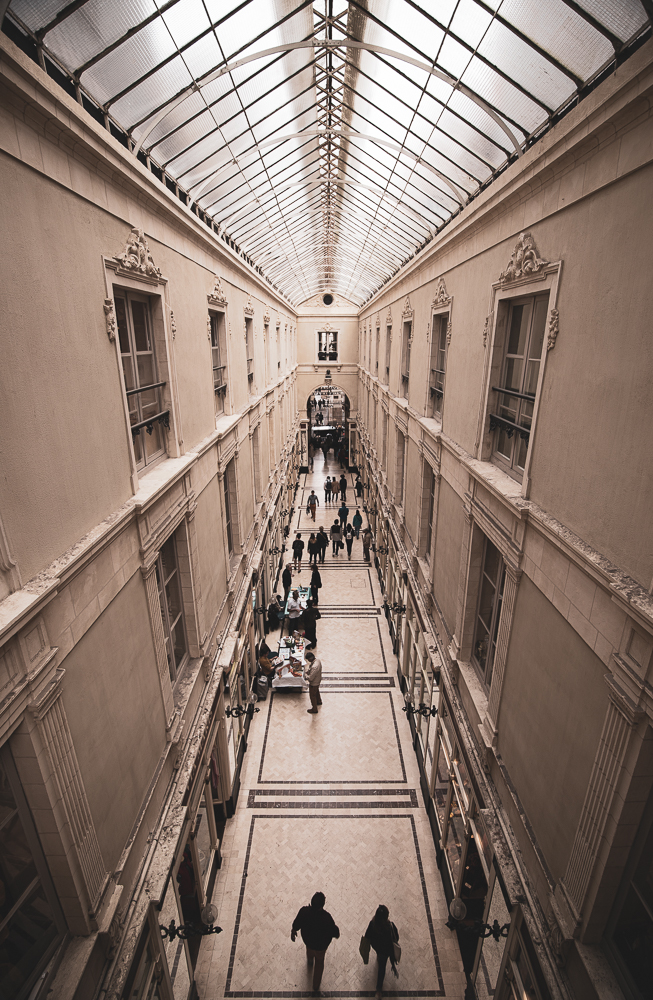
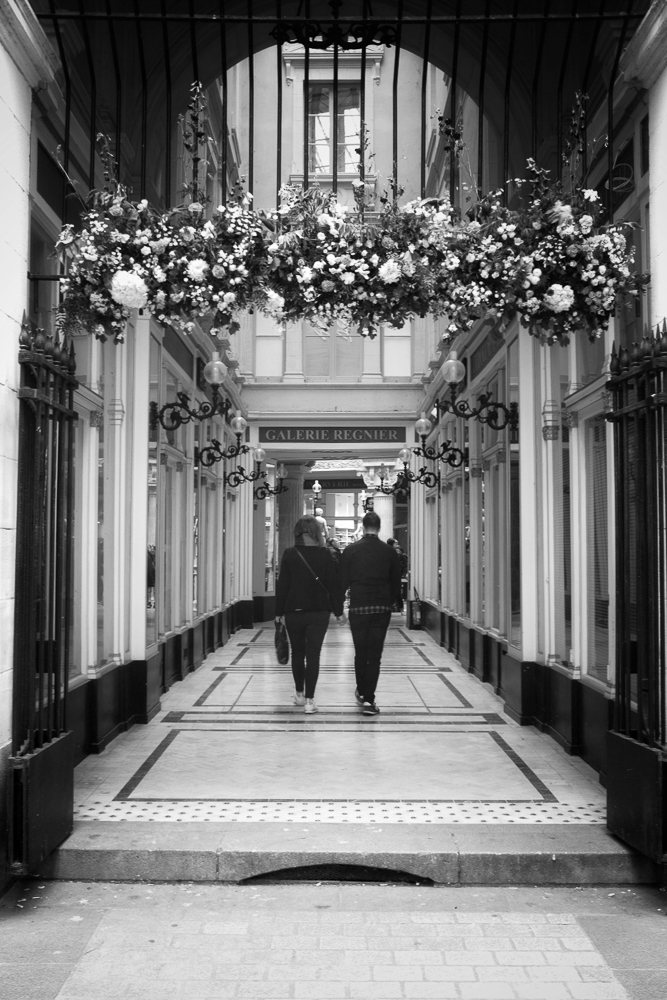
As you might have realised by now, sometimes I seem to find myself in Nantes quite often. Ever the creature of habit I have my “spots” that I seem to go to and one of them is the street between la Place Royale, and la Place Graslin, La Rue Crébillon. It’s basically where rich people do their clothes shopping and you have to be skinny to get into any of those clothes, but it’s all so elegant. Along the way you have the Passage Pommeraye which also oozes French elegance, with Hermès at the top, and a rather delightful place at the bottom that sells chocolat and macarons….

I could tell you the history of the place but you can look it up on Wikipedia if you want. This is more about the photography…

The Passage Pommeraye is a small shopping mall in central NantesFrance, named after its property developer, Louis Pommeraye. Construction started at the end of 1840 and was completed on 4 July 1843. The Passage Pommeraye is a passage between two streets, the rue Santeuil and rue de la Fosse, with one 9.40 m higher than the other. Midway, there is a flight of steps and the mall then continues on another floor. Two architects, Jean-Baptiste Buron and Hippolyte Durand Gasselin, contributed to its design, which is very elaborate and includes renaissance style sculptures. The Passage Pommeraye has been classified as a historic monument since 1976.

Wikipedia

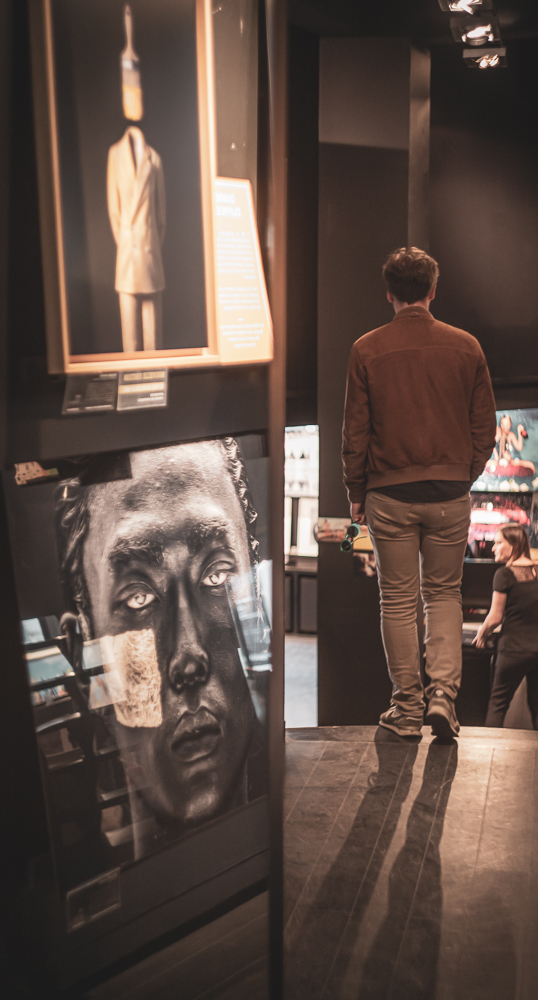
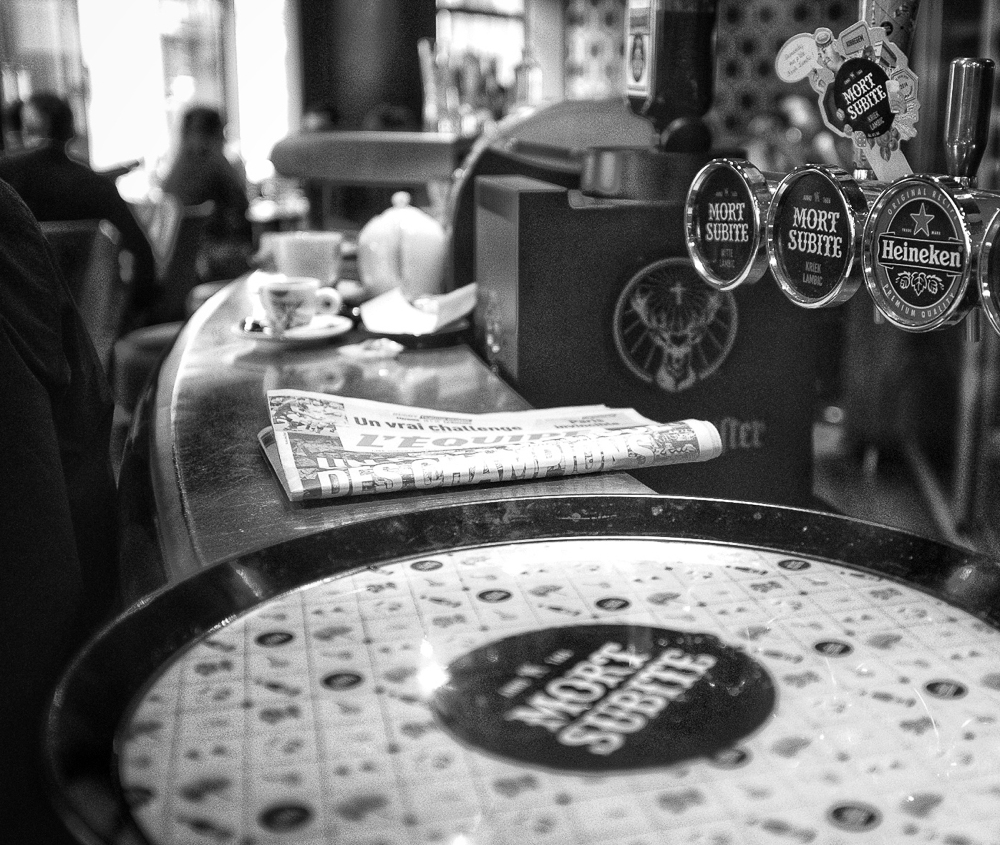
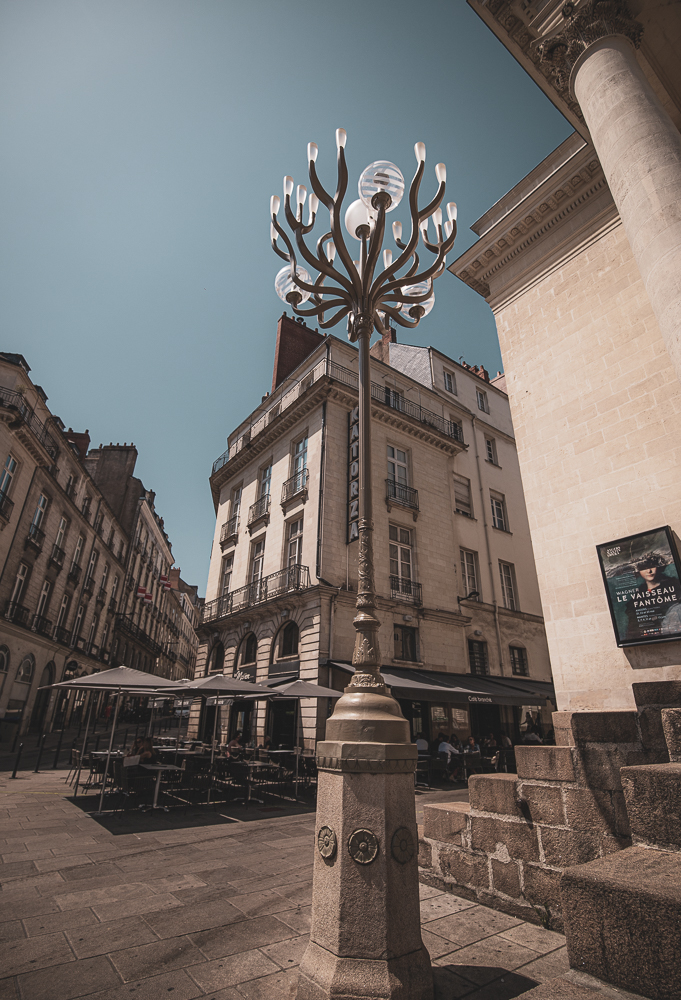
This is a collection of photos taken on my last visit, taken on the Canon 6D Mark II with the 16-35mm lens which has become a firm favourite with me. I enjoy the distorsion and how I can use it creatively, as well as the sheer joy of diving into the scene before my eyes. I also brought out the Helios 44-2 58mm lens to take some photos in the café where I like to have a couple of coffees to keep me going for the rest of the afternoon. An idea for another article perhaps…

St Nicolas Basilica, Nantes


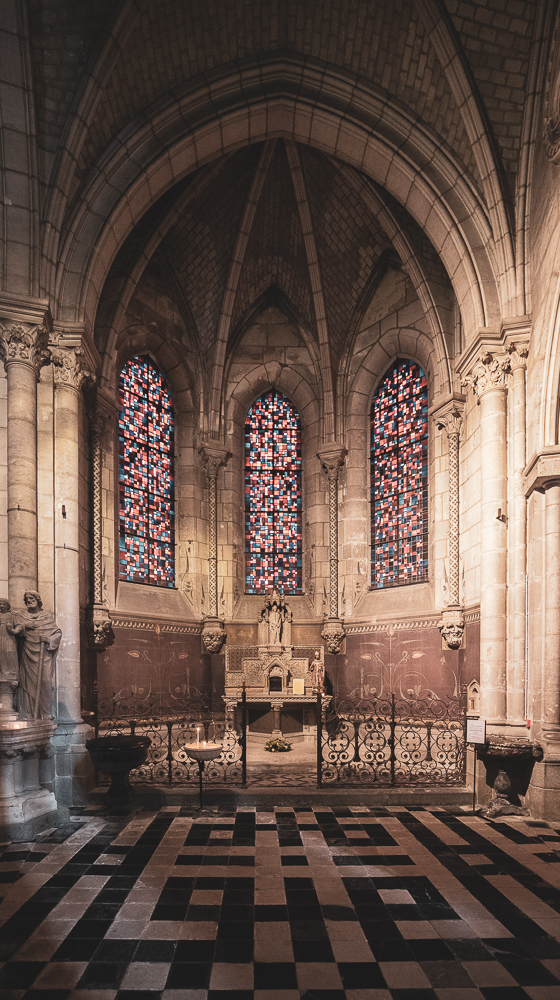
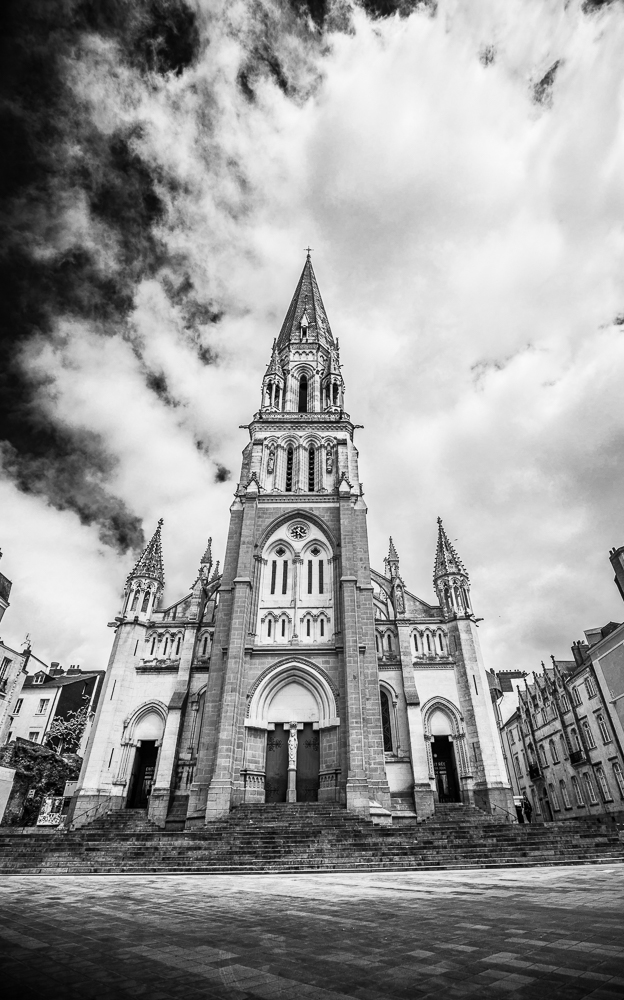
Do you remember me saying that in one of my previous articles that I would show you the inside of the Basilica? Chose dite, chose faite. As I say, I will do! You may be a Catholic, you may not be. I’m not going to judge anyone. You may even be a convinced, and militant atheist. I am going to present a building to you that was designed by men for the glory of God. Everything in it was made to centre on God and the presence of God in the Tabernacle.

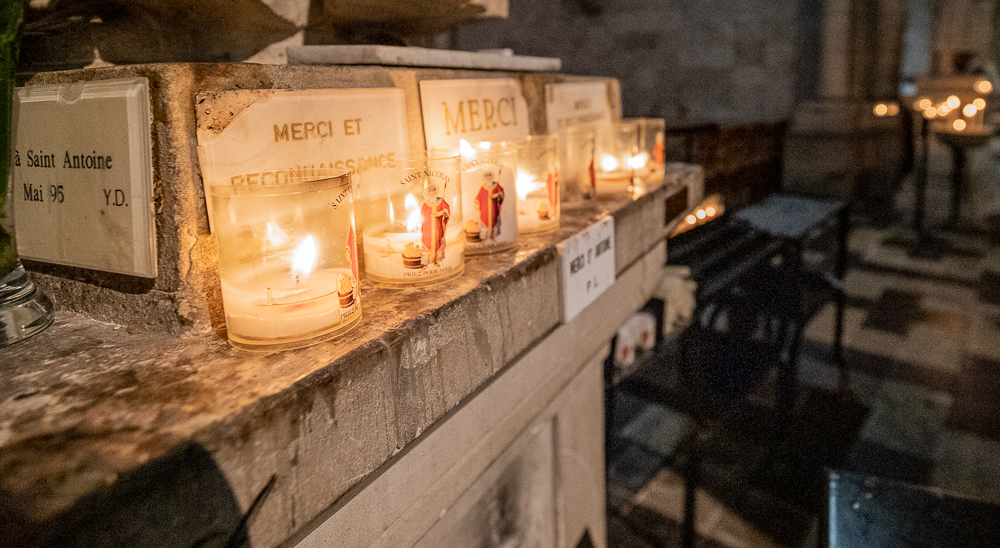
Even though you might not share those beliefs, a church is not an ordinary building. It is not just a place. There is something special, as there is in any place of worship. We see the hopes and wishes of men being handed over to something that is a power beyond them. These are the prayers represented by the candles in the Catholic tradition, and the statues to remind us of the piety of certain saints and the symbolism that is included in the representation in those statues. The same is true in the artwork. It is what it represents to the faithful. The stations of the cross which retell the story of Jesus’ final sacrifice here on earth, and the sacrifice of the mass.

It is a place of contemplation. So let’s contemplate…

In the streets of Nantes on Ascension Thursday 2019


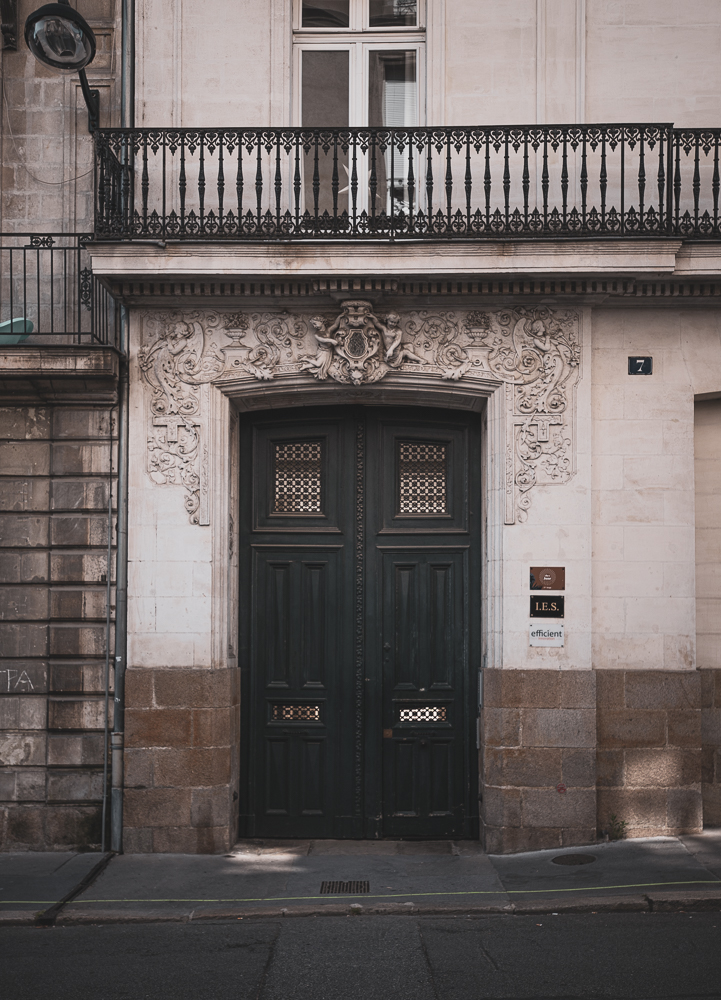
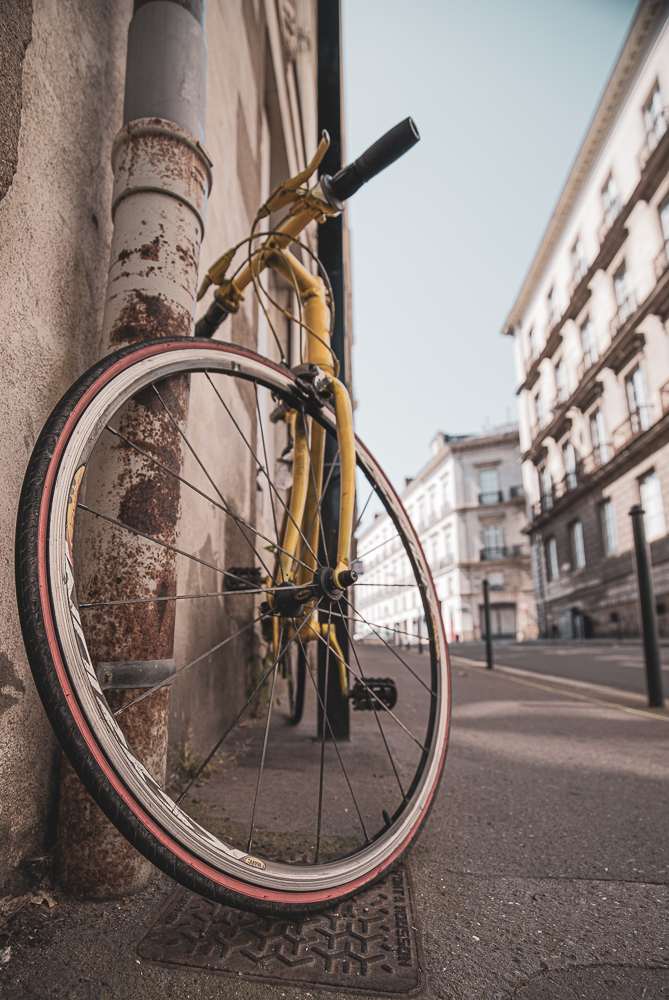
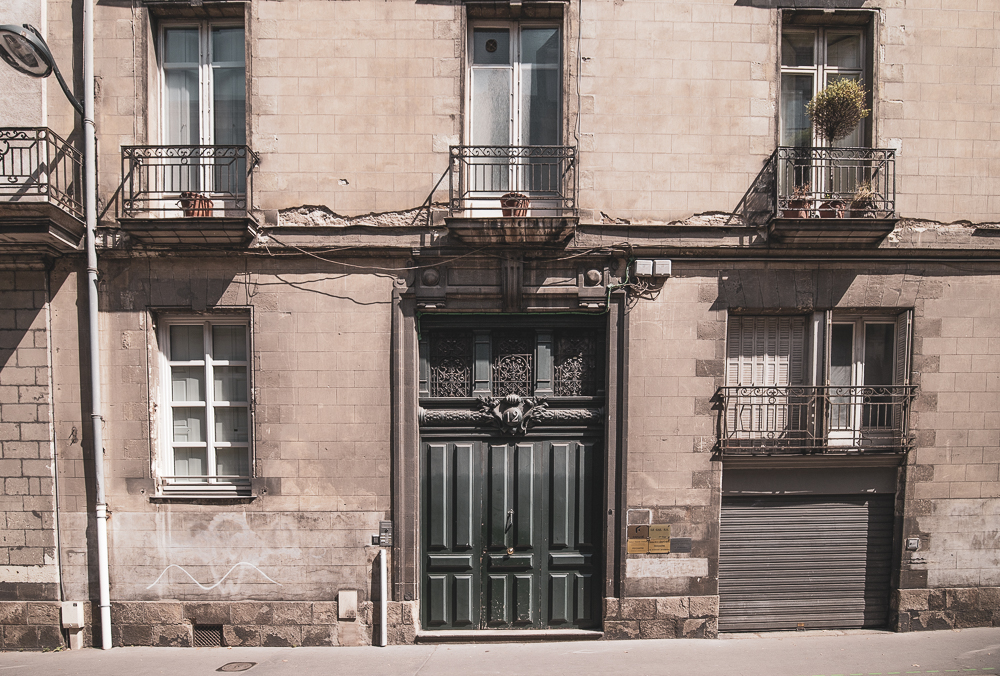
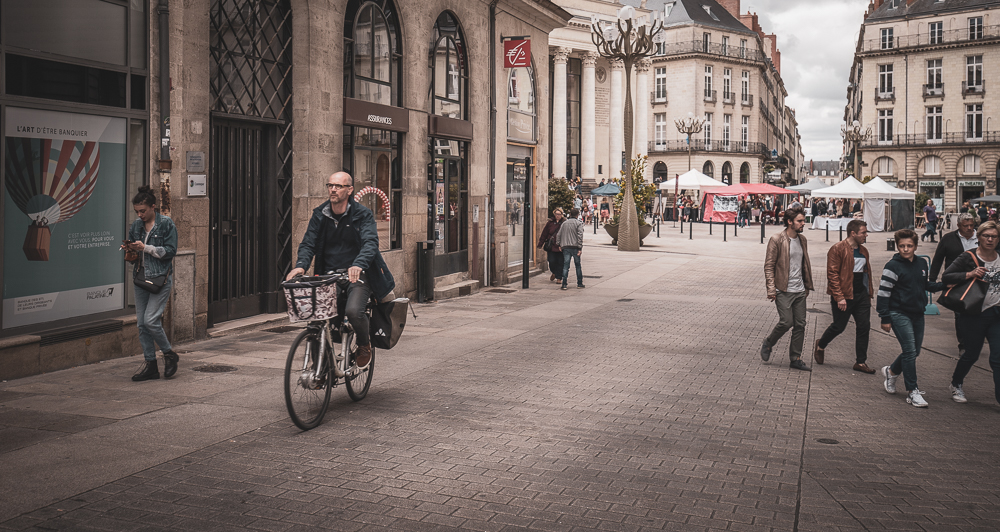
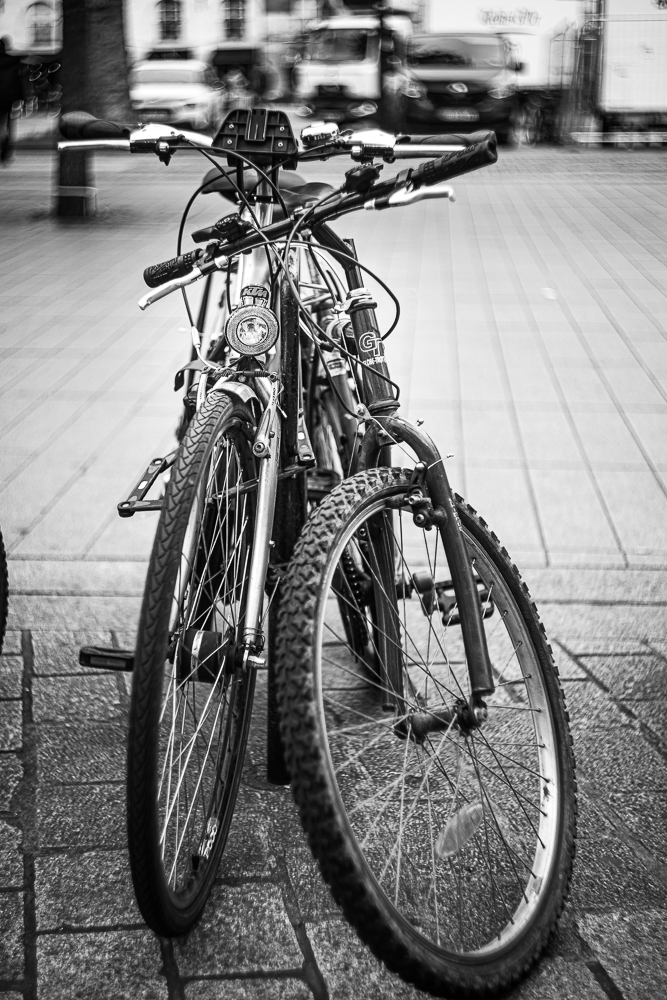
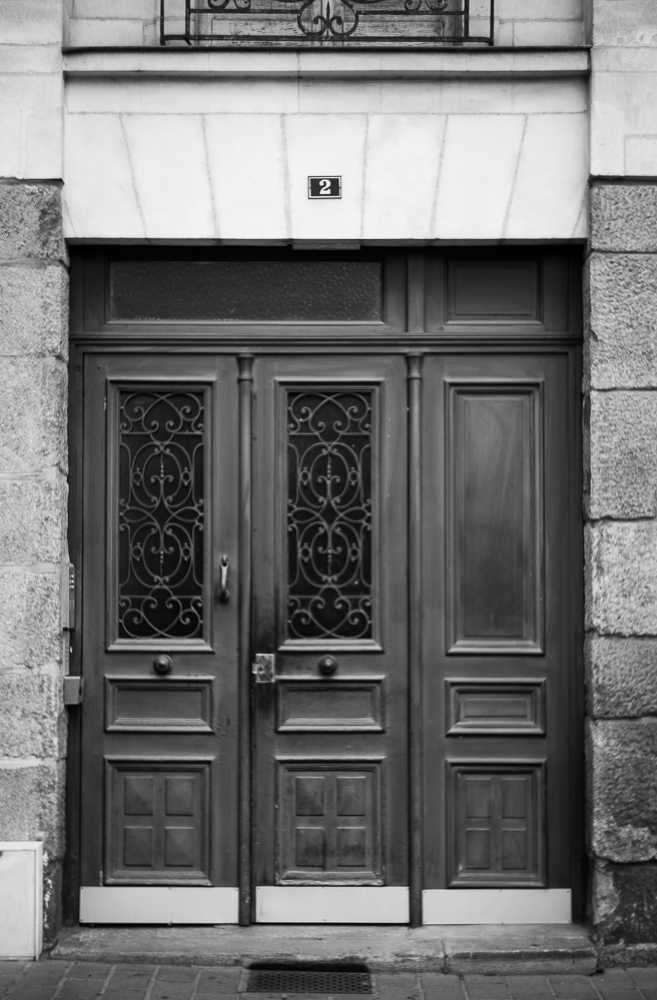
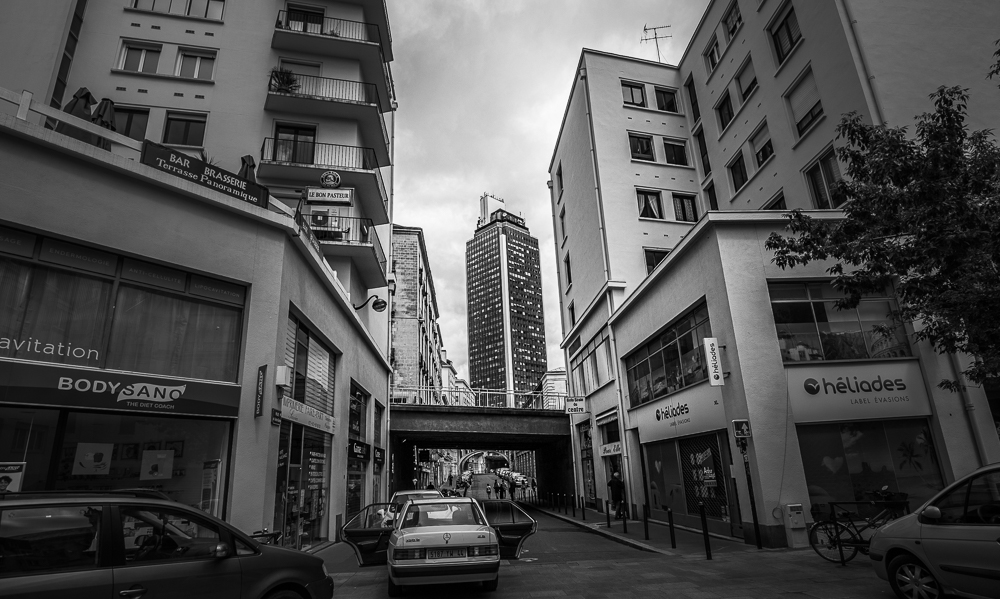
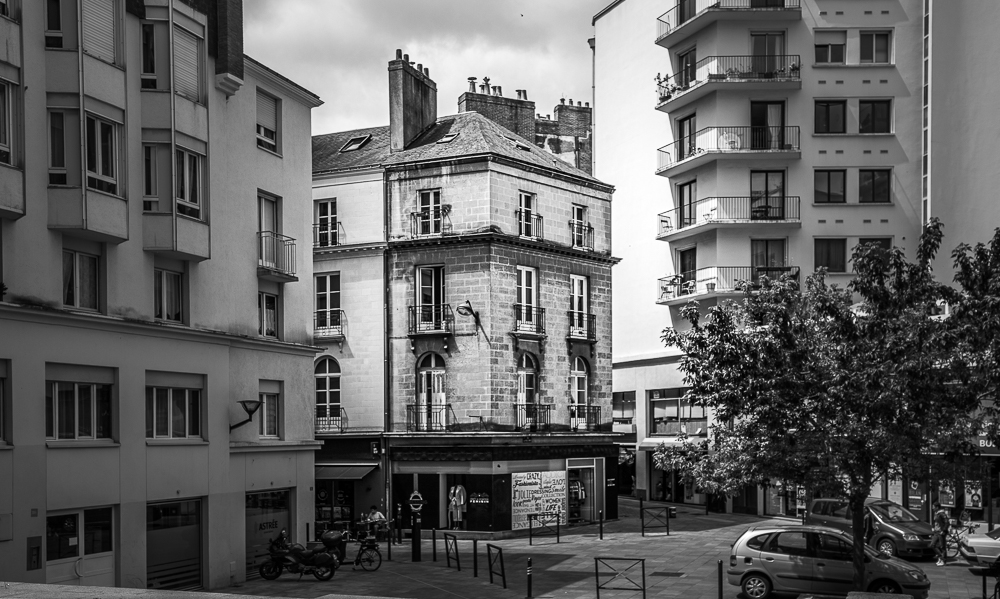
Same day as the last article, but this series is about the streets on Nantes, with some obligatory bike shots, some lovely knockers, shops, churches, and other buildings. This seems to represent part of my universe when I’m in Nantes. Or more the way I see this little area of Nantes.

I usually park in the Feydeau car park, and head through Bouffay, towards Place Royale where I’ll eat in either the Sugar Blue Café (really nice and one of my favourites) and when it’s not open I have to cross the road and eat at the Suppli Factory which is like Italian street food, but not on the street, but still really good food!

After the food, which was delicious we headed off towards the St Nicolas Basilica (photos of which will be the subject of another article) and up past the Cathedral towards the river Erdre (yet another article). Spoiler alert!!!

Photography in the streets of Nantes, May 2019


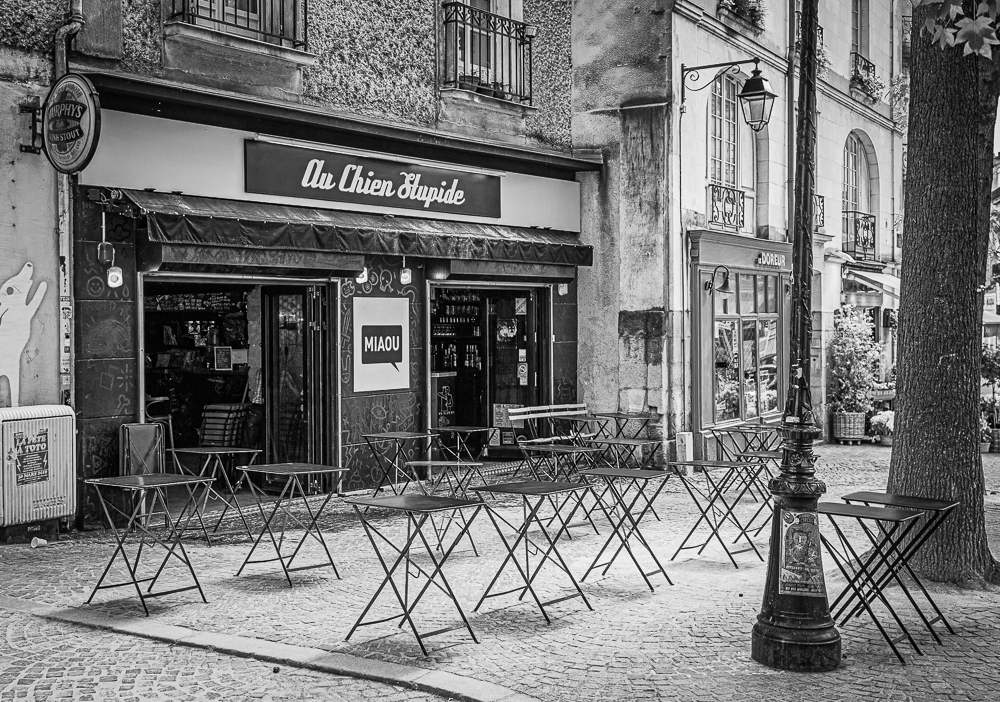
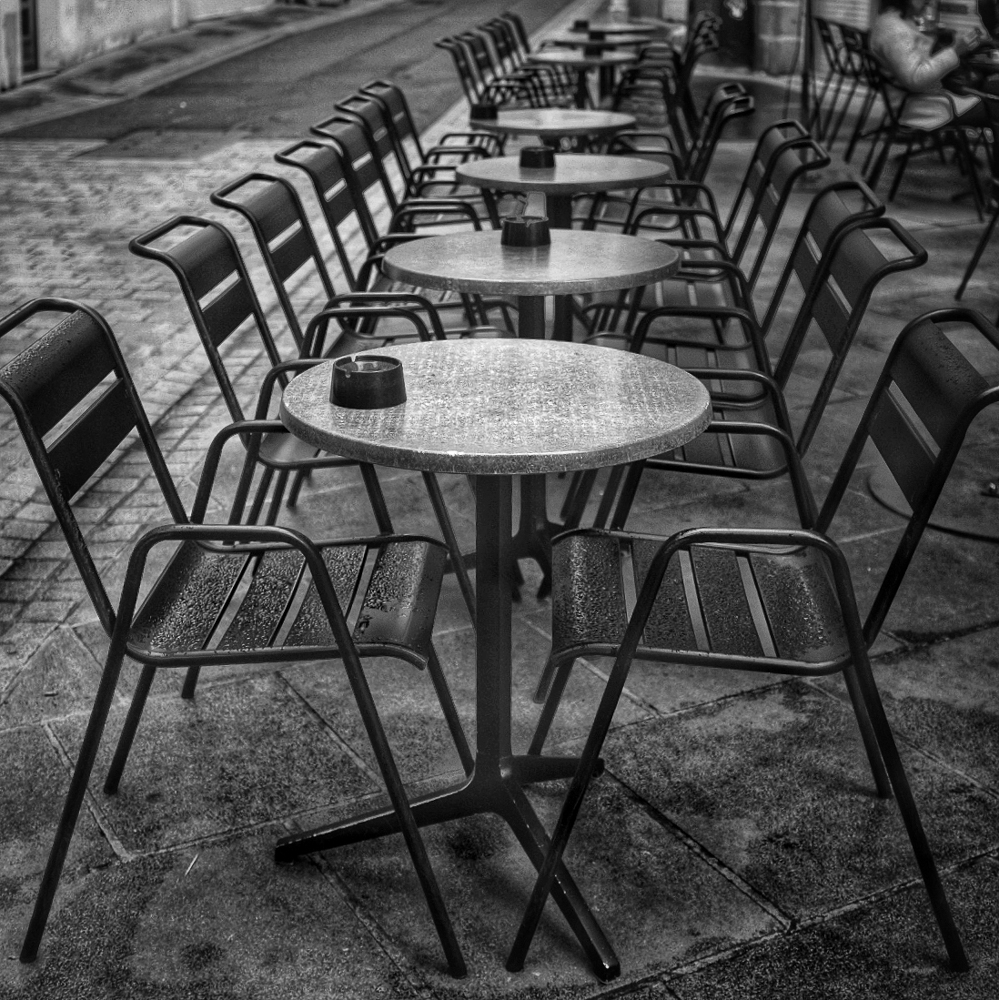
Now that you’ve had a bit of time to get used to me, I’m going to show you some of the usual photography I do, to keep my eye in. No fancy lenses. Just the Fujifilm X100F with it’s 35mm equivalent lens.

So basically I go into town with my small inconspicuous little camera that does the business, and, believe it or not, take some photos. I then find a café to sit in, take a few more photos just in case, and start editing.

That entails sending the photos from the camera onto my phone via Wi-Fi, and getting annoyed when I have to start again a few times… Then comes the editing on my phone with Snapseed, and there you are. Photos ready to publish on Instagram or Facebook etc.

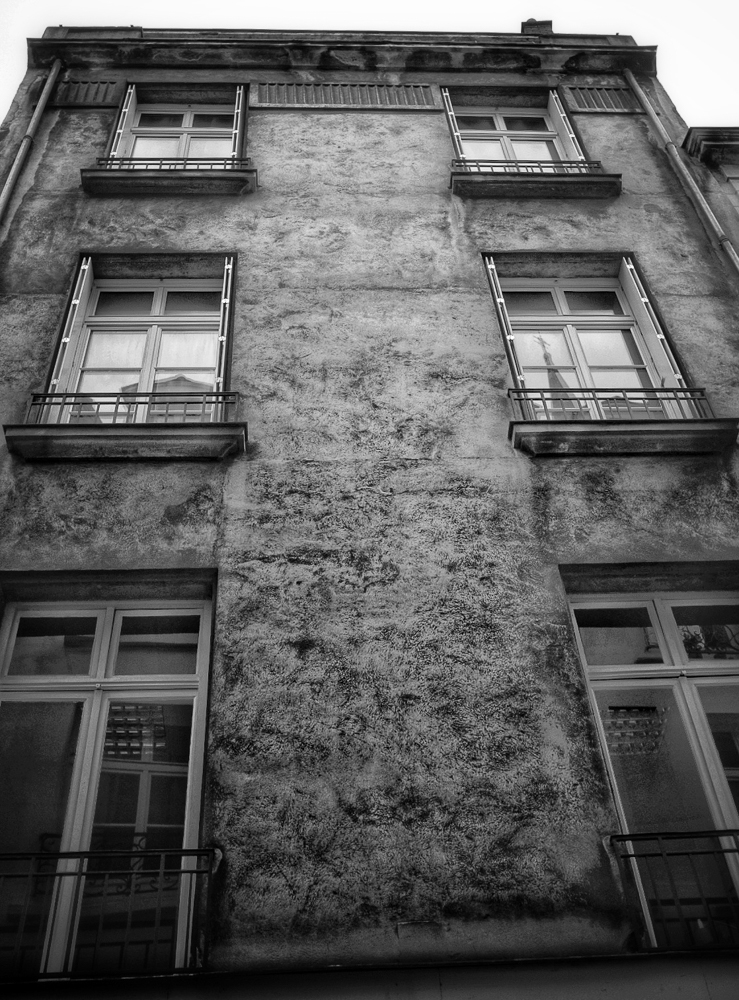
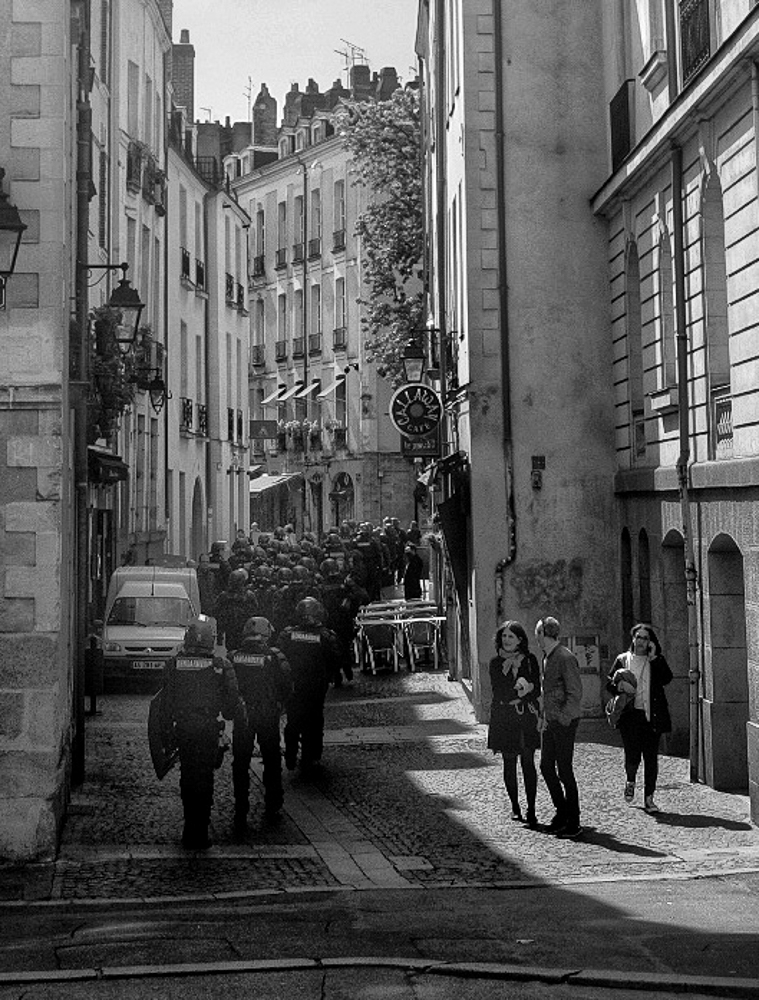
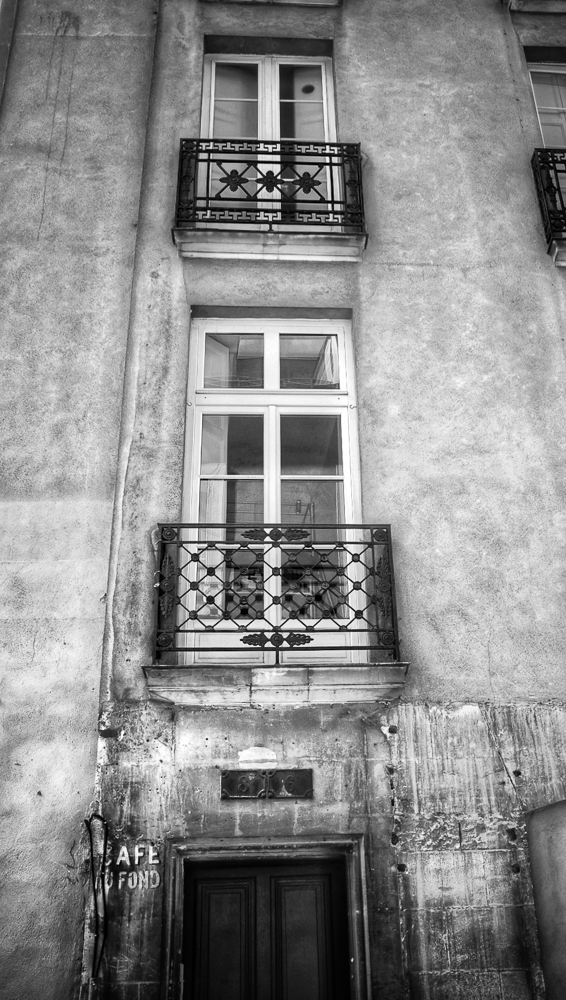
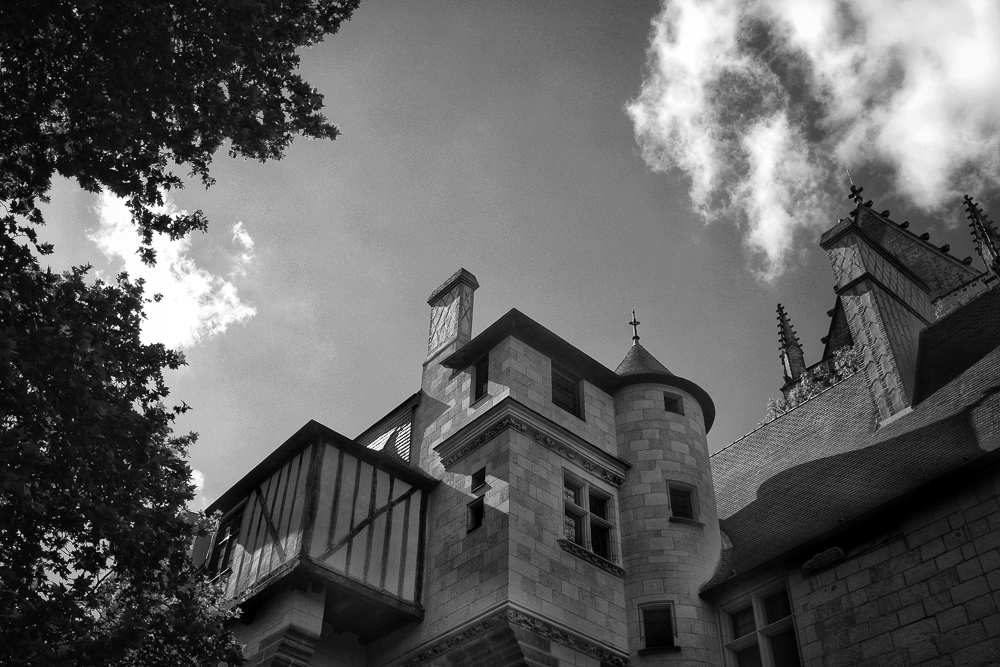
Win I do this I have my own preset as a starting point and that allows me to finely tune the end result. I nearly always go black and white for this kind of photography. The idea being that o manage to get photos of the ordinary things and try and give the justice. You’ll be able to decide when you look through.

On this particular trip, those of you who know Nantes will be able to see exactly where I went…