Optimizing Images On-the-Go: Mobile Photography Editing Guide


Introduction

As the title suggests, I will describe my workflow when out and about. While there are surely other ways to do it, this is my method. It works and has stood the test of time. I usually wander around taking photos, then find a café to sit down and transfer my images to my phone. Everything is better with a nice cup of tea (or coffee) and a piece of cake.

Downloading Photos to Your Phone

Most cameras today can connect to phones via Bluetooth or Wi-Fi. My two Fujis (X100F and XT2) and my Canon (6D Mark II) certainly can. I enable Wi-Fi on my camera and connect it directly to my phone. Next, I open the corresponding app—Canon Camera Connect for my Canon and Fujifilm Camera Remote for my Fujis. Each manufacturer provides its own app for Android or Apple devices. Once the camera is connected to my phone, I can import my photographs, selecting the images I prefer.

Sorting Photos

Now comes the fun bit: sorting through all those wonderful shots you took and deciding which ones are worth working on and editing. When I transfer my images from my camera to my phone, the phone creates a folder for the imported photos. Different apps will put them in different places, so I’ll leave that to you to manage. As a rule of thumb, you will see them in the gallery app, which will show you your latest photos.

In the gallery app, you can sort your photos by date taken, favourite images, or the place where the photo was taken.

I will assume you have read my last few articles on Photography 101, composition, and the types of lenses available and how to use them, or at least how I use them. If you haven’t had that pleasure, then go and have a read…

Is the photo worthy of publication, and are you happy with it representing your talent as a photographer? Is the image in focus? Is the image well exposed? Does it fulfil its storytelling role? Will it add to your narrative? Or simply, do you like it enough to want to share it?

Let’s assume that you answered yes. You then get to share your image to Snapseed.

Editing in Snapseed

Starting with Styles:

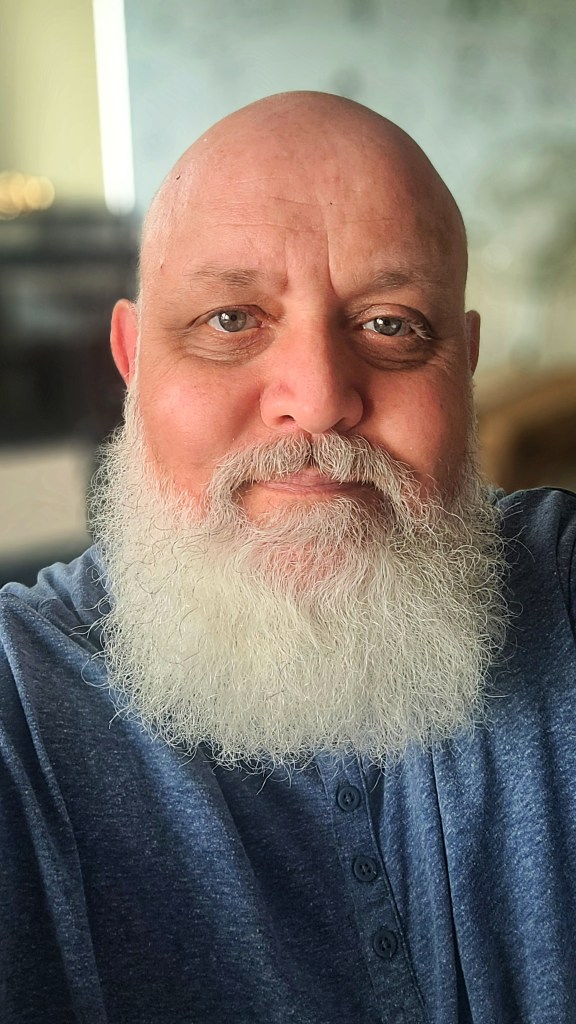
I like to begin by using the “Portrait” style. It is a preset that gives the photo a subtle glow and some vignette. I just seem to like it, and when you have something you like that flatters your image, you are tempted to stick with it. Most times, this will work a treat on well-exposed images. But let’s imagine that you have exposed for the highlights and that your shadows are “too dark” and you want to bring them up a bit. Then I would go to the “Tools” section and use the Tune Image.

En aparté:

When exposing in digital photography, we expose for the highlights, as it is easy to lighten, or “bring up” the shadows, and we don’t want to “blow out” our highlights and just turn it into a mass of white. In film photography, it’s the opposite. We expose for the shadows, as film has more difficulties capturing details in the shadows especially in a photo with lots of light.

Using the Tools

As I inferred in the title, this is my workflow, and shows the way I use Snapseed. There’s a whole load of tools to stylise your image and to completely change the look of it, but I’m more of a “less is more” disciple when editing. Also most apps out there will have similar tools, so you can carry this knowledge with you across the board.

Crop Tool:

One thing I learnt early one is to KISS, i.e. Keep it simple stupid. Sometimes I will have an element in my photo that distracts from my subject. With the crop tool I can just crop the image and make it disappear. I can also use the crop tool to format the image to fit certain social media post settings. I’m thinking about you Instagram and Facebook. Try searching google for social medi formats and you will be inundated with results.

Healing Tool:

Sometimes the crop isn’t enough to take away distracting elements from our photo. You might have a beautiful shy and want to get rid of that Jumbo Jet in the sky. One way of doing that is to wait until the Jumbo Jet has flown away, but let’s say that it’s too late… Using the healing tool will clone part of the image and replace the Jumbo Jet that just wants to noticed and validated man! To get the best results it’s better to zoom into the image and have a smaller area to work on.

Tune Image:

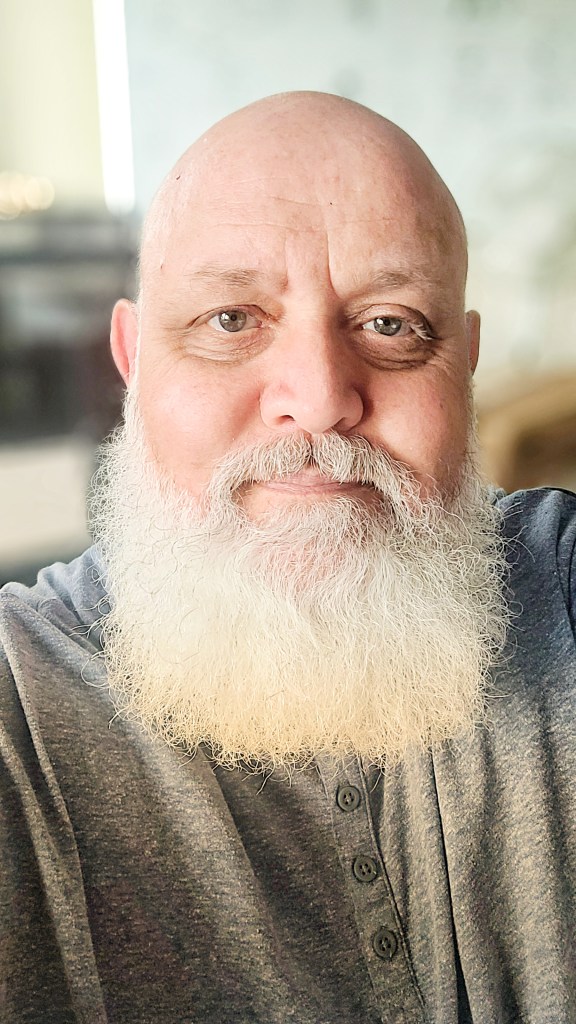
This is where I do the basic edits, bringing up the shadows or bringing down the highlights. I usually keep it to that. At a push, I will bring up the brightness if the photo has been underexposed. Somtimes I will add a little contrast but I tend not to use the other tools. I don’t want to denautre the photograph.

Rotate Tool:

We should always try and keep our horizons straight, except when making the conscious decision not to. The rotation tool tries to straighten what it thinks should be straight. It generally works quite well, but you do have total control as well as a grid to check the lines in your photo.

Brush Tool:

This is where we can do our burning and dodging. You can choose to highlight a certain area and darken others to emphasise your subject. This brings the photo to life. There are tutorials galore on YouTube that go into more detail than I will in this “basics” article.

Black and White Tool:

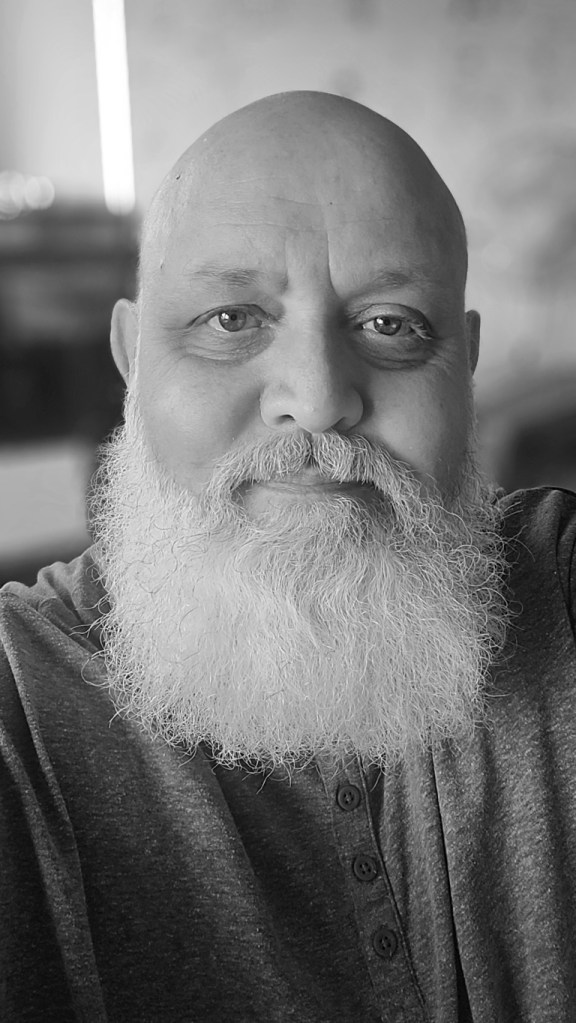
Welcome to the world of black and white conversion. It’s a process that a majority of my photography goes through. You can, of course, just use the saturation tool in the “Tune Image” section, and you will get a monochrome image. But you can do so much more.

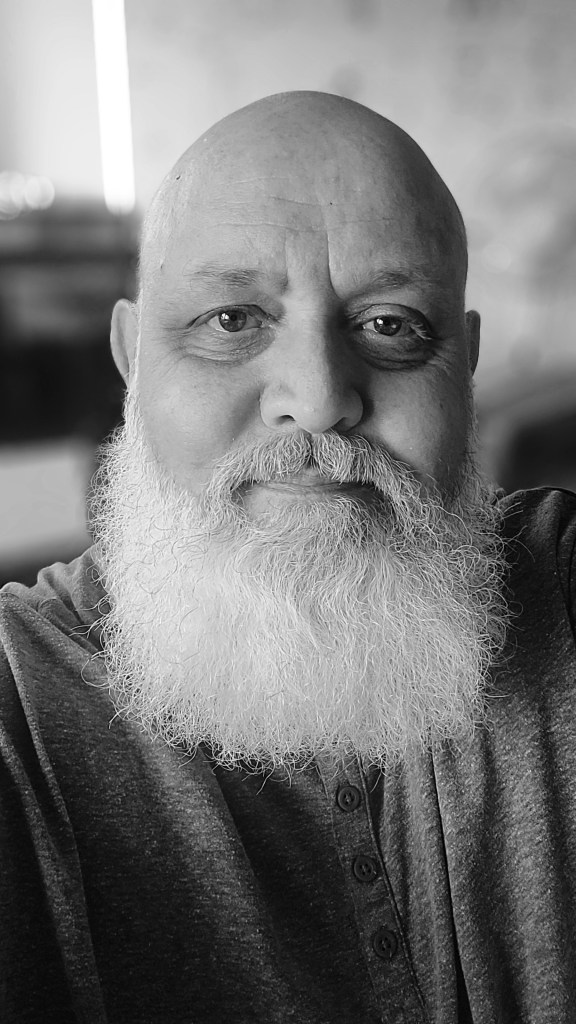
So, let’s do so much more. The black and white tool offers you some presets which might correspond to your taste. I tend to leave them alone and instead press on the circle that will give a series of colour filters to choose from. This is a direct link back to black and white film photography, and you know how much I love that. I love using the red filter, which, as in film photography, will make your blues darker. This is beautiful for those landscape photos where you want a dark sky to complement those fluffy white clouds.  It’s also my default film simulation on the X100F that I use for all my street photography.  It’s just a look that I fell in love with years ago.
The other common filters are all covered too.

  • Orange:  Orange filters give stronger effects than  yellow filters but are not as bold and dramatic as a red. It is therefore an ideal choice to span the effects given by both these filters.  Blue skies will be recorded in very dark tones on the print, giving bold contrast between the sky and clouds. An orange filter will also penetrate haze and fog. Most flowers will be recorded with a significant difference in tone from the surrounding foliage giving impact and effect.
  • Yellow, the general purpose black and white filter,
  • Green:  When photographing foliage in black and white, a green filter is used almost exclusively.  It lightens green foliage, which is particularly important with dark green leaves which can record very dark without a filter. It therefore gives a more natural, lighter feel to the photograph.
  • Blue: A blue filter is not often associated with black & white photography however, it can really add “mood” to a photograph by increasing the effect of haze or fog.  It also lightens blues and darkens yellows, oranges and reds which helps separation in scenes containing a mix of colours.

Export

You have two options.  You can either press on “done” and Snapseed will record your image in the Snapseed folder and in your gallery in the Album neamed Snapseed, or you you can press “share “and you will be presented with various options on how to share your image, to Instagram, via gmail etc.

Before you do that you can press on settings where you can change the resolution of the image that will be exported.  This can help if you need to reduce the image to take up less space on your phone, or if you’re loading the photo up to a website and you require a “lighter” image.

Conclusion

You now have an idea about how I edit my images on the go, and the more time goes on, the more I do it this way.  Is it the same as Lightroom on my computer?  No.  I can’t have as much control as in Lightroom. I can’t batch edit, I can’t do this or that, but I can manage without, especially on the go.  There are of course other options for photo editing on the go like Lightroom mobile,VSCO, your native photo editor app on your phone.  As I said at the beginning of the article this is how “I” do things.  It works for me.  Try it out and it might just work for you too!
Photo Editing On The Go With Snapseed


INTRODUCTION

Twenty-two years ago, I was fired from the job that took me away from Paris to the French countryside where I now live. In hindsight, it was one of the best things that ever happened to me. Sometimes we need that shove beyond our control to nudge us in a different direction.

At the time, I was already into this new thing called the internet that was becoming more and more mainstream. I wanted to learn all I could before my children would teach me. So, I learnt. I even trained to be an “infographiste,” which is similar to a webmaster, now known as a web developer.

AN ENGLISHMAN IN VENDÉE

I learned how to use QuarkXpress, Indesign, Dreamweaver, Photoshop, and Illustrator. I also learned how not to be afraid of opening up a computer and getting in there with a screwdriver. I had this amazing idea of creating a website called “An Englishman in Vendée” to showcase outings with my young son around the area. I took photos with a “webcam” which was about the size of a GoPro but compared to what we have twenty years on, was anything but pro. At the time, I dreamt of having portable internet, portable editing software, and a means of sharing those pictures online.

I would have to wait a while. In 2024, I have a Samsung S20 FE and I now have all I need to do that, on the go! I can even transfer the photos from my high-end digital camera to my phone, edit the images on my phone, and publish them either on my website (no longer Geocities) or on social media.

WELCOME TO SNAPSEED

Now I use “Snapseed” for editing my photos, WordPress for writing my articles, and Chat GPT to give my articles structure and a writing plan. All this in a device that fits into my pocket.

So, what is Snapseed? It’s an app that I recommend to anyone who needs to edit pictures on the go. It is available for Android and Apple devices, so you’re all covered. But why Snapseed? Well, it’s free, simple to use, and has all the tools you need for editing. It’s intuitive and comprehensive. I particularly like the Tune Image section, where I find all the tools I use for basic edits in Lightroom on my PC. The Rotate tool helps me check horizons, and the Black and White tool gives me full control over the conversion process.

Snapseed is a non-destructive editing programme (app) that uses your original file, whether RAW or JPEG, and allows you to edit to your heart’s content. Can it do everything Lightroom can? No. Is it trying to? Still no. It adds some nice “style filters” in the tool section that allow you to have fun. The more serious photo editor will probably stick to the basic tools that still allow them to get the results they need “on the go.” I use it during shoots to give sitters an idea of what their shots will look like. These first “draft” images are perfect for sharing on social media.

KEEP IT SIMPLE WITH SNAPSEED

I’ve talked about KISS in the past, and I’m going to mention it today too. KISS – Keep it Simple Stupid! Snapseed is deceivingly simple when you look at the user interface, but it has a range of tools that help you achieve the look you want.

It starts by offering you three basic options: Styles (similar to presets), Tools (where you can fine-tune everything), and Export (where you go to export your edited photo).

STYLES

Styles are essentially presets in other software, and Snapseed offers a variety of styles:

In the next article, we’ll talk about the various tools Snapseed offers to help you edit on the go. I will walk you through my basic editing process, showing you which tools I use and how I use them. Remember the 80/20 rule: 80% of your editing can be done with 20% of the available tools. So be patient, and you will be rewarded for your patience. See you in the next one!

Smartphone Photography – Welcome to the Dark Side


Introduction

You might have caught on to the fact that I’m a little bit the photography enthusiast. I even have a “few” different cameras, most of which are manual film cameras, with a few digital ones thrown into the mix. Over 40 years of learning have gone into getting the results you, Dear Reader, might just have seen on this blog.

Democratisation of photography

How many times have I heard people say, “Oh, I just use my phone,” or worse, “Oh, I could just do that with the camera on my phone?” These statements can really get on my wick! Don’t they just toss aside all the work I’ve put into photography with “real cameras?”

But after a lovely cup of tea and a slice of cake, my nerves have settled, and I’ve had time to reflect on the brashness of my emotions, and come back down to earth. Yes, some people do use the camera on their phone, and maybe, just maybe, unlike the microwave in the tea-making process, it might have a role in photography. Ooooooh, haven’t I just gotten controversial!

A little historical context

Just a quick interlude to remind myself of the democratisisation of photography that came with the Box Brownie in the 1920 and the purists were up in arms! Then the shock and horror of those same purists when colour photography came out with those dastardly Kodak Instamatics, and making photography even more egalitarian. Maybe the phone is just the extension of this and I should remove my own head from my arse and just chill!

The best camera?

“The best camera is the one that’s with you.” — Chase Jarvis.

While this statement might be true in absolute terms, it pains me to admit that for most of the hoi polloi, that camera might just be the one on our ever-intrusive phone. Does that mean I’d choose my phone over a film camera? Hell no! But it does remind me that photography is about capturing the decisive moment in time. I’ve often talked about balance in the photographic process, where you might have to sacrifice grain or digital noise (grains rather disgraced cousin from an inbred family, where somebody knew somebody in the family), to get more light to expose a shot. Or where I might have to sacrifice a certain amount of bokeh, in order to use a longer lens to “bring me nearer to my subject… The eternal give and take, if you will.

I think we might just have to have a little reality check here. Will a mobile phone, or even a very smart phone with a degree in smartness from the dashing and debonair university of Smartness upon Thames, ever be as good as a film camera, or a modern DSLR, even my beloved X100F? No. Sorry if I have just pissed on your bonfire. It will not. However, does that mean that it is completely useless? Far from it.

You still have to “think!”

As an avid reader of this wonderful and thoroughly informative blog, it will not have escaped your attention that I have written a couple of articles about the fundamentals of photography.  Going from the very basics of the exposure triangle, through various rules of composition that come to us from the world of traditional art, and that have been transferred to photography.  You will have found out and learnt about various lenses available for various cameras, and I have even touched upon the differences between medium format and 35mm film photography.  I talked about the advice given for digital as well as film photography.  I’ll let you into a secret, “It’s just as valid for smartphone photography!

Yes, I’ve said it.  If you put in as much effort into getting the shot on a smartphone as you do with your “real” camera, then You will get good results.  Can you have control over every aspect of the shot?  No.  But, and it’s a big but, “so you other brothers can’t deny,” there is a lot of technology in that little device that really helps you out.

Mindful always

What I’m trying to get at is that when you mindfully take photographs, even with your phone, it is always better than just snapping away like a small dog that knows it’s small.  Just a tiny bit of effort towards composition will go a long way.  Think about framing, and where the objects are in your image.  Think about where the light is coming from.  Try and get the best image that you can.  So it’s not a Leica?  You still have your kidneys and haven’t had to sell one yet.  It might be a less formal way of taking a photograph, but I would really like you to respect yourself and put in the effort to take your phone photography beyond the bare minimum.

Conclusion

It would appear that smartphone despite my frist misgivings is here to stay. It is a logical progression of the democratisation of this art. I have been asked to contribute to the website Monochromia, and one of my future colleagues reminded me that one of their contributors uses only his Iphone, and has received all kinds of accolades and has been the subject of numerous Expositions. I have seen his work and it is clear that he is a most mindful photographer, and the only thing that separates us are the tools we use to capture the image. I must not be such a photgraphy snob and so dismissive.

What’s next

I might just have to go further into this subject and talk about editing images on your phone and giving you ways of sharing your images if you so wish.  Maybe even some tips to help you get the results you want.  I will talk about the features of the phone camera, how the AI within can help you not just in photography, but also in video production.  Stick around to find out more!