
Bastille Day, or should I say la fête nationale, is linked to the French Revolution but technically has nothing to do with the Bastille, which was a fortress prison in Paris that was stormed on the 14th of July 1789. It only housed seven prisoners, and yet it became a symbol of anti-royalism. It still cost the guv’nor his head! Oops-a-daisy.
No, no, no. La fête nationale, technically speaking, started as the Fête de la Fédération in 1790, and was only officially established in 1880. After the fall of Napoleon III and the creation of the Third Republic in 1870, there was a need to unify the country and create a shared national identity. They always need so much time, these Frenchies, to get some things done and agreed upon…
To the modern Frenchman, it is synonymous with a weekend off, the military parade, the chance to hear the President’s speech, to make a biting critique of said President, and to declare him a despicable little man. It’s always their fault anyway. It is also synonymous with firework displays and dances organised by the fire brigade—bal des pompiers—which, contrary to popular belief, does not literally translate to “firemen’s balls.”
It also marks the official start of the Grandes Vacances, when the country begins to shut down for summer until the rentrée in September.
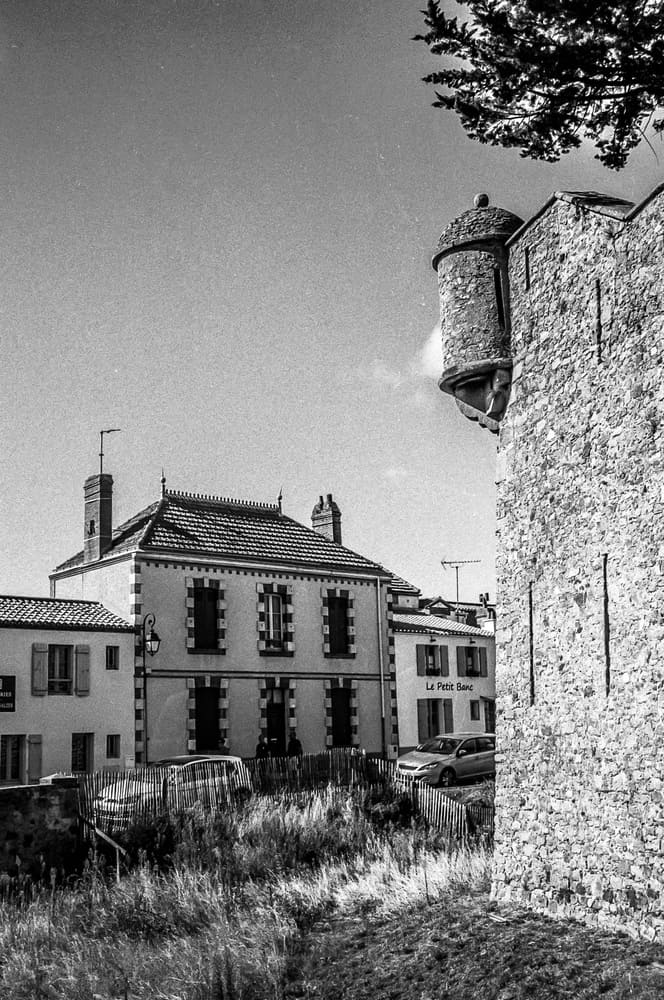
But for me, it meant getting the children to a restaurant for lunch on the Saturday to eat with my brother-in-law, his wife, his daughter, and his grandson. Killian was a “little tired” after a long week at work and some drinkie-poos with friends at the bottom of the castle walls in Montaigu. No, of course he wasn’t hungover, heaven forbid. Of course he hadn’t lost his phone, and of course he hadn’t hurt his wrist wrestling—or cuddling with—his mates. He had tried to get out of it, but was told, “Not bloody likely,” by his mother, and I said I’d take Kate to go and get the boy. A friend had found his phone, so we passed by her flat to get it back. The Anglais arrived fashionably late at 12h15. Sat down and had a couple of beers. We almost looked presentable!
We ate and caught up, had a very pleasant lunch, and I finally met my new nephew Raphaël—a lovely two-and-a-half-year-old. Motherhood suits my niece to a tee, and it felt wonderful not to have to be on full alert because it was no longer my job. After eating, we men went to pay for the meal, and Killian was more than happy to contribute, bless him.
We dropped off Killian, who declared his intention to have a “little snooze,” and dropped Kate off at home so she could welcome Emeline, who would be spending the weekend with her. Virginie had cleaned the kitchen, and Kate had been briefed to keep said kitchen just as spotless for our return from Brittany to visit my in-laws… The last visit had gone surprisingly well, and it was with actual pleasure that we set off. It was still a tad warm, and since there was a risk of fires, all fireworks had been cancelled by the préfet. In Montaigu there would be no fireworks, no bal des pompiers, but in Brittany it would be fine! Yippee!!
The trip up was very much the usual trip to Brittany on a busy weekend on the roads. We were not driving at a rapid rate of knots, and Virginie’s infamous and rather colourful language punctuated the drive. The Frenchman, whilst driving in 36°C heat, can get a little irate. His ultimate goal is to get there—wherever there might be—before the car in front of him.
The hierarchy of traffic, as far as he’s concerned, goes like this:
– Anyone from the same department is a mate.
– Anyone from our region is a mate—unless they’re from Maine-et-Loire, who apparently don’t know how to drive, or Loire-Atlantique, who think they know how to drive but clearly don’t.
– We’re from the Vendée—and we do know how to drive… we’re just usually too drunk to do it properly.
– Anybody else from France is fine, I suppose.
– UK drivers are also mates—especially if, like us, your car proudly displays both an F and a UK sticker.
– Drivers from 75 (Paris)? Absolutely clueless.
– Those from 91, 92, 93, 94, 95, 77, and 78—the rest of Île-de-France—are also deeply suspect.
Ah, Bastille Day. The revolution may be over, but the road rage? That’s just getting started.
Drop in next week for another adventure where we actually get to Hell’s Belz, in one piece. That first evening is already full of adventures as I rise to save the day, Jessica and Xavier, and not get told off by Gisèle. I do get told off by my wife for being a complete idiot and forgetting my CPAP machine for my sleep apnea…

















 IJM Photography