The Opening of the Film Archives: An October Saturday in Town with Killian, 2016


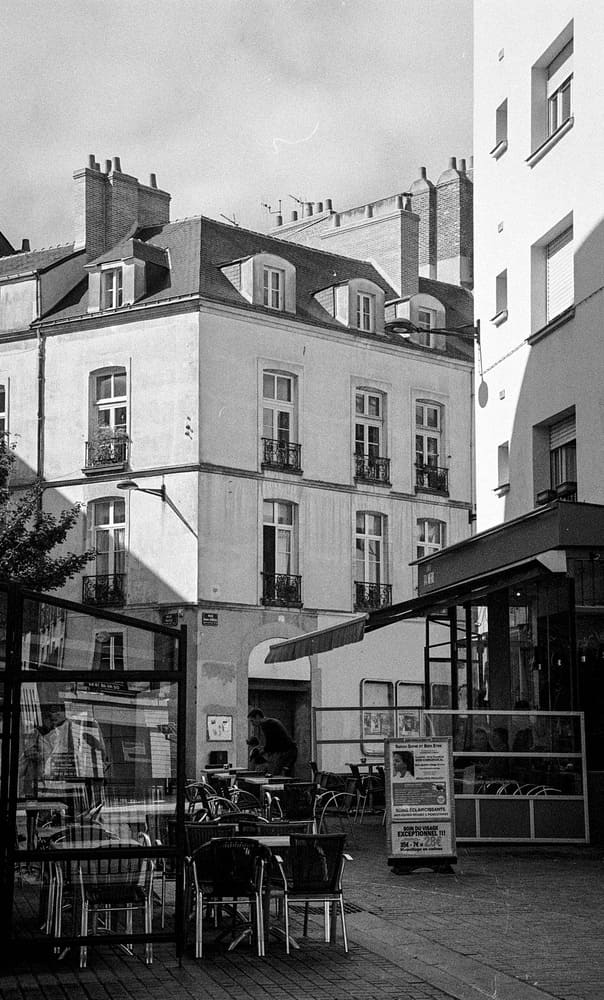
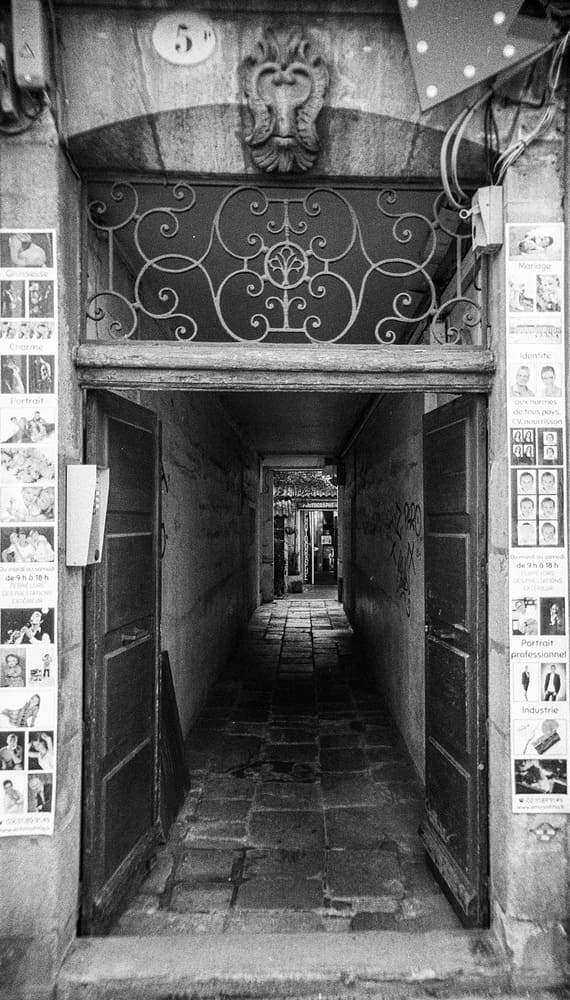
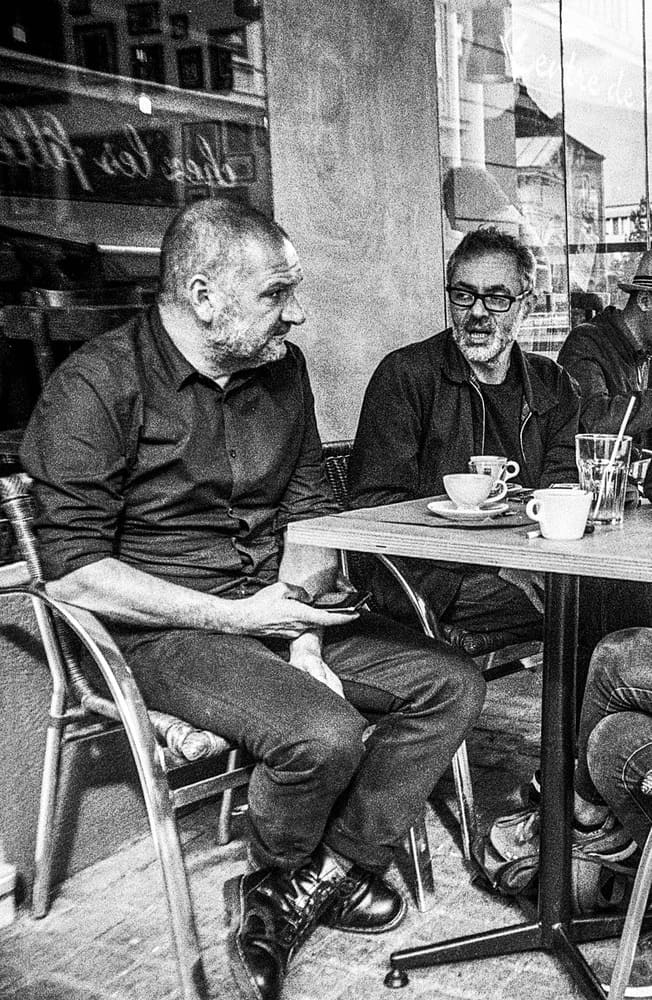
Welcome back to another look at the film archives. This time, I’m sharing a few black-and-white street shots from an October Saturday in Nantes, likely taken with the Praktica MTL3 and HP5 Plus film. These outings with my son Killian, which we called ‘Ian and Killian days,’ became a cherished routine, a time for us to reconnect amidst the busyness of life.

He was 17 then, a weekly boarder at his lycée in La Roche sur Yon. On the weekends, we’d often head into Nantes, following the same familiar programme: a visit to the barbershop, a meal at the Sugar Blue café, and finally, a drink at the John Mc Byrne Irish Pub. In the photo, that handsome chap in the barber’s seat is Killian—a little reminder that it wasn’t always Kate joining me on these trips. These outings were a way to stay connected, despite his growing independence. Even with him being only 17, I still felt that sense of responsibility. Once a Dad, always a Dad.

As we went through our usual routine, I found myself facing the familiar challenge of capturing these moments on film. The low light inside the barbershop always made me second-guess whether I could get a decent shot without using a flash. But over time, I learned to trust the Praktica and the HP5 Plus film. There’s a rawness to film photography, especially with Ilford’s HP5. It adds a certain grit and texture to the image, something that digital just can’t replicate.

That’s what I love about film—the imperfections. The grain gives it character, a certain honesty that smooth, polished digital photos lack. It’s not about creating something flawless but about preserving the authenticity of the moment. This shot of Killian in the barbershop, for example, may not be technically perfect, but it’s real. It’s us, it’s Nantes, it’s one of those ‘Ian and Killian days.’

Looking back at these photos, I’m reminded that sometimes, it’s the imperfections that make an image truly memorable. Quite the day, right?

The Art of Visual Note-Taking in Photography: Lessons from a Reflective Portrait


A Glimpse into Visual Note-Taking

Photography is more than just capturing perfect portfolio shots. It’s a journey of exploration, experimentation, and personal growth. In this article, we’ll delve into the world of visual note-taking with your camera, drawing inspiration from a poignant black and white portrait capturing a moment shared between a father and his son.

The photograph that serves as our muse in this exploration is a black and white portrait taken within the confines of an elevator. It’s a seemingly ordinary setting, yet it holds within it the essence of visual note-taking. In the center of the frame, my son stands, gazing intently into the elevator’s mirror.

This image isn’t just about following the rule of thirds, although it does so with remarkable precision. What truly sets it apart is the subtle yet profoundly impactful detail: my own reflection, almost ethereal, lingers in the mirror behind my son. It’s a moment frozen in time, a visual note that encapsulates a father’s perspective and a son’s curiosity.

Lessons Learned Through the Lens

This visual note, seemingly unassuming, has been a source of profound lessons in my photographic journey:

1. The Dance of Composition: The deliberate use of the rule of thirds here isn’t just about aesthetics; it’s about orchestrating a visual symphony. The composition invites viewers to explore the depths of the image, guiding their eyes from my son’s contemplative gaze to the faint presence of my reflection. It’s a testament to the power of composition in storytelling.

2. The Narrative Thread: Photography is storytelling with light, and this image narrates a journey. It’s not merely a reflection in a mirror; it’s a snapshot of our journey from the subterranean depths of an underground carpark to the bustling life of the city streets above. It captures the transient nature of existence, reminding us that every moment is a story waiting to be told.

3. The Reflective Element: The mirror within the elevator introduces an intriguing layer of reflection and perspective. It turns an ordinary scene into a canvas for creativity, showcasing the hidden depths within seemingly confined spaces. It’s a reminder that as photographers, we should always be attuned to the opportunities around us, even in the most mundane settings.

4. Emotion Unveiled: Portraits are vessels of emotion and connection. My son’s expression, captured in this visual note, reflects a myriad of feelings—contemplation, curiosity, or perhaps a touch of wonder. These emotions breathe life into the photograph, making it relatable and evocative.

The Journey Continues

This visual note is more than just a photograph; it’s a reflection of my evolving perspective as a photographer and a father. It’s a testament to the idea that within the ordinary, we can find the extraordinary. It speaks to the profound lessons we can draw from visual note-taking in photography.

As you embark on your own photographic journey, remember that each click of the shutter is a note in the symphony of your experience. Visual notes may not always be destined for your portfolio, but they are the heartbeats of your creative exploration. They are reminders of where you’ve been and stepping stones to where you’re going.

Capture the journey, one visual note at a time. Your next revelation may be just a click away.

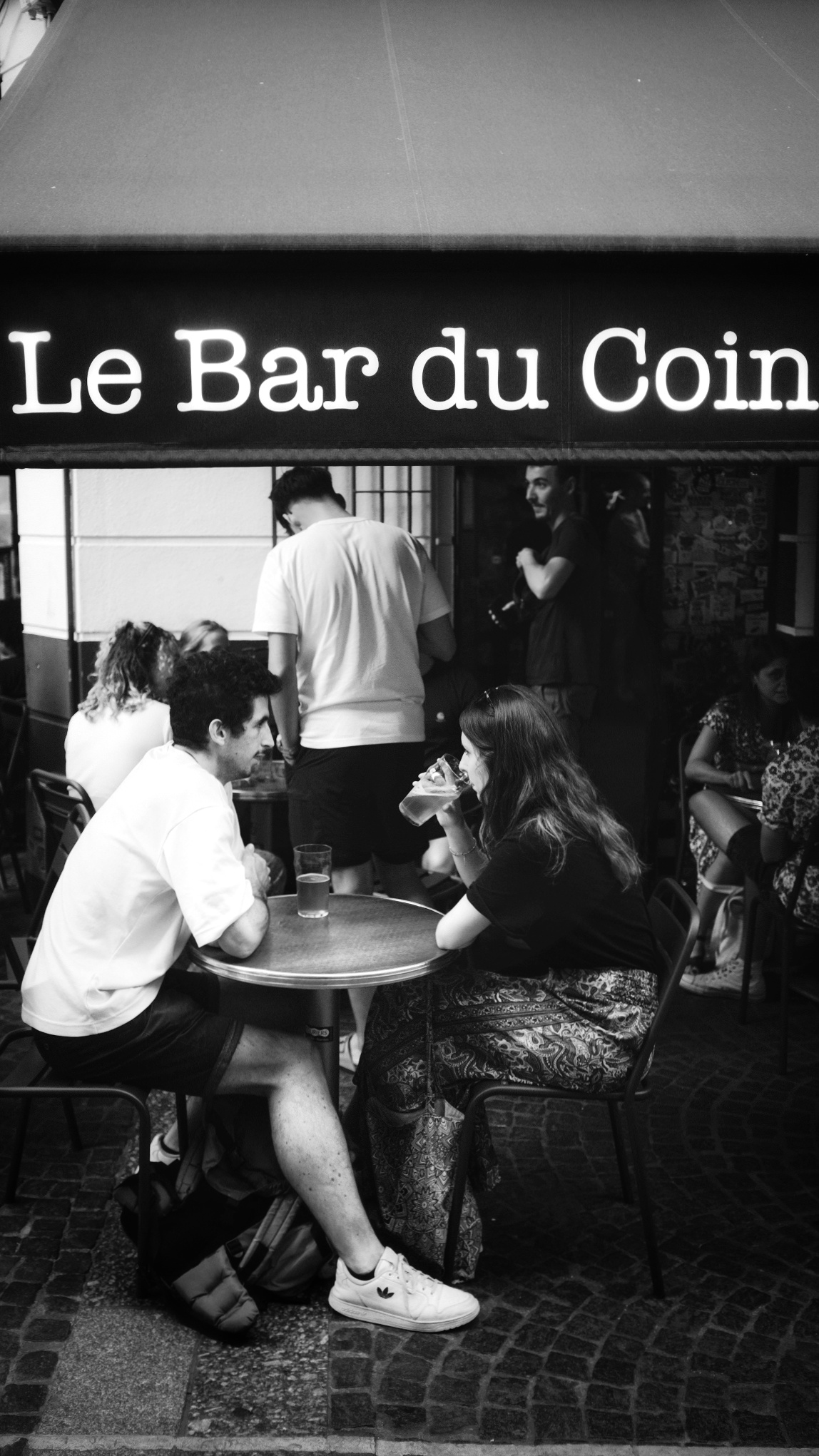
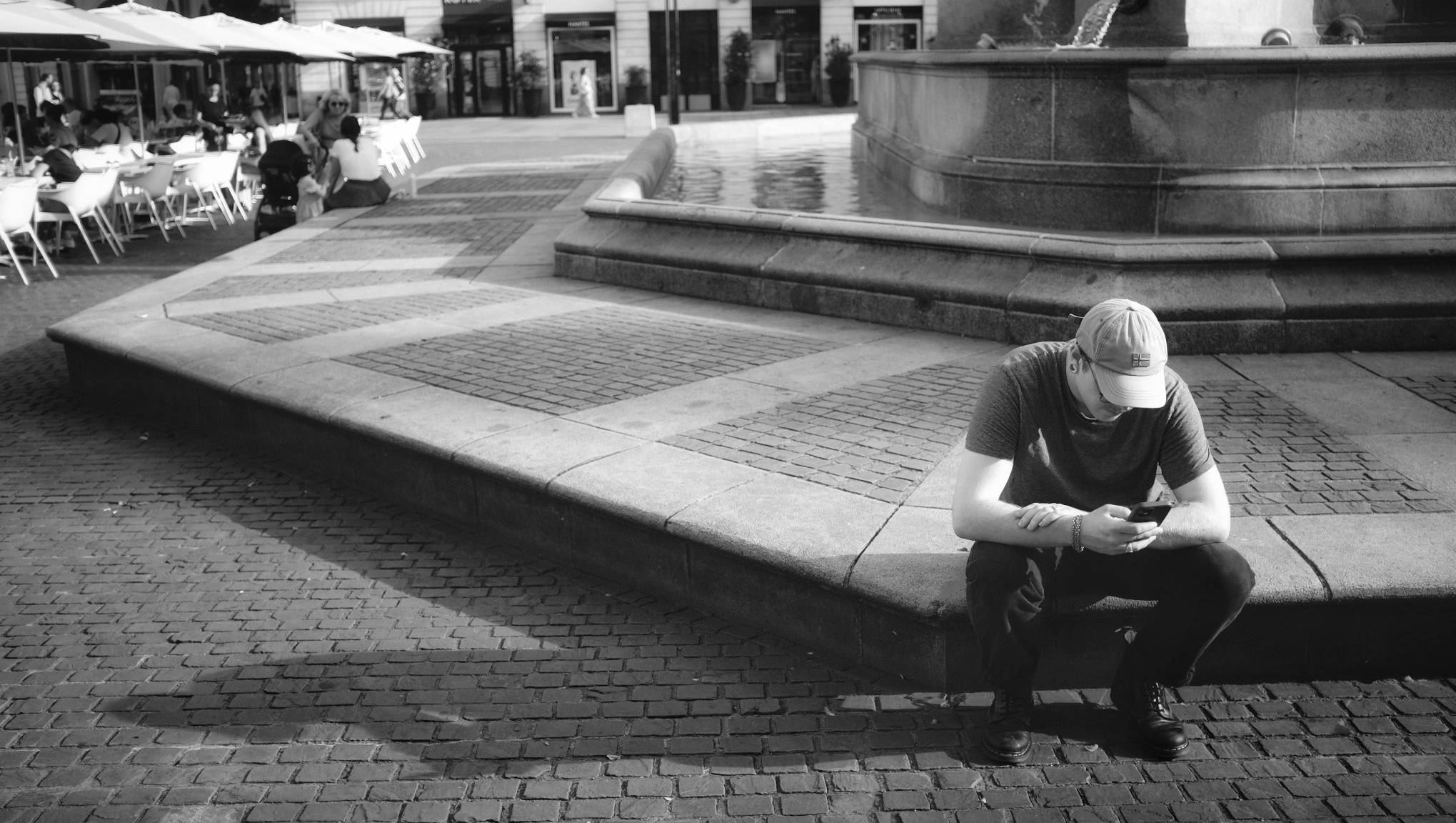
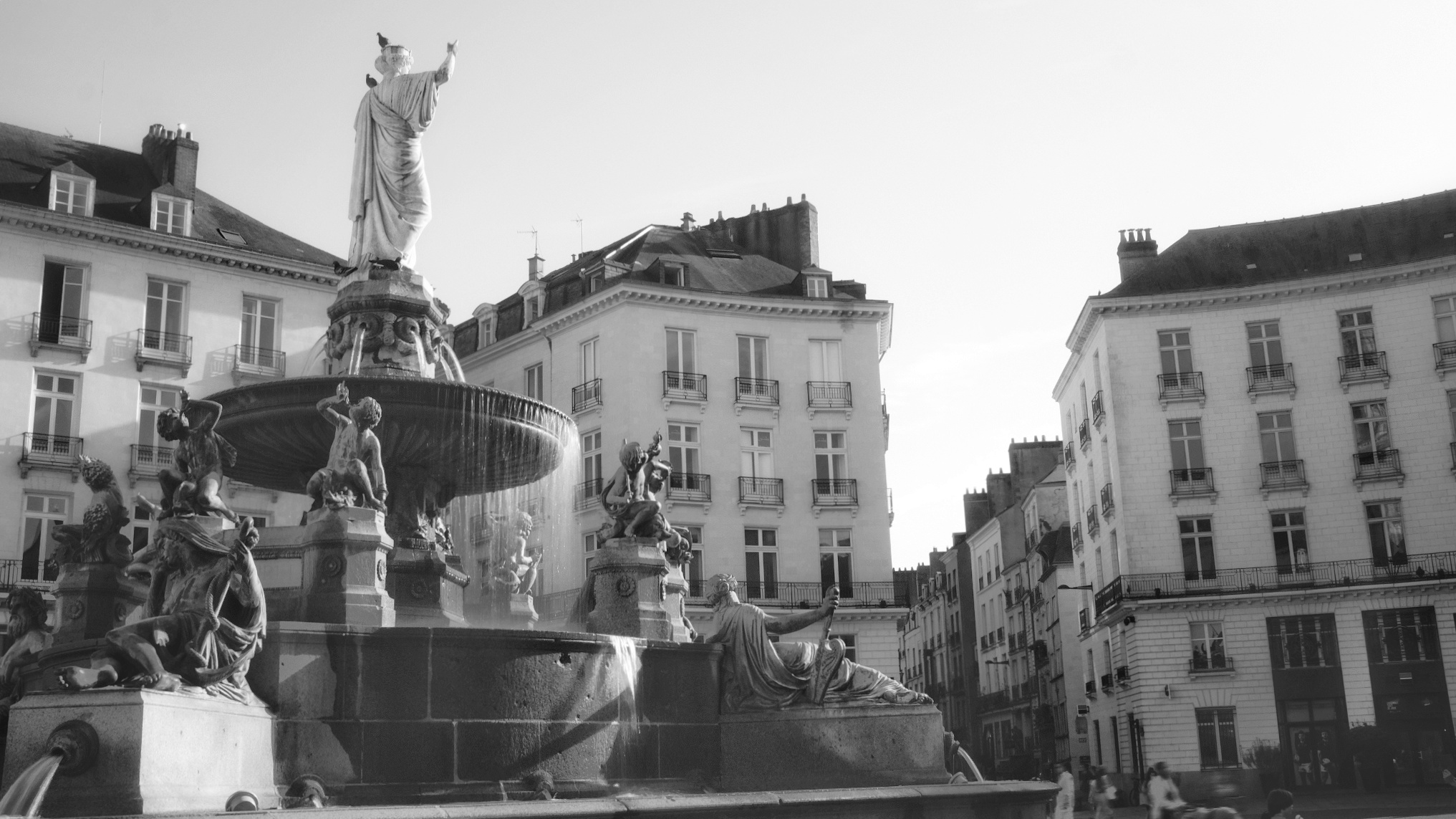
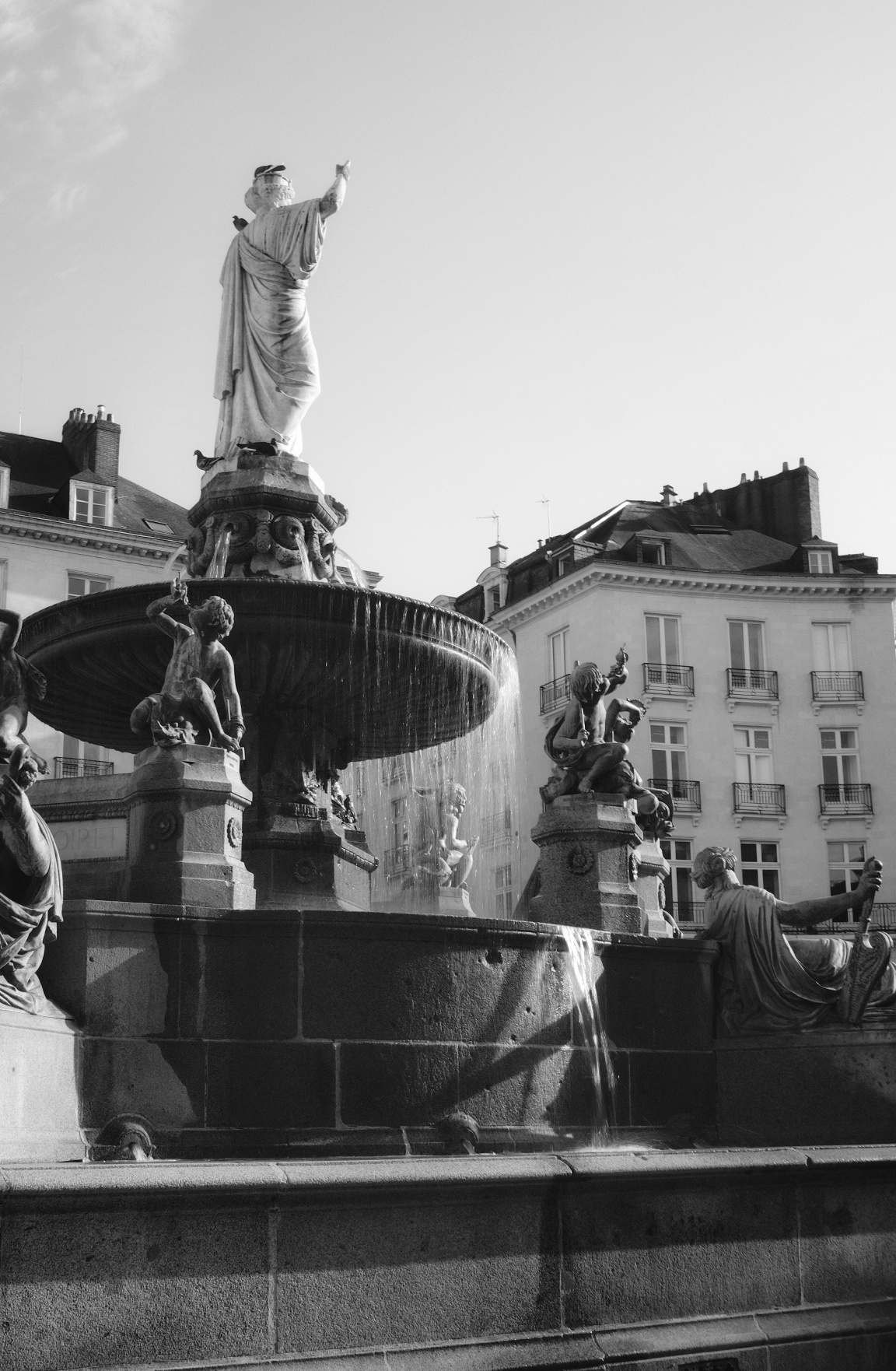
The following photos, or should I say visual notes, we’re taken over two September Saturdays with my Fujifilm X100f. What did you take away from these visual notes?