

My Love Affair with the X100F (and a Cuppa Tea)
It’s no secret to the regular readers of IJM Photography that I have a great fondness, deep affection, nearing on obsession with my Fujifilm X100F. It’s a great little camera that gets me excited whenever I take it out of my camera bag. But, Dear Reader, what does this have to do with the Fujifilm X-T2? Well, they’re both manufactured by Fuji, they both have an “X” in their name, and I have a deep affection for a nice cup of tea. Not the same T? Ah well…
Similarities and Differences: A Tale of Two X’s
I’ll talk about the differences and similarities between the two cameras and why I thought the X-T2 was a useful and complementary acquisition. We’ll look at not just the specs but also the rather similar way both cameras handle.
- Sensor and Image Quality: Both use the same 24-megapixel sensor with an anti-aliasing filter, and offer an ISO range from 200 to 128000.
- Screen and Viewfinder: The X100F has a fixed screen, while the X-T2 boasts a tilting one. Both share the same excellent viewfinder.
- Performance: The X100F shoots at 8 fps while the X-T2 goes up to 14 fps. For video, the X100F is limited to Full HD, while the X-T2 offers 4K and can shoot at 120 fps.
- Connectivity: Both cameras have built-in wireless capabilities.
- Weight: The X100F is lighter at 469g, while the X-T2 is slightly heavier at 507g.
The Lens Factor (and Weather Sealing, Too!)
The main difference? The lens. The X100F has a fixed 23mm (35mm equivalent) f/2.0 lens, while the X-T2 can take the entire range of X-mount lenses. Quite a big difference, indeed. The X-T2 also has the added bonus of weather sealing!
Why Buy a 4-Year-Old Camera in 2020?
Because at the time, I could. It was the logical acquisition and complement to my X100F. Did I mention it also uses the same batteries? I still have the same, beloved-by-many film simulations, and while not as numerous as later models, they are more than enough for me!
My first lens purchase was the 16mm (24mm equivalent) f/2.8 Fuji lens, the perfect complement to the 35mm equivalent on the X100F. I later discovered TTArtisan and 7 Artisans, Chinese firms that make affordable manual focus lenses for the X-mount. I now have the 35mm (50mm equivalent) f/1.2 and 58mm (85mm equivalent) f/1.4, and the fish eye 7mm F2.8 lenses from both companies, both costing a fraction of the autofocus Fuji lenses. The only concession I made to Fuji was later purchasing the 18-55mm (24-70mm equivalent) f/2.8 autofocus kit lens.
Value for Money: The X-T2’s Sweet Spot in 2024
The fact that I bought it second-hand was also a contributing factor. Does it have as many megapixels as the more modern X-T5? No. But does it have enough? Yes! Does it have the same specs as the X-T5? No. But does it have enough? Yes. Can you see a pattern developing here?
For the amount of money spent, I think I have enough cameras for my buck. And that is the crux of the argument for acquiring a now 8-year-old camera in 2024. Is it the very best money can buy? No. But if you’re an amateur like myself, you generally don’t need the specs that manufacturers and those nice men in camera shops will try to tell you you need. 24 megapixels is more than enough for printing even 20″ by 30″ (500mm x 760mm) sized images.
I have just looked at mpb.com for you and have found XT2 bodies from 487€ to 729€ depending on the condition. An X-mount lens will cost you anything from 104€ for a 35mm (50mm equivalent) F1.2 from 7 artisans to 279€ to 340€ for the 16mm (24mm equivalent) F2.8 fuji lens. So as you can see, it’s certainly cheaper than buying the latest models…
Conclusion: A Timeless Tool for the Passionate Photographer
In 2024, the Fujifilm X-T2 remains a compelling option for photographers seeking excellent image quality, classic handling, and a wealth of creative possibilities. Its compact size, weather sealing, and extensive lens selection make it a versatile companion for various genres, from street photography to landscapes.
While newer models may boast more advanced features, the X-T2’s enduring appeal lies in its combination of performance, affordability, and the unique charm of Fujifilm’s X-Trans sensor and film simulations. For photographers who prioritise the essentials of image-making and value for money, the X-T2 continues to be a worthy contender in the ever-evolving world of digital cameras.
If you’re looking for a camera that delivers exceptional results without breaking the bank, the used market might just hold the perfect X-T2 for you. And who knows, you might even discover a newfound appreciation for a slightly older camera that still has plenty to offer in 2024 and beyond.





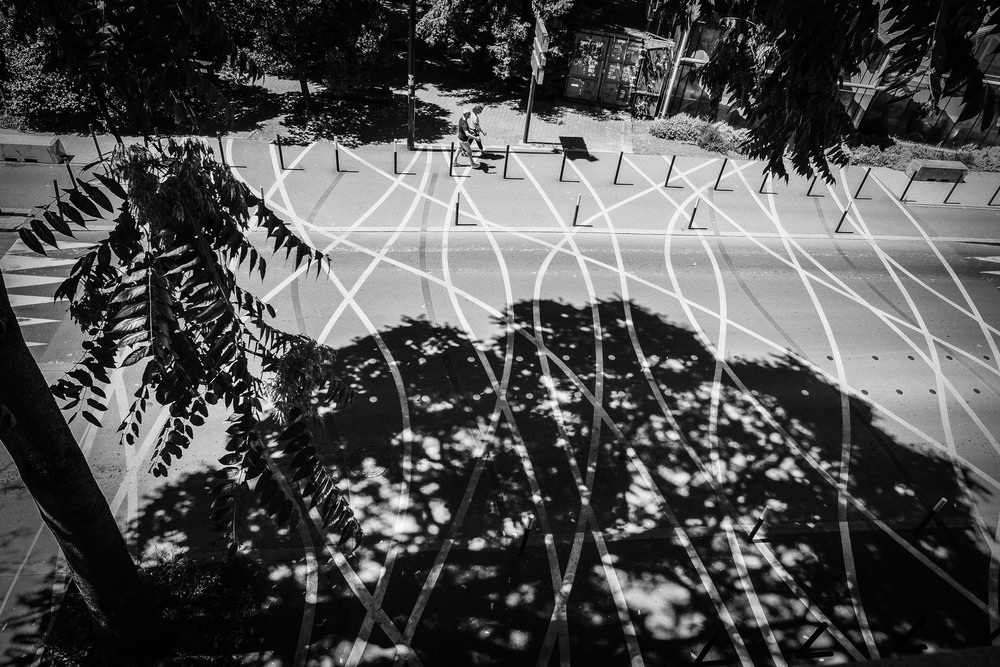







Post Scriptum
This camera is also capable of 4K video. And I’m using it at work for making videos for training new staff. It is certainly lighter than my Canon 6D Mark II, and I seem to be able to obtain a picture style that I like. It doesn’t have in-built image stabilisation. However, I use it on a tripod so that’s not an issue. And if ever I do decide to use the 18-55mm kit lens, I have image stabilisation in the lens.
I’ll see if I can’t find you an excerpt of the latest video…
 IJM Photography
hello ian,
a wonderful and interesting urban photo series that you present here – I like them all very much.
many greetings robert
LikeLiked by 1 person
It just goes to show the camera shops that we can adapt nd overcome. Yes the newer stuff is definitely sexy but the older stuff still works well enough to get good images. People connect with the photograph, not the gear that was used to get it!
LikeLiked by 1 person
Excellent post Ian. I personally love the X-T2 and I would probably still be using one if I didn’t need the in body image stabilization (yes along with aging the old hands aren’t as steady as they used to be). The X-T2 is really a workhorse of a camera. A few years ago I owned a pair of them and some of my best images were created the X-T2. These days I need the IBIS so I slimmed down my camera collection to the X-T5 and the X100VI. Do I need 40 megapixel sensors ? Absolutely not but the XT series of cameras fit my shooting style much better than the XH series of Fuji’s and the only weather sealed 26 megapixel Fuji body with IBIS is the X-H2. Personally speaking I like the tilt screen on the X-T5 rather than the fully articulating screen on the X-H2. I also Like having the analog controls such as shutter speed and ISO dials visible to me even when the camera is turned off rather than thumb wheel based controls and LCD readouts on the X-H2. I do wish Fuji had increased the size of the X100VI a few millimeters so it could utilize the bigger battery that the X-T5 uses but that’s a minor inconvenience because I usually don’t carry the X100VI and X-T5 at the same time. Sometimes I wish that I didn’t need the IBIS because I would probably still be using my pair of X-T2’s.
LikeLiked by 1 person
As wwwe grow older then our needs change. For me it’s aa walking stick, eye glasses and soon hearing aids. With my glasses I can see well enough and with focus peaking I’m good. It I need stability I use my tripod.
LikeLiked by 1 person
I meant to reply to you with my long winded reply about cataract surgery 🤷🏻♂️
LikeLiked by 1 person
Oh I’m not there yet, but it’ll come soon enough.
LikeLiked by 1 person
I had cataract surgery in both eyes in September 2023 and now I don’t need eyeglasses to drive or watch TV and I can even adjust the diopters on both cameras so I can see perfectly when looking through the viewfinder. The only problem is I can’t see the images clearly when I play them back on the LCD screen LOL. So now when I want to review the images I have to hit play and look through the viewfinder. I still need eyeglasses to read small print. So I don’t know whether I liked it better when I wore eyeglasses. When they did the surgery I had a choice of replacement lenses where I could see things up close and read without eyeglasses or a choice of being able to see things fairly close like the dashboard and distance without eyeglasses. I chose the latter. There was even a choice of progressive replacement lenses that the surgeon was really trying to sell me on but the other ophthalmologist in the practice had told me there are still glare problems with the progressive cataract replacement lenses when driving at night and recommended against them. It would have been nice to be able to read and see distance without eyeglasses. I really thought I would have had a longer recovery time but to be honest the day after the surgery I was pain free and was seeing perfectly. The biggest issue was the doctors don’t give you a prescription for reading glasses until eight weeks after the surgery so using over the counter reading glasses was horrible. I already have you beat with the hearing aids LOL 😁
LikeLiked by 1 person
Don’t you just love ageing ungracefully!
LikeLiked by 1 person
Yeah its just wonderful 🤣
LikeLike