
Same diagnosis as Part 1, same prescription. The opening four paragraphs are genuinely good — terse, cinematic, the rhythm earns its keep. “The sunlight was gone. The fluorescents were on. The break was over.” — that’s a real sentence. Then the Roman numerals arrive and flatten everything into a report again. “What I’d Do Differently” is still there. The sign-off prompts are still there.
The three-column table is worth keeping — it’s doing more work here because there are now three films to compare across the whole weekend. That earns its place.
Here’s the rewrite:
Part 2: The Work — Rehearsing a Double Violin Concerto on HP5+ 1600
The lunch break ended. Tables were folded. Containers packed. The last crumbs brushed away.
And then they arrived.
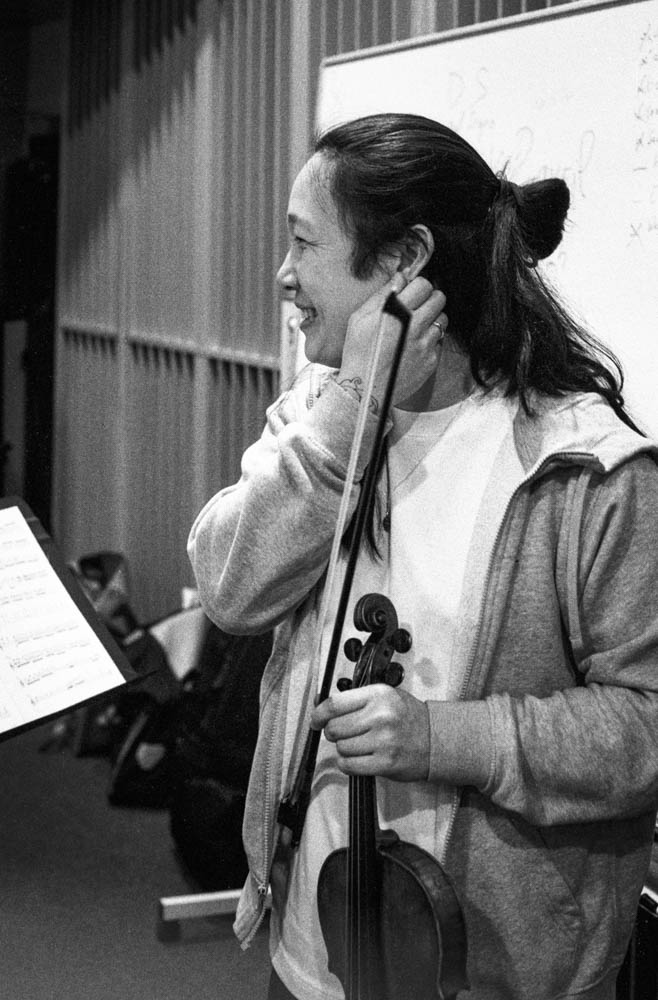
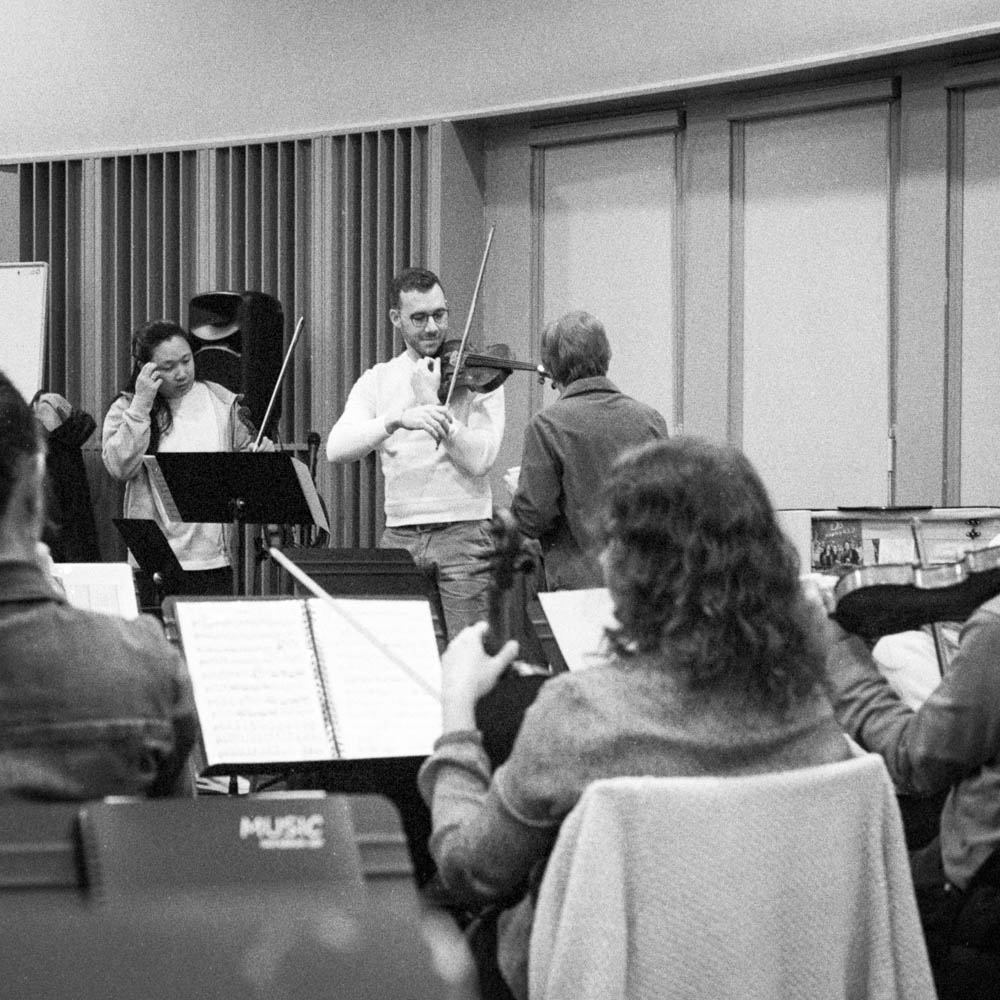
Two Chinese violin soloists — guest artists who’d travelled some distance to play a double violin concerto with our little orchestra in a French community centre. They weren’t at lunch. They weren’t part of that casual, sunlit gathering outside. They were here for work.
So were we.
I put down the Fomapan and loaded HP5+ pushed to 1600. Swapped the Pentax for the Canon AE-1 Program. Same 50mm philosophy, different camera, different film, different mood. The sunlight was gone. The fluorescents were on. The break was over.
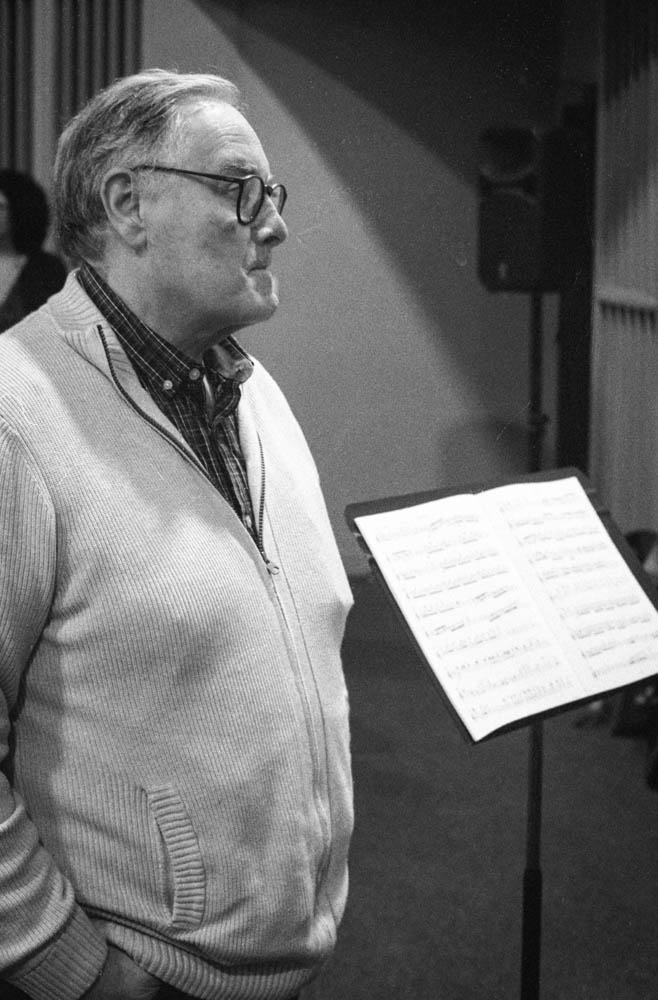
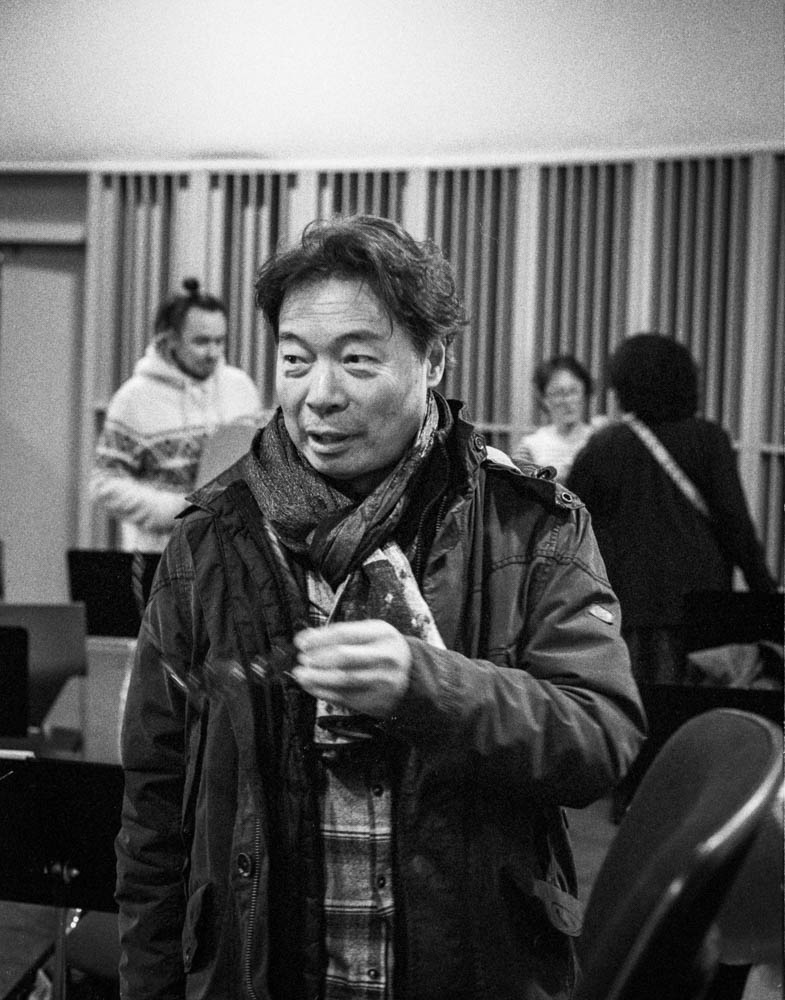
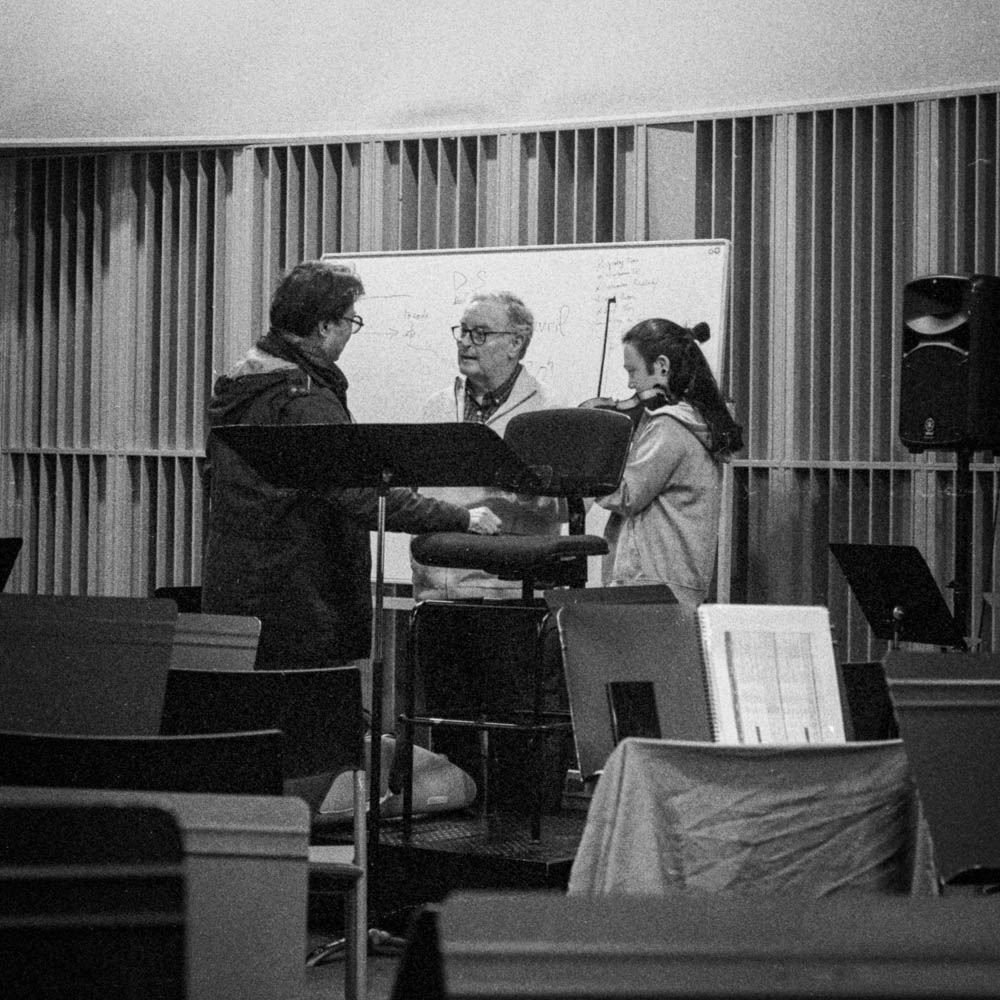
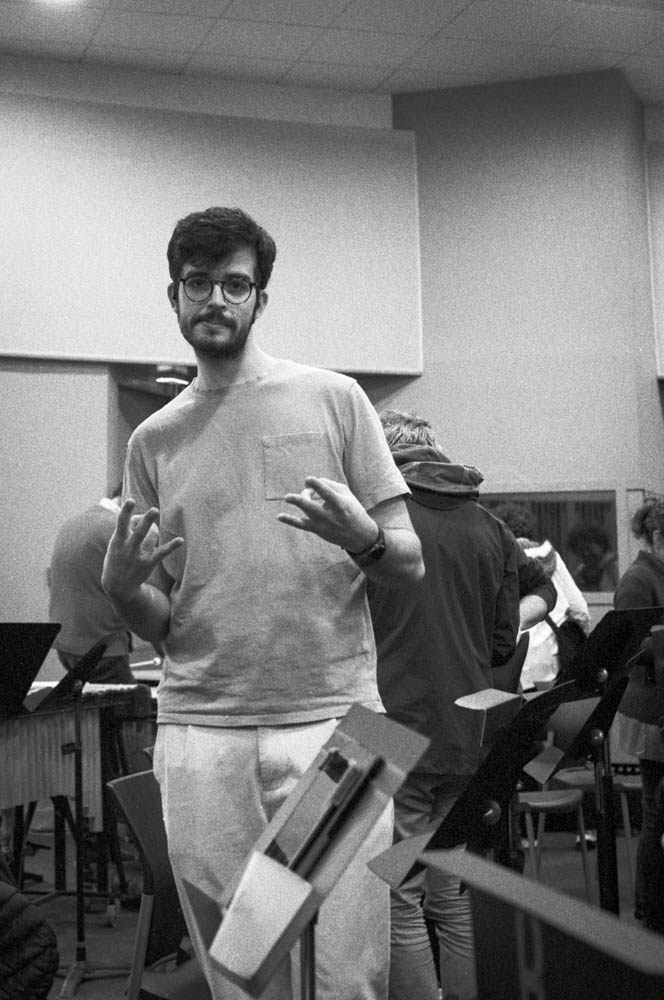
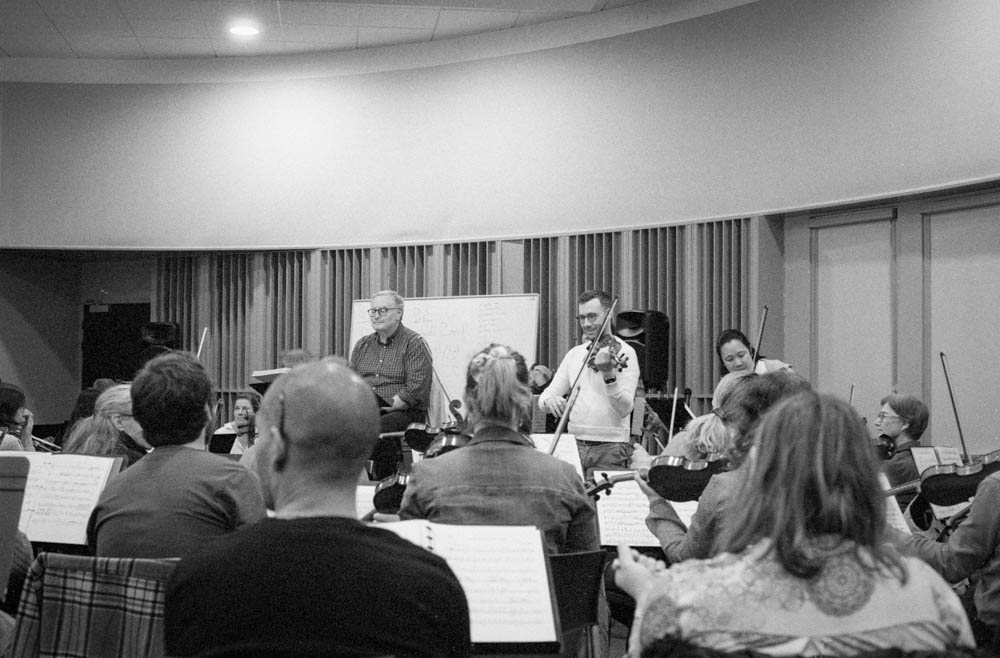
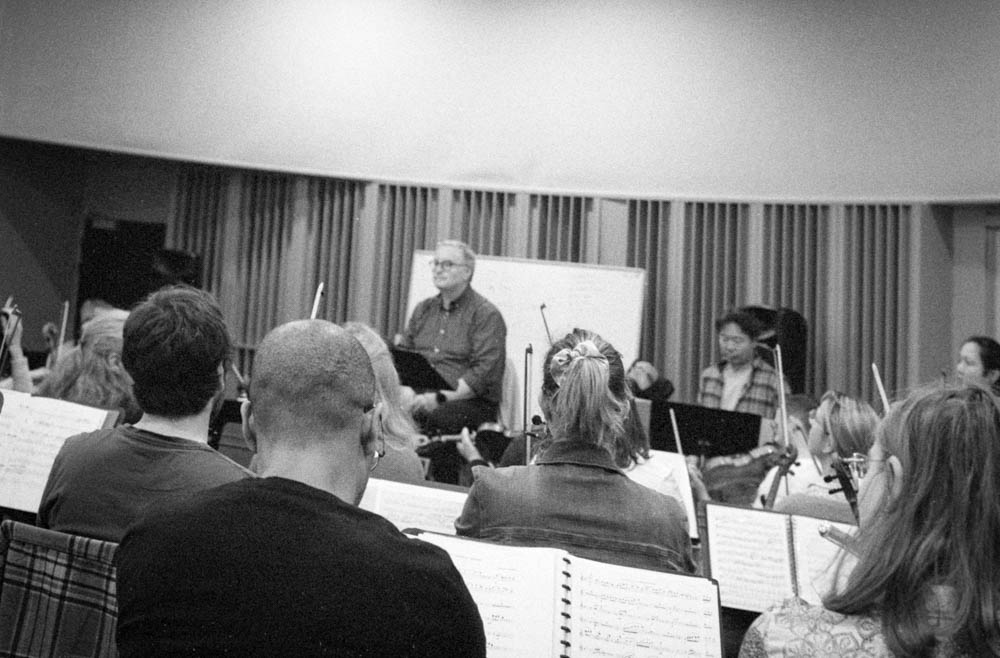
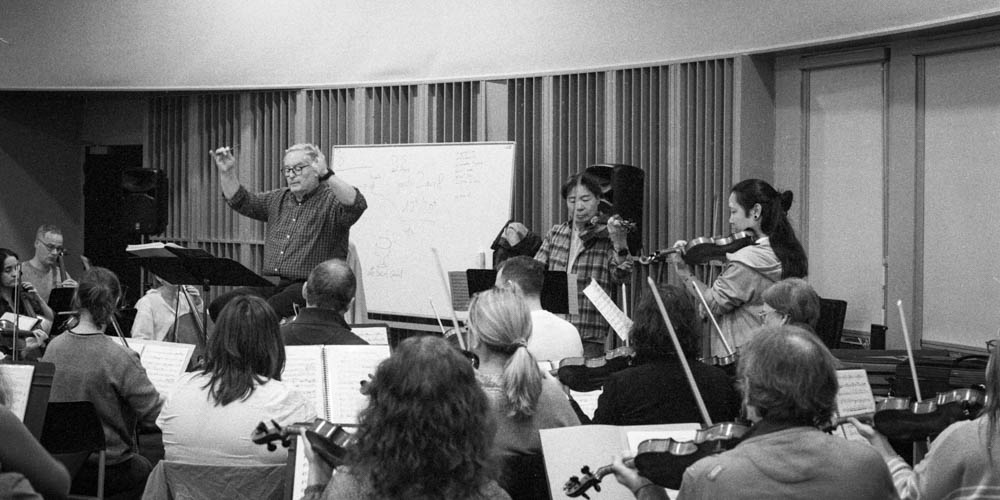
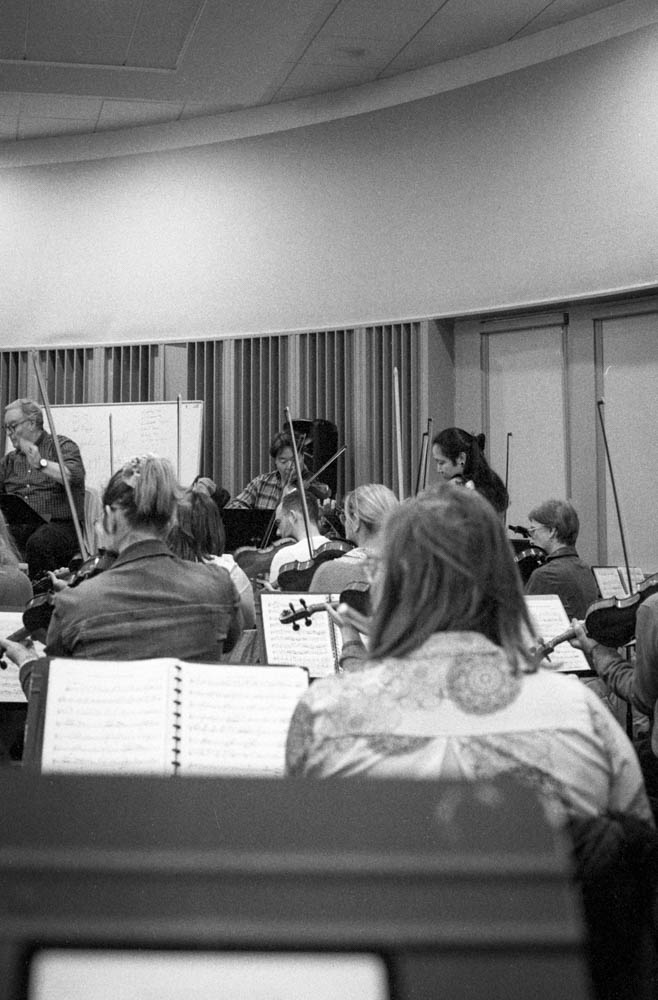
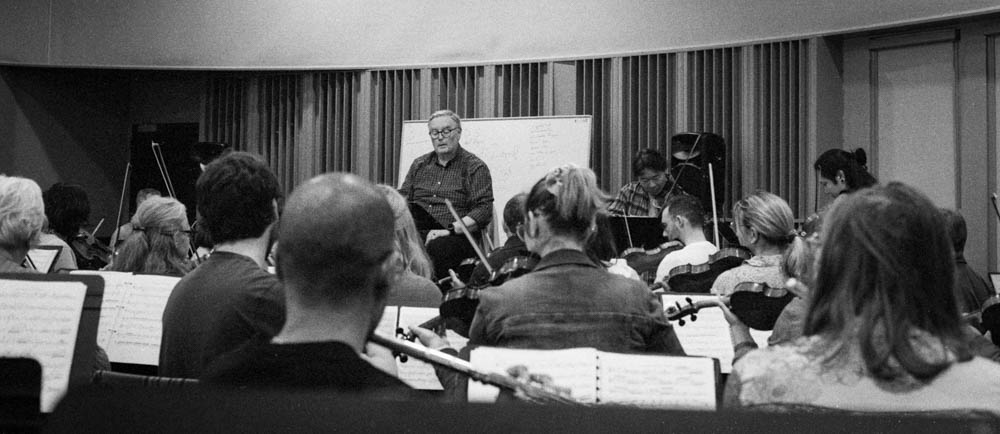
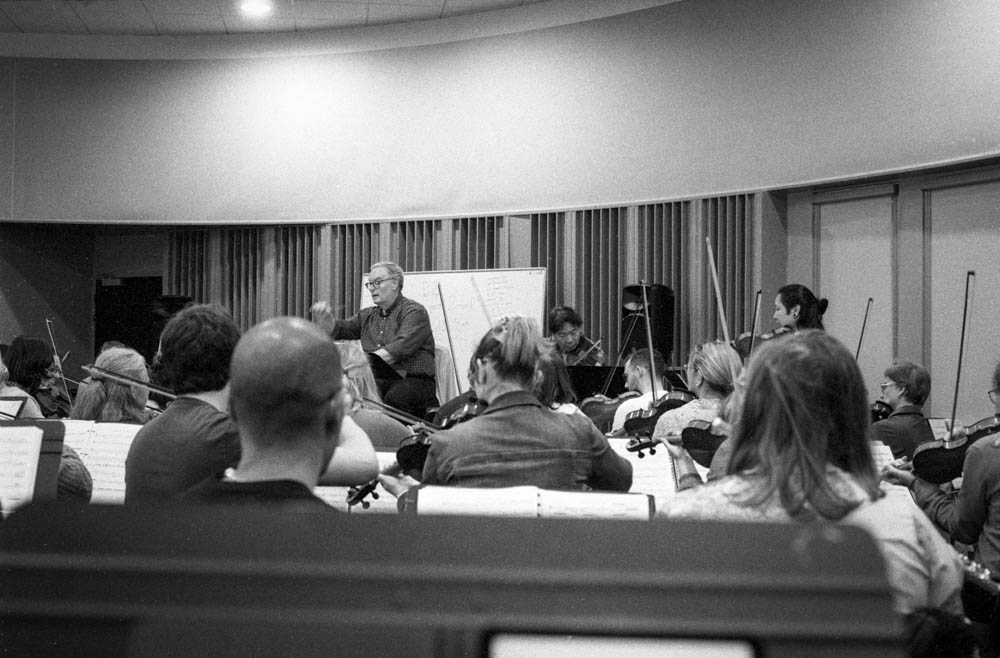
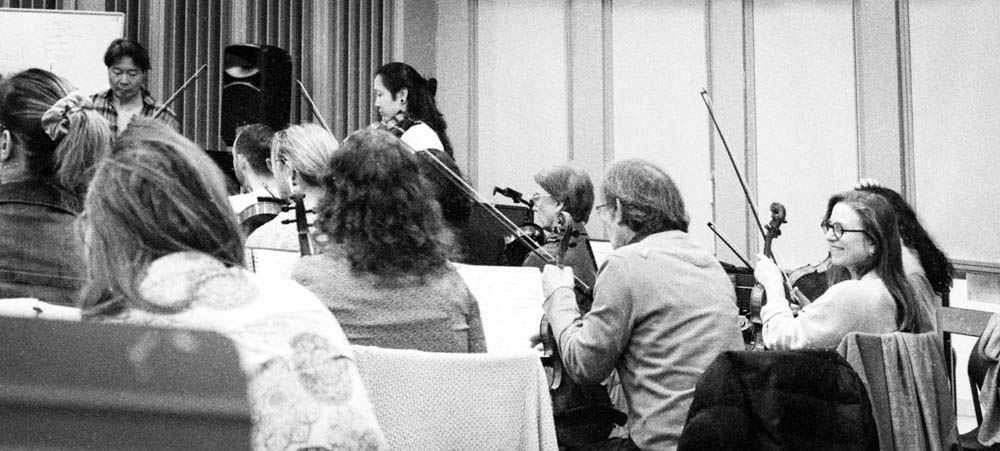
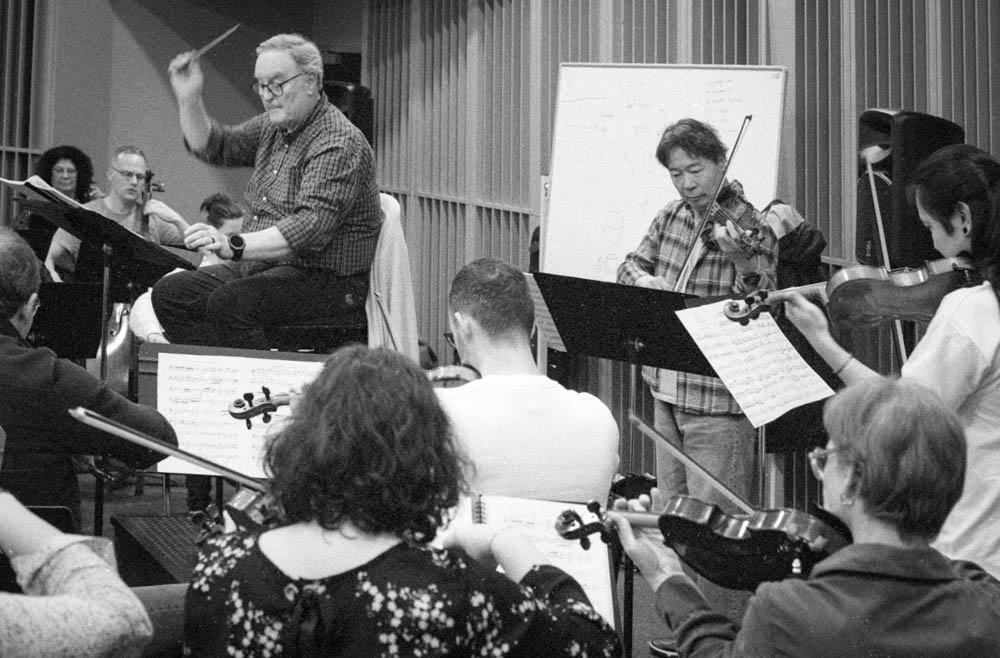
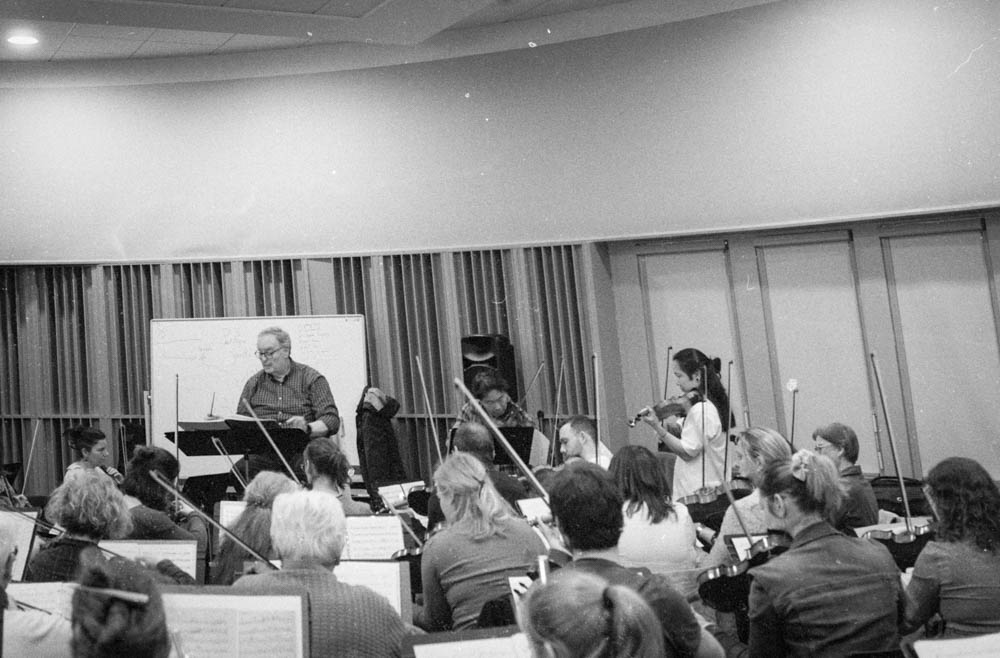
You can feel it when rehearsal starts — the shift from community to concentration. From chatting about weekends to counting measures. The conductor, same man who was smiling over a food container an hour ago, is now at the whiteboard, baton in hand, writing notes about tempo and bowing. The soloists take their places at the front. Tuning. Focused. Not quite part of our tribe yet — guests, professionals, here to do a job.
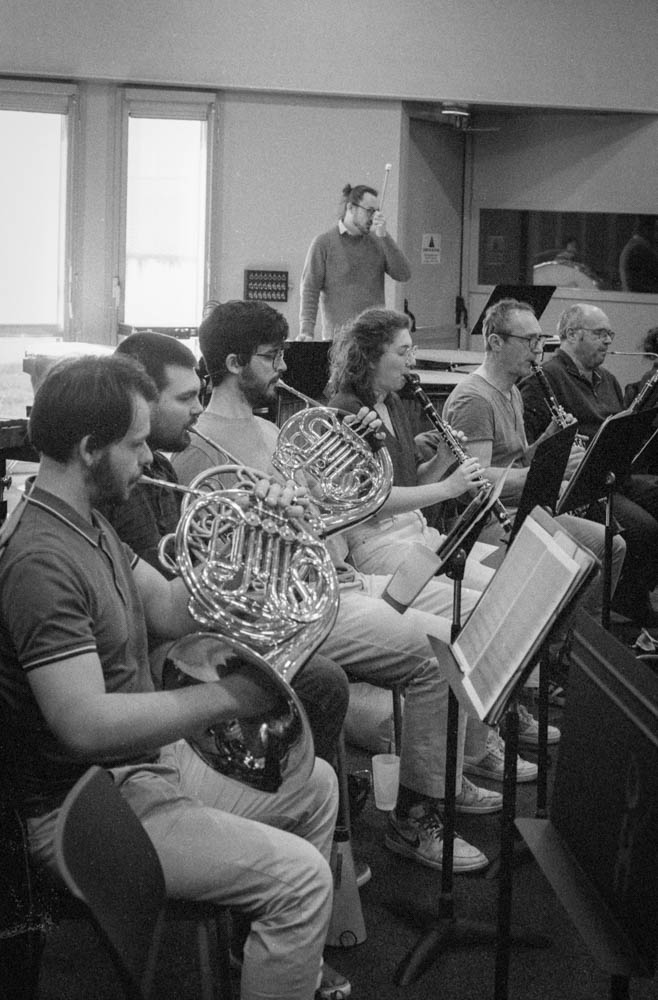
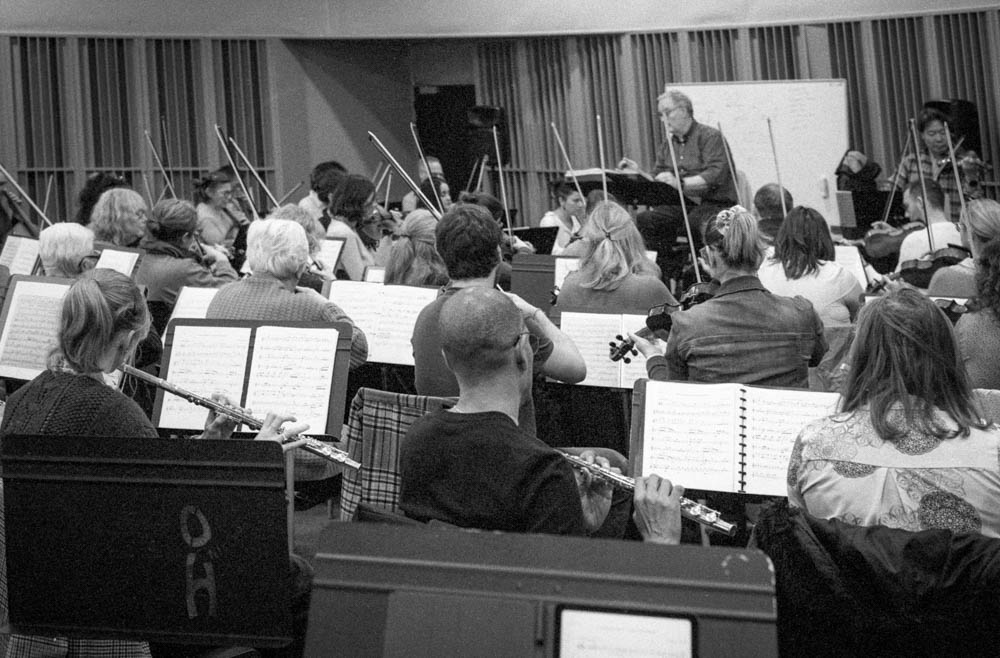
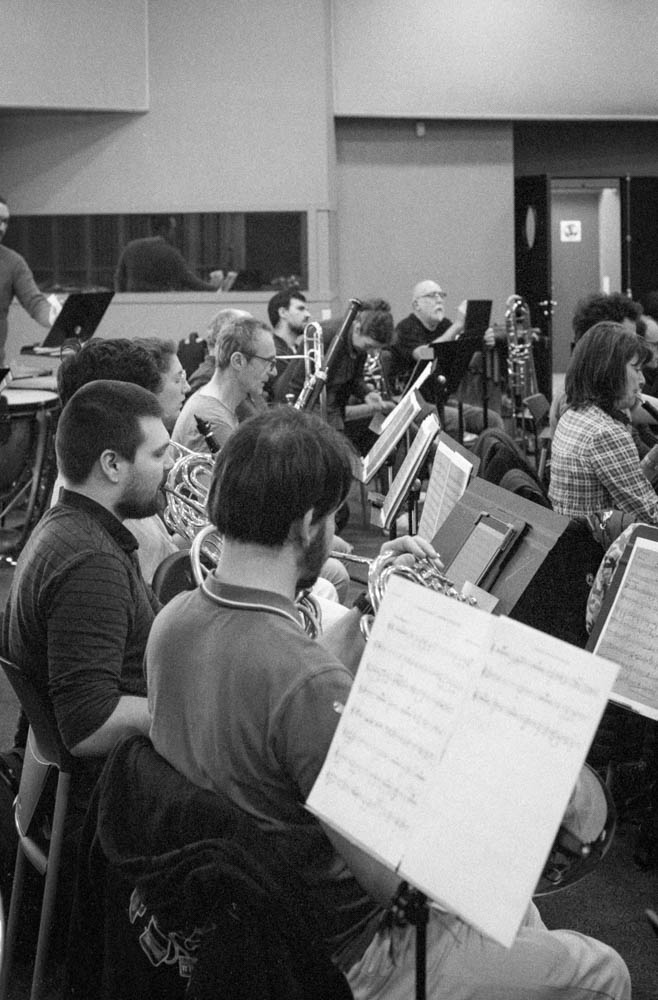
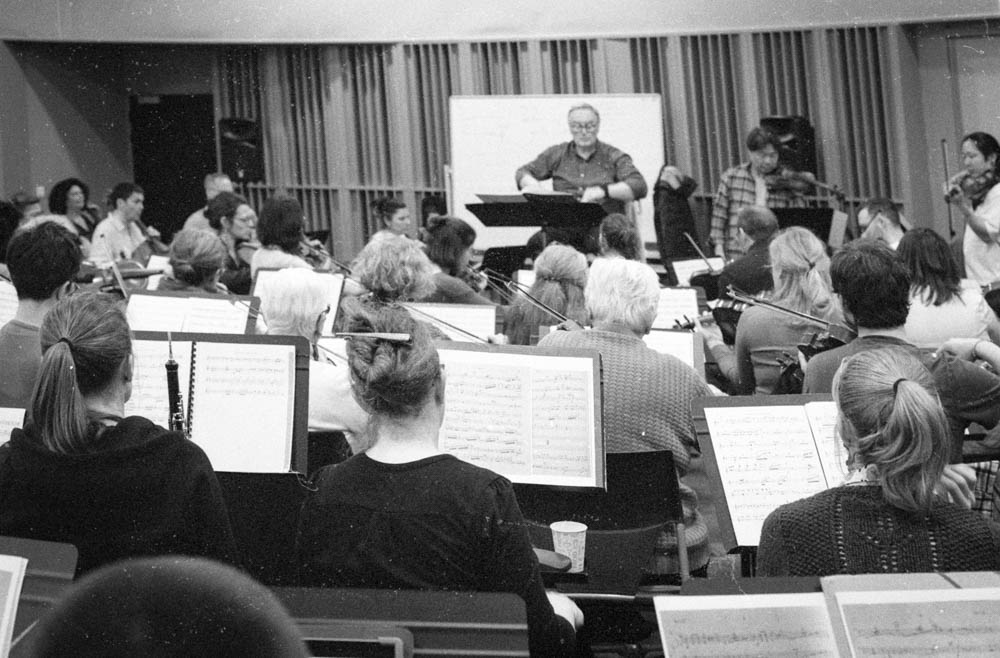
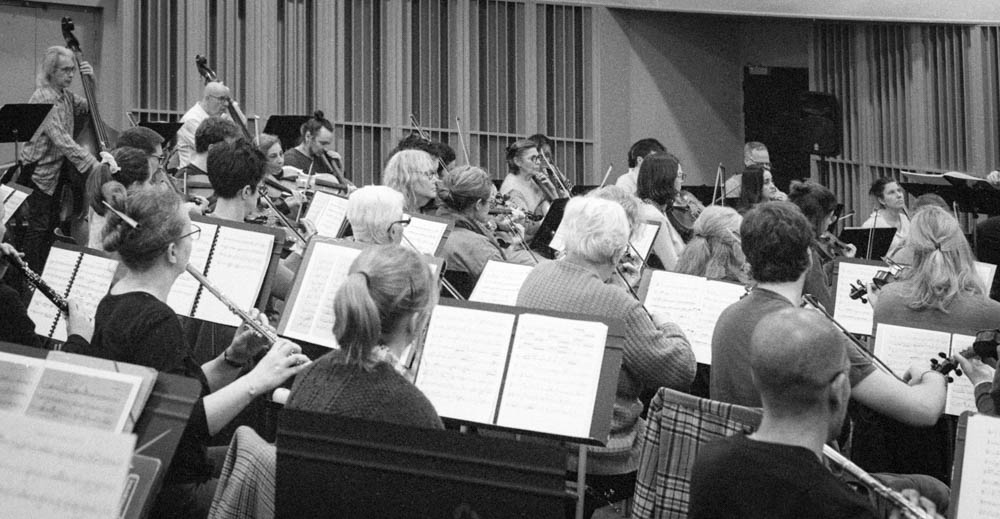
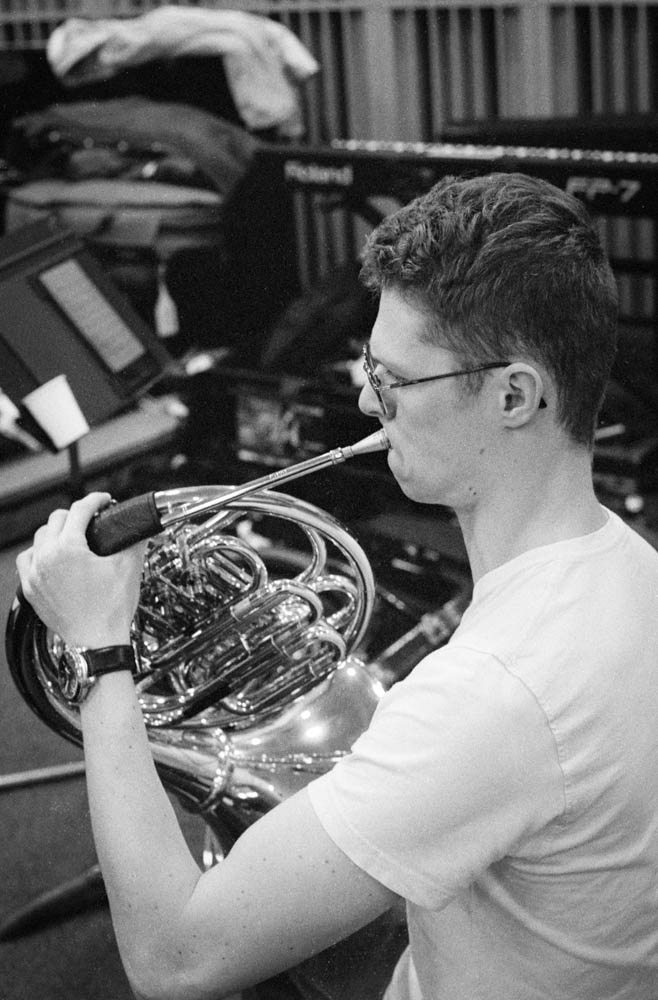
I photographed from my seat in the horn section and from the aisles during breaks. The AE-1 Program in Program mode — no thinking about shutter or aperture, just framing and timing. The camera handled exposure. I handled seeing.
What you witness, photographing a concerto rehearsal, is translation. Not just musical ideas passing between conductor and players, but something more specific: two soloists from one tradition finding a shared language with an orchestra from another. The conductor stops us. Softer in the strings. The soloists adjust. He stops again. A touch more projection. They adjust. We play. He listens. He stops. This goes on. Not because anyone is wrong, but because everyone is finding the same musical space.
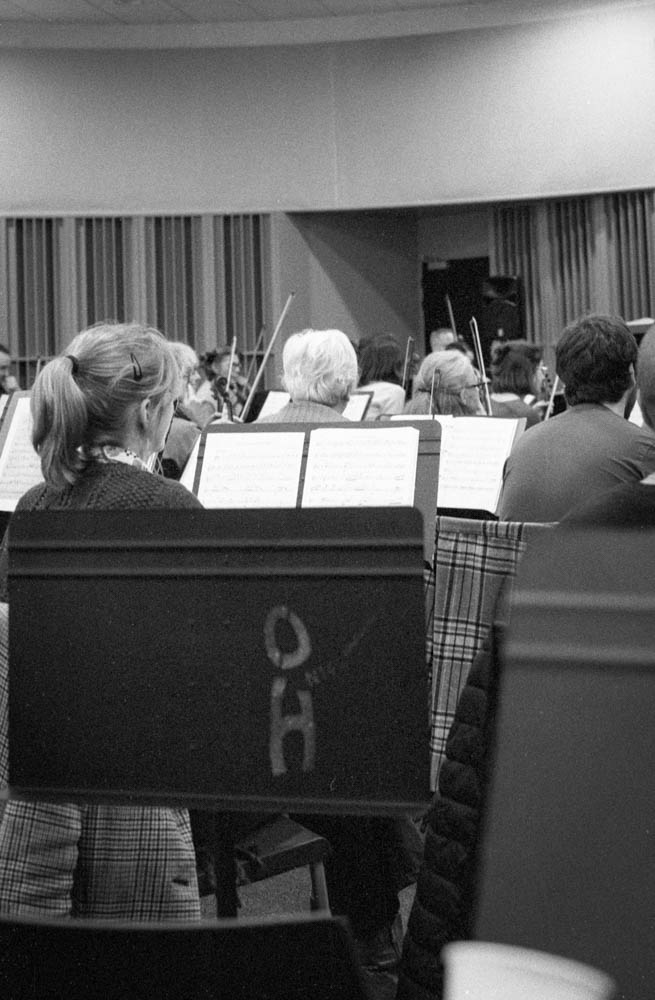
HP5+ at 1600 sits in the right place for this. Not the fine, almost invisible grain of the Fomapan lunch shots. Not the raw, declared grain of 3200. Textural, controlled, appropriate — honest about the work without dramatising it.
The three-roll arc of the weekend, laid out:
| Fomapan 100 — Lunch | HP5+ 1600 — Concerto | HP5+ 3200 — General | |
|---|---|---|---|
| Light | Natural daylight | Mixed indoor fluorescents | Mixed indoor fluorescents |
| Grain | Fine, subtle, clean | Textural, present, controlled | Pronounced, bold, raw |
| Contrast | Gentle, even | Moderate, balanced | Punchy, dramatic |
| Mood | Relaxed, communal | Focused, collaborative | Urgent, iterative |
| Story | Community at rest | Collaboration at work | The machine in flow |
Same orchestra. Same weekend. Three worlds — and the technical choices were the point from the start.
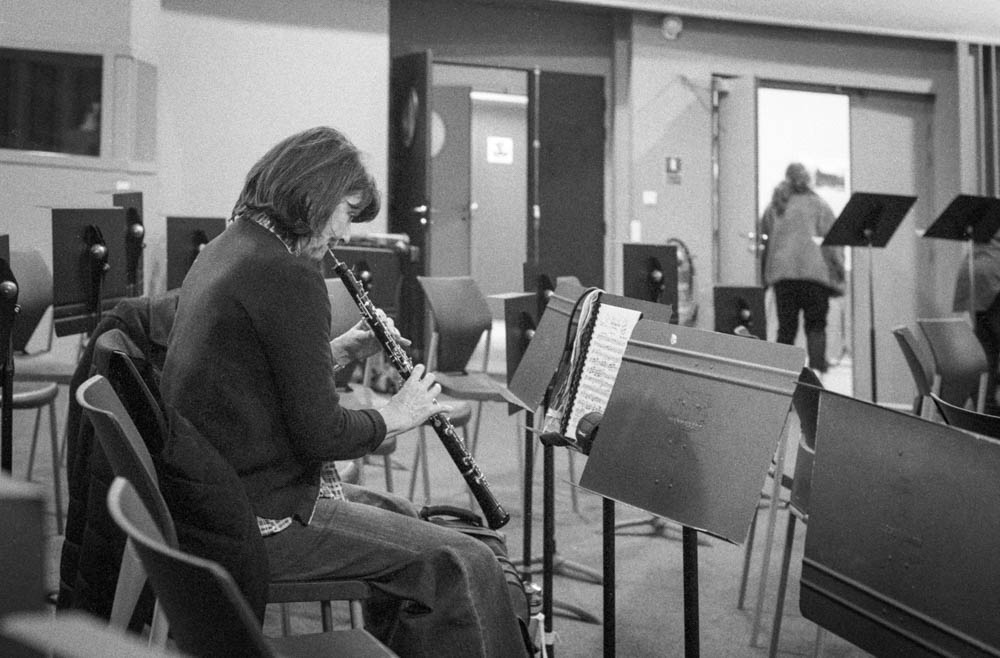
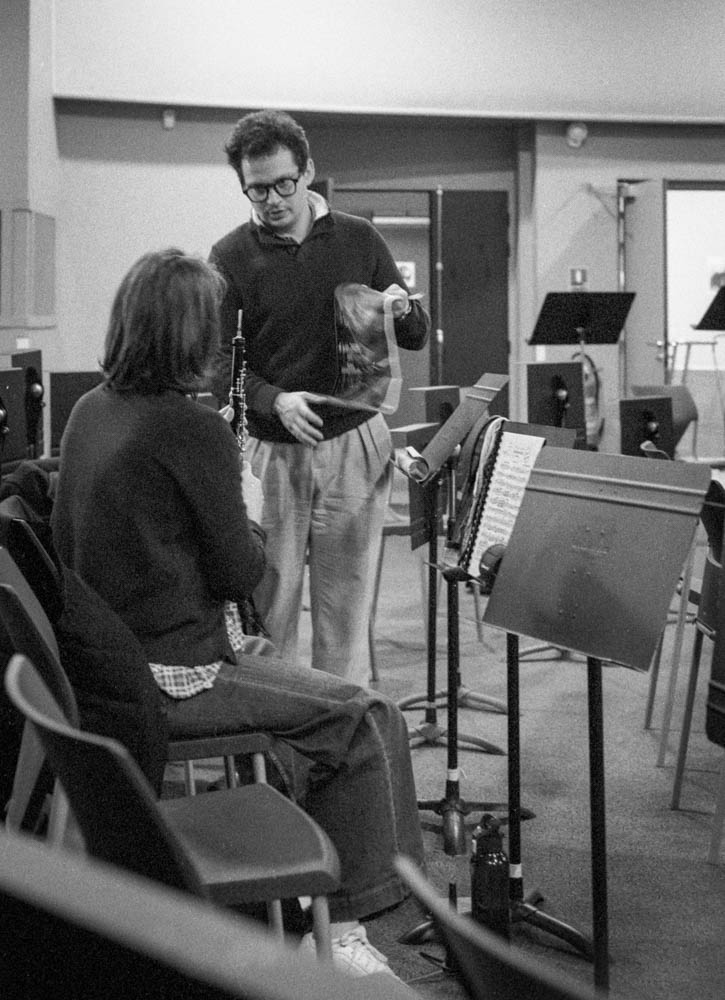
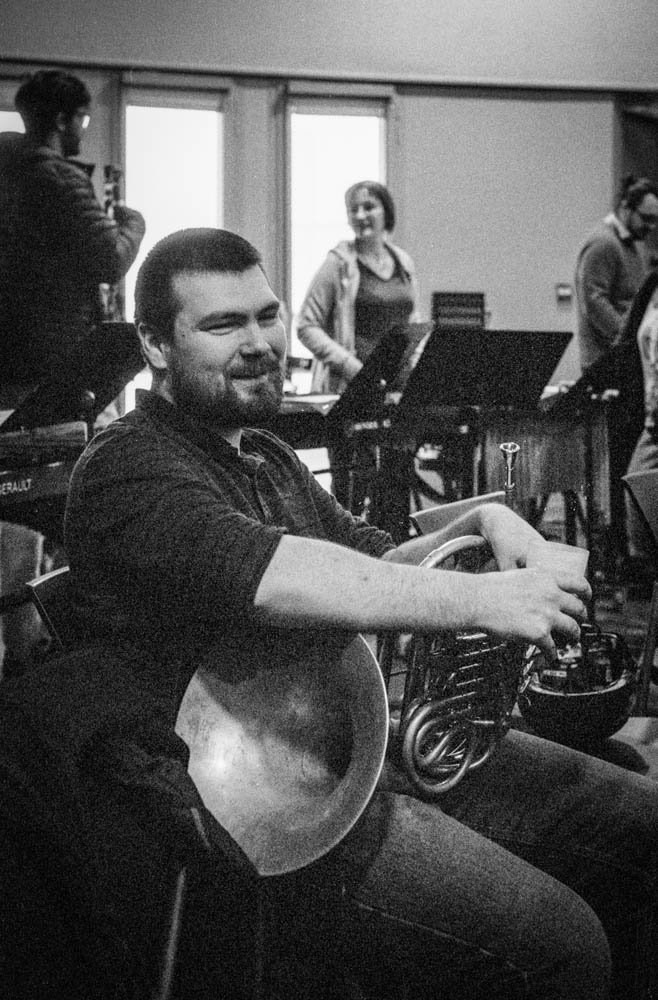
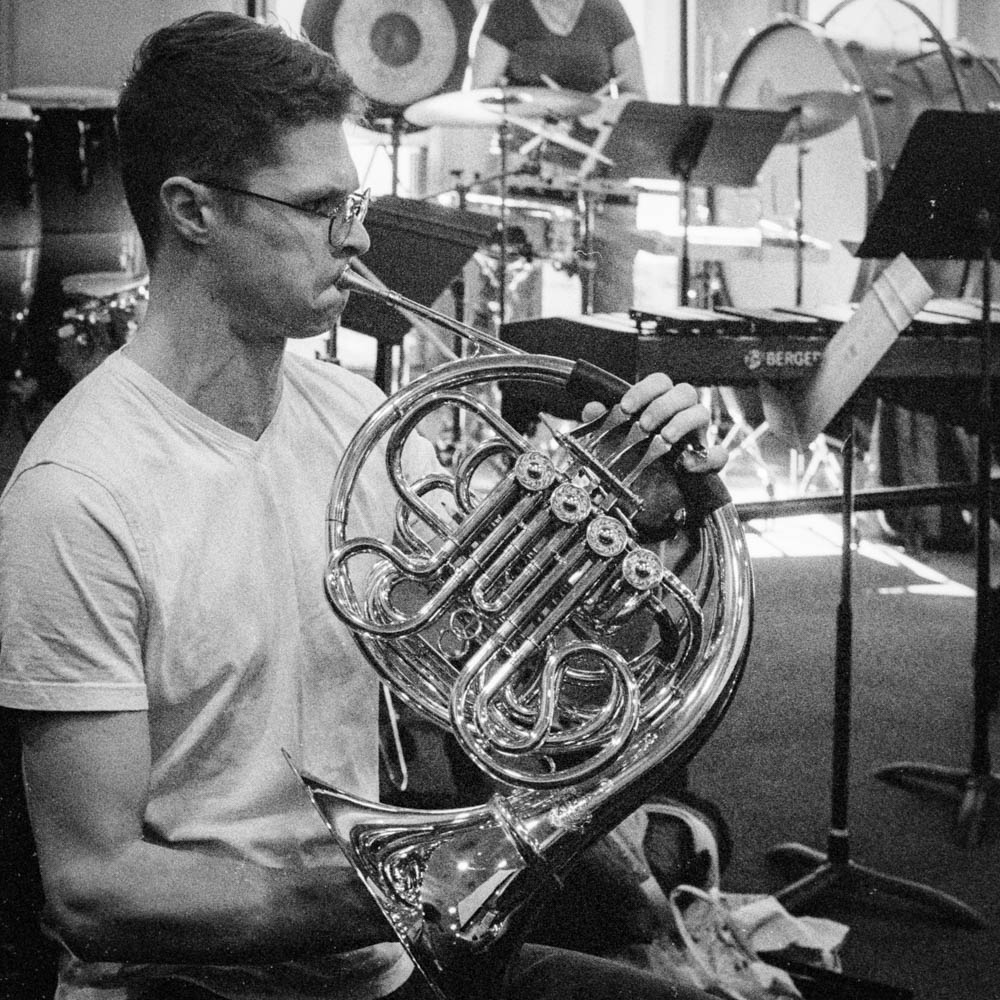
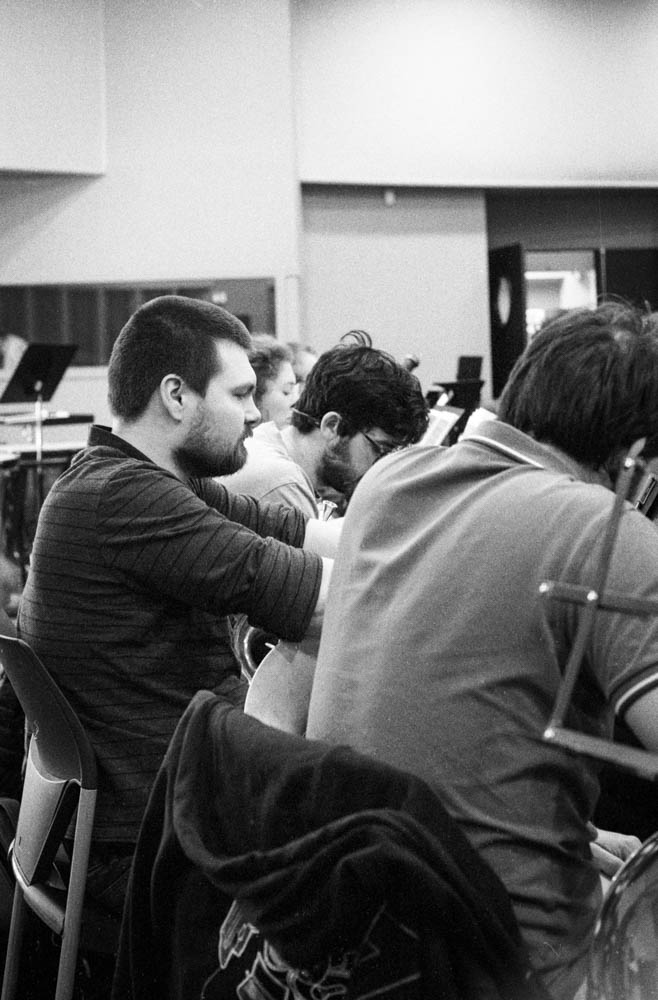
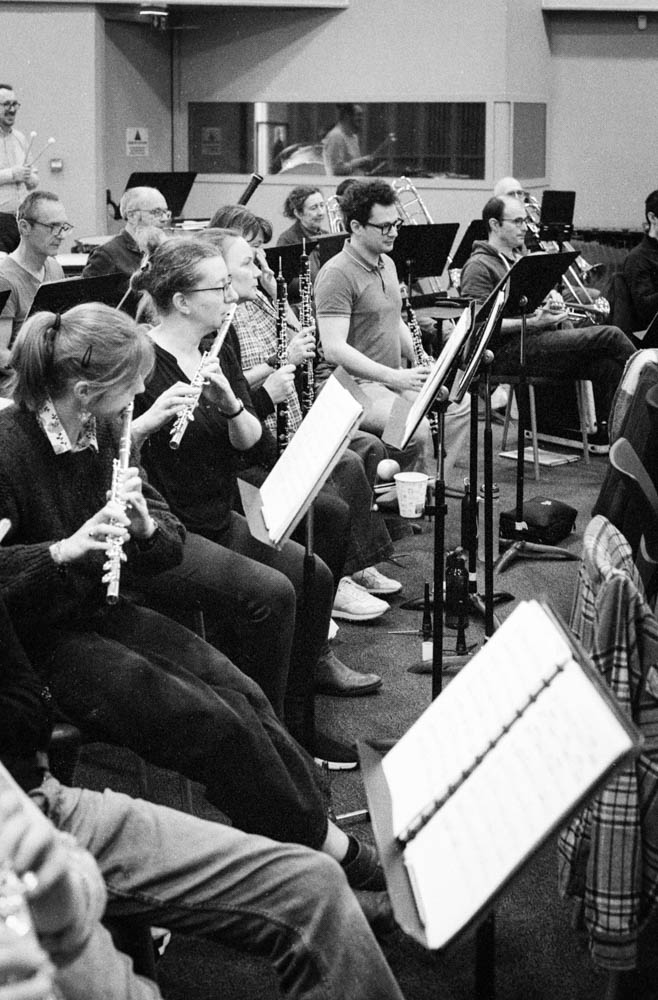
From my seat in the horns I see the whole machine differently than an outsider would. I know which passages are coming. I know which sections are struggling. I know the rhythm of this room. But through the viewfinder I see something else — the strings moving in that eerie synchronised way, the brass gleaming under the fluorescents, Viktor on oboe, Nicolas patient behind the timpani, Corentin next to me absorbed in something difficult, glasses slipping, completely gone.
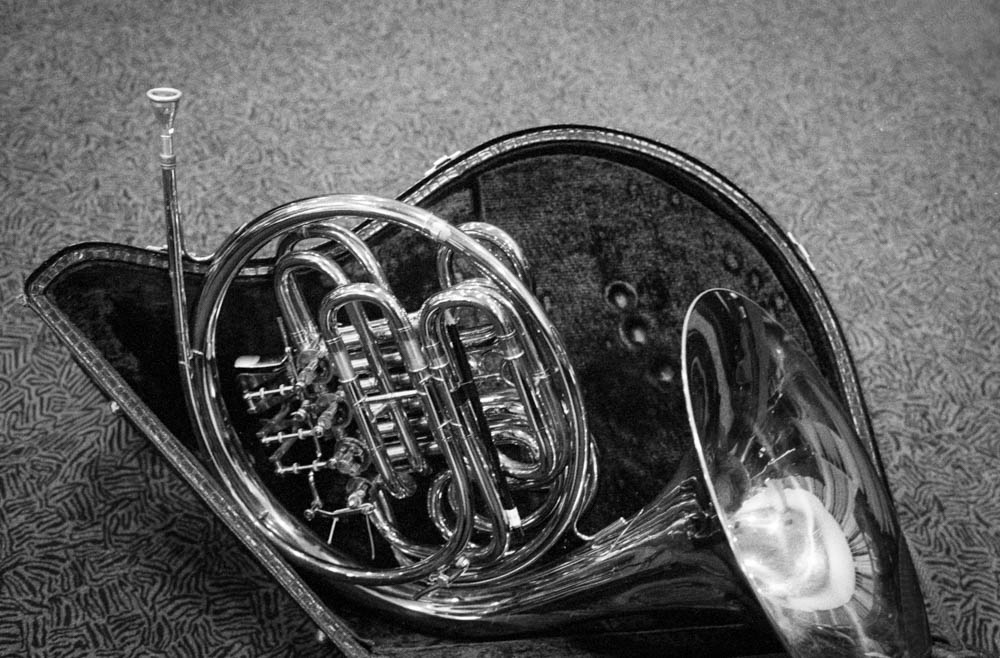
The small details tell it too. A French horn resting in its case between takes. Coffee cups on the floor near the woodwinds. Sheet music thick with pencil marks. These are the million small adjustments that add up to a rehearsal — and eventually, if everything goes right, to music.
Saturday was the concerto. The focused, collaborative work. Sunday would be the rest of the programme — no soloists, just the orchestra and the conductor and whatever needed fixing. The grind. The iteration.
Part 3 is coming.
Shot on Canon AE-1 Program, 50mm f/1.8, HP5+ pushed to 1600. Edited in Lightroom — contrast via tone curve, subtle vignettes, nothing added that wasn’t already there.+ 3200—is coming next. The grain gets heavier, the light gets harsher, and the work gets real.







 IJM Photography