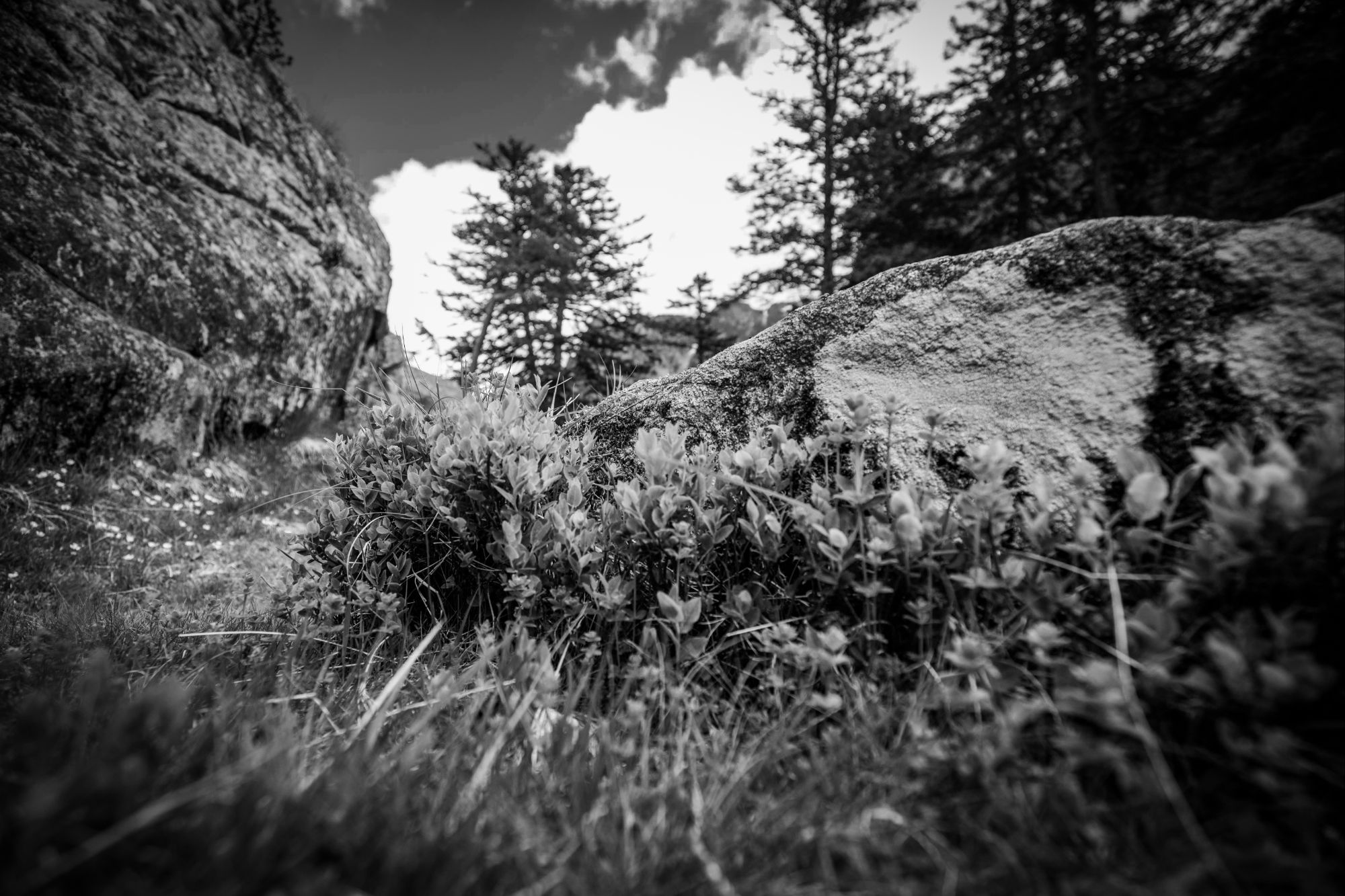
If the Vendée is Jane Birkin — elegant, understated — then the Pyrenees are full-on Marilyn. Proper mountains. Vast. Unapologetic. Even in May, some peaks were still capped in snow.
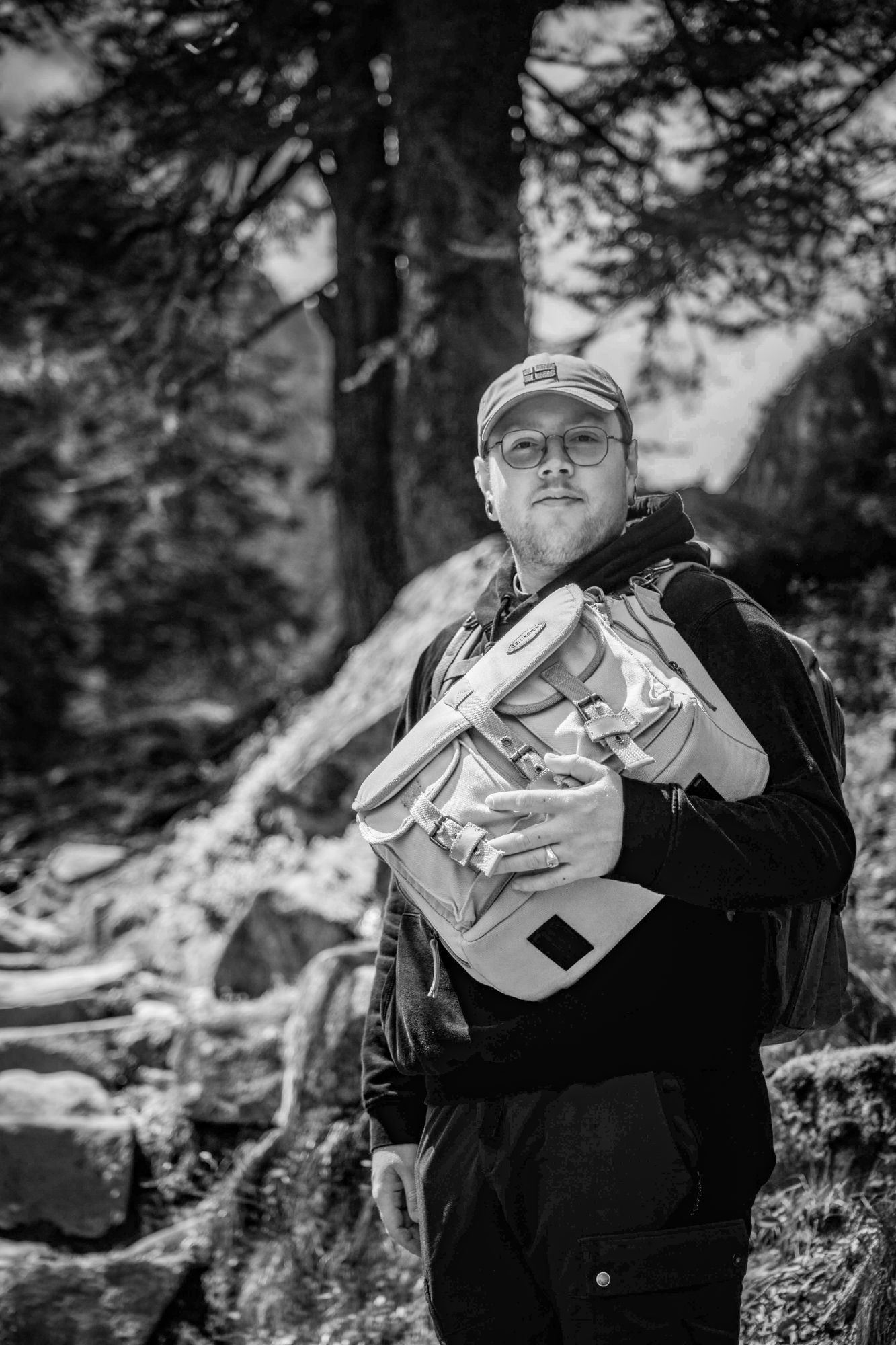
I was in Lourdes hoping to strengthen my faith. I think Killian needed that too — but more than anything, he needed his mountains. Now, finally, I get it. Up there, I saw him more clearly: less the boy I once knew, more the man he’s becoming.
Like most of us, he has his issues — but he’s working through them. And sometimes, he even lets me help. Those are the moments I think I might just be getting somewhere as a father.
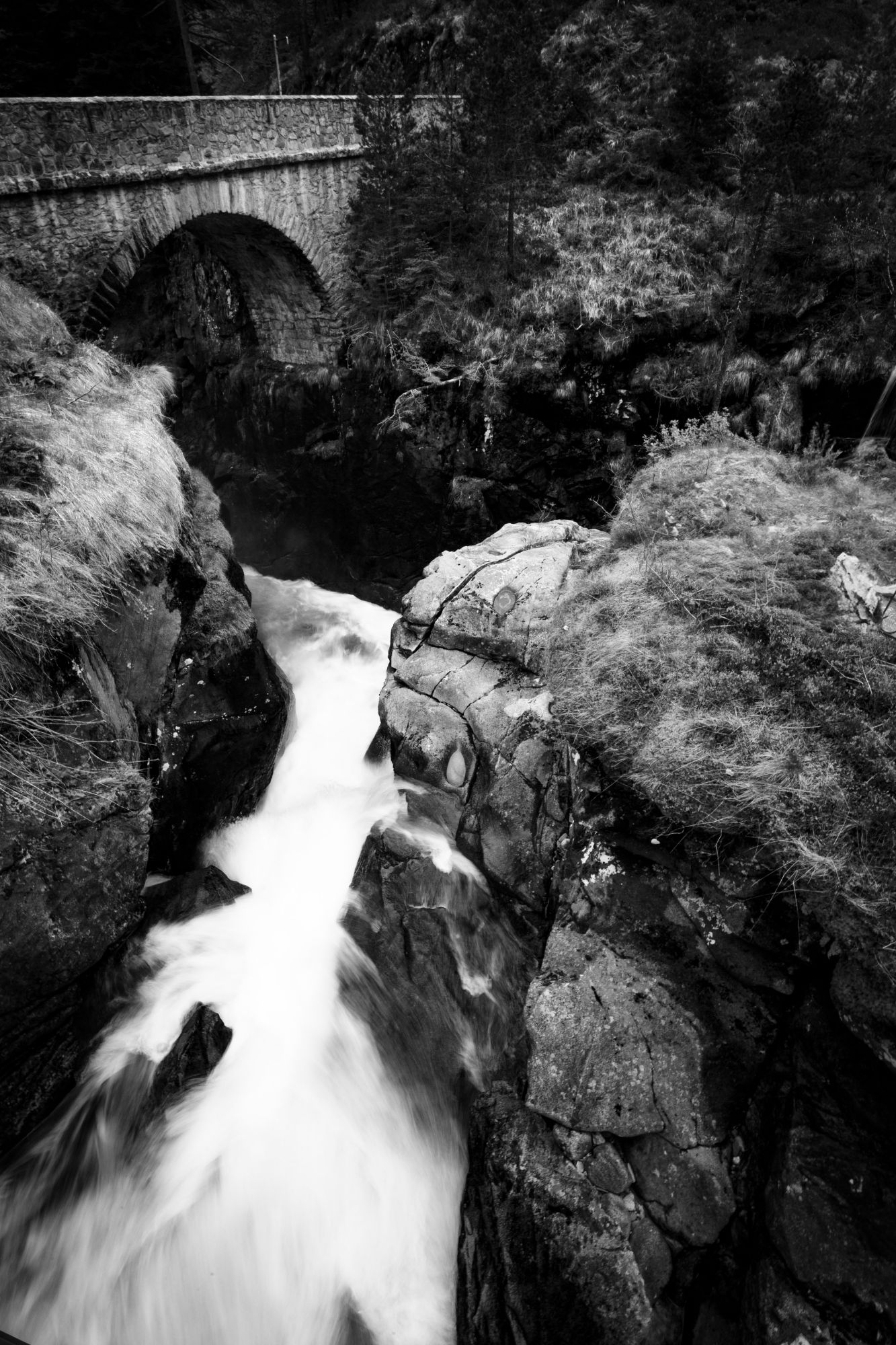
He’d decided we were heading to see his beloved mountains. The place? The Pont d’Espagne — yes, in France, despite the name. I may have mentioned that. Maybe.
We left the impressive foothills of Lourdes behind and climbed into the real mountains. Snowy peaks against blue sky and drifting clouds. Windows down, music low, we drove toward the famous pont. It had better be worth it.
Killian and I travel at a relaxed pace. If the view’s good, we’ll pull over. Get the camera out. Take a few shots. See what happens.
Sometimes it works. Sometimes it’s a fiasco. But more often than not, we come away with something.
Oh no! Catastrophe! A village where you can park, and go and get an ice cream. Ah well. We took one for the team, and the lady behind the counter told us that the previous week they had snow and were shut, yet this week everything looked just like a day in May should look like. Ice cream seems to have this way of just hitting “that” spot. It’s not the tidiest of foods to eat, but it’s one I’ve developed a great fondness for it over the years.
I was already learning how to approach the infamous concept of the hairpin bend. As you know, a full head of hair hasn’t been my issue for years — let alone hairpins. But the name fits. The main thing is to drive slowly, carefully, and not die… Given I’m writing this now, reports of my untimely demise were, as they say, greatly exaggerated.
We arrived at the Parc National des Pyrénées. You go through a barrier that didn’t seem to be working — one that had given up on life and was just standing to attention, waiting for whatever ‘it’ might be. So, being the thoroughly decent chaps and all-round good eggs that we are, we tried to find a ticket. We couldn’t, but since we had tried, we said something that rhymes with bucket, and started walking to see, at long last, the bloody bridge. It had better be worth it.
I had the X100F with me and Killian was carrying my DSLR and kit. What a good lad he is. He later said that if I wasn’t lugging it around, we might’ve gone just that little bit further. So back to the pont…
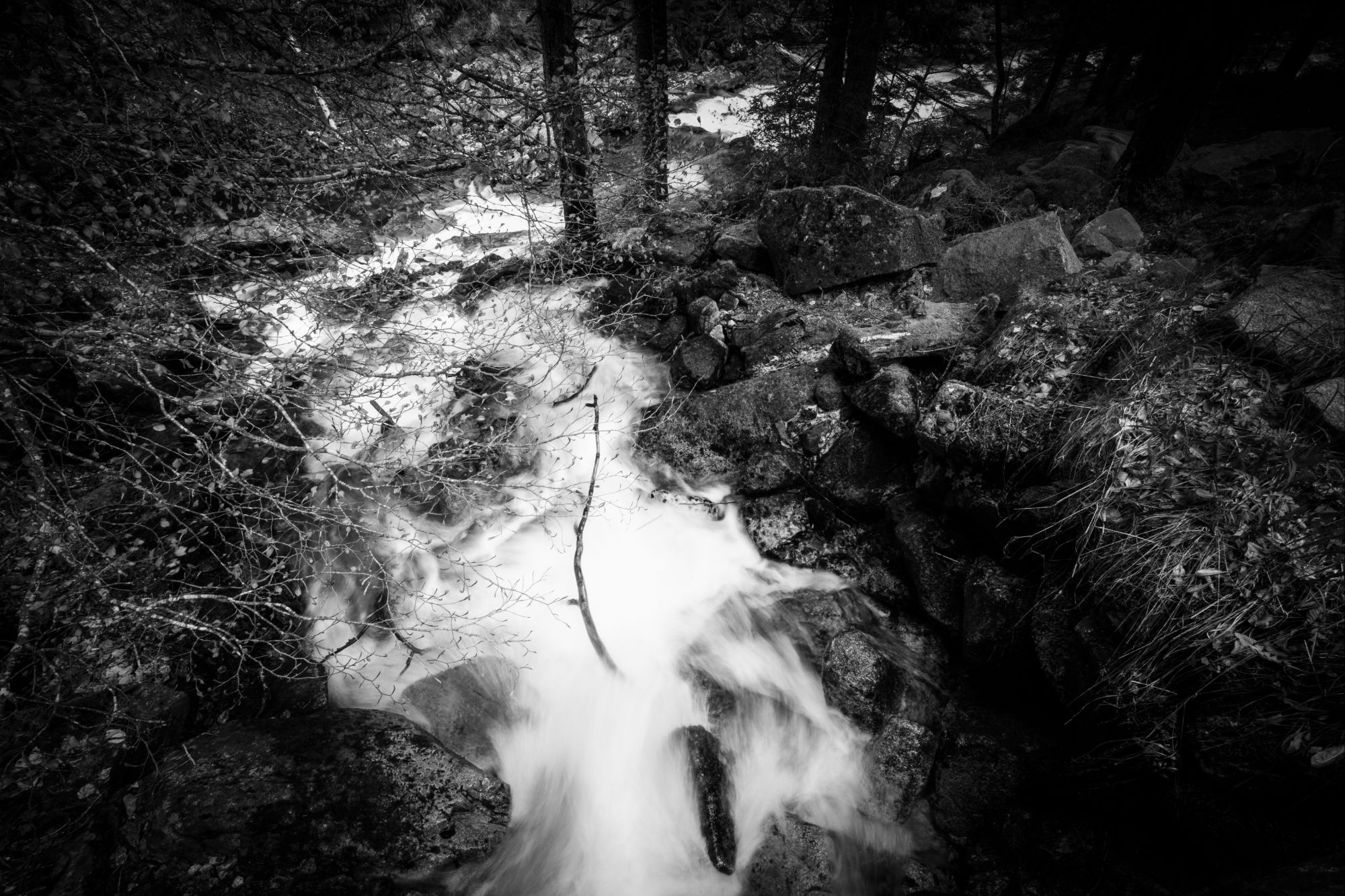
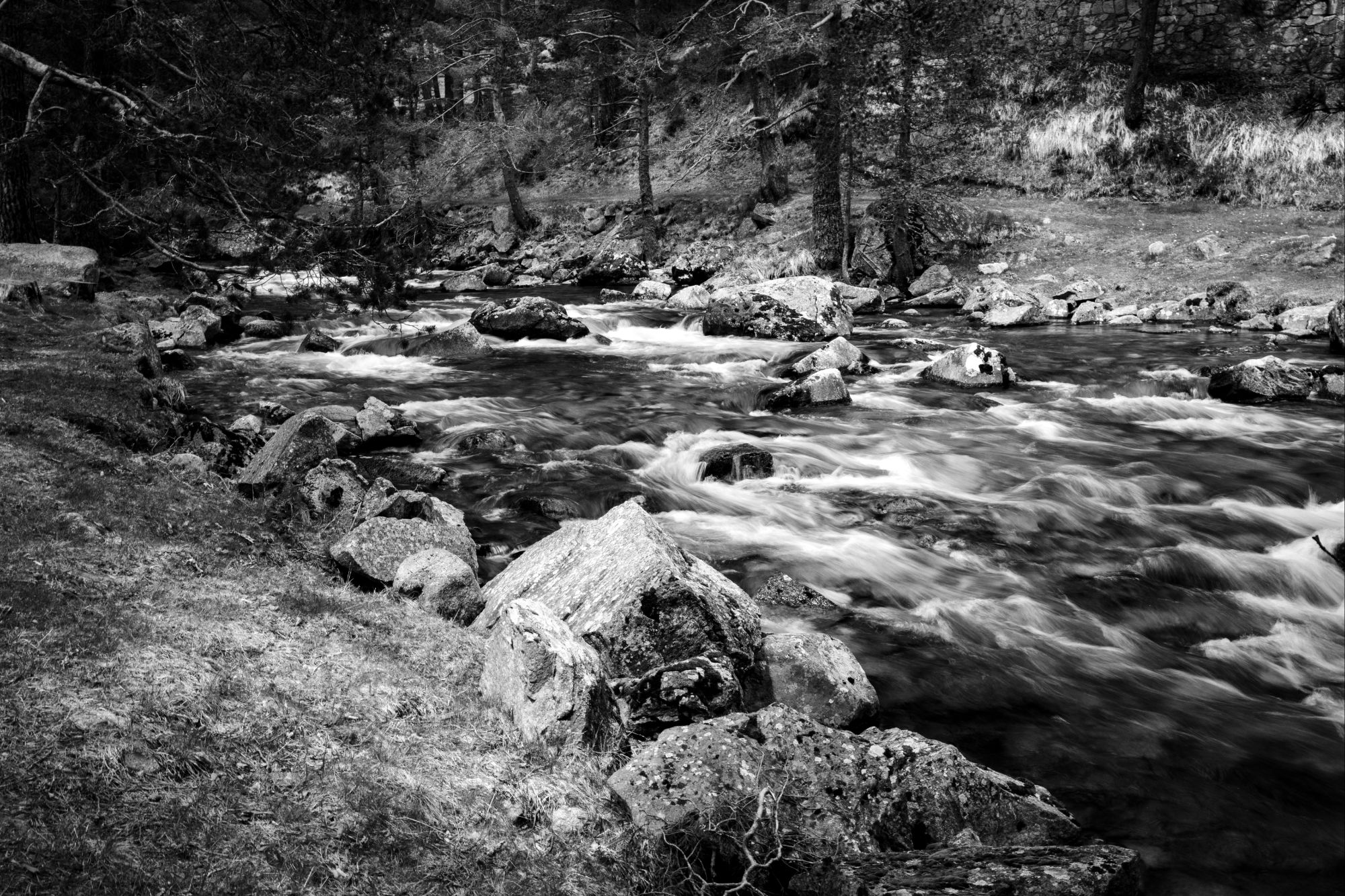
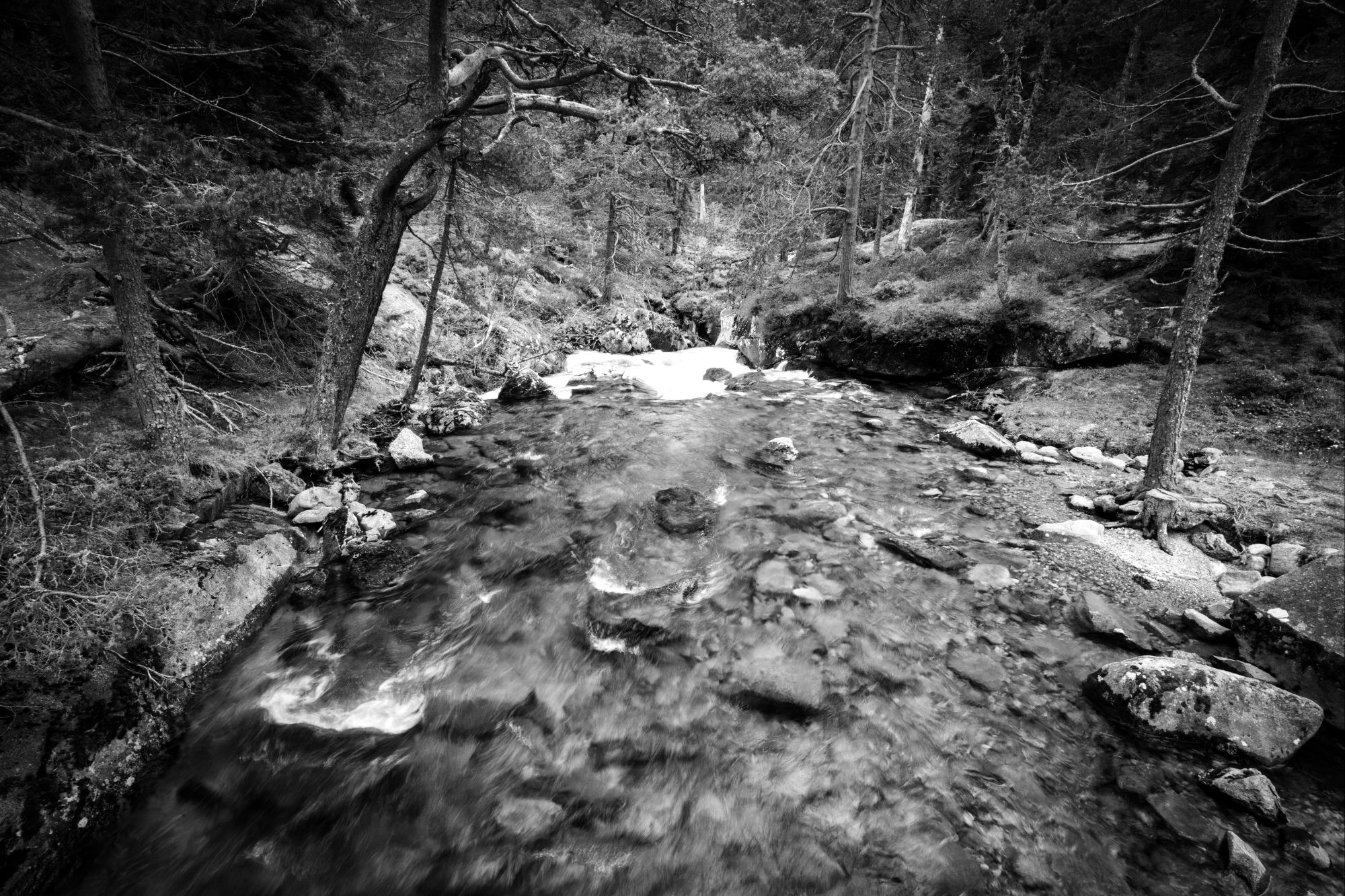
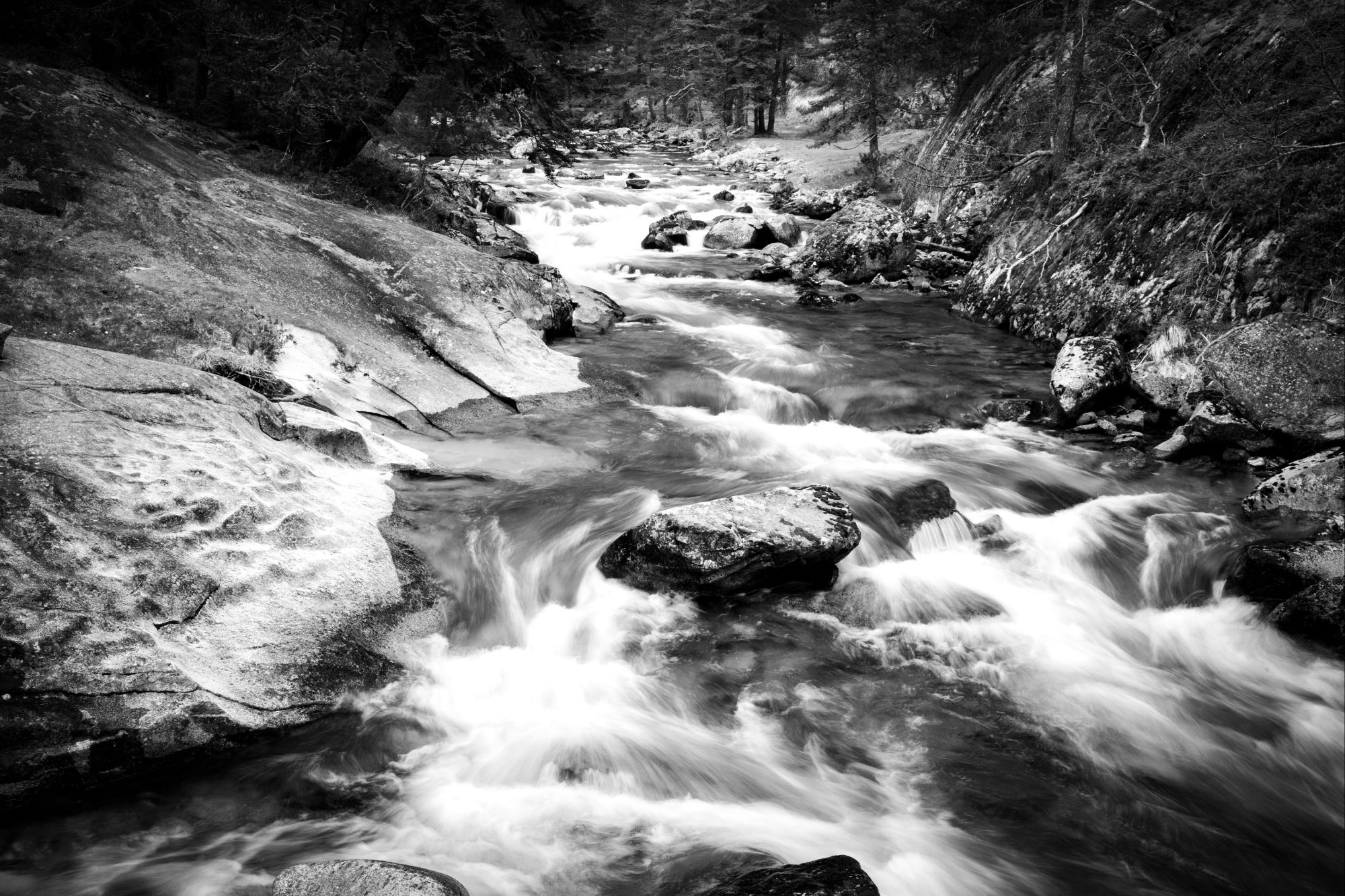
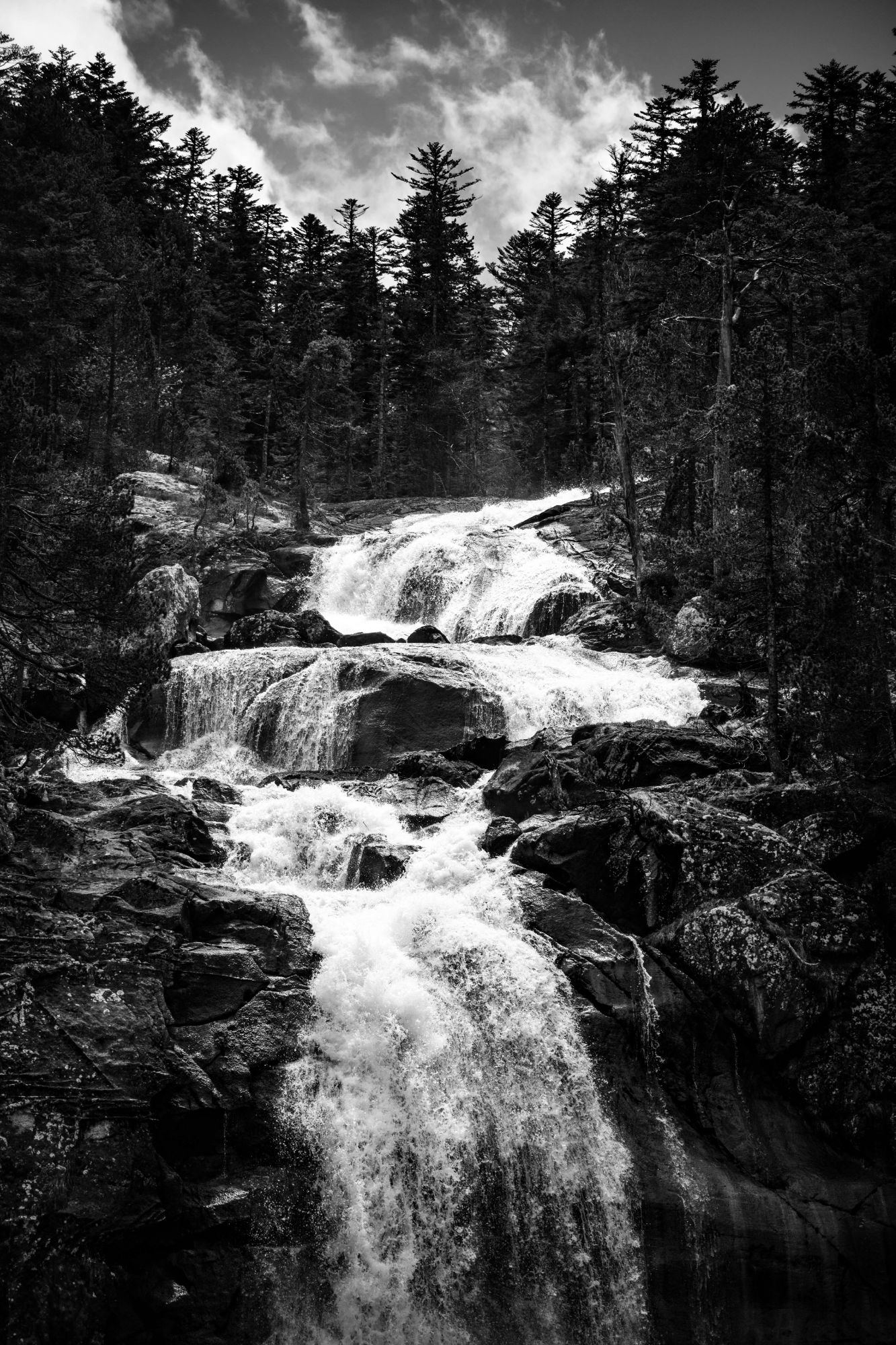
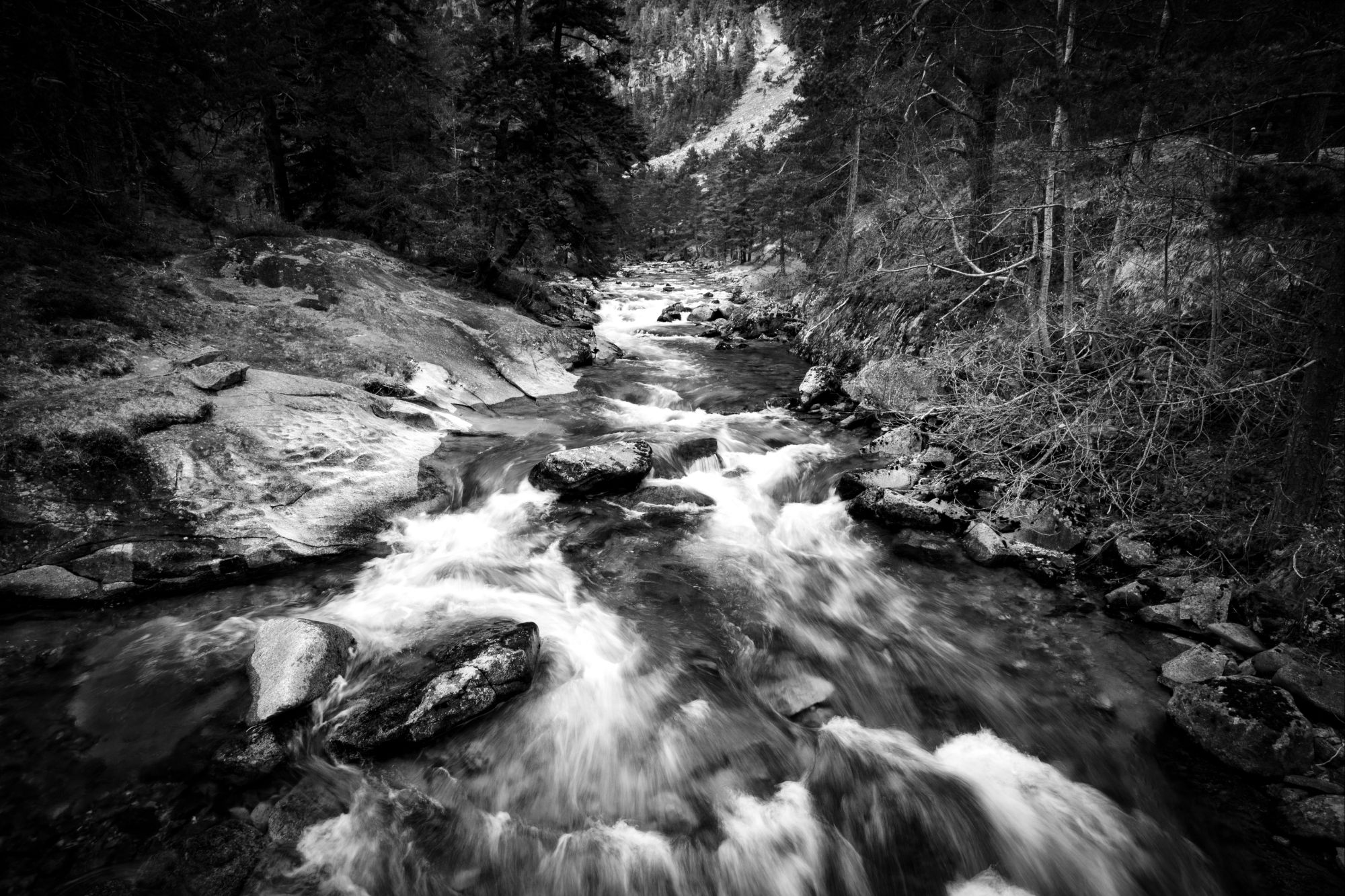
Before we even saw the bridge, we heard it: the sound of the water was tremendous. Water is a primeval force, and this was huge. I wanted the “money” shot, and decided to try with the X100F, giving it a sporting chance. The Canon 6D Mark II, with its stabilised lens, would come out on top. Handheld at 1/6th of a second? Not ideal — but fun to try. You get the feeling of movement in your shot, and with the magic of ND filters, you’re not overexposed.
The site itself is just astounding — not just because of the view or the sound, but because of the raw power of the place. Killian led me grumbling up the hill and we sat down to have our picnic. We fed the ants a bit of our pâté en croûte and watched them discover it, then devour it completely. And devour it they did.
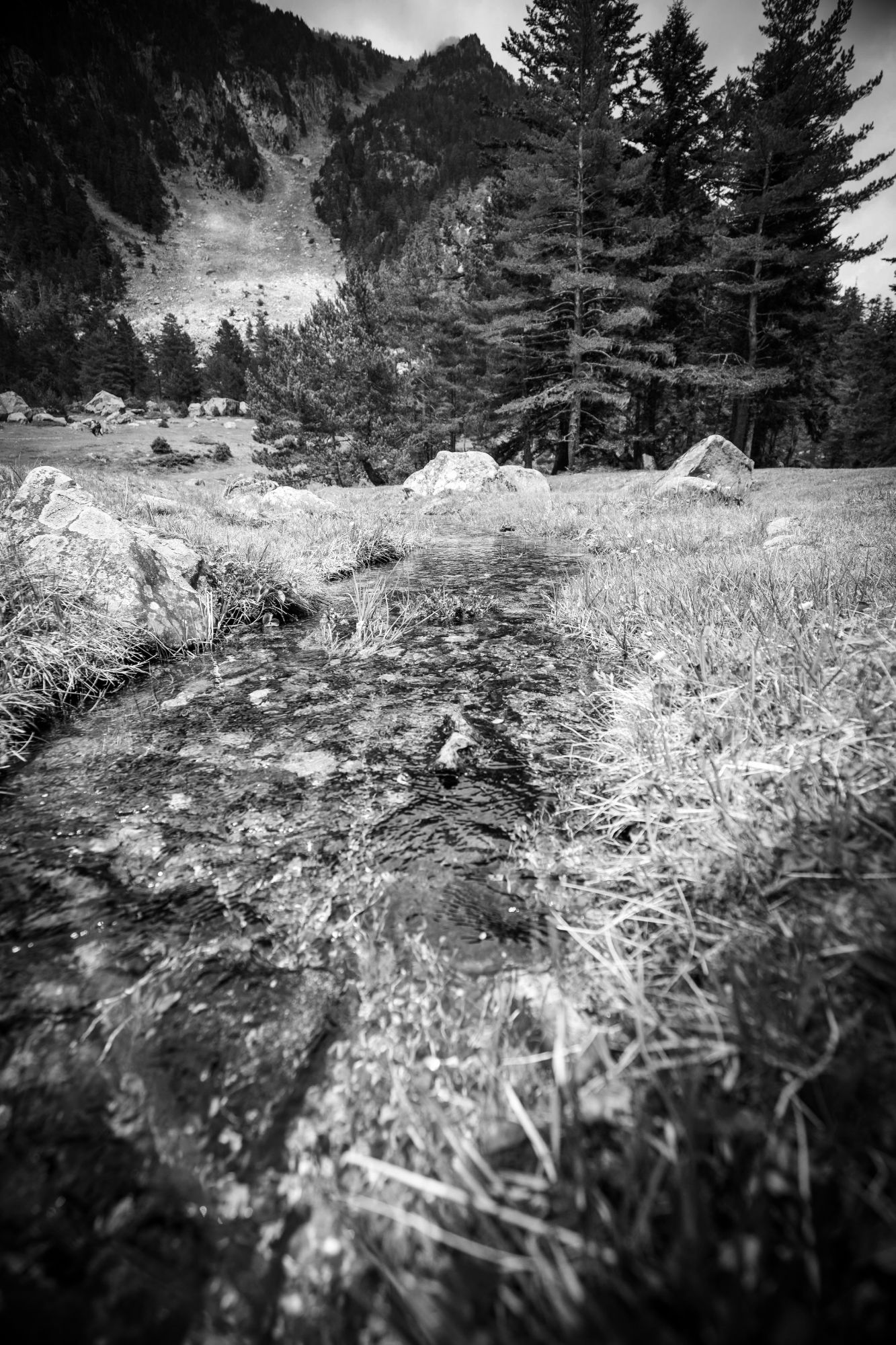
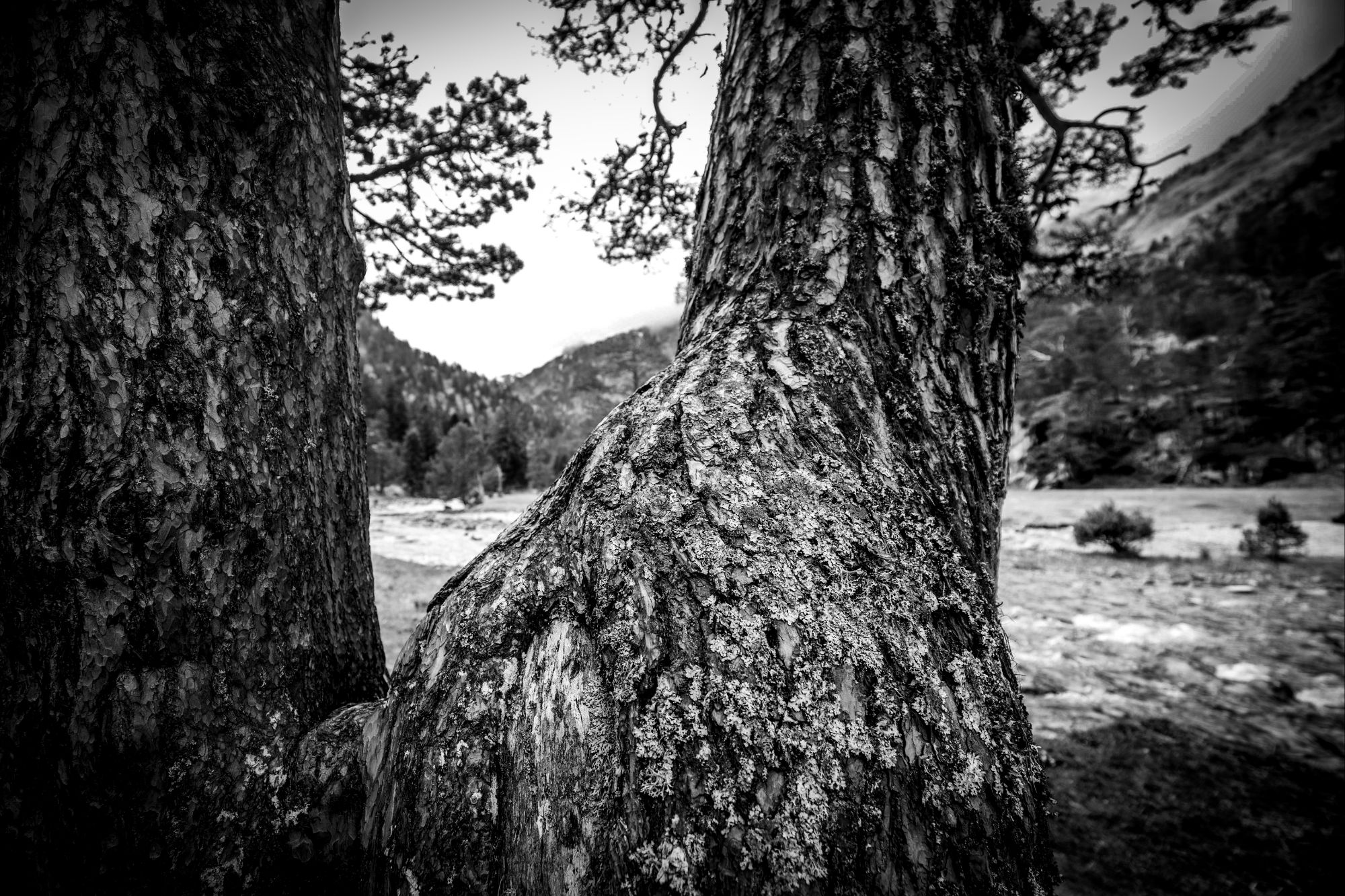
He led me past the téléphérique — closed, of course — and followed the river until we reached a wide, flat-bottomed valley with water snaking through it. We saw traces of horses and wild boars, which are a lot less boring than you might think. I noticed the clouds coming round the mountains as they go, but not singing. I don’t know a huge amount about mountains, but that’s usually a cue to get back to the car…
The walk back to the car was just about being father and son — taking the mickey out of each other as we went. It seemed to be the way we operated, and I wouldn’t change it for the world.
The concert was for the municipality of Lorient and was more I’ll scratch your back if you scratch mine. Sometimes as musicians we have to kowtow to certain political matters to keep the municipality sweet. They said it would be cramped, but it was, at worst, cosy, so no complaints there.
After the concert, I had organised my car so I could sleep in it. I parked up in front of my mother-in-law’s house to spend the night and get some photography in during the early hours of the morning — and because my mother-in-law can be intense, and I don’t like bothering people. It’s not that I don’t like staying overnight in people’s houses, but at one stage on exercise with the RCT (Royal Corps of Transport) back in the late 1980s, I learnt that I could sleep anywhere and that it was nothing to worry about. I didn’t have my sleeping bag from those days, which would let me sleep comfortably in minus temperatures, but I did have a couple of Scottish tartan blankets that would keep me nice and warm.
It wasn’t long before I got off to sleep. I actually slept quite well, considering, and bought myself breakfast at the local boulangerie. No snoring to contend with and no risk of being shouted at because the dog was awake and needed to go outside to poop. Yes, a very satisfying night.
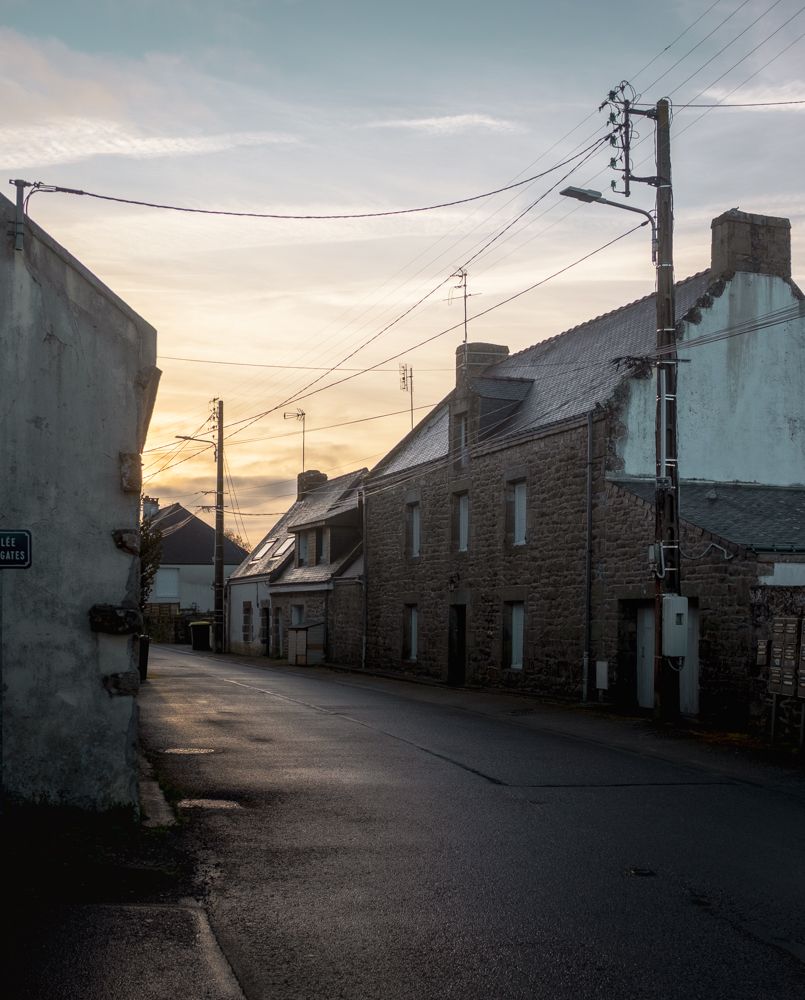
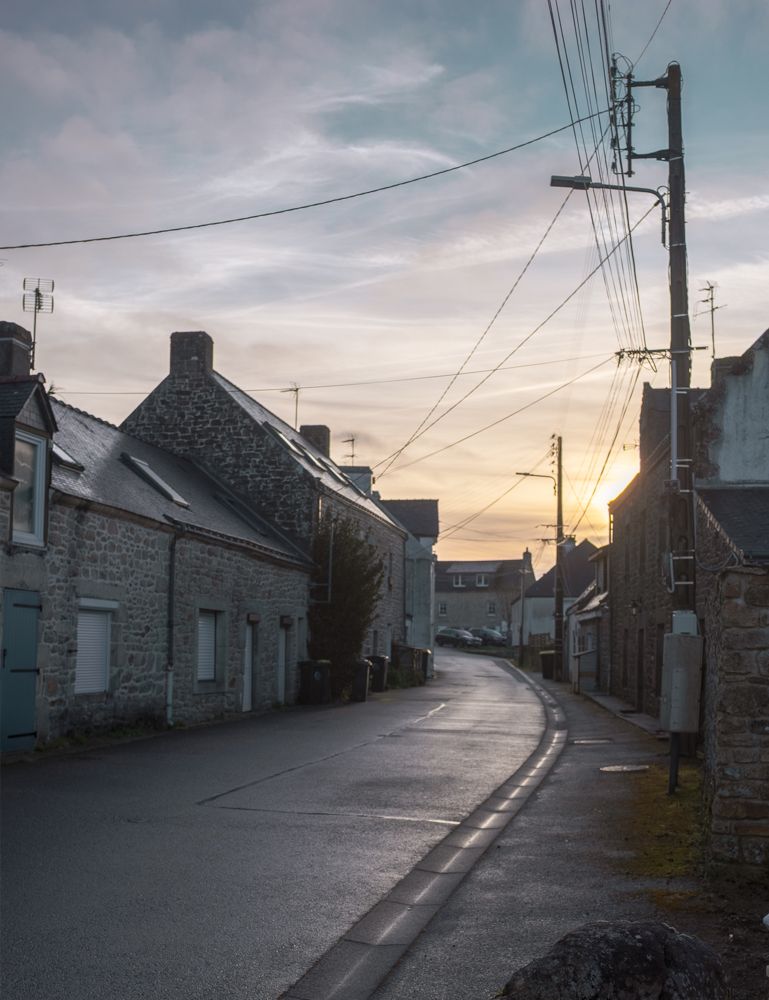
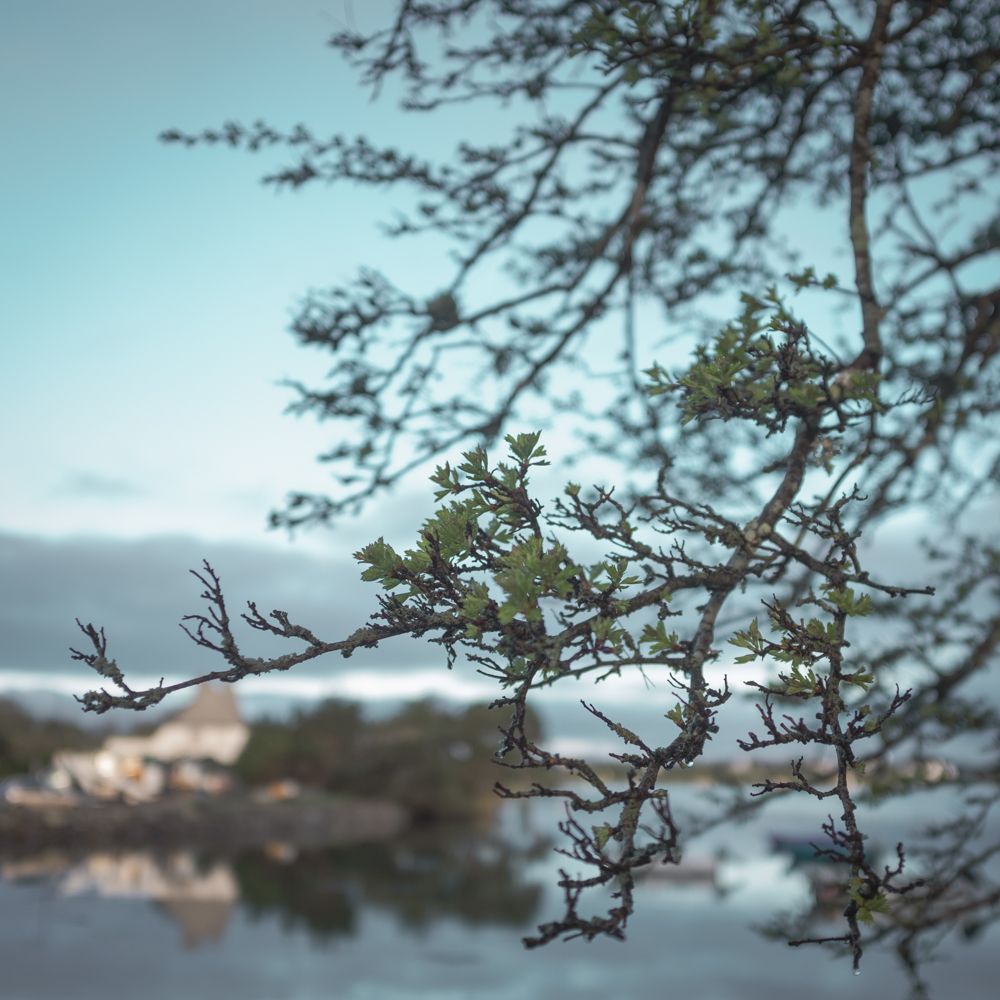
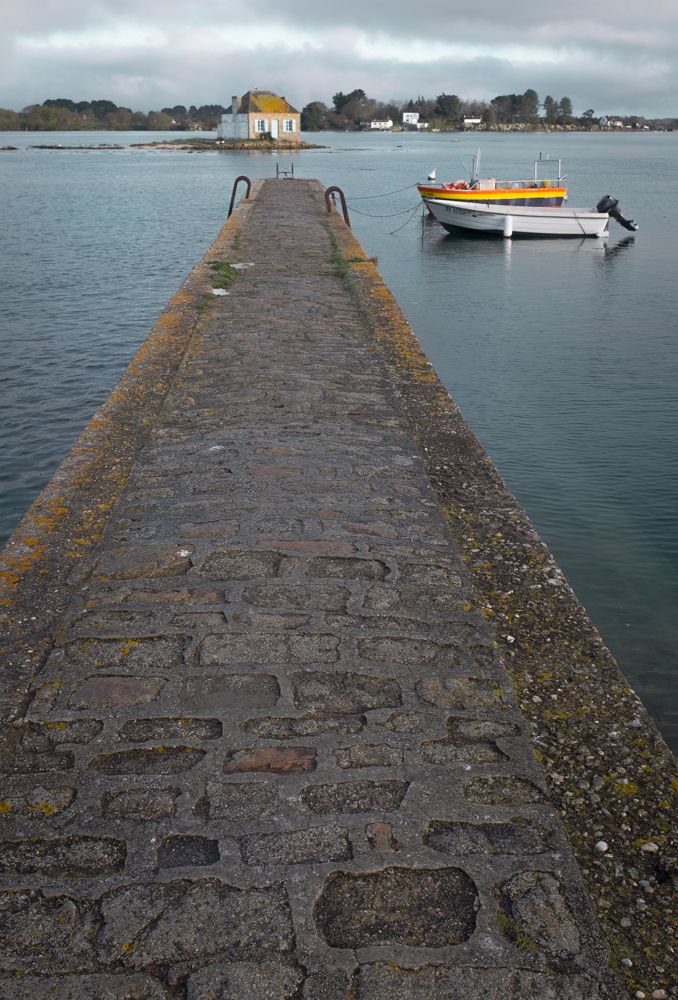
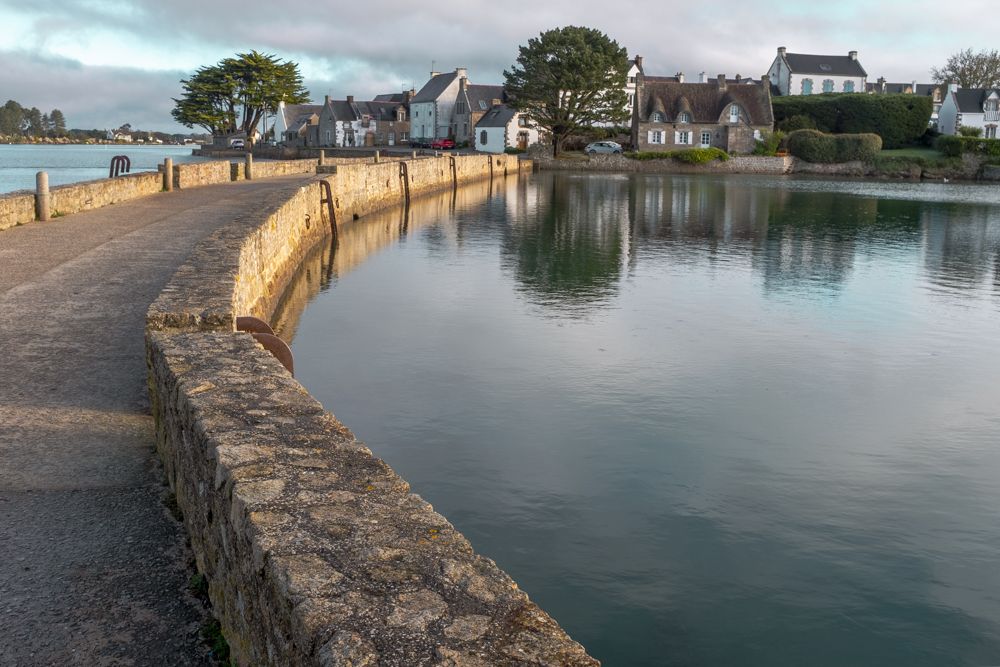
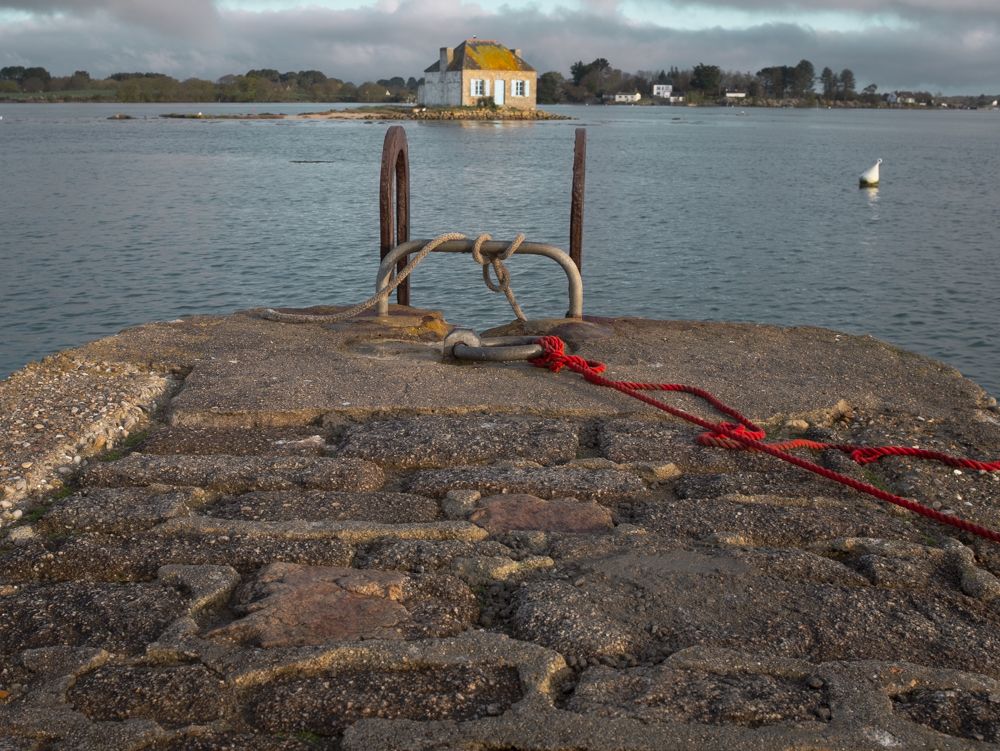
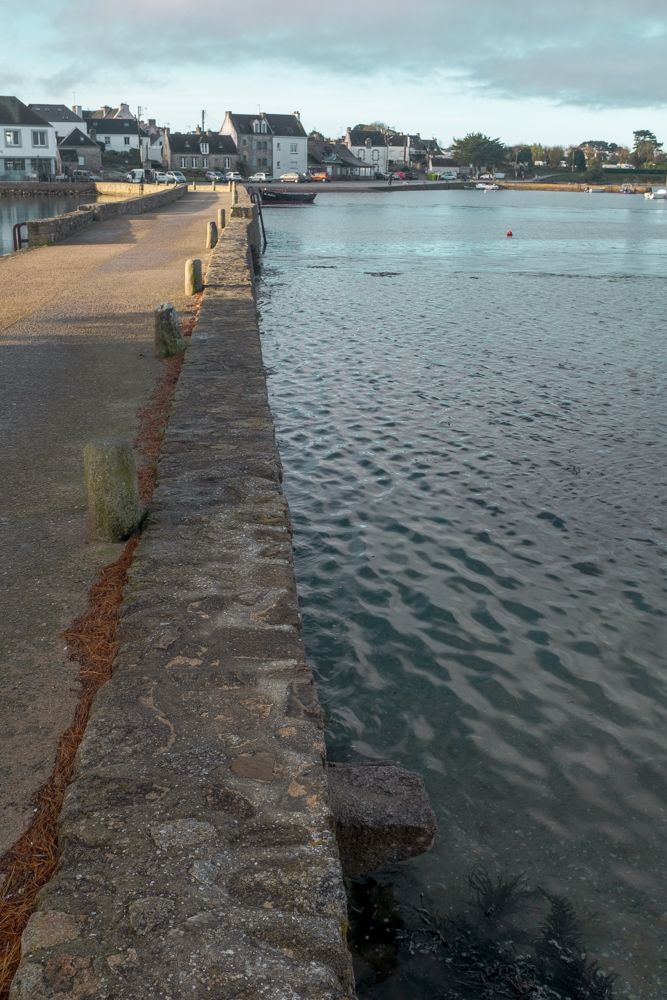
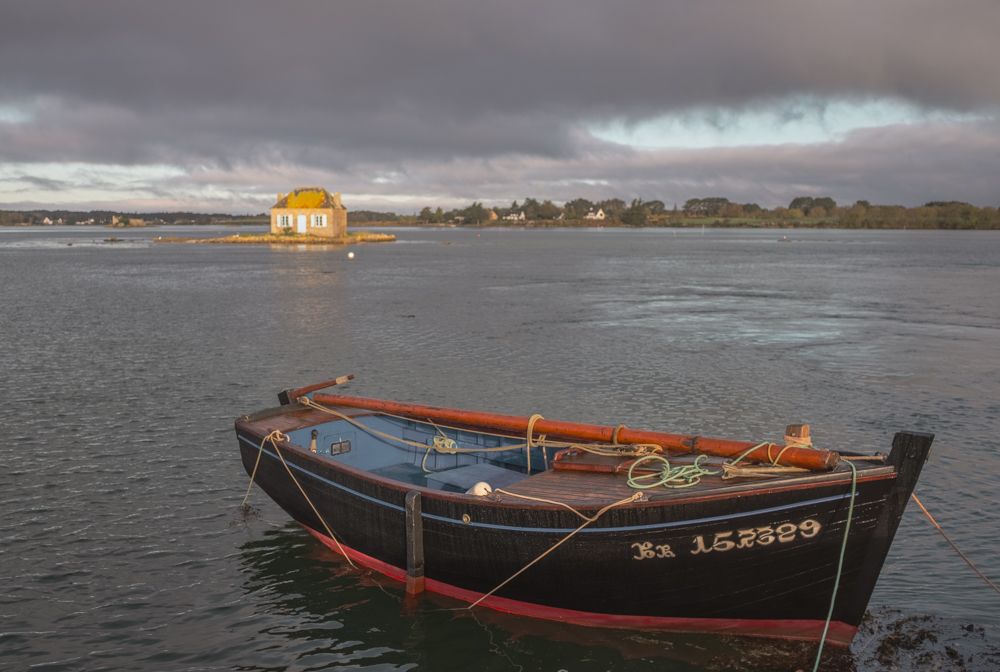
After my wonderful bakery breakfast, I headed to St Cado, which really is a cadeau — a gift — for the eyes. You’ll see what I mean when you see the pictures.
I relish solitude, not just because I’m an introvert, but because I like calm and quiet. And the idea of being up at the crack of dawn is wonderful, especially when I don’t have to get out of my bed and stop hugging my wife. I was on my own and loving every minute of it.
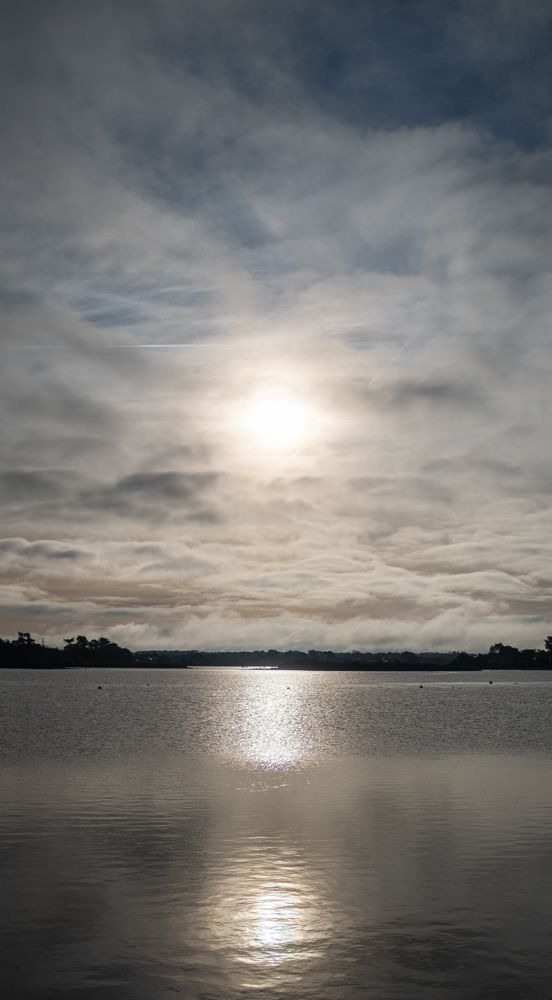
I arrived at St Cado and used the public conveniences, as it is not the done thing to poop in front of everyone. I’m not a dog, after all. St Cado was there waiting for me to get some photos in some beautiful light. I’ve started bracketing lately to get as much as I can out of each image. Bracketing, for those who think I am speaking in Chinese, consists of taking the same photo three times — once with normal metering for light, once underexposed, and once overexposed. Back in the day, you would set up your tripod and take each photo one at a time, but now I press the button and it does it automatically. On film you would lose film doing this, but on digital, with an empty SD card — why not?
As the morning light continued to change and the village slowly came to life, I packed up my gear feeling quietly content. These simple moments — waking early, capturing the beauty of a place like St Cado, and enjoying solitude — remind me why I keep a camera close. It’s not just about the photos, but about being present and finding peace in the everyday. Saint Cado truly was a gift to the senses, and I’m grateful for the chance to savour it in my own way.
Hello lovely people. I know it’s been a couple of weeks since I shared any photography—nothing for your perusal, your viewing pleasure, your delectation—but fear not: I’m still alive and almost kicking.
Life has been happening, as it tends to do. But I have been busy behind the lens, and I’ve got photos from left, right, and even centre. Lourdes. The mountains. The wild coast of Brittany. There was even a family photoshoot for my mother-in-law and two of her daughters. All with stories attached, of course. I just need the time to edit the images and write them up properly for you.
Recent Life & Travel Updates
So what’s new in my world?
Well, my son has moved into his own place with a mate—which is both a proud and surreal moment for a parent. As for me, I managed to burst two tyres on my car by accidentally driving up onto a particularly cruel bit of pavement. I was properly disgusted with myself.
Thankfully, the garage reassured me that I wasn’t a rubbish driver—that stretch of pavement had claimed more than a few victims. Apparently, I’m just one in a long line.
I’m now looking into getting a different car for my upcoming summer trip to the UK. That, and I’ve been eyeing drones—yes, partially because a mate has one, but also because the cinematic potential is just too good to ignore.
Dipping Into Video & Drone Photography
Lately, I’ve been making short training films for work, which has nudged me into exploring video for myself. It’s been a learning curve, but I’m enjoying it. Drone footage, in particular, would give my personal video projects that sweeping, cinematic feel everyone seems to be chasing right now.
It’s exciting to try new creative tools—it stretches the eye and challenges how I think about framing, movement, and story.
Favourite Photography Gear Right Now
If you’re curious about the gear I’ve been reaching for lately, here’s what’s been in my rotation:
Fuji X100F with the 23mm f/2.0 (35mm equivalent) – perfect for mindful black and white street work.
Canon 6D Mark II with the 16–35mm f/4.0 – excellent for dramatic landscapes and travel shots.
Fuji XT-2 with the 18–55mm f/2.8–4.0 – a solid choice for work-related video filming.
And yes—I’m still working in both black and white and colour. I love both approaches, but when I shoot black and white, I try to do so deliberately, not just as an afterthought in post. The choice of tone affects everything—the light I look for, the lens I pick, even the timing of the shutter.
What’s Next: Photo Editing, Writing & More
Music is winding down for the season after some fantastic concerts. Meanwhile, the world rolls on—there’s a new Pope I quite like, and it seems Donald and Elon are in a bit of a spat again (but let’s not get into that).
As for me, I’m getting back to editing, writing, and creating. Thank you for bearing with the silence—new photos, stories, and perhaps even videos will be coming soon.
Until then, keep well, stay curious, and maybe avoid the pavements.
The tour is over. The bags are unpacked, and things are settling back into their usual rhythm at home. But even though I’m back, part of me is still in China—still thinking about the streets of Shao Xing, the energy of Shenzhen, or the moments shared with the orchestra. The journey may have ended, but it hasn’t really left me.
Reflecting on the Journey
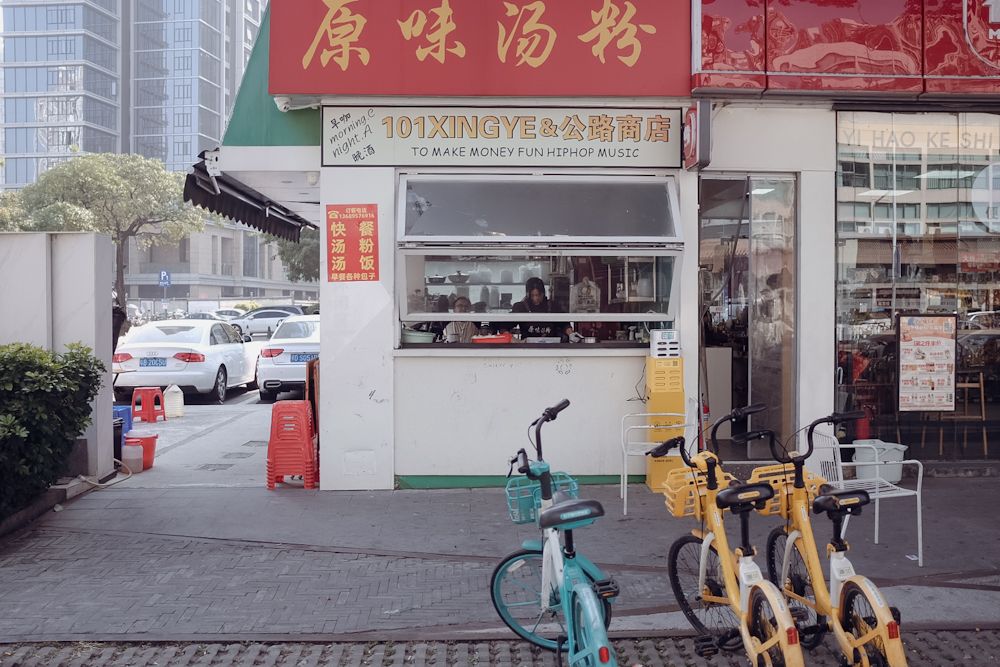
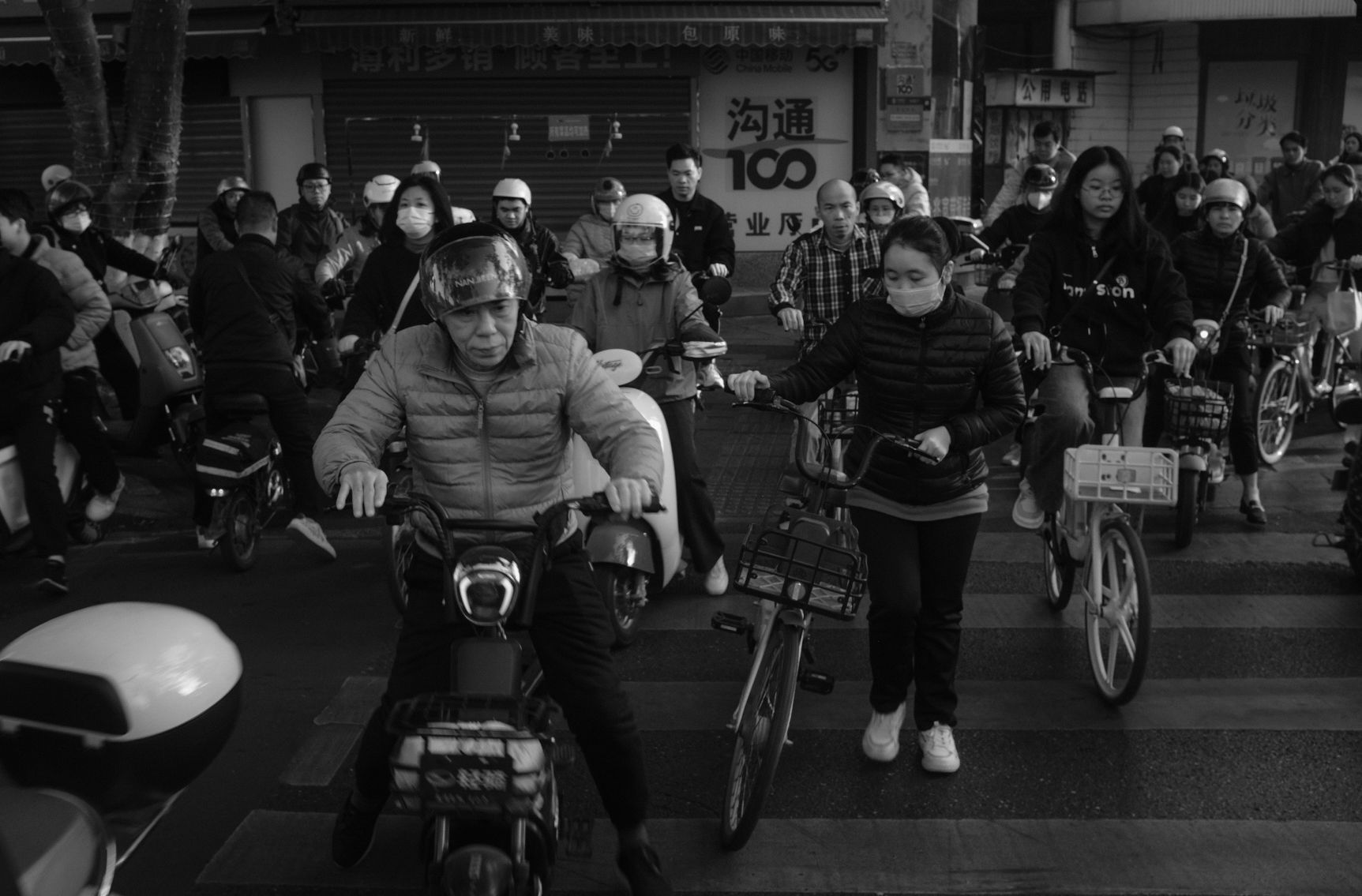
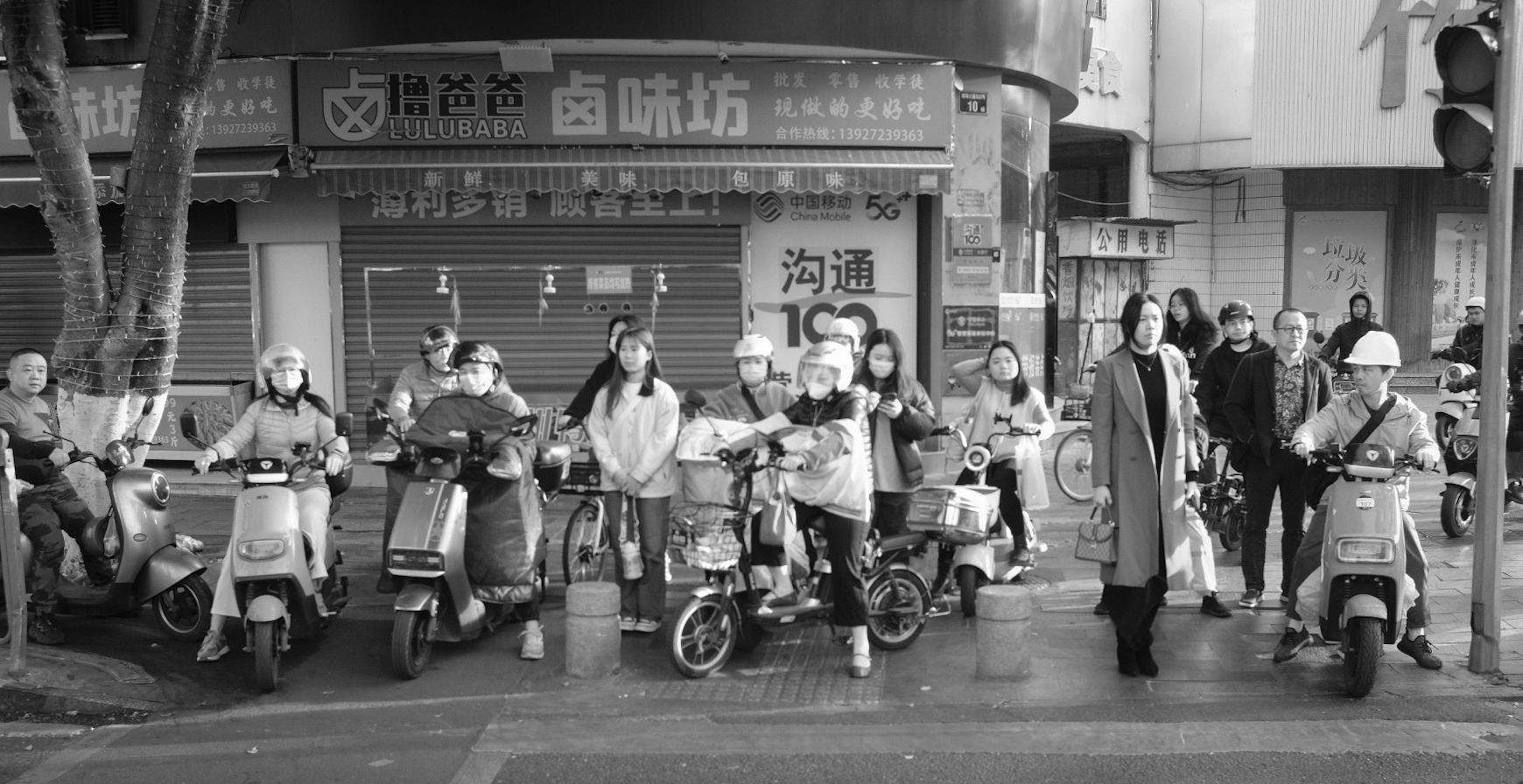
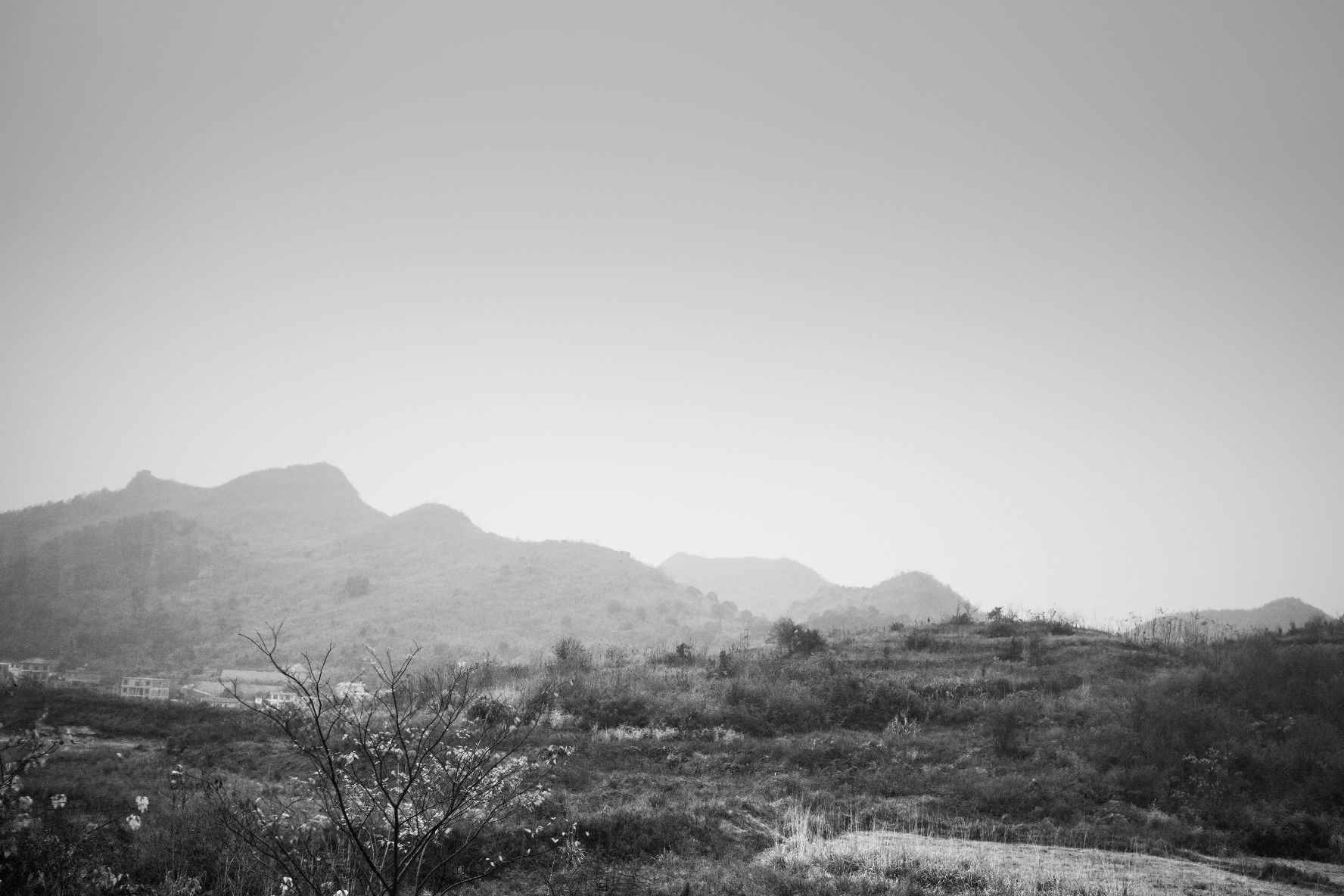
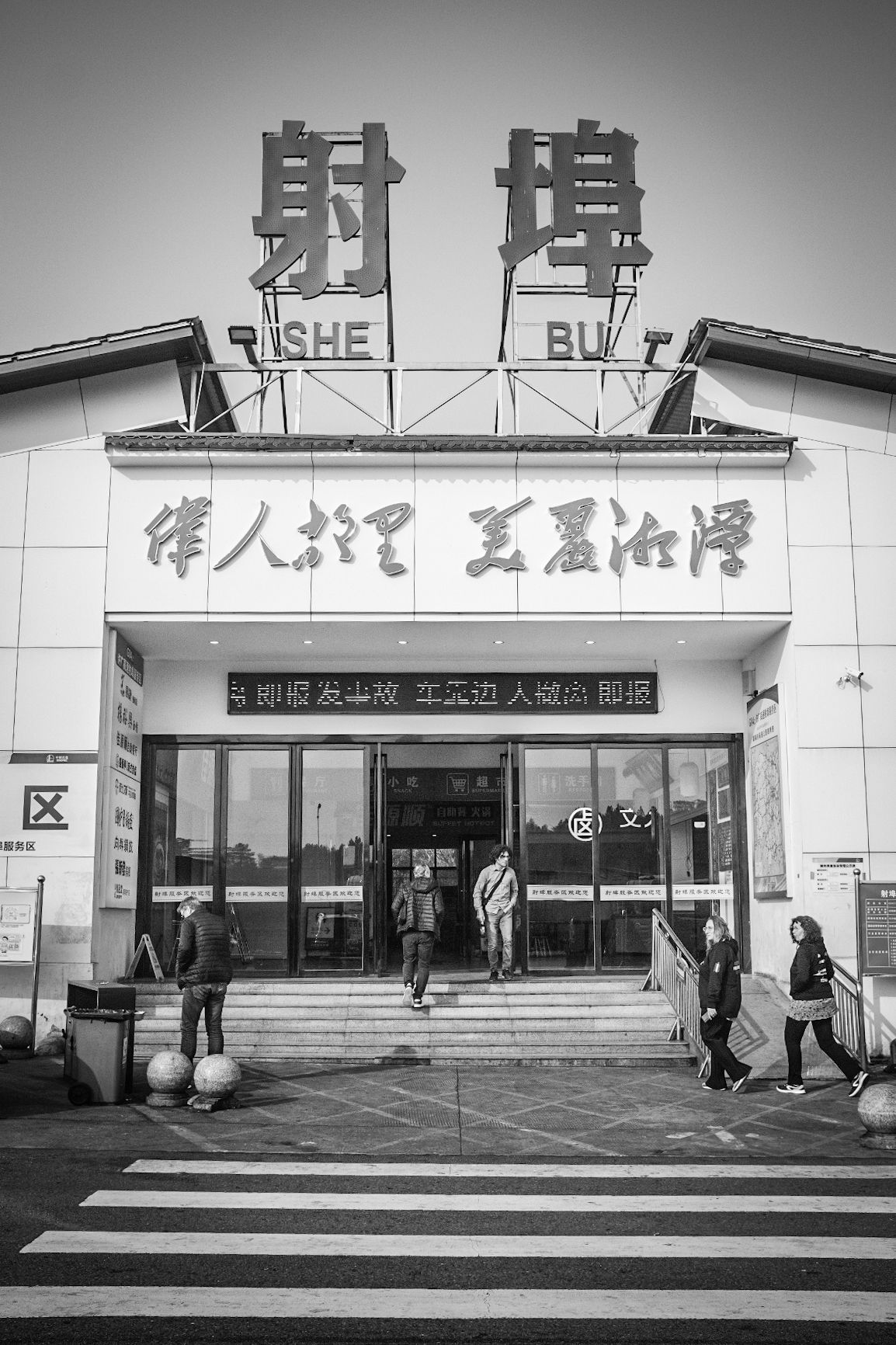
From the moment I landed in Changsha to the final farewell in Shanghai, this trip was a series of moments—some I expected, and some I didn’t. The hustle and bustle in Shenzhen, the streets of Shao Xing, the quiet hills of Xian Ju, and the meals shared with colleagues between concerts. It wasn’t just about the places. It was about the little things—a gesture of hospitality, that mutual respect between musicians, or just watching the world go by.
This trip wasn’t just about playing concerts, it was about learning and adjusting. It was about connecting with people, understanding their way of life, and how we relate to one another in those brief encounters.
The Photographer Without Film
For the first time in a long while, I didn’t travel with my usual film cameras. The Fujifilm X100F was the only camera I had with me, and while I had mixed feelings about it at first, it became a good fit. There was no hesitating over which shot was worth the price of a roll of film. It was just me, the camera, and the present moment.
Not every moment needed to be captured. I found myself slowing down and soaking things in—sometimes shooting quickly, sometimes just letting the moment pass. It wasn’t about having everything on film; it was about experiencing it fully, even without the lens in front of me.
Respect and Connection
One of the most memorable things about this trip wasn’t the landscapes or the buildings—it was the people. Everywhere I went, I felt a deep respect and sense of community. It wasn’t about being given titles like “Uncle” or anything else. It was just how people engaged, how they saw me as part of something.
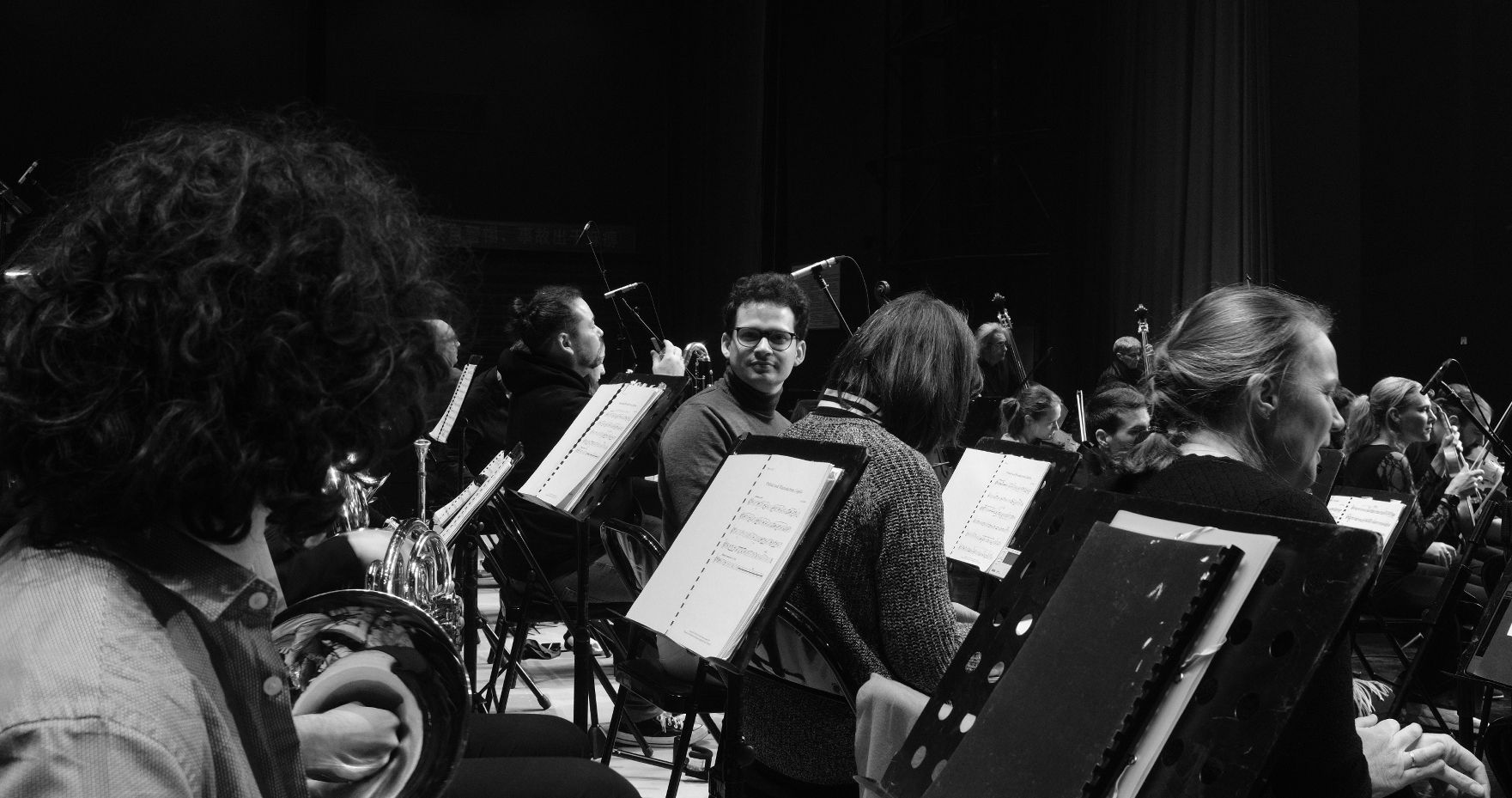
The concerts themselves were a reminder of this—the public wasn’t there for rehearsals, but they were there for the concerts, offering energy and appreciation. Music, like photography, is about presence. It’s about sharing a moment with others, and that’s something I’ll never forget.
Coming Home
Returning home after a trip like this always feels a little strange. The familiar feels slightly unfamiliar at first—the quieter streets, the slower pace. But there’s comfort in returning, and yet, it’s hard not to feel that shift in perspective. Things seem different now.
The Final Frame
So, what remains from all of this? The photographs, of course. They’ll hold the moments, the details, the things I might forget over time. But beyond that, it’s not just about the photos. It’s the way travel shifts your perspective and makes you notice the small moments—the ones that don’t always get captured in a frame.
This series was meant to document a tour, but it ended up being more than that. It’s a reflection on the journey itself, on photography, on what it means to truly be somewhere, to connect with others. The tour might be over, but this story isn’t done yet. And whenever the next journey comes, I’ll be ready to pack my bags again.
I have been posting these articles in the WhatsApp group made for the people on the tour, and people’s feedback has been amazing. What came out the most was the feeling of revisiting the tour through the photographs and how that made people feel. And if you make somebody feel something with an image, then you’re off to a good start. The other comment was, “Oh, I didn’t see that!” And that is part of our role as photographers, to record what people don’t see… My reputation as a photographer seems to have surpassed my reputation as a beer drinker, which is good, because I hardly drink a drop anymore. My reputation as a writer seems to be well established too.
So not only am I seen as a hornplayer but also as a photographer, a writer, and a sensitive soul instead of the gruff bear that sits at the back of the orchestra and makes farting sounds with his instrument. Quite the step up really!
There’s a stock phrase about the journey being more important than the destination. Another one suggests that a journey can transform a man into something new—something he didn’t even suspect. As I look back at the man who left home, went to China on tour, and the one who came home, I can’t help but wonder if there’s truth in both. I’ve previously described China as a “foreign concept,” and now, having returned, it feels far less so. I’ve peeled back a layer of the country and gained a deeper understanding of its culture—musical, culinary, and otherwise.
This tour, too, has been a “parenthesis,” a break from real life, and a chance to be me—not just “Papa” or “husband.” No longer defined by my role in the family or at work, I could just exist as I am, whoever that is. Though I still feel some anxiety about how others perceive me, age has brought a certain self-awareness, self-knowledge, and—perhaps—a bit too much overthinking. For those two weeks, I was simply a guy on a bus, surrounded by French people, walking through new experiences, and discovering everything along the way.
China as a Totally Foreign Concept
Before I left, my idea of China was that of a far-off place, so completely different from anywhere I had lived before. Those ideas were formed in childhood, shaped by the media’s portrayal of this foreign land. I won’t deny it—I was terrified of the whole trip. Researching things online only added to my worries about not being able to read or speak the language. Growing up, I saw China as a Communist regime, almost oppressive like the Soviet Union, and as the enemy we had to defend against. I remember watching the handover of Hong Kong in 1997, feeling my stomach churn as I watched truckloads of PLA soldiers occupy our old colony.
I remember, too, older members of the band, where I wore green for a living, talking about Hong Kong as the dream posting—warm, sunny, and everything a soldier could need. But what was I really afraid of? The unknown. We all knew about China’s state security apparatus, without truly understanding it. The events of Covid only deepened that sense of fear and mystery.
I even worried about something as simple as eating with chopsticks, imagining I’d have to rely on forks or my fingers. Looking back, all of these fears now seem so silly. But they were real before I experienced the country for myself—and especially before I met its people.
The People Who Changed My View
Somehow, I managed to take each day as it came, simply bathing in the new experiences. And, strangely enough, China worked its magic on me. It didn’t just change my view of the place—it changed how I saw the people. They were charming, incredibly friendly, and in a way that made them seem so much more human.
I began to see myself in them, and I realized that, despite our differences, we are more alike than we might think. We all fall in love, become parents with grace, and share the same aspirations for our children—to be happy, to find love, and to repeat the cycle.
I think back to Christmas Day, when I made new friends. The simple “Merry Christmas” was enough to endear me to them. I also reflect on how beer, it seems, transcends barriers of language, creating a connection that only men seem to understand. I’m not trying to exclude women, of course—heaven forbid—but there’s something inherently masculine about it.
My Place in the Orchestra
Another transformation came in terms of my place in the orchestra—or rather, my perception of it. As the 4th horn, a position typically reserved for the least experienced player, I have always resented the remark. But now, I know my role to be the solid foundation of the section, guiding it through the music. At 53, I no longer feel the need to prove anything. I’m here for the music, content to plod along at the bottom. It’s not humility—it’s comfort, and a willingness to let the young bucks enjoy the spotlight.
Being on tour, though, inevitably brings people closer together. Take poor Corentin, who shared a room with me for two weeks. It’s one thing to get along during rehearsals or after a concert, but living in such close quarters really gives you a new perspective on someone. I knew Corentin was a good lad, but during those two weeks, I saw him in a different light. We talked, laughed, and endured the trials of close proximity.
I remember one drive home from a concert when my birth mother FaceTimed me with the news of her cancer diagnosis. Corentin, despite his limited English, understood more than he let on. He listened as I processed the information, and in that moment, we connected in a way that most people don’t. Maybe that’s what brought us even closer.
Sharing a room with him was like being back in the army. We worked hard, played hard, and celebrated with the kind of noises only a group of men could share. If you can fart in front of someone, you’re already on the next level of friendship.
One moment that stood out for me was when I helped Clement, the other horn player. I had offered him some coaching to help him out of his funk. During the concerts, he had some delicate parts, and although I could easily play his passages for him, I didn’t want to embarrass him. So, I didn’t change seats to play his part during the performance. Instead, I stayed where I was, and when it came to his turn, I played my part to the best of my ability. It was subtle but important—I didn’t want to take his place; I just wanted to give him the support he needed without making him feel like he couldn’t do it on his own.
Afterward, Clement spoke very kindly about me to the younger players in the group. He praised me in a way that felt both generous and sincere, and it left me feeling deeply grateful. His words were not just kind—they spoke to a level of respect and camaraderie I hadn’t anticipated. I hadn’t sought recognition; I just wanted to help. But his thoughtful comments—about my support without overshadowing him—meant more than I could have expected. It’s rare to find such generosity of spirit, and I appreciate him for that.
I nearly forgot to talk about my girls from my days in Cholet. It was Eléonore that suggested that I join the orchestra, and I’m so glad she did. I was about to leave my horn in its box and let it gather dust somewhere in my house where people wouldn’t trip over it. She has been a very good friend to me over the last 13 years, and I think she’s wonderful. Then of course I mustn’t forget Titaua and Mathilde. And they certainly didn’t forget to tall every one about my “kilt” days, where as fed up of being English, I would let people know that one can be from the UK without necessarily being English. My first adoptive father was Scottish, and his brother, Uncle Joe, was Professor Regis at Edinburgh University. People came up to them saying that Ian wasn’t like how they had imagined him, and was actually a decent chap and all-round good egg! Then Eléonore just reminded them that “they” didn’t know me the way she did…
During the tour, as you’ve seen, I took some photos—some of them very odd. But I wasn’t the only one sharing them in the infamous WhatsApp group. For the first time, people saw a different side of me—the artist, not just the beer-loving horn player. I even started sharing my blog posts in the group, and maybe I’ve earned a reputation as the writer. Who would’ve thought? A beer-drinking horn player who takes decent photos and has a way with words—still knows how to play, though.
Anything Else?
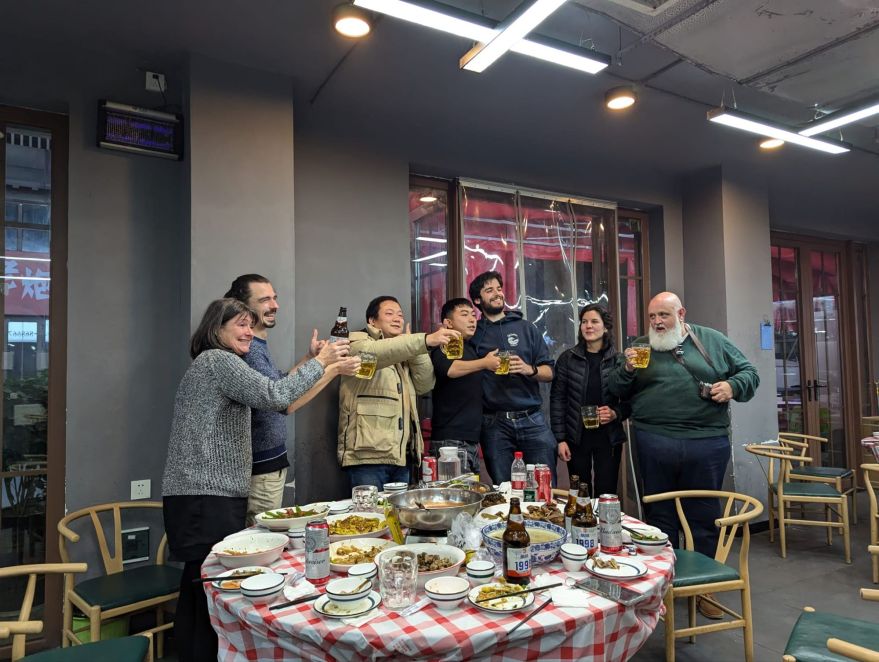
I think my approach to food has also shifted. I’ve always liked the idea of sitting around a big table with friends, and during the tour, I was reminded of that. The variety of dishes was astounding, and I saw some players more comfortable with what they knew, while others bravely ate silk worm chrysalids. Me? I just enjoyed whatever was put in front of me, from chicken and duck feet to tortoise.
I found myself stepping away from desserts, my sweet tooth growing calmer. Eating the Chinese way—deliberately, mindfully—was a revelation. Much like film photography, it slowed me down and made me more aware. I ate less, but I appreciated the variety. I even tried to emulate that at home—though, I didn’t put chillies in my dishes.
I’ve also become more accepting of my body. Despite still feeling like I have a long way to go, I’ve made peace with the body I’ve got. Corentin’s lack of judgment helped, and I’ve learned to be more at ease with the frame that carries me around.
How to Conclude?
What’s clear is that this journey, this “parenthesis,” hasn’t just been a break from the familiar—it’s been a period of quiet transformation. The familiar parts of myself have had space to evolve. And perhaps that’s the true beauty of any journey—not the destination, but the unfolding of a self you might not have fully known. In a way, I’ve returned not quite the same man who left. But then again, perhaps that’s the essence of travel: it allows us to become more fully who we truly are, even as we discover the world around us.
As the journey ended, I found myself thinking less about the places I’ve seen and more about the moments shared—those small, unexpected connections that shape an experience just as much as the landscapes we pass through. Travel isn’t only about what we take away from it; it’s also about what we bring to those we meet along the way.
Perhaps that’s what lingers most—the idea that stepping beyond our usual paths isn’t just an act of discovery but a quiet exchange. We put ourselves out there, not just as observers but as participants, leaving behind something of ourselves in the process. And in return, we find that the world, in all its vastness, feels just a little more connected.
Welcome back to China, Dear Reader. When I last left you, we were on the bus somewhere between Hangzhou and Shao Xing. I’m pleased to report that we made it safe and sound, and that Corentin and I now had two keys to our room. It was still sunny—a joy to be alive. Thank you, happy pills. Our room had all the mod cons, though there was a quirk: if one of us was on the loo, we’d slide the door across for privacy. Unfortunately, that meant the person taking a shower lost their privacy. Still, I couldn’t see anything from the loo, so my roomie’s modesty was safe.
Speaking of toilets, we encountered quite a range during our travels. In the service stations, they were the French “chiottes à la Turque,” which are nothing like the Mozart Rondo, but certainly more pungent. Then there were the “ordinary” toilets, followed by the ones whose lids lifted automatically as you passed, and finally the pièce de résistance: the Japanese-style toilet, which remained resolutely Chinese.
This marvel had a heated seat—luxury in itself. You had to lift the lid manually (slumming it in the Stone Age again), but once seated, nature took its course in unparalleled comfort. The real magic began when you pressed a button: a mechanism extended to spray water precisely where needed. There was even a function for ladies. And after the water came the air, drying everything off! I double-checked with toilet paper, of course, but it had done an impeccable job. Truly, a game-changer. As Forrest Gump said, “That’s all I have to say about that!”
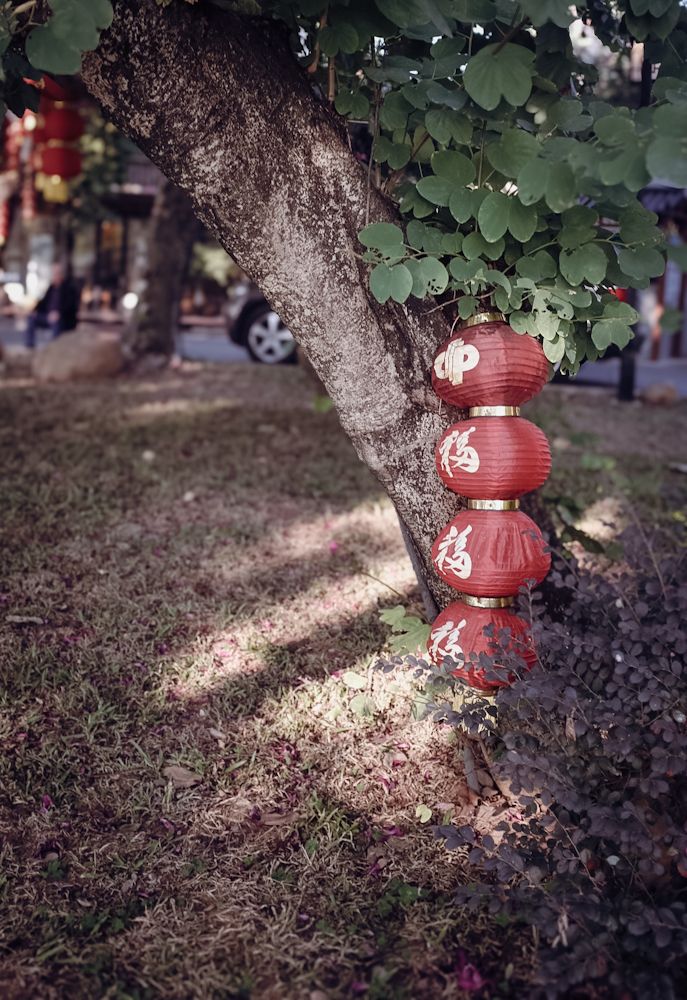
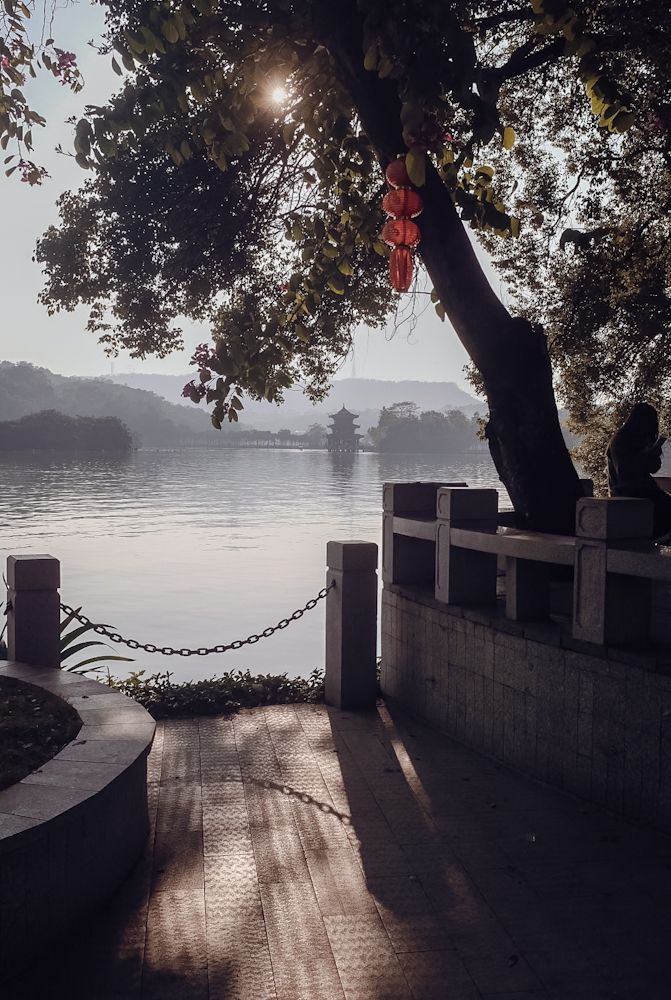
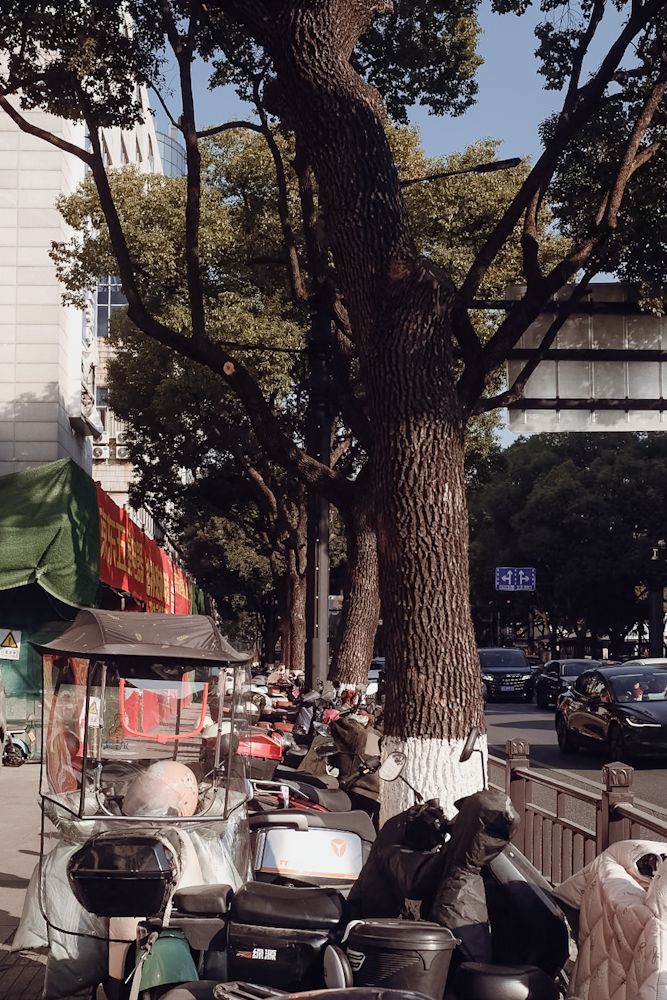
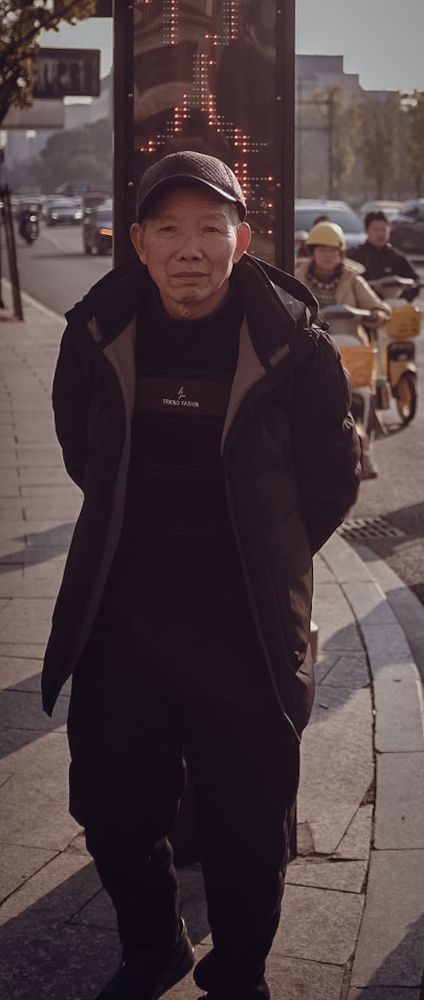
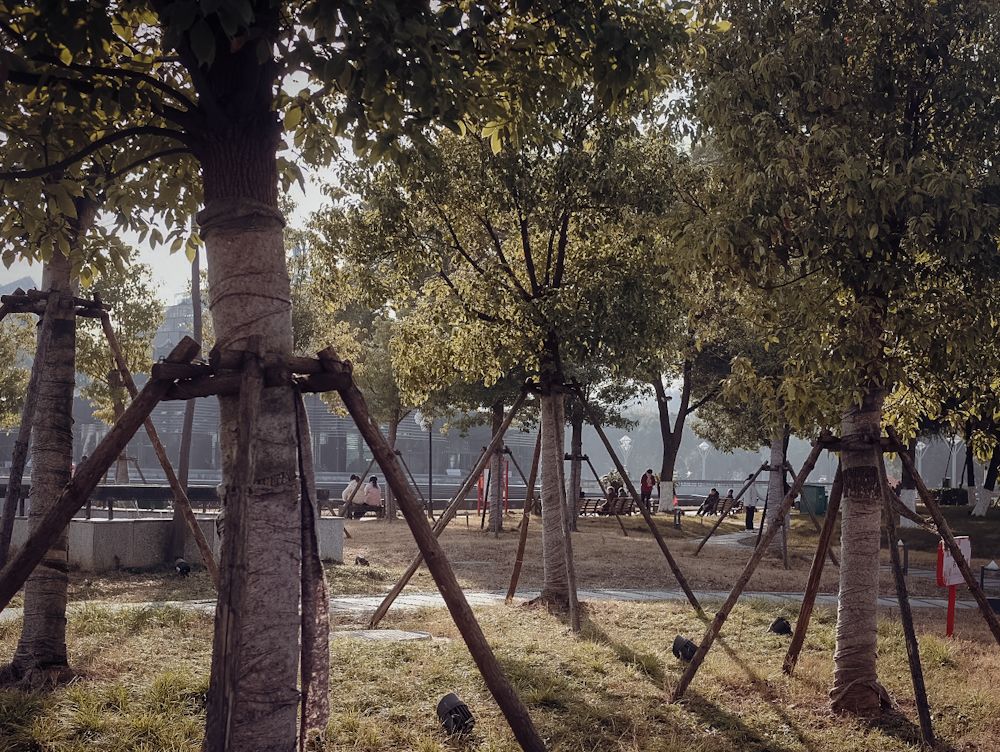
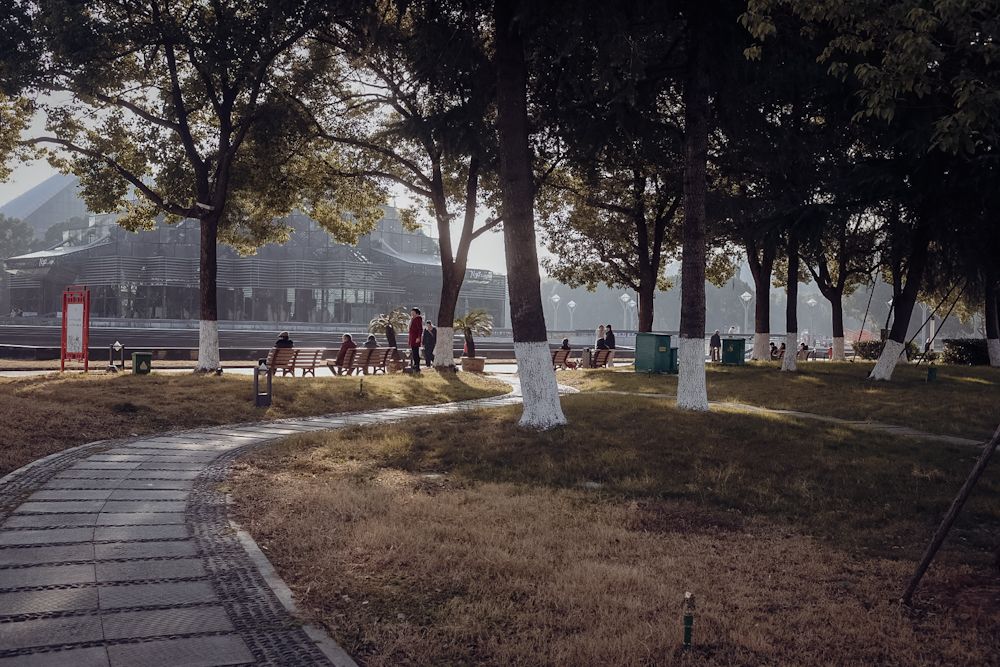
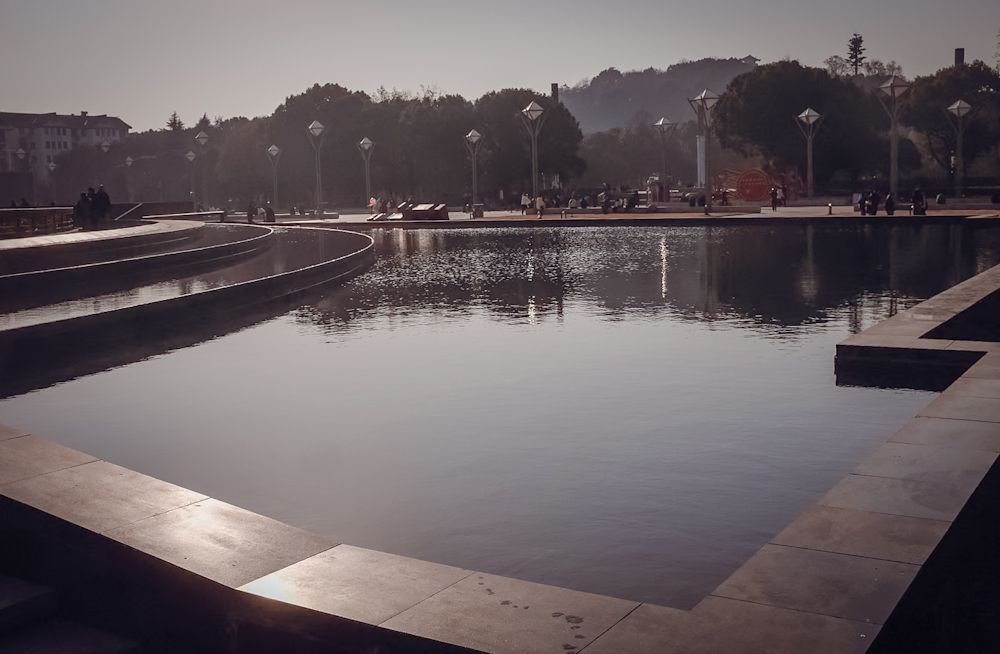
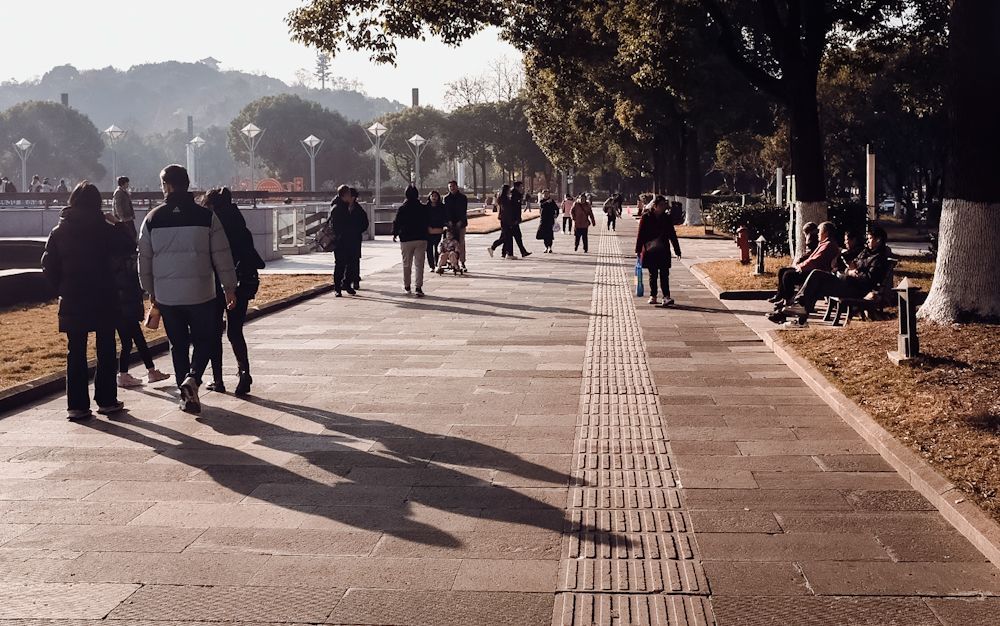
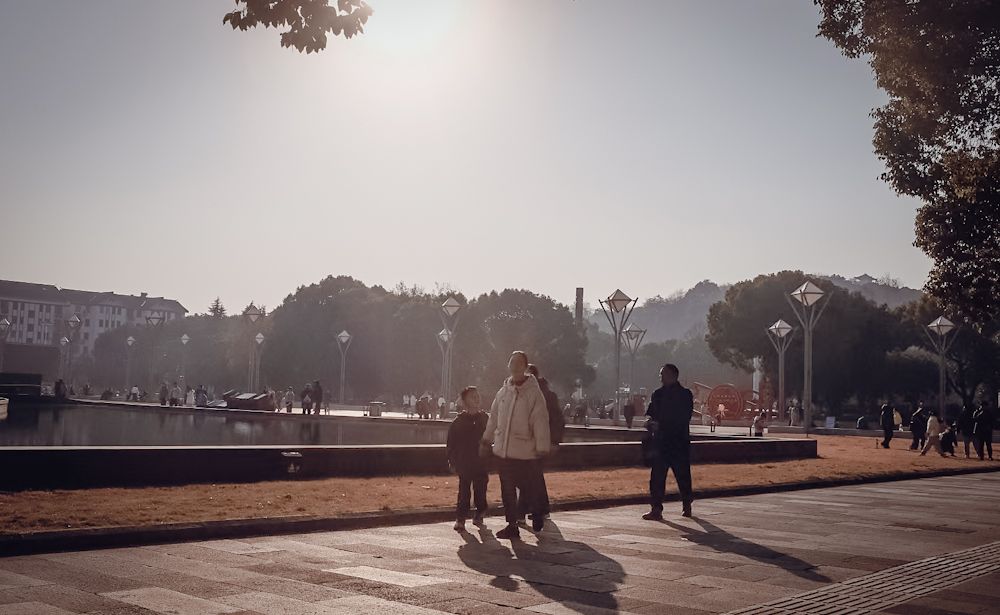
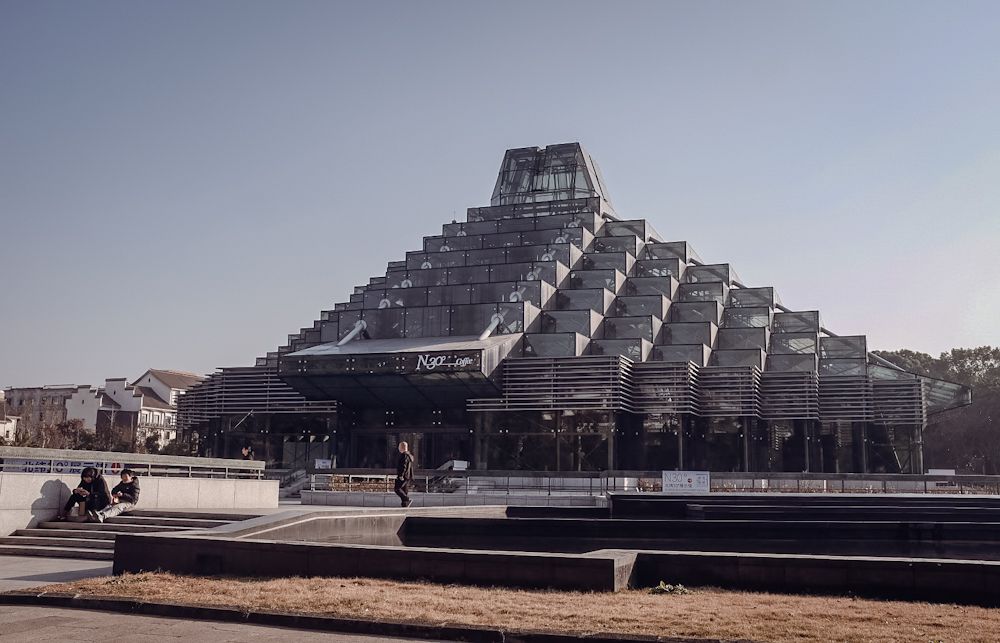
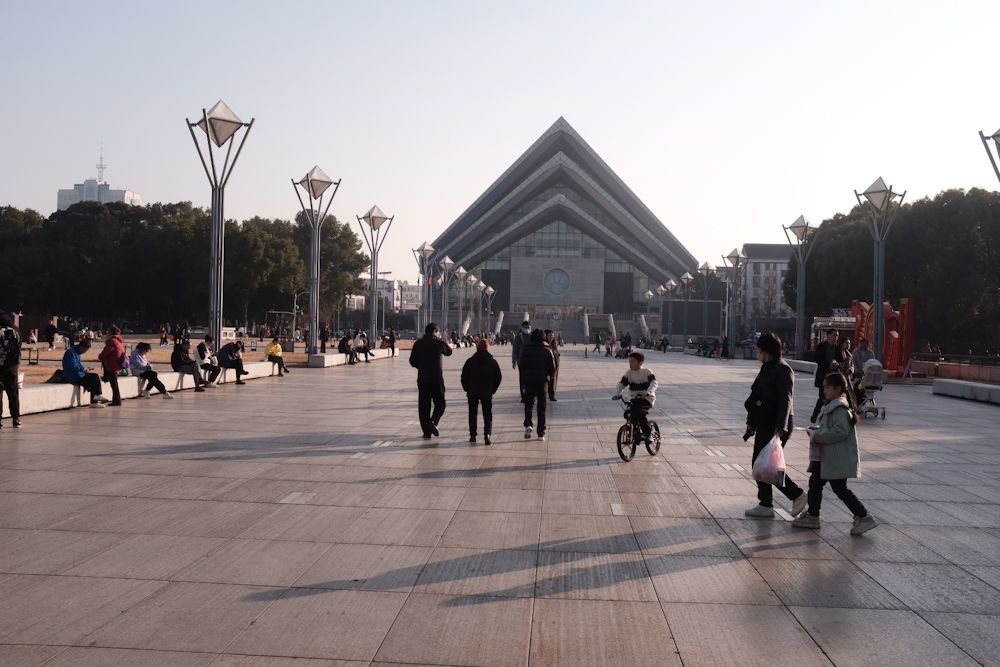
Now, let’s move quickly on from toilet humour (as universal as it may be) to the park next to our hotel. We were on the 22nd floor and had a marvellous view of the city centre. I could even see that night’s venue from our room and decided to explore the area, camera in hand. The winter sunlight was soft—bright but not blinding—perfect for photography. I wanted to capture the impression of Shao Xing, not just through candid portraits of people but through its landscapes and atmosphere. My aim was to convey the city’s essence, much like an impressionist painting, but with a camera instead of a brush.
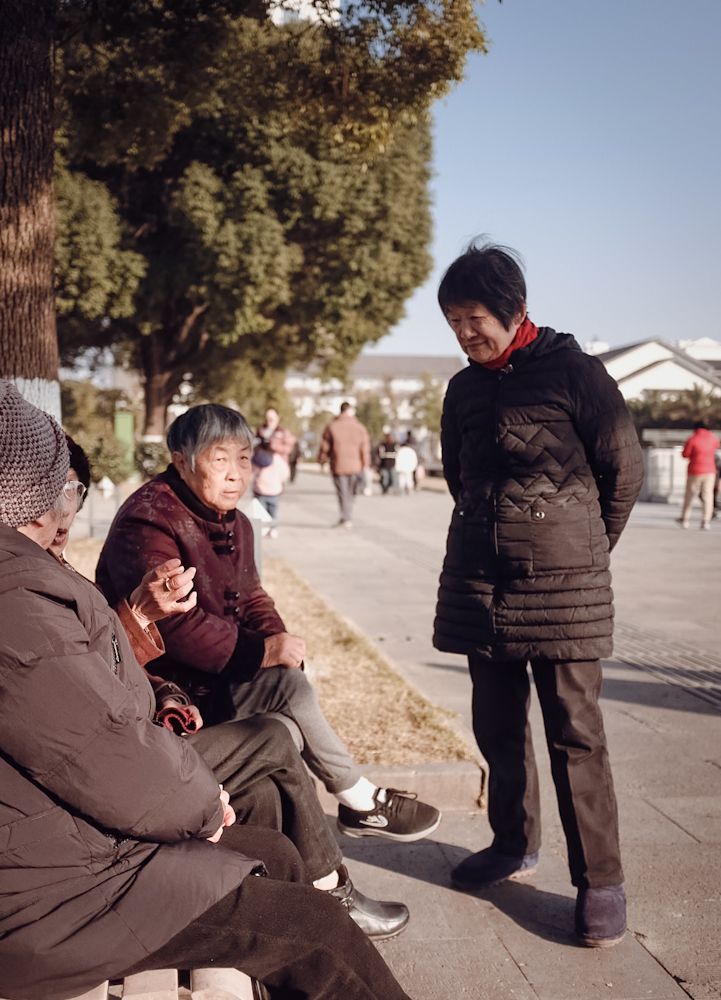
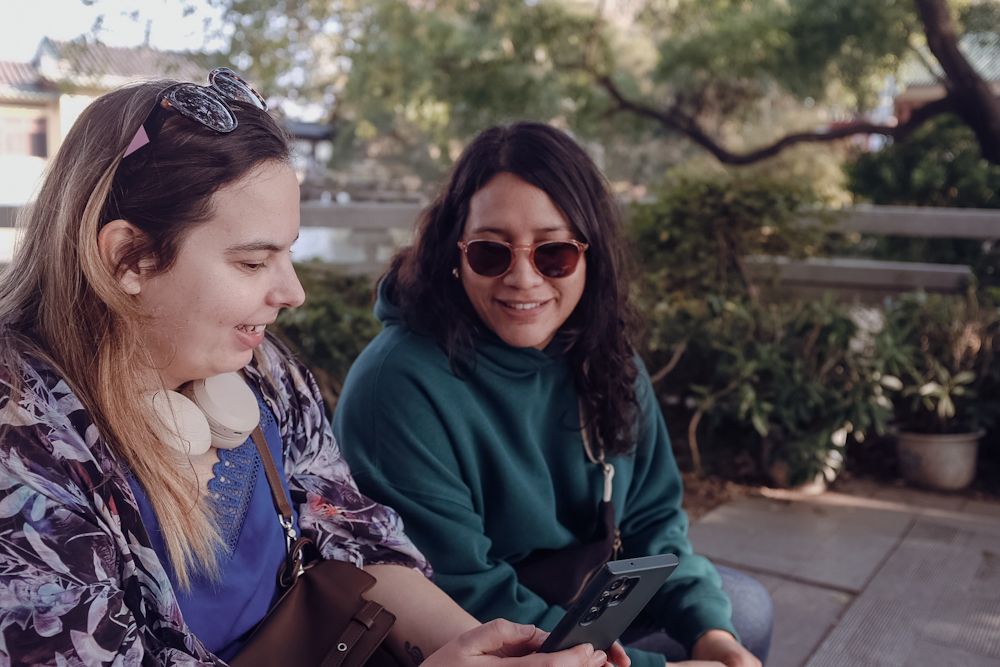
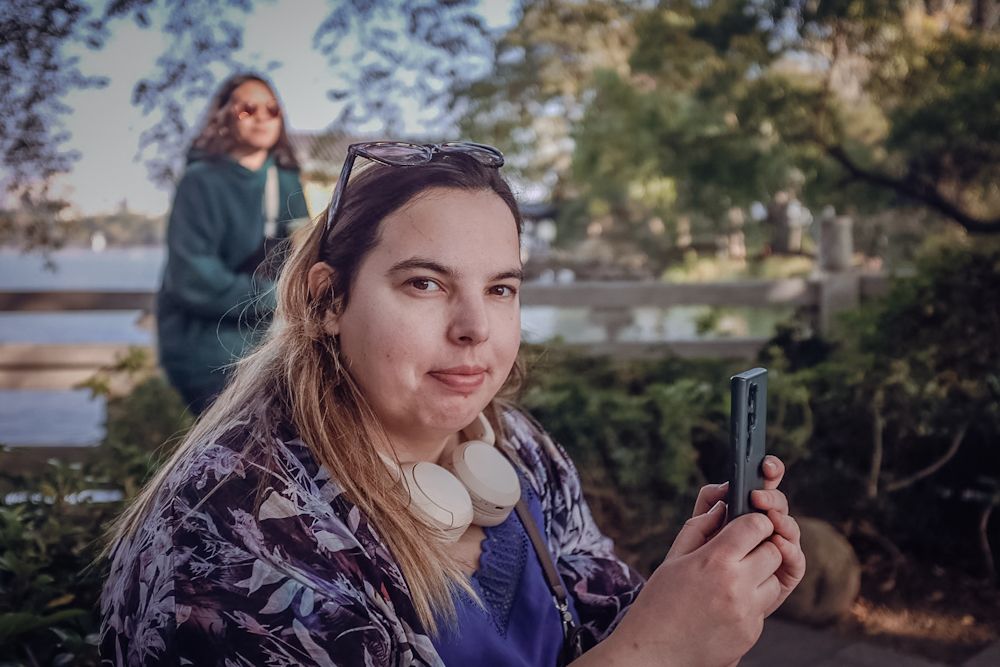
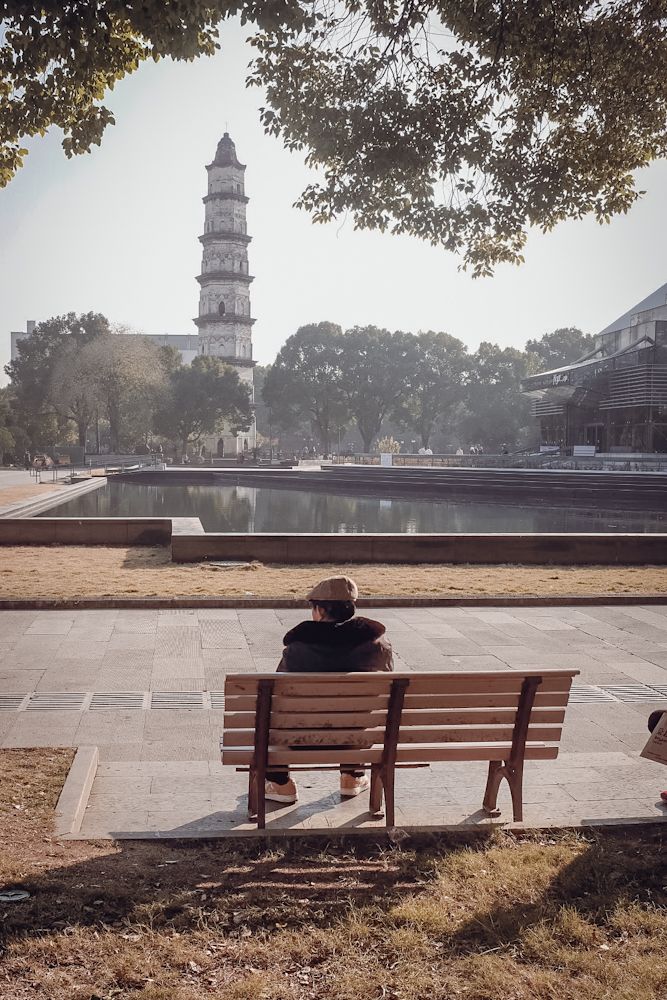
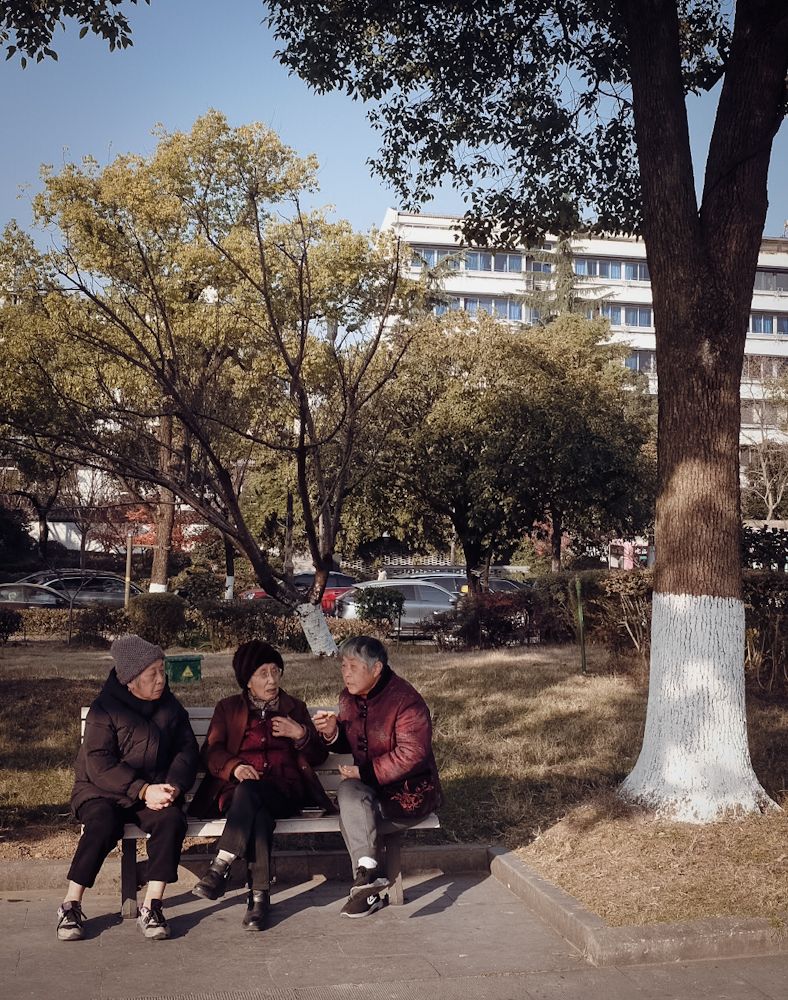
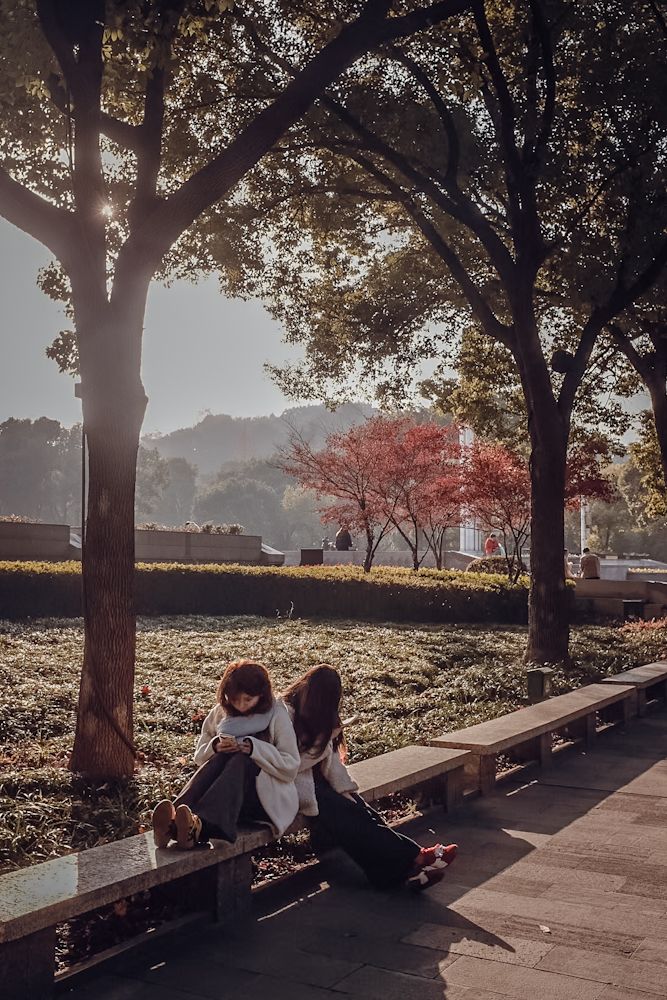
The park was alive with activity. Aunties and uncles sat on benches, chatting animatedly and observing the world go by. One Aunty beckoned me to join her, and I obliged. She greeted me with a thumbs-up—a universally positive gesture, except when hitchhiking in Greece, where it’s a faux pas. Using the translator in Alipay, I explained that I was a horn player with the visiting orchestra and would be performing that night in the concert hall across the park. This app is a godsend in China, though I briefly considered going back to study the language. My wife might not be thrilled with me disappearing for six months, though.
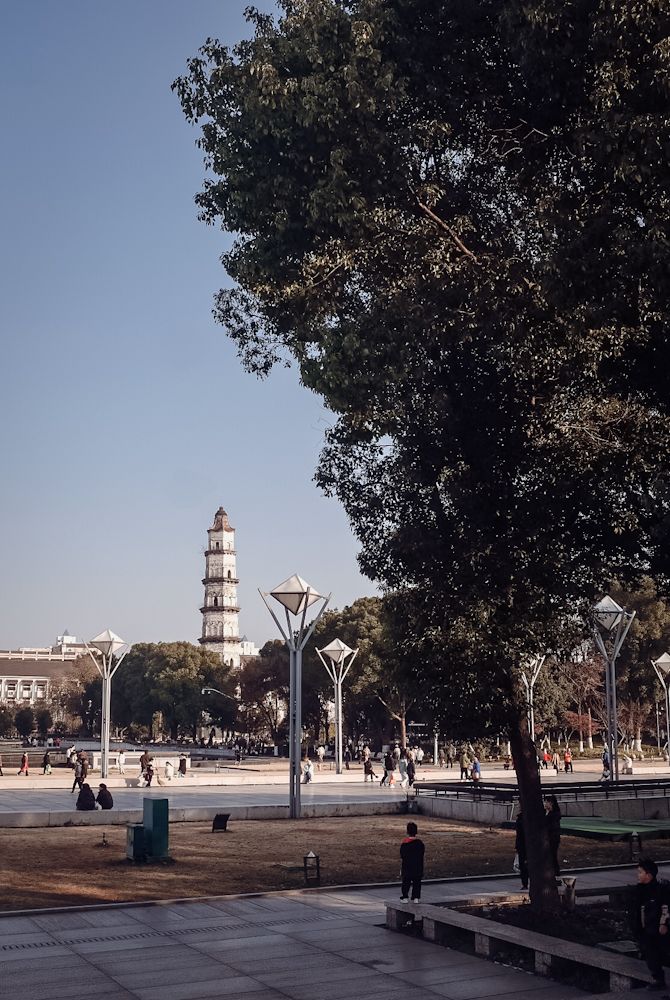
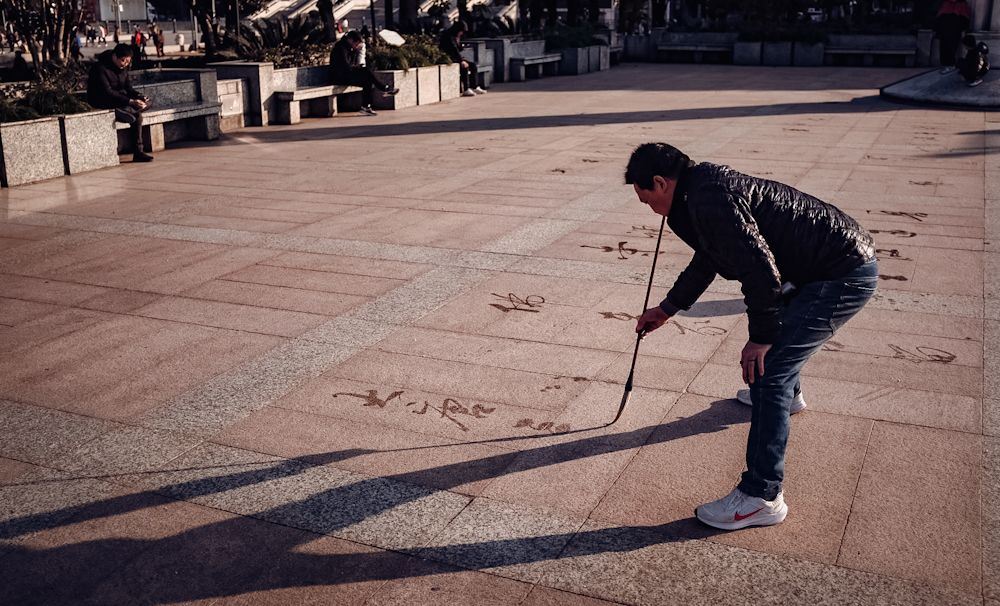
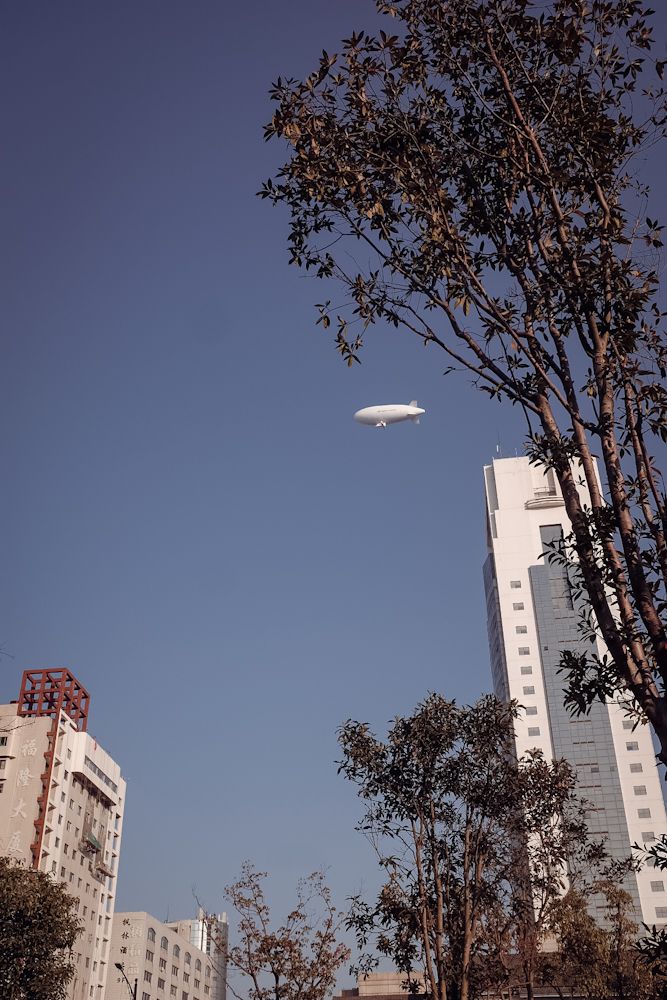
As we sat, the Aunty hummed a Chinese song. I was transported elsewhere, nearly dozing off in the sunlight—a habit I seemed to be developing. Thanking her for her company, I wandered further into the park. The sunlight filtered through the trees, highlighting the park’s serene beauty. I came across a single artist practicing calligraphy on the ground, using water instead of ink. His strokes were delicate and ephemeral—a fleeting masterpiece destined to evaporate. Children played with marbles nearby, using the sculpted floor as their playground. The juxtaposition of timeless tradition and youthful play captured the spirit of China for me. Above it all, a pagoda stood proudly, with an airship hovering in the background—a striking blend of the classic and the modern.
Reluctantly, I left the park to prepare for our penultimate concert. The thought of returning to the mundanity of home life began to weigh on me. This tour had been a gift, filled with unforgettable experiences and people. I wasn’t ready for it to end.
The concert hall was just across the park, and I strolled over leisurely—no need to rush; a gentleman never runs. The theatre director and his team greeted us warmly, their hospitality as magical as ever. Some brass players had prepared a fanfare to welcome the audience, and the atmosphere buzzed with excitement. Selfies were taken in abundance, and someone was even live-streaming for TikTok.
The concert itself went beautifully, with the usual audience participation adding to the magic. Afterward, the theatre manager addressed us, reminding us of the event’s purpose: celebrating Franco-Sino relations and their 60th anniversary. His French was excellent, and his enthusiasm infectious. They had prepared a spread for us—a delightful picnic with beer aplenty. As the night progressed, the manager led by example, dancing and motivating his team to let loose. Seeing their boss in this light seemed to surprise them.
I left the party early, taking a quiet stroll back to the hotel. The park, now illuminated, looked entirely different. The pagoda glowed softly and had changed character, and became the central element to the park. Meanwhile, Corentin extended the festivities at a local bar, where the owner was treated to an impromptu rendition of Michel Sardou’s “Les Lacs du Connemara.” A night to remember, indeed.




















































 IJM Photography