Conclusion: Reflecting on the Philosophy of Photography


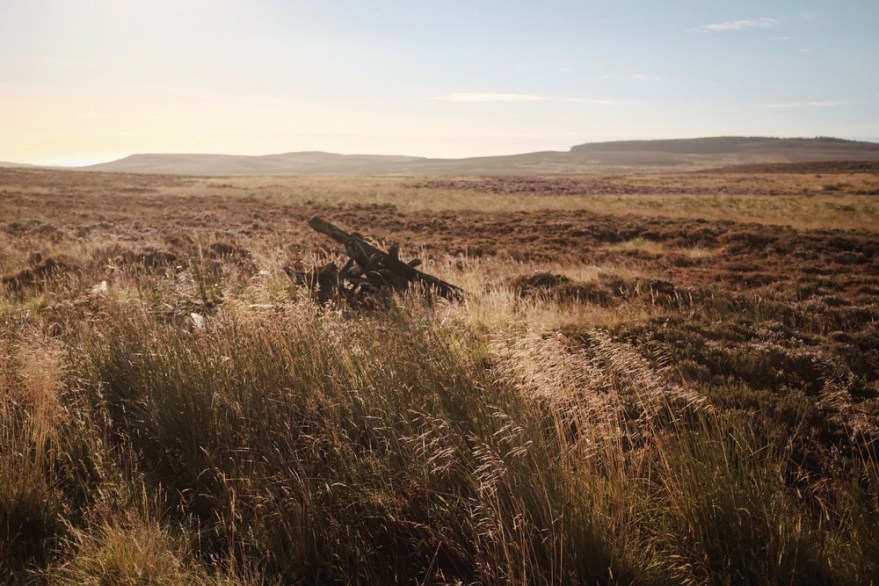
As we reach the end of A Photography Philosophy Series, I hope this journey has been as rewarding for you as it has been for me. Through these articles, we’ve explored the philosophy behind why we photograph—going beyond equipment and technique to dig into the heart of what makes photography so meaningful. Each theme in the series has shed light on a unique layer of photography, from capturing emotions to telling stories, reflecting identity, building connections, and even embracing impermanence.

We began with Why Do We Photograph?—a question that sits at the root of every image we capture. For some, photography is about preserving memories; for others, it’s about self-expression, documenting moments, or sharing perspectives. Over time, our reasons for photographing often shift and evolve, bringing more layers to our work as we grow. This first article set the tone for the series by reminding us that photography is a deeply personal journey, and our motivations shape each image we create.

Then we delved into The Emotions of Photography, exploring how images can carry feelings, from joy and nostalgia to solitude and contemplation. Photography allows us to express emotions that words often fail to capture, communicating through light, composition, and mood. Each photograph holds the potential to resonate with viewers in a way that feels both personal and universal, offering a window into the photographer’s emotional landscape.

The Art of Storytelling in Photography came next, where we looked at how images can create narratives—small windows into people, places, or moments that form part of a larger story. Photography has a remarkable way of capturing both detail and the bigger picture, allowing us to document stories that speak to shared experiences or unique perspectives. In a world full of words, photographs can often tell a story with a quiet eloquence.

In Identity and Self-Expression, we explored how photography offers a chance to express who we are and what we see. Our images inevitably reflect parts of ourselves—our backgrounds, our worldview, and our personal journey. For many, photography is as much a journey of self-discovery as it is a creative practice, helping us find our own voice and share it with others. Photography encourages us to see ourselves more clearly and to reveal something of that to the world.

Then came Connection Through Photography, a theme close to my heart. Photography, as we’ve seen, can forge connections—between photographer and subject, among fellow photographers, or with viewers who see something of themselves in the image. These connections remind us that we’re not alone in this world; they foster a sense of community, shared understanding, and empathy that goes beyond language. Photography has a unique power to unite us, even if only for a moment.

Lastly, we explored The Philosophy of Impermanence, where we reflected on the fleeting nature of each photograph. Every image captures a moment that can never be repeated, lending photography its unique poignancy. Impermanence reminds us to treasure the moment and see beauty in the transient. Photography, like life itself, is filled with unexpected moments, and it’s often the imperfections or mistakes that give images their authenticity and depth.

As we close, I invite you to reflect on your own photographic journey. What drives you to take photographs? Which themes resonate most with you—capturing emotions, telling stories, connecting with others, or perhaps embracing impermanence? These reflections aren’t just theoretical ideas; they form the personal philosophy that shapes how each of us approaches photography.

Ultimately, photography is about connecting with the world and each other through shared moments and meanings. If this series has encouraged you to think more deeply about your motivations, experiences, and the meaning behind your work, then I hope you’ll carry those reflections forward. Photography gives us a way to see, to understand, and to share in ways that words alone can’t.

Thank you for joining me on this exploration. I’d love to hear about your own experiences—what drives you, what connects you, and how photography shapes your view of the world. Let’s keep the conversation going and continue building a community of thoughtful photographers, one image at a time.
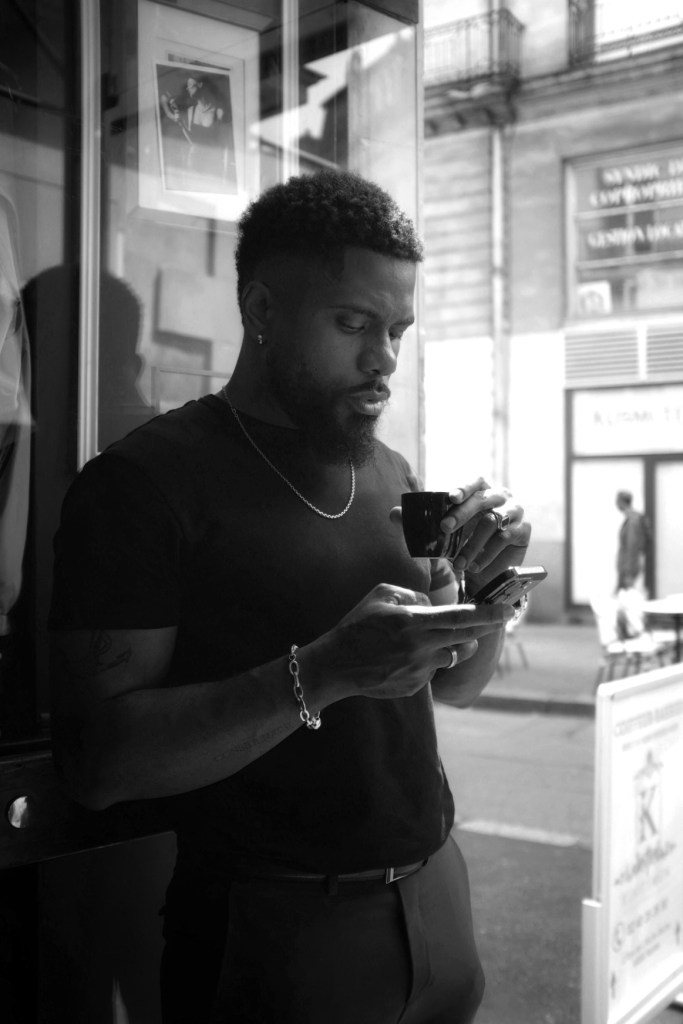
Photography Philosophy – Part VII – The Philosophy of Impermanence


Capturing Fleeting Moments

When we talk about a moment in time, that moment is no longer the present; it has become the past. We cannot repeat it, nor can we reclaim it. It has happened and will never come back. Photography is an art form that allows us to capture a specific moment and preserve it for all time. We know that it is impossible to capture exactly the same conditions in which the shot was taken. We can attempt a recreation, but it will never be identical. Time has moved on to the next moment.

As photographers, we are left with the task of capturing the present, knowing it is already slipping away. What does this mean for the way we approach our art? Will we constantly look back, regretting the passage of time, or will we, on the contrary, feel privileged to have documented it for the future?

This brings us back to the idea of preserving the decisive moment that Cartier-Bresson spoke of. Like comedy, it would appear that photography is all about timing.

When we capture that moment, we must decide how we want to portray it. Do we want to freeze the action with a very high shutter speed, or can we slow down and add a sense of movement to our image? How fleeting is the image we are trying to capture?  What will this motion add to the image?

My approach

Over time, I’ve come to appreciate these fleeting moments in time and try to document them, whether in the big city or out in the countryside with my children—especially when they play together. I want the spontaneity of it all, to capture those precious moments of complicity. As any parent knows, our children grow up before our eyes, and before we can truly realise it, they are grown up. Even when they’re not together, and I look through these past moments in time, I get an overwhelming feeling of, “Where did it all go?” My son is 25, and my daughter is 15 already.

Embracing Mistakes: A Journey to the Image

I’ll admit, I’m not one to embrace mistakes easily. I’ve always strived for precision in my photography, seeking to control every variable and meticulously plan each shot. I don’t like leaving things to chance, and so, when things don’t go as expected, there’s often a twinge of frustration. A blurred shot, an overexposed image, or a missed moment—those mistakes are a part of the process I try my hardest to avoid.

But over time, I’ve started to realise something: these mistakes, as unsettling as they may feel in the moment, are often a necessary part of the journey toward the image I’m truly after. When I reflect on the photographs I’ve captured, it’s clear that the path to the perfect shot wasn’t a straight line. It was made up of trial and error, of learning how to see the scene in front of me not just through my lens, but also through the lens of my mistakes.

It’s the misfires, the accidents, that force me to reconsider my approach, to adjust my frame or my focus. They open my eyes to perspectives I might not have considered, angles I might not have thought of, and emotions I might not have expected to capture. Each mistake teaches me something new, something that nudges me closer to that elusive, perfect image. They’re not setbacks, but rather signposts that guide me, sometimes uncomfortably, to a place where I can see the photograph with fresh eyes.

I’ve come to understand that each imperfection is part of the journey. The photograph I end up with is rarely the first shot I took, or the second, or the third. It’s the culmination of countless adjustments, failures, and moments of doubt, all leading me to the image that feels right. In the end, I realise that without those mistakes, the image I’m truly after might never have come into focus.

So while I still seek control, I’ve learned that there is value in embracing the unexpected. It’s in the mistakes, the missed moments, and the misjudgments that I find the essence of my photography. They are just as much a part of the creative process as the moments of perfection, guiding me closer to the image that speaks to me—and perhaps even to the viewer—most clearly.

Conclusion: The Beauty of the Journey

Photography, at its core, is a celebration of the fleeting moments that pass us by in the blink of an eye. The act of capturing these moments is an acknowledgement that time is forever slipping away, and in that impermanence, there is both beauty and significance. As photographers, we are tasked with documenting not just what we see, but also what we feel—the raw, unrepeatable essence of time itself.

The pursuit of the perfect image is a delicate dance between intention and spontaneity, control and surrender. It’s a journey that, more often than not, veers off the well-trodden path and into uncharted territory. Along the way, mistakes become our teachers, guiding us toward discoveries we might never have made if we had stayed within the confines of our comfort zone. These missteps, rather than being failures, are integral to the creative process, pushing us to reimagine, reframe, and reinvent our approach.

In the end, photography is about embracing the imperfection of both the world around us and our own creative efforts. It’s in the mess, the mistakes, and the fleeting nature of the moment that we often find the most powerful images. And while the perfect shot may remain elusive, it is in the journey—the trial and error, the fleeting moments, and the lessons learned—that the true beauty of photography lies.

So, as we continue to document our world, let us not only cherish the decisive moments but also embrace the imperfections that make them meaningful. For it is through the transient, the imperfect, and the unexpected that we capture not just images but stories—stories that resonate with the heart and echo the passage of time.

Photography Philosophy Part IV – The Art of Storytelling in Photography


When I first started out in photography, I would go and get my film developed by the photographer on Newland Avenue near where I lived, and the photographer would do what people called a contact sheet.  Basically, the film was cut into strips, placed into a special frame to keep the negatives as flat as possible, and exposed directly onto a sheet of photographic paper.  These “thumbnails” allowed us to see the photos of the outing in one place and we could decide which ones might be worthy of developing.  

We have this digital contact sheet in Lightroom where we import our photos and decide which ones are worthy of being developed. It’s the same idea, just with different tools.

But what does this have to do with storytelling? Think of the contact sheet as the beginning of the story-crafting process. Just like a narrative needs a beginning, middle, and end, so too does our selection of images. With a contact sheet, we gain a bird’s-eye view of an outing—seeing not only the individual shots but how they relate to each other. Choosing which moments to develop isn’t just about technical quality; it’s about deciding which parts of the experience best tell the story.

This principle guides me when choosing photos to share here on the blog. Whether it’s capturing moments with my friend JD, the barber, or snapping a shot of my lunch before I dive in, each image plays a role in the day’s story, hoping that I don’t forget to take the photo of my dessert before eating it.  Otherwise you just get a photo of the plate with some traces of cake or just some crumbs.

But lets’s get back to the idea of story telling with an arc that covers the outing.  When I set out for the day, I begin with a few warm-up shots to set the scene. If I have a plan, great—but often I don’t. Instead, I focus on capturing the ambiance of my surroundings, whether it’s a café, church, or pub. Each photo builds on the last, creating a narrative of my day’s journey.

For events, especially when I’m hired to photograph, I’ll start by discussing the plan with my client. I want to know what’s important to capture, any specific conditions at the venue—lighting, mobility restrictions, etc.—and what moments they consider essential. Having this list of must-capture moments, like the classic Kodak moments that we talked about in the last article, helps me stay focused and give me structure.

For the sake of arguments, I have a wedding to photograph, and I know that I will be taking shots of the bride before the ceremony.  I know that I have to be at the venue before the happy couple arrives.  I’d better get a shot of the rings before they appear on the couples’ fingers, etc.  I’ll want environmental portraits of the guests, etc.  This planning ahead allows me to be more serene during the day itself.

newlyweds and their wedding bands
Just married

Not every story requires a series of images; sometimes, a single photograph can capture an entire narrative. Think of it as a self-contained story, a moment that holds not only what’s visible but also what’s implied—emotion, context, and sometimes, a sense of mystery.

For example, take a photograph of a lone, empty café table in the soft morning light, a half-full cup of coffee, and an open notebook on the table. This image can suggest solitude, introspection, or perhaps the moment right after someone has left. The viewer might wonder: Who was sitting here? Why did they leave? What were they writing? This photograph tells a story, inviting the viewer to step in and imagine the rest.

A single image can evoke different responses based on the viewer’s own experiences and emotions. In many ways, it’s a conversation between the photographer and the viewer. We as photographers might set the scene, choose the light, and capture the moment, but it’s the viewer who fills in the blanks, completing the story in their mind.

This approach also applies when photographing people. A portrait of a person lost in thought, gazing out of a window, can evoke curiosity about what’s on their mind, where they might be going, or what they’re experiencing at that moment. In these cases, the single image captures more than just a face or place; it holds an emotional narrative that transcends words.

my daughter contemplating cake
Am I sure about this cake?

Storytelling in photography isn’t just about taking pictures; it’s about deciding which moments matter and capturing them in a way that communicates more than what’s on the surface. Whether we’re crafting a narrative through a series of images or capturing an entire story in a single frame, each photo we take says something about how we see the world and what we want to share with others.

Next time you’re out with your camera, think about the story you’re building, whether it’s a quiet day at a café or a bustling event. What do you want your viewers to see, to feel, to wonder about? In some ways, we’re all storytellers—stringing together moments, big or small, to create something meaningful.

So, go on—look through your images as if they were frames in a film, each one a piece of a larger story. You might find that your perspective shifts, and that’s when photography becomes more than just a hobby; it becomes a way of understanding and connecting with the world.

A photography Philosophy – Part III – The Emotions of Photography


The Connection between Emotion and Image

I’m going to tell you a story about an essay that was given to us by the music master at the beginning of my Music A level course.  There were four of us studying music, and the lessons took place in his study, much like a tutorial at university.  The title of the essay was something like describe the perfect piece of music.  

Back then I described the Glenn Miller song, Moonlight Serenade.  One of my fellow pupils described the Planets from Holst.  In the following tutorial after our essays had been marked, I was criticised since the Master thought my piece was repetitive, had no particular musical merit, and was corny.  I, on the other hand, argued that it was the way the piece made me feel.

With hindsight I should have just handed in a clean sheet of paper saying that there is no such thing as a perfect piece of music, as taste is purely subjective and that he should take his essay question and possibly reconsider his stance!  I didn’t of course.  But it certainly got me thinking, even to this day!  

Subjectivity in Art

As in any art the appreciation of the viewer is purely subjective and we have to be so careful about reading an interpretation into a given work.  There are effectively themes that are explored in literature that could be described as obvious.  But in Photography, I maintain that any connection to a particular photograph is an emotional one first, before going any deeper.  

The Essence of Emotional Connection

But what makes this emotional connection possible? And how do I go about achieving this in photography.  I’m going to harken back to my musical training.  My horn teacher in France would say, your concerto is your text.  Your job is to recite that text to the audience.    That is all you have to concentrate on.  You’ve worked through your concerto, the techniques necessary to play it, and once the sound leaves the bell of the instrument, it is no longer yours.  It belongs to the audience.  They are the ones listening and they are the ones that will form the emotional connection.

Creating Meaningful Portraits

So how do I make this connection with my audience when it comes to photography?  Well, in portraiture they say to focus on the eyes of your model.  Eyes being the entrance to the soul. If I can capture that and have my model looking directly at my camera and therefore my audience then I’m well on the way to creating a meaningful portrait.

Kate, my daughter
The Art of Street Photography

In my street photography, it can be about catching a detail that everybody sees but that nobody notices until they look at your image.  You can go to my photography tutorials and look at the composition articles to learn about how we direct the audience to a particular point in our photograph by using leading lines, the rule of thirds, and emphasising our subject with our lighting, or by isolating our subject.

The Role of Colour in Evoking Emotion

We also solicit emotion through the colors we choose. Warmer tones can infuse images with energy and happiness, while cooler tones can make them feel peaceful or introspective. For example, adding reds and oranges to a portrait can evoke warmth and approachability, while blues and greens can give a landscape a calm, reflective quality. Considering these colours “in camera” can make the entire process more intuitive, helping you set the mood before you even begin editing.

The Power of Black and White

Shooting in black and white, using only tones of light strips away the influence of colour and presents us with the “essence” of a scene, and it’s one of the reasons I love shooting in black and white, be that on film or digitally.  I aim for a timeless quality to my black and white images, and the emotion can be just as intense.  Without color, we focus on texture, shadow, and contrast—elements that can evoke nostalgia, solitude, or contemplation.

Mindfulness in the Photographic Process

What I think I’m getting at is that to evoke an emotion we need to be so mindful of our photographic process.  Sometimes taking that step backwards allows us to reflect before pressing the shutter button.

Conclusion

I don’t have all the answers of course, but in the end, capturing emotion in photography is as much about the heart as it is about the eyes behind the lens. Each photograph we create is a bridge between ourselves and our viewers—a connection forged in the moment but lasting beyond it. Just as a musician lets their notes drift into the silence, we photographers must let our images speak, leaving space for others to interpret, feel, and connect.

So, as you move forward in your own photography, remember to pause, to feel, and to let emotion guide your hand. Don’t be afraid to take a step back before pressing the shutter, and ask yourself: What do I want my viewer to feel?

I hope this reflection gives you a new perspective on how you approach your next shot. After all, photography, like any art, is a journey without fixed answers—one of constant discovery. Take time to explore, experiment, and, most importantly, to feel.

A Photography Philosophy – Part II – Why Do We Photograph?


Cameras. Why? What is it that makes us pick one up? For me, a camera is not merely a beautiful object; it’s a tool—a simple box, with a lens through which light passes, creating an image on film or a sensor. Whether the box is a hundred years old or fresh off the production line, the same principles hold true. Even our phones are, in essence, an evolution of that same box. But beyond mechanics, what truly drives us to take a photograph?

The Kodak company told us it was all about “capturing that Kodak moment.” But what exactly is this moment, whether created by Kodak or any other company? Firstly, it was a stroke of marketing genius, associating a photograph with a personal, meaningful memory. Secondly, it gave us a compelling reason to pick up a camera and capture memories to share with others, possibly even sparking the first instances of FOMO (fear of missing out), which is now so prevalent in social media. Kodak cleverly linked photographs with significant memories, encouraging us to reach for our cameras. How kind of them.

Yet, let me assure you, it’s not a cure for FOMO, despite what Kodak or social media might suggest. Or at least, not entirely. I use my photography to document the world around me at a given moment in time. Photography is the only art form that allows you, the viewer, to see something through my eyes as I saw it. But while photojournalists capture our world, photography is not solely about documentation.

It’s about storytelling through images. A single photograph can hold an entire narrative within its frame, suggesting more than what’s immediately visible. But often, I find I need multiple images to fully convey a story. When I write my blog pieces, I aim to tell the story in both words and images. I guide you through a carefully curated selection, hoping that you might connect with them in the same way I did. This connection—between the photographer and the viewer—is, for me, one of the most powerful aspects of photography. Through our lenses, we offer others a brief glimpse into our world, our experiences, and our feelings. It’s a reminder that storytelling is more than just documentation; it’s about creating a shared space for interpretation and emotion.

Of course, beauty is also an integral part of why I pick up a camera. There’s something undeniably fulfilling about capturing a scene that feels, to me, perfectly composed. I like to believe I can craft a visually pleasing image and employ various techniques to do so. The idea is to present a scene so that the photograph conveys how I saw it, inspiring you to feel something. Photography is the only medium or art form that allows you, the viewer, to see something that only I saw, and because of the passage of time no longer exists.

It’s about creating art for art’s sake. In a world that constantly demands productivity and output, creating something purely for the joy of creating feels almost radical.

Then there’s the meditative side of photography. For me, the camera isn’t just a tool to create images; it’s a form of therapy. When I’m suffering from melancholia, or I’m lost in thought, stepping into the world as an observer through my camera often gives me a sense of calm. Looking through the lens allows me to disassociate from daily worries and approach the world with curiosity rather than anxiety. This small shift—seeing myself as a photographer rather than a participant—transforms the environment around me from something overwhelming into something inviting. The camera’s frame becomes a safe space in which I can explore without judgement or expectations. In this way, photography becomes a practice of mindfulness.

The process itself is deeply important. I often think of Vivian Maier, who left behind so many undeveloped rolls of film, underscoring the significance of the process itself. Born in 1926, Maier spent her life photographing the world without promoting her work. Of the 140,000 shots she took, only 5% were ever developed—a body of work unknown even to its creator. This fact alone astounds me. Perhaps she, too, was capturing moments for herself, deeply invested in the act of photography without any need for external recognition. Her legacy reminds us that the process can be as meaningful as the result and that photography has value even when the images are unseen.

In today’s image-saturated world, where everyone is encouraged to share, edit, and curate their lives, it’s worth asking if we’d still take photos knowing that nobody else would ever see them. For me, the answer is a resounding yes. Photography is more than a tool to impress, to document, or to share; it’s a means of expressing myself and, often, of making sense of my own experiences. Every image is a small act of discovery, helping me see the world more clearly or find beauty where I might not have noticed it before.

Ultimately, photography is a language, a form of communication that transcends barriers of culture, language, and time. A single photograph can capture something timeless—an unfiltered moment of life that can be understood and felt by someone across the globe. In this way, photography becomes a shared visual language, offering us a way to connect beyond words.

So, why do we photograph? Perhaps the answer is as varied as the photographers themselves, shaped by individual motives, experiences, and emotions. But whether we’re documenting, creating, or simply exploring, the act of photography invites us to see the world—and ourselves—with fresh eyes. And in the end, that might be the most compelling reason of all.