Navigating the Digital Abyss: Unmasking the Devil’s Tactics in Online Discourse


In the vast expanse of the digital landscape, where opinions clash and egos collide, a subtle malevolence seems to linger—the devil finds a home in the chaos of internet comment sections. This virtual realm, often hailed as a marketplace of ideas, reveals a darker side where the battle for truth is marred by the cacophony of raw emotion and the absence of reasoned discourse.

The Temptation of Raw Emotion

Engaging in these comment sections is akin to stepping onto a battlefield without body armor, where every keystroke can be a weapon, and reason is the first casualty. As I ventured into a discussion on the joys and challenges of parenthood, the vitriol that followed made me question not just generational differences but the very nature of dialogue in our digital age.

I expressed my own personal experience of fatherhood and the joy that it has brought me. However, when I dared to offer my opposing perspective, emphasizing the personal and societal benefits of fatherhood, I was met with a barrage of hostility, misrepresentation, and accusations of being “evil.” These individuals, shielded by the anonymity of the internet, felt emboldened to lash out with vitriolic remarks, dismissing my views as irrelevant and even harmful.

For example, I was called a “dinosaur” and a “boomer” for expressing my support for traditional values. I was also accused of being “out of touch” and “selfish” for wanting to have children. I was told to “shut the fcuk up,” and “did you take your meds today?” I was told that I was senile and suffering from Alzheimer’s disease.

These personal attacks were hurtful, but more importantly they also served to try to silence my voice and prevent me from engaging in a meaningful dialogue. The devil, it seemed, had found a way to weaponize the internet , using it to sow discord and discourage open-mindedness.

The Echoes of Selfishness and Malhonnête Intellectuelle

In the realm of pixels and screens, one encounters not only differing perspectives but also a stubborn refusal to entertain dissenting opinions. It is a breeding ground for selfishness, where personal preferences override empathy and thoughtful consideration. The accusation of wanting to control others, merely for expressing a different viewpoint, echoes the selfishness that permeates our society.

The devil’s influence is further amplified by the prevalence of “malhonnêteté intellectuelle,” a French term that roughly translates to “intellectual dishonesty.” In the world of internet comment sections, this takes the form of misrepresenting or distorting opposing viewpoints, cherry-picking evidence to support one’s own argument, and engaging in ad hominem attacks. These tactics create an atmosphere of distrust and suspicion, making it even more difficult to have productive conversations.

For instance, when I highlighted the positive impact of fatherhood on society, I was met with claims that overpopulation was a more pressing issue and that personal freedom should trump the call to embrace the responsibilities of family life. These arguments were not only based on flawed logic but also served to dismiss the value of fatherhood and the importance of raising children in a stable and loving home.

The devil takes advantage of this self-absorbed mindset by encouraging people to dismiss opposing viewpoints as irrelevant or insignificant. This creates an echo chamber effect, where individuals are only exposed to information that confirms their existing beliefs, further entrenching them in their worldview and making it harder for them to engage in meaningful dialogue.

The Age of Navel Gazing

The reluctance to welcome diverse perspectives reflects a society increasingly prone to navel gazing—fixated on individual desires and comfort, dismissing the collective wisdom that arises from shared experiences. As I extolled the virtues of fatherhood, it was met with such dismissive responses as, “Who cares what you think?” and “Mind your own business.”

The devil takes advantage of this self-absorbed mindset by encouraging people to dismiss opposing viewpoints as irrelevant or insignificant. This creates an echo chamber effect, where individuals are only exposed to information that confirms their existing beliefs, further entrenching them in their worldview and making it harder for them to engage in meaningful dialogue.

The Church’s Wisdom: A Beacon in the Digital Abyss

In the teachings of the Catholic Church, one finds a call to discernment, humility, and the pursuit of truth. In the face of emotional onslaughts, the Church encourages us to be steadfast in reason, guided by love, and unyielding in our commitment to fostering a culture of life. As Pope Francis aptly noted, “We were created to love, and love demands an open heart, open to God.”

The Church’s teachings provide a valuable framework for navigating the digital abyss. They remind us that we are not merely individuals, but members of a larger community with a shared responsibility for creating a more just and compassionate society. They also encourage us to engage in dialogue with others, even when we disagree, with respect and open-mindedness.

Conclusion: The Path to Renewal

In our journey through the virtual abyss, we must don the armor of reason and the cloak of empathy. The devil, it seems, thrives on the breakdown of dialogue and the rejection of diverse viewpoints. Let us resist the temptation to succumb to raw emotion, and instead, strive for a digital discourse that reflects the grace and wisdom found in genuine human connection.

As we confront the devil in the comment sections, let our responses be guided not by the fleeting winds of emotion but by the enduring light of reason, compassion, and the timeless teachings that remind us of our shared humanity. Together, we can create a digital space that is more inclusive, respectful, and conducive to meaningful dialogue.

We must remember that the internet is not just a place for expressing our opinions; it is also a place for learning, understanding, and building relationships. By engaging in dialogue, we can transform the digital landscape into a space that fosters not only individual growth but also a more just and compassionate society. Let us reclaim the internet as a tool for good and use it to build bridges, not burn them.

Happy New Year


It would appear to be that time of year when everyone greets each other with the quasi obligatory Bonne Année. Usually followed by some generic wish such as Santé, Bonheur, and even Prospérité. Some have even dared to reduce it too Bonne et Heureuse… But let’s not talk about them.

A Message of Hope and Peace

I wish you a very Happy New Year. I wish you what you need to get through 2024, and what you need to affront the difficulties that you may face. But most of all, I wish you Peace. I wish you the peace that is said when Jesus said Peace be with you, or Shalom, or As-salamu alaykum. That inner Peace that we receive from our creator. This peace will bring you much more joy than mere health, happiness, and success. I think it goes much further than this “worldly” greeting.

Finding Peace in Solitude and Family

Over the Christmas period I have been on holiday, and have managed to find some of this more deeper notion of peace. I greatly appreciate my colleagues, but it was lovely just being with my family. And like with the Covid lockdowns, it gave me space, and rest, but most importantly, it gave me time. Time to be with my wife and children. Time to just be in their presence and feel the joy that they give out.

The Joy of Ironing and Shoe Shining

It also gave me time to complete my ironing and get that pile “done”. There were things that had been waiting so patiently. Even my cotton handkerchiefs which are a joy to iron. Humanity seems to fall into two groups, no, not male and female, but those who iron and those who don’t. I am in the former and my wife is in the latter.
I met my wife back in 1992 and I used to wear green for a living. That poor girl once tried ironing my uniform, and I was stupid, foolish, a bit rash, a complete eejit, and declared don’t touch things that you know nothing about.
I had been taught to iron firstly by my mother and became adept at ironing cotton hankies. We all have to start somewhere. My training continued with those gentlemen who wear green for a living and therefore have to be immaculately dressed at every hour of the day or night. They would explain how to iron everything from A to Z and then we would do the same. We were then expected to execute the same task to the same high standard. I still have nightmares about tramlines. If you know, you know. And if you don’t know, then that’s one less traumatic event to have to share with your therapist.
Needless to say, my Dear wife has not ironed since 1992, and that task has fallen to me. I learnt my lesson and now keep my mouth shut.
I also learnt how to shine shoes, taught by those same men in green. So I took the time to go through every single pair in the house, shining them and making them like new and being complimented by my wife who had the impression of having new shoes. Some could be repaired but the repair costs would have been more than the shoes were worth. Those loved shoes are now in a better place.

A Rejuvenating Holiday with Loved Ones

Time, time, and more time. You wondrous thing. The kitchen needed attention, and is now looking loved as well as lived in. My children cooked the Christmas Eve meal for us and they did themselves proud. I said that I was available if needed and they only asked me to do a tartare sauce. So I did.

Grateful for Family and Faith

Time, time again. On Christmas Day I always put my foot down and insist they come to church with me. So, they were spared Midnight mass, Dawn Mass, and even morning mass, but they were with me for the evening mass. I’ve talked about this before, but again, this is so important to me and it always feels wonderful.
Happy New Year Dear Reader, I wish you Peace for 2024, and may your God bless you.

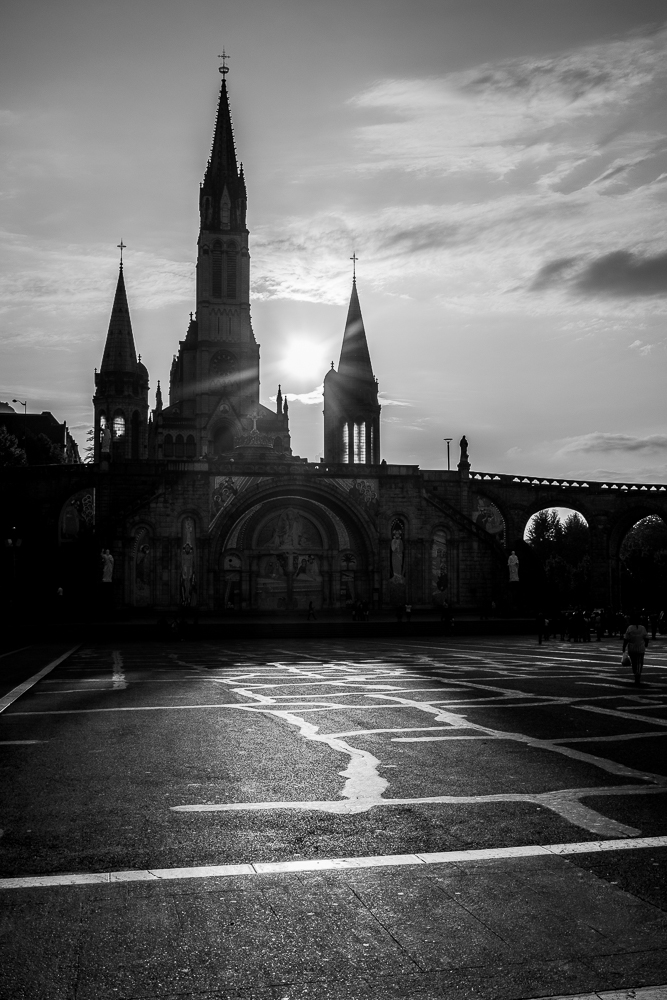
Lourdes.


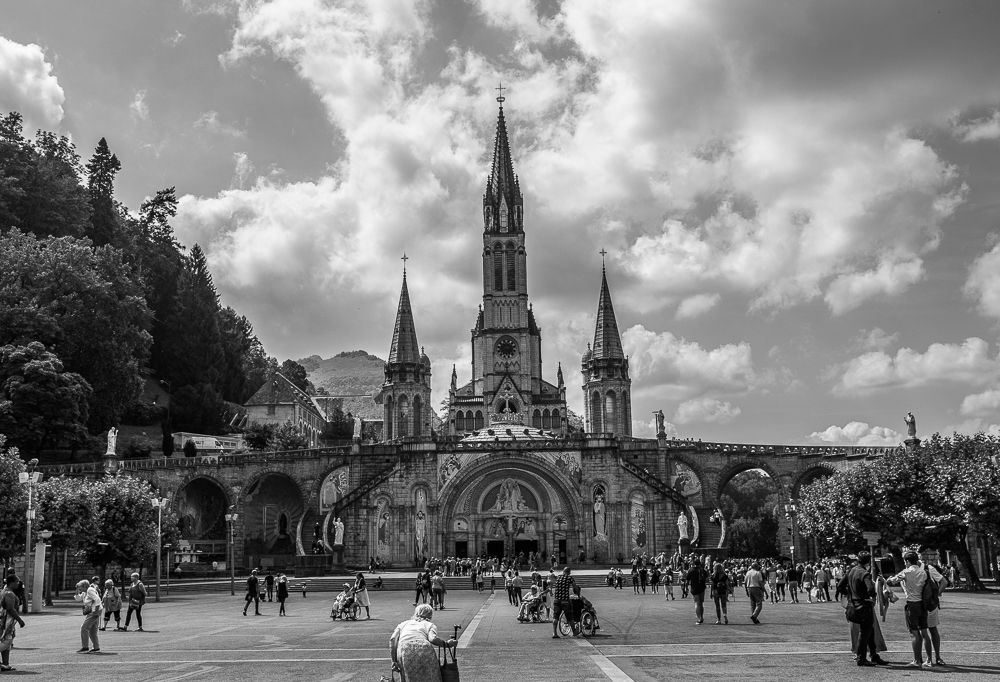
For those of you who don’t know Lourdes, let me tell you about it. It is no ordinary place, and there is a feeling of profound hope, and healing, that strikes you immediately. There are mountains, souvenir shops for Catholic pilgrims, and the sanctuary itself.

Oh. I said that “C” word again. Except this one doesn’t rhyme with “punt.” I am unashamedly Catholic, and had drifted from the church, but I wanted to drift back.

When people go on pilgrimages, even unofficial ones like this, we talk about the voyage being almost as important as the destination. This is, of course, not just the physical journey, but the mental, and spiritual voyage also. I’ve wanted to return to Lourdes since I was 9, and this time I took my son with me.

As a parent you can only do so much, and part of my faith is to know that I can’t control everything in my life, let alone in the lives of others, and that there is something else that is beyond my comprehension. I wanted to help my son in his life, and despite maintaining a dialogue, I had done as much as I could. I could do no more, so I asked Our Lady to look after him. We all need a mother, and most of the Jewish people that I know, seem to agree that a Jewish mother is the best. And you don’t need to be a Jewish to be a Jewish mother. It’s a state of mind. And if God decided on a Jewish mother for His Son, then it was good enough for me. As a Catholic, we see Mary as being a mother to all of us. So when the proverbial **** hits the fan, you ask your Mum if she can help, before you ask your (heavenly) Father. Mums have a way of talking to Dads that help make things alright.

That’s something I understood once I became a father myself. God has that relationship with us. In Judaism, and Christianity, He does anyway. A father loves his child. Even when that child is “naughty,” we still love them. We might punish them, but we always want to forgive them. God is the same with us. You could argue that it’s a way of showing humanity through divinity.

Wow, this got heavy all of a sudden!

Anyway. I went to Lourdes to try and reconcile myself with God. To ask forgiveness for my many sins, to make reparation, to heal, and to try and return towards my Father. We do this with our own fathers here on earth, and so it was the same process for my soul. Does that make sense?

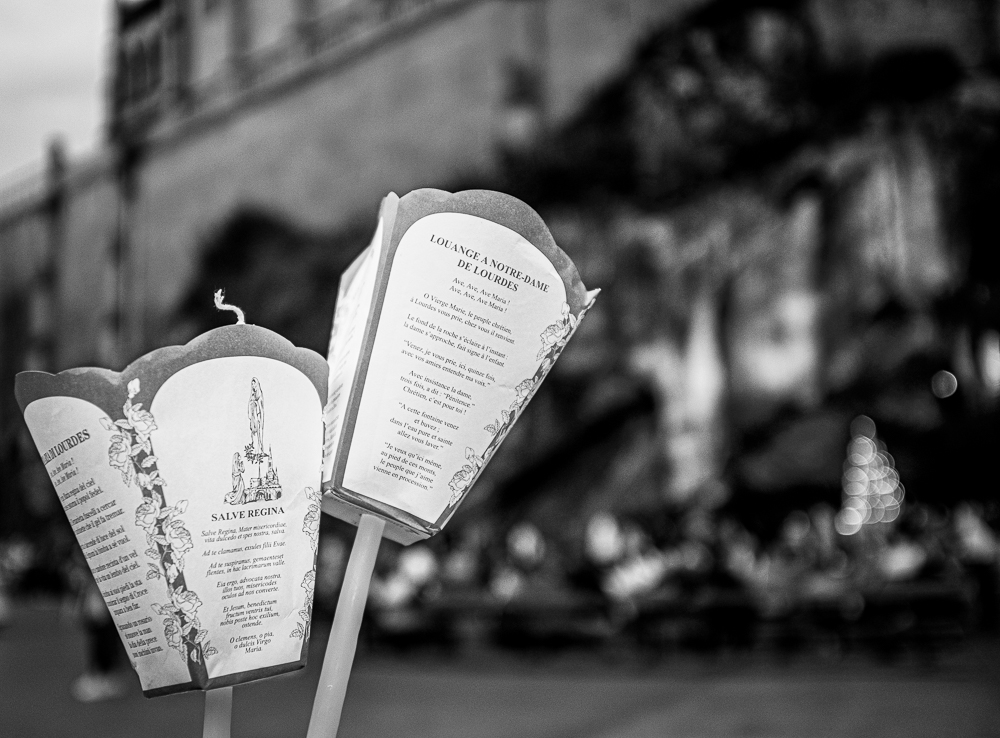
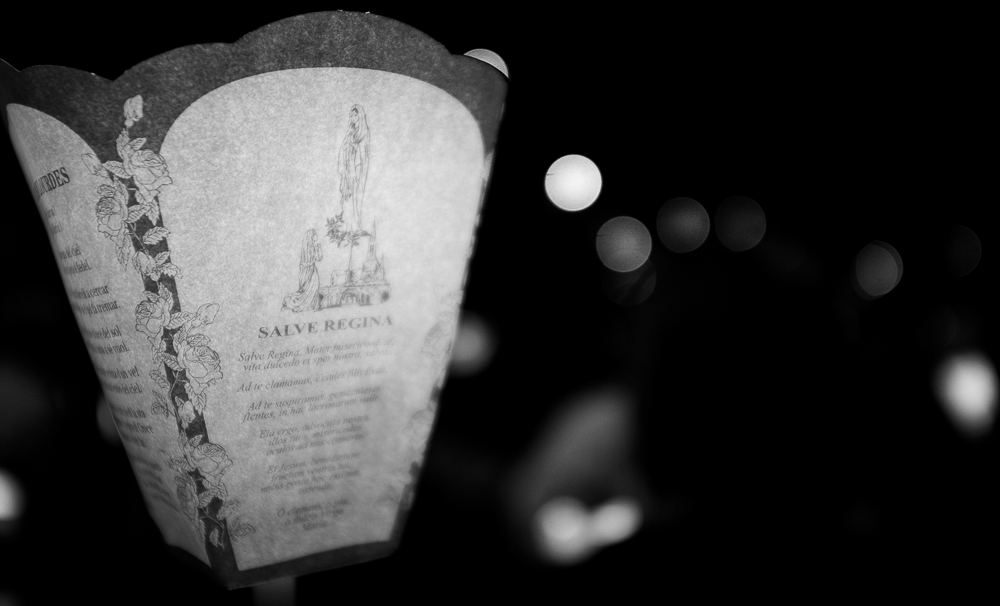
My son was my carer, and he did his job admirably. He also benefitted from his trip. In the Sanctuary there is an overwhelming sense of peace. We went to the grotto, and prayed. We did the night time procession and recited the rosary holding our candles. We bathed in the baths with the water from the source that appeared when Mary asked Saint Bernadette to dig. That source is still there and provides water for the many pilgrims. We put some of that water into bottles to take home with us. I went to Confession.

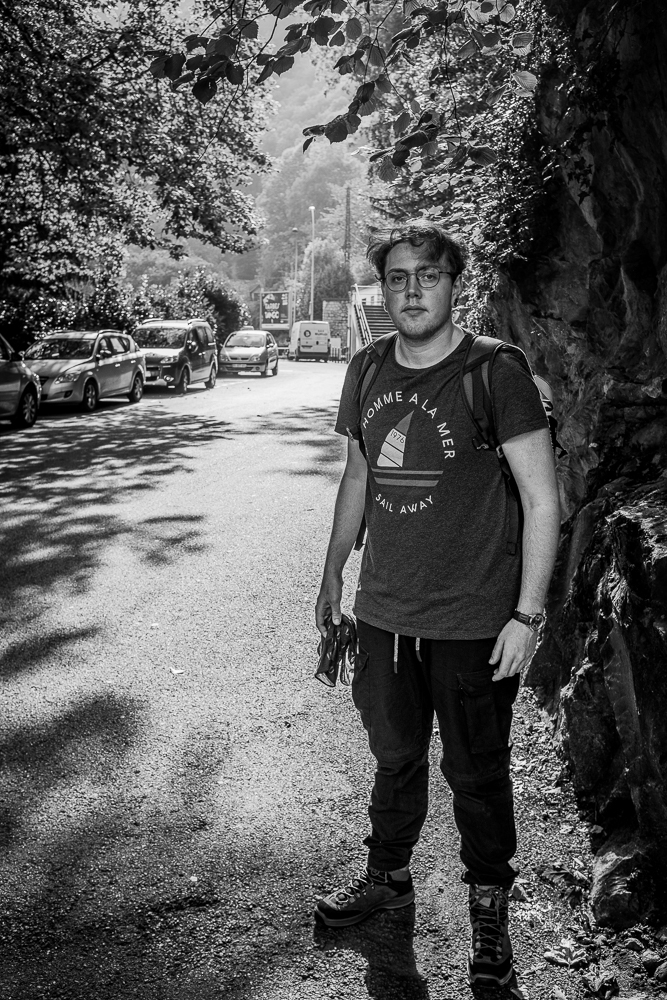
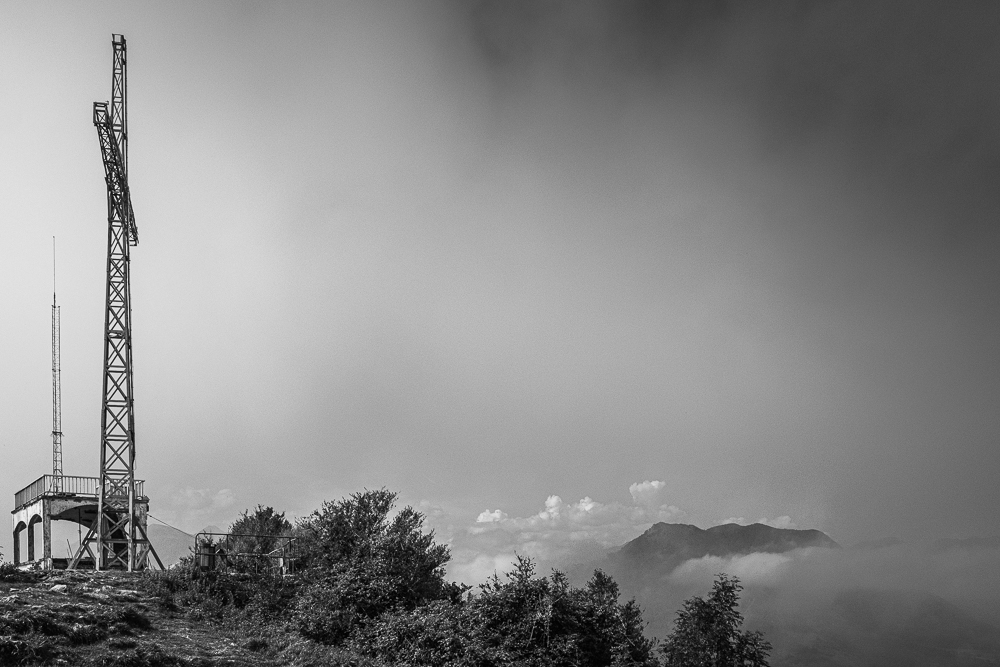
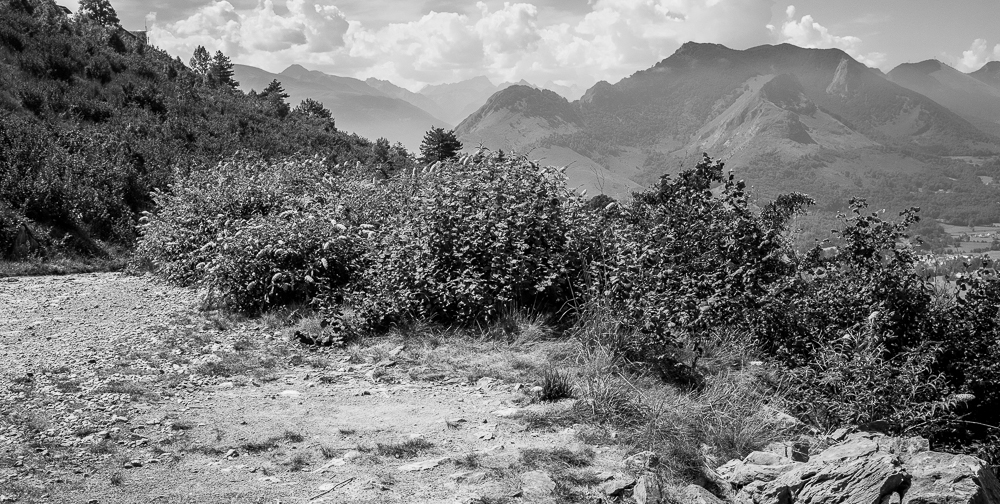
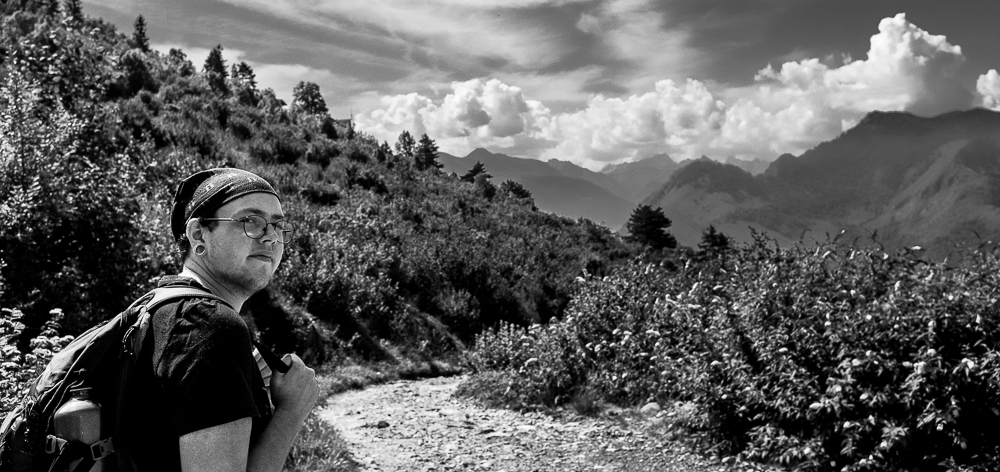
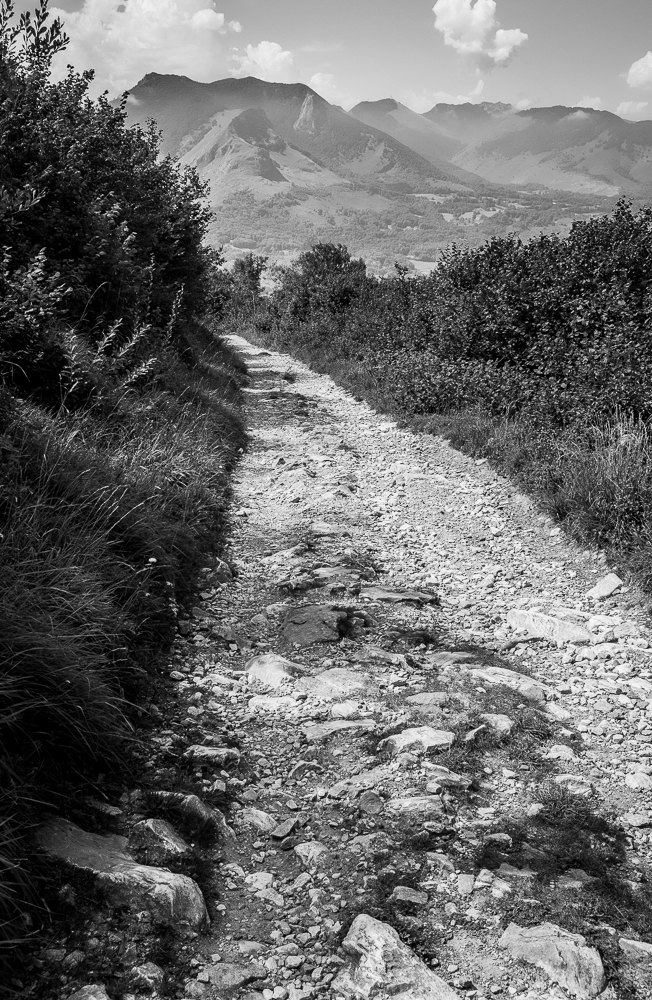
We also went up a mountain, and came down again. It was almost as much a religious experience as the rest of the pilgrimage. When Moses goes up the mountain to receive the ten commandments it is to be closer to God. At the top of that mountain we saw a nun talking to a young friend. They were laughing and taking selfies. We saw a priest praying from his Brievery. It was a moving experience seeing the cloud coming over the summit. We saw the clouds clear, and we looked over the valley to the other mountains. I still don’t understand how people can look at that scenery and doubt the existence of a creator.

Anyway. Let’s talk about the photos. They were taken with the X100F which is compact enough not to be noticed, and a little less heavy than my DSLR and all the lenses that I use with it. It limits me, but makes it all simpler. No unnecessary questions about which lens to use etc. Feel free to comment on the article or the photos. Any feedback is always welcome.